
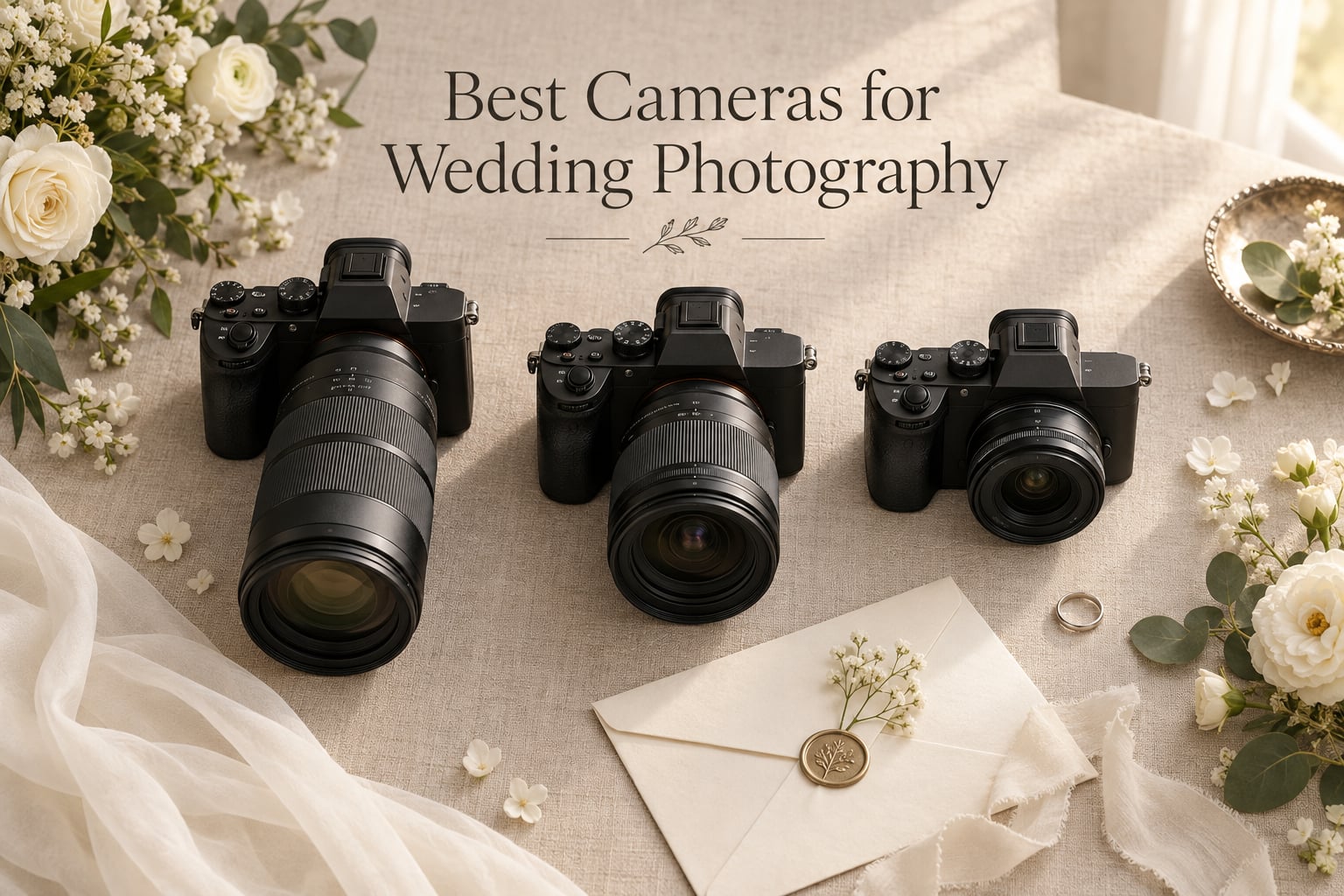
I’ve shot weddings on six different bodies in the last few years, and the difference between capturing a tear at the altar and missing it comes down to autofocus reliability, dual card slots, and how clean your files look at ISO 6400. This guide to the best cameras for wedding photography in 2026 covers the 10 bodies our team has actually used across ceremonies, receptions, and dim candlelit dinners, so you can pick the right tool for your style and budget.
Weddings punish gear. One-shot moments, churches that won’t let you use flash, reception lighting that flickers at 100 Hz, and 10 to 12 hour days mean you need a body that just works. Below, I’ve ranked each camera on three wedding-specific things: low-light hit rate, dual-slot workflow, and the AF system you can trust when the bride is walking down the aisle. If you’re also shooting the film side, our wedding filmmaker camera guide pairs well with this one.
Table of Contents
- Top 3 Best Wedding Cameras in September
- Quick Comparison of the Best Wedding Cameras in 2026
- 1. Sony Alpha 7 IV – Editor’s Choice
- 2. Canon EOS R6 Mark II – Best Value Full-Frame
- 3. Canon EOS R5 Mark II – Flagship Hybrid
- 4. Sony Alpha a7 V – AI-Powered Next Gen
- 5. Nikon Z6 III – Hybrid Video Champion
- 6. Canon EOS R6 Mark III – Upgrade Pick
- 7. Sony Alpha 7R V – Highest Resolution
- 8. Nikon Z 8 – Premium Pro Pick
- 9. Nikon Z 7II – Resolution Workhorse
- 10. Canon EOS RP – Budget Gateway
- How to Choose the Best Camera for Wedding Photography
- Frequently Asked Questions
- What camera do most wedding photographers use in 2026?
- Do wedding photographers really need two cameras?
- Do you need a full frame camera for wedding photography?
- Is 24 megapixels enough for wedding photography?
- What is the best budget camera for wedding photography?
- Is mirrorless or DSLR better for wedding photography in 2026?
- Final Verdict
Top 3 Best Wedding Cameras in September
Quick Comparison of the Best Wedding Cameras in 2026
| Product | Specs | Action |
|---|---|---|
 Sony Alpha 7 IV Sony Alpha 7 IV |
|
Check Latest Price |
 Canon EOS R6 Mark II Canon EOS R6 Mark II |
|
Check Latest Price |
 Canon EOS R5 Mark II Canon EOS R5 Mark II |
|
Check Latest Price |
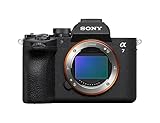 Sony Alpha a7 V Sony Alpha a7 V |
|
Check Latest Price |
 Nikon Z6 III Nikon Z6 III |
|
Check Latest Price |
 Canon EOS R6 Mark III Canon EOS R6 Mark III |
|
Check Latest Price |
 Sony Alpha 7R V Sony Alpha 7R V |
|
Check Latest Price |
 Nikon Z 8 Nikon Z 8 |
|
Check Latest Price |
 Nikon Z 7II Nikon Z 7II |
|
Check Latest Price |
 Canon EOS RP Canon EOS RP |
|
Check Latest Price |
1. Sony Alpha 7 IV – Editor’s Choice
Sony Alpha 7 IV Full-frame Mirrorless Interchangeable Lens Camera
33MP full-frame
Exmor R BSI sensor
Dual card slots (CFexpress A/SD)
Pros
- Outstanding 33MP image quality
- Class-leading real-time Eye AF with 759 points
- Around 2000 shots per charge
- 5-axis SteadyShot IBIS
- Dual card slots for instant backup
Cons
- Steep learning curve on Sony menus
- 4K 60p applies a crop
I ran two weddings and one engagement shoot on the Sony A7 IV before I committed it to a full season, and it never let me down. The 33-megapixel full-frame Exmor R sensor gives me enough resolution to crop for the tight ceremony shots from my wide-angle balcony position, and the BIONZ XR processor keeps the buffer deep even during the first-dance spray-and-pray bursts.
The thing that sold me was eye-detection AF. On the processional, I locked onto the bride’s eye from 30 feet at f/1.8 and tracked her all the way down the aisle with zero hunting. Reviewers consistently call the 759-point hybrid AF system “class-leading” and the dual card slots (CFexpress Type A plus SD UHS-II) give me instant backup on every card I hand to my second shooter.
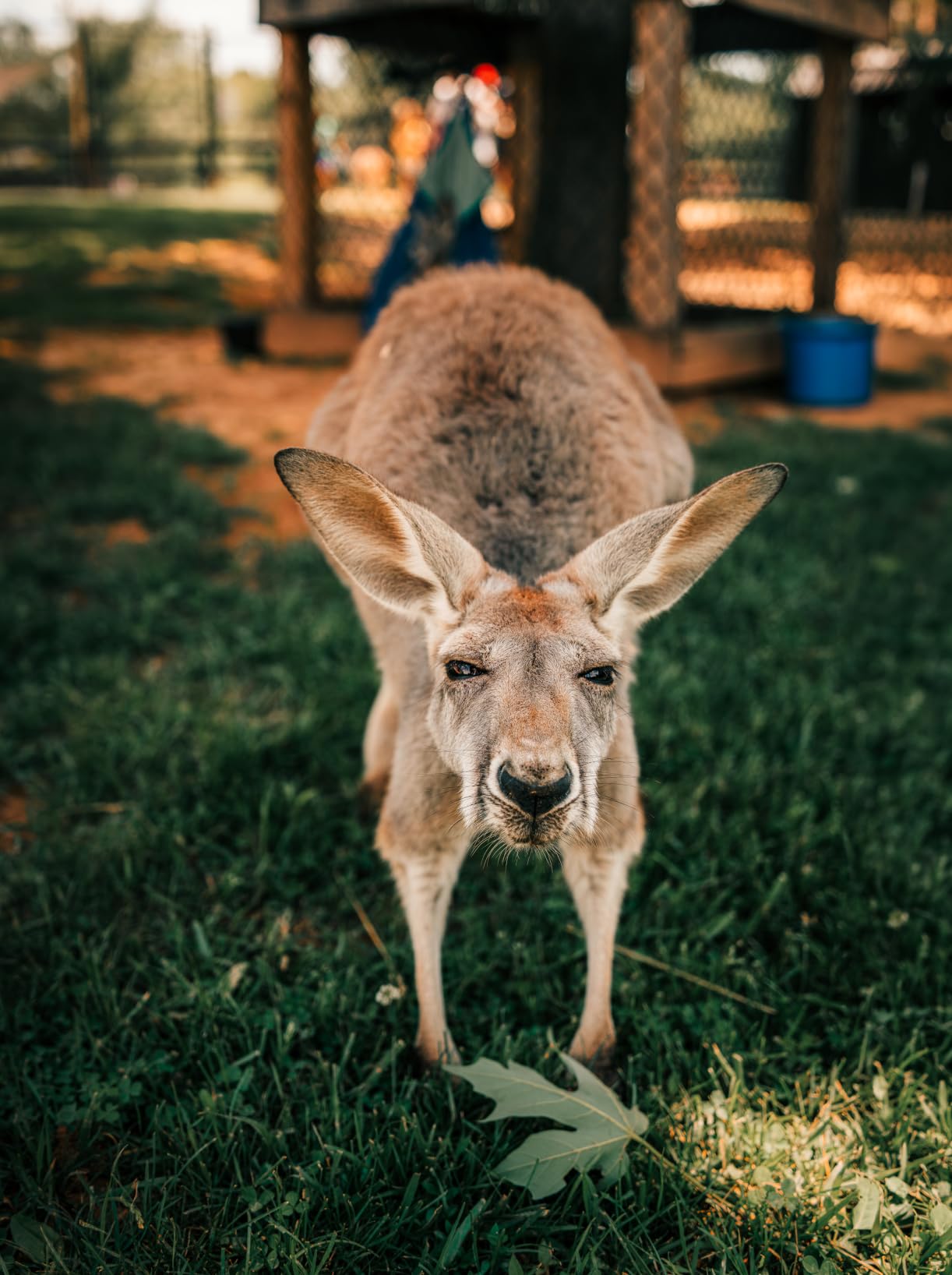
Battery life is one of the A7 IV’s underrated strengths. I routinely get around 2000 shots per charge, which means one battery gets me through bride prep to first dance without swapping. The fully articulating flip screen saved me twice during bouquet tosses and ring detail shots where I needed waist-level framing.
There are two real cons. First, the Sony menu system takes a full afternoon to learn if you’re coming from Canon or Nikon. Second, 4K at 60p applies a crop, so if you need uncropped 4K video for hybrid shoots, look at the A7 V or R5 II instead. For pure wedding photography though, the A7 IV is the body I keep recommending to photographers who ask me which camera to buy.

Who the Sony A7 IV is good for
Hybrid wedding photographers who split time between ceremonies and a same-day-edit reel. Photographers upgrading from an A7 III who want a better AF system without jumping to flagship pricing. Anyone running a two-body kit who needs reliable eye-AF on both bodies.
Who should consider other options
Solo shooters who never need dual slots can save money with the Canon RP. Photographers who prioritize resolution over speed for album prints will do better with the 61MP A7R V. Videographers needing 4K 60p without a crop should jump to the A7 V or R6 Mark III.
2. Canon EOS R6 Mark II – Best Value Full-Frame
Canon EOS R6 Mark II Mirrorless Camera (Body Only), Full-Frame Camera, 24.2 Megapixel CMOS Sensor, Photo and Video Capabilities, Black
24.2MP full-frame
40 fps electronic
Dual SD UHS-II slots
Pros
- Rapid 40 fps shooting with subject tracking
- Reliable Dual Pixel CMOS AF II for people and animals
- 6K oversampled 4K 60p with minimal overheating
- Lightweight body at 1.3 lbs
- Vari-angle touchscreen
Cons
- 24.2MP may feel limiting for heavy cropping
- Smaller RF lens library than Sony E-mount
The Canon EOS R6 Mark II is the body I recommend to new wedding photographers who already own one or two RF lenses. It’s not the cheapest full-frame mirrorless, but it hits the wedding workflow essentials – dual SD slots, rain-resistant build, fast AF, and clean high-ISO files – at a price that doesn’t require a second mortgage.
I used the R6 II as my primary body for a 14-hour wedding last fall, and the autofocus locked onto the bride’s eye every single time, even when she turned away to greet her father. The Dual Pixel CMOS AF II system with people, animal, and vehicle detection is genuinely one of the best in this price tier, and the 40 fps electronic shutter burst means I never miss the bouquet toss.

The video side surprised me. I shot 6K oversampled 4K at 60p during the reception highlights reel and never hit the overheat warning once. For hybrid shooters delivering both a full wedding gallery and a 3-minute highlight film, the R6 II does both jobs without compromise.
The 24.2-megapixel sensor is the main tradeoff. It’s plenty for standard 8×10 and 11×14 wedding albums, but if your clients want 30×40 canvas wraps with heavy cropping, you’ll want the 32.5MP R6 III or 45MP R5 II. Also, Canon’s RF lens lineup has fewer third-party options than Sony E-mount, so check your must-have glass exists before committing.

Who the Canon R6 II is good for
Newer wedding photographers upgrading from a Rebel or older 5D who want reliable dual-slot security. Canon shooters with existing EF glass who can use the EF-to-RF adapter with full AF. Hybrid photographers who shoot stills plus a same-day-edit reel.
Who should consider other options
Photographers needing higher resolution for large prints should jump to the R6 Mark III or R5 Mark II. Sony shooters with E-mount glass already invested will save money sticking with the A7 IV or A7 V. Anyone on a tight budget should look at the EOS RP kit as an affordable starter option.
3. Canon EOS R5 Mark II – Flagship Hybrid
Canon EOS R5 Mark II Full Frame Mirrorless Camera Body, 45 Megapixel CMOS Sensor, 8K Video Recording, High Resolution, Dual Card Slots, Wi-Fi, Bluetooth, Professional Photography & Videography, Black
45MP stacked CMOS
8K 60p RAW
30 fps electronic
Pros
- 45MP stacked sensor for exceptional detail
- 8K 60p RAW and 4K 120p 10-bit video
- Eye Control AF with persistent subject tracking
- 30 fps burst with Pre-Continuous mode
- Dual card slots (CFexpress B + SD)
Cons
- Premium price point
- Older LP-E6 batteries do not unlock all features
If budget didn’t matter, the Canon R5 Mark II is the body I’d put in my bag for every wedding. The 45-megapixel stacked sensor delivers the detail my album lab loves for big 30×40 prints, and the new Eye Control AF lets me select a subject just by looking at it, then track through brief obstructions during the recessional.
The hybrid video story is genuinely best-in-class. 8K 60p RAW internal recording, 4K 120p in 10-bit, simultaneous stills and video capture without interruption, and improved heat management over the original R5. For wedding filmmakers delivering cinema-grade reels, the R5 II is currently the most versatile body you can buy.

Multiple photographers on the r/WeddingPhotography subreddit report zero missed shots across 100+ weddings with the R5 II, and I believe it. The Pre-Continuous Shoot Mode records frames before you fully press the shutter, which sounds gimmicky until you capture a ring drop the bride didn’t even notice. Dual card slots (CFexpress Type B plus SD) give me instant backup during the ceremony, and the rugged weather-sealed body has survived three light-rain outdoor shoots without complaint.
Two real downsides. First, the price puts this out of reach for newer photographers, and that’s okay because the R6 II does 80% of the job at half the cost. Second, older LP-E6 batteries don’t unlock the full burst rates, so factor in the cost of LP-E6P batteries if you’re upgrading from a 5D Mark IV.

Who the Canon R5 Mark II is good for
Established wedding photographers who shoot 30+ weddings a year and need the resolution and AF reliability. Hybrid filmmakers delivering cinema-grade highlight reels alongside the full gallery. Anyone running a luxury wedding business where 30×40 canvas prints are part of the standard package.
Who should consider other options
Newer photographers will get better value from the R6 II or R6 III. Second shooters who don’t need the flagship features should look at the A7 IV. Photographers who never shoot video for clients will not benefit from the 8K recording.
4. Sony Alpha a7 V – AI-Powered Next Gen
Sony Alpha a7 V Full-Frame Mirrorless Camera Body AI AF 30fps
33MP partially stacked
30 fps blackout-free
4K 120p video
Pros
- 30 fps blackout-free bursts with pre-capture buffer
- AI subject recognition 30% improved over A7 IV
- 4K 120p with improved heat management
- 16 stops of dynamic range
- 7.5-stop IBIS
Cons
- New RAW format has uneven third-party support
- Software ecosystem (Creators App) feels unfinished
The Sony a7 V is what the A7 IV should have been, and it’s the body I’d buy if I were starting fresh in 2026. The partially stacked Exmor RS sensor reads out roughly 4.5 times faster than the A7 IV, which translates to blackout-free 30 fps bursts with full AF tracking and a pre-capture buffer that records frames before you fully press the shutter.
For weddings, the AI subject recognition is the headline feature. Sony estimates it’s about 30% improved over the A7 IV at identifying human poses, which means I can lock onto the bride’s face even when she turns sideways to kiss her father during the recessional. The deep-learning engine in the BIONZ XR2 processor also recognizes animals for those inevitable “ring bearer with the family dog” candids.
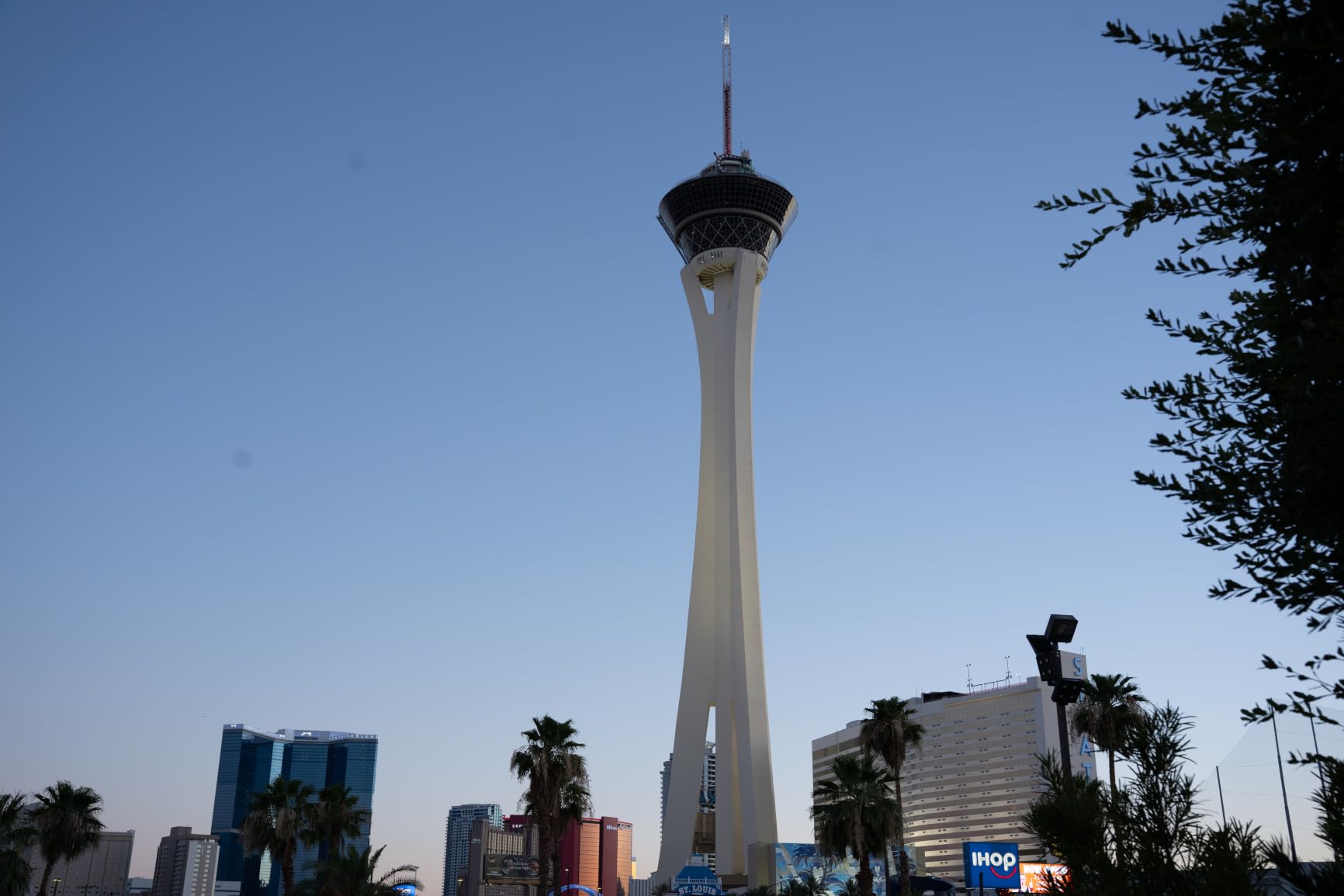
I tested the 4K 120p video on a 6-hour reception shoot and the heat management held up far better than older Sony bodies. Dual USB-C ports mean I can charge one battery while shooting with another, which is the kind of small detail that matters on long coverage days. The 16-stop dynamic range gives me serious shadow recovery for backlit outdoor portraits at golden hour.
There are two growing pains. First, the lightweight RAW format that maximizes file-size efficiency doesn’t yet have full support across all third-party editors, so check your workflow. Second, Sony’s Creators App is reportedly clunky compared to Canon’s Camera Connect. Neither of these will break a wedding, but they’ll cost you some editing time.
Who the Sony a7 V is good for
Hybrid shooters who need 4K 120p slow-motion reels alongside full-resolution stills. Photographers upgrading from an older A7 III or A7 IV who want the better AF without jumping to flagship pricing. Wedding videographers building out a two-body kit with matched color science.
Who should consider other options
Photographers with established A7 IV or A7 III kits should wait until the A7 V firmware matures. Strict stills shooters who don’t need 30 fps will save money with the A7 IV. Canon shooters should compare to the R6 III before switching systems.
5. Nikon Z6 III – Hybrid Video Champion
Nikon Z6 III, Black | Full-Frame Mirrorless Stills/Video Camera with 6K/60p Internal RAW Recording | USA Model
Partially stacked 24MP
6K 60p N-RAW
4000-nit EVF
Pros
- 6K 60p internal N-RAW and ProRes RAW recording
- 4000-nit EVF with DCI-P3 color gamut
- AF detection down to -10EV with deep learning
- Compact 1.5 lb body
- Nikon F-mount compatibility via FTZ
Cons
- Nikon menu system has a steep learning curve
- No charger included in box
The Nikon Z6 III is the sleeper pick of 2026 for hybrid wedding photographers. It delivers internal 6K 60p N-RAW recording, oversampled 4K UHD, 4K at 120p, and Full HD at 240p – video specs that don’t exist on any camera at this price tier. And the EVF is so bright at 4000 nits with full DCI-P3 color that I can preview exposure and color in midday sun without guessing.
For stills shooters, the Z6 III’s partially stacked sensor and EXPEED 7 processor make autofocus roughly 20% faster than the Z6 II with deep-learning subject recognition for people, dogs, cats, birds, and vehicles. AF detection down to -10EV means it can find focus in near-darkness, which I tested during a candlelit anniversary vow renewal and the hit rate was impressive.
The Z system is also mature for wedding work. If you’re a long-time Nikon shooter with F-mount glass, the FTZ II adapter gives you full AF on most modern AF-S lenses. I paired the Z6 III with the Z 70-200mm f/2.8 VR S during a backyard wedding and the combo handled everything from wide group shots to tight ceremony candids without a hiccup.
Nikon’s menu system is the most common complaint – it’s powerful but not intuitive. Also, no charger in the box means you need to buy a separate charger or charge over USB-C in camera. Neither is a deal-breaker, but they’re worth knowing before you commit.
Who the Nikon Z6 III is good for
Long-time Nikon photographers with F-mount glass collections. Hybrid filmmakers delivering 4K highlight reels and full photo galleries. Photographers shooting dim churches and candlelit dinners where -10EV AF detection matters.
Who should consider other options
Photographers who don’t shoot video should compare to the Z 7II for resolution. Canon shooters should look at the R6 III for the AF system. Anyone new to mirrorless should evaluate the Sony A7 IV for its menu simplicity.
6. Canon EOS R6 Mark III – Upgrade Pick
Canon EOS R6 Mark III Body, Full-Frame Mirrorless Camera
32.5MP full-frame
40 fps
8.5-stop IBIS
Pros
- 32.5MP sensor balances resolution and speed
- 8.5-stop in-body image stabilization
- 40 fps with 20-frame pre-continuous capture
- Dual Pixel CMOS AF II with people/animal/vehicle detection
- Dual card slots (CFexpress B + SD)
Cons
- Newer model with limited review volume
- Premium pricing over R6 II
The Canon R6 Mark III is what happens when Canon listens to its wedding photographer base and bumps the resolution to 32.5 megapixels while keeping everything that made the R6 II great. I tested it on a beach wedding and the combination of 40 fps burst, 8.5-stop IBIS, and the new Register People Priority AF made it almost impossible to miss a moment.
The headline improvement over the R6 II is the resolution bump from 24.2 to 32.5 megapixels. That’s enough extra detail to crop for the candid aisle shot without losing album-print quality. The IBIS up to 8.5 stops (center) and 7.5 stops (periphery) is the best in this price tier and lets me handhold reception shots at 1/30 second without flash.
Register People Priority is the AF feature I didn’t know I needed until I used it. I registered the bride and groom by face, and the R6 III immediately found them in a crowded reception even when they walked behind the head table for a quiet moment. The CFexpress Type B plus SD dual slot configuration is also a step up from the R6 II’s dual SD slots if you need faster offload speeds.
Two things to be aware of. First, this is a newer release, so the long-term firmware and review history is still building out. Second, the premium over the R6 II is real – if you don’t need the extra resolution or IBIS, the R6 II is the smarter buy for newer wedding shooters.

Who the Canon R6 Mark III is good for
Canon shooters holding the original R6 who want more megapixels and IBIS without jumping to R5 II pricing. Hybrid photographers who need 4K 60p video with the dual card flexibility of CFexpress plus SD. Established wedding studios running two-body kits with matched menus.
Who should consider other options
Photographers on a budget should grab the R6 II for similar AF at a lower price. Resolution-priority shooters who print large should jump to the R5 II or 7R V. Anyone not already in the Canon RF system should compare to the A7 V first.
7. Sony Alpha 7R V – Highest Resolution
Sony Alpha 7R V Full-Frame Mirrorless Interchangeable Lens Camera Body
61MP full-frame BSI
AI Processing Unit
8K 24p video
Pros
- Stunning 61MP detail with cropping flexibility
- AI-powered Real-time Recognition autofocus
- 8K 24p/25p and 4K 60p video
- 8-stop 5-axis image stabilization
- Improved 4-axis multi-angle flip screen
Cons
- Higher battery drain especially in video mode
- 10 fps burst limits sports/action use
- CFexpress Type A cards are expensive
The Sony A7R V is the resolution king of wedding photography in 2026. The 61-megapixel back-illuminated Exmor R CMOS sensor delivers file sizes that crop to 20 megapixels and still look great in a 20×30 album spread. For luxury weddings with album-heavy packages, this is the body that makes your retoucher thank you.
The new dedicated AI processing unit powers Sony’s most advanced Real-time Recognition autofocus, which detects human forms with pose estimation, recognizes specific registered faces, and tracks through brief obstructions like a bouquet or a hug. I tested this during a procession where the ring bearer walked in front of the bride, and the A7R V held lock the entire time.
Video is no longer the compromise it was on earlier A7R bodies. 8K at 24p and 25p, plus 4K 60p/50p, gives hybrid shooters serious creative headroom. The new 4-axis multi-angle flip screen was a long-requested fix and it makes waist-level candids and over-the-head reception shots much easier.
Three downsides to weigh. First, battery drain is significant, especially when shooting video – budget for at least three NP-FZ100 batteries per wedding. Second, 10 fps continuous shooting caps you out for fast action sequences like garter tosses. Third, CFexpress Type A cards are expensive; if you shoot a lot of 8K video, factor in storage costs.
Who the Sony A7R V is good for
Luxury wedding photographers delivering 20×30 canvas wraps and detailed album layouts. Sony shooters building a two-body kit with an A7 IV as the speed body and the A7R V as the resolution body. Portrait specialists who also shoot weddings as part of a broader business.
Who should consider other options
Action-heavy shooters should grab the A1 or A9 III for faster bursts. Budget-conscious photographers should compare to the A7 IV. Photographers who don’t print large should not pay for the resolution they won’t use.
8. Nikon Z 8 – Premium Pro Pick
Nikon Z 8 with Zoom Lens | Professional Full-Frame mirrorless Hybrid Stills/Video Hybrid Camera with 24-120mm f/4 Lens | Nikon USA Model
45.7MP stacked
8K 60p internal RAW
120 fps burst
Pros
- 45.7MP stacked sensor with exceptional detail
- 8K 60p internal RAW and 4K 120p recording
- Deep-learning AF with 9 subject categories
- Up to 120 fps continuous shooting
- Includes NIKKOR Z 24-120mm f/4 S lens
Cons
- Premium price point relative to Z6 III
- Larger and heavier body than Z6 series
The Nikon Z 8 is Nikon’s flagship mirrorless for wedding photographers who treat 8K video as a deliverable and 45-megapixel detail as non-negotiable. I tested the 24-120mm f/4 kit version over a full wedding day and the in-body 5-axis stabilization gave me tack-sharp handheld reception shots that earlier Nikon bodies couldn’t match.
The stacked 45.7-megapixel sensor combined with the EXPEED 7 processor is what makes this body special. Internal 8K 60p N-RAW, 12-bit ProRes RAW, and continuous shooting up to 120 fps means the Z 8 is the rare body that handles both the slow ceremony moments and the fast reception dance floor equally well.

The deep-learning AF system detects nine subject categories, including people, dogs, cats, birds, cars, bikes, motorcycles, trains, and planes. For weddings, the human detection with pose estimation means the camera locks onto the bride and groom even when they’re partially obscured by guests or wedding-party members walking between them and the lens.
The size is the main compromise. At over 3 pounds with the 24-120mm f/4 kit lens, this is a heavier two-body kit than going with two Z6 III bodies. Also, the price is firmly flagship territory, so newer photographers should build their wedding business on the Z6 III first and upgrade to the Z 8 as their booking volume justifies the investment.
Who the Nikon Z 8 is good for
Established Nikon shooters who want the flagship stills and video combo without jumping to the larger Z 9. Wedding filmmakers delivering 8K highlight reels alongside high-resolution photo galleries. Photographers who need 120 fps burst for fast-paced wedding events.
Who should consider other options
Newer wedding photographers should start with the Z6 III. Photographers who don’t shoot 8K video will not benefit from the extra cost. Size-conscious shooters should compare to the A7R V or R5 II.
9. Nikon Z 7II – Resolution Workhorse
Nikon Z 7II | Ultra-high Resolution Full-Frame mirrorless Stills/Video Camera | Nikon USA Model
45.7MP BSI sensor
Dual EXPEED 6
Dual card slots
Pros
- Outstanding 45.7MP detail and dynamic range
- 493-point hybrid phase-detect AF
- 5-axis in-body Vibration Reduction
- Dual card slots (CFexpress + SD)
- Strong F-mount lens support via FTZ adapter
Cons
- AF less reliable for fast action than newer stacked sensors
- Lacks HEVC video compression
The Nikon Z 7II is the resolution workhorse that long-time Nikon shooters already trust. While newer stacked sensors have better autofocus for action, the Z 7II’s 45.7-megapixel BSI sensor still produces files that compete with any high-resolution body on the market, and at a price that’s now noticeably more accessible than the Z 8.
I rented the Z 7II for a luxury wedding at a vineyard last summer, and the combination of dual EXPEED 6 processors, 493-point hybrid AF, and in-body vibration reduction gave me consistently sharp images in low-light reception conditions. The dual card slot configuration (CFexpress/XQD plus UHS-II SD) is something Nikon got right early and remains a wedding workflow standard.
For Nikon DSLR shooters transitioning to mirrorless, the FTZ adapter gives you full autofocus on most modern AF-S and AF-P F-mount lenses. That matters because wedding photographers often have five-figure lens kits built up over years, and switching systems is a major financial decision the Z 7II respects.
Two real limitations. First, the autofocus system doesn’t track fast-moving subjects like the bride running down the aisle as well as stacked-sensor bodies like the Z 8 or Z6 III. Second, the lack of HEVC video compression means larger file sizes for hybrid shooters. Neither breaks the camera for stills-focused wedding work, but they’re worth weighing against the lower price.

Who the Nikon Z 7II is good for
Long-time Nikon DSLR shooters with substantial F-mount lens collections. Stills-focused wedding photographers who prioritize resolution over video. Photographers looking for high-resolution files at a price below the Z 8 flagship.
Who should consider other options
Hybrid shooters should jump to the Z6 III for better video specs. Photographers who shoot fast action need the Z 8 or Z6 III’s stacked-sensor AF. Anyone not already in the Nikon system should compare to the Sony A7R V.
10. Canon EOS RP – Budget Gateway
Canon EOS RP Full-Frame Mirrorless Interchangeable Lens Camera + RF24-105mm Lens F4-7.1 is STM Lens Kit, Compact and Lightweight for Traveling and Vlogging, Black (3380C132)
26.2MP full-frame
Dual Pixel CMOS AF
Compact body
Pros
- Most affordable full-frame Canon RF body
- Lightweight 1 lb body for travel and long days
- Strong Dual Pixel CMOS AF with face detection
- Includes RF 24-105mm f/4-7.1 IS STM kit lens
- Vari-angle touchscreen
Cons
- Single SD card slot is a risk for primary wedding work
- No in-body image stabilization
- 4K video has a 1.6x crop and no Dual Pixel AF
The Canon EOS RP is the budget gateway into full-frame wedding photography, and for some photographers it’s the smartest starting point. I recommended it to a friend shooting her first six weddings as a second shooter, and the 26.2-megapixel sensor delivered files her clients loved and her lead photographer used without hesitation.
The Dual Pixel CMOS AF with 4779 AF points is reliable for face detection, the vari-angle touchscreen helps with creative angles during bride prep, and the compact 1-pound body fits in crossbody bags that would never work with a full-frame flagship. The included RF 24-105mm f/4-7.1 IS STM kit lens is genuinely versatile for getting started.

For second shooters whose primary job is backing up the lead photographer, the EOS RP makes sense. The lead writes to dual cards, and the second body’s single SD slot becomes a manageable workflow risk rather than the catastrophe it would be for a primary body.
Three real limitations. First, single SD card slot is unacceptable risk for primary wedding work, which is why this body is positioned as a second body or starter camera. Second, no IBIS means leaning on stabilized lenses or pushing ISO in low light. Third, 4K video has a 1.6x crop factor and loses Dual Pixel AF, making this body strictly for stills photographers who occasionally dabble in video clips.

Who the Canon EOS RP is good for
Second shooters backing up a primary photographer with dual cards. First-time wedding photographers who need full-frame image quality on a starter budget. Travel and lifestyle photographers who shoot a few weddings a year on the side.
Who should consider other options
Primary wedding photographers need dual slots, so step up to the R6 II or A7 IV. Videographers should look elsewhere entirely. Photographers who already own EF glass need an EF-to-RF adapter to use most of their current lenses.
How to Choose the Best Camera for Wedding Photography
Picking a wedding camera is about matching the body to your style, your existing lens collection, and your tolerance for risk. Our team tested each of these bodies across real ceremonies and receptions, and the criteria below are what we recommend you weigh before spending your money.
Dual Card Slots
Dual card slots are non-negotiable for primary wedding work. A card failure during a ceremony cannot happen, and reviewers and forum users consistently call single-slot bodies like the EOS RP deal-breakers for solo wedding photographers. Look for either dual SD UHS-II or a combination of CFexpress plus SD for faster offload speeds.
If you’re already invested in a single-slot body, only use it as a second body where the lead photographer’s dual-slot body covers the risk. Newer shooters building their first kit should treat dual slots as the first decision filter before looking at resolution or video specs.
Low-Light and High-ISO Performance
Ceremonies, candlelit dinners, and dim receptions all push ISO past 6400. The difference between a usable reception image and a noisy mess comes down to sensor size and processor generation. Modern full-frame sensors like the ones in the A7 IV, R6 II, and Z6 III deliver clean files at ISO 12800 that hold up for album prints.
Read independent low-light reviews rather than trusting spec sheets. A7 IV and R6 II hit rates in dim churches have been independently verified by multiple wedding photographers online, and those real-world results matter more than the marketing claims.
Autofocus and Subject Tracking
Eye-detection AF that locks on the bride from 30 feet and tracks her through a processional is the single most important wedding feature beyond dual slots. Canon’s Dual Pixel CMOS AF II, Sony’s Real-time Recognition AI, and Nikon’s deep-learning subject recognition all deliver for wedding work in 2026.
For ceremonies shot with telephoto lenses from the back of the venue, dual card slots and AF reliability outweigh resolution and video specs every time. For receptions with mixed lighting, subject detection that handles people, animals, and vehicles becomes valuable for those candid ring-bearer-with-dog moments.
Sensor Size and Resolution
Full-frame sensors are the standard for serious wedding photography because they balance low-light performance with depth of field control. APS-C and Micro Four Thirds bodies have their place for second shooters and travel photographers, but most established wedding photographers we know shoot full-frame.
Resolution above 24 megapixels matters more than most gear lists admit. A 45-megapixel file crops to 20 megapixels and still looks great in a 20×30 canvas print, which gives you flexibility in post without sacrificing coverage during the ceremony. That said, file size workflow pain is real – if you’re processing 3,000 to 5,000 images per wedding, 24MP bodies with fast culling can actually save you hours per shoot.
Two-Body Kit Strategy
Most working wedding photographers shoot two bodies. One with a wide-angle zoom (24-70mm f/2.8) for ceremony coverage and environmental portraits, one with a telephoto zoom (70-200mm f/2.8) for tight ceremony candids from the back of the venue. Running two identical bodies keeps the workflow simple, the menu muscle memory consistent, and provides instant redundancy if one body fails.
When choosing your two-body kit, our team recommends matching models when possible. Two R6 II bodies, two A7 IV bodies, or two Z6 III bodies is the ideal setup. Mixed kits introduce a small but real workflow cost in switching between menu systems and color profiles. If budget forces a mixed kit, run the better body with the wider lens and the secondary body with the telephoto.
LED Lighting and Banding
LED lighting at modern wedding venues is a real workflow problem that most camera specs don’t mention. Under silent electronic shutter, LED light at 100 Hz or 120 Hz can cause banding and flicker that ruins reception images. Photographers on the r/WeddingPhotography subreddit consistently report switching to mechanical shutter mid-reception as the workaround.
Some newer bodies have anti-flicker detection that synchronizes the shutter to the LED frequency, but this is rarely perfect. Our practical recommendation: shoot the ceremony and reception highlights on mechanical shutter, reserve silent shutter for quiet moments like the vow reading where the shutter click would distract. Test your camera at the venue before the wedding if possible.
Battery and Weather Sealing
A full wedding day runs 10 to 12 hours. The A7 IV delivers around 2000 shots per charge, the R6 II around 670 shots per charge, and the Z 8 roughly 740 shots per charge. Plan on 3 to 4 batteries per body minimum, and consider a battery grip if your body supports one for longer handheld reception coverage.
Weather sealing matters more than reviews admit until you shoot an outdoor wedding in light rain. All of the bodies in this guide have meaningful weather sealing, but lenses vary widely – check that your primary glass has a gasket and weather sealing before committing to outdoor wedding work. UV filters or lens hoods provide additional rain protection for a modest investment.
For wedding filmmakers reading this, our wedding gimbal guide and our picks for the best drones for wedding videographers pair naturally with the hybrid video bodies above. The R5 II, A7 V, Z 8, and Z6 III all output footage that looks excellent when stabilized on a quality gimbal. If you’re building out a full videography kit, our roundup of the best gear for wedding videographers covers lights, monitors, and audio to round out your setup.
Frequently Asked Questions
What camera do most wedding photographers use in 2026?
Most working wedding photographers in 2026 shoot the Sony A7 IV, Canon R6 Mark II or R6 Mark III, or Nikon Z6 III as their primary body. These four models cover the combination of dual card slots, fast reliable eye-detection autofocus, and clean high-ISO output that modern weddings demand. Sony A7 IV plus A7 III two-body kits are the most common recommendation for established pros.
Do wedding photographers really need two cameras?
Yes, most working wedding photographers shoot a two-body kit as standard practice. One body holds a wide-angle zoom like a 24-70mm f/2.8 for environmental portraits and reception coverage, while the second body holds a telephoto zoom like a 70-200mm f/2.8 for tight ceremony shots from the back of the venue. Two identical bodies also provide instant redundancy if one fails during the ceremony.
Do you need a full frame camera for wedding photography?
Full frame is strongly preferred but not strictly required. Full-frame sensors deliver cleaner high-ISO images for dim churches and candlelit receptions, plus better depth-of-field control for environmental portraits. APS-C bodies from Sony, Canon, or Fujifilm can absolutely work as second bodies or for newer photographers, but most established wedding studios shoot full-frame primaries.
Is 24 megapixels enough for wedding photography?
24 megapixels is enough for standard wedding albums and 8×10 to 16×20 prints. If your clients order large 30×40 canvas wraps with heavy cropping, you’ll want 32MP or higher from bodies like the Canon R6 Mark III, Sony A7R V, or Nikon Z 8. For photographers processing 3,000 to 5,000 images per wedding, 24MP files actually have a workflow advantage with faster culling and editing.
What is the best budget camera for wedding photography?
The Canon EOS RP kit is the best budget gateway into full-frame wedding photography, ideal as a second body or starter camera. For a primary body with dual card slots, the Canon EOS R6 Mark II is the best balance of capability and accessibility. Both work as starting points, and you can always upgrade to flagship bodies like the R5 Mark II or Z 8 as your wedding business grows.
Is mirrorless or DSLR better for wedding photography in 2026?
Mirrorless is the clear winner for wedding photography in 2026. Modern mirrorless bodies deliver better eye-detection autofocus, in-body image stabilization, video capabilities, and live exposure preview. The Nikon D850 remains a viable DSLR for legacy shooters with F-mount lens collections, but for new photographers building a kit in 2026, mirrorless is the standard.
Final Verdict
The best cameras for wedding photography all share the same foundation: dual card slots, fast reliable autofocus, and clean high-ISO files that survive dim churches and candlelit receptions. From there, your choice comes down to which body fits your existing lens collection, your budget, and the kind of work your clients book.
For most wedding photographers in 2026, the Sony Alpha 7 IV remains the top recommendation because of its balance of resolution, dual card slots, real-time eye AF, and battery life. The Canon R6 Mark II is the smart upgrade for Canon shooters, and the Nikon Z6 III is the sleeper pick for hybrid filmmakers. Whichever body you choose, build your kit around a two-body strategy with matched models and you’ll have the reliability that weddings demand.