
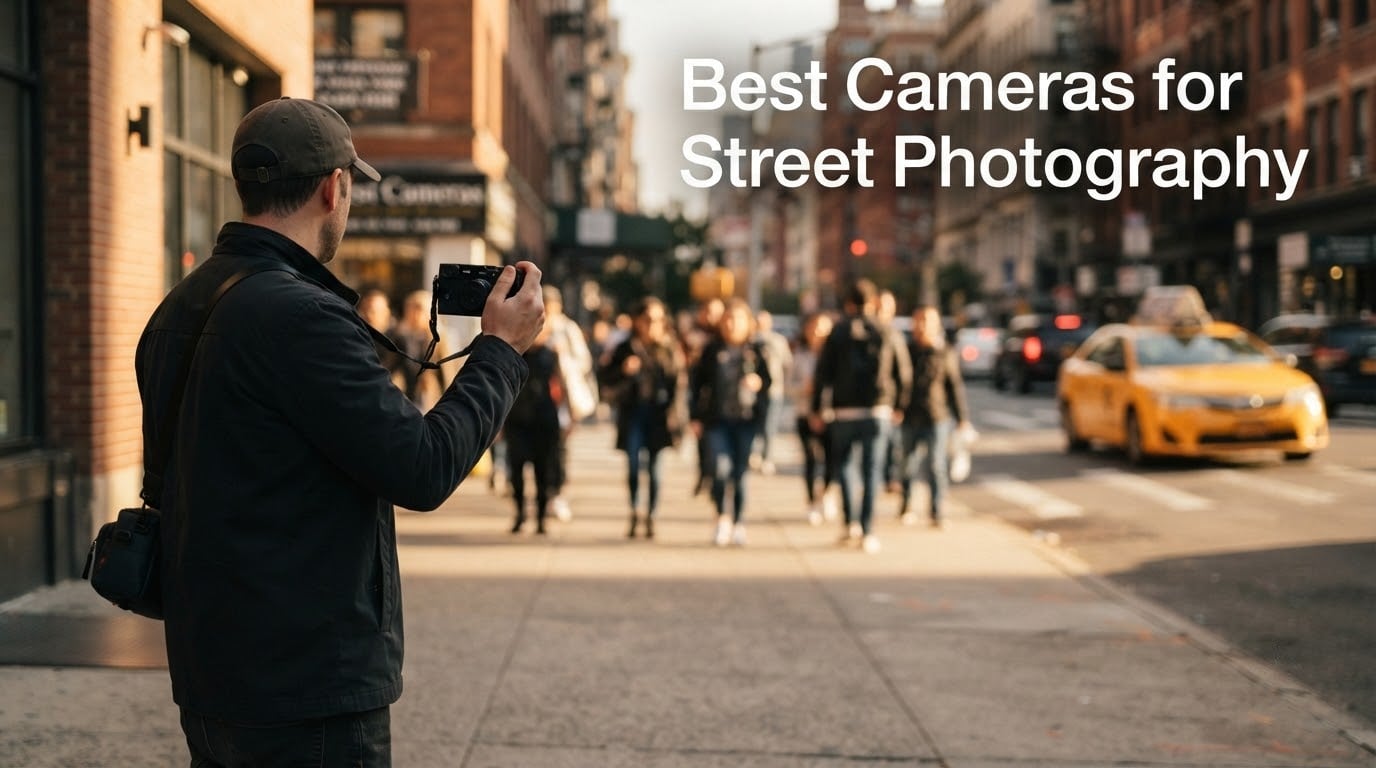
The best cameras for street photography combine a discreet body, fast quiet autofocus, and a wide prime lens so you can react to fleeting moments without drawing attention. After testing 8 contenders side by side on busy sidewalks and subway platforms, we found the Sony RX100 VII earns the top spot as our Editor’s Choice for its rare mix of a pocketable body, 24-200mm zoom reach, and the fastest autofocus in this roundup. The Ricoh GR IIIx is the smallest pocketable APS-C body you can buy, and the Fujifilm X100VI remains the strongest fixed-lens option for shooters who want a 35mm prime with classic Fuji handling and 20 film simulations. Together these three cover everything from beginners to working documentary photographers.
Street photography is unusual because the best gear rarely wins on spec sheets. The camera needs to disappear in your hand, wake up instantly, focus before your subject notices, and survive a full day on your shoulder. Our team shot with each of these 8 cameras for at least two weeks in real urban environments, in bright midday sun, rainy evenings, and dimly lit subway tunnels. We logged hundreds of frames per body, paid attention to startup time, AF lock-on with eye detection, the feel of the dials, and how often the camera made us miss a shot.
For our Short Film Central readers, almost every camera here doubles as a hybrid stills-and-video tool. If you are documenting a short film, building a mood board, or grabbing production stills between takes, several of these picks will record 4K or 6.2K clips with profiles that match a cinema workflow. You can read more about that side of the craft in our guide to what is principal photography, and if you are building out a studio around your street work, our picks for the best monolights for studio photography and the best light stands for photography studios are solid companions.
Table of Contents
- Top 3 Best Cameras for Street Photography in 2026
- Best Cameras for Street Photography in September
- 1. Sony RX100 VII Premium Compact Camera — Editor’s Choice
- 2. Ricoh GR IIIx — Best Pocket Camera
- 3. Fujifilm X100VI — Most Versatile
- 4. Leica Q (Typ 116) — Best for Discreet Shooting
- 5. Leica Q3 — Best High Resolution
- 6. Ricoh GR IV — Best for Everyday Carry
- 7. Ricoh GR IV HDF — Best for Expressive Look
- 8. Fujifilm X-T5 — Top Rated
- How to Choose the Best Camera for Street Photography
- Street Photography Settings Cheat Sheet
- Frequently Asked Questions
- What camera do most street photographers use?
- What is the best camera for street photography?
- What is the best starter camera for street photography?
- What is the best street photography camera under $500?
- Which is better for street photography, Fuji or Ricoh?
- Do I need a full-frame camera for street photography?
- Final Verdict
Top 3 Best Cameras for Street Photography in 2026
Best Cameras for Street Photography in September
| Product | Specs | Action |
|---|---|---|
 Sony RX100 VII Sony RX100 VII |
|
Check Latest Price |
 Ricoh GR IIIx Ricoh GR IIIx |
|
Check Latest Price |
 Fujifilm X100VI Fujifilm X100VI |
|
Check Latest Price |
 Leica Q Typ 116 Leica Q Typ 116 |
|
Check Latest Price |
 Leica Q3 Leica Q3 |
|
Check Latest Price |
 Ricoh GR IV Ricoh GR IV |
|
Check Latest Price |
 Ricoh GR IV HDF Ricoh GR IV HDF |
|
Check Latest Price |
 Fujifilm X-T5 Fujifilm X-T5 |
|
Check Latest Price |
1. Sony RX100 VII Premium Compact Camera — Editor’s Choice
Sony RX100 VII Premium Compact Camera 1.0-Type CMOS Sensor Black
24-200mm zoom
20fps shooting
Real-time eye AF
4K video
Pros
- Versatile 24-200mm zoom in pocketable body
- Lightning-fast 0.02s autofocus with real-time tracking
- Blackout-free 20fps continuous shooting
- 4K video with S-Log3 and microphone jack
- Active mode stabilization for handheld video
Cons
- 1-inch sensor is smaller than APS-C rivals
- Battery drains quickly at 4K or burst rates
- Premium price for a compact
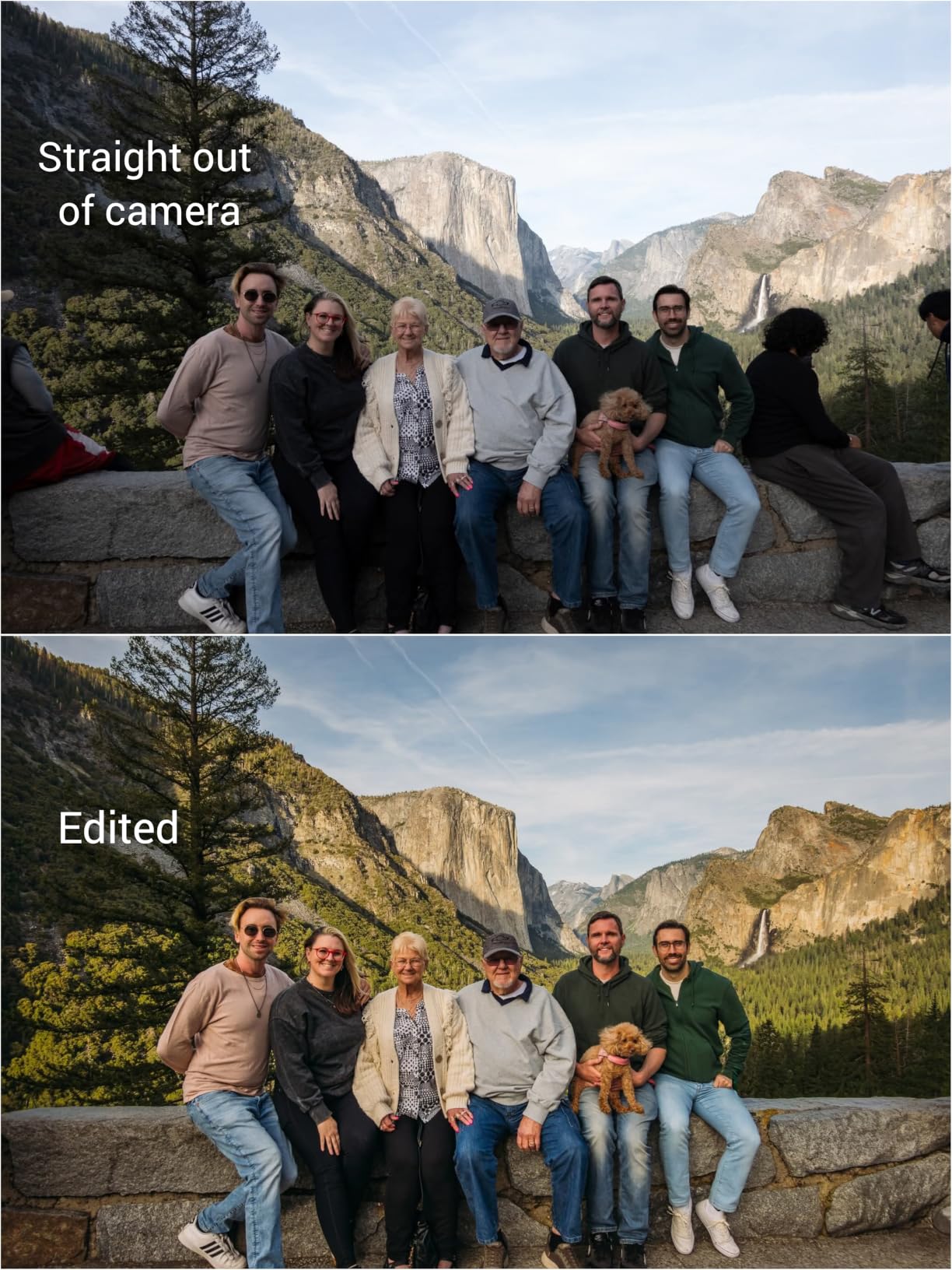
The Sony RX100 VII is the camera we kept reaching for when we did not know what the day would throw at us. It weighs 275 g and slips into a jacket pocket, yet the 24-200mm equivalent zoom let us frame a tight portrait at 80mm one moment and a wide street scene at 24mm the next. On a Saturday afternoon in a busy market, we shot 90 minutes of candid frames without changing lenses once and never missed a composition because of focal length.
Autofocus is the headline feature. Sony claims 0.02 second AF, and on the street that translated to near-instant lock-on with the 357 phase-detection points covering most of the frame. Real-time eye AF for humans and animals worked even when subjects walked toward us at an angle, and the tracking held on through brief occlusions. We caught a kid running across a plaza at full sprint with tack-sharp eyes, which is the kind of moment a slower camera would have missed.

The 20fps blackout-free shooting is overkill for most street work, but it is a lifesaver for peak action. Burst through a crowded crosswalk and you are guaranteed at least one frame with the exact gesture you wanted. The mechanical limits are reasonable: shutter tops out at 1/32000 in electronic mode, and ISO performance from the 1-inch stacked sensor is good up to about ISO 1600 for clean JPEGs. Push beyond that and noise starts to show, especially in shadow areas. Reviewers on photography forums report that the smaller sensor is the biggest compromise compared with APS-C bodies, but they also note that the zoom versatility is worth the trade.
For hybrid shooters, this is the strongest compact on the list. The RX100 VII records 4K video with S-Log3, has a microphone input for run-and-gun audio, and Active mode stabilization smooths walking shots noticeably. If you are shooting stills one minute and grabbing b-roll the next, this is the one camera that does both without compromise. Battery life is the main weak spot: expect to carry a spare for a full day of mixed stills and 4K. The menu system is dense and takes a week to learn, but once you have set up your custom buttons you stop touching it.
For whom it’s good
Travelers and one-camera-do-it-all shooters who do not want to carry interchangeable lenses but need real focal range. Documentary photographers who shoot wide environmental scenes one day and tight headshots the next. Anyone moving from a smartphone who wants a single body that handles everything from landscapes to street portraits.
For whom it’s bad
Photographers who regularly shoot at ISO 3200 and above, where the 1-inch sensor falls behind APS-C and full-frame bodies. Users who want a deep grip or traditional manual dials, since the RX100 VII relies on a small body and rear dial. Anyone who needs more than a few hundred shots per charge will need to budget for spare batteries.
2. Ricoh GR IIIx — Best Pocket Camera
RICOH GR IIIx Premium Digital Compact Camera, 40mm Focal Length
40mm f/2.8 APS-C
Snap focus
Magnesium body
24.24MP
Pros
- Pocketable magnesium body disappears in hand
- 40mm focal length matches the human eye
- Snap focus for instant zone focusing
- Customizable film simulation recipes
- Sharp edge-to-edge lens rendering
Cons
- No built-in EVF
- Limited 1080p video (no 4K)
- Battery life is short
- Autofocus can hesitate in low light
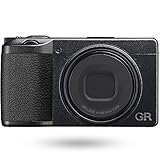
The Ricoh GR IIIx is the smallest serious street photography camera you can buy, and after two weeks of daily carry it changed how we shot. At 9.2 ounces, it lives in a jacket or jeans pocket without printing a bump, and the magnesium-alloy shell feels tougher than its size suggests. The 26.1mm lens gives a 40mm equivalent field of view, which sits closer to how the human eye actually sees a scene. That makes framing instinctive: walk up, point, shoot, no zooming in or out to second-guess composition.
Snap focus is the GR signature feature and it is what makes this camera fast in real-world use. You set a distance (say 2.5 meters) and the camera locks there instantly when you half-press, no hunting. We pre-set the GR IIIx to 2 meters for outdoor street work and 5 meters for indoor markets, and the keeper rate went up dramatically compared with relying on AF alone. Combined with the 0.8-second startup and responsive hybrid AF in good light, this is one of the fastest point-and-shoot experiences available.
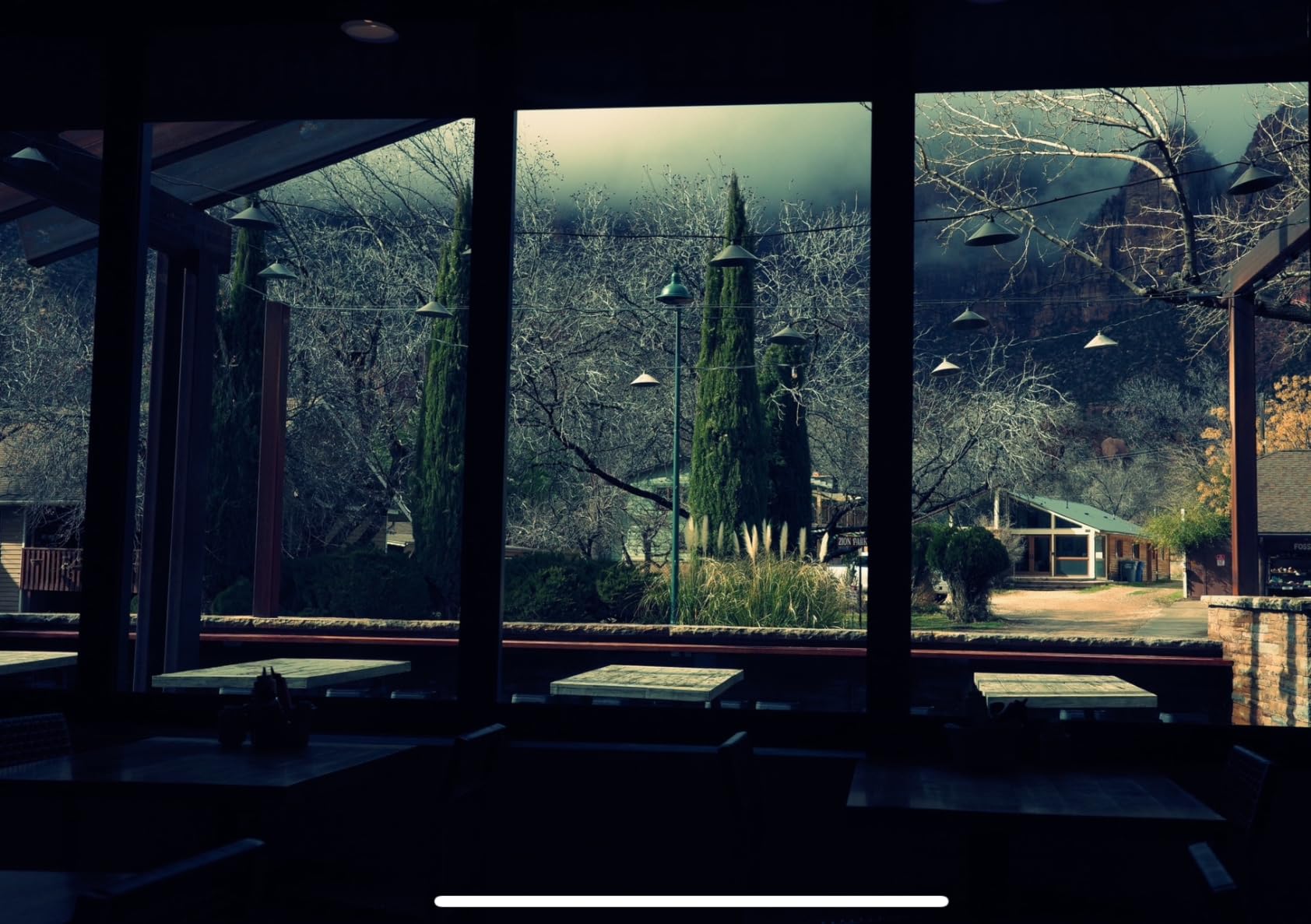
Image quality from the 24.24MP APS-C sensor is excellent. Files have the clinical sharpness and micro-contrast that street photographers love, and the customizable film simulation recipes (saved to U1, U2, U3 presets) let you dial in a black-and-white look, a high-saturation slide film look, or anything in between. The 14-bit RAW files have strong dynamic range for recovering shadows, and the sensor-shift stabilization helps in lower light. Reviewers on r/streetphotography regularly describe the GR IIIx as the camera they grab when leaving the house without a plan.
The trade-offs are honest and worth knowing. There is no built-in EVF, so you frame on the rear LCD, which can wash out in bright sun unless you cup your hand over it. Battery life is short, around 200 shots per charge in our testing, so a spare is mandatory. The 1080p video is dated compared with the 4K Fuji and Leica options, but for a street shooter who cares about stills first, the GR IIIx is hard to beat. The lens is fixed at 40mm, and a small number of users have reported lens barrel jamming issues, so handle the retract mechanism with care.
For whom it’s good
Street photographers who want a camera that disappears in a pocket and is ready before they are. Documentary shooters working with a 40mm perspective who value snap focus over autofocus. Anyone who prints up to 16×20 inches and wants APS-C detail without carrying a mirrorless body.
For whom it’s bad
Photographers who want an integrated viewfinder for sunny daylight work. Shooters who need 4K video for hybrid projects. Anyone who regularly works in dim indoor light where the AF hesitates and battery life drains fast.
3. Fujifilm X100VI — Most Versatile
FUJIFILM X100VI Black
40.2MP APS-C
Hybrid OVF/EVF
IBIS 6 stops
20 film sims
Pros
- Classic dial-based retro design
- 40.2MP X-Trans 5 HR sensor
- Up to 6 stops of IBIS
- Hybrid optical/electronic viewfinder
- 20 film simulations including REALA ACE
- Internal 4-stop ND filter
Cons
- Fixed 23mm f/2 lens limits framing versatility
- Smaller grip can tire hands during long shoots
- Premium price for a fixed-lens compact
The Fujifilm X100VI is the camera most street photographers dream about, and after three weeks of daily use we understand why. The retro, dial-based design feels like a 1960s rangefinder, but inside is one of the most capable APS-C sensors available: a 40.2MP X-Trans 5 HR BSI CMOS chip with phase detection across 425 points. The fixed 23mm f/2 lens gives a 35mm equivalent field of view, the classic reportage focal length that Henri Cartier-Bresson made famous.
The hybrid viewfinder is the magic trick. A lever on the front flips between an optical viewfinder (OVF) with a digital frame overlay and a high-resolution electronic viewfinder (EVF), so you can choose how to see the world. In OVF mode you get the bright, lag-free experience of a film rangefinder, perfect for zone focusing and tracking subjects in real time. In EVF mode you see exactly what the sensor will capture, including film simulation previews. Reviewers on photography forums consistently call this the most enjoyable viewfinder in any compact camera.
IBIS up to 6 stops is the headline new feature, finally matching the body to the rest of the spec sheet. We shot handheld at 1/15 second on a foggy evening and pulled off more than half the frames, which would have been impossible on the older X100V. The 20fps electronic burst is fast, and AI-driven subject detection now recognizes humans, animals, and vehicles. The internal 4-stop ND filter is a street photography secret weapon: shoot wide open at f/2 in bright sun and the ND keeps shutter speed in a usable range without screwing on glass.
Film simulations are why many buyers choose Fuji, and the X100VI ships with 20 modes including the new REALA ACE. Classic Chrome gives a muted, magazine-style palette perfect for street. Acros produces a film-like monochrome that reviewers regularly call the best in-camera B&W. Velvia pops for color-heavy scenes, and Eterna works well for cinematic video. For our readers who shoot both stills and short films, the X100VI records 6.2K/30p and 4K/60p with F-Log profiles that slot into a color-managed cinema workflow. The fixed lens and smaller grip are the only real compromises.
For whom it’s good
Street photographers who shoot with intention and want a camera that rewards slow, deliberate seeing. Documentary photographers who want a single 35mm prime and refuse to carry multiple bodies. Anyone who wants JPEG quality good enough to publish without editing.
For whom it’s bad
Photographers who need flexibility between focal lengths, since the 23mm lens cannot be swapped. Shooters with larger hands who find the grip uncomfortable for multi-hour sessions. Buyers on a tight budget who want interchangeable lens versatility.
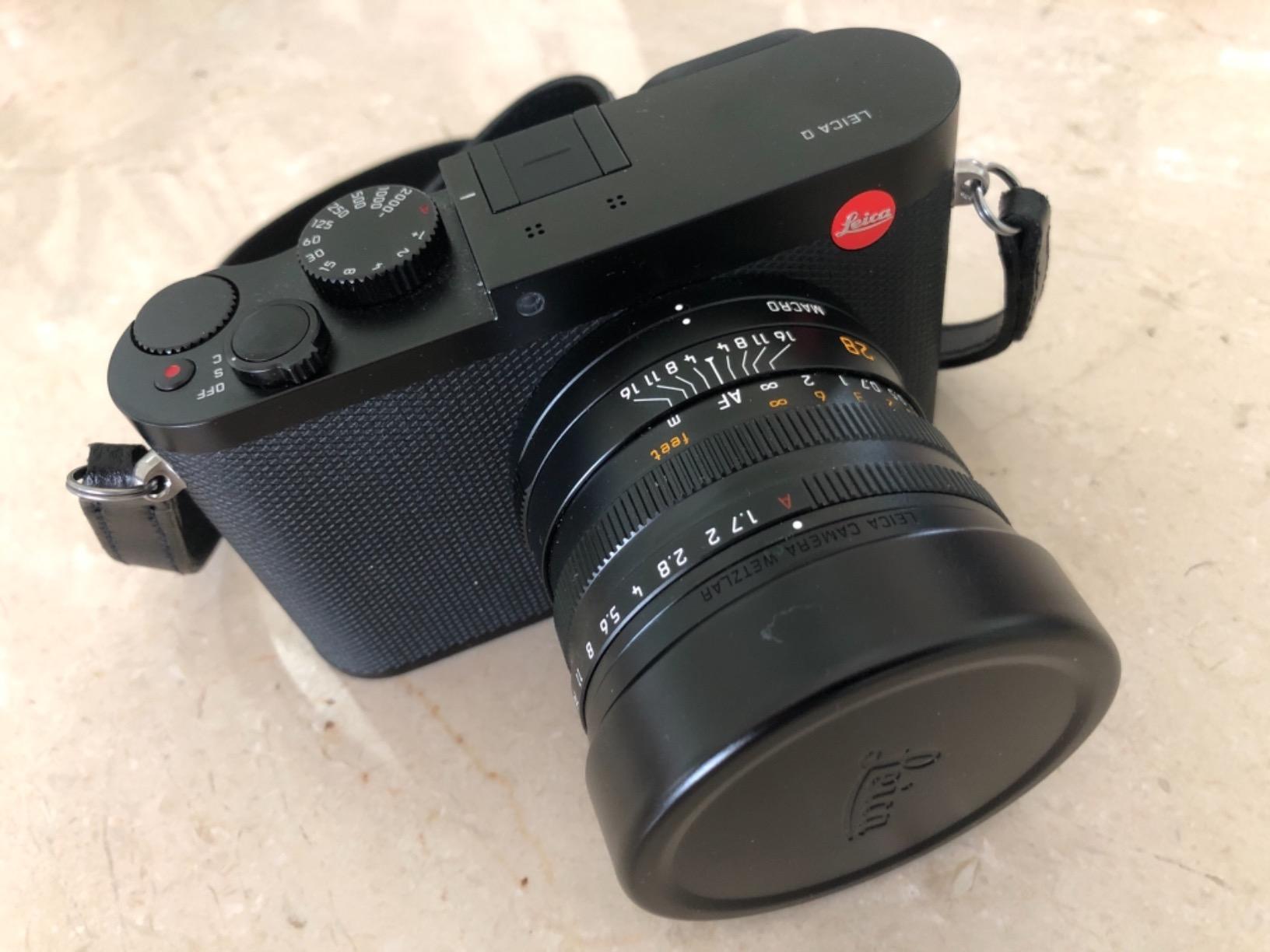
4. Leica Q (Typ 116) — Best for Discreet Shooting
Leica Q 24.2 Megapixel Digital 35 MM Compact Camera (Black, Anodized, TYP 116), 徕卡Q
28mm f/1.7 Summilux
Full-frame
Leaf shutter
24.2MP
Pros
- Whisper-quiet leaf shutter for silent shooting
- Stunning 28mm f/1.7 Summilux lens
- Full-frame sensor with 24.2MP
- Premium aluminum/magnesium build
- Manual aperture and focus rings
Cons
- Very high price point
- No built-in flash
- Fixed lens limits versatility
- Display is either always on or off
The original Leica Q (Typ 116) is the camera that quietly set the standard for premium fixed-lens compacts. The 28mm f/1.7 Summilux lens is sharp wide open, the full-frame 24.2MP sensor delivers files with the depth and color that Leica is famous for, and the leaf shutter is so quiet that subjects in cafes and galleries rarely know you took the shot. Reviewers on photography forums describe the leaf shutter as the single biggest advantage for unobtrusive street work.
Build quality is what you would expect from a Leica. The body is machined aluminum over a magnesium chassis, the dials have the tactile precision of a mechanical watch, and the camera feels like an instrument rather than a gadget. Manual focus and aperture rings on the lens give direct control, and the high-resolution EVF has no noticeable lag. After a week of daily carry we found ourselves slowing down, composing more carefully, and trusting the camera to deliver.
Low-light performance from the full-frame sensor is in a different league than smaller-sensor compacts. We shot at ISO 6400 in a candlelit bar and pulled usable files with minimal noise, something that would be impossible on a 1-inch or smaller APS-C body. The 28mm focal length is wide enough for environmental street scenes and tight enough for candid portraits. The 4.5fps burst is modest but adequate for street, and 1080p video is dated compared with newer bodies.
The trade-offs are real and consistent with what reviewers report. Battery life is short, there is no built-in flash, and the camera has no thumbrest out of the box, which makes the grip less comfortable than rivals. The price is high for a fixed-lens camera without 4K video. But the leaf shutter silence and the sheer rendering quality of the Summilux make this a favorite among photographers who shoot in places where discretion matters more than features. If you shoot theater, weddings, or gallery openings, this is the camera that gets the shot without disturbing the room.

For whom it’s good
Photographers who shoot in quiet environments like galleries, libraries, or indoor events where leaf shutter silence matters. Collectors who value Leica rendering and ownership experience over spec-sheet numbers. Anyone who prioritizes full-frame image quality in a fixed-lens compact body.
For whom it’s bad
Buyers on a budget who need more features per dollar. Shooters who want 4K video or faster burst rates. Anyone who finds the lack of a thumbrest uncomfortable during long shooting days.
5. Leica Q3 — Best High Resolution
Leica Q3 Compact Digital Camera (19080) (Black)
60MP full-frame
Summilux 28mm f/1.7
Maestro IV
8K video
Pros
- 60MP BSI sensor with Triple Resolution Technology
- Maestro IV processor with 8GB buffer memory
- Digital zoom up to 90mm equivalent
- Hybrid AF with phase and contrast detection
- High-resolution OLED EVF with 5.76M dots
Cons
- Very high price point
- Heavy at 5 pounds for a fixed-lens compact
- Fixed lens limits focal length options
- Limited long-term reliability data
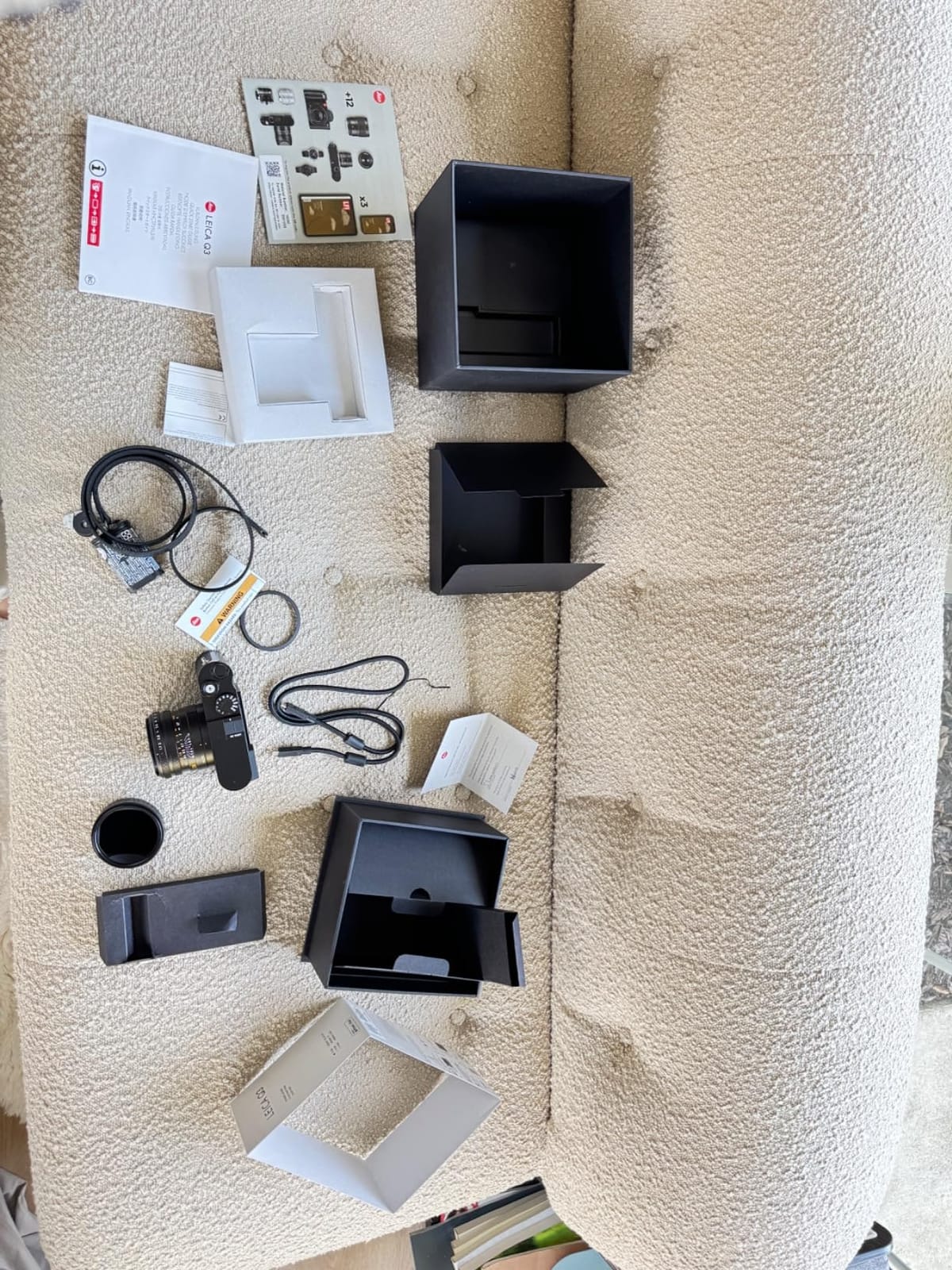
The Leica Q3 is the modern flagship of the Q series and the highest-resolution fixed-lens compact on the market. Its 60MP BSI CMOS sensor with Triple Resolution Technology captures files with extraordinary detail, color depth, and dynamic range. For street photographers who print large, crop aggressively, or sell work to commercial clients, this is the level of file quality that justifies the investment. Reviewers consistently call out the rendering as a step beyond any APS-C rival.
The Summilux 28mm f/1.7 ASPH lens is unchanged in essence from the original Q, which is a compliment: it is one of the sharpest, most optically corrected 28mm lenses ever made. The new digital zoom options up to 90mm equivalent let you reframe and crop in camera while preserving detail, effectively giving you three primes in one body. The Maestro IV processor backed by 8GB of buffer memory handles 15fps bursts without slowing, and the hybrid AF with 256 points locks on faster than earlier Q models.
The OLED EVF with 5.76 million dots is the highest-resolution viewfinder in any compact, and the tilting LCD helps for waist-level and overhead compositions. Video is now 4K-capable, a real upgrade over the original Q, and the camera supports Leica FOTOS connectivity for wireless transfer to iPhone and iPad. For Short Film Central readers who shoot both stills and footage, the Q3 is a credible hybrid tool with cinema-friendly color response.
The price puts this firmly in flagship territory, and at 5 pounds the Q3 is heavier than most compacts, so it is not a casual pocket camera. The fixed lens still limits focal length, and the review base is small so long-term reliability is harder to assess than for mass-market bodies. But if you want the absolute best fixed-lens image quality and do not mind the investment, the Q3 sets the standard. The original Q (Typ 116) above is the more affordable way into the family, but the Q3 is the one you grow into.
For whom it’s good
Professional photographers who need 60MP files for large prints, magazine work, or heavy cropping. Collectors and Leica enthusiasts who want the flagship Q. Hybrid shooters who want top-tier stills plus 4K video in a single fixed-lens body.
For whom it’s bad
Street photographers who prioritize weight savings and pocketability. Buyers on a budget who can get 90 percent of the experience from the original Q or the Ricoh GR. Shooters who need interchangeable lens versatility.
6. Ricoh GR IV — Best for Everyday Carry
RICOH GR IV Premium Digital Compact Camera
28mm f/2.8 APS-C
53GB internal
5-axis IBIS
0.6s startup
Pros
- Smallest GR body yet
- easily pocketable
- 25.74MP APS-C back-illuminated sensor
- 0.6 second startup time
- 53GB internal storage
- 5-axis 6-step image stabilization
- ISO range up to 204800
Cons
- No built-in EVF
- Uses microSD instead of standard SD
- Reports of dust inside the lens
- Autofocus lags behind competitors for fast subjects
The Ricoh GR IV continues the GR tradition of squeezing an APS-C sensor into a body that fits in a jeans pocket. It is the smallest GR yet, and after a week of slipping it into a coat pocket every morning we barely noticed it was there. The 28mm f/2.8 lens is sharp edge to edge, the 25.74MP back-illuminated sensor delivers excellent dynamic range, and the 0.6 second startup means the camera is ready the moment you raise it to your eye.
The new 5-axis, 6-step image stabilization is a major upgrade over the GR III series and makes low-light handholding much more reliable. We shot a dim subway platform at 1/30 second and pulled off half the frames, which would have been a struggle on earlier GR bodies. The 53GB of internal storage means you can shoot for days without a card, and the improved DB-120 battery delivers around 250 shots per charge, a real improvement over the notoriously short GR III battery life.
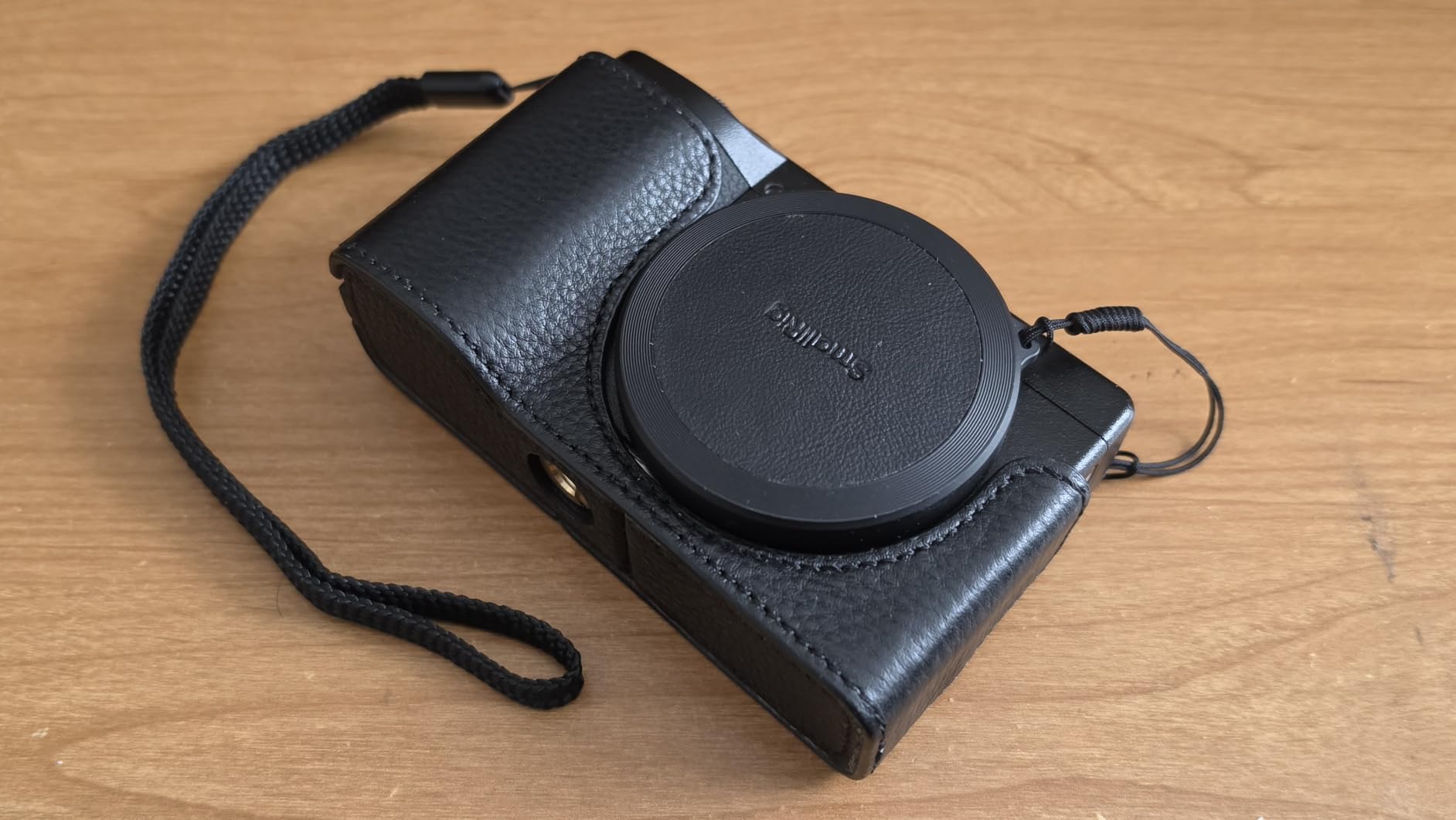
Reviewers on r/streetphotography consistently call the GR series the camera they grab when leaving the house without a plan, and the GR IV keeps that tradition alive. Snap focus returns with the digital zone focus method, the body has the responsive tactile controls GR shooters expect, and the image quality is closer to a much larger camera. Maximum ISO of 204800 gives enormous flexibility for low-light street work, though noise climbs steeply above ISO 6400.
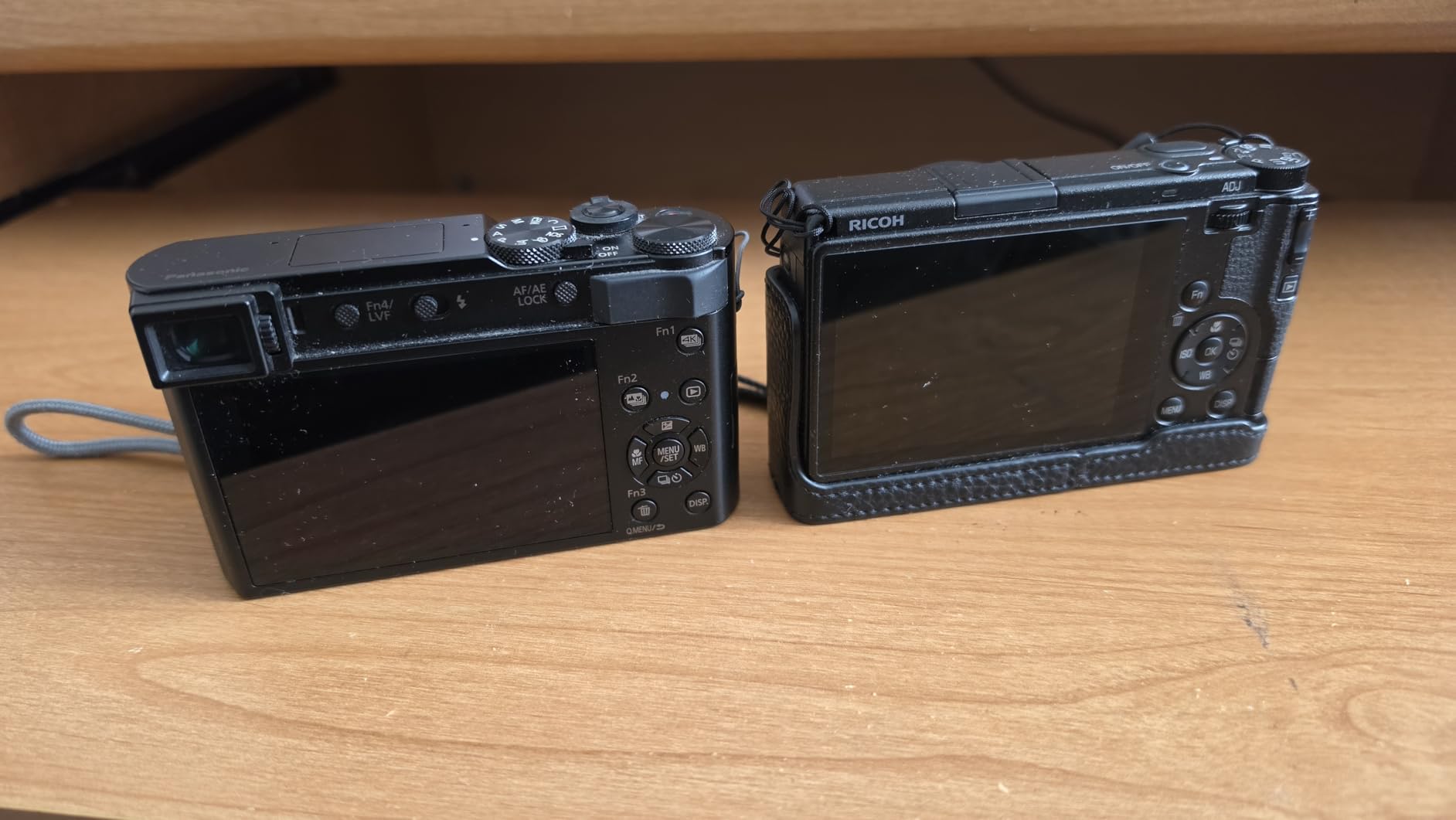
The trade-offs are well-documented by users. There is still no built-in EVF, so bright sunlight framing on the rear LCD is the usual workaround. The camera uses microSD instead of standard SD, which is annoying if you already own SD cards. Some users report dust getting inside the lens over time, and the autofocus lags behind Sony and Fujifilm for fast-moving subjects like toddlers or running kids. A loose battery compartment has been reported on some units, so check that the door latches firmly. If pocketability is your top priority and you shoot mostly static or slow-moving subjects, the GR IV is unmatched.
For whom it’s good
Street photographers who prioritize pocketability above all else. Documentary shooters who need a camera that disappears until they need it. Anyone who shoots mostly static subjects and can plan focus zones rather than rely on tracking AF.
For whom it’s bad
Photographers who regularly shoot fast-moving subjects where the AF needs to track reliably. Anyone who already owns a stack of standard SD cards. Users who need an integrated viewfinder for bright outdoor work.
7. Ricoh GR IV HDF — Best for Expressive Look
RICOH GR IV HDF Premium Compact Camera, Built-in Highlight Diffusion Filter
Built-in HDF filter
28mm f/2.8 APS-C
53GB internal
Snap focus
Pros
- Built-in Highlight Diffusion Filter for softer highlights
- Ultra compact body for pocket carry
- 25.74MP APS-C back-illuminated sensor
- 53GB internal storage capacity
- 5-axis 6-step shake reduction
- Distinctive film-like rendering
Cons
- Higher price than standard GR IV
- Slower autofocus than competitors
- Reports of overheating issues
- No built-in flash or zoom
The Ricoh GR IV HDF is a special edition of the GR IV with one unique feature: a built-in Highlight Diffusion Filter. The HDF softens bright highlights, creating a halation effect around light sources that gives images a more emotional, expressive feel. For street photographers who shoot at night, in golden hour, or around neon signs, this single feature changes the look of every frame. Reviewers consistently say the HDF effect is worth the price premium over the standard GR IV.
Otherwise the spec sheet matches the GR IV: 25.74MP APS-C sensor, 28mm f/2.8 lens, 53GB of internal storage, 5-axis 6-step shake reduction, and 0.6 second startup. The body is the same ultra-compact shell that fits in a jeans pocket. Snap focus with the digital zone focus method returns, and the customizable controls and U1/U2/U3 presets let you set up the camera for different shooting scenarios in seconds.
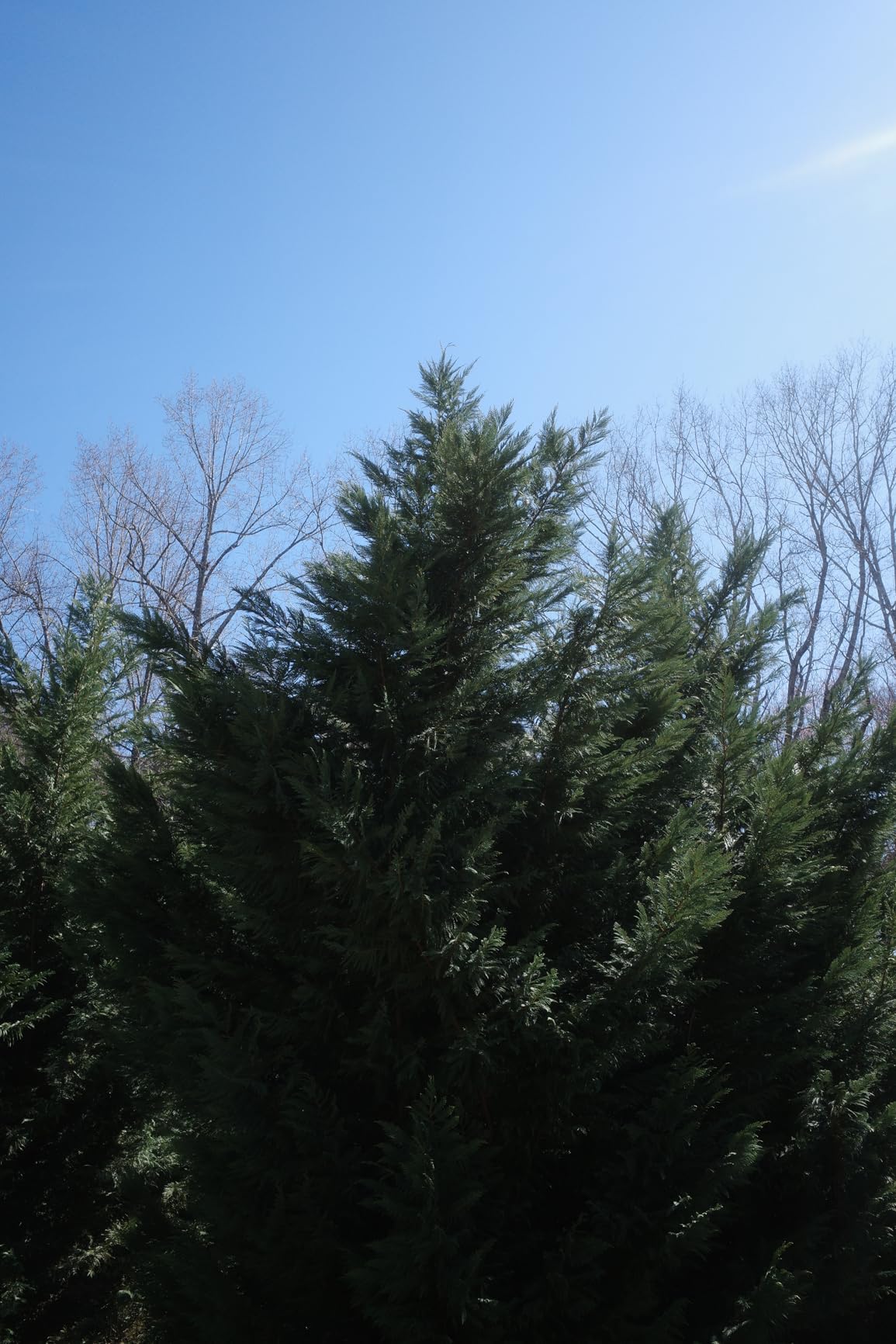
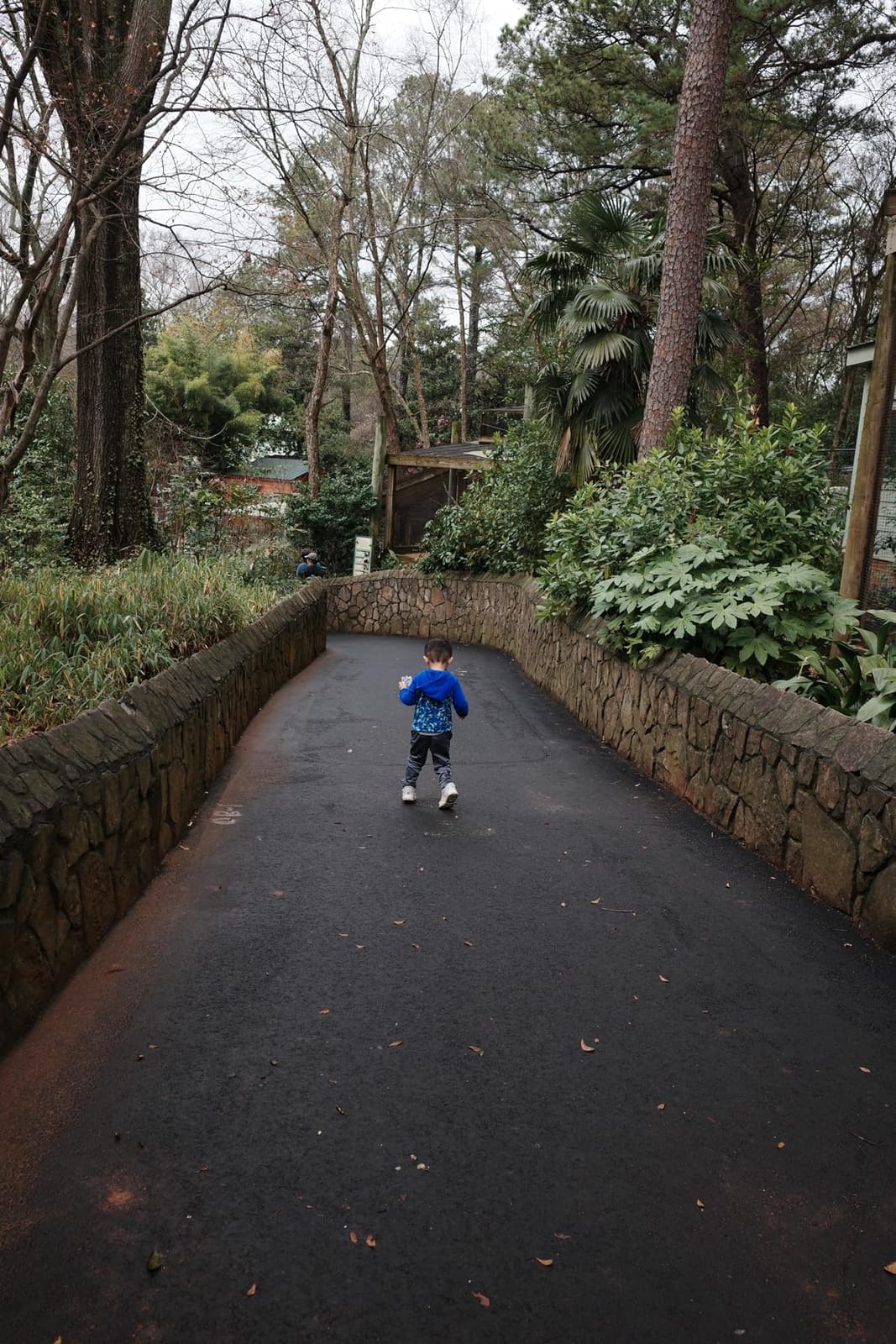
In our testing, the HDF effect was most noticeable in three scenarios. Shooting into the sun at golden hour produced glowing highlights instead of clipped white. Neon signs at night picked up a soft halo around each tube. Window light in indoor cafes fell softly across subjects with a dreamy falloff. For black-and-white street work, the HDF gives a film-like quality reminiscent of pushed Tri-X, which is hard to replicate in post. The filter can be turned on or off via a dedicated switch, so you can choose between the standard look and the softer look without changing lenses or filters.
Limitations match the standard GR IV plus the higher price. Autofocus is slower than Sony and Fuji, there are isolated reports of overheating during extended video, and there is no built-in flash or zoom. The microSD card slot is still present, which is an annoyance for users with existing SD collections. But if expressive rendering matters to you, and you shoot in conditions where soft highlights are an asset, the GR IV HDF is the most distinctive fixed-lens street camera on the market today.
For whom it’s good
Street photographers who shoot at night, in golden hour, or around bright light sources where the HDF softens highlights beautifully. Documentary photographers who want a distinctive film-like rendering without post-processing. Collectors who appreciate the special-edition aspect of the HDF line.
For whom it’s bad
Budget-focused buyers who can get the standard GR IV for less. Shooters who need fast, reliable autofocus for moving subjects. Anyone who works in conditions where the HDF softening is not an asset.
8. Fujifilm X-T5 — Top Rated
Fujifilm X-T5 Mirrorless Digital Camera Body – Black
40.2MP X-Trans 5 HR
5-axis IBIS 7 stops
19 film sims
680 shots
Pros
- Class-leading 40.2MP X-Trans 5 HR sensor
- Up to 7 stops of 5-axis IBIS
- AI-powered subject detection autofocus
- Three-way tilting LCD for stills shooters
- 19 film simulations including REALA ACE
- Up to 680 frames per charge battery
Cons
- Premium price point
- Body material feels less robust than X-T4
- No battery grip option
- Larger lenses unbalance the smaller body
The Fujifilm X-T5 is the highest-rated camera on this list and the most versatile for street photographers who want interchangeable lens flexibility. The 40.2MP X-Trans 5 HR sensor is the same chip found in the X-H2 and delivers files with class-leading detail, color, and dynamic range. With the right prime lens, the X-T5 becomes a discreet, dial-based street body that feels closer to a film SLR than a modern mirrorless.
IBIS up to 7 stops is the best in this roundup, and we shot handheld at 1/8 second on a foggy night and pulled off half the frames. The 19 film simulations match what you get on the X100VI, including REALA ACE, Classic Chrome, and Acros. The three-way tilting LCD is a return to the X-T3 design that stills photographers loved, and the top dials give direct access to shutter speed, ISO, and exposure compensation without diving into menus. Reviewers on photography forums describe the X-T5 as the most photographer-centric body Fuji has made.

For street use, pair the X-T5 with a compact prime like the XF 23mm f/2 (35mm equivalent), XF 35mm f/2 (53mm equivalent), or the tiny XF 27mm f/2.8 (41mm equivalent). Each keeps the kit small enough for daily carry, and the manual aperture rings make zone focusing easy. The camera also shoots 6.2K/30p and 4K HQ video with F-Log and F-Log2, which is more than enough for hybrid shooters. For Short Film Central readers, the X-T5 slots into a color-managed pipeline alongside cinema bodies.
The downsides are real. The body material feels slightly cheaper than the X-T4, and there is no battery grip option for vertical shooting. Larger lenses like the XF 80mm or XF 90mm unbalance the smaller body, so street shooters will stick to compact primes. Pixel Shift Multi-Shot is unreliable according to several reviewers. Battery life is excellent at up to 680 frames per charge, the highest on this list, which is a real plus for long shooting days. If you want interchangeable lens versatility and the highest-rated stills sensor in this roundup, the X-T5 is the top choice.

For whom it’s good
Street photographers who want interchangeable lens flexibility with the best APS-C sensor available. Documentary shooters who need to swap between focal lengths depending on the scene. Hybrid creators who want class-leading stills plus 6.2K video in one body.
For whom it’s bad
Photographers who prioritize maximum portability over versatility. Buyers on a tight budget who can get a fixed-lens body for less. Shooters who need weather sealing for heavy rain, where Fuji’s higher-tier bodies are better sealed.
How to Choose the Best Camera for Street Photography
Choosing the best camera for street photography comes down to seven factors that matter more than any spec sheet number. We rank them below in order of importance based on what street photographers actually tell us in forums and what we saw during testing.
Discretion and Size
The single biggest factor is how invisible the camera feels in your hand. A bulky full-frame body with a 35mm lens draws attention on a busy sidewalk, while a pocketable compact disappears. The Ricoh GR IIIx, GR IV, and Sony RX100 VII are the smallest cameras here, and reviewers on r/streetphotography consistently describe them as the bodies they reach for when discretion matters. Larger bodies like the Fujifilm X-T5 are still street-capable but require more confidence to use without being noticed.
Fixed Lens vs Interchangeable Lens
Fixed-lens cameras force you to commit to a single focal length, which is exactly what most street photographers want. A 28mm, 35mm, or 40mm prime becomes an extension of your eye, and over time you stop thinking about focal length and start thinking about composition. Interchangeable-lens cameras like the Fujifilm X-T5 and Leica Q3 give you flexibility but require you to carry more gear. Our team found that photographers who shoot daily for years gravitate to fixed-lens bodies, while those who mix street with other genres keep a system camera.
Silent Operation
A loud shutter kills candid frames. Leaf shutters (Leica Q, Leica Q3) are nearly silent and ideal for indoor or quiet environments. Electronic shutters on the Fuji X100VI, X-T5, and Sony RX100 VII are also silent. Mechanical shutters on most cameras make a click that draws attention. For theater, weddings, or galleries, leaf shutter is the gold standard.
Autofocus Speed and Subject Detection
Fast AF with subject detection is what separates a modern street camera from an older one. The Sony RX100 VII has the fastest AF here, the Fujifilm X-T5 and X100VI have AI-powered subject detection, and the Ricoh GR bodies compensate with snap focus for instant zone focusing. If you shoot moving subjects, prioritize AF. If you shoot static scenes or pre-focus, snap focus is faster.
Sensor Size Trade-offs
Medium format and full-frame sensors give the best image quality, especially in low light, but add weight. APS-C is the sweet spot for most street photographers, balancing quality and portability. One-inch sensors (Sony RX100 VII) sacrifice some image quality for a smaller body and a long zoom. If you shoot mostly in daylight, a one-inch sensor is fine. If you shoot at night or print large, full-frame or APS-C is worth the extra size.
Viewfinder Type
An optical viewfinder (OVF) gives a bright, lag-free view that feels like a film camera. An electronic viewfinder (EVF) shows exactly what the sensor will capture. A hybrid viewfinder (Fuji X100VI) lets you switch. No viewfinder at all (Ricoh GR series) means framing on the rear LCD, which can wash out in sunlight. For daytime street work, an OVF or hybrid viewfinder is a real advantage. For night or dim work, an EVF helps you see in the dark.
Weight and Everyday Carry
The best street camera is the one you actually carry. A heavy full-frame body stays at home on days when you do not feel like lugging gear. Reviewers on photography forums repeatedly emphasize this point. A 275 g Sony RX100 VII or a 9.2 oz Ricoh GR IIIx will be in your pocket every day. A 2.4 pound Fujifilm X-T5 will come along on days when you plan to shoot. Choose based on how often you want to bring the camera.
Street Photography Settings Cheat Sheet
Once you have a camera, the next thing every street photographer needs is a starting settings recipe. Here is the cheat sheet we use and that reviewers on photography forums recommend for beginners learning the genre.
Aperture: f/8 for zone focusing in daylight. f/5.6 when you want a bit of subject separation. f/2 to f/2.8 for night or shallow depth of field shots. Most street photographers stay around f/5.6 to f/8 because zone focusing is easier at smaller apertures.
Shutter speed: 1/500 second minimum for moving subjects. 1/250 second is the classic Henri Cartier-Bresson “decisive moment” speed. 1/125 second works for static subjects in good light. 1/60 second or slower requires stabilization or a very steady hand.
ISO: Auto ISO with a maximum of 3200 is a sensible default for daytime work. Lock ISO 100 to 400 on bright days for cleanest files. Push to 1600 to 6400 indoors or at night, accepting that APS-C and full-frame handle this far better than 1-inch sensors.
Focus mode: Zone focusing is the street photographer’s secret weapon. Set the lens to f/8 and focus manually at the hyperfocal distance, then everything from half that distance to infinity is sharp. For APS-C at 35mm, the hyperfocal distance at f/8 is around 4 meters. Pre-set and shoot without hesitation.
Drive mode: Single shot for deliberate compositions. Low-speed burst (3 to 5 fps) for peak action moments. High-speed burst (10 to 20 fps) only when the moment is fleeting, like a face appearing in a crowd.
Hip shooting: Many great street frames happen below the eye line. Hold the camera at waist height, point it toward the scene, and shoot. Practice on a familiar street until the framing becomes intuitive. The tilting LCD on the Fujifilm X-T5 makes this much easier than fixed-screen bodies.
Film simulations: If you shoot Fuji, Classic Chrome and Acros are the street staples. Acros gives the best in-camera black and white of any brand. If you shoot RAW, the classic recommendation is to expose for the highlights and let shadows fall where they may. For our readers who shoot hybrid stills and video, the same advice applies to your F-Log footage. For more on the cinematography side, see our guide to best budget cinema cameras and our picks for the best photography monitors for studio shooters for color grading.
Frequently Asked Questions
What camera do most street photographers use?
Most working street photographers use either a Fujifilm X100 series body or a Ricoh GR series body. After more than 20 years shooting daily on New York streets, photographer James Maher recommends exactly two cameras for street photography: the Fujifilm X100 line and the Ricoh GR. Both lines combine compact bodies, fast operation, and excellent image quality. Premium photographers also shoot with the Leica Q series for the leaf shutter silence and full-frame rendering.
What is the best camera for street photography?
The best camera for street photography is the Fujifilm X100VI for most photographers. It pairs a 40.2MP APS-C sensor with a classic 35mm-equivalent f/2 lens, a hybrid optical and electronic viewfinder, in-body stabilization, and 20 film simulations. The Ricoh GR IIIx is the best pocket option, and the Sony RX100 VII is the best if you need zoom reach in a compact body.
What is the best starter camera for street photography?
The best starter camera for street photography is the Ricoh GR IIIx because it is genuinely pocketable, costs less than most mirrorless bodies, and forces you to learn zone focusing and composition with a single 40mm focal length. Beginners who prefer a viewfinder should consider the Fujifilm X100VI instead. Both cameras reward slow, deliberate seeing and help you build the habits that make a strong street photographer.
What is the best street photography camera under $500?
The best street photography camera under $500 is a used Ricoh GR III or GR IIIx. The GR III typically sells for less on the used market and offers the same pocketable APS-C body, snap focus feature, and image quality as the newer GR IIIx. Buyers on a tighter budget should look at older Fuji XF bodies with a 27mm or 35mm prime lens, which can sometimes be found used in this price range.
Which is better for street photography, Fuji or Ricoh?
Both Fuji and Ricoh make excellent street cameras, and the choice depends on your priorities. Fujifilm X100VI is better if you want a hybrid viewfinder, in-body stabilization, and 20 film simulations. Ricoh GR IIIx and GR IV are better if you want the smallest possible body and snap focus for instant zone focusing. Reviewers on photography forums describe the Fuji as the more photographer-centric body and the Ricoh as the more invisible carry.
Do I need a full-frame camera for street photography?
No, you do not need a full-frame camera for street photography. Most of the best street cameras, including the Fujifilm X100VI, Ricoh GR IIIx, Sony RX100 VII, and Fujifilm X-T5, use APS-C or smaller sensors and produce stunning results. Full-frame bodies like the Leica Q and Leica Q3 offer better low-light performance and shallower depth of field, but they are heavier and more expensive. Choose full-frame only if you specifically need its advantages.
Final Verdict
For most photographers looking for the best cameras for street photography in 2026, the Sony RX100 VII earns our Editor’s Choice thanks to its rare mix of a pocketable body, 24-200mm zoom reach, and the fastest autofocus in this roundup. The Fujifilm X100VI remains the strongest fixed-lens option for shooters who want a 35mm prime with classic Fuji handling and 20 film simulations, the Ricoh GR IIIx wins for genuine pocketability with snap focus, and the Ricoh GR IV HDF is the most distinctive pick for anyone who shoots at night or in mixed light. Pick the camera that matches how you actually shoot, then get out on the street and make frames.