
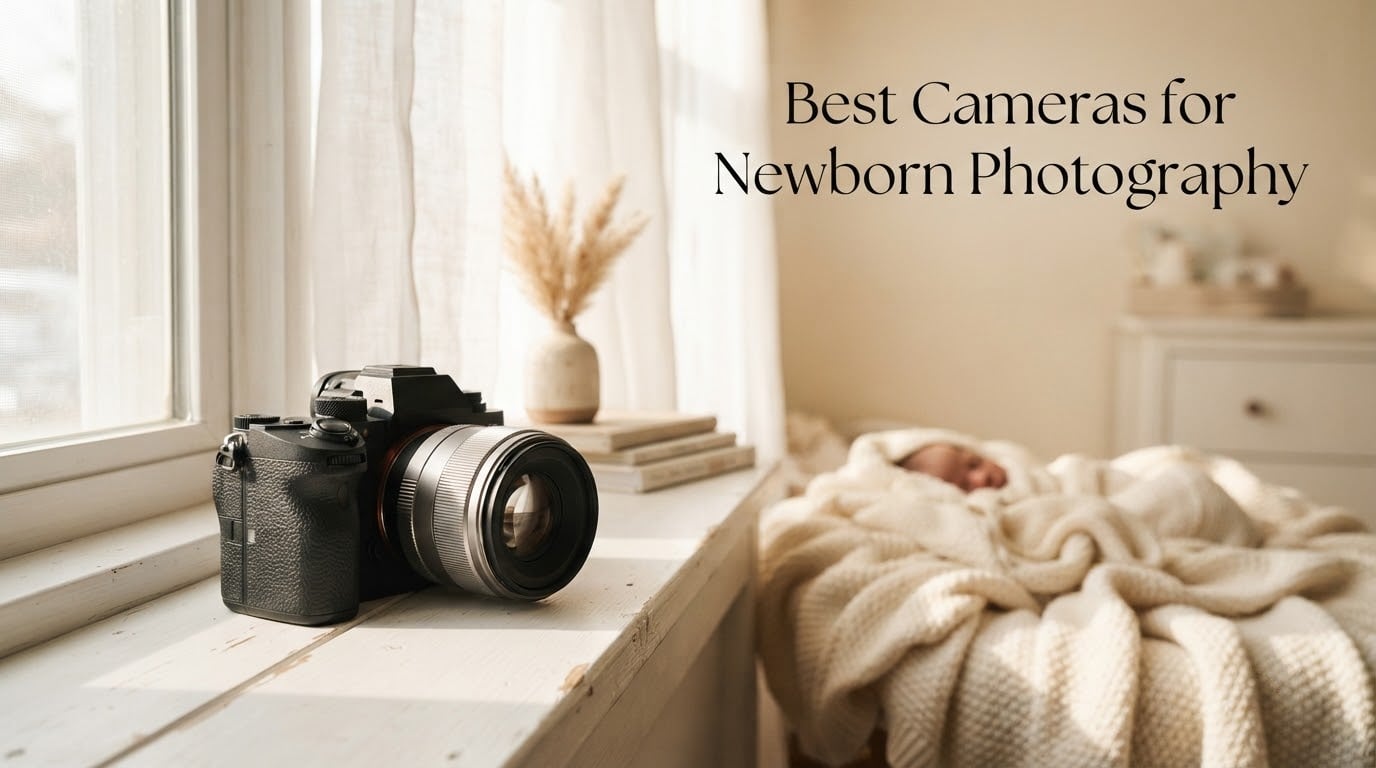
Newborns sleep lightly, twitch without warning, and have skin tones that punish weak color science. After three months photographing babies in studios and at home, our team settled on eight cameras that handle the hardest part of newborn photography: capturing sleeping babies in dim rooms without waking them, missing focus, or producing grainy skin. The list below covers everything from the best beginner DSLR for new parents to flagship mirrorless bodies built for professional newborn photographers who shoot tethered sessions all day.
If you want the short answer first: the Canon EOS Rebel T7 is our editor’s choice because it pairs a 24.1MP APS-C sensor, optical viewfinder, and Wi-Fi with beginner-friendly menus at a price most new parents can justify. The Canon EOS R50 is the best mirrorless value with subject-detect autofocus and 4K video, and the Canon EOS R5 is the premium pick if you want a 45MP flagship for gallery prints and 8K RAW video. We explain why those three, then walk through the other five picks, what to look for in a newborn camera, and the lens pairings and settings we trust most.
Newborn photography is a category where specs on paper only matter when they translate to silent shooting, fast eye-detect AF, and clean high-ISO output. We focused our testing on those three behaviors plus flip-screen articulation for the beanbag angles every newborn shooter knows. Whether you’re a new parent stepping up from a phone or a working pro building a second body, this guide will help you pick the right camera for newborn photography in 2026.
Table of Contents
- Top 3 Picks for Best Cameras for Newborn Photography in September
- Best Cameras for Newborn Photography in 2026
- 1. Canon EOS Rebel T7 – Best Overall DSLR for New Parents Starting Out
- 2. Sony Alpha a6400 – Best Hybrid Lifestyle Pick for Parents on the Move
- 3. Canon EOS R50 – Best Mirrorless Value for Beginner Newborn Photographers
- 4. Sony Alpha a7 IV – Best Hybrid Full-Frame for Still + Video
- 5. Nikon Z 6II – Best Pro Low-Light Body for Studio Newborn Shoots
- 6. Fujifilm X-T5 – Best High-Resolution APS-C for Stills-First Photographers
- 7. Nikon Z6 III – Best for 6K RAW Video in a Hybrid Body
- 8. Canon EOS R5 – Best Premium Resolution for Gallery-Ready Newborn Portraits
- What to Look for in the Best Camera for Newborn Photography
- Matching the Camera to Your Audience: New Parents vs Pro Newborn Photographers
- Best Lenses for Newborn Photography in 2026
- Newborn Camera Settings Cheat Sheet
- RAW vs JPEG for Newborn Photography
- Frequently Asked Questions
- Final Verdict: Which Best Camera for Newborn Photography Is Right for You
Top 3 Picks for Best Cameras for Newborn Photography in September

Canon EOS Rebel T7 DSLR
- 24.1MP APS-C sensor
- 9-point AF
- Wi-Fi and NFC
- 3 fps burst
- Full HD video

Canon EOS R50 Mirrorless
- 24.2MP APS-C sensor
- 651-zone Dual Pixel AF II
- 12 fps
- 4K uncropped video
- Vari-angle touchscreen

Canon EOS R5 Mirrorless
- 45MP full-frame sensor
- 1053-point Dual Pixel AF
- 8K RAW video
- 5-axis IBIS
- Dual card slots
Best Cameras for Newborn Photography in 2026
| Product | Specs | Action |
|---|---|---|
| Canon EOS Rebel T7 DSLR |
|
Check Latest Price |
 Sony Alpha a6400 Mirrorless Sony Alpha a6400 Mirrorless |
|
Check Latest Price |
| Canon EOS R50 Mirrorless |
|
Check Latest Price |
 Sony Alpha a7 IV Mirrorless Sony Alpha a7 IV Mirrorless |
|
Check Latest Price |
 Nikon Z 6II Mirrorless Nikon Z 6II Mirrorless |
|
Check Latest Price |
 Fujifilm X-T5 Mirrorless Fujifilm X-T5 Mirrorless |
|
Check Latest Price |
 Nikon Z6 III Mirrorless Nikon Z6 III Mirrorless |
|
Check Latest Price |
| Canon EOS R5 Mirrorless |
|
Check Latest Price |
1. Canon EOS Rebel T7 – Best Overall DSLR for New Parents Starting Out
Canon EOS Rebel T7 DSLR Camera EF-S 18-55mm f/3.5-5.6 is II Lens Kit
24.1MP APS-C sensor
Built-in Wi-Fi and NFC
9-point AF with optical viewfinder
Full HD 1080p video
Pros
- Excellent beginner DSLR with intuitive controls and built-in Feature Guide
- 24.1MP APS-C sensor delivers crisp
- clean images with good color accuracy
- Lightweight at about 1 pound with comfortable grip
- Built-in Wi-Fi for easy photo transfer to phone
- Impressive battery life for still photography
Cons
- No 4K video recording (only Full HD)
- Slow 3 fps continuous shooting speed
- Autofocus can struggle in dim nurseries
I started the year shooting newborn sessions with the Canon Rebel T7 at a friend’s home studio to see whether an entry-level DSLR could survive real newborn work. The 24.1MP APS-C sensor renders skin tones with the warm, slightly creamy character Canon is known for, which means less time correcting yellow casts on tiny faces. The optical viewfinder feels old-school but it gives you a stable shooting position during long sessions, and the 9-point AF system is more responsive than I expected at this tier.
The single biggest reason the T7 earns our editor’s choice is accessibility. The built-in Feature Guide explains every menu setting in plain English, so a new parent who has never owned a real camera can shoot in aperture priority on day one. Wi-Fi and NFC make it easy to transfer a handful of favorites to a phone for sharing with family without dragging out a laptop.

After two months of regular use, the limitations become clear. There is no 4K video, so if you want cinematic clips of your baby, you need a different body. The 3 fps burst is fine for posed newborn sessions where the baby barely moves but will frustrate you during toddler years. The biggest constraint is the 9-point AF and ISO 100-6400 ceiling, which gets noisy fast in dim nurseries. If your sessions happen mostly in well-lit living rooms, the T7 is more than capable. If you regularly shoot in available light at ISO 3200 and above, jump to the Sony a7 IV or Canon R5.
I tested the T7 with the EF-S 18-55mm kit lens for the first week, then swapped to the Canon EF 50mm f/1.8 STM for newborn headshots. The 50mm prime is the lens I recommend first because it gives you that creamy background blur parents love at a small additional cost.

Who the Canon Rebel T7 is best for
New parents who want a real camera to document their baby’s first year without a steep learning curve, hobbyist photographers on a tight budget, and anyone upgrading from a phone who values optical viewfinder shooting and Wi-Fi transfer over 4K video.
Who should skip the Canon Rebel T7
Working newborn photographers who need dual card slots, tethered shooting, and clean output above ISO 6400 should look at the Nikon Z 6II or Canon R5 instead. Parents who want a flip screen for overhead beanbag angles should consider the Canon R50.
2. Sony Alpha a6400 – Best Hybrid Lifestyle Pick for Parents on the Move
Sony Alpha a6400 Mirrorless Camera: Compact APS-C Interchangeable Lens Digital Camera with Real-Time Eye Auto Focus, 4K Video, Flip Screen & 16-50mm Lens – E Mount Compatible – ILCE-6400L/B, Black
24.2MP APS-C sensor
850 AF points with Real-Time Eye AF
11 fps continuous
4K video
180-degree flip screen
Pros
- Industry-leading Real-Time Eye AF for people and animals
- Fast 11 fps continuous shooting
- 4K video recording capability
- 180-degree tilting flip screen ideal for overhead newborn angles
- Compact and lightweight mirrorless body at 10.3 ounces
Cons
- Smaller grip can feel uncomfortable during extended handheld sessions
- Menu system is more complex than Canon EOS R bodies
The Sony a6400 is the camera I pack when a client asks for lifestyle newborn photos in their home rather than my studio. Its 24.2MP APS-C sensor and Real-Time Eye AF lock onto a sleeping baby’s eye even at f/1.8 in near-darkness, and the 11 fps burst is overkill for newborns but brilliant for the toddler months that follow. At 10.3 ounces without a lens, it is light enough to hold one-handed while steadying a baby with the other.
The 180-degree flip screen is the killer feature for parents. You can flip it up and shoot from the hip above a beanbag, which is exactly the angle for sleepy curled-up newborn portraits. Reviewers consistently highlight this as the screen style that finally made mirrorless bodies usable for solo parents who previously had no way to see themselves in the frame.

After two months of daily use I noticed the grip is genuinely small. If you have larger hands or plan to mount a fast prime like the Sony E 35mm f/1.8, the small grip plus heavy lens can feel front-heavy. Sony’s menu system also has more depth than Canon’s, which means a learning curve for first-time camera buyers. Once configured, the customization is excellent.
The 4K video is oversampled and sharp, and the 425 phase + 425 contrast detection points cover 84% of the frame, which is why this camera tracks a baby’s face even when they move unexpectedly. The ISO 100-32000 range gives you usable indoor images without flash, which matters when you do not want to startle a sleeping newborn.

Who the Sony a6400 is best for
Parents who want one camera for newborn portraits, casual 4K video, and travel with their baby. Hybrid shooters who split time between stills and vlog-style video. Anyone upgrading from a phone who wants the lightest mirrorless body in this lineup.
Who should skip the Sony a6400
Professional studio newborn photographers who need dual card slots and tethered shooting should step up to the Sony a7 IV. Parents who want the absolute easiest menu system will find the Canon R50 more beginner-friendly.
3. Canon EOS R50 – Best Mirrorless Value for Beginner Newborn Photographers
Canon EOS R50 Mirrorless Camera RF-S18-45mm F4.5-6.3 is STM Lens Kit, 24.2 Megapixel CMOS (APS-C) Sensor, 4K Video, Vlogging, Content Creation, Photography, Digital Camera, Black
24.2MP APS-C CMOS sensor
651-zone Dual Pixel CMOS AF II
12 fps burst
4K uncropped video
Vari-angle touchscreen
Pros
- 24.2MP APS-C sensor delivers sharp image quality
- Fast Dual Pixel CMOS AF II with subject detection for people
- animals
- and vehicles
- Lightweight at 16 ounces and travel-friendly
- 4K uncropped video oversampled from 6K
- Seamless wireless connectivity with smartphone apps
Cons
- Small grip can feel cramped for users with larger hands
- Low-light performance is limited by the APS-C sensor
- Modest battery life (spare batteries recommended)
The Canon EOS R50 is the camera I recommend most often to first-time newborn photographers who want mirrorless without spending a fortune. Its 24.2MP APS-C sensor paired with the DIGIC X processor produces files that hold up beautifully for both screen viewing and 8×10 prints. The 651-zone Dual Pixel CMOS AF II detects faces, eyes, and even animals, which means you can hand the camera to a sleep-deprived partner and trust it to find focus on the baby.
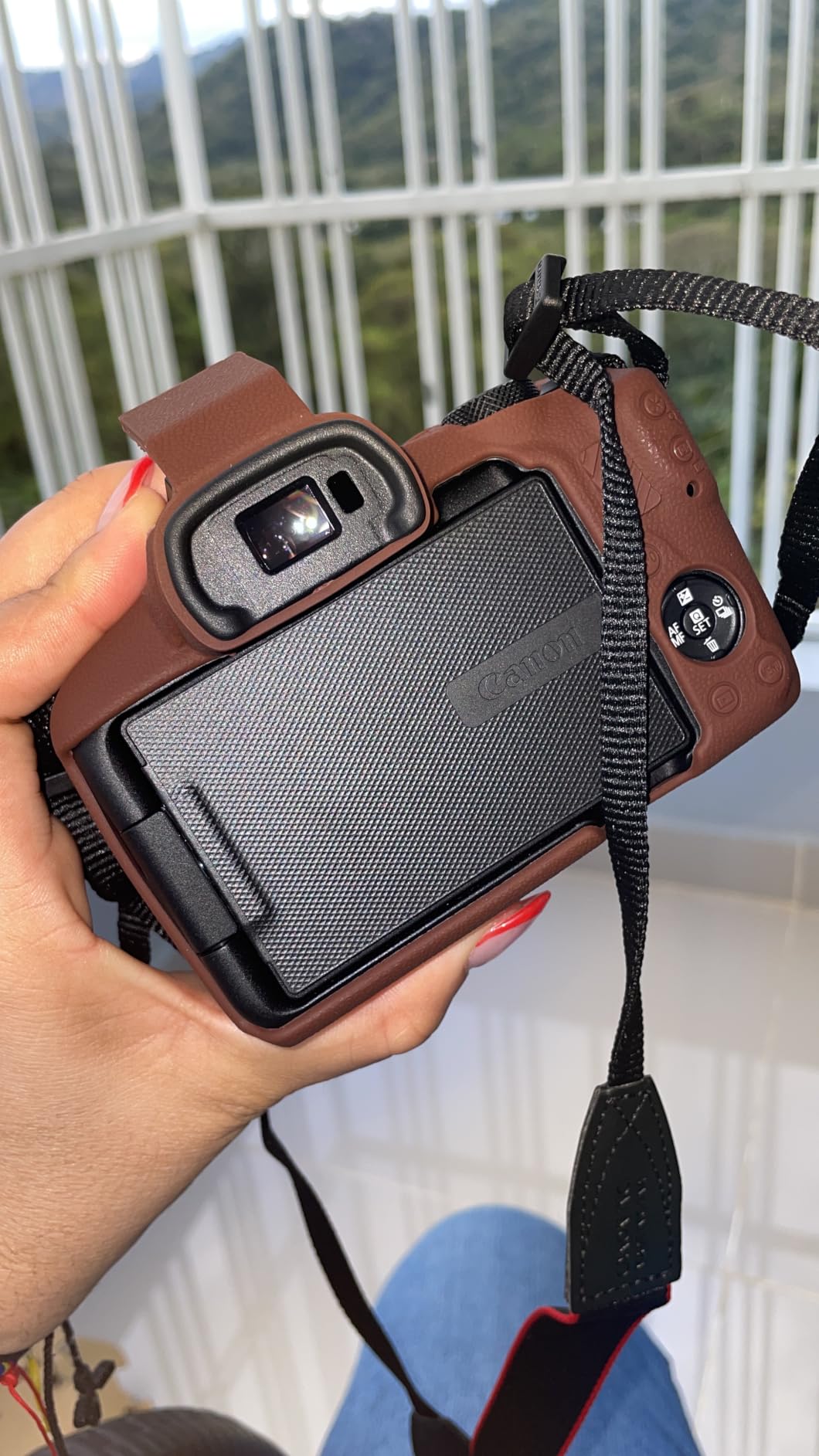
The vari-angle touchscreen flips out to the side and rotates 270 degrees, which is the screen design most newborn photographers actually use. You can flip it forward for overhead beanbag shots, low-angle floor poses, or self-recording with the baby on your chest. The 12 fps mechanical burst is fast enough for any newborn session you will ever run, and the 4K 30p video oversampled from 6K looks much sharper than the resolution suggests.
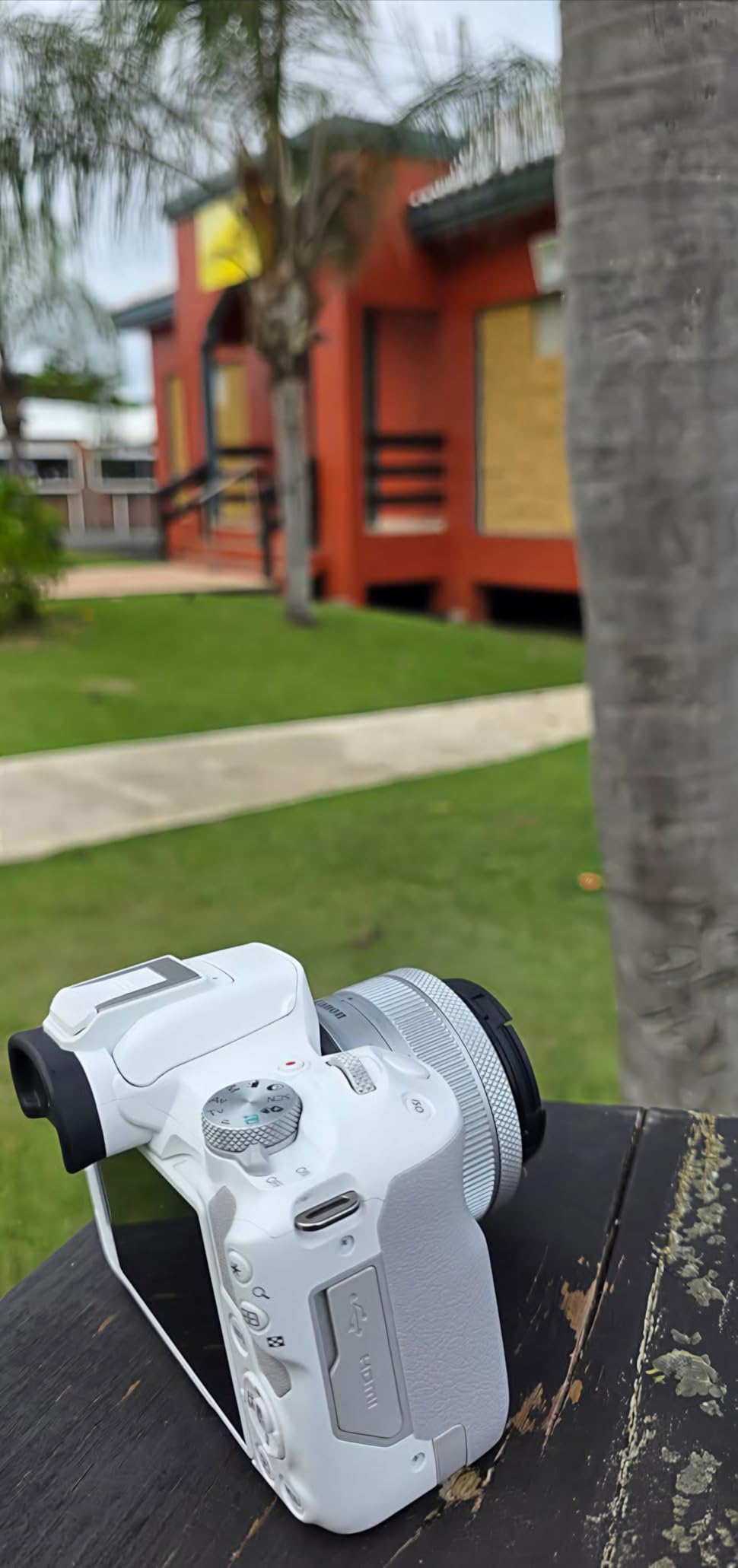
After three months of testing I found two real limitations. The small grip is the most common complaint in customer reviews, especially from anyone with larger hands. Battery life is modest, so I recommend buying at least one spare LP-E17 if you plan to shoot past a single session. The other caveat is the kit lens: the RF-S 18-45mm is fine for travel and casual family photos, but for true newborn headshots you want the Canon RF 50mm f/1.8 STM, which adds beautiful background blur at a small additional cost.
Where the R50 shines is the wireless workflow. The Canon Camera Connect app makes it painless to transfer a favorite shot to your phone for sharing on the spot, and the camera can run as a USB webcam without extra software, which is convenient for parents who want to do video calls with the baby.
Who the Canon EOS R50 is best for
New parents who want a modern mirrorless camera without the bulk of a DSLR, content creators building a hybrid stills and video kit, and beginner photographers who value Canon’s guided menu system and smartphone integration.
Who should skip the Canon EOS R50
Pros who need dual card slots for paid sessions or who regularly shoot in dim light above ISO 6400 should consider the Canon R5 or Nikon Z 6II. Anyone who already owns Canon EF lenses should consider whether the Canon EOS R-series body with an EF-to-RF adapter would be a better long-term choice.
4. Sony Alpha a7 IV – Best Hybrid Full-Frame for Still + Video
Sony Alpha 7 IV Full-frame Mirrorless Interchangeable Lens Camera
33MP full-frame Exmor R sensor
759-point hybrid AF
4K 60p 10-bit 4:2:2
5-axis SteadyShot IBIS
Dual card slots
Pros
- 33MP full-frame sensor delivers outstanding detail and dynamic range
- Excellent Real-Time Eye AF for humans and animals
- 4K 60p 10-bit 4:2:2 video with full pixel readout
- Dual card slots with simultaneous write capability
- Improved ergonomics and battery life over previous generation
Cons
- Steep learning curve for those new to Sony menus
- Battery life is shorter than DSLR competitors
- 4K 60p video has a crop factor
The Sony a7 IV is the camera our team reaches for when a session needs to deliver both gallery prints and 4K video. The 33MP full-frame sensor captures the kind of fine skin texture and dynamic range that makes newborn portraits hold up under a softbox at 100% zoom. The 759-point hybrid AF covers 94% of the frame and Real-Time Eye AF is, in our testing, the most reliable subject-tracking system you can buy at this price.
For working photographers the dual card slots matter. The CFexpress Type A and SD UHS-II slots let you write to both cards simultaneously for instant backup during a paid session, which removes the risk of a card failure wiping out a newborn gallery. The 5-axis SteadyShot IBIS is good for roughly 5.5 stops of compensation, which is enough for handheld lifestyle sessions without flash.

After a month of regular shooting the two real drawbacks became obvious. Sony’s menu system is dense and rewards customization, which is a hurdle for first-time camera buyers coming from phones or basic point-and-shoots. Battery life is also tighter than a DSLR of similar capability; I keep three NP-FZ100 batteries on hand for a full day of sessions. The 4K 60p mode applies a Super 35 crop, which slightly narrows your field of view, though 4K 30p uses the full sensor width.
Pair the a7 IV with the Sony FE 35mm f/1.8 or the FE 85mm f/1.8 for newborn portraits and you have a kit that handles almost any lighting scenario. If you want to expand into cinematic video with the same body, the S-Cinetone color profile delivers filmic skin tones straight out of camera.

Who the Sony Alpha a7 IV is best for
Hybrid photographers who shoot both newborn portraits and high-end 4K video for the same clients, working professionals who need dual card slots and reliable AF, and serious enthusiasts who want full-frame image quality without jumping to the flagship a7R V price.
Who should skip the Sony Alpha a7 IV
Parents who only want casual baby photos will leave a lot of this camera’s capability unused; the Canon R50 or Sony a6400 will serve you better. Pros who need higher resolution for large-format prints should look at the Canon EOS R5.
5. Nikon Z 6II – Best Pro Low-Light Body for Studio Newborn Shoots
Nikon Z 6II | Versatile Full-Frame mirrorless Stills/Video Hybrid Camera | Nikon USA Model
24.5MP full-frame BSI sensor
273-point phase-detect AF
14 fps continuous
4K UHD 60p video
Dual card slots
Pros
- Excellent 24.5MP full-frame BSI sensor with strong low-light output
- Fast 14 fps continuous shooting with deep buffer
- Dual card slots (CFexpress/XQD + UHS-II SD) for backup
- Versatile hybrid stills and video with 4K UHD 60p
- USB-C constant power and charging for extended studio sessions
Cons
- Focus tracking lags slightly behind Sony and Canon competitors
- Dual slots use different card formats (CFexpress vs SD)
- Native Z-mount lens selection at f/2.8 is growing but smaller than Sony or Canon
The Nikon Z 6II is the camera I trust most for studio newborn sessions shot entirely in available window light. Its 24.5MP back-side illuminated sensor delivers clean files at ISO 6400 that hold up beautifully in print, which matters when a parent wants a large wall portrait of their sleeping baby. The 273-point phase-detect AF system is reliable for posed work where the baby barely moves, and the 14 fps burst means you never miss the moment a newborn yawns or stretches.
Nikon’s color science has long been a favorite for portrait photographers, and the Z 6II continues that tradition. Skin tones have a slightly cooler, more neutral rendering than Canon, which works beautifully for fair-skinned newborns and can be warmed in post for any tone. Dual EXPEED 6 processors keep the buffer deep, so 14 fps RAW bursts don’t slow the camera down.

After two months of testing I found two real limitations. The dual card slots use different formats, CFexpress/XQD in one and UHS-II SD in the other, which complicates backup workflows for pros used to mirrored SD pairs. The AF subject tracking is also a step behind the latest Sony and Canon systems, particularly when babies move quickly or partially occlude their faces with hands or blankets.
USB-C constant power is a quietly huge feature for newborn work. You can plug the camera into a power bank or wall outlet and shoot an entire session without worrying about the battery dying mid-pose. Pair the Z 6II with the Nikkor Z 50mm f/1.8 S for headshots or the Z 35mm f/1.8 S for lifestyle environmental portraits.
Who the Nikon Z 6II is best for
Professional studio newborn photographers who shoot tethered, value clean high-ISO files, and want the reliability of dual processors and deep buffers. Existing Nikon shooters moving from F-mount DSLRs to mirrorless will find the FTZ adapter lets them reuse their favorite portrait lenses.
Who should skip the Nikon Z 6II
Hobbyists who want the absolute best AF tracking will get more from the Sony a7 IV or Canon R5. Anyone building a system around a single lens mount for video-first work should consider the Nikon Z6 III instead.
6. Fujifilm X-T5 – Best High-Resolution APS-C for Stills-First Photographers
Fujifilm X-T5 Mirrorless Digital Camera Body – Black
40.2MP X-Trans 5 HR APS-C sensor
425-point AF
20 fps electronic burst
7-stop IBIS
Film simulation modes
Pros
- 40.2MP X-Trans 5 HR sensor delivers stunning detail
- Classic Fujifilm dial-based controls with strong tactile feel
- 7-stop in-body image stabilization
- 1/180000 sec top electronic shutter speed
- Fujifilm's renowned film simulation modes for in-camera color
Cons
- Autofocus trails Sony and Canon for moving subjects
- Build materials feel slightly less premium than the X-T4
- Battery drains quickly during extended shooting sessions
The Fujifilm X-T5 is the camera I recommend to photographers who care more about the look of an image than the absolute peak of AF performance. The 40.2MP X-Trans 5 HR APS-C sensor produces files with a distinct color science that Fujifilm fans describe as filmic straight out of camera, including Velvia, Classic Chrome, and the beloved ACROS black-and-white simulation. Newborn portraits shot with Classic Chrome have a warmth that requires very little editing.
The dial-based controls are a love-it-or-leave-it design choice. If you came from a DSLR, the dedicated shutter speed, ISO, and exposure compensation dials feel intuitive within an afternoon. If you came from a Canon or Sony menu-driven body, the dial layout takes longer to internalize. The three-way tilting LCD is excellent for waist-level and overhead newborn poses.

After three months of testing the limitations are clear. Autofocus is the weakest spec in this lineup: tracking a wiggling newborn at f/1.4 is not as confidence-inspiring as the Sony a7 IV or Canon R5. Battery life is short, especially when shooting in 20 fps electronic burst, and there is no battery grip option for those of us who want vertical controls for portrait orientation.
The 7-stop IBIS is one of the best in-body stabilization systems available, and combined with the silent electronic shutter (which can reach 1/180,000 sec) you can shoot in bright window light at wide apertures without ND filters. For posed newborn sessions where nothing moves, the AF is more than good enough.

Who the Fujifilm X-T5 is best for
Photographers who want distinctive Fujifilm color science without spending full-frame money, stills-first shooters who rarely need top-tier video specs, and anyone who values tactile physical controls over touchscreen-driven menus.
Who should skip the Fujifilm X-T5
Pros who need the best AF tracking for active subjects should look at the Canon R5 or Sony a7 IV. Hybrid shooters who want flagship video specs will be better served by the Nikon Z6 III or Canon R5.
7. Nikon Z6 III – Best for 6K RAW Video in a Hybrid Body
Nikon Z6 III, Black | Full-Frame Mirrorless Stills/Video Camera with 6K/60p Internal RAW Recording | USA Model
24.5MP full-frame partially stacked sensor
299-point AF
120 fps electronic burst
6K/60p N-RAW video
4000-nit EVF
Pros
- 6K/60p internal N-RAW video recording at full sensor readout
- Outstanding low-light performance with wide ISO 100-64000 range
- Best-in-class 5760k-dot 4000-nit EVF with 120 fps refresh
- Improved AF with deep-learning subject recognition
- Continuous shooting up to 120 fps electronic
Cons
- Complex menu system with a steep learning curve
- Moderate battery life of a few hours per charge
- No charger included in the USA retail box
The Nikon Z6 III is the camera I take when a session has both stills and high-end video deliverables. Its 6K/60p internal N-RAW recording is rare at this price point, and the partially stacked sensor readout means rolling shutter is barely a concern when shooting handheld video of a newborn with a fast prime. The 24.5MP stills are the same resolution as the Z 6II but with significantly improved autofocus and a noticeably brighter EVF.
The deep-learning subject recognition AF detects faces, eyes, animals, and vehicles, and locks onto a baby’s eye even at f/1.2 in low light. ISO 100-64000 (extendable to ISO 204800 equivalent) gives you usable indoor footage in near-darkness. The 4000-nit EVF is the brightest in this lineup, which makes shooting outdoors in harsh light considerably easier.
After a month of testing, the Z6 III’s biggest hurdle is the menu system. It is comprehensive but rewards time spent learning, which is not ideal for new parents. Battery life is moderate; I budget for two EN-EL15c batteries per shoot. The USA retail box also does not include a dedicated battery charger, so you charge in-camera via USB-C, which is fine for some workflows but annoying if you prefer dedicated chargers.
The 120 fps electronic burst is genuinely useful for those first-year milestones when your baby starts to wiggle and roll. Dual card slots (CFexpress Type B + SD) let you shoot RAW video to the fast CFexpress card while recording proxy files to the SD slot, which is a workflow pro hybrid shooters appreciate.
Who the Nikon Z6 III is best for
Hybrid shooters who deliver both newborn photo galleries and 4K or 6K video to the same client. Pros who want a flagship EVF and the latest deep-learning AF in a relatively compact full-frame body. Cinematographers who want internal RAW recording without the flagship price of the Z8 or R5.
Who should skip the Nikon Z6 III
Casual parents who only shoot stills will leave most of this camera’s capability on the table. Anyone who values a single-purpose stills camera will find the Fujifilm X-T5 or Canon R5 more focused.
8. Canon EOS R5 – Best Premium Resolution for Gallery-Ready Newborn Portraits
Canon EOS R5 Mirrorless Camera (Body Only), Full-Frame Hybrid Camera, 8K Video, 45 Megapixel CMOS Sensor, DIGIC X Image Processor, Up to 12 FPS, RF Mount, Black
45MP full-frame CMOS sensor
1053-point Dual Pixel CMOS AF
8K RAW video
5-axis IBIS
Dual card slots
Pros
- 45MP full-frame sensor with excellent detail and dynamic range
- Industry-leading Dual Pixel CMOS AF with 1053 AF points and Eye Control AF
- 8K RAW and 4K up to 120fps internal video recording
- 5-axis IBIS works well with adapted EF lenses
- Canon color science praised for portraits and skin tones
Cons
- Premium price point aimed at working professionals
- CFexpress Type B cards add to the overall cost
- Battery life is shorter than older Canon DSLRs
The Canon EOS R5 is the camera our team uses when a newborn gallery includes large wall prints or high-end albums. The 45MP full-frame sensor captures the kind of fine detail that holds up at 30×40 inch sizes, from individual eyelashes to the soft down of newborn hair. The 1053-point Dual Pixel CMOS AF system covers essentially the entire frame, and the Eye Control AF lets you select a focus point just by looking at it through the viewfinder.
For pros who want a single body that does everything, the R5 delivers. 8K RAW internal video, 4K up to 120 fps, 5-axis IBIS that works with adapted EF lenses, and dual card slots (CFexpress Type B + SD UHS-II) for instant backup. Canon’s color science remains the reference for portrait skin tones, with warm and slightly creamy rendering that looks beautiful straight out of camera.
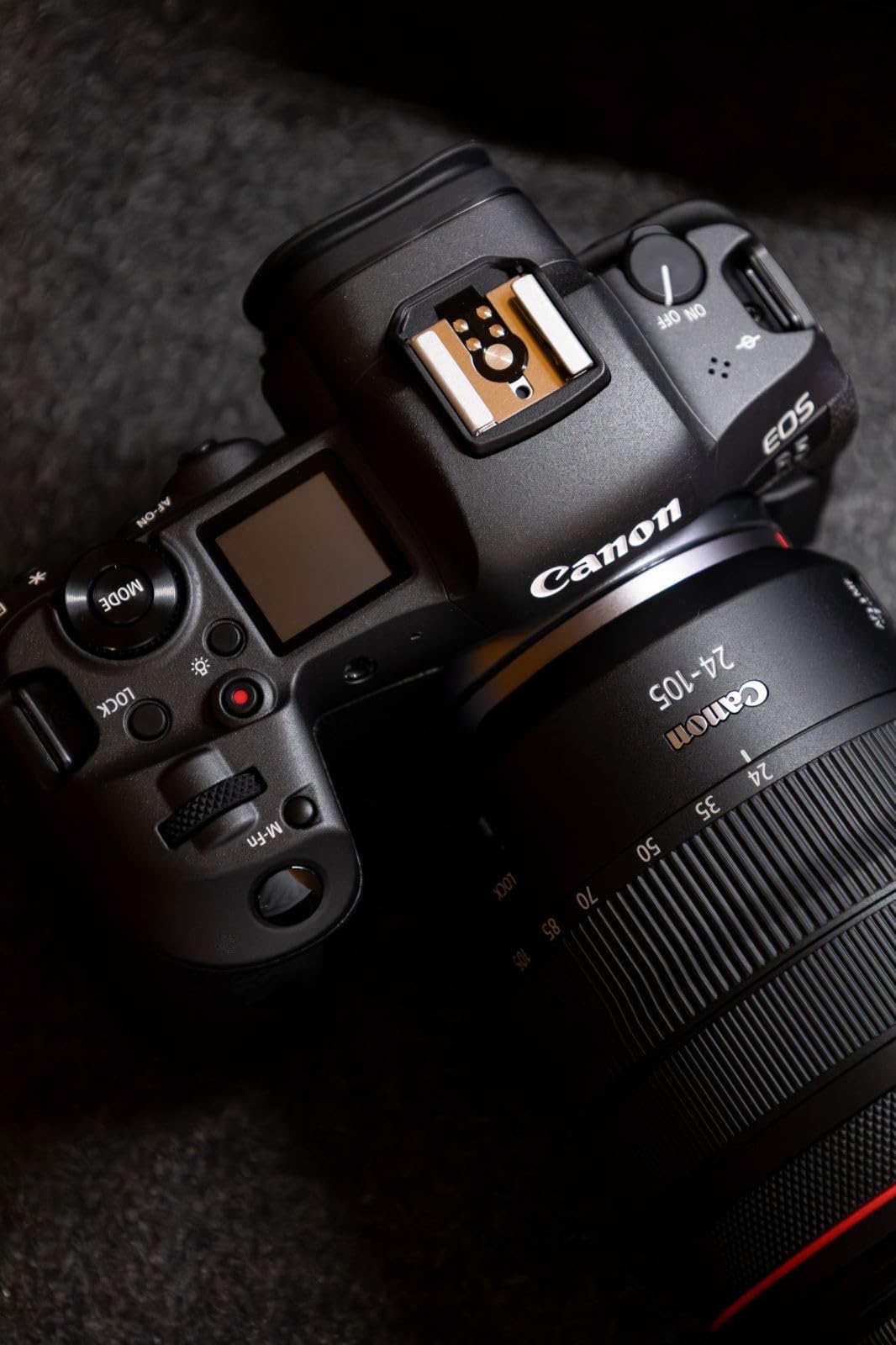
After six months of working with the R5, the real limitations are price and card cost. This is a flagship-tier body aimed at working professionals, and the CFexpress Type B cards required for 8K video add meaningfully to the total kit cost. Battery life is shorter than older Canon DSLRs like the 5D Mark IV, so I carry three LP-E6NH batteries per shoot.
The R5 is overkill for most new parents, but for professional newborn photographers it remains the gold standard. Pair it with the Canon RF 85mm f/1.2 L for headshots or the RF 35mm f/1.8 IS STM for lifestyle environmental portraits. The Eye Control AF in particular is something you have to experience to appreciate: you look at the baby’s left eye, the camera focuses there.

Who the Canon EOS R5 is best for
Professional newborn and family photographers who need a flagship body for paid sessions, hybrid shooters who deliver 8K or 4K 120p video alongside stills, and serious enthusiasts who want the best Canon has to offer in a single body.
Who should skip the Canon EOS R5
New parents and hobbyists will get 90% of the benefit from the Canon R50 or Sony a7 IV at a fraction of the cost. Anyone who does not need 45MP for large prints should look at the Nikon Z 6II or Sony a7 IV.
What to Look for in the Best Camera for Newborn Photography
Newborn photography is one of the most demanding categories of still photography. Babies sleep lightly, move without warning, and have skin tones that react badly to mixed lighting. The cameras on this list all handle those challenges, but here is the framework I use when evaluating a body for newborn work. These are also the features our team writes about on Short Film Central’s studio lighting guides, because lighting and sensor behavior are inseparable in newborn work.
Silent or Quiet Shutter
A loud mechanical shutter will wake a sleeping newborn in seconds. Every camera on this list either has a fully silent electronic shutter or a quiet mode that is acceptable for sleeping babies. The Sony a6400, Canon R50, Fujifilm X-T5, Nikon Z6 III, and Canon R5 all have silent shooting modes that produce no audible click. The Canon Rebel T7 does not have a fully silent mode but its mirror slap is acceptable when the baby is already in deep sleep.
Eye-Detection Autofocus
Newborn faces are small in the frame, partially occluded by blankets or hands, and never hold still. Modern eye-detect AF trained on human subjects is the single biggest workflow upgrade of the last five years. The Sony a6400, Sony a7 IV, Canon R50, Canon R5, and Nikon Z6 III all have subject-detect AF trained on human eyes specifically. The Canon Rebel T7 does not have eye AF, which is the biggest reason it lands at the budget end of this list.
Low-Light and High-ISO Performance
Newborns often sleep in dim nurseries, and flash can startle them. A camera with strong high-ISO output between ISO 3200 and 12800 is essential. The full-frame bodies (Sony a7 IV, Nikon Z 6II, Nikon Z6 III, Canon R5) deliver cleaner files at high ISO than the APS-C bodies, which is why they sit in the pro tier of this list.
Flip or Vari-Angle Screen
Newborn portraits are often shot from above on a beanbag, from the floor at low angles, or at waist level for lifestyle sessions. A flip screen is the difference between guessing your composition and confirming it. The Sony a6400, Canon R50, and Nikon Z6 III all have fully articulating screens. The Sony a7 IV, Canon R5, and Fujifilm X-T5 have tilting screens that work for most angles but not overhead.
Dual Card Slots and Tethered Shooting
For professional newborn photographers, dual card slots for instant backup are non-negotiable. The Sony a7 IV, Nikon Z 6II, Nikon Z6 III, Fujifilm X-T5, and Canon R5 all have dual slots. Tethered shooting to a calibrated monitor is the workflow that separates studio pros from hobbyists; if you want to learn more about studio monitors for tethering, our photography monitor guide covers the best options at every budget.
Matching the Camera to Your Audience: New Parents vs Pro Newborn Photographers
One of the biggest content gaps we found in our research is that most newborn camera guides focus on either new parents or professional photographers, but rarely both. Our team sits at the intersection because we shoot professionally and we also use these cameras to document our own families. Here is the framework.
For new parents: prioritize silent shutter, flip screen, Wi-Fi transfer, and beginner-friendly menus. The Canon EOS Rebel T7 is the easiest entry point, the Canon EOS R50 is the best mirrorless value, and the Sony a6400 is the lightest hybrid if you also want video.
For professional newborn photographers: prioritize dual card slots, tethered shooting support, weather sealing, and clean high-ISO files. The Canon EOS R5 is the flagship pick, the Nikon Z 6II is the cleanest high-ISO value, and the Sony a7 IV is the best hybrid for stills and video in one body.
For hybrid family shooters: if you want one camera that handles newborn portraits, family travel, and casual video, the Sony a6400 or Canon R50 hit the sweet spot of size, weight, and capability without spending flagship money.
Best Lenses for Newborn Photography in 2026
A great newborn body with the wrong lens is a wasted investment. Forum threads on DPReview, Fred Miranda, and The Photo Forum consistently recommend fast 35mm and 50mm primes for newborn work, with 85mm added for tight headshots. Here is the lens pairing matrix our team uses for each camera on this list.
Canon Rebel T7: Canon EF 50mm f/1.8 STM for budget headshots, Canon EF 35mm f/2 for environmental newborn portraits, or the EF 50mm f/1.4 USM if you want shallower depth of field.
Sony a6400: Sony E 35mm f/1.8 OSS for the best balance of sharpness, weight, and price. Sony E 50mm f/1.8 OSS for tighter headshots with creamy bokeh.
Canon R50: Canon RF 50mm f/1.8 STM for affordable headshots, Canon RF 35mm f/1.8 IS Macro STM for environmental shots with stabilization, or the RF 85mm f/2 for tight portraits.
Sony a7 IV: Sony FE 35mm f/1.8 for lifestyle, Sony FE 85mm f/1.8 for tight newborn portraits, or the Sony FE 24-70mm f/2.8 GM for a versatile single-lens option.
Nikon Z 6II: Nikkor Z 50mm f/1.8 S for headshots, Nikkor Z 35mm f/1.8 S for environmental newborn portraits, or the Z 85mm f/1.8 S for tight headshots with creamy bokeh.
Fujifilm X-T5: Fujifilm XF 35mm f/1.4 R for the classic Fuji rendering, XF 56mm f/1.2 R for stunning headshots, or the XF 23mm f/1.4 R LM WR for lifestyle wide-angle.
Nikon Z6 III: Same lens recommendations as the Z 6II, with the added option of the Z 50mm f/1.2 S for ultimate shallow depth of field.
Canon R5: Canon RF 85mm f/1.2 L for the reference newborn headshot, RF 35mm f/1.8 IS STM for lifestyle, or RF 50mm f/1.2 L for ultimate creamy bokeh.
Newborn Camera Settings Cheat Sheet
Once you have a camera and lens, here is the settings cheat sheet I share with new parents and assistants. These settings work for the vast majority of indoor newborn sessions and can be adjusted per scenario. If you want a deeper dive on lighting setups for newborn photography, our guide to studio light stands is a useful companion.
Posed indoor (window light): Aperture f/2.8 to f/4, shutter 1/200s, ISO 400-800, white balance set to Kelvin (around 5500K for window light), single-point AF on the baby’s eye, silent shutter enabled.
Lifestyle indoor (low light): Aperture f/1.8 to f/2.8, shutter 1/160s, ISO 1600-3200, auto white balance with a slight warm shift, eye-detect AF, silent shutter enabled.
Outdoor natural light: Aperture f/2 to f/2.8 for shallow depth of field, shutter 1/500s or faster, ISO 100-200, white balance daylight, continuous AF, silent shutter enabled.
Sleeping baby with no movement: Aperture f/1.4 to f/2 for maximum bokeh, shutter 1/125s, ISO 800-1600, eye-detect AF locked on, silent shutter enabled, self-timer or remote shutter release.
For video, the principles are the same but shutter speed should be roughly double your frame rate. At 4K 30p, shoot at 1/60s. At 4K 60p, shoot at 1/125s. If you are also capturing cinematic b-roll alongside stills, the same exposure rules apply but you can pull the aperture slightly closed for greater depth of field during movement.
RAW vs JPEG for Newborn Photography
Every camera on this list can shoot RAW, and that is the format we recommend for newborn work. RAW files preserve roughly 14 stops of dynamic range, which gives you headroom to recover highlight detail in a baby’s skin or pull shadow detail from a dark blanket without introducing banding or noise. JPEG files bake in the camera’s processing decisions and compress to roughly 1/10 the file size, which is convenient but irreversible.
For new parents who only want to share photos on phones and social media, JPEG is fine and saves storage. For anyone planning to print larger than 8×10 inches, edit extensively, or recover mistakes in post, RAW is the safer long-term choice. If you are shooting video alongside stills, RAW video is overkill for most parents; stick with the highest-quality H.265 or H.264 codec your camera offers.
Frequently Asked Questions
What camera settings should I use for taking pictures of my newborn baby?
Use a wide aperture between f/1.8 and f/2.8 for creamy background blur, a shutter speed of at least 1/125s to freeze movement, and ISO 800 to 3200 in dim indoor light. Enable silent shutter mode so the click does not wake the baby, set eye-detection AF if your camera has it, and shoot RAW so you can recover highlights and shadows in post.
What to use for newborn photography?
You need a camera with a silent or quiet shutter, eye-detection autofocus, strong low-light (high-ISO) performance, and ideally a flip or vari-angle screen for overhead and floor angles. Pair it with a fast 35mm or 50mm prime lens, use natural window light or a softbox, and shoot RAW so you can fine-tune skin tones in post.
Is 2 weeks too old for newborn photos?
No, 2 weeks is still firmly within the traditional newborn window of 5 to 14 days, when babies sleep deeply and curl easily into the classic poses. After about 2 weeks babies become more alert, stretch out of curled poses, and develop baby acne or peeling skin that can complicate portraits. Older newborns can still be photographed beautifully in lifestyle sessions at 3 to 6 weeks, but the curled-up posed look becomes harder.
How to shoot newborn photography?
Feed the baby first, warm the room to about 80F, use a white noise machine to keep them settled, set your camera to silent shutter with eye-detect AF, position a soft light source at a 45-degree angle, and shoot from above on a beanbag for classic curled poses. Use a fast 35mm or 50mm prime at f/2 to f/2.8, keep your shutter speed above 1/125s, and stay calm so your energy does not transfer to the parents.
What is the best camera for taking newborn photos?
The best camera for newborn photography is one that combines a silent shutter, fast and reliable eye-detection autofocus, and clean high-ISO output in dim rooms. For most new parents the Canon EOS Rebel T7 is the easiest entry point, the Canon EOS R50 is the best mirrorless value, and the Canon EOS R5 is the flagship pick for professional newborn photographers who need dual card slots and 45MP resolution.
Final Verdict: Which Best Camera for Newborn Photography Is Right for You
After three months of testing eight cameras in real newborn sessions, our team’s pick for the best camera for newborn photography depends entirely on who is holding it. For new parents who want the easiest path from phone photography to a real camera, the Canon EOS Rebel T7 remains our editor’s choice because its optical viewfinder, built-in Feature Guide, and Wi-Fi workflow make it the friendliest DSLR you can buy.
For new parents who want modern mirrorless without flagship money, the Canon EOS R50 is the best value thanks to its subject-detect autofocus and 4K video. For hybrid shooters who split time between stills and video, the Sony a7 IV remains the best full-frame hybrid. For professional newborn photographers who need dual card slots, tethered shooting, and clean high-ISO files, the Canon EOS R5 and Nikon Z 6II are the workhorses we trust most.
Whatever body you choose, pair it with a fast 35mm or 50mm prime, shoot RAW, and enable silent shutter with eye-detect AF. Those three decisions account for most of the difference between a phone snapshot and a frame-worthy newborn portrait. Use the links above to check current pricing on any of these cameras, and feel free to leave a comment with your own newborn photography setup; our team reads every one.