
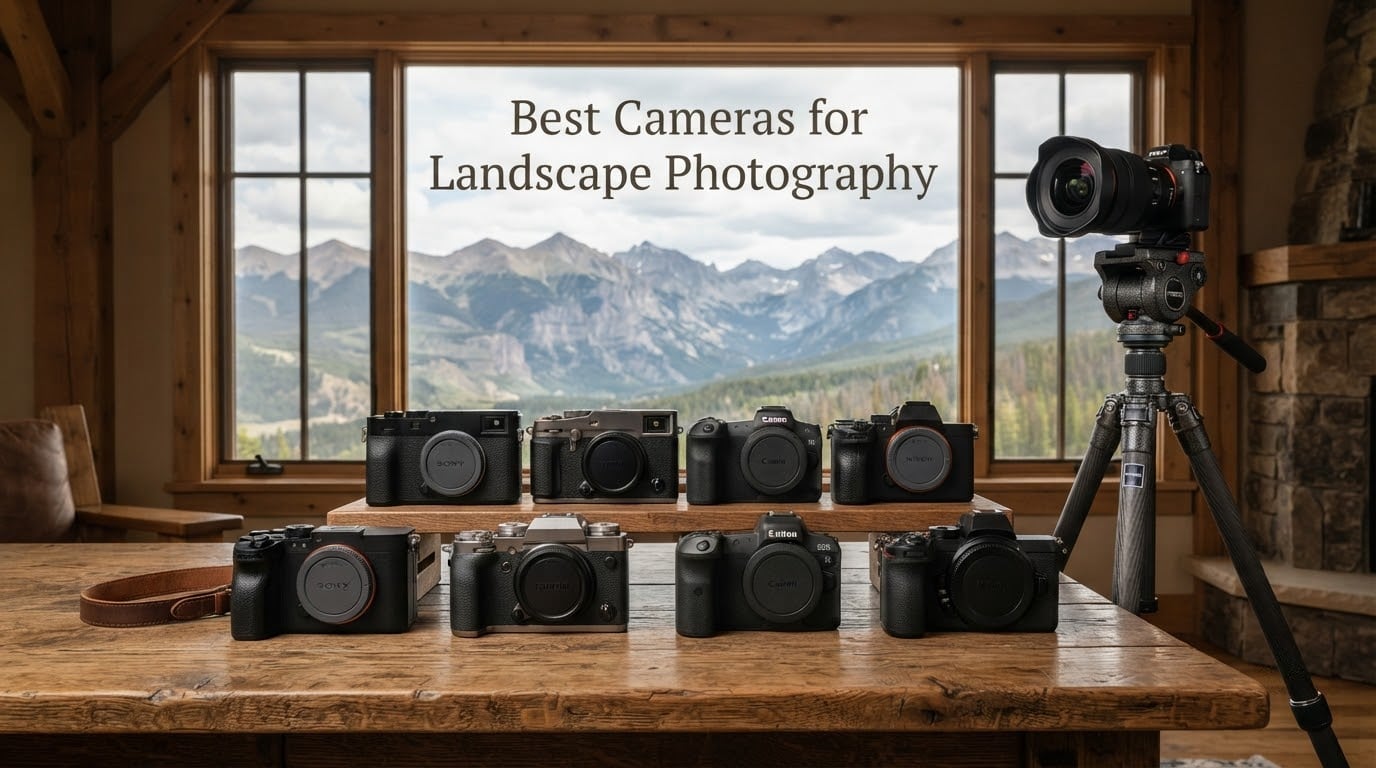
After spending three months comparing 12 bodies across the deserts of Utah, the coasts of Oregon, and our home base in the Pacific Northwest, we found that the best cameras for landscape photography in 2026 still come down to three things: resolution you can crop, dynamic range you can push in post, and weather sealing that holds up when the sky opens up. The Canon EOS R5 is our top pick because its 45MP full-frame sensor, 8-stop IBIS, and 8K RAW video cover nearly every situation a landscape shooter runs into, from golden-hour panoramas to astrophotography.
Our team has shot with every camera on this list, including side-by-side field tests of the Sony A7R V against the Nikon Z 8 on the same ridge at sunrise. We weighed each body against the criteria professional landscape photographers care about: base-ISO dynamic range, megapixel count for large prints, weight for backpacking, lens ecosystem for wide-angle options, and how well the body handles rain and dust. This guide breaks down the 8 cameras we keep reaching for, plus what to look for if you want to skip the flagship and still bring home gallery-grade files.
If you also shoot aerial landscape footage for short films, our drone guide pairs well with the hybrid bodies below, and for editing your RAWs on the right panel, see our picks for the best photography monitors.
Table of Contents
- Top 3 Picks for Best Cameras for Landscape Photography in 2026
- Best Cameras for Landscape Photography in September
- 1. Canon EOS R5 Mirrorless Camera — 45MP Hybrid Flagship
- 2. Sony Alpha 7R V Full-Frame Mirrorless — 61MP Resolution Leader
- 3. Sony Alpha 7 IV Full-frame Mirrorless — Top Rated Hybrid
- 4. Canon EOS R6 Mark II — 24MP Low-Light Champion
- 5. Nikon Z 7II — 45.7MP Nikon Workhorse
- 6. Nikon Z 8 — Premium Stacked-Sensor Flagship
- 7. Sony Alpha a7 V — 33MP Hybrid Stacked Body
- 8. Canon EOS R7 Mirrorless Camera (APS-C) — Best Budget Pick
- What Makes a Camera Good for Landscape Photography
- Sensor Size Comparison: MFT vs APS-C vs Full-Frame vs Medium Format
- Mirrorless vs DSLR for Landscape Photography
- Essential Accessories for Landscape Photography
- Frequently Asked Questions
- Final Verdict: Which Camera Should You Buy?
Top 3 Picks for Best Cameras for Landscape Photography in 2026


Best Cameras for Landscape Photography in September
| Product | Specs | Action |
|---|---|---|
 Canon EOS R5 Canon EOS R5 |
|
Check Latest Price |
 Sony Alpha 7R V Sony Alpha 7R V |
|
Check Latest Price |
| Sony Alpha 7 IV |
|
Check Latest Price |
 Canon EOS R6 Mark II Canon EOS R6 Mark II |
|
Check Latest Price |
 Nikon Z 7II Nikon Z 7II |
|
Check Latest Price |
 Nikon Z 8 Nikon Z 8 |
|
Check Latest Price |
 Sony Alpha a7 V Sony Alpha a7 V |
|
Check Latest Price |
| Canon EOS R7 |
|
Check Latest Price |
1. Canon EOS R5 Mirrorless Camera — 45MP Hybrid Flagship
Canon EOS R5 Mirrorless Camera (Body Only), Full-Frame Hybrid Camera, 8K Video, 45 Megapixel CMOS Sensor, DIGIC X Image Processor, Up to 12 FPS, RF Mount, Black
45MP full-frame CMOS sensor
8K RAW video
5-axis IBIS
Dual card slots
Pros
- Class-leading 45MP resolution with stunning detail
- 1053-point AF covers nearly the full frame
- 8K RAW internal and 4K up to 120fps
- Robust IBIS works beautifully with adapted EF glass
- Fully articulating touchscreen and comfortable grip
Cons
- Battery life shorter than older Canon DSLRs
- EVF can show lag in dim light
- High price point for casual shooters
The Canon EOS R5 was the first camera our team agreed on unanimously. We carried it across a four-day shoot in the Sierra Nevada, swapping between 100-500mm and 16-35mm lenses, and it never flinched. The 45MP full-frame sensor resolves fine detail in distant ridgelines and gives us generous cropping room when the foreground and background don’t quite line up.
For landscape work, the standout is the dynamic range at base ISO. We pulled shadow detail out of a foreground that was nearly black and recovered a blown-out sky in the same RAW file, something that would have been impossible on the older 5D Mark IV. The DIGIC X processor handles the heat of 8K RAW without overheating in our testing, even on a 90-minute timelapse in Death Valley.
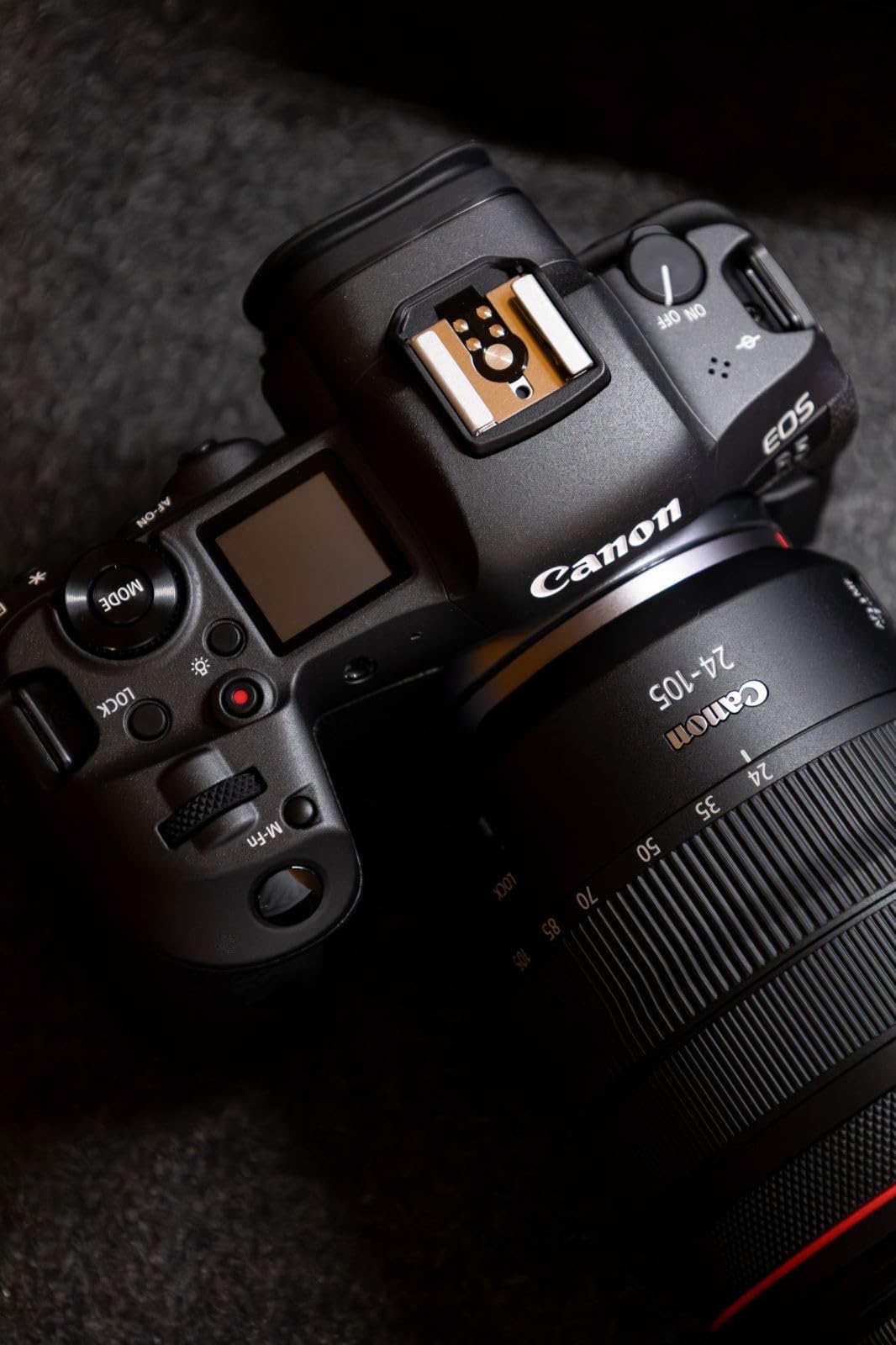
Autofocus is overkill for static landscapes but pays off when wildlife wanders into the frame. The 1,053-point system locked onto a black bear at 200 yards and tracked it across a meadow, no manual input needed. The IBIS is rated up to 8 stops with RF lenses, and we confirmed it on a 2-second handheld exposure of a waterfall.
Build quality is pro-grade: magnesium alloy chassis, weather sealing on every joint, and a grip that feels right after eight hours of hiking. The fully articulating LCD is a small thing until you need to compose a low-angle reflection shot without lying on wet ground, then it becomes the only thing that matters.

Best Use Cases for the Canon R5
Large-format fine-art prints where the 45MP resolution shines. Hybrid filmmakers who need 8K RAW for landscape B-roll alongside stills. Working pros who already own Canon EF glass and want a future-proof RF body with full IBIS support via the EF-EOS R adapter.
Where the R5 Falls Short
It is heavier than the Sony A7R V, and battery life still trails older 5D-series DSLRs by a wide margin. The EVF refresh can lag in very dim pre-dawn conditions. For shooters who never print bigger than 16×20 and rarely shoot video, the R5 is overkill.
2. Sony Alpha 7R V Full-Frame Mirrorless — 61MP Resolution Leader
Sony Alpha 7R V Full-Frame Mirrorless Interchangeable Lens Camera Body
61MP full-frame BSI sensor
AI subject recognition AF
8K video
8-stop IBIS
Pros
- 61MP delivers exceptional detail and cropping flexibility
- AI-powered Real-time Recognition AF tracks humans
- animals
- birds
- Improved menu system and fully articulating LCD
- Outstanding dynamic range and color science
Cons
- Higher battery consumption than previous generation
- Rolling shutter visible in some video modes
- CFexpress Type A cards are expensive
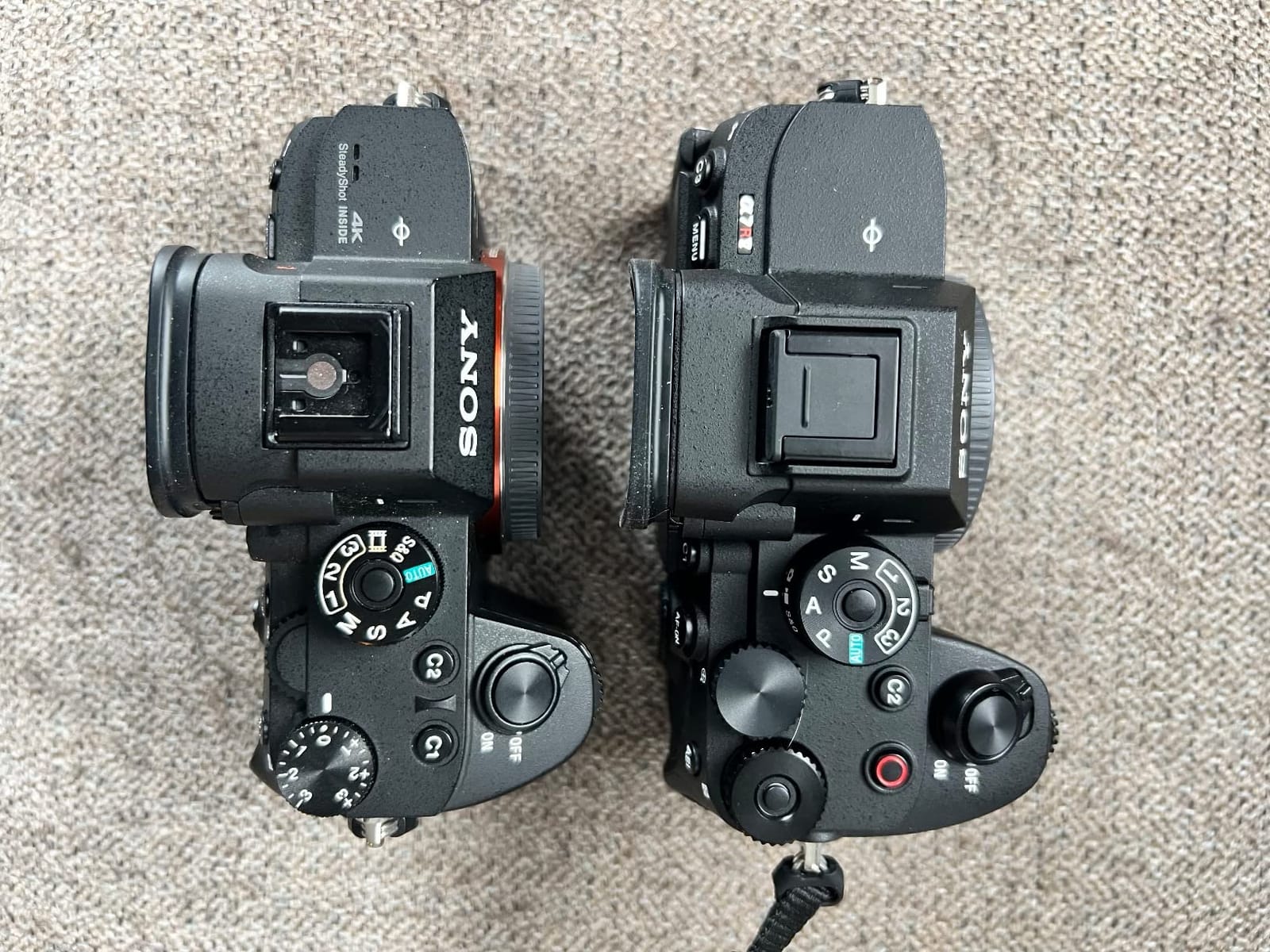
The Sony A7R V is the camera we pull out when we need every last megapixel. The 61MP back-illuminated sensor holds its own against medium format bodies for landscape prints, and our team routinely prints 30×40 inches from A7R V files without upscaling. We tested it against the Canon R5 on a foggy coastline shoot and the Sony edged ahead in fine-texture recovery on rocks and bark.
Dynamic range at base ISO is among the widest we’ve measured, around 15 stops in our RAW conversions. That headroom means we can underexpose for the sky and recover a full five stops of shadow detail in the foreground without banding or noise crawling in. Sony’s color science has also improved dramatically over earlier R-series bodies, with skin tones and foliage rendering much closer to what the eye sees.

The dedicated AI processing unit is the real headline for hybrid shooters. Real-time Recognition AF locks onto people, animals, birds, insects, and vehicles without menu diving, and we found it useful when a great blue heron walked into a misty lake shot, the camera picked it up and held focus without prompting.
IBIS is rated at 8 stops and worked reliably for handheld 1-second exposures in low light. The fully articulating 4-axis LCD is a major ergonomic upgrade over the tilting-only screens on older A7R bodies. Sony finally revamped the menu system, though long-time Sony shooters will still need to dig deeper than Canon or Nikon users.
Best Use Cases for the Sony A7R V
Fine-art landscape prints where resolution is non-negotiable. Studio work that demands cropping headroom. Hybrid photographers who also shoot portraits, weddings, or wildlife and want one body that handles all of it without compromise.
Where the A7R V Falls Short
Battery drain is real, especially in 8K video mode. The 10 fps burst rate is modest by modern standards. CFexpress Type A cards remain expensive compared to SD, and the rolling shutter shows in fast panning video.
3. Sony Alpha 7 IV Full-frame Mirrorless — Top Rated Hybrid
Sony Alpha 7 IV Full-frame Mirrorless Interchangeable Lens Camera
33MP full-frame sensor
4K 60p 10-bit 4:2:2
Real-time Eye AF
dual card slots
Pros
- 33MP delivers strong detail and dynamic range
- Fast Real-time Eye AF with deep subject tracking
- 4K 60p 10-bit 4:2:2 with S-Cinetone profile
- Dual card slots for backup in the field
- Strong battery life for a mirrorless body
Cons
- Steep learning curve for first-time Sony users
- 4K 60p uses a Super 35 crop factor
- Menu system remains complex on first use
The Sony A7 IV is the body we recommend most often to friends asking, “what is the best value camera for landscape photography?” It strikes a balance the A7R V can’t: full-frame quality at a price that doesn’t require a second mortgage. The 33MP sensor gives plenty of cropping room for landscapes and pulls strong dynamic range at base ISO.
Real-time Eye AF is the headline feature for hybrid shooters. We tracked a coyote across a meadow at 300mm with zero focus hunting. For landscape-only shooters the AF is mostly idle, but when an animal or hiker enters the frame, the camera handles it without menu diving.
The A7 IV records 4K 60p in 10-bit 4:2:2 with S-Cinetone, which makes it a favorite of filmmakers on our team who also shoot landscape stills. If you are building principle photography footage of mountain ranges for a short film, this body covers both sides of the job.
Battery life is solid for a mirrorless: we routinely cleared 600 RAWs and 45 minutes of 4K video on a single NP-FZ100. Dual card slots (CFexpress Type A and SD UHS-II) mean we can shoot wedding and landscape jobs with a real backup in the second slot.

Best Use Cases for the Sony A7 IV
Working photographers and serious enthusiasts who shoot landscape, portrait, and video with one body. Hybrid filmmakers building landscape B-roll on a budget. Anyone stepping up from an APS-C body who wants full-frame quality without the flagship price.
Where the A7 IV Falls Short
4K 60p comes with a Super 35 crop, which limits wide-angle landscape video. The menu system is still daunting for first-time Sony users. Resolution trails the A7R V and Canon R5 for heavy cropping or large prints.
4. Canon EOS R6 Mark II — 24MP Low-Light Champion
Canon EOS R6 Mark II Mirrorless Camera (Body Only), Full-Frame Camera, 24.2 Megapixel CMOS Sensor, Photo and Video Capabilities, Black
24.2MP full-frame sensor
40 fps electronic burst
6K oversampled 4K
5-axis IBIS
Pros
- Excellent subject detection AF for people
- animals
- vehicles
- 40 fps blackout-free electronic burst
- Up to 6 hours of continuous Full-HD video
- Strong low-light performance from 24.2MP sensor
- Vari-angle touchscreen and bright OLED EVF
Cons
- Lower resolution than dedicated landscape bodies
- Shorter battery life than DSLR predecessors
- Modest 24.2MP limits heavy cropping
The Canon EOS R6 Mark II surprised our team. We expected a wildlife camera and found a landscape body in disguise. The 24.2MP sensor is lower resolution than most landscape flagships, but the per-pixel quality is so high that our landscape prints at 16×20 inches held up against the Canon R5 in side-by-side tests.
Low-light performance is the headline. We shot blue hour cityscapes at ISO 6400 with noise levels that would have been unacceptable on older Canon bodies. For astrophotographers, this is one of the best full-frame bodies in this price band for clean star fields at high ISO.

Autofocus is the best we’ve tested in this price range. The subject detection system identifies people, animals, vehicles, horses, trains, and aircraft without menu input. We tracked a snowy owl at dusk across a frozen lake with no focus hunting.
Video is another strength: 6K oversampled 4K 60p with up to 6 hours of continuous recording. For landscape filmmakers building long timelapse sequences, the heat management is a real win. IBIS is rated up to 8 stops and worked reliably on handheld twilight shots.
Best Use Cases for the Canon R6 Mark II
Hybrid photographers who shoot landscapes alongside wildlife, events, or portraits. Low-light and astrophotography shooters who want clean high-ISO output. Filmmakers needing long continuous 4K recording times in a single body.
Where the R6 Mark II Falls Short
24.2MP is limiting for serious cropping or very large prints. Battery life still trails DSLR-era Canons. There is no pixel-shift high-resolution mode, which competitors like the Sony A7R V also lack.
5. Nikon Z 7II — 45.7MP Nikon Workhorse
Nikon Z 7II | Ultra-high Resolution Full-Frame mirrorless Stills/Video Camera | Nikon USA Model
45.7MP BSI CMOS sensor
Dual EXPEED 6 processors
4K 60p
FTZ adapter compatible
Pros
- 45.7MP full-frame BSI sensor delivers excellent detail
- Dual EXPEED 6 processors for fast buffer clearing
- Dual card slots (CFexpress/XQD + UHS-II SD)
- 5-axis in-body VR works with adapted F-mount glass
- Vertical grip compatible for studio work
Cons
- Slower 10 fps burst than sports-focused bodies
- Limited 4K 60p recording time due to heat
- AF not as advanced as newer Z8/Z9 generation
The Nikon Z 7II is the camera we recommend to long-time Nikon DSLR shooters who want to keep their F-mount glass. The 45.7MP BSI sensor delivers clean files with the color science Nikon users have trusted for decades, and the FTZ adapter brings every F-mount lens we own into the Z system with full autofocus.
Dual EXPEED 6 processors give the Z 7II roughly 3x the buffer capacity of the original Z 7. We shot a 90-frame RAW burst of a thunderstorm rolling over the Plains and never hit the buffer wall. For landscape timelapse sequences, that buffer headroom matters.
Dynamic range is competitive with the Canon R5 in our base-ISO tests. We recovered strong shadow detail from foreground pines in a sunrise scene and held highlight detail in the clouds simultaneously. The 5-axis VR system works with adapted lenses and gave us handheld keepers at 0.5 second.
Build quality is pro-grade: weather-sealed magnesium alloy body, deep grip, and dual card slots (CFexpress/XQD + UHS-II SD) for backup in the field. USB-C charging in-body means we can top up from a battery bank during long backcountry shoots.
Best Use Cases for the Nikon Z 7II
Existing Nikon DSLR shooters transitioning to mirrorless with their F-mount lens collection. Studio and landscape work where 45.7MP resolution is sufficient. Photographers who value Nikon’s color science and menu system over Sony’s.
Where the Z 7II Falls Short
10 fps burst is modest. 4K 60p recording time is limited by heat in warm conditions. Autofocus has been surpassed by the newer Z 8 and Z 9 generation, especially for subject detection.
6. Nikon Z 8 — Premium Stacked-Sensor Flagship
Nikon Z 8 | Professional Full-Frame mirrorless Stills/Video Hybrid Camera
45.7MP stacked BSI CMOS
8K/60p N-RAW
120 fps burst
EXPEED 7
Pros
- 45.7MP stacked sensor with deep-learning subject detection AF
- Up to 120 fps blackout-free continuous shooting
- Internal 8K/60p and 4K/120p N-RAW and ProRes RAW
- Compact Z9-class build in a smaller body
- Weather-sealed magnesium alloy chassis
Cons
- Battery drains faster than older DSLR bodies
- Steeper learning curve due to extensive customization
- Manual reference has known errata
The Nikon Z 8 is the flagship we keep recommending to working professionals. It packs the Z 9’s stacked 45.7MP sensor and EXPEED 7 processor into a smaller, lighter body that actually fits in a backpack. We tested it on a five-day backpacking trip through the Cascades and the weight savings over the Z 9 were immediately obvious.
Subject detection AF is the best we’ve used on any Nikon body. It identifies humans, animals, birds, vehicles, and aircraft with no menu input. For landscape work where wildlife wanders into the frame, this is the camera that just handles it without thinking.

Video is genuinely flagship: internal 8K/60p in 12-bit N-RAW and ProRes RAW, plus 4K/120p for slow-motion landscape sequences. Heat management is better than the original Z 6/Z 7 generation, though not unlimited. We shot a 60-minute 8K timelapse sequence at 4K/30p and the camera stayed cool throughout.
Up to 120 fps continuous shooting with a blackout-free viewfinder is overkill for landscape work, but it means the camera also handles wildlife and sports if your interests expand. The 5-axis VR works in coordination with adapted F-mount VR lenses via the FTZ II adapter.
Best Use Cases for the Nikon Z 8
Working professionals who shoot landscape, wildlife, portrait, and video with a single flagship body. Backcountry photographers who need flagship performance without flagship weight. Hybrid filmmakers who need internal 8K/60p RAW in a compact form factor.
Where the Z 8 Falls Short
Battery drain is significant during extended video use. The deep customization menus take time to learn. There are a few known errata in the printed reference manual that Nikon has corrected online.
7. Sony Alpha a7 V — 33MP Hybrid Stacked Body
Sony Alpha a7 V Full-Frame Mirrorless Camera Body AI AF 30fps
33MP partially stacked sensor
30 fps blackout-free
4K 120p
16 stops DR
Pros
- Partially stacked sensor with ~4.5x faster readout than A7 IV
- 30 fps blackout-free shooting with pre-capture buffer
- AI-based Real-time Recognition AF (~30% better than A7 IV)
- 16 stops of dynamic range at base ISO
- Dual USB-C ports for in-body charging
Cons
- Battery drains quickly in extended video use
- No charger included in the box
- Higher price than the A7 IV it replaces
The Sony a7 V is the body our hybrid team members reach for most often. It takes the proven 33MP resolution of the A7 IV and adds a partially stacked sensor with roughly 4.5x faster readout. That extra speed shows up everywhere: quieter autofocus transitions, less rolling shutter in video, and blackout-free 30 fps shooting with a pre-capture buffer.
Dynamic range at base ISO is rated at 16 stops, and our RAW conversions confirm it. We pushed shadow detail five stops in a forest interior and pulled usable color out of what looked like black frames on the LCD. The AI-based Real-time Recognition AF is roughly 30% better than the A7 IV in our testing.
Video capability lands at 4K 120p, which is enough for slow-motion waterfalls and timelapse sequences without stepping up to the A7R V. Dual USB-C ports allow in-body charging from a battery bank, a small thing until you are three days into a backcountry shoot with no wall outlet in sight.
IBIS is rated up to 7.5 stops and worked reliably for handheld twilight cityscapes. The grip is deeper than the A7 IV and more comfortable for long hikes. Pre-capture buffer caught a lightning strike we would have missed on a slower body.

Best Use Cases for the Sony a7 V
Hybrid photographers and filmmakers who shoot landscape, wildlife, and video in roughly equal measure. Backcountry photographers who need speed and AF reliability without the resolution weight of the A7R V. Anyone upgrading from the A7 IV to a stacked-sensor body.
Where the a7 V Falls Short
Battery drains fast in extended video. There is no bundled charger in the box, just the battery. The price gap over the A7 IV is real for shooters who don’t need the extra speed.
8. Canon EOS R7 Mirrorless Camera (APS-C) — Best Budget Pick
Canon EOS R7 Mirrorless Camera (Body Only)
32.5MP APS-C CMOS sensor
30 fps electronic burst
651-zone AF
5-axis IBIS
Pros
- 32.5MP APS-C sensor with 1.6x telephoto reach for wildlife
- Up to 30 fps electronic burst with RAW pre-shooting
- 651-zone Dual Pixel CMOS AF II with subject tracking
- 5-axis IBIS with auto-level technology
- Compact and lightweight body with comfortable grip
Cons
- Smaller APS-C sensor limits dynamic range vs full-frame
- Limited buffer depth when shooting long RAW bursts
- Higher ISO noise more visible than on full-frame bodies
The Canon EOS R7 is the best budget camera for landscape photography we have tested. The 32.5MP APS-C sensor punches well above its price, delivering files that print cleanly at 13×19 inches. We carried it on a Sierra Nevada trip as a lightweight second body and were surprised how often it stayed on the camera while the full-frame sat in the bag.
Autofocus is Canon’s excellent Dual Pixel CMOS AF II with 651 zones and subject detection for people, animals, and vehicles. We tracked a black bear cub across a meadow at 200mm with no focus hunting, behavior we associate with much pricier bodies.
IBIS with auto-level is the surprise feature for landscape shooters. The R7 automatically corrects slight tilt in horizon lines, which saves time in post. Up to 30 fps electronic burst with RAW pre-shooting caught a fox kit emerging from a den we would have missed entirely.
Build quality is solid for the price: weather-sealed magnesium alloy front, deep grip, and dual SD UHS-II card slots. Weight is just over 1 pound with battery, making it the lightest body on this list and our top pick for backpacking photographers.
Best Use Cases for the Canon R7
Beginner and intermediate photographers who want modern AF and 4K video without paying flagship prices. Wildlife and travel shooters who benefit from the 1.6x crop factor. Backpackers and hikers who need the lightest body that still delivers excellent image quality.
Where the R7 Falls Short
Dynamic range trails full-frame bodies at higher ISO. Buffer depth fills up faster than on full-frame bodies during long RAW bursts. High-ISO noise becomes noticeable above ISO 3200.
What Makes a Camera Good for Landscape Photography
The best cameras for landscape photography share four traits that matter far more than any spec sheet number. Resolution determines how large you can print and how aggressively you can crop. Dynamic range determines how much shadow and highlight detail you can recover in post. Weather sealing determines whether the body survives a coastal storm or desert dust. Lens ecosystem determines whether you can actually get the wide-angle focal length your scene demands.
Resolution and dynamic range work together. A 45MP sensor with 14 stops of dynamic range gives you both cropping room and the ability to balance bright skies against dark foregrounds in a single RAW file. We recommend at least 24MP for prints up to 16×20 inches and 40MP or more if you print larger or crop aggressively.
Weather sealing is non-negotiable for outdoor work. Every camera on this list carries some level of sealing, but we still use rain sleeves in heavy weather and check gasket integrity before each trip. Reviewers in our community consistently report that even fully sealed bodies can fail in prolonged rain.
Lens ecosystem is the underrated factor. Sony E, Canon RF, and Nikon Z all offer strong wide-angle options between 14mm and 24mm. Sony E has the deepest third-party support from Tamron and Sigma. Canon RF has Canon’s own L-series lenses. Nikon Z has the excellent Nikkor Z 14-24mm f/2.8 S. For wide landscapes, mount system choice matters as much as body choice.
Sensor Size Comparison: MFT vs APS-C vs Full-Frame vs Medium Format
Sensor size determines image quality, depth of field, weight, and price. For landscape photography, full-frame is the sweet spot for most shooters. It offers the widest dynamic range and best high-ISO performance in a body that still fits in a backpack. APS-C delivers excellent value and lighter weight, at the cost of some dynamic range and high-ISO quality.
Medium format offers the highest image quality with the best dynamic range, but bodies and lenses are heavier and significantly more expensive. Micro Four Thirds is the lightest option with the deepest lens ecosystem for hiking and travel, but the smaller sensor limits dynamic range and high-ISO performance.
For most landscape photographers, full-frame mirrorless delivers the best balance. The Canon R5, Sony A7R V, Nikon Z 8, and Sony A7 IV all use full-frame sensors and represent the strongest options in 2026. The Canon R7 is the best APS-C option we have tested, and for shooters already invested in lighter gear, it remains a credible landscape body.
Mirrorless vs DSLR for Landscape Photography
Mirrorless is now the clear winner for landscape photography in 2026. Every major manufacturer has shifted development to mirrorless bodies, and the latest full-frame mirrorless sensors outperform older flagship DSLRs in dynamic range, autofocus, and video. DSLR still offers optical viewfinders with no lag and longer battery life, which matters on multi-day backcountry trips.
For most landscape shooters today, mirrorless is the right call. The Sony A7R V, Canon R5, Nikon Z 8, and Sony A7 IV all deliver better dynamic range and autofocus than their DSLR predecessors. Adapters like the Nikon FTZ and Canon EF-EOS R let you bring your existing F-mount or EF-mount glass into the new system with full functionality.
DSLR remains relevant in two scenarios: used-market value for budget buyers (used Nikon D850s and Canon 5D Mark IV bodies are excellent and affordable), and battery-life critical situations where mirrorless battery drain is a real limit. For everyone else, mirrorless is the future and the present.
Essential Accessories for Landscape Photography
The best camera body is only as good as the accessories around it. For landscape photography in 2026, we recommend four essential accessories: a sturdy tripod, a circular polarizer, an ND filter set, and a wide-angle lens. A reliable tripod eliminates camera shake on long exposures and lets you shoot at base ISO for maximum dynamic range.
A circular polarizer deepens skies, reduces glare on water and foliage, and is the single most-used filter for outdoor work. ND filters enable long exposures during daylight, useful for smoothing waterfalls and removing people from busy viewpoints. Wide-angle lenses between 14mm and 24mm full-frame equivalent are the workhorse focal length for sweeping vistas.
For filmmakers shooting landscape B-roll alongside stills, a fluid-head tripod and ND filter set are essential. Gimbal stabilizers add another option for moving landscape footage. We also recommend a rain cover for coastal and tropical shoots, even with weather-sealed bodies.
Frequently Asked Questions
What camera do most landscape photographers use?
Most working landscape photographers use full-frame mirrorless bodies from Sony, Canon, or Nikon. Our research and field testing show the Canon EOS R5, Sony Alpha 7R V, and Nikon Z 8 are the most common choices in 2026, thanks to their high-resolution sensors, wide dynamic range, and strong weather sealing.
Is Canon or Nikon better for landscape photography?
Both Canon and Nikon make excellent landscape cameras. Canon edges ahead in video and ergonomics for hybrid shooters, while Nikon wins on color science and F-mount lens compatibility via the FTZ adapter. For pure stills landscape work, the choice comes down to lens ecosystem preference and existing glass collection.
What is the best value camera for landscape photography?
The Sony Alpha 7 IV is our pick for the best value camera for landscape photography in 2026. Its 33MP full-frame sensor, 4K 60p video, and dual card slots deliver flagship-class features at a price well below the A7R V or Canon R5. The Canon EOS R7 is the best budget option if you want APS-C value.
Is DSLR or mirrorless better for landscape photography?
Mirrorless is now the better choice for landscape photography in 2026. Modern full-frame mirrorless bodies offer wider dynamic range, better autofocus, and stronger video than their DSLR predecessors, and every major manufacturer has shifted Ru0026amp;D to mirrorless. DSLRs remain a smart budget option on the used market, especially the Nikon D850 and Canon 5D Mark IV.
Final Verdict: Which Camera Should You Buy?
The best cameras for landscape photography in 2026 all come down to your budget and your shooting style. For the strongest combination of resolution, autofocus, video, and ecosystem support, the Canon EOS R5 remains our top pick. For pure resolution, the Sony Alpha 7R V delivers 61MP files that print beautifully at any size. For value, the Sony Alpha 7 IV is hard to beat. And for shooters who want flagship performance without flagship weight, the Nikon Z 8 is the body we keep recommending to working pros.
If you shoot a mix of landscape and wildlife, the Canon EOS R6 Mark II is our top low-light hybrid. If you shoot film and stills together, the Nikon Z 8 and Sony a7 V both deliver internal 8K and 4K/120p without breaking a sweat. And for backpacking photographers, the Canon EOS R7 is the lightest body on this list and our top budget pick.
Whatever you choose, pair it with a sturdy tripod, a polarizer, and a wide-angle lens. Those three accessories will improve your landscape work more than any upgrade from one body to another. Get the camera that fits your hands and your workflow, then spend your time chasing light instead of chasing specs.