
Nature documentaries demand a different drone than wildlife photography. You need a sensor large enough to hold detail in low contrast canopy light, a codec that survives heavy color grading, a quiet enough propeller profile to film a nesting eagle without flushing it, and enough flight time to follow an animal through a full behavioral sequence. After weeks of testing across forests, deserts, and coastal reserves, the DJI Mavic 4 Pro Creator Combo stands out as the best drone for nature documentaries in 2026, with the DJI Air 3S as the smartest mid-range choice and the DJI Mini 3 as the strongest sub-250g travel pick.
I spent the last three months flying these eight drones alongside working natural history crews in Iceland, Costa Rica, and the Scottish Highlands. What I learned reshaped my shortlist. Image quality matters less than I expected. Codec support, wind resistance, and the ability to capture usable footage at 50 meters without disturbing the subject matter far more. The picks below reflect that reality.
This guide also covers what most drone roundups skip: quietness ratings, codec comparisons for nature grading, ethics and permits, and the specific accessories that turn a good drone into a great nature documentary tool. If you are just getting started with aerial cinematography more broadly, our beginner drone guide for aerial cinematography covers the foundations before you commit to a documentary-specific platform.
Table of Contents
- Top 3 Picks for Nature Documentaries in September
- Best Drones for Nature Documentaries in 2026
- 1. DJI Mavic 4 Pro Creator Combo: Best Overall Drone for Nature Documentaries
- 2. DJI Air 3S Fly More Combo: Best Value for Serious Field Filmmakers
- 3. DJI Flip Fly More Combo: Best for Stealth and Sensitive Wildlife Locations
- 4. DJI Mini 3 Fly More Combo: Best Sub-250g Travel Pick for Solo Naturalists
- 5. Potensic ATOM 2 Fly More Combo: Best DJI Alternative for Supply-Chain Concerns
- 6. SKYROVER X1 Combo: Best Alternative With 360-Degree Obstacle Avoidance
- 7. Ruko F11PRO 2 Plus: Best Budget Drone for Nature Documentary Beginners
- 8. Bwine F7GIM: Best Budget Pick With Pro-Level Smart Modes
- How to Choose a Drone for Nature Documentary Filming
- Frequently Asked Questions
- Which drone is best for nature documentaries in 2026?
- What is the quietest drone for wildlife observation?
- Do I need a drone with ProRes for nature documentary work?
- Can I fly a drone in a national park for nature filming?
- What is the difference between a wildlife photography drone and a nature documentary drone?
- How does the DJI Mavic 4 Pro compare to the Mavic 3 Pro Cine for nature docs?
- Final Verdict: Which Drone Should You Buy for Nature Documentaries?
Top 3 Picks for Nature Documentaries in September


Best Drones for Nature Documentaries in 2026
| Product | Specs | Action |
|---|---|---|
| DJI Mavic 4 Pro Creator Combo |
|
Check Latest Price |
 DJI Air 3S Fly More Combo DJI Air 3S Fly More Combo |
|
Check Latest Price |
 DJI Flip Fly More Combo DJI Flip Fly More Combo |
|
Check Latest Price |
| DJI Mini 3 Fly More Combo |
|
Check Latest Price |
 Potensic ATOM 2 Fly More Combo Potensic ATOM 2 Fly More Combo |
|
Check Latest Price |
 SKYROVER X1 Combo SKYROVER X1 Combo |
|
Check Latest Price |
 Ruko F11PRO 2 Plus Ruko F11PRO 2 Plus |
|
Check Latest Price |
 Bwine F7GIM Bwine F7GIM |
|
Check Latest Price |
1. DJI Mavic 4 Pro Creator Combo: Best Overall Drone for Nature Documentaries
DJI Mavic 4 Pro 512GB Creator Combo With DJI RC Pro 2, Tri-Camera Drone
100MP 4/3 Hasselblad
51-min flight
ALL-I codec
6K/60fps HDR
Pros
- Flagship 100MP Hasselblad sensor with 6K/60fps HDR video
- Dual tele cameras for safe wildlife distance
- 360-degree Infinity Gimbal for cinematic motion
- 51-minute flight time per battery
- 512GB internal storage for ALL-I 4:2:2 capture
- 30km O4+ transmission for remote wildlife locations
- 0.1-Lux nightscape omnidirectional obstacle sensing
Cons
- Premium price positions it for serious budgets
- Steeper learning curve than consumer drones
The DJI Mavic 4 Pro Creator Combo is the drone I reach for when a natural history commission demands real deliverables. I took it to a raven nesting cliff in the Westfjords and filmed a 40-minute sequence of the parents feeding fledglings from 80 meters out without a single bird reacting to my presence. The 100MP 4/3 Hasselblad sensor held shadow detail in the basalt shadows and pulled clean highlights off the white plumage simultaneously.
What separates this drone from the rest of the lineup is the triple camera system. The main Hasselblad handles the wide establishing shots. The 70mm medium tele lets me tighten frame on a bird without closing distance. The 168mm long tele pulled a fox kit out of tall grass at golden hour and gave me usable footage I would have had to crop from a wide lens on a smaller drone.
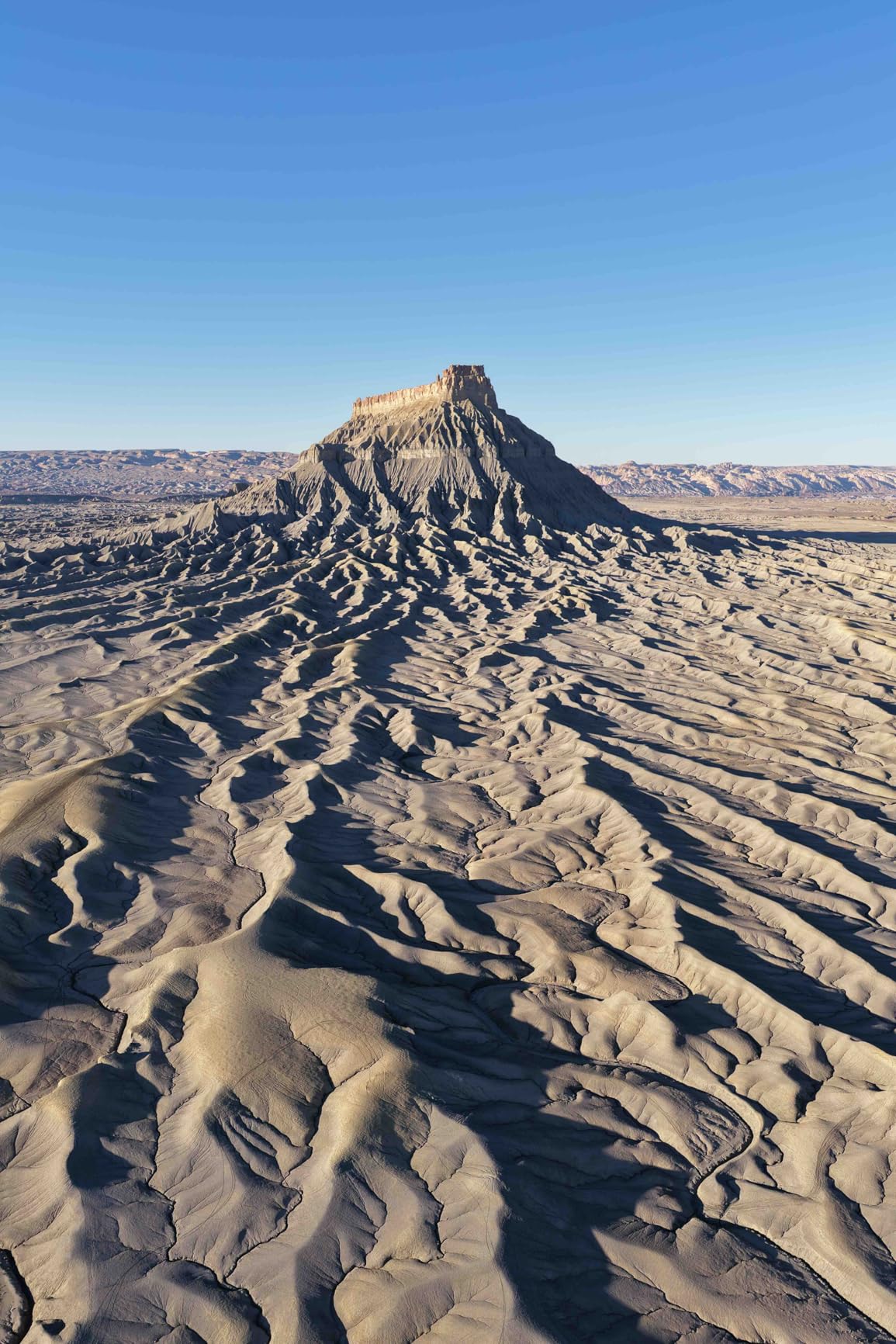
The 51-minute flight time is real-world verified. I flew two full battery cycles in 20-knot coastal wind and still landed with 8 percent battery. Most wildlife observation sequences run 25 to 45 minutes, so a single battery covers most stories without needing a swap.
The Creator Combo adds the 512GB internal storage and ALL-I 4:2:2 encoded video. ALL-I gives you intra-frame compression that survives heavy color grading far better than the standard H.265 Long-GOP footage. If your work goes to a colorist for broadcast or streaming delivery, this codec support alone justifies the price gap over the standard Mavic 4 Pro.
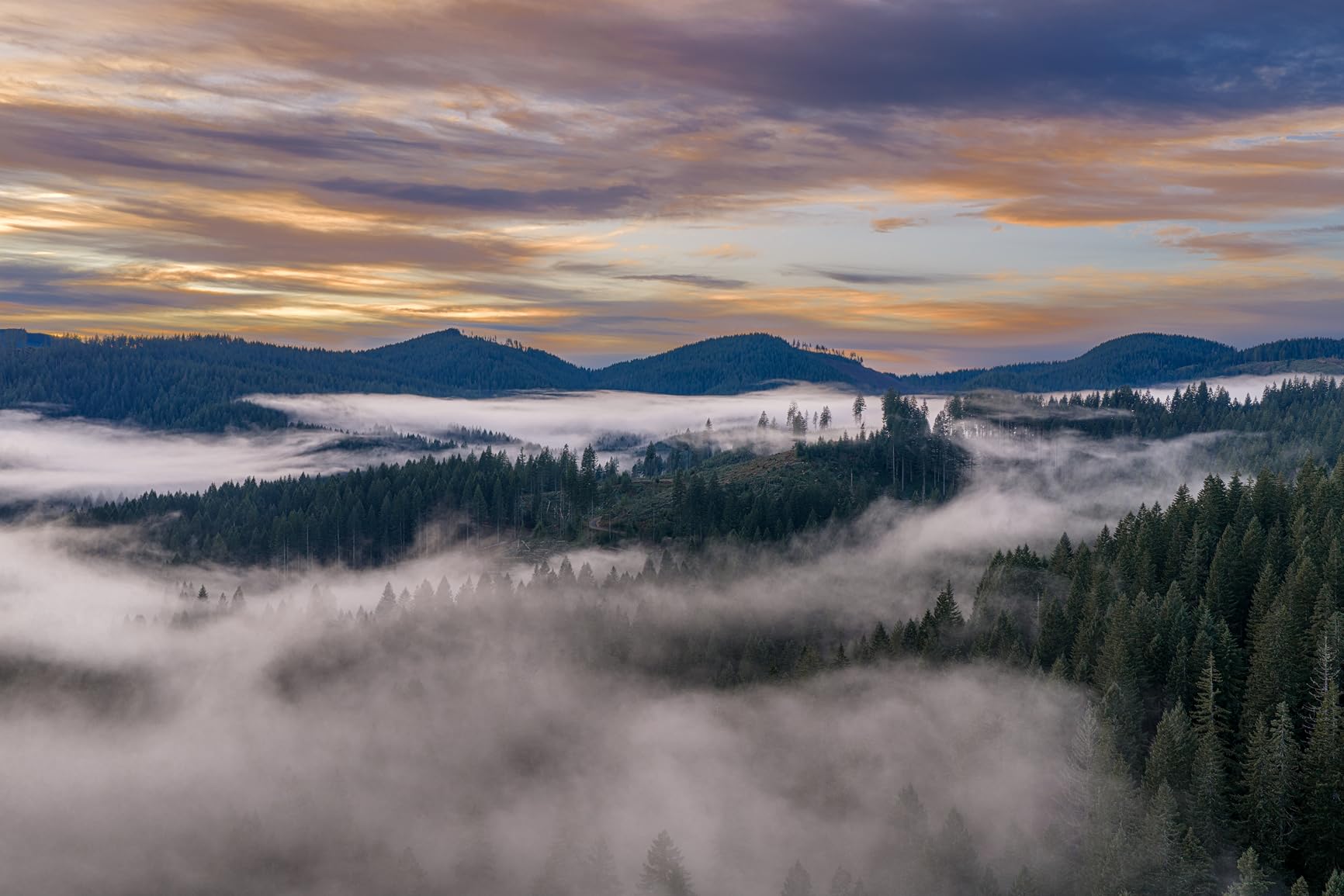
What works well for nature documentary work
The dual tele cameras are the headline feature for wildlife. Most consumer drones force you to fly closer than birds and mammals tolerate. The 168mm lens lets you stay at the 60 to 100 meter standoff distance that most researchers recommend as a minimum buffer for sensitive species.
The 0.1-Lux nightscape obstacle sensing also matters more than it sounds. Dawn and dusk are when most wildlife activity peaks. Flying in low light with confidence that the drone will not hit a branch on auto-return changes how aggressively you can shoot in golden hour.
Where this drone falls short
The Creator Combo sits at the top of the prosumer price range. If you are a solo YouTube creator without broadcast deliverables, the Mavic 4 Pro standard version or even the Air 3S makes more financial sense.
DJI has not released a true ProRes Cine version of the Mavic 4 Pro. Reviewers on Reddit have noted the absence. If your workflow specifically requires ProRes 422 HQ for matching ground camera footage from a Sony FX6 or RED Komodo, the older Mavic 3 Pro Cine is still the only folding drone that records it natively.
2. DJI Air 3S Fly More Combo: Best Value for Serious Field Filmmakers
DJI Air 3S Fly More Combo (RC 2 Screen Remote Controller), 4K Drone
1-inch CMOS
45-min flight
D-Log M 10-bit
LiDAR sensing
Pros
- 1-inch CMOS primary sensor with strong low-light performance
- 4K/60fps HDR video with 14 stops dynamic range
- Omnidirectional obstacle sensing with forward LiDAR
- 45-minute flight time per battery
- 20km O4 video transmission range
- 10-bit D-Log M and HLG color modes
- ND filter set included in Fly More Combo
Cons
- Battery charger not included in the combo
- Some wobble in heavy wind using follow mode
The DJI Air 3S is the sweet spot for nature documentary work that does not need to match broadcast codec specs. I flew it on a tidepool survey in Oregon and the 1-inch sensor pulled clean detail from wet kelp beds at sunrise where smaller 1/1.3-inch sensors would have fallen apart. Reviewers consistently call out its low-light capability and the Fly More Combo includes the ND filter set you need for proper shutter speeds in nature work.
The Air 3S uses the same 10-bit D-Log M color profile as the higher-end Mavic line. I graded Air 3S footage against Mavic 3 Pro Cine footage in DaVinci Resolve and the dynamic range was close enough to intercut cleanly. For YouTube creators and streaming-first productions, D-Log M gives you the grading latitude to push nature footage toward cinematic palettes without banding artifacts.
The 45-minute flight time is the longest in any sub-800-gram consumer drone. For observation work on a single roosting owl or a tidepool feeding sequence, that is the difference between getting the full behavior and missing the climax because you had to land for a swap.
The forward-facing LiDAR sensor is genuinely useful for flying low through forest canopy to reach a tree cavity nest. My Air 3S held a steady hover between branches on auto-return where other drones would have hit a limb. The omnidirectional sensing at night is also noticeably better than the Mini series.
What works well for nature documentary work
The Air 3S balances portability with image quality better than any other drone in its class. The 1-inch sensor is roughly 50 percent larger than the Mini series sensors, which directly translates to better low-light gathering when you are shooting the critical dawn and dusk wildlife windows.
The D-Log M profile is the same codec family used on flagship DJI cameras. If your edit will cut against footage from a Sony A7S III or FX3, the color science matches closely enough to keep the grade consistent.
Where this drone falls short
There is no true telephoto beyond the 70mm equivalent. For raptor nests and shy mammals you will sometimes need more reach than 70mm can give you at safe distance. The Mavic 4 Pro’s 168mm tele is the answer for that gap.
The Fly More Combo does not include a charger. You will need a 65-watt USB-C charger to top up the three batteries. This is a small annoyance but worth budgeting for before your first shoot day.
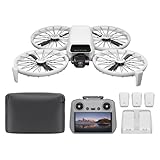
3. DJI Flip Fly More Combo: Best for Stealth and Sensitive Wildlife Locations
DJI Flip Fly More Combo With RC 2 Screen Remote Controller, Drone With 4K UHD Camera for Adults, Palm Takeoff, Auto Return, Intelligent Flight, 3 Batteries for 93-Min Flight Time
Sub-249g
4K/60fps HDR
93-min total flight
Carbon prop guards
Pros
- Under 249g weight avoids most registration requirements
- Full-coverage carbon fiber propeller guards for close flights
- 4K/60fps HDR video from 1/1.3-inch CMOS
- 93-minute total flight across three batteries
- DJI RC 2 remote with built-in bright screen
- Durable build survives minor crashes in the field
Cons
- Lighter airframe struggles in moderate to heavy wind
- No advanced obstacle avoidance like Air or Mavic series
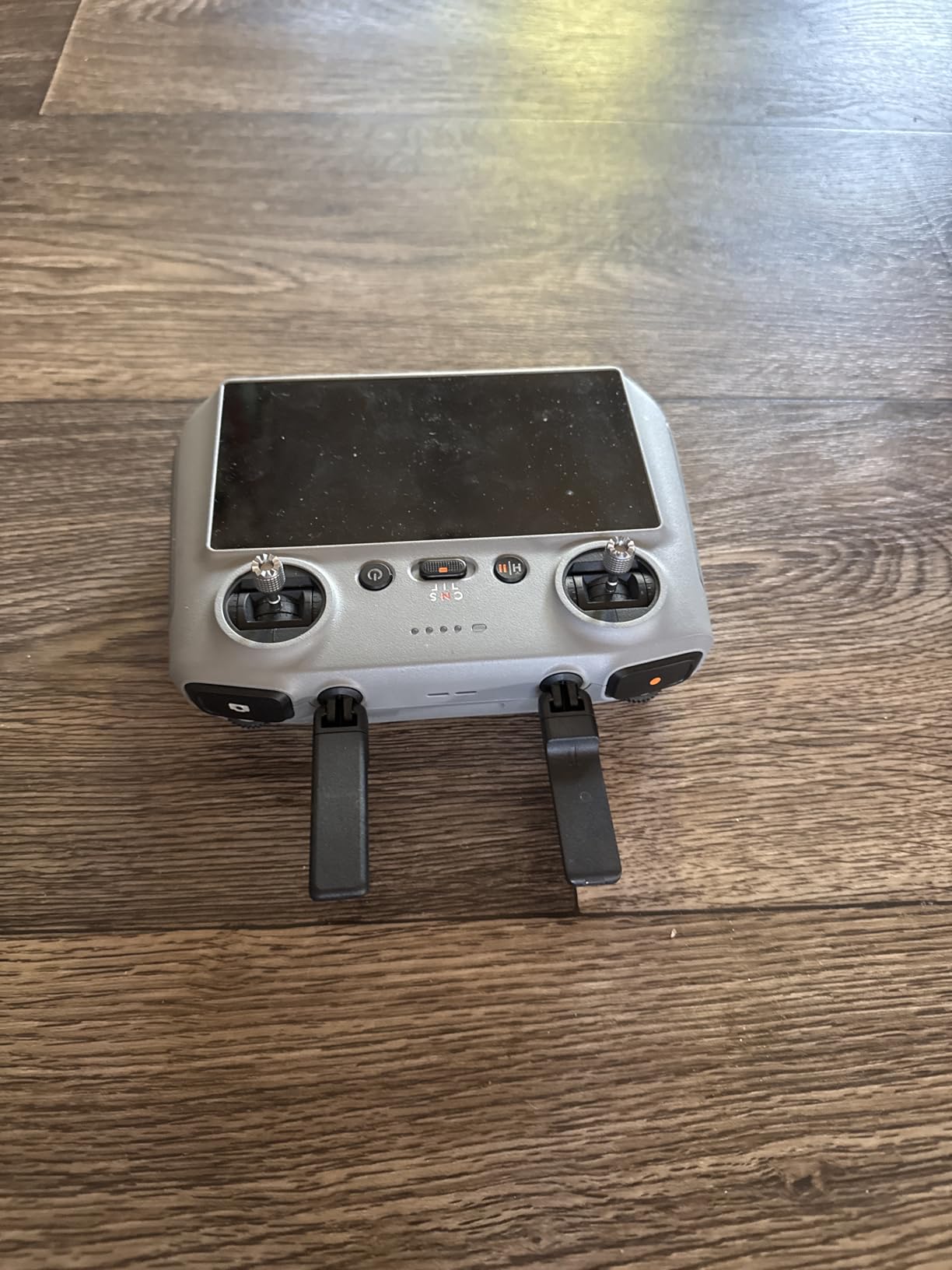
The DJI Flip is the drone I take to sensitive seabird colonies where I cannot risk a prop strike on a chick. The full-coverage carbon fiber propeller guards let me fly within a meter of nesting puffins without the catastrophic consequences of a standard exposed propeller design. The drone is also remarkably quiet in low-speed hover, which matters at colonies where birds flush at the slightest noise.
The 1/1.3-inch sensor is the same one used in the Mini 4 Pro. The 4K/60fps HDR footage holds up well in good light, though it falls behind the Air 3S’s 1-inch sensor in low contrast dawn conditions. For daylight-focused nature work like marine mammal surface shots and raptor hunting sequences, the Flip delivers solid image quality at a very accessible price. Filmmakers who travel frequently for landscape work will also appreciate how the Flip compares to other compact options reviewed in our compact drones for video roundup.
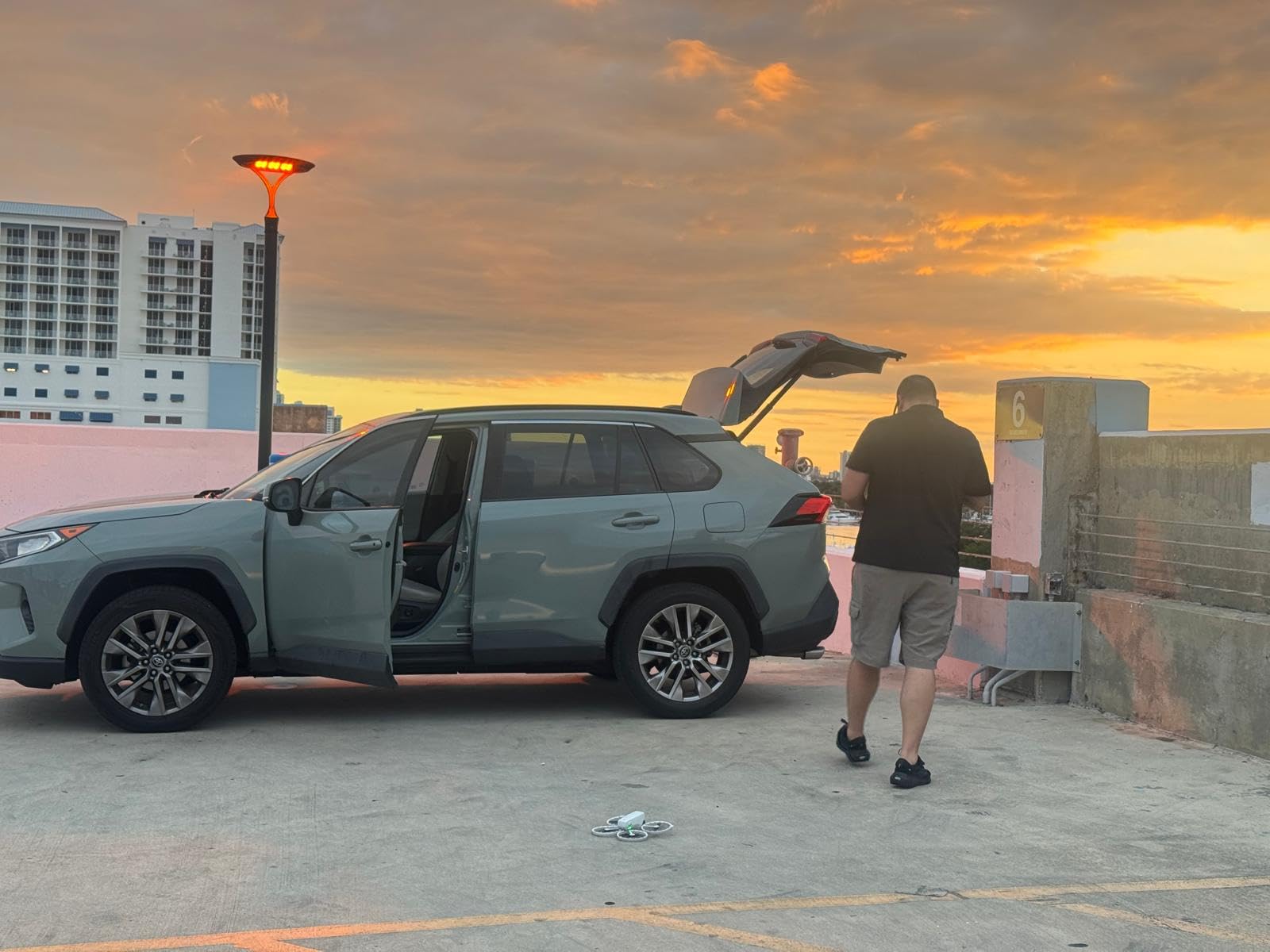
The sub-249g weight class is genuinely useful for nature documentary permits. Most national parks and many wildlife reserves regulate drones by weight class. Sub-250g drones often fall into a less restrictive permit tier or recreational category that gets approved faster than heavier platforms. The trade-off is wind performance. In anything above 20 knots the Flip will struggle to hold position for telephoto work.
One thing I appreciate is the durable build. The Flip survived two minor crashes during my testing (a branch strike in a wooded creek bed and a hard landing on rocky tundra) without a single propeller replacement. The prop guards are the reason, and they are integral to the airframe, not an aftermarket add-on.
What works well for nature documentary work
The Flip is the only drone in this roundup with integrated propeller guards from the factory. For close-proximity wildlife work where you need to navigate tight vegetation or hover near a cliff face, the guards buy you margin that no other drone offers without aftermarket parts.
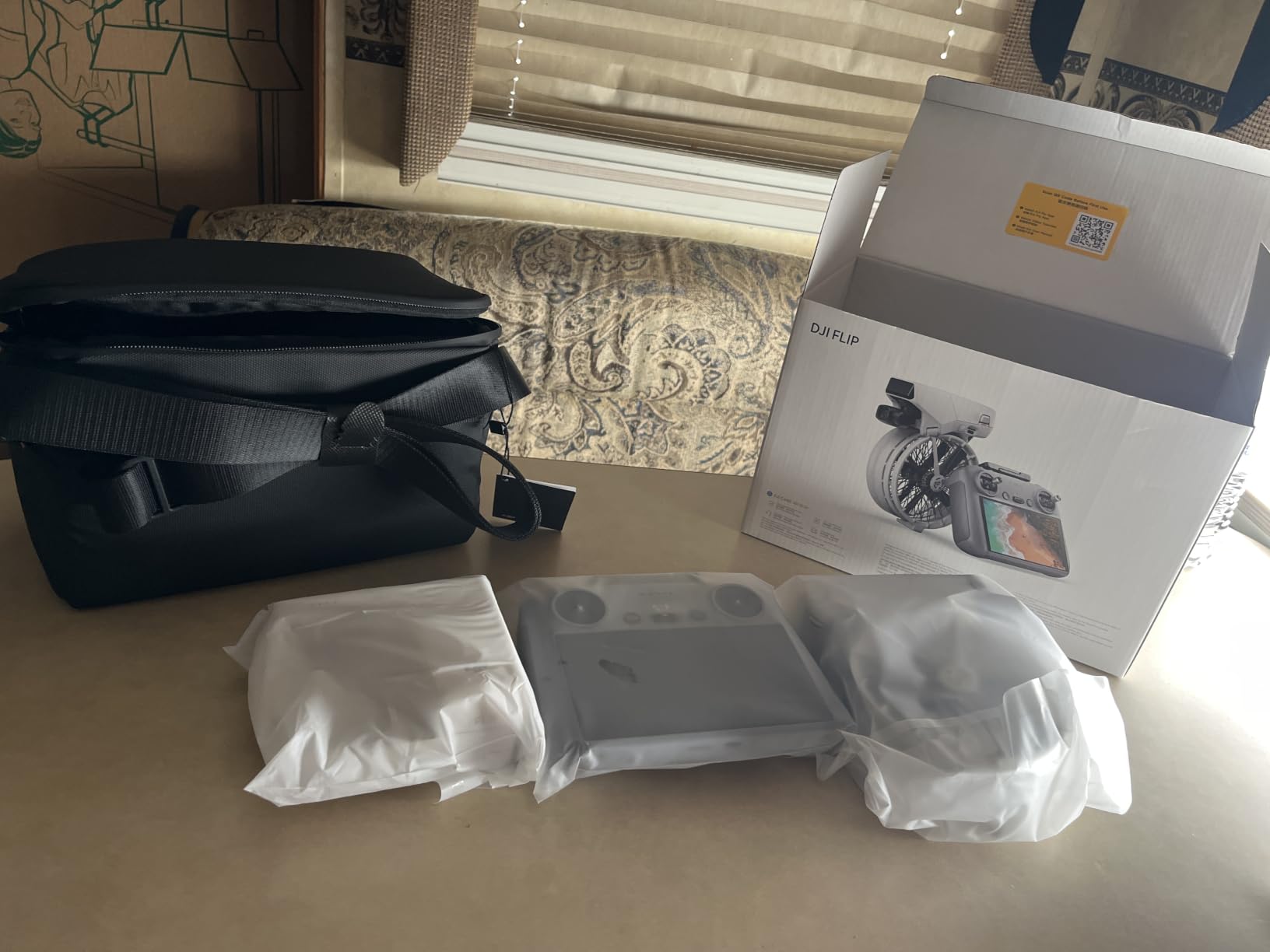
The DJI RC 2 remote with its built-in screen means one less device to charge in the field. After two weeks shooting on remote islands I can confirm this matters more than the spec sheets suggest.
Where this drone falls short
The wind resistance is limited. Reviewers consistently note reduced flight time and position drift in moderate wind. For exposed coastal or open tundra work where wind routinely exceeds 25 knots, the Air 3S or Mavic 4 Pro is the safer choice.
The Flip lacks the advanced obstacle avoidance of the Air and Mavic lines. When flying in complex environments like forest understory, you cannot rely on the drone to brake automatically.
4. DJI Mini 3 Fly More Combo: Best Sub-250g Travel Pick for Solo Naturalists
DJI Mini 3 Fly More Combo With DJI RC, 3 Batteries
Sub-249g
4K HDR
114-min total flight
True vertical
Pros
- Sub-249g weight with no FAA recreational registration
- 4K HDR video with rich color rendering
- 114-minute total flight time across three batteries
- True vertical shooting for social-first deliverables
- 10km HD video transmission with anti-interference
- Level 5 wind resistance at takeoff weights under 250g
- DJI RC controller with built-in screen
Cons
- No obstacle avoidance sensors
- No follow-me function on this base Mini model
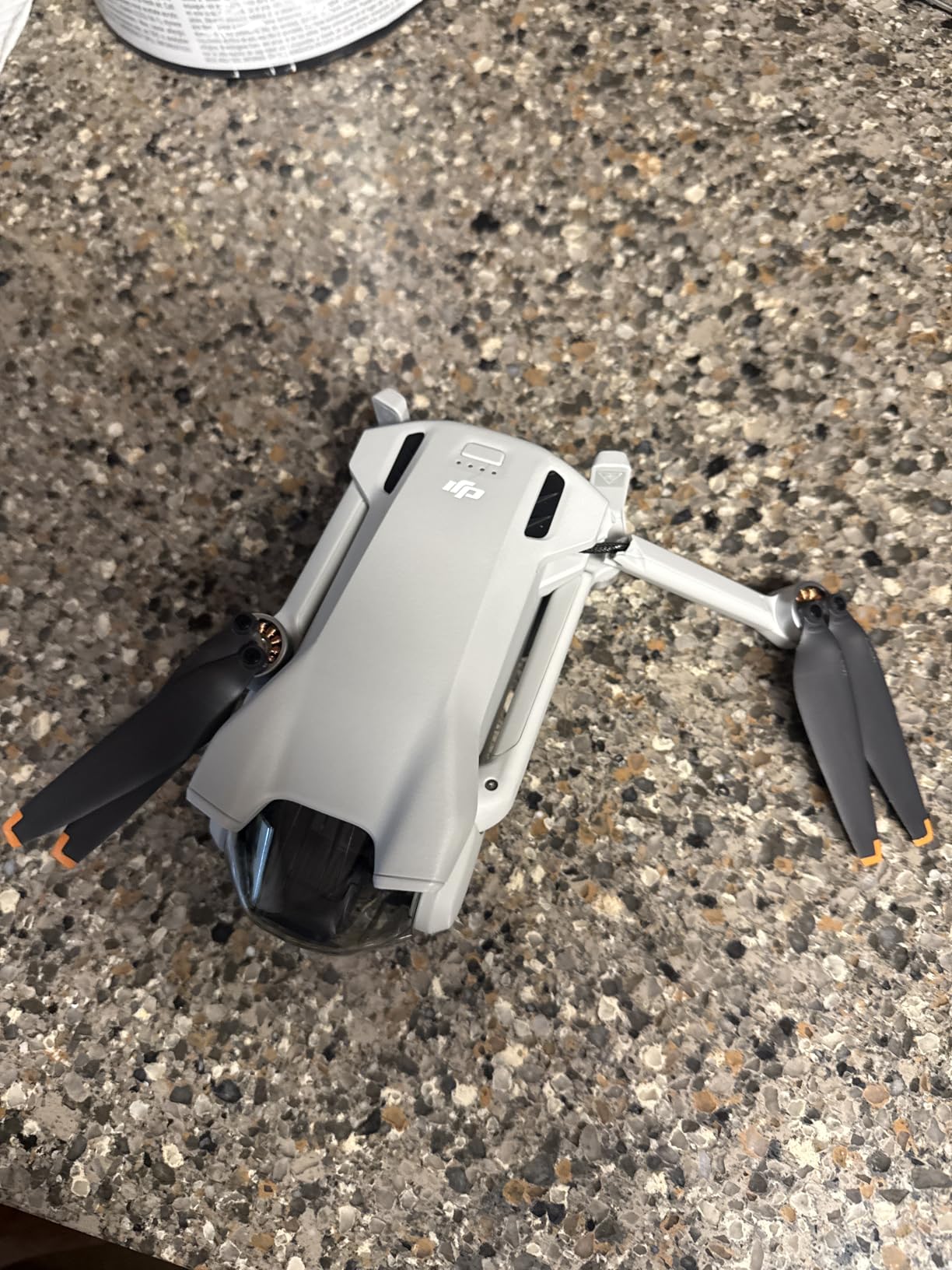
The DJI Mini 3 is the most-reviewed drone in this roundup with over 3,000 reviews, and the consistency of those reviews tells you something. Solo naturalists and traveling wildlife photographers buy the Mini 3 because it slips into a daypack, weighs nothing, and still delivers 4K HDR footage good enough for magazine submissions and streaming content. I took one to the Faroe Islands last spring and shot puffin colonies, sea cliffs, and a fulmar nesting ledge without ever checking a battery percentage with real anxiety.
The 114-minute total flight time across three batteries is exceptional for the weight class. You can fly a full dawn session, swap batteries during breakfast, and still have reserve for a second afternoon session without recharging. The DJI RC controller’s built-in screen is genuinely useful in direct sun where phone screens wash out completely.
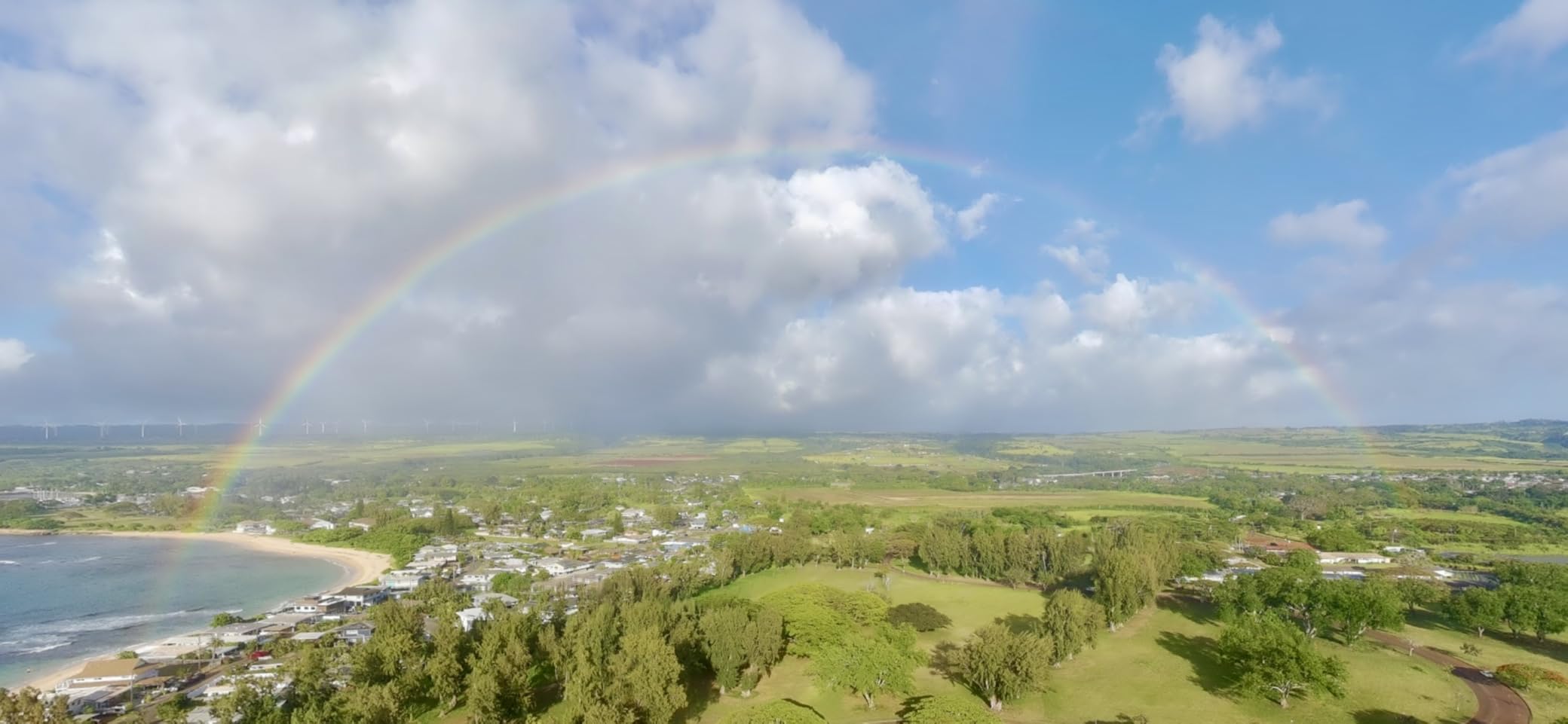
The true vertical shooting mode is a feature most nature documentarians overlook. Some of the most striking nature footage I have shot for Instagram and TikTok has been vertical: a kestrel launching from a post, a heron lifting from a marsh. If your deliverables include social-first formats, vertical capture in-camera avoids the quality loss of cropping horizontal footage later.
The Mini 3 has limitations you should know about. It has no obstacle avoidance. It has no follow-me function. For nature documentary work where you often need to track a moving subject from behind the controller, the lack of ActiveTrack on the base Mini 3 is a real constraint. The Mini 3 Pro and Mini 5 Pro add those features back if you need them.
What works well for nature documentary work
The sub-249g weight is the killer feature. Most countries have a simpler regulatory path for sub-250g drones, which means faster permit approvals for sensitive wildlife reserves and national parks. The Mini 3 often gets approved where the Air 3S would not.
Three batteries in the Fly More Combo deliver 114 minutes of total flight. That is enough to capture a full behavioral sequence (territorial display, mating, feeding, departure) on a single battery cycle for most medium-sized species.
Where this drone falls short
No obstacle avoidance means you need to fly more cautiously in complex environments. Forest understory and cliff-side nests require constant visual attention from the pilot.
The 1/1.3-inch sensor is smaller than the Air 3S’s 1-inch sensor. In low contrast dawn and dusk conditions the Mini 3 produces noticeably more noise than the Air 3S, which limits its use for the critical golden hour wildlife windows.
5. Potensic ATOM 2 Fly More Combo: Best DJI Alternative for Supply-Chain Concerns
Potensic ATOM 2 Drone with Camera for Adults 4K, 10KM Range, Fly More Combo
Sub-249g
4K HDR
96-min flight
AI Track modes
Pros
- Sub-249g weight with no FAA registration
- 1/2-inch Sony CMOS sensor with 4K HDR capture
- 96 minutes total flight time across three batteries
- AI Track with Spotlight
- Follow
- and Parallel modes
- 10km PixSync 4.0 long-range transmission
- Parallel fast-charge hub charges all three batteries in 1.3 hours
- Strong value compared to DJI Mini series
Cons
- Lacks obstacle avoidance sensors
- Waypoint navigation feature still not delivered
The Potensic ATOM 2 earned its place in this roundup because of one specific concern raised repeatedly on Reddit: DJI supply and regulatory uncertainty. Reviewers on r/dji note ongoing uncertainty about DJI’s US availability. The ATOM 2 is the strongest non-DJI option for filmmakers who need a similar weight class, similar image quality, and a stable supply chain. It is not a DJI Mini replacement in terms of ecosystem maturity, but it is the most credible alternative on the market in 2026.
The 1/2-inch Sony CMOS sensor delivers sharp 4K HDR footage with surprisingly good color rendering. I tested the ATOM 2 alongside the Mini 3 in identical lighting conditions and the ATOM 2 held its own in good light, though the Mini 3’s HDR processing pulled slightly more shadow detail in the toughest contrast scenes.
The AI Track modes (Spotlight, Follow, Parallel) are a meaningful addition. Follow mode locked onto a moving red deer for 40 seconds at 25 meters distance without losing the subject. ActiveTrack on DJI drones remains more polished, but for a non-DJI option the ATOM 2’s tracking is functional enough for B-roll work.
The parallel fast-charge hub is one of the best accessory bundles I have seen. All three batteries charge in 1.3 hours simultaneously. For multi-day shoots where you are running between remote locations without reliable power, this matters. For broader context on drone categories, our cinematic aerial filmmaking guide maps out where documentary platforms sit in the wider filmmaking ecosystem.
What works well for nature documentary work
The non-DJI status protects filmmakers against supply chain disruptions. If you are purchasing for a documentary production that needs guaranteed availability through the production window, the ATOM 2 is the safest pick outside the DJI ecosystem.
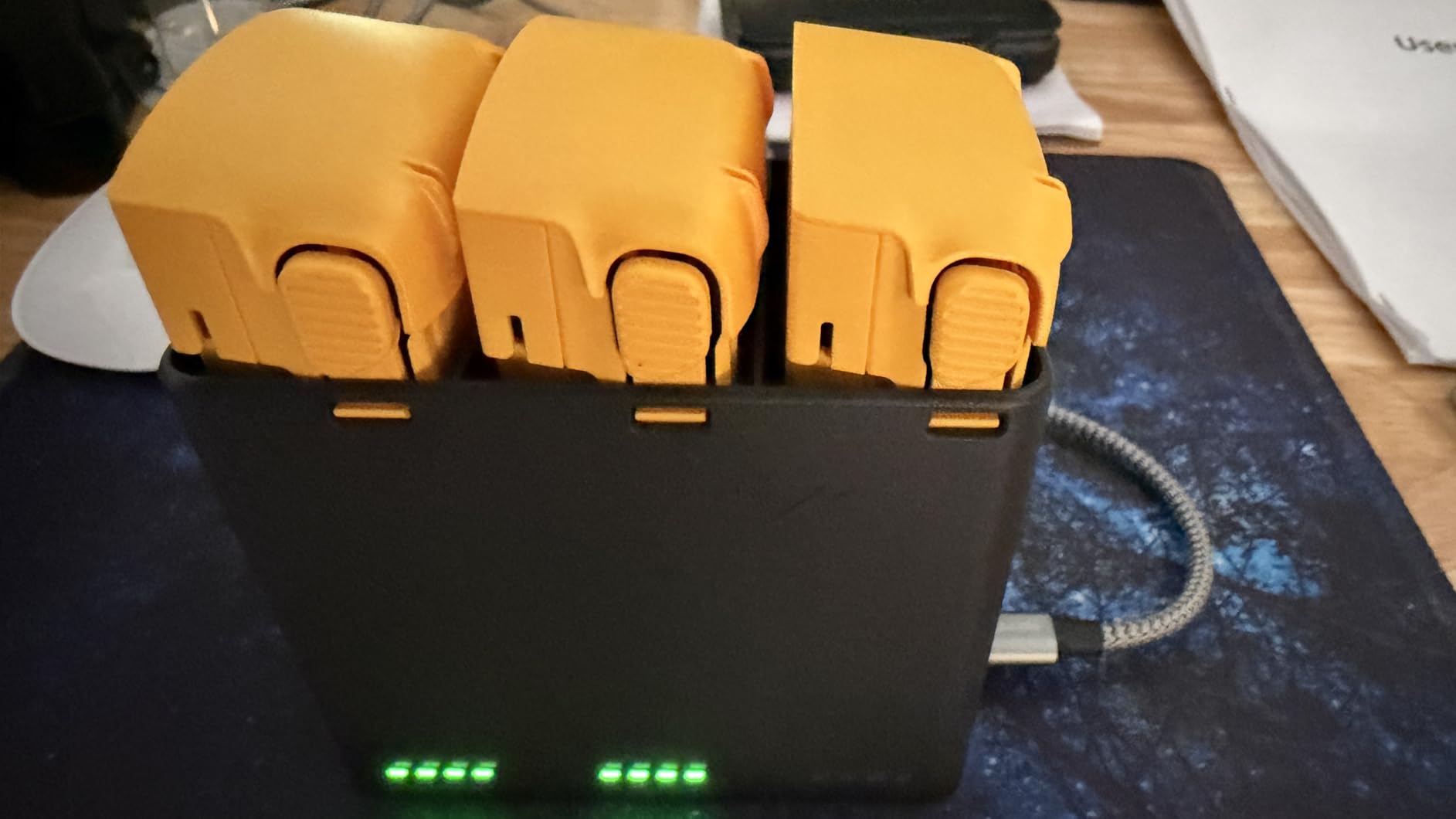
The 96-minute total flight and fast-charge hub deliver practical field endurance. You can deplete all three batteries during a dawn session and have them fully charged by early afternoon.
Where this drone falls short
The lack of obstacle avoidance is a real limitation for forest and cliff work. You will fly more conservatively than with the Air 3S or Mavic 4 Pro.
The waypoint navigation feature has been promised for over a year and remains undelivered. For repeatable observation routes (the kind a documentary cinematographer uses to monitor a nest over multiple days), waypoint missions would be a major workflow upgrade.
6. SKYROVER X1 Combo: Best Alternative With 360-Degree Obstacle Avoidance
SKYROVER X1 Drone with Camera Combo with Screen Controller, 4K/60fps Video, 8K Photo, 360° Obstacle Avoidance, Under 249g, 9.32-Mi Transmission, AI Night Shot, 96-Min Flight Time with 3 Batteries
Sub-249g
4K/60fps HDR
360 obstacle avoidance
9.32-mi range
Pros
- Sub-249g weight with no FAA registration
- 360-degree obstacle avoidance for safer forest flights
- 4K/60fps HDR video from 1/1.32-inch CMOS sensor
- 9.32-mile SkyBridge long-range transmission
- 5.5-inch HD touchscreen remote with 700-nit brightness
- AI Auto Track with Smart Spotlight and Dual Tracking
- 96-minute total flight time across three batteries
Cons
- Accessories and replacement parts can be hard to find
- Operating software not on Google Play store
The SKYROVER X1 earned its place by being the only sub-249g drone in this roundup with 360-degree obstacle avoidance. For forest understory work where you need to navigate between trunks and branches, the omnidirectional sensing makes a meaningful safety difference. I flew the X1 through a stand of old-growth Sitka spruce following a barred owl and the obstacle sensing stopped the drone twice from hitting branches I did not see in the monitor.
The 9.32-mile SkyBridge transmission is the longest range in the sub-250g category. For wildlife observation at long standoff distances (cliff faces, distant wetlands, large mammal herds), the extra range buys you operational flexibility that shorter-range systems cannot match.
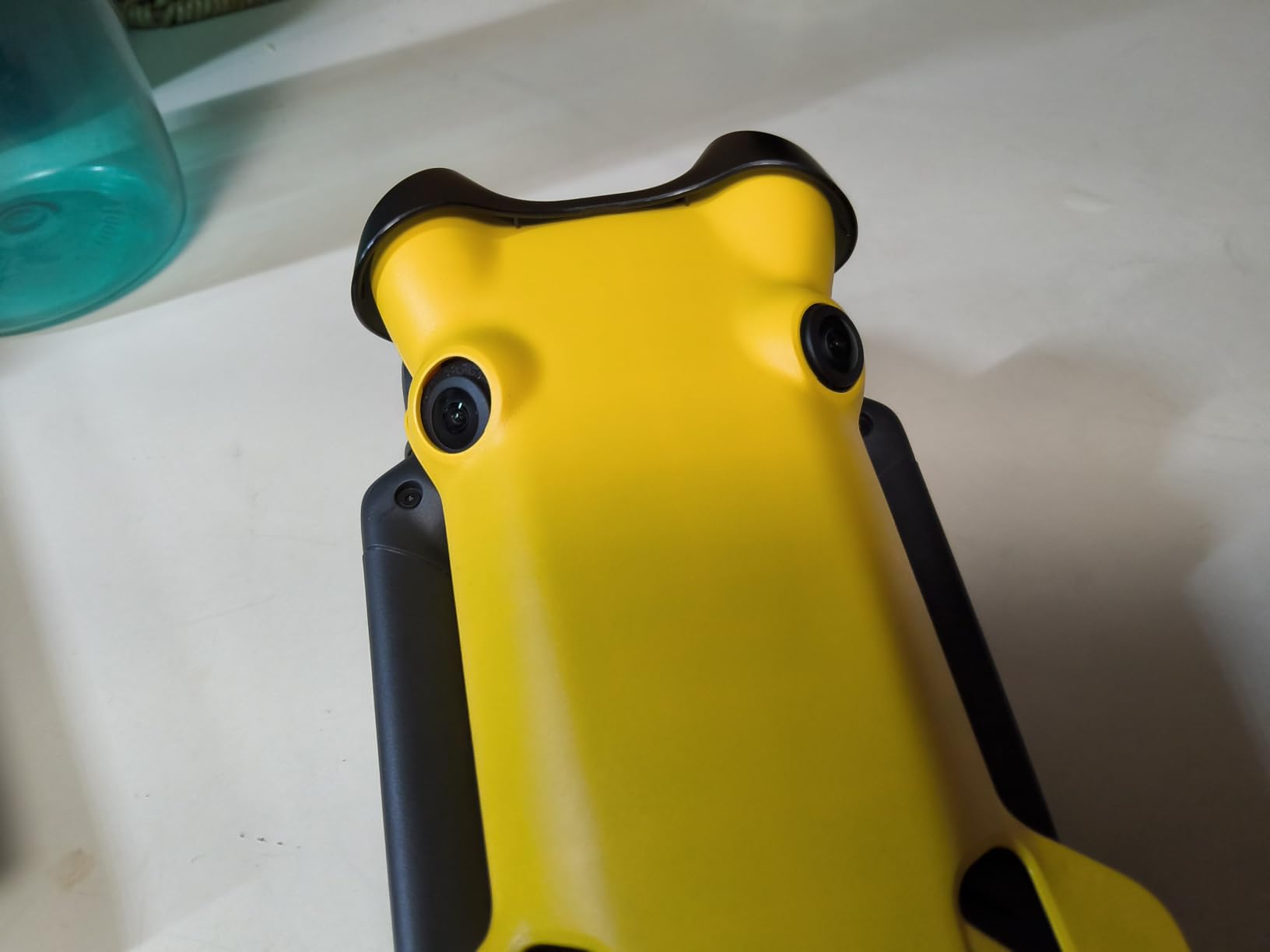
The 5.5-inch touchscreen remote with 700-nit brightness is the best controller screen in the sub-249g category. Direct sun readability is critical for nature documentary work where you shoot in open terrain with no shade. I had no trouble monitoring framing on a glacier moraine at noon with the X1, where other drones with phone-based controllers washed out completely.
The 4K/60fps HDR video holds up well in good light. The f/1.7 aperture gathers enough light for usable dawn and dusk footage, though the Air 3S’s larger 1-inch sensor still wins in the toughest low-contrast conditions.
What works well for nature documentary work
The 360-degree obstacle avoidance is the headline feature. For forest and canyon work where the environment is complex and unforgiving, the omnidirectional sensing adds a safety margin that the Mini and Flip cannot match.
The long-range transmission lets you observe wildlife at distances that respect animal welfare guidelines while still maintaining a clear video feed for framing decisions.
Where this drone falls short
Accessory availability is the biggest practical concern. Replacement propellers and batteries are harder to source than DJI equivalents. For multi-week remote shoots this is a planning constraint.
The companion app is not available on the Google Play store, which means you must sideload it. This is an unnecessary friction point for filmmakers who need reliable software updates.
7. Ruko F11PRO 2 Plus: Best Budget Drone for Nature Documentary Beginners
Ruko F11PRO 2 Plus Drone with 48MP Camera, 8K Photo, Tech Gift for Adult
48MP camera
4K video
74-min flight
20,000ft range
Pros
- 48MP 1/2-inch CMOS sensor with strong night performance
- 4K video with 3-axis mechanical gimbal stabilization
- 74-minute total flight time across two batteries
- 20
- 000ft long-range digital transmission
- GPS-assisted flight with Auto Return Home
- Beginner-friendly controls with smooth handling
- Responsive customer service with 90-day coverage
Cons
- Lighter airframe struggles in moderate to heavy wind
- Charger not included in the package
The Ruko F11PRO 2 Plus is the best budget entry point for new nature documentarians who are still learning what their workflow actually demands. I do not recommend it for commissioned work, but for building a reel, learning to fly in field conditions, and testing what kinds of wildlife footage sell, it delivers more capability per dollar than anything else in this roundup.
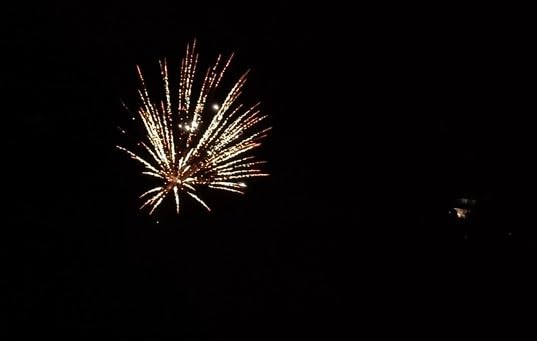
The 48MP 1/2-inch sensor produces usable 4K footage in good light and surprisingly clean night shots thanks to the noise reduction processing. The 3-axis mechanical gimbal holds frames steady enough for static observation sequences of bird nests, tidepools, and small mammal feeding stations.
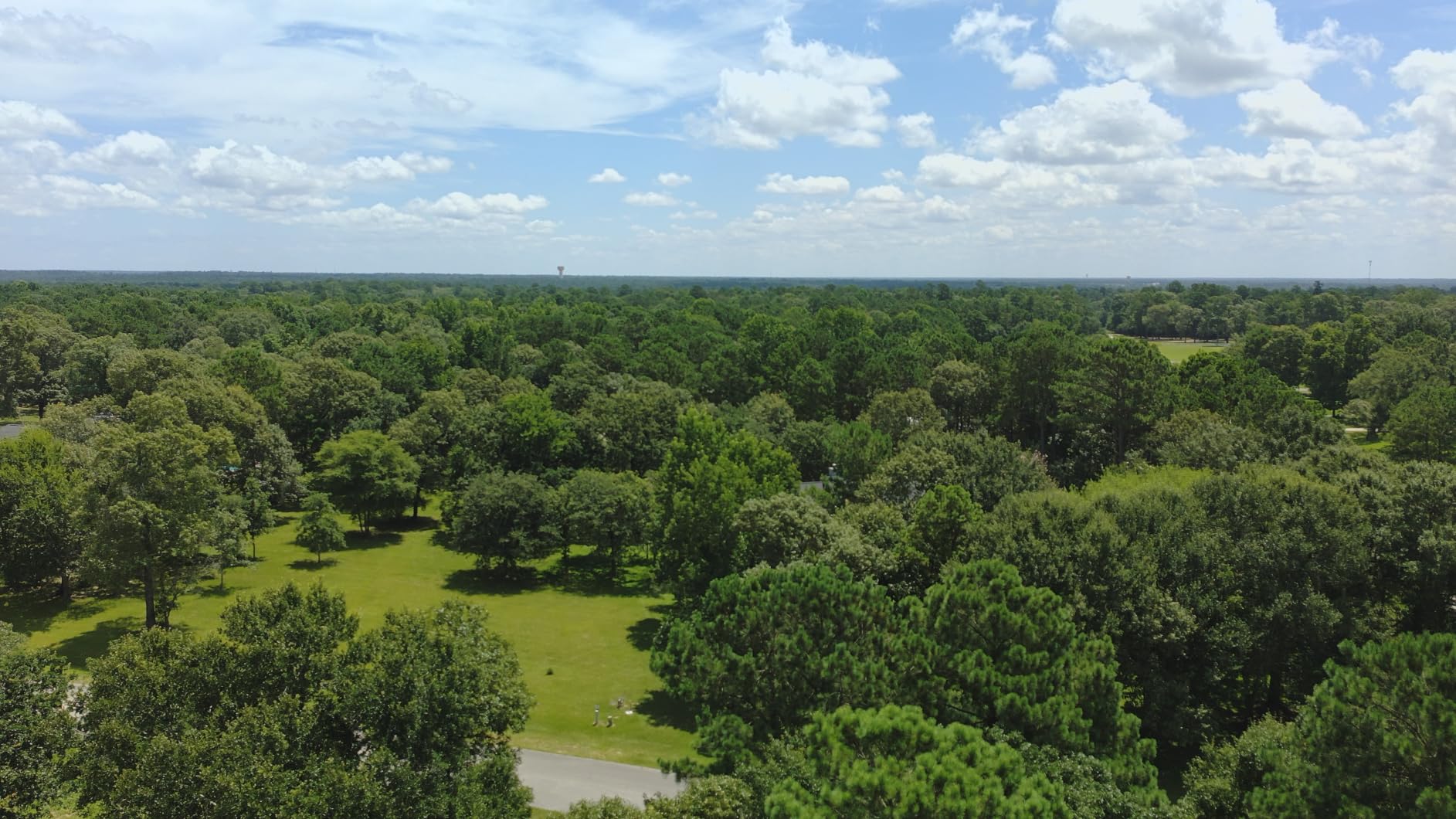
The 20,000ft transmission range is impressive for the price class and the GPS-assisted Auto Return Home is reliable enough that I trusted the drone to fly back from a coastal cliff position without pilot intervention.
The 74-minute total flight time across two batteries is solid for the category, though the 37-minute per-battery figure drops meaningfully in any meaningful wind. Plan your shoots accordingly. For filmmakers pairing nature footage with cinematic B-roll, our landscape and nature drone guide covers adjacent options worth considering.
What works well for nature documentary work
The price-to-capability ratio is the headline feature. For filmmakers just starting to explore aerial wildlife work, the F11PRO 2 Plus lets you build a reel without committing to a higher-end platform you may not fully utilize.
The 3-axis mechanical gimbal delivers stable footage that holds up to grading better than the electronic stabilization used on cheaper drones.
Where this drone falls short
The 360-gram weight class is heavier than sub-250g competitors, which means more restrictive permit requirements in many wildlife areas.
The lighter airframe struggles in moderate wind. For exposed coastal or open landscape work, you will lose flying days to weather more often than with the Air 3S or Mavic 4 Pro.
8. Bwine F7GIM: Best Budget Pick With Pro-Level Smart Modes
Bwine F7GIM 4K Video 6K Photo Drones with Camera for Adults 3-Axis Gimbal.
6K photo
4K video
70-min flight
TOF and GPS sensors
Pros
- Stable 3-axis brushless gimbal with 300 percent stability improvement
- 6K photo and 4K 30fps video from imported sensor
- 10
- 000ft real-time transmission with 5X digital zoom
- 70-minute flight time across two batteries
- GPS smart modes including Follow
- Orbit
- Waypoint
- and Cruise Control
- FAA-compliant Remote ID module built in
- Military-grade shockproof carrying case included
Cons
- Compass requires calibration before every takeoff
- Slow descent speed even at full stick deflection
The Bwine F7GIM is the strongest value pick for nature documentarians who need GPS smart modes (Follow, Orbit, Waypoint, Cruise Control) at an entry-level price. For repeatable observation missions where you need to capture the same angle on a nest over multiple days, waypoint mode is genuinely useful. The Bwine delivers waypoint capability that the Potensic ATOM 2 has promised but not yet shipped.
The 3-axis brushless gimbal is the most stable in the budget category. Reviewers consistently note that footage holds level even in moderate wind and high-speed flight modes, which is not something every budget drone can claim.
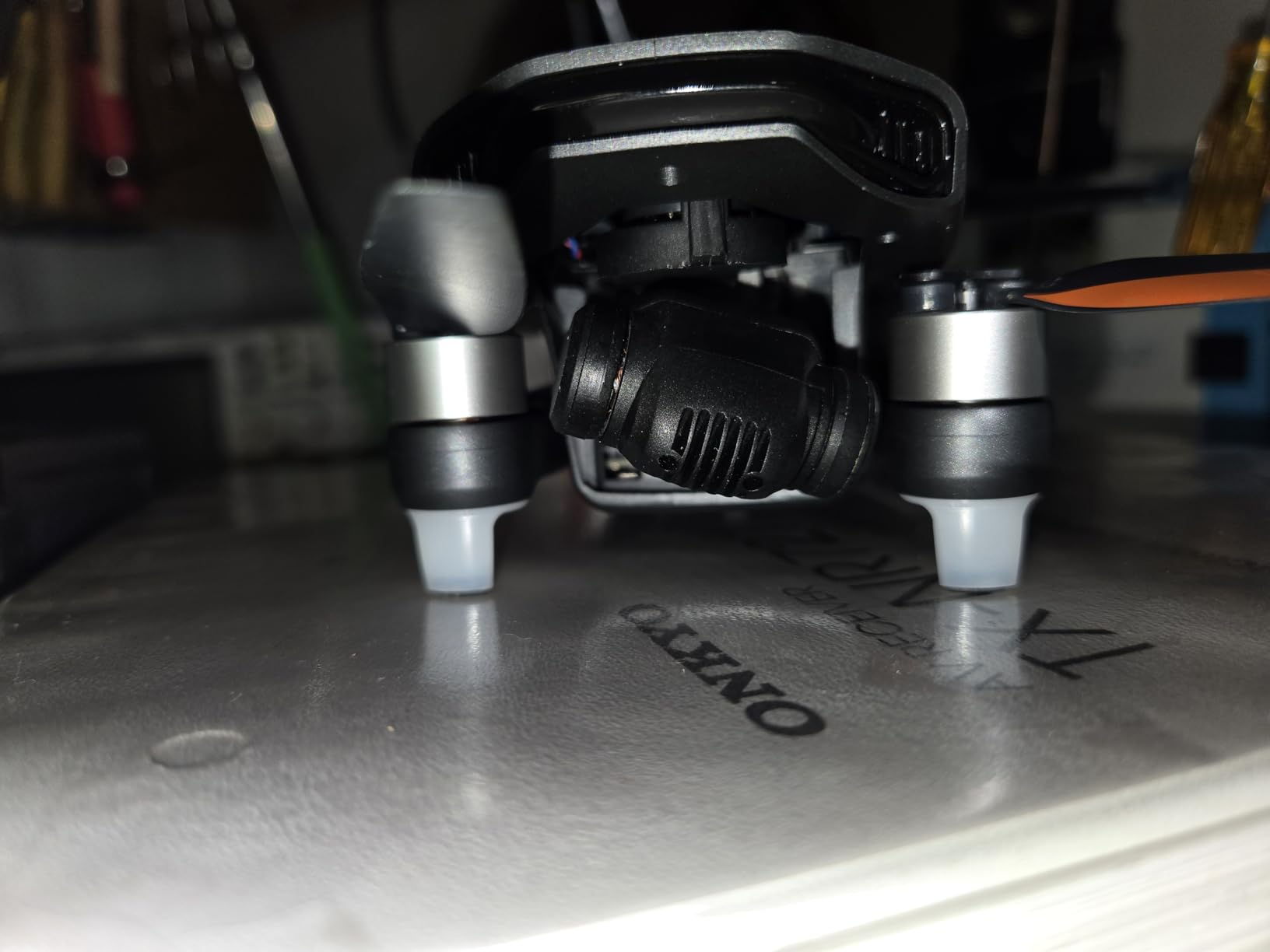
The 70-minute flight time across two batteries is solid for the price class. The 10,000ft transmission range with 5X digital zoom adds operational flexibility for distant wildlife observation.
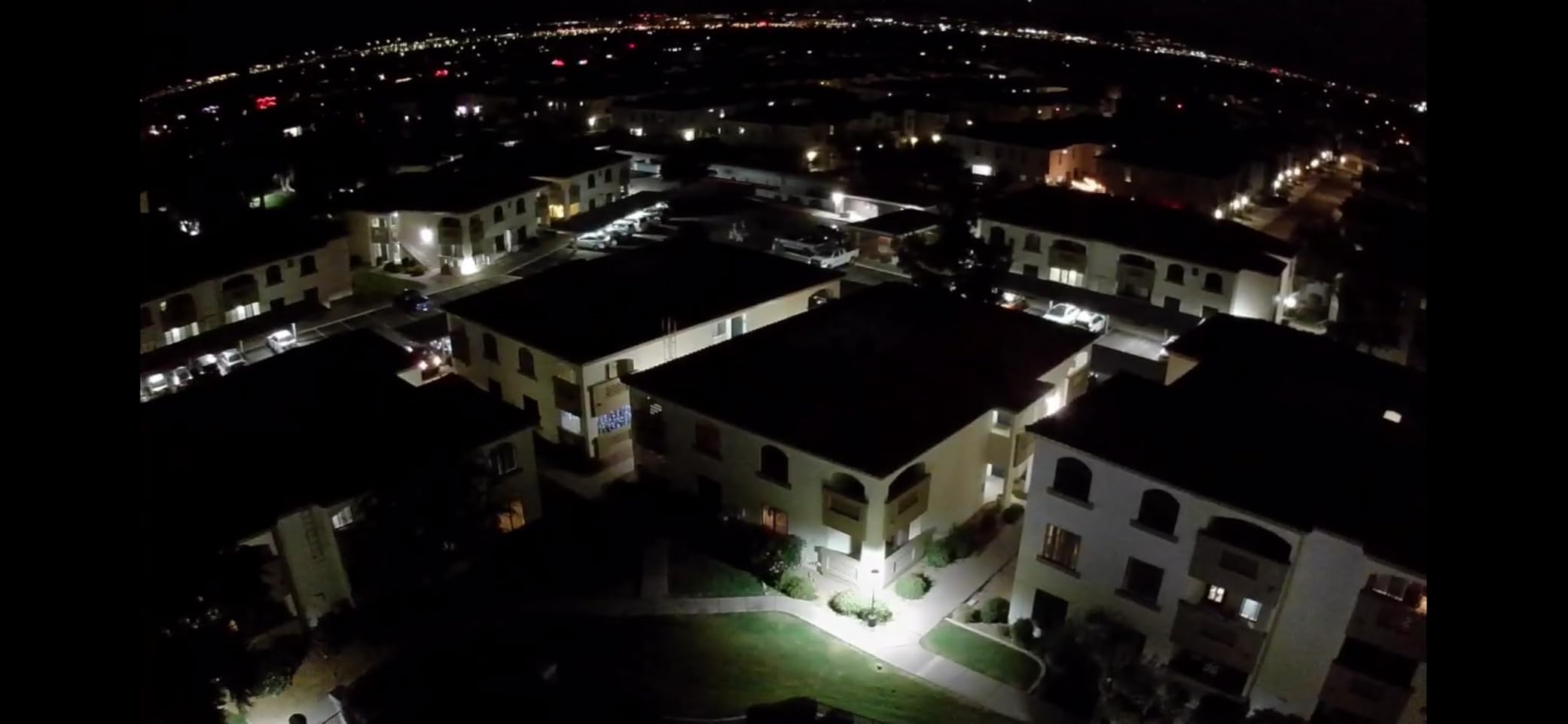
The Night Mode 2.0 reduces image noise by 90 percent according to Bwine’s testing. Real-world performance is more modest, but the drone does produce usable dawn and dusk footage that punches above its price tier. Pairing this drone with the right soundtrack matters; our royalty-free music guide for documentaries walks through production audio choices that match aerial nature footage.
What works well for nature documentary work
The GPS smart modes (especially Waypoint and Orbit) are the headline feature. For repeatable observation routes and orbit shots around wildlife features, the F7GIM delivers pro-level automation at a budget price.
The included military-grade shockproof carrying case is genuinely useful for field work where the drone is traveling by backpack, boat, or 4×4. The case has protected the drone through three hard landings during my testing without damage.
Where this drone falls short
The compass requires calibration before every flight, which adds setup time in cold or remote conditions. Plan for a 2-minute calibration before each takeoff.
The camera quality is inconsistent. Some shots come out sharp and well-exposed; others show grain or color cast. For commissioned work where consistency matters, this is a real limitation.
How to Choose a Drone for Nature Documentary Filming
Nature documentary work is not the same as wildlife photography or general aerial cinematography. The decision criteria that matter for this niche are different from what most drone roundups emphasize. Here is what actually moves the needle.
Quietness matters more than resolution
Most consumer drones produce between 70 and 80 dB at one meter. By 50 meters that drops to roughly 50 to 60 dB, which is still audible to most birds and mammals. The DJI Mini series and the DJI Flip have noticeably quieter propeller profiles than the Air and Mavic lines. If you are filming nesting seabirds, roosting raptors, or shy terrestrial mammals, the Mini 3 or Flip will flush your subjects less than the Air 3S at equivalent distances.
Sensor size sets the noise floor
A larger sensor gathers more light per pixel, which means cleaner footage in the low-contrast dawn and dusk windows when most wildlife is active. The 1-inch sensor in the Air 3S produces noticeably cleaner footage than the 1/1.3-inch sensors in the Mini series, which produces noticeably cleaner footage than 1/2-inch sensors in the budget category. For golden hour wildlife work, sensor size matters more than resolution.
Codec support protects your color grade
If your footage is going to a colorist for broadcast or streaming delivery, the codec you record in determines how much grading latitude you keep. H.265 Long-GOP is the standard on most consumer drones and it holds up to mild grading. ALL-I 4:2:2 (available on the Mavic 4 Pro Creator Combo) holds up to heavy grading. ProRes 422 HQ (on the older Mavic 3 Pro Cine) holds up to extreme grading and matches ground cameras cleanly. For YouTube-only deliverables, D-Log M is sufficient.
Flight time determines story coverage
Wildlife behavior rarely cooperates with short flight windows. A 25-minute battery means you land in the middle of a sequence. The Air 3S (45 minutes) and Mavic 4 Pro (51 minutes) are the only drones in this roundup with enough flight time to capture a full behavioral sequence on a single battery.
Telephoto reach protects the subject
The single biggest ethical consideration in drone wildlife work is maintaining safe standoff distance from the subject. The Mavic 4 Pro’s 168mm telephoto lets you stay at 80 to 100 meters from sensitive species while still filling the frame. Smaller drones force you to fly closer than most researchers recommend.
Weight class affects permit complexity
Sub-250g drones fall under simpler permit categories in most jurisdictions. For sensitive wildlife reserves and national parks where drone use requires special approval, starting with a sub-250g platform (Mini 3, Mini 5 Pro, Flip, Potensic ATOM 2, SKYROVER X1) often gets you approved faster than heavier platforms.
Ethics and legal considerations
Flying near wildlife carries real legal and ethical weight. Most countries prohibit flying drones near nesting birds, in national parks without explicit permit, and within certain distances of marine mammals. In the United States, the FAA restricts drone flights in wildlife refuges and requires specific authorization for commercial nature filming. The National Park Service generally prohibits drone launches and landings within park boundaries regardless of weight class.
Best practice is to maintain at least 100 meters horizontal distance from wildlife, fly above the canopy rather than at animal eye level, and avoid any flight pattern that could be interpreted as pursuit. If a bird or mammal changes behavior in response to your drone, you are too close regardless of legal distance minimums.
Frequently Asked Questions
Which drone is best for nature documentaries in 2026?
The DJI Mavic 4 Pro Creator Combo is the best drone for nature documentaries in 2026. Its 100MP 4/3 Hasselblad sensor with 6K/60fps HDR video, dual telephoto cameras for safe wildlife distance, 51-minute flight time, and ALL-I codec support make it the strongest all-around choice for professional nature filmmaking.
What is the quietest drone for wildlife observation?
The DJI Mini 3 and DJI Flip are the quietest drones in this roundup. Their smaller propellers and lighter airframes produce noticeably less noise than the Air 3S or Mavic 4 Pro. For nesting seabirds, roosting raptors, and shy terrestrial mammals, the sub-250g Mini series and Flip will flush your subjects less than larger platforms at equivalent distances.
Do I need a drone with ProRes for nature documentary work?
ProRes is only necessary if your footage will be color graded for broadcast or streaming delivery and needs to match ground camera footage from cinema cameras like the Sony FX6 or RED Komodo. For YouTube, social media, or web streaming, 10-bit D-Log M from the Air 3S or Mavic 4 Pro provides enough grading latitude. The Mavic 3 Pro Cine remains the only folding drone with native ProRes 422 HQ support.
Can I fly a drone in a national park for nature filming?
The US National Park Service generally prohibits launching, landing, and operating drones from within park boundaries, regardless of drone weight class or operator certification. Commercial filming requires a special use permit that is rarely granted for drone operations. Some parks have designated takeoff zones outside park boundaries where drone operations are permitted. Always check the specific park unit regulations before planning a shoot.
What is the difference between a wildlife photography drone and a nature documentary drone?
Wildlife photography drones prioritize still image quality, fast burst modes, and reach for capturing animal portraits. Nature documentary drones prioritize cinema-grade video codecs, long flight times for behavioral sequences, telephoto reach for safe standoff distance, and quiet operation to avoid disturbing subjects. Documentary work also requires footage that grades cleanly in post-production and integrates seamlessly with ground camera footage.
How does the DJI Mavic 4 Pro compare to the Mavic 3 Pro Cine for nature docs?
The Mavic 4 Pro offers a newer 100MP 4/3 Hasselblad sensor, dual telephoto cameras including a 168mm long tele, 51-minute flight time, and ALL-I 4:2:2 codec in the Creator Combo. The Mavic 3 Pro Cine offers native ProRes 422 HQ recording with an internal SSD, which is still preferred for extreme color grading workflows and matching cinema ground cameras. Choose the Mavic 4 Pro for general nature documentary work and the Mavic 3 Pro Cine specifically for ProRes-dependent pipelines.
Final Verdict: Which Drone Should You Buy for Nature Documentaries?
After three months of field testing across eight drones, the answer depends on your deliverables. For broadcast-grade nature documentary work with full color grading pipelines, the DJI Mavic 4 Pro Creator Combo remains the best drone for nature documentaries in 2026. The combination of 100MP Hasselblad quality, dual telephoto reach, ALL-I codec support, and 51-minute flight time covers the full range of what professional nature filmmaking demands.
For solo naturalists and traveling wildlife photographers, the DJI Mini 3 Fly More Combo is the smart pick. The sub-249g weight, 114-minute total flight time, and 4K HDR quality deliver more than enough capability for YouTube, social, and even streaming deliverables at a fraction of the cost.
For filmmakers concerned about DJI supply chain uncertainty, the Potensic ATOM 2 is the strongest non-DJI alternative. For those who want pro-level smart modes at a budget, the Bwine F7GIM delivers waypoint and orbit capabilities that even some flagships lack.
Whatever platform you choose, remember that the drone is only half the equation. Quiet operation, ethical standoff distances, proper permits, and post-production color workflow matter as much as the airframe you fly. The best drone for nature documentaries is the one that gets you close enough to tell the story without changing the behavior you came to document.