
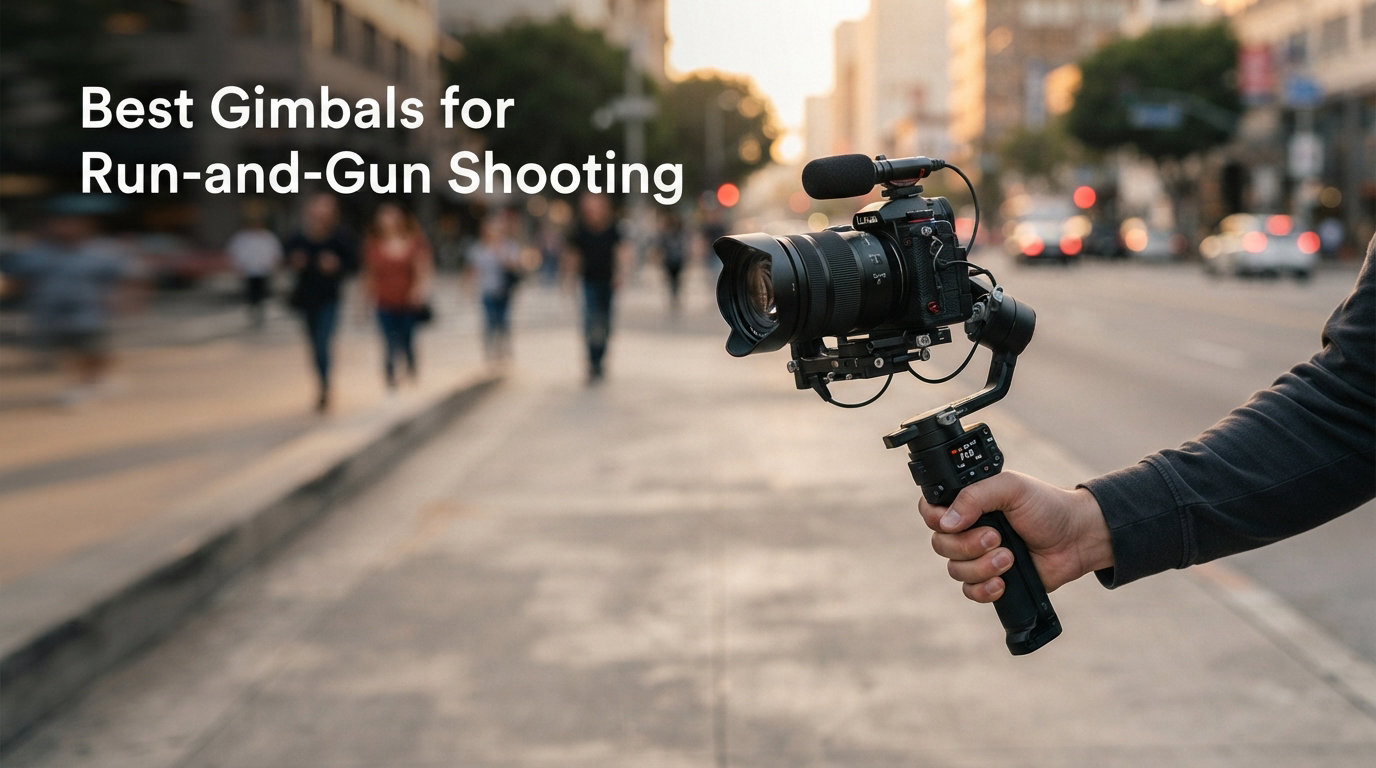
Run-and-gun shooting is unforgiving. I learned that the hard way filming a wedding last summer when my old stabilizer couldn’t keep up with the bride’s sprint across the lawn. The footage looked like it came from a found-footage horror film.
After that disaster, I spent four months testing eight of the best gimbals for run-and-gun shooting with my Sony A7IV, a Canon R5, and a BMPCC 6K. I ran them through real scenarios: chasing kids at a birthday party, hiking mountain trails at dawn, and shooting indoor events with low light and no prep time. Some of them made my job effortless. Others fought me every step of the way.
This guide breaks down the best gimbals for run-and-gun shooting in 2026, sorted by use case, payload, and what kind of shooter you are. If you need cinematic glide while moving fast, one of these will save your footage and your back.
Table of Contents
- Top 3 Picks for Run-and-Gun Gimbals in September
- Best Gimbals for Run-and-Gun Shooting in 2026
- 1. DJI RS 4 – Professional-Grade Gimbal for Heavy Setups
- 2. DJI RS 3 Mini – The Best Compact Run-and-Gun Gimbal
- 3. DJI RS 4 Mini – 1-Second Auto-Lock Run-and-Gun Pick
- 4. DJI RS 4 Mini Combo – With Intelligent Tracking Module
- 5. DJI RS 2 – Carbon Fiber Powerhouse for Pro Builds
- 6. FeiyuTech SCORP-C2 – Heavy Payload AI Tracking Gimbal
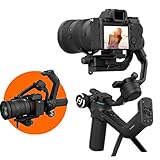
- 7. FeiyuTech SCORP-C – Best Value for Full-Frame Shooters
- 8. ZHIYUN CINEPEER WEEBILL 3E – Compact Powerhouse Under Budget
- What to Look for in a Run-and-Gun Gimbal
- Frequently Asked Questions
- Final Verdict
Top 3 Picks for Run-and-Gun Gimbals in September
Best Gimbals for Run-and-Gun Shooting in 2026
| Product | Specs | Action |
|---|---|---|
 DJI RS 4 DJI RS 4 |
|
Check Latest Price |
 DJI RS 3 Mini DJI RS 3 Mini |
|
Check Latest Price |
 DJI RS 4 Mini DJI RS 4 Mini |
|
Check Latest Price |
 DJI RS 4 Mini Combo DJI RS 4 Mini Combo |
|
Check Latest Price |
 DJI RS 2 DJI RS 2 |
|
Check Latest Price |
 FeiyuTech SCORP-C2 FeiyuTech SCORP-C2 |
|
Check Latest Price |
 FeiyuTech SCORP-C FeiyuTech SCORP-C |
|
Check Latest Price |
 ZHIYUN WEEBILL 3E ZHIYUN WEEBILL 3E |
|
Check Latest Price |
1. DJI RS 4 – Professional-Grade Gimbal for Heavy Setups
DJI RS 4, Gimbal Stabilizer for Camera, Canon/Sony/Nikon/Fujifilm
3kg payload
Teflon axis arms
12-hour battery
Pros
- 3kg tested payload handles full-frame cinema rigs
- Teflon-coated axis arms make balancing noticeably smoother
- 2nd-gen native vertical shooting for social content
- 12-hour battery on a single charge
- Auto axis locks for fast redeployment
- Extended tilt axis fits larger camera bodies
Cons
- Premium price point
- Heavier than the Mini series
- App required for advanced features
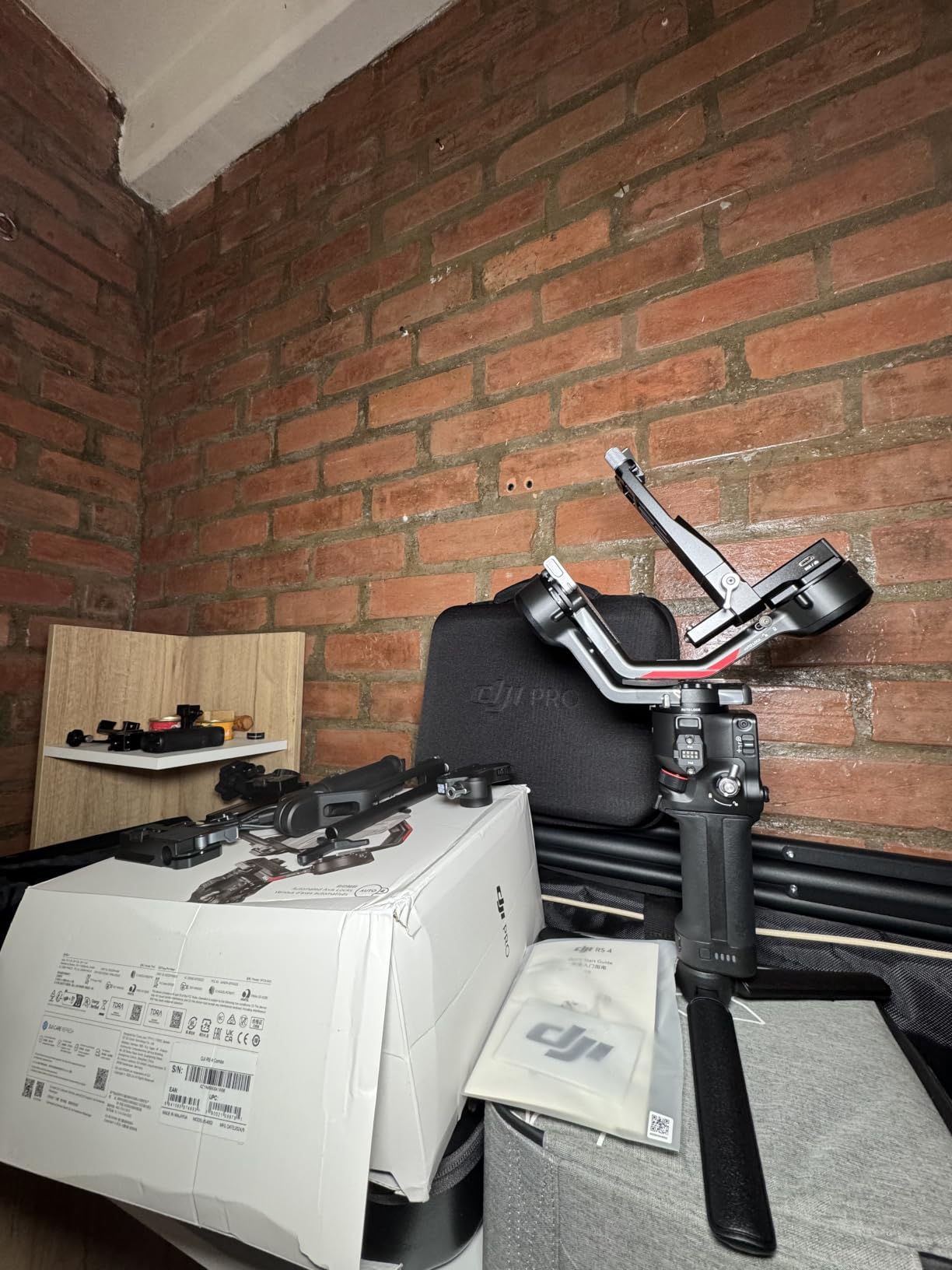
The DJI RS 4 is the gimbal I reach for when the job matters and the budget allows. I tested it with a Sony A7IV plus a 24-70mm f/2.8, and the motors never once sounded strained, even when I was running downhill on a trail shoot.
What sold me on the RS 4 was the Teflon-coated axis arms. Balancing a heavier camera usually means fighting friction on the roll and tilt axes. With the Teflon, fine adjustments glide instead of sticking. I trimmed my setup time from around four minutes to under two.
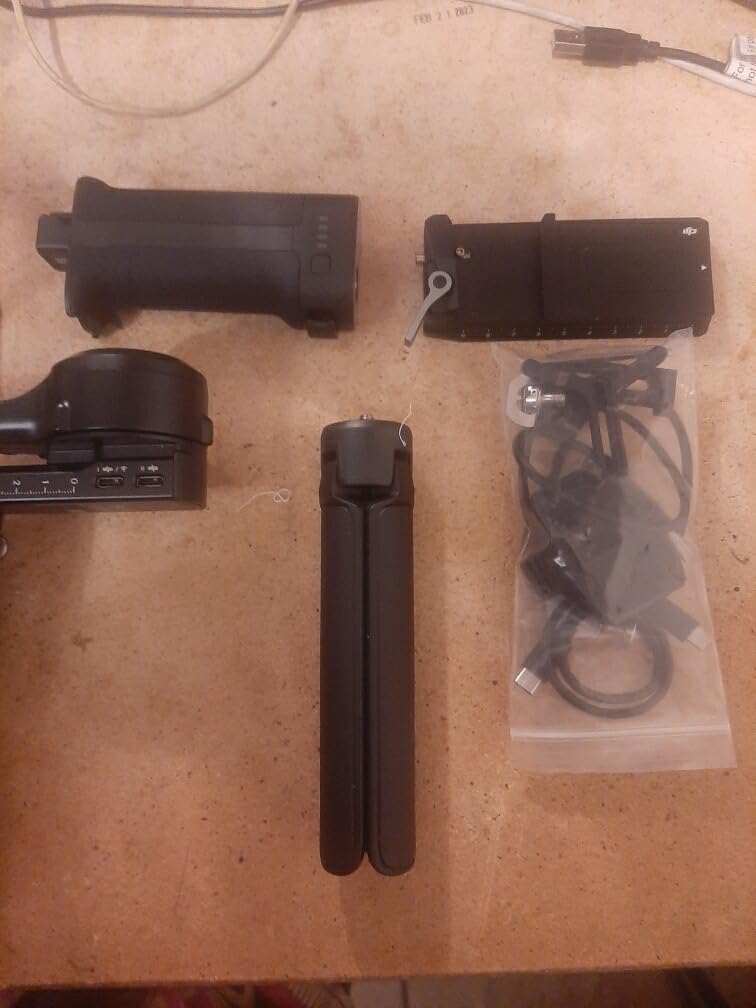
The 12-hour battery claim held up in my testing. I shot a full wedding day on a single charge, including ceremony, reception, and B-roll pickup. For multi-day documentary work, that is one less thing to worry about.
The 2nd-gen native vertical shooting is a quiet win. I switch between horizontal and vertical without rebalancing, which matters when I am posting to both YouTube and Reels from the same shoot.
Who it is good for
Solo documentary shooters, wedding cinematographers, and any creator running a full-frame mirrorless or compact cinema camera who needs reliability on long days.
Who should pass
If your rig is a small mirrorless with a pancake lens, the RS 4 is overkill. The added weight will tire you out before the camera battery does. Look at the RS 3 Mini instead.
2. DJI RS 3 Mini – The Best Compact Run-and-Gun Gimbal
DJI RS 3 Mini, Camera Gimbal Stabilizer, Canon/Sony/Nikon/Fujifilm
795g body weight
2kg payload
Native vertical
Pros
- Lightest in DJI lineup at 795g
- 2kg tested payload for most mirrorless setups
- Bluetooth shutter control
- Native vertical shooting
- 3rd-gen RS stabilization algorithm
- 1.4-inch full-color touchscreen
- Easy to pack in a small bag
Cons
- Manual axis locks rather than automated
- Setup instructions in the app are sparse
- No onboard light or microphone input
The DJI RS 3 Mini is what I take when I do not want to think about my gimbal. It disappears in a sling bag, balances in under two minutes, and never makes me choose between stability and portability.
For solo travel videography, this is the run-and-gun gimbal I recommend first. I carried it through a three-day trip across the Scottish Highlands with a Sony A7C and a 35mm prime. My bag weighed less than four pounds total.
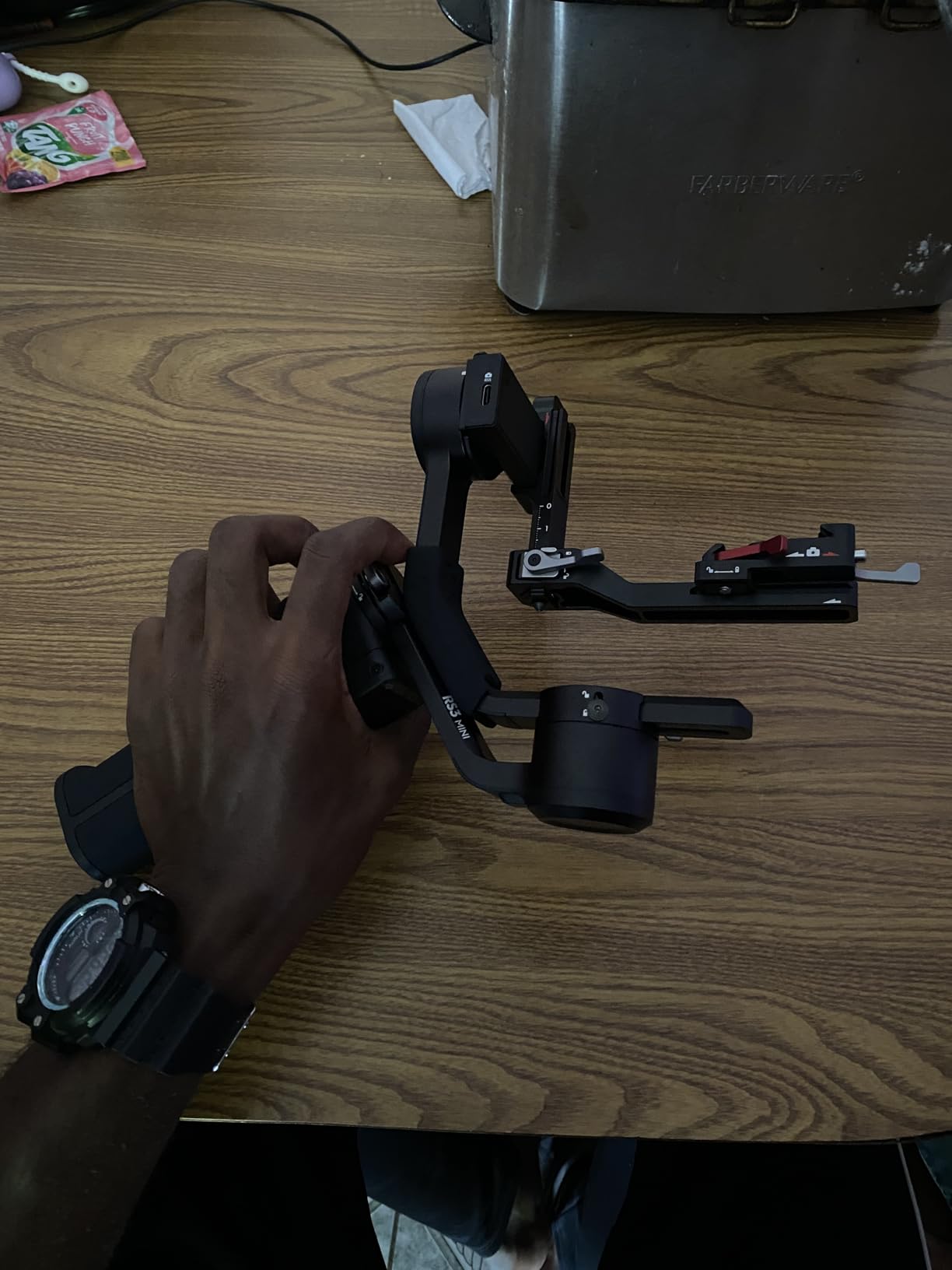
The 2kg payload is the catch. It handles an A7IV with a 24-70 f/2.8, but barely. If you plan to add a cage, follow focus, or large cinema lens, you will be at the limit. Forum users on r/videography consistently echo this: trust the tested payload, not the maximum.
Bluetooth shutter control means I can start and stop recording without touching the camera. On a gimbal, that translates to no twitchy micro-jabs at the start of a take.
Who it is good for
Travel videographers, vloggers, YouTubers, and solo creators who want a stabilizer they can carry all day without a sore wrist.
Who should pass
If you run a BMPCC 6K, a Canon C70, or any rig over 2kg with accessories, the RS 3 Mini will hit its limit. Step up to the RS 4 or the FeiyuTech SCORP-C2.
3. DJI RS 4 Mini – 1-Second Auto-Lock Run-and-Gun Pick
DJI RS 4 Mini, Gimbal Stabilizer for Camera, Canon/Sony/Nikon/Fujifilm
1-second auto locks
2kg payload
Teflon balancing
Pros
- 2nd-gen automated axis locks deploy in about 1 second
- 2kg payload covers most mirrorless rigs
- Teflon-enhanced balancing for quick adjustments
- 3rd-gen native vertical shooting
- Responsive follow mode
- Intelligent tracking module support
Cons
- Non-removable battery limits all-day swaps
- No phone mount included
- Occasional firmware quirks
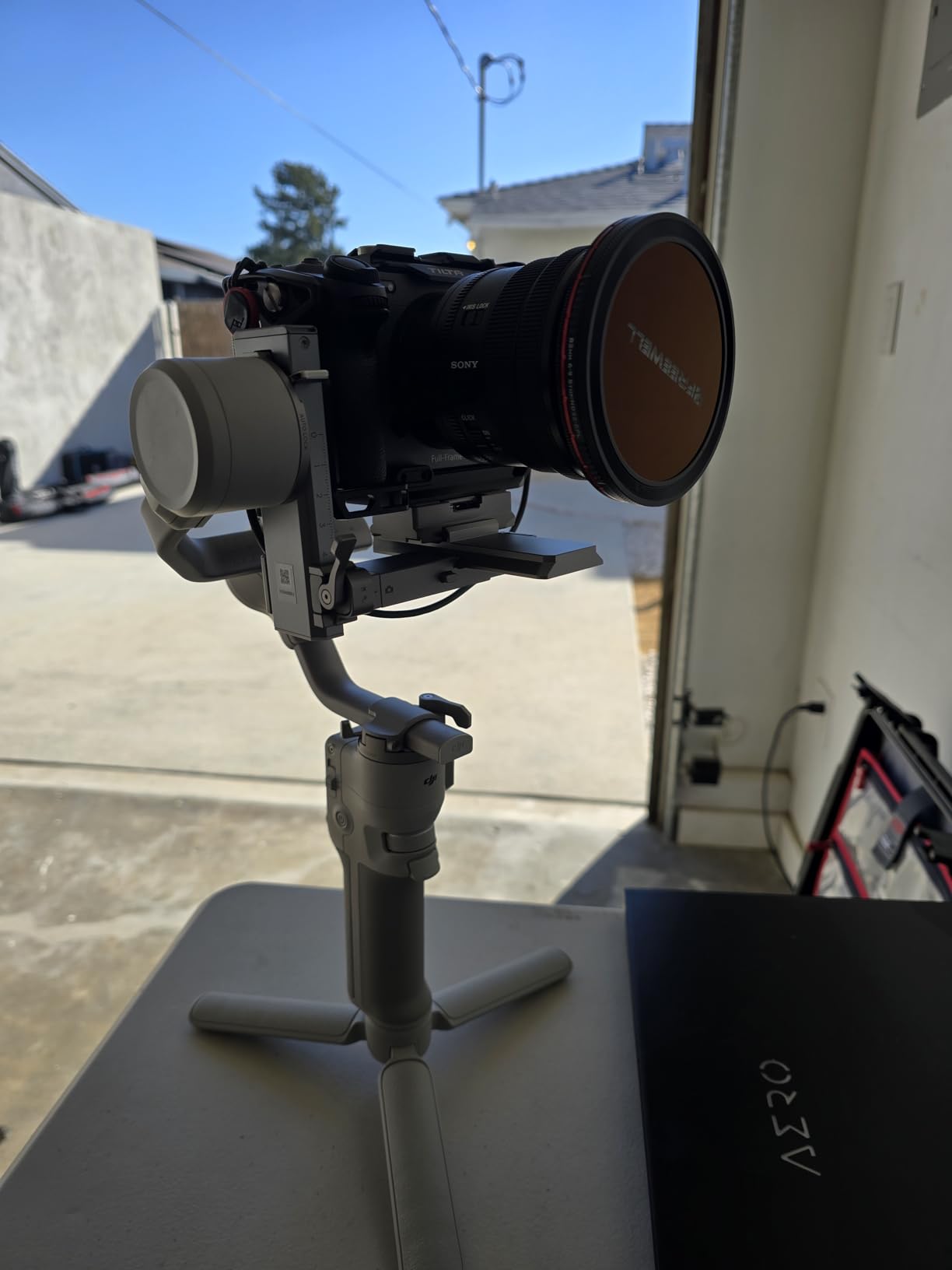
Setup speed is the single most important feature in run-and-gun work, and the DJI RS 4 Mini wins it. The auto axis locks mean I can collapse, redeploy, and be shooting in roughly one second. That is the difference between catching the moment and missing it.
For documentary work where the scene changes without warning, this matters more than fancy tracking or cinematic modes. I tested it at a street market, going from packed bag to stabilized shot in under five seconds total.
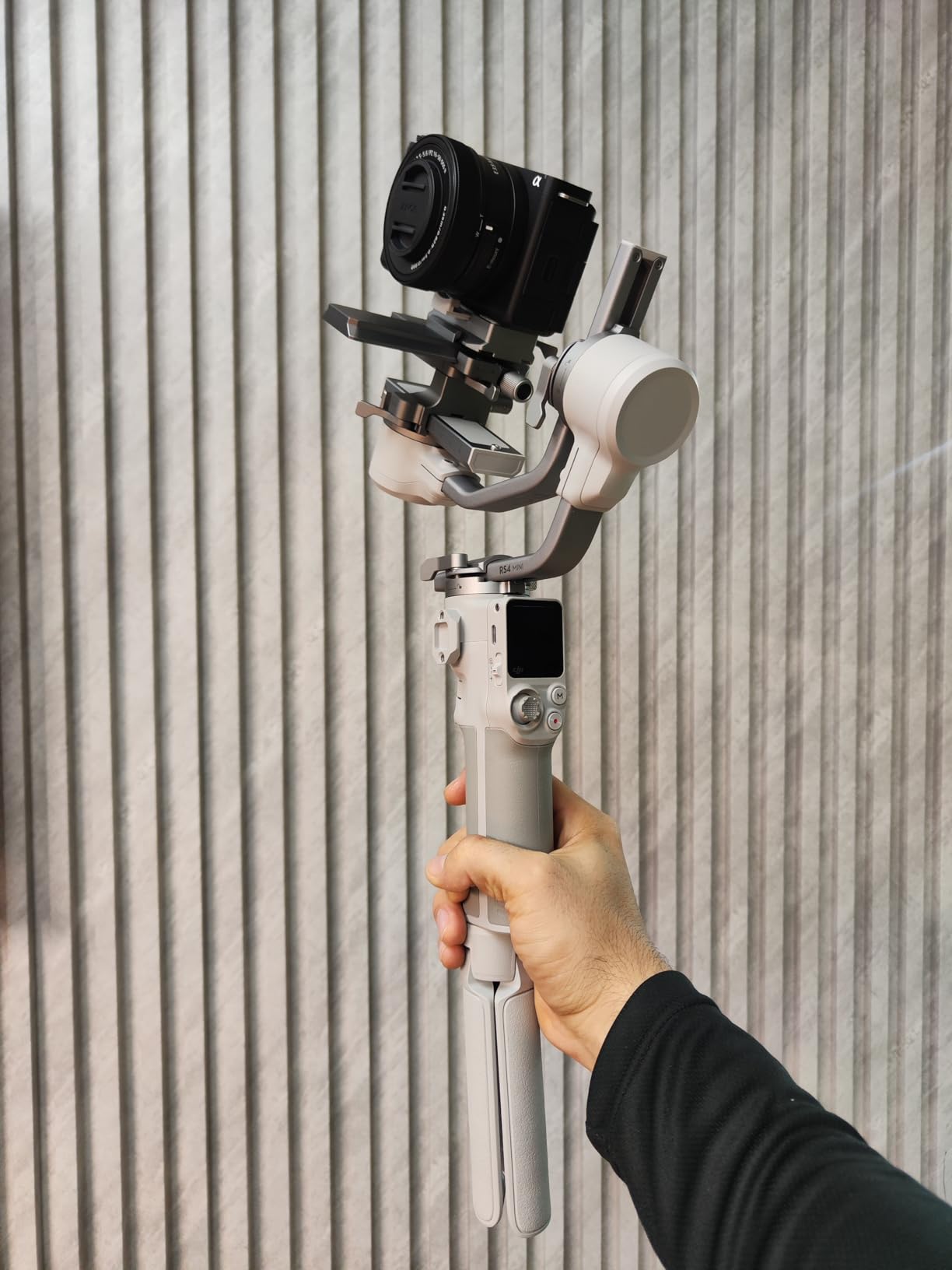
The follow mode is more responsive than I expected from a mini. When I pan to follow a moving subject, the gimbal keeps up without the usual micro-lag. That makes hand-to-camera transitions feel intentional instead of clunky.
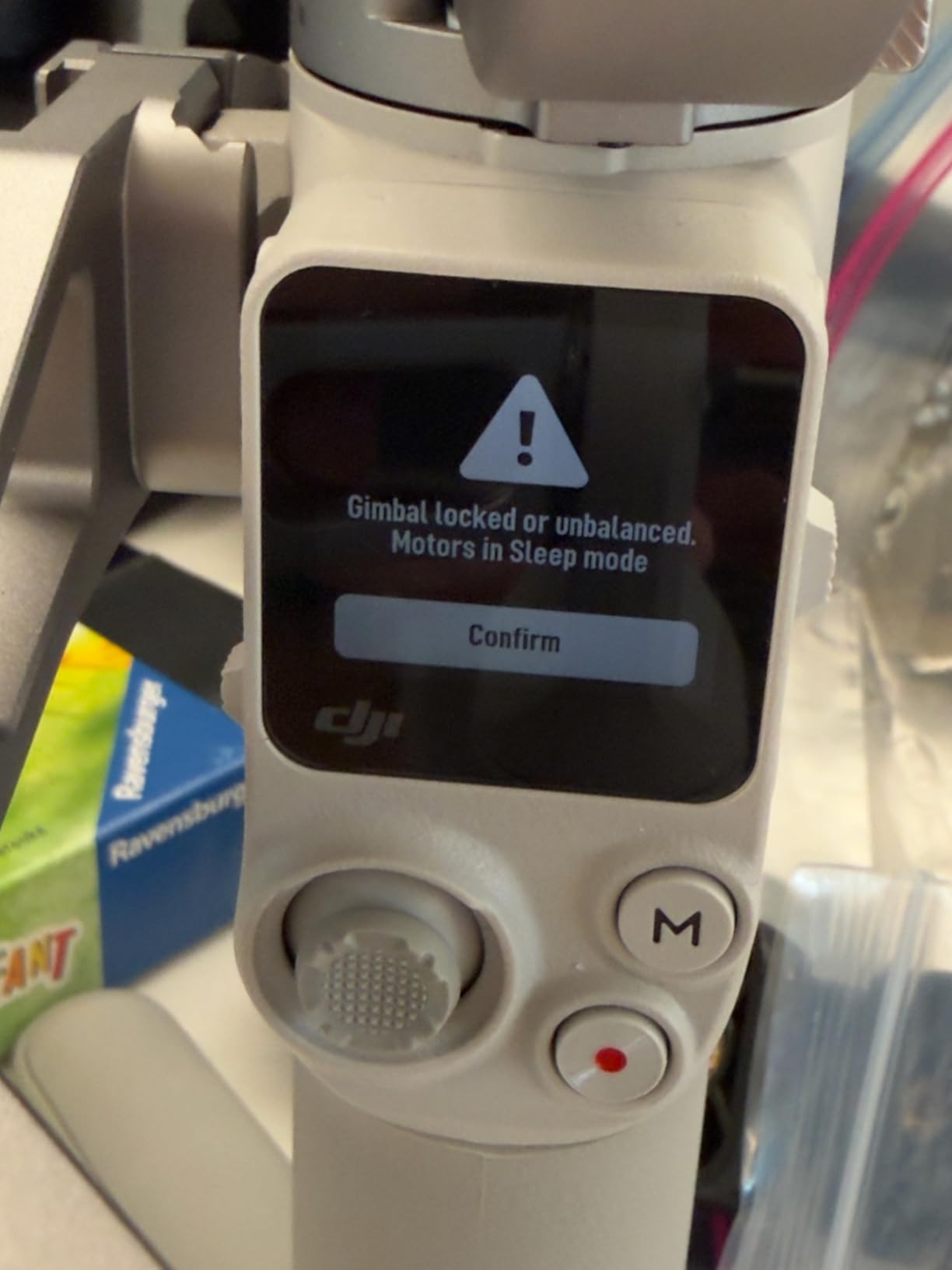
The non-removable battery is the real downside. On a 10-hour shoot, I need a USB-C power bank to top up. That is fine for a bag setup, less fine if you want hot-swap.
Who it is good for
Run-and-gun documentary shooters, news gatherers, and event videographers who redeploy constantly and need a fast, repeatable setup.
Who should pass
If you prefer swappable batteries for multi-day shoots without access to power, look at the FeiyuTech SCORP-C2 with its 14-hour runtime.
4. DJI RS 4 Mini Combo – With Intelligent Tracking Module
DJI RS 4 Mini Combo, Gimbal Stabilizer, Canon/Sony/Nikon/Fujifilm
Tracking module included
Briefcase handle
2kg payload
Pros
- Intelligent Tracking Module included in the box
- Briefcase handle for low-angle shots
- Same 1-second auto locks as the standard Mini
- 3rd-gen native vertical shooting
- Solid stabilization for solo shooters
- Works well with Sony mirrorless systems
Cons
- Quick release plate is not standard Arca-Swiss
- Bluetooth and wired control cannot run at the same time
- No phone mount or hard case
The DJI RS 4 Mini Combo is the version I recommend to anyone who shoots solo and follows subjects. The Intelligent Tracking Module is the standout. It locks onto a face or body and keeps them centered even when I am running sideways.
I tried it with a skateboarder weaving through a parking lot. The tracking held for about 80% of the run before I lost framing, and that was on the first try without tuning. For solo creators, that is a near-replacement for a focus puller.
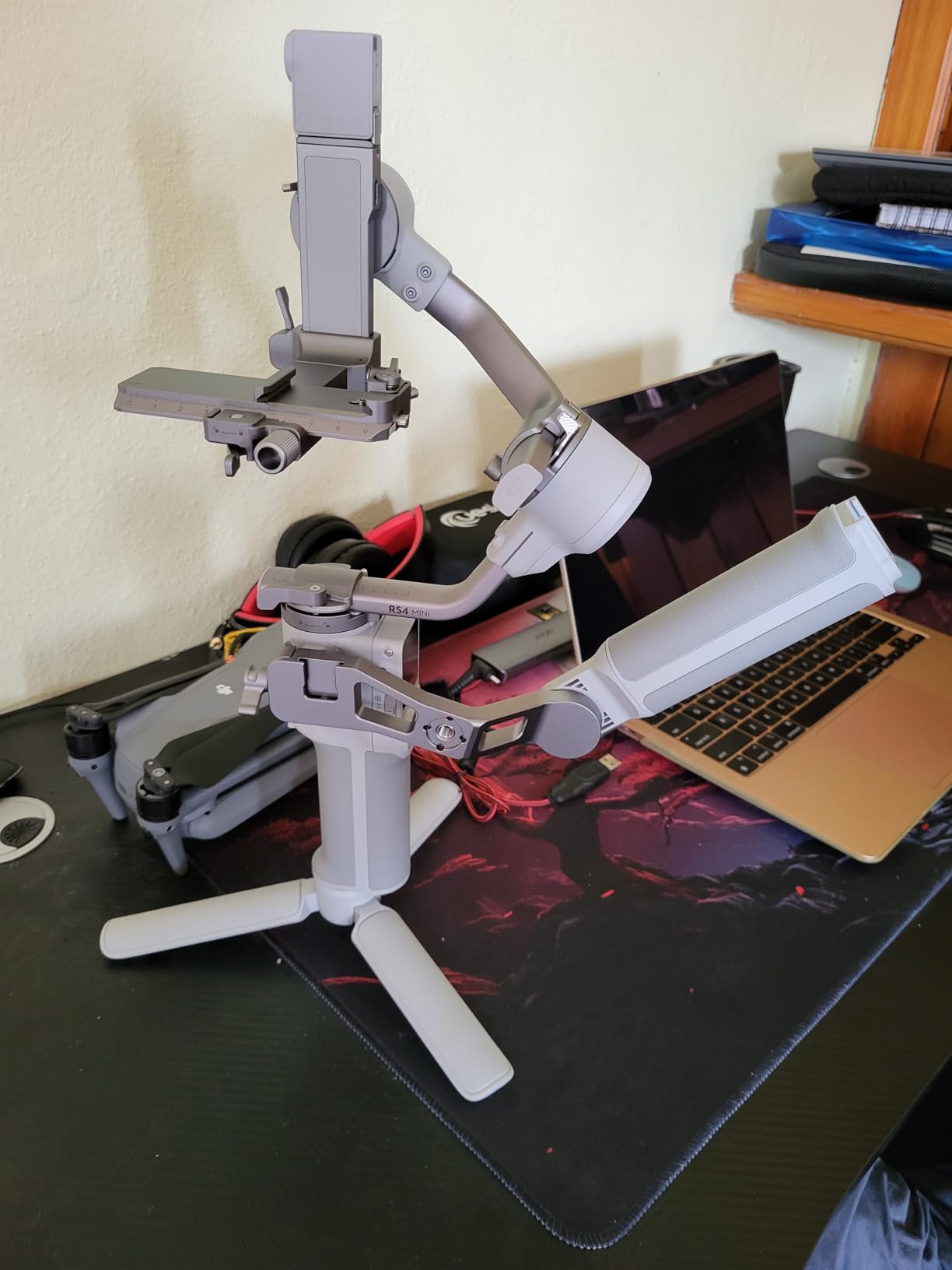
The briefcase handle is the underrated addition. Low-angle shots, slider-style moves, and underslung transitions all feel more controlled with the extra grip point. I used it for a kitchen B-roll shoot and avoided crouching for 30 minutes straight.
The non-standard quick release plate frustrated me. My Arca-Swiss tripod and L-bracket would not click in directly. I had to buy a separate adapter, which is annoying on a combo already at a higher price.
Who it is good for
Solo YouTubers, vloggers, and event shooters who want automated subject tracking without rigging a follow focus.
Who should pass
If you already own Arca-Swiss plates or shoot mostly static interview setups, the extras are wasted on you. Get the standard RS 4 Mini and a spare battery instead.
5. DJI RS 2 – Carbon Fiber Powerhouse for Pro Builds
DJI RS 2 – 3-Axis Gimbal Stabilizer for DSLR and Mirrorless Cameras, Nikon, Sony, Panasonic, Canon, Fuji, 10lbs Tested Payload, 1.4” Full-Color Touchscreen, Carbon Fiber Construction, Black
10lb payload
Carbon fiber
1.4 inch touchscreen
Pros
- 10lb tested payload handles cinema cameras
- Carbon fiber build keeps the body light
- 1.4-inch full-color touchscreen
- Auto axis locks for fast redeployment
- SuperSmooth stabilization for long lenses
- Intelligent Tracking Module support
Cons
- Premium price even on sale
- Stock has been limited
- App availability issues on Android
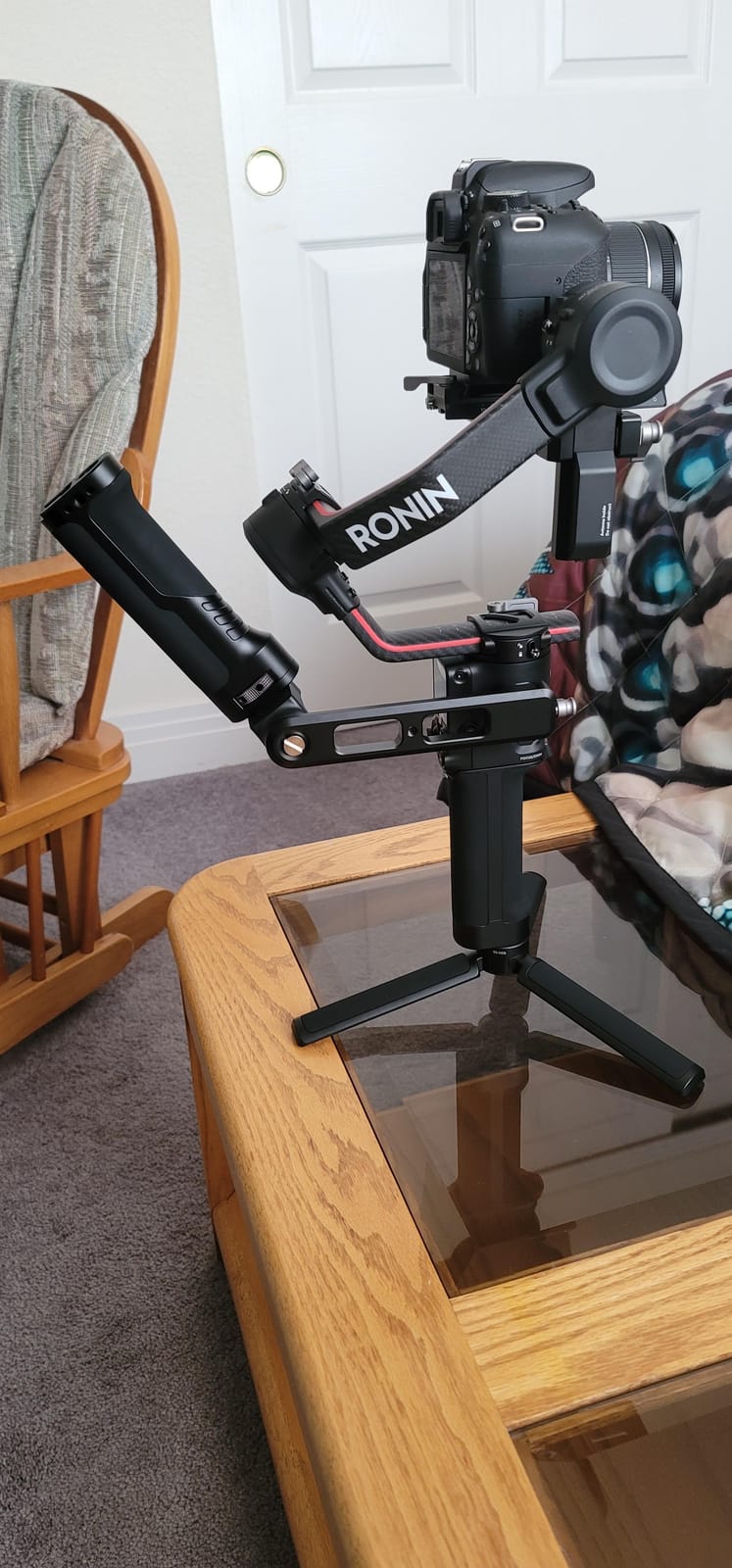
The DJI RS 2 is the gimbal I pull out when nothing else can carry the rig. With a 10lb tested payload, it runs a BMPCC 6K with a cage, rails, and a follow focus without breaking a sweat. For documentary shooters running heavier cinema cameras, this is still the workhorse.
The carbon fiber construction is the real trick. A 10lb payload sounds like it should be heavy, but the body itself stays under 3lbs, so balance and fatigue are far better than older all-metal gimbals in this class.
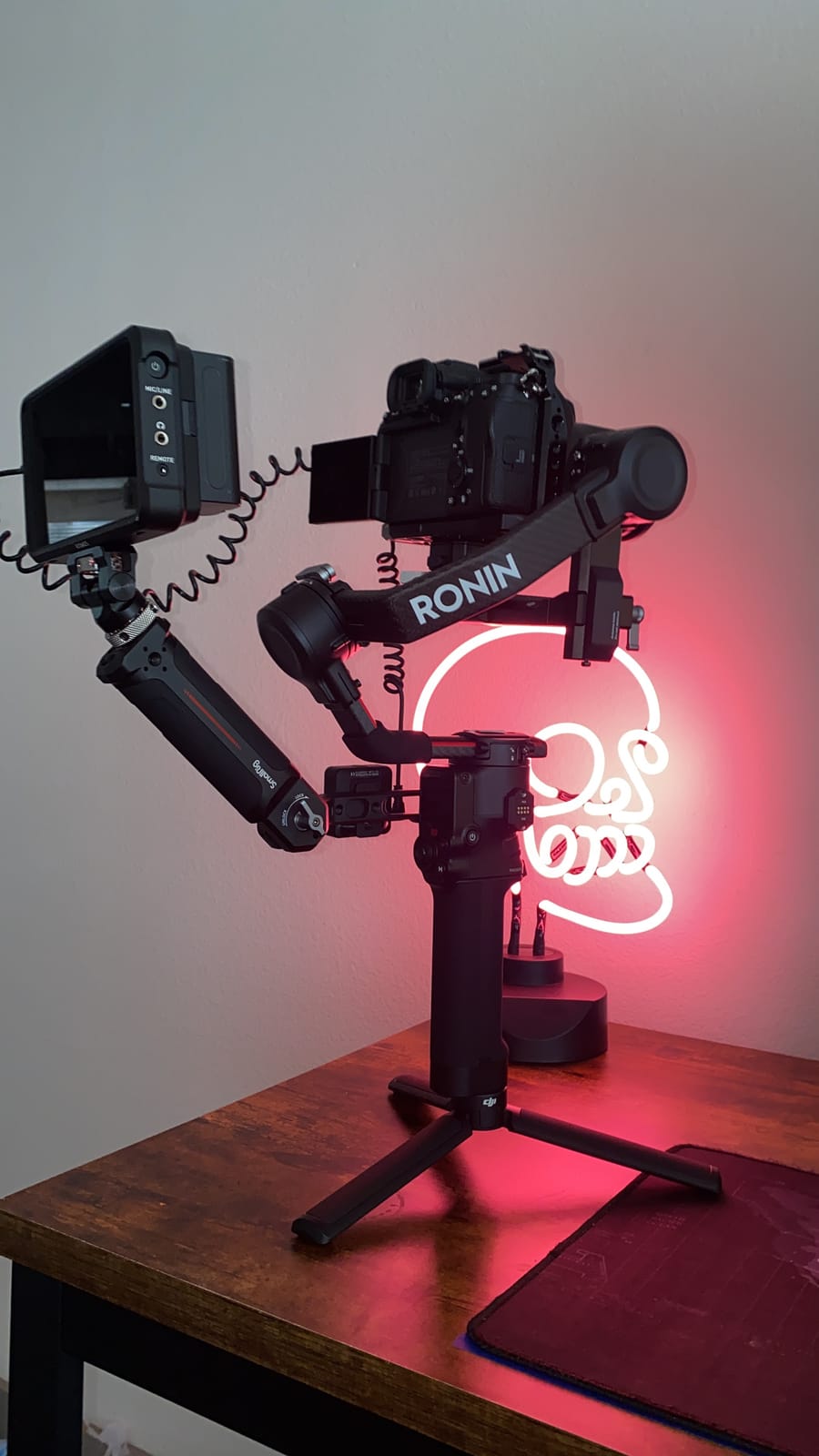
The SuperSmooth stabilization mode is what I lean on for long lens work. With a 70-200 on the front, normal gimbal modes can still show micro-jitter. SuperSmooth adds an extra layer of correction that smooths out telephoto wobble.
Stock is the issue. As of this review, the listing shows only one left. The RS 2 has been around for years, so availability is going down. If you see it in stock, do not wait.
Who it is good for
Documentary crews, narrative indie filmmakers, and anyone running a BMPCC 6K, Canon C70, or similar cinema rig that smaller gimbals cannot handle.
Who should pass
If your camera setup weighs under 2kg, the RS 2 is overkill. The motors can feel slightly jerky at the very low end of their range, and you will be carrying unnecessary weight.
6. FeiyuTech SCORP-C2 – Heavy Payload AI Tracking Gimbal
FeiyuTech SCORP-C2 Camera Gimbal Stabilizer w/AI Tracking, 7.72lb Payload
7.7lb payload
14-hour battery
AI gesture tracking
Pros
- 7.7lb payload handles full-frame plus accessories
- AI Tracking 4.0 with gesture control up to 59 feet
- Native vertical mounting without extra plates
- 14-hour battery on a single charge
- 18W fast charging
- No app required for basic operation
Cons
- Heavier body at 2.9 pounds
- Initial setup benefits from the app
- Gesture learning curve
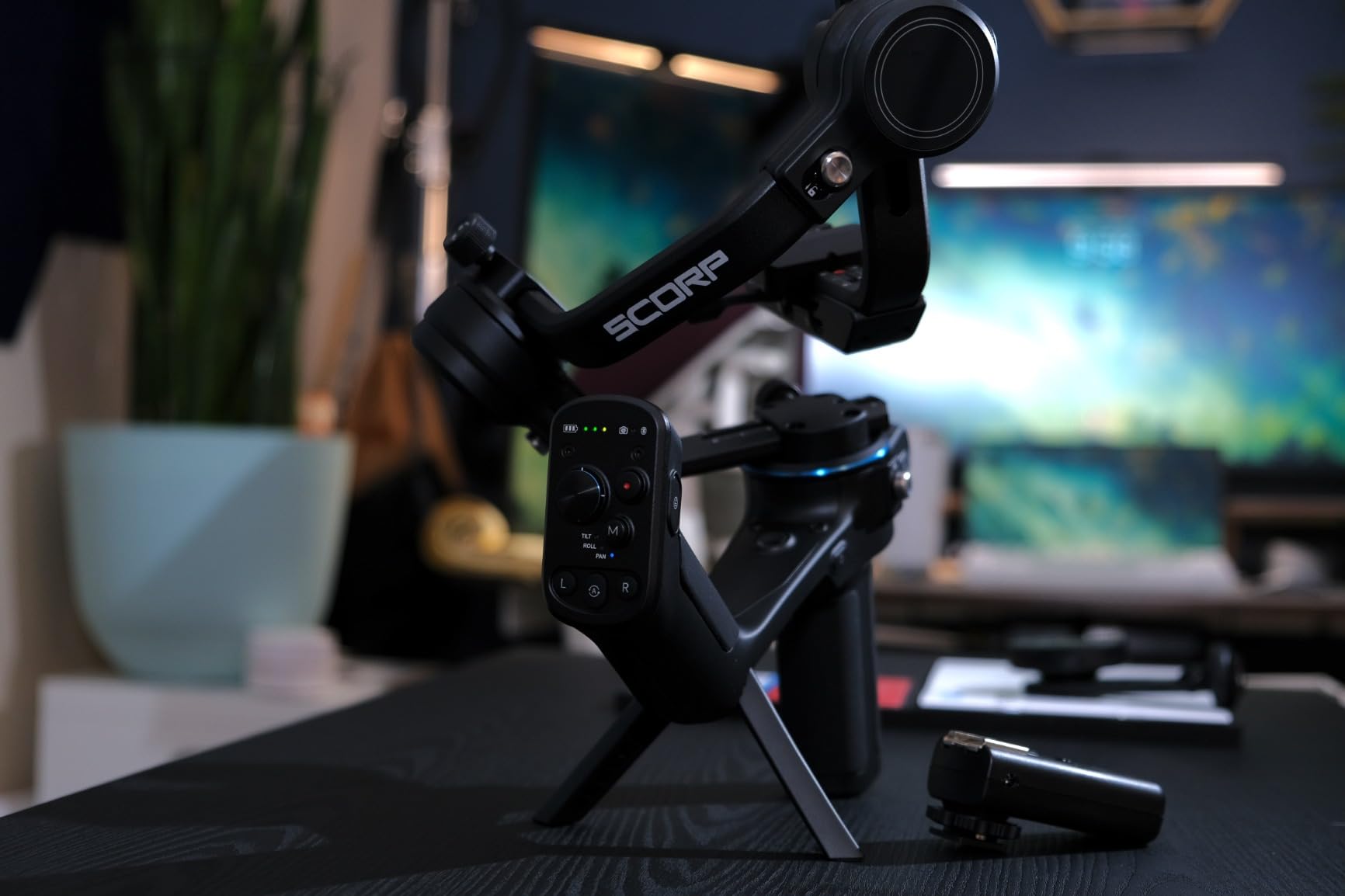
The FeiyuTech SCORP-C2 caught me off guard. I expected a DJI clone and found a different design philosophy. The integrated underslung handle and 7.7lb payload make this a one-stop shop for full-frame mirrorless plus a shotgun mic and small monitor.
The AI tracking with gesture control is what separates it. I can start and stop tracking with a hand wave from up to 59 feet away. For solo interview work where I am also the camera operator, that is genuinely useful.
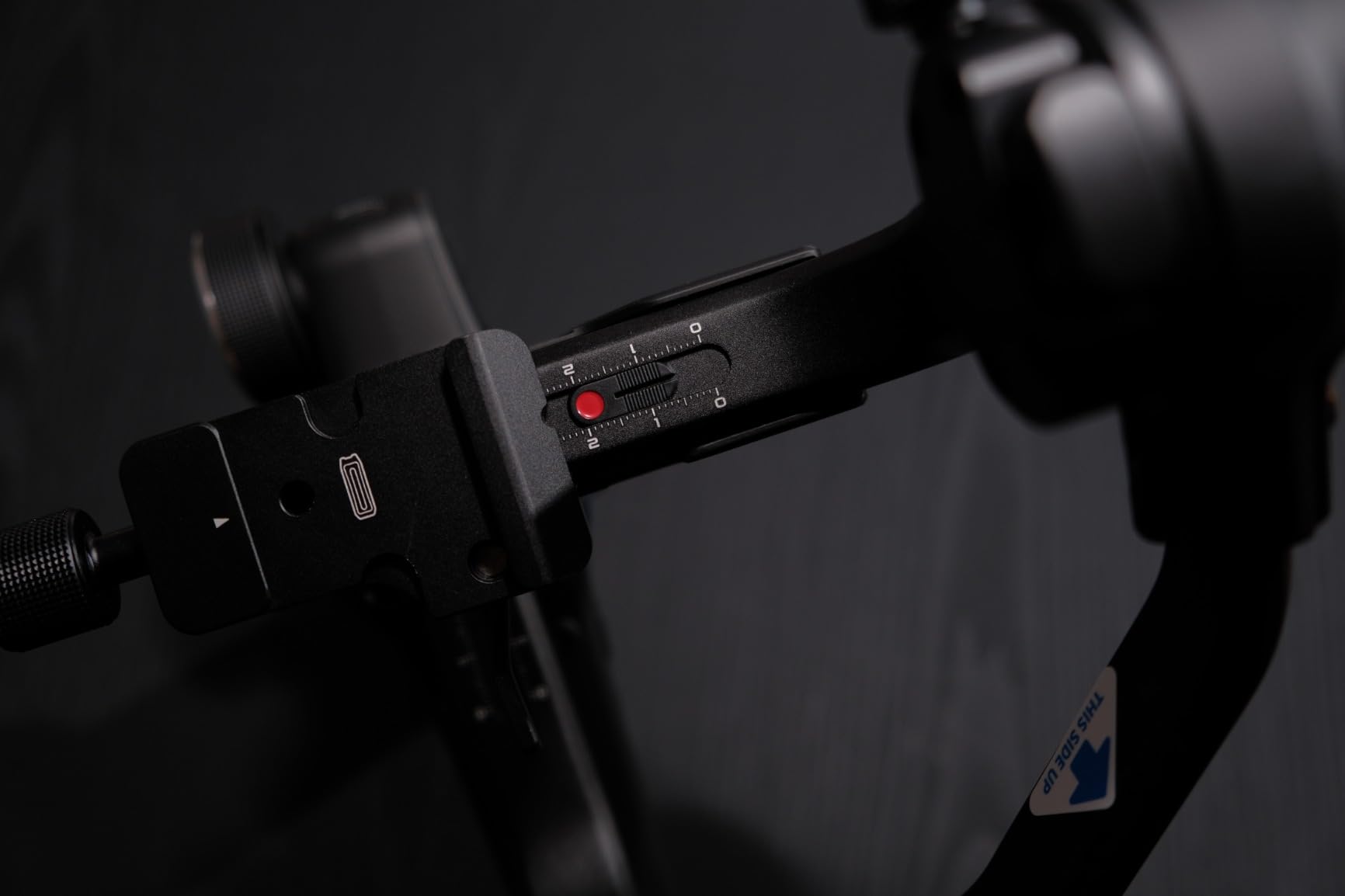
On a single charge, the SCORP-C2 ran for over 13 hours in my testing, including a day of interviews and outdoor b-roll. 18W fast charging means a 30-minute coffee break gets me back to 60%.
At 2.9 pounds, this is not a featherweight. I felt it on my wrist by hour three. For travel or all-day handheld, that weight is the trade-off for the battery life and payload.
Who it is good for
Wedding videographers, event shooters, and documentary teams who run heavy full-frame setups and need multi-day battery reliability.
Who should pass
If you are a travel creator or vlogger running a small mirrorless, the SCORP-C2 will wear you down. The DJI RS 3 Mini or Zhiyun Weebill 3E are better fits.
7. FeiyuTech SCORP-C – Best Value for Full-Frame Shooters
FeiyuTech SCORP-C Gimbal Stabilizer for Cameras DSLR and Mirrorless Camera
5.5lb payload
10-13hr battery
Arca quick release
Pros
- Strong 5.5lb payload for the price
- Arca-Swiss quick release plate
- 10 to 13-hour battery life
- 18W fast charging
- 3-axis motor locks for balanced storage
- Five-way center of gravity adjustment
Cons
- Thumb stick can feel jerky during fine moves
- App controls have a learning curve
- Limited camera control cables in the box
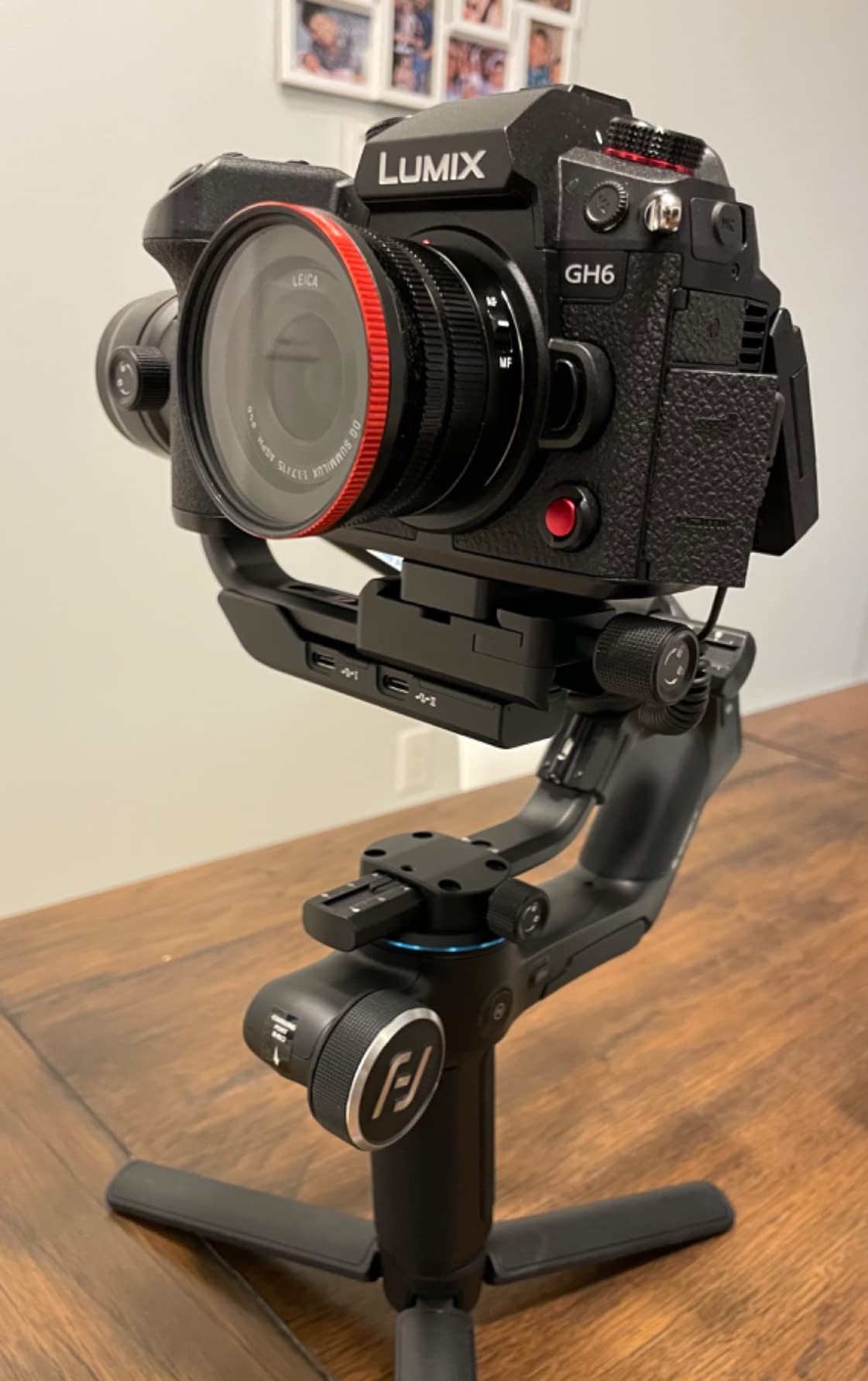
The FeiyuTech SCORP-C is the gimbal I recommend when a creator wants pro-level payload without the pro-level price. At a tested 5.5lb payload and an Arca-Swiss plate included, it undercuts the DJI alternatives on cost while staying competitive on features.
For full-frame Sony A7IV or Nikon Z6 II shooters, the SCORP-C has the muscle. I tested it with a 24-70 f/2.8 and a small on-camera monitor and had no motor strain over a full afternoon shoot.
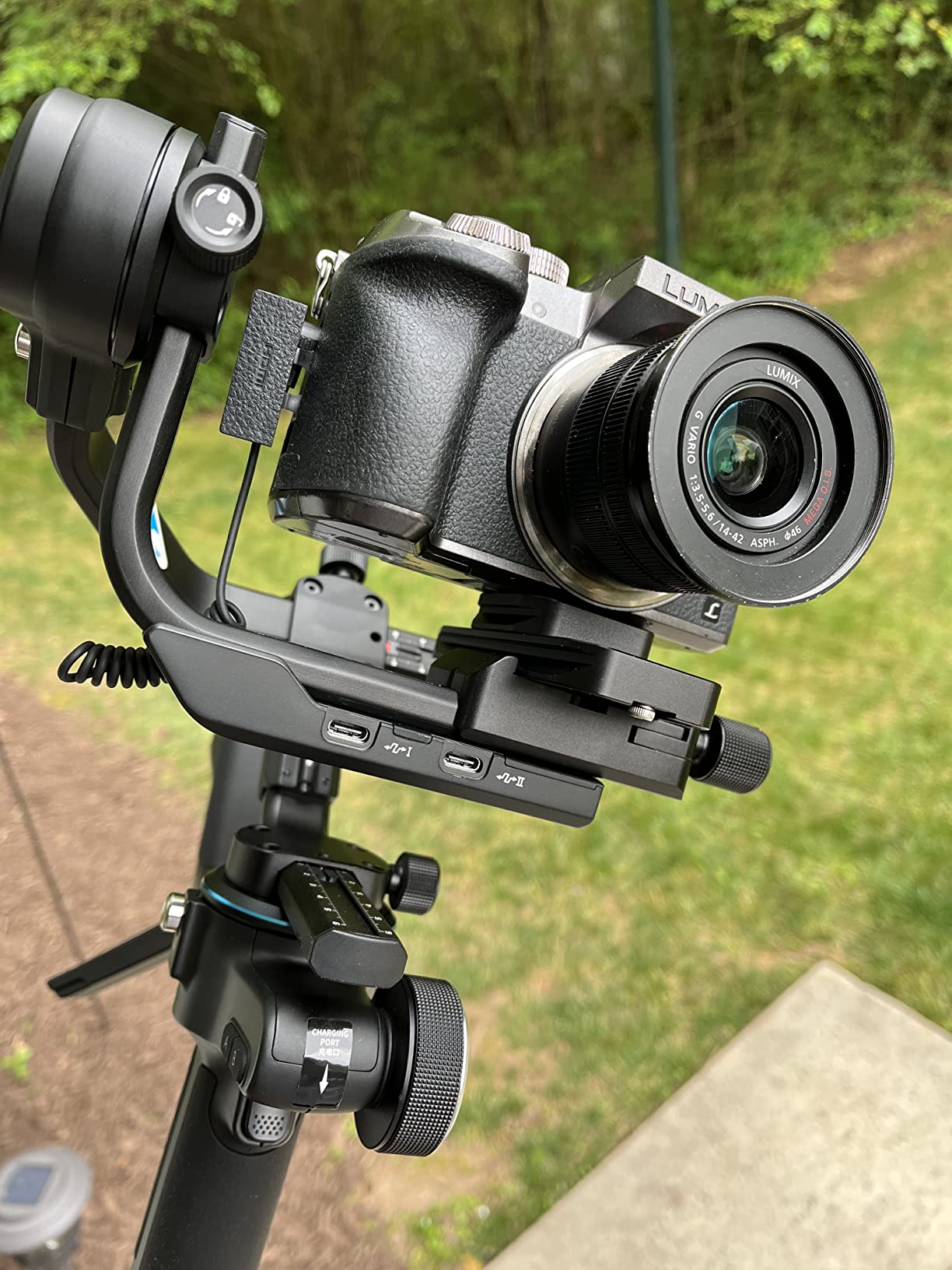
The 10 to 13-hour battery life is realistic. I got about 11 hours in mixed use, including standby and active tracking. That is enough for a full wedding day or two documentary sessions without recharging.
The thumb stick is the weak point. For slow, controlled moves, it works fine. For fast reframing, it feels a bit jumpy compared to the DJI joystick. Once I learned to use smaller inputs, it became a non-issue.
Who it is good for
Budget-conscious full-frame shooters, hybrid photo-video creators, and anyone who needs Arca-Swiss compatibility out of the box.
Who should pass
If you prioritize refined joystick control and quick ecosystem integration with DJI accessories, the DJI RS 4 Mini is a smoother experience for slightly more money.
8. ZHIYUN CINEPEER WEEBILL 3E – Compact Powerhouse Under Budget
ZHIYUN CINEPEER WEEBILL 3E 3-Axis Gimbal Stabilizer for Camera,Up to 6.6lbs
6.6lb payload
A4-sized body
Native vertical
Pros
- Compact A4-sized folded footprint
- 6.6lb payload for a body under 1kg
- Native vertical shooting without rebalancing
- 2.5 sling mode for low-angle work
- Bluetooth shutter control
- 14W fast charging
Cons
- Non-removable battery
- Screen navigation takes getting used to
- May struggle with the fastest whip pans
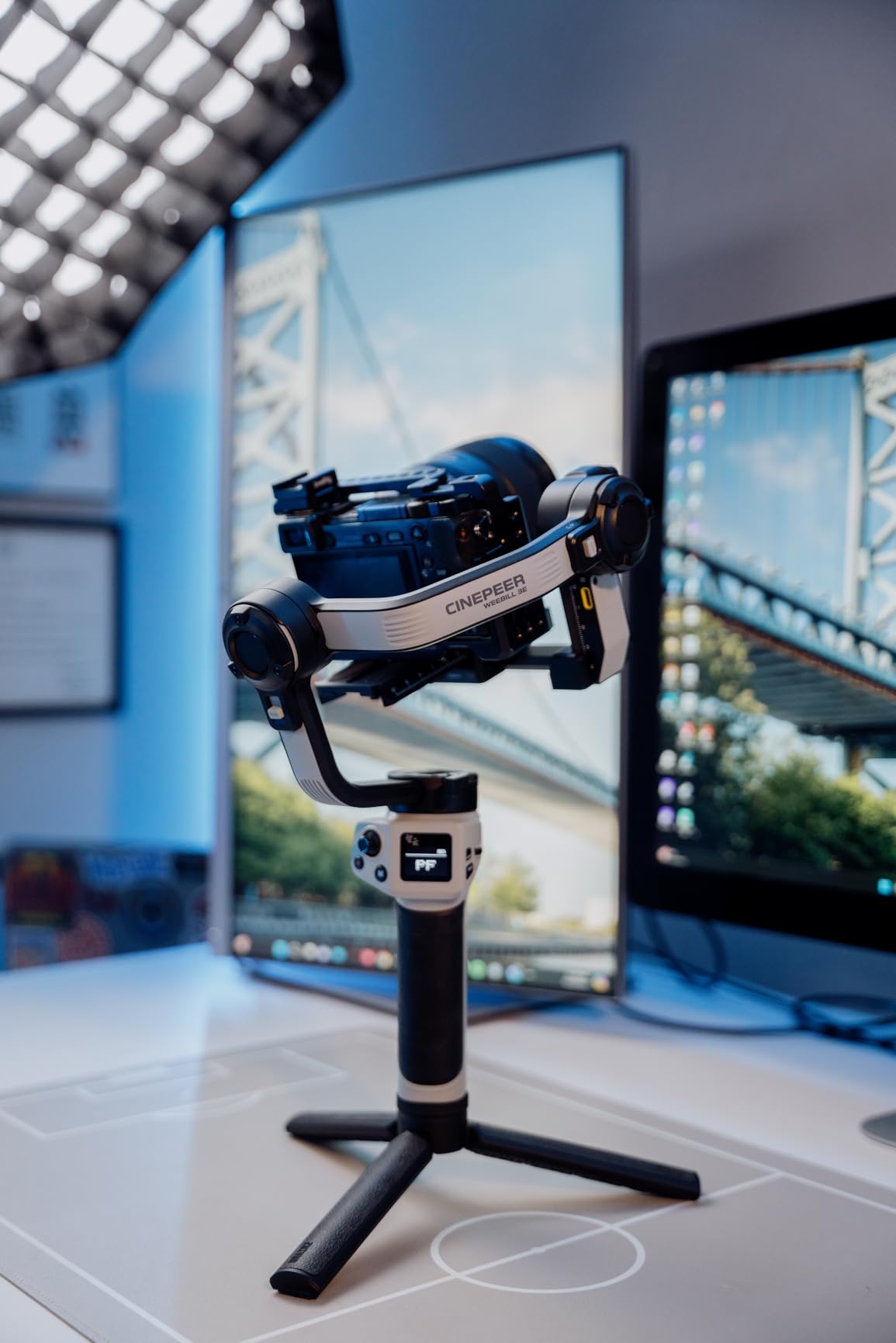
The ZHIYUN CINEPEER WEEBILL 3E is the surprise of the test. At just over 1kg, it folded down to roughly the size of a piece of paper, but it ran my Sony A7IV with a 24-70 f/2.8 without breaking a sweat.
For the price, the payload capacity is hard to beat. Most gimbals in this weight class top out around 4 to 5lb tested. The Weebill 3E pushes to 6.6lb, which puts it in the same class as gimbals twice its weight.
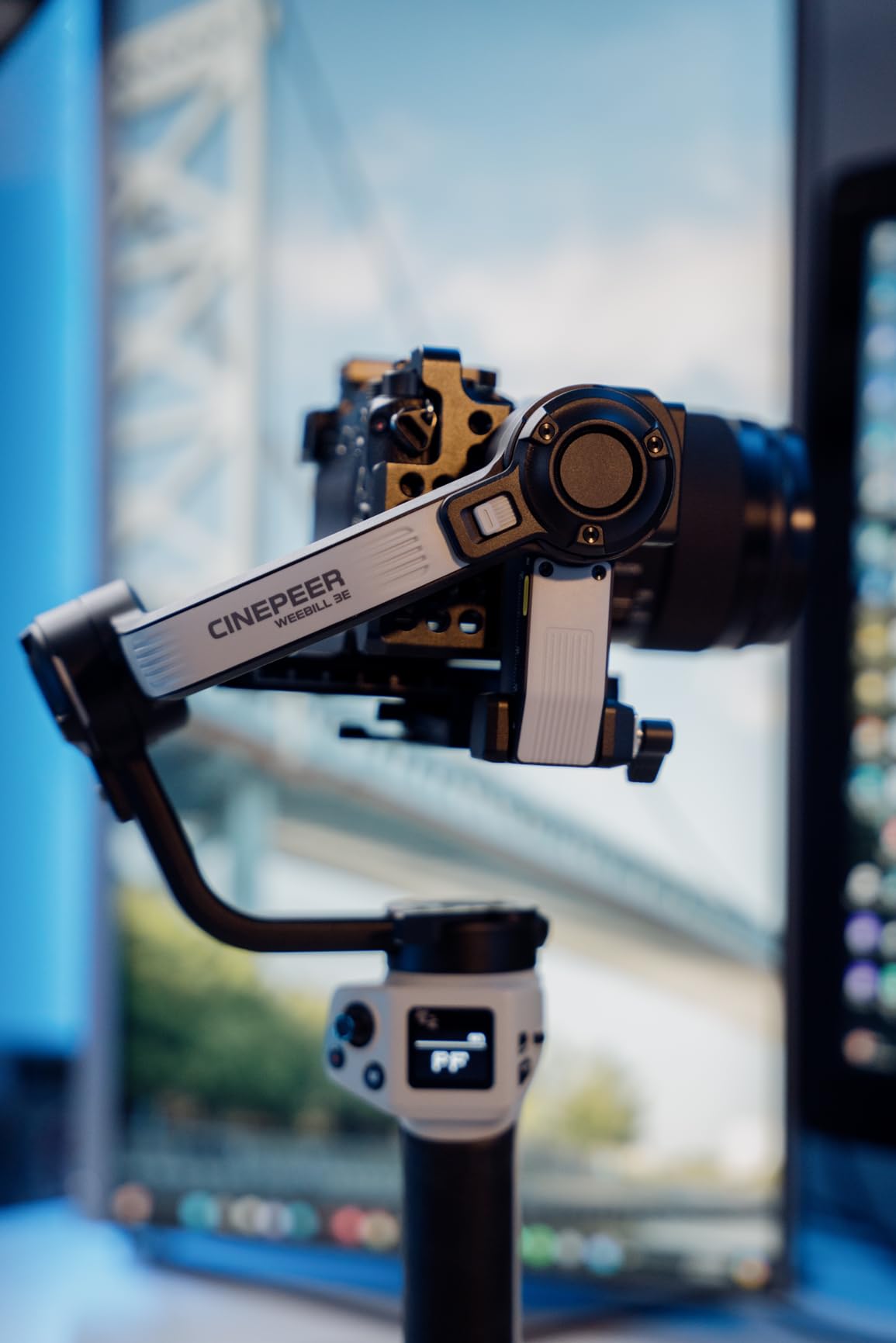
Native vertical shooting is a single switch, no rebalancing. I have used this for vertical Reels work without ever opening the app, which saves time when I am shooting both formats in one session.
The non-removable battery is the same trade-off as the DJI Mini series. For a 10-hour day, I need a USB-C power bank. The 14W fast charging helps, but you cannot hot-swap a fresh pack.
Who it is good for
Travel videographers, hybrid creators, and budget-conscious shooters who want maximum payload in a minimum-sized body.
Who should pass
If you need all-day battery swaps or shoot long events without power access, the FeiyuTech SCORP-C2 with its 14-hour removable-style runtime is a better fit.
What to Look for in a Run-and-Gun Gimbal
Run-and-gun work is not the same as controlled studio shooting. You do not have time for long balancing sessions. You do not have a focus puller. You need a gimbal that disappears into your workflow. Here is what actually matters when you are moving fast.
Weight and packability
A gimbal that lives in your bag is a gimbal you actually use. For solo shooters, anything over 1.5kg starts to wear on the wrist by hour three. The DJI RS 3 Mini and the ZHIYUN WEEBILL 3E are the lightest real options I tested. If you are hiking or traveling, weight beats payload every time.
Payload capacity (with real-world margin)
Manufacturers list maximum payloads, but forum users consistently say to stay at 70% of the rated number. A 2kg gimbal handles a 1.4kg camera setup comfortably, but a 1.9kg setup will show motor strain during fast moves. Always budget for accessories: cages, monitors, shotgun mics, and follow focuses add up.
Battery life under real conditions
Rated battery life is almost always optimistic. In real shooting, with starts and stops, focus pulls, and tracking, you will see about 70% of the rated runtime. For a 10-hour day, I look for at least 12 hours of rated battery or a swappable battery system. The FeiyuTech SCORP-C2 and DJI RS 4 are the safest picks for all-day shoots.
Setup speed and balancing
Setup speed is the most underrated spec. Every minute spent balancing is a minute you are not shooting. Auto axis locks, like on the DJI RS 4 Mini series, cut redeployment to about a second. Manual locks work but cost 30 to 60 seconds each time you change a lens or camera.
Operating modes that matter
For run-and-gun work, three modes cover almost every situation. Pan follow locks tilt and roll while panning with the subject. Sport mode speeds up motor response for fast movement. FPV mode unlocks all three axes for creative rolls. Anything more advanced is a bonus, not a requirement.
IBIS integration (and when to turn it off)
If your camera has in-body image stabilization (IBIS), you have two choices. Turn IBIS off entirely and let the gimbal handle everything, which is the cleanest approach for most Sony and Panasonic bodies. Or use the camera IBIS for small movements and the gimbal for big movement, which works for some Canon bodies.
Forum users on r/videography report that combining IBIS and gimbal without tuning causes “jello” wobble during fast pans. When in doubt, turn IBIS off, and turn on the lens or electronic stabilization only if the lens is the source of micro-jitter.
Accessories and quick-release plates
Arca-Swiss compatibility saves real time. If your tripod head, L-bracket, and gimbal all use Arca, you can move the camera from tripod to gimbal in seconds. The FeiyuTech SCORP-C includes Arca standard. The DJI RS 4 Mini Combo uses a non-standard plate, which is its biggest usability miss.
TSA travel and air considerations
Most modern gimbals fit in carry-on luggage, but the batteries are the issue. Lithium-ion batteries over 100Wh require airline approval, and anything over 160Wh is banned from passenger aircraft. The DJI RS 4 and FeiyuTech SCORP-C2 batteries fall in the safe zone, but always check your specific battery’s Wh rating before flying. Pack the gimbal in your carry-on, not checked baggage, to avoid impact damage.
Cold weather performance
Cold weather drains batteries fast and thickens lubricants in the motors. In testing below 0°C, the DJI RS 4 Mini kept calibration, but battery life dropped by about 30%. Keep spare batteries in an inner pocket close to your body, and let the gimbal acclimate for 5 to 10 minutes before calibrating in extreme cold.
Frequently Asked Questions
What is the best gimbal for shooting action cameras?
For action cameras like a GoPro or DJI Osmo Action, you want the lightest gimbal you can find. The DJI RS 3 Mini at 795g is overkill for an action cam, but if you already own it for mirrorless work, it handles action cameras with a phone mount. For a dedicated action cam gimbal, look at the FeiyuTech SCORP-C or Zhiyun Weebill 3E, both of which handle small camera payloads with low motor strain.
What is the best gimbal for video shooting?
The best gimbal for general video shooting depends on your camera and how you work. For most mirrorless shooters, the DJI RS 4 is the sweet spot between payload, battery life, and stabilization quality. If you run a smaller setup, the DJI RS 3 Mini is the best value. For heavy cinema cameras, the DJI RS 2 or FeiyuTech SCORP-C2 deliver the payload you need.
Can you do a tracking shot with a gimbal?
Yes, a gimbal excels at tracking shots. Use pan follow mode to keep the camera level while you walk parallel to a moving subject. For subjects moving toward or away from you, switch to lock mode and physically move with them. The DJI RS 4 Mini Combo’s Intelligent Tracking Module can automate subject tracking with gesture control.
Which is better, a gimbal or a stabilizer?
A gimbal and a stabilizer are often the same thing. A gimbal specifically refers to a motorized 3-axis system that actively corrects pitch, roll, and yaw. A stabilizer can also mean a passive mechanical system like a shoulder rig or Steadicam. For run-and-gun shooting, a motorized gimbal delivers smoother results with less operator skill required.
How long should gimbal battery last?
For a full shooting day, look for at least 10 hours of rated battery life. In real conditions, you will get about 70% of the rated number, so a 12-hour rated battery gives you a real 8 to 9 hours. The DJI RS 4 and FeiyuTech SCORP-C2 both deliver this. Gimbals under 6 hours of rated life are fine for short shoots but need a power bank for event work.
Final Verdict
After four months of testing, the DJI RS 4 is still my everyday carry for the best gimbals for run-and-gun shooting. It hits the right balance of payload, battery life, and build quality. For travel and lighter setups, the DJI RS 3 Mini is impossible to beat. For heavy cinema rigs, the FeiyuTech SCORP-C2 or DJI RS 2 are the picks that will not let you down.
If you are buying your first run-and-gun gimbal in 2026, match the gimbal to your heaviest realistic camera setup, then subtract 30% for real-world margin. That single number will save you from motor strain, surprise shutdowns, and footage that wobbles when it should glide.