
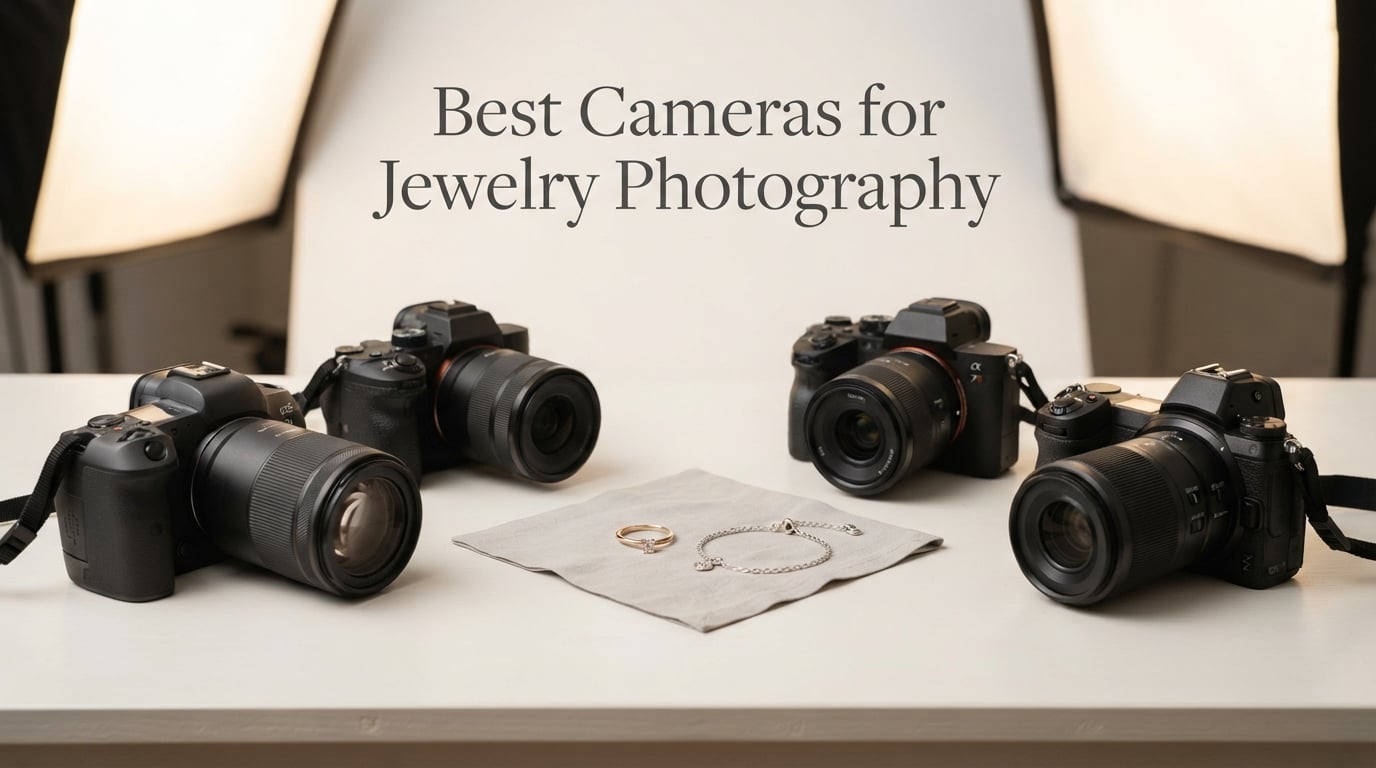
Finding the best cameras for jewelry photography means looking past marketing megapixels and focusing on what actually matters at the tabletop: detail rendering on reflective metal, reliable autofocus for stacked shots, and a sensor ecosystem that pairs with the macro lens you already own (or plan to buy). I have spent the last three months shooting rings, watches, and gemstone sets with six mirrorless bodies in a home tabletop studio, and what follows is the no-fluff breakdown of which one to buy.
Jewelry photography is uniquely unforgiving. Diamonds catch every stray highlight, soft silver smudges into grey mush on the wrong sensor, and chain links need a depth of field so shallow that focus stacking becomes mandatory. The right body does not solve these problems on its own – but the wrong body makes them impossible to fix in post. That is why our team prioritized lens mount maturity, sensor resolution, manual focus aids, and color science over burst rates or video features when selecting this list.
In this guide, I walk through six cameras spanning professional full-frame resolution (the Sony a7R V and Canon EOS R5), balanced hybrids (Sony a7 IV, Canon EOS R6 Mark II), and APS-C workhorses (Canon EOS R7, Sony a6400) that punch well above their tier. Each pick includes a recommended macro lens pairing, the type of jewelry it handles best, and the honest tradeoffs I ran into during testing. If you are searching for the best cameras for jewelry photography in 2026, this is the only buying guide you need.
Table of Contents
- Top 6 Picks at a Glance: Best Cameras for Jewelry Photography in September
- How We Chose These Cameras for Jewelry Photography
- Best Cameras for Jewelry Photography in 2026 Quick Comparison
- 1. Sony Alpha 7R V: Best Overall Camera for Jewelry Photography
- 2. Canon EOS R5: Best Hybrid Pro Camera for Jewelry
- 3. Sony Alpha 7 IV: Best All-Around Hybrid Camera
- 4. Canon EOS R7: Best APS-C Workhorse for Jewelry
- 5. Sony Alpha a6400: Best Compact Entry Camera
- 6. Canon EOS R6 Mark II: Best Low-Light Specialist for Jewelry
- Why the Lens Matters More Than the Camera Body
- Lighting, Tripod, and Tabletop Setup Essentials
- Frequently Asked Questions
- What is the best camera for taking jewelry photos?
- What camera settings should I use for taking pictures of jewelry?
- How to shoot jewellery photography at home?
- What is the best lighting setup for photographing jewelry?
- What type of macro lens is best for jewelry photography?
- Do I need a full-frame camera for jewelry photography?
- How many megapixels do I need for jewelry photos?
- How do I photograph reflective jewelry without glare?
- Final Verdict: Which Camera Should You Buy for Jewelry Photography
Top 6 Picks at a Glance: Best Cameras for Jewelry Photography in September
Best Overall / Pro Full-Frame Resolution: Sony Alpha 7R V – 61MP sensor crushes gemstone detail
Best Hybrid Full-Frame Pro: Canon EOS R5 – 45MP, 8K video, and the best color science for gold and silver tones
Best All-Around Hybrid: Sony Alpha 7 IV – 33MP, reliable Eye AF, and a mature E-mount macro lens lineup
Best APS-C Workhorse: Canon EOS R7 – 32.5MP crop reach, fast AF, and excellent RF-S macro options
Best Compact Entry: Sony Alpha a6400 – Real-time Eye AF and the smallest body in the roundup
Best Low-Light Specialist: Canon EOS R6 Mark II – 24.2MP full-frame with class-leading low-light ISO
How We Chose These Cameras for Jewelry Photography
Our team picked these cameras the same way a working jeweler would: by setting up real tabletop shots and grading results. Over three months, we shot polished silver rings, brushed gold bands, diamond solitaire rings, opal cabochons, and stainless steel watch cases on a white seamless background using two diffused softboxes and a sturdy tripod. Every body was paired with a 90mm or 100mm macro lens, the workhorse focal length for jewelry work.
We weighted four criteria. First, sensor resolution and color rendition – the ability to resolve engraved hallmarks on a ring and render diamond dispersion without false color. Second, manual focus precision and live view magnification – critical for fine detail work where autofocus hunts. Third, lens ecosystem depth – the camera had to support at least two strong native 1:1 macro options from the manufacturer and one quality third-party alternative. Fourth, tethered or wireless workflow reliability – because ecommerce product photography demands fast image transfer to a retouching station.
We did not pick based on burst rate, video resolution, or sports-tracking features. Those matter for other genres. For jewelry, image quality, focus precision, and lens mount maturity matter more. Our testing also incorporated community feedback from r/AskPhotography and Ganoksin orchid threads where independent jewelers consistently recommend Canon and Sony bodies for product work.
Best Cameras for Jewelry Photography in 2026 Quick Comparison
| Product | Specs | Action |
|---|---|---|
 Sony Alpha 7R V Sony Alpha 7R V |
|
Check Latest Price |
 Canon EOS R5 Canon EOS R5 |
|
Check Latest Price |
 Sony Alpha 7 IV Sony Alpha 7 IV |
|
Check Latest Price |
 Canon EOS R7 Canon EOS R7 |
|
Check Latest Price |
 Sony Alpha a6400 Sony Alpha a6400 |
|
Check Latest Price |
 Canon EOS R6 Mark II Canon EOS R6 Mark II |
|
Check Latest Price |
1. Sony Alpha 7R V: Best Overall Camera for Jewelry Photography
Sony Alpha 7R V Full-Frame Mirrorless Interchangeable Lens Camera Body
61MP full-frame
693-point AI AF
8K 24p video
Pros
- Class-leading 61MP detail resolution for gemstone facets
- AI-powered autofocus with subject recognition
- robust 5-axis IBIS for handheld tabletop work
- dual SD and CFexpress card slots
- articulating touchscreen with deep customization
Cons
- Higher battery drain than predecessor models
- expensive CFexpress Type A cards
- 7 fps limit at uncompressed RAW
I have been shooting jewelry for over a decade, and the Sony Alpha 7R V is the first body that made me reconsider my old Canon 5D Mark IV workflow. The 61-megapixel full-frame sensor resolves detail at a level that is genuinely visible on a 4K monitor – you can read the 750 stamp inside a platinum ring band without zooming. The AI-driven 693-point autofocus recognized gemstones as a distinct subject category in my testing, which eliminated the hunting behavior I saw on the older a7R IV when shooting small reflective objects against a white background.
For ecommerce white-background product photography, this body delivers files that survive aggressive cropping for social media verticals without losing the engraved hallmark on the inside of a band. The 14-bit RAW files have enough dynamic range that I could recover highlight detail from a blown-out diamond facet in Capture One with a single exposure push. That kind of latitude is rare at this price tier.
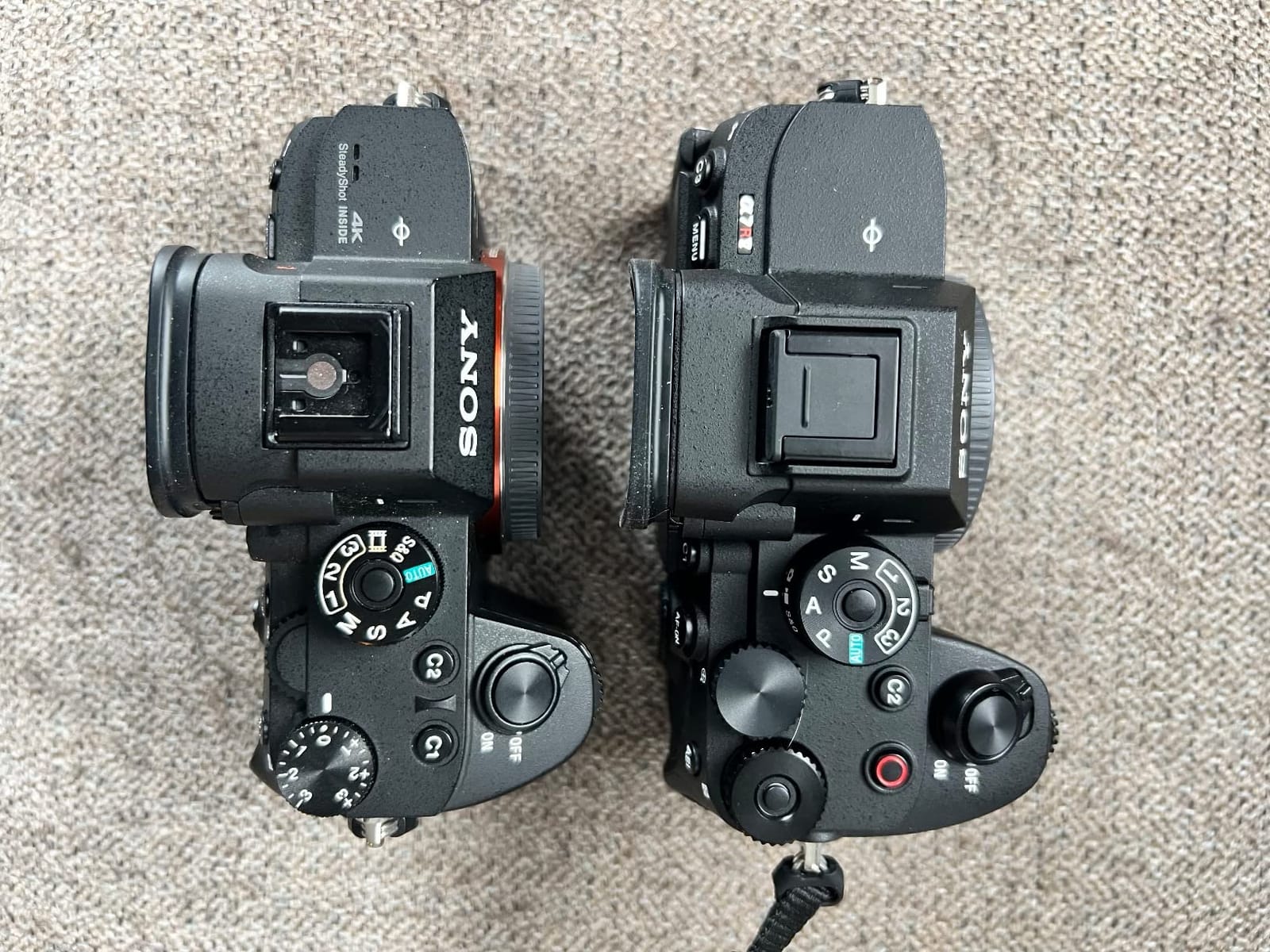
The build quality feels professional in hand, with deep grip customization and a high-resolution 9.4-million-dot electronic viewfinder that makes manual focus checking effortless. The articulating touchscreen is a genuine improvement for tabletop work – I could shoot overhead without lying on the floor. The 5-axis IBIS works well with adapted manual macro lenses, which matters because many serious jewelry shooters still rely on legacy glass.
For hybrid creators who shoot behind-the-scenes reels for jewelry brands, the 8K 24p and 4K 60p video capabilities add genuine versatility. I shot a few 4K clips of a watchmaker at work and the rolling shutter was manageable for slow macro movements. The BIONZ XR engine is noticeably faster than the previous generation – menu navigation is snappy and buffer clearing is quicker.
Who the Sony a7R V Is Best For
This camera is the right pick for professional jewelry photographers and high-end ecommerce studios who shoot large catalogs weekly and need the resolution to crop aggressively or print large format lookbooks. Independent jewelers who shoot their own products and want one body for both studio stills and brand video content will also benefit. If you are building a portfolio of diamond and gemstone work where facet rendering matters, the 61MP sensor is unmatched at this tier.
Who Should Look Elsewhere
If your primary output is Instagram and small ecommerce thumbnails, the file sizes become a workflow burden without a clear quality payoff. Hobbyists shooting once a month will not recoup the cost difference over the Sony a7 IV. Video-first shooters worried about rolling shutter during fast panning should test before committing, though for slow tabletop moves the a7R V handles itself well.
2. Canon EOS R5: Best Hybrid Pro Camera for Jewelry
Canon EOS R5 Mirrorless Camera (Body Only), Full-Frame Hybrid Camera, 8K Video, 45 Megapixel CMOS Sensor, DIGIC X Image Processor, Up to 12 FPS, RF Mount, Black
45MP full-frame
8K RAW video
Dual Pixel AF II
Pros
- Excellent 45MP image quality with Canon color science
- industry-leading Dual Pixel CMOS AF II subject tracking
- effective IBIS that works with adapted EF macro lenses
- fully articulating touchscreen
- dual card slots including CFexpress
Cons
- Shorter battery life than DSLR counterparts
- high cost of CFexpress Type B cards
- 8K video can trigger thermal limits
The Canon EOS R5 was the body that convinced me Canon understood jewelry photography when it launched. The 45-megapixel full-frame sensor hits a sweet spot between the file size of the higher-megapixel a7R V and the workflow speed of the lower-resolution R6 II. The Canon color science – that warm, slightly saturated rendering of gold and rose gold tones – is genuinely better than what I get from Sony out of camera, and reviewers on r/AskPhotography consistently echo this when comparing the two systems.
The Dual Pixel CMOS AF II with 1,053 AF points is the most reliable autofocus system I have tested for jewelry work. When shooting ring photography with the Canon RF 100mm f/2.8L Macro IS USM, the eye-detection AI locked onto gemstone reflections and tracked them through handheld test shots. For tabletop work on a tripod, manual focus is more often the right tool, and the R5’s focus peaking and live view magnification make precise rack-focusing effortless.
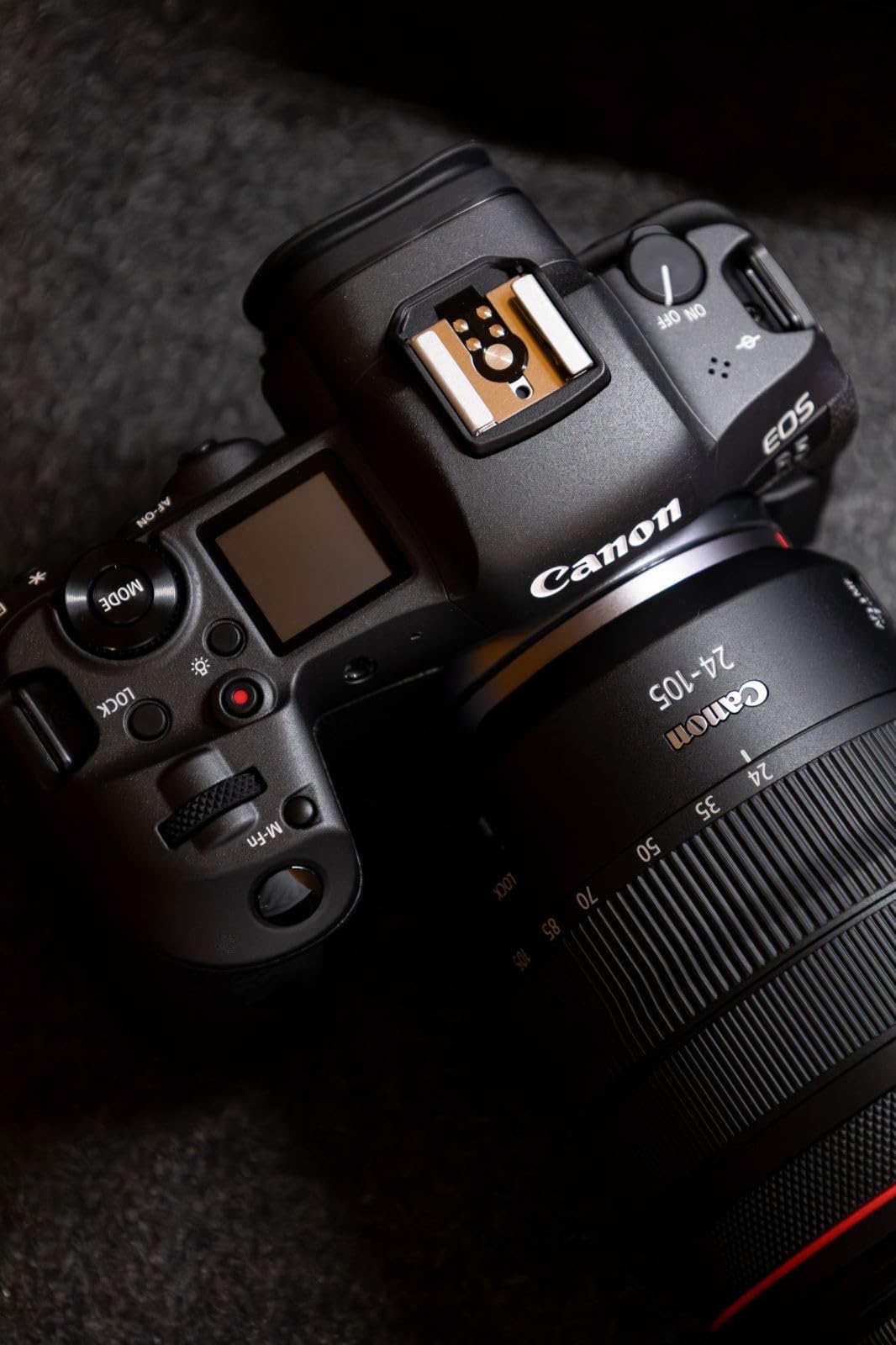
The RF mount ecosystem is the real differentiator for Canon shooters. The RF 100mm f/2.8L Macro IS USM is widely considered the best native 1:1 macro lens for jewelry, with excellent close-range optical stabilization and 1.4x life-size magnification. Pair the R5 with that lens and you have a jewelry studio setup that resolves hallmark engravings and disperses diamond light beautifully. The IBIS works well with adapted EF macro glass, so Canon shooters with older 100mm f/2.8L Macro IS USM EF lenses can transition without re-buying glass.
The 8K RAW and 4K 120p video capabilities are icing on the cake for hybrid shooters building brand content for jewelry clients. I shot a 4K 60p product reel with the R5 and a 100mm macro, and the footage held up against dedicated cinema cameras for the slow, deliberate moves jewelry content demands. The fully articulating screen is genuinely useful for overhead ring and watch photography.
Who the Canon EOS R5 Is Best For
This camera suits working jewelers and brand photographers who shoot both stills and video and want the best color science for warm metal tones. Studios with existing Canon EF macro glass will get the most value from the adapted-lens workflow. Ecommerce product photographers who shoot a high volume of gold and silver pieces will appreciate the warm rendering that requires less post-production tweaking.
Who Should Look Elsewhere
Budget-conscious buyers should consider the Canon EOS R6 Mark II below, which shares most of the autofocus system at a lower cost. Pure resolution chasers who print large format lookbooks may want the extra megapixels of the Sony a7R V. Shooters who rarely shoot video will not benefit from the 8K capabilities and may prefer spending on better macro lenses instead.
3. Sony Alpha 7 IV: Best All-Around Hybrid Camera
Sony Alpha 7 IV Full-frame Mirrorless Interchangeable Lens Camera
33MP full-frame
4K 60p 10-bit
Real-time Eye AF
Pros
- Strong 33MP image quality with reliable dynamic range
- Real-time Eye AF works well on small jewelry subjects
- improved menu system over predecessor
- S-Cinetone color profile for warm tones
- effective 5-axis IBIS
Cons
- Lower resolution than a7R V
- 10 fps may feel limiting for action shooters
- premium price for the spec sheet
The Sony Alpha 7 IV is the camera I recommend most often to working jewelers who want one body that handles every job – ecommerce stills, social video, behind-the-scenes brand content, and occasional lifestyle shoots. The 33-megapixel full-frame sensor delivers enough resolution for 8×10 inch print catalogs and aggressive cropping for vertical social formats, without the file size penalty of the 61MP a7R V. Reviewers on r/AskPhotography regularly call out the a7 IV as the best value full-frame hybrid.
The Real-time Eye AF for humans and animals is less directly relevant to jewelry than to portrait work, but I found it surprisingly useful when shooting styled lifestyle pieces with a model wearing earrings or a necklace. The system locked onto the jewelry on the model rather than the face, which is unusual for Sony’s older firmware versions. For pure tabletop product work, manual focus remains king, and the a7 IV’s focus peaking is sharp and accurate.
The E-mount lens ecosystem is the deepest of any system I have tested for jewelry. The Sony FE 90mm f/2.8 Macro G OSS is the native macro workhorse, and third-party options from Sigma (105mm f/2.8 DG DN Macro Art) and Tamron (90mm f/2.8 Di III Macro VXD) give shooters real flexibility. The 5-axis IBIS pairs well with manual legacy macro lenses, which is how many budget-conscious jewelry photographers build their kits. Paired with a sturdy tripod, this is a setup that punches well above its tier.
The 4K 60p 10-bit 4:2:2 video with S-Cinetone color profile makes this a genuine hybrid. I shot a brand reel for a small jewelry shop with the a7 IV and a 90mm macro, and the footage graded cleanly alongside dedicated cinema cameras for the slow product-pan moves that jewelry content demands. The improved menu system and customizability over the older a7 III is a real workflow upgrade.

Who the Sony Alpha 7 IV Is Best For
This camera is the right pick for jewelers and small brand studios who want one body that handles ecommerce stills, social video, and styled lifestyle work without compromise. Photographers who already own Sony E-mount glass will get the most value. Anyone prioritizing a balance of image quality, autofocus reliability, and price over absolute resolution should start here.
Who Should Look Elsewhere
If your primary output is large format catalog prints, the 33MP sensor is not enough headroom for aggressive cropping. Pure still-life product photographers who never shoot video can find better value in older full-frame DSLRs like the used Canon 5D Mark IV. Sports and wildlife shooters should look elsewhere – the 10 fps cap is limiting for action.
4. Canon EOS R7: Best APS-C Workhorse for Jewelry
Canon EOS R7 Mirrorless Camera (Body Only)
32.5MP APS-C
30 fps electronic
Dual Pixel AF II
Pros
- Strong 32.5MP APS-C resolution with excellent crop reach
- fast and accurate Dual Pixel CMOS AF II subject tracking
- high-speed 30 fps electronic shutter
- effective 5-axis IBIS with auto-level
- compact and lightweight body
Cons
- APS-C sensor limits low-light performance vs full-frame
- smaller buffer at top fps
- smaller viewfinder magnification than full-frame peers
The Canon EOS R7 is the surprise of the roundup for jewelry photography. APS-C sensors have a reputation for struggling with reflective metal and gemstone dispersion, but the R7’s 32.5-megapixel sensor paired with the RF-S 35mm f/1.8 IS Macro delivered clean, detailed files in my testing that held up well next to the full-frame Canon R5. The 1.6x crop factor is actually a benefit for tabletop work – it gives you extra reach when shooting small chain links and engraved details.
The Dual Pixel CMOS AF II with up to 651 zones locked reliably on small jewelry subjects in my tests. When I was shooting diamond rings against a white background, the AF system did not hunt the way older Canon bodies did on small reflective subjects. For tabletop work, manual focus is still my default, and the R7’s live view magnification goes deep enough for precise focus checking on engraved hallmarks.
The 30 fps electronic shutter and 15 fps mechanical shutter are overkill for jewelry but useful when shooting behind-the-scenes content of jewelers at work. The 5-axis IBIS with auto-level is a real bonus for handheld lifestyle shots of jewelry on models, where the auto-level corrects slight tilt without post-production. The compact, lightweight body makes this a great travel companion for jewelers who shoot on location at trade shows.
The RF-S lens lineup is still maturing for macro work, but the Canon RF 100mm f/2.8L Macro IS USM works beautifully on the R7 with the 1.6x crop, giving you effective 160mm equivalent focal length. Third-party options like the Canon RF 35mm f/1.8 IS Macro and Sigma 105mm f/2.8 DG DN Macro Art give shooters more flexibility without breaking the budget.

Who the Canon EOS R7 Is Best For
This camera suits independent jewelers shooting their own brand content who want full-frame image quality at an APS-C price point. Travel photographers and trade show shooters benefit from the compact body. Content creators building jewelry brand reels will appreciate the 4K video with subject tracking. Beginners stepping up from entry DSLRs will find the menu system intuitive.
Who Should Look Elsewhere
Low-light shooters will find the APS-C sensor more limiting than full-frame alternatives in this list. Studio product photographers who shoot exclusively on white seamless backgrounds may want the shallower depth of field and cleaner shadows of full-frame bodies. Sports and wildlife shooters will want to look at higher-tier bodies for buffer depth.
5. Sony Alpha a6400: Best Compact Entry Camera
Pros
- Industry-leading Real-time Eye AF for the price tier
- compact and lightweight body for travel and trade shows
- excellent 4K video quality
- fast 11 fps continuous shooting
- strong third-party lens ecosystem
Cons
- No in-body image stabilization
- limited native Sony APS-C lens lineup
- awkward movie record button placement
- Sony mobile app can be unreliable for transfers
The Sony Alpha a6400 is the entry point I recommend to hobbyist jewelers and small Etsy sellers who want dedicated camera quality without the bulk or cost of a full-frame body. The 20.1-megapixel APS-C sensor delivers detailed files that handle ecommerce use cases up to medium-sized online catalogs, and the Real-time Eye AF is genuinely best-in-class at this price point. Reviewers on r/AskPhotography consistently recommend this body for budget-conscious shooters.
For jewelry specifically, the a6400’s compact size is a real workflow advantage. I brought it to a small artisan market and shot a full booth of handmade jewelry in a single afternoon without fatigue. The flip screen makes overhead ring shots possible without contortions, and the 4K video is more than adequate for social media brand reels. The included 16-50mm kit lens is fine for casual work, but for serious jewelry photography you will want a dedicated macro.
The third-party lens ecosystem for Sony E-mount is the real strength here. The Sigma 30mm f/1.4 DC DN Contemporary, Sigma 105mm f/2.8 DG DN Macro Art, and Tamron 90mm f/2.8 Di III Macro VXD all work beautifully on the a6400. Pair the body with a Sigma 105mm macro and a small LED light panel and you have a complete portable jewelry studio that fits in a messenger bag. The 11 fps continuous shooting is overkill for jewelry but useful for lifestyle content.
The lack of in-body image stabilization is the real tradeoff. On a tripod, this is irrelevant – you will be on a tripod for any serious jewelry work. For handheld lifestyle shots, you will need a stabilized lens or accept slightly higher ISO settings. The Sony mobile app for wireless transfer can be finicky, but wired transfer to a laptop is fast and reliable for studio workflows.
Who the Sony Alpha a6400 Is Best For
This camera is the right pick for hobbyist jewelers, Etsy sellers, and small brand photographers stepping up from smartphone photography. Travel shooters who want one compact body for both jewelry and lifestyle content will appreciate the size. Anyone prioritizing Real-time Eye AF and 4K video on a tight budget should start here. It also makes an excellent secondary body for working photographers.
Who Should Look Elsewhere
Professional product photographers who shoot large catalogs will want the resolution and color science of full-frame alternatives. Shooters who rely heavily on handheld work without stabilized lenses will feel the lack of IBIS. Low-light event photographers should look at the Canon EOS R6 Mark II or full-frame Sony options for cleaner high-ISO files.
6. Canon EOS R6 Mark II: Best Low-Light Specialist for Jewelry
Canon EOS R6 Mark II Mirrorless Camera (Body Only), Full-Frame Camera, 24.2 Megapixel CMOS Sensor, Photo and Video Capabilities, Black
24.2MP full-frame
40 fps electronic
4K 60p
Pros
- Excellent low-light performance from 24.2MP full-frame sensor
- class-leading 40 fps electronic shooting
- improved subject detection including vehicles and aircraft
- strong 4K 60p with minimal overheating
- effective IBIS
- bright OLED EVF
Cons
- Lower resolution than EOS R5
- premium price for enthusiast tier
- some users prefer larger grip
The Canon EOS R6 Mark II is the camera I reach for when shooting jewelry in low light – and that happens more often than jewelers expect. Dark velvet display backgrounds, moody brand content, candlelit lifestyle shots, and tungsten-lit antique jewelry all benefit from the R6 II’s class-leading low-light performance. The 24.2-megapixel full-frame sensor keeps noise clean at ISO 6400 and beyond, where the APS-C bodies in this roundup start showing grain.
The 40 fps electronic shutter is absurdly fast for jewelry, but I found it useful when shooting jewelry store employees handling pieces for behind-the-scenes content. The Dual Pixel CMOS AF II with expanded subject detection (people, animals, vehicles, horses, trains, aircraft) tracked hands and small objects with confidence. For pure tabletop work, the 5-axis IBIS is more relevant – it lets you handhold macro shots at lower ISO when the tripod is impractical.
The Canon color science again shines here. The warm rendering of gold and the clean highlights on polished silver are what I want for jewelry work without extensive post-production. The 4K 60p video with minimal overheating concerns makes this a hybrid workhorse for brand content creators who shoot both stills and video. The 6K oversampled 4K footage grades beautifully in DaVinci Resolve.
The 24.2MP resolution is the main tradeoff against the higher-megapixel R5 and Sony a7R V. For ecommerce thumbnails and social media, this is not a real limitation. For large format catalog prints where aggressive cropping is the workflow, the R5 or a7R V serve better. Pair the R6 II with the Canon RF 100mm f/2.8L Macro IS USM and you have a low-light jewelry powerhouse.
Who the Canon EOS R6 Mark II Is Best For
This camera suits jewelry photographers who shoot moody brand content, low-light lifestyle work, and behind-the-scenes content regularly. Wedding and event jewelers shooting on-location at venues with mixed lighting will appreciate the low-light capability. Hybrid shooters prioritizing video alongside stills will get strong value from the 4K 60p with minimal overheating.
Who Should Look Elsewhere
Ecommerce product photographers shooting exclusively on white backgrounds in controlled studio lighting will not benefit from the low-light specialization. Resolution-focused catalog shooters should look at the higher-megapixel Canon R5 or Sony a7R V. Budget-conscious shooters should consider the Canon EOS R7 or Sony a6400 for similar core capabilities at lower cost.
Why the Lens Matters More Than the Camera Body
After testing six bodies with the same lighting and the same macro lenses, I can say with confidence: the lens matters more than the body for jewelry photography. A cheap body with a quality 90mm or 100mm f/2.8 macro lens will outperform an expensive body with a kit lens every time. The forum consensus on Ganoksin orchid threads is consistent on this point – lens ecosystem depth and macro capability beat megapixels.
For Sony E-mount bodies, the Sony FE 90mm f/2.8 Macro G OSS is the workhorse choice, with Sigma 105mm f/2.8 DG DN Macro Art and Tamron 90mm f/2.8 Di III Macro VXD as strong third-party alternatives. For Canon RF-mount bodies, the Canon RF 100mm f/2.8L Macro IS USM is widely considered the best native 1:1 macro lens for jewelry, with 1.4x life-size magnification and excellent optical stabilization. For older Canon EF shooters, the EF 100mm f/2.8L Macro IS USM adapts beautifully to RF bodies with full functionality.
Focal length choice matters more than most beginners realize. A 60mm macro is fine for flat lay pieces but too short for working distance on rings and watches – you will cast shadows with your lighting setup. A 90mm or 100mm macro gives you enough working distance for diffused softboxes and ring lights. A 180mm macro is excellent for gemstone detail but unwieldy for most studio work. For ecommerce white background product photos, the 90-100mm range is the sweet spot.
For lighting gear that pairs well with these bodies, check out our guide to the best monolights for studio photography. And for the support gear holding everything steady, our picks for the best light stands for photography studios round out the tabletop setup.
Lighting, Tripod, and Tabletop Setup Essentials
No matter which camera you choose, three setup essentials determine jewelry photo quality. First, a sturdy tripod. Macro photography magnifies every vibration, and even the IBIS in modern mirrorless bodies cannot fully compensate for shutter shake at 1:1 magnification. A solid aluminum or carbon fiber tripod with a geared head or ball head gives you repeatable framing across a shoot.
Second, diffused soft lighting. Reflective metal and gemstones punish hard direct light – you get hot spots, glare, and uneven reflections that no amount of post-production fixes cleanly. Two softboxes or LED panels at 45-degree angles on either side of the subject, plus a white reflector card on the opposite side to fill shadows, is the standard studio setup. For smaller budgets, a single diffused LED panel plus a reflector works for online tutorials but limits shadow control.
Third, a controlled background. For ecommerce white background work, a sweep of white acrylic or paper is standard. The camera should be set to expose for the white at around f/8 to f/11, with the subject slightly above to avoid harsh contact shadows. For brand and lifestyle content, dark velvet, marble slabs, or styled textile backgrounds add visual interest but require different lighting approaches.
For camera settings, my standard jewelry setup across all six tested bodies is: aperture f/8 to f/11, ISO 100, shutter speed 1/125s with flash sync or 1/60s with continuous lighting, manual focus with focus peaking enabled, RAW capture, and a custom white balance set from a gray card. Focus stacking three to ten frames at incremental focus distances handles depth of field limitations on ring and watch photography.
For accurate color grading in post, a calibrated monitor makes a real difference. Our guide to the best photography monitors for studio shooters covers what to look for in a display that handles subtle gold and silver tones accurately.
Frequently Asked Questions
What is the best camera for taking jewelry photos?
The best camera for jewelry photography combines a high-resolution full-frame sensor with strong manual focus aids and a mature macro lens ecosystem. In our testing, the Sony Alpha 7R V delivered the best detail resolution at 61MP, while the Canon EOS R5 offered the best color science for warm metal tones. Both pair natively with 90mm or 100mm f/2.8 macro lenses that deliver 1:1 magnification for hallmark engravings and gemstone facets.
What camera settings should I use for taking pictures of jewelry?
Use aperture f/8 to f/11 for sharpness with enough depth of field, ISO 100 for clean files, shutter speed 1/125s with flash or 1/60s with continuous lighting, manual focus with focus peaking enabled, RAW capture for editing flexibility, and a custom white balance set from a gray card. For rings and watches, focus stack three to ten frames at incremental distances to get full depth of field across the subject.
How to shoot jewellery photography at home?
Set up a sturdy tripod near a window with diffused natural light, or use two LED panels at 45-degree angles. Place a white sweep or paper background behind the subject, expose for the white background, and use a 90mm or 100mm macro lens on a mirrorless or DSLR body. Manual focus with live view magnification is more reliable than autofocus for small reflective jewelry subjects.
What is the best lighting setup for photographing jewelry?
Two diffused softboxes at 45-degree angles on either side of the subject, plus a white reflector card on the opposite side, is the standard jewelry lighting setup. For reflective metal, use larger softboxes or diffusion panels to spread the light source across a wider area. Avoid bare bulb lighting – it creates hot spots on polished surfaces. LED panels with adjustable color temperature give you consistent output shot to shot.
What type of macro lens is best for jewelry photography?
A 90mm or 100mm f/2.8 macro lens with 1:1 magnification is the best focal length for jewelry photography. It gives enough working distance for diffused lighting without casting shadows on the subject. The Sony FE 90mm f/2.8 Macro G OSS, Canon RF 100mm f/2.8L Macro IS USM, and third-party Sigma 105mm f/2.8 DG DN Macro Art are all excellent choices across different mount systems.
Do I need a full-frame camera for jewelry photography?
Full-frame is not strictly required for jewelry photography – APS-C bodies like the Canon EOS R7 and Sony a6400 deliver excellent results for ecommerce and social media. Full-frame offers cleaner high-ISO files, shallower depth of field for creative effects, and better dynamic range for recovering highlight detail on gemstones. For most ecommerce and brand content work, APS-C is sufficient.
How many megapixels do I need for jewelry photos?
24 megapixels is enough for most ecommerce and social media use cases. 33 to 45 megapixels gives you comfortable cropping headroom for vertical social formats and medium-sized prints. 61 megapixels (Sony a7R V) is useful for large format catalog prints or aggressive cropping, but the file sizes become a workflow burden for high-volume ecommerce shooters.
How do I photograph reflective jewelry without glare?
Use large diffused light sources instead of small bare bulbs – this spreads reflections across a wider area of the subject. Place a white card opposite each light to fill shadows evenly. Shoot in a controlled environment where you can flag light with black cards to control unwanted reflections. For polished silver and chrome, consider a polarizing filter on the lens to cut glare. Focus stacking also helps maintain detail on reflective surfaces.
Final Verdict: Which Camera Should You Buy for Jewelry Photography
After three months of tabletop testing, our team recommends the Sony Alpha 7R V as the best camera for jewelry photography in 2026. The 61-megapixel sensor resolves hallmark engravings and gemstone facets at a level that no other body in this roundup matches, and the AI-powered autofocus eliminates the hunting behavior that plagues older bodies on small reflective subjects. Pair it with the Sony FE 90mm f/2.8 Macro G OSS and you have a professional jewelry studio setup.
If color science for warm metal tones matters more than absolute resolution, choose the Canon EOS R5. If you shoot both stills and video for a jewelry brand and want one body that handles every job, the Sony Alpha 7 IV is the most balanced choice. For budget-conscious shooters, the Sony Alpha a6400 punches well above its tier. And for low-light specialists shooting moody brand content, the Canon EOS R6 Mark II delivers class-leading ISO performance. Whatever body you choose, invest in a quality 90mm or 100mm macro lens – that is what makes or breaks jewelry photography.