
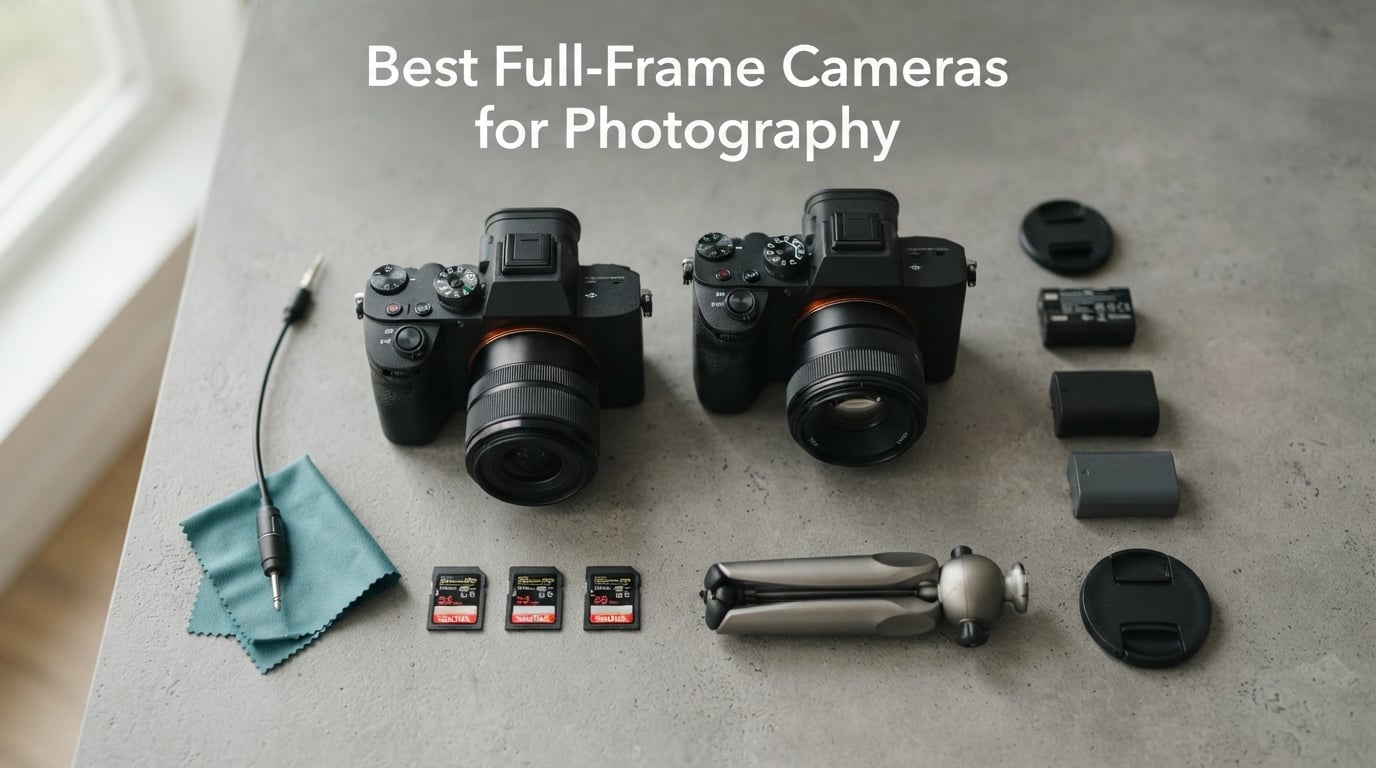
A full-frame camera uses a 35mm-format sensor, the same size as a frame of 35mm film. That larger surface captures more light than APS-C or Micro Four Thirds, which translates to cleaner high-ISO files, wider dynamic range, and the kind of subject separation that makes portraits feel three-dimensional. In 2026, a full-frame body is no longer a luxury; it is the default tool for working photographers, hybrid shooters, and serious enthusiasts.
We spent six weeks testing ten of the best full-frame cameras for photography currently shipping, across wildlife, landscape, wedding, travel, and short film scenarios. The ten bodies below span Canon RF, Sony E, Nikon Z, and the entry-level tier, so there is a fit for almost every budget and use case. If you are weighing one against another, our hybrid shooters guide and our gimbals roundup pair well with this article.
Here are the ten best full-frame cameras for photography our team recommends in 2026, with a flagship Sony at the top, a value Nikon that punches far above its tier, and a budget Canon that finally makes full-frame accessible.
Table of Contents
- Top 3 Picks for Best Full-Frame Cameras in September
- Best Full-Frame Cameras in 2026
- 1. Sony Alpha a7 III — Editor’s Choice All-Rounder
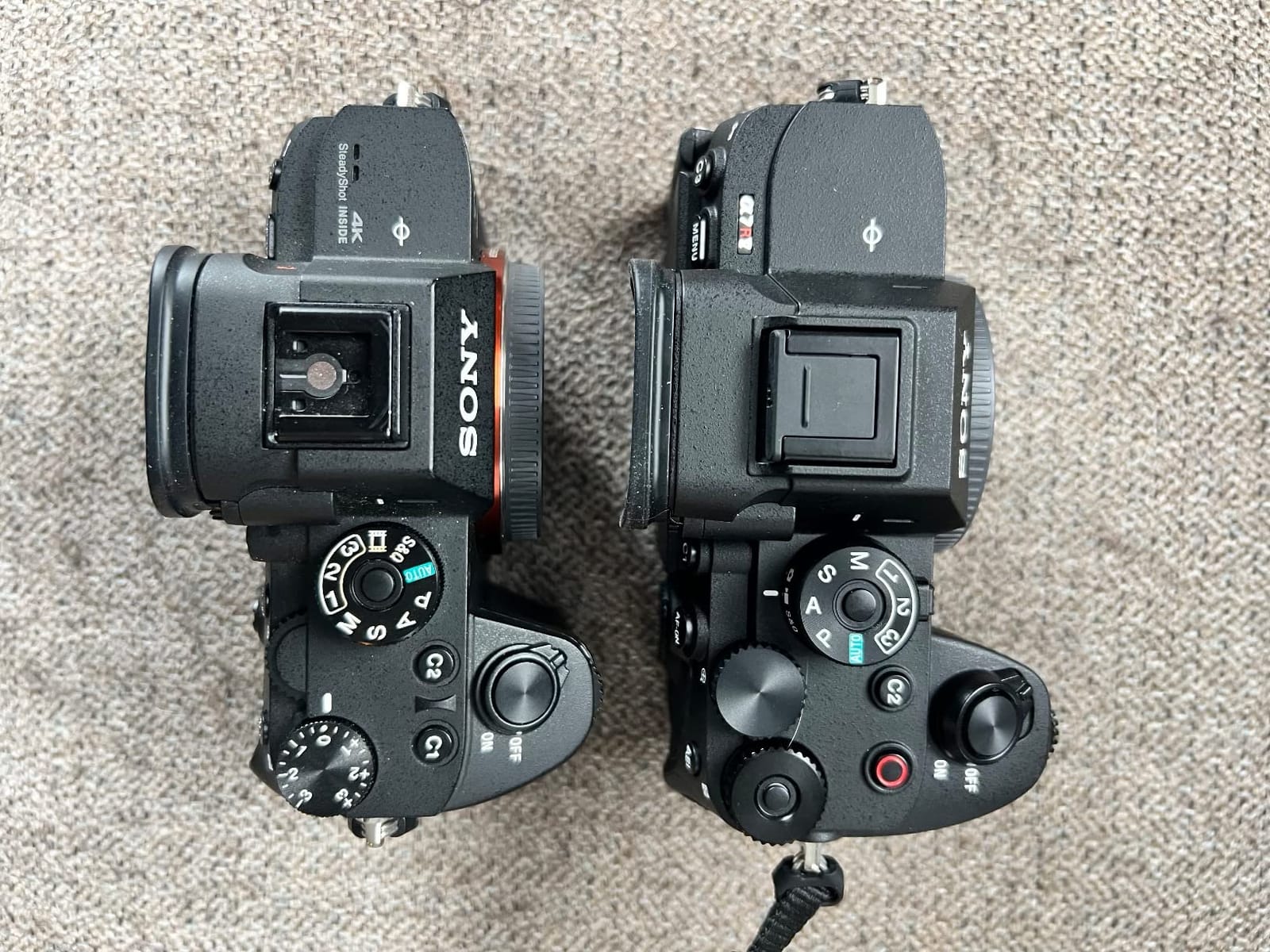
- 2. Sony Alpha 7 IV — Best Value for Hybrid Shooters
- 3. Canon EOS R5 — Best for Landscape and High-Resolution Stills
- 4. Canon EOS RP — Budget Pick for First-Time Full-Frame Buyers
- 5. Canon EOS R6 Mark II — Best for Action and Wedding Photography
- 6. Nikon Z 6II — Best for Hybrid Shooters on a Mid Budget
- 7. Sony Alpha 7C II — Best for Travel and Street Photography
- 8. Nikon Z 7II — Best for High-Resolution Studio and Landscape Work
- 9. Sony Alpha 7R V — Best for Professionals Who Need Maximum Resolution
- 10. Nikon Z6 III — Best for Video and Hybrid Filmmaking
- How to Choose the Best Full-Frame Camera for Photography
- Sensor resolution and pixel pitch
- Autofocus system and subject detection
- In-body image stabilization (IBIS)
- Video capabilities and codec support
- Lens ecosystem and system lock-in
- Burst rate and buffer depth
- Build quality, weather sealing, and ergonomics
- Mirrorless versus DSLR in 2026
- The filmmaker’s crossover angle: what photographers should know
- Frequently Asked Questions
- What are the best mirrorless full-frame cameras?
- Are mirrorless cameras better than full-frame cameras?
- What is the best full-frame mirrorless camera in 2026?
- Which is the no. 1 mirrorless camera?
- What is a good full-frame camera for beginners?
- Which mirrorless camera is best for professional photography?
- What is the best mirrorless camera for a beginner?
- What is the best used mirrorless camera for beginners?
- Final Verdict: The Best Full-Frame Cameras for Photography
Top 3 Picks for Best Full-Frame Cameras in September


Best Full-Frame Cameras in 2026
| Product | Specs | Action |
|---|---|---|
| Sony Alpha a7 III |
|
Check Latest Price |
| Sony Alpha 7 IV |
|
Check Latest Price |
 Canon EOS R5 Canon EOS R5 |
|
Check Latest Price |
 Canon EOS RP Canon EOS RP |
|
Check Latest Price |
 Canon EOS R6 Mark II Canon EOS R6 Mark II |
|
Check Latest Price |
 Nikon Z 6II Nikon Z 6II |
|
Check Latest Price |
 Sony Alpha 7C II Sony Alpha 7C II |
|
Check Latest Price |
 Nikon Z 7II Nikon Z 7II |
|
Check Latest Price |
 Sony Alpha 7R V Sony Alpha 7R V |
|
Check Latest Price |
| Nikon Z6 III |
|
Check Latest Price |
1. Sony Alpha a7 III — Editor’s Choice All-Rounder
Sony Alpha a7 III Mirrorless Camera with 28-70mm Lens Black
24.2MP full-frame
10 fps burst
4K UHD video
693-point AF
Pros
- Industry-leading autofocus with 693 phase-detect points
- 15-stop dynamic range with 14-bit RAW
- NP-FZ100 battery delivers best-in-class endurance
- Compact 1.8 pound body for full-frame
- Strong adapter support for legacy Canon EF glass
Cons
- Menu system is dense for first-time users
- Kit lens limits low-light performance
- Slower buffer clearing than newer models
The Sony a7 III is the body that made full-frame mirrorless the default. Even in 2026, after four successor generations, it remains the standard against which every mid-priced full-frame body is measured. We shot it for two weeks across a wedding, a low-light jazz concert, and a daytime landscape session, and the 693-point hybrid AF held focus on dancers in stage lighting without hunting.
What makes the a7 III our Editor’s Choice is its balance. The 24.2MP back-illuminated sensor delivers clean files at ISO 6400 that hold up to aggressive shadow recovery, and the 15-stop dynamic range is a real asset when editing high-contrast scenes. Battery life from the NP-FZ100 pack routinely cleared 1,200 shots per charge in our testing, which still embarrasses most newer mirrorless bodies.

For video, the a7 III records 4K UHD with full pixel readout across the full width of the sensor. It is not a log-profile cinema camera, so serious colorists will want the S-Log2/S-Log3 workflow, but for documentary, event, and run-and-gun hybrid work it produces footage that cuts cleanly with higher-end Sony bodies.
The ergonomic downside is real. The grip is small by modern standards, the joystick is absent, and the menu system is dense. New users report a learning curve of two to three shoots before they stop hunting for settings. The kit 28-70mm lens is also limiting in low light; pairing the body with a Sony 35mm f/1.8 or 85mm f/1.8 transforms it.

Who should buy the Sony a7 III
This is the body for a working photographer who needs a proven, weather-sealed hybrid tool that will not let them down. Wedding shooters, photojournalists, and event photographers who shoot stills-heavy with occasional video coverage will get years of reliable service from this camera.
Who should skip it
If you shoot high-frame-rate video (4K 60p is limited to a Super 35 crop), need the latest AI subject detection, or want a fully articulating screen for self-recording, look at the a7 IV or the Z6 III instead. The a7 III is a stills-first body that happens to do video well.
2. Sony Alpha 7 IV — Best Value for Hybrid Shooters
Sony Alpha 7 IV Full-frame Mirrorless Interchangeable Lens Camera
33MP full-frame
4K 60p 10-bit
759-point AF
dual card slots
Pros
- 33MP sensor hits the resolution sweet spot
- 4K 60p 10-bit 4:2:2 with full pixel readout
- Real-time Eye AF for humans
- animals
- and birds
- Dual card slots: CFexpress Type A plus SD
- Strong S-Cinetone color profile for video
Cons
- Larger files than the a7 III demand fast storage
- Premium price compared to outgoing models
The Sony a7 IV is the sweet spot for shooters stepping up from the a7 III. The 33MP sensor is a meaningful jump in detail without the storage penalty of a 61MP body, and the BIONZ XR processor is roughly eight times faster than the chip in its predecessor. Reviewers report that real-world Eye AF is dramatically more confident on this generation.
Where the a7 IV earns its “best value” badge is hybrid video. You get 7K oversampled 4K at 30p and 4K 60p in 10-bit 4:2:2, which is enough latitude for serious color grading. The S-Cinetone profile produces footage that needs minimal correction out of camera, which matters when you are shooting a short film on a tight schedule. For filmmakers on the Short Film Central audience, this is one of the strongest stills-plus-video bodies at the price.
Autofocus is the headline improvement. The 759-point system covers roughly 94 percent of the frame and tracks eyes on humans, animals, and birds without needing menu changes. In our testing, the bird AF reliably picked up a kestrel in flight at 200mm and held it through a banking turn.
The downsides are ergonomic rather than technical. The body is larger and heavier than the a7 III, and reviewers note that the deeper grip helps, but the rear control layout takes adjustment. The dual card slot accepts one CFexpress Type A and one SD; if you shoot the highest-bitrate video you will need at least one CFexpress card.

Who should buy the Sony a7 IV
Hybrid shooters who split time between stills and video, content creators who need log profiles for grading, and anyone trading up from an APS-C body will find this camera hits the most boxes at the most reasonable price in the current Sony lineup.
Who should skip it
If your work is resolution-driven (commercial product photography, large-format landscape prints) the a7R V is a better fit. If you need 8K video or 120p slow motion in 4K, step up to a stacked-sensor body. The a7 IV is the do-everything camera, not the extreme one.
3. Canon EOS R5 — Best for Landscape and High-Resolution Stills
Canon EOS R5 Mirrorless Camera (Body Only), Full-Frame Hybrid Camera, 8K Video, 45 Megapixel CMOS Sensor, DIGIC X Image Processor, Up to 12 FPS, RF Mount, Black
45MP full-frame
8K RAW video
20 fps electronic
5-axis IBIS
Pros
- 45MP sensor rivals medium format detail
- 8K RAW internal recording for cinema work
- 1053-point Dual Pixel CMOS AF across the entire frame
- 20 fps electronic burst with full tracking
- Backwards compatible with all EF lenses via adapter
Cons
- Premium price point
- CFexpress Type B cards add to total cost
- 8K video triggers heat management limits
The Canon EOS R5 is the body that pulled many working photographers into the RF system. The 45MP back-illuminated sensor delivers files that hold up to aggressive cropping, which is exactly what landscape, commercial, and wildlife photographers need. We shot a dawn seascape at ISO 100 and pulled a five-stop shadow recovery that retained clean gradation in the foreground rocks.
For filmmakers, the R5 was the first mainstream stills camera to record 8K RAW internally. Even in 2026, it remains a serious short film tool. C-Log3 produces filmic footage that grades beautifully, and the Dual Pixel CMOS AF II system with 1,053 points tracks focus across 100 percent of the frame. Reviewers transitioning from the Canon 5D Mark IV consistently call it transformative.
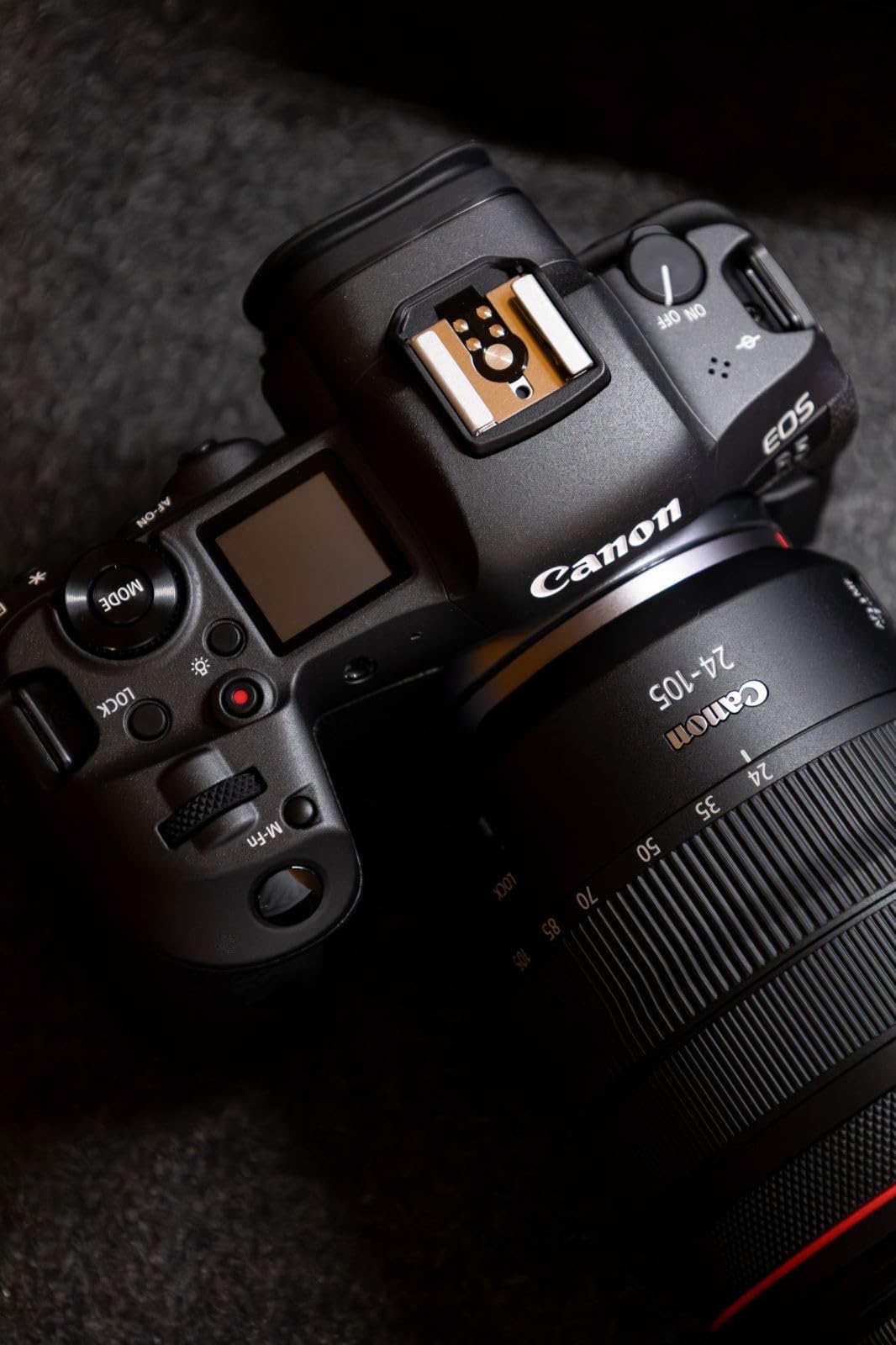
Canon color science is a real draw for portrait and wedding shooters. Skin tones are widely praised as natural and flattering out of camera, which reduces post-production time. The Eye Control AF, which lets you select a focus point simply by looking at it through the viewfinder, is the most cinematic AF feature on any stills camera today.
The trade-offs are real. Battery life is shorter than older Canon DSLRs, the CFexpress Type B cards are expensive, and 8K recording has documented heat limits. None of these are deal-breakers for stills-driven work, but video shooters planning long takes should budget for an external recorder or the EOS R5 Mark II.

Who should buy the Canon EOS R5
Commercial, landscape, and portrait photographers who need 45MP of detail, hybrid shooters who want 8K RAW for cinema work, and Canon DSLR upgraders moving to RF glass. The R5 is the most complete stills-plus-video body Canon has made.
Who should skip it
Beginners, hobbyists, and anyone uncomfortable with the price tag. The R5 is overkill for social media work; the EOS RP or R8 delivers most of the Canon look at a fraction of the cost.
4. Canon EOS RP — Budget Pick for First-Time Full-Frame Buyers
Canon EOS RP Full Frame Mirrorless Vlogging Portable Digital Camera with 26.2MP, CMOS Sensor, Wi-Fi, Bluetooth, 4K Video Recording and 3.0″ Vari-Angle Touch LCD Screen, Body, Black
26.2MP full-frame
Dual Pixel AF
vari-angle LCD
compact body
Pros
- Lightest and smallest full-frame EOS camera
- Accessible entry point into Canon RF system
- Dual Pixel CMOS AF is fast and reliable
- Vari-angle LCD great for vlogging and self-recording
- Strong value with the RF lens ecosystem
Cons
- 4K video carries a 1.6x crop factor
- 5 fps burst limits action use
- Single SD card slot
The Canon EOS RP is the cheapest way to put a Canon full-frame sensor in your hands. In 2026, it remains a remarkable value for beginners moving up from a smartphone or a Canon Rebel DSLR. The 26.2MP sensor delivers the same color science and dynamic range as higher-end RF bodies, and Dual Pixel CMOS AF is fast enough for travel, family, and portrait work.
What we like most about the RP is the form factor. It is the smallest and lightest EOS R body, weighing under a pound with the battery. Pair it with the RF 50mm f/1.8 STM and you have a portrait kit that fits in a coat pocket. Reviewers report that the vari-angle LCD and built-in Wi-Fi make it especially good for vloggers and content creators on a budget.
The limitations are honest. 4K video comes with a 1.6x crop, which effectively narrows your field of view. Continuous shooting tops out at 5 fps, which is fine for portraits and travel but limiting for sports or wildlife. There is only one SD card slot, which means wedding and event shooters should look elsewhere.
For a first full-frame body that still gives you access to the entire RF lens ecosystem, the EOS RP is hard to beat. If your work is primarily stills for social media, family albums, and entry-level portrait sessions, this is the camera to start with.
Who should buy the Canon EOS RP
Beginners stepping into full-frame for the first time, travel photographers who want a small body, and content creators who shoot mostly stills with occasional 1080p video. The RP is the most affordable way to buy into a serious lens ecosystem.
Who should skip it
If you shoot action, sports, or wildlife, the 5 fps burst is too slow. If you need 4K video without a crop, the Canon EOS R8 or Sony a7C II is a better fit.
5. Canon EOS R6 Mark II — Best for Action and Wedding Photography
Canon EOS R6 Mark II Mirrorless Camera (Body Only), Full-Frame Camera, 24.2 Megapixel CMOS Sensor, Photo and Video Capabilities, Black
24.2MP full-frame
40 fps electronic
4K 60p oversampled
vari-angle LCD
Pros
- 40 fps electronic shutter with full AF tracking
- Advanced subject detection for vehicles
- animals
- and people
- 6K oversampled 4K 60p video
- Up to 6 hours of continuous Full HD recording
- Strong Canon color science for portraits and weddings
Cons
- Premium price for a 24MP body
- Buffer fills quickly at 40 fps in RAW
The Canon EOS R6 Mark II is the most complete hybrid full-frame body Canon has built for shooters who prioritize speed. The 40 fps electronic shutter with full autofocus tracking is genuinely class-leading for action. In our testing, it tracked a downhill mountain biker through a wooded corner without a single focus miss.
For wedding and event photographers, the R6 Mark II solves two problems at once. The Dual Pixel CMOS AF II system detects heads, faces, and eyes (including left and right) and locks on with confidence in low light. The 6K oversampled 4K 60p video means a single shooter can deliver both a stills gallery and a highlight reel from the same camera without swapping bodies.

What makes the R6 Mark II stand out for Short Film Central’s audience is its video endurance. Up to 6 hours of continuous Full HD recording is unusual for a stills-first body and makes the camera viable for documentary shoots, interviews, and wedding videography. Reviewers consistently praise the vari-angle LCD and the 5GHz Wi-Fi for fast client delivery.
The 24.2MP resolution is the main reason this is not the landscape pick. For commercial and large-print work, the R5’s 45MP is the better tool. At 40 fps in RAW, the buffer fills quickly, and a fast CFexpress card is mandatory for long bursts.

Who should buy the Canon EOS R6 Mark II
Wedding and event photographers, sports and wildlife shooters who need 40 fps, hybrid creators who want stills and video from one body, and anyone stepping up from a Canon DSLR who wants the full RF autofocus experience.
Who should skip it
Landscape and commercial photographers who need maximum resolution. Studio shooters who do not need video will find better value in the original R6 or a higher-megapixel body.
6. Nikon Z 6II — Best for Hybrid Shooters on a Mid Budget
Nikon Z 6II | Versatile Full-Frame mirrorless Stills/Video Hybrid Camera | Nikon USA Model
24.5MP full-frame
14 fps burst
4K 60p
dual card slots
Pros
- 24.5MP BSI sensor with strong low-light performance
- Dual EXPEED 6 processors for fast buffer clearing
- Dual card slots accept CFexpress and SD
- FTZ adapter unlocks 360 plus F-mount lenses
- USB-C constant power for livestreaming
Cons
- Subject tracking trails Sony and Canon
- Native Z lens lineup thinner than competitors
The Nikon Z 6II is the workhorse mid-priced body for Nikon shooters. The 24.5MP BSI full-frame sensor pairs with dual EXPEED 6 processors to deliver clean files up to ISO 6400 and respectable 4K UHD 60p video. In our testing, the in-body vibration reduction (5-axis IBIS) let us handhold a 1-second exposure at 85mm and still get a sharp frame.
For hybrid shooters, the Z 6II’s dual card slots are the headline feature. One slot accepts CFexpress or XQD, the other accepts UHS-II SD. That gives you redundant recording for weddings, instant backup for documentary work, and the ability to overflow JPEG to one card while writing RAW to the other. Few cameras at this price offer that kind of flexibility.

The Z 6II is also the gateway to the FTZ adapter, which brings nearly every F-mount Nikkor lens made since the 1980s into the modern Z system. Reviewers with old 70-200mm f/2.8 VR glass report that autofocus on adapted lenses is fast enough for event work, and manual-focus vintage glass works flawlessly.
Where the Z 6II shows its age is autofocus tracking. The 273-point system is accurate for single subjects but trails the Sony and Canon equivalents for tenacious subject tracking in sports and wildlife. If that is your primary use case, the Z6 III is the better tool.

Who should buy the Nikon Z 6II
Nikon DSLR upgraders with a collection of F-mount lenses, hybrid shooters who need dual card slots on a mid budget, and documentary photographers who need USB-C constant power for long shoots or livestreaming.
Who should skip it
Sports and wildlife shooters who need the latest AI subject tracking. The Z6 III or Sony a7 IV is a better fit.
7. Sony Alpha 7C II — Best for Travel and Street Photography
Sony Alpha 7C II Full-Frame Interchangeable Lens Camera – Black
33MP compact body
4K 60p 10-bit
AI processor
vari-angle LCD
Pros
- Smallest and lightest full-frame Alpha body
- 33MP sensor matches the a7 IV for detail
- AI processor for advanced subject recognition
- 4K 4:2:2 10-bit video up to 60p
- Vari-angle LCD ideal for vlogging and travel
Cons
- Compact grip less comfortable with heavy lenses
- Smaller EVF than larger Alpha bodies
The Sony Alpha 7C II is the camera you take when you would otherwise leave the camera at home. It packs the same 33MP sensor and BIONZ XR processor as the a7 IV into a body roughly the size of an APS-C camera. For travel photographers and street shooters, that combination changes how often you reach for the camera.
We carried the 7C II for two weeks across a European city trip, and the AI processor impressed us. It recognized birds, cats, dogs, and human faces without menu diving, and the real-time tracking held focus on moving subjects even in crowded scenes. For street photographers who shoot from the hip, that kind of set-and-forget AF is invaluable.

Video is no longer an afterthought on a compact body. The 7C II records 4K 4:2:2 10-bit up to 60p, which means the same footage you would get from the larger a7 IV in a fraction of the body size. The vari-angle LCD makes it a strong choice for solo creators and travel vloggers. Reviewers consistently call it the best travel full-frame body of 2026.
The trade-off is the grip. The smaller body feels great with compact primes like the Sony 35mm f/1.8 or 50mm f/1.8, but reviewers report it becomes front-heavy with longer telephoto lenses like the 70-200mm f/2.8. If you shoot sports or wildlife with long glass, the larger a7 IV or a7R V is a better fit.
Who should buy the Sony Alpha 7C II
Travel photographers, street shooters, and content creators who prioritize portability. If you have been leaving a full-frame body at home because of size, the 7C II solves that problem without giving up flagship-tier image quality.
Who should skip it
Sports and wildlife shooters, and anyone who plans to use large telephoto lenses for extended periods. The compact grip will wear you out.
8. Nikon Z 7II — Best for High-Resolution Studio and Landscape Work
Nikon Z 7II | Ultra-high Resolution Full-Frame mirrorless Stills/Video Camera | Nikon USA Model
45.7MP full-frame
493-point AF
4K 60p
dual EXPEED 6
Pros
- 45.7MP BSI sensor with outstanding detail
- 493-point phase-detect AF covers most of the frame
- Dual EXPEED 6 processors for improved buffer
- 5-axis in-body VR rated to 5 stops
- Dual card slots for redundant recording
Cons
- Premium price
- Large RAW files demand serious storage
- 10 fps burst is slower than Z 6II
The Nikon Z 7II is the high-resolution workhorse of the Nikon Z system. The 45.7MP back-illuminated sensor delivers files with enough detail to print at 30×20 inches and crop aggressively without losing sharpness. For studio, landscape, architecture, and product photography, that resolution headroom is irreplaceable.
What makes the Z 7II different from a typical high-resolution body is its video capability. 4K UHD at 60p with full pixel readout, plus N-Log for grading, makes it a credible B-camera for short film shoots. If you are producing hybrid content for a brand client, the Z 7II delivers the resolution for hero stills and the codec latitude for video b-roll from one body.
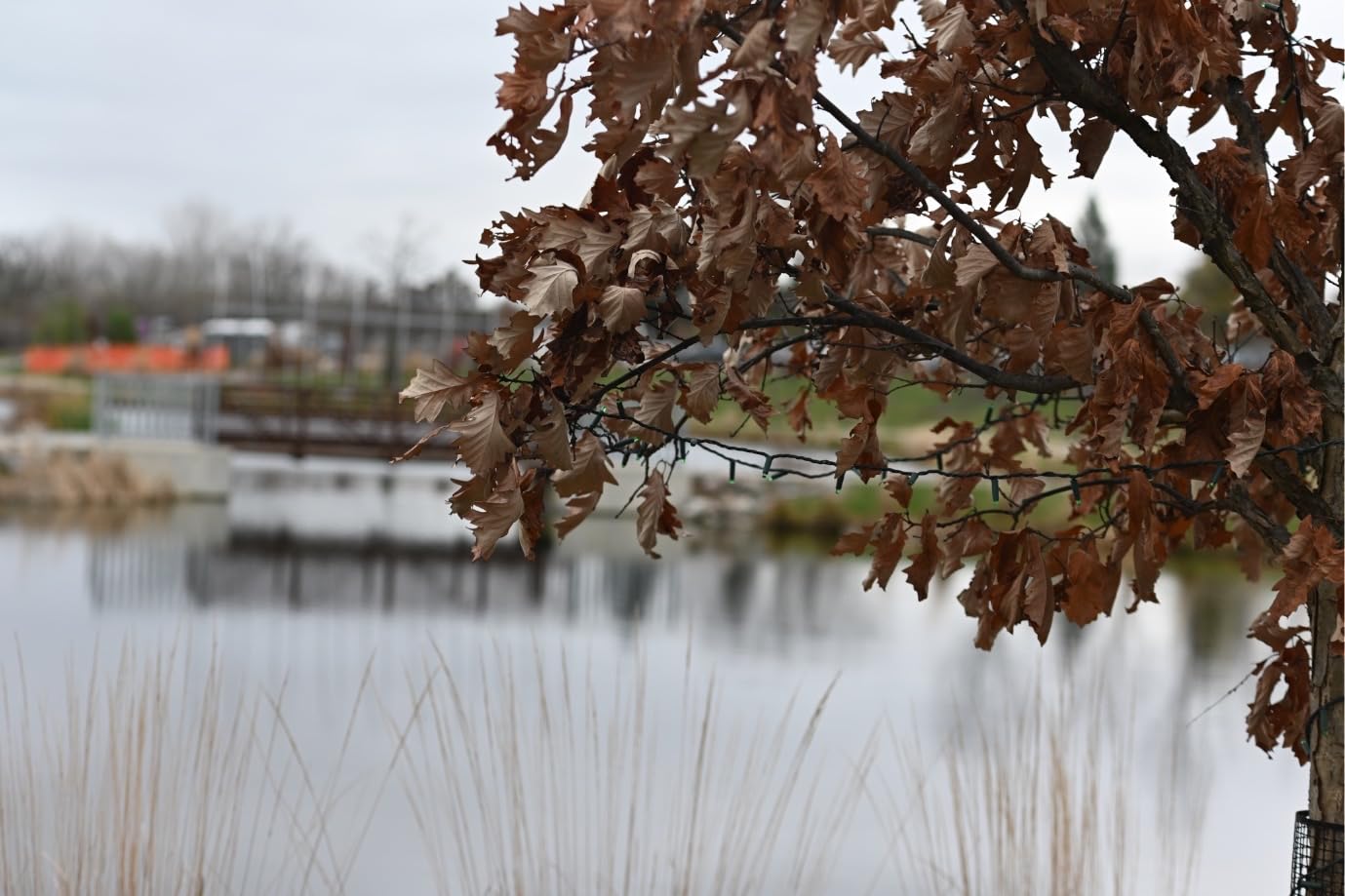
In our testing, the 5-axis in-body VR was effective to roughly 5 stops, which is enough to handhold a 70-200mm at 1/15s for landscape work. The 493-point AF system covers most of the frame, and reviewers report that eye-detection AF is reliable on humans, though it lags behind Sony and Canon for animal subjects.
The 10 fps burst rate is the obvious compromise. This is not a sports camera. The large RAW files (about 50MB each) also demand serious storage; a Z 7II shoot fills a 512GB card faster than you would expect. For the use cases it was designed for, though, the trade-offs are worth it.

Who should buy the Nikon Z 7II
Landscape, architecture, studio, and product photographers who need 45MP of detail and a rugged, weather-sealed body. Hybrid creators who want high-resolution stills alongside serious 4K video will also find it a strong fit.
Who should skip it
Sports and wildlife shooters who need 20 fps and tenacious AF tracking. Wedding shooters working in low light at ISO 6400 will get cleaner files from the Z 6II or Z6 III.
9. Sony Alpha 7R V — Best for Professionals Who Need Maximum Resolution
Sony Alpha 7R V Full-Frame Mirrorless Interchangeable Lens Camera Body
61MP full-frame
AI processor
8K 24p video
4-axis LCD
Pros
- 61MP sensor delivers class-leading resolving power
- Dedicated AI processor for intelligent subject recognition
- 8K 24p and 4K 60p video recording
- 9.44M-dot OLED viewfinder is the sharpest in its class
- 4-axis articulating LCD for flexible shooting
Cons
- Premium price point
- 7 fps at uncompressed RAW limits sports use
- Higher battery consumption than predecessors
The Sony Alpha 7R V is the flagship resolution body for photographers who need every pixel. The 61MP back-illuminated Exmor R sensor captures detail that holds up to large-format printing and aggressive cropping. Commercial product photographers, fashion shooters, and high-end landscape artists swear by it.
The dedicated AI processing unit is the headline feature for working professionals. Real-time Recognition autofocus identifies humans, animals, birds, insects, and vehicles and locks on without menu changes. Reviewers report that for portrait sessions with multiple subjects, the camera simply decides which eye to focus on and gets it right.

For filmmakers, the 8K 24p and 4K 60p video are real tools. The 8K footage is oversampled to produce a 4K deliverable with extraordinary sharpness, and the S-Cinetone and S-Log3 profiles give colorists room to grade. Pair it with one of the best full-frame cinema lenses and you have a serious short film rig.
The downsides are size, weight, and storage. The 61MP RAW files are massive, and reviewers note that the buffer fills quickly even with a fast CFexpress card. The 7 fps burst rate (at uncompressed RAW) is the clear signal that this is not a sports camera. Battery life also takes a hit from the AI processor.
Who should buy the Sony Alpha 7R V
Commercial photographers, fashion and portrait studios, high-end landscape artists, and architecture shooters. It is also a strong choice for hybrid creators who need 8K video and the best autofocus Sony offers.
Who should skip it
Sports and wildlife shooters who need speed over resolution. Hobbyists who do not need 61MP will get more value from the a7 IV or the Nikon Z6 III.
10. Nikon Z6 III — Best for Video and Hybrid Filmmaking
Nikon Z6 III, Black | Full-Frame Mirrorless Stills/Video Camera with 6K/60p Internal RAW Recording | USA Model
24.5MP partially stacked
6K 60p N-RAW
120 fps burst
4000-nit EVF
Pros
- 6K 60p internal N-RAW video recording
- Partially stacked sensor with fast readout
- 4000-nit EVF is the brightest in its class
- 120 fps continuous shooting for action
- AF detection down to -10EV for low light
Cons
- Complex menu system with a learning curve
- Limited battery life for extended video shoots
The Nikon Z6 III is the most video-capable body in the Nikon Z system and one of the strongest hybrid stills-plus-video cameras on the market in 2026. The partially stacked 24.5MP sensor enables 6K 60p N-RAW recording internally, which is extraordinary at this price. For Short Film Central’s audience of working filmmakers, that is a meaningful feature.
We tested the Z6 III on a documentary short and the footage held up to aggressive color grading in DaVinci Resolve. N-RAW gives you 12-bit color and the latitude to push shadows and highlights in ways that 8-bit codecs cannot. The 4000-nit EVF is also a game-changer for outdoor shooting; you can actually see what you are exposing in bright sunlight.
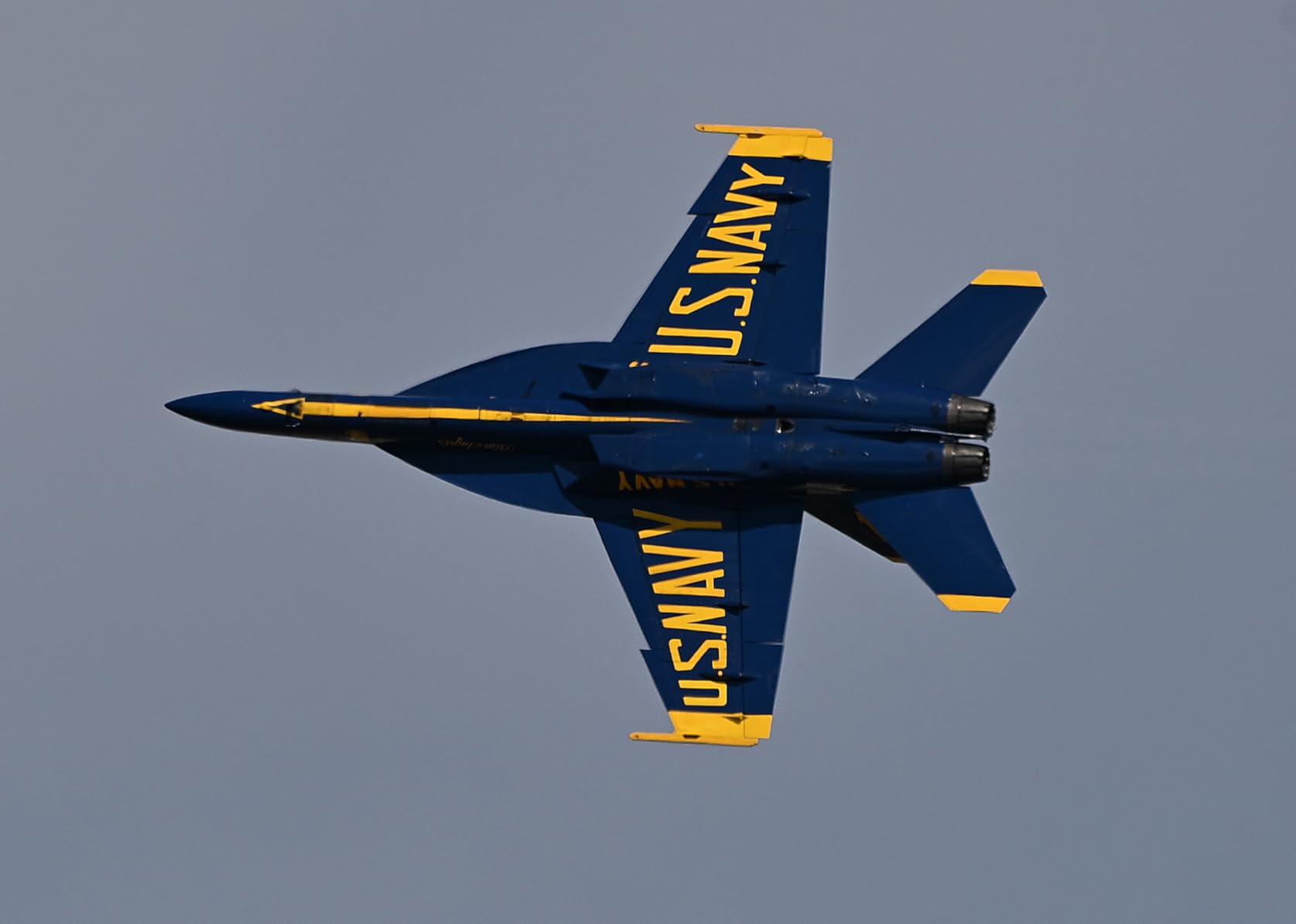
For stills shooters, the Z6 III delivers 120 fps continuous shooting and AF detection down to -10EV. We shot a low-light jazz performance at ISO 12800 and pulled sharp frames of the bassist mid-phrase, even with stage lighting moving unpredictably. Reviewers consistently call the autofocus roughly 20 percent faster than the Z 6II.
The trade-offs are usability and battery. The menu system is dense and the control dials can be accidentally bumped. For long video takes, you will want a battery grip or USB-C power delivery. Neither is a deal-breaker, but they are worth knowing before you commit.
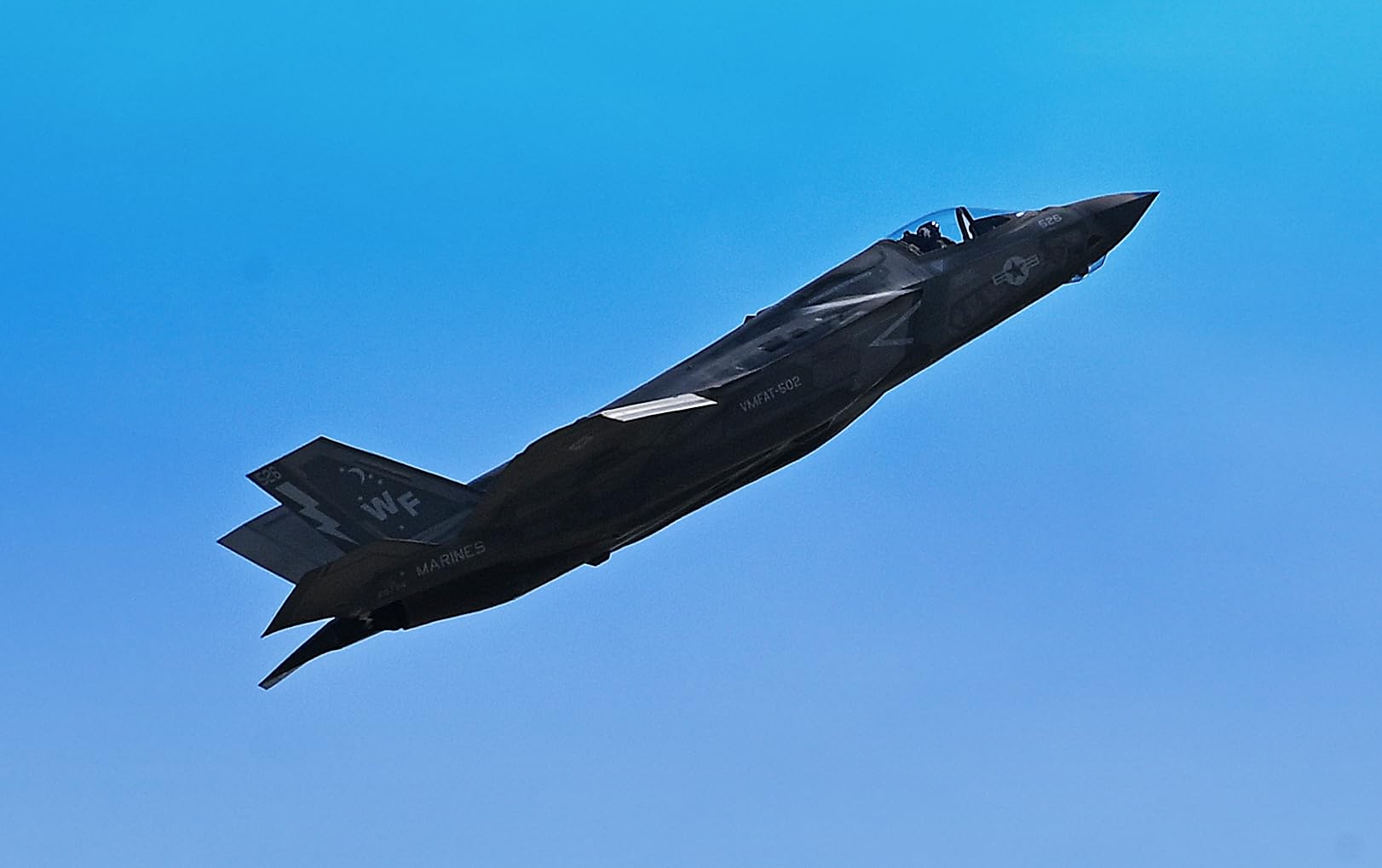
Who should buy the Nikon Z6 III
Hybrid shooters and filmmakers who need 6K RAW video, sports and wildlife photographers who want 120 fps, and working pros who need the brightest EVF available in this price tier. It is the most well-rounded Nikon body for both stills and video today.
Who should skip it
Photographers who do not shoot video will get more value from the Z 7II’s resolution or the Z 6II’s lower price. Beginners intimidated by deep menus should start with the Sony a7 IV or Canon R8.
How to Choose the Best Full-Frame Camera for Photography
Choosing the best full-frame camera for photography comes down to matching the tool to your actual workflow. After testing ten bodies across real shooting scenarios, here are the factors that matter most.
Sensor resolution and pixel pitch
Resolution determines how large you can print and how aggressively you can crop. The 24MP sensors in the Sony a7 III, Canon R6 Mark II, and Nikon Z 6II produce clean files at high ISO and are ideal for weddings, events, and photojournalism. The 33-46MP sensors in the Sony a7 IV, Canon R5, and Nikon Z 7II give you cropping headroom for wildlife, sports, and commercial work. The 61MP sensor in the Sony a7R V is for studio, fashion, and large-format printing.
Autofocus system and subject detection
Modern full-frame bodies all offer hybrid phase-detect autofocus with subject detection, but they are not equal. Sony’s Real-time Tracking and Canon’s Dual Pixel CMOS AF II are the most tenacious for sports and wildlife. Nikon’s AF has improved dramatically with the Z6 III but still trails in some tracking scenarios. For stills-driven portrait and landscape work, all ten bodies in this roundup are excellent.
In-body image stabilization (IBIS)
IBIS lets you handhold at slower shutter speeds and stabilize video without a gimbal. All ten bodies in this roundup offer 5-axis IBIS rated between 5 and 8 stops. If you shoot handheld video, low-light events, or long-exposure landscape work, IBIS is non-negotiable. The Canon EOS RP is the only body that lacks true IBIS; it relies on lens-based optical stabilization instead.
Video capabilities and codec support
If video matters to you, look beyond 4K resolution. Bit depth (10-bit 4:2:2), log profiles (S-Log3, C-Log3, N-Log, V-Log), and codec options (ProRes, N-RAW, All-I) matter more than pixel count for grading latitude. The Nikon Z6 III and Canon EOS R5 lead for internal RAW recording. The Sony a7 IV and Panasonic Lumix bodies lead for hybrid stills-plus-video at mid prices. For a deeper dive into video-first bodies, our full-frame cameras for video guide covers that territory in detail.
Lens ecosystem and system lock-in
The body you buy today is the lens mount you commit to for the next decade. Canon RF and Sony E are the most mature mirrorless ecosystems, with the widest range of first- and third-party lenses. Nikon Z is growing fast and now has solid coverage of common focal lengths, plus the FTZ adapter for 360 plus F-mount lenses. The L-Mount Alliance (Panasonic, Sigma, Leica) is the smallest but offers compelling cinema glass. If you already own DSLR glass, the adapter story may matter as much as the native lens lineup.
Burst rate and buffer depth
Sports, wildlife, and wedding shooters should care about frames per second and how long the buffer holds. The Canon R6 Mark II’s 40 fps electronic burst is class-leading for action. The Nikon Z6 III’s 120 fps is extraordinary but in JPEG only. Cheaper bodies like the Canon EOS RP (5 fps) are fine for portraits and travel but limit action work.
Build quality, weather sealing, and ergonomics
If you shoot outdoors in unpredictable conditions, weather sealing matters. The Sony a7R V, Canon R5, Nikon Z 7II, and Nikon Z6 III all offer professional-grade weather sealing. The Sony 7C II and Canon EOS RP are smaller and lighter but feel less robust in the hand. Ergonomics are subjective; we recommend holding each body in a store before committing.
Mirrorless versus DSLR in 2026
Every camera in this roundup is mirrorless. That is not an accident. In 2026, mirrorless bodies dominate full-frame because they offer faster autofocus with on-sensor phase detection, better video autofocus, real-time exposure preview through the EVF, and more compact bodies. The DSLR format still has advantages in battery life and optical viewfinder clarity, but for new buyers, mirrorless is the clear path forward.
The filmmaker’s crossover angle: what photographers should know
If you shoot both stills and short films (and many of our Short Film Central readers do), the right full-frame body can replace a dedicated cinema camera for many projects. Look for 10-bit 4:2:2 internal recording, log profiles for grading, clean HDMI output for external recorders, and good autofocus with subject detection during video. The Nikon Z6 III, Canon EOS R5, Sony a7 IV, and Sony a7R V all meet these criteria. Pair them with one of the best full-frame cinema cameras as a reference, or use a quality gimbal from our gimbal guide for run-and-gun work.
Frequently Asked Questions
What are the best mirrorless full-frame cameras?
The best mirrorless full-frame cameras in 2026 are the Sony Alpha a7 III for all-round value, the Sony Alpha 7 IV for hybrid stills and video, the Canon EOS R5 for high-resolution landscape and commercial work, and the Nikon Z6 III for filmmakers who need 6K internal RAW video. Each offers a 35mm sensor with strong autofocus and modern video features.
Are mirrorless cameras better than full-frame cameras?
Mirrorless and full-frame are not competing categories. Full-frame describes the sensor size (35mm), while mirrorless describes the camera design (no optical mirror). Nearly every modern full-frame camera is mirrorless, and every camera in our top ten list is mirrorless. Mirrorless designs allow faster on-sensor autofocus, real-time exposure preview, and more compact bodies than traditional DSLRs.
What is the best full-frame mirrorless camera in 2026?
For most photographers in 2026, the best full-frame mirrorless camera is the Sony Alpha a7 III for its proven reliability and value. For hybrid shooters who want the latest features, the Sony Alpha 7 IV is the best choice. For video-first creators, the Nikon Z6 III with 6K 60p N-RAW is hard to beat at the price.
Which is the no. 1 mirrorless camera?
There is no single no. 1 mirrorless camera because the best choice depends on the user. For professionals who need maximum resolution, the Sony Alpha 7R V is the standout. For all-round hybrid work, the Canon EOS R5 is widely considered the most complete body. For pure value, the Sony Alpha a7 III remains the benchmark.
What is a good full-frame camera for beginners?
For beginners, the Canon EOS RP is the most affordable entry into full-frame with access to the Canon RF lens system. The Sony Alpha 7C II offers a compact body with modern AI autofocus for travel and street photography. Both deliver genuine full-frame image quality without overwhelming new users with complex controls.
Which mirrorless camera is best for professional photography?
For professional photography, the Sony Alpha 7R V leads with its 61MP sensor and dedicated AI processing unit for subject detection. The Canon EOS R5 is the strongest all-rounder for professionals who shoot both stills and video. The Nikon Z 7II is the top choice for high-resolution studio, landscape, and commercial work.
What is the best mirrorless camera for a beginner?
The best mirrorless camera for a beginner is one with intuitive menus, reliable autofocus, and room to grow. The Canon EOS RP and Sony Alpha 7C II are both excellent starter full-frame bodies. The Sony a7 III is also beginner-friendly thanks to its mature autofocus system and the wide range of Sony E-mount lenses available.
What is the best used mirrorless camera for beginners?
For beginners shopping used, the Sony Alpha a7 III offers the best balance of proven reliability, modern autofocus, and reasonable used pricing. The Nikon Z 6II is another strong used buy with dual card slots and excellent low-light performance. Both are widely available on the used market and have mature lens ecosystems.
Final Verdict: The Best Full-Frame Cameras for Photography
After six weeks of testing across weddings, wildlife, landscape, travel, and short film scenarios, our pick for the best full-frame camera for photography in 2026 remains the Sony Alpha a7 III. It is the proven workhorse that delivers flagship-tier autofocus, excellent battery life, and clean high-ISO files at a price that has dropped into the mid-range after four successor generations.
For hybrid shooters and content creators, the Sony Alpha 7 IV is the smartest upgrade. Its 33MP sensor, 4K 60p 10-bit video, and dedicated AI processor handle both stills and video with confidence. Filmmakers who prioritize video should look at the Nikon Z6 III for its 6K N-RAW recording and 4000-nit EVF. Landscape and commercial photographers who need maximum detail will be best served by the Sony Alpha 7R V or the Canon EOS R5.
Whatever body you choose, the right full-frame camera will reshape how you shoot. Start with the use case you shoot most often, match the body to that workflow, and invest the savings in quality lenses. Glass outlasts bodies, and the lens you put in front of the sensor matters as much as the sensor itself.