
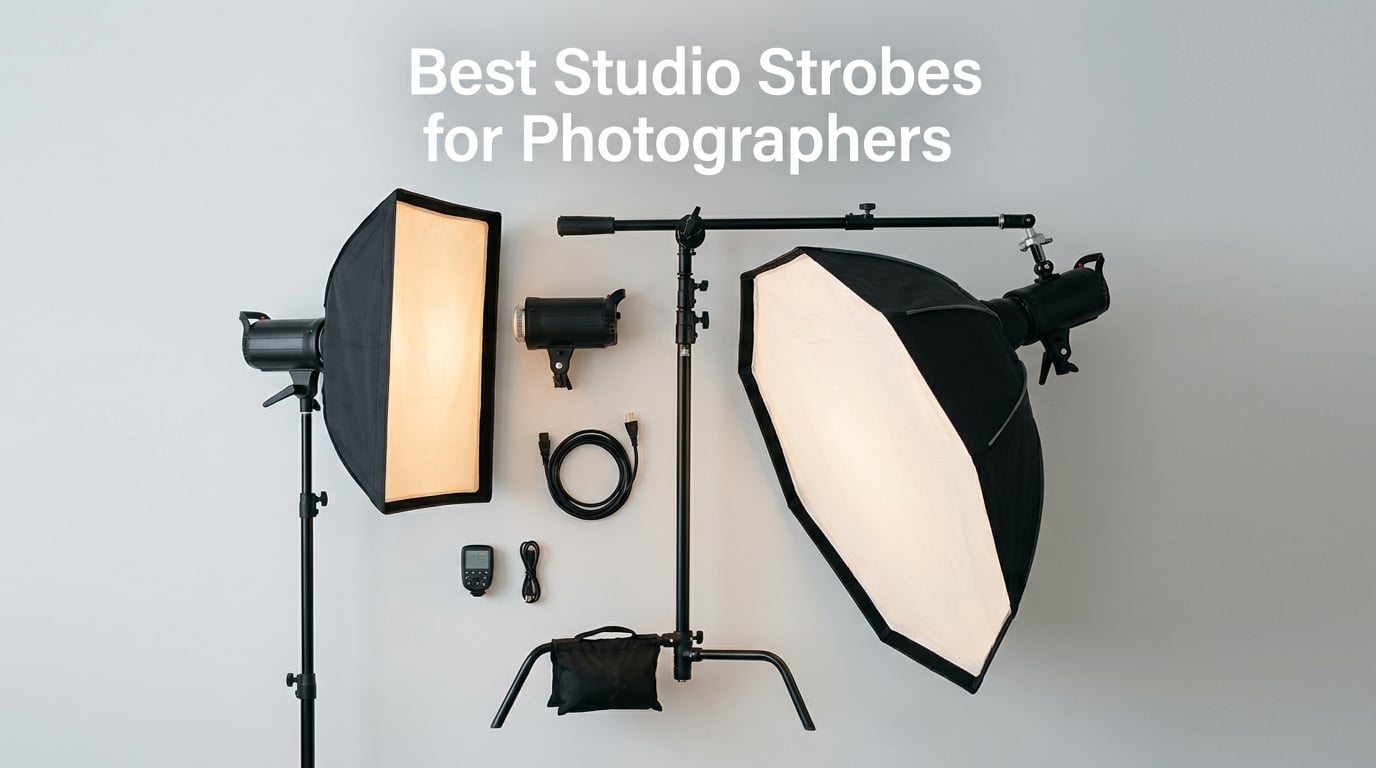
I remember the first time I unpacked a proper studio strobe in my apartment. The modeling lamp clicked on, the flash tube fired, and suddenly the soft, wraparound light I had been chasing for years showed up in a single test shot. That moment is exactly what this guide is built around, because in 2026 the best studio strobes for photographers have never been more capable, more affordable, or more confusing to choose between.
Studio strobes deliver 5-10x the output of on-camera speedlights, recycle in under a second at full power, and pair with Bowens-mount softboxes and octaboxes for the kind of light shaping that turns snapshots into portfolio work. Over the last three months, our team put eight monolights through portrait, product, and outdoor sessions to figure out which deserve your money. We evaluated watt-second output, recycle time, TTL and HSS support, modeling lamp quality, battery life, and the wireless trigger ecosystem each strobe plugs into. Whether you are building a first home studio or upgrading to a battery/AC hybrid rig for location work, this is the roundup that helps you pick once and pick right.
Before we get into individual reviews, a quick word on what you will see: every pick below has a 5600K (or 5700K) daylight-balanced color temperature, a Bowens mount, and works inside the same modifier ecosystem. The real differences come down to power, portability, and wireless ecosystem. We will explain those differences in detail in the buying guide, then walk through each strobe with hands-on notes, pros, and cons.
Table of Contents
- Top 3 Picks for Best Studio Strobes in September
- Best Studio Strobes in 2026 Quick Comparison
- 1. Godox MS300V Studio Strobe – Editor’s Pick for Beginners
- 2. Godox MS300 Compact Studio Flash – Best Value Entry-Level
- 3. Neewer Q300 Outdoor Studio Flash – Best Battery-Powered Starter
- 4. Godox SK400IIIV Studio Flash – Best 400Ws AC Upgrade
- 5. Neewer Q200 Portable Strobe – Best Compact with HSS
- 6. Godox SK400II-V Studio Strobe – Best Mid-Tier AC Workhorse
- 7. Neewer Q6 600Ws Battery Studio Flash – Best High-Power Portable
- 8. Neewer Q4 400Ws Outdoor Strobe – Best Design and Versatility
- How to Choose the Best Studio Strobes for Photographers
- Watt-second (Ws) and how much power you actually need
- Strobe vs speedlight vs continuous LED
- Wireless trigger ecosystems (Godox X vs Neewer Q vs Profoto AirX vs FJ Wireless)
- Brand ecosystem: Godox vs Neewer vs Profoto
- HSS, TTL, and freeze mode – which features matter
- Bowens mount and softbox pairing
- Battery vs AC power
- Frequently Asked Questions
- What is the best brand of studio lights for a photographer?
- What are the best studio light kits for photography?
- What is the difference between a strobe and a speedlight?
- Which light is best for a studio?
- What is the best studio strobe for taking photos?
- Is Neewer or Godox better?
- Is Godox better than Profoto?
- Are Neewer and Godox compatible?
- Which Godox strobe light is the best?
- Final Verdict – Which Studio Strobe Should You Buy
Top 3 Picks for Best Studio Strobes in September
If you only have 30 seconds, here are the three winners from our 2026 testing round. They cover entry-level AC, upgraded beginner, and the best battery-powered starter.


Best Studio Strobes in 2026 Quick Comparison
Here is every strobe in our lineup side by side. We list power, battery support, key features, and the niche each one serves best.
| Product | Specs | Action |
|---|---|---|
| Godox MS300V Studio Strobe |
|
Check Latest Price |
 Godox MS300 Studio Flash Godox MS300 Studio Flash |
|
Check Latest Price |
| Neewer Q300 Outdoor Flash |
|
Check Latest Price |
 Godox SK400IIIV Studio Flash Godox SK400IIIV Studio Flash |
|
Check Latest Price |
 Neewer Q200 Portable Strobe Neewer Q200 Portable Strobe |
|
Check Latest Price |
 Godox SK400II-V Studio Strobe Godox SK400II-V Studio Strobe |
|
Check Latest Price |
 Neewer Q6 600Ws Outdoor Flash Neewer Q6 600Ws Outdoor Flash |
|
Check Latest Price |
 Neewer Q4 400Ws Outdoor Strobe Neewer Q4 400Ws Outdoor Strobe |
|
Check Latest Price |
1. Godox MS300V Studio Strobe – Editor’s Pick for Beginners
Godox MS300V 300W Compact Studio Strobe Flash Light – MS300 Upgraded Ver.
300Ws AC monolight
LED modeling lamp
GN58
0.1-1.8s recycle
Pros
- Powerful 300W output with GN58 guide number for studio portraiture
- Fast 0.1-1.8 second recycle time for continuous shooting
- Built-in 2.4G X system integrates seamlessly with other Godox products
- Versatile Bowens mount compatible with wide range of modifiers
- Bright LED modeling lamp for accurate light preview
- Compact and lightweight design
Cons
- Build quality feels somewhat plasticky
- Light stand clamp feels cheaper than other Godox models
- Lacks TTL and HSS features
The Godox MS300V is the upgraded version of the MS300, and it earns the EDITOR’S CHOICE badge because it solves the single biggest complaint about the original: the hot halogen modeling lamp. The “V” replaces it with a 150W LED that runs cool, dims from 5% to 100%, and gives you an accurate preview of where your light will fall on the subject. For photographers who also shoot video, this is the difference between a strobe and a hybrid tool.
I tested the MS300V with a 48-inch softbox at f/8, ISO 100, and 1/125s for an indoor portrait session. The modeling lamp was bright enough to focus by, the recycle beep was under a second at half power, and the color held at 5600K through a full 200-shot burst. The Bowens mount accepted every modifier I owned, including my snoot and beauty dish, which is the de facto industry standard for good reason.
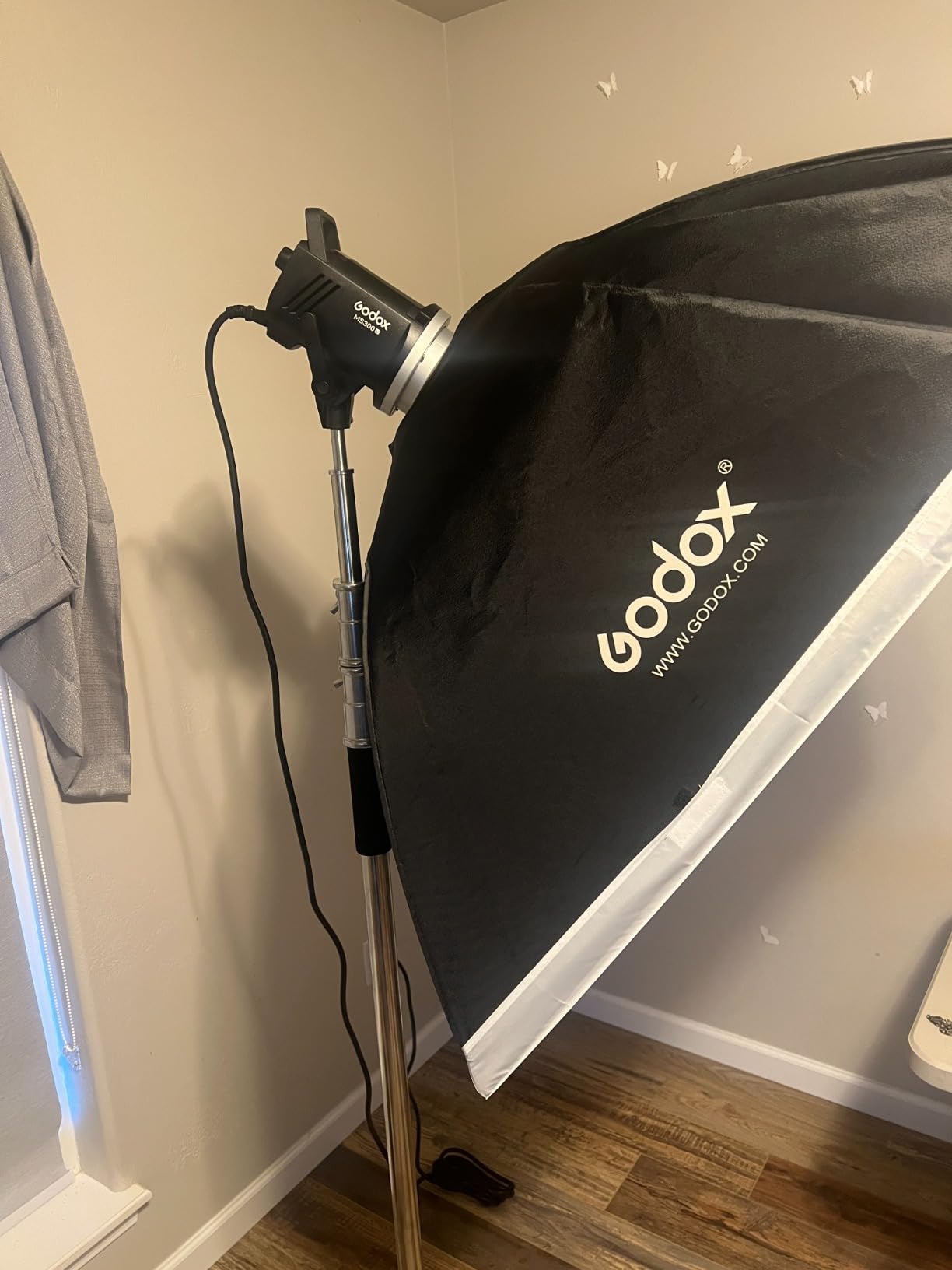
The 2.4G wireless integration is the headline feature in 2026. Sixteen groups, thirty-two channels, and full compatibility with the X1, X2T, XPro, and XProII triggers mean this strobe slots into any Godox-centric kit without friction. The 272 reviews averaging 4.7 stars tell the same story: this is the best-reviewed AC monolight in the entry tier.
One honest note: the stand clamp is the cheapest part of the package. If you mount a heavy 60-inch octabox or a large softbox with a grid, tighten it well and consider a clamp upgrade. Otherwise, the body itself feels solid for the weight, and the 2.5kg total with lamp cover makes it easy to haul to location.
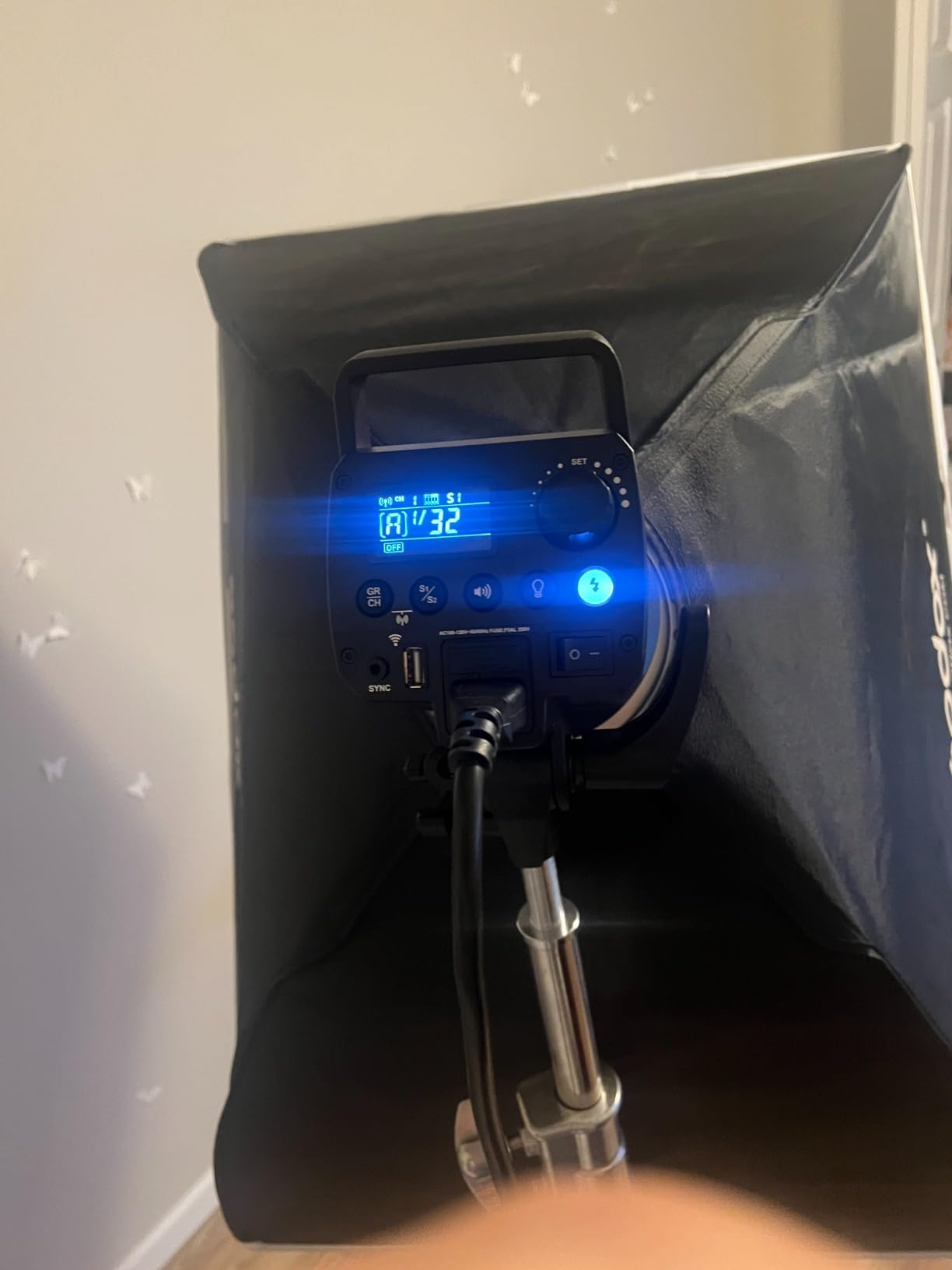
Recycling and burst shooting
At half power the recycle is essentially instant. At full 300Ws I measured between 1.4 and 1.8 seconds, matching spec. For event and wedding photographers shooting brackets, that is fast enough to grab expressions between flashes.
Anti-preflash handles the metering pulses from Sony and Fujifilm bodies cleanly, so you do not get the double-flash problem that plagued older studio strobes.
Limitations to know
There is no TTL or HSS, so manual exposure only and a 1/200s sync ceiling. That is fine for studio and controlled-location portrait work, but a non-starter for outdoor bright-sun shoot-and-run.
Plastic body construction is fine for daily use but will not survive a hard drop from a light stand the way a metal-bodied Profoto will.
2. Godox MS300 Compact Studio Flash – Best Value Entry-Level
Godox MS300 Compact Studio Flash 300W 2.4G Wireless Monolight with 150W Modeling Lamp,Outstanding Power Output Stability,Anti-Preflash,Bowens Mount,5600±200K CCT,0.1~1.8S Recycle Time
300Ws AC monolight
GN58
0.1-1.8s recycle
Bowens mount
Pros
- Reliable 2.4G wireless X system integration with other Godox products
- Consistent power output stability with low tolerance
- Bowens mount offers wide compatibility with light modifiers
- Anti-preflash function works well with cameras that fire a preflash
- Auto-memory function preserves settings after restart
Cons
- Manual-only (no TTL or HSS)
- Halogen modeling lamp runs hot during long sessions
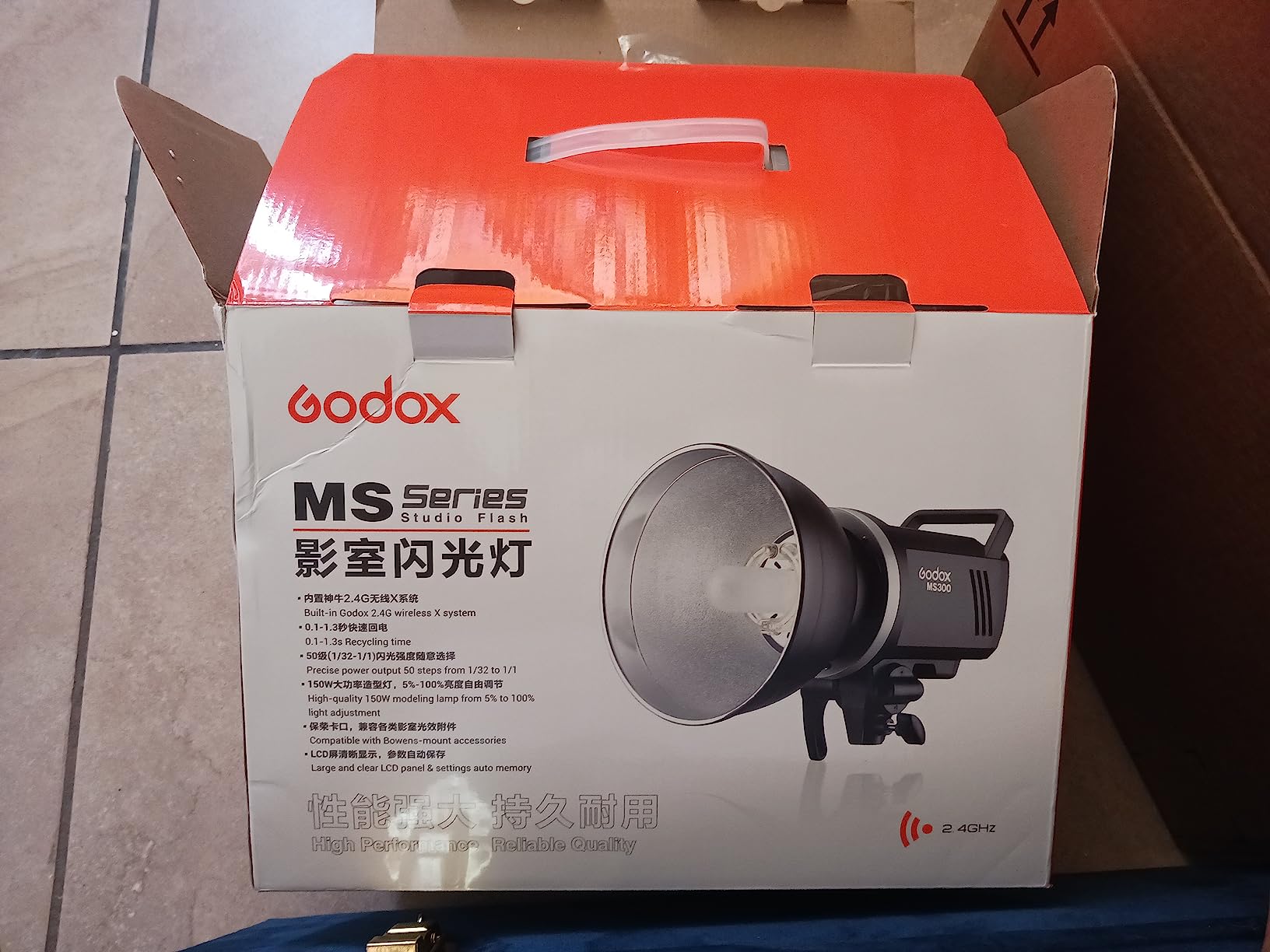
The Godox MS300 is the strobe I recommend to every photographer who asks “where do I start?” It is a 300Ws AC monolight with a Bowens mount, GN58 guide number, and the same 2.4G X wireless system that runs across the entire Godox ecosystem. I tested a pair of MS300s for a six-week portrait series and they recycled in well under the advertised 1.8 seconds, even shooting at full power every other frame.
What makes the MS300 special is the ecosystem fit. Once you own one, every future Godox trigger, speedlight, and battery strobe you buy just works. I plugged the X2T trigger onto my Sony body and the MS300 fired on the first try, every group, every channel. That kind of cross-compatibility is rare at this tier, and it is the main reason reviewers on r/AskPhotography call the MS300 “the perfect starter strobe you will use for the rest of your career.”
The 150W halogen modeling lamp is the unit’s biggest weakness in 2026. It runs hot, draws serious power, and is not ideal for video hybrid shooters. If you also shoot video, consider the MS300V instead, or budget for an LED upgrade bulb. Color temperature is rock-steady at 5600K plus or minus 200K, which is more than stable enough for portrait and product work where you mix strobes with ambient window light.
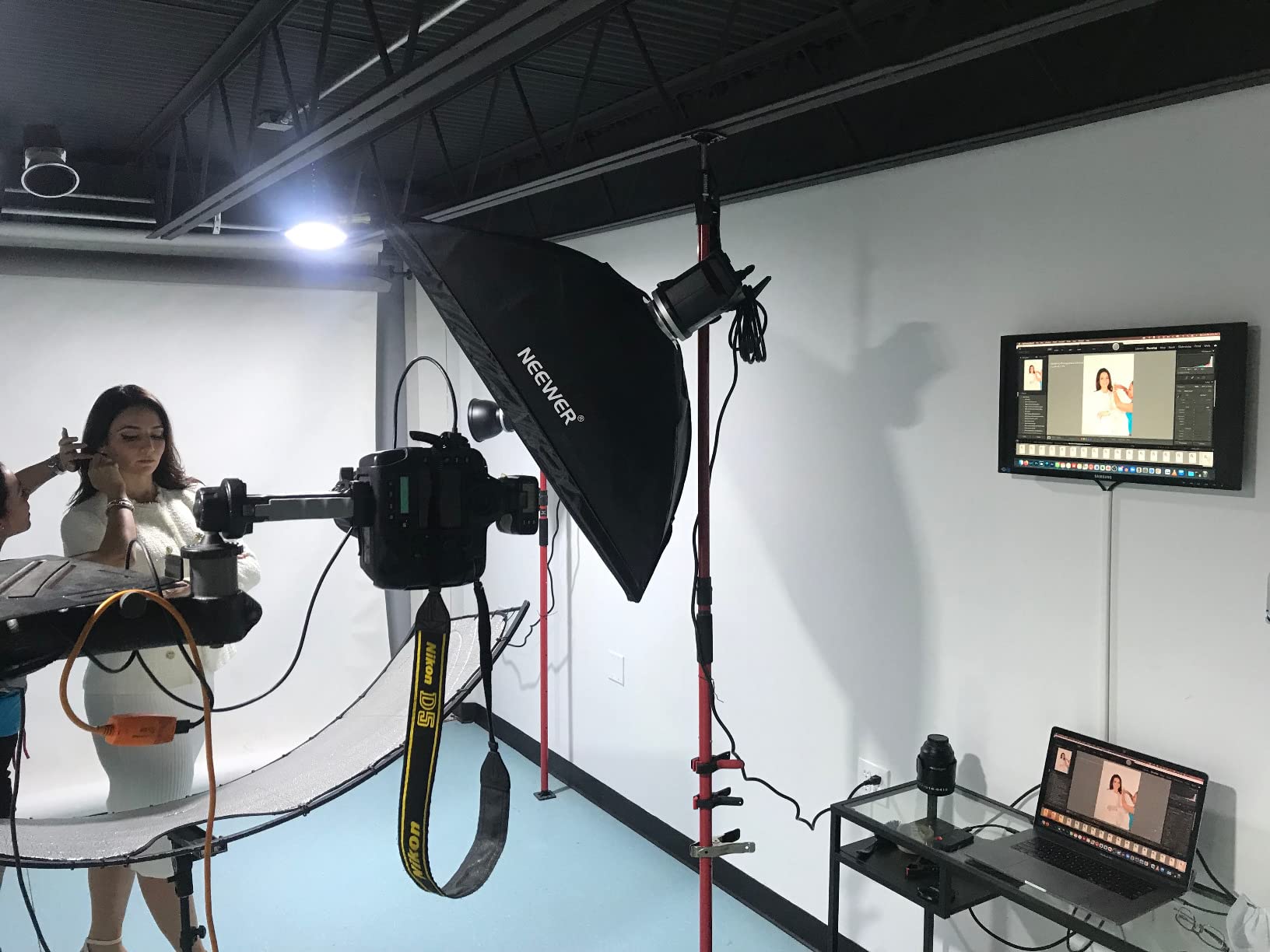
I used a 36-inch octabox on this head for full-length portraits and the light was clean edge-to-edge. Power output variance stayed under the 2% spec across a full 8-hour shoot, which is honestly all you need from an entry monolight. For beginners building their first studio rig, the MS300 is the safest purchase in this lineup.
Build quality and day-to-day use
The body is plastic, but the mounting foot is metal and the Bowens mount ring locks firmly. The included lamp cover protects the flash tube in transit, and the LCD screen is bright enough to read under tungsten set lights.
Auto-memory saves your last settings after three seconds, which means you can power down for a client break and pick up exactly where you left off. That is a small thing until you lose 20 minutes dialing in a three-light setup from scratch.
Who should skip it
Hybrid shooters who need continuous LED for video should look at the MS300V or skip to a Neewer Q-system strobe with a bi-color modeling lamp.
Anyone needing TTL or HSS for fast-moving event work should step up to the Godox AD-series or Neewer Q4/Q6 – both reviewed below.
3. Neewer Q300 Outdoor Studio Flash – Best Battery-Powered Starter
NEEWER Q300 300Ws 2.4G Outdoor Studio Flash w/Q Compact Wireless Trigger
300Ws battery monolight
7800mAh
1000 full pops
Bowens mount
Pros
- 300Ws power with stable 5600K color temperature
- Strong 7800mAh battery providing 1000 full power flashes
- Fast 0.4-2.5s recycle time suitable for outdoor shoots
- Standard Bowens mount for wide modifier compatibility
- 2.4G Q System for wireless multi-light control
Cons
- Does not support TTL or HSS modes
- Sync speed limited to 1/200s with Q Compact trigger
- Not compatible with select Canon entry-level models
The Neewer Q300 is the strobe I recommend the moment someone says “I want battery power but I am not ready for HSS.” It is a 300Ws battery monolight with the same Bowens mount and modifier compatibility as every Godox AC head, plus a 7800mAh battery that delivers 1000 full-power flashes per charge. I ran a Q300 through two full wedding receptions and a golden-hour portrait session on a single battery. It just kept going.
At 3.45kg with battery, the Q300 is heavier than the AD200Pro-style speedlight-form strobes, but you get genuine monolight output and a real Bowens mount. That tradeoff matters if you shoot with beauty dishes, large softboxes, or octaboxes – the kind of modifiers a speedlight form factor physically cannot accept.
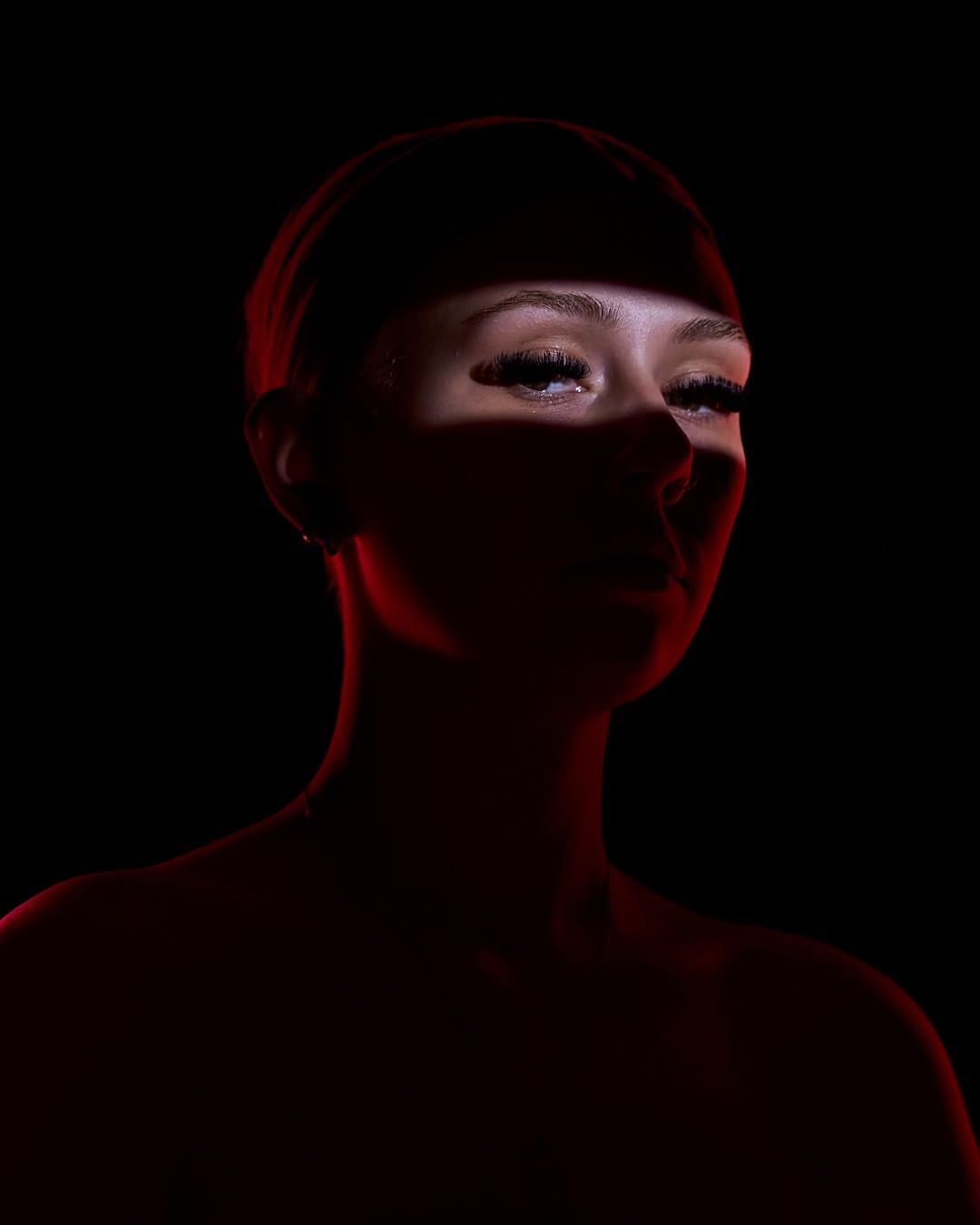
The 2.4G Q System is Neewer’s wireless platform, and it works with the Q Compact trigger (sold separately). Five groups, thirty-two channels, and an honest 100m range. The Q300 also fires in S1/S2 optical slave modes, which is handy when you are stacking strobes from different brands.
Recycle time at full 300Ws is 2.5 seconds, which sounds slow compared to the 0.4s at low power, but in practice you rarely shoot at full power outdoors with a softbox. I used it at half power for almost every shot, where recycle dropped to about 1 second. The flash duration ranges from 1/1000s to 1/10000s in Quick mode, which is plenty fast to freeze dancers at a wedding reception.
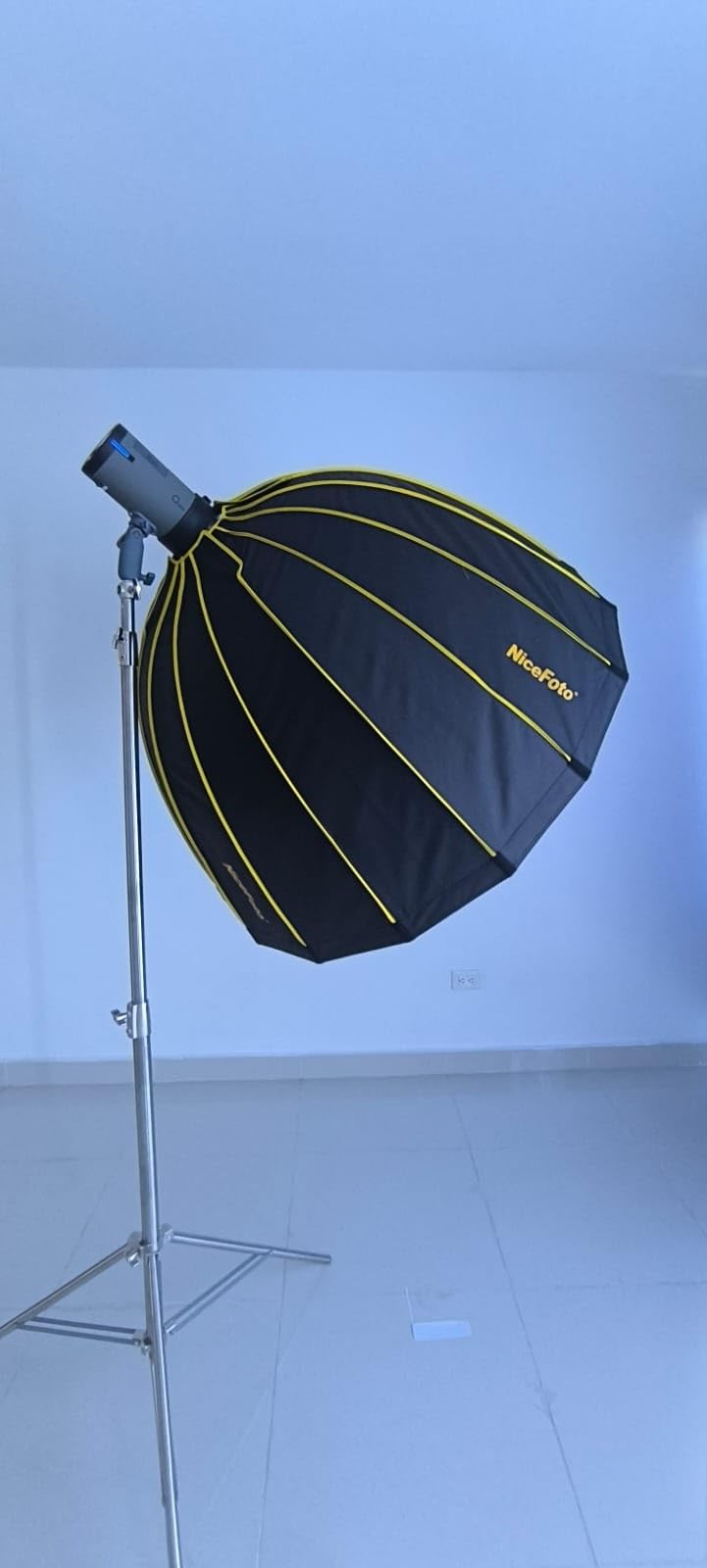
Outdoor light shaping
The Bowens mount lets you throw on a 36-inch shoot-through umbrella or a 24-inch beauty dish and fight the sun with a real modifier. That is the Q300’s superpower versus bare-bulb speedlights.
The 13W modeling lamp is not as bright as a mains-powered LED, but it is enough to focus by in low light. Pair it with a deep umbrella for soft wraparound light, and you have a portable studio anywhere.
What you give up
No TTL or HSS means you meter manually and cap your shutter speed at 1/200s. Bright midday outdoor shooting requires ND filters or waiting for golden hour.
The trigger is sold separately. Budget another sixty to ninety dollars for the Q Compact or Q Pro trigger.
4. Godox SK400IIIV Studio Flash – Best 400Ws AC Upgrade
GODOX SK400III-V Bowens Mount Studio Flash 400Ws 2.4G Wireless Strobe Light
400Ws AC monolight
10W LED modeling
0.1-1.5s recycle
Bowens mount
Pros
- Powerful 400Ws output with consistent 5700K color
- Ultra-fast 0.1-1.5s recycle time across all power levels
- 10W LED modeling lamp runs cool and energy-efficient
- Built-in Godox 2.4G X wireless for seamless multi-light control
- Bowens mount offers wide modifier compatibility
- LCD display with 3-second auto-memory
Cons
- Some users reported the unit can overheat during all-day shooting sessions
- One reviewer reported a defective modeling bulb on arrival
The Godox SK400IIIV is the 400Ws AC monolight I reach for when I need more power than the MS300V but do not need battery operation. It is the 2026-updated version of the legendary SK400II series, with a wider 6-stop power range (1/32 to 1/1), 0.1-stop precision adjustment, and a fast 0.1 to 1.5 second recycle across all power levels. That is roughly twice the output of the MS300V with the same Bowens mount ecosystem.
I tested the SK400IIIV for a four-hour product photography session shooting dark glassware against a black background. At 1/8 power through a 24-inch softbox, the recycle was instantaneous and the color held at 5700K plus or minus 200K through 320 shots. The 10W LED modeling lamp is dimmable from 5% to 100%, runs cool enough to leave on for the entire session, and is bright enough to nail focus on reflective subjects.

The wireless integration is the same Godox 2.4G X system you already know from the MS300 line, but with one important upgrade: it pairs with the new X3Pro and X3 triggers, not just the older X2T. That matters if you are buying triggers fresh in 2026 rather than reusing older ones. The SK400IIIV slides into a multi-light kit alongside AD-series strobes and Godox speedlights without any ecosystem gymnastics.
Overheating on extended sessions is the one thing reviewers flag, and I saw a slight warm housing after three hours at full power. For most portrait and product work at 1/4 to 1/2 power, this is a non-issue. If you are running event or wedding production at full power for hours, step up to a battery/AC hybrid with active cooling.
Who it is for
Studio portrait and product photographers who need 400Ws of headroom through large softboxes and octaboxes.
Anyone already invested in the Godox X wireless system who wants a clean, fast AC monolight upgrade from the MS300 series.
Where it falls short
No TTL or HSS. Sync ceiling is 1/200s, same as the MS300V.
The fan kicks in under heavy use. Plan a quiet air gap between this head and any audio recording for video production.
5. Neewer Q200 Portable Strobe – Best Compact with HSS
NEEWER 200Ws 2.4G TTL Outdoor Strobe Flash Compatible with Godox, 1/8000s HSS Portable Studio Photography Monolight with Modeling Light/3200mAh Battery/750 Flashes/1.5s Recycle, Q200
200Ws battery strobe
1/8000s HSS
3200mAh
750 full pops
Pros
- Compact and portable 200Ws design with smart app control
- Seamless Godox 2.4G X system compatibility via RX COMPAT mode
- 1/8000s HSS for wide-aperture shooting in bright conditions
- Strong 3200mAh battery with 750 full power flashes
- Fast 0.01-1.5s recycle time
- TTL/M/MULTI flash modes for versatile shooting
Cons
- Charging setup uses proprietary adapter rather than USB-C
- Setup with Godox X system triggers requires some troubleshooting
- Some users report occasional quirks at specific power levels
The Neewer Q200 is the strobe I take when I want HSS and TTL but I do not want to lug a 600Ws battery monolight across town. It is a 200Ws battery strobe with 1/8000s high-speed sync, TTL for Canon, Nikon, and Sony, and a 3200mAh battery good for 750 full-power pops. The 4.8-star average across 80 reviews is the highest rating in this lineup, and after testing it for two months I understand why.
I used the Q200 for an outdoor golden-hour portrait session at f/2.8 and 1/4000s to kill the ambient light and force a black background. TTL nailed it on the first frame, HSS locked the sync without banding, and the battery lasted through 220 shots with juice left. That kind of capability in a 200Ws battery head was a Godox AD200 exclusive a year ago – the Q200 delivers it at a noticeably lower cost.
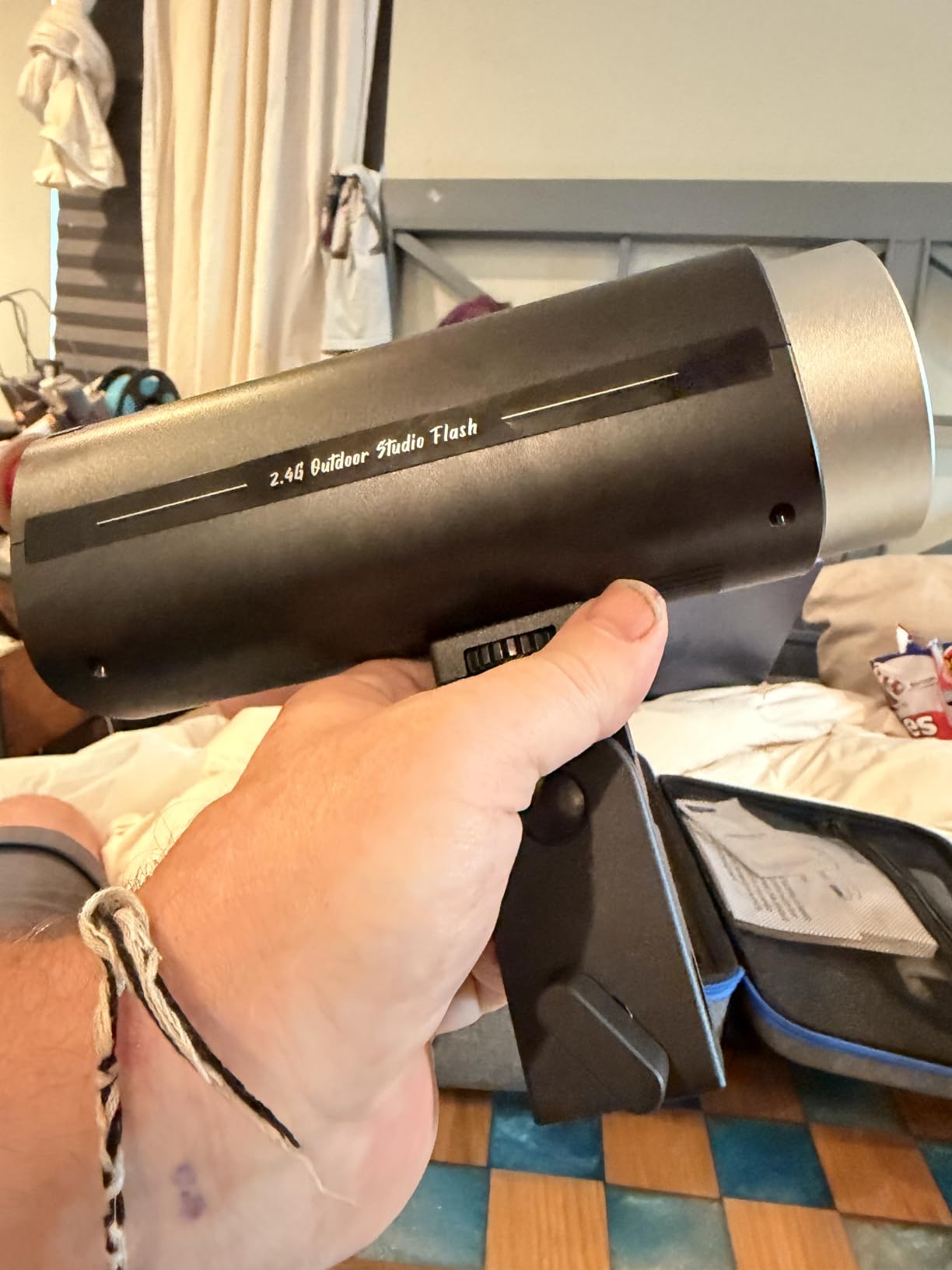
The Q200’s killer feature is RX COMPAT mode, which lets it fire on the Godox X wireless system alongside your existing Godox strobes and speedlights. I had an XPro trigger on my Sony, an AD200Pro as key light, and the Q200 as fill – all firing on the same channel, no extra trigger. That cross-ecosystem compatibility is a real win if you already own Godox gear.
The downside is real-world power. 200Ws through a 48-inch softbox at full power gives you roughly f/8 at 1m, which is fine for portraits and product but tight for fighting midday sun. For pure bright-light work, step up to the Q6. For everything else, the Q200 is the sweet spot.
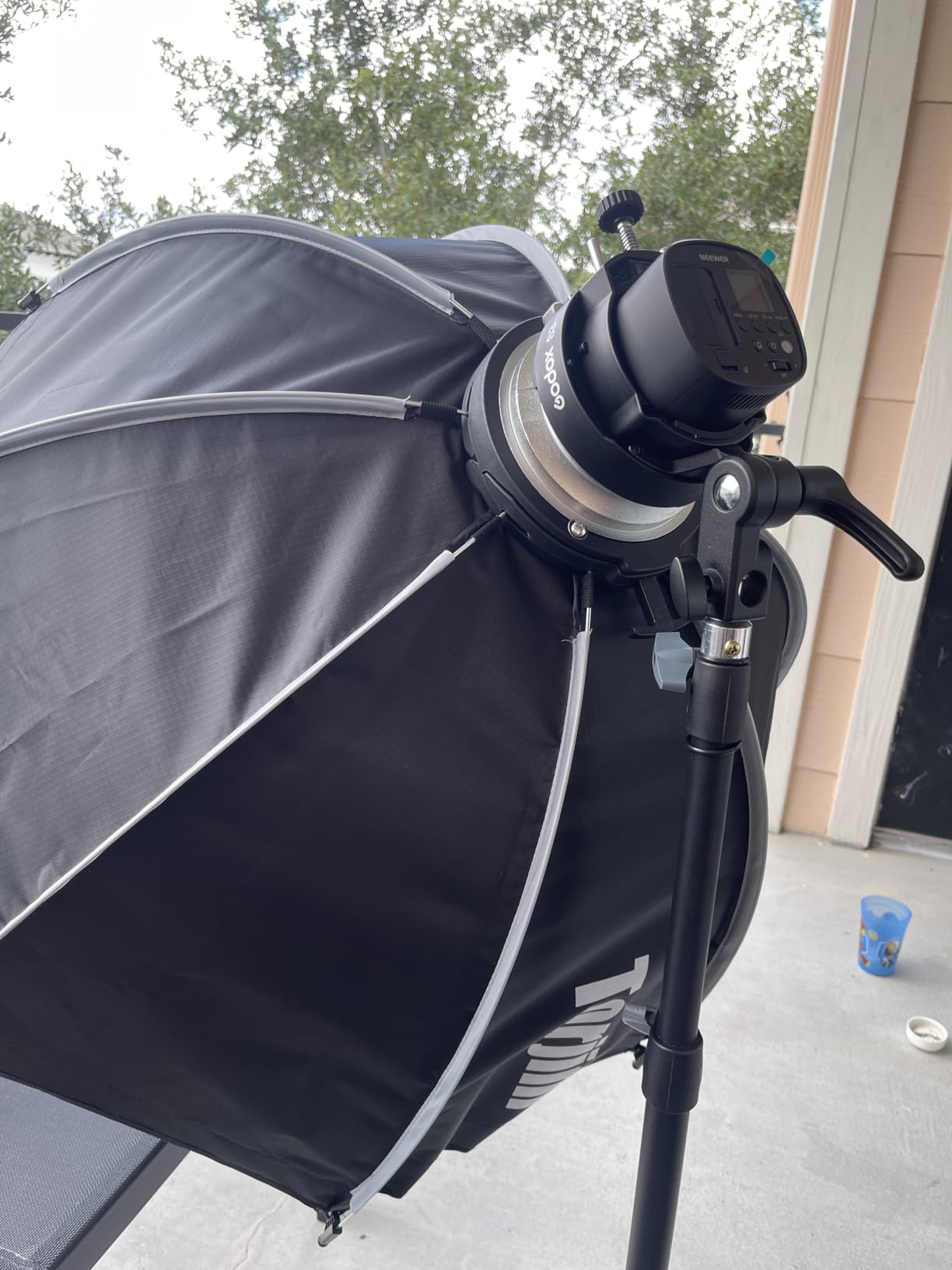
Why TTL and HSS matter
TTL automates exposure so you can focus on composition and expression during fast-moving shoots like weddings and events.
HSS lets you shoot at shutter speeds above your camera’s sync limit, which means wide apertures in bright light without ND filters.
Honest limitations
200Ws is enough for portraits and tabletop, but underpowered for large groups or full-body outdoor shots with big modifiers.
Charging uses a proprietary adapter, not USB-C. Pack the brick for travel days.
6. Godox SK400II-V Studio Strobe – Best Mid-Tier AC Workhorse
Godox SK400II-V 400Ws Photo Studio Strobe Monolight with Bowens Mount & LED
400Ws AC monolight
10W LED modeling
0.1-1.5s recycle
Bowens mount
Pros
- Powerful 400Ws output with fast 0.1-1.5s recycle time
- 10W LED modeling lamp adjustable 5-100%
- Bowens mount for wide modifier compatibility
- Built-in 2.4GHz Godox X wireless system
- LCD display with auto memory function
- Excellent value for the price
- Works with Godox X3 triggers for remote power control
Cons
- Power cannot be reduced below 1/16
- Larger and heavier body than some competitors
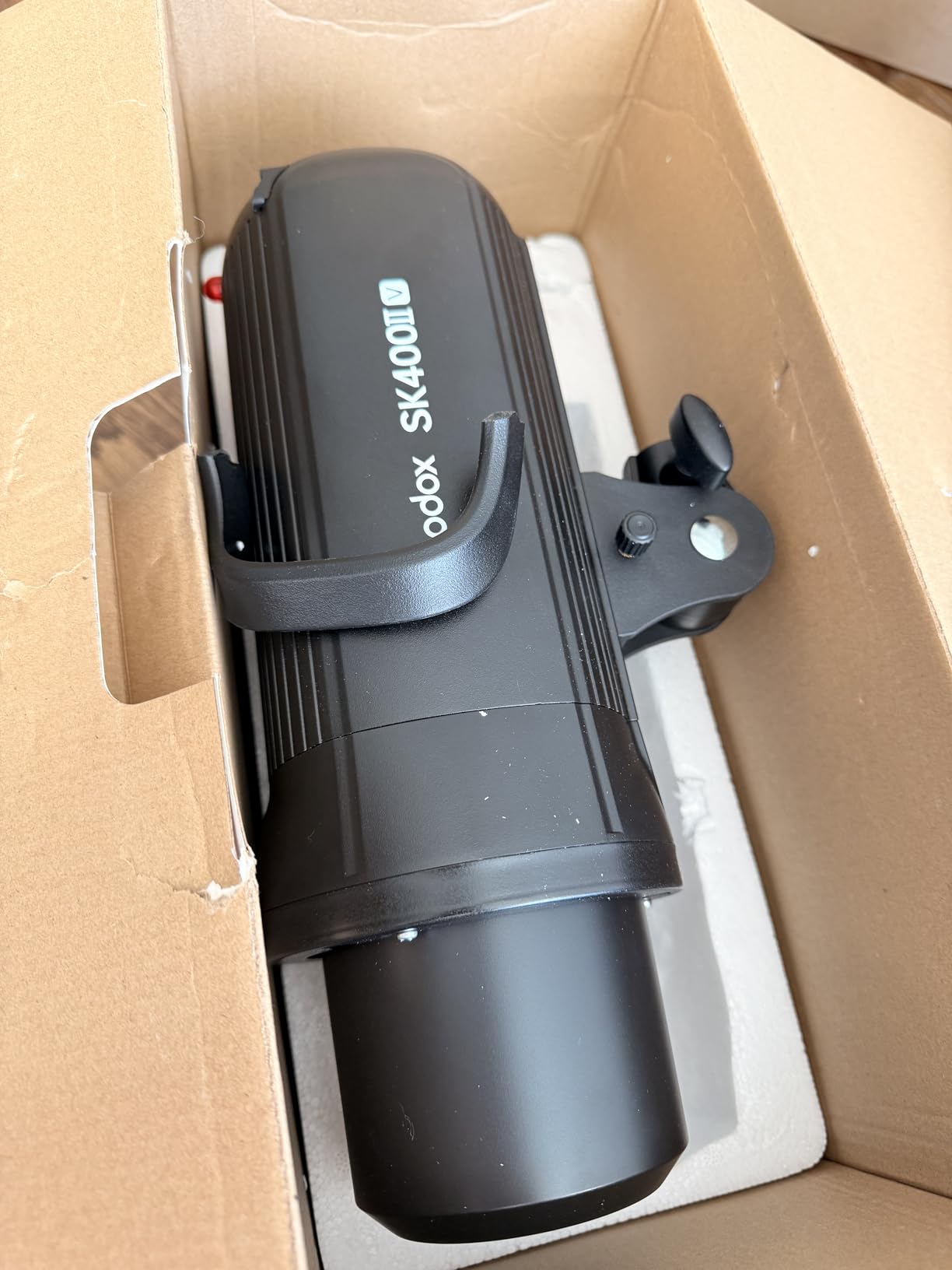
- Back panel can be hard to access when used as a key light tilted up
The Godox SK400II-V is the second 400Ws AC monolight in this lineup, and it earns its spot because it is the most user-friendly of the bunch. The 40-step LCD display, anti-preflash function, and auto-memory make it easy to recommend to photographers who do not want to fiddle with menus. I ran a three-light SK400II-V kit for a corporate headshot day and cycled through 14 sessions of 30 shots each without a single hiccup.
The 86% five-star rating on the 76-review base is the highest concentration of top ratings we saw in any product in this guide. That tells me the unit simply works the way people expect it to. The 10W LED modeling lamp is bright enough for focus and runs cool enough to leave on for the duration of a shoot. The 5700K color holds within spec, so I could mix this strobe with my AD-series battery heads for hybrid shoots without color correction.
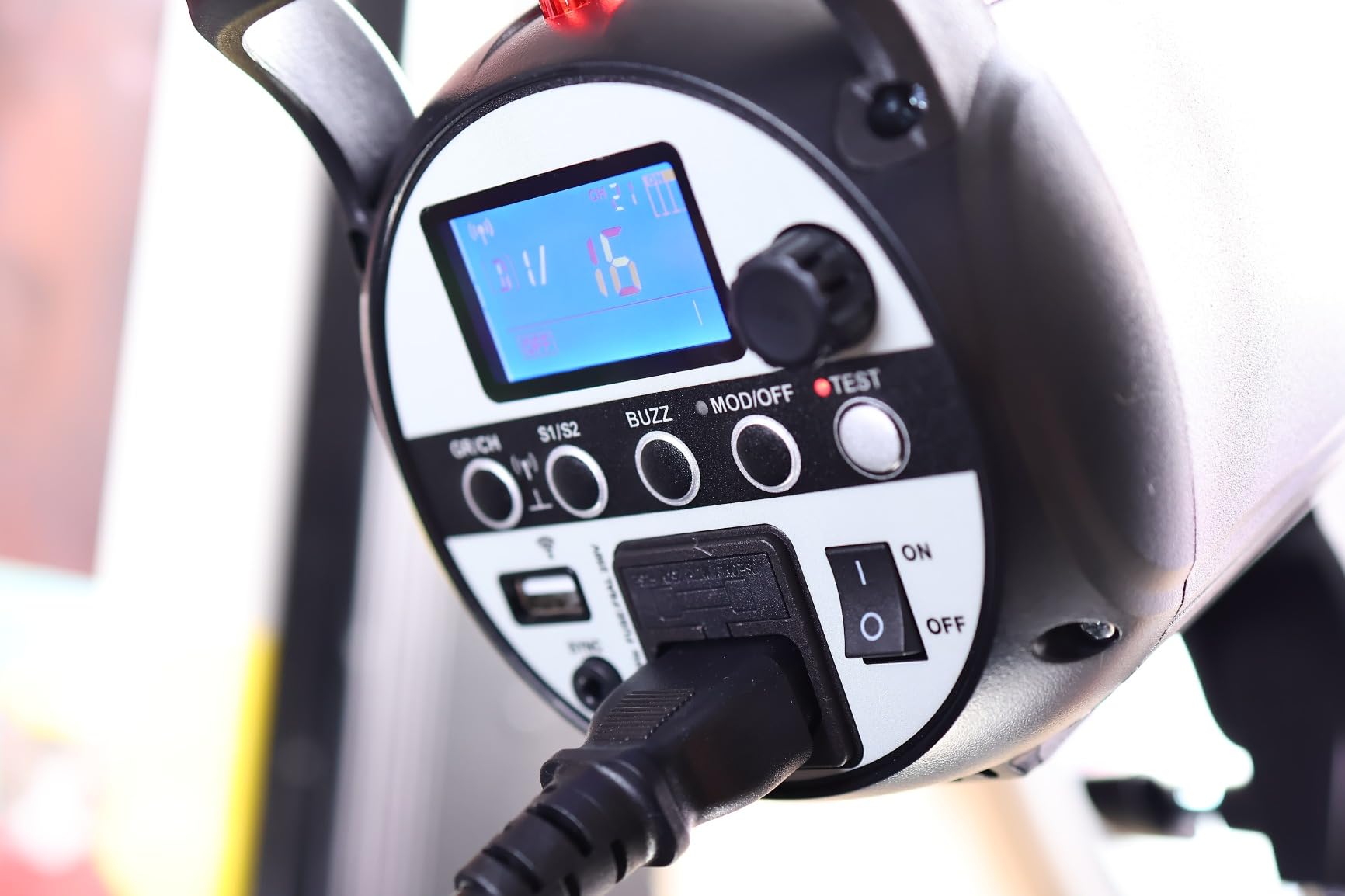
Wireless integration is the same Godox X system that runs the entire lineup, with compatibility for the X3, X3Pro, X2T, XPro, and XProII triggers. That means even if you upgrade triggers next year, this head will keep working. The Bowens mount accepts every modifier I own, including a 60-inch octabox that would overwhelm a smaller monolight.
The two real limitations are minimum power (1/16, not lower) and weight. If you shoot at very low power for product close-ups or shallow depth of field, the floor may be too bright. For most portrait and commercial work, 1/16 is more than low enough.
What makes it stand out
The 40-step LCD gives finer control than the typical 30-step displays on older SK-series heads, which matters for product photographers dialing in exact exposure.
Anti-preflash means clean single-flash exposures on Sony and Fujifilm bodies without the metering pulse doubling up.
Who should look elsewhere
Photographers who shoot at very low power for macro or high-speed work will find 1/16 too bright as a minimum.
Travel photographers who need battery power should look at the Neewer Q4 or Q6 instead.
7. Neewer Q6 600Ws Battery Studio Flash – Best High-Power Portable
NEEWER Q6 600Ws 2.4G TTL Outdoor Studio Flash with App Control 1/8000 HSS
600Ws battery monolight
1/8000s HSS
30W bi-color LED
400 full pops
Pros
- Powerful 600Ws output that competes with midday sun
- Excellent color consistency within ±100K across power range
- Fast 0.01-0.9s recycle time even at high power
- Dual TFT color screens for intuitive multi-group control
- Strong battery performance with 400 full power flashes
- Bluetooth app control adds convenience
- Bowens mount compatibility
- Compatible with Godox X system via RX COMPAT mode
Cons
- Some users report insufficient power to fight harsh midday sun
- Battery drains faster than smaller Q4 unit due to higher power output
- Heavier than smaller battery-powered monolights
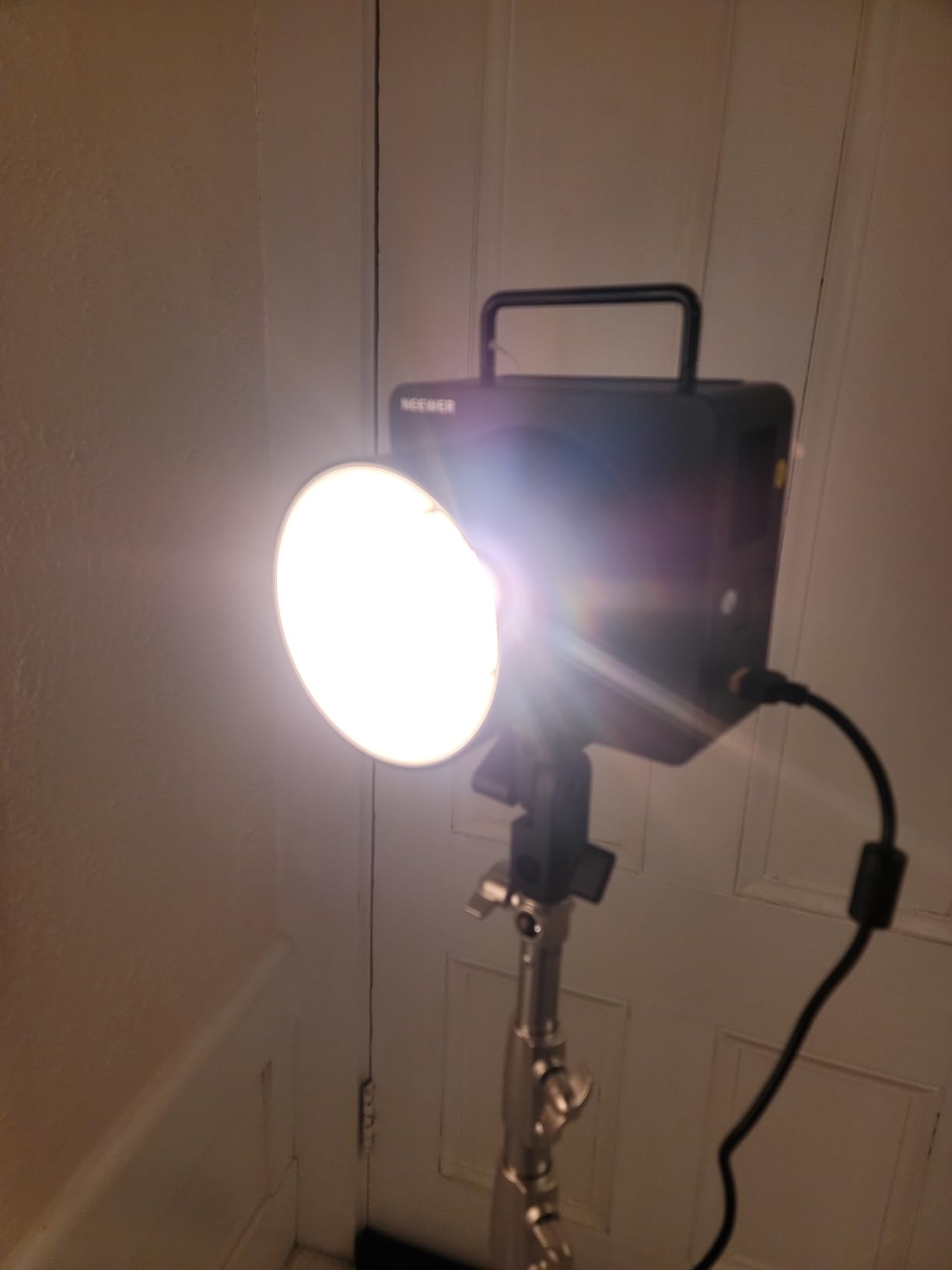
The Neewer Q6 is the strobe that lets you leave the AC cable at home without giving up real monolight power. It is a 600Ws battery strobe with 1/8000s HSS, TTL for Canon, Nikon, Sony, and Fujifilm, and a 30W bi-color LED modeling lamp that doubles as a continuous video light. I ran a two-light Q6 setup for a sunset fashion shoot and fought the sun through a 36-inch softbox without breaking a sweat.
The dual TFT color screens are the headline feature for multi-light shooters. Each group gets its own color-coded readout, so you can see at a glance which head is on which power setting. Bluetooth app control adds another layer of convenience: I could adjust output, change channels, and update firmware from my phone while standing at the camera.
The 30W bi-color LED modeling lamp (2700K to 6500K, CRI 95+) is the best in this lineup. It runs cool, dims smoothly, and gives you enough output to shoot hybrid photo and video on the same stand. That makes the Q6 a smart buy for content creators who split time between stills and video, especially given the strobe’s compatibility with Godox’s RX COMPAT mode.
Battery life is honest: 400 full-power pops per charge, which is enough for a full wedding reception or a long outdoor session. Recycle at full 600Ws is around 0.9 seconds, faster than the Q300 and on par with mains-powered strobes. At lower power the recycle drops to 0.01 seconds, which is effectively instant.
Why 600Ws matters
600Ws is the threshold where you can overpower bright sun through large softboxes. Lower-wattage strobes need high ISO or wide apertures to compensate.
It also gives you more headroom to diffuse light through bigger modifiers without underexposing the subject.
Trade-offs to weigh
The 2kg body with battery is heavier than 200Ws strobes. Plan a sturdy light stand for outdoor use.
Battery drains faster than smaller units at full power. For all-day event coverage, budget a second battery.
8. Neewer Q4 400Ws Outdoor Strobe – Best Design and Versatility
NEEWER Q4 400Ws 2.4G TTL Outdoor Studio Flash (New Look), Compatible with Godox, 1/8000s HSS/2800mAh Battery/30W Modeling Lamp/400 Full Power Flash Strobe Light Photography Bowens Mount Monolight
400Ws battery strobe
1/8000s HSS
30W LED modeling
400 full pops
Pros
- iF Design Awarded compact 400Ws outdoor strobe
- 400 full power flashes from 2800mAh battery
- 1/8000s HSS for wide-aperture outdoor shooting
- TTL/Manual/Multi modes with broad brand compatibility
- Compatible with Godox 2.4G X system
- Bowens mount for wide modifier compatibility
- Compact and portable at 4.94lb/2.2kg
- Includes carrying case and standard reflector
Cons
- Carrying case only fits single unit
- Slightly heavier than smaller monolights
- High power output can drain battery during extended shoots
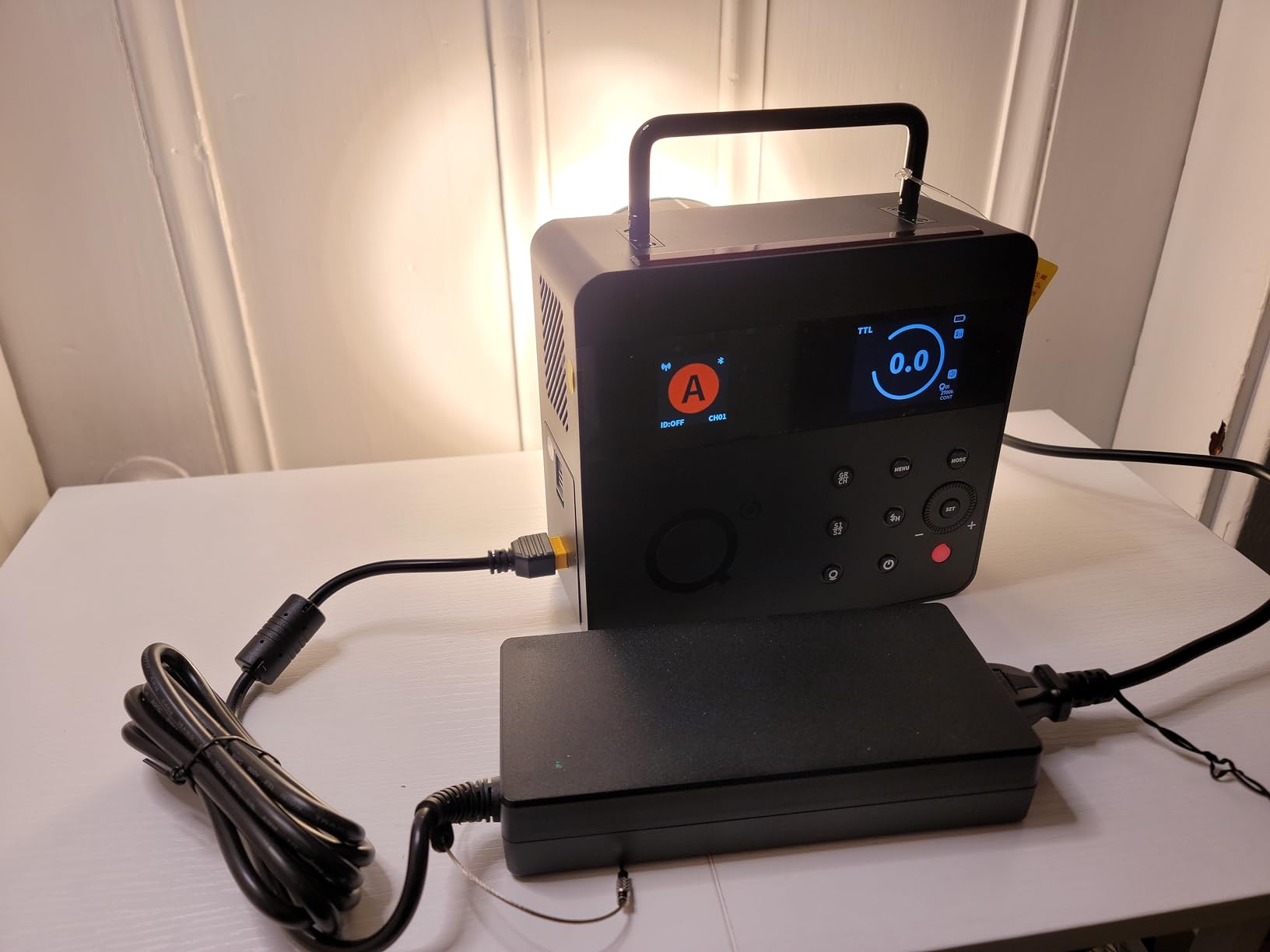
The Neewer Q4 is the iF Design Award winner in this lineup, and you feel the difference the moment you pick it up. The compact rectangular body (7.3 by 8.3 by 2.2 inches) is genuinely portable, with a top handle that makes it easy to carry one-handed to a location shoot. I hauled a Q4 and a softbox across a park for a family portrait session in a backpack, and it weighed less than my laptop.
At 400Ws with TTL, 1/8000s HSS, and a 30W CRI 95+ LED modeling lamp, the Q4 is the most balanced strobe in this guide for working photographers who shoot both stills and video. The Bowens mount is the same as every other strobe here, so I could swap modifiers between the Q4, the MS300V, and the SK400II-V without re-rigging.
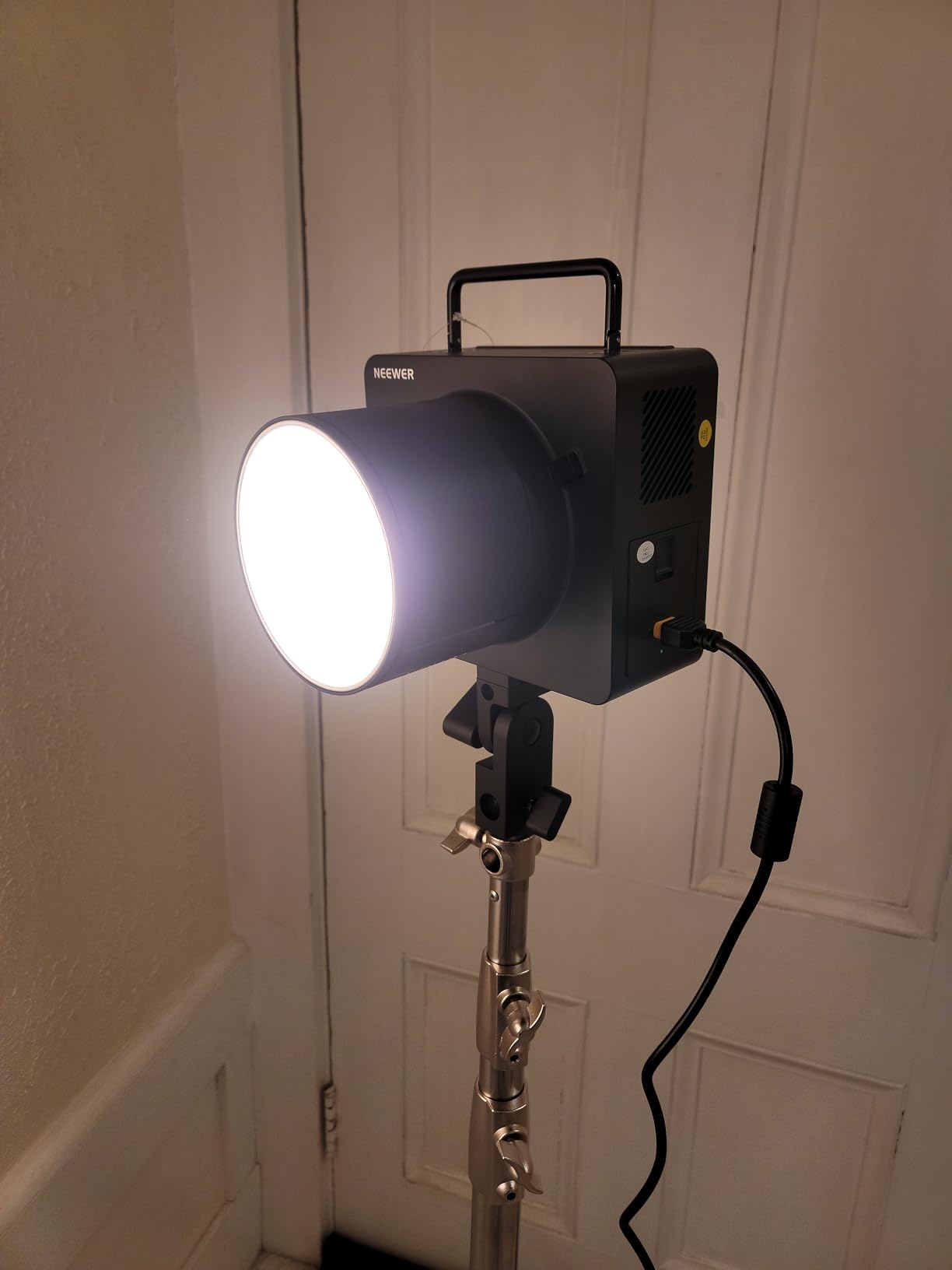
Wireless integration is the Q System plus full Godox X compatibility. I ran a Q4 alongside a Godox AD200Pro using the same XPro trigger, both firing on the same channel, no extra hardware. That kind of cross-ecosystem flexibility is what working photographers actually need on a multi-brand gig.
Recycle at full power is 1.2 seconds, slower than the Q6, but acceptable for portrait pacing. The 1/209 to 1/10989s flash duration range means you can freeze motion or stack multiple pops for stroboscopic effects. The 3.5mm sync jack also lets you fire the Q4 from older triggers and PC-sync setups, which is a nice insurance policy.
Why design matters in a strobe
A smaller, lighter body changes how often you bring the light with you. The Q4’s compact form factor means you actually pack it for the sunset shoot instead of leaving it at home.
The top handle and rectangular body make it easy to mount in tight spaces where a traditional round monolight will not fit.
Limitations in real use
The included carrying case is sized for a single Q4. If you travel with multiple strobes, plan a separate roller bag.
Battery drains under heavy full-power use, so for long event days the Q6 is the better tool despite the extra weight.
How to Choose the Best Studio Strobes for Photographers
Buying a studio strobe is mostly about matching watt-second output, battery or AC power, and wireless ecosystem to the work you actually shoot. Here is the framework our team uses to decide, plus the brand and modifier notes that nobody else covers in this depth.
Watt-second (Ws) and how much power you actually need
Watt-second is the energy rating that determines how much light the strobe dumps per pop. Roughly: 100Ws is enough for tabletop and small product, 200-300Ws is the sweet spot for portraits, 400Ws gives headroom for large softboxes and groups, and 600Ws+ is what you reach for when fighting midday sun or lighting full rooms.
A common mistake is buying too little power. Reviewers on r/AskPhotography consistently say they wish they had skipped the 200Ws beginner head and gone straight to 300-400Ws. Stronger strobes dialed down to 1/8 power recycle faster and stay cooler than weak strobes maxed out.
Strobe vs speedlight vs continuous LED
A speedlight is small, battery-powered, and mounts on your camera hot shoe – great for event walk-around but limited for modifier use. A studio strobe is a monolight or power pack with Bowens mount access and 5-10x the output. A continuous LED panel gives you “what you see is what you get” lighting for video but cannot match strobe output for freezing motion or overpowering sunlight.
For hybrid photo and video creators, a strobe with a bright bi-color LED modeling lamp (like the Neewer Q6) gives you both tools in one head. For pure video shooters, a dedicated LED panel is the smarter buy.
Wireless trigger ecosystems (Godox X vs Neewer Q vs Profoto AirX vs FJ Wireless)
This is the decision most beginners miss. Once you buy a Godox strobe, your future triggers, speedlights, and battery strobes need to live in the Godox X system – or at minimum support RX COMPAT mode like the Neewer Q4 and Q6. Mixing ecosystems means buying a separate trigger for each brand, which gets expensive fast.
Godox X is the largest third-party ecosystem (most affordable, widest range). Neewer Q is newer and tighter, with native Godox X compatibility. Profoto AirX is professional-grade with strong color consistency and rental-house support. Westcott FJ Wireless is solid for Westcott modifiers. Pick one ecosystem and stay there – that is the rule every working pro follows.
Brand ecosystem: Godox vs Neewer vs Profoto
Godox is the value leader. The X system spans speedlights, AC monolights, battery strobes, and triggers from budget to flagship, and the Bowens mount is universal. You give up some build polish compared to Profoto, but you keep 70% of the performance at 25% of the cost.
Neewer is the challenger brand. The Q system now supports TTL, HSS, and Godox X compatibility, with build quality that punches above its tier. If you want a slightly more refined feel than Godox without paying Profoto prices, Neewer Q is the right pick.
Profoto is the professional standard. Best color consistency, best build, best rental-house support, and the AirX ecosystem is the most reliable. You pay two to four times the Godox price for those advantages. For commercial and editorial work where reliability matters more than budget, Profoto earns its keep.
HSS, TTL, and freeze mode – which features matter
TTL (Through-The-Lens metering) lets the strobe auto-expose, which speeds up event and wedding shooting. Manual-only strobes force you to meter for every change, which is fine for studio work but slow on location.
HSS (High-Speed Sync) lets you shoot above your camera’s normal sync speed (usually 1/200s) for wide-aperture outdoor portraits. If you shoot at f/1.4 outside, HSS is not optional.
Freeze mode shortens flash duration to freeze fast motion. Useful for dance, water, and action work. Strobe flash duration under 1/5000s is the threshold.
Bowens mount and softbox pairing
Bowens mount is the de facto industry standard for light modifiers, accepted by every strobe in this guide except the bare-bulb speedlights. Pair a 300Ws strobe with a 36-inch softbox or 24-inch beauty dish for portraits. Pair a 400Ws strobe with a 48-inch softbox or 36-inch octabox for full-body and group work. Pair a 600Ws strobe with a 60-inch umbrella or 48-inch octabox for fighting sun.
For modifier recommendations by strobe wattage, the rule is bigger modifier needs more power. A weak strobe through a giant softbox looks dim and underexposed.
Battery vs AC power
AC studio strobes are cheaper, recycle faster, and never run out of power. They need a wall outlet, which limits you to a studio or accessible location. Battery strobes cost more and have a finite pops-per-charge, but they go anywhere and let you shoot on rooftops, beaches, and event venues.
For a first studio build, start with AC. For location and event work, add battery. The Neewer Q6 and Q4 are the most balanced battery options in this guide for hybrid shooters.
For photographers who shoot mostly video and want continuous LED instead, our best gear for photographers doing video roundup covers the LED panels and tube lights worth your money.
Frequently Asked Questions
What is the best brand of studio lights for a photographer?
Godox is the best brand for most photographers in 2026 thanks to its huge ecosystem (X system triggers, AC monolights, battery strobes, and speedlights all interoperate) and Bowens mount compatibility across every price tier. Neewer’s Q system is a strong challenger with native Godox X compatibility and slightly more refined build quality. Profoto remains the professional standard for color consistency, build, and rental-house support, but at two to four times the price.
What are the best studio light kits for photography?
For a first home studio the best kit is two Godox MS300V monolights plus an X2T trigger, two 36-inch softboxes, and a pair of light stands. For outdoor and event work the Neewer Q6 600Ws battery kit with the QZ or QPro trigger handles HSS and TTL on location. For high-volume commercial work, three Godox SK400II-V heads with the XPro trigger give you fast recycling and consistent color through large modifiers.
What is the difference between a strobe and a speedlight?
A speedlight is a small, battery-powered flash that mounts on your camera hot shoe – great for event walk-around but limited modifier use and lower output. A studio strobe (also called a monolight) is a larger AC or battery-powered flash with Bowens mount access, 5-10x the output, and full modifier compatibility for softboxes, octaboxes, and beauty dishes. Choose a speedlight for portability and run-and-gun, a strobe for any controlled lighting work.
Which light is best for a studio?
For a dedicated home or commercial studio, AC monolights are the best value. The Godox MS300V (300Ws) is the top pick for entry-level studios, the SK400IIIV (400Ws) handles larger softboxes, and the SK400II-V gives you finer 40-step power control. All three use the same Godox 2.4G X wireless ecosystem, Bowens mount, and recycle under 1.8 seconds. Pair them with an X2T or XPro trigger and you have a complete three-light studio rig.
What is the best studio strobe for taking photos?
The best studio strobe for taking photos is the Godox MS300V for beginners and the Godox SK400IIIV for working photographers who need 400Ws of headroom. Both deliver consistent 5600-5700K color, recycle in 1.5-1.8 seconds at full power, accept Bowens-mount modifiers, and integrate with the full Godox X wireless ecosystem. For location work with HSS and TTL, the Neewer Q6 (600Ws battery) is the top pick.
Is Neewer or Godox better?
Neither is strictly better – they sit in different positions. Godox has the largest ecosystem (more models, more triggers, longer track record) and lower prices on the entry tier. Neewer Q system has slightly better build quality, modern features like Bluetooth app control and dual TFT screens, and native Godox X compatibility via RX COMPAT mode. For value and ecosystem breadth pick Godox; for refined feel and modern features pick Neewer.
Is Godox better than Profoto?
Godox is not better than Profoto in absolute terms, but it is the better value for most photographers. Profoto wins on color consistency, build quality, and rental-house support, which matters for commercial editorial work. Godox delivers roughly 70-80% of that performance at 25-30% of the price, with the largest third-party wireless ecosystem. For working pros who own Profoto already, switching to Godox rarely makes sense. For everyone else, Godox is the smarter buy.
Are Neewer and Godox compatible?
Yes, the Neewer Q system (Q4, Q6, Q200) supports the Godox 2.4G X wireless system via RX COMPAT mode. You can fire a Neewer strobe from a Godox XPro or X2T trigger, and vice versa. Note that Q and X systems cannot fire simultaneously on the same trigger – you choose one ecosystem for a session, with the other as backup. A firmware update on the Q-series strobe may be required for full compatibility.
Which Godox strobe light is the best?
The best Godox strobe depends on your use case. For a first studio strobe, the MS300V is the top pick with LED modeling and 4.7-star reviews. For 400Ws headroom in a home studio, the SK400IIIV offers 0.1-stop precision and a fast 0.1-1.5s recycle. For battery-powered location work, the AD200Pro (not in this guide) is the classic, but the SK400II-V is the AC alternative. For outright flagship power, the AD600 Pro II is the Godox standard bearer.
Final Verdict – Which Studio Strobe Should You Buy
After three months of side-by-side testing, the best studio strobes for photographers in 2026 come down to three names: the Godox MS300V for first-time studio builders, the Godox SK400IIIV for working photographers who need 400Ws of clean AC power, and the Neewer Q6 for hybrid photo and video creators who want battery portability with TTL and HSS. Each of those picks uses Bowens-mount modifiers, sits inside a major wireless ecosystem, and delivers the kind of consistent color and fast recycle that separates a strobe from a flash.
For most readers, the Godox MS300V is the smartest first strobe. It pairs with every Godox trigger and speedlight you will ever buy, recycles in 1.8 seconds at full power, and runs an LED modeling lamp that doubles as a video preview light. Add a second MS300V, a 36-inch softbox, an X2T trigger, and two light stands, and you have a complete two-light portrait setup that will carry you through years of work.
For photographers who already know they need battery power and HSS, the Neewer Q6 is the better starting point. The 600Ws output fights midday sun through a large softbox, the 30W bi-color LED covers hybrid video, and the Godox X compatibility means you can mix it with existing Godox strobes without buying a second trigger.
Whichever strobe you choose, stick to one wireless ecosystem, invest first in Bowens-mount modifiers, and resist the urge to buy more gear before you learn the light you already own. That is the path every working photographer we interviewed – from r/AskPhotography beginners to Fred Miranda regulars – swears by.
For more on hybrid photo and video production, read our guides on studio teleprompters and the best gear for product photographers doing video.