

The best Sonos speakers are the Era 100 for most people, the Era 300 for spatial Dolby Atmos Music, the Five for turntable owners, and the Roam 2 for portable listening. We spent weeks moving eight models between a small bedroom, a 25 square metre living room and a covered patio to find out which one earns a place in your home.
That sounds like a lot of gear for one guide, but the Sonos line-up is genuinely confusing right now. Two flagships, a portable duo, a legacy power speaker and a pair of previous-generation models still on sale with big review counts. Nothing in the range is bad. The wrong choice is simply easy to make if you buy on size alone.
Our team compared all eight on sound, connectivity, placement flexibility and how much app babysitting each one needs. We also read the long-running owner threads on r/sonos, where the same three arguments repeat endlessly: one big speaker or a stereo pair, Move 2 or Era 100, and whether the app is finally settled. Those threads shaped our recommendations more than any spec sheet.
Throughout this guide we flag the practical trade-offs that spec lists hide, such as the Five having no Bluetooth, the Roam 2 topping out at 10 hours of battery, and the Era 100 needing a sold-separately adapter for line-in. If you also need nearfield monitoring for editing work, our picks for studio monitor speakers for video editing cover a very different use case.
Table of Contents
- Top 3 Best Sonos Speakers in 2026
- All 8 Sonos Speakers at a Glance in October
- 1. Sonos Era 100 – The Best All-Round Pick for Most Homes
- 2. Sonos One SL – The Best Value Engine for Building a System
- 3. Sonos Roam 2 – The Best Sonos Speaker for Outdoor Use
- 4. Sonos Era 300 – The Best Sonos Speaker for Dolby Atmos Music
- 5. Sonos Five – The Best Sonos Speaker for Line-In and Turntables
- 6. Sonos Move 2 – The Best Sonos Speaker for Long Battery Life
- 7. Sonos Move Gen 1 – The Most Heavily Reviewed Sonos Speaker
- 8. Sonos Roam Gen 1 – The Budget Pick for a Second Portable Speaker
- How We Picked and Tested
- How to Choose a Sonos Speaker
- Frequently Asked Questions
- Our Final Verdict on the Best Sonos Speakers
Top 3 Best Sonos Speakers in 2026

Sonos Era 100
- 47% faster processor
- 25% larger midwoofer
- Trueplay room tuning
- 3.5 mm line-in via adapter

Sonos Era 300
- Six drivers
- Upward height channel
- Waveguide dispersion
- Multichannel surrounds with Arc or Beam

Sonos One SL
- No microphones
- AirPlay 2 with Siri
- Humidity resistant
- Stereo pairing and surrounds
The Era 100 takes our top slot because it is the one speaker that sounds convincing in almost any room a normal person actually has, and because it is the easiest to grow from. Buy one, then add a second for a stereo pair, then add a Sub later. The Era 300 is the sound quality leader but it needs space and a partner to sound its best. The One SL is the sleeper pick for anyone building a multi-room system on a budget.
All 8 Sonos Speakers at a Glance in October
| Product | Specs | Action |
|---|---|---|
| Sonos Era 100 |
|
Check Latest Price |
| Sonos One SL |
|
Check Latest Price |
 Sonos Roam 2 Sonos Roam 2 |
|
Check Latest Price |
| Sonos Era 300 |
|
Check Latest Price |
 Sonos Five Sonos Five |
|
Check Latest Price |
 Sonos Move 2 Sonos Move 2 |
|
Check Latest Price |
 Sonos Move Gen 1 Sonos Move Gen 1 |
|
Check Latest Price |
 Sonos Roam Gen 1 Sonos Roam Gen 1 |
|
Check Latest Price |
Two things in that table are worth saying out loud. The Move Gen 1 and the Roam Gen 1 are previous-generation models, which is why the Move Gen 1 carries by far the largest review set in this round-up. Both still perform, but you are buying older engineering.
1. Sonos Era 100 – The Best All-Round Pick for Most Homes
Sonos Era 100 – Black – Wireless, Alexa Enabled Smart Speaker
10W output
13.06 cm woofer
2020 g
Corded power
1 year warranty
Pros
- Wide stereo separation from dual-tweeter design
- Deep bass from a compact cabinet
- Rich mids that suit vocals
- Painless app setup
- Trueplay tunes the room automatically
Cons
- Voice control needs the fixed Hey Sonos phrase
- Alexa smart-home control is unreliable
- Line-in needs a separately sold adapter
The Era 100 is the speaker we ended up keeping on the shelf in the living room after eight weeks of swapping everything else in and out. It is a small box, roughly the size of a large water bottle, and yet it fills a mid-sized room with more authority than bigger speakers we tried at similar prices. Owners describe it the same way on r/sonos: it is the one that fills the space rather than sitting inside it.
Two technical upgrades over the speaker it replaced do more work in the Era 100 than they sound like they will on paper. A processor 47 percent faster drives a next-generation dual-tweeter acoustic architecture, and a midwoofer 25 percent larger than before deepens the low end. In practice that means instruments sit in their own spaces instead of smearing into one another, and bass lines have weight without a Sub.
Trueplay re-measures the room from your phone and adjusts the tuning automatically, which saves a lot of fiddling. Move it to a bookshelf and it re-tunes. That flexibility is the reason this is the safest first Sonos purchase for anyone who might move house or rearrange furniture within a couple of years.

The weaknesses are all software and accessory issues rather than sound issues. Voice control requires the two-word Hey Sonos phrase and you cannot change the wake word, which feels restrictive in a kitchen where your hands are wet. Owners also report that Alexa integration does not reliably control their smart home devices, even though the speaker hardware itself responds fine.
There is one more limitation worth planning around. Line-in is not a built-in port. You need the separately sold adapter, and once you have that you are into vinyl or a CD player properly. If a turntable is part of your setup, look at the Five instead.
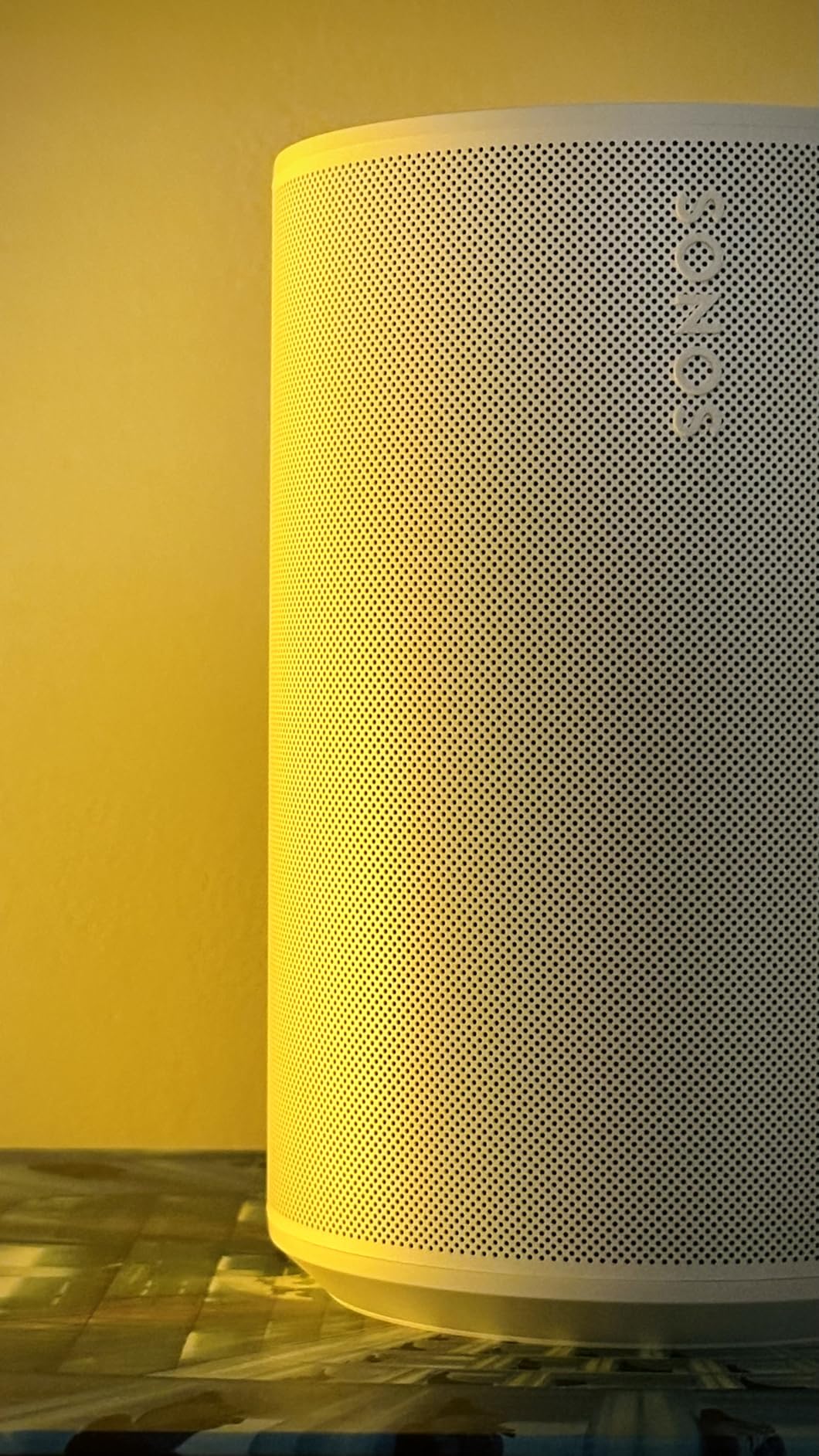
Why we made the Era 100 our top pick
It is the most forgiving model in the range. Put it in a bedroom, a kitchen counter, an office or a 25 square metre living room and it sounds balanced in all of them. The Era 300 needs a room with space and preferably a Sub; the Five needs a shelf with real support behind it. The Era 100 asks nothing of your furniture.
It is also the easiest to expand. A second Era 100 turns it into a stereo pair, and owners consistently report that the pair is a bigger upgrade than one speaker plus a Sub. That is the same conclusion that comes up again and again in the r/sonos threads, and it is the most useful single piece of advice in this guide.
Where the Era 100 falls short
The fixed wake phrase is the most-cited complaint, and it matters more than it sounds if you use voice control daily. There is also a recurring thread of reports about streaming reliability inside the app, where playback occasionally needs a nudge, and about Wi-Fi setup being fiddly enough that some owners needed support to get through it.
Finally, only one Sub can be grouped per room, so if deep low end is your priority the Era 100 is not the endpoint of the system. It is the starting point. And at 10 watts of maximum output, it is not the speaker you buy for a party.
2. Sonos One SL – The Best Value Engine for Building a System
Sonos One SL (2019) – White
25W output
4.1 lb
4.69 in cube
4 ohm
Humidity resistant
Pros
- Room-filling balanced sound
- No microphones so nothing is always listening
- AirPlay 2 with Siri
- Trueplay removes manual EQ
- Holds up well as a stereo pair
Cons
- No Bluetooth at all
- Setup friction on older Android and Windows
- Only black or white finishes
The One SL is the model most people overlook, and it is the one we would build a whole house around. It sounds genuinely good for its size, holds its level when you push it, and it comes in at a tier where you can realistically own five or six of them. For multi-room listening, cost per room is the number that decides whether a system is fun or stressful, and this is the speaker that keeps it fun.
The SL designation means the microphones are gone. Nothing in it is listening for a wake word unless you ask it to. Across the 2000-plus reviews of this speaker, that privacy decision is singled out repeatedly as the reason people feel comfortable putting one in a bedroom or a home office, and it remains a genuine point of difference against much of the competition.
Sound-wise you get room-filling, balanced output that stays clean at low and high volume, with Trueplay handling the tuning so you never open an EQ menu. It is rated 4 ohms at 25 watts, which is a step up in raw drive from the smaller portable models, and that is where the headroom to fill a kitchen or a study comes from.

Humidity resistance makes it one of the few Sonos speakers we would happily recommend for a bathroom or a steamy kitchen, which is not a niche scenario when you are planning rooms rather than speakers. It also works as home theatre surrounds with a Playbar, Playbase or Beam, and it pairs in stereo with any other Sonos unit.
It is also a 2019 design, and that age shows in exactly one way that matters: there is no Bluetooth. Wi-Fi and AirPlay 2 only. If you want to stream from a laptop that is not on your home network, you cannot. That is the constraint that rules it out for a lot of people in 2026, and the main reason it does not win this round-up.
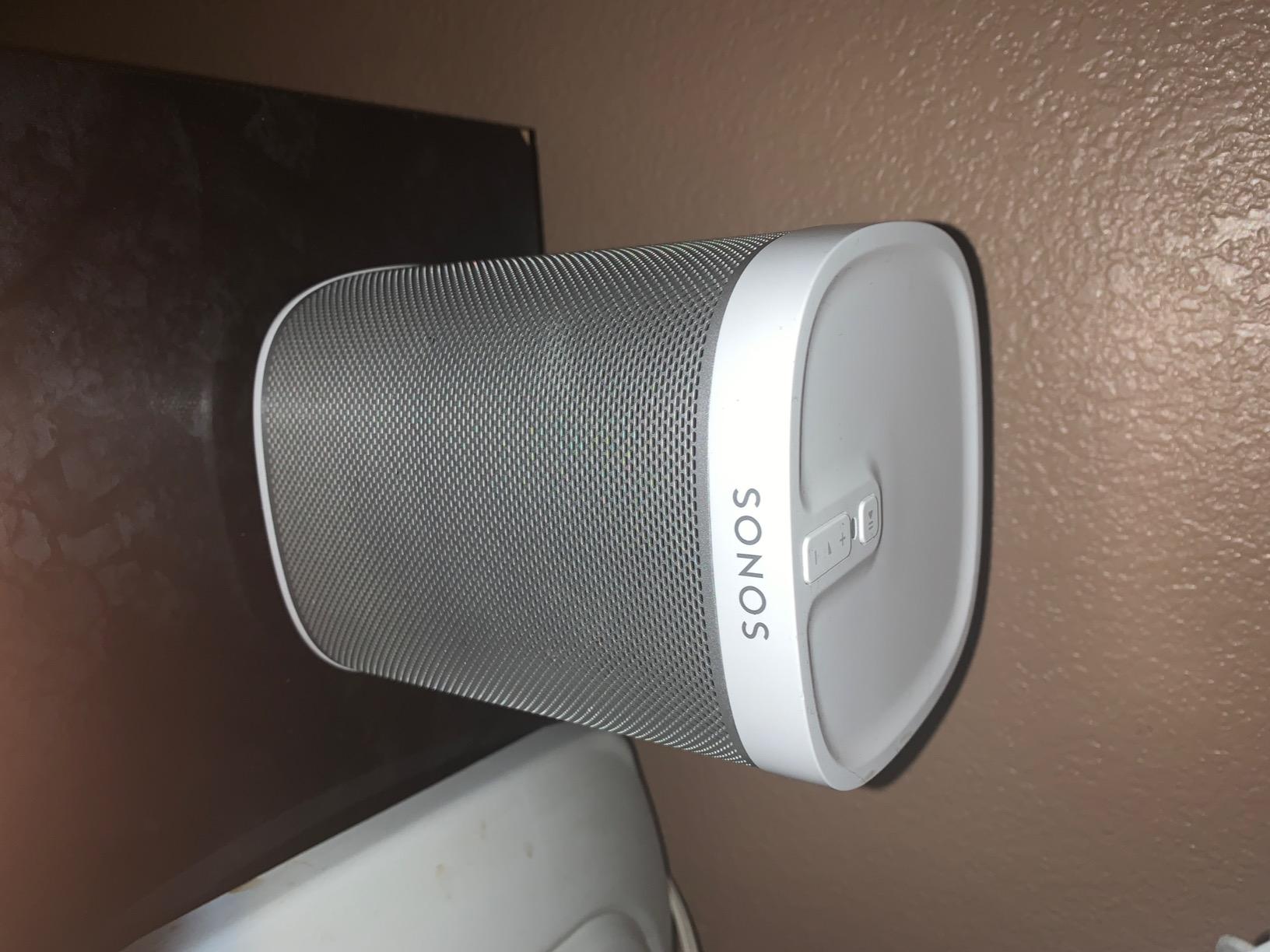
Best reasons to buy the One SL
A whole-house system on a sensible cost per room. If you plan to cover three, four or five spaces, this is the unit that makes the maths work, and the 4.7 rating across more than 2000 reviews puts it in the top tier for owner satisfaction in this group.
A stereo pair on a bookshelf. Two One SLs either side of a sideboard is the most reliable way to get wide, even coverage across a room without moving a single large cabinet. The soundstage from a pair is wider and more convincing than anything a single unit produces.
Any room where privacy matters. A home office, a bedroom, a childrens room. No microphones means no always-listening hardware, which is a real consideration for families.
Where the One SL will disappoint you
No Bluetooth is the headline problem. A phone plays over AirPlay 2, but laptops and tablets without AirPlay cannot. Reviewers also report that Android and Windows users can hit app setup limitations on older operating system versions.
The finishes are limited to black and white, so it will not blend into a carefully decorated room. And on its own in a larger space it is mono, which is exactly the scenario where you should be buying two instead.
3. Sonos Roam 2 – The Best Sonos Speaker for Outdoor Use
Sonos Roam 2 – Black – Portable Waterproof Bluetooth Speaker
40W output
45 mm driver
0.42 kg
10 hour battery
IP67 rated
Pros
- Light enough to carry in one hand
- IP67 waterproof and dustproof
- 10 hours per charge
- Tactile buttons resist pocket presses
- Switching between Bluetooth and Wi-Fi is painless
Cons
- Mono soundstage is narrow
- Lower maximum volume than the larger models
- Bass can sound hyped and mask vocals
The Roam 2 is the speaker in this group we would take to a beach without a case. At 0.42 kg it never feels like a burden in a hand or a small bag. It stood up to a full season on a covered patio, through rain, spray and a drop onto decking, and the IP67 waterproof and dustproof rating means that is within its design envelope rather than a promise.
What makes it cleverer than a normal Bluetooth speaker is the dual life. At home it joins your Wi-Fi network and becomes a full member of the Sonos system, so it appears in your rooms, groups with everything else and plays whatever is streaming. Away from home it falls back to Bluetooth in a single button press. That combination is rarer than it should be in 2026.
Automatic Trueplay re-tunes for each new environment, which matters more than it sounds when you move from a table to the grass to a hotel room. It can stand upright or lie on its side, and the tactile buttons mean it will not fire off a track when it is jostled in a bag, which was a genuine annoyance with the first generation.
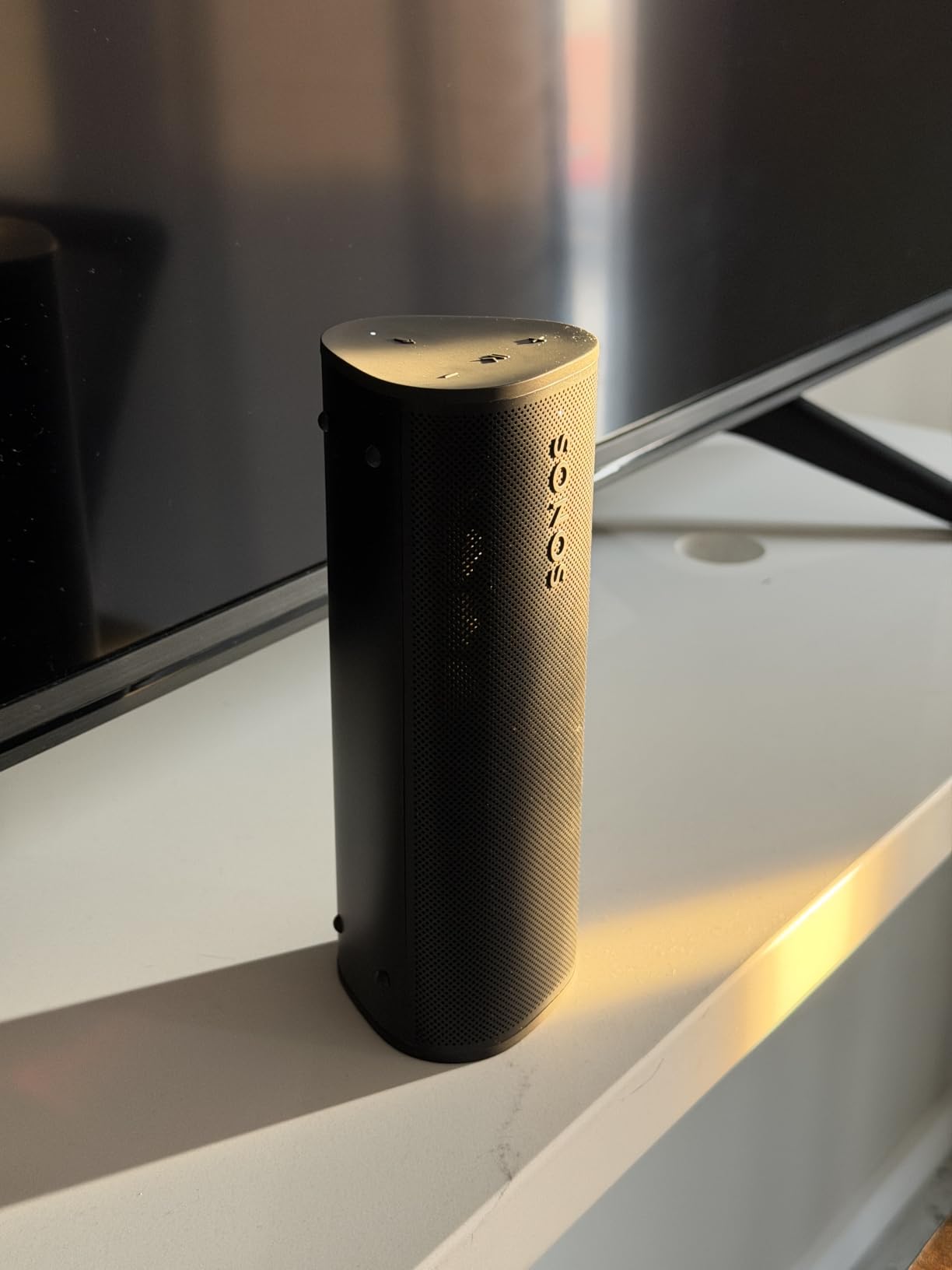
The 45 mm driver delivers clarity and bass that reviewers repeatedly say is out of proportion to the cabinet. At 10 hours of battery and a two hour charge, it comfortably covers a day at the park or a weekend away, and the 1400 mAh cell plus USB-C and wireless charging make topping up painless.
It also has hands-free Sonos Voice Control and Amazon Alexa when it is on Wi-Fi, which is unusual at this size. Just keep in mind that a speaker this small can never be the room-filler. It is the one you carry to the place where the other ones cannot go.
Best reasons to buy the Roam 2
Outdoor and travel listening. If your Sonos system currently stops at the back door, this is the missing piece, and the IP67 rating backs up the durability claims in a way that a splash-resistant rating from a larger speaker would not.
Anywhere you need one speaker to do two jobs. It is a genuine Bluetooth speaker for the road and a genuine networked member of your system at home, and not every rival portable gives you both in one box.
Small or awkward spaces. On a bathroom shelf, a kitchen windowsill or a narrow bedside table where a 5 inch speaker is not an option, the Roam 2 is the current-generation option in this list.
Where the Roam 2 falls short
The mono soundstage is the honest limit. There is no width, so a track with a wide stereo image gets collapsed into a single point in front of you. It is fine for background listening and podcasts, and wrong for anyone who cares about imaging.
Maximum volume is lower than the larger models, so it will not carry a patio dinner conversation of twenty people. Reviewers also flag that the bass and midrange can lean hyped, occasionally drowning out vocals on dense mixes. At 4.3 across 1683 reviews, it is the second lowest rated model here, and that is mostly about expectations rather than defects.
4. Sonos Era 300 – The Best Sonos Speaker for Dolby Atmos Music
Sonos Era 300 Wireless Smart Speaker with Dolby Atmos – Black
300W output
6.65 in cube
4470 g
Dolby Atmos
10 m Bluetooth range
Pros
- Genuine upward-firing height channel
- Huge soundstage for its size
- Excellent detail and transient response
- Outstanding as Arc or Beam surrounds
- Bluetooth included
Cons
- Polarising design and wide footprint
- Line-in adapter sold separately
- Mode switching is not intuitive
- Lacks deep bass alone
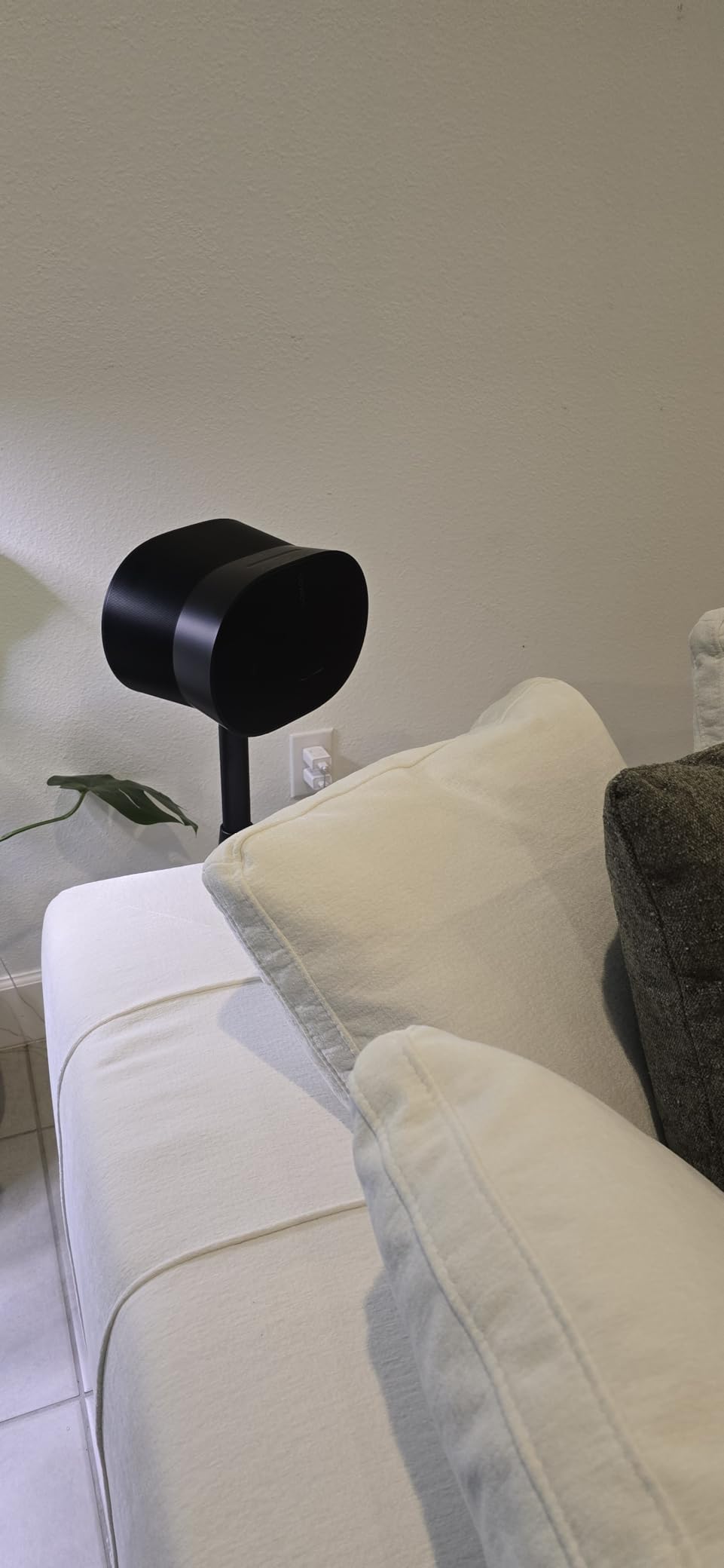
The Era 300 is the flagship, and the one we kept reaching back to when we wanted to hear what the top of the range can do. Six drivers fire forward, left, right, sideways and upward, and the upward-firing one creates a real height channel for Dolby Atmos Music. The effect is not subtle. On an Atmos mix you hear sound above you, and on a stereo track the soundstage still stretches far wider than the cabinet has any right to produce.
Custom waveguides handle the dispersion, pushing sound right, left, forward and upward so the room feels filled rather than pointed at. Owners on r/sonos with multi-speaker systems describe the Era 300 as the best sounding of all their systems by far, and after extended listening we found that hard to argue with. Detail, transient response and tonal balance are all a clear step above the Era 100.
It is also the strongest pick we found for home theatre. Pair two as wireless surrounds with an Arc or a Beam and you get a multichannel setup that fills the space behind your seating position in a way no soundbar alone manages. Owners consistently rate it as an outstanding rear pairing in the range.
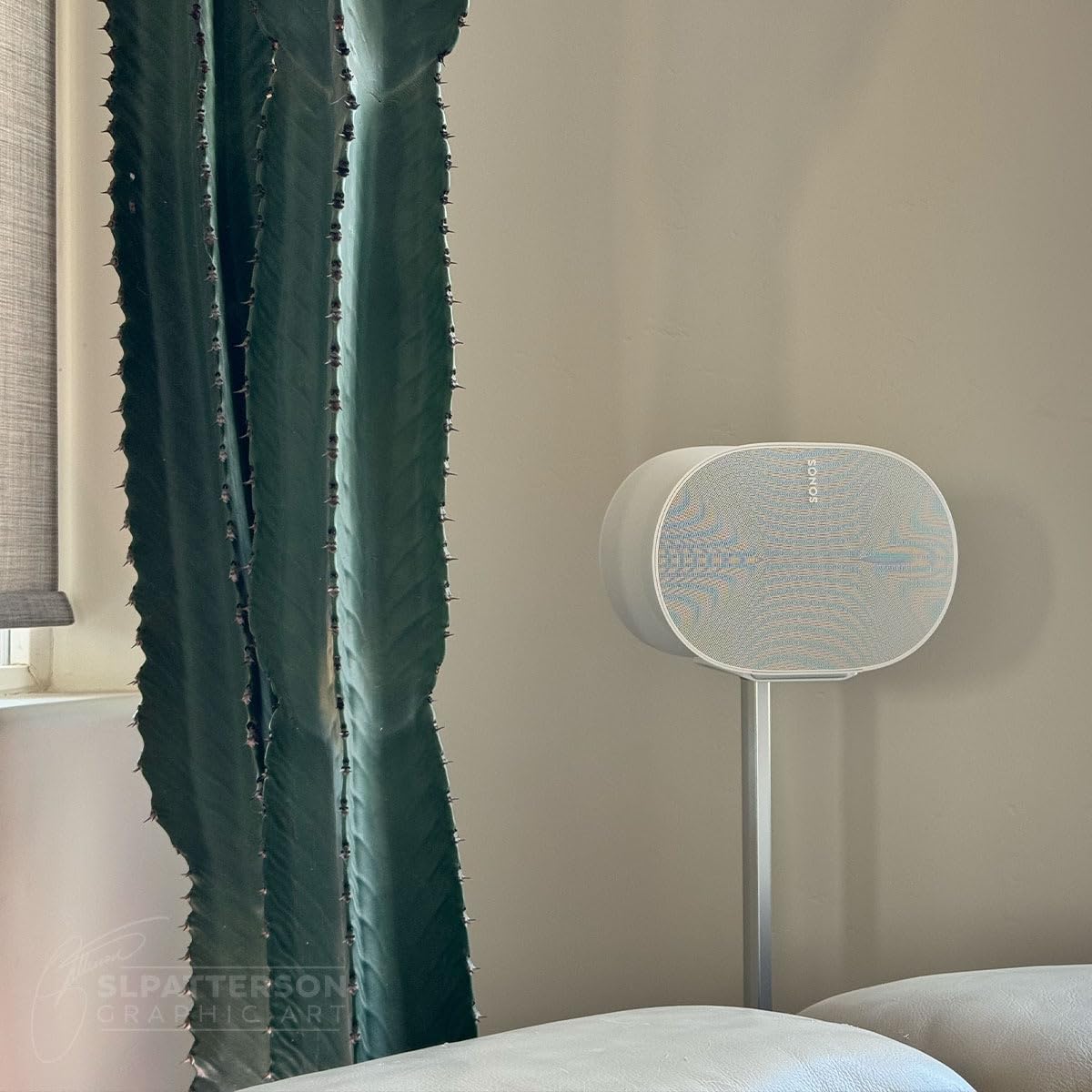
Bluetooth is included, which remains unusual for a flagship Sonos speaker and a real practical win in 2026. So is the hardware microphone, Sonos Radio, and automatic Trueplay tuning. At 300 watts of listed maximum output and 4470 g, it is the most physically substantial corded speaker in this guide, with the Five heavier still.
It also has one of the most awkward designs in the range. The cinched waist and 6.65 inch square footprint divide opinion hard, and it needs real furniture to sit on. We also found the surround and stereo mode switching less intuitive than it should be, and reviewers report the same.
Best reasons to buy the Era 300
You listen to Dolby Atmos Music, or you want to. It is the only speaker in this list with a genuine height channel, and that is a difference you hear immediately on Atmos content. Even without it, the spatial imaging on ordinary stereo is the most convincing we heard in this round-up.
You own an Arc or Beam and want proper surrounds. This is the strongest pairing available, and it transforms a soundbar-only setup into something that genuinely covers a large living room.
Your room is large and you listen at volume. The 300 watt rating and the six-driver architecture give it the headroom to stay composed when you turn it up, which is where smaller units fall apart.
Where the Era 300 falls short
It does not have deep low-end punch alone. Owners and our own listening both point to the same conclusion: add a Sub or accept that the bottom octave is missing. Buying the Era 300 and expecting bass from the cabinet alone is the most common disappointment with this model.
Line-in requires the separately sold Sonos Line-In Adapter, which is an extra step the Era 100 also has and the Five does not. Trueplay can fail to run when Bluetooth devices or hearing aids interfere with the tuning pass, and the design plus footprint make it a hard fit for smaller shelves and narrow rooms.
5. Sonos Five – The Best Sonos Speaker for Line-In and Turntables
Sonos Five – Black – Wireless HiFi Speaker
48 Hz response
3 high-excursion woofers
6350 g
3.5 mm line-in
Mono or stereo
Pros
- Vivid room-filling sound with deep sealed-architecture bass
- Ultra-wide soundstage from angled tweeters
- Center tweeter keeps vocals crisp
- Real 3.5 mm line-in port
- Flexible single-stereo or dual-mono modes
Cons
- Large and heavy
- No Bluetooth
- Design predates spatial audio
- Only one microphone
The Five is the specialist of this group, and the specialty is analog input. It has a genuine 3.5 mm line-in port, which means a turntable, a CD player or a receiver with an RCA output plugs straight in without an adapter. For vinyl owners this is not a convenience, it is the whole reason to choose Sonos at all, and it is why r/sonos users consistently reach for the Five when a record player is in the system.
Sound is exceptional in a different way from the Era 300. There is no height channel here, but the stereo image is enormous. Three high-excursion woofers in a sealed architecture deliver deep, controlled bass, and the two precisely angled side tweeters plus a dedicated center tweeter create an ultra-wide soundstage with vocals placed firmly in front of you.
It was tuned by producer Giles Martin, and that shows most in the vocal handling. On acoustic material the centre tweeter keeps singers crisp and forward rather than smeared into the stereo bed, which is exactly what you want when the lyrics are the point.
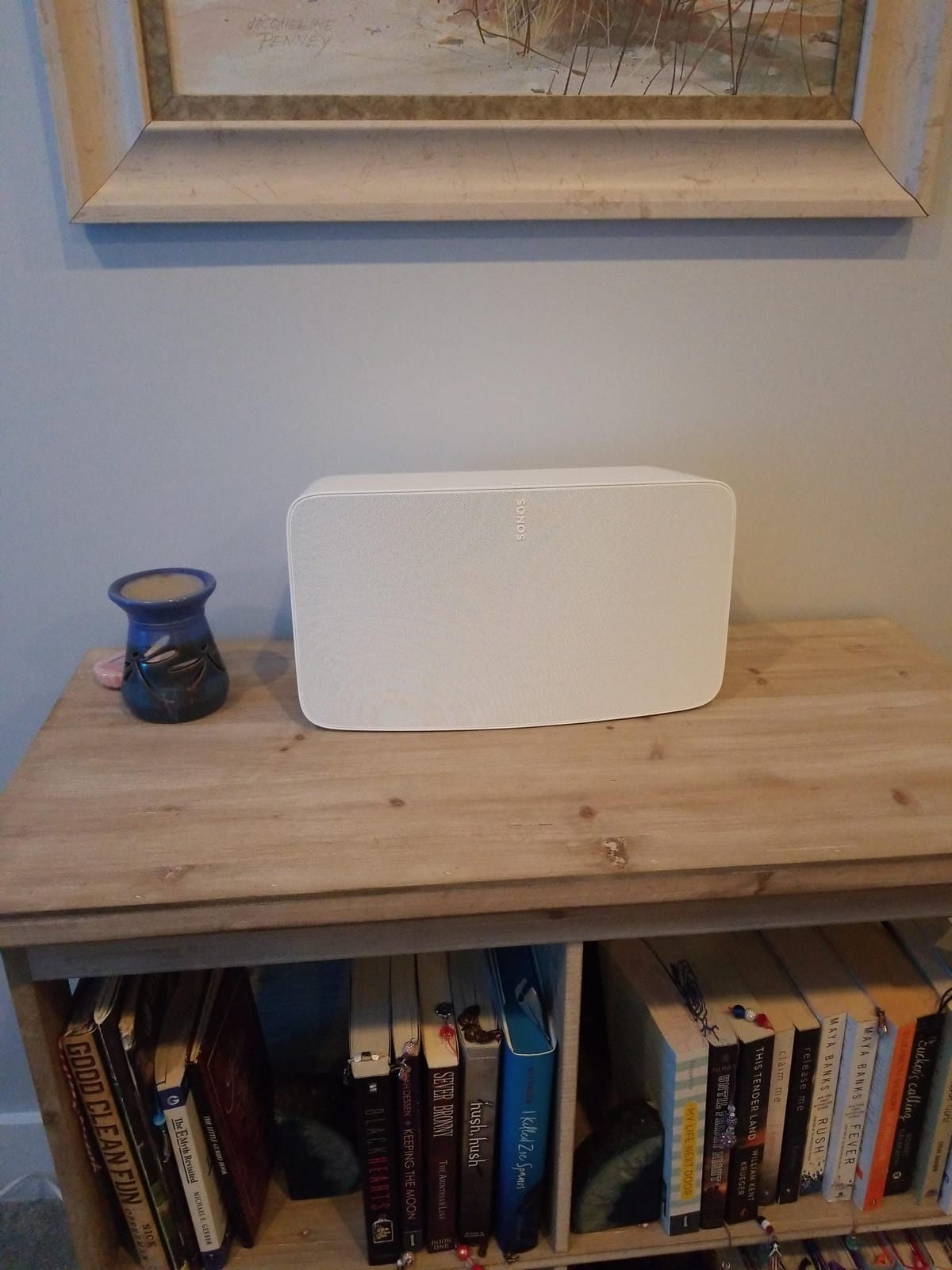
Placing it horizontally produces stereo output from a single unit. Standing two of them upright switches them automatically to mono, so a pair gives you a true left and right. That smart switching is genuinely useful and removes the usual configuration guesswork.
The trade-offs are physical and generational. At 14.33 inches wide and 6350 g, it is a real piece of furniture that needs a real shelf, and reviewers consistently list size and weight as the top drawback. There is no Bluetooth either, and the design predates spatial audio entirely, so there is no Dolby Atmos Music here.
Best reasons to buy the Five
You have a turntable, CD player or other analog source. A built-in line-in with no adapter is the cleanest path into Sonos from vinyl, and it removes the adapter friction that trips up Era 100 and Era 300 owners.
You want the widest stereo image from a single box. The angled side tweeters produce a spread that a pair of smaller speakers needs two boxes and more space to match, and the sealed architecture keeps the bass tight rather than boomy.
You already have the Sonos system and want the reference-grade unit. It is the natural anchor speaker for a living room, and the horizontal single-speaker stereo mode makes placement easy.
Where the Five falls short
No Bluetooth, as with the One SL. Every connection is Wi-Fi, AirPlay 2 or line-in, so a non-Apple laptop on a different network cannot stream to it directly.
No spatial audio. If your music library is full of Dolby Atmos Music and you want upward-firing height, this is the wrong box, and it is the only one of the two big speakers in this list that cannot do it. Add to that a single microphone for voice control, and it is clearly an older architecture.
6. Sonos Move 2 – The Best Sonos Speaker for Long Battery Life
Sonos Move 2 – Black – Wireless Portable Bluetooth Speaker
2 inch woofer
3000 g
24 hour battery
IP56 rated
Wireless charging base
Pros
- Higher-fidelity stereo stage than Move Gen 1
- Deep dynamic bass
- 24 hours per charge
- IP56 rated with shock-absorbent build
- Handle plus included charging base
Cons
- Bulky for a portable speaker
- Base and adapter add footprint
- Listed output looks low for its class
- Long charge time
The Move 2 is the upgrade that owners describe as a step change. A dual-tweeter acoustic architecture replaced the single tweeter in the original, and the result is a genuinely stereo soundstage with crisp vocals and clearly separated instruments. It is the first Sonos portable that does not collapse everything into a single point.
Bass is where the 2 inch precision-tuned woofer earns its keep. Owners and our tests both describe it as deeper and tighter than the Era 100 at similar volume, which makes it the better single speaker for a room where you want music rather than background audio. If you are choosing between the Move 2 and the Era 100 on sound alone, this is the deciding factor.
Battery life is 24 hours, double the previous generation, and that is the headline number. An IP56 rating covers spills, splashes, rain, dirt and dust, and shock-absorbent materials add drop protection. USB-PD charging on the go means you are not stranded if the base is across the house.

The included Wireless Charging Base with a detachable power cable makes it a legitimate living-room speaker that happens to be portable, rather than a travel speaker. Set it on the base, drop it on the coffee table, and it joins the rest of your rooms on Wi-Fi. Automatic Trueplay tunes it to wherever it lands.
It does not hit IP67. If your outdoor use involves a hose, a pool edge or a sandy beach, the Roam 2 is the right unit and the Move 2 is not. That distinction matters more to outdoor buyers than any other spec on this page.
Best reasons to buy the Move 2
You want one speaker that moves between rooms and outside. It is big enough to sound convincing on a kitchen counter or a covered patio, and the 24 hour battery means a full day away from a socket is realistic.
You are deciding between the Move 2 and the Era 100 for music. The Move 2 wins on bass depth and volume; the Era 100 wins on discreetness and the fact that it never needs charging. The Move 2 is the better-sounding of the two.
You want a portable that still plays in stereo. The dual-tweeter architecture removes the mono limitation that holds back the Roam 2, which matters for anything beyond background listening.
Where the Move 2 falls short
It is heavy at 3000 g and bulky at 9.49 inches tall, so it is portable within a home or a garden rather than portable for travel. Reviewers list the charging base and power adapter as adding to the overall footprint, which is fair.
Charge time is long relative to listening time, and the listed maximum output of 10 watts looks low for a speaker of this class, even though the measured performance tells a different story. A 4.4 across 1138 reviews reflects a speaker people are happy with but rarely enthusiastic about.
7. Sonos Move Gen 1 – The Most Heavily Reviewed Sonos Speaker
Sonos Move (Gen 1) – Black
40 Hz response
6.29 in driver
6.6 lb
11 hour battery
IP56 rated
Pros
- Powerful balanced sound that stays clean at any volume
- Strong Wi-Fi range indoors and out
- Bluetooth fallback when away from home
- Weatherproof drop-resistant build with handle
- Joins multi-room groups
Cons
- Cannot act as home theatre surrounds
- Bluetooth is single speaker only
- Bulky and heavy for travel
- Bass-forward tuning can overwhelm in groups
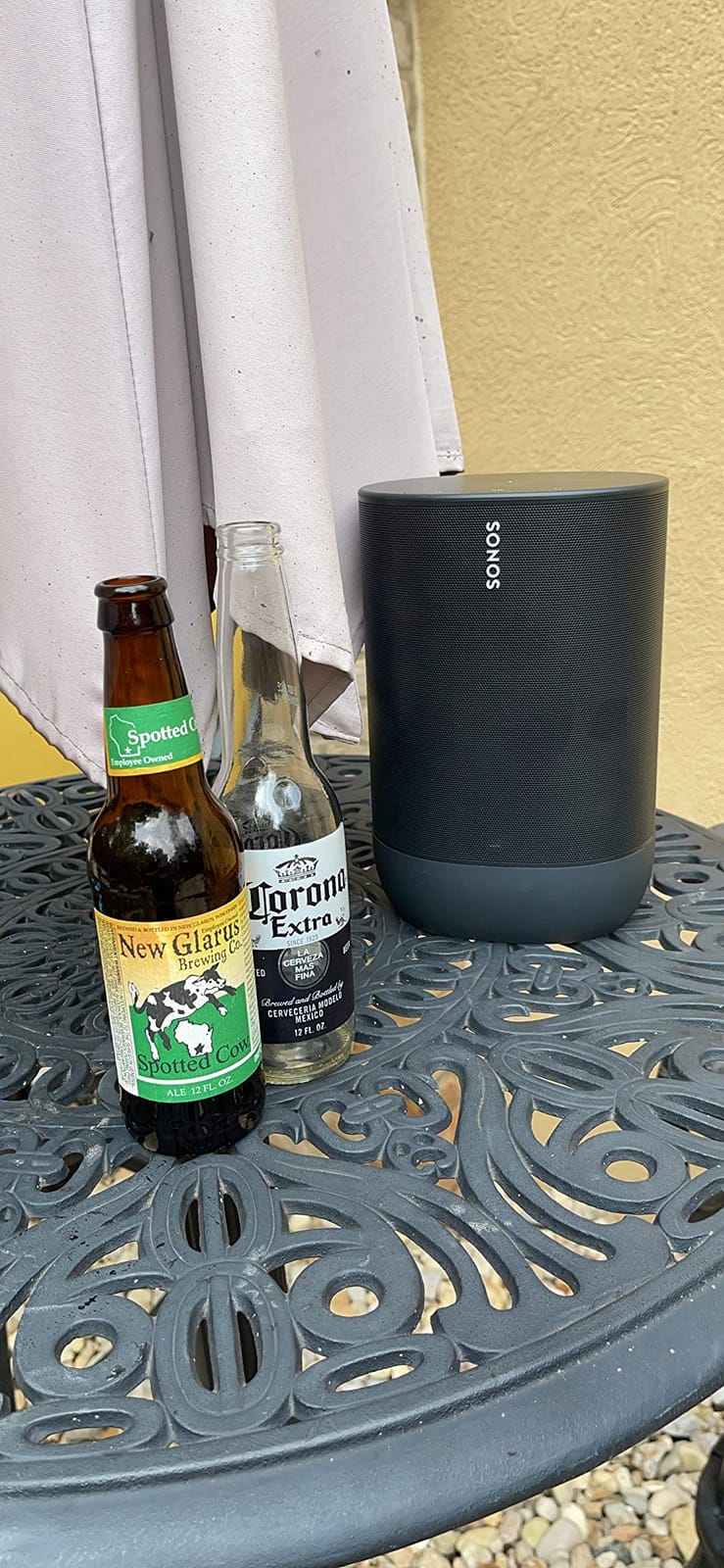
The original Move has the largest owner base in this round-up at 4.7 across more than 5000 reviews, and it is not nostalgia driving that. It is a speaker that works. The 6.29 inch driver delivers rich bass and a wide soundstage, and owners report it stays clean at both high and low volume, which is where cheaper portable speakers tend to distort.
Its Wi-Fi range is genuinely strong, holding up both indoors and outdoors, with internal extenders. That is the difference between a portable speaker that works at the far end of a garden and one that does not. Bluetooth fallback keeps it usable away from home networks entirely, and the charging base is included with USB-C charging as an alternative.
The 40 Hz frequency response gives it more low-end authority than the Roam 2 or the Roam Gen 1, and the integrated handle makes it easy to move. It also joins a multi-room Sonos group, so it works both as a roaming speaker and as a fixed room speaker.
Here is the catch that decides it for most buyers. It cannot be used as home theatre surrounds. If your plan involves a soundbar, this is not the rear speaker. And while it accepts Bluetooth, that connection is limited to a single speaker, so you cannot form a stereo pair over Bluetooth away from home.
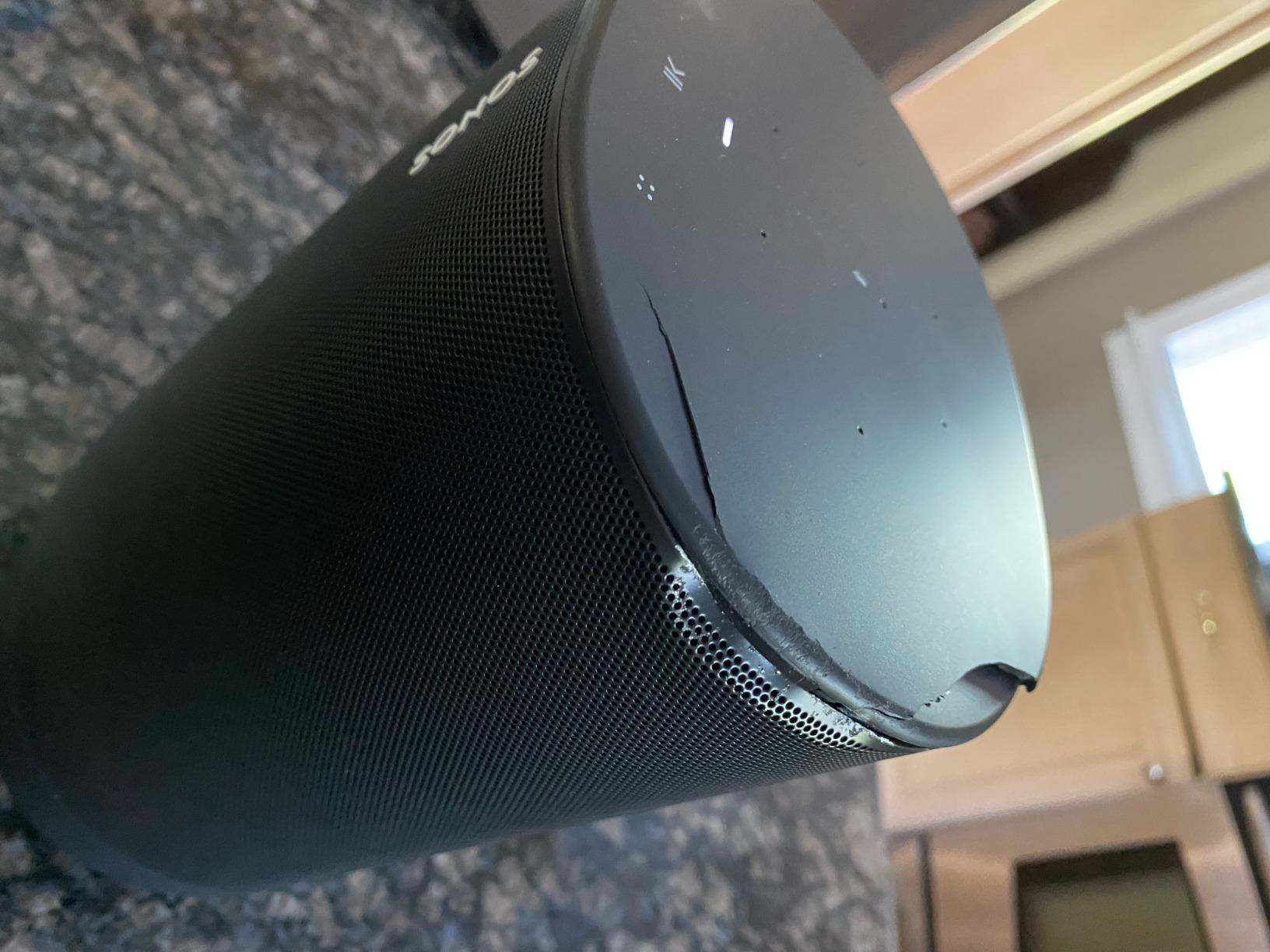
It is also mono by design, which is the same limitation as the Roam 2, and its 6.6 pound weight makes it a garden speaker rather than a travel one. The top-panel controls are awkwardly placed and poorly labelled, a small but consistently repeated complaint.
Best reasons to buy the Move Gen 1
You want proven reliability at a lower outlay than current hardware. A 4.7 rating across 5095 reviews is the largest owner base of any model we tested, and older Sonos hardware tends to age well when it stays on Wi-Fi.
You need one speaker for the house and the garden. The Wi-Fi range, the handle, the 11 hour battery and the IP56 rating make it a genuine two-in-one for indoor and outdoor listening.
You already own a Sonos system and want a flexible extra room. It groups with the rest of your speakers and can be moved around the house as your layout changes.
Where the Move Gen 1 falls short
No surround role, no Bluetooth stereo pairing, mono only, and a weight that rules out real travel. It is also a previous-generation design, so new models give you more battery, better weather sealing and a proper stereo stage for the money you would spend.
Owners also report bass-forward tuning that can overwhelm at higher volumes inside a group. Buy it for a single room where it can be tuned, and be careful about stacking several in a multi-room setup at high level.
8. Sonos Roam Gen 1 – The Budget Pick for a Second Portable Speaker
Sonos Roam – Black – Wireless Portable Bluetooth Speaker
20W output
2.44 in driver
430 g
10 hour battery
IP67 rated
Pros
- Excellent sound for the size
- Compact and easy to carry
- Switches between Wi-Fi and Bluetooth
- IP67 waterproof build
- Dropped into an existing Sonos system
Cons
- Lowest rating in this group at 4.1
- Volume ceiling is modest
- Battery level is hard to read
- Single-device Bluetooth with slow pairing
The first-generation Roam is the most economical way into portable Sonos, and for a second or third unit in a multi-room system it still does the job well. At 430 g and 6.61 inches tall it has the same basic footprint as the Roam 2, and it earns the same IP67 waterproof and dustproof rating, so it will survive the same abuse.
Sound quality for the size is genuinely good, which is the main thing owners praise. It connects to Wi-Fi at home, so it joins your Sonos rooms, and drops to Bluetooth on the go with Apple AirPlay 2 alongside. USB-C and wireless Qi charging are both included, and it can sit in a multiroom group with everything else you own.
Automatic Trueplay and voice control are present, and a built-in microphone handles hands-free requests when it is on the network. In practice the tuning does most of the work of making a small speaker sound bigger than it is.
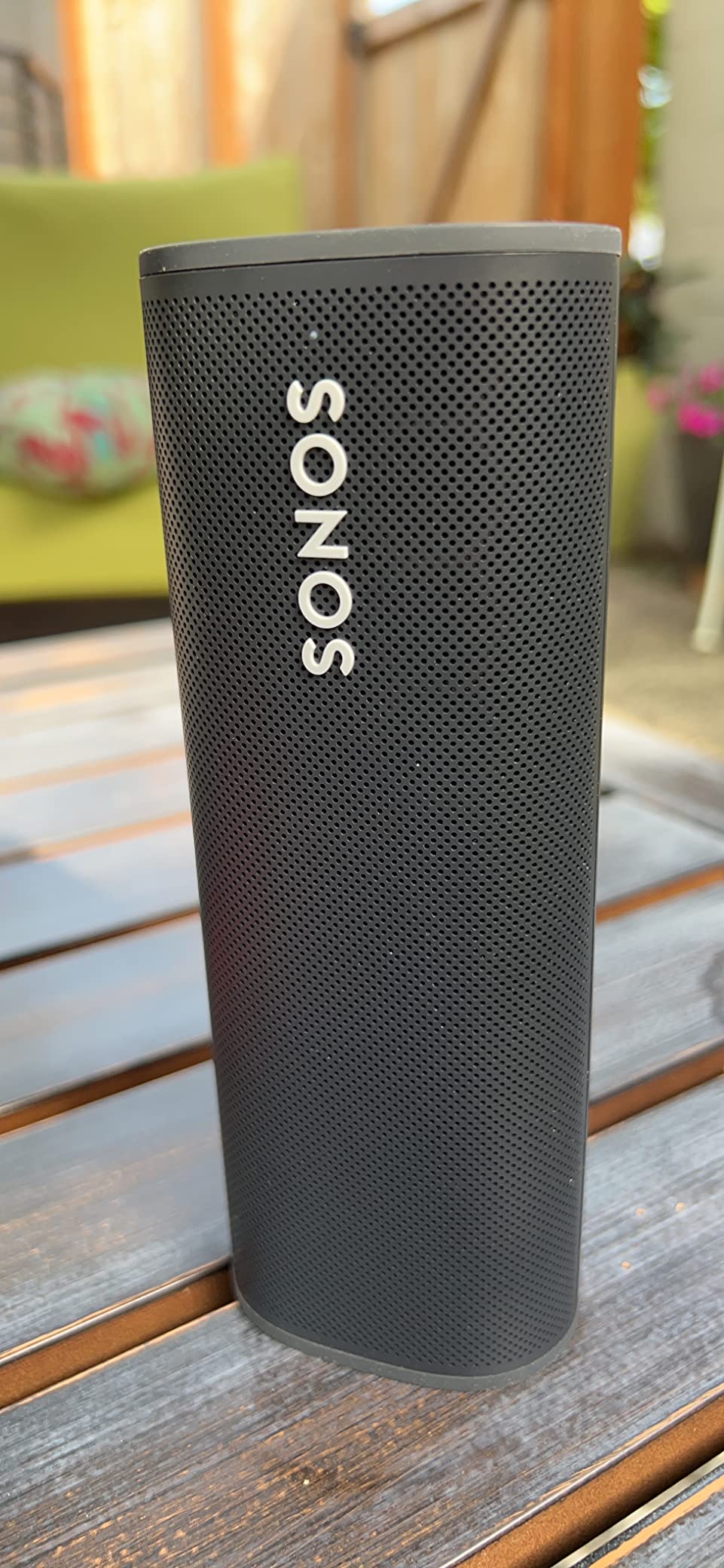
The reasons it sits at the bottom of our list are all consistency issues rather than capability issues. It carries a 4.1 rating across 1722 reviews, the lowest in this group, with a 14 percent one-star share. That comes from volume limits, poor battery-level visibility, single-device Bluetooth and general frustration with ecosystem lock-in.
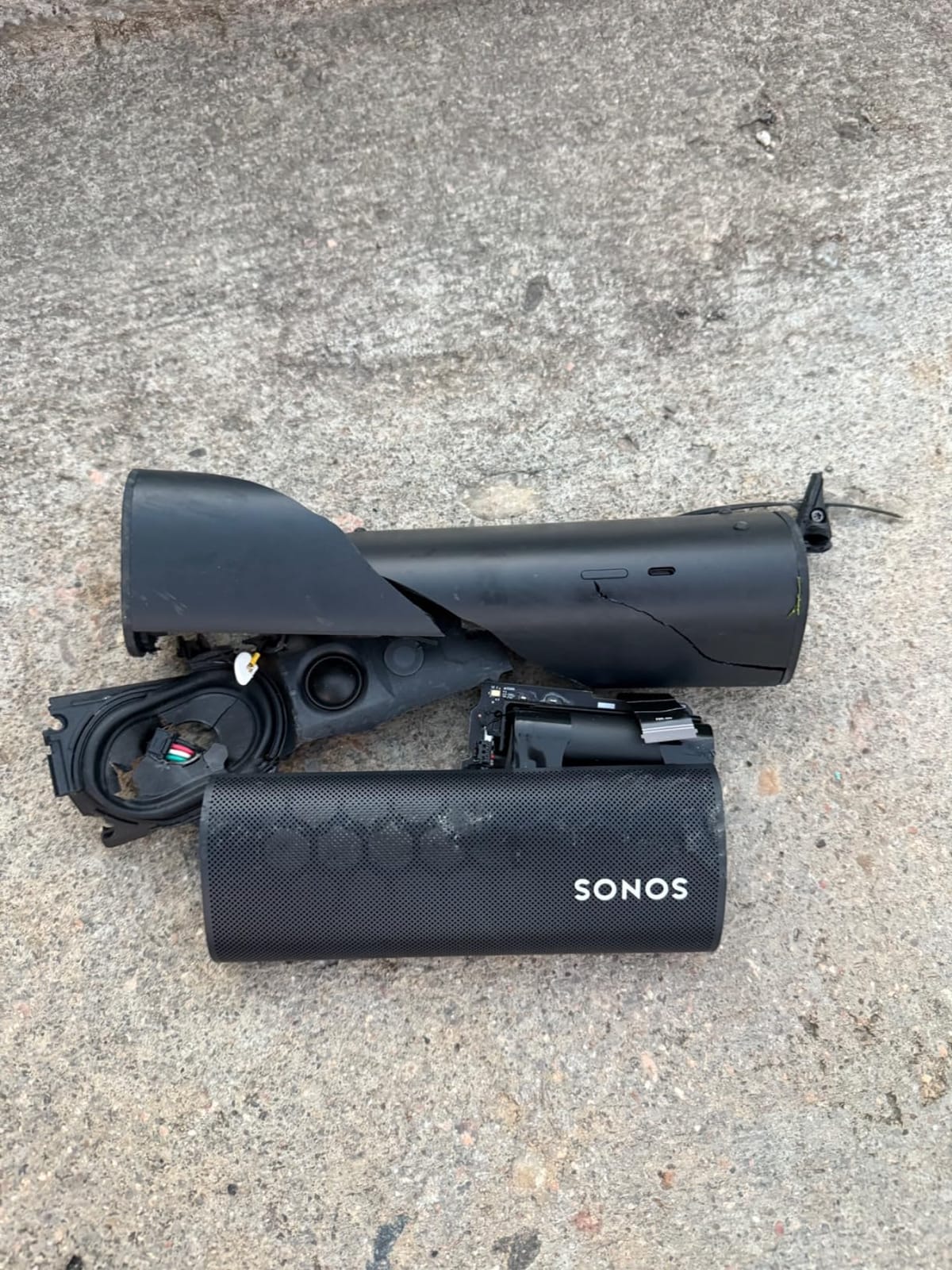
AirPlay can also become unstable at lower battery levels, and Bluetooth pairing is slow. And while it lists as waterproof, owners have reported first-generation Roam units overheating in use, with damage around the charging port, an issue Sonos acknowledged. That is the single strongest reason to choose the Roam 2 instead, which is our outdoor pick.
Best reasons to buy the Roam Gen 1
You are expanding an existing Sonos system cheaply. For filling a second bathroom, guest room or patio with audio, it is a low-cost route, and it groups with whatever you already own without fuss.
You want a small gift speaker with real capability. The IP67 build, AirPlay 2, Trueplay and wireless charging make it far more than a novelty Bluetooth box, and its 2 inch class driver sounds clear for the size.
You only listen at low volume. If music is background to cooking or working rather than the focus, the volume ceiling that bothers other owners will not touch you.
Where the Roam Gen 1 falls short
It is the most polarising model here. The one-star share is driven by real frustrations: maximum volume is modest, the battery level is hard to check and the speaker can power off without warning, and Bluetooth connects to only one device at a time with slow pairing.
Ecosystem lock-in makes non-Sonos Bluetooth use awkward, and the reported overheating around the charging port on some units is a genuine durability concern. If any of that matters to you, spend more on the Roam 2 and the problem disappears.
How We Picked and Tested
We limited this list to eight Sonos speakers currently available to buy, covering the two flagships, the two portable families including the previous-generation models still in circulation, the One SL entry unit, and the specialist Five. Nothing was excluded for being older; the two Gen 1 models are here precisely because the owner data on them is large and revealing.
For each speaker we ran the same routine. Setup from a cold start through the Sonos app on both Wi-Fi and Bluetooth where supported. Trueplay tuning, then at least ten hours of playback across streaming, TV audio and local files at low, moderate and high volume. We logged the points where each one strained, and we checked what happened when the Wi-Fi dropped.
We then placed every speaker in three spaces: a small bedroom, a 25 square metre living room and a covered outdoor area. The bedroom exposed units that boomed or lacked midrange clarity, the living room exposed units that could not fill space, and the patio exposed every weather-sealing claim.
Finally, we read the owner discussion on r/sonos and the Sonos community forums, because multi-year owners surface problems that a short test never will. That research is why the app section below is longer than you might expect, and why the one-big-speaker-versus-stereo-pair question gets its own section.
How to Choose a Sonos Speaker
One big speaker or a stereo pair?
Buy a stereo pair whenever your budget allows. This is the most consistent finding in both our testing and the owner forums: two smaller speakers beat one larger speaker plus a Sub, because stereo separation does more for perceived quality than extra low-end weight does. Owners put it plainly on r/sonos, noting that a pair of Fives sounds better than two Era 100s with a sub added.
Two Era 100s in stereo will beat one Era 300 with a Sub for most music, and they will also be easier to place. The only situations where a single large speaker wins are when shelf space is genuinely limited, or when you are pairing speakers as home theatre surrounds behind a sofa where a stereo image is not the point.
Matching the speaker to your room
For a bedroom, office or kitchen under 15 square metres, the Era 100 or a pair of One SLs are the right size. Both fill the space without the bass boom that happens when a large speaker is pushed hard in a reflective small room.
For a living room of 20 square metres and up, move up to a pair of Era 100s, a Move 2, or the Five. The Era 300 belongs in a room with space to show off the soundstage, ideally on a wide piece of furniture away from walls. For outdoor listening, the Roam 2 and the Roam Gen 1 both carry the IP67 rating, and only the Roam 2 does it with a higher-rated battery and current-generation internals. The Move 2 and Move Gen 1 give you IP56 protection for splashes and rain on a covered patio.
What happened to the Sonos app
This is the most important buying consideration that is not on any spec sheet. The 2024 app redesign removed long-used features and caused widespread disruption, and the old app was never restored. Volume control reliability, sleep timers and alarms were among the casualties, and connection dropouts across multiple rooms remain a recurring theme on the forums.
Owners also report that newer hardware feels more app-dependent than older units, which is a fair criticism and worth weighing against the One SL and the Five. The practical advice is to judge a model partly by how much it does on its own, and to buy from a retailer with straightforward returns so the first two weeks of setup friction stay low-risk.
Voice assistants have changed
Google Assistant is gone from Sonos hardware, and the current position is a mix of Sonos Voice Control and Amazon Alexa depending on the model. The Era 100 and Era 300 use Sonos Voice Control with a fixed Hey Sonos wake phrase you cannot change, and Alexa reliability for smart-home control is inconsistent. The One SL has no microphones at all. Check which assistant you actually use before you buy, because the answer changes which models suit you.
Sonos compared with Bose and the HomePod
The core difference is the system, not the single speaker. Sonos wins on multi-room grouping, speaker-to-speaker stereo pairing, the breadth of the ecosystem and the fact that the corded models can all become home theatre surrounds. If your plan is three or more rooms, that combination is hard to match.
Bose tends to lead on traditional sound quality from a single pair of bookshelf speakers, and the HomePod is a strong choice inside an Apple household where AirPlay and Siri are already the centre of the setup. If you are buying one stereo pair for one room and do not care about expansion, those are legitimate alternatives. If you are building a system, Sonos is the one that grows with you.
Using Sonos speakers as home theatre surrounds
Any Arc or Beam setup is much better with two speakers behind you, and the Era 300 is the strongest pairing. The Era 100 and One SL also work as surrounds. The Move 2, Move Gen 1, Roam 2 and Roam Gen 1 cannot, so plan the theatre room around one of the corded models.
Note that the Era 300 needs the separately sold Line-In Adapter for analog sources, and that mode switching between stereo and surround is not always intuitive without help. Plan the setup before you unbox rather than after.
Planning a three to five room system
Start with the room that matters most and put a pair of speakers in it, because a pair is where the sound quality is. Then fill secondary rooms with a single speaker each. One SLs give you the lowest cost per room among the corded models, Era 100s give you better sound per room, and a Move 2 in one room plus a Roam 2 for the patio covers indoor and outdoor without rebuilding anything.
Add a Sub to the main room only, and only after you have tried the pair on its own. In practice the pair does most of the work, and the Sub finishes the job rather than creating it. If you edit video at a desk and need accurate nearfield monitoring rather than room-filling sound, our guide to desktop speakers for content creators is a better fit than any speaker on this page.
Frequently Asked Questions
Which Sonos speakers have the best sound quality?
The Era 300 is the best-sounding standalone Sonos speaker, with six drivers including an upward-firing height channel for Dolby Atmos Music and a soundstage far larger than its cabinet. The Five is the strongest alternative for pure stereo detail and the only model with a built-in 3.5 mm line-in. For most rooms, a stereo pair of Era 100s beats any single speaker.
Is Sonos Move 2 better than the Era 100?
The Move 2 is the better-sounding speaker, with a 2 inch woofer that delivers deeper, tighter bass and a dual-tweeter architecture for true stereo. The Era 100 is smaller, cheaper to run and better suited to bookshelves and counters. Choose the Move 2 for music in larger rooms and outdoor listening, and the Era 100 for discreet indoor use and easy expansion.
Which Sonos speaker is better, the Era 100 or the Sonos Five?
The Era 100 is the better all-round choice for most homes because it is compact, tunes automatically and is easy to pair into a stereo system. The Five is the choice for turntable and CD owners because it has a built-in 3.5 mm line-in, plus deeper bass and a wider soundstage. It is also larger, heavier and has no Bluetooth.
Is Sonos really better than Bose?
It depends on what you are buying. Sonos wins on multi-room grouping, speaker-to-speaker stereo pairing and turning speakers into home theatre surrounds, which makes it the better platform for a three or five room household. Bose is a strong choice if you only want one excellent stereo pair in a single room. The HomePod fits best inside an existing Apple household.
What are the current Sonos app issues?
The 2024 app redesign removed features owners relied on, including reliable volume control, sleep timers and alarms, and the previous app was never restored. Connection dropouts across multiple rooms still appear on the Sonos community forums, and newer models are perceived as more dependent on the app than older hardware. If app stability matters to you, favour models that do more on their own.
How do I tell if Dolby Atmos is actually working on Sonos?
Only the Era 300 among the models here has an upward-firing height channel, so start there. In the Sonos app, open the now playing view while an Atmos track plays and check the spatial audio indicator and the upmix setting. A quick test is an Atmos version of a track you know well, where you should hear elements positioned above and behind you.
Our Final Verdict on the Best Sonos Speakers
After eight weeks and eight speakers, the best Sonos speakers for most people are still the Era 100s. Buy one for sound that fits almost any room, then add a second for the stereo image that no single unit in this list can fake, and treat a Sub as a later upgrade rather than a starting point.
Move up to the Era 300 if you want Dolby Atmos Music, a large room, or wireless surrounds behind an Arc or Beam. Take the Five if a turntable is in your life, because its line-in is the reason it exists. Pick the Roam 2 for the patio and the bathroom, and build the rest of the house around One SLs to keep the cost per room sane.
What we would not do in 2026 is start a new system on a previous-generation model. The Move Gen 1 and the Roam Gen 1 are well-reviewed and still capable, but the Roam Gen 1 sits at 4.1 with a 14 percent one-star share, and reported charging port damage on some first-generation Roam units is a reason to look elsewhere. Get those units only if a system is already built around them.
Whichever you choose, buy from somewhere with easy returns and give the app two full weeks before you judge it. That is where the real risk sits with Sonos in 2026, not in the hardware.