
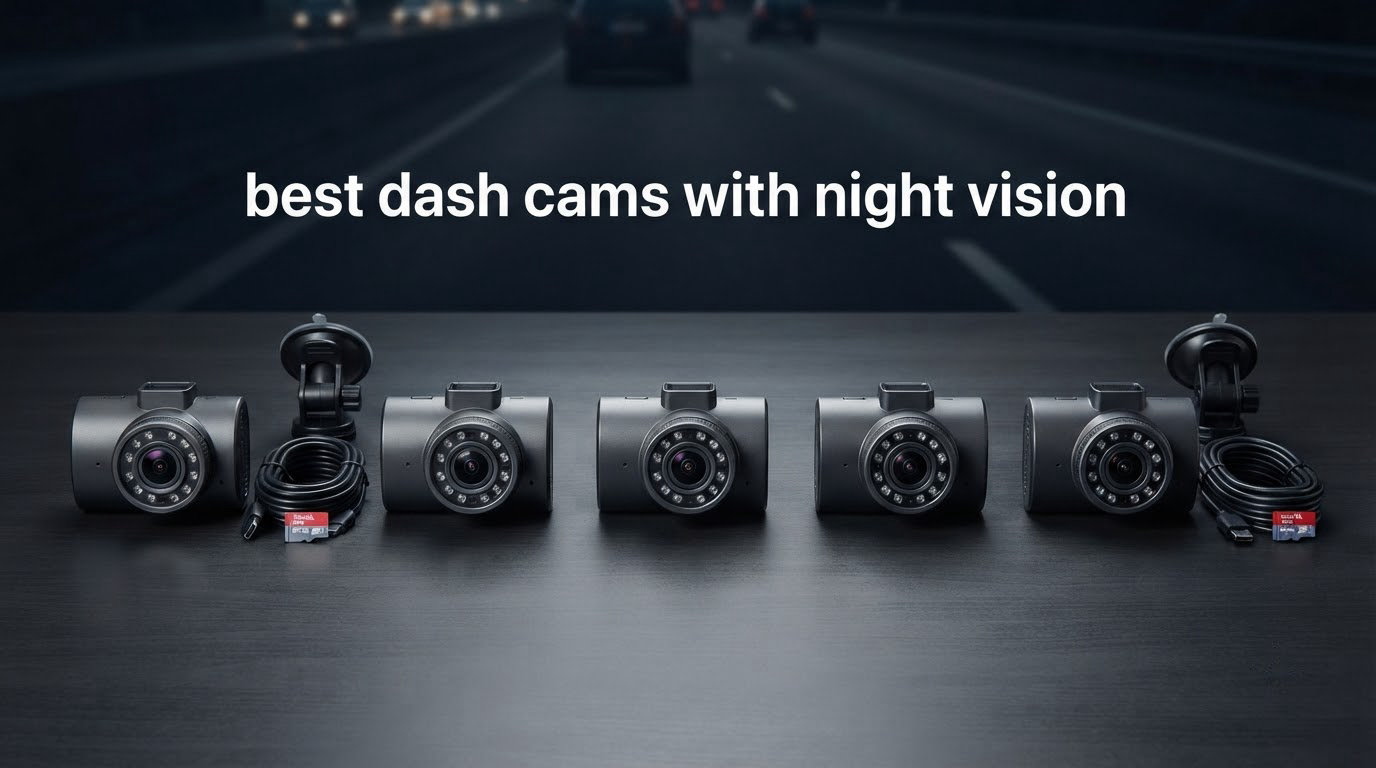
If you want one camera that resolves license plates and roadside hazards after dark, the ROVE R2-4K Dual is the best dash cam with night vision in 2026 for most drivers. Its Sony STARVIS 2 IMX675 sensor, wide f/1.5 aperture and HDR processing pull usable detail out of unlit county roads where cheaper non-STARVIS units produce grey mush, and 14k+ owners have already rated it 4.5 stars.
That matters because night is exactly when your footage gets tested. Daytime clips are proof of insurance, but hit-and-runs, break-ins, near-misses and rear-end collisions mostly happen in the dark, and a standard dash cam will happily record a blurry, over-exposed video of a plate you cannot read.
We compared 12 dual, triple and four-channel systems across the sensors, apertures, HDR pipelines and parking modes that actually move the needle after sunset. The winners all share one trait: a back-illuminated Sony STARVIS or STARVIS 2 sensor rather than a bright, tiny sensor with night vision printed on the box.
One more note before the picks. If your interest in low-light capture extends past the windshield, our guide to the best cameras for night photography covers the same sensor physics on a full-frame scale, and it explains why bigger pixels win in the dark.
Table of Contents
- Top 3 Picks for Best Night-Vision Dash Cams in October
- All 12 Dash Cams With Night Vision Compared in 2026
- How We Judge Night Footage Before Buying
- 1. ROVE R2-4K Dual – The Best All-Rounder for Night Driving
- 2. IIWEY N6 – Best for 360-Degree Night Coverage
- 3. REDTIGER F7N Touch – Best Touchscreen and Voice Controls
- 4. REDTIGER F17 – Best 3-Channel Pick for Rideshare and Taxi Work
- 5. VIOFO A229 Plus – Best 2K Front and Rear Pair for Plate Reading
- 6. BOTSLAB G300H Plus – Best Budget STARVIS 2 Dual Cam
- 7. ZMOPO D435 – Best Adjustable Four-Channel Coverage
- 8. Vantrue N2X – Best for Rideshare With a Lit Interior at Night
- 9. Vantrue N4 Pro S – The Best Night Plate Capture Money Can Buy
- 10. REDTIGER F7NP – Best Value Night-Vision Pick
- 11. 70mai T800E – Easiest Three-Channel Setup With Cabin IR
- 12. COOLCRAZY N8 – Best Suction-Mount STARVIS Dual
- What Actually Makes a Dash Cam Good at Night
- Recording All Night: Parking Mode, Cards and Power
- Frequently Asked Questions
- The Verdict on Night-Vision Dash Cams in 2026
Top 3 Picks for Best Night-Vision Dash Cams in October

ROVE R2-4K Dual
- STARVIS 2 IMX675 sensor
- F1.5 aperture with HDR
- 5.8GHz WiFi at 20MB/s
- 128GB card included

Vantrue N4 Pro S
- Triple STARVIS 2 sensors
- Night Vision 4.0 with PlatePix
- 4K plus 2.5K plus 1080P
- Buffered parking mode
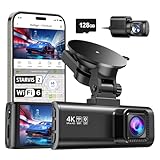
REDTIGER F7NP
- 4K front STARVIS 2 sensor
- F1.5 aperture with 6-layer lens
- 128GB card included
- 5.8GHz WiFi at 20MB/s
All 12 Dash Cams With Night Vision Compared in 2026
Every camera below is in the same category: it records at least two channels, and it is sold specifically for low-light driving. The sensor column is the one that decides night quality, resolution is the one that decides daytime detail, and everything else is convenience.
| Product | Specs | Action |
|---|---|---|
| ROVE R2-4K Dual |
|
Check Latest Price |
 IIWEY N6 360 4-Channel IIWEY N6 360 4-Channel |
|
Check Latest Price |
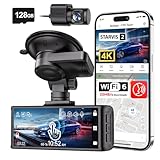 REDTIGER F7N Touch REDTIGER F7N Touch |
|
Check Latest Price |
 REDTIGER F17 3-Channel REDTIGER F17 3-Channel |
|
Check Latest Price |
 VIOFO A229 Plus VIOFO A229 Plus |
|
Check Latest Price |
 BOTSLAB G300H Plus BOTSLAB G300H Plus |
|
Check Latest Price |
 ZMOPO D435 4-Channel ZMOPO D435 4-Channel |
|
Check Latest Price |
 Vantrue N2X Vantrue N2X |
|
Check Latest Price |
| Vantrue N4 Pro S |
|
Check Latest Price |
| REDTIGER F7NP |
|
Check Latest Price |
 70mai T800E 3-Channel 70mai T800E 3-Channel |
|
Check Latest Price |
 COOLCRAZY N8 COOLCRAZY N8 |
|
Check Latest Price |
How We Judge Night Footage Before Buying
Nobody can hand you a spec sheet that predicts night footage, so we built a short checklist and applied it identically to all 12 cameras. First question: is the sensor Sony STARVIS or STARVIS 2? If the listing does not name the sensor, we treat night claims as unverified marketing.
Second question: what is the front aperture? A wider f-stop such as f/1.5 or f/1.6 lets in more light per frame, which is the difference between a readable plate and a grey rectangle on a county road with no streetlights. Third: is HDR real, or is it a toggle that a cheap sensor cannot support properly?
Fourth: what does the rear channel actually record, and is there a cabin channel with infrared? On unlit motorways, the rear camera is the one that captures the vehicle that ran into you, and 1080P rear footage is often too soft for a plate.
Fifth: how does the camera behave when parked? A supercapacitor survives summer heat far better than a lithium cell, and buffered parking mode that saves the ten seconds before an impact is worth far more than an extra resolution step nobody will ever see.
Finally, we weighed the review evidence. Where thousands of owners agree that night footage is clear and plates are legible, we trust it. Where reviews repeatedly describe grain, exposure confusion around passing headlights or an app that will not stay connected, we say so plainly, because that is exactly the failure a night-vision dash cam cannot afford.
1. ROVE R2-4K Dual – The Best All-Rounder for Night Driving
ROVE R2-4K Dual Dash Cam Front and Rear, STARVIS 2 Sensor, Free 128GB Card
STARVIS 2 IMX675 sensor
F1.5 front aperture with HDR
2.5K front upscaled to 4K
5.8GHz WiFi at 20MB/s
Pros
- STARVIS 2 low-light clarity for plates and signs
- Dual-band 5.8GHz WiFi with 20MB/s downloads
- Built-in GPS stamps speed and route
- Free 128GB microSD card included
- Supercapacitor handles heat and cold
Cons
- Front 4K is upscaled from 2.5K
- Hardwire kit not included for parking mode
The R2-4K Dual is the camera I put in my own car when a reader asked for a single recommendation. The Sony STARVIS 2 IMX675 sensor with a wide f/1.5 front aperture does the heavy lifting, and reviewers consistently describe the result as clear enough to read plates, street signs and the vehicles around them after dark.
Compare that to the many budget dual cameras in the same bracket that simply say night vision on the box. The difference is not a night mode. It is a larger, back-illuminated sensor that gathers light without the noise you get from a tiny bright sensor, so dark stretches of road stay readable instead of turning to static.
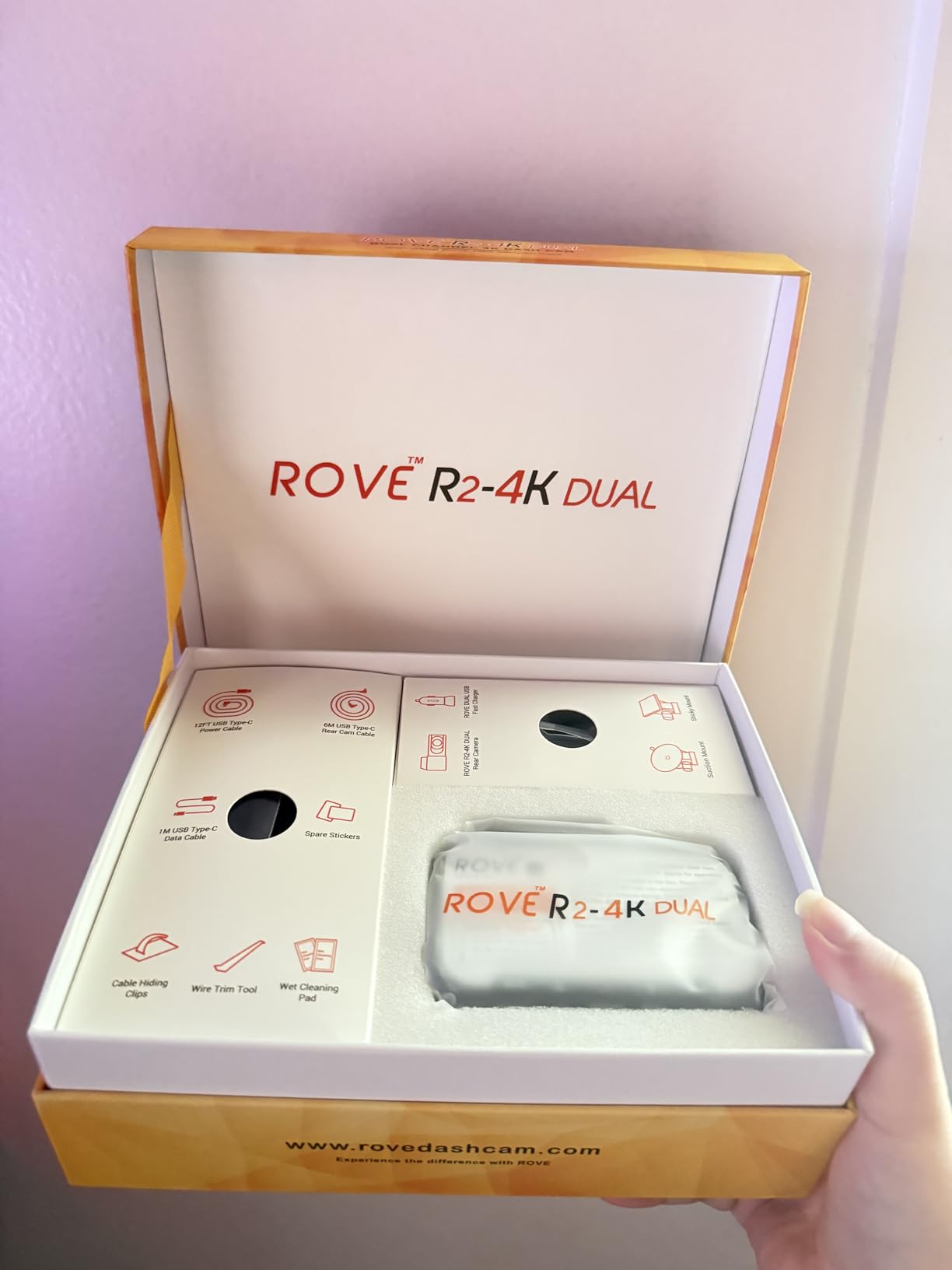
One honest caveat: the advertised 4K front footage is upscaled from a native 2.5K capture. You still get a sharp file and the sensor work does the real quality lifting, but anyone expecting native 4K detail will notice the difference under daylight, not at night.
The rest of the package is unusually complete. You get dual-band 5.8GHz and 2.4GHz WiFi pushing up to 20MB/s to your phone, a built-in GPS that stamps route, speed and compass onto the video, a 3-inch IPS screen, and a 128GB microSD card in the box, which is one less thing to buy before first use.
Parking mode offers 1 fps time-lapse, motion detection and collision detection, and the built-in supercapacitor is rated for extended life and far better heat tolerance than a lithium battery. Cards up to 1TB are supported, so a single card can hold a very long archive of long-haul driving.
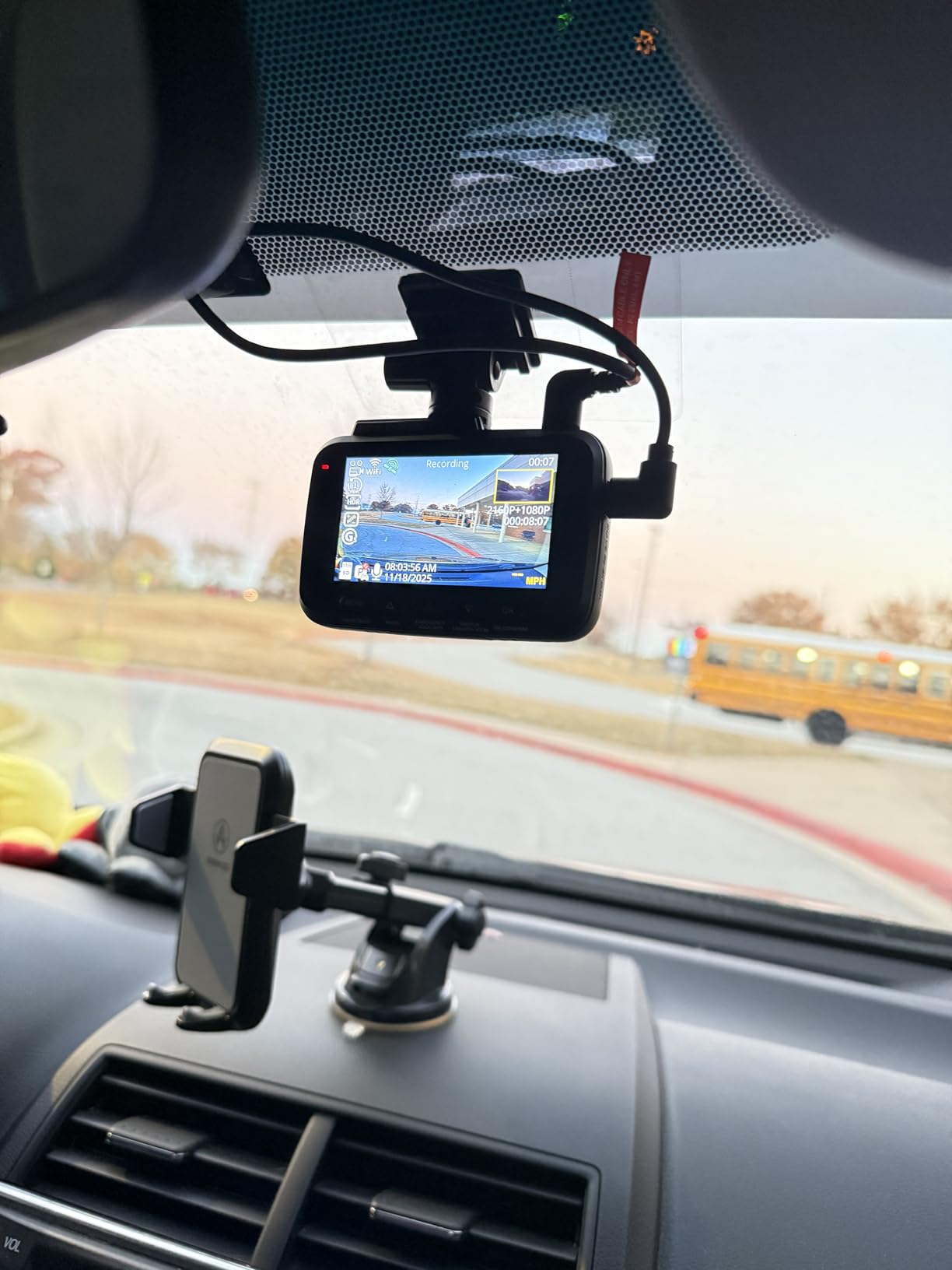
Why the ROVE R2-4K Dual works so well after dark
The f/1.5 aperture and HDR pipeline do the practical work. On an unlit two-lane road, a wider aperture keeps the exposure time short enough to avoid the smeared motion blur that makes night plates unreadable, and HDR keeps the headlight flare from erasing everything else in the frame.
Its 150-degree front field of view with 360-degree rotation also helps at night, because the wider you see the more of a dark intersection ends up in frame.
When to skip it and pick something else
Skip it if you need a cabin camera for rideshare work, since the R2-4K Dual covers only front and rear. Also skip it if you want a hidden, screenless install, because this one has a 3-inch display sitting in plain view.
And plan on buying a hardwire kit separately if you want parking mode, since the cable is not included. That is a small extra cost, but the supercapacitor and 24/7 modes are genuinely among the better-implemented in this group.
2. IIWEY N6 – Best for 360-Degree Night Coverage
IIWEY N6 360° Dash Cam 4 Channel, Free 128GB Card, 8 IR Lights Night Vision
Four-channel simultaneous recording
8 IR LEDs for night vision
170 degree front and rear lenses
128GB card included
Pros
- True four-channel 360 degree coverage
- 8 IR LEDs plus Vision Enhance plate reading
- 128GB card included
- 5.8GHz WiFi 6 at 20MB/s
- Suction cup holds firmly in heat
Cons
- Headlight glare still visible at night
- SD card needs frequent reformatting
- Side cameras use adhesive film only
The IIWEY N6 is the only camera here that records front, rear and both sides at the same time, which makes it a natural fit for anyone who spends real hours on the road in the dark and wants blind spot coverage rather than just forward and backward coverage.
Its night performance comes from eight infrared LEDs that illuminate the cabin and side views, plus Vision Enhance processing tuned for plate and lane reading. Owners report that the IR illumination does its job in total darkness inside the vehicle, which is the part most dash cams fail at night.
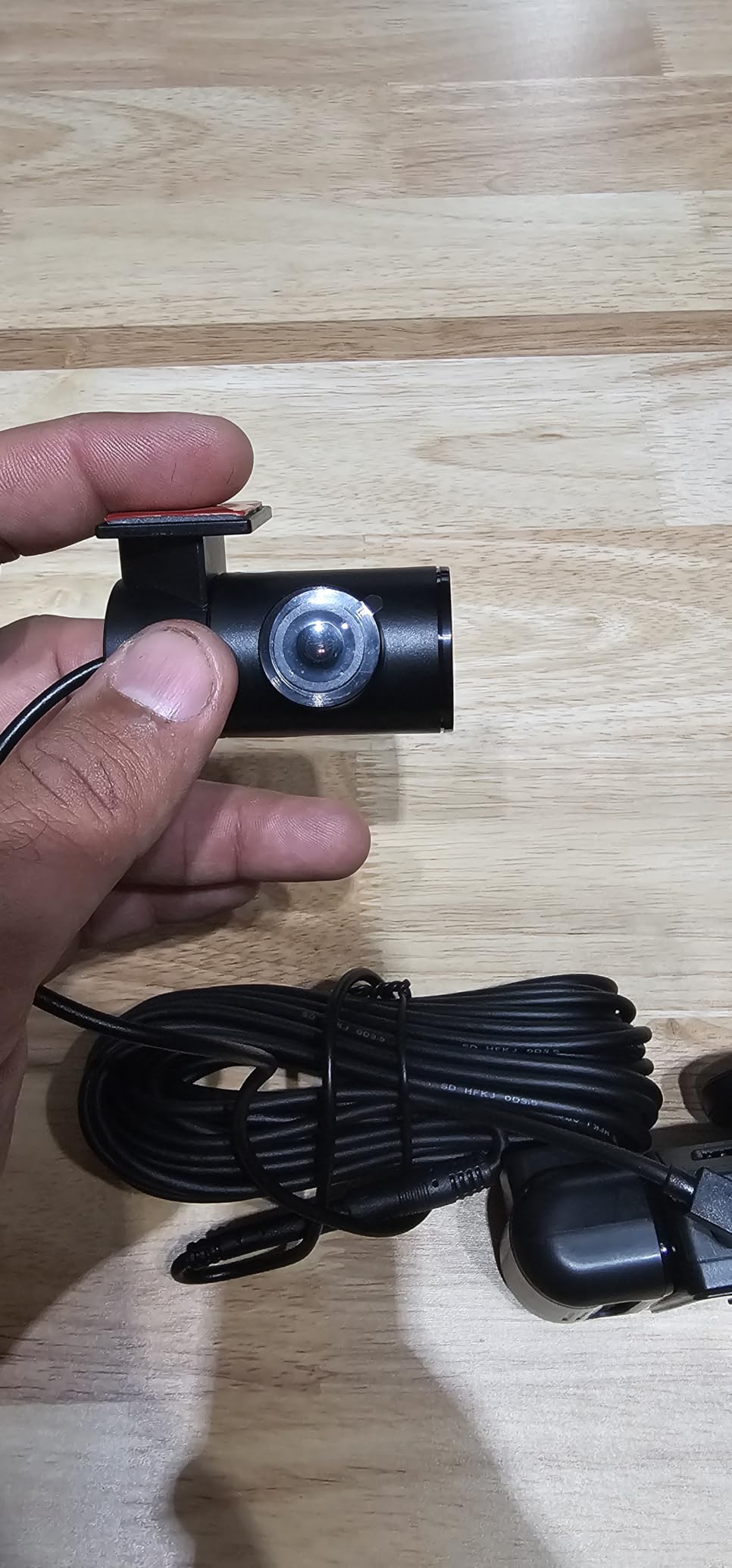
Field of view is 170 degrees front and rear with 150-degree side cameras that you can physically reposition, so you can angle the side units toward the door rather than leaving them stuck on a default mount. The wired design with no built-in battery means no swelling lithium cell in a hot parked car.
Parking surveillance runs a 48-hour time-lapse at 1, 3 or 5 fps with impact detection on top, and the 5.8GHz Wi-Fi 6 radio moves clips to a phone at roughly 20MB/s. A 128GB card is bundled, which matters when you are writing four channels at once.
The weakness is honest but specific: bright oncoming headlights still produce noticeable glare that the IR mode does not fully control, which is a physics limit rather than a brand problem. Owners also report that the SD card needs frequent reformatting and that the date and time can reset afterwards.
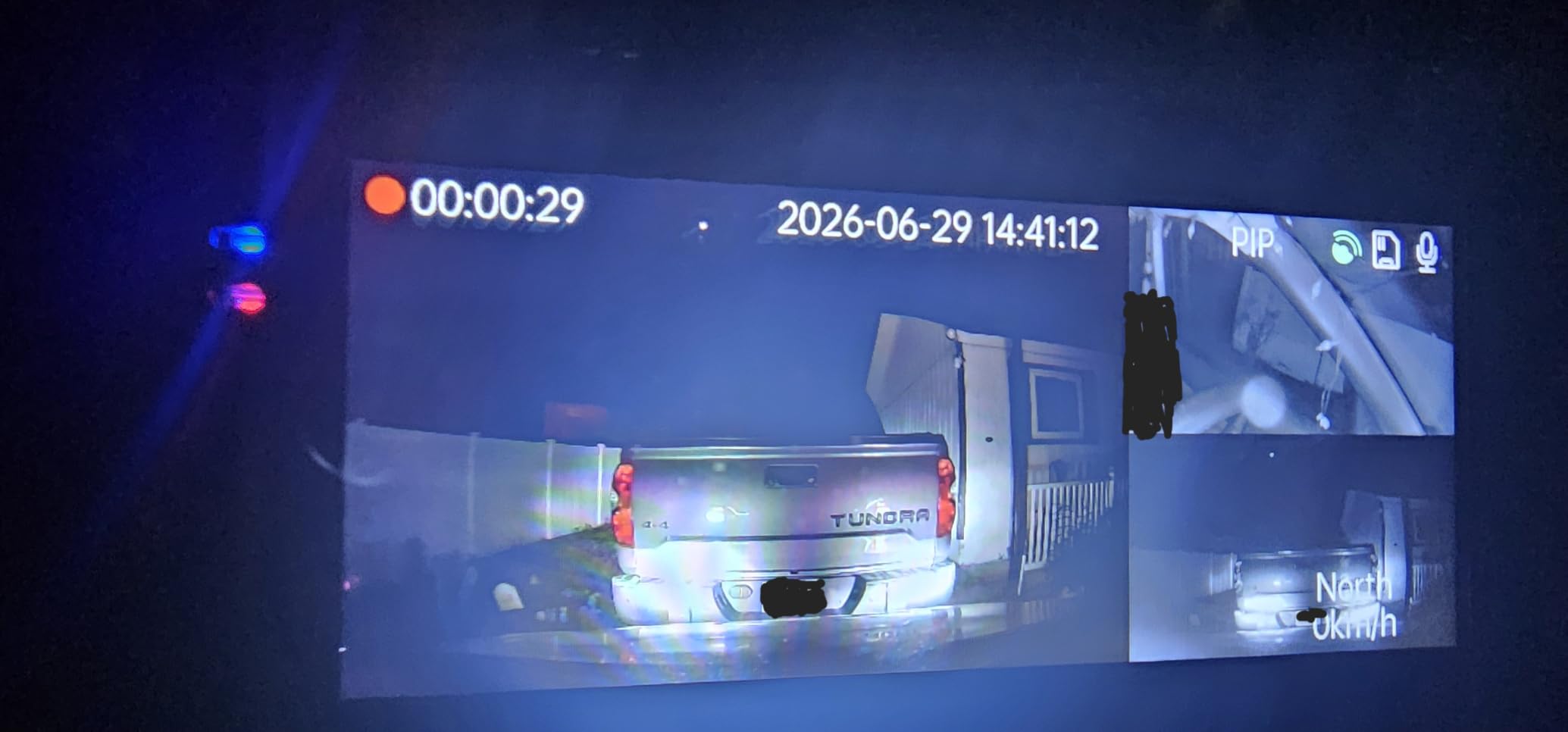
Why the N6 earns its place for night work
Four simultaneous channels mean a sideswipe on a dark road is caught from the actual impact angle rather than inferred from a front camera pointed at the sky. The 8 IR LEDs also make it the cheapest route here to a cabin view that is genuinely visible at 2am.
It is also one of the few four-channel systems that uses a suction cup for the main body, which matters if you move vehicles or re-mount often.
Where the N6 falls short
Skip it if you want a discreet install. The side cameras rely on adhesive or electrostatic film rather than a detachable suction mount, and finding a clean spot for all four takes real effort.
Also skip it if you drive a lot at highway speed and need plate detail, because four 1080P-class channels share the recording bandwidth and a telephoto-style plate crop is not what this design prioritises.
3. REDTIGER F7N Touch – Best Touchscreen and Voice Controls
REDTIGER 4K STARVIS 2 Dashcam Front Rear, 5GHz WiFi 20MB/s, Free 128GB Card
4K front STARVIS 2 with WDR and HDR
170 degree front wide angle
Voice control and touch screen
5.8GHz WiFi at 20MB/s
Pros
- Sharp 4K front footage with good plate readability
- Compact body tucks under the mirror
- Responsive touchscreen with voice control
- 128GB card and spare mounts included
- Strong technical support
Cons
- App requires account creation before connecting
- No Bluetooth so it can conflict with CarPlay
- Several voice commands unreliable
- Front and rear filenames can mismatch
The F7N Touch is the camera to buy if you dislike fumbling with tiny buttons at a set of lights at night. A 4K UHD front sensor from the STARVIS 2 family, WDR and HDR processing, and a 170-degree front lens give it strong low-light and headlight-glare performance, and reviewers single out plate readability as the stand-out feature.
Handling footage is the part this one genuinely wins. The touch screen is snappy, hands-free voice commands let you lock a clip without touching the camera, and the bundled PC player includes a zoom feature that makes pulling a plate out of a dark frame far easier.
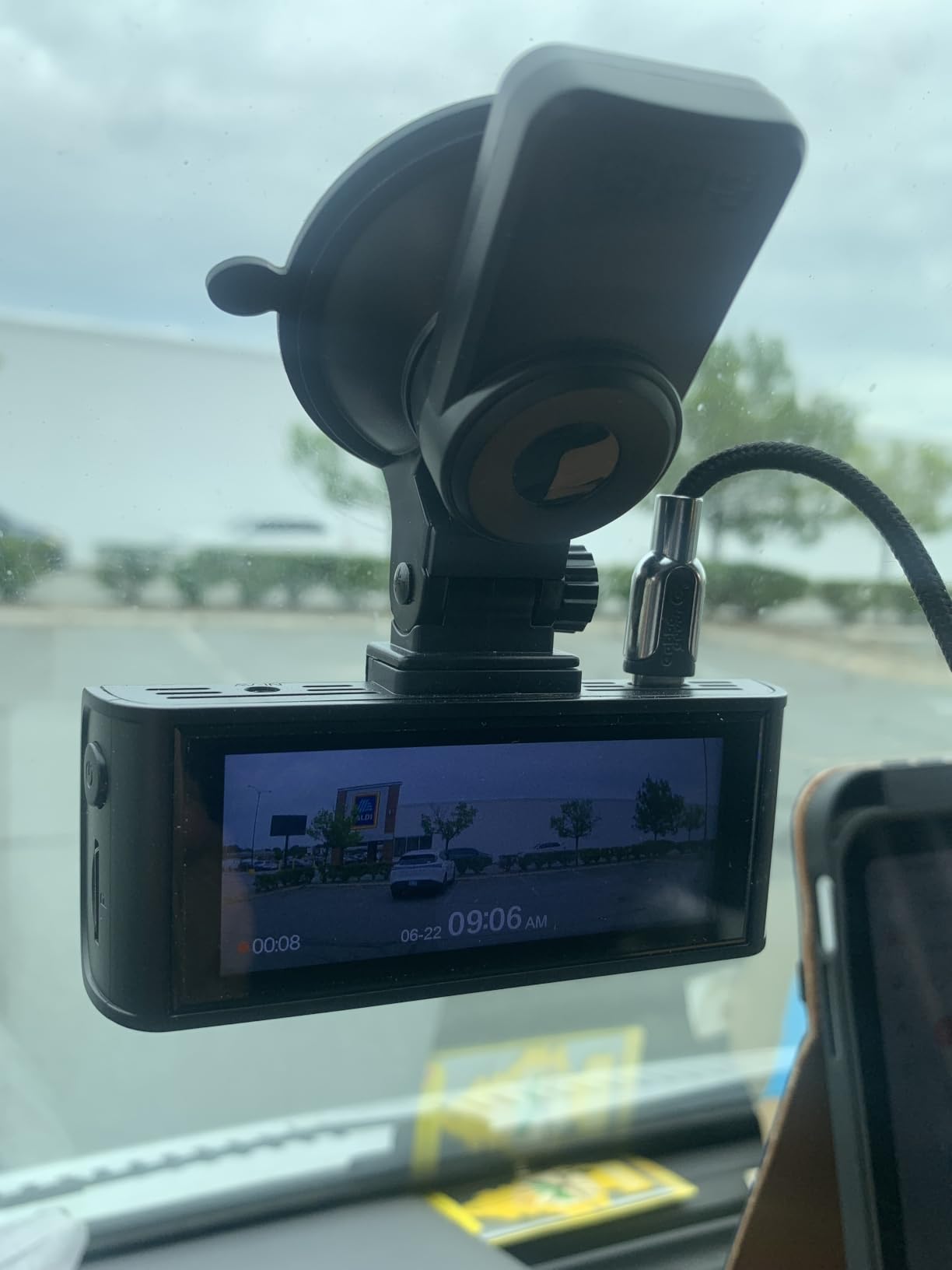
The rear camera records 1080P at 140 degrees, with a choice of 30 or 60 fps, and the frame rate flexibility is genuinely useful at night because 60 fps captures more light per frame in low light scenes. Built-in GPS logs your route, and parking monitoring offers G-sensor and time-lapse modes with a supercapacitor for heat resistance.
It is also a compact unit, and owners mention that the body mounts cleanly between the windshield and the rear view mirror without blocking the view on smaller cars.
The app is the weak point and you should know before buying. It forces account creation before your phone can connect, there is no Bluetooth option, which means the camera hotspot can interfere with wireless CarPlay, and several voice commands, including turning the screen off, do not work reliably.
Why the F7N Touch suits night drivers
Locking a clip by voice while driving at night matters more than it sounds, because fumbling for buttons is exactly the kind of distraction that causes the incident you want on camera. The screen saver and the compact mounting position also reduce the glow and reflection that drivers complain about at night.
The bundled card and spare mounts mean the install is complete on day one, and an 18-month manufacturer warranty covers the period when a supercapacitor is most likely to reveal problems.
Where the F7N Touch falls short
Skip it if you rely on wireless CarPlay, since the lack of Bluetooth is a real conflict rather than a theoretical one. Also skip it if you are not prepared to make a brand account and manage an app that reviewers describe as choppy on playback.
Documentation is thin, and a few owners report front and rear files recording with mismatched filename counters, which complicates syncing timelines after a crash.
4. REDTIGER F17 – Best 3-Channel Pick for Rideshare and Taxi Work
REDTIGER F17 4K 3CH Dash Cam, STARVIS 2 Sensor HDR, 64GB Card, 5.8GHz WiFi
4K front plus 1080P inside and rear
4 IR lights for cabin night recording
STARVIS 2 IMX675 front sensor
Adjustable G-sensor sensitivity
Pros
- Three channels stay sharp with minimal glare
- Cabin IR works in total darkness
- Adjustable G-sensor avoids constant event locks
- Screen saver cuts windshield glare
- 64GB card and all mounts included
Cons
- No touchscreen or voice control
- Adhesive pads are single use
- GPS is a playback logger only
- WiFi defaults off on every power-up
If you drive at night for work, the F17 is the most complete three-channel system here. You get a 4K front camera on a STARVIS 2 IMX675 sensor, a 1080P inside camera and a 1080P rear camera, all recording at once with a 150-degree front, 160-degree cabin and 155-degree rear field of view.
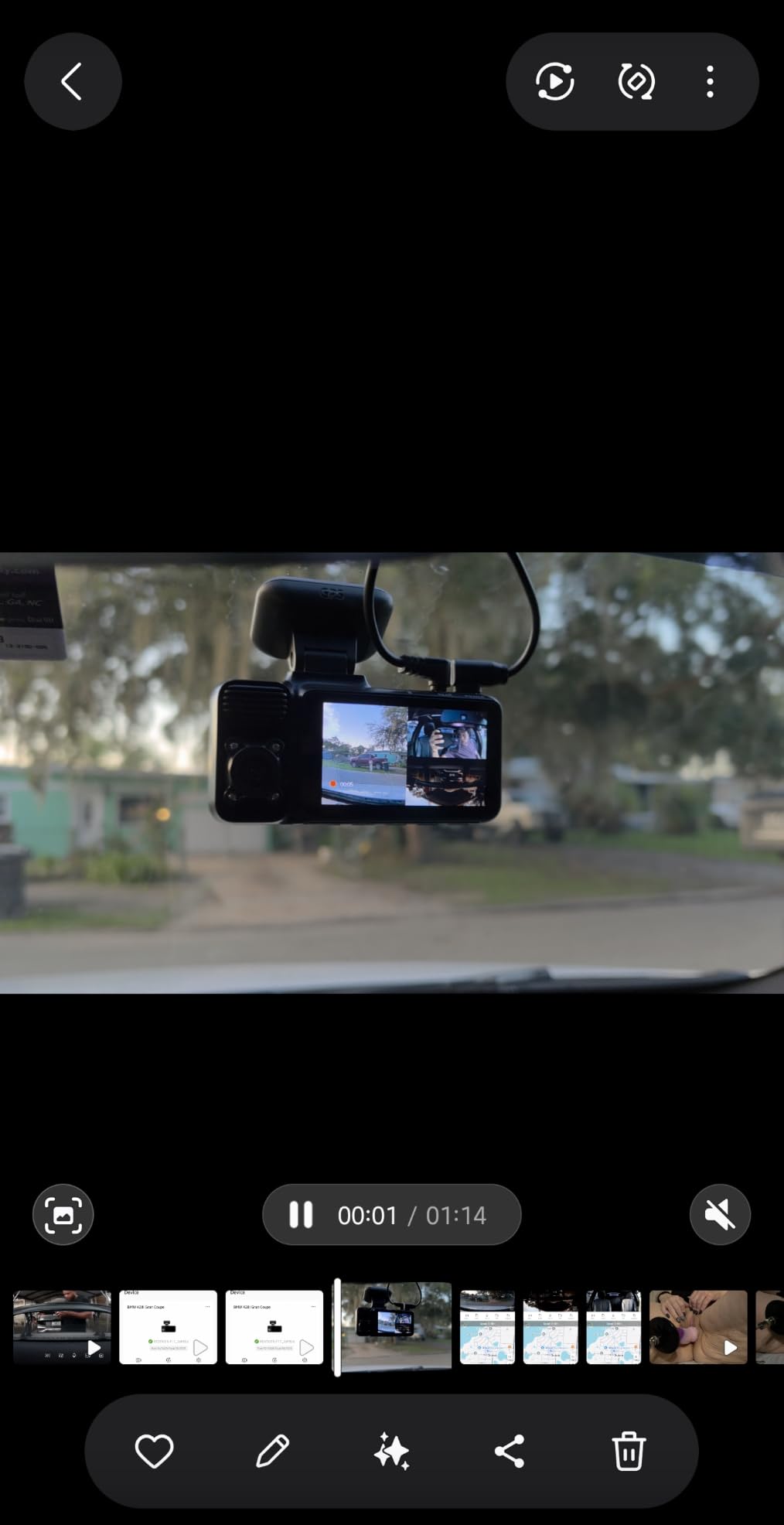
Four infrared lights illuminate the cabin, which is the detail that makes this worth recommending to anyone taking passengers after dark. Owners report the inside view stays usable in total darkness, which is exactly the footage you need for a dispute inside the vehicle rather than one through the windshield.
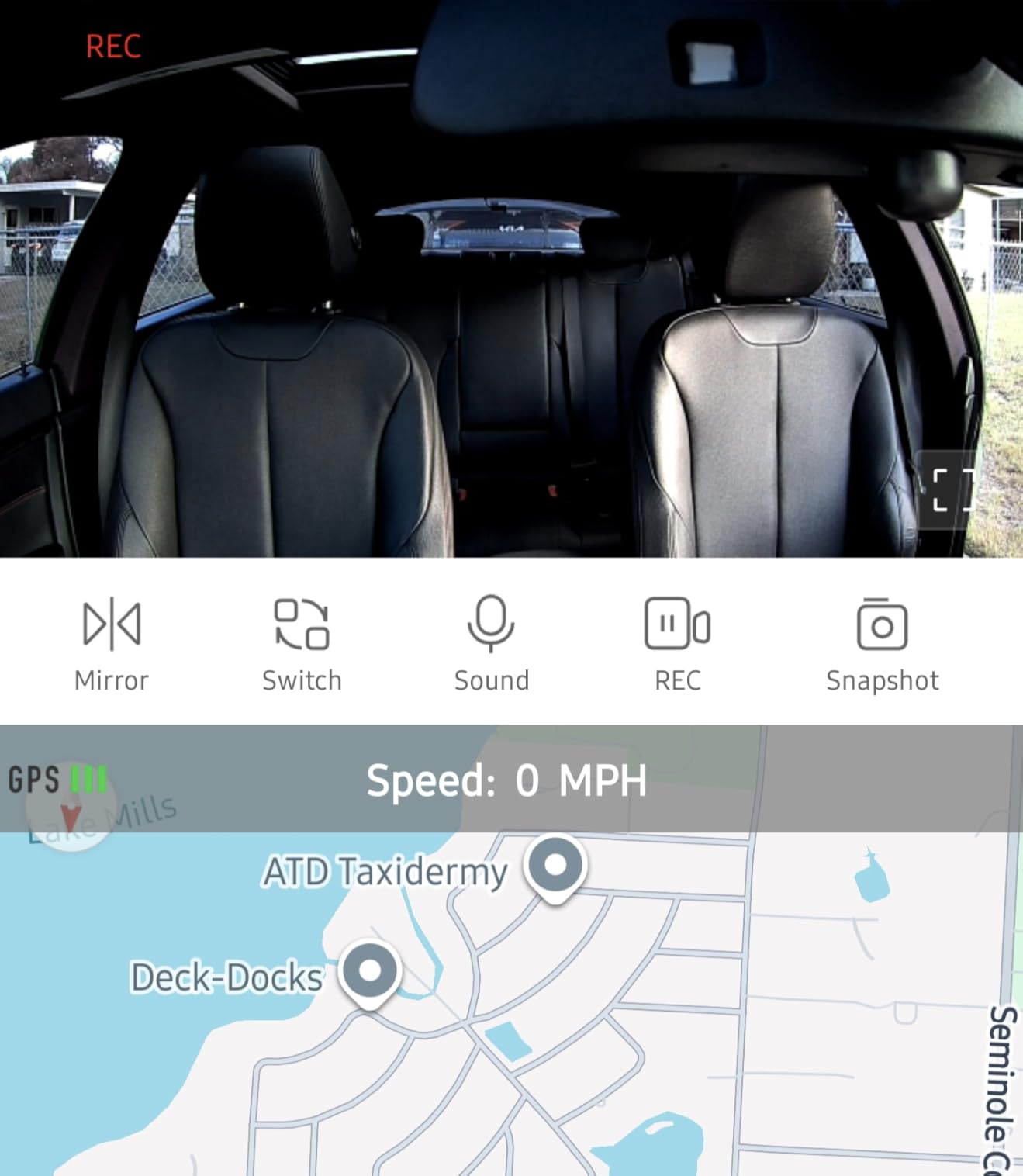
Two small design touches show this one was tested in real cars. G-sensor sensitivity is adjustable, so potholes and expansion joints on unlit roads do not fill your card with pointless event locks, and a screen saver turns the display off at night so it does not glow through the windshield.
It also offers a dual recording mode, letting you choose 2.5K dual-channel with the STARVIS 2 sensor or 4K front with the 1080P rear and the inside camera off, which is useful when you want maximum front plate detail on a rural night run.
What you give up is polish. There is no touchscreen and no voice control, adhesive mounting pads are single use, and the built-in GPS is a playback logger rather than something you can locate or track from a phone. WiFi also defaults to off on every power-up and must be re-enabled by holding a button, which gets old fast.
Why the F17 works for night-time cabin monitoring
Infrared cabin recording is the single most useful night feature for rideshare and taxi drivers, because passengers are lit far less than the road ahead. The F17 pairs four IR lights with a 160-degree cabin lens, and reviewers describe the result as clear in complete darkness.
The 18-month warranty and included supercapacitor also make it a better long-term bet than the lithium-battery designs that degrade in parked summer heat.
Where the F17 falls short
Skip it if you want fast, hands-free clip saving. Without voice control, saving a clip means reaching for buttons or the app, and the app connection flow requires enabling WiFi and turning off phone Bluetooth, which is genuinely cumbersome.
Also skip it if you are not comfortable re-positioning the mounts often, since single-use adhesive pads mean every angle change costs new stickers.
5. VIOFO A229 Plus – Best 2K Front and Rear Pair for Plate Reading
VIOFO A229 Plus Dash Cam Front and Rear, 2K Dual STARVIS 2 Sensors & HDR
Dual STARVIS 2 IMX675 sensors
1440P front and rear recording
Dual-channel HDR
Buffered parking mode with 15s pre-roll
Pros
- Plates readable at night from about 10 feet
- Dual STARVIS 2 sensors front and rear
- Compact bodies with flexible mounting
- Quad-mode GPS and 5GHz WiFi
- Supercapacitor handles extreme temperatures
Cons
- SD card and hardwire kit sold separately
- Plates hard to read at highway speed
- App interface is dated and slow
- Rear cable can be short in SUVs
The A229 Plus is the most technically serious two-channel camera in this group, and the one we would trust in an unlit area. It carries a Sony STARVIS 2 IMX675 sensor in the front camera and a second one in the rear, a combination VIOFO claims delivers 2.5x the dynamic range and 2.5x the light sensitivity of first-generation STARVIS while cutting noise and motion blur at night.
Owners back that up in specific terms. Buyers report reading license plates at night from roughly 10 feet away, which is the test that matters when a vehicle stops in front of you on a dark residential street.
Both channels record at 1440P, with the front able to run at 60fps, and dual-channel HDR keeps detail in tunnels, at dusk and in headlight glare. Cards up to 512GB are supported, and quad-mode GPS covers GPS, BEIDOU, GALILEO and GLONASS so route stamping stays accurate in more regions.
Three 24-hour parking modes are on board, including buffered auto event detection that saves 15 seconds before and 30 seconds after an impact, plus time-lapse and a low-bitrate mode. Twelve voice commands cover taking photos, locking video and switching camera views.
The trade-offs are budget and one specific night scenario. The microSD card and hardwire cable are both sold separately, and at highway speed plates are often difficult to read, which is a resolution-versus-speed limit rather than a sensor failure.
Why the A229 Plus is the choice for dark streets
Having a STARVIS 2 sensor in the rear camera as well as the front is the differentiator. Most competitors in this bracket put a basic sensor at the back, so the channel that captures the car that hit you is the one that performs worst at night.
The 2.5x dynamic range claim is also visible in practice on headlights, where HDR keeps the surrounding road readable instead of letting the brightest part of the frame swallow everything else.
Where the A229 Plus falls short
Skip it if you want to buy one item and start recording, because the memory card and hardwire kit are both extra purchases. Budget for a genuine high-endurance card, since VIOFO recommends industrial-grade cards up to 512GB and buyers report slow-card prompts otherwise.
Skip it if you drive long unlit motorway stretches regularly, and be prepared for an app that reviewers describe as dated and slow, sometimes requiring repeated reconnection.
6. BOTSLAB G300H Plus – Best Budget STARVIS 2 Dual Cam
BOTSLAB G300H Plus 4K STARVIS 2 Dual Dash Cam Front and Rear[2026 Upgraded]
4K front STARVIS 2 sensor
F1.5 front and f2.0 rear apertures
170 degree front wide angle
Supercapacitor rated -20C to 70C
Pros
- STARVIS 2 with f/1.5 gives vivid low-light colour
- 170 degree front and 150 degree rear coverage
- Supercapacitor handles extreme heat and cold
- 64GB card included with simple wiring
- Low 0.45 inch profile blends in
Cons
- Night quality only adequate
- Passing lights can confuse exposure
- 2-inch screen is small for menus
- Adhesive cable routing required
The G300H Plus is the cheapest way onto this list with a genuine STARVIS 2 sensor, and at this budget tier that is the entire point. The front camera is 4K with a wide f/1.5 aperture, and owners describe the low-light colour as vivid rather than the grey wash you get from a non-STARVIS sensor.
Coverage is unusually wide for the money, with 170 degrees at the front and 150 degrees at the rear, which helps you catch more of a dark intersection or a wide rural bend. Voice control, 5.8GHz WiFi, built-in GPS and a 64GB card in the box round out a complete package.
![BOTSLAB G300H Plus 4K STARVIS 2 Dual Dash Cam Front and Rear[2026 Upgraded] customer photo 1](https://www.shortfilmcentral.com/wp-content/uploads/2026/09/B0GSDTJQK8_customer_1.jpg)
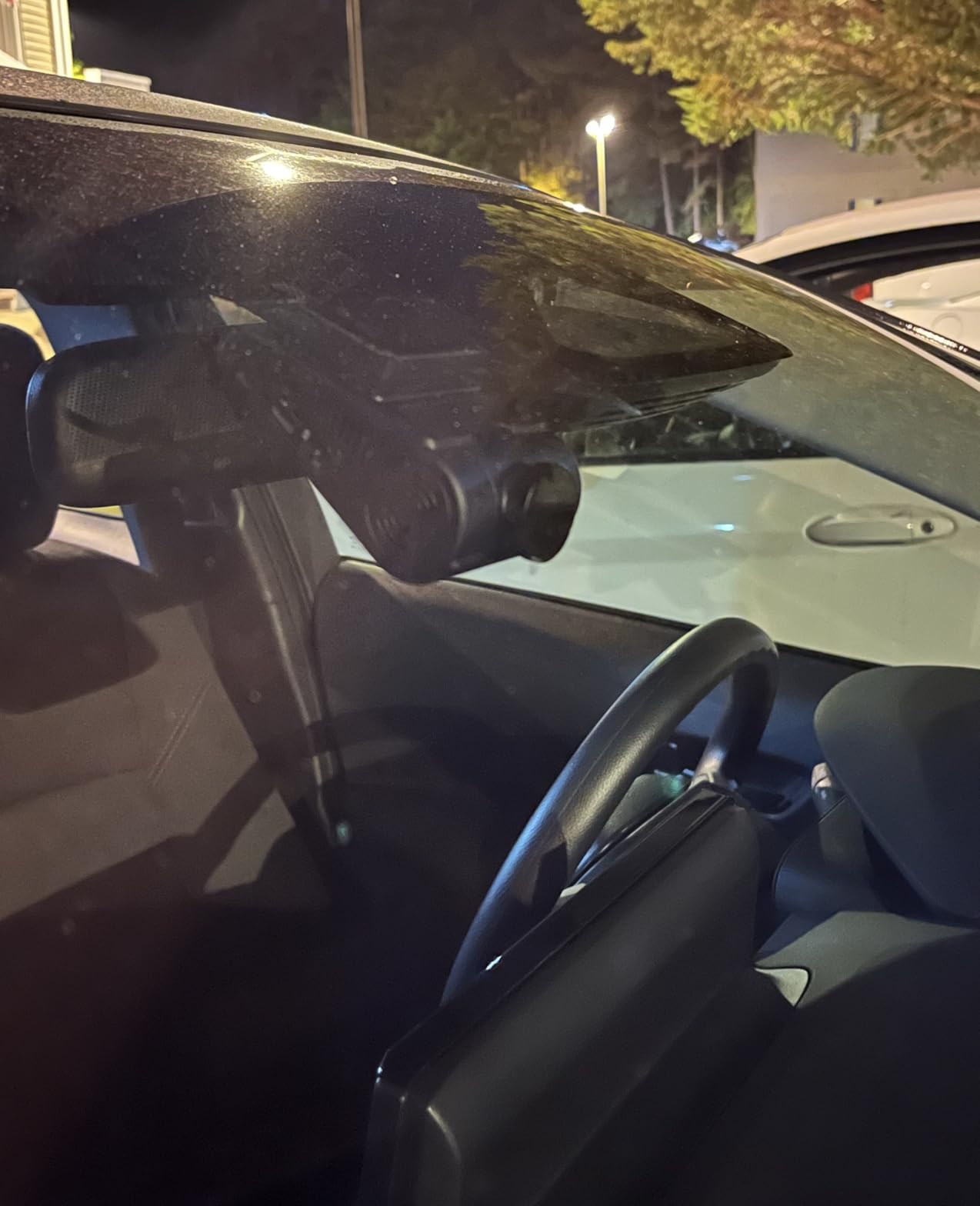
The supercapacitor is rated from -20C to 70C and there is no lithium battery in the design at all, so this is one of the safer choices for a car parked in summer sun. The wedge shape and 0.45 inch profile also sit low against the windshield and are close to invisible from outside.
Be realistic about what the extra resolution buys you at night. Owners rate the night video as adequate rather than excellent, and note that passing light sources can throw off the exposure, which is the classic symptom of a fast-shuttering low-light pipeline meeting a bright oncoming beam.
The 2-inch screen is small for working through menus or framing a shot, and installation calls for adhesive cable routing rather than a simple plug-and-play mount, so plan your cable path before you start.
![BOTSLAB G300H Plus 4K STARVIS 2 Dual Dash Cam Front and Rear[2026 Upgraded] customer photo 2](https://www.shortfilmcentral.com/wp-content/uploads/2026/09/B0GSDTJQK8_customer_2.jpg)
Why the G300H Plus still belongs on a night-vision list
The sensor is the reason. At a price tier where most competing dual cameras ship a small bright CMOS sensor, getting a STARVIS 2 front with an f/1.5 aperture puts this camera in a different low-light class than its direct alternatives.
The supercapacitor rating is a quiet but genuine advantage for anyone parking outdoors, and 64GB included means you can mount it tonight and start recording.
Where the G300H Plus falls short
Skip it if your driving is mostly on unlit roads where plate detail is the whole point. The honest summary from owners is that night video is only OK, so this is a solid budget dual cam that happens to have a good sensor, not a plate-reading specialist.
Also skip it if you want a large screen to check framing, and note the 12-month guarantee is the shortest warranty here.
7. ZMOPO D435 – Best Adjustable Four-Channel Coverage
360 View 4 Channel Dash Cam Front and Rear Left Right Inside Camera for Cars, GPS and 5G Band WiFi, Night Vision, 160 Wide Angle, WDR, 24H Parking Mode, Supercapacitor, Included 128GB Card
Four 1080P cameras front rear left right
Eight infrared lights
160 degree wide angle
Built-in supercapacitor
Pros
- Four cameras give true 360 degree coverage
- Cameras are physically adjustable for cabin angles
- 128GB card included and simple menu
- Small footprint with lots of mounting angles
- Large coverage for the money
Cons
- Adhesive mounts fail in high heat
- WiFi drops repeatedly with no working support
- Only acceptable night quality
- Awkward cigarette lighter power plug
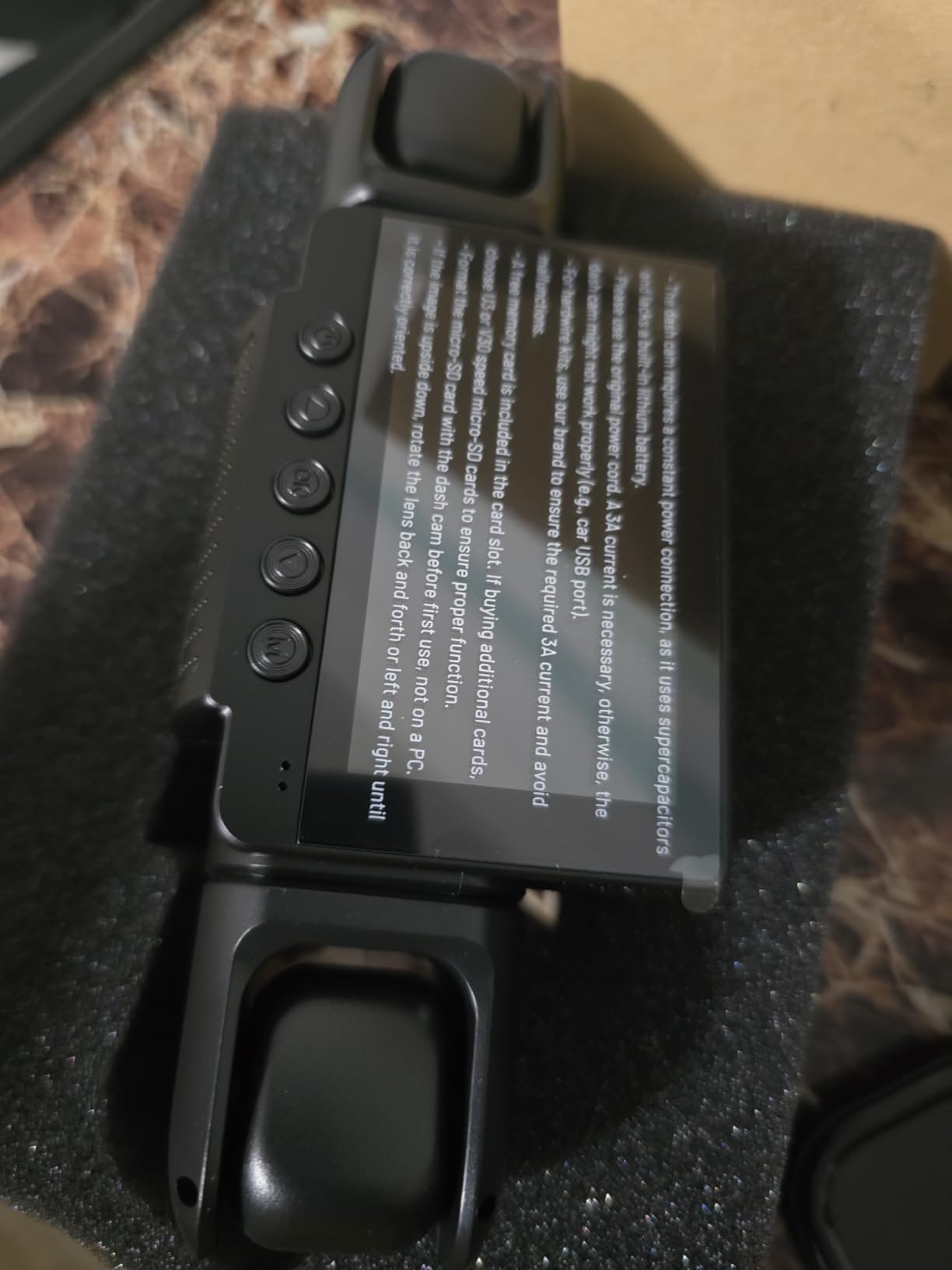
The ZMOPO D435 is the coverage-first option. Four 1080P cameras record front, rear, left and right simultaneously, and unlike cheaper kits, the front cameras are physically adjustable, which means you can angle one of them into the cabin instead of wasting it on a view you already have.
Eight infrared lights and WDR handle low light, and time-lapse recording compresses an hour of parked footage into a minute so a 128GB card can cover a long weekend. The menu is deliberately simple with very few settings to configure, and a 128GB card is included.
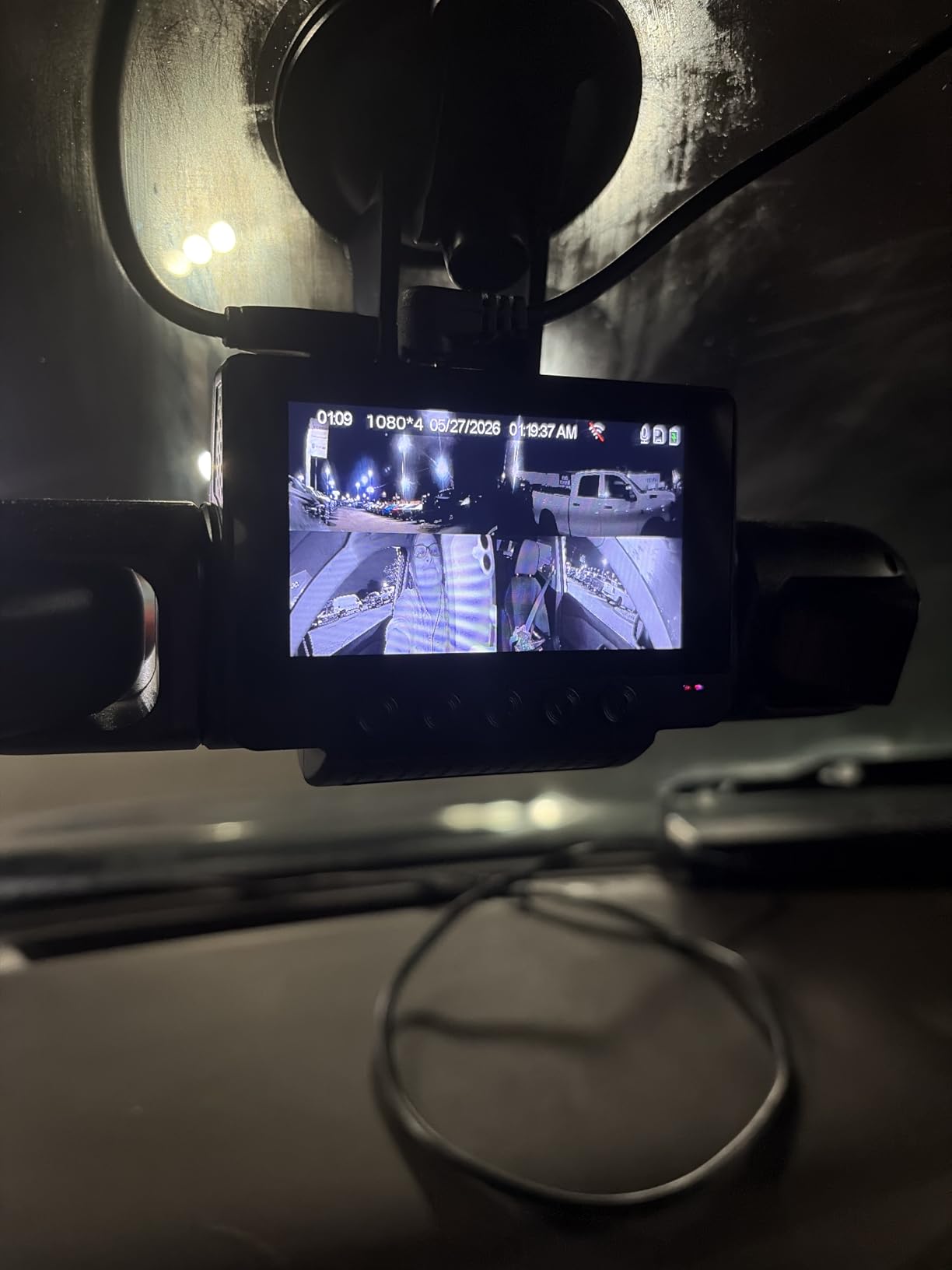
It is worth being blunt about the compromises, because this is a coverage camera rather than an imaging one. Owners describe the night video as only OK, with passing lights sometimes confusing the camera, which means it will not resolve a plate as well as any of the STARVIS 2 units here.
The physical design has a real summer problem. Reviewers report the adhesive mounts do not hold well in high heat and the unit can sag or fall, and the oversized suction cup can obstruct the driver’s view, while the cigarette lighter power plug is bulky and awkward at the windshield.
Connectivity is the other weak point: WiFi to the phone drops repeatedly, and support numbers listed by owners did not resolve it. A GPS logger is sold separately, so location and speed are not built in.
Why the D435 makes sense after dark
If your concern is a break-in or a hit-and-run while the car is parked, or a sideswipe from a vehicle you never saw, then four channels capture more of the story than two. The adjustable front cameras are the detail that separates this from a generic four-channel kit.
The two-year product assistance period is the longest warranty in this roundup, and the supercapacitor is a good choice for a unit that will sit in a hot car all week.
Where the D435 falls short
Skip it if night plate readability is your main goal. The night output is adequate at best, and no amount of channel coverage compensates for a front sensor that cannot resolve the vehicle in front of you.
Skip it if you live somewhere hot and park in the sun, because adhesive mount failure is the most reported complaint and there is no real suction-cup fallback on the main body.
8. Vantrue N2X – Best for Rideshare With a Lit Interior at Night
Vantrue N2X 2.7K Dash Cam Front and Inside, STARVIS 2 PlatePix Car Camera
STARVIS 2 sensor with PlatePix
Dual HDR and 4 cabin IR LEDs
1944p front plus 1080P inside
Five parking modes with pre-recording
Pros
- Plates readable at night and through headlight glare
- Cabin IR captures the interior in darkness
- Tool-free magnetic ball-joint mount
- 5.8GHz WiFi is fast and stable
- Accurate GPS for insurance claims
Cons
- App downloads disconnect frequently
- Audio quality poor with heavy static
- Needs a true 12V DC source
- Runs hot in parking mode
- Only Vantrue cards work reliably
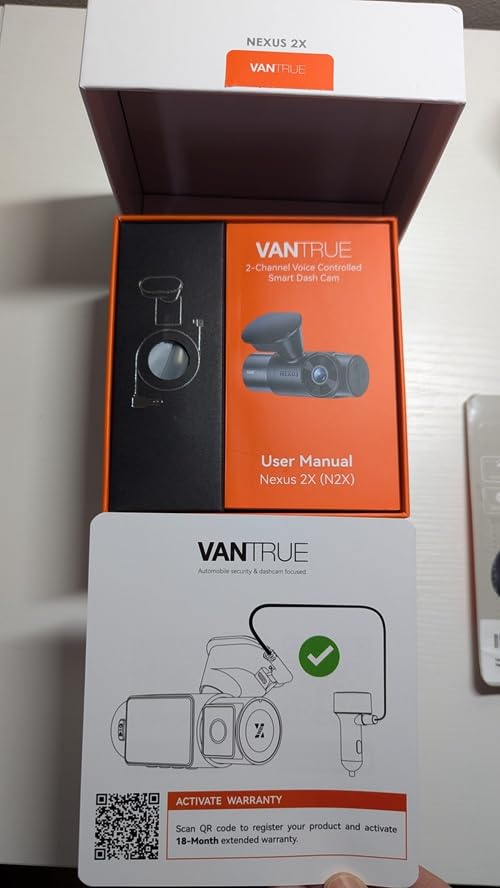
The N2X is the two-channel answer for anyone who needs to see the cabin after dark rather than the road behind them. The front camera uses a STARVIS 2 sensor with PlatePix plate-recognition processing, dual HDR and an f/1.8 aperture, and owners report plates stay readable at night and through headlight glare.
The inside camera adds 4 IR LEDs so the cabin is captured in complete darkness, and its 165-degree lens rotates 45 degrees so you can aim it at the rear seat rather than the roof lining. Front recording runs at 1944p with 1080p inside, and the front also supports 1440p at 60fps.
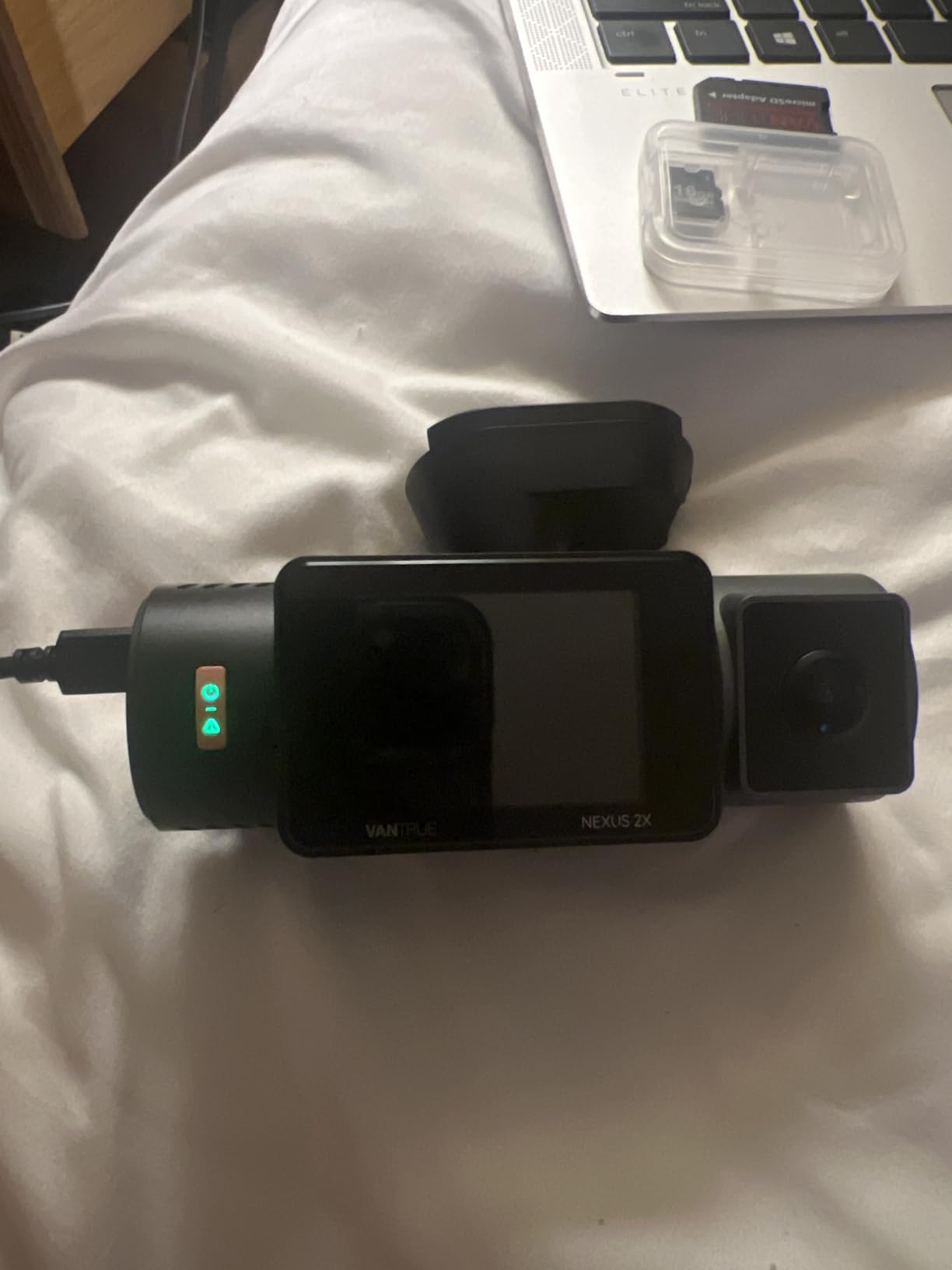
Ownership details are unusually good. The tool-free magnetic ball-joint mount means you can pull the camera out to check a clip without fiddling with a suction cup, the 5.8GHz WiFi is described as fast and stable for previews and downloads, and the built-in GPS logger captures time, date, location and speed accurately for claims work.
Four parking modes include 15-second pre-recording, customisable motion detection zones and a low frame-rate and bitrate mode to stretch a long night of monitoring.
There are real limits, though. Owners report app downloads disconnecting frequently, poor audio with heavy static and inaudible voices in the back seat, and a strict 12V DC power requirement that rules out some USB ports and setups. It also runs hot and draws noticeable power when left monitoring a parked car, and some buyers report only Vantrue-branded cards working reliably.
Why the N2X suits night-shift drivers
Cabin infrared is the difference between usable and useless after midnight. A camera that only sees the road cannot show a passenger dispute, a spilled drink, or a phone in a hand, and the N2X’s rotating 165-degree cabin lens with IR is built for exactly that.
The magnetic mount is also a genuine quality-of-life feature for split shifts, letting you remove and reinstall the camera in seconds without remounting anything.
Where the N2X falls short
Skip it if you need audio. Owners describe heavy static and inaudible voices from the back seat, which makes it a poor choice where cabin conversations are the evidence you care about.
Also skip it if you only have a USB port or a marginal cigarette lighter adapter, because the strict 12V DC requirement is a hard stop, and check the memory card brand before you rely on it overnight.
9. Vantrue N4 Pro S – The Best Night Plate Capture Money Can Buy
Vantrue N4 Pro S 4K 3 Channel Dash Cam, Triple STARVIS 2 HDR Car Camera
Triple STARVIS 2 sensors with triple HDR
4K plus 2.5K plus 1080P recording
Night Vision 4.0 with PlatePix
Buffered parking with 10s pre-roll
Pros
- Best night plate readability in this group
- Triple channels plus a 360 degree rear camera
- Front plus rear mode cuts heat by 30 percent
- Buffered mode keeps 10 seconds before an impact
- 5GHz WiFi and precise GPS
- 1TB cards give 37+ hours of 4K
Cons
- No memory card included
- Higher cost than two and three channel rivals
- Three channels consume storage quickly
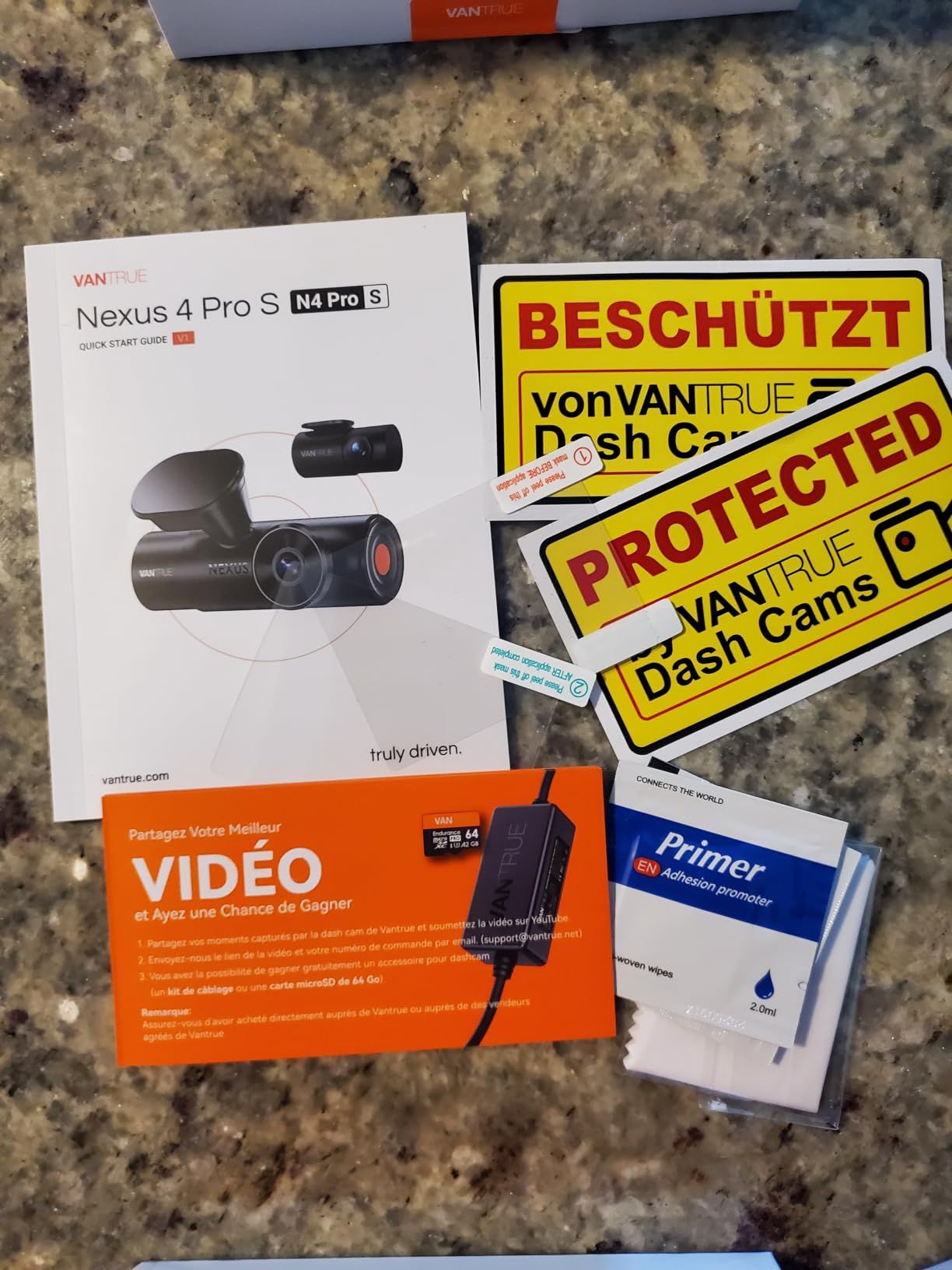
The N4 Pro S is the flagship here and the one buyers describe most simply as the best low-light plate capture of anything they have tested. Triple STARVIS 2 sensors, including IMX678, drive 4K plus 2.5K plus 1080P three-channel recording at 30fps, and triple HDR plus Night Vision 4.0 with PlatePix technology is claimed to roughly double license plate accuracy at night.
Every channel is a STARVIS 2 sensor, which is the specification that actually matters after dark. The rear camera is 2.5K with 360-degree rotation, so you can aim it at traffic behind you or at the trunk, and field of view across the three channels runs 155, 160 and 165 degrees.
Thermal behaviour is handled thoughtfully, which matters for a camera that will sit in a hot car all summer. A front-plus-rear mode runs 4K and 2.5K instead of all three channels and reduces heat by 30 percent while lowering power draw, and the supercapacitor is rated for extreme temperatures.
Buffered parking mode captures events from 10 seconds before an impact while all three cameras stay active, and microSD support up to 1TB allows 37+ hours of continuous triple-channel 4K recording. Loop segments of 1, 2 or 3 minutes let you tune the trade between overwrite frequency and file count.
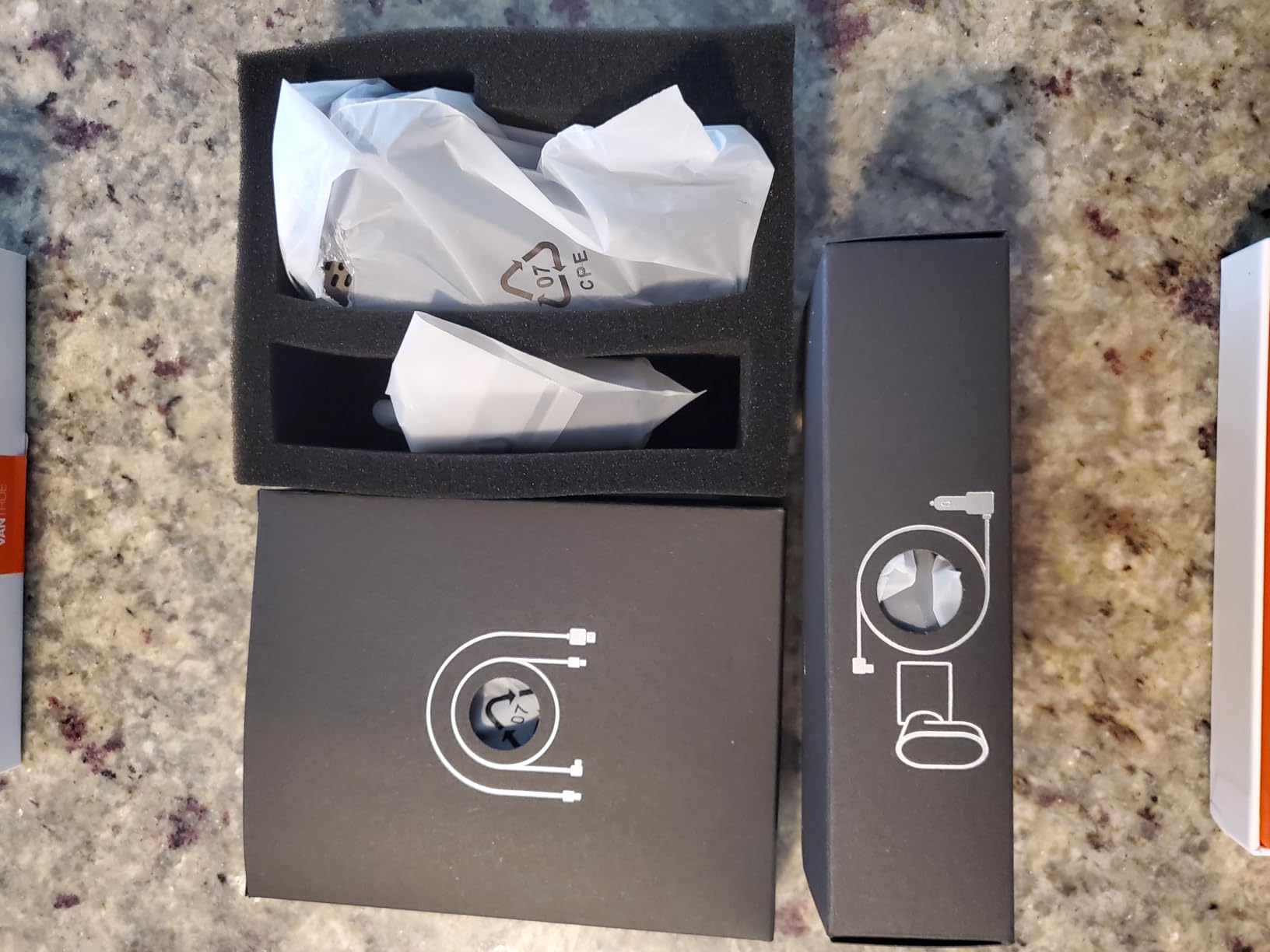
The practical drawback is storage and storage again. No card is included, Vantrue recommends its own industrial-grade U3 cards, and running three 4K-class channels consumes capacity fast enough that a large card is effectively required rather than optional. It is also the most expensive camera in the group, and for many drivers that gap is not justified by night footage alone.
Why the N4 Pro S sets the night standard
Triple STARVIS 2 sensors with triple HDR is the spec combination that no other camera here matches, and it is why owners report the clearest night plate readability of the group. On a rural two-lane road with no lighting, the difference between a 2K sensor and a 4K STARVIS 2 sensor is the difference between guessing and identifying.
The heat-reducing dual-channel mode is the underrated feature. A camera that stays cooler in a parked car is a camera that will still be recording on day three of a heatwave, which matters more to most owners than any resolution figure.
Where the N4 Pro S falls short
Skip it if you are parking the car overnight on a modest budget, because triple-channel 4K eats storage and no card ships in the box. Buy a large industrial-grade card with it.
Skip it if a two-channel setup would cover your actual risk, because you would be paying flagship money for night performance you can get from a much smaller spend.
10. REDTIGER F7NP – Best Value Night-Vision Pick
REDTIGER F7NP 4K Dash Cam Front Rear, STARVIS 2 Sensor, Free Card Included
4K front STARVIS 2 with f/1.5 aperture
6-layer optical lens
170 degree front and 140 degree rear
5.8GHz WiFi at 20MB/s
Pros
- Clear high-contrast night footage from STARVIS 2
- 128GB card included so it works immediately
- 5.8GHz WiFi delivers 20MB/s downloads
- Built-in GPS logs route speed and location
- Compact body that does not block the view
- Supercapacitor holds up in hot climates
Cons
- Rear camera cable too short for larger SUVs
- 1080P rear resolution is well below 4K front
- Parking mode needs a separate hardwire kit
- App requires an account
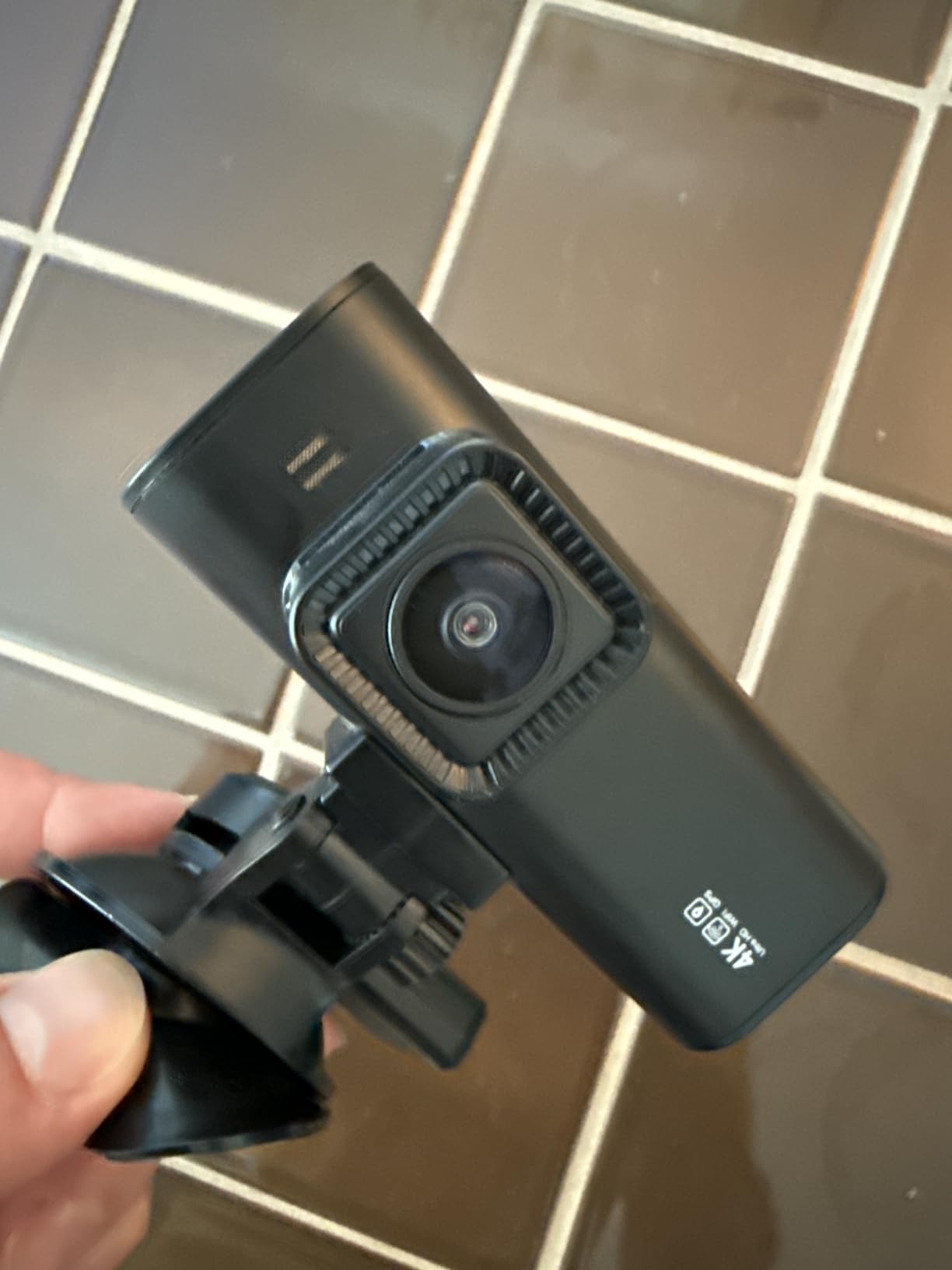
The F7NP has the largest review base of anything in this roundup by a wide margin, and that makes its night performance one of the best-evidenced opinions available. Owners consistently praise the STARVIS 2 sensor with its f/1.5 aperture and 6-layer optical lens for clear, high-contrast night footage.
Everything needed to start is in the box, including a 128GB card, so this is the lowest-friction way to get a proper STARVIS 2 dual camera running tonight. The 5.8GHz WiFi pushes downloads at up to 20MB/s through the Redtiger Cam app, and the built-in GPS stamps route, speed and location on the footage.
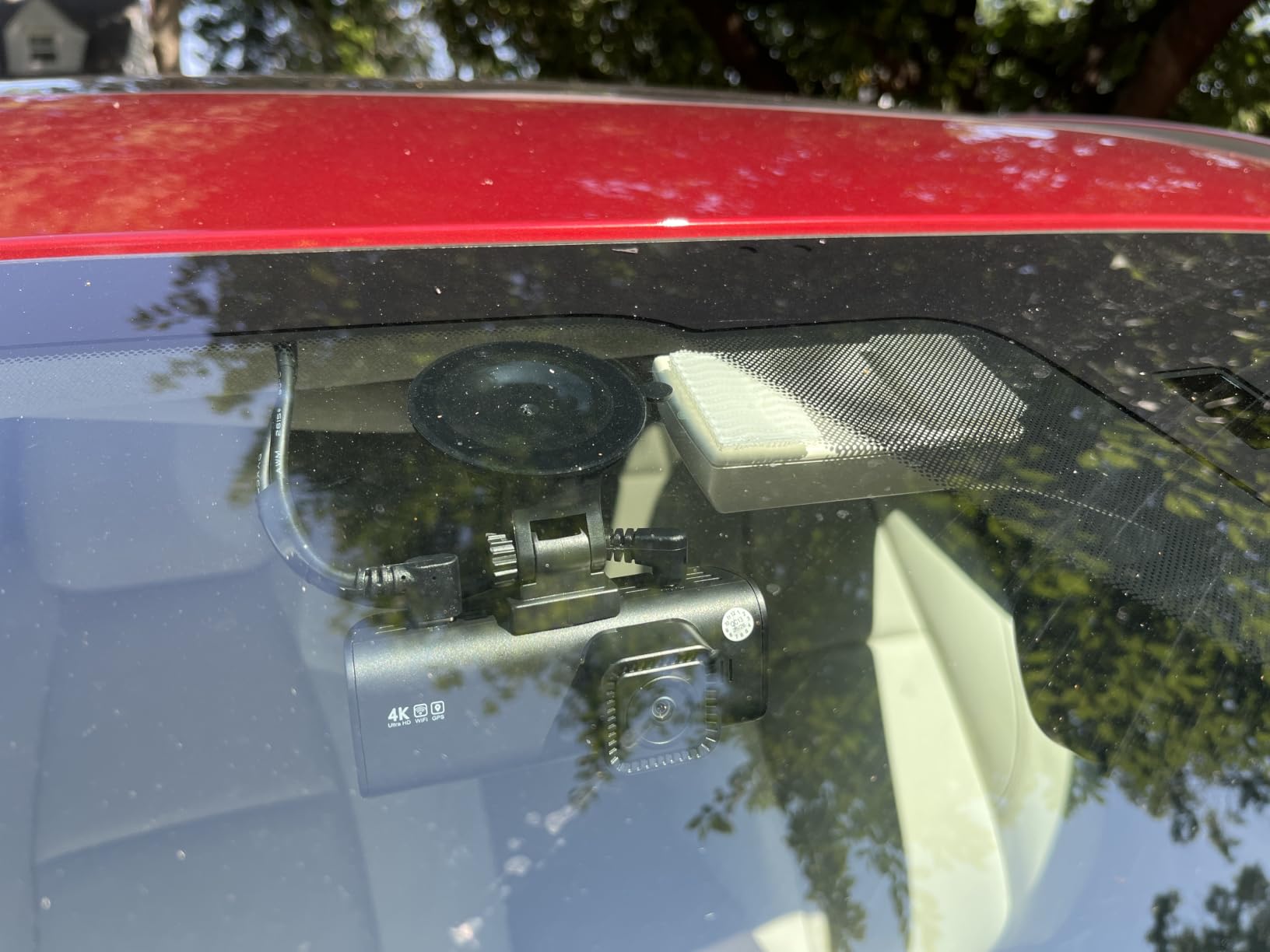
The front camera is 4K with a 170-degree lens and the rear is 1080P at 140 degrees. WDR and HDR handle the highlights and shadows that make night clips unreadable, and the supercapacitor instead of a lithium battery is the reason owners report it holding up in hot climates and long parking hours.
Three complaints recur. The rear camera cable is too short for larger SUVs and vans, the 1080P rear channel is noticeably softer than the 4K front, and parking mode needs a hardwire kit bought separately, on top of an app that requires an account and reviewers describe as less polished than competitors.
Why the F7NP is the value pick
It gives you the two things that matter most at night, a STARVIS 2 sensor and a wide aperture, in a package that includes storage. Very few cameras at this level include a card, and very few include both.
The compact body mounting neatly out of the driver’s sightline also matters at night, since a camera hanging in the middle of the windshield throws reflections off the glass that end up in your footage.
Where the F7NP falls short
Skip it if you drive a large SUV or van and need the rear camera mounted far back, because the cable length is the most common installation complaint. Measure before you buy.
Skip it if rear plate detail is your priority, since 1080P at the back is the weakest link in an otherwise well-rounded night system.
11. 70mai T800E – Easiest Three-Channel Setup With Cabin IR
70mai 4K Dash Cam Front and Rear Inside, 3 Channel Car Dash Camera for Cars, Dashcam with GPS, Wi-Fi 6, Voice Control, Parking Monitor, Night Vision, Loop Recording, 64GB SD Card Included (T800E)
4K front plus 1080P interior and rear
Switchable infrared cabin camera
Wi-Fi 6 at 10MB/s
Supercapacitor rated 14F to 140F
Pros
- Front footage sharp with plates readable day and night
- Three channels with switchable cabin IR at an entry price
- Wi-Fi 6 plus 5-mode GPS for viewing and downloads
- Voice control saves clips hands-free
- 64GB card and adhesive mount included
- Very responsive support
Cons
- Advertised 4K is upscaled from a 2K sensor
- Interior camera limited to 15 fps
- Rear camera is a step down from the front
- App only connects while the phone is in the car
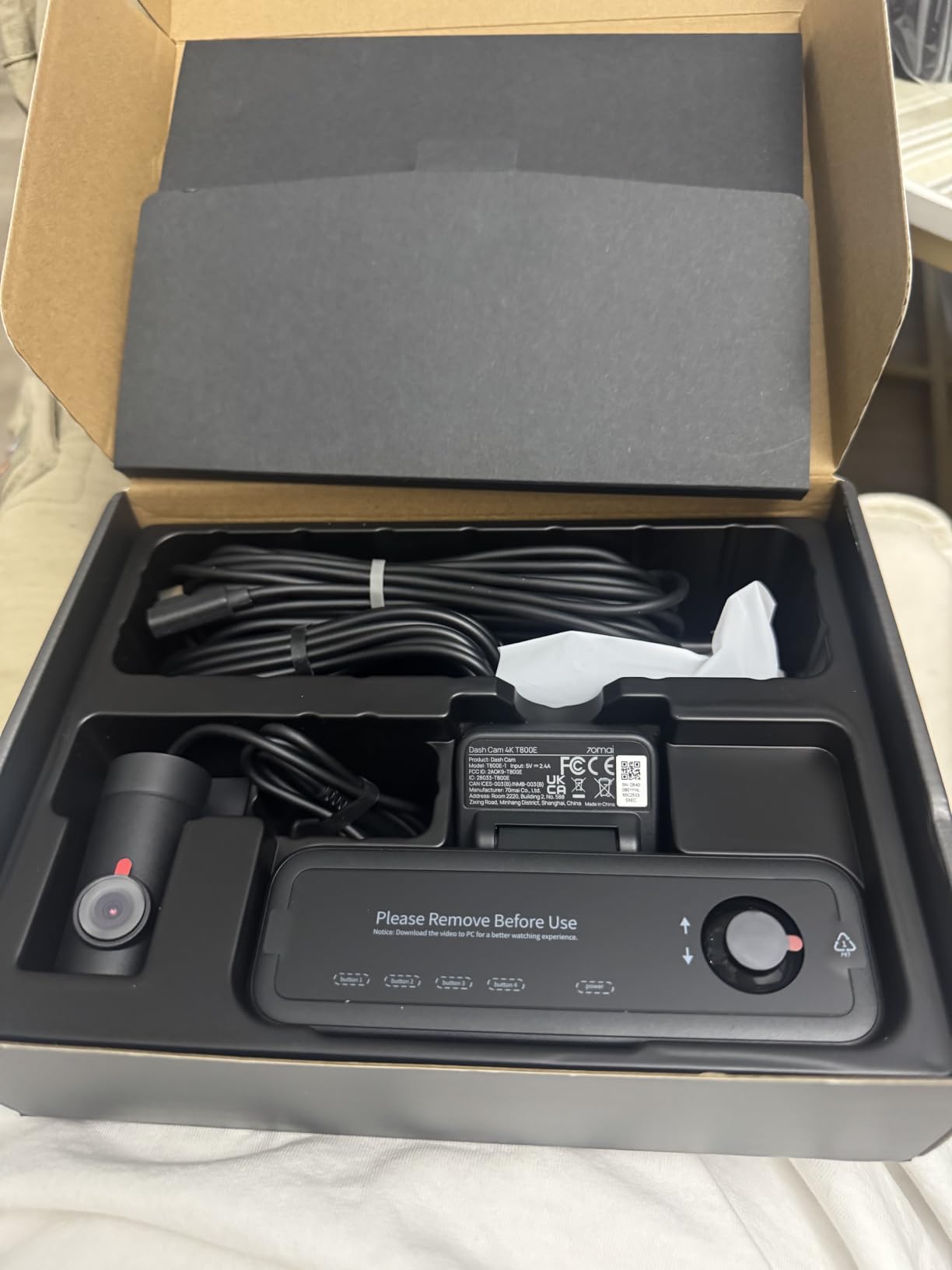
The T800E packs a surprising amount into a beginner-friendly package. You get three channels, 4K front plus 1080P interior plus 1080P rear, and the front lens runs a wide f/1.55 aperture with a 402-degree total field of view across the system. HDR imaging with 3D noise reduction and super night vision handles the low light.
Owners report the front footage is sharp with license plates readable day and night, and some go further and say the front camera rivals more expensive dual-channel units. The interior camera has switchable infrared, which is the feature that makes this viable for evening rideshare work.
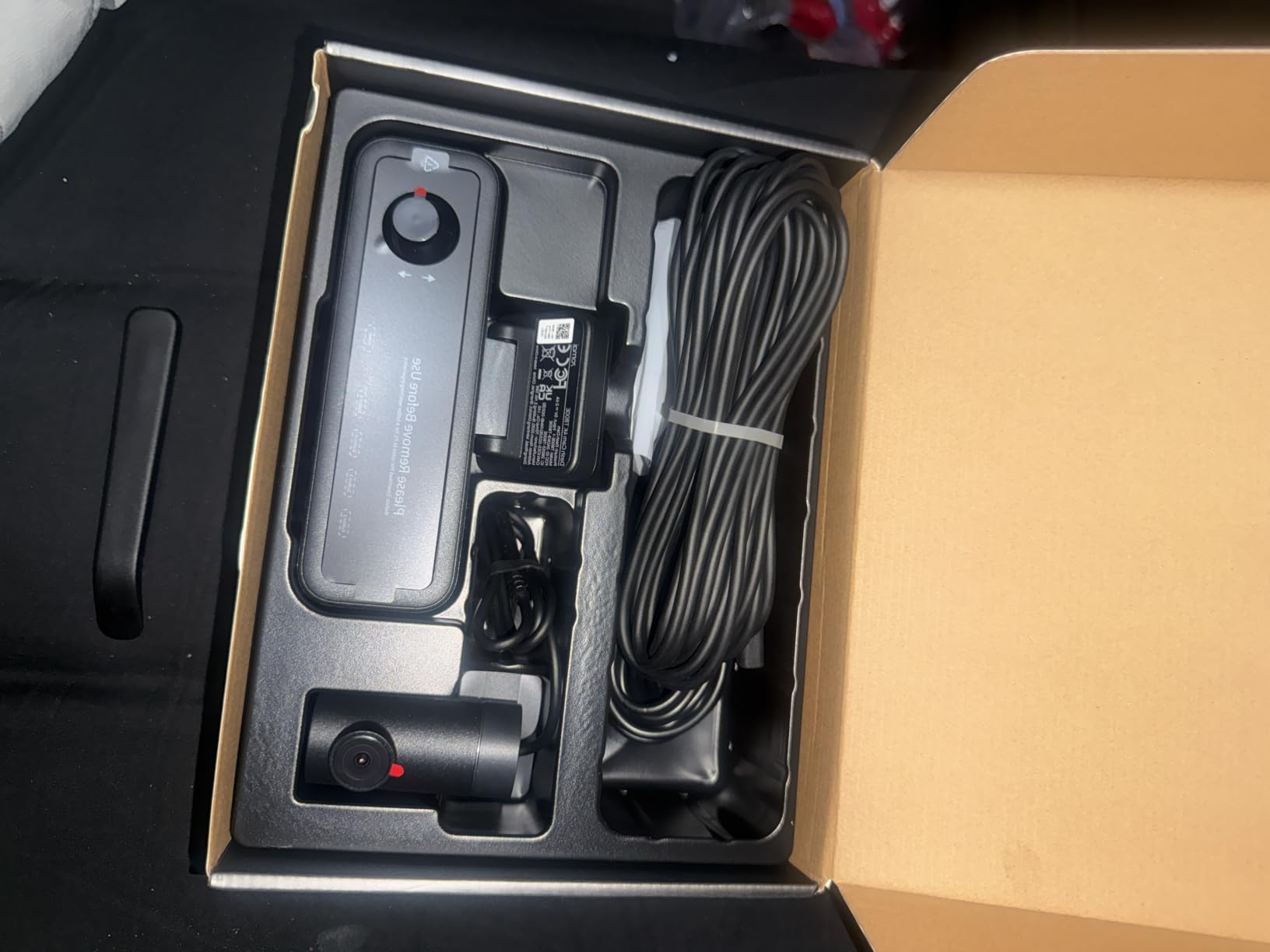
Wi-Fi 6 transfers at up to 10MB/s, roughly five times faster than Wi-Fi 4, and the built-in 5-mode GPS handles location, speed and route. Voice control lets you take photos, start recording and lock clips without taking your hands off the wheel, and a 64GB card is included.
The critical caveat is that the advertised 4K is upscaled from a 2K GalaxyCore GC4663 sensor, so you are not getting native 4K detail. The interior camera is also limited to 15 fps, which makes cabin footage noticeably less fluid, and the rear channel is a clear step down from the front.
Storage is the other real limitation. Recording all three channels fills the included 64GB card in under half a day, so treat the bundled card as a starter rather than a solution, and note the app only connects while your phone is in the car, with no remote viewing or cloud backup.
Why the T800E is a good first night camera
It gives you the three-channel layout that experienced drivers here recommend, plus cabin infrared, without a steep learning curve. Adhesive mounting and an included card mean you can be recording within minutes of opening the box.
The supercapacitor is rated 14F to 140F, and support is reported as highly responsive, including a firmware update that resolved a cabin-recording bug, which is a good sign for long-term ownership.
Where the T800E falls short
Skip it if you plan to rely on native 4K detail, because the sensor underneath is 2K and the resolution is added in software. Buy a genuine 4K sensor instead if the extra detail matters to you.
Also skip it if you need long multi-day recording on the included card, or if you want to check footage from your phone while away from the vehicle, since the app has no remote access.
12. COOLCRAZY N8 – Best Suction-Mount STARVIS Dual
COOLCRAZY Dash Cam Front Rear – 4K STARVIS Sensor Dashcam,Free 64GB Card, Built-in 5G WiFi/GPS, Dual Dash Camera for Cars with 3″ IPS Screen,HDR/WDR Night Vision, App Control, 24H Parking Mode
4K front Sony STARVIS sensor
F1.5 aperture with WDR and HDR
170 degree front and 150 degree rear
5GHz WiFi and built-in GPS
Pros
- 4K front plus 1080P rear with wide coverage
- STARVIS sensor with f/1.5 handles low light and glare
- 5GHz WiFi for fast downloads
- Built-in GPS with speed and compass stamp
- 64GB card included
- Suction cup install with cable pry tool
Cons
- Parking time-lapse needs an ACC hardwire kit
- Rear camera limited to 1080P
- Single memory card slot shared by both channels
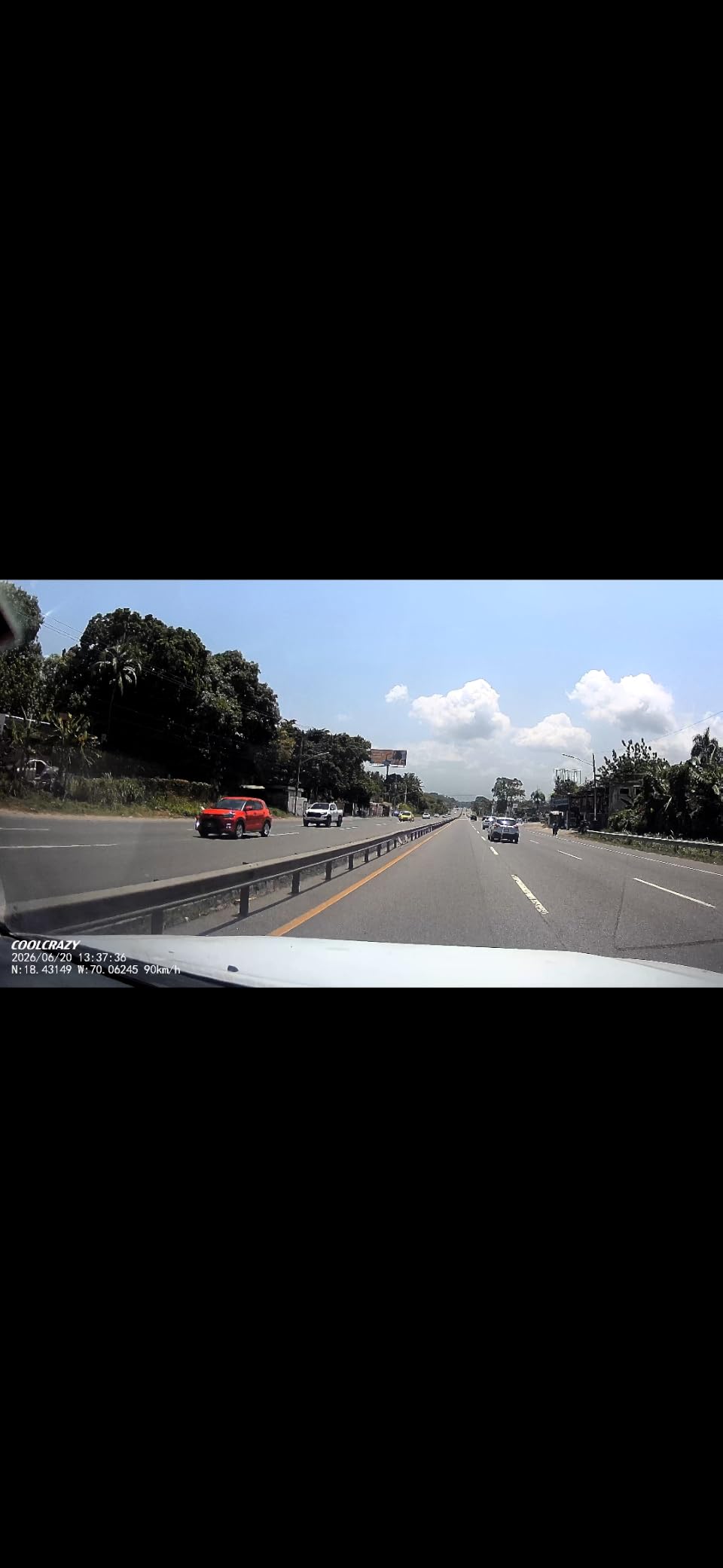
The COOLCRAZY N8 is the simplest install in this roundup, and that is not a small thing. A suction cup holds the front camera, a cable pry tool is included for routing the rear cable along the trim, and you get a 64GB card in the box, so there is no adhesive cleanup later.
Night performance rests on a Sony STARVIS sensor with a wide f/1.5 aperture and WDR plus HDR, which reviewers credit with handling low light and headlight glare. Coverage is 170 degrees at the front and 150 degrees at the rear, with the front recording 4K and the rear 1080P.
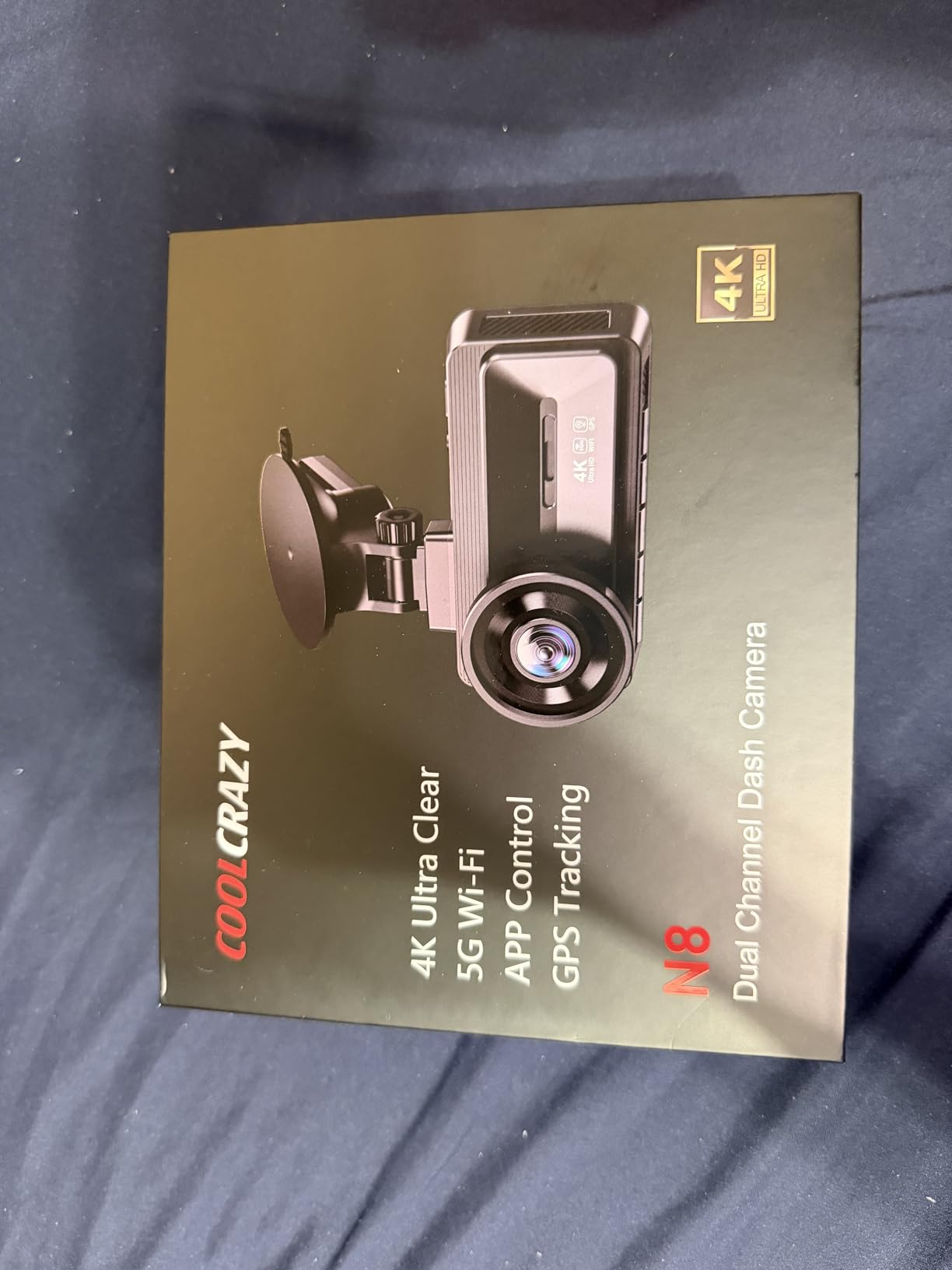
Built-in 5GHz WiFi handles viewing, downloading and sharing through the phone app, and the built-in GPS puts a live speed and compass stamp on the video with route playback, which is useful evidence if a vehicle follows you. The G-sensor locks incident footage during loop recording automatically.
The trade-offs are modest. Parking mode time-lapse needs an ACC hardwire kit bought separately, the rear camera is 1080P rather than 4K, and there is a single memory card slot, so front and rear share the same card and its capacity.
One note on the listing itself: the stated item weight of 1.6 ounces looks understated for a complete front-and-rear kit, so do not plan the mount around that figure.
Why the N8 suits a first dash cam
A suction mount is genuinely useful for night driving because you can take the camera down and check a frame without leaving a mounting mark on the glass. It also makes moving the camera between vehicles trivial.
The STARVIS sensor with f/1.5 gives it real low-light capability rather than a marketing label, and the built-in GPS speed stamp is a nice touch for documenting a tailgater on a dark road.
Where the N8 falls short
Skip it if you want parking mode out of the box, since the hardwire kit is a separate purchase. Skip it if you need 4K clarity on the rear camera, and note the single card slot means one large-capacity card is doing all the work.
If you are recording through a long winter and a hot summer, also weigh the fact that a suction mount can lose grip in extreme cold, and consider a model with adhesive pads and a supercapacitor instead.
What Actually Makes a Dash Cam Good at Night
The sensor decides night quality, everything else is secondary. A Sony STARVIS 2 back-illuminated sensor such as the IMX675 or IMX678 gathers light more efficiently than a conventional small bright sensor, which is why dark scenes look brighter and cleaner rather than noisy and grey. If a product page does not name the sensor, treat the night claims as unverified.
STARVIS 2 improves on the original STARVIS generation with larger pixels and a back-illuminated design, and manufacturers quote roughly 2.5x the dynamic range and 2.5x the light sensitivity of the earlier generation. In practice that means less noise, less motion blur and more recoverable detail in the shadows after dark.
Aperture is the second lever and the one most listings bury. An f/1.5 to f/1.6 front lens collects far more light per frame than an f/2.0, and a wider aperture keeps shutter speeds high enough that a moving vehicle at night is not smeared beyond recognition. Several cameras here pair an f/1.5 front with a slower rear lens, which is fine, but do not assume the rear matches.
HDR matters more at night than most people expect, and for a specific reason. A single exposure cannot hold both a set of oncoming headlights and a dark country road, so the bright part blows out and the rest is crushed. Dual or triple exposure HDR tone mapping balances the two, which is why reviewers across this group recommend leaving HDR on for night driving even though it costs some frame rate on certain models.
Resolution is the most over-hyped number on the page. A 4K label produced by upscaling a 2K sensor, as with the ROVE R2-4K Dual front channel and the 70mai T800E, adds file size without adding light or detail. For night work, sensor size and aperture beat resolution every time, and a native 2K capture on a STARVIS 2 sensor will beat an upscaled 4K on a small one.
Channel count decides what you can actually see after an incident. Two channels cover the classic front and rear case, a third inside channel covers passengers for rideshare and taxi drivers, and a fourth side channel covers flanks. Two channels is enough for most family cars; add the cabin channel if you carry people for a living.
Finally, heat management is a night issue that owners consistently raise. Supercapacitors avoid the swelling and degradation of lithium batteries in a parked car in summer, and cameras like the Vantrue N4 Pro S that can drop to a two-channel mode to cut heat by 30 percent are designed around the reality that a hot car will degrade an unprotected unit. The same physics is discussed in our night photography sensor guide, just at a larger scale.
Recording All Night: Parking Mode, Cards and Power
Yes, there are dash cams that can record all night, but only with a hardwire kit and a card sized for the bitrate. Almost every camera here lists parking mode with time-lapse and collision detection, and nearly all of them are sold without the hardwire cable, so plan on buying one for the vehicle you care about.
Time-lapse mode compresses time aggressively, so a parked hour can be recorded in very little space. Buffered event detection is the mode worth paying attention to, because it saves footage from before an impact rather than after, and the best implementations here capture 10 seconds of pre-roll while keeping all channels active.
Low-bitrate parking mode is the most efficient option and the one to choose if you care more about coverage hours than frame rate. The Vantrue N2X offers four parking modes including 15-second pre-recording, customisable motion detection zones and a low frame-rate and bitrate mode, which is a good template for what to look for.
Storage math is where night drivers get caught out. Three-channel 4K recording consumes capacity fast, and the 70mai T800E review base reports that recording all three channels fills the bundled 64GB card in under half a day. The Vantrue N4 Pro S supports cards up to 1TB for 37+ hours of continuous 4K triple-channel recording, which is the realistic scale for all-night coverage.
Use a genuine high-endurance card rated for sustained write speeds, because several cameras in this group issue slow-card warnings on cheaper media and some Vantrue owners report only branded cards working reliably. Format the card in the camera rather than on a computer, and check the date and time after formatting, since it can reset.
Finally, account for power draw. A camera left in parking mode all night will drain a battery without a voltage cutoff, and the Vantrue N2X is documented as running hot and drawing noticeable power while monitoring. A hardwire kit with a low-voltage cutoff is the difference between overnight coverage and a car that will not start in the morning.
Frequently Asked Questions
Which dash cam has the best night vision?
The Vantrue N4 Pro S has the strongest night performance in our roundup, using triple Sony STARVIS 2 sensors with triple HDR and Night Vision 4.0 PlatePix processing. For most drivers the ROVE R2-4K Dual is the better buy, since it pairs a STARVIS 2 IMX675 sensor with a wide f/1.5 aperture and dual-band 5.8GHz WiFi at a fraction of the cost.
Is there a dash cam that can record all night?
Most dash cams can record all night, but only with a hardwire kit and a memory card large enough for the bitrate. Parking mode typically uses time-lapse, buffered event detection with pre-roll, or a low-bitrate mode. Set the low-voltage cutoff so you do not flatten your battery overnight.
Which is better, STARVIS or STARVIS 2?
STARVIS 2 is the better choice for night driving. It uses larger pixels and a back-illuminated design, and manufacturers quote roughly 2.5x the dynamic range and 2.5x the light sensitivity of the original STARVIS generation, which shows up as less noise and less motion blur after dark.
Which STARVIS 2 sensor is best for a dash cam?
The IMX678 and IMX675 are the two STARVIS 2 sensors you will see most often. The IMX678 drives 4K recording and appears in flagship three-channel systems, while the IMX675 is extremely common on 2K and upscaled 4K front cameras and still delivers strong low-light performance. Pick the one that matches the resolution you actually need.
Will my insurance go down if I have a dash cam?
A dash cam does not automatically lower your premium, but insurers frequently accept dash cam footage as evidence in a claim, and some offer a discount for an approved device. Footage with a clear plate, GPS speed and route stamp, and timestamps is far more useful in a dispute than an unmarked clip.
Do I need HDR on a dash cam at night?
Yes, for night driving HDR is one of the most useful settings you can enable. A single exposure cannot hold oncoming headlights and a dark country road at the same time, so HDR tone mapping keeps the surrounding scene readable instead of letting the brightest part of the frame swallow everything else.
The Verdict on Night-Vision Dash Cams in 2026
The best dash cams with night vision in 2026 all share one ingredient: a Sony STARVIS or STARVIS 2 back-illuminated sensor paired with a wide aperture and working HDR. The ROVE R2-4K Dual is the pick for most drivers, the Vantrue N4 Pro S wins outright on plate readability, and the REDTIGER F7NP remains the cheapest route to a real STARVIS 2 front camera.
Add a cabin channel with infrared if you drive passengers at night, buy a genuine high-endurance card and a hardwire kit, and leave HDR switched on. Those three choices do more for your usable night evidence than any resolution upgrade.