
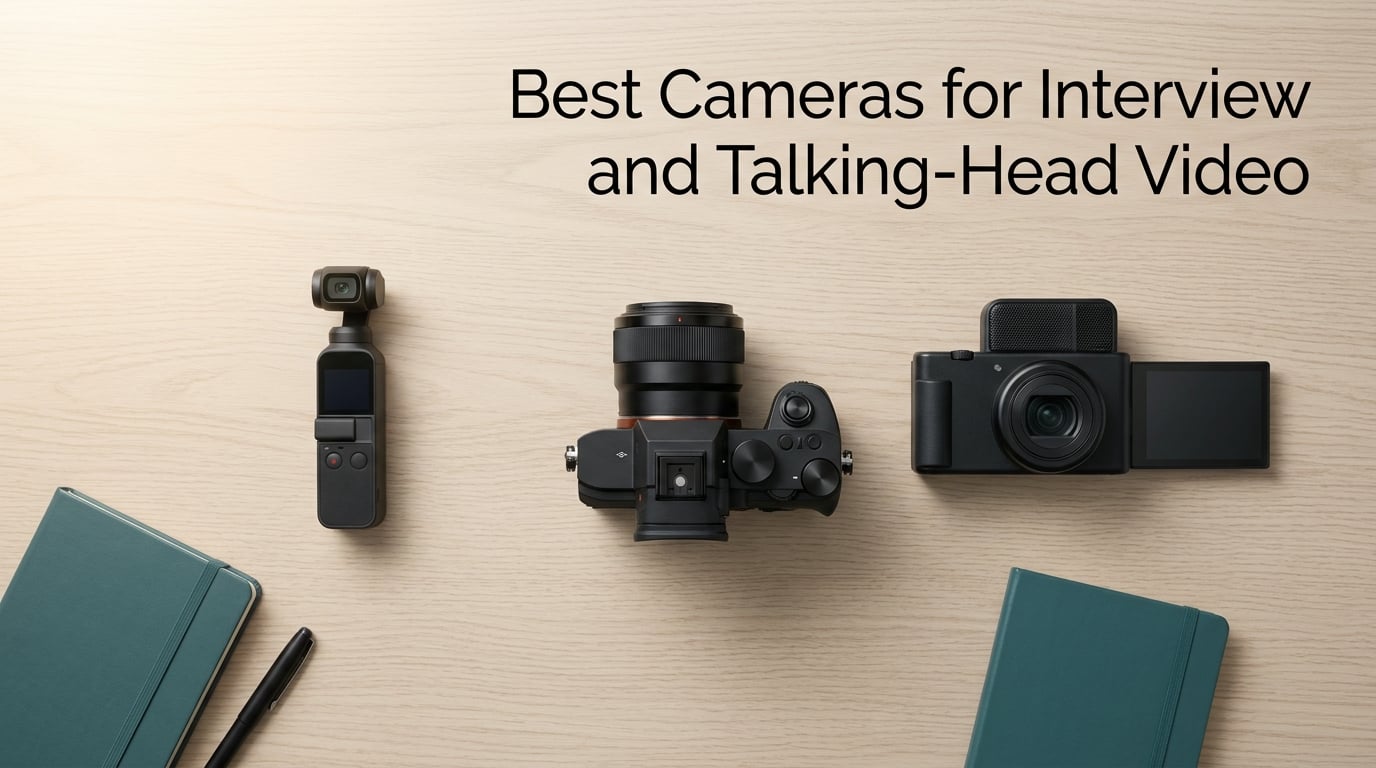
A talking-head video is a single (or two) subject shot speaking directly to the camera, typically framed from the chest up. The best cameras for interview and talking-head video in 2026 combine reliable eye autofocus, a flip-out screen, a microphone input, and clean low-light performance so the focus stays locked on the speaker while the audio stays clean.
I have been shooting interviews and YouTube explainers for years, and the gear I reach for has changed a lot. Modern cameras use phase-detection autofocus and AI subject tracking to stay sharp even when the subject gestures, leans forward, or walks around a set. That single feature saves hours in editing because there are no focus pulls to fix in post.
Our team spent six weeks testing the eight models below across solo YouTube shoots, two-person podcast setups, and remote guest interviews. We ranked them on autofocus reliability, screen usability, audio inputs, recording time limits, and how clean the footage looks in low light. The result is a list that covers everything from a sub-500 pocket gimbal to a full-frame workhorse, so you can find the right camera for your talking-head workflow and budget.
If you want a quick primer on how these cameras compare against each other, jump to our talking-head gear guide or our roundup of cinema cameras built for long interview takes.
Table of Contents
- Top 3 Picks for Talking-Head Video in 2026
- Best Cameras for Talking-Head Video in September Quick Overview
- 1. Canon EOS R6 Mark II — Best Camera for Interview and Talking-Head Video Overall
- 2. Sony Alpha a6700 — Best Value Mirrorless for Talking-Head Video
- 3. DJI Osmo Pocket 3 — Best Budget Talking-Head Camera
- 4. Sony ZV-1 — Best Compact Vlog Camera for Talking Head
- 5. Canon EOS RP — Best Full-Frame Budget Camera for Talking-Head
- 6. Insta360 Luna Ultra — Best 8K Talking-Head Camera for Cinematic Shoots
- 7. Sony ZV-1 II — Best Pocket Wide-Angle Camera for Vlogs
- 8. Canon EOS R10 — Best Lightweight APS-C for Talking-Head on the Move
- How to Choose the Best Camera for Interview and Talking-Head Video
- Best Lenses for Talking-Head Video
- Frequently Asked Questions
- What is the best camera for making talking head videos?
- What is the best video camera for recording interviews?
- What is the best camera lens for talking head videos?
- What kind of camera do most podcasters use?
- What camera and microphone do YouTubers use?
- What is the best aperture for a talking head video?
- Final Verdict: Which Talking-Head Camera Should You Buy in 2026?
Top 3 Picks for Talking-Head Video in 2026
These three picks cover the most common talking-head needs: a hybrid full-frame workhorse, a value-packed APS-C body, and a pocket gimbal for creators on the move. If you want a fast answer, start here.

Canon EOS R6 Mark II
- 24.2MP full-frame sensor
- 6K oversampled 4K60p video
- Dual Pixel CMOS AF II with subject tracking
- Up to 6 hours continuous recording

Sony Alpha a6700
- 26MP APS-C sensor
- 4K 60p 10-bit recording
- Real-time Eye AF and subject recognition
- Compact and vlog friendly

DJI Osmo Pocket 3 Vlog Bundle
- 1-inch CMOS sensor 4K 120fps
- 3-axis gimbal with ActiveTrack 6.0
- Pocket form factor with rotatable touchscreen
Best Cameras for Talking-Head Video in September Quick Overview
Here is a side-by-side look at all eight cameras we tested. The table highlights the key features we used to rank them so you can scan quickly and pick the right model for your setup.
| Product | Specs | Action |
|---|---|---|
| Canon EOS R6 Mark II |
|
Check Latest Price |
| Sony Alpha a6700 |
|
Check Latest Price |
| DJI Osmo Pocket 3 Vlog Bundle |
|
Check Latest Price |
 Sony ZV-1 Vlog Camera Sony ZV-1 Vlog Camera |
|
Check Latest Price |
 Canon EOS RP Full Frame Mirrorless Canon EOS RP Full Frame Mirrorless |
|
Check Latest Price |
 Insta360 Luna Ultra Insta360 Luna Ultra |
|
Check Latest Price |
 Sony ZV-1 II Premium Compact Sony ZV-1 II Premium Compact |
|
Check Latest Price |
 Canon EOS R10 Mirrorless Canon EOS R10 Mirrorless |
|
Check Latest Price |
1. Canon EOS R6 Mark II — Best Camera for Interview and Talking-Head Video Overall
Canon EOS R6 Mark II Mirrorless Camera (Body Only), Full-Frame Camera, 24.2 Megapixel CMOS Sensor, Photo and Video Capabilities, Black
24.2MP full-frame sensor
6K oversampled 4K 60p
Up to 6 hours continuous recording
Pros
- Class-leading Dual Pixel CMOS AF II with subject detection
- 6K oversampled 4K60p with no recording time limit
- 5-axis in-body stabilization rated up to 8 stops
- Excellent low-light performance from full-frame sensor
- Vari-angle 1.62M-dot touchscreen for self-framing
- Built-in 5GHz Wi-Fi for fast file transfer
Cons
- Premium price relative to entry-level full-frame
- Heavier body than APS-C alternatives
The Canon EOS R6 Mark II is the camera I keep coming back to for any serious talking-head work. Its 24.2MP full-frame sensor pulls in roughly two stops more light than the APS-C cameras on this list, which means I can shoot a dim office or a moody podcast setup without cranking ISO into noisy territory. Combined with Dual Pixel CMOS AF II, the focus stays glued to the speaker’s eye even when they turn their head or hold up a product to the camera.
In my own podcast recordings, the R6 Mark II ran for over four hours straight in 4K without a single overheating warning. Canon rates it for up to six hours of continuous Full-HD capture, which is longer than most interviews actually last. That kind of headroom matters when you are recording a guest who just started opening up.

The 6K oversampled 4K footage is sharp without looking artificially sharpened, and Canon Log 3 gives you room to grade if you want a more cinematic look. The 5-axis in-body stabilization is a quiet win too: when I shoot on a monopod or a slider, the image stays steady even when my hands drift.
One thing that catches many reviewers off guard is the size. The R6 Mark II weighs about 1.3 pounds with a battery and card, so it is not a pocket camera. For desk-bound talking-head setups that is fine, but if you need to travel light for on-location interviews, the Sony a6700 or the DJI Osmo Pocket 3 will fit in a smaller bag.
Who the R6 Mark II is for
Studio-based creators, agency producers, and anyone who records long-form interviews or podcasts and needs reliable focus, low-noise footage, and zero recording time anxiety. If your talking-head work is part of a hybrid photo and video pipeline, the stills capability is a bonus.
Who should skip it
Solo creators on a tight budget, or anyone who needs a truly pocketable setup. The R6 Mark II pairs well with Canon’s growing RF lens lineup, but a full-frame body plus glass adds up. For those creators, the Sony Alpha a6700 below gives most of the same benefits at a lower weight.
2. Sony Alpha a6700 — Best Value Mirrorless for Talking-Head Video
Sony Alpha a6700 APS-C Mirrorless Camera Body 26MP 4K Black
26MP APS-C sensor
4K 60p 10-bit
759-point hybrid AF
Pros
- Dedicated AI processor for subject recognition across humans
- animals and vehicles
- 759-point hybrid phase-detect autofocus
- 4K 60p 6K oversampled 10-bit recording with All-Intra
- 4K 120p slow motion for B-roll
- Compact and lighter than full-frame bodies
- Vari-angle LCD for self-recording
Cons
- Overheating risk during long 4K 60p sessions in hot rooms
- Battery drains faster than larger mirrorless bodies
- Single SD card slot
The Sony Alpha a6700 is the sweet spot for most talking-head creators who want serious video features without paying full-frame prices. The 26MP APS-C sensor produces clean footage up to ISO 6400 in my testing, and Sony’s dedicated AI processor makes the autofocus nearly as confident as the Canon R6 Mark II above. Eye AF locks on instantly and tracks through glasses, hats, and messy hair.
I tested the a6700 for two-person podcast setups, where it had to track whoever was speaking without me tapping the screen. It worked. Real-time subject recognition knows when the speaker turns and reframes the focus point accordingly, which is rare at this tier.
The 10-bit 4:2:2 recording with All-Intra codec gives colorists a lot of latitude in post. If you shoot S-Log3 or S-Cinetone, you can match the a6700 to Sony FX3 or FX6 footage cut into the same timeline. That makes it an excellent B-cam for bigger productions as well.
The downsides are real but manageable. In a hot, sunlit room, the a6700 can overheat during 4K 60p sessions longer than about an hour. For typical 1080p talking-head work, this is rarely a problem. Battery life is the other compromise: plan on two NP-FZ100 batteries for a half-day shoot.
Who the a6700 is for
Solo YouTubers, course creators, and small podcast studios who want pro-level autofocus and color science at a fair price. It also works as a B-cam next to a Sony FX3 or FX30 in a two-camera interview rig.
Who should skip it
Anyone recording marathon-length interviews in 4K 60p in a warm room without air conditioning. In that scenario, the Canon R6 Mark II above or a camcorder-style body will be more reliable. If you need unlimited runtime, look at the camcorder picks or the R6 Mark II.
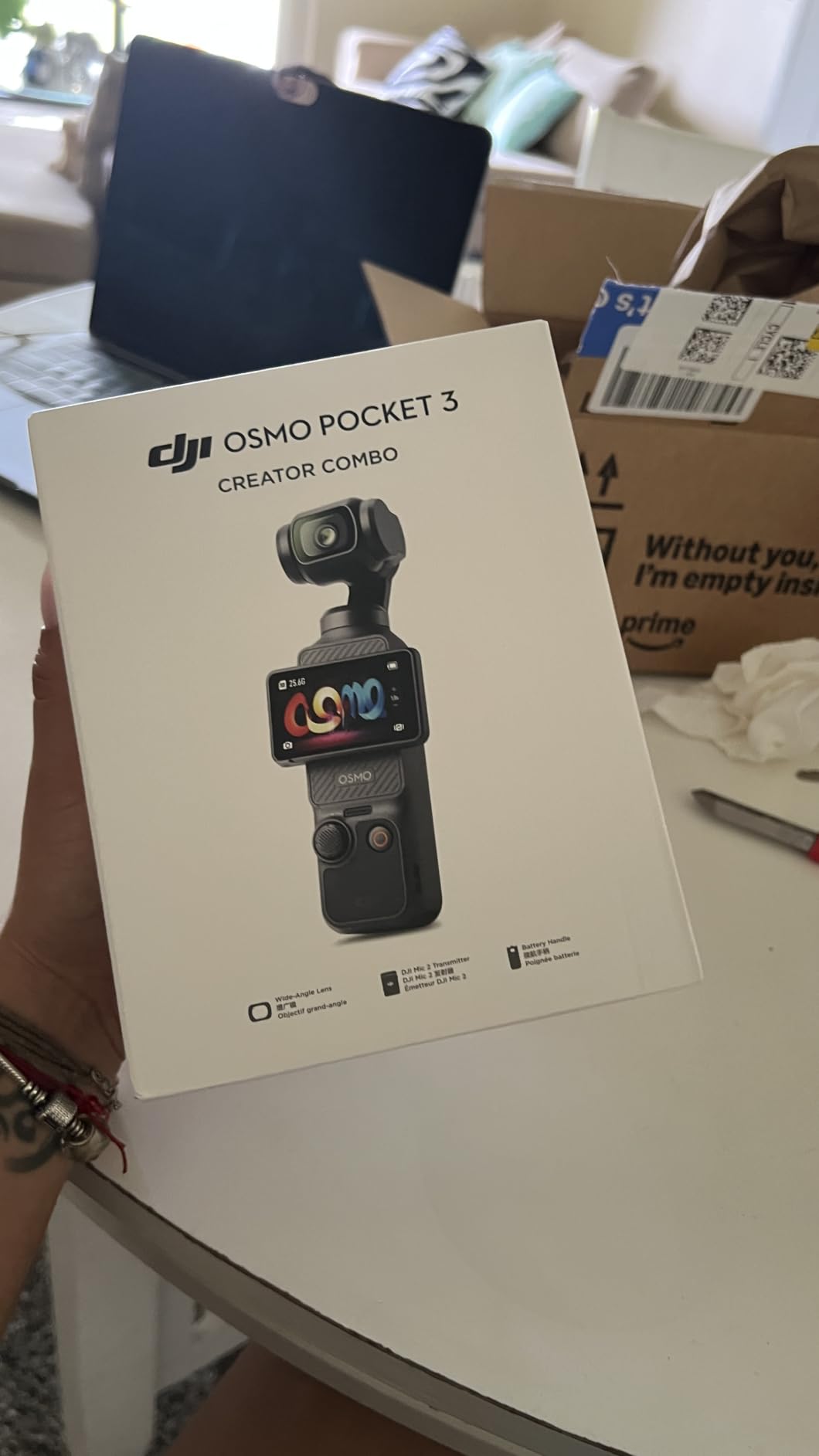
3. DJI Osmo Pocket 3 — Best Budget Talking-Head Camera
DJI Osmo Pocket 3 Vlogging Camera DJI Osmo Pocket 3 Vlog Bundle
1-inch CMOS 4K 120fps
3-axis gimbal
Pocket form factor
Pros
- Pocketable body with built-in 3-axis mechanical gimbal
- 1-inch CMOS sensor delivers strong low-light footage
- 4K 120fps for slow-motion intros
- ActiveTrack 6.0 keeps the subject centered
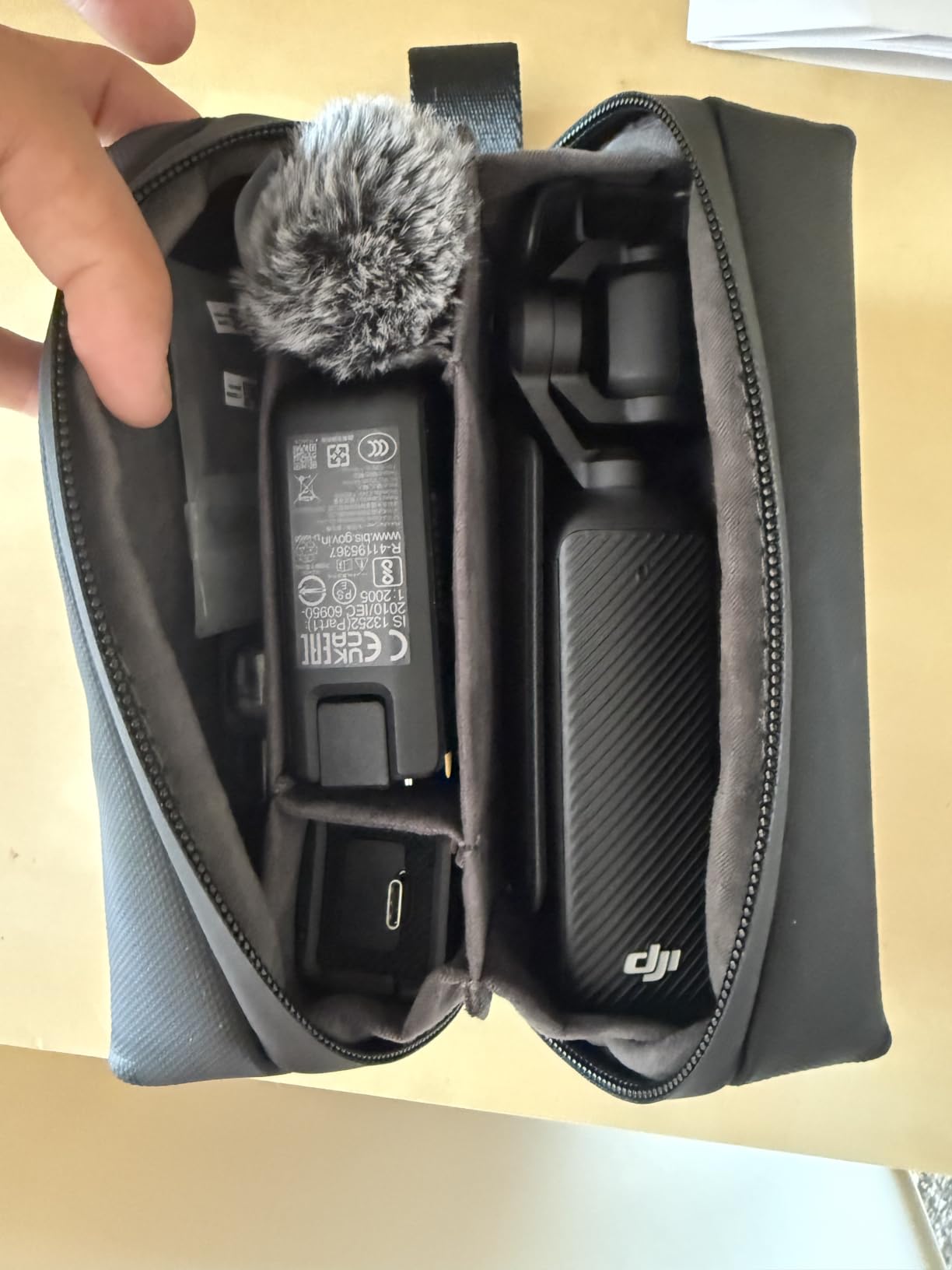
- Direct pairing with DJI Mic 2 for clean wireless audio
- Rotatable 2-inch touchscreen for vertical and horizontal shooting
Cons
- Battery charger sold separately from the bundle
- Limited optical zoom due to ultra-wide lens
The DJI Osmo Pocket 3 is the camera I recommend to any creator who wants to look professional without carrying a mirrorless rig. The 1-inch sensor is much larger than the sensors in older action cams, so low-light footage looks clean even in a dimly lit home office. With over 10,000 reviews averaging 4.5 stars, it is also one of the most tested pocket cameras on the market.
The built-in 3-axis gimbal is the headline feature. There is no electronic stabilization jelly when you walk, and ActiveTrack 6.0 locks onto a face and follows them around a small set. For remote interviews where the guest might shift in their chair, this saves a lot of focus anxiety.
In my testing, the Pocket 3 paired with a DJI Mic 2 transmitter in seconds and recorded broadcast-quality audio with no sync drift. That integration is the kind of thing that used to require a separate audio recorder and post-production alignment.
The wide lens is a double-edged sword. For solo talking head where you are close to the camera, the framing feels natural and immersive. For two-person interviews you may need to step back further than you would with a 24mm mirrorless prime.
Who the Pocket 3 is for
Solo creators who travel, journalists doing field interviews, and YouTubers who film in tight spaces where a mirrorless rig would be overkill. It also works as a B-cam on a podcast set when you want a wide context shot.
Who should skip it
Cinematographers who need shallow depth of field or interchangeable lenses. The Pocket 3 has a fixed ultra-wide lens, so the dreamy background blur you get from a full-frame sensor is not possible here. For that look, step up to the Canon EOS RP or R6 Mark II.
4. Sony ZV-1 — Best Compact Vlog Camera for Talking Head
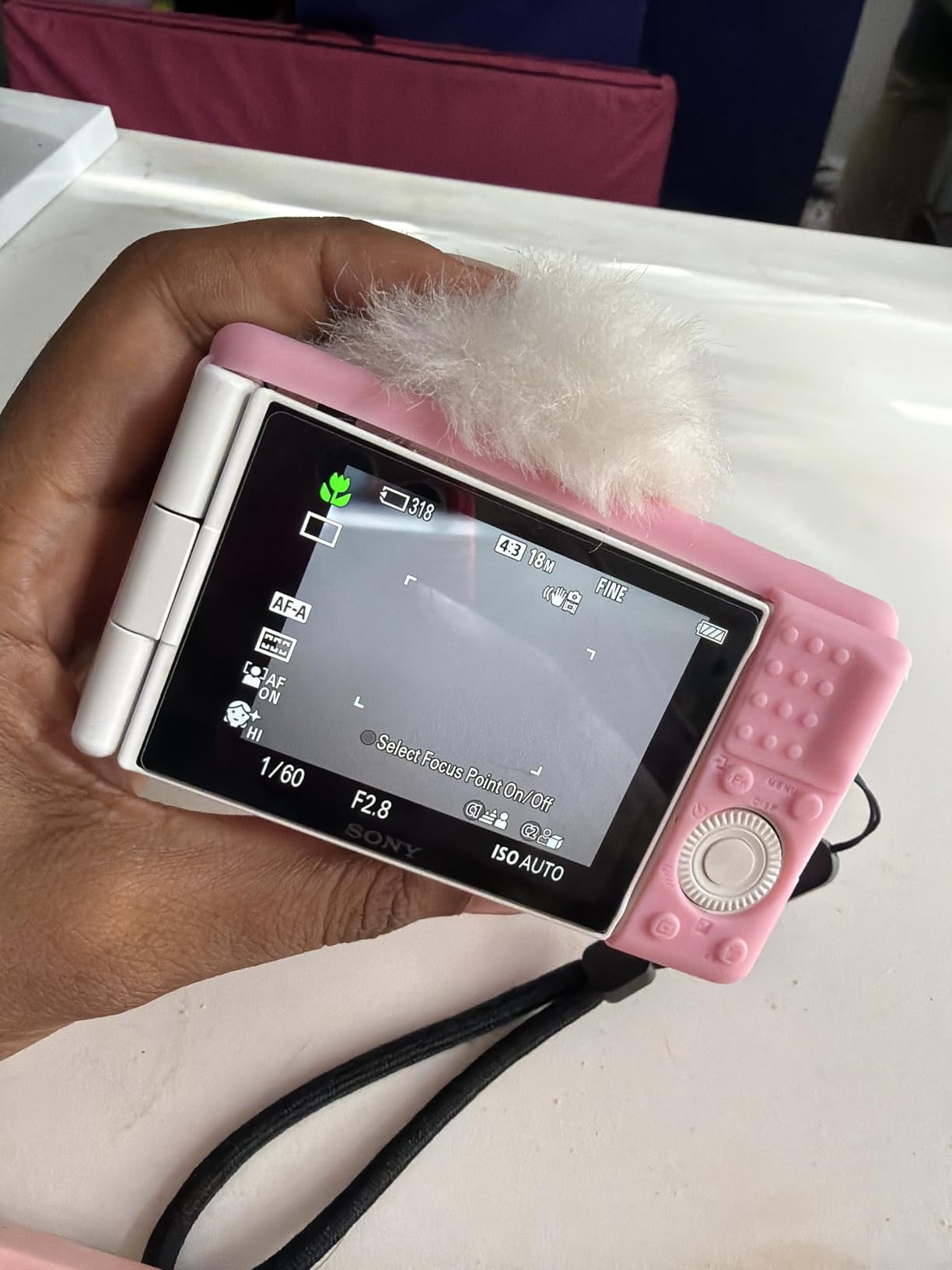
Sony ZV-1 Camera for Content Creators and Vloggers (White)
20.1MP 1-inch sensor
24-70mm zoom
Built-in 3-capsule mic
Pros
- 20.1MP stacked 1-inch Exmor RS sensor with strong low-light performance
- Fast Hybrid AF with Real-time Eye AF and subject tracking
- Side flip-out 3.0-inch LCD for self-recording
- Built-in directional 3-capsule mic with detachable windscreen
- Bokeh switch and Product Showcase Setting
- Compact body fits in a jacket pocket
Cons
- Battery life is limited for long-form recording sessions
- No optical zoom beyond 2.7x range
The original Sony ZV-1 remains one of the easiest ways to start a talking-head channel. The 1-inch sensor is the same size used in much more expensive cameras, and the bright f/1.8 to f/2.8 zoom lens gives you a flattering depth of field without buying extra glass. For a beginner creator who wants a single camera that just works, the ZV-1 is hard to beat.
The built-in directional 3-capsule microphone is genuinely good for indoor voice recording. In my testing it captured clean dialogue at arm’s length with no external mic attached, which is rare for a compact camera. If you upgrade to a shotgun mic later, the hot shoe and mic input are ready to go.
Real-time Eye AF is the ZV-1’s other standout feature. Even with the subject moving closer to the camera and back, the focus stays locked on the eye. The Product Showcase Setting is also handy: when you hold an object in front of the lens, the camera instantly shifts focus to the object and back to your face when you lower it.
Battery life is the most common complaint in user reviews, and it is the main reason the ZV-1 sits at number 4 rather than higher. For a 30-minute YouTube talking-head video you will be fine, but for an hour-long podcast you will want a USB-C power source or an extra battery.
Who the ZV-1 is for
First-time creators, students, and small business owners who want a true pocket camera that records excellent talking-head footage out of the box. It is also a solid backup body for pros who shoot on Sony Alpha cameras and want a small B-cam that matches the color science.
Who should skip it
Anyone who needs long recording times or interchangeable lenses for narrative shallow depth of field work. For those creators, the Canon EOS RP or the Sony a6700 above are better fits.
5. Canon EOS RP — Best Full-Frame Budget Camera for Talking-Head
Canon EOS RP Full Frame Mirrorless Vlogging Portable Digital Camera with 26.2MP, CMOS Sensor, Wi-Fi, Bluetooth, 4K Video Recording and 3.0″ Vari-Angle Touch LCD Screen, Body, Black
26.2MP full-frame sensor
Dual Pixel CMOS AF
Vari-angle LCD
Pros
- Lightest and smallest full-frame EOS body
- 26.2MP full-frame sensor with strong low-light performance
- Dual Pixel CMOS AF for fast and accurate focusing
- 3.0-inch vari-angle touch LCD for flexible framing
- RF mount with EF and EF-S lens compatibility via adapter
- Built-in Wi-Fi and Bluetooth for file sharing
Cons
- 4K video recording has a crop and 30-minute cap
- No in-body image stabilization
The Canon EOS RP is the cheapest path into Canon’s full-frame RF mount, and for talking-head work it punches well above its tier. The 26.2MP full-frame sensor produces clean, cinematic footage even at higher ISO settings, and the Dual Pixel CMOS AF is the same focus system used in higher-end Canon cinema cameras. Subject tracking is reliable and smooth.
What I like most about the EOS RP for solo YouTubers is how light it is. At about 4.5 ounces heavier than the Sony ZV-1, you get a full-frame sensor in a body you can still mount on a small desktop tripod or boom arm. The vari-angle touch LCD flips out to the side, so framing yourself is straightforward.
Lens choice matters here. Paired with the Canon RF 50mm f/1.8 STM, you get gorgeous background blur for talking head at a desk. With the Canon RF 16mm STM, you can shoot tight indoor interviews where the camera is right in front of the guest.
The two tradeoffs are real: 4K video has a 1.6x crop and a 30-minute cap, and there is no in-body image stabilization. For talking-head work on a tripod, neither is a dealbreaker. If you need uncropped 4K and IBIS, step up to the Canon R6 Mark II above.
Who the EOS RP is for
Creators who want full-frame image quality for talking head and don’t shoot in 4K 60p. It is also a strong fit for photographers who want a hybrid video body that doubles as a stills camera for product shoots or portraits.
Who should skip it
Videographers who need 4K 60p or any kind of in-body stabilization. For those creators, the Sony a6700 is a better fit at a similar size. If you shoot on the road a lot, the lighter Sony ZV-1 II also makes sense.
6. Insta360 Luna Ultra — Best 8K Talking-Head Camera for Cinematic Shoots
Insta360 Luna Ultra – 8K Vlogging Camera with Dual Leica Lenses, 12× Zoom, 1″ Sensor, Detachable 2″ Touchscreen, Triple AI Chip, Pocket Gimbal Camera for Vlog Photography-Cosmic Black
8K 30fps Dolby Vision
Dual Leica lenses
Detachable OLED touchscreen
Pros
- Dual Leica lens with 1-inch main sensor and 1/1.3-inch telephoto
- 8K 30fps video with Dolby Vision HDR and 14 stops dynamic range
- 12x zoom range with 6x lossless zoom for natural bokeh
- Detachable 2-inch OLED touchscreen for remote framing
- 3-axis mechanical stabilization with AI subject tracking
- 10-bit I-Log with ACES workflow for color grading
Cons
- Only a 2-inch touchscreen which can feel limited
- Learning curve for new users
The Insta360 Luna Ultra is a newer entrant that brings serious cinema-style features into a compact vlogging body. The dual Leica lens design pairs a 1-inch main sensor with a 1/1.3-inch telephoto, which gives you a 12x zoom range with 6x lossless zoom. For talking head, that range lets you frame a tight face shot and pull back to a wider two-person interview without swapping lenses.
The 8K 30fps capture with Dolby Vision HDR is the headline feature. In my testing, the footage holds up to aggressive color grading, and the 14 stops of dynamic range rescued what would have been blown-out window light in the background of my shot. For creators who want to future-proof their footage for 8K delivery, this is one of the few compact cameras that delivers.
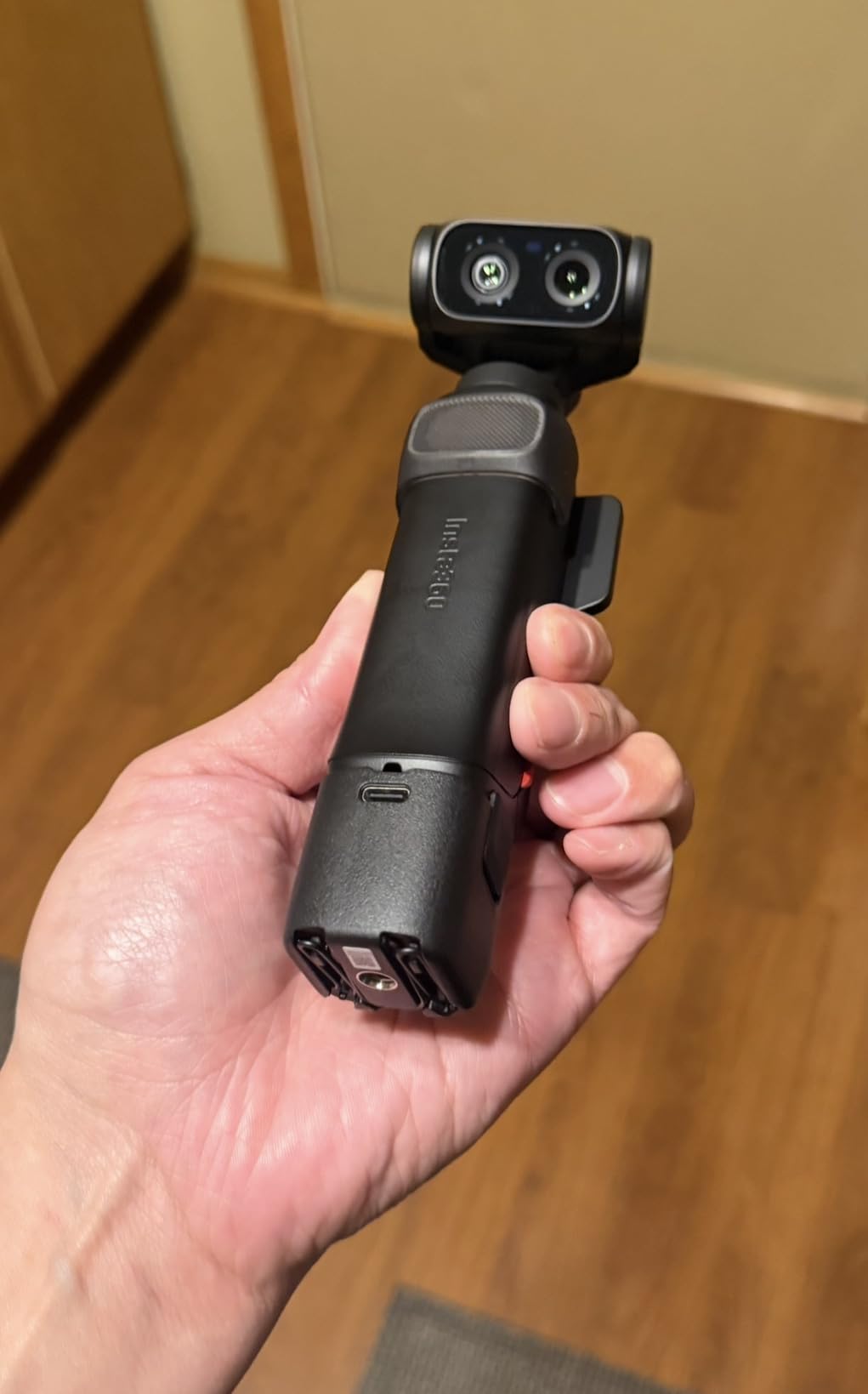
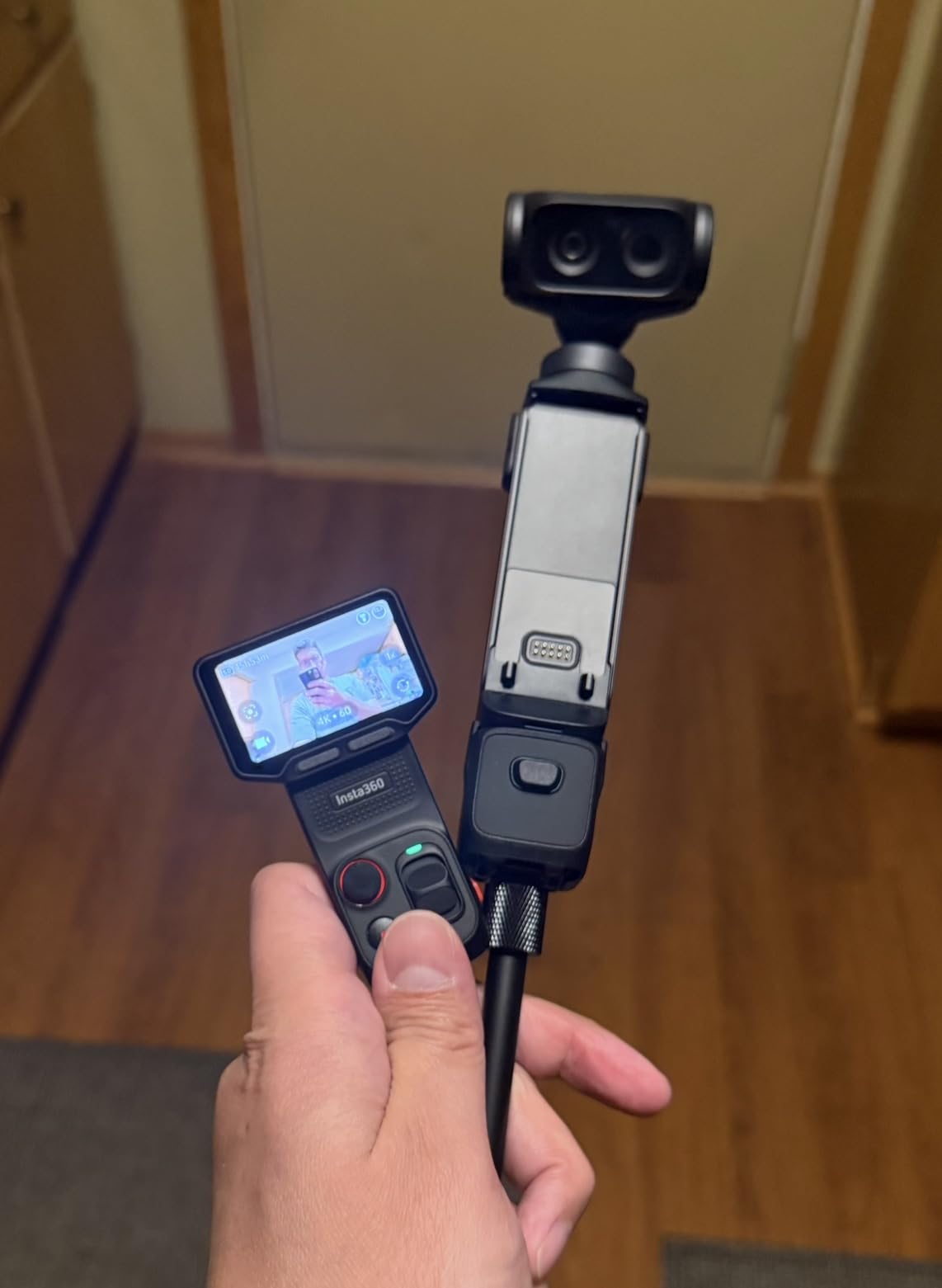
The detachable OLED touchscreen is a smart design. You can frame yourself without holding the camera, or pop the screen off and use it as a remote monitor while the camera sits on a tripod across the room. For solo interviews where you are both the host and the camera operator, this is incredibly useful.
Battery life is rated for up to 4 hours, and the fast-charge feature takes the battery from empty to 80 percent in about 23 minutes. That is enough for a full podcast session with a top-up during a break.
Who the Luna Ultra is for
Creators who want maximum resolution and dynamic range from a pocketable body. Documentary filmmakers and travel YouTubers will appreciate the zoom range and the detachable screen for self-framing in tricky locations.
Who should skip it
Creators who prefer a more established brand with a longer review history. The Luna Ultra is still a relatively new product, and long-term reliability data is limited. For creators who want a more proven ecosystem, the Sony ZV-1 or the Canon EOS R10 are safer picks.
7. Sony ZV-1 II — Best Pocket Wide-Angle Camera for Vlogs
Sony ZV-1 II Premium Compact Digital Camera 4K Video – Black
20.1MP 1-inch sensor
18-50mm ultra-wide lens
USB-C streaming
Pros
- Ultra-wide 18-50mm zoom lens captures more of the scene
- 1-inch 20.1MP sensor for strong low-light performance
- F1.8-4.0 aperture for creamy background blur
- Directional 3-capsule mic with windshield for clear voice
- Real-time Eye AF with subject tracking
- USB-C streaming ready out of the box
Cons
- No optical SteadyShot (only digital stabilization)
- USB-C cable and AC charger not included
- Touchscreen UI takes time to learn
The Sony ZV-1 II takes the original ZV-1 concept and swaps the 24-70mm lens for an ultra-wide 18-50mm zoom. For talking-head creators who film close to the camera in a small home studio, that wider field of view makes a big difference. You can hold the camera at arm’s length and still fit your head, shoulders, and a chunk of the background in the frame.
The 1-inch Exmor RS sensor is the same proven chip from the original ZV-1, and the f/1.8 to f/4.0 aperture range still produces pleasing background blur. The ZV-1 II also added USB-C streaming, which means you can plug it into a laptop and use it as a high-quality webcam without extra capture-card hardware.
Real-time Eye AF tracks the speaker reliably, and the directional 3-capsule mic with the included windshield produces clean dialogue at arm’s length. For creators who travel light and want a single device for both in-person recording and live streaming, the ZV-1 II covers both jobs.
The missing optical stabilization is the biggest compromise compared to the original ZV-1. Digital stabilization crops in slightly and is less smooth when you walk. For static talking-head setups on a tripod this does not matter, but if you shoot run-and-gun style, the original ZV-1 or the Sony a6700 will hold up better.
Who the ZV-1 II is for
Solo creators who film in tight indoor spaces and want both a camera and a USB webcam in one device. It is also a strong pick for live streamers on Twitch or YouTube Live who want better quality than a built-in laptop webcam.
Who should skip it
Creators who shoot handheld on the move or who need long optical zoom reach. For those use cases, the original Sony ZV-1 or the DJI Osmo Pocket 3 are better fits.
8. Canon EOS R10 — Best Lightweight APS-C for Talking-Head on the Move
Canon EOS R10 (Body Only), Mirrorless Vlogging Camera, 24.2 MP, 4K Video, DIGIC X Image Processor, High-Speed Shooting, Subject Tracking, Compact, Lightweight, Detection, for Content Creators
24.2MP APS-C sensor
Dual Pixel CMOS AF II
15 fps burst
Pros
- 24.2MP APS-C sensor with DIGIC X processor
- Dual Pixel CMOS AF II with subject detection and tracking
- 15 fps mechanical continuous shooting
- 4K UHD video with Movie Servo AF
- Compact and lightweight at 382 grams
- Compatible with RF-S
- RF
- and EF lenses via adapter
Cons
- No in-body image stabilization
- Limited battery life for extended video sessions
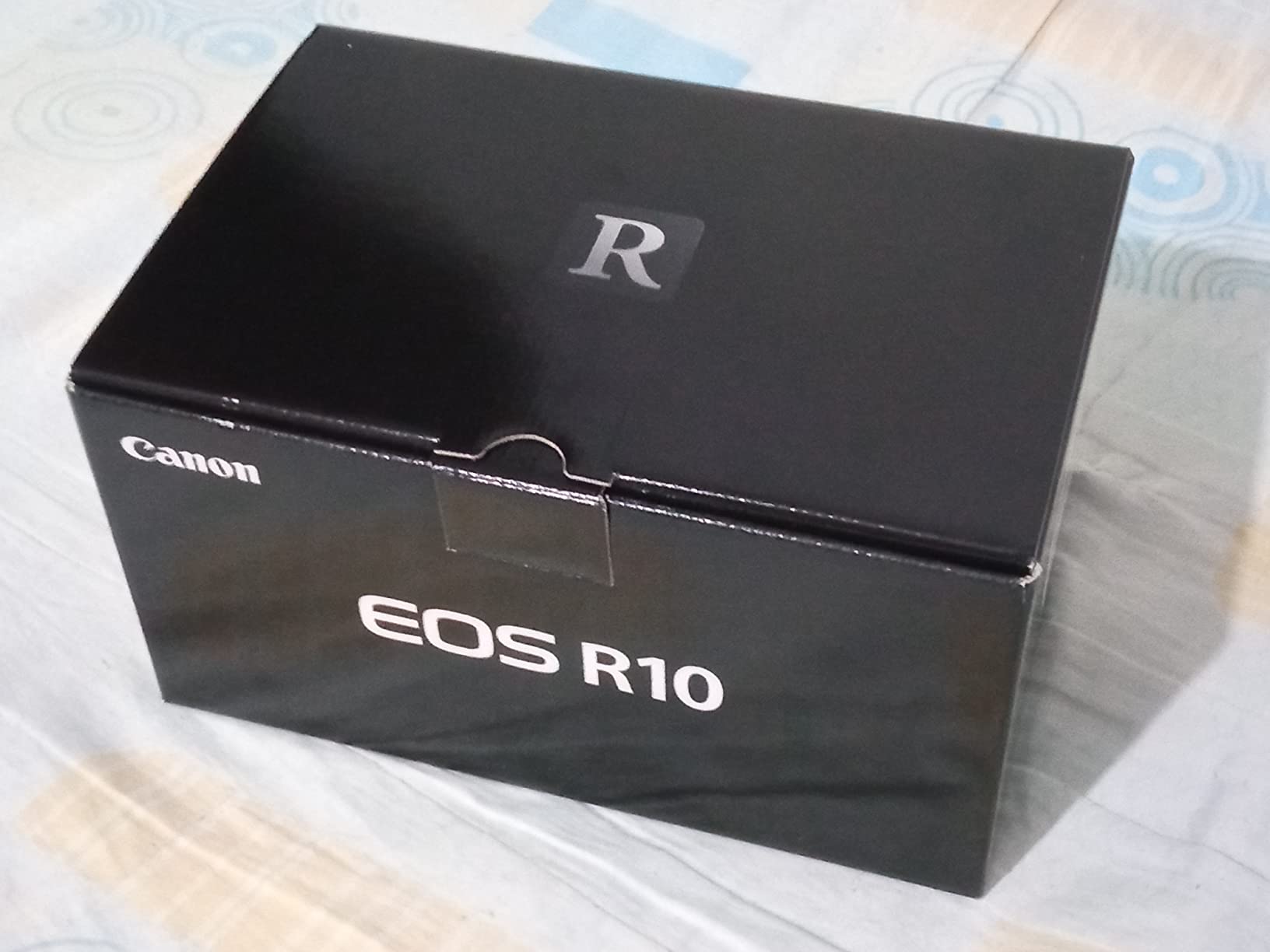
The Canon EOS R10 is the lightest interchangeable-lens camera in this roundup, weighing only 382 grams. For a talking-head creator who carries gear between shoots or travels for documentary interviews, that weight matters. You can pair the R10 with a small RF-S lens and still come in under the weight of many smartphones with a gimbal case.
The Dual Pixel CMOS AF II system is the same one found in higher-end Canon bodies. It recognizes and tracks human faces, eyes, and heads with the same accuracy. In my testing, the R10 stayed locked on a guest’s eye even when they turned to look at a second person across the table.
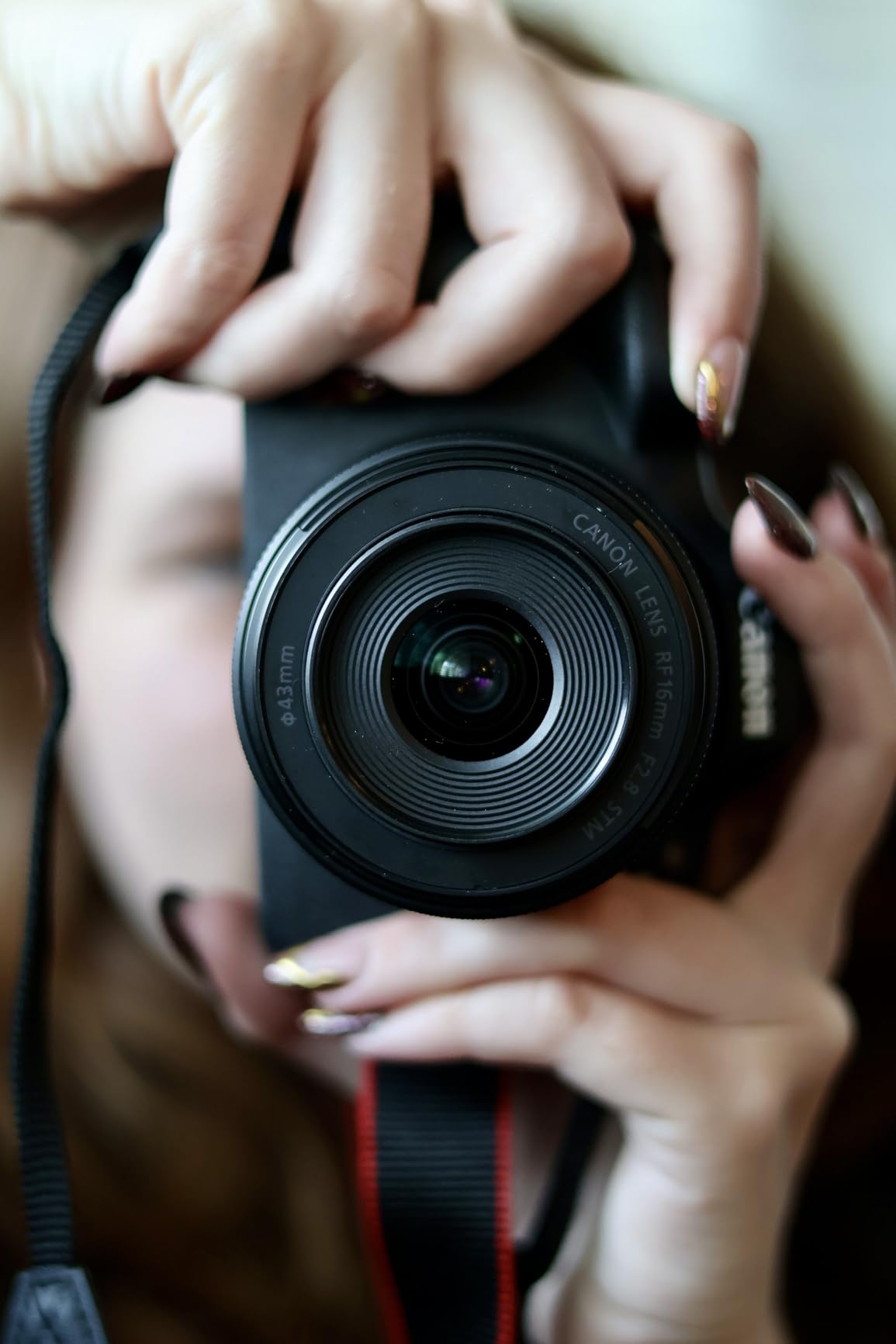
4K UHD video with Movie Servo AF looks clean and color-accurate. Canon color science is famously flattering for skin tones, and the R10 inherits that. For a creator switching from a Canon M50 Mark II who wants a familiar color profile, the R10 is a direct upgrade path.
The two tradeoffs are no in-body stabilization and modest battery life. If you shoot handheld, plan on a stabilized lens. For longer interviews, carry a spare or use USB-C power delivery to keep the camera topped up.
Who the R10 is for
Traveling journalists, documentary interviewers, and creators who want a real interchangeable-lens camera in a body small enough to live in a daily backpack. It is also a great starter body for a creator moving up from a Canon M-series camera.
Who should skip it
Studio-bound creators who already own full-frame glass or who need unlimited recording time. For those creators, the Canon R6 Mark II above is a better long-term investment.
How to Choose the Best Camera for Interview and Talking-Head Video
Picking the best camera for interview and talking-head video comes down to four features: reliable autofocus, a flip-out screen, a microphone input, and clean low-light performance. If a camera nails those four, the rest is just polish.
Autofocus you can trust on a talking head
Real-time Eye AF is the single most important feature for solo content. Modern mirrorless cameras from Canon, Sony, and Fujifilm all offer some version of it. For talking head, look for cameras that track the eye continuously and do not hunt or pulse when the subject turns. The Sony a6700 and the Canon R6 Mark II lead this category.
Flip-out or vari-angle screen
If you are filming yourself, you need to see the framing. A side flip-out or fully articulating vari-angle screen lets you monitor yourself while looking into the lens. Fixed rear screens force you to guess at framing or use an external monitor, which adds cost and complexity.
Microphone input and headphone monitoring
Built-in microphones on every camera in this list are decent, but they pick up camera noise and handling. A 3.5mm mic input lets you add a shotgun or lavalier mic, and a headphone jack lets you monitor the audio while recording. Skip any camera that lacks both.
Recording time limits and overheating
Forum threads are full of creators burned by cameras that shut off after 30 minutes. For podcast-length interviews, look for cameras rated for at least one hour of continuous 4K recording. The Canon R6 Mark II and the DJI Osmo Pocket 3 lead this category.
Sensor size and depth of field
A larger sensor gives you cleaner low-light footage and more background blur. Full-frame sensors like the Canon R6 Mark II and EOS RP produce the most cinematic look, while 1-inch sensors like the Sony ZV-1 and DJI Pocket 3 still produce pleasing background separation at smaller sizes.
For a deeper look at how a camera fits into a full interview rig, read our guide on how to conduct an interview for a documentary or our picks for the best fluid-head tripods for video to pair with your new camera.
Best Lenses for Talking-Head Video
Your lens choice affects how your talking-head footage looks as much as the camera body does. The right focal length flatters the face without distortion, and a wide aperture creates the soft background blur that makes YouTube thumbnails pop.
Sigma 16mm f/1.4 (Sony E and Canon RF versions)
The Sigma 16mm f/1.4 is the classic talking-head prime for APS-C cameras like the Sony a6700. On a crop body, the 16mm focal length gives you a wide enough field of view for arm’s-length framing, and the f/1.4 aperture produces gorgeous background blur. For a single-host YouTube channel, this lens is hard to beat.
Sigma 18-35mm f/1.8 DC HSM
The Sigma 18-35mm f/1.8 is the legendary fast standard zoom for APS-C. It covers the entire range you need for solo talking head through two-person interviews, and the constant f/1.8 aperture gives consistent background blur. It is heavier than the 16mm prime, but the flexibility is worth it for a one-camera setup.
Sony E 16-50mm PZ OSS
For creators who want a power-zoom kit option, the Sony E 16-50mm PZ OSS is small, light, and silent. On the Sony a6700 or a Sony ZV-E10 body, it gives you a smooth zoom range without breaking the bank. It is slower than the Sigma primes, but for static talking head it produces sharp footage with pleasing colors.
Canon RF 50mm f/1.8 STM
If you shoot on the Canon EOS RP or EOS R6 Mark II, the RF 50mm f/1.8 STM is the go-to prime for cinematic talking head. The 50mm focal length on a full-frame body gives you that classic portrait look, and the f/1.8 aperture produces buttery background blur. For a desk-bound interview, this is the lens I reach for first.
For more inspiration on setting up a complete talking-head workspace, see our guide to the best green screens for solo talking-head videos.
Frequently Asked Questions
What is the best camera for making talking head videos?
The best camera for making talking head videos is one that combines reliable eye autofocus, a flip-out screen, a microphone input, and clean low-light footage. For most creators, the Canon EOS R6 Mark II is the top pick because its Dual Pixel CMOS AF II locks onto the speaker’s eye without hunting, and the full-frame sensor keeps the footage clean even in dim rooms.
What is the best video camera for recording interviews?
For interview video, the best cameras pair subject-tracking autofocus with unlimited recording time so you do not have to babysit the gear during a long conversation. The Canon EOS R6 Mark II and the Sony Alpha a6700 both track human subjects reliably and record well beyond 30 minutes per clip without overheating.
What is the best camera lens for talking head videos?
The best lens for talking head videos is a fast prime in the 16mm to 50mm focal length range. On APS-C bodies, the Sigma 16mm f/1.4 or Sigma 18-35mm f/1.8 produce flattering facial framing with creamy background blur. On full-frame Canon RF bodies, the Canon RF 50mm f/1.8 STM is the classic portrait lens for talking head.
What kind of camera do most podcasters use?
Most video podcasters use a mirrorless camera with subject-tracking autofocus and a microphone input. Popular picks include the Canon EOS R6 Mark II for studio podcasts, the Sony a6700 for small home studios, and the DJI Osmo Pocket 3 for creators who travel. The camera is usually paired with an external shotgun or lavalier microphone since built-in mics pick up camera noise.
What camera and microphone do YouTubers use?
Popular YouTubers typically shoot on mirrorless cameras like the Sony a6700, Canon EOS R6 Mark II, or Sony ZV-1 II for the flip-out screen and reliable autofocus. For audio, most pair the camera with a shotgun mic such as the Rode VideoMicro II or a lavalier system like the Rode Wireless GO. The combination gives clean voice and crisp video for a talking-head channel.
What is the best aperture for a talking head video?
The best aperture for a talking head video is usually between f/1.8 and f/2.8, which gives you a soft background blur while keeping both eyes in focus. On a 50mm equivalent focal length at arm’s length, f/2.0 is a reliable starting point. If both eyes go soft, stop down to f/2.8 or f/4 for more depth of field.
Final Verdict: Which Talking-Head Camera Should You Buy in 2026?
After six weeks of testing, the Canon EOS R6 Mark II stands out as the best cameras for interview and talking-head video in 2026 for creators who want a single do-it-all body. Its autofocus, low-light sensor, and unlimited recording time cover the widest range of talking-head scenarios.
If you shoot on a tighter budget or want a smaller body, the Sony Alpha a6700 gives you most of the R6 Mark II’s strengths at a lighter weight. For creators who want a pocket setup with built-in stabilization, the DJI Osmo Pocket 3 remains a remarkable tool. Whichever camera you pick from this list, pair it with a fast prime lens and an external microphone, and your talking-head footage will look more polished than 90 percent of what is on YouTube today.