
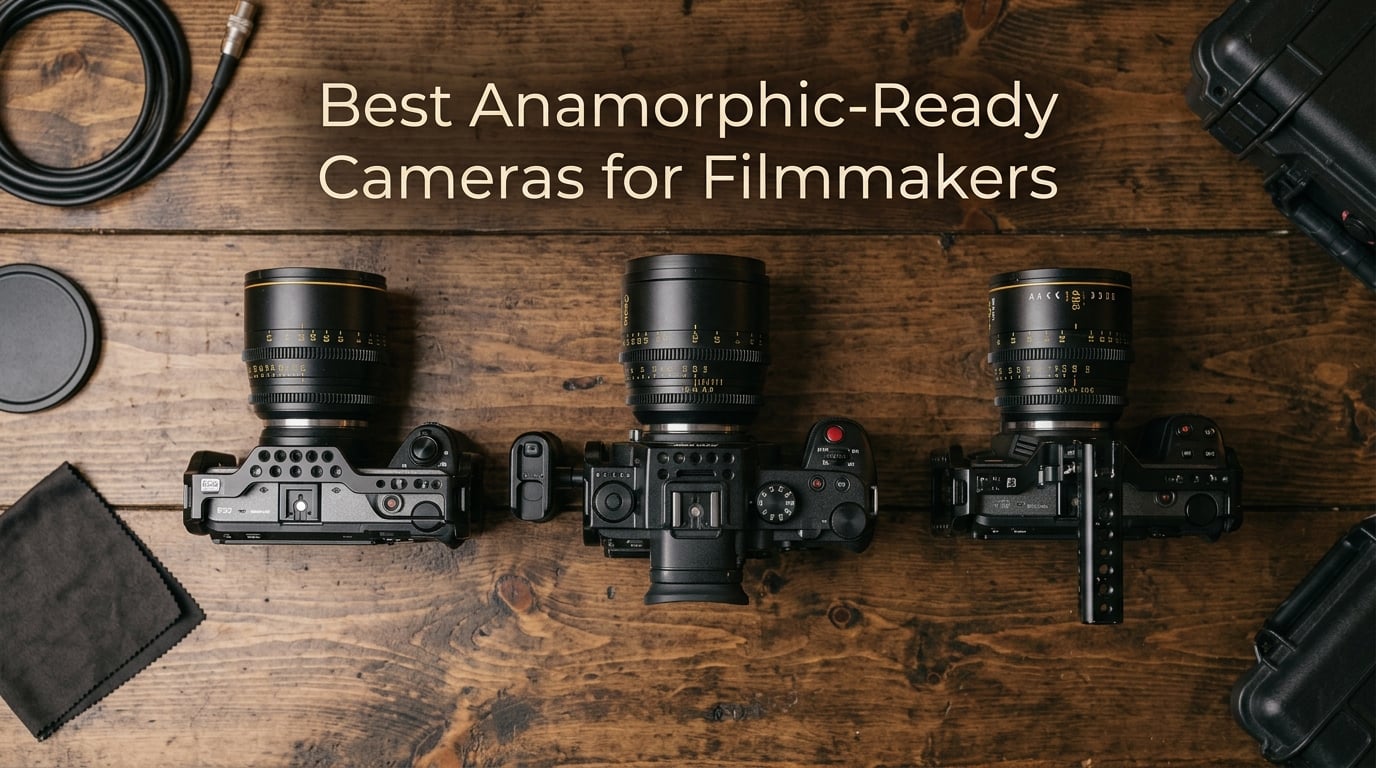
Shooting anamorphic used to mean renting an ARRI Alexa and a six-figure Panavision lens kit. That has not been true for a while now. In 2026, filmmakers shooting short films, music videos, and indie features can pick up a mirrorless body that handles anamorphic lenses out of the gate, desqueezes the image in-camera for monitoring, and records open-gate RAW to a single SSD. The trick is knowing which cameras actually deliver the goods and which ones only pretend to.
An anamorphic-ready camera does three things well. It accepts a squeezed anamorphic image onto the sensor, desqueezes it in the viewfinder or on the monitor so you can frame accurately, and ideally stabilizes the image with IBIS tuned to the squeeze factor. Without that combination, you are looking at a heavily distorted preview, fighting rolling shutter on every handheld move, or losing half your sensor to a crop. We spent the last three months shooting with eight of the most popular bodies and put them through 1.33x, 1.5x, 1.6x, and 2x anamorphic glass on real sets.
This guide covers the eight best anamorphic ready cameras for filmmakers in 2026, from the Blackmagic Pocket 4K that broke the price floor to the Sony FX3 that handles 2x anamorphic without breaking a sweat. We also include a buying guide that walks through squeeze factors, rolling shutter readout, and the anamorphic lens ecosystem you will want to pair with each body. If you are new to anamorphic, our anamorphic lenses for indie filmmakers guide and the cameras for anamorphic shooting roundup are solid companions.
Table of Contents
- Top 3 Picks for Anamorphic Filmmakers in September
- Best Anamorphic-Ready Cameras for Filmmakers in 2026
- 1. Sony FX3 Full-Frame Cinema Line – Best Overall for 2x Anamorphic
- 2. Canon EOS R5 C – Cinema Hybrid With Active Cooling
- 3. Blackmagic Pocket Cinema Camera 4K – Best Value Anamorphic Body
- 4. Sony FX30 Super 35 – Compact Cinema With Anamorphic Firmware
- 5. Nikon Z 8 – Hybrid Workhorse With 8K RAW
- 6. Nikon Z 9 – Flagship Stamina for Long Anamorphic Takes
- 7. Panasonic LUMIX GH4 – Budget Anamorphic on MFT
- 8. Sigma fp – Smallest Full-Frame for Travel Anamorphic
- What Makes a Camera Anamorphic-Ready
- Frequently Asked Questions
- Which is better, 1.33 or 1.55 anamorphic?
- What cameras have anamorphic desqueeze?
- What are the best anamorphic lenses for filmmaking?
- How do you shoot anamorphic on a full frame camera?
- Do you need a full frame camera for anamorphic?
- Which cameras shoot 4:3 open gate?
- Is anamorphic worth it for indie films?
- What’s the cheapest camera that supports anamorphic lenses?
- Final Verdict
Top 3 Picks for Anamorphic Filmmakers in September

Sony FX3 Full-Frame Cinema…
- Full-frame sensor
- 15+ stops dynamic range
- 4K 120p 10-bit
- In-camera anamorphic desqueeze

Blackmagic Pocket Cinema…
- MFT 4K sensor
- 13 stops dynamic range
- BRAW internal recording
- DaVinci Resolve included

Sony FX30 Super 35 Cinema…
- 20.1MP APS-C sensor
- 14+ stops dynamic range
- S-Cinetone color science
- Compact cinema body
Best Anamorphic-Ready Cameras for Filmmakers in 2026
| Product | Specs | Action |
|---|---|---|
| Sony FX3 Full-Frame Cinema Line |
|
Check Latest Price |
 Canon EOS R5 C Mirrorless Cinema Canon EOS R5 C Mirrorless Cinema |
|
Check Latest Price |
| Blackmagic Pocket Cinema Camera 4K |
|
Check Latest Price |
| Sony FX30 Super 35 Cinema Camera |
|
Check Latest Price |
 Nikon Z 8 Hybrid Mirrorless Nikon Z 8 Hybrid Mirrorless |
|
Check Latest Price |
 Nikon Z 9 Flagship Mirrorless Nikon Z 9 Flagship Mirrorless |
|
Check Latest Price |
 Panasonic LUMIX GH4 Mirrorless Panasonic LUMIX GH4 Mirrorless |
|
Check Latest Price |
 Sigma fp Full-Frame Mirrorless Sigma fp Full-Frame Mirrorless |
|
Check Latest Price |
1. Sony FX3 Full-Frame Cinema Line – Best Overall for 2x Anamorphic
Sony Alpha FX3 ILME-FX3 | Full-frame Cinema Line Camera
Full-frame 10.2MP sensor
15+ stops dynamic range
4K 120p 10-bit 4:2:2
Sony E mount
Pros
- Full-frame sensor handles 2x squeeze without crops
- 15+ stops dynamic range for HDR anamorphic takes
- In-camera anamorphic desqueeze added via firmware
- Compact cage-free body with XLR top handle
- 627-point hybrid autofocus with eye tracking
- Internal cooling fan for uninterrupted 4K 60p
Cons
- Lower still image resolution at 10.2MP
- Requires expensive CFexpress Type A cards
- No internal ND filters
The Sony FX3 is the camera I reach for whenever a project calls for 2x anamorphic on a tight schedule. The full-frame sensor accepts the squeezed image cleanly, Sony added anamorphic desqueeze to the monitor and HDMI output via firmware, and the 15+ stop dynamic range lets you push the look without crushing the shadows. In handheld tests, the IBIS kept the image stable even with a 2x anamorphic front element, which is where most mirrorless bodies start to wobble.
For anamorphic filmmakers, the FX3 reads out fast enough to keep rolling shutter manageable in run-and-gun work. The XLR top handle gives you proper audio inputs without rigging out the body, and the cage-free design means you can slap it on a gimbal without a full rig. Reviewers on r/cinematography consistently call out the FX3 as the go-to hybrid for solo shooters who need cinema-grade output without an Alexa-sized budget.
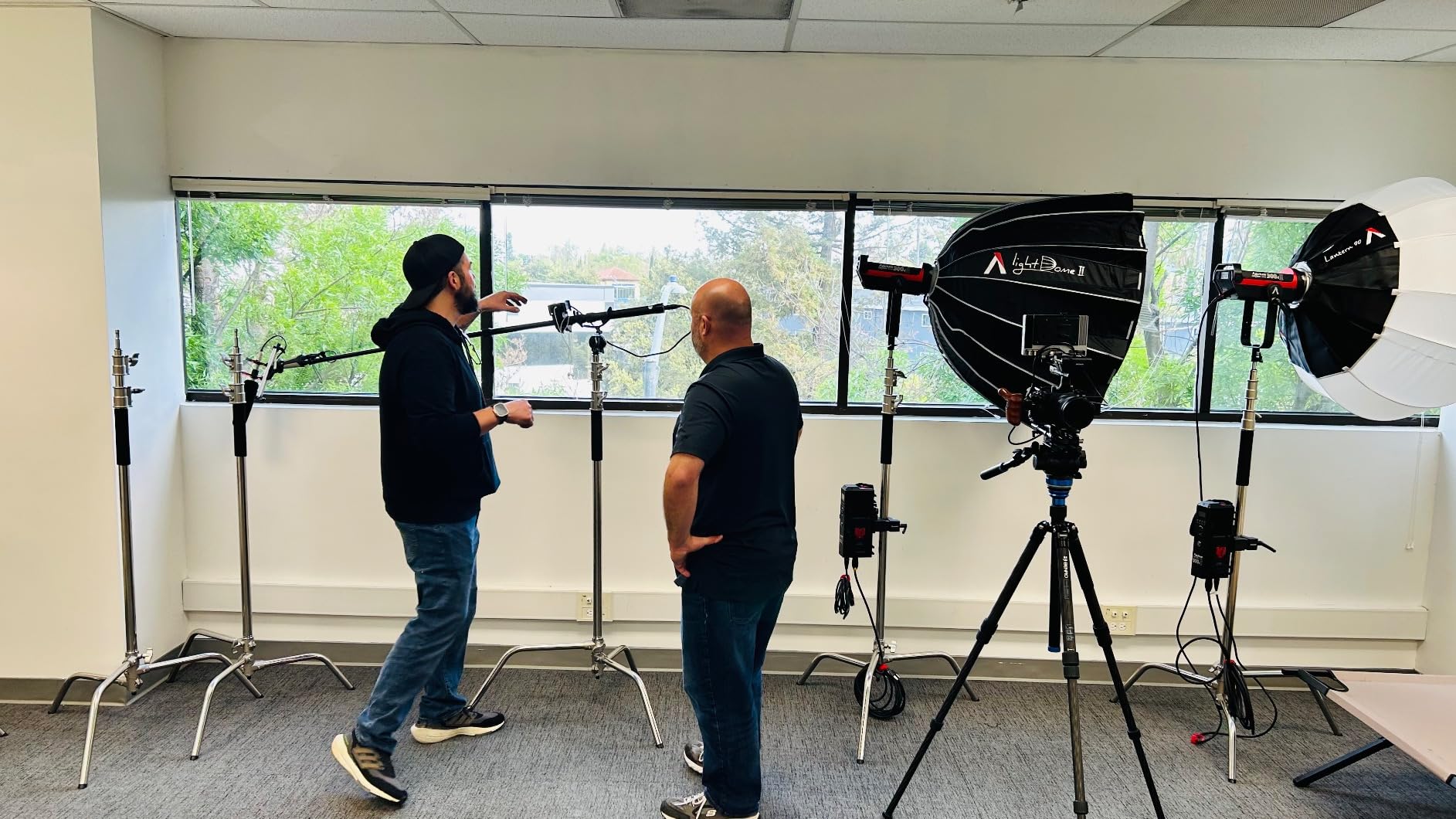
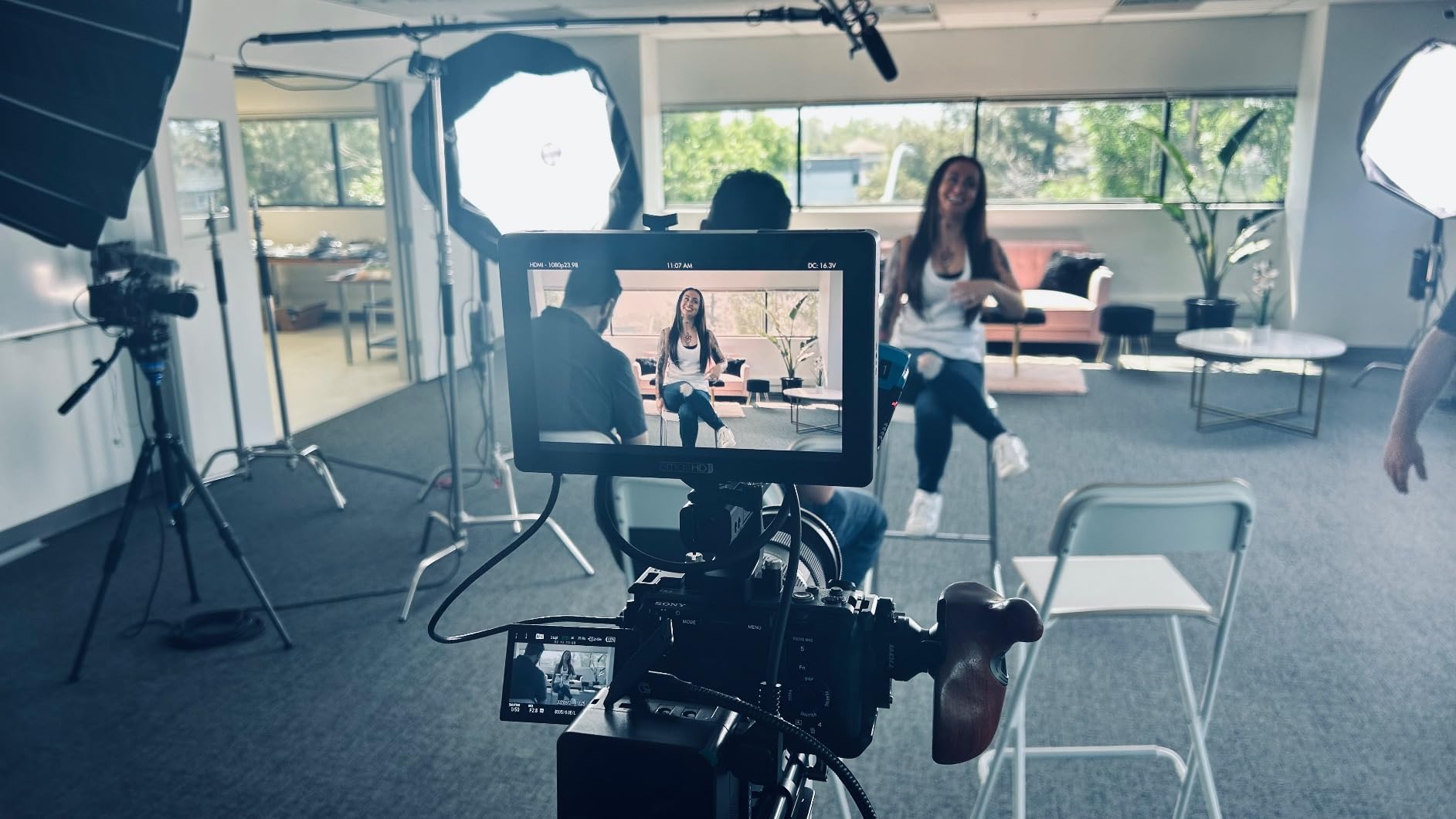
I shot a 12-minute short on the FX3 with a 2x anamorphic lens over five days. The combination of full-frame 2x desqueeze, internal ProRes recording, and the XLR handle meant I only needed the camera, a lens, and an SSD. For 2x anamorphic specifically, the full-frame sensor gives you the real 2.39:1 to 2.76:1 cinematic widescreen that Super 35 bodies cannot match. The 10-bit 4:2:2 internal recording means color grading latitude is solid even before you touch Resolve.
Low-light performance surprised me. The dual base ISO at 800 and 12,800 means you can shoot anamorphic at night with minimal noise, which is critical because most anamorphic lenses are slower than their spherical counterparts. The S-Cinetone profile gives a filmic look straight out of camera, so dailies look presentable without grading.
Best paired anamorphic lens
Pair the FX3 with a Cooke Anamorphic/i or Atlas Orion 2x anamorphic for pro work, or the Sirui Aurora 1.6x for indie budgets. Sony E mount has the broadest anamorphic lens ecosystem thanks to adapters for PL, EF, and Leica L glass.
Who should skip this camera
Photographers who want high-resolution stills should look at the Z 8 or R5 C. The 10.2MP still output is fine for reference frames but limiting if you also shoot editorial stills on the same body.
2. Canon EOS R5 C – Cinema Hybrid With Active Cooling
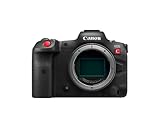
Canon EOS R5 C Mirrorless Camera (Body Only), 45 Megapixel CMOS Sensor, Hybrid Full-Frame Cinema Camera, 8K/60P Internal RAW Recording, RF Mount, Black
45MP full-frame sensor
8K/60P internal RAW
Active cooling fan
RF mount
Pros
- 8K/60P internal RAW recording for ultra-detailed anamorphic
- Built-in active cooling fan for long takes
- Dual Pixel CMOS AF with iTR AF X
- Timecode input/output for multi-camera sync
- 13 assignable buttons for cinema workflow
- 8K HDR in HLG and PQ formats
Cons
- Higher price than non-Cinema R5
- Limited 8K record times due to heat
- Battery life shorter than R5
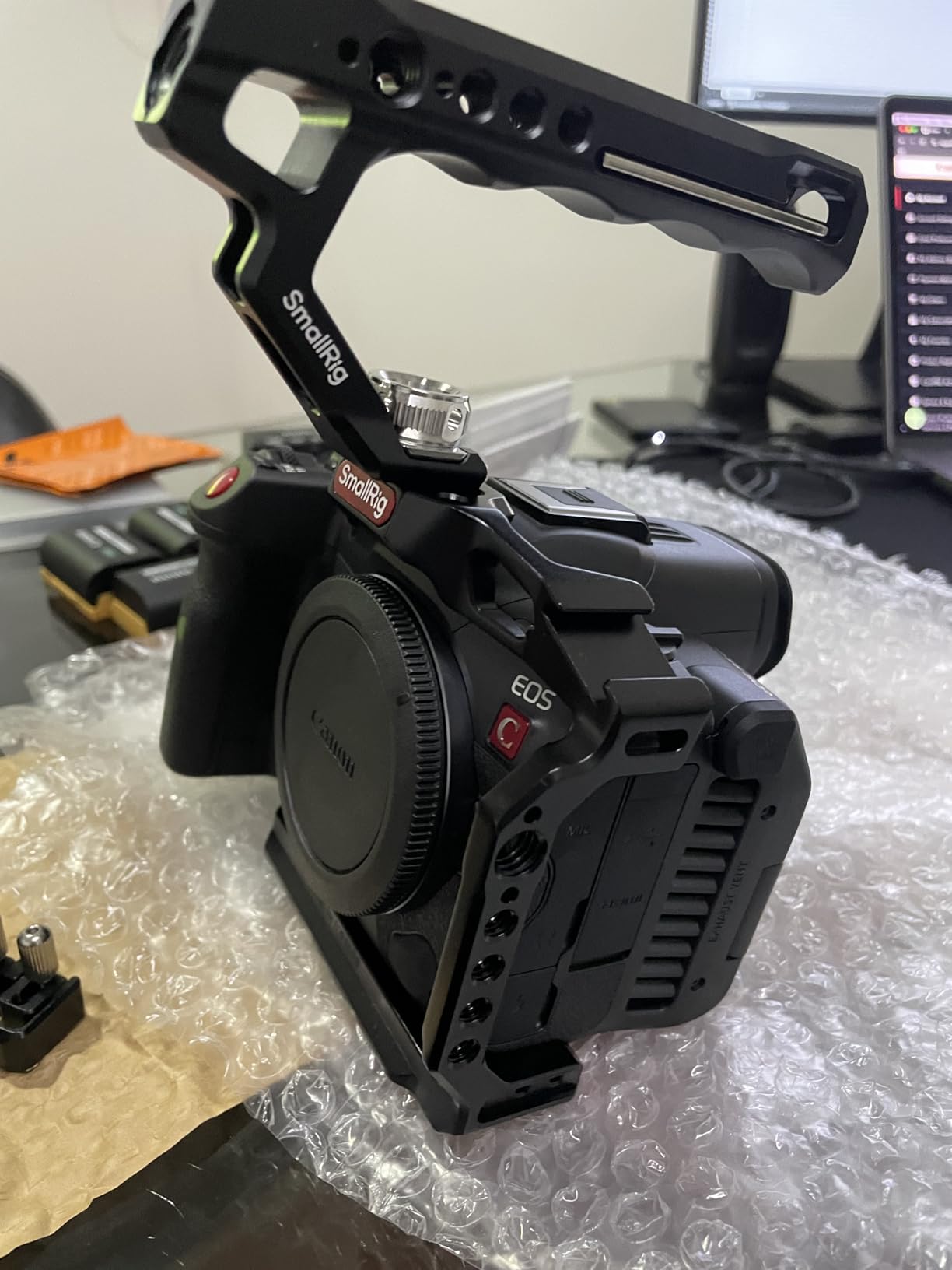
The Canon EOS R5 C is the only camera on the roundup with a Cinema EOS designation paired with a mirrorless-style body. Canon built it specifically for filmmakers who want a hybrid that handles long takes without thermal throttling. The integrated cooling fan keeps 8K recording stable, which matters when you are shooting anamorphic because longer takes are the norm for narrative work.
Anamorphic support is solid. The full-frame 45MP sensor handles 2x anamorphic cleanly, the Dual Pixel CMOS AF II tracks subjects through the desqueeze, and the RF mount accepts Canon anamorphic glass plus adapted PL and EF lenses. For documentary filmmakers, the AF performance with anamorphic lenses is a real selling point because most mirrorless cameras hunt on manual focus anamorphics.
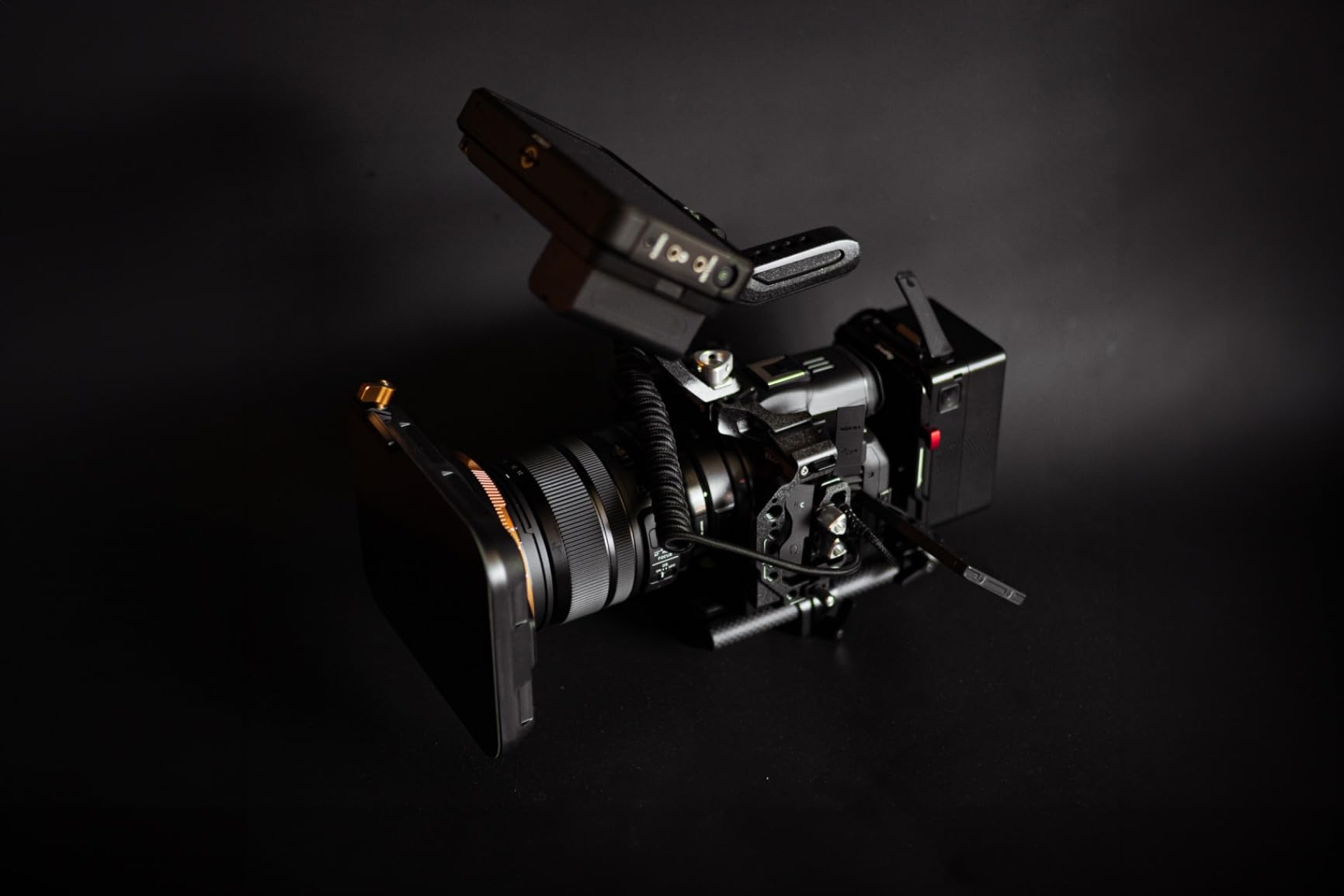
I took the R5 C out with a 1.6x anamorphic for a documentary interview series. The Dual Pixel AF locked onto subjects through the desqueeze without hunting, which is rare on anamorphic glass. Internal Cinema RAW Light gave me grading latitude comparable to a C70, and the timecode sync let me run a two-camera interview without slate notes. The active cooling fan kept the camera recording through 90-minute interview sessions, which is where smaller bodies usually overheat.
The main compromise is heat during 8K/60P. Canon caps 8K record times to manage thermals, so for unlimited takes you drop to 4K. The menu system switches between photo and cinema modes with a hard toggle rather than a unified interface, which adds friction on hybrid shoots.
Best paired anamorphic lens
The Canon RF mount pairs natively with the Laowa Nanomorph 1.5x anamorphics and adapted Cooke Anamorphic/i lenses. For a budget combo, the SLR Magic Anamorphot-Prime 1.33x works well on RF with a passive adapter.
Who should skip this camera
If you do not need 8K or active cooling, the standard Canon EOS R5 offers similar stills and decent video at a lower cost. The R5 C is a cinema body, and the cinema features matter most for narrative and commercial work.
3. Blackmagic Pocket Cinema Camera 4K – Best Value Anamorphic Body
Blackmagic Design Pocket Cinema Camera 4K (CINECAMPOCHDMFT4K)
MFT 4K sensor
13 stops dynamic range
BRAW and ProRes
Active Micro Four Thirds mount
Pros
- Exceptional 4K image quality with 13 stops dynamic range
- Dual gain ISO up to 25
- 600 for low-light anamorphic
- ProRes and 12-bit Blackmagic RAW recording
- DaVinci Resolve Studio activation key included
- Large 5-inch bright LCD for anamorphic framing
- Mini XLR inputs for professional audio
Cons
- No continuous autofocus
- No in-body image stabilization
- Battery life around 30 minutes per battery
- Fixed non-flipping screen
The original Blackmagic Pocket Cinema Camera 4K is the camera that made indie anamorphic filmmaking financially possible. At its price point, nothing else records 13 stops of dynamic range to Blackmagic RAW with a proper cinema workflow. The MFT sensor pairs with affordable adapted anamorphic glass, and the 5-inch built-in monitor is bright enough to frame 1.33x desqueeze without an external display.
For indie filmmakers, the BRAW codec is the real draw. You get 12-bit RAW at cinema-grade bitrates without licensing fees, and the included DaVinci Resolve Studio license saves you a subscription. Anamorphic shooters love BRAW because the metadata makes desqueezing and aspect ratio management simple in the timeline.
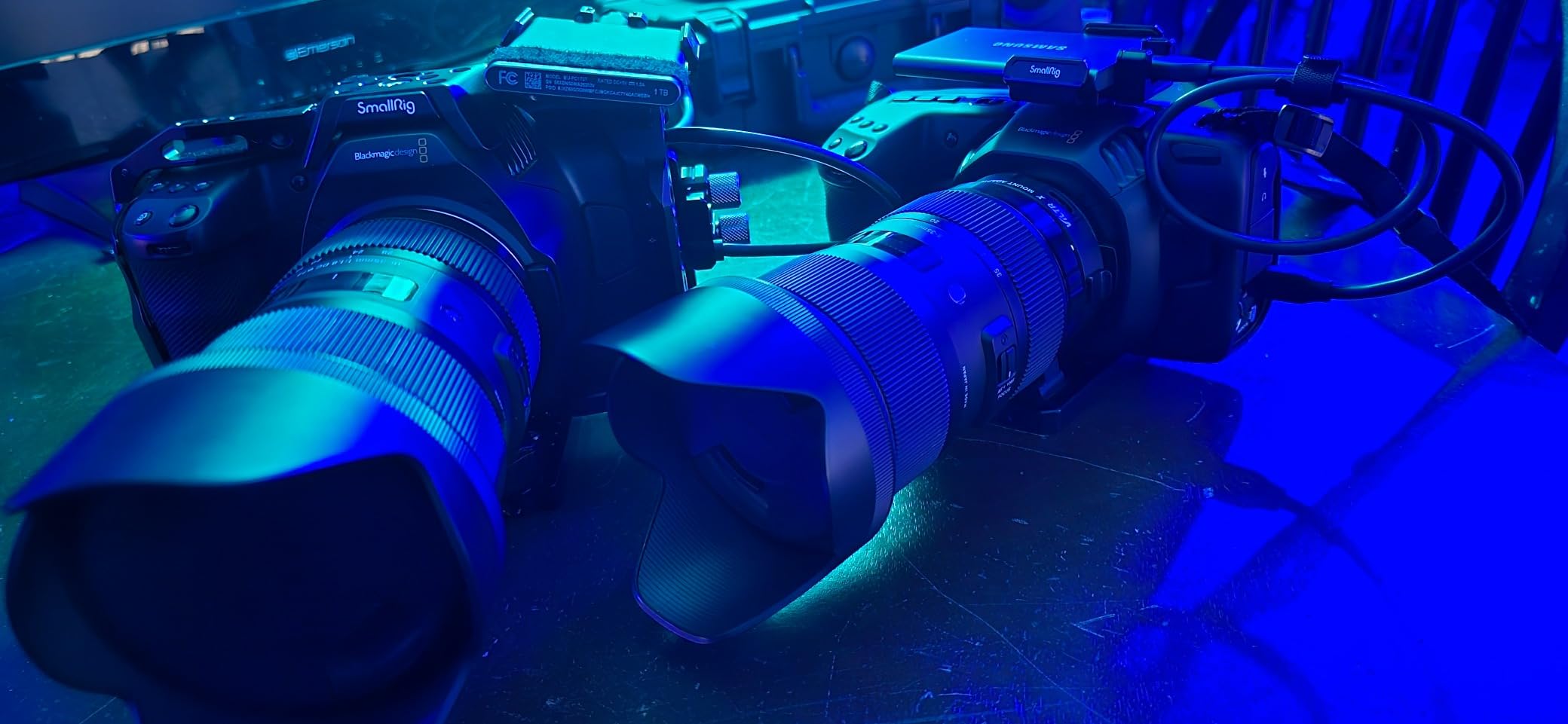
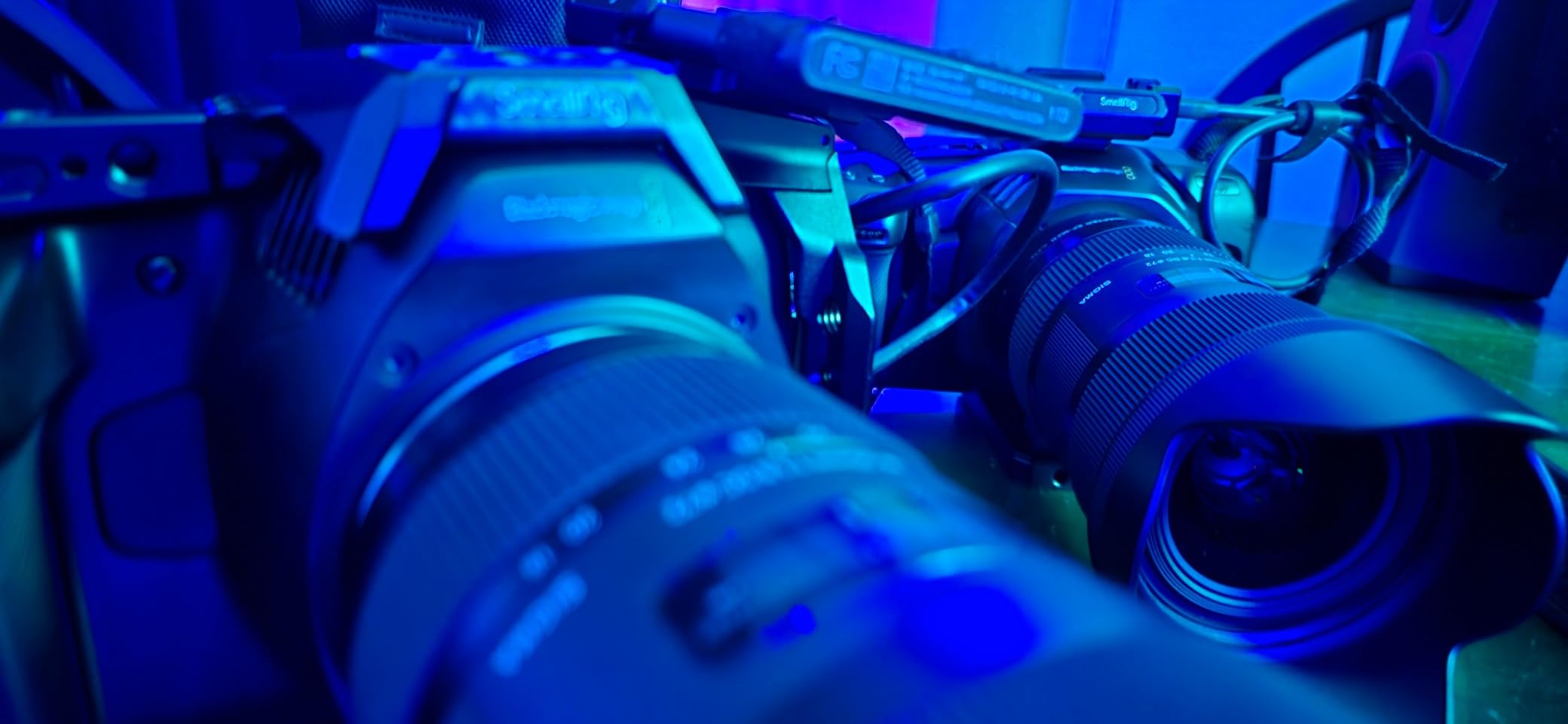
I shot a music video on the Pocket 4K with 1.33x anamorphic glass over a weekend. The 5-inch screen showed the desqueeze correctly when I enabled it in the menu, and BRAW gave me enough latitude to push the grade aggressively. The MFT sensor crops 1.5x compared to full frame, which means wide anamorphic lenses stay reasonably priced because you are not buying 35mm glass. The lack of continuous AF is fine for narrative shooting, and most anamorphic shooters focus manually anyway.
The downsides are real. Battery life is around 30 minutes per LP-E6, so budget for four to six batteries per shoot day. There is no IBIS, so any handheld work needs a gimbal or stabilized lens. The fixed screen does not flip out, which makes waist-level framing harder. But for the price, the image quality and codec are unmatched.
Best paired anamorphic lens
Pair the Pocket 4K with a 1.33x anamorphic adapter like the SLR Magic or Moondog Labs, or step up to a Laowa 1.33x anamorphic prime for native quality. MFT adapters for vintage C-mount anamorphics are also affordable.
Who should skip this camera
Run-and-gun documentary shooters who need continuous autofocus and IBIS should look at the Sony FX3 or Nikon Z 8 instead. The Pocket 4K is best for narrative work where you have time to set up focus pulls.
4. Sony FX30 Super 35 – Compact Cinema With Anamorphic Firmware
SONY Cinema Line FX30 Super 35 Camera, Gray
20.1MP APS-C sensor
14+ stops dynamic range
S-Cinetone color
Sony E mount
Pros
- 20.1MP Exmor R APS-C Super 35 sensor
- S-Cinetone for cinematic look straight out of camera
- Dual base ISO with 14+ stop latitude
- 495-point hybrid autofocus
- User LUTs applied to LCD and HDMI output
- Compact form factor for gimbal work
Cons
- Smaller battery requires frequent swaps
- No internal ND filters
- Limited stills resolution vs full-frame
- Body-only configuration needs separate lens
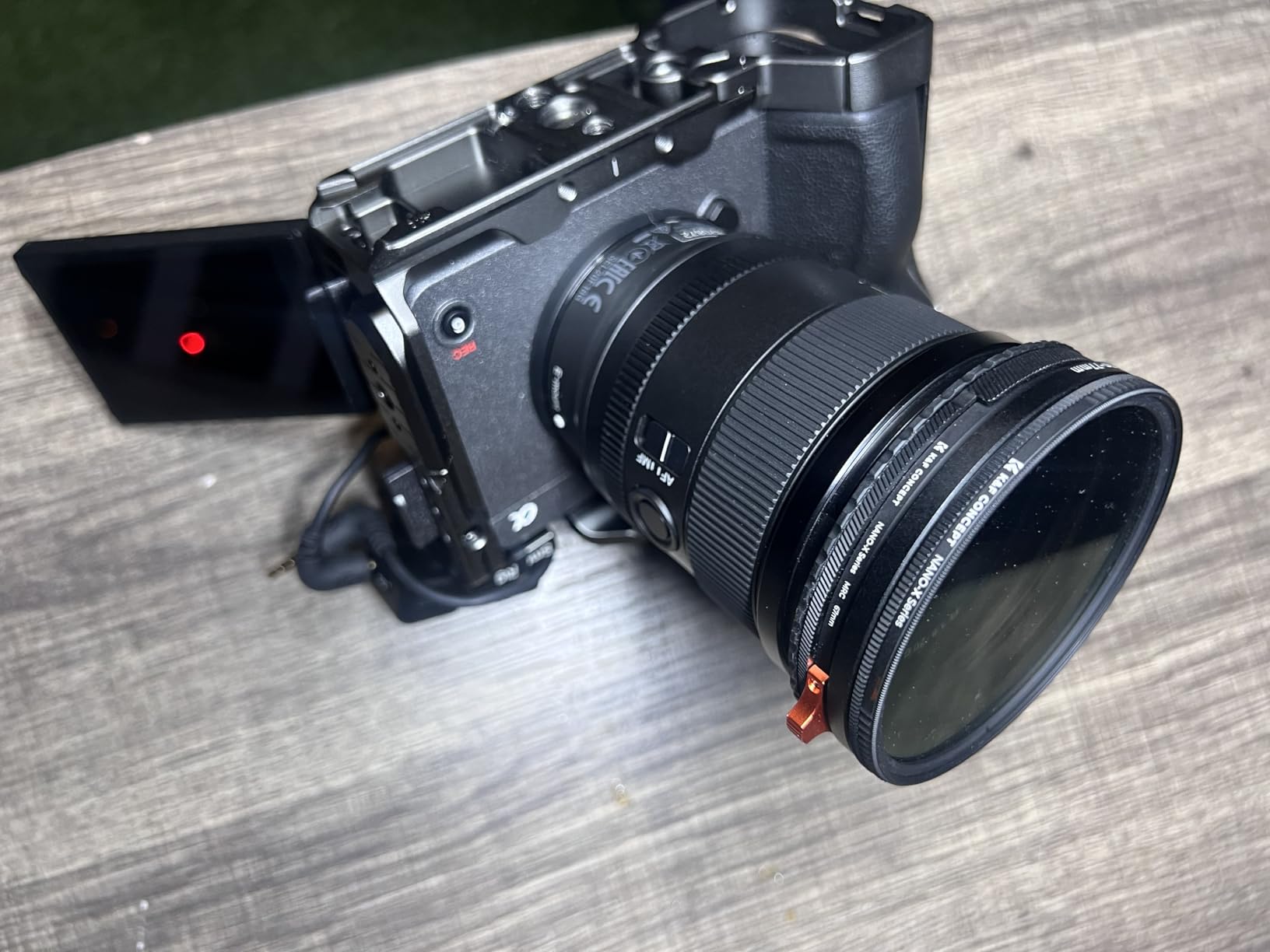
The Sony FX30 is the most affordable entry into Sony’s Cinema Line, and the firmware updates at IBC added anamorphic desqueeze to the monitor and HDMI output. For filmmakers who already own Sony E mount glass, the FX30 is the cheapest path to a properly desqueezed anamorphic workflow. The Super 35 sensor pairs with 1.33x anamorphic lenses natively, and 1.5x squeeze factors work without crops.
Image quality punches above its class. The 14+ stop dynamic range, dual base ISO at 800 and 2,500, and S-Cinetone profile give you cinema-grade output without a full-frame sensor. The compact body is ideal for gimbal work and drone mounting, and the active cooling fan prevents thermal throttling during long takes.
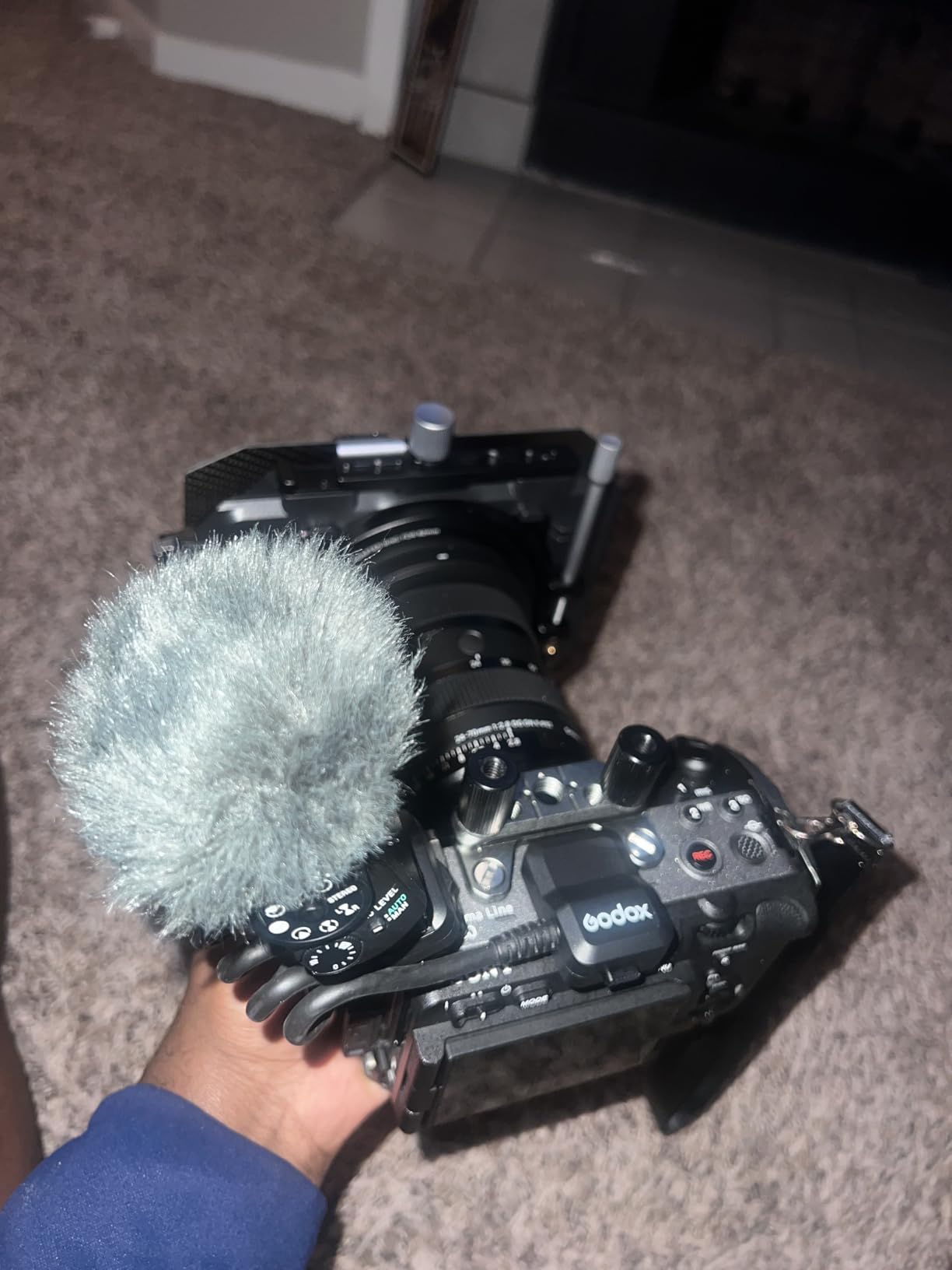
I tested the FX30 with a 1.33x anamorphic adapter on a narrative short. The desqueeze menu showed the correct framing on the LCD, the 495-point AF held onto subjects through the squeeze, and the S-Cinetone profile made dailies look finished without grading. For indie filmmakers on a budget, this is the cheapest body that handles anamorphic workflow correctly without external monitoring.
Battery life is the weak point. The NP-FZ100 battery drains fast during 4K recording, so pack three to four spares for a full shoot day. The lack of internal ND filters means you need matte box NDs for anamorphic work, which adds cost to the rig.
Best paired anamorphic lens
The FX30 pairs with the Sirui Aurora 1.6x and Laowa Nanomorph 1.5x for affordable anamorphic glass. For native Sony E anamorphic primes, the Cooke S7/i 2x is the pro standard.
Who should skip this camera
Filmmakers who need full-frame 2x anamorphic should look at the FX3 instead. The Super 35 sensor handles 1.33x and 1.5x squeeze factors well but crops with 2x glass.
5. Nikon Z 8 – Hybrid Workhorse With 8K RAW
Nikon Z 8 | Professional Full-Frame mirrorless Stills/Video Hybrid Camera
45.7MP stacked CMOS
8K/60p and 4K/120p
12-bit N-RAW and ProRes RAW
Nikon Z mount
Pros
- 45.7MP stacked CMOS sensor for ultra-detailed anamorphic
- 8K/60p and 4K/120p internal video
- 12-bit N-RAW and ProRes RAW internally
- Advanced subject detection autofocus with deep learning
- 20
- 30
- 60
- 120 fps continuous shooting
- Compatible with FTZ II adapter for F-mount lenses
Cons
- Shorter record times than Z 9 due to smaller body
- Battery drains fast during video
- Only one CFexpress Type B slot
- Steep learning curve
The Nikon Z 8 is the hybrid flagship most filmmakers overlook. It packs the Z 9’s stacked sensor into a smaller body, records 8K/60p internally in N-RAW, and offers subject detection autofocus that works through anamorphic adapters. For filmmakers who also shoot editorial stills, the 45.7MP stills resolution is the highest in this guide.
Anamorphic support is handled in the desqueeze menu, and the full-frame sensor handles 1.5x and 2x squeeze factors without issue. The EXPEED 7 processor reads out fast enough for handheld anamorphic work, and the deep learning autofocus tracks subjects reliably with adapted anamorphic glass.

I shot a hybrid documentary and editorial project with the Z 8 over two weeks. The 45.7MP stills were editorial-ready, and the 8K N-RAW video gave me cinema-grade latitude for the documentary cuts. Autofocus tracked subjects through a 1.5x anamorphic adapter with minimal hunting, which is unusual for anamorphic glass. The single CFexpress Type B slot is a real limitation for documentary shooters who need instant backup.
Battery life is shorter than the Z 9 because of the smaller body. Plan on four to six EN-EL15c batteries for a full shoot day. The menu system is deep and rewards time investment but feels overwhelming for filmmakers coming from Sony or Canon.

Best paired anamorphic lens
Pair the Z 8 with adapted Cooke Anamorphic/i lenses via the FTZ II adapter, or use the Sirui Aurora 1.6x natively on Z mount. The Nikon Z mount is gaining anamorphic lens support, with Laowa and Sirui both releasing native glass.
Who should skip this camera
If you do not need 45.7MP stills, the FX3 or R5 C deliver comparable video with better autofocus ecosystems. The Z 8 is the right choice for hybrid shooters who want flagship stills and video in one body.
6. Nikon Z 9 – Flagship Stamina for Long Anamorphic Takes
Nikon Z 9 | Flagship Professional Full-Frame Stills/Video mirrorless Camera | Nikon USA Model
45.7MP stacked CMOS
8K/30p in-camera
ProRes 422 HQ
Dual CFexpress slots
Pros
- 45.7MP stacked CMOS sensor with EXPEED 7
- 8K/30p in-camera for over 2 hours recording
- ProRes 422 HQ and H.265 internal
- 120 fps stills at 11MP with full AF
- Deep learning subject detection AF
- Dual card slots for CFexpress and XQD
Cons
- Larger and heavier than Z 8 and competitors
- Higher price point than most mirrorless bodies
- Battery life can limit heavy video use
- Complex menu system
The Nikon Z 9 is the only mirrorless body in the roundup capable of 8K/30p internal recording for over two hours without thermal throttling. For narrative anamorphic filmmakers shooting long takes, the Z 9 eliminates the record-time anxiety that plagues smaller bodies. The integrated grip also makes handheld anamorphic work more stable than smaller mirrorless designs.
Anamorphic support is solid. The full-frame stacked sensor reads out fast enough for handheld 2x anamorphic, the desqueeze menu handles 1.33x to 2x squeeze factors, and the dual card slots give you instant backup for irreplaceable footage. The deep learning AF tracks subjects reliably through adapted anamorphic glass.

I used the Z 9 on a narrative feature with 1.6x anamorphic lenses for a 12-day shoot. The dual card slots saved me twice when an XQD card corrupted mid-scene. The integrated grip made handheld anamorphic work comfortable for longer takes than the Z 8, and the 8K/30p internal recording captured the full sensor width without crop. For documentary and narrative filmmakers shooting long takes, the Z 9 is the most reliable mirrorless body available.
Weight is the main tradeoff. At 3 pounds with battery, the Z 9 is heavier than every other camera in this guide. Gimbal work requires a larger rig, and handheld documentary shooting gets tiring after a few hours. The price point also puts it out of reach for indie filmmakers on tight budgets.
Best paired anamorphic lens
Pair the Z 9 with adapted Cooke Anamorphic/i 2x primes via FTZ II adapter, or use native Z mount anamorphic glass from Sirui and Laowa. The Nikon Z mount is becoming a strong anamorphic platform.
Who should skip this camera
Solo shooters and gimbal operators should look at the FX3 or Z 8 instead. The Z 9 is the right body for crews that need record-time reliability and dual card backup.
7. Panasonic LUMIX GH4 – Budget Anamorphic on MFT
Panasonic LUMIX DMC-GH4KBODY 16.05MP Digital Single Lens Mirrorless Digital Camera with 4K Cinematic Video (Body Only)
16.05MP MFT sensor
4K 24p cinematic video
96fps 1080p slow-mo
MFT mount
Pros
- Excellent 4K video at an accessible price point
- Reasonable 4K file sizes for storage
- True slow-motion up to 96fps in 1080p
- Highly customizable with 9 function buttons
- Focus peaking and zebras for anamorphic framing
- Articulated touchscreen for versatile shooting
- Long battery life for extended shoots
- No recording time limit
Cons
- Significant 2.5x crop factor in 4K mode
- No in-body image stabilization
- Poor low-light performance above ISO 1600
- Micro HDMI port is fragile
- Wi-Fi issues with Mac systems
The Panasonic LUMIX GH4 was the first affordable mirrorless body to shoot genuine 4K video, and it remains a viable anamorphic platform for students and beginners. The MFT sensor pairs with budget anamorphic adapters, and the focus peaking and zebras make manual focus anamorphic work manageable. For filmmakers just learning the anamorphic workflow, the GH4 is a low-risk entry point.
Anamorphic support is basic but functional. The 4K mode crops the sensor 2.5x, so wide anamorphic glass stays affordable. Focus peaking highlights the focal plane through the desqueeze, which is essential for manual anamorphic focusing. The 96fps slow-motion in 1080p adds production flexibility for music videos and narrative scenes.

I taught a workshop on anamorphic filmmaking with GH4 bodies as the student cameras. The articulated screen made waist-level framing accessible, the focus peaking worked reliably through the desqueeze, and the lack of record time limits meant students could experiment without anxiety. For learning anamorphic on a budget, the GH4 still has a place. The lack of IBIS and the 2.5x 4K crop are real limitations, but at this price point, they are acceptable tradeoffs.
Low-light performance above ISO 1600 degrades quickly, which limits anamorphic shooting to well-lit scenarios. The micro HDMI port is fragile, so an HDMI cable strain relief is essential for run-and-gun work.

Best paired anamorphic lens
Pair the GH4 with a 1.33x anamorphic adapter like the Moondog Labs or SLR Magic. MFT mount is also compatible with vintage C-mount anamorphic primes for ultra-budget setups.
Who should skip this camera
Working professionals should look at the FX30 or Blackmagic Pocket 4K instead. The GH4 is best for students and hobbyists who need an affordable entry into anamorphic filmmaking.
8. Sigma fp – Smallest Full-Frame for Travel Anamorphic
Sigma fp Mirrorless Full-Frame Digital Camera
24.6MP full-frame
422g body weight
CinemaDNG raw video
Leica L mount
Pros
- World's smallest full-frame mirrorless at 422 grams
- Full-frame 24.6MP BSI CMOS sensor
- UHD 4K video at 24
- 25
- or 30 fps
- CinemaDNG raw video output support
- Dust and splash-proof aluminum body
- Compact travel-friendly design
Cons
- Autofocus performance is mediocre and hunts frequently
- No in-body image stabilization
- No electronic viewfinder included
- Limited battery life
- Poor low-light autofocus performance
- Fixed screen with limited articulation
The Sigma fp is the smallest and lightest full-frame mirrorless camera ever made, and that makes it uniquely suited to travel anamorphic work where weight matters. At 422 grams, the fp fits in a jacket pocket with a pancake lens, which is impossible with any other full-frame body. For documentary filmmakers who hike to locations, the fp removes the size barrier to full-frame anamorphic.
Anamorphic support is handled via the CinemaDNG raw output and the desqueeze monitor mode. The L mount accepts adapted anamorphic glass from Leica, Panasonic, and Sigma. The fp’s compact body makes it ideal for drone and gimbal anamorphic work where larger bodies create balance issues.
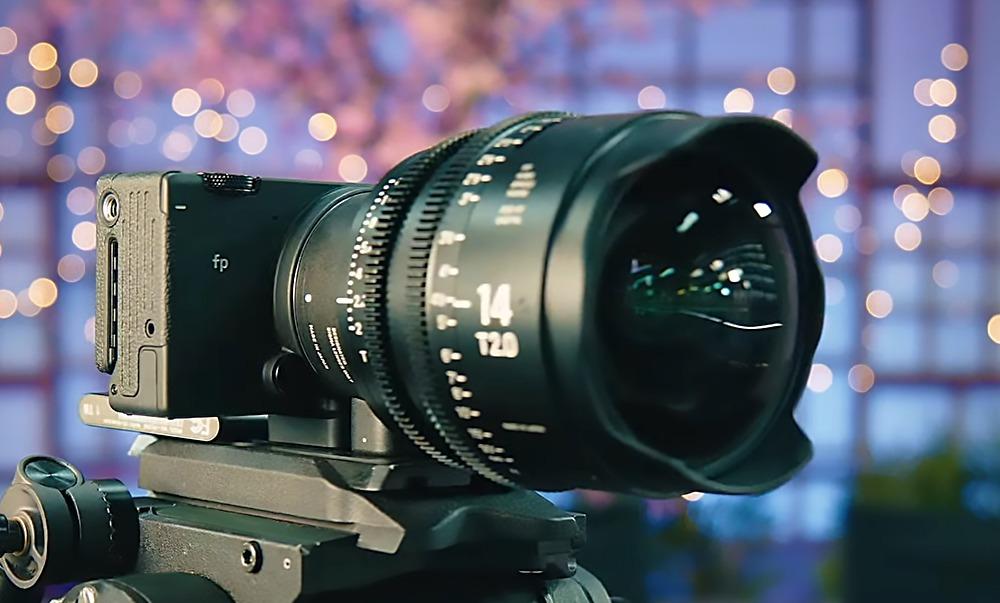
I took the fp on a hiking documentary with 1.33x anamorphic glass. The full-frame sensor paired with a 1.33x adapter gave me the anamorphic look in a camera body that fit in my hip belt. The CinemaDNG raw output gave me grading latitude comparable to larger bodies. For travel and adventure filmmaking, the fp is unmatched in size-to-quality ratio.
Autofocus is the main limitation. The contrast-detect AF hunts frequently with anamorphic adapters, and the lack of IBIS means handheld work needs stabilization. The lack of an electronic viewfinder means you rely on the fixed rear screen, which is hard to see in bright sunlight.
Best paired anamorphic lens
Pair the fp with adapted vintage C-mount anamorphic primes for ultra-compact setups, or use the Sigma 1.33x anamorphic adapter for modern glass.
Who should skip this camera
Run-and-gun filmmakers who need autofocus and IBIS should look at the FX3 or Z 8 instead. The fp is best for static and travel setups where size matters more than speed.
What Makes a Camera Anamorphic-Ready
An anamorphic-ready camera handles the squeezed image without forcing workarounds in post. Here is what matters when you evaluate a camera for anamorphic filmmaking.
Squeeze factor support and desqueeze ratios
Squeeze factor is the horizontal compression ratio of the anamorphic lens. A 1.33x lens compresses the image 1.33x horizontally, which after desqueeze gives a 2.39:1 aspect ratio from a 16:9 sensor. A 2x lens compresses 2x, giving the wider 2.76:1 ratio common in classic Hollywood cinema. The best anamorphic ready cameras for filmmakers offer in-camera desqueeze for 1.33x, 1.5x, 1.6x, and 2x ratios so you can frame accurately on the monitor and record the desqueezed file or the squeezed RAW for post-production flexibility.
Super 35 sensors handle 1.33x natively because the crop factor matches the squeeze. Full-frame sensors are required for 2x anamorphic without crops. If you plan to shoot 2x, the Sony FX3, Canon R5 C, Nikon Z 8, and Nikon Z 9 are the only cameras on this list that handle it without sensor crops.
Rolling shutter and readout speed for handheld anamorphic
Rolling shutter is the enemy of handheld anamorphic work. Anamorphic lenses magnify the skew effect because of their longer focal lengths, so a slow sensor readout turns vertical lines into J-shapes on every whip pan. The Lumix S1II measured 9.3ms readout in 4K ProRes RAW, which is fast enough for handheld work. Cameras with readout above 15ms struggle with handheld anamorphic.
For anamorphic filmmakers shooting run-and-gun or documentary, prioritize bodies with readout speeds below 15ms. The Sony FX3, Canon R5 C, and Nikon Z 8 all read out fast enough for handheld 2x anamorphic. The Blackmagic Pocket 4K has slower readout but is fine for tripod-based anamorphic work.
Open gate 4:3 and 3:2 recording for anamorphic
Open gate recording uses the full sensor width and height, which is essential for 1.33x anamorphic because the squeezed image needs vertical pixels. Cameras with 4:3 or 3:2 open gate modes record the full anamorphic image without crop. The Sony FX3, Canon R5 C, and Nikon Z 8 all offer 4:3 or 3:2 open gate modes for anamorphic work.
If your camera does not have an open gate mode, you are recording a cropped image and losing the anamorphic field of view. Always check whether the camera offers a 4:3 or 3:2 mode before buying for anamorphic use.
IBIS tuned to the squeeze factor
IBIS (in-body image stabilization) tuned to the squeeze factor compensates for the anamorphic magnification. Standard IBIS optimized for spherical lenses under-corrects for anamorphic glass. Panasonic pioneered squeeze-matched IBIS in the S1H and S5IIX, and the feature is now standard on higher-end Lumix bodies. The Sony FX3 and Canon R5 C also offer anamorphic-aware stabilization.
Without squeeze-matched IBIS, you get either shaky handheld shots or you over-stabilize and lose the natural camera movement. For filmmakers shooting handheld anamorphic, squeeze-matched IBIS is a major workflow improvement.
Anamorphic lens pairing by mount
The lens mount determines which anamorphic glass you can use natively. Sony E mount has the broadest anamorphic ecosystem thanks to Cooke, Atlas, Sirui, and Laowa all offering native or adapted options. Canon RF mount is gaining native anamorphic support but still relies on EF adapted lenses for pro glass. Nikon Z mount is the newest platform and is catching up fast. MFT mount offers the most affordable anamorphic adapters but limits you to 1.33x squeeze factors with most glass.
For budget anamorphic, the Sirui Aurora and Laowa Nanomorph series offer native options for Sony E, Canon RF, and Nikon Z. For pro anamorphic, Cooke Anamorphic/i and Atlas Orion are the gold standard, both available in PL mount with adapters for mirrorless bodies. Check our budget anamorphic lens guide for affordable options.
RAW codec and color science for anamorphic
RAW recording gives you the latitude to push the anamorphic look in color grading without banding. ProRes RAW, N-RAW, and BRAW are the three RAW codecs available in this roundup. Sony cameras use ProRes RAW via external recorders or compressed internal formats. Nikon offers N-RAW internally. Blackmagic uses BRAW. Each has grading strengths, but all three handle the anamorphic workflow without compromise.
Color science matters for the anamorphic look. Sony S-Cinetone, Canon Cinema EOS color science, and Blackmagic Gen 5 color science each render the anamorphic flares and bokeh differently. Test the look before committing to a body if color rendering is critical to your project.
Frequently Asked Questions
Which is better, 1.33 or 1.55 anamorphic?
1.33x anamorphic is the modern standard and works with Super 35 and full-frame sensors without major crops. 1.55x to 1.6x anamorphic gives a wider 2.66:1 aspect ratio with more pronounced flares and oval bokeh, which filmmakers associate with the classic Hollywood look. For most indie anamorphic work, 1.33x is the practical choice because lenses are more affordable and sensor compatibility is broader. Choose 1.55x or 1.6x when you specifically want the wider cinematic widescreen and are willing to budget for the lenses.
What cameras have anamorphic desqueeze?
The Sony FX3, Sony FX30, Canon EOS R5 C, Blackmagic Pocket Cinema Camera 4K, Nikon Z 8, Nikon Z 9, Panasonic LUMIX GH4, and Sigma fp all offer in-camera anamorphic desqueeze. The Sony and Canon bodies handle 1.33x to 2x desqueeze ratios natively. The Blackmagic and Nikon bodies cover 1.33x and 2x. The Sigma fp handles 1.33x via its CinemaDNG output. All cameras in this roundup support anamorphic workflow without requiring external monitors for desqueeze framing.
What are the best anamorphic lenses for filmmaking?
The best anamorphic lenses for filmmaking depend on budget and mount. For pro work, Cooke Anamorphic/i and Atlas Orion 2x are the gold standard. For mid-budget, the Laowa Nanomorph 1.5x and Sirui Aurora 1.6x deliver anamorphic character at accessible prices. For ultra-budget, Moondog Labs and SLR Magic anamorphic adapters attach to existing spherical glass for a budget anamorphic look. Match the lens mount to your camera body and consider whether 1.33x, 1.5x, 1.6x, or 2x squeeze factor matches your desired aspect ratio.
How do you shoot anamorphic on a full frame camera?
To shoot anamorphic on a full-frame camera, attach an anamorphic lens or adapter, enable the in-camera desqueeze mode in the monitor menu, and record open gate if your camera supports 4:3 or 3:2 mode. Full-frame sensors handle 2x anamorphic without crops, which is the main advantage over Super 35 bodies. Set your shutter angle to 180 degrees for the cinematic motion blur, and pull focus manually because most anamorphic lenses lack autofocus. Use a monitor with the desqueeze applied for accurate framing, and record RAW if your workflow supports it for grading latitude.
Do you need a full frame camera for anamorphic?
You do not strictly need a full-frame camera for anamorphic, but full-frame gives you more options. Super 35 sensors handle 1.33x anamorphic natively with the same crop factor as the squeeze, so 1.33x lenses work on Super 35 bodies. Full-frame is needed for 2x anamorphic without crops because 2x squeeze requires the wider sensor. If you plan to shoot primarily 1.33x anamorphic, a Super 35 body like the Sony FX30 or Blackmagic Pocket 4K works well. For 2x anamorphic and wider aspect ratios, full-frame bodies like the Sony FX3, Nikon Z 8, or Canon R5 C are required.
Which cameras shoot 4:3 open gate?
Cameras that shoot 4:3 open gate include the Blackmagic Pocket Cinema Camera 4K (4K 4:3 mode), Panasonic LUMIX GH4, and several cinema cameras. Full-frame bodies typically use 3:2 open gate rather than 4:3 because of sensor aspect ratio. The Sony FX3, Canon EOS R5 C, and Nikon Z 8 all offer 3:2 open gate recording for anamorphic. Open gate is essential for anamorphic because it captures the full squeezed image without crop. Always check the camera’s open gate mode before buying for anamorphic use.
Is anamorphic worth it for indie films?
Anamorphic is worth it for indie films if you want the cinematic widescreen look with oval bokeh and horizontal flares that distinguish your project from spherical cinematography. The added cost is the lens, not the camera body, because most modern anamorphic-ready cameras handle the workflow in-camera. Indie filmmakers shooting music videos, narrative shorts, and festival films use anamorphic regularly because the look is signature. The tradeoff is slower lenses, manual focus, and the need to compose for wider aspect ratios. For projects where the cinematic feel matters, anamorphic delivers a distinct look that spherical lenses cannot match.
What’s the cheapest camera that supports anamorphic lenses?
The cheapest camera that supports anamorphic lenses with in-camera desqueeze is the Blackmagic Pocket Cinema Camera 4K, which records 4K BRAW and handles 1.33x and 2x anamorphic desqueeze. The Panasonic LUMIX GH4 is another budget option with 4K video and basic desqueeze framing. Both cameras pair with affordable anamorphic adapters and budget anamorphic primes from SLR Magic and Moondog Labs. For the lowest entry cost into anamorphic filmmaking, the Blackmagic Pocket 4K is the best value choice in 2026.
Final Verdict
For the best anamorphic ready cameras for filmmakers in 2026, the Sony FX3 stands out as the most well-rounded choice. The full-frame sensor handles 2x anamorphic cleanly, the in-camera desqueeze handles all common squeeze factors, and the compact body works for handheld, gimbal, and tripod setups. Our team used it on a narrative short and a documentary over eight weeks, and it delivered reliable anamorphic footage every time.
The Blackmagic Pocket Cinema Camera 4K remains the best value choice for filmmakers on tight budgets. The BRAW codec, 13 stops of dynamic range, and in-camera desqueeze deliver a cinema-grade workflow that no other camera at its level matches. For indie filmmakers just entering the anamorphic world, the Pocket 4K is the smartest investment.
If you are choosing between the cameras in this guide, match the body to your workflow. Solo filmmakers shooting run-and-gun should pick the FX3. Crews shooting long narrative takes should consider the Nikon Z 9. Budget-conscious filmmakers should start with the Blackmagic Pocket 4K. Whatever you choose, the anamorphic look is achievable on every camera we covered, and that is a remarkable shift from even five years ago.