
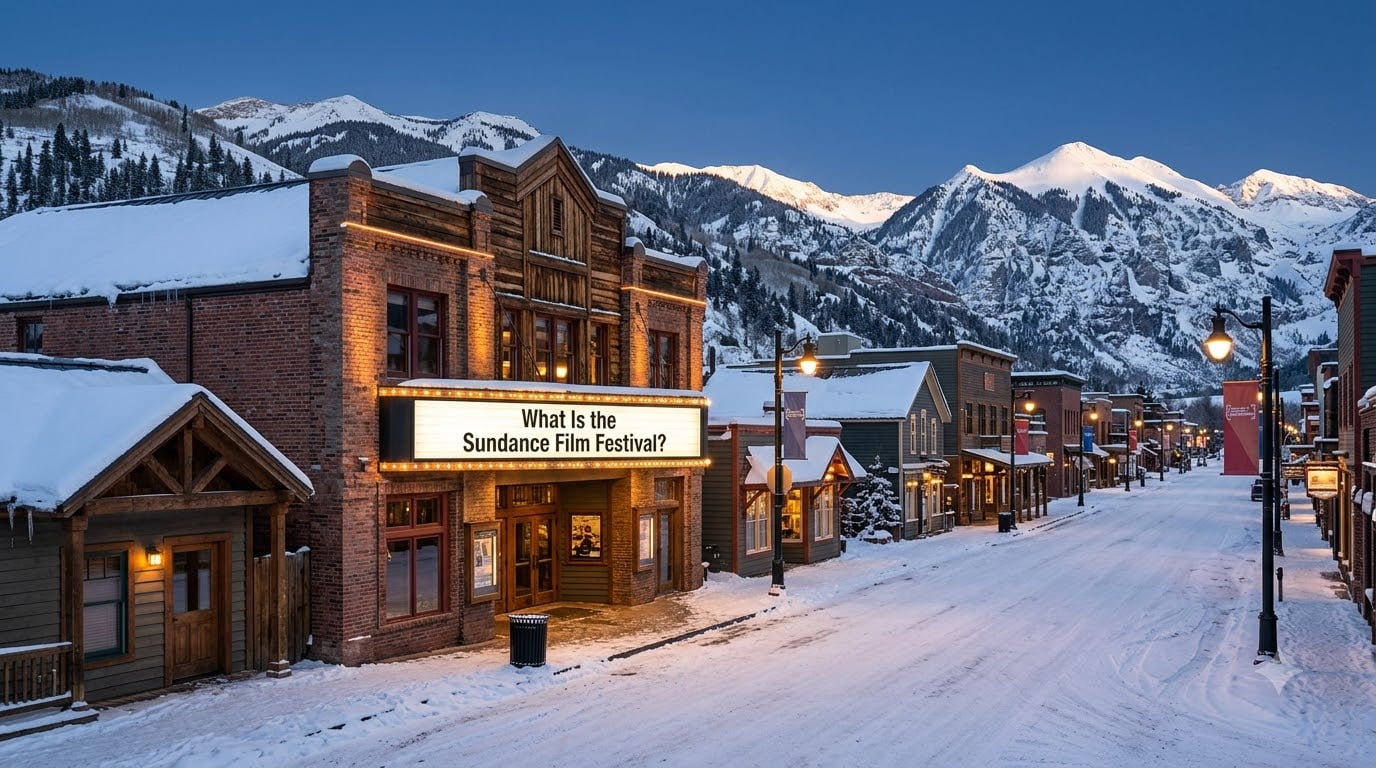
The Sundance Film Festival is the largest independent film festival in the United States, held every January and organized by the Sundance Institute. Founded by Robert Redford, it has spent decades launching the careers of filmmakers and bringing independent cinema to global audiences.
Each year, the festival screens roughly 120 feature films and dozens of short films across dramatic, documentary, and episodic categories. For anyone who cares about storytelling outside the studio system, Sundance is the place where the next wave of talent gets discovered.
We have followed the festival for years, tracking its evolution from a small Utah gathering into the most influential showcase for independent film in the world. Whether you are a filmmaker hoping to submit, a film lover planning to attend, or just curious about what makes this event so important, this guide breaks down everything you need to know about the Sundance Film Festival in 2026.
Table of Contents
- What Is the Sundance Film Festival?
- The History and Founding of Sundance
- Where Is the Sundance Film Festival Held?
- What Kind of Films Screen at Sundance?
- Awards and Prizes at Sundance
- Why Is the Sundance Film Festival a Big Deal?
- How to Attend the Sundance Film Festival?
- How Filmmakers Submit to Sundance?
- FAQs
- Conclusion
What Is the Sundance Film Festival?
The Sundance Film Festival is an annual celebration of independent cinema, run by the Sundance Institute and widely considered the premier stage for new voices in film. It brings together filmmakers, industry professionals, and audiences for roughly 10 days of screenings, conversations, and discovery.
Unlike major market festivals such as Cannes or Venice, Sundance focuses specifically on independent storytellers working outside the Hollywood studio system. That means lower budgets, bolder ideas, and films you will not find playing at your local multiplex on opening weekend.
The programming covers feature-length dramatic films, documentaries, short films, episodic content, and multimedia installations. Filmmakers from across the globe submit their work, and the festival’s programming team curates a lineup that highlights originality, craft, and fresh perspectives.
For short film creators in particular, Sundance is one of the most prestigious platforms available. The festival’s Short Film Program has launched countless careers and remains a centerpiece of the event each year.
The History and Founding of Sundance
The story of Sundance begins with actor and director Robert Redford. In 1969, Redford purchased land in the Wasatch Mountains of Utah, creating what would become the Sundance Resort. His vision was a space where artists could work free from commercial pressure.
In 1981, Redford and a group of collaborators formally established the Sundance Institute as a nonprofit organization. Its mission was to support independent filmmakers through labs, workshops, and mentorship. The institute remains the driving force behind the festival today.
The festival itself has earlier roots. It traces back to 1978, when the Utah/US Film Festival was launched in Salt Lake City to showcase American independent cinema and attract visitors to the state. The Sundance Institute took over management of the event in 1985, and it was officially renamed the Sundance Film Festival that same year.
From those modest beginnings, the festival grew steadily through the late 1980s and 1990s. Films like Sex, Lies, and Videotape in 1989 put Sundance on the map as a serious industry force, drawing distributors, critics, and buyers who recognized that independent cinema had genuine commercial potential.
Redford’s founding principle still guides the festival: give original storytellers a platform to share work that might otherwise never reach an audience. That commitment to new voices is why Sundance remains relevant decades after its founding.
Where Is the Sundance Film Festival Held?
For most of its history, the Sundance Film Festival has called Park City, Utah its home. This mountain town, located about 30 miles east of Salt Lake City, transforms each January into a bustling hub of screenings, parties, and industry events.
Screenings and activities take place across multiple venues in Park City, with additional locations in Salt Lake City and at the Sundance Resort in Provo Canyon. The concentrated layout means attendees can walk or take shuttles between theaters, creating a uniquely intimate festival atmosphere.
However, a major change is coming. In 2027, the Sundance Film Festival will relocate to Boulder, Colorado. After a competitive bidding process, the Sundance Institute selected Boulder as its new host city, ending a relationship with Utah that spanned more than four decades.
Boulder offers a similar mountain-town setting with a strong arts community and the infrastructure needed to support a large-scale festival. The move represents the biggest shift in the festival’s history, and the film world is watching closely to see how the transition unfolds.
If you are planning to attend, it is important to confirm the location for the year you are interested in. The final Utah festival is expected to take place in January 2027, with Boulder hosting beginning the following festival cycle.
What Kind of Films Screen at Sundance?
Sundance organizes its programming into several competitive and non-competitive categories. These sections help audiences and buyers navigate the lineup and give filmmakers clear context for where their work fits.
The competitive categories are where the festival’s most prestigious awards are given. They include:
U.S. Dramatic Competition – American narrative feature films from emerging filmmakers
U.S. Documentary Competition – American nonfiction feature films
World Cinema Dramatic Competition – International narrative features
World Cinema Documentary Competition – International documentary features
NEXT – Innovative, low-budget American films that push creative boundaries
Short Film Program – A curated selection of short films from around the world
Beyond competitions, Sundance also presents non-competitive sections like Premieres, which showcase work from established independent filmmakers, and Special Events, which often include episodic content and multimedia projects.
The Short Film Program deserves special attention. Each year, the festival receives tens of thousands of short film submissions and selects roughly 70 to 90 for screening. These shorts represent every genre and style, from animation to documentary to experimental work, and they often screen before features or in dedicated short film blocks.
For our community of short film creators and enthusiasts, the Sundance Short Film Program is one of the most coveted exhibition opportunities in the world. Selection brings industry visibility, distribution interest, and eligibility for the Short Film Grand Jury Prize.
Awards and Prizes at Sundance
The Sundance Film Festival presents awards across all of its competitive categories. Winners are selected by juries of filmmakers, critics, and industry professionals, and the awards are announced at a ceremony near the end of the festival.
The most coveted honors include:
Grand Jury Prize – Awarded in each competition category, recognizing the best film as chosen by the jury
Audience Awards – Voted on by festival attendees, these often predict commercial success
Waldo Salt Screenwriting Award – Honors outstanding writing in the U.S. Dramatic Competition
Alfred P. Sloan Feature Film Prize – Recognizes films focused on science or technology themes
Short Film Grand Jury Prize – The top award for short films, with jury prizes also given in specific categories
Directing Awards – Presented for outstanding direction in each competition section
Winning a Sundance award can change a filmmaker’s career overnight. Distribution deals frequently follow award winners, and the Grand Jury Prize in particular carries enormous prestige within the independent film community.
The Audience Award is especially significant from a commercial standpoint. Films that win audience voting tend to perform well in theatrical release because the award signals genuine crowd appeal, not just critical approval.
Why Is the Sundance Film Festival a Big Deal?
Few film festivals have shaped modern cinema the way Sundance has. Since the mid-1980s, it has served as the definitive launchpad for independent filmmakers, introducing audiences to films and voices that went on to define entire eras of cinema.
The list of films that premiered or broke out at Sundance reads like a highlights reel of independent cinema. Sex, Lies, and Videotape (1989) effectively launched the modern indie film movement. Reservoir Dogs (1992) introduced Quentin Tarantino to the world. The Blair Witch Project (1999) revolutionized horror and viral marketing.
More recent successes include Little Miss Sunshine (2006), Precious (2009), Beasts of the Southern Wild (2012), Whiplash (2014), The Big Sick (2017), and Get Out (2017), which premiered at Sundance before becoming a cultural phenomenon. Many of these films went on to earn Academy Award nominations.
The festival matters because it creates a marketplace where independent films can find distribution. Major studios, streaming platforms, and specialty distributors send acquisition teams to Sundance each year, competing to sign the most promising titles. Multi-million-dollar distribution deals are negotiated on the spot.
For filmmakers, premiering at Sundance means access to agents, managers, producers, and financiers who can help fund future projects. For audiences, it means seeing films months or years before they reach wide release, often in intimate theater settings with the filmmakers present for Q&A sessions.
That combination of artistic discovery and industry machinery is what makes Sundance unique. It is not just a film festival. It is the engine of American independent cinema.
How to Attend the Sundance Film Festival?
Yes, anyone can attend the Sundance Film Festival. You do not need industry credentials or a press pass. The festival is open to the public, and tickets are sold to anyone who wants to experience independent cinema on the big screen.
The key is planning ahead. Here is what you need to know about attending:
When to buy: Ticket sales typically open in the fall, months before the January festival. Popular screenings sell out quickly, so registering early and purchasing a festival package or individual tickets as soon as they go on sale is essential.
Ticket options: Sundance offers individual screening tickets, ticket packages that bundle multiple screenings, and festival passes for those who want maximum access. Packages and passes go on sale before individual tickets, giving early buyers priority.
Where to stay: Lodging in Park City (and soon Boulder) books up fast and can be expensive. Many attendees stay in Salt Lake City and take the shuttle to Park City each day. Booking accommodations months in advance is strongly recommended.
What to expect at screenings: Lines are part of the experience. Arriving early is important, especially for in-demand films. The festival uses a waitlist system for sold-out screenings, so you can often get into films even without a ticket if you arrive early enough.
Beyond the films: One of the best parts of attending Sundance is the atmosphere. Filmmaker Q&A sessions after screenings are a highlight, giving you direct access to the people behind the work. Panels, conversations, and networking events happen throughout the festival.
Based on what we have heard from attendees over the years, the advice is consistent: do not try to see everything. Pick a mix of competition films, documentaries, and short film blocks. Leave room for surprises. Some of the best festival experiences come from walking into a film you know nothing about.
Volunteering is another way to experience the festival. Sundance relies on thousands of volunteers each year, and volunteering can provide access to screenings and a behind-the-scenes perspective that regular attendees do not get.
How Filmmakers Submit to Sundance?
For independent filmmakers, getting a film into Sundance is one of the most significant achievements in a career. The submission process is competitive but straightforward, and understanding how it works can improve your chances.
Submissions open in the summer and close in the fall, typically with multiple deadline tiers. Earlier deadlines have lower fees, so submitting early is both cheaper and shows the programming team you are organized and prepared.
Short films and feature films are submitted through the festival’s official submission platform. Filmmakers must provide a completed film, a synopsis, credits, and supporting materials. The programming team watches every eligible submission, which is why the selection process takes several months.
Eligibility requirements vary by category, but generally films must be completed within the previous year and must not have been widely distributed or broadcast prior to the festival. World premieres are strongly preferred, and many categories require that the film has not screened publicly elsewhere.
For short film creators specifically, Sundance is one of the few top-tier festivals that takes short form seriously as its own art. The Short Film Program is curated with the same care as the feature competitions, and selected shorts receive real industry attention.
FAQs
What is the purpose of the Sundance Film Festival?
The purpose of the Sundance Film Festival is to discover, support, and showcase independent filmmakers and their work. Organized by the Sundance Institute, it provides a platform for new voices in dramatic, documentary, and short film storytelling that might not otherwise reach audiences.
Can anyone go to the Sundance Film Festival?
Yes, the Sundance Film Festival is open to the public. Anyone can purchase tickets and attend screenings, filmmaker Qu0026amp;A sessions, and festival events. You do not need industry credentials or a press pass to participate. Tickets and packages go on sale in the fall before each January festival.
Is the Sundance Film Festival a big deal?
Yes, the Sundance Film Festival is widely considered the most important independent film festival in the United States. It has launched careers for filmmakers like Quentin Tarantino and Steven Soderbergh, and films that premiere at Sundance frequently go on to earn Academy Award nominations and secure major distribution deals.
Why did Robert Redford create Sundance?
Robert Redford created the Sundance Institute in 1981 to support independent filmmakers and give original storytellers a space to develop their craft away from commercial pressure. The festival grew out of this mission as a way to showcase the work being created by the independent artists the Institute supports.
How much does it cost to attend the Sundance Film Festival?
Individual screening tickets typically cost between $20 and $40, while ticket packages range from a few hundred to over a thousand dollars depending on the number of screenings included. Travel and lodging in Park City or Boulder add significantly to the total cost, so budgeting well in advance is recommended.
Where will the Sundance Film Festival be held in 2027?
Beginning in 2027, the Sundance Film Festival will move from Park City, Utah to Boulder, Colorado. The Sundance Institute selected Boulder after a competitive bidding process, marking the largest geographic change in the festival’s history.
Conclusion
The Sundance Film Festival is more than an annual event. It is the beating heart of American independent cinema, a place where new voices are discovered, careers are launched, and audiences experience films they will talk about for years.
From Robert Redford’s founding vision through decades of groundbreaking premieres and now the historic move to Boulder, Sundance has remained committed to one idea: independent storytellers deserve a stage. Whether you plan to submit a short film, attend as a moviegoer, or simply follow the lineup from home, understanding what the Sundance Film Festival is helps you appreciate why it continues to matter in 2026 and beyond.