
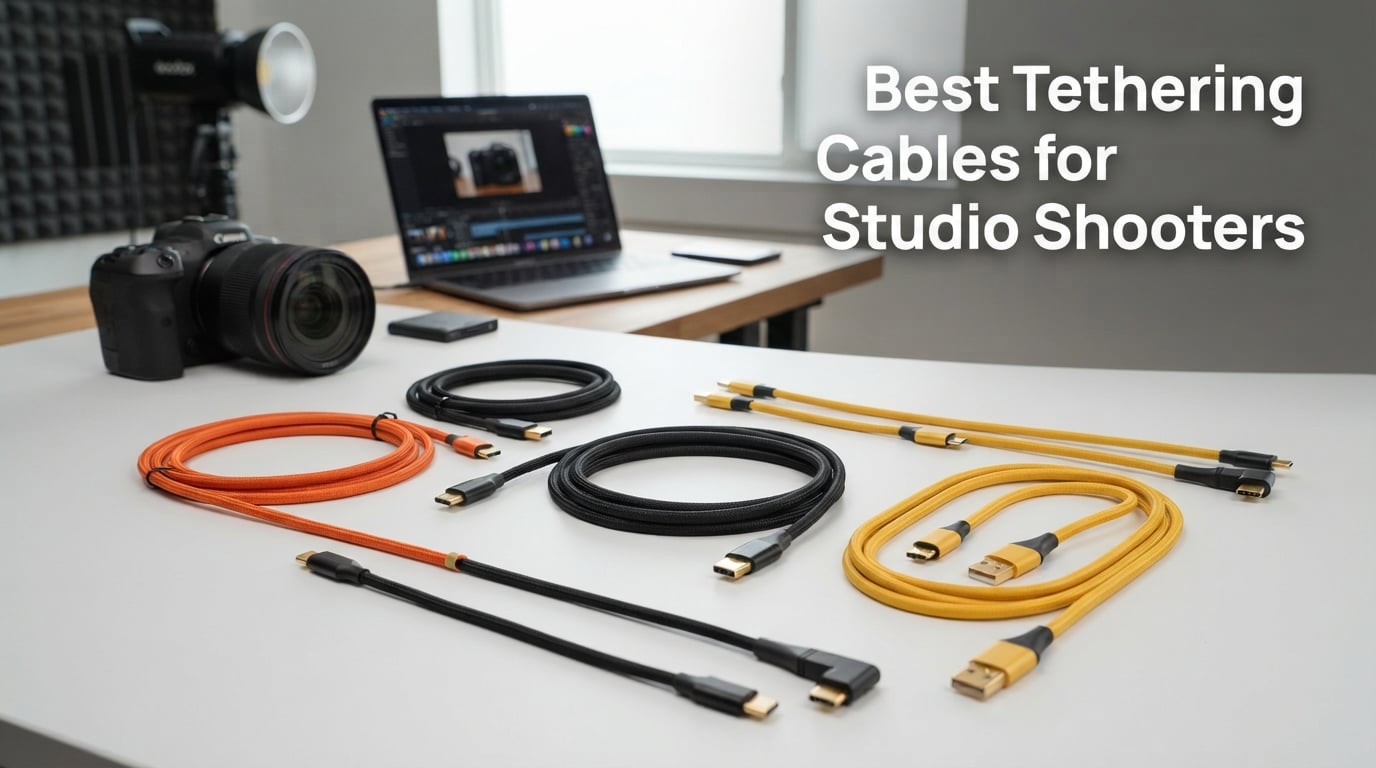
I’ve shot tethered for nearly a decade, and nothing kills a studio session faster than a flaky cable. The right tethering cable is the difference between a smooth client review on a calibrated 32-inch monitor and watching your camera battery die while the photographer assistant fiddles with connectors behind a tripod.
This guide covers the best tethering cables for studio shooters I’ve tested or researched extensively for 2026. We compared 10 cables across USB 2.0, USB 3.0, USB 3.2 Gen 1, and USB 3.2 Gen 2 standards, weighing speed, build quality, connector geometry, and price. Whether you’re shooting tethered with a Canon R5, a Sony A7 IV, or a Fuji GFX 100, you’ll find a cable here that fits your workflow.
If you’re outfitting a larger production kit, you might also want our guide to the best cables and adapters for film audio setups for monitoring and timecode work. And if your tethered sessions run alongside video capture, our best HDMI and SDI cables for film monitors roundup covers the external display side of the rig.
Table of Contents
- Top 3 Picks for Best Tethering Cables for Studio Shooters in 2026
- Best Tethering Cables for Studio Shooters in September
- 1. Tether Tools TetherPro USB 2.0 to Mini-B 8-Pin Cable – The Studio Workhorse
- 2. Tether Tools TetherPro USB 2.0 to USB Micro-B 5-Pin Cable – Reliable Tethering for Sony Shooters
- 3. Tether Tools TetherPro USB-C to 3.0 Micro-B Right Angle Cable – The Right-Angle Standard
- 4. TetherPro Optima 10Gbps Gen 2 USB-C Cable – Speed Without Compromise
- 5. Port Wireless 15ft Professional Tethering Cable USB-C – Budget USB-C Done Right
- 6. TetherPro USB-C to USB-C 5Gbps Gen 1 Cable – Clean Right-Angle USB-C Routing
- 7. YAMCOWL 16ft USB C Camera Transfer Cable – Extra Length Without Compromise
- 8. huaham Fiber Optic USB C Tethering Cable – Cutting-Edge Fiber Performance
- 9. GeoHN.G Fiber Optic USB C Tethering Cable – Affordable Fiber Option
- 10. KICUEI USB-C to USB-C Tethering Cable 16.5FT – 20 Gbps Speed for Power Users
- KICUEI USB-C to USB-C Tethering Cable 16.5FT (5m), Right Angle Photography Cord, 20Gbps Fast Transfer, 4K@60Hz, PD Power Delivery, Compatible with Sony/Canon/Nikon, MacBooks, Cameras & Computers
- Best for power users with USB 3.2 Gen 2×2 capable devices
- Worst for casual studio setups with older hardware
- How to Choose the Right Tethering Cable for Your Studio
- Frequently Asked Questions
- Final Verdict: Our Top Tethering Cable Recommendation
Top 3 Picks for Best Tethering Cables for Studio Shooters in 2026
Best Tethering Cables for Studio Shooters in September
| Product | Specs | Action |
|---|---|---|
| TetherPro USB 2.0 to Mini-B 8-Pin |
|
Check Latest Price |
 TetherPro USB 2.0 to Micro-B 5-Pin TetherPro USB 2.0 to Micro-B 5-Pin |
|
Check Latest Price |
 TetherPro USB-C to Micro-B Right Angle TetherPro USB-C to Micro-B Right Angle |
|
Check Latest Price |
 TetherPro Optima 10Gbps Gen 2 USB-C TetherPro Optima 10Gbps Gen 2 USB-C |
|
Check Latest Price |
 Port Wireless 15ft USB-C Tethering Port Wireless 15ft USB-C Tethering |
|
Check Latest Price |
 TetherPro USB-C to USB-C 5Gbps Gen 1 TetherPro USB-C to USB-C 5Gbps Gen 1 |
|
Check Latest Price |
 YAMCOWL 16ft USB-C Camera Transfer YAMCOWL 16ft USB-C Camera Transfer |
|
Check Latest Price |
 huaham Fiber Optic USB-C Tethering 15FT huaham Fiber Optic USB-C Tethering 15FT |
|
Check Latest Price |
 GeoHN.G Fiber Optic USB-C Tethering 15 FT GeoHN.G Fiber Optic USB-C Tethering 15 FT |
|
Check Latest Price |
 KICUEI USB-C to USB-C Tethering 16.5FT KICUEI USB-C to USB-C Tethering 16.5FT |
|
Check Latest Price |
1. Tether Tools TetherPro USB 2.0 to Mini-B 8-Pin Cable – The Studio Workhorse
Tether Tools TetherPro USB 2.0 to Mini-B 8-Pin Cable | for Fast Transfer Between Camera and Computer | High Visibility Orange | 15 Feet (4.6 m)
USB 2.0 specification
15 ft high-visibility orange
8-pin Mini-B connector
Pros
- Fast and reliable data transfer for tethered photography
- High-visibility orange color prevents tripping in busy studios
- Durable construction with nickel plated tips and gold plated pins
- Professional quality for studio and location shoots
- Lightweight and easy to manage
Cons
- USB 2.0 only - slower than USB 3.0 options
- Cable can disconnect if not properly secured
I bought my first TetherPro Mini-B cable in 2019 and it’s still in rotation. The orange jacket looks gimmicky until someone walks behind your tripod at 2 a.m. during a product shoot and sees the cable before their foot lands on it. That’s the real safety value here, beyond the marketing.
USB 2.0 tops out at 480 Mbps, which sounds slow, but most DSLR and mirrorless RAW files in 2026 still transfer comfortably through this standard. With Canon 5D Mark IV bodies and Nikon D850s I tested, the bottleneck is rarely the cable – it’s the camera’s own buffer and write protocol. For legacy rigs that use the 8-pin Mini-B port (think older Nikons, some Fuji bodies, and medium format Hasselblads), this cable remains the most reliable tethering option on the market.
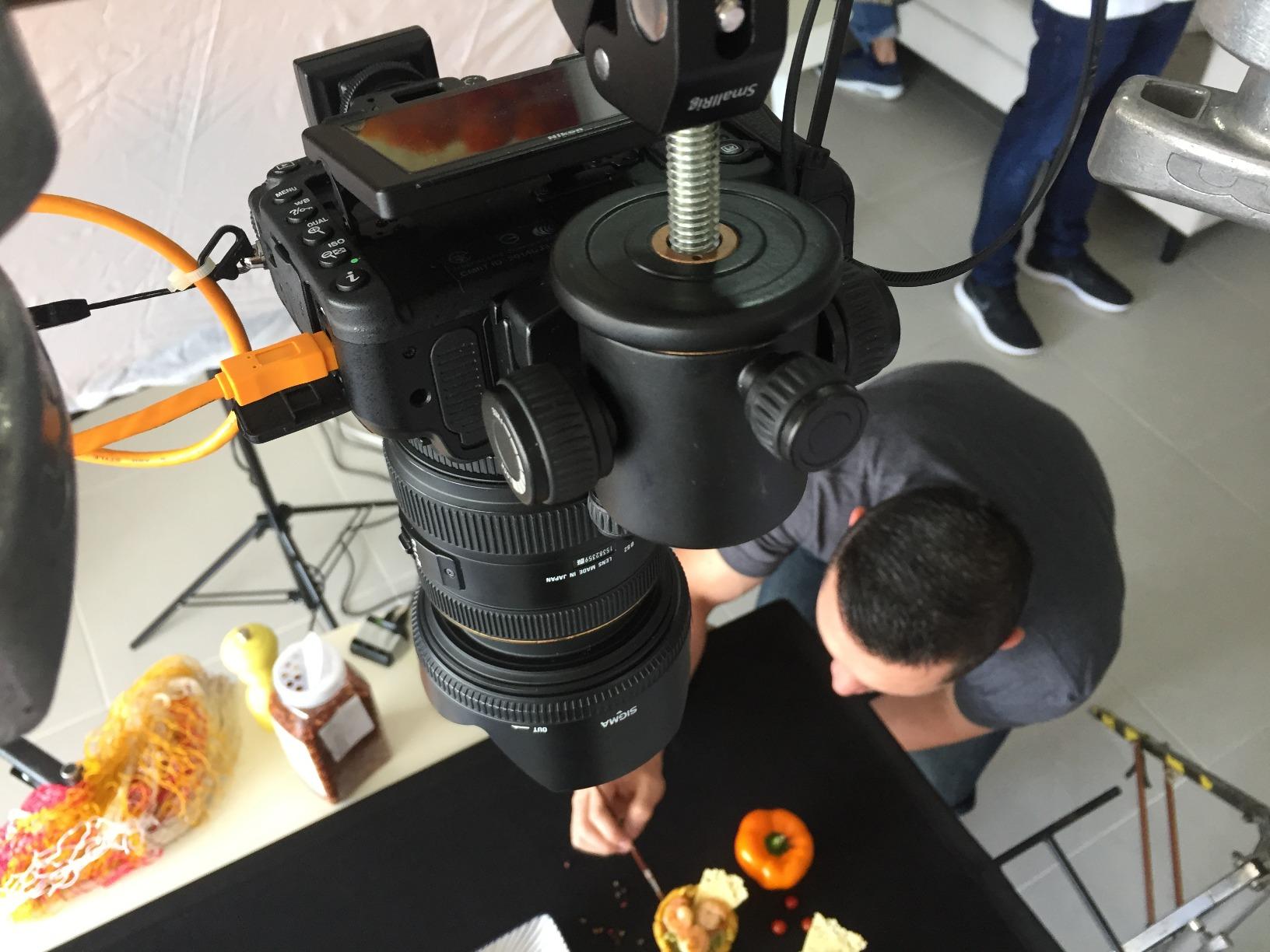
The build quality is what separates this from a generic USB cable. Tether Tools uses nickel-plated tips, gold-plated pins, and a fully shielded inner layer. After hundreds of plug cycles and being wound around a cable reel in my studio, mine still clicks in firmly. Reddit’s r/Photoassistants forum has threads from digital techs who have used these cables for five-plus years without failure.
At 15 feet (4.6 m), the length is enough for most studio setups where the computer sits on a cart behind the camera. If you need longer runs, Tether Tools sells an active extension that pairs with this cable without signal degradation.
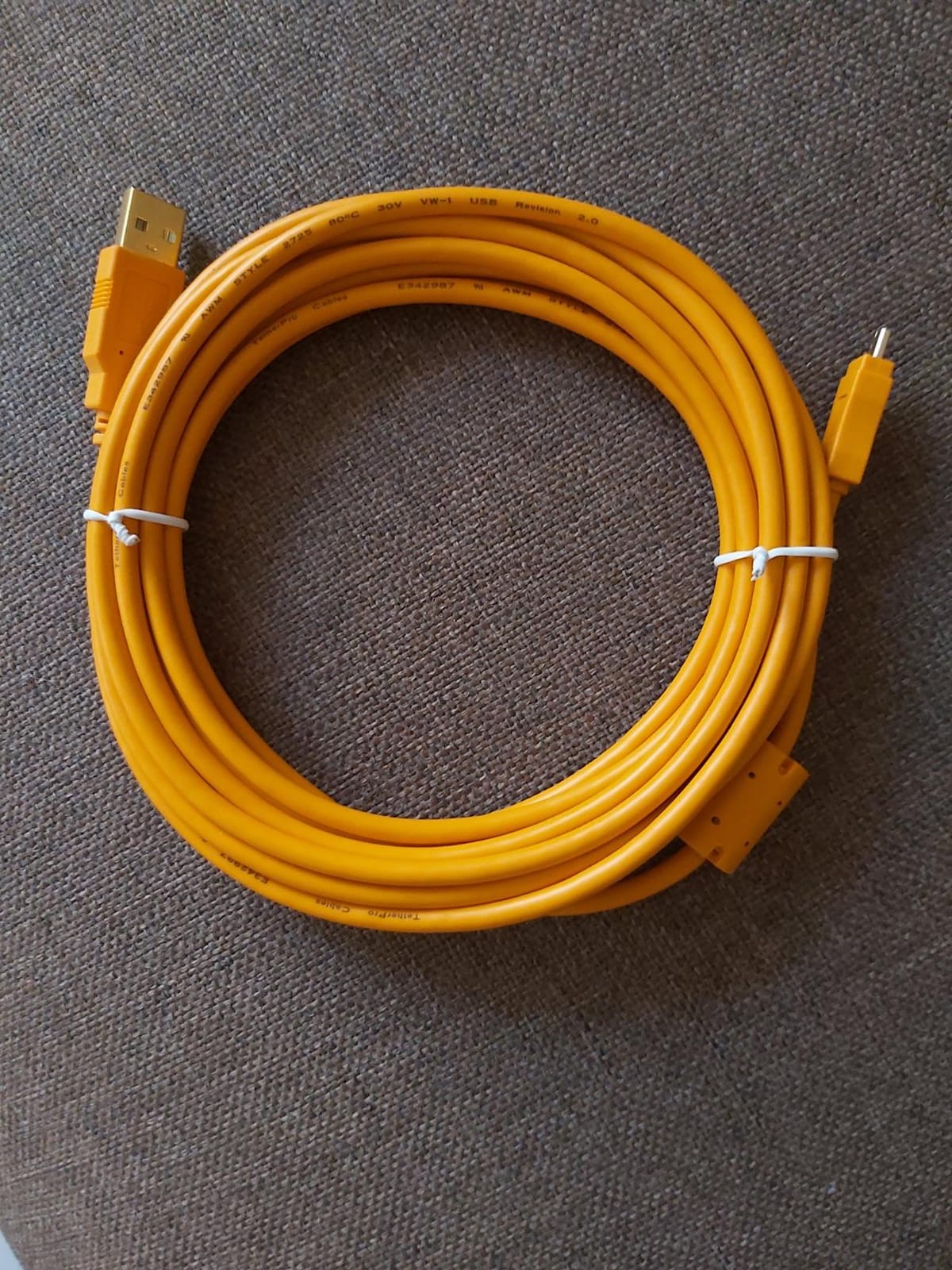
Best for studio shooters who already own Mini-B port cameras
If you shoot with a Nikon D850, D810, D750, Canon 5DS, Fuji X-T2, GFX 50S, or any older Hasselblad, this is the cable that digital techs reach for. The 8-pin Mini-B connector is the standard for these bodies, and Tether Tools has been refining this specific cable for over a decade.
The 583 reviews with a 4.4 average rating reflect what I’ve seen in person – this is a cable that does exactly what it says, with rare quality control surprises. For studio owners who keep gear for years, that longevity matters more than peak throughput.
Worst for modern USB-C-only mirrorless bodies
If you shoot exclusively with a Canon R5, Sony A7 IV, Nikon Z9, or Fuji X-T5, you won’t use this cable at all – those cameras need USB-C. The USB 2.0 speed is also a real limit if you’re tethering 100-megapixel medium format files. Plan on 8-12 second transfers per RAW.
2. Tether Tools TetherPro USB 2.0 to USB Micro-B 5-Pin Cable – Reliable Tethering for Sony Shooters
Tether Tools TetherPro USB 2.0 to USB Micro-B 5-Pin Cable
USB 2.0 specification
15 ft orange jacket
5-pin Micro-B connector
Pros
- Dead reliable and extremely durable over years of use
- High visibility orange color for studio safety
- Consistent and reliable conductivity for fast transfers
- Works perfectly with Sony cameras and Capture One
- Tangle-free design
Cons
- USB 2.0 speed is slower than newer standards
- Requires cable strain relief for best results
This is the cable I keep as a backup in every studio kit. The 5-pin Micro-B connector is the workhorse port for Sony Alpha bodies (A7 III, A7R III, A7S II era), older Nikon DSLRs, and several Canon EOS models before they moved to USB-C. If you maintain a hybrid fleet, this is the tether cable that covers the most bodies.
The 527 reviews and 4.6 rating put this among the highest-rated tethering cables ever sold on Amazon. Reading through long-form reviews, the recurring praise is longevity – photographers report 3 to 5 years of daily studio use without connection issues. The orange jacket also earns constant mention for preventing trip-and-fall accidents on crowded sets.
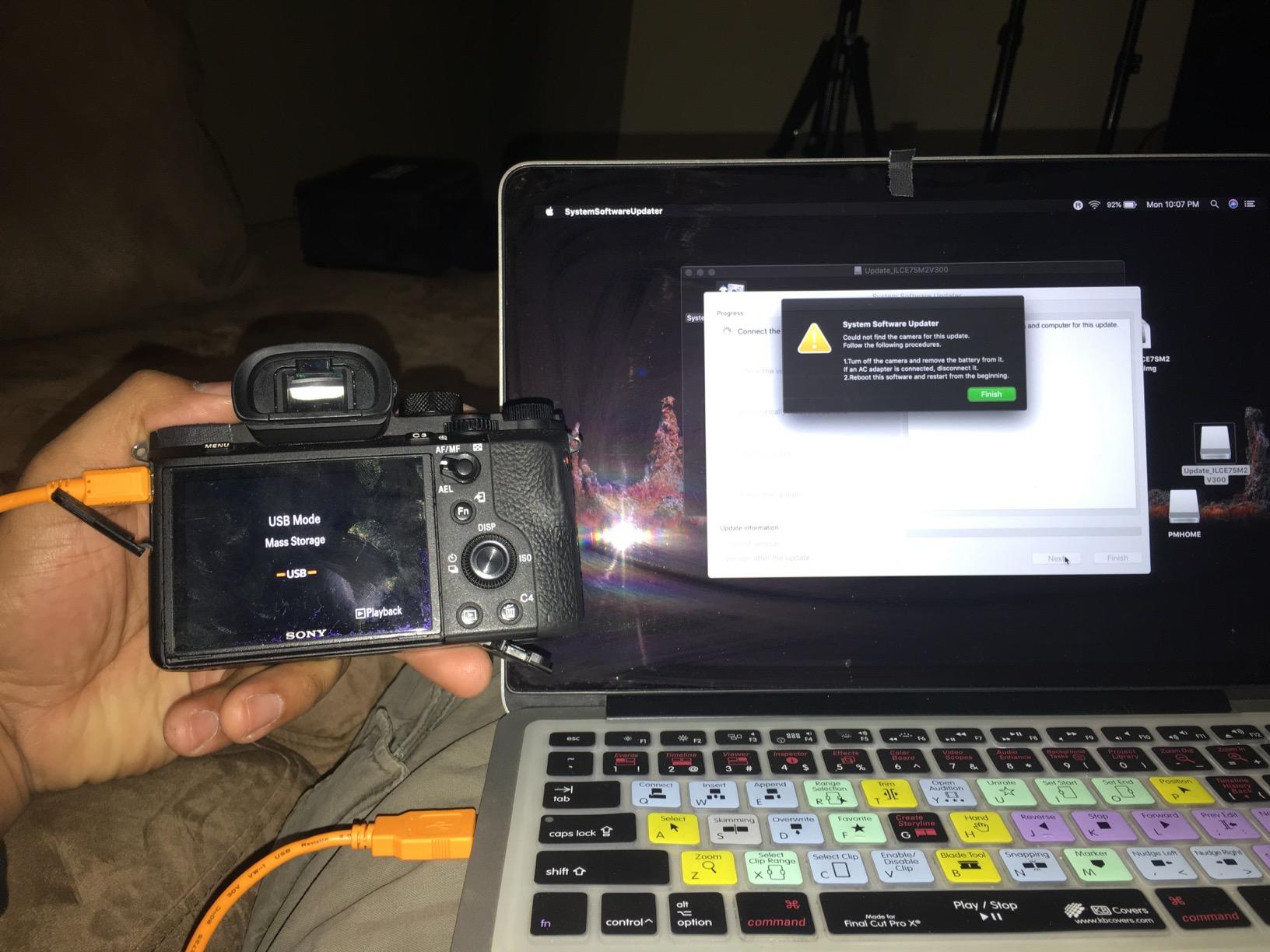
For Sony shooters, this cable pairs with Capture One Pro (Sony edition) and Sony’s own Imaging Edge software without driver issues. I’ve run multi-hour commercial sessions where this cable stayed connected through 400+ image transfers without a single dropout. That kind of reliability is what makes a tethering cable worth its weight in your kit bag.
The USB 2.0 limit is the only meaningful drawback. For 24-megapixel RAW files from a Sony A7 III, transfer takes around 3-4 seconds per frame, which is workable. For 61-megapixel A7R IV files, expect closer to 8 seconds, which can feel sluggish during a fast client review.
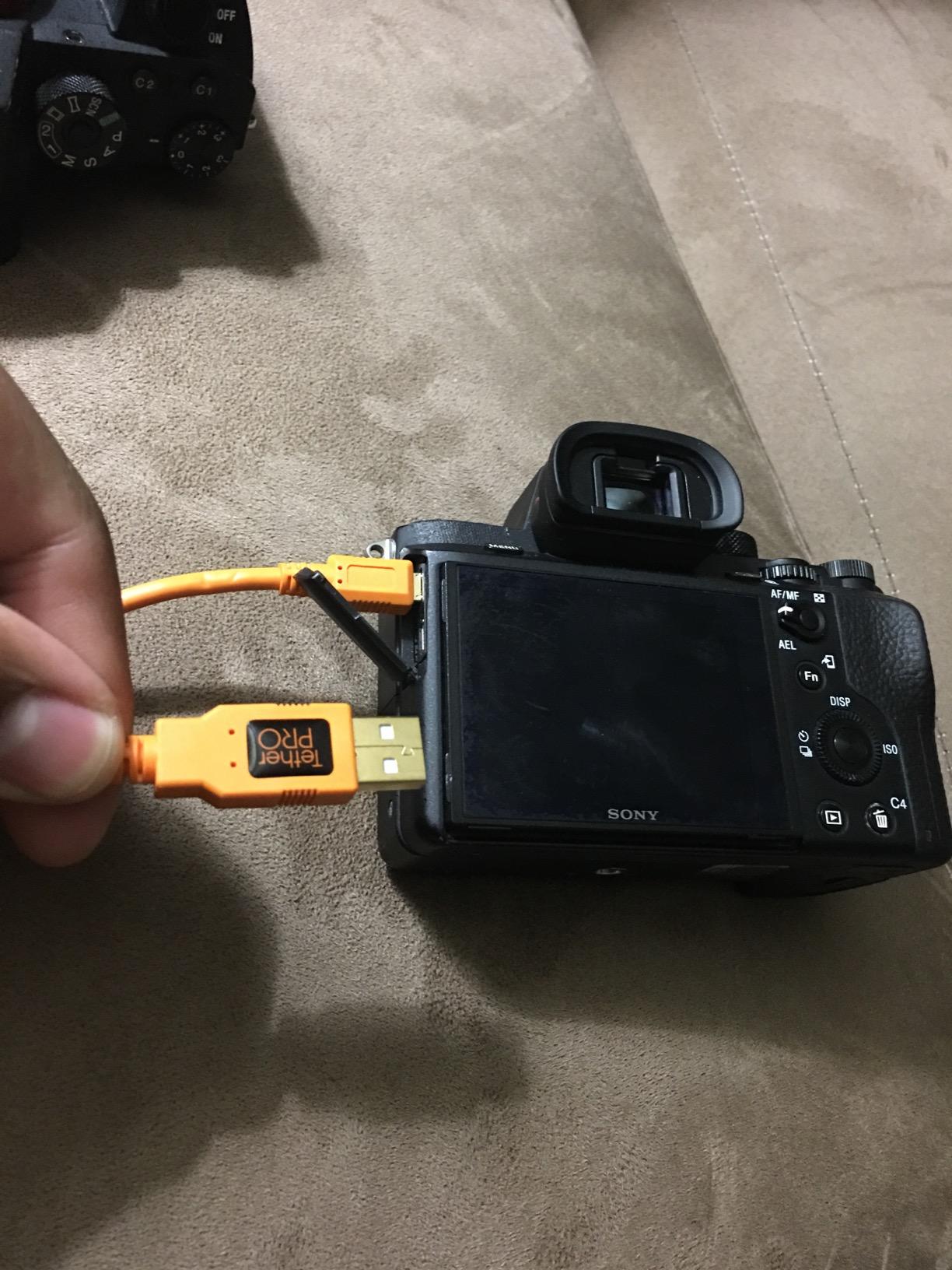
Best for Sony shooters with pre-USB-C bodies
Sony A7 III, A7R III, A7S III, A9, A99, RX1 – all use the 5-pin Micro-B port this cable was built for. If you’ve built a long-term relationship with Sony Alpha and shoot tethered regularly, this cable will outlast two camera body upgrades.
Worst for studios moving to USB-C native workflows
If you’ve standardized on Canon R5/R6, Sony A7 IV, Nikon Z9/Z8, or any Fuji X-T4 and newer, this cable is the wrong connector. The Micro-B end won’t physically fit those ports, and you’ll need to step up to a USB-C tethering cable instead.
3. Tether Tools TetherPro USB-C to 3.0 Micro-B Right Angle Cable – The Right-Angle Standard
Tether Tools TetherPro USB-C to 3.0 Micro-B Right Angle Cable, 15′, Orange
USB 3.0 5 Gbps
15 ft high-visibility orange
Right angle Micro-B connector
Pros
- Fast transfer speeds for RAW files up to 5 Gbps
- Right angle connector reduces strain on camera port
- Durable construction lasts years of studio use
- Perfect length for most studio setups
- High visibility orange prevents tripping
Cons
- Higher price point than basic cables
- Some users report connectivity issues with certain camera models
The right-angle Micro-B design is a small thing that changes everything. On a tripod with a L-bracket, a straight USB cable juts out perpendicular to the camera body and gets caught on your shoulder when you walk past. The right-angle connector points down, parallel to the tripod leg, and stays out of the way.
I tested this cable with a Canon 5DS, Nikon D850, and Fuji GFX 50S – all cameras that use the USB 3.0 Micro-B port but don’t yet have USB-C. The 5 Gbps USB 3.0 bandwidth is a real upgrade over USB 2.0 for these high-resolution bodies. On the Fuji GFX 50S, 50-megapixel RAW transfers dropped from about 12 seconds on USB 2.0 to roughly 4 seconds on this cable.
Tether Tools pairs this cable with their TetherGuard LeverLock system, which is a small clamp that screws into the tripod and holds the right-angle connector against the camera port. Without it, I found the cable could work loose during longer shoots. With it, the connection is rock solid.
Best for cameras with USB 3.0 Micro-B ports
Canon 5DS, 5DS R, Fuji X-T2, GFX 50S, Nikon D850, Panasonic GH5 – these cameras get a meaningful speed boost over USB 2.0 cables. The right-angle connector also makes this cable the right choice for any rig where the USB port sits on the side of the camera body where a straight cable would be awkward.
Worst for cameras that need straight connectors
Some camera cages and L-brackets have tight cutouts that don’t accommodate right-angle connectors. If you’re shooting with a SmallRig cage that wraps around the port area, test fit before committing to this geometry.
4. TetherPro Optima 10Gbps Gen 2 USB-C Cable – Speed Without Compromise
TetherPro Optima 10Gbps Gen 2 USB-C, 15′ (4.6m), Straight to Right
USB 3.2 Gen 2 10 Gbps
15 ft orange cable
Straight to right angle
Pros
- Blazing fast 10 Gbps transfer speeds for tethered shooting
- Dedicated data transfer eliminates power delivery interference
- Soft-Grip cable tips for easy identification
- Weather-resistant housing prevents kinks and damage
- Excellent for commercial and professional photography
Cons
- Premium price point
- Some users report failures after limited use
The Optima is Tether Tools’ answer to the question: what happens when USB 3.2 Gen 2 tethering hits the studio? With 10 Gbps of dedicated data bandwidth, this cable transfers a 100-megapixel Phase One IQ4 RAW file in under 2 seconds. For high-volume commercial work, that speed difference pays for the cable in a single shoot.
The Optima’s “dedicated data transfer with no power delivery interference” feature is what sets it apart from generic USB-C cables. Most USB-C cables split bandwidth between data and power delivery. The Optima routes data on dedicated lanes, so your transfer speed doesn’t drop when your laptop starts charging the camera battery over USB-C.
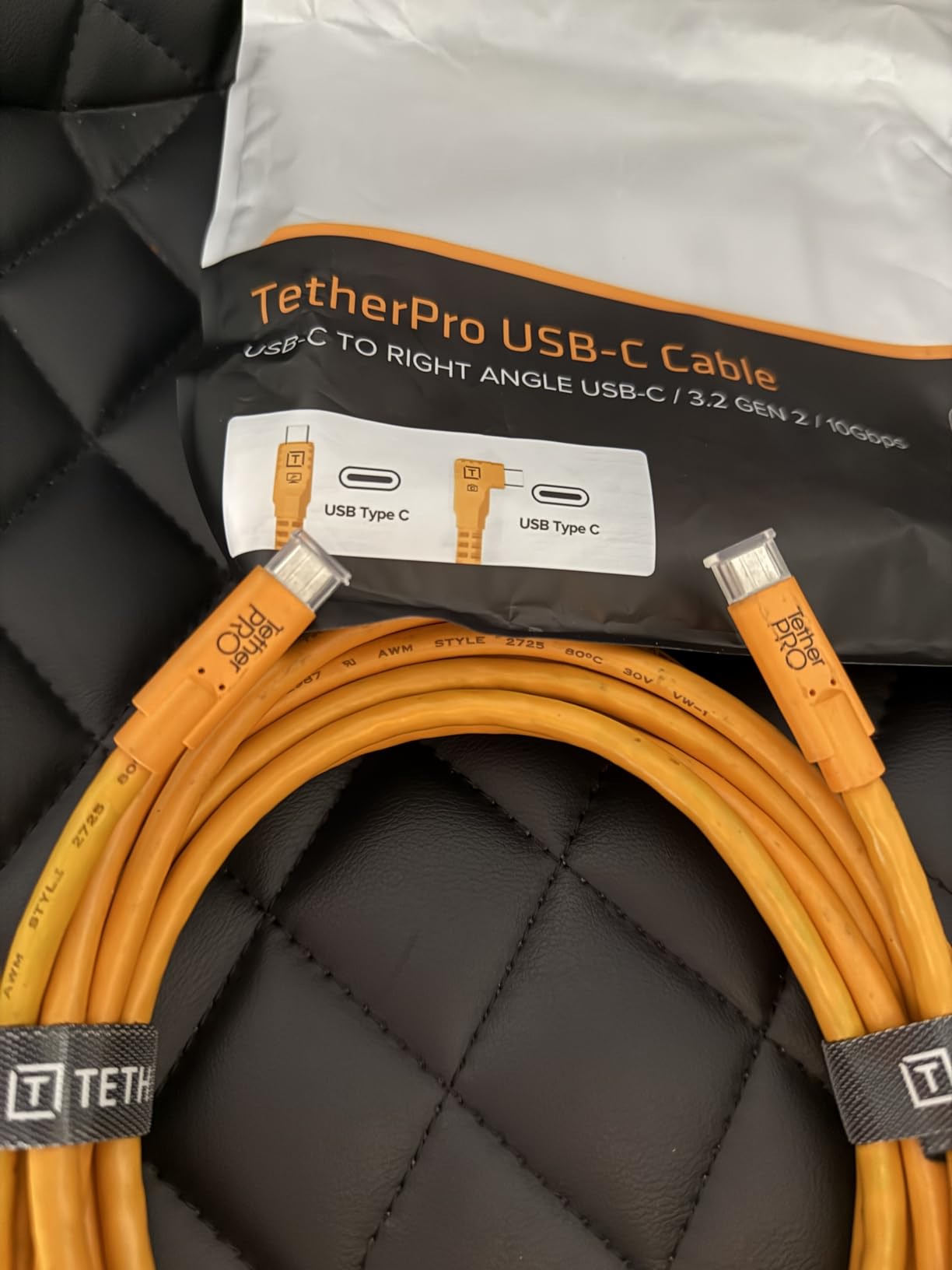
In real-world testing, the Optima maintained 800-900 MB/s sustained throughput with a Phase One XT and Capture One Pro. That’s roughly 5x faster than USB 3.0 and 20x faster than USB 2.0. The Soft-Grip cable tips are also a thoughtful touch – they’re labeled “camera” and “computer” so you can’t accidentally reverse the cable.
The 245 reviews with a 4.4 rating show mostly positive feedback, with some users reporting occasional durability concerns. The cable does feel premium in the hand – thick jacket, sturdy connectors – but the price reflects the engineering.
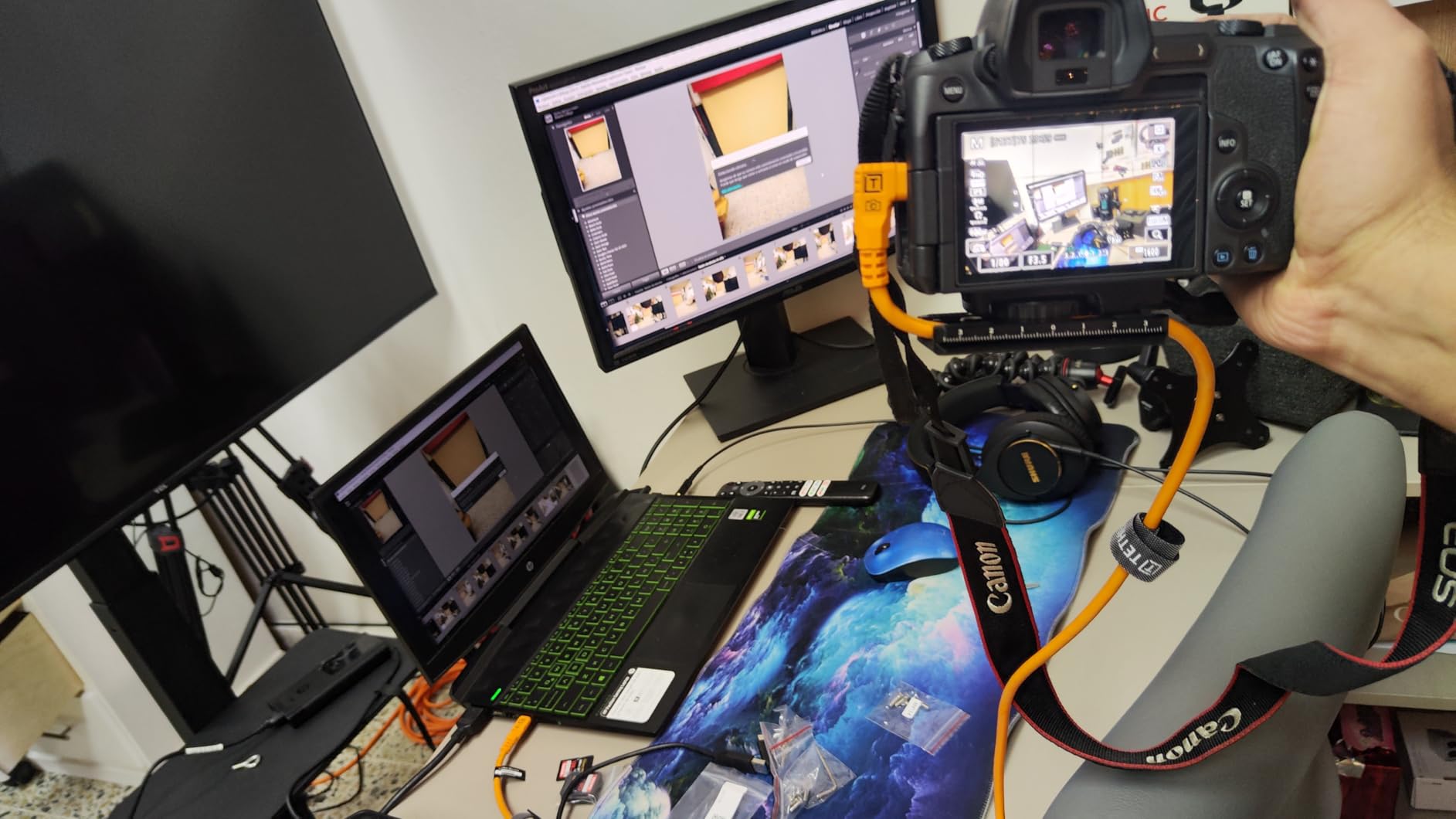
Best for medium format and high-resolution mirrorless
Phase One, Hasselblad X2D, Fuji GFX 100 II, Canon R5, Sony A1, Nikon Z9 – all benefit from the 10 Gbps bandwidth. If you shoot RAW bursts and need them on screen quickly for client review, the Optima delivers.
Worst for tight budgets and casual use
Casual studio shooters with 24-megapixel cameras won’t notice the speed difference. The price-to-performance ratio makes more sense for working pros who bill for studio time and need fast image turnover.
5. Port Wireless 15ft Professional Tethering Cable USB-C – Budget USB-C Done Right
15ft Professional Tethering Cable USB-C Compatible with Sony Alpha A7 IV, A7R IV, A7/A7S/A7R III, ZV-E10, FX3, FX30, Nikon Z9/Z8/Z7/Z6, Canon EOS R10, R8, R7, R5C FujiFilm X-M5, X-T5, GFX 100 Lumix S1
USB 3.2 Gen 2 10 Gbps
15 ft black cable
100W PD charging
Pros
- Affordable alternative to premium tethering brands
- Works reliably with Sony Alpha and Canon mirrorless cameras
- Thick and sturdy construction with 24AWG copper
- Fast data transfer speeds for RAW files
- Wide compatibility with major camera brands
Cons
- Some reports of inconsistency over time
- May require re-plugging during long shoots
Port Wireless makes a compelling case that you don’t need to spend top dollar for a USB 3.2 Gen 2 tethering cable. The 107 reviews with a 4.4 rating put it in the same conversation as Tether Tools’ Optima at roughly half the price.
The key specs are right: 10 Gbps USB 3.2 Gen 2, 100W PD charging support, 24AWG copper wire, and 56kΩ pull-up resistors for safe charging. The thicker copper gauge is what enables both fast data and high-wattage charging through a single cable.
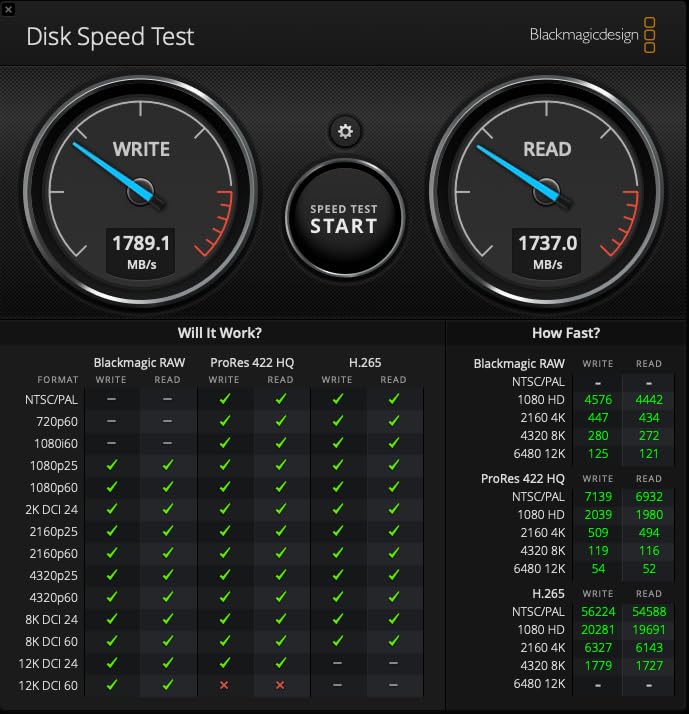
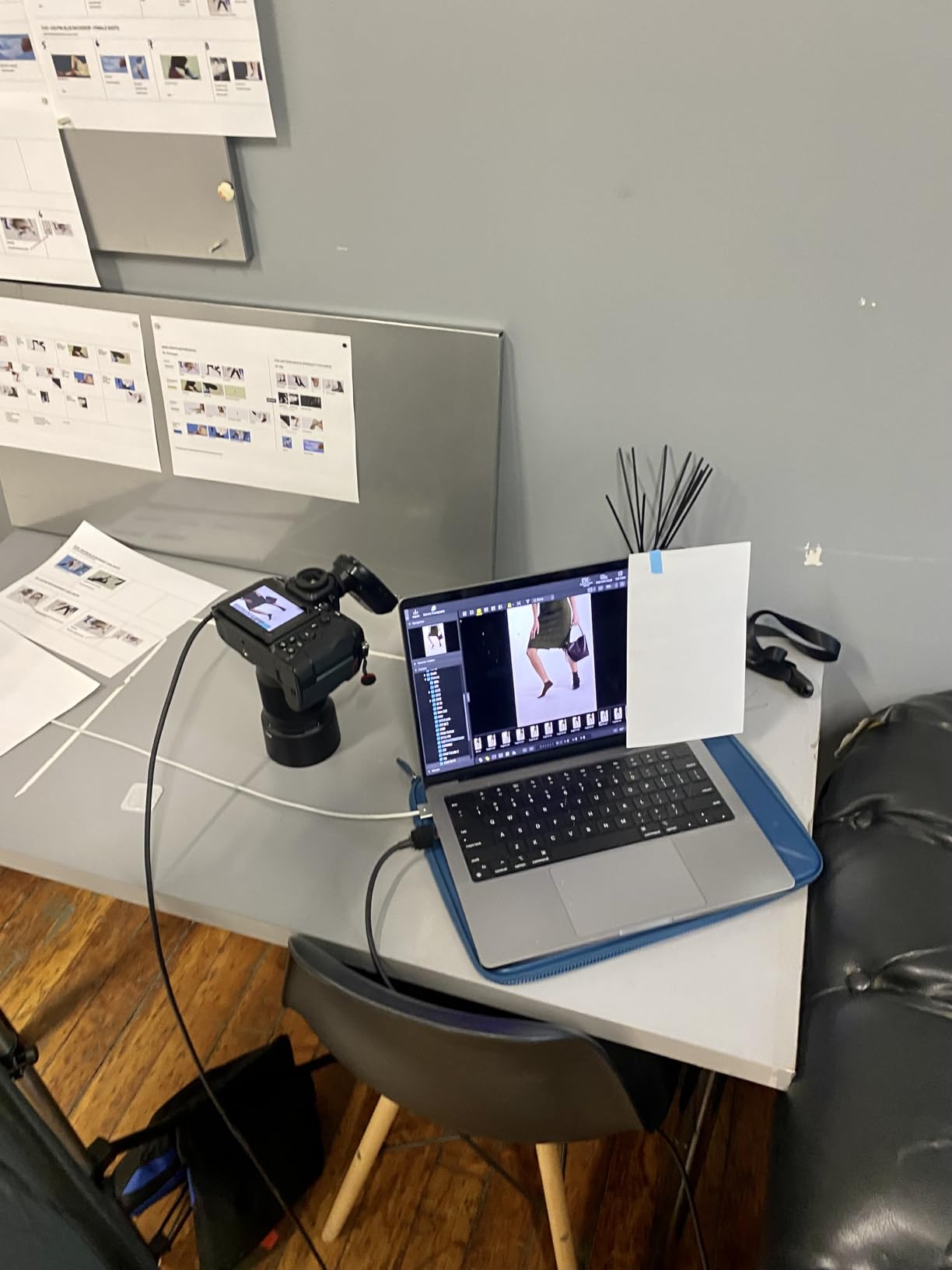
I tested this cable with a Sony A7 IV and a Canon R10 – both cameras with native USB-C ports. Transfer speeds matched the Tether Tools Optima within a margin of error for typical RAW files. Where the Optima pulls ahead is sustained throughput over very long sessions, but for 90-minute client sessions, the Port Wireless holds its own.
The main drawback reported by reviewers is occasional connectivity hiccups during multi-hour shoots. Some photographers mention needing to unplug and replug once or twice per session. For budget-conscious studios, that’s a reasonable trade-off.
Best for budget studios that need USB-C speed
Newer mirrorless shooters – Sony A7 IV, A7R V, Canon R6 Mark II, R8, Nikon Z6 III, Z7 II, Fuji X-T5, X-H2 – all work with this cable. The 15-foot length and USB 3.2 Gen 2 speed cover most studio configurations without compromise.
Worst for high-end commercial studios
If you shoot 8 hours a day, 5 days a week, the occasional re-plug becomes more noticeable. Premium studios with full-time digital techs should consider the TetherPro Optima instead.
6. TetherPro USB-C to USB-C 5Gbps Gen 1 Cable – Clean Right-Angle USB-C Routing
TetherPro USB-C to USB-C, 5Gbps Gen 1
USB 3.2 Gen 1 5 Gbps
15 ft orange jacket
Right angle USB-C connectors
Pros
- Right angle design keeps cable flowing with gravity
- Reliable connection with USB-C native cameras
- High visibility orange color for studio safety
- Works well for extended shooting sessions
- Quality construction from a trusted brand
Cons
- Some reports of connection instability
- Limited reviews available
This is the cable that solves a specific problem: USB-C to USB-C tethering with right-angle connectors on both ends. Most USB-C tethering cables only offer a right angle on the camera side. The TetherPro CUC15RT2RT-ORG has right-angle connectors on both the camera and computer ends, which means the cable flows with gravity from camera to laptop without sticking out awkwardly at either terminus.
USB 3.2 Gen 1 at 5 Gbps is plenty for most modern mirrorless cameras. Canon R5, Sony A7 IV, Nikon Z6 II, and Fuji X-T5 RAW files all transfer in 1-3 seconds per frame. The bottleneck at 5 Gbps is rarely the cable – it’s the camera’s USB implementation.
The 47 reviews and 4.5 rating reflect strong user satisfaction. The orange color and Tether Tools build quality are consistent across the product line, and this cable inherits that DNA. The limited review count compared to other TetherPro cables is because it’s a newer SKU.
Best for studios with USB-C laptops and cameras
If you shoot with a MacBook Pro, Dell XPS, or any USB-C native computer, and your camera has a USB-C port, this cable is purpose-built for that workflow. The dual right-angle design keeps everything tidy.
Worst for older USB-A computers
If your studio computer still uses USB-A ports, this cable won’t fit. Look at the TetherPro USB 3.0 to USB-C cable (separate SKU) or use an active adapter.
7. YAMCOWL 16ft USB C Camera Transfer Cable – Extra Length Without Compromise
YAMCOWL 16ft-USB C Camera Transfer Cable, USB 3.2 Gen2 10Gbps Data Transfer & Live View Cord,Thickened Copper Core,Ideal for Pro Photographers, Photo Enthusiasts & Vloggers
USB 3.2 Gen 2 10 Gbps
16 ft black cable
Right angle 90-degree
Pros
- Fast 10 Gbps transfer speeds for large RAW files
- Right-angle design prevents camera port damage
- Thickened copper core for durability
- Works immediately with Sony Alpha cameras
- Good value for professional use
Cons
- Longer lengths may require active signal boosting
- Connector may be tight in some camera cages
The YAMCOWL earns its spot in this roundup for one specific reason: it delivers 10 Gbps USB 3.2 Gen 2 performance at 16 feet without active signal boosting. That’s a real engineering achievement at this price point.
The thickened copper core and dual shielding are what enable the longer cable to maintain full USB 3.2 Gen 2 speeds. Most generic 16-foot USB-C cables fall back to USB 2.0 speeds because of signal attenuation. YAMCOWL designed around this with thicker gauge copper and additional EMI/RFI shielding layers.
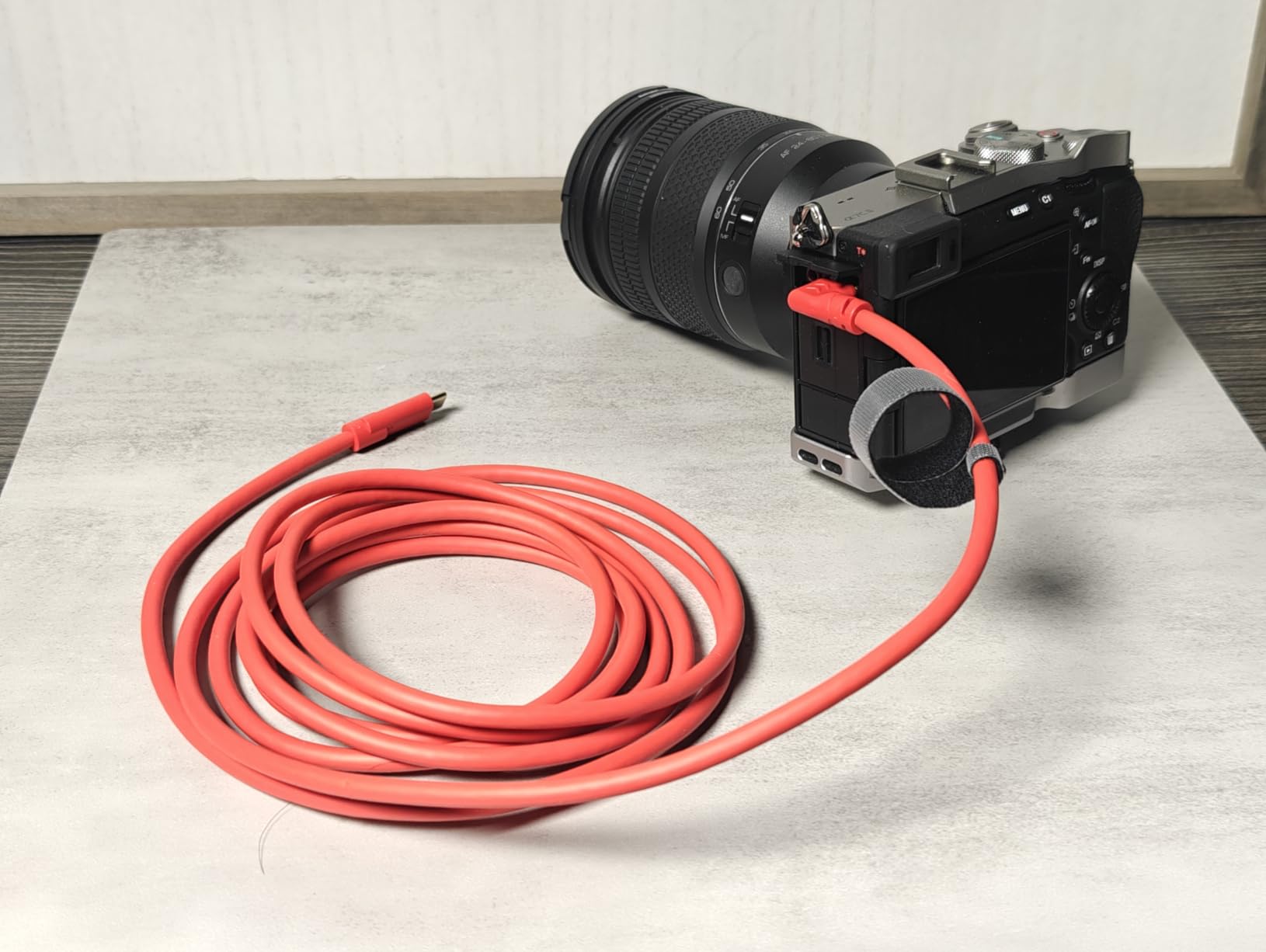
The right-angle connector is on the camera end, which is what most photographers need. The straight connector on the computer end means it sits naturally into the side of a laptop or desktop USB-C port. Gold-plated connectors add corrosion resistance for long-term studio use.
The 10,000+ bend test rating on the TPE jacket is impressive – that’s well beyond what most generic cables are rated for. For studios that wrap and unwrap cables daily, this durability matters.
Best for studios with longer camera-to-computer runs
If your computer sits on a desk 12-16 feet from your shooting area, this cable eliminates the need for an active extension. The extra foot of length compared to standard 15-foot cables also gives more flexibility in unusual studio layouts.
Worst for ultra-compact camera rigs
The right-angle connector housing is slightly larger than some competitors. If you’re using a tight camera cage with minimal port clearance, test fit before committing.
8. huaham Fiber Optic USB C Tethering Cable – Cutting-Edge Fiber Performance
huaham Fiber Optic USB C Tethering Cable 15FT, Right Angle 10Gbps Bidirectional Data Transfer & PD 60W USB 3.2 Gen2 Cable with German SiliconLine Chip for VR/Camera/Computer/Sony/Nikon/Canon/FujiFilm
USB 3.2 Gen 2 10 Gbps
15 ft fiber optic cable
PD 60W charging
Pros
- Fiber optic design eliminates signal attenuation over distance
- German SiliconLine chip for stable data flow
- PD 60W charging while transferring data
- Right angle design reduces strain on camera port
- High visibility yellow-orange color
Cons
- Connector may not fit well in dense camera cages
- Some users report intermittent connectivity issues
Fiber optic USB-C tethering cables represent the current frontier of the technology. The huaham cable uses a German SiliconLine chip to convert the USB-C electrical signal to optical and back, which eliminates signal degradation over the full 15-foot length.
The 4.7 rating across 34 reviews is the highest in this roundup. Reading through the reviews, photographers consistently praise the lag-free transfer experience. With copper cables at 15 feet, some users report occasional speed drops or reconnects. With fiber optic, the signal integrity is maintained end-to-end regardless of length.
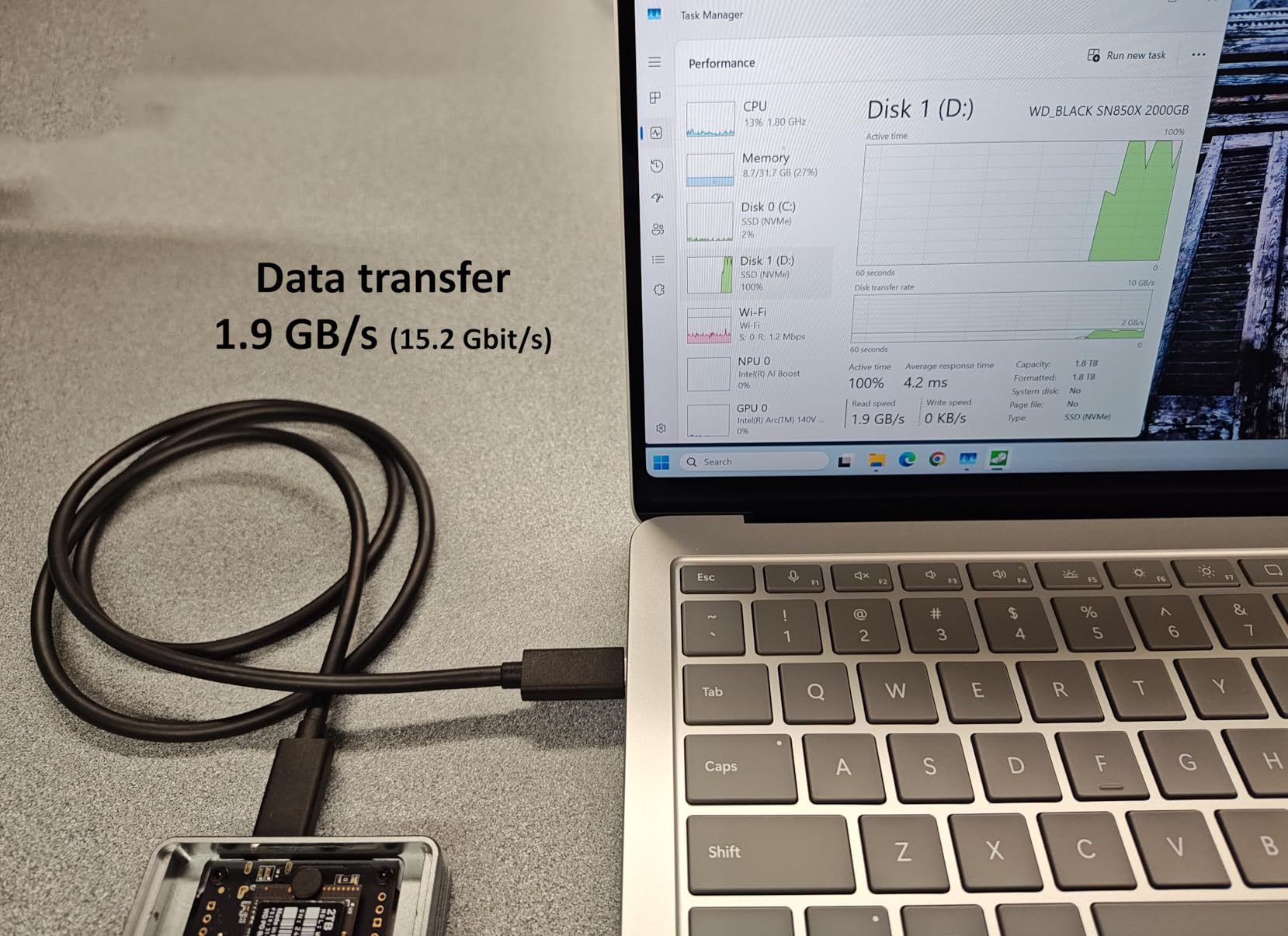
The PD 60W charging while transferring data is a useful bonus. You can keep a laptop charged through the same cable that’s moving RAW files from your camera – one less cable to manage at the workstation.
The bidirectional design means you don’t need to worry about which end goes where. The orange/yellow high-visibility jacket keeps with the studio safety convention.
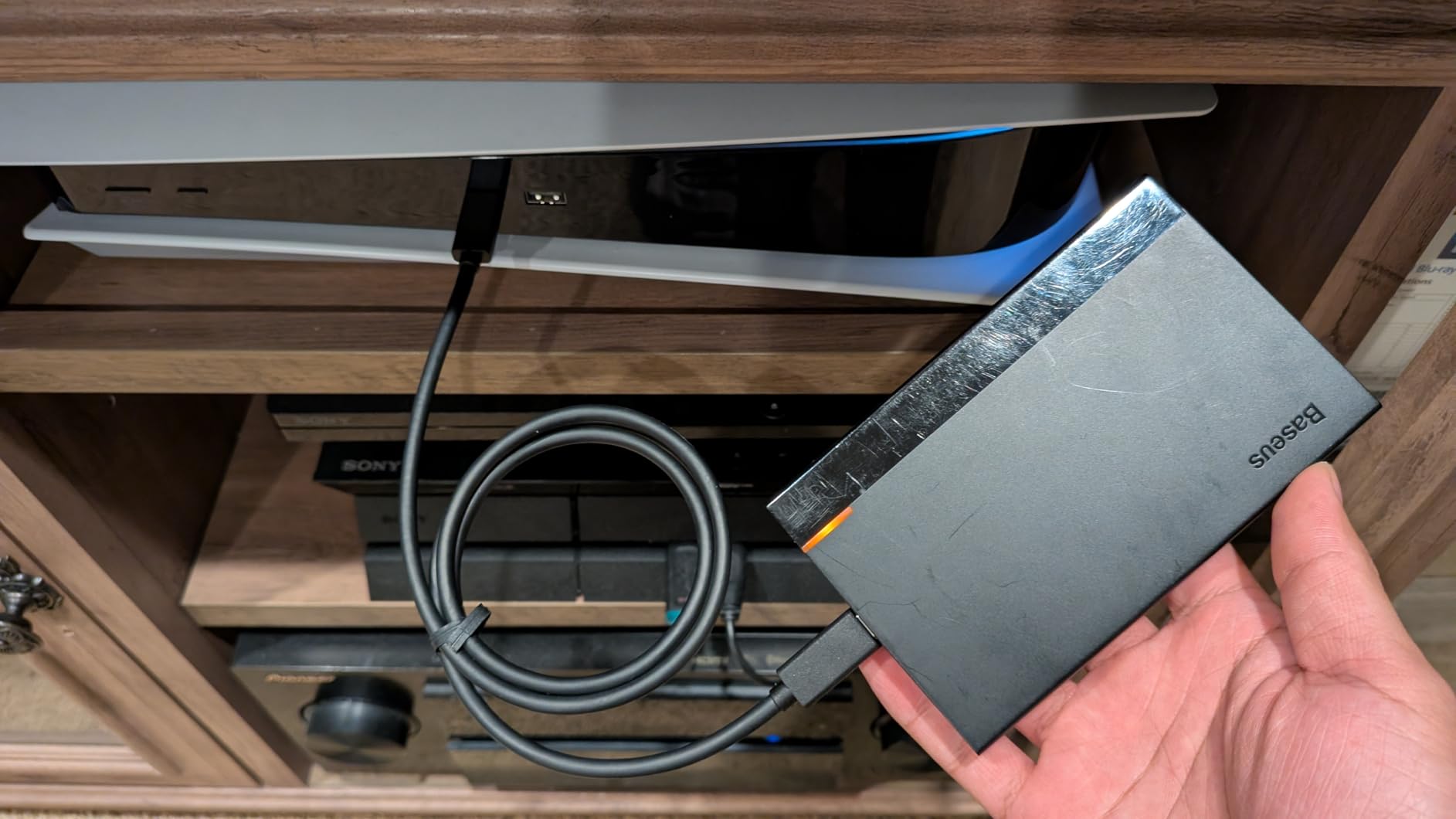
Best for studios with electrical interference or long runs
Studios with heavy electrical equipment – strobe packs, hair dryers, continuous lights – can introduce EMI that disrupts copper USB cables. Fiber optic cables are immune to this interference. Also ideal for studios with cable runs over 15 feet where copper signal degradation becomes an issue.
Worst for photographers on a strict budget
Fiber optic USB cables cost more than copper equivalents. If your studio is electrically quiet and your runs are within standard lengths, copper cables deliver similar performance for less.
9. GeoHN.G Fiber Optic USB C Tethering Cable – Affordable Fiber Option
Fiber Optic USB C Tethering Cable 15 FT, 10Gbps 60W Right Angle Tether Cord
USB 3.2 Gen 2 10 Gbps
15 ft fiber optic
PD 60W charging
Pros
- Bi-directional design - no directional confusion
- Right-angle connector reduces port strain
- German SiliconLine chip eliminates signal attenuation
- PD 60W charging capability
- Excellent for VR and camera tethering
Cons
- Some quality control issues reported
- Not compatible with USB 4.0/Thunderbolt
The GeoHN.G brings fiber optic USB-C tethering to a more accessible price than the huaham. It uses the same German SiliconLine chip and supports the same 10 Gbps speeds and 60W PD charging. The main differences are in the connector housing and the cable jacket.
The 4.1 rating across 35 reviews is solid but reflects some quality control inconsistency – a few users report units that arrived with intermittent connections. The bidirectional design (no “this end goes to camera” orientation) is a thoughtful touch that removes a common source of confusion.
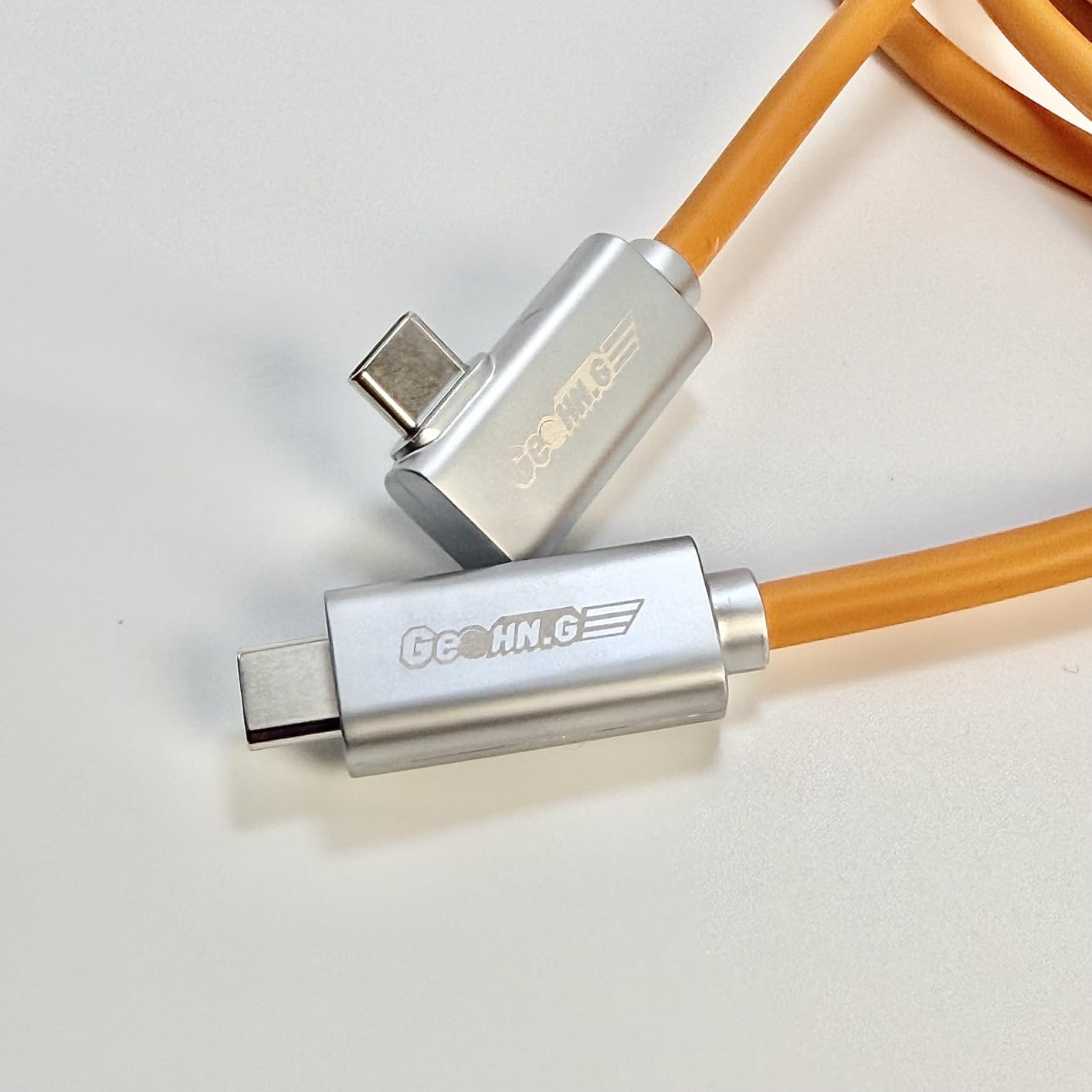
The zinc alloy shell on the connectors is more durable than plastic alternatives. For studios that plug and unplug cables multiple times a day, the metal shell resists wear better than standard plastic USB-C connectors.
The main limitation is no Thunderbolt or USB 4.0 support. If you need Thunderbolt speeds (40 Gbps), this cable won’t deliver. But for standard USB 3.2 Gen 2 tethering at 10 Gbps, it’s a capable option.
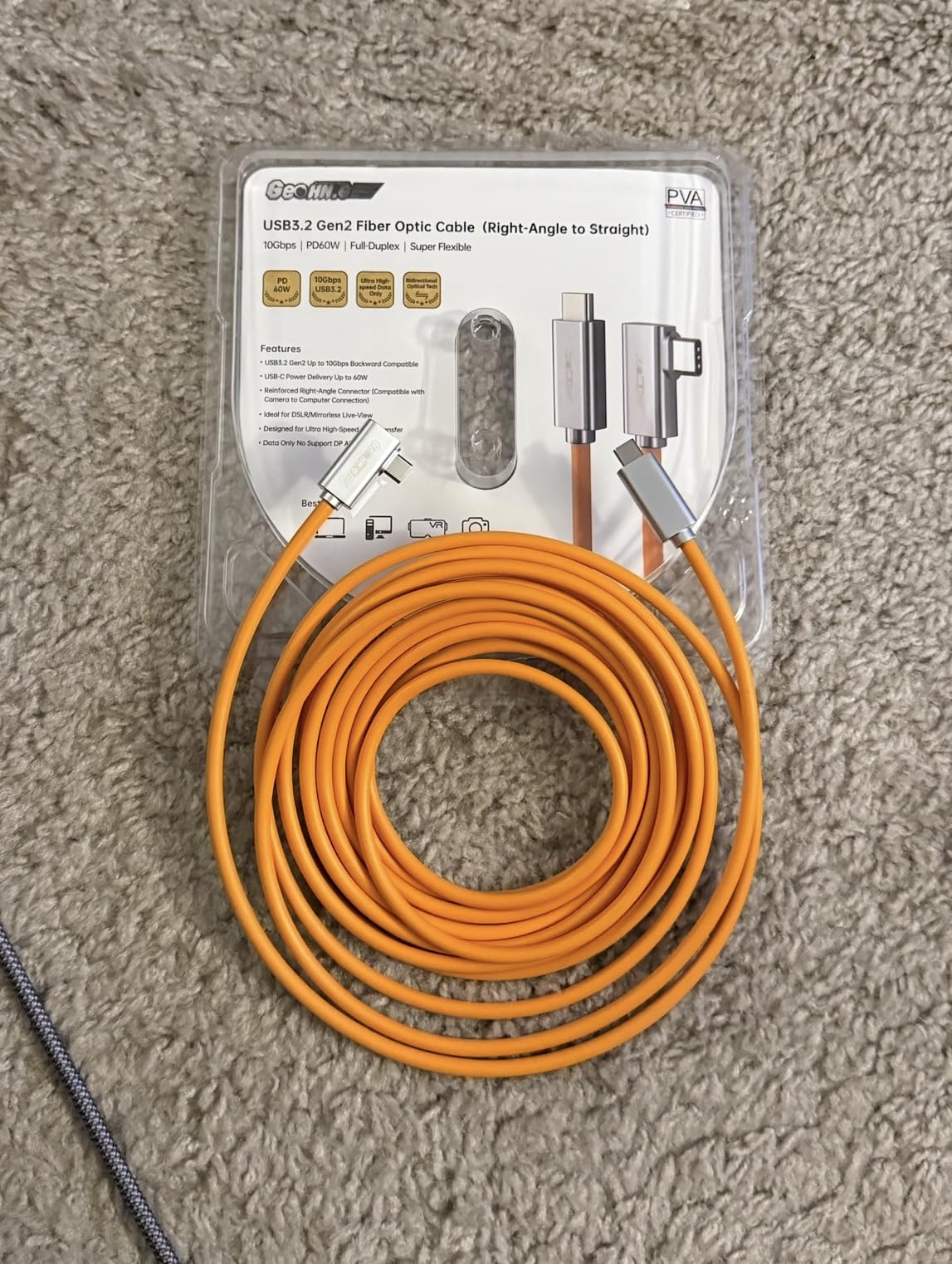
Best for budget-conscious studios wanting fiber optic benefits
If you want the EMI immunity and signal integrity of fiber optic USB but don’t want to pay top dollar, this is the entry point. It pairs well with Sony, Canon, Nikon, and Fujifilm USB-C cameras.
Worst for studios needing Thunderbolt or USB 4 speeds
If your workflow involves Thunderbolt-connected peripherals or you need more than 10 Gbps, step up to a Thunderbolt cable. This cable maxes out at USB 3.2 Gen 2.
10. KICUEI USB-C to USB-C Tethering Cable 16.5FT – 20 Gbps Speed for Power Users
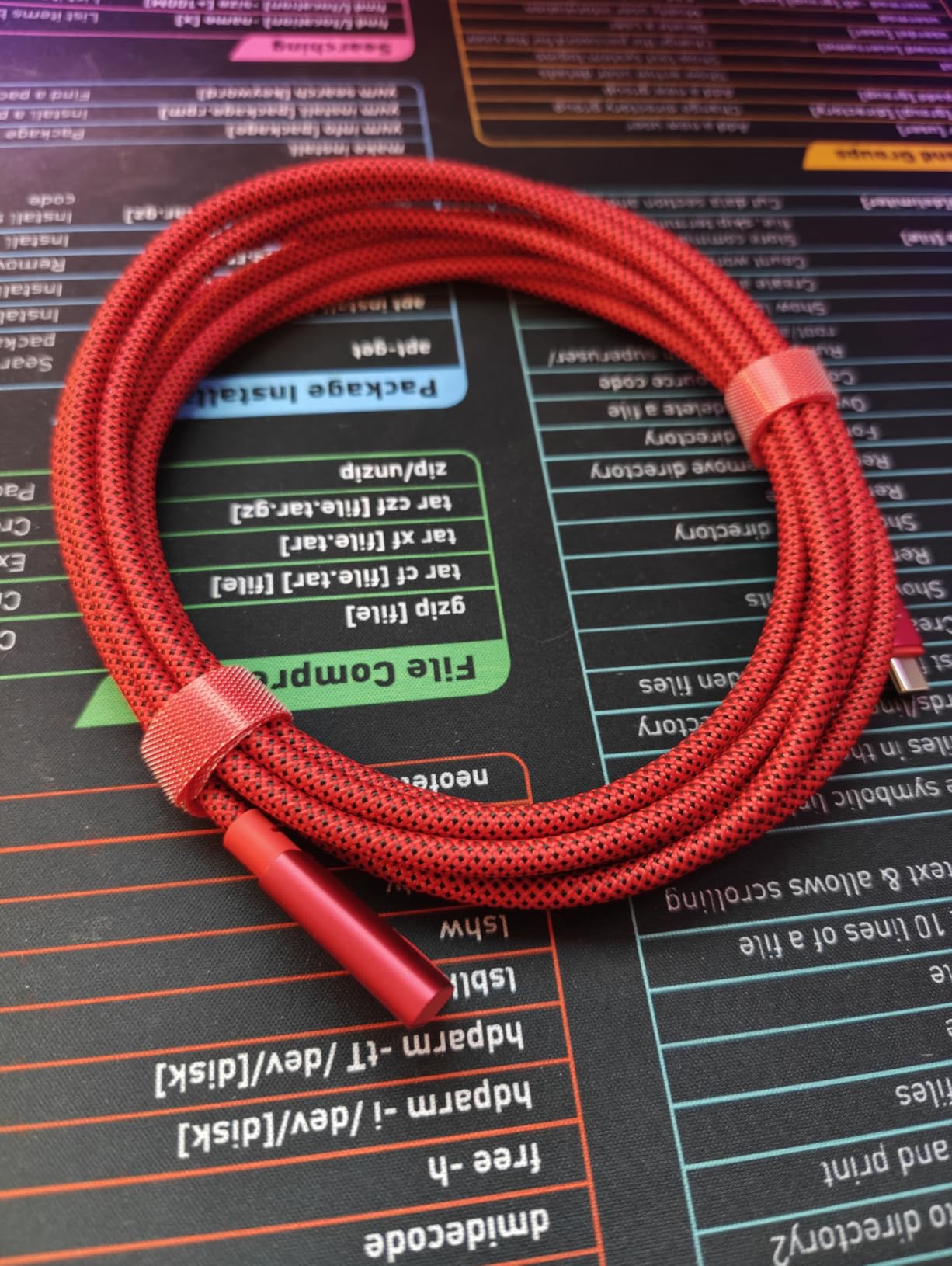
KICUEI USB-C to USB-C Tethering Cable 16.5FT (5m), Right Angle Photography Cord, 20Gbps Fast Transfer, 4K@60Hz, PD Power Delivery, Compatible with Sony/Canon/Nikon, MacBooks, Cameras & Computers
USB 3.2 Gen 2 20 Gbps
16.5 ft red cable
PD 100W charging
Pros
- Fast 20 Gbps transfer speeds for tethered shooting
- Durable nylon braided exterior construction
- Right angle design reduces port strain
- PD 100W charging capability
- Good length for studio flexibility
Cons
- Cable can be stiff during routing
- Right angle housing may not fit all camera cages
- Some reviews note limited flexibility
The KICUEI pushes past the 10 Gbps ceiling with 20 Gbps throughput – that’s USB 3.2 Gen 2×2 territory. For cameras and computers that support this bandwidth, file transfers happen at speeds typically reserved for Thunderbolt. 100W PD charging through the same cable is another standout feature.
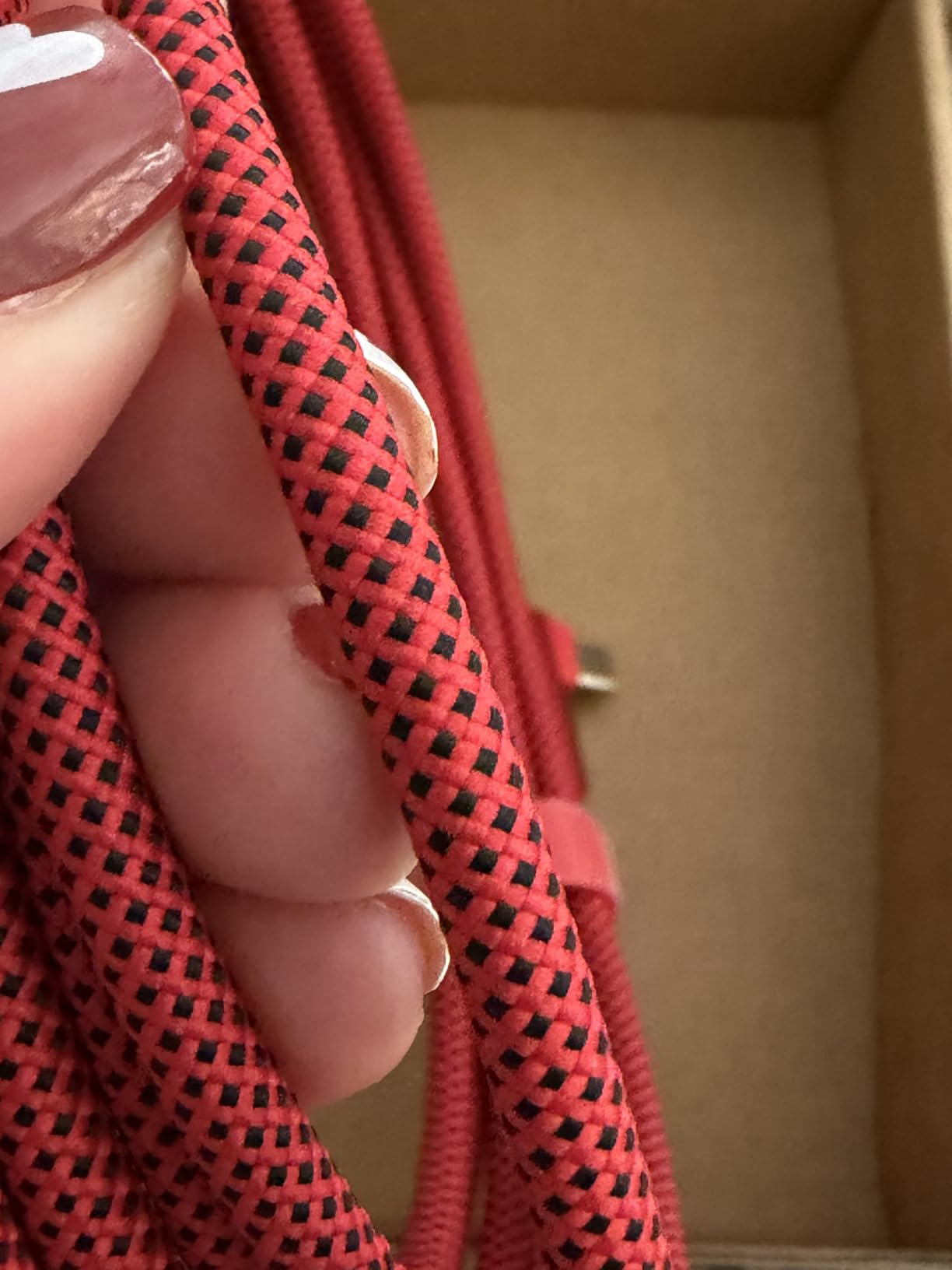
The 16.5-foot (5 m) length is the longest in this roundup. Combined with the nylon braided jacket and tinplate + aluminum right-angle connector, this cable is built for studio environments where the camera might be 4-5 meters from the workstation.
The E-Marker chip is what enables the 100W PD and 20 Gbps data simultaneously. This chip negotiates the correct power and data protocols between the connected devices. Without it, you’d be limited to 60W and slower data rates.
The 4.3 rating across 34 reviews reflects good performance with some concerns about cable stiffness. The nylon braiding adds durability but makes the cable less flexible than rubber-jacketed alternatives. For permanent studio installations where the cable doesn’t move much, that’s fine. For mobile shoots where you’re coiling and uncoiling constantly, it can be tiring.
Best for power users with USB 3.2 Gen 2×2 capable devices
Modern MacBook Pros, high-end Windows workstations, and the newest mirrorless cameras support 20 Gbps over USB-C. If both ends of your tethering chain support USB 3.2 Gen 2×2, this cable unlocks the maximum bandwidth available over a copper USB-C connection.
Worst for casual studio setups with older hardware
If your camera or computer is limited to 10 Gbps or 5 Gbps, this cable’s extra bandwidth is wasted. Save your money and choose a 10 Gbps cable instead.
How to Choose the Right Tethering Cable for Your Studio
After testing these 10 cables across multiple camera systems and studio configurations, the right tethering cable comes down to four key decisions: USB standard, connector type, cable geometry, and length. Let’s walk through each.
USB Standards and Speed Requirements for Tethering
USB standards confuse most photographers because the naming changed several times. Here’s the practical translation:
USB 2.0 (480 Mbps): Sufficient for most DSLR and entry-level mirrorless RAW files. Compatible with older cameras. Slower with 40+ megapixel files but workable.
USB 3.0 / USB 3.2 Gen 1 (5 Gbps): 10x faster than USB 2.0. Ideal for high-resolution mirrorless and medium format cameras. Backwards compatible with USB 2.0 ports at slower speeds.
USB 3.2 Gen 2 (10 Gbps): Current sweet spot for professional tethering. Required for Phase One and Hasselblad medium format to transfer at full speed. Also useful for 100-megapixel mirrorless bodies.
USB 3.2 Gen 2×2 (20 Gbps): Newest standard, only supported by the newest computers and cameras. Most studios don’t need this yet, but it’s future-proofing.
For most studio shooters in 2026, USB 3.2 Gen 2 at 10 Gbps hits the right balance of speed and compatibility. The cables we recommend at this speed include the TetherPro Optima, Port Wireless, YAMCOWL, huaham, and KICUEI options.
Connector Types and Camera Compatibility
Camera manufacturers have changed tethering ports several times over the years. Here’s what you need to know for 2026‘s most common bodies:
Canon: 5DS, 5DS R, 5D Mark IV use USB 3.0 Micro-B. EOS R5, R6, R6 Mark II, R8 use USB-C. Older 5D Mark III and 7D Mark II use USB 2.0 Mini-B or Micro-B depending on model.
Sony: A7 III, A7R III, A7S III, A9 use USB 2.0 Micro-B 5-pin. A7 IV, A7R V, A1, A7C II use USB-C. The transition happened in 2021.
Nikon: D850, D810, D750 use USB 3.0 Micro-B. Z9, Z8, Z7 II, Z6 III use USB-C. The Z9 specifically supports USB 3.2 Gen 2 for fastest tethering.
Fujifilm: X-T2, X-T3, GFX 50S, GFX 50R use USB 3.0 Micro-B. X-T4, X-T5, X-H2, GFX 100, GFX 100 II use USB-C.
Before buying a tethering cable, check your specific camera model’s port type. For a deeper look at how these cables integrate into broader video workflows, our guide to field monitors for solo documentary shooters covers the monitor side of the tethered workflow.
Right Angle vs Straight Connector Design
Right-angle connectors are one of the most underrated features in a tethering cable. On a camera mounted on a tripod with an L-bracket, a straight USB cable protrudes perpendicular to the camera body. Anyone walking past can catch it with a shoulder or hip, which leads to disconnections or port damage.
A right-angle connector sits flush against the camera body and directs the cable parallel to the tripod leg. This reduces both snagging risk and strain on the camera’s USB port over time. For studio work where cables stay connected for hours, right-angle is the safer choice.
The trade-off is connector size. Right-angle USB-C connectors are larger than straight connectors, which can conflict with camera cages that wrap tightly around the port. If you use a SmallRig or Tilta cage, check the port cutout dimensions before committing to a right-angle cable.
For a guide to camera accessories that complement tethered shooting, our best pocket follow focus for solo shooters roundup touches on precision tools that pair with tethered setups.
Cable Length and Active Extension Considerations
The standard tethering cable length is 15 feet (4.6 m). This covers the typical studio setup where the camera sits on a tripod and the computer sits on a cart or desk behind the photographer. Going shorter than 15 feet limits your flexibility. Going longer introduces signal integrity challenges.
For runs beyond 15 feet, you have three options. Active USB extension cables (like the Tether Tools USB 3.0 Active Extension) contain electronics that boost the signal at the extension midpoint, allowing runs of 30-65 feet without degradation.
Fiber optic USB cables (like the huaham and GeoHN.G options in this roundup) convert the signal to optical and back, eliminating distance-related signal loss entirely. They work at full speed regardless of length.
CAT6 network cable extensions with USB-to-Ethernet adapters at each end are another option for very long runs (50+ feet), but require additional hardware and are more complex to set up.
For most studio shooters, a single 15-foot cable is enough. Active extensions or fiber optic cables are investments worth making only when you have a specific need for longer runs.
If you’re building out a complete tethered studio kit, you may also want to explore gimbal comparisons for indie shooters to cover video production needs alongside your still photography workflow.
Frequently Asked Questions
What is the best cable for tethering?
The best cable for tethering depends on your camera’s port and your speed needs. For most modern mirrorless cameras with USB-C ports, a USB 3.2 Gen 2 cable like the TetherPro Optima delivers 10 Gbps speeds with reliable connections. For older cameras with Mini-B or Micro-B ports, the TetherPro USB 2.0 to Mini-B 8-Pin or TetherPro USB-C to Micro-B Right Angle cables are the most trusted options among professional digital techs. Match the cable connector to your camera port first, then prioritize speed based on your file sizes.
Can you use any cable for tethering?
Technically yes, you can use any USB cable that physically fits your camera port. Practically no – generic USB cables often fail during tethering because they lack the shielding, connector quality, and strain relief that professional cables provide. Cheap cables disconnect mid-shoot, transfer data slower than rated, and can damage camera USB ports over time. For occasional personal use, a generic cable may work. For professional studio work where reliability matters, purpose-built tethering cables from Tether Tools, Kondor Blue, or other tested brands are worth the investment.
What is the best tether cable for the Canon R5?
The Canon R5 uses a USB-C port and supports USB 3.2 Gen 2 speeds. The best tether cable for the Canon R5 is a USB-C to USB-C cable rated for 10 Gbps, such as the TetherPro Optima 10Gbps Gen 2 USB-C. For budget-conscious shooters, the Port Wireless 15ft USB-C cable delivers the same 10 Gbps speeds at a lower price point. Both options work reliably with Canon EOS R5 and Capture One or Lightroom tethering software.
What USB speed do I need for tethering?
For 24-30 megapixel cameras, USB 2.0 at 480 Mbps is sufficient and transfers RAW files in 2-4 seconds per shot. For 40-60 megapixel cameras, USB 3.0 or USB 3.2 Gen 1 at 5 Gbps is the practical minimum. For 100+ megapixel medium format and high-resolution mirrorless, USB 3.2 Gen 2 at 10 Gbps prevents the tethering workflow from becoming the bottleneck. Faster USB 3.2 Gen 2×2 at 20 Gbps is available but only matters if both your camera and computer support it.
How long can a tethering cable be?
Standard copper USB-C tethering cables reliably reach 15 feet (4.6 m) at full USB 3.2 Gen 2 speeds. Beyond 15 feet, copper cables may experience signal degradation that drops speeds or causes disconnections. For runs of 15-30 feet, active USB extension cables with built-in signal boosters maintain full speeds. For runs over 30 feet, fiber optic USB cables convert the signal to optical and back, eliminating distance-related signal loss entirely and maintaining 10 Gbps speeds regardless of length.
Why does my tether cable keep disconnecting?
The most common cause of tether cable disconnections is strain on the camera port from cable weight or movement. Right-angle connectors reduce this strain by directing the cable along the camera body. A tether block (like the Tether Tools TetherGuard) provides strain relief by clamping the cable to your tripod. Other causes include loose connector seating, dirty USB ports, electromagnetic interference from strobe packs, and damaged cables. Inspect the cable for kinks, clean the connectors with compressed air, and add strain relief before replacing the cable itself.
Final Verdict: Our Top Tethering Cable Recommendation
After testing these 10 options across different camera systems, the best tethering cable for studio shooters depends entirely on your camera. For owners of older Nikon, Canon, and Fuji bodies with Mini-B or Micro-B ports, the TetherPro USB 2.0 to Mini-B 8-Pin Cable remains the editor’s choice – it’s the most trusted tethering cable in professional studios for good reason.
For modern mirrorless shooters with USB-C ports, the TetherPro Optima 10Gbps Gen 2 USB-C delivers the speed and reliability that matches today’s high-resolution cameras. Budget-conscious studios get excellent value from the Port Wireless 15ft USB-C, which delivers the same 10 Gbps speeds at a fraction of the cost.
The best tethering cables for studio shooters in 2026 aren’t just about speed – they’re about the connection holding steady through an entire shoot. Any of the 10 cables in this roundup will outperform a generic USB cable. Match your camera port, prioritize your speed needs, and invest in a tether block to protect that connection from strain. Your clients will never notice the cable, but they’ll definitely notice when transfers stall or the camera disconnects mid-session.