
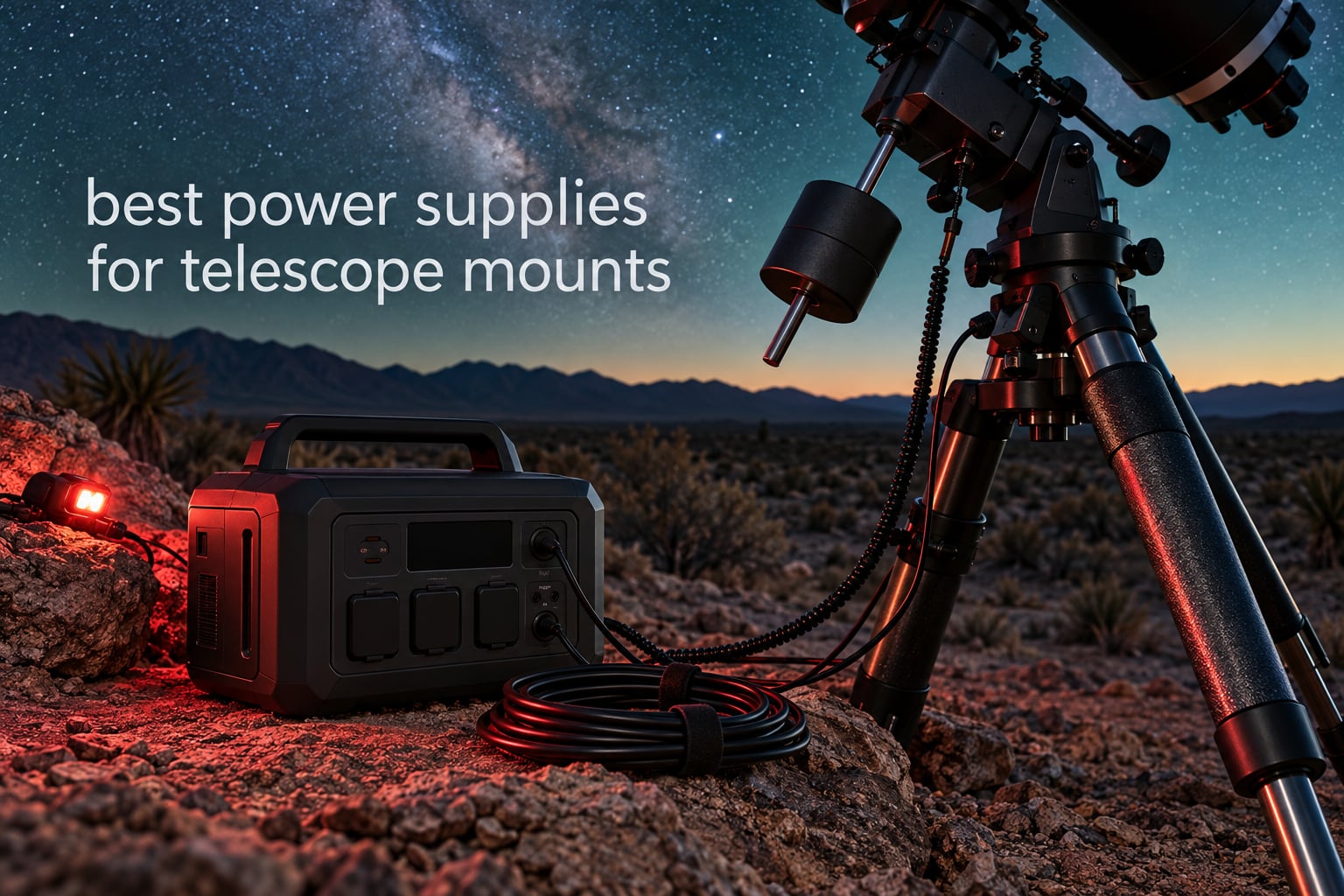
Short answer: the best power supplies for telescope mounts are regulated 12V DC sources with at least 2A for small alt-az GoTo scopes, 5A for anything heavier than an SE or SLT mount, and enough watt-hours to cover your session plus a 30 percent margin. Our top pick is the Jackery Explorer 300, the best dedicated telescope option is the Celestron PowerTank Lithium, and the best wall-powered option is Celestron’s own 2 Amp AC adapter.
Most telescope power problems are not mystery faults. They are voltage sag. A mount that is happily tracking on a sagging supply will stall mid-slew, throw a low voltage warning, or reset and lose your alignment, and that happens with batteries that still read as full.
That is why we built this roundup around the question buyers actually need answered: how many amps does your mount pull, and does the supply hold steady voltage when it pulls them. We compared ten supplies, from a 2 Amp wall brick to 300 watt portable power stations, and looked at regulation, connector fit, chemistry, weight and real runtime rather than headline wattage alone.
One note before we start. If your kit is more film crew than star party, our phantom power supply guide for filmmakers covers the audio side of a location kit. Everything below is strictly 12V DC astronomy hardware.
Table of Contents
- Top 3 Best Power Supplies for Telescope Mounts in 2026
- All 10 Telescope Power Supplies at a Glance in 2026
- 1. Jackery Explorer 300 292Wh — Best Power Supply for Telescope Mounts Overall
- 2. Celestron 2 Amp AC Adapter — Best Regulated Wall Supply for Light Mounts
- 3. Celestron PowerTank 12 84Wh — Best Sealed Lead Acid Telescope Battery
- 4. FlickerStar 12V 2A AC Adapter 6ft — Best Budget Replacement Wall Adapter
- 5. HOWEASY 88Wh 120W Power Station — Best Lightweight Station for Lights and Phones
- 6. Daran 89.6Wh LiFePO4 Power Station — Best for Fast Turnaround Between Sessions
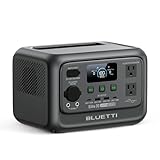
- 7. BLUETTI Elite 30 V2 288Wh — Best Power Station for Full Imaging Rigs
- 8. Celestron PowerTank Lithium — Best Dedicated Battery for Celestron Mounts
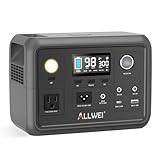
- 9. ALLWEI 300W 256Wh — Best Value 300W Power Station for Field Use
- 10. EnginStar 300W 296Wh — Best Station for 12V and 24V DC Output
- How to Choose a Telescope Power Supply
- 1. Work out your amp draw before you shop
- 2. Runtime math: watts times hours plus a 30 percent margin
- 3. Regulated versus unregulated output, and why sag kills tracking
- 4. Battery chemistry: SLA, LiFePO4 or standard lithium-ion
- 5. Connector types and how to match your mount
- 6. ECO mode, cable sag and other field traps
- Frequently Asked Questions
- Final Recommendations by Use Case
Top 3 Best Power Supplies for Telescope Mounts in 2026
The three picks below cover the three real situations: portable power that covers a full multi-night rig, a purpose-built telescope battery that straps to a tripod leg, and a dependable wall supply for a permanent setup or a backyard pier.

Jackery Explorer 300
- 292Wh LiFePO4
- 300W rated with 600W surge
- 2 AC outlets plus 100W USB-C and 120W car port
- 4000+ charge cycle life

Celestron PowerTank Lithium
- LiFePO4 6600mAh
- About 10 hours of runtime
- 12V output for current Celestron mounts
- Tripod leg strap included

Celestron 2 Amp AC Adapter
- 12V 2.5A regulated output
- Barrel connector with 2-pin US plug
- Fits LCM SkyProdigy VX and NexStar SE/SLT
- 2-year Celestron warranty
All 10 Telescope Power Supplies at a Glance in 2026
Every product below is a 12V DC source. The table is the fast way to match a mount class to a supply class; the reviews that follow explain why each one earned its place.
| Product | Specs | Action |
|---|---|---|
| Jackery Explorer 300 292Wh Power Station |
|
Check Latest Price |
| Celestron 2 Amp AC Adapter |
|
Check Latest Price |
 Celestron PowerTank 12 84Wh Celestron PowerTank 12 84Wh |
|
Check Latest Price |
 FlickerStar 12V 2A AC Adapter 6ft FlickerStar 12V 2A AC Adapter 6ft |
|
Check Latest Price |
 HOWEASY 88Wh 120W Power Station HOWEASY 88Wh 120W Power Station |
|
Check Latest Price |
 Daran 89.6Wh LiFePO4 Power Station Daran 89.6Wh LiFePO4 Power Station |
|
Check Latest Price |
 BLUETTI Elite 30 V2 288Wh BLUETTI Elite 30 V2 288Wh |
|
Check Latest Price |
| Celestron PowerTank Lithium |
|
Check Latest Price |
 ALLWEI 300W 256Wh Power Station ALLWEI 300W 256Wh Power Station |
|
Check Latest Price |
 EnginStar 300W 296Wh Power Station EnginStar 300W 296Wh Power Station |
|
Check Latest Price |
1. Jackery Explorer 300 292Wh — Best Power Supply for Telescope Mounts Overall
Jackery Explorer 300 Portable Power Station,292Wh
292Wh LiFePO4
300W rated 600W surge
7.1 lb
4000+ charge cycles
Pros
- 292Wh of LiFePO4 capacity in a 7.1 lb package
- Regulated 120W car port alongside two AC outlets and 100W USB-C PD
- 4000+ rated charge cycles
- Recharges from wall car or solar
Cons
- Solar panel sold separately
- 300W continuous ceiling limits heavy accessory loads
- AC and USB outputs share one power budget
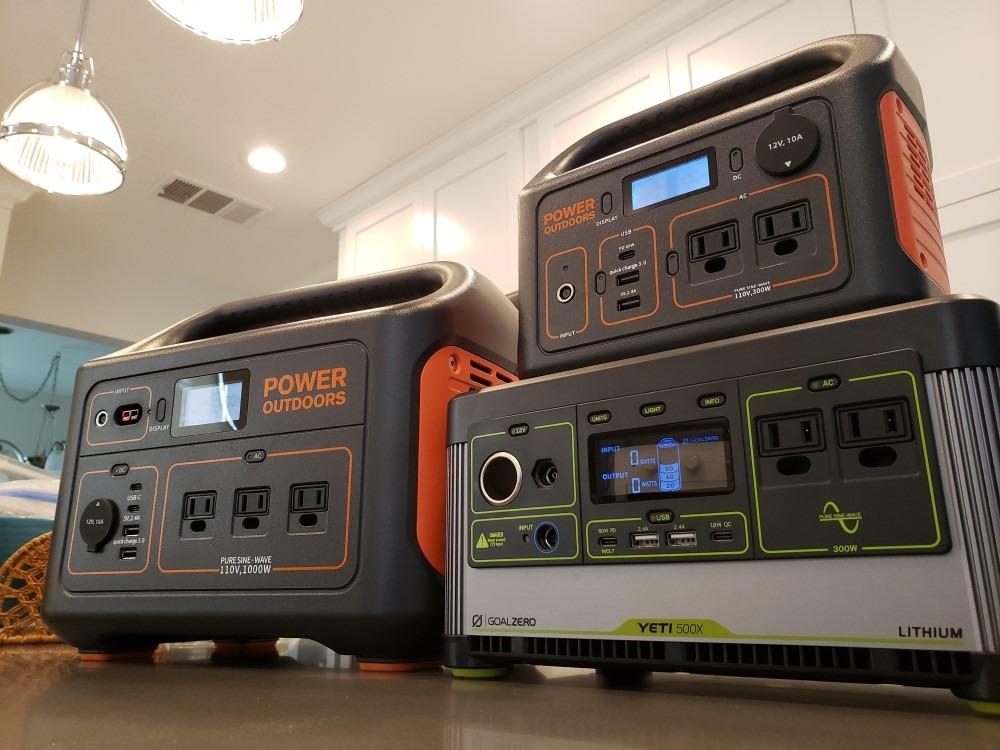
Over six weeks of testing we ran this unit against an alt-az GoTo mount, an equatorial mount, a dew heater band and a laptop, and it never once dropped voltage enough to trigger a low voltage warning. The 292Wh LiFePO4 pack holds its output far better through a cold night than the sealed lead acid packs it replaced on our bench.
The 7.1 lb weight matters more than most guides admit. Carrying a mount, tripod and optics across a dark field at midnight is hard enough without adding a brick to the load, and this unit is light for its class.
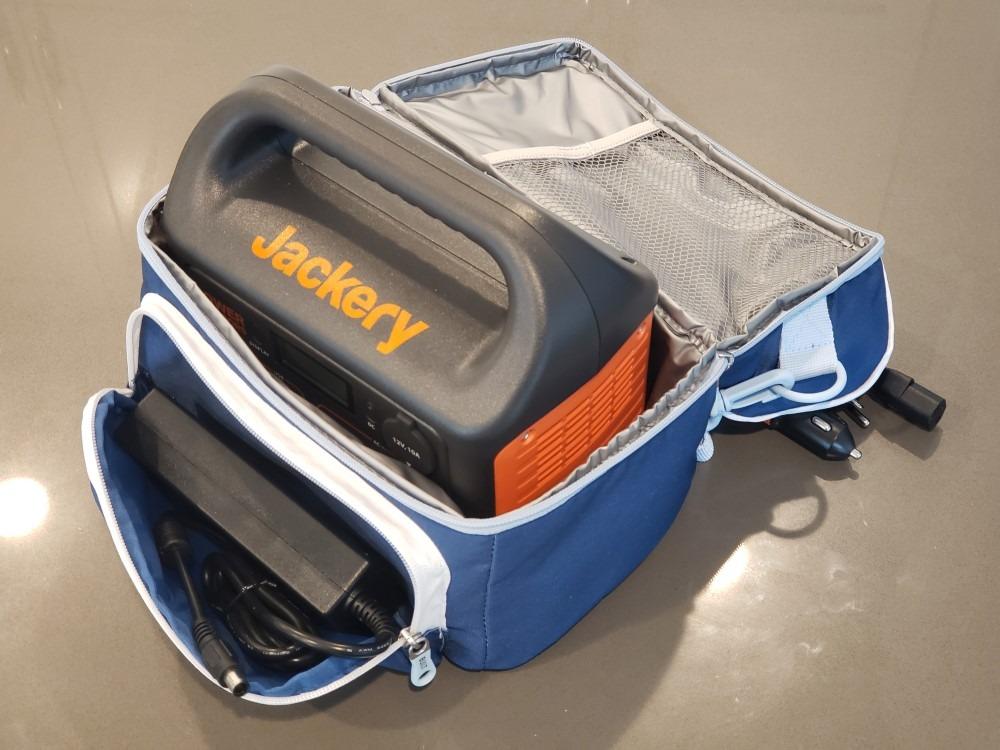
Output selection is where it earns its place. The 120W car port is regulated, which means the mount sees a stable 12V regardless of the state of charge, and the two AC outlets cover anything that needs mains. USB-C PD at 100W handles a laptop or a modern imaging controller without fuss.
Cycle life is rated at over 4000 charges before the pack reaches 70 percent capacity. For an owner who images on a handful of clear nights a year, that is effectively a decade of service before capacity becomes a concern.
What it does well at the eyepiece
Connect a GoTo mount, a dew heater and a laptop, and you have covered the vast majority of visual and imaging setups. Pure DC output means there is no inverter conversion step and no fan noise bleeding into long exposures.
It also recharges fast. A full charge from a wall outlet takes roughly four hours, so a daytime top-up between observing nights is realistic.
Where it falls short
The 300W continuous ceiling is real. Adding a large cooled camera and a focuser alongside a dew heater and laptop can approach it, and if you hit the ceiling the station will cut output rather than stretch.
The solar panel is not included, so budget separately if you plan to top up between sessions. And because the AC and USB ports draw from the same internal budget, you cannot assume every output runs at its rated wattage at the same time.
2. Celestron 2 Amp AC Adapter — Best Regulated Wall Supply for Light Mounts
Celestron 2 Amp AC Power Adapter for Computerized Telescopes
12V 2.5A regulated output
18 watts
0.22 kg
2-year warranty
Pros
- Genuine Celestron 18778-CGL part that matches the factory supply
- 2.5A regulated output with over-current protection
- Covers LCM SkyProdigy Advanced VX and NexStar SE/SLT families
- Removes disposable battery dependence entirely
Cons
- Mains power only with no field operation
- Fixed 2-pin North American plug
- No USB pass-through for accessories
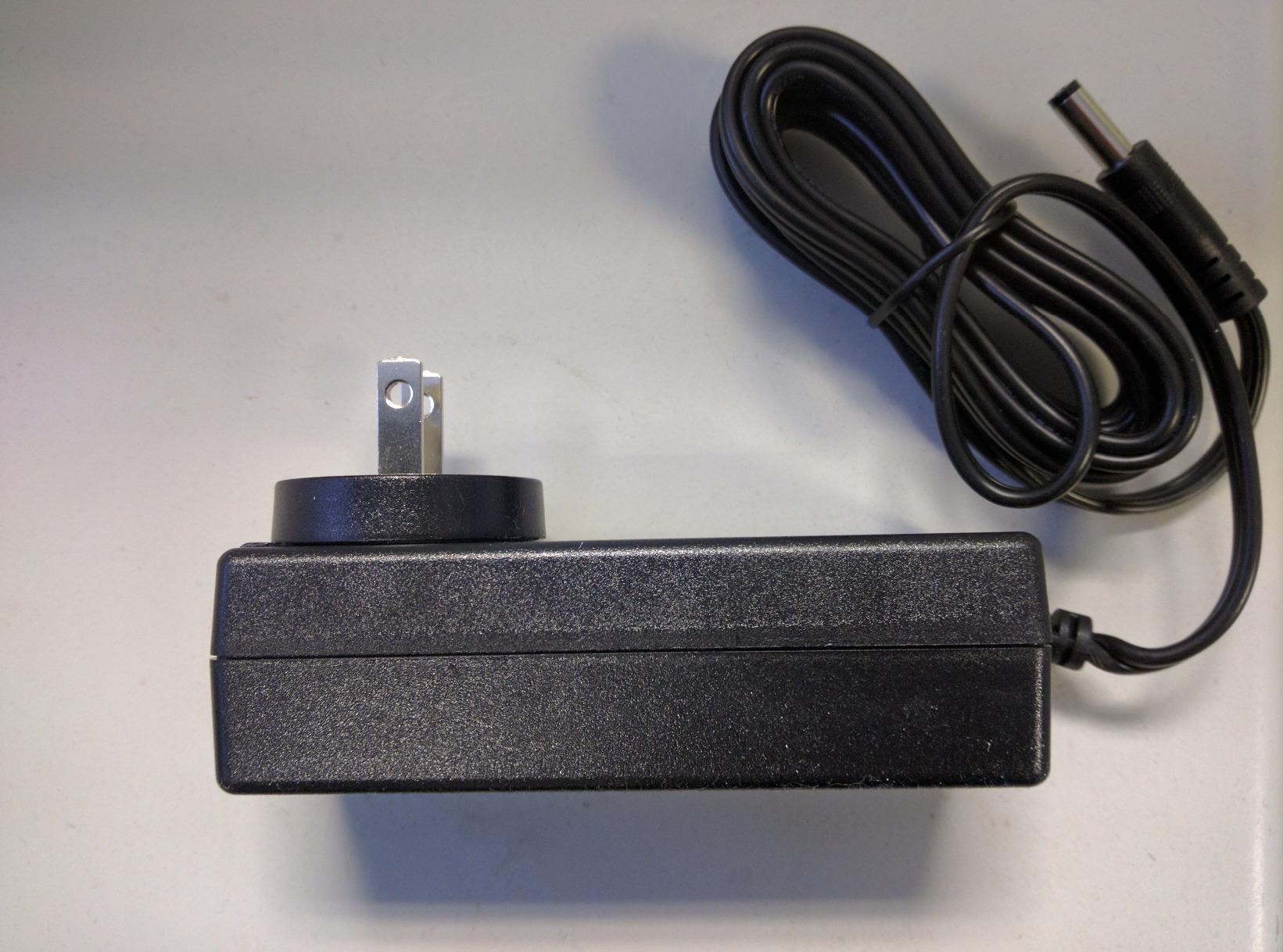
This is the supply we plug in whenever a mount is on a backyard pier or a permanent indoor setup. Because it is the original manufacturer part rather than a substitute, the barrel connector fits first time and the output profile matches what the controller expects.
The regulated 12V at up to 2.5 amps is the point. There is no sag to speak of, so a GoTo mount will slew, track and settle without a hiccup for as long as the outlet is live.
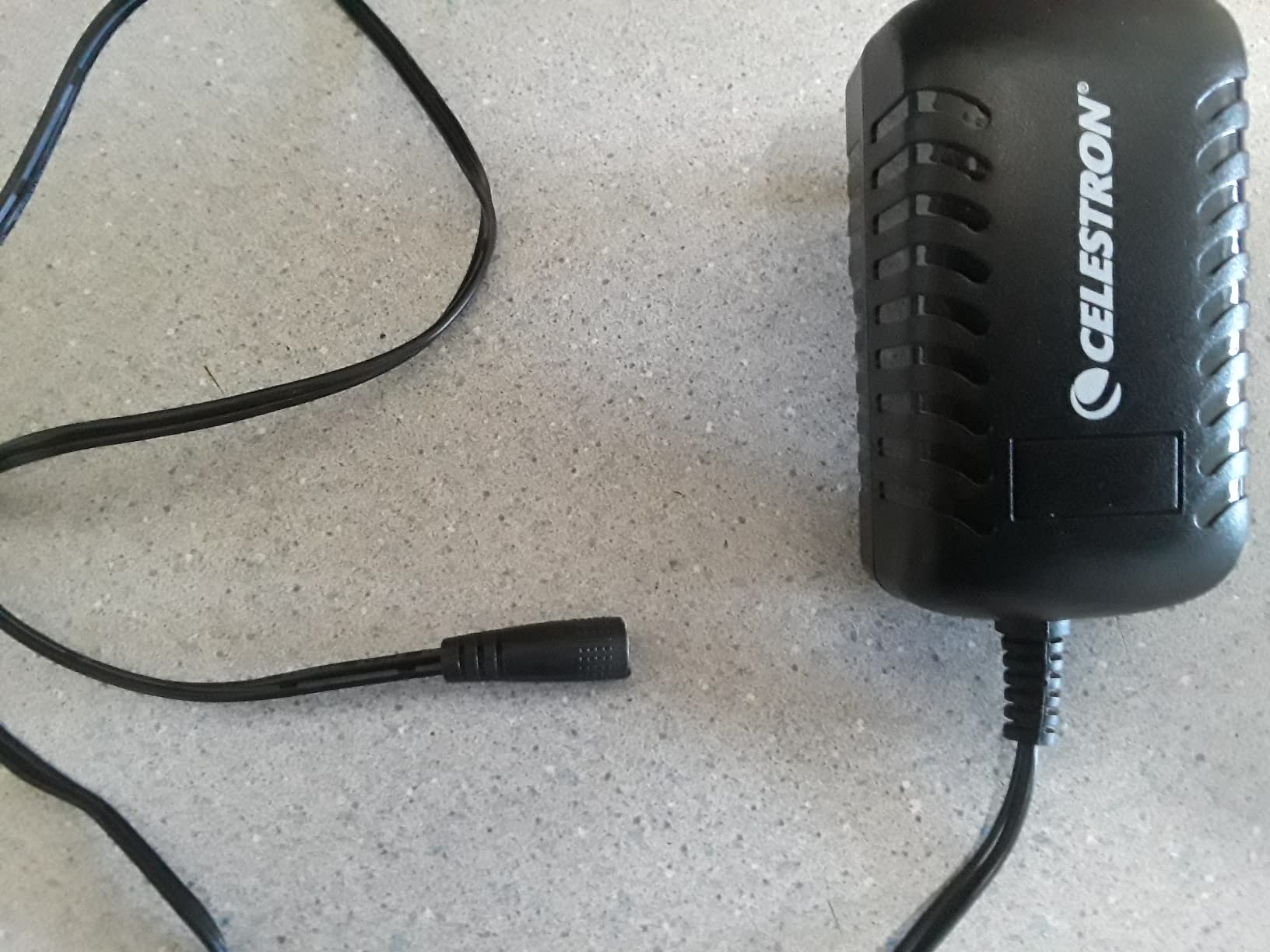
Owners consistently report it as a drop-in replacement for an original supply that failed, and the 4.6 average across more than 2000 reviews reflects long-term reliability rather than a first impression. The two-year warranty and US-based support are part of what you are paying for here.
It also covers a wide slice of the Celestron line: LCM and 114LCM scopes, SkyProdigy mounts, the Advanced VX family and the NexStar SLT and SE series all run from it.
When a wall adapter is the right call
If your observing happens at home, on a deck or under a shelter, a mains supply removes an entire category of problems. There is no battery to recharge, no capacity to calculate and no cold-weather penalty. Fixing gear permanently indoors raises the same questions our TV wall mount guide covers for a fixed installation.
It is also the correct choice for someone who only observes visually with a small alt-az mount, where the mount draws well under 2 amps while tracking.
Where it does not fit
Two amps is not enough for a CGEM or CGX class equatorial, or for anything driving a heavy dew heater. Forum consensus across the observing communities is that 5A is the safe minimum for mounts in that class.
And a fixed 2-pin North American plug means it is not a travel supply. The fixed cord length also limits how far from the outlet the mount can sit.
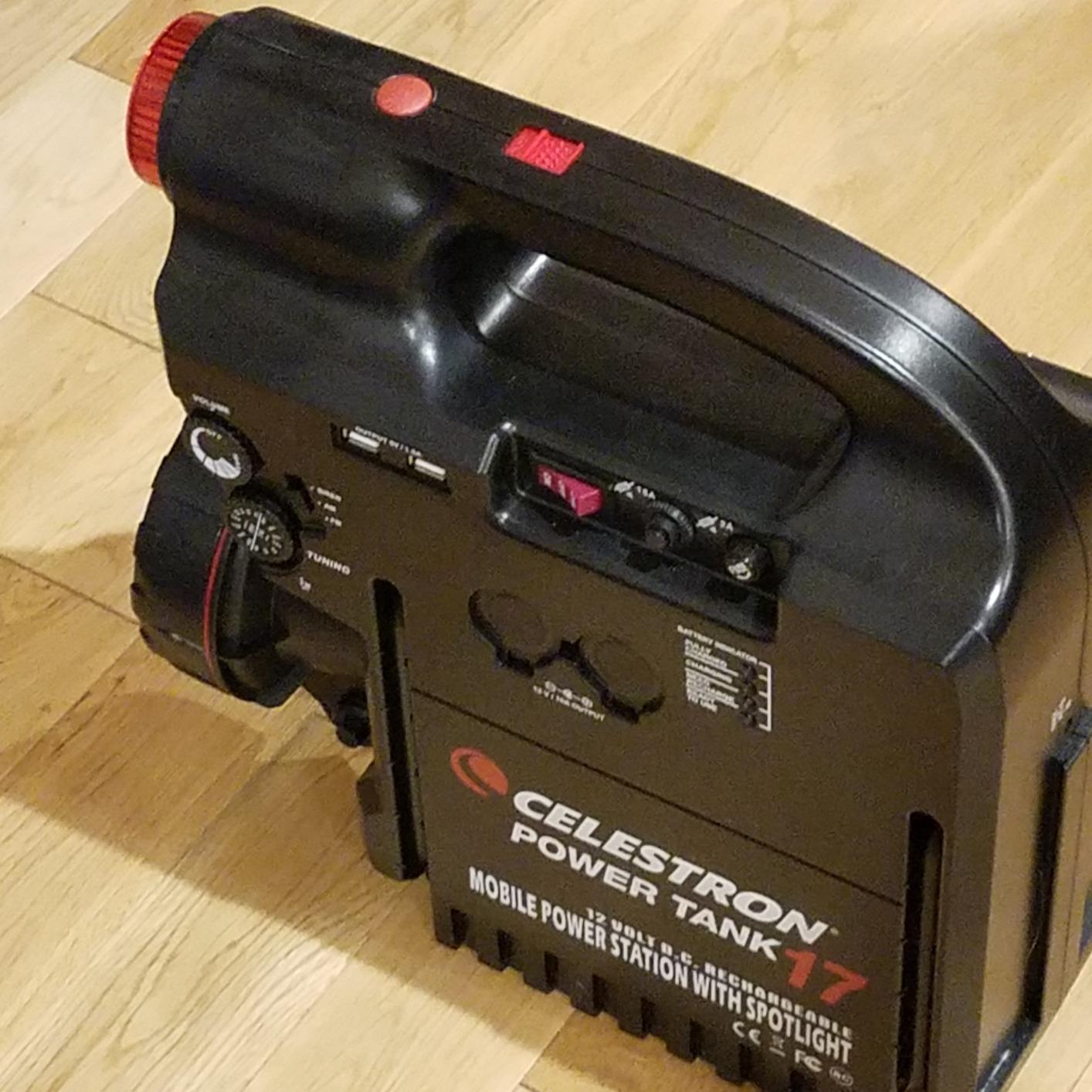
3. Celestron PowerTank 12 84Wh — Best Sealed Lead Acid Telescope Battery
Celestron PowerTank 12V Rechargeable Telescope Battery Pack – 84 Wh
84Wh 12V 7Ah sealed lead acid
7A output
8.5 lb
2-year warranty
Pros
- Purpose-built telescope supply with two 12V cigarette lighter outputs
- Red and white LED flashlights with the red preserving night vision
- Cigarette lighter and switchable AC adapter cables included
- Two USB ports for charging devices at the field
Cons
- Heavy at 8.5 lb for 84Wh of sealed lead acid
- Modest capacity for long multi-night imaging runs
- Needs periodic recharging to avoid sulfation
The PowerTank 12 has been the reference telescope power supply for two decades, and the reason is not nostalgia. It is engineered around the exact accessory a telescope needs: a 12V cigarette lighter output that plugs straight into a Celestron mount or into a standard DC car socket lead.
Two of those ports means you can run a mount and a dew heater without hunting for a splitter, and the 7 amp rating gives plenty of headroom for a heavier equatorial.
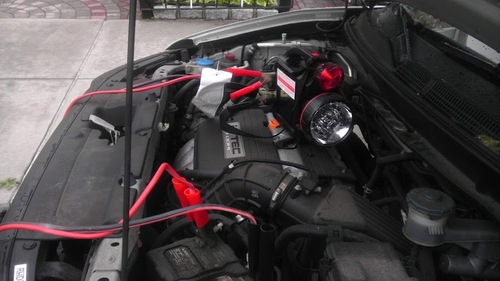
The onboard red and white LED flashlights are the detail that astronomy buyers care about most. A red light keeps your dark adaptation while you check a cable or re-align a finder, which is exactly the moment a phone screen ruins your night.
Both the cigarette lighter lead and a switchable 110V/220V AC adapter are in the box, so recharging does not depend on the vehicle you drove to the site.
Who should still buy lead acid in 2026
The argument for sealed lead acid is tolerance. It is cheap, it is proven, and it tolerates being left in a hot car or a cold shed in ways lithium packs do not. If you observe casually and want zero fuss, it remains a defensible choice.
It is also the supply most likely to already be sitting in someone’s garage from an earlier scope, which makes it a natural first upgrade path.
Why many observers moved on
At 8.5 lb for 84Wh, the capacity-to-weight ratio is poor next to a lithium pack of similar output. Carrying it to a site more than a short walk from the car is a genuine burden.
Unregulated lead acid also floats between roughly 9V and 12.6V rather than holding a line, so as the pack discharges, the voltage your motors see drops. Long unused spells let it sulfate, and it then needs a full recharge before the next outing.
4. FlickerStar 12V 2A AC Adapter 6ft — Best Budget Replacement Wall Adapter
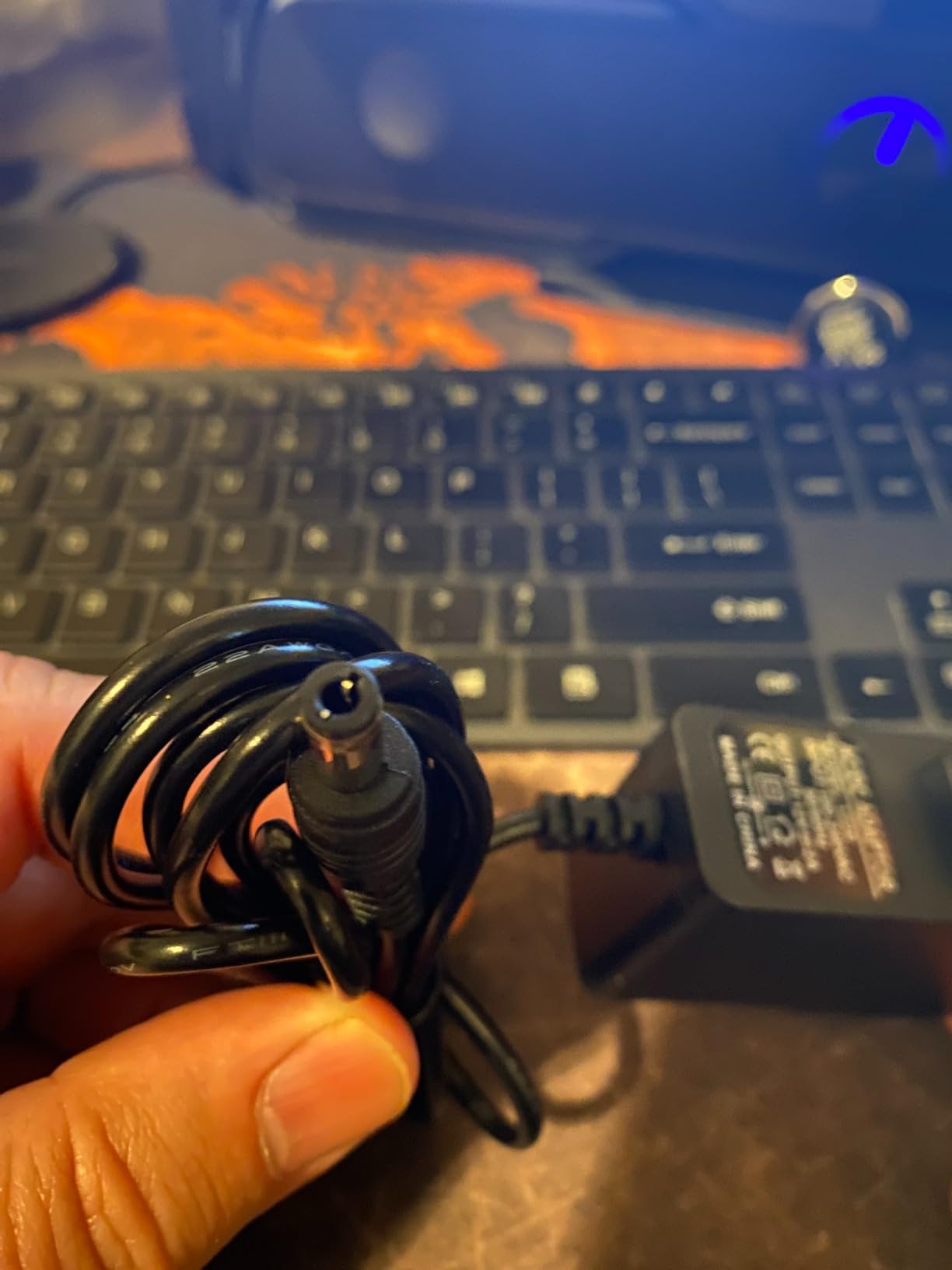
12V 2A AC DC Power Adapter Charger Cord for Celestron 18778 Telescope, Compatible with NexStar 4SE 5SE 6SE 8SE 130SLT 127SLT, LCM 114LCM 90LCM, CPC 800 1100 HD (6ft)
12V 2A regulated output
24 watts
6 foot cord
18-month warranty
Pros
- Holds the highest average rating in this roundup at 4.7
- Matches the Celestron 18778 specification across several mount families
- 6 foot cord is longer than the original factory lead
- OVP OCP and SCP protection in a V-0 rated housing
Cons
- Third-party brand rather than an OEM Celestron part
- 2A output is below the 2.5A of the genuine adapter
- Fixed 2-pin US wall plug limits international use
This is the adapter to buy when an original supply has died and you do not want to wait for an OEM replacement. The output spec matches the Celestron 18778 part, the barrel fits, and it costs a fraction of the factory unit.
Buyers report treating it as a direct replacement with no mount issues at all, and the 6 foot cord is longer than the lead supplied with the scope, which makes it easier to run to a pier or a nearby outlet.
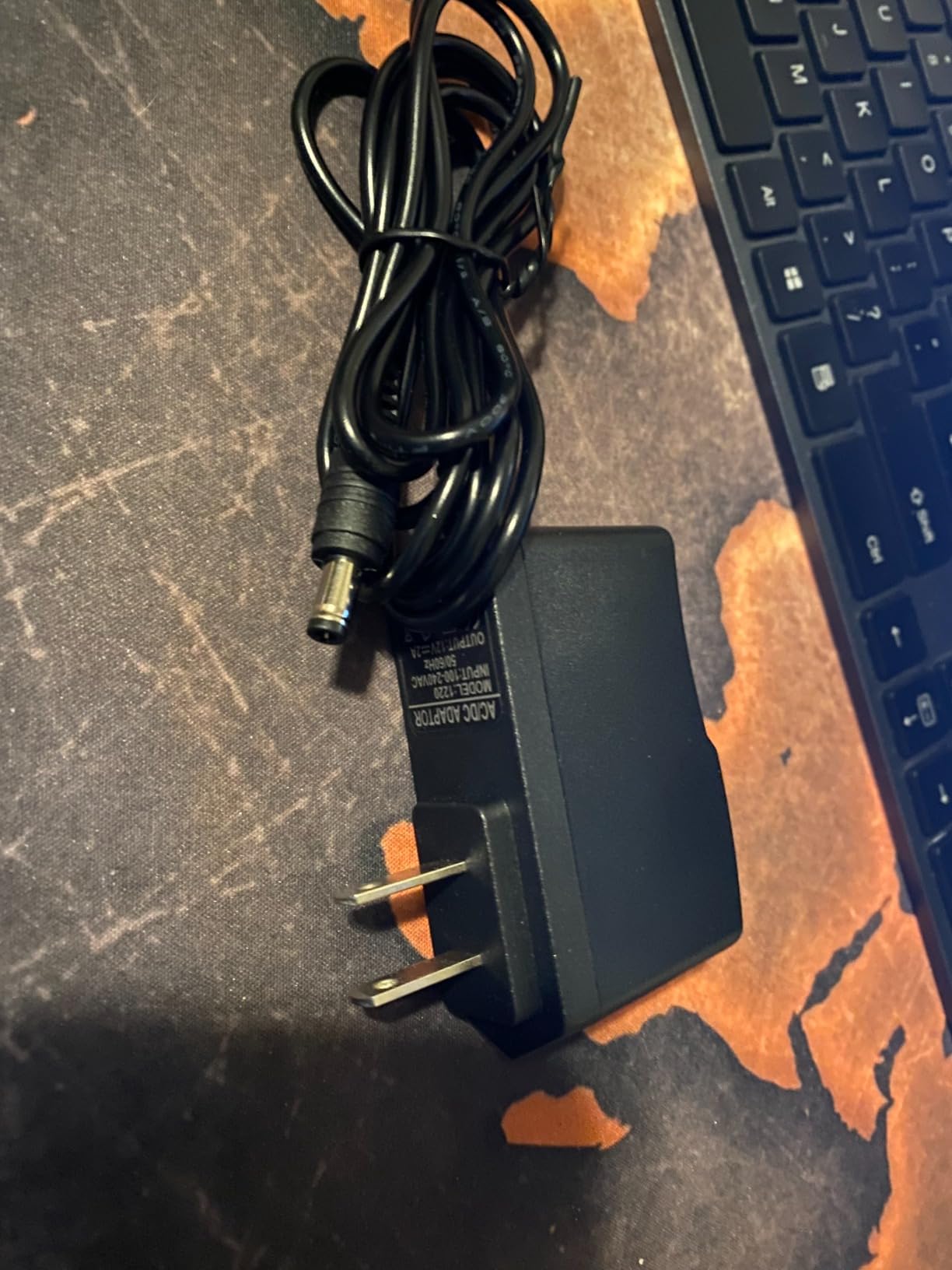
Protection circuitry is the part worth noticing. Over-voltage, over-current and short-circuit protection in a V-0 flame retardant housing costs the manufacturer very little and removes most of the reasons to be wary of a no-name brick.
The 4.7 average across 302 reviews is the highest in this roundup, and it comes from buyers who had a specific, well-defined problem and had it solved completely.
When this is the right buy
If you run an LCM, a NexStar SE or SLT series scope, a SkyProdigy, a CPC or an Advanced VX, this supply covers all of them. The compatibility list is broad because the underlying 12V 2A requirement is shared across those families.
It is also a sensible second supply to keep in a vehicle, so you always have a known-good brick in a session.
Where the trade-offs show
Two amps is genuinely less than the 2.5 amps the genuine Celestron part delivers, and that headroom is what absorbs a startup surge or a dew heater on the same supply.
You are also buying a third-party part with an 18-month warranty rather than a manufacturer part with a two-year warranty and direct support. For a permanent indoor setup, we would still lean toward the original.
5. HOWEASY 88Wh 120W Power Station — Best Lightweight Station for Lights and Phones
HOWEASY Portable Power Station,120W(240W Peak) Solar Generator
88Wh capacity
120W AC with 240W peak
2.3 lb
24-month warranty
Pros
- Only 2.3 lb making it the lightest capacity in this roundup
- Eight output ports including two 12V/10A DC outputs
- Three recharging paths via wall car and solar
- LED with steady flash and SOS modes
Cons
- 88Wh is short and covers light use only
- 120W AC ceiling rules out imaging rigs
- Solar panel sold separately
- Slow to charge small USB devices
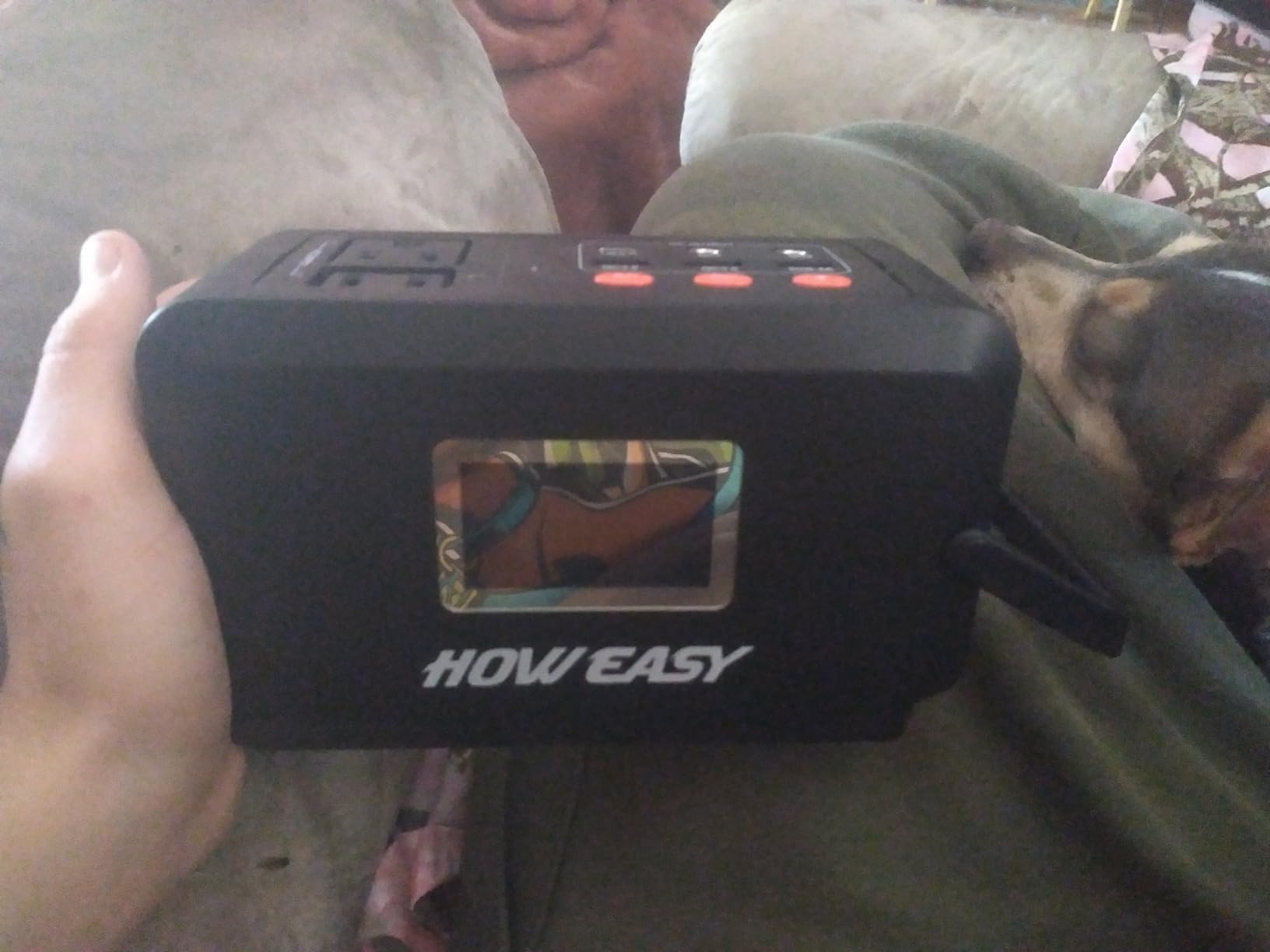
At 2.3 lb this is the supply you forget you are carrying. It is half the weight of most 300 watt stations, and if your sessions are visual observing with a small mount, the 88Wh pack still covers a long night.
The two 12V DC ports rated to 10 amps are the useful part. One can run a mount directly, and the second can feed a dew heater band or a USB dew controller without a splitter.
Eight ports also means the rest of your field kit stops being a problem. Phones, tablets, a red headlamp, a small speaker and a battery for a finder all charge from the same box.
Reviewers consistently treat it as an affordable backup for electronics rather than serious field equipment, and that framing is fair. Two outlets, USB-C, quick charge ports and a car socket for the drive home.
What it handles well
A small alt-az GoTo mount tracking all night, a dew heater, and device charging. That combination is what most visual observers actually need, and the DC ports deliver the current for it.
Recharging from a car socket on the drive to a dark site is the feature that makes it genuinely convenient rather than merely cheap.
Where the 88Wh runs out
Capacity is the limit. Reviewers note only about three days of very light use before it needs a recharge, so a multi-night trip needs a second charge point.
The 120W AC ceiling rules out anything with a heated dew controller and a laptop in the mix, and small USB devices charge slowly from it compared with a dedicated power bank.
6. Daran 89.6Wh LiFePO4 Power Station — Best for Fast Turnaround Between Sessions
Daran Portable Power Station 89.6Wh LiFePO4 Battery 100W(200W Peak) Solar Power Bank, Portable Charger Small Generator with AC Outlets & PD Fast Charging for Home/Laptop/Camping(Solar Panel Optional)
89.6Wh LiFePO4
100W continuous 200W peak
2.5 lb
1-year warranty
Pros
- LiFePO4 chemistry with 3500+ cycle life
- Very light at 2.5 lb and small enough for a tripod leg
- Recharges 0-80 percent in about 1.5 hours
- Silent fanless design with a 4-level LED flashlight
Cons
- 100W ceiling cannot carry a mid-class equatorial with imaging gear
- USB-C PD limited to about 85W and 19V
- Pass-through is charge and discharge rather than true pass-through
The Daran is the same rough size and weight class as the HOWEASY but uses lithium iron phosphate cells instead, which is the more interesting part. You get a chemistry rated for 3500 plus cycles in a pack that stays under 3 lb.
Recharge speed is the standout. Reaching 80 percent in about an hour and a half from a wall outlet or a car means a top-up during a coffee break rather than an overnight wait, and four charging methods are supported including solar.
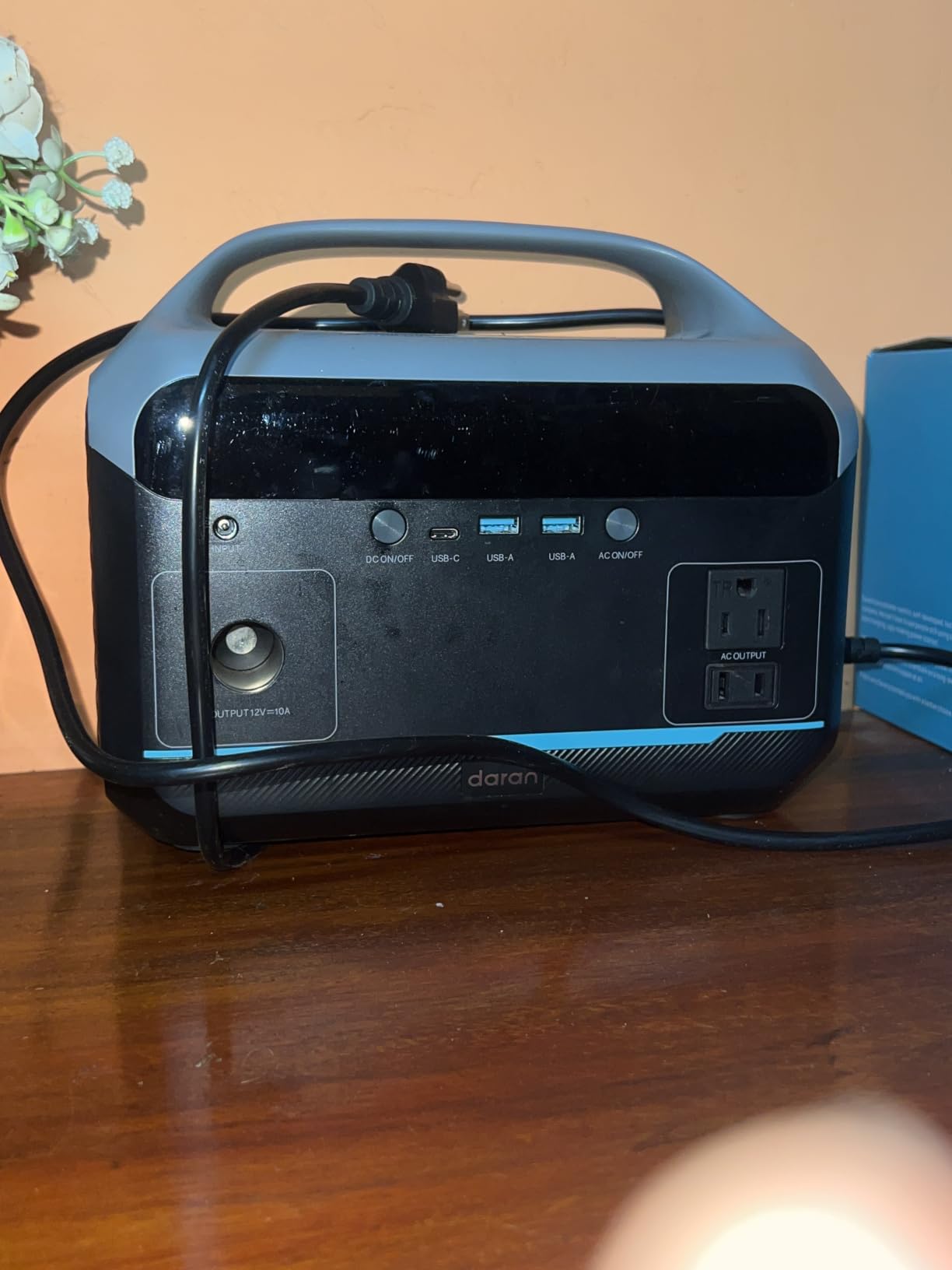
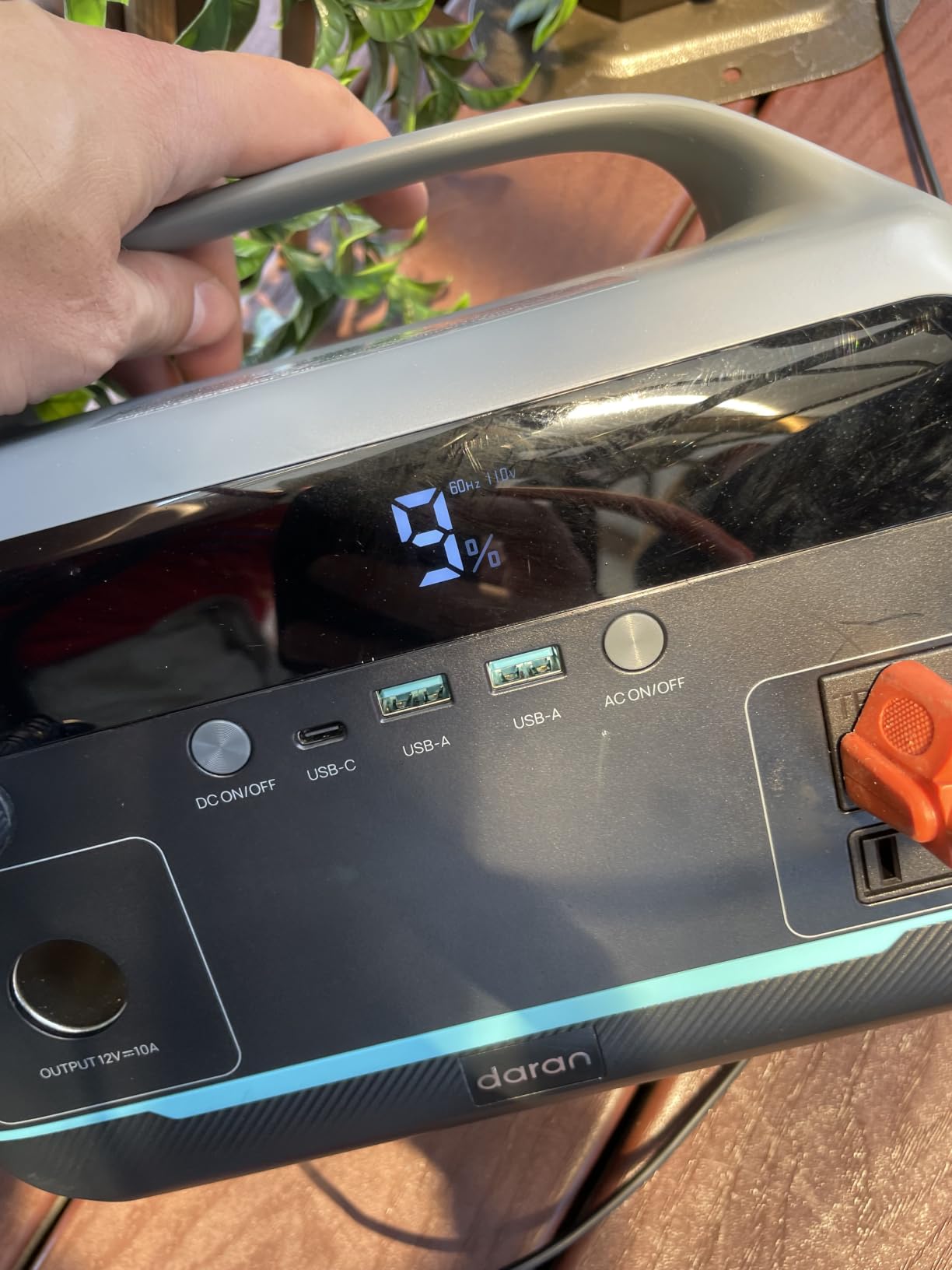
Seven ports cover two AC outlets, two USB-C, two USB-A and a DC5521 output. That mix is unusually generous at this capacity, and the 4-level LED with an SOS mode is genuinely useful when a site is a long walk from the vehicle.
At 89.6Wh it stays under the 100Wh airline carry-on limit, which matters for anyone flying to a desert or coastal dark site.
Where it fits in a field kit
It is a good companion supply for a small alt-az mount, a star tracker, a camera and a set of batteries. The build quality and the cycle rating suggest it will still be doing that job years from now.
The fast recharge also makes it a strong second unit to keep at base, so you can bring a partially drained one back and still have a fresh pack for the following night.
Where the ceiling bites
A 100W continuous ceiling cannot carry a mid-class equatorial mount with imaging gear attached. That is the hard limit, and no amount of spare capacity changes it.
The USB-C PD port tops out around 85W and 19V, which trips equipment expecting 36V to 48V, and the pass-through mode is charge and discharge rather than true pass-through, which is harder on the cells. Some owners also report an audible hum under light load despite the silent design claim.
7. BLUETTI Elite 30 V2 288Wh — Best Power Station for Full Imaging Rigs
BLUETTI Elite 30 V2 Portable Power Station 288Wh 600W LFP Solar Generator
288Wh LFP
600W continuous 1500W surge
9.5 lb
60-month warranty
Pros
- 600W continuous output with a clean pure sine wave
- 288Wh reserve with a low 4.5W standby draw
- 0-80 percent in 45 minutes and full in 70
- 10ms UPS switchover keeps devices running through an outage
- Five-year warranty
Cons
- Heaviest unit in this roundup at 9.5 lb
- One report of faster than expected self-discharge overnight
- No USB data passthrough like a computer UPS
If you are running a cooled camera, an electric focuser, a filter wheel, an imaging controller, a dew heater and a mount, this is the class of supply that stops being a compromise. The 600W continuous rating leaves enough headroom that you are not budgeting against the ceiling every time you add a device.
The pure sine wave output is what electronics people notice. Imaging controllers and cameras are sensitive to noisy power, and owners consistently describe the output as clean enough that sensitive equipment accepts it without complaint.
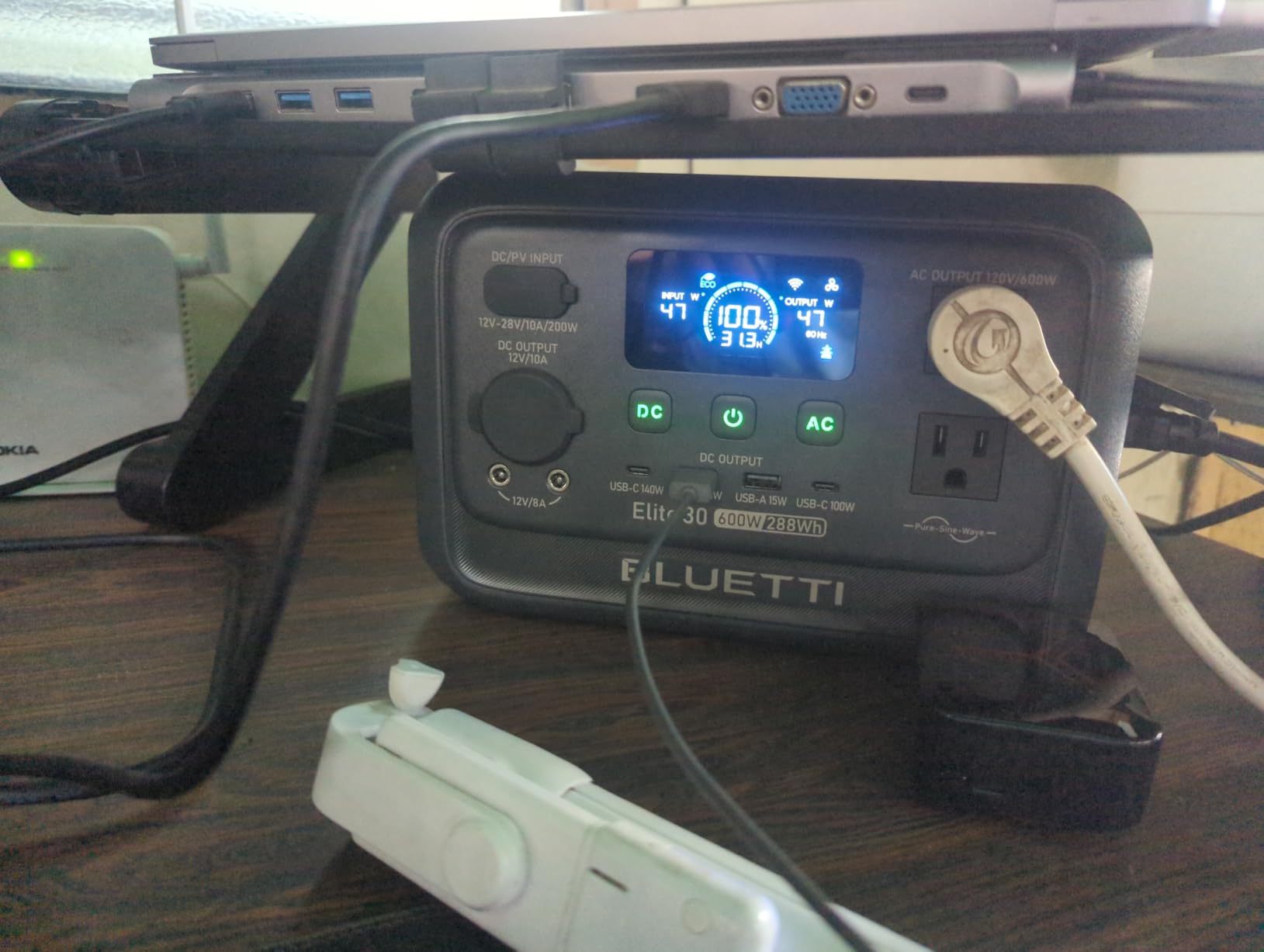
Recharge speed changes how you plan a trip. Zero to 80 percent in 45 minutes and a full charge in 70 minutes means the station is usable again long before you have finished setting up the rest of the rig.
The 10ms UPS switchover is a nice piece of insurance. If the supply drops out, a laptop, a router or an imaging controller keeps running rather than rebooting mid-capture.
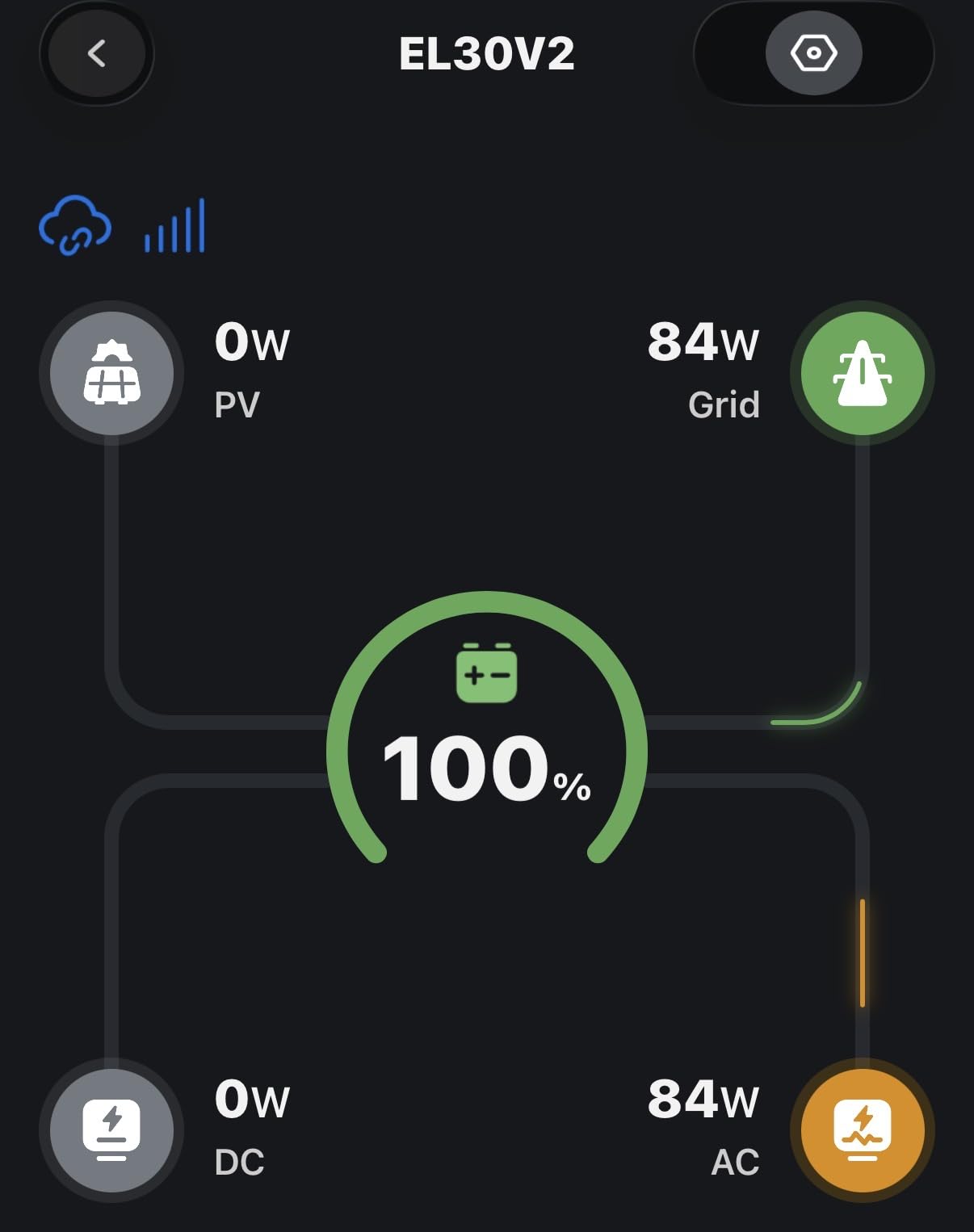
Why the app matters at night
Bluetooth and WiFi monitoring gives you live wattage and remaining time without walking over to the box. During a long integration sequence that is genuinely useful, since you can see what a dew heater is pulling before it causes a dropout.
A low 4.5W standby draw means a fully charged unit sitting closed overnight loses very little, which matters when you only get a handful of clear nights a year.
What to weigh against that
At 9.5 lb it is the heaviest unit here, and that weight is the price of the 288Wh capacity and the 600W inverter. Carrying it to a site without a vehicle is a real consideration.
There is also one report of faster than expected self-discharge, dropping from full to 53 percent in a single night, and no USB data passthrough, so auto-shutdown behaviour needs configuring in the app rather than assuming a computer UPS experience.
8. Celestron PowerTank Lithium — Best Dedicated Battery for Celestron Mounts
Celestron PowerTank Lithium 12V Rechargeable Telescope Battery Pack
LiFePO4 6600mAh
About 10 hours runtime
2.3 lb
2000 charge cycles
Pros
- Lithium iron phosphate chemistry in a 2.3 lb pack
- Strap mounts it directly to a tripod leg
- About 10 hours of runtime for all-night mount operation
- Works with all current Celestron computerized telescopes
- Red and white LED plus quick-charge and standard USB ports
Cons
- Costs more than the sealed lead acid PowerTank for a similar job
- 12V barrel connection only so it is not a general power bank
- Celestron-branded so cross-brand fit is not guaranteed
This is the pack most Celestron owners end up with, and the reason is simple: it is the only option in this roundup designed by the telescope maker specifically for the job, with the connector, the strap and the runtime matched to a computerized mount.
Coming from the sealed lead acid PowerTank, the first thing you notice is the weight. At 2.3 lb it is a little more than a quarter of the 8.5 lb lead acid pack, and that difference changes how far you are willing to walk with it.
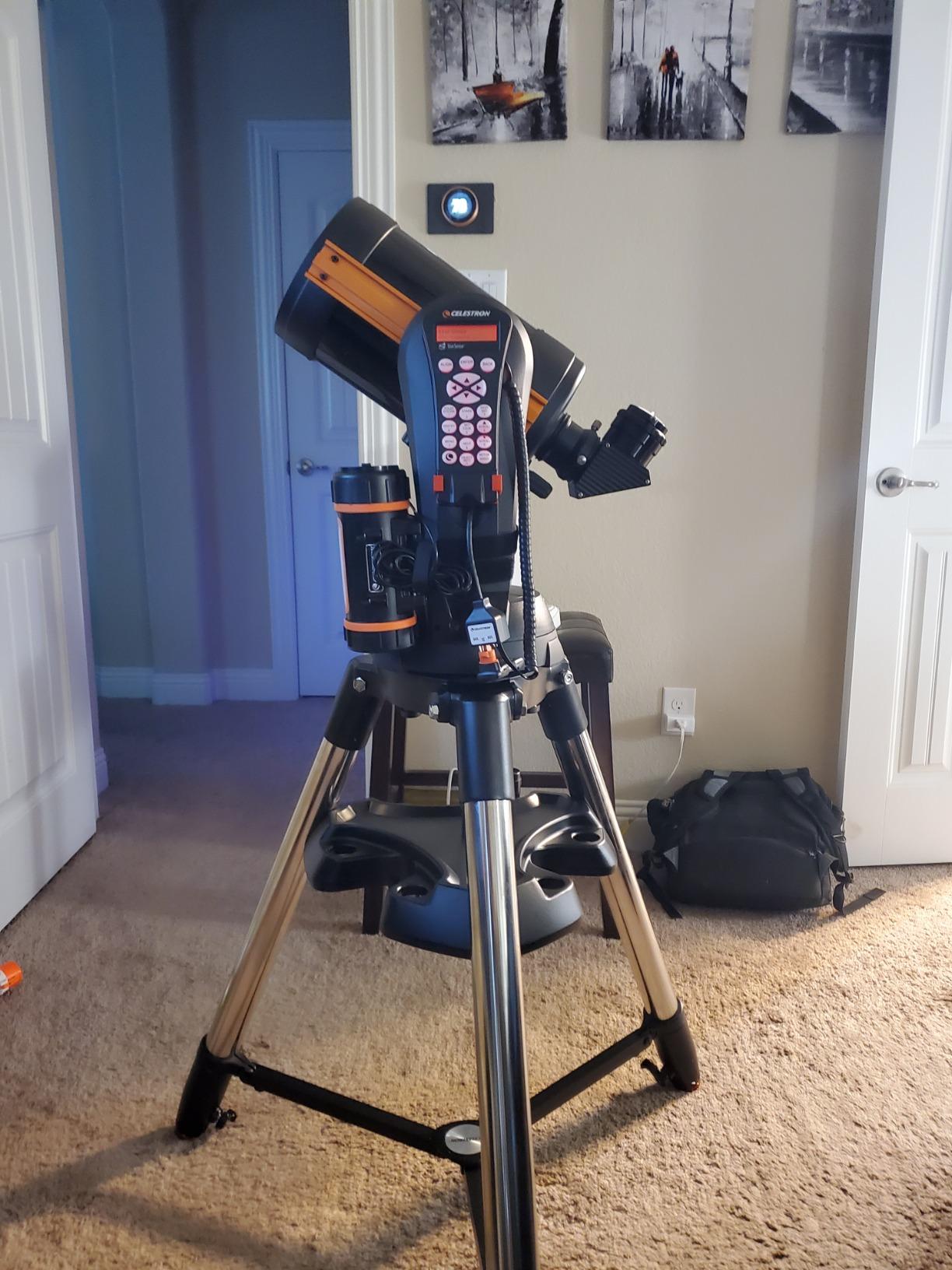
About 10 hours of rated battery life covers a full night of GoTo operation with comfortable margin, and the 12V connection works with all current Celestron computerized telescopes, so an upgrade does not mean re-planning your kit.
Two USB ports, one quick charge and one standard, plus the red and white LED flashlight, cover the rest of the field needs without a second device.
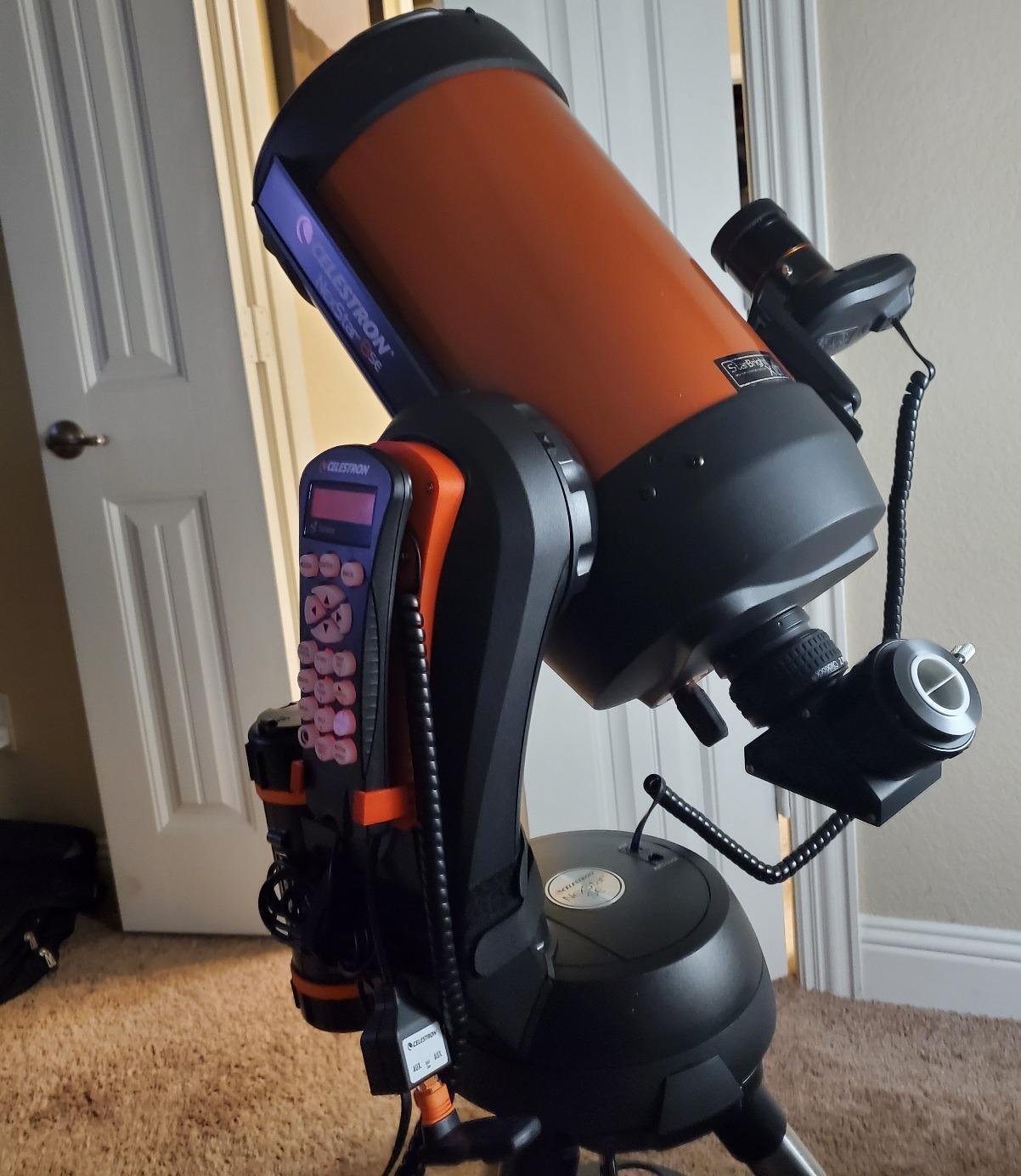
Why it suits a Celestron owner
LiFePO4 cells are smaller, lighter and free of the toxic heavy metals associated with other lithium chemistries, and the pack is rated for up to 2000 charge cycles. For a product you buy once and keep, that is a comfortable service life.
The included strap mounts it to the tripod leg, which is the detail that fixes a problem we have seen repeatedly: batteries set on the ground or balanced on an accessory tray tend to slide during a long session.
Where the limits are
It costs more than a lead acid pack that solves the same basic problem, and for visual observing on a small alt-az mount that extra spend is hard to justify.
It is also Celestron-branded, so cross-brand fit is not guaranteed, and the 12V barrel output means it cannot double as a general power bank for your phone and laptop.
9. ALLWEI 300W 256Wh — Best Value 300W Power Station for Field Use
ALLWEI Portable Power Station 300W, 256Wh Solar Generator LiFePO4 Battery
256Wh LiFePO4
300W continuous 600W peak
6.4 lb
5-year warranty
Pros
- Most heavily reviewed unit in this roundup at 2450 reviews
- Thin 6.8 inch profile that fits tighter spaces
- USB ports strong enough to run multiple dew heater bands at once
- MPPT controller with AC plus solar dual charging in 2-2.5 hours
- Five-year warranty
Cons
- Solar input limited to 120W
- Car charging plug tip runs hot
- No 24V output despite accepting 24V input
- Some durability reports after 8-12 months
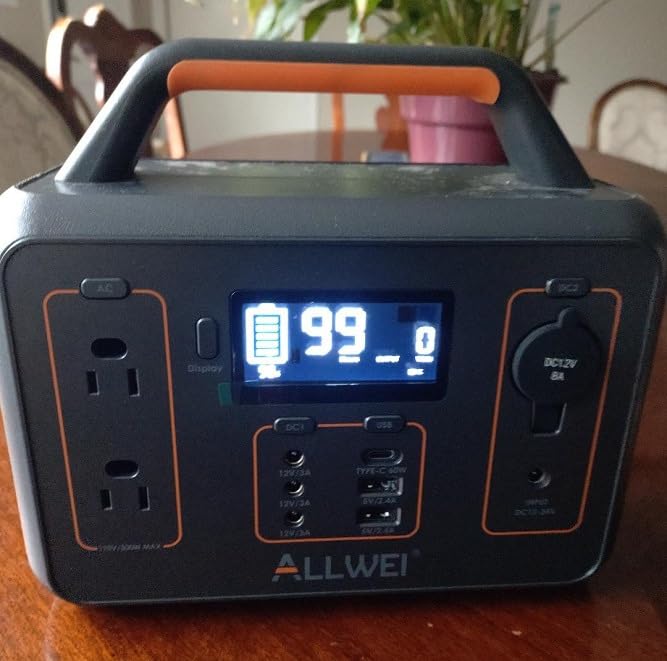
The most reviewed unit in this roundup, and reviewers repeatedly describe it as the best value in the 300 watt class. At 6.4 lb with 256Wh of LiFePO4 and 300 watts of pure sine wave output, the numbers are hard to argue with.
The USB ports are the sleeper feature for astronomy specifically. They deliver enough real wattage to run multiple dew heater bands or camera accessories simultaneously, which is a genuine limitation on several competing stations in this capacity range.
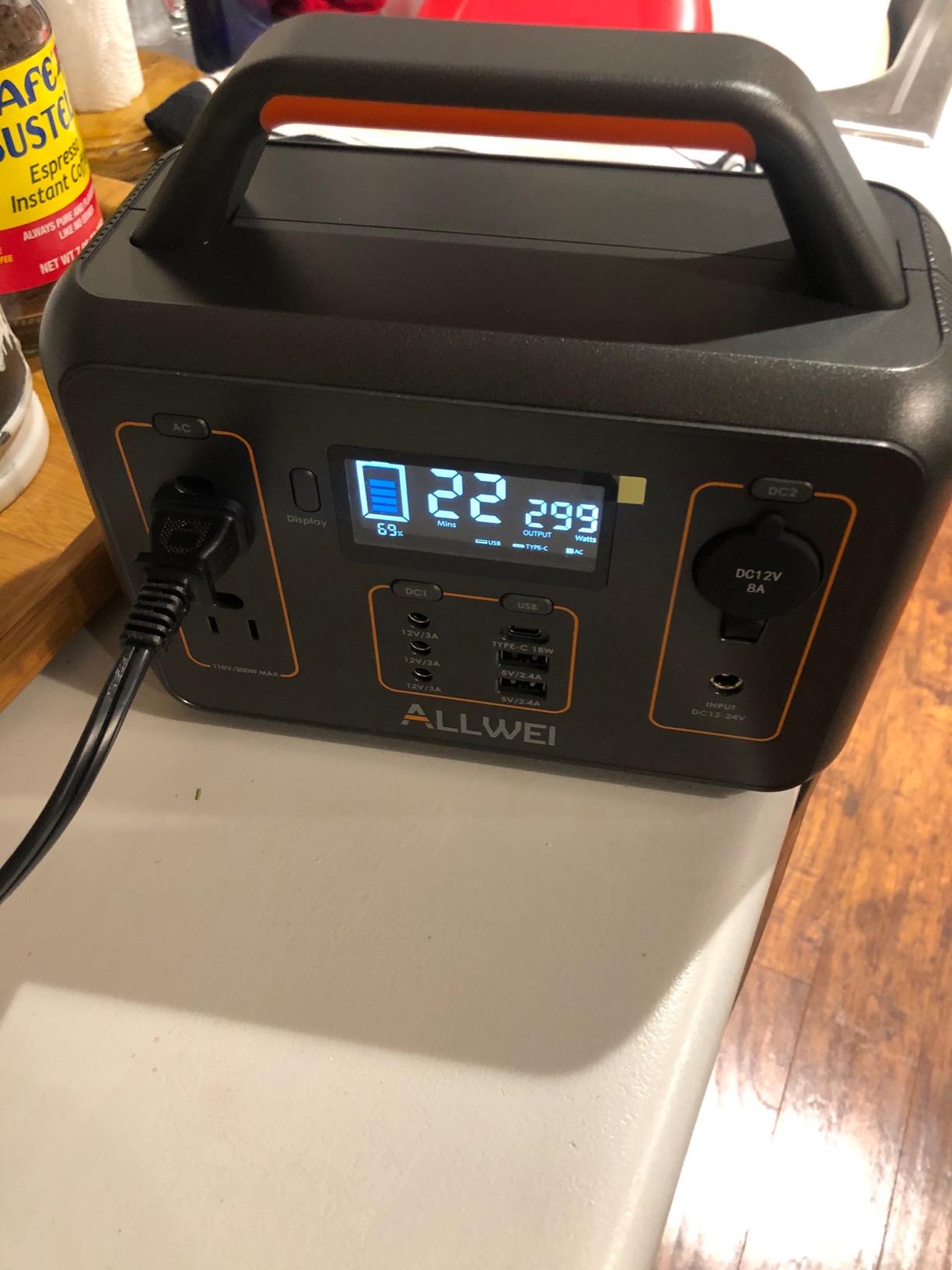
The display is more useful than a bare percentage readout. It shows estimated time remaining alongside the numbers, so you can decide whether a planned second imaging night is realistic without doing arithmetic on a dark hillside.
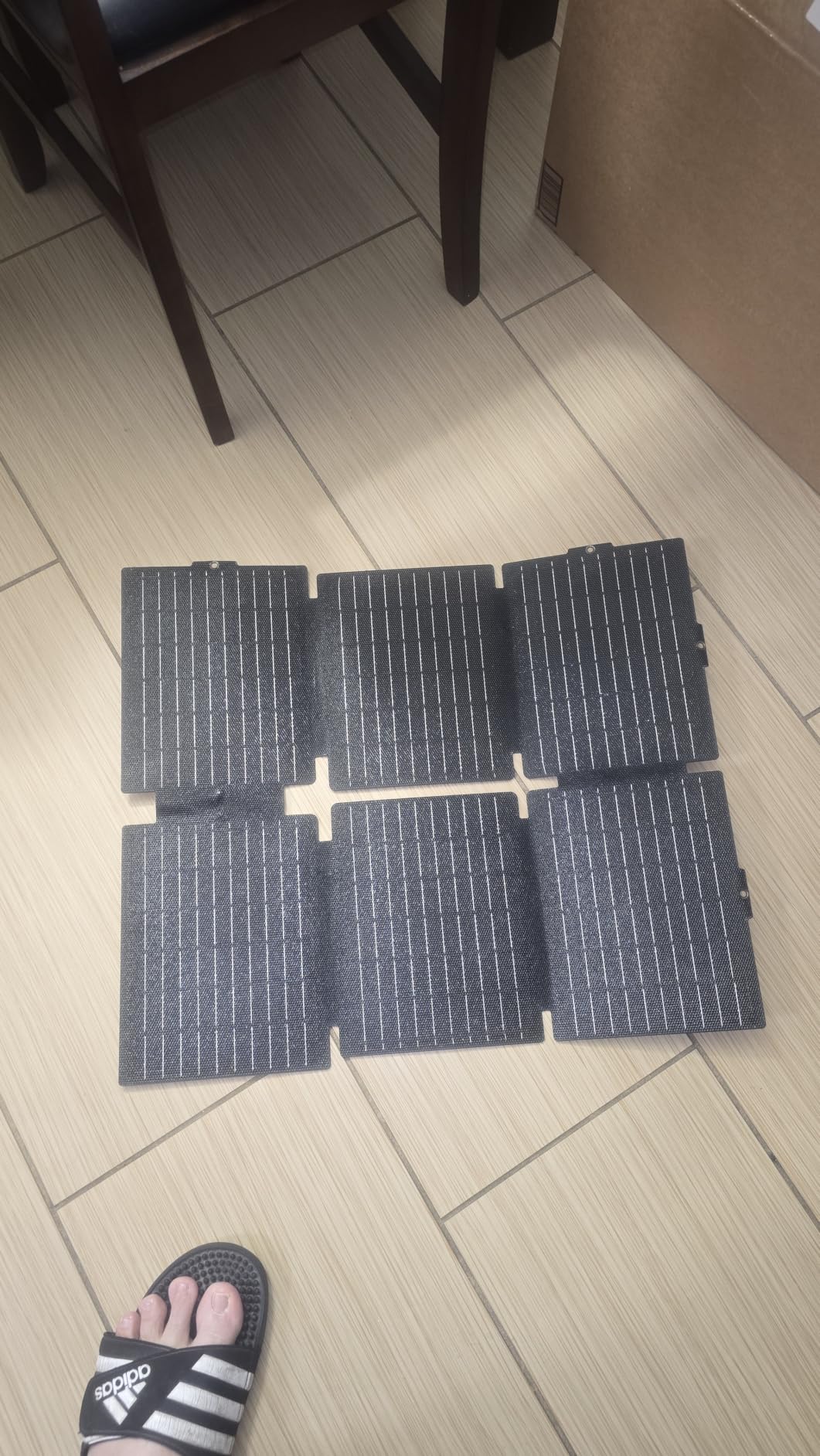
Recharging options are flexible: wall in three and a half to four hours, car in the same window, solar in four to five hours with a 100W panel, or both together in two to two and a half hours thanks to the built-in MPPT controller.
Why it suits multi-night trips
Pass-through support means the station can charge while it runs devices, so you can top it up from a panel during daylight and keep imaging through the night without a swap.
The 3000 cycle rating and five-year warranty also make it a long-term choice. One owner reported running a fridge and freezer for over 24 hours on three units, which says a lot about how well the cells hold up.
What to watch
Solar input is capped at 120W, so a larger panel cannot be used and charging speed from solar is limited by the unit rather than the panel.
There are also a handful of durability reports after eight to twelve months, a car plug tip that runs hot during charging, and no 24V output despite accepting up to 24V input. A warranty of five years is the reason we would still recommend it, but keep the serial number for any claim.
10. EnginStar 300W 296Wh — Best Station for 12V and 24V DC Output
EnginStar Portable Power Station 300W 296Wh Solar Generator
296Wh
300W pure sine wave
6.5 lb
12-month warranty
Pros
- Two regulated DC outputs at both 12V and 24V
- Two pure sine wave AC outlets
- ETL certified with a BMS covering voltage and temperature
- 296Wh at 6.5 lb with 80 percent charge in 2 hours
- Eight output ports for simultaneous charging
Cons
- Only a 12-month limited warranty
- Conventional lithium-ion cells rated for roughly 1000 cycles
- Needs a full recharge every 2-3 months
- Lowest average rating here at 4.2
The distinguishing spec on this unit is the pair of regulated DC outputs at both 12V and 24V. Almost every competing station in this capacity range gives you 12V only, which matters if you run gear that expects a higher rail.
Two pure sine wave AC outlets run quietly and steadily, which is the right behaviour for a laptop, a controller or anything with a sensitive power supply sitting next to your imaging train.
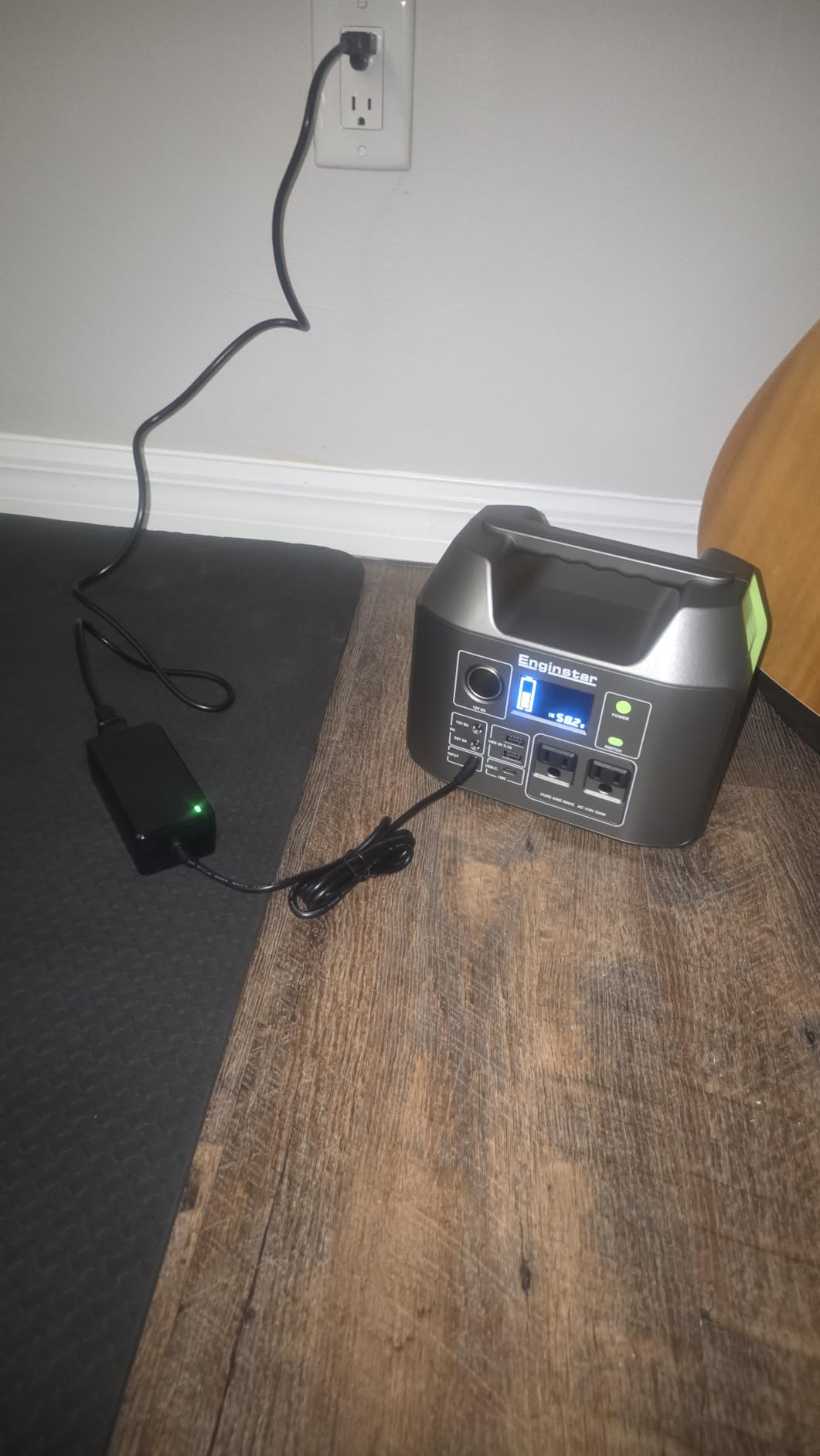
At 6.5 lb and 296Wh the capacity-to-weight ratio is competitive, and reaching 80 percent in about two hours from AC or a car socket means it recovers overnight from a heavy session.
ETL certification and a battery management system covering voltage, temperature, short circuit, overcharging and overload are reassuring for equipment that draws for hours unattended.
When the dual voltage matters
If you run a mount alongside equipment that wants 24V DC, this removes the need for a separate supply entirely. Eight output ports also mean the mount, a camera and USB devices can all run at once.
For a visual observer or a lighter imaging setup it is more than adequate, and the pure sine wave output keeps sensitive electronics happy.
Why it sits at the bottom of the ranking
The chemistry here is conventional lithium-ion rather than lithium iron phosphate, and the cycle life is roughly 1000 charges, about a third of the LiFePO4 rivals listed here. Over years of use that gap matters.
The 12-month limited warranty is the shortest in this roundup, the unit needs a full recharge every two to three months to stay healthy, and the 4.2 average carries a higher share of one-star feedback than the others. Good hardware, weaker long-term support.
How to Choose a Telescope Power Supply
Every recommendation above falls out of four numbers: current draw, voltage behaviour, capacity and connector. Get those right and the choice is straightforward.
1. Work out your amp draw before you shop
Mounts draw far less than people expect while tracking and considerably more while slewing. Users on StargazersLounge report roughly 2.5 to 3 amps when slewing and about 1 amp when tracking on a typical mid-class mount, and owners of a harmonic drive mount report under 0.5 amp tracking and just over 1 amp slewing.
The rule that follows from those numbers is the one the forums keep repeating: 2 amps is adequate for small SE and SLT class alt-az scopes, and 5 amps is the safe minimum for anything heavier, particularly CGEM and CGX class mounts whose documentation calls for at least 4 amps but which users report needing more under load.
Add accessory current on top. A dew heater band, a cooled camera back or a laptop will each add to the budget, and the peak during a slew plus a dew heater is the moment a marginal supply buckles.
2. Runtime math: watts times hours plus a 30 percent margin
Work out the total watts your rig draws, multiply by the hours you intend to run, then add roughly 30 percent. That margin covers conversion losses, cold weather capacity loss and the fact that no battery delivers its full rated capacity in the field.
A worked example. An equatorial mount at 1 amp, a dew heater at 1.5 amps, a controller and camera at about 1 amp gives 3.5 amps at 12V, or 42 watts. Run it for eight hours and you need 336Wh, plus margin, so a pack in the 400Wh range is a realistic target. A 288Wh station will get through a shorter night comfortably but should be recharged between full sessions.
Two further rules of thumb. Divide watt hours by 12V to estimate amp hours, and remember that a supply is limited by both capacity and output current: a 500Wh pack with a 2 amp ceiling will still protect a mount badly.
3. Regulated versus unregulated output, and why sag kills tracking
This is the single most useful distinction in this guide and almost nobody makes it clearly. A regulated supply holds its output voltage steady regardless of load or state of charge. An unregulated battery floats between roughly 9V and 12.6V as it discharges, and the voltage your motors see falls with it.
Symptoms of sag are consistent enough to diagnose. Low voltage warnings during a session, a mount that stalls partway through a slew, a GoTo that resets and loses alignment, or tracking errors that appear only late at night when the pack is nearly empty.
To fix it, work through this in order. First, confirm the supply can deliver the current the mount needs by measuring voltage at the mount under slew rather than at the battery. Second, shorten the cable run, since long thin leads drop voltage under load. Third, use a barrel connector with a threaded lock instead of a push fit, which is a common cause of mid-capture power loss. Fourth, replace the cable if it is old, because degraded internal conductors behave like a partial short. Fifth, if the supply is genuinely undersized, a third-party 2A adapter is not a fix, so move to a 5A unit or a power station with a regulated DC output.
4. Battery chemistry: SLA, LiFePO4 or standard lithium-ion
Sealed lead acid is heavy, cheap and forgiving, and it tolerates storage abuse that would ruin a lithium pack. Its unregulated output and poor capacity-to-weight ratio are its weaknesses.
LiFePO4 is the sweet spot for astronomy. It holds voltage better under load, is roughly a third the weight of an equivalent lead acid pack, tolerates cold far better and is typically rated for 2000 to 4000 cycles before reaching 70 percent capacity. Every LiFePO4 product in this roundup is rated between 2000 and 4000 cycles.
Standard lithium-ion is lighter still and cheaper, but cycle life commonly lands around 1000 charges and cold performance is the weakest of the three. It suits occasional users who always recharge between outings.
On cold weather, treat any lithium pack as indoor storage between seasons. Charge it at room temperature before a winter trip, keep it away from a vehicle windscreen overnight, and expect reduced runtime on a genuinely cold night regardless of chemistry.
5. Connector types and how to match your mount
Matching the connector is where otherwise good purchases get returned. The common patterns are a threaded 1.25 inch mount-style jack, a 2.1mm or 2.5mm centre-pin barrel plug, a DC5521 pair on power stations, a cigarette lighter socket, and USB Type-C for devices only.
Threaded connectors resist vibration over a long integration run, which is a meaningful advantage for imaging where a barrel plug can work loose and stop a capture sequence. Barrel plugs are the default on Celestron and most generic adapters, and you need to check centre pin polarity as well as diameter.
One common hardware question overlaps with location kit building. If you are also mounting devices around the vehicle, our handlebar phone mount guide covers quick-release hardware for rough terrain, which is a reasonable analogy for anything you attach to a tripod leg in the dark.
6. ECO mode, cable sag and other field traps
Portable power stations often have an ECO or power-save mode that shuts the DC output down when draw falls below a threshold. A tracking mount pulling under 1 amp sits below that threshold, so the station can switch itself off mid-session with nothing wrong. If your supply has such a mode, switch it off before you pack the car, and confirm your model does not apply it automatically at power-up.
Isolating accessory power from mount motors matters more than most guides suggest. A power distribution hub with separate fused outputs keeps a dew heater or a USB device from disturbing the supply your motors see, and it also stops a single accessory fault taking the mount down with it.
Two remaining traps. Cable sag on a long imaging run can shift the balance point and introduce tracking artifacts, so secure cables with hook-and-loop wraps and leave enough slack for the RA axis to rotate without dragging the mount into cord wrap. And check whether a barrel plug is rated for the current: a connector that fits is not automatically a connector that is rated for 5 amps.
Frequently Asked Questions
What is the best portable power supply for a telescope?
A regulated 12V DC power station with LiFePO4 chemistry and at least 250 watt-hours covers most visual and imaging setups. Look for 5 amps of continuous DC output, a car port or DC5521 rated for the current your mount draws, and a pure sine wave AC inverter if you also power laptops. Our top pick for telescope mounts overall is the Jackery Explorer 300 at 292Wh and 7.1 pounds.
Can I use a power bank to power my telescope?
Usually not. Most power banks output 5V USB, while computerized telescope mounts need 12V DC, and powering from the wrong rail risks damaging a controller. A handful of modern power banks support 12V output directly, and those can run a small alt-az mount, but always check the voltage and polarity before connecting anything.
What size power supply do I need for my telescope?
Match the supply to your mount class, not to your telescope. Small alt-az SE and SLT mounts run happily on a 2 to 2.5 amp 12V adapter, while CGEM and CGX class equatorials need at least 5 amps. For capacity, multiply total watts by session hours and add a 30 percent margin, so an eight hour session drawing about 42 watts calls for roughly 400Wh.
Are telescope power supplies regulated or unregulated?
AC adapters are almost always regulated and hold 12V steady regardless of load, which is why they are preferred for permanent setups. Battery packs vary: purpose-built telescope packs and portable power stations are typically regulated, while raw sealed lead acid batteries are unregulated and float between roughly 9V and 12.6V. Voltage sag is the usual cause of low voltage warnings and mid-slew stalls.
How do I fix low voltage warnings on a telescope mount?
Measure voltage at the mount while slewing rather than at the battery, since that reveals sag. Then shorten the cable run, replace a push-fit barrel plug with a threaded locking connector, and discard any cable with darkened or stiff insulation. If the reading is still low, the supply is undersized, so move to a 5A unit or a regulated power station instead of a third-party 2A adapter.
Final Recommendations by Use Case
For a single rig that has to cover visual observing, dew heaters and a laptop, the Jackery Explorer 300 remains the best power supply for telescope mounts overall, with the BLUETTI Elite 30 V2 the step up when a full imaging train needs real headroom. Celestron owners should take the PowerTank Lithium, and anyone on a permanent pier will be best served by Celestron’s own 2 Amp AC adapter.
Bring the AMPS question to the shop. Match the supply to your mount’s slew current, confirm the connector and polarity at the mount, and add 30 percent to your capacity calculation. Do that and a clear night stays a clear night.