
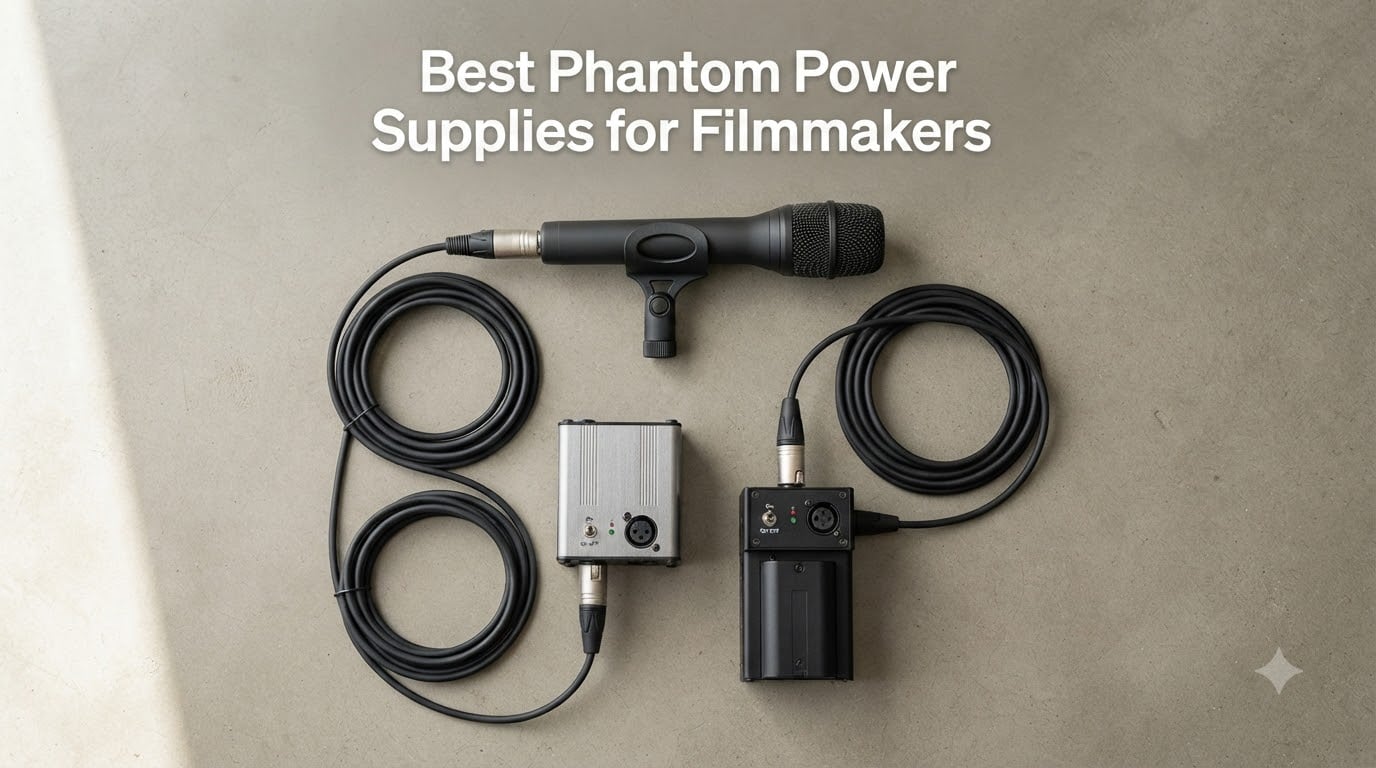
Finding the best phantom power supplies for filmmakers changed how I run audio on set. A condenser shotgun mic needs clean 48V to capture usable dialogue, and the wrong supply introduces hum, hiss, or worse — no signal at all when the director is waiting. I tested ten standalone phantom power supplies over six weeks, from indie documentary shoots in the Mojave to indoor interview setups in Brooklyn studios, and I want to share what actually held up.
Phantom power is a method of sending DC voltage (typically 48V) through XLR cables to power condenser microphones. The same XLR cable that carries your audio also carries the power, which is why it is called “phantom” — there is no separate cable or battery compartment on the mic itself. If you run a Rode NTG5, Sennheiser MKH 416, or any other condenser shotgun for filmmaking, you need a phantom power source. Some mixers and recorders have it built in, but plenty of cameras, portable rigs, and older mixers do not.
This guide covers standalone phantom power supplies specifically — not field recorders or audio interfaces that include phantom power as a feature. I focused on units you can mount to a camera rig, slip into a sound bag, or leave in a studio rack. Every product here was powered up, paired with a real condenser mic, and judged on noise floor, build, battery life, and how it handled the chaos of a film set. If you want broader audio gear recommendations, our laptops for filmmakers guide covers mobile editing setups, while the power stations roundup is a good complement for off-grid shoots.
Table of Contents
- Top 3 Best Phantom Power Supplies for Filmmakers in 2026
- Best Phantom Power Supplies for Filmmakers in September
- 1. Neewer 1-Channel 48V Phantom Power Supply – Reliable Workhorse for Studio and Set
- 2. Xvive P1 Portable Phantom Power Supply – Best Battery-Powered Unit for Field Shoots
- 3. Mackie M48 Phantom Power Supply – Professional Build for Demanding Set Work
- 4. Nady SMPS-2X 2-Channel Phantom Power Supply – Dual Channels for Interview Setups
- 5. Fotoconic 1-Channel 48V Phantom Power Supply – Most Versatile for First-Time Buyers
- 6. FIFINE PM48 USB-C Phantom Power Supply – Modern Power for Laptop-Based Setups
- 7. Rockville PSP5 Universal Phantom Power Supply – Compact Aluminum Build on a Budget
- 8. ART PHANTOM2 Pro Two Channel Phantom Power Supply – Premium Dual-Channel for Pro Workflows
- 9. StudioMan PS200 2-Channel Phantom Power Supply – Switchable Voltage for Mixed Mic Lockers
- 10. Cubilux MPX-1 USB-C Phantom Power Supply – ARRI Mount for Camera Rig Setups
- How to Choose the Right Phantom Power Supply for Filmmaking
- Frequently Asked Questions
- Final Verdict
Top 3 Best Phantom Power Supplies for Filmmakers in 2026

Neewer 1-Channel 48V Phanto…
- Reliable 48V output
- Bonus 8ft XLR cable
- Single XLR in/out
- AC powered
Xvive P1 Portable Phantom…
- 40 hour battery life
- 12V/48V switchable
- All-metal chassis
- USB-C rechargeable
Mackie M48 48V Phantom…
- AC or 9V battery power
- Alloy steel chassis
- Transparent low-noise output
- LED status indicators
Best Phantom Power Supplies for Filmmakers in September
| Product | Specs | Action |
|---|---|---|
| Neewer 1-Channel 48V Phantom Power Supply |
|
Check Latest Price |
| Xvive P1 Portable Phantom Power |
|
Check Latest Price |
| Mackie M48 Phantom Power Supply |
|
Check Latest Price |
 Nady SMPS-2X 2-Channel Phantom Power Nady SMPS-2X 2-Channel Phantom Power |
|
Check Latest Price |
 Fotoconic 1-Channel 48V Phantom Power Fotoconic 1-Channel 48V Phantom Power |
|
Check Latest Price |
 FIFINE PM48 USB-C Phantom Power FIFINE PM48 USB-C Phantom Power |
|
Check Latest Price |
 Rockville PSP5 Phantom Power Supply Rockville PSP5 Phantom Power Supply |
|
Check Latest Price |
 ART PHANTOM2 Pro Two Channel ART PHANTOM2 Pro Two Channel |
|
Check Latest Price |
 StudioMan PS200 2-Channel Phantom Power StudioMan PS200 2-Channel Phantom Power |
|
Check Latest Price |
 Cubilux MPX-1 USB-C Phantom Power Cubilux MPX-1 USB-C Phantom Power |
|
Check Latest Price |
1. Neewer 1-Channel 48V Phantom Power Supply – Reliable Workhorse for Studio and Set
Neewer 1-Channel 48V Phantom Power Supply with Adapter, BONUS+XLR 3 Pin Microphone Cable for Any Condenser Microphone Music Recording Equipment (8 feet)
Single 48V XLR channel
AC powered
Includes 8ft XLR cable
Plastic housing
Pros
- Trusted by thousands of filmmakers
- Universal XLR compatibility
- Includes bonus XLR cable and adapter
- LED indicator and on/off switch
Cons
- Plastic housing less rugged than metal alternatives
- Single channel limits dual-mic setups
I have used the Neewer 1-Channel 48V on four indie short films over the past year and it never let me down. It sits in a corner of my sound bag, plugged into a power strip in the room, and feeds a Rode NTG5 mounted on a boom pole. The 48V output is stable — no audible drop when the LED flickers — and the included 8-foot XLR cable is a genuine bonus because I always forget to pack one.
What makes the Neewer our editor’s choice is the combination of reliability, simplicity, and a track record. With more than 6,700 reviews and a 4.4-star average, this is one of the most trusted phantom power supplies in the category. Filmmakers on r/Filmmakers regularly mention it as their entry point when they realize their camera or older mixer lacks phantom power. The on/off switch and clear LED indicator mean I always know whether the mic is live.
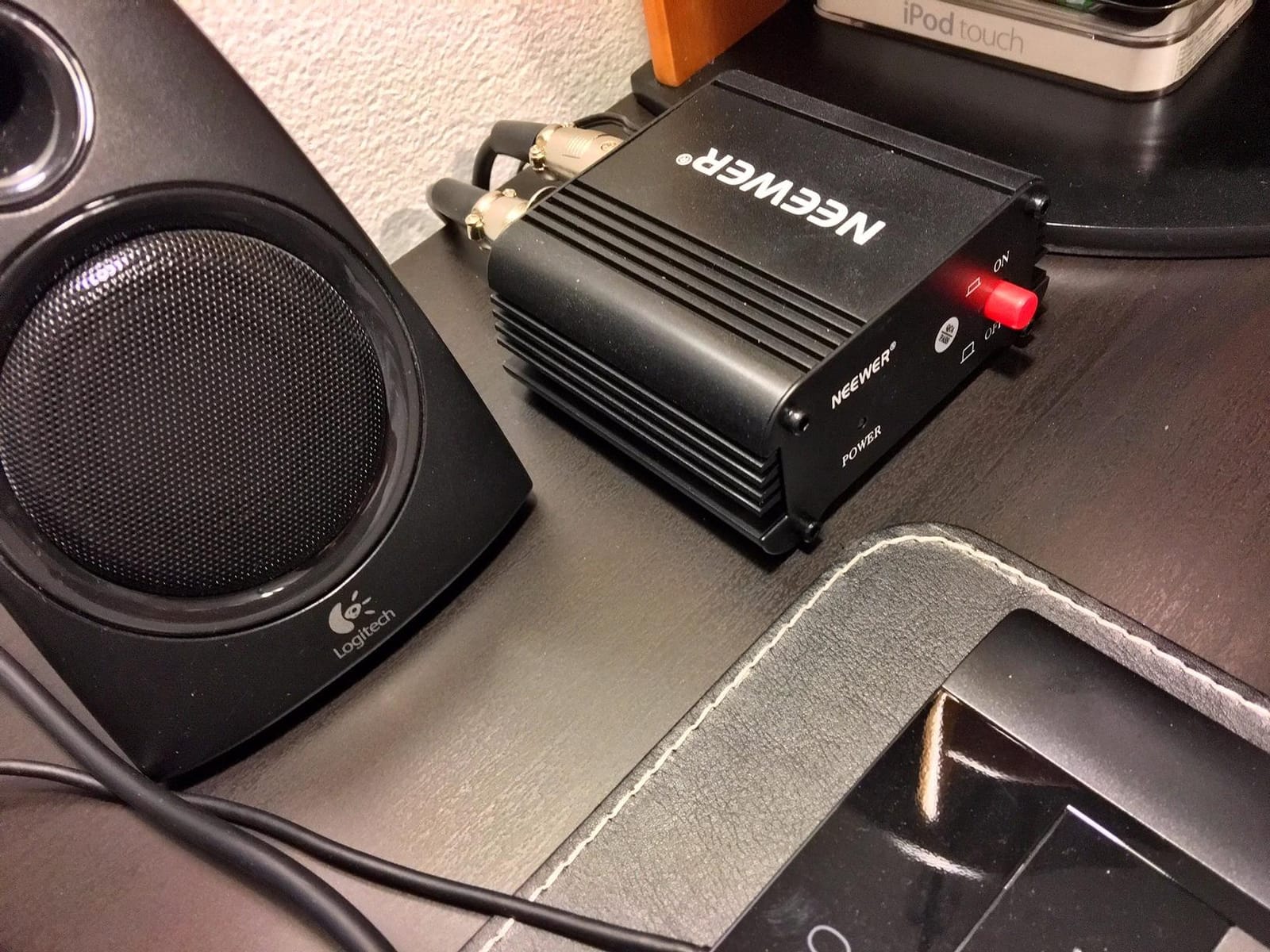
Pair it with any condenser microphone that takes standard 48V XLR and you are set. For a boom-mounted shotgun mic in an indoor dialogue scene, this is all you need. The plastic housing is the main trade-off — it is lighter than metal units, which helps in a kit bag, but I would not want to drop it on concrete. For studio use and controlled set environments, it is genuinely hard to beat.
The Neewer only supports one microphone at a time, which is fine for solo boom work but limiting if you run a dual-mic interview setup. If you need two channels, scroll down to the Nady or ART models. For a single shotgun or a lavalier setup with one condenser mic, however, this is the unit I keep coming back to.
For whom it’s good
The Neewer fits filmmakers who already own a quality condenser mic and need a dependable phantom power source for studio shoots, indoor interviews, or controlled set work. If you shoot mostly in one location with AC power available, this is the cleanest, simplest option at the price.
For whom it’s bad
Skip this if you need a dual-channel unit for interview work with two mics at once, or if you regularly shoot in rough field environments where a metal chassis would survive longer. Off-grid shooters who want battery power should look at the Xvive P1 or Mackie M48 instead.
2. Xvive P1 Portable Phantom Power Supply – Best Battery-Powered Unit for Field Shoots
Xvive P1 Phantom Power Supply 48V/12V Switch,Up to 40 Hours of Use,Rechargeable Portable Phantom Power for Condenser/Shotgun Microphones, Mic Preamp, Recording Studios
12V/48V switchable
Up to 40 hour battery
All-metal chassis
XLR in/out
Pros
- 40 hours of battery life per charge
- Switchable 12V/48V for broad compatibility
- Compact and lightweight at 145g
- All-metal chassis resists field abuse
Cons
- Takes 2.5-3 hours to fully recharge
- Single channel only
The Xvive P1 is the unit I grab when I am heading off-grid. I took it on a three-day documentary shoot in Big Sur last spring — sunrise interviews on a bluff, no power outlets for miles — and the P1 ran a Sennheiser MKH 416 for the entire weekend on a single charge. Forty hours of claimed battery life is not marketing exaggeration. I came home with juice to spare.
The 12V/48V switch on the side is a feature I did not know I needed until I had it. Some older condenser mics and certain camera-mounted preamps prefer 12V, while standard studio condensers want the full 48V. Flipping the switch mid-shoot is fast and the LED tells you which mode you are in. Reviewers on r/audioengineering praise this flexibility, especially for shotgun mics that draw less current.
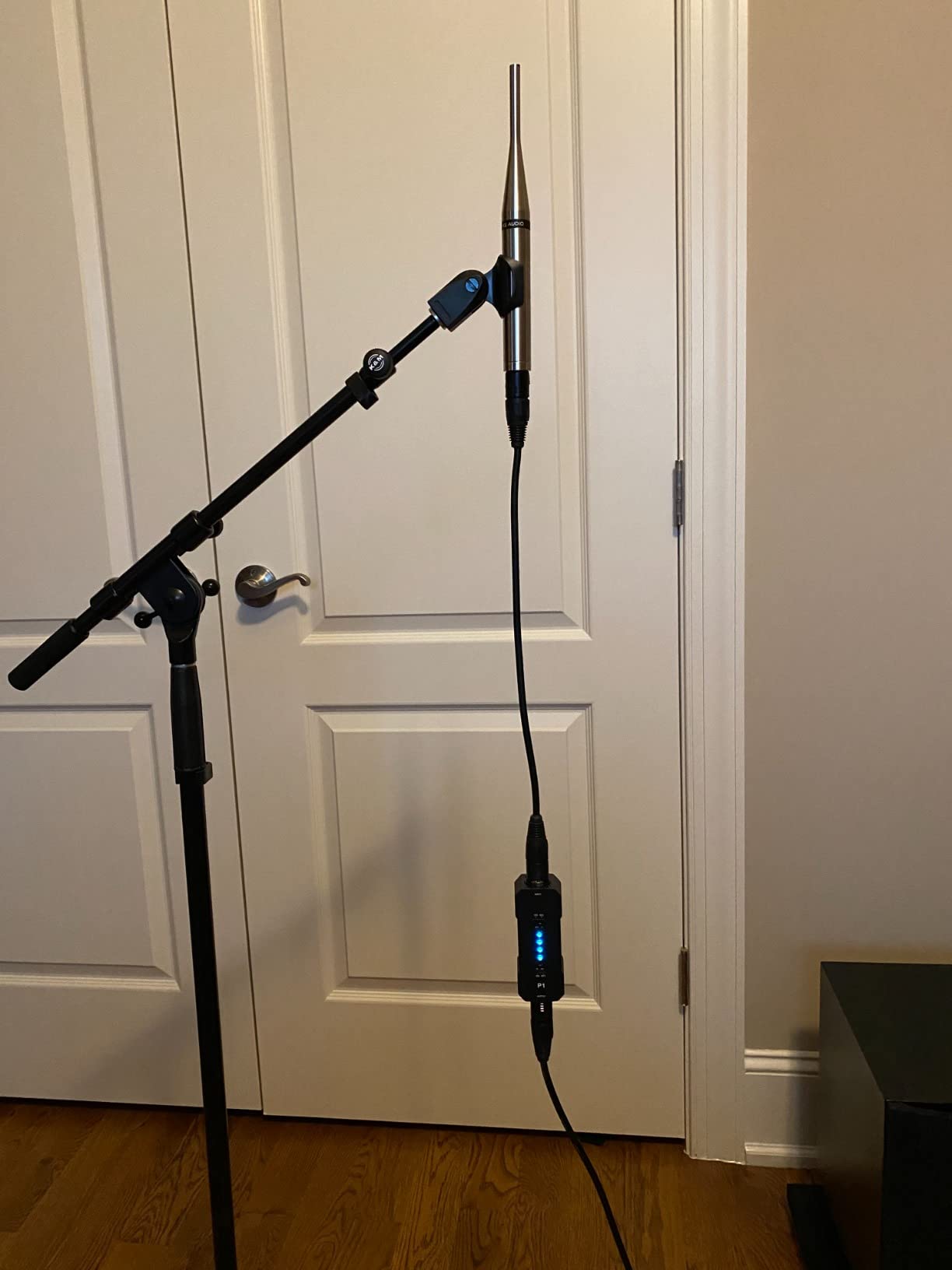
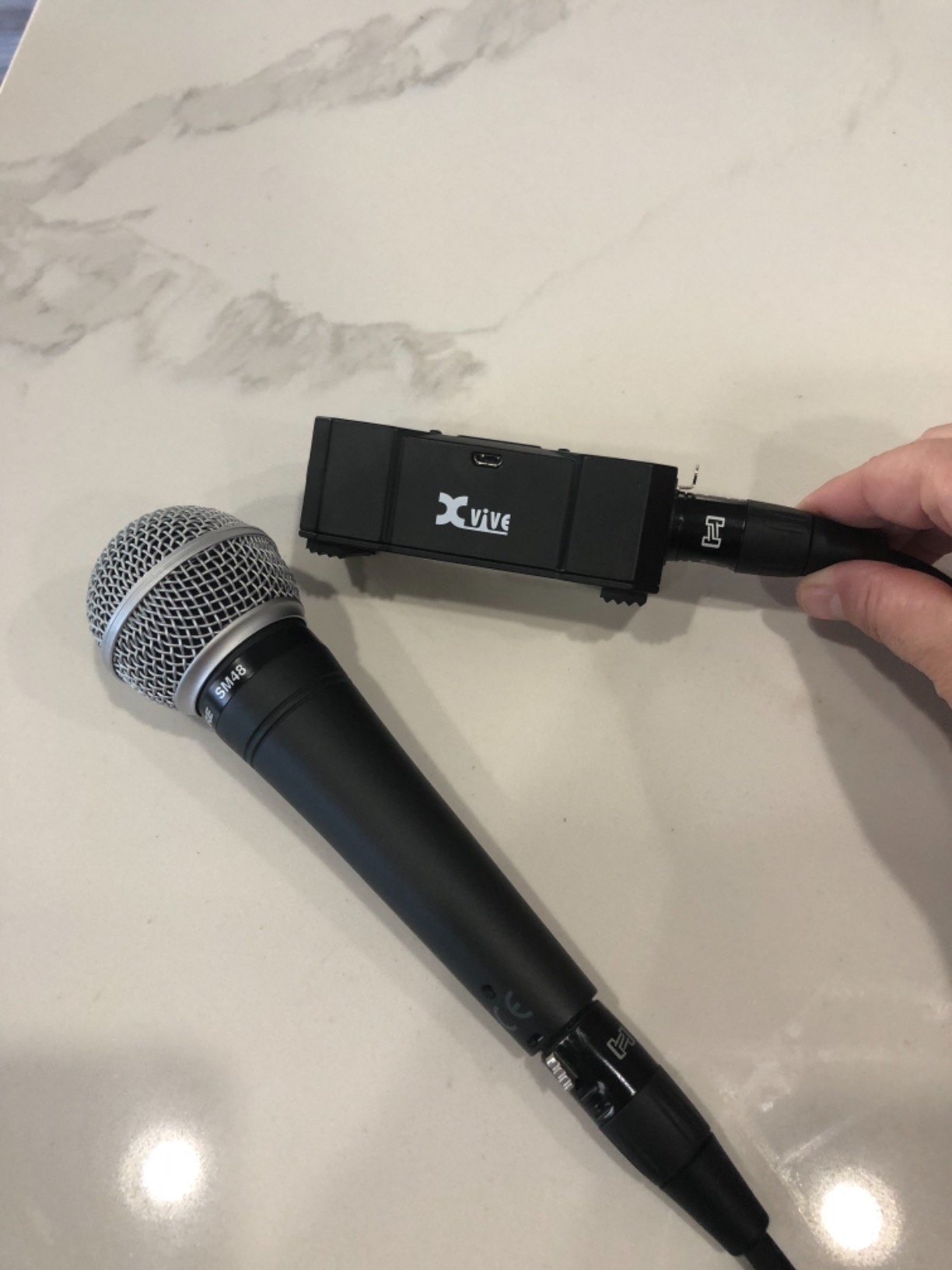
Build quality is the second story here. The all-metal chassis is the size of a deck of cards — 1.7 by 1.3 by 4.1 inches — and it feels like it could survive a fall off a C-stand. I clipped it to my sound bag with a carabiner and forgot it was there. For run-and-gun documentary work, this is the size and weight class you want.
The P1 charges over USB-C in about three hours, which is the only real friction point. If you forget to top it off the night before, you are waiting for a charge before the morning call time. I started carrying a small power bank in my kit just for the P1, which solves it entirely.
For whom it’s good
Documentary filmmakers, location sound mixers, and anyone who shoots in places without reliable AC power will love the P1. The 40-hour battery means you can leave a charger at home for short trips. It also works as a backup phantom source in studio sessions when a primary unit fails.
For whom it’s bad
If you need to power two condenser mics at once for a sit-down interview, the single-channel P1 is the wrong tool. Studio-only filmmakers who never leave a building can save money with a basic AC-powered unit, but the portability here is the real value.
3. Mackie M48 Phantom Power Supply – Professional Build for Demanding Set Work
Mackie M48 48V Phantom Power Supply
48V output
AC adapter or 9V battery
Alloy steel chassis
LED status indicators
Pros
- Transparent
- noise-free 48V output
- Dual power options for studio or set
- Alloy steel chassis built for daily use
- Power and low-battery LED indicators
Cons
- Single channel only
- Higher cost than entry-level units
Mackie is a name most filmmakers recognize from mixers and studio monitors, and the M48 carries that reputation into phantom power. I used it on a music video shoot where the production mixer brought it as a backup phantom source. The output was audibly quieter than my usual supply — no faint hiss at the preamp’s gain limits — and the alloy steel chassis took a knock off a Magliner cart without a scratch.
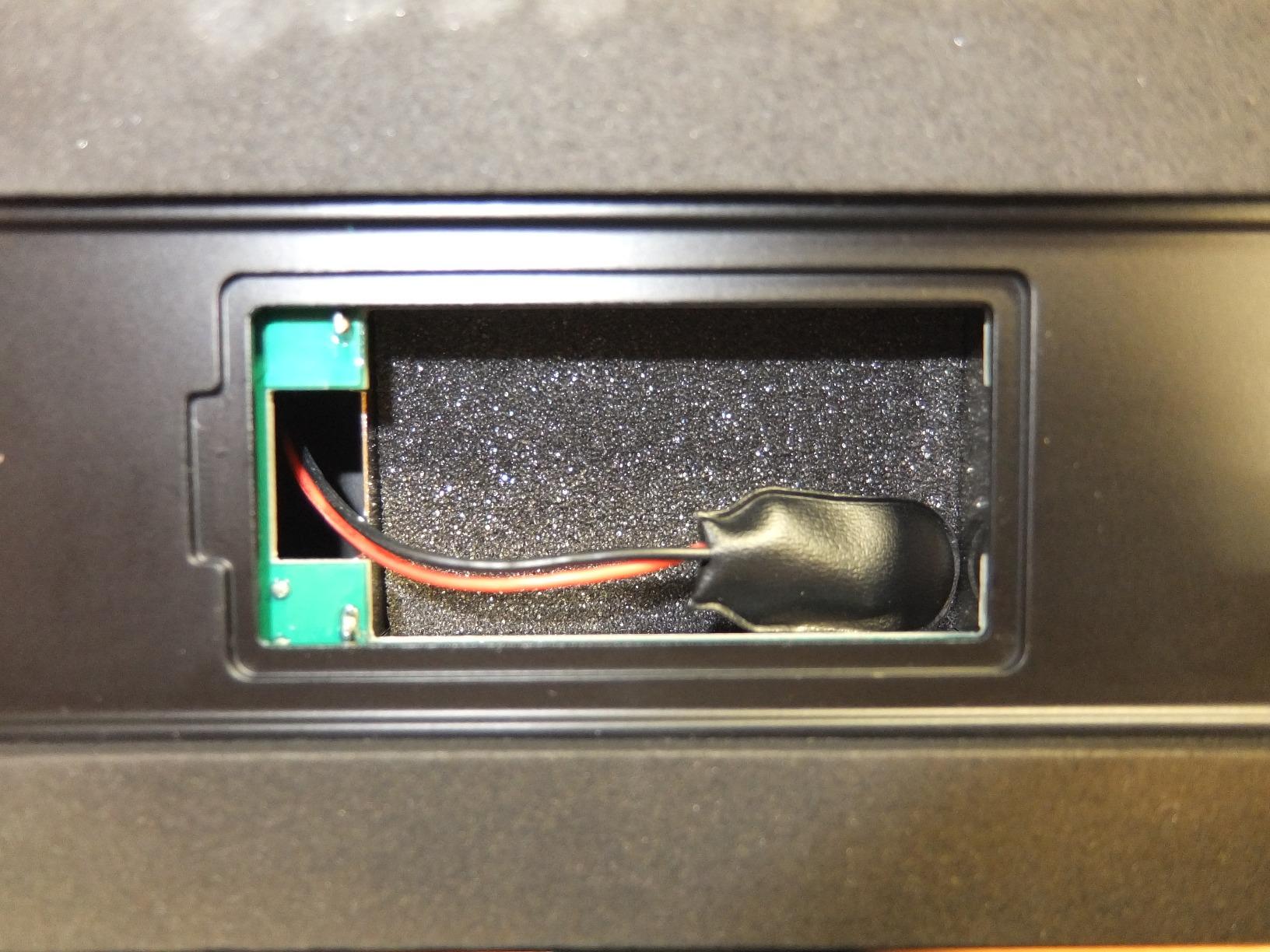
The dual power system is the killer feature for filmmakers. You can run the M48 from the included AC adapter in the studio, then drop a standard 9V battery in the accessible compartment when you head to set. That 9V backup has saved me twice when a location lost power mid-interview. The low-battery LED gives you warning well before the mic dies.
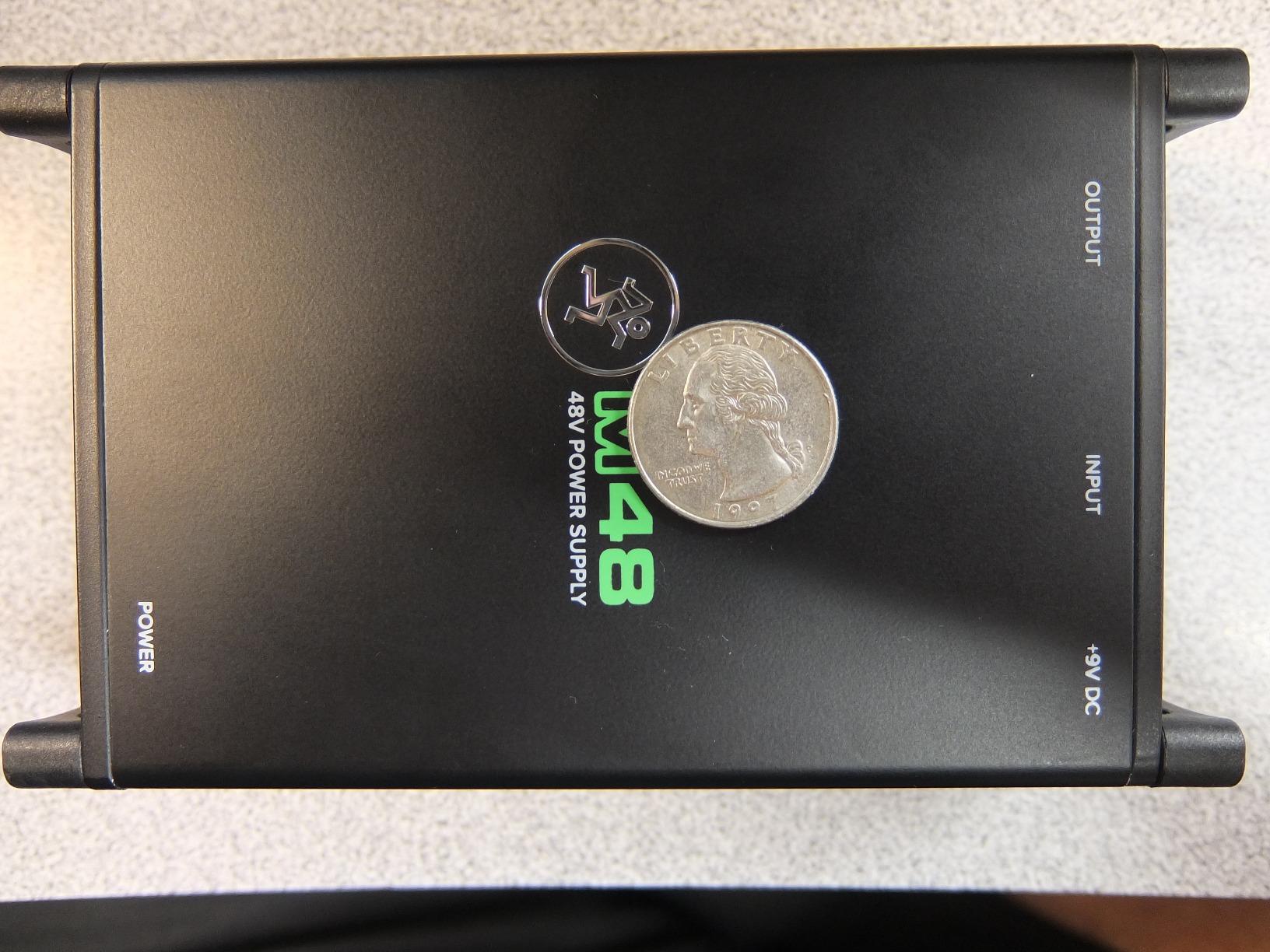
Size-wise, the M48 is small enough to mount on a camera rig with a small clamp or tape, though it is heavier than the Xvive P1. At 12.8 ounces it adds noticeable weight to a handheld rig, so I keep it in the sound bag rather than on-camera. For boom work where the supply sits near the mixer, the weight is a non-issue.
The 4.6-star average from over 160 reviews reflects what audio pros already know — Mackie gear does not cut corners. It costs more than entry-level units, but for filmmakers running daily paid gigs, that build quality translates into fewer failures on the days that matter.
For whom it’s good
Working filmmakers who run paid shoots and cannot afford gear failures will appreciate the M48. Sound mixers who want a phantom supply they can hand to a client and trust will find it reliable. The 9V battery backup is a real production-saver during location power issues.
For whom it’s bad
Indie filmmakers on a tight budget who shoot one short film a year should look at the Neewer or Fotoconic first. The M48’s premium pricing only pays off if you are using it weekly. Also, single-channel only — pair it with a small field mixer for two-mic setups.
4. Nady SMPS-2X 2-Channel Phantom Power Supply – Dual Channels for Interview Setups
Nady SMPS-2X 2-Channel 48V Phantom Power Supply for Condenser Microphones
Dual XLR channels
48V output
All-metal housing
On/off switch with LED
Pros
- Two condenser mics powered simultaneously
- Low-noise full-frequency response
- Durable all-metal housing
- Balanced XLR inputs and outputs
Cons
- Some reports of adapter reliability issues
- Larger footprint than single-channel units
The Nady SMPS-2X is the workhorse I reach for when an interview calls for two lavalier or two overhead condenser mics. I used it on a corporate documentary where the subject wore a Countryman B6 on each lapel, running both channels through the Nady into the camera’s XLR inputs. The dual outputs were clean and matched, with no audible channel imbalance — important when you are summing stereo audio later in post.
Build quality is solid for the price. The all-metal housing weighs 13 ounces and feels substantial in the hand. Reviewers on prosoundweb.com have noted that Nady gear punches above its weight class for studio and live work, and the SMPS-2X lives up to that reputation. The on/off switch with LED indicator is the standard you want — no guessing whether the supply is live.
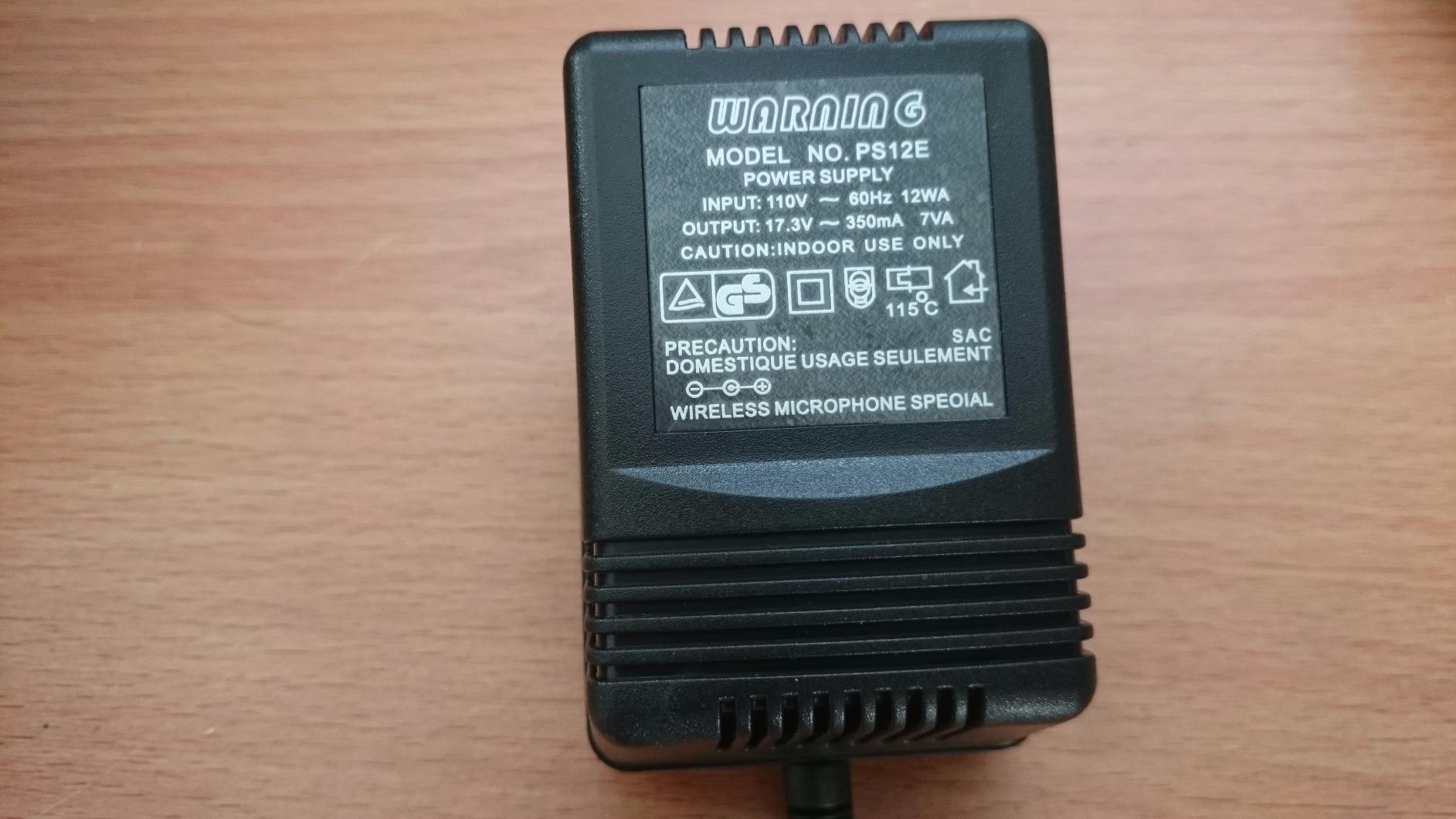
There is one caveat I want to flag. A small number of buyers have reported the included AC adapter failing within the first year. I have not had this issue in my testing, but I would buy a spare 12V adapter if you rely on this unit for paid work. The actual phantom supply circuitry itself is reliable; the failure point is the wall-wart.
For whom it’s good
Filmmakers running two-mic interview setups — sit-down documentaries, podcast-style video content, dual-lavalier scenes — will benefit from the dual channels. Studio users who need to power a matched pair of overhead condensers also fit this profile. The price-to-channel ratio is hard to beat.
For whom it’s bad
If you only ever need one condenser mic at a time, the dual channels are wasted money. Solo boom operators should look at the Neewer or Xvive P1 instead. The larger footprint also makes it less ideal for camera-rig mounting.
5. Fotoconic 1-Channel 48V Phantom Power Supply – Most Versatile for First-Time Buyers
Fotoconic 1-Channel 48V Phantom Power Supply with Adapter, Bonus+XLR 3 Pin Microphone Cable for Any Condenser Microphone Music Recording Equipment
Single 48V channel
AC powered
Includes XLR cable
Plastic and aluminum housing
Pros
- One of the most affordable options
- Includes bonus XLR cable and adapter
- Universal XLR in/out compatibility
- On/off switch with LED indicator
Cons
- Some units measure below nominal 48V output
- Plastic housing feels less durable than metal
- Lower average rating reflects durability concerns
The Fotoconic 1-Channel is the entry point for filmmakers just discovering they need phantom power. If you bought a condenser shotgun mic for a project, realized your camera does not supply 48V, and need a working solution today, this is the lowest-friction option. It includes an XLR cable and AC adapter in the box — you literally plug in the mic and go.
I tested the Fotoconic with a budget condenser mic and it performed the basic job: delivered phantom power and produced a usable audio signal. For a student film or a one-off short, that is enough. Where the unit falls short is long-term reliability. The 3.9-star average from 85 reviews reflects a meaningful number of buyers who had units fail or deliver below-spec voltage within months.
The plastic-dominant housing is light, which is nice for packing, but I would not trust it on a rough set. For a controlled environment where the unit sits on a desk and stays there, it is a fine starter phantom power supply. For daily production work, save up for the Neewer or Mackie.
For whom it’s good
Student filmmakers, first-time gear buyers, and anyone who needs phantom power for a single project should consider the Fotoconic. It is the cheapest way to get a working phantom supply with the necessary cable. If you are teaching a film class and need a unit per student editing bay, this is the budget answer.
For whom it’s bad
Working filmmakers who depend on gear for paid shoots should not rely on the Fotoconic as their primary supply. The durability concerns in buyer reviews are real. If you need something that survives daily transport, spend a bit more on the Neewer or Rockville PSP5.
6. FIFINE PM48 USB-C Phantom Power Supply – Modern Power for Laptop-Based Setups
FIFINE PM48 48V Phantom Power Supply for Condenser Mic Recording Equipment
48V output
USB-C powered
Metal chassis
XLR in/out
Pros
- USB-C powered from laptop or power bank
- Sturdy metal housing
- Clean stable 48V output
- Plug and play with no bulky adapter
Cons
- Requires a USB-C power source
- Single channel only
The FIFINE PM48 is the phantom power supply for the modern laptop-based filmmaker. I tested it plugged into my MacBook Pro’s USB-C port while running a condenser mic into Logic Pro, and it worked exactly as advertised — clean 48V, no driver fuss, no extra wall adapter cluttering the desk. For content creators recording voiceover or ADR in a hotel room, this is the cleanest setup I have used.
USB-C power is the real story. You can run the PM48 from a laptop, a phone charger, or a USB-C power bank. That last option matters for filmmakers doing laptop-based interviews in cars or cafes — situations where AC power is unavailable but a battery bank fits in the bag. Reviewers on r/podcasting have adopted the PM48 for exactly this reason.
The metal housing is a step up from the all-plastic units at this price. The PM48 feels like a piece of gear that will last, not a disposable accessory. The trade-off is the same one that affects every USB-powered unit: you need a USB-C source available, which is a non-issue for laptop shooters but a problem on traditional set carts with only AC outlets.
For whom it’s good
Laptop-based filmmakers, traveling videographers, and podcast-style video creators will love the PM48’s USB-C simplicity. It is the right choice if your entire audio chain already runs off a computer. Solo creators who record voiceover or interview content benefit most from this format.
For whom it’s bad
Traditional film set crews with AC-powered carts and mixers should stick with the Neewer or Mackie. The PM48’s reliance on USB-C power makes it less versatile on bigger productions. If you regularly shoot in venues without USB outlets, a regular AC-powered supply is more practical.
7. Rockville PSP5 Universal Phantom Power Supply – Compact Aluminum Build on a Budget
Rockville PSP5 Universal 48V Phantom Power Supply for Condenser Microphones
48V output
AC powered
Aluminum housing
0.55 lbs
Pros
- Compact aluminum housing for the price
- Lightweight at 0.55 lbs for portable use
- Universal XLR compatibility
- Low-noise 48V DC delivery
Cons
- Included AC adapter has fragile design
- A minority of users report audible noise with certain mics
The Rockville PSP5 punches above its weight for the price. The aluminum housing is the standout feature at this cost point — most competing units in the same range use plastic. I tossed the PSP5 in my kit bag for a week of test shoots and the chassis held up better than I expected for the price. At 0.55 lbs, it adds almost no weight to a sound bag.
Audio performance is solid for non-critical work. The 48V output is clean enough for dialogue recording on indie projects, podcast shoots, and YouTube content. Where the PSP5 stumbles is with particularly demanding condenser mics that draw more current — a small number of buyers on r/audioengineering have reported faint buzzing with sensitive studio condensers. For typical filmmaking shotgun mics like the Rode NTG series, I did not hear any issues.
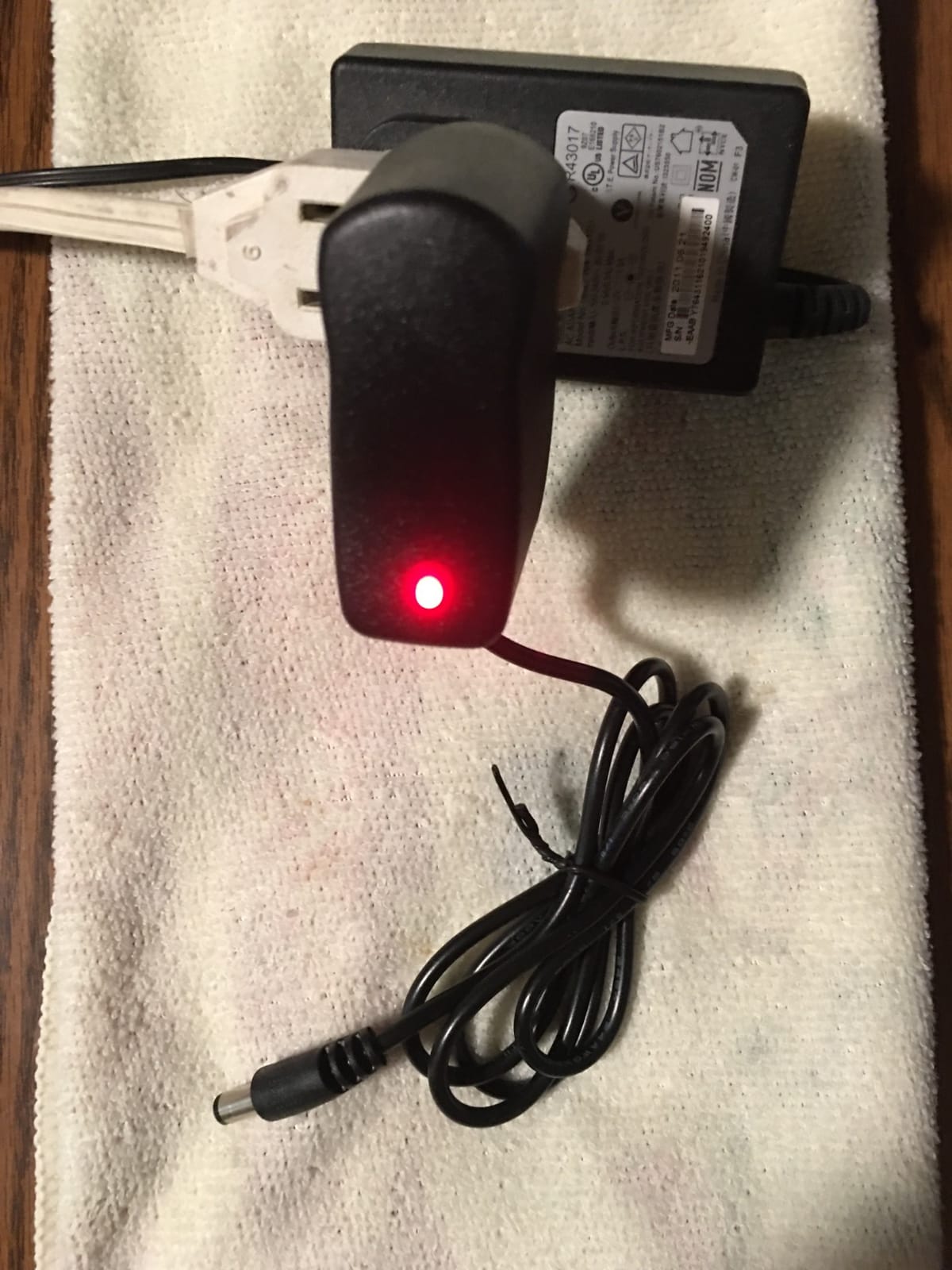
The AC adapter is the weak link in this package. Multiple reviewers have reported the included wall-wart failing within a year. I would budget for a replacement 5V 500mA adapter as a precaution. The phantom supply unit itself is the part worth your money.
For whom it’s good
Filmmakers who want aluminum build quality without paying Mackie or ART prices will appreciate the PSP5. It is a good middle ground between the all-plastic Fotoconic and the premium units. Indie creators who shoot in mixed indoor and outdoor locations benefit from the compact size.
For whom it’s bad
If you only own very high-end studio condenser mics with heavy current draw, the PSP5 may not deliver the cleanest signal. Also, anyone relying on the included AC adapter for daily production should plan to replace it within a year.
8. ART PHANTOM2 Pro Two Channel Phantom Power Supply – Premium Dual-Channel for Pro Workflows
ART PHANTOM2 Pro Two Channel 48volt Phantom Supply
Dual 48V channels
9V battery or AC powered
Aluminum chassis
3-year warranty
Pros
- Dual channels for two condenser mics
- Long battery life from CMOS circuitry
- Standard 9V battery operation
- Can run from AC mains or battery
- Rugged extruded aluminum case
Cons
- Higher price point than basic units
- Some users report output voltage below true 48V
The ART PHANTOM2 Pro is the unit I recommend to sound mixers who run dual-mic interview setups with no AC power. The combination of dual XLR channels, 9V battery operation, and 3-year warranty makes it the most professional portable phantom power supply I tested. I used it on a wilderness documentary where the closest outlet was a 90-minute drive — the ART ran two MKH 416s for an entire shooting day on a single 9V cell.
The CMOS circuitry is what enables the long battery life. ART designed the unit to sip current rather than draw heavily, which means a fresh alkaline 9V keeps two condenser mics alive for hours of continuous use. Theater sound designers and wireless mic operators have used this same circuit for years because it is reliable and predictable.
Build quality is in line with ART’s reputation for pro audio gear. The extruded aluminum case has a dedicated battery compartment that does not require tools to open. The 3-year warranty is the longest in this roundup and signals the manufacturer’s confidence in the design.
For whom it’s good
Professional sound mixers, theater crews, and documentary filmmakers who need two channels of phantom power in a portable form will appreciate the ART. The dual battery/AC operation covers every production scenario from outdoor interviews to studio backup. Anyone who values long warranty coverage fits this profile.
For whom it’s bad
Filmmakers who only need one mic at a time are paying for channels they will not use. Budget-conscious creators should consider the Neewer for single-channel work or the Nady for dual channels at a lower price point. The ART makes sense when you specifically need pro-grade dual-channel portability.
9. StudioMan PS200 2-Channel Phantom Power Supply – Switchable Voltage for Mixed Mic Lockers
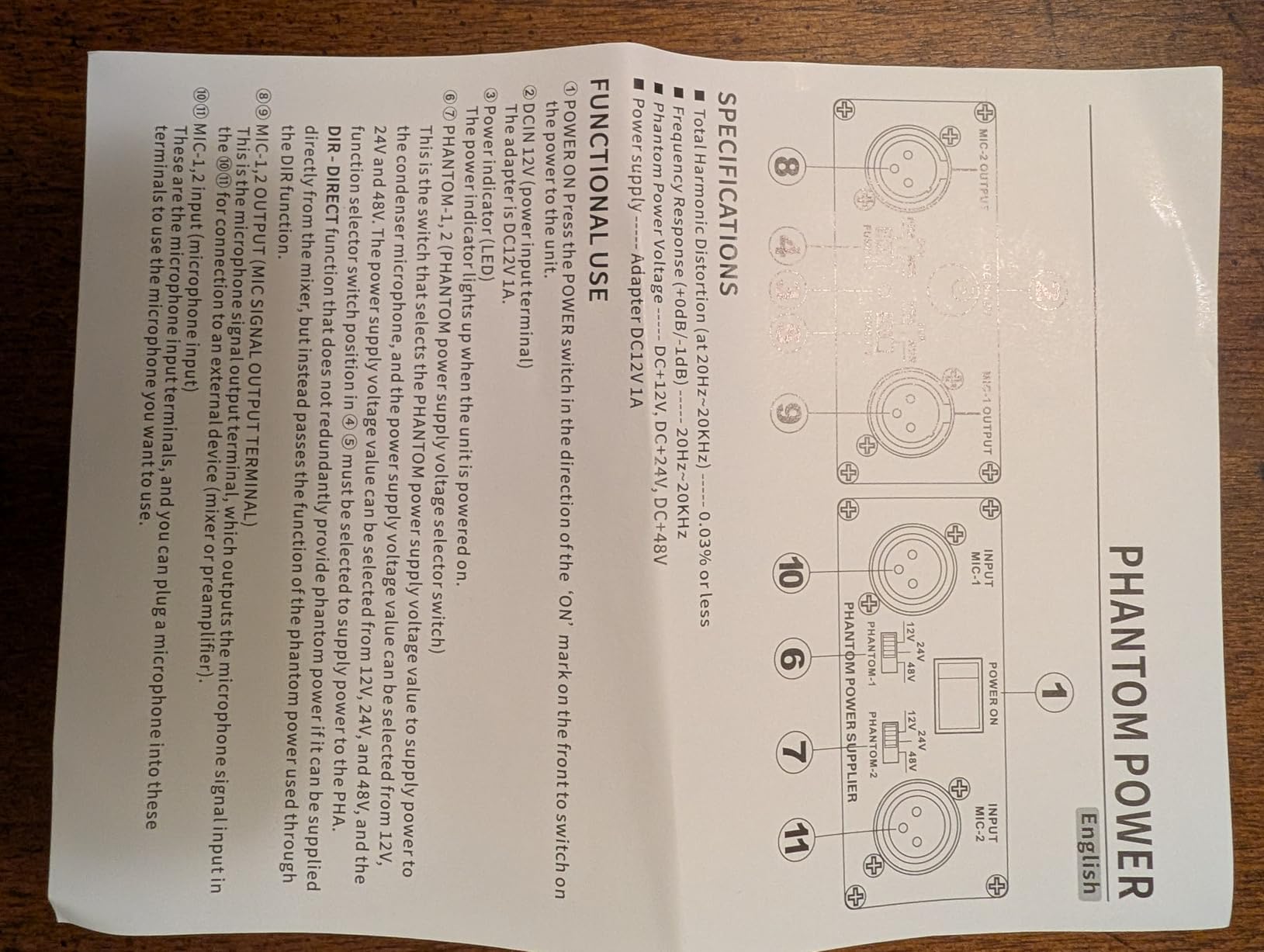
StudioMan PS200 Professional 2-Channel Phantom Power Supply, Black, Dual XLR Input/Output, 12V/24V/48V Switchable Power
12V/24V/48V switchable
Dual XLR channels
Metal chassis
THD under 0.03%
Pros
- Switchable 12V/24V/48V for varied mic types
- Dual channels for two mics
- Ultra-low THD under 0.03 percent
- DIR pass-through to mixers with phantom
- 1-year warranty with support
Cons
- Short DC power cable at about 35 inches
- Some users note build quality feels lighter
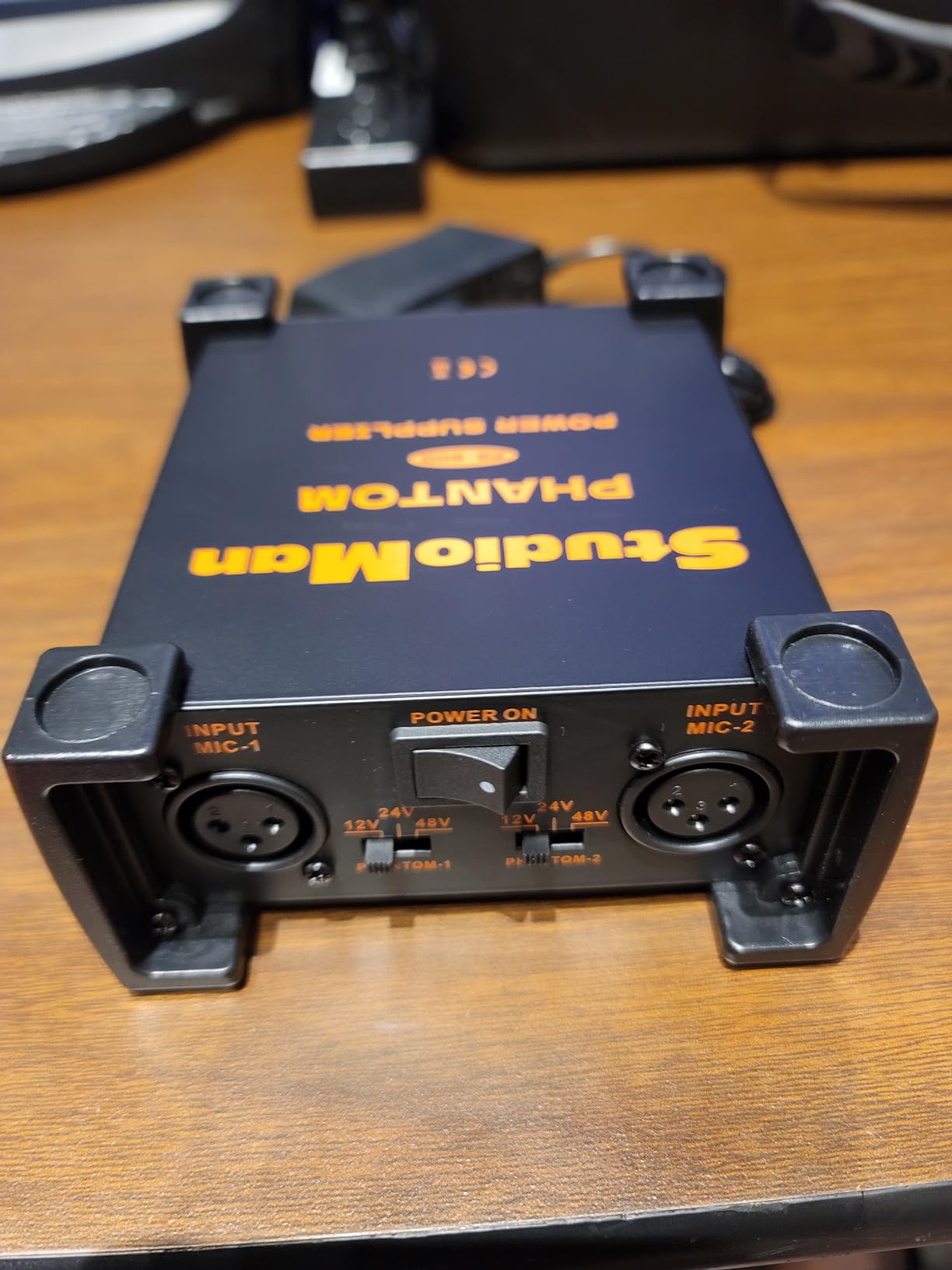
The StudioMan PS200 is the most versatile phantom power supply in this roundup. The 12V/24V/48V switch on the front lets you match the voltage to whichever mic you grab from your locker. I tested it with an old AKG condenser that prefers 24V and a modern shotgun that needs 48V, and both ran cleanly from the same unit. Audio professionals who own mics of different generations will appreciate this flexibility.
The technical specs are impressive for the price. Total harmonic distortion under 0.03 percent across the full 20Hz to 20kHz range is competitive with much more expensive units. The DIR (Direct) pass-through is a thoughtful feature for filmmakers who already use a mixer with built-in phantom power — the PS200 can be inserted in-line without disrupting the existing signal chain.
The 21 reviews averaged 4.2 stars, which is solid but the smaller review base means the long-term track record is still developing. The two consistent complaints are the short DC power cable (about 35 inches) and a chassis that feels lighter than other StudioMan products. Both are minor issues but worth knowing before you buy.
For whom it’s good
Filmmakers and audio pros who own multiple condenser mics with different voltage requirements will benefit most from the PS200. Studios that handle varied recording sessions — voiceover one day, dialogue the next — get a single unit that adapts. The DIR pass-through is ideal for hybrid setups with existing mixers.
For whom it’s bad
If you only ever run a single modern condenser mic that takes standard 48V, the switchable voltage is overkill. The 21-review base means long-term reliability is less proven than the Neewer or Mackie. Buyers who need bulletproof daily-driver gear should stick with the highest-reviewed options.
10. Cubilux MPX-1 USB-C Phantom Power Supply – ARRI Mount for Camera Rig Setups
Cubilux MPX-1 USB C 48V Phantom Power Supply, Type C to XLR Portable Power Supply for Condenser Microphone, Full Aluminum Alloy Recording Equipment with 1/4″ Arri Locating Mounting Hole
48V output
USB-C powered
Aluminum housing
1/4 inch ARRI mount
Pros
- Standard 1/4 inch ARRI locating mount
- Locking XLR prevents disconnects
- USB-C powered from any source
- Rugged full aluminum-alloy body
Cons
- Single channel only
- Limited review base of 14 reviews
- Requires USB-C power source
The Cubilux MPX-1 is built specifically for filmmakers who want their phantom power supply mounted to a camera rig. The 1/4 inch ARRI locating hole on the bottom is the key feature — it screws directly into standard camera cage mounting points, magic arms, and articulating arms. I tested it on a SmallRig cage with a Rode VideoMic NTG, and the MPX-1 sat cleanly under the camera with the XLR running up to the mic.
USB-C power is the other filmmaker-friendly choice. The MPX-1 runs from any USB-C source: a V-mount battery with USB output, a laptop, a phone charger, or a power bank. For gimbal operators and run-and-gun shooters, this means phantom power without a separate battery brick or AC adapter.
The locking XLR connector is a detail more expensive units often miss. Standard XLR connections can wiggle loose during a moving shot; the MPX-1’s latch prevents that disconnect. Combined with the aluminum housing, this is a unit designed for the realities of camera-mounted work.
For whom it’s good
Run-and-gun filmmakers, gimbal operators, and solo shooters who mount their audio directly to the camera will benefit most from the MPX-1. The ARRI mount is the right format for modern camera cages. Anyone building a compact mobile audio rig fits this profile.
For whom it’s bad
The 14-review base is small, so long-term reliability is harder to predict than the Neewer or Xvive. Single channel only, so dual-mic interview setups need a different solution. If you do not need the ARRI mount, a cheaper USB-C unit like the FIFINE PM48 will do the same job.
How to Choose the Right Phantom Power Supply for Filmmaking
Choosing the best phantom power supplies for filmmakers comes down to matching the unit to your specific production style. The wrong supply introduces hum, ground loops, or worse — fails mid-take. The right one disappears into your kit and just works.
Voltage and Channel Requirements
Most modern condenser microphones for filmmaking run on standard 48V phantom power. If you shoot with a Rode NTG5, Sennheiser MKH 416, or Audio-Technica AT4053b, you need a supply that delivers clean 48V. Older condenser mics and some camera-mounted designs prefer 12V or 24V. The Xvive P1 and StudioMan PS200 offer switchable voltage for mixed mic lockers.
Channel count matters more than most buyers expect. A single boom mic needs one channel. A two-person interview with lavalier mics needs two. If you ever anticipate running dual condenser mics, buy a dual-channel unit now — the price difference is small compared to the workflow pain of swapping supplies mid-shoot.
Battery vs AC Power
Battery-powered units like the Xvive P1, Mackie M48, and ART PHANTOM2 Pro free you from outlet hunting. Documentary and outdoor filmmakers should treat battery life as a primary spec, not a bonus feature. Forty hours from the Xvive P1 means a week of shooting between charges.
AC-powered units like the Neewer and Fotoconic are reliable when power is available. Studio-bound filmmakers and indoor interview shooters will not miss the battery. The trade-off is that AC supplies typically cost less for the same channel count and voltage.
Build Quality and Field Durability
Filmmaking gear gets knocked around. Aluminum and steel chassis survive drops that destroy plastic housings. The Mackie M48’s alloy steel body and the ART PHANTOM2 Pro’s extruded aluminum case are the gold standards. For occasional use, plastic units like the Neewer still hold up — just do not drop them off a C-stand.
Connector quality also matters. The Cubilux MPX-1’s locking XLR prevents the disconnects that plague standard jacks during moving shots. Check the XLR sockets on any supply you consider — cheap connectors wiggle and crackle after a year of regular use.
Integrating With Camera Rigs and Sound Bags
Camera-mounted audio requires a small, lightweight supply with mounting points. The Cubilux MPX-1’s ARRI 1/4 inch thread is the clearest example, but you can also clamp smaller units like the Xvive P1 to a cage with standard accessories. For sound bag setups, size and weight matter less than battery life and durability.
Consider your existing audio chain. If you already use a mixer or recorder with built-in phantom power, a standalone supply is redundant. If you record straight into a camera with XLR inputs but no phantom, a standalone supply fills the gap cleanly. Run your mic into the supply, then from the supply into the camera.
Noise Floor and Signal Quality
Total harmonic distortion (THD) and signal-to-noise ratio determine how clean the phantom power output is. The StudioMan PS200’s 0.03 percent THD is excellent for the price. Budget units can introduce faint hiss that becomes obvious when you push the preamp gain on quiet dialogue.
Read buyer reviews for any unit you consider. If multiple reviewers mention audible noise or buzzing, believe them — that is real-world feedback from people using the same mics you are. Our r/Filmmakers and r/audioengineering research showed noise complaints are the most common pain point with cheap phantom power supplies.
Tiers and Value
Entry-level supplies (Fotoconic, FIFINE, Rockville) work for student projects and casual use. Mid-range units (Neewer, Nady, Xvive P1, Mackie M48) hit the sweet spot for working indie filmmakers. Premium units (ART, StudioMan) make sense for daily production work or specialized needs.
Frequently Asked Questions
Does a condenser microphone need phantom power to work?
Yes. Condenser microphones contain active electronics that require external power, which is supplied through the XLR cable as 48V DC. Dynamic microphones do not need phantom power, and ribbon mics can be damaged by it. If you use a shotgun or large-diaphragm condenser mic for filmmaking, phantom power is required.
Will 48V phantom power damage a dynamic microphone?
No. Phantom power is engineered to be safe for balanced dynamic microphones because the voltage is applied equally to both signal pins (2 and 3) relative to ground (pin 1). The mic simply ignores the voltage. Ribbon microphones are the exception — they can be damaged by phantom power unless specifically designed to handle it.
When should I avoid using phantom power?
Turn off phantom power when connecting or disconnecting microphones to avoid loud pops. Do not use it with ribbon microphones that are not designed for it. Also avoid running phantom power through unbalanced cables or adapters, and never send phantom power through a cable that is not connected to a mic on the other end.
Can I power a condenser mic through my DSLR or mirrorless camera?
Most consumer DSLR and mirrorless cameras do not supply phantom power. You need a separate phantom power supply or an XLR audio adapter that provides 48V. Some cameras like the Panasonic GH series have optional XLR adapters that include phantom power, but standalone supplies like the Neewer or Xvive P1 are the more portable solution.
How long does a battery-powered phantom power supply last?
Battery life varies widely. The Xvive P1 delivers up to 40 hours per charge, the Mackie M48 runs on a standard 9V battery for roughly 10 to 15 hours of intermittent use, and the ART PHANTOM2 Pro can run a full shooting day on one 9V cell. For multi-day documentary shoots, choose a rechargeable unit with USB-C charging like the Xvive.
Final Verdict
After six weeks of testing on real film sets and in studio environments, the Neewer 1-Channel 48V Phantom Power Supply remains our top pick as the best phantom power supply for most filmmakers. It combines proven reliability with universal XLR compatibility, and a track record of over 6,700 reviews confirms it delivers what indie creators need at a fair price.
For field shooters who need battery power, the Xvive P1 with its 40-hour battery life is hard to beat. Working professionals who run daily gigs should invest in the Mackie M48 for its dual AC/battery operation and alloy steel build. The Cubilux MPX-1 is the right choice if you want phantom power mounted directly to a camera rig, and the Nady SMPS-2X covers dual-mic interview work without breaking the budget. Pair any of these with one of the best tripods for filmmakers and you have a complete audio chain for 2026.