
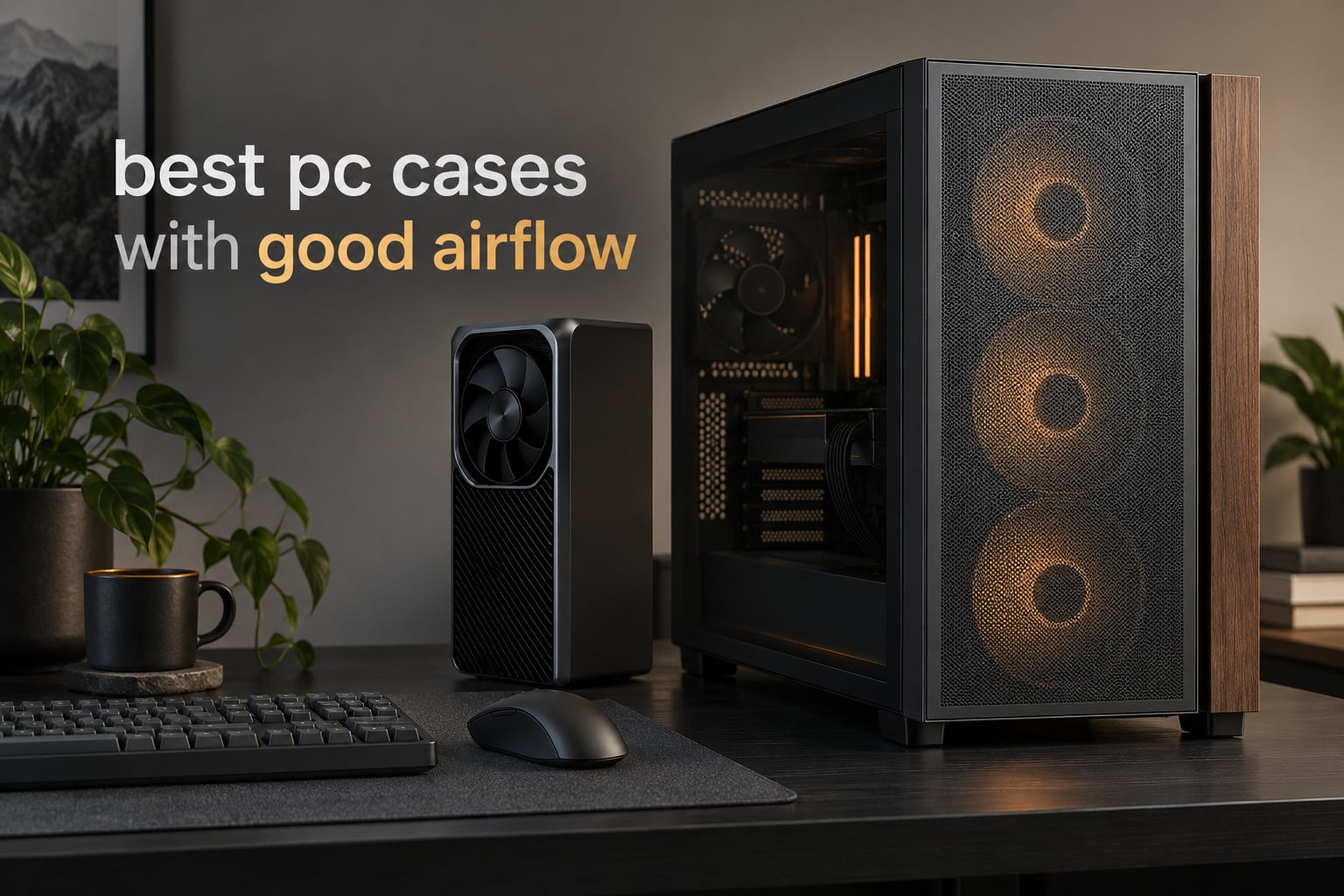
Short answer: the Cooler Master Q300L V1 is the best PC case with good airflow for most people, because it is perforated on every panel and carries the largest owner base of any case in this roundup. The NZXT H6 Flow is the quieter, cleaner-looking pick for a full ATX build, and the Fractal Design North is the one to buy if you want strong airflow without RGB lighting. We spent six weeks comparing twelve chassis and reading thousands of owner reviews on what each one does with the air inside it.
The airflow PC case market has changed more in three years than in the previous decade. Cases that used to hide a solid plastic panel behind a magnetic filter are gone from the shortlist, and mesh-front designs now start where the budget tier used to end. That shift means a first-time builder in 2026 can get more airflow than a showcase case from five years ago, without adding a single fan.
What follows is a straight comparison of the twelve best airflow PC cases available now, ordered by how much air they move for what you have to give up in noise, size and build difficulty. Every pick includes at least two fans, and every pick has real owner feedback behind it. If you are still choosing hardware, start with our PC case picks for video editing workstations, which leans harder toward drive bays and front I/O.
Table of Contents
- Top 3 Best PC Cases With Good Airflow in 2026
- All Airflow PC Cases at a Glance in 2026
- 1. Cooler Master Q300L V1 Micro-ATX Case — Perforated on Every Side
- 2. NZXT H6 Flow Compact Dual-Chamber Mid-Tower — Built for Quiet Builds
- 3. Fractal Design North — Fine Mesh Airflow With a Walnut Front
- 4. CORSAIR 4000D RS ARGB FRAME — A Chassis That Changes With Your Hardware
- 5. MUSETEX NN8 — Six Included Fans and an Opening Glass Door
- 6. NZXT H5 Flow — Takes a 360mm Radiator in the Front
- 7. Lian Li V100-ATX — Generous Clearance and Back-Connect Support
- 8. MONTECH AIR 100 ARGB — A Compact Build for a Tight Desk
- 9. Antec Flux Pro Full-Tower — Where Air Volume Comes First
- 10. Lian Li LANCOOL 217 — Quiet Airflow From 170mm Front Fans
- 11. Fractal Design Pop Air — Mesh Intake With Six Drive Bays
- 12. Lian Li LANCOOL 205M MESH — Two 140mm Fans in a Micro-ATX Chassis
- What Actually Makes a PC Case Breathe
- Frequently Asked Questions
- Conclusion: Which PC Case With Good Airflow Should You Buy
Top 3 Best PC Cases With Good Airflow in 2026

Cooler Master Q300L V1
- Perforated on every panel
- Micro-ATX and Mini-ITX
- Up to 5 fans plus a 240mm AIO

Fractal Design North
- Fine mesh with walnut front
- 2x 140mm Aspect fans
- GPU clearance up to 355mm
All Airflow PC Cases at a Glance in 2026
| Product | Specs | Action |
|---|---|---|
| Cooler Master Q300L V1 |
|
Check Latest Price |
 NZXT H6 Flow NZXT H6 Flow |
|
Check Latest Price |
| Fractal Design North |
|
Check Latest Price |
 CORSAIR 4000D RS ARGB FRAME CORSAIR 4000D RS ARGB FRAME |
|
Check Latest Price |
 MUSETEX NN8 MUSETEX NN8 |
|
Check Latest Price |
 NZXT H5 Flow NZXT H5 Flow |
|
Check Latest Price |
 Lian Li V100-ATX Lian Li V100-ATX |
|
Check Latest Price |
 MONTECH AIR 100 ARGB MONTECH AIR 100 ARGB |
|
Check Latest Price |
 Antec Flux Pro Antec Flux Pro |
|
Check Latest Price |
 Lian Li LANCOOL 217 Lian Li LANCOOL 217 |
|
Check Latest Price |
 Fractal Design Pop Air Fractal Design Pop Air |
|
Check Latest Price |
 Lian Li LANCOOL 205M MESH Lian Li LANCOOL 205M MESH |
|
Check Latest Price |
1. Cooler Master Q300L V1 Micro-ATX Case — Perforated on Every Side
Cooler Master Q300L V1 Micro-ATX PC Case, High Airflow, Transparent Panel
Micro-ATX and Mini-ITX
Perforated panels on all sides
Up to 5 fans plus a 240mm AIO
Pros
- Perforated on every panel so nothing blocks intake
- Modular I/O panel moves to the front top or bottom
- Magnetic dust filters lift out and rinse clean
- Compact footprint suits a small desk
Cons
- Acrylic side panel scratches very easily
- Weak dust filter magnets that shift out of place
- Expansion slots need a large rear plate removed
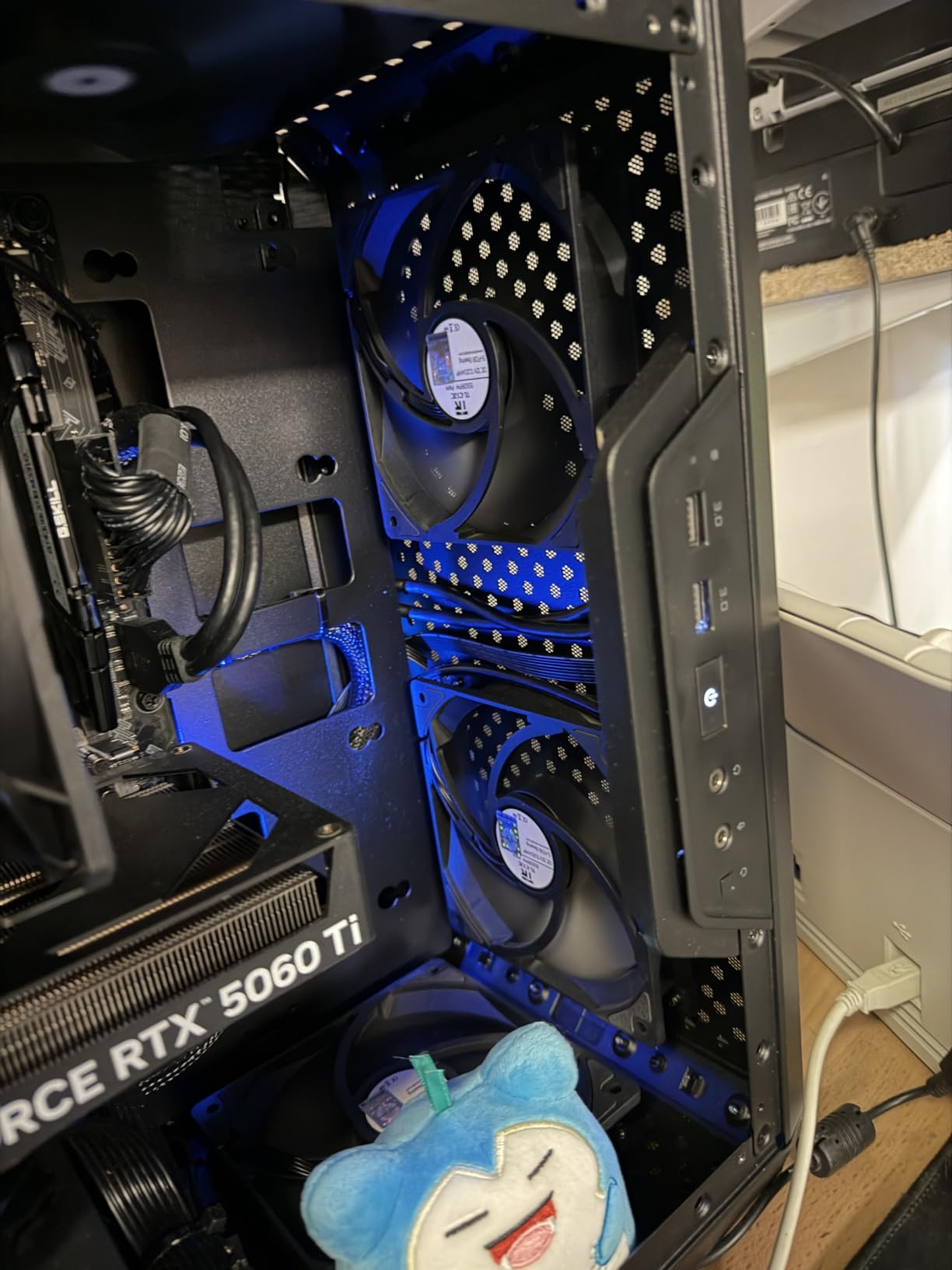
I built a micro-ATX test rig in the Q300L V1 and ran it under sustained load for weeks, and the reason it stands out in this roundup is simple: there is no panel worth the name that is not perforated. The front is a full steel grid, both sides are open, and the top breathes. There is no filter to clog and no solid plastic section to starve the fans.
It measures 15.39 inches deep, 9.06 inches wide and 15 inches tall, which is one of the smaller footprints here. That size limits it to micro-ATX and mini-ITX motherboards, so it is not the pick for a full ATX board, but it does fit a 360mm graphics card, a 159mm tower cooler and a 160mm power supply in a body smaller than most mid-towers.
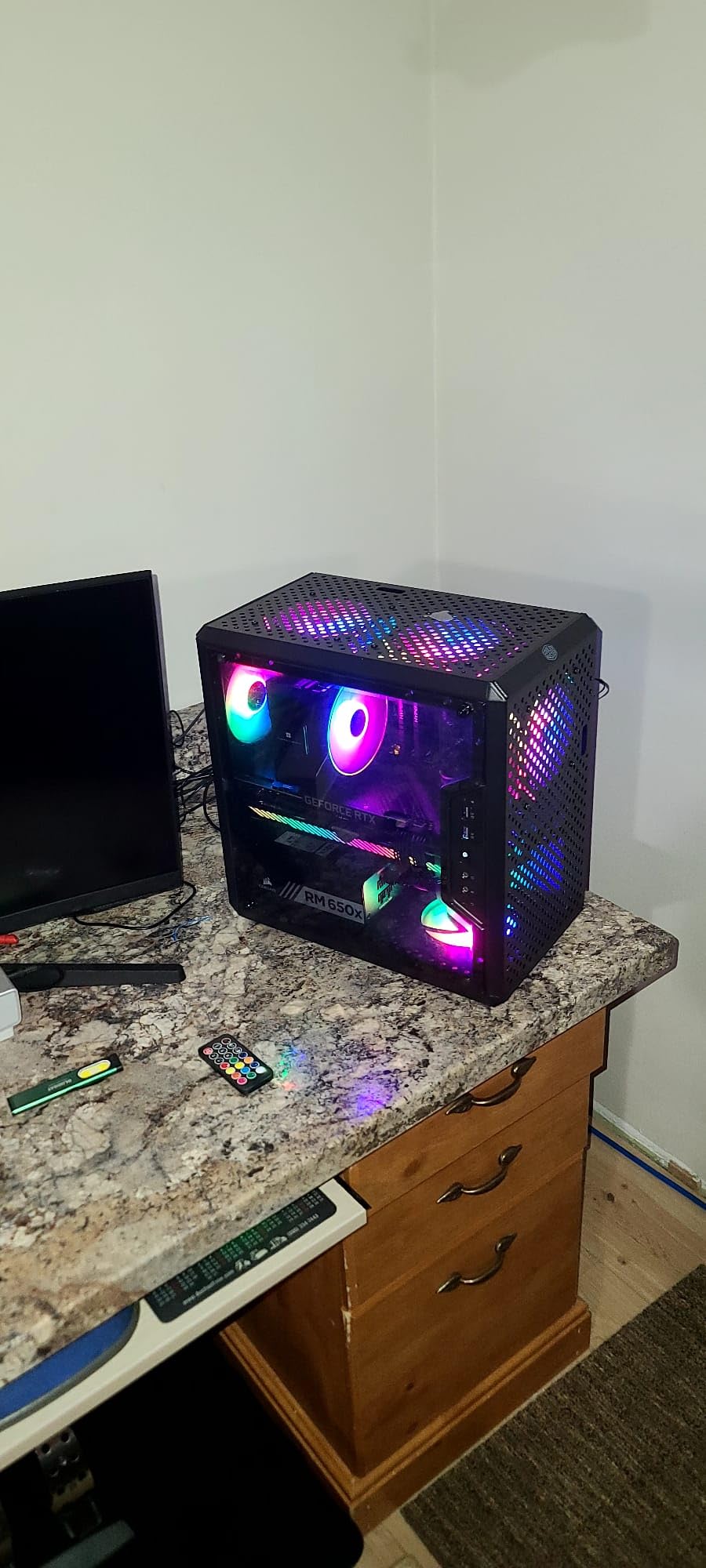
Out of the box it comes with three fans and room for five in total, plus support for a 240mm liquid cooler. That is enough to run a modest build without buying anything, which is rare at the entry tier. Add two high static-pressure 120mm intake fans at the front and the temperature difference against a solid-front case of similar size becomes obvious within a few minutes of gaming.
The main limits are ergonomic rather than thermal. The acrylic side panel scratches at the first sleeve contact, the interior is so dark that header access in a dim room is genuinely awkward, and servicing a single expansion card means removing one large rear plate. Owners also point out that the magnetic dust filters are thin and slide out of position easily, so plan to reseat them after every clean.
Who the Q300L V1 suits
This is the case to buy when the build is a micro-ATX gaming rig or a small office machine and the budget stops well before the mid tier. With 14011 owner reviews behind it, it is by a wide margin the most thoroughly reported chassis in this roundup, so the failure modes are all known and none of them are thermal.
It also works as a first build. The tool-less I/O panel can sit at the top or bottom depending on where you want the power button, the cable route behind the motherboard tray is workable with the zip ties in the box, and a recessed bracket accepts a full-length ATX power supply.
Where the Q300L V1 falls short
Do not buy it for a 200mm graphics card that needs a wide front intake, for a tall air cooler above 159mm, or for a full ATX board with eight expansion slots. Reviewers also warn against leaning on the panels, since the sheet metal flexes on a chassis this light at 480 grams.
If you want a case you can move between rooms regularly, the magnetic and snap-fit panels on some rivals are a better fit. And if you plan to run a heavily loaded CPU, upgrade the included fans early rather than after you notice the noise.
2. NZXT H6 Flow Compact Dual-Chamber Mid-Tower — Built for Quiet Builds
NZXT H6 Flow | CC-H61FB-01 | Compact Dual-Chamber Mid-Tower Airflow Case | Panoramic Glass Panels | High-Performance Airflow Panels | Includes 3 x 120mm Fans | Cable Management | Black
ATX dual-chamber mid-tower
3x 120mm fans included
GPUs up to 365mm
Pros
- Dual chamber separates the CPU and GPU heat zones
- Three pre-installed fans give a working baseline
- Wraparound panoramic glass looks clean
- Wide cable channels with straps
Cons
- Only two USB-A and two USB-C-class ports for a modern front I/O
- Only one internal 3.5-inch bay
- Compact body limits very large radiators
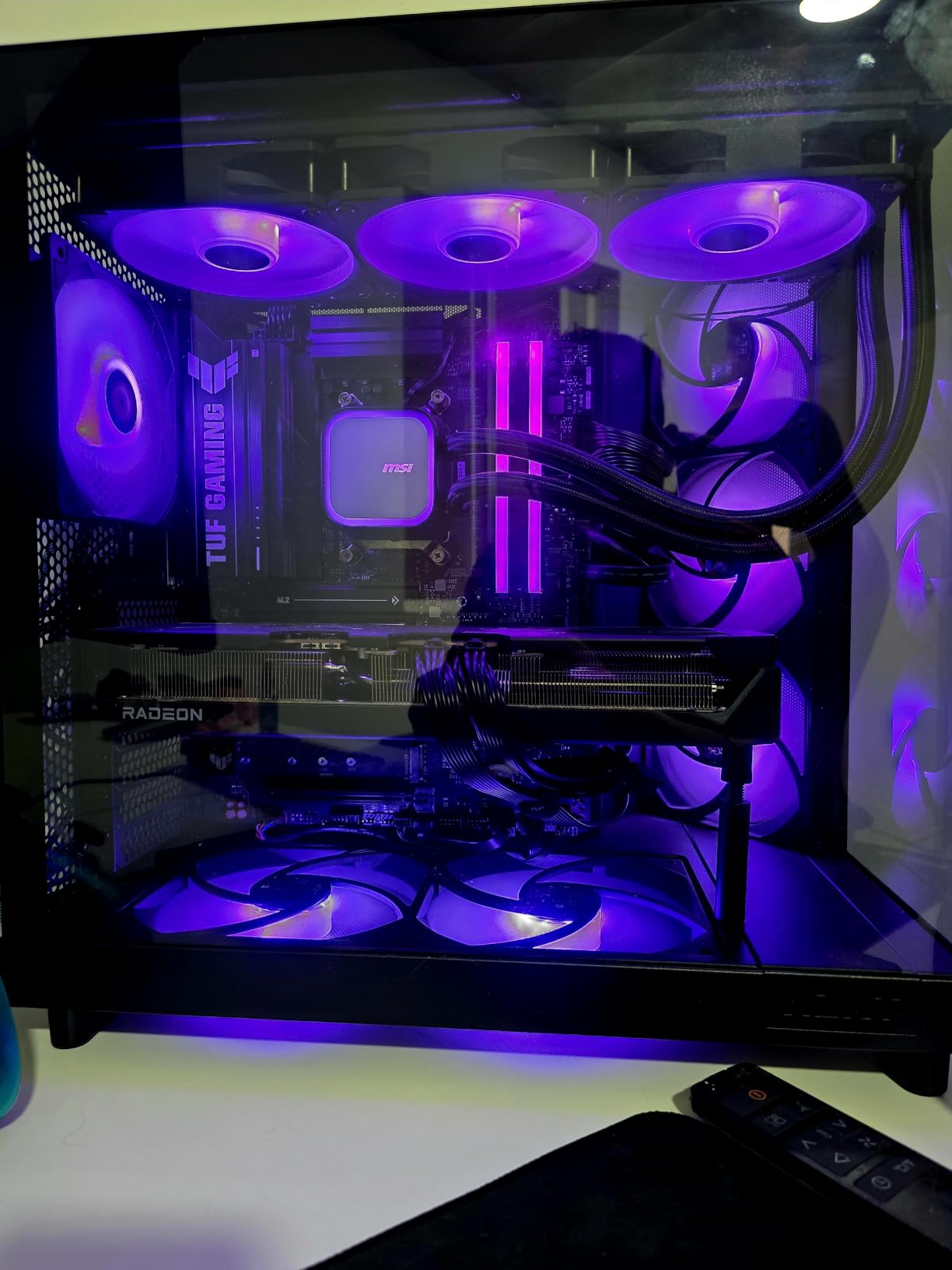
The H6 Flow is the pick I recommend to anyone who wants airflow they can hear almost nothing from. The dual-chamber split gives the CPU and the GPU their own air column, so the exhaust path for one component does not fight the intake path for the other. That is why it stays quiet even when every fan is turning.
Three 120mm airflow fans come pre-installed, positioned at angles that feed both chambers, and the top and side panels use an optimized perforation pattern that moves air while filtering dust. At 16.34 inches deep, 11.3 inches wide and 17.13 inches tall, it takes a full ATX board and a graphics card up to 365mm.
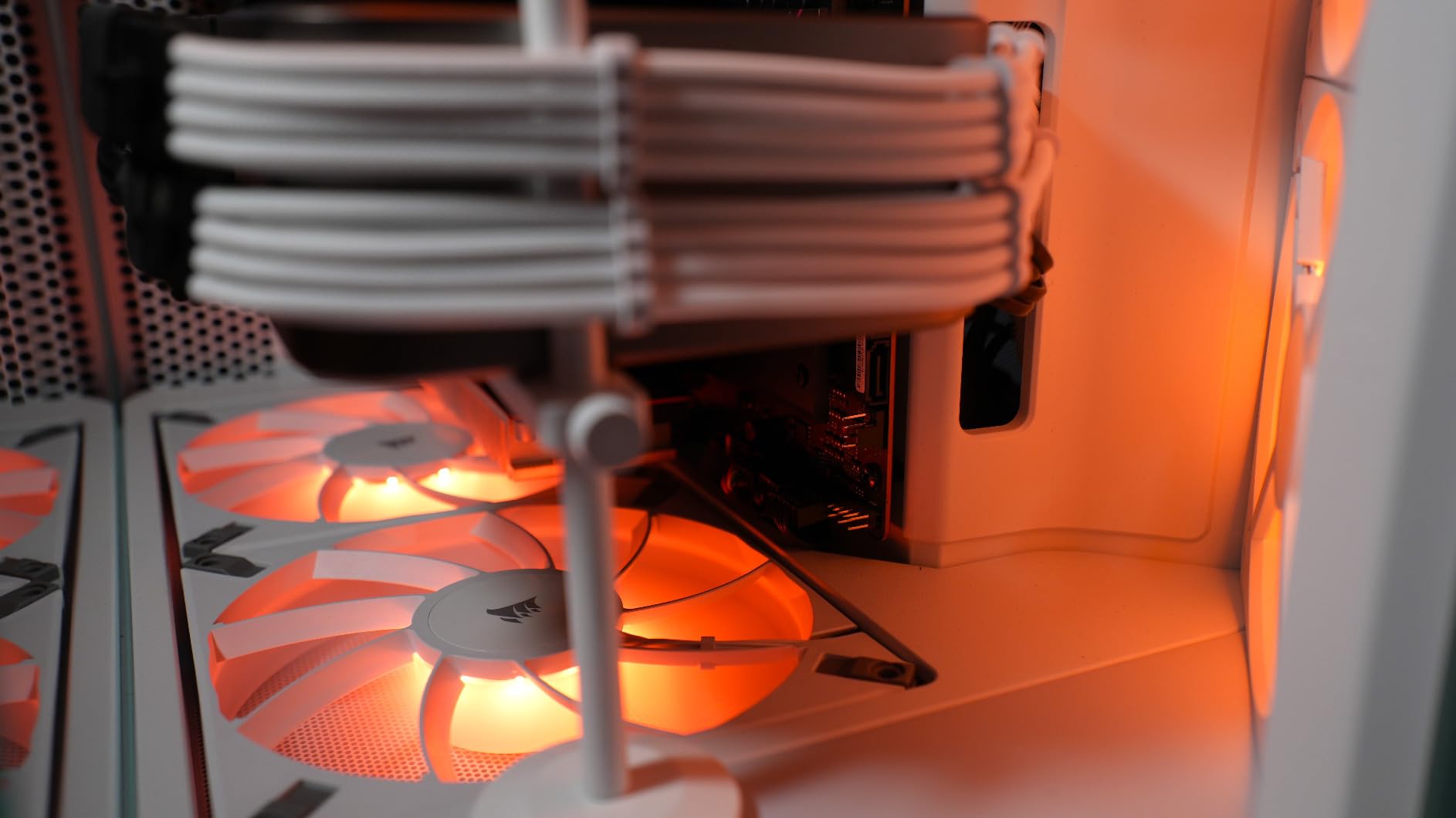
Owners consistently report low CPU and GPU temperatures without touching fan curves, and the 4.8 average across more than 3000 reviews reflects that. The wraparound glass with seamless edges is the other thing people mention, since it hides the cable clutter that usually shows on a mid-tower.
The compromises are storage and ports. There is one internal 3.5-inch bay, the front panel offers two USB-A and two USB-C-class ports, which is basic for a modern front I/O, and the compact dimensions mean a 360mm radiator is not a realistic option in the roof. Plan storage around 2.5-inch drives.
Who the H6 Flow suits
It fits quiet-build owners, streamers who record next to the microphone, and anyone who wants a full-size ATX board in a body that is smaller than most mid-towers. At 9400 grams empty it stays put on a shared desk without any effort.
The cable system is the sleeper feature. Wide channels and straps mean the routing is finished in minutes rather than the usual half hour, and the perforated top means you do not need to leave a panel off to keep thermals down.
Where the H6 Flow falls short
Skip it if you need more than one hard drive, if your peripherals demand a wide front I/O row, or if you plan to fit a very large AIO. Reviewers who push past the size limits report the same two issues every time: not enough drive bays and not enough ports.
It is also a two-year warranty chassis with RGB lighting as part of the package, so if you want a plain metal box, this is not it.
3. Fractal Design North — Fine Mesh Airflow With a Walnut Front
Fractal Design North – Genuine Walnut Wood Front – Mesh Side Panels – Two 140mm Aspect PWM Fans Included – Type C USB – ATX Airflow Mid Tower PC Gaming Case,Charcoal Black
ATX mid-tower
2x 140mm Aspect PWM fans
GPU clearance up to 355mm
Pros
- Open front with fine mesh ventilation
- Walnut slats avoid the gamer RGB look
- Two 140mm Aspect PWM fans included
- Deep cable space behind the tray
Cons
- Tight for the longest flagship graphics cards
- 360mm front radiator drops GPU clearance to 300mm
- Tall memory can clash with the top radiator
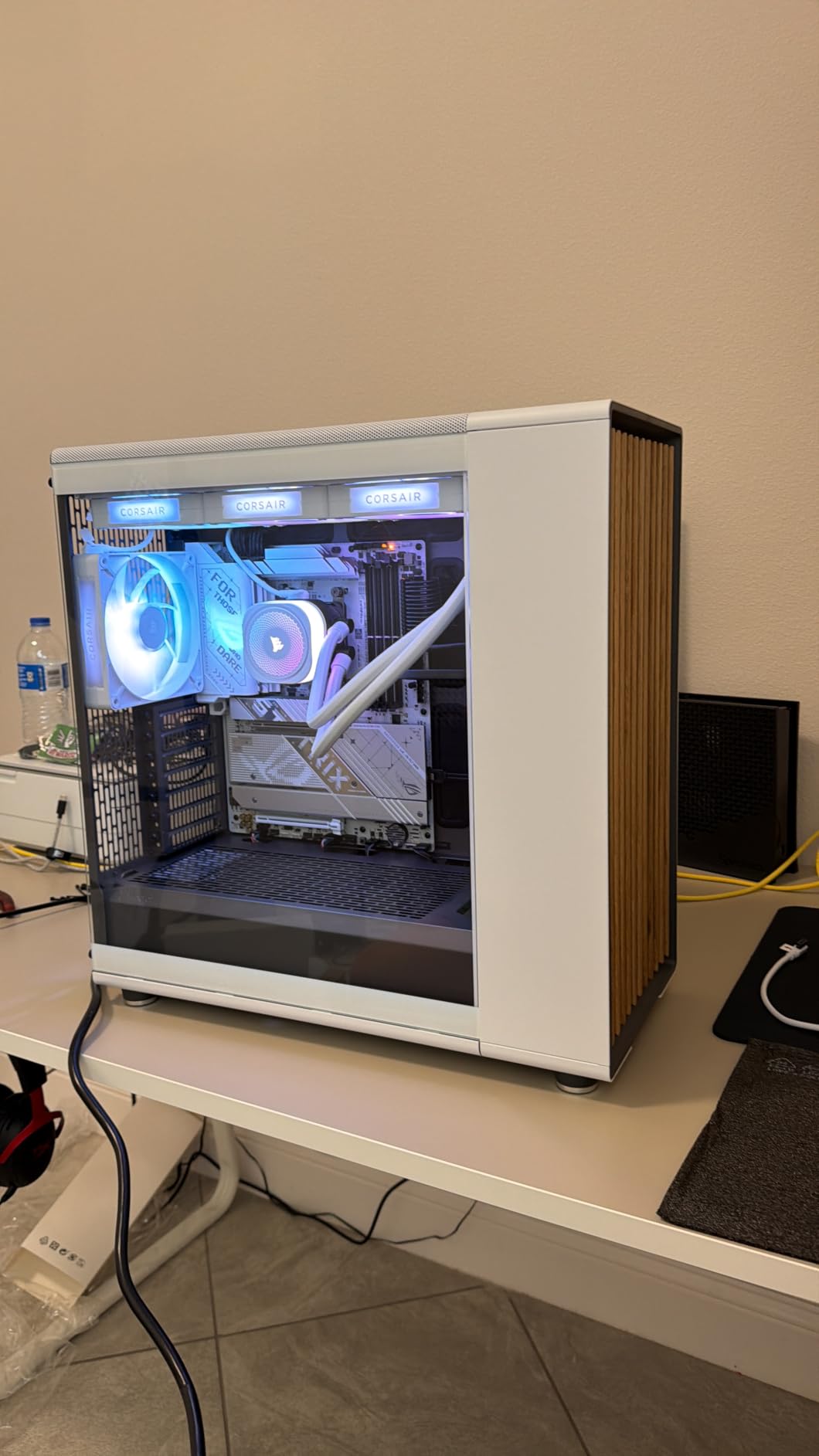
The North is the airflow case I recommend to people who hate RGB. The front slats are cut from walnut, the side is a full mesh panel, and there is not a single light strip on the chassis. Builders who want a case that sits on a desk without looking like a gaming accessory keep coming back to it.
It includes two 140mm Aspect PWM fans that run quietly and perform well, plus seven bridgeless expansion slots, which is rare at this width. Owners report strong thermals with high-core-count processors and long graphics cards once they apply a custom fan curve.
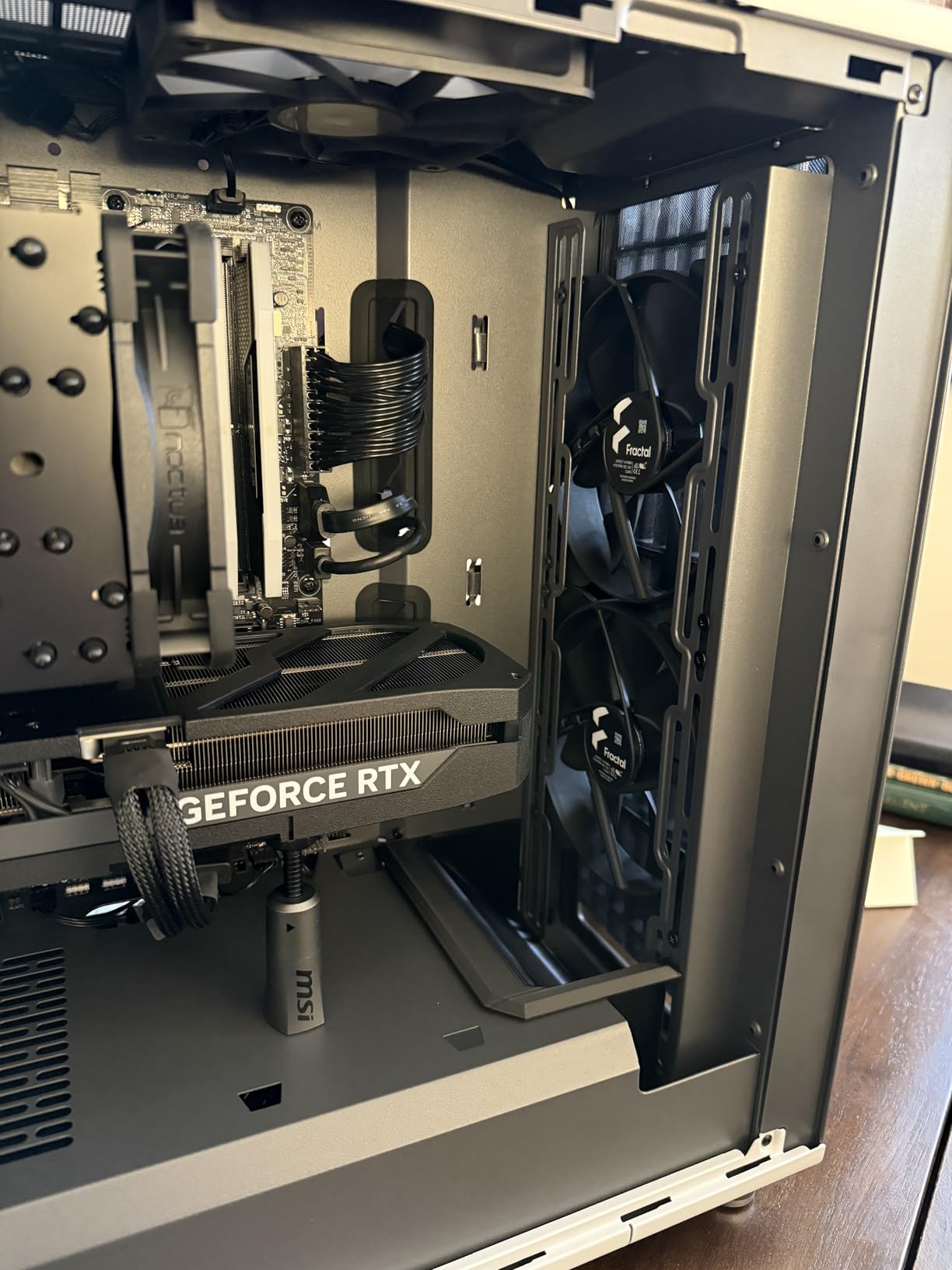
The mesh side panel version is the airflow one. The tempered glass variant has fewer fan mounts and no hub, so if thermals are the priority, take the mesh panel. Panel removal is tool-free with integrated tabs, and the front unclips rather than unscrews, which makes cleaning fast.
The warning that appears in nearly every long-term review is to measure your parts first. The chassis is compact for a mid-tower at 17.6 inches deep, 8.46 inches wide and 18.46 inches tall, so a flagship card fits but sits at the envelope, and fitting a 360mm radiator in front drops GPU clearance to about 300mm.
Who the North suits
It is built for office desks, studios and any room where a black glass box with purple fans would look out of place. The walnut front and brushed accents are furniture-grade, and the front USB-C Gen 2×2 port is current-generation rather than legacy.
It also suits anyone with a back-connect board in mind, since the two combined 3.5-inch and 2.5-inch mounts plus two dedicated 2.5-inch mounts give you room without crowding the cable channel.
Where the North falls short
Do not buy it for a dual-GPU build in the mid-tower version, or for a top-mounted 360mm radiator alongside tall memory. Reviewers also note the included fans are mid-range and worth replacing, the side fan bracket barely clears large tower coolers, and the slim sheet metal can bend if you press on the panels.
Drive bays also become largely unusable once a long power supply goes in, so treat the storage mounts as a bonus rather than a plan.
4. CORSAIR 4000D RS ARGB FRAME — A Chassis That Changes With Your Hardware
CORSAIR 4000D RS ARGB Frame Modular Mid-Tower ATX PC Case, High Airflow, 3X Pre-Installed RS Fans, InfiniRail™ Mounting System, ASUS BTF, MSI Zero, Gigabyte Stealth, Black
ATX mid-tower
3x RS ARGB PWM fans
Modular FRAME panel system
Pros
- 3D Y-pattern steel front panel moves serious air
- FRAME system repositions panels and drive trays
- Three fans plug straight into the motherboard
- InfiniRail sliders take fans up to 200mm in front
Cons
- Included fans push air the wrong way at the front by default
- Front I/O sits on the bottom edge
- Top and steel side panels feel thin
The 4000D RS is the most configurable airflow case here. The FRAME system lets you move the motherboard tray, swap the front I/O panel and reposition the shroud and drive trays, so the chassis adapts when you change hardware instead of forcing you into a new case.
Airflow comes from the 3D Y-pattern steel front panel, which is perforated in three dimensions to give cool air a low-obstruction path, and from the InfiniRail mounting system. Sliding the rail lets you position fans up to 200mm in the front, or 140mm in the roof, wherever the airflow actually needs to go.
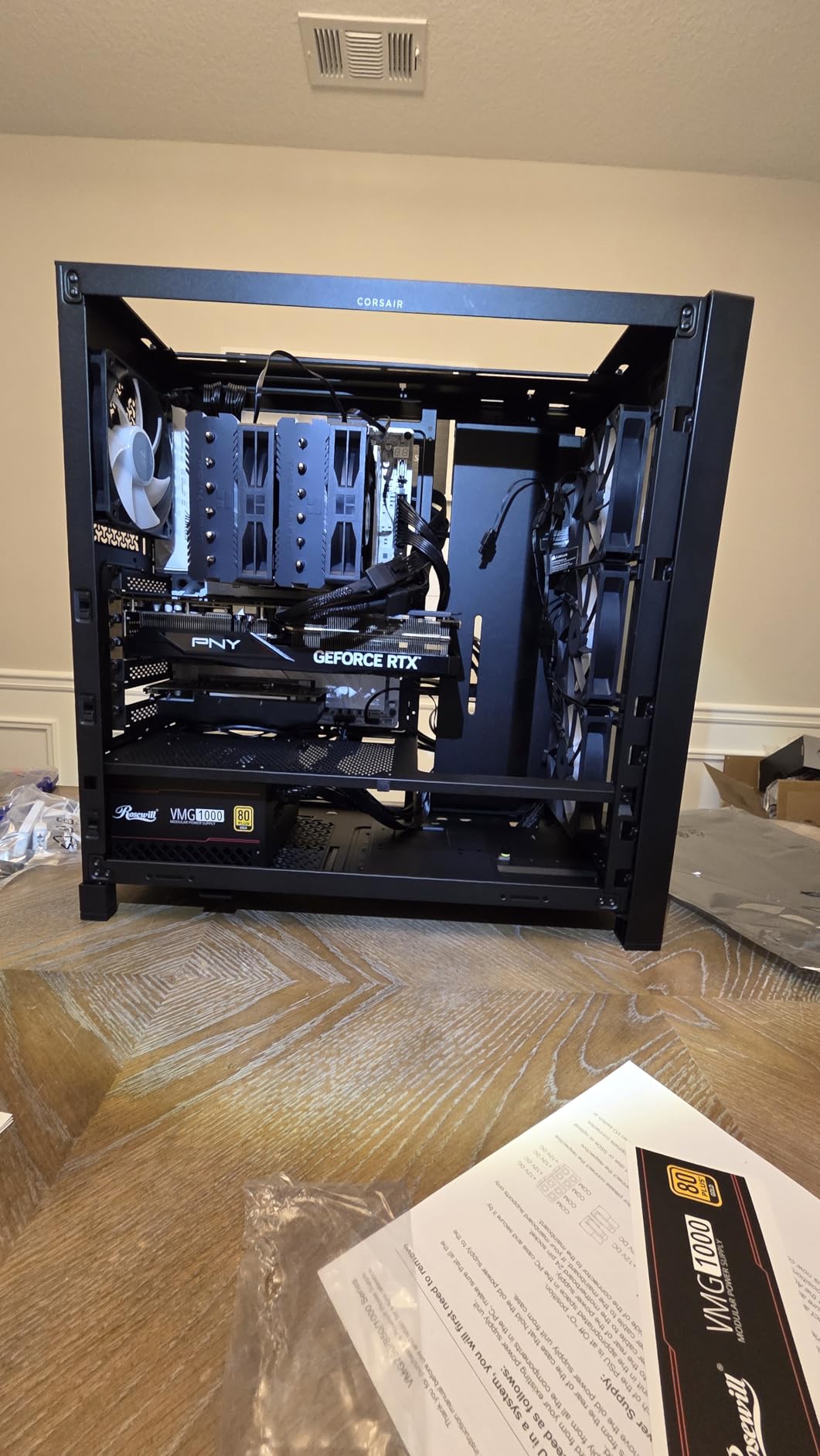
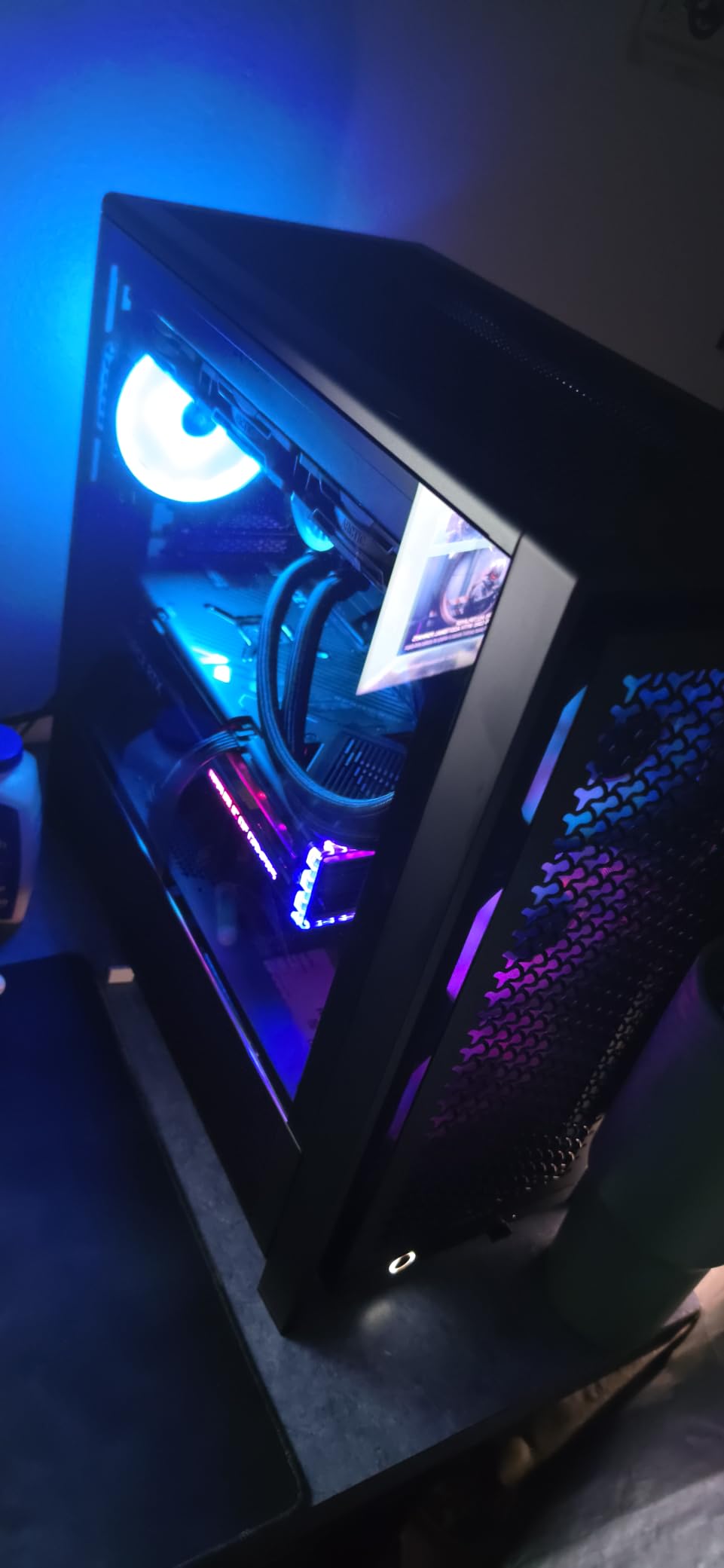
Three RS ARGB PWM fans arrive pre-installed with daisy-chainable four-pin connections and zero-RPM mode, and they need no separate lighting controller. Owners cite low GPU and CPU temperatures, quiet operation once curves are tuned, and a built-in GPU anti-sag arm as the standout usability wins.
One complaint repeats more than any other: the orientation of the included fans at the front position. Several reviewers argue they blow air the wrong way unless the header is corrected in BIOS. Set that first, before you judge the cooling.
Who the 4000D RS suits
It is the choice for builders who expect to upgrade hardware over the next few years and want the case to follow. The removable side panel doubles as a cable cover or a fan mount, which makes it easy to add side intake when you need more air.
It also suits anyone with a back-connect board, since ASUS BTF, MSI Project Zero and Gigabyte Stealth-style layouts are supported, and front USB-C is standard. Tool-free panel access on both sides and the top makes builds and later upgrades fast.
Where the 4000D RS falls short
It is big and heavy. At 19.17 inches deep, 9.41 inches wide and 19.13 inches tall, and 22.7 pounds empty, it will dominate a desk and is awkward to lift once built. Measure before you order.
A top-mounted 360mm AIO can conflict with tall memory or VRM heatsinks, the documentation is online-only with a generic manual, and the top and steel side panels flex more than the price suggests they should.
5. MUSETEX NN8 — Six Included Fans and an Opening Glass Door
MUSETEX ATX PC Case Pre-Install 6 PWM ARGB Fans, Polygonal Mesh Computer Gaming Case, Opening Tempered Glass Side Panel Mid-Tower Case, USB 3.0 x 2, Black, NN8
ATX mid-tower
6x pre-installed 120mm ARGB fans
280mm radiator support
Pros
- Six ARGB fans included at a budget price point
- Diamond mesh front with an opening glass door
- Tempered glass door opens without tools
- Plenty of cable tie-down points
Cons
- Full ATX motherboards fit very tightly
- Front I/O has no USB-C
- Bottom fan mounts need screws that are not supplied
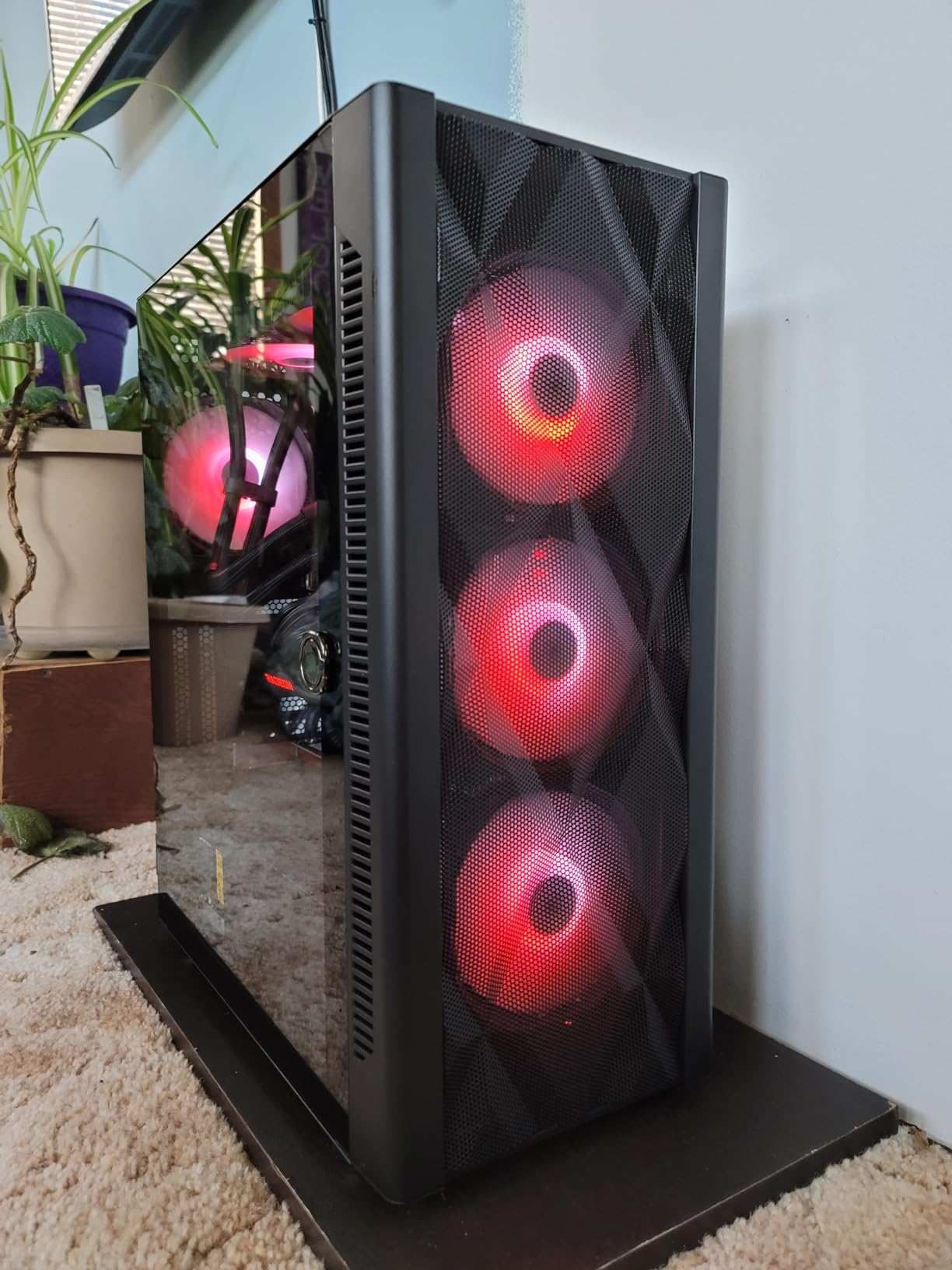
Few cases include six fans as standard. The NN8 does, all PWM-controlled and addressable, connected to the motherboard lighting header with adjustable speed, and that alone makes it a lot of airflow for anyone building a full ATX system on a tight budget.
The front is a three-dimensional diamond mesh contour rather than flat perforation, which spreads intake across the whole face. The tempered glass side panel is hinged and magnetic, so it opens without tools for component access and for cleaning the radiator and graphics card.
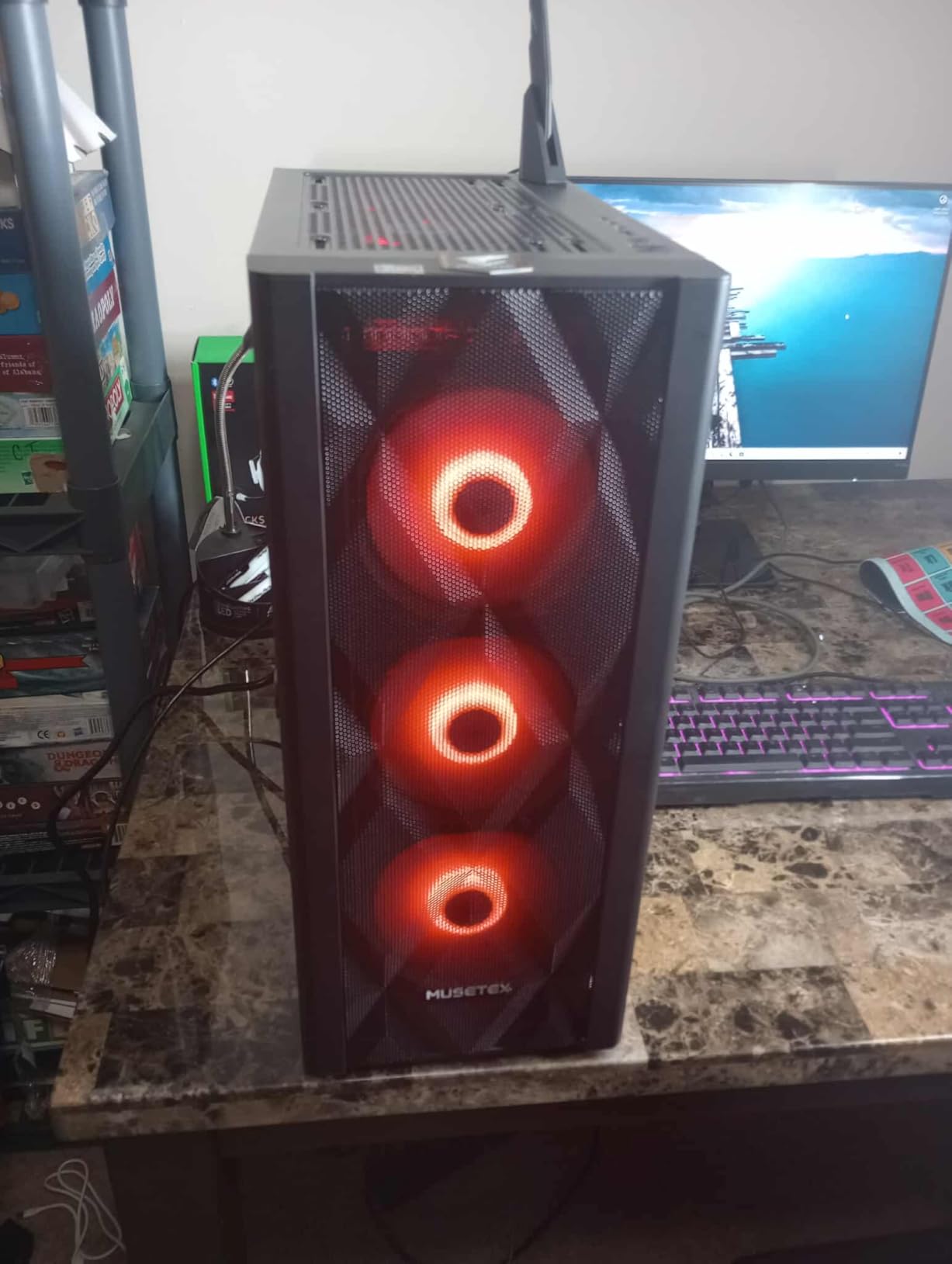
Owners describe it as much easier to build than cases costing twice as much, with a light and sturdy feel at 5.7 kilograms and no sharp edges around the panel edges. Clearance covers a 160mm CPU cooler, a 320mm graphics card, a 280mm radiator and a 170mm power supply.
The recurring practical caveat is fit. A full-size ATX board goes in, but several owners had to partially remove the board to reach the headers, and the longest modern graphics cards plus a non-modular power supply crowd the rear cable area. Storage capacity is up to five 2.5-inch drives plus one 3.5-inch drive.
Who the NN8 suits
First-time builders who want a complete fan set without a second order, and anyone who plans to clean their own machine often. The hinged glass door makes routine dust maintenance on a radiator and card far easier than a screwed panel ever will.
It also fits hot rooms. Six fans give you plenty of headroom to run a quiet curve instead of a loud one, because you are not relying on two or three fans to do the whole job.
Where the NN8 falls short
It has no front USB-C, only two USB 3.0 ports on the I/O panel, and the solid power supply shroud floor has no intake vents, so do not count on bottom intake for the power supply. The rear cable channel also feels cramped with a non-modular unit.
Long 5000-series graphics cards are a tight fit and may need angled power adapters, and the bottom fan mounts require 30mm screws that are not in the box. The warranty is one year.
6. NZXT H5 Flow — Takes a 360mm Radiator in the Front
NZXT H5 Flow – Compact ATX Mid-Tower PC Case – Black
ATX mid-tower
2x 120mm fans included
360mm front and 240mm top radiators
Pros
- Ultra-fine mesh on the front top and side panels
- Perforated PSU shroud adds side and bottom intake
- Handles graphics cards up to 410mm
- Wide cable channels with hooks and straps
Cons
- No bottom intake for the power supply fan
- No USB-C on the front panel
- Front cutout suits three 120mm fans over 140mm pairs
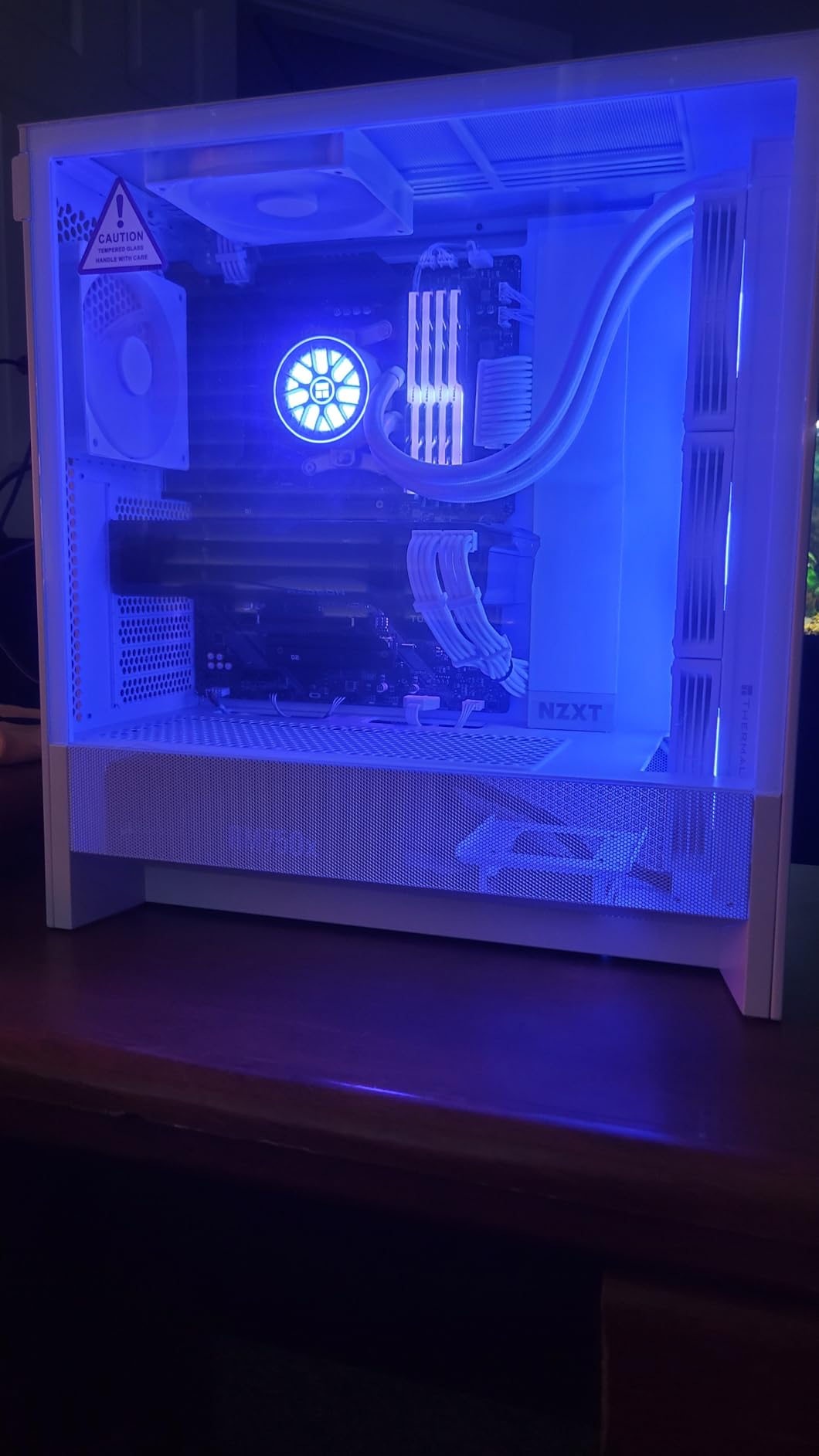
The H5 Flow is the airflow case to buy if your plan involves a 360mm radiator. Ultra-fine mesh across the front, top and side panels gives it a near-open-air feel, and it accepts a 360mm radiator in front with a 240mm in the roof, which is more cooling surface than most chassis this size allow.
Two 120mm fans come pre-installed, one at the front and one at the rear, so the case works before you buy anything. The perforated power supply shroud on the side and bottom is the detail smart builders appreciate: it feeds the graphics card directly with two more 120mm fans.
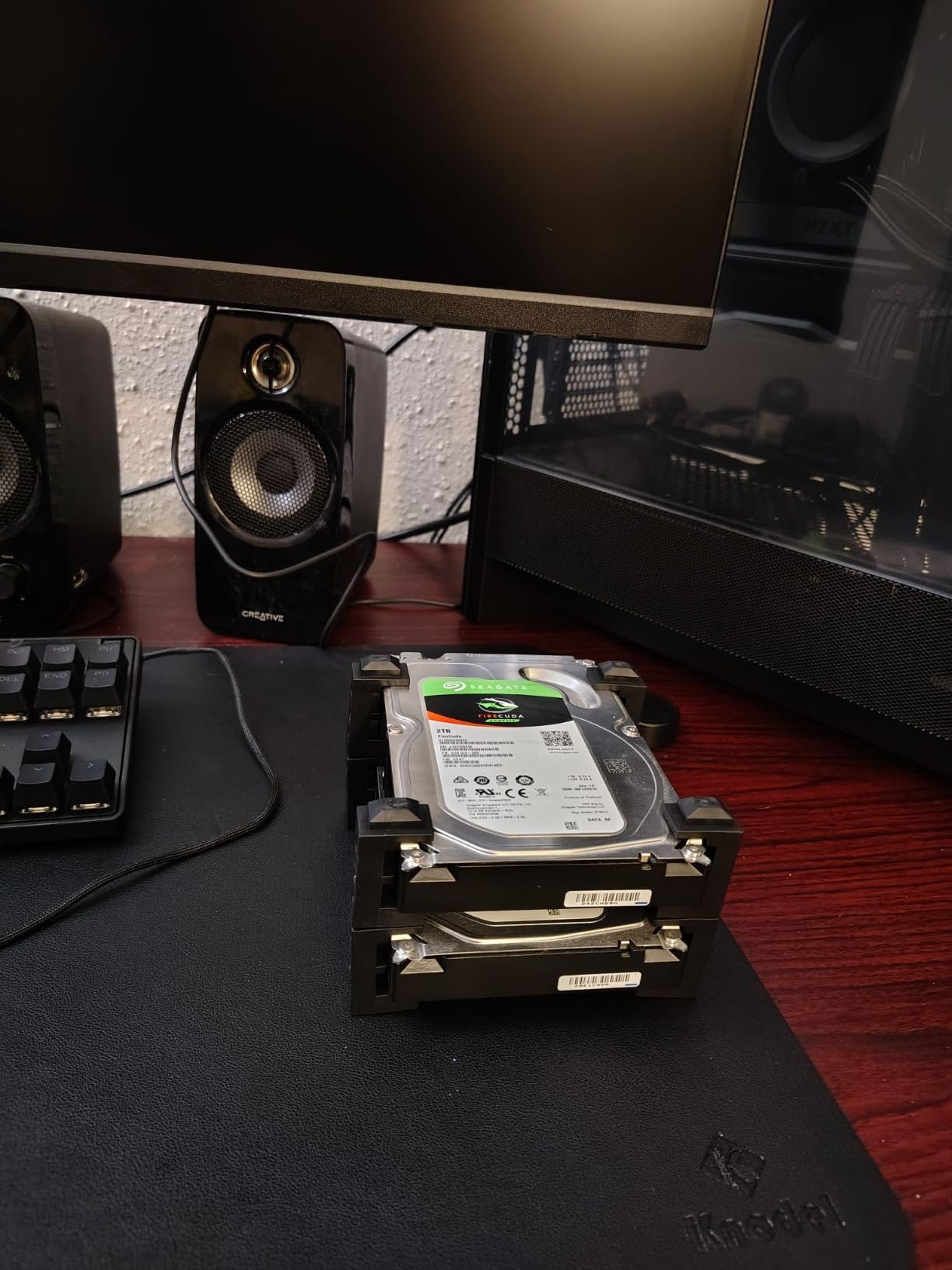
Owners highlight the tidy tool-free build, the cable management, and several report fitting a 360mm AIO and eight fans without a problem. Graphics card clearance runs to 410mm, so long cards fit even with a front radiator installed.
Two things get flagged repeatedly. There is no bottom intake for the power supply fan, which matters in a hot room, and the front panel offers no USB-C plus a limited number of USB-A ports. The front cutout also takes three 120mm fans rather than a pair of 140mm fans.
Who the H5 Flow suits
It is built for anyone running a 360mm AIO and a long graphics card, and for builders who want a compact ATX mid-tower that does not feel cramped. The perforated shroud makes a real difference for hot 300W-plus cards.
It suits hot-climate setups too, because the mesh coverage on three panels means the case pulls from the front, top and side at once rather than fighting a single intake.
Where the H5 Flow falls short
Skip it if you need a front USB-C port, if your plan depends on bottom intake, or if you want large 140mm fans in the front. With a micro-ATX board the rear cabling is visible through the mesh, and the panel layout means you cannot fully hide the cable-management area.
Paint chips easily, the graphics card backplate screw holes do not align perfectly on every card, and the panel screw retention washers can be fiddly. Expect a two-year manufacturer warranty.
7. Lian Li V100-ATX — Generous Clearance and Back-Connect Support
Lian Li V100-ATX Mid-Tower PC Case-Black-V100RX
4x pre-installed 120mm ARGB fans
GPUs up to 420mm
360mm top radiator
Pros
- Four ARGB fans with daisy-chain connectors
- Generous GPU and CPU cooler clearance
- Supports back-connect ATX and micro-ATX boards
- Tool-less side panels for fast access
Cons
- Only a one year manufacturer warranty
- Some plastic in the enclosure construction
- Short track record with fewer owner reports
The V100-ATX is the newer value entry from Lian Li, and the numbers back up the rating. Four PWM ARGB 120mm fans come pre-installed, rated at 1800 RPM and 61.47 CFM at 26.5 dBA, which is a genuinely strong airflow-to-noise ratio for an included fan set.
Clearance is the headline. Graphics cards up to 420mm, CPU coolers up to 178mm and a top radiator up to 360mm all fit, and it accepts back-connect ATX and micro-ATX motherboards so the cables can stay out of sight behind the tray.
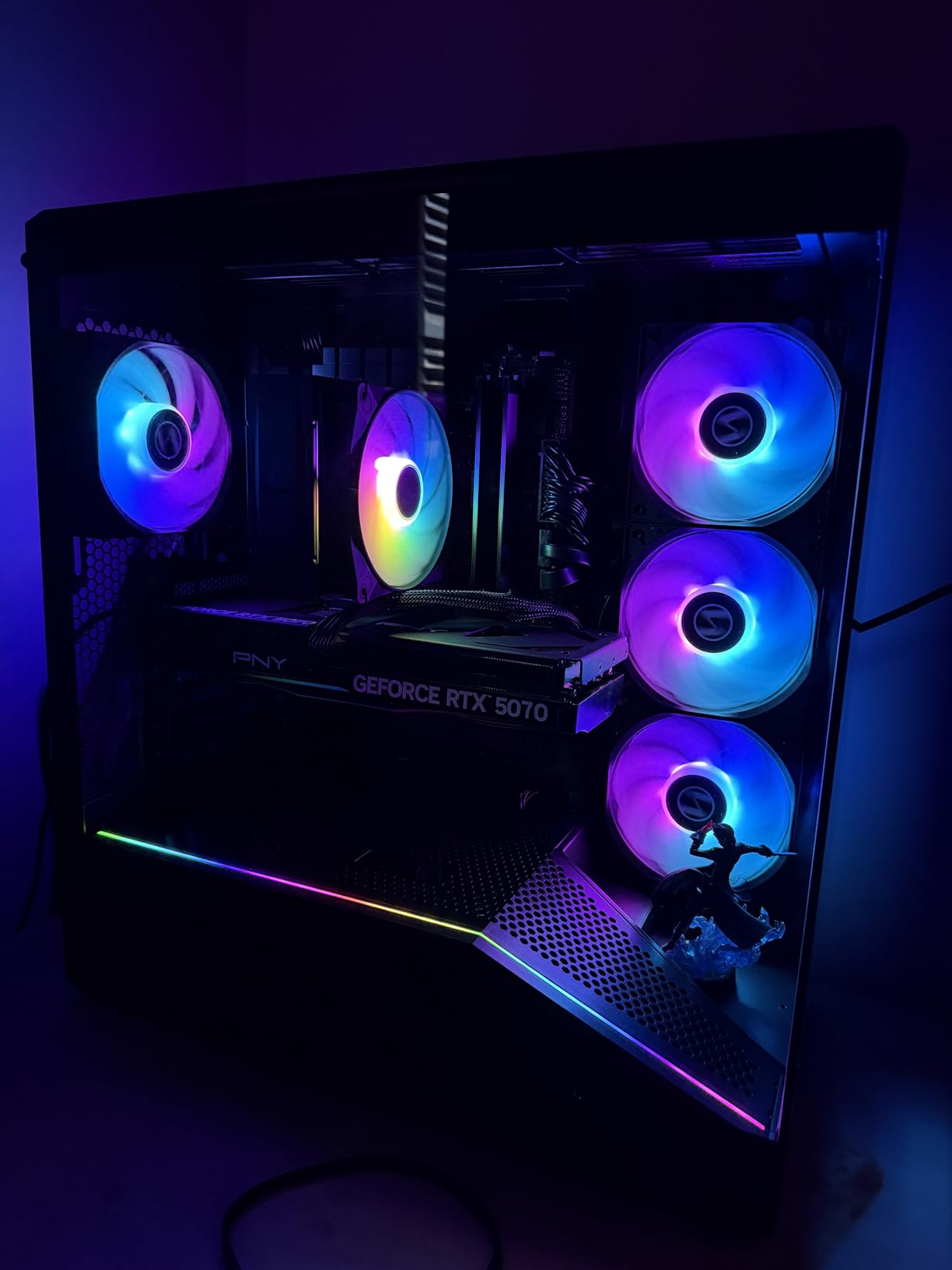
Both side panels use a tool-less mounting mechanism, so component access is quick, and there is a side-mounted USB-C port plus dust filters. An integrated 26-LED ARGB strip syncs with motherboard software, and a GPU support bracket and LED display platform are included.
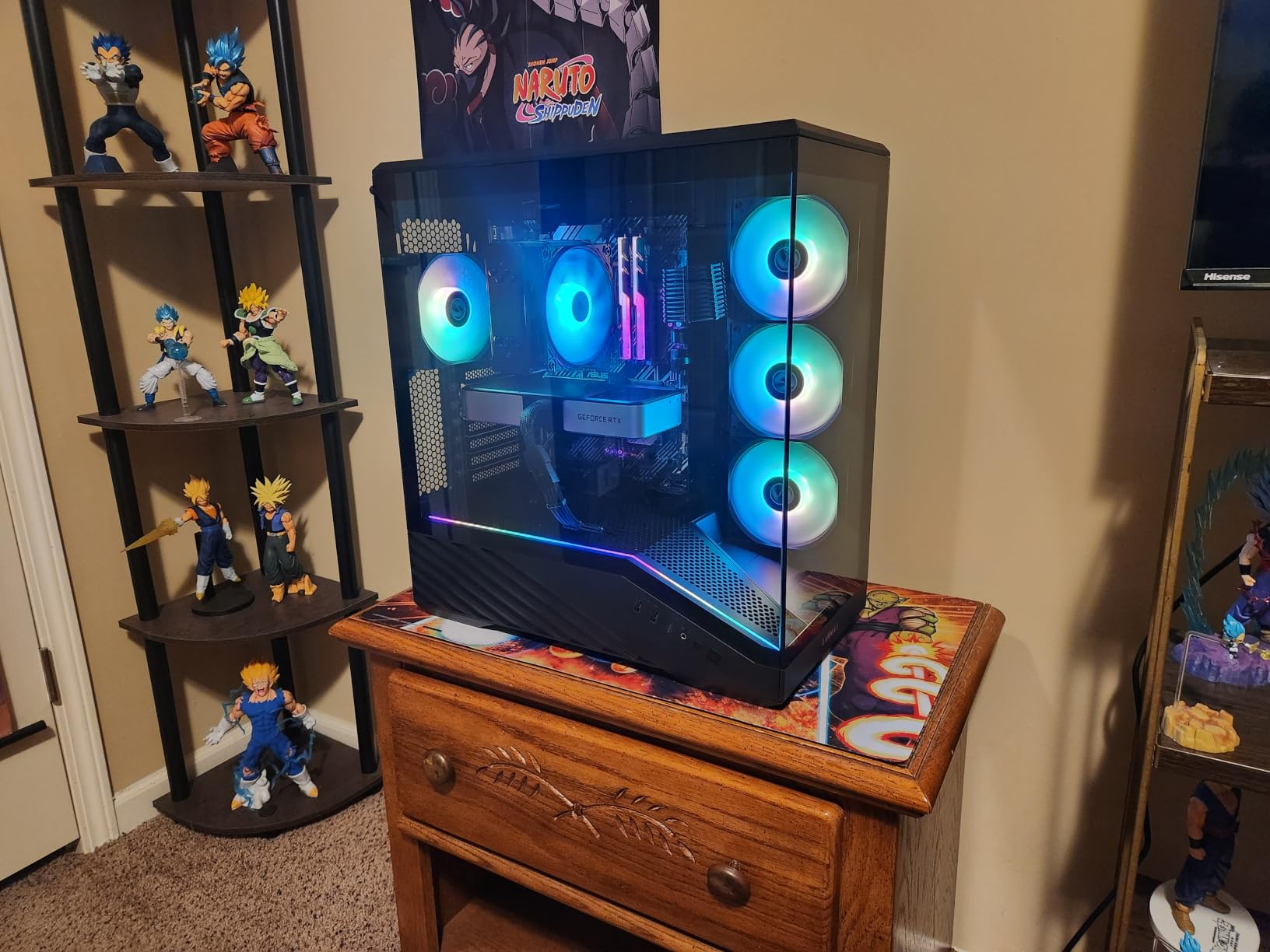
The catch is the platform’s age. With around 570 reviews, there is far less long-term owner feedback than the established LANCOOL and O11 lines carry, and the enclosure mixes plastic with stainless steel and tempered glass rather than being all metal.
Who the V100-ATX suits
It suits builders with long graphics cards who have run out of room in cheaper mid-towers. At 420mm of GPU clearance and 178mm of cooler height, it swallows hardware that most cases at this tier refuse.
It is also a good match for back-connect boards, since the routing stays hidden and the airflow path stays clear, and for anyone who wants a light front panel with four fans that are quiet enough to run at low RPM.
Where the V100-ATX falls short
Do not buy it expecting an all-metal chassis or a long warranty: the warranty is one year and the structure uses plastic in places. Owners who bought it for silent operation still end up tuning curves because four ARGB fans at full speed are audible.
The review base is also small enough that you are relying on early production samples. If you want a chassis with a decade of field reports, look at the models with thousands of owner builds behind them.
8. MONTECH AIR 100 ARGB — A Compact Build for a Tight Desk
MONTECH AIR 100 ARGB Compact Micro ATX Case, 4 Fans, Mesh Front, Black
Compact 405 x 210 x 425mm chassis
4x ARGB fans with controller
GPU up to 330mm
Pros
- Four ARGB fans and a lighting controller in the box
- Magnetic tool-less mesh front for fast cleaning
- Pre-installed cable loops and Velcro straps
- Compact chassis that still takes a 330mm GPU
Cons
- Included fans are DC rather than true PWM and loud
- Expansion slot covers are not reusable
- Tight PSU and drive cage area
The AIR 100 ARGB is the airflow case for builders whose desk cannot take a mid-tower. The chassis measures 405mm deep, 210mm wide and 425mm tall and still accepts a micro-ATX or mini-ITX board, a graphics card up to 330mm and a CPU cooler up to 161mm.
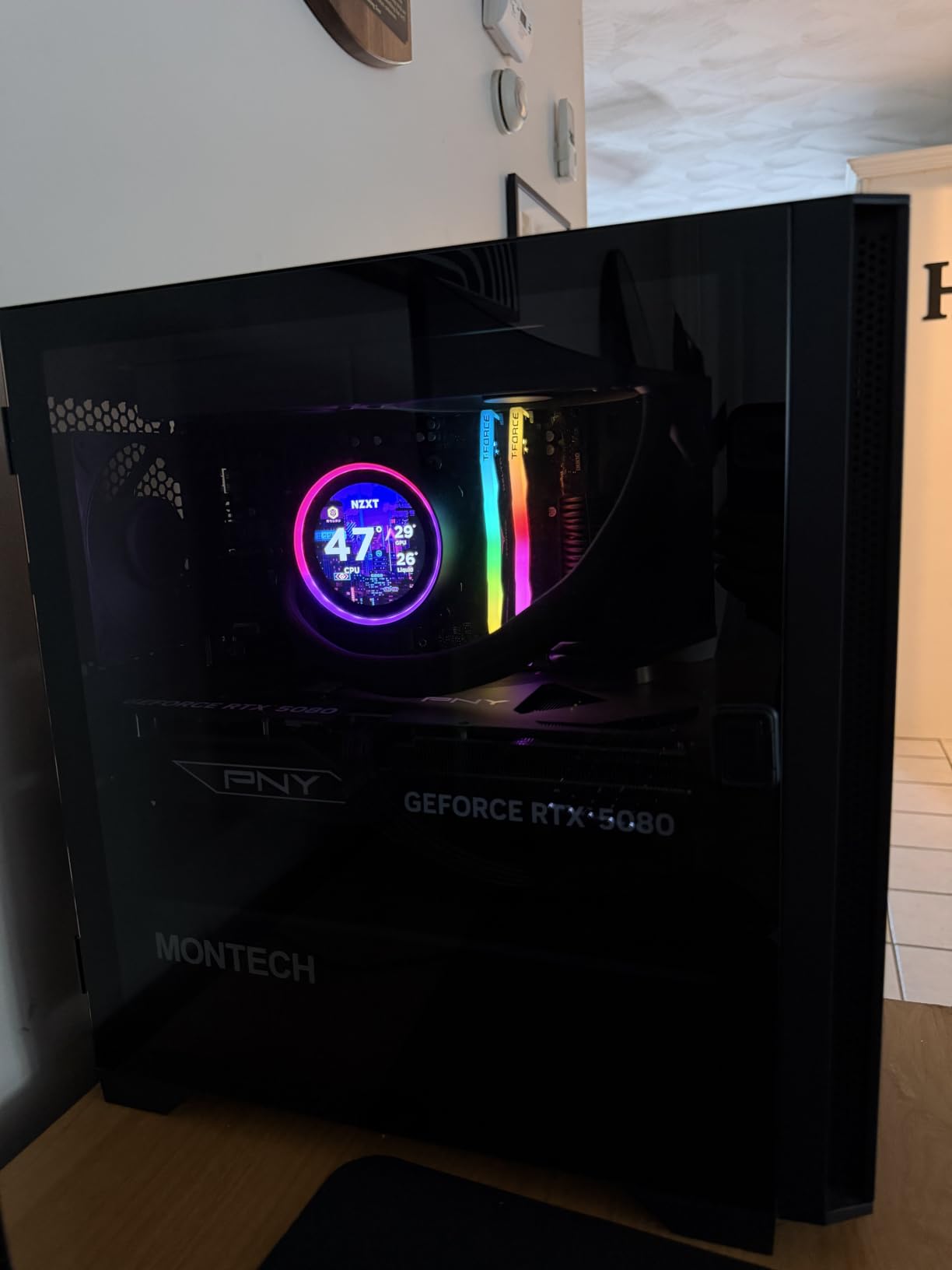
Four 120mm ARGB fans and a controller are included, which is unusual at this size. The front fine-mesh panel is magnetic and tool-less, so it comes off in seconds for cleaning fans, and the swivel tempered glass panel has an easy-to-reach handle for component access.
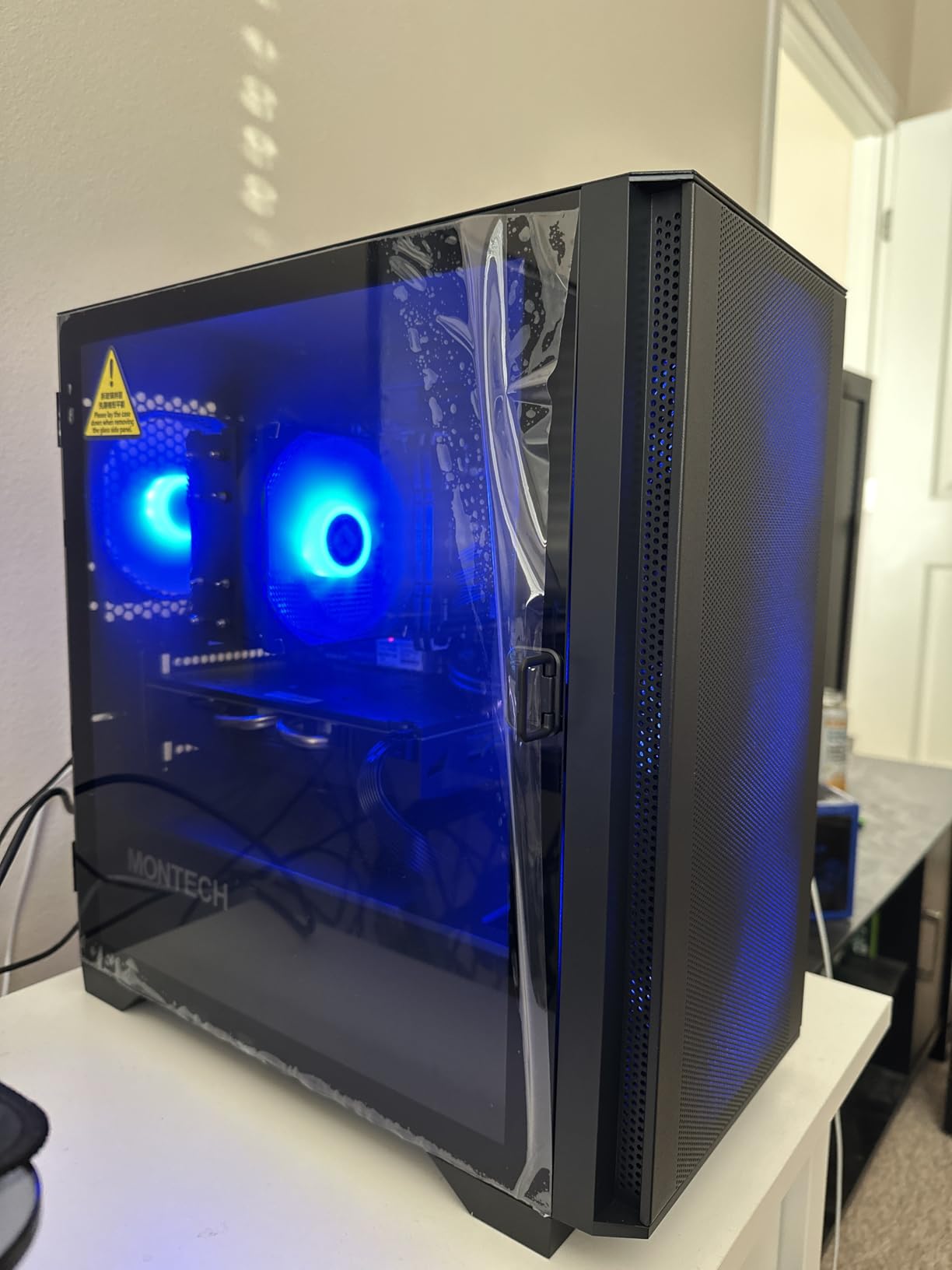
Multiple owners report this as their third or fourth Montech case, and the magnetic front, swivel glass door and pre-routed cable loops are the elements they praise most. Several describe it as the easiest micro-ATX case they have ever built in.
The main caveat is the included fans. They are DC-controlled rather than true PWM and are on the noisy side, so many owners replace them with Arctic or similar replacements straight away. That adds cost and work if you had planned to run the box as delivered.
Who the AIR 100 ARGB suits
It fits small-form-factor and office builds, and anyone working at a desk where depth is the constraint. At 425mm tall it still reads as a tower rather than a sandwich box, so it looks right on a small workspace.
Radiator support is sensible for the size: up to 280mm at the front or 240mm on top, with top and bottom dust filters adding a second barrier for dusty rooms.
Where the AIR 100 ARGB falls short
Budget for replacement fans, because the included set is DC-controlled and loud. The expansion slot covers cannot be reused once removed, and only four 2.5-inch drive mounting points are available.
The power supply and drive cage area is tight, so a modular power supply is close to essential, and the cable bundle behind the tray needs real force to close the rear panel. The warranty is one year.
9. Antec Flux Pro Full-Tower — Where Air Volume Comes First
Antec Flux Pro Full-Tower E-ATX PC Case, 6 PWM Fans Included, Black
Full tower E-ATX
6x 140mm PWM fans
420mm and 360mm radiators together
Pros
- Moves so much air the panels can stay fitted
- Six PWM fans arrive pre-installed
- Removable brackets on the top front and shroud
- iShift rotated PSU mount simplifies cabling
Cons
- Very large and heavy once fully built
- Included fans have no lighting
- Temperature display needs Antec software
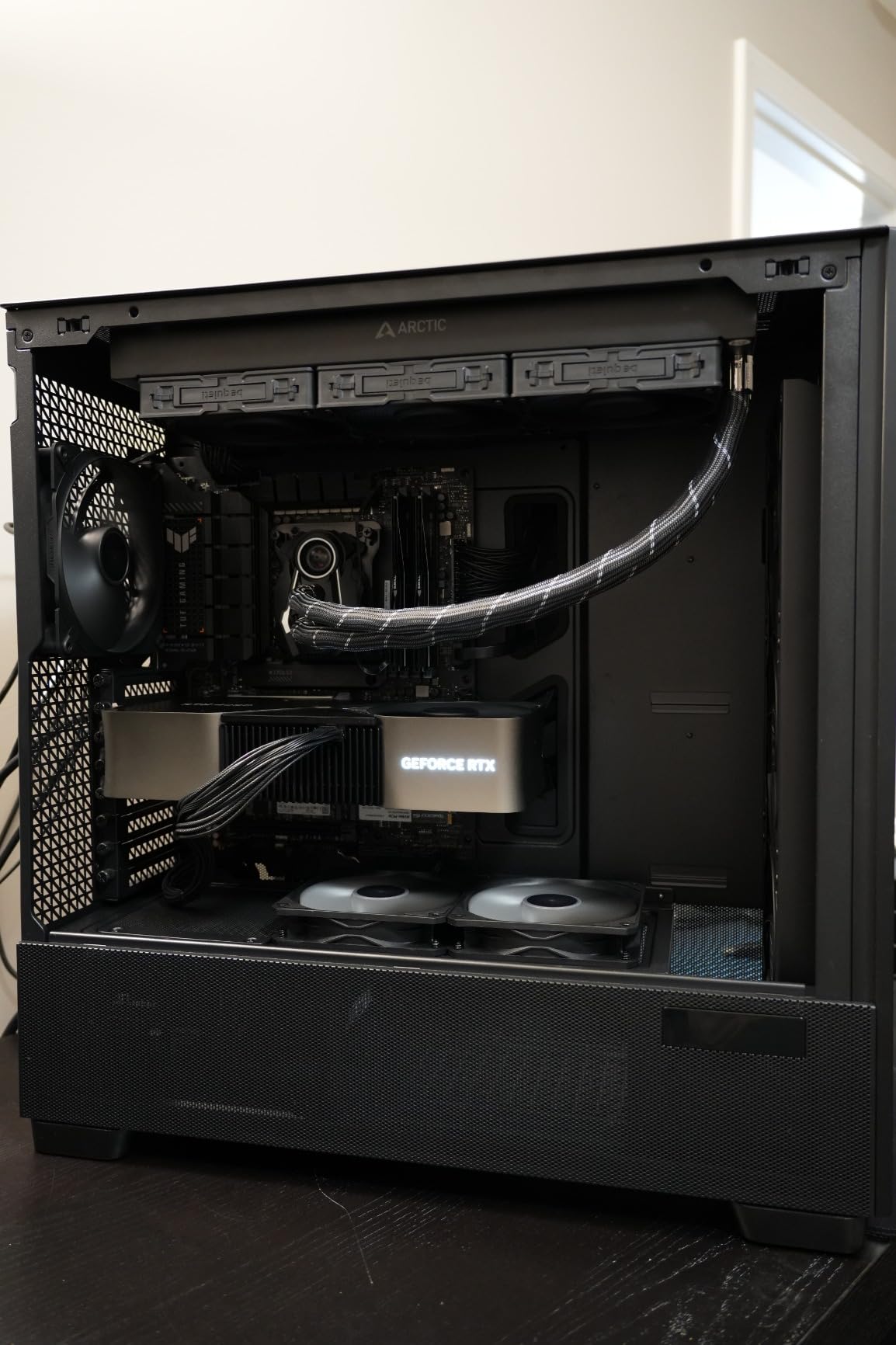
The Flux Pro is the case I point to when someone says their case cannot cool their hardware. Owners describe it as one of the best airflow cases they have used, with enough movement that the side panels stay fitted and thermals stay low with large air coolers and long graphics cards.
It comes with six PWM fans: three Tranquil 140mm at the front, two P12R reverse fans on the power supply shroud and one Tranquil 140mm at the rear. Support extends to twelve fans, and a 420mm and a 360mm radiator can be fitted at the same time.
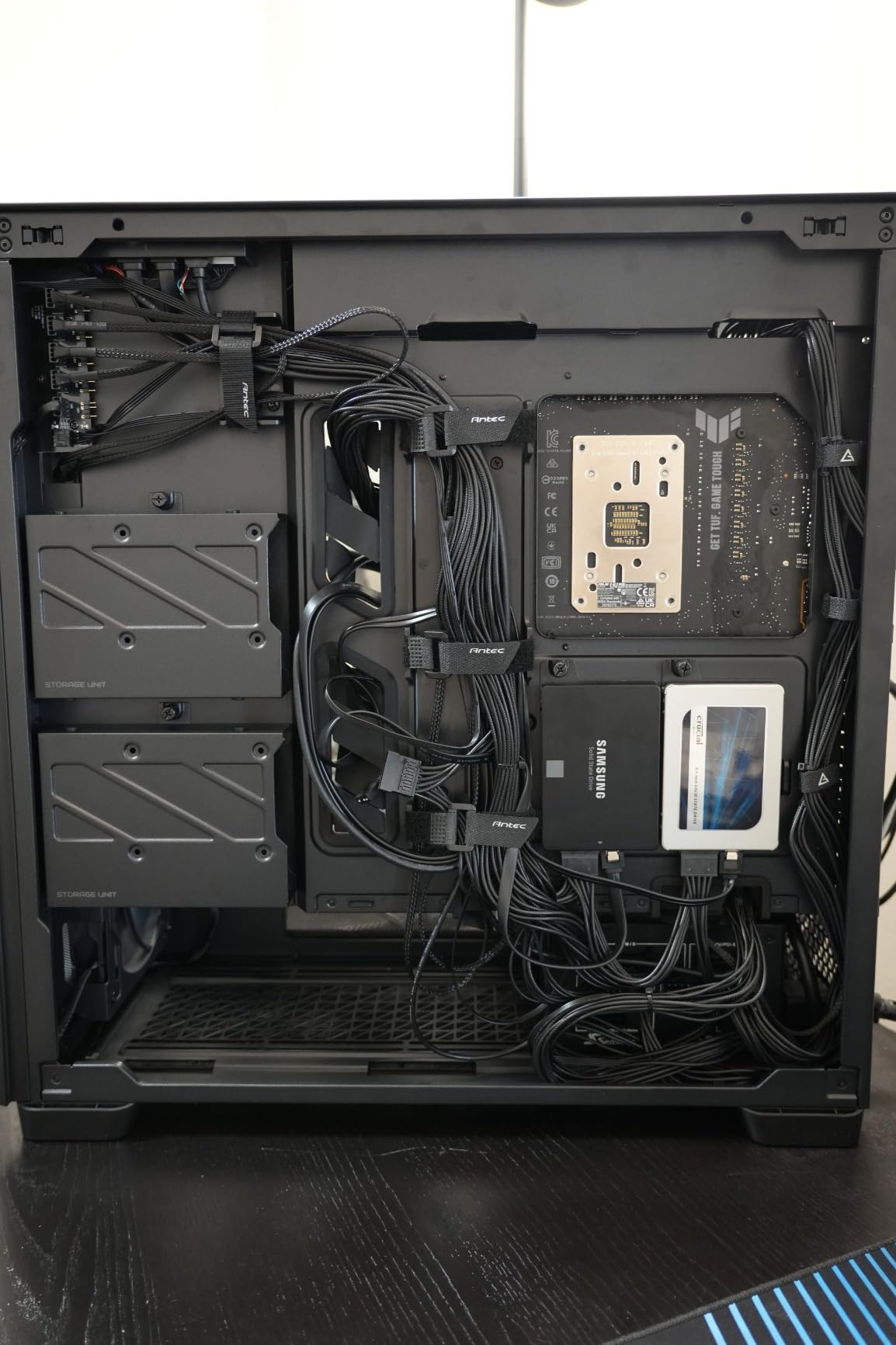
The iShift mount rotates the power supply 90 degrees, which shortens the cable run and makes the build tidy, and pre-made velcro cable tracks mean very little routing work. Removable cooling brackets on the top, front and shroud let you rebuild the fan layout later.
It also handles an E-ATX board, dual graphics cards and power supplies up to the 800W class. A built-in CPU and GPU temperature display gives a quick readout without opening anything, though it needs Antec software.
Who the Flux Pro suits
It is for heavy workstations and high-end gaming builds where air volume matters more than footprint. Dual cards, large air coolers and dual radiators all fit, and the multi-directional vent design spreads intake across several panels.
The understated wood accent and metal-and-glass mix also make it one of the few full towers that does not look like a gaming showcase, and the included fans run quietly on a sensible curve.
Where the Flux Pro falls short
Measure your space first. At 20.86 inches deep, 9.64 inches wide and 21.45 inches tall, and 29 pounds empty, it is imposing and heavy to lift once built. Anyone with a low desk or a tight cabinet should look at a mid-tower instead.
The bundled fans are plain PWM with no lighting, which disappoints buyers who expected lit fans, some front panel cables are slightly short and need careful routing, and a few owners report a missing rubber foot near the power supply area.
10. Lian Li LANCOOL 217 — Quiet Airflow From 170mm Front Fans
Lian Li LANCOOL 217 ATX Mid-Tower PC Case, 5 PWM Fans, Black Walnut Wood
ATX mid-tower
2x 170mm plus 2x 120mm and 1x 140mm
Back-connect ready
Pros
- Two 170mm front intakes move serious air quietly
- Toolless fans can be raised for CPU focus
- Walnut accent with alloy steel construction
- Dual PSU mounting and deep cable channels
Cons
- SATA fan hub runs flat until PWM is set in BIOS
- Front 170mm fans get loud at high RPM
- Side panel near the drive bays bends easily
The LANCOOL 217 leads on fan diameter. Two 170x30mm fans sit at the front where they move a large volume of air at low RPM, which is the whole trick to quiet airflow: fewer revolutions for the same air movement.
Two 120mm reversed-blade fans and one 140mm rear fan complete the set of five pre-installed fans. The tool-less fan mounts can raise the front pair to CPU mode, aiming them directly at the cooler instead of across it.
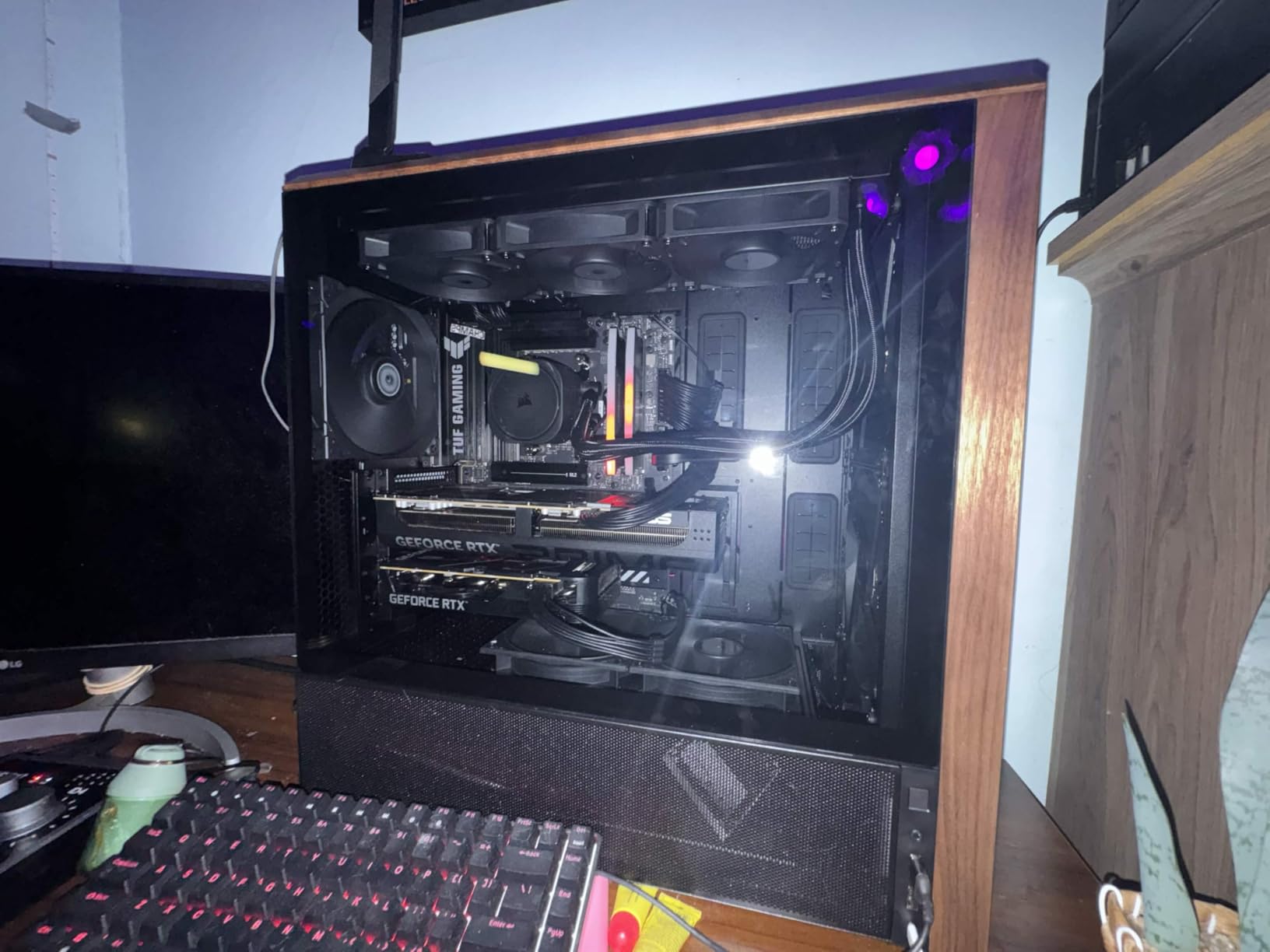
Reviewers consistently praise the quiet high-volume airflow, the painless cable management and the walnut accent on an alloy steel chassis. Several builders run 360mm AIOs or long graphics cards with room to spare and report near-silent cooling.
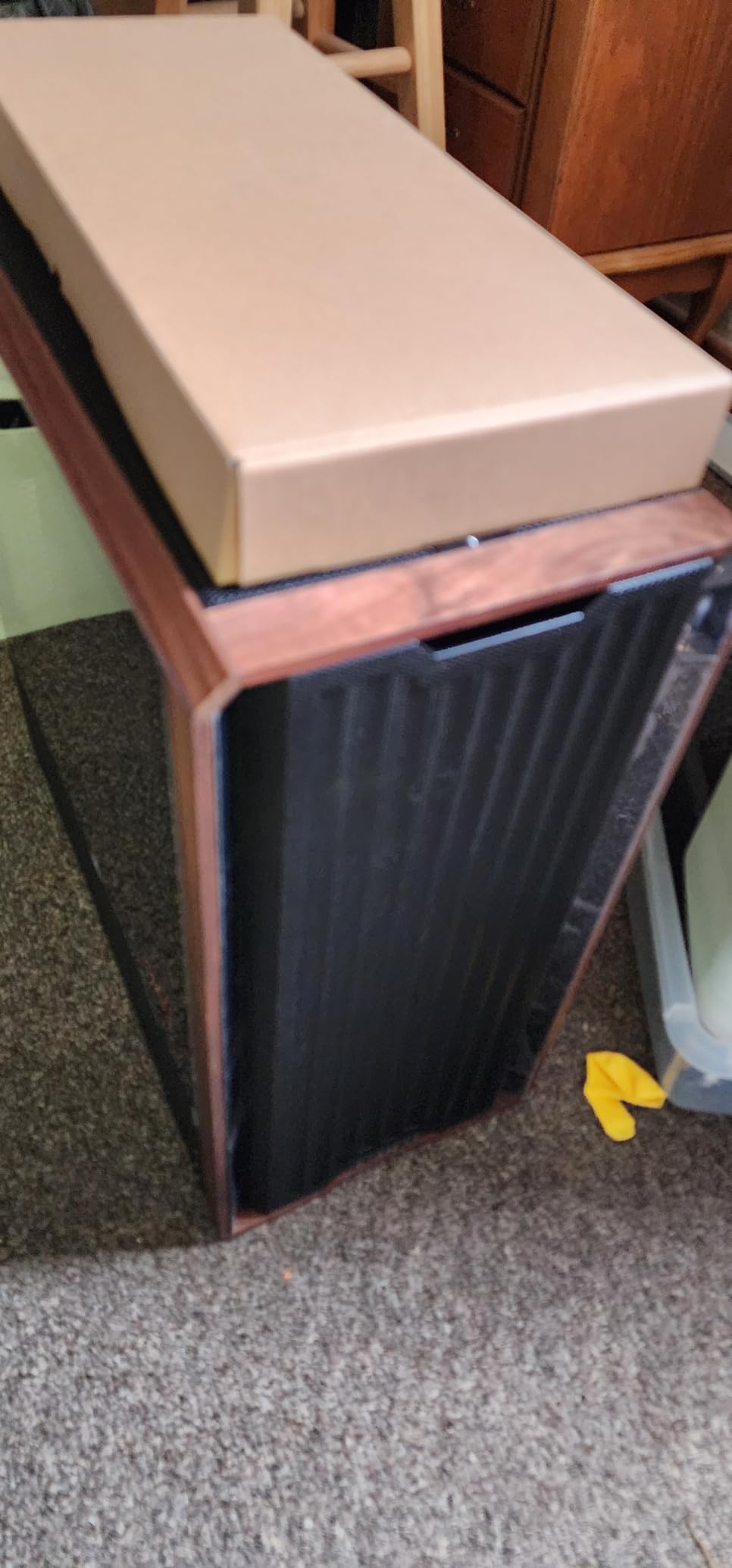
There is one setting step that owners insist on. The SATA-powered fan hub runs every fan at full speed until the header is set to PWM in BIOS, and anyone who skips it describes the case as very loud.
Who the LANCOOL 217 suits
It suits quiet builds, recording setups and anyone who wants strong airflow without the constant fan noise that comes from small fans running fast. It also supports back-connect motherboards, and both power buttons let you reach the front from either orientation.
Dual power supply mounting, including a rotated option for power supplies up to 220mm, plus an adjustable GPU support bracket and room for an additional 360mm top radiator array make it flexible for a first or second build.
Where the LANCOOL 217 falls short
It is not a small case. At 18.97 inches deep, 9.37 inches wide and 19.8 inches tall, it is wider than many mid-towers, and the magnetic and snap-on panels make it a poor choice if you move the PC often.
The front 170mm fans are noticeably loud at high RPM, and the small side panel near the power supply and drive bays bends easily. The warranty is one year.
11. Fractal Design Pop Air — Mesh Intake With Six Drive Bays
Fractal Design Pop Air Black Tempered Glass Clear Tint
ATX mid-tower
3x 120mm Aspect fans
280mm front and 240mm top radiators
Pros
- Mesh front with three pre-installed Aspect fans
- Tool-less removable panels for easy builds
- Room for three hard drives and six SSDs
- Colour coordinated interior accents
Cons
- Fan positions limited to five 120mm mounts
- Needs a Fractal USB-C cable accessory for full I/O
- Louder than larger mesh cases on the included fans
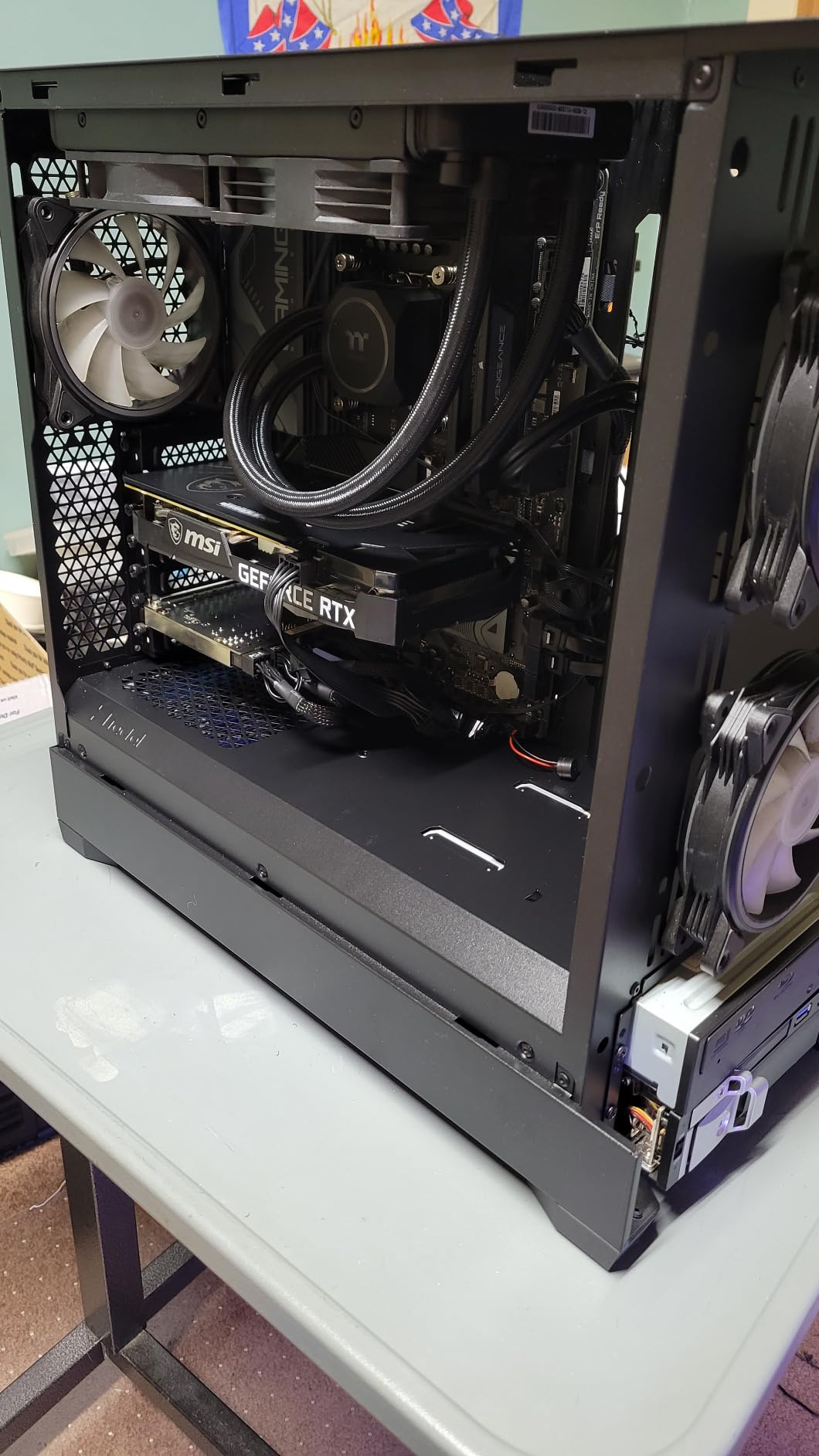
The Pop Air is the airflow case for builds that carry a lot of data. It holds up to three hard drives and six SSDs, or two hard drives and five SSDs with an optical bay in use.
The airflow side of it is a mesh front panel combined with three pre-installed 120mm Aspect fans, and there are five 120mm mounts in total. Radiators fit up to 280mm in the front, 240mm in the top and 120mm in the rear.
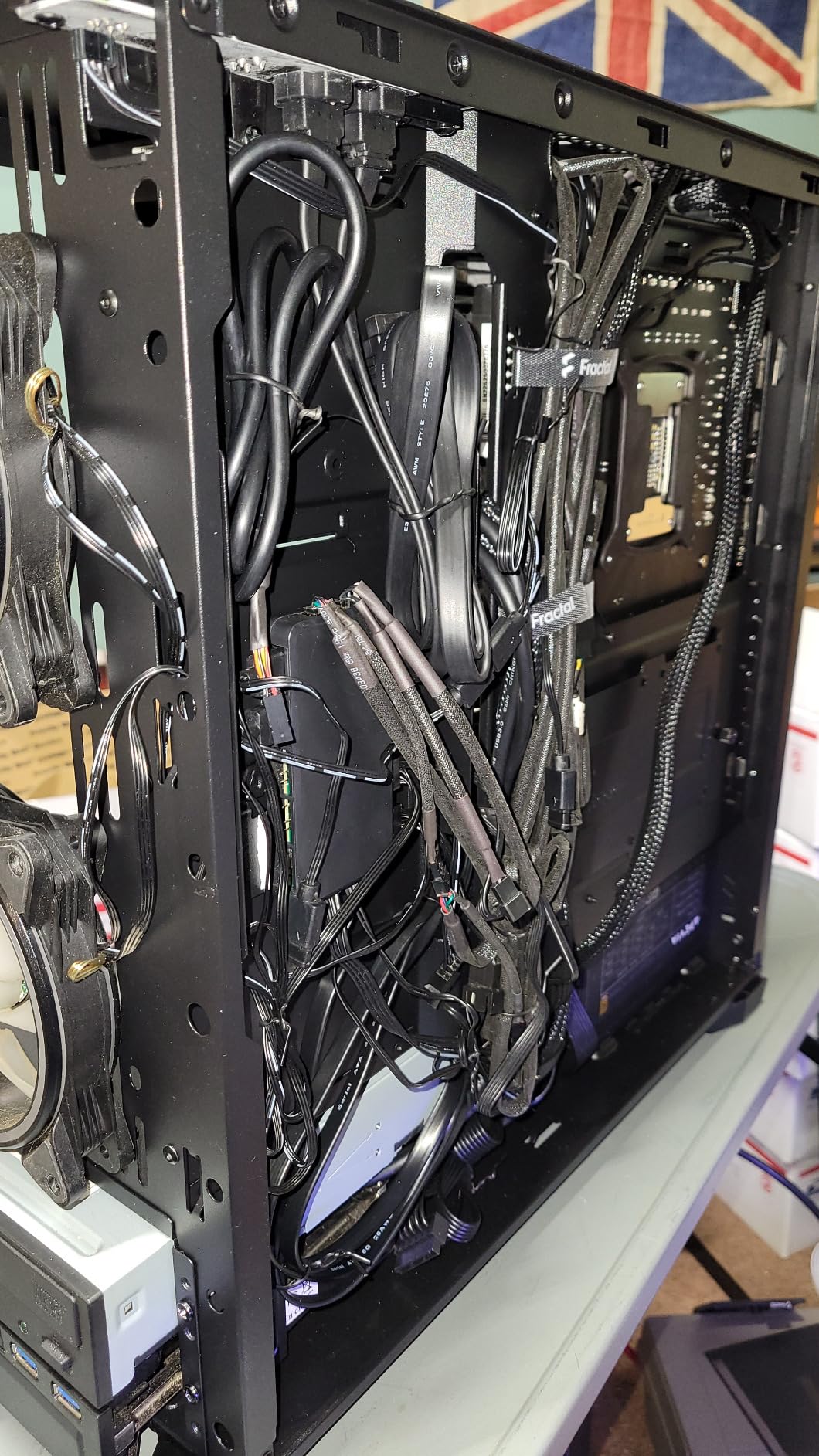
Tool-less removable panels make both the build and the cleaning routine painless, and the tempered glass side panel mounts easily so you can show the interior. It accepts ATX, micro-ATX and mini-ITX boards, so you are not boxed into one form factor.
This is the non-RGB Air variant, which is worth knowing: several owners compare it against the RGB TG versions and note that the RGB models ship with lit fans instead. Plan for the plain version if that is what you want.
Who the Pop Air suits
It fits editing and archiving machines, sample-library workstations and anyone who has ever run out of 2.5-inch mounts. The colour-coordinated motherboard plate and drive trays are a small touch that makes a storage-heavy build look deliberate.
It suits builders who maintain their own hardware, since tool-less panels mean filter cleaning and drive swaps need no tools at all.
Where the Pop Air falls short
The fan positions are limited to five 120mm mounts, so you cannot fit large 140mm or 180mm fans for quiet high-volume airflow. It also needs a Fractal Design USB-C cable accessory for the full front I/O, and the spec sheet for this variant lists only one USB port.
It is not as quiet as the larger mesh-focused cases when the included fans run at high speed, so if silence is the priority, this is the wrong chassis.
12. Lian Li LANCOOL 205M MESH — Two 140mm Fans in a Micro-ATX Chassis
LIAN LI High Airflow Micro ATX PC Case, RGB Gaming Computer Case, Mesh Front Panel Mid-Tower Chassis with 2x140mm ARGB PWM Fans Pre-Installed, Tempered Glass Side Panel (LANCOOL 205M MESH, Black)
Micro-ATX and mini-ITX
2x 140mm ARGB PWM fans
Mesh front with dust filters
Pros
- Two 140mm ARGB fans push real air for the size
- Thick metal panels with a supported glass side
- GPU support slot prevents sag
- Plenty of space behind the tray for cables
Cons
- Only three 2.5-inch SSD mounting points
- Just two fans included
- Front I/O has no USB-C
The LANCOOL 205M MESH moves a lot of air for a chassis this small. Two 140mm ARGB PWM fans sit behind an upgraded mesh front panel, and at 15.85 inches deep, 8.27 inches wide and 15.75 inches tall it still fits high-end graphics cards and large air coolers.
The mesh front panel works with magnetic dust filters on the top and bottom, so the two surfaces that pull the most air are also the two you can clean. That combination is what makes it viable in a dusty or carpeted room.
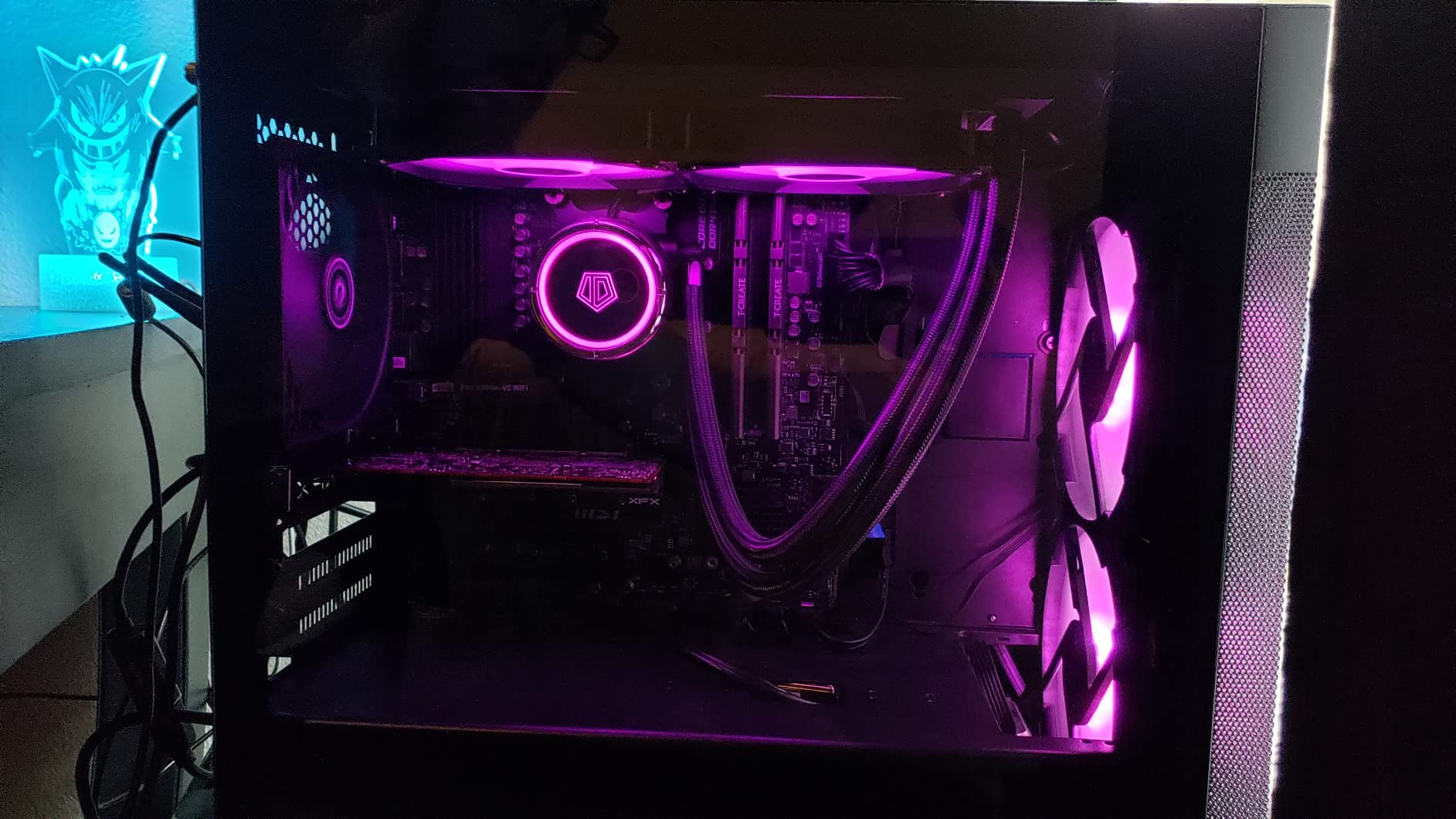
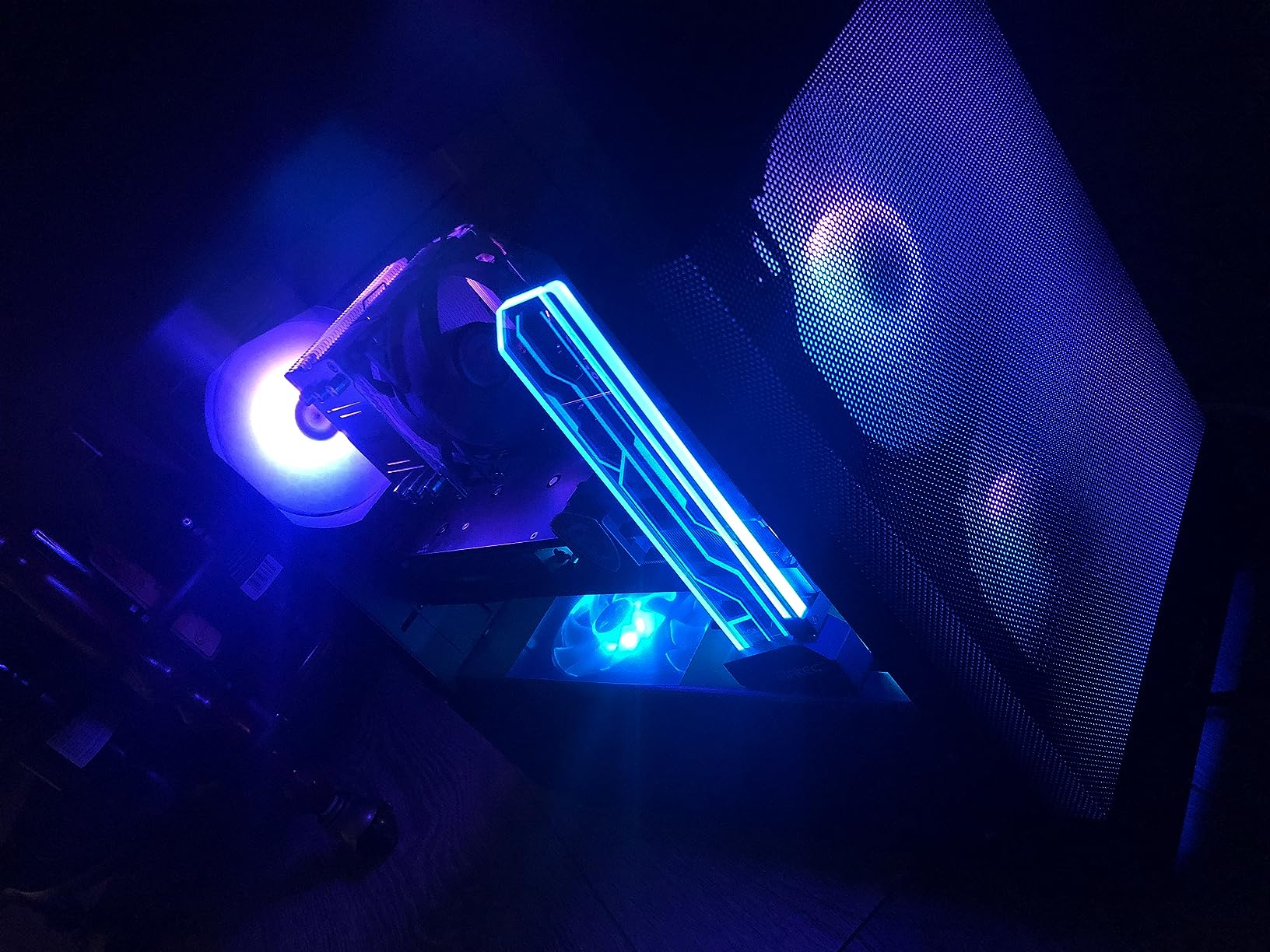
Builders praise the sturdy construction, with thick metal panels and a metal-supported tempered glass side panel that does not flex. There is a built-in GPU support slot, rubber grommets around the cable pass-throughs, and screws and zip ties in the box.
Cable routing is the other strength. The space behind the motherboard tray is generous for a chassis this small, so the finished build looks clean even with basic non-modular cables, and removable SSD brackets plus a removable power supply and drive bay simplify assembly.
Who the LANCOOL 205M MESH suits
It fits micro-ATX and mini-ITX builders who want bigger intake fans than the competition offers at this footprint. Two 140mm fans moving air through a mesh front outperform three 120mm fans behind a perforated steel panel in most respects.
It also suits anyone building in a dusty room, since the top and bottom magnetic filters catch the bulk of what the mesh would otherwise pull in.
Where the LANCOOL 205M MESH falls short
Storage is thin at only three 2.5-inch SSD mounting points, and just two fans are included if you want more airflow. The front I/O has two USB 3.0 Type-A ports and no USB-C, and a single combo audio jack means some headsets need an adapter.
Handling is fussy in two places: the tempered glass can slip out if unscrewed and pulled too quickly, and the plastic tab on the front panel can break during removal.
What Actually Makes a PC Case Breathe
Airflow in a chassis is directional, not a fan count. Front and bottom intakes pull cool air across the processor and graphics card, rear and top exhaust push hot air out, and a slight positive pressure with one more intake than exhaust keeps dust from finding a way in. The chassis matters because it decides whether that air actually arrives.
Five measurable things to check before you buy
Mesh hole size and panel area. Fine mesh around 1mm or smaller filters dust without choking flow, and anything under 0.6mm starts to restrict intake. More important is total open area. The Q300L V1 and the CORSAIR 4000D RS are perforated across the entire front, while many competitors use a mesh strip with a solid border.
Intake depth behind the front fans. This is the most common fault in cases marketed as airflow-first. When a front fan sits flush against the panel it can pull, but the air it moves is turbulent. A 25mm or deeper intake path lets the air straighten out before it reaches the radiator or the graphics card.
The GPU intake path. Most heat comes off the card, and the card hangs near the bottom of the chassis. Cases with a perforated power supply shroud feed it directly, which is why the NZXT H5 Flow and the Antec Flux Pro stand out. A solid shroud floor pushes air past the card instead of through it.
Fan diameter over fan count. A 170mm fan moving the same air as two 120mm fans turns at a lower RPM and is quieter. That is the core argument for the LANCOOL 217, and it is why more fans at high RPM is the worst answer to a noise complaint.
Radiator and clearance headroom. Check the radiator positions against your GPU length at the same time. On the Fractal Design North, a 360mm radiator in the front cuts GPU clearance from 355mm to 300mm, which is how a flagship card stops fitting late in a build. The CORSAIR 4000D RS makes the same trade differently, letting you slide the fan rail rather than lose fixed space.
Three airflow approaches and where each one wins
Wind-tunnel open grilles, like the Q300L V1, push the most air with the least restriction and the least thought. Zoned designs such as the NZXT dual-chamber layout separate the CPU and GPU paths and win on noise and consistency. Quiet-first mesh designs such as the Fractal Design North prioritise the same mesh density but pair it with large-diameter fans and restrained styling.
Noise, dust filters and where cases actually lose heat
More exhaust fans is not automatically better, which comes up constantly in build forums. Extra exhaust fans raise pressure against the intakes and force every intake fan to work harder, which means more noise everywhere for very little extra air. Two or three well-placed intakes plus one rear and one top exhaust covers almost every build. Filter maintenance matters as much as fan placement.
Dust filters matter more than most buyers expect. A clogged mesh filter can cut intake flow sharply within a few months in a carpeted room, and the symptom is fans spinning faster for the same temperature. Vacuum the filters monthly, rinse the removable ones, and let them dry fully before refitting.
Placement counts too. Leave clearance behind the case for the rear exhaust, and never set a case directly on carpet, where the bottom intake pulls fibre straight into the radiator.
Dust is only half the story when a rig lives in the field rather than on a desk. If the tower travels with you, pair it with our waterproof cases for drones and Pelican cases for photographers and filmmakers, which protect the rest of the kit from the same dust and spray that clogs a chassis filter.
Frequently Asked Questions
What case has the best air flow?
The Cooler Master Q300L V1 is the airflow winner for most people because it is perforated on every panel and has the largest owner base in this roundup. The Antec Flux Pro moves the most air outright in a full tower, and the Lian Li LANCOOL 217 gets there quietly with two 170mm front fans. For a full ATX build that must stay quiet, the NZXT H6 Flow is the pick.
What is the ideal airflow in a PC case?
Ideal airflow is directional rather than a volume figure. You want two or three cool intakes at the front and bottom, one rear exhaust and one top exhaust, with slightly more intake than exhaust so the case holds positive pressure and pushes dust back out. Large-diameter fans at low RPM move more air quietly than many small fans at high RPM.
Does a PC case affect airflow?
Yes. The chassis decides whether the air your fans move actually reaches the components. A perforated front panel, a deep intake path behind the fans and a perforated power supply shroud feeding the graphics card all reduce the static pressure your fans have to work against, which lowers temperatures and noise at the same time.
Who makes the highest quality PC cases?
On build quality and owner feedback in this roundup, Fractal Design, Lian Li and Corsair stand out, with NZXT close behind for clean dual-chamber layouts and Montech for build quality at budget prices. Quality means panel stiffness, tool-less access that does not fight you, dust filters that stay in place and a warranty longer than one year.
Should a PC case have positive pressure?
Slightly positive pressure is the practical target, which means more intake area than exhaust. Air then leaks out through the gaps rather than pulling dust in through every filter, and the exhaust fans sit at a lower RPM doing less work. Two front intakes plus one bottom intake against one rear and one top exhaust gives roughly that balance.
Conclusion: Which PC Case With Good Airflow Should You Buy
Buy the Cooler Master Q300L V1 if you want the best airflow per pound on a micro-ATX build and can live with acrylic and a dark interior. Buy the NZXT H6 Flow if you want a full ATX chassis that stays quiet, or the Fractal Design North if the case has to look like furniture. Go for the Antec Flux Pro if you are fitting dual cards and dual radiators and desk space is not a concern.
Whichever of these best PC cases with good airflow you choose, set the fan header to PWM in BIOS before you judge the noise, and measure your graphics card and cooler against the clearance figures first. For workstation-specific storage and I/O needs, our PC case guide for video editing workstations covers that side in more detail, and if your kit needs to move between shoots, our gimbal cases for travel round guide covers protecting the rest of the bag.