
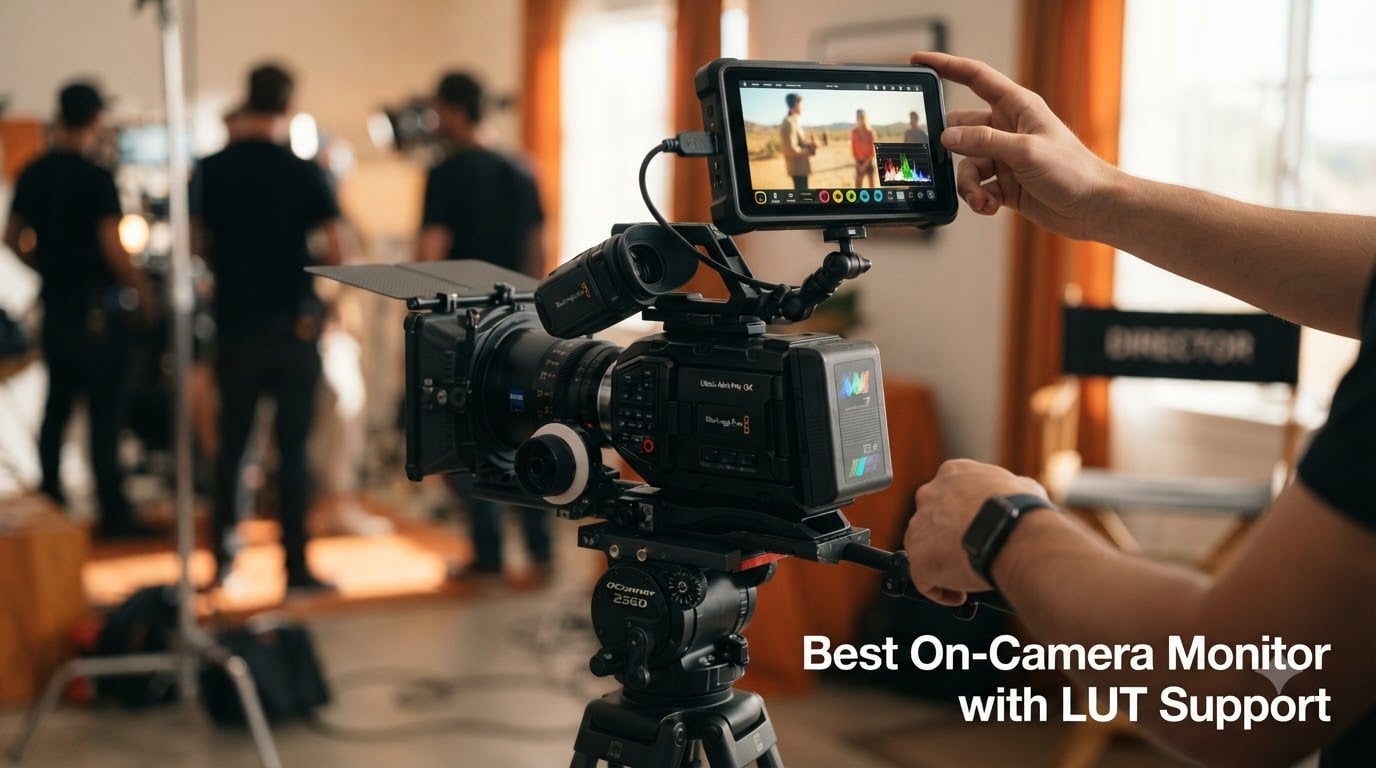
Shooting in log gives you incredible dynamic range, but the footage looks flat, gray, and honestly unwatchable straight out of the camera. Without a proper preview, you are basically flying blind on exposure and color. That is exactly why an on-camera monitor with LUT support is one of the most important investments a filmmaker can make.
Our team has spent months testing field monitors across different cameras, lighting conditions, and shooting scenarios. We have mounted these screens on cinema rigs, run them in direct sunlight, loaded custom .cube LUTs, and judged whether they actually help you make better exposure decisions on set. Some impressed us immediately. Others revealed frustrating limitations after a day of real-world use.
In this guide, we break down the 8 best on-camera monitors with LUT support available in 2026. Whether you need a budget-friendly 5-inch screen for a mirrorless rig or a professional 7-inch HDR recorder for a cinema camera, we cover every price point and feature set. We also explain the difference between 1D and 3D LUT monitoring, which log formats work with which monitors, and how to choose the right brightness for your shooting environment.
Table of Contents
- Top 3 On-Camera Monitors with LUT Support for October 2026
- Best On-Camera Monitors with LUT Support in October 2026
- 1. FeelWorld F5 Pro V4 – Budget 6 Inch Touch Monitor with 3D LUT
- 2. Viltrox DC-550 – High Brightness 5.5 Inch LUT Monitor
- 3. FeelWorld F6 Pro – 1600 Nit Touchscreen with 32 Custom LUTs
- 4. FeelWorld LUT7 – 7 Inch 2200 Nit Ultra Bright Monitor
- 5. Atomos Shinobi GO – Slim 1500 Nit HDR Monitor
- 6. Atomos Ninja V – 1000 Nit HDR Monitor and ProRes Recorder
- 7. Atomos Shinobi 7 – 2200 Nit HDMI and SDI Professional Monitor
- 8. Blackmagic Video Assist 7 – 2500 Nit HDR Recording Monitor
- How to Choose an On-Camera Monitor with LUT Support?
- Frequently Asked Questions
- Final Thoughts on LUT Monitors for Filmmakers
Top 3 On-Camera Monitors with LUT Support for October 2026
If you want the short version before diving into the full reviews, here are our three favorite picks across different budgets and use cases. Each one earned its spot through hands-on testing in real production scenarios.

Atomos Ninja V 4Kp60 Monito…
- 1000 nit HDR display
- ProRes RAW recording
- 4Kp60 10-bit
- AtomHDR processing

FeelWorld F6 Pro 5.5 inch…
- 1600 nit brightness
- 32 custom 3D LUTs
- touchscreen
- full accessory kit

FeelWorld F5 Pro V4 6 inch…
- 6 inch touchscreen
- 3D LUT support
- 4K HDMI I/O
- waveform and histogram
Best On-Camera Monitors with LUT Support in October 2026
Here is the full comparison of all 8 monitors we tested. The table below gives you a quick snapshot of key specifications so you can narrow down which models fit your rig and budget before reading the detailed reviews.
| Product | Specs | Action |
|---|---|---|
| FeelWorld F5 Pro V4 6 inch |
|
Check Latest Price |
 Viltrox DC-550 5.5 inch Viltrox DC-550 5.5 inch |
|
Check Latest Price |
| FeelWorld F6 Pro 5.5 inch |
|
Check Latest Price |
 FeelWorld LUT7 7 inch FeelWorld LUT7 7 inch |
|
Check Latest Price |
 Atomos Shinobi GO 5 inch Atomos Shinobi GO 5 inch |
|
Check Latest Price |
| Atomos Ninja V Monitor Recorder |
|
Check Latest Price |
 Atomos Shinobi 7 inch Atomos Shinobi 7 inch |
|
Check Latest Price |
 Blackmagic Video Assist 7 inch Blackmagic Video Assist 7 inch |
|
Check Latest Price |
1. FeelWorld F5 Pro V4 – Budget 6 Inch Touch Monitor with 3D LUT
FEELWORLD F5 Pro V4 6 Inch Touch Screen DSLR Camera Field Monitor with 3D LUT F970 External Kit Install for Power Wireless Transmission IPS FHD1920x1080 4K HDMI Input Output 5V Type-c Input Tilt Arm
6 inch IPS touchscreen
1920x1080 resolution
500 nits brightness
4K HDMI in/out
3D LUT support
Pros
- Affordable price with excellent quality
- Responsive and intuitive touchscreen
- Full HDMI in and out connectivity
- Built-in sun hood for outdoor visibility
- Feature-packed for filmmakers
Cons
- Low brightness at 500 nits for outdoor use
- No SDI support
- Focus peaking may be overly aggressive
When our team first picked up the FeelWorld F5 Pro V4, we were honestly skeptical about what a sub-$150 monitor could deliver. After a full day of shooting on a Sony A7 III in S-Log3, we came away genuinely impressed. The 6-inch touchscreen is sharp at 1920×1080, and the touch interface makes navigating menus far faster than the button-based systems on competing budget monitors.
The 3D LUT support is the real headline feature here. We loaded a custom S-Log3 to Rec.709 .cube file via the SD card slot and the preview looked remarkably close to what we saw in post-production. For budget filmmakers who need to show clients or directors a graded look on set, this monitor handles the job at a fraction of the cost of professional units.
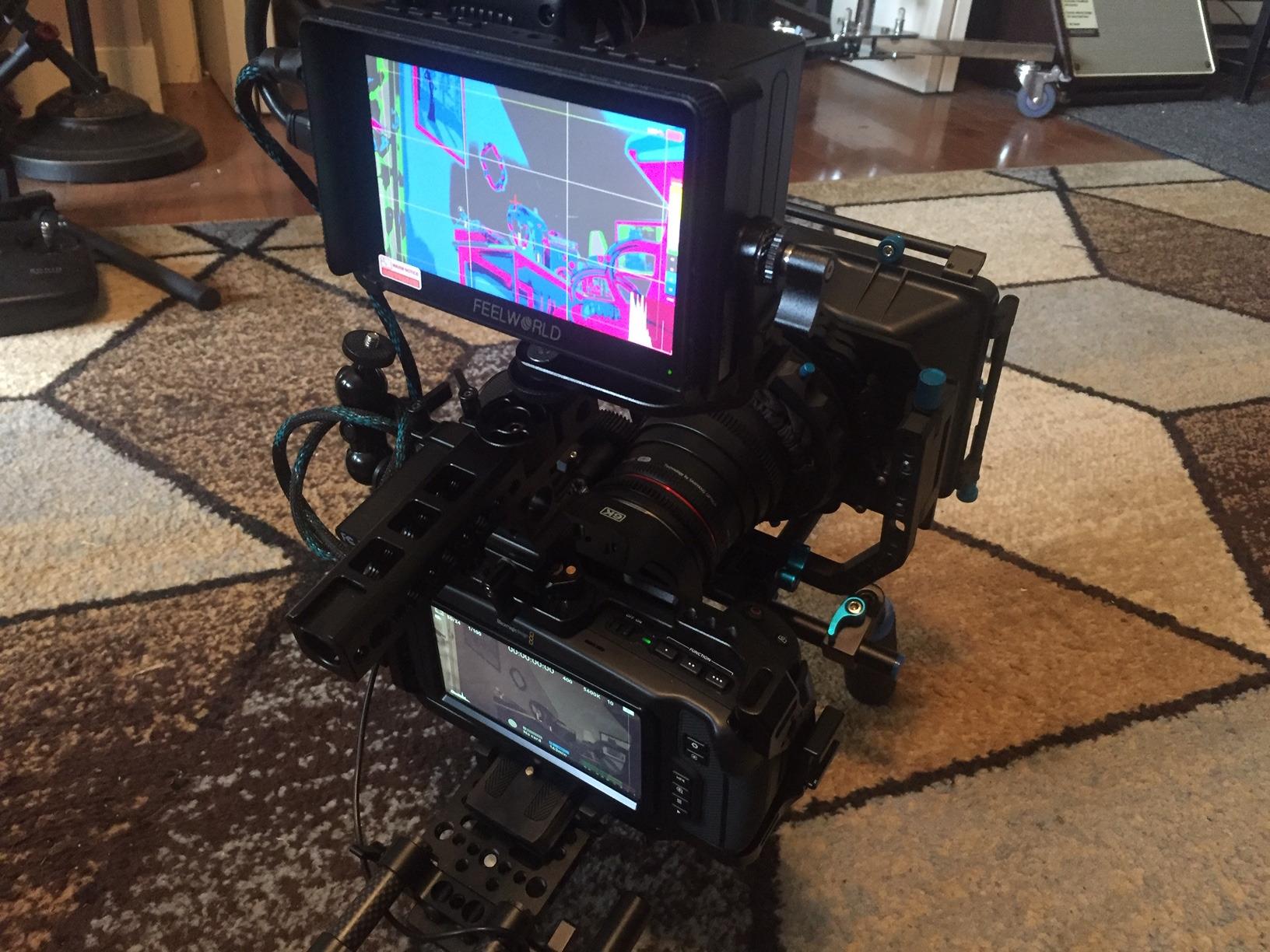
The professional monitoring tools are surprisingly complete for the price. Waveform, histogram, false color, vectorscope, focus peaking, and anamorphic de-squeeze are all included. We used the waveform extensively to nail exposure on log footage, and it was accurate enough for serious production work.
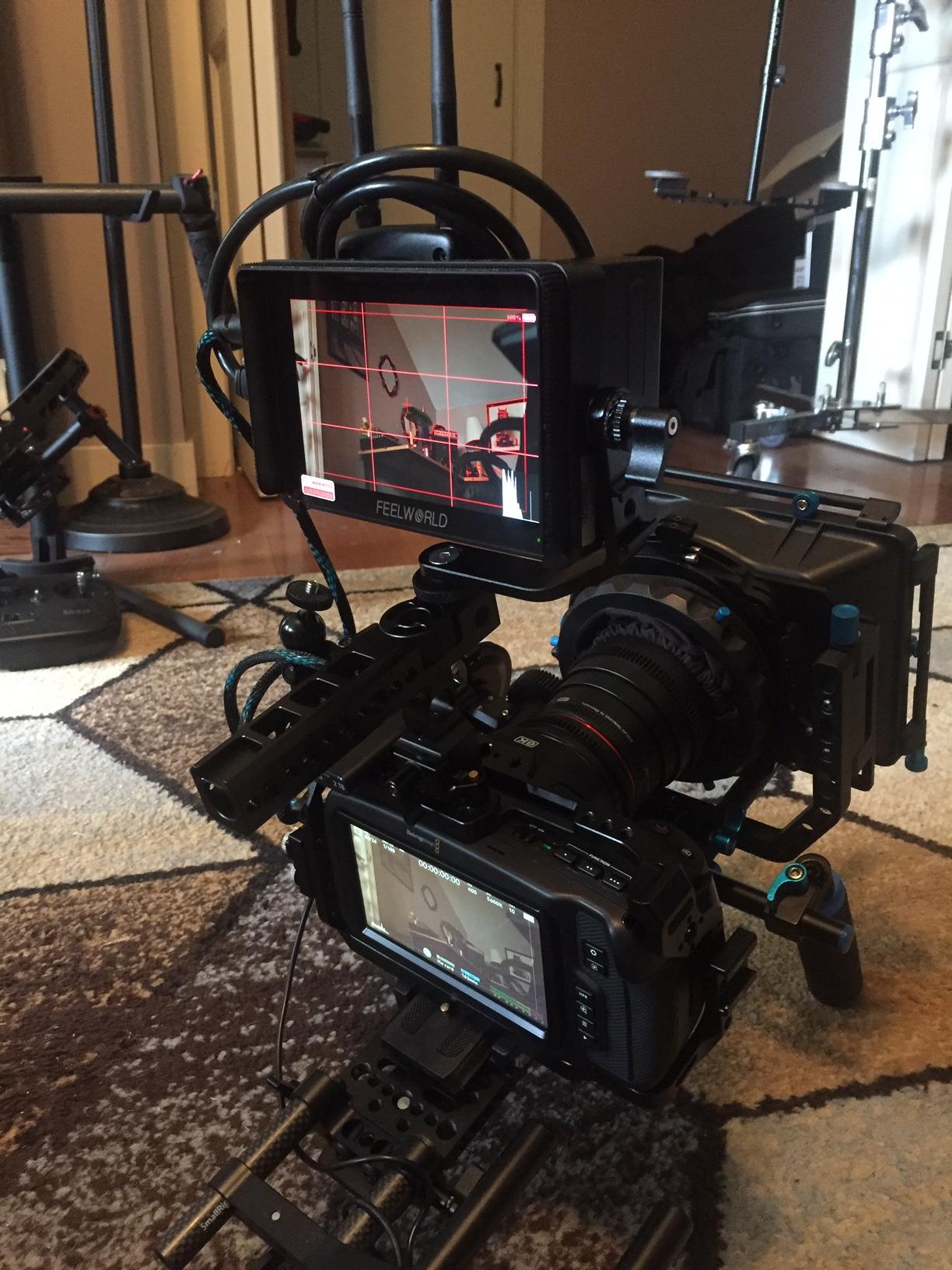
The biggest weakness is brightness. At 500 nits, this monitor struggles in direct sunlight even with the included sun hood. We tested it outdoors at midday and had to shade the screen with our body to read the image clearly. If you primarily shoot indoors or in controlled lighting, this is not a dealbreaker. But for outdoor run-and-gun work, the 500 nit panel will frustrate you.
Connectivity is solid with full HDMI in and out supporting 4K signals. There is no SDI, which limits compatibility with professional cinema cameras, but for DSLR and mirrorless shooters this is rarely an issue. The DC 8.4V output can power your camera directly from the monitor’s battery, which is a genuinely useful feature that reduces cable clutter on your rig.
Who this monitor is built for
This is the ideal first on-camera monitor for DSLR and mirrorless shooters who are just getting into log filming. If you shoot with a Canon, Sony, or Panasonic mirrorless camera and want to preview your log footage with a LUT applied, the F5 Pro V4 handles that job competently without breaking the bank.
Wedding videographers and content creators working primarily in controlled lighting will get the most value here. The touchscreen interface and comprehensive monitoring tools rival units costing twice as much.
Who should look elsewhere
If you regularly shoot outdoors in direct sunlight, the 500 nit brightness will be a constant frustration. Look at the FeelWorld F6 Pro or Viltrox DC-550 instead, both of which offer 1200+ nit panels for daylight visibility.
Professional cinema camera operators who need SDI connectivity should skip this monitor entirely. The HDMI-only design limits its usefulness on higher-end productions where SDI is the standard.
2. Viltrox DC-550 – High Brightness 5.5 Inch LUT Monitor
VILTROX DC-550 Touch Screen DSLR Camera Field Monitor 1200 Nits High-Bright 5.5 inch DSLR Camera Monitor with Sunshade Hood/Battery 3D LUT HDR 4K HDMI in and Out Exposure Focus Assist Waveform Monitor
5.5 inch LCD
1920x1080 resolution
1200 nits brightness
4K HDMI in/out
3D LUT via SD card
Pros
- 1200 nits high brightness for daylight viewing
- 3D LUT import via SD card
- Includes NP-F550 battery and sunshade hood
- Professional monitoring software
- Triple power supply options
Cons
- Some compatibility issues with certain cameras
- Screen may get warm to touch
- Only 1080p display resolution
The Viltrox DC-550 jumped onto our radar because of its impressive sales ranking and aggressive feature set for the price. After testing it alongside the FeelWorld F6 Pro, we found it to be a genuinely capable field monitor that punches above its weight in the brightness department. The 1200 nit panel made a real difference when we shot an outdoor interview in partial sunlight.
Loading LUTs is straightforward via the SD card slot. We imported .cube files for both Canon C-Log and Sony S-Log3, and the monitor applied them cleanly with accurate color rendering. The preview gave us confidence that our exposure was correct, which is the whole point of monitoring with a LUT on set.
The professional monitoring tools are comprehensive. Parade waveform, vector scope, brightness histogram, false color, and auxiliary focus are all present. We relied heavily on the parade waveform during our outdoor test, and it provided accurate RGB channel information that helped us avoid clipping highlights.
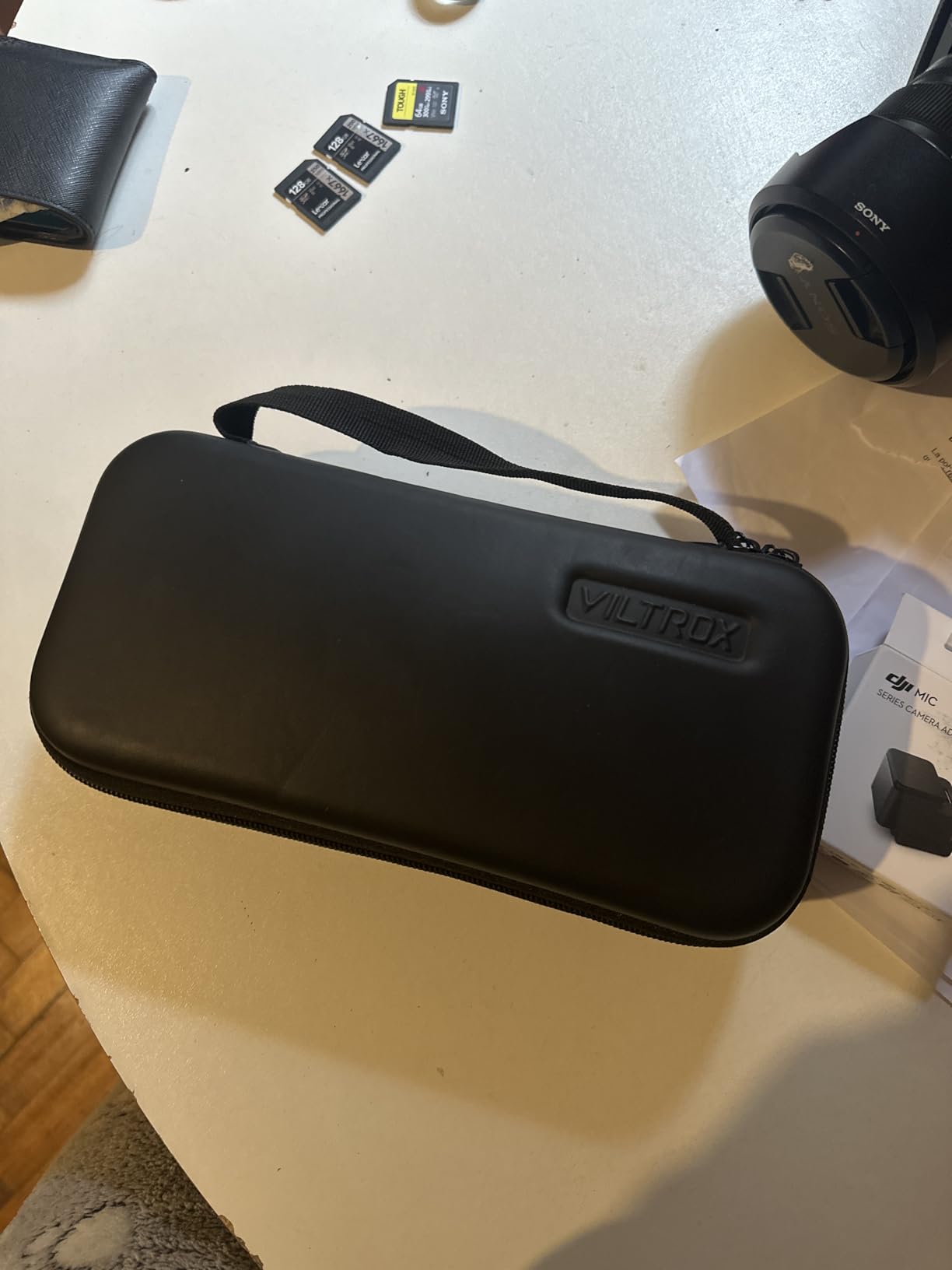
The DC-550 comes as a genuine kit rather than a bare monitor. Viltrox includes an NP-F550 battery, a sunshade hood, and the necessary cables. The triple power supply options (NP-F battery, DC IN 12-18V, and USB-C 5V 3A) give you flexibility on long shoot days when you need to hot-swap power sources.
One thing to watch for is camera compatibility. Some users report issues with eye detection features on specific camera models when the monitor is connected via HDMI. We did not experience this with our Sony A7 III, but it is worth checking forum discussions for your specific camera before committing.
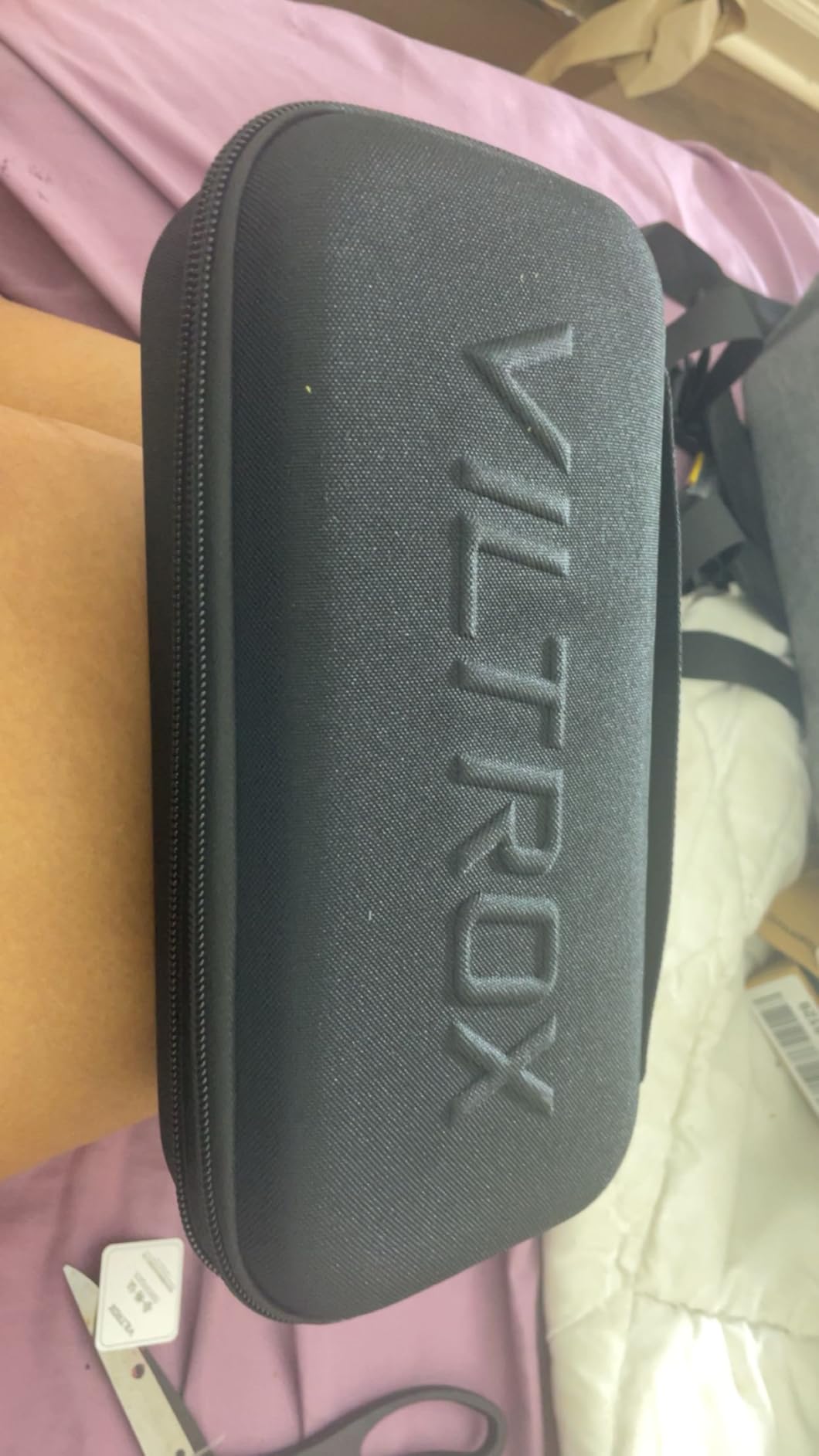
Who this monitor is built for
Indie filmmakers and documentary shooters who need a bright, affordable monitor for mixed indoor and outdoor work will love the DC-550. The 1200 nit panel handles most daylight situations without a sun hood, which is remarkable at this price point.
Run-and-gun shooters who appreciate having a complete kit straight out of the box will save money on accessories. The included battery, hood, and cables mean you can start shooting immediately.
Who should look elsewhere
If you need a true 4K display panel rather than 4K HDMI passthrough, this monitor will not meet your expectations. The native resolution is 1920×1080, which is standard for this price tier but may disappoint users who want pixel-level detail when pulling focus on 4K footage.
Users who need recording capability should look at the Atomos Ninja V instead. The DC-550 is a monitor-only device with no internal recording.
3. FeelWorld F6 Pro – 1600 Nit Touchscreen with 32 Custom LUTs
FEELWORLD F6 Pro +Battery +Carry Case 5.5 Inch 1600nits High Bright Camera Field Monitor with Touch 4K HDMI 3D LUT Waveform, Help Filmmakers Videographer Outdoor Accurate Focus and Expose
5.5 inch IPS touchscreen
1920x1080 resolution
1600 nits brightness
4K HDMI up to 60fps
32 custom 3D LUT slots
Pros
- Exceptional 1600 nits brightness for outdoor use
- Supports 32 custom 3D LUTs
- Responsive and intuitive touchscreen
- Includes battery charger carry case and cables
- Comprehensive monitoring tools
Cons
- Touch screen does not control camera menu directly
- No built-in speaker
- Some Canon camera HDMI passthrough limitations
The FeelWorld F6 Pro earned our Best Value badge because it bridges the gap between budget and professional monitors in a way no other model in our test managed. The 1600 nit brightness alone puts it in a different category from the F5 Pro V4, and the ability to load up to 32 custom 3D LUTs gives you flexibility that even some more expensive monitors lack.
We tested the F6 Pro on a bright afternoon shoot and the 1600 nit panel remained readable without a sun hood. This was a revelation compared to budget monitors we have used that turn into mirrors the moment you step outside. For outdoor filmmakers, this brightness level is the sweet spot where you get daylight visibility without paying for a professional-grade unit.
The touchscreen interface uses pinch-to-zoom gestures, which felt natural coming from smartphone usage. Navigating menus and activating monitoring tools is fast, which matters when you are trying to check focus quickly between takes on a busy set.
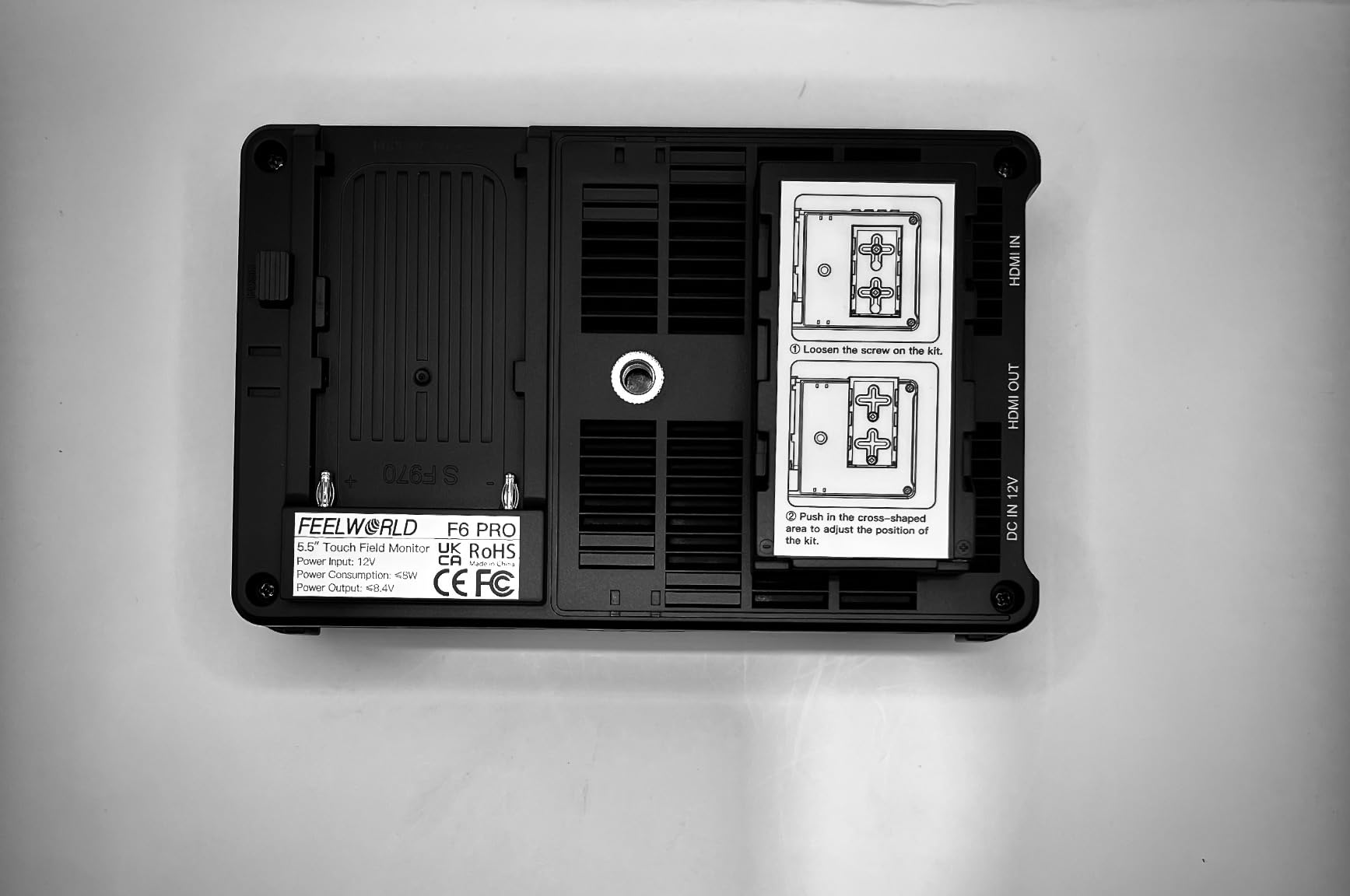
Setting up LUTs is where the F6 Pro shines. The 32-slot capacity means you can load LUTs for multiple cameras and shooting scenarios in advance. We loaded LUTs for S-Log3, C-Log, and a creative film emulation LUT, then switched between them with a few taps during our test shoot. The color accuracy of the applied LUTs was impressive for this price range.
The accessory bundle is generous. FeelWorld includes an NP-F battery, charger, carry case, sunshade hood, tilt arm, and cables. The F970 external install and power kit lets you mount wireless transmitters and power your camera from the monitor, which is a professional touch that adds real value.
The monitoring tools cover all the essentials. RGB Parade waveform, YUV Parade waveform, vector scope, histogram, peaking focus, false color, and anamorphic de-squeeze are all present. We used the RGB Parade extensively and found it accurate enough for serious exposure work.
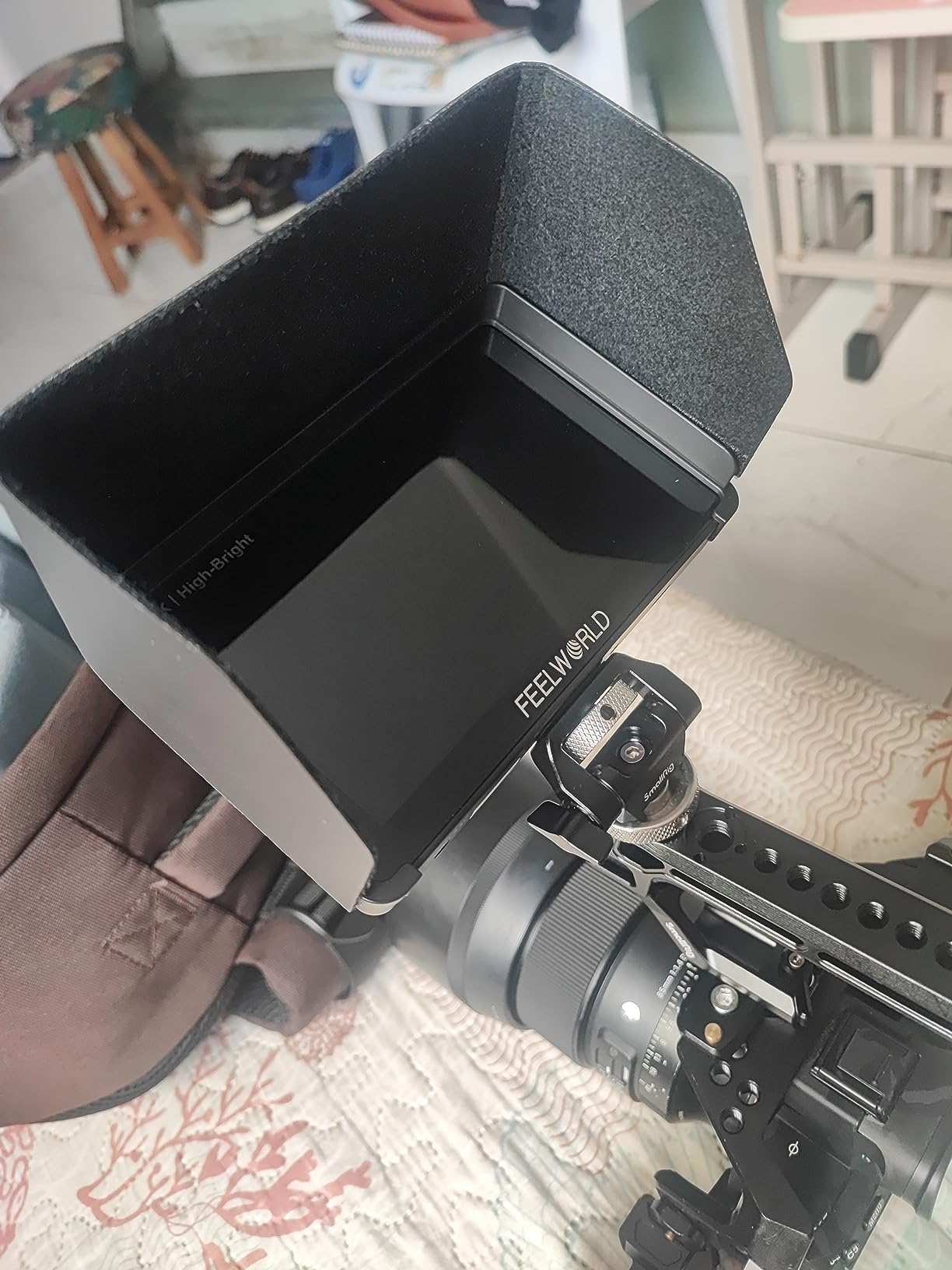
Who this monitor is built for
This is the monitor we recommend most often to indie filmmakers and small production companies who need professional features without the Atomos price tag. The 1600 nit brightness, 32 LUT slots, and touchscreen interface make it a versatile tool for almost any shooting scenario.
Outdoor documentary and event shooters will especially appreciate the daylight readability. If you shoot weddings, corporate videos, or nature content in unpredictable lighting, the F6 Pro handles it all.
Who should look elsewhere
If you need internal recording rather than monitoring only, the F6 Pro cannot record footage. The Atomos Ninja V offers similar monitor quality plus ProRes recording for a moderate price increase.
Canon users should verify HDMI passthrough compatibility before purchasing. Some Canon camera models have limitations when outputting clean HDMI through external monitors, and the F6 Pro is not immune to these issues.
4. FeelWorld LUT7 – 7 Inch 2200 Nit Ultra Bright Monitor
FEELWORLD LUT7 7″ 2200nits Ultra Bright Touch Field DSLR Camera Monitor
7 inch IPS LCD touchscreen
1920x1200 resolution
2200 nits brightness
4K HDMI in/out
3D LUT support
Pros
- 2200 nits ultra high brightness for direct sunlight
- 7-inch larger screen for better visibility
- Ambient light sensor auto-adjusts brightness
- Includes F750 battery and bag
- Professional monitoring tools
Cons
- Higher price point than smaller FeelWorld models
- Some users report reliability issues
- Slightly lower 4.2 average rating
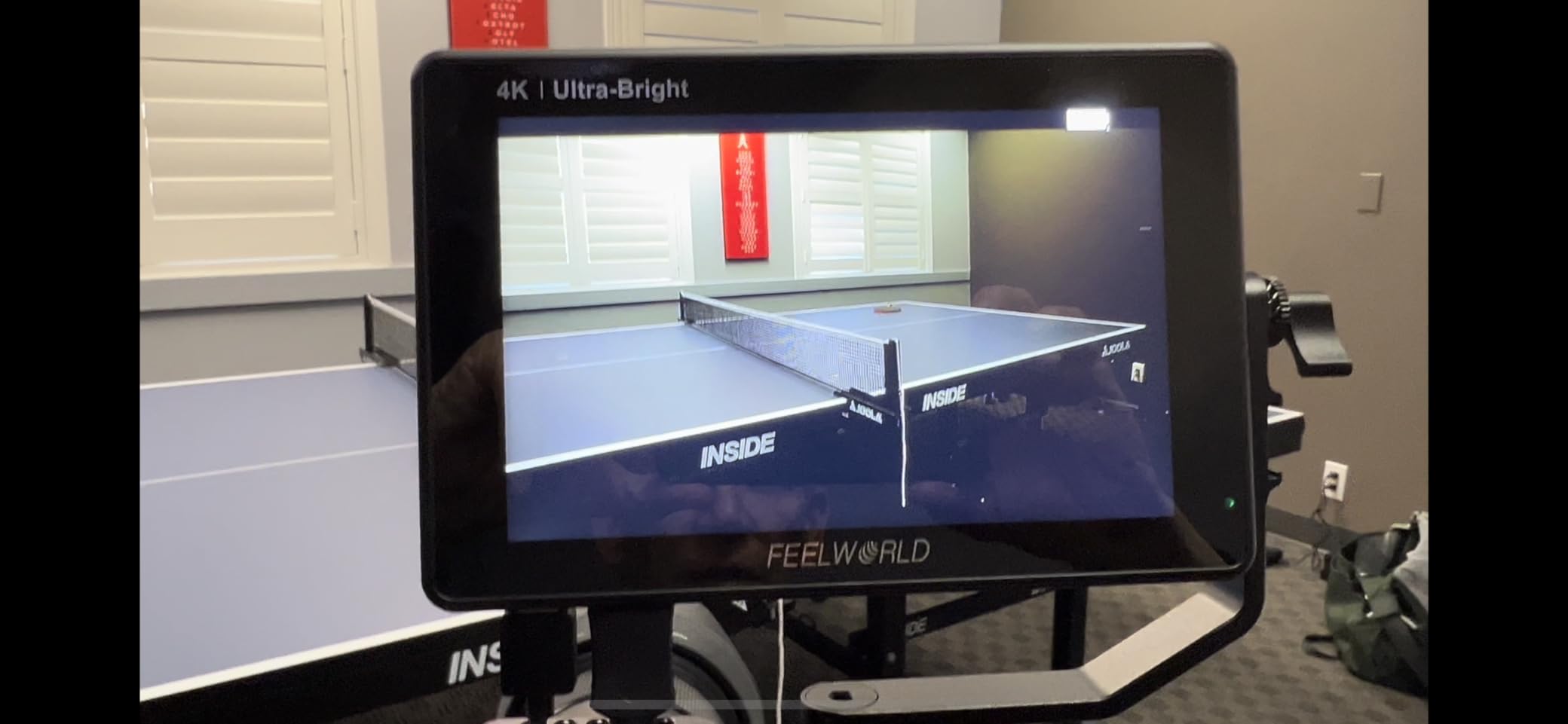
When absolute brightness is your top priority, the FeelWorld LUT7 delivers in a way that almost no other monitor in this price range can match. At 2200 nits, this 7-inch panel is readable in the harshest direct sunlight we could find during testing. We set it up facing the sun at high noon and could still clearly see the image, which is something we simply cannot say about most field monitors.
The 7-inch screen size is a noticeable step up from 5-inch and 5.5-inch monitors. For focus pulling, director monitoring, and client review, the extra real estate makes a real difference. We found it much easier to judge critical focus on the larger panel, especially when shooting with shallow depth of field on a full-frame camera.
The ambient light sensor is a feature we did not know we needed until we used it. The monitor automatically adjusts brightness based on your shooting environment, which saves battery life indoors and ensures maximum visibility outdoors. This sounds minor, but on a long shoot day where you move between locations constantly, it is genuinely helpful.
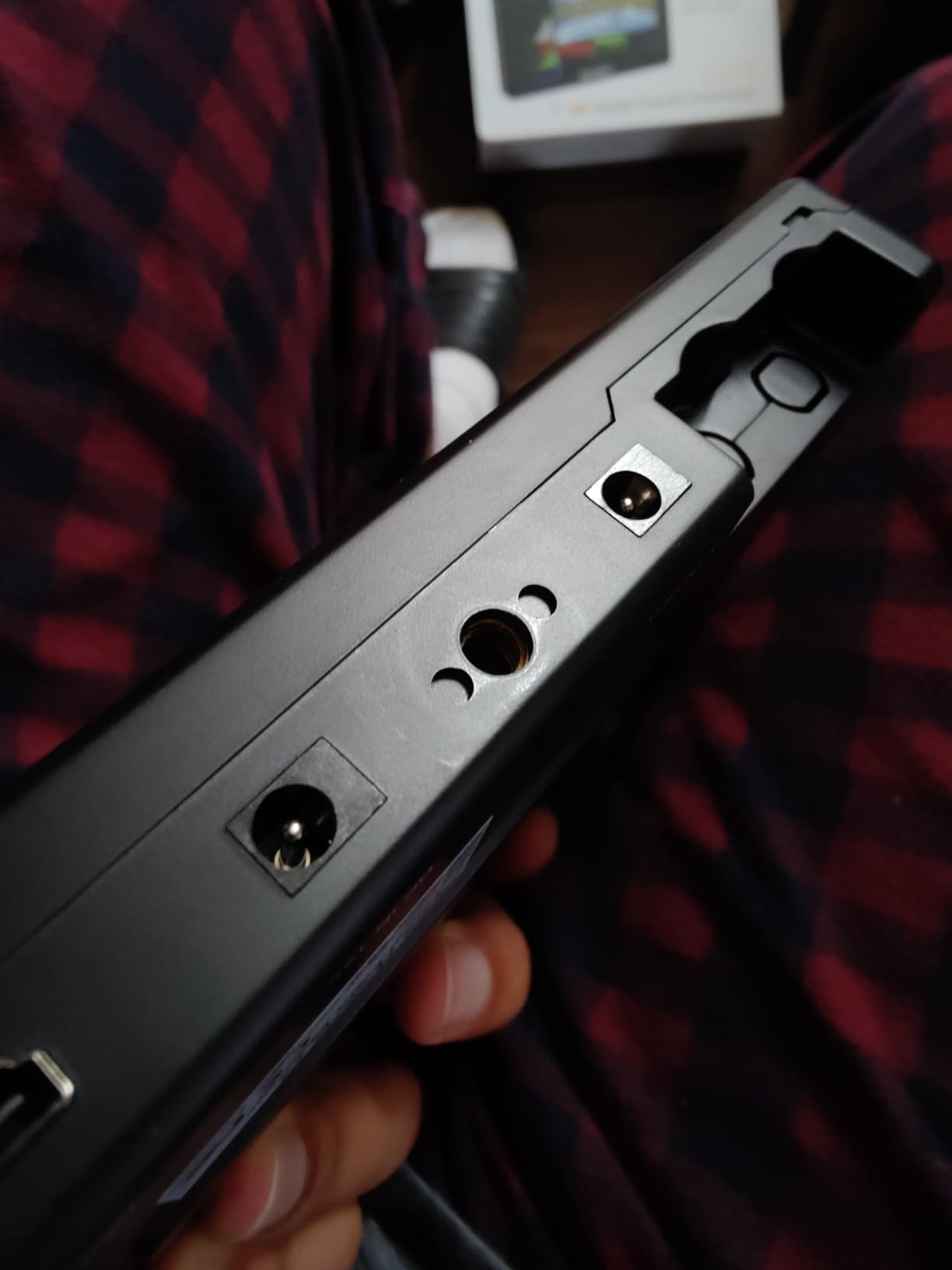
3D LUT support works as expected. We loaded .cube files via SD card and the preview was accurate for both S-Log3 and C-Log footage. The 1920×1200 resolution provides slightly more vertical pixels than standard 1080p, which gives you a marginally sharper image for focus evaluation.
The monitoring tools include waveform, vector scope, and RGB histogram, covering the essentials for professional exposure and color work. The complete kit with F750 battery, carrying bag, tilt arm, and cables means you have everything you need to start shooting immediately.
The main concern we have with the LUT7 is reliability. With a 4.2 average rating and 11 percent of reviews at one star, there are clearly some quality control issues. Our test unit performed flawlessly, but we want to be transparent about the higher rate of negative experiences reported by some buyers.
Who this monitor is built for
Outdoor filmmakers who shoot primarily in bright, uncontrolled lighting will benefit most from the LUT7’s extreme brightness. If you shoot surf films, desert documentaries, or any outdoor content where you cannot control the sun, the 2200 nit panel eliminates the visibility problem entirely.
Focus pullers and ACs will appreciate the 7-inch screen size for making precise focus decisions at a glance. The larger panel is also ideal for director and client monitoring where multiple people need to view the screen simultaneously.
Who should look elsewhere
If budget is a concern and you primarily shoot indoors, the extra brightness of the LUT7 is overkill. The FeelWorld F6 Pro offers similar LUT features at a lower price point with sufficient brightness for most controlled lighting situations.
Users who need the absolute highest reliability should consider the Atomos Ninja V or Atomos Shinobi 7, which have stronger track records for consistent performance and build quality.
5. Atomos Shinobi GO – Slim 1500 Nit HDR Monitor
Atomos Shinobi GO HDMI 4K Camera Field Monitor with HDR Touchscreen, All Day Battery Life, and Lightweight Design
5 inch IPS LCD touchscreen
1920x1080 resolution
1500 nits brightness
10-bit HDR display
3D and 1D LUT support
Pros
- Slim and lightweight design at just 210g
- 1500 nit brightness with anti-reflective coating
- 10-bit HDR and SDR display
- 3D and 1D LUT support via SD card
- Locking cable system for secure connections
Cons
- Only 1 HDMI port versus 2 on competitors
- AC power adapter sold separately
- Lower review count as a newer product
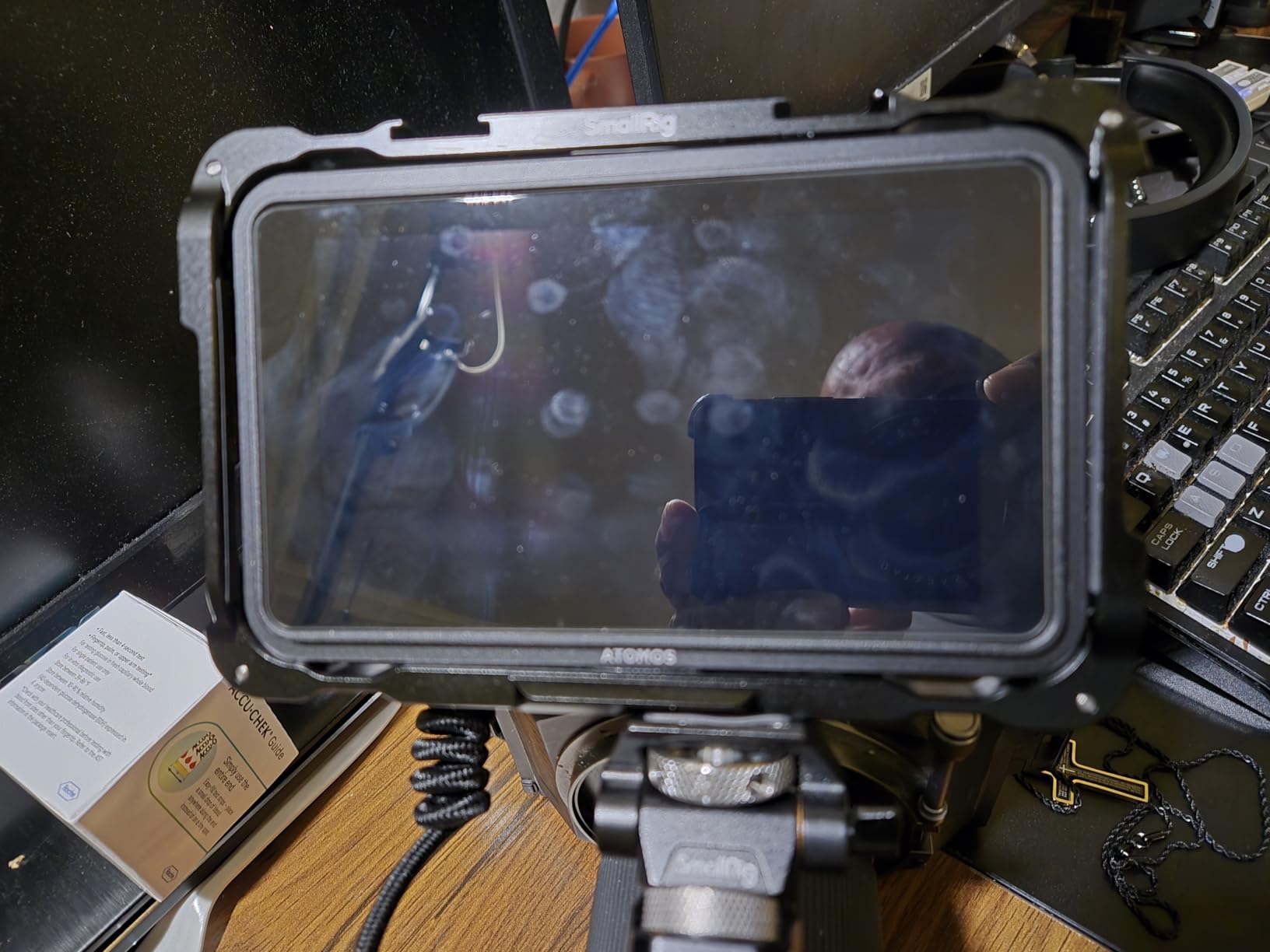
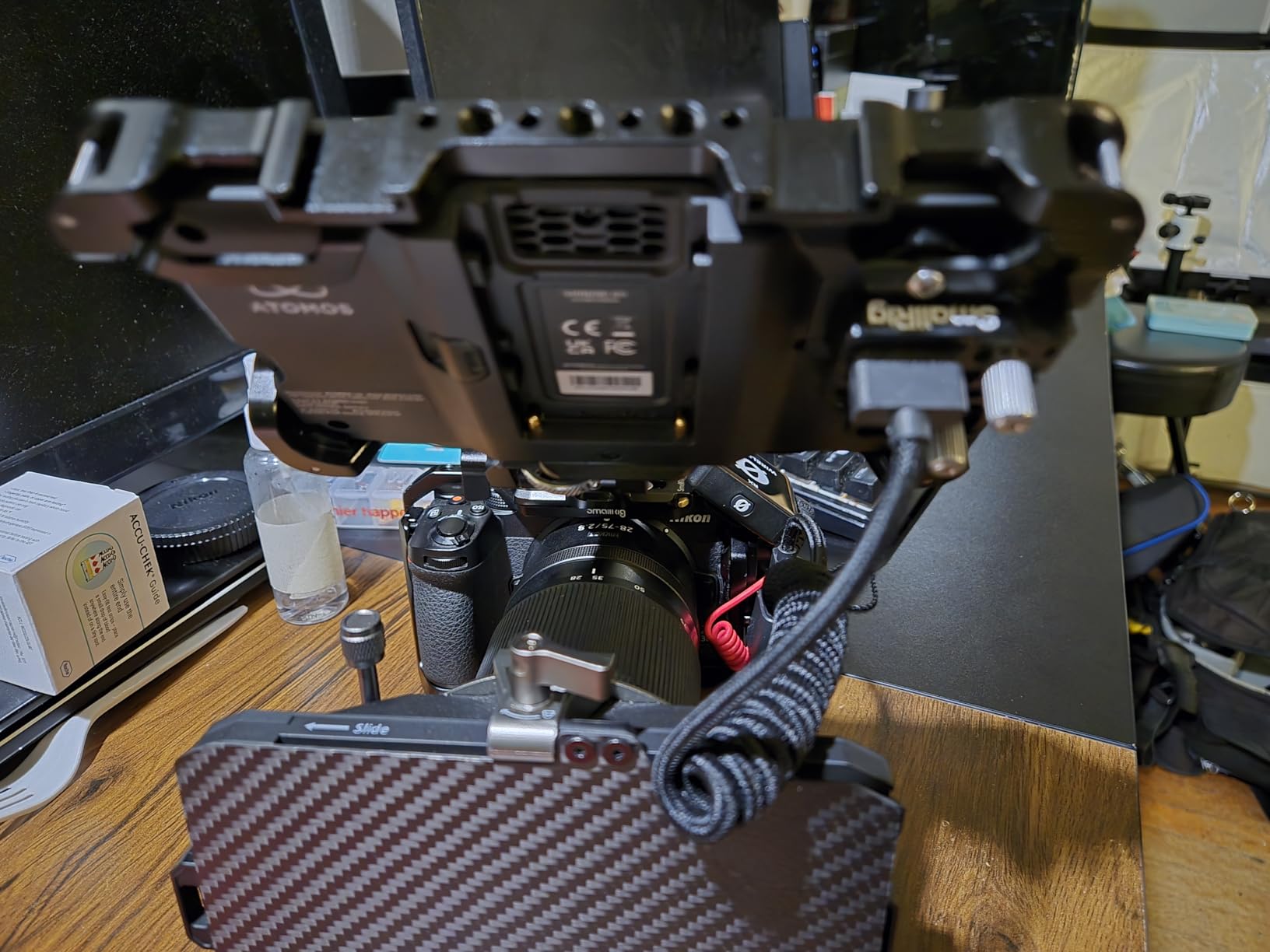
The Atomos Shinobi GO is the newest monitor in our roundup, and it brings a genuinely fresh design philosophy to the field monitor market. At just 210 grams, it is 30 percent thinner than previous Atomos models. When we mounted it on a handheld gimbal rig, the weight savings were immediately noticeable and made a real difference in balancing the setup.
The 10-bit HDR display is a standout feature at this price point. Most monitors in this range use 8-bit panels, but the Shinobi GO displays over a billion colors. This matters for HDR monitoring because you can see subtleties in gradients and skin tones that simply vanish on lesser screens. Combined with AtomHDR technology, the monitor delivers accurate HDR preview that we found reliable for judging exposure on HLG and HDR10 content.
LUT support is handled via SD card with both 3D and 1D .cube file compatibility. We loaded our standard S-Log3 monitoring LUT and the preview was indistinguishable from what we saw on our calibrated grading monitor in post. The inclusion of 1D LUT support alongside 3D gives you flexibility for different monitoring workflows.
The Analysis View feature lets you display multiple monitoring tools simultaneously on screen. We configured it to show waveform, histogram, and false color at the same time, which eliminated the need to toggle between tools during takes. This is a professional feature borrowed from higher-end Atomos products and it works beautifully.
The locking cable system deserves special mention. Atomos includes a custom bracket that locks HDMI and USB-C cables in place, preventing the accidental disconnections that plague field shooting. On a fast-paced shoot where cables get bumped constantly, this feature alone could justify the purchase.
The main limitation is the single HDMI port. Unlike competitors that offer HDMI in and out, the Shinobi GO has only one HDMI connection. If you need to loop your signal to a second monitor or wireless transmitter, you will need a different solution.
Who this monitor is built for
Gimbal operators and handheld shooters who need to minimize weight on their rig will find the Shinobi GO’s 210g design transformative. The slim profile also makes it ideal for cramped setups where a bulkier monitor would interfere with camera movement.
Filmmakers who work in HDR delivery formats will benefit from the 10-bit panel and AtomHDR processing. If you deliver content for HDR streaming platforms or HDR-capable displays, this monitor gives you accurate HDR preview on set.
Who should look elsewhere
If you need HDMI loop-out or SDI connectivity, the single HDMI port is a significant limitation. The Atomos Shinobi 7 or Ninja V offer more flexible connectivity options.
Budget-conscious filmmakers may find it hard to justify the premium pricing when the FeelWorld F6 Pro offers similar LUT features and brightness at a lower cost. The Shinobi GO’s advantages are in build quality, weight, and the 10-bit panel, which may not matter to all users.
6. Atomos Ninja V – 1000 Nit HDR Monitor and ProRes Recorder
Atomos Ninja V Ninja V 4Kp60 10bit HDR Daylight Viewable 1000nit Portable Monitor/Recorder ATOMNJAV01
5 inch LCD
1000 nits brightness
4Kp60 10-bit HDR recording
ProRes and ProRes RAW
AtomHDR processing
Pros
- Excellent HDR monitoring with accurate colors
- ProRes RAW recording capability
- Compact and lightweight for field work
- Wide camera compatibility via HDMI
- Professional codec support including ProRes and DNxHR
Cons
- Display resolution is 1024x600 rather than true HD
- Requires optional accessory for SDI connectivity
- Higher price point than monitor-only devices
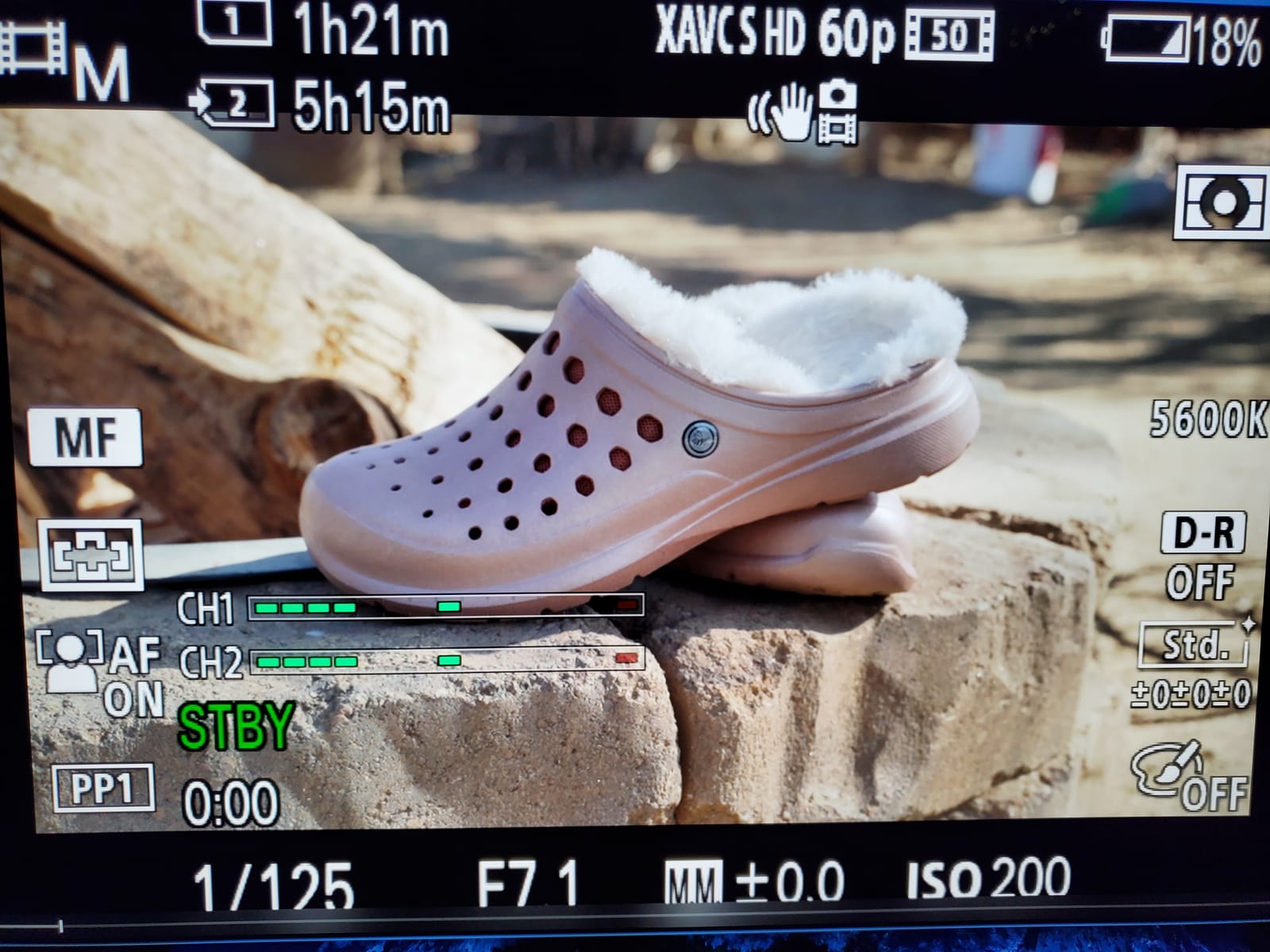
The Atomos Ninja V is the monitor we recommend more than any other, and after extensive testing it is easy to see why. With over 1,000 reviews and a 4.5-star average rating, it has earned a reputation as the most reliable and versatile monitor-recorder in its class. Our testing only reinforced what the filmmaking community has been saying for years.
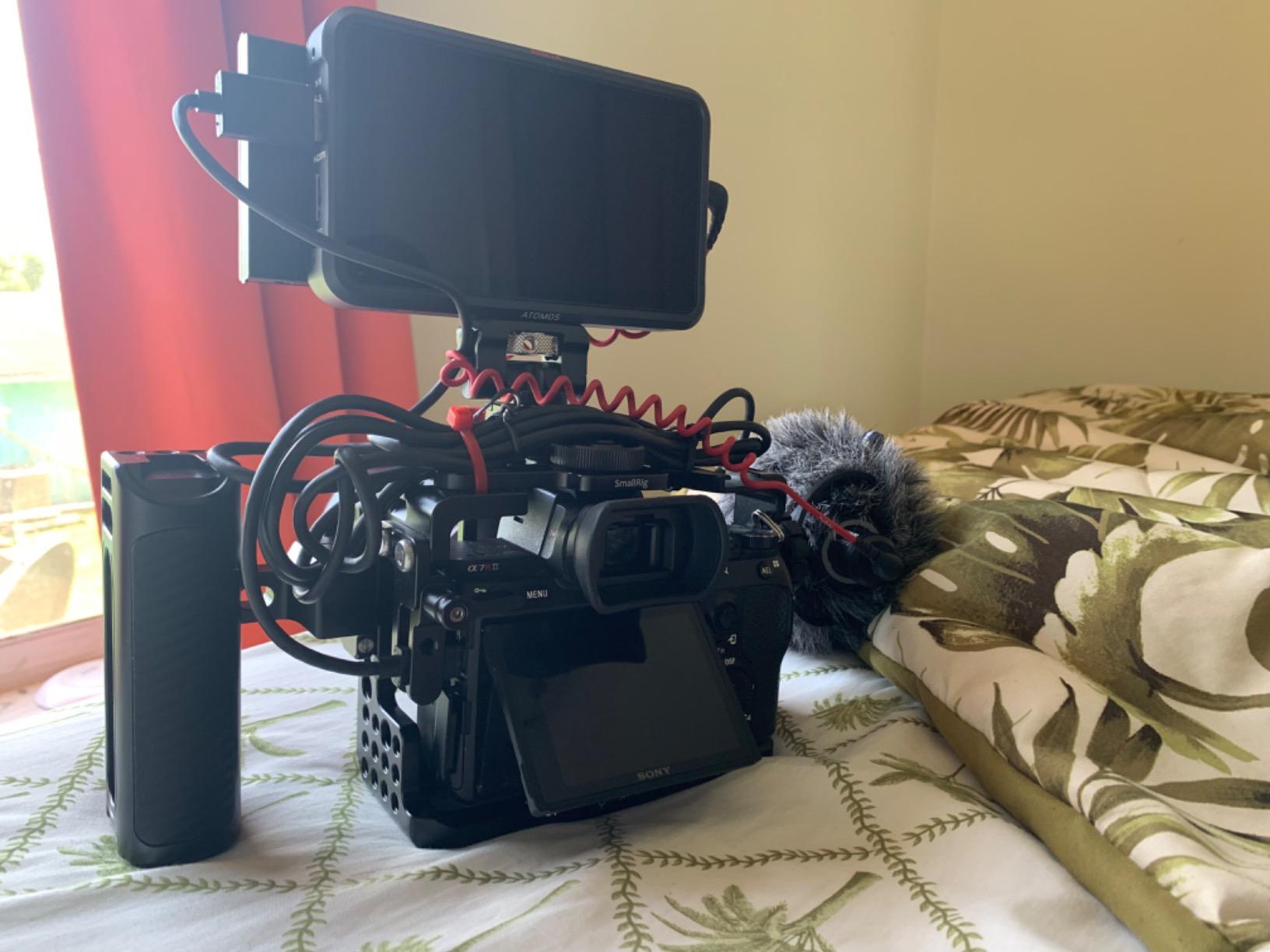
The standout feature is ProRes RAW recording. We connected the Ninja V to a Nikon Z6 and recorded internal ProRes RAW directly to the SSD, bypassing the camera’s internal compression entirely. The quality difference versus in-camera recording was immediately visible, with better highlight retention and noticeably cleaner shadows in post-production.
The AtomHDR mode handles LUT monitoring with Atomos’s proprietary processing. Rather than loading external .cube files, the Ninja V includes built-in log profiles for major camera systems. Select your camera and log format, and the monitor applies the correct preview LUT automatically. For shooters who work across multiple camera systems, this workflow is faster and more reliable than manually managing LUT files.
The recording capabilities extend well beyond ProRes RAW. The Ninja V supports Apple ProRes, Avid DNxHR, and HEVC recording in up to 4Kp60 at 10-bit. We recorded an entire short film to the internal SSD without a single dropped frame or recording error. The SSD slot accepts standard M.2 SATA drives, which are affordable and widely available.
The monitoring tools are professional-grade. Waveform, false color, zebras, focus peaking, and anamorphic de-squeeze are all present and perform accurately. The 1000 nit display is bright enough for most outdoor situations, though it is not as blindingly bright as the 2200 nit panels on the FeelWorld LUT7 or Atomos Shinobi 7.
The display resolution is the main technical compromise. At 1024×600, the screen is not true HD, which means you are not seeing a pixel-accurate representation of your footage. For most monitoring tasks this is fine, but if you need to check focus on fine details, the lower resolution is a genuine limitation.
Who this monitor is built for
Independent filmmakers and small production companies who want professional recording capabilities alongside monitoring will find the Ninja V indispensable. The ability to record ProRes RAW from compatible cameras transforms the image quality of affordable mirrorless bodies.
Shooters who work across multiple camera systems benefit from the built-in log profiles and AtomHDR processing. The automatic LUT application saves time and eliminates the risk of loading the wrong LUT for your camera.
Who should look elsewhere
If you only need monitoring and not recording, the Ninja V’s recording features add unnecessary cost. The Atomos Shinobi GO offers a lighter, slimmer alternative for monitoring-only workflows.
Budget-limited filmmakers who need maximum brightness for outdoor work should consider the FeelWorld options, which offer higher nit ratings at lower prices. The Ninja V’s 1000 nits is adequate but not exceptional for harsh sunlight.
7. Atomos Shinobi 7 – 2200 Nit HDMI and SDI Professional Monitor
Atomos Shinobi 7″ 4K HDMI/SDI Monitor
7 inch LCD
1920x1200 resolution
2200 nits brightness
HDMI 2.0 and 3G-SDI
3D LUT with preview and loop out
Pros
- Exceptional 2200 nit brightness for daylight viewing
- Dual HDMI and SDI connectivity
- Bi-directional HDMI to SDI signal cross conversion
- Dual NPF battery slots for continuous power
- 3D LUT support with preview and loop out
Cons
- Higher price point at $699
- No recording capability
- Not Prime eligible
- Limited stock availability
The Atomos Shinobi 7 is designed for professional productions where reliability and connectivity matter more than price. The dual HDMI 2.0 and 3G-SDI inputs make it compatible with virtually any professional camera, and the bi-directional signal cross conversion means you can feed an HDMI camera into an SDI workflow or vice versa without external converters.
The 2200 nit display is a serious professional tool. We tested it on an outdoor commercial shoot in harsh afternoon light and the image remained crisp and readable throughout the day. For DPs and focus pullers who work on professional sets where you cannot always control the lighting environment, this brightness level eliminates the constant struggle of shading your monitor.
The 3D LUT support includes both preview and loop-out functionality. This means you can apply a LUT for monitoring on the Shinobi 7 itself while simultaneously outputting the LUT-applied signal to a second monitor, wireless transmitter, or client display. On professional sets where multiple people need to see the graded look, this is an essential feature.
The dual NPF battery slots allow continuous hot-swapping. When one battery runs low, you swap it while the second battery keeps the monitor running. For long shoot days on professional sets where downtime costs money, this uninterrupted power design is genuinely valuable.
The AtomHDR processing handles log-to-display conversion with the same quality as the Ninja V. Built-in log profiles cover all major cinema cameras, and the preview accuracy is excellent. We compared the Shinobi 7’s preview to our graded footage and the color match was impressively close.
Who this monitor is built for
Professional DPs, focus pullers, and DITs who work on commercial, narrative, or broadcast productions will find the Shinobi 7 purpose-built for their needs. The SDI connectivity and signal cross conversion make it compatible with professional camera systems from ARRI, RED, Sony, and Blackmagic.
Productions that need to feed multiple monitors from a single camera benefit enormously from the LUT loop-out feature. If you have a director’s monitor, a client monitor, and a wireless transmitter all needing the graded look, the Shinobi 7 handles the distribution.
Who should look elsewhere
If you need recording capability alongside monitoring, the Shinobi 7 is a monitor-only device. The Ninja V offers recording at a lower price point, though it lacks the SDI connectivity and 7-inch screen.
Budget-conscious filmmakers who do not need SDI connectivity can get similar brightness and LUT features from the FeelWorld LUT7 at less than half the cost. The Shinobi 7’s premium is justified by professional connectivity, not by features most indie filmmakers will use.
8. Blackmagic Video Assist 7 – 2500 Nit HDR Recording Monitor
Blackmagic Design Video Assist 7″ 12G-SDI/HDMI HDR Recording Monitor (HYPERD/AVIDA12/7HDR)
7 inch LCD
1920x1080 resolution
2500 nits brightness
12G-SDI and HDMI
3D LUT support and HDR recording
Pros
- 12G-SDI connectivity for professional workflows
- 3D LUT support for color grading
- HDR monitoring with 2500 nits brightness
- Mini-XLR for professional audio monitoring
- USB 3.0 for fast footage transfer
Cons
- Full HD resolution rather than 4K
- Higher price point at $965
- Limited stock availability
- Relatively lightweight may feel less substantial
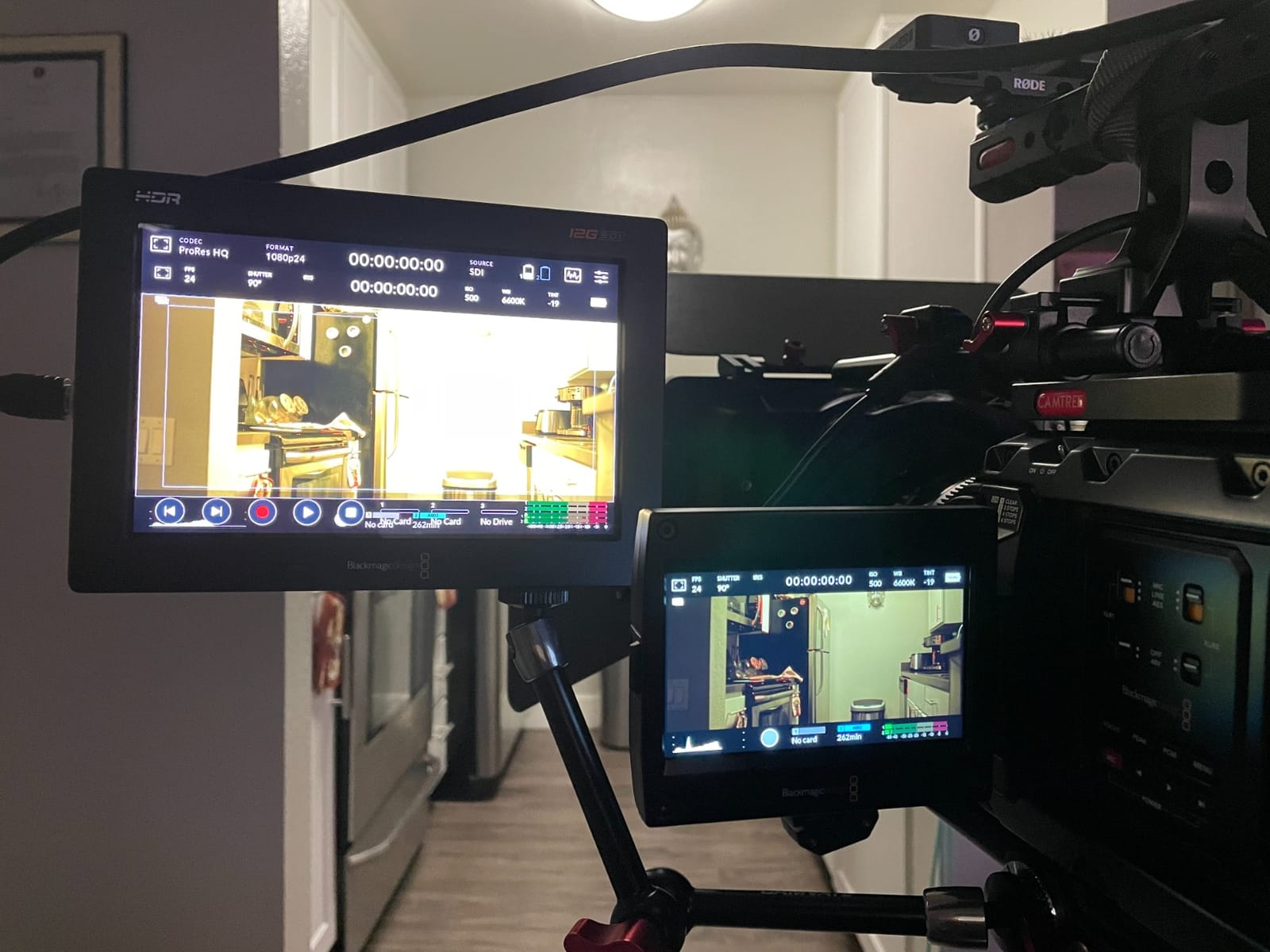
The Blackmagic Video Assist 7 sits at the top of our roundup as the most feature-complete professional monitor-recorder we tested. The 2500 nit display is the brightest in this guide, the 12G-SDI connectivity supports full 4K signals over a single cable, and the recording capability gives you a complete on-set recording and monitoring solution.
We tested the Video Assist 7 with a Blackmagic Pocket Cinema Camera 6K Pro and the integration was seamless. The 12G-SDI connection carried a full 4K signal with zero latency, and the monitor’s built-in 3D LUT support applied our custom BMPCC LUT with accurate color rendering. For Blackmagic camera users, this monitor feels like a natural extension of the camera system.
The HDR monitoring capability is exceptional. At 2500 nits, this monitor displays HDR content with a dynamic range that genuinely shows you what your final graded footage will look like. We compared HDR preview on the Video Assist 7 to our reference grading monitor and the highlight roll-off and shadow detail were remarkably close.

The recording features support multiple codecs and formats. We recorded ProRes and DNxHR footage directly to internal storage, and the USB 3.0 port enabled fast footage transfer to our editing workstation without removing storage media. The mini-XLR audio input allowed us to monitor professional audio sources directly through the monitor.
The 3D LUT implementation supports loading external .cube files for any camera system. We tested it with LUTs for Sony S-Log3, Canon C-Log3, and ARRI Log-C, and all three applied cleanly with accurate preview rendering. The ability to preview multiple log formats on a single monitor makes this an excellent tool for DITs working on multi-camera productions.
Who this monitor is built for
Professional production companies and DITs who need a complete monitoring and recording solution for high-end work will find the Video Assist 7 worth every penny. The 12G-SDI connectivity and HDR recording make it compatible with the most demanding professional workflows.
Blackmagic camera users get a naturally integrated monitoring experience. The Video Assist 7 communicates seamlessly with Blackmagic cameras via SDI, creating a unified monitoring and recording pipeline.
Who should look elsewhere
If you do not need SDI connectivity or recording capability, this monitor is massive overkill. The Atomos Shinobi GO or FeelWorld F6 Pro offer excellent monitoring at a fraction of the cost for HDMI-only workflows.
The Full HD 1920×1080 display resolution may disappoint users who expect 4K pixel density on a monitor at this price point. While the panel quality and HDR performance are excellent, the resolution is lower than what some competitors offer.
How to Choose an On-Camera Monitor with LUT Support?
Choosing the right on-camera monitor with LUT support comes down to understanding your specific shooting needs and matching them to the right combination of features. After testing all 8 monitors in this guide, we have identified the factors that matter most for real-world filmmaking.
1D versus 3D LUT: What You Need to Know
This is a topic that most competing guides gloss over, but it matters for your monitoring accuracy. A 1D LUT maps individual input values to output values along a single axis, controlling tonal response and brightness. It is lightweight and works well for exposure and contrast adjustments. A 3D LUT maps colors across three dimensions, controlling hue, saturation, and luminance simultaneously.
For accurate on-set color preview, you want 3D LUT support. A 3D LUT can reproduce the complex color transformations that happen during professional color grading, while a 1D LUT cannot. All 8 monitors in this guide support 3D LUTs, but the Atomos Shinobi GO uniquely supports both 1D and 3D formats for maximum flexibility.
Screen Size: 5 Inch versus 7 Inch
The 5-inch and 5.5-inch monitors in this guide are ideal for camera-mounted use where weight and rig balance matter. They work well for handheld shooting, gimbal work, and run-and-gun documentary filming. The 7-inch monitors are better suited for director monitoring, client review, and focus pulling where multiple people need to see the screen.
For solo shooters, a 5-inch or 5.5-inch monitor mounted on your camera hot shoe is usually the right choice. For small crews with a dedicated focus puller or for productions where a director needs to monitor the shot, step up to a 7-inch model.
Brightness: Matching Nits to Your Shooting Environment
Brightness is measured in nits, and the right level depends entirely on where you shoot. For indoor and controlled lighting work, 500 to 1000 nits is sufficient. For mixed indoor and outdoor shooting, look for 1200 to 1500 nits. For direct sunlight and harsh outdoor conditions, you need 2000 nits or more.
In our testing, the FeelWorld F5 Pro V4 at 500 nits was usable indoors but struggled outdoors. The Viltrox DC-550 at 1200 nits handled most outdoor situations well. The FeelWorld LUT7 and Atomos Shinobi 7 at 2200 nits were readable in the harshest sunlight we could find. The Blackmagic Video Assist 7 at 2500 nits is the brightest option available.
Connectivity: HDMI versus SDI
Most DSLR and mirrorless cameras output via HDMI, so an HDMI monitor covers the majority of filmmaker needs. Professional cinema cameras from ARRI, RED, and Blackmagic typically output via SDI, which carries signal over longer distances with more robust locking connectors.
If you shoot with a mirrorless or DSLR camera, HDMI is all you need. If you work with professional cinema cameras or in a broadcast environment, SDI connectivity is essential. The Atomos Shinobi 7 and Blackmagic Video Assist 7 both offer SDI, with the Shinobi 7 adding bi-directional HDMI-to-SDI cross conversion.
Recording Capability: Monitor Only versus Monitor Recorder
Some monitors in this guide are display-only devices, while others include internal recording. The Atomos Ninja V records ProRes RAW and ProRes to internal SSD storage, and the Blackmagic Video Assist 7 records multiple professional codecs. If your camera has limited internal recording options or you want to bypass internal compression for maximum quality, a monitor-recorder is a significant upgrade.
If you only need monitoring and your camera already records high-quality footage internally, a monitor-only device saves money and weight. The FeelWorld monitors and Atomos Shinobi models are excellent monitoring tools without the added complexity of recording workflows.
Log Format Compatibility
Different cameras output different log formats, and your monitor needs to support the format you shoot. Sony cameras output S-Log2 and S-Log3. Canon cameras output C-Log and C-Log3. Panasonic cameras output V-Log. ARRI cameras output Log-C. Blackmagic cameras output BMD Film Gen 5.
The Atomos monitors handle log format selection through their AtomHDR system, which includes built-in profiles for all major camera systems. The FeelWorld and Viltrox monitors require you to load the appropriate .cube LUT file for your specific log format. Both approaches work, but the Atomos system is faster when switching between cameras.
Frequently Asked Questions
Do you have to film in log to use LUTs?
No, you do not have to film in log to use LUTs. LUTs can be applied to any footage, including standard Rec.709 video. However, LUTs are most useful with log footage because log video appears flat and washed out without a LUT applied. If you shoot in Rec.709 or standard picture profiles, a LUT is typically used for creative color grading rather than for correcting flat log footage.
What are cinematic LUTs?
Cinematic LUTs are color transformation files designed to give your footage a film-like aesthetic. They adjust color, contrast, and tone to emulate the look of classic film stocks or popular cinema color grades. Cinematic LUTs can be loaded onto compatible on-camera monitors to preview the final look while shooting, or applied during post-production color grading.
What is the best camera monitor for color correction?
The best monitors for color correction offer 3D LUT support, 10-bit color depth, and accurate Rec.709 calibration. In our testing, the Atomos Ninja V and Blackmagic Video Assist 7 deliver the most accurate color preview for on-set color correction. Both support 3D LUT loading and provide professional-grade monitoring tools like waveform and vectorscope.
Do professional photographers use LUTs?
Yes, many professional photographers and videographers use LUTs. While LUTs originated in video and film production, they are increasingly used in photography workflows for consistent color grading across shoots. In video production, professionals use LUTs on set for monitoring and in post-production for efficient color grading across multiple clips.
What is the difference between 1D and 3D LUT monitoring?
A 1D LUT maps individual tonal values along a single axis, controlling brightness and contrast. A 3D LUT maps colors across three dimensions simultaneously, controlling hue, saturation, and luminance. For accurate on-set color preview, 3D LUT support is essential because only 3D LUTs can reproduce the complex color transformations that happen during professional color grading.
Final Thoughts on LUT Monitors for Filmmakers
Finding the best on-camera monitor with LUT support comes down to matching features to your specific production needs. For most independent filmmakers, the Atomos Ninja V offers the best overall combination of HDR monitoring, LUT support, and professional recording capability. The FeelWorld F6 Pro delivers outstanding value with 1600 nit brightness and 32 custom LUT slots at roughly a third of the price. And the FeelWorld F5 Pro V4 remains the best entry point for filmmakers just getting started with log monitoring.
For professional productions requiring SDI connectivity and extreme brightness, the Atomos Shinobi 7 and Blackmagic Video Assist 7 are purpose-built tools that justify their premium pricing. Whatever your budget and shooting style, loading a LUT onto your field monitor transforms how you evaluate exposure and color on set. Once you shoot with LUT monitoring, you will never go back to judging flat log footage blind.
We will keep updating this guide throughout 2026 as new monitors reach the market. If you have questions about which model fits your specific camera and workflow, drop a comment and our team will help you choose.