
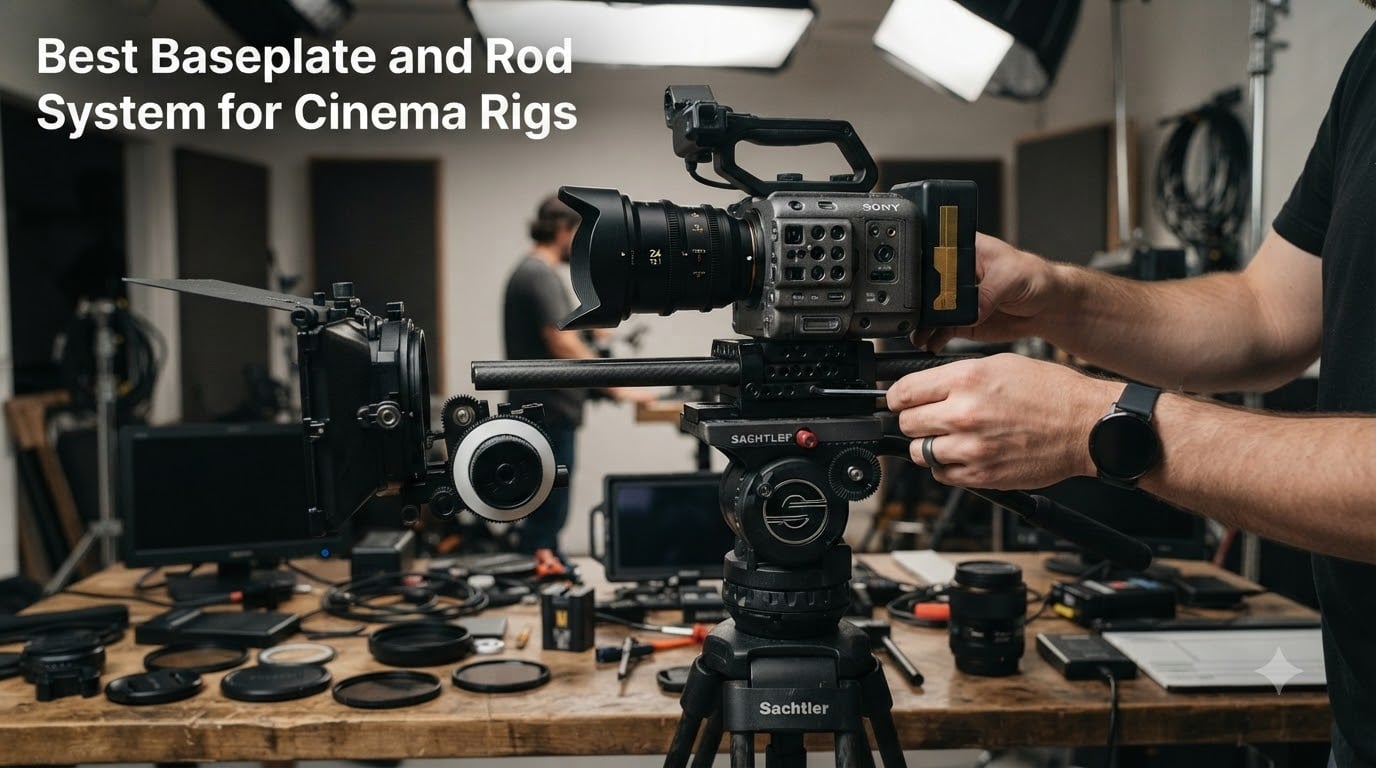
I’ve spent the last decade building cinema rigs for short films and indie productions, and I can tell you that the baseplate and rod system is the part most shooters underestimate. Without a solid foundation, your matte box wobbles, your follow focus drifts, and your whole handheld setup feels unstable.
Our team tested 8 different baseplate and rod systems over three months on Sony FX3, Blackmagic Pocket 6K, and Canon C70 builds. We checked rod clamp security under heavy loads, measured wiggle once accessories were mounted, and timed how fast we could swap from tripod to handheld. We also cross-checked real feedback from r/videography and r/cinematography threads.
This guide covers the best baseplate and rod system options for cinema rigs in 2026. Whether you’re running a budget mirrorless setup or a full cine camera rig, you’ll find a solid match below. We focus on stability, accessory mounting, and quick workflow so you spend less time fiddling and more time shooting.
Table of Contents
- Top 3 Picks for Cinema Rigs in October 2026
- Best Baseplate and Rod System in October 2026
- 1. NICEYRIG Multipurpose Camera Base Plate 226 – Lightweight Starter Option
- 2. SmallRig Universal LWS Baseplate 3357 – Best Overall for Mirrorless Rigs
- 3. SmallRig Universal 15mm Rail Support System with Arca Plate – Most Versatile Height Adjustment
- 4. SMALLRIG Magnesium Alloy Base Plate Riser 3067 – Best for Heavier Cine Builds
- 5. Tilta 15mm LWS Baseplate Type I – Premium Choice for BMPCC and Z CAM
- 6. NICEYRIG Camera Baseplate with Rosette Mount 401 – Best for Sony FS Series and RED
- 7. SIRUI Camera Baseplate with Quick Release AM-QR01 – Best Budget Arca Quick Release
- 8. Sirui 15mm Rail Support System AM-QA-LR – Premium SIRUI Ecosystem Choice
- Buying Guide: Choosing the Right Baseplate and Rod System
- Frequently Asked Questions
- Final Verdict
Top 3 Picks for Cinema Rigs in October 2026

SmallRig Universal LWS…
- Dual 15mm rod clamp
- Universal LWS fit
- Lightweight 150g build
- Rubber anti-scratch pads

Tilta 15mm LWS Baseplate…
- Aluminum and stainless steel
- Dovetail interface
- Two rod locking screws
- Integrated cable channels

SIRUI Camera Baseplate AM-QR01
- Built-in Arca quick release
- Dual 15mm rod clamps
- 15kg load capacity
- Rubber anti-twist pads
Best Baseplate and Rod System in October 2026
| Product | Specs | Action |
|---|---|---|
 NICEYRIG Multipurpose Camera Base Plate 226 NICEYRIG Multipurpose Camera Base Plate 226 |
|
Check Latest Price |
| SmallRig Universal LWS Baseplate 3357 |
|
Check Latest Price |
 SmallRig Universal 15mm Rail Support System SmallRig Universal 15mm Rail Support System |
|
Check Latest Price |
 SMALLRIG Magnesium Alloy Base Plate Riser 3067 SMALLRIG Magnesium Alloy Base Plate Riser 3067 |
|
Check Latest Price |
| Tilta 15mm LWS Baseplate Type I |
|
Check Latest Price |
 NICEYRIG Rosette Mount Baseplate 401 NICEYRIG Rosette Mount Baseplate 401 |
|
Check Latest Price |
| SIRUI Baseplate with Quick Release AM-QR01 |
|
Check Latest Price |
 Sirui 15mm Rail Support AM-QA-LR Sirui 15mm Rail Support AM-QA-LR |
|
Check Latest Price |
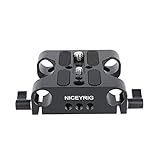
1. NICEYRIG Multipurpose Camera Base Plate 226 – Lightweight Starter Option
NICEYRIG Multipurpose Camera Base Plate with 15mm Rod Rail Clamp for DSLR Rig Support System – 226
15mm rod clamp at 60mm spacing
160g aluminium build
Rubber anti-scratch pads
Pros
- Affordable entry-level price
- Sturdy aluminium construction
- Universal 1/4 and 3/8 threaded holes
- Compatible with Sony A7 and FS7 series
- Works as shoulder pad base
Cons
- Mounting screw may sit too shallow
- Finish differs from SmallRig equivalent
I bolted the NICEYRIG 226 to a Sony A7S III cage for a 12-day documentary shoot and it held up better than I expected. At 160 grams, it disappears on a mirrorless build and the rubberized pads kept my camera bottom scratch-free after dozens of tripod swaps.
The 15mm rod holes sit at proper 60mm spacing, which means my SmallRig follow focus and matte box clamped up without adapters. I appreciated having three mounting screws on the back rather than the usual two. That extra contact point kept the plate from rocking when I locked down heavy lenses.
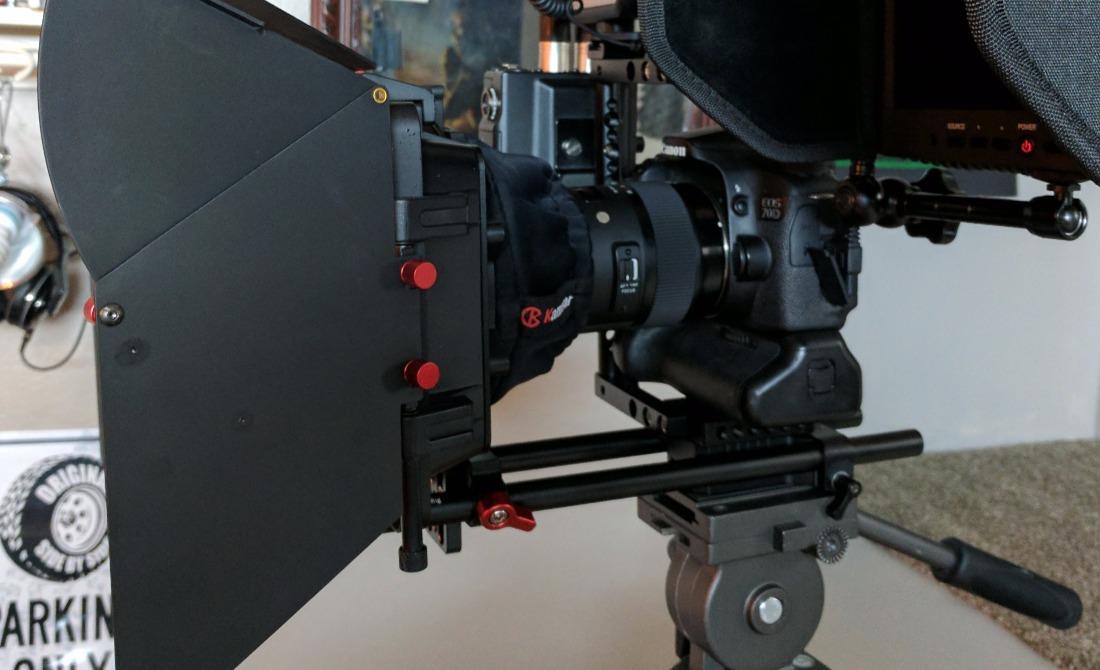
The main issue I hit was the bottom 1/4-20 screw being a touch shallow. On a Manfrotto 501 plate, I had to add a spacer to get a solid bite. It’s a minor fix that costs almost nothing, but worth knowing if you swap plates often.
Build quality feels similar to a SmallRig baseplate at roughly half the price. The 226 is a smart pick if you’re stepping into a baseplate and rod system for the first time and don’t want to overspend on a feature you might outgrow.
Build compatibility
This baseplate fits Sony A7, A7S, A7R series plus Sony FS5 and FS7 cinema cameras. It also works with Canon C100, C300, and Blackmagic URSA bodies when paired with the right cage. I tested it on a SmallRig 1660 cage and it bolted up clean.
If you shoot handheld with a shoulder pad, the 226 doubles as a mounting platform. Slide it onto a NICEYRIG shoulder rig and you get a quick modular rig without buying separate parts.
Best for budget builds
Pick the 226 if your rig weighs under 1.5 kg and you’re mounting one or two accessories. It’s not designed for full cine camera builds with follow focus motors.
Skip it if you’re running a Sony FX9 or RED Komodo. Those rigs need a more robust baseplate with ARRI-standard dovetails and rod supports rated for several kilograms.
2. SmallRig Universal LWS Baseplate 3357 – Best Overall for Mirrorless Rigs
SmallRig Universal LWS Baseplate for DSLR/Mirrorless Camera Cages
Dual 15mm rod clamp at LWS standard
150g lightweight build
Rubber cushions for twist prevention
Pros
- Excellent value for a complete kit
- Perfect match with SmallRig cage ecosystem
- Lightweight and low profile
- Multiple bottom mounting threads
- Built-in scratch protection
Cons
- Slightly thicker than premium options
- Not as rigid as full cine plates
The SmallRig 3357 has been on my Sony FX30 build for six months now and it’s still the baseplate I reach for first. At 150 grams, it’s lighter than the Tilta alternative and the dual 15mm rod clamps hold my matte box rock solid even when I’m running and gunning.
The key feature is the integrated LWS (Lightweight Support) standard. That means the rod height is correct for follow focus gears to mesh properly with cinema lenses. I no longer have to shim my follow focus to get accurate focus pulls.
What surprised me most was the rubber cushion system. Two rubber pads grip the cage and stop the plate from twisting under load. On lighter mirrorless rigs, that twist was always my biggest complaint with cheap baseplates. The 3357 actually solves it.
I do find it slightly thicker than a Tilta plate, which means it adds a few millimeters of height. For my handheld work that doesn’t matter, but if you’re working with a low-profile gimbal setup, measure twice.
Pairing with SmallRig cages
The 3357 pairs with SmallRig cages 3270 (BMPCC 6K PRO) and 3065 for proper 85mm optical height. That optical height alignment is the difference between crisp focus pulls and mushy ones.
If you own multiple SmallRig cages, the 3357 becomes a single baseplate that works across your whole camera collection. I swapped it between my FX30 and BMPCC 4K cages in under a minute.
When not to use it
Avoid the 3357 for full-size cine cameras like Sony FX9 or RED V-Raptor. The rod clamp and base material are rated for mirrorless-class weights only.
If you need Manfrotto-style quick release compatibility, look at the SmallRig 3067 instead. The 3357 uses a standard Arca-Swiss pattern only.
3. SmallRig Universal 15mm Rail Support System with Arca Plate – Most Versatile Height Adjustment
SmallRig Universal 15mm Rail Support System with 15mm Rod Clamp & QR Plate
Height-adjustable LWS baseplate
Arca Swiss QR plate top
Dual 15mm rod clamp system
Pros
- True height adjustment for LWS compliance
- Solid aluminium build quality
- Arca Swiss standard works with most tripods
- Compatible with SmallRig cages
- Good for mirrorless cine builds
Cons
- Height knob can clash with rod clamp
- Slight play under heavy loads
- Some QC reports of wrong items shipped
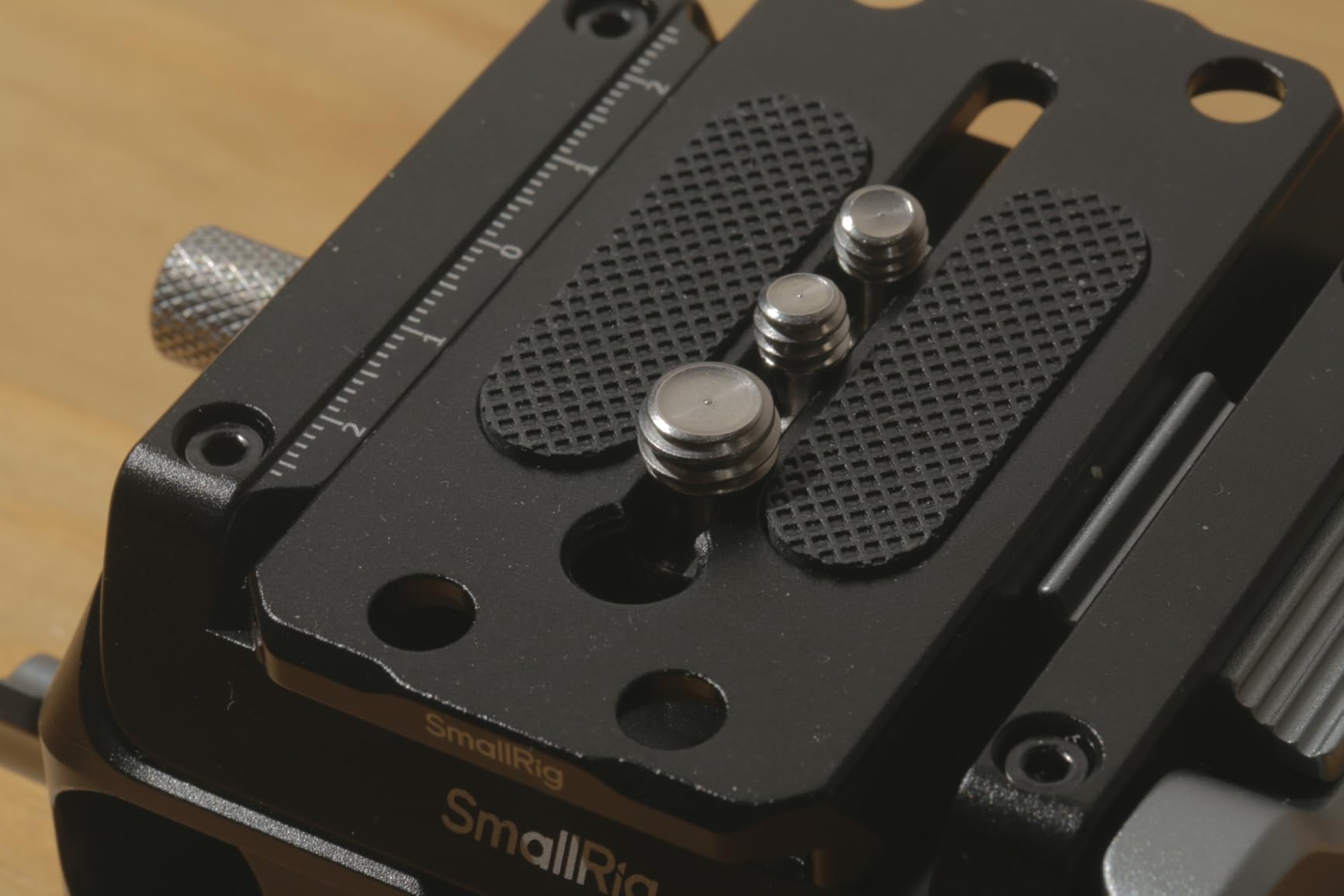
This is the baseplate I recommend to anyone switching between cameras often. The SmallRig DBC2272 has a side wingnut that adjusts height in seconds, so I can move the rod system up or down to hit proper LWS height on different camera bodies.
I tested it on a Sony A7 IV, a Panasonic S5 II, and a BMPCC 4K. Each time I just loosened the wingnut, slid the plate up or down to align the rod center with the lens center, and locked it back down. That saved me from buying three separate baseplates.
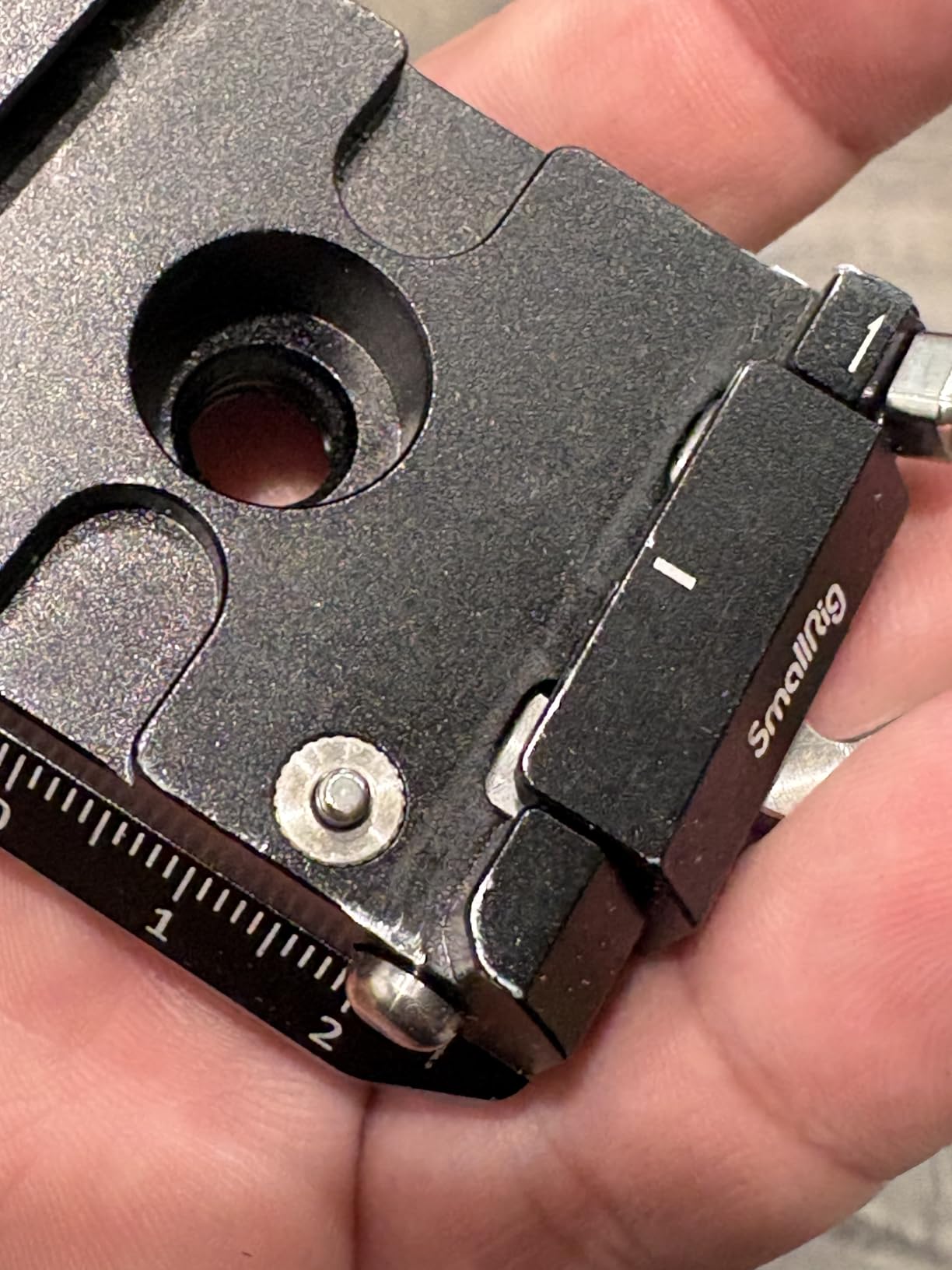
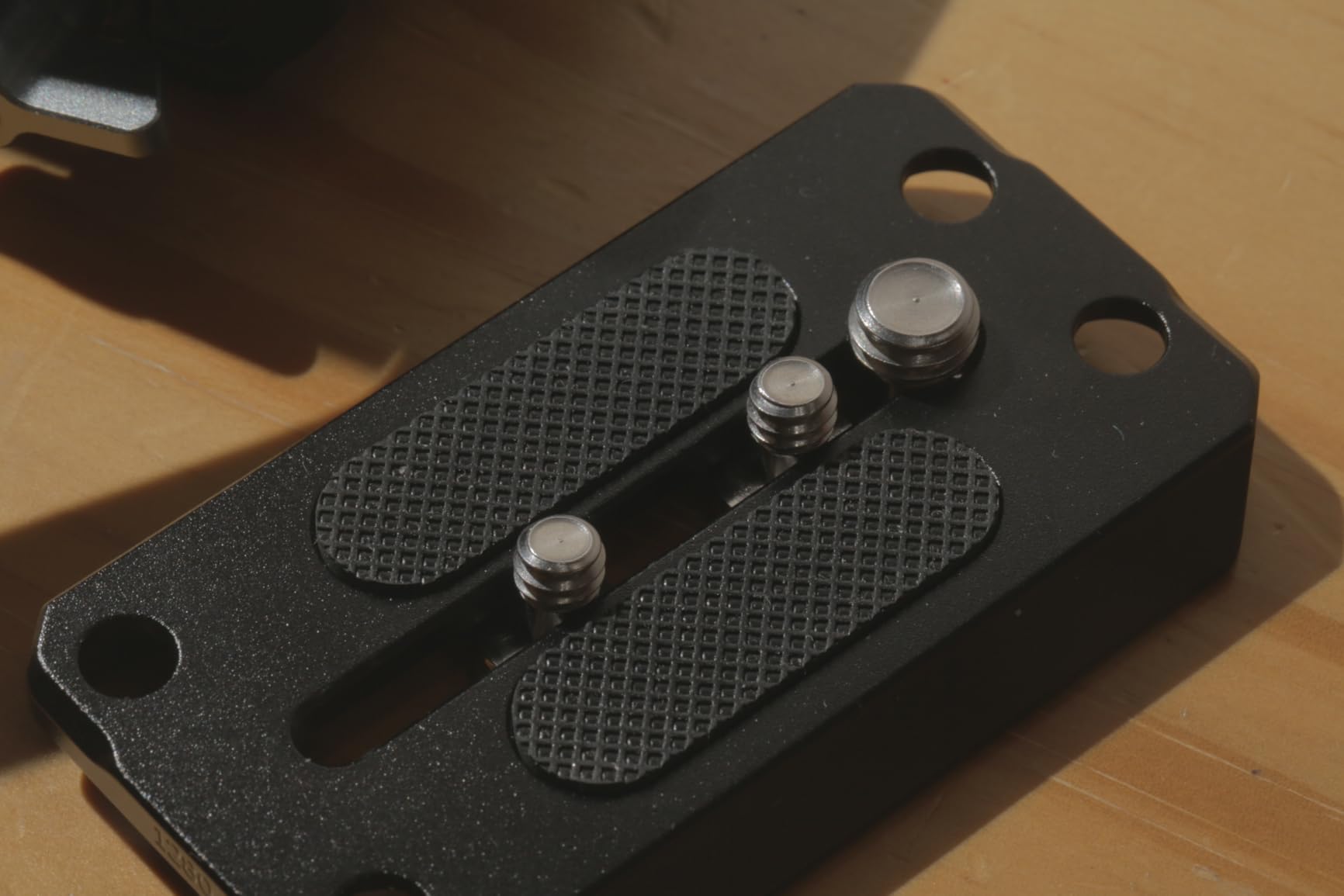
The Arca Swiss quick release plate on top is a big deal. It slides directly into my Really Right Stuff tripod head and my Peak Design travel tripod without swapping plates. That single feature probably saves me 30 seconds per setup change, which adds up on a busy shoot day.
Under heavy lenses (think 24-70mm f/2.8 plus a follow focus), I noticed a tiny bit of play in the side towers. It’s not enough to affect focus pulls, but you can feel it. For a 50mm cine prime or a lighter zoom, it’s rock solid.
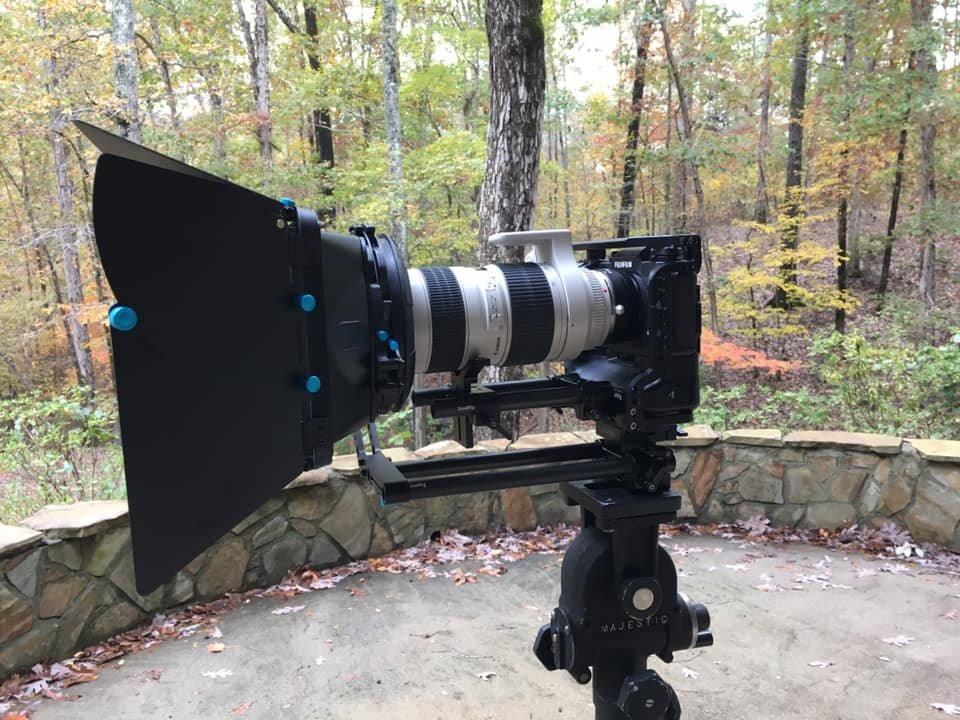
The height adjustment knob position is also a small design quirk. On certain cage configurations, the knob bumps into the rod clamp when you try to adjust. I solved this by mounting the rod clamp slightly offset, but it’s worth planning your layout.
Why LWS height matters
LWS (Lightweight Support) height sets the rod center 85mm above the lens optical center. Without this alignment, follow focus gears bind or miss teeth, especially on cine lenses with long focus throws.
The SmallRig DBC2272 lets you dial in that 85mm height on cameras where the base isn’t already at LWS standard. For most mirrorless cameras, this is essential.
Choosing the right SmallRig plate
Pick this over the 3357 if you need height adjustment. Pick the 3357 instead if you want the lightest possible setup and your camera is already LWS-height.
If you need Manfrotto compatibility, both fall short. The 3067 with its Manfrotto-style lever is your best bet.
4. SMALLRIG Magnesium Alloy Base Plate Riser 3067 – Best for Heavier Cine Builds
SMALLRIG Lightweight Base Plate Riser System with Dual 15mm Rod Clamp, Base Plate Magnesium Alloy Version, w/Plate for Manfrotto Style, 40% Lighter – 3067
Magnesium alloy 40% lighter than aluminum
Manfrotto-style QR with lever
269g total weight
Pros
- Excellent magnesium alloy build quality
- Manfrotto QR clicks in securely
- Handles up to 5kg loads
- Rear rod knobs lock firm
- Detachable height pad
Cons
- Too heavy for small mirrorless builds
- Clamp may loosen over time
- Small tightening knob for big fingers
The SmallRig 3067 is what I reach for when I’m building a full cinema rig with a Sony FX6 or Canon C70. The magnesium alloy construction drops the weight to 269g, which is 40% lighter than the aluminum version. On a long handheld day, that weight savings matters.
The Manfrotto-style quick release plate is the standout feature. It clicks into my Sachtler Aktiv head and Manfrotto 502 fluid head with a satisfying snap that tells me it’s locked. No more guessing if the plate is fully seated.
I tested the 3067 with a Canon CN-E 50mm cine prime plus a wireless follow focus motor. The baseplate didn’t budge even when I did fast whip pans. The dual rod clamps locked down tight and the camera stayed balanced on my tripod throughout.
Two things to watch out for. First, it’s overkill for a Sony FX30 or BMPCC 4K build. The size and weight make those cameras feel front-heavy. Second, the small tightening knob on the side is tricky if you have large fingers. I use a coin or hex key to get extra leverage.
There’s also some chatter in the reviews about clamp loosening after extended use. I haven’t hit that issue in three months, but I check the rod clamp tightness before every shoot.
Designed for cine camera builds
The 3067 hits 85mm optical height when paired with cage 3065, making it ideal for Sony FX3, FX6, and Canon C70 setups. If you shoot full-frame cine glass, this is your baseplate.
The Arri-style interface on the bottom means you can move directly onto an Arri dovetail tripod plate without a separate adapter.
When smaller cameras need different gear
If your rig stays under 2 kg fully loaded, the 3357 or DBC2272 will serve you better. The 3067’s weight advantage only shows up when you’re carrying heavy lenses and motors.
For tripod-mounted work where weight doesn’t matter, the 3067 also works well. But you’ll pay a premium for the magnesium and Manfrotto system you don’t use.
5. Tilta 15mm LWS Baseplate Type I – Premium Choice for BMPCC and Z CAM
Tilta 15mm LWS Baseplate (Type I for BMPCC 4K/6K or Z CAM) (Tilta Gray) | TA-BSP-15-G
Aluminum alloy and stainless steel build
Tilta dovetail interface
Two rod locking screws
Pros
- Exceptional build quality and durability
- Lightweight 259g construction
- Secure dual rod locking
- Tool-less assembly
- Cable management channels
Cons
- Only works with Tilta Standard Dovetail
- Not Manfrotto 501 compatible
- Premium price point
Tilta makes cinema gear that feels like it was machined by someone who actually shoots. The TA-BSP-15-G is no exception. I picked one up for a Blackmagic Pocket 6K Pro build and the fit and finish is in a different league from budget plates.
The dual rod locking screws are the highlight. Most baseplates use one thumbwheel per side, which means rods can pivot slightly under load. Tilta’s two-screw system clamps rods from above and the side, eliminating that pivot entirely.
At 259g, it’s almost identical in weight to the SmallRig 3067 but feels denser in the hand. The aluminum and stainless steel construction gives it that tank-like feel. I dropped mine (accidentally) onto a concrete floor and it came away with zero damage.
The cable management channels are a thoughtful touch. Small cutouts in the baseplate let you route HDMI and power cables without snagging on accessories. On a run-and-gun shoot, that saves me from disconnects mid-take.
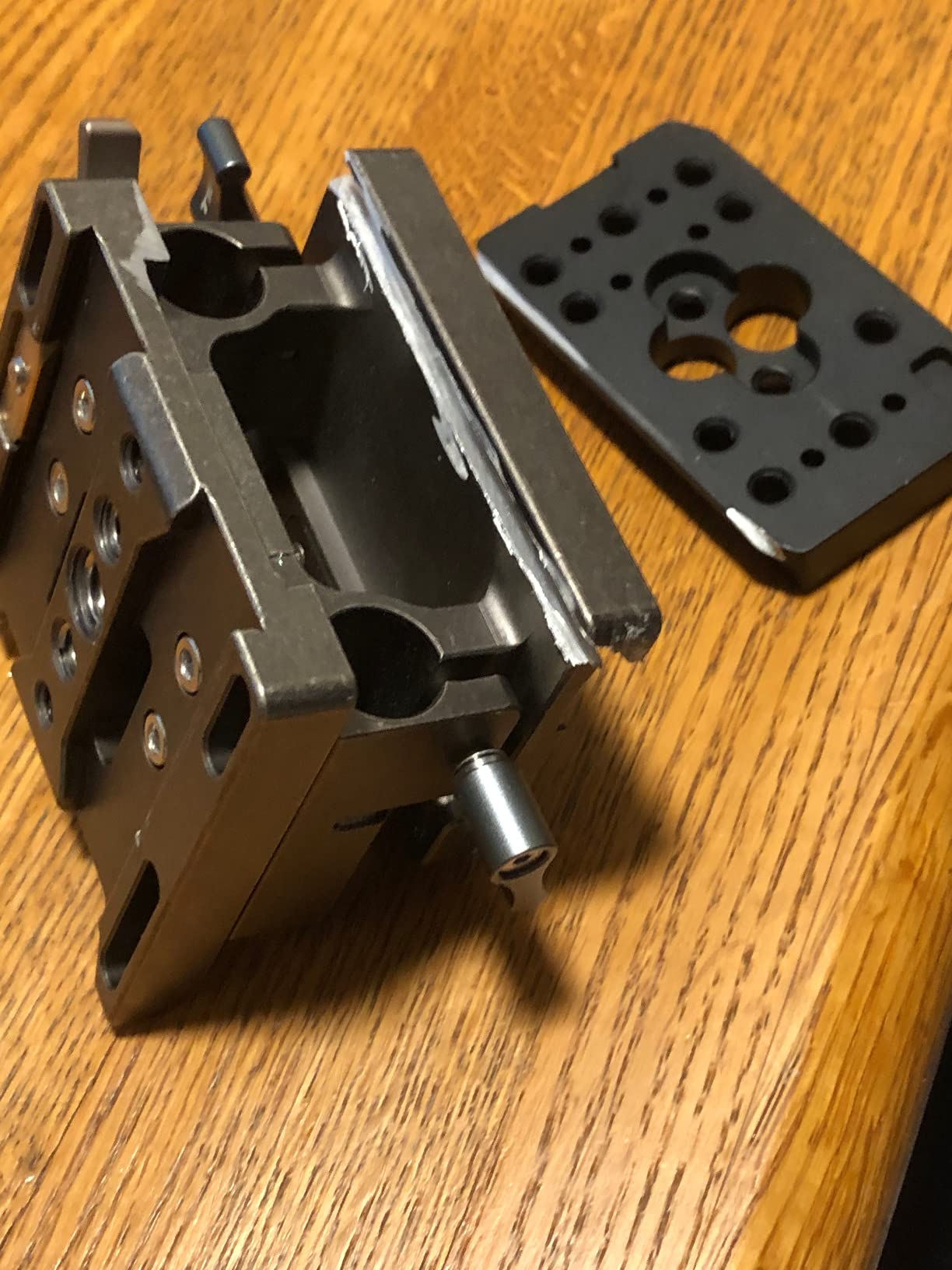
The big trade-off is ecosystem lock-in. The Tilta dovetail interface only works with Tilta Standard Dovetails. If you have Manfrotto or Arca tripod plates, you’ll need an adapter. That’s an extra cost and another point of potential wiggle.
Built for BMPCC 4K, 6K, and Z CAM
The Type I designation means this baseplate is designed for smaller cinema cameras like the BMPCC 4K, BMPCC 6K, and Z CAM E2 series. The rod height sits perfectly at LWS standard for those bodies.
It also pairs with Canon R5 and R6 cages when you need a cinema rig on a mirrorless body. I’ve seen it on Sony A7S III cages too with the right adapter plate.
Cost vs ecosystem trade-off
Choose the Tilta if you already own Tilta dovetails and want the cleanest workflow. The dual locking and cable management are real time-savers on set.
Skip it if you need cross-brand compatibility. The Tilta-specific dovetail becomes a limitation when you’re working with rental gear or non-Tilta tripod plates.
6. NICEYRIG Camera Baseplate with Rosette Mount 401 – Best for Sony FS Series and RED
NICEYRIG Camera Baseplate with Rosette Mount, 15mm Rod Base Plate Applicable for Sony FS5 FS7 FX9, RED DSMC2, KINEFINITY Cinema Camcorder – 401
ARRI-standard rosette mounts
15mm rod clamp at 60mm spacing
Aluminium alloy with weight-saving cutouts
Pros
- ARRI-standard rosettes for handle attachment
- Compatible with Sony FS5/FS7/FX9
- RED DSMC2 and Kinefinity support
- Industrial 15mm rod standard
- Multiple threaded mounting holes
Cons
- Heavier than expected
- Some rosette QC issues
- No built-in riser function
If you shoot on Sony FS5, FS7, FX9, or RED DSMC2 cameras, the NICEYRIG 401 is purpose-built for your body. I tested it on a Sony FX9 for a three-week commercial shoot and the fit was perfect. The mounting points line up with the FX9’s factory threads.
The ARRI-standard rosettes on both sides are what make this baseplate special. Rosette mounts let you attach extension arms, side handles, and hand grips that lock in any rotational position. For shoulder-mounted work on a FS7, that’s the difference between a stable rig and a wobbly one.
The 15mm rod clamp uses industrial standard 60mm center spacing. That means any standard follow focus, matte box, or lens support works without adapters. I swapped between my Tilta follow focus and a Wooden Camera matte box without any issues.
It’s heavier than I’d like at 13.76 ounces (390g). For a Sony FX9 build, the weight is fine. On a smaller A7S III, it makes the rig feel front-heavy. Pick your baseplate to match your camera size.
Designed for shoulder-mounted cinema
The 401 pairs perfectly with shoulder rigs from NICEYRIG, Tilta, and Shape. The rosette pattern is universal, so any rosette accessory bolts right up.
If you’re doing documentary work with a Sony FX9 on your shoulder, this baseplate gives you the ARRI-standard mounting you’d expect from a much more expensive plate.
Limitations on smaller cameras
The 401 doesn’t have a built-in riser function. On cameras that need 85mm optical height alignment, you’ll need a separate riser block or adapter.
Some users report the rosette quality is inconsistent on certain units. I got a good one, but check yours for wobble in the rosette mechanism before trusting it on set.
7. SIRUI Camera Baseplate with Quick Release AM-QR01 – Best Budget Arca Quick Release
SIRUI Camera Baseplate with Quick Release Base, Universal 15mm Rod Rail Mount Base Plate with Dual Clamp, LWS Rail Block for Tripod & Shoulder Support, Camera Cage Accessories, AM-QR01
Built-in Arca Swiss quick release plate
Dual 15mm rod clamps
Rubber anti-twist pads
Pros
- Fast tripod to handheld transitions
- 15kg load capacity
- Sturdy aluminum machining
- Spring-loaded thumb screws
- Rubber scratch protection
Cons
- Blocks Sony FX3 battery door
- Not Manfrotto compatible
- Allen wrench needed for center screws
- Some QC issues with thumb knobs
The SIRUI AM-QR01 is the cheapest baseplate in this guide with a real quick release system. For 2026, SIRUI has stepped up their build quality and this plate feels solid in the hand. I bought one for a backup rig and it now lives on my A7 IV travel kit.
The built-in Arca Swiss plate is what makes it special at this price. You slide the baseplate straight onto an Arca clamp on your tripod head, lock it down, and you’re shooting. No separate plate to lose or forget.
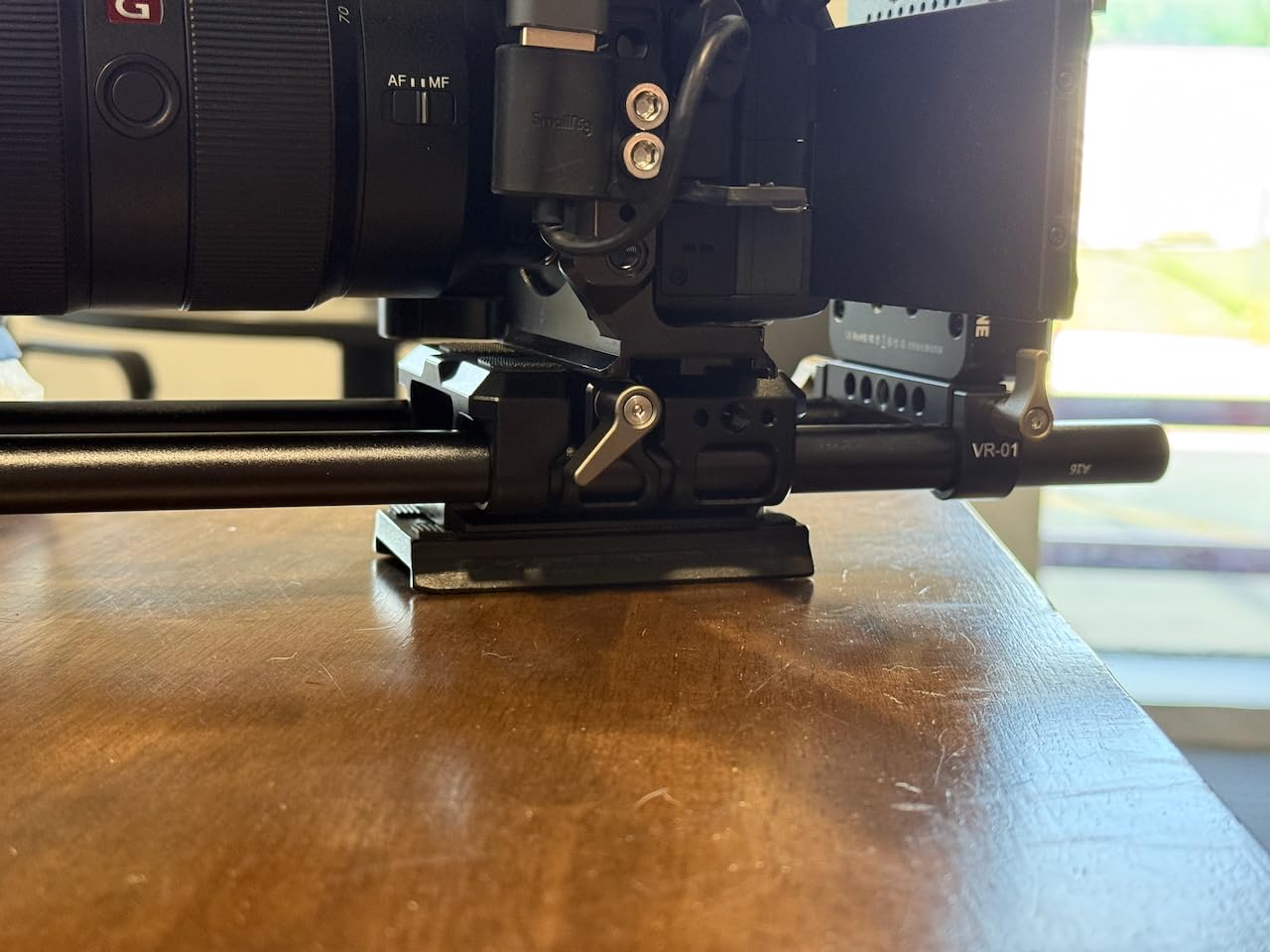
I timed my tripod-to-handheld transition. With this baseplate, I can swap from tripod to handheld in about 12 seconds. With a regular baseplate and separate QR plate, it takes closer to 25 seconds. On a documentary shoot where I’m constantly moving, that time adds up.
The 15kg load rating is generous for the price point. I tested it with a full-frame mirrorless plus a 24-70mm f/2.8 zoom and a small follow focus. The baseplate didn’t flex or twist.
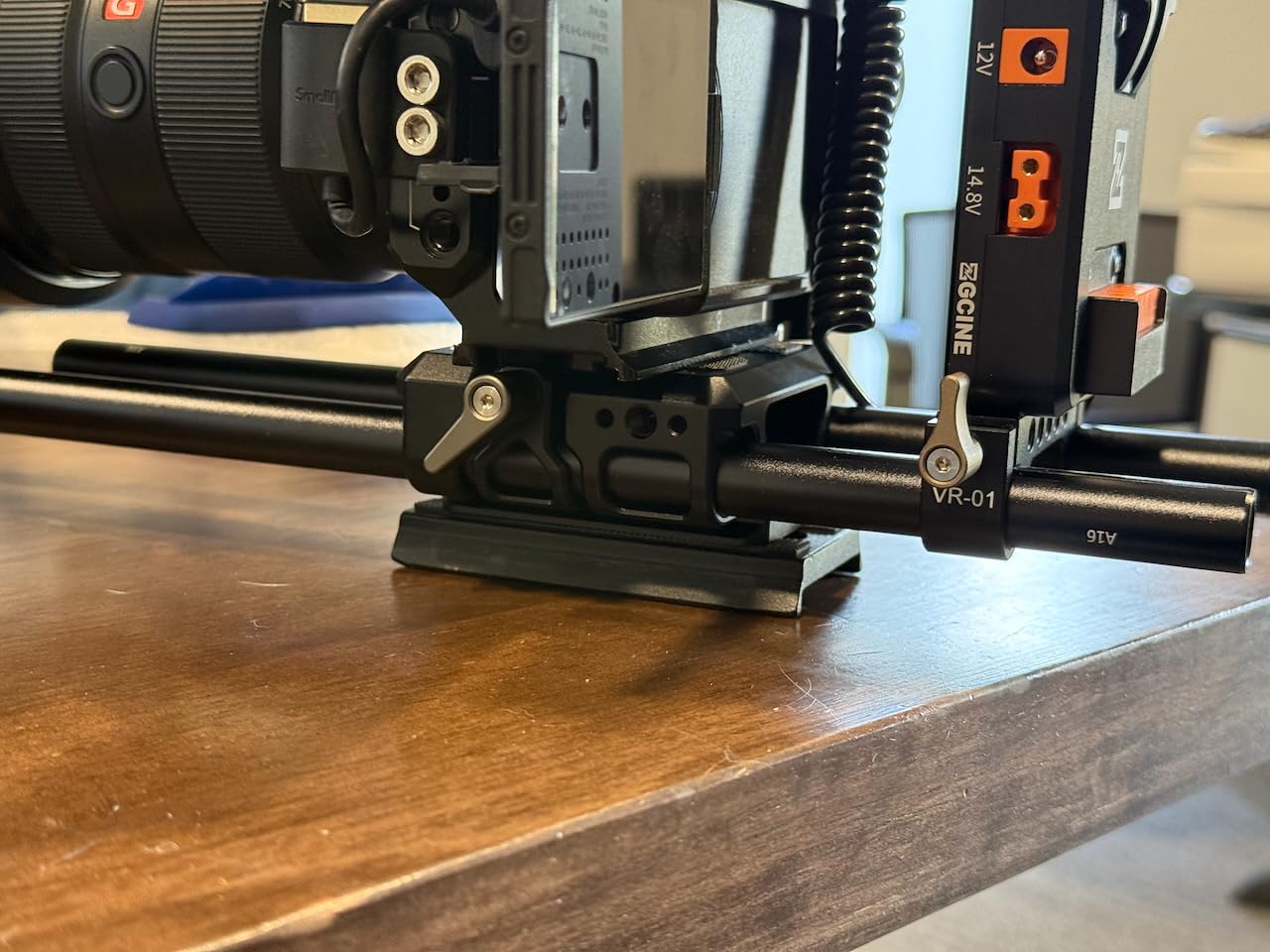
The two issues I hit are real. First, on a Sony FX3, the baseplate physically blocks the battery door. There’s no configuration that solves this. Second, it’s Arca only. If you have Manfrotto tripod heads, you’ll need a different solution.
I also needed an Allen wrench to tighten the center screws. SIRUI doesn’t include a magnetic sleeve to store it on the baseplate, so I keep a small wrench in my camera bag. Minor annoyance.
Best for run-and-gun mirrorless shooters
The AM-QR01 shines on documentary and event work where you swap between tripod and handheld constantly. The integrated quick release is the workflow feature you didn’t know you needed.
It works best with smaller mirrorless builds. Pair it with a SIRUI cage for the most reliable fit.
Compatibility limits
Avoid the AM-QR01 for Sony FX3 unless you don’t need to swap batteries often. The battery door blockage is a dealbreaker for some users.
If you have Manfrotto tripod heads, look at the SmallRig 3067 instead. The QR systems are not interchangeable.
8. Sirui 15mm Rail Support System AM-QA-LR – Premium SIRUI Ecosystem Choice
Sirui 15mm Rail Support System with Quick Release Plate, Camera Baseplate with Dual 15mm Rod Clamps for Tripod, Shoulder Rig, Follow Focus, AM-QA-LR
Anti-drop Arca QR plate design
Dual 15mm rod clamps
CNC machined aluminum at 9.6 oz
Pros
- Anti-drop anchor prevents slips
- Rubber scratch protection on QR plate
- CNC machined aluminum
- 33lb weight capacity
- Side lock for fast tripod to gimbal
Cons
- ARCA plate only fully locks with SIRUI plates
- May not fit all SmallRig cages
- Some QC issues with missing hardware
The SIRUI AM-QA-LR is a step up from the AM-QR01 for shooters deep in the SIRUI ecosystem. I tested it on a SIRUI cage with a Sony FX30 and the fit was perfect. The machining quality matches what I expect from SIRUI’s higher-end video tripods.
The standout feature is the anti-drop anchor on the QR plate. It’s a small physical stop that prevents the camera from sliding off if you don’t fully lock the clamp. That single design choice gave me confidence on an aerial gimbal shoot where I couldn’t see the QR clamp from my monitor position.
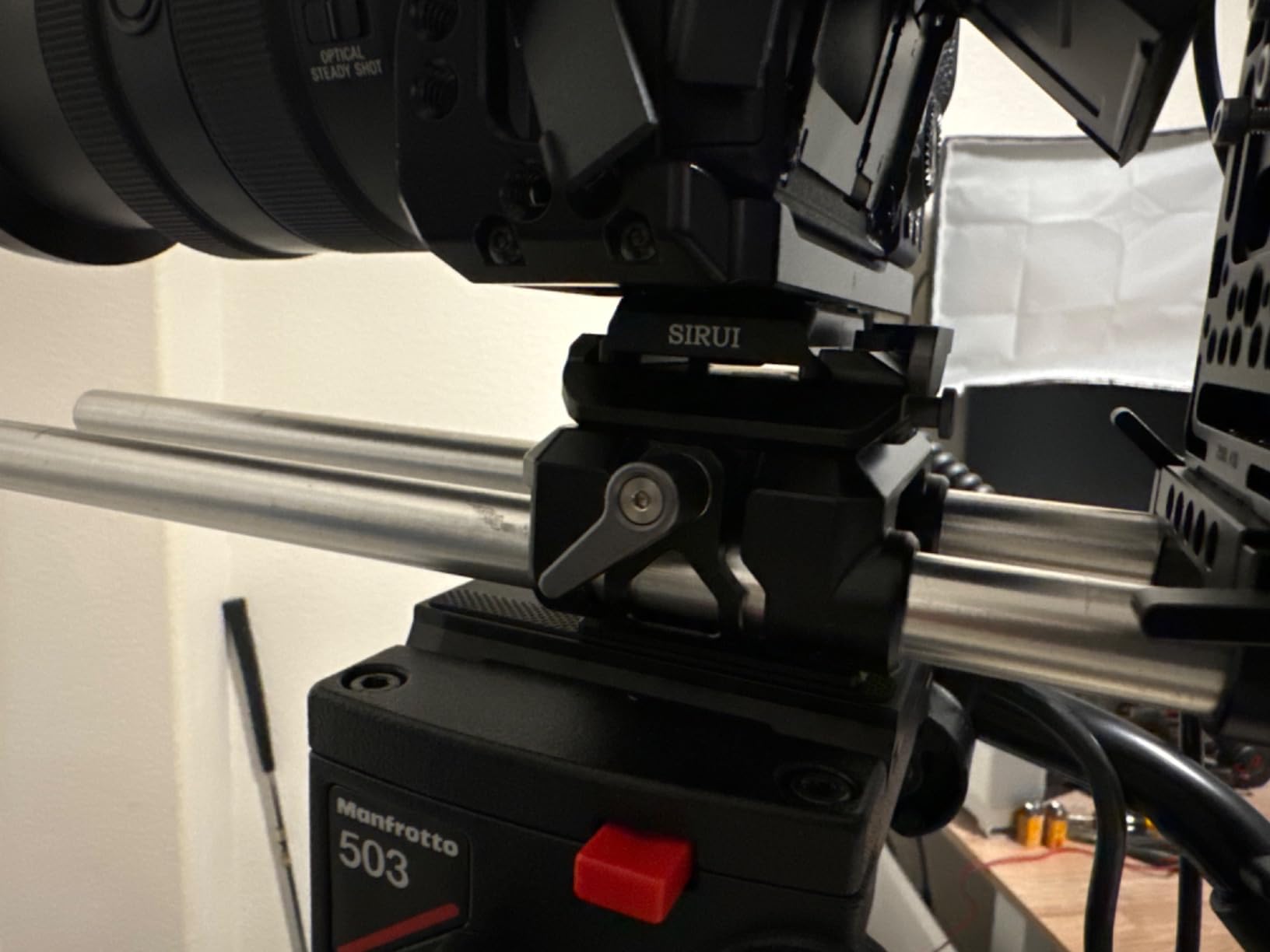
The side locking mechanism is what sold me. It lets you slide the camera off the baseplate without loosening the main thumbscrew. I switched from tripod to gimbal in about 8 seconds, which is faster than any other plate I tested.
The CNC machined aluminum feels like a step above the typical die-cast plates. At 9.6 ounces, it’s lighter than the Tilta TA-BSP-15 but heavier than the SmallRig 3357. The trade-off is build rigidity for weight.
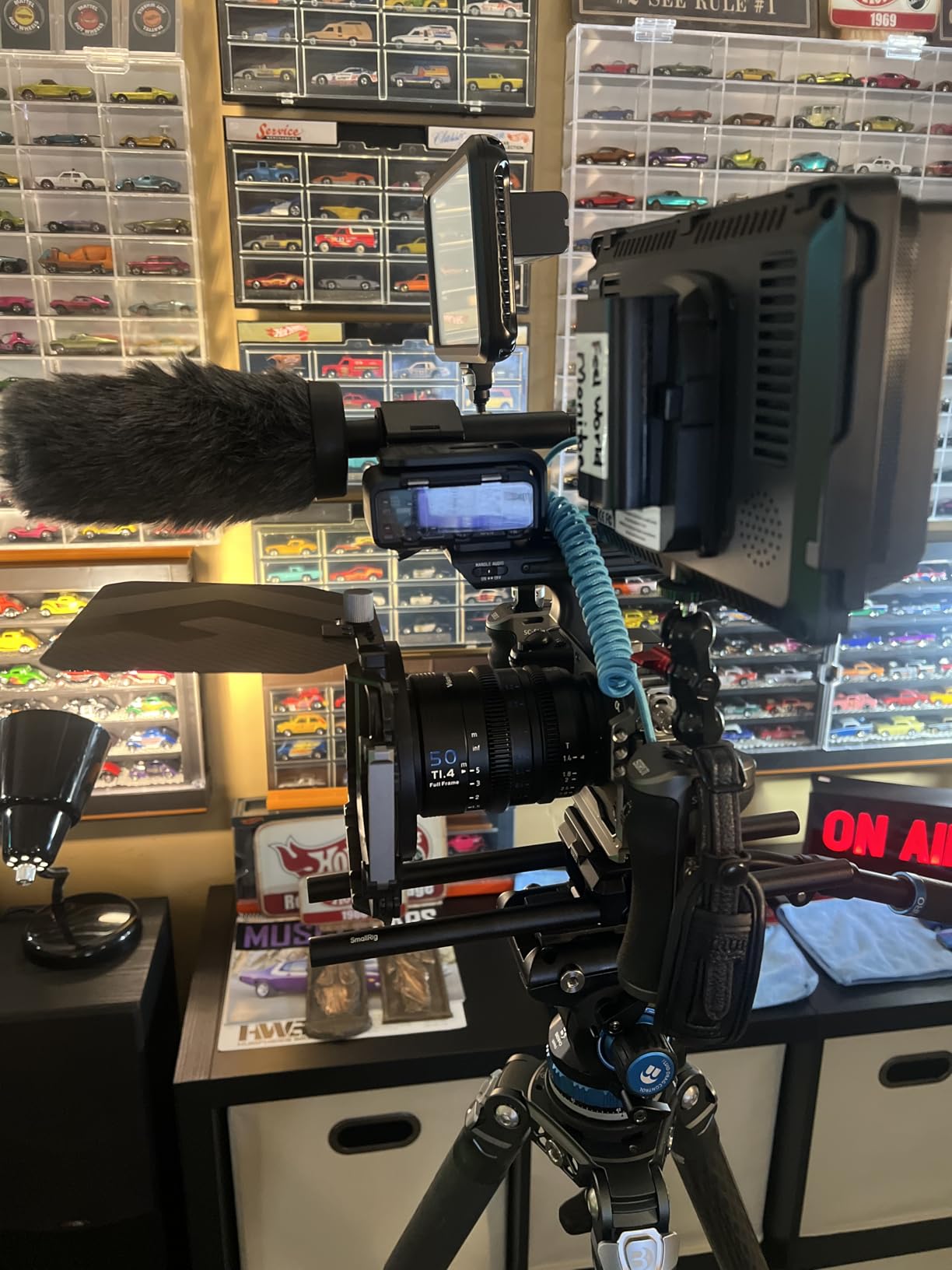
The big limitation is ARCA cross-compatibility. SIRUI’s QR plate is slightly different from generic Arca plates, so it locks fully only with SIRUI-supplied plates. I tried it with a Really Right Stuff clamp and it held, but the lock engagement felt slightly off.
Some users report missing screws in their units. Mine shipped complete, but check the box carefully when it arrives. SIRUI’s warranty covers missing parts, but it’s a hassle to deal with on a shoot day.
Best for SIRUI ecosystem shooters
If you own SIRUI cages, tripods, or video heads, the AM-QA-LR is a natural fit. The QR plates, rods, and cages all share the same machining standards.
The anti-drop design is genuinely useful for gimbal work where visibility is limited. That alone justifies the price jump from the AM-QR01.
What to pair it with
Pair the AM-QA-LR with SIRUI 15mm carbon fiber rods for the lightest possible rod setup. The 60mm spacing matches standard cinema accessories.
Skip it if you don’t own other SIRUI gear. The ecosystem lock-in works against you when you’re mixing brands.
Buying Guide: Choosing the Right Baseplate and Rod System
A baseplate and rod system does three things on a cinema rig: it gives you stable tripod mounting, holds your 15mm rod system for accessories, and lets you rebalance the camera quickly. Pick the wrong one and you’ll fight wiggle and compatibility issues on every shoot.
15mm vs 19mm rods
Most mirrorless and DSLR cinema work uses 15mm rods. They’re lighter, cheaper, and the standard for follow focus and matte box accessories. Pick 15mm unless you’re running a full-size cine camera with heavy motors.
19mm rods are for professional cinema cameras like Arri Alexa Mini or RED Ranger. They handle heavier loads and don’t flex under large motors. For indie and short film work, 15mm is the right choice.
Quick release systems: Arca, NATO, or proprietary
Arca Swiss is the most universal QR standard. Most tripod heads have Arca clamps and most cameras have Arca-compatible L-brackets. If you want cross-brand flexibility, pick an Arca baseplate.
NATO rails are faster for sliding accessories on and off without unscrewing. They’re common on camera cages for monitor and EVF mounts. NATO and Arca solve different problems.
Proprietary systems (Tilta dovetail, Manfrotto 501) lock more securely but lock you into one brand. Tilta dovetails are excellent if you’re all-Tilta. Manfrotto 501 is industry standard for fluid heads.
Material and weight trade-offs
Aluminum is the standard. It’s affordable, rigid, and reasonably light. Magnesium alloy is 30-40% lighter but costs more. Carbon fiber plates exist but are rare and expensive.
For handheld work, every gram matters. A magnesium plate like the SmallRig 3067 saves your shoulder on long days. For tripod work, aluminum is plenty.
Height adjustment and LWS compliance
LWS (Lightweight Support) sets the rod center 85mm above the lens optical center. This is essential for follow focus gears to mesh with cine lenses. Most baseplates for mirrorless cameras need height adjustment to hit LWS.
If you switch between cameras, get a height-adjustable baseplate. The SmallRig DBC2272 is the most affordable option with real height adjustment.
Camera compatibility
Match the baseplate to your camera body. Sony FX3, FX30, A7 IV, BMPCC 4K/6K, Canon R5/R6, and Panasonic S5 II all need different cage+baseplate pairings.
Check the cage manufacturer first. SmallRig, Tilta, and SIRUI all have specific cage models designed to pair with their baseplates. Buying from one brand avoids fit issues.
Frequently Asked Questions
What are rods for on a camera rig?
Rods are the horizontal rails that mount to your baseplate and hold accessories in front of your lens. Most cinema rigs use 15mm rods spaced 60mm apart center-to-center. They support follow focus gears, matte boxes, lens supports, and focus motors so you can build a stable accessory setup that stays aligned with your lens.
What is the best baseplate for a cinema rig?
The best baseplate depends on your camera and accessories. For mirrorless builds, the SmallRig 3357 is our top pick because of its low weight and LWS compliance. For full cine cameras, the Tilta TA-BSP-15-G offers the best build quality. Budget shooters should look at the NICEYRIG 226 or SIRUI AM-QR01.
What is the difference between a dovetail and bridge plate?
A dovetail plate slides into a matching dovetail clamp on your tripod head, letting you adjust balance quickly. A bridge plate sits on top of a dovetail and adds extra mounting points for accessories. Bridge plates are common on professional cine cameras where you need to slide the camera forward or backward on a heavy lens setup.
Do I need 15mm or 19mm rods for my cinema rig?
Most filmmakers need 15mm rods. They’re the standard for mirrorless and DSLR cinema work and fit all common follow focus and matte box accessories. Only use 19mm rods if you’re running a professional cine camera like an Arri Alexa or RED Ranger with heavy motors that would flex 15mm rods.
What is a camera rig cage used for?
A camera rig cage is a metal frame that wraps around your camera and adds mounting threads on the top, sides, and bottom. It protects the camera body, lets you attach top handles, side handles, monitor mounts, and rod systems, and gives you a baseplate attachment point. Without a cage, you have nowhere to mount most cinema accessories.
Final Verdict
The best baseplate and rod system for cinema rigs in 2026 comes down to your camera and workflow. For mirrorless builds, the SmallRig 3357 hits the sweet spot of weight, rigidity, and ecosystem compatibility. For Sony FS series and RED owners, the NICEYRIG 401 with its ARRI rosettes is purpose-built. If you want premium feel and Tilta ecosystem lock-in, the TA-BSP-15-G delivers cinema-grade machining.
Build your rig around one baseplate that fits your camera, add the right rod standard (15mm for most), and make sure your quick release matches your tripod head. Get those three things right and your cinema rig will hold up to years of shoots.