
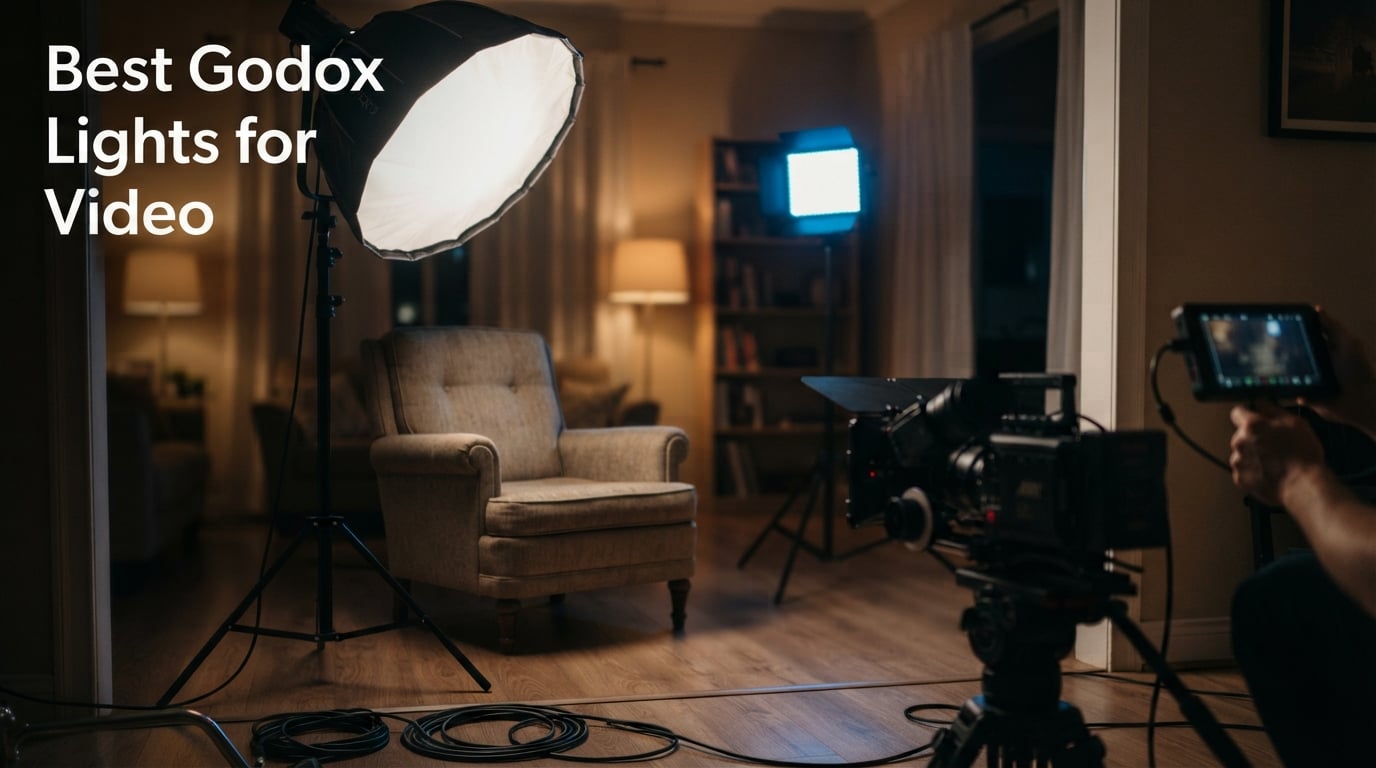
Ask any filmmaker what separates footage that looks like a home video from footage that looks like a film, and the answer is almost never the camera. It’s the light. An entry-level mirrorless body lit properly will beat a cinema camera lit by a ceiling bulb every single time — and that’s exactly why Godox has quietly taken over independent film sets, YouTube studios and one-person production companies over the last few years.
Godox built its reputation by delivering 80% of the performance of high-end brands for roughly a quarter of the price. Their continuous LED lineup now spans everything from a compact daylight workhorse to 300W-plus studio monolights with DMX control. The problem is that the range has grown so fast that the model names — SL, ML, LE, Litemons, KNOWLED — have become genuinely confusing, even for people who already own a couple of them.
This guide sorts it out. We analysed ten of the most popular continuous LED lights currently available, comparing power output in lux (not just marketing wattage), color accuracy (CRI and TLCI), mount compatibility, fan noise, power flexibility and thousands of verified customer reviews. We’ve ranked them by the job they actually do on a set — key light, fill, accent, run-and-gun — and included two well-regarded non-Godox alternatives so you can see honestly where Godox wins and where it doesn’t.
If you’re also kitting out the rest of your video rig, our 8 best tripods for video roundup covers the stands these lights sit on, and the shotgun microphone guide pairs naturally with any of the lights below.
[KEY_TAKEAWAYS]
The Godox SL150III is the best all-round video light for most filmmakers: 160W, 73,600 lux, CRI 96+ and a genuine Silent Mode for dialogue scenes.
If you’re buying your first proper light, the Godox SL-60W is still the best value entry point in the entire category.
Bi-color (2800K–6500K) models like the Litemons LE200Bi are worth the small premium — matching mixed household and window light is far easier than gelling a daylight-only fixture.
Look for CRI 95+ and TLCI 95+. Below that, skin tones shift and no amount of colour grading fully recovers them.
Bowens mount is the feature that matters most long-term: it opens up thousands of affordable softboxes, grids and beauty dishes from any brand.
Only the ML-series and battery-grip kits run off V-mount, NP-F or USB-C power — mains-only fixtures will limit location shooting.
[/KEY_TAKEAWAYS]
Table of Contents
- Our Top 3 Godox Lights for Video at a Glance for September 2026
- Best Godox Lights for Video at a Glance for September 2026
- The Best Godox Lights for Video, Reviewed
- 1. Godox SL150III — Best Overall
- Godox SL150III 160W LED Video Light
- Who the SL150III suits
- Where the SL150III falls short
- 2. Godox SL-60W — Best Budget Godox Light
- Godox SL-60W Daylight LED Video Light
- Who the SL-60W suits
- Where the SL-60W falls short
- 3. Godox Litemons LE200Bi — Best Bi-Color Value
- Godox Litemons LE200Bi 220W Bi-Color COB LED
- Who the LE200Bi suits
- Where the LE200Bi falls short
- 4. Godox Litemons LE300Bi — Best High-Output Studio Key
- Godox Litemons LE300Bi 315W Bi-Color COB LED
- Who the LE300Bi suits
- Where the LE300Bi falls short
- 5. Godox ML100R Kit with 60cm Softbox — Best RGB Kit
- Godox ML100R 110W RGB LED Kit with 60cm Softbox
- Who the ML100R kit suits
- Where the ML100R kit falls short
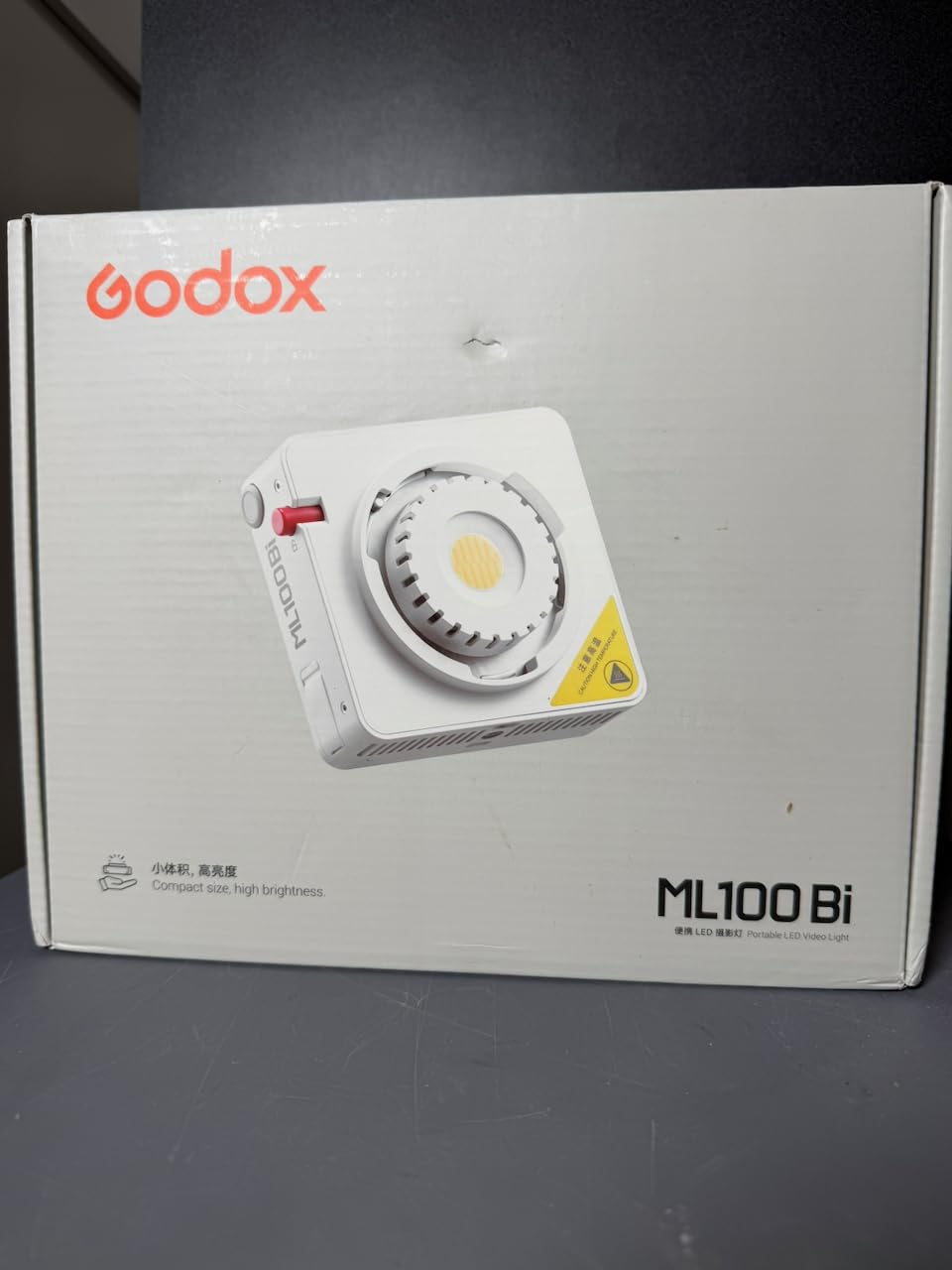
- 6. Godox ML100Bi — Best Compact Bi-Color
- Godox ML100Bi 100W Portable Bi-Color LED Light
- Who the ML100Bi suits
- Where the ML100Bi falls short
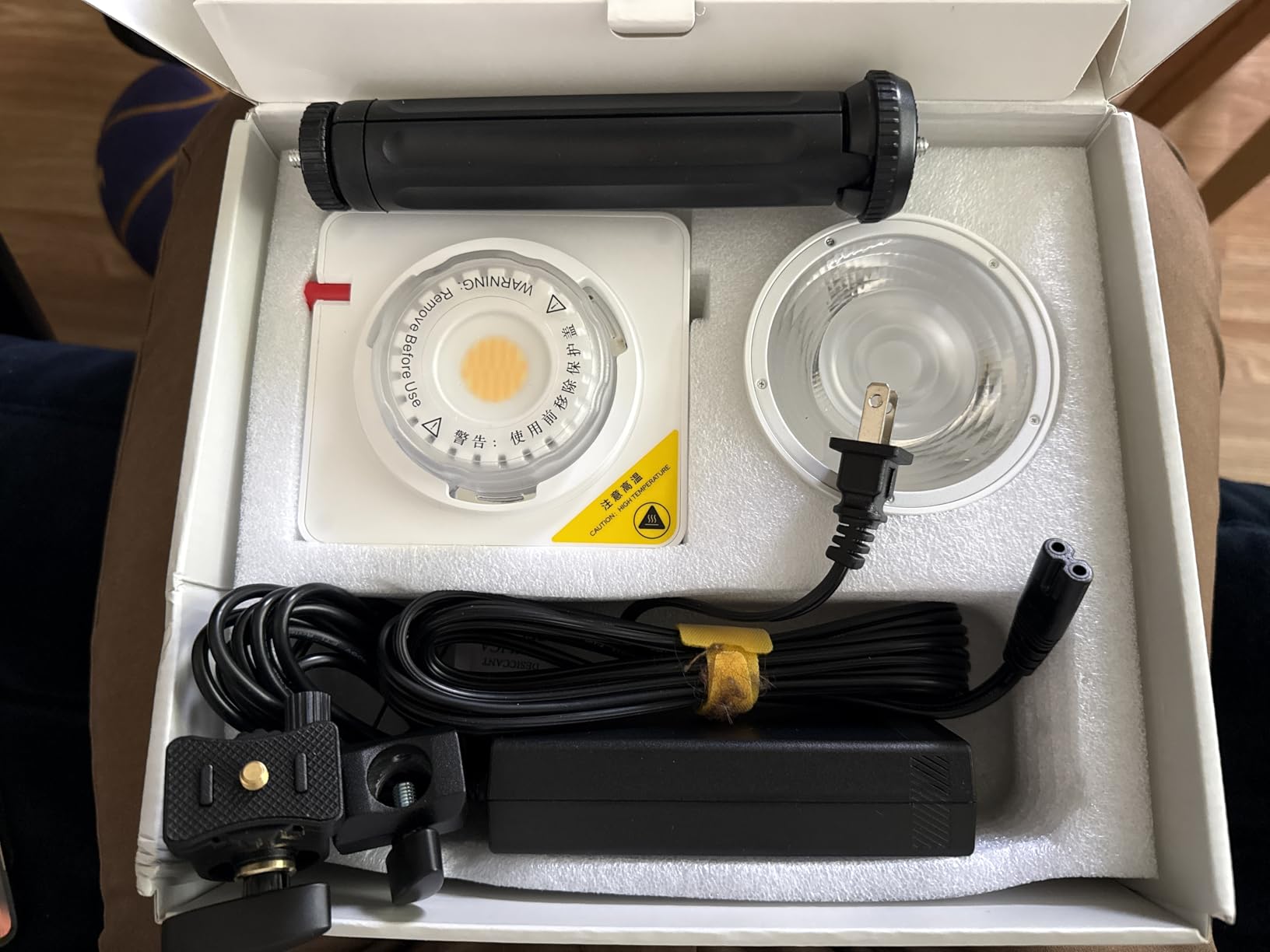
- 7. Godox ML100Bi Kit with Battery Grip — Best for Off-Grid Shooting
- Godox ML100Bi Kit 120W LED Light with Battery Grip
- Who the ML100Bi kit suits
- Where the ML100Bi kit falls short
- 8. Godox ML100R 110W RGB — Best for Creative Color
- Godox ML100R 110W RGB COB LED Video Light
- Who the ML100R suits
- Where the ML100R falls short
- 9. NEEWER MS60C RGBWW — Best RGB Alternative
- NEEWER MS60C RGBWW 65W LED Video Light
- Who the MS60C suits
- Where the MS60C falls short
- 10. NEEWER MS60 — Best Budget Alternative
- NEEWER MS60 65W Daylight Mini COB LED Light
- Who the MS60 suits
- Where the MS60 falls short
- How to Choose the Right Godox Light for Video?
- Three Godox Lighting Setups for Short Films
- Mistakes to Avoid When Buying Godox Video Lights
- Frequently Asked Questions
- Which Godox light is best?
- What is the best LED light for video shooting?
- What is the best lighting setup for video recording?
- What are the best lights for videography?
- Do Godox lights work with softboxes from other brands?
- Can Godox continuous lights run on battery power?
- Is a Godox light bright enough for daylight interiors?
- Final Verdict
Our Top 3 Godox Lights for Video at a Glance for September 2026

Godox SL150III 160W LED…
- 160W LED output
- 73600 lux at 1m
- CRI 96+ / TLCI 97+
- Silent Mode operation
Godox SL-60W Daylight LED…
- 60W LED output
- 5600K daylight
- Bowens mount
- RC-A5 wireless remote
Godox Litemons LE200Bi…
- 220W bi-color COB
- 57700 lux at 1m
- CRI 98+ / TLCI 98+
- DMX and CRMX compatible
Best Godox Lights for Video at a Glance for September 2026
Here’s how the ten lights compare on the specs that change what you can shoot. Note that lux figures are measured at one metre with the standard reflector fitted — add a softbox and expect to lose roughly one to two stops.
| Product | Specs | Action |
|---|---|---|
| Godox SL150III 160W LED Video Light |
|
Check Price |
| Godox SL-60W Daylight LED Video Light |
|
Check Price |
| Godox Litemons LE200Bi 220W Bi-Color COB LED |
|
Check Price |
 Godox Litemons LE300Bi 315W Bi-Color COB LED Godox Litemons LE300Bi 315W Bi-Color COB LED |
|
Check Price |
 Godox ML100R 110W RGB LED Kit with 60cm Softbox Godox ML100R 110W RGB LED Kit with 60cm Softbox |
|
Check Price |
 Godox ML100Bi 100W Portable Bi-Color LED Light Godox ML100Bi 100W Portable Bi-Color LED Light |
|
Check Price |
 Godox ML100Bi Kit 120W LED Light with Battery Grip Godox ML100Bi Kit 120W LED Light with Battery Grip |
|
Check Price |
 Godox ML100R 110W RGB COB LED Video Light Godox ML100R 110W RGB COB LED Video Light |
|
Check Price |
 NEEWER MS60C RGBWW 65W LED Video Light NEEWER MS60C RGBWW 65W LED Video Light |
|
Check Price |
 NEEWER MS60 65W Daylight Mini COB LED Light NEEWER MS60 65W Daylight Mini COB LED Light |
|
Check Price |
The Best Godox Lights for Video, Reviewed
1. Godox SL150III — Best Overall
Godox SL150III 160W LED Video Light
160W LED output
73600 lux at 1m
CRI 96+ / TLCI 97+
5600K daylight
Bowens mount
Bluetooth and 2.4G control
Pros
- Powerful 160W output with excellent brightness
- Professional color accuracy at CRI 96+
- Silent Mode for audio-sensitive recording
- Convenient app control for wireless adjustments
- Bowens mount for extensive modifier compatibility
Cons
- Fixed 5600K color temperature with no bi-color
- Some fan noise at high power
- Mains power only
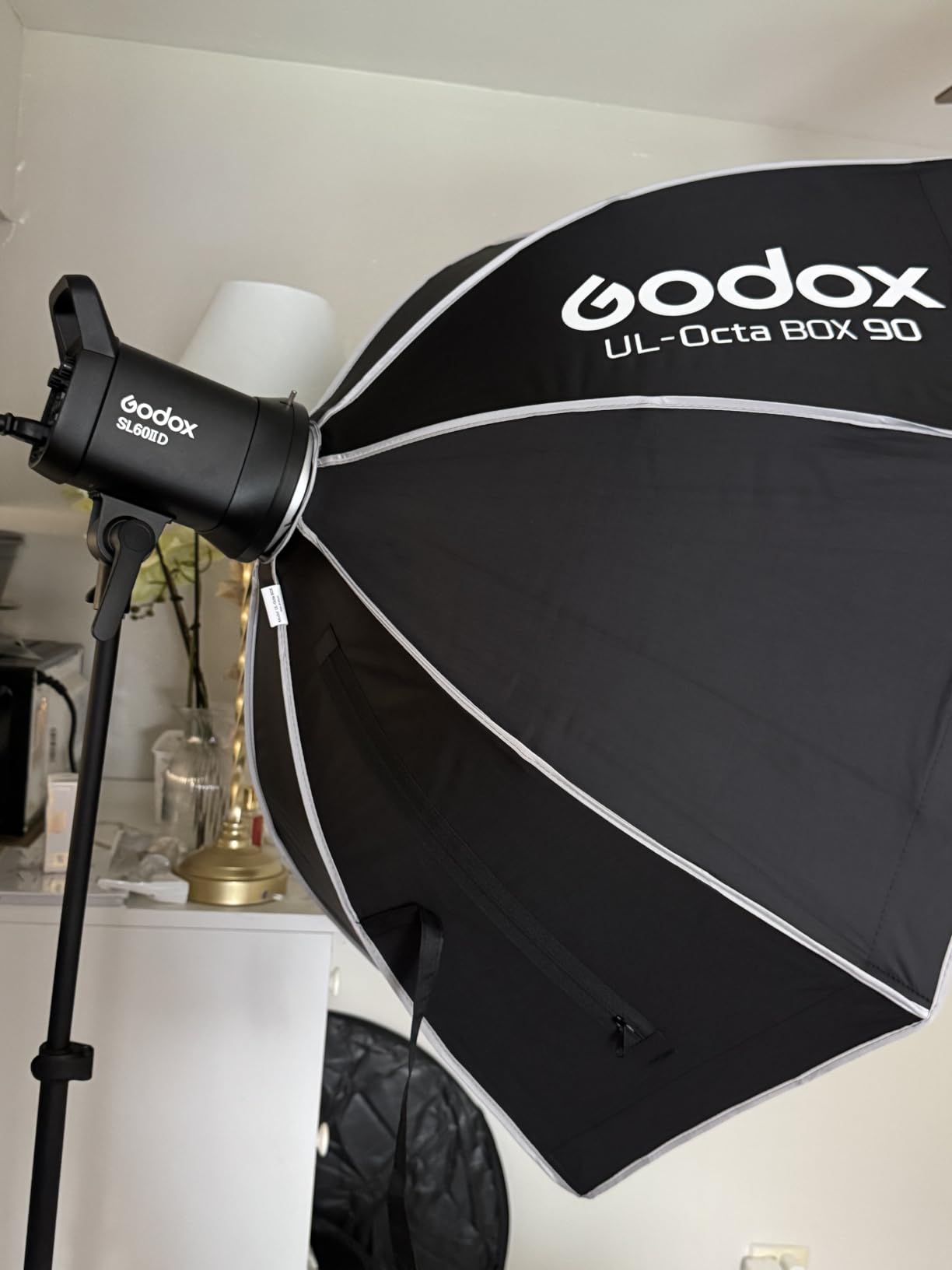
The SL150III is the light we’d hand to someone who wants one fixture to cover most situations and doesn’t want to think about it again for five years. At 160W drawing 73,600 lux at a metre, it has enough punch to push through a 120cm softbox and still overpower a bright window — the single most common failure point of cheaper lights when you’re shooting daytime interiors.
Color performance is where the third-generation SL series stepped up. CRI 96+ and TLCI 97+ put it firmly in “no correction needed” territory; skin tones come out clean and intercut happily with other high-CRI fixtures. Godox also finally addressed the complaint that dogged earlier SL models: the built-in Silent Mode drops the fan speed so you can record dialogue with the light a metre off-frame without a low hum bleeding into your lavalier track. If you find fan noise a recurring issue across fixtures, our shotgun mic guide covers polar patterns that reject that kind of off-axis noise.
Control is handled through the Godox Light App over Bluetooth, or via the 2.4G wireless system with 32 channels and 16 groups — useful once you own three or four fixtures and don’t want to climb a ladder to adjust a backlight. Eight built-in FX (flash, storm, TV, broken bulb) cover the practical-effect gags that come up constantly in narrative work.
The trade-off is that it’s fixed 5600K daylight. That’s the correct choice for a key light you’ll shape with gels or bounce, but if you shoot a lot of warm interiors, you’ll be taping CTO onto the reflector. It’s also mains-powered only, so this is a studio and near-mains fixture rather than a run-and-gun one.
Who the SL150III suits
Filmmakers who want one serious key light for interviews, narrative interiors and studio work, and who shoot near a power outlet will get the most out of it. The Bowens mount also unlocks the entire ecosystem of softboxes covered in our wider lighting roundups, so it’s a future-proof anchor for a growing kit.
Where the SL150III falls short
If more than a quarter of your shoots happen on location away from mains, this is the wrong fixture — the SL150III will sit in its bag while you shoot. Fixed 5600K also means constant gel work in tungsten-heavy interiors; if that’s your day-to-day, the Litemons bi-color models below will save you hours.
2. Godox SL-60W — Best Budget Godox Light
Godox SL-60W Daylight LED Video Light
60W LED output
5600K daylight
CRI 95+
Bowens mount
RC-A5 wireless remote
1.61 kg
Pros
- Powerful 60W LED for high light brightness
- Wireless remote with 6 groups and 16 channels
- Quiet operation with temperature control
- Large LCD display in a compact body
- Bowens mount compatibility
Cons
- Fixed 5600K color temperature with no bi-color
- Battery power requires a separate purchase
The SL-60W is the light that made Godox famous, and it remains the single best first purchase in this category. For roughly the price of a decent tripod you get a 60W daylight COB with a Bowens mount, a large LCD panel and genuinely usable output for interviews, talking-head content and small-space narrative scenes.
Its 4.7-star average across 476 reviews is unusually consistent for a budget fixture. Owners repeatedly praise three things: the fan is quiet enough not to ruin audio, the RC-A5 wireless remote (433MHz, six groups and 16 channels) actually works from across a room, and the temperature-control circuitry stops the head cooking during long takes.
You are making compromises. It’s fixed 5600K with no bi-color option, so mixed-lighting scenes need gels. Sixty watts is enough for a subject at two metres through a softbox, but not enough to fight a sunny window. Battery power requires a separate adapter and V-mount plate. None of that changes the value equation: as a first light, or as a second and third unit for fill and hair light in a three-point setup, nothing else at this price is as reliable.
Who the SL-60W suits
First-time buyers, students and anyone building a multi-light kit on a budget by buying two or three identical heads will love this fixture. It’s also the right answer if you primarily shoot interviews in daylight-controlled rooms and don’t need bi-color flexibility.
Where the SL-60W falls short
It’s not bright enough to overpower a sunlit window or large softbox at distance, and there’s no battery option without buying additional accessories. If your shooting is mostly on location or in mixed-light environments, look at the ML or Litemons lines instead.
3. Godox Litemons LE200Bi — Best Bi-Color Value
Godox Litemons LE200Bi 220W Bi-Color COB LED
220W bi-color COB
57700 lux at 1m
2800K-6500K
CRI 98+ / TLCI 98+
Bowens mount
DMX and CRMX ready
Pros
- Exceptional brightness at 57700 lux
- Outstanding color accuracy at CRI 98+
- Professional DMX and CRMX control capability
- All-in-one design without external ballast
- NFC quick pairing for fast setup
Cons
- Heavy and large for portable use
- No carrying case included
- No battery power option
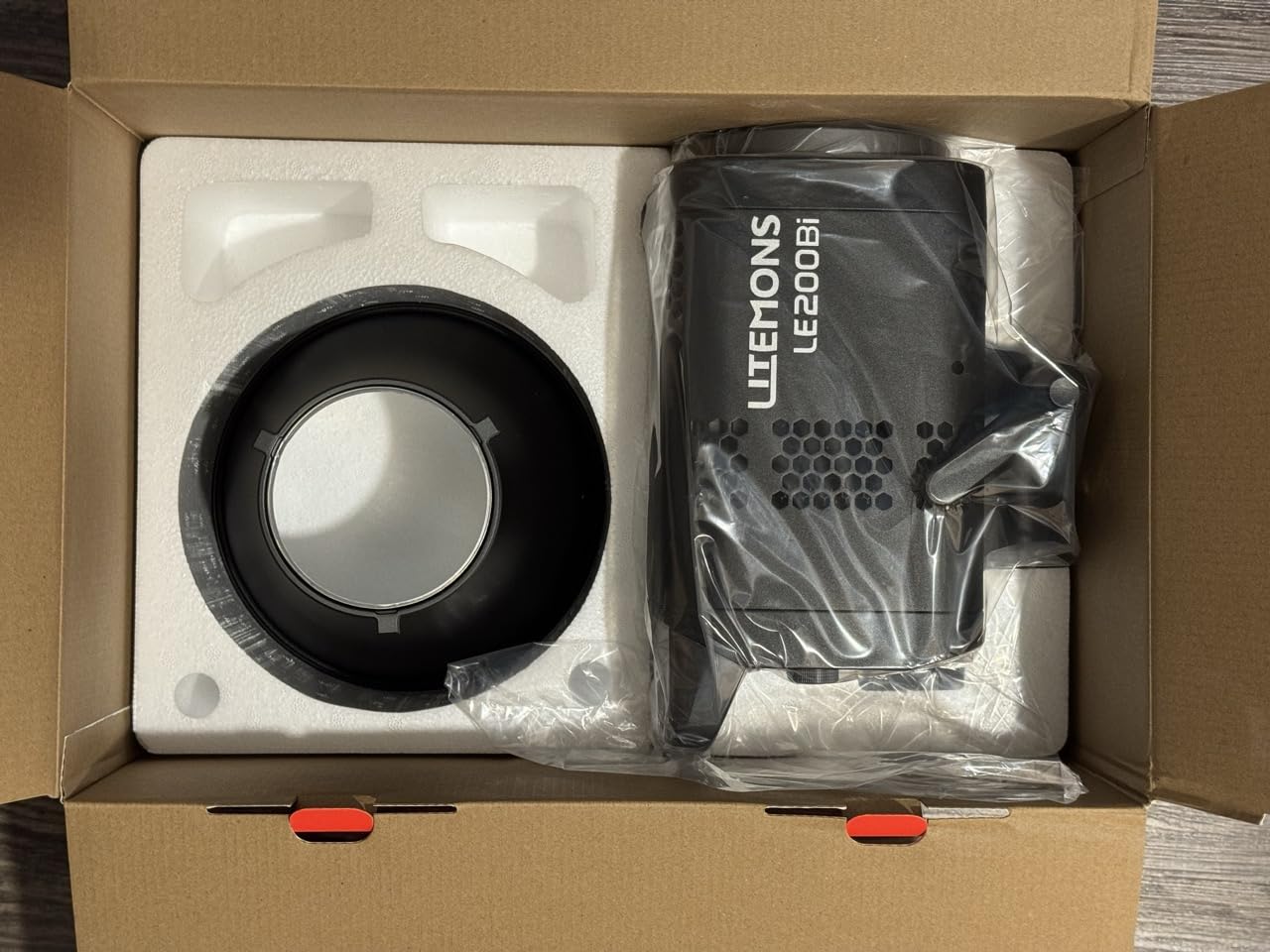
The Litemons LE200Bi is the most quietly impressive light in this lineup, and its 4.9-star rating is the highest here. You’re getting a 220W bi-color COB pushing 57,700 lux at a metre, with CRI 98+ and TLCI 98+ — numbers that a few years ago belonged exclusively to fixtures costing four times as much.
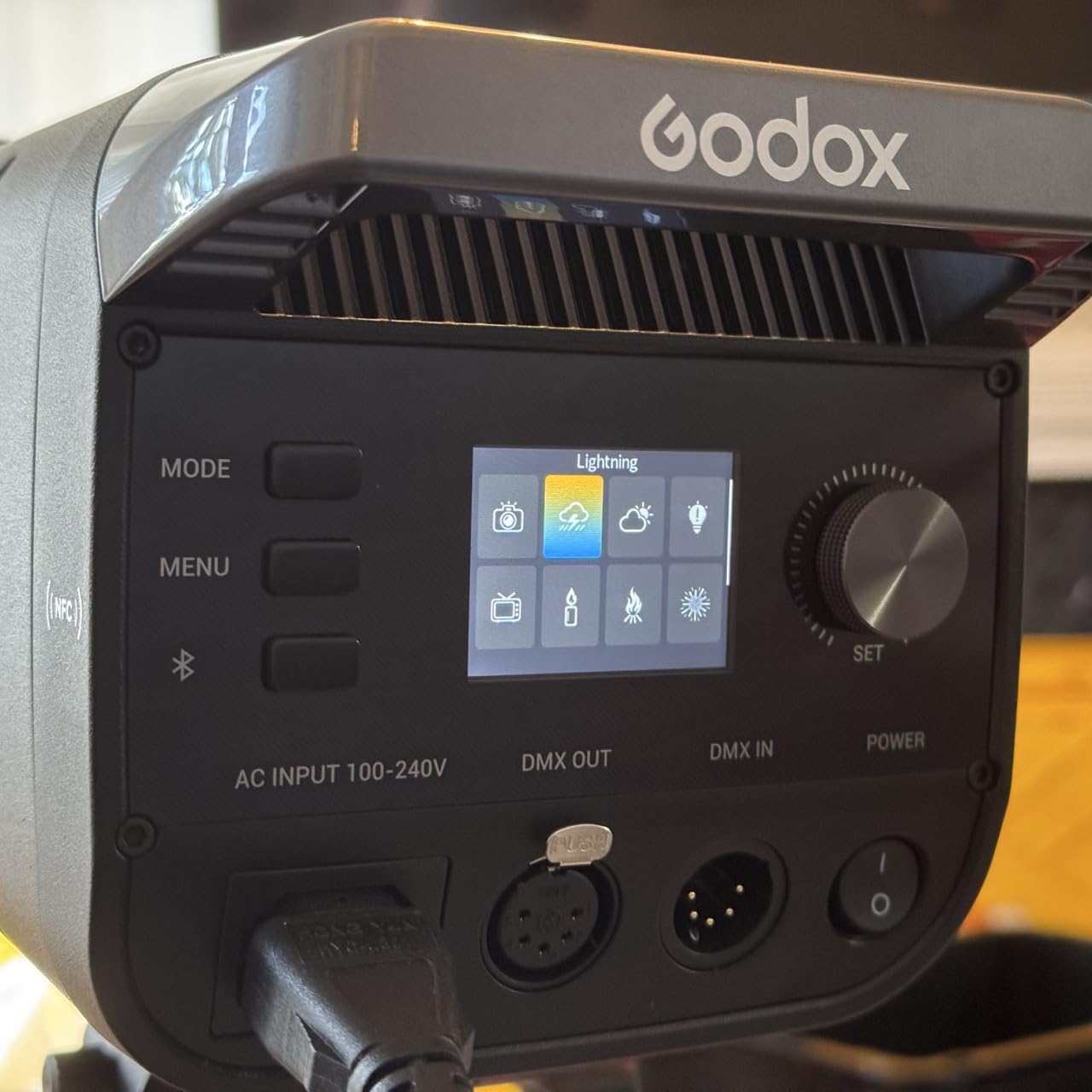
The 2800K–6500K range is the practical headline. Rather than gelling for tungsten practicals or warm window light, you dial the temperature in on the LCD and match the room in seconds. Eleven FX effects are built in, and the all-metal body is a step up in feel from the plastic-bodied budget lights.
What makes it genuinely future-proof is control. Alongside Bluetooth app control and NFC quick pairing, it can be integrated into DMX and CRMX networks with a TimoLink RX receiver — meaning if you ever end up on a set where lighting is board-controlled, this fixture fits in rather than being the odd one out. The all-in-one design has no external ballast to trip over either.
The honest downsides: it’s heavy, there’s no carrying case in the box, and there’s no battery option. This is a studio light, and reviewers who tried to treat it as a location fixture are the only ones who came away disappointed.
Who the LE200Bi suits
Anyone who wants near-professional color accuracy and bi-color flexibility without stretching the budget. It’s the right key light for narrative interiors, music videos, and product work where matching mixed practicals matters more than portability.
Where the LE200Bi falls short
It’s 2.9 kg of mains-powered bi-color COB with no battery option, so it’s not a run-and-gun fixture. If you need to light a staircase, car interior or any location without mains, the ML series or the battery-grip kit further down this guide will serve you better.
4. Godox Litemons LE300Bi — Best High-Output Studio Key
Godox Litemons LE300Bi 315W Bi-Color COB LED
315W bi-color COB
58900 lux at 1m
2800K-6500K
CRI 98+ / TLCI 98+
Integrated power supply
2900 g
Pros
- Powerful 315W output
- Excellent color accuracy at CRI 98+
- Integrated power supply simplifies rigging
- DMX and CRMX professional control
- Ultra-quiet fan operation
Cons
- Heavy at 2.9 kg
- No carrying case included
- Large size for portable use
When 200W isn’t enough — a large softbox, a bounce off a ceiling, a deep set that needs lighting eight metres back — the LE300Bi steps up to 315W and 58,900 lux. It’s the fixture you buy when you’ve outgrown a single-subject setup and are lighting spaces rather than faces.
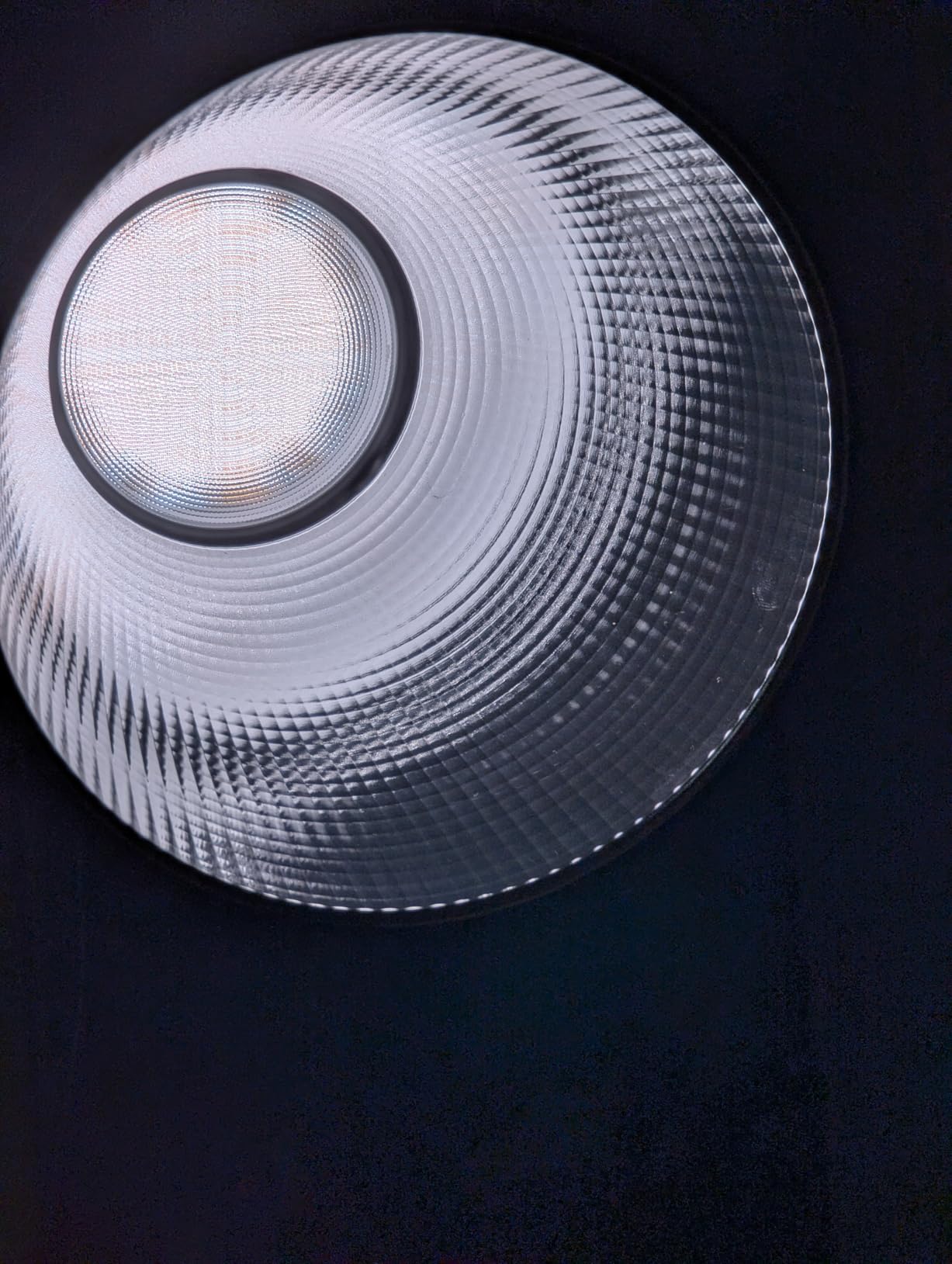
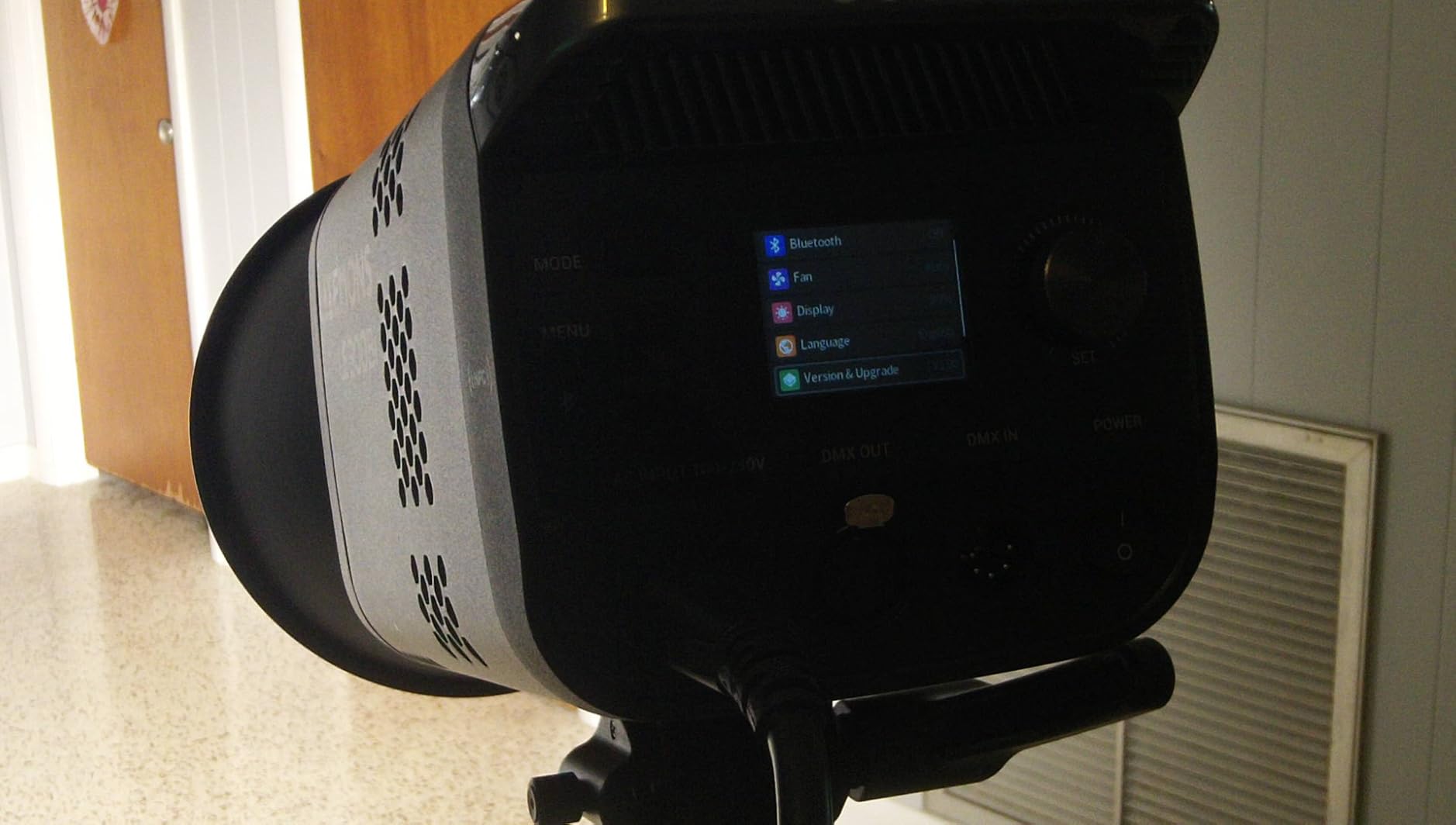
It shares the LE200Bi’s excellent optical package: 2800K–6500K bi-color, CRI 98+ and TLCI 98+, 11 FX effects, and full DMX/CRMX integration. The integrated power supply is a real workflow win — there’s no separate ballast box hanging off the stand, which makes rigging faster and safer, and the ultra-quiet cooling fan keeps it viable for sync-sound work.
The cost is physical. At 2.9kg (6.4 lbs) plus a heavy modifier, you’ll want a proper C-stand rather than a lightweight light stand, and again there’s no case included. It ranks #11 in Photographic Lighting Monolights, which tells you where it’s really at home: a permanent studio corner rather than the back of a hatchback.
Who the LE300Bi suits
Studio owners, product shooters and anyone lighting larger sets or fighting daylight through big windows. If your work has graduated from single subjects to spaces, the extra 100W pays for itself the first time you push light through a 150cm octa.
Where the LE300Bi falls short
It’s the heaviest fixture in this roundup and there’s no battery option at any wattage. If your shoots move between locations more than once a week, the LE200Bi gives you nearly the same colour performance in a lighter body.
5. Godox ML100R Kit with 60cm Softbox — Best RGB Kit
Godox ML100R 110W RGB LED Kit with 60cm Softbox
110W RGB LED
1800K-10000K
CRI 97+ / TLCI 98+
14 FX effects
60cm softbox included
487 g
Pros
- Complete kit with softbox included
- Huge 1800K-10000K color range
- Outstanding color accuracy at CRI 97+
- Compact and lightweight 487g head
- Bluetooth app control
Cons
- Lower 110W output for larger setups
- Shorter 180-day warranty period
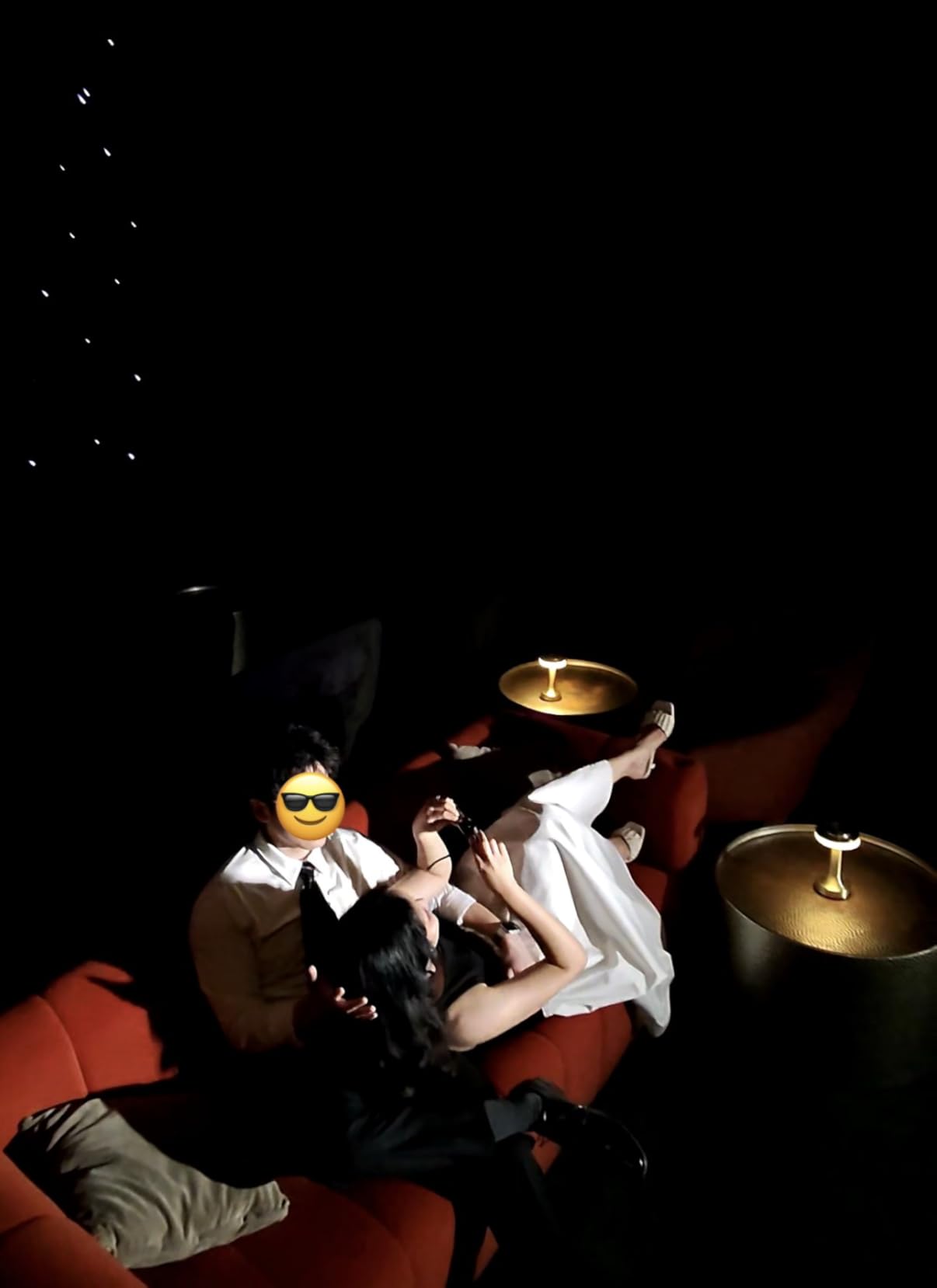
Most people who buy a bare light end up buying a softbox within a month. This kit skips that step by bundling the 110W ML100R RGB head with a 60cm quick-setup softbox, which means you can shoot soft, flattering light out of the box.
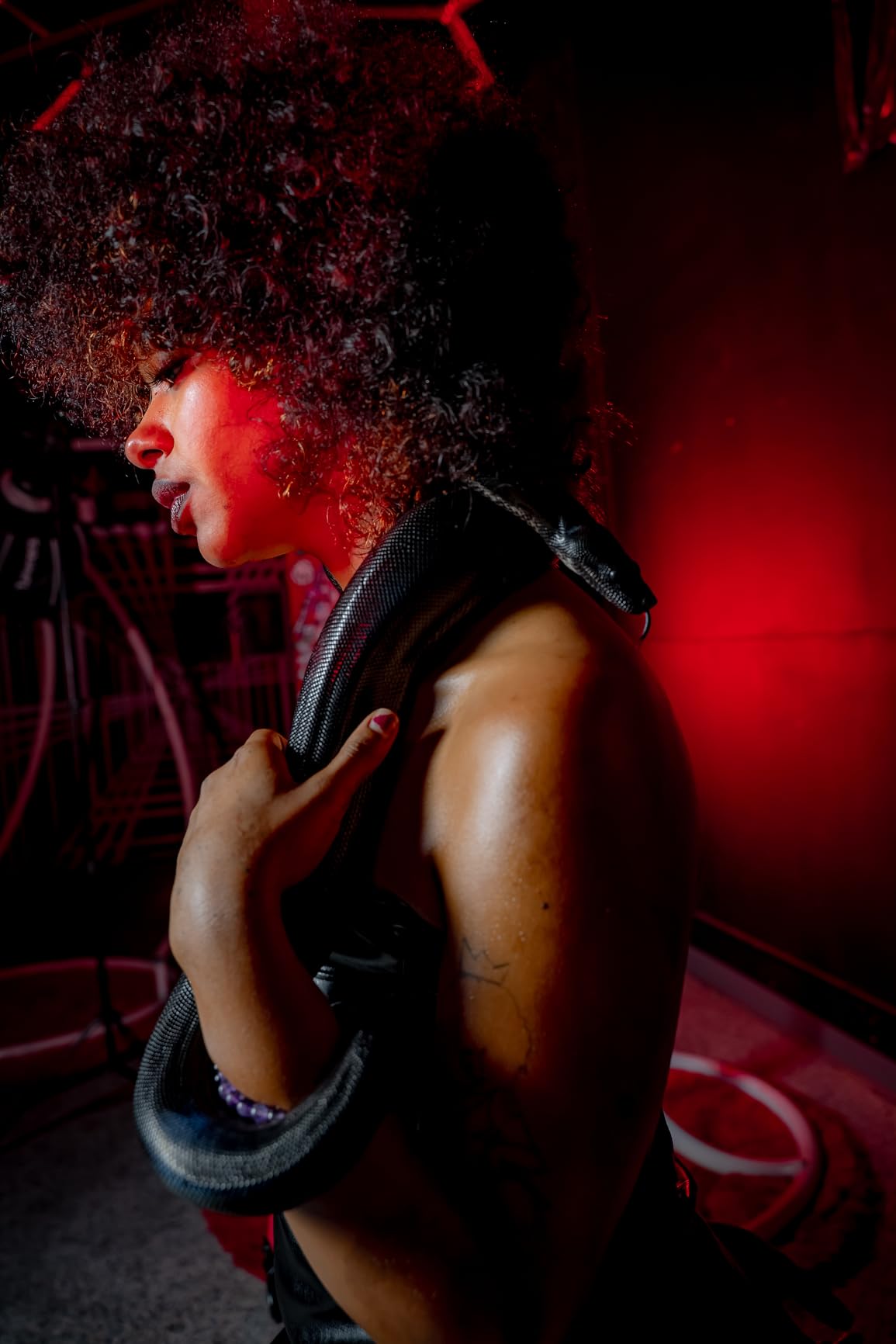
The head itself is a serious piece of kit. The color temperature range runs an enormous 1800K–10000K — from deep candle-warm to icy overcast blue — with CRI 97+ and TLCI 98+ holding accuracy across the range. GM (green/magenta) adjustment is included, which is the feature that lets you neutralise the sickly green cast of fluorescent office tubes rather than fighting it in the grade. Fourteen FX effects cover police lights, TV flicker, fire and lightning.
At 487g the head is remarkably light, so it rigs onto arms, clamps and lightweight stands where a Bowens monolight simply won’t go. That’s the ML series’ whole reason for existing. The trade-offs are the 110W ceiling — fine for close-in key and accent work, not for lighting a whole room — and a shorter 180-day warranty than the 1-year cover on most Godox fixtures.
Who the ML100R kit suits
Content creators and short-film makers who want one purchase that covers colour, softness and portability. If you’re building a one-bag kit that has to handle interview, narrative and music-video work without buying extra modifiers, this is the cleanest starting point.
Where the ML100R kit falls short
110W of RGB output isn’t enough to light a room or fight daylight through big windows — it’s an accent and close-in key light, not a main source. The 180-day warranty is also shorter than every other Godox fixture in this guide, so factor that in if you shoot commercially.
6. Godox ML100Bi — Best Compact Bi-Color
Godox ML100Bi 100W Portable Bi-Color LED Light
100W bi-color COB
34300 lux at 1m
2800K-6500K
CRI 97+ / TLCI 98+
USB-C and V-mount power
4.8 x 4.3 x 1.8 in
Pros
- Compact and highly portable design
- Excellent color accuracy at CRI 97+
- Versatile bi-color range from 2800K to 6500K
- Multiple power options including USB-C and V-mount
- 11 practical FX effects
Cons
- Fan noise audible in quiet recording environments
- Does not include a remote control
- Smaller reflector than previous models
The ML100Bi packs 100W of bi-color COB output into a body measuring just 4.8 × 4.3 × 1.8 inches. It genuinely fits in a camera bag pocket, yet delivers up to 34,300 lux at a metre — comfortably enough to be the key light on a single subject.
Color is excellent: 2800K–6500K with CRI 97+ and TLCI 98+, plus 0–100% dimming and 11 FX effects including candle, fire, TV and broken bulb. Where it really earns its place is power flexibility. It runs from USB Type-C, a V-mount battery, or a decent power bank, which means you can light a car interior, a stairwell or a location with no accessible mains and still be running an hour later.
Two caveats appear consistently in reviews. First, the fan is audible in a genuinely quiet room — if you’re recording intimate dialogue with the light close to the mic, plan around it. Second, there’s no remote in the box; control is via the Godox Light App, which is fine until your phone battery dies mid-shoot. The reflector is also smaller than on previous ML models, so the beam is slightly less controlled without a modifier. For dialogue-heavy documentary work, pair it with one of the top lavalier mics and you’ll get clean audio.
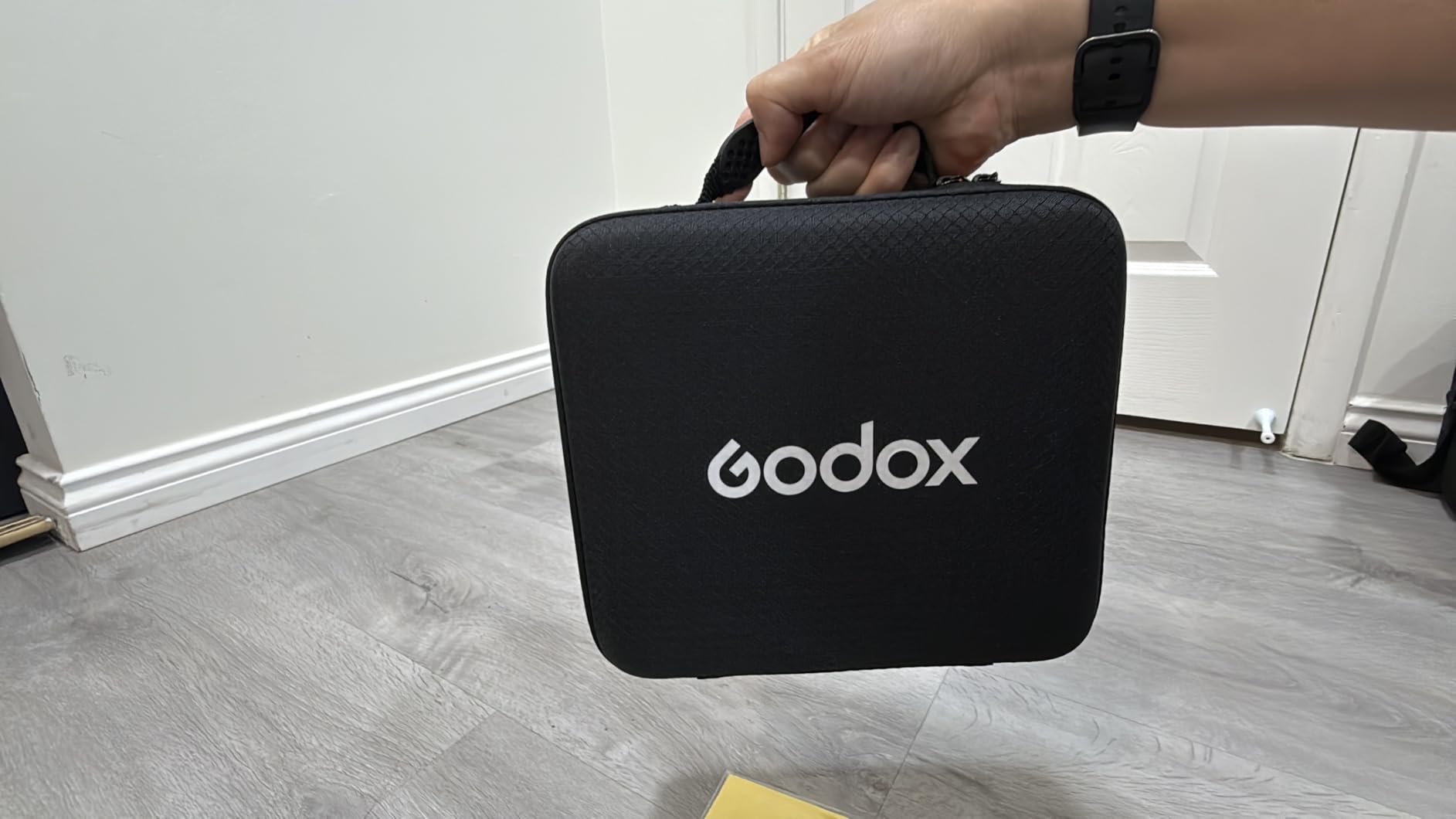
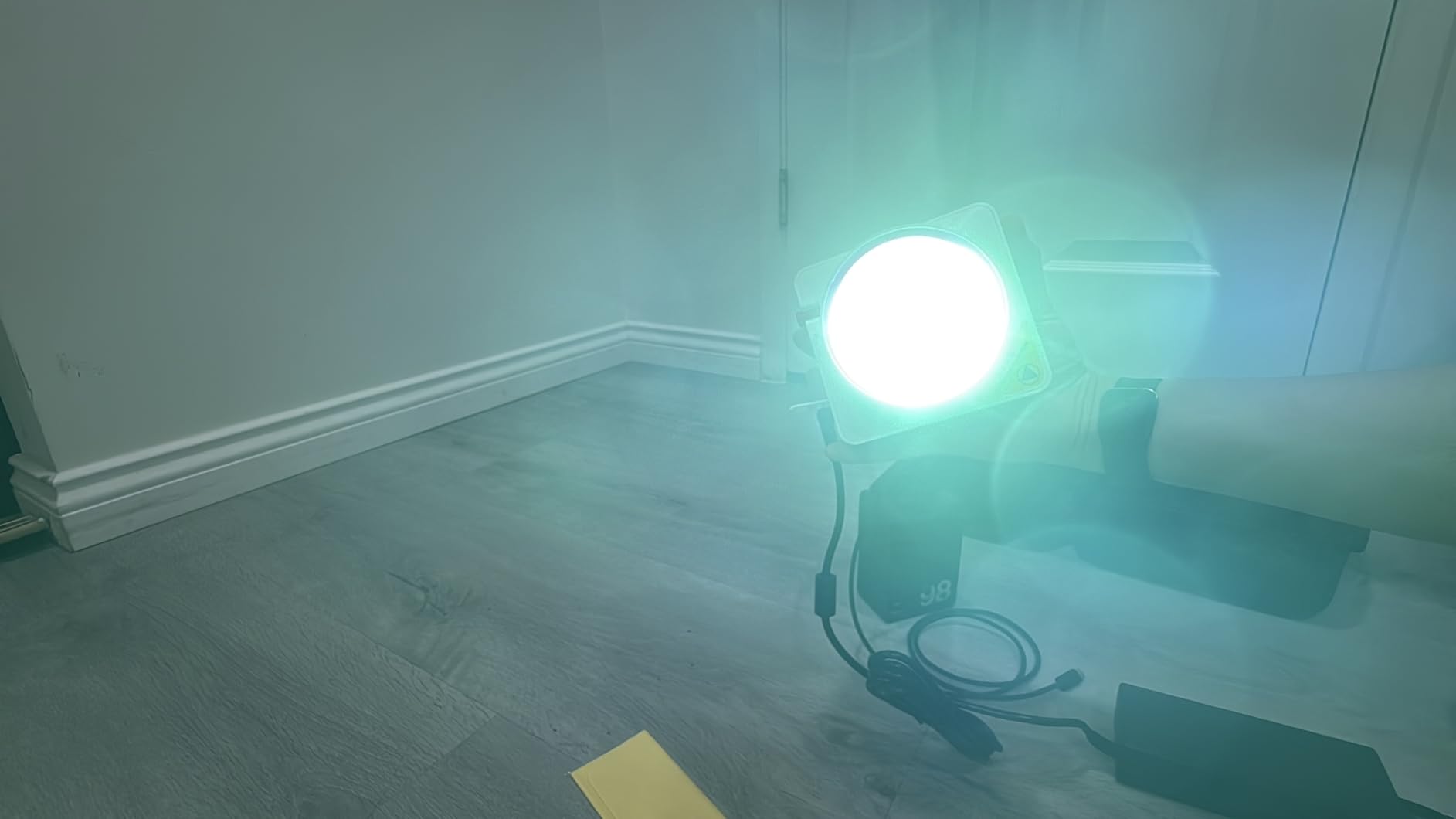
Who the ML100Bi suits
Run-and-gun documentary, travel filmmaking and anyone who needs real output in a bag-sized fixture. It’s also the right second light behind a bigger Bowens monolight, used as a wireless hair light or rim.
Where the ML100Bi falls short
It’s fan-noisy at full power in quiet rooms, has no physical remote, and the small reflector means the beam isn’t as controllable without a modifier. For studio work where noise doesn’t matter, the Litemons LE200Bi is a better key.
7. Godox ML100Bi Kit with Battery Grip — Best for Off-Grid Shooting
Godox ML100Bi Kit 120W LED Light with Battery Grip
120W bi-color LED
2800K-6500K
CRI 97+ / TLCI 98+
K1 battery grip included
DC V-mount and USB-C power
122 x 110 x 46 mm
Pros
- Complete kit with K1 battery grip included
- Versatile bi-color temperature range
- Excellent color accuracy
- Multiple power options including wireless
- Compact and portable flat design
Cons
- Battery grip adds noticeable bulk
- Some units reported durability issues
This is the ML100Bi taken to its logical conclusion: a 120W bi-color head bundled with the K1 battery grip, turning it into a completely wireless, handheld-capable light. If you’ve ever tried to run a cable to a light in the middle of a field, on a beach or halfway up a staircase, you’ll immediately understand the appeal.
Specs mirror the standard ML100Bi — 2800K–6500K, CRI 97+, TLCI 98+, 11 FX effects — but the power options expand to DC, V-mount, USB-C and the K1 grip. The flat 122 × 110 × 46mm form factor means it still packs small, and the Godox bayonet accepts a Bowens adapter for standard modifiers.
Reviewers are clear about the compromise: the grip adds bulk, so the pocketable magic of the bare head is partly lost, and a small number of units have shown durability niggles (its 4.5-star average is the lowest of the Godox fixtures here). Buy it for the wireless capability, not as a general-purpose upgrade over the standard ML100Bi.
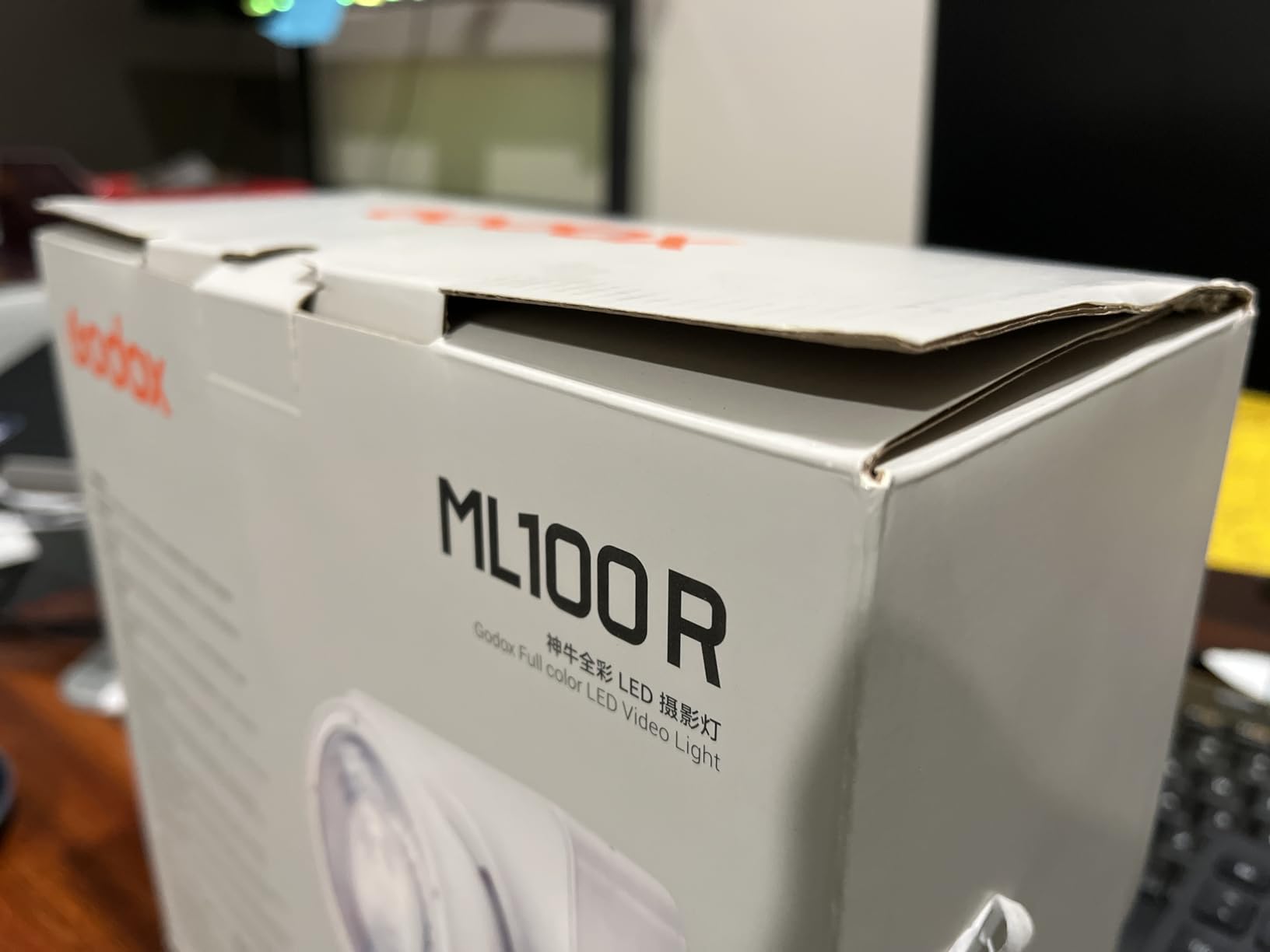
Who the ML100Bi kit suits
Location shooters, wedding and event videographers, and anyone regularly working where mains power isn’t available. If your shoots include cars, stairwells, exteriors or any venue where running a cable is impractical, this kit solves a problem no studio monolight can.
Where the ML100Bi kit falls short
The battery grip makes the whole package noticeably bulkier than the bare ML100Bi, and a small number of units have had build-quality issues. If you don’t actually need fully wireless operation, the standard ML100Bi above is a safer buy.
8. Godox ML100R 110W RGB — Best for Creative Color
Godox ML100R 110W RGB COB LED Video Light
110W RGB COB
1800K-10000K
CRI 95+ / TLCI 95+
14 cinematic FX
Interchangeable 15 and 36 degree reflectors
465 g
Pros
- Full RGB color spectrum from 1800K to 10000K
- 14 cinematic effects for creative work
- Exceptional portability at 465g
- Flexible AC V-mount NP-F and power bank options
- GM adjustment for precise color correction
Cons
- RGB mode is dimmer than dedicated white light
- Lower review count as a newer product
Bought on its own without the softbox bundle, the ML100R is the light you reach for when you want colour to do storytelling work — a magenta wash on a back wall, a cold blue rim on a night exterior, or a warm 1800K glow standing in for a fireplace.
The 1800K–10000K range with GM adjustability and CRI 95+ gives you an unusually wide creative palette for the money, and the 14 cinematic FX modes cover the standard narrative gags. Interchangeable 15° and 36° reflectors let you switch between a tight, controllable beam for accents and a wider spread for general fill — a genuinely useful bit of kit that many competitors omit.
At 465g it’s the lightest fixture here, and it runs from AC, V-mount, NP-F batteries or a power bank, so rigging it into odd corners is easy. Be realistic about output though: like all RGB fixtures, saturated colours draw substantially less usable light than white mode, so treat it as an accent and secondary light rather than your main key. Its review count is still relatively low (61 reviews, 4.4 stars), reflecting a newer product.
Who the ML100R suits
Narrative filmmakers and music-video shooters who need colour effects and accent lighting rather than raw output. It’s also a strong second or third light in a kit anchored by a white-only key like the SL150III.
Where the ML100R falls short
Saturated RGB output is meaningfully dimmer than white mode, and the 61-review sample size means long-term reliability data is still thin. If your work is documentary or interview-driven, the bi-color ML100Bi is a more practical pick.
9. NEEWER MS60C RGBWW — Best RGB Alternative
NEEWER MS60C RGBWW 65W LED Video Light
65W RGBWW COB
8300 lux at 1m
2700K-6500K
CRI 97+ / TLCI 98+
17 effects
Bowens mount
Pros
- Full RGB color control with HSI and RGBCW modes
- Wide 2700K-6500K color temperature range
- Exceptional color accuracy at CRI 97+
- 17 creative effects for versatile shooting
- Battery box for NP-F750 and NP-F970 cells
Cons
- Lower brightness compared to higher wattage lights
- Plastic mount on handle not ideal for heavy modifiers
It’s worth knowing where the competition sits, and the Neewer MS60C is the fixture Godox owners most often cross-shop. You get a 65W RGBWW mini COB with a Bowens mount, 2700K–6500K, CRI 97+ and TLCI 98+, and 17 special effects — more creative modes than any Godox unit here.
Its four control modes (CCT, HSI, RGBCW and FX) give more granular colour control than most competitors at this price, and the included battery box takes NP-F750/NP-F970 batteries, so it’s location-ready without extra purchases. Flicker-free operation to 1/2000s means it’s safe for slow-motion work, and the aluminium body feels solid for a compact light.
Output is the limitation: 8,300 lux at a metre is well below the Godox ML and SL fixtures, so it works as a fill, accent or close-in key rather than a room light. Several reviewers also flag that the plastic handle mount isn’t happy carrying heavy modifiers. If you’re already invested in Godox’s 2.4G ecosystem, mixing brands means running two control apps — factor that in.
Who the MS60C suits
Creators who prioritise colour modes and battery portability over raw brightness. It’s a particularly strong fit for anyone already running Neewer stands, softboxes or RGB tube kits and wanting a key light that drops into the same ecosystem.
Where the MS60C falls short
8,300 lux at one metre is well below the Godox fixtures, and the plastic handle mount can’t safely carry heavy modifiers. If your work needs real punch or a large softbox, step up to the SL or Litemons lines.
10. NEEWER MS60 — Best Budget Alternative
NEEWER MS60 65W Daylight Mini COB LED Light
65W daylight COB
40000 lux at 1m
5600K fixed
CRI 97+ / TLCI 98+
9 scene effects
Bowens mount adapter
Pros
- Powerful 65W output with excellent brightness
- Excellent color accuracy at CRI 97+
- Precise 1% dimming increments
- Bluetooth and 2.4G wireless control
- Silent fan operation
Cons
- Fixed 5600K with no color temperature adjustment
- Battery options require separate purchase
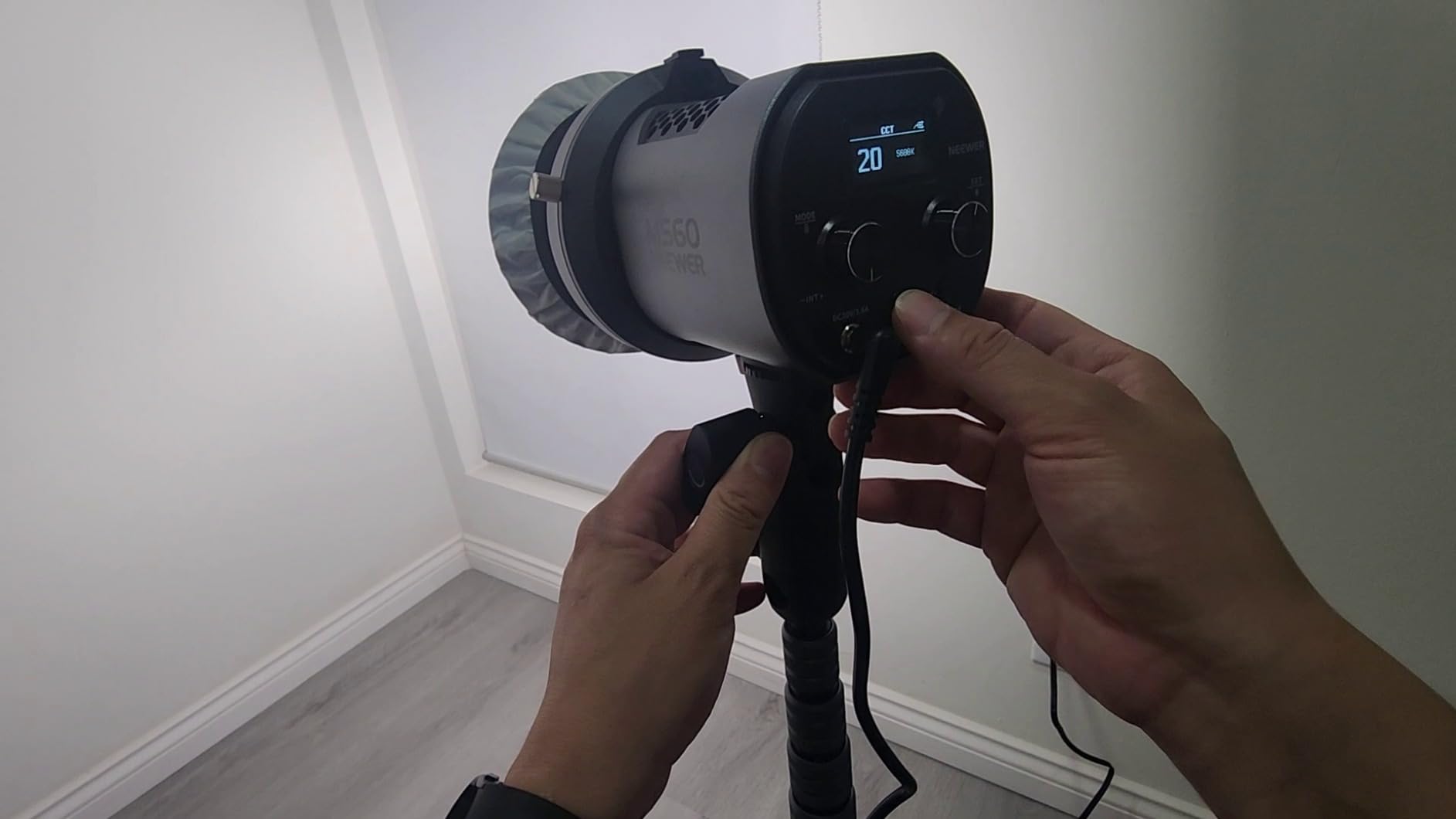
The MS60 is the daylight-only sibling of the MS60C, and it’s the most direct competitor to the Godox SL-60W. It matches the Godox on price while claiming a substantially higher 40,000 lux at a metre from its 65W COB, thanks to a tighter reflector design.
Color accuracy is strong at CRI 97+ and TLCI 98+, and the dimming is more precise than most budget lights, moving in 1% increments from 0–100%. You get nine scene effects, Bluetooth control through the Neewer Infinity app plus 2.4G wireless mesh, a 180° handle that makes handheld use practical, and a Bowens mount adapter in the box.
Like the SL-60W, it’s fixed at 5600K with no bi-color option, and batteries are a separate purchase. Its 91 reviews at 4.6 stars are a smaller sample than the Godox equivalent’s 476, which matters if long-term reliability is your priority. Choose it if you want maximum measured brightness per dollar; choose the SL-60W if you want the larger track record and the Godox remote ecosystem.
Who the MS60 suits
Budget buyers who want the highest measured output per dollar and don’t need bi-color. It’s also a smart second or third light in a multi-head kit where you want every fixture to match on colour temperature.
Where the MS60 falls short
It’s daylight-only with no bi-color, batteries are a separate purchase, and the 91-review sample is small compared to the SL-60W’s 476. Long-term reliability is therefore less proven than the Godox equivalent.
How to Choose the Right Godox Light for Video?
Power output: watts vs. lux
Wattage tells you electrical draw; lux tells you how much light actually lands on your subject. A well-designed 160W fixture with a good reflector can out-perform a poorly designed 200W one. Always compare lux at one metre with the standard reflector, as we’ve done in the table above — and remember that a softbox typically costs you one to two stops. That 73,600 lux SL150III becomes something closer to 20,000 lux behind diffusion, which is exactly why serious key lights start around 150W.
Bi-color or daylight-only?
Daylight-only (5600K) fixtures are brighter for the same wattage because they don’t split their LED array between warm and cool emitters, and they’re cheaper. That’s the right choice if you shoot in controlled environments and are happy to gel. Bi-color (roughly 2800K–6500K) fixtures let you match tungsten practicals, warm window light or a room with mixed sources by turning a dial — a huge time-saver on location. For most short-film work, the small brightness penalty of bi-color is worth it.
RGB: do you actually need it?
Full RGB fixtures like the ML100R are brilliant for accents, backgrounds and effects, but they make poor key lights: saturated colour output is dramatically dimmer than white output. The sensible kit is one or two white-only or bi-color workhorses for key and fill, plus one RGB unit for background colour and practical effects. Buying RGB across the board is a common and expensive mistake. If you want a deeper dive into accent-only colour lighting, our RGB tube light guide covers the dedicated accent fixtures that pair with any key on this list.
CRI and TLCI explained
CRI (Color Rendering Index) measures how faithfully a light reproduces colour compared to natural daylight; TLCI is the broadcast-oriented equivalent tuned for how cameras, not eyes, see colour. Both are scored out of 100. Anything at 95+ is safe for professional work; the LE200Bi and LE300Bi here hit 98+. Below 90, skin tones go waxy or green and mixing fixtures becomes a colour-correction headache.
Bowens mount and modifiers
The Bowens S-type mount is the de facto industry standard, and it’s the single most valuable long-term feature on this list. It gives you access to thousands of softboxes, octaboxes, snoots, grids, barn doors and beauty dishes from dozens of brands at every price point. Every SL and Litemons model here is Bowens native; the ML series uses a Godox bayonet with a Bowens adapter available. If a light doesn’t take a standard mount, walk away.
Fan noise and silent mode
This is the complaint that comes up most often in filmmaker forums. Any COB LED above about 60W needs active cooling, and a fan a metre from your microphone will end up in your dialogue track. The SL150III’s dedicated Silent Mode and the Litemons’ ultra-quiet fans are the best answers here. If you’re using a fixture with an audible fan, like the ML100Bi, position it further from the mic, use a shotgun with tight polar pattern, or switch the light off between takes for the room tone recording. For corporate shoots specifically, see our panel light roundup for fanless soft options.
Power options: mains, V-mount and USB-C
Studio monolights — the SL and Litemons lines — are mains-powered, full stop. The ML series is the portable answer, running from USB-C, V-mount, NP-F batteries or the K1 battery grip. If more than a quarter of your shoots happen away from wall power, buy at least one battery-capable fixture. Nothing kills a location day faster than discovering the only outlet is 30 metres away.
App and wireless control
Once you’re running three or more lights, walking to each fixture to adjust it becomes tedious. Godox handles this two ways: Bluetooth control through the Godox Light App (great for one or two lights nearby) and the 2.4G wireless system with multiple groups and channels (better for a full rig, and it works past Bluetooth range). The Litemons models add DMX/CRMX capability for anyone who ever works on board-controlled sets.
Three Godox Lighting Setups for Short Films
The single-light interview
One SL-60W or SL150III in a 90cm softbox, positioned 45 degrees off the lens axis and slightly above eye level, plus a cheap white bounce board on the opposite side to lift the shadow. That’s it. This is the setup behind a huge share of professional-looking interview content, and it costs less than a decent lens. Add a second small light behind the subject as a hair light when budget allows.
The two-hander dialogue scene
Use one high-output fixture — the LE200Bi or LE300Bi — bounced off a ceiling or a large white flag to create a soft ambient base that covers both actors. Then add a smaller ML100Bi as a directional key on whoever is speaking in coverage. The ambient base keeps continuity between angles; the small light does the shaping. Bi-color fixtures make it easy to match the room’s existing practicals.
The tabletop product or insert shot
A 110W ML100R with a 60cm softbox directly overhead and slightly forward, a black card on one side to deepen the shadow edge, and a small mirror or white card on the other to lift detail. Set the light to 5600K for neutral products or dial in a warm 3200K for food. This is where the ML series’ compact size pays off: it fits on a boom arm over a table without a heavy counterweight.
Mistakes to Avoid When Buying Godox Video Lights
Buying one expensive light instead of two affordable ones. Two SL-60Ws will teach you more about lighting and produce better images than one 300W fixture. Direction and shaping beat raw power.
Forgetting the stand budget. A 2.9kg LE300Bi with a 120cm softbox on a flimsy light stand is a genuine safety hazard. Budget for proper C-stands or heavy-duty stands with sandbags.
Ignoring modifiers. A bare COB is a harsh, ugly light source. The softbox, umbrella or bounce you put in front of it matters more to the final image than the fixture’s brand.
Assuming every light runs on battery. Only the ML-series and battery-grip kits here do. Check before you plan a location shoot around a fixture that needs mains.
Mixing low-CRI lights into a high-CRI setup. One cheap fixture with a green cast will contaminate the whole scene and cost you hours in the grade.
Buying RGB when you needed brightness. Get your key and fill sorted with white or bi-color fixtures first, then add colour.
Frequently Asked Questions
Which Godox light is best?
For most video work, the Godox SL150III is the best all-round choice — it combines 160W of output, CRI 96+ colour accuracy and a Silent Mode for dialogue recording. If your budget is tighter, the SL-60W remains the best entry point, and the Litemons LE200Bi offers the strongest bi-color value.
What is the best LED light for video shooting?
The best LED for video is one with CRI and TLCI ratings of 95 or above, enough output for your shooting distance (150W or more if you’re using a softbox as a key), a Bowens mount for modifier compatibility and a quiet or silent cooling fan. The Godox SL150III and Litemons LE200Bi both tick every one of those boxes.
What is the best lighting setup for video recording?
Classic three-point lighting is still the most reliable starting point: a key light at 45 degrees off the lens axis in a softbox, a fill light or bounce board on the opposite side at roughly half the key’s intensity, and a backlight or hair light behind the subject to separate them from the background. A single key light plus a bounce board will get you 80% of the way there if you only own one fixture.
What are the best lights for videography?
Continuous COB LEDs have become the standard for videography because you see exactly what you’re getting before you roll, they run cool compared to tungsten, and modern units offer broadcast-grade colour accuracy. Godox dominates the affordable end of that market; higher-end alternatives cost several times more for improvements most independent filmmakers won’t notice on screen.
Do Godox lights work with softboxes from other brands?
Yes — every SL and Litemons fixture in this guide uses the Bowens S-type mount, which is the industry standard shared by Neewer, Aputure (with adapters), Glow, Westcott and dozens of others. The ML series uses a Godox bayonet mount but accepts a Bowens adapter, so you’re never locked into one brand’s modifiers.
Can Godox continuous lights run on battery power?
Some can. The ML100Bi and ML100R run from USB-C, V-mount batteries, NP-F batteries or a power bank, and the ML100Bi kit includes the K1 battery grip for fully wireless operation. The SL series and Litemons monolights are mains-powered and would need a separate V-mount adapter plate and high-capacity battery, which isn’t practical for the higher-wattage models.
Is a Godox light bright enough for daylight interiors?
It depends on wattage. A 60W fixture will struggle against a bright window and works best as fill or in controlled light. A 150W–220W fixture like the SL150III or LE200Bi can act as a key against ambient daylight, especially with the standard reflector fitted. For shooting against large windows or in bright rooms, the 315W LE300Bi gives you the most headroom.
Final Verdict
If you buy one light, make it the Godox SL150III. The combination of 160W output, CRI 96+ colour, a real Silent Mode and Bowens compatibility covers interviews, narrative interiors and studio work without compromise, and its 4.7-star average across 439 reviews reflects how consistently it delivers.
On a tighter budget, the Godox SL-60W is still the smartest money you can spend on your image quality, and buying two of them beats buying one fixture twice the price. If bi-color flexibility matters — and on location it usually does — the Litemons LE200Bi is the standout value in this entire lineup, with CRI 98+ and DMX-ready control at a price that shouldn’t be possible. And for anyone working away from mains power, the ML100Bi with battery grip solves a problem no studio monolight can.
Whichever you choose, spend the extra on a solid stand and a decent softbox before you upgrade the fixture. Light shaped well from a budget head will always beat light thrown badly from a premium one.