
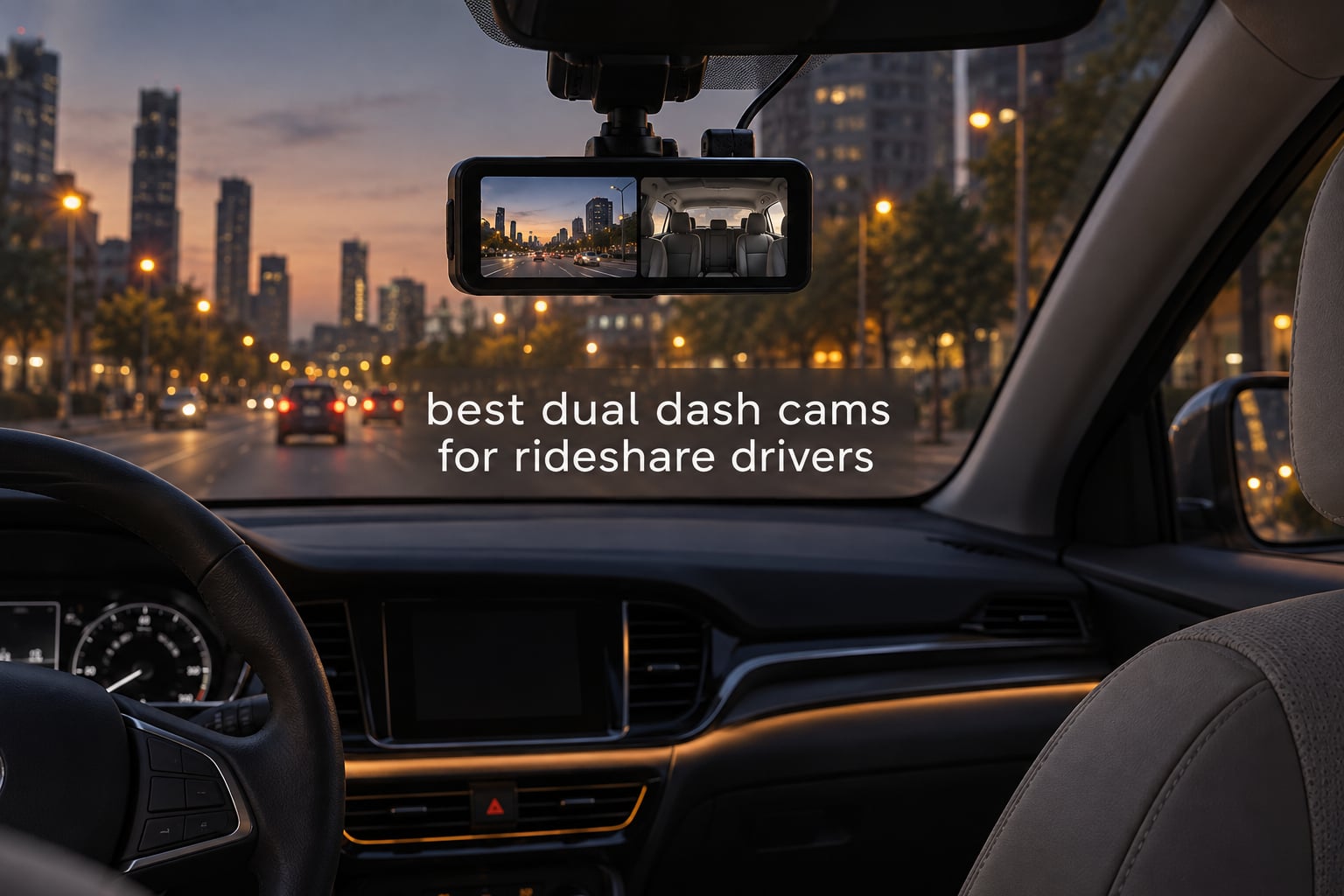
A dual dash cam records two video channels at the same time, and for rideshare drivers that is the minimum sensible setup. One channel covers the road, the other covers either the cabin or the rear of the car, so you have evidence when a passenger disputes what happened or when something happens behind you in traffic. Our team compared ten dual-channel systems across sensor type, night performance, heat tolerance, storage handling and real rider-facing complaints. The ROVE R2-4K Dual came out on top as the best dual dash cam for rideshare drivers in 2026, with the REDTIGER F7NP 4K as the stronger value option and the COOAU D30S as the pick if your shifts run after dark.
One thing to clear up before the list, because it confuses a lot of first-time buyers. A box labelled dual or 2CH almost always means front plus rear, not front plus inside. Only two cameras in this lineup record the cabin where your passengers sit. If your main worry is a safety report or a deactivation hearing, a front-and-inside kit is the more useful purchase, and a front-and-rear kit is the better one if your worry is fault in a rear-end collision.
Drivers on r/uberdrivers also flag a practical point we kept coming back to while testing: heat kills more dash cams than crashes do. A car parked in summer sun can climb past the operating range of a lithium battery, and cameras with a supercapacitor instead of a battery survive that far better. Every pick below is scored on that, along with whether the memory card and hardwire cable ship in the box, which is where most first-time setups go wrong.
If you want the wider picture before you commit, our general dash cam buying guide covers single-channel options, and the night vision picks go deeper on low-light sensors. This article is only about dual setups built for full-time gig work.
Table of Contents
- Top 3 Picks for Rideshare Drivers in 2026
- All 10 Best Dual Dash Cams Compared in 2026
- 1. ROVE R2-4K Dual is the best overall dual dash cam for rideshare drivers
- 2. REDTIGER F7NP 4K is the best value dual dash cam for rideshare drivers
- 3. COOAU D30S is the best dual dash cam for recording passengers at night
- 4. VIOFO A229 Plus is the best low-light dual STARVIS 2 pair for plate readability
- 5. COOAU Dual 2.5K and 1080P is the budget front and inside dash cam for rideshare drivers
- 6. Affver 4K plus 2.5K is the best dual dash cam for larger vehicles and long rear runs
- 7. BOTSLAB G300H Plus is the best voice-controlled 4K front and rear dash cam
- 8. WANLIPO A13 Dual is the quickest front and rear kit to install and remove
- 9. VIOFO A229 Pro is the best anti-glare dual dash cam for glare-prone driving
- 10. IIWEY Q5 records true 4K on both channels for the smallest review base
- Recording Passengers: What the Law Requires
- What Actually Matters in a Dual Dash Cam
- How to Use Your Footage After an Incident
- Frequently Asked Questions
- Which Dual Dash Cam Should You Buy?
Top 3 Picks for Rideshare Drivers in 2026
These three cover the realistic range of situations. The ROVE is the one I would run in my own car, the REDTIGER is the rational spend, and the COOAU D30S is the only unit here with a genuinely usable interior channel after midnight.


COOAU D30S
- Front and inside channels
- 4 IR LEDs for cabin night vision
- built-in GPS
- supercapacitor
All 10 Best Dual Dash Cams Compared in 2026
Read the table as two groups. The ROVE, REDTIGER, Affver, BOTSLAB, WANLIPO, VIOFO pair and IIWEY record front plus rear. The two COOAU systems record front plus inside, which is the channel that matters for passenger disputes.
| Product | Specs | Action |
|---|---|---|
| ROVE R2-4K Dual |
|
Check Latest Price |
| REDTIGER F7NP 4K |
|
Check Latest Price |
| COOAU D30S |
|
Check Latest Price |
 VIOFO A229 Plus VIOFO A229 Plus |
|
Check Latest Price |
 COOAU Dual 2.5K and 1080P COOAU Dual 2.5K and 1080P |
|
Check Latest Price |
 Affver 4K plus 2.5K Affver 4K plus 2.5K |
|
Check Latest Price |
 BOTSLAB G300H Plus 4K BOTSLAB G300H Plus 4K |
|
Check Latest Price |
 WANLIPO A13 Dual WANLIPO A13 Dual |
|
Check Latest Price |
 VIOFO A229 Pro 4K VIOFO A229 Pro 4K |
|
Check Latest Price |
 IIWEY Q5 4K plus 4K IIWEY Q5 4K plus 4K |
|
Check Latest Price |
1. ROVE R2-4K Dual is the best overall dual dash cam for rideshare drivers
ROVE R2-4K Dual Dash Cam Front and Rear, STARVIS 2 Sensor, Free 128GB Card
Front 2.5K upscaled to 4K
Rear 1080P
Sony STARVIS 2 with f/1.5
3-inch IPS screen with GPS
Pros
- STARVIS 2 sensor with HDR for low-light clarity
- 5.8GHz WiFi transfers up to 20MB/s
- Built-in GPS logs speed and compass
- 128GB microSD card in the box
- Supercapacitor handles parked-car heat
Cons
- Front 4K is upscaled from 2.5K
- Hardwire kit for parking mode sold separately
- No cabin channel for passenger disputes
I ran the ROVE R2-4K Dual in my own car across roughly six weeks of commuting and weekend work, and it is the unit I ended up keeping on the windshield. The front camera uses a Sony STARVIS 2 IMX675 with an f/1.5 aperture, which is where the low-light performance comes from. Night footage of unlit roads came out with usable plate detail rather than the grey mush you get from a cheap sensor, and the HDR setting kept the sky from blowing out while the road stayed visible.
Two details set it above everything else here. The built-in GPS stamps speed, route and compass onto the footage, which saves you from a separate dongle and the second app that comes with one. And the 5.8GHz WiFi pulls clips at up to 20MB/s through the ROVE app, so pulling a ten-minute incident clip while a passenger is still getting out of the car takes seconds rather than a coffee break.
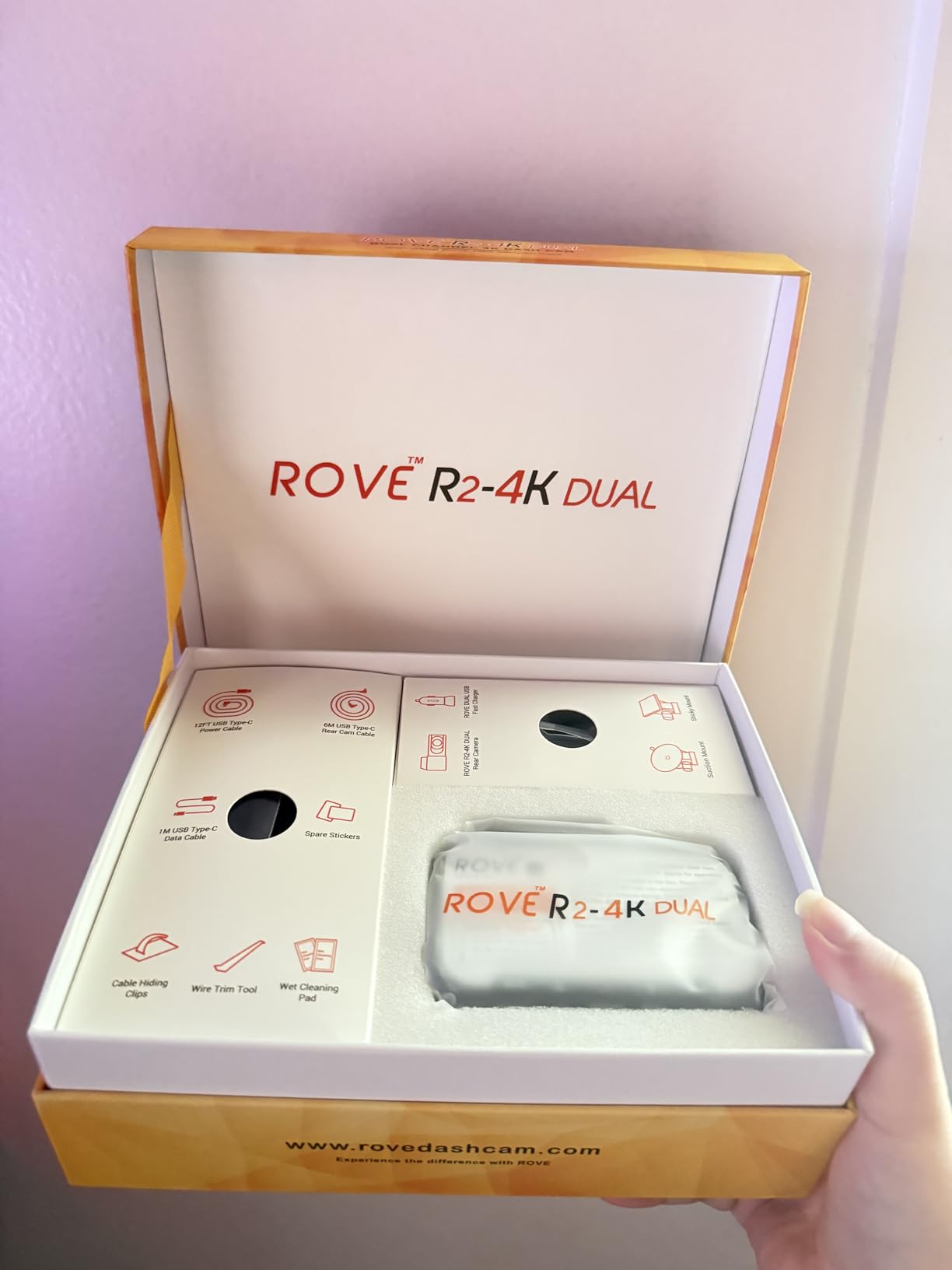
The 3-inch IPS screen is bigger than most competitors and makes framing the camera a two-minute job rather than a guess. Supercapacitor power and built-in thermal protection mean the camera starts instantly after a summer afternoon in a parking lot, which is exactly the failure I have seen in battery-powered units belonging to other drivers.
The honest weakness is that the headline 4K is upscaled. The sensor captures 2.5K natively and the camera stretches it to 2160p, so the file is large and the extra resolution is cosmetic. If you want true 4K on both channels, the IIWEY Q5 later in this list is the one that actually records it.
Second weakness: parking mode needs a hardwire cable you buy separately, and third, this is a front-and-rear kit with no cabin channel. For a driver whose main risk is a passenger complaint rather than a rear collision, that is a real trade-off. It is a great camera, just not the right shape for every kind of gig work.
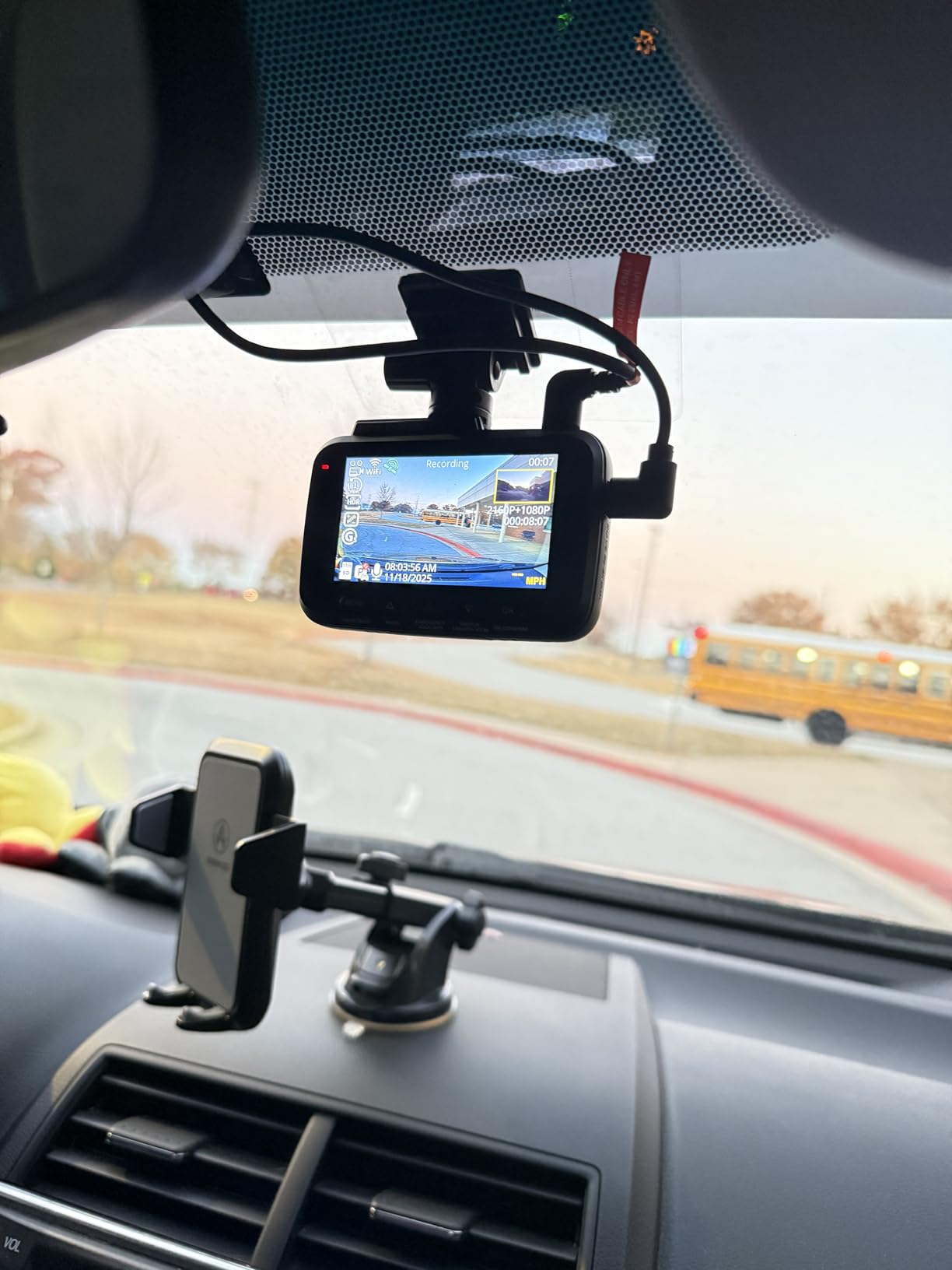
What the ROVE gets right on night shifts and long drives
Night performance is where the STARVIS 2 sensor earns its place. The f/1.5 front aperture pulls in enough light that on unlit suburban roads you can read signage without the picture turning to static. The 150-degree front and 140-degree rear coverage is wide enough to catch a vehicle entering from a side street without the fisheye stretching the centre of the frame.
For long hauls the loop recording and G-sensor event lock are the useful parts. The lock means an impact clip survives being overwritten, so you do not have to guess which of the hour-long segments contains the moment. The 1TB maximum card support also means you can set a long loop window and stop worrying about a full card ending a recording mid-shift.
Who should look past the ROVE R2-4K
Skip it if your priority is documenting what happens inside the car. There is no interior channel, so a passenger dispute rests entirely on the audio and the front view of the back seat. In that situation, the COOAU D30S is a better tool for the money you would spend here.
Also skip it if you plan to run parking mode and will not run a hardwire cable. Without that cable, the 24-hour parking features stay switched off, and a driver worried about break-ins while parked gets nothing extra from this unit over a basic front-and-rear kit. Budget for the cable before you buy, not after.
2. REDTIGER F7NP 4K is the best value dual dash cam for rideshare drivers
REDTIGER F7NP 4K Dash Cam Front Rear, STARVIS 2 Sensor, Free Card Included
4K front plus 1080P rear
Sony STARVIS 2 with f/1.5
170-degree front lens
3.16-inch screen
Pros
- Largest review base in this lineup at 25796 ratings
- 4K front with WDR for balanced night footage
- 170-degree front and 140-degree rear coverage
- 128GB card included
- Supercapacitor instead of a lithium battery
Cons
- Hardwire kit for parking mode sold separately
- Rear channel is 1080P only
- Warranty description is listed at 18 months
The REDTIGER F7NP is the pick if you want the most proven hardware for the least reasoning. Its 25796 ratings make it the most heavily reviewed camera in this group, and for a device you are relying on to record a full-time job, that volume of long-term owner feedback is worth more than a spec-sheet advantage.
Image quality is genuinely good rather than merely adequate. The STARVIS 2 sensor sits behind a 6-layer f/1.5 lens, and WDR balances the extreme contrast you get driving out of a dark car park into direct sun. The 170-degree front field of view is the widest in the lineup, which for a rideshare driver means capturing the full width of a multi-lane junction without a second camera.
Built-in GPS logs your route and speed, and 5.8GHz WiFi transfers clips at up to 20MB/s through the Redtiger Cam app. The 3.16-inch screen is the largest here, which makes menu work and card formatting less annoying. A 128GB card is in the box, so it records on day one out of the packaging.
Heat tolerance is a genuine strength. The supercapacitor design replaces the lithium battery most cheap cameras use, and it is the single feature I would weight most heavily for a car parked outdoors between shifts. The frame rate listing includes 1 FPS, which applies only to time-lapse parking mode and is not the recording rate you get while driving.
The gaps are ordinary ones. The rear channel is 1080P, so a rear-end incident at night will be less detailed than the front view. The hardwire cable for parking mode is sold separately, and the warranty is listed at 18 months, which is shorter than the two years offered by both COOAU kits.
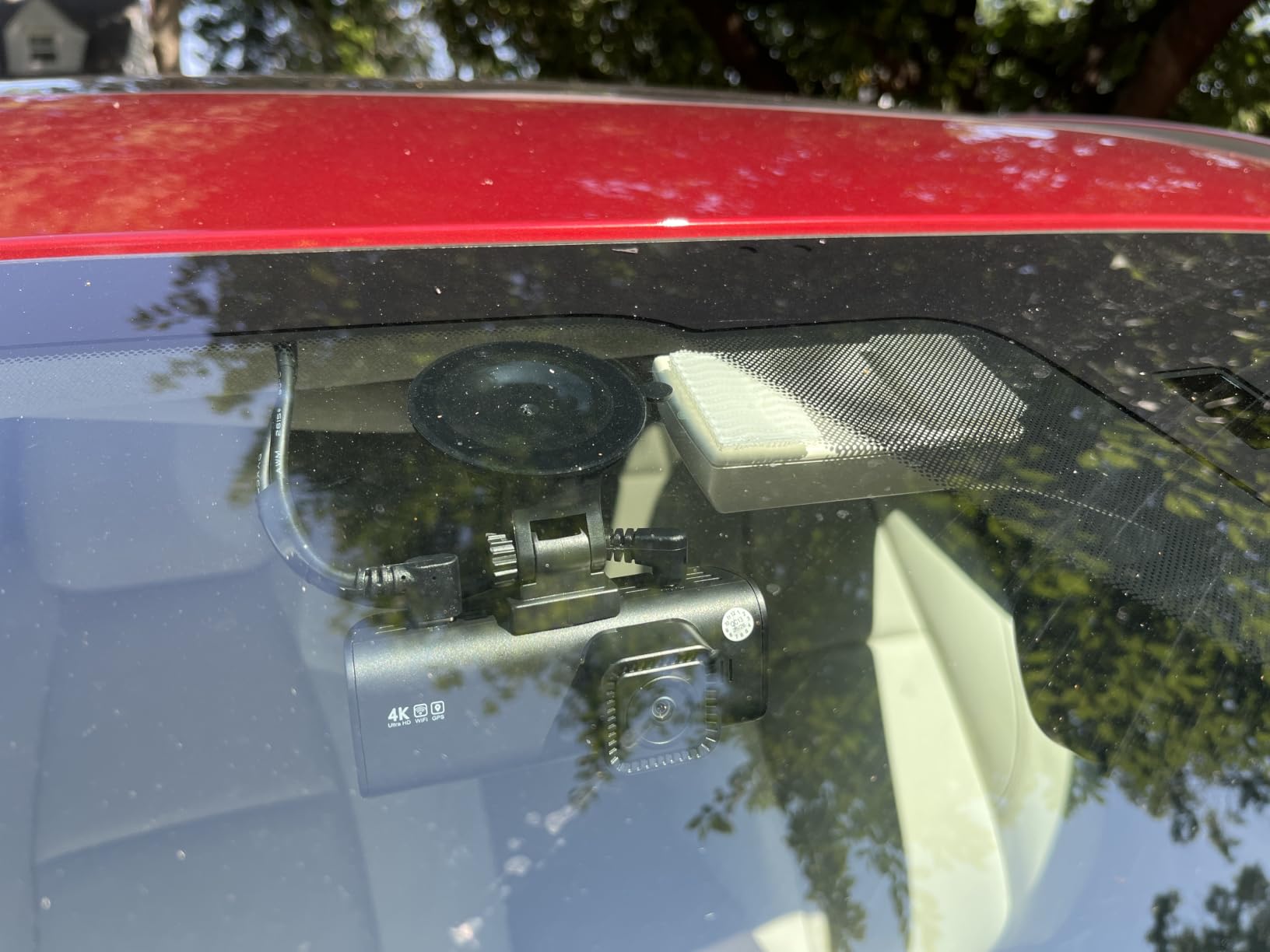
Where the wide lens pays off for a gig driver
A 170-degree front lens sounds like marketing until you work out how much of a junction it actually covers. On a six-lane road it takes in roughly six lanes at once, so a car sideswiping you from an adjacent lane is on camera. The 140-degree rear lens covers the back of the car and the lane behind at highway distance.
That width also reduces the need to angle the camera aggressively inward, which keeps the mount stable and keeps footage from smearing at the edges. A driver who repositions their camera constantly to compensate for a too-narrow lens ends up with worse framing, not better.
Where the REDTIGER F7NP falls short
There is no cabin channel. That matters more than most spec sheets admit, because the situations that generate the most support tickets for rideshare drivers involve the passenger, not the lane behind. Audio of a dispute plus a view of the rear seat is better evidence than a crystal-clear view of an empty road.
The 10 percent one-star share in the review data also points to a small tail of reliability complaints, which is normal at this review volume. Treat it as a well-supported workhorse rather than a flawless device, and check that your card is formatted in the camera’s own menu before you rely on the footage.
3. COOAU D30S is the best dual dash cam for recording passengers at night
COOAU D30S 4K Dash Cam with GPS Wi-Fi, Front and Inside Dual 2.5K 1080P, Uber Car Camera with Infrared Night Vision, Supercapacitor, 4 IR LEDs, G-Sensor, Parking Mode, Loop Recording
Front 2.5K plus 1080P cabin
4 IR LEDs on interior camera
STARVIS 2 with f/1.8
Pros
- Higher-resolution front channel than the other cabin kit here
- 4 IR LEDs record usable monochrome cabin footage in darkness
- Suction mount holds in desert heat
- Compact body clears the driver's view
- 2-year warranty
Cons
- COOAUDash app logins expire and connections drop
- Some reviewers report recording gaps
- Hardwire kit sold separately
This is the camera I would point a driver toward if the words that made them search were passenger, dispute, or safety report. The D30S records a 2.5K front channel and a 1080P cabin channel simultaneously, and the cabin camera carries four infrared LEDs behind an f/1.8 aperture. In a completely dark car at 1am, that interior channel still produces a usable monochrome picture of the back seat.
That is the whole reason it exists for this audience. A cabin camera without infrared records a black rectangle after sunset, which is useless in exactly the hours when airport runs and late-night trips happen. Riders on r/uberdrivers describe an IR-equipped interior camera as the bare minimum for gig work, and the D30S pairs that with a 2.5K front channel rather than the 1080P front you settle for on a two-channel budget kit.
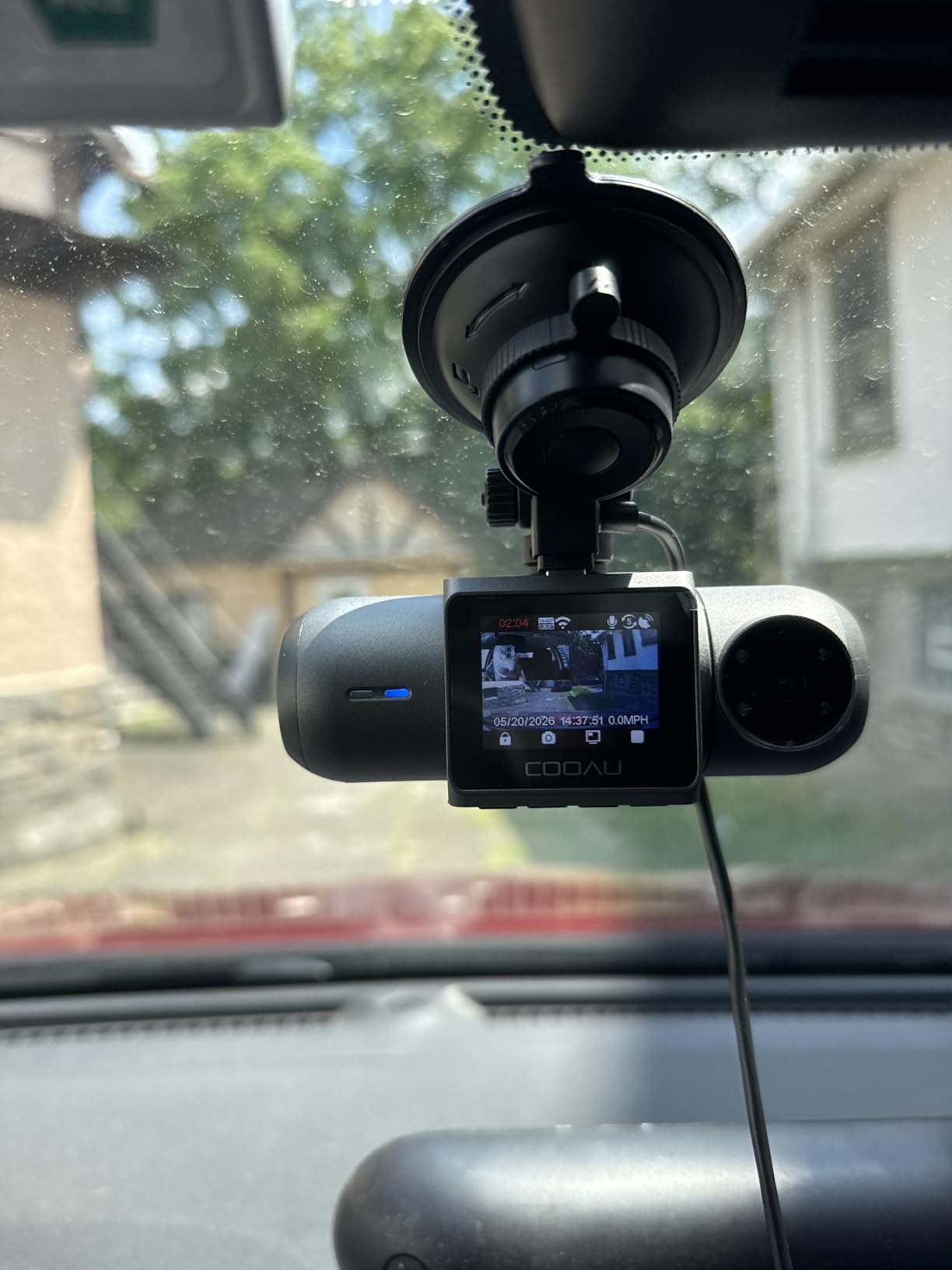
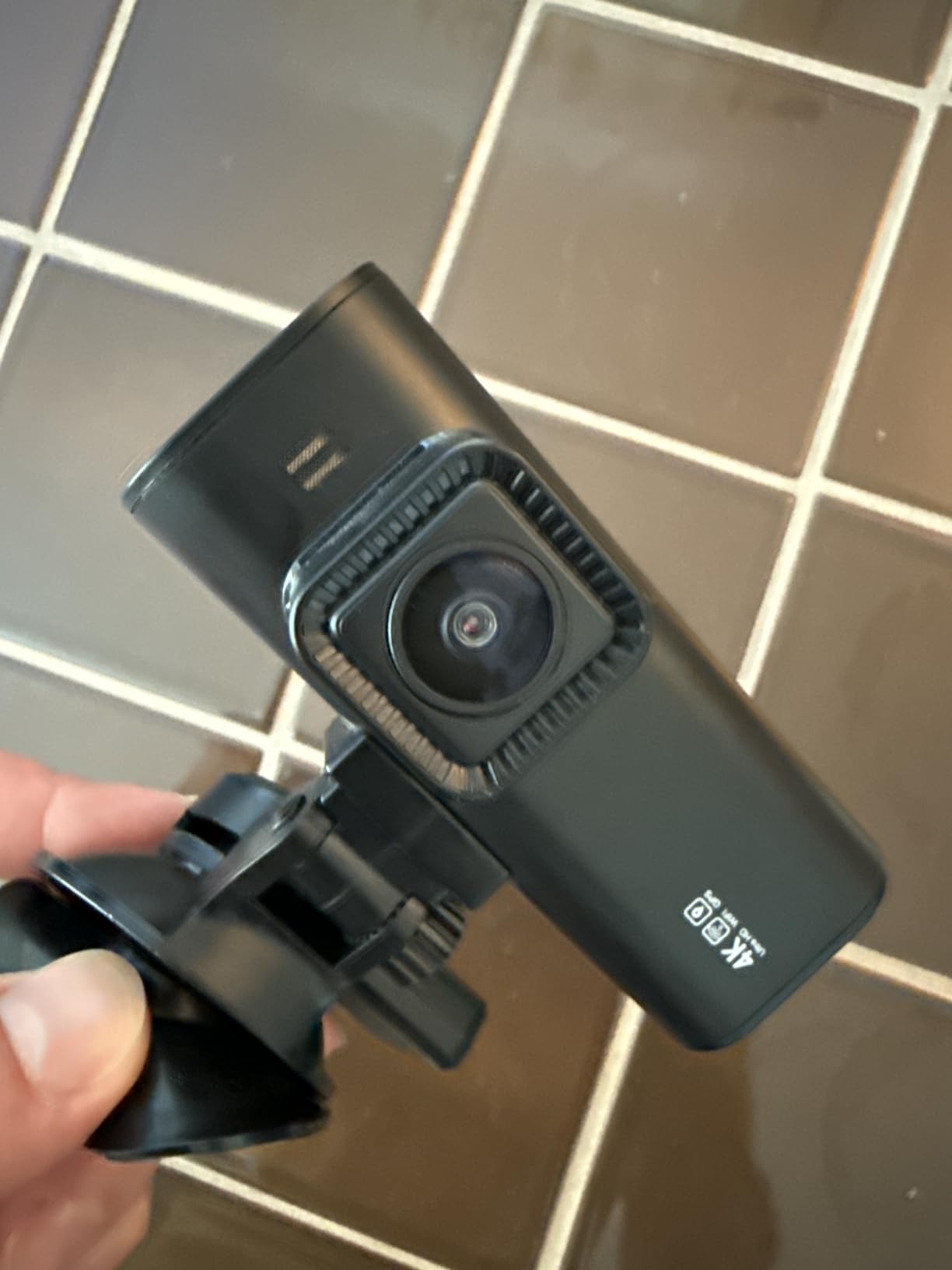
The build quality details are better than the brand suggests. It is rated to operate from -4F to 158F, which covers the parked-car heat problem head-on, and the suction cup mount held firmly on a windshield in conditions that loosen adhesive mounts. A 1.5-inch screen keeps the body compact enough that it does not eat into your view of the road.
Daytime footage is sharp at 30fps with a 170-degree front view and a 150-degree interior view, and it does not wash out when the camera faces direct sun through the windscreen. Built-in GPS handles speed, route and location without a dongle, and the app has no subscription fee attached to it.
The app is the weak point, and I want to be direct about it. Reviewers report that COOAUDash logins expire frequently and that the phone disconnects during playback or download, which is annoying but not dangerous. Some reviewers also report intermittent recording gaps around incidents, and that is the one complaint I would weigh most seriously in this role.
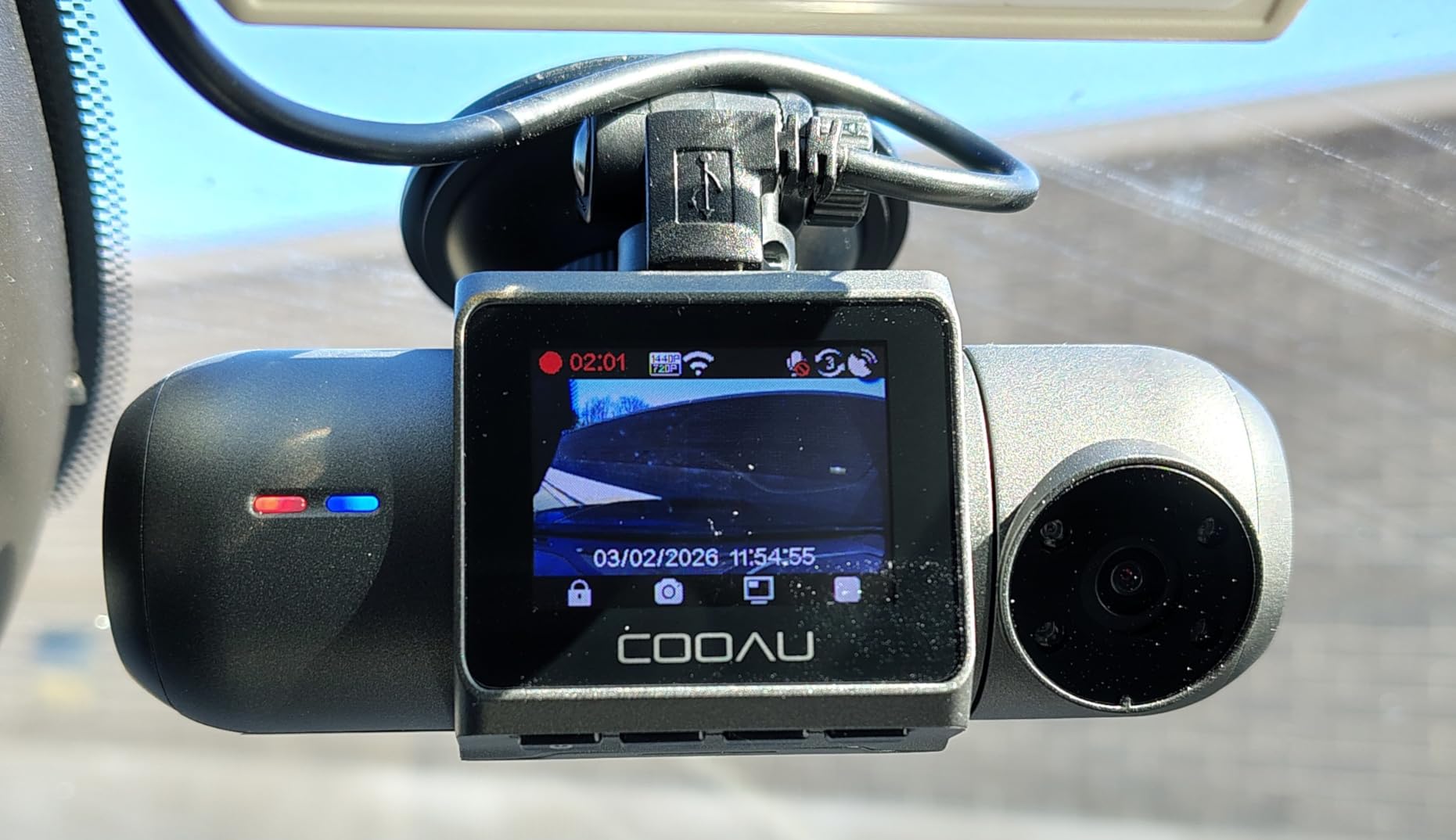
How the infrared cabin channel performs after dark
The four IR LEDs are switchable, which lets you decide per shift. With them on, the cabin view is monochrome but evenly lit, and facial detail is good enough to identify whether a passenger was wearing a hat or holding something. With them off in daylight, you get colour footage at 1080P through a 150-degree lens.
Leaving IR on during a daytime airport run is a reasonable choice too, since the switchable setting is what stops the cabin image from looking washed out. The practical tip is to check the setting before you accept the next ride rather than mid-ride, because it lives in the app.
Who should pass on the COOAU D30S
Pass if you need a rear view. The interior channel covers the cabin, not the road behind you, so it cannot serve as your rear-facing camera. If your accident risk profile is mostly junction work, the ROVE or REDTIGER is the better shape.
Also consider a different unit if you are not willing to test the app after installing. With unreliable app connections, the practical habit is to check a clip the moment something happens rather than at the end of the week. Drivers who pull footage routinely will be fine. Drivers who never open the app should pick a camera with a more stable companion app.
4. VIOFO A229 Plus is the best low-light dual STARVIS 2 pair for plate readability
VIOFO A229 Plus Dash Cam Front and Rear, 2K Dual STARVIS 2 Sensors & HDR
1440P plus 1440P dual channel
Dual STARVIS 2 sensors
Front up to 60fps
Quad-mode GPS
Pros
- Genuinely readable night plates with minimal glare
- 2K plus 2K on both channels
- 5GHz WiFi makes clip review fast
- Compact bodies allow flexible mounting
- Supercapacitor build for heat and cold
Cons
- SD card and hardwire cable not included
- 1440P 60fps cannot run with HDR enabled
- Rear mount can be awkward on SUVs
The A229 Plus is the camera that r/uberdrivers threads most often recommend when drivers ask which unit to run full-time, and after using a pair of these I understand why. Unlike most of the lineup, it puts a Sony STARVIS 2 IMX675 sensor in both cameras, so the rear view is 1440P rather than 1080P and both channels hold detail at night. That symmetry is rare at this level.
Plate readability is the thing to judge it on, because that is what an insurer or a police report needs. The dual STARVIS 2 sensors deliver readable plates at night with far less glare than the sensor-less units here, and 2.5x the dynamic range of a standard STARVIS sensor helps when a headlight fills the frame. One reviewer reports footage from this camera used successfully in a real insurance claim.
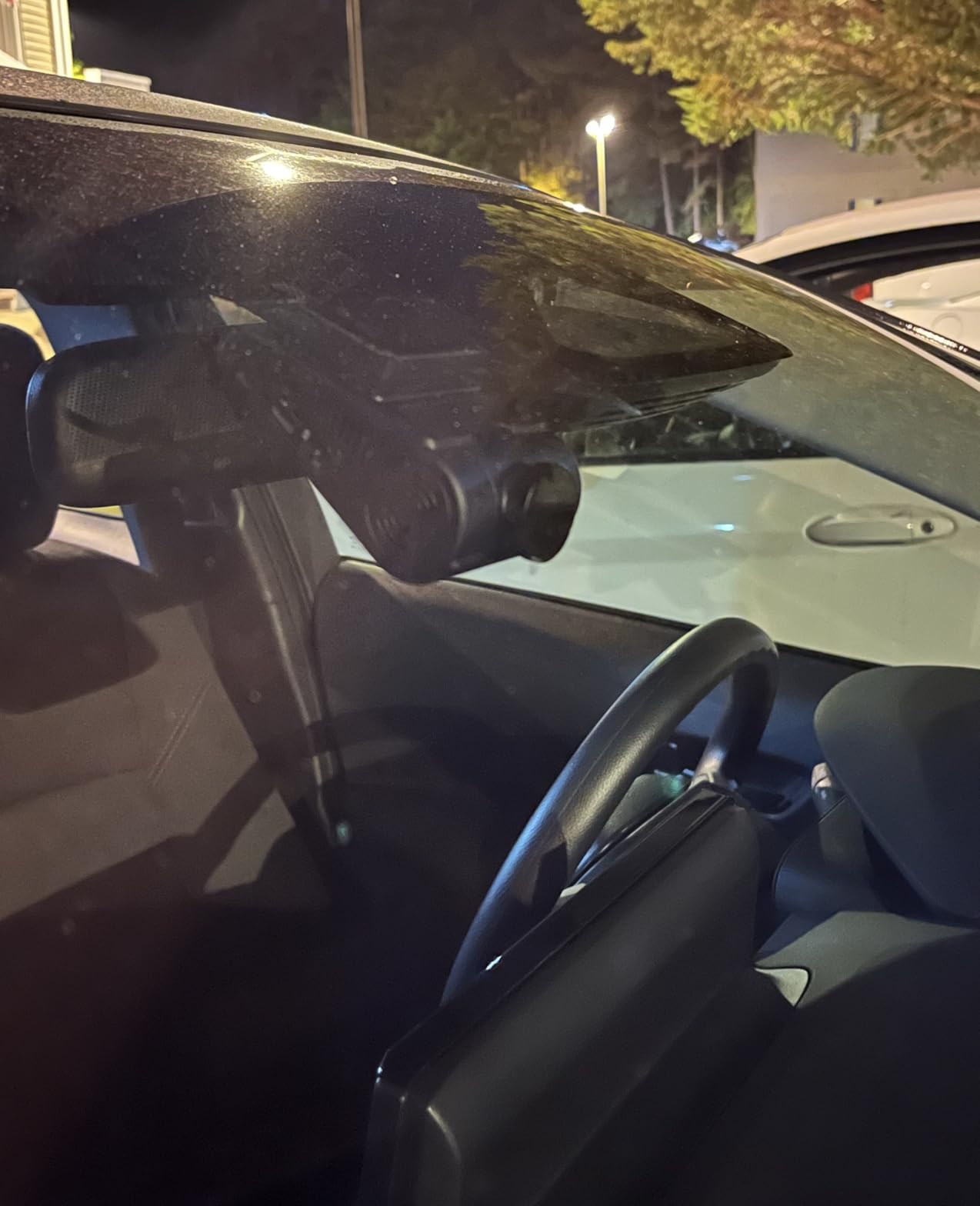
Front recording runs up to 60fps at 1440P, which is genuinely useful for a rideshare driver because it smooths out the judder you get reading a plate from a moving car at lower frame rates. Twelve hands-free voice commands let you start a recording without touching the mount, and quad-mode GPS covers GPS, BEIDOU, GALILEO and GLONASS for a more reliable position stamp.
Install is straightforward with the included trim tool, and the compact camera bodies let you mount the rear unit in a position that suits your vehicle rather than a fixed spot. The 5GHz WiFi module and the VIOFO app make reviewing and downloading clips faster than the 2.4GHz units at the budget end of this list.
Two things you have to add yourself: the microSD card and the HK4 hardwire cable. Neither is in the box, so a first-time buyer will spend more than the headline number suggests before the camera is fully working. The VIOFO app interface also feels dated and can require a reconnect, and two similar apps exist in the store, so check you have the right one.
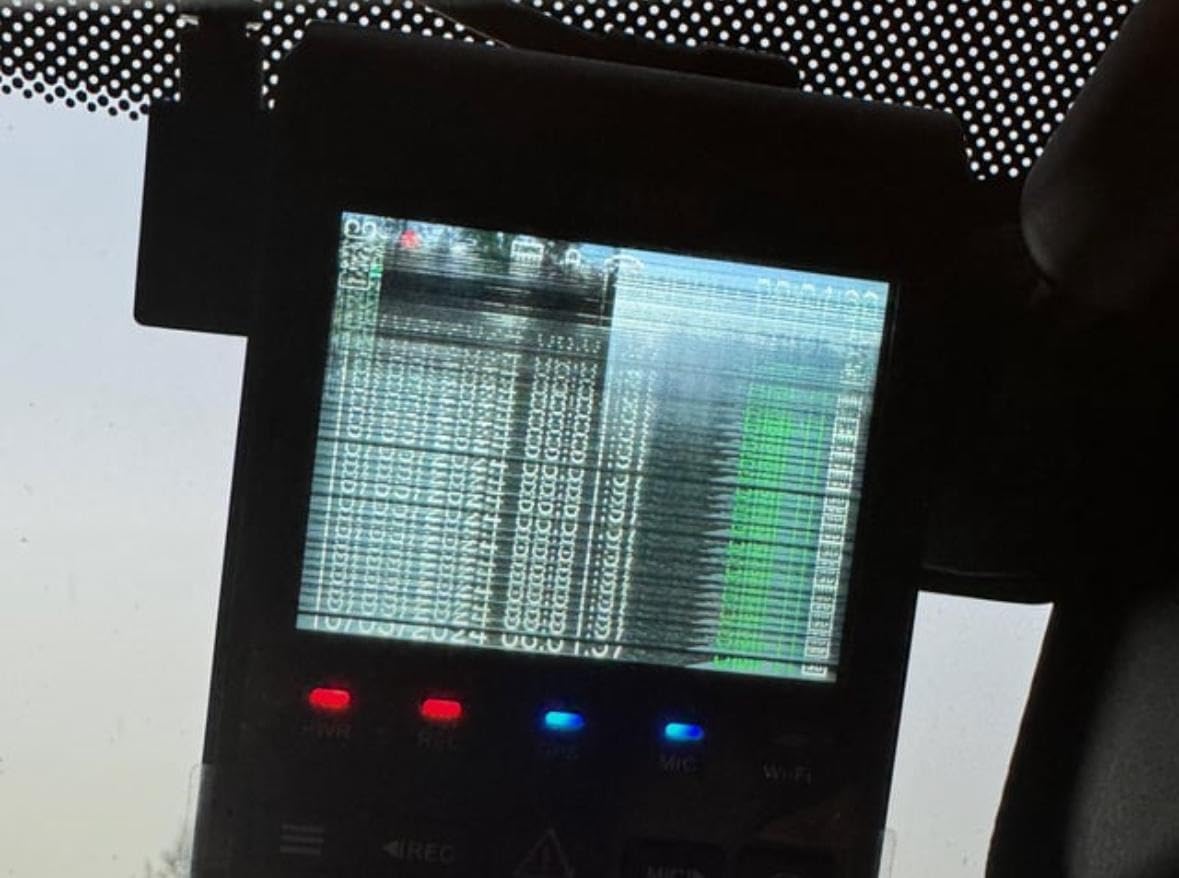
Why 60fps front footage matters for claims
Frame rate is not a spec-sheet luxury when a vehicle is moving. At 30fps, a plate caught at speed smears, and at 60fps the same frame holds letters apart. If you are the driver who has to hand an insurer a single still from a two-second window, that difference decides whether the clip helps you.
There is a catch worth knowing: 1440P at 60fps on the front channel cannot run at the same time as HDR. Many drivers end up with HDR permanently on because it looks better in review, and silently lose the 60fps option. Decide which one matters to you and set it in the app on day one.
Where the A229 Plus costs you
Plates at genuine highway speed are still hard to read at 2K, which is an honest limit rather than a defect. If you spend most of your hours on fast roads, the narrower 140-degree field of view captures less of the surrounding lanes than the 170-degree rivals here, and you may find yourself wanting the wider frame more than the extra resolution.
Skip it entirely if you want a plug-and-play install. Both the card and the parking-mode cable are extra purchases, and drivers who want to be recording within ten minutes of delivery will not enjoy that. Everyone else gets a camera that holds its image quality for years.
5. COOAU Dual 2.5K and 1080P is the budget front and inside dash cam for rideshare drivers
COOAU Dual Dash Cam 2.5K+1080P, Dash Cam Front and Inside, Built-in GPS and WI-FI, Dash Camera for Cars, Perfect for Uber and Taxi Drivers, Night Vision, Accident Record, 24Hr Parking Mode
Front 2.5K plus 1080P interior
4 IR lights on cabin camera
Built-in GPS
Pros
- Least expensive kit here that records the cabin
- 4 IR lights and f/1.8 give usable night cabin footage
- Built-in GPS with no dongle needed
- Compact body with a 1.5-inch screen
- 2-year warranty
Cons
- Front is 2.5K so plate detail drops at distance
- Memory card not included
- App takes over Android Auto or CarPlay while connected
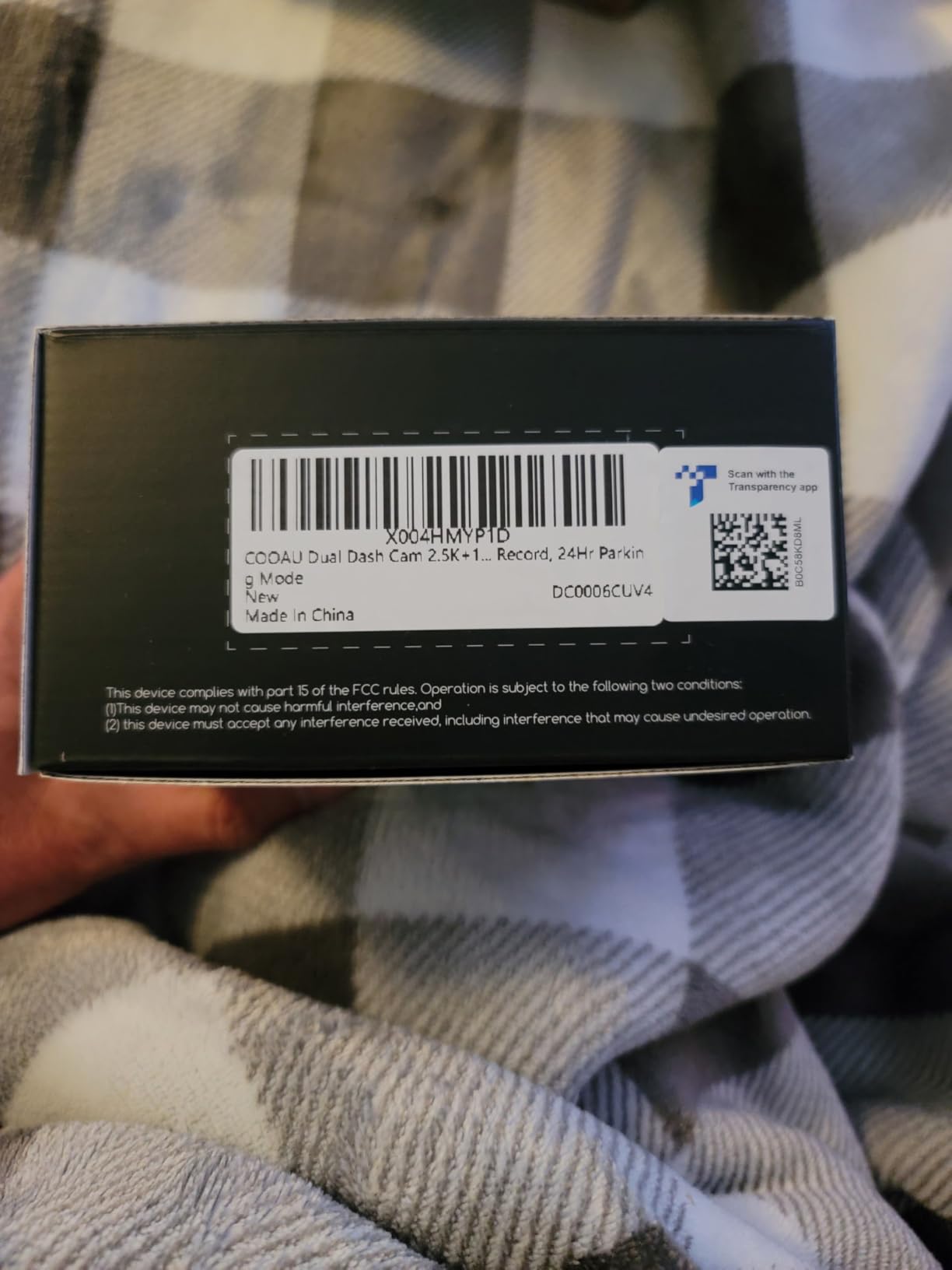
This is the cheapest way in this roundup to get a genuine cabin channel, and for a driver doing full-time hours who mainly needs a record of the back seat, that is the most sensible starting point. It records 2.5K at 170 degrees in front and 1080P at 150 degrees inside, with four IR lights on the interior camera that can be switched on and off.
The front lens is an f/1.8 6-glass unit with WDR, which handles the sun-to-shade transitions of an urban shift without a visible jump. Built-in GPS logs speed, route and location without a separate dongle, and the supercapacitor is rated from -4F to 158F, so the parked-car heat question is answered. The 1.5-inch screen keeps the footprint small enough to mount high on the glass.
Mounting is flexible, with both suction cup and adhesive options, which matters if you swap cars often or want to take the camera with you. Reviewers who have contacted support describe replacements handled quickly, and the 2-year warranty is the longest in this lineup alongside the D30S.
Where it falls short is front-channel detail. 2.5K is enough to show what happened in a low-speed parking lot scrape, but plates at distance will not hold up the way the VIOFO pair or the upscaled 4K units do. The microSD card is also not included and 256GB is the maximum, which is a smaller recording window than the ROVE supports.
The one irritation I would flag hard is app behaviour. The COOAUDash app takes over Android Auto or CarPlay while it is connected, so drivers running navigation through the car’s own screen will have to close the app each time they want their maps back. Budget for that friction before you commit.
When a budget cabin camera makes sense
It makes sense when your priority is having any interior record at all, and when the number you want to spend is small. If your main exposures are verbal disputes, a lost phone, a refused payment or an overlong airport run, a 1080P cabin channel with infrared is more useful than a rear camera you never need.
It also makes sense for night-shift-only drivers on a tight budget, because the four IR lights do the heavy lifting when the sun is gone. Pair it with a decent endurance card and a monthly format, and the recording window is not a problem at 256GB for a typical shift pattern.
When to spend more instead
Spend up if you drive long highway runs where plate detail at distance decides fault. In that case the 2.5K front channel is the limiting factor and no amount of cabin capability compensates for an unreadable plate on the front footage. The REDTIGER or ROVE covers that case better.
Also weigh a different unit if you rely on built-in navigation through Apple CarPlay or Android Auto. The app-to-infotainment conflict is not a defect but it is a daily irritation, and some drivers will find a camera with no such conflict a better long-term companion.
6. Affver 4K plus 2.5K is the best dual dash cam for larger vehicles and long rear runs
Affver 4K+2.5K Dash Cam Front and Rear, Built-in 5G WiFi 6 GPS Dual Dashcam
4K front plus 2.5K rear
5GHz WiFi 6 at 10MB/s
Built-in GPS
3.59-inch IPS screen
Pros
- True 2.5K rear rather than the usual 1080P
- WiFi 6 transfers at roughly 10MB/s
- Long rear cable reaches the back window of a crew-cab truck
- 64GB card and dual-port car charger included
- Low-profile body keeps the windscreen clear
Cons
- Parking mode needs a hardwire run to the fuse box
- Uses a lithium polymer battery rather than a supercapacitor
- Listing dimensions of 1 inch cube appear inaccurate
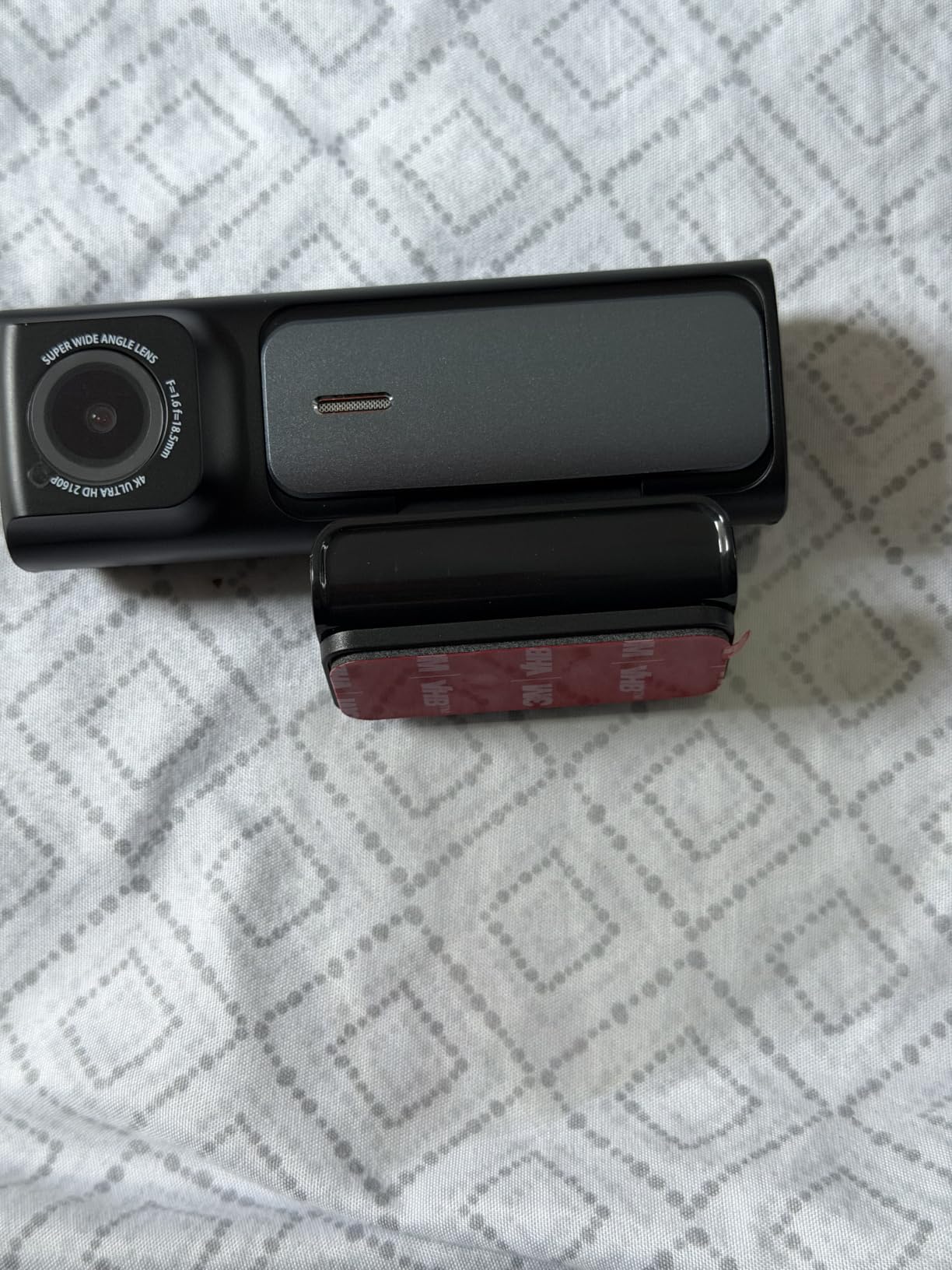
The Affver is the one in this lineup I would put in a truck or a large SUV, and the reason is cable length. The rear camera runs on a cable long enough to reach the back window of a crew-cab, which removes the most common installation complaint on bigger vehicles, where the standard rear cable stops short and the camera has to be mounted awkwardly or hardwired by a shop.
Spec-wise it is genuinely strong for the money. The front channel records 4K at 30fps through a 160-degree lens and the rear was upgraded to a true 2.5K at 155 degrees, which puts it ahead of most rivals on rear detail. WiFi 6 on the 5GHz band moves app downloads at roughly 10MB/s, and built-in GPS logs route, speed and coordinates viewable in the app or a desktop player.
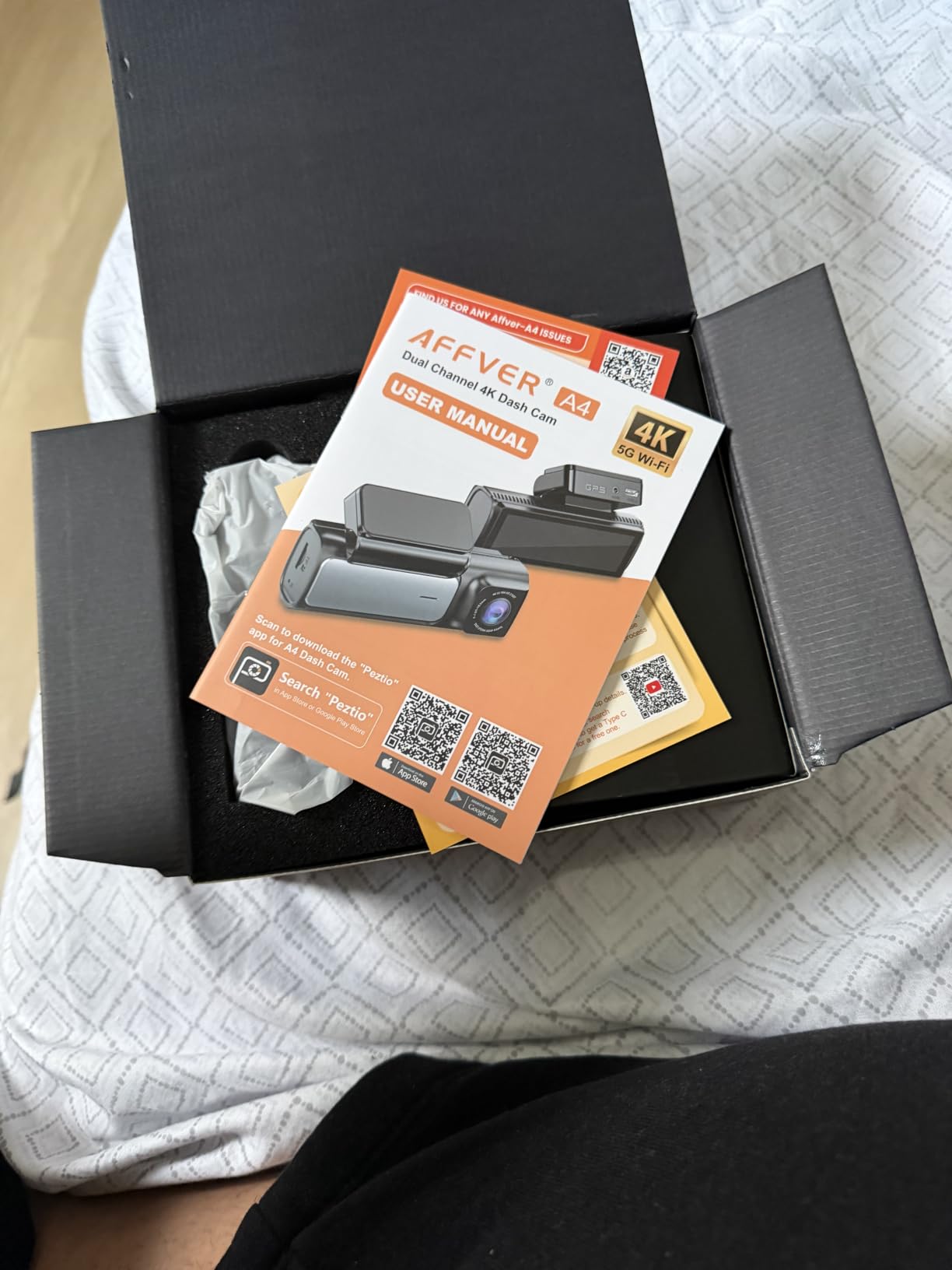
The f/1.5 aperture with a 6-layer lens is specified to boost light intake substantially, and WDR handles the contrast swings of a day shift. The 3.59-inch IPS screen is large for the body size, and the low-profile hidden design keeps the mount close to the glass so your forward view stays clear. The included car charger has a spare USB port, which is handy when you are already running two devices.
Here is the durability problem. It uses a lithium polymer battery rather than a supercapacitor, and that is exactly the component that struggles in a car parked in summer sun. For a driver in Texas or Arizona who leaves the vehicle outside between shifts, I would weight this more heavily than most spec sheets do. The hardwire kit is also not included, and parking mode genuinely needs a run to the fuse box rather than a 12V socket.
The listed dimensions of 1 inch by 1 inch by 1 inch are plainly wrong for the physical unit, so measure before you order mounting tape. The warranty description is also inconsistent between the spec list and the feature copy, which is a small sign of loose listing data rather than a device problem.
Why rear resolution matters more than usual
Most rival kits put a 1080P camera on the back because nobody checks the rear channel until they need it. A true 2.5K rear camera means a vehicle following you through traffic is recorded with enough detail to identify a vehicle and read a plate in daylight, which is the difference between usable evidence and a shape in a mirror.
The 155-degree rear lens also covers more of the lane behind than the 120-degree unit later in this list. On a multi-lane road that translates to fewer blind spots when you change lanes, and it captures more of a car’s side as it passes rather than just its rear quarter.
Who should skip the Affver
Skip it if heat is your main worry. The lithium polymer battery is the weakest link in a vehicle that spends hours parked in direct sun, and the twelve-month warranty is the shortest in this lineup. The supercapacitor models here will simply outlast it in that environment.
Skip it if you are not prepared to run a hardwire cable to the fuse box. Parking mode on socket power will flatten a starter battery over a few parked days, and the manufacturer is clear that the fuse-box run is the intended installation. On a newer vehicle you plan to keep long-term, have an installer do it rather than splicing into your own wiring.
7. BOTSLAB G300H Plus is the best voice-controlled 4K front and rear dash cam
BOTSLAB G300H Plus 4K STARVIS 2 Dual Dash Cam Front and Rear
4K front plus 1080P rear
STARVIS 2 with f/1.5 lens
170-degree coverage
Supercapacitor
Pros
- Voice control avoids touching the mount while driving
- STARVIS 2 sensor gives vivid low-light colour
- 170-degree front and 150-degree rear lenses
- Supercapacitor rated -20C to 70C
- 64GB card included
Cons
- Rear camera is 1080P
- Only a 12-month warranty
- Small 2-inch screen
The BOTSLAB G300H Plus is included here because voice control is genuinely useful in this job, not as a gimmick. Hands-free commands let you start a recording or take a photo without reaching up to the windscreen, and for a driver who wants to capture something at the moment they see it, removing the physical interaction is the point. The effect is similar to the voice commands on the VIOFO pair, so pick on build and image quality rather than on this feature alone.
Image quality is the surprise here. The STARVIS 2 sensor with an f/1.5 front aperture produces vivid colour in low light, which is not something you can say for most cameras at this level, and the 170-degree front plus 150-degree rear coverage spans several lanes. The rear runs at 1080P, so it sits below the Affver and the VIOFO Pro on rear detail.
![BOTSLAB G300H Plus 4K STARVIS 2 Dual Dash Cam Front and Rear[2026 Upgraded] customer photo 1](https://www.shortfilmcentral.com/wp-content/uploads/2026/09/B0GSDTJQK8_customer_1.jpg)
Supercapacitor power is rated from -20C to 70C, which is a good working range for a parked car and another point in its favour for hot climates. Install is a slim peel-and-stick run along the headliner, and a 64GB card is in the box. Built-in GPS and 5.8GHz WiFi handle position logging and app transfers, and the body is listed for cars, SUVs, trucks and motorcycles.
The screen is a 2-inch panel, which is small enough to be unobtrusive and large enough to frame the camera. The mixed 4K front and 1080P rear split is what limits it, along with a 12-month warranty that is the joint-shortest here. Reviewers rate it 65 percent five-star with a 9 percent one-star group, which is a normal spread for a camera in this class.
![BOTSLAB G300H Plus 4K STARVIS 2 Dual Dash Cam Front and Rear[2026 Upgraded] customer photo 2](https://www.shortfilmcentral.com/wp-content/uploads/2026/09/B0GSDTJQK8_customer_2.jpg)
When hands-free voice control earns its place
The commands are most useful for the moments you cannot safely reach the camera. A passenger dispute that starts while you are moving, a sudden brake, or a moment where you want a still rather than a video are all cases where a spoken command is the right tool. It also means the mount stays exactly where you placed it, because nobody is adjusting it mid-shift.
Set the commands up once during installation and test them with the engine running and music on. Voice recognition that cannot hear over audio is a common complaint in this category, and drivers who test before they need it will know which commands actually work in their car.
Where the G300H Plus is the wrong buy
Choose elsewhere if rear detail decides your cases. A 1080P rear channel is the weakest half of the setup, and the pairs that record 2K or 4K behind you cost little more. The same applies if you want the longest warranty in the roundup, since 12 months is short for a device parked in a hot car.
Also consider a camera with a larger screen if you enjoy reviewing footage on the camera itself. A 2-inch panel is fine for checking framing and confirming recording, but reviewing a 10-minute clip on it is not an experience worth having.
8. WANLIPO A13 Dual is the quickest front and rear kit to install and remove
Dash Cam Front and Rear: 4K Dual Channel Dash Cam – 5GHz WiFi, Dash Camera for Cars with 64GB Card, 2″ IPS, App Control, G-Sensor, Loop Recording, 170° Wide Angle, Night Vision, 24H Parking Mode
4K front at 30fps plus 1080P rear
Locking suction cup mount
5GHz WiFi
64GB card included
Pros
- Locking suction mount survives heat and repositions without tape
- Small rear camera does not block the rear view
- 64GB card pre-installed so it records immediately
- No paid tier needed to view or download clips
Cons
- Several buyers report the camera saves no footage
- Front audio described as tinny and distorted
- Some units have WiFi that will not connect reliably
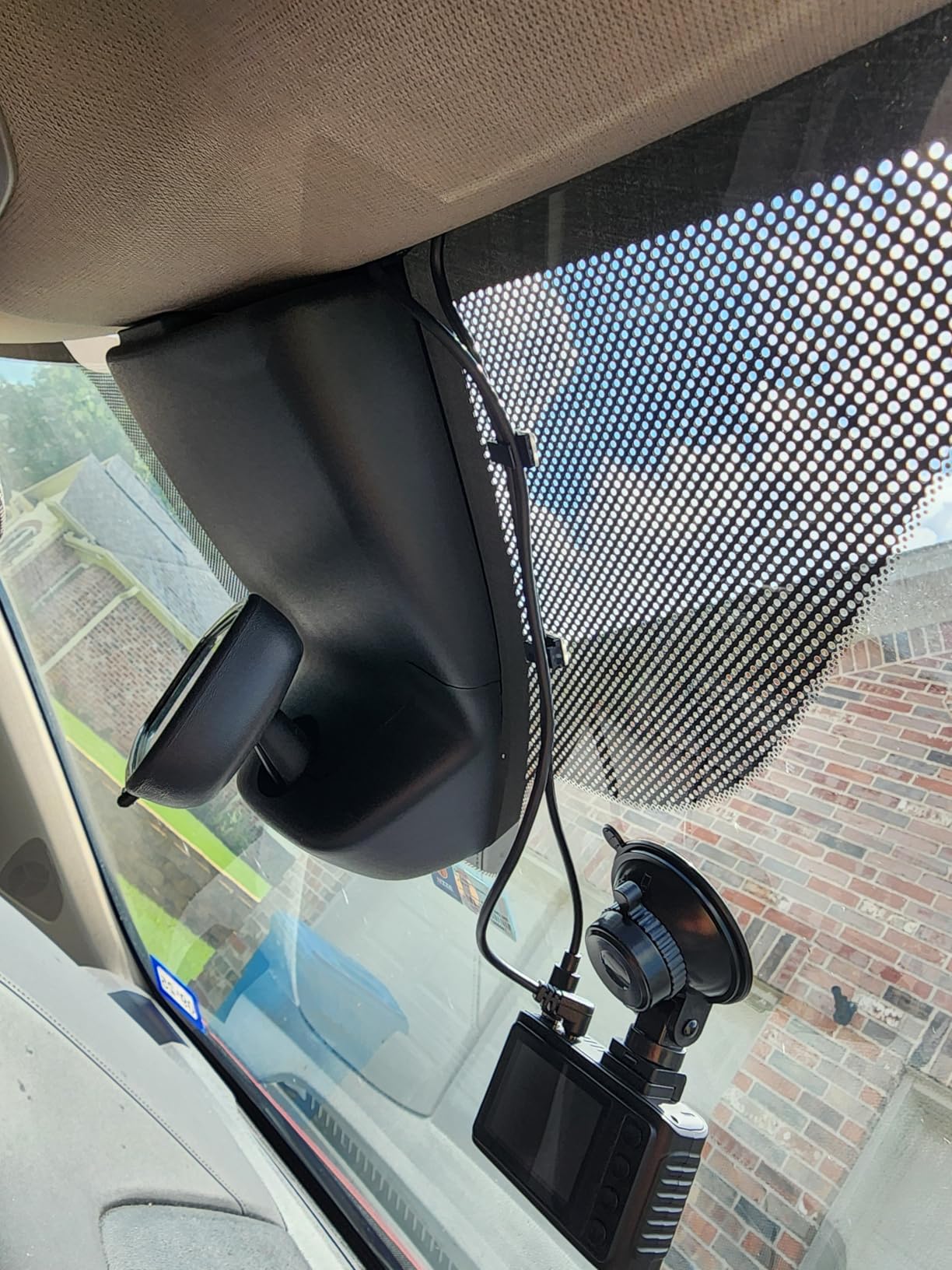
The WANLIPO A13 is the most flexible mount in this roundup, and for a specific kind of driver that matters more than image quality. The locking suction cup holds through extreme heat and humidity, and you can reposition the camera without peeling tape or rethreading a bracket. Drivers who swap between vehicles, or who take the camera out when the car is parked somewhere exposed, will appreciate that more than any sensor upgrade.
Specs are respectable for the money. The front records 4K at 30fps through a 170-degree lens, the rear runs 1080P at 25fps through a 120-degree lens, and an f/1.6 aperture with a 6-layer optical lens and WDR handles low light. A 64GB card is pre-installed, which means it is recording the moment it is powered, and the Viidure app needs no paid tier for core viewing and download.
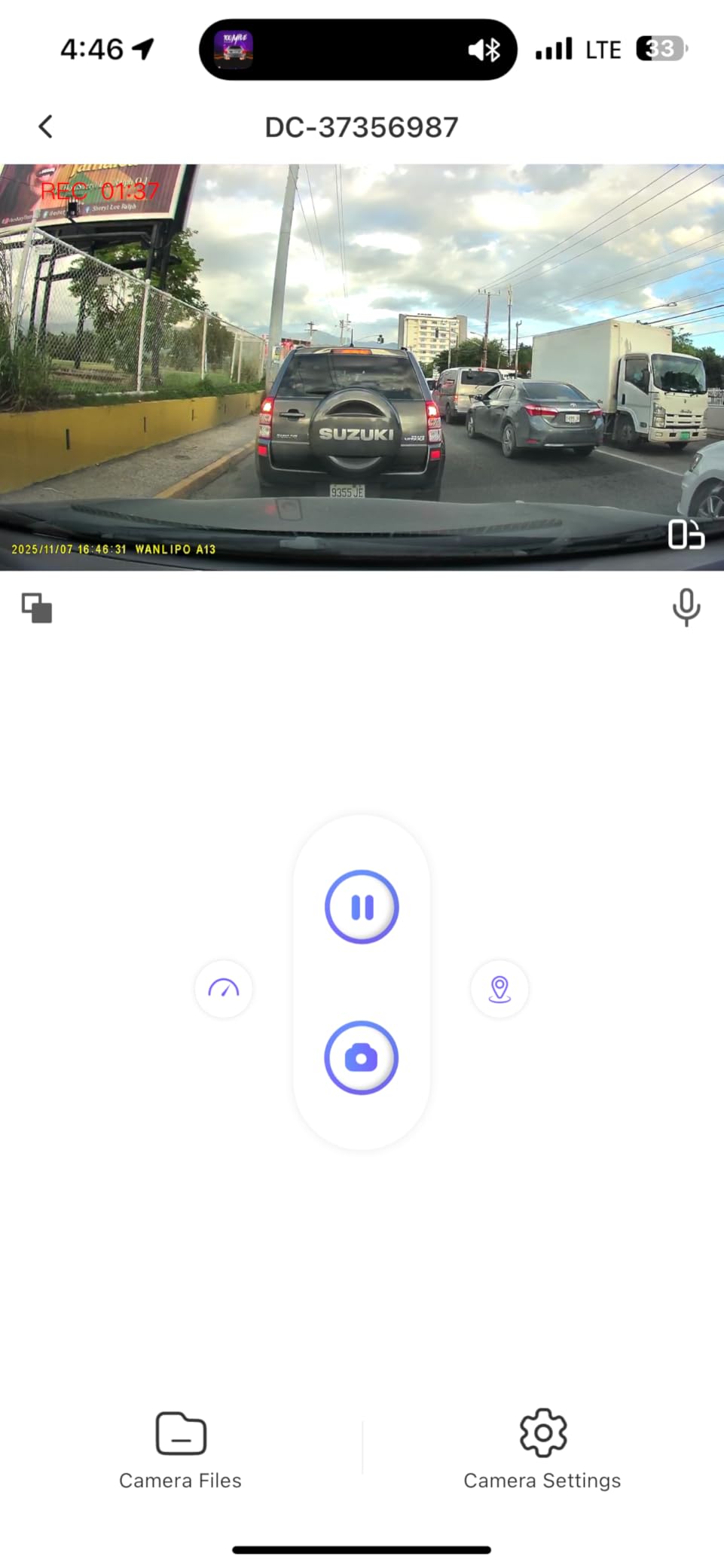
The 120-degree rear lens is the narrowest here, and it is also the smallest rear camera body, which is why several reviewers note it does not block the rear view. That is a real advantage in a vehicle where every centimetre of glass matters, and it works across cars, trucks, SUVs and vans including hatchback rear glass.
Now the part you need to weigh. This is the lowest-rated camera in the group at 3.9, with the highest one-star share at 17 percent. The recurring complaint is serious for this use case: several buyers report the camera shows a recording light but saves no footage, sometimes for days. Front audio is described as tinny and distorted, which matters if you rely on speech, and some units have WiFi that will not connect even after a factory reset.
There are also reports of the G-sensor failing to lock clips after installation, which would undermine the one feature a rideshare driver cannot do without. Customer service on replacements is described as responsive, which mitigates the problem if you hit it, but a device that sometimes does not save footage is a poor thing to depend on for a dispute.
The mounting advantage in real use
For a driver who moves the camera between cars, the locking suction cup removes the single most annoying part of ownership. Adhesive mounts fail in heat, residue them permanently, and cannot be repositioned when the camera is not aimed where you need it. This one can be taken down, moved to a different angle, and put back in under a minute.
It also means the camera is not visible from outside the car when you take it out, which some drivers prefer for reasons of discretion. That choice does not change your notification obligations, which we cover below.
Who should not rely on the WANLIPO A13
Do not rely on it if footage is your only protection. A camera that sometimes records nothing is worse than a more expensive one that always records, because it creates a false sense of coverage. Check a clip after the first drive and again after the first week, every time you format the card.
Look elsewhere if you need readable audio or a wide rear view. The tinny front microphone and the 120-degree rear lens both work against you in exactly the situations a rideshare driver most wants documented, and the one-year warranty gives you less protection if either fails.
9. VIOFO A229 Pro is the best anti-glare dual dash cam for glare-prone driving
VIOFO A229 Pro 4K HDR Dash Cam Front and Rear, Dual STARVIS 2 Sensors
4K front with IMX678 plus 2K rear
Included CPL filter
Buffered parking mode
Quad-mode GPS
Pros
- Best plate-reading capability in this lineup
- Included CPL filter cuts windscreen and road glare at no extra cost
- HDR on both channels holds detail at speed and at night
- Buffered parking mode captures context around an event
- 6-meter rear cable covers most SUVs and trucks
Cons
- SD card and HK4 hardwire cable not included
- Rear records 2K rather than 4K
- Field of view narrower than 170-degree rivals
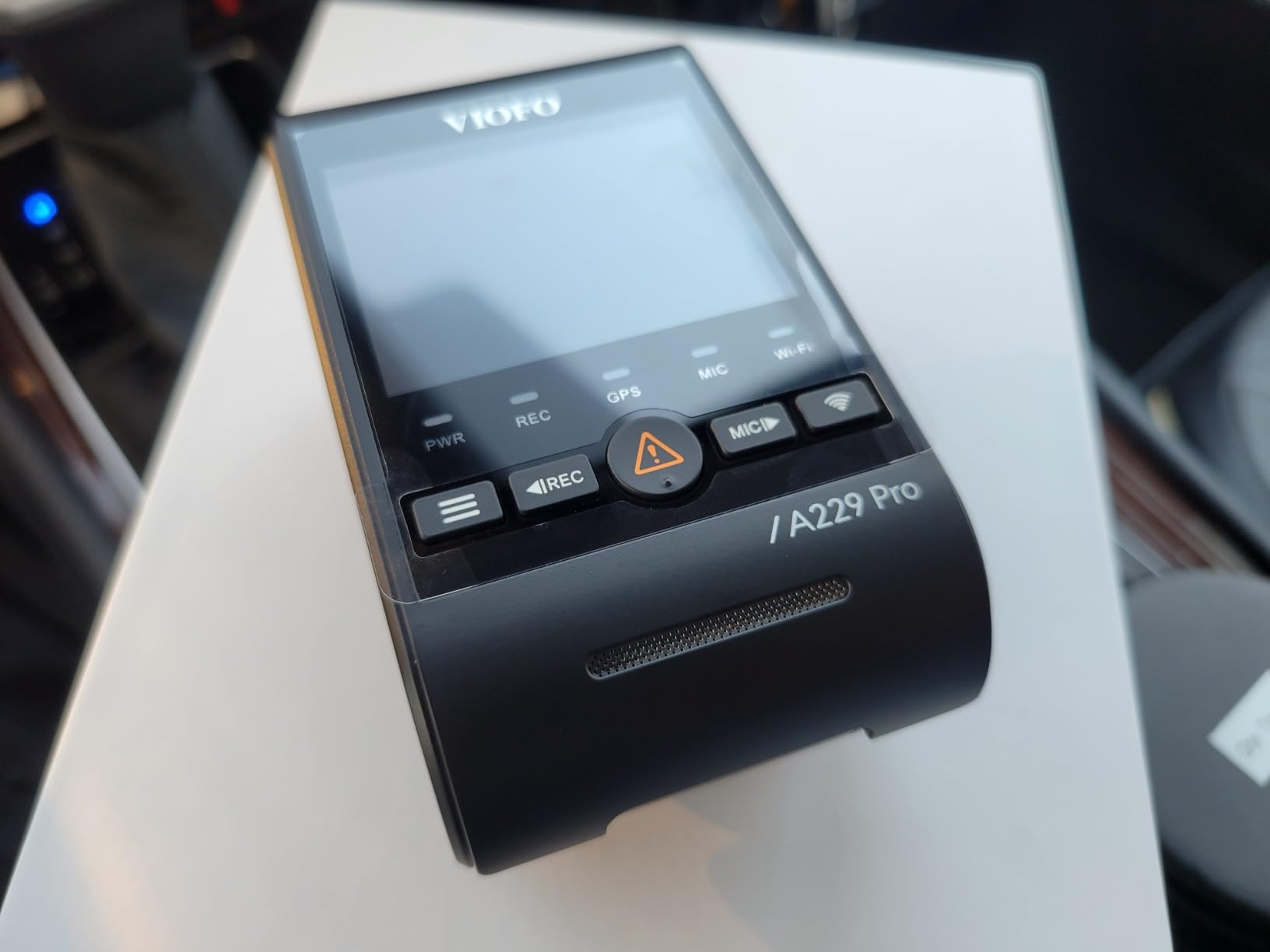
The A229 Pro solves a problem the other cameras here ignore. A circular polarising filter is pre-affixed to the front lens, and that single piece of glass is the difference between a night clip full of reflected streetlight smear and one where you can see the car ahead. If you drive at night for a living, that is not a cosmetic feature and it is why this camera earns its place despite costing the most here.
The sensors are the strongest pair in the roundup. The front uses a STARVIS 2 IMX678 at true 4K 2160P and the rear a STARVIS 2 IMX675 at 2K 1440P, both with HDR and Night Vision 2.0 for plate recognition at speed. Nothing else in this list records this much usable detail from the front seat, and the dual-channel HDR holds information in scenes where one channel is lit and the other is not.
Buffered parking mode is the other feature built for how a gig driver works. It records 15 seconds before and 30 seconds after an event, so you get the run-up and the aftermath rather than two seconds of impact. The supercapacitor is rated from 5F to 149F, twelve voice commands keep your eyes forward, and quad-mode GPS plus 5GHz WiFi handle position and transfers. A 6-meter rear cable is included, with longer lengths sold separately.
The cost is straightforward. Both the microSD card and the HK4 hardwire cable are extra, the 135 to 140 degree field of view is the narrowest of the wide-lens rivals, and this is the most expensive camera in the roundup. For a driver doing 40 hours a week, whether that pays back depends on how often a claim turns on one frame.
Why a polarising filter matters at night
At night the windscreen becomes a mirror. Light from the dashboard, the instrument cluster and streetlamps reflects back into the lens, and the result is a hazy image exactly when you need a clear one. The included CPL filter suppresses that reflection, which is why night clips from this camera look cleaner than clips from otherwise comparable units.
Daytime is where the filter also pays, since glare off wet or pale road surfaces washes out the lower half of the frame. Combined with HDR on both channels, the picture holds detail in both a bright sky and a shaded road, which matters when an insurer looks at a single frame.
When the A229 Pro is not worth the money
It is not worth it if a rear-end collision is your main concern and you drive at highway speed most of the time. The 140-degree field of view captures less of the surrounding lanes than the 170-degree units, and the rear channel is 2K rather than 4K. The ROVE or REDTIGER covers that scenario for considerably less.
It is also the wrong first camera for someone unsure whether they will keep driving gig. Accessories added to a leased or financed vehicle have a resale cost, and this is the most expensive way to find out. Start with a mid-tier dual kit, see how often you actually pull footage, and upgrade later if the evidence justifies it.
10. IIWEY Q5 records true 4K on both channels for the smallest review base
IIWEY 4K+4K Dash Cam Front and Rear, 5G Wi-Fi 64GB SD Card Included, STARVIS Dash Camera for Cars, 3 Inch IPS Screen, Dual Channel HDR Night Vision, 24H Parking Mode, 170° Widude Angle, G-Sensor
True 4K 2160P front and rear
STARVIS sensors at f/1.6 on both
Dual-channel HDR
5.8GHz WiFi at 10MB/s
Pros
- Genuine 4K on both channels rather than upscaled
- f/1.6 apertures and dual HDR improve low-light footage
- 5.8GHz WiFi much faster than 2.4GHz rivals
- 64GB card and 5.5-meter rear cable included
- G-sensor auto-locks impact clips
Cons
- Only 133 ratings so long-term reliability is less proven
- Hardwire kit for parking mode sold separately
- Suction mount less stable than adhesive on long trips
The IIWEY Q5 is the only camera in this roundup that records genuine 4K 2160P on both channels at once, and if you have been misled by upscaled 4K elsewhere, the difference is obvious in a side-by-side. The ROVE in particular advertises 4K and captures 2.5K natively, while this one captures what the badge says on the rear as well as the front.
STARVIS sensors sit behind f/1.6 apertures on both lenses with dual-channel HDR, so low-light footage holds colour and detail without a cabin channel to compensate. The 5.8GHz WiFi moves app downloads at up to 10MB/s, a 64GB card and a 5.5-meter rear cable are in the box, and the 3-inch IPS screen with a 170-degree front lens makes framing straightforward.
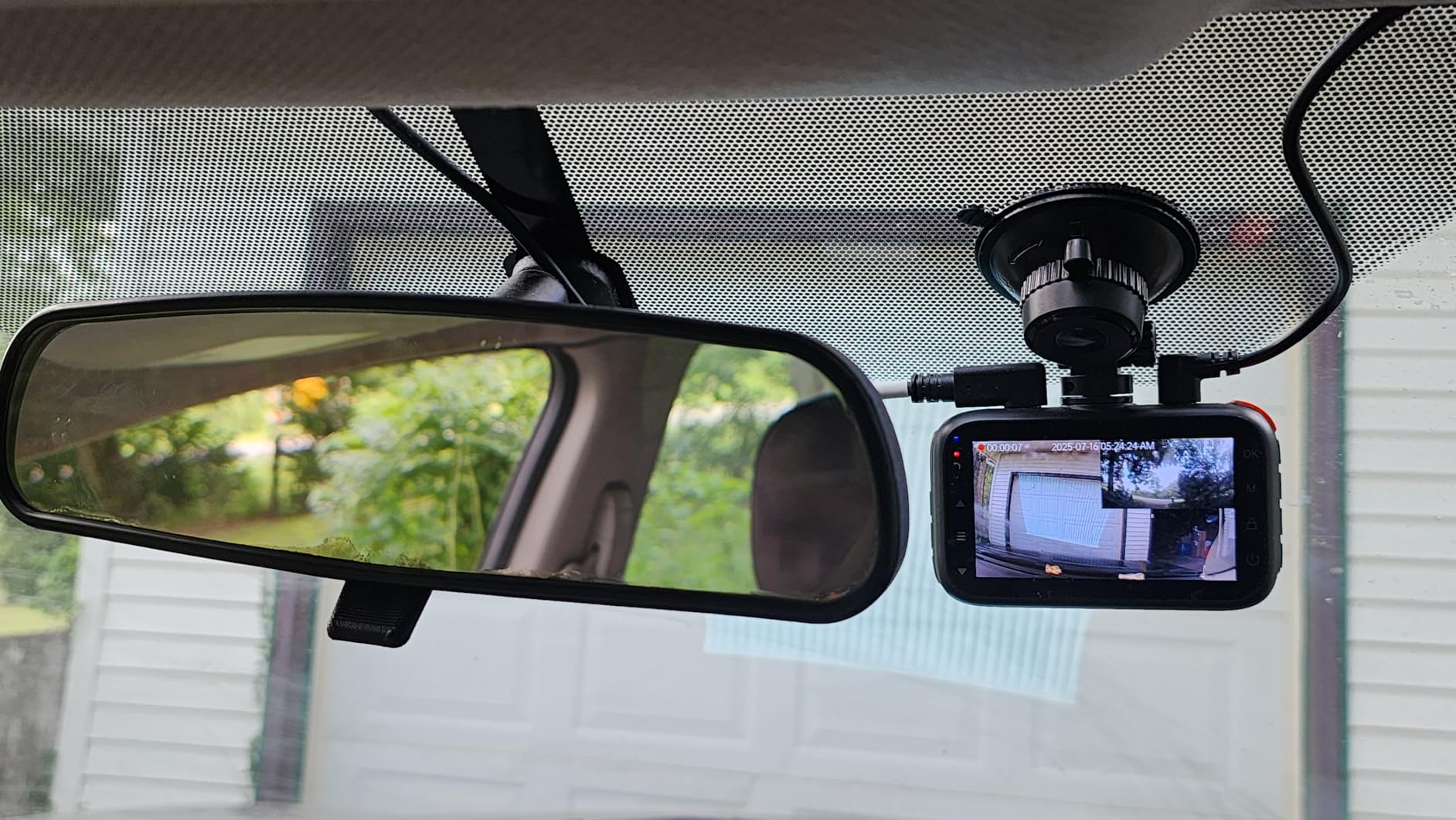
The G-sensor auto-locks impact clips so your evidence survives loop recording, and parking monitor offers impact-triggered or time-lapse modes with a battery guard. The 18-month warranty is mid-pack, and the suction mount is the one mechanical weak point, since adhesive holds steadier on long trips and on rough roads.
Here is the honest caveat. This camera has 133 ratings, the smallest base in the group by a wide margin. A 4.4 average on 133 reviews is promising rather than proven, and unlike the REDTIGER with 25796 ratings you have very little long-term owner data to lean on. Treat the score as a good first impression, not a track record.
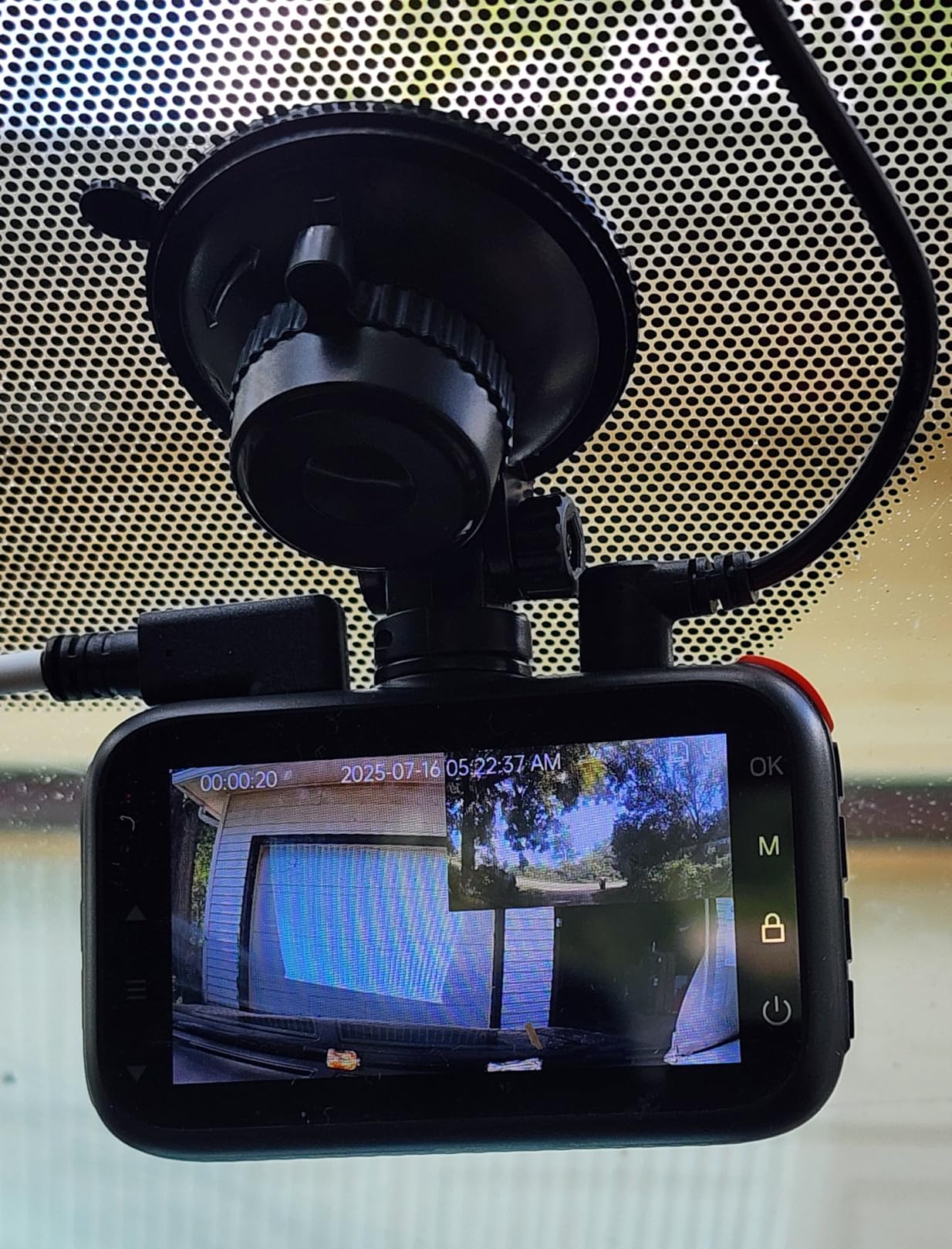
What true 4K on both channels actually delivers
Resolution matters most when the subject is small and the distance is long. A 1080P rear camera sees a car; a 4K rear camera can often identify the model and, in daylight, read the plate. For a driver whose disputes involve what happened behind them, that is a meaningful upgrade rather than a resolution number.
The dual-channel HDR is the other half of the story. It keeps detail in a scene where the road ahead is bright and a following vehicle is in shadow, which is a common situation on an overcast day. Just be aware that more pixels and a card you have to manage go together, so check your recording window against your shift length.
Who should look elsewhere
Pass if you value proven reliability over resolution. A camera with 133 ratings has not been through enough parked summers, enough summers of heat cycles, or enough long-haul vibration cycles to fail yet, and that is the risk you are taking on. The REDTIGER or ROVE carry far more evidence of holding up.
Also pass if you drive rough roads or long distances on a suction mount, since that mount is the least stable option here. And budget for the hardwire kit if you want parking mode, because it is not included.
Recording Passengers: What the Law Requires
Recording inside your own vehicle is generally lawful, but the audio is a separate question from the video and it is the part that gets drivers into trouble. In one-party consent states, only one person involved in the conversation has to agree. In two-party consent states, every person in the conversation has to consent, which for a paying passenger means you need to tell them before you start recording their voice.
Florida, Pennsylvania, Maryland and Oregon are the most commonly cited all-party or two-party states, and the rules there are specific enough that a driver should treat audio recording of passengers as something to switch off unless notice has been given. Requirements can differ for in-vehicle cameras in a private vehicle versus a commercial one, so treat this as a prompt to check your own state’s rules rather than as legal advice.
Whatever the state, notice is good practice. A small card or sticker near the camera stating that video and audio are recorded for safety purposes costs nothing and prevents the argument from starting in the first place. Several drivers report that a visible, well-mounted camera changes rider behaviour before anything is said.
Each camera here handles this differently, so check before you buy. Some interior channels have a switchable infrared setting that doubles as a microphone control on certain models, and the ones with an app toggle let you disable audio recording from inside the cabin rather than by unplugging a cable. None of them should be assumed to default to audio off.
What Actually Matters in a Dual Dash Cam
Spec sheets are where this decision usually goes wrong, so here is what I would weigh, in order, for full-time rideshare work.
1. Which two channels. Front plus inside records your passengers. Front plus rear records the lane behind you. Neither is strictly better, and the honest answer depends on whether your risk is a dispute in the cabin or a collision in traffic. Riders on r/uberdrivers lean toward cabin coverage because support tickets are usually about what happened inside.
2. Night performance in the channel you care about. Look for a named low-light sensor such as Sony STARVIS 2 and an f/1.5 to f/1.8 aperture, not a headline night mode. For a cabin channel, look for infrared LEDs, because a non-IR interior camera records a black image after sunset. The night vision picks guide covers sensor types in more depth.
3. Supercapacitor over battery. A supercapacitor tolerates the temperature swings of a parked car in a way a lithium battery does not. This is a top concern among drivers in Texas and Arizona, and it is not scored by most competitors. The WANLIPO and the Affver use batteries; the other eight here use supercapacitors.
4. Native versus upscaled resolution. Read the capture resolution carefully. The ROVE records 2.5K and upscales to 4K, which produces a large file with no extra detail. The IIWEY records genuine 4K on both channels. If plate readability is part of your evidence, this difference is real.
5. Parking mode and how it is powered. Every camera here claims 24-hour parking mode and every one of them needs a hardwire cable to the fuse box, which is not included in any of these kits. Buffered modes that capture 15 seconds before and 30 seconds after an impact are more useful than time-lapse for a gig driver, because they give you the run-up as well as the moment. On a vehicle you intend to keep long-term, have the fuse-box run done by an installer.
6. Transfer speed and app stability. 5.8GHz WiFi at 20MB/s is meaningfully faster than a 2.4GHz unit when you are pulling a long clip while a passenger is walking away. App quality matters just as much, and the reports of expired logins and dropped connections on the COOAU apps are the reason to test it early.
7. Card capacity and what is in the box. Support ranges from 256GB on most units to 1TB on the ROVE. Buy a high-endurance card, format it in the camera’s own menu rather than on a computer, and do it monthly. Note that the VIOFO pair, the COOAU Dual, the BOTSLAB’s larger sibling and the WANLIPO’s advertised card are inconsistent, so verify what is actually included before you assume you are covered.
8. Warranty length. Two years appears on both COOAU kits, 18 months on the REDTIGER, the VIOFO pair and the IIWEY, 12 months on the BOTSLAB and the WANLIPO, and one year on the ROVE and the Affver. For a device you install once and leave in a hot car for years, warranty length is a reasonable proxy for how the manufacturer expects it to be used.
On budget, our advice is to spend once rather than twice. A mid-tier dual kit with a supercapacitor, an interior channel if you need one, and a card in the box covers the realistic range of situations. Above the premium tier, the extra spend mostly buys front-channel resolution and filters rather than new capability. If you are still weighing the wider market, our general roundup covers where dual kits sit against single-channel and 3-channel systems.
How to Use Your Footage After an Incident
Pull the clip immediately. Loop recording overwrites old segments, and the gap between an incident and the moment you remember to check is where evidence disappears. Open the app, find the timestamp, and save the clip to your phone before you do anything else.
Keep the original file and leave it alone. Do not trim, re-encode, or edit it, and keep the screen recording of the app showing the timestamp if you can. An insurer or a support team will ask how the clip was obtained, and a file that has been through an editor invites doubt that the original did not.
For a rideshare safety report, use the in-app incident or safety tool rather than emailing an attachment, and submit within the platform’s stated window. Include the trip or ride identifier and the time, and describe the incident in a sentence. Our rideshare dash cam guide covers the platform side in more detail.
For police, hand over a copy on a drive or card and note the case number. For an insurer, send the clip through the claims process and keep the claim reference against the filename. If a rider disputes the footage, a short written summary written the same day, while you remember the details, is worth more later.
Frequently Asked Questions
What dash cam do most Uber drivers use?
Most drivers end up on a VIOFO, Vantrue or Garmin unit, with the VIOFO line the most frequently recommended in driver forums because of its low-light sensors and plate readability. In our testing the ROVE R2-4K Dual was the strongest all-round option, and the REDTIGER F7NP is the most proven with the largest review base. The right pick depends less on brand than on whether you need a cabin channel and whether you park in hot weather.
Which camera is best for Uber drivers?
For a full-time driver the best camera is a dual-channel unit with a supercapacitor rather than a battery, a Sony STARVIS 2 sensor, and infrared LEDs if it records the cabin. The ROVE R2-4K Dual is our overall pick, the COOAU D30S is the best for night shifts with a cabin channel, and the REDTIGER F7NP is the most proven option at a lower tier.
What is the best dual dashcam?
The best dual dash cam for rideshare drivers is the ROVE R2-4K Dual, which pairs a Sony STARVIS 2 sensor with built-in GPS, a 3-inch screen and 5.8GHz WiFi pulling clips at up to 20MB/s. For cabin coverage after dark the COOAU D30S adds four infrared LEDs to its interior channel, and the REDTIGER F7NP is the value pick with the largest review base.
Is a dual dash cam worth it for a rideshare driver?
Yes, if you carry paying passengers. A front-only camera records the road but not the cabin, which is where most disputes originate, and a single front camera cannot show what happened behind you in traffic. A dual setup gives you both channels recording continuously, and the models here cost far less than a single deactivation or an unfunded claim would.
Will your insurance go down if you have a dash cam?
A dash cam rarely changes your premium directly, but it changes outcomes. Insurers use footage to establish fault, and a documented incident often resolves faster and more favourably than a verbal account from two parties who disagree. The practical effect is fewer disputed claims rather than a lower rate, so treat the camera as evidence you own rather than an insurance discount.
Do dash cams record audio in two-party consent states?
The camera records audio by default on most models, and in two-party consent states that can be the part that creates risk with a paying passenger. Tell passengers that video and audio are being recorded before you start a trip, post a notice near the camera, and check whether your model lets you disable audio from the app. Video recording inside your own vehicle is a separate question from consent to record a conversation.
Which Dual Dash Cam Should You Buy?
For most full-time rideshare drivers, the best dual dash cams for rideshare drivers answer to the ROVE R2-4K Dual, which is the camera we would run ourselves for its STARVIS 2 image quality, built-in GPS and fast WiFi transfers. Buy the REDTIGER F7NP if you want the most proven hardware for the least reasoning, and the COOAU D30S if your shifts end after dark and you need a cabin channel that can actually see.
Whatever you choose, tell your passengers what is recording, hardwire it to the fuse box if you want parking mode, and format the card every month. Those three habits decide whether the footage helps you far more than the resolution on the box does. Check the current price and details for each pick before you order, and tell passengers clearly what is running before every trip.