
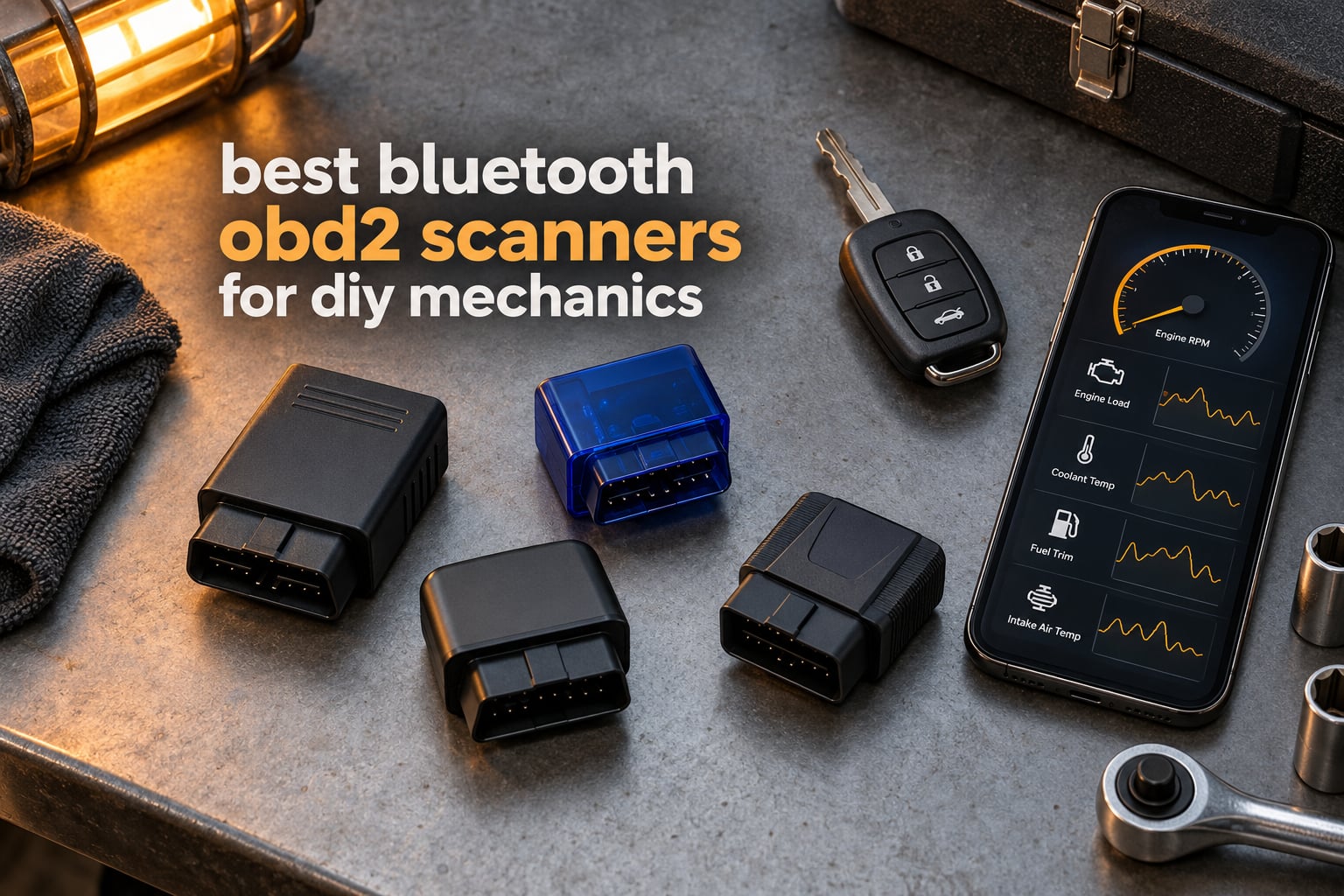
A shop charges you for the diagnosis before it charges you for the repair, and that diagnosis is usually little more than reading the codes your car already stored. A Bluetooth OBD2 scanner does that same read in your driveway in about a minute. If you want the best bluetooth obd2 scanners for diy mechanics, the short answer is that the BlueDriver leads this group because it covers engine, ABS, SRS, airbag, TPMS and transmission codes, pairs cleanly with a phone, and never asks you for a subscription.
We spent several weeks working through 12 wireless adapters, comparing their code coverage, platform support, warranty terms and the complaints owners actually report. Every scanner below plugs into the same 16-pin port under your dash. What separates them is how much of your car they can talk to, how good the app is, and whether the manufacturer is still shipping software updates three years from now.
That last point matters more than most listings admit. A cheap dongle with a dead app is a paperweight, and a dongle limited to generic engine codes will never tell you why your ABS light is on. We weighed those gaps for every product in this roundup rather than repeating the marketing copy.
All 12 adapters were still being evaluated for 2026, and every one of them works with 1996 and newer vehicles in the US with an OBD-II port, so your eligibility question is mostly answered before you start shopping. What follows is the full lineup, then the buying criteria that actually separate a good scanner from a frustrating one.
Table of Contents
- Top 3 Bluetooth OBD2 Scanners for DIY Mechanics in 2026
- All 12 Best Bluetooth OBD2 Scanners at a Glance in 2026
- 1. BlueDriver OBD2 Bluetooth Pro: Best Overall for DIY Mechanics
- 2. OBDLink MX+: Best Rated and Best for Cross-Platform Work
- 3. FIXD Bluetooth OBD2 Scanner: Best Value for Plain-Language Answers
- 4. Veepeak OBDCheck BLE: Best for Choosing Your Own App
- 5. Veepeak Mini VP11: Budget Pick for Android-Only Garages
- 6. OBDLink LX: Best for Android and Windows Shops That Leave It Plugged In
- 7. BLCKTEC 420: Best for a Physical Screen on a Budget
- 8. Vgate vLinker MC+: Best for GM and Ford Proprietary Networks
- 9. ANCEL BD310: Best When You Want a Screen and an App Together
- 10. BLCKTEC 440: Best for Used Car Lots and Smog Prep
- 11. UMEIJA Bluetooth 5.4 Scanner: Best for Multilingual Garages
- 12. ANCEL BD200: Best for Trip and Performance Data
- How to Choose a Bluetooth OBD2 Scanner for DIY Work
- Bluetooth vs Corded vs Handheld Scanners: What Each One Buys You
- Subscription vs No-Subscription Bluetooth Scanners
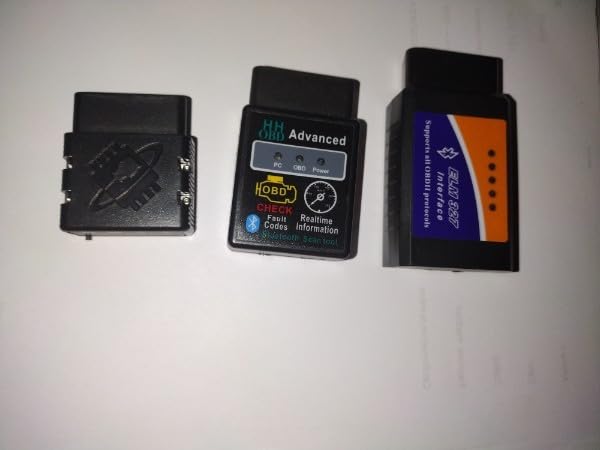
- How to Spot a Counterfeit ELM327 Adapter
- How to Scan a Used Car Before You Buy It
- Frequently Asked Questions
- Final Verdict: The Best Bluetooth OBD2 Scanners for DIY Mechanics in 2026
Top 3 Bluetooth OBD2 Scanners for DIY Mechanics in 2026
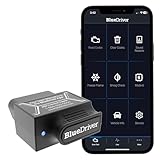
BlueDriver OBD2 Bluetooth Pro
- Engine
- ABS
- SRS
- TPMS and transmission codes
- VIN-matched verified fixes
- No subscription fee

OBDLink MX+
- Highest average rating in the group
- iOS
- Android and Windows
- Enhanced OEM coverage
FIXD Bluetooth OBD2 Scanner
- Scans 39000+ issues in plain English
- Free app with unlimited scans
- Manages multiple vehicles
All 12 Best Bluetooth OBD2 Scanners at a Glance in 2026
The table below lists every adapter in this roundup with the two or three things that decide who should buy it. Ratings and review counts are copied straight from the manufacturer listings we compared.
| Product | Specs | Action |
|---|---|---|
| BlueDriver OBD2 Bluetooth Pro |
|
Check Latest Price |
| FIXD Bluetooth OBD2 Scanner |
|
Check Latest Price |
 Veepeak OBDCheck BLE Veepeak OBDCheck BLE |
|
Check Latest Price |
 Veepeak Mini VP11 Veepeak Mini VP11 |
|
Check Latest Price |
| OBDLink MX+ |
|
Check Latest Price |
 OBDLink LX OBDLink LX |
|
Check Latest Price |
 BLCKTEC 420 BLCKTEC 420 |
|
Check Latest Price |
 Vgate vLinker MC+ Vgate vLinker MC+ |
|
Check Latest Price |
 ANCEL BD310 ANCEL BD310 |
|
Check Latest Price |
 BLCKTEC 440 BLCKTEC 440 |
|
Check Latest Price |
 UMEIJA Bluetooth 5.4 Scanner UMEIJA Bluetooth 5.4 Scanner |
|
Check Latest Price |
 ANCEL BD200 ANCEL BD200 |
|
Check Latest Price |
1. BlueDriver OBD2 Bluetooth Pro: Best Overall for DIY Mechanics
BlueDriver OBD2 Scanner Bluetooth, No Subscription, ABS SRS TPMS
Engine, ABS, SRS, TPMS and transmission codes
VIN-matched verified fixes
No subscription
Pros
- Reads and clears ABS
- SRS
- Airbag
- TPMS and transmission codes
- Technician-verified repair reports matched to your VIN
- No subscription fees and no account required
- Strong make and model coverage from 1996 onward
- 24/7 support from technicians
Cons
- Needs a paired phone or tablet rather than its own screen
- North American 1996+ gas vehicles only
- A few owners report occasional pairing complaints
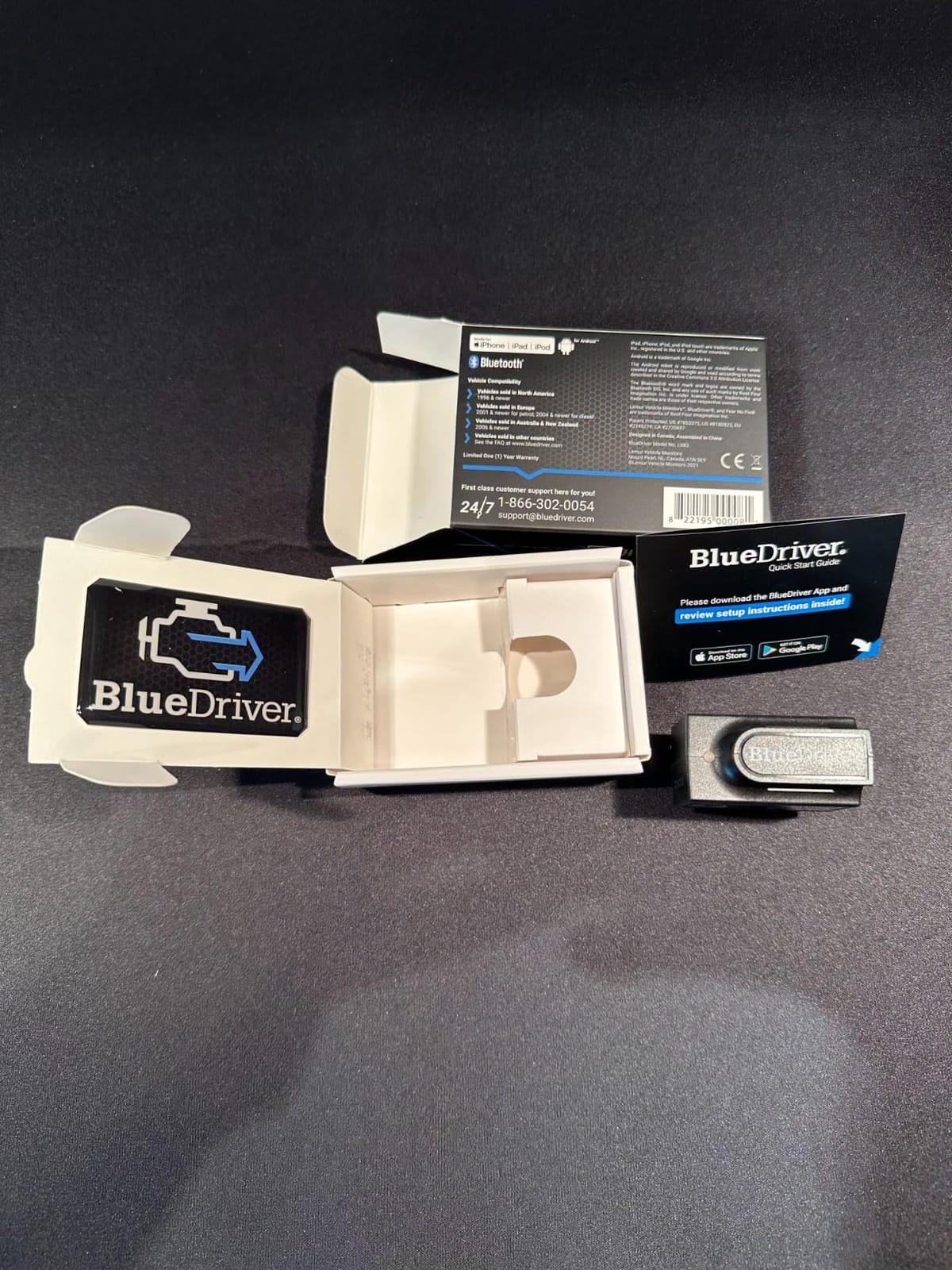
The BlueDriver is the scanner we kept coming back to during this comparison, and the reason is coverage rather than any single headline feature. Generic code readers stop at the powertrain module, which is exactly where a lot of DIY dead ends begin. This one reads and clears check engine, ABS, SRS, Airbag, TPMS and transmission codes from the same dongle, so a lit ABS light or a stored airbag fault no longer sends you looking for a second tool.
Owners across r/MechanicAdvice and r/askcarguys describe the same experience we did: plug it in, pair over Bluetooth, and the codes are on the screen in under a minute. The housing is 2.2 by 1.9 by 1 inch and weighs 2.08 ounces, so it hides under the dash without blocking legroom. Support runs 24/7 by phone or in-app chat with actual technicians rather than a script.
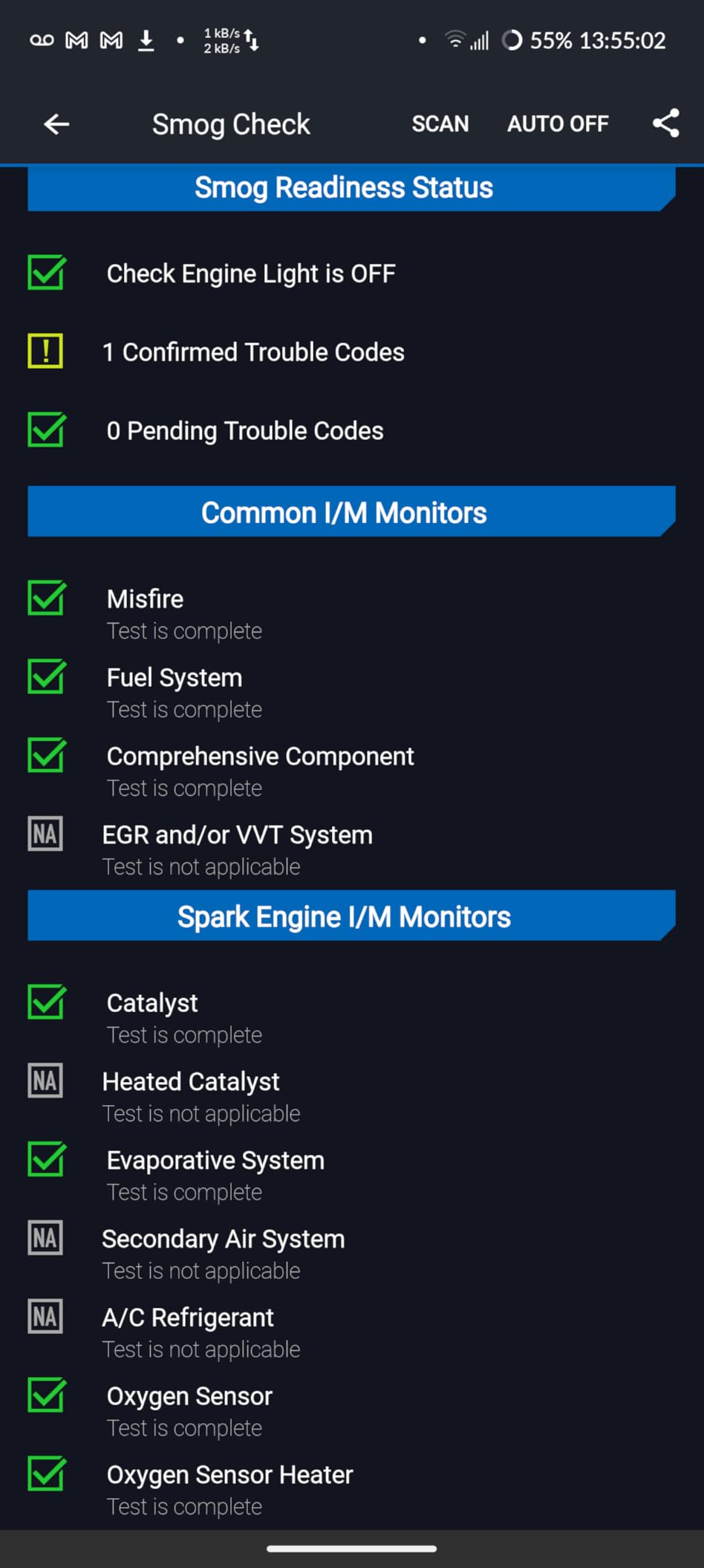
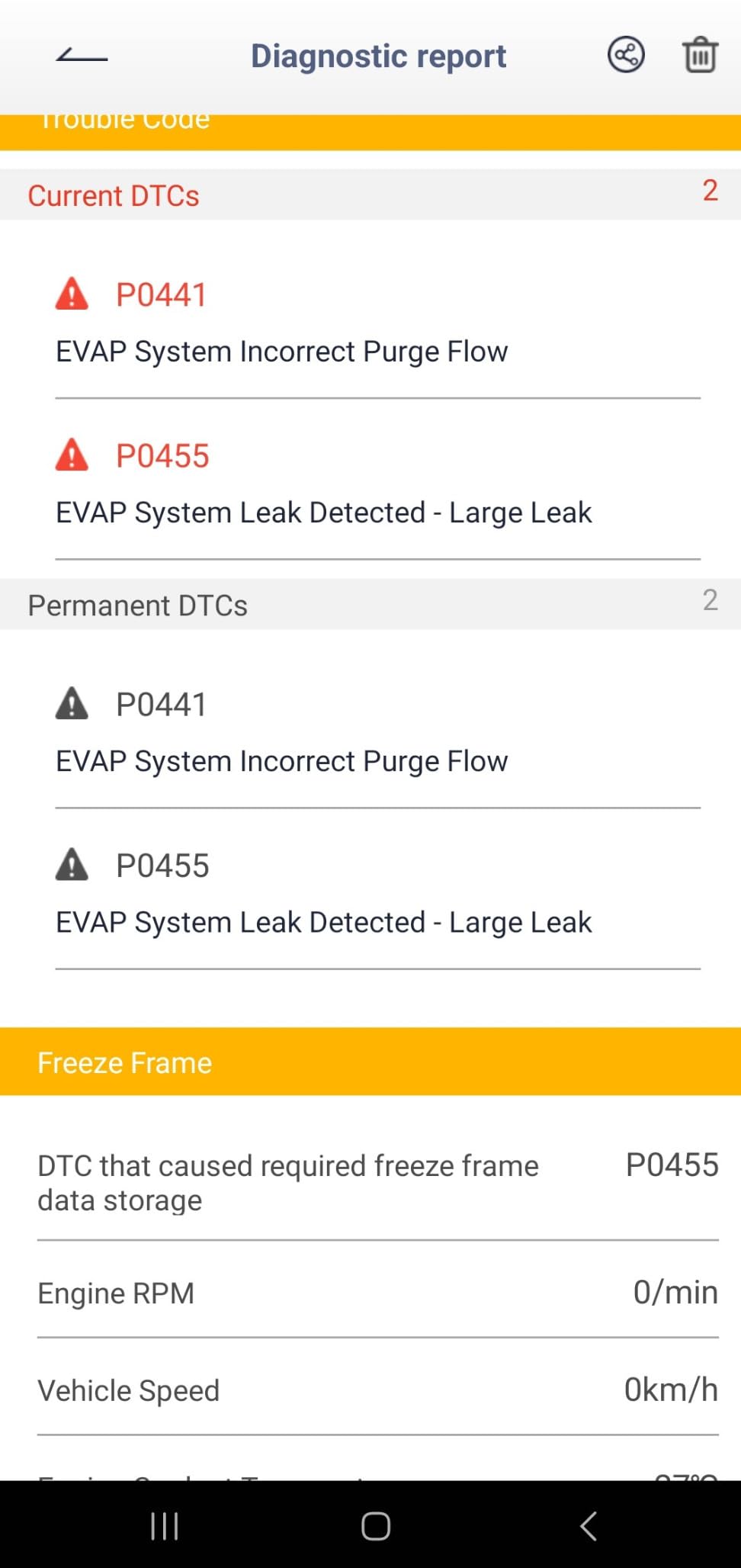
What separates it from cheaper dongles is the fix database. Reports are verified by technicians and matched to your VIN, so a P0455 code comes with causes and confirmed repairs instead of a paragraph copied between forums. You also get freeze frames, I/M readiness status for an emissions test, and Mode 6 test results, which matters if you own a newer car close to its catalyst monitor.
Live data streams while you drive, which is how you catch a drifting fuel trim or a lazy oxygen sensor before it sets a code. There is no subscription tier, no unlock fee, and no account screen standing between you and the first scan. The listing includes a 180-day money-back guarantee and accepts defective units within one year of the original invoice.
Who the BlueDriver Suits Best
It fits the DIYer who owns more than one car and does their own brakes, throttle bodies and starters, because the extra module coverage means fewer dead-end trips to a parts store. It also fits anyone who wants to walk into a shop with the codes already printed on their phone and skip straight to the estimate. For a used car purchase, the VIN-matched fix reports help you price the repair before you commit to the car.
Where the BlueDriver Falls Short
Coverage is limited to gas vehicles from 1996 onward sold in North America, so a diesel, a hybrid or a European import falls outside the promise. The device has no screen of its own, which means a dead phone battery ends your scan until it is charged. It also carries the highest price in this group alongside the OBDLink MX+, which is hard to justify if engine codes are all you need.
2. OBDLink MX+: Best Rated and Best for Cross-Platform Work
OBDLink MX+ OBD2 Bluetooth Scanner for iPhone, Android, and Windows
Highest average rating in the group
iOS, Android and Windows
Enhanced OEM coverage
Pros
- Highest average rating in the roundup at 4.6 stars
- Only premium option covering iPhone
- Android and Windows
- Enhanced OEM support for Ford
- GM
- Mazda
- Nissan
- Toyota
- Honda
- Hyundai and Kia
- Reads more live parameters including ABS
- SRS and TPMS
- Over-voltage and battery drain protection
Cons
- Costs as much as the BlueDriver
- Advanced OEM depth depends on paid third-party apps
- Overkill for basic check engine code reading
The OBDLink MX+ earned the highest average rating of anything we compared, at 4.6 stars across more than 15,000 reviews, and the score comes from something measurable: data transfer speed. Live gauges update without the lag that makes cheap dongles frustrating to use, and the connection does not drop halfway through a drive.
It is one of the few adapters here that covers iOS, Android and Windows with a single device. That matters for anyone who logs data on a laptop at the kitchen table after collecting it on a phone in the driveway. The manufacturer also publishes a compatibility guide so you can confirm your exact vehicle and the features it will support before you commit.
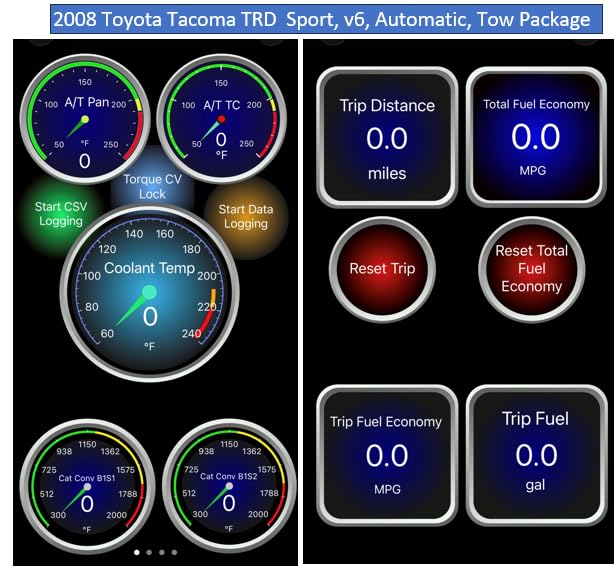
The enhanced OEM support is the reason enthusiasts land here. Rather than only generic powertrain codes, it opens manufacturer-specific modules on Ford, GM, Mazda, Nissan and Infiniti, Toyota, Lexus and Scion, Honda, Hyundai and Kia, which is where a DIYer working on a Japanese drivetrain or a GM network gets real traction. Owners on r/Tools frequently name it as the adapter of choice for FORScan and BimmerCode work.
Because the hardware is so capable, the most advanced manufacturer-level functions still come from paid third-party apps on top of it. Budget for that before you buy, and treat the dongle as the interface rather than the whole tool. The unit measures 2.01 by 0.91 by 1.81 inch and weighs 28 grams, and it ships with a zipper case and a warranty card.
Who the OBDLink MX+ Suits Best
It suits the advancing DIYer who has outgrown reading engine codes and wants bidirectional-adjacent work, live logging at high refresh rates, or brand-specific work on a GM, Ford or Japanese platform. It also suits anyone who switches between an iPhone, an Android phone and a Windows laptop, since one dongle covers all three.
Where the OBDLink MX+ Falls Short
It is the most expensive adapter here alongside the BlueDriver, and for a single-car owner reading check engine codes that spend buys little. The professional positioning can also intimidate a beginner, since the app menus assume you know what a PID is. Without paying for a third-party app, you are still limited to what the generic layers expose.
3. FIXD Bluetooth OBD2 Scanner: Best Value for Plain-Language Answers
FIXD Bluetooth OBD2 Scanner – Car Diagnostic Check Engine Code Reader
Scans 39000+ issues in plain English
Free app with unlimited scans
Manages multiple vehicles
Pros
- Scans 39000+ issues across thousands of vehicles
- Free app with unlimited scans for core functions
- Plain-English explanations instead of raw code strings
- Manages multiple vehicles with mileage reminders
- Compact enough to stay hidden under the dash
Cons
- Lowest average rating in the roundup at 4.1 stars
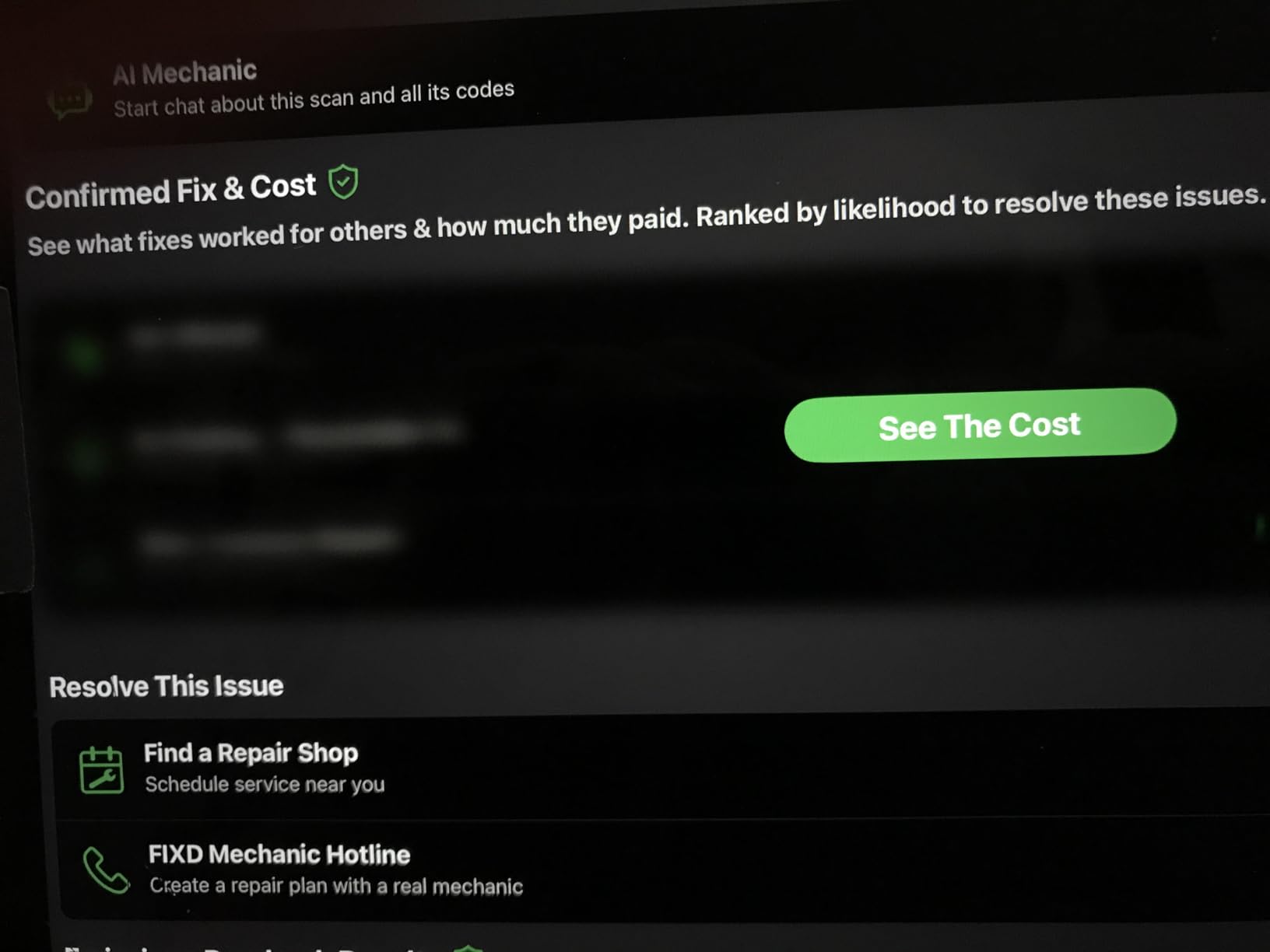
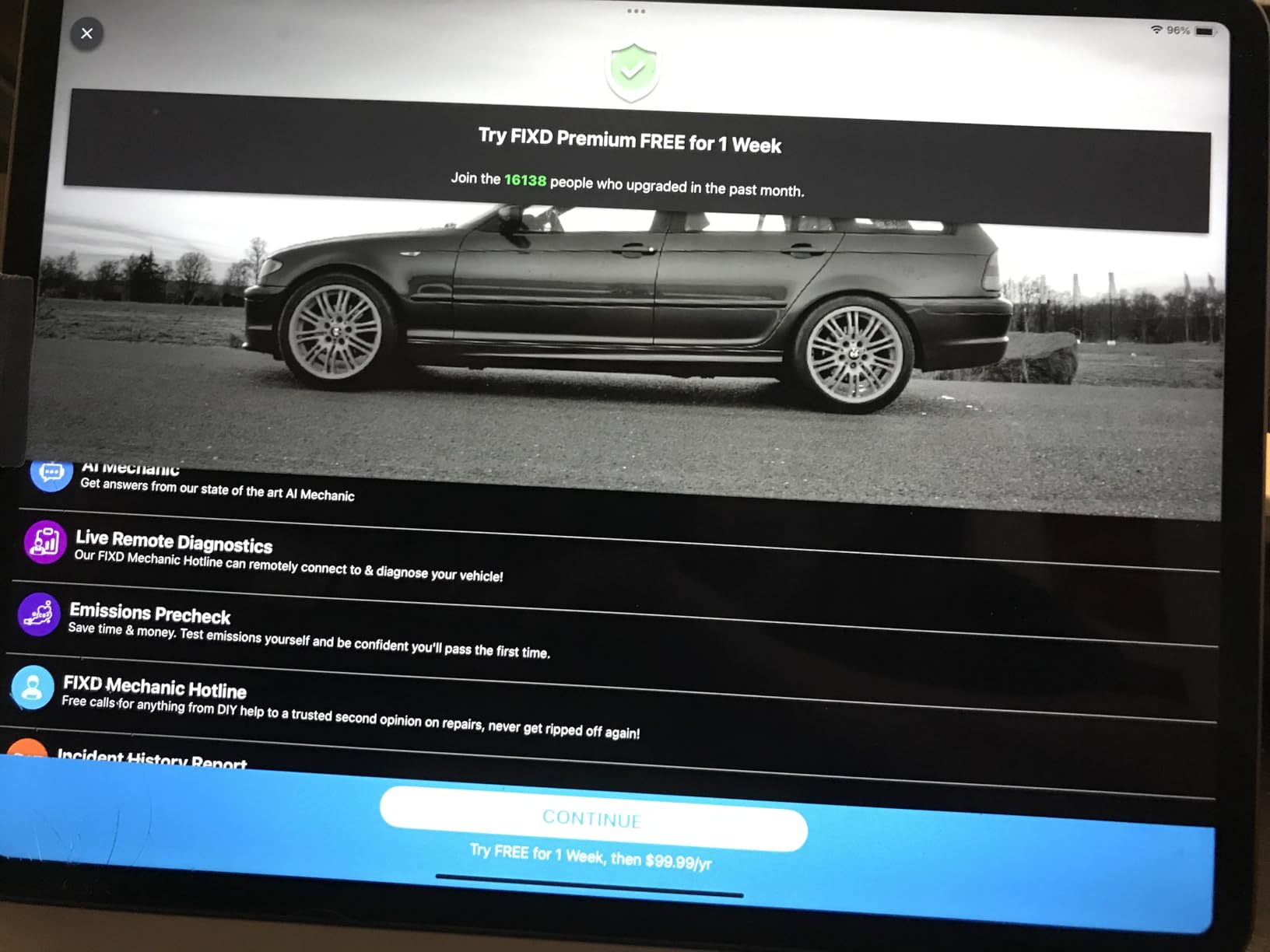
- Repair recommendations and cost estimates sit behind a paid tier
- App only with no standalone display
FIXD takes a different approach from the rest of this list. Instead of handing you a code and a lookup table, it scans and identifies more than 39,000 possible issues and explains what each one means in ordinary language, which is exactly what a first-time owner needs at 9pm in a parking lot. The free tier includes unlimited scans, so the core function never costs anything extra.
The multi-vehicle management is genuinely useful and rarely found in a dongle this class. You save scans by vehicle and set mileage-based reminders, so a car that needs an oil service at 75,000 miles tells you so. Users who flip cars on the side rely on that feature to keep separate histories per vehicle rather than mixing data between projects.
Coverage is wider than the price suggests: gasoline and hybrid vehicles from 1996 onward and diesel from 2006, which is more than several pricier adapters in this roundup can claim. The dongle measures 1.5 by 0.5 by 1.75 inch and weighs 27 grams, small enough to move between vehicles in a glovebox. It pairs over Bluetooth with both iPhone and Android.
The friction is the subscription. Advanced repair recommendations, cost estimates and live mechanic support sit behind a paid tier, and that is exactly the pattern r/askcarguys owners warn about when they mention being charged after a free trial they did not notice signing up for. If you want the paid tier, set a calendar reminder before the trial ends. Core scanning stays free either way.
Who the FIXD Suits Best
It suits a beginner who wants an answer rather than a code, and a family or small fleet owner juggling several vehicles in one account. Anyone who works part time on the side and bills by the diagnostic will like the cost estimates in the paid tier, since they turn a scan into an invoice estimate without a second lookup.
Where the FIXD Falls Short
Its 4.1 star average is the lowest here, and the one-star share centers on subscription upselling and app reliability rather than on hardware failure. It has no on-device screen, so there is no fallback when the app misbehaves, and the deepest diagnostic content is the part you pay for. Buyers who want every feature included permanently should look elsewhere.
4. Veepeak OBDCheck BLE: Best for Choosing Your Own App
Veepeak OBDCheck BLE Bluetooth OBD II Scanner for iOS & Android, Car Wireless Check Engine Light Code Reader Diagnostic Tool
Bluetooth LE for iOS and Android
Read and clear codes, freeze frame, I/M readiness
One year manufacturer warranty
Pros
- Bluetooth LE pairs with both iPhone and Android
- Works with Torque
- BimmerCode
- BimmerLink
- OBD JScan and Dr. Prius
- Read and clear codes plus freeze frame and I/M readiness
- Compact body that stays out of the way
- One year manufacturer replacement warranty
Cons
- Requires a third-party app and some of them charge their own fees
- Generic engine codes only with no ABS or SRS coverage
- No special functions such as EPB reset or ABS bleeding
The Veepeak OBDCheck BLE is the adapter for people who do not want one company owning their diagnostics. It ships with no app of its own and instead works with a wide list of well-known third-party apps, including Car Scanner ELM OBD2, Torque, OBD Fusion, BimmerCode, BimmerLink, OBD JScan and Dr. Prius. You pick the interface, and for BMW and MINI work that choice is the whole point.
Using Bluetooth LE is what separates this model from most Veepeak adapters, since low energy Bluetooth is the only wireless profile iPhones permit. It measures 1.61 by 1.97 by 0.87 inch, so it sits flat under the dash, and it carries a one year manufacturer replacement warranty. The box includes a mini carrying case and instructions.
Generic OBD-II work is complete: read and clear check engine codes, freeze frame data, I/M readiness and live sensor data on most 1996 and newer US cars and light trucks. What you gain is flexibility, and what you give up is depth. There is no ABS, SRS, TPMS or manufacturer-specific coverage, and special functions like injector coding, electronic parking brake resets, ABS bleeding and service resets are not supported.
Watch the app you install. Several popular Torque-ecosystem apps are free shells with paid unlocks, and imitators of well-known apps charge a yearly fee for what looks like the same interface. A few apps, including Carly, MHD, xHP, ProTool and bootmod3, are explicitly not compatible with this adapter, so check before you pay for software.
Who the Veepeak OBDCheck BLE Suits Best
It suits European-car owners running BimmerCode or BimmerLink, and Android or iPhone users who want to try several apps before settling on one. It also suits anyone who logs data deliberately, since Torque-style apps let you build custom dashboards of coolant temperature, RPM, throttle position and fuel trim.
Where the Veepeak OBDCheck BLE Falls Short
The ceiling is the generic engine module. If your problem lives in ABS, SRS or the transmission, this scanner will never see it, and no app unlocks that. It is also the wrong choice if you want one vendor responsible for the whole stack, because the quality of what you get depends on an app you chose yourself.
5. Veepeak Mini VP11: Budget Pick for Android-Only Garages
Veepeak Mini Bluetooth OBD2 Scanner Code Reader for Android (NOT for iOS)
Android phones and tablets only
Engine codes, live data, freeze frame
1.12 ounces and highly compact
Pros
- Lowest cost in the roundup with a 4.4 star average
- Extremely compact at 1.12 ounces so it never blocks legroom
- Owners report stable high-rate live data in Torque Pro
- Works with Car Scanner
- Torque
- OBD Fusion and Dr. Prius
Cons
- Android only with no iPhone or iPad support
- Generic engine diagnostics with no ABS
- SRS or TPMS
- No power-off switch so it can drain the battery
- Most useful apps need a paid upgrade
This is the cheapest credible way to start reading your own codes, and the 4.4 star average across more than 18,000 reviews says the hardware is not the weak link. Owners report years of service, with multiple reviews describing successful diagnoses of vacuum leaks, mass air flow sensor faults and oxygen sensor problems using nothing but this dongle and Torque Pro.
It weighs 1.12 ounces and measures 1.89 by 0.98 by 1.26 inch, which is the smallest footprint in this roundup and the easiest to leave installed. Classic Bluetooth connects to Android phones and tablets, and the app list covers Car Scanner, Torque, OBD Fusion and Dr. Prius. It works on most 1996 and newer US cars and light trucks.
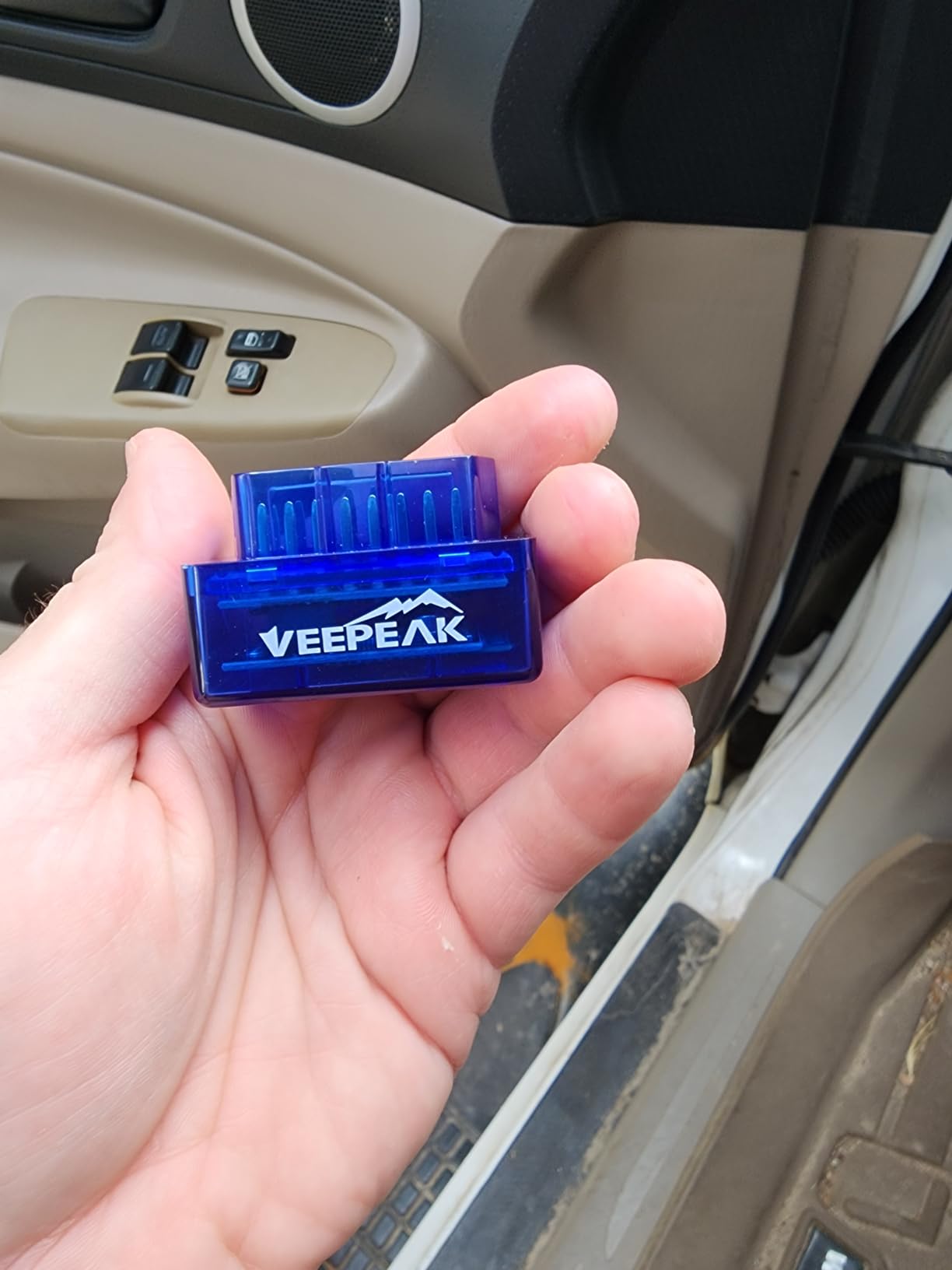
The limitation that decides this one is on the box: it is Android only and will not pair with an iPhone or iPad. That is a hard stop for half the buyers we would recommend this to, and it is worth checking before you order rather than after. The second limitation is code scope, since it reads engine codes, live data, freeze frame and I/M readiness but nothing from ABS, SRS, TPMS or the transmission.
There is also no power-off switch. The dongle draws power from the vehicle whenever it is plugged in, and a car parked for a week can lose its battery, so unplug it when the work is done. The included Car Scanner app also gates useful features behind a paid upgrade, which is a common arrangement in this app ecosystem rather than a fault of the hardware.
Who the Veepeak Mini Suits Best
It suits an Android owner on a tight budget who wants stable live data for a vacuum leak hunt or a fuel trim check. If you keep one older car in the driveway as a weekend project, this is an easy tool to leave in the glovebox and pull out when a light comes on.
Where the Veepeak Mini Falls Short
iPhone and iPad owners should skip it entirely, and the same goes for anyone whose problems live in ABS, airbag or transmission modules. Bluetooth pairing can also be fiddly when other wireless devices are nearby, and the no-power-switch design means you must remember to unplug it every time.
6. OBDLink LX: Best for Android and Windows Shops That Leave It Plugged In
OBDLink LX Bluetooth 3.0 OBD2 Adapter for Motoscan, Torque, Hybrid Assistant (Android Only), OBD II Diagnostic Scanner
Android and Windows with high-speed Bluetooth
BatterySaver sleep mode
Three year repair-or-replace warranty
Pros
- Very fast Bluetooth data transfer with no lag on live gauges
- BatterySaver sleep mode makes it safe to leave plugged in
- Three year repair-or-replace warranty
- Works with the bundled app
- OBDwiz
- Torque and DashCommand
- MotoScan compatibility for motorcycles
Cons
- Android and Windows only with no iOS support on this model
- No hybrid or electric vehicle support
- Some owners report intermittent pairing drops
- Long body may not fit under a small dashboard
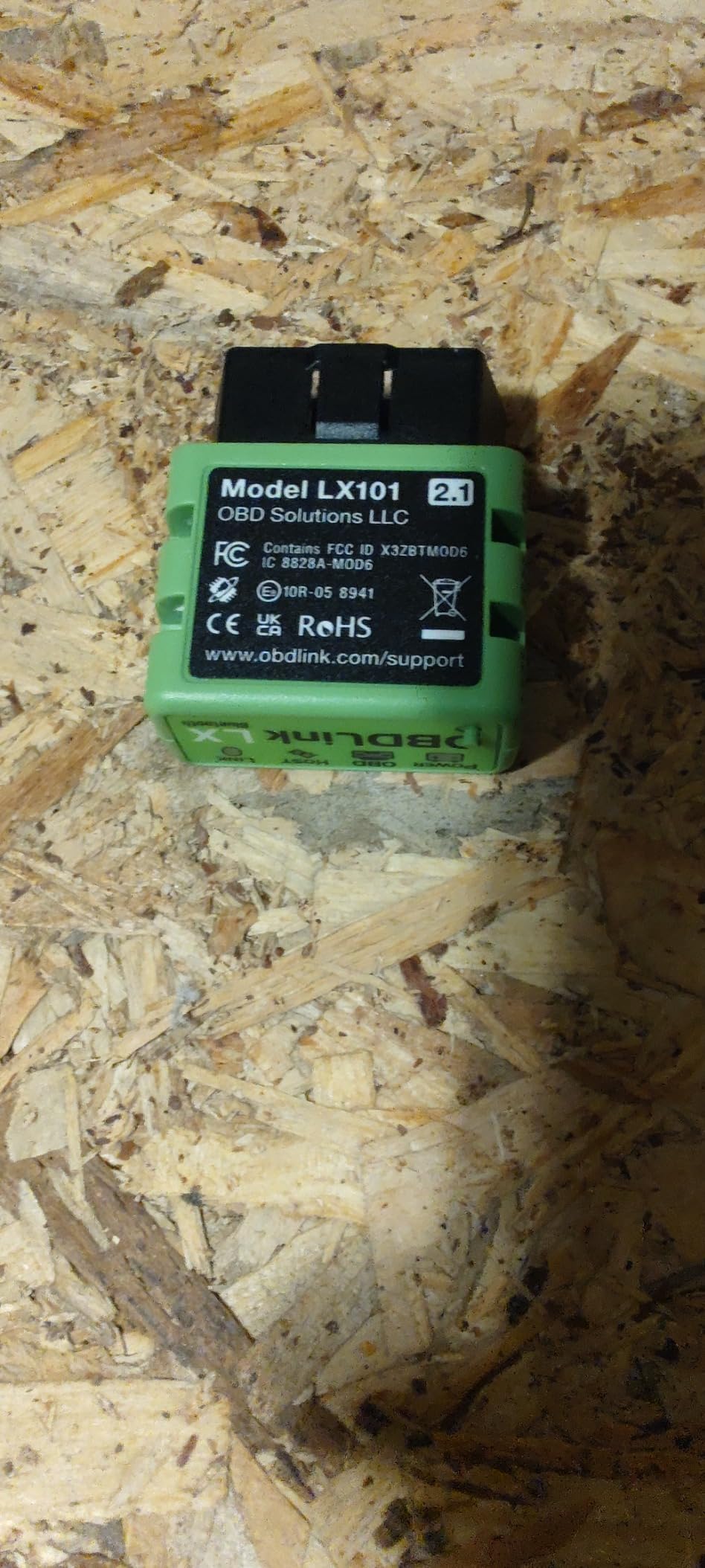
The defining feature of the OBDLink LX is the BatterySaver sleep mode. It sleeps while the engine is off and wakes when the vehicle starts, which means you can leave it plugged in permanently without coming back to a dead battery. For a DIYer who keeps the tool in the car rather than the drawer, that is the feature that actually saves a morning.
Speed is the other argument. Owners consistently describe live gauges with no lag, which matters when you are watching fuel trim or short term fuel trim corrections change in real time. The bundled software covers Android through the OBDLink app and Windows through OBDwiz, and it also works with Torque and DashCommand for people who prefer those.
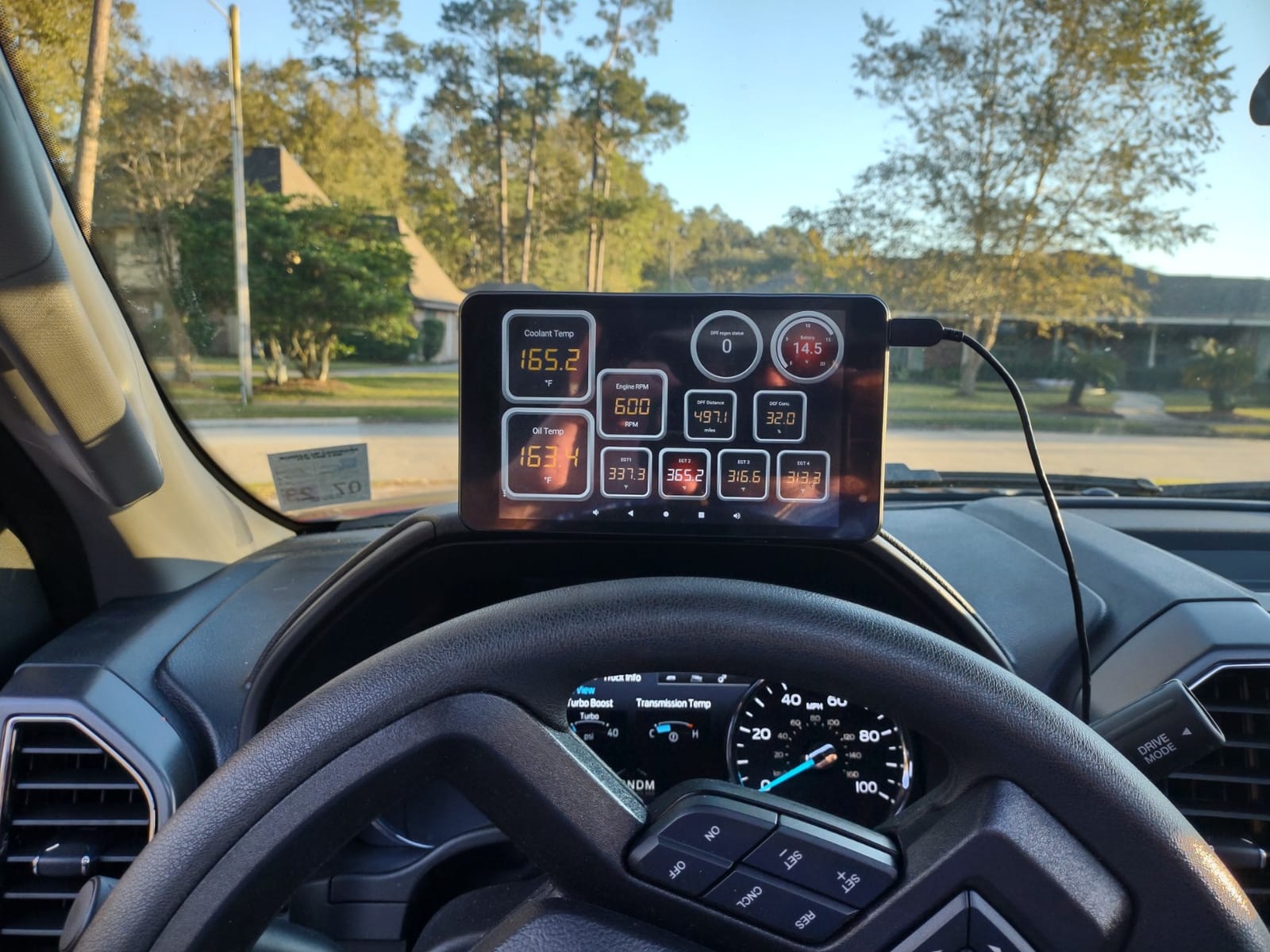
It covers all 1996 and newer US cars and light trucks, and it is one of the few adapters here with MotoScan compatibility for motorcycle diagnostics, which is a genuine bonus if you ride as well as you drive. It weighs 1.1 ounces, measures 1.97 by 1.77 by 0.91 inch, and carries a three year repair-or-replace warranty, the longest in this roundup.
The catch is platform and powertrain. There is no iOS support on this model, so iPhone owners need the MX+ instead, and hybrid and electric vehicles are excluded. A few owners report intermittent pairing drops and slower responses on older vehicles, and the body is long enough that it may not disappear under the dash cover on a small car.
Who the OBDLink LX Suits Best
It suits Android and Windows users who want a permanently installed tool without worrying about battery drain, and it suits anyone who needs to diagnose a motorcycle as well as a car. The three year warranty also makes it a sensible choice for someone who expects to keep the same tool for years.
Where the OBDLink LX Falls Short
No iOS support is the obvious gap, and the exclusion of hybrid and electric vehicles closes off a growing share of newer cars. If your driveway has a battery-electric car in it, this is the wrong tool for that vehicle even though it is excellent on everything else.
7. BLCKTEC 420: Best for a Physical Screen on a Budget
BLCKTEC 420 Bluetooth OBD2 Scanner Diagnostic Tool – Vehicle Code Reader for Car – Clears Check Engine Light – Comes with Premium OBD App On IOS & Android – Works For All Cars 1996 & Newer
1.8 inch screen plus app-based verified fixes
Battery and alternator tests
One year limited warranty
Pros
- Works as a hybrid of an on-device reader and a Bluetooth app tool
- Bundled app includes ASE technician verified fixes
- recalls and TSBs
- Battery and alternator testing at this price tier
- Free firmware updates
- Multilingual support in English
- Spanish and French
Cons
- 1.8 inch screen is small for on-device work
- Verified fix content depends on the companion app
- Only a one year limited manufacturer warranty
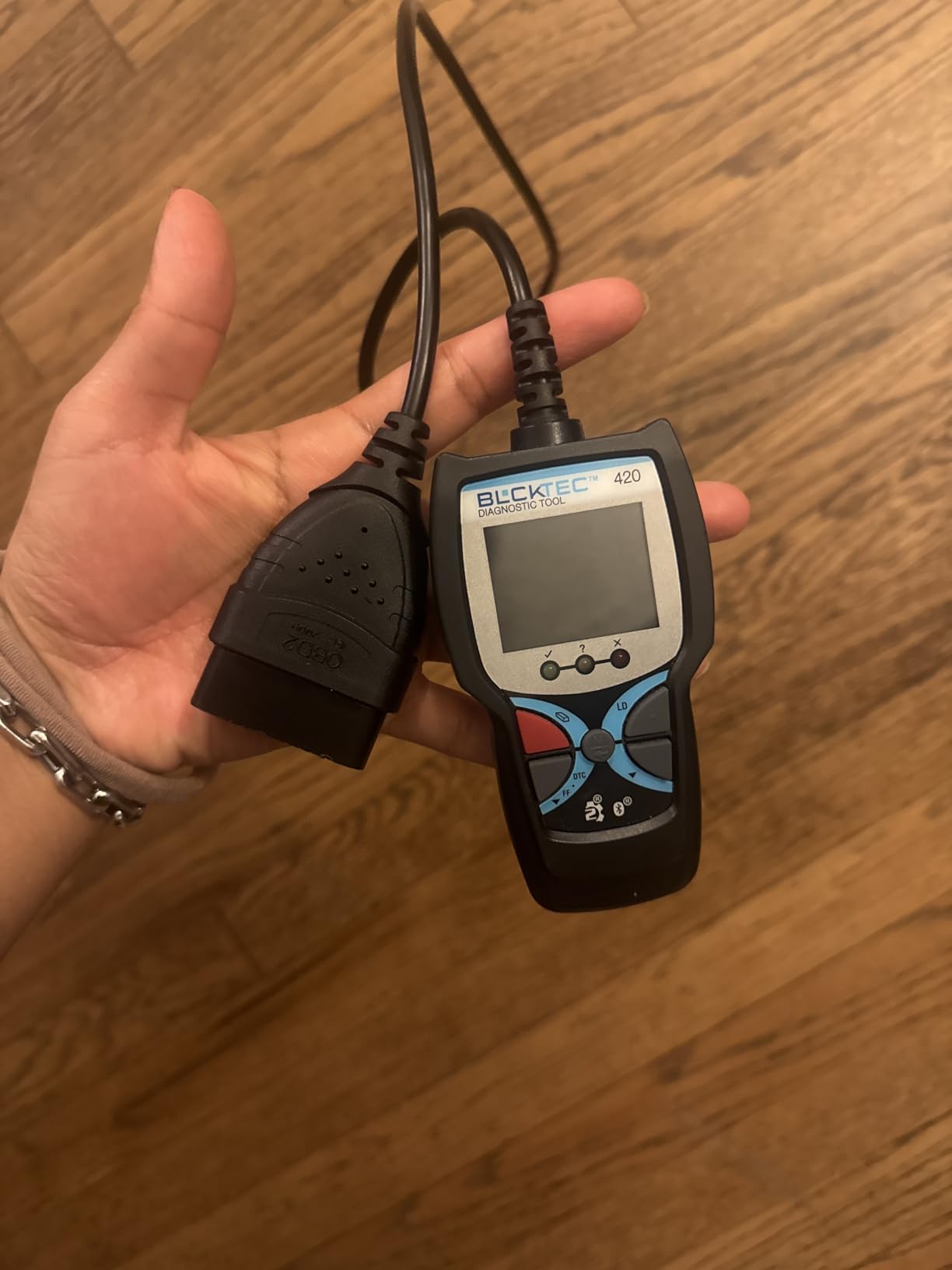
The BLCKTEC 420 does something none of the pure dongles in this list do: it puts a small screen on the unit itself. You can read and erase codes without a phone, which is a real advantage when you are in the garage with a dead battery in your pocket or you are handing the tool to someone else to read for you. The screen is 1.8 inches, which is small but legible for a code and a definition.
Pair it with the bundled app and it becomes a fuller tool. The app provides fixes verified by ASE Certified Technicians, plus maintenance schedules, dealer recalls, technical service bulletins and RepairPal integration, all aimed at the specific vehicle rather than a generic code list. Firmware updates are free, which keeps the unit current without a subscription.
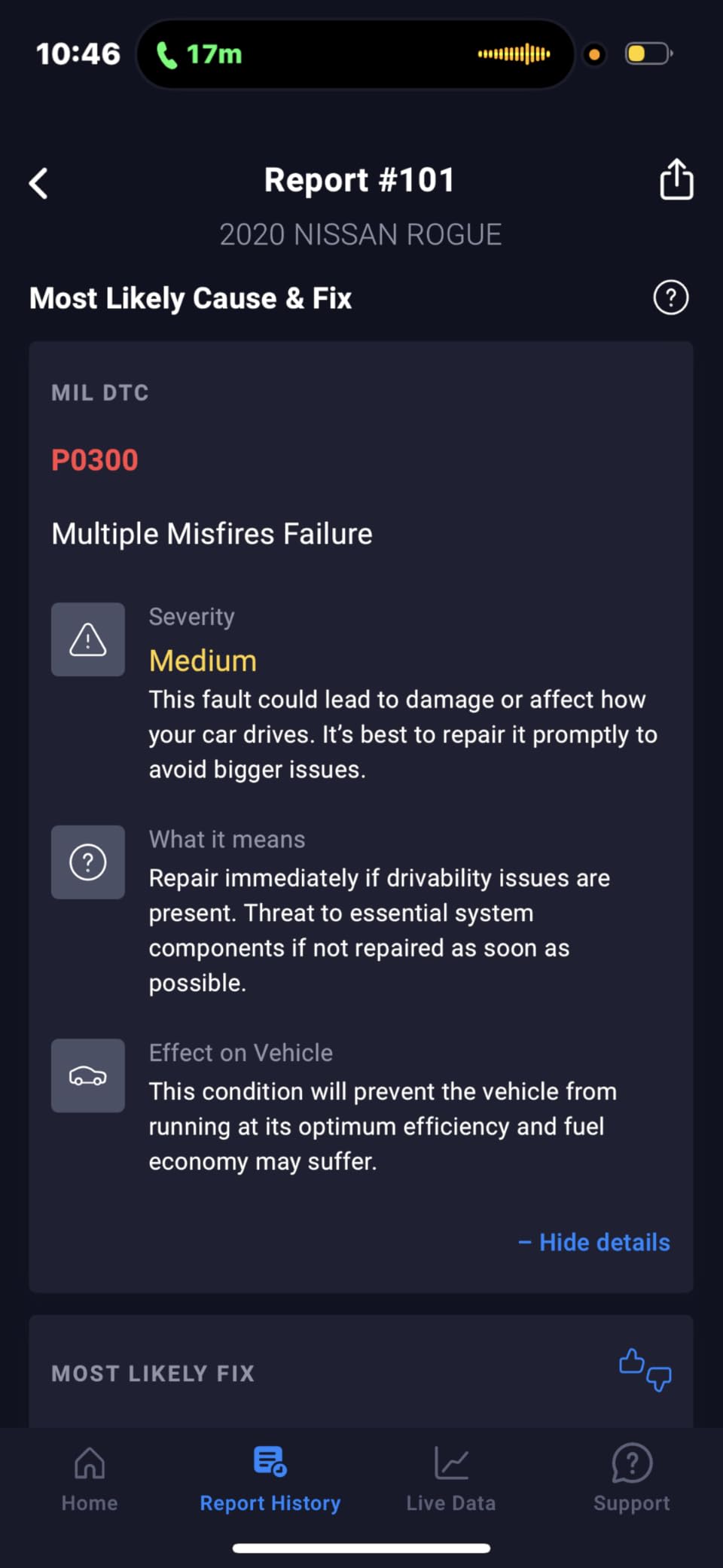
It reads and erases codes, gives live data, runs battery and alternator tests, and shows severity levels so you know whether to keep driving or stop now. Language support covers English, Spanish and French, and it handles 1996 and newer OBD2 compliant vehicles. It is powered from the vehicle, so there is no separate battery to charge or forget.
Physical size is the catch. The unit measures 4.72 by 2.41 by 0.89 inch, which is a long body for a connector that lives in a tight footwell, and the screen is small enough that you will use the app for anything detailed. The warranty is one year limited, and the verified-fix content is only available through the companion app.
Who the BLCKTEC 420 Suits Best
It suits a DIYer who wants a fallback readout when the phone is not handy, and a Spanish or French speaking owner who wants diagnostics in their own language. Battery and alternator tests at this price also make it useful for a weekend mechanic doing seasonal battery checks.
Where the BLCKTEC 420 Falls Short
The 1.8 inch screen handles a code read well and live data poorly, so on serious investigation you will be holding your phone anyway. The deeper repair content lives in the app, and the one year warranty is shorter than the three years offered by the OBDLink LX.
8. Vgate vLinker MC+: Best for GM and Ford Proprietary Networks
Vgate vLinker MC+ Bluetooth OBD2 Car Scan Tool for iOS, Android, Windows
SW-CAN and MS-CAN plus five standard protocols
iOS, Android and Windows
24 mA running and 3 mA sleep
Pros
- SW-CAN and MS-CAN support opens GM and Ford proprietary modules
- Works across iOS
- Android and Windows with Bluetooth LE
- Very low 24 mA operating current with a 3 mA sleep mode
- Compatible with ELM327
- ELM329 and STN command sets
- 80 percent five-star share among reviewers
Cons
- Smaller review base of roughly 1400 ratings
- GM and Ford depth depends on the third-party app
- Firmware upgrades require contacting the seller
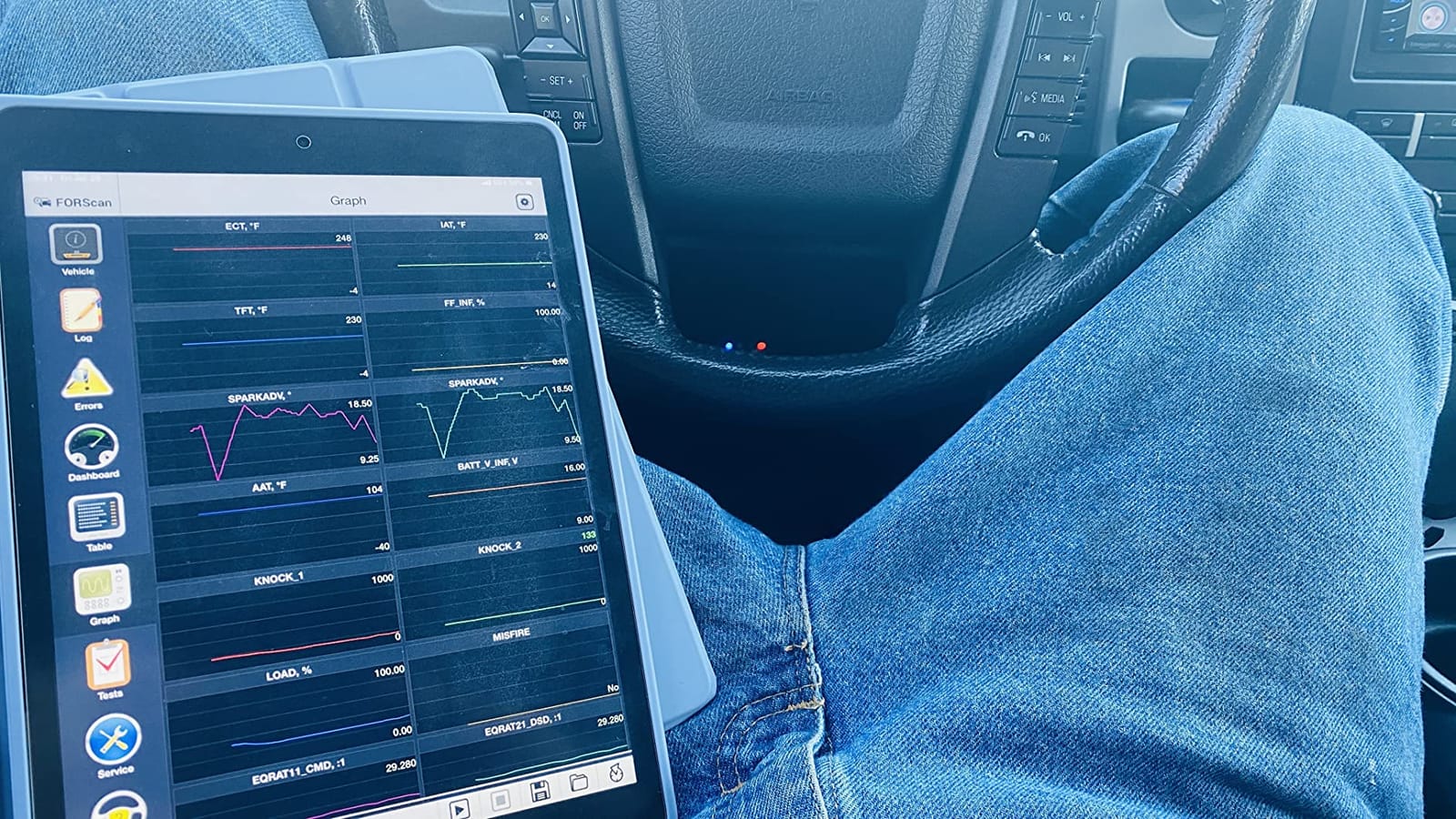
Most dongles speak the five standard OBD-II protocols and stop there. The Vgate vLinker MC+ also handles SW-CAN and MS-CAN, the two manufacturer-specific networks used on GM and Ford vehicles, which is the difference between reading a check engine code and reaching modules that only those brands expose. If your daily driver is a Ford or a GM truck, that is the feature to buy for.
It also adds Bluetooth LE, so unlike the standard vLinker MC it works with iPhones and iPads alongside Android and Windows. The high throughput suits coding applications that push a lot of data at once, and the command set compatibility with ELM327, ELM329 and STN means almost any mainstream app will talk to it.
Power draw is genuinely low at 24 mA while running, dropping to 3 mA in the intelligent sleep mode, so it is gentle on a vehicle battery compared to adapters that draw power continuously. It weighs 80 grams and measures 1.97 by 1.73 by 0.87 inch, a compact body that does not interfere with legroom.
The honest caveat is the review base. With roughly 1,400 ratings you have far less long-term feedback than the BlueDriver, Veepeak or OBDLink units, and the GM and Ford depth still depends on which app you pair it with. Firmware upgrades are handled by contacting the seller rather than through an in-app updater, which is an extra step every time a fix lands.
Who the Vgate vLinker MC+ Suits Best
It suits a Ford or GM owner who needs the manufacturer networks rather than generic codes, and it suits anyone moving between iOS, Android and Windows without buying separate hardware. Enthusiasts running coding applications benefit from the higher data throughput.
Where the Vgate vLinker MC+ Falls Short
A smaller pool of long-term owners means more unknowns than the established brands carry, and the app ecosystem around it is thinner. Anyone who prefers to update firmware from a phone menu will find the seller-contact process inconvenient, and non-GM, non-Ford owners gain little from the extra protocols.
9. ANCEL BD310: Best When You Want a Screen and an App Together
ANCEL BD310 Bluetooth OBD2 Scanner, 2-in-1 Car Diagnostic Scan Tool & Code Reader with App, Battery Test, Trip Analysis, Performance Test, for iPhone & Android, All 1996+ Vehicles
Two inch screen, standalone or app
All 10 OBDII modes
Battery voltage monitoring
Free lifetime app updates
Pros
- Two-in-one design reads codes on the device or through the app
- Battery voltage monitoring and performance tests included
- Free lifetime app updates with no subscription or unlock fees
- HUD mode shows speed
- RPM and voltage while driving
Cons
- ABS
- SRS and transmission code clearing not supported
- 67 percent five-star share
- the second weakest here
- Battery and trip features depend on the ANCEL app
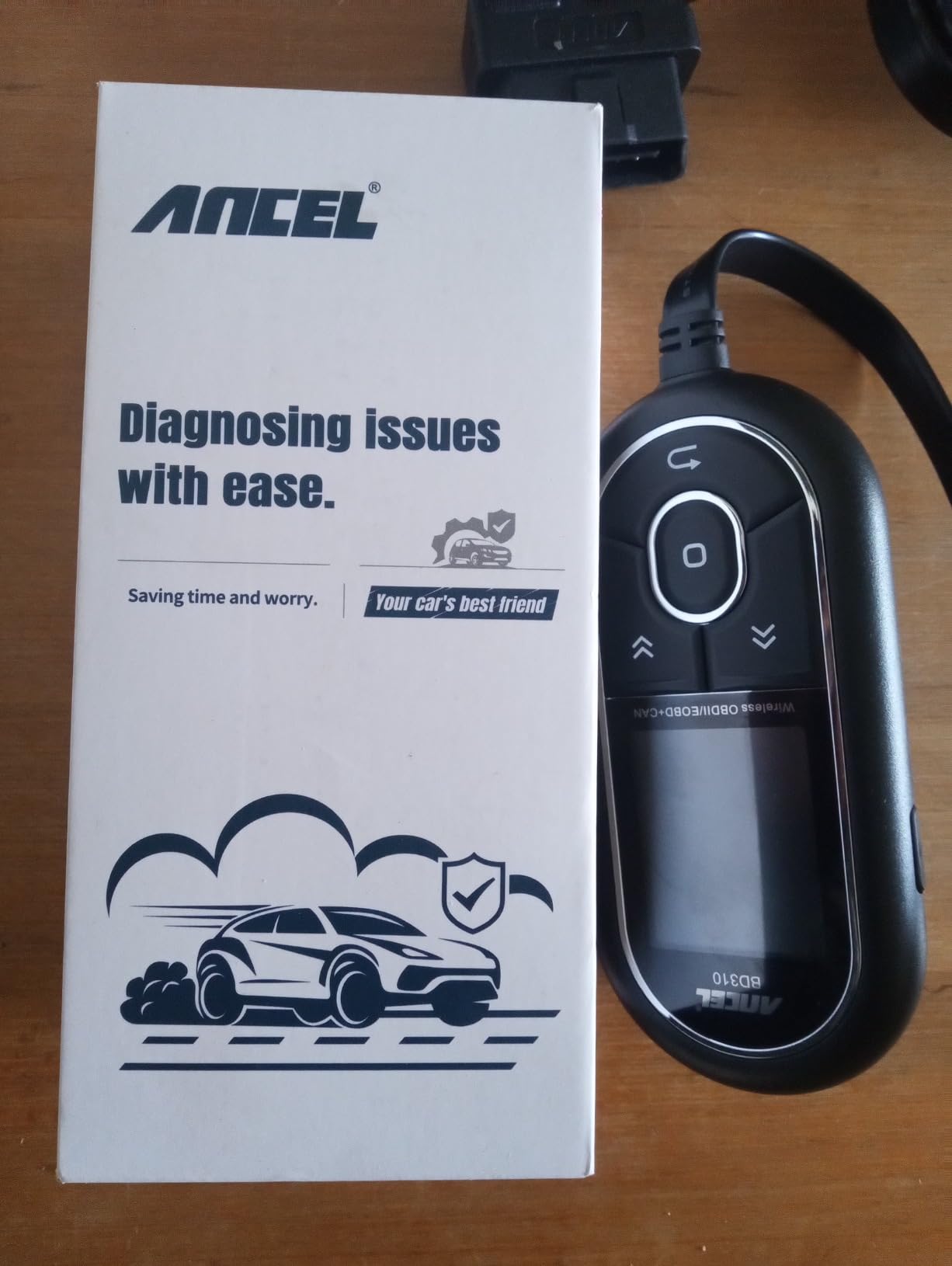
The ANCEL BD310 straddles two categories. It has a two inch screen and a native 240 by 320 resolution, so it works standalone, and it also runs as a Bluetooth tool through the ANCEL app. That redundancy is why it appeals to people who have been let down by a phone-only scanner at the worst possible moment, usually in a parking lot with no signal.
Functionally it covers all ten OBDII modes, including live data, freeze frame, EVAP tests, oxygen sensor tests, I/M readiness and vehicle info. Real-time battery voltage monitoring and charging system checks are unusual at this level, and performance tests, trip analysis and a HUD mode that projects speed, RPM and voltage on the windshield add a data-logging flavor most dongles skip.
Updates are free for life with no subscription or unlock fees, which removes the biggest complaint people have about app-based tools. It is rated for 1996 and newer vehicles, works with Windows alongside iOS and Android through the app, and comes with a one year warranty.
The boundary is code scope. ABS, SRS and transmission code clearing are not supported, which is a real limitation given that this scanner is often marketed for general work. The five-star share of 67 percent is the second weakest of the products here, and reviewers point to the companion app as the weak point rather than the device, particularly for the battery and trip features that only work through it.
Who the ANCEL BD310 Suits Best
It suits a DIYer who wants a readable device in the garage and richer data on the phone when they want to dig in. The battery voltage and charging checks make it a good companion for a car that sits between trips, and the HUD mode is genuinely useful when you are logging a drive.
Where the ANCEL BD310 Falls Short
It cannot clear ABS, SRS or transmission codes, so a non-engine light will be a dead end regardless of the screen. Reliability of the ANCEL app is the other weak point, and the modest rating and five-star share reflect that rather than any hardware complaint.
10. BLCKTEC 440: Best for Used Car Lots and Smog Prep
BLCKTEC 440 Bluetooth OBD2 Scanner Diagnostic Tool – Car Code Reader and Scanner for Car – Comes with Live Data – Battery/Charging System Test – Works for All OBD Compliant Cars 1996 & Newer
2.8 inch color screen with status LEDs
I/M readiness hotkeys
Live data graphing
1996+ cars, SUVs, light trucks and 12V diesels
Pros
- Largest screen in the roundup at 2.8 inches with a color display
- Works standalone
- which suits pre-purchase used car checks
- Color-coded LEDs and I/M readiness hotkeys speed up smog preparation
- Live data graphing for performance monitoring
- Printer compatibility for sharing reports
Cons
- Short included cable makes seated readout uncomfortable
- Display can slightly obscure the left edge of digits
- Some owners report firmware updates not completing
- One year limited warranty
The BLCKTEC 440 is the tool to carry when you are buying cars. It runs fully standalone from the vehicle 16-pin connector with no phone and no batteries, so you can plug it into a stranger’s car in a parking lot, read the codes, check monitor status and unplug. Owners with a 2.8 inch color screen and no account to create get a much calmer experience than a phone-based scan.
The I/M readiness shortcuts with color-coded status LEDs are the detail that separates it. Instead of scrolling through menus to see whether a catalyst or oxygen sensor monitor is ready, you glance at a light. That directly serves emissions testing, and it is the fastest way to find out whether a car will pass before you pay a test fee.
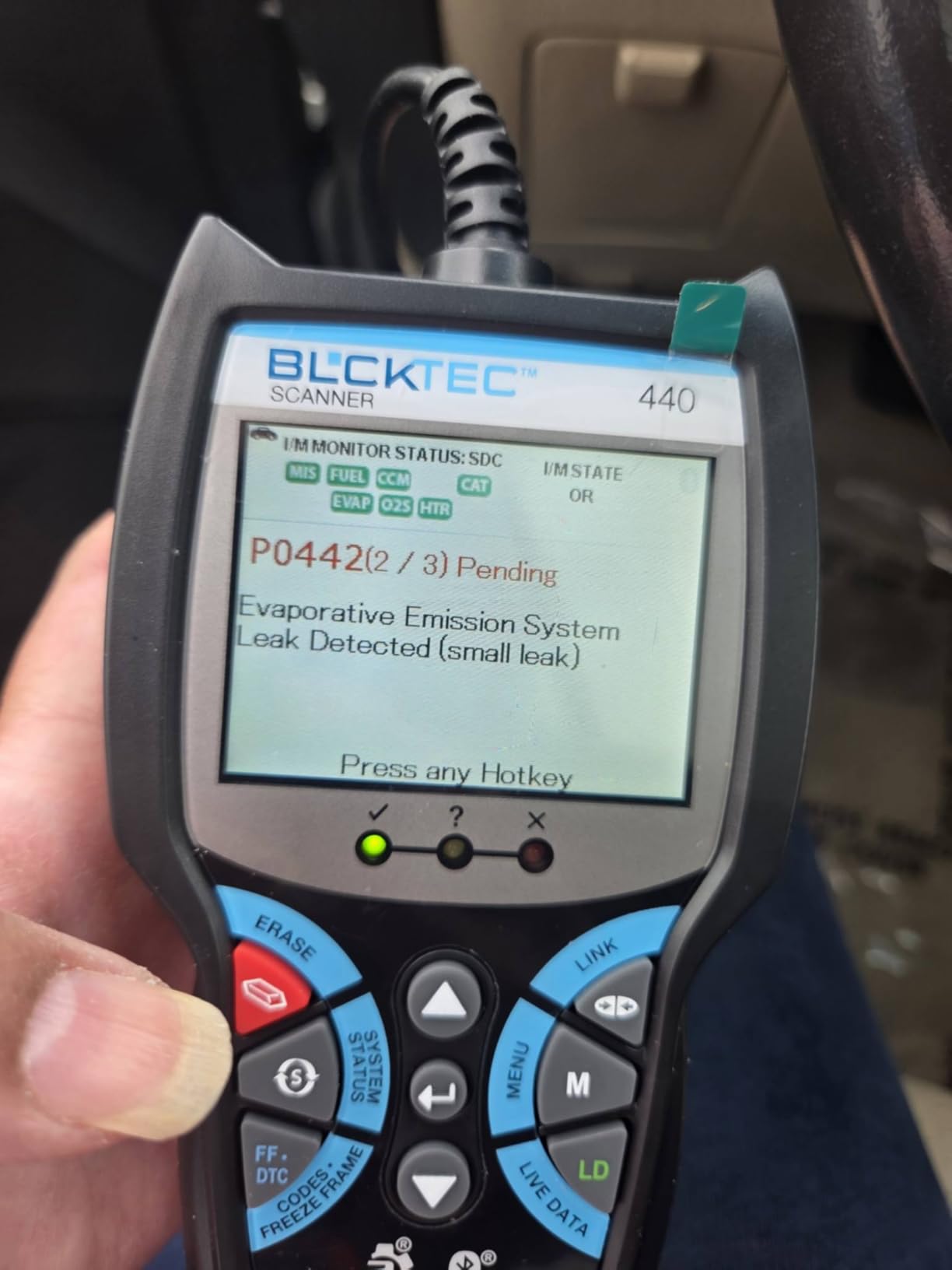
It reads and clears trouble codes, graphs live data in real time, and runs battery and charging system tests. Coverage is wide for a standalone unit, spanning 1996 and newer OBD2 compliant cars, SUVs, light trucks and 12V diesels. It weighs 7.8 ounces, runs in English, French and Spanish, and works with free lifetime updates.
Two complaints recur. The included cable is short, so reading live data while seated in the driver seat is awkward, and the display design can clip the left edge of a digit at certain angles. Some owners also report the firmware update process failing to complete, which matters more on a device that relies on being current to read newer protocols well.
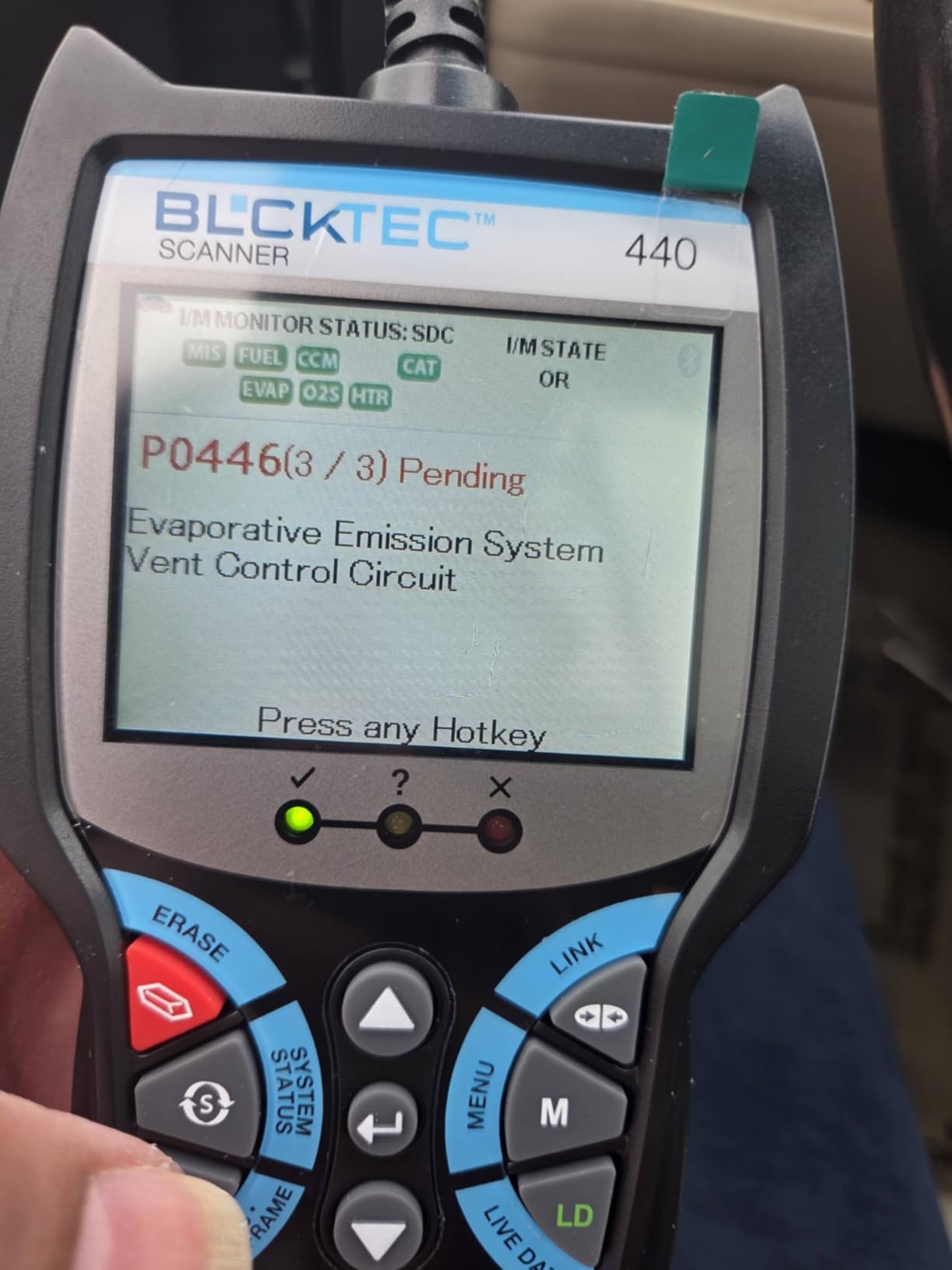
Who the BLCKTEC 440 Suits Best
It suits anyone buying used cars, because you can walk up to a vehicle with no phone, no account and no cables to your own laptop. The readiness LEDs also suit owners preparing for an emissions test and drivers who want live data graphs without a phone in the passenger seat.
Where the BLCKTEC 440 Falls Short
The short cable is a real ergonomic issue for live data, and the screen design occasionally obscures a digit. Unreliable firmware updates are the bigger long-term concern, since a standalone scanner depends on current software to interpret newer vehicles properly. Bluetooth is in the name but the daily experience here is a wired device.
11. UMEIJA Bluetooth 5.4 Scanner: Best for Multilingual Garages
OBD2 Scanner Diagnostic Tool, Car Scanner for iOS & Android, Bluetooth 5.4
Bluetooth 5.4 for iOS, Android and Windows
Nine protocols across 96 percent of 1996+ models
Charts for RPM, coolant temp and voltage
Pros
- Bluetooth 5.4 gives fast reliable connections on iOS and Android
- Supports nine protocols and over 96 percent of 1996+ makes and models
- Free dedicated app with chart-based data visualization
- Nine languages including English
- German
- Spanish
- French and Italian
- Strongest Automotive sales rank in the group
Cons
- Only a 90-day warranty
- the shortest here
- Locked to the OBD Home app rather than mainstream apps
- Cannot be switched off so the manual advises unplugging
The UMEIJA scanner is the value pick for anyone who wants modern wireless and broad coverage in one package. It uses Bluetooth 5.4, which is a noticeable step up from the older 4.x and 5.0 adapters in this roundup for pairing speed and connection stability, and it works across Android, iOS and Windows with a free dedicated app downloaded by QR code.
Nine protocol support and a claimed coverage of more than 96 percent of makes and models from 1996 onward make it one of the broadest fits here. It reads codes, clears the check engine light, resets monitors, and pulls live data, VIN information, freeze frame and sensor readings. Chart-based visualization shows coolant temperature, engine speed, vehicle speed and control module voltage rather than plain numbers.
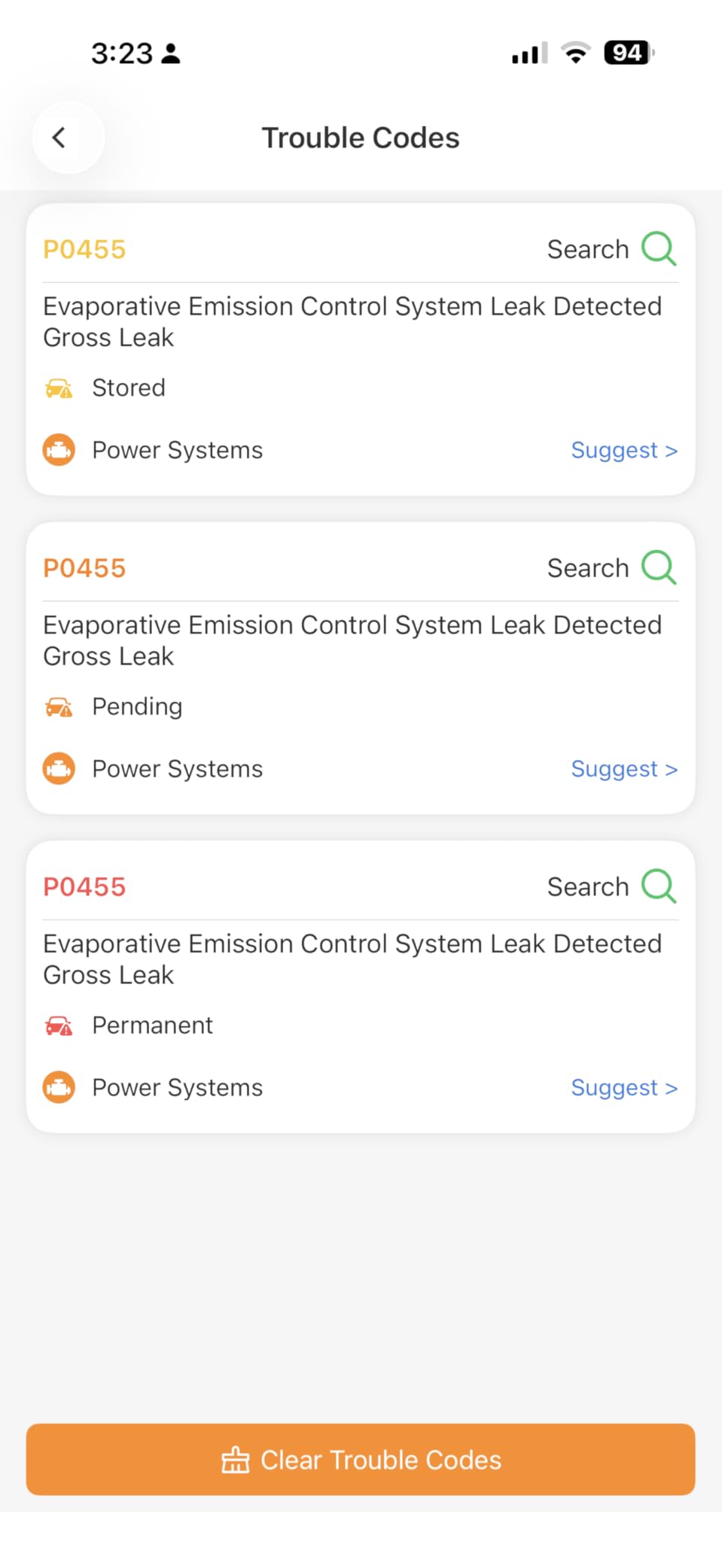
Language support is the quiet strength. English, German, Spanish, French, Italian, Dutch, Portuguese and Chinese are all available, which makes it a reasonable pick for a shared workshop where more than one person reads the codes. It reads and clears trouble codes and resets monitors, and the included manual covers setup if the QR code route does not suit you.
Two things temper that. The warranty is 90 days, the shortest of any product here, so treat it as a consumable rather than an investment. It also locks you into the OBD Home app, which means the popular Torque and BimmerCode workflows are unavailable, and it has no power switch, so the manual advises unplugging it to protect the battery.
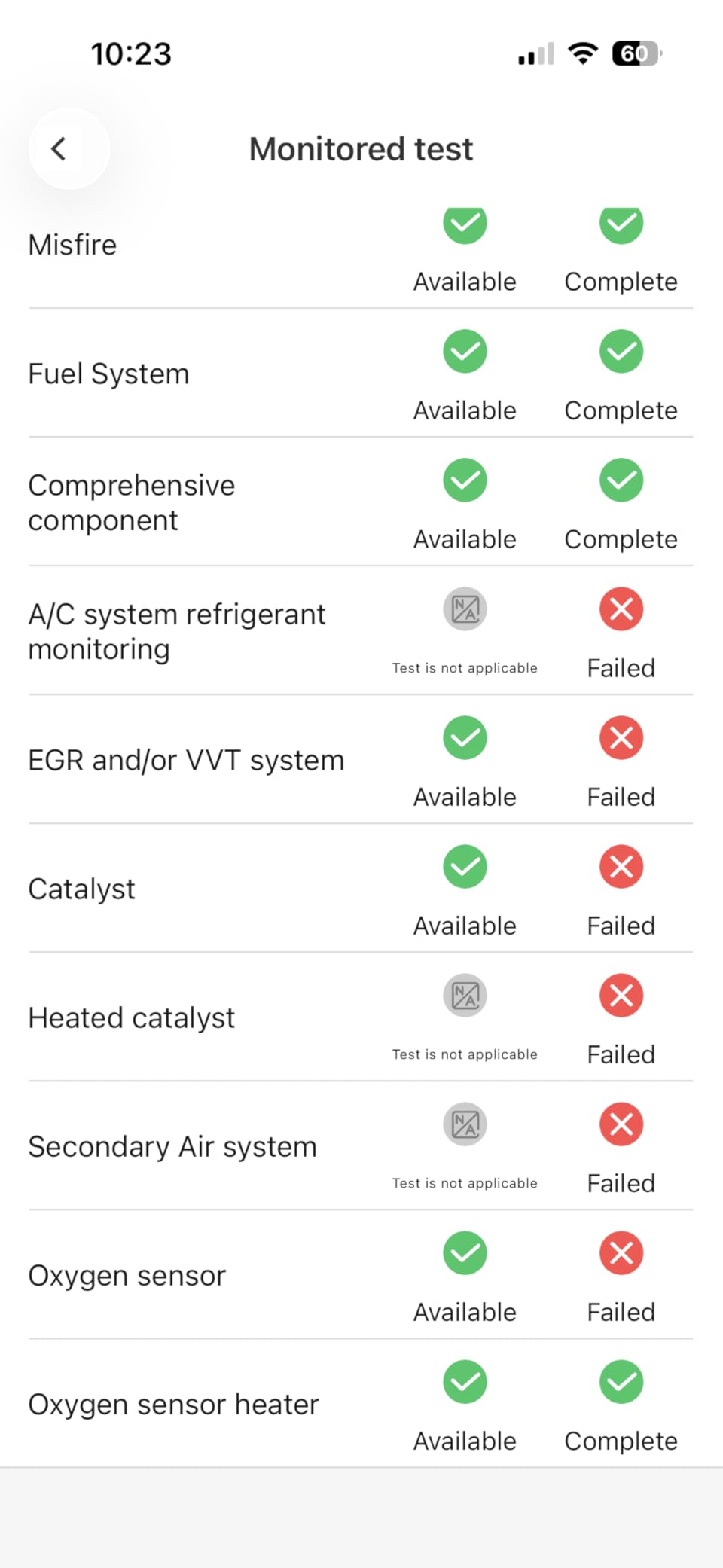
Who the UMEIJA Scanner Suits Best
It suits a multi-language garage or a household where more than one person needs to read diagnostics in their own language. The broad protocol coverage also makes sense for someone who rotates through several different makes and does not want to check compatibility first.
Where the UMEIJA Scanner Falls Short
A 90-day warranty is the weakest protection in the roundup, and app lock-in means you cannot bring your own tools. Without a power switch it will drain a battery if left connected, and the absence of ABS, SRS and manufacturer-specific coverage keeps it in the generic engine category.
12. ANCEL BD200: Best for Trip and Performance Data
ANCEL BD200 OBD2 Scanner Bluetooth – Code Reader & Check Engine Diagnostic Scan Tools with Car Battery Test, Exclusive App on iOS & Android, Wireless OBDII Adapter Works for 1996 & Newer Vehicles
Bluetooth 5.0 for iOS and Android
Battery voltage charts and performance tests
Five year warranty
Pros
- Bluetooth 5.0 for fast reliable pairing
- Performance tests and trip analysis are unusual at this level
- Five year warranty with lifetime free software upgrades
- Fault reports can be emailed directly to a shop
- Voice alerts for speed
- water temperature and driving time
Cons
- Cannot perform charge test
- cranking test or battery reset
- App dependent with no on-device display
- 4.3 star rating reflecting app stability complaints
- Lowest five-star share of the four-plus rated units at 66 percent
The ANCEL BD200 is the odd one out in this list, and that is its appeal: it treats the scanner as a driving companion rather than a fault finder. Trip analysis with voice alerts for speed, water temperature and driving time, plus performance tests covering acceleration, braking and distance, turn it into a lightweight data logger. On a weekend car or a track day shakedown, that is more interesting than another code list.
It uses Bluetooth 5.0 for pairing with iOS and Android, and the app reads current and permanent fault codes with severity interpretation, plus freeze frame and live gauges for fuel pressure and engine load. Real-time battery voltage is charted rather than displayed as a single number, which makes a slow charging system easier to catch.
One feature stands out for anyone who works on the side: the fault report can be emailed directly to a repair shop, so a diagnosis becomes a quote request without retyping anything. Support includes how-to guides and video tutorials on the help page aimed at first-time users, and upgrades are free for life.
The warranty is the surprise here, at five years, which is the longest in the roundup alongside the OBDLink LX warranty terms and far better than the 90 days on the UMEIJA. The drawbacks are that it is app dependent with no on-device display, and it cannot perform a charge test, cranking test or battery reset. Its 4.3 star average and 66 percent five-star share point to companion app stability rather than hardware faults.
Who the ANCEL BD200 Suits Best
It suits a driver who wants to see how the car behaves over a trip, including acceleration and braking figures, and someone who wants a five year warranty on a mid-range tool. Sending a fault report straight to a shop by email also suits anyone doing paid side work without a laptop in the car.
Where the ANCEL BD200 Falls Short
It reads and clears engine fault codes but does not extend to ABS, SRS or manufacturer-specific modules, and it has no standalone display to fall back on. The missing battery reset and cranking tests rule it out for anyone diagnosing a starting or charging problem, and app stability is the recurring complaint in reviews.
How to Choose a Bluetooth OBD2 Scanner for DIY Work
The word to look for first is enhanced. A generic code reader returns powertrain codes and nothing else, which means an illuminated ABS light, a stored airbag fault or a transmission slip code simply will not appear. The scanners in this roundup that read ABS, SRS, TPMS and transmission modules are the ones that can end a diagnosis rather than start a new round of guessing.
Second, read the code structure so you know what you are looking at. The first character identifies the system: P for powertrain, B for body, C for chassis and U for network. The second character marks generic or manufacturer-specific, and the third names the exact system, with the last two digits narrowing it to a specific fault. A P0455 with a 0 in the second position is a generic code that every scanner can read, while a code with a 1 there is manufacturer-specific and needs deeper coverage.
Third, look at what else the tool shows. Freeze frame captures the sensor values at the moment a code was set, which is often the difference between finding a vacuum leak and replacing a part at random. I/M readiness monitors tell you whether the emissions system is ready or whether a drive cycle is needed first. Live data lets you watch fuel trim, coolant temperature and oxygen sensor voltage while the engine runs.
Fourth, check the platform honestly. Most of these adapters are phone-first, so the real question is which app you will use and whether it charges you. The OBDLink MX+, OBDLink LX, Vgate vLinker MC+ and the UMEIJA unit work across iOS, Android and Windows. The Veepeak Mini and OBDLink LX are Android or Windows only, and the Veepeak OBDCheck BLE depends entirely on a third-party app you install yourself.
Fifth, weigh the warranty. In this roundup the OBDLink LX carries a three year repair-or-replace warranty, the ANCEL BD200 five years, the Veepeak OBDCheck BLE one year, the BLCKTEC 420 and 440 one year limited, and the UMEIJA scanner only 90 days. A longer warranty usually tracks a company that expects to still be shipping firmware when your adapter fails.
Sixth, think about battery drain. Several dongles here cannot be switched off and must be unplugged to avoid draining the vehicle, while the OBDLink LX has a sleep mode that wakes with the engine. If you plan to leave the tool in the car between jobs, that single feature matters more than any extra code library.
Seventh, and last, be realistic about skill level. Advanced service functions such as ABS bleeding, electronic parking brake retraction, throttle body resets and crankshaft relearns live in bidirectional tools that command the module to act. None of the wireless adapters here does that, so if you need those jobs, plan on a tablet-style scan tool rather than a dongle. Judging hardware the same way we judge other gear purchases, we compare the specs sheet by sheet rather than trusting the headline number on the listing.
Bluetooth vs Corded vs Handheld Scanners: What Each One Buys You
Wireless scanners trade raw connection speed for convenience. Bluetooth pairing takes a few seconds and the connection is occasionally fragile in a garage full of other wireless devices, but you are not tethered to a cable while reading live data. A corded scanner such as the BLCKTEC 440 connects instantly every time and cannot drop, at the cost of a cable in your footwell and no phone-free flexibility.
Handheld scanners with their own screens, including the ANCEL BD310 and the two BLCKTEC units, sit in between. They can run standalone, which is the deciding factor when you are buying a used car from someone who will not give you their WiFi password. The tradeoff is a smaller screen and a shorter feature list, since the app usually carries the deeper repair content.
Platform support is where the wireless category genuinely differs. A dongle that pairs with iOS, Android and Windows gives you the flexibility to log on a laptop, while an Android-only adapter limits you to one ecosystem. Checking spec sheets platform by platform, the way we do for a document scanner comparison, saves a return that a vague listing description will cause.
Subscription vs No-Subscription Bluetooth Scanners
Three models show up in this roundup. BlueDriver sells everything up front with no subscription and free app updates, which is the arrangement most DIYers on r/MechanicAdvice say they want. OBDLink sells the adapter once and lets you choose your apps, some of which are paid, so the ongoing cost is optional and visible.
FIXD uses a tiered model where the core scan stays free and the repair recommendations, cost estimates and live mechanic support sit behind a subscription. Owners on forums report the auto-renewal after a trial as the single biggest complaint, so if you take the trial, set a reminder. The Veepeak adapters push the same pattern one step further, since the app you choose sets the price rather than the hardware vendor.
The practical advice is simple. If you want every feature you will ever use included permanently, buy a no-subscription adapter. If you mainly want to read codes and clear lights, a free tier is genuinely enough. And check what happens to your scan history and stored vehicles if you stop paying, since that is what the forum complaints are really about.
How to Spot a Counterfeit ELM327 Adapter
The ELM327 is a chip standard, and the cheapest dongles on the market frequently contain a cheaper imitation of it. The failure mode is consistent: the adapter pairs, reports a generic code, then returns slow or wrong data and drains the battery. Members of r/Tools describe exactly this pattern when a bargain adapter fails on a real car.
Here is a short checklist. First, check whether the app shows a real ELM327 protocol version, since genuine chips report a specific firmware string and clones often show nothing or an impossible number. Second, read a live data stream and watch whether values change sensibly with engine speed, since fake chips often return fixed or looping values.
Third, look for Bluetooth stability by walking the phone away from the car and back, since a genuine adapter holds a connection. Fourth, compare the physical weight and connector machining against the listing, because clones are noticeably lighter. Finally, prefer a brand with a real warranty and a manufacturer name you can verify, since a ninety-day warranty or no warranty at all is a strong hint about the chip inside.
Not every inexpensive adapter is a counterfeit, but the pattern of tests above catches most of them. It is worth running before you rely on a tool for a used car decision. Our general approach to verifying gear claims, spelled out for scanners in 3D scanner testing, applies here too.
How to Scan a Used Car Before You Buy It
Ask for the car to be running and warm before you plug in, since a cold engine hides pending codes and unfinished drive cycles. Bring a scanner that works standalone, such as the BLCKTEC 440, so you are not depending on the seller’s phone or WiFi. With the engine idling, run a full scan rather than a quick read, because a partial scan is what sellers hope you will do.
Read pending and permanent codes separately. A pending code is an early signal that something is about to set the check engine light, and a car sold with codes cleared moments before you arrive is a normal trick, so freeze frame data and the readiness monitors are your evidence. Check I/M readiness next, since a monitor showing not ready means a drive cycle has not been completed.
Then look at live data while the engine idles and revs. Short term fuel trim that sits far from zero at idle points to an air or vacuum problem, and a misfire count that climbs under load is a serious sign. Finally, ask the seller to demonstrate that the check engine light, ABS light and airbag light all go out when the key turns, since a light that stays on after a key cycle has an easy explanation.
Run the same scan on every car you are considering and write the results down before you negotiate. The habit costs five minutes and has saved buyers from cars whose repairs dwarfed the price difference.
Frequently Asked Questions
What is the best OBD2 scanner for a DIY mechanic?
For most DIY mechanics, the BlueDriver Bluetooth Pro is the best all-round choice. It reads and clears engine, ABS, SRS, airbag, TPMS and transmission codes, matches technician-verified fixes to your VIN, works with both iPhone and Android, and never charges a subscription. If you need Windows support or the highest data transfer speed, the OBDLink MX+ is the alternative.
Who makes the best Bluetooth OBD2 scanner?
There is no single winner, because the right brand depends on the job. BlueDriver leads for verified fix reports and no ongoing fees, OBDLink leads for cross-platform support and protocol depth, Veepeak leads for open app choice, and FIXD leads for plain-language explanations and multi-vehicle management. Check which platform you own and which modules your car uses before choosing.
Are Bluetooth OBD2 scanners any good?
Yes, for the job a DIY mechanic actually needs. A wireless adapter returns the same powertrain codes a shop would read, plus live data and freeze frame on most models. The limits are worth knowing: entry adapters read engine codes only, pairing takes a few seconds, and a dead phone battery ends the session. For reading codes and clearing lights, the convenience far outweighs the drawbacks.
What is the best OBD scan tool for DIY use?
Start with how much of the car you need to see. If you fix brakes, steering or airbag faults, choose an adapter with ABS and SRS coverage such as the BlueDriver or OBDLink MX+. If you only read check engine codes and live data, a Veepeak OBDCheck BLE with Torque is enough. If you need functions like ABS bleeding or parking brake retraction, move up to a bidirectional tablet tool.
Is Autel better than Snap on?
It depends on the tier and the task. Snap-on handhelds are built for daily shop use, while Autel covers more of the mid-range handheld and tablet range that serious hobbyists buy. Neither brand appears in this 12-adapter roundup, because at home the decisive factors are code coverage, app quality and whether a subscription is required. Judge on those, not on the badge on the box.
Can I make a DIY OBD2 programmer myself?
Building a scanner from an ELM327 clone board rarely pays off. Those boards imitate the chip standard without matching its protocol handling, which is why cheap clones return wrong data, drop connections and drain batteries. Programming and coding a module is a separate and riskier job that needs bidirectional control. For a DIY mechanic, buying a supported adapter is cheaper than debugging homemade hardware.
Final Verdict: The Best Bluetooth OBD2 Scanners for DIY Mechanics in 2026
The BlueDriver Bluetooth Pro takes our top spot for 2026 because it is the only adapter in this roundup that combines ABS, SRS, TPMS and transmission coverage with VIN-matched technician-verified fixes and a permanent no-subscription model. The OBDLink MX+ is the runner-up for anyone who wants the highest rating and cross-platform support, the FIXD is the value pick for plain-language answers, and the Vgate vLinker MC+ is the specialist answer for GM and Ford networks.
Whichever you choose, buy for the modules you need rather than the feature list on the box, check that it supports your phone platform, and confirm whether a subscription applies. Our approach to picking tools that hold up, described for other equipment in our photo scanner roundup, is the same here: verify the specification, then read what owners report after six months.