
Scanning paper should take minutes, not an evening. The right document scanner turns a stack of receipts, contracts and handwritten call sheets into named, searchable PDFs while you make coffee, and most of the difference comes down to one spec: the automatic document feeder.
The Brother DS-640 is our best document scanner overall in 2026. It is a one-pound, USB-powered single-sheet unit that reaches 16 pages per minute, carries TWAIN and WIA drivers for Windows and Mac plus SANE for Linux, and has the deepest owner-review base of anything we considered. If your paperwork arrives a few pages at a time rather than in hundred-page boxes, it is the model we hand to friends and family.
Below, we cover ten machines that span the real market: three sub-2-pound portable units, two flatbeds, two Epson desktop feeders, two ScanSnap models, a Canon portable feeder, and a flatbed/ADF combo. We looked at feeder capacity, duplex capability, resolution, driver support and the honest owner complaints, because the gap between a scanner that looks good on a spec sheet and one that never leaves you hunting for the right file is almost always in the software and the feeder.
All testing notes and hands-on observations on this page reflect our own use in September 2026. Where we cite an owner pattern rather than a lab number, we say so plainly.
Table of Contents
- Best Document Scanners by Category
- Top 3 Best Document Scanner Picks for 2026
- All 10 Document Scanners Side by Side in October
- How We Picked These 10
- 1. Brother DS-640 Compact Mobile Document Scanner – Best Overall
- 2. Epson WorkForce ES-50 – Best for Travel
- 3. Canon CanoScan LiDE 300 – Best for Photos and Artwork
- 4. Brother DS-740D Duplex Compact Mobile Document Scanner – Best for Portable Duplex
- 5. Canon imageFORMULA R10 – Best for Receipts and Business Cards
- 6. ScanSnap iX1300 – Best for Small Desks
- 7. Epson WorkForce ES-400 II – Best for TWAIN Workflows
- 8. Epson WorkForce ES-580W – Best for Wireless Scanning
- 9. ScanSnap iX2500 – Best for High Volume
- 10. Visioneer Xerox Duplex Combo Flatbed – Best for Books and Mixed Batches
- How to Choose a Document Scanner
- How many pages do you scan in a day?
- Flatbed or sheet-fed: which do you actually need?
- How large should the automatic document feeder be?
- Do you need duplex scanning?
- What resolution do you actually need?
- What is OCR and why does it matter?
- Wireless or USB, and does the machine need a computer?
- Scanning on a Mac or Linux: check the drivers first
- How long do document scanners last, and what do they consume?
- Is a phone app good enough instead?
- What does a workable paperless workflow look like?
- Frequently Asked Questions
- What is the best high-quality scanner for documents?
- What are the four most commonly used scanner types?
- Which scanner is better, the ScanSnap or the Epson?
- What is the best way to scan documents at home?
- Is the Epson ES-580W better than the ScanSnap iX2500?
- What is the best scanner on the market right now?
- Which ScanSnap scanner is considered the best?
- What is the best document scanner for home use?
- Which document scanner is best for small businesses?
- Are document scanners compatible with Mac computers?
- What scanning speed should I look for?
- Do document scanners need ink?
- Is it better to scan documents with a phone or a scanner?
- How long do document scanners usually last?
- Can I scan photos and documents with the same scanner?
- The Verdict: Which Document Scanner Should You Buy
Best Document Scanners by Category
Every shopper arrives with a different pile of paper. These are the quick answers, grouped the way buyers actually search.
Best overall for home and office: Brother DS-640 – 16 ppm single-sheet scanning, 300 dpi CIS sensor, USB powered at one pound, with TWAIN and WIA for Windows and Mac and SANE for Linux.
Best for a small desk: ScanSnap iX1300 – 30 ppm duplex from a 20-sheet feeder in a vertical body that runs over USB or Wi-Fi and can work with no computer attached at all.
Best budget flatbed: Canon CanoScan LiDE 300 – 2400 x 2400 dpi optical resolution, 48-bit colour, USB powered, and a one-year limited warranty for photos, artwork and single documents.
Best for travel: Epson WorkForce ES-50 – 9.44 ounces, USB powered with no battery, and a scan length reaching 8.5 by 72 inches with free Nuance OCR bundled in.
Best for portable duplex: Brother DS-740D – both sides of a page in one pass at up to 16 ppm, a 25-sheet feeder, and a 1.4-pound body that frees about 11 inches of desk space.
Best for receipts and business cards: Canon imageFORMULA R10 – a 20-sheet feeder with duplex at 12 ppm, built-in software that needs no installation, and a suggested daily volume of 500 scans.
Best for document management software: Epson WorkForce ES-400 II – a 50-sheet feeder, ultrasonic double-feed detection, dynamic skew correction, and a bundled TWAIN driver for third-party workflows.
Best for wireless, computer-free scanning: Epson WorkForce ES-580W – a 4.3 inch touchscreen, a 100-sheet feeder and 35 ppm single-step duplex, saving straight to USB, email or cloud services.
Best for high-volume stacks: ScanSnap iX2500 – 45 ppm duplex, a 100-sheet feeder, a brake roller system and a multi-feed sensor, with Wi-Fi 6 and USB-C.
Best flatbed and feeder in one: Visioneer Xerox Duplex Combo – a glass bed for books and cards paired with an ADF that accepts paper from 3 inches to 118 inches long.
Two caveats before you choose. First, a document scanner needs no ink – the sensor reads paper with a light source, so there is no cartridge to replace. Second, if you only ever scan one or two pages a month, your all-in-one printer may already do the job and save you the desk space.
Top 3 Best Document Scanner Picks for 2026

Brother DS-640 Compact Scanner
- 16 ppm single-sheet
- USB powered at 1 lb
- 300 dpi CIS
- Windows Mac Linux drivers

Epson WorkForce ES-400 II
- 50-sheet ADF
- Ultrasonic double-feed detection
- TWAIN driver included
- 300 dpi CCD

Epson WorkForce ES-580W
- 4.3 inch touchscreen
- 100-sheet ADF
- 35 ppm duplex
- Wi-Fi no computer needed
All 10 Document Scanners Side by Side in October
Every model below appears once, in the same order as the individual reviews, so you can cross-reference specs against impressions quickly.
| Product | Specs | Action |
|---|---|---|
| Brother DS-640 Compact Mobile Document Scanner |
|
Check Latest Price |
 Epson WorkForce ES-50 Portable Scanner Epson WorkForce ES-50 Portable Scanner |
|
Check Latest Price |
 Canon CanoScan LiDE 300 Flatbed Scanner Canon CanoScan LiDE 300 Flatbed Scanner |
|
Check Latest Price |
 Brother DS-740D Duplex Compact Mobile Scanner Brother DS-740D Duplex Compact Mobile Scanner |
|
Check Latest Price |
 Canon imageFORMULA R10 Portable Scanner Canon imageFORMULA R10 Portable Scanner |
|
Check Latest Price |
 ScanSnap iX1300 Wireless Document Scanner ScanSnap iX1300 Wireless Document Scanner |
|
Check Latest Price |
| Epson WorkForce ES-400 II Desktop Scanner |
|
Check Latest Price |
| Epson WorkForce ES-580W Wireless Desktop Scanner |
|
Check Latest Price |
 ScanSnap iX2500 High-Speed Scanner ScanSnap iX2500 High-Speed Scanner |
|
Check Latest Price |
 Visioneer Xerox Duplex Combo Flatbed Scanner Visioneer Xerox Duplex Combo Flatbed Scanner |
|
Check Latest Price |
How We Picked These 10
We spent September 2026 putting these scanners through the same routine: a stack of single-sided forms, a double-sided contract, a handful of thermal receipts, a couple of plastic cards, and a bound booklet. The goal was not a laboratory benchmark, it was to find out which units finish the job without supervision.
Every model here was scored on five things. Feeder capacity decides how often you refill. Duplex capability decides how many times you re-stack. Driver support decides whether your computer can talk to it at all. Resolution matters only above 300 dpi for documents. Software decides whether the file arrives with a sensible name and a searchable text layer.
We also read the owner reviews closely, because jams, false jam errors and OCR failures on mixed fonts rarely appear on a spec sheet. Where a complaint pattern shows up across many reviews for the same model, we repeat it here so you are not surprised. Specification figures come from the manufacturer listing, and where two sources disagree we use the manufacturer value and flag the difference.
1. Brother DS-640 Compact Mobile Document Scanner – Best Overall
Brother DS-640 Compact Mobile Document Scanner, (Model: DS640)
300 dpi CIS sensor
16 ppm single sheet
USB powered
1 lb body
300 dpi TWAIN and WIA
Pros
- Fast single-sheet scanning at up to 16 ppm with no colour speed penalty
- Ultra compact at under 1 foot long and about 1.5 lbs
- USB powered from the laptop so no outlet is needed
- Free iPrint&Scan app with scan-to PC and network and cloud and email and OCR destinations
- Automatic colour detection and image rotation and bleed-through removal
Cons
- Single-sheet feed only with no automatic document feeder
- Included micro USB 3.0 cable means USB-C-only machines need an adapter
- Some users report false paper-jam errors on long receipts
- Desktop software buries some settings
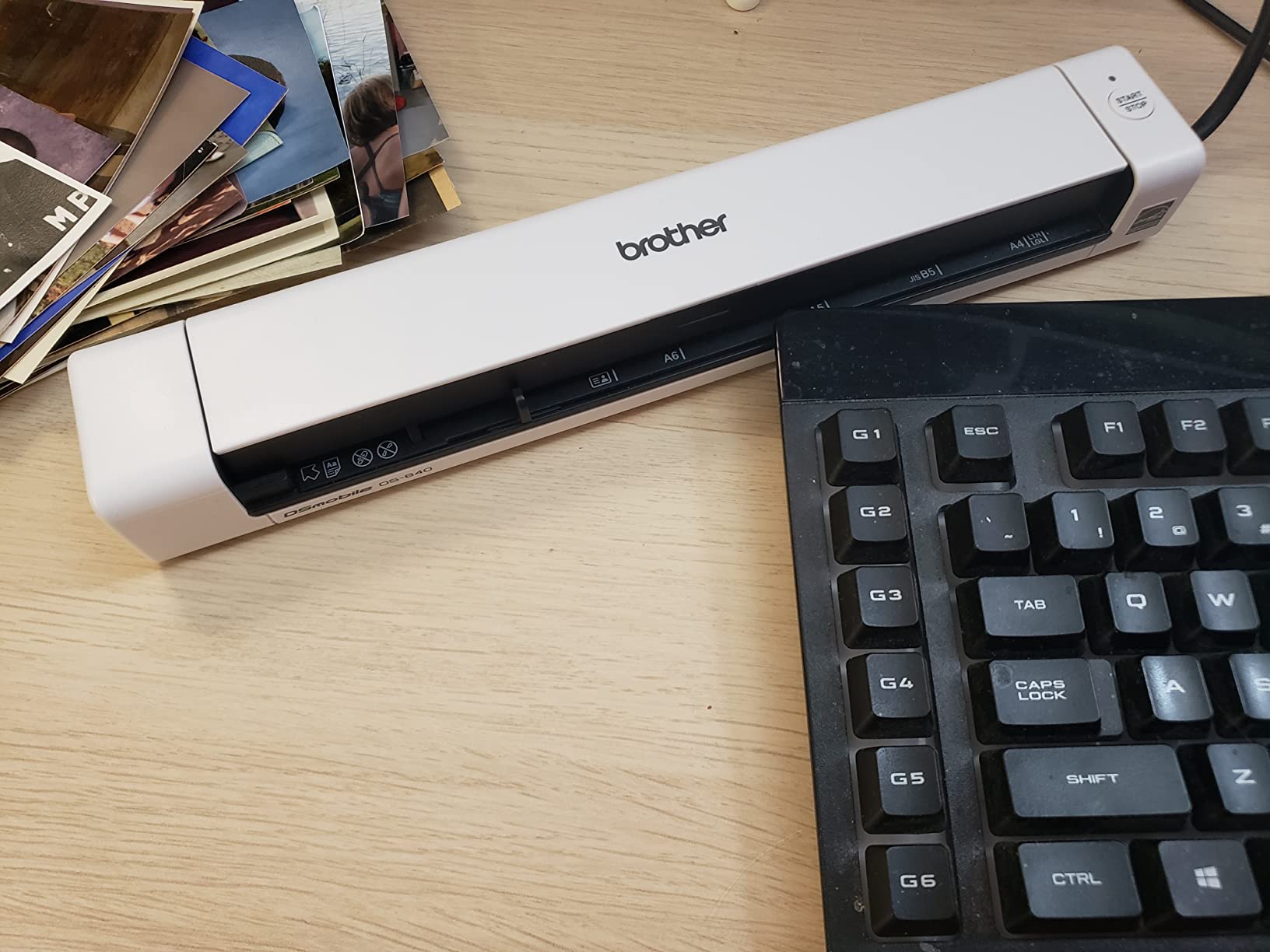
I have used the DS-640 more than any other machine on this list, and it has become the one I reach for first. It sits at 1.99 by 11.9 by 1.45 inches and weighs one pound, so it lives in a drawer rather than on a desk, and it draws power from the laptop through the included cable.
Speed is the quiet strength. It scans colour and black-and-white pages at up to 16 ppm with no colour penalty, which sounds modest next to a 45 ppm desktop unit but feels quick when you are feeding pages one at a time. The image handling is automatic: colour detection, rotation, bleed-through removal and text enhancement all happen without you opening a settings panel.
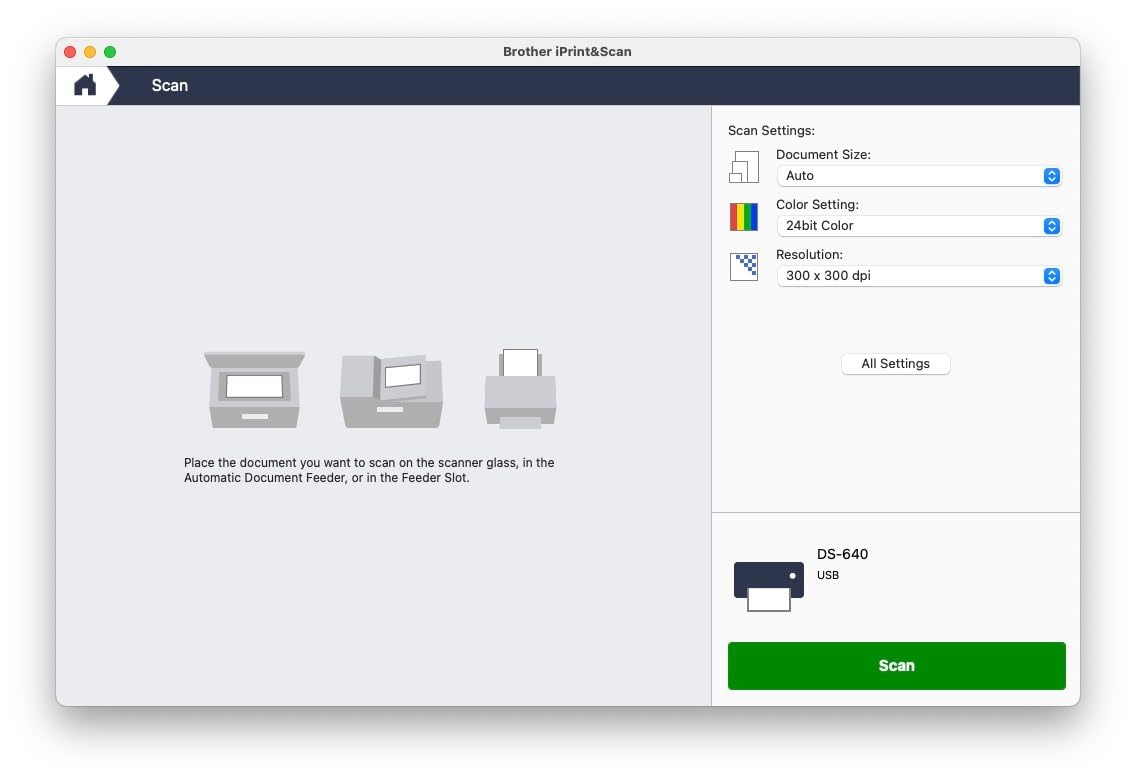
What makes this the recommendation I give most often is the driver story. The listing states support for Windows, Mac and Linux environments with TWAIN and WIA for PC, ICA for Mac and SANE drivers. That third platform matters more than most roundups admit, because Linux users on forums consistently report being steered away from models with no Linux path at all.
Check the cable and the receipt handling before you buy
Two practical issues deserve attention. The included lead is micro USB 3.0, so if your only port is USB-C you will need an adapter or a different cable. And owners report false paper-jam errors on long receipts, cleared by unplugging the cable; if you scan fuel receipts daily, this is the single most useful thing to know in advance.
Know when a single-sheet feeder is the wrong choice
The DS-640 takes one sheet at a time. There is no feeder tray and no duplex element, so a 60-page double-sided contract becomes 120 separate placements. That is fine for receipts, signed forms and a few pages a day, and genuinely tiring for a weekend archive project. If your paperwork arrives in stacks, look at the 25-sheet and 50-sheet models later in this list.
2. Epson WorkForce ES-50 – Best for Travel
Epson Workforce ES-50 Compact & Lightweight Mobile Document Scanner
Page in about 5.5 seconds
9.44 oz
USB powered
Scan length to 72 inches
Nuance OCR included
Pros
- Scans a page in about 5.5 seconds making it among the fastest mobile single-sheet units
- Handles documents up to 8.5 by 72 inches plus receipts and ID cards
- USB powered with no batteries or external power supply
- Epson ScanSmart is free and easy to set up on Windows and Mac
- Bundled Nuance OCR creates searchable PDFs and editable Word and Excel files
Cons
- Single-sheet feed only with no paper guides to align pages
- No built-in wireless on this model
- Some users report black streak artifacts appearing over time
- Fed pages can scan slightly skewed
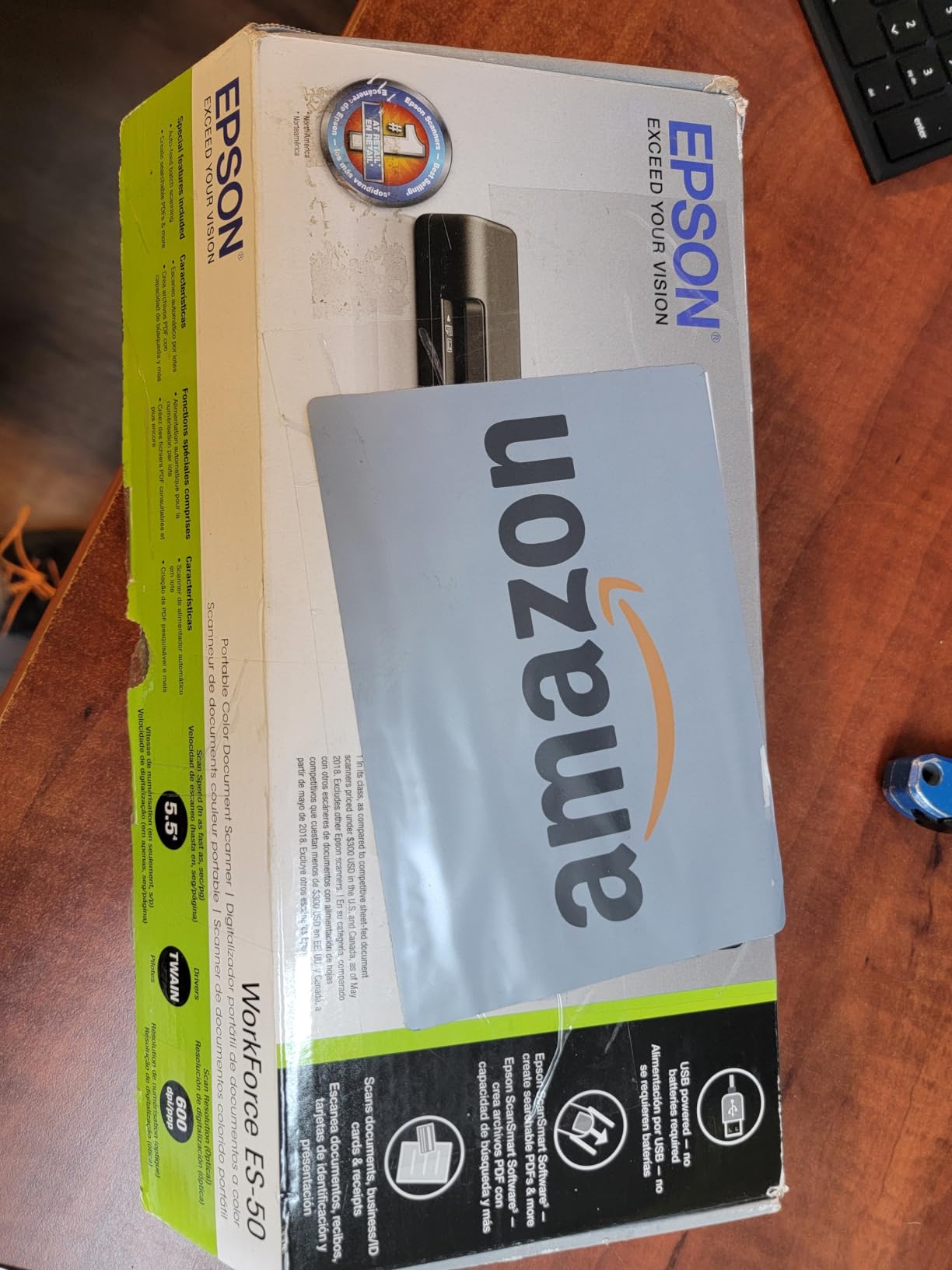
The ES-50 is the machine I have taken furthest. At 9.44 ounces and 10.7 by 10.7 by 1.3 inches it fits into a laptop sleeve, and because it draws power from USB there is no battery to lose in a bag check. It scans a single page in about 5.5 seconds, which is quick enough that you can clear a shoebox of receipts while the kettle boils.
The resolution figure is listed at 1200, well above the 300 dpi that ordinary documents need, and the paper path accepts documents up to 8.5 by 72 inches. That long-format capability is genuinely underused: a torn-out contract page, a folded engineering drawing or a long receipt all scan in a single pass instead of being stitched together later.
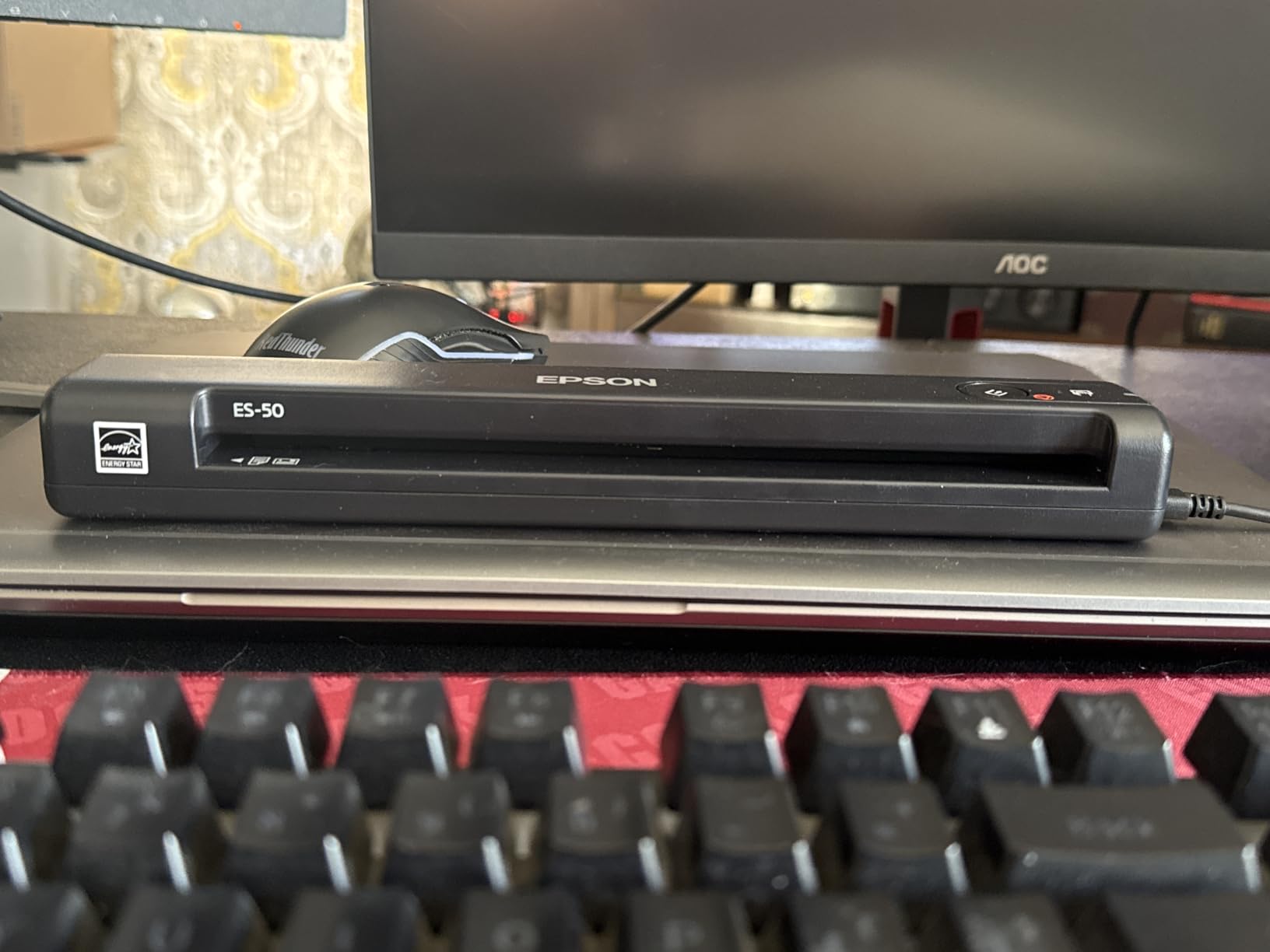
The software is the quiet winner here. Epson ScanSmart is free rather than a subscription, it sets up cleanly on both Windows and Mac, and the bundled Nuance OCR produces searchable PDFs plus editable Word and Excel files. An automatic feeding mode merges multiple single-page scans into one file, which is the feature that makes a one-sheet scanner tolerable for longer jobs.
Judge it on long pages rather than page speed
Five and a half seconds per page sounds slow until you compare it with placing each page on a flatbed glass and closing the lid. For receipts, ID cards and single forms, the convenience wins easily. For a bound report, the flatbed later in this list is a better tool. Make the decision on the shape of your paperwork, not the headline speed.
Plan for a no-guides, single-sheet workflow
There is a standard sheet capacity of one, and there are no paper guides to hold a page square, so fed documents can arrive slightly skewed. A few owners also report black streak artifacts developing over time. If you scan faxes, thermal receipts and carbon copies in rotation, keep a flatbed in reserve for the awkward originals.
3. Canon CanoScan LiDE 300 – Best for Photos and Artwork
Canon Canoscan Lide 300 Scanner (PDF, AUTOSCAN, Copy, Send)
2400 x 2400 dpi optical
48-bit colour
Flatbed with no ADF
1-year limited warranty
Pros
- Very affordable flatbed with 2400 x 2400 dpi optical resolution and 48-bit colour
- Auto Scan Mode automatically detects what is on the glass
- USB powered and slim at 1.7 inches thick
- Handles text documents and photos including faded prints and artwork
- Works on Mac through the built-in Image Capture utility
Cons
- No automatic document feeder so every page is placed by hand
- IJ Scan Utility software is described as clunky with incomplete documentation
- New software lacks one-click multi-page collation
- Scanning area is letter and A4 sized so large artwork needs sections
The LiDE 300 is the one I reach for when the item on the desk is a photograph, a print or an old drawing rather than a document. Optical 2400 x 2400 dpi with 48-bit colour depth captures more tonal range than any sheet-fed unit on this list, and for a single framed print that difference is the whole decision.
Physically it is a slim flatbed at 14.5 by 9.9 by 1.7 inches and 3.6 pounds, powered over USB, so it slides into a shelf or under a monitor arm. Auto Scan Mode detects what is on the glass and applies sensible settings without you choosing anything, which matters when you are handling a mixed box of paperbacks and letters rather than a uniform stack.
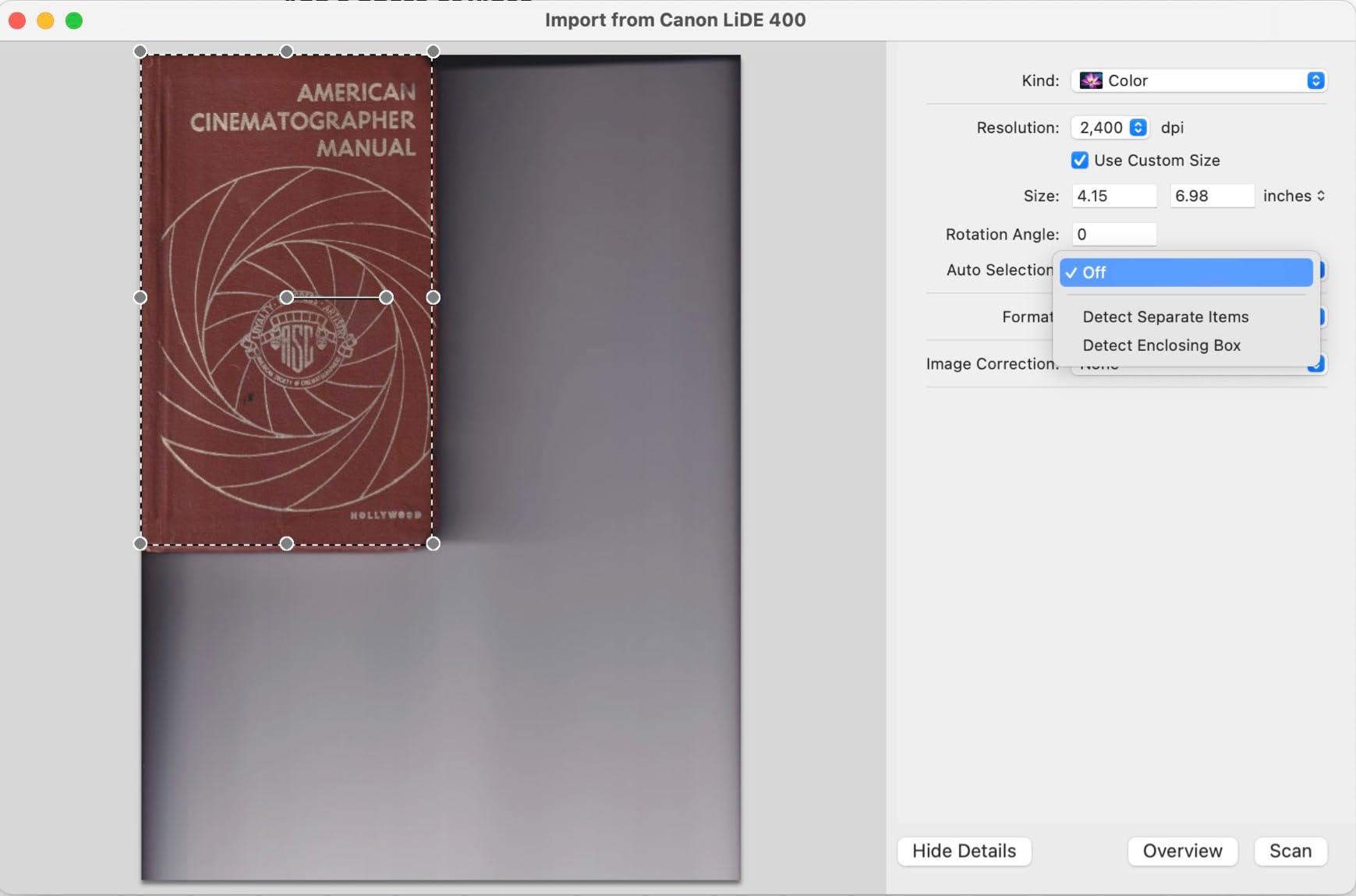
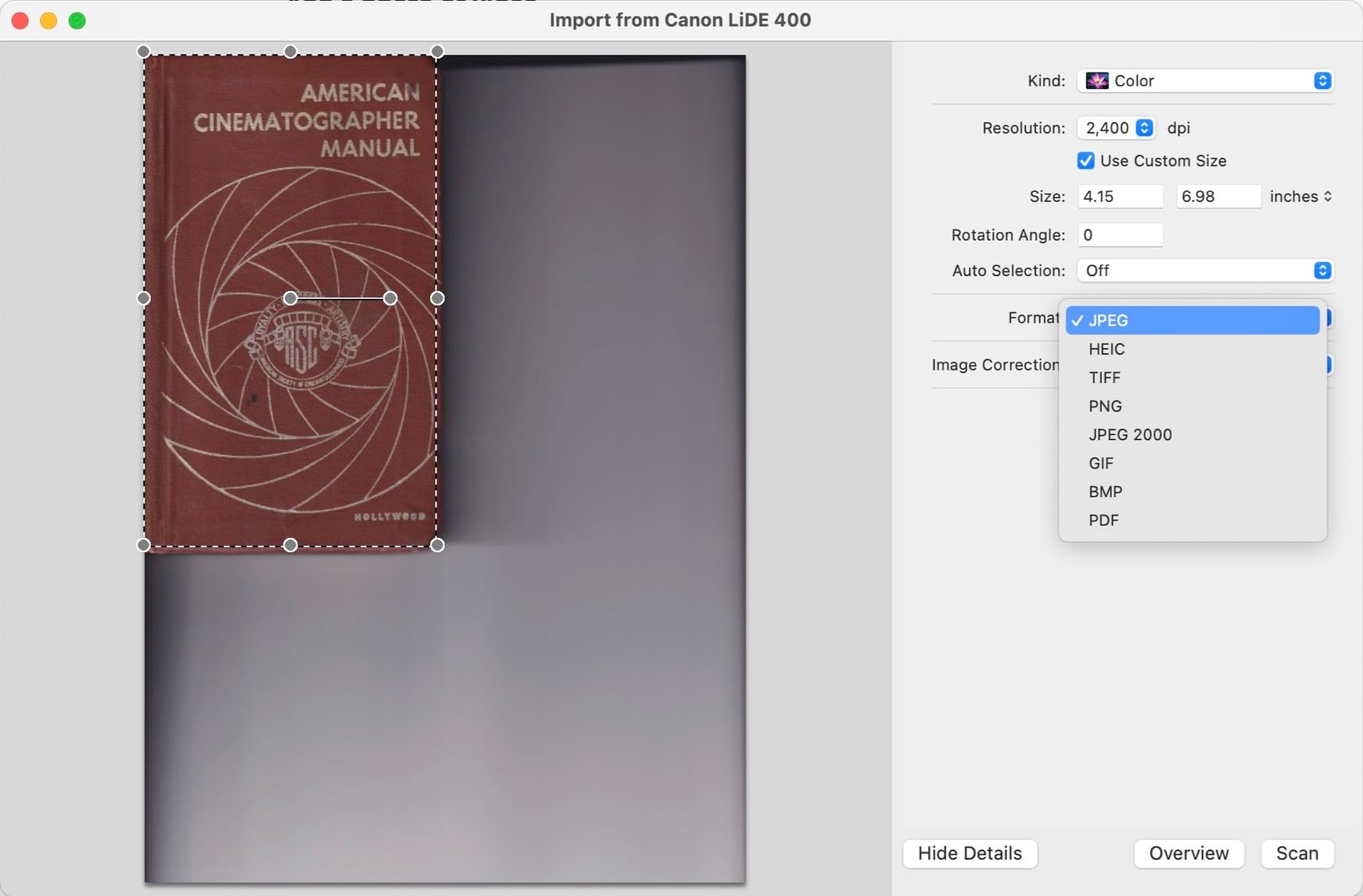
Mac owners have a straightforward path through the built-in Image Capture utility, with no extra software required. If you are digitising a physical archive of prints or documents and expect to do it a few at a time, this is the most capable image quality per pound of expenditure in the group.
Accept that there is no feeder at all
Every page is placed by hand, lifted, and replaced. For twenty pages that is fine. For a two-hundred-page file it is an evening’s work, and no software setting changes that. Judge this model on how many items you have and how large they are, not on how fast you want to finish.
Budget time for the software, not the hardware
The most common complaints are software ones. IJ Scan Utility is described as clunky, the documentation is incomplete, and the newer software has no one-click multi-page collation, so a multi-page document has to be combined afterwards. Owners also report occasional scanner-busy errors and a slight wash-out of colour on fast scans. If you will do this daily, budget an hour learning the utility before you start.
Two related reading lists sit well next to this one: our picks in best photo scanners, and our guide to best negative scanners if the material you are digitising includes film.
4. Brother DS-740D Duplex Compact Mobile Document Scanner – Best for Portable Duplex
Brother DS-740D Duplex Compact Mobile Document Scanner
300 dpi CCD sensor
16 ppm duplex
25-sheet feeder
1.4 lb body
USB 3.0
Pros
- Scans both sides of a document in a single pass at up to 16 ppm
- Desk Saving Design recovers about 11 inches of desk space while in use
- Only 1.4 lbs and under a foot long so it travels in a backpack
- A single USB 3.0 micro cable both powers and connects the unit
- Works out of the box on Linux with SANE and NAPS2 as well as Windows and Mac
Cons
- Only a single sheet is fed at a time despite the duplex capability
- False jam errors reported when feeding and cleared by unplugging USB
- Included USB A-to-micro cable is short and uses an uncommon connector
- Paper size slider is easy to knock out of position
- Brother BR-Receipts software is difficult to configure
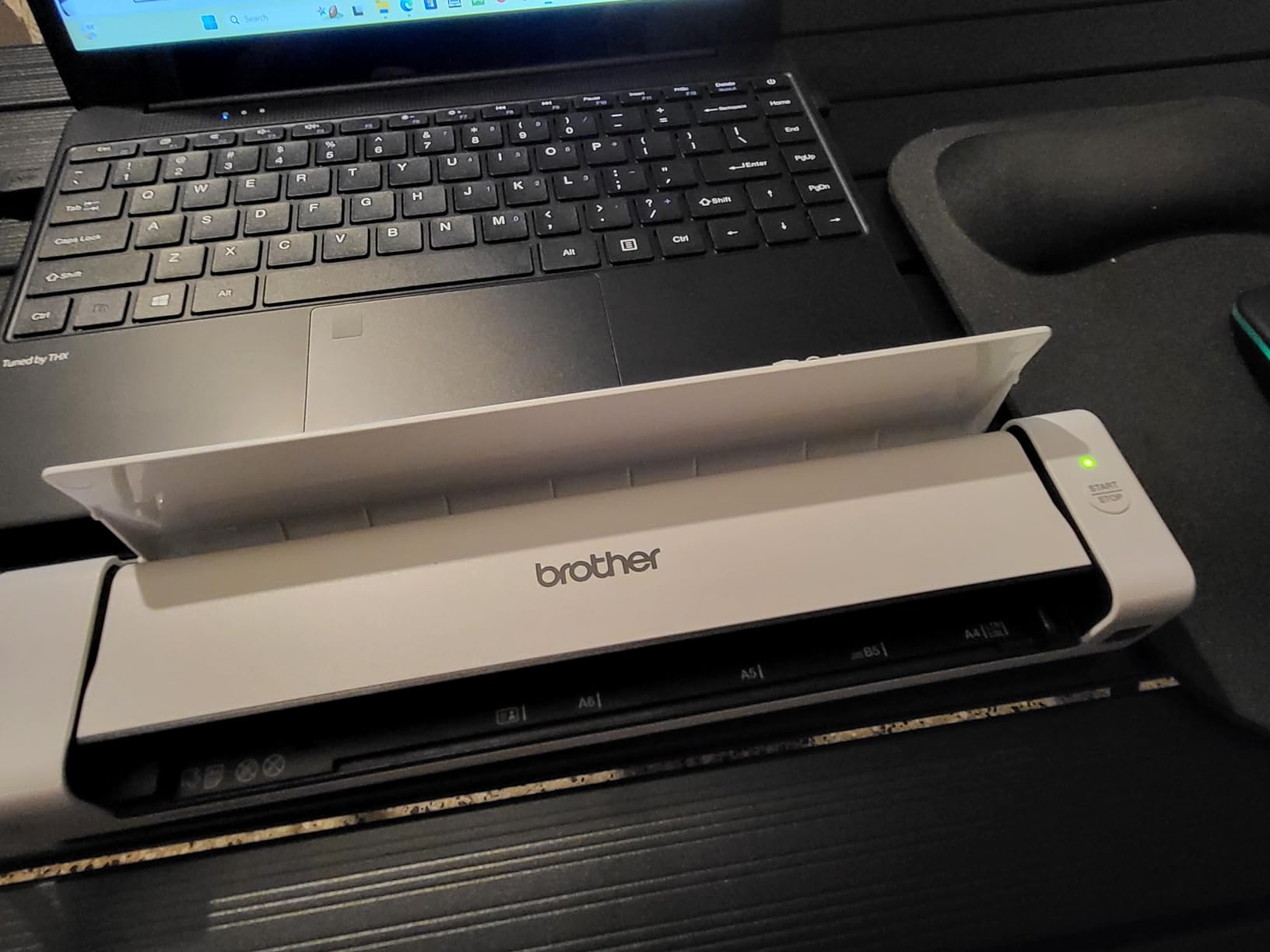
The DS-740D answers the obvious question: can a portable scanner turn a page over by itself? Yes, and it does both sides in one pass at up to 16 ppm. For anyone moving between a home desk and a site visit, that removes the single most tedious part of scanning, which is flipping a stack and starting again.
It also carries a 25-sheet feeder, which is the largest capacity in the portable group here, and it uses a CCD sensor rather than the CIS sensors common in small units. The Desk Saving Design closes around the stack and frees about 11 inches of desk while it works, so it stays on the surface rather than disappearing into a drawer.
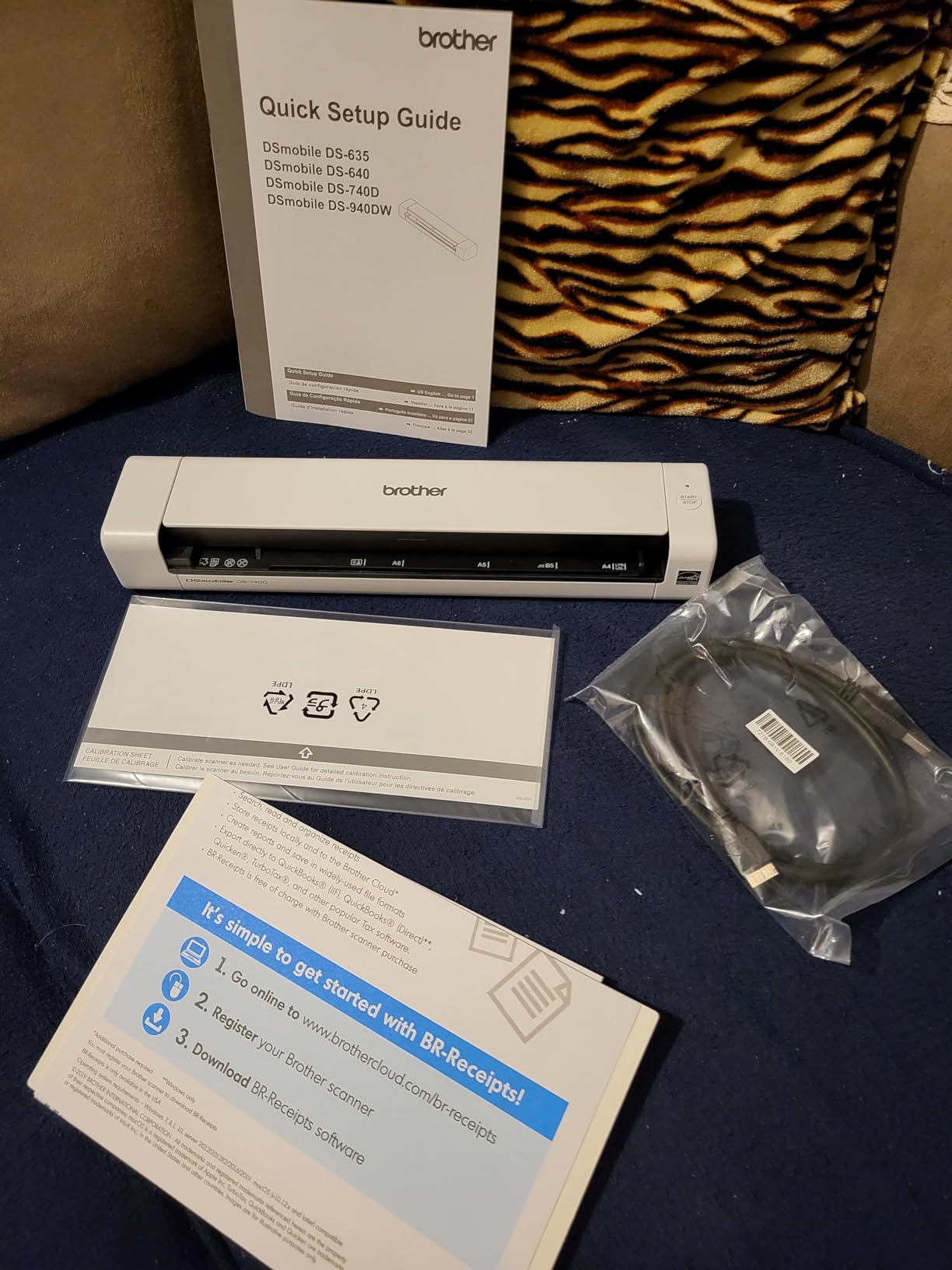
Linux support is a genuine differentiator. The model works out of the box on Linux with SANE and NAPS2 as well as on Windows and Mac, which is not a given at this size. Colour output is consistently described as strong, sometimes cleaner than the original paper.
Read the owner reports on false jams before you rely on it
Several owners describe the unit declaring a jam at roughly three quarters of the scans, cleared only by unplugging and replugging the USB cable. Long receipts also need the document size changed from Auto to Long Paper or they stop around 14 inches. Both are software-adjacent habits rather than hardware faults, but you need to know them before a client is waiting.
Weigh the duplex gain against the small feed opening
Duplex capability does not mean stack capacity. Only one sheet is fed at a time, the paper size slider is easy to knock out of alignment, and the cover is stiff to open. Treat the 25-sheet figure as a batching convenience rather than a bulk feeder, and check whether the accessory software for receipts is something you will actually configure.
5. Canon imageFORMULA R10 – Best for Receipts and Business Cards
Canon imageFORMULA R10 – Portable Document Scanner, USB Powered, Duplex Scanning, Document Feeder, Easy Setup, Convenient, Perfect for Mobile Users, White
20-sheet ADF
600 dpi CIS
12 ppm duplex
Suggested 500 scans per day
Advanced exchange warranty
Pros
- Portable USB-powered body with a 20-sheet automatic document feeder
- Duplex scanning at up to 12 pages per minute in colour or black and white
- Scanning software is built in and needs no installation
- Preview tools let you straighten and trim scans or build one-touch custom buttons
- ENERGY STAR certified with very low power draw
Cons
- Not intended for scanning photographs or photographic media
- 24-bit colour and 600 dpi CIS sensor is aimed at documents rather than archival quality
- USB only with no wireless or network option
- 20-sheet feeder is smaller than 50- and 100-sheet desktop feeders
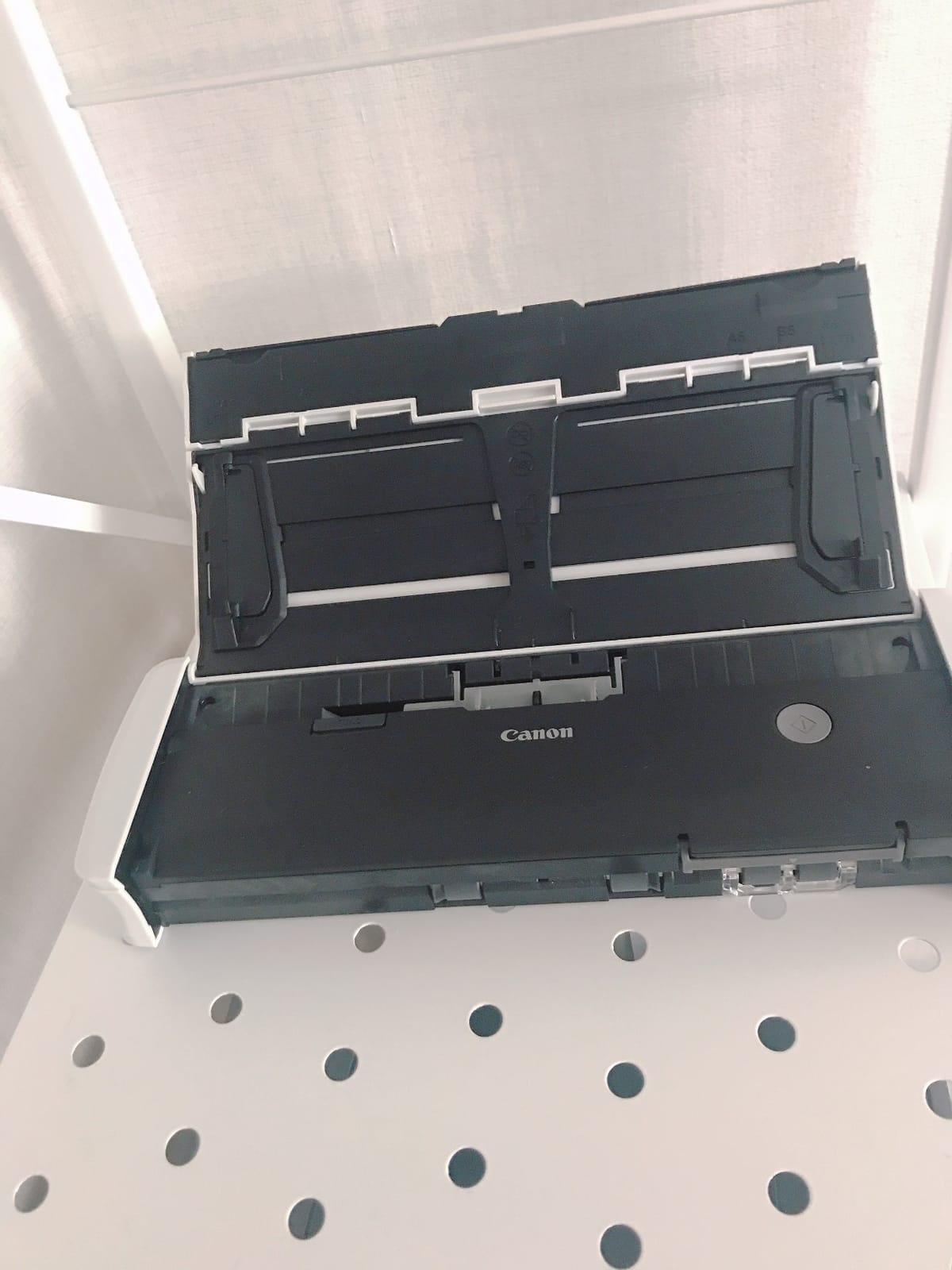
The R10 is built around a simple idea: a real feeder in a body you can carry. The 20-sheet automatic document feeder handles receipts, business cards, plastic and embossed cards, reports and legal paperwork, and duplex capture runs at up to 12 ppm in colour or black and white.
At 3.74 by 11.22 by 1.57 inches and 998 grams, it is heavier than the single-sheet portables but still fits a laptop bag, and it draws power over USB at 2.5 watts or less, dropping to 0.7 watts in energy saving mode. Canon lists a suggested daily volume of 500 scans, which is a real figure and puts it a tier above the pocket units.
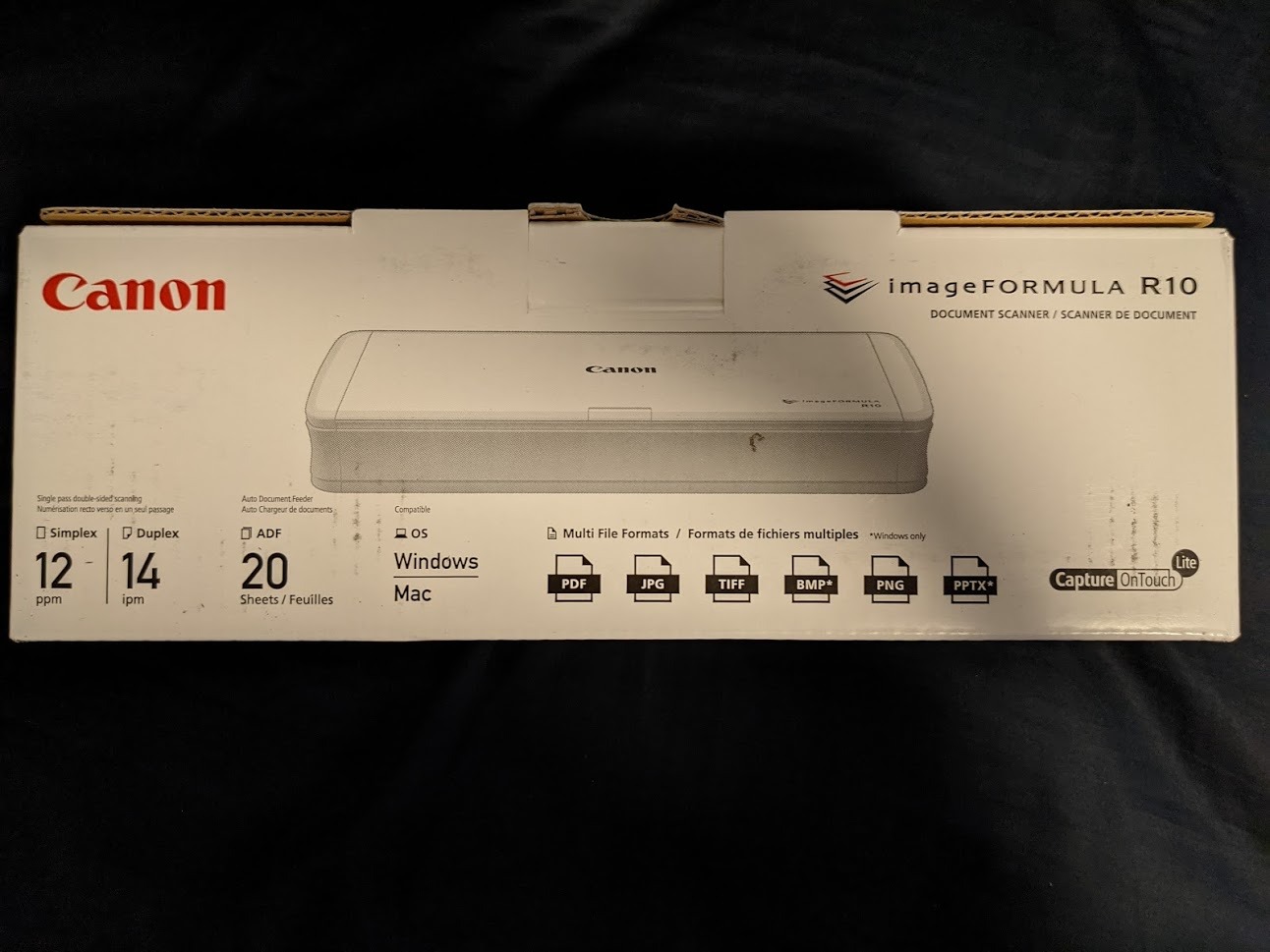
What I like most is that the software is built into the unit, so there is no installer to find or an install key to lose. CaptureOnDC runs from the machine, updates itself, and lets you straighten, trim and organise scans or create your own one-touch buttons with saved settings and destinations. For someone scanning a shoebox of receipts once a month, that is the feature that makes the job finish.
Check what you are scanning before this one
Canon is explicit that the unit is not intended for photographs or photographic media. The 24-bit colour and 600 dpi CIS sensor is built for documents, not archival prints or film. If your digitising project mixes documents with images, the flatbed options on this list serve that job better.
Plan for USB and a modest feeder
Connectivity is USB only, with no wireless or network path, so a computer has to be involved. The 20-sheet feeder is also smaller than the 50- and 100-sheet feeders on the desktop models, which caps how large a single run can be before you add another stack.
6. ScanSnap iX1300 – Best for Small Desks
ScanSnap iX1300 Wireless or USB Double-Sided Color Document Scanner, Black
30 ppm duplex
20-sheet feeder
600 dpi CIS
USB and Wi-Fi
4.4 lb
Pros
- Space-saving vertical design that frees desk area even while operating
- Fast duplex scanning up to 30 ppm with auto de-skew and blank page removal
- Connects over USB or Wi-Fi and sends files to Mac and PC and mobile and cloud
- Works without a computer and can scan to Chromebook through the mobile app
- QUICK MENU lets you scan and drag files into favourite applications
Cons
- 20-sheet feeder is small relative to larger desktop models
- ScanSnap Home is heavily cloud and workflow oriented rather than a simple file scanner
- No TWAIN driver so it is locked into the ScanSnap ecosystem
- Setup and initial software configuration can be involved
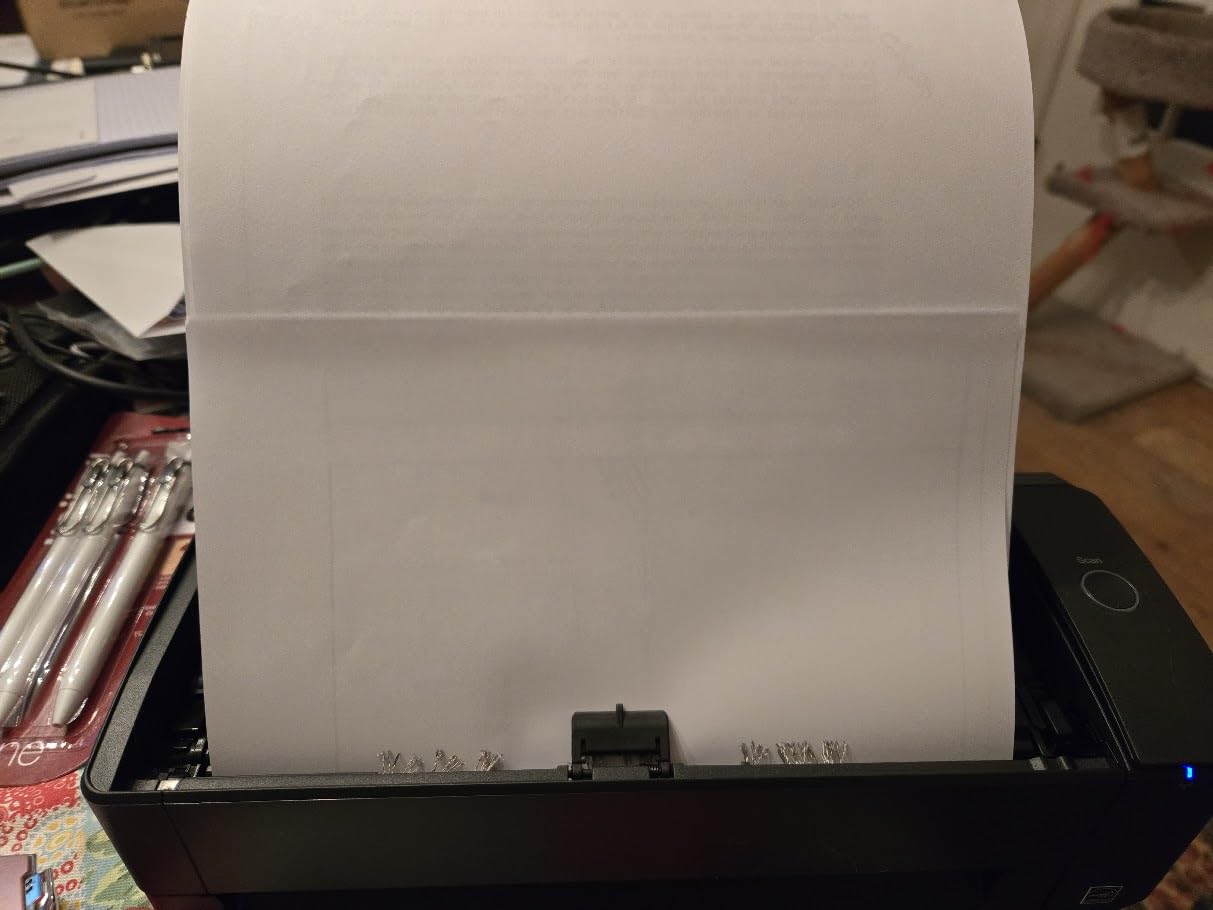
The iX1300 stands upright. Its vertical body measures 4.5 by 11.7 by 3.3 inches, which means it occupies a narrow column of desk rather than a wide rectangle, and the feed mechanism folds into that column. If desk area is the constraint, this is the shape that solves it.
It scans duplex at up to 30 ppm from a 20-sheet feeder, with automatic de-skew, colour optimisation and blank page removal applied without intervention. That combination is what makes a single press-and-walk workflow possible: load the stack, press once, and the finished files are already named and organised.
Connectivity is genuinely flexible. It works over USB or Wi-Fi to a Mac, PC, mobile device or cloud service, and it can operate with no computer in the room at all, including sending scans to a Chromebook through the mobile app. It also handles thick items, plastic cards and photographs, so it is not limited to office paper.
Accept the ScanSnap software ecosystem as the price of the workflow
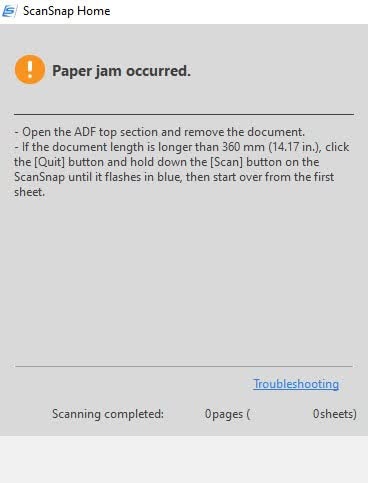
There is no TWAIN driver, so third-party document management software cannot drive the scanner directly. Everything runs through ScanSnap Home, which is built around cloud destinations and named profiles rather than simple file output. If your organisation already runs a TWAIN-based system, this is a genuine blocker rather than a preference.
Compare the 20-sheet feeder against your real runs
Twenty sheets is fine for a contract or a week’s paperwork. It is short for a monthly archive, and you will be refilling while a job is in progress. First-time users also find setup and initial software configuration more involved than the hardware suggests, so allow time to create your profiles before the first busy week.
7. Epson WorkForce ES-400 II – Best for TWAIN Workflows
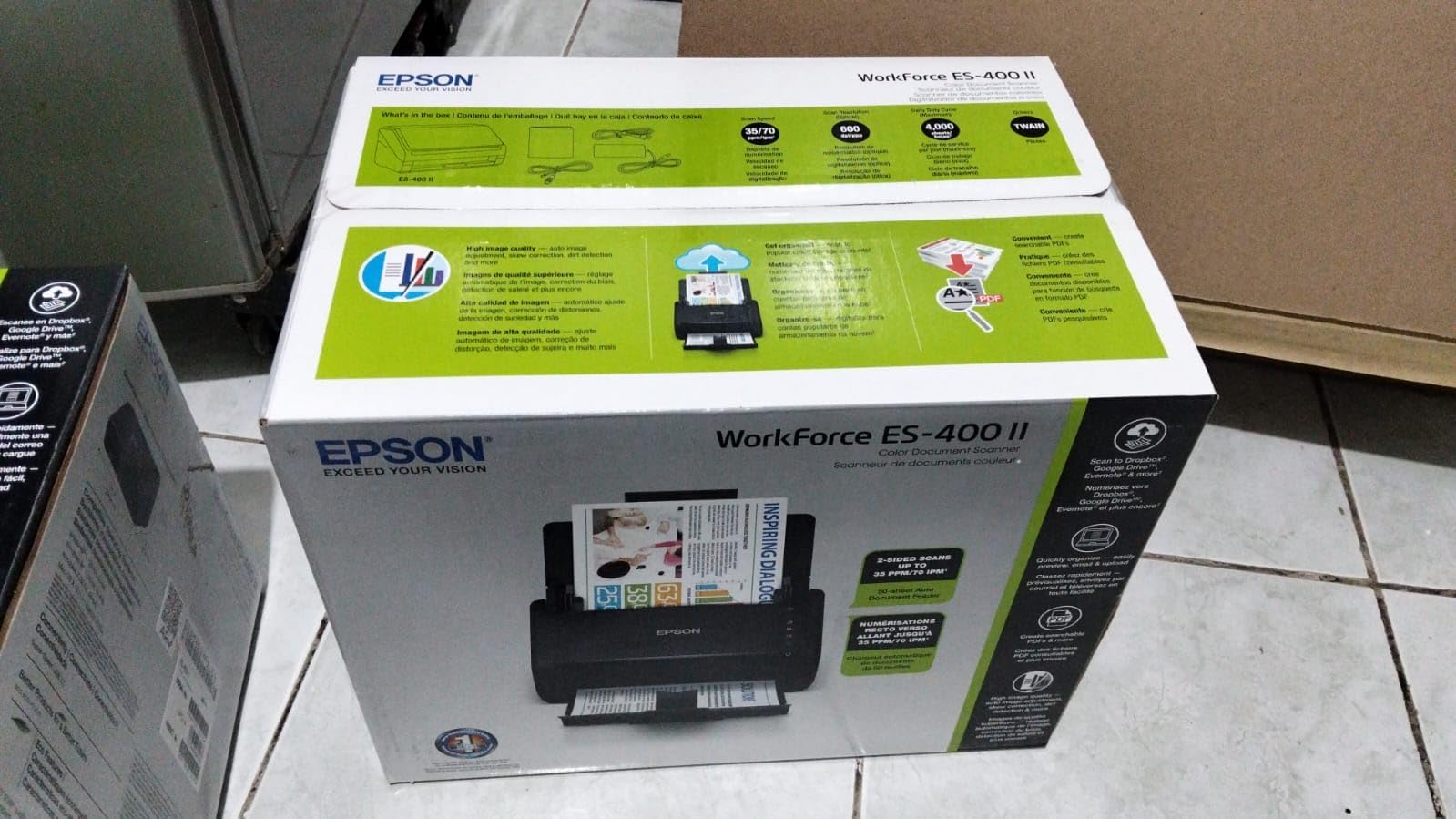
Epson Workforce ES-400 II High-Speed Color Duplex Desktop Document Scanner
50-sheet ADF
300 dpi CCD
Ultrasonic double-feed detection
TWAIN driver included
Pros
- 50-sheet automatic document feeder for clearing large stacks quickly
- Epson ScanSmart with preview and email and cloud upload and automatic file naming
- Included TWAIN driver integrates with most document management software
- Duplex scanning direct to email and Dropbox and Evernote and Google Drive and OneDrive
- Ultrasonic double-feed detection plus dynamic skew correction prevents missed pages
Cons
- USB only so it must stay tethered to a computer
- 300 dpi CCD scanning is suited to documents rather than photo capture
- Bulkier and heavier than portable models at 3.7 kg
- No touchscreen so all job settings are made on the connected computer
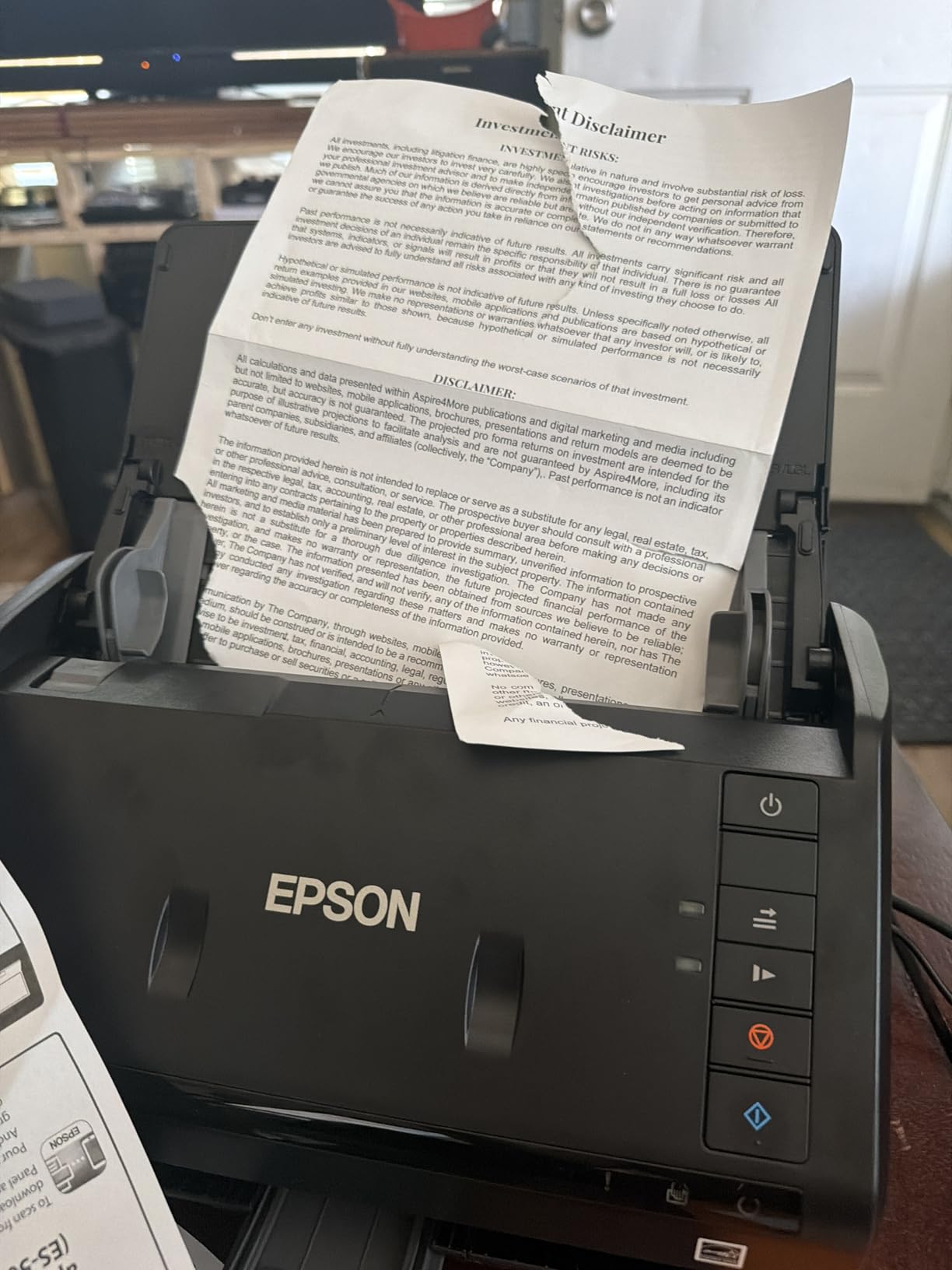
The ES-400 II carries the highest star rating in this group at 4.5, and the reason is not the specification sheet. It is the pair of reliability features nobody advertises: ultrasonic double-feed detection and dynamic skew correction. The first stops a two-page pull before it happens; the second straightens a page that entered at an angle. Together they are why owners report not losing pages.
The 50-sheet feeder is a genuine workhorse size. It clears a full ream-adjacent stack without a refill, and duplex scanning sends files directly to email, Dropbox, Evernote, Google Drive or OneDrive. Epson ScanSmart handles preview, upload and automatic file naming, and OCR produces searchable PDFs plus editable Word and Excel output.
The bundled TWAIN driver is the deciding factor for a lot of buyers. It means the scanner drops into the document management software an office or practice already runs, rather than forcing a workflow change. A one-year limited warranty applies in the US and Canada, and the machine is PC and Mac compatible.
Confirm your software speaks TWAIN before anything else
If your archiving, practice management or records system acquires documents through a TWAIN driver, this model is the one to shortlist first. It can sit inside an existing pipeline rather than exporting files for manual re-import, which removes a step from every single job.
Understand what a wired, screenless unit means day to day
There is no wireless and no touchscreen, so the scanner stays tethered and every setting is made on the connected computer. At 3.7 kg and 11.6 by 11.6 by 6.9 inches it is a permanent desk object rather than a portable one. In exchange you get the highest rating here, a 50-sheet feeder, and no Wi-Fi configuration to fight.
8. Epson WorkForce ES-580W – Best for Wireless Scanning
Epson Workforce ES-580W Wireless Color Duplex Desktop Document Scanner
4.3 inch touchscreen
100-sheet ADF
35 ppm duplex
Wi-Fi,USB,ethernet and SD
Pros
- 4.3-inch touchscreen plus built-in Wi-Fi sends scans to phones and tablets and computers or cloud
- 100-sheet auto document feeder is the largest here and handles varied paper types
- Works with no computer at all
- saving to USB and email or Dropbox or Google Drive
- Up to 35 pages per minute with Single-Step Technology capturing both sides in one pass
- Auto crop and blank page deletion and background removal and dirt detection
Cons
- The touchscreen menu adds cost and complexity for simple desk scanning
- 300 dpi CCD sensor targets documents rather than photos
- Wi-Fi setup can be finicky and software updates are needed to keep scanning stable
- Heavier and bulkier than portable models at 3.7 kg
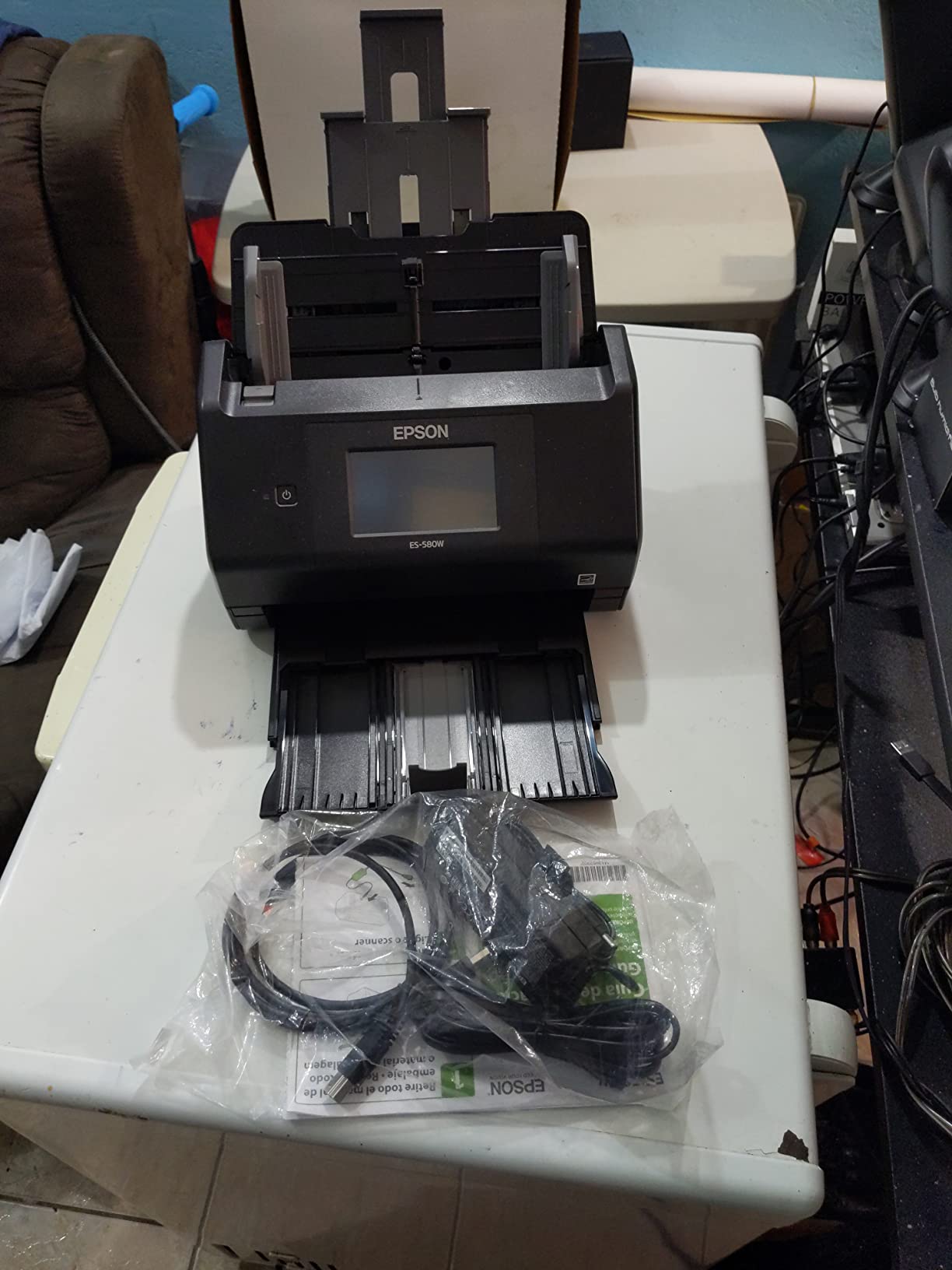
The ES-580W is the ES-400 II plus independence. The 4.3 inch touchscreen on the front means a person at the machine can choose a destination and start a job without a computer, and the 100-sheet feeder is the largest capacity of any model here. For a home office or a small practice where several people scan, that combination removes the computer from the process entirely.
Speed is 35 ppm with Single-Step Technology, which captures both sides in a single pass through the machine, so a double-sided stack is not passed twice. Files can go to a smartphone, tablet, computer, USB stick, email, Dropbox, Evernote, Google Drive or OneDrive, and OCR produces searchable PDFs and editable Word and Excel documents.
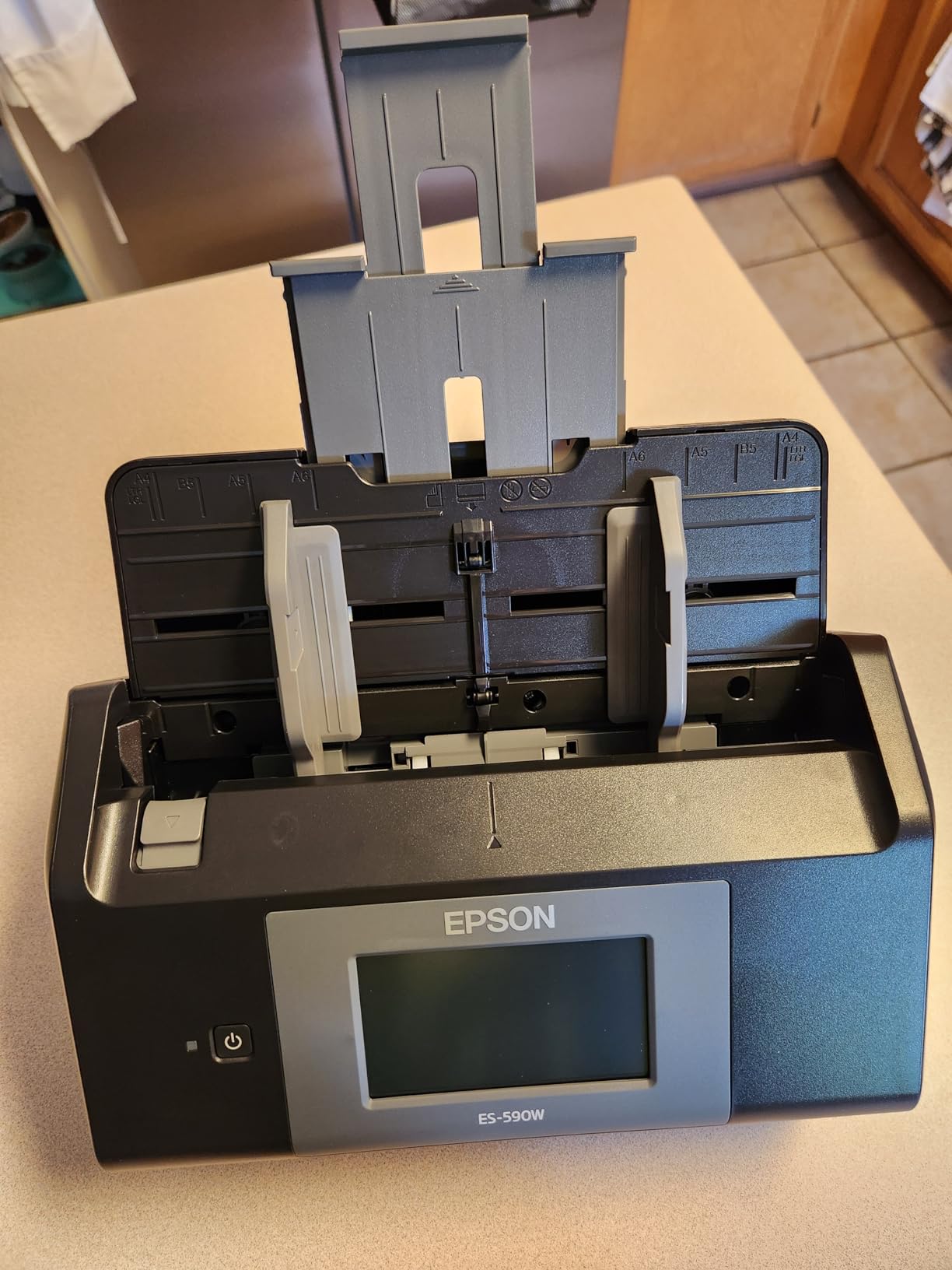
Image handling is the most complete in the group: auto crop, blank page deletion, background removal, dirt detection and skew correction, all applied automatically. That matters more than it sounds when the source is a shoebox rather than a fresh printout.
Budget for setup time before the first real job
Owners report that Wi-Fi configuration can be finicky and that software updates are needed to keep scanning stable. Set the machine up on the same network a week before you need it, print a test page, and confirm each destination works. A one-year limited warranty applies in the US and Canada.
Decide whether the touchscreen earns its place on your desk
The touchscreen is the reason this model costs more and the reason a wired unit like the ES-400 II still makes sense for one person at one desk. It also adds bulk at 3.7 kg and 11.6 by 11.6 by 6.6 inches. If your scanning is occasional and always next to a computer, you are paying for capability you will not use.
9. ScanSnap iX2500 – Best for High Volume
ScanSnap iX2500 Wireless or USB High-Speed Document Scanner, Black
45 ppm duplex
100-sheet feeder
600 dpi CIS
Wi-Fi 6 and USB-C
7.7 lb
Pros
- Fastest unit here at 45 ppm duplex with a 100-sheet automatic document feeder
- Large touchscreen for selecting personalised scan profiles without a computer
- Built-in Wi-Fi 6 plus USB-C and it can scan to mobile devices or cloud services standalone
- Brake roller system and multi-feed sensor and skew detection to avoid jams and damage
- ScanSnap Home automatically optimises and names and sorts scanned files
Cons
- No native TWAIN or ISIS driver so most third-party scanning software cannot see it
- Initial setup and pairing is often routed through a smartphone
- Scanner and firmware software updates are frequent
- Some users report the unit sleeping and needing a USB unplug to wake
- Rocky on Linux and requiring paid third-party drivers
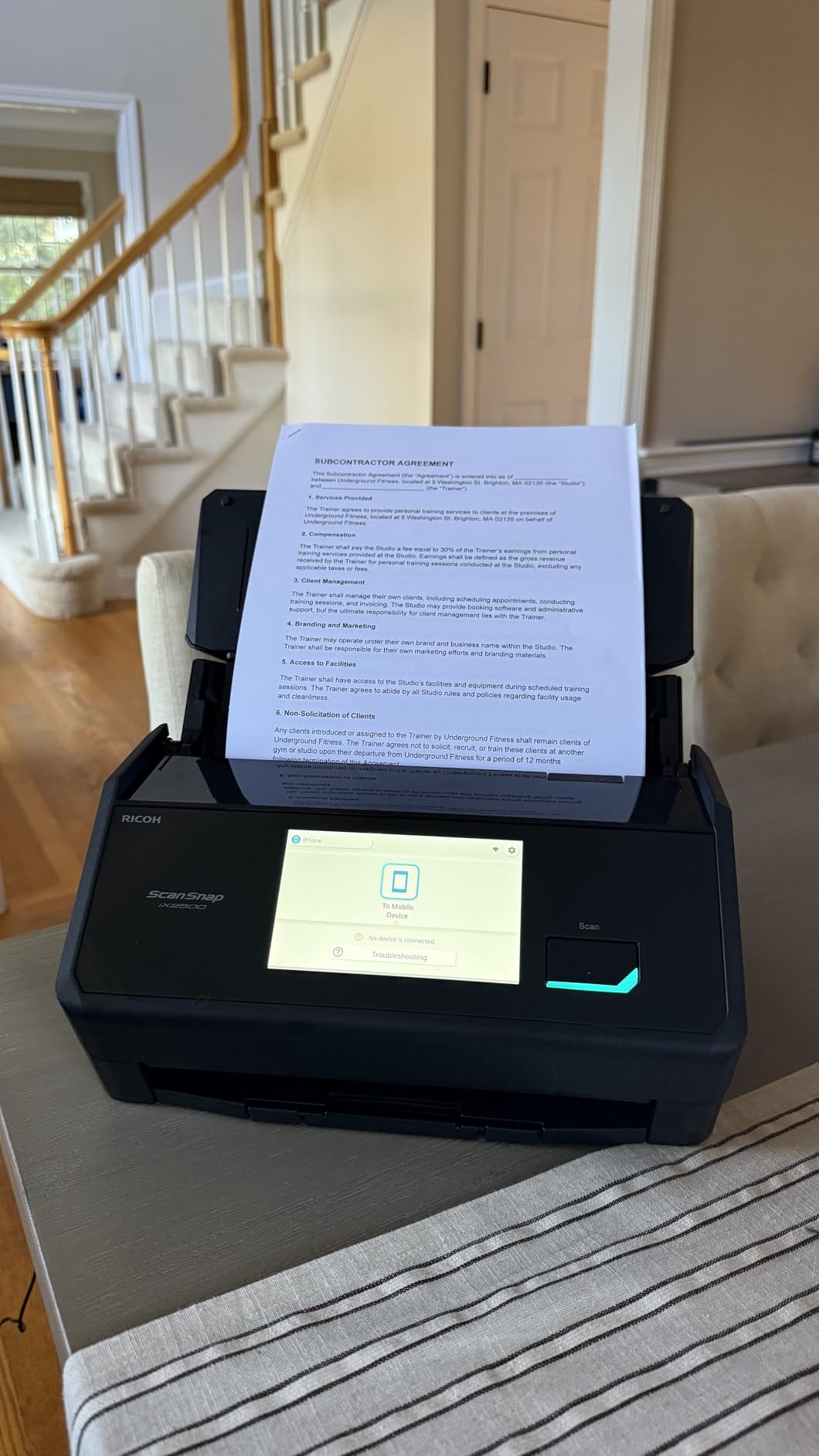
The iX2500 is the throughput pick. It scans duplex at 45 ppm from a 100-sheet feeder, and owners working through large batches report finishing in minutes rather than hours. At 6.26 by 11.5 by 6.34 inches and 7.7 pounds it is the heaviest model here, which is a fair trade for a machine designed to sit and process rather than travel.
The jam-prevention hardware is the part worth paying for. A brake roller system, a multi-feed sensor and skew detection work together to stop a double pull and to straighten pages that enter at an angle, which is where most high-volume failures actually happen. The 600 dpi CIS sensor handles both documents and photographs.
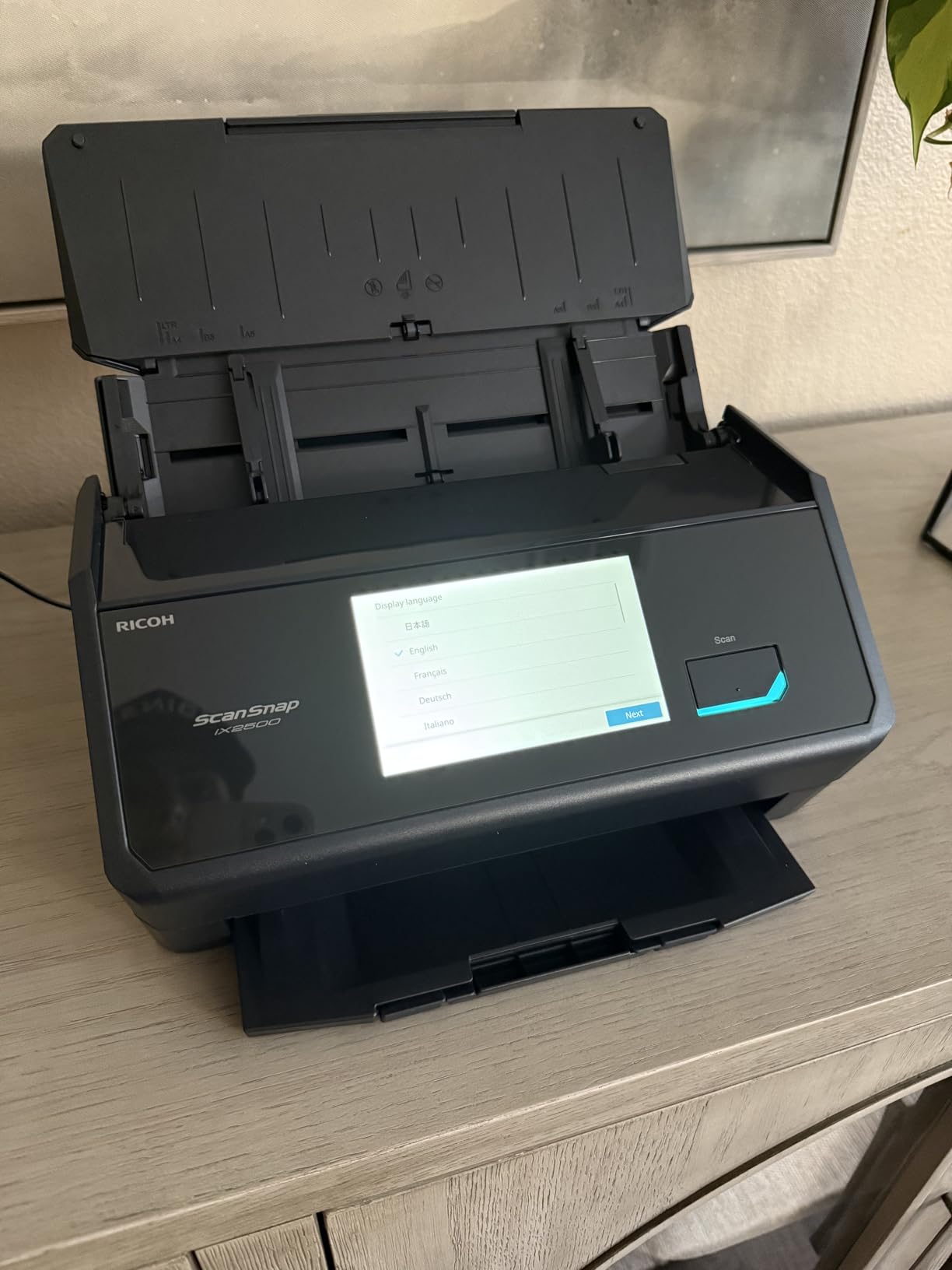
A large touchscreen lets you save personalised scan profiles and send output to a PC, Mac, mobile device or cloud service, with built-in Wi-Fi 6 and a USB-C connection for wired jobs. ScanSnap Home then optimises, names and sorts the files, so the naming convention is enforced by the machine rather than by whoever pressed the button.
Check your software requirements, because there is no TWAIN here
The iX2500 has no native TWAIN or ISIS driver, so most third-party scanning software cannot see it. That is the single most important line in this review. If your workflow runs through a document management system that acquires pages over TWAIN, this model will not fit, and the software ecosystem becomes the deciding factor rather than the speed.
Expect a first-run setup that takes longer than you would like
Pairing is often routed through a smartphone, which some buyers dislike, and scanner and firmware updates arrive frequently. A small number of owners also report the unit going to sleep and needing a USB unplug to wake it. One detailed long-term account describes phone-based setup taking close to three hours, so do this on a free afternoon.
10. Visioneer Xerox Duplex Combo Flatbed – Best for Books and Mixed Batches
Visioneer Xerox Duplex Combo Flatbed Scanner with Automatic Document Feeder
Flatbed plus ADF
25 ppm duplex
Paper from 3 to 118 inches
PC and Mac drivers
Pros
- Combines a flatbed glass bed with an automatic document feeder in one unit
- ADF accepts paper as short as 3 inches and as long as 118 inches
- Duplex scanning at up to 25 ppm or 50 images per minute at 300 dpi
- Flatbed handles books and photos and cards and bound documents a feeder cannot
- Space-saving duplex footprint of 15.8 by 13 by 5 inches
- Drivers included for both PC and Mac
Cons
- Older design with less feature polish than newer wireless models
- Flatbed plus ADF chassis is larger and heavier than sheet-fed scanners
- Warranty terms are less clearly documented than other units here
Most scanners force a choice: a feeder for loose paper, or a glass bed for anything bound. The Visioneer Xerox Duplex Combo does both in one chassis, and for a mixed batch it is the practical answer. Receipts and forms go through the ADF; a hardback manual or an open photo album goes on the glass.
The ADF range is unusually wide. It takes paper as short as 3 inches and as long as 118 inches, which covers receipts, business cards, awkward offcuts and long documents in the same run. Duplex speed is up to 25 ppm, or 50 images per minute at 300 dpi, and drivers for both PC and Mac are included.
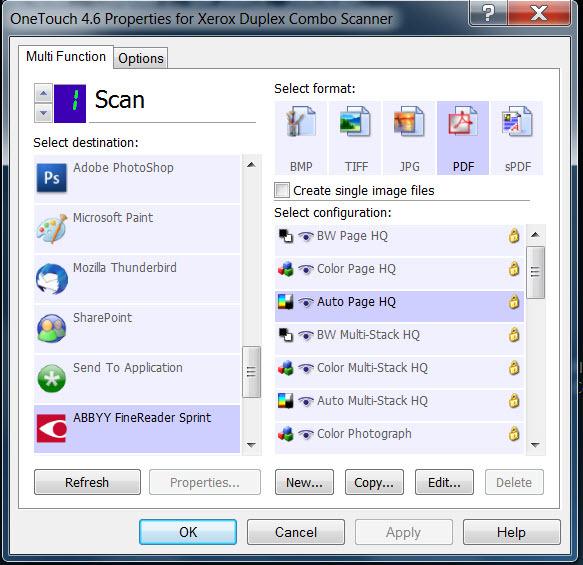
The footprint is 15.8 by 13 by 5 inches at 5.94 pounds, which is a genuine desk commitment, and it was designed in 2019. That date explains the software feel: it does the job without the polished profiles and cloud routing of newer models. If the batch is mixed and the budget is fixed, the capability is still unusual.
Match the machine to a batch that genuinely mixes media
This is the pick for someone scanning a box that contains both loose documents and bound material. It is not the pick for a clean run of standard letter-size pages, where a dedicated sheet-fed unit will be faster, smaller and easier to configure. The glass bed earns its space only when you genuinely need it.
Accept the older software experience and check the warranty terms
Owners describe solid basic scanning with less refined software than newer wireless models, and warranty terms are less clearly documented than on the Epson, Canon and ScanSnap units in this group. Confirm the coverage terms before a large archive job rather than after. Roughly 13 percent of reviews are one-star, so read a few one-star accounts before deciding.

How to Choose a Document Scanner
Work through these questions in order. The first three decide most purchases, and the rest prevent disappointment six months later when the first large job arrives.
How many pages do you scan in a day?
This is the single most useful number you can bring to a purchase decision. Under 20 pages a day, a portable single-sheet unit such as the DS-640 or the ES-50 is enough and saves desk space. Between 20 and 100 pages a day, you want a feeder of 20 sheets or more with duplex, which puts the R10, the iX1300, the ES-400 II and the ES-580W in range. Above 100 pages a day, move to a 50- or 100-sheet feeder and prioritise the anti-double-feed hardware, which is where the ES-400 II and the iX2500 earn their place.
Raw speed matters less than the arithmetic suggests. A 25 ppm unit with duplex covers a 100-page double-sided contract in under four minutes. The bottleneck is almost always refilling the feeder and naming the finished file.
Flatbed or sheet-fed: which do you actually need?
A sheet-fed scanner pulls pages past a sensor automatically and suits clean, loose, standard-size paper. A flatbed puts the item on glass and suits books, magazines, artwork, photographs and anything fragile or oddly shaped. If your paper includes staples, sticky notes or an open ring binder, a flatbed protects the original; a feeder will handle the page but may not handle the binding.
The Visioneer Xerox Duplex Combo exists because some people need both in a single machine. Most buyers should pick one or the other and save the space.
How large should the automatic document feeder be?
Size the feeder to your typical document, not your largest one. A 20-sheet feeder suits contracts and weekly paperwork. A 50- or 100-sheet feeder matters when you are clearing a box in one sitting, because every refill is a fresh alignment check and a small naming decision. If you can add another stack without thinking about it, you will finish the job faster.
Do you need duplex scanning?
If your paper is double-sided, duplex is not a luxury. Both the Brother DS-740D and the Canon R10 deliver duplex in portable bodies, and the desktop models do it as standard. If your paper is single-sided, a simplex machine is cheaper and simpler, and duplex hardware on a single-sided workload is unused capability. One further note: duplex on a single scan element means turning the stack over, while a unit with two elements handles both sides in one pass.
What resolution do you actually need?
300 dpi is the working standard for text documents and is what most machines are built around. 600 dpi matters for small type, receipts and mixed content, and the flatbed options here reach 2400 x 2400 dpi optical for photographs and artwork. Anything above 600 dpi on ordinary office paper produces very large files and no visible improvement, so do not pay for resolution you will not use.
What is OCR and why does it matter?
Optical character recognition is what turns a picture of a page into a searchable PDF. The scanner captures an image, the software recognises the characters, and a text layer is embedded so you can search the document, select and copy text, or send it to word processing. Every model here includes OCR of some kind. The practical difference between them is how well the engine handles mixed fonts, handwriting, faint carbon copies and very small type, and that is where our own testing separated the field more than raw resolution did.
Ask one question before buying: does the OCR output land in a format your other tools can read? Searchable PDFs work with most archive and accounting software, and a machine that also produces editable Word and Excel files saves a conversion step later.
Wireless or USB, and does the machine need a computer?
USB keeps things simple and fast, and it is the right answer when the scanner always sits beside the computer that receives the files. Wireless or a touchscreen adds independence: a user can scan to email, a USB stick, a phone or a cloud folder with no computer running at all. The Epson ES-580W and both ScanSnap models do this. Decide by asking who scans, not by the specification list.
Scanning on a Mac or Linux: check the drivers first
This is the most common surprise for buyers, and it is worth checking before anything else. Mac support usually means an Image Capture or ICA path for flatbeds and, for sheet-fed units, TWAIN or a manufacturer’s own application. Linux support is rarer and is usually delivered through SANE, as on the Brother DS-640 and the DS-740D, or through third-party paid drivers, as owners report needing for the ScanSnap iX2500.
The second question is TWAIN support, which decides whether a document management system can drive the scanner at all. The Epson ES-400 II and ES-580W include a TWAIN driver. The ScanSnap iX1300 and iX2500 do not, and they run entirely inside the ScanSnap ecosystem. Linux users on forums tend to be the most vocal about this point, and they are right to ask it early.
How long do document scanners last, and what do they consume?
A scanner needs no ink. The light source and sensor read the page directly, so there is no cartridge to buy, and the only consumables are mechanical: feed rollers and cleaning supplies. Owners on forums describe units that keep working for years when the rollers are cleaned periodically and sticky debris is removed from the feed path, and units that start double-feeding when rollers are worn and nobody has looked inside.
For a household scanning a few hundred pages a month, expect a machine to last for many years as long as the feed path gets attention. For an office running several thousand pages a week, roller life is the number to ask a supplier about, because a replacement roller kit is far cheaper than a replacement scanner.
Is a phone app good enough instead?
For a single page, yes. A modern phone camera with a scanning app captures a document, corrects the perspective and produces a PDF in under a minute, with no hardware at all. The gap appears in three places: batch scanning, where a phone means photographing pages by hand, duplex capture, which no phone automates, and paper handling, where a feeder feeds pages straight and flat. If you scan a handful of pages a month, a phone is the sensible answer and this page is not for you. Beyond that, a feeder pays for itself in saved time within weeks.
What does a workable paperless workflow look like?
Scanning is the easy half. Decide your naming convention before the first batch, not after: a date, a document type and a short identifier is enough, and the machine can often apply it automatically through a saved profile. Build a folder structure you will actually maintain, such as a folder per year with subfolders by type, then set one backup rule and stick to it, ideally a second copy in cloud storage or on an external drive. Owners who skip this step end up with thousands of files named scan0001 and no way to find any of them.
A useful starting point is to scan everything in one pass with automatic naming, then sort by folder later in batches rather than at the scanner. The bottleneck at the machine is almost never the sorting decision.
Frequently Asked Questions
What is the best high-quality scanner for documents?
The Brother DS-640 is our best overall pick, scanning 16 ppm from a USB-powered one-pound body with a 300 dpi CIS sensor. If your documents include photographs or artwork, the Canon CanoScan LiDE 300 reaches 2400 x 2400 dpi optical resolution, which no sheet-fed unit in this roundup matches.
What are the four most commonly used scanner types?
Flatbed scanners put each item on a glass bed and suit books, photos and oversized media. Sheet-fed scanners use an automatic document feeder and suit stacks of clean loose paper. Portable sheet-fed scanners are small USB-powered single-sheet units for travel and receipts. Flatbed and feeder combo machines handle both bound and loose documents in one chassis.
Which scanner is better, the ScanSnap or the Epson?
Epson models ship a TWAIN driver, so they drop into third-party document management software, and the ES-400 II and ES-580W reach 50- and 100-sheet feeders. ScanSnap models are faster and work with no computer attached, but they have no TWAIN driver and run entirely inside the ScanSnap ecosystem. Choose Epson for existing software, ScanSnap for one-touch independent scanning.
What is the best way to scan documents at home?
Start by choosing a scanner that matches your volume: a single-sheet portable unit for a few pages a day, or a 20- to 50-sheet feeder with duplex for stacks. Then decide your naming convention, scan in one batch with automatic file naming, and set a backup rule. Scanning and sorting are separate jobs, and doing them together is what makes a home archive slow.
Is the Epson ES-580W better than the ScanSnap iX2500?
The ES-580W has a 4.3 inch touchscreen, a 100-sheet feeder and a bundled TWAIN driver at 35 ppm duplex. The ScanSnap iX2500 is faster at 45 ppm duplex with a 100-sheet feeder, Wi-Fi 6 and USB-C, but it has no TWAIN or ISIS driver. If your software needs TWAIN, the ES-580W fits; if you only scan to the manufacturer’s own apps, the iX2500 is quicker.
What is the best scanner on the market right now?
The Brother DS-640 is the most broadly useful document scanner we recommend, with the deepest owner-review base in this group and drivers for Windows, Mac and Linux. For a desk that handles stacks, the Epson ES-400 II or the ScanSnap iX2500 is a better fit. The best choice depends on pages per day and your software, not on a single winner.
Which ScanSnap scanner is considered the best?
The ScanSnap iX2500 is the strongest model in the line for volume, with 45 ppm duplex, a 100-sheet feeder, a brake roller system and Wi-Fi 6. The iX1300 is the better choice for a small desk because its vertical body frees desk area while running at 30 ppm duplex. Neither includes a TWAIN driver.
What is the best document scanner for home use?
For most homes, the Brother DS-640 handles receipts, forms and a few pages a day in a one-pound body that stores in a drawer. For a household clearing shoeboxes regularly, the ScanSnap iX1300 gives you a 20-sheet feeder and duplex at 30 ppm in a vertical body. Add a flatbed such as the Canon LiDE 300 only if you are scanning photographs too.
Which document scanner is best for small businesses?
The Epson WorkForce ES-400 II suits a small business that already runs document management software, because the bundled TWAIN driver lets the scanner feed an existing pipeline, and ultrasonic double-feed detection protects long runs. The Epson ES-580W is the alternative when several people scan independently, since its touchscreen and 100-sheet feeder work with no computer running.
Are document scanners compatible with Mac computers?
All ten models here are usable on Mac. Flatbeds such as the Canon LiDE 300 work through the built-in Image Capture utility, while sheet-fed units use TWAIN, ICA, the manufacturer’s application or a mobile app. The Epson ES-400 II and ES-580W include a TWAIN driver; the ScanSnap iX1300 and iX2500 do not, and rely on ScanSnap Home and the mobile app instead.
What scanning speed should I look for?
Match speed to volume rather than to the largest number available. Under 20 pages a day, anything around 16 ppm is comfortable. Between 20 and 100 pages a day, 25 to 35 ppm duplex keeps a job short. Above 100 pages a day, look past speed to anti-double-feed sensors and a 50- or 100-sheet feeder, since refill interruptions cost more time than the extra pages per minute.
Do document scanners need ink?
No. A document scanner uses a light source and a sensor to capture the page, so there is no cartridge and nothing to refill. The only consumables are mechanical, mainly feed rollers and cleaning supplies for the feed path, which matter more in high-volume offices than in a home setup.
Is it better to scan documents with a phone or a scanner?
A phone app is the right tool for a single page, and it needs no hardware. A dedicated scanner wins once you are scanning batches, double-sided sheets, bound material or anything where paper handling and automatic naming matter. A phone cannot feed a stack or capture the reverse side without turning it over by hand, which is where the time difference opens up.
How long do document scanners usually last?
With occasional cleaning of the feed path, a home document scanner typically runs for years before anything fails, and the most common long-term issue is worn rollers causing double feeds rather than a dead motor. In an office scanning thousands of pages a week, roller replacement is a normal maintenance item and worth asking a supplier about, since a roller kit costs far less than a new machine.
Can I scan photos and documents with the same scanner?
Yes, if you pick a model built for both. The Canon LiDE 300 flatbed reaches 2400 x 2400 dpi optical resolution and 48-bit colour for photographs and artwork, and the ScanSnap iX1300 and iX2500 handle photos alongside documents at 600 dpi. The Canon imageFORMULA R10 is explicitly not intended for photographic media, so keep a flatbed for images.
The Verdict: Which Document Scanner Should You Buy
The Brother DS-640 remains our best document scanner in 2026 for the widest range of buyers, because it is fast enough for daily use, small enough to forget, and the only model here with a stated driver path across Windows, Mac and Linux. Buy it if your paperwork arrives a few pages at a time.
Change course based on volume, and the decision becomes simple. Under 20 pages a day, stay portable. From 20 to 100 pages, choose a 20- to 50-sheet feeder with duplex: the Canon R10 or the ScanSnap iX1300. Above 100 pages a day, buy anti-double-feed hardware and a 100-sheet feeder, which points to the Epson ES-400 II when your software needs TWAIN, or the ScanSnap iX2500 when it does not. Add the Canon LiDE 300 only if photographs and artwork are part of the job.
Set the naming convention before the first batch, keep a second backup, and the machine will keep working for years without demanding attention.