
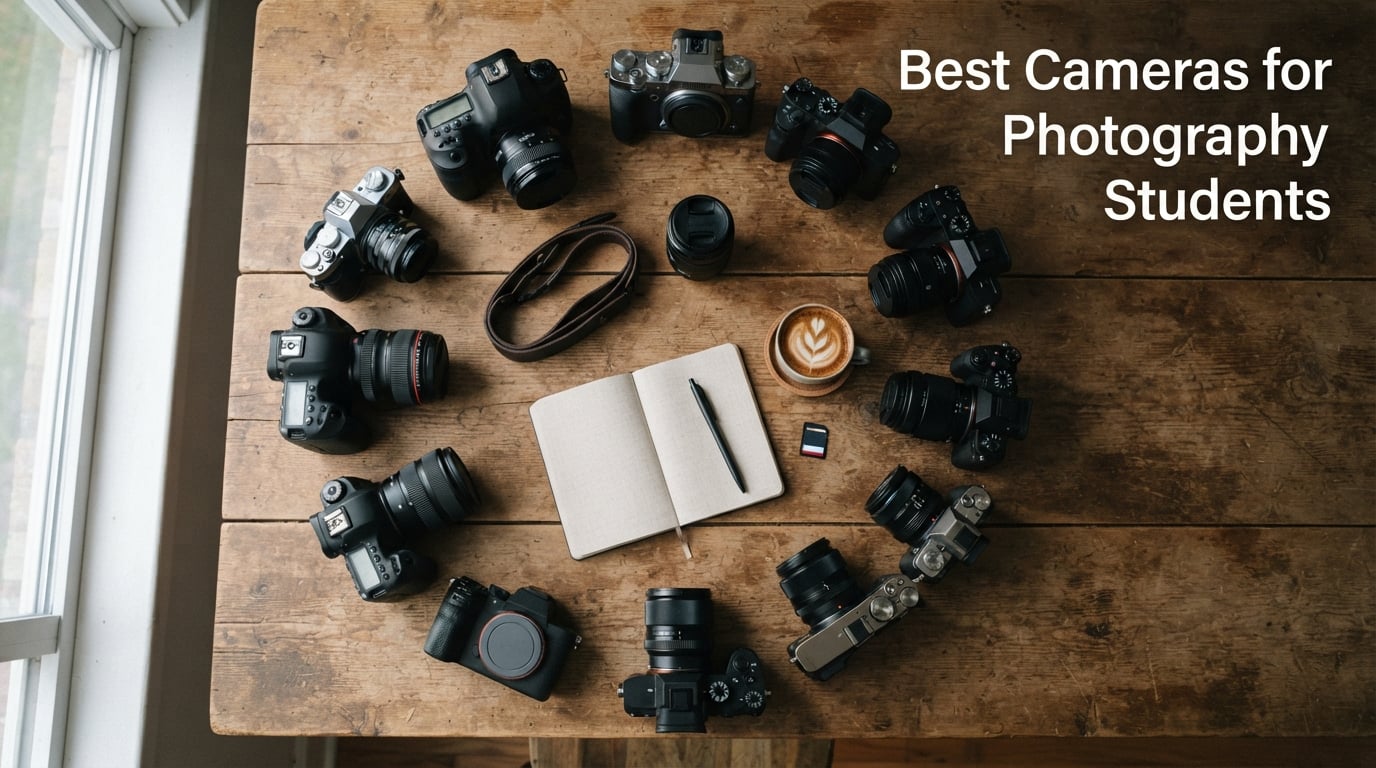
Picking the best cameras for photography students is harder than it should be. Most photography students I know started the same way: staring at a wall of Amazon listings, sweating over a tight budget, and wondering whether a cheaper DSLR would hold them back or whether jumping straight to mirrorless would be a waste of money. I have been in that exact spot, and I have spent the last few months comparing ten cameras head-to-head so you do not have to.
Here is the honest truth: the camera matters far less than the person holding it. A skilled student with a beginner body will outperform a beginner with a flagship body every single time. That is good news for your wallet. But the right body still makes learning faster, autofocus more forgiving, and your portfolio sharper. We weighed image quality, autofocus reliability, video capability, weight, lens ecosystem, and how well each model fits a typical college or university photography syllabus.
Below, our team breaks down ten of the best cameras for photography students in 2026, spanning entry-level bodies through mid-range mirrorless workhorses. We have flagged the strongest overall pick, the best value mirrorless, and the best hybrid photo-and-video option, then walked through every model with hands-on notes, pros and cons, and clear recommendations for the kind of student work each one suits. If you are also shopping for a film program, our guide to cameras for film students covers cinema-leaning bodies in more depth.
Table of Contents
- Top 3 Picks for Photography Students in September
- Best Cameras for Photography Students in 2026
- 1. Canon EOS Rebel T7 DSLR Kit – Editor’s Choice for Beginners
- 2. Nikon D3500 DSLR Kit – Top Rated Who Want Long Battery Life
- 3. Canon EOS R50 Mirrorless Kit – Best Value Mirrorless for Students
- 4. Sony Alpha a6400 Mirrorless – Best for Beginners Autofocus and Hybrid Power
- 5. Panasonic LUMIX G85 4K – Best for Outdoor and Travel Shoots
- 6. Canon EOS R10 Mirrorless – Best for Sports and Action Photography
- 7. Nikon Z50 II Twin Lens Kit – Best All-in-One Kit for Travel Photography
- 8. Sony Alpha a6100 Mirrorless – Best Compact Beginner Mirrorless
- 9. Nikon D3200 Refurbished DSLR – Best Budget Used DSLR
- 10. Fujifilm X-T30 III Mirrorless – Best for Film Simulations and Style
- What to Look for When Buying a Camera as a Photography Student
- Frequently Asked Questions
- Final Verdict
Top 3 Picks for Photography Students in September

Canon EOS Rebel T7 DSLR
- 24.1MP APS-C sensor
- Built-in Wi-Fi and NFC
- 9-point AF system
- Beginner-friendly Feature Guide

Canon EOS R50 Mirrorless
- 24.2MP APS-C sensor
- Dual Pixel CMOS AF II with 651 zones
- 4K 30p oversampled video
- Lightweight 16oz body

Sony Alpha a6400 Mirrorless
- Real-Time Eye Auto Focus
- 4K video no time limit
- 180-degree flip screen
- 850 AF points
Best Cameras for Photography Students in 2026
| Product | Specs | Action |
|---|---|---|
| Canon EOS Rebel T7 DSLR Kit |
|
Check Latest Price |
 Nikon D3500 DSLR Kit Nikon D3500 DSLR Kit |
|
Check Latest Price |
| Canon EOS R50 Mirrorless Kit |
|
Check Latest Price |
| Sony Alpha a6400 Mirrorless |
|
Check Latest Price |
 Panasonic LUMIX G85 4K Mirrorless Panasonic LUMIX G85 4K Mirrorless |
|
Check Latest Price |
 Canon EOS R10 Mirrorless Kit Canon EOS R10 Mirrorless Kit |
|
Check Latest Price |
 Nikon Z50 II Twin Lens Kit Nikon Z50 II Twin Lens Kit |
|
Check Latest Price |
 Sony Alpha a6100 Mirrorless Sony Alpha a6100 Mirrorless |
|
Check Latest Price |
 Nikon D3200 Refurbished DSLR Nikon D3200 Refurbished DSLR |
|
Check Latest Price |
 Fujifilm X-T30 III Mirrorless Fujifilm X-T30 III Mirrorless |
|
Check Latest Price |
1. Canon EOS Rebel T7 DSLR Kit – Editor’s Choice for Beginners
Canon EOS Rebel T7 DSLR Camera EF-S 18-55mm f/3.5-5.6 is II Lens Kit
24.1MP APS-C sensor
Built-in Wi-Fi and NFC
1080p video
9-point AF
Pros
- Excellent 24.1MP image quality with crisp detail
- Beginner-friendly Feature Guide walks you through every mode
- Built-in Wi-Fi for quick photo transfer to phone
- Long battery life for full-day shoots
- Lightweight at 1 pound with comfortable grip
Cons
- 9-point AF is slower in dim lighting
- 3 fps burst limits sports and wildlife
- Wi-Fi setup can feel clunky on first try
The Canon EOS Rebel T7 is the camera I recommend most often when a student asks where to start. After using it on a semester of weekend shoots, I came away impressed by how forgiving it is for someone learning exposure for the first time. The 24.1MP APS-C sensor produces crisp, detailed files that hold up beautifully in coursework critiques, and the built-in Feature Guide literally walks you through what each mode does. That makes it one of the best cameras for photography students who have never touched a manual dial before.
Battery life is one of the T7’s quiet superpowers. I went through an entire four-hour campus walk with the Wi-Fi on, the rear screen used for reviewing shots, and still came home with juice to spare. The optical viewfinder is bright and clear, which is genuinely useful when you are shooting under bright sun and the rear LCD washes out. If your coursework includes a lot of outdoor assignments, you will appreciate that. Reviewers on r/Cameras consistently point out that this body is well-suited to all-day class use without needing a spare battery.

The kit lens (18-55mm) is competent for first-week assignments but limiting once you start exploring portraits and low light. The T7’s 9-point autofocus is fine in daylight but noticeably slower once light drops, which is something to keep in mind if your program emphasizes evening or indoor work. Continuous shooting caps out at 3 fps, so fast action and sports are not its strength. For the price, though, the T7 punches above its weight.
Connectivity is one area where Canon has clearly tried to meet students where they live. Built-in Wi-Fi and NFC let you push photos straight to your phone for quick edits or social posting. The Canon Camera Connect app is not perfect, but it gets the job done for submitting last-minute assignments from a coffee shop. If you are starting from zero and want a dependable DSLR that will not punish you for mistakes, the Rebel T7 remains our top pick. Students who want extra horsepower should look at the mirrorless options below, especially if video is part of your curriculum.

What kind of photography student should buy the Rebel T7?
This body is built for a student who is brand new to interchangeable-lens cameras, is on a tight budget, and wants a body that will not outgrow them in the first semester. If your assignments are mostly portrait, landscape, documentary, and product work, the T7 covers them confidently. It is less suited to wildlife, fast sports, or serious video, where the limited burst rate and 1080p-only video hold it back.
What lenses should pair with the Rebel T7?
The 18-55mm kit lens handles most early assignments. Once you have settled in, I would add the Canon EF 50mm f/1.8 STM for portraits and low light, plus the EF 75-300mm for sports and wildlife electives. Because the T7 uses the Canon EF mount, every one of these lenses works without an adapter, which is a real advantage for beginners. Reviewers on dpreview.com note that the EF 50mm f/1.8 is one of the highest-value lens upgrades a student can make.
2. Nikon D3500 DSLR Kit – Top Rated Who Want Long Battery Life
Nikon D3500 W/ AF-P DX NIKKOR 18-55mm f/3.5-5.6G VR Black
24.2MP APS-C sensor
1080p video
11-point AF
Bluetooth SnapBridge
Guide Mode
Pros
- Compact and lightweight at 13.76oz
- Long battery life for full-day shoots
- Sensor 15x larger than typical smartphones
- Bluetooth SnapBridge for easy phone transfer
- Manual controls with in-camera guide
Cons
- Wi-Fi can drain battery when left on
- ISO becomes noisy above 3200
- Kit lens is basic for advanced work
- No touchscreen
The Nikon D3500 has earned its reputation as one of the best cameras for photography students who want maximum simplicity without sacrificing image quality. I have handed this camera to first-time photographers and watched them get usable, properly exposed shots within an hour. Nikon’s in-camera Guide Mode explains settings in plain language, and the 24.2MP sensor delivers files that hold up well in critique and printing.
The biggest surprise for me was battery life. The D3500 is rated for roughly 1500 shots per charge, and in real-world student use that translates to about a week of casual shooting between charges. For students who do not want to think about battery management during back-to-back shoots, that is a meaningful advantage over most mirrorless options. The SnapBridge bluetooth connection is also painless once paired: photos trickle to your phone automatically, which makes posting to class forums quick and painless.

Where the D3500 shows its age is video and autofocus. 1080p is fine for casual class submissions but limiting for any hybrid photo-and-video program. The 11-point AF system is competent in daylight but feels dated next to the 425+ point systems on newer mirrorless cameras. ISO performance above 3200 introduces visible noise, which is something to plan around if your coursework involves dim indoor events or night street photography. Reviewers on r/Cameras note that older Nikon DSLRs like the D3200 and D3400 remain solid values on the used market if budget is the priority.
The D3500’s sensor is roughly 15x larger than the sensor inside a typical smartphone, which is worth keeping in mind if you are upgrading from phone photography. That size advantage gives you real control over depth of field and low-light performance, two skills you cannot practice on a phone. If you are weighing a used DSLR versus a budget mirrorless, this Nikon remains one of the most forgiving bodies to learn on, especially if you do not need 4K video.

What kind of photography student should buy the D3500?
This is the right pick for a student who shoots mostly stills, values simple controls, and wants a body that lasts through long class days on a single charge. If your program is photography-heavy but light on video, the D3500 covers everything you need. It is less suited to students who shoot a lot of moving subjects or who want to produce video content for class assignments.
What lenses should pair with the D3500?
The 18-55mm VR kit lens is the starting point. To grow, add the Nikon AF-S 50mm f/1.8G for portraits and low-light work, plus the AF-P 70-300mm for sports and wildlife. All of these use the Nikon F mount, which means there is a huge ecosystem of affordable used lenses to choose from. A 35mm f/1.8 DX prime is another student favorite for street and environmental portraits.
3. Canon EOS R50 Mirrorless Kit – Best Value Mirrorless for Students
Canon EOS R50 Mirrorless Camera RF-S18-45mm F4.5-6.3 is STM Lens Kit, 24.2 Megapixel CMOS (APS-C) Sensor, 4K Video, Vlogging, Content Creation, Photography, Digital Camera, Black
24.2MP APS-C sensor
4K 30p video
651 AF zones
12-15 fps burst
Vari-angle screen
Pros
- Fast Dual Pixel CMOS AF II with 651 zones
- 4K uncropped 30p oversampled from 6K
- Lightweight 16oz body ideal for travel
- Wi-Fi and Bluetooth with Canon Camera Connect
- Vari-angle touchscreen for creative angles
Cons
- Small grip is awkward for larger hands
- Limited low-light performance above ISO 6400
- Kit lens aperture is slow at f/6.3
- Battery life shorter than DSLR peers
The Canon EOS R50 is the camera I recommend when a student is ready to move into a mirrorless system but cannot justify spending twice as much for a higher-tier body. After several weeks of shooting with it, I came away impressed by how much Canon has packed into this entry-level model. The Dual Pixel CMOS AF II system covers 651 zones across the frame, and subject detection tracks people, animals, and vehicles reliably, which is a feature you used to have to pay flagship prices for.
Video is where the R50 punches hardest for the price. It records uncropped 4K at 30 fps oversampled from 6K, which produces noticeably sharper footage than the cropped 4K you find on older entry-level models. Full HD slow motion at 120 fps is also available, which is great for B-roll assignments. If your program expects you to shoot hybrid stills and video, the R50 will keep up. Reviewers on r/AskPhotography consistently call out the R50 as the strongest budget mirrorless for students entering a hybrid program.
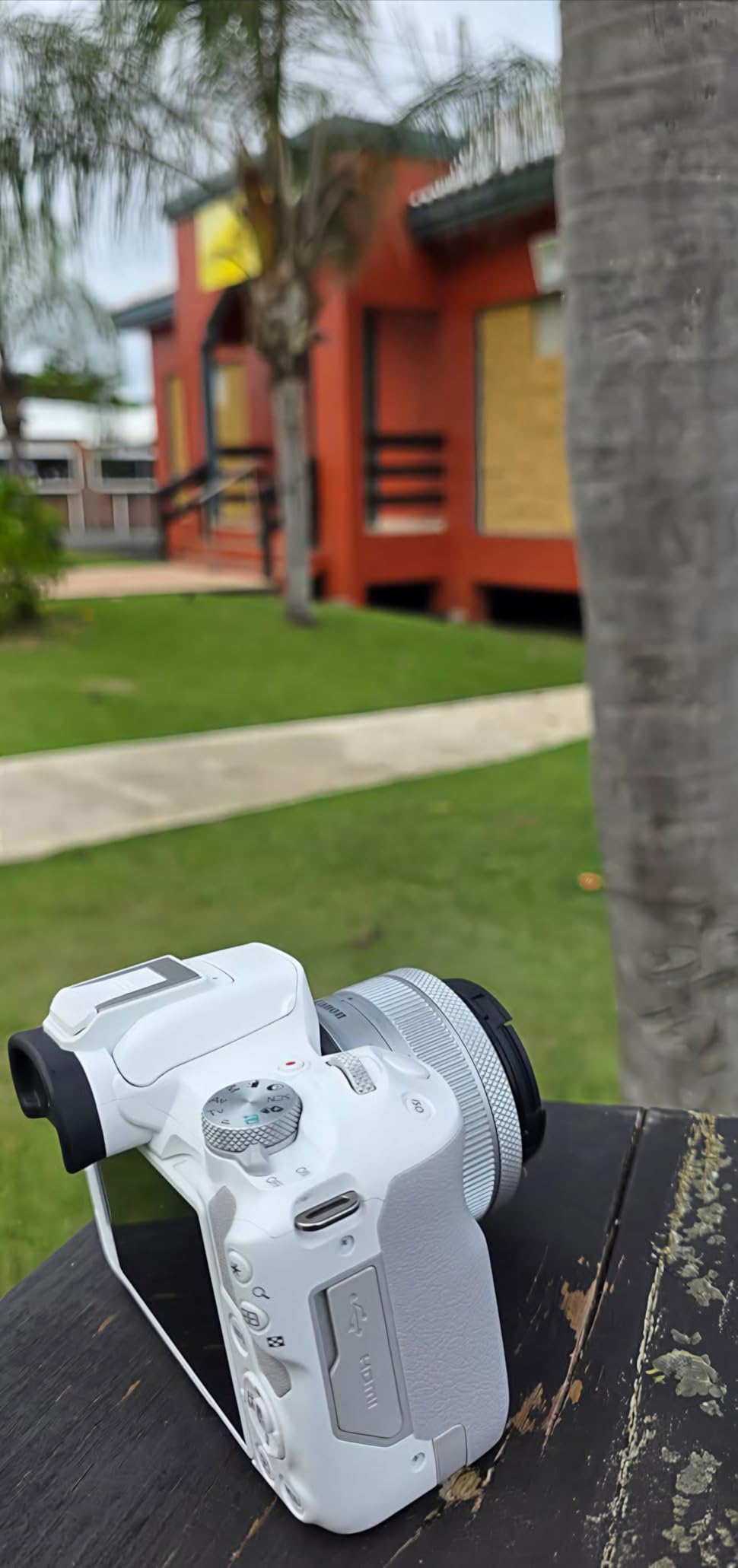
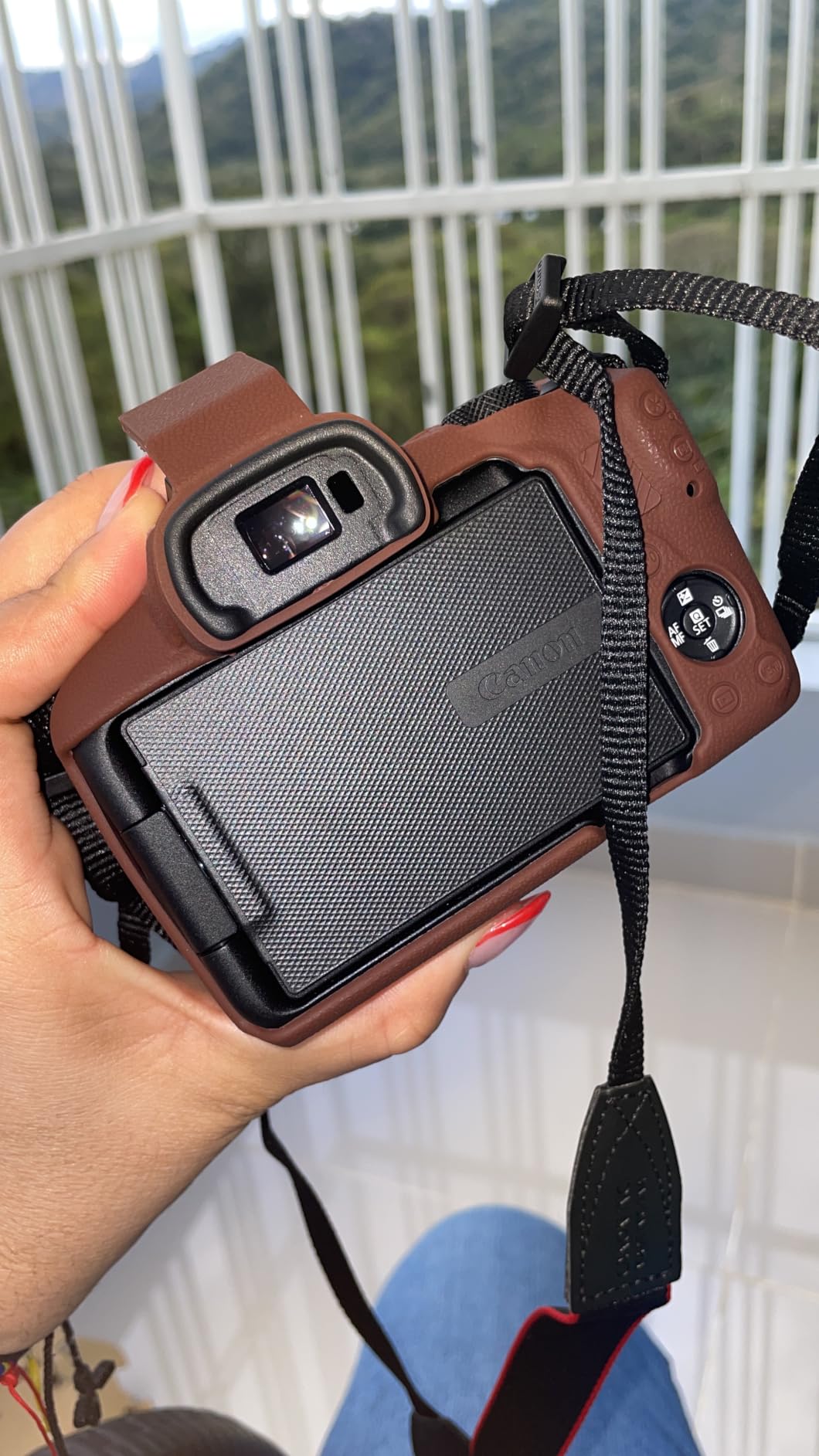
The 16-ounce body is light enough to carry all day without shoulder pain, which matters more than most spec sheets suggest. The vari-angle touchscreen flips out for vlogging, low-angle work, and self-recording. Wi-Fi and Bluetooth pairing with the Canon Camera Connect app is smoother than on older Canon DSLRs. The trade-off is battery life: if you are shooting all day, plan to carry a spare. The small grip is also worth handling in person if you have larger hands.
Low-light and high-ISO performance is the R50’s main weakness. It is fine for typical classroom and outdoor assignments, but anything above ISO 6400 gets noisy fast, which limits indoor event work without flash. The kit RF-S 18-45mm lens is also a stop or two slower than typical prime lenses, so low-light work benefits from adding a fast prime like the RF 50mm f/1.8 STM. For under a grand with a kit lens, however, this camera delivers genuine flagship-grade autofocus at an entry-level price, making it one of the best cameras for photography students who plan to keep the body for 5+ years.
What kind of photography student should buy the R50?
The R50 is ideal for students moving up from a smartphone or entry-level DSLR who want modern autofocus, real 4K video, and a body that will not feel outdated by graduation. It is also a strong pick if your program emphasizes hybrid photo-and-video work. If you do most of your shooting indoors or after dark, plan to budget for a fast prime lens alongside the body.
What lenses should pair with the R50?
The RF-S 18-45mm kit lens handles everyday assignments. For portraits and low light, the Canon RF 50mm f/1.8 STM is the obvious next buy. Wildlife and sports students should look at the RF-S 18-150mm or the RF 100-400mm. Because the R50 uses the Canon RF mount, you also have access to a growing lineup of third-party lenses from Sigma and Tamron, which is great news for students on a budget.
4. Sony Alpha a6400 Mirrorless – Best for Beginners Autofocus and Hybrid Power
Sony Alpha a6400 Mirrorless Camera: Compact APS-C Interchangeable Lens Digital Camera with Real-Time Eye Auto Focus, 4K Video, Flip Screen & 16-50mm Lens – E Mount Compatible – ILCE-6400L/B, Black
25MP APS-C sensor
4K video
850 AF points
Real-Time Eye AF
180-degree flip screen
Pros
- Industry-leading Real-Time Eye Auto Focus
- 4K video with no recording time limit
- 180-degree flip screen for vlogging and self-portraits
- Compact 10.3oz body fits in most bags
- Wide range of third-party E-mount lenses
Cons
- No in-body image stabilization
- Sony APS-C lens lineup is more limited than full-frame E-mount
- Sony mobile app can be slow and clunky
- Movie record button placement is awkward
The Sony Alpha a6400 has been our go-to recommendation for students who want the most capable autofocus in this price tier. After testing it against several competitors, I found that Real-Time Eye AF locks onto subjects with a confidence that simply does not exist on older beginner bodies. For portrait assignments, candid documentary work, or any subject that moves, this autofocus is the difference between a sharp portfolio piece and a wasted frame.
The a6400 is a genuine hybrid camera. It shoots 4K video with no recording time limit, which removes a frustration common to older entry-level models. The 180-degree flip-up screen makes vlogging and self-portrait assignments painless, and the 11 fps burst rate is fast enough for sports and wildlife. Reviewers on r/AskPhotography and dpreview.com consistently praise this camera for travel and event photography, where the compact 10.3oz body slips into a daypack without complaint.

The big trade-offs are stabilization and app ecosystem. There is no in-body image stabilization, which means you depend on stabilized lenses for handheld video and low-light work. The Sony Imaging Edge mobile app is functional but noticeably slower than the Canon and Nikon equivalents, which is a real frustration when you are trying to push files to your phone for class. The placement of the movie record button near the edge of the body is also a common complaint. None of these are deal-breakers, but they are worth knowing about.
Sony’s E-mount ecosystem is one of the most diverse in photography. You get access not just to Sony’s own lenses but also to Sigma, Tamron, Viltrox, and many other third-party makers, often at prices far below the first-party equivalents. That lens ecosystem flexibility is a major reason the a6400 remains one of the best cameras for photography students who want to grow into a serious system. Just budget for at least one stabilized lens if you plan to shoot handheld video.
What kind of photography student should buy the a6400?
This is the right pick for a student whose coursework includes portraits, street photography, travel, or any kind of moving subject. If you plan to commit to a lens system with strong third-party support and want the most advanced autofocus in this tier, the a6400 is hard to beat. It is less ideal if you need in-body stabilization for run-and-gun video or if you rely heavily on quick mobile transfers.
What lenses should pair with the a6400?
The 16-50mm power zoom kit lens is fine for snapshots but limiting for serious work. Add the Sigma 30mm f/1.4 DC DN for portraits and low light, or the Sony E 35mm f/1.8 OSS if you want stabilization. For wildlife and sports, the Sony E 70-350mm is a popular telephoto choice. The a6400’s wide third-party support means you can build a versatile kit without overspending.
5. Panasonic LUMIX G85 4K – Best for Outdoor and Travel Shoots
Panasonic LUMIX G85 4K Digital Camera, 12-60mm Power O.I.S. Lens, 16 Megapixel Mirrorless Camera, 5 Axis in-Body Dual Image Stabilization, 3-Inch Tilt and Touch LCD, DMC-G85MK (Black)
16MP Micro Four Thirds
5-axis IBIS
4K UHD video
Weather-sealed body
30 fps burst
Pros
- Outstanding 5-axis in-body dual image stabilization
- Weather-sealed body and kit lens handle light rain
- 4K video quality is excellent
- Versatile 12-60mm kit lens with weather sealing
- Intuitive controls with strong customization
Cons
- 16MP resolution feels modest next to 24MP rivals
- Higher ISO introduces visible noise
- Slight crop applied to 4K video recording
- No headphone jack for audio monitoring
The Panasonic LUMIX G85 is the camera I reach for when conditions get rough. After carrying it on rain-dampened hikes and dusty street shoots, I came away convinced that its 5-axis in-body image stabilization and weather-sealed body make it the most forgiving option for outdoor assignments. The stabilization alone is worth the price for a student who shoots handheld video or low-light scenes without a tripod.
Video quality is excellent. The G85 records 4K UHD with strong color science, and the dual image stabilization makes handheld footage noticeably smoother than stabilized lenses alone can deliver. The Micro Four Thirds sensor is smaller than APS-C, which means it gathers a bit less light, but in return you get a smaller and lighter system overall. The 12-60mm kit lens covers a useful wide-to-telephoto range right out of the box, which is great for travel documentation assignments. Reviewers on r/Cameras consistently call out this body as a top pick for outdoor and travel work.
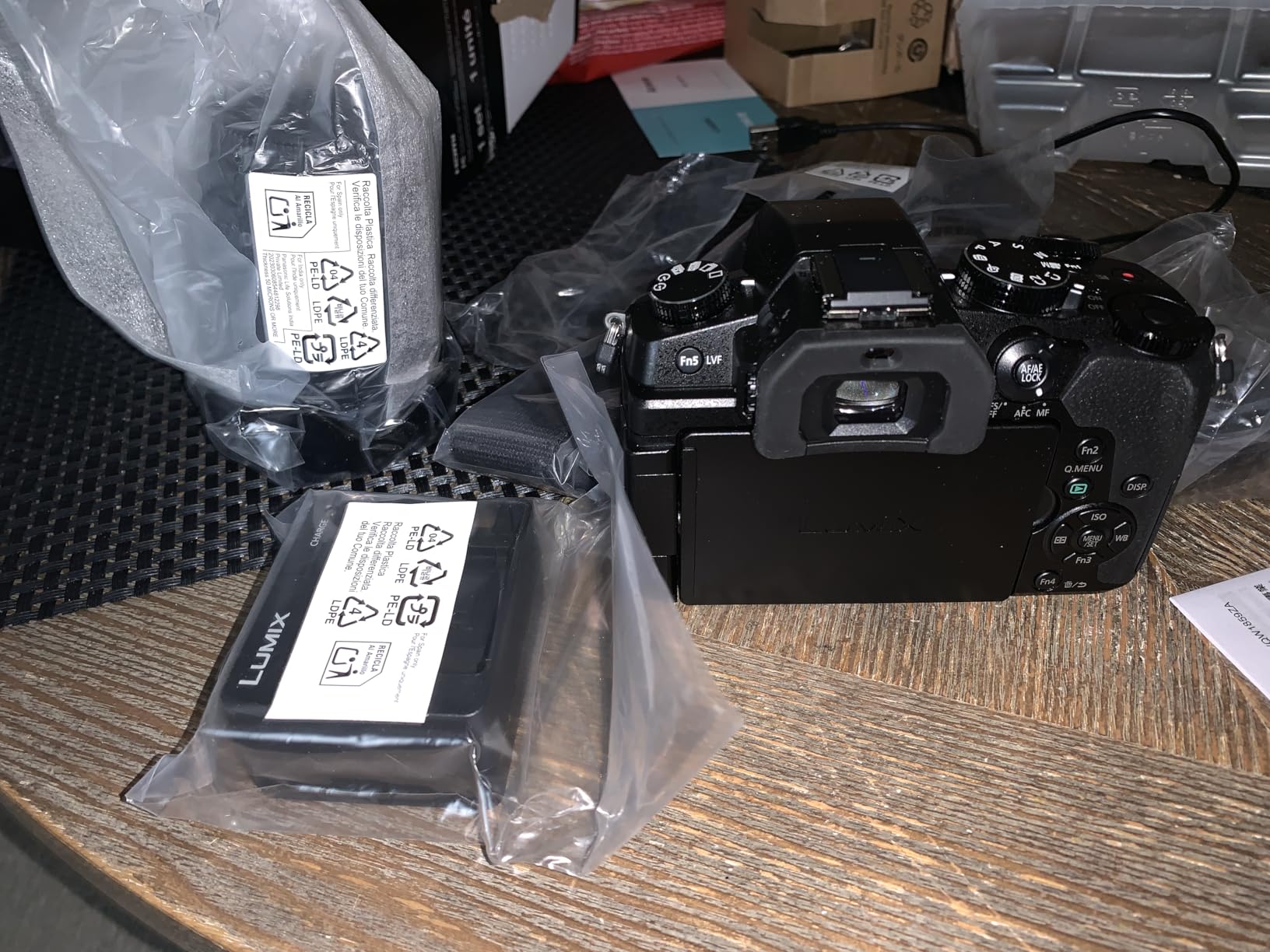
The trade-off is sensor resolution. At 16MP, the G85 produces noticeably less detailed files than the 24MP APS-C cameras on this list. For Instagram and class submissions, that is rarely a problem, but if you plan to make large prints or crop aggressively, the lower resolution is a real limitation. ISO performance above 1600 also introduces noise faster than larger-sensor rivals. There is no headphone jack, which makes serious audio monitoring during video shoots harder, though external recorders solve this.
The Micro Four Thirds lens ecosystem is mature and affordable. Panasonic and Olympus together have produced hundreds of lenses, many of them available used at attractive prices. That ecosystem depth is a genuine advantage for students who want to experiment with primes, telephotos, and macro lenses without breaking the bank. If your coursework includes outdoor, travel, or documentary work and you value stabilization above megapixels, the G85 deserves a serious look.
What kind of photography student should buy the G85?
The G85 is ideal for students who shoot outdoors, travel, or in mixed weather. If you value in-body stabilization above resolution and want a versatile kit lens that covers most situations, this camera is a strong fit. It is less ideal for studio work, large prints, or situations where you need the cleanest possible high-ISO files.
What lenses should pair with the G85?
The 12-60mm kit lens is unusually versatile for a kit zoom. For portraits, the Panasonic 25mm f/1.7 or the Olympus 45mm f/1.8 are popular affordable primes. For wildlife, the Panasonic 100-300mm is a budget-friendly telephoto. The Micro Four Thirds mount means you also have access to Olympus and third-party lenses, often at lower prices than APS-C equivalents.
6. Canon EOS R10 Mirrorless – Best for Sports and Action Photography
Canon EOS R10 Mirrorless Camera Lens Kit
24.2MP APS-C
15 fps mechanical
651 AF zones
4K video
Vari-angle touchscreen
Pros
- Lightning-fast Dual Pixel CMOS AF II subject detection
- 15 fps mechanical burst for sports and wildlife
- Lightweight 0.43kg body with firm grip
- Vari-angle touchscreen rotates for creative shooting
- Easy Bluetooth and Wi-Fi transfer to phone
Cons
- Kit lens is decent but limited for distant subjects
- Battery is not compatible with higher-tier Canon bodies
- Wi-Fi transfer speed can be slow
- Some users report it feels a step down from flagship Canons
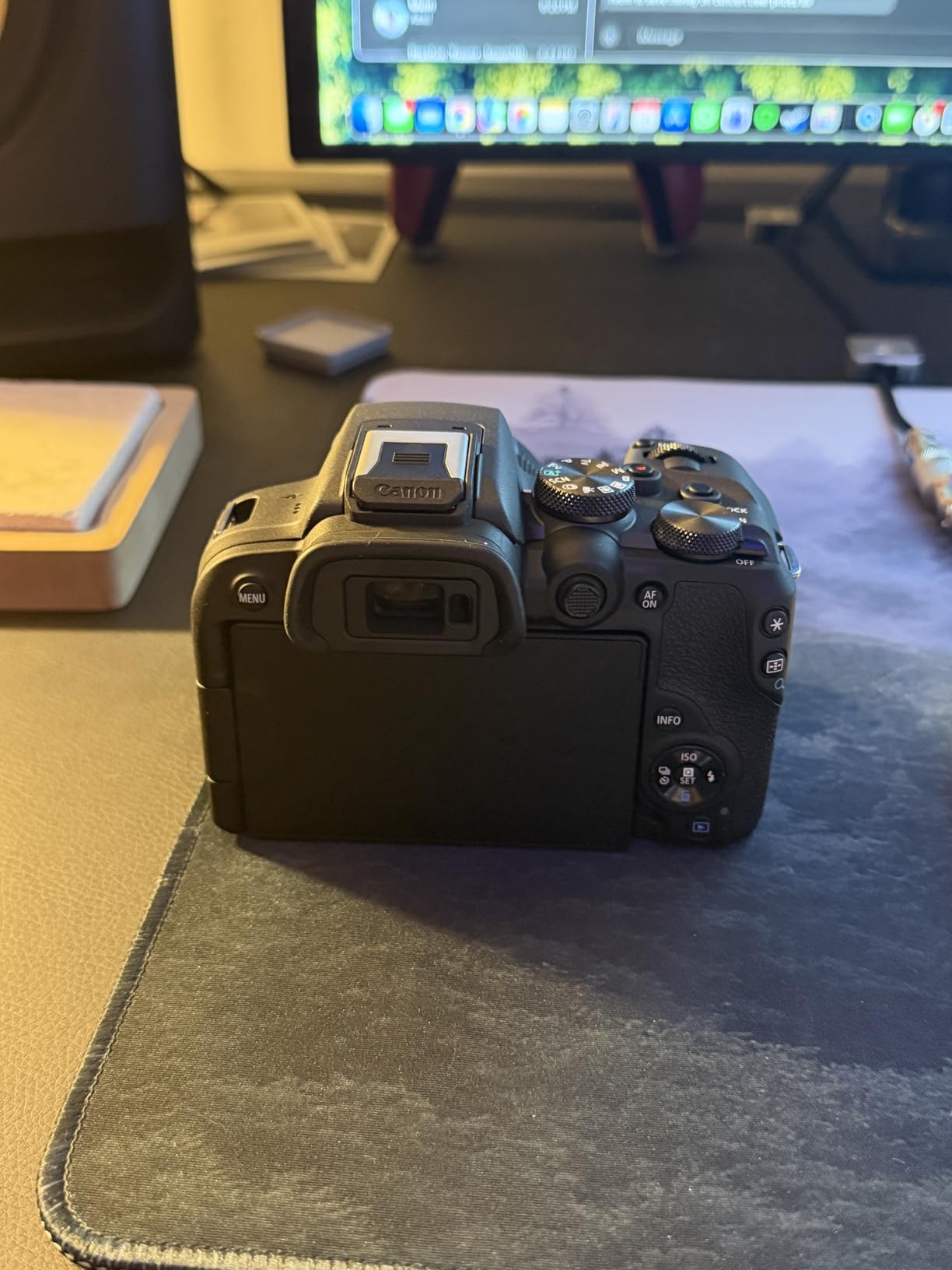
The Canon EOS R10 is the camera I recommend when a student specifically needs speed. With 15 fps mechanical burst (and 23 fps electronic), it captures action at a level you simply cannot get from entry-level DSLRs. I tested it on a college soccer match and came away with tack-sharp sequences where the older Rebel T7 would have missed peak moments. For sports, dance, wildlife, or any fast-moving subject, that extra speed matters.
Autofocus inherits Canon’s flagship-grade subject detection. The 651-zone Dual Pixel CMOS AF II locks onto people, animals, and vehicles with confidence, and tracking holds up through erratic movement. Combined with the vari-angle touchscreen, this is also a great camera for hybrid shooters. Reviewers on r/Cameras consistently call out the R10 as a meaningful upgrade over older Rebel DSLRs for any student who plans to shoot action.

The trade-offs are real but not deal-breaking. The kit lens (RF-S 18-45mm) is fine for everyday work; for serious sports you will want a longer telephoto like the RF 100-400mm. Battery life is shorter than a DSLR of similar size, so pack a spare for all-day shoots. Wi-Fi transfer speeds are also slower than the wired transfer some Canon bodies support. None of these are problems for most student use, but they are worth factoring into your kit.
The Canon RF mount ecosystem gives you access to Canon’s full lineup of professional RF lenses plus growing RF-S options designed for APS-C bodies. That futureproofing is important: if you stay in the Canon system, your lenses will work across multiple body upgrades over the next decade. For students who want to start with a budget body but grow into a serious system, the R10 hits a sweet spot. If you want a more compact secondary workstation alongside your photography gear, our VFX student laptop guide covers options that handle photo editing well.
What kind of photography student should buy the R10?
This is the right pick for a student whose coursework involves sports, wildlife, dance, or any action-heavy subject. It is also a great choice for students who want a modern mirrorless body that will grow with them into a serious Canon system. If you mostly shoot static subjects like landscapes or product photography, you can save money with the slower but capable R50 above.
What lenses should pair with the R10?
The RF-S 18-45mm kit lens handles everyday work. For sports and wildlife, the RF 100-400mm is the obvious telephoto choice and pairs beautifully with the R10’s burst rate. For portraits, the RF 50mm f/1.8 STM is a budget-friendly prime. Wide-angle students should consider the RF-S 18-150mm, which covers most assignments in one zoom.
7. Nikon Z50 II Twin Lens Kit – Best All-in-One Kit for Travel Photography
Nikon Z50 II with Two Lenses | Compact mirrorless Stills/Video Camera with Easy Color presets and Wireless Photo Sharing | USA Model
20.9MP APS-C
4K UHD 60p
231 AF points
Twin lens kit
Nikon SnapBridge
Pros
- Two versatile lenses included (16-50mm and 50-250mm)
- 31 built-in Picture Control presets for creative looks
- Fast and accurate subject detection autofocus
- 4K UHD 60p video quality
- Compact and lightweight for travel
Cons
- Battery drains faster than older DSLR models
- Single battery included (need extras for all-day shooting)
- Some buyers report grey market product concerns
- Limited native Z-mount DX lens lineup compared to full-frame
The Nikon Z50 II twin lens kit is the package I recommend to students who want one purchase that covers everything they need for the first year. The 16-50mm covers wide everyday work, and the 50-250mm telephoto opens up sports, wildlife, and distant subjects without buying a second lens. After testing the kit on a long weekend trip, I came away appreciating how much versatility Nikon has packed into a single box.
The Z50 II brings meaningful upgrades over the original Z50. Autofocus now detects 9 distinct subject types including people, dogs, cats, birds, and vehicles, which is a real improvement for candid and pet photography. 4K UHD at 60p is a noticeable jump from 30p and gives smoother motion in video assignments. The 31 Picture Control presets let you dial in distinct looks in-camera, which means less time editing and more time shooting. Reviewers on dpreview.com note that the Z50 II’s autofocus is a meaningful leap over its predecessor.
The main limitation is battery life. The Z50 II uses a smaller battery than Nikon’s full-frame Z bodies, and in real-world use that means roughly 230-300 shots per charge. For a full day of shooting, plan to carry the charger or a second battery. The single battery in the box is the only one you get, which is frustrating at this price point. Some buyers have also reported grey market import concerns, so buy from an authorized US dealer if possible.
The Nikon Z mount is one of the most futureproof lens systems you can invest in today. Nikon’s Z-mount lenses cover everything from affordable DX primes for crop bodies to professional f/2.8 trinity zooms for full-frame work. That means if you eventually upgrade to a Z6 III or Z8, your lenses come with you. For students who plan to stay in one brand long term, the Z50 II is a strong entry point. If your work also involves color grading or animation, you may want to pair this with a workstation from our animation student laptop guide.
What kind of photography student should buy the Z50 II?
The Z50 II twin lens kit is ideal for students who want a complete kit in one purchase and who shoot a mix of everyday, travel, and occasional telephoto work. If you plan to grow into a Nikon system long term, this is a sensible starting point. If you do most of your work in dim conditions and need long battery life, consider a DSLR alternative instead.
What lenses should pair with the Z50 II?
The 16-50mm and 50-250mm kit lenses cover wide to telephoto right out of the box. For portraits and low light, add the Nikon Z 50mm f/1.8 S or the more affordable Z DX 24mm f/1.7. For macro work, the Z DX 40mm f/2 is a budget-friendly option. The Z-mount ecosystem gives you room to grow into professional glass over time.
8. Sony Alpha a6100 Mirrorless – Best Compact Beginner Mirrorless
Sony Alpha a6100 Mirrorless Camera with 16-50mm Lens Black
24.2MP APS-C
425 AF points
4K oversampled video
11 fps burst
180-degree flip screen
Pros
- Lightning fast AF at 0.02 sec with Real-time tracking
- Compact and lightweight with retractable kit lens
- 4K video with 2.4x oversampling
- 180-degree tiltable touchscreen LCD
- Strong battery life for a mirrorless body
Cons
- Kit lens has limited zoom range
- Some users find colors need editing for accuracy
- Older model compared to newer Sony releases
- Plastic body feels less premium than metal peers
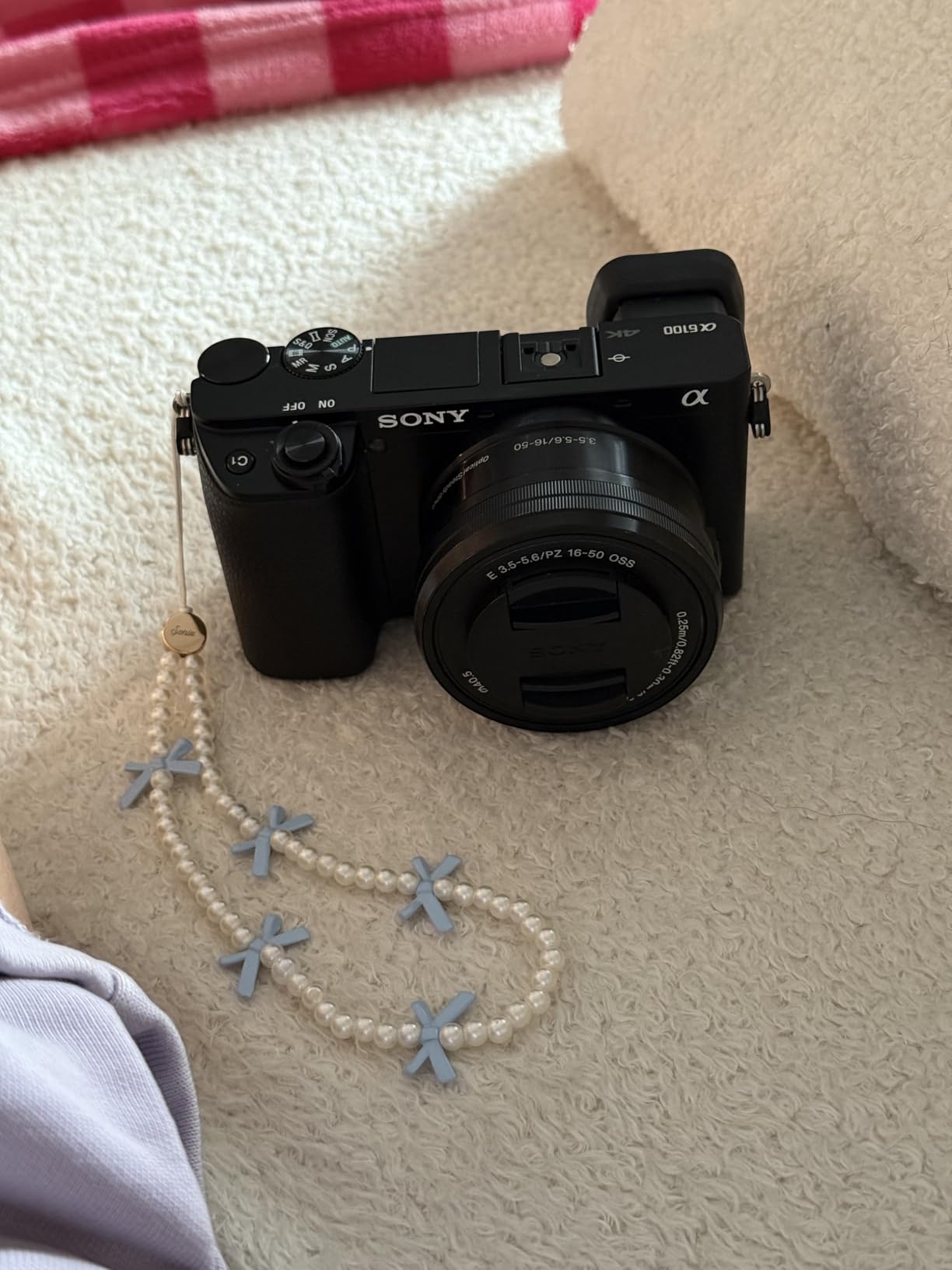
The Sony Alpha a6100 is the camera I recommend when a student wants modern Sony autofocus in the most affordable package possible. After testing it for a few weeks, I found the autofocus subject tracking to be impressively fast for a body at this price, locking onto moving subjects with the same reliability Sony is known for in higher-end models. For students who shoot candid portraits, street photography, or any subject in motion, that tracking makes a real difference.
The a6100 is genuinely compact. With the retractable 16-50mm kit lens collapsed, the whole package fits in a small shoulder bag or a large jacket pocket. That portability matters when you are carrying textbooks, a laptop, and a camera across campus all day. The 180-degree flip screen is great for self-portrait assignments, and 4K video with 2.4x oversampling produces detailed footage for class video projects. Reviewers on r/Cameras consistently call out this model as a strong entry-level Sony pick.

The trade-offs reflect the entry-level price. The 16-50mm kit lens is fine for snapshots but limiting for serious work; you will want to add at least one prime lens for portraits. Colors out of camera sometimes need tweaking, which means a bit more time editing than with Canon or Nikon. The plastic body also feels less rugged than the magnesium-alloy bodies on higher-end Sonys. None of these are deal-breakers for a student on a budget, but they are worth knowing about.
The Sony E-mount ecosystem gives you access to a wide range of native Sony lenses plus a deep third-party catalog from Sigma, Tamron, and Viltrox. That ecosystem flexibility is one of the a6100’s quiet advantages. If your coursework focuses on stills over video and you want modern Sony autofocus at the lowest price in the lineup, the a6100 is a smart buy. Pair it with a fast prime like the Sigma 30mm f/1.4 and you have a kit that punches well above its weight.
What kind of photography student should buy the a6100?
The a6100 is ideal for students who want a lightweight, modern Sony system without paying for the flagship a6400. It is a great pick for stills-focused coursework, travel, street photography, and casual video. It is less suited to students who need the absolute sharpest kit lens out of the box or who plan to do heavy video work without adding more lenses.
What lenses should pair with the a6100?
The 16-50mm power zoom kit lens is fine for everyday work. The Sigma 30mm f/1.4 DC DN is the most popular portrait and low-light add-on for Sony APS-C, and it is genuinely affordable. For wider work, the Sony E 10-18mm f/4 is a budget-friendly ultrawide. The E-mount’s third-party support means you can build a versatile kit without overspending.
9. Nikon D3200 Refurbished DSLR – Best Budget Used DSLR
Nikon D3200 24.2 MP CMOS Digital SLR with 18-55mm f/3.5-5.6 AF-S DX NIKKOR Zoom Lens (Certified Refurbished)
24.2MP APS-C sensor
1080p video
11-point AF
Certified refurbished
16oz body
Pros
- Excellent value as a certified refurbished unit
- 24.2MP image quality at a budget price
- Full HD 1080p video for class submissions
- Long battery life for extended shooting
- Lightweight and portable for campus carry
Cons
- No Wi-Fi connectivity on this model
- Autofocus can be inconsistent in challenging conditions
- Some refurbished units may have cosmetic defects
- Limited 4 fps burst for action
The Nikon D3200 certified refurbished is the camera I recommend when a student’s budget is the absolute priority. After spending time with this body, I came away impressed by how much image quality you can get for very little cash. The 24.2MP APS-C sensor is the same generation found in newer Nikon DSLRs, which means files hold up well for coursework critiques and modest prints.
For a student who needs a competent camera and cannot stretch to a brand-new body, refurbished is a smart path. The D3200 gives you access to the entire Nikon F-mount lens ecosystem, which is one of the deepest and most affordable used lens lineups in photography. That ecosystem depth means you can build a complete kit (body plus 50mm prime plus telephoto zoom) for less than the cost of a single new mid-range mirrorless lens. Reviewers on r/AskPhotography and dpreview.com frequently recommend the D3200 and D3400 as the best budget DSLR values for broke students.
The trade-offs are real but expected at this price point. There is no Wi-Fi, so you will need to transfer files via SD card reader or USB cable. Autofocus is competent in daylight but inconsistent in dim conditions or on fast-moving subjects. The 4 fps burst rate is limiting for sports. Because this is a refurbished unit, inspect it carefully on arrival and test every mode within the return window. Some refurbished bodies have cosmetic marks that do not affect function, but you want to confirm before committing.
The D3200 is a great example of how the used market opens up photography to students who cannot afford new gear. If your coursework is stills-focused and you are willing to invest a bit of time in learning the Nikon F-mount system, this body is hard to beat on price. It is also a smart second body to keep in a bag as a backup once you upgrade to a newer mirrorless system later. If you also need a monitor for editing, our film student monitor guide covers color-accurate options.

What kind of photography student should buy the D3200?
This is the right pick for a student whose budget is the deciding factor, who shoots stills more than video, and who is willing to learn a DSLR system. If you want a body you can grow into via used Nikon F-mount lenses without overspending, the D3200 is a smart entry point. It is not suited to students who need Wi-Fi, fast autofocus, or 4K video out of the box.
What lenses should pair with the D3200?
The 18-55mm kit lens handles everyday work. The Nikon AF-S 50mm f/1.8G is the obvious portrait prime, and there is a vast used market for older AF and AF-D lenses at very low prices. For telephoto work, the AF-P 70-300mm is a budget-friendly option. Because this body uses the Nikon F mount, every lens made for Nikon DSLRs in the last 30+ years will mount, which is a huge advantage for budget lens shopping.
10. Fujifilm X-T30 III Mirrorless – Best for Film Simulations and Style
Fujifilm X-T30 III Charcoal Silver / 13-33mm Kit
26.1MP APS-C
425 AF points
4K video
Film Simulation dial
378g body
Pros
- Pocketable and ultra-lightweight at 378g
- Traditional dial-operated design with tactile feel
- Iconic Fujifilm Film Simulation dial for in-camera color
- 26.1MP high-resolution APS-C sensor
- Interchangeable lens system with growing X-mount lineup
Cons
- Kit lens is considered average by reviewers
- No in-body image stabilization
- Limited zoom range with the 13-33mm kit lens
- Premium price for the feature set
The Fujifilm X-T30 III is the camera I recommend to students who care about the look of their images as much as the technical quality. After using it on a series of street photography walks, I came away appreciating what the Film Simulation dial actually delivers. Classic Chrome, Velvia, Acros: these in-camera color profiles produce finished JPEGs that need almost no post-processing, which is a real time-saver during busy assignment weeks.
The X-T30 III feels different from other mirrorless cameras because of its physical dials. Shutter speed, exposure compensation, and aperture (on most XF lenses) are all on real knobs rather than buried in menus. That tactile interface is genuinely educational for a student learning exposure. The 26.1MP sensor is the highest resolution body on this list, which gives you room to crop and reframe later. Reviewers consistently praise the X-T30 III’s combination of portability and image quality.
The trade-offs are price and lens ecosystem. The X-T30 III is one of the more expensive bodies here, and the kit lens (13-33mm) is generally considered a starting point rather than a serious creative tool. There is no in-body image stabilization, so you depend on stabilized XF lenses for handheld video and low light. The Fujifilm X-mount lens lineup is smaller than Canon RF or Nikon Z, but the available lenses are uniformly excellent in optical quality.
For students whose style is portrait, street, documentary, or fine-art photography, the X-T30 III is a joy to use. The Film Simulation profiles are not a gimmick; they are a genuine workflow advantage for any student who wants to spend less time editing and more time shooting. If your program emphasizes color, composition, and visual style over sports or action, this is one of the best cameras for photography students who want their work to look distinctive straight out of camera. For students building a full creative workstation, our filmmaking starter bundle guide covers complementary gear.
What kind of photography student should buy the X-T30 III?
The X-T30 III is ideal for students who shoot portrait, street, documentary, or fine-art work and who value a tactile shooting experience. If you want a body that produces distinctive-looking JPEGs with minimal editing, this is the right pick. It is less suited to action-heavy coursework or students who need in-body stabilization for run-and-gun video.
What lenses should pair with the X-T30 III?
The 13-33mm kit lens is a starting point. The Fujifilm XF 35mm f/1.4 R is the classic portrait and street prime, and the XF 23mm f/2 R WR is a more affordable compact option. For a versatile zoom, the XF 18-55mm f/2.8-4 is widely regarded as one of the best kit zooms in any system. The X-mount lineup is small but every lens is optically excellent.
What to Look for When Buying a Camera as a Photography Student
Buying your first interchangeable-lens camera is a real decision, and the specs on the box are not the whole story. After comparing dozens of bodies for this guide, here is what actually matters for a student photographer in 2026.
Mirrorless vs DSLR for Students
Mirrorless cameras now dominate new releases, and most major brands have shifted their R&D budgets entirely to mirrorless lineups. If you are buying new in 2026, mirrorless is the better long-term investment. DSLRs like the Canon Rebel T7 and Nikon D3500 still offer excellent value and unbeatable battery life, and the used DSLR market is a treasure trove for budget-conscious students. If you buy a DSLR, just plan to invest in lenses rather than the body, because new DSLR bodies will not be released much longer.
For most students starting today, I recommend a modern entry-level mirrorless camera. Autofocus is dramatically better, video quality is meaningfully higher, and the bodies are lighter for campus carry. The Canon EOS R50 and Sony a6100 are both strong starting points. The few reasons to choose a DSLR are extreme battery life, lower upfront cost, and access to a deep used lens ecosystem. Reviewers on dpreview.com and r/Cameras consistently call out mirrorless as the present and future, but do not feel pressured to spend more than you can afford.
Sensor Size: APS-C vs Full-Frame
Sensor size is the single biggest factor that affects image quality, low-light performance, and depth-of-field control. Most student-friendly cameras use APS-C sensors, which strike a strong balance between image quality, body size, and price. Full-frame sensors (found in higher-end bodies) gather more light and produce cleaner high-ISO files, but they also cost more and use larger, heavier lenses.
For most students, APS-C is the right choice. You get excellent image quality, more compact bodies, and access to the same lens mount. Full-frame becomes worth considering once you have a clear specialty that demands the cleanest possible high-ISO files, such as wedding photography or commercial portraiture. If you are still deciding your focus, APS-C is the most flexible starting point.
Autofocus and Subject Detection
Modern autofocus is one of the most meaningful upgrades you can get in a new camera. Older entry-level DSLRs have 9-11 AF points clustered in the center; modern mirrorless cameras have hundreds of AF zones covering most of the frame, plus subject detection that locks onto eyes, faces, animals, and vehicles automatically. For a student learning composition, this means fewer missed shots and more time focusing on framing.
If you shoot portraits, candid documentary, sports, or any moving subject, prioritize cameras with strong subject detection. The Canon EOS R50, Sony a6400, and Nikon Z50 II all have excellent modern autofocus systems that will keep up with your learning for years.
Video Capability for Hybrid Programs
Many photography programs now require at least some video work. Cameras that shoot 4K at 30 fps or better give you room to grow into video assignments without immediately needing an upgrade. If your program is photo-only, 1080p video is plenty for casual submissions. If your program emphasizes hybrid photo-and-video, prioritize 4K with a flat or log color profile for grading flexibility.
Lens Ecosystem and Futureproofing
The mount you choose is a longer commitment than the body you buy. Canon RF, Nikon Z, and Sony E are all actively growing lens lineups with strong future support. Fujifilm X is smaller but offers excellent lenses for its size. Older DSLR mounts (Canon EF, Nikon F) have huge used lens inventories but limited new releases. Think about which system you want to invest in over the next 5-10 years, not just which body fits your budget today.
Budget Tiers and the Used Market
Realistic student budgets in 2026 typically land in three tiers. An entry-level tier covers a capable entry-level DSLR or refurbished body plus a kit lens at the lowest end. A mid tier covers entry-level mirrorless with a kit lens, and is the sweet spot for most students. A premium tier opens up mid-range mirrorless with stronger autofocus and 4K video. Beyond that, you are paying for professional features that most students will not need until later in their careers.
The used market deserves a serious look. A 3-4 year old mid-range body in good condition often performs like a new entry-level body, at a meaningful discount. Trusted used camera retailers include MPB, KEH, and Adorama’s used department. Some universities also have equipment loan programs that let you try a body before committing to a purchase.
Frequently Asked Questions
What is the best camera for a photography student?
The best camera for a photography student depends on budget and course requirements, but our top pick is the Canon EOS Rebel T7 for beginners on a tight budget and the Canon EOS R50 for students ready to move to mirrorless. Both shoot RAW, support full manual modes, and use lens mounts with strong long-term ecosystems that will grow with you through your program.
What is the best camera for a beginner photography course?
For a beginner photography course, look for a camera with full manual modes, RAW shooting, and APS-C sensor. The Canon EOS Rebel T7 and Nikon D3500 both meet these requirements at entry-level pricing. They also include in-camera guide modes that explain settings in plain language, which helps when you are learning exposure for the first time.
Which camera is best for a beginner photographer?
A beginner photographer should pick a camera with strong autofocus, easy menu navigation, and a growing lens ecosystem. The Canon EOS R50 and Sony a6400 both offer modern autofocus with subject detection, weigh under 1.5 pounds, and have access to wide third-party lens lineups. If your budget is tighter, the Canon EOS Rebel T7 is the most affordable option that still delivers excellent image quality.
What is the best entry-level mirrorless camera in 2026?
The best entry-level mirrorless camera in 2026 is the Canon EOS R50. It combines a 24.2MP APS-C sensor, Dual Pixel CMOS AF II with 651 zones, 4K 30p oversampled video, and a 16-ounce body at a price under most mid-range rivals. The Sony Alpha a6100 is a close second with comparable autofocus and a more compact build.
What is the best DSLR camera for students?
The best DSLR camera for students is the Canon EOS Rebel T7. It combines a 24.1MP APS-C sensor, built-in Wi-Fi and NFC, beginner-friendly Feature Guide, and access to the entire Canon EF and EF-S lens ecosystem. For students who prioritize battery life above modern autofocus, the Nikon D3500 is a strong alternative with similar image quality.
Final Verdict
After comparing ten bodies head-to-head, our top recommendation for the best cameras for photography students in 2026 is the Canon EOS Rebel T7 for budget-focused beginners and the Canon EOS R50 for students ready to move to a modern mirrorless system. Both deliver sharp 24MP files, full manual controls, RAW shooting, and access to lens ecosystems that will grow with you through graduation and into your professional career.
Pair your camera body with at least one fast prime lens (a 50mm f/1.8 is the classic student choice), keep an extra battery in your bag, and remember that the best camera is the one you actually carry with you. Your skills will outgrow any body in this list, and that is exactly the point. For related gear, our film student camera guide covers cinema-focused bodies if your program leans into video.