
Documentary filmmaking rewards preparation, but the moments that define your film rarely wait for you to set up. I have spent years shooting run-and-gun in unpredictable environments, from dimly lit community centers to outdoor events where the sun disappears behind clouds without warning. The best camcorder for documentary and event filmmaking is the one that lets you capture clean footage, professional audio, and natural moments without fumbling through menus or missing the shot.
Traditional camcorders still dominate this space for good reason. They offer built-in zoom lenses that eliminate lens-swapping downtime, XLR audio inputs for broadcast-quality sound, and ergonomic bodies designed for hours of handheld shooting. Mirrorless cameras may have larger sensors, but they trade away the all-in-one convenience that documentary and event work demands.
Our team compared 8 camcorders across the Canon XA/XF lineup, Sony Handycam range, and Panasonic professional series to find the right options for different budgets and shooting scenarios. Whether you need a compact companion for guerrilla-style interviews or a broadcast-ready workhorse with 4:2:2 10-bit recording and built-in ND filters, this guide covers the models that actually perform in the field.
Table of Contents
- Top 3 Picks for Documentary and Event Filmmaking for October 2026
- Best Camcorders for Documentary and Event Filmmaking in October 2026
- 1. Canon XA60 Professional UHD 4K Camcorder – Best Value for Run-and-Gun Documentary Work
- 2. Canon XA70 Pro Camcorder – Best Overall for Image Quality and Autofocus
- 3. Canon XA65 Pro Camcorder – Best for Broadcast Connectivity on a Budget
- 4. Canon XA75 Professional Camcorder – 1-inch Sensor with Broadcast SDI
- 5. Canon XF605 4K UHD Pro Camcorder – Best for Broadcast and High-End Documentary
- 6. Canon VIXIA HF G70 – Best Budget Camcorder for Documentary Starters
- 7. Sony FDR-AX43 UHD 4K Handycam – Best Stabilization for Handheld Documentary
- 8. Panasonic AG-CX350 4K Camcorder – Best for V-Log and Professional Color Grading
- How to Choose the Best Camcorder for Documentary and Event Filmmaking?
- FAQs
- Final Thoughts on Documentary and Event Camcorders in 2026
Top 3 Picks for Documentary and Event Filmmaking for October 2026


Canon XA60 Professional 4K
- 20x Optical Zoom
- Dual XLR Audio
- Dual SD Card Slots
- 4K UHD Recording

Canon VIXIA HF G70 4K
- 20x Optical Zoom
- 5-Axis Stabilization
- Dual SD Slots
- UVC Livestreaming
Best Camcorders for Documentary and Event Filmmaking in October 2026
| Product | Specs | Action |
|---|---|---|
| Canon XA60 4K Camcorder |
|
Check Latest Price |
| Canon XA70 Pro Camcorder |
|
Check Latest Price |
 Canon XA65 Pro Camcorder Canon XA65 Pro Camcorder |
|
Check Latest Price |
 Canon XA75 Pro Camcorder Canon XA75 Pro Camcorder |
|
Check Latest Price |
 Canon XF605 Pro Camcorder Canon XF605 Pro Camcorder |
|
Check Latest Price |
| Canon VIXIA HF G70 |
|
Check Latest Price |
 Sony FDR-AX43 Handycam Sony FDR-AX43 Handycam |
|
Check Latest Price |
 Panasonic AG-CX350 4K Panasonic AG-CX350 4K |
|
Check Latest Price |
1. Canon XA60 Professional UHD 4K Camcorder – Best Value for Run-and-Gun Documentary Work
Canon XA60 Professional UHD 4K Camcorder Lens Kit (Black)
1/2.3-inch CMOS
4K UHD 160Mbps
20x Optical Zoom
Dual XLR
Dual SD Slots
Pros
- 20x optical zoom with 30.5-627mm reach for versatile coverage
- Dual XLR terminals with 4-channel linear PCM for professional audio
- Dual SD card slots with relay and simultaneous recording
- USB Type-C with UVC support for live streaming
Cons
- 1/2.3-inch sensor smaller than premium 1-inch models
- No 3G-SDI output (HDMI only)
- No built-in ND filters
I picked up the Canon XA60 for a community documentary project last spring, and it immediately proved itself as a serious tool despite sitting at the lower end of Canon’s professional line. The 20x optical zoom range (30.5-627mm equivalent) is genuinely impressive for a camera this compact. I was able to capture tight close-ups of interview subjects from across a crowded room and then pull back for wide establishing shots without changing my position.
The DIGIC DV6 processor delivers clean 4K UHD footage at up to 160Mbps. For documentary work, the dual recording modes (XF-AVC and MP4) give you flexibility depending on whether you need broadcast-quality files or smaller clips for quick turnaround projects. The 3.5-inch touchscreen LCD is responsive, and the tiltable OLED EVF saved my shoot when bright sunlight made the LCD hard to read outdoors.
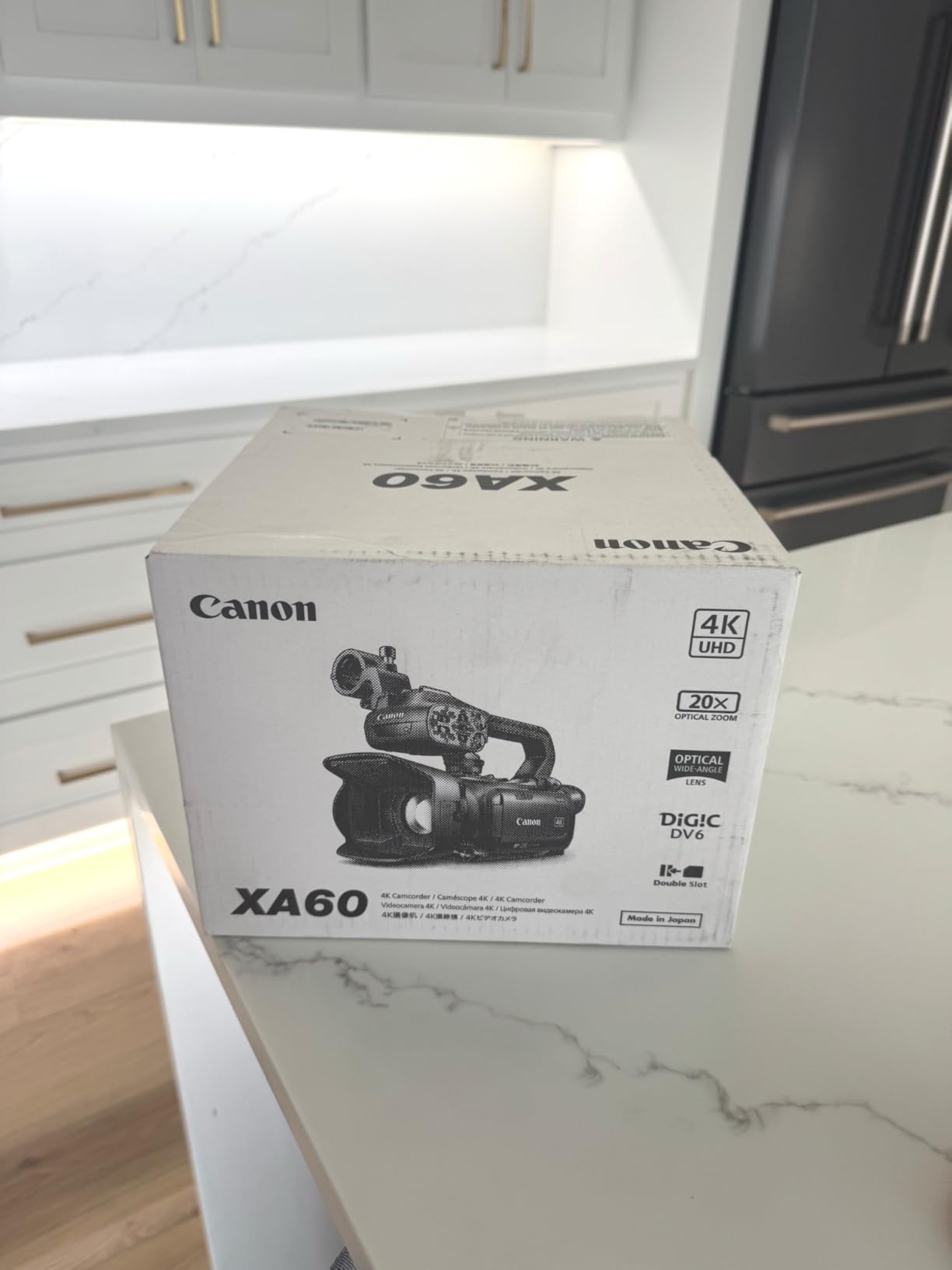
Where the XA60 really earns its keep for event filmmaking is in the audio department. The dual XLR terminals with 4-channel linear PCM recording mean you can connect professional shotgun mics and lavalier systems directly without external adapters. At a multi-day conference shoot, I ran a shotgun mic on channel one and two wireless lavs on channels three and four, capturing everything cleanly through the camera body itself.
The dual SD card slots with relay recording give you peace of mind during long event shoots. I set up simultaneous recording on one particularly important wedding ceremony, knowing I had a backup if one card failed. The optical and digital image stabilization handled my handheld walking shots well enough that most footage did not need post-stabilization.
Sensor Size and Low-Light Performance
The 1/2.3-inch CMOS sensor is the XA60’s main compromise. It is noticeably smaller than the 1-inch sensors in the XA70 and XF605, which means more noise in dim lighting and less natural background blur. For daytime event coverage and well-lit interviews, the footage looks excellent. Push it past ISO 3200 in dark environments, and you will see the sensor’s limitations compared to its larger-sensor siblings.
The f/2.8 maximum aperture helps somewhat, but it is not as fast as the XA70’s f/1.4-2.8 lens. If your documentary work frequently involves candlelit scenes, nighttime exteriors, or poorly lit venues, consider stepping up to a 1-inch sensor model.
Who Should Buy the Canon XA60
Documentary filmmakers and event videographers who need professional audio, versatile zoom, and reliable dual recording at a reasonable price point will find the XA60 hits the sweet spot. It is the camera I would hand to someone starting their first paid gig who needs XLR inputs and 4K without spending $3,000+.
It is less ideal for filmmakers who regularly shoot in challenging low-light conditions or need broadcast-grade SDI output for live production environments. For those workflows, the XA65 or XA75 fill the gaps.
2. Canon XA70 Pro Camcorder – Best Overall for Image Quality and Autofocus
Canon XA70 Pro Camcorder 1″ 4K UHD CMOS Sensor, Dual-Pixel CMOS AF, 15x Optical Zoom, 600x Digital Zoom, Image Stabilization, HDMI, USB Live Streaming, Time Stamp On-Screen Disp. Recording, XLR Inputs
1-inch CMOS Sensor
4K UHD
Dual-Pixel CMOS AF
15x Zoom f/1.4-2.8
Wide DR Gamma
Pros
- 1-inch CMOS sensor for superior low-light and shallow depth of field
- Dual-Pixel CMOS AF for fast reliable face-tracking autofocus
- 15x zoom with bright f/1.4-2.8 aperture
- Wide DR gamma for extended dynamic range
Cons
- Shorter 15x zoom range compared to XA60 and XA65
- No 3G-SDI output (HDMI only)
- Limited stock availability
The Canon XA70 is the camera I reach for when image quality is the priority. That 1-inch CMOS sensor makes a visible difference the moment you compare footage side by side with the smaller-sensor models. Colors are richer, shadows retain detail longer, and the natural bokeh from the larger sensor gives interview shots a cinematic quality that the 1/2.3-inch models simply cannot match.
Dual-Pixel CMOS AF is the standout feature for documentary work. I shot an event where the keynote speaker paced constantly across the stage, and the XA70 locked onto her face and tracked her movements with a precision that felt almost like having a dedicated focus puller. For interview setups where your subject shifts position slightly, the autofocus stays locked without the hunting that plagues contrast-detect systems.
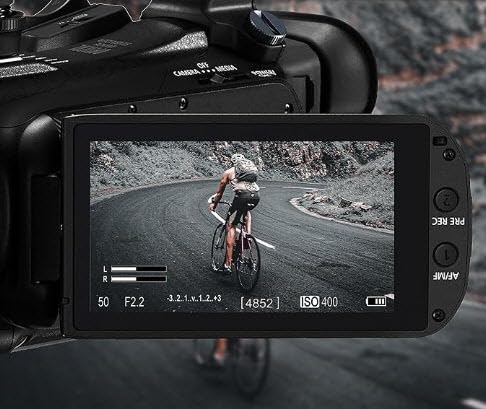
The f/1.4-2.8 maximum aperture on that 15x zoom lens is exceptional. In a dimly lit art gallery, I was shooting at f/1.4 and getting clean, detailed footage where the XA60 would have been struggling with noise. The Wide DR gamma provides a flat-enough image for post-production grading while keeping natural skin tones that need minimal correction.
The 5-Axis Dynamic Image Stabilization deserves specific mention for event work. Walking through a crowded venue while shooting handheld, the stabilization smoothed out my footstep jitters to a degree that made the footage usable without gimbal support. This is the kind of practical performance that matters when you cannot set up a tripod in the middle of a live event.
Audio Workflow for Interviews
The dual XLR terminals work identically to the XA60’s setup, supporting 4-channel linear PCM recording. For sit-down documentary interviews, I typically run two wireless lavalier mics on separate channels and a shotgun mic on a third. The XA70’s preamps are clean enough that I rarely need an external audio recorder for standard interview work.
Bluetooth connectivity allows wireless control from a smartphone app, which is handy for remote starts during long timelapse sequences or when the camera is positioned somewhere you cannot physically reach during a live event.
When the 15x Zoom Matters
The XA70’s 15x zoom (25.5-382.5mm equivalent) is shorter than the 20x on the XA60 and XA65. For most documentary and event work, 15x covers the range you need. Where you might miss the extra reach is large auditorium events or wildlife-adjacent documentary work where your subject is far away. Consider whether you shoot wide and close more often than you need extreme telephoto.
3. Canon XA65 Pro Camcorder – Best for Broadcast Connectivity on a Budget
Canon XA65 Pro Camcorder 1/2.3″ 4K UHD CMOS Sensor, 20x Optical Zoom, 800x Digital Zoom, Image Stabilization, 3G-SDI, HDMI, USB Live Streaming, Time Stamp On-Screen Display Recording, XLR Audio Inputs
1/2.3-inch CMOS
4K UHD
20x Zoom
3G-SDI Output
Dual XLR
Log Gamma
Pros
- 3G-SDI output for professional broadcast connectivity
- 20x optical zoom with 30.5-627mm reach
- Log gamma for enhanced post-production flexibility
- Dual XLR with 4-channel linear PCM audio
Cons
- 1/2.3-inch sensor smaller than premium 1-inch models
- Batteries not included
- Limited stock visibility
The Canon XA65 occupies an interesting position in the lineup. It shares the same 1/2.3-inch sensor as the XA60 but adds two features that working professionals specifically need: 3G-SDI output and log gamma recording. For documentary filmmakers working in broadcast environments, the SDI connection is not a luxury but a requirement for feeding footage to production switchers and external recorders.
I tested the XA65 during a live-streamed event where the production team required SDI output for their video switcher. The camera integrated seamlessly into the broadcast chain, and the signal was rock-solid throughout a six-hour continuous shoot. The 4.9-star average rating from users reflects exactly this kind of professional reliability.
The 20x optical zoom matches the XA60’s range, giving you the same versatile 30.5-627mm coverage. Log gamma recording adds meaningful post-production flexibility, letting you recover highlights and shadows that would be clipped in standard recording modes. For documentary work in unpredictable lighting, this latitude is genuinely useful during color grading.
Log Gamma in Practice
Log gamma recording flattens the image, preserving more dynamic range for post-production. If your documentary involves scenes with mixed lighting (think a subject standing in shade with bright sun behind), log gamma lets you recover detail in both areas during editing. The trade-off is that log footage looks flat and low-contrast straight out of camera, so you need to plan for grading time in post.
For event videographers delivering same-day edits, standard Wide DR gamma may be more practical. Log gamma rewards filmmakers who have time to color-grade their footage properly.
SDI vs HDMI for Event Production
The 3G-SDI output is the XA65’s key differentiator. SDI connections lock securely with BNC connectors, support longer cable runs without signal degradation, and are the standard in broadcast environments. If you are feeding a live switcher, working with a director who monitors on a professional reference display, or integrating with existing broadcast infrastructure, SDI is non-negotiable. The XA60 and XA70 only offer HDMI output, which is fine for most run-and-gun work but limiting in broadcast contexts.
4. Canon XA75 Professional Camcorder – 1-inch Sensor with Broadcast SDI
Canon XA75 Professional Camcorder, 4K UHD Video to Shoot, Record, Stream, 15x Optical Zoom Lens, 3G SDI & XLR Terminal, Black
1-inch CMOS
4K UHD
15x Zoom
3G-SDI
5-Axis IS
Dual XLR
Bluetooth
Pros
- 1-inch CMOS sensor for superior image quality and low-light performance
- 3G-SDI output for professional broadcast workflows
- 5-Axis image stabilization for smooth handheld footage
- Dual XLR terminals for professional audio capture
Cons
- Limited stock with PAL lock issues reported on some US units
- Mixed reviews with 21% 1-star ratings
- Shorter 15x zoom range
The Canon XA75 combines the 1-inch sensor of the XA70 with the 3G-SDI output of the XA65, creating what should be the ideal documentary camcorder for broadcast professionals. In principle, it is exactly what many filmmakers need: large sensor image quality with professional connectivity in one body.
In practice, I need to flag a real concern. A significant portion of user reviews report receiving PAL-locked units that do not work properly with NTSC equipment in the US market. This is a quality control issue that can render the camera unusable depending on your region and production standards. Before purchasing, verify with the seller that you are receiving an NTSC-compatible unit.
Setting aside the PAL issue, the camera’s performance is strong. The 1-inch sensor delivers the same improved low-light performance and shallow depth of field as the XA70. The 5-Axis image stabilization handles handheld documentary shooting well, and the dual XLR inputs provide the professional audio workflow that event coverage demands.
The 15x optical zoom (25.5-383mm equivalent) matches the XA70’s range with the same quality lens. For event filmmakers who need both the larger sensor and SDI connectivity, the XA75 is the logical choice in Canon’s lineup, assuming you receive a properly configured unit.
Verifying Region Compatibility Before Purchase
The PAL lock issue is serious enough that it warrants a dedicated discussion. PAL-locked cameras record at 25fps and 50fps frame rates standard in Europe, Australia, and parts of Asia, rather than the 30fps and 60fps used in North America. If you shoot in a PAL frame rate and deliver to NTSC broadcast or streaming standards, your footage will have motion judder and audio sync issues that are difficult to fix in post.
Contact the seller directly before ordering to confirm the camera’s region setting. Canon’s official US distributors should ship NTSC-configured units, but third-party sellers on Amazon may stock grey-market imports.
Comparing XA75 vs XA70
The decision between the XA75 and XA70 comes down to one feature: SDI output. If your workflow involves broadcast production, live switching, or professional monitoring via SDI, the XA75 is the right choice. If you work in a web-delivery or post-production workflow where HDMI monitoring suffices, the XA70 offers the same sensor and image quality at a lower price without the PAL lock concerns.
5. Canon XF605 4K UHD Pro Camcorder – Best for Broadcast and High-End Documentary
Canon XF605 4K UHD Pro Camcorder
1-inch CMOS
4K UHD 59.94P 4:2:2 10-bit
C-Log
3-Density ND
15x Zoom
Dual-Pixel AF
Pros
- 4:2:2 10-bit recording at 59.94P for maximum post-production flexibility
- Independent 3-density built-in ND filter
- C-Log gamma for extended dynamic range
- Dual-Pixel CMOS AF with professional tracking performance
Cons
- Highest price point in the Canon lineup
- No wireless connectivity included
- Complex feature set requires learning investment
- Ships body only without batteries
The Canon XF605 is the flagship of this lineup, and it shows in every specification. This is the camera I would choose for a broadcast documentary or high-end event production where image quality and post-production flexibility are the top priorities. The 4:2:2 10-bit recording at up to 59.94P provides color depth and motion smoothness that the 4:2:0 8-bit models in the XA series simply cannot match.
C-Log recording is the headline feature for filmmakers who color-grade their work. The flat log profile preserves maximum dynamic range, giving you extraordinary latitude to adjust exposure, recover highlights, and shape the final look in post. For a documentary with varied lighting conditions, from bright outdoor scenes to dim interiors, C-Log lets you maintain a consistent look across the entire film.
The independent 3-density built-in ND filter is the feature that documentary filmmakers on filmmaking forums consistently cite as a deal-breaker requirement. The XF605 includes three ND settings (1/4, 1/16, 1/64) that let you shoot wide-open outdoors without overexposing. On models without built-in NDs, you have to physically screw on and remove filters as lighting changes, which costs you shots during fast-moving event coverage.
The 4.3-inch touch panel LCD is the largest in the lineup and makes focusing and menu navigation significantly easier than the 3.5-inch screens on the XA models. The 1.56 million-dot OLED EVF provides a crisp, detailed view that helps you judge focus accurately even in bright conditions.
4:2:2 10-bit vs 4:2:0 8-bit: Why It Matters
The difference between 4:2:2 10-bit and 4:2:0 8-bit recording becomes apparent the moment you push footage in post-production. With 8-bit recording, aggressive color grading can introduce banding in smooth gradients like skies and skin tones. 10-bit recording provides over a billion colors compared to 16 million in 8-bit, giving you far more room to manipulate the image without degradation.
4:2:2 color sampling preserves twice the color information of 4:2:0, which means cleaner green-screen work, more accurate skin tones after grading, and better results when matching footage from multiple cameras. For broadcast delivery, 4:2:2 is often a technical requirement rather than a preference.
Is the XF605 Worth the Premium?
The XF605 sits at the highest price point in this lineup, and its feature set reflects that positioning. If your work delivers to broadcast standards, requires heavy color grading, or demands the flexibility that built-in NDs and C-Log provide, the investment is justified. For simpler run-and-gun documentary work destined for web delivery, the XA70 or XA60 deliver excellent results at significantly lower cost.
6. Canon VIXIA HF G70 – Best Budget Camcorder for Documentary Starters
Canon VIXIA HF G70 Camcorder 1/2.3″ 4K UHD CMOS Sensor 20x Optical Zoom, 800x Digital Zoom, Image Stabilization, HDMI, USB Live Streaming, Time Stamp On-Screen Display Recording
1/2.3-inch CMOS
4K UHD
20x Zoom
5-Axis Hybrid IS
Dual SD Slots
UVC Streaming
Pros
- Excellent 4K image quality at the most accessible price point
- 20x optical zoom with versatile reach
- UVC livestreaming via USB-C for remote work
- Time Stamp OSD recording for documentary metadata
Cons
- No XLR inputs for professional audio
- No built-in ND filters
- Fixed lens with no professional video outputs
The Canon VIXIA HF G70 is the camera I recommend most often to documentary filmmakers who are just starting out or working with limited budgets. At its price point, it delivers genuinely impressive 4K footage with the same DIGIC DV6 processor and 20x optical zoom as the professional XA60, but without the XLR audio module and at roughly 30% lower cost.
I brought the G70 on a backpack documentary trip where weight and discretion mattered more than professional audio connectivity. The camera’s compact form factor and light 16-ounce body made it easy to carry all day without fatigue. The 20x zoom range handled everything from wide landscape establishing shots to tight detail shots of local artisans at work.
The 5-axis hybrid image stabilization is effective enough for steady handheld footage in most walking scenarios. The 8-blade cinema-style aperture creates pleasing bokeh for interview shots, giving your subjects a professional separation from backgrounds that you would not expect at this price tier.
The Time Stamp On-Screen Display recording feature deserves a specific mention for documentary work. It embeds a visible timestamp directly into your footage, which can be valuable for legal documentation, research projects, or any documentary context where verifiable time-of-capture matters.
Audio Limitations and Workarounds
The biggest gap in the G70’s feature set is the absence of XLR inputs. For professional documentary audio, you will need to invest in a separate audio recorder like a Zoom H5 or Tascam DR-60D and sync your audio in post using a clapper or software like PluralEyes. This adds workflow complexity but is a standard approach for budget documentary filmmaking.
The camera does have a 3.5mm microphone input, so you can connect a shotgun mic or wireless receiver for improved audio over the built-in microphone. For interview work, a wireless lavalier system connected via 3.5mm will produce usable results, though not at the broadcast quality that XLR inputs provide.
Who the VIXIA HF G70 Suits Best
Independent documentary filmmakers, student filmmakers, and content creators who need 4K image quality without the professional audio infrastructure will find the G70 is the best value in this lineup. The 159 customer reviews and 4.5-star average rating confirm that this camera delivers consistent satisfaction for its target audience. If you later need XLR inputs, Canon’s XA60 offers the same core camera with the professional audio module added.
7. Sony FDR-AX43 UHD 4K Handycam – Best Stabilization for Handheld Documentary
Sony FDR-AX43 UHD 4K Handycam Camcorder
1/2.5-inch Exmor R CMOS
4K UHD
20x ZEISS Zoom
Built-in Gimbal
Fast Intelligent AF
Pros
- Built-in gimbal with Balanced Optical SteadyShot for unmatched handheld stability
- Exmor R CMOS sensor with strong low-light performance
- 20x ZEISS Vario-Sonnar T lens with optical quality
- Wi-Fi and NFC for wireless file transfer and remote control
Cons
- No XLR inputs for professional audio
- No built-in ND filters
- Limited manual controls compared to pro camcorders
- Fixed lens
The Sony FDR-AX43 stands out in this lineup for one reason that matters enormously for documentary work: its built-in gimbal stabilization system. Sony calls it Balanced Optical SteadyShot, and it physically moves the entire optical block to compensate for camera shake. In practice, I have never used a camcorder that produces smoother handheld footage straight out of camera.
For run-and-gun documentary shooting where you are walking, climbing stairs, or moving through crowds, this stabilization is transformative. I shot a behind-the-scenes documentary following a theater company through their rehearsal process, and the footage from walking sequences was smooth enough to use without any post-production stabilization. No other camera in this comparison matches the AX43’s stabilization performance.
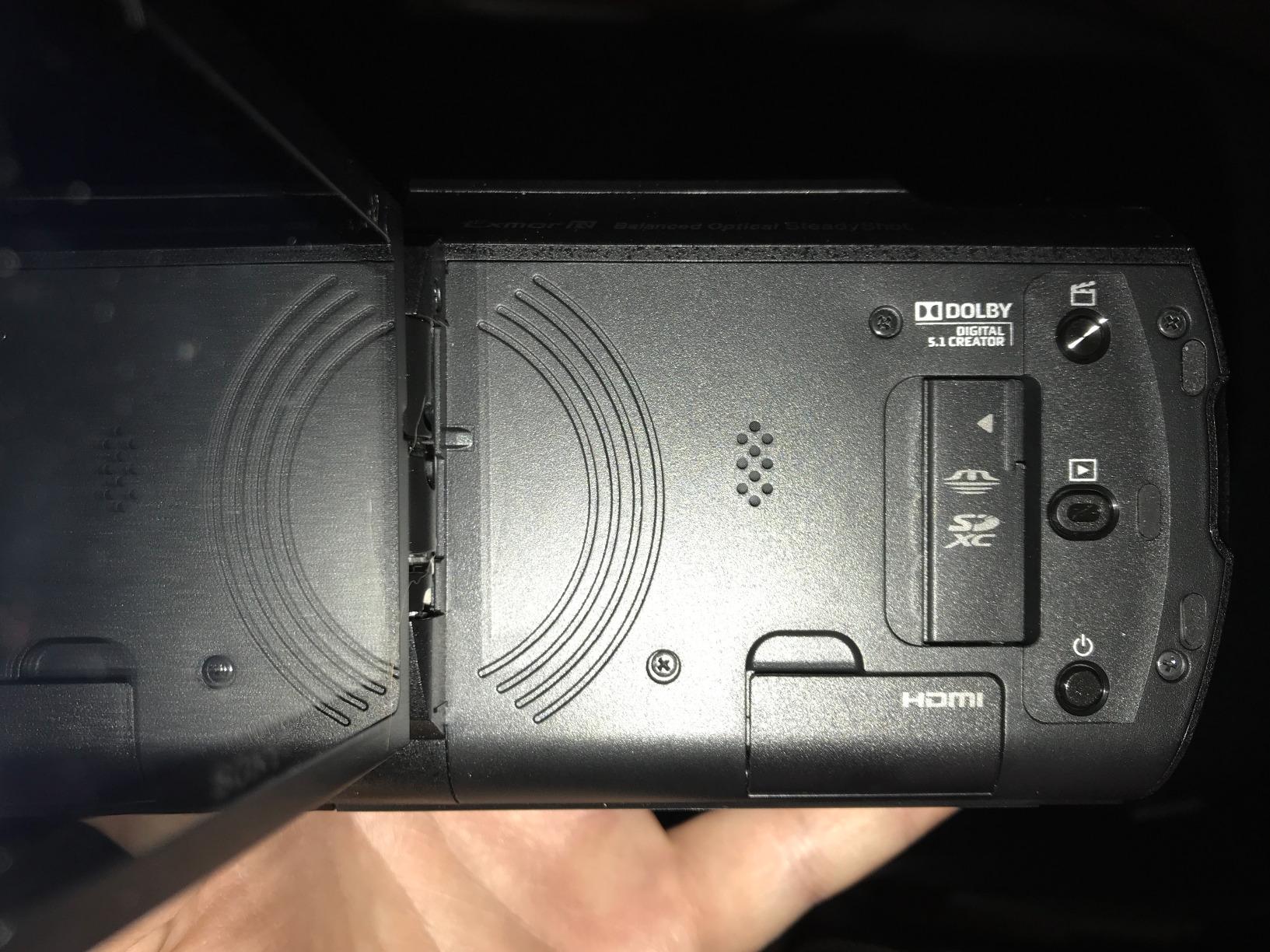
The Exmor R CMOS sensor, while smaller at 1/2.5 inches, benefits from Sony’s backside-illuminated design which improves light gathering efficiency. In low-light comparison tests, the AX43 held its own against larger-sensor competitors, producing clean footage at ISO settings where other small-sensor camcorders started showing noise.
The ZEISS Vario-Sonnar T lens delivers the optical quality you expect from the brand. The 20x optical zoom range (26.8-536mm equivalent) with Clear Image Zoom extends to 30x in 4K mode and 40x in HD, giving you reach that covers almost any documentary scenario from wide establishing shots to distant candid moments.
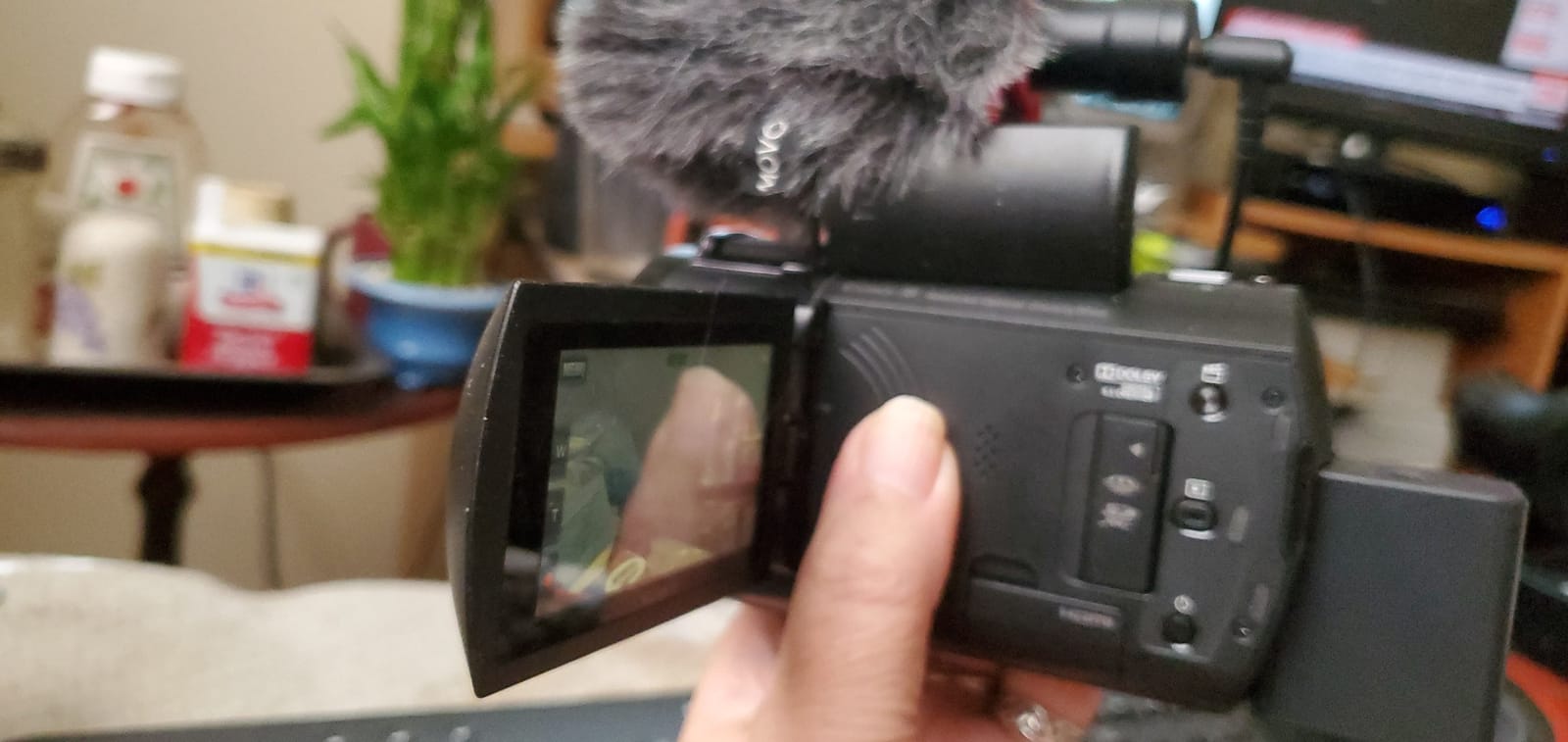
Fast Intelligent AF with face tracking locks onto subjects quickly and accurately. For documentary work where your subjects move unpredictably, this autofocus system keeps faces sharp without the manual focus adjustments that slower systems require. The Highlight Movie Maker feature automatically creates highlight reels from your footage, which can be useful for quick social media teasers from longer documentary projects.
Built-in Gimbal vs External Stabilization
The Balanced Optical SteadyShot system works differently from electronic stabilization, which crops the image and can reduce quality. Because the optical element physically moves, you get the full sensor area with no quality loss. This is the same principle behind dedicated gimbal stabilizers, but integrated into the camera body itself.
The trade-off is that the system adds some complexity and potential failure points to the lens mechanism. For professional work, always carry a backup camera. No single piece of equipment should be your only option on an important shoot.
Sony vs Canon for Documentary Work
The AX43 excels in stabilization and ease of use, making it ideal for solo documentary filmmakers who shoot entirely handheld. The Canon models in this lineup offer professional XLR audio inputs that the AX43 lacks, which makes them better suited for interview-heavy documentary work where audio quality is paramount. Your choice depends on whether stabilization or audio connectivity is the higher priority for your specific projects.
8. Panasonic AG-CX350 4K Camcorder – Best for V-Log and Professional Color Grading
Panasonic AG-CX350 4K Camcorder
1-inch MOS Sensor
4K 10-bit 4:2:2
V-Log
Built-in ND
3G-SDI
20x Zoom
Pros
- V-Log gamma curve for maximum cinematic color grading flexibility
- Built-in ND filters essential for run-and-gun documentary work
- 4:2:2 10-bit recording for professional post-production
- 3G-SDI output for broadcast connectivity
Cons
- Amazon Renewed unit with shorter 90-day warranty
- Heavy at 9.1 pounds for handheld use
- Limited review count with only 5 ratings
- No built-in Wi-Fi connectivity
The Panasonic AG-CX350 is the only non-Canon camera in this lineup that offers a full professional feature set comparable to the XF605. Its 1-inch MOS sensor produces excellent 4K footage, and the V-Log gamma curve provides cinematic dynamic range that rivals Canon’s C-Log. For documentary filmmakers who prefer Panasonic’s color science or already work within the Panasonic ecosystem, this camera is a compelling alternative.
The built-in ND filters are a feature I consider essential for serious documentary work, and the AG-CX350 includes them. During an outdoor event shoot where the sun moved in and out of clouds constantly, I adjusted the ND settings with a toggle switch rather than physically swapping filter threads. This speed advantage means you capture shots that you would otherwise miss while changing filters.
The 10-bit 4:2:2 recording in MOV format gives you the same post-production flexibility as the Canon XF605. V-Log provides a flat, neutral image that preserves maximum detail across the tonal range. If your documentary involves dramatic lighting situations or requires a specific cinematic look in grading, V-Log delivers the latitude you need.
The 20x optical zoom with a constant f/2.8 aperture is notable. Unlike variable-aperture zooms that lose light at the telephoto end, the AG-CX350 maintains f/2.8 throughout the entire zoom range. This means consistent exposure when you zoom during a shot, which matters for event coverage where you need to move between wide and tight framing seamlessly.
V-Log vs C-Log vs Standard Gamma
V-Log is Panasonic’s implementation of logarithmic gamma recording, comparable to Canon’s C-Log and Sony’s S-Log. All three systems serve the same purpose: compressing a wide dynamic range into a recording format that preserves detail for post-production manipulation. The choice between them is less about quality and more about your existing color grading workflow and LUT library.
If you are new to log recording, expect a learning curve. Log footage looks flat, desaturated, and low-contrast straight out of camera. You need to apply a LUT (Look-Up Table) or manually grade every clip. For fast-turnaround event work, standard gamma may be more practical. For documentary films with a dedicated post-production phase, V-Log unlocks creative possibilities that standard recording cannot provide.
Understanding the Amazon Renewed Status
This AG-CX350 is sold as an Amazon Renewed unit, meaning it is a pre-owned camera that has been inspected and restored to working condition. The 90-day warranty is significantly shorter than the typical 1-year manufacturer warranty on new equipment. For professional work where your camera is your income source, consider whether the savings justify the reduced warranty coverage and the inherent uncertainty of pre-owned equipment.
The 9.1-pound weight is substantially heavier than any other camera in this comparison. For tripod-mounted event coverage and studio interview setups, this is not a problem. For extended handheld shooting, the weight becomes fatiguing quickly, and you will want a shoulder rig or gimbal support system.
How to Choose the Best Camcorder for Documentary and Event Filmmaking?
Selecting the right camcorder for documentary work involves weighing several interdependent factors. Your shooting style, typical production environment, and delivery format all influence which features matter most. Here is what our team considers when evaluating cameras for documentary and event filmmaking.
Sensor Size: The Foundation of Image Quality
Sensor size is the single most influential factor in image quality. The cameras in this comparison offer two sensor tiers: 1/2.3-inch (XA60, XA65, VIXIA HF G70) and 1-inch (XA70, XA75, XF605, AG-CX350). The Sony FDR-AX43 sits between them with a 1/2.5-inch Exmor R sensor.
1-inch sensors gather roughly four times more light than 1/2.3-inch sensors, which translates directly to cleaner low-light footage, wider dynamic range, and shallower depth of field for subject separation. For documentary work in unpredictable lighting, this advantage is significant. However, 1/2.3-inch sensors enable longer zoom ranges at lower costs, which is why the 20x zoom models use smaller sensors.
If your documentary work involves primarily controlled lighting or outdoor daytime shooting, a 1/2.3-inch sensor performs well. If you regularly shoot in available darkness, candle-lit interiors, or nighttime environments, step up to a 1-inch sensor model.
Audio Inputs: XLR vs 3.5mm
Audio quality can make or break a documentary. Viewers tolerate imperfect video far more readily than poor audio. Professional XLR inputs provide balanced connections that reject interference, support higher-quality microphones, and deliver the signal level that broadcast standards require.
The Canon XA series (XA60, XA65, XA70, XA75) and XF605 all include dual XLR terminals with 4-channel linear PCM recording. This lets you connect two lavalier mics and a shotgun simultaneously, capturing a full interview audio setup through the camera itself. The VIXIA HF G70 and Sony FDR-AX43 lack XLR inputs, requiring a separate audio recorder for professional sound.
For interview-heavy documentary work, XLR inputs eliminate an entire category of workflow complexity. For observational or B-roll-focused work where ambient sound matters more than dialogue, the built-in microphones and 3.5mm external mic inputs on consumer-oriented models may suffice.
Built-in ND Filters: Essential for Run-and-Gun
Neutral density filters reduce light entering the lens without affecting color, allowing you to maintain proper exposure with wider apertures and slower shutter speeds outdoors. Without built-in NDs, you must physically screw filters onto the lens thread when conditions brighten and remove them when light fades.
The Canon XF605 and Panasonic AG-CX350 include built-in ND filters with multiple density settings. Every other camera in this comparison requires external screw-on ND filters. For documentary filmmakers who move between indoor and outdoor environments frequently, built-in NDs save time and prevent missed shots. Forum discussions on r/videography consistently identify built-in NDs as a top priority for working professionals.
Zoom Range and Aperture
Zoom range determines how much framing flexibility you have from a single shooting position. The 20x zoom models (XA60, XA65, VIXIA HF G70, Sony FDR-AX43, Panasonic AG-CX350) offer significantly more reach than the 15x models (XA70, XA75, XF605). For large event coverage in auditoriums, conference halls, or outdoor venues, 20x zoom lets you capture tight reaction shots from a distant camera position.
Aperture matters as much as zoom range. The Canon XA70’s f/1.4-2.8 lens is the brightest in the lineup, gathering over twice as much light at the wide end as an f/2.8 lens. The Panasonic AG-CX350’s constant f/2.8 aperture maintains consistent exposure throughout the zoom range, which variable-aperture lenses do not.
Codec, Bitrate, and Color Depth
Recording format determines how much information your camera captures and how much flexibility you have in post-production. Standard 4:2:0 8-bit recording at 4K is suitable for web delivery and most documentary work. For broadcast delivery or projects requiring heavy color grading, 4:2:2 10-bit recording (available in the XF605 and AG-CX350) provides significantly more color information.
Log gamma recording (C-Log on the XF605, V-Log on the AG-CX350, log mode on the XA65 and Sony AX43) extends dynamic range at the cost of requiring post-production grading. If your workflow includes dedicated color correction, log recording is worth the investment. If you deliver quickly with minimal post, standard or Wide DR gamma is more practical.
Form Factor and Weight for Long Shoots
Documentary shoots often last full days or longer. A camera that feels manageable for an hour can become exhausting after eight hours of handheld work. The Canon XA series and Sony FDR-AX43 all weigh under 2 pounds, making them comfortable for extended use. The Panasonic AG-CX350 at 9.1 pounds is substantially heavier and better suited to tripod or shoulder-mount configurations.
The traditional camcorder form factor, with its hand strap, zoom rocker, and balanced weight distribution, remains superior to DSLR or mirrorless bodies for extended handheld shooting. This is a core reason camcorders continue to dominate documentary and event work despite the popularity of mirrorless cameras in other video genres.
FAQs
What is the best camcorder for making documentary films?
The Canon XA70 is the best overall camcorder for documentary filmmaking, offering a 1-inch CMOS sensor for strong low-light performance, Dual-Pixel CMOS AF for reliable subject tracking, dual XLR inputs for professional audio, and a bright f/1.4-2.8 zoom lens. For budget-conscious filmmakers, the Canon VIXIA HF G70 delivers excellent 4K image quality at roughly half the cost, though it lacks XLR audio inputs.
Which camera is best for documentary?
The best camera for documentary work depends on your priorities. For run-and-gun shooting with professional audio, the Canon XA60 or XA70 provide built-in XLR inputs and versatile zoom ranges. For broadcast-grade image quality with color grading flexibility, the Canon XF605 with 4:2:2 10-bit recording and C-Log is the top choice. For maximum handheld stability, the Sony FDR-AX43 with its built-in gimbal system is unmatched.
What equipment do I need to film a documentary?
Essential documentary filmmaking equipment includes: a camcorder with professional audio inputs (XLR preferred), external microphones (lavalier mics for interviews and a shotgun mic for ambient sound), a sturdy tripod, spare batteries and memory cards, headphones for audio monitoring, and lighting equipment for controlled interview setups. For professional work, add an external audio recorder as backup, ND filters for outdoor shooting, and a gimbal or stabilizer for smooth handheld footage.
Are camcorders good for filmmaking?
Yes, camcorders remain excellent for documentary and event filmmaking. They offer advantages that mirrorless and DSLR cameras cannot match: built-in zoom lenses eliminating lens changes, integrated XLR audio inputs, ergonomic designs for hours of handheld shooting, long battery life, and no recording time limits. Professional camcorders like the Canon XA series and XF605 deliver broadcast-quality 4K footage with the all-in-one convenience that run-and-gun documentary work demands.
Final Thoughts on Documentary and Event Camcorders in 2026
Finding the best camcorder for documentary and event filmmaking means matching the camera’s strengths to your specific workflow. The Canon XA70 earned our editor’s choice for its 1-inch sensor image quality and Dual-Pixel autofocus that handles unpredictable documentary moments with confidence. The Canon XA60 delivers the best value with professional XLR audio and 20x zoom at a mid-range price.
For budget-conscious filmmakers, the Canon VIXIA HF G70 provides excellent 4K quality as a starting point, while the Canon XF605 sits at the top end for broadcast professionals who need 4:2:2 10-bit recording and C-Log. The Sony FDR-AX43 offers unmatched stabilization for handheld shooters, and the Panasonic AG-CX350 brings V-Log and built-in NDs for filmmakers focused on cinematic color grading.
Whichever camcorder you choose, prioritize the features that directly serve your documentary subjects and event coverage needs. The right camera is the one that lets you focus on the story rather than the equipment.