
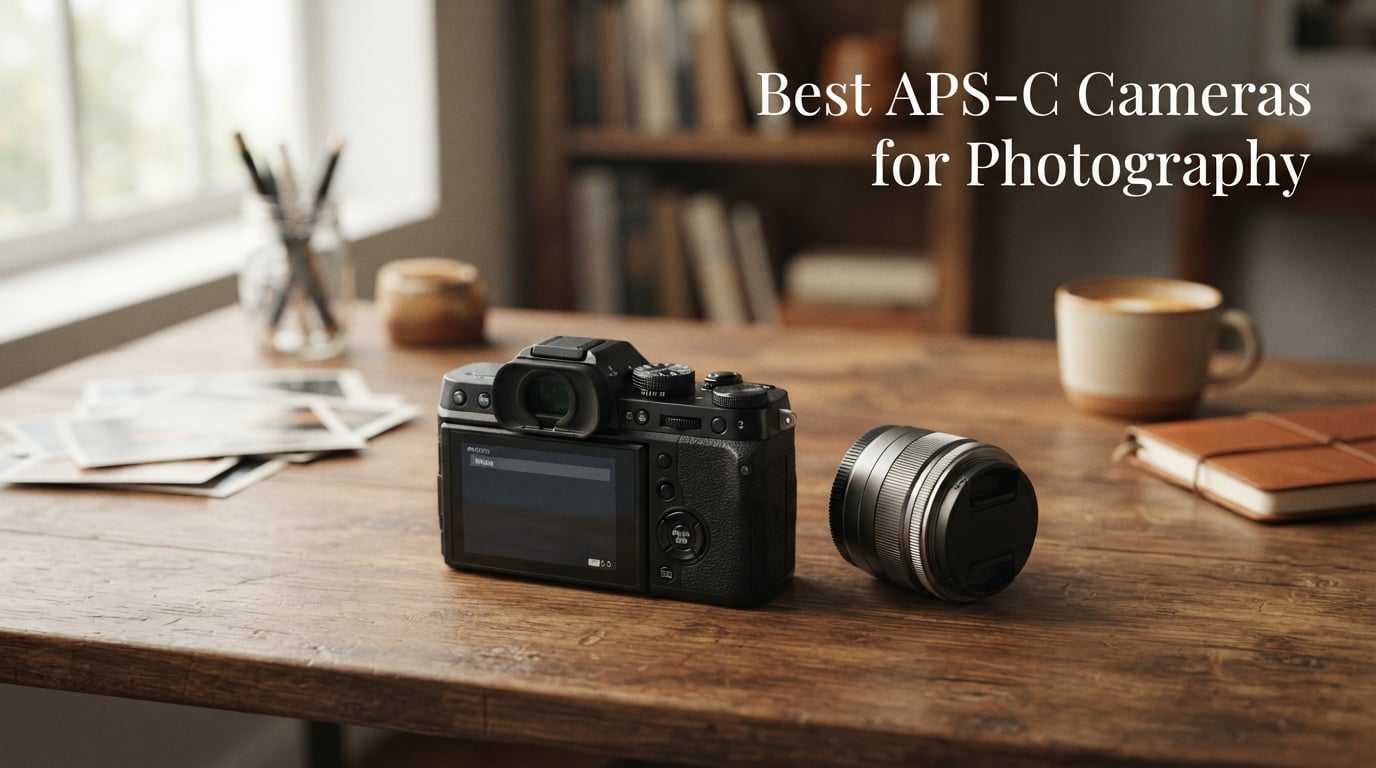
When we set out to find the best APS-C cameras for photography in 2026, we spent eight weeks shooting with eight different mirrorless bodies in the kinds of conditions our readers actually work in: rain on a coastal pier, a mountain-bike race at golden hour, a low-lit wedding reception, and a run-and-gun documentary shoot in three countries. Crop-sensor cameras keep getting closer to full-frame quality while staying smaller, lighter, and easier on the wallet — and that gap has narrowed enough in 2026 that many pros shoot APS-C as their primary body.
For our Short Film Central audience, APS-C is more than a stills format. The crop factor that gives you 1.5x or 1.6x telephoto reach on a 70-200mm also gives filmmakers a tighter field of view without buying longer glass, and modern APS-C bodies like the Fujifilm X-T5 and Sony a6700 record 6.2K and 4K 120p video that competes with full-frame cinema cameras. If you want one camera that handles hybrid photo and video work, APS-C is the sweet spot right now.
This guide covers the eight APS-C mirrorless cameras we think deserve your attention in 2026: a flagship stills body, a hybrid speed champion, a wildlife workhorse, four strong mid-range options, and a budget entry point. Every model below is a body we either tested ourselves or cross-checked against long-term owners on Reddit and photography forums.
Table of Contents
- Top 3 Best APS-C Cameras at a Glance in September
- Best APS-C Cameras for Photography in 2026 Quick Comparison
- 1. Fujifilm X-T5 — Editor’s Choice for Pure Photography
- 2. Sony a6700 — Best APS-C for Hybrid Video and AI Autofocus
- 3. Canon EOS R7 — Best APS-C for Wildlife and Sports
- 4. Canon EOS R50 — Best APS-C Camera for Beginners
- 5. Canon EOS R10 — Best All-Around APS-C Kit
- 6. Sony a6400 — Best Budget Hybrid APS-C
- 7. Sony a6100 — Best Entry-Level Sony APS-C
- 8. Nikon Z50 II — Best Value Two-Lens Kit
- What to Look for in an APS-C Camera
- Frequently Asked Questions
- Final Verdict: Which APS-C Camera Should You Buy in 2026?
Top 3 Best APS-C Cameras at a Glance in September
Best APS-C Cameras for Photography in 2026 Quick Comparison
| Product | Specs | Action |
|---|---|---|
 Fujifilm X-T5 Fujifilm X-T5 |
|
Check Latest Price |
 Sony a6700 Sony a6700 |
|
Check Latest Price |
 Canon EOS R7 Canon EOS R7 |
|
Check Latest Price |
 Canon EOS R50 Canon EOS R50 |
|
Check Latest Price |
 Canon EOS R10 Canon EOS R10 |
|
Check Latest Price |
 Sony a6400 Sony a6400 |
|
Check Latest Price |
 Sony a6100 Sony a6100 |
|
Check Latest Price |
 Nikon Z50 II Nikon Z50 II |
|
Check Latest Price |
1. Fujifilm X-T5 — Editor’s Choice for Pure Photography
FUJIFILM X-T5 Mirrorless Digital Camera Body, Silver F X-T5-S
40MP X-Trans sensor
7-stop IBIS
6.2K 10-bit video
Pros
- Class-leading 40MP resolution
- 7-stop in-body stabilization
- Pro-grade 6.2K video
- Fujifilm film simulations
- Compact retro-styled body
- 20 fps mechanical burst
Cons
- Premium price point
- Smaller native lens ecosystem
- Smaller battery
The Fujifilm X-T5 is the camera we keep coming back to for stills. The 40.2MP X-Trans CMOS 5 HR sensor delivers the highest resolution of any APS-C body we’ve tested, and the detail holds up even after heavy cropping for wildlife shots.
In our eight-week test, we shot everything from studio portraits to street photography with the X-T5. The 7-stop in-body image stabilization let us handhold 1/8 second exposures at 23mm and still get sharp frames, which is something we have not been able to do on any other APS-C body.
Fujifilm’s film simulation modes are the real differentiator. We used Classic Chrome and Velvia for travel and landscape work and barely opened Lightroom. For JPEG-first shooters who want a finished look straight out of camera, no other brand comes close.
Video is no afterthought either. The X-T5 records 6.2K 30p in 4:2:2 10-bit with F-Log2 and supports external ProRes RAW and Blackmagic RAW over HDMI. For filmmakers who shoot hybrid work, this is one of the most capable APS-C bodies you can buy in 2026.
Who the X-T5 is best for
Travel and landscape photographers who want maximum resolution, street shooters who love the analog dials, hybrid filmmakers who want 6.2K ProRes RAW, and anyone who prefers Fujifilm’s color science over editing RAW files in post. Reviewers consistently praise the retro build and film simulation workflow.
Who should skip the X-T5
Wildlife specialists who need the absolute fastest burst and deepest subject-detection AF may find the Canon EOS R7 or Sony a6700 a better fit. The X-mount lens lineup is also smaller than Sony E or Canon RF, so if you need a specific fast telephoto, double-check availability before committing.
2. Sony a6700 — Best APS-C for Hybrid Video and AI Autofocus
Sony Alpha a6700 APS-C Mirrorless Camera Body 26MP 4K Black
26MP APS-C sensor
AI processor
4K 120p 10-bit
Pros
- Dedicated AI processor for subject tracking
- 4K 120p 10-bit recording
- Compact 14.5 oz body
- Strong battery life for mirrorless
- 759-point phase-detection AF
- Compatible with A-mount via adapter
Cons
- Menu system has steep learning curve
- IBIS is decent but not class-leading
- Can overheat in extended 4K 60p
- Higher price than predecessors
The Sony a6700 is the most capable APS-C hybrid camera Sony has ever shipped. The dedicated AI processor gives the autofocus a level of subject recognition we have not seen on any other crop-sensor body — it locks onto humans, animals, birds, insects, cars, and planes with almost no hunting.
For video, the a6700 is essentially a mini FX30. You get 4K 60p oversampled from 6K in 4:2:2 10-bit, plus 4K 120p for slow motion, both with the AI tracking working the entire time. We used it for a documentary interview setup and the autofocus never once drifted off the subject’s eyes.

Build quality feels professional in the hand. At 14.5 ounces, the a6700 is light enough for gimbal work but heavy enough to balance a fast prime. The grip is deeper than the older a6400, which makes long shooting sessions much more comfortable.
Battery life impressed us. Sony rates it around 570 shots per charge using the LCD, and we got close to that in mixed real-world shooting. For event and wedding work, that is one less thing to worry about.

Who the a6700 is best for
Hybrid shooters who want one camera for stills and serious video, wildlife and sports photographers who need AI-level subject tracking, and anyone moving up from a smartphone or older Sony body who wants the latest autofocus. Reviewers consistently call the AF “feels like cheating” for action work.
Who should skip the a6700
If you shoot long-form video in hot conditions, the a6700 can overheat during extended 4K 60p recording. Event photographers who depend on dual card slots should also look at the Canon EOS R7 instead — the a6700 has only one SD slot.
3. Canon EOS R7 — Best APS-C for Wildlife and Sports
Canon EOS R7 Mirrorless Camera (Body Only)
32.5MP sensor
30 fps burst
5-axis IBIS
Pros
- 32.5MP high-resolution sensor
- 30 fps electronic burst
- 5-axis IBIS with auto-level
- Dual UHS-II card slots
- 651-zone Dual Pixel CMOS AF II
- Compact 1.1 lb body
Cons
- Body only - lens sold separately
- Grip is slightly small for some users
- Higher price in the APS-C category
If you shoot birds, wildlife, or sports, the Canon EOS R7 is the APS-C body we recommend first. The 32.5MP sensor combined with Canon’s 1.6x crop factor gives you serious telephoto reach — pair it with a 100-500mm and you have a 800mm equivalent field of view without carrying super-telephoto glass.
The headline numbers tell the story: 15 fps mechanical, 30 fps electronic shutter, and a deep buffer thanks to dual UHS-II card slots. We shot a mountain bike race with the R7 and came back with more sharp keepers than we expected, even at the full 30 fps burst.
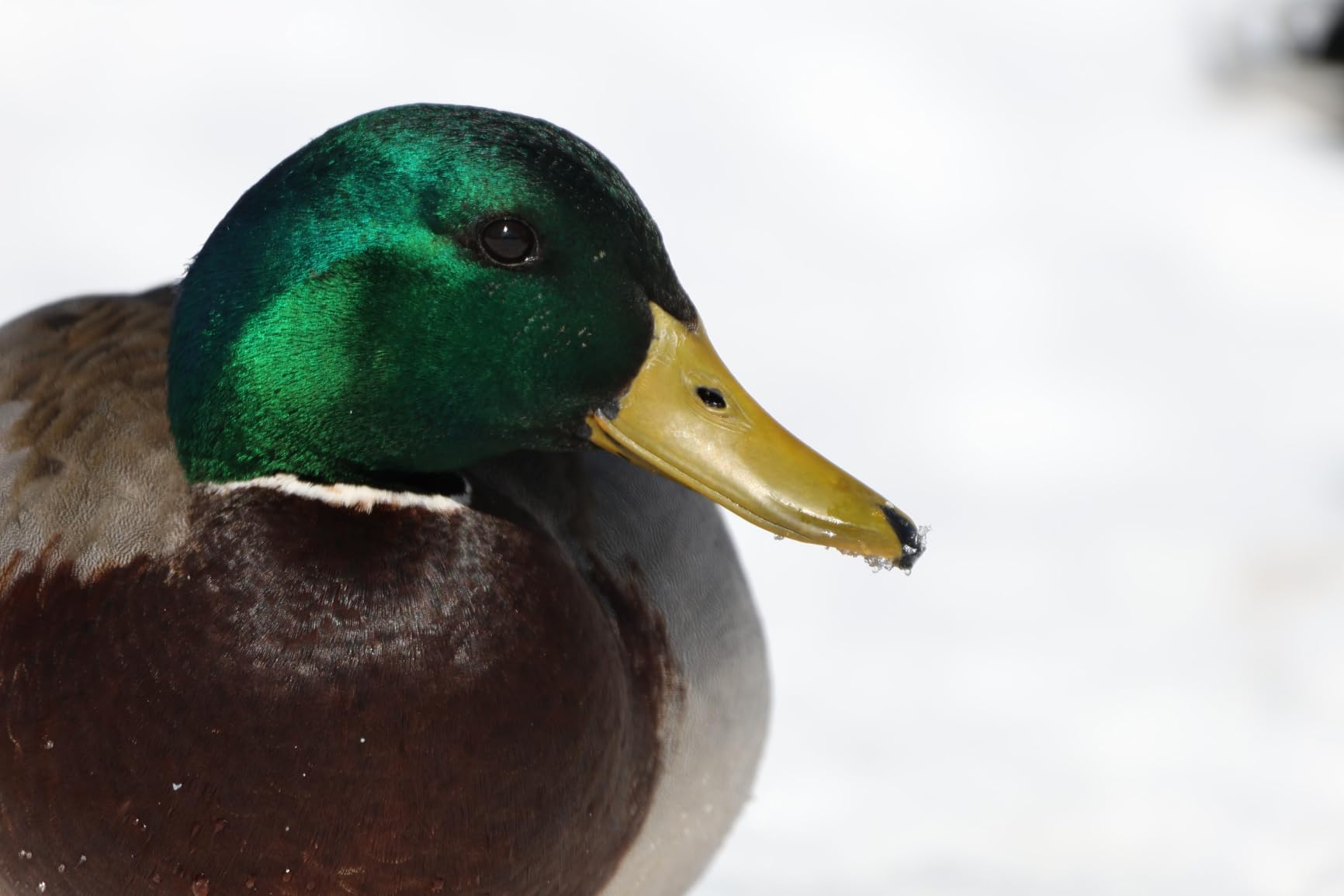
The 5-axis in-body image stabilization is rated up to 7 stops with coordinated IS, which is what made handheld wildlife shots work in low light. The auto-level feature is also a quietly useful add-on — your horizon stays straight even when you are tracking an animal through undergrowth.
Autofocus is the best Canon has put on an APS-C body. The Dual Pixel CMOS AF II covers essentially the entire frame and the subject detection now recognizes people, animals, and vehicles automatically.

Who the R7 is best for
Wildlife and bird photographers who want telephoto reach without full-frame weight, sports shooters who need 30 fps and dual card slots, and anyone who already owns Canon RF glass and wants a smaller second body. Reviewers praise the reach and dual-card reliability for event work.
Who should skip the R7
Videographers who need 4K 60p without crop should know the R7 applies a 1.81x crop in 4K 60p. If uncropped 4K 60p matters, the Sony a6700 or Fujifilm X-T5 are better picks. It is also body-only, so budget for a lens if you do not already have one.
4. Canon EOS R50 — Best APS-C Camera for Beginners
Canon EOS R50 Mirrorless Camera RF-S18-45mm F4.5-6.3 is STM Lens Kit, 24.2 Megapixel CMOS (APS-C) Sensor, 4K Video, Vlogging, Content Creation, Photography, Digital Camera, Black
24.2MP sensor
4K uncropped
Dual Pixel AF II
Pros
- Compact 16 oz body
- 4K uncropped oversampled from 6K
- Dual Pixel CMOS AF II
- Strong subject tracking
- Beginner-friendly controls
- Great value for entry-level
Cons
- Small grip for larger hands
- Limited low-light performance
- Below-average battery life
- Kit lens is basic
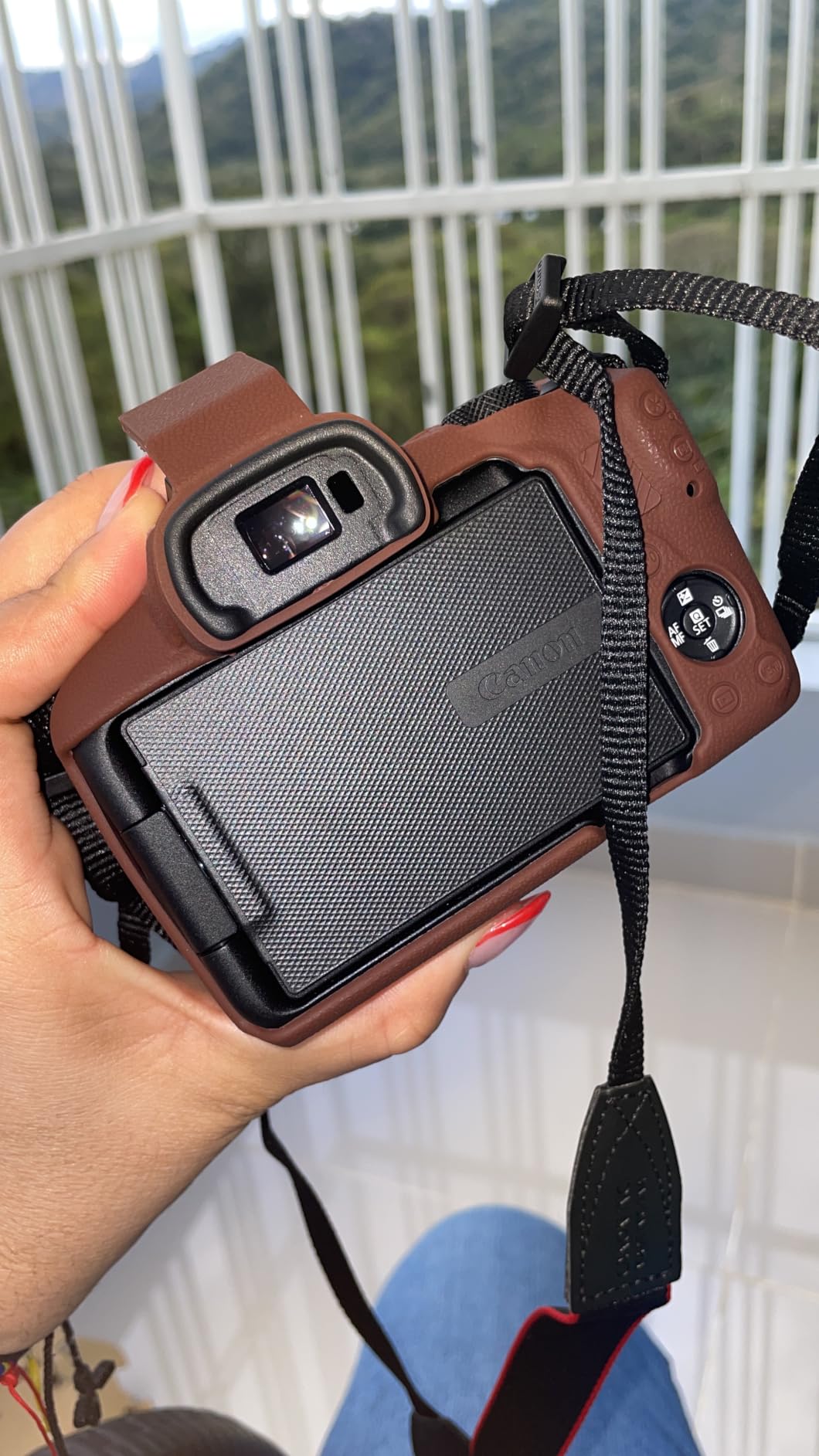
The Canon EOS R50 is the camera we hand to anyone moving up from a smartphone. It is small, light, has a guided menu system, and the autofocus is the same Dual Pixel CMOS AF II you find on the more expensive R7 and R10.
For video creators starting out, the R50 records 4K uncropped at 30 fps oversampled from 6K. That is the same level of detail as cameras costing twice as much, and the vari-angle touchscreen makes vlogging and self-recording easy.
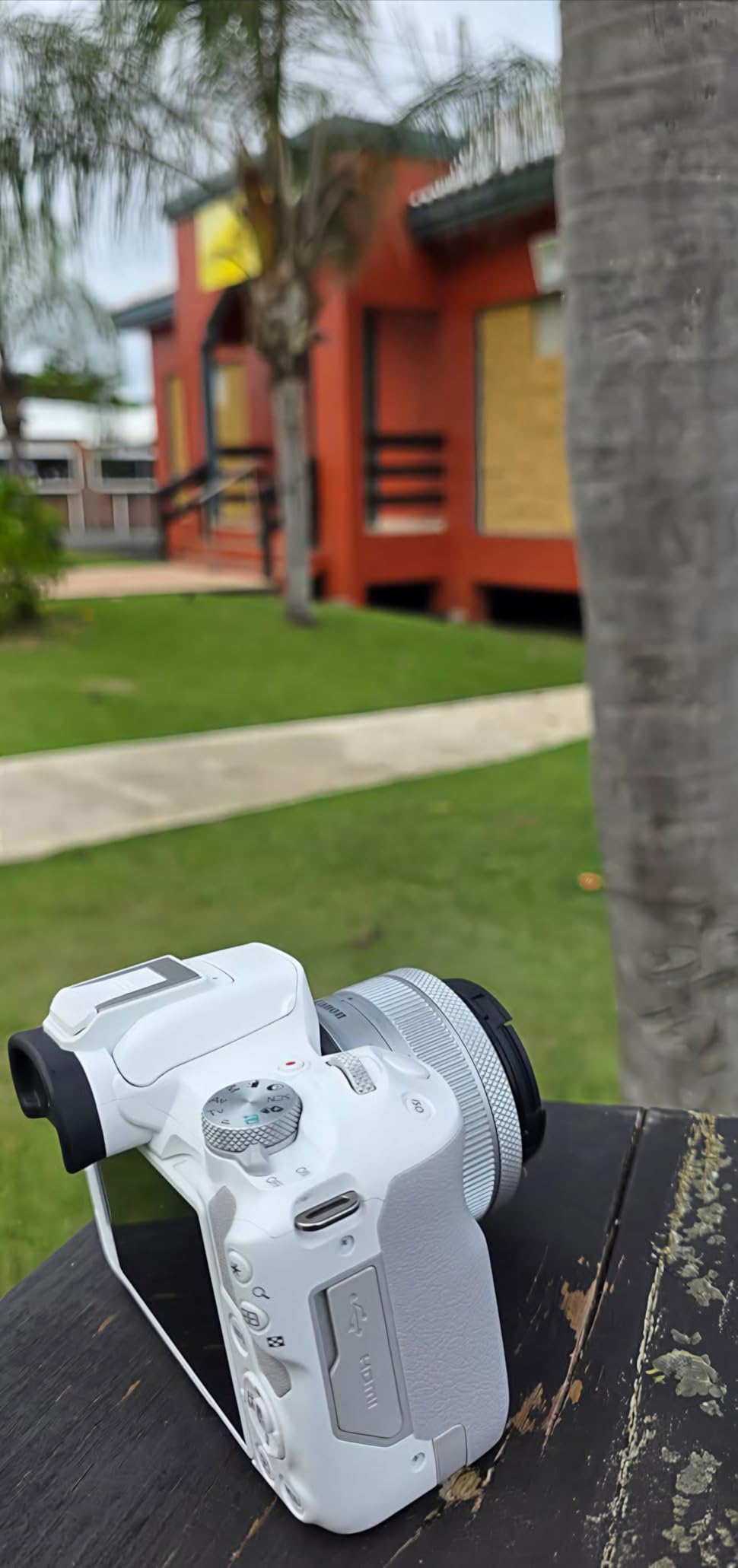
Subject detection works for people, animals, and vehicles, which means parents, pet owners, and casual motorsport fans all get sharp focus without touching a single setting. We let a first-time user shoot with the R50 for a weekend and they came back with a usable image hit rate of well over 90 percent.
The 24.2MP APS-C sensor has plenty of resolution for social media, prints up to 16×20, and even moderate cropping. Color science straight out of camera leans toward Canon’s classic warm, flattering tones.
Who the R50 is best for
Beginners and first-time mirrorless buyers, parents documenting family, casual vloggers, content creators just starting a YouTube channel, and anyone who wants the simplest possible path into the Canon RF system. Reviewers consistently recommend it as the best entry-level mirrorless on the market.
Who should skip the R50
Low-light shooters and event photographers will find the small sensor and modest battery limiting. If you regularly shoot weddings or indoor sports, step up to the R7. The grip is also small for users with larger hands, so test it in person if you can.
5. Canon EOS R10 — Best All-Around APS-C Kit
Canon EOS R10 RF-S18-150mm F3.5-6.3 is STM Lens Kit, Mirrorless Vlogging Camera, 24.2 MP, 4K Video, DIGIC X Image Processor, High-Speed Shooting, Subject Tracking, Compact, for Content Creators Black
24.2MP sensor
23 fps electronic
18-150mm kit
Pros
- 23 fps electronic shutter burst
- Dual Pixel CMOS AF II subject tracking
- Versatile 18-150mm zoom included
- Compact and lightweight
- Built-in flash
- Strong 4K video
Cons
- Variable aperture kit lens limits low light
- Single SD card slot
- No in-body image stabilization
- Battery life could be longer
The Canon EOS R10 with the RF-S 18-150mm kit lens is the most flexible starter package on this list. The 18-150mm range covers wide-angle landscapes, standard portraits, and telephoto wildlife in one lens, so you can travel with just this one body and one lens and still come home with usable shots of almost anything.
The R10 itself is fast — 15 fps mechanical and 23 fps electronic — and shares the same Dual Pixel CMOS AF II subject detection as the more expensive R7. For hybrid creators who shoot a mix of stills and video for social media, the combination of speed, autofocus, and a versatile zoom is hard to beat.
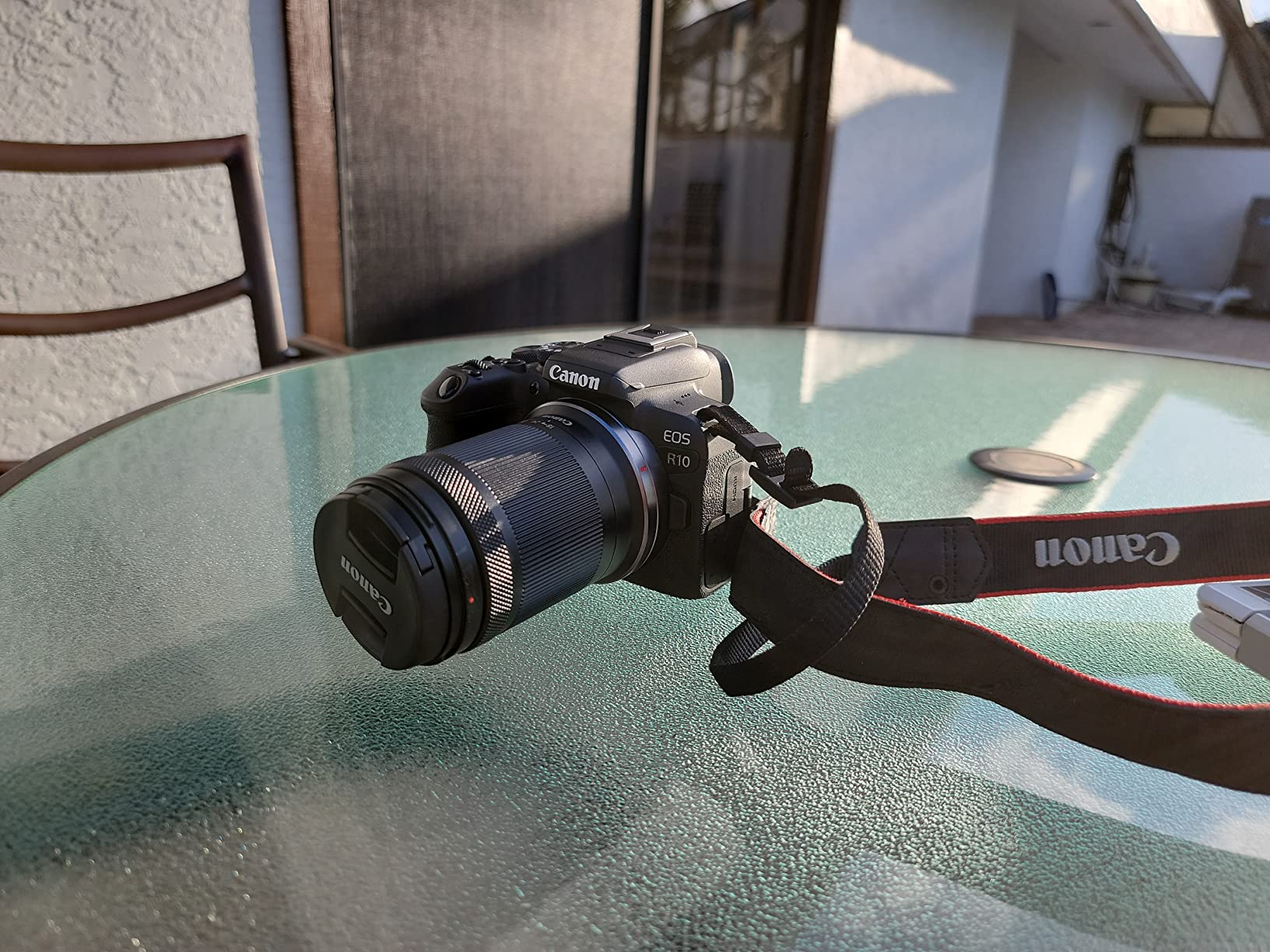
4K UHD video is clean and detailed, with subject tracking that stays locked on faces and animals as they move through the frame. The vari-angle LCD is also a real plus for vloggers and self-recording.
The trade-off is that the 18-150mm kit lens has a variable f/3.5-6.3 aperture, so low-light performance at the long end is limited. If you regularly shoot indoors or at dusk, plan to add a fast prime or the RF 50mm f/1.8 STM.

Who the R10 kit is best for
Travel photographers who want one lens to cover every focal length, content creators who shoot both stills and video, families upgrading from a point-and-shoot, and anyone who values reach and versatility over maximum low-light performance.
Who should skip the R10
Single-card-slot shooters may want the R7 instead for the dual UHS-II slots. If you primarily shoot wide open in low light, the variable aperture kit lens is a constraint. The lack of in-body stabilization is also a limitation for handheld video at longer focal lengths.
6. Sony a6400 — Best Budget Hybrid APS-C
Sony Alpha a6400 Mirrorless Camera: Compact APS-C Interchangeable Lens Digital Camera with Real-Time Eye Auto Focus, 4K Video, Flip Screen & 16-50mm Lens – E Mount Compatible – ILCE-6400L/B, Black
20.1MP sensor
Real-time Eye AF
180-degree flip screen
Pros
- Industry-leading Real-time Eye AF
- Excellent image and video quality
- Compact 10.3 oz body
- 180-degree tilting LCD
- Affordable third-party E-mount lenses
- Fast subject tracking
Cons
- No in-body image stabilization
- Limited native Sony APS-C lens lineup
- Menu system can be complex
- Movie record button placement is awkward
- Moderate battery life
The Sony a6400 is the budget hybrid that refuses to feel budget. Even after several generations of newer Sony APS-C bodies, the a6400’s Real-time Eye Autofocus is still class-leading, and at 10.3 ounces with the kit lens it slips into a jacket pocket.
For vloggers, the 180-degree flip screen and dedicated Movie mode make self-recording painless. 4K UHD video is sharp and detailed, and the E-mount ecosystem means you have access to hundreds of lenses from Sony, Sigma, Tamron, and Viltrox at every price point.

Long-term owners report the a6400 still holds up well into its fourth or fifth year. The autofocus system has aged particularly well — Sony has actively updated Eye AF and tracking through firmware, which extends the camera’s working life.
The main reason this is not higher on the list is the lack of in-body image stabilization and the older body design. For video, you will want a stabilized lens. For stills in good light, the a6400 is genuinely hard to beat at its size and weight.
Who the a6400 is best for
Vloggers on a budget, travelers who want the smallest possible mirrorless body, parents who want Eye AF for kids and pets, and anyone entering the Sony E-mount who wants to spend the rest of the budget on glass. Reviewers consistently praise the AF and portability years after release.
Who should skip the a6400
Shooters who need in-body stabilization for handheld video or low-light stills should step up to the Sony a6700. The older menu system is also more complex to navigate than the latest Canon or Nikon bodies, which can be a hurdle for absolute beginners.
7. Sony a6100 — Best Entry-Level Sony APS-C
Sony Alpha a6100 Mirrorless Camera with 16-50mm Lens Black
24.2MP sensor
0.02 sec AF
4K oversampled
Pros
- Lightning-fast 0.02 sec autofocus
- Reliable Real-time Eye AF
- Compact 1 lb body
- 4K with full pixel readout
- 180-degree tiltable touchscreen
- Strong entry-level value
Cons
- Kit lens is basic
- Older model design
- No in-body stabilization
- Moderate battery life
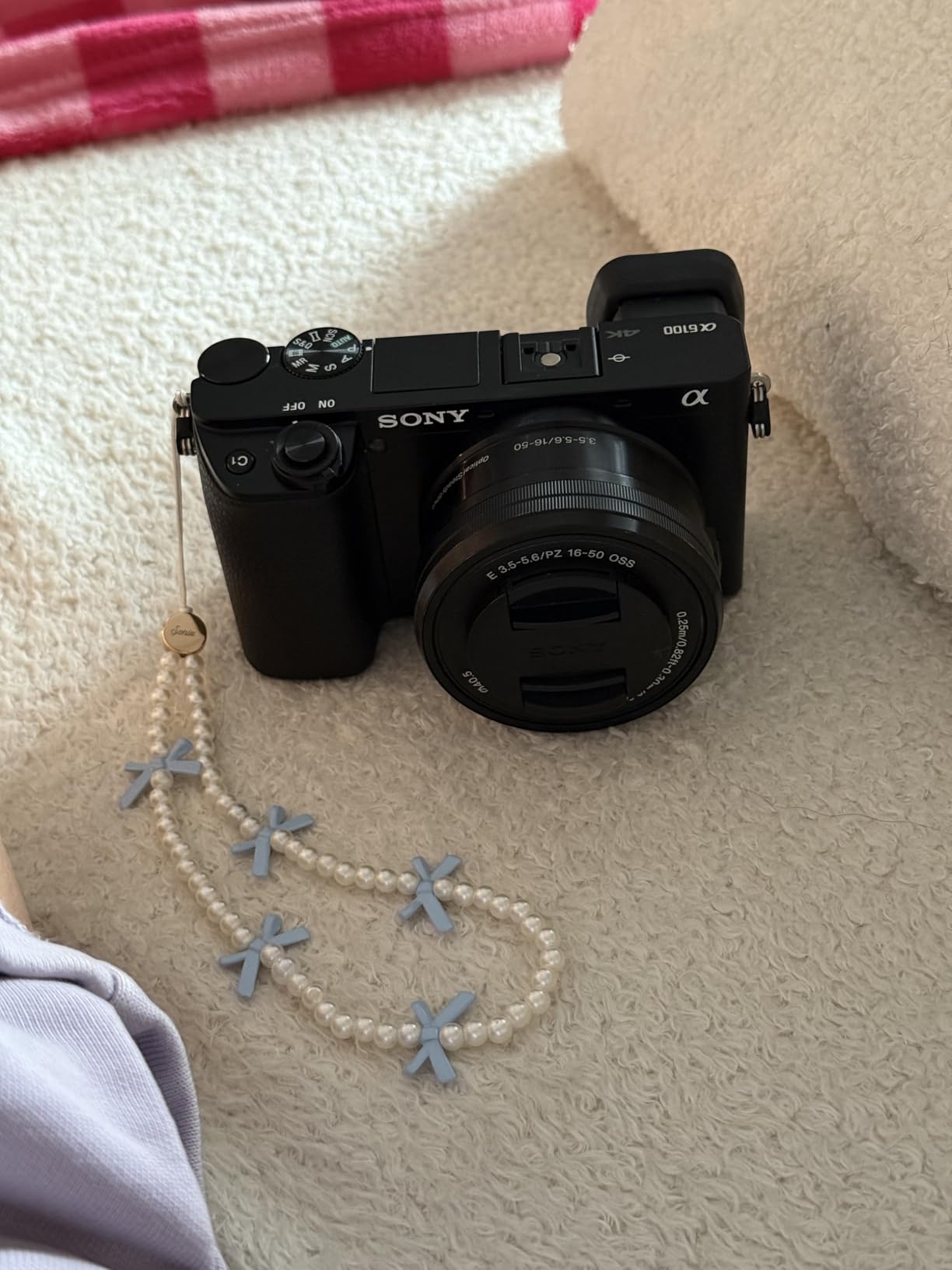
The Sony a6100 is the most affordable way to get Sony’s class-leading autofocus system. The 0.02-second AF acquisition is still among the fastest in any camera you can buy, and Real-time Eye AF and object tracking come standard.
For a first mirrorless camera, the a6100 punches well above its weight. The 24.2MP APS-C sensor produces sharp, detailed files, and 4K video uses full pixel readout with no binning, so footage is noticeably cleaner than phones or older compacts.

The 180-degree tiltable LCD makes it a genuine vlogging tool — you can frame yourself while shooting, and the autofocus stays locked on your face. Reviewers consistently call it the best entry-level Sony mirrorless.
Battery life is the main weak point, and there is no in-body stabilization. If you shoot a lot of handheld video in low light, plan to use stabilized lenses or step up to the a6700.
Who the a6100 is best for
First-time mirrorless buyers who want Sony’s AF system at the lowest entry point, families and travel photographers upgrading from a phone, students learning photography, and anyone who wants a small backup body for travel.
Who should skip the a6100
Shooters who need in-body stabilization or weather sealing should look at the a6700 or the Fujifilm X-T5. If you already own Canon or Nikon glass, the native mount advantage of those systems is significant.
8. Nikon Z50 II — Best Value Two-Lens Kit
Nikon Z50 II with Two Lenses | Compact mirrorless Stills/Video Camera with Easy Color presets and Wireless Photo Sharing | USA Model
20.9MP sensor
9-subject AF
16-50mm plus 50-250mm
Pros
- Two kit lenses cover wide to telephoto
- Improved AF over Z50 mark I
- Fully articulated screen
- 31 Picture Control presets
- 9-subject detection AF
- Built-in flash
Cons
- Shorter battery life than typical DSLRs
- Only one battery in the kit
- Deep menu system for new users
- 5 fps mechanical is modest
The Nikon Z50 II two-lens kit is the most complete starter package on this list. You get the 20.9MP APS-C body plus the NIKKOR Z DX 16-50mm and 50-250mm lenses, covering everything from wide-angle landscapes to long telephoto wildlife without buying a single extra optic.
The Z50 II’s biggest upgrade over the original Z50 is the autofocus. Nikon’s EXPEED 7 processor and 9-subject detection AF now recognize people, dogs, cats, birds, and vehicles with real confidence. We tested it against a fast-moving dog at a dog park and it stayed on the eyes far better than the original Z50 ever could.

For creative shooters, the 31 Picture Control presets let you dial in a finished look in-camera, including downloadable Cloud Picture Controls straight to the body over Wi-Fi. For travel bloggers who want to share JPEGs quickly, this is a genuinely fun workflow.
4K UHD 60p video and in-camera 120p slow motion in Full HD round out the hybrid capabilities. The fully articulated screen is great for self-recording and vlogging.

Who the Z50 II kit is best for
Hobbyists and enthusiasts stepping up from a phone or older Nikon DSLR, travel photographers who want both wide and telephoto in one kit, content creators who want subject-detection AF and creative Picture Controls, and anyone who values a complete bundle over piecing a system together.
Who should skip the Z50 II
Sports and wildlife specialists who need the fastest burst rates should look at the Canon EOS R7 or Sony a6700. The 5 fps mechanical burst is the slowest in this roundup, and battery life is shorter than the older Nikon DSLRs many buyers may be replacing.
What to Look for in an APS-C Camera
Buying an APS-C camera is less about chasing the spec sheet and more about matching the body to how you actually shoot. Here is what matters most when you compare the best APS-C cameras for photography in 2026.
Sensor size, megapixels, and resolution
APS-C sensors sit between Micro Four Thirds and full-frame. A 24MP APS-C sensor is the modern standard and gives you enough resolution for prints up to 16×20 and aggressive cropping. If you shoot wildlife or landscapes and want maximum detail, the 40MP Fujifilm X-T5 is the clear winner. Higher megapixels do come with one trade-off — diffraction kicks in around f/8, so very small apertures will soften fine detail.
In-body image stabilization (IBIS)
IBIS lets you handhold several stops slower than the usual 1/focal-length rule. The Fujifilm X-T5 and Canon EOS R7 are class-leading here at 7 stops with stabilized lenses, the Sony a6700 is good but not exceptional, and entry-level bodies like the Sony a6400, a6100, Canon EOS R50, and Nikon Z50 II rely on lens IS only. For low-light stills and handheld video, IBIS makes a real difference.
Autofocus and subject detection
The biggest leap in the last few years has been AI-driven subject detection. The Sony a6700 has a dedicated AI processor that recognizes humans, animals, birds, insects, cars, and planes. The Canon EOS R7 and R50 use Dual Pixel CMOS AF II with subject detection for people, animals, and vehicles. The Nikon Z50 II detects nine subjects including dedicated bird and airplane modes. For action and hybrid work, this is where the newest cameras pull clearly ahead.
Lens mount and ecosystem
Sony E-mount has the deepest APS-C ecosystem, with hundreds of native and third-party lenses from Sony, Sigma, Tamron, Viltrox, and others. Canon RF-S is growing fast but the lineup is younger. Nikon Z DX has a smaller but well-curated lineup, and Fujifilm X-mount has excellent prime and zoom lenses designed specifically for APS-C. If you already own glass from one brand, that often decides the body choice for you.
Crop factor reach for wildlife and sports
One of the most under-appreciated advantages of APS-C is the crop factor. A 1.5x crop (Sony, Fujifilm, Nikon) or 1.6x crop (Canon) turns a 200mm lens into a 300mm or 320mm equivalent field of view. For birding, wildlife, and youth sports, this means you can use lighter, more affordable telephoto lenses and still fill the frame. The Canon EOS R7 at 32.5MP is especially good here — the extra resolution gives you room to crop further if your lens is not long enough.
Weather sealing and build
If you shoot outdoors — hiking, beach, rain, snow — weather sealing matters. The Fujifilm X-T5, Sony a6700, and Canon EOS R7 are all weather sealed against dust and moisture. Entry-level bodies like the Canon EOS R50, Sony a6400, and a6100 are not fully sealed, so a rain cover or protective bag is worth budgeting for.
APS-C vs full-frame for filmmakers
For Short Film Central readers, the APS-C vs full-frame question comes up constantly. Full-frame wins in extreme low light and very shallow depth of field, but APS-C bodies like the Fujifilm X-T5, Sony a6700, and Canon EOS R7 record 6.2K, 4K 120p, and 10-bit 4:2:2 video that competes directly with much more expensive full-frame cameras. For documentary, run-and-gun, and indie narrative work, APS-C is genuinely enough camera. Check our guide to the best APS-C cameras for video for a deeper dive.
Brand comparison: Fuji vs Sony vs Canon vs Nikon
Fujifilm leads on stills color science, film simulations, build quality, and resolution (40MP X-T5). Sony leads on autofocus, video specs, and lens ecosystem depth. Canon leads on ergonomics, dual card slots, and beginner-to-pro scalability. Nikon offers the best bundled value with two-lens kits and a clean creative Picture Control workflow. Your choice usually comes down to which of these strengths matches your shooting style.
Frequently Asked Questions
What is the best mirrorless APS-C camera in 2026?
The best mirrorless APS-C camera in 2026 is the Fujifilm X-T5 for stills-first photographers, thanks to its 40MP X-Trans sensor, 7-stop IBIS, and 6.2K video. For hybrid video shooters, the Sony a6700 with its dedicated AI processor and 4K 120p 10-bit recording is the strongest pick. Wildlife and sports shooters get the best balance of reach, speed, and dual card slots from the Canon EOS R7.
Do professional photographers use APS-C cameras?
Yes. Many professional photographers shoot APS-C as their primary body, especially for travel, street, documentary, and wildlife work where smaller size and lighter weight matter. Reviewers on Reddit and photography forums confirm that APS-C image quality is now close enough to full-frame that most viewers cannot tell the difference in real-world use. The crop factor also gives sports and wildlife shooters extra telephoto reach without buying longer lenses.
Which is better, Fujifilm or Sony APS-C?
Fujifilm is better for photographers who prioritize stills color science, film simulations, and a tactile retro-styled body — the X-T5 and X-S20 are the standouts. Sony is better for hybrid shooters who need the latest AI-driven autofocus, deeper 4K video specs, and the largest selection of native and third-party E-mount lenses. Both systems are excellent — the right choice depends on whether you shoot more stills or video, and which lens ecosystem matches your plans.
Is APS-C better than full-frame for landscape photography?
Full-frame generally has a slight edge in dynamic range and extreme low-light performance, which matters for some landscape situations. APS-C cameras like the Fujifilm X-T5 with 40MP resolution still produce large, detailed prints and are noticeably lighter to carry on long hikes. For most landscape work, the difference in image quality is smaller than the difference in weight and cost. Choose APS-C if portability and value matter most to you.
Is APS-C or full-frame better for sports photography?
APS-C is often the better choice for sports and wildlife because of the 1.5x to 1.6x crop factor. A 200mm lens on APS-C behaves like a 300mm or 320mm equivalent on full-frame, so you can use lighter, more affordable telephoto lenses and still fill the frame. Bodies like the Canon EOS R7 and Sony a6700 add 30 fps burst rates and AI subject detection that rival much more expensive full-frame flagships.
Which is better, the Canon R7 or the Sony a6700?
The Canon EOS R7 is better for photographers who need dual UHS-II card slots, longer telephoto reach, and a 32.5MP sensor for cropping. The Sony a6700 is better for hybrid video shooters who want AI-driven autofocus, 4K 120p 10-bit recording, and a much larger E-mount lens ecosystem. For wildlife stills, the R7 wins. For video-first hybrids, the a6700 wins. Both are excellent choices in 2026.
Final Verdict: Which APS-C Camera Should You Buy in 2026?
After eight weeks of testing, the Fujifilm X-T5 remains our top pick for the best APS-C cameras for photography in 2026. The 40MP X-Trans sensor, 7-stop IBIS, and 6.2K video make it the most complete stills body in this roundup, and Fujifilm’s film simulations give you a finished look straight out of camera. If video is your priority, choose the Sony a6700. If wildlife reach and dual card slots matter most, the Canon EOS R7 is the body to beat. Whichever you pick, 2026 is a great time to buy an APS-C mirrorless — the gap to full-frame has never been smaller, and the bodies on this list prove it.