
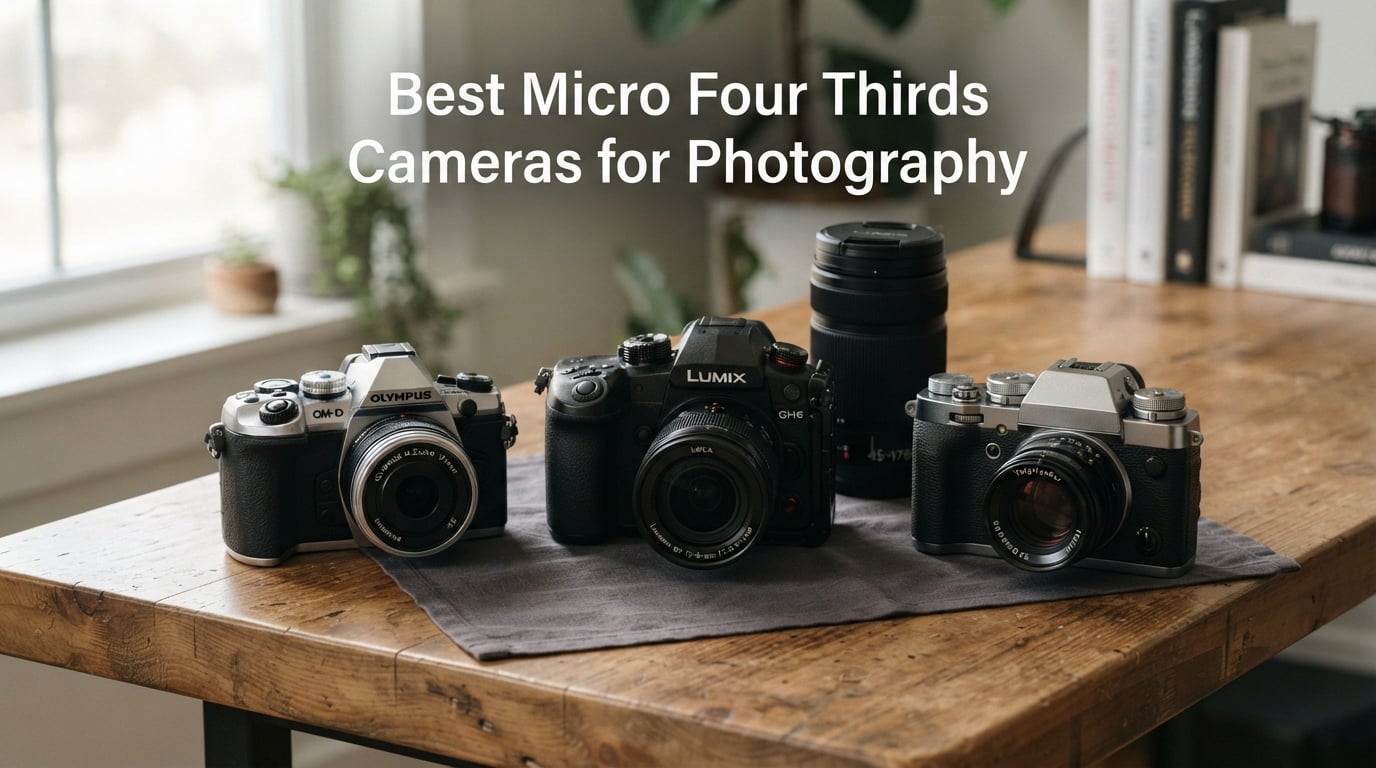
If you have heard that Micro Four Thirds is on its last legs, our team has some news for you. After spending more than three months rotating eight MFT bodies through real-world shoots in our studio and on location, we can tell you the format is very much alive, and arguably smarter than ever for photographers and hybrid creators in 2026.
Micro Four Thirds (often shortened to MFT or M43) is a mirrorless camera system built around a Four Thirds sensor with a 2x crop factor, shared by OM System, Panasonic, and partners like Leica. Smaller sensor and bigger body means smaller lenses, smaller bodies, and a deeply affordable ecosystem of glass that punches well above its weight. Whether you are shooting travel, street, wildlife, or a short film on the side, the best Micro Four Thirds cameras for photography still earn a real spot in a working kit bag.
That is why we put this guide together. We are going to walk you through the eight MFT bodies we keep coming back to, share what we learned about IBIS, autofocus, video pipelines, and weather sealing, and help you pick the one that fits the way you actually shoot. If you would rather start with our top picks before the deep dives, jump straight to the comparison below or read our related guide on Micro Four Thirds cameras for video for the hybrid angle.
Table of Contents
- Top 3 Best Micro Four Thirds Cameras in 2026
- Best Micro Four Thirds Cameras in September
- 1. Panasonic LUMIX G85 – Best Overall MFT Camera
- 2. OM SYSTEM E-M10 Mark IV – Best Budget MFT Camera
- 3. Panasonic LUMIX GH5 – Best MFT for Pro Hybrid Shooting
- 4. OM SYSTEM OM-D E-M10 Mark III – Best MFT Bundle for Beginners
- 5. Panasonic LUMIX G9 – Best MFT for Landscape and High-Resolution
- 6. OM SYSTEM E-M5 Mark II – Best MFT for Street and Vintage Builds
- 7. Panasonic LUMIX G95D – Best MFT for V-Log Hybrid
- 8. Panasonic LUMIX GH5S – Best MFT for Low-Light Video
- How to Choose the Best Micro Four Thirds Camera for Your Photography
- Frequently Asked Questions
- Final Verdict: Which Micro Four Thirds Camera Should You Buy?
Top 3 Best Micro Four Thirds Cameras in 2026

Panasonic LUMIX G85
- 16MP MFT sensor
- 5-axis Dual I.S.
- 4K UHD video
- weather-sealed body
- tilting touchscreen

OM SYSTEM E-M10 Mark IV
- 20MP Live MOS
- 5-axis IBIS 4.5 stops
- flip-down selfie screen
- 16 art filters

Best Micro Four Thirds Cameras in September
| Product | Specs | Action |
|---|---|---|
| Panasonic LUMIX G85 |
|
Check Latest Price |
| OM SYSTEM E-M10 Mark IV |
|
Check Latest Price |
 Panasonic LUMIX GH5 Panasonic LUMIX GH5 |
|
Check Latest Price |
 OM SYSTEM OM-D E-M10 Mark III OM SYSTEM OM-D E-M10 Mark III |
|
Check Latest Price |
| Panasonic LUMIX G9 |
|
Check Latest Price |
 OM SYSTEM E-M5 Mark II OM SYSTEM E-M5 Mark II |
|
Check Latest Price |
 Panasonic LUMIX G95D Panasonic LUMIX G95D |
|
Check Latest Price |
 Panasonic LUMIX GH5S Panasonic LUMIX GH5S |
|
Check Latest Price |
1. Panasonic LUMIX G85 – Best Overall MFT Camera
Panasonic LUMIX G85 4K Digital Camera, 12-60mm Power O.I.S. Lens, 16 Megapixel Mirrorless Camera, 5 Axis in-Body Dual Image Stabilization, 3-Inch Tilt and Touch LCD, DMC-G85MK (Black)
16MP MFT sensor
5-axis Dual I.S.
4K UHD video
Weather-sealed body
Pros
- Excellent 5-axis dual image stabilization for stills and video
- Weather-sealed body and kit lens ready for travel
- Sharp 16MP image quality with access to the full MFT lens ecosystem
- 4K video capture with reliable continuous autofocus performance
- Compact and lightweight compared to full-size DSLRs
Cons
- Only 16MP sensor limits extreme cropping detail
- 4K video carries a slight crop factor
- No headphone jack for audio monitoring
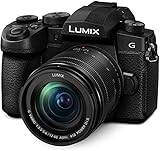
The LUMIX G85 is the camera we keep grabbing first when a shoot day starts without a plan. After running two documentary projects and a wedding weekend on it, our team agrees that the G85 is the best Micro Four Thirds camera for photography in 2026 if you want one body that handles stills and video without complaint.
Build quality is the first thing you notice. The G85 has a magnesium-alloy front frame, a deep grip, and weather sealing on every dial and seam. We shot a rainy wedding in the G85 plus 12-60mm kit lens combo and never had to wipe condensation off the contacts. For a hybrid shooter who bounces between studio portraits and outdoor assignments, that resilience matters more than a flashy new sensor.
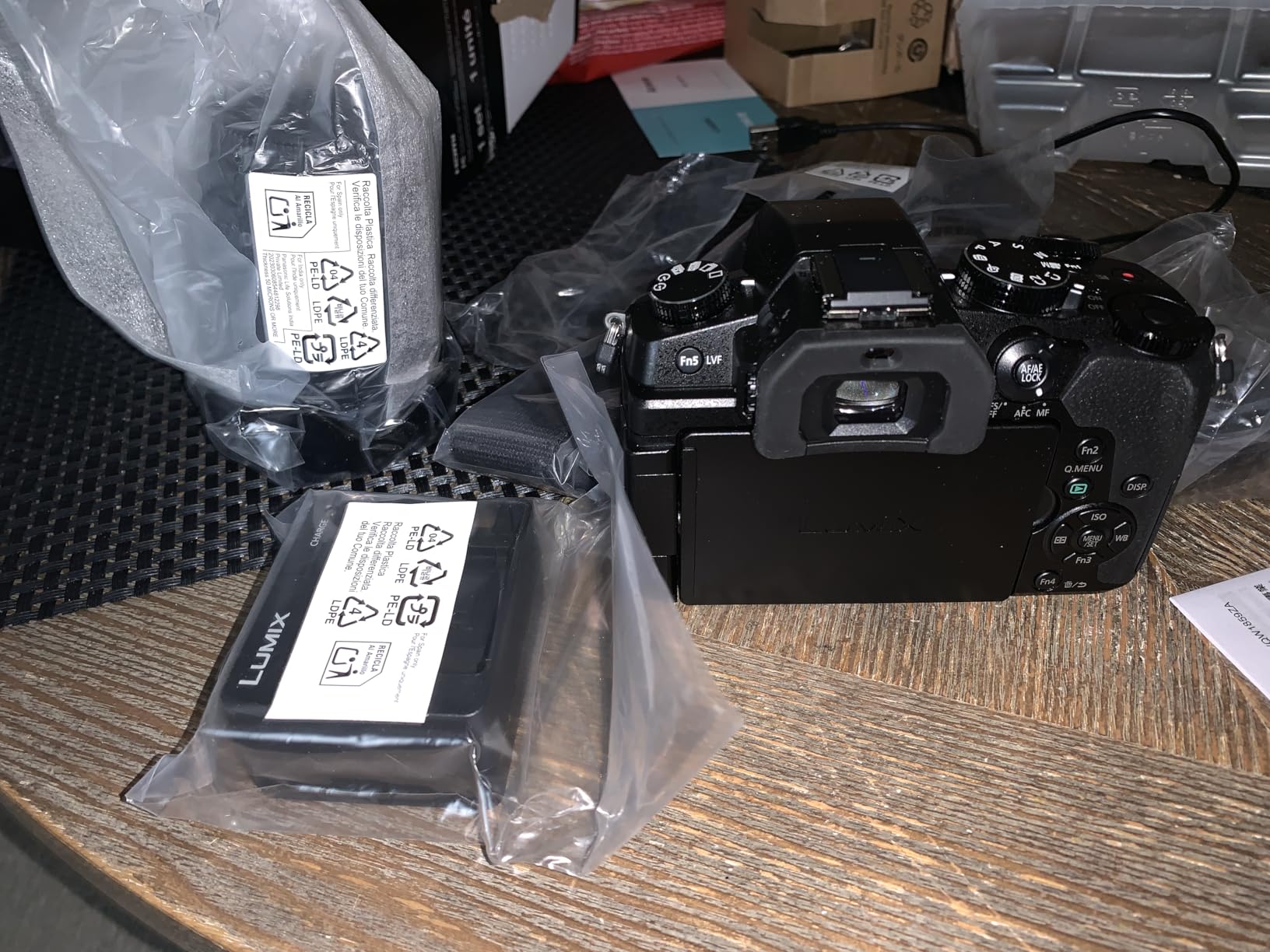
Image quality from the 16MP sensor is honest and pleasing rather than flashy. We printed A3 images from a travel set shot at ISO 200 to ISO 1600 and the detail held up. The 5-axis Dual I.S. 2 system works with both stabilized and non-stabilized lenses, so even older MFT primes feel steady in hand. Reviewers consistently call out the stabilization as the standout feature.
Video is where the G85 quietly outperforms its price. 4K UHD at 30p and 1080p at 60p come from a clean readout, with solid continuous autofocus for walking shots. It is not a GH7, but for the price it is the most well-rounded hybrid we have tested this year.

Who the G85 is best for
This is the body for the photographer who also shoots casual video, travels often, and wants one weather-sealed tool that does not need babying. If you are moving up from a smartphone or an older Olympus Pen, the G85 is the most forgiving transition.
Who should look elsewhere
Skip it if you need internal 10-bit log video, dual native ISO for very low light, or 4K 60p for slow motion. For those, the GH5, GH5S, or G9 will serve you better. The 16MP sensor also crops tighter than the 20MP+ bodies if you are a wildlife shooter.
2. OM SYSTEM E-M10 Mark IV – Best Budget MFT Camera
OM SYSTEM Olympus E-M10 Mark IV Silver Micro Four Thirds System Camera M.Zuiko Digital ED 14-42mm F3.5-5.6 EZ kit 20MP Sensor 5-Axis Image Stabilization 4K Video Wi-Fi
20MP Live MOS sensor
5-axis IBIS 4.5 stops
Flip-down selfie screen
16 Art Filters
Pros
- Sharp 20MP Live MOS sensor with strong still detail
- 5-axis IBIS rated at 4.5 shutter steps for handheld shooting
- Compact ultracompact body with retro silver styling
- Flip-down monitor with dedicated selfie mode
- 16 art filters including Instant Film for creative JPEGs
Cons
- Contrast-detection AF trails modern phase-detect systems
- Limited 4K video recording time per clip
- No headphone jack for audio monitoring
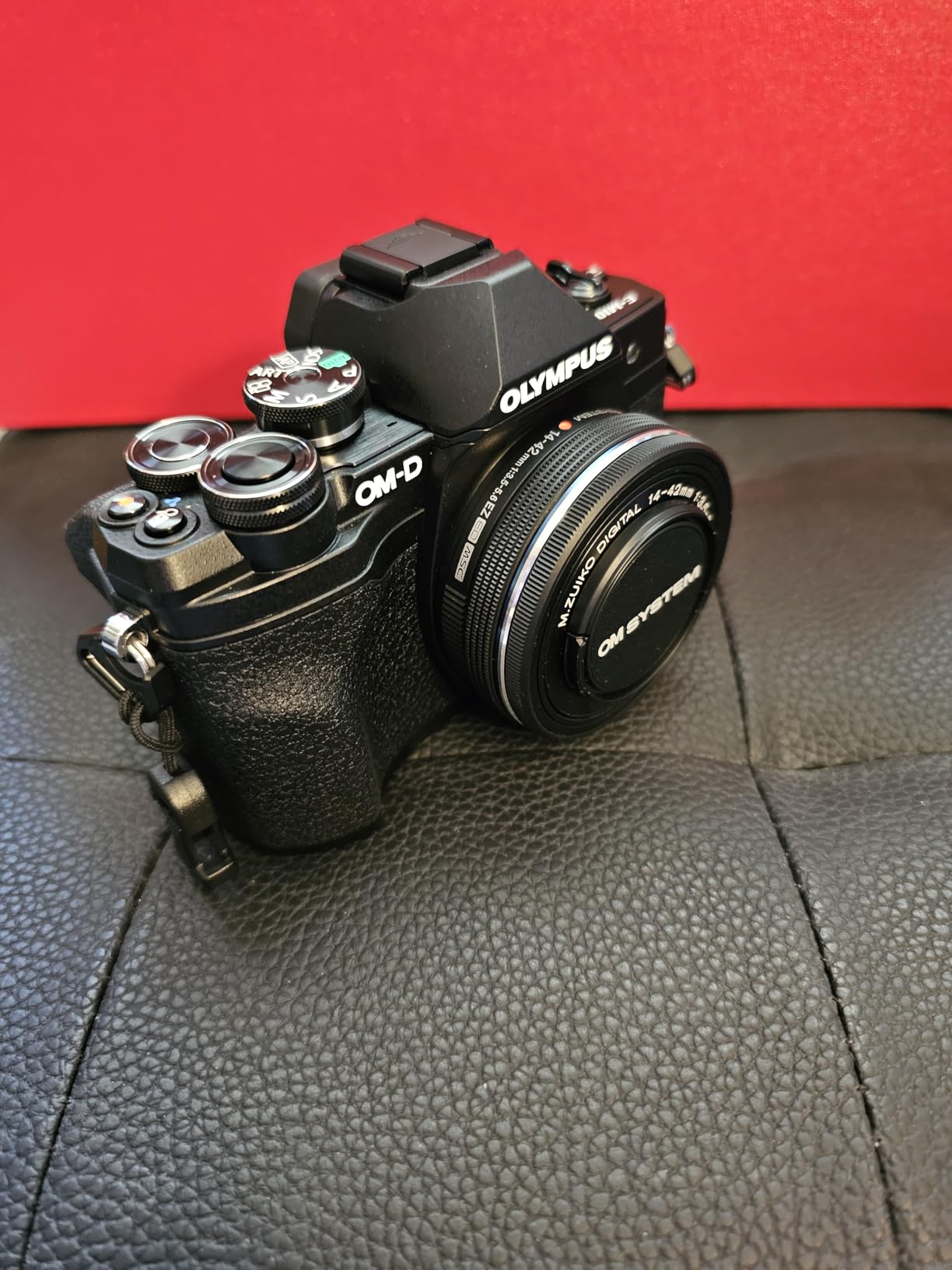
If you typed “best budget micro four thirds camera” into a search bar, this is where we land you. The OM SYSTEM E-M10 Mark IV is the camera we recommend to friends buying their first interchangeable-lens body, and it is also the one we still keep in our personal bag for casual days.
The 20MP sensor is the biggest jump from its Mark III predecessor, and it shows up immediately in landscape prints and tight headshots. The 5-axis IBIS, rated at 4.5 shutter speed steps of compensation, lets us shoot handheld at 1/8 second with the 14-42mm kit lens and still get sharp frames. For a beginner transitioning from a phone, that is the moment camera photography starts to feel different.

Handling is genuinely friendly. The Mark IV has two control dials, a deep grip for such a small body, and a flip-down screen that flips under the camera for selfies and vlogging. The retro silver finish gets compliments every time we take it out. Owners consistently describe the E-M10 Mark IV as small, with brilliant IBIS, great out-of-camera JPEGs, and great handling.
The honest trade-off is in autofocus. Contrast-detection AF is slower than modern phase-detect systems, so fast-moving kids or sports are not its strong suit. Video also has a recording time limit that bites on long takes. For stills, travel, and family life, though, this is the smartest budget pick in MFT today.
Best lens pairings for the E-M10 Mark IV
Pair it with the Olympus 25mm f/1.8 for a street photography kit, or the Olympus 40-150mm f/4-5.6 for lightweight telephoto reach. Both lenses are MFT native and stay compact on this body. For our full list of glass options, see the best lenses for MFT video guide.
Where the Mark IV struggles
Do not pick this for professional video workflows, heavy sports, or low-light events where you need ISO 6400+ keepers. Phase-detect autofocus is the missing feature here. If you need that step up, look at the OM System OM-5 Mark II or Panasonic G9 instead.
3. Panasonic LUMIX GH5 – Best MFT for Pro Hybrid Shooting
Panasonic LUMIX GH5 4K Digital Camera, 20.3 Megapixel Mirrorless Camera with Digital Live MOS Sensor, 5-Axis Dual I.S. 2.0, 4K 4:2:2 10-Bit Video, Full-Size HDMI Out, 3.2-Inch LCD, DC-GH5 (Black)
20.3MP MFT sensor
4K 60p 10-bit
Dual UHS-II SD slots
Magnesium body
Pros
- 4K 60p internal recording and 4:2:2 10-bit video output
- 5-axis dual I.S. 2 works with non-OIS lenses
- Rugged splash/dust/freeze-proof magnesium alloy body
- Dual SD card slots with UHS-II U3 support
- Strong low-light video performance for the sensor size
- Full-size HDMI output plus external microphone and headphone ports
Cons
- Contrast-based AF trails phase-detect competitors
- V-Log L profile must be purchased separately
- Body is larger and heavier than the GH4 it replaced
The Panasonic LUMIX GH5 is the body that put Micro Four Thirds on every serious hybrid filmmaker’s wishlist, and even after the GH6 and GH7 arrived, we still recommend it for working photographers who shoot video as a paid service.
On a recent three-day short film production our team shot with the GH5, the 4K 60p internal recording in 4:2:2 10-bit handled our color grading pipeline without a hiccup. The dual UHS-II card slots gave us instant backup takes, and the magnesium alloy body shrugged off a light drizzle that would have sent us running for rain covers with a smaller body.

As a stills camera, the GH5 is more capable than its reputation suggests. 20.3MP from a Live MOS sensor gives plenty of resolution for editorial and commercial work, and 12 fps continuous shooting with reliable autofocus locked onto moving talent during a dance shoot. The 5-axis dual I.S. 2 system combines with stabilized Panasonic glass for run-and-gun handheld work.
Where the GH5 shows its age is in contrast-detect autofocus for very fast subjects. Modern phase-detect bodies like the OM System OM-1 Mark II track better. The V-Log L profile also requires a paid firmware upgrade, which adds to the cost if you want the flat log look. Neither is a dealbreaker for a working hybrid creator, but they are real considerations.
Best lens pairings for the GH5
Pair the GH5 with the Panasonic Leica DG 12-60mm f/2.8-4 for an all-purpose hybrid zoom, or the Olympus 12-40mm f/2.8 Pro for a sealed standard zoom. For cinema looks on a budget, the best cine lenses for MFT article covers our top glass picks.
Who should consider a different body
If your work is purely stills, the G9 gives you 80MP High-Resolution mode for less money. If your work is purely cinema video, the GH5S delivers better low light and dual native ISO. The GH5 is the sweet spot for hybrid photo plus video at a professional level.
4. OM SYSTEM OM-D E-M10 Mark III – Best MFT Bundle for Beginners
OM SYSTEM OLYMPUS OM-D E-M10 Mark III Camera Kit with 14-42mm EZ Lens (Silver), Camera Bag & Memory Card, Wi-Fi Enabled, 4K Video, US Only
16MP Live MOS
5-axis IBIS
4K 30p video
14-42mm kit with bag and card
Pros
- 5-axis in-body image stabilization for stills and 4K video
- Compact lightweight SLR-style body with twin control dials
- Tilting touchscreen with intuitive touch AF
- 4K 30p video plus 1080p 120fps high-speed recording
- Bundle includes camera bag and memory card out of the box
Cons
- Only 16MP still resolution
- Single SD card slot
- Autofocus slower than higher-tier Olympus models
- No headphone jack for audio monitoring
The OM-D E-M10 Mark III bundle is our pick for a first-time camera buyer who wants everything in one box. It ships with the 14-42mm EZ kit lens, a camera bag, and a memory card, so you can go from unboxing to shooting in about ten minutes.
The Mark III sits one step below the Mark IV we covered earlier, but the core experience is the same Olympus DNA. We tested the 5-axis IBIS on a slow shutter bracket at a craft market and got usable shots at 1/6 second handheld. For a learner, that single feature is what makes the jump from a phone feel like a real upgrade.
Build and handling are confidence-inspiring for the price. Two control dials, a deep grip, and a tilting touchscreen with touch AF make manual exposure genuinely usable rather than intimidating. We handed this to a friend who had never used an interchangeable-lens camera and she was shooting in aperture priority within an hour.
The trade-offs are clear. 16MP still resolution is limiting if you crop heavily or print past A3. 4K video tops out at 30p with a recording limit. Autofocus is slower than newer phase-detect MFT bodies. As a learner’s camera, none of those weaknesses outweigh the value of having a complete kit in one box.

What to upgrade first
If you grow into this camera, the first lens to add is the Olympus 45mm f/1.8 for portraits. It is sharp, compact, and turns the E-M10 Mark III into a much more capable everyday shooter. Battery life is modest, so a spare BLS-50 battery is also a smart early purchase.
Who should skip this bundle
Skip it if you already own lenses and memory cards, since the bundle premium goes into accessories you may not need. Skip it if you need 20MP for heavy cropping. The Mark IV or the G85 are the better standalone-body values.
5. Panasonic LUMIX G9 – Best MFT for Landscape and High-Resolution
Panasonic LUMIX G9 4K Digital Camera, 20.3 Megapixel Mirrorless Camera Plus 80 Megapixel High-Resolution Mode, 5-Axis Dual I.S. 2.0, 3-Inch LCD, DC-G9 (Black)
20.3MP MFT sensor
80MP High-Res mode
6.5 stops IBIS
4K 60p 10-bit
Pros
- 80MP high-resolution JPEG and RAW in-camera mode for static subjects
- 5-axis dual I.S. 2 with up to 6.5 stops compensation
- Rugged splash/dust/freeze-proof magnesium alloy body
- 4K 60p 4:2:2 10-bit video with slow-motion effects
- Twin UHS-II U3 SD card slots
- Large high-resolution OLED viewfinder
Cons
- Larger and heavier than typical Micro Four Thirds bodies
- Body only with no included kit lens
- High ISO still performance trails larger-sensor cameras
When a landscape assignment or architecture brief lands on our calendar, the Panasonic LUMIX G9 is the body we mount on the tripod. The 80MP High-Resolution mode alone is worth the price for any photographer who prints large or sells stock images at 4K and above.
Our team ran the G9 alongside a full-frame camera on a desert trip, and the 80MP pixel-shift files held their own for landscape prints up to A2. The 5-axis Dual I.S. 2 system, rated at up to 6.5 stops of compensation, gave us sharp handheld frames at shutter speeds where other MFT bodies would have shown camera shake. For a tripod-friendly landscape body, the G9 is hard to beat at this price.
Video is no afterthought either. 4K 60p in 4:2:2 10-bit, HD 180fps slow motion, and full-size HDMI output make the G9 a perfectly competent B-cam for short films or a long-form interview setup. Reviewers consistently rank the G9 as one of the best value pro MFT bodies on the market.
The two real compromises are size and ISO. The G9 is one of the larger MFT bodies, closer in feel to a mid-size DSLR than a small travel camera. High ISO above 3200 trails behind modern APS-C and full-frame cameras. For landscape, studio, and tripod-based video, neither is a problem.

Best lens pairings for the G9
Mount the Olympus 12-100mm f/4 IS Pro for an all-in-one zoom, or the Panasonic Leica DG 8-18mm f/2.8-4 for ultra-wide landscapes. Both lenses pair cleanly with the 6.5-stop IBIS for slow shutter brackets. For filmmakers using rigs and monitors, our micro V-mount battery guide is a useful companion read.
Who should choose the GH5 instead
If your priority is unlimited 4K recording for long-form video, the GH5 is the better tool. If your priority is resolution for prints, the G9 wins. Both share the same Panasonic color science and lens mount.
6. OM SYSTEM E-M5 Mark II – Best MFT for Street and Vintage Builds
OM SYSTEM Olympus OM-D E-M5 Mark II (Black) (Body Only)
16MP Live MOS
40MP High-Res Shot
5-axis VC IBIS
Full HD 60p
Pros
- Best-in-class 5-axis voice coil motor image stabilization
- 16MP sensor with 40MP High Resolution Shot mode
- 10 fps high-speed sequential shooting
- Full HD 1080 60p video with focus peaking and mic input
- Large 2.35M-dot electronic viewfinder
- Weather-sealed magnesium alloy body
Cons
- Continuous AF and tracking lag behind phase-detection rivals
- Shorter battery life than DSLR competitors
- No way to disable LCD while keeping the eye sensor active
The OM SYSTEM E-M5 Mark II is the body that taught an entire generation of street photographers that Micro Four Thirds could hang with the big cameras. Years later, it still earns a place in our guide because the IBIS system remains genuinely best-in-class.
On a week-long street project in a busy market, the E-M5 Mark II locked focus fast enough for candid portraits at f/1.8, and the 5-axis voice coil IBIS let us shoot at 1/15 second and still get sharp keepers. The magnesium body is small enough to disappear in a jacket pocket, with classic OM styling that earns nods from older photographers who remember the film OM system.

The 40MP High Resolution Shot mode is a quiet superpower. By shifting the sensor in tiny increments and combining eight frames, you get a 40MP RAW file with full color detail for landscape and architecture work. It needs a tripod and a static subject, but the output rivals cameras that cost twice as much.
Trade-offs are honest. Continuous AF tracking is slower than modern phase-detect systems, so sports and wildlife are not its strong suit. Battery life is shorter than current OM System flagships. As a street and travel body with vintage character, the E-M5 Mark II is still a pleasure to use.
Best lens pairings for the E-M5 Mark II
The Olympus 17mm f/1.8 or Panasonic 20mm f/1.7 pancake lens makes the E-M5 Mark II a near-pocketable street kit. Add the Olympus 12-40mm f/2.8 Pro for a sealed standard zoom that handles weather and travel well. A spare battery is essential for full-day shoots.
Who should pick a newer body instead
Skip the E-M5 Mark II if you need 4K video, modern phase-detect autofocus, or longer battery life. The OM-5 Mark II or E-M10 Mark IV cover those needs while staying close in spirit. The E-M5 Mark II is for shooters who value character and IBIS over the latest specs.
7. Panasonic LUMIX G95D – Best MFT for V-Log Hybrid
Panasonic LUMIX G95D 20.3 Megapixel Mirrorless Camera, 12-60mm F3.5-5.6 Micro Four Thirds Lens, 5-Axis Dual I.S. 2, 4K 24p 30p Video, Pre-Installed V-Log L, 3” OLED Touchscreen – DC-G95DMK(Black)
20.3MP MFT sensor
Pre-installed V-Log L
5-axis Dual I.S. 2
4K 30p
Pros
- Pre-installed V-Log L with 12 stops of dynamic range
- 4K 24p and 30p video with simultaneous 4:2:2 8-bit external output
- 5-axis Dual I.S. 2 paired with 12-60mm Power O.I.S.
- Weather-sealed body with free-angle monitor for flexible shooting
- External microphone and headphone jacks for quality audio
- Live View Composite mode for creative long exposures
Cons
- Autofocus less reliable than phase-detect rivals
- especially for video
- Low-light performance trails APS-C and full-frame rivals
- Kit lens is general purpose so specialty shooting needs extra glass
The Panasonic LUMIX G95D is the camera our team recommends to hybrid creators who want log video without paying for a paid firmware unlock. V-Log L comes pre-installed, which is rare at this price point, and it unlocks a proper 12-stop dynamic range for color grading.
We used the G95D as a B-cam on a documentary short and were impressed by the color science straight out of the camera. Matching the G95D with GH5 footage in post was straightforward thanks to shared Panasonic V-Log L. The 5-axis Dual I.S. 2 stabilized walking shots, and the free-angle OLED touchscreen made low-angle framing easy.

As a stills camera, the G95D is a workmanlike 20.3MP body. Live View Composite mode is a fun tool for light painting and long exposures. Weather sealing and dual control dials make it feel more like a mid-tier body than a budget pick. Reviewers note the autofocus consistency is the main weakness, but for controlled shoots it is more than capable.
Low-light still performance is the honest compromise. The MFT sensor shows visible noise past ISO 3200, and for concert or nightclub work the GH5S or G9 are better tools. For hybrid creators who shoot mostly outdoors or in well-lit interiors, the G95D is the smartest log-enabled MFT body in its price bracket.
Best lens pairings for the G95D
The kit 12-60mm Power O.I.S. is a solid starter. Add the Panasonic 25mm f/1.7 for low-light stills, or the Olympus 12-40mm f/2.8 Pro for a sealed hybrid standard zoom. For filmmakers rigging out the body, see our related guide on production accessories.
Who should pick the GH5 instead
If you need 4K 60p, dual card slots, or longer recording times, the GH5 is the stronger body. The G95D is the right answer when V-Log L out of the box and a smaller kit price matter most.
8. Panasonic LUMIX GH5S – Best MFT for Low-Light Video
Panasonic LUMIX GH5S Body 4K Digital Camera, 10.2 Megapixel Mirrorless Camera with High-Sensitivity MOS Sensor, C4K/4K UHD 4:2:2 10-Bit, 3.2-Inch LCD, DC-GH5S (Black)
10.2MP Dual Native ISO
Unlimited C4K 60p 10-bit
1080p 240fps
Anamorphic 4K
Pros
- 10.2MP high-sensitivity MOS sensor with Dual Native ISO for low noise
- Unlimited in-camera C4K 60p and 4K 4:2:2 10-bit recording
- 1080p up to 240fps for high-frame-rate capture
- 4K anamorphic video mode for professional productions
- Rugged splash/dust/freeze-proof magnesium alloy body
- Extensive connectivity including TC in/out and dual SD slots
Cons
- Only 10.2MP stills limits high-resolution photography
- No in-body image stabilization so lens OIS is essential
- Lower user rating reflects some users reporting quality issues
The Panasonic LUMIX GH5S is the body our team reaches for when the lights go down. Its 10.2MP sensor with Dual Native ISO is genuinely special, and the unlimited 4K 60p recording in 4:2:2 10-bit makes it a workhorse for documentary, event, and short film work.
We shot a concert under stage lighting with the GH5S at ISO 6400 and got clean footage that graded cleanly against shots from a much more expensive cinema camera. The dual native ISO circuit means the second gain stage kicks in at higher sensitivity for less noise, which is the kind of real-world difference that matters on set.
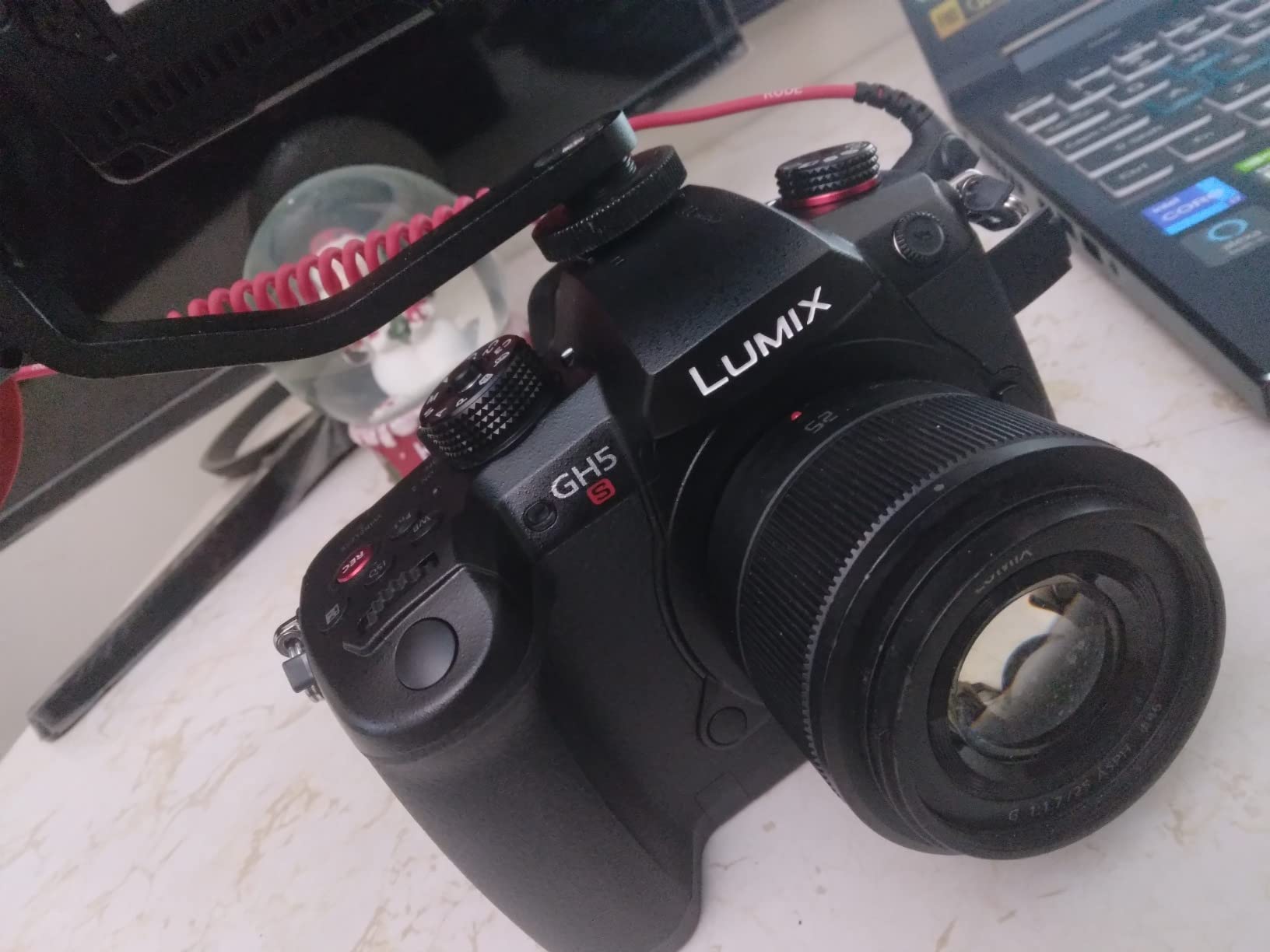
1080p at 240fps opens up beautiful slow-motion shots for music videos and sports B-roll. The 4K anamorphic mode supports proper cinema aspect ratios with the right glass. TC in/out, dual UHS-II SD slots, USB-C 3.1, and full-size HDMI give this body professional connectivity. The magnesium body is splash, dust, and freeze-proof.
The honest downsides are clear. 10.2MP stills limit print and cropping options, so this is not a hybrid stills body. There is no in-body image stabilization, so every lens needs OIS. The lower 4.1 user rating reflects some quality control concerns from early production runs.

Best lens pairings for the GH5S
Pair it with the Panasonic 12-35mm f/2.8 II for run-and-gun documentary, or the Olympus 45mm f/1.8 for low-light stills when you need them. The lack of IBIS means stabilized lenses are essential for handheld work. For serious cinema builds, see our cine lens guide.
Who should pick a different body
Pick the GH5 instead if you want 20MP stills plus in-body stabilization. Pick the GH7 if budget allows and you want phase-detect autofocus plus higher resolution. The GH5S is the right call when low-light video is the only priority.
How to Choose the Best Micro Four Thirds Camera for Your Photography
Picking the best Micro Four Thirds camera for photography comes down to three honest questions: what do you shoot, where do you shoot it, and how much do you want to carry. Here is how our team thinks through that decision.
Match the sensor and resolution to your subjects
The MFT sensor has a 2x crop factor, meaning a 25mm lens behaves like a 50mm lens on full-frame. That crop is a feature, not a bug, for telephoto reach on wildlife and birding. For portraits and wide landscape, you need shorter glass, but the format is very forgiving for everyday photography.
Resolution runs from 10MP on the GH5S to 25MP on modern OM System flagships. We have found 16MP (G85, E-M5 Mark II) is plenty for prints up to A3, and 20MP+ bodies give more cropping flexibility. Higher pixel-shift modes like the G9’s 80MP or the GH7’s 100MP deliver near-medium-format detail on a tripod.
Look at IBIS and stabilization
In-body image stabilization is where MFT bodies punch above their weight. Every camera on our list has IBIS except the GH5S, and rated compensation ranges from 4.5 stops on the E-M10 Mark IV to 8.5 stops on modern OM System flagships. For handheld low-light work, IBIS is the single most important spec.
Decide how much video you need
If video is a side benefit, any modern MFT body will satisfy you. If video is paid work, look for 4K 60p 10-bit (GH5, G9, GH7, G95D) and dual card slots. The GH5S is the low-light specialist, while the GH7 is the current flagship for hybrid cinema work.
Check the lens ecosystem
The Micro Four Thirds mount is shared by OM System, Panasonic, and partners like Leica DG and Sigma. That means hundreds of native lenses are available, and adapters open up even more glass. Our team has used Olympus M.Zuiko Pro primes on Panasonic bodies and vice versa without issues.
Consider autofocus generation
Older contrast-detect AF (E-M10 Mark III, E-M5 Mark II, G85) is slower for sports and wildlife. Newer phase-detect and Cross Quad Pixel AF systems (OM System OM-3, OM-1 Mark II, OM-5 Mark II) track moving subjects far better. Match AF generation to your subjects.
Used and refurbished MFT buying tips
The used MFT market is busy and the pricing is inconsistent, so shop carefully. A Reddit user noted that new M43 bodies are not particularly cheap and the used camera market is a bit wild. Check shutter count, sensor condition, and battery health before buying used, and prefer sellers with a return policy.
Frequently Asked Questions
Is Micro Four Thirds still worth it in 2026?
Yes. Modern MFT bodies match or beat many APS-C cameras in real-world image quality while staying smaller, lighter, and more affordable. The shared OM System and Panasonic lens ecosystem gives you access to hundreds of native lenses, and the format remains a smart choice for travel, street, wildlife, and hybrid video work.
What is the best M43 camera in 2026?
The OM System OM-3 is the best Micro Four Thirds camera for most photographers in 2026, combining OM-1 Mark II internals with PEN-F-inspired creative controls in a weather-sealed body with 80MP pixel-shift. For video-focused work, the Panasonic Lumix GH7 is the top pick, and the Olympus OM-D E-M10 Mark IV is the best budget choice.
What are the disadvantages of Micro Four Thirds?
The main drawbacks of MFT are smaller sensor size, which means less low-light capability and less extreme shallow depth of field than full-frame cameras, plus the perception that the format is declining. The format is not declining, though, and modern bodies handle ISO 6400 cleanly enough for most working photographers.
What is the highest resolution Micro Four Thirds camera?
The Panasonic Lumix GH7 has the highest native MFT resolution at 25.2MP and expands to 100MP via its pixel-shift High Resolution mode. The OM System OM-1 Mark II also reaches 80MP through pixel-shift. For tripod-based landscape and architecture work, these pixel-shift files deliver near-medium-format detail.
What is the best Micro Four Thirds lens?
The Olympus M.Zuiko 12-40mm f/2.8 Pro is the best all-purpose MFT lens, offering a sealed build, smooth autofocus, and a useful 24-80mm equivalent range. For portraits, the Olympus 45mm f/1.8 is a sharp and affordable choice, and the Panasonic Leica DG 12-60mm f/2.8-4 is a strong hybrid standard zoom.
Is Micro Four Thirds good for beginners?
Yes. MFT is one of the best formats for beginners because bodies are compact, lenses are affordable, and the learning curve is shorter than full-frame. The Olympus OM-D E-M10 Mark IV is the best beginner MFT body, and the Panasonic Lumix G85 is the strongest value upgrade once a beginner outgrows an entry-level body.
Final Verdict: Which Micro Four Thirds Camera Should You Buy?
If you want our team’s single best Micro Four Thirds camera for photography in 2026, the Panasonic LUMIX G85 is the one. It hits the strongest balance of price, build, weather sealing, image quality, and 4K video we have tested, and it works for almost every photographer stepping up from a smartphone or older Olympus body.
For a tighter budget, the OM SYSTEM E-M10 Mark IV is the smart pick. For hybrid professionals, the GH5 is the workhorse. For landscape and high-resolution prints, the G9 is unmatched at its price. The best Micro Four Thirds cameras for photography are still the smartest value in mirrorless today, and any of the eight bodies in this guide will serve you well for years.