
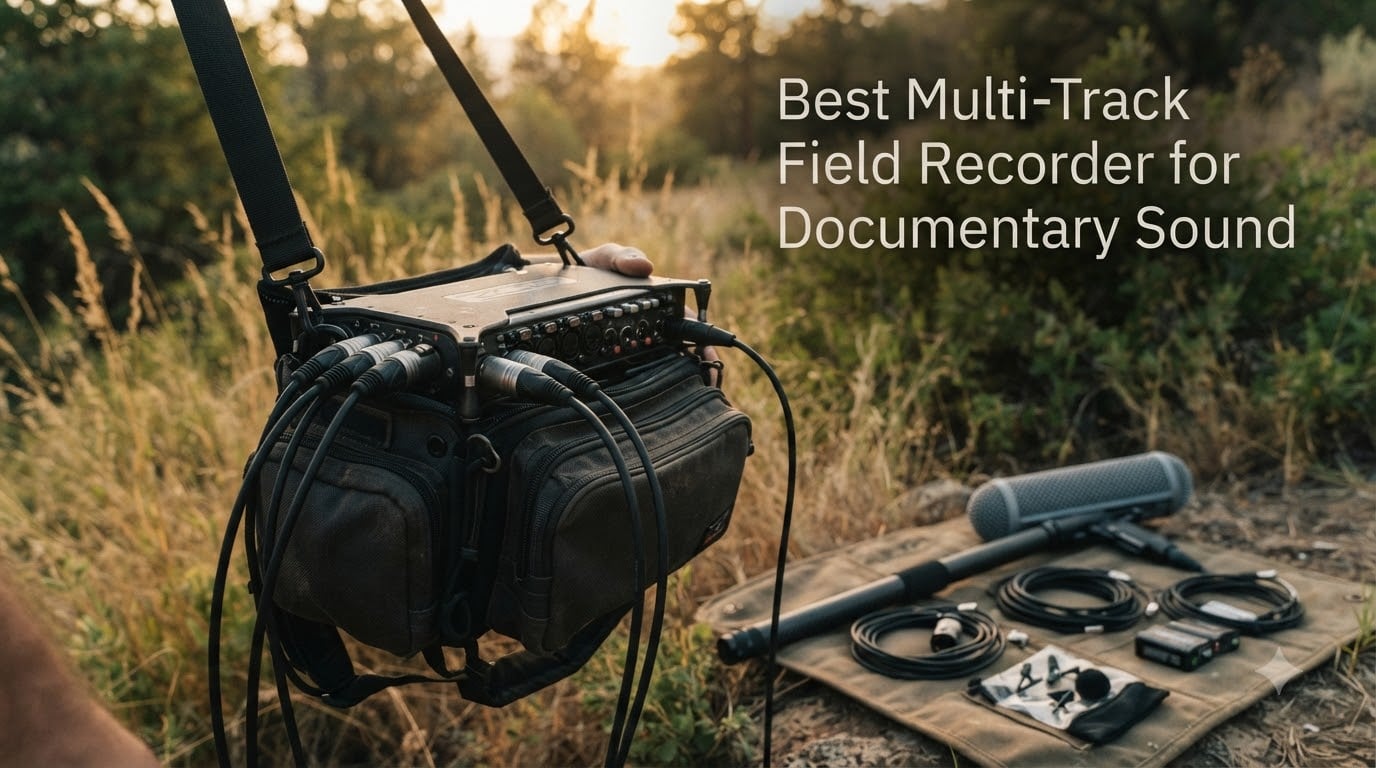
I will never forget the day I lost an entire interview to clipped audio. It was a sit-down with a 92-year-old historian for a documentary about a forgotten coastal town. His voice was soft, almost a whisper, so I cranked the gain. Then he laughed loudly at his own joke, and the waveform turned into a solid brick of distortion. That was the day I stopped trusting my ears and started trusting 32-bit float.
Documentary sound is unforgiving. You cannot ask a subject to repeat an emotional moment because your levels were wrong. You cannot re-record the sound of a market closing down at sunset because your limiter kicked in too late. Every documentary filmmaker I have worked with over the past decade has a similar horror story, and almost all of them switched to a dedicated multi-track field recorder after it happened.
This guide covers the five best multi-track field recorders for documentary sound in 2026, based on real-world use across interview-heavy projects, run-and-gun verite shooting, and ambient nature capture. Whether you need a compact run-and-gun rig, a camera-mountable workhorse for solo shooting, or a broadcast-quality mixer-recorder for a full sound team, one of these will fit your production. I have used every recorder on this list in the field, and I will be honest about where each one shines and where it falls short.
Table of Contents
- Top 3 Picks for Documentary Sound for October 2026
- Best Multi-Track Field Recorders for Documentary Sound in October 2026
- 1. Sound Devices MixPre-6 II – The Broadcast-Standard Documentary Rig
- 2. Zoom F6 – Six XLR Inputs With 32-Bit Float at a Working Price
- 3. TASCAM FR-AV2 – Compact 32-Bit Float With Built-In Timecode
- 4. TASCAM DR-70D – The Camera-Mountable Workhorse for Solo Shooters
- 5. Zoom H4 Essential – The Accessible 32-Bit Float Entry Point
- How to Choose a Multi-Track Field Recorder for Documentary?
- Frequently Asked Questions
- Final Thoughts on Documentary Sound in 2026
Top 3 Picks for Documentary Sound for October 2026
If you want the short version before diving into the details, these three recorders cover the spectrum of documentary production needs. The Sound Devices MixPre-6 II is the professional standard. The Zoom F6 delivers the most features per dollar. The TASCAM FR-AV2 is the compact 32-bit float pick that fits in your jacket pocket.
Best Multi-Track Field Recorders for Documentary Sound in October 2026
Here is a side-by-side look at all five recorders. The comparison below highlights the core specs that matter most for documentary production: track count, bit depth, inputs, and timecode support. Use it as a quick reference, then read the individual reviews for the full picture.
| Product | Specs | Action |
|---|---|---|
| Sound Devices MixPre-6 II |
|
Check Latest Price |
 Zoom F6 Zoom F6 |
|
Check Latest Price |
 TASCAM FR-AV2 TASCAM FR-AV2 |
|
Check Latest Price |
 TASCAM DR-70D TASCAM DR-70D |
|
Check Latest Price |
 Zoom H4 Essential Zoom H4 Essential |
|
Check Latest Price |
1. Sound Devices MixPre-6 II – The Broadcast-Standard Documentary Rig
Sound Devices MixPre-6 II Portable 32-Bit Float Multichannel Audio Recorder/Mixer, and USB Audio Interface
32-bit float recording
4 Kashmir preamps
6x2 mixer
Timecode I/O
USB-C interface
Pros
- Legendary Kashmir preamps with ultra-low noise
- 32-bit float eliminates clipping worry entirely
- Built-in 6x2 mixer for live mixing on set
- Internal LTC timecode generator
- HDMI timecode and record triggering
- Lightweight at 1.32 pounds
Cons
- Premium price point
- Limited stock availability
- Not Prime eligible
- Requires ecosystem investment for full kit
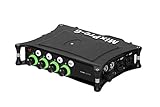
The Sound Devices MixPre-6 II is the recorder I reach for when a documentary project has a real budget and the audio cannot fail. Sound Devices builds the recorders that professional location sound mixers have used on feature films and network documentaries for decades, and the MixPre-6 II brings that pedigree into a portable form factor that fits in a sound bag.
What sets this recorder apart is the Kashmir preamp architecture. These are some of the quietest, cleanest preamps I have ever recorded through. Lavalier mics that sound thin and noisy on budget recorders suddenly have presence and warmth. Boom microphones pick up subtle room tone without hiss. For documentary dialogue, where you are often recording quiet speakers in less-than-ideal acoustic environments, this preamp quality is the difference between usable audio and a take you have to rescue in post.
The 32-bit float recording is the other half of the equation. With 32-bit float, you literally cannot clip the audio. I have handed the MixPre-6 II to assistant directors who have never touched a recorder, told them to just press record, and the resulting files were perfect. You adjust levels in post-production without any quality loss. For documentary work where you cannot predict when a subject will raise their voice, this is invaluable.
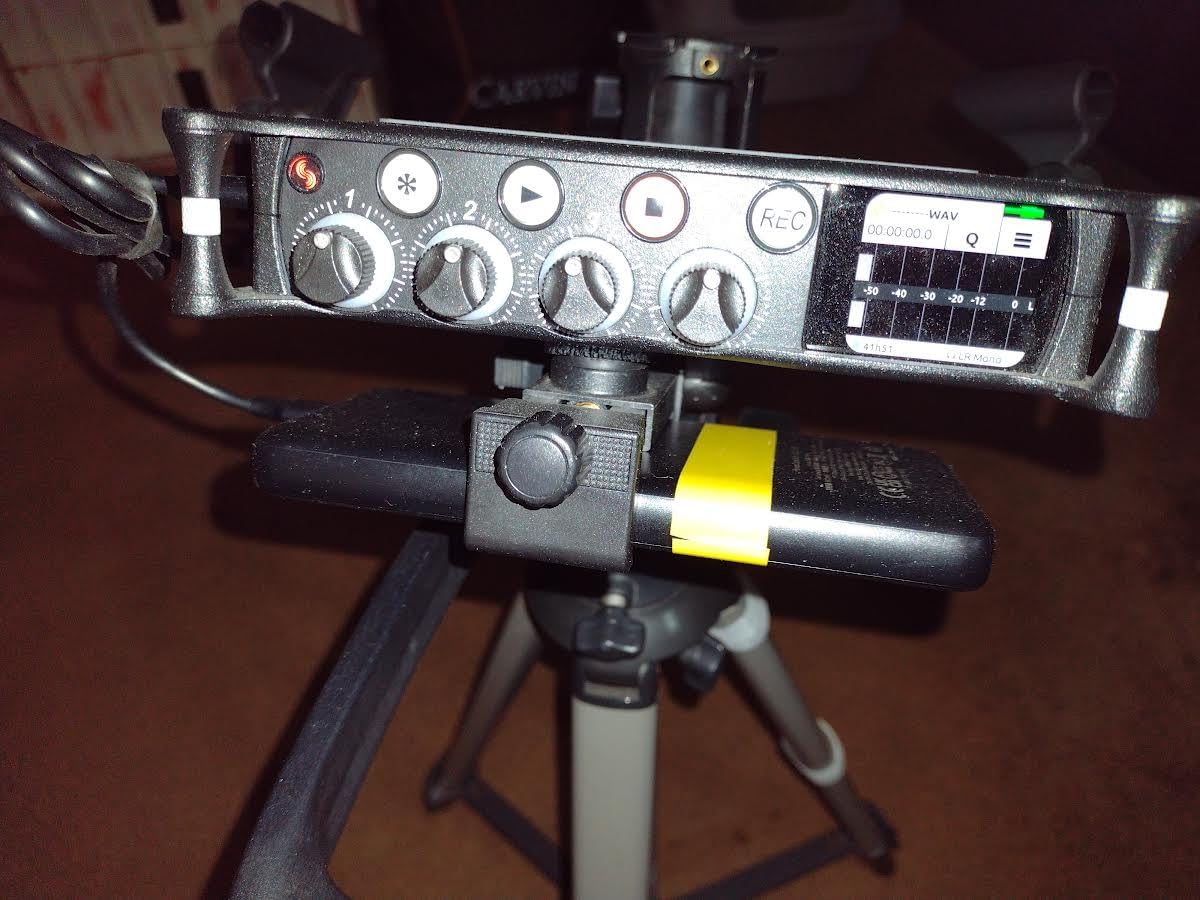
The built-in 6×2 mixer is more capable than I expected. You can route inputs to outputs, create mix tracks alongside isolated recordings, and even apply limiters per channel. The internal LTC timecode generator syncs with professional cameras, and the HDMI connection can pull timecode and record triggers directly from compatible cameras like the Sony FX series.
The trade-off is price. The MixPre-6 II is the most expensive recorder on this list, and it is often out of stock because demand from professional users is high. You are paying for the Sound Devices build quality, the Kashmir preamps, and the reliability that comes with a device designed for broadcast production. If your documentary is heading to a streaming platform or film festival circuit, this is the recorder that will get your audio past a professional dub stage without notes.
When the MixPre-6 II Is the Right Choice
This is the recorder for documentary filmmakers who are being paid for their audio, or who are delivering to a platform with technical specifications. If you are recording with a sound mixer on set, if you have a boom operator and multiple wireless lavaliers, or if your project has a deliverable spec sheet, the MixPre-6 II meets every requirement. It is also the right pick if you want a recorder that will last a decade of constant field use.
The four inputs handle most documentary setups: boom plus two lavaliers plus a spare, or two booms and two lavaliers. If you regularly need more than four microphones, look at the MixPre-10 II instead, but for the majority of documentary work, four channels is the sweet spot.
Workflow Considerations Before You Buy
Factor in the cost of accessories when budgeting. The MixPre-6 II uses a dedicated battery sled or external power, and most users add a sound bag, a windscreen setup, and cable management. The 32-bit float files are larger than 24-bit files, so carry high-capacity SD cards. Plan your power strategy for long shoot days, as the recorder drains batteries faster than the budget options on this list.
2. Zoom F6 – Six XLR Inputs With 32-Bit Float at a Working Price
Zoom F6 Professional Field Recorder for Filmmakers & Musicians
6 XLR inputs
14-track recording
32-bit float
Dual AD converters
Timecode I/O
Pros
- 6 XLR inputs handle complex multi-mic documentary setups
- 32-bit float with dual AD converters for huge dynamic range
- 14-track recording from 6 inputs
- Timecode I/O for frame-accurate sync
- Multiple power options including USB
- 119+ hours recording time
Cons
- Premium price point for the Zoom lineup
- No built-in microphones
- Larger and heavier than portable options
- Not Prime eligible
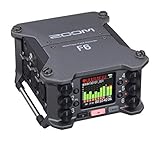
The Zoom F6 is the recorder I recommend more than any other to documentary filmmakers who need professional features without stepping up to Sound Devices pricing. Six XLR inputs with 32-bit float recording, dual AD converters, and timecode sync for a fraction of what the MixPre-6 II costs. For most documentary productions, this is the sweet spot of capability and value.
The six inputs are the headline feature. On a typical documentary shoot, I run a boom, two or three wireless lavaliers, and a plant mic for ambient dialogue. That is five channels, and the F6 handles all of them simultaneously with isolated tracks plus a mix track. The 14-track recording means you get the six isolated inputs, safety tracks, and reference mixes all on one SD card.
Zoom’s preamps on the F6 are a significant step up from their Handy recorder line. They are not Kashmir-level, but they are clean, quiet, and more than sufficient for dialogue recording. The dual AD converter architecture gives you massive dynamic range, which means quiet whispers and loud outbursts both capture cleanly in the same take.
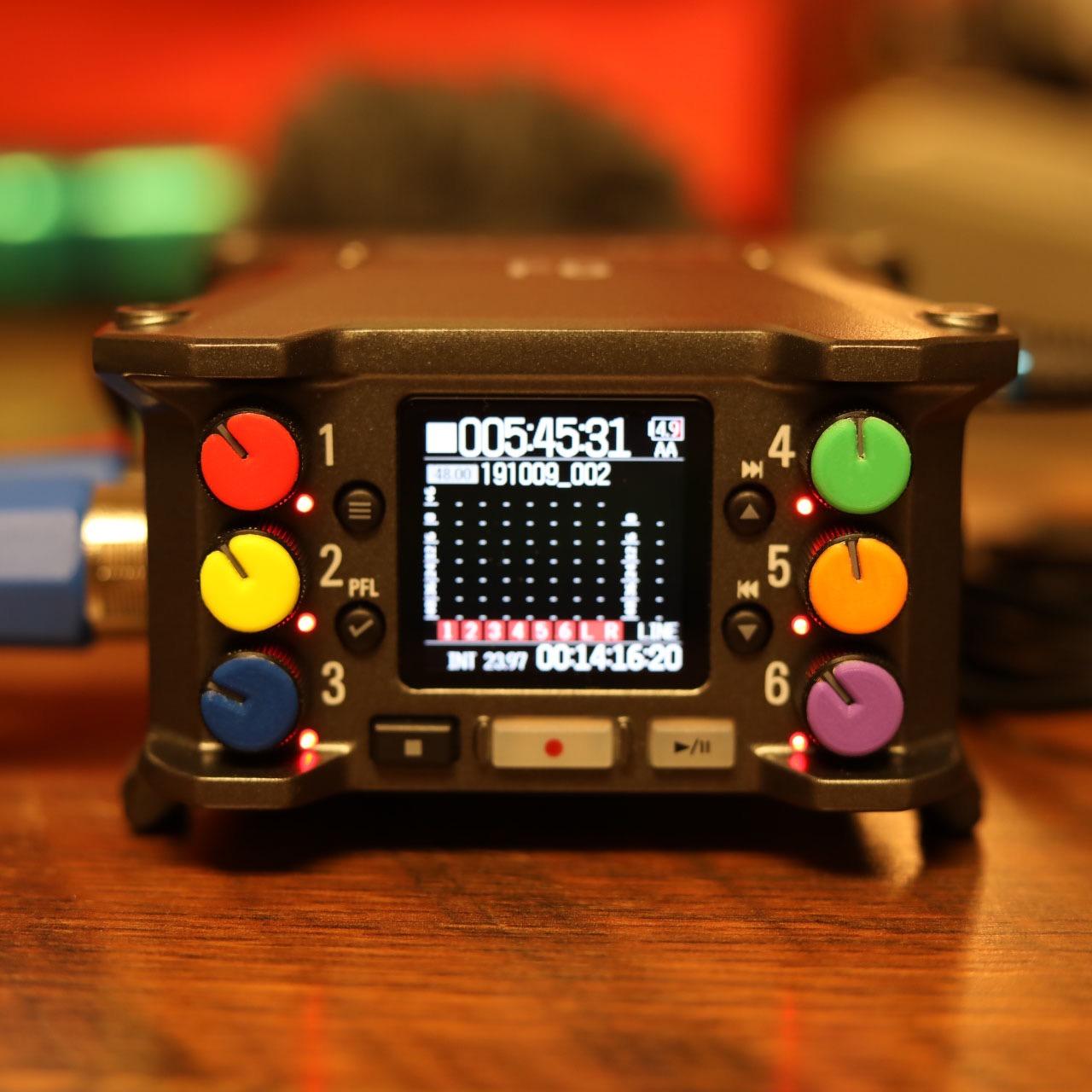
Timecode is where the F6 earns its place in professional workflows. The timecode I/O port syncs with professional cameras and other recorders, giving you frame-accurate sync for multi-camera documentary setups. If you are shooting with two or three cameras and need audio that lines up perfectly in post without manual syncing, this is essential.
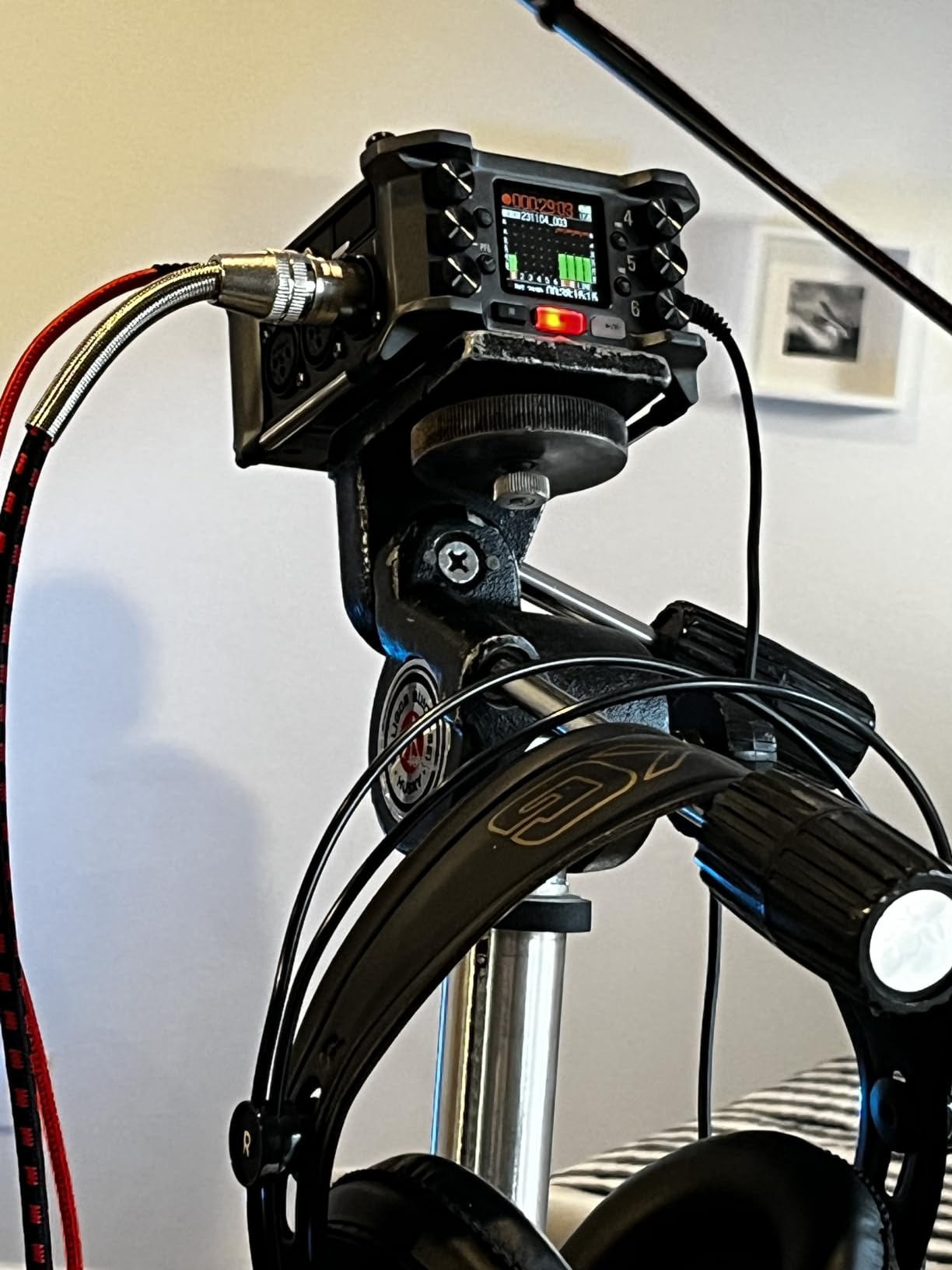
I have run the F6 for full 10-hour shoot days on a combination of AA batteries and USB power. The battery life is genuinely impressive, especially compared to older Zoom recorders that ate batteries. The build quality is solid metal, and it has survived being dropped, rained on, and stuffed into overloaded sound bags without complaint.
When the F6 Is the Right Choice
The Zoom F6 is ideal for documentary filmmakers who need more than four inputs but cannot justify the cost of a Sound Devices recorder. If you regularly run a boom plus three or more lavaliers, if you are doing multi-camera documentary work that requires timecode sync, or if you want a recorder that can grow with your productions, the F6 is the answer. It is also a strong pick for filmmakers who occasionally do sound for narrative work, where six inputs are standard.
This is also the recorder I recommend to filmmakers who are upgrading from a Zoom H6 or TASCAM DR-60D and want 32-bit float without completely relearning their workflow. The menu system and controls will feel familiar, and the leap in audio quality is immediately obvious.
What to Know About the F6 Workflow
The F6 does not have built-in microphones, so you need external mics for every input. Budget for quality XLR cables, a proper sound bag, and a windscreen system if you are booming outdoors. The 32-bit float file sizes are large, so use fast, high-capacity SD cards. Learn the timecode workflow before your shoot, as setting up jam sync with cameras takes practice the first time.
3. TASCAM FR-AV2 – Compact 32-Bit Float With Built-In Timecode
TASCAM FR-AV2 Compact 32-Bit Float Field Recorder and Timecode Generator with Dual XLR/TRS Inputs and No-Clip Audio Recording for Videographers
32-bit float recording
2 XLR/TRS inputs
Built-in timecode generator
Ultra HDDA preamps
TCXO accuracy
Pros
- Dual ADC with 32-bit float means zero clipping concerns
- Built-in timecode generator with high-accuracy TCXO
- Compact and lightweight at 9.5 ounces
- Ultra HDDA preamps deliver clean sound
- Timecode IN/OUT for professional sync workflows
- Bluetooth monitoring with optional adapter
Cons
- Only 2 XLR inputs may limit multi-mic setups
- Not Prime eligible
- Bluetooth requires optional expensive adapter
- No built-in microphones
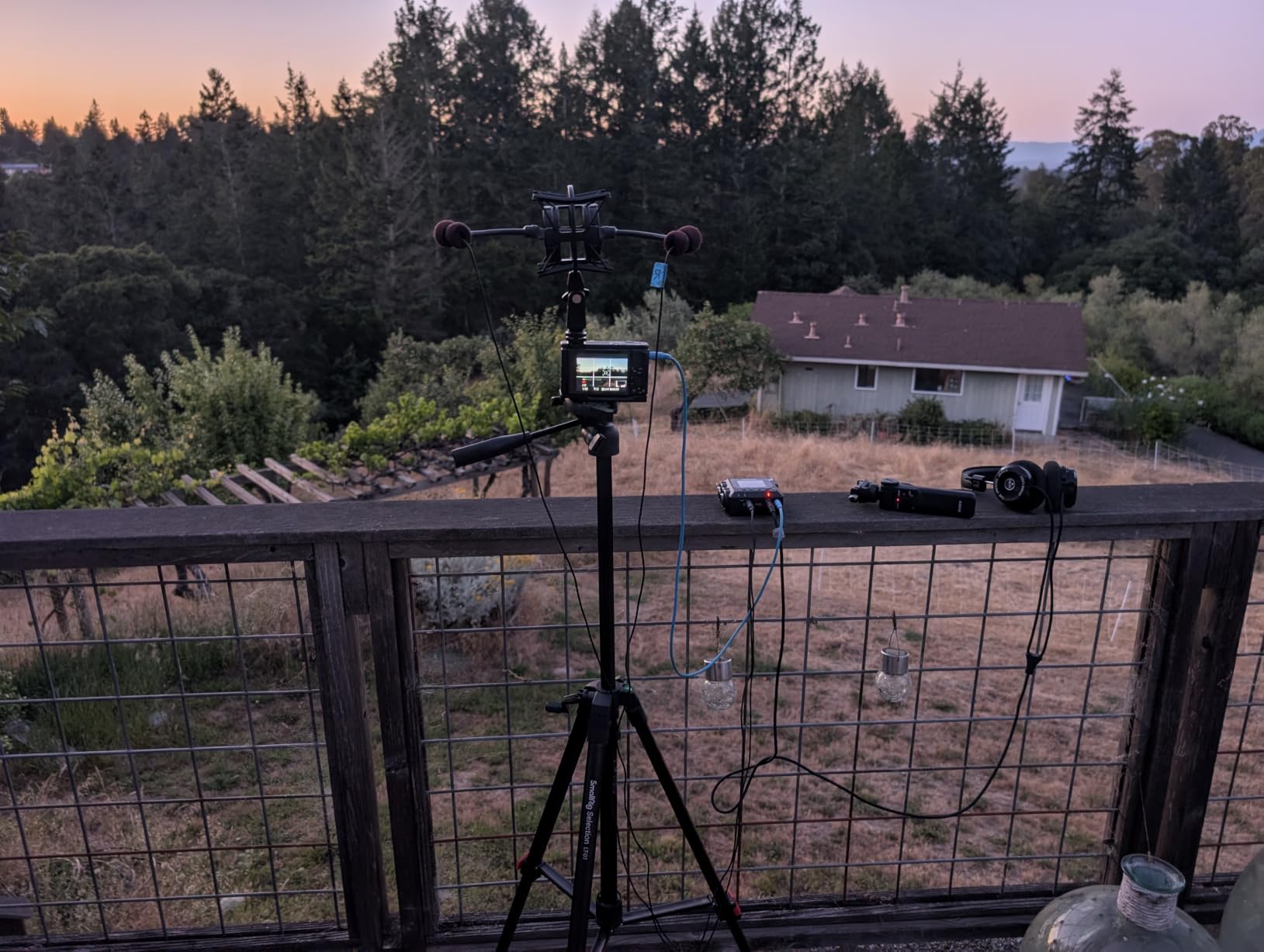
The TASCAM FR-AV2 is the recorder I grab for run-and-gun documentary work where every ounce matters. At 9.5 ounces, it is the lightest recorder on this list with 32-bit float and built-in timecode. For a solo documentary shooter who is already carrying a camera, lenses, and a tripod, the FR-AV2 adds almost no weight to the kit while delivering professional features.
The built-in timecode generator is the standout feature for documentary filmmakers. Most compact recorders in this price range have no timecode at all, which means manual audio sync in post. The FR-AV2 has a high-accuracy TCXO timecode generator with IN and OUT ports, so you can jam sync with professional cameras and walk away knowing your audio will line up frame-accurate in the edit.
32-bit float recording means you never touch the gain knobs during an interview. I have used the FR-AV2 for sit-down interviews where I set levels at the start and then ignored the recorder entirely. The dual AD converters capture everything from barely audible whispers to sudden shouts without clipping. For documentary subjects who are nervous and unpredictable, this removes a major source of stress.
The Ultra HDDA preamps are clean and quiet, comparable to what you find on more expensive TASCAM models. Two XLR/TRS combo inputs with phantom power handle a boom and a lavalier, or two lavaliers, which covers most interview scenarios. The 3.5mm input is handy for connecting a wireless receiver or a camera line-level feed.
The limitations are real, though. Two inputs will not cover a complex multi-mic setup. There are no built-in microphones, so you always need external mics. The Bluetooth monitoring requires an optional adapter that adds to the cost. And it is not Prime eligible, so plan your purchase timeline accordingly. But for what it does, in the size it does it, the FR-AV2 is a remarkable tool for solo documentary work.
When the FR-AV2 Is the Right Choice
This is the recorder for solo documentary shooters who prioritize portability without sacrificing 32-bit float or timecode. If you are shooting alone, running a camera and a boom or two lavaliers, and you need sync audio that lines up with your footage automatically, the FR-AV2 was designed for exactly this scenario. It is also a strong backup recorder for a larger kit, small enough to carry as insurance.
The FR-AV2 is ideal for travel documentary work, where baggage weight and size are constant constraints. I have taken it on international trips where it lived in a jacket pocket and recorded ambient sound, interviews, and wild tracks without ever feeling like a burden.
Sync and Monitoring Setup to Plan For
Budget for the optional Bluetooth adapter if you want wireless monitoring, as the built-in headphone output is your only monitoring option out of the box. Invest in a proper cable strain-relief system, as the input connectors are close together and heavy cables can stress them. Learn the timecode jam-sync procedure with your specific camera before a real shoot.
4. TASCAM DR-70D – The Camera-Mountable Workhorse for Solo Shooters
TASCAM 4-Channel Portable Audio Recorder for Videographers, 4 Combo XLR/TRS Inputs, 2 Internal Mics, Limiter, HP Filter (DR-70D)
4 XLR/TRS inputs
Camera-mountable design
HDDA preamps
Dual recording
Limiter and HP filter
Pros
- 4 balanced XLR inputs with phantom power
- Dual recording mode creates safety tracks automatically
- Compact form factor mounts above or below camera
- High-quality HDDA mic preamps with 64dB gain
- Individual gain controls per input
- Reliable limiter and high-pass filter
Cons
- Small 1.5-inch screen for monitoring
- Requires 4 AA batteries
- No wireless connectivity
- No 32-bit float recording
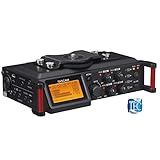
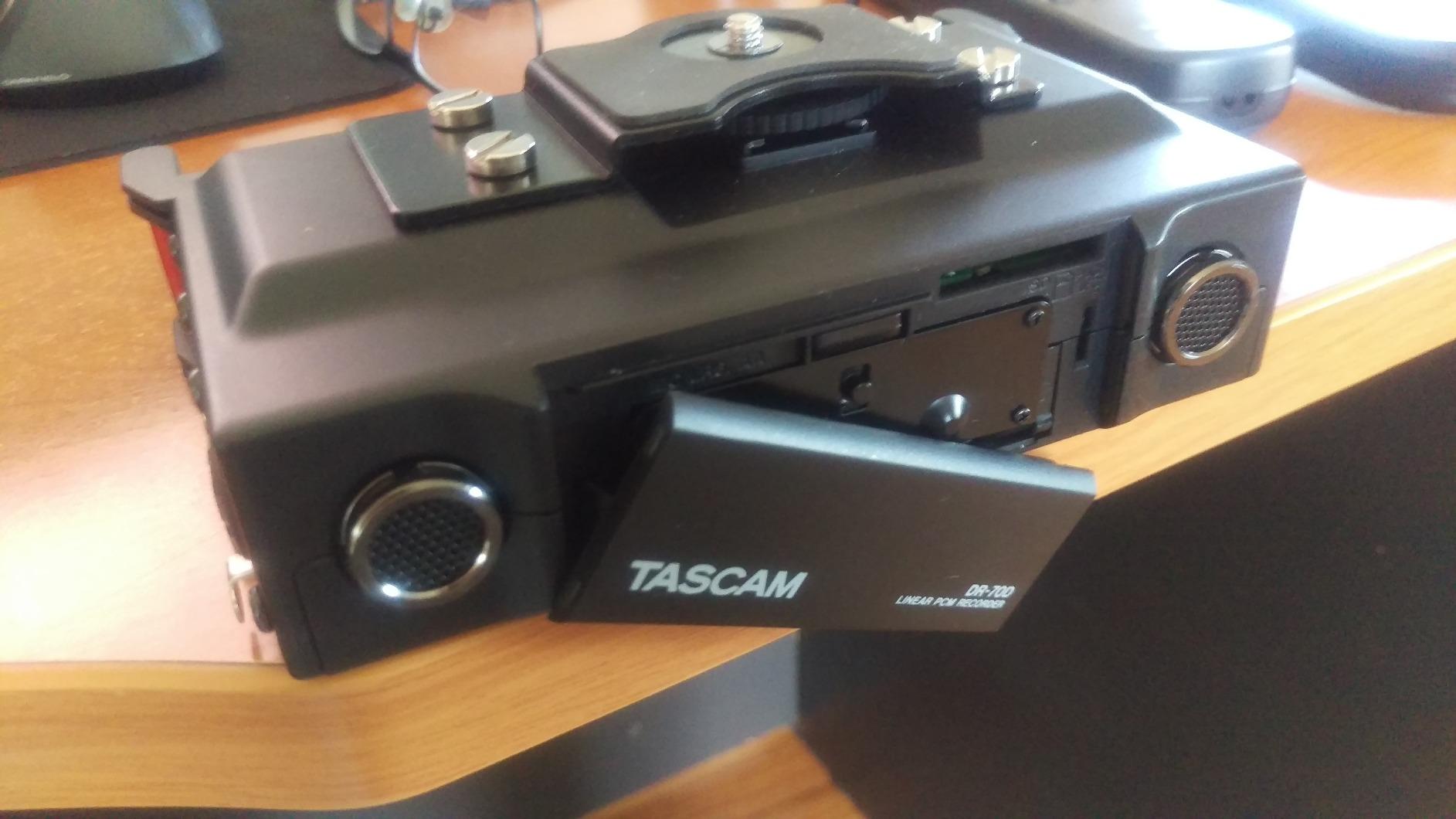
The TASCAM DR-70D has been the gateway recorder for solo documentary filmmakers for years, and it earned that reputation honestly. Four XLR inputs, a camera-mountable design, and dual recording for safety tracks at a price that makes it accessible to independent filmmakers. I have recommended this recorder to more first-time documentary shooters than any other, and most of them are still using it years later.
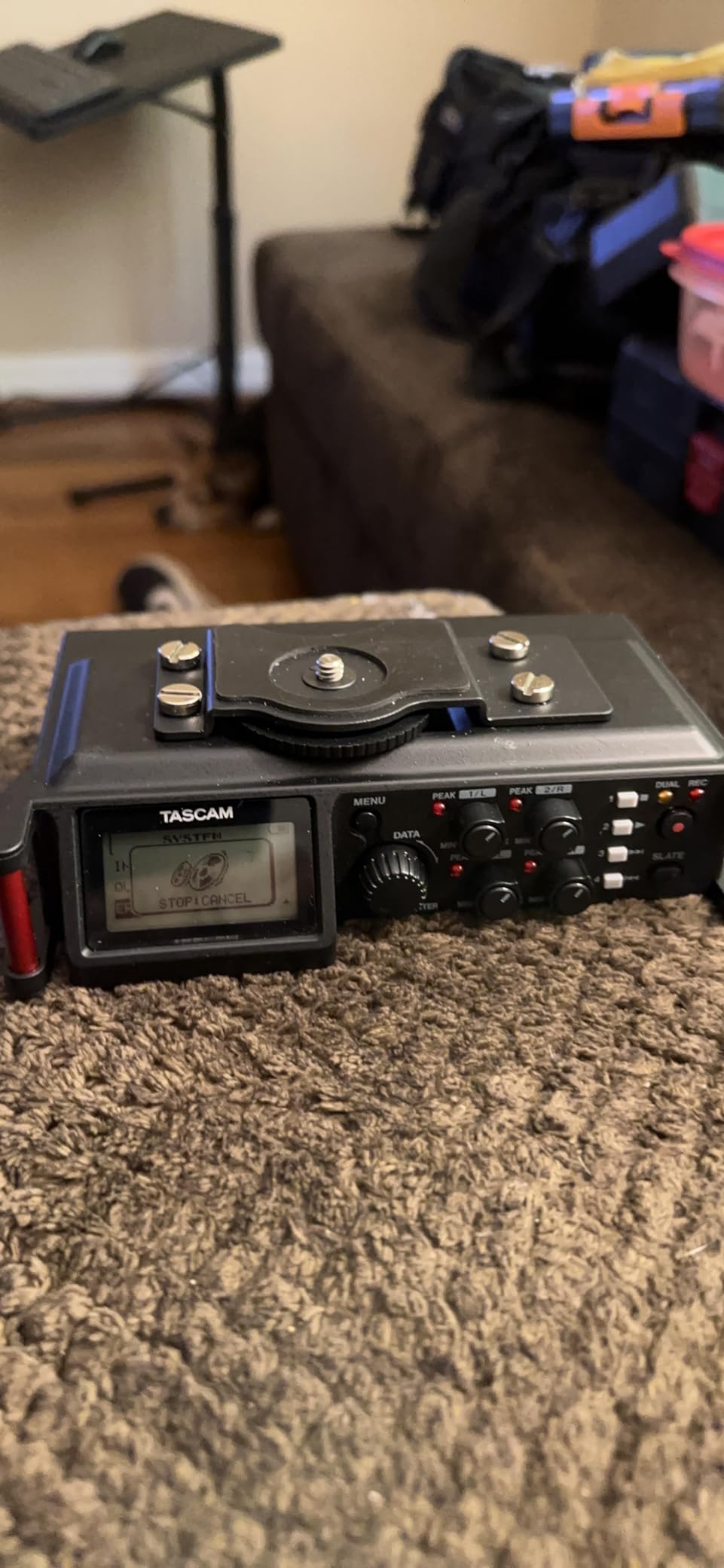
The design is purpose-built for run-and-gun documentary work. The DR-70D mounts directly above or below your camera, which means your audio rig travels with your camera rig. For a solo shooter who is operating a camera, monitoring framing, and trying to capture clean dialogue simultaneously, having the recorder attached to the camera eliminates a major logistical headache.
The four XLR/TRS combo inputs with phantom power handle most documentary setups. Boom plus two lavaliers plus a spare, or four lavaliers for a panel interview. The HDDA preamps provide clean gain up to 64dB, which is enough for most dynamic and condenser microphones used in documentary work. Each input has its own gain control, so you can set levels independently for each mic.
The dual recording mode is the feature that has saved more documentary takes than I can count. It records a primary track at your set level and a safety track at a lower level simultaneously. If a subject suddenly gets loud and clips the primary track, the safety track has you covered. It is not as foolproof as 32-bit float, but it is a smart, practical solution that works.
The trade-offs reflect the price point. The 1.5-inch screen is genuinely small, which makes monitoring levels difficult in bright sunlight. There is no 32-bit float recording, so you still need to set levels carefully. The four AA batteries give decent life but are not ideal for long shoot days. And there is no wireless connectivity for remote monitoring. But for what it costs, the DR-70D delivers professional features that matter.
When the DR-70D Is the Right Choice
This is the recorder for independent documentary filmmakers who are just starting out, who are working with a limited budget, or who need a reliable backup to a primary recorder. If you shoot alone, if your subjects are interview-based, and if you need four mic inputs without spending a thousand dollars, the DR-70D is the most practical choice on this list.
It is also a strong choice for documentary filmmakers who shoot with DSLR or mirrorless cameras and want their audio physically attached to the camera. The camera-mount design means your audio moves with your framing, which simplifies rig building and cable management.
Power and Monitoring Limitations to Plan Around
Invest in rechargeable AA batteries or an external power solution, as the DR-70D drains four AAs faster than you might expect on long shoot days. Add a dedicated headphone amplifier or in-ear monitors, as the small screen makes visual monitoring unreliable. Practice setting levels carefully, since without 32-bit float, you are responsible for preventing clipping.
5. Zoom H4 Essential – The Accessible 32-Bit Float Entry Point
Zoom H4 Essential Handheld Recorder for Musicians, Podcasters & Filmmakers
32-bit float recording
4-track
Built-in stereo mics
2 XLR/TRS inputs
USB-C interface
Pros
- 32-bit float recording eliminates clipping concerns
- Built-in stereo microphones provide quality ambient capture
- 2 XLR/TRS inputs with phantom power
- USB audio interface functionality
- Accessible design with spoken menu guidance
- Compact and lightweight at 243 grams
Cons
- Small 2-inch screen can be hard to read
- Only 2 XLR inputs may limit some setups
- Menu system can be confusing for beginners
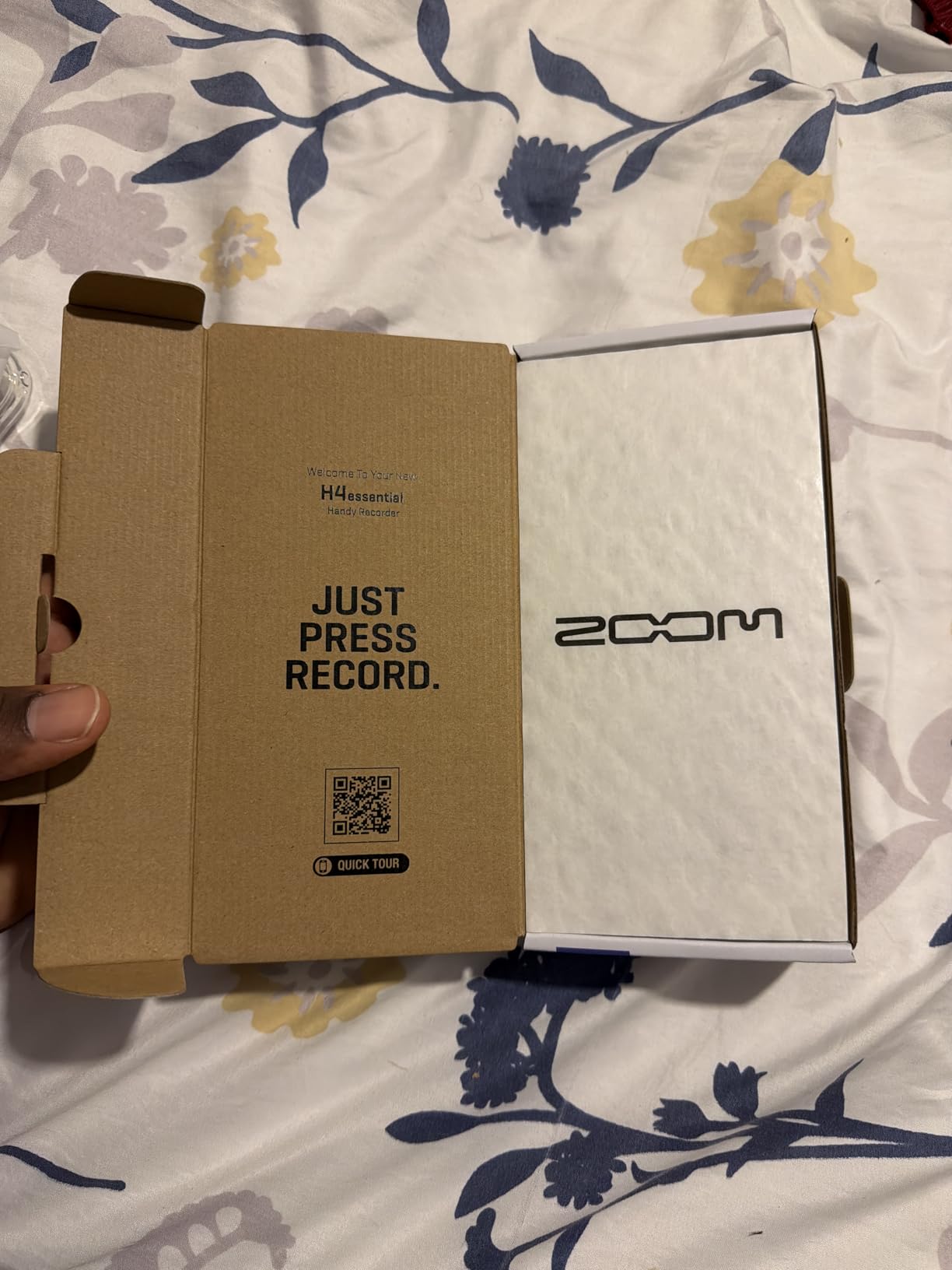
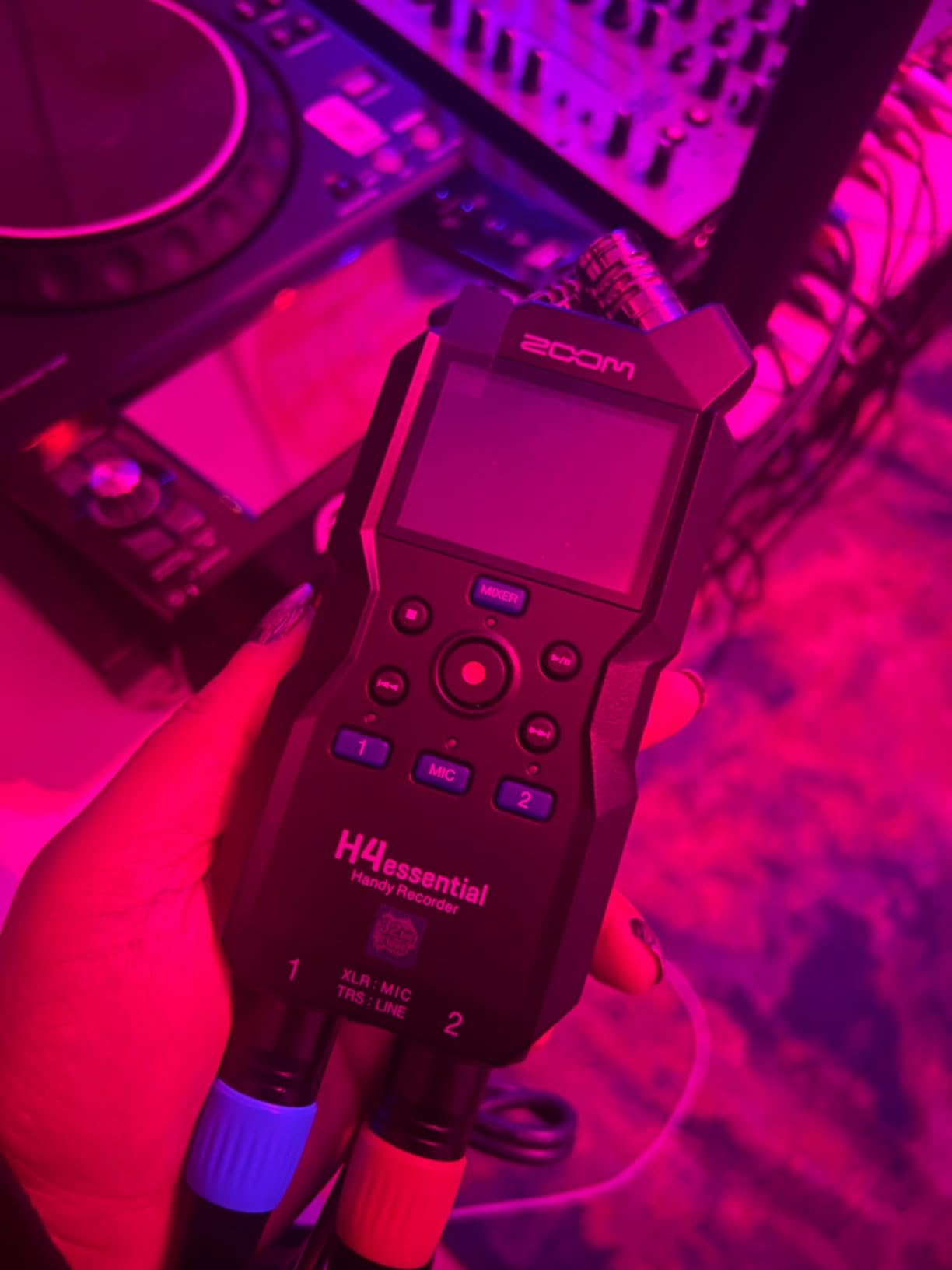
The Zoom H4 Essential is the recorder I hand to documentary filmmakers who are making their first investment in proper audio gear. It brings 32-bit float recording, the technology that eliminates clipping anxiety, into a price range that works for student filmmakers, self-funded documentarians, and creators who are upgrading from recording directly into a camera.
The built-in stereo microphones are genuinely useful for documentary work. For ambient sound capture, room tone recording, and wild tracks, you do not always need to set up external mics. The H4 Essential’s stereo capsules capture clean, wide ambient sound that cuts together well with dialogue in the edit. I have used them for market ambience, street scenes, and nature recordings with surprisingly good results.
The two XLR/TRS combo inputs with phantom power handle a boom and a lavalier, which covers the most common documentary interview setup. With 32-bit float recording, you do not need to stress about gain staging. Press record, and the recorder captures everything from the quietest whisper to the loudest laugh without clipping.
The USB-C audio interface functionality is a feature that documentary filmmakers overlook until they need it. The H4 Essential doubles as a 4-in, 2-out USB audio interface, which means you can use it for podcast recordings, voiceover sessions, and remote interview recording directly into your computer. For documentary makers who also produce companion podcasts or bonus content, this is a genuine value-add.
The accessibility features deserve mention. The H4 Essential includes spoken menu guidance, which makes it usable for filmmakers with visual impairments or anyone who struggles with small screens. The design philosophy here is clearly about lowering barriers to quality audio, and that mission comes through in the daily use experience.
When the H4 Essential Is the Right Choice
This is the recorder for documentary filmmakers who are new to dedicated audio recording, who want 32-bit float without a large investment, or who need a versatile tool that handles field recording, interviews, and desktop recording. If you are a student, a self-funded creator, or someone who wants to understand what multi-track recording adds to documentary work before committing to a more expensive rig, the H4 Essential is the smart starting point.
The two XLR inputs will eventually feel limiting if your documentary work grows to involve multiple subjects or complex mic setups. But as a learning tool and a capable recorder for simpler productions, the H4 Essential delivers more than its price suggests.
Upgrading Path and Limitations to Know
Understand that two inputs will not cover complex multi-subject interviews, so plan your mic strategy around that constraint. The menu system has a learning curve, so spend time with the manual before a real shoot. The built-in microphones are good for ambient capture but are not a substitute for proper dialogue mics, so budget for at least one quality external microphone.
How to Choose a Multi-Track Field Recorder for Documentary?
Choosing the best multi-track field recorder for documentary sound comes down to five factors that directly affect your daily production workflow. I will walk through each one based on what actually matters when you are standing in a field at 6 AM trying to capture an interview before the wind picks up.
1. 32-bit float recording changes everything. If you are new to the technology, 32-bit float captures an absurdly wide dynamic range that makes clipping physically impossible. You set your levels approximately, press record, and adjust the final levels in post-production with zero quality loss. For documentary work where subjects are unpredictable and you cannot ask for a second take, this technology has eliminated more stress from my workflow than any other gear change in the past decade. Four of the five recorders on this list have it.
2. Count your tracks honestly. How many microphones do you actually run simultaneously? A simple interview needs a boom and one or two lavaliers, which is two to three tracks. A panel discussion needs one input per subject. A nature documentary might need multiple ambient mics spread across a location. Be honest about your typical setup, and add one channel of headroom. The DR-70D and H4 Essential cap at four tracks, the FR-AV2 has two, the MixPre-6 II has four high-quality inputs, and the F6 gives you six.
3. Preamp quality shows up in dialogue. Budget preamps add hiss, especially when you boost gain for quiet speakers. Documentary dialogue is often recorded at lower volumes than narrative film dialogue, because real people speak softly. Clean preamps mean you can boost those quiet recordings in post without bringing up noise. The Sound Devices Kashmir preamps are the gold standard here, followed by the Zoom F6 and TASCAM Ultra HDDA preamps.
4. Timecode sync saves hours in post. If you are shooting with professional cameras and recording audio separately, timecode sync means your audio and video line up automatically in your editing software. Without it, you are manually syncing every clip, which is tedious for short projects and impossible for long-form documentary work. The FR-AV2, F6, and MixPre-6 II all have timecode. The DR-70D and H4 Essential do not.
5. Power and portability define your field day. Documentary work means long days in unpredictable locations. Consider battery type, battery life, weight, and physical size. The FR-AV2 at 9.5 ounces disappears into a bag. The F6 at over two pounds is a dedicated rig. The MixPre-6 II balances professional features with reasonable portability. Match the recorder’s physical profile to how you actually work in the field.
Solo shooter optimization deserves special mention, because most documentary filmmakers work alone at least some of the time. If you are operating camera and audio simultaneously, look for recorders that minimize hands-on attention. 32-bit float eliminates level adjustments. Camera-mountable designs like the DR-70D keep your audio with your camera. Compact recorders like the FR-AV2 fit in a sound bag you can wear while shooting. The right recorder for solo work is the one you can set and forget.
Frequently Asked Questions
What is the best multi-track field recorder for documentary sound?
The Sound Devices MixPre-6 II is the best overall multi-track field recorder for documentary sound, thanks to its broadcast-quality Kashmir preamps, 32-bit float recording, built-in mixer, and timecode sync. For filmmakers on a budget, the Zoom F6 offers six XLR inputs and 32-bit float at a lower price point.
Is 32-bit float recording worth it for documentary filmmaking?
Yes, 32-bit float recording is one of the most valuable features for documentary work because it eliminates clipping entirely. You can record without setting precise gain levels and adjust the final audio levels in post-production with zero quality loss. This is especially useful for unpredictable documentary subjects who may speak softly one moment and loudly the next.
How many tracks do I need for documentary audio?
Most documentary interviews need two to three tracks, typically a boom microphone and one or two lavaliers. Panel discussions and complex multi-subject scenarios may need four to six tracks. A recorder with four inputs covers most documentary work, while six inputs gives you flexibility for larger productions and growth.
What field recorder has the best sound quality?
The Sound Devices MixPre-6 II has the best sound quality of the recorders in this guide, due to its Kashmir preamp architecture which delivers ultra-low noise and clean gain. The Zoom F6 with its dual AD converters and the TASCAM FR-AV2 with Ultra HDDA preamps also deliver professional-quality audio suitable for broadcast documentary work.
Are multitrack recorders worth it for solo documentary shooters?
Yes, multitrack recorders are worth it for solo documentary shooters because they let you capture isolated audio from multiple microphones simultaneously, giving you control in post-production that camera audio cannot match. Compact options like the TASCAM FR-AV2 and camera-mountable recorders like the TASCAM DR-70D are designed specifically for solo workflows.
Final Thoughts on Documentary Sound in 2026
The best multi-track field recorder for documentary sound is the one that fits your production scale, your typical shoot day, and your budget. The Sound Devices MixPre-6 II is the professional standard for filmmakers delivering to broadcast or streaming platforms. The Zoom F6 is the best all-around value for documentary work that needs multiple inputs and timecode sync. The TASCAM FR-AV2 is the compact champion for solo shooters. The TASCAM DR-70D remains the smart budget pick for camera-mountable four-track recording. And the Zoom H4 Essential is the accessible entry point into 32-bit float recording.
Whatever you choose, the move from camera audio to a dedicated multi-track field recorder is the single biggest upgrade you can make to your documentary sound quality. Your subjects’ voices deserve to be heard clearly, and the right recorder makes that possible.