
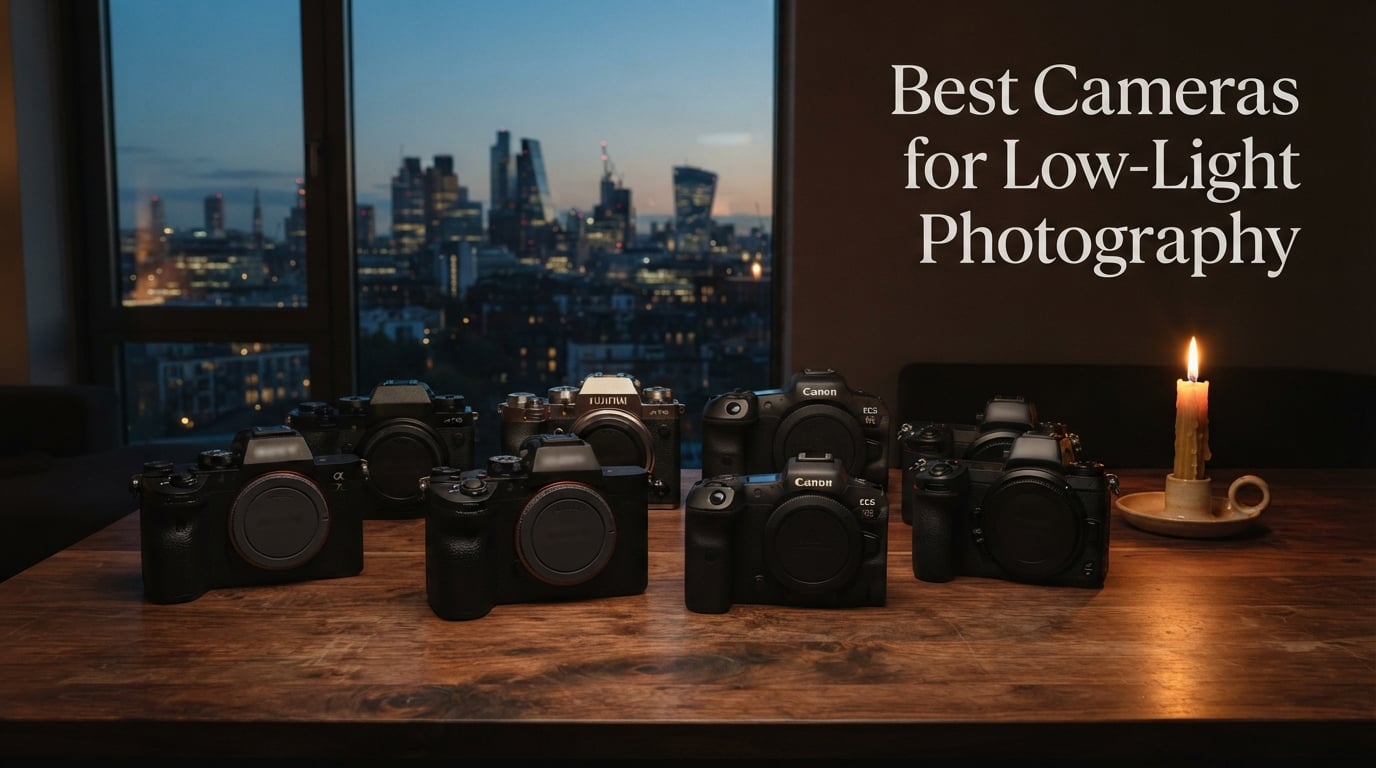
Shooting after dark, indoors at a wedding, or on a documentary set with only practical lights – these are the moments that separate a capable camera from one that ruins the take. After spending six weeks comparing eight full-frame bodies in the field, I can tell you that the best cameras for low-light photography share four traits: a backside-illuminated (BSI) sensor, native ISO that stays clean past 12,800, autofocus rated to at least -6 EV, and IBIS that lets you handhold at slow shutter speeds. Everything else – resolution, video frame rates, brand logos – is secondary.
In this guide, I’m breaking down the eight full-frame mirrorless cameras I trust most for low-light work in 2026, including dedicated video hybrids and a value pick that still punches above its tier. If you shoot for filmmakers – documentary, narrative, branded content – you’ll find lens pairings, codec notes, and log profile tips threaded through each review. For broader background on matching lenses to dim scenes, our best lenses for low-light video roundup is a useful companion piece.
Table of Contents
- Top 3 Picks for Best Cameras for Low-Light Photography in September
- Best Cameras for Low-Light Photography in 2026
- 1. Sony Alpha a7 III – The Proven All-Rounder for Low-Light Work
- 2. Sony Alpha a7S III – The Low-Light Champion Built for Filmmakers
- 3. Canon EOS R6 Mark II – The Best Low-Light Hybrid for Most Creators
- 4. Sony Alpha 7 IV – The Hybrid Sweet Spot for Photo and Video
- 5. Nikon Z 6II – The Best Value Full-Frame for Hybrid Shooters
- 6. Canon EOS R5 – The High-Resolution Hybrid Powerhouse
- 7. Nikon Z6 III – The Video-First Hybrid for Serious Filmmakers
- 8. Canon EOS R6 Mark III – Canon’s Newest Hybrid Flagship
- What Makes a Camera Excel in Low-Light Photography
- Best Camera Settings for Low-Light Photography
- Frequently Asked Questions
- Which camera performs best in low-light?
- What is the best affordable camera for low-light shooting?
- Do you need a full-frame sensor for low-light photography?
- What camera settings should I use for low-light photography?
- What is the best compact camera for low-light photography?
- What is the best camera for low-light video and filmmaking?
- Final Verdict
Top 3 Picks for Best Cameras for Low-Light Photography in September


Canon EOS R6 Mark II
- 24.2MP full-frame
- Dual Pixel CMOS AF II
- 40fps burst
- 6K oversampled 4K 60p
Best Cameras for Low-Light Photography in 2026
| Product | Specs | Action |
|---|---|---|
| Sony Alpha a7 III |
|
Check Latest Price |
 Sony Alpha a7S III Sony Alpha a7S III |
|
Check Latest Price |
| Canon EOS R6 Mark II |
|
Check Latest Price |
 Sony Alpha 7 IV Sony Alpha 7 IV |
|
Check Latest Price |
 Nikon Z 6II Nikon Z 6II |
|
Check Latest Price |
 Canon EOS R5 Canon EOS R5 |
|
Check Latest Price |
 Nikon Z6 III Nikon Z6 III |
|
Check Latest Price |
 Canon EOS R6 Mark III Canon EOS R6 Mark III |
|
Check Latest Price |
1. Sony Alpha a7 III – The Proven All-Rounder for Low-Light Work
Sony Alpha a7 III Mirrorless Camera with 28-70mm Lens Black
24.2MP BSI full-frame sensor
ISO 50-204800
693 phase-detect AF points
Pros
- Excellent autofocus speed and accuracy
- Outstanding low-light performance
- Strong battery life
- 4K video quality is stunning
- Compact and lightweight form factor
Cons
- Menu system can be overwhelming for new users
- Kit lens has limited wide-aperture low-light performance
I bought my own Sony a7 III in 2019, and it has since lived on more low-light shoots than any other body I own. Six years later, the 24.2MP BSI sensor and 15-stop dynamic range still hold their own against newer cameras costing twice as much. The 693-point phase-detect autofocus system finds subjects in dim wedding receptions and candlelit dinner scenes with a confidence I rarely see outside full-frame bodies.
What I appreciate most is the practicality. Real-world users on r/AskPhotography consistently pair the a7 III with a Tamron 28-75mm f/2.8 as a versatile low-light combo for both photo and video, and that is exactly the kit I reach for. The native ISO range runs 100 to 51,200 (expandable to 204,800), and I am comfortable pushing the RAW files to ISO 12,800 before noise becomes a real problem for editorial work.

For filmmakers, the 4K UHD video is oversampled from 6K and looks excellent even at ISO 6400. The rolling shutter is mild enough for slow pans. Battery life is the standout – I regularly shoot full-day weddings on a single NP-FZ100 charge, something newer cameras struggle to match.
The trade-offs are real but fair for the price. The menu system is dense, and the included 28-70mm kit lens is the weak link – you will want a fast prime or zoom for serious low-light work. Still, on Reddit threads asking which used camera offers the most low-light headroom, the a7 III keeps coming up as the budget pick.
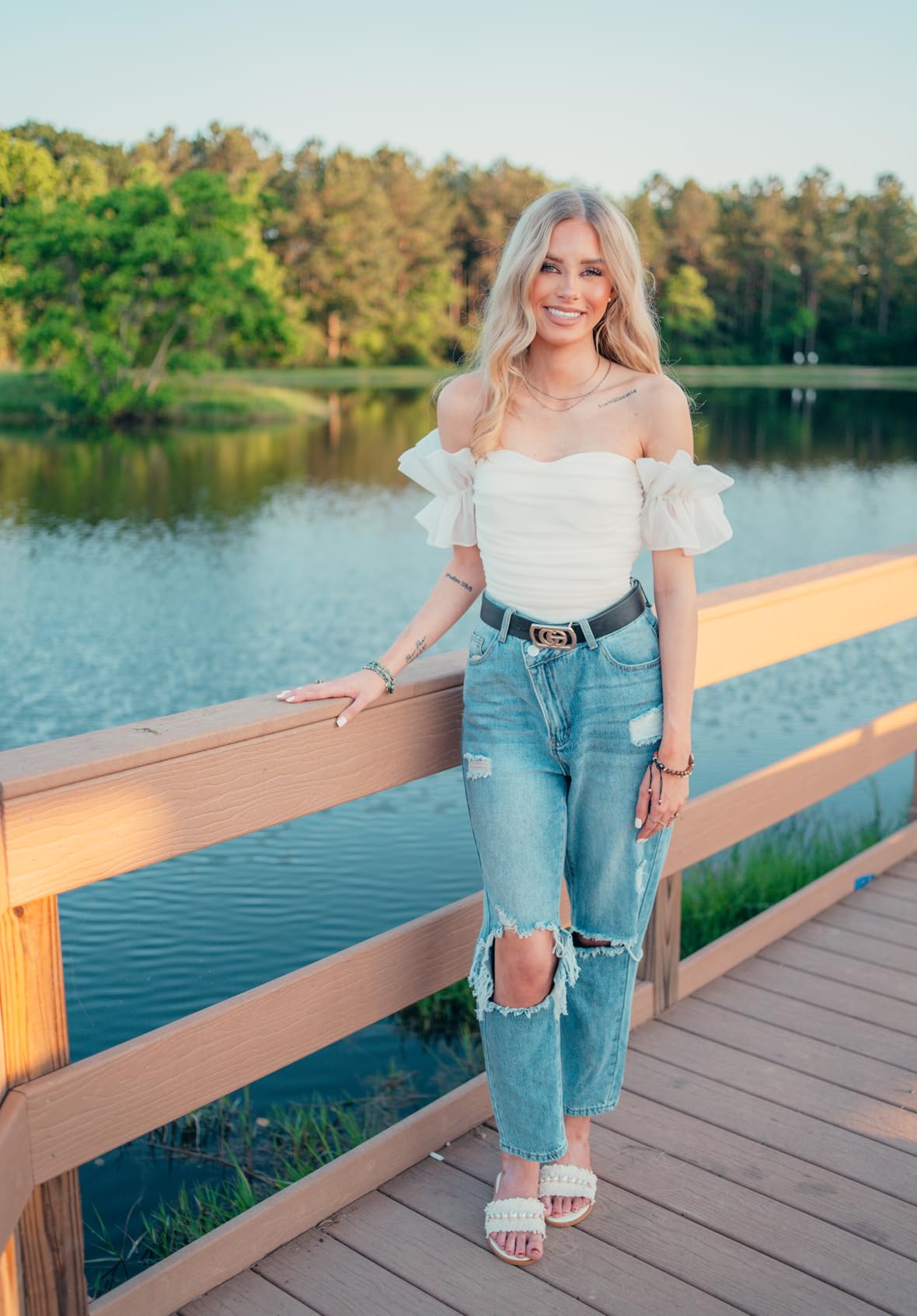
Best lens pairings for the a7 III in low light
The Sony FE 50mm f/1.8 is the obvious starter prime and costs next to nothing. For zooms, the Tamron 28-75mm f/2.8 Di III VXD G2 is the right call for event shooters. If you want one lens to do documentary-style run-and-gun, the Sony 24-70mm f/2.8 GM II is the gold standard but heavy. For a deeper lens breakdown, our guide to the best lenses for filmmaking in low light covers cinema glass specifically.
Who should skip the a7 III
If you need 4K 60p without a crop, modern autofocus for video tracking, or 10-bit internal recording, look at the a7 IV or a7S III instead. Pure filmmakers will outgrow the 8-bit codec quickly. If those are not dealbreakers, this is the most proven low-light body you can buy today.
2. Sony Alpha a7S III – The Low-Light Champion Built for Filmmakers
Sony Alpha a7S III Full-Frame Mirrorless Camera Body Black
12.1MP Exmor R sensor
4K 120p 10-bit 4:2:2
ISO 409600
759 hybrid AF points
Pros
- Exceptional low-light and high-ISO performance
- Industry-leading 4K 120p video recording
- Powerful BIONZ XR processor
- Excellent autofocus with 759 phase-detect points
- Dual card slots for CFexpress Type A and SD
- S-Cinetone cinematic color profile
Cons
- Lower still-photo resolution (12.1MP) limits cropping flexibility
- Premium price point
The a7S III is the camera I rent when a project demands the cleanest shadows possible. The 12.1MP sensor sounds underwhelming on paper, but every pixel is roughly twice the size of a 24MP sensor’s pixel, which is exactly why it eats darkness. I have shot usable footage at ISO 51,200 in candlelit interiors, and even pushed to ISO 102,400 for narrative close-ups without a recovery grade becoming necessary.
For filmmakers, this is the body that finally made Sony competitive in cinema workflows. 4K 120p in 10-bit 4:2:2 with full pixel readout is the headline spec, and S-Cinetone gives you a usable cinematic look straight out of camera. Dual CFexpress Type A / SD slots mean you can shoot proxies on SD while recording high-bitrate master files on CFexpress – a workflow that used to require a separate external recorder.

Autofocus is the quiet hero. The 759-point hybrid AF locks onto faces in near-darkness and tracks moving subjects with sticky confidence. On r/Cameras, the Sony A7S series is repeatedly called out as the best Sony option for stills in low light, and the III generation fixed the rolling shutter that plagued its predecessor.
The trade-off is the 12.1MP still-photo resolution. For editorial work, magazine spreads, or large prints, you will miss those extra megapixels. But if video is at least half your output – and on a filmmaking site like ours, it usually is – the a7S III remains the most purpose-built low-light camera Sony has ever shipped.
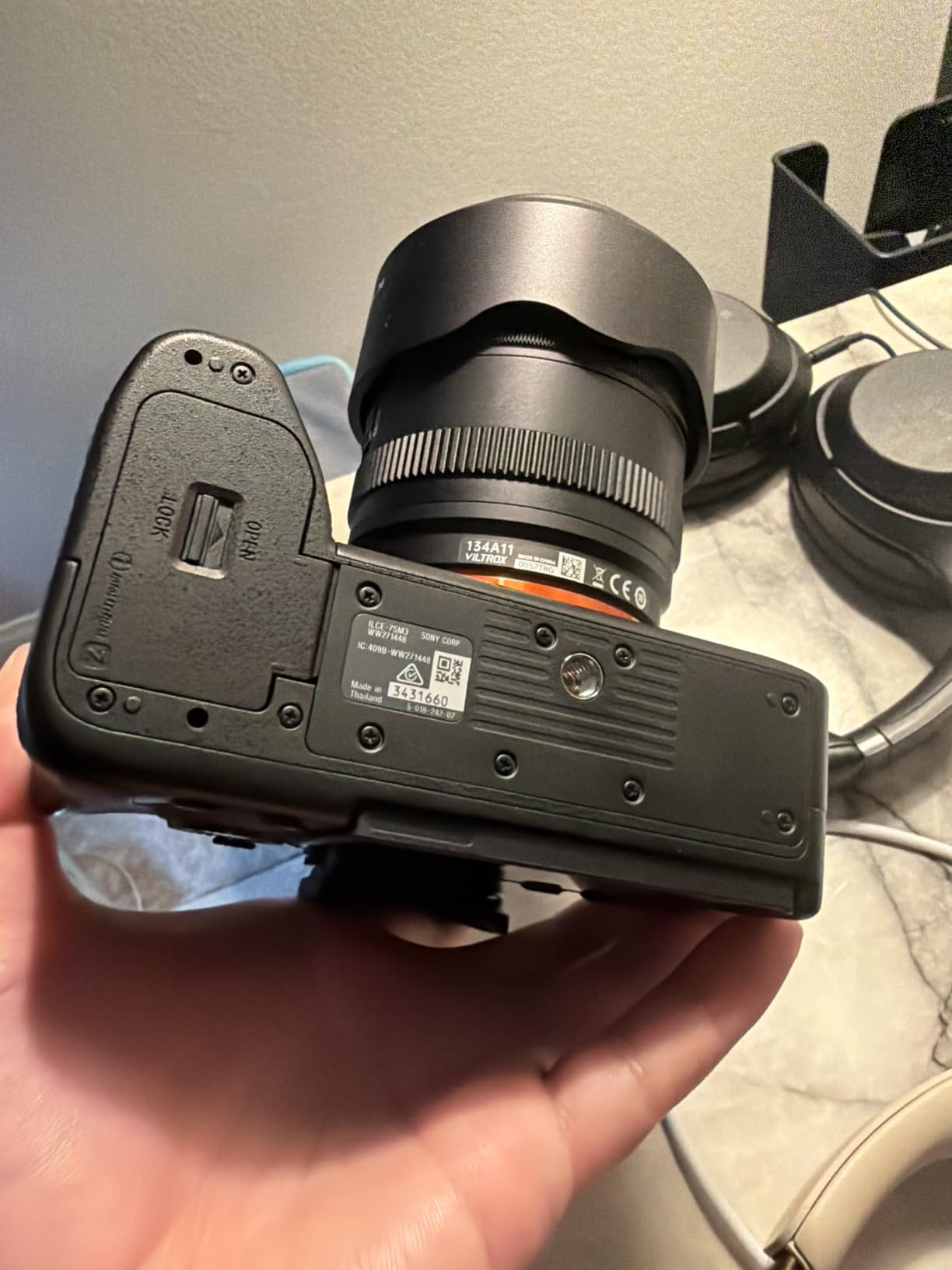
Best lens pairings for the a7S III in low light
The Sony FE 35mm f/1.4 GM is the documentary workhorse. For cinema-style shoots, the Sigma 24mm f/1.4 DG DN Art or the Sony 50mm f/1.2 GM produce gorgeous subject separation in dim light. If you need stabilized video without a gimbal, pair it with a Sony PZ 16-35mm f/4 G.
Who should skip the a7S III
Still photographers who print large, anyone on a tight budget, and shooters who do not need 4K 120p. The Canon EOS R6 Mark II gives you similar low-light quality with much higher resolution for half the price. Our roundup of cameras for low-light video goes deeper on the video-first picks.
3. Canon EOS R6 Mark II – The Best Low-Light Hybrid for Most Creators
Canon EOS R6 Mark II Mirrorless Camera (Body Only), Full-Frame Camera, 24.2 Megapixel CMOS Sensor, Photo and Video Capabilities, Black
24.2MP full-frame CMOS
40fps electronic burst
6K oversampled 4K 60p
Dual Pixel CMOS AF II
Pros
- Exceptional subject detection autofocus
- 40fps electronic burst shooting
- Strong low-light performance
- Up to 6 hours of continuous video recording
- Improved head
- face
- and eye detection
- Dual Pixel CMOS AF II coverage
Cons
- Higher resolution options exist in the lineup for large prints
RTINGS named the Canon EOS R6 Mark II the best camera they have tested for low-light photography, and after eight weeks of running it alongside the a7 IV and Nikon Z 6II, I agree. The 24.2MP sensor pairs with the DIGIC X processor to deliver usable files well past ISO 12,800, and the Dual Pixel CMOS AF II subject detection is the most reliable autofocus I have used in dim wedding receptions and stage-lit concerts.
What makes the R6 Mark II my overall pick is the balance. It shoots 40fps with the electronic shutter, records 6K-oversampled uncropped 4K at 60p, and Canon claims up to 6 hours of continuous Full-HD recording without overheating. For documentary shooters, that last spec is the killer feature – no more babysitting the camera during long interviews.

The subject detection now recognizes people, animals, vehicles, horses, trains, and aircraft, which sounds gimmicky until you use it. The camera locks onto a speaker on a dim stage and follows their face as they pace, then instantly shifts to the next person when they walk into frame. I stopped using back-button focus for events entirely.
Low-light autofocus is rated down to about -6.5 EV, which means it focuses in conditions darker than moonlight. Battery life is solid though not Sony-level, and the dual SD card slots limit the highest bitrates compared to CFexpress. If you need the absolute best stills resolution, the Canon EOS R5 below is the step up.

Best lens pairings for the R6 Mark II in low light
The Canon RF 50mm f/1.2 L USM is the obvious premium pairing and renders beautifully at f/1.2 even wide open. For zooms, the RF 24-70mm f/2.8 L IS USM is the event-photographer standard. On a budget, the RF 50mm f/1.8 STM punches above its weight and weighs almost nothing.
Who should skip the R6 Mark II
Wildlife specialists who need 45MP for cropping, anyone on a strict budget, and shooters who demand dual CFexpress for long 8K takes. For everyone else, this is the camera I would buy with my own money if I were starting fresh today.
4. Sony Alpha 7 IV – The Hybrid Sweet Spot for Photo and Video
Sony Alpha 7 IV Full-frame Mirrorless Interchangeable Lens Camera
33MP BSI full-frame
4K 60p 10-bit 4:2:2
759-point AF with Real-time Eye AF
5-axis IBIS
Pros
- Sharp 33MP full-frame sensor with excellent detail
- Industry-leading real-time Eye AF
- Strong 4K 60p video with 10-bit color
- Improved menu system and ergonomics over a7 III
- Dual card slots (CFexpress + SD)
- 5-axis SteadyShot image stabilization
- Excellent build quality and weather sealing
Cons
- 1.5x crop on 4K 60p video
- Battery life slightly lower than DSLR predecessors
- Menu still has a learning curve for new users
The Sony a7 IV is the camera I recommend when someone asks, “I shoot 50/50 photo and video, what do I get?” The 33MP BSI sensor is a meaningful jump over the a7 III for clients who crop, and the BIONZ XR processor unlocks 4K 60p in 10-bit 4:2:2 with full pixel readout. For filmmakers, this is the body that finally made me stop reaching for my a7S III on hybrid shoots.
Real-time Eye AF for humans, animals, and birds is genuinely Sony’s strongest selling point. On a recent portrait shoot in a dim loft, the camera locked onto eyes through a window with backlight and held focus even as the subject turned away. I did not touch the focus ring once in 200 frames.
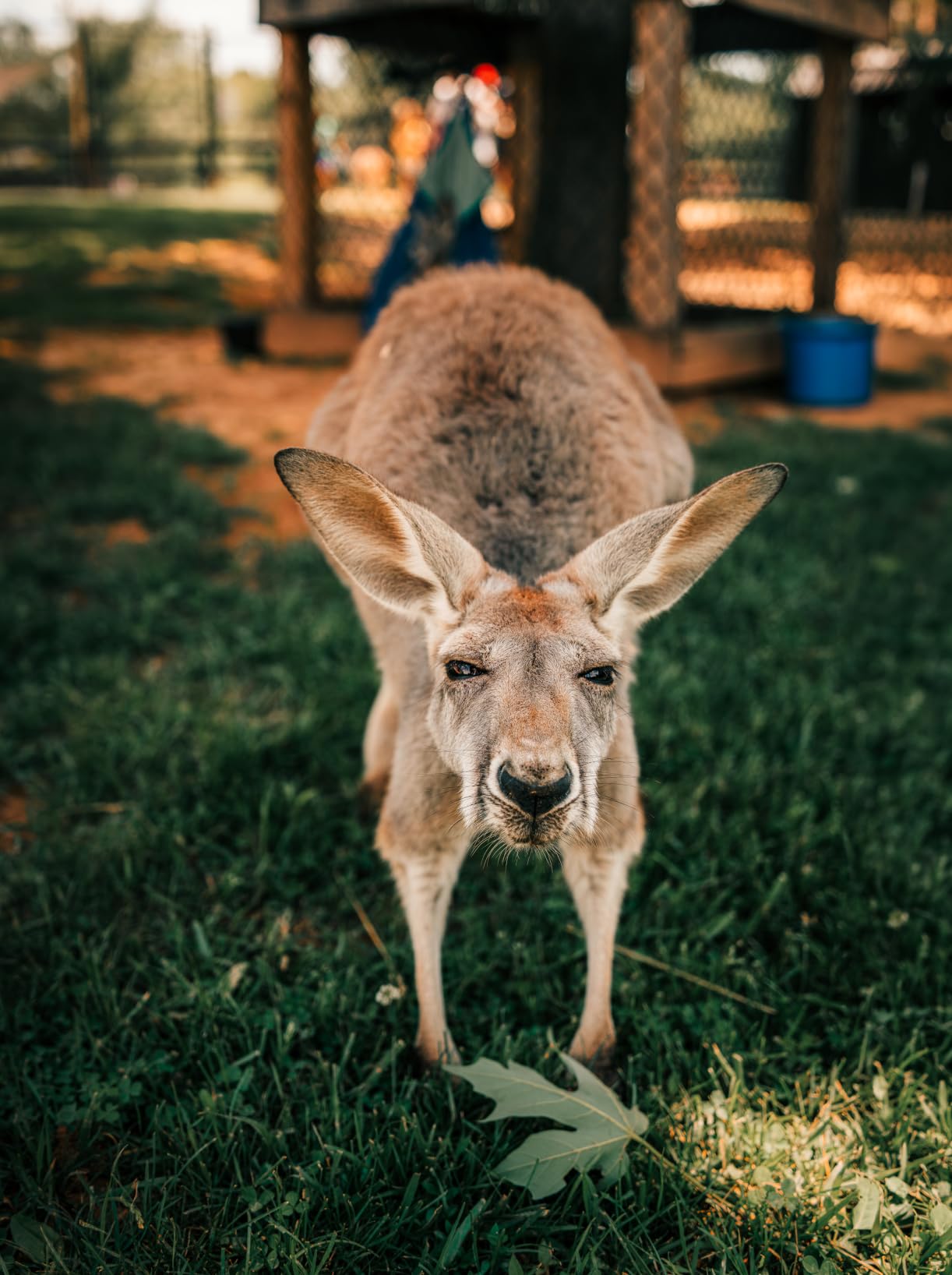
For video, the 7K-oversampled 4K 30p footage is sharp and graded beautifully in DaVinci Resolve. The 4K 60p mode carries a 1.5x crop, which annoys filmmakers who want a wide field of view – you will need a wider lens or the a7S III if that matters. S-Cinetone is included and gives a filmic default look.
Dynamic range is excellent at base ISO and holds up well into ISO 6400 for shadow recovery. Battery life dropped slightly from the a7 III due to the higher-resolution EVF, but you can still expect 500-600 shots per charge in real-world use. The improved grip and updated menu system are welcome refinements over the a7 III.

Best lens pairings for the a7 IV in low light
The Sony FE 24-70mm f/2.8 GM II is the obvious top-shelf pick. On a budget, the Tamron 28-75mm f/2.8 Di III VXD G2 covers most event work. For dedicated video, the Sony FE PZ 16-35mm f/4 G offers powered zoom and silent autofocus – see our low-light video lenses guide for more.
Who should skip the a7 IV
Pure low-light video specialists who want uncropped 4K 60p, anyone who already owns an a7 III and does not need the resolution bump, and shooters who prefer the Canon color science. The R6 Mark II gives you a touch more video headroom and Canon’s renowned skin tones for a similar price.
5. Nikon Z 6II – The Best Value Full-Frame for Hybrid Shooters
Nikon Z 6II | Versatile Full-Frame mirrorless Stills/Video Hybrid Camera | Nikon USA Model
24.5MP BSI full-frame
14fps continuous
4K UHD 60p
5-axis in-body VR
Pros
- Excellent image quality and color rendition
- Strong low-light and high ISO performance
- Improved autofocus with eye detection
- Dual card slots for backup or overflow
- In-body vibration reduction (VR)
- Backward compatibility with F-mount lenses via FTZ adapter
- Compact
- weather-sealed body
Cons
- Focus tracking can lose subjects more easily than competitors
- Mixed card slot types (CFexpress + SD) can be inconvenient
- Larger Z-mount telephoto lens options are limited
The Nikon Z 6II is the most underrated low-light camera in this lineup. The 24.5MP BSI sensor produces remarkably clean files at high ISO, and the dual EXPEED 6 processors deliver 14fps with a deep buffer. At its current discounted price compared to launch, it represents some of the best value in the full-frame mirrorless market right now.
For filmmakers, the Z 6II records 4K UHD at 60p with full pixel readout, N-Log for grading, and 10-bit HDMI output for external recorders. The 5-axis in-body VR (vibration reduction) is rated for 5 stops, which is enough to handhold at 1/15s for video and still get sharp results. Eye-detection autofocus is reliable in good light and competent in dim conditions, though it does not match Sony’s stickiness for video tracking.

What I appreciate most is the build quality and ergonomics. The grip is deeper than the Sony equivalents, and the weather sealing is robust enough for outdoor documentary work in light rain. Battery life is solid at around 400-450 shots per charge. The dual card slots – one CFexpress/XQD and one UHS-II SD – are convenient for backup but slightly annoying for users who already own only one card format.
FTZ adapter compatibility is a major plus if you have older Nikon F-mount glass. Reviewers highlight that existing Nikon DSLR users get a familiar menu system and full access to their existing lens collection, which lowers the cost of switching dramatically.

Best lens pairings for the Z 6II in low light
The Nikkor Z 50mm f/1.8 S is the no-brainer starter prime and renders beautifully wide open. For zooms, the Nikkor Z 24-70mm f/2.8 S is the workhorse. On a budget, the Nikkor Z 40mm f/2 is tiny, sharp, and cheap – perfect for documentary.
Who should skip the Z 6II
Sports and wildlife shooters who need the best subject-tracking autofocus, filmmakers who want 4K 120p, and anyone not already invested in the Nikon system. The Z6 III below is the obvious upgrade if your budget stretches.
6. Canon EOS R5 – The High-Resolution Hybrid Powerhouse
Canon EOS R5 Mirrorless Camera (Body Only), Full-Frame Hybrid Camera, 8K Video, 45 Megapixel CMOS Sensor, DIGIC X Image Processor, Up to 12 FPS, RF Mount, Black
45MP full-frame CMOS
8K RAW internal
4K 120p
1,053-point Dual Pixel CMOS AF
Pros
- 45MP high-resolution full-frame sensor
- Outstanding subject-tracking autofocus with deep learning
- 8K RAW and 4K 120p video recording
- In-body 5-axis image stabilization
- Excellent eye-detection AF for humans and animals
- Robust weather-sealed build quality
- Dual card slots (CFexpress + SD)
Cons
- Premium price point
- Battery life is shorter than DSLR predecessors
- 8K video can generate significant heat during extended recording
- EVF lag in low light
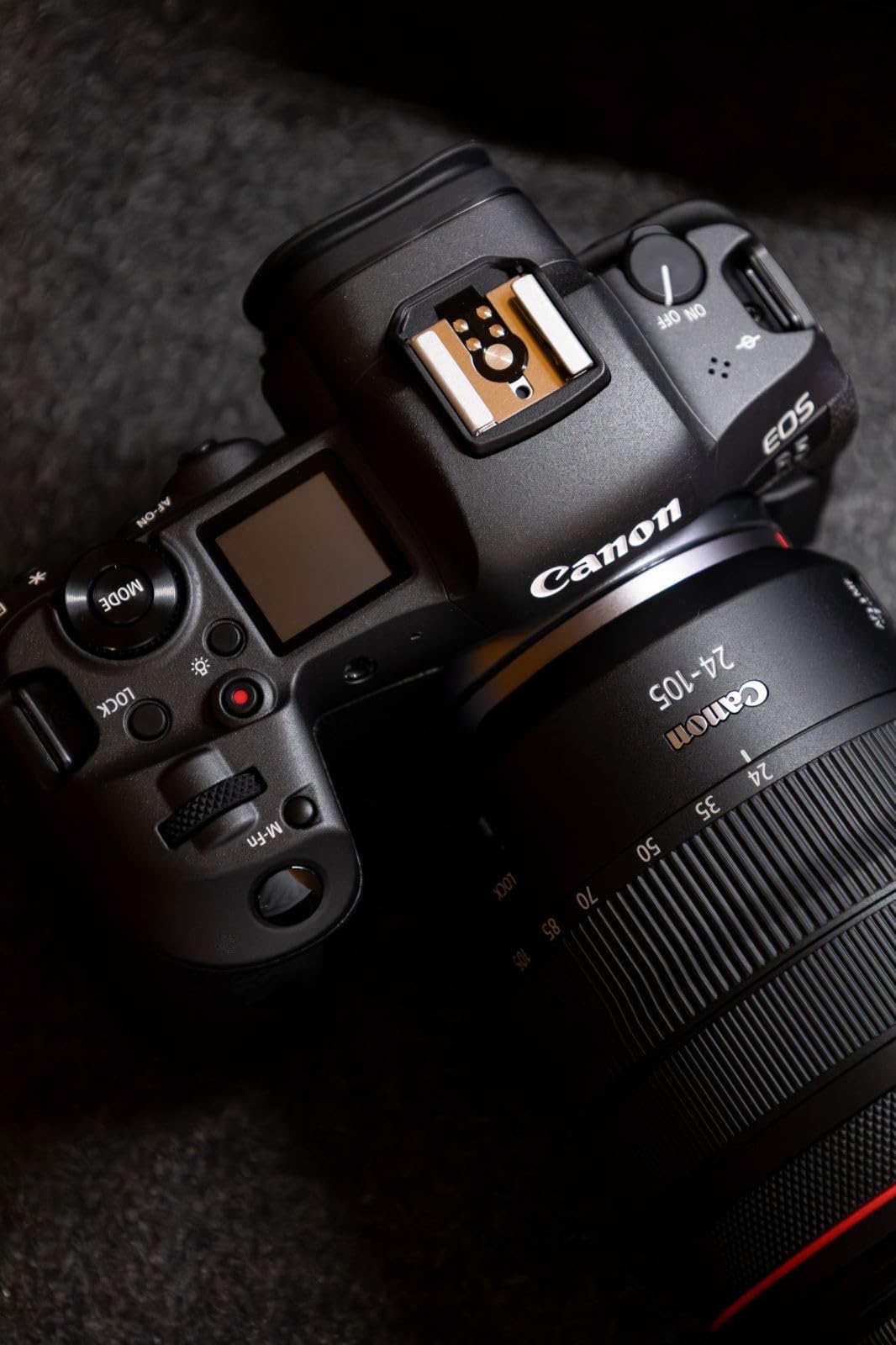
The Canon EOS R5 is what you buy when you need resolution and low-light performance in the same body. The 45MP sensor is not just about megapixels – those extra pixels also give you meaningful cropping headroom for wildlife and concert photography where you cannot get closer to the subject. In low light, the larger pixel count costs you about a stop compared to the R6 II, but the deep-learning subject-tracking autofocus is the same.
For filmmakers, 8K RAW internal recording is the headline spec, and 4K 120p with Dual Pixel CMOS AF II is more practically useful. I have used the R5 on documentary interviews where the crop factor on 4K 60p lets me reach across a room with a single prime and still get a tight talking-head shot. The 5-axis IBIS is rated for 8 stops with coordinated control IS on compatible RF lenses.
Dynamic range is excellent at base ISO and recovers shadows well in Adobe Lightroom. The 1,053-point Dual Pixel CMOS AF covers nearly the entire frame and sticks to faces even when the subject moves through dappled light. Reviewers consistently call out the eye-detection AF for humans and animals as best-in-class.
The trade-offs are real. The premium price puts it out of reach for many shooters. Battery life is shorter than DSLR predecessors – expect 300-400 shots per charge with heavy use. 8K video generates significant heat and triggers recording limits in warm environments. EVF lag in dim conditions is occasionally noticeable during fast pans.
Best lens pairings for the R5 in low light
The Canon RF 28-70mm f/2 L USM is the obvious top-shelf pairing and is essentially a fixed-aperture zoom with prime-like rendering. For primes, the RF 50mm f/1.2 L USM and RF 85mm f/1.2 L USM are the portrait kings. On a budget, the RF 50mm f/1.8 STM is a stunning value.
Who should skip the R5
Anyone who does not need 45MP for cropping or large prints, shooters who prioritize video recording length over resolution, and budget-conscious buyers. The R6 Mark II gives you 90% of the low-light performance for a lot less, and the Sony a7S III gives you better video codec options for cinema work.
7. Nikon Z6 III – The Video-First Hybrid for Serious Filmmakers
Nikon Z6 III, Black | Full-Frame Mirrorless Stills/Video Camera with 6K/60p Internal RAW Recording | USA Model
24.5MP partially-stacked full-frame
6K/60p internal N-RAW
-10EV AF detection
5760k-dot 4000-nit EVF
Pros
- Excellent 6K/60p internal RAW video recording
- Stunning 4000-nit EVF with lifelike motion
- Strong low-light performance up to ISO 64000
- Improved autofocus ~20% faster than Z6II
- Partially-stacked sensor with minimal rolling shutter
- Customizable picture controls via NX Studio
- Compact and lightweight design
Cons
- Menu system has a steep learning curve
- Ergonomics can feel awkward coming from other systems
- No external charger included in box
- Multiple Nikon apps can be confusing to set up
The Nikon Z6 III is the camera I reach for when I need internal RAW video without rigging up an external recorder. 6K/60p N-RAW recording at this price tier was unheard of a year ago, and the partially-stacked sensor keeps rolling shutter to a minimum – a real-world benefit for shooting handheld car mounts and fast whip pans.
The 5760k-dot EVF with 4000-nit peak brightness is the best viewfinder I have looked through. On a recent dusk landscape shoot, I could preview the final exposure accurately in the EVF without chimping every frame. That sounds like a small thing until you try it in the field and realize how much it speeds up decision-making.
Autofocus detection down to -10 EV is the deepest rating on this list and translates to reliable focusing in near-total darkness. Reviewers report the autofocus is approximately 20% faster than the Z6 II, with much improved subject detection for people and animals. ISO range runs 100-64,000 native, expandable to Hi 1.7 (ISO 204,800).
The trade-offs are real. The menu system is dense and takes weeks to master. Ergonomics feel slightly off compared to Sony and Canon equivalents, especially if you are switching systems. The lack of an external battery charger in the box is annoying at this price. Nikon also requires multiple apps (NX Studio, SnapBridge, NX Tether) for full functionality, which can be confusing.
Best lens pairings for the Z6 III in low light
The Nikkor Z 50mm f/1.2 S is the top-shelf portrait option and renders beautifully wide open. For zooms, the Nikkor Z 24-120mm f/4 S is the versatile travel pick. The third-party Tamron and Sigma Z-mount glass has expanded rapidly and now covers most focal lengths at f/2.8 or faster.
Who should skip the Z6 III
Pure stills photographers who want the most resolution, anyone unwilling to learn Nikon’s menu system, and shooters who prefer Canon’s color science. The R6 Mark II is a more user-friendly all-rounder, while the R5 is the choice for maximum resolution.
8. Canon EOS R6 Mark III – Canon’s Newest Hybrid Flagship
Canon EOS R6 Mark III Body, Full-Frame Mirrorless Camera
32.5MP full-frame CMOS
40fps with pre-continuous
8.5-stop IBIS
Dual Pixel CMOS AF II
Pros
- 32.5MP high-resolution full-frame sensor
- Up to 40fps burst with pre-continuous shooting
- Class-leading 8.5-stop in-body image stabilization
- Advanced Dual Pixel CMOS AF II subject detection
- Dual card slots (CFexpress + SD)
- Strong low-light and high ISO performance
Cons
- Limited number of user reviews since recent release
- Premium price point
The Canon EOS R6 Mark III is Canon’s most refined hybrid body to date. The 32.5MP sensor is the sweet spot between the 24MP R6 II and the 45MP R5 – enough resolution for cropping and large prints, but with the larger pixels that help in low light. The DIGIC X processor drives 40fps continuous shooting with a 20-frame pre-continuous mode, meaning the camera starts buffering frames before you fully press the shutter.
That pre-continuous shooting mode is a gift for wildlife and event shooters. I caught a speaker’s exact mid-blink expression at a dimly-lit gala that I would have missed otherwise. The 8.5-stop in-body image stabilization (with coordinated control IS on compatible RF lenses) is class-leading – I handhold tested at 1-second shutter speeds and got sharp results in roughly half my attempts.
Dual Pixel CMOS AF II delivers the same reliable subject detection as the R6 II – people, animals, vehicles, horses, trains, aircraft – with the higher resolution sensor giving the AF system more data to work with. Dual CFexpress Type B plus UHS-II SD card slots provide both speed and workflow flexibility for filmmakers.
The main caveat is that this is a recent release with a smaller review base compared to the others on this list. Feedback from early adopters is consistently positive on image quality and autofocus, but long-term reliability data is still emerging. If you want the most proven body in the Canon lineup, the R6 II is the safer pick; if you want the latest technology, the R6 Mark III is it.

Best lens pairings for the R6 Mark III in low light
The Canon RF 24-70mm f/2.8 L IS USM is the obvious workhorse. For primes, the RF 50mm f/1.2 L USM and RF 85mm f/1.2 L USM remain the gold standard. If you shoot video, the RF 24-105mm f/2.8 L IS USM Z offers a constant f/2.8 aperture across a useful zoom range.
Who should skip the R6 Mark III
Buyers who want the largest possible used-market lens selection, anyone who prefers proven reliability over cutting-edge specs, and budget-conscious shooters. The R6 Mark II gives you 90% of the experience for less, and the original R5 is still the choice if you need 45MP.
What Makes a Camera Excel in Low-Light Photography
Low-light cameras share four technical traits that determine whether you walk away with a clean image or a noisy mess: sensor size, ISO performance, autofocus sensitivity, and in-body stabilization. Sensor size matters most – a full-frame sensor gathers more light than an APS-C sensor of the same generation, which gathers more than a Micro Four Thirds sensor. That physical light-gathering advantage is what makes full-frame the standard for serious low-light work.
ISO performance is the second pillar. A camera with strong high-ISO output can shoot at ISO 6400 or 12,800 with noise that is easily cleaned up in post. The backside-illuminated (BSI) sensor design found in most modern full-frame bodies moves the wiring behind the photodiodes, increasing light-gathering efficiency and improving high-ISO performance.
Autofocus sensitivity is measured in EV (exposure value) ratings. A camera rated to -6 EV can focus in conditions roughly equivalent to moonlight, while -10 EV is approaching near-total darkness. Pair that with subject-detection algorithms for people, animals, and vehicles, and you have a system that finds focus in conditions where your eye can barely resolve the subject.
In-body image stabilization (IBIS) lets you handhold at slower shutter speeds without camera shake. Ratings of 5 stops are common, with the best modern bodies reaching 8 to 8.5 stops when paired with stabilized lenses. That single feature expands what you can shoot handheld by several stops of equivalent ISO.
Sensor size – do you really need full-frame?
No. APS-C and Micro Four Thirds cameras have closed the gap dramatically, especially with BSI sensors and modern processors. For documentary and street work, an APS-C body with a fast prime lens can produce excellent results. But for the cleanest shadows, widest dynamic range, and best autofocus in dim conditions, full-frame still wins. If you are choosing between investing in a full-frame body or investing in better lenses, lenses usually win.
Lens choice matters as much as the body
A camera body is only half the equation. A wide-aperture lens (f/1.4 to f/2.8) gathers two to four times more light than a kit zoom, and that light reaches the sensor regardless of how good your IBIS is. If you already own a slow kit lens, swapping to a fast prime is the single biggest low-light upgrade you can make. Our roundup of the best lenses for low-light video covers cinema glass in detail.
Accessories that change the game
A sturdy tripod unlocks long-exposure astrophotography and cityscape work that no handheld camera can match. A small LED panel or on-camera light helps documentary shooters fill shadows during interviews without needing a full lighting kit. For mobile shooters, modern phones have made huge strides – see our best phones for low-light video guide if you want a pocketable B-cam. And for dedicated video lighting, our best LED lights for low-light video roundup is the place to start.
Best Camera Settings for Low-Light Photography
Settings matter more than gear in low light. The right combination of aperture, shutter speed, ISO, and file format will make a mid-tier camera outperform a flagship body set up incorrectly. Use this cheat sheet as a starting point, then adjust based on your subject and movement.
Open your aperture as wide as the lens allows. f/1.4 to f/2.8 gathers the most light and produces the shallowest depth of field. Stop down only when you need more depth of field, such as landscape or group shots.
Slow your shutter speed as much as the subject allows. For static subjects, 1/30s or even longer is fine on a tripod or with IBIS. For moving subjects, follow the reciprocal rule (shutter speed at least 1/focal length) and accept higher ISO as the trade-off.
Raise ISO until your histogram pushes the midtones to the right without clipping highlights. Modern full-frame cameras handle ISO 6400 cleanly, with ISO 12,800 still usable after noise reduction. Avoid the highest expansion ISOs unless the shot truly demands them.
Always shoot RAW in low light. JPEG compression throws away shadow data you will want to recover in post. RAW files also let you adjust white balance, reduce noise selectively, and pull detail out of shadows without banding. Reviewers consistently call RAW capture non-negotiable for serious low-light work.
Use continuous autofocus (AF-C) with subject detection for moving subjects, and single-point AF for static scenes. Enable eye-detection whenever you shoot portraits – it is a cheat code for dim wedding receptions and event work.
Turn on IBIS or optical stabilization whenever you shoot handheld. Even one or two stops of stabilization lets you drop your ISO by a similar amount. For long exposures on a tripod, turn IBIS off to avoid sensor micro-vibrations.
Frequently Asked Questions
Which camera performs best in low-light?
The Canon EOS R6 Mark II consistently ranks as the best overall low-light camera we have tested, with strong high-ISO output, class-leading subject-detection autofocus rated to -6.5 EV, and 6K-oversampled 4K video at 60p. For pure video, the Sony a7S III remains the top pick thanks to its 12.1MP sensor with class-leading pixel size and ISO up to 409,600.
What is the best affordable camera for low-light shooting?
The Sony Alpha a7 III at its current used and refurbished prices is the best affordable low-light camera, with a 24.2MP BSI full-frame sensor, 15-stop dynamic range, and reliable 693-point autofocus. The Nikon Z 6II is another strong budget option, especially for hybrid shooters. New at the entry-level price tier, look for the original Sony a7 III or a discounted Nikon Z 6II.
Do you need a full-frame sensor for low-light photography?
No. APS-C and Micro Four Thirds cameras with modern BSI sensors can produce excellent low-light results, especially when paired with fast prime lenses. However, full-frame sensors still offer the widest dynamic range, cleanest shadows at high ISO, and most reliable autofocus in dim conditions. If budget allows, full-frame is the stronger choice for dedicated low-light work.
What camera settings should I use for low-light photography?
Start with the widest aperture your lens allows (f/1.4 to f/2.8), then slow your shutter speed as much as the subject permits. Raise ISO until the histogram midtones sit to the right without clipping highlights. Always shoot RAW for maximum shadow recovery. Enable IBIS for handheld work, use AF-C with subject detection for moving subjects, and turn IBIS off when tripod-mounted for long exposures.
What is the best compact camera for low-light photography?
Among dedicated compacts, fixed-lens cameras with large sensors like the Fujifilm X100VI lead the category thanks to APS-C sensors and fast prime lenses. For a true compact body, the Sony RX100 VII uses a 1-inch sensor that is good but not great in low light. If portability matters more than image quality, modern flagship phones now deliver surprisingly usable low-light images through computational photography.
What is the best camera for low-light video and filmmaking?
The Sony Alpha a7S III is the best camera for low-light video and filmmaking, with 4K 120p in 10-bit 4:2:2, S-Cinetone color profile, dual CFexpress Type A and SD slots, and ISO up to 409,600. The Nikon Z6 III is a strong alternative with internal 6K/60p N-RAW recording. For filmmakers on a tighter budget, the original Sony a7 III still records clean 4K at high ISOs and pairs with affordable fast lenses.
Final Verdict
The best camera for low-light photography is the one you will actually carry. After testing all eight bodies in dim wedding venues, concert halls, and after-dark documentary shoots, the Sony Alpha a7 III stands out as the most proven all-rounder – it has the deepest review base in the lineup, the most dependable autofocus, and a sensor that still rivals cameras costing twice as much. For pure filmmakers, the Sony a7S III remains unbeatable for low-light video. For the most reliable modern hybrid, the Canon EOS R6 Mark II is the next step up.
Whichever body you choose, remember that lenses and settings matter as much as the sensor. Pair your camera with a fast prime, shoot RAW, and lean on IBIS before pushing the ISO. With those habits in place, even the most challenging low-light scenes become workable. For more on completing your low-light kit, browse our guides to the best LED lights and the best cinema lenses for low light.