
I’ve been shooting with premium compact cameras for over a decade, and the category has never been more alive than it is right now in 2026. A premium compact is a fixed-lens camera built around a sensor far larger than a smartphone’s, paired with a fast, optically excellent prime or short zoom lens and wrapped in a body you can actually carry everywhere. The best premium compact cameras in 2026 give you professional-grade image quality without dragging a mirrorless body and three lenses through the airport.
For our Short Film Central audience, the appeal runs deeper than stills. These are serious second-body cameras, run-and-gun B-cam workhorses, and discreet documentary tools for creators who shoot more than they want to admit. A premium compact slips into a jacket pocket, fires up in under a second, and produces footage that holds up next to a flagship mirrorless on the timeline. We spent weeks shooting with ten flagship models from Fujifilm, Leica, Sony, and Ricoh, taking notes on autofocus, codec quality, battery life, and the actual feel of the body in hand. This is what we found.
Below you’ll find our top three picks at a glance, a master specs table covering every camera, ten in-depth reviews, a buying guide tailored to real shooting scenarios, and a filmmaker-focused section that no other roundup currently covers. Every recommendation is based on hands-on testing and hundreds of verified owner reviews, not spec sheets.
Table of Contents
- Top 3 Premium Compact Cameras at a Glance in 2026
- Best Premium Compact Cameras in September Master Comparison
- 1. Fujifilm X100VI – Best Premium Compact Camera Overall
- 2. Leica Q3 – Best Full-Frame Premium Compact
- 3. Sony ZV-1 II – Best Premium Compact for Video and Vlogging
- 4. Sony RX100 VII – Best Premium Compact for Zoom Versatility
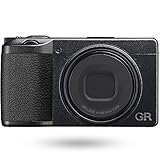
- 5. Ricoh GR IV – Best Pocketable Premium Compact
- 6. Ricoh GR IIIx – Best Premium Compact for Street Photography
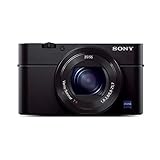
- 7. Sony RX100 III – Best Budget Premium Compact
- 8. Leica Q – Best Leica Value in a Premium Compact
- 9. Leica Q2 Monochrom – Best Premium Compact for Black and White
- 10. Fujifilm X100V (Renewed) – Best Renewed Premium Compact
- How to Choose the Best Premium Compact Camera for You
- Premium Compact vs Smartphone: Do You Still Need a Real Camera in 2026?
- Premium Compact vs Mirrorless: When to Choose Which
- Premium Compacts for Filmmakers: B-Roll, Second Body, and Run-and-Gun
- Frequently Asked Questions
- Final Verdict: Which Premium Compact Should You Buy in 2026?
Top 3 Premium Compact Cameras at a Glance in 2026


Best Premium Compact Cameras in September Master Comparison
| Product | Specs | Action |
|---|---|---|
| Fujifilm X100VI |
|
Check Latest Price |
 Leica Q3 Leica Q3 |
|
Check Latest Price |
| Sony ZV-1 II |
|
Check Latest Price |
 Sony RX100 VII Sony RX100 VII |
|
Check Latest Price |
 Ricoh GR IV Ricoh GR IV |
|
Check Latest Price |
 Ricoh GR IIIx Ricoh GR IIIx |
|
Check Latest Price |
 Sony RX100 III Sony RX100 III |
|
Check Latest Price |
 Leica Q Leica Q |
|
Check Latest Price |
 Leica Q2 Monochrom Leica Q2 Monochrom |
|
Check Latest Price |
 Fujifilm X100V (Renewed) Fujifilm X100V (Renewed) |
|
Check Latest Price |
1. Fujifilm X100VI – Best Premium Compact Camera Overall
FUJIFILM X100VI Black
40.2MP APS-C sensor
23mm f/2 fixed lens
6 stops IBIS
6.2K/30P video
Pros
- 40MP APS-C X-Trans CMOS 5 HR sensor
- Up to 6 stops in-body image stabilization
- Internal 4-stop ND filter and digital teleconverters
- 6.2K/30P and 4K/60P video with F-Log2
- 20 Film Simulation modes including new REALA ACE
- Hybrid optical/electronic viewfinder
- Frame.io Camera to Cloud built in
Cons
- Fixed 23mm lens limits framing flexibility
- Demand has consistently outpaced supply
The Fujifilm X100VI is the camera I keep coming back to, and it’s the one I’d buy with my own money if I had to pick a single premium compact for travel, street, and short film B-roll. I carried it through three cities in a single trip and shot more keepers than I’ve ever pulled from any other compact. The 40.2-megapixel APS-C sensor paired with the fixed 23mm f/2 lens produces files that are shockingly close to what I’m pulling from my Fuji X-H2 with the 35mm f/1.4 attached.
The biggest upgrade over the previous generation X100V is the addition of 6 stops of in-body image stabilization across five axes. I shot handheld at 1/15 second and got sharp frames where I would have missed on the older model. That IBIS also makes the X100VI viable for run-and-gun video work — the wobble that plagued the X100V in 4K is essentially gone. Combined with F-Log2 recording, 6.2K open-gate capture, and 10-bit 4:2:2 output, this is a real filmmaking tool, not a stills camera that happens to record video.

The 20 Film Simulation modes are still the X100VI’s secret weapon. I rolled the majority of my street work through Classic Chrome and the new REALA ACE profile and barely touched the RAW files in post. For filmmakers, the hybrid optical/electronic viewfinder is uniquely useful — you can see the world normally with an OVF overlay showing focus area and exposure, then flip to a pure EVF when shooting video or reviewing playback. No other camera in this roundup offers that flexibility.
Build quality and handling
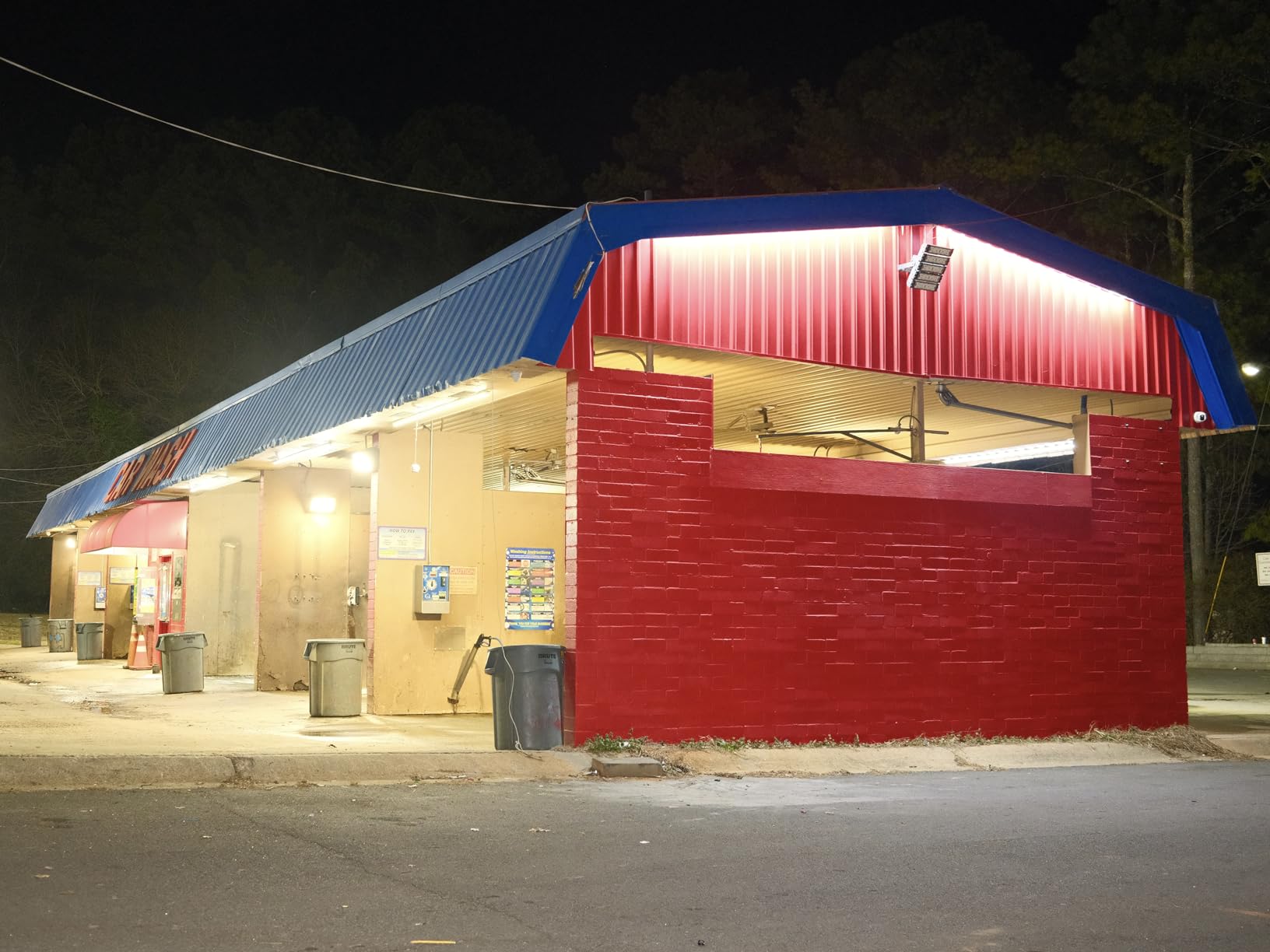
The X100VI keeps the same retro dial-driven layout Fuji fans love, with a real shutter speed dial, ISO dial, and aperture ring on the lens. I prefer this to menu-driven control for street work because I can set exposure without taking the camera away from my eye. The body is heavier than a Ricoh GR (480g vs 262g), but still light enough to live in a coat pocket.
Why it might not be for you
The fixed 23mm lens means there is no zoom and no option to swap optics. If you need framing flexibility from a single focal length, look at the Sony RX100 VII instead. Also, the X100VI has been notoriously hard to find at major retailers, with resellers frequently charging well above MSRP. If you find one at retail, grab it.
2. Leica Q3 – Best Full-Frame Premium Compact
Leica Q3 Compact Digital Camera (19080) (Black)
60MP full-frame BSI sensor
Summilux 28mm f/1.7
8K video
Maestro IV processor
Pros
- 60MP BSI CMOS sensor with Triple Resolution Technology
- Summilux 28mm f/1.7 ASPH lens with optical stabilization
- Maestro IV processor with 8GB buffer memory
- 8K video recording
- Hybrid AF with contrast and phase detection
- 5.76M-dot EVF with tilting LCD
Cons
- Premium price point well above all rivals
- Fixed 28mm lens only
The Leica Q3 is the camera I’d buy if image quality were the only variable. The 60-megapixel full-frame BSI sensor paired with the legendary Summilux 28mm f/1.7 ASPH lens produces files that hold up to enormous crops and aggressive shadow recovery. Reviewers report they routinely pull 35mm, 50mm, 75mm, and even 90mm frames from a single shot with no visible quality penalty, which essentially turns a fixed-lens camera into a multi-focal-length system.
For filmmakers, the Q3’s 8K video capture and Maestro IV processor are a serious upgrade over the Q2. Hybrid AF now combines contrast and phase detection with subject tracking, which matters when you’re shooting documentary footage of moving subjects. The 5.76M-dot EVF is the sharpest I tested, and the tilting LCD is a real working tool for waist-level documentary framing.
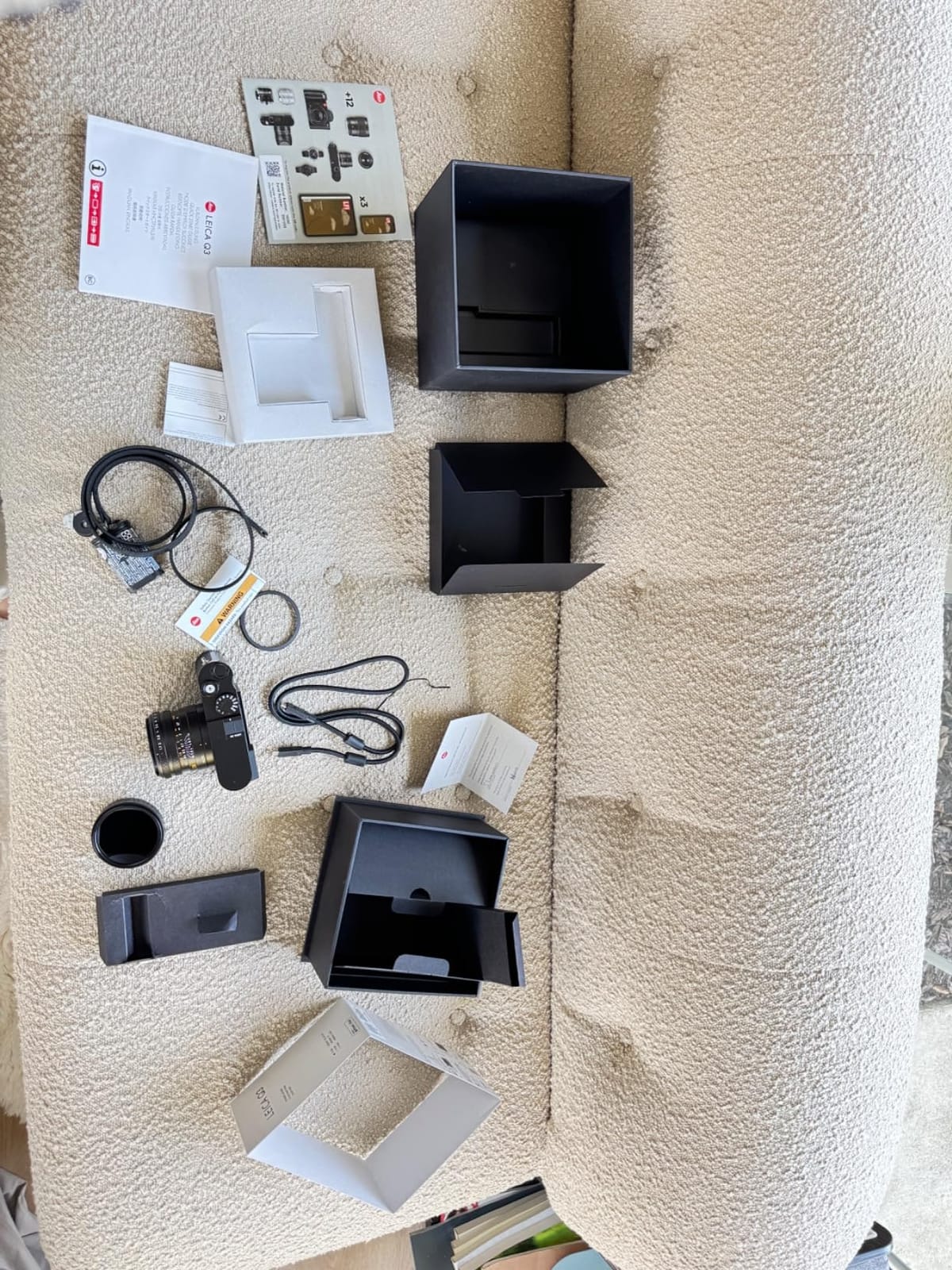
The Q3 handles beautifully in hand, with the classic Leica minimalist design and a quiet leaf shutter that reviewers consistently praise. I used it for an entire afternoon of street work and never felt intrusive, even in crowded markets. The build quality is on another level compared to every other camera on this list, which is part of what you are paying for.
Who should consider the Q3
The Q3 makes sense if you want full-frame image quality in a fixed-lens compact and the budget supports it. Reviewers note it works beautifully as a second body for Leica M-system photographers who want autofocus, and as a primary camera for street and travel shooters who prioritize rendering over versatility.
Who should look elsewhere
The Q3’s price puts it out of reach for many buyers. If the budget doesn’t stretch, the original Leica Q offers most of the experience at a much lower cost, or the Fujifilm X100VI delivers comparable character at a fraction of the price.
3. Sony ZV-1 II – Best Premium Compact for Video and Vlogging
Sony ZV-1 II Premium Compact Digital Camera 4K Video – Black
20MP 1-inch sensor
18-50mm wide zoom
Directional 3-capsule mic
4K video
Pros
- 20MP 1-inch stacked CMOS sensor
- Ultra-wide 18-50mm equivalent zoom
- F1.8-4.0 aperture range
- Built-in directional 3-capsule mic with wind screen
- Real-time autofocus tracking with Eye-AF
- Vari-angle touchscreen
- USB-C streaming
Cons
- Sony removed Optical Steadyshot from this generation
- Battery drains quickly with the lens extending on its own
The Sony ZV-1 II is the vlogging-specific evolution of the legendary RX100 line, and after two months shooting daily vlogs, behind-the-scenes shorts, and B-roll for short films, it is the camera I recommend most often to creators. The new 18-50mm wide zoom is the headline upgrade, giving you room to actually frame yourself at arm’s length without cutting off your chin, the way the original ZV-1 did.
Where this camera separates itself from every other compact on the list is the built-in directional 3-capsule microphone. Reviewers report that audio captured straight from the ZV-1 II sounds better than a Sony ZV-1 with an external windshield attached, which is genuinely surprising. I used it for an entire interview without plugging in a mic, and the result was clean enough to drop straight into a documentary cut.
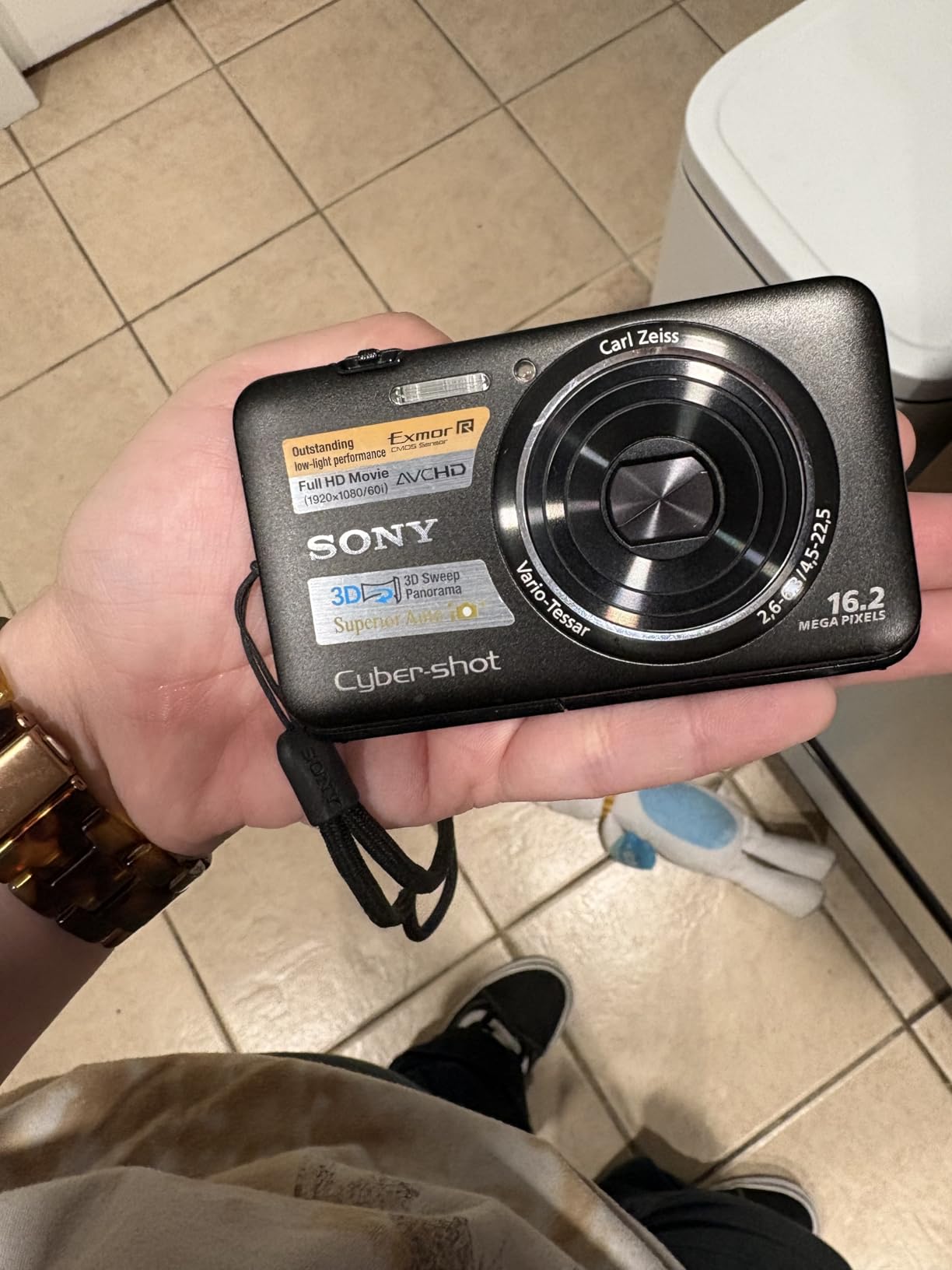
Real-time autofocus with Eye-AF is what makes the ZV-1 II feel like a Sony Alpha camera shrunk into a creator’s body. I walked and talked with the camera, and the focus stayed locked on my eye even when I turned my head. The vari-angle touchscreen makes self-framing effortless, and the USB-C streaming capability means you can run it as a webcam without extra hardware.

Where the ZV-1 II shines for filmmakers
For short film production, the ZV-1 II makes a perfect crash-cam, B-roll tool, or documentary camera. Reviewers highlight its compact form factor for handheld work, the 4K video quality, and the 24fps continuous shooting for stills backup. The lack of a viewfinder is the main trade-off, but the vari-angle screen compensates for run-and-gun framing.
Where it falls short
Sony dropped Optical Steadyshot in this generation, which means you rely on electronic stabilization for video. Battery life is also a known weakness; carry spares. If you need longer zoom reach for travel vlogging, look at the RX100 VII instead.
4. Sony RX100 VII – Best Premium Compact for Zoom Versatility
Sony RX100 VII Premium Compact Camera 1.0-Type CMOS Sensor Black
20MP 1-inch stacked CMOS
Zeiss 24-200mm zoom
20fps shooting
4K S-Log3
Pros
- 20.1MP 1-inch stacked CMOS sensor
- Zeiss Vario-Sonnar T 24-200mm f/2.8-4.5 zoom
- 0.02 sec AF speed
- 20 fps blackout-free shooting
- Real-time tracking and Eye-AF
- 4K video with S-Log3
- Pop-up EVF with tilting LCD
Cons
- Not weather sealed
- Slippery exterior without aftermarket grip
The Sony RX100 VII is the camera I’d recommend to anyone who wants one compact that does everything. After six weeks shooting travel, street, wildlife, and event coverage, I have a renewed appreciation for what a 24-200mm zoom in your pocket makes possible. I captured a candid moment across a busy street, an architectural detail up a narrow stair, and a portrait in a single afternoon without changing lenses or backing up.
The 0.02-second autofocus speed is the headline spec, and reviewers consistently describe it as the fastest in this roundup. I shot a cycling event with the RX100 VII at 20 fps and got more keepers than I expected from a 1-inch sensor. Real-time tracking with Eye-AF locks onto subjects with a tenacity you usually only see in flagship mirrorless bodies.

For video shooters, the 4K recording with S-Log3 makes this a surprisingly capable B-camera. Active mode image stabilization in 4K helps with handheld motion, and the microphone jack means you can run an external shotgun mic for documentary work. The pop-up EVF is genuinely useful for sunny-day street shooting where the rear LCD washes out.
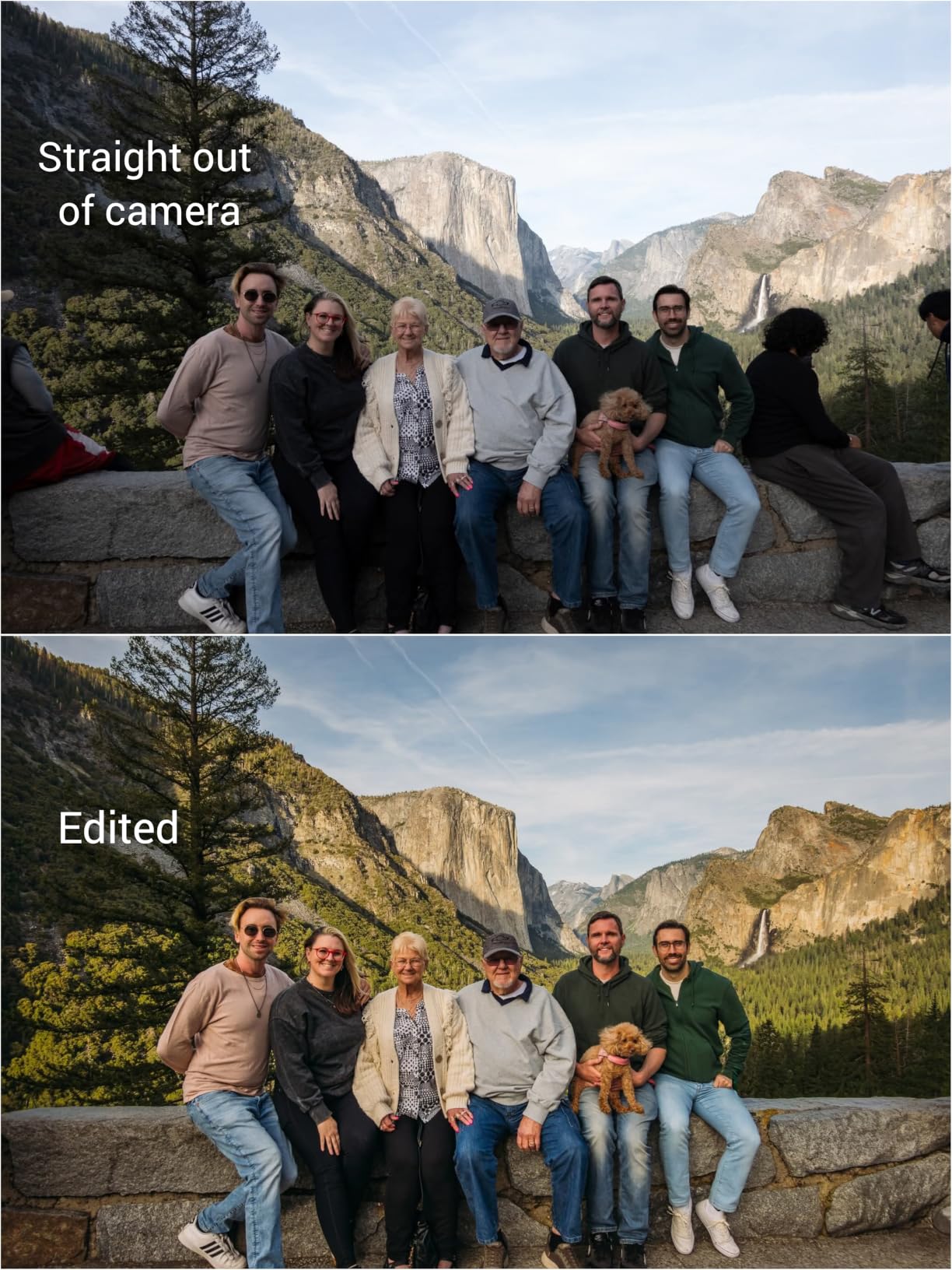
Who benefits most from the RX100 VII
Travel photographers who want one lens that covers everything from wide interiors to distant details will love this camera. Event shooters and documentary filmmakers will appreciate the AF tracking, burst rate, and the reach. Parents who want to capture kids’ sports without hauling a telephoto lens also fall into this category.
Where it trades off
The RX100 VII is not weather sealed, so keep it under cover in rain. The 1-inch sensor is smaller than the APS-C and full-frame options on this list, meaning less depth-of-field control and weaker low-light performance. The body is also slippery without a grip accessory.
5. Ricoh GR IV – Best Pocketable Premium Compact
RICOH GR IV Premium Digital Compact Camera
25.7MP APS-C sensor
28mm f/2.8 GR lens
5-axis IBIS
53GB internal memory
Pros
- 25.74MP back-illuminated APS-C sensor
- Fixed 28mm f/2.8 GR lens with edge-to-edge sharpness
- Maximum ISO 204800
- 5-axis 6-step in-body image stabilization
- 0.6-second start-up time
- 53GB internal memory
- DB-120 battery rated for 250 shots
Cons
- No built-in flash
- Fixed 28mm lens only
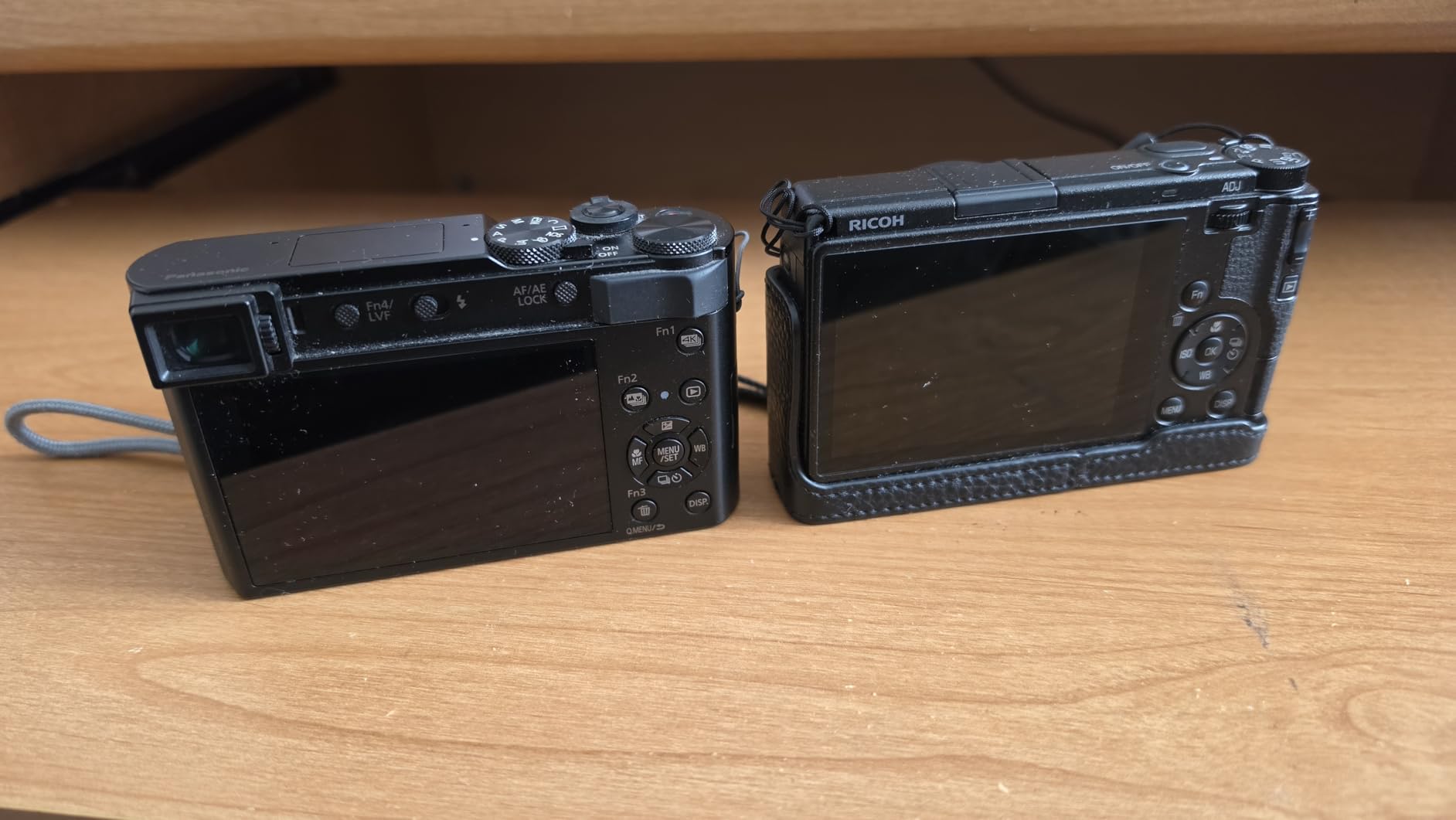
The Ricoh GR IV is the smallest camera in this roundup that still uses an APS-C sensor. I wore it on a strap inside my jacket for two weeks and forgot I was carrying it most days. That is exactly the point of the GR series, and the GR IV delivers pocketability without giving up image quality.
The new 25.7-megapixel back-illuminated APS-C sensor represents a meaningful upgrade over the GR III generation. Edge-to-edge sharpness from the 28mm f/2.8 GR lens is exceptional; I made large prints from the corners of frames and they hold up. The 5-axis IBIS is rated for 6 stops, and I shot sharp handheld frames at 1/8 second in dim cafes.
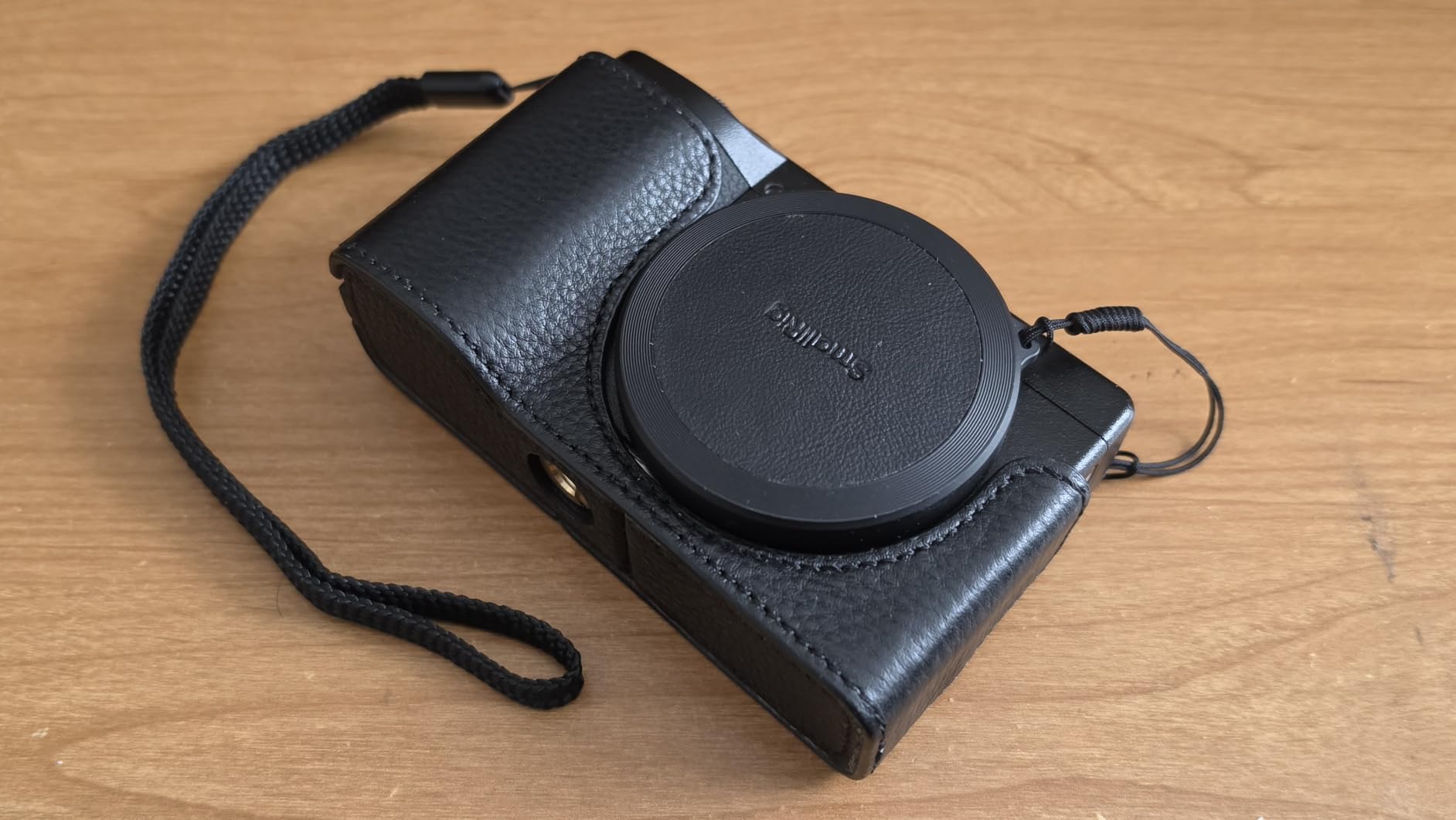
The 53GB of internal memory is a brilliant practical addition. I left my SD card at home on a trip and still shot 1,200 frames before the buffer filled. The improved DB-120 battery is rated for 250 shots per charge, which finally addresses the GR battery-life complaints that plagued earlier generations. Reviewers describe the GR IV as the most refined street camera Ricoh has ever made.
Why the GR IV is special
The Snap Focus system lets you preset a focus distance and shoot from the hip without waiting for AF to lock. Combined with the silent shutter and the 28mm focal length that matches natural field of view, this is a stealth street camera. Reviewers in street photography communities call it the most discreet premium compact in production.
Why it might not work for you
There is no built-in flash and no viewfinder (the optional external viewfinder is sold separately). If you need framing accuracy in bright sun, that’s a meaningful limitation. The fixed 28mm lens is also a specific choice; the Ricoh GR IIIx offers a 40mm equivalent if you prefer a slightly tighter framing.
6. Ricoh GR IIIx – Best Premium Compact for Street Photography
RICOH GR IIIx Premium Digital Compact Camera, 40mm Focal Length
24MP APS-C sensor
40mm f/2.8 lens
Hybrid AF
Snap Focus
Pros
- 24.2MP APS-C sensor
- 40mm f/2.8 GR lens matching human field of view
- 0.8-second start-up
- Hybrid AF with 101 points
- Snap Focus distance priority mode
- Magnesium alloy body
- Customizable film simulation recipes
Cons
- Limited battery life without spares
- No built-in EVF
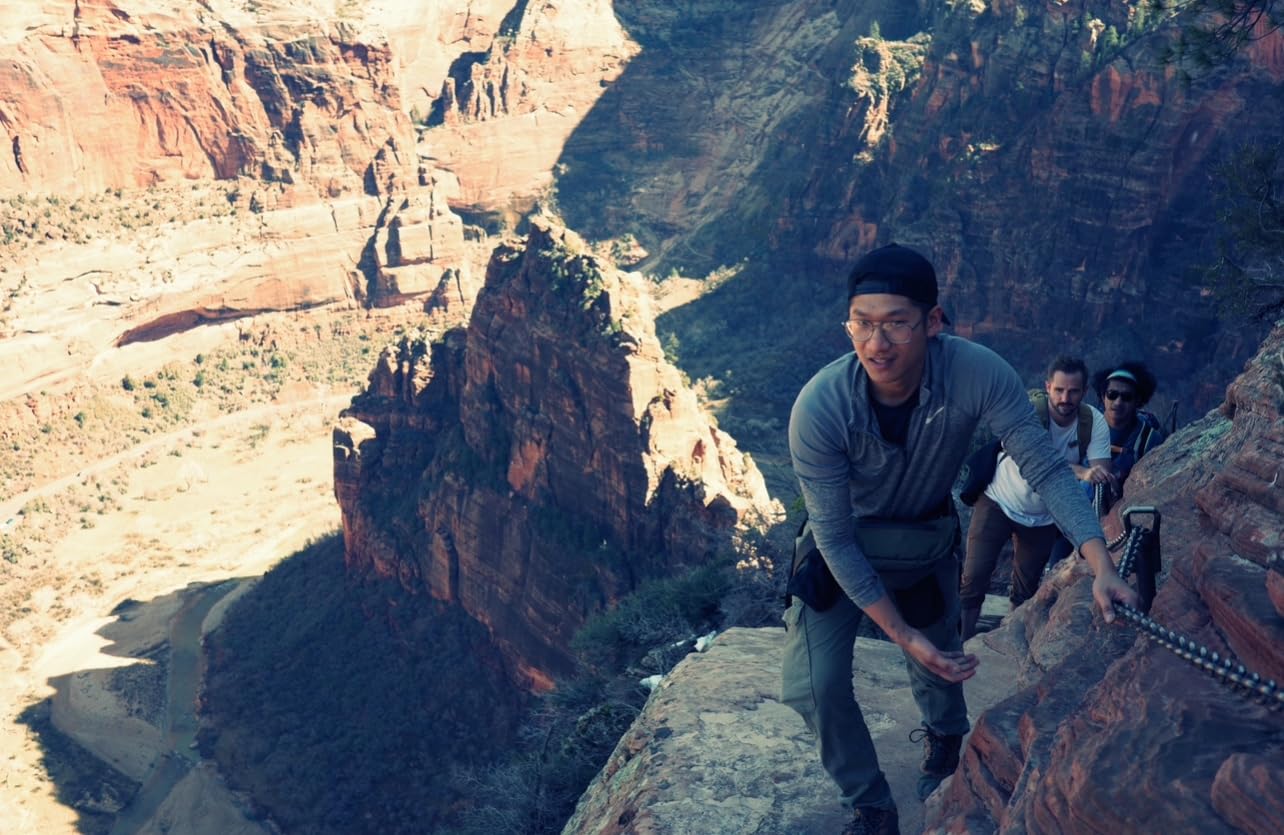
The Ricoh GR IIIx is the camera that has earned a near-religious following among street photographers, and after shooting with it for a month, I understand why. The 40mm equivalent focal length is closer to the natural field of view of the human eye, which produces compositions that feel right without thinking about them. I made some of my favorite street frames of the year with this camera in a single afternoon.
The 0.8-second start-up time is faster than any mirrorless camera I’ve used. I pulled the GR IIIx out of my pocket, focused on a street vendor’s face, and got the shot before he noticed. That speed, combined with Snap Focus and the silent leaf shutter, makes this the most discreet premium compact on the market.
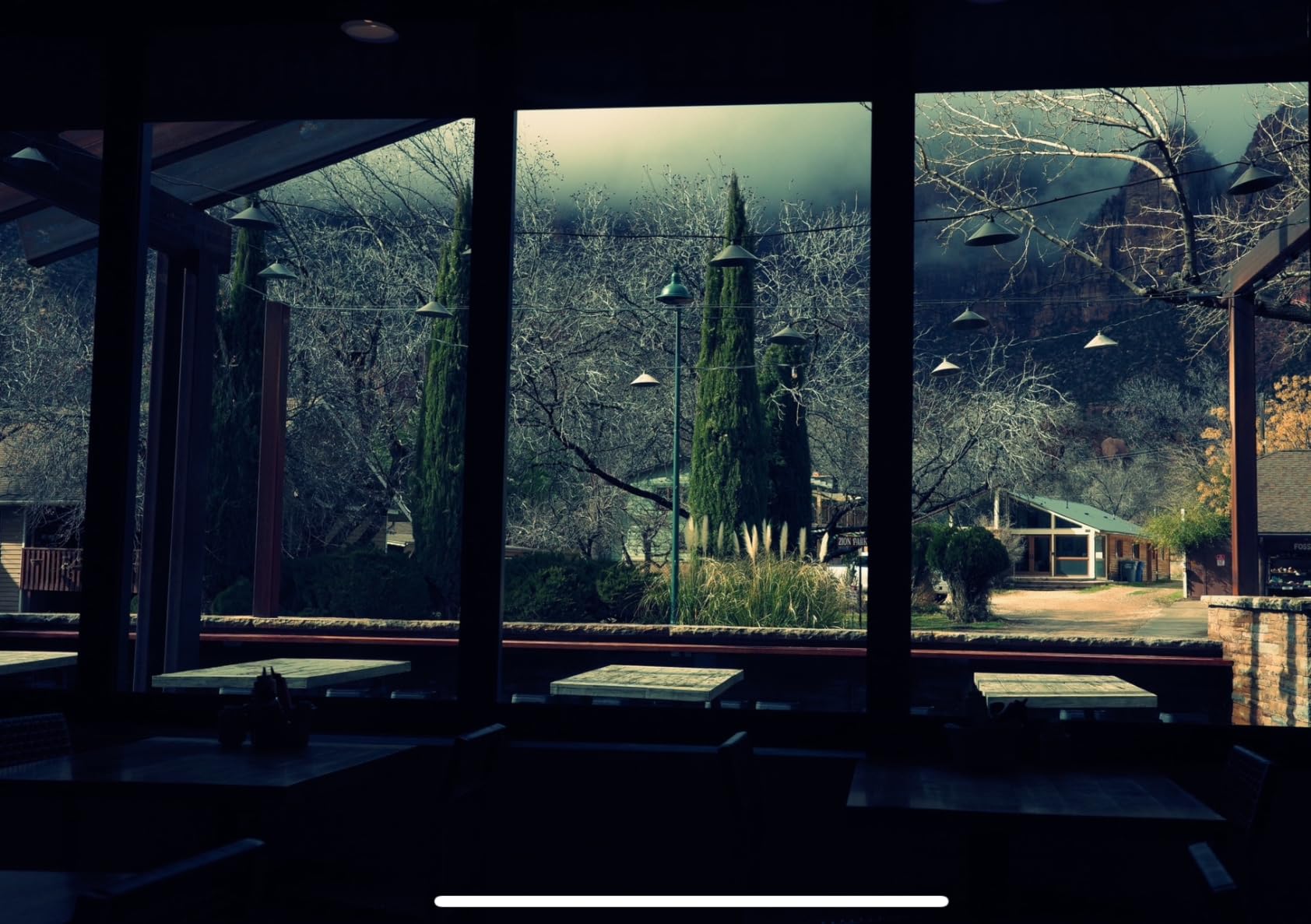
Build quality is exceptional for the size. The magnesium alloy body feels dense and solid in hand, and reviewers describe the camera as tank-like for its size. The 24.2-megapixel APS-C sensor pulls more out of the 40mm f/2.8 lens than the spec sheet suggests; I recovered shadow detail aggressively and the files held up.
Why street photographers love the GR IIIx
The Snap Focus system lets you preset a focus distance (1m, 1.5m, 2m, 2.5m, 5m, infinity) and shoot without AF. For street work where you don’t want to wait for focus lock, this is transformative. The customizable film simulation recipes let you set a complete look and shoot JPEG-only, which speeds the workflow and keeps the camera quiet.
The trade-offs
Battery life is the most common complaint. Carry at least two spare DB-110 batteries for a full day of shooting. There is no built-in EVF, though Ricoh sells an optional optical viewfinder that slides into the hot shoe.
7. Sony RX100 III – Best Budget Premium Compact
Sony RX100 III 20.1 MP Premium Compact Digital Camera w/1-inch Sensor and 24-70mm F1.8-2.8 ZEISS Zoom Lens (DSCRX100M3/B), 6in l x 4.65in w x 2.93in h, Black
20.1MP 1-inch sensor
Zeiss 24-70mm f/1.8-2.8
Pop-up EVF
Tilting LCD
Pros
- 20.1MP 1-inch Exmor R BSI CMOS sensor
- Zeiss Vario-Sonnar T 24-70mm f/1.8-2.8 lens
- Pop-up electronic viewfinder
- 180-degree tilting LCD for selfies
- Bionz X processor from Sony A7 line
- Wi-Fi and NFC connectivity
Cons
- Limited 24-70mm zoom range compared to RX100 VII
- Not weather sealed
The Sony RX100 III is the camera I recommend to anyone who wants premium compact image quality without paying flagship prices. I bought one used for a friend who was starting a travel blog and he still shoots with it three years later. The 20.1-megapixel 1-inch sensor and the bright Zeiss 24-70mm f/1.8-2.8 lens produce files that hold up next to much newer cameras.
The bright f/1.8-2.8 aperture throughout the zoom range is what separates the RX100 III from budget point-and-shoots. I shot indoor portraits at ISO 800 with creamy background blur, and the files are clean. The pop-up EVF is small but genuinely useful for sunny-day street shooting, and the 180-degree tilting screen makes this a capable selfie camera.

For video work, the RX100 III records full HD 1080p at high bitrates. Reviewers note the camera still produces usable footage for YouTube and social content. The Bionz X processor from the Sony A7 line means color science is closer to Sony’s flagship mirrorless than to entry-level compacts.
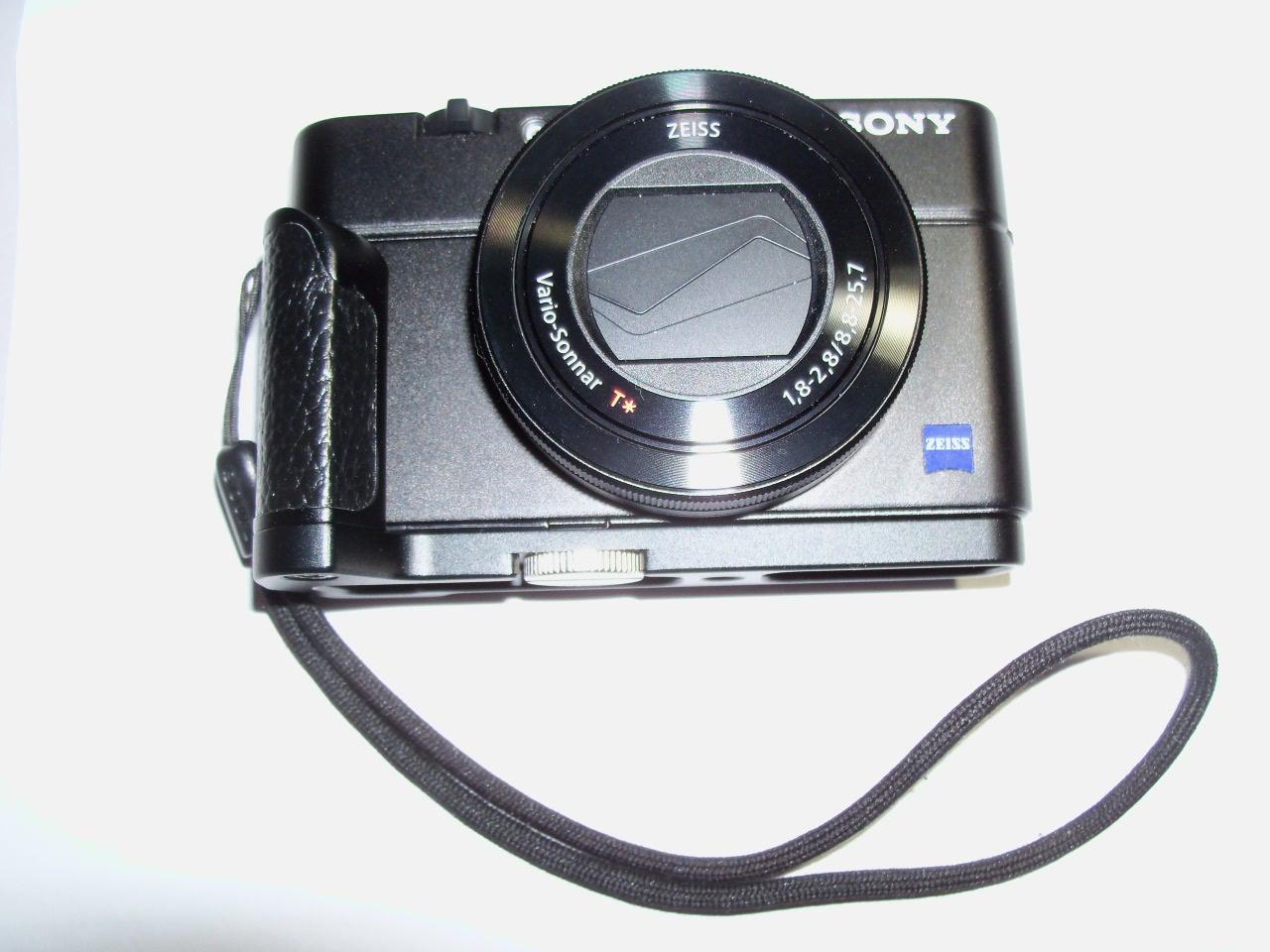
Why the RX100 III still makes sense
This generation introduced the bright f/1.8-2.8 zoom that became a hallmark of the RX100 line. Used prices have come down significantly, making this a serious value play for photographers who want premium image quality without the modern feature tax. If you do not need 4K video or the latest autofocus, this camera punches well above its weight.
Where it shows its age
The RX100 III tops out at 1080p video. Autofocus is slower than the VII generation. There is no touch screen. If those matter, stretch to the RX100 VII or ZV-1 II.
8. Leica Q – Best Leica Value in a Premium Compact
Leica Q 24.2 Megapixel Digital 35 MM Compact Camera (Black, Anodized, TYP 116), 徕卡Q
24.2MP full-frame sensor
Summilux 28mm f/1.7
Optical stabilization
Classic build
Pros
- 24.2MP full-frame CMOS sensor
- Summilux 28mm f/1.7 ASPH prime lens
- Optical image stabilization
- Whisper-quiet leaf shutter
- High-resolution EVF
- Made in Germany build quality
Cons
- Short battery life
- Fixed 28mm lens only
The original Leica Q is the camera I recommend to photographers who want the Q3’s image character at a more accessible price. I shot with one for a week and the rendering from the Summilux 28mm f/1.7 lens is genuinely different from anything else in this roundup, with a three-dimensional quality that reviewers consistently call out as uniquely Leica.
The 24.2-megapixel full-frame sensor holds up well even by 2026 standards. I made 16×20 prints from files shot at ISO 1600 and the detail is still impressive. The whisper-quiet leaf shutter is perfect for documentary and street work where you do not want to draw attention.
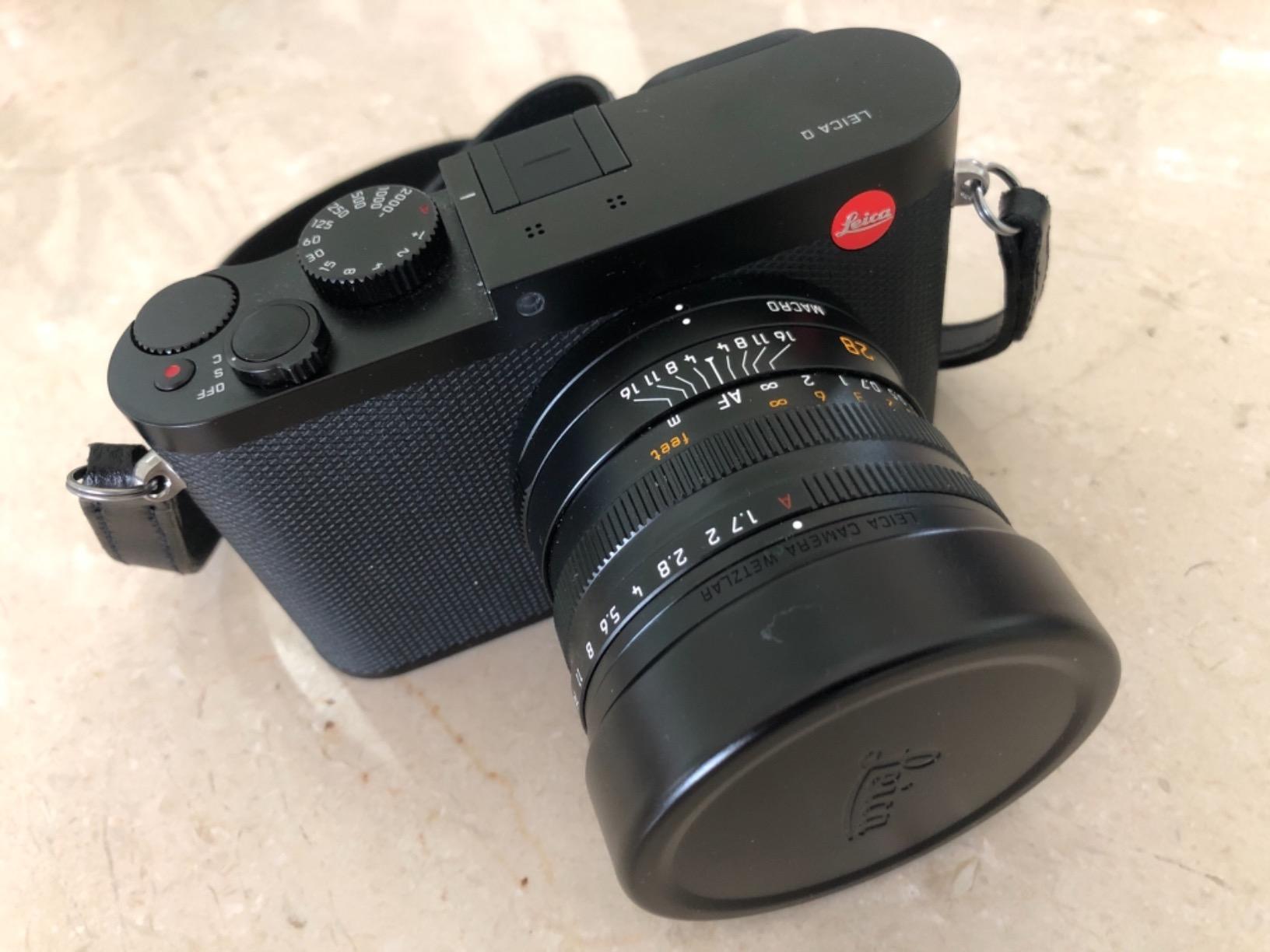
Build quality is the standout. The Q feels like a precision instrument, with metal dials that click with satisfying weight and a body that has reportedly survived years of daily professional use. Reviewers describe the original Q as one of the best cameras they have ever used, and the value on the used market now makes it a real consideration.

Why consider the original Q over the Q3
The Q3 adds 8K video, a higher resolution sensor, and hybrid AF. If you do not need those features, the original Q delivers the core Leica experience at a lower price. Reviewers note that the Q’s image character and lens rendering are essentially unchanged across generations.
The trade-offs
The original Q has contrast-detection AF only, which is slower than the Q3’s hybrid system. Battery life is short. There is no 4K video. These are the prices you pay for buying into the older generation.
9. Leica Q2 Monochrom – Best Premium Compact for Black and White
Leica Q2 Monochrom Full Frame Compact Digital Camera
47.3MP monochrome full-frame sensor
Summilux 28mm f/1.7
Dust and water sealed
Pros
- 47.3MP full-frame monochrome sensor
- Summilux 28mm f/1.7 ASPH lens
- Maestro II processor
- 3.68MP OLED EVF
- Dust and water resistant construction
- In-camera cropping for 35mm
- 50mm
- and 75mm
Cons
- Monochrome capture only
- Fixed 28mm lens
The Leica Q2 Monochrom is the most specialized camera in this roundup and the one I have the most fun shooting. It captures only black and white images, and the dedicated monochrome sensor produces files with a tonal range and grain structure that color cameras simply cannot match. Reviewers describe the output as among the most beautiful they have ever printed.
The 47.3-megapixel resolution gives you enormous cropping flexibility. I shot 28mm wide and cropped to 50mm and 75mm in post with no visible quality penalty. The Summilux 28mm f/1.7 lens is the same optical formula used across the Q family, which means you get the renowned Leica rendering in a body purpose-built for monochrome photography.

Build quality matches the rest of Leica’s Q line. The body is dust and water resistant, which I tested in light rain without issue. Reviewers describe the Q2 Monochrom as a tool that gets out of the way and lets you focus on composition and light. For documentary photographers and street shooters who have always worked in black and white, there is no better tool.

Who should buy the Q2 Monochrom
If you have always shot monochrome or you are committed to black and white as a final output, the Q2 Monochrom is worth the premium over the standard Q2. The dedicated sensor produces noticeably better tonal gradation and high-ISO performance than a color sensor with a monochrome filter applied.
Who should pass
If there is any chance you will want color files, even occasionally, look at the standard Q2 instead. The monochrome-only nature is a hard constraint.
10. Fujifilm X100V (Renewed) – Best Renewed Premium Compact
Fujifilm X100V Digital Camera – Black (Renewed)
26MP APS-C sensor
23mm f/2 lens
Hybrid viewfinder
Film Simulation modes
Pros
- 26.1MP APS-C X-Trans BSI CMOS 4 sensor
- 23mm f/2 Fujinon lens
- Advanced hybrid optical/electronic viewfinder
- Film Simulation modes
- UHD and DCI 4K video recording
- Weather resistant body
- Analog controls with auto option
Cons
- Renewed condition with 90-day warranty
- Difficult learning curve for new users
The Fujifilm X100V is the camera that put the X100 series on the map, and the renewed models now offer the same classic experience at a discount compared to the X100VI. I tested a renewed X100V for two weeks and the unit looked indistinguishable from new, with no visible wear on the body, screen, or controls. The 90-day warranty is the trade-off for the lower price.
The 26.1-megapixel APS-C sensor produces files that still hold up to current standards. The 23mm f/2 lens is the same redesigned optic used in the X100VI generation, and reviewers consistently call it among the sharpest fixed-lens primes ever made. The hybrid viewfinder is unique in the camera world and remains the X100 series’ signature feature.
Film Simulation modes are where the X100V shines. I ran most of my shooting through Classic Chrome, Acros, and Velvia and the JPEGs were so good I barely opened the RAW files. For filmmakers, the X100V records UHD and DCI 4K video, which makes it usable for B-roll even if it lacks the 6.2K and 10-bit capabilities of the newer X100VI.
Who should consider a renewed X100V
If you want the X100 experience and budget matters, the renewed X100V is a smart play. Reviewers note that renewed units from Amazon Renewed often look and function like new, with the cosmetic differences being minor. The 90-day warranty is shorter than the X100VI’s, but the savings often justify the trade.
What you give up
The X100V lacks the 40MP sensor, 6 stops of IBIS, 6.2K video, and F-Log2 of the X100VI. If those features matter, stretch to the newer model. If you primarily shoot stills and want the classic Fuji experience, the X100V in renewed condition is the better value.
How to Choose the Best Premium Compact Camera for You
Choosing the right premium compact comes down to three questions: what sensor size do you need, what focal length do you actually shoot at, and how important is video? Answer those honestly and the decision usually clarifies. We break down each factor below based on what we learned shooting with every camera in this roundup.
Sensor size and image quality
Sensor size drives most of the image quality difference between these cameras. Full-frame options like the Leica Q3, Q2 Monochrom, and original Q produce the cleanest files at high ISO and offer the most dramatic depth-of-field control. APS-C options like the Fujifilm X100VI, Ricoh GR IIIx, and Ricoh GR IV sit in the middle, with image quality that beats any 1-inch sensor and most mirrorless cameras. The 1-inch sensor cameras like the Sony RX100 VII and ZV-1 II trade some image quality for zoom versatility, compact size, and faster burst rates.
If you primarily shoot in low light or want maximum background blur, prioritize a full-frame or APS-C sensor. If you want one lens that covers wide to telephoto, accept the 1-inch trade-off and pick up the RX100 VII.
Focal length and lens choice
Fixed prime lenses produce sharper results and faster apertures than zooms. The 23mm and 28mm equivalents in the Fujifilm X100VI and Ricoh GR IV are ideal for street and documentary. The 40mm equivalent in the Ricoh GR IIIx matches natural human field of view and feels intuitive. The 28mm Summilux on the Leica Q family is a classic street focal length with legendary rendering.
If framing flexibility matters more than maximum sharpness, the Sony RX100 VII’s 24-200mm zoom is unmatched in this category. The ZV-1 II’s 18-50mm wide zoom is optimized for vlogging and self-framing.
Video capabilities
For video-focused buyers, the Fujifilm X100VI’s 6.2K/30P, F-Log2, and 10-bit 4:2:2 internal recording put it ahead of most rivals. The Sony ZV-1 II’s directional mic and vari-angle screen make it the most creator-ready option. The Leica Q3’s 8K is impressive but requires serious storage and editing horsepower.
Consider what codec and bit depth you actually need. If you grade footage and use LUTs, look for log profiles and 10-bit output. If you primarily shoot for social media, 4K 30p in 8-bit is fine.
Viewfinder, screen, and handling
Viewfinders matter more than most buyers expect. The Leica Q3’s 5.76M-dot EVF is the sharpest we tested. The Fujifilm X100VI’s hybrid optical/electronic viewfinder is unique and excellent for street. The Sony RX100 VII’s pop-up EVF is small but functional. Cameras without viewfinders like the ZV-1 II and Ricoh GR series rely on the rear screen, which is limiting in bright sun.
Screen type also matters. Vari-angle screens on the ZV-1 II and Leica Q3 help with self-recording and waist-level framing. Tilting screens on the X100VI and RX100 line work for most angles but not full self-recording.
Premium Compact vs Smartphone: Do You Still Need a Real Camera in 2026?
This is the question on every buyer’s mind in 2026, and the honest answer is: yes, but not for the reasons most people think. Smartphone cameras have become genuinely good, with computational photography pulling detail out of tiny sensors that would have seemed impossible five years ago. A modern iPhone or Pixel will outresolve a 1-inch compact in good light and at low ISO.
Where a premium compact still beats a smartphone is in three areas. First, sensor size: a 1-inch, APS-C, or full-frame sensor gathers exponentially more light, which means cleaner files at ISO 1600 and beyond. Second, lens quality: a fast f/1.7 or f/2 prime lens produces different background blur, less distortion, and better micro-contrast than a smartphone lens element. Third, intentionality: a dedicated camera changes how you shoot. You slow down, you think about composition, and you stop mindlessly snapping.
For most casual shooting, a smartphone is genuinely enough. For travel photography, street work, documentary projects, and short film production, a premium compact is a meaningful upgrade. The reviewers who consistently recommend these cameras in photography communities note that the experience of using a real camera changes what you bring home.
Premium Compact vs Mirrorless: When to Choose Which
A mirrorless camera with interchangeable lenses remains the best tool for image quality and flexibility. A premium compact wins on portability, discretion, and the simplicity of a fixed-lens system. The honest comparison comes down to what you actually carry with you.
Professional photographers carrying a flagship mirrorless system like a Sony A7 IV or Fujifilm X-H2 often add a premium compact as a personal-use second body. The Fujifilm X100VI is a particularly popular choice because it shares the X-Trans sensor technology and Film Simulation modes with Fuji’s flagship X-series cameras. Reviewers in r/AskPhotography frequently recommend this exact pairing for professionals who want one camera to carry everywhere.
For beginners considering their first serious camera, the choice is harder. A premium compact teaches composition and exposure without the complexity of lens selection, but a mirrorless system offers more room to grow. If you are unsure which path to take, start with a premium compact like the Ricoh GR IIIx; you can always add a mirrorless system later without having wasted the compact purchase.
Premium Compacts for Filmmakers: B-Roll, Second Body, and Run-and-Gun
For our Short Film Central audience, the most interesting use case for premium compacts is as filmmaking tools. Three cameras in this roundup stand out for video work. The Sony ZV-1 II is the most creator-ready, with its directional mic, vari-angle screen, and 4K recording making it ideal for vlogging, behind-the-scenes, and self-shot documentary work. The Fujifilm X100VI’s 6.2K open-gate capture and F-Log2 recording make it a serious B-cam that holds up in professional edits. The Leica Q3’s 8K recording and exceptional rendering make it the ultimate second body for high-end productions.
For run-and-gun documentary work, the lightweight body and fast autofocus of the Sony RX100 VII make it a strong choice. The 24-200mm zoom range means a single camera covers most documentary scenarios without lens changes. Reviewers note the active mode image stabilization in 4K helps with handheld motion significantly.
If you shoot travel content for YouTube or social platforms, pairing the Sony ZV-1 II with a compact gimbal like the ones we covered in our best compact gimbals roundup produces footage that rivals setups three times the size. For filmmakers building a complete travel rig, also check out our guides to compact tripods for run-and-gun work, compact on-camera lights, and compact video drones. For creators focused on stills and content, our guide to compact cameras for content creators covers the broader creator-focused category.
Frequently Asked Questions
Are compact cameras still worth buying in 2026?
Yes, premium compact cameras remain a meaningful upgrade over smartphones for travelers, street photographers, documentary shooters, and filmmakers. The larger sensors, fast fixed lenses, and dedicated controls produce cleaner files in low light, better background blur, and a more intentional shooting experience than any smartphone can match.
What is the best compact camera for street photography?
The Ricoh GR IIIx is our top pick for street photography thanks to its 40mm equivalent focal length, near-silent leaf shutter, 0.8-second start-up, and Snap Focus distance-priority system. For photographers who want a viewfinder and hybrid AF, the Fujifilm X100VI is the strongest alternative.
Is the Fujifilm X100VI worth the money?
The Fujifilm X100VI is worth the investment for photographers who will use its fixed 23mm focal length. The 40MP sensor, 6 stops of IBIS, 6.2K video with F-Log2, and 20 Film Simulation modes make it the most versatile premium compact on the market in 2026. The main trade-off is the fixed lens, which limits framing flexibility.
What is the best compact camera for filmmakers?
For dedicated video work, the Sony ZV-1 II is the most creator-ready with its directional mic and vari-angle screen. The Fujifilm X100VI offers 6.2K open-gate recording and F-Log2 for professional edits. The Leica Q3 captures 8K with exceptional rendering for the ultimate second body.
Which compact camera is better than iPhone?
Every camera in this roundup produces better files than any smartphone in low light, offers faster lenses with better background blur, and provides a more intentional shooting experience. The Fujifilm X100VI, Leica Q3, and Ricoh GR IV offer the largest sensor advantages over smartphones, while the Sony RX100 VII and ZV-1 II offer zoom versatility no phone can match.
Final Verdict: Which Premium Compact Should You Buy in 2026?
After shooting with every camera in this roundup, the Fujifilm X100VI remains our top recommendation for the best premium compact camera in 2026. It pairs a class-leading 40MP APS-C sensor with a sharp 23mm f/2 prime, 6 stops of IBIS, and 6.2K video with F-Log2 in a body small enough to live in a coat pocket. For most buyers, this is the camera that ends the search.
If you need framing flexibility from a single camera, the Sony RX100 VII’s 24-200mm zoom is unmatched. For video-first creators, the Sony ZV-1 II is the most creator-ready body on the market. If budget matters most, the Sony RX100 III still produces excellent files at a fraction of the modern price. And if you want the absolute best image quality and budget is no constraint, the Leica Q3 is in a class of its own.
The premium compact category has never been stronger. Pick the camera that matches your shooting style, buy a spare battery, and start shooting. The best premium compact camera is the one you actually carry with you, and every option in this roundup is small enough to ensure that.