
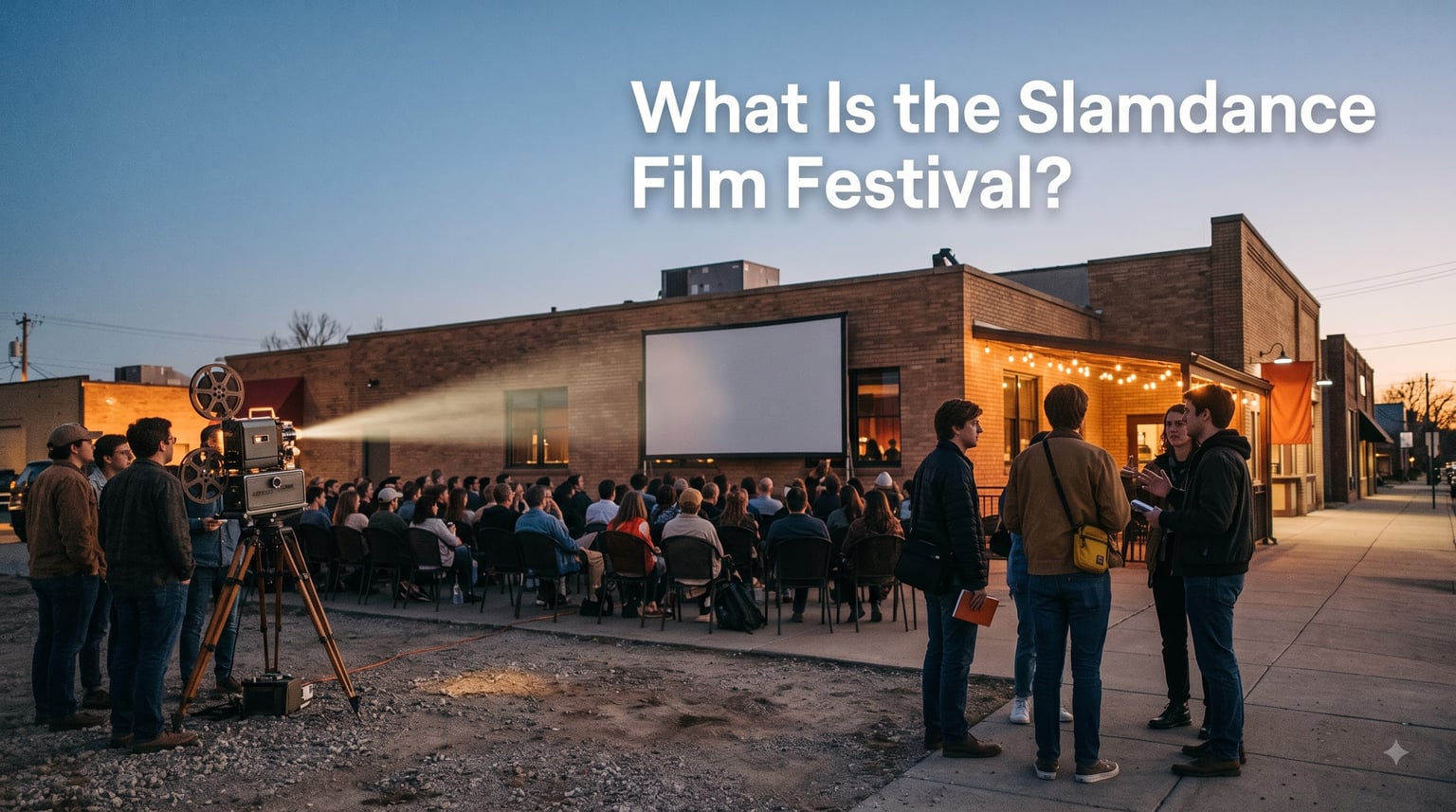
The Slamdance Film Festival is an annual independent film festival founded in 1995 that champions emerging filmmakers through its founding principle: By Filmmakers, For Filmmakers. Held in Los Angeles, California each February, the festival is an Academy Award-qualifying, BAFTA-qualifying, and Canadian Screen Award-qualifying event that has launched the careers of directors including Christopher Nolan, Rian Johnson, and Bong Joon-ho. What sets Slamdance apart from every other major film festival is that its programming team is drawn from the filmmakers who submit to it, meaning no studio executives or industry gatekeepers decide what gets shown.
If you are an independent filmmaker working with a low budget, or a short film creator looking for a genuine launchpad, the Slamdance Film Festival deserves your attention. This guide covers everything from its rebellious founding in Park City to its current status as one of the most respected indie film festivals in the world.
We will walk through the history, philosophy, notable alumni, competition categories, year-round programs, submission process, and how Slamdance compares to Sundance. Whether you are considering submitting your first short film or simply want to understand the indie film landscape, here is what you need to know about the Slamdance Film Festival.
Table of Contents
- The Origins of Slamdance: A Rebel Festival Born in 1995
- By Filmmakers, For Filmmakers: What the Slamdance Philosophy Actually Means
- Famous Directors Who Got Their Start at Slamdance
- Slamdance vs Sundance: How the Two Festivals Compare
- Slamdance Competition Categories and Awards
- Beyond the Festival: Slamdance Year-Round Programs
- How to Submit to the Slamdance Film Festival
- What to Expect at the Slamdance Film Festival
- FAQs
The Origins of Slamdance: A Rebel Festival Born in 1995
Slamdance was founded in 1995 by a group of independent filmmakers who were frustrated after being rejected from Sundance. Rather than walk away, they decided to create their own festival right down the street in Park City, Utah, running concurrently with Sundance. The idea was simple: give genuinely emerging filmmakers a platform without the industry politics that had come to define the larger festival circuit.
The founders included Jon Fitzgerald, Shane Kuhn, Daniel Martin, and Peter Baxter, who stepped in as president and became the face of the organization for decades. Their original vision was a grassroots festival programmed by filmmakers, for filmmakers, with no interest in celebrity-driven programming or studio connections.
For nearly two decades, Slamdance operated as a Park City counterpart to Sundance, attracting filmmakers and attendees who wanted a more authentic, less pretentious festival experience. In 2026, the festival completed its move to Los Angeles, California, where it now runs for approximately one week in late February. The relocation brought it closer to the heart of the independent film industry while preserving the DIY spirit that made it famous.
The founding spirit still drives everything the festival does. As one filmmaker on Reddit put it: “The fest itself is awesome. Lovely people. Good vibes. Not pretentious and who knows you might find people to make your next film with.”
By Filmmakers, For Filmmakers: What the Slamdance Philosophy Actually Means
“By Filmmakers, For Filmmakers” is not just a marketing tagline for Slamdance. It is the structural foundation of how the festival operates, and no other major festival uses this model.
Here is how it works. The programming team that selects which films make it into the festival is drawn from the pool of filmmakers who submit their work. Each year, a group of emerging filmmakers is invited to serve as programmers, meaning the people curating the lineup understand exactly what it is like to be on the submission side of the process. They know what a limited budget looks like, and they know what raw, unfiltered artistic expression feels like.
This structure eliminates the traditional hierarchy found at most festivals, where industry executives and career programmers make decisions behind closed doors. At Slamdance, the selection process is grounded in peer recognition. Filmmakers are judging filmmakers.
The philosophy extends beyond programming into the festival atmosphere itself. Filmmakers who have attended consistently describe Slamdance as a community rather than a competition. Networking happens organically between screenings, at social events, and through the festival’s year-round programs that keep the community connected long after February ends.
For short film creators, this matters enormously. You are not navigating a wall of industry gatekeepers. You are entering a space designed by people who have stood exactly where you stand.
Famous Directors Who Got Their Start at Slamdance
The list of directors whose careers received a significant boost from Slamdance reads like a who’s-who of modern cinema. These are not minor indie names. They are some of the most commercially and critically successful filmmakers working today.
Christopher Nolan screened his debut feature “Following” at Slamdance in 1998, before “Memento” made him a household name and before the “Dark Knight” trilogy and “Oppenheimer” cemented him as one of the most influential directors of his generation.
Rian Johnson premiered his debut feature “Brick” at Slamdance, a film that launched him toward directing “Star Wars: The Last Jedi” and the critically acclaimed “Knives Out” franchise.
Bong Joon-ho, the Oscar-winning director of “Parasite,” had early work recognized through Slamdance’s pipeline, contributing to his eventual rise as one of international cinema’s most celebrated auteurs.
Other notable alumni include Marc Forster (director of “World War Z” and “Monster’s Ball”), Oren Peli (creator of the “Paranormal Activity” franchise), and Lena Khan, whose career was boosted through the festival’s short film programming.
The pattern is clear. Slamdance identifies talent before the industry does. For short filmmakers wondering whether a festival launch can translate into a real career, this alumni list is the answer.
Slamdance vs Sundance: How the Two Festivals Compare
Since Slamdance was literally founded as a response to Sundance rejections, the comparison is inevitable. Filmmakers regularly ask which festival is the right fit, and the answer depends entirely on where you are in your career and what kind of film you have made.
Budget and experience level. Slamdance is built for first-time and emerging filmmakers working with low budgets, typically under $1 million. Sundance accepts low-budget films too, but its programming increasingly leans toward films with established producers, recognizable cast members, or distribution deals already in motion.
Programming model. Slamdance films are selected by a team of fellow filmmakers. Sundance films are selected by a professional programming team with deep industry ties. This means Slamdance rewards raw potential and unique voices, while Sundance often rewards polish and commercial viability.
Size and atmosphere. Sundance is massive, drawing tens of thousands of attendees, distributors, and press. Slamdance is smaller and more intimate, with a reputation for being welcoming rather than pretentious. As one filmmaker described it: “Not pretentious and who knows you might find people to make your next film with.”
Industry presence. Sundance attracts major distributors and acquisition executives. Slamdance has industry presence too, but it is more focused on genuine discovery rather than pre-negotiated deals.
Location. Both festivals now operate independently of each other. Sundance still runs in Park City, Utah in January. Slamdance has moved to Los Angeles and runs in late February, giving filmmakers breathing room between the two events.
For a short filmmaker with a micro-budget project and no industry connections, Slamdance is often the more realistic and more rewarding target. For filmmakers with a polished feature and representation, Sundance may be the better play. Many filmmakers submit to both.
Slamdance Competition Categories and Awards
Slamdance offers several competition categories designed to showcase the full spectrum of independent filmmaking. The festival’s competition sections include Narrative Features, Documentary Features, and Short Film programs covering Narrative Shorts, Documentary Shorts, Animation, and Experimental work.
For short film creators specifically, Slamdance is one of the most valuable festivals in the world. The short film categories are Academy Award-qualifying, meaning that winning a Grand Jury Prize in a short film category makes your film eligible for Oscar consideration. The festival is also BAFTA-qualifying and Canadian Screen Award-qualifying, making it one of the few festivals recognized by all three major awards bodies.
The feature film competition is limited to works made for under $1 million, reinforcing the festival’s commitment to genuinely independent productions. This budget cap is enforced to ensure the competition stays true to its mission of supporting emerging filmmakers rather than well-funded productions masquerading as indie.
Awards are determined by jury panels, typically composed of previous Slamdance alumni and industry professionals who understand the indie landscape. Grand Jury Prizes are awarded in each category, and the festival also presents special awards recognizing unique achievements in filmmaking.
Prize packages include cash awards and additional sponsorships that vary by year. Beyond the immediate prizes, the real value of a Slamdance win is the career momentum it generates. Festival laurels from an Academy Award-qualifying festival carry significant weight when approaching distributors, sales agents, and future collaborators.
Beyond the Festival: Slamdance Year-Round Programs
The Slamdance Film Festival in February is just one part of what the organization does. Slamdance operates year-round through several programs designed to support independent filmmakers at every stage of their careers.
Screenplay Competition. Slamdance runs a screenplay competition that accepts feature-length scripts, pilot scripts, and short scripts. This competition has become a recognized entry point for new writers looking to break into the industry, with winners receiving prize packages and industry exposure.
DIG (Digital, Interactive, and Gaming). Slamdance DIG is a competition section dedicated to interactive and game-based storytelling. It reflects the festival’s recognition that the boundaries between film, games, and digital media are blurring, and that emerging creators are working across all of these forms.
Slamdance on the Road. This traveling program brings curated selections of Slamdance films to cities around the world, extending the festival’s reach beyond its Los Angeles base and giving filmmakers additional screening opportunities.
Slamdance Channel. The Slamdance Channel is a curated streaming platform that allows audiences to discover Slamdance films year-round. For filmmakers, this provides an ongoing distribution avenue beyond the festival week itself.
Slamdance Unstoppable. This program is dedicated to filmmakers with disabilities, providing a dedicated platform and community for creators who have historically been underrepresented in the film industry. It reflects Slamdance’s broader commitment to accessibility and inclusion in independent cinema.
Slamdance Cinema Club. A community program that hosts screenings and discussions, keeping the filmmaker network active between festivals and giving alumni a place to showcase new work.
How to Submit to the Slamdance Film Festival
Submitting to Slamdance requires understanding a few key requirements and planning ahead. The festival uses FilmFreeway as its primary submission platform, and submissions typically open in the spring or summer with deadlines rolling through the fall.
Premiere status. Slamdance generally requires films to maintain some level of premiere status, though the specific requirements can vary by category and year. Filmmakers should check the current year’s rules carefully, as premiere requirements directly affect your submission strategy. Planning your festival run around premiere status is one of the most important strategic decisions a filmmaker makes.
Budget requirements. For the feature film competition, productions must be made for under $1 million. This is a hard cap that distinguishes Slamdance from festivals that claim to support indie film but program multi-million-dollar productions. For short films, there is no strict budget cap, but the festival’s focus remains on genuinely independent work.
Submission fees. Slamdance charges submission fees that increase as deadlines approach, following the standard early, regular, and late deadline structure. Filmmakers on Reddit and indie film forums have noted that these fees can add up, especially if you are submitting to multiple festivals, so budgeting for submissions is essential for any indie filmmaker.
Eligibility for emerging filmmakers. The festival prioritizes first-time and early-career filmmakers. While established directors can submit, the programming philosophy favors genuine discovery and new voices.
Notification timeline. Filmmakers typically receive acceptance or rejection notifications in December or January, ahead of the February festival. The waiting period can be stressful, but the community aspect of Slamdance means that even filmmakers who are not accepted in a given year are encouraged to stay involved through year-round programs and the filmmaker network.
One filmmaker on Reddit who was accepted shared: “Did anything significant come from your experience? What should I do to prepare? Also, this is my first film festival ever, what should I know beforehand.” This reflects how Slamdance serves as many filmmakers’ entry point into the entire festival world, not just one event among many.
What to Expect at the Slamdance Film Festival
Attending Slamdance for the first time is different from attending larger, more corporate festivals. The atmosphere is consistently described as warm, collaborative, and free of the pretension that can make bigger festivals feel intimidating.
Screenings take place in intimate venues where filmmakers and audience members mingle freely between films. Q&A sessions after screenings tend to be genuine conversations rather than promotional exercises. Filmmakers are accessible, and the lack of rigid hierarchy means you can walk up to someone whose film you admired and start a real conversation.
Networking at Slamdance happens organically. Rather than forced industry mixers, connections form through shared meals, hallway conversations, and the simple fact that everyone at the festival is there because they love independent film. Many filmmakers report leaving Slamdance with collaborators for their next project.
For first-time attendees, the advice from experienced filmmakers is consistent: be present, be genuine, and take advantage of the community atmosphere. The festival rewards filmmakers who engage with each other rather than those who treat it as a purely transactional networking opportunity.
The DIY ethos that defined Slamdance in 1995 is still palpable. You will see low-budget films that punch far above their weight, meet filmmakers who are just starting out, and encounter programming choices that no other festival would make. That willingness to take chances is exactly what has made Slamdance a career launchpad for some of the biggest names in cinema.
FAQs
Is Slamdance a big deal?
Yes. Slamdance is an Academy Award-qualifying, BAFTA-qualifying, and Canadian Screen Award-qualifying festival that helped launch the careers of Christopher Nolan, Rian Johnson, Bong Joon-ho, Marc Forster, and Oren Peli. It is widely regarded as one of the most important indie film festivals in the world for emerging talent.
How is Slamdance different from Sundance?
Slamdance focuses on ultra-low-budget films by first-time and emerging filmmakers, programmed entirely by fellow filmmakers. Sundance has a larger industry presence, bigger budgets, celebrity-driven programming, and a professional programming team. Slamdance is smaller, more intimate, and explicitly built for filmmakers without industry connections.
Is Slamdance hard to get into?
Slamdance is competitive. The festival receives thousands of submissions each year but programs a limited number of films to keep the selection focused on genuinely emerging talent. However, because the festival prioritizes first-time filmmakers and low-budget work, it is more accessible than Sundance for filmmakers at the start of their careers.
What is the prize money for Slamdance?
Prize packages vary by year and category. Grand Jury Prize winners receive cash awards along with additional sponsorships. The short film categories are Academy Award-qualifying, which means the real prize for many filmmakers is Oscar eligibility and the career momentum that comes with festival laurels from a qualifying event.
The Slamdance Film Festival has spent over three decades proving that you do not need a massive budget, an industry connection, or a celebrity cast to make films that matter. From its rebellious founding in Park City in 1995 to its current home in Los Angeles, Slamdance remains the festival where genuinely emerging filmmakers get their first real platform. If you have a short film, a low-budget feature, or a screenplay sitting on your desk, the Slamdance Film Festival is one of the few places in the industry built specifically for you.