
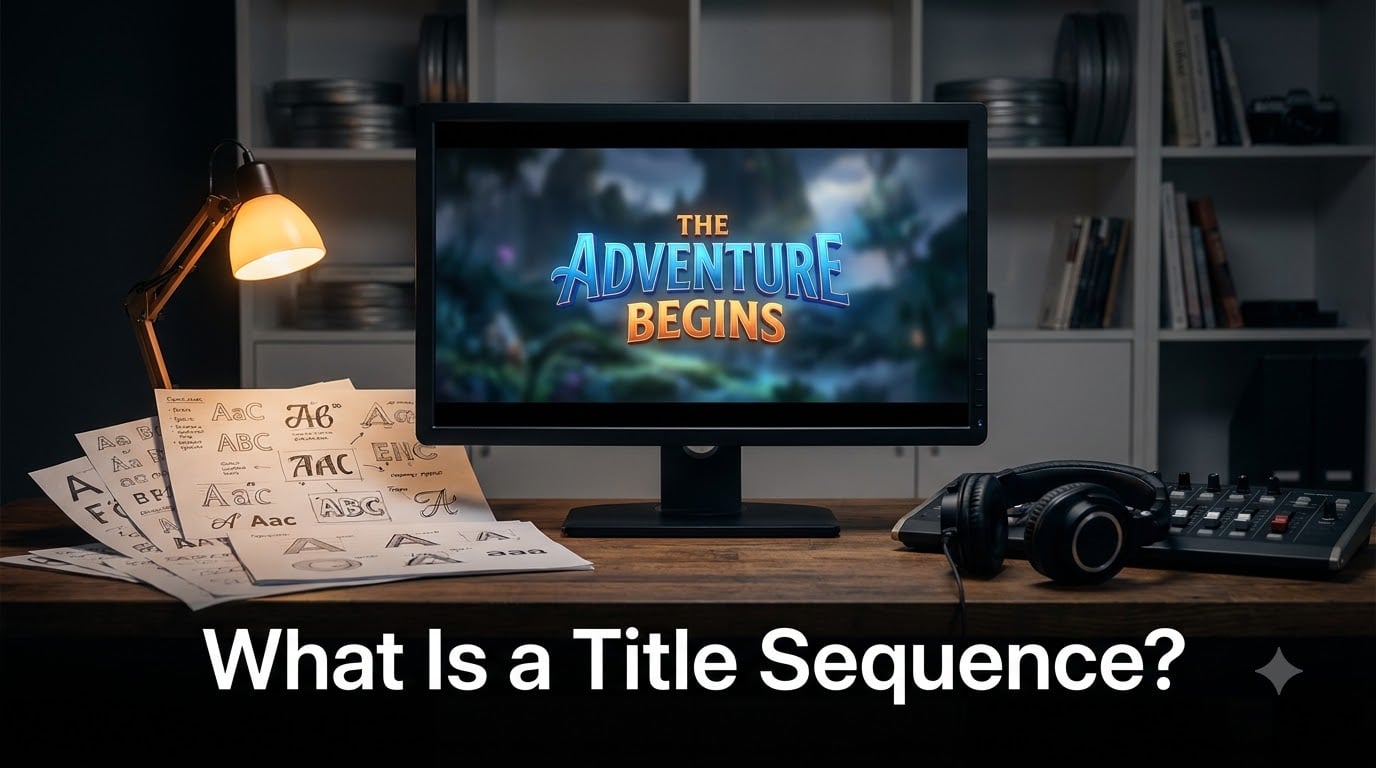
A title sequence is the opening portion of a film, television show, or short film where the title, key production credits, and often a specially composed theme are presented through a blend of visuals, typography, and music. It serves as the bridge between the audience walking into your film and the story actually beginning. For short filmmakers especially, it is one of the most powerful storytelling tools available in the first sixty seconds of your work.
Think of it as a mini short film that plays before the main event. It tells viewers what they are watching, who made it, and what kind of emotional ride they are about to take. When done well, it is the hook that makes festival audiences lean forward instead of checking their phones.
In this guide, we break down what a title sequence is, what it does, the components that make it work, and how you can create one for your own short film without a Hollywood budget. We will also look at iconic examples and tackle the questions filmmakers ask most often about opening credits and design.
Table of Contents
- What Is a Title Sequence?
- What Does a Title Sequence Do? Key Purposes
- Key Components of a Title Sequence
- Iconic Title Sequence Examples Every Filmmaker Should Study
- Title Sequences in Short Films: Why Yours Matters
- How to Create a Title Sequence for Your Film
- Title Sequence vs Opening Credits: What’s the Difference?
- Frequently Asked Questions About Title Sequences
- Conclusion: Your Title Sequence Is Your First Scene
What Is a Title Sequence?
A title sequence is a designed opening segment of a film or TV show that presents the title and principal credits while establishing tone, mood, and artistic identity. It combines visual elements like typography, animation, or live-action footage with music and sound design to immerse the audience before the story unfolds.
The concept sounds simple, but the execution is where the artistry lives. A strong title sequence is not just a list of names scrolling across the screen. It is a piece of visual storytelling that sets expectations, hints at themes, and signals the production quality of what follows.
In short films, this matters even more. You have limited runtime to grab attention at a screening or online. A well-crafted title sequence signals to festival programmers, jurors, and viewers that your film is worth their time. It tells them a real filmmaker made this, not someone who slapped text on a black screen in five minutes.
Some title sequences are purely graphic, using animated typography and motion design. Others use live-action footage, photographed elements, or a hybrid of both. The approach you choose depends on your story, your budget, and the impression you want to leave.
What Does a Title Sequence Do? Key Purposes
A title sequence serves several distinct purposes beyond simply listing names. Here is what it accomplishes:
1. Sets the tone and mood. The colors, music, pacing, and typography choices immediately tell the audience whether they are about to watch a thriller, a comedy, a drama, or something experimental. That emotional groundwork shapes how every subsequent scene is received.
2. Introduces the world. Title sequences can establish setting, time period, and atmosphere before the first line of dialogue is spoken. Think of a noir detective film opening with rain-soaked streets and a jazz score. You already know the world.
3. Foreshadows themes and plot. The best sequences plant visual or narrative seeds that pay off later. Abstract imagery, recurring motifs, or even specific objects shown during the titles can hint at what is coming without spoiling it.
4. Fulfills credit obligations. Films are legally and contractually required to credit certain contributors, including the director, writers, lead actors, and key crew. The title sequence provides a structured, visually engaging way to meet those obligations.
5. Builds anticipation. A well-paced sequence creates a moment of transition. It gives the audience a beat to settle in, put away distractions, and prepare emotionally for the story ahead. That pause is a tool, not dead time.
6. Establishes artistic identity. Your title sequence is a signature. It tells viewers something about who you are as a filmmaker and what they can expect from your creative voice. For indie filmmakers building a body of work, this matters more than people realize.
Key Components of a Title Sequence
Every title sequence is built from a handful of core components. Understanding each one helps you make deliberate choices rather than defaulting to whatever is easiest.
Typography is the foundation. The font, size, spacing, and movement of your text communicate genre and tone instantly. A clean sans-serif in white on black feels modern and minimal. A distressed serif in blood red signals horror. The wrong typeface can undercut an otherwise strong film before the first scene rolls.
Theme music and sound design carry half the emotional weight. A title sequence without sound feels incomplete. Whether you use a composed score, a licensed track, or atmospheric sound design, the audio should match and amplify the visual choices. Silence can work too, but only as a deliberate creative decision.
Motion graphics and animation bring static elements to life. Even simple animated text, if timed well to music, can feel professional and intentional. Motion design is where many indie filmmakers overdeliver, creating sequences that punch above their budget.
Live-action footage can serve as the backdrop for credits or be the entire sequence itself. Shooting B-roll, close-ups, or atmospheric shots specifically for your titles gives you material that no template can replicate.
Color palette ties everything together. Consistent color grading across your title sequence and your film creates cohesion. Discordant colors, used intentionally, can create tension and unease from the first frame.
Iconic Title Sequence Examples Every Filmmaker Should Study
Some of the most memorable moments in cinema history happen before the plot even starts. These examples are consistently cited by filmmakers and film communities as the gold standard.
Saul Bass and the classics. Saul Bass practically invented the modern title sequence. His work on Alfred Hitchcock’s Vertigo (1958) and Psycho (1960), as well as The Pink Panther (1963), set the template for using graphic design and motion to tell a story before the story begins. His spiraling, fractured imagery in Vertigo remains studied in film schools today. If you want to understand what a title sequence can be, start with Bass.
Se7en (1995). Kyle Cooper’s title sequence for David Fincher’s Se7en revolutionized the form. The scratched film, jittery typography, and unsettling close-ups of a killer’s notebook created dread before a single character appeared. It proved that a title sequence could be a narrative device in its own right, not just decoration.
Game of Thrones. The clockwork map sequence did something rare for television. It functioned as worldbuilding, showing viewers the geography of Westeros and signaling where each episode’s story would unfold. The rotating gears and sweeping camera taught a generation of viewers that TV titles could be art.
True Detective (Season 1). The double-exposure portraits and slow-burn Southern Gothic imagery created an atmosphere of unease and melancholy that perfectly matched the show’s tone. It is frequently cited in filmmaking forums as an example of abstract, thematic foreshadowing done right.
Catch Me If You Can (2002). The retro animation style by Kuntz+Company captured the 1960s heist energy of the film in under three minutes. It showed how a stylized, graphic approach could define a film’s identity as powerfully as any performance.
Study these not to copy them, but to understand the range of what is possible. Each one solved a specific storytelling problem with a specific visual solution. Your short film has its own problem to solve.
Title Sequences in Short Films: Why Yours Matters
Here is where most guides stop being useful. They talk about Hollywood films with Hollywood budgets. But you are making a short film, possibly with a crew of five and a budget that would not cover catering on a studio set. So why should you care about your title sequence?
Because short films live and die on first impressions. At a festival, your film screens alongside dozens of others. Online, viewers decide within seconds whether to keep watching. A thoughtful title sequence signals competence and care before your story even starts. It tells the audience that every minute of this film was considered.
Festival programmers notice this too. A polished opening suggests the filmmaker has command of their craft. It builds trust that the next ten or twenty minutes will be worth their time. A generic or sloppy title card can have the opposite effect, creating doubt before the first frame of story.
The good news is that short film title sequences do not need to be elaborate. Some of the most effective ones are simple: a single well-chosen typeface animated over atmospheric footage, timed to a piece of music that sets the mood. What matters is intentionality. Every choice, from font to timing to audio, should feel deliberate.
One common debate in filmmaking communities is whether short films should include title sequences at all, given limited runtime. Our take: a short sequence of ten to fifteen seconds is almost always worth it. It gives the audience a moment to transition into your world, and it gives your film a professional frame.
How to Create a Title Sequence for Your Film
Creating a title sequence does not require a motion graphics studio. Here is a practical, step-by-step approach designed for indie filmmakers working with limited resources.
Step 1: Define your tone. Before touching any software, write down three adjectives that describe the emotional world of your film. Is it tense, dreamlike, and unsettling? Warm, nostalgic, and bittersweet? These words guide every subsequent decision, from font to music to color.
Step 2: Study references. Watch five title sequences from films in a similar genre or tone range. Note what they do with typography, pacing, and sound. You are not copying. You are building a visual vocabulary for what works in your space.
Step 3: Choose your technique. Decide whether your sequence will be purely typographic, motion graphics-based, live-action with overlaid text, or a hybrid. This decision should follow from your tone words and your available resources, not the other way around.
Step 4: Select your typography. Pick one or two typefaces that match your tone. Resources like Google Fonts offer free, high-quality options. Avoid overused defaults like Arial or Times New Roman unless you have a specific creative reason. Test your type at the size it will appear on screen, not just on your monitor.
5: Build or source your music. Audio is non-negotiable. If you cannot afford a composer, look at royalty-free music libraries or collaborate with a musician who wants exposure. Time your visual cuts to the music, even loosely. The synchronization is what makes a sequence feel intentional rather than arbitrary.
Step 6: Use accessible software. You do not need Adobe After Effects to create a strong sequence, though it is the industry standard. DaVinci Resolve (free version) includes a solid fusion page for motion graphics. Blender is free and capable of 3D animation. Even Premiere Pro or Final Cut Pro can handle typographic sequences with keyframed animation.
Step 7: Keep it short. For a short film, aim for a title sequence between ten and thirty seconds. Festival audiences and online viewers have limited patience. A tight, well-executed sequence beats a long, drawn-out one every time.
Step 8: Test with fresh eyes. Show your title sequence to people who have not seen your film. Ask them what mood it conveys. If their answer matches your tone words from Step 1, you are on track. If not, revise before locking picture.
Title Sequence vs Opening Credits: What’s the Difference?
These terms are often used interchangeably, but there is a useful distinction. Opening credits refer broadly to any text that appears at the start of a film identifying contributors. A title sequence is a specific type of opening credits that is designed as a cohesive audiovisual experience.
In other words, all title sequences contain opening credits, but not all opening credits constitute a title sequence. A film that simply cuts to a black screen with white text listing the director’s name has opening credits. A film that uses animated typography, music, and visual design to create an immersive opening has a title sequence.
The distinction matters for indie filmmakers because it reframes the decision. You are not just deciding whether to list names. You are deciding whether your opening is a designed experience or a functional obligation. The former engages. The latter merely informs.
Frequently Asked Questions About Title Sequences
What does the title sequence mean?
A title sequence is the designed opening segment of a film or TV show that presents the title and principal credits through a combination of visuals, typography, and music. It sets the tone, introduces the world, and prepares the audience for the story ahead.
Can you give me an example of a title sequence?
Iconic examples include Saul Bass’s animated graphics for Vertigo and Psycho, Kyle Cooper’s unsettling scratched-film titles for Se7en, and the clockwork map sequence from Game of Thrones. For short films, even a simple animated title card over atmospheric footage with matched music counts as a title sequence.
How to create a title sequence?
Start by defining your film’s tone in a few adjectives. Choose a technique (typographic, motion graphics, or live-action overlay). Select typography and music that match your tone. Use accessible software like DaVinci Resolve, Blender, or Premiere Pro. Keep it between ten and thirty seconds for a short film, and test it with viewers who have not seen your film.
What are the 8 sequences in a film?
The 8 sequences refer to a screenplay structure method, not title sequences. Screenwriters divide a feature film into eight roughly 15-minute segments to map pacing and story beats. This is a writing concept separate from the visual title sequence that opens a film.
Are title sequences disappearing from modern films?
Title sequences are evolving, not disappearing. While some streaming-era films use minimal or end-loaded credits, many still use designed openings. Shows like True Detective and films by directors like David Fincher prove that audiences still respond to strong title sequences. For short films, a brief designed opening remains a valued professional standard.
Conclusion: Your Title Sequence Is Your First Scene
A title sequence is not a formality. It is your first scene, your first impression, and your first chance to tell the audience what kind of filmmaker you are. Whether you are premiering at a festival or uploading online, those opening seconds set the stage for everything that follows.
We have covered what a title sequence is, what it does, the components that make it work, and how to build one with tools you already have access to. The key takeaway for indie filmmakers: intentionality beats budget. A simple sequence made with deliberate choices will always outperform an expensive one made without thought.
Start with your tone. Study the masters. Pick tools you can actually use. Test with real viewers. And treat your title sequence as an integral part of your short film, not an afterthought tagged on at the end of post-production.
Your film deserves an opening that matches its ambition. Now go build one.