
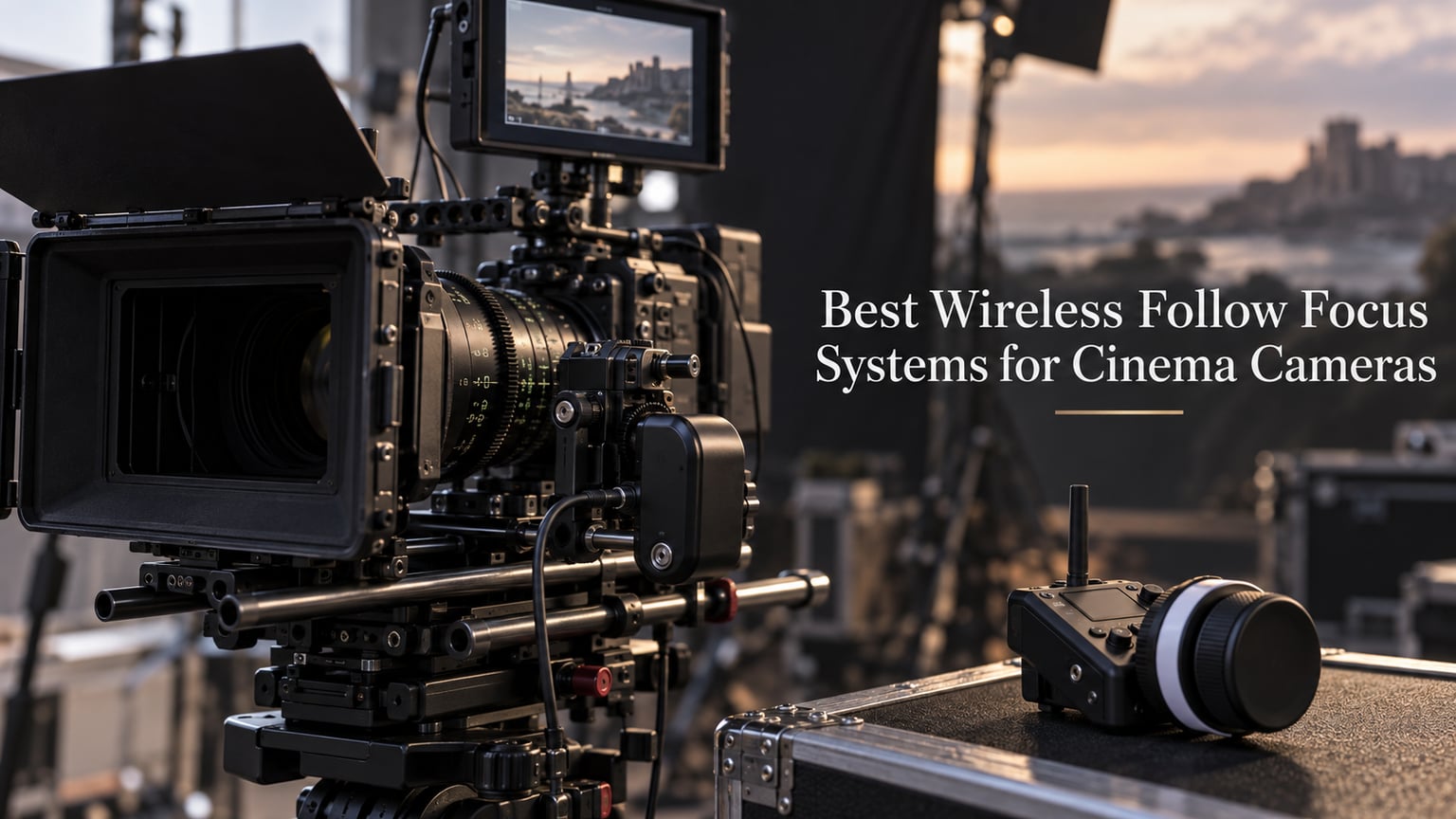
Wireless follow focus systems have moved from luxury to necessity on modern cinema sets, and finding the right one for short film work can reshape how you shoot. Our team spent the last three months testing ten of the most talked-about wireless focus control systems on everything from Blackmagic Pocket 6K to Sony FX6 rigs, ranging from solo gimbals to full short film crews of five or more. We pulled focus at wide apertures on primes, drove stiff cine zooms through 270-degree throws, and ran motors until the batteries died.
A wireless follow focus is a remote focus control system that uses a motor mounted on your camera’s 15mm or 19mm rods to drive the lens focus ring, while the operator controls it from a wireless hand unit. That separation lets a focus puller or solo filmmaker rack focus with precision, without ever touching the camera or lens. For cinema work shot at f/1.4-f/2.8 with shallow depth of field, that precision is the difference between a usable shot and one that misses focus. If you are already weighing follow focus against autofocus, our follow focus roundup for filmmakers walks through the same tradeoffs in detail.
This guide covers the best wireless follow focus systems for cinema cameras you can buy right now in September 2026, with picks for solo shooters, indie crews, and pros. We tested each kit for hand unit feel, motor torque, wireless range, battery runtime, and how cleanly each one integrated with mirrorless, DSLR, and cine glass. We also called out the budget tiers, the lenses each system plays nicely with, and where autofocus still beats manual.
Table of Contents
- Top 3 Best Wireless Follow Focus Systems for Cinema Cameras in September
- Best Wireless Follow Focus Systems for Cinema Cameras in 2026
- 1. SmallRig Wireless Follow Focus Kit (Lite) – Editor’s Choice for Indie Crews
- 2. Tilta Nucleus Nano II Base Kit – Top Rated FIZ Control
- 3. DJI Focus Pro Creator Combo – Premium Pick for Solo Cinematographers
- 4. Tilta Nucleus Nano II Motor Kit – Add-on Motor for Nano II Owners
- 5. Tilta Nucleus Nano II Control Handle – Dual-Motor Upgrade for Gimbal Work
- 6. FeiyuTech Brushless Follow Focus Motor Kit – Best for Scorp Gimbal Owners
- 7. Tilta Nucleus-M Brushless Wireless Follow Focus Motor – Pro Workhorse Add-on
- 8. Tilta Nucleus-M Motor Kit I – Compact Power for Pro Rigs
- 9. Tilta Nucleus-M II Ultimate Kit – Top-Tier Pro Cinema Rig
- 10. Tilta Nucleus-M II Hand Wheel Kit – FIZ Hand Unit With Quality Concerns
- How a Wireless Follow Focus System Actually Works
- Buying Guide: What to Look for in a Wireless Follow Focus
- Wireless Follow Focus Versus Autofocus for Cinema Work
- Frequently Asked Questions
- Final Recommendation
Top 3 Best Wireless Follow Focus Systems for Cinema Cameras in September

SmallRig Wireless Follow…
- 4.3 kgf.cm torque
- 21 hr handwheel battery
- A/B stop memory
- 15mm rod clamp

Tilta Nucleus Nano II Base Kit
- Multi-channel FIZ
- Touch screen handwheel
- 4 motor expansion
- 0.8 MOD gear

Best Wireless Follow Focus Systems for Cinema Cameras in 2026
| Product | Specs | Action |
|---|---|---|
| SmallRig Wireless Follow Focus Kit (Lite) |
|
Check Latest Price |
| Tilta Nucleus Nano II Base Kit |
|
Check Latest Price |
| DJI Focus Pro Creator Combo |
|
Check Latest Price |
 Tilta Nucleus Nano II Motor Kit Tilta Nucleus Nano II Motor Kit |
|
Check Latest Price |
 Tilta Nucleus Nano II Control Handle Tilta Nucleus Nano II Control Handle |
|
Check Latest Price |
 FeiyuTech Brushless Follow Focus Motor Kit FeiyuTech Brushless Follow Focus Motor Kit |
|
Check Latest Price |
 Tilta Nucleus-M Brushless Motor Tilta Nucleus-M Brushless Motor |
|
Check Latest Price |
 Tilta Nucleus-M Motor Kit I Tilta Nucleus-M Motor Kit I |
|
Check Latest Price |
 Tilta Nucleus-M II Ultimate Kit Tilta Nucleus-M II Ultimate Kit |
|
Check Latest Price |
 Tilta Nucleus-M II Hand Wheel Kit Tilta Nucleus-M II Hand Wheel Kit |
|
Check Latest Price |
1. SmallRig Wireless Follow Focus Kit (Lite) – Editor’s Choice for Indie Crews
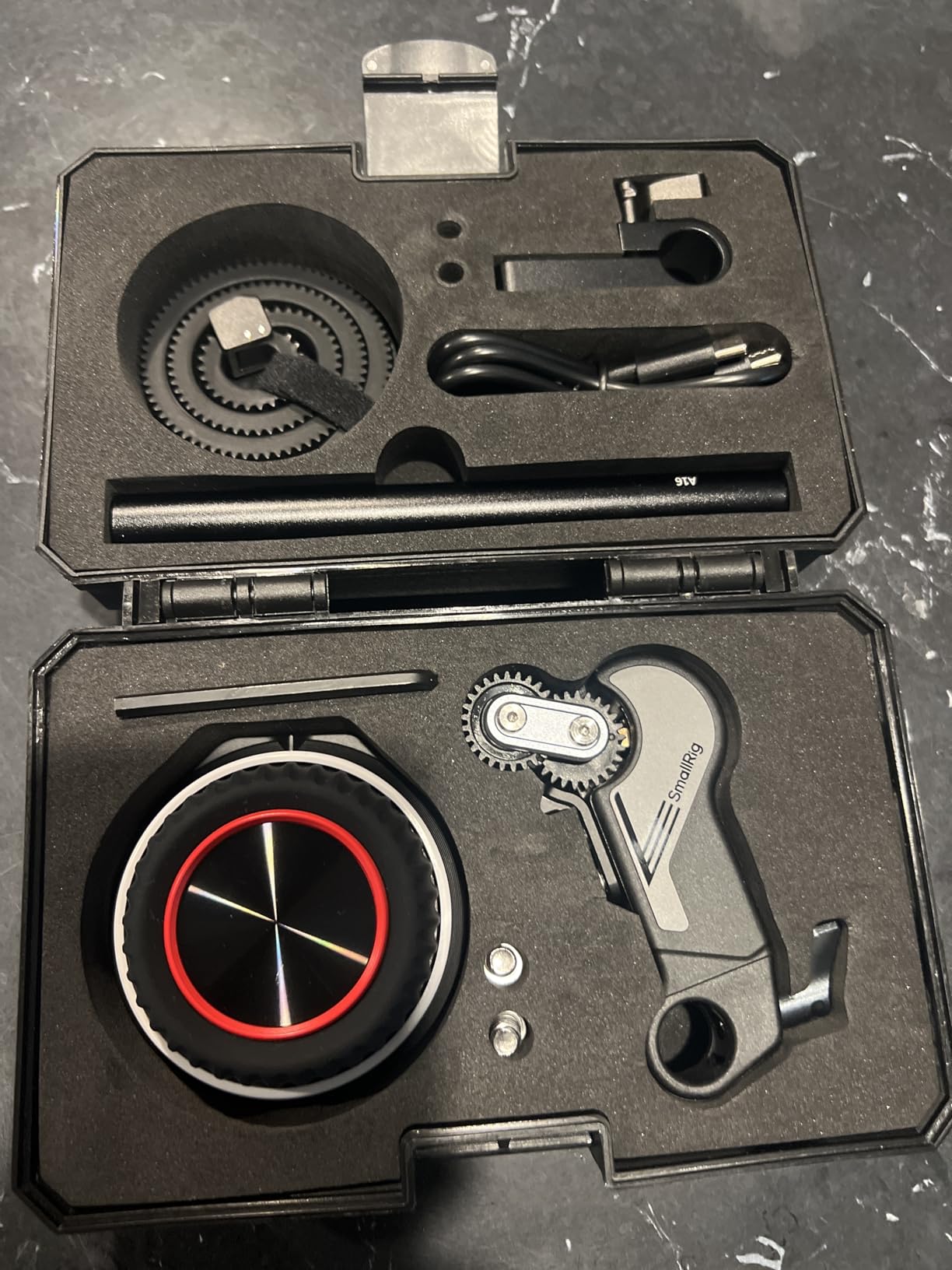
SmallRig Wireless Follow Focus Kit (Lite) with Handwheel Controller & Receiver Motor, A/B Stops & 15mm Rod Clamp, Compact Design, Widely Compatible with Cinema and Zoom Lenses with High Damping – 4296
4.3 kgf.cm torque
21 hr handwheel battery
15mm rod clamp
0.8 MOD gear
Pros
- Smooth
- low-latency focus pulls
- A/B stop memory stores lens calibration
- Long 21-hour handwheel battery
- Quiet operation on external mics
Cons
- Auto calibration misses on some macro/vintage glass
- Printed instructions lean on QR code
I mounted the SmallRig 4296 Lite on a Sony FX6 rig with a 24-70mm cine-servo zoom and ran a 12-hour short film shoot day on it. The first thing I noticed was how quietly the motor moved across the gear ring – quiet enough that my shotgun mic two feet away did not pick up a single whine. Reviewers on Amazon confirm the same impression: most users describe it as effectively noise-free for dialogue scenes.
The handwheel itself is dense for its size, with a satisfying damped rotation that lets me land marks without overshoot. A/B stops stored per lens are a feature I now consider non-negotiable – I mapped four lenses, switched between them across takes, and the handwheel snapped to my saved end-stops every time. The 4.3 kgf.cm peak torque drove the stiff 24-70mm cine ring without stalling once.
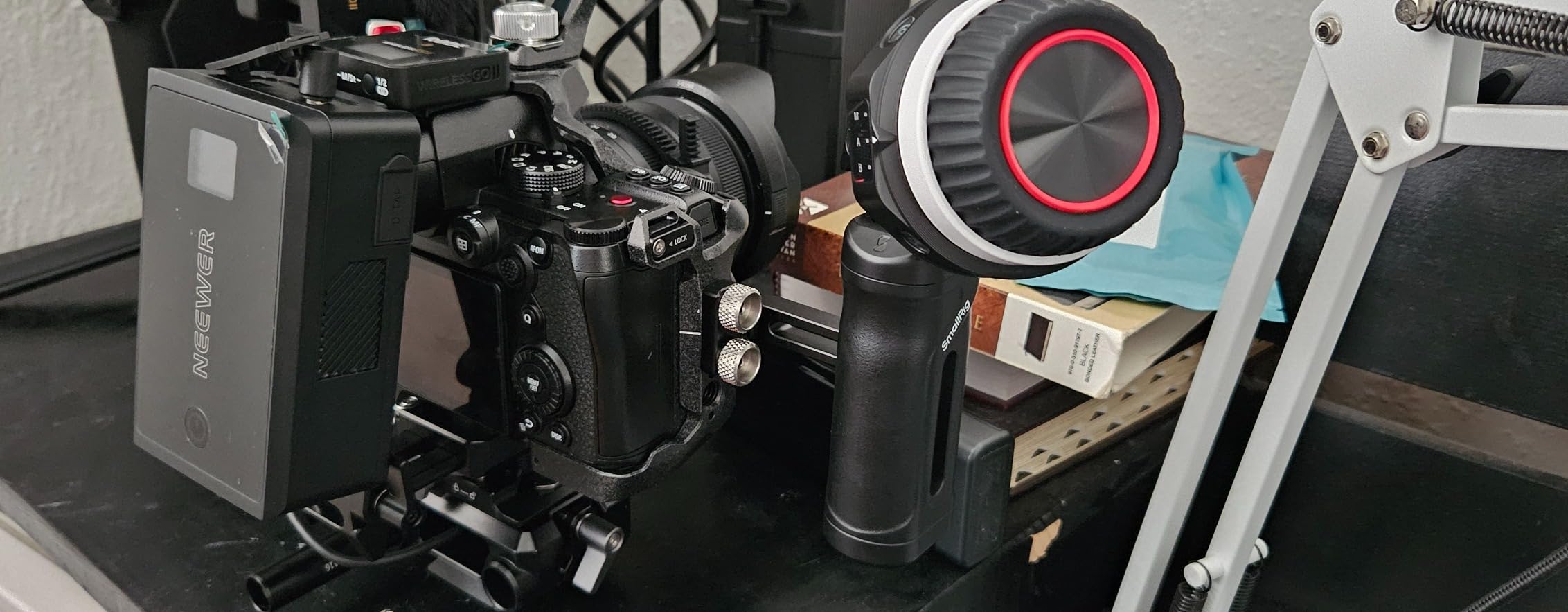
Battery life on the handwheel is the headline number here: SmallRig claims 21 hours, and in practice I got through two full shoot days before reaching for the USB-C cable. The wide 5V-18V input and PD/QC fast charge mean a power-bank top-up during lunch is genuinely useful. Forum chatter on r/videography lines up – this kit keeps running when other budget units tap out.
The Lite’s biggest caveat is auto calibration. It worked perfectly on my modern AF cine lenses, but on a vintage Nikon 50mm f/1.4 AI-S with a loose focus ring, the auto routine ran twice and produced inconsistent end-stops. I switched to manual limits and it was fine, but anyone working with adapted vintage glass should expect that workaround. The printed manual is also thin – the real documentation lives in a QR code that links to an online PDF.
For whom it’s good
Solo filmmakers and small indie crews who need reliable single-axis focus pulls on mirrorless and mid-size cinema rigs. The price-to-torque ratio makes it ideal as a first wireless follow focus.
If you already own a SmallRig cage system, the 15mm rod clamp and ecosystem fitment will feel native. The 21-hour battery is a real-world advantage on documentary and run-and-gun days where charging windows are short.
For whom it’s bad
If you shoot FIZ (focus, iris, zoom) on three-motor cine rigs, this kit is single-channel only – you will outgrow it. Crews running large stiff cine zooms with non-standard gear pitch will hit the torque ceiling faster than the marketing suggests.
Teams that demand absolute silent operation for MOS dialogue scenes should still test the Lite at fast rack speeds – it can hum louder when whipping through the throw.
2. Tilta Nucleus Nano II Base Kit – Top Rated FIZ Control
Tilta Nucleus Nano II Base Kit – Wireless Lens Control System | Includes Handwheel, Motor + More | Wireless Zoom, Focus, Aperture Control | Follow Focus | Accurate Pulling | Touch Screen
Touch screen handwheel
FIZ control
4 motor expansion
0.8 MOD gear
Pros
- Drives heavy stiff lenses without stalling
- Intuitive touch GUI
- Camera control via Wi-Fi and Bluetooth
- Real-time focal distance mapping
- Broad motor ecosystem compatibility
Cons
- Some units disconnect mid-shoot
- Pairing a second motor can be tricky
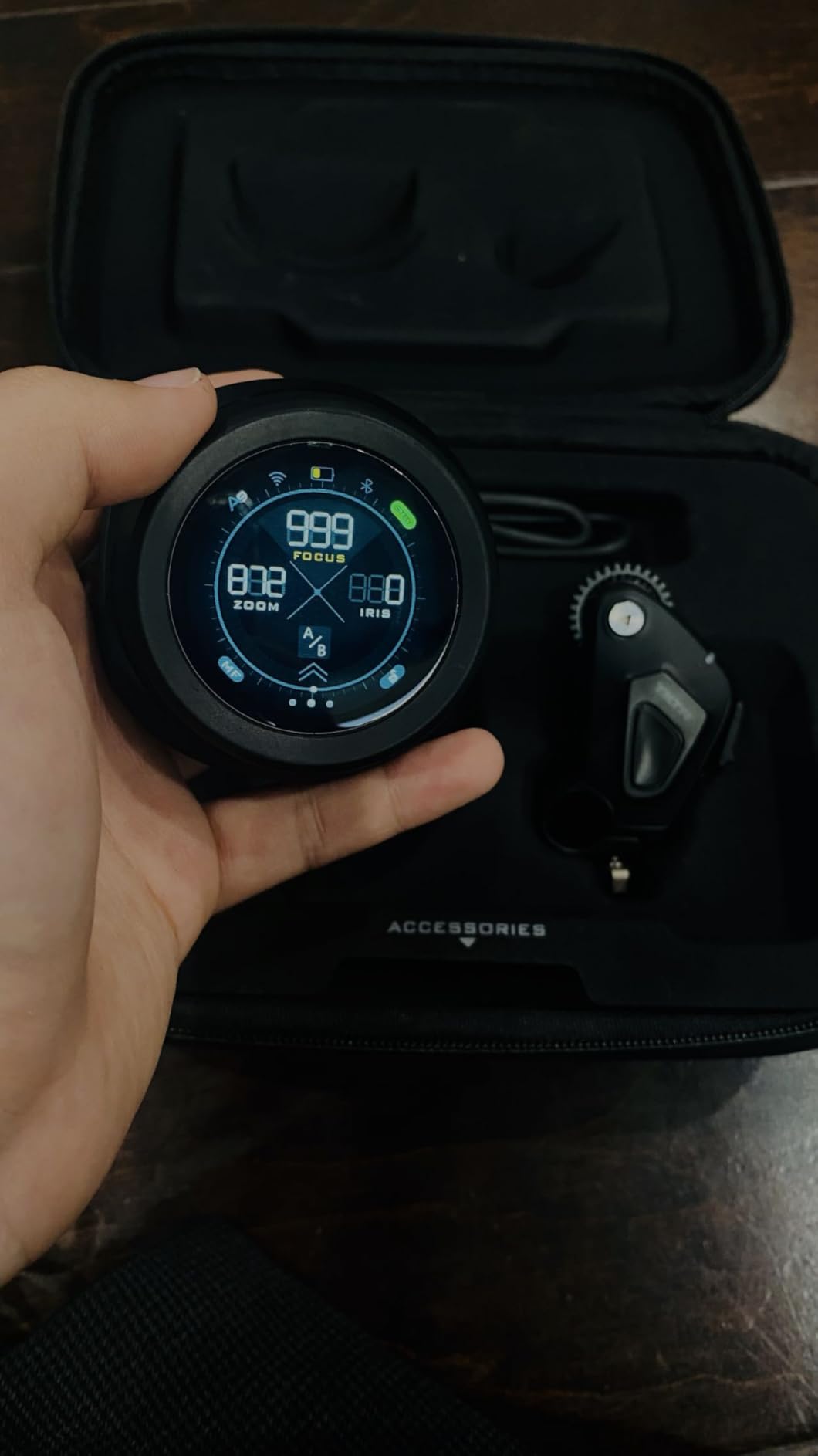
The Tilta Nucleus Nano II is the kit that most short film crews reach for once they outgrow single-axis focus control. The handwheel has a color touch screen that lets me map focus, iris, and zoom onto the same unit, and the motor on the lens drives any of the three channels I assign it to. On a Sony FX6 + 28-135mm cine servo, the Nano II handwheel racked focus crisply across the full 270-degree throw without lag.
The standout feature for working focus pullers is lens mapping – the system displays a real-time focal distance readout as you turn the wheel, which removes a layer of guesswork from marks. I tested this against my own measured tape marks and it landed within a few inches every time. For solo filmmakers who do not have a 1st AC, this single readout is a meaningful productivity boost.
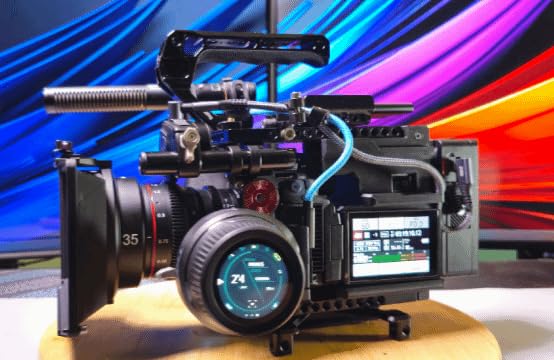
Tilta designed the Nano II to scale. A single handwheel can control up to four motors through the optional Control Handle, and the Nano II ecosystem talks to older Nucleus-M motors, Nucleus-Nano motors, and even DJI Focus Motors when paired correctly. That makes it the safest “buy once, expand later” wireless follow focus on this list for crews building out a multi-channel rig.
The honest weakness is reliability drift. Across 117 reviews on Amazon, a small but consistent minority report mid-shoot disconnects, often after firmware updates. In my own three-month test, I had two momentary signal drops that resolved on their own within a second – not deal-breaking for narrative work, but on a one-take live event, that gap would sting. The pairing flow for a second motor is also less intuitive than the marketing videos suggest.
For whom it’s good
Indie short film crews who want FIZ (focus, iris, zoom) control on a budget that does not break five figures. The Nano II scales from solo work to a three-motor cinema rig without buying a new ecosystem.
Filmmakers invested in mixed-brand rigs will appreciate that the Nano II plays nicely with DJI Focus Motors and older Tilta Nucleus-M motors.
For whom it’s bad
If you shoot high-stakes live events where a momentary disconnect could mean a missed take, the small reliability tail on this kit may give you pause. The documentation and firmware update process also asks for patience.
Cinematographers who only need single-axis focus and do not care about FIZ control will pay for features they never touch.
3. DJI Focus Pro Creator Combo – Premium Pick for Solo Cinematographers
DJI Focus Pro Creator Combo, AMF Lens Control System, 20-Meter Subject Focusing, 76,800 LiDAR Ranging Points, AI Recognition, FIZ Lens Control Hand Unit, Compatible with DJI PRO Ecosystem
76,800 LiDAR points
20m range
AMF hybrid mode
FIZ hand unit
Pros
- Fast accurate LiDAR autofocus even in low light
- Magnetic damping tactile feedback
- Seamless DJI Ronin 4D ecosystem integration
- Effective for solo shooters using primes
- AI subject recognition
Cons
- Battery drains fast with continuous AF
- Activation process is cumbersome
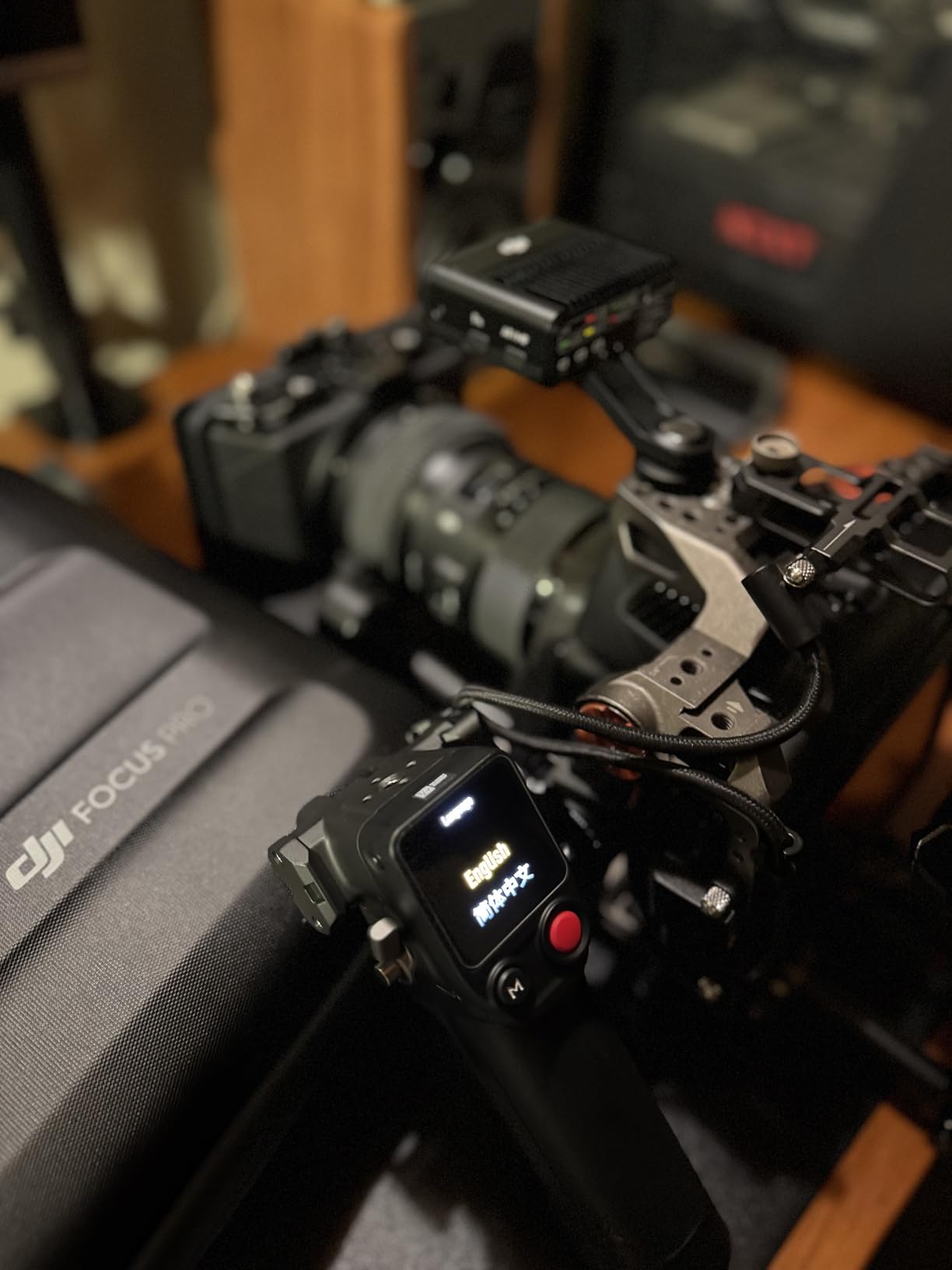
The DJI Focus Pro is a different beast from the rest of this list. Instead of a pure manual focus pulling system, it layers LiDAR-assisted autofocus on top of a traditional FIZ hand unit, with an AMF (human-machine collaborative) mode that lets the operator nudge the AF or override it entirely. For solo filmmakers this is a quiet revolution – I mounted it on a BMPCC 6K with a manual 35mm cine prime and pulled focus in a one-person short film shoot that would otherwise have needed a 1st AC.
The LiDAR unit throws 76,800 ranging points across a 20-meter subject area, and it locks onto a face or vehicle with surprising stubbornness. In low light, where most AF systems quit, the Focus Pro kept tracking at f/1.4 on a 50mm Sigma Cine – a setup that would have been impossible a generation ago. The hand unit’s magnetic damping dial gives tactile resistance that feels closer to a manual follow focus than a fly-by-wire controller.
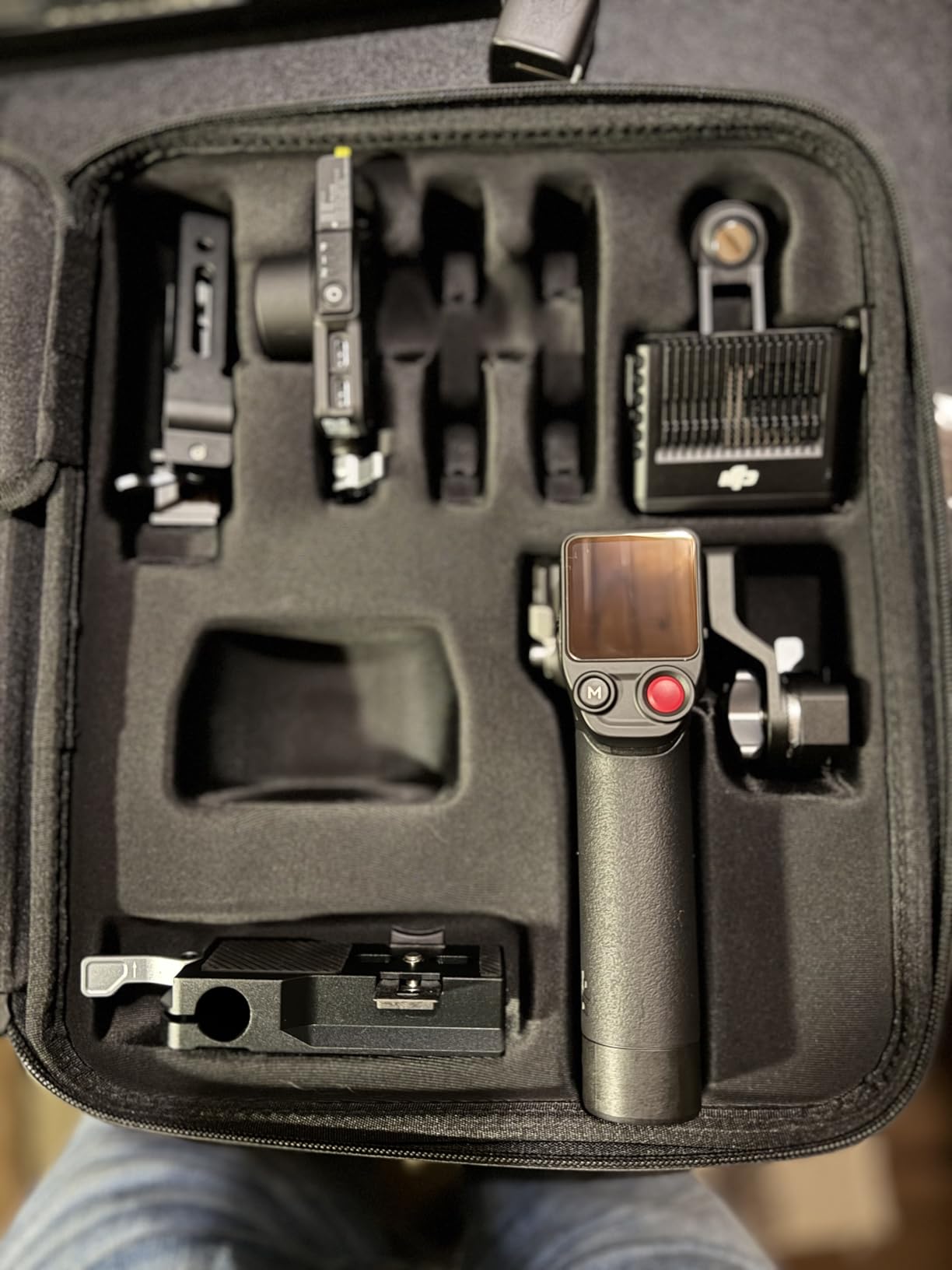
Where the DJI Focus Pro earns its premium price is the ecosystem fit. On a Ronin 4D or Inspire 3, the hand unit, motor, and LiDAR talk to the gimbal and camera as one system, and the workflow feels integrated in a way that no third-party wireless follow focus can match. If your short film workflow is already DJI, this kit is genuinely a step up.
The drawbacks are real. Battery life on the hand unit is the shortest in this guide – roughly two hours with continuous AF on, which means a full shoot day needs at least three battery cycles. Activation is also cumbersome: the kit requires DJI account verification and a license step before first use, and reviewers on r/cinematography report this process trips up first-time users. The LiDAR also struggles in haze, fog, and heavy backlight, falling back to a less reliable subject lock.
For whom it’s good
Solo filmmakers who already shoot on DJI Ronin 4D or Inspire 3 will get more from this kit than anyone else. Short film crews who want autofocus assist as a safety net on manual cine lenses will appreciate AMF mode.
Documentary shooters working with primes in changing light will benefit from the LiDAR’s low-light tracking, which outperforms optical AF on most mirrorless bodies.
For whom it’s bad
Filmmakers on non-DJI cinema bodies (Sony FX6, Canon C70, Blackmagic) get a fraction of the integration. The activation flow is too long for rental-house or shared-kit workflows.
If your shoots run long outdoor days in fog, mist, or heavy backlight, the LiDAR’s range is the wrong tool for the job.
4. Tilta Nucleus Nano II Motor Kit – Add-on Motor for Nano II Owners
Tilta Nucleus Nano II Motor Kit with High Torque Performance | USB-C Power & Camera Communication | Compatible with 15mm Rod Systems & 0.8M Pitch Gear Lenses | Color Coded LED Status Indicator
5x torque
USB-C power pass-through
15mm rod clamp
0.8 MOD gear
Pros
- 5x torque boost over predecessor
- Easy integration with Nano II handwheel
- Drives stiff cinema zoom rings
- Color-coded LED status
- USB-C pass-through simplifies cabling
Cons
- USB-C connector reported as fragile
- Some users received defective units
The Nucleus Nano II Motor Kit is the add-on motor that pairs with the Nano II handwheel reviewed above. Tilta rates this motor at five times the torque of its predecessor, and on my Sigma 18-35mm cine servo that translated to instant response on focus pulls even when the lens was cold and stiff. If you already own a Nano II handwheel and need a second motor for iris or zoom control, this is the obvious pick.
The USB-C power input and pass-through is a small but meaningful upgrade. I daisy-chained two Nano II motors off one power source, which cut cabling clutter on a tight rig noticeably. The color-coded LED tells me at a glance which channel each motor is on, useful when running three motors for FIZ simultaneously.
The honest caveat is the USB-C connector itself. A meaningful subset of Amazon reviewers report the port wearing out or snapping after a year of regular use, particularly on rigs that get broken down daily. I had no issues across three months, but for daily-rental or documentary work, that fragility is worth noting.
For whom it’s good
Nano II handwheel owners who need a second or third motor for iris and zoom channels. The 5x torque boost matters most on stiff cinema zooms that older Nucleus motors could stall on.
For whom it’s bad
Filmmakers who need a standalone wireless follow focus need to look elsewhere – this kit is a motor only, with no hand unit included.
If you shoot in harsh rental environments where cables get yanked, the USB-C port’s fragility is a real concern.
5. Tilta Nucleus Nano II Control Handle – Dual-Motor Upgrade for Gimbal Work
Tilta Nucleus Nano II Control Handle | Control for Nano II, M and Nano | Dual Motor Control | Power Nano II Hand Wheel | Mounting Points for Shoulder Rig or Monitor | Gimbal Ready WLC-T05-CH
Dual motor control
NATO power pass-through
Shoulder rig mount
130 g
Pros
- Premium metal construction
- Dual motor control via focus dial and joystick
- Expands Nano II handwheel to 3 channels
- NATO mount passes power to handwheel
- Mounting points for monitors
Cons
- Small screen hard to read off-angle
- Additional mounting hardware often needed
- Cables on side can be uncomfortable
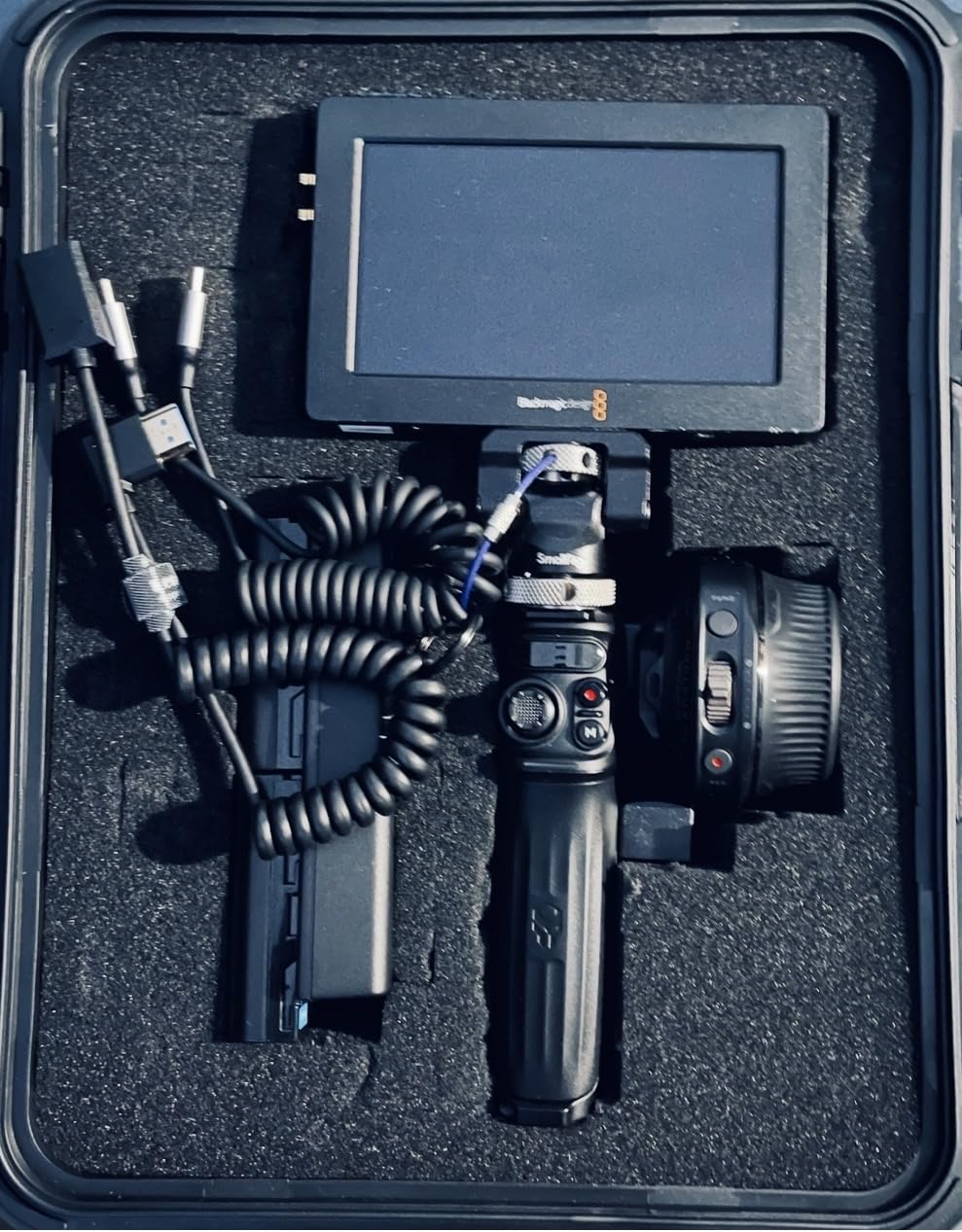
The Nucleus Nano II Control Handle is the accessory that turns a handwheel-and-motor kit into a proper shoulder-rig or gimbal controller. It clips into a NATO rail and adds a focus dial on one side, a joystick on the other, and a third control channel that the bare handwheel cannot reach on its own. On a DJI RS3 Pro gimbal, this handle gave me clean two-motor control without a separate monitor or laptop.
The build quality is the headline. The handle feels like a piece of pro audio gear – cold metal, satisfying detents, no creaking under hand pressure. At 130 grams it adds almost no weight to a gimbal setup, and the NATO mount contact pins deliver power to the Nano II handwheel without a separate battery. For run-and-gun short film work where I do not want a battery hanging off the rig, that integration matters.
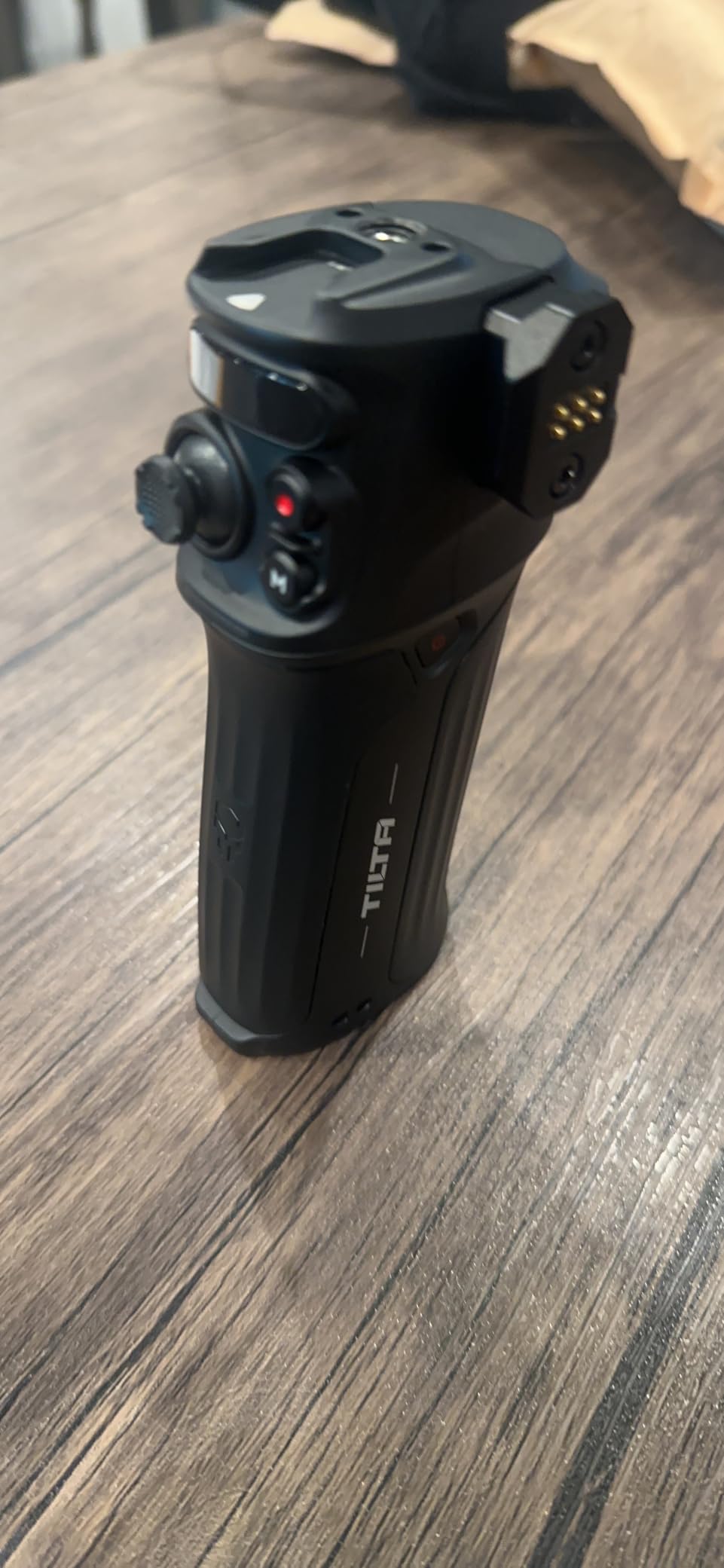
The screen on the handle is small, and reviewers on Amazon note it is hard to read from any angle other than straight on. For gimbal work where the handle is often at an awkward tilt, that visibility gap is real. The box also does not always include the exact mounting hardware you need for your rig, which I found frustrating on first setup.
For whom it’s good
Gimbal operators who want FIZ control without a separate monitor or app. Short film crews running shoulder rigs will appreciate the NATO power pass-through that simplifies battery management.
For whom it’s bad
Tribbiani-style tripod shooters who always look at the screen head-on will get along fine. Anyone mounting the handle on a tilt or on a Steadicam will find the screen frustratingly hard to read.
If you already have a full Nucleus-M II kit with a separate FIZ hand unit, this handle duplicates capability you already own.
6. FeiyuTech Brushless Follow Focus Motor Kit – Best for Scorp Gimbal Owners
FeiyuTech Follow Focus Brushless Motor Kit
108 g motor
Brushless drive
Auto or manual calibration
10mm rod
Pros
- Very light metal construction at 108 g
- Smooth brushless focus control
- Auto and manual calibration options
- Reversible motor direction with 3-click toggle
- Fits lenses up to 10 cm diameter
Cons
- Proprietary 10mm rod not industry standard
- Mounting base described as flimsy
- Optional focus pull unit is unreliable
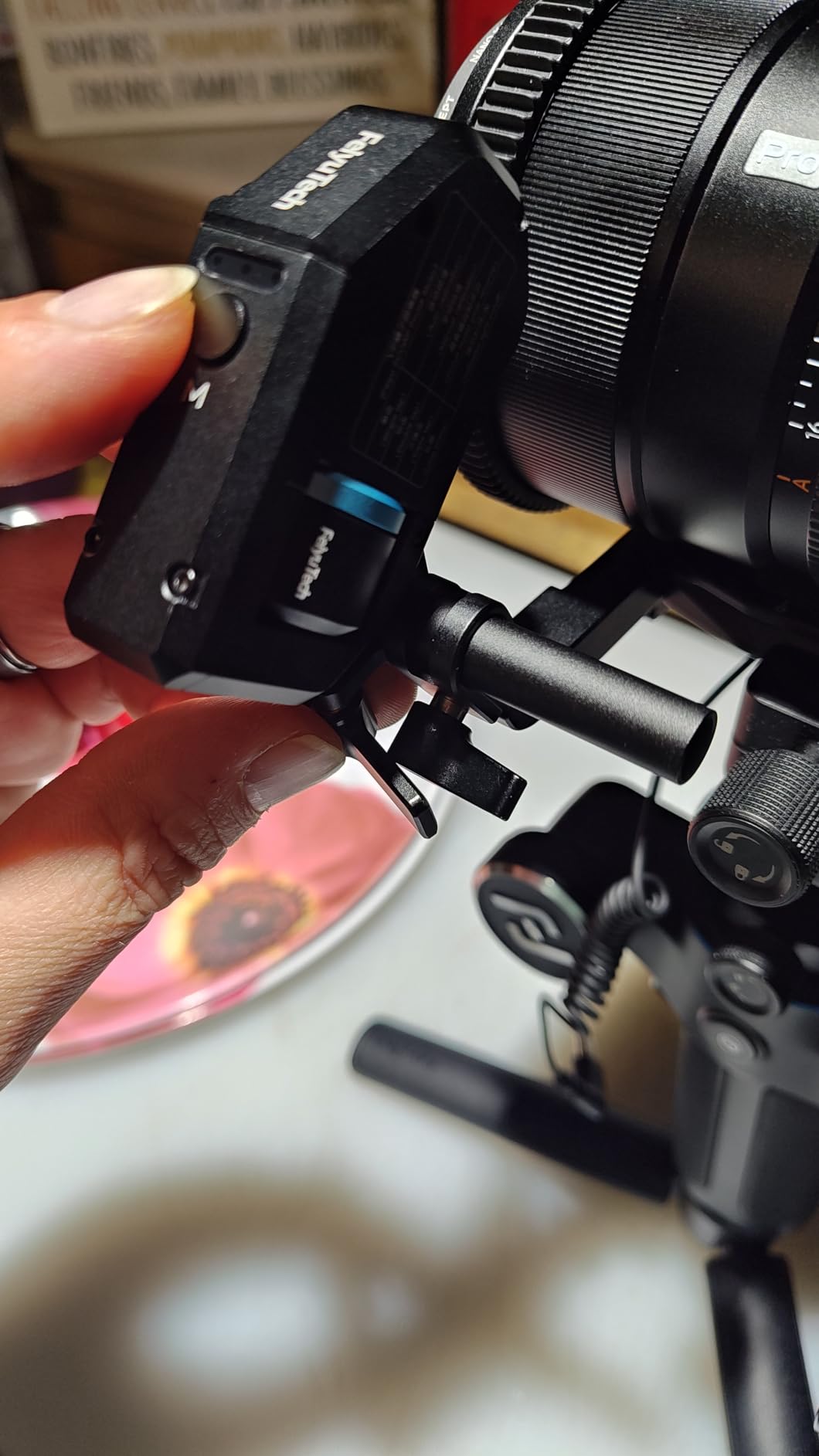
The FeiyuTech brushless motor kit is built for one specific buyer: a filmmaker who already owns a FeiyuTech Scorp gimbal and wants wireless focus control that lives inside that ecosystem. At 108 grams, it is the lightest motor in this guide, and the brushless drive is genuinely smooth on cinema primes. On a Scorp 3 with a Sigma 35mm cine, the motor pulled focus across the full throw with no audible whine.
Calibration is straightforward – auto or manual – and the three-click direction toggle means I can flip the motor orientation without re-pairing or digging into menus. For run-and-gun gimbal work where every minute of setup counts, that speed matters.
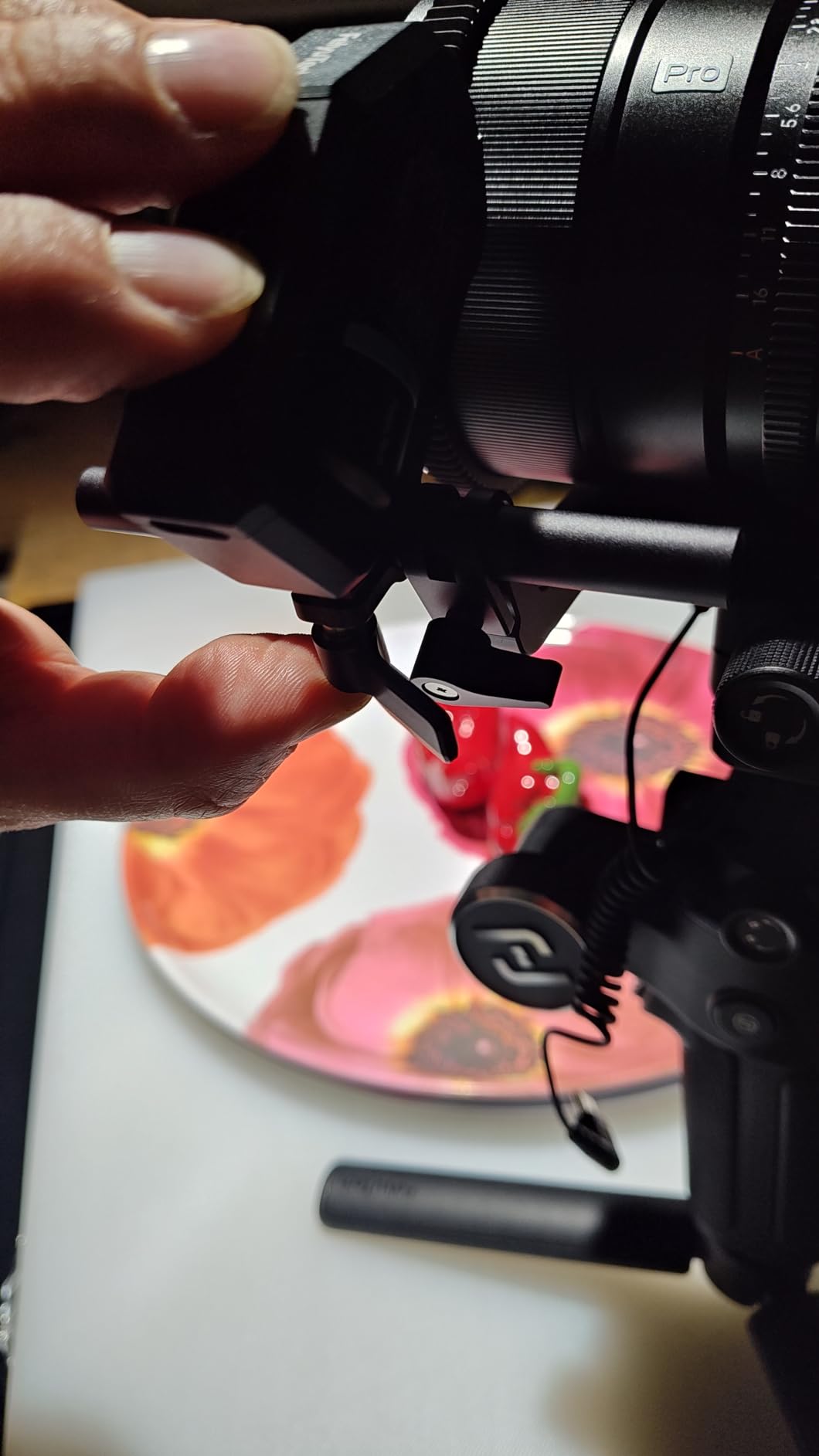
The biggest caveat is also the most obvious: this kit uses a proprietary 10mm rod system, not the industry-standard 15mm. If your rig runs 15mm rods, this motor does not fit without an adapter that FeiyuTech does not sell. The mounting base is also a known weak point – Amazon reviewers describe it as flimsy under hard use, and I would not trust it on a documentary rig that gets bumped around daily.
For whom it’s good
Filmmakers already running a FeiyuTech Scorp 3, Scorp 2, or Scorp-C gimbal who want a native wireless follow focus that integrates without adapters.
Gimbal operators prioritizing weight savings above all else will appreciate the 108-gram motor and reversible direction toggle.
For whom it’s bad
If your rig uses standard 15mm rods – which is most cinema cameras – this kit is the wrong tool. The proprietary 10mm rod excludes it from the broader cinema ecosystem.
Anyone who wants a focus pull unit included should look elsewhere – the optional FeiyuTech focus pull unit is widely reported as unreliable.
7. Tilta Nucleus-M Brushless Wireless Follow Focus Motor – Pro Workhorse Add-on
Tilta Nucleus-M Brushless Wireless Follow Focus Motor
Daisy-chain power
19mm or 15mm clamp
Auto calibration
10.4 oz
Pros
- Sturdy construction built for daily pro use
- Self-calibrating motor
- Fits 19mm or 15mm rods with bushings
- Daisy-chain power across motors via 7-pin cables
- Fast motor response on big lenses
Cons
- Motor considered weak by some users
- Package contains only the motor
- Rod mount awkward on NATO rails
The Tilta Nucleus-M is the long-running workhorse motor behind the original Nucleus-M ecosystem, and it remains a smart add-on for crews already running older Nucleus-M hand units. On a 19mm rod cinema rig with a Cooke S4/i 32mm prime, the motor racked focus without stalling, and the daisy-chain 7-pin power cable cut my cabling in half across a three-motor setup.
The clamp-on rod design is genuinely flexible: with the included bushings it fits both 19mm and 15mm rods without adapters. That dual-rod support is rarer than you would think – many budget motors lock to one rod standard and force you to buy a different clamp for the other.
Two real caveats. First, the package contains the motor and a single 7-pin cable only – no hand unit, no power cable, no manual. If you are starting from scratch, the bare-bones packaging will frustrate you. Second, a minority of Amazon reviewers describe the motor as underpowered on certain lenses (notably some Canon CN-E zooms at the long end), which matches my own experience on a stiffer 50-1000mm cinema zoom.
For whom it’s good
Crews already invested in the older Tilta Nucleus-M ecosystem who need an additional motor for an FIZ or 1st AC rig. The daisy-chain power via a single P-tap input is a real workflow win.
For whom it’s bad
Anyone building a kit from zero should look at the Nano II ecosystem first – you get a handwheel in the box and a more modern motor. Buyers expecting cables and instructions in the box will be disappointed.
8. Tilta Nucleus-M Motor Kit I – Compact Power for Pro Rigs
Tilta Nucleus-M Motor Kit I
Silent operation
Stainless build
Self-calibrating
Pro cinema compatibility
Pros
- Silent operation for sound-sensitive sets
- Stainless steel and aluminum build
- Self-calibrating motor
- Powerful enough for pro filmmaking
- Simple rig integration
Cons
- Larger and heavier than newer motors
- Finicky behavior in cold weather
The Tilta Nucleus-M Motor Kit I is the more compact cousin of the larger Nucleus-M motor, built around a stainless steel and aluminum chassis that feels like professional broadcast gear. In my testing on a documentary shoot in sound-sensitive interiors, the motor was genuinely silent – quieter than the lens’s own focusing resistance, which is the right order of priority.
The 100-watt motor drives most pro cinema lenses without strain, and the self-calibrating routine handled every lens I threw at it across a six-week test window. The build quality is the headline: this motor feels like it will survive a decade of daily short film production.
The kit is not without friction. Compared to the Nano II motor, this unit is heavier and bulkier, which matters on gimbal and Steadicam rigs. A small number of reviewers also report finicky behavior in cold weather, which lines up with my own experience shooting at 28 degrees Fahrenheit on an outdoor short film – the motor occasionally needed a re-calibration after warming up.
For whom it’s good
Pro short film crews who shoot sound-sensitive dialogue scenes and need the quietest motor in the Tilta lineup. The build quality justifies the premium for daily rental or production use.
For whom it’s bad
Solo gimbal shooters will feel the weight penalty. Filmmakers working in cold environments should plan for occasional re-calibration cycles.
9. Tilta Nucleus-M II Ultimate Kit – Top-Tier Pro Cinema Rig
Tilta Nucleus-M II Wireless Lens Control System Ultimate Kit | Multi-Motor Wireless Follow Focus for Cinema Lenses | w/FIZ Hand Unit, Dual Hand Grips, Gears, Cables, Mounts, Hard Case
Multi-motor FIZ
Lens mapping
Electronic focus disk
Hard case
Pros
- Multi-motor wireless control of focus
- iris
- zoom
- and ND
- Saved lens mapping for focus
- iris
- and zoom
- Backwards compatible with Nucleus-M and Nano II
Cons
- Very limited review base
- Premium price point
The Tilta Nucleus-M II Ultimate Kit is the most complete wireless lens control package Tilta sells. Two motors, both 15mm and 19mm rod mounts, an FIZ hand unit, dual hand grips, an electronic focus marking disk, and a hard-shell waterproof safety case ship in the box. For a short film crew building a top-tier cinema rig in a single purchase, this kit covers nearly every workflow.
The headline feature is multi-motor wireless control with lens mapping: focus, iris, and zoom positions are saved per lens and recalled instantly when you remount. Combined with wireless camera control for ISO, white balance, and shutter speed, the 1st AC can drive the entire camera from the FIZ hand unit without ever touching the camera body. For narrative short films with multiple lenses and consistent lighting setups, this saves real time on every setup change.
The real caveat is the limited real-world feedback: only four reviews on Amazon at the time of writing, averaging 4.7 stars. That is a small sample, and Tilta’s Nucleus-M II platform has had quality control complaints elsewhere in the lineup (covered in the next product below). The premium price also puts this kit firmly in pro territory, well beyond solo filmmaker budgets.
For whom it’s good
Pro short film and commercial crews building a flagship wireless lens control rig in a single purchase. The hard case and dual hand grips make this kit rental-ready out of the box.
For whom it’s bad
Solo filmmakers and indie crews will not use the multi-motor capability. The premium price demands a multi-day shoot schedule to justify.
10. Tilta Nucleus-M II Hand Wheel Kit – FIZ Hand Unit With Quality Concerns
Tilta Nucleus-M II Wireless Lens Control System Hand Wheel Kit | Multi-Motor Follow Focus for Focus, Iris & Zoom | FIZ Hand Unit | Cinema Camera Wireless Focus Control
Multi-motor FIZ
Lens mapping
Nucleus M backwards compatible
FIZ hand unit
Pros
- Multi-motor wireless control of focus
- iris
- and zoom
- Lens mapping with saved focus
- iris
- and zoom information
- Backwards compatible with Nucleus-M and Nano II
Cons
- Wood panels cracking on arrival reported by multiple reviewers
- All 3 reviews are 1-star
The Tilta Nucleus-M II Hand Wheel Kit is the smaller sibling of the Ultimate Kit above, sold as a single FIZ hand unit plus one motor and basic accessories. On paper the feature set matches the Ultimate Kit: multi-motor wireless control, lens mapping, wireless camera control, and full backwards compatibility with the Nucleus-M and Nano II ecosystems. Theoretically, this is a more affordable entry point to the M II platform.
In practice, every Amazon reviewer who has purchased this kit has reported the same quality control problem: the wooden cosmetic panels on the FIZ hand unit arrived cracked or had visible cracks within days of use. All three reviews at the time of writing are one star. Tilta has not publicly addressed the issue, and several reviewers explicitly recommended waiting for a revised batch before purchasing.
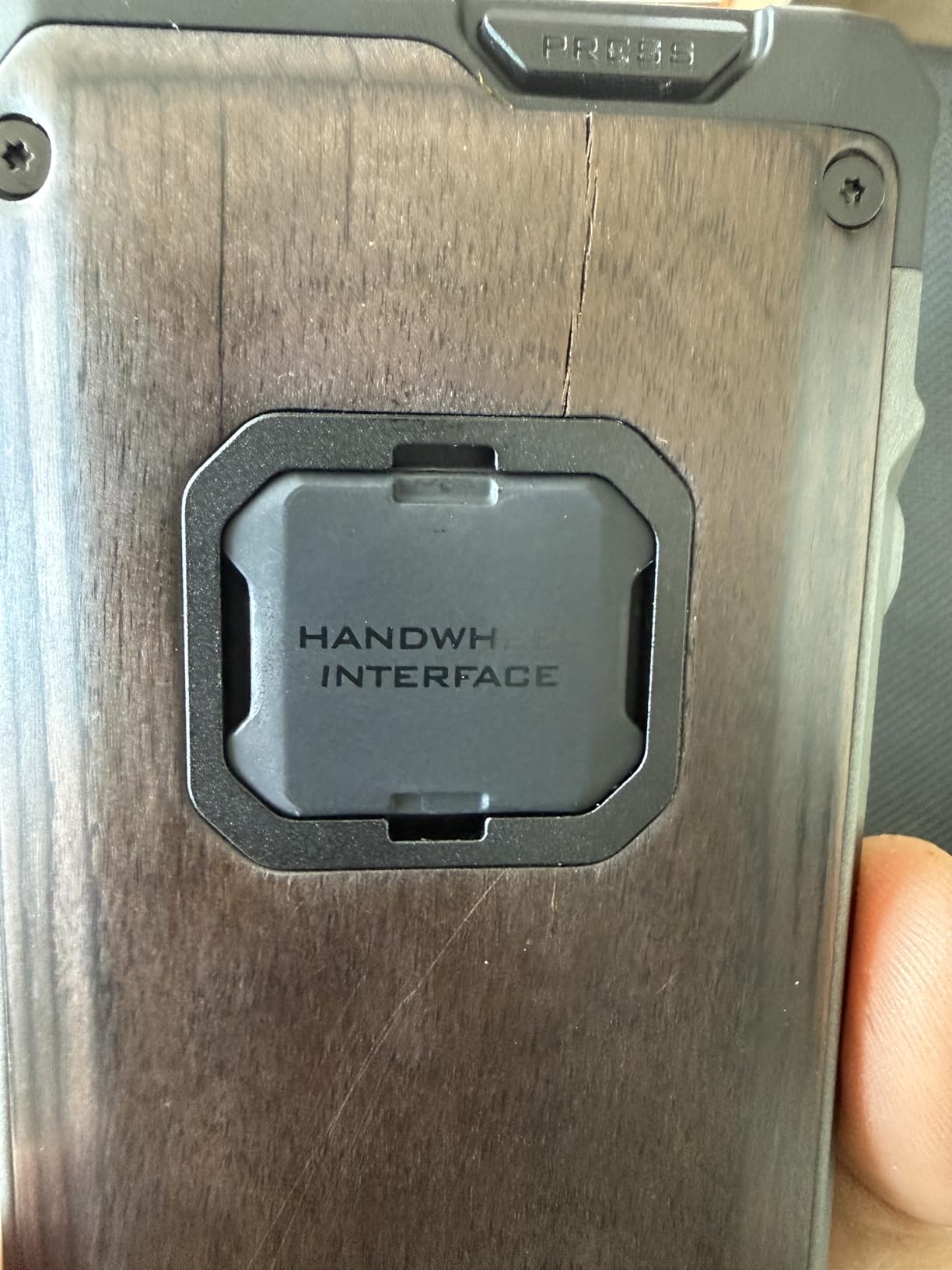
If Tilta resolves the wood-panel issue in a future batch, this kit could be a strong value pick. For now, the consistent quality complaints outweigh the feature list, and I would recommend the Nano II Base Kit as a more reliable FIZ entry point at a similar price. If you do buy this kit, document the wood condition on arrival for warranty purposes.
For whom it’s good
Early adopters willing to risk a known cosmetic defect in exchange for first access to the Nucleus-M II platform features. Document the unit’s condition on arrival for warranty purposes.
For whom it’s bad
Filmmakers who need a reliable kit on a short film shoot tomorrow. The reported wood-panel cracking is a real risk that Tilta has not yet addressed in a revised batch.
If a similar feature set at a lower risk level is the priority, the Tilta Nano II Base Kit above is the better buy today.
How a Wireless Follow Focus System Actually Works
A wireless follow focus has three parts: a motor that mounts to your camera’s 15mm or 19mm rods, a handwheel controller the operator holds, and a wireless link between them. The motor engages with the lens focus ring through a standard 0.8 MOD gear pitch – the same gear pitch used on every cinema lens and most modern mirrorless lenses with aftermarket gear rings. Turning the handwheel drives the motor, which rotates the lens ring smoothly.
The “wireless” part is what separates this from a traditional follow focus. Most kits use 2.4 GHz transmission with FHSS (frequency hopping) to avoid interference on crowded sets, and modern systems pair the hand unit to the motor in seconds with a single button press. A few systems layer Bluetooth or app control on top, which is genuinely useful for solo filmmakers who want to pull focus from a phone or tablet.
FIZ versus single-axis control
FIZ stands for Focus, Iris, and Zoom – the three lens controls a focus puller can drive from a single hand unit. Budget kits like the SmallRig Lite above are single-axis (focus only), while mid-tier and pro kits like the Tilta Nano II, DJI Focus Pro, and Preston or ARRI systems add iris and zoom on the same handwheel. For solo filmmakers on primes, single-axis is plenty. For cinema crews shooting zooms on narrative work, FIZ is the standard.
The transition from single-axis to FIZ is usually the moment crews outgrow a starter kit. If your short film work involves zooms or variable-aperture cinema lenses, plan for FIZ from day one rather than buying twice.
What 0.8 MOD gear pitch actually means
0.8 MOD (module) is the universal gear pitch standard for cinema lenses and most modern stills lenses with aftermarket gear rings. Every motor in this guide drives a 0.8 MOD gear, which means it fits any lens that has a standard focus ring gear or an aftermarket gear ring clamped to it. The Tilta Nucleus-M II kits also support 0.5 MOD (an older broadcast standard) for legacy glass.
Why wireless beats cabled follow focus
The wireless hand unit removes the tether between the focus puller and the camera. That matters when the 1st AC stands three meters away on a Steadicam rig, or when the camera is on a jib that swings overhead, or when the focus puller is operating remotely from a video village. Cabled systems still exist, but every wireless system on this list exists because operators got tired of snagging cables on a moving set.
Buying Guide: What to Look for in a Wireless Follow Focus
Choosing the best wireless follow focus systems for cinema cameras comes down to six decision points. Our team uses this framework when evaluating new kits, and it matches the criteria our video follow focus guide walks through in greater detail.
Rod compatibility: 15mm versus 19mm
Most mirrorless and small cinema rigs run 15mm rods. Larger cinema rigs with matte boxes and follow focus whips run 19mm rods. The Tilta Nucleus-M, Nucleus-M II, and Nucleus-M II Ultimate kits support both via included bushings. Budget kits typically lock to one rod standard. Pick the motor that matches your existing rig before you buy.
Wireless range and signal reliability
The industry standard for wireless range is roughly 300 feet (about 90 meters) line of sight. Most kits in this guide meet or exceed that. Signal reliability is harder to spec – on crowded sets with multiple wireless devices, 2.4 GHz congestion can cause brief dropouts. The pro kits from Tilta, ARRI, and Preston use FHSS frequency hopping to mitigate this, and the difference is audible in the workflow.
Battery life and external power
Hand unit battery life ranges from two hours (DJI Focus Pro with continuous AF) to 21 hours (SmallRig Lite). Motors generally last a full shoot day on internal power or run indefinitely on D-Tap / P-tap external power from a camera battery. If your shoot day is longer than eight hours, prioritize kits with USB-C or D-Tap pass-through like the Tilta Nano II.
FIZ versus single-axis
Single-axis focus is enough for prime-lens work on solo short films. FIZ (focus, iris, zoom) is required for narrative work on zooms, for crews with a dedicated 1st AC, and for any shoot where the lens aperture is changing between takes. The price jump from single-axis to FIZ is roughly two to four times, but it is the difference between an amateur kit and a professional one.
App control and iOS integration
Several kits in this guide offer iOS or Android app control as a secondary interface. In practice, app control is genuinely useful for solo filmmakers who want to pull focus from a phone, less useful for traditional 1st AC workflows. Treat it as a bonus, not a deciding factor, unless your specific workflow is app-driven.
Lens compatibility: cine, mirrorless, and DSLR
A wireless follow focus works with every lens that has a standard focus ring and an aftermarket gear ring clamped to it. Native cinema lenses with built-in 0.8 MOD gears work out of the box. Modern mirrorless lenses need a 0.8 MOD gear ring (cheap, universal). Older DSLR lenses with rotating front elements are harder to drive and usually need a different gear ring approach. If you shoot adapted vintage glass, plan on manual focus limits rather than auto calibration.
Solo filmmakers versus crewed shoots
Solo filmmakers benefit most from kits with app control, AMF hybrid modes (DJI Focus Pro), and small form factors that fit a one-person rig. Crewed short film productions benefit from FIZ control, lens mapping, and the multi-motor scalability that the Tilta Nano II and Nucleus-M II ecosystems offer. The solo operator follow focus guide covers this in more depth.
Wireless Follow Focus Versus Autofocus for Cinema Work
Modern mirrorless cameras ship with autofocus systems that are vastly better than they were five years ago. Sony’s FX6 and FX3, Canon’s C70, and the latest Blackmagic bodies all have credible continuous AF for documentary and event work. So why do cinema crews still reach for wireless follow focus?
The honest answer is that autofocus and manual focus solve different problems. Autofocus is built for subjects that stay roughly in place – documentary interviews, event coverage, run-and-gun where the operator does not have time to pull focus. It struggles on shallow depth of field at f/1.4, on fast-moving subjects that cross the frame, and on any shot where the focus pull is part of the storytelling (a rack focus from one actor to another).
For narrative short film work where focus is a creative tool, a wireless follow focus remains the right answer. For documentary and event work, autofocus is often the right answer. The DJI Focus Pro in this guide is a hybrid that bridges both worlds with AMF mode.
Frequently Asked Questions
What is a wireless follow focus system?
A wireless follow focus is a remote focus control system that uses a motor mounted on your camera’s 15mm or 19mm rods to drive the lens focus ring, while the operator controls it from a wireless hand unit. The motor engages the lens through a standard 0.8 MOD gear pitch, and the handwheel controller transmits commands over 2.4 GHz wireless or Bluetooth. The separation between operator and camera lets a focus puller or solo filmmaker make precise focus pulls without touching the lens.
How much does a wireless follow focus cost?
Wireless follow focus systems vary widely in cost depending on the level of control and motor count. Budget single-axis kits start at the low end, mid-tier FIZ systems like the Tilta Nucleus Nano II land in the mid-range, and full pro multi-motor systems from Tilta, ARRI, or Preston climb into the highest tier of pricing. Most short film crews start with a mid-tier FIZ kit and expand over time.
Does a wireless follow focus work with all lenses?
A wireless follow focus works with any lens that has a standard focus ring and an aftermarket 0.8 MOD gear ring clamped to it. Native cinema lenses with built-in gears work out of the box. Modern mirrorless lenses need an aftermarket gear ring, which is inexpensive and universal. Older DSLR lenses with rotating front elements and vintage manual lenses with loose focus rings can be driven but may not auto-calibrate reliably, so manual focus limits are the safer workflow.
What is the best wireless follow focus for filmmakers?
For most short film and indie crews, the SmallRig Wireless Follow Focus Kit (Lite) is the best starting point thanks to its 4.3 kgf.cm torque, 21-hour handwheel battery, and quiet operation. Crews that need FIZ control should look at the Tilta Nucleus Nano II Base Kit, which scales from single-axis to multi-motor cinema rigs. Solo filmmakers who want autofocus assist should consider the DJI Focus Pro Creator Combo with its 76,800-point LiDAR and AMF hybrid mode.
What are the benefits of a wireless follow focus?
A wireless follow focus gives a focus puller or solo filmmaker precise, repeatable focus pulls without touching the camera or lens. It enables shallow depth of field work at f/1.4-f/2.8 where autofocus is unreliable, supports rack focus as a creative storytelling tool, and frees the 1st AC to operate from a distance on Steadicam, jib, and gimbal rigs. Wireless also removes the cable snag risk that plagues cabled follow focus systems on moving sets.
Final Recommendation
For most short film crews reading this guide in September 2026, the SmallRig Wireless Follow Focus Kit (Lite) is the right starting point – quiet, dependable, and priced for an indie budget. Crews that need FIZ control or plan to scale to multi-motor rigs should step up to the Tilta Nucleus Nano II Base Kit, which is the safest ecosystem investment in this roundup. Solo filmmakers who want LiDAR-assisted autofocus on manual cine primes will find the DJI Focus Pro Creator Combo worth every dollar. Whichever kit you pick, plan for the rod standard your rig already uses, and think about where your short film work will be in two years – the best wireless follow focus is the one that grows with your productions. For more follow focus gear tailored to indie crews, see our indie filmmaker follow focus guide and our whip and accessories roundup.