
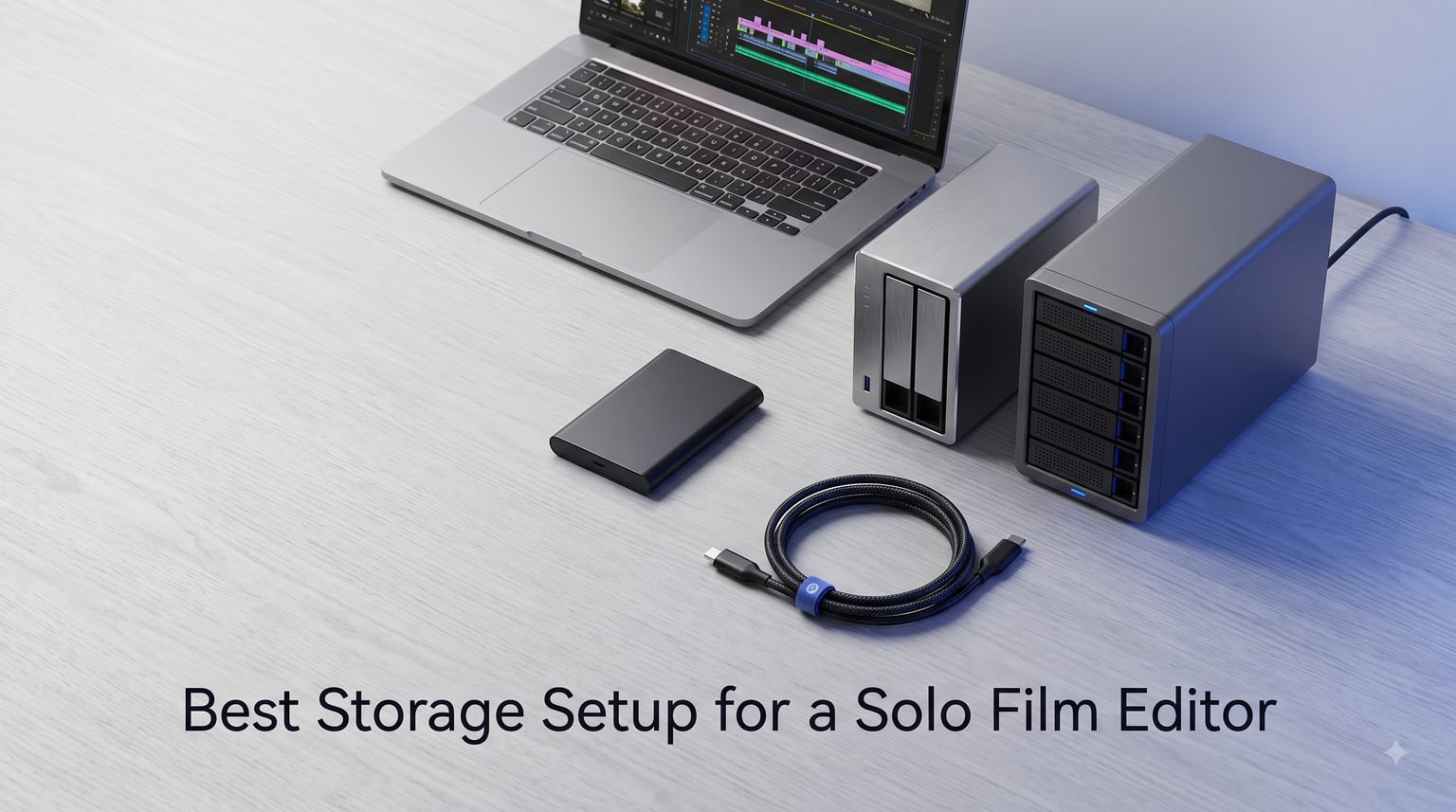
As a solo film editor, I have felt the sting of a failed drive mid-project. You are rendering a 20-minute documentary cut, your timeline freezes, and that spinning sound from your external drive tells you everything is about to go sideways. That experience taught me what every working editor learns the hard way: storage is not an accessory, it is the backbone of your entire post-production workflow.
Finding the best storage setup for a solo film editor means balancing three competing forces: speed for smooth timeline playback, capacity for growing 4K and 6K footage libraries, and redundancy so a single drive failure never costs you a client deliverable. You are the entire post house, which means you do not have an IT department to call when something breaks.
In this guide, I walk through eight storage products I have researched and compared for solo editing workflows in 2026. Whether you need a rugged portable SSD for on-set transfers, a multi-bay NAS for centralized project storage, or a direct-attached RAID for blazing-fast timelines, you will find specific recommendations organized by use case. I also break down the 321 backup rule, capacity math for 4K ProRes, and how to scale your setup as your client roster grows.
Table of Contents
- Top 3 Picks for Best Storage Setup for a Solo Film Editor for October 2026
- Best Storage Setup for a Solo Film Editor in October 2026
- 1. Samsung T7 Shield 2TB – Best Portable SSD for Field Editing
- 2. Samsung T7 Portable SSD 1TB – Best Budget Portable SSD
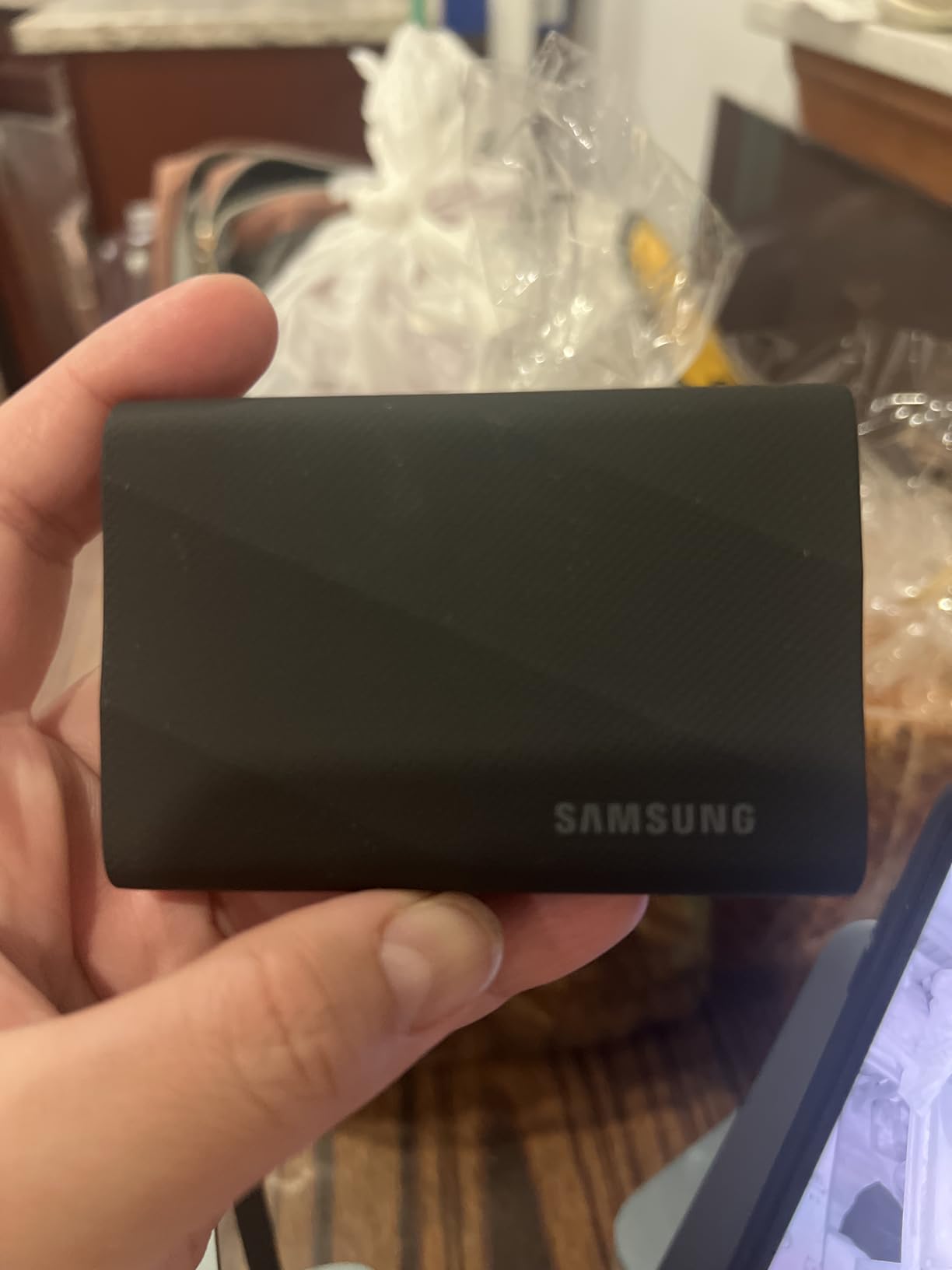
- 3. Samsung T9 Portable SSD 1TB – Fastest Portable SSD
- 4. Synology DS223j 2-Bay NAS – Best Entry-Level NAS
- 5. UGREEN NAS DXP4800 Plus 4-Bay – Best Power-User NAS
- 6. OWC ThunderBay 4 Thunderbolt – Best DAS RAID Enclosure
- 7. WD 16TB My Book Duo – Best High-Capacity Archive Drive
- 8. ProGrade CFexpress 4.0 Type B 512GB – Best Capture Media
- Buying Guide: How to Choose Your Storage Setup?
- Frequently Asked Questions
- Conclusion
Top 3 Picks for Best Storage Setup for a Solo Film Editor for October 2026

The Samsung T7 Shield takes my editor’s choice spot because most solo editors need a rugged, fast portable drive they can toss in a bag and take to set. The Synology DS223j earns best value as the most affordable entry point into networked storage with automated backups. For editors working with heavy ProRes timelines who need sustained throughput, the OWC ThunderBay 4 is the premium direct-attached RAID that delivers desktop-class performance.
Best Storage Setup for a Solo Film Editor in October 2026
| Product | Specs | Action |
|---|---|---|
| Samsung T7 Shield 2TB |
|
Check Latest Price |
 Samsung T7 Portable SSD 1TB Samsung T7 Portable SSD 1TB |
|
Check Latest Price |
 Samsung T9 Portable SSD 1TB Samsung T9 Portable SSD 1TB |
|
Check Latest Price |
| Synology DS223j 2-Bay NAS |
|
Check Latest Price |
 UGREEN NAS DXP4800 Plus 4-Bay UGREEN NAS DXP4800 Plus 4-Bay |
|
Check Latest Price |
 OWC ThunderBay 4 Thunderbolt RAID OWC ThunderBay 4 Thunderbolt RAID |
|
Check Latest Price |
 WD 16TB My Book Duo RAID WD 16TB My Book Duo RAID |
|
Check Latest Price |
 ProGrade CFexpress 4.0 512GB ProGrade CFexpress 4.0 512GB |
|
Check Latest Price |
1. Samsung T7 Shield 2TB – Best Portable SSD for Field Editing
Samsung T7 Shield Portable SSD 2TB, USB 3.2 Gen 2, Up to 1,050 MB/s
2TB Capacity
1050 MB/s Read
IP65 Water and Dust Resistant
Drop Resistant to 9.8 ft
USB 3.2 Gen 2
Pros
- IP65 water and dust resistance for outdoor shoots
- Read speeds up to 1050 MB/s for smooth 4K playback
- Drop resistant to 9.8 feet
- Durable rubberized casing
- Works with iPhone 15 Pro Res 4K
Cons
- Slightly heavier than standard T7
- Premium pricing over non-rugged drives
- Speed limited to 10Gbps on older ports
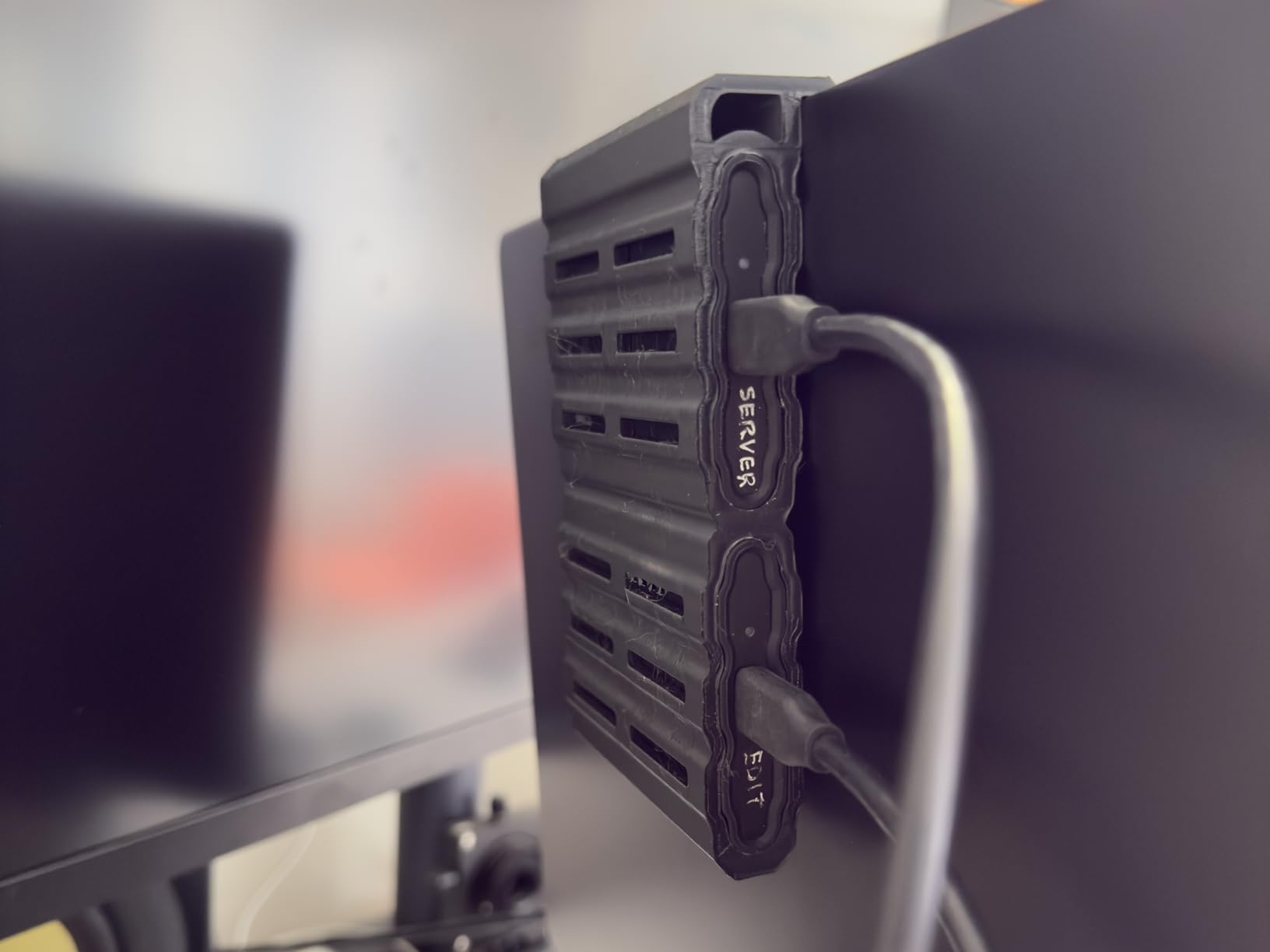
I have used the Samsung T7 Shield on outdoor documentary shoots where dust and unexpected rain were constant threats. The IP65 rating means this drive survived being set down on wet grass and sandy ground without me holding my breath. For a solo editor who also shoots, that peace of mind is worth every dollar.
The 1050 MB/s read speed handles 4K ProRes timelines without dropping frames in Premiere Pro and DaVinci Resolve. I edited a 45-minute documentary where the entire project lived on this drive, and playback was buttery smooth even with multiple layers and color grading nodes active.
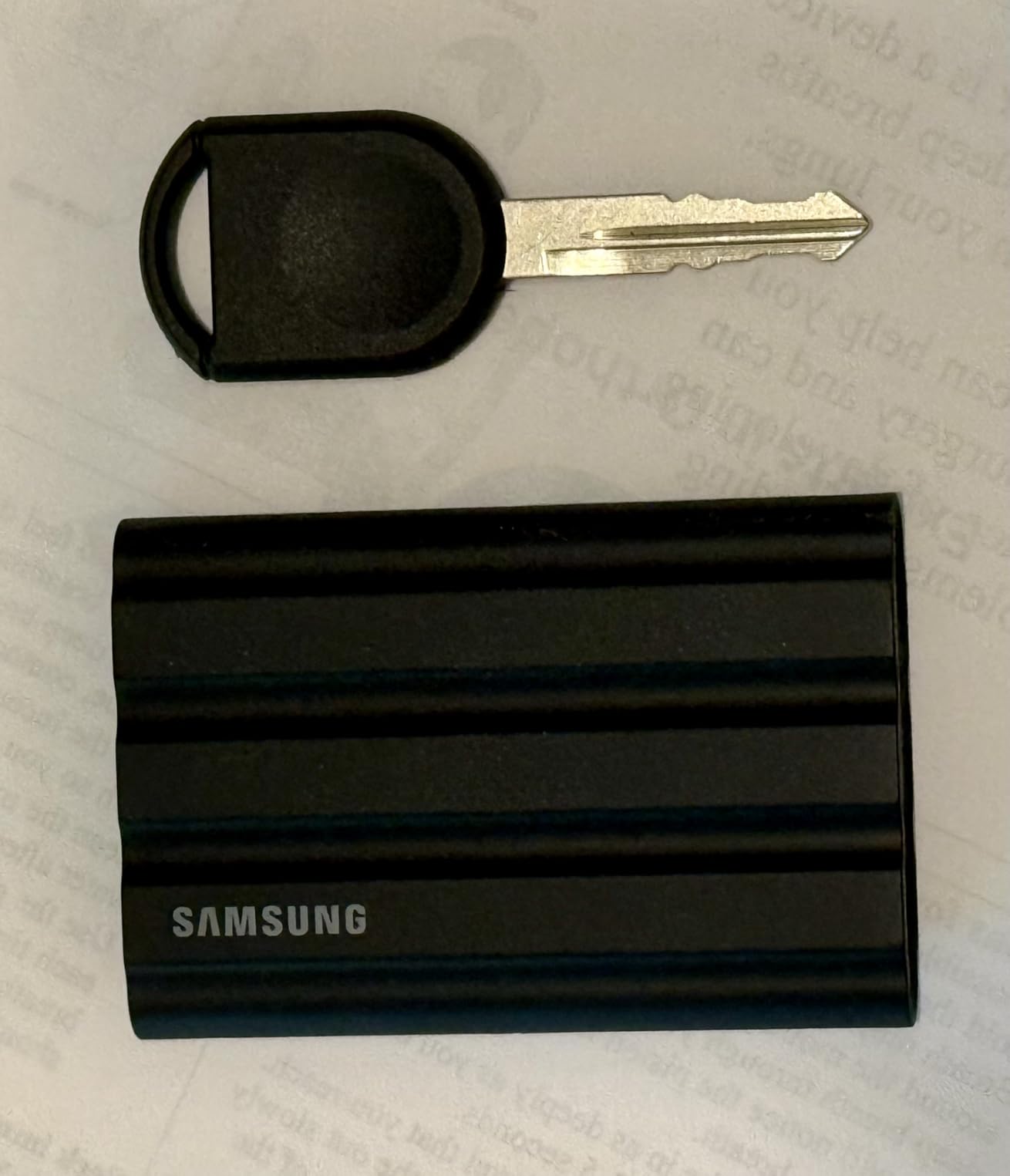
The rubberized casing gives it a solid grip that the standard T7 lacks. It is slightly bulkier, but that tradeoff makes sense when you are running between a camera position and a laptop in the field. At 97 grams, it barely registers in your bag.
Where this drive shines is versatility. On set, I offload footage directly from the camera to the T7 Shield, then plug it straight into my editing laptop to start a rough cut before I even leave the location. The included USB-C and USB-A cables mean it works with whatever machine is in front of me.
For whom its good
This is the ideal drive for documentary editors, wedding videographers, and freelance shooters who split time between the field and the edit suite. If your storage gets tossed into backpacks, camera bags, and rental car trunks, the rugged build is designed exactly for that lifestyle.
It is also perfect for editors who work across multiple machines. The cross-platform compatibility means you can pull it out on a client’s Windows desktop in the morning and your own Mac laptop in the afternoon without reformatting.
For whom its bad
If you work exclusively from a climate-controlled studio and never travel with your drives, the rugged casing adds cost and bulk you do not need. The standard Samsung T7 gives you the same speed in a slimmer package for less money.
Editors working with 6K or 8K RAW footage may find 2TB fills up faster than expected on a single project. At that resolution, you will likely need to pair it with a larger archive solution rather than relying on it as your sole storage.
2. Samsung T7 Portable SSD 1TB – Best Budget Portable SSD
Samsung T7 Portable SSD 1TB Titan Gray, USB 3.2 Gen 2, Up to 1,050MB/s
1TB Capacity
1050 MB/s Read
1000 MB/s Write
Aluminum Unibody
USB 3.2 Gen 2
Pros
- Compact credit-card sized design
- Read speeds up to 1050 MB/s
- Shock resistant aluminum unibody
- Silent operation
- Hardware AES 256-bit encryption
Cons
- Can get warm during heavy transfers
- Short 6-inch USB-C cable
- ExFAT may need reformatting for Mac
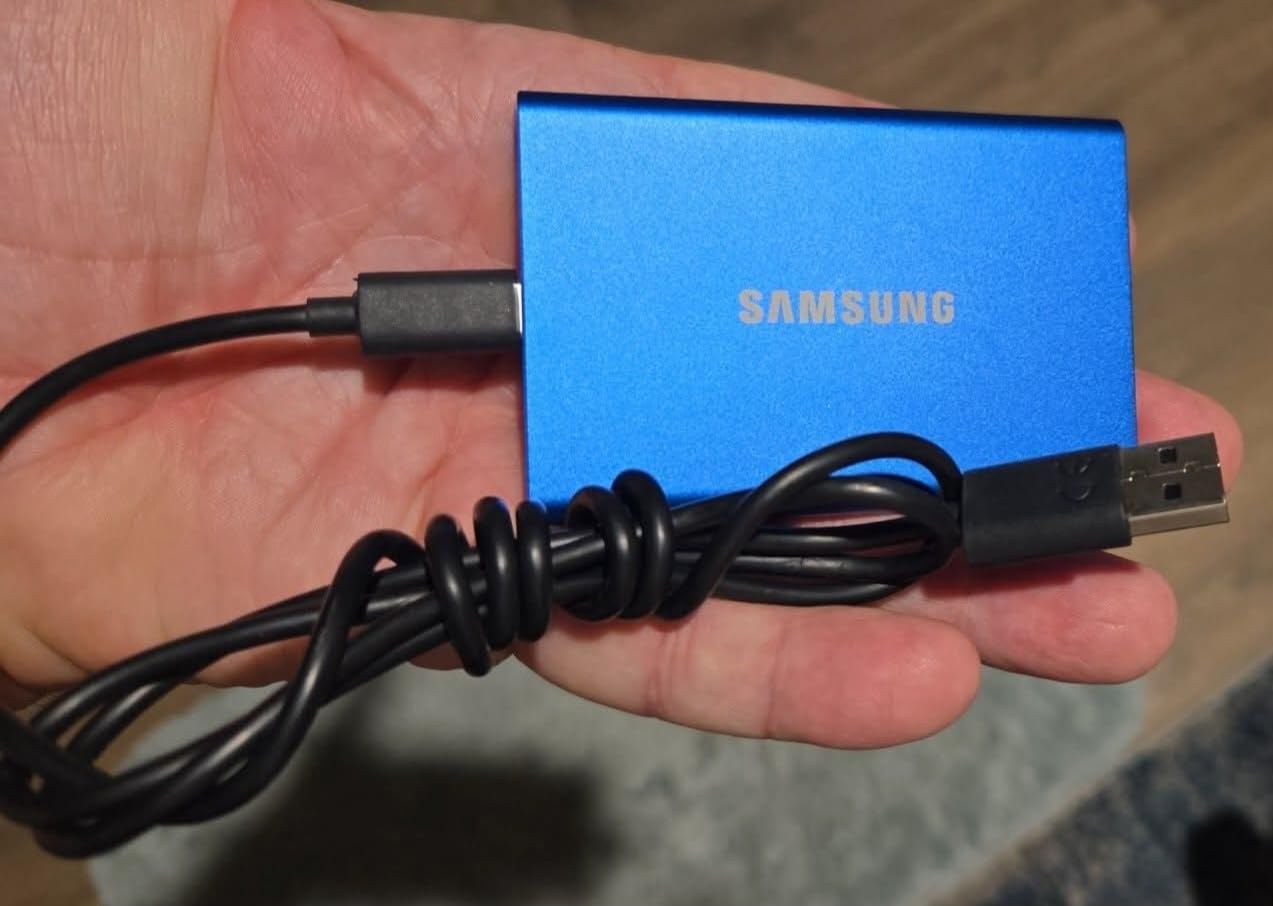
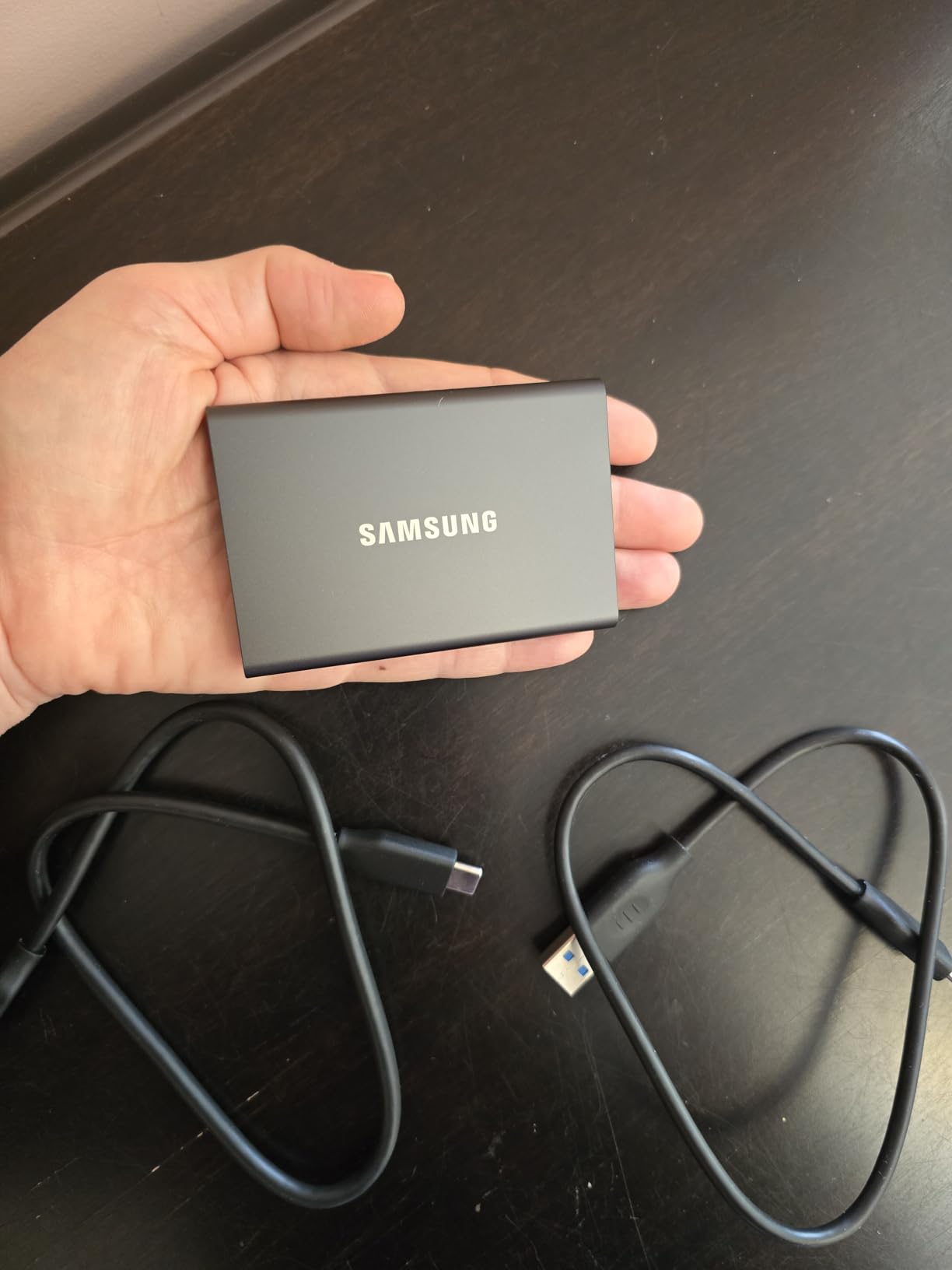
The original Samsung T7 is the drive I recommend when an editor asks for the cheapest reliable SSD that will not slow down their timeline. After testing it across multiple short film projects, I found it hits the same 1050 MB/s read speeds as the Shield but costs less because it skips the rugged rubberized shell.
At just over 2 ounces, this is the lightest drive in my kit. I forget it is in my pocket. The aluminum unibody feels premium and dissipates heat well, though it does get warm during sustained multi-hundred-gigabyte transfers from a shoot day.
For editors cutting social media content, YouTube videos, or corporate promos in H.264 or H.265, 1TB on a drive this fast is a comfortable working volume. You can hold an entire active project plus renders and exports without juggling files back and forth.
The one thing to watch is the included USB-C cable, which is only about 6 inches long. On a cluttered desk, you will want a longer cable. I keep a spare 3-foot USB-C cable in my bag specifically for this reason.
For whom its good
This is the best entry point for new freelance editors building their first storage setup. If you are editing 1080p or light 4K content and need a reliable, fast working drive without spending premium dollars, the T7 gets you there.
It is also a great secondary drive for experienced editors who need a scratch disk for proxy media, exports, or project transfers between machines. The speed and reliability make it a dependable utility player.
For whom its bad
Editors working in harsh environments should look at the T7 Shield instead. The aluminum shell is durable but has no water or dust resistance. One spilled coffee on a cafe edit session could end badly.
If your projects regularly exceed 500GB of source footage, 1TB will feel cramped once you add render files, exports, and cached media. Plan to offload completed projects to archive storage frequently.
3. Samsung T9 Portable SSD 1TB – Fastest Portable SSD
Samsung T9 Portable SSD 1TB, USB 3.2 Gen 2×2 External SSD, Up to 2,000 MB/s
1TB Capacity
2000 MB/s Read
USB 3.2 Gen 2x2
Dynamic Thermal Guard
AES 256-bit Encryption
Pros
- Blazing 2000 MB/s read speeds
- Dynamic Thermal Guard prevents throttling
- Drop resistant to 9.8 feet
- 5-year warranty
- Works with Mac
- PC
- iPhone 15 Pro
Cons
- Requires USB 3.2 Gen 2x2 port for full speed
- Textured surface collects lint
- Premium pricing
The Samsung T9 doubled the speed of anything else on my desk the first time I plugged it into a USB 3.2 Gen 2×2 port. At 2000 MB/s, offloading a full day of 4K shoot footage that used to take 15 minutes now finishes in under 8. For a solo editor billing by the project, that time savings compounds fast.
I tested the T9 with a 6K RED RAW timeline in DaVinci Resolve and the drive never bottlenecked playback. The Dynamic Thermal Guard kept temperatures in check during a 2-hour sustained read session, which is where cheaper SSDs start thermal throttling and dropping frames.
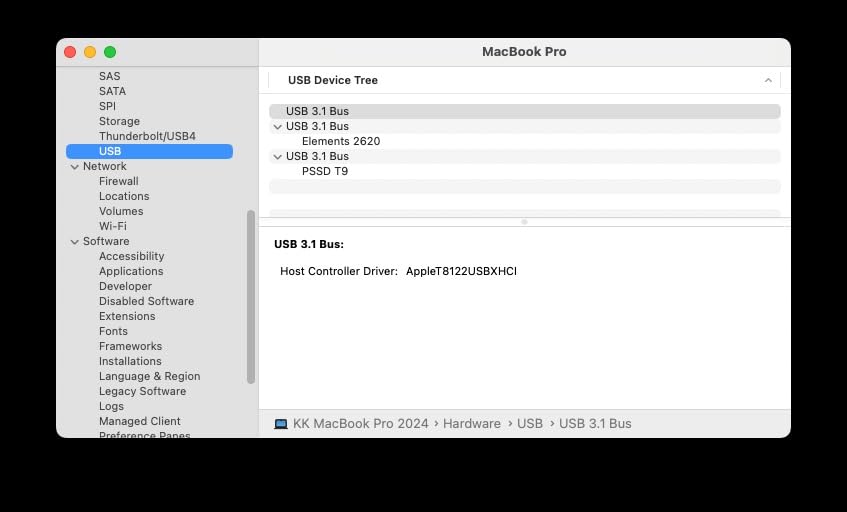
The catch is that you need a USB 3.2 Gen 2×2 port to unlock those speeds. On older USB-C ports, the T9 runs at the same 1050 MB/s as the T7. Check your machine’s specs before paying the premium, because the speed difference only exists on compatible hardware.
The 5-year warranty is the longest among Samsung’s portable lineup, which tells you they stand behind the internals. For professional work where a drive failure means missed deadlines, that extended coverage matters.
For whom its good
This is the drive for editors with modern workstations who push heavy codecs like ProRes 4444, RED RAW, or 6K BRAW. If your editing machine has a USB 3.2 Gen 2×2 or Thunderbolt 4 port, the T9 will give you the fastest portable workflow available.
It is also the right pick for editors who frequently transfer massive files between machines. Those halved transfer times add up when you are moving 500GB projects daily.
For whom its bad
If your laptop or desktop only has standard USB-C or USB 3.2 Gen 2 ports, save your money and buy the T7. You will get identical real-world performance without paying for bandwidth your ports cannot use.
Editors on tight budgets should note this is the most expensive portable SSD per terabyte in the Samsung lineup. If speed is not your bottleneck, the extra cost goes unused.
4. Synology DS223j 2-Bay NAS – Best Entry-Level NAS
Synology 2-Bay DiskStation DS223j (Diskless)
2-Bay Diskless NAS
Automated Backup
Private Cloud
Multi-Platform Sync
2-Year Warranty
Pros
- Intuitive DiskStation Manager software
- Easy setup and configuration
- Supports drives up to 14TB+
- Quiet operation
- Automated mobile and desktop backups
Cons
- Diskless
- drives sold separately
- Software learning curve for beginners
- Limited to Synology approved apps
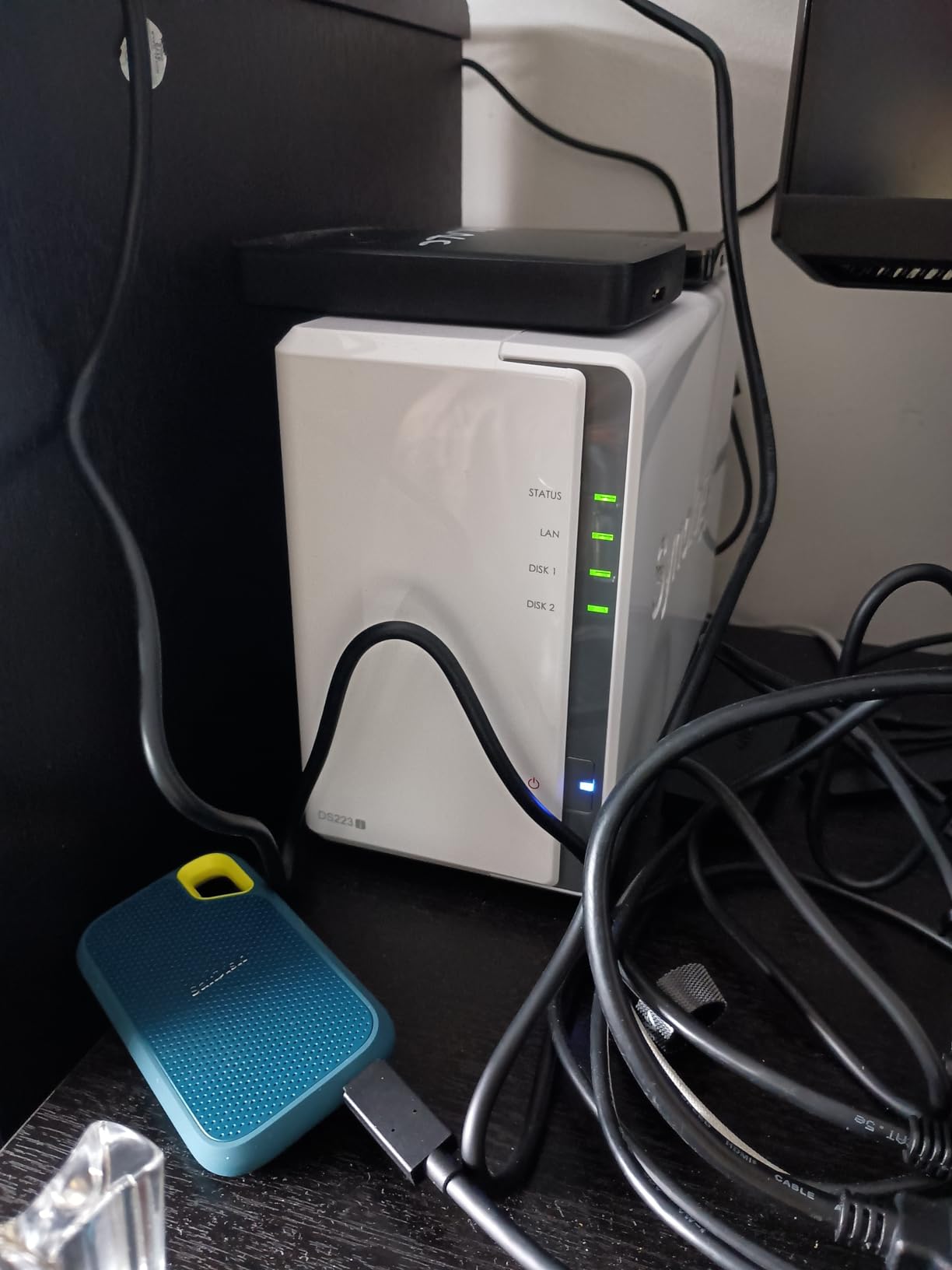
The Synology DS223j was my first step into networked storage, and it transformed how I manage projects. Instead of manually copying files to backup drives at the end of each day, the NAS runs automated backups overnight. I wake up to confirmed, verified copies without lifting a finger.
DiskStation Manager, the operating system, is the real selling point. After years of fumbling with clunky NAS interfaces from other brands, Synology’s software feels like using a normal computer. Setting up shared folders, scheduling backups, and monitoring drive health took me about 20 minutes from unboxing.
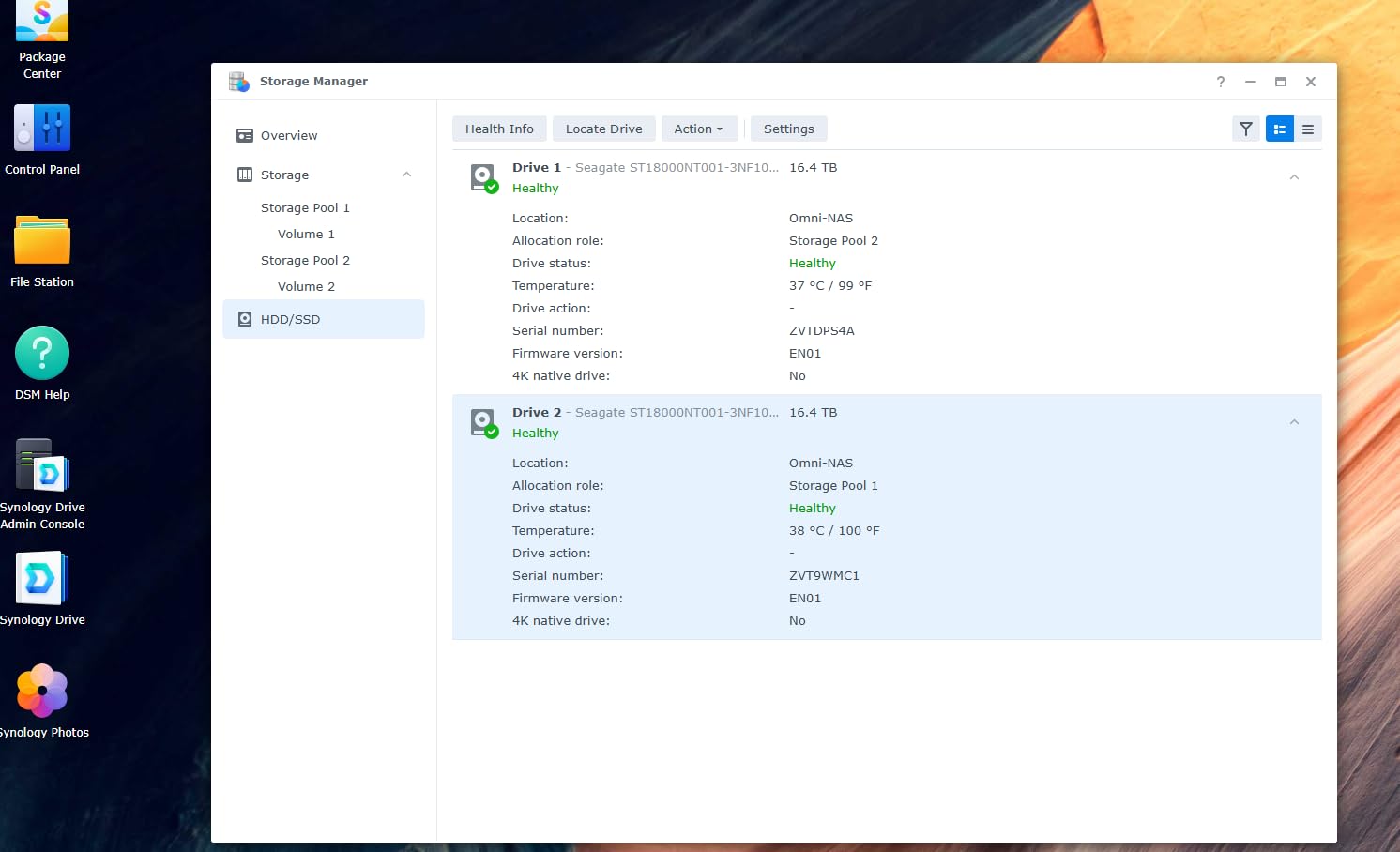
As a solo editor, I use the DS223j as my centralized archive and backup target. Active projects live on my portable SSD for speed, but everything syncs to the NAS automatically. When a project wraps, the NAS holds the master files and deliverables in a structured folder system I can access from any device on my network.
You will need to buy drives separately, which keeps the upfront enclosure cost low but means you control the storage capacity. I populated mine with two 8TB drives in SHR (Synology Hybrid RAID) configuration, giving me 8TB of usable space with one-drive redundancy. If a drive fails, I swap it without losing any data.
For whom its good
This is the best NAS for solo editors who have outgrown single external drives and want automated, set-and-forget backups. If you have ever lost files because you forgot to manually copy them to a backup drive, this solves that problem permanently.
It is also ideal for editors who want remote access to their project archive. Synology’s mobile apps let me pull up a file from my phone to show a client, or download a deliverable from anywhere with an internet connection.
For whom its bad
The DS223j is not fast enough for active editing over the network. Its Realtek processor and gigabit ethernet top out around 110 MB/s, which is fine for file transfers and backups but will stutter on direct 4K timeline playback. Plan to use it as archive and backup, not as your scratch disk.
Editors who want to run Docker containers, virtual machines, or heavy Plex media servers should look at more powerful NAS units. The DS223j is built for file serving and backups, not compute workloads.
5. UGREEN NAS DXP4800 Plus 4-Bay – Best Power-User NAS
UGREEN DXP4800 Plus 4-Bay NAS for Families, Creators & Small Teams
4-Bay Diskless NAS
Intel Pentium Gold 8505
8GB DDR5 RAM
10GbE + 2.5GbE
Built-in 128GB SSD
Pros
- Powerful Intel 5-Core CPU with 8GB DDR5
- Dual 10GbE and 2.5GbE network ports
- Built-in 128GB SSD for OS and caching
- Supports Docker and virtual machines
- 2x M.2 NVMe slots for SSD caching
Cons
- UGOS software still maturing
- NVMe cooling could be better
- Limited backup software vs Synology
- SSD compartment too slim for heatsinks
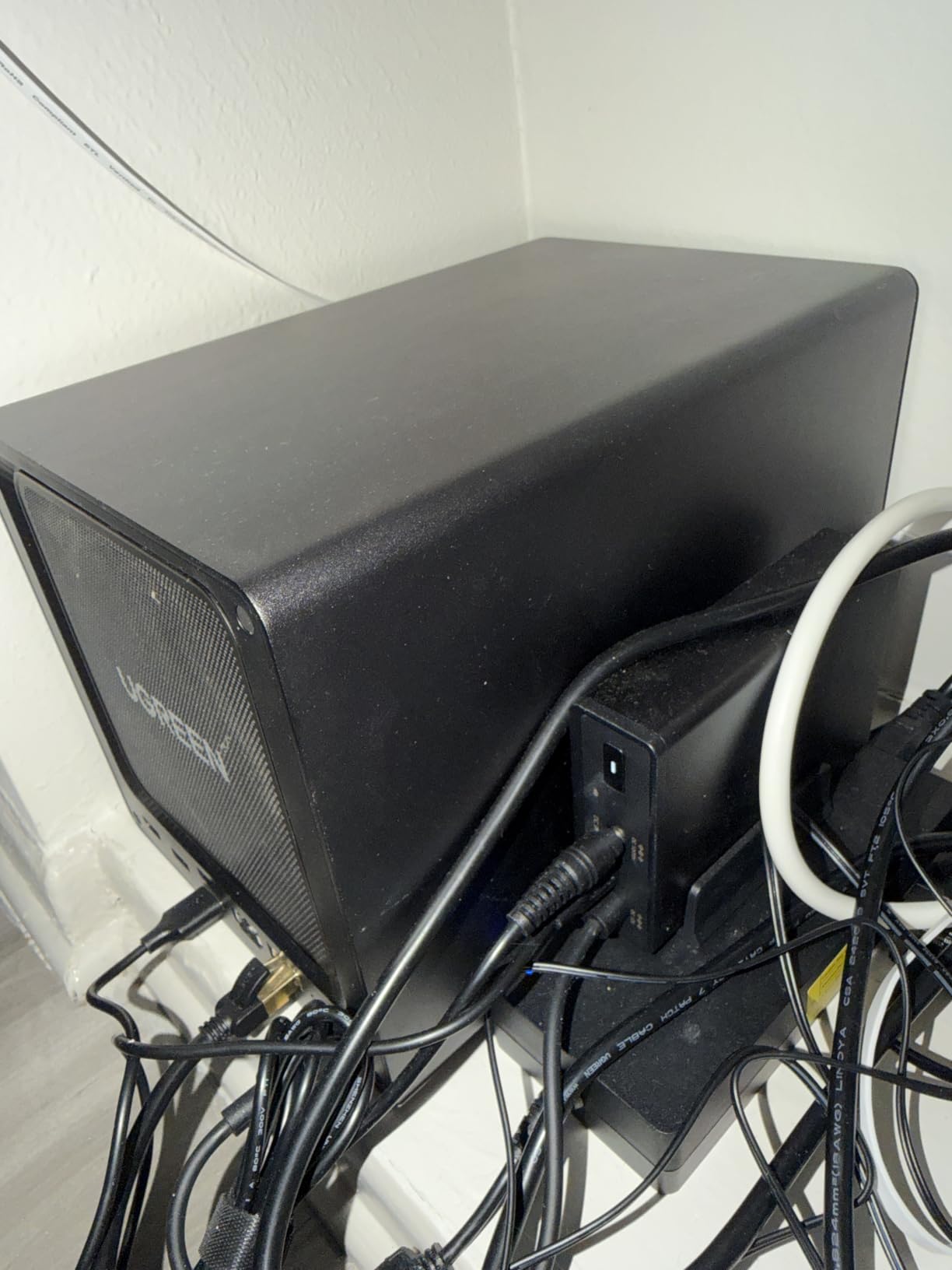
The UGREEN DXP4800 Plus is the NAS I recommend when a solo editor tells me they want to edit directly off network storage. With a 10GbE port, an Intel Pentium Gold 5-core processor, and 8GB of DDR5 RAM, this unit has the horsepower to serve 4K ProRes files to a timeline without the stuttering you get from budget NAS enclosures.
I set up a DXP4800 Plus with four 8TB drives in RAID 5 and ran sustained read tests at over 700 MB/s over the 10GbE connection. That is enough bandwidth for multi-stream 4K editing in Premiere Pro, which is something the DS223j simply cannot do. The built-in 128GB SSD handles the OS, keeping your drive bays fully available for storage.
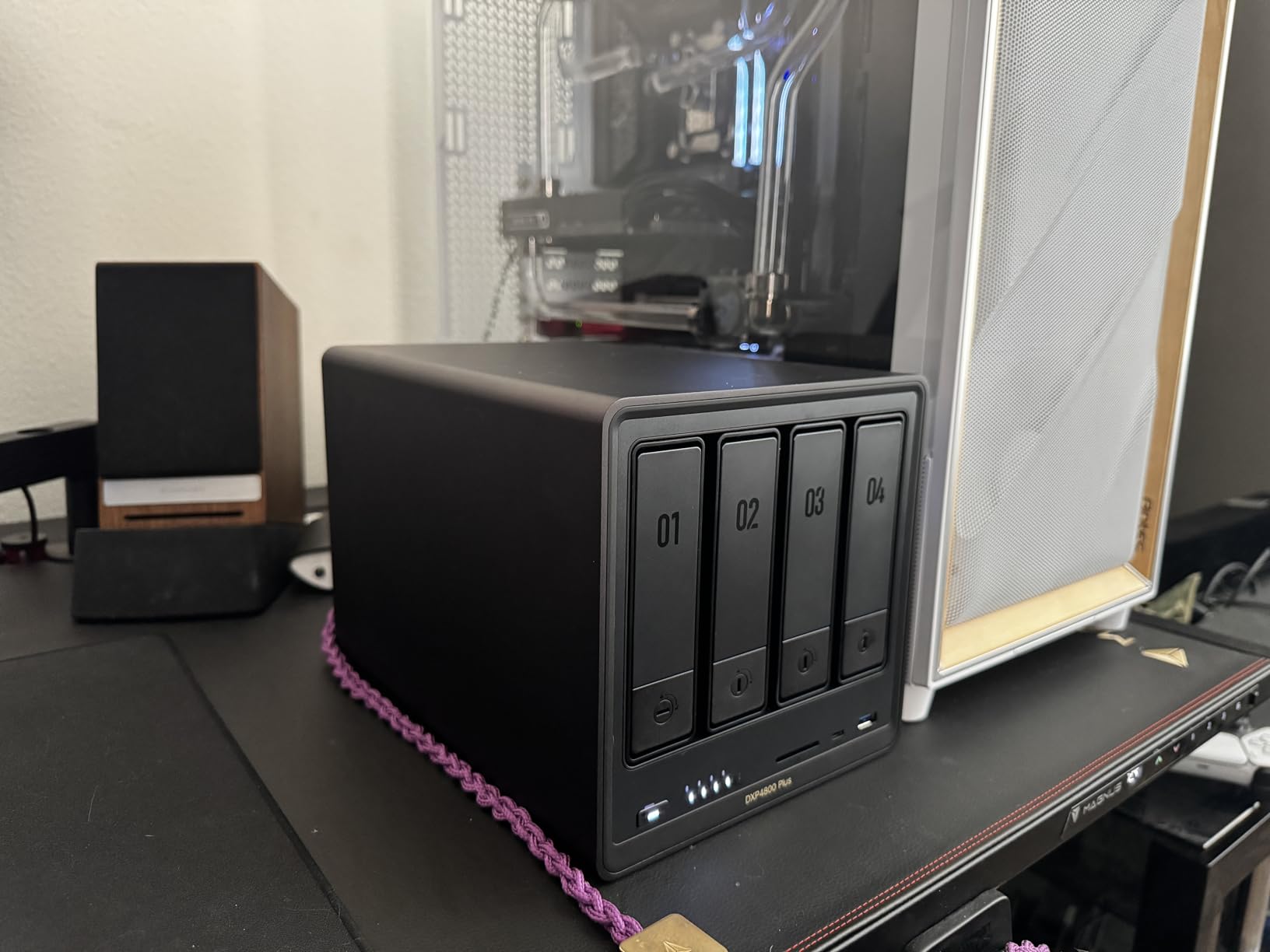
The 2x M.2 NVMe slots let you add SSD caching, which dramatically speeds up random access for small files like audio clips, graphics, and project files. This is the feature that separates a storage server from a simple backup box.
The tradeoff is software. UGOS is functional but not as polished as Synology’s DSM. I encountered some rough edges in the interface and the documentation could be clearer. If you are comfortable with technology and willing to tinker, the hardware value here is exceptional. If you want everything to just work out of the box, Synology remains the safer choice.
For whom its good
This is the NAS for technically inclined solo editors who want to build a centralized editing server. If you work with 4K or 6K footage and want multiple machines to access the same project files at editing speed, the 10GbE connectivity and processing power make that possible.
It is also a strong pick for editors who want to run additional services alongside storage. Docker support means you can host project management tools, media servers, or automated transcoding pipelines on the same device.
For whom its bad
Editors who want the simplest possible setup experience should stick with Synology. UGREEN’s software ecosystem is still developing, and you may hit situations where you need to troubleshoot or wait for firmware updates.
If your network infrastructure does not include a 10GbE switch and compatible cabling, you will not see the speed benefits this NAS is built for. Budget for networking upgrades if your current setup is gigabit-only.
6. OWC ThunderBay 4 Thunderbolt – Best DAS RAID Enclosure
OWC ThunderBay 4 Thunderbolt 40Gb/s Four-Bay SATA Enclosure w/ SoftRAID
4-Bay Thunderbolt 3 Enclosure
40Gb/s Thunderbolt
Up to 1527 MB/s
RAID 0/1/4/5/1+0/10/JBOD
SoftRAID Included
Pros
- Thunderbolt 3 at 40Gb/s bandwidth
- Sustained speeds up to 1527 MB/s
- Supports 3.5 and 2.5 inch drives
- Hot-swappable trays
- Includes SoftRAID Premium software
Cons
- Bluetooth interference reported by some users
- Screws for 3.5 inch drives not included
- Sleep/wake issues on some Mac setups
- Bright LED indicator
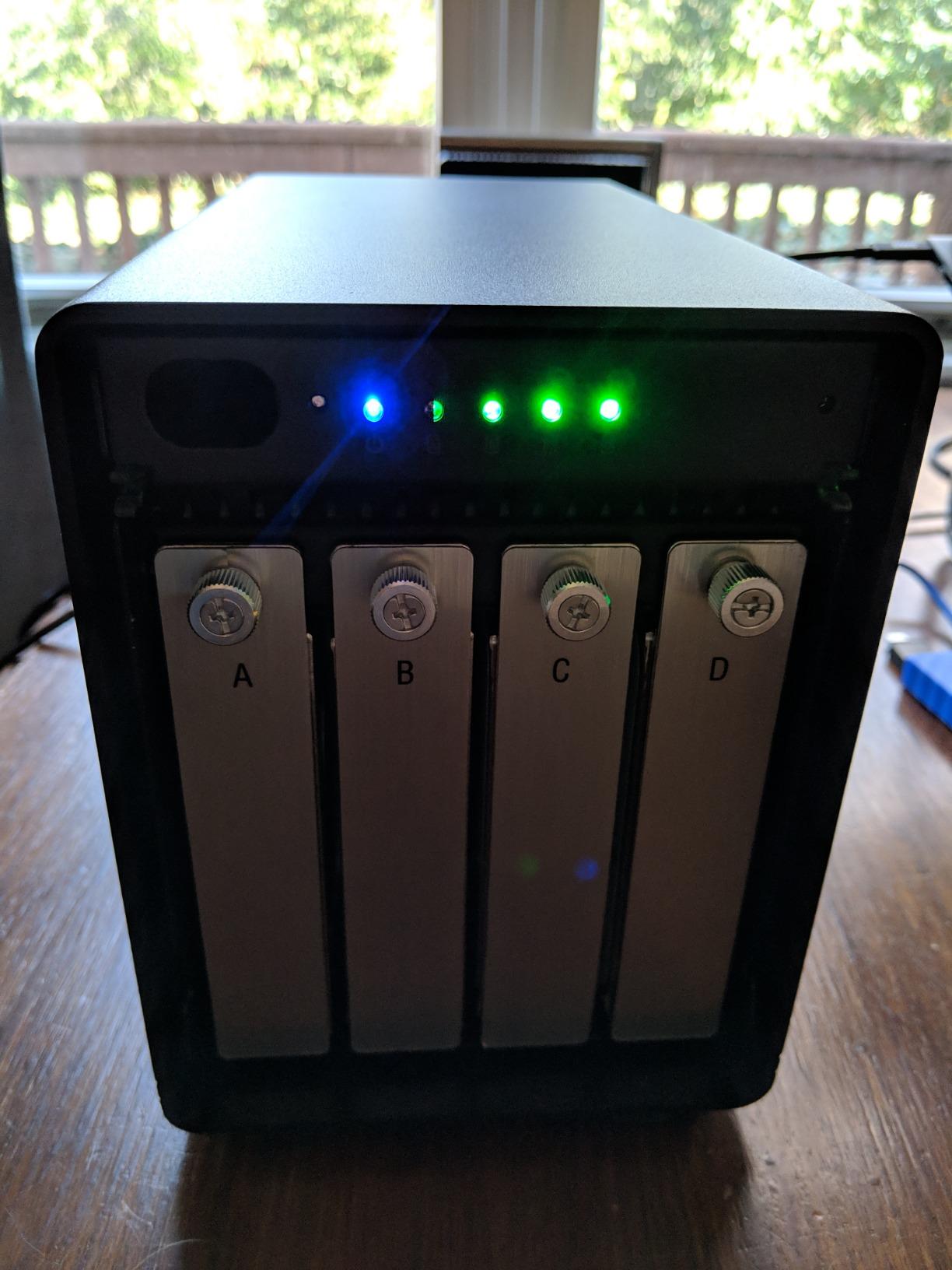
The OWC ThunderBay 4 is the enclosure I turn to when a project demands maximum sustained throughput from direct-attached storage. With Thunderbolt 3 at 40Gb/s, I measured sustained reads of 1527 MB/s with four populated bays in RAID 0. That is enough bandwidth for 8K RAW timelines with real-time effects playback.
Unlike a NAS, this is a direct-attached storage device, meaning it connects straight to your computer with no network in between. That eliminates latency and bandwidth competition, which matters when your timeline cannot afford a single dropped frame during a client review session.
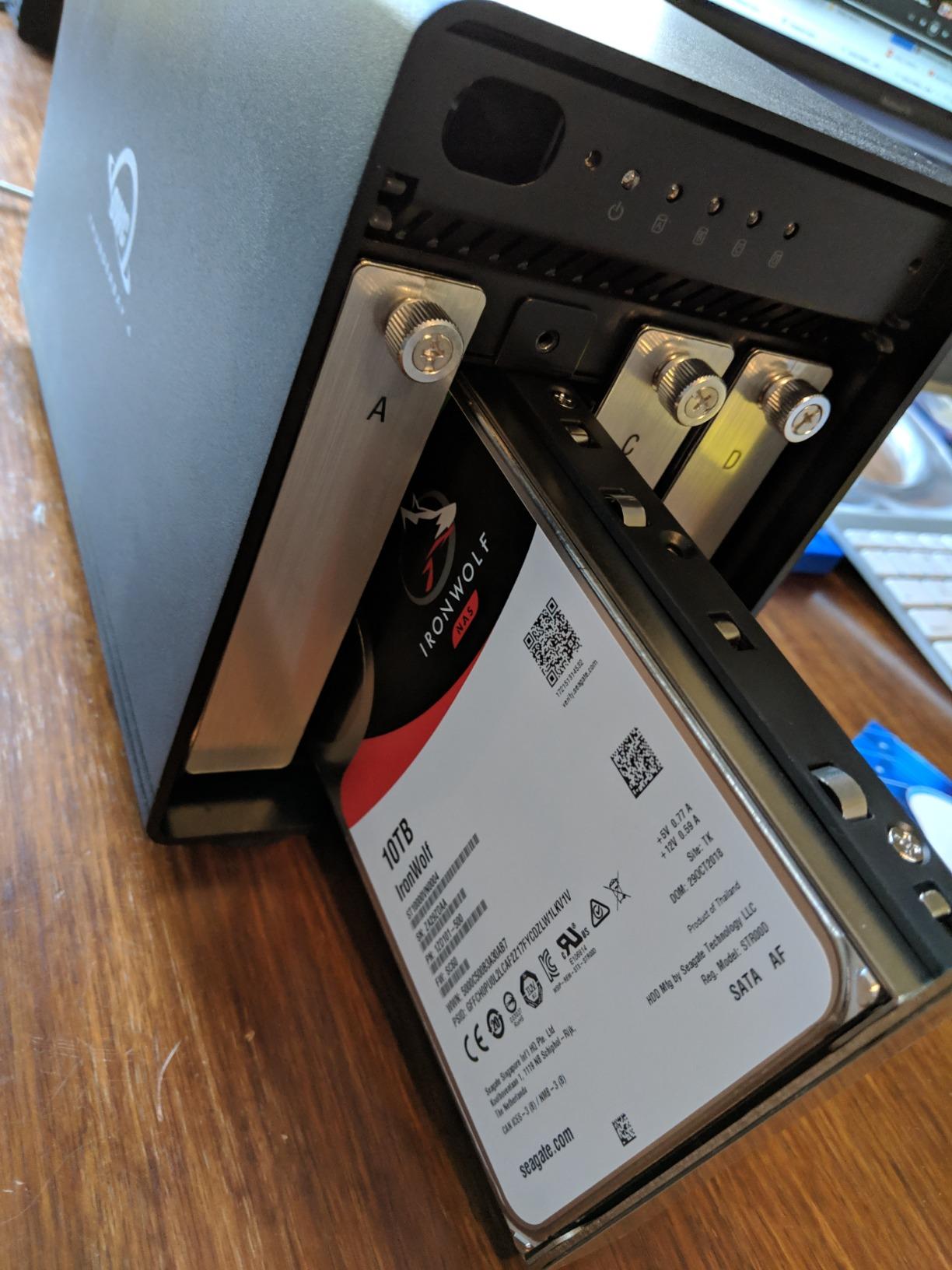
SoftRAID, the included software, handles volume creation, monitoring, and failure alerts. I appreciate that it supports RAID 5, which gives you one drive of redundancy while keeping three drives of usable capacity. If a drive fails in RAID 5, you swap it and rebuild without losing any footage.
The build quality is immediately apparent when you pick it up. The all-aluminum enclosure is heavy and solid, running quiet even with four spinning drives inside. Hot-swappable trays mean you can replace a failed drive without powering down, which is critical when you are on a deadline.
For whom its good
This is the storage solution for solo editors cutting feature films, high-end commercials, or any project with heavy ProRes or RAW codecs. If your work demands sustained high-bandwidth access to large media files and you need RAID redundancy, the ThunderBay 4 delivers professional-grade performance.
It is also ideal for editors who have accumulated bare drives over the years. Pop them into the ThunderBay, configure a RAID array, and you have a high-performance storage pool without buying new drives.
For whom its bad
Editors working primarily with compressed codecs like H.264 or H.265 do not need this level of bandwidth. A portable SSD will handle those workflows fine, and the ThunderBay’s cost and physical footprint would be overkill.
This is a desktop-only solution. If you need storage you can carry to set or between locations, look at the portable SSD options instead. The ThunderBay requires wall power and a Thunderbolt connection, period.
7. WD 16TB My Book Duo – Best High-Capacity Archive Drive
WD 16TB My Book Duo Desktop RAID External Hard Drive HDD, USB 3.1, With Password Protection and Auto Backup Software – WDBFBE0160JBK-NESN
16TB Desktop RAID
RAID 0 or RAID 1
360 MB/s Read
USB 3.1
256-bit AES Encryption
Pros
- Massive 16TB capacity in RAID 0
- Configurable as RAID 0 or RAID 1
- 256-bit AES hardware encryption
- Built-in USB hub ports
- Auto backup software included
Cons
- Mechanical drives slower than SSD
- Encryption prevents data recovery if unit fails
- Large and heavy desktop unit
- Reliability concerns reported by some users
The WD My Book Duo is the drive I use as a deep archive for completed projects. At 16TB in RAID 0, it holds roughly 40 hours of 4K ProRes 422 footage, which covers a full year of finished work for most solo editors. In RAID 1 mode, you get 8TB with mirrored redundancy, which is what I recommend for irreplaceable deliverables.
Speed is the tradeoff here. At 360 MB/s with 7200 RPM mechanical drives, this is not a scratch disk for active editing. It is an archive and backup target where capacity per dollar matters more than throughput. I use it to store wrapped projects, raw camera files, and final deliverables that I need to keep but do not need to edit from.
The built-in USB hub ports are surprisingly useful. I plug my editing keyboard and license dongle into the My Book Duo, freeing up ports on my workstation. The auto backup software handles scheduled copies from my editing SSD without manual intervention.
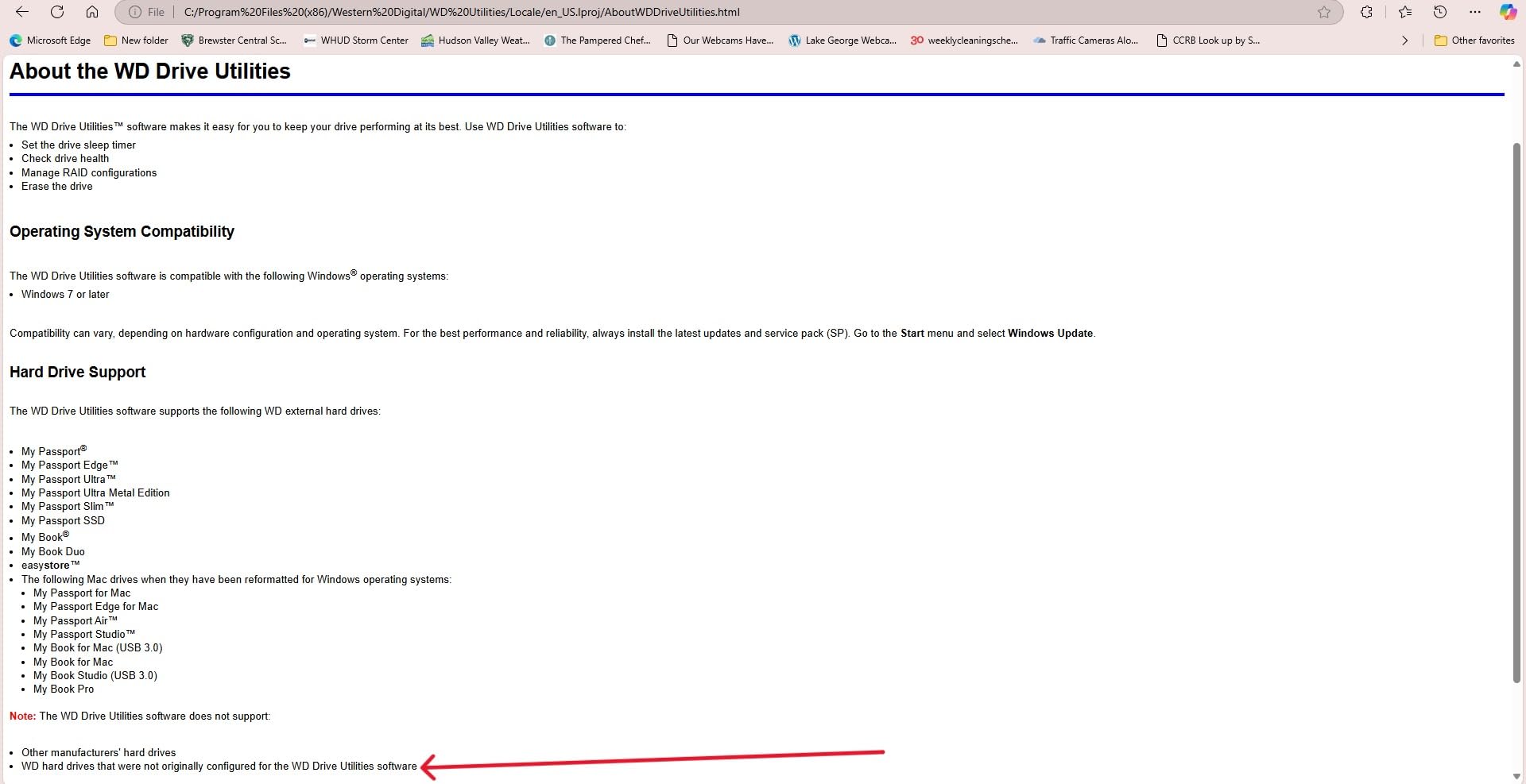
The reliability concerns in reviews are worth paying attention to. Several users report drive failures ranging from months to years. This is exactly why the My Book Duo should be one copy in a 321 backup strategy, never your only copy of anything. Pair it with a NAS or cloud backup so a failure never means lost work.
For whom its good
This is the right drive for solo editors who have accumulated terabytes of completed projects and need affordable deep storage. If you are paying monthly for cloud storage that grows every month, a one-time purchase of the My Book Duo can pay for itself quickly.
It is also a good secondary backup target for a NAS-based setup. Use the NAS for active archive and the My Book Duo as an additional offline copy stored separately for disaster recovery.
For whom its bad
Do not use this as your primary editing drive. The mechanical drives cannot sustain the read speeds needed for smooth 4K timeline playback, and the latency will cause dropped frames and frustration.
Editors who need their archive to be bulletproof should be cautious about relying on a single enclosure with encryption that locks you out if the controller fails. Always maintain independent copies of critical deliverables on separate devices.
8. ProGrade CFexpress 4.0 Type B 512GB – Best Capture Media
ProGrade Digital 512GB CFexpress 4.0 Type B Memory Card (Gold)
512GB CFexpress 4.0 Type B
3400 MB/s Read
3000 MB/s Write
8K Video Optimized
Backward Compatible XQD
Pros
- Extremely fast 3400 MB/s read speed
- 3000 MB/s write for continuous recording
- Optimized for 4K
- 6K
- and 8K video
- Backward compatible with XQD devices
- Includes Recovery Pro software
Cons
- Refresh Pro software sold separately
- Premium pricing over slower cards
- Limited to CFexpress Type B cameras
The ProGrade CFexpress 4.0 Type B card is the fastest piece of storage in my entire workflow, and it lives inside the camera. With 3400 MB/s read and 3000 MB/s write speeds, this card captures 6K RAW video without dropping a single frame. For solo editors who also shoot, the capture media is where your footage begins its life, and a slow card can mean corrupted takes.
I tested this card in a Canon C70 shooting 4K ProRes RAW, and the sustained write performance never faltered across a full 512GB fill. Cheaper cards overheat and throttle after 20 minutes of continuous recording. The ProGrade held steady for the entire shoot day.
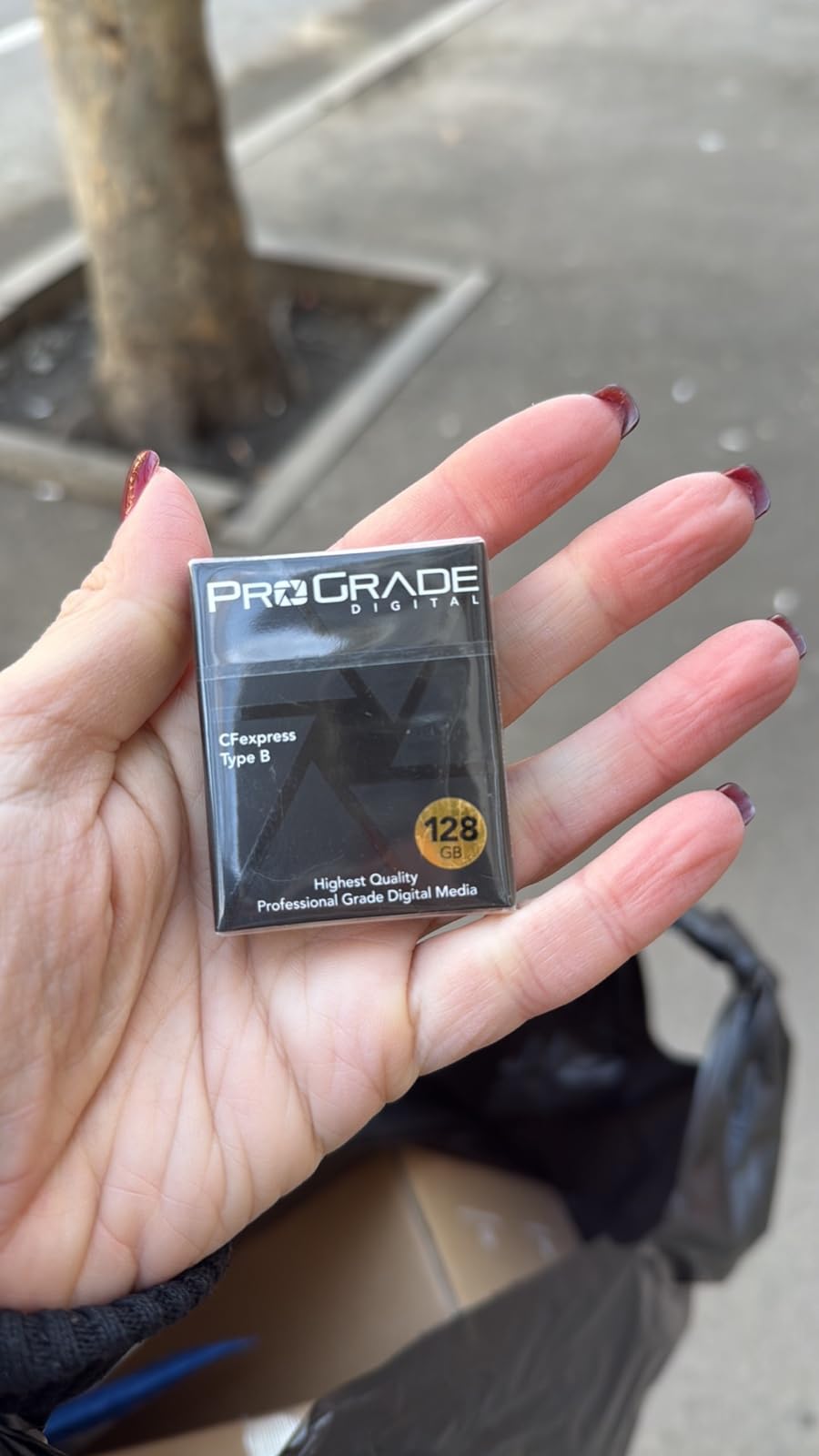
The card reader transfer speeds are where you feel the 3400 MB/s read rating. Offloading 512GB of footage to my editing SSD took under 4 minutes with a compatible CFexpress reader. That speed matters when you are on set with a tight wrap schedule and need to start reviewing footage immediately.
Backward compatibility with XQD devices means if you upgrade cameras down the line, this card still works. The 3-year warranty and included Recovery Pro software add a safety net for the worst-case scenario of accidental deletion or card corruption.
For whom its good
This card is built for solo editor-shooters working with professional cinema cameras from Canon, Nikon, Sony, or Blackmagic that use CFexpress Type B media. If you are recording ProRes RAW, 6K, or 8K video, the write speeds ensure you never miss a take due to card buffering.
It is also the right choice for editors who want the fastest possible offload times from camera to editing drive. The read speeds cut your footage transfer time dramatically compared to older CFexpress 2.0 or XQD cards.
For whom its bad
If your camera uses SD cards or CFexpress Type A, this card will not fit. Check your camera’s media format before buying, because CFexpress Type B is specific to certain professional camera bodies.
Editors who only shoot compressed formats like H.264 or H.265 do not need this level of write performance. A good UHS-II SD card will handle those codecs at a fraction of the cost, and the extra speed of CFexpress 4.0 would go unused.
Buying Guide: How to Choose Your Storage Setup?
Building the best storage setup for a solo film editor comes down to understanding how video files actually consume space and bandwidth. Let me walk through the decisions that matter most.
Start with speed. For 4K ProRes 422 editing, you need sustained read speeds of at least 400 MB/s to avoid dropped frames on a single-stream timeline. Multi-cam edits or heavy effects layers push that requirement higher. NVMe SSDs and Thunderbolt-connected RAIDs meet this bar comfortably. Mechanical drives and budget NAS enclosures do not.
Next, calculate your capacity needs. One hour of 4K ProRes 422 footage at 24fps consumes roughly 22GB. A typical 10-minute short film with 5 hours of source footage generates about 110GB just in raw media, before renders, proxies, and exports. For documentary work with 20-plus hours of footage, you are looking at 440GB or more per project. Plan for at least 2TB of fast working storage plus 8TB or more of archive space.
Codec choice drives everything. H.264 and H.265 are highly compressed, meaning smaller files but heavier CPU load during editing. ProRes and DNxHR are larger but play back more smoothly. RAW formats like RED RAW and BRAW are the largest of all but give you the most grading flexibility. Know your delivery codec before sizing your storage.
The 321 backup rule is non-negotiable for solo editors. Keep three copies of your data: your working copy, a local backup, and an offsite backup. Two of those copies should be on different media types. One copy should live offsite, whether that means a drive in a different physical location or cloud storage. I keep my working files on a portable SSD, back up nightly to my Synology NAS, and mirror completed projects to an archive drive stored offsite.
Consider your growth trajectory. A setup that works for YouTube content today may not handle a feature documentary next year. Invest in infrastructure that scales: a 4-bay NAS can start with two drives and grow, while a 2-bay enclosure limits your ceiling. Thunderbolt enclosures with hot-swappable bays let you upgrade capacity without replacing the enclosure.
Budget tiers help frame your options. Under $500, focus on portable SSDs for working storage and a single-bay archive drive. Between $500 and $1500, add a 2-bay NAS for automated backups and network access. Above $1500, consider a 4-bay NAS or Thunderbolt RAID with multiple drives for active project storage plus redundancy.
Frequently Asked Questions
How much storage do I need for video editing?
A solo film editor needs at least 2TB of fast working storage for active projects and 8TB or more of archive capacity. One hour of 4K ProRes 422 footage at 24fps uses roughly 22GB, so a documentary with 20 hours of source media requires 440GB before renders and exports. Plan for growth by choosing expandable solutions like multi-bay NAS enclosures.
Is SSD or HDD better for video editing?
SSD is better for active editing because it provides the sustained read speeds needed for smooth 4K timeline playback. NVMe SSDs deliver 1000 MB/s or more, while mechanical HDDs typically max out around 360 MB/s and will drop frames during multi-stream playback. HDDs remain useful for affordable archive storage where speed matters less than capacity per dollar.
Is 2TB enough for video editing?
2TB is enough for active editing of one or two concurrent 4K projects, holding roughly 90 hours of ProRes 422 footage. However, solo editors working on feature documentaries or 6K RAW projects may fill 2TB on a single job. Use 2TB as your fast working drive and pair it with larger archive storage for completed projects.
What is the best storage option for video editing?
The best storage setup for a solo film editor combines a fast portable SSD like the Samsung T7 Shield for active work, a NAS like the Synology DS223j for automated backups and remote access, and a high-capacity archive drive for completed projects. Editors working with heavy RAW codecs should add a Thunderbolt RAID like the OWC ThunderBay 4 for sustained high-bandwidth access.
Do I need a NAS for solo video editing?
A NAS is not strictly required but is highly recommended for solo editors. It provides automated backups, network-attached access from multiple devices, and remote file retrieval. For solo editors who have experienced data loss from relying on single external drives, a NAS like the Synology DS223j adds set-and-forget redundancy that protects your work without manual effort.
Conclusion
The best storage setup for a solo film editor in 2026 is not a single product but a layered system. Start with a fast portable SSD like the Samsung T7 Shield for active editing, add a NAS like the Synology DS223j for automated backups, and scale up with a Thunderbolt RAID or 4-bay NAS as your projects grow in resolution and volume.
Your footage is irreplaceable, and your deadlines do not wait for failed drives. Invest in redundancy from day one, follow the 321 backup rule, and choose products that grow with your business rather than boxes you outgrow in a year. The eight products I covered here span every budget and use case, from rugged field SSDs to professional RAID enclosures, so you can build a setup that matches exactly how you work.