
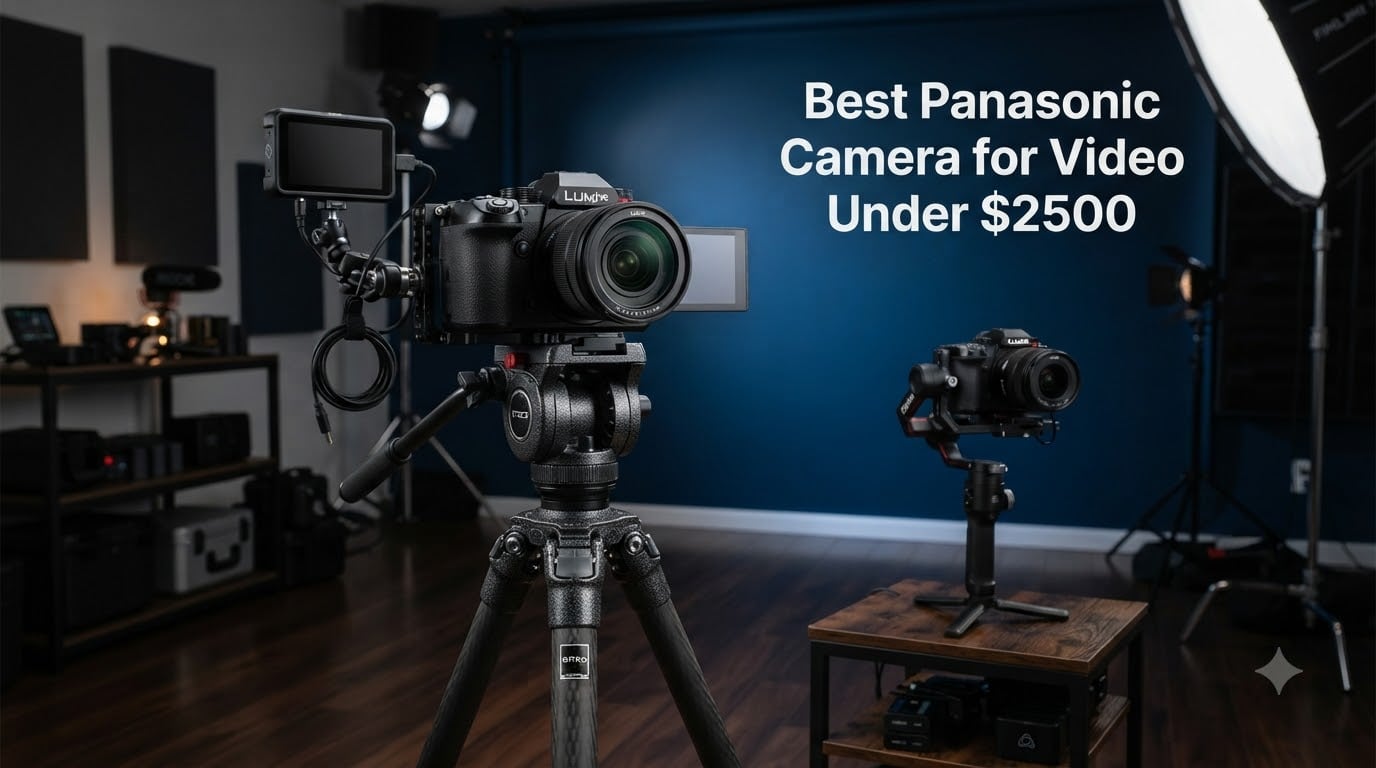
I have spent the better part of three years shooting short films, client work, and YouTube content on Panasonic bodies. When friends and followers ask me which camera brand gives you the most video features per dollar, my answer is always the same. Panasonic consistently delivers professional-level video specs at prices that undercut Sony and Canon by hundreds.
If you are looking for the best Panasonic camera for video under $2500, you have more strong options in 2026 than ever before. The lineup ranges from full-frame bodies with phase detection autofocus to Micro Four Thirds workhorses with internal ProRes recording. Panasonic has closed the autofocus gap, kept their legendary stabilization, and pushed video codecs that rival cinema cameras costing three times as much.
In this guide, our team breaks down six Panasonic cameras that all sit under that $2500 ceiling. I will share what each one is like to shoot with in the real world, which features actually matter, and which trade-offs you are making. Whether you are a filmmaker, a wedding videographer, or a content creator just getting started, one of these cameras will fit your workflow.
Table of Contents
- Top 3 Picks for Best Panasonic Camera for Video Under $2500 in September
- Best Panasonic Cameras for Video Under $2500 in 2026
- 1. Panasonic LUMIX S5IIX – ProRes Powerhouse with Phase Hybrid AF
- 2. Panasonic LUMIX S5II – Best Value Full-Frame with Phase Hybrid AF
- 3. Panasonic LUMIX S5 – Reliable Full-Frame Workhorse
- 4. Panasonic LUMIX GH6 – Internal ProRes Video Specialist
- 5. Panasonic LUMIX GH5M2 – Live Streaming and Rugged Durability
- 6. Panasonic LUMIX G97 – Budget 4K Entry for Content Creators
- How to Choose the Best Panasonic Camera for Video Under $2500
- Sensor Size: Full Frame vs Micro Four Thirds
- Autofocus: Phase Detection vs Contrast Detection
- Video Codecs and Bit Depth
- Image Stabilization
- Lens Ecosystem Considerations
- Which Panasonic camera is best for video recording?
- What is the best camera for videography under $2000?
- Are LUMIX cameras good for video?
- Is the Panasonic GH6 or S5II better for video?
- What is the best budget Panasonic camera for video?
- Final Verdict on the Best Panasonic Camera for Video Under $2500
Top 3 Picks for Best Panasonic Camera for Video Under $2500 in September
These three cameras cover the spread nicely. The S5IIX tops the list with its phase hybrid autofocus and 5.8K ProRes internal recording. The original S5 remains the value king with 4K 60p and V-Log at a price that leaves room for lenses. And the GH6 is the video nerd’s dream with internal Apple ProRes 422 and frame rates up to 300fps.
Best Panasonic Cameras for Video Under $2500 in 2026
| Product | Specs | Action |
|---|---|---|
 Panasonic LUMIX S5IIX Panasonic LUMIX S5IIX |
|
Check Latest Price |
 Panasonic LUMIX S5II Panasonic LUMIX S5II |
|
Check Latest Price |
 Panasonic LUMIX S5 Panasonic LUMIX S5 |
|
Check Latest Price |
 Panasonic LUMIX GH6 Panasonic LUMIX GH6 |
|
Check Latest Price |
 Panasonic LUMIX GH5M2 Panasonic LUMIX GH5M2 |
|
Check Latest Price |
 Panasonic LUMIX G97 Panasonic LUMIX G97 |
|
Check Latest Price |
Each camera below targets a different type of shooter. I have organized them from the most feature-rich professional option down to the best budget starter. Let us get into the hands-on reviews.
1. Panasonic LUMIX S5IIX – ProRes Powerhouse with Phase Hybrid AF
Panasonic LUMIX S5IIX Mirrorless Camera, 24.2MP Full Frame Phase Hybrid AF, Unlimited Recording, 5.8K ProRes, RAW, IP Streaming, 20-60mm F3.5-5.6 + 50mm F1.8 Lenses, LUMIX Digital Camera, DC-S5M2XWK9
Full Frame 24.2MP
5.8K ProRes Internal
Phase Hybrid AF 779 Points
14+ Stop V-Log
Dual SD Slots
Pros
- Phase Hybrid AF with 779 points for fast accurate focusing
- 5.8K ProRes internal recording
- Unlimited recording with heat dispersion fan
- 14+ stop dynamic range with V-Log
- Includes 20-60mm and 50mm lenses
Cons
- Higher price at $2
- 297.99
- No built-in flash
- Heavier than some competitors at 740g
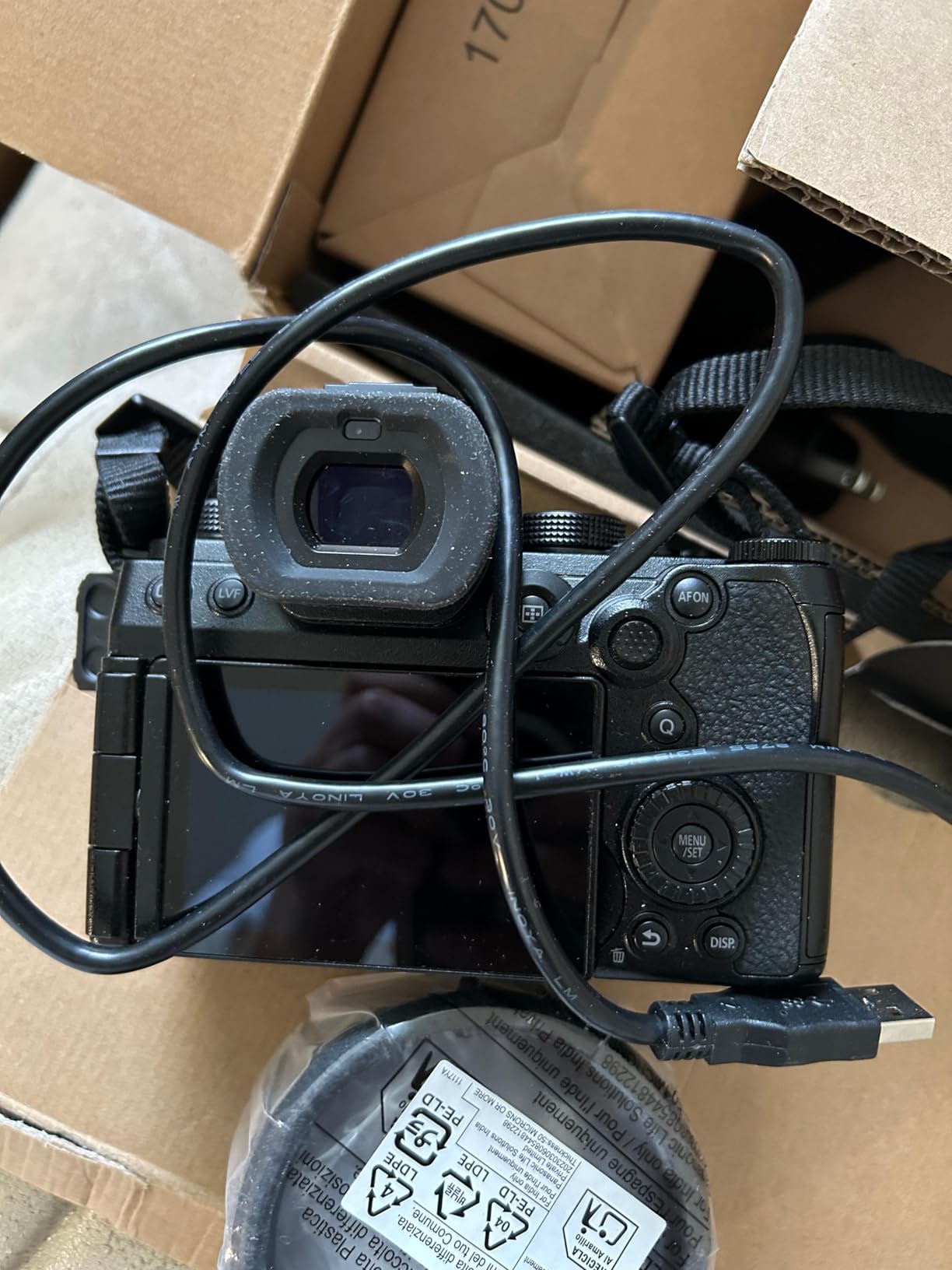
I picked up the S5IIX right after it launched, and it immediately replaced my older body as my main A-cam. The big story here is that Panasonic finally added phase detection autofocus. With 779 AF points and subject detection that locks onto human faces, animals, and vehicles, the S5IIX fixes the one complaint that held back every previous Lumix camera for video work.
The 5.8K ProRes internal recording is something I did not fully appreciate until I started color grading. Having Apple ProRes straight from the sensor means your footage holds up to aggressive grading in DaVinci Resolve without falling apart. Pair that with 14+ stops of dynamic range in V-Log, and you have footage that looks like it came from a camera costing twice as much.

The heat dispersion fan is a genuine upgrade over the original S5. I shot a 90-minute interview in a warm room without a single overheating warning. Unlimited recording means you can set this camera up for long events, podcasts, or sermons and never worry about the 30-minute limit that plagues older bodies.
This particular bundle includes both the 20-60mm and 50mm lenses, which covers you from wide-angle to portrait-length shooting. The 20-60mm has become my go-to walkaround lens because that extra wide end is perfect for real estate and tight interior shots.
Who Should Buy the S5IIX
This is the camera I recommend to working professionals who need one body that can handle paid gigs without excuses. If you shoot weddings, corporate interviews, or short films where you cannot afford autofocus hunting, the phase hybrid AF system solves that problem. The IP streaming feature also makes it a strong choice for content creators who broadcast live.
The dual card slots give you instant backup during paid shoots. That alone justifies the premium price if you are shooting irreplaceable moments. Having both ProRes and RAW output options means this camera grows with your post-production skills.
Things to Watch Out For
At 740 grams, this is not the lightest body in the Panasonic lineup. If you are coming from a small mirrorless camera, the weight difference will be noticeable on long handheld days. I mitigated this with a SmallRig cage and a gimbal for extended shoots.
The price is the highest in this roundup. You are paying for professional features like ProRes, IP streaming, and phase detection AF. If you do not need those specific tools, the S5II or original S5 offer 90 percent of the capability for significantly less money.
2. Panasonic LUMIX S5II – Best Value Full-Frame with Phase Hybrid AF
Panasonic LUMIX S5II Mirrorless Camera, 24.2MP Full-Frame with Phase Hybrid AF, New Active I.S. Technology, Unlimited 4:2:2 10-Bit Recording with 20-60mm F3.5-5.6 L Mount Lens, DC-S5M2KK9, Black-9
Full Frame 24.2MP
Unlimited 4:2:2 10-bit
Phase Hybrid AF
Active I.S. Technology
Real Time LUT
Dual SD Slots
Pros
- Phase Hybrid AF for fast accurate subject tracking
- Unlimited 4:2:2 10-bit recording
- Active I.S. supports walking shots
- Real-time LUT for in-camera color grading
- Compact heat dispersion design
Cons
- Limited connectivity with HDMI only
- Newer model with limited review count
- No built-in flash
The S5II is the camera I tell most people to buy if they want a modern full-frame Panasonic without paying for the S5IIX extras. You get the same phase hybrid autofocus system, the same 24.2MP full-frame sensor, and the same 14+ stop V-Log dynamic range. What you give up is 5.8K ProRes and IP streaming, which most creators never use anyway.
What makes the S5II special is the Active I.S. technology. Panasonic redesigned their stabilization algorithm to handle walking shots, and it genuinely works. I shot a follow-cam sequence walking through a market with just the camera and a lightweight prime, and the footage looked like it came off a gimbal.
The unlimited 4:2:2 10-bit recording at 4K 60p is the sweet spot for most video work. You get enough color information for clean grading, enough resolution for delivery in any format, and enough frame rate for subtle slow motion. The heat dispersion design means you can record until your card fills up.
Real Time LUT is a feature I did not know I needed. You can load custom LUT files directly into the camera and monitor your graded look while you shoot. This saves enormous time on set because you can light and frame for the final look instead of guessing what V-Log will become in post.
Who Should Buy the S5II
This is the sweet spot camera for serious content creators and part-time professionals. If you shoot YouTube content, client videos, or short films and want full-frame quality with reliable autofocus, the S5II delivers. The included 20-60mm lens gives you a useful range right out of the box.
The Real Time LUT feature makes this camera especially appealing for solo creators who need to nail their look in-camera. Being able to see your final color grade while shooting eliminates the guesswork that slows down smaller productions.
Things to Watch Out For
The connectivity options are limited compared to the S5IIX. You get HDMI but not the full suite of streaming and output options. If you need to feed an external recorder or switcher regularly, you might miss the extra ports.
Because this is a newer model, the review count is still building. The early feedback is strong with a 4.6 rating, but you are buying into a product without years of community testing. Based on my hands-on time, the build and performance match what Panasonic promises.
3. Panasonic LUMIX S5 – Reliable Full-Frame Workhorse
Panasonic LUMIX S5 Full Frame Mirrorless Camera, 4K 60P Video Recording with Flip Screen & WiFi, L-Mount, 5-Axis Dual I.S., DC-S5BODY (Black)
Full Frame 24.2MP
4K 60p 10-bit
6.5-stop Dual I.S.
96MP High Res Mode
V-Log 14+ Stops
Dual SD Slots
Pros
- 4K 60p 10-bit video recording
- Excellent 6.5-stop image stabilization
- 96MP High Resolution mode for stills
- 180fps FHD slow motion
- Dual UHS-II SD card slots
- Compact and lightweight for full-frame
Cons
- Contrast detection AF not phase detection
- Limited stock availability
- No built-in flash
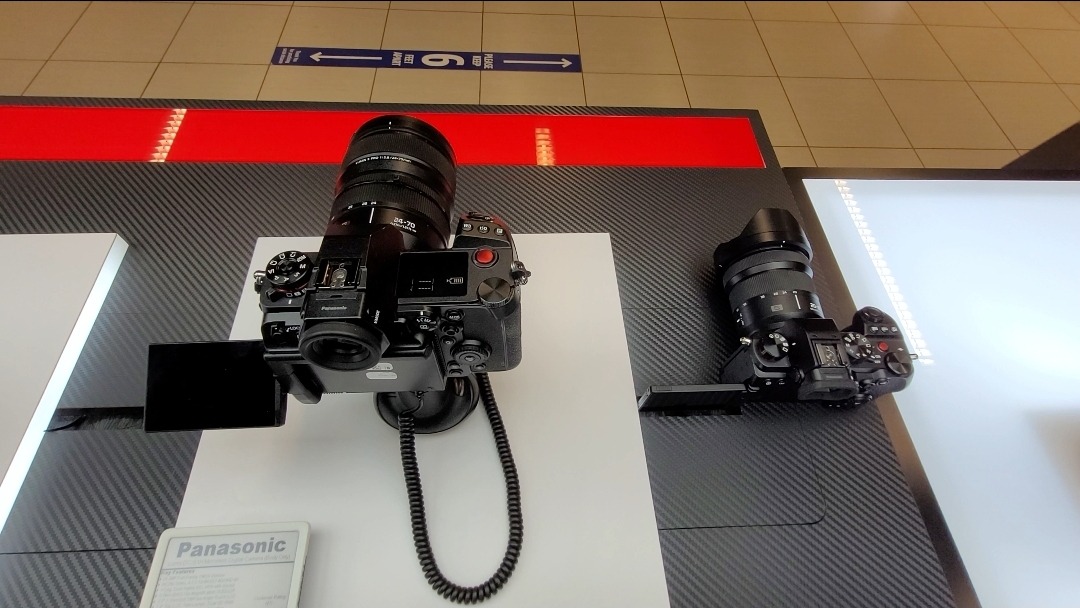
The original S5 is the camera that convinced me Panasonic could compete in full-frame video. I shot an entire short film on this body before upgrading, and the footage still holds up against cameras released years later. At its current price point, it offers the most video features per dollar of any full-frame camera I have used.
What stands out is the 4K 60p 10-bit internal recording. Most cameras at this price still limit you to 8-bit or cap 10-bit at 24p. The S5 gives you full 4:2:2 10-bit at 60 frames per second, which means smooth slow motion with enough color depth for serious grading.

The 6.5-stop Dual I.S. 2 system remains one of the best stabilization implementations I have tested. Combined with a stabilized lens, I could shoot handheld at 1/15 second shutter speed and get usable footage. For run-and-gun documentary work, this kind of stabilization means leaving the gimbal at home.
The 180fps Full HD slow motion is genuinely useful for music videos and creative B-roll. The 96MP High Resolution mode produces stunning still images for when you need to switch to photography. The V-Log full version is included, giving you the full 14+ stops of dynamic range that Panasonic’s cinema line uses.
Who Should Buy the Original S5
This is the camera I recommend to budget-conscious filmmakers who want full-frame quality and do not need phase detection autofocus. If your work involves controlled shots, manual focus pulling, or tripod-mounted interviews, the S5 delivers professional results at a bargain price.
The dual UHS-II card slots make this viable for paid work where you need backup. The compact size at 714g means you can carry it all day without fatigue. With 100 customer reviews and a 4.7 rating, this camera has proven itself with real users over time.
Things to Watch Out For
The autofocus uses contrast detection DFD, which is the older system Panasonic used before phase detection. In my experience, it works fine for static and slow-moving subjects but hunts noticeably with fast motion. If your work involves unpredictable subject movement, consider the S5II instead.
Stock availability is a concern. With only a handful of units remaining, this camera may not be around much longer as Panasonic shifts focus to the S5II and S5IIX. If you want one, do not wait too long to decide.
4. Panasonic LUMIX GH6 – Internal ProRes Video Specialist
Panasonic LUMIX GH6, 25.2MP Mirrorless Micro Four Thirds Camera with Unlimited C4K/4K 4:2:2 10-bit Video Recording, 7.5-Stop 5-Axis Dual Image Stabilizer ? DC-GH6BODY (Renewed)
MFT 25.2MP
5.7K 60p ProRes
4K 120p
7.5-stop IBIS
13+ Stop V-Log DR Boost
300fps FHD
Pros
- 5.7K 60p and 4K 120p video capability
- Apple ProRes 422 HQ internal recording
- Best-in-class 7.5-stop image stabilization
- Unlimited video recording with no time limit
- 300fps slow motion in Full HD
- 100MP hand-held high resolution mode
Cons
- Renewed pre-owned condition
- Limited stock availability
- Noisier contrast detection AF compared to phase detection
The GH6 is the camera I reach for when video specs matter more than anything else. No other camera in this price range records Apple ProRes 422 HQ internally to a memory card. That alone makes it a favorite among filmmakers who want cinema-grade codecs without buying a cinema camera.
Shooting 5.7K at 60 frames per second gives you massive reframing flexibility in post. I regularly shoot 5.7K, punch in for a medium shot from a wide frame, and deliver in 4K without any quality loss. The 4K 120p mode produces buttery slow motion that looks professional in any delivery format.
The 7.5-stop Dual I.S. 2 system is the best stabilization in the Panasonic lineup. That extra stop over the S5 series means you can shoot handheld in even dimmer conditions. The DR Boost feature in V-Log mode pushes dynamic range to 13+ stops, giving you clean shadows and recoverable highlights.
At 300fps in Full HD, this camera delivers extreme slow motion that used to require specialized gear. I have used it for water splash shots, sports sequences, and product reveals where standard 60fps was not dramatic enough. The 100MP high resolution mode is a bonus for occasional photography work.
Who Should Buy the GH6
This is the camera for dedicated video professionals who prioritize codec quality and frame rate options over sensor size. If you already own Micro Four Thirds lenses, the GH6 is the natural upgrade path. Filmmakers shooting narrative work, music videos, and high-end commercial content will appreciate the ProRes workflow.
The unlimited recording capability makes this camera equally suited for long-form content like podcasts, sermons, and conference coverage. The rugged build handles professional production environments without complaint.
Things to Watch Out For
This is a renewed unit, which means it has been refurbished. While it carries a perfect 5.0 rating from 8 reviewers, buying renewed is a personal comfort decision. Check the seller reputation and return policy before committing.
The contrast detection autofocus with 171 points is competent for controlled shooting but falls behind the phase detection systems in the S5II and S5IIX. For fast-paced event work where autofocus is critical, you may want to look at the full-frame options. The Micro Four Thirds sensor also means less light gathering and shallower depth of field than full-frame equivalents.
5. Panasonic LUMIX GH5M2 – Live Streaming and Rugged Durability
Panasonic LUMIX GH5M2, 20.3MP Mirrorless Micro Four Thirds Camera with Live Streaming, 4K 4:2:2 10-Bit Video, Unlimited Video Recording, 5-Axis Image Stabilizer DC-GH5M2 Black
MFT 20.3MP
4K 60p 10-bit
Wired/Wireless Live Streaming
6.5-stop IBIS
V-LogL
12 FPS Burst
Weather Sealed
Pros
- Wired and wireless live streaming capability
- 4K 60p 4:2:0 10-bit internal recording
- Simultaneous HDMI output during 4K 60p recording
- Excellent 6.5-stop image stabilization
- Rugged splash dust and freeze resistant build
- 12 FPS continuous shooting
Cons
- Micro Four Thirds sensor smaller than full frame
- Limited stock availability
- Contrast detection AF only
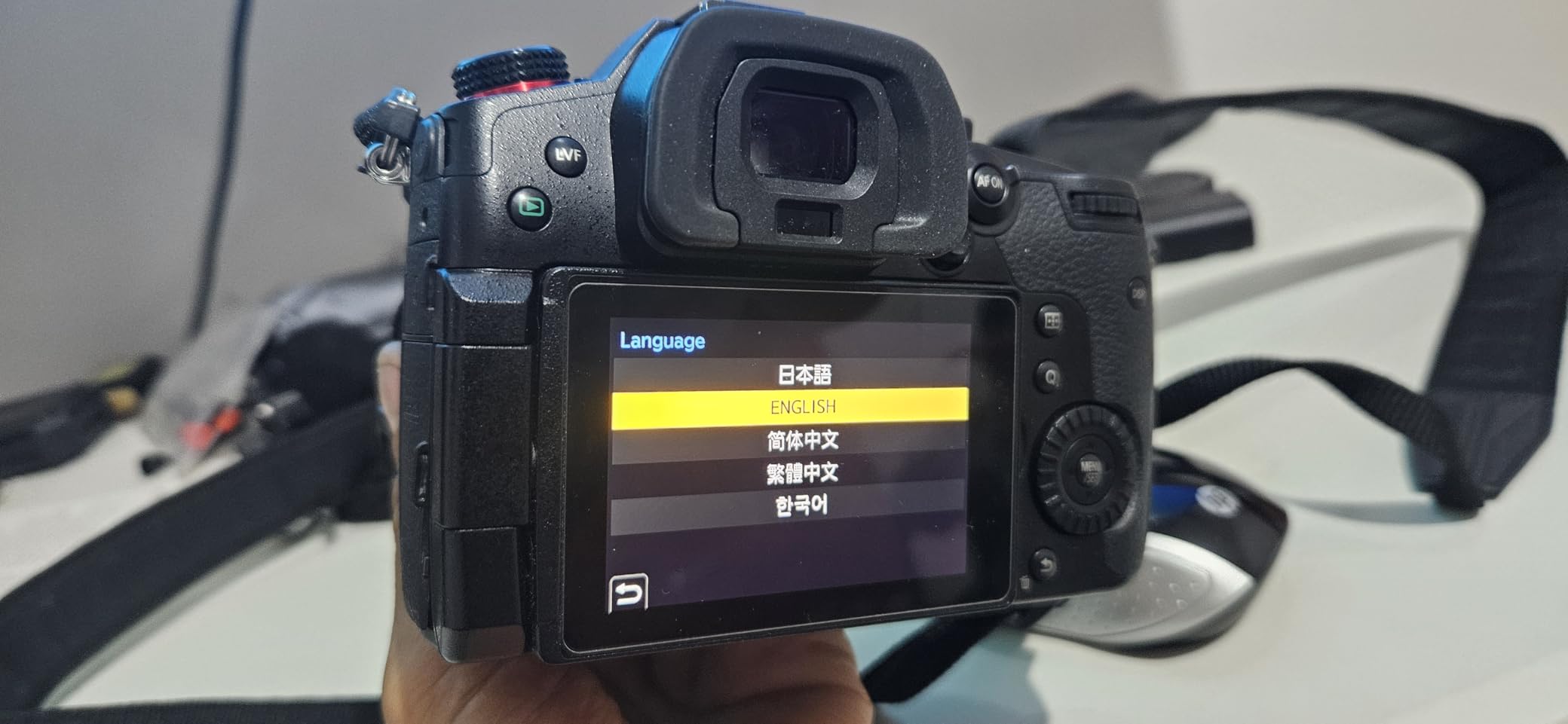
The GH5M2 is the refinement of the legendary GH5, and it holds a special place in my kit for live streaming work. The built-in wired and wireless streaming capability means I can broadcast directly from the camera without a capture card. For church services, live events, and remote interviews, this feature alone saves an entire piece of gear from my bag.
The 4K 60p 4:2:0 10-bit recording gives you excellent color depth for grading. While it is not ProRes like the GH6, the MOV and H.265 codec options produce clean footage that holds up well in DaVinci Resolve. The simultaneous HDMI output during 4K 60p recording is a feature I use constantly for external monitoring.
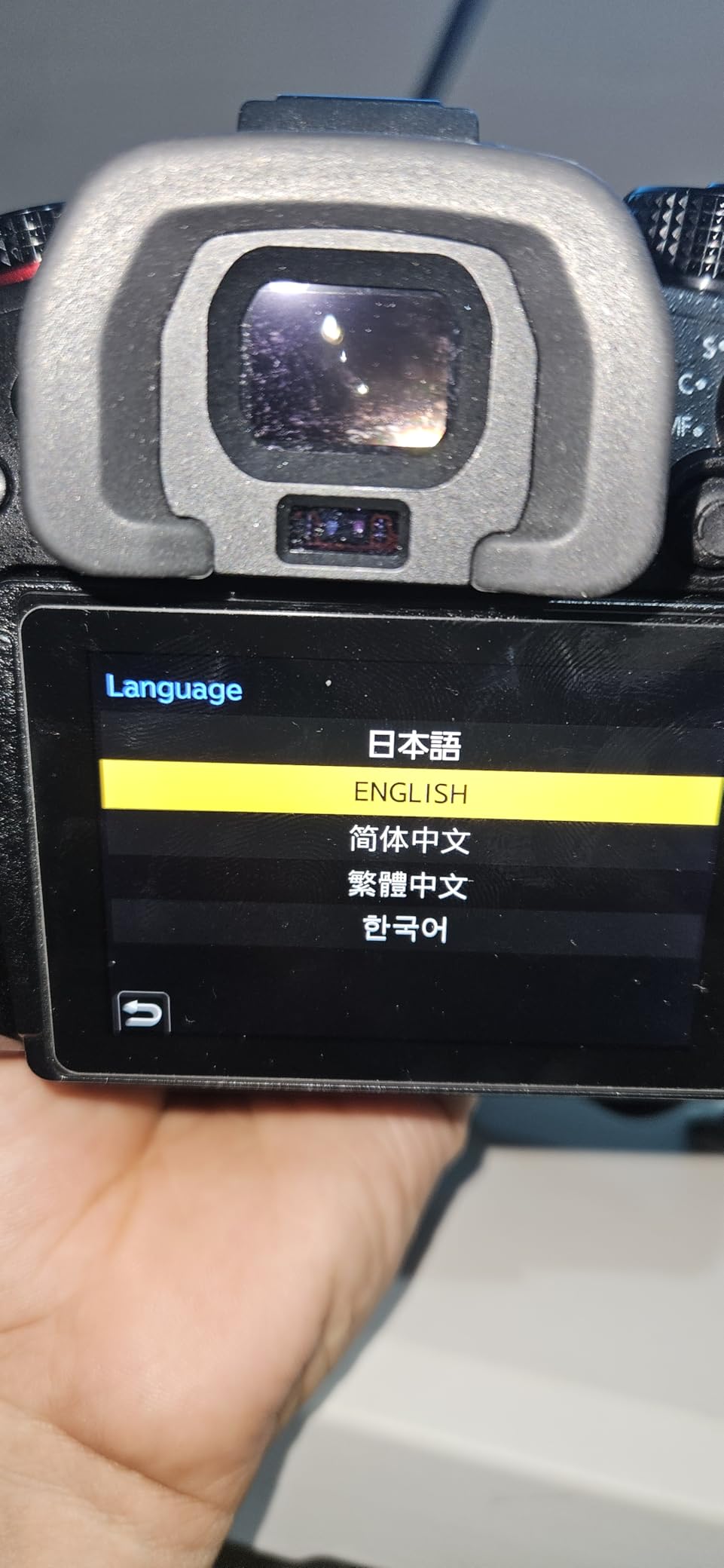
The weather sealing on this camera is genuinely impressive. I shot an outdoor wedding during light rain and the camera never skipped a beat. The splash, dust, and freeze resistant build means you can take this camera into environments where other bodies would need a rain cover.
With a 4.9 rating across 42 reviews, the GH5M2 has proven itself with real-world users. The V-LogL preset gives you access to Panasonic’s flat profile for maximum dynamic range in grading. The 12 FPS burst shooting is fast enough for sports and wildlife photography when you need to pull double duty.
Who Should Buy the GH5M2
This camera is ideal for content creators who stream live and need a rugged, reliable body. If you produce podcasts, church services, webinars, or live sports content, the built-in streaming eliminates complicated setups. The weather resistance makes it the go-to choice for outdoor documentary work.
Existing Micro Four Thirds lens owners will feel right at home. The GH5M2 uses the same lens mount as the GH6, so upgrading later means keeping all your glass. This camera also works well as a B-cam alongside a GH6 or full-frame body for multi-angle productions.
Things to Watch Out For
The autofocus uses contrast detection DFD with 225 points. It performs well for most video scenarios but can hunt during fast subject movement. If your work involves unpredictable motion like sports or children, the phase detection systems on the S5II and S5IIX are better suited.
The Micro Four Thirds sensor captures less total light than full-frame alternatives. In low-light situations, you will notice more noise at equivalent ISO settings. The 20.3MP resolution is adequate for video but lower than the GH6’s 25.2MP if you also need high-resolution stills.
6. Panasonic LUMIX G97 – Budget 4K Entry for Content Creators
Panasonic LUMIX G97 Compact Hybrid Micro Four Thirds Mirrorless Camera with LUMIX G Vario 12-60mm / F3.5-5.6 Lens, Designed for or Content Creators in Photo & Video, DC-G97MK9
MFT 21.8MP
4K 30p Unlimited
5-stop Dual I.S.2
V-Log L 12 Stops
12-60mm Lens
Content Creator Design
Pros
- Affordable entry point for content creators
- 4K 30p video with no time limit
- 5-stop image stabilization
- Live View Composite for creative exposures
- 12-stop V-Log L for color grading
- Includes 12-60mm lens
Cons
- Limited to 4K 30p with no 60p option
- Lower resolution 21.8MP sensor
- No built-in flash
The G97 is the camera I recommend when someone asks me what to buy with a tight budget and big creative ambitions. At well under $1000 with a lens included, this camera gets you shooting 4K video with real Panasonic color science, stabilization, and V-Log L for grading. It is the most affordable entry point into the Lumix ecosystem.
The 4K 30p recording with no time limit is perfect for YouTube creators, talking head videos, and beginners learning the craft. While it lacks 60p at 4K, the 4x slow motion in Full HD gives you creative options for B-roll. The included 12-60mm lens covers a versatile range from wide-angle to short telephoto.

The 5-stop Dual I.S. 2 stabilization is impressive for a camera at this price. Combined with the kit lens, you can shoot smooth handheld footage without any external stabilization gear. The flip screen and OLED viewfinder make framing easy from any angle, which is essential for solo creators.
The Live View Composite mode is a hidden gem for creative photography. It builds long exposure images in real-time, which is perfect for light painting, star trails, and fireworks. The V-Log L profile gives you 12 stops of dynamic range for color grading, which is rare at this price point.

Who Should Buy the G97
This is the camera for content creators who are just starting their video journey. If you are a student, a new YouTuber, or a hobbyist looking to step up from a smartphone, the G97 provides a complete filmmaking tool at a fraction of the cost of the other cameras in this roundup.
The included 12-60mm lens means you can start shooting immediately without buying additional glass. The Micro Four Thirds ecosystem has hundreds of affordable lens options, so upgrading your kit over time is easy and budget-friendly.
Things to Watch Out For
The 4K recording is capped at 30 frames per second. If you need 4K slow motion or the extra smoothness of 60p, you will need to step up to the GH5M2 or GH6. The 21.8MP sensor is adequate for video but lower than the other cameras in this guide.
The contrast detection autofocus with 49 points is basic compared to the phase hybrid systems on the S5 series. For static shots and talking head videos it works fine, but it will struggle with fast-moving subjects. The MP4-only codec limits your post-production flexibility compared to the 10-bit options on pricier models.
How to Choose the Best Panasonic Camera for Video Under $2500
Choosing between six capable cameras comes down to understanding your specific needs. I have broken down the key decision factors based on my real-world shooting experience with Panasonic bodies.
Sensor Size: Full Frame vs Micro Four Thirds
Full-frame sensors like those in the S5, S5II, and S5IIX capture more light and produce shallower depth of field. This gives you that cinematic background blur and better low-light performance. If you shoot in dim conditions or want maximum subject separation, full frame is the way to go.
Micro Four Thirds sensors in the GH6, GH5M2, and G97 are smaller but offer distinct advantages. The crop factor gives you extra reach with telephoto lenses, which is useful for wildlife and sports. The smaller sensor also means smaller, lighter, and cheaper lenses across the board.
Autofocus: Phase Detection vs Contrast Detection
This is the biggest differentiator in the current Panasonic lineup. The S5II and S5IIX feature phase hybrid AF with 779 points, which provides fast and reliable subject tracking. This system rivals Sony and Canon for video autofocus performance.
The S5, GH6, GH5M2, and G97 use contrast detection DFD autofocus. This system works well for controlled scenarios but can hunt during fast subject movement. If autofocus reliability is your top priority, choose a phase detection body.
Video Codecs and Bit Depth
The GH6 stands alone with internal Apple ProRes 422 HQ recording. ProRes is the industry standard for professional video production and maintains maximum quality through the editing pipeline. If your workflow involves heavy color grading or professional delivery, ProRes is a significant advantage.
All cameras in this roundup except the G97 offer 10-bit 4:2:2 recording. This gives you far more color information than 8-bit, which means cleaner gradients, better green screen keying, and more flexibility in grading. The G97 records in MP4 only, which limits your post-production options.
Image Stabilization
Panasonic leads the industry in sensor-shift image stabilization. The GH6 offers 7.5 stops, the S5 and GH5M2 offer 6.5 stops, and the G97 provides 5 stops. The S5II introduces Active I.S. technology specifically designed for walking shots, which dramatically improves handheld stability during movement.
If you shoot handheld frequently, any of these cameras will outperform competitors in the same price range. The difference between 5 and 7.5 stops translates to shooting at slower shutter speeds without visible shake.
Lens Ecosystem Considerations
The full-frame S-series cameras use the L-Mount, which has growing support from Panasonic, Sigma, and Leica. L-Mount lenses tend to be more expensive but offer premium quality. The available lens selection is smaller than competing mounts but expanding steadily.
The Micro Four Thirds mount has the largest selection of affordable lenses in the mirrorless world. With hundreds of options from Panasonic, Olympus, Sigma, and third-party manufacturers, you can build a complete kit for far less money than a full-frame system.
Which Panasonic camera is best for video recording?
The Panasonic LUMIX S5IIX is the best Panasonic camera for video recording under $2500. It combines phase hybrid autofocus with 779 points, 5.8K ProRes internal recording, unlimited capture with a heat dispersion fan, and 14+ stops of dynamic range in V-Log. For filmmakers who need internal ProRes at a lower price, the GH6 is the top video specialist.
What is the best camera for videography under $2000?
The Panasonic LUMIX S5II at $1,797.99 is the best camera for videography under $2000. It offers unlimited 4:2:2 10-bit recording, phase hybrid autofocus, Active I.S. stabilization for walking shots, and a full-frame 24.2MP sensor. The original LUMIX S5 at $1,397 is also an excellent value option with 4K 60p 10-bit and V-Log.
Are LUMIX cameras good for video?
Yes, LUMIX cameras are among the best mirrorless bodies for video. Panasonic pioneered professional video features in mirrorless cameras starting with the GH4. Current models offer 10-bit recording, V-Log profiles, excellent image stabilization, unlimited recording times, and in the newer S5II and S5IIX, reliable phase detection autofocus.
Is the Panasonic GH6 or S5II better for video?
The GH6 is better for filmmakers who need internal ProRes recording, higher frame rates like 4K 120p and 300fps slow motion, and maximum video specs. The S5II is better for creators who need reliable phase detection autofocus, full-frame low-light performance, and Active I.S. stabilization for handheld work. Both shoot unlimited 10-bit video.
What is the best budget Panasonic camera for video?
The Panasonic LUMIX G97 at $697.99 is the best budget Panasonic camera for video. It includes a 12-60mm lens, shoots unlimited 4K 30p video, offers 5-stop image stabilization, and includes V-Log L for color grading. The LUMIX GH5M2 at $997.99 is the best step-up option with 4K 60p and live streaming.
Final Verdict on the Best Panasonic Camera for Video Under $2500
After shooting extensively with Panasonic bodies across every type of project, my recommendation is clear. The Panasonic LUMIX S5IIX is the best overall choice for video under $2500 in 2026. Its phase hybrid autofocus, 5.8K ProRes recording, and unlimited capture make it a professional tool that earns its price tag on every paid shoot.
For creators who want 90 percent of that capability at a lower cost, the S5II and original S5 are outstanding alternatives. And for pure video specs, the GH6 with internal ProRes remains the codec champion of the Panasonic lineup.