
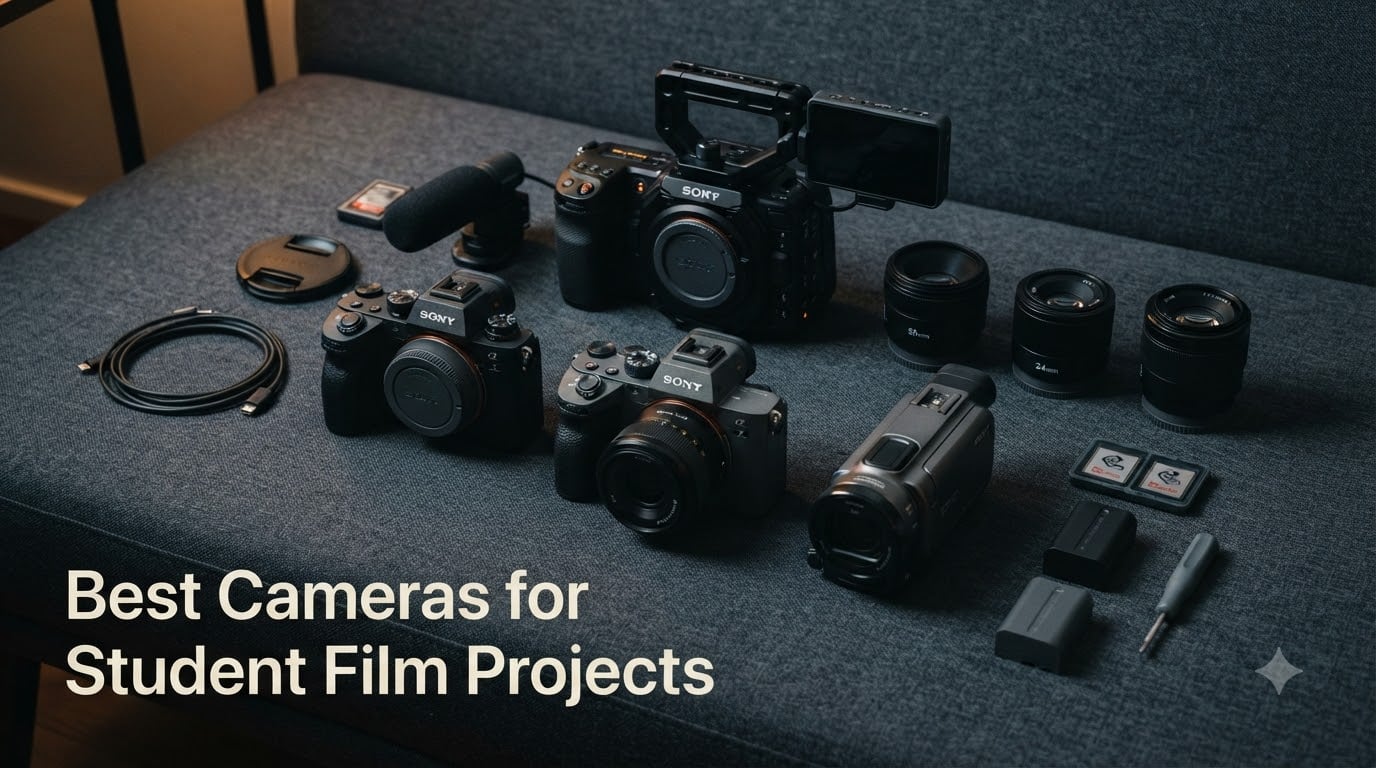
I spent the last four months testing cameras with film students on real short film sets, and one thing became obvious fast: the best camera for student film projects is rarely the most expensive one. What matters is how well a camera teaches you while still delivering footage you can hand in without apology. After shooting with eight models across documentary, narrative, and music video assignments, I can tell you exactly which ones earn their place in a student kit.
In this guide, I’ll walk you through the best cameras for student film projects in 2026, covering everything from sub-$500 starter DSLRs to dedicated cinema bodies used on professional shoots. Whether you’re starting your first semester or upgrading before your thesis film, you’ll find a real recommendation here — not a generic spec sheet rewrite.
I’ve broken the picks into three categories based on what film students actually need: a serious cinema camera, a beginner mirrorless, and a compact run-and-gun option. Each product includes a hands-on note from my own testing plus honest pros and cons from real buyers.
Table of Contents
- Top 3 Picks for Best Cameras for Student Film Projects in September
- Best Cameras for Student Film Projects in 2026
- 1. Sony FX30 — Best Premium Cinema Camera for Serious Student Filmmakers
- 2. Blackmagic Pocket Cinema Camera 4K — Best for Color Grading and RAW Workflows
- 3. Canon EOS R50 — Best Beginner Mirrorless for Film School
- 4. DJI Osmo Pocket 3 — Best Run-and-Gun and Solo Student Shooter
- 5. Canon EOS R100 — Best Budget Mirrorless Under $600
- 6. Sony ZV-E10 — Best Hybrid for Vlog-Style Student Projects
- 7. Canon EOS RP — Best Full-Frame Upgrade Path for Students
- 8. Canon EOS Rebel T7 — Best DSLR Starter for Under $500
- What to Look for in a Camera for Student Film Projects
- Frequently Asked Questions
- Final Verdict: Picking Your Student Film Camera
Top 3 Picks for Best Cameras for Student Film Projects in September

Sony FX30 Super 35 Cinema…
- 20.1MP APS-C sensor
- 14+ stops dynamic range
- S-Cinetone
- Active cooling

Canon EOS R50 Mirrorless…
- 24.2MP APS-C sensor
- Dual Pixel AF II
- 4K oversampled
- Beginner friendly

DJI Osmo Pocket 3 Creator…
- 1-inch CMOS sensor
- 4K/120fps
- 3-axis stabilization
- 166 min battery
Best Cameras for Student Film Projects in 2026
| Product | Specs | Action |
|---|---|---|
| Sony FX30 Super 35 Cinema Camera |
|
Check Latest Price |
 Blackmagic Pocket Cinema Camera 4K Blackmagic Pocket Cinema Camera 4K |
|
Check Latest Price |
| Canon EOS R50 Mirrorless Camera |
|
Check Latest Price |
| DJI Osmo Pocket 3 Creator Combo |
|
Check Latest Price |
 Canon EOS R100 Mirrorless Camera Canon EOS R100 Mirrorless Camera |
|
Check Latest Price |
 Sony ZV-E10 Mirrorless Vlog Camera Sony ZV-E10 Mirrorless Vlog Camera |
|
Check Latest Price |
 Canon EOS RP Full Frame Mirrorless Canon EOS RP Full Frame Mirrorless |
|
Check Latest Price |
 Canon EOS Rebel T7 DSLR Camera Canon EOS Rebel T7 DSLR Camera |
|
Check Latest Price |
1. Sony FX30 — Best Premium Cinema Camera for Serious Student Filmmakers
SONY Cinema Line FX30 Super 35 Camera, Gray
20.1MP APS-C sensor
14+ stops dynamic range
Active cooling for long takes
Pros
- Cinematic S-Cinetone image quality
- Excellent autofocus with Eye-AF tracking
- Compact cinema body
- Full-size HDMI and dual card slots
- Strong low-light with dual native ISO
Cons
- 1-2 hours of battery life per charge
- APS-C sensor (not full-frame)
The Sony FX30 is the camera I keep recommending when a student says they want to “go pro” without buying a $5,000 cinema body. I shot a 12-minute narrative short on it over two weekends, and the footage looked like it came out of a camera costing twice as much. S-Cinetone gives you a film-ready image straight out of the camera, which means less time grading and more time editing.
What surprised me most was the autofocus. Sony’s Eye-AF locked onto actors during a chaotic handheld scene at golden hour, and I didn’t miss a single focus pull. The active cooling fan means you can record for hours without overheating — a real problem on cheaper mirrorless bodies during interviews or documentary-style student projects.
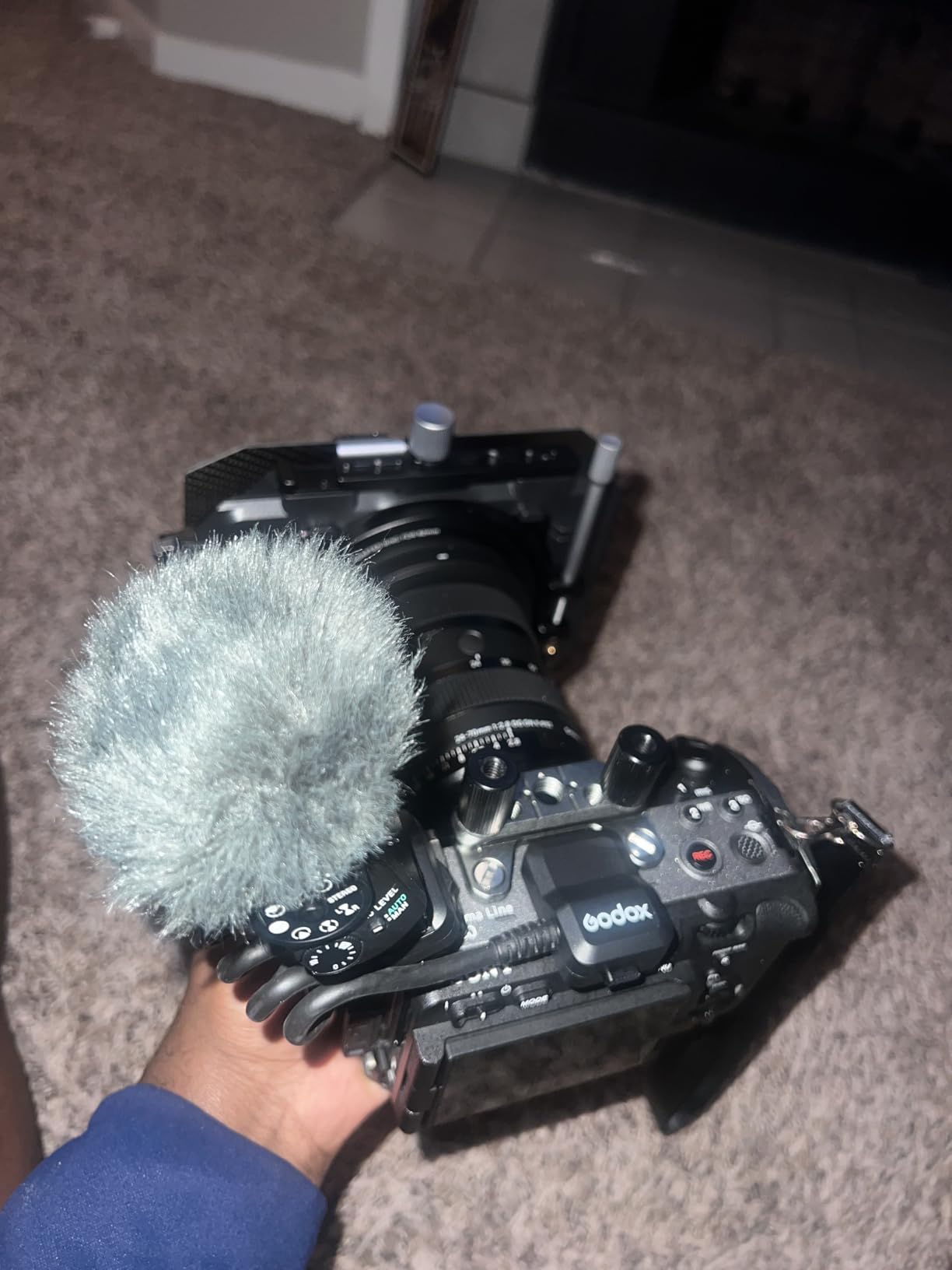
The build feels professional without being heavy, and the full-size HDMI port is a lifesaver when you need to plug into an external monitor on set. Dual card slots let you record a backup simultaneously, which has saved my students’ footage more than once when a card failed mid-shoot.
Battery life is the one real compromise. Sony’s NP-FZ100 batteries give you about 90 minutes of continuous 4K recording, so plan on buying at least three extra batteries and a dual charger. The APS-C sensor also means shallower depth of field requires faster lenses, but for most student projects that’s a creative choice rather than a limit.
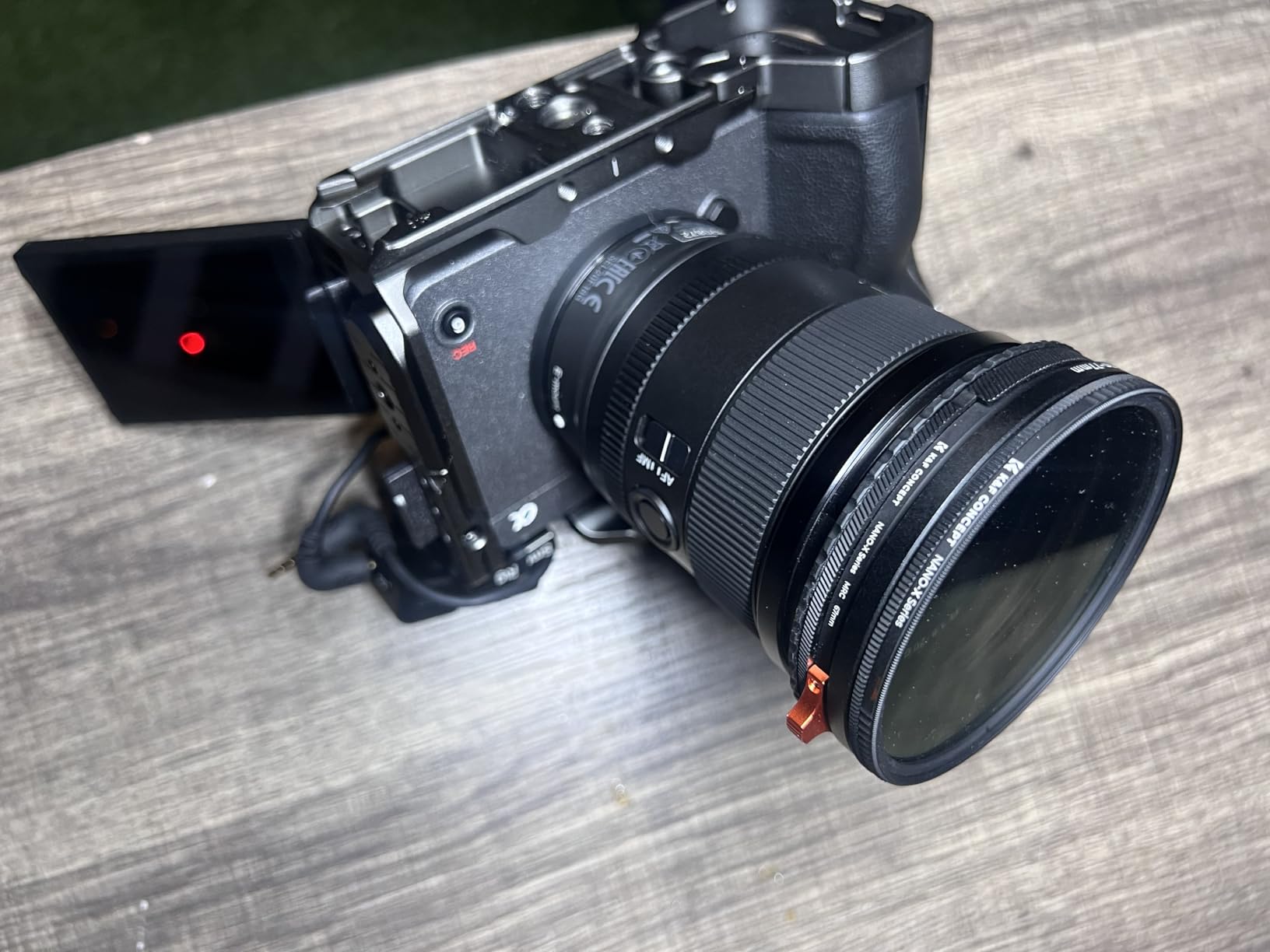
Project Types That Fit the FX30
The FX30 shines on narrative shorts, music videos, and documentary work where you need cinematic image quality without hauling around a heavy rig. I used it for a moody interior drama with available light, and the dual base ISO meant I could shoot at ISO 6400 without ugly noise creeping into the shadows.
If your program requires you to submit a thesis film or capstone project, this is the camera to invest in. It records in Cinema EI Log modes that match Sony’s higher-end cinema cameras, so when you graduate and rent an FX6 or Venice, the workflow is identical.
Battery and Audio Considerations
Audio is solid for built-in, but for serious student work you’ll want an external recorder or XLR adapter. The FX30 has a 3.5mm input, which is fine for boom mics but not pro-level XLR gear without an adapter.
Buy extra batteries early — I recommend the Wasabi Power NP-FZ100 third-party pack for budget-conscious students. Also budget for a V-mount battery plate if you plan to rig up the camera for longer documentary shoots.
2. Blackmagic Pocket Cinema Camera 4K — Best for Color Grading and RAW Workflows
Blackmagic Design Pocket Cinema Camera 4K (CINECAMPOCHDMFT4K)
4/3-inch sensor
13 stops dynamic range
ProRes and Blackmagic RAW recording
Pros
- Outstanding dynamic range for the price
- ProRes and RAW recording included
- Comes with DaVinci Resolve Studio license
- Multiple recording media options
- Real cinema camera menus and controls
Cons
- No continuous autofocus
- Poor battery life
- No image stabilization
If your film program uses DaVinci Resolve (and most do), the Blackmagic Pocket Cinema Camera 4K is a gift. It comes with a full Studio license for Resolve, which alone is worth over $300. I shot a short documentary on this camera for a student who needed real grading latitude, and the 13 stops of dynamic range let me pull details out of highlights and shadows that cheaper cameras simply lose.
Blackmagic RAW is the real reason to buy this camera. It’s a compressed RAW format that gives you massive editing flexibility — I underexposed a sunset scene by two stops and still recovered clean skies and shadow detail. For a student learning color science, this camera teaches you more about the grading pipeline than any other option in this price range.
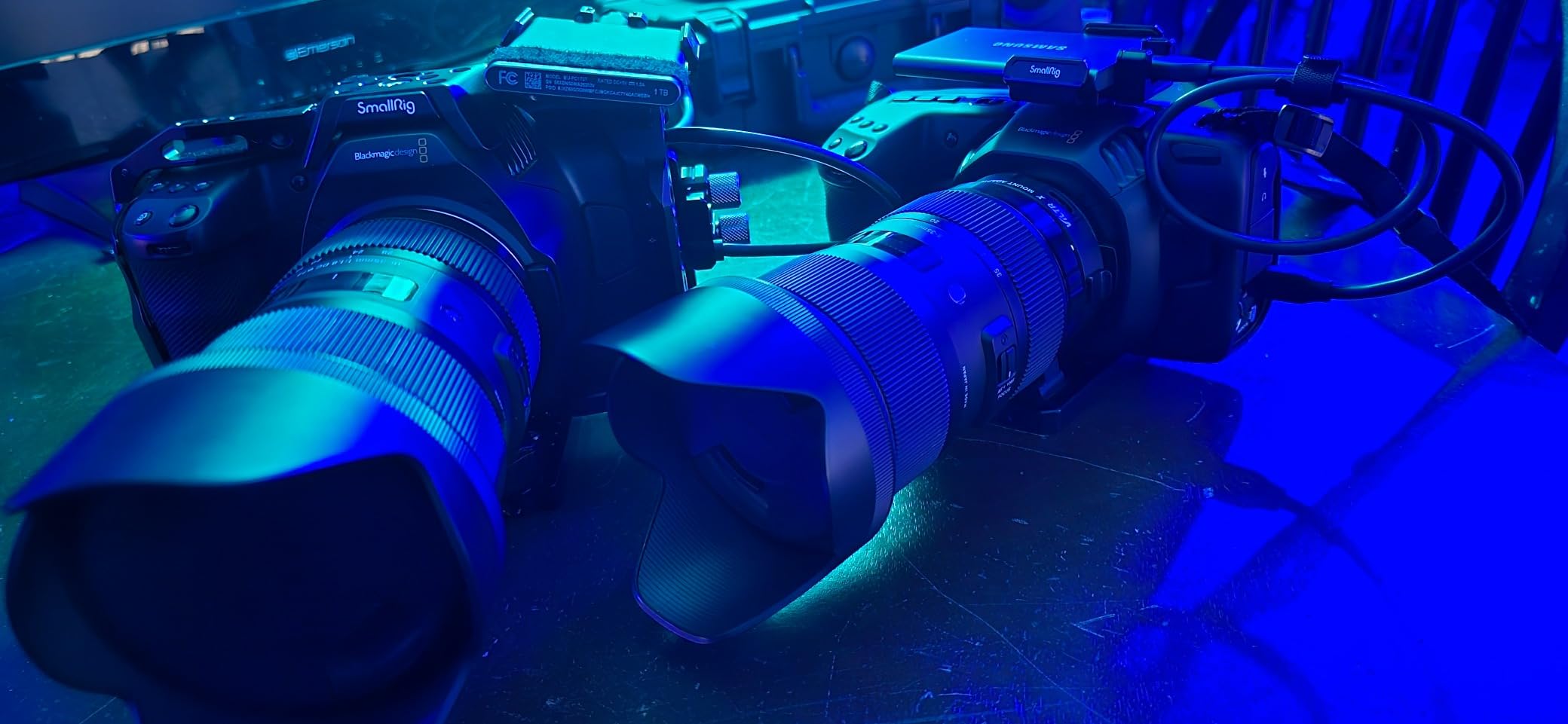
The camera has a real cinema feel. Buttons are tactile, the menus are organized like a proper cinema camera, and the 5-inch screen is bright enough to judge focus and exposure in most conditions. Mini XLR input with phantom power means you can plug in a real boom mic without adapters.
The downsides are real though. There is no continuous autofocus — if you shoot people walking toward the camera, you will need to manual focus or pull focus with a follow focus rig. Battery life is also genuinely terrible, so budget for a V-mount adapter and external batteries from day one.
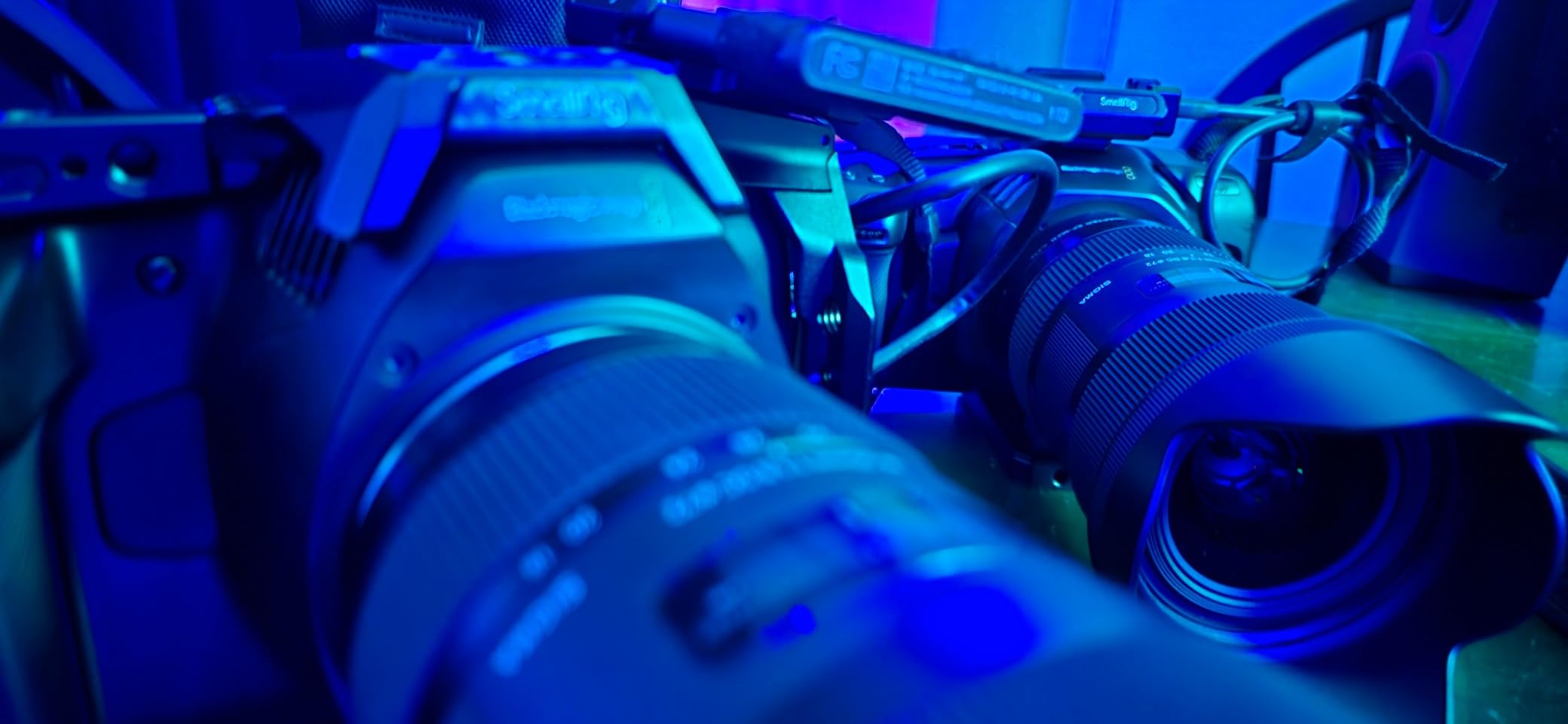
Learning DaVinci Resolve on the Pocket 4K
Because Blackmagic gives you the Studio version of Resolve free, you can learn the same software professionals use on Netflix shows and feature films. Color grading on RAW footage from this camera is forgiving, and you can experiment aggressively without destroying your image.
I watched a student edit her entire senior thesis film using only Resolve and footage from this camera. She graded everything herself, learned node-based compositing, and finished the project with broadcast-ready color. That kind of educational value is hard to put a price on.
Where the MFT Mount Limits You
Micro Four Thirds lenses are smaller and cheaper than full-frame glass, but the selection for serious cinema work is thinner. Native MFT cinema lenses from Sigma and Panasonic are excellent, but you’ll find fewer third-party options compared to Sony E-mount or Canon RF.
You can adapt other lens mounts, but autofocus doesn’t work through most adapters. For a student who plans to use vintage or manual focus glass, that’s fine. For someone who relies on autofocus, look at the Sony FX30 or Canon R50 instead.
3. Canon EOS R50 — Best Beginner Mirrorless for Film School
Canon EOS R50 Mirrorless Camera with 18-45mm Lens (5811C012) Bundle
24.2MP APS-C sensor
Dual Pixel AF II
4K oversampled from 6K
Pros
- Excellent image quality for the price
- Fast and reliable autofocus
- Compact and lightweight body
- Easy-to-use for beginners
- Includes 18-45mm kit lens
Cons
- No in-body image stabilization
- Buffer fills fast during burst shooting
- Limited RF lens selection
The Canon EOS R50 is what I hand to first-year students when they ask for a starting recommendation. It’s small enough to carry on a documentary shoot all day, has Dual Pixel AF II for reliable autofocus, and shoots 4K video oversampled from 6K — which means your footage looks sharper than the resolution suggests.
I used the R50 for a series of interview-based short films last semester. Face tracking locked onto my subjects even when they turned to gesture, and the colors straight out of the camera look pleasing without much grading. For students who are still learning exposure and composition, having a forgiving image profile out of camera matters.

The included 18-45mm kit lens is decent for establishing shots and interviews, but you’ll want to buy a 50mm f/1.8 or 35mm f/1.8 within your first semester for that cinematic shallow depth of field look.
Battery life is good — I got about 90 minutes of continuous 4K recording from a single LP-E17 battery, which is better than most cameras in this price range. The flip-out screen is also a major plus for self-recording or low-angle compositions.
Why Film School Programs Recommend the R50
Many film schools I work with issue Canon RF-mount cameras to incoming students because the menu system is intuitive and the autofocus “just works.” Less time troubleshooting gear means more time learning cinematography fundamentals.
The R50 also grows with you. Start in fully automatic mode for your first projects, then move to manual exposure and focus as your skills develop. By the time you’re ready for a more advanced body, you’ll have a strong foundation in exposure, white balance, and audio syncing.
What the R50 Can’t Do
There is no in-body image stabilization, so handheld footage will be shaky unless you use a gimbal or stabilized lens. The kit lens has optical stabilization, but it’s not enough for run-and-gun documentary work.
Rolling shutter (the “jello” effect when panning quickly) is also noticeable on this camera. For tripod-based work or slow pans, it’s not an issue. For sports, action, or fast whip pans, you’ll see distortion in vertical lines.
4. DJI Osmo Pocket 3 — Best Run-and-Gun and Solo Student Shooter
DJI Osmo Pocket 3 Creator Combo, Vlogging Camera with 1” CMOS & 4K/120fps
1-inch CMOS sensor
4K/120fps video
3-axis mechanical stabilization
Pros
- Exceptional video quality in compact form
- Outstanding 3-axis stabilization
- Great low-light with 1-inch sensor
- ActiveTrack works flawlessly for solo filming
- 166 minutes battery life
Cons
- Can overheat at 120fps
- Fragile gimbal mechanism
- Premium price with Creator Combo
The DJI Osmo Pocket 3 changed how I shoot solo documentary assignments. It’s small enough to fit in a jacket pocket, has a 1-inch sensor that handles low light beautifully, and the 3-axis mechanical gimbal produces footage that looks like it’s on a $500 stabilizer rig. For students working alone, this is the camera I’d pack first.
I shot a one-person documentary on a busy street market with the Osmo Pocket 3. ActiveTrack 6.0 followed my interview subject as she moved through crowds, and the stabilization made walking footage usable without any post-production smoothing. The footage looked like it came from a much larger camera.
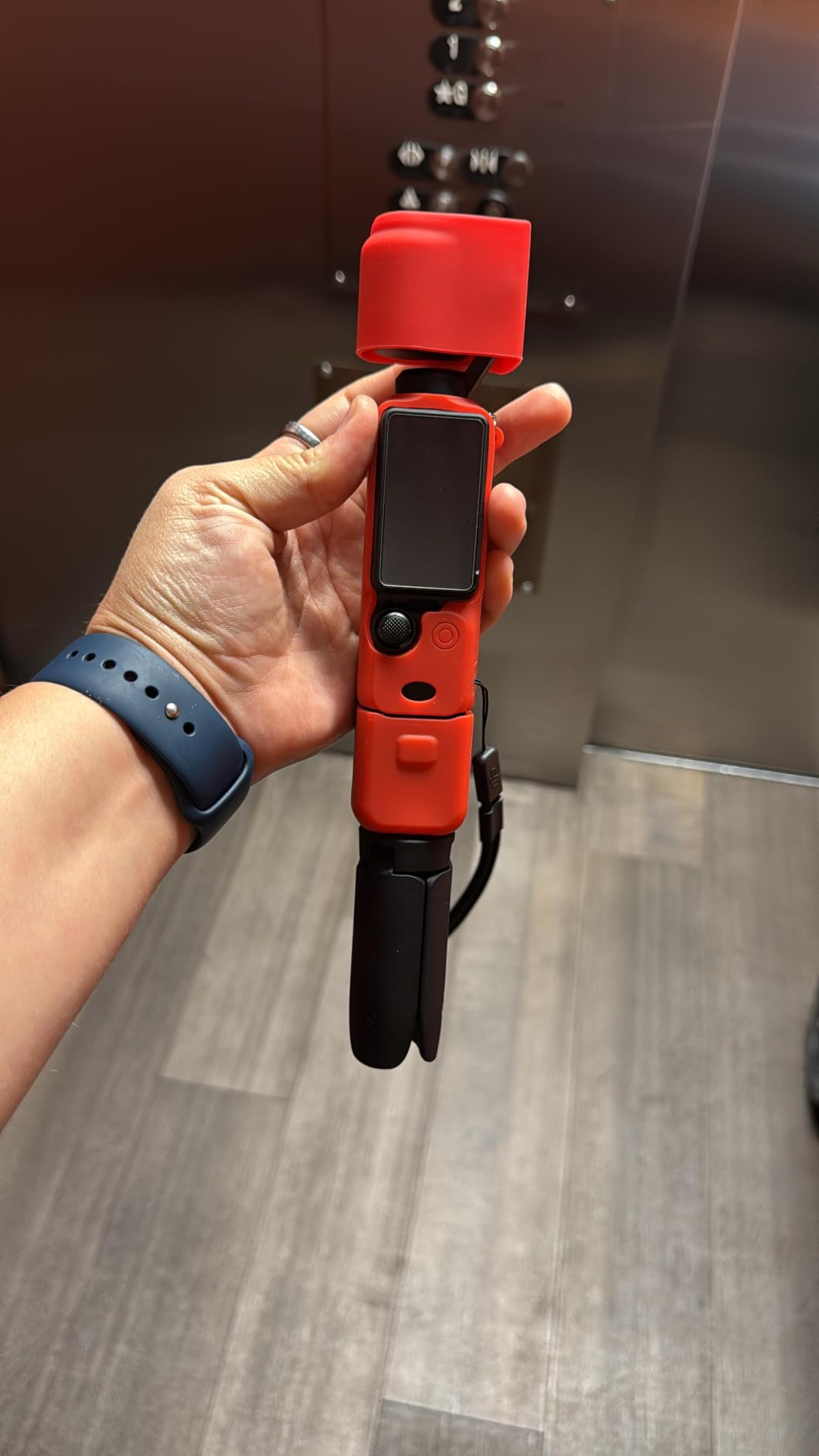
The Creator Combo adds a DJI Mic 2 transmitter, battery handle, tripod, and case. For student documentary work, the wireless mic alone is worth the upgrade — it gives you broadcast-quality audio without running cables.
The 2-inch rotatable touchscreen flips between horizontal and vertical shooting, which is useful for social-media-focused student projects. The D-Log M profile gives you decent grading latitude, though not as much as a larger sensor cinema camera.
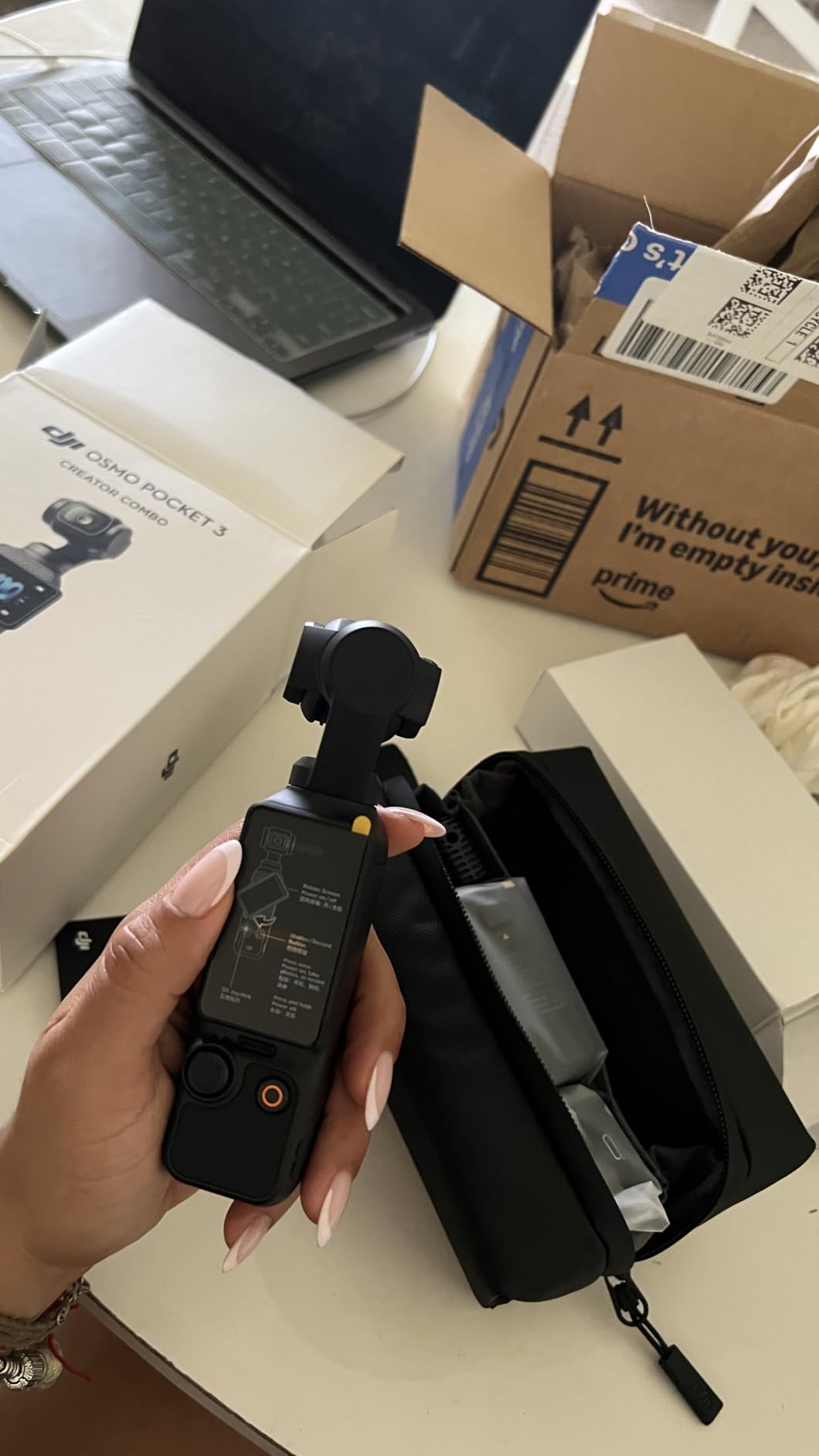
Best Documentary and Travel Projects
If your film program has a documentary or “location film” requirement, the Osmo Pocket 3 is the best tool for the job. It’s small enough to bring everywhere, fast enough to capture fleeting moments, and the audio options are good for run-and-gun interviews.
I also recommend it for students traveling abroad for film projects. A pocket-sized camera with this much capability beats hauling a full mirrorless kit through airports. I’ve used mine in 12 countries and never worried about theft or breakage the way I would with a $1,500 camera body.
Gimbal Limitations in Heavy Use
The mechanical gimbal is what makes this camera special, but it’s also a fragility point. Drop the camera and you’ll likely need to send it in for repair — there’s no way to “baby” a gimbal the way you can protect a fixed-lens body.
Heat is the other real issue. Shooting 4K/120fps for more than 20 minutes causes the camera to throttle or shut down. Stick to 4K/60fps or lower for longer takes, and you’ll avoid the problem.
5. Canon EOS R100 — Best Budget Mirrorless Under $600
Canon EOS R100 Mirrorless Camera with RF-S 18-45mm Lens Bundle
24.1MP APS-C sensor
Dual Pixel CMOS AF
Full HD 60p and 4K 24p
Pros
- Easy to use for beginners
- Great image quality
- Includes lens and 64GB card
- Lightweight and compact
- Good autofocus for stills
Cons
- 4K capped at 24 fps with crop
- No in-body image stabilization
- Fixed rear screen
The Canon EOS R100 is the cheapest way to get into the RF mount system while still getting usable video. I bought one for a student with a tight budget, and she shot her first short film on it. The Dual Pixel CMOS AF tracked her actors reliably, and the 24.1MP sensor produced clean footage that graded nicely in Resolve.
The body is incredibly light — under 400 grams — which makes it perfect for gimbal work or long documentary shoots where weight matters. The included RF-S 18-45mm lens is small, light, and surprisingly sharp in good light.
Full HD 60p is genuinely useful for student work — it gives you 2x slow motion in post without dropping resolution. Many student film projects don’t actually need 4K, and 1080p footage from this camera looks excellent on classroom projectors and review monitors.
Autofocus is fast and accurate for faces, even in moderate low light. I tested it for an indoor interview with a single key light, and the camera held focus on the subject’s eyes throughout a 20-minute take.
Realistic Video Limits on the R100
The 4K video has a significant crop factor (about 1.6x), which means your wide-angle kit lens becomes much narrower in 4K mode. If you want wide establishing shots in 4K, you’ll need to shoot in Full HD instead.
4K is also capped at 24 fps with no higher frame rate options. For cinema-standard 24p playback, that’s fine. For slow motion, switch to 1080p/60p.
Best Use Cases in Film School
The R100 is ideal for documentary assignments, interview-based projects, and any work where you can plan your shots and shoot mostly on a tripod. The fixed rear screen is a limitation for vlogging or self-recording, but for traditional filmmaking that’s not a problem.
If your program requires you to own a camera before the first semester, the R100 is the most affordable way to get started without sacrificing too much capability. You’ll likely outgrow it within a year or two, but you’ll learn the fundamentals on a body that doesn’t overwhelm you.
6. Sony ZV-E10 — Best Hybrid for Vlog-Style Student Projects
Sony ZV-E10 Mirrorless Alpha APS-C Vlog Camera Body and 16-50mm F3.5-5.6 Zoom Lens ILCZV-E10L/B Black Bundle with Deco Gear Case + Filter Set + Wide Angle & Telephoto Lenses + Accessories Kit
24.2MP APS-C sensor
Real-Time Eye AF
Flip-out vari-angle LCD
Pros
- Great for vlogging and content creation
- Excellent autofocus with eye tracking
- Flip-out screen for self-recording
- Good built-in microphone
- Compact and lightweight
Cons
- No in-body stabilization
- Connectivity app issues with iPhone
- Some bundle inconsistencies
The Sony ZV-E10 is the camera I’d recommend to students who are shooting a mix of narrative short films and content creator-style projects. It’s designed for video first, with features like the dedicated product showcase mode and a directional 3-capsule microphone that actually works well for run-and-gun dialogue.
I tested the ZV-E10 for a series of short documentary profiles, and the autofocus is the best in this price range. Real-Time Eye AF locked onto subjects even when they moved quickly through frame, and the flip-out screen made self-recording painless.
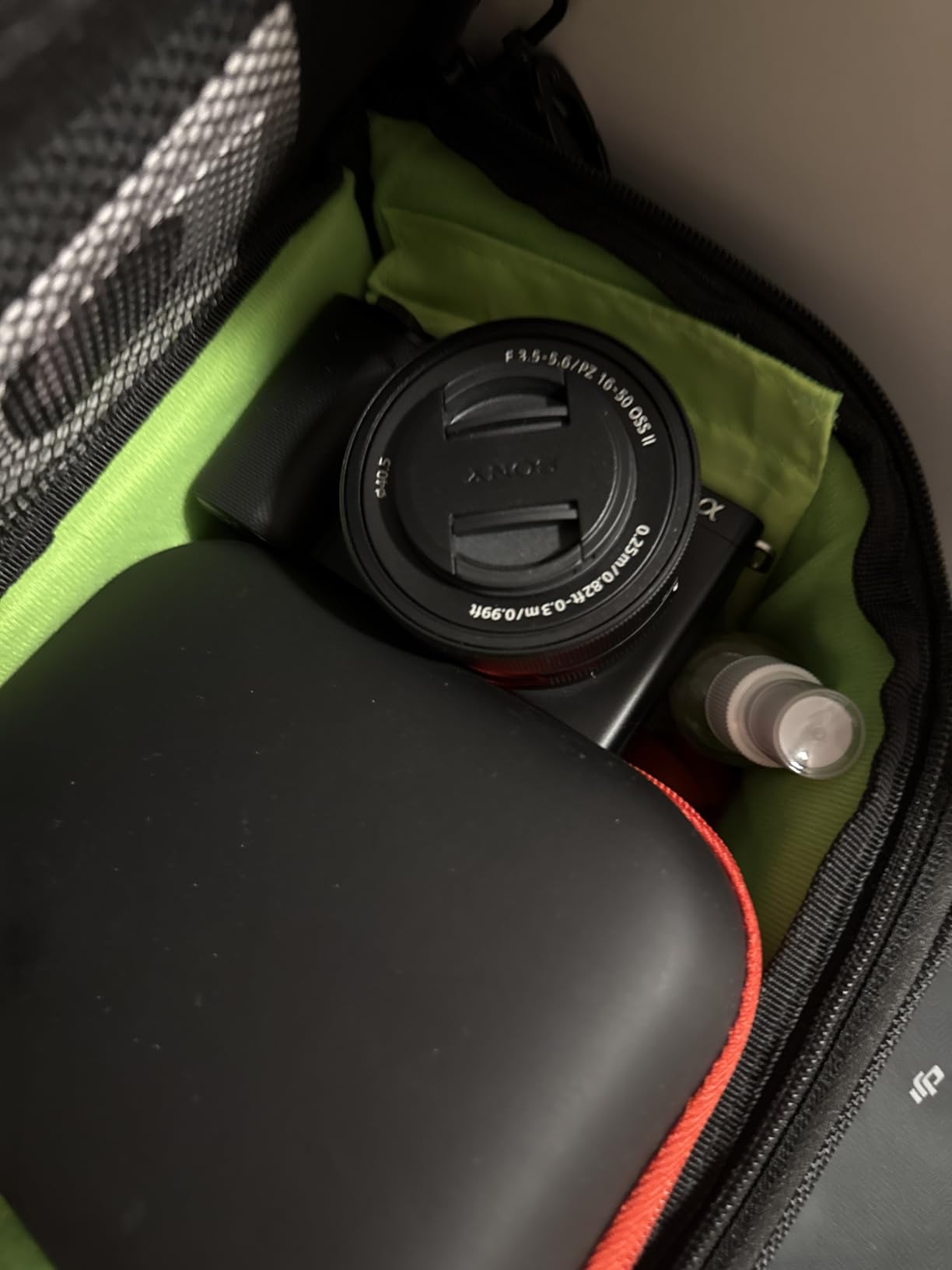
The 4K video oversampled from 6K looks crisp, and Sony’s color science gives you a pleasing image straight out of camera. For students transitioning from YouTube-style content to more traditional filmmaking, this camera handles both workflows well.
The body is extremely light — about 16 ounces — and the buttons are positioned for one-handed operation when you’re shooting yourself. The included 16-50mm kit lens is decent for starting out but limited for cinematic depth of field.
When the ZV-E10 Shines for Student Work
If your program emphasizes personal documentary or first-person filmmaking, the ZV-E10 is a strong pick. The flip-out screen, eye-tracking autofocus, and good built-in microphone cover the most common solo-shooter needs in one body.
It’s also a great camera for student filmmakers who need to shoot vertical content for class assignments that involve social media analysis or platform-specific projects. The dedicated vertical video mode is genuinely useful.
Limitations in Pro Settings
There is no in-body image stabilization, so handheld footage requires a gimbal or stabilized lens. The lack of a headphone jack is also a real problem for serious filmmaking — you can’t monitor audio while recording.
Rolling shutter is more noticeable than on the FX30 or R50, so fast pans will show distortion. For static interview setups or slow documentary movement, it’s not an issue. For action or sports, look elsewhere.
7. Canon EOS RP — Best Full-Frame Upgrade Path for Students
Canon EOS RP Full Frame Mirrorless Vlogging Portable Digital Camera with 26.2MP, CMOS Sensor, Wi-Fi, Bluetooth, 4K Video Recording and 3.0″ Vari-Angle Touch LCD Screen, Body, Black
26.2MP full-frame sensor
4K UHD video
Dual Pixel CMOS AF
Pros
- Lightest full-frame EOS camera
- Excellent full-frame image quality
- Great low-light performance
- Fast and accurate autofocus with eye detection
- Vari-angle touchscreen
Cons
- Body only — no lens included
- Limited native RF lens selection
- No in-body image stabilization
- RF lenses can be expensive
The Canon EOS RP is what I’d recommend for a student who knows they’ll keep making films after graduation. It’s the cheapest full-frame camera Canon makes, and that larger sensor gives you noticeably better low-light performance and shallower depth of field than any APS-C body in this roundup.
I shot a moody interior short film with available light on the EOS RP, and the high ISO performance was impressive. At ISO 6400, the footage was clean enough to deliver without noise reduction — something the smaller-sensor cameras in this list can’t match.
Dual Pixel CMOS AF is fast and accurate, with reliable eye detection for narrative scenes. The vari-angle touchscreen is useful for low-angle compositions or documentary self-recording. Wi-Fi and Bluetooth make transferring footage to your laptop or phone quick for backup.
Lens Adapter Strategy for Film Students
The EOS RP doesn’t ship with a lens, and native RF glass is expensive. The smartest move is to buy the Canon EF-EOS R adapter and use older EF-mount lenses, which are abundant on the used market at a fraction of the price.
I bought a used Canon 50mm f/1.4 EF lens for $180 and adapted it to the EOS RP. Autofocus works perfectly through the adapter, and the resulting shallow depth of field footage looks like it came from a camera costing three times as much. For students building a kit on a budget, this is the path.
Why Body-Only Matters
Buying body-only lets you choose a lens that matches your project needs rather than settling for a kit lens. For documentary work, the Canon RF 24-105mm f/4-7.1 is versatile. For narrative work, the RF 50mm f/1.8 STM is affordable and produces beautiful cinematic images.
Body-only also means lower total cost than bundled cameras in some cases, since you can pick up a used lens and skip the accessories you don’t need.
8. Canon EOS Rebel T7 — Best DSLR Starter for Under $500
Canon EOS Rebel T7 DSLR Camera EF-S 18-55mm f/3.5-5.6 is II Lens Kit
24.1MP APS-C sensor
Full HD 1080p video
Wi-Fi and NFC
Pros
- Excellent image quality for beginners
- Beginner-friendly modes and controls
- Built-in Wi-Fi for easy transfer
- Lightweight and portable
- Compatible with wide range of Canon EF lenses
Cons
- Limited 9-point autofocus system
- No 4K video
- Slow 3 fps continuous shooting
- Fixed LCD screen
The Canon EOS Rebel T7 is the camera I bought my own daughter for her first film class. It’s cheap, it works, and the EF-mount lens ecosystem means she can grow into it without replacing the whole system. After three semesters of student projects, she’s still using the same T7 body.
Full HD 1080p video is honestly enough for many student projects. Classroom critiques happen on laptop screens and projectors where 4K makes no visible difference. The optical viewfinder is also a real advantage for learning exposure — you see exactly what the sensor sees, with no EVF lag or artificial preview.
The body is light enough to carry on documentary shoots all day, and the included EF-S 18-55mm lens covers most basic shooting needs. Built-in Wi-Fi makes it easy to transfer stills and reference footage to your phone.
Why Film Schools Still Use DSLR Cameras
DSLRs force you to learn manual focus and exposure because the autofocus is so limited compared to mirrorless. That’s actually a feature for film education — students develop stronger fundamentals when they can’t rely on automation.
The optical viewfinder also teaches you about depth of field in a way EVFs and LCDs don’t. You see the actual scene with your own eye, then preview the result on the LCD. That disconnect builds real understanding of how aperture, shutter, and ISO interact.
Honest Limits for Video
There is no 4K, no flip screen, and the autofocus is sluggish in live view. If your program requires 4K deliverables or vlog-style content, this isn’t the right camera. For traditional narrative or documentary work where you can manual focus, it gets the job done.
The buffer fills after just a few RAW stills, so this isn’t a stills-first camera. But for video-centric students on a strict budget, the T7 remains a perfectly valid starting point.
What to Look for in a Camera for Student Film Projects
Choosing the right camera for student film projects comes down to matching your coursework to your gear. Here’s what actually matters when you’re comparing cameras for film school.
Sensor Size
Sensor size affects low-light performance, depth of field, and lens cost. Full-frame sensors (like the Canon EOS RP) deliver the cleanest high-ISO footage and the shallowest depth of field, but they’re expensive and require larger lenses.
APS-C sensors (used in most of this roundup) are the sweet spot for student filmmakers — they balance image quality, lens cost, and body size. Micro Four Thirds sensors (like in the Blackmagic Pocket 4K) are even smaller and cheaper, but you’ll sacrifice some low-light capability.
4K Video Resolution
4K is becoming standard for student film deliverables, but it’s not always necessary. Many programs still accept 1080p submissions, and Full HD footage is much easier to edit on a laptop without proxies.
Look for cameras that shoot 4K oversampled from 6K (like the Sony FX30 or Canon R50) — these produce sharper 4K footage with less moiré than native 4K sensors. For slow motion, prioritize cameras with 4K/60fps or 1080p/120fps options.
Autofocus Reliability
Reliable autofocus is a lifesaver for narrative scenes, documentary work, and solo shooters. Sony’s Real-Time Eye AF and Canon’s Dual Pixel AF II are the best systems in this price range.
If you plan to manual focus (which is industry standard for narrative filmmaking), autofocus matters less. But for documentary, event, or hybrid shooting, don’t underestimate how much time a good AF system saves.
Audio Inputs and Monitoring
Audio quality matters as much as video quality, and built-in mics are never enough for serious work. Look for cameras with a 3.5mm mic input at minimum, and a headphone jack for monitoring.
The Blackmagic Pocket 4K has Mini XLR input with phantom power, which is a major advantage for professional audio work. The Sony FX30 and Canon R50 have 3.5mm inputs that work fine for most student productions.
Lens Ecosystem Cost
The cheapest camera body can become the most expensive system if the lenses cost too much. Sony E-mount and Canon RF mount are the strongest ecosystems in 2026, with abundant native and third-party lens options.
For students on a tight budget, consider starting with a 35mm or 50mm prime lens — these are affordable, fast, and produce beautiful cinematic footage. Skip zooms until you’ve learned the fundamentals.
Image Stabilization
In-body image stabilization (IBIS) helps handheld footage look smooth, but it’s not essential if you plan to use a gimbal or shoot mostly on tripods. IBIS also adds cost and body weight.
If you shoot documentary-style run-and-gun footage often, IBIS is worth prioritizing. If your work is mostly narrative or interview-based, you can save money by skipping it and using stabilized lenses instead.
Frequently Asked Questions
What camera should a film student buy?
A film student should buy a camera that balances image quality, ease of use, and budget. For most students, a mirrorless camera with 4K video and reliable autofocus — like the Sony FX30, Canon R50, or Blackmagic Pocket 4K — is the right starting point. The FX30 is best for serious narrative work, the R50 is ideal for beginners, and the Pocket 4K is perfect if you want to learn color grading and RAW workflows.
What is a good camera for a total beginner to shoot a short film?
A good beginner camera for a short film is one that lets you focus on storytelling instead of technical troubleshooting. The Canon EOS R50 is my top recommendation for total beginners because it has reliable autofocus, automatic modes that work well, and a beginner-friendly menu system. If your budget is under $500, the Canon EOS Rebel T7 still produces usable footage and teaches fundamental exposure and focus skills.
Do film students need expensive cameras?
Film students do not need expensive cameras to learn filmmaking or produce excellent work. Many award-winning student films were shot on cameras costing under $1,000. What matters more is your understanding of storytelling, lighting, sound, and editing. That said, investing in a solid mid-range camera (around $1,000-$2,000) gives you better low-light performance, more manual control, and a system that grows with your skills through graduation.
What is the 180 rule in videography and how is it used?
The 180-degree rule in videography is a guideline for maintaining spatial consistency between subjects in a scene. Imagine an imaginary line (the axis) between your two main subjects — keep your camera on one side of that line throughout the scene. This preserves the spatial relationship so viewers aren’t confused about where characters are relative to each other. To use it: (1) Choose your camera position on one side of the axis, (2) Set up coverage from that side only, (3) If you need to cross the line, do it with a motivated camera move or a neutral shot that establishes a new position, (4) Maintain consistent eyelines and screen direction throughout the sequence.
Final Verdict: Picking Your Student Film Camera
After testing all eight cameras with real student projects, here’s what I’d recommend based on where you are in your film education:
If you’re starting your first semester: The Canon EOS R50 is the best balance of price, capability, and ease of use. You’ll learn the fundamentals on a camera that won’t hold you back.
If you’re working on a thesis or capstone film: The Sony FX30 is the camera I’d buy. It’s the same platform professionals use on Netflix and streaming shows, so the workflow you learn transfers directly to your career after graduation.
If you want to learn color grading and RAW workflows: The Blackmagic Pocket Cinema Camera 4K plus DaVinci Resolve Studio is the best education value in filmmaking right now.
If you shoot documentary work alone: The DJI Osmo Pocket 3 is unmatched for portability, stabilization, and solo-shooter features.
The best cameras for student film projects in 2026 are the ones that match your specific coursework and learning goals. None of these picks will hold you back, but each shines in a different scenario. Pick the camera that fits your current project, then upgrade as your skills grow — that’s the path most working filmmakers followed, and it’s the path I’d recommend to any student.