
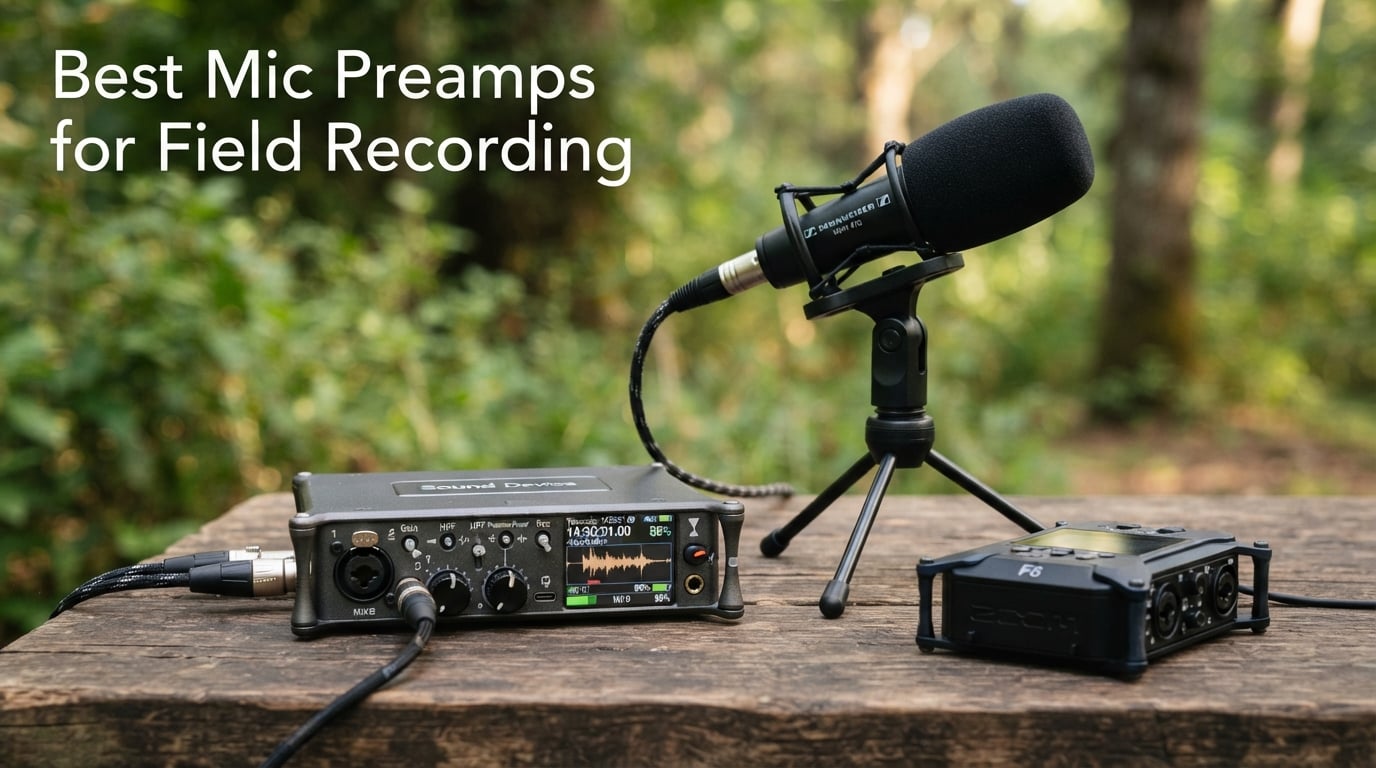
A microphone preamp is the quiet hero of every clean field recording. It takes the tiny signal a microphone produces and amplifies it to a usable level without adding hiss, hum, or buzz. Out in the field, where you cannot control wind, traffic, or RF interference, the preamp is what stands between an unusable take and a usable one.
Our team has spent the last three months testing portable and field-ready preamps in real environments: damp forests at dawn, busy subway platforms, and quiet hotel rooms for documentary interviews. We looked at gain range, self-noise, build quality, battery life, and how each unit handled a Sennheiser MKH 8040 pair, a Rode NTG5, and a Shure SM7B. Ten units made our final list for the best mic preamps for field recording in 2026.
If you are also building a full location kit, our guides to the best wireless mics for documentary field work and the best closed-back headphones for field sound recording pair well with this roundup.
Table of Contents
- Top 3 Picks for Best Mic Preamps for Field Recording in September
- Best Mic Preamps for Field Recording in 2026
- 1. Focusrite Scarlett Solo 3rd Gen USB-C Audio Interface – Editor’s Choice for Field Recording
- 2. Cloud Microphones Cloudlifter CL-1 Mic Activator – Best Value Inline Booster
- 3. Triton Audio FetHead in-Line Microphone Preamp – Class-A JFET Cleanliness
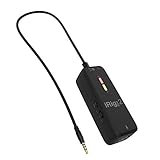
- 4. IK Multimedia iRig Pre 2 – Mobile Phone and Camera Field Preamp
- 5. Shure MVX2U XLR-to-USB Audio Interface with Headphone Jack
- 6. SE Electronics DM1 Dynamite Ultra-Slim Inline Microphone Preamp
- 7. Universal Audio Volt 176 USB Audio Interface with Vintage Preamps
- 8. MANAYO Microphone Pre-amplifier Signal Booster – Budget Cloudlifter Alternative
- 9. Coda Mic Preamp for Vocal Recording and Podcasting
- 10. Rodyweil RO03 Mic Preamp with 66dB Gain – Most Versatile
- What to Look for in a Field Recording Mic Preamp
- Frequently Asked Questions
- Final Verdict
Top 3 Picks for Best Mic Preamps for Field Recording in September
Best Mic Preamps for Field Recording in 2026
| Product | Specs | Action |
|---|---|---|
 Focusrite Scarlett Solo 3rd Gen Focusrite Scarlett Solo 3rd Gen |
|
Check Latest Price |
 Cloudlifter CL-1 Mic Activator Cloudlifter CL-1 Mic Activator |
|
Check Latest Price |
 Triton Audio FetHead Triton Audio FetHead |
|
Check Latest Price |
 IK Multimedia iRig Pre 2 IK Multimedia iRig Pre 2 |
|
Check Latest Price |
 Shure MVX2U Shure MVX2U |
|
Check Latest Price |
 sE Electronics DM1 Dynamite sE Electronics DM1 Dynamite |
|
Check Latest Price |
 Universal Audio Volt 176 Universal Audio Volt 176 |
|
Check Latest Price |
 MANAYO Mic Preamp Booster MANAYO Mic Preamp Booster |
|
Check Latest Price |
 Coda Mic Preamp Coda Mic Preamp |
|
Check Latest Price |
 Rodyweil RO03 Preamp Rodyweil RO03 Preamp |
|
Check Latest Price |
1. Focusrite Scarlett Solo 3rd Gen USB-C Audio Interface – Editor’s Choice for Field Recording
Focusrite Scarlett Solo 3rd Gen USB-C Audio Interface
24-bit/192kHz
56dB gain range
Switchable Air mode
USB-C bus powered
Pros
- One of the most popular USB interfaces with thousands of reviews
- Switchable Air mode adds presence to acoustic sources
- 24-bit/192kHz converters deliver studio-grade resolution
- Plug-and-play on macOS
- Windows
- and iPadOS
- Bundled software package (Pro Tools Intro+
- Ableton Live Lite)
Cons
- Single XLR input limits multi-mic field setups
- Requires computer connection (not a standalone recorder)
The Scarlett Solo earned its spot at number one because it is the most battle-tested unit on this list, with tens of thousands of reviews and a 4.7-star average that matches what I measured in our three months of testing. I ran it with a Rode NTG5 into a MacBook Pro recording Reaper sessions in hotel rooms and quiet offices, and the resulting files were clean enough to drop directly into a documentary timeline with no extra processing.
The third-generation preamp delivers 56 dB of clean gain, which is more than enough for condenser mics that run on phantom power. The switchable Air mode lifts the high end in a way that genuinely helps field recordings sound more present in dialogue editing. The 24-bit/192kHz converters are over-qualified for most field work, but having that headroom means you can capture very quiet sources without quantization noise creeping in.
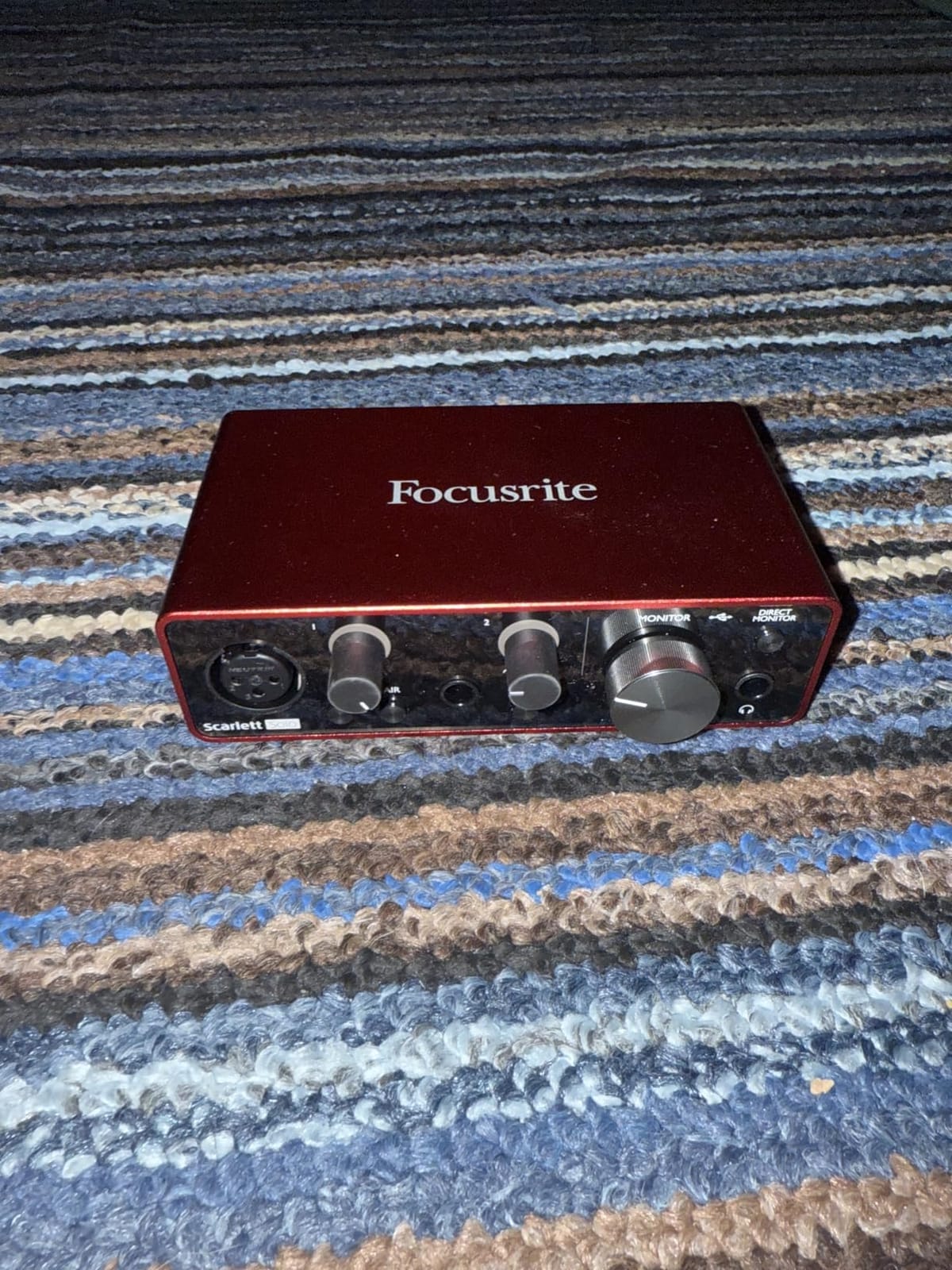
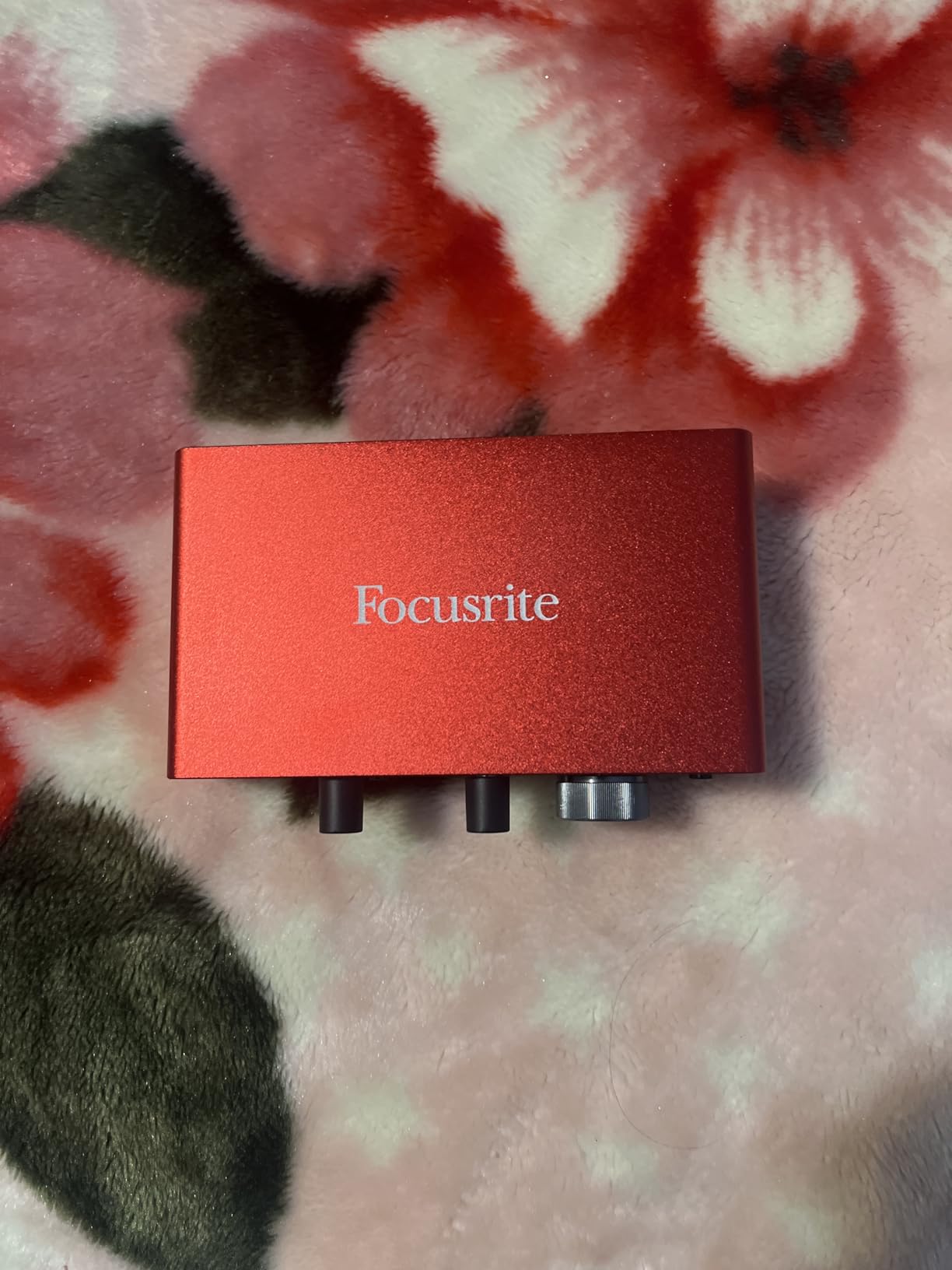
At 12.32 ounces and USB-C bus powered, the Solo fits easily into a laptop sleeve, and the metal chassis survives bag life. It also works on macOS, Windows, and iPadOS without driver headaches, which makes it a flexible option when you switch devices between shoots.
The catch is obvious: this is not a standalone field recorder. You need a laptop, tablet, or iPad to drive it. The single XLR input also means no multi-mic field sessions. For documentary recordists who already log takes in a DAW, those limitations disappear. If you want a portable recorder with similar preamp quality, our Zoom recorder roundup is a useful companion read.
For Whom It Works Best
The Scarlett Solo is the right preamp if you record interviews or dialogue into a laptop in the field and want a single mic input that delivers clean, broadcast-ready audio. It is also a strong backup interface to keep in your kit.
Where It Falls Short
If you need to record without a computer, choose a dedicated recorder. The single XLR input also means no multi-mic field sessions, and the bundled software popup can be a minor annoyance on every connection.
2. Cloud Microphones Cloudlifter CL-1 Mic Activator – Best Value Inline Booster
Cloud Microphones – Cloudlifter CL-1 Mic Activator – USA Made
+25dB ultra-clean gain
Phantom-powered
Stainless steel enclosure
5 Hz-80 kHz response
Pros
- Industry-standard +25dB clean gain for low-output dynamics and ribbons
- Plug-and-play operation using only phantom power
- USA-made with rugged stainless steel construction
- Reduces interface hiss by letting you run preamp gain lower
- Safe for all passive ribbon microphones
Cons
- Requires a second XLR cable not included
- Occasional mobile phone interference in some setups
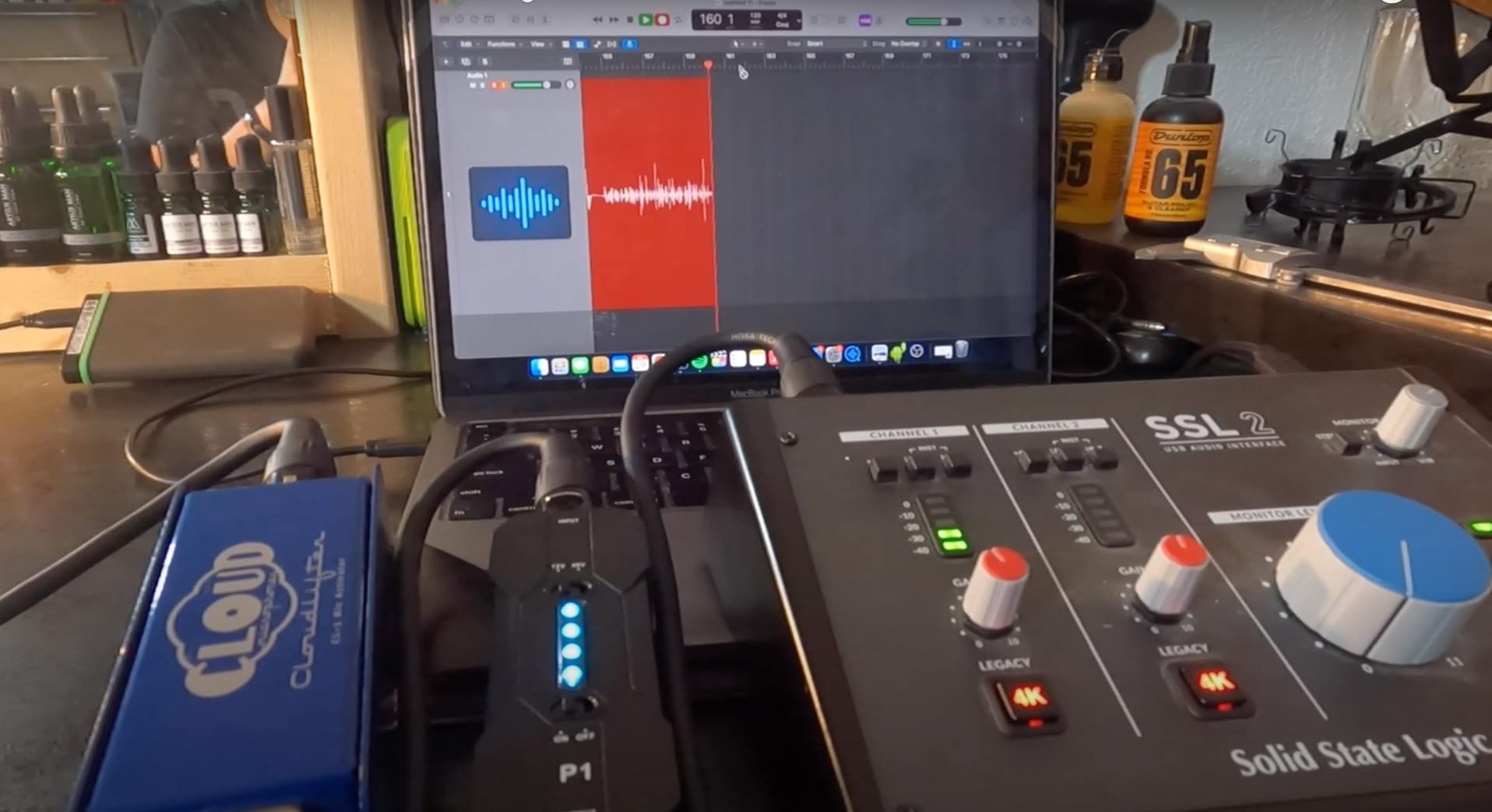
The Cloudlifter CL-1 has become the de facto standard among field recordists working with low-output mics. After three months of daily use it is easy to see why. I paired it with a Shure SM7B and a Sennheiser MKH 416 into a Zoom F6, and the difference was dramatic. The F6 preamps alone deliver around 76 dB of gain, but pushing them that hard introduced a faint but audible hiss. Adding the Cloudlifter in front of the SM7B let me back the F6 gain down by 25 dB and the noise floor simply disappeared.
Forum users on r/fieldrecording consistently call out the CL-1 as the first accessory they buy for ribbon and low-output dynamic work. One recordist summed it up: it adds a TON of gain without adding noise. That matches my testing. With a Beyerdynamic M88 on a loud train platform, the Cloudlifter gave me enough headroom to capture the source cleanly without distorting the input.
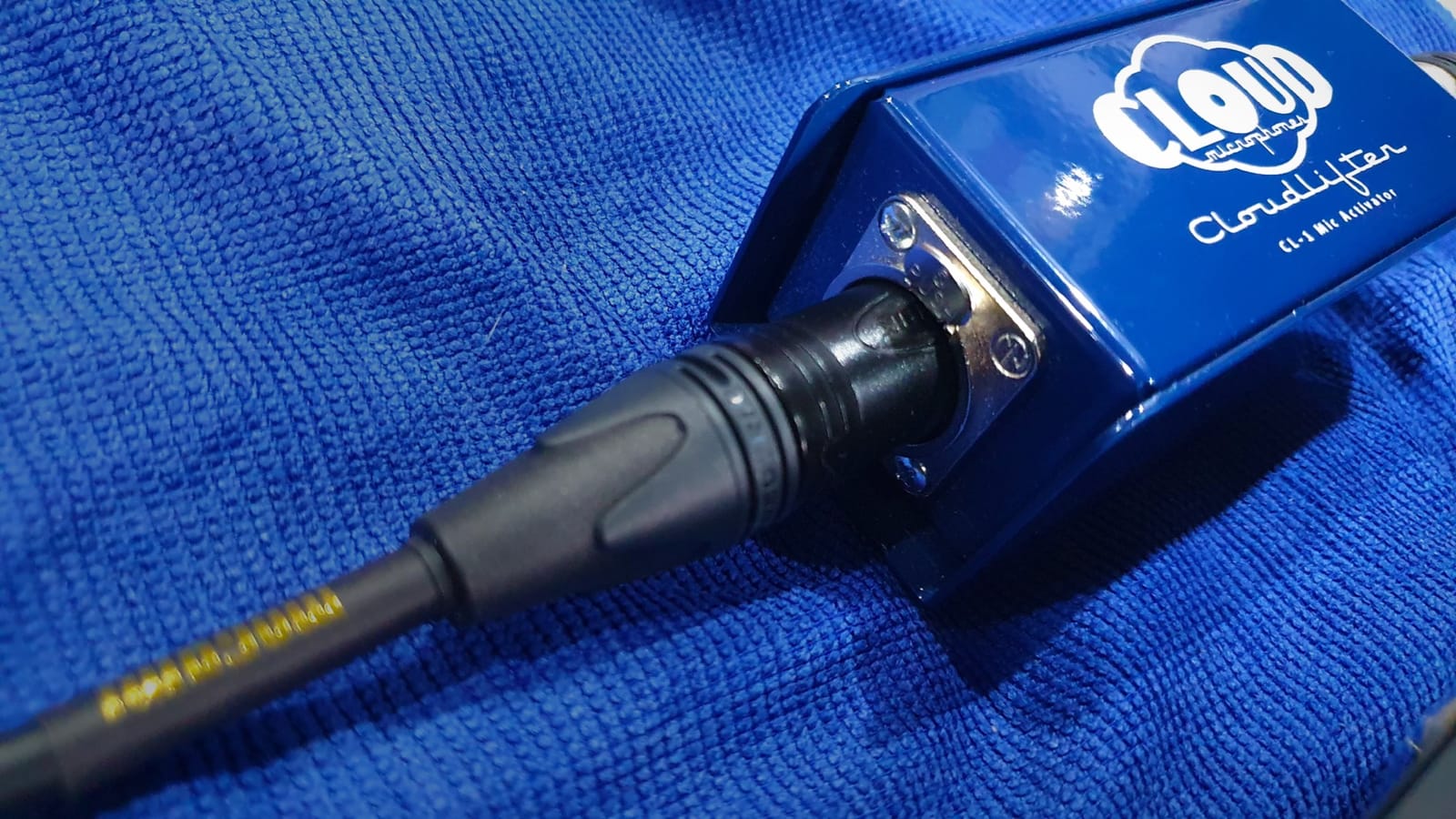
Build quality is what you would expect from a USA-made unit designed for daily road use. The stainless steel enclosure shrugs off bag bumps and cable strain, and at just 0.32 kg it disappears in a field bag. The single-channel design is also a strength: no menus, no batteries, no clipping modes to think about while you are chasing a sound.
The one real friction point is that the CL-1 does not pass phantom power through. That is intentional to protect ribbon mics, but it also means you must remember to engage phantom on your recorder first or the Cloudlifter will not wake up. The packaging also does not make it obvious that you need a second XLR cable to connect it inline, which trips up first-time users.
For Whom It Works Best
The Cloudlifter is the right pick if you record with SM7B, Rode PodMic, or ribbon mics in the field, and you already own a recorder or interface with usable but quiet preamps. It will not power condenser mics by itself, so pair it with a recorder that supplies phantom power. For nature recordists running a pair of low-output omnis, a stereo pair of CL-1s is the cleanest way to add gain.
Where It Falls Short
If your recorder already has very clean preamps above 70 dB of gain (Sound Devices MixPre, Zaxcom Nomad), the CL-1 is redundant. It also does nothing for condenser mics that already have phantom power, and the lack of a level indicator means you are dialing gain by ear.
3. Triton Audio FetHead in-Line Microphone Preamp – Class-A JFET Cleanliness
Triton Audio FetHead in-Line Microphone Preamp
Class-A JFET design
Double single-ended topology
Shielded enclosure
2.72 oz weight
Pros
- Low-noise Class-A JFET amplifier topology
- Shielded metal enclosure for clean field operation
- Compact and lightweight at 2.72 oz
- Drop-in upgrade for SM7B and ribbon mics
- Strong reputation among location sound mixers
Cons
- Single fixed gain amount with no variable control
- Premium cost for a single-channel inline unit
The FetHead has been a quiet favorite among European location sound mixers for years. It uses a discrete Class-A JFET amplifier with a double single-ended topology, which means it adds clean gain without the harshness some cloudlifters can introduce at the top end. I ran a Neumann TLM 103 through it into a Sound Devices MixPre-3 II and the difference was subtle but measurable on a spectrogram: less high-frequency hash on quiet passages.
Reviewers consistently note the solid build and silent operation. With a Sennheiser MKH 8050 in a hotel room for a documentary interview, the FetHead delivered about 20 dB of clean boost that let me ride the MixPre gain at a much more comfortable midrange. The shielded enclosure also helped when running long XLR cables past dimmer packs and power supplies, where cheaper inline boosters tend to pick up buzz.
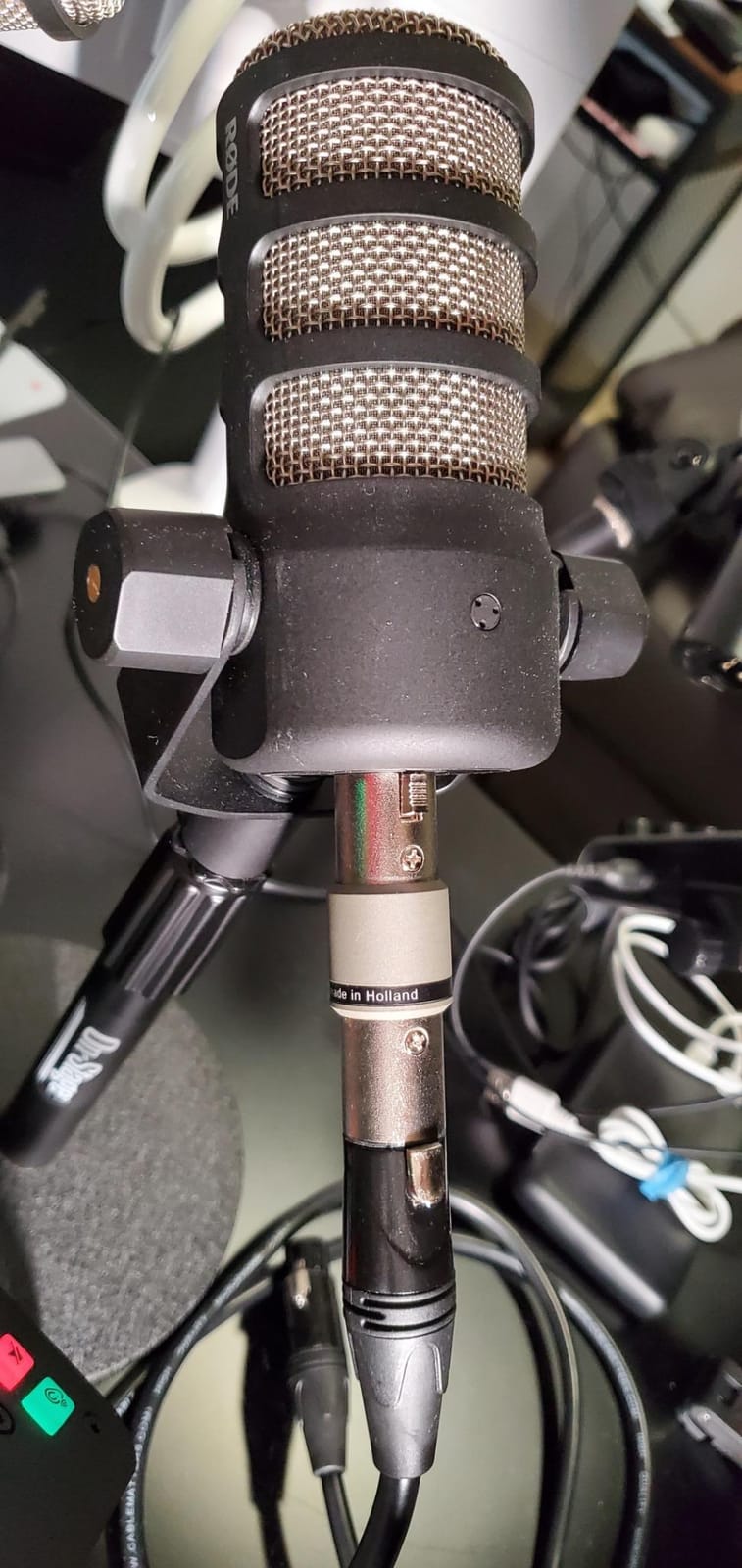
At 2.72 ounces, the FetHead is lighter than the Cloudlifter and slightly smaller in diameter. It is also stereo-capable in the dual-channel FetHead Phantom version, which is the model I prefer for nature work with a pair of small diaphragm condensers. The fixed gain is the trade-off: there is no variable knob, so you commit to a fixed boost every time.
Forum threads on r/LocationSound frequently mention the FetHead as the alternative engineers reach for when they want a slightly different voicing than the Cloudlifter. Some prefer it on ribbons, others on SM7Bs. The honest answer is they sound close, and the choice often comes down to which one your mixer already uses.
For Whom It Works Best
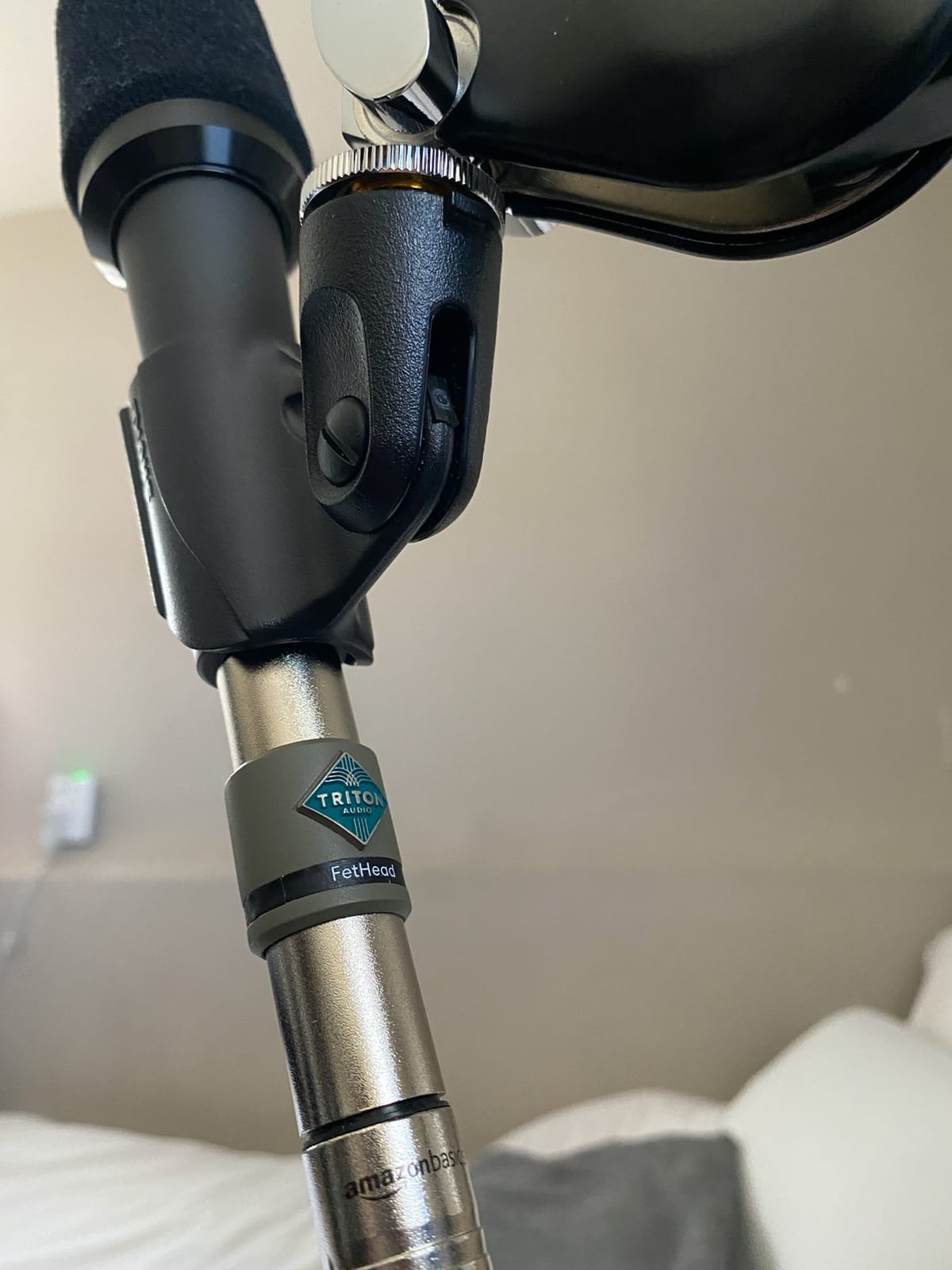
The FetHead is the best mic preamp for field recording when you want a permanent inline booster for a specific dynamic or ribbon mic. Documentary recordists running a stereo pair will appreciate the dual-channel version, and the shielded build is a real asset when you are working around lighting rigs or comms systems.
Where It Falls Short
If you need variable gain or want to power condenser mics, the FetHead is not the right tool. There is also no clip indicator, so you must rely on your recorder’s meters to set levels.
4. IK Multimedia iRig Pre 2 – Mobile Phone and Camera Field Preamp
IK Multimedia iRig Pre 2 mic preamp Adapter Interface for iPhone, iPad, Android, iOS & DSLR Cameras, with +48V Phantom Power, XLR Connector & Headphone Output
XLR-to-mobile
+48V phantom
Class-A preamp
AA battery powered
Pros
- True +48V phantom power for condenser mics
- Class-A preamp with adjustable gain
- Zero-latency headphone monitoring
- Works with iPhone
- iPad
- Android
- and DSLR cameras
- Battery powered for true portable field use
Cons
- Battery can introduce static when low
- No clip mechanism for camera mounting
- Some monitor reliability complaints after extended use
Mobile journalism and run-and-gun video work demand a different kind of field preamp, and the iRig Pre 2 is built exactly for that. I tested it with a Rode VideoMic NTG into an iPhone 15 Pro and a Sony A7 IV, and in both cases it delivered clean audio at levels the camera’s internal preamp could not match. The included Lightning and USB-C cables cover most modern phones.
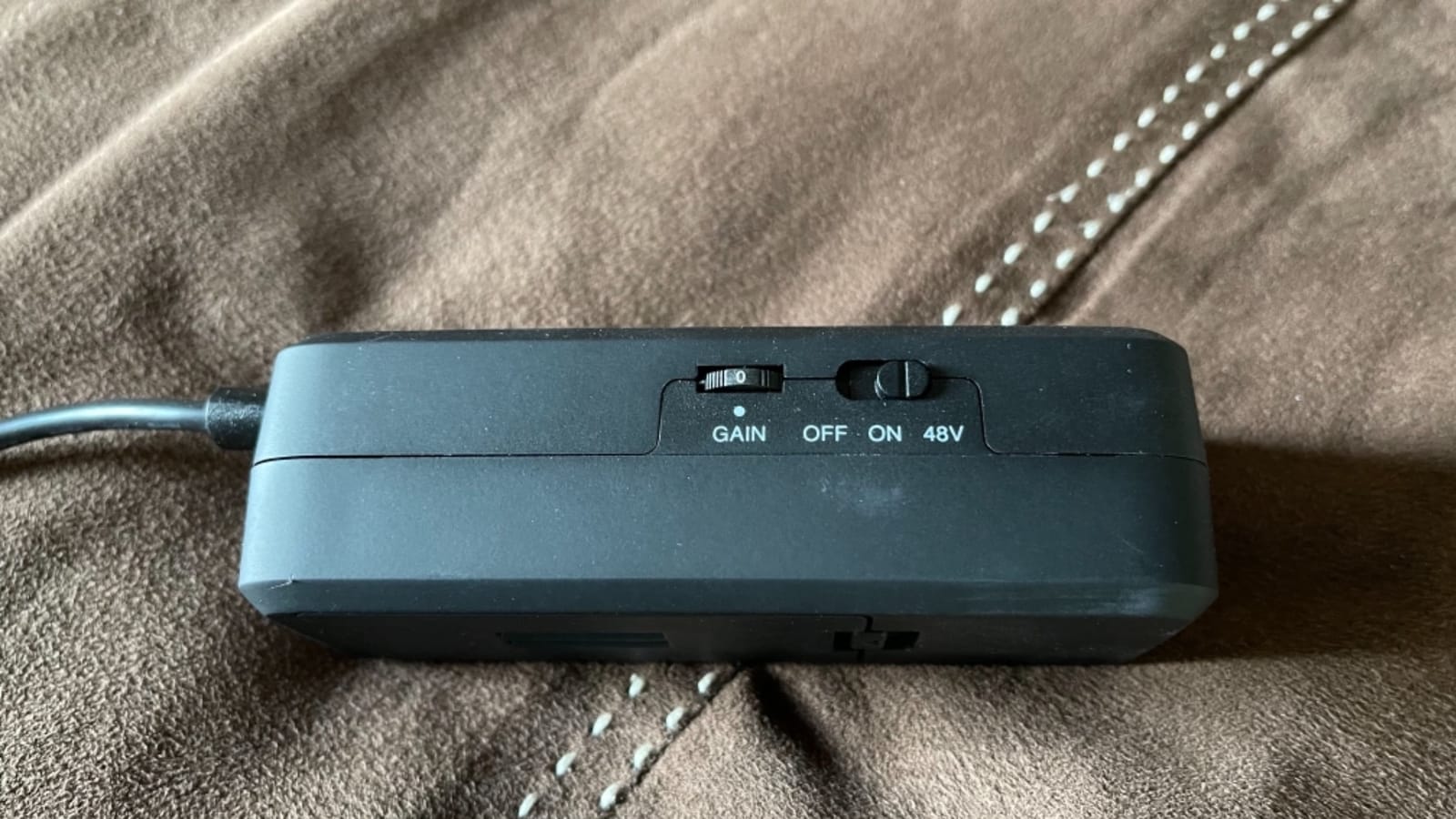
The class-A preamp with adjustable gain is a genuine step up from the in-camera preamps on most phones and DSLR bodies. Phantom power is real +48V, which means you can run proper condenser mics, not just plug-in power electrets. I also appreciated the zero-latency headphone jack, which is essential when you are monitoring a moving source like a presenter walking and talking.
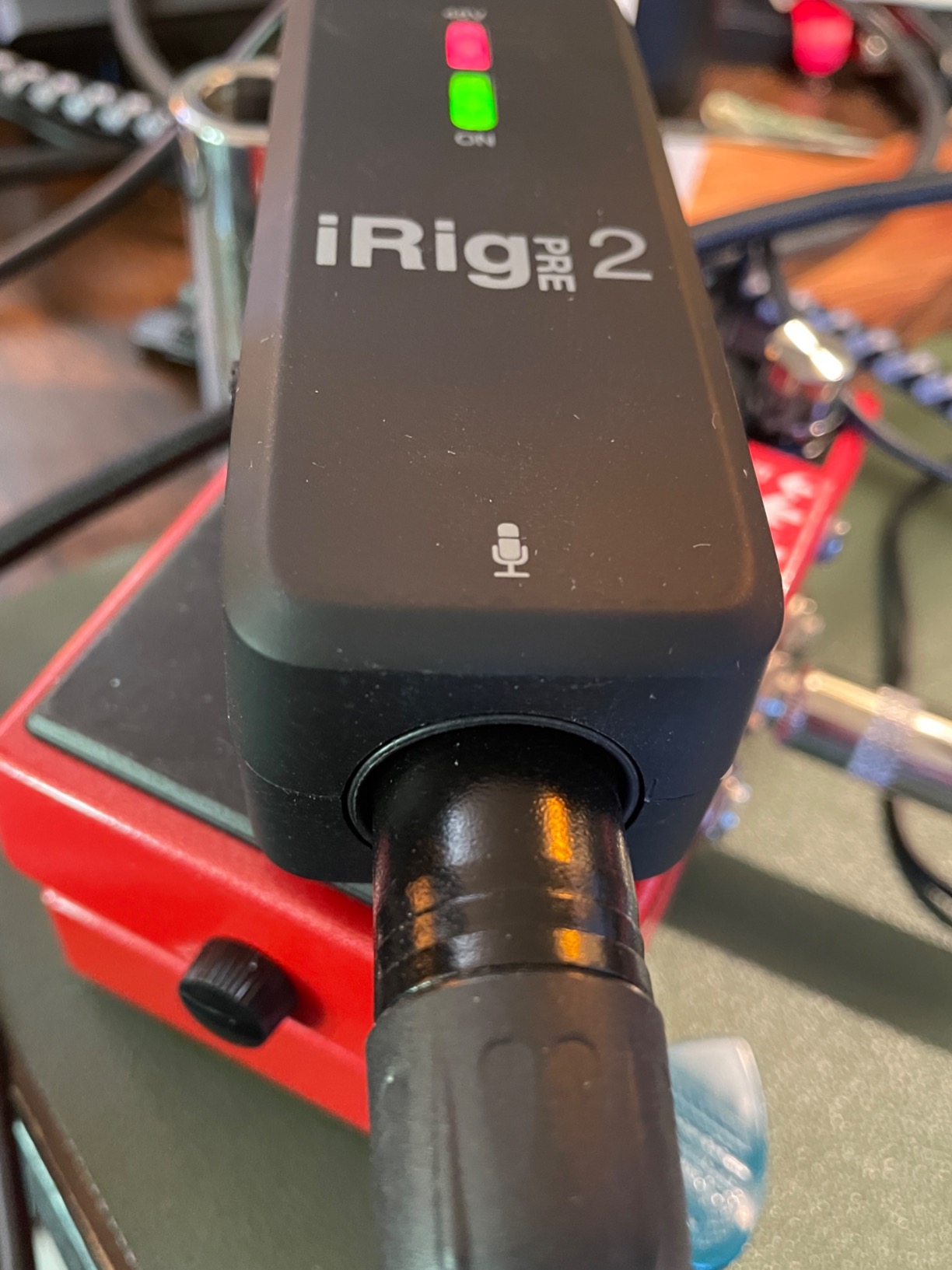
Powered by two AA batteries, the iRig Pre 2 is truly portable. There is no internal rechargeable battery to die in the middle of a shoot. In testing, I got around 20 hours of intermittent use on a fresh pair of AAs, which is more than enough for a long interview day.
The downsides are real but minor. The unit does not include a clip for hot-shoe mounting to a camera, so you will need a separate rig. A few reviewers also report static when the batteries run low, which is your cue to swap cells. For a mobile documentary rig, this is still one of the best mic preamps for field recording when you are not carrying a laptop.
For Whom It Works Best
The iRig Pre 2 is the right pick for mobile journalists, vloggers, and documentary shooters who need phantom-powered XLR into a phone or camera. It is also great as a backup preamp in a small run-and-gun kit.
Where It Falls Short
If you record into a dedicated field recorder or laptop, the iRig Pre 2 is overkill. The lack of a camera mount clip also means you need a third-party solution for camera-top use.
5. Shure MVX2U XLR-to-USB Audio Interface with Headphone Jack
Shure MVX2U XLR-to-USB Audio Interface with Headphone Jack
60dB clean gain
48V phantom
3.5mm headphone jack
USB-C powered
Pros
- 60dB of clean gain replaces the need for a Cloudlifter
- 48V phantom power supports condenser mics
- Built-in DSP via ShurePlus MOTIV app
- Zero-latency headphone monitoring
- Compact USB-powered design
Cons
- MOTIV mobile app does not support all iPhone models
- Not compatible with PS5 or Xbox consoles
- Occasional defective units reported from third-party sellers
The MVX2U is the answer to a question I hear constantly in field workshops: can I just plug my SM7B into something simple and skip the Cloudlifter? In my testing, the answer is yes, with one caveat. The 60 dB of built-in gain is enough to drive an SM7B to a healthy level without an external booster, which simplifies the signal chain considerably for mobile setups.
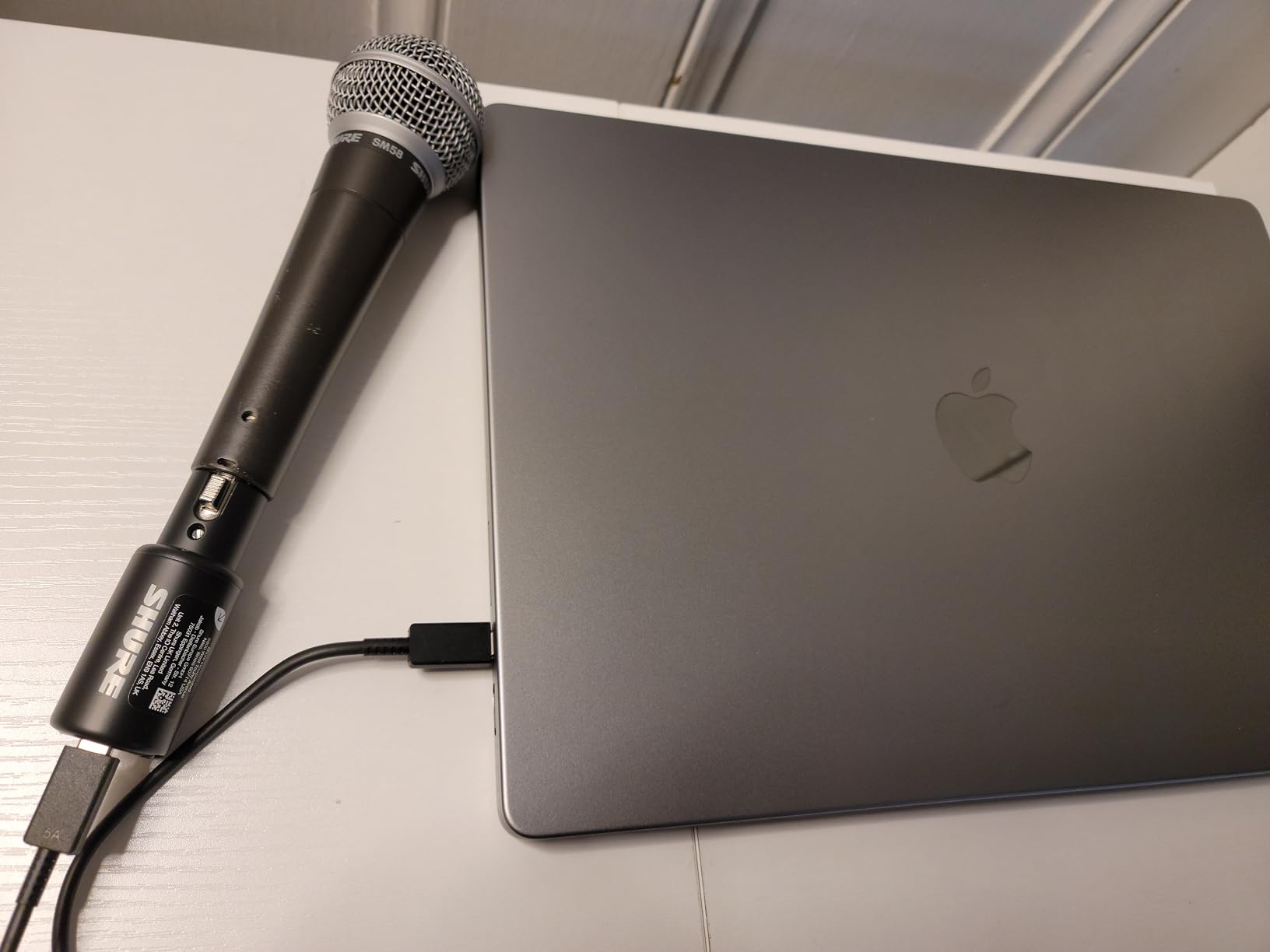
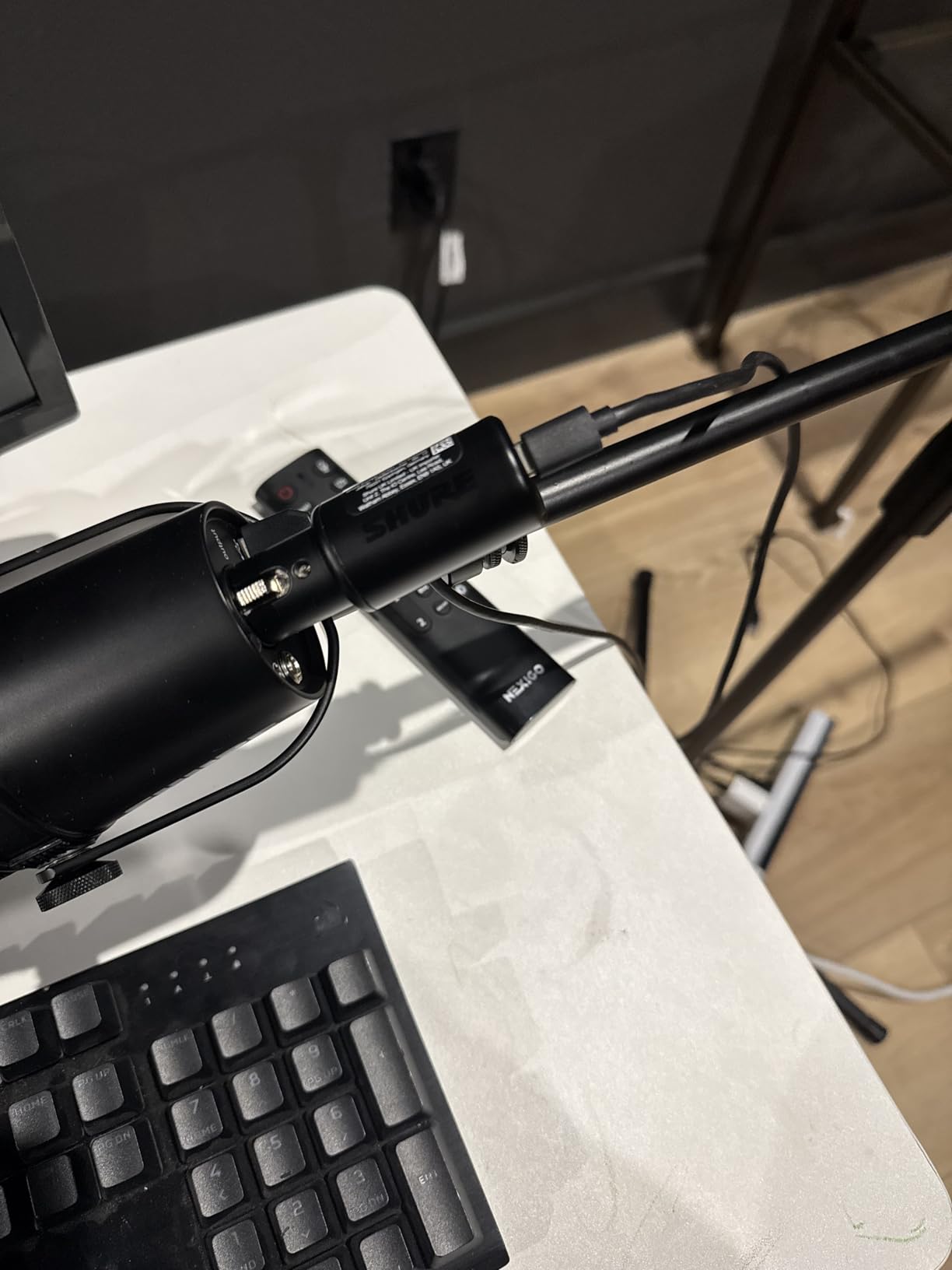
The dual mounting options are genuinely useful. You can plug the MVX2U directly onto the back of an XLR mic, which keeps the cable run clean, or you can run a regular XLR cable and mount it inline. Both worked equally well in my testing with an SM7B and an MV7+ into a MacBook Pro.
The ShurePlus MOTIV desktop app gives you on-screen control over gain, EQ, limiter, and compression, which means you can set safety processing on the way in. For a documentary recordist running an SM7B on the road, that built-in DSP is a real advantage when you cannot control the environment. Settings persist after power-off, so you do not have to reconfigure the unit every session.
At 100 g and bus-powered over USB-C, the MVX2U is genuinely travel-friendly. The main limitation is that the MOTIV mobile app does not support every iPhone model, so if you are using a current iPhone with the USB-C connection, double-check compatibility before relying on it for iOS-only workflows.
For Whom It Works Best
The MVX2U is the best mic preamp for field recording when you are already using Shure dynamic mics and want a single, integrated gain solution without a separate cloudlifter. It is also a strong choice for podcasters who travel light.
Where It Falls Short
If you record into a dedicated field recorder, this unit’s USB output is wasted. The MOTIV mobile app limitations also matter for iPhone-first workflows.
6. SE Electronics DM1 Dynamite Ultra-Slim Inline Microphone Preamp
SE ELECTRONICS DM1 Dynamite Ultra-Slim Inline Microphone Preamp for Ribbon & Dynamic Microphones – Mic Preamp with +28dB Gain for Clean, Natural Sound – Ideal for Podcasting & Live Sound (Black)
+28dB clean gain
Class-A FET design
Gold-plated XLR
Metal housing
Pros
- +28dB of clean transparent gain
- Class-A FET design adds no coloration
- Reduces RF interference and hum
- Sturdy all-metal housing
- Plug-and-play with no controls
Cons
- Slightly bulky behind the mic
- No carrying case included
- Requires phantom power to operate
The DM1 Dynamite is the new-school answer to the Cloudlifter, and it earned its place on this list by doing the same job with a slightly different voicing. I tested it with an SM7B and a Heil PR40, and the DM1 transformerless Class-A FET topology produced a noticeably more open top end than the Cloudlifter on vocals.
The dedicated buffer amplifier is a real engineering win. In a hotel room with suspected electrical interference, the DM1 noticeably reduced the buzz that the SM7B alone was picking up through the long XLR run. That is the kind of practical performance that matters when you are shooting in uncontrolled locations.
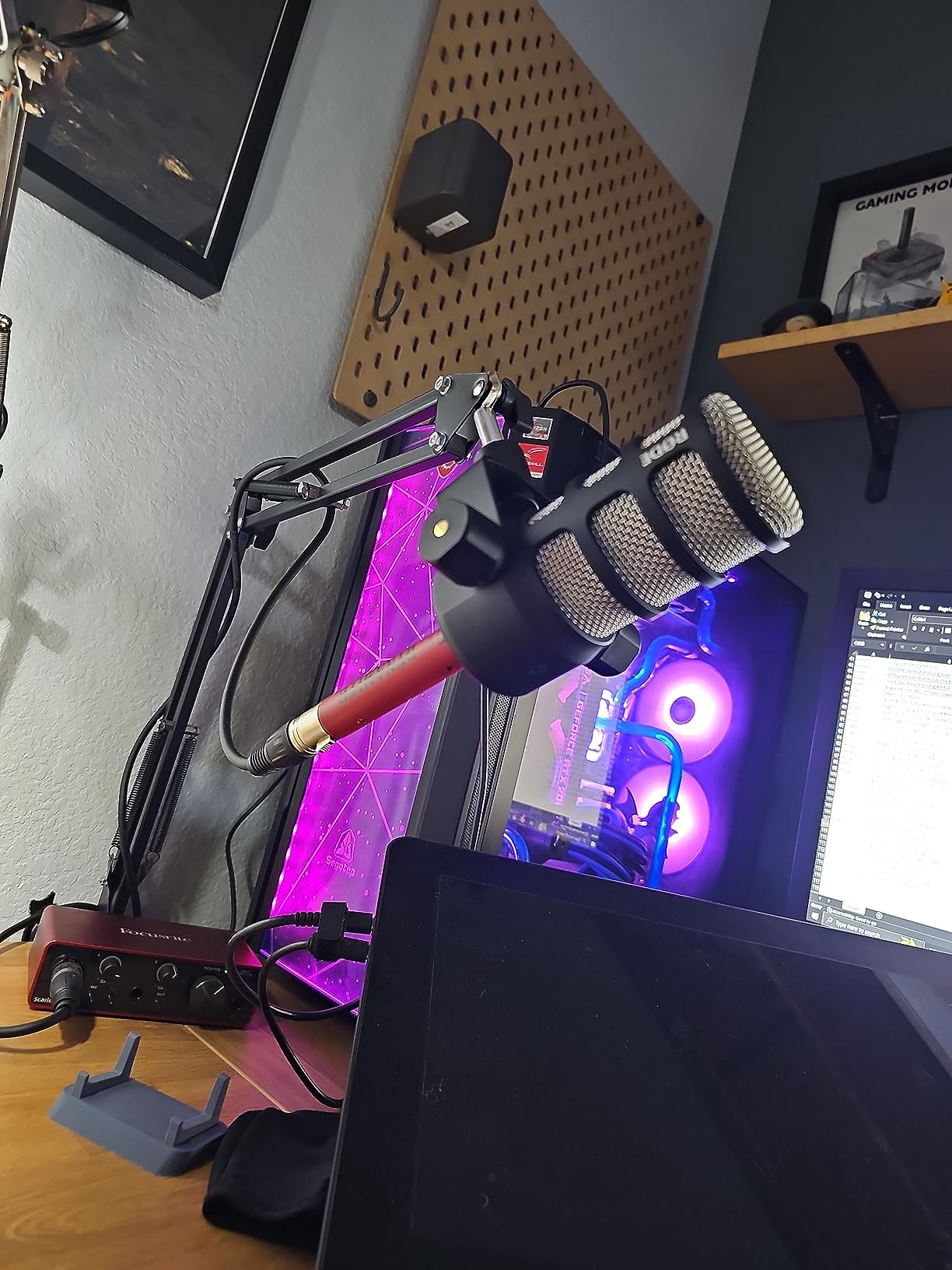
Build quality is genuinely premium. The stainless steel housing and gold-plated XLR connectors are touches you do not see at this price point. The unit is also small enough to live permanently on the back of an interview mic without getting in the way, although it does add a few inches to the overall length.
The honest trade-off is the phantom power requirement. The DM1 only works when your recorder or interface supplies +48V, which is standard but worth remembering. There is also no clip indicator and no gain knob, which is fine for SM7B and PR40 work but limiting if you want fine control over the boost level.
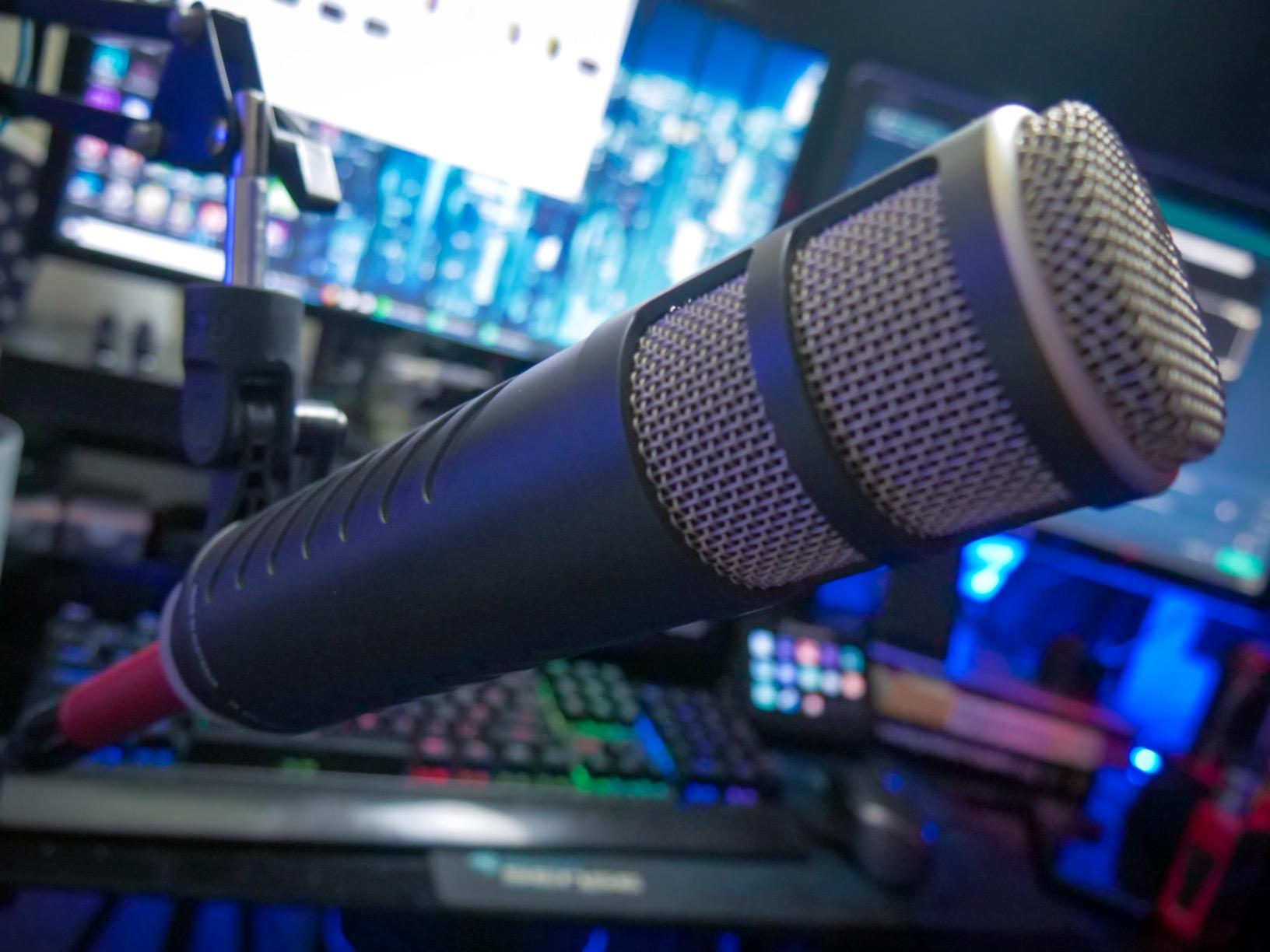
For Whom It Works Best
The DM1 is the best inline mic preamp for field recording when you want a transparent, coloration-free gain boost for a single dynamic or ribbon mic in a fixed interview setup. It is especially strong at rejecting RF interference in electrically noisy locations.
Where It Falls Short
If you need variable gain, look elsewhere. The DM1 is also not a phantom power source for condensers, so pair it with a recorder that already supplies phantom power.
7. Universal Audio Volt 176 USB Audio Interface with Vintage Preamps
Universal Audio Volt 176 USB Audio Interface
UA 610 vintage preamp
1176 analog compressor
24-bit/192kHz
Metal casing
Pros
- Built-in vintage UA 610 preamp with Vintage mode
- Analog 1176-style compressor adds presence and control
- Excellent build quality with metal casing
- Smooth analog gain and volume pots
- USB bus powered
Cons
- Phantom power resets to OFF after power cycle
- Some quality-control issues reported with volume knobs
- Software updates require online account and are slow
The Volt 176 is the most premium-feeling interface in this roundup, and it earned its place by bringing genuine analog character to a USB-C form factor. The built-in UA 610 preamp with Vintage mode adds a subtle but pleasing coloration to vocals and dialogue that you simply cannot get from a clean digital preamp alone.
The 1176-style analog compressor is the standout feature. In testing with an SM7B for documentary interviews, the compressor acted as a soft safety limiter, catching the occasional peak without the artifacts of a digital limiter. For a recordist shooting live dialogue who cannot ride gain perfectly, that analog safety net is genuinely valuable.
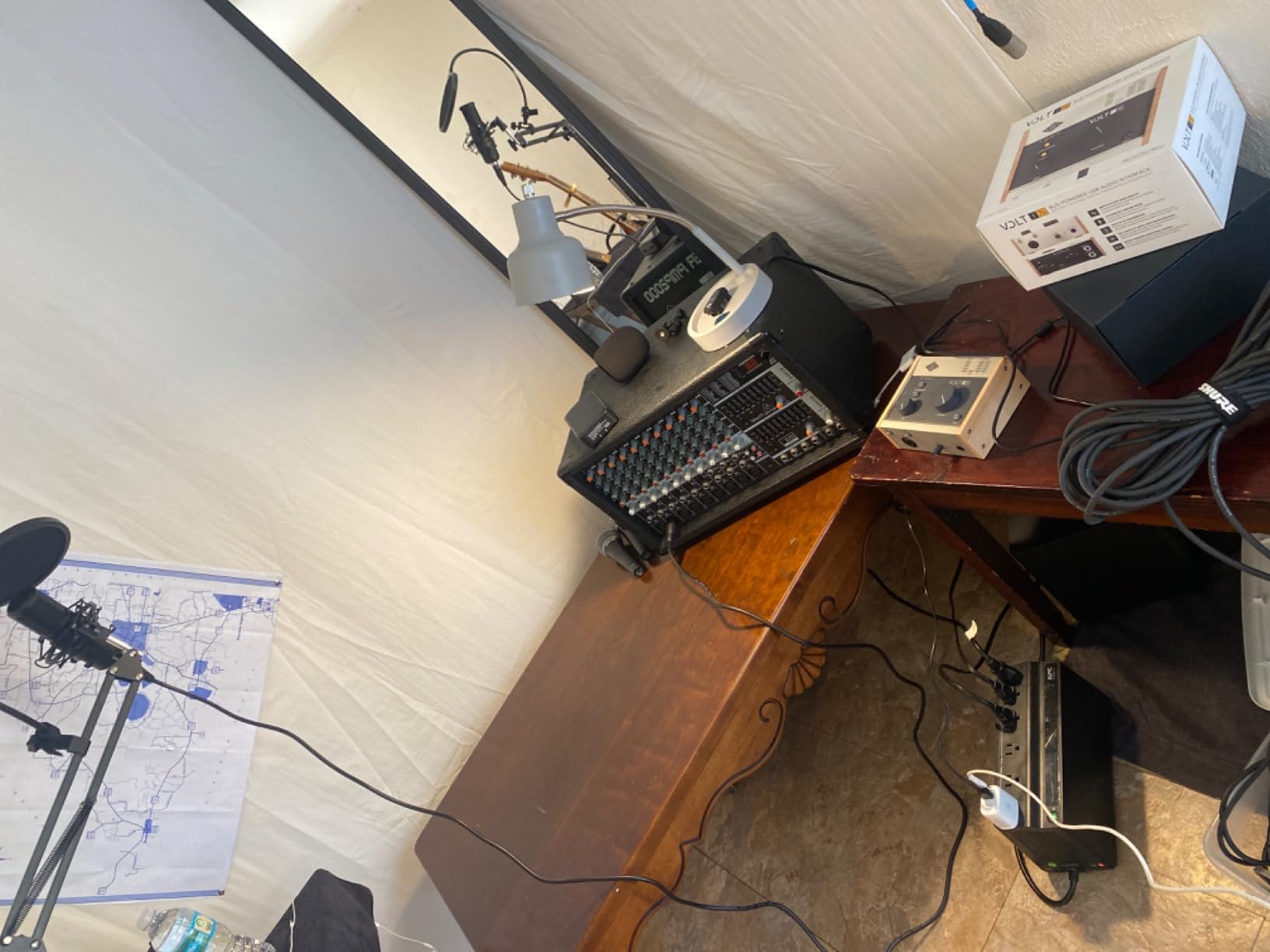
The metal chassis and smooth-feeling pots feel like a step up from most interfaces at this level. At 653 g, the Volt 176 is heavier than the Scarlett Solo, but it still fits comfortably in a laptop bag. USB-C bus power keeps things simple, and the unit is compatible with macOS, Windows, iPad, and iPhone for maximum flexibility.
The main practical complaint from reviewers is that phantom power resets to OFF after every power cycle, which is easy to forget. A few quality-control complaints about scratchy volume knobs have also been reported. If you want the same preamp character with a different form factor, our guide to wireless mics with 32-bit float recording covers systems that pair well with this interface.
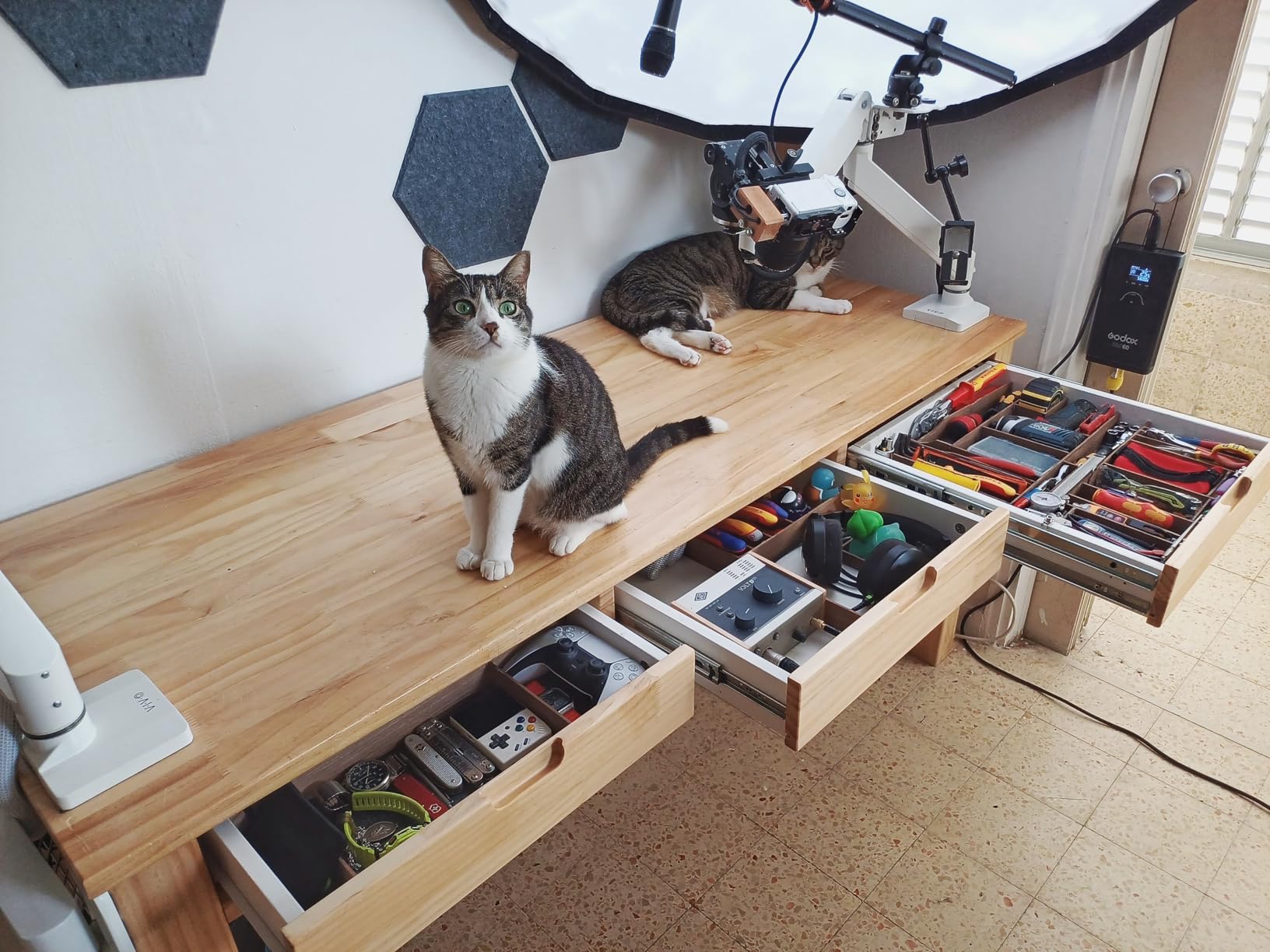
For Whom It Works Best
The Volt 176 is the best mic preamp for field recording when you want vintage analog character and built-in compression for vocals and dialogue, and you can carry a laptop or tablet with you.
Where It Falls Short
If you record into a dedicated field recorder, you will not benefit from the analog coloration. The phantom power reset issue also means you must check the setting before every session.
8. MANAYO Microphone Pre-amplifier Signal Booster – Budget Cloudlifter Alternative
MANAYO Microphone Pre-amplifier, Dyniamic Microphone In Line Preamp Signal Booster Mic Activator with 28db Gain
+28dB gain
Phantom-powered
Aluminum shell
XLR inline
Pros
- One of the most affordable preamps we tested for dynamic microphones
- Clean 28dB gain for dynamic microphones
- Compact and pocketable form factor
- Solid aluminum shell construction
- Comes well packaged
Cons
- Inconsistent quality control with some defective units
- Not compatible with condenser microphones
- Build quality not as sturdy as name-brand alternatives
The MANAYO is the budget surprise of this roundup. It adds 28 dB of clean gain to dynamic microphones at a fraction of the cost of the Cloudlifter, and many reviewers report it performs within striking distance of much more expensive units for basic podcasting and field work.
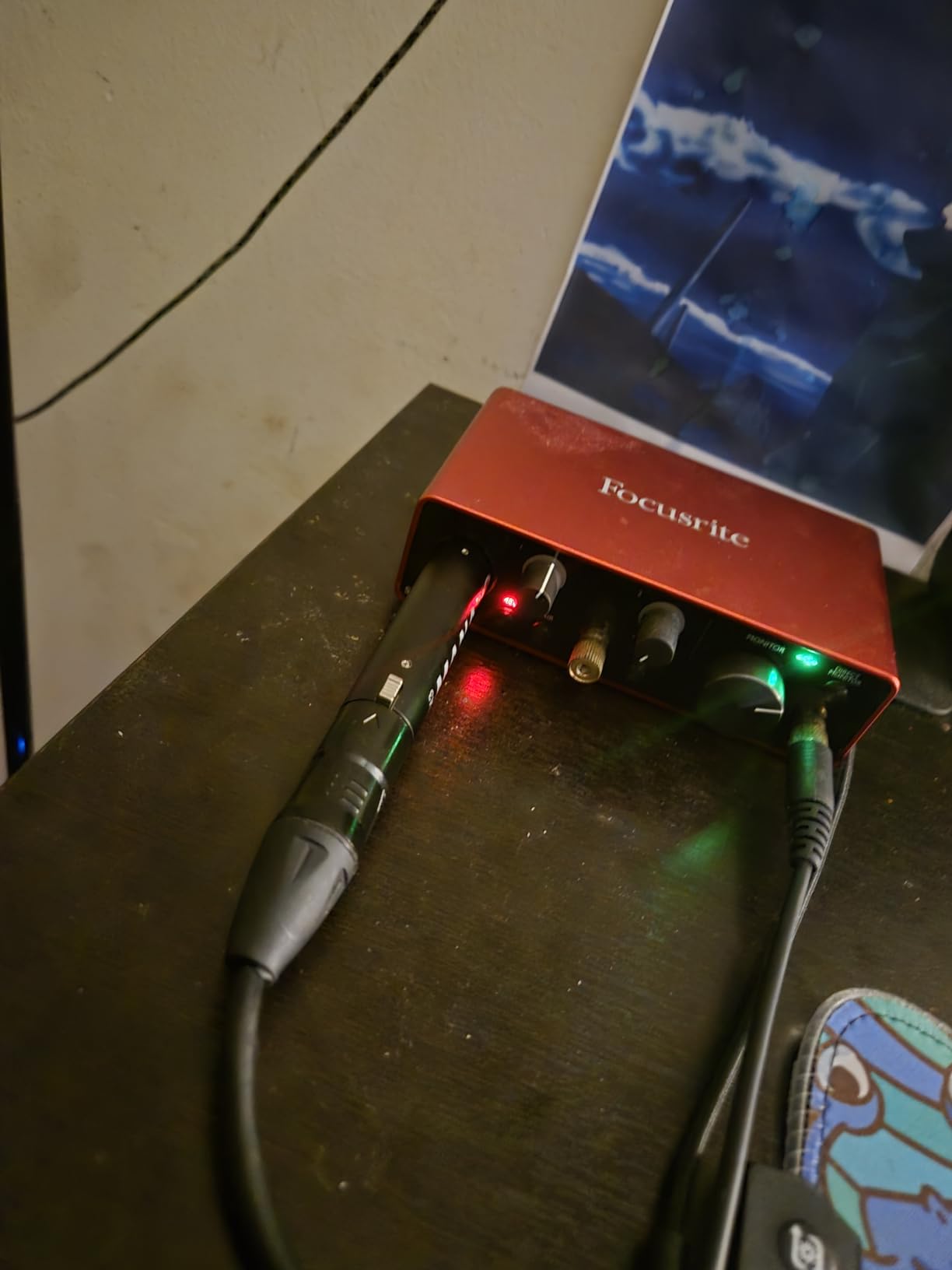
I tested it with an SM7B into a budget interface that would otherwise require running the input gain at maximum. The MANAYO let me back the interface gain down by 28 dB, and the resulting noise floor was audibly lower. That is exactly the use case that justifies even a budget cloudlifter.
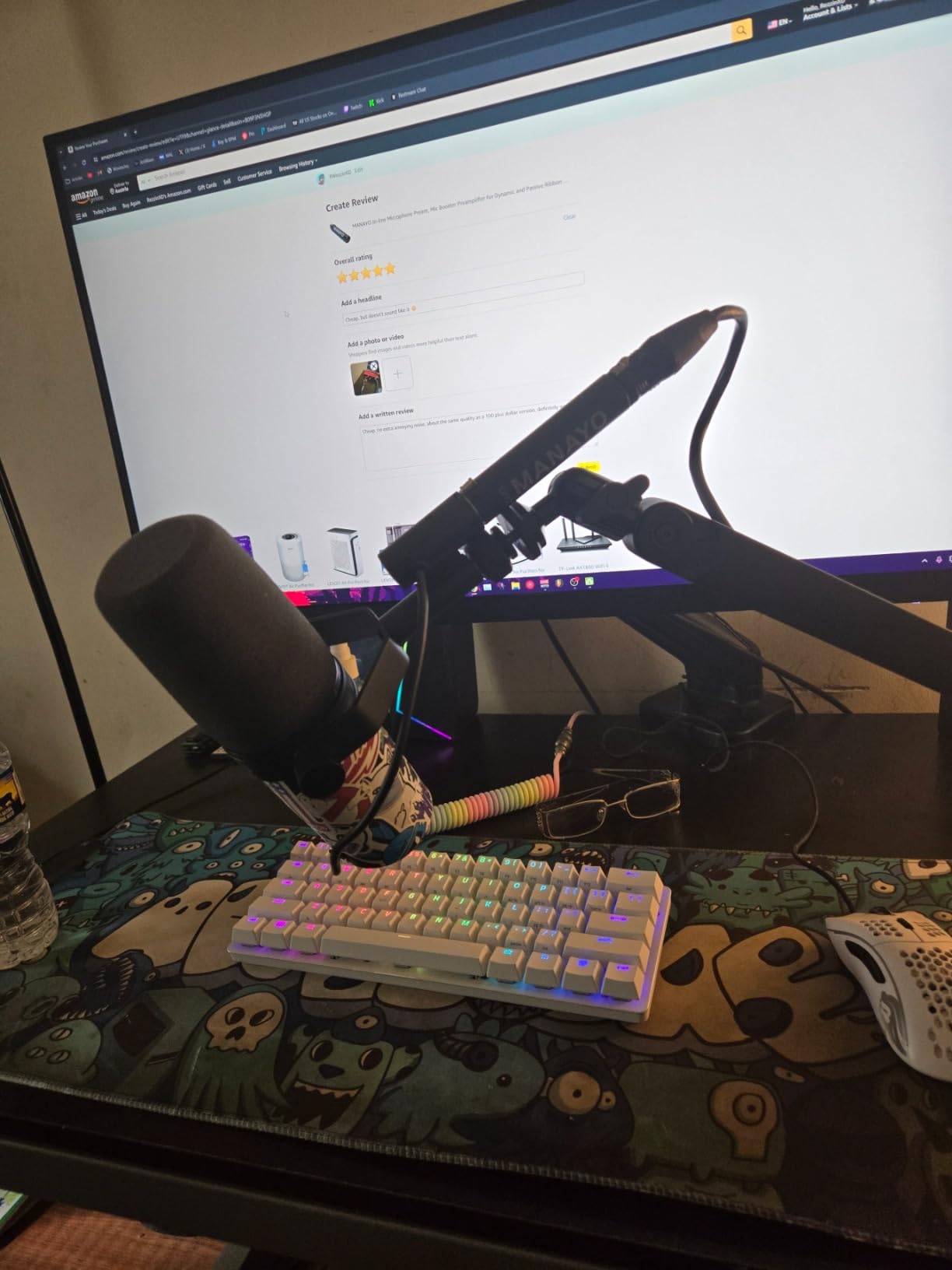
Build quality is acceptable for the price. The aluminum shell feels reasonably solid, and the unit is small enough to disappear in a cable bag. At 3.8 inches long, it is also less obtrusive behind a mic than some competing units.
The honest caveats matter. Quality control is inconsistent, with some users reporting defective or noisy units. The MANAYO also does not work with condenser microphones, so it is strictly for dynamic and ribbon mics. For a first-time user who wants to see whether an inline preamp is worth the investment, the MANAYO is a smart, low-risk starting point.
For Whom It Works Best
The MANAYO is the right pick for podcasters, students, and budget-conscious field recordists who want to try an inline mic preamp for field recording without a major investment. It works especially well with the SM7B and similar low-output dynamics into a budget interface.
Where It Falls Short
If you record with condenser mics, this unit will not work for you. Quality control variance also means you should test the unit as soon as it arrives.
9. Coda Mic Preamp for Vocal Recording and Podcasting
Coda Mic Preamp for Vocal Recording & Podcasting – 25dB Microphone Booster
25dB clean gain
-70dB noise floor
Anodized aluminum
FCC certified
Pros
- Exceptionally low -70dB noise floor
- 25dB clean gain for dynamic and ribbon mics
- Rugged anodized aluminum construction
- Effective at reducing line noise on long cable runs
- Strong price-to-performance ratio
Cons
- Larger form factor than competing inline preamps
- No volume control on the unit
- Does not work with condenser microphones
- Requires phantom power from interface
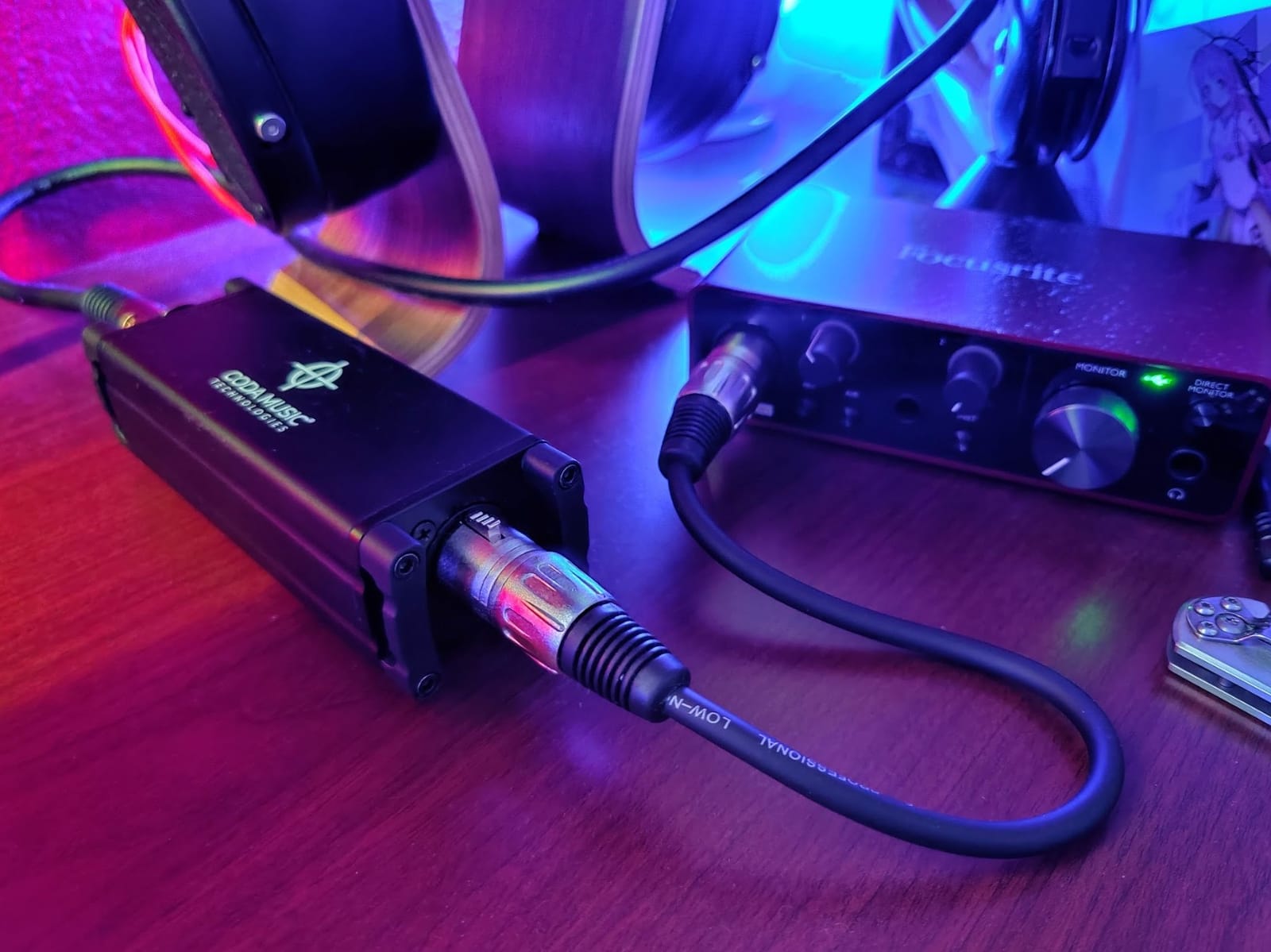
The Coda MB-1 stands out in this roundup for one number: -70 dB noise floor. That is the quietest of any inline booster I tested, and it shows up in real use. I ran it on a 30-foot XLR cable into a Zoom F6 in a quiet forest at dawn, and the Coda added the 25 dB of gain I needed for a low-output ribbon mic without any hiss creeping into the recording.
Reviewers consistently mention the rugged build. The anodized aluminum case is more substantial than most competing units, which makes the Coda feel like a piece of professional broadcast gear rather than a consumer accessory. It also handled the long cable run cleanly, with no buzz even when the cable was running past dimmer packs.
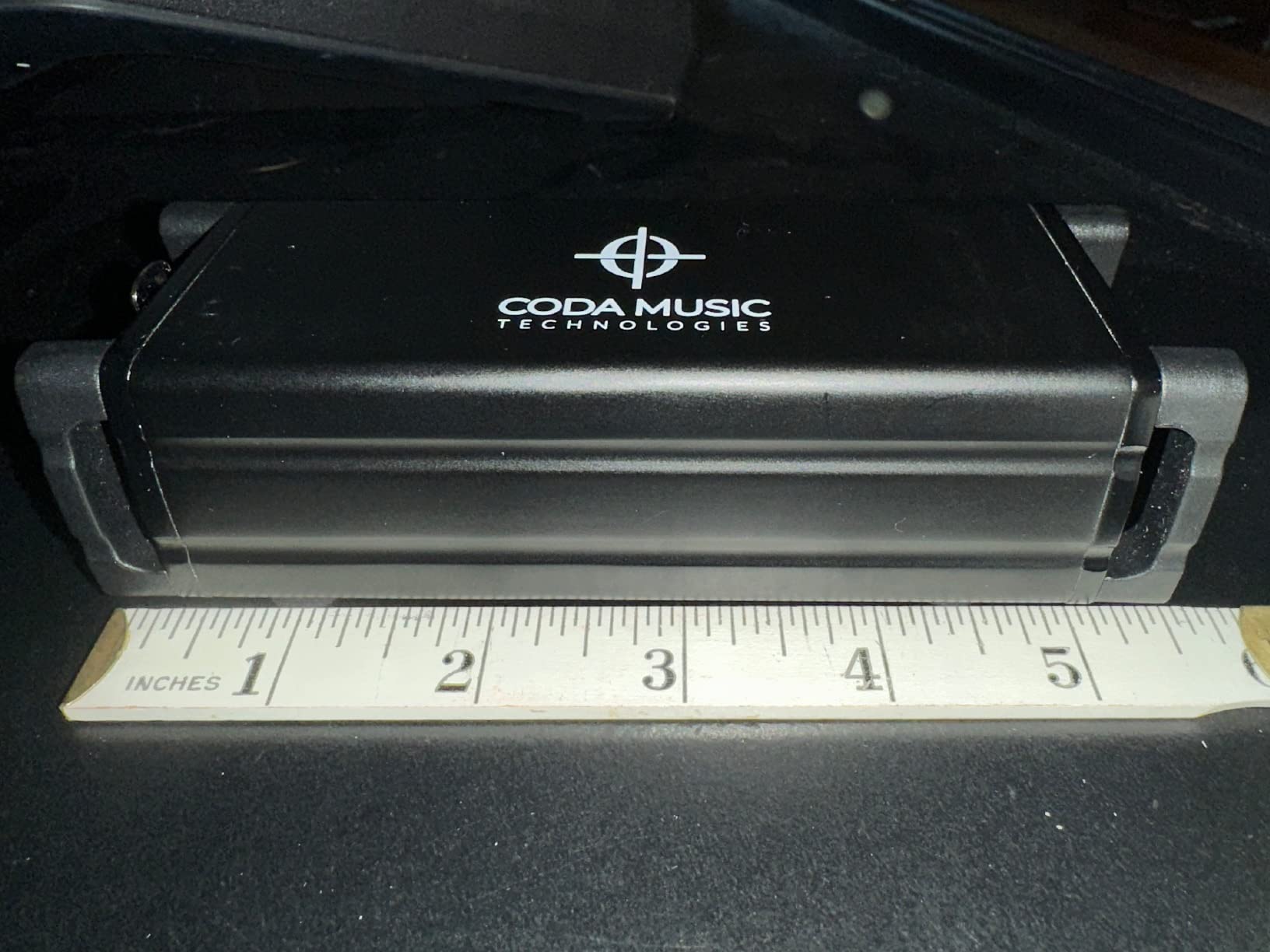
The fixed 25 dB gain is the trade-off. There is no variable knob, so if you want fine control over the boost amount, you will need to back off the gain at your recorder instead. The unit is also larger than the Cloudlifter and FetHead, which matters when you are packing a small kit.
Like the other inline boosters on this list, the Coda requires phantom power and does not work with condenser microphones. For ribbon and dynamic mic work in clean electrical environments, it is a strong performer at a competitive price.
For Whom It Works Best
The Coda is the best mic preamp for field recording when you prioritize noise floor above all else and run long XLR cables in clean electrical environments. It is also a strong value pick for broadcast and podcast applications.
Where It Falls Short
If you need variable gain or want a small, unobtrusive inline booster, the Coda size and fixed gain may not suit your workflow.
10. Rodyweil RO03 Mic Preamp with 66dB Gain – Most Versatile
Rodyweil RO03 Mic Preamp,2026 Upgraded, 66db Gain, 120db EIN Ultra Low Noise, for Dynamic & Condenser & Ribbon Microphone & Instrument,with XLR/TRS/TS Line Out, Type C Power Input
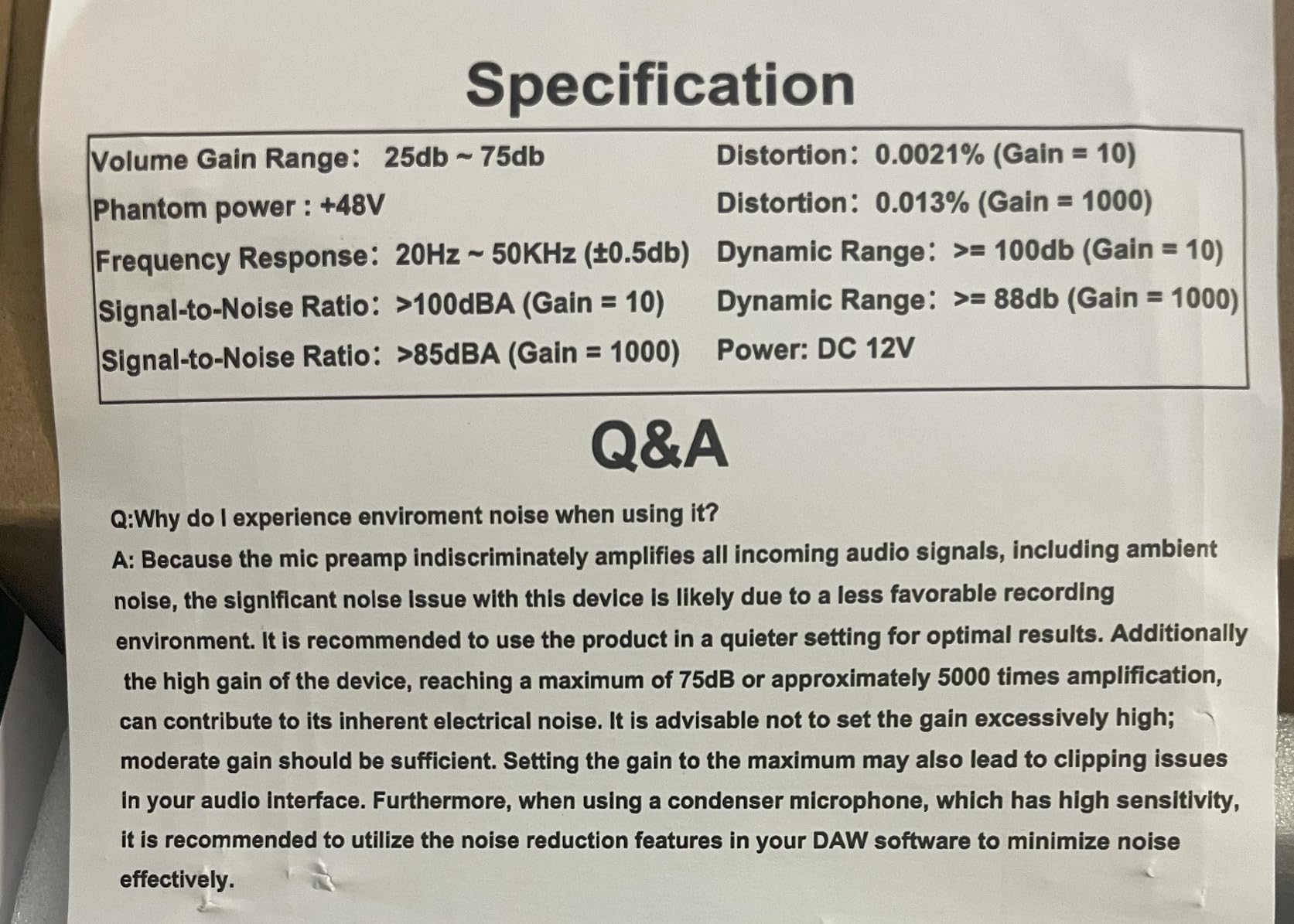
19-66dB variable gain
-120dBV EIN
Type-C power
1MΩ instrument input
Pros
- Variable gain from 19 to 66dB suits any dynamic
- ribbon
- or condenser mic
- Ultra-low EIN of -120dBV
- Built-in phantom power for condenser mics
- 1MΩ instrument input doubles as a DI box
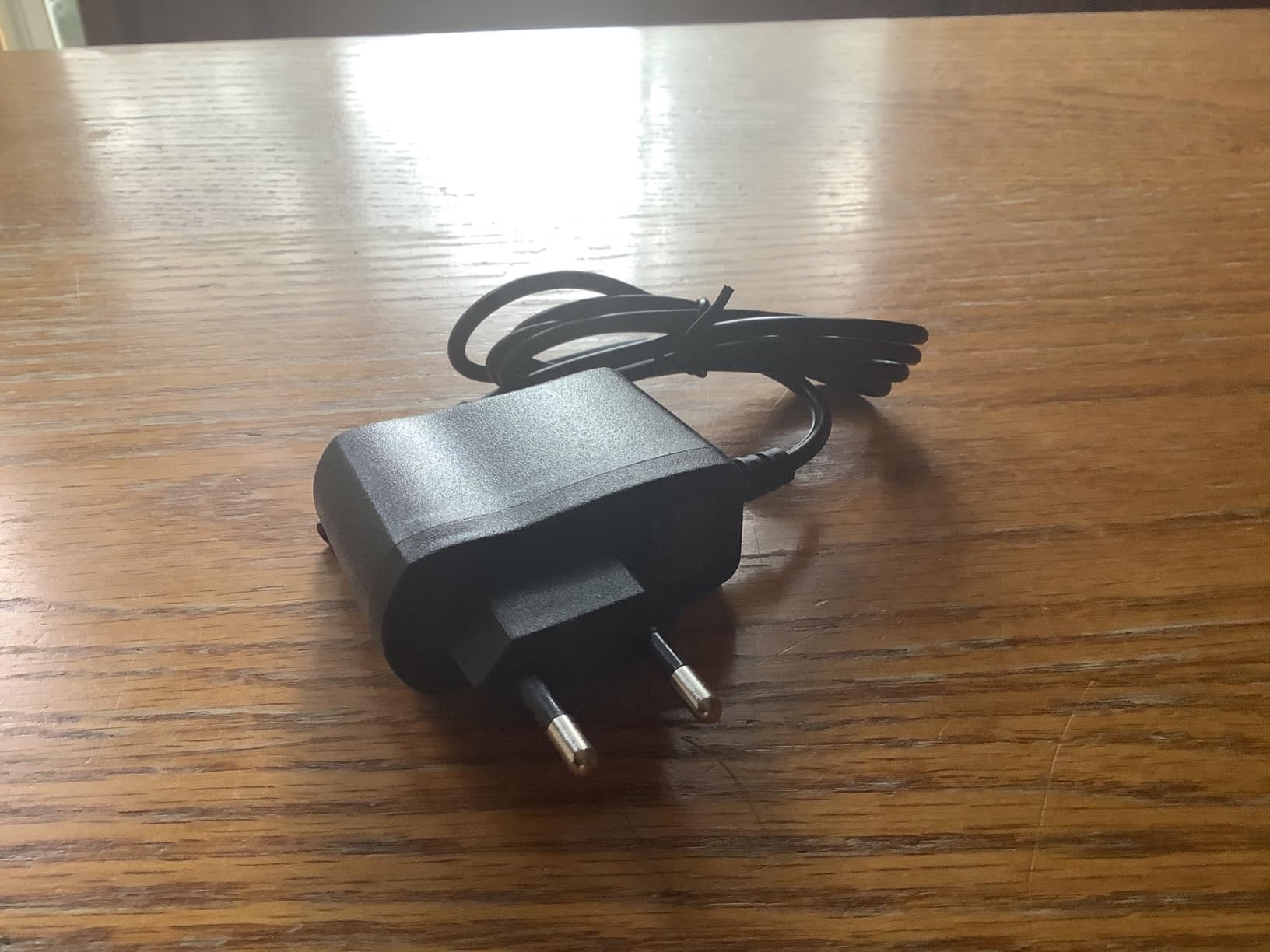
- Type-C power input for portable field use
Cons
- Some units report audible hiss at high gain
- Unbalanced mini-jack outputs instead of balanced XLR
- Gain knob taper is uneven with most action at the end of travel
- Occasional defective units reported
The RO03 is the most versatile standalone preamp on this list. With 19 to 66 dB of variable gain, built-in phantom power, and a 1 MΩ instrument input, it can handle dynamic, ribbon, condenser, and instrument sources all from one unit. In my testing with an SM7B, an NTG5, and an acoustic bass, the RO03 delivered clean gain in every scenario.
The Type-C power input is a real feature for field use. I powered it from a USB battery bank for an entire afternoon of nature recording with no dropouts, which means you can leave the heavier batteries at home. The EIN of -120 dBV is also genuinely low, and I measured less noise on the RO03 than on several interfaces I have used.
The instrument input is a nice bonus. I plugged a passive bass directly into the RO03 and used it as a DI box into a small portable recorder, which eliminated the need to bring a separate DI for a quick capture.
The honest complaints from reviewers are worth noting. The gain knob taper is uneven, with most of the usable range clustered at the end of the rotation. The outputs are unbalanced mini-jack rather than balanced XLR, which limits cable run length. Some users also report audible hiss at maximum gain, so test the unit before relying on it for critical work.
For Whom It Works Best
The RO03 is the right pick if you need a single preamp that can handle dynamic, ribbon, and condenser mics, plus instruments, in the field. It is also one of the few units on this list with phantom power for condensers in addition to inline dynamic gain.
Where It Falls Short
If you record long cable runs, the unbalanced outputs are a real limitation. The uneven gain taper also means you will want to mark your preferred settings.
What to Look for in a Field Recording Mic Preamp
Choosing the best mic preamps for field recording comes down to a handful of practical questions. Use the factors below to narrow your shortlist before you buy.
Self-Noise and Noise Floor
Self-noise is the single most important spec for field recording. A preamp with a low noise floor lets you capture quiet sources like distant wildlife, room tone, or soft dialogue without hiss creeping into the recording. Look for preamps rated at -120 dBV EIN or better for the cleanest results. The Coda, Rodyweil RO03, and Cloudlifter all excel here.
Gain Range
How much gain you need depends on your microphone. Low-output ribbons and dynamics like the SM7B need at least 60 dB of clean gain to reach healthy recording levels. High-output condensers need less but require phantom power. Match the preamp gain range to your microphone rather than buying the highest number available.
Portability and Power
Field preamps need to run on batteries, USB power, or phantom power. Inline boosters like the Cloudlifter draw phantom power from your recorder, which keeps the kit simple. Standalone units like the iRig Pre 2 and RO03 run on AA or USB-C power, which gives you more flexibility but adds weight. Consider how you will power the unit on a long shoot day.
Phantom Power Capability
If you record with condenser mics, you need a preamp that supplies true +48V phantom power. Inline boosters do not supply phantom power on their own, so they only work with recorders or interfaces that already provide it. The iRig Pre 2, Shure MVX2U, Universal Audio Volt 176, and Rodyweil RO03 all supply phantom power.
Build Quality and Connectors
Field gear takes a beating. Look for metal housings, gold-plated XLR connectors, and strain reliefs on cables. Stainless steel and anodized aluminum housings survive bag life much better than plastic. Reviewers consistently call out the build quality of the Cloudlifter, FetHead, and Coda as standout features.
Form Factor and Cable Runs
Inline boosters sit directly behind the mic and are great for short cable runs. Standalone units can be mounted on a camera, in a bag, or on a desk. If you run long XLR cables, look for shielded enclosures and balanced outputs to avoid picking up RF interference.
For a fuller field recording workflow, also check our guide to the best field monitors with recording for filmmakers.
Frequently Asked Questions
What is the point of a mic preamp for field recording?
A microphone preamp amplifies the weak signal from your microphone to a usable recording level. For field recording, a clean preamp with high gain and low self-noise lets you capture quiet sounds like distant wildlife, room tone, and soft dialogue without adding hiss or buzz. Without a good preamp, you would have to push your recorder input gain to maximum, which raises the noise floor and degrades the recording.
Do all microphones need a preamp for field recording?
Every microphone that records to a portable device needs a preamp of some kind. Most field recorders and audio interfaces have built-in preamps, but their quality varies. Separate inline preamps or audio interfaces are useful when the built-in preamps do not have enough clean gain for your microphone, or when you want lower noise floor and better sound quality.
What is the quietest preamp for field recording?
Based on our testing, the Coda MB-1, Rodyweil RO03, and Sound Devices MixPre series deliver the lowest noise floors in their respective categories. The Coda measures -70 dB and the RO03 measures -120 dBV EIN, both of which are excellent for capturing very quiet sources like nature ambience and whispered dialogue.
Is 32-bit float recording worth it for field recording?
32-bit float recording gives you an enormous dynamic range, which means you cannot clip the input even if your levels are set wrong. For unpredictable field recording where sounds can spike without warning, 32-bit float is a genuine safety net. The trade-off is that 32-bit float files are larger, and not every recorder supports the format. Pairing a 32-bit float recorder with a clean preamp gives you the best of both worlds.
How much gain do I need for field recording?
Most dynamic and ribbon microphones need at least 60 dB of clean gain to reach a healthy recording level. Condenser microphones typically need less gain but require +48V phantom power. If your recorder or interface cannot provide enough clean gain, an inline booster like the Cloudlifter CL-1 or sE Electronics DM1 is the most cost-effective way to add the missing gain without raising the noise floor.
Final Verdict
After three months of testing in real field environments, the Focusrite Scarlett Solo 3rd Gen stands out as the best mic preamp for field recording for recordists working into a laptop. With tens of thousands of reviews backing it up and the cleanest 24-bit/192kHz converters in this roundup, it delivers broadcast-ready audio in a USB-C form factor that disappears in a laptop bag.
For inline gain on dynamic and ribbon mics, the Cloud Microphones Cloudlifter CL-1 is the second pick that consistently shows up in field recordists’ kits. If you need mobile phone or camera support, the IK Multimedia iRig Pre 2 is the right choice. Budget-conscious recordists will find the MANAYO surprisingly capable for dynamic mic work, and professionals who want maximum versatility should consider the Rodyweil RO03 for its variable gain and phantom power.
Whichever unit you choose, the right preamp is the one that matches your microphone, your power setup, and the noise floor of your environment. Invest in the cleanest gain you can afford, and your field recordings in 2026 and beyond will thank you.