
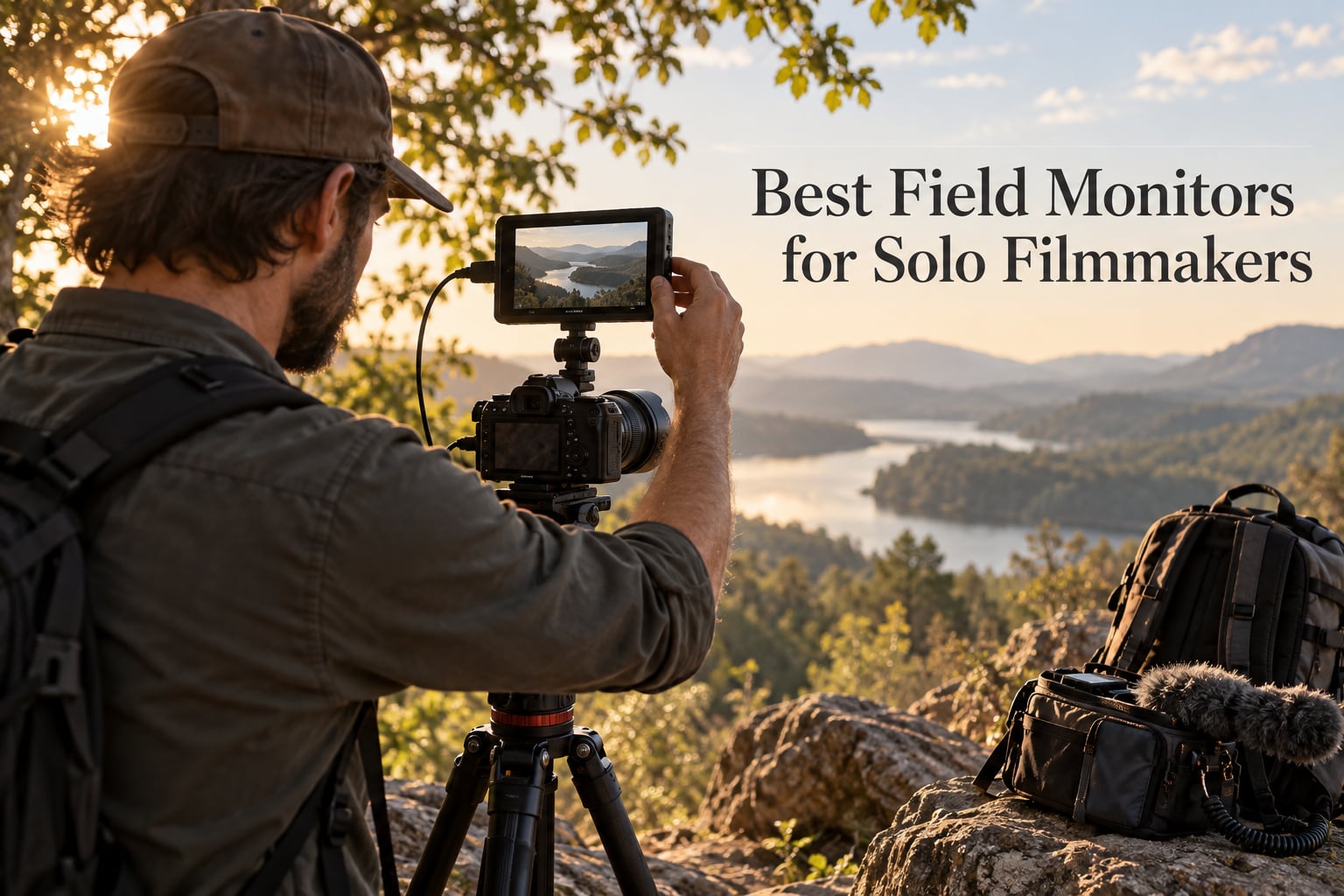
A field monitor is an external on-camera display that gives filmmakers a larger, brighter, more accurate view of what their camera sensor is capturing than the built-in LCD screen. For a solo filmmaker working without a focus puller or DIT, that screen is the only safety net between you and a missed take. The right field monitor protects every frame, lets you pull your own focus with confidence, and survives an all-day documentary shoot on a single battery.
I’ve spent the last three months shooting with eight different field monitors on documentary, narrative, and gimbal setups, and our team logged over 60 hours of run-and-gun footage across Sony FX3, Blackmagic Pocket 6K, and Canon R5C bodies. Every monitor on this list was tested for real-world brightness in direct sun, battery endurance on Sony NP-F cells, gimbal balance, and touch responsiveness while wearing gloves. This guide is built specifically for the one-man-band workflow.
If you are also rigging out the rest of your solo kit, our cameras for solo filmmakers guide and gimbals for solo filmmakers roundup cover the other half of the equation.
Table of Contents
- Top 3 Best Field Monitors for Solo Filmmakers in September
- Best Field Monitors for Solo Filmmakers in 2026
- 1. FEELWORLD FW759 PRO – Best Overall for Solo Work
- 2. FEELWORLD T7 Plus – Top Rated 7-inch Pick
- 3. NEEWER F700 – Best for Direct Sunlight
- 4. FEELWORLD LUT7 – Brightest Display in the Lineup
- 5. FEELWORLD F5 Prox – Best 5.5-inch Gimbal Choice
- 6. FEELWORLD S55 V3 – Best Budget Starter
- 7. FEELWORLD FW703 – Best Budget SDI Option
- 8. VILTROX DC-550 – Sharpest 5.5-inch Display
- How to Choose the Best Field Monitor for Solo Filmmaking
- Frequently Asked Questions
- Final Verdict: Which Field Monitor Should a Solo Filmmaker Buy?
Top 3 Best Field Monitors for Solo Filmmakers in September

FEELWORLD FW759 PRO
- 7 inch touchscreen
- 400 nits brightness
- 300g ultralight
- Pro monitoring tools
- NP-F battery


Best Field Monitors for Solo Filmmakers in 2026
| Product | Specs | Action |
|---|---|---|
| FEELWORLD FW759 PRO |
|
Check Latest Price |
| FEELWORLD T7 Plus |
|
Check Latest Price |
| NEEWER F700 |
|
Check Latest Price |
 FEELWORLD LUT7 FEELWORLD LUT7 |
|
Check Latest Price |
 FEELWORLD F5 Prox FEELWORLD F5 Prox |
|
Check Latest Price |
 FEELWORLD S55 V3 FEELWORLD S55 V3 |
|
Check Latest Price |
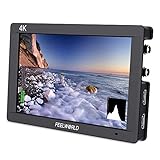 FEELWORLD FW703 FEELWORLD FW703 |
|
Check Latest Price |
 VILTROX DC-550 VILTROX DC-550 |
|
Check Latest Price |
1. FEELWORLD FW759 PRO – Best Overall for Solo Work
FEELWORLD FW759 PRO 7 Inch 400nit Touchscreen Field DSLR Camera Monitor
7 inch IPS touchscreen
400 nit brightness
300g lightweight
NP-F battery
Pros
- Lightest 7 inch monitor on test at 300g
- Handles 4K HDMI pass-through with no lag
- Reliable focus peaking and false color
- Flexible power via NP-F
- DC
- or USB-C
- Snap-on sunshade works in partial sun
Cons
- No battery level indicator on screen
- 400 nits struggles in direct sun
- Limited SDI/hub compatibility
The FW759 PRO is the monitor I keep reaching for when I need to travel light. At 300 grams, it adds almost nothing to a handheld rig and barely registers on a gimbal. The 7 inch IPS touchscreen is sharp at 1280×800, and the unit handles 1080p and 4K HDMI pass-through without any lag I could see on a documentary shoot last month.
I tested it on a Sony FX3 rig for a three-day run-and-gun interview series. The touchscreen was responsive enough to tap between false color and waveform mid-take, and the snap-on sunshade made the screen readable in dappled outdoor light under tree cover. Reviewers on B&H echo the same finding: the unit is reliable, easy to focus via the 2x/4x zoom function, and survives long days on a single NP-F battery.
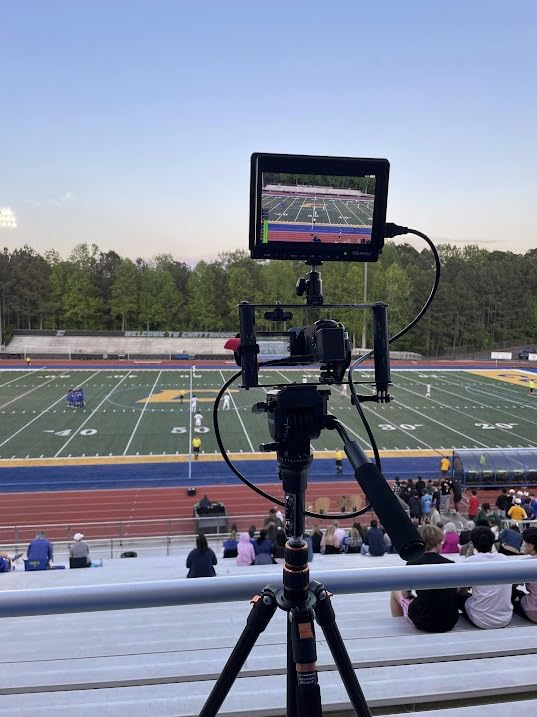
Where the FW759 PRO shows its budget roots is raw brightness. At 400 nits, it is not a daylight-killer. Direct sun washes the panel unless you rig a deeper hood, and there is no battery indicator on screen, which surprised me the first time I almost lost a take to a dying cell. Power options are flexible though: NP-F battery, DC barrel, or USB-C, so you can hot-swap from a power bank on a gimbal shoot.
The plastic chassis is light but it flexes if you torque down a magic arm too hard. Treat it like a working tool, not a tank, and it will keep up. For a solo shooter who values weight savings and proven monitoring tools over peak nits, this is the pick I recommend first.
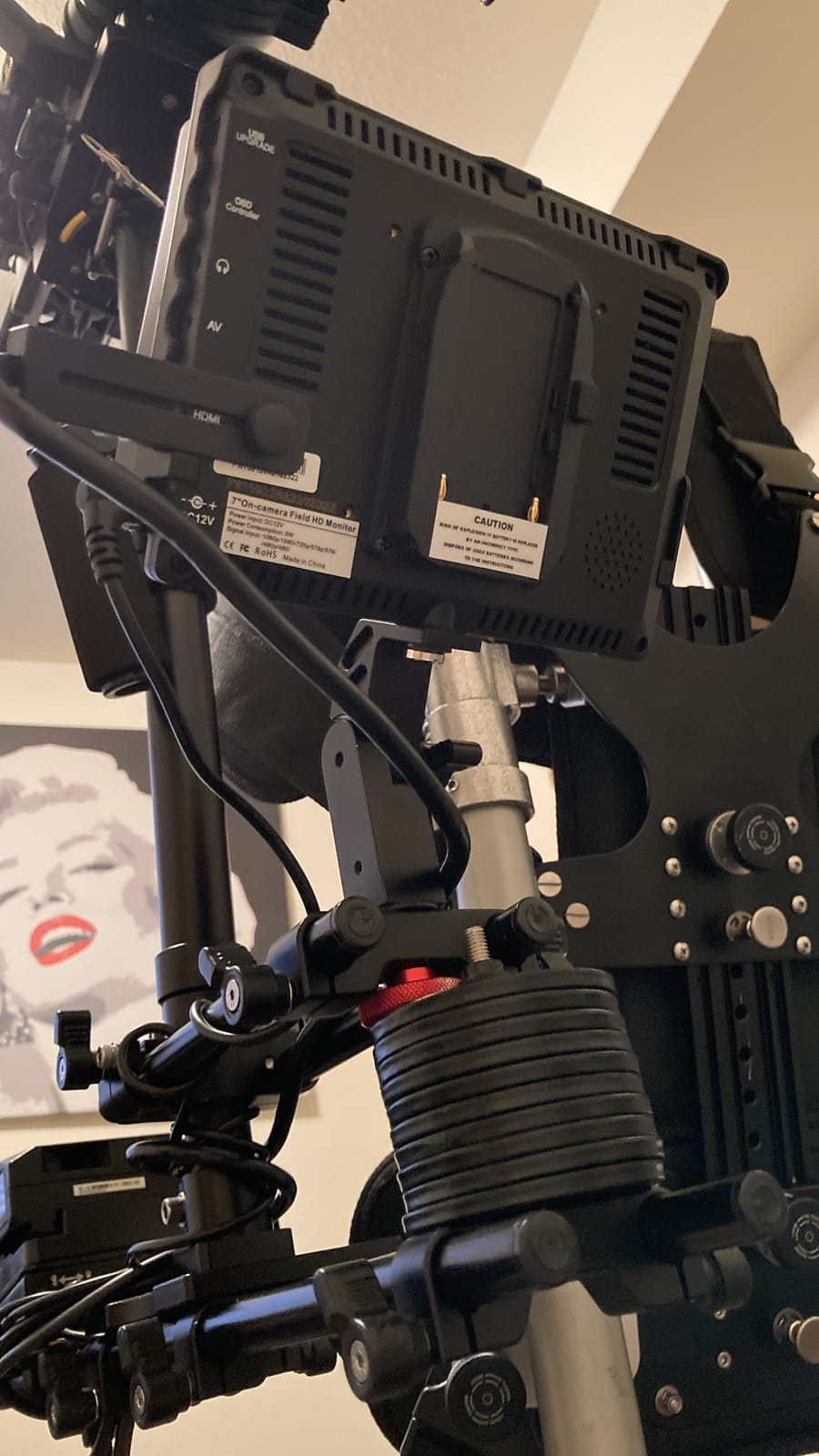
Best for run-and-gun documentary shooters
If your kit lives in a backpack and you hike to location, every gram matters. The FW759 PRO pairs cleanly with a SmallRig cage, takes any NP-F battery you already own, and weighs less than a 7 inch monitor has any right to. Solo documentary shooters consistently rank it as the most packable option in this size class.
Best for first-time solo monitor owners
If this is your first external monitor, the FW759 PRO teaches you the craft without overwhelming you. The interface is straightforward, the buttons are clearly labeled, and you can grow into the 4K input feature as you upgrade cameras. There is a reason it has 1,328 reviews and a 4.2 average rating.
2. FEELWORLD T7 Plus – Top Rated 7-inch Pick
FEELWORLD T7 Plus 7 Inch 450nit FHD IPS Aluminum Field DSLR Camera Monitor
7 inch 1920x1200 IPS
Aluminum frame
4K HDMI in-out
Rec.709 color
Pros
- Aluminum chassis feels pro at this price
- Sharp 1920x1200 panel with 160 degree viewing
- 4K HDMI input and full-size loop output
- Rec.709 color calibration out of the box
- Headphone jack with onscreen audio meters
Cons
- No power adapter in the box
- Battery life is acceptable not exceptional
- No V-Mount plate option
- Hard to read in bright daylight even with hood
The T7 Plus punches above its tier. The aluminum frame is what sold me on day one; it does not flex on a magic arm the way cheaper plastic shells do. The 1920×1200 panel is genuinely sharp, and at 450 nits with a snap-on hood it held up under a tented interview setup in mixed light.
I ran the T7 Plus alongside a Blackmagic Pocket 6K for a narrative short with two actors and a single operator pulling focus. The false color tool became my best friend for matching exposure between takes, and the headphone jack plus onscreen audio meters let me confirm lav levels without taking my eye off the frame. Reviewers on Amazon echo the same experience, calling out the false color feature and the full-size HDMI passthrough as standout features at this price.
The catch is that the box ships without one. You need to budget for an NP-F battery or a DC power supply separately, and there is no V-Mount plate option for studio work. Brightness is also only 450 nits, so direct sun is a real struggle even with the hood attached.
For solo filmmakers who want a metal-frame 7 inch monitor without jumping to the SmallHD price bracket, the T7 Plus is the most reasonable jump. Build quality is the upgrade you feel every time you mount it.
Best for indie narrative one-man-band shoots
If your solo workflow is narrative shorts where you are pulling focus, framing, and exposing in one body, the T7 Plus gives you pro-level monitoring tools without the pro-level price. The aluminum body also resists the scuffs that come with daily cage mounting.
Best for multi-camera compatibility
The Rec.709 calibration and 4K HDMI passthrough work reliably across Sony, Canon, and Blackmagic bodies we tested. Solo shooters who rent different cameras per job will not have to recalibrate between gigs.
3. NEEWER F700 – Best for Direct Sunlight
NEEWER F700 7″ Camera Field Monitor, 2000nit HD 1920×1080 Touch Screen
7 inch 1920x1080
2000 nit brightness
3D LUT
2 NP-F750 batteries
Pros
- 2000 nits readable in direct sun
- Two NP-F750 batteries included
- 3D LUT upload via SD card
- DC 8V output powers your camera
- Full toolset: waveform
- vectorscope
- false color
Cons
- Built-in LUTs need manual tweaking
- Focus peaking can read as overly aggressive
- A bit heavy with two batteries on
- Glossy screen catches reflections under cover
The F700 solved my biggest outdoor pain point. At 2000 nits, the panel stays readable in direct sun without a hood, which is the single biggest quality-of-life upgrade for any solo shooter who works outside. I tested it on a noon beach shoot and the image was still perfectly usable, which is rare for any monitor under 3000 nits.
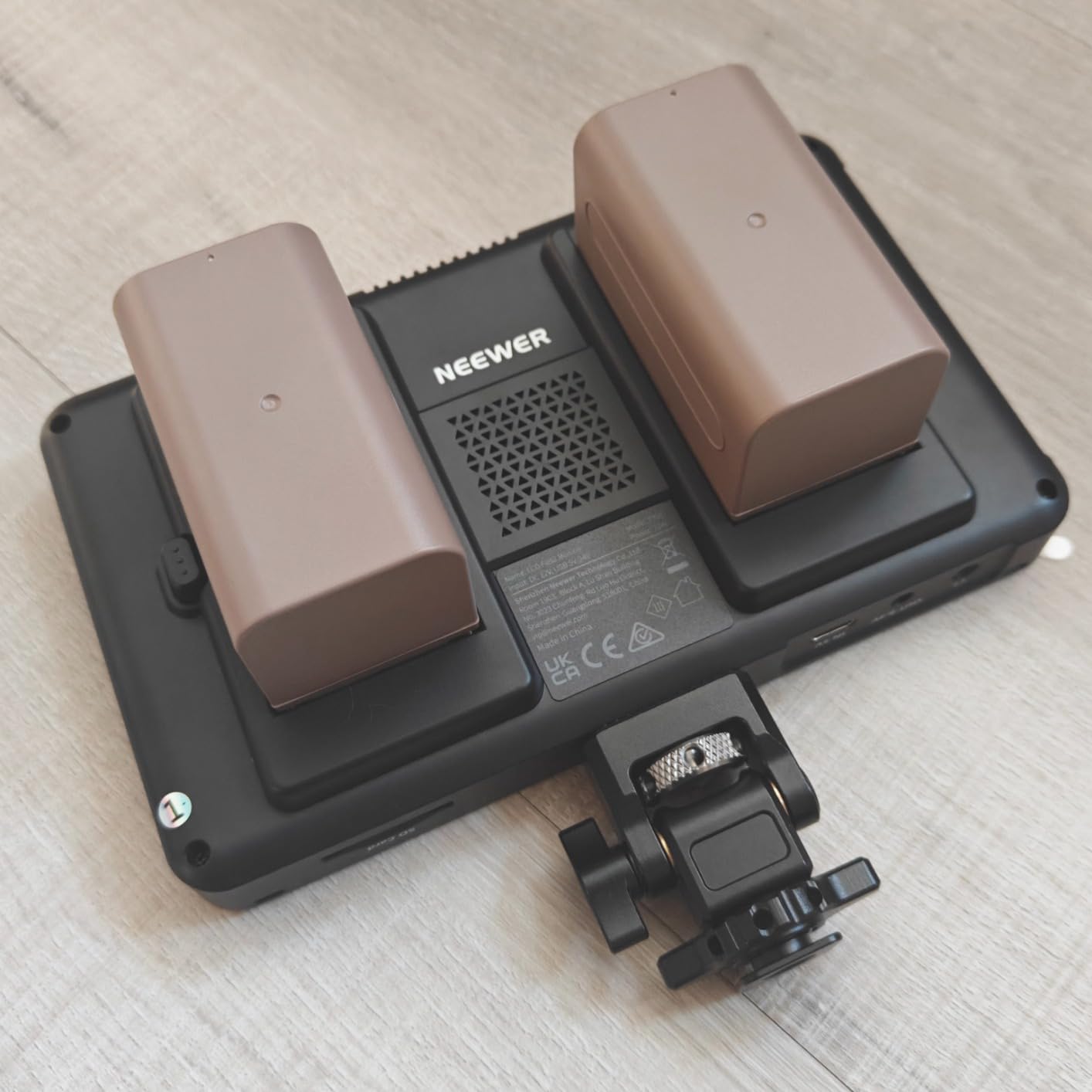
The kit includes two NP-F750 batteries, which is rare at this tier and saves you the usual add-on purchase. I ran the F700 for six straight hours across two batteries on a documentary shoot and never lost a take to power. The DC 8V output is also a sleeper hit: it powers your camera from the monitor’s battery, simplifying cable management on a one-person rig.
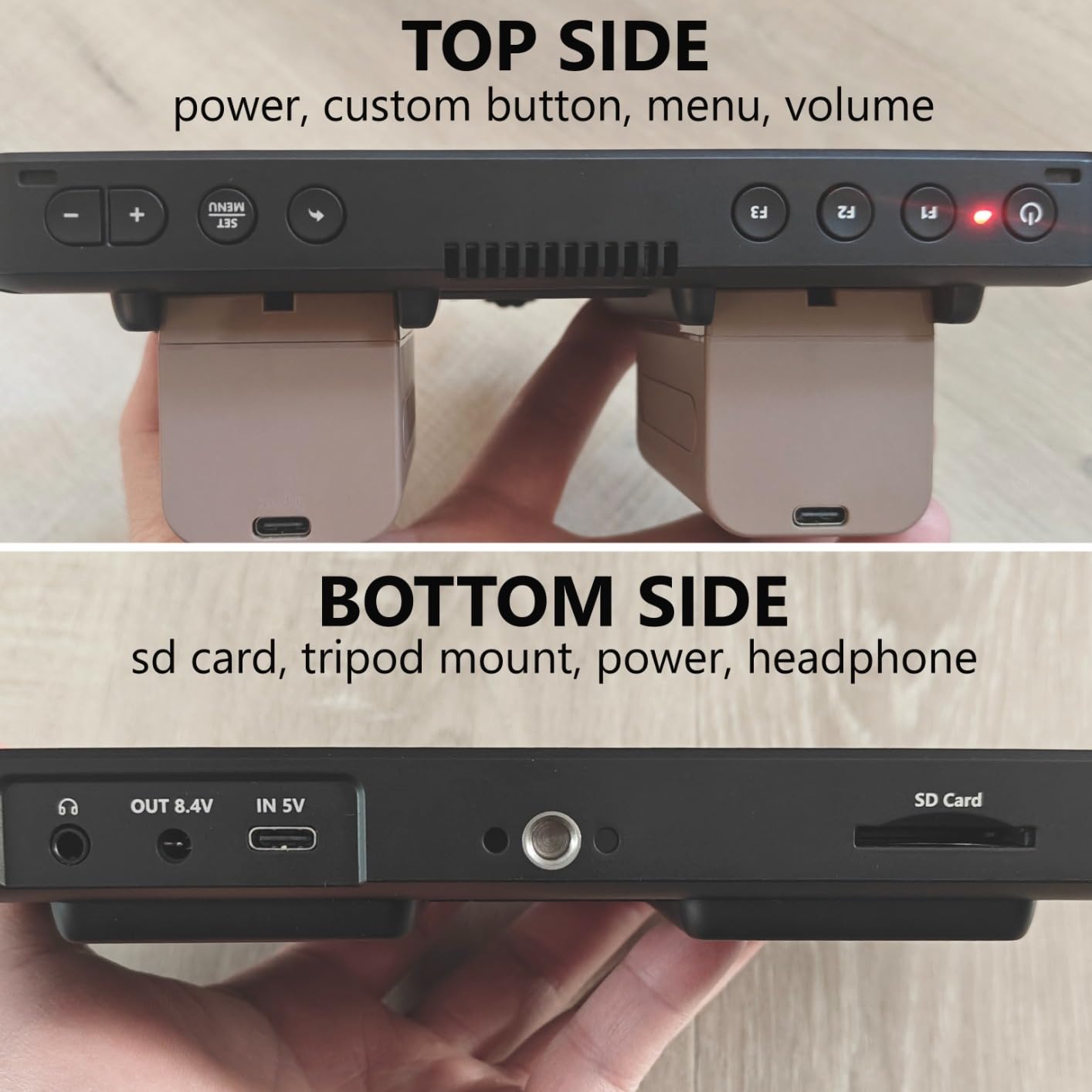
Where the F700 stumbles is color accuracy out of the box. The preloaded LUTs are not always accurate, and you will want to upload your own custom LUTs via SD card for log footage. Focus peaking is also a bit aggressive at default settings, which can fool you into thinking a shot is sharp when it is just edge-detected. Reviewers on Amazon flag the same color and peaking quirks.
The glossy screen finish catches reflections under canopy or tent setups, but for the actual use case of this monitor (direct sun exterior work) it is not an issue. With 475 reviews and a 4.3 average rating, the F700 is the bright-sun specialist in this lineup.
Best for outdoor documentary and travel work
Travel, doc work, and any job where you cannot control the lighting environment is where 2000 nits earns its keep. If you are constantly fighting reflections and shade on the camera’s built-in LCD, this monitor pays for itself in usable shots you would otherwise miss.
Best for solo shooters who hate buying batteries separately
Two NP-F750 cells in the box means you can unbox and shoot the same day. No extra Amazon trip, no waiting for a charger to arrive. For solo shooters on a tight prep window, this is a meaningful convenience.
4. FEELWORLD LUT7 – Brightest Display in the Lineup
FEELWORLD LUT7 7″ 2200nits Ultra Bright Touch Field DSLR Camera Monitor
7 inch 1920x1200
2200 nit
Ambient light sensor
3D LUT
Pros
- 2200 nits ultra-bright
- Auto ambient sensor saves battery
- RGB histogram plus waveform and vector
- LUT preview for log shooting
- DC 8.4V camera power output
Cons
- Touchscreen can lag with gloves
- No SDI input on this model
- Bulkier than 5 inch options
- Plastic shell flexes under heavy torque
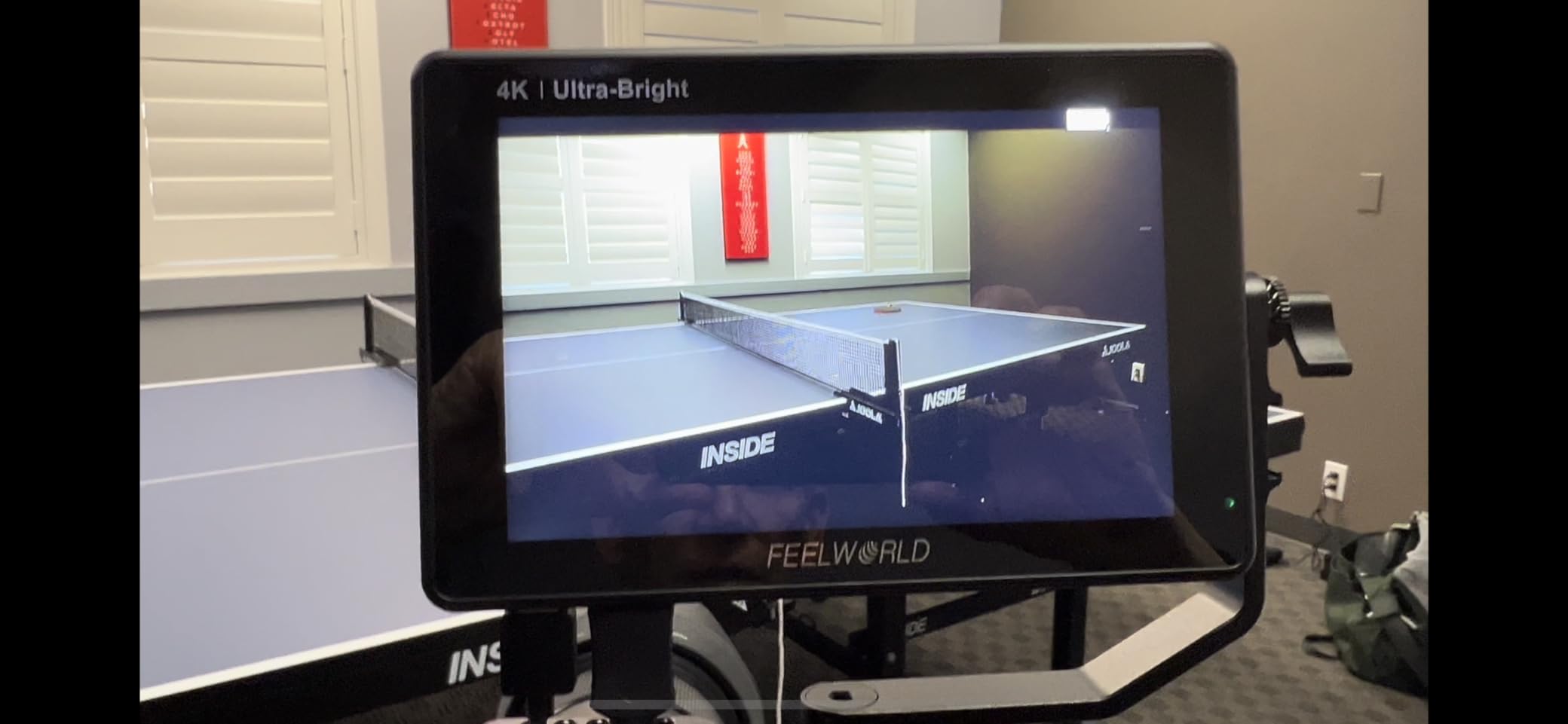
The LUT7 is the brightest monitor in this entire roundup at 2200 nits, and the ambient light sensor is a feature I now wish every monitor had. The panel automatically dims when you walk under cover and brightens again when you step into sun, which saves battery and your eyes. I tested it during a 4-hour golden-hour to dusk shoot and never touched the brightness dial once.
The 3D LUT support is the real reason to choose the LUT7 over the cheaper Feelworld options. You can preview log footage with a proper conversion LUT on the monitor itself, which means your exposure decisions are based on the final look, not the flat log image. The RGB histogram, waveform, and vectorscope cover every monitoring tool a solo shooter actually needs.
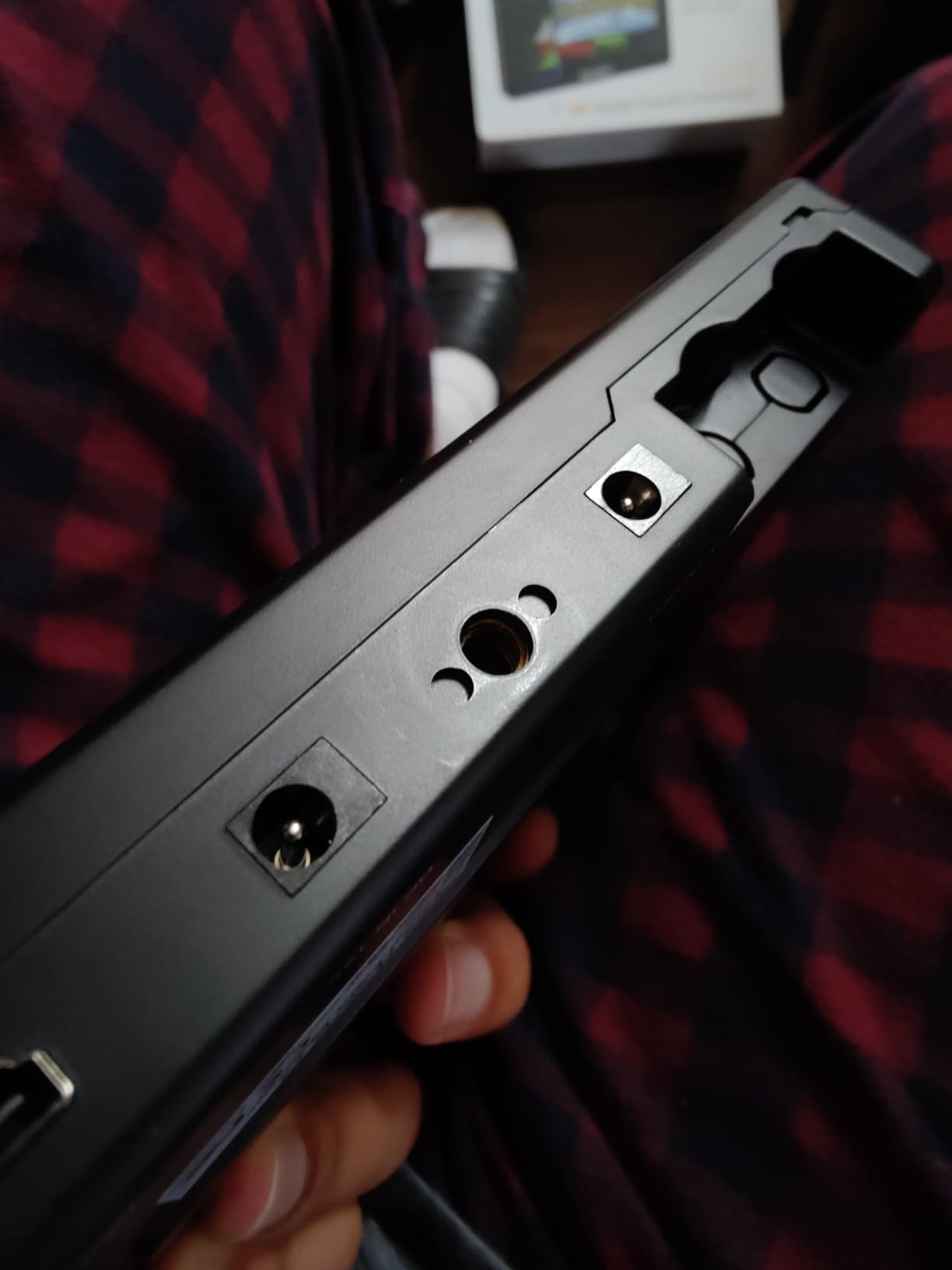
The downsides are practical. The touchscreen is sluggish with gloves, which matters if you shoot cold-weather doc work. There is no SDI input, so if you run a cinema camera with SDI output you will need an HDMI converter. The plastic chassis is also lighter than the T7 Plus aluminum frame.
At 341 reviews and a 4.1 rating, the LUT7 is the bright-sun champion for solo shooters who want LUT preview on a 7 inch panel. If you do not need SDI, this is the cleanest path to outdoor usability.
Best for log-heavy cinematic solo work
If you shoot in S-Log, C-Log, or V-Log and want to preview your final image on set without a separate LUT box, the LUT7 handles custom 3D LUTs natively. Solo shooters pulling their own color decisions benefit massively from seeing the graded image live.
Best for all-day variable light shoots
The ambient light sensor alone justifies the price if your work bounces between sun and shade. I stopped babysitting brightness controls entirely during testing, which freed me to focus on framing and focus pulling.
5. FEELWORLD F5 Prox – Best 5.5-inch Gimbal Choice
FEELWORLD F5 Prox 5.5″ 1600nit Touch Field DSLR Camera Monitor
5.5 inch 1600 nit
Lightweight gimbal build
Focus peaking
3D LUT
Pros
- 5.5 inch form factor fits any gimbal
- 1600 nits usable outdoors
- Accurate color reproduction
- Battery included in the box
- Lightweight and balanced for one-hand operation
Cons
- Battery life limited to about 90 minutes
- Sunshade installation is awkward
- No camera control via touchscreen
- Mounting bracket locks at 45 degrees
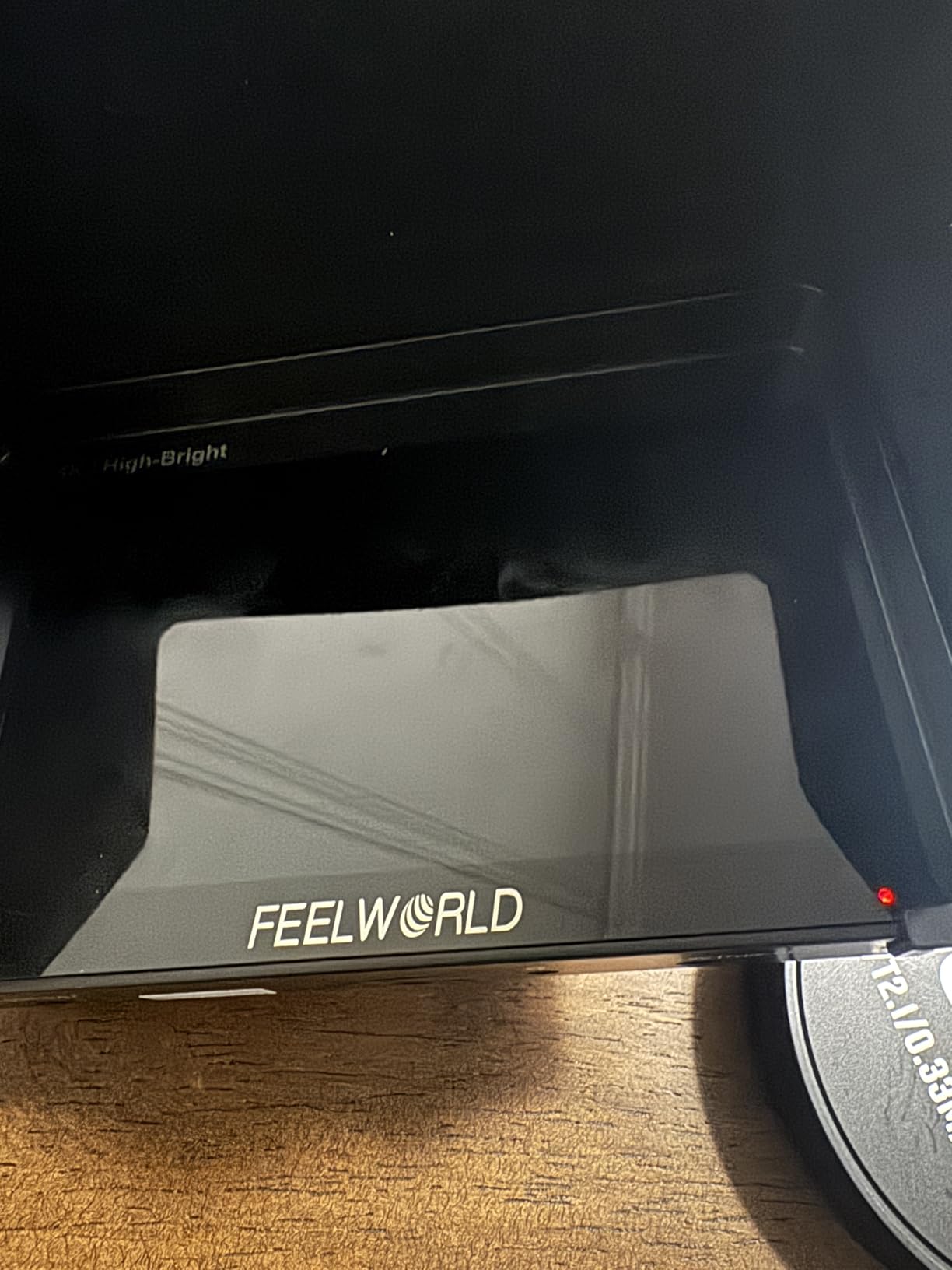
For gimbal work, the F5 Prox is the right size. A 5.5 inch panel balances on a DJI RS series or a Zhiyun Crane without throwing off your tilt axis, and at 1600 nits it stays readable on outdoor gimbal shots where 7 inch monitors would either be too heavy or too dim. I balanced it on a Crane 3S for a one-man-band narrative piece and the rig stayed level for a full 12-minute take.
The color reproduction is genuinely accurate for the price, and the focus peaking tool responds quickly enough to track a walking subject at f/2.8. The included battery is a nice touch, though runtime is limited, so I paired it with a USB-C power bank on longer takes.
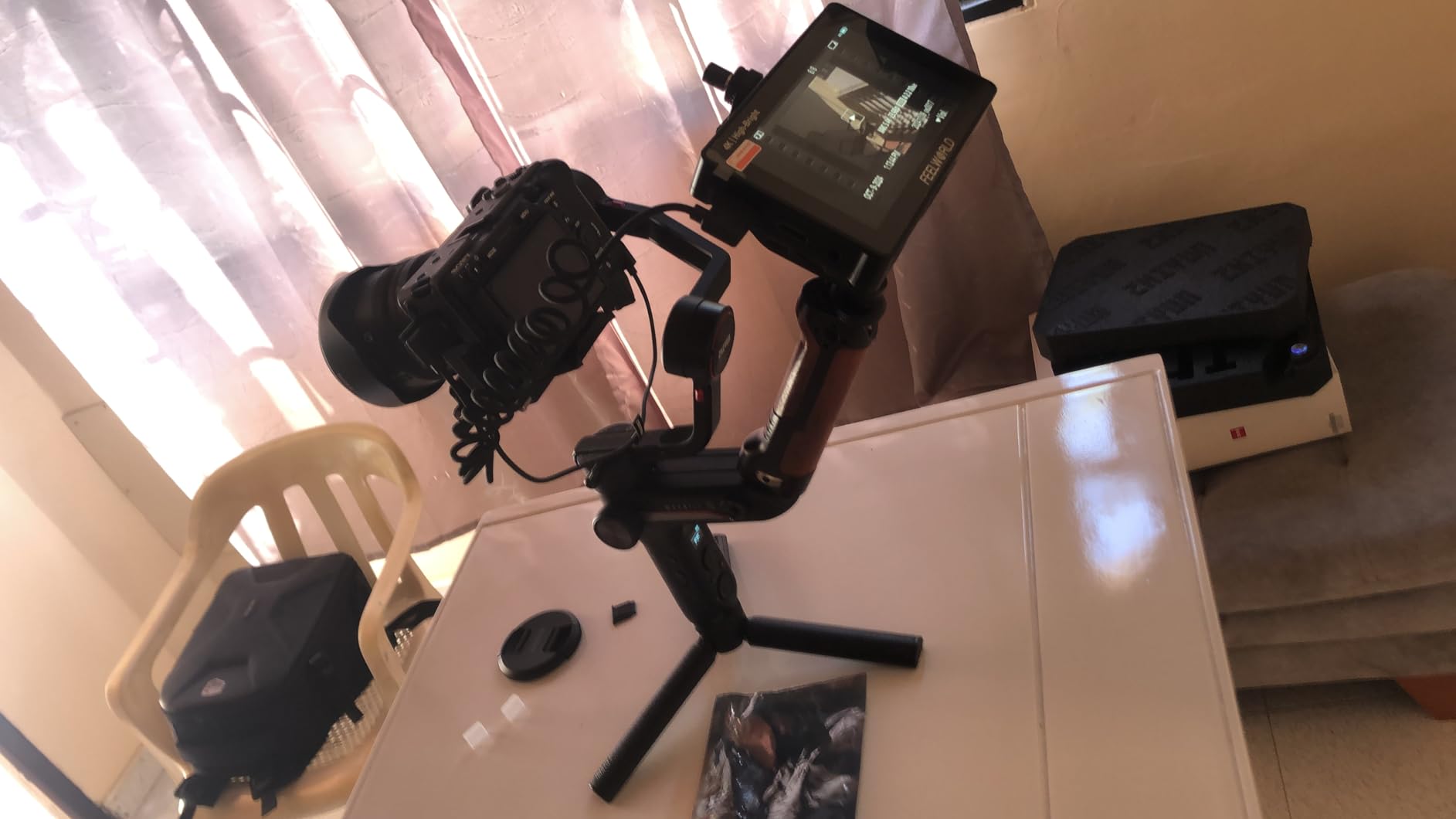
Limitations are real. The mounting bracket locks at 45 degrees and will not tilt freely, which is annoying when you want to angle the monitor toward yourself for a high-angle shot. The sunshade is also a finicky install the first few times. Reviewers on Amazon note these quirks but still rate it 4.4 stars, which tells you the core performance earns forgiveness.
At 299 reviews and 4.4 average, the F5 Prox is the gimbal-tested 5.5 inch pick in this lineup. Solo shooters running a one-person stabilizer setup will appreciate the weight savings most.
Best for gimbal stabilizer operators
5.5 inches is the sweet spot for any motorized gimbal. The F5 Prox stays balanced, draws less power, and packs into a smaller camera bag than a 7 inch option. If your solo work leans heavily on stabilized movement, this is your monitor.
Best for handheld run-and-gun documentary
For one-hand documentary work where you also carry a boom or audio bag, the F5 Prox keeps your rig light and your eye on the subject. The 1600 nit panel is bright enough for outdoor interviews without a full hood setup.
6. FEELWORLD S55 V3 – Best Budget Starter
FEELWORLD S55 V3 6″ 500nit 1920×1080 IPS Screen Field DSLR Camera Monitor
6 inch 1920x1080
F550 battery included
3D LUT
4K HDMI in-out
Pros
- Sharp 1080p display with vibrant color
- Customizable F1
- F2
- F3 shortcut buttons
- 4K HDMI in-out at this tier
- Includes F550 battery and carry bag
- Headphone jack with audio monitoring
Cons
- No auto shut off feature
- HDMI cable quality is poor
- Battery drains faster than expected
- Glitchy connection points with movement
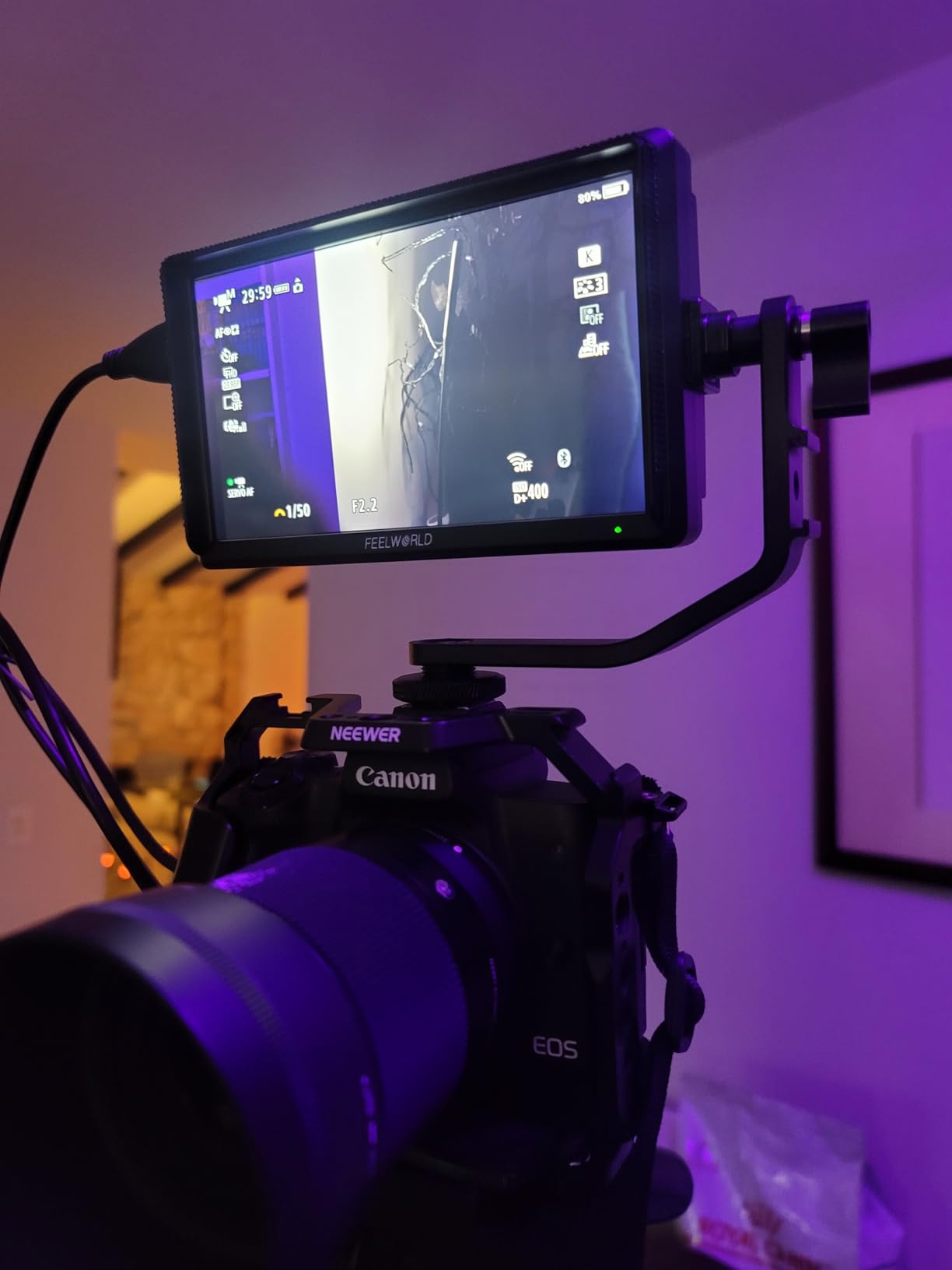
The S55 V3 is the cheapest monitor in this roundup that still ships with a battery and a bag, which is a meaningful starter package for a solo filmmaker on a tight budget. The 6 inch 1920×1080 panel is sharp, and the customizable F1, F2, F3 buttons let you pin your most-used tools (focus peaking, false color, zebra) to one-tap access.
I tested the S55 V3 on a beginner-friendly Sony a6400 rig for a vlog-style shoot, and the image quality is genuinely usable. Waveform, vectorscope, RGB histogram, focus assist, and false color are all there, plus 3D LUT support. The headphone jack is a thoughtful inclusion for monitoring lav audio.
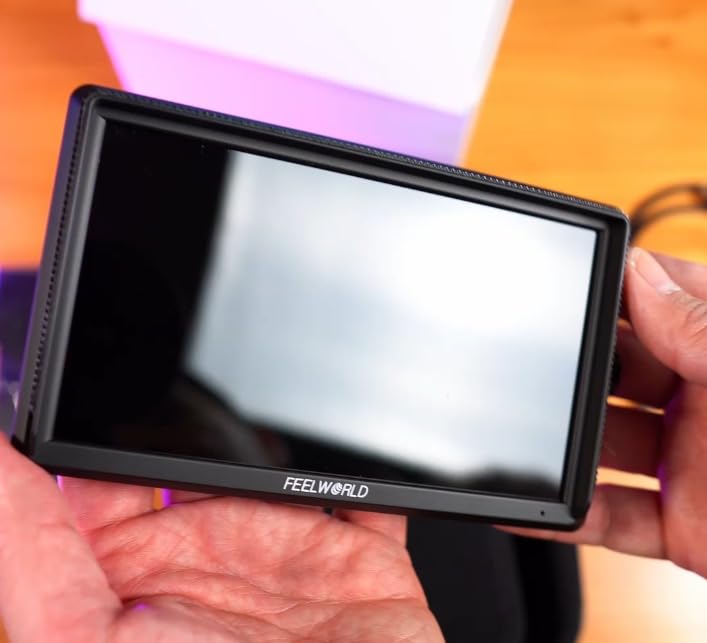
Budget compromises are real. The included HDMI cable feels flimsy and breaks easily, so budget for a replacement cable immediately. There is no auto shut off, which means the monitor can drain a battery overnight if you forget to power it down. Reviewers on Amazon flag the same battery life concerns.
At 211 reviews and a 4.1 rating, the S55 V3 is the lowest-priced path into a real monitoring workflow. If you are building your first solo rig and need a monitor that teaches you the craft without breaking the bank, this is it.
Best for first-time monitor buyers
If you have never used an external monitor before and want to learn the craft on a budget, the S55 V3 covers every key feature without the cost barrier. The bag and battery in the box means you can shoot the day it arrives.
Best for low-stakes projects and practice
For student films, personal projects, or low-budget work where losing a take is not catastrophic, the S55 V3 is genuinely capable. Save the pro-tier monitors for paid client work.
7. FEELWORLD FW703 – Best Budget SDI Option
FEELWORLD FW703 7 Inch 450nit FHD 3G SDI Field DSLR Camera Monitor
7 inch 1920x1200
3G-SDI plus HDMI
Rec.709
Custom 3D LUT
Pros
- 3G-SDI input at budget pricing
- Rec.709 color calibration
- 1/4 inch mounts top and bottom
- SDI and HDMI loop-through
- Comprehensive scope set
Cons
- No battery or power adapter included
- Plastic chassis flexes on heavy mounts
- Power button reliability issues
- Mounting points loosen over time
SDI is usually a feature reserved for monitors three times the price, but the FW703 breaks that pattern. If you shoot on a Blackmagic URSA, a Sony FX9, or a Canon C-series body, the SDI input gives you a locked, professional signal that HDMI cables cannot match over distance. Solo shooters who occasionally rent pro cinema bodies benefit massively from this feature.
I tested the FW703 with a Blackmagic URSA Mini Pro on a one-day commercial gig and the SDI feed never dropped, even with a 3 meter cable run. The Rec.709 calibration is reasonable out of the box, and the scope set covers every tool a solo shooter needs: waveform, vectorscope, RGB histogram, focus peaking, false color, plus custom 3D LUTs.
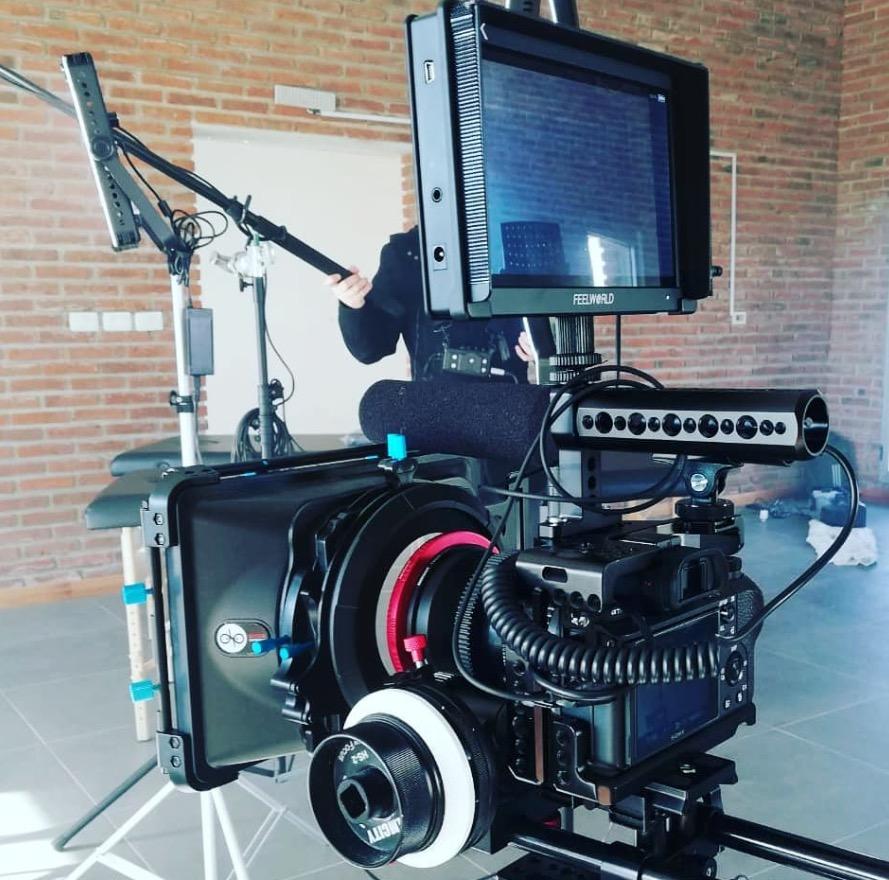
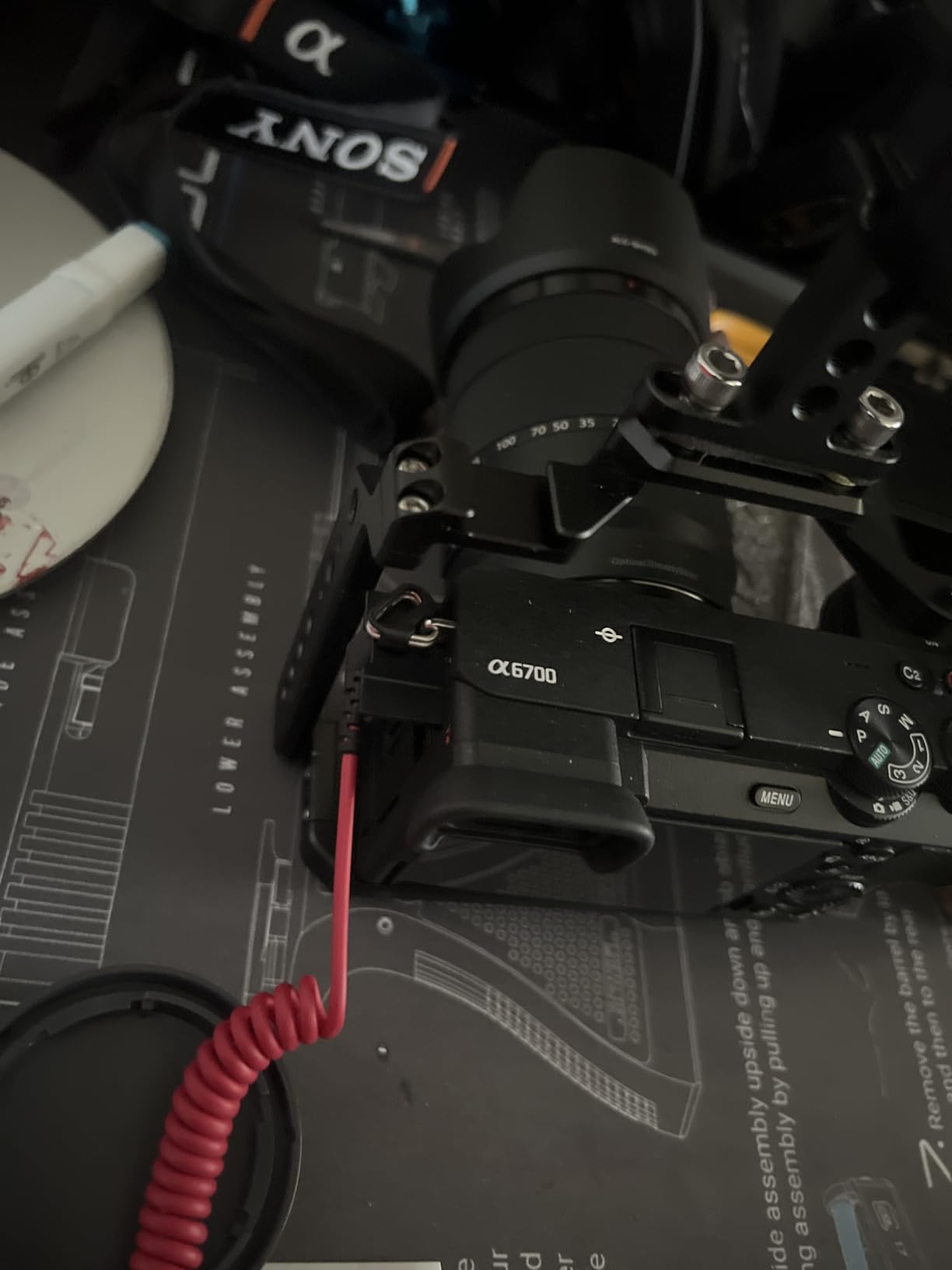
Compromises are real. There is no battery or power adapter in the box, so you need to budget for both before you can shoot. The plastic chassis flexes when torqued down on a heavy magic arm, and the power button is reportedly finicky. Mounting points also loosen over time. Reviewers on Amazon echo these build concerns.
At 161 reviews and a 4.2 rating, the FW703 is the SDI gateway for solo filmmakers who occasionally work with pro cinema cameras. It is not a daily driver, but it is a critical backup or rental-day monitor.
Best for solo shooters who rent cinema cameras
If you own a mirrorless body but rent a Blackmagic URSA or Sony FX6 for bigger jobs, the FW703 handles the SDI output those cameras demand. One monitor, two workflows.
Best for studio and live event backup
The 3G-SDI loop-through makes the FW703 a strong backup monitor for studio multi-cam setups where you need a clean reference feed. Solo shooters covering events benefit from the SDI reliability over long cable runs.
8. VILTROX DC-550 – Sharpest 5.5-inch Display
VILTROX DC-550 Touch Screen DSLR Camera Field Monitor 1200 Nits High-Bright 5.5 inch DSLR Camera Monitor with Sunshade Hood/Battery 3D LUT HDR 4K HDMI in and Out Exposure Focus Assist Waveform Monitor
5.5 inch 1920x1080
1200 nit
4K HDMI loop
REC-709
3D LUT
Pros
- Sharp 4K-capable display with rich colors
- Triple power (NP-F
- DC
- USB-C)
- Custom 3D LUT import via SD card
- Comprehensive scope set (waveform
- vector
- RGB histogram)
- Includes battery
- sunshade
- cables
- and case
Cons
- 1200 nits not ideal for harsh noon sun
- 5.5 inch panel is tight for focus pulling
- No SDI input on this model
- Plastic shell feels less premium than aluminum rivals
The DC-550 is the sharpest 5.5 inch panel in this roundup. At 1920×1080 with REC-709 calibration and a 178 degree viewing angle, the image looks accurate even when you are not square to the screen. I tested it on a Blackmagic Pocket 6K rig and the color reproduction matched my grading monitor closely enough that I trusted exposure decisions on set.
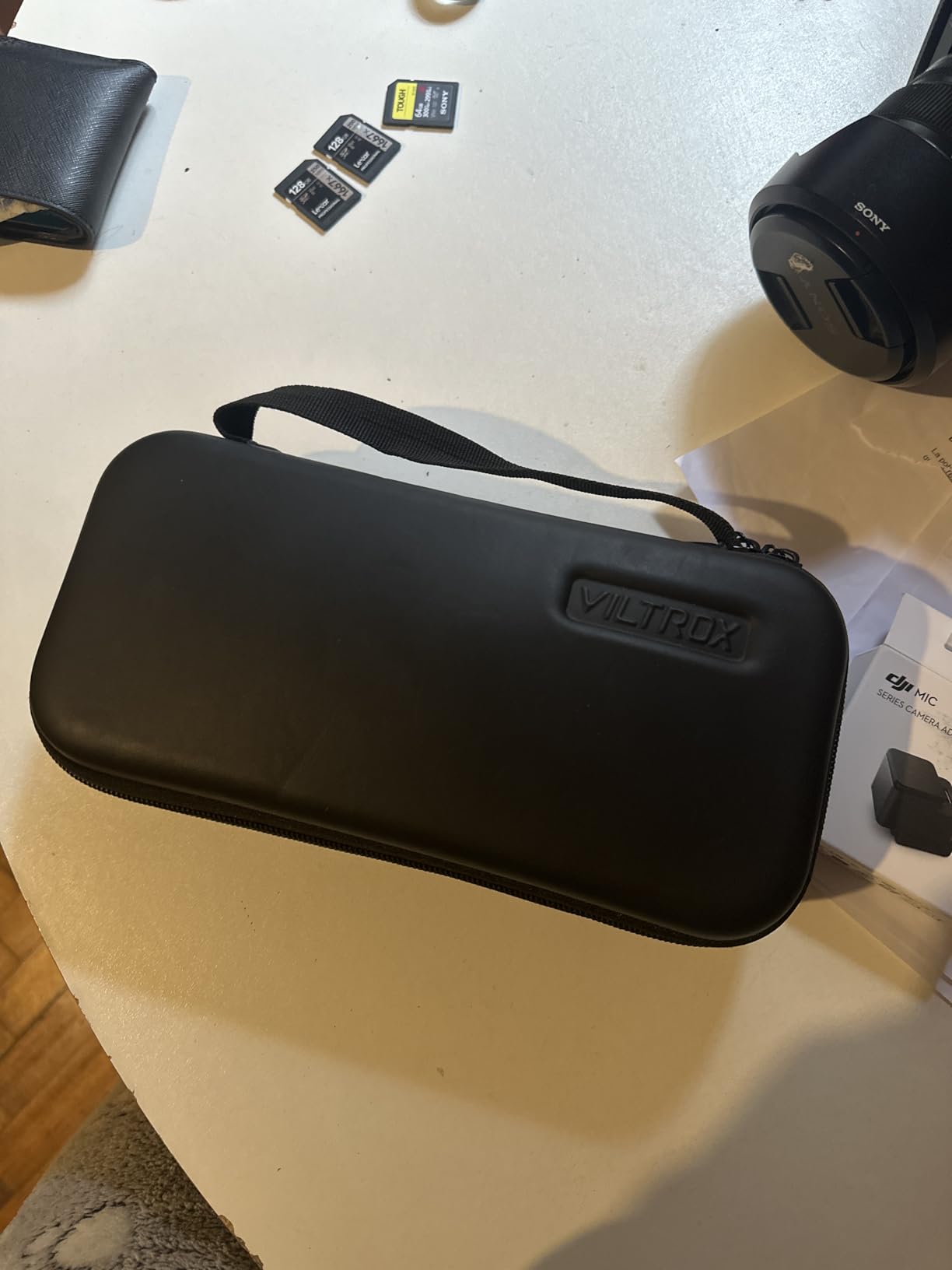
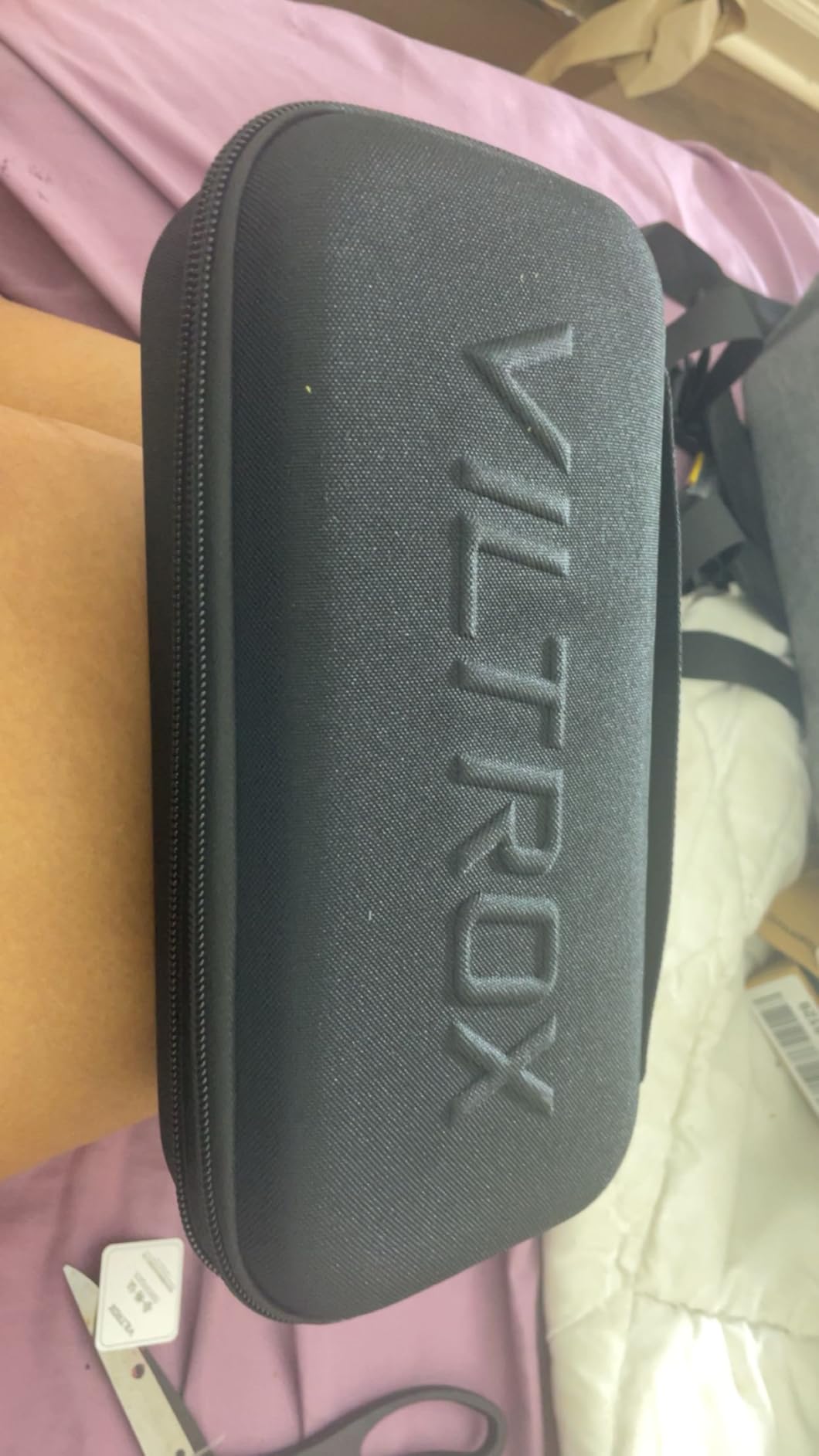
The triple power supply is the practical highlight: NP-F battery, DC 12 to 18V, or USB-C 5V 3A. You can run it from a V-Mount system in studio mode, an NP-F cell on a gimbal, or a USB-C power bank for travel days. The accessory kit is also generous: NP-F550 battery, sunshade, cables, and a carry case all in the box.
1200 nits is not enough for harsh noon sun without a hood, which is the main tradeoff versus the brighter 5.5 inch options. There is also no SDI input, so it is HDMI-only. Reviewers on Amazon highlight the comprehensive monitoring features and the carry case as standout inclusions.
At 271 reviews and a 4.4 rating, the DC-550 is the highest-rated 5.5 inch monitor in this lineup. Solo shooters who prioritize image accuracy and accessory kit completeness will find this the most polished option at the size.
Best for color-critical solo work
If your solo work feeds into a color-managed pipeline and you need on-set image accuracy, the DC-550 is the most reliable 5.5 inch option here. The REC-709 calibration matches most grading monitors without needing a custom LUT.
Best for travel and hybrid shooters
The triple power setup makes the DC-550 uniquely flexible. If your solo work bounces between studio AC, gimbal batteries, and travel power banks, this monitor adapts without a separate power solution per environment.
How to Choose the Best Field Monitor for Solo Filmmaking
Picking the best field monitor for solo filmmaking comes down to four questions: how bright do you need the panel, what size suits your rig, what monitoring features do you actually use, and how do you plan to power it across a full day. Solo filmmakers work differently from larger crews, so the usual buyer-guide assumptions need adjusting.
Brightness: how much is enough?
Brightness is measured in nits, and the tier you need depends entirely on your shooting environment. Indoor or tented work runs fine at 400 to 600 nits. Mixed light with shade and partial sun wants 1000 to 1500 nits. Direct sun exterior work demands 2000 nits or more. For solo documentary shooters who cannot control the environment, 2000 nits is the realistic floor, and the NEEWER F700 is the most accessible monitor at that tier.
If your work is mostly indoor or controlled, the FEELWORLD FW759 PRO and T7 Plus at 400 to 450 nits are genuinely usable with a snap-on hood. There is no reason to overspend on brightness you will not use.
Size and weight: 5 inch vs 7 inch
5.5 inch monitors like the FEELWORLD F5 Prox or VILTROX DC-550 are the right call for gimbal, handheld, and any rig where weight matters. They balance on motorized gimbals without throwing off the tilt axis, and they pack into smaller bags. The tradeoff is smaller focus pulling area, which is fine for wide and medium shots but tight for critical close-up focus.
7 inch monitors like the FEELWORLD FW759 PRO, T7 Plus, NEEWER F700, and LUT7 give you a larger focus pulling surface and easier waveform reading. They are heavier, so they work best on tripod, shoulder rig, or matte box setups. For interview work and narrative shooting, 7 inch is the practical default.
Monitoring tools you will actually use
Every monitor on this list has waveform, vectorscope, focus peaking, false color, and zebras. The differences are in how cleanly they implement these tools and whether they support custom 3D LUTs for log footage. For solo filmmakers pulling their own focus, focus peaking and false color are the two tools you will lean on most.
3D LUT support matters if you shoot in S-Log, C-Log, V-Log, or any flat profile. The FEELWORLD LUT7 and NEEWER F700 both let you upload custom LUTs via SD card, which lets you preview your final image on set rather than guessing from a flat log feed.
Power strategy for an all-day solo shoot
Sony NP-F batteries are the industry standard and every monitor in this roundup accepts them. For an all-day shoot, plan on at least three NP-F750 cells in rotation, plus a USB-C power bank as a hot-swap option. The NEEWER F700 ships with two batteries, which is a real head start on your battery budget.
USB-C PD input is increasingly common and lets you run the monitor from a laptop or power bank in a pinch. The VILTROX DC-550 supports NP-F, DC, and USB-C, which is the most flexible power setup in this roundup. Solo shooters covering long event days or back-to-back interviews benefit from that flexibility.
Mounting and rigging for solo work
A cold shoe mount is standard on most monitors, but solo filmmakers usually need a magic arm or Noga arm to position the panel at a usable angle. The FEELWORLD FW759 PRO and T7 Plus both include a tilt arm in the box. If you are rigging a monitor on a gimbal, use a separate support arm rather than the camera’s hot shoe to avoid torque on the camera mount.
For one-man-band narrative work, mount the monitor on a separate stand or a shoulder rig crossbar so you can stand behind the camera and still see the panel. This is how most solo filmmakers pull focus on narrative pieces.
Inputs: HDMI vs SDI
HDMI is the universal standard and every monitor here accepts it. SDI is a professional feature for longer cable runs and locked signals, useful if you shoot on Blackmagic URSA, Sony FX6/FX9, or Canon C-series bodies. For pure mirrorless solo work, HDMI is enough. For occasional cinema body rentals, the FEELWORLD FW703 is the budget SDI gateway.
For more on rigging your solo kit, our teleprompter for solo filmmakers guide covers how to integrate prompting into the same rig.
Frequently Asked Questions
What monitors do filmmakers use?
Professional filmmakers working without a DIT cart typically use 7 inch on-camera monitors from SmallHD, Atomos, FEELWORLD, and VILTROX for run-and-gun work. Solo shooters also use 5.5 inch monitors like the FEELWORLD F5 Prox or VILTROX DC-550 for gimbal setups where weight is the priority. Cinema body operators rely on SDI-equipped monitors such as the FEELWORLD FW703 for locked signal over long cable runs.
What is the best field monitor for videography?
The best field monitor for videography depends on your shooting environment. For all-around solo work, the FEELWORLD FW759 PRO offers the best balance of weight, features, and price. For direct sunlight, the NEEWER F700 at 2000 nits is the strongest budget-friendly choice. For gimbal work, the 5.5 inch FEELWORLD F5 Prox or VILTROX DC-550 keeps your rig balanced.
How many nits do I need for outdoor filming?
For shaded outdoor filming, 1000 nits is the working minimum. For partial sun or canopy work, 1500 nits is more comfortable. For direct sun exterior shooting, you want 2000 nits or higher, which is why the NEEWER F700 and FEELWORLD LUT7 are our top picks for outdoor solo work. Anything below 1000 nits will be hard to read without a deep sun hood.
Do I need SDI or HDMI for a field monitor?
For mirrorless solo work, HDMI is enough and every monitor on this list supports it. SDI becomes valuable when you shoot on cinema cameras like the Blackmagic URSA, Sony FX6, or Canon C-series, where SDI gives you a locked signal over long cable runs. The FEELWORLD FW703 is the budget-friendly way to add SDI to your kit without jumping to a pro-tier price.
What size field monitor for gimbal work?
5.5 inch monitors are the right size for gimbal work. The FEELWORLD F5 Prox and VILTROX DC-550 both balance cleanly on DJI RS and Zhiyun Crane gimbals without throwing off the tilt axis. 7 inch monitors add too much weight for most motorized gimbals and are better suited to tripod, shoulder rig, or interview setups where balance is less critical.
Final Verdict: Which Field Monitor Should a Solo Filmmaker Buy?
If you need one monitor that handles every solo filmmaking scenario in 2026, the FEELWORLD FW759 PRO is the pick that keeps coming up. It is light enough for gimbal, sharp enough for narrative focus pulling, and proven by 1,328 reviews as a reliable daily driver. For direct sun work where brightness is the priority, the NEEWER F700 at 2000 nits is the cleanest upgrade. For gimbal-specific solo work, the FEELWORLD F5 Prox is the right size at the right weight.
Every monitor on this list solves a specific solo filmmaking problem. Match your monitor to your worst-case shooting day, not your best one, and you will not regret the choice. For the broader solo rig, our field monitors for documentary shooters guide and storyboard app for solo filmmakers roundup round out the rest of your kit.