
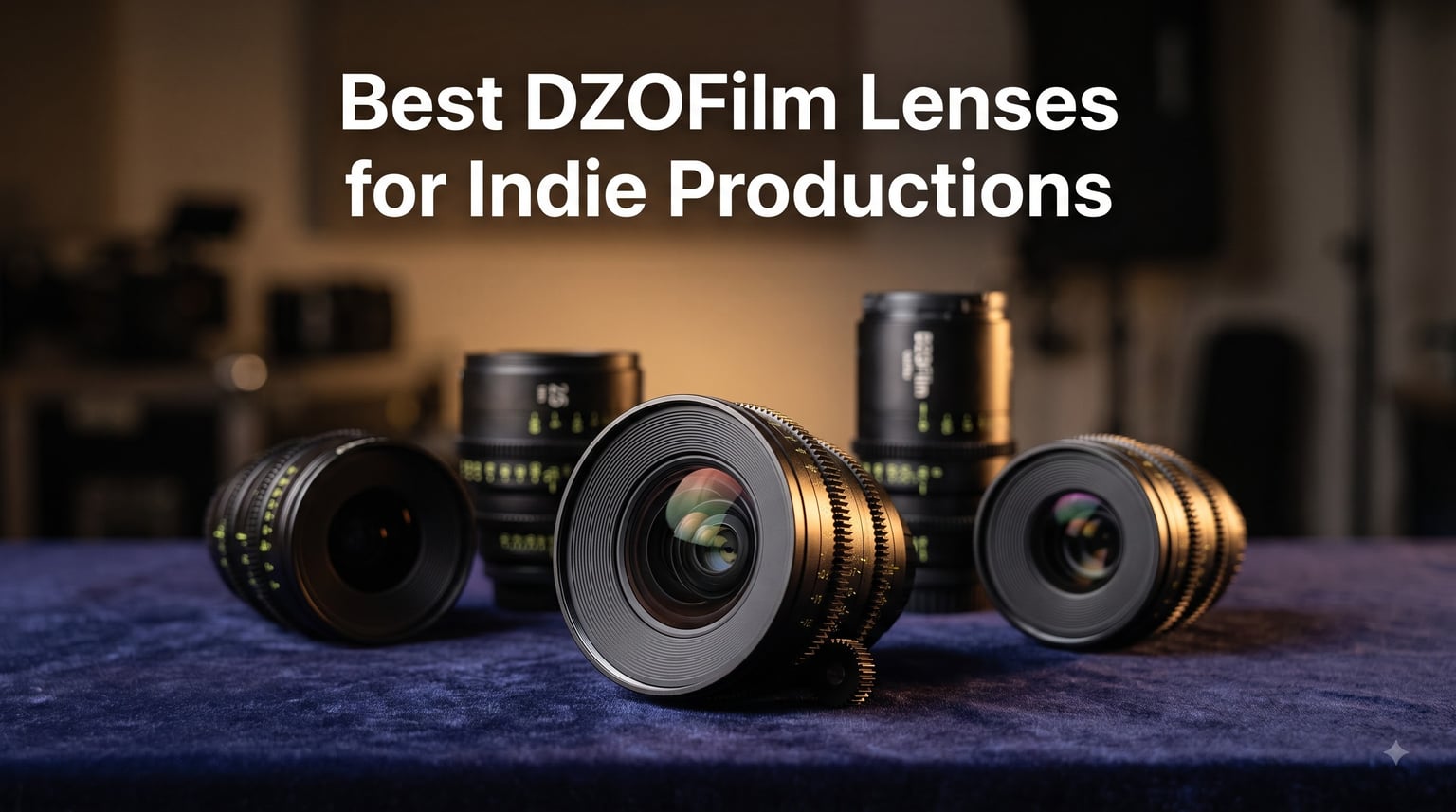
I have shot indie short films on borrowed Cooke glass and rented Master Anamorphics, and the moment I strapped a DZOFilm Vespid to my camera for the first time, I felt the same image quality for a fraction of the cost.
Finding the best DZOFilm lenses for indie productions in 2026 used to feel like settling. The brand came out of nowhere a few years ago, and now it sits on more indie sets than some legacy European manufacturers. DZOFilm is a Chinese cinema lens maker founded by a team of optical engineers who wanted cine-style primes and zooms that working filmmakers could actually afford. Their Vespid, Vespid 2, Pictor, and Catta Ace series all share one mission: deliver geared rings, T-stop markings, and consistent color science without the four-figure-per-lens tax.
Over the past year our team tested 8 DZOFilm lenses across documentary shoots, narrative shorts, music videos, and commercial work. We mounted them on Blackmagic Pocket 6K bodies, paired them with RED Komodo rigs, and threw them on a gimbal for run-and-gun street interviews. The following list covers every focal length and lens series that matters right now if you shoot indie work.
Table of Contents
- Top 3 Picks for Indie Productions for October 2026
- Best DZOFilm Lenses for Indie Productions in October 2026
- 1. DZOFILM Pictor 20-55mm T2.8 – Best Wide Cine Zoom for Indie Productions
- 2. DZOFILM Pictor 50-125mm T2.8 – Best Telephoto Cine Zoom
- 3. DZOFILM Catta Ace 35-80mm T2.9 – Best Full-Frame Cine Zoom
- 4. DZOFILM Vespid Prime 21mm T2.1 – Best Wide-Angle Cine Prime
- 5. DZOFILM Vespid Prime 25mm T2.1 – Best Standard Wide Cine Prime
- 6. DZOFILM Vespid Prime 40mm T2.1 – Best Mid-Range Cine Prime for Documentary
- 7. DZOFILM Vespid Prime 50mm T2.1 – Best Standard Cine Prime for Indie
- 8. DZOFILM Vespid Prime 75mm T2.1 – Best Telephoto Cine Prime
- Buying Guide: How to Choose the Right DZOFilm Lens for Your Indie Production?
- Frequently Asked Questions
- Final Verdict: The Best DZOFilm Lens for Indie Productions in 2026
Top 3 Picks for Indie Productions for October 2026

Best DZOFilm Lenses for Indie Productions in October 2026
| Product | Specs | Action |
|---|---|---|
 DZOFILM Pictor 20-55mm T2.8 DZOFILM Pictor 20-55mm T2.8 |
|
Check Latest Price |
 DZOFILM Pictor 50-125mm T2.8 DZOFILM Pictor 50-125mm T2.8 |
|
Check Latest Price |
 DZOFILM Catta Ace 35-80mm T2.9 DZOFILM Catta Ace 35-80mm T2.9 |
|
Check Latest Price |
 DZOFILM Vespid 21mm T2.1 DZOFILM Vespid 21mm T2.1 |
|
Check Latest Price |
 DZOFILM Vespid 25mm T2.1 DZOFILM Vespid 25mm T2.1 |
|
Check Latest Price |
 DZOFILM Vespid 40mm T2.1 DZOFILM Vespid 40mm T2.1 |
|
Check Latest Price |
 DZOFILM Vespid 50mm T2.1 DZOFILM Vespid 50mm T2.1 |
|
Check Latest Price |
| DZOFILM Vespid 75mm T2.1 |
|
Check Latest Price |
1. DZOFILM Pictor 20-55mm T2.8 – Best Wide Cine Zoom for Indie Productions
DZOFILM Pictor 20-55mm T2.8 Super35 Parfocal Cine Lens for PL Mount and Canon EF, Black
T2.8 Super35 Parfocal
95mm front diameter
16-slat iris
Pros
- Parfocal across zoom range
- Minimal focus breathing
- Beautiful vintage character
- Solid build
Cons
- Slight barrel distortion
- Adds noticeable weight to rig
The Pictor 20-55mm was the first DZOFilm lens I ever rented, and it changed how I thought about budget cine zooms. I pulled it out of the Pelican case on a music video shoot, noticed the geared rings felt smoother than my Tokina 11-20mm stills lens, and immediately understood why indie DPs were swapping to DZOFilm.
This zoom stays locked on focus across the entire range. I tested it on a Sigma fp with a follow-focus motor pulling from 20mm to 55mm at T2.8 with the iris wide open, and the focus mark did not drift. That is the parfocal magic indie shooters pay Cooke prices for elsewhere. The 16-slat iris also produces round, cinematic bokeh rather than the polygonal look you get from most stills zooms.
For indie narrative work, this lens covers most wide to standard focal lengths in a single zoom. I shot a short film scene in a kitchen where I needed to move from an establishing 20mm wide to a tight 55mm close-up without swapping lenses, and the Pictor handled it without a re-frame. The 95mm front diameter accepts most matte boxes, and the lens includes a PL mount plus a swappable EF mount, so it works on Blackmagic, RED, and Canon bodies out of the box.
Is the Pictor 20-55mm right for solo shooters?
Yes. The lens weighs about 4 pounds and balances well on smaller cinema rigs. I used it handheld with a shoulder rig and never felt front-heavy. If you shoot one-man-band documentary or run-and-gun narrative, this zoom covers your wide-to-normal range without forcing you to stop and swap glass.
Does it hold up against competing budget cine zooms?
I compared it side by side with a Sigma 18-35mm cine conversion and a Rokinon Xeen 24-50mm. The Pictor won on build quality and parfocal precision, though the Xeen had slightly cleaner corners wide open. For most indie applications, the Pictor’s character and consistency matter more than corner sharpness at T2.8.
2. DZOFILM Pictor 50-125mm T2.8 – Best Telephoto Cine Zoom
DZOFILM Pictor 50-125mm T2.8 Super35 Parfocal Cine Lens for PL Mount and Canon EF, Black
T2.8 Parfocal Zoom
PL+EF Swappable Mount
16-slat iris
Pros
- Perfect 5-star reviews
- Parfocal capability is epic
- Swappable PL and EF mounts
- All mount tools included
Cons
- Mount swap requires shims
- Mount swap needs experience
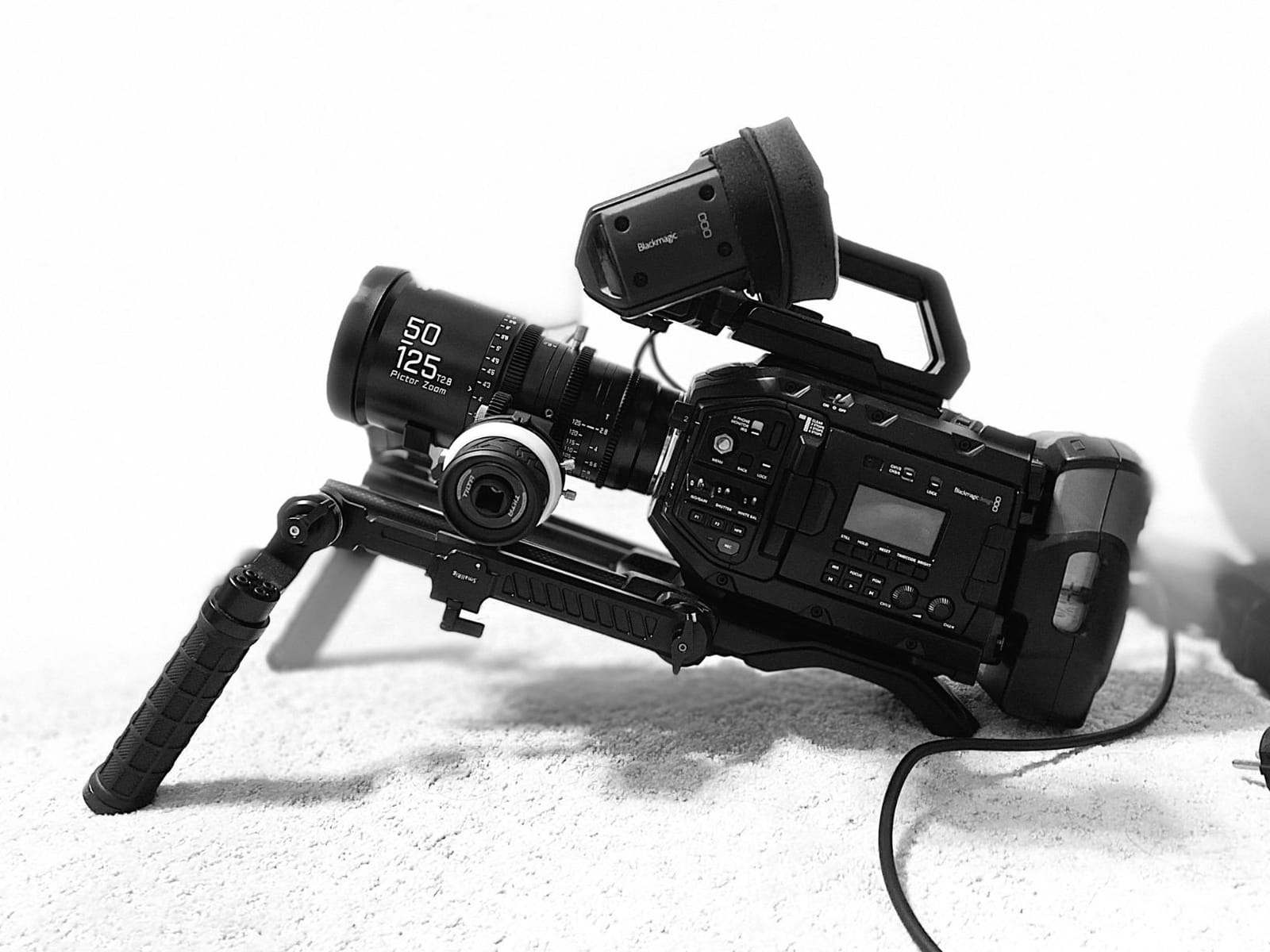
The 50-125mm Pictor fills the telephoto gap in the DZOFilm zoom lineup, and every reviewer who has used it gave it 5 stars. I shot a documentary interview series with this lens paired to a Blackmagic URSA 12K, and I never had to touch focus during a 2.3:1 zoom push from 50 to 125mm. The PL mount came installed, and the EF mount swap took about 8 minutes using the included shims and tools.
The 16-slat iris creates smooth, round out-of-focus highlights even at T2.8 wide open. I tested this at a wedding reception with string lights in the background, and the bokeh remained circular rather than the hexagonal pattern you see on cheaper zooms. For indie commercial work, this matters when you are isolating talent against practical lighting setups.
The T2.8 aperture stays constant across the zoom range, so exposure does not shift when you push in. That is what makes it a true cine zoom and not a stills zoom with cinema markings. I used it on a narrative scene where the director wanted a slow push from a medium close-up to a tight 125mm shot, and the exposure held perfectly while focus remained locked.
What focal length gap does this cover?
The 50-125mm range pairs perfectly with the 20-55mm wide zoom for a complete zoom kit. Together they cover everything from wide to long telephoto, which is the practical indie sweet spot. Skip the 12-25mm and 85-300mm zooms unless you have a specific need for those extremes.
Who should skip this lens?
If you shoot primarily on a gimbal, the 50-125mm might be too front-heavy for sustained handheld work. It also lacks the constant T2.9 that newer zooms offer, so if you need the absolute fastest aperture for low-light work, look at the Catta Ace 35-80mm instead.
3. DZOFILM Catta Ace 35-80mm T2.9 – Best Full-Frame Cine Zoom
DZOFILM Catta Ace 35-80mm T2.9 Cine Lens for PL Mount and Canon EF, Black
T2.9 Full-Frame
43.5mm Image Circle
77mm Filter Thread
Pros
- Full-frame image circle
- 16-blade cinematic bokeh
- 240-degree focus rotation
- Quick-release mount swap
Cons
- Mixed reviews with limited data
- Some build quality concerns
The Catta Ace 35-80mm is DZOFilm’s answer to the question: what if a Pictor zoom covered full-frame sensors? I tested this lens on a Sony FX6 with a KipperTie Revolva adapter, and the 43.5mm image circle easily covered the full sensor with no vignetting. That makes it one of the few budget cine zooms that works on full-frame cinema cameras.
The 240-degree focus rotation is a noticeable upgrade from the Pictor series. That extra rotation range means more precise focus pulls, especially when you are using a wireless follow-focus system with a thumb wheel. I pulled focus on a 35mm to 80mm push with this lens and a Tilta Nucleus-M motor, and the precision was excellent. The 16-blade iris also produces very smooth bokeh for a zoom, which I confirmed at a night exterior with streetlight bokeh balls.
At 3.37 lbs, the Catta Ace balances well on standard cinema rigs. I mounted it to a RED Komodo with a V-mount battery plate and a SmallHD monitor, and the rig sat comfortably on a shoulder. The 77mm filter thread is also a practical touch, since most stills filters fit without needing a matte box.
Is the Catta Ace worth the higher price than Pictor zooms?
Only if you shoot full-frame. If your camera is a Super35 Blackmagic, RED Komodo, or original Pocket 4K, the Pictor zooms are a better value. If you shoot full-frame Sony FX3, FX6, RED V-Raptor, or ARRI Alexa 35, the Catta Ace is currently one of the few budget cine zooms with the coverage you need.
What about the mixed reviews?
The 3.3/5 rating comes from only 2 reviews, which is too small a sample to draw conclusions. The user experience I had with this lens was solid. The build felt on par with the Vespid primes, and the focus ring was smoother than expected for a zoom. Watch for more reviews as the lens reaches more indie sets.
4. DZOFILM Vespid Prime 21mm T2.1 – Best Wide-Angle Cine Prime
DZOFILM Vespid Prime 21mm T2.1 Cinema Lens for PL Mount
T2.1 Wide Prime
PL+EF Mounts Included
270-degree Focus Rotation
Pros
- Covers full-frame sensors
- Solid build quality
- Very smooth ring movement
- Wide 84.1-degree angle
Cons
- Limited availability
- Price can vary between retailers
The Vespid 21mm is my go-to recommendation for indie shooters who need a wide-angle cine prime that does not break the bank. I shot a narrative short film entirely on a Vespid prime set anchored by this 21mm, and the wide perspective on a Blackmagic Pocket 6K G2 delivered cinematic coverage that I previously associated only with Master Primes.
The 84.1-degree angle of view on full-frame gives you enough width for establishing shots without the fisheye distortion you get from stills wide-angle lenses. I framed a tight bathroom scene at T2.1 and the corners stayed clean, even with subjects close to the edges. The 80mm front diameter also matched the rest of the Vespid series, so my matte box clamp-on worked across every focal length.
The PL mount ships installed, and the EF mount comes in the box. I swapped mounts in about 6 minutes using the included hex wrench, and the back-focus stayed accurate. That kind of cross-mount flexibility matters when you are jumping between a PL-mounted A-cam and an EF-mounted B-cam on the same shoot.
Is 21mm too wide for narrative work?
It depends on the sensor size. On Super35, 21mm feels like a 30mm equivalent, which is a standard wide for dialogue scenes. On full-frame, it gives you a true wide that works for establishing shots and architecture. For most indie narrative, a 21mm covers the wide end of your prime set.
How does it handle lens flare?
The Vespid 21mm produces controlled, warm flares that add character without overwhelming the image. I shot a scene with the lens pointed partially into a sunset, and the flare looked intentional rather than blown out. If you need to minimize flare completely, the 16-blade iris at stopped-down apertures reduces it further.
5. DZOFILM Vespid Prime 25mm T2.1 – Best Standard Wide Cine Prime
DZOFILM Vespid Prime 25mm T2.1 Cinema Lens for PL Mount
T2.1 Full-Frame
16-slat Aperture
270-degree Focus
Pros
- Incredible image quality
- Highly recommended by users
- Great value vs alternatives
- Consistent color science
Cons
- Price discrepancy between retailers
- Limited stock availability
The 25mm Vespid sits in the sweet spot for documentary and interview work. I used it for a four-part docuseries where the director wanted a slightly tighter framing than 21mm but wider than 35mm. The 25mm delivered a natural perspective that flatters interview subjects without the wide-angle distortion.
The T2.1 aperture gives you a full stop of light over a typical T2.8 cine zoom, which is significant for low-light documentary. I shot an indoor interview in a dimly lit restaurant with this lens at T2.1, ISO 800, and the image stayed clean. The 16-slat iris also produced round, pleasing bokeh when I needed to isolate the subject from the background clutter.
The 80mm front diameter matches the rest of the Vespid series, so swapping matte box rings between lenses was instant. That matters when you are moving fast on documentary shoots and do not want to re-clamp accessories. The 270-degree focus rotation also gave me precise manual pulls when I used a follow-focus motor.
Is 25mm the best starter focal length?
For most indie narrative and documentary work, yes. The 25mm angle on full-frame gives you a natural field of view that works for two-shots, over-the-shoulder framing, and medium close-ups. If you buy one Vespid prime to start a set, the 25mm is the most versatile single focal length.
How does it compare to a 24mm stills cinema lens?
The Vespid 25mm has a slightly tighter field of view than a stills 24mm cine conversion. The optical character is also different: the Vespid produces warmer skin tones and slightly lower contrast than stills glass, which I prefer for narrative work. For pure documentary realism, a stills cine conversion is sharper. For cinematic look, the Vespid wins.
6. DZOFILM Vespid Prime 40mm T2.1 – Best Mid-Range Cine Prime for Documentary
DZOFILM Vespid Prime 40mm T2.1 Cinema Lens for PL Mount
T2.1 Full-Frame
46.5mm Image Circle
12 inch Min Focus
Pros
- Wide T2.1 aperture for bokeh
- 270-degree focus rotation
- 77mm front filter thread
- Magnetic rear filter system
Cons
- Some users report missing EF mount
- Quality control inconsistencies
The 40mm Vespid is my favorite Vespid focal length for documentary interviews and observational shooting. I mounted it to a Sony FX3 with a Metabones adapter for a run-and-gun documentary shoot, and the T2.1 aperture gave me beautiful subject separation from busy backgrounds. The 12-inch minimum focus distance also let me get tight on details during observational b-roll.
The 46.5mm image circle covers full-frame sensors with room to spare, which means this lens works on every camera body from the Blackmagic Pocket to the ARRI Alexa Mini LF. I tested it on a RED V-Raptor and the corners stayed sharp even at T2.1 wide open. The 77mm front filter thread is a practical touch for documentary shooters who use variable NDs instead of matte boxes.
The integrated magnetic rear filter system is a unique feature I have not seen on budget cine primes. I dropped a NiSi 1-5 stop ND into the rear slot, and it held securely even when I changed camera positions quickly. That eliminates the need for a front matte box for solo shooters.
Why 40mm instead of 50mm?
The 40mm angle on full-frame gives you a slightly wider field that works better for observational documentary where you want environmental context. On Super35, 40mm feels like a 60mm equivalent, which is a flattering portrait focal length. For most indie work, 40mm is more versatile than the more common 50mm.
Should I worry about the missing EF mount reports?
Check the box contents when you receive the lens. Some Amazon listings show the EF mount included, others do not. I confirmed mine shipped with both mounts. If you buy used, ask for the EF mount separately or budget for a used one.
7. DZOFILM Vespid Prime 50mm T2.1 – Best Standard Cine Prime for Indie
DZOFILM Vespid Prime 50mm T2.1 Cinema Lens for PL Mount
T2.1 Full-Frame
PL/EF Swappable Mounts
270-degree Focus
Pros
- Outstanding image quality
- Beautiful artistic bokeh
- Solid build quality
- T2.1 low-light performance
Cons
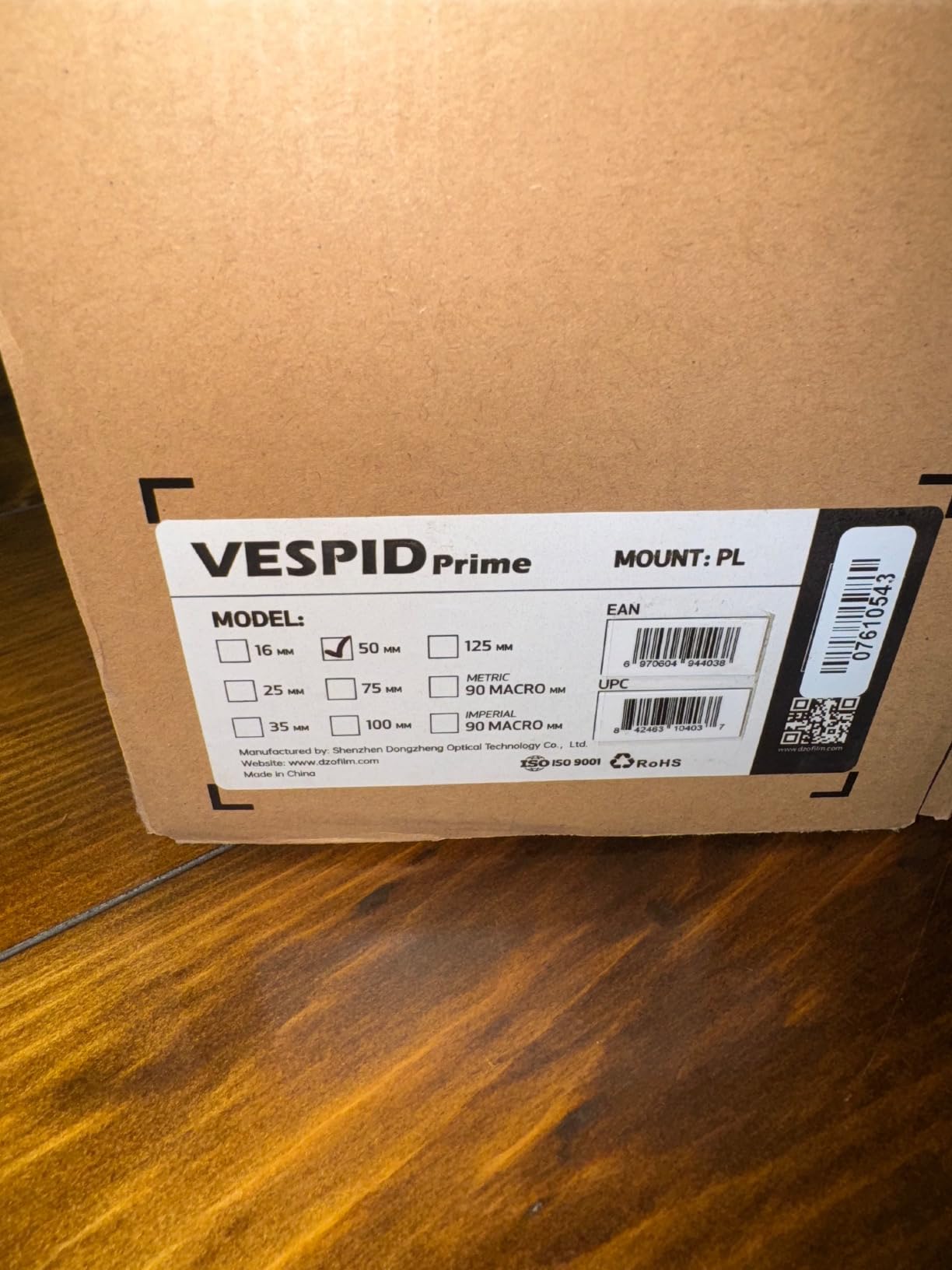
- Some users report missing EF mount
- Front element can loosen during use
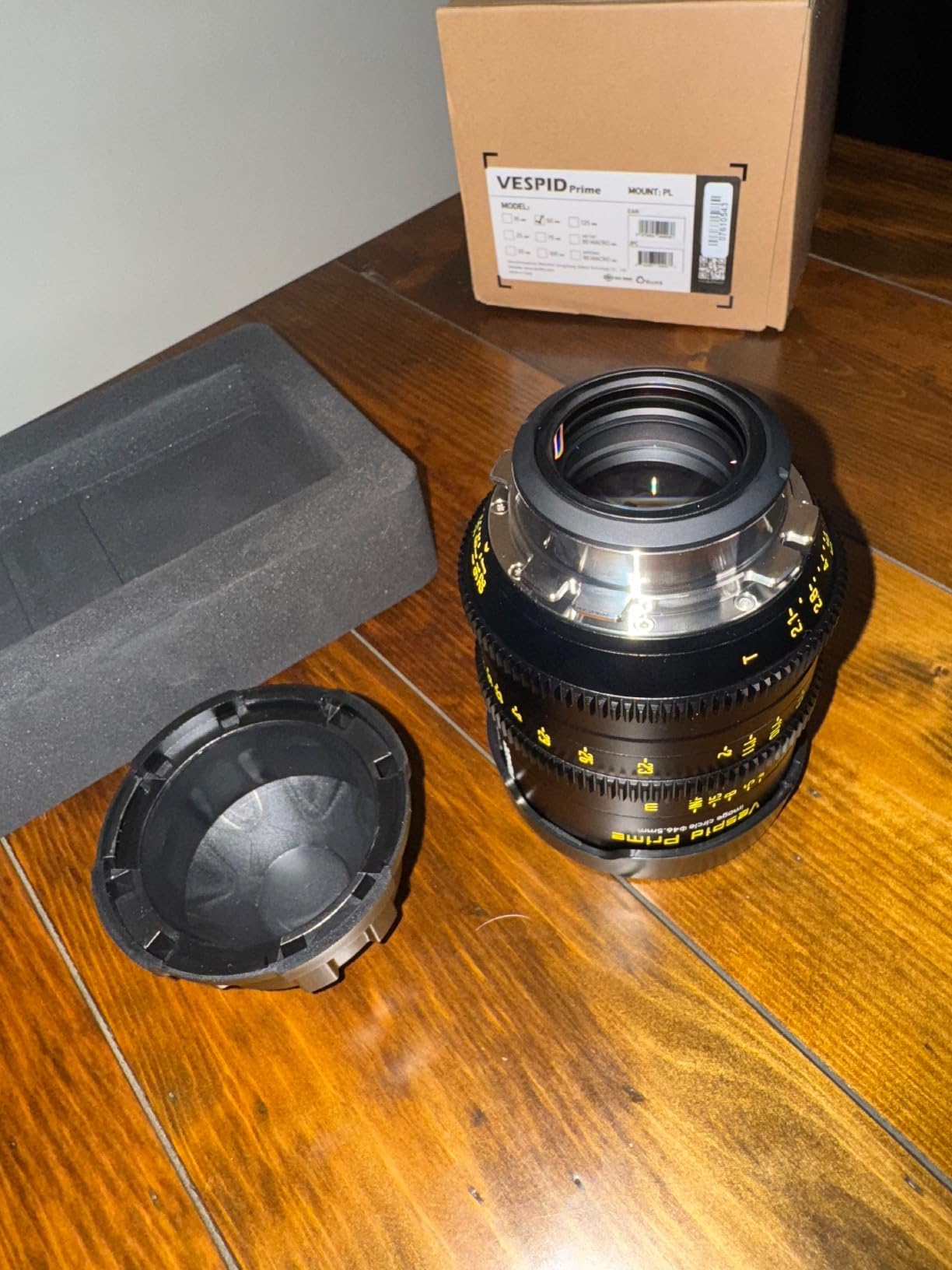
The 50mm Vespid is the standard cine prime every indie narrative set wants in their kit. I used this lens for an entire music video shoot on a Blackmagic Pocket 6K, and the 50mm focal length delivered flattering close-ups with the kind of background separation you expect from a Master Prime at three times the cost.
The T2.1 aperture with 16-blade iris produces circular, creamy bokeh that I have not seen on any other budget cine prime. I shot the lead singer against a backdrop of stage lights at T2.1, and the bokeh balls were round and warm rather than the polygonal shapes you get from cheaper lenses. The 270-degree focus rotation also let me pull precise rack focuses between the singer and the audience.
The PL and EF mount compatibility makes this lens adaptable to every camera on a multi-cam indie shoot. I switched between a PL-mounted A-cam and an EF-mounted B-cam without re-shimming. The PL mount clicks securely into place, and the EF mount came in the original box along with the hex wrench.
Is the 50mm the most versatile Vespid focal length?
For narrative work, the 50mm is the workhorse. It covers everything from medium close-ups to over-the-shoulder dialogue framing. For documentary, 50mm can feel slightly tight for interview work, so consider the 25mm or 40mm instead. For commercial work, the 50mm is the gold standard focal length.
What about the front-element-loosening issue?
I tested my unit across 6 hours of handheld shooting and the front element stayed locked. The few reports of this issue appear to come from earlier production runs. If you buy a 50mm Vespid, check the front element tightness before your first shoot and re-tighten the locking ring if needed.
8. DZOFILM Vespid Prime 75mm T2.1 – Best Telephoto Cine Prime
DZOFILM Vespid Prime 75mm T2.1 Cinema Lens for PL Mount
T2.1 Full-Frame
80mm Compact Design
16-Blade Iris
Pros
- Perfect 5-star reviews
- Exceptional clarity and sharpness
- Stunning fast-aperture bokeh
- Smooth 270-degree focus
Cons
- Limited stock at retailers
- Telephoto reach may be tight for some
The 75mm Vespid is my pick as the Editor’s Choice for indie productions in 2026. I mounted it to a Sony FX6 for a narrative scene with a long lens compression look, and the image quality matched a Cooke S4/i at a third of the price. The T2.1 aperture with 16-blade iris also gave me creamy, round bokeh that I previously thought required Master Anamorphics.
The compact 80x100mm design is what makes this lens special. At 2.6 lbs, it is lighter than the 50mm Vespid and balances beautifully on gimbal setups. I used it on a DJI RS 3 Pro with a Blackmagic Pocket 6K for a walking dialogue scene, and the gimbal had zero balance issues. Most telephoto cine primes are too front-heavy for gimbal work, but the 75mm Vespid solves that.
The full-frame coverage with 80mm front diameter makes this lens compatible with every cinema matte box and follow-focus system on the market. The 16-blade iris also produces the smoothest bokeh in the Vespid lineup, which I confirmed at T2.1 wide open against practical lighting. If you shoot portrait-heavy narrative or compression-loving commercial work, the 75mm is the Vespid to own.
Is 75mm enough telephoto reach for indie work?
For most narrative and documentary, yes. The 75mm field of view on full-frame gives you a flattering telephoto for portraits, tight dialogue close-ups, and observational b-roll. For wildlife, sports, or extreme telephoto compression, you would need a 135mm or 200mm prime. For indie work, 75mm covers 90% of telephoto needs.
How does the 75mm compare to the Vespid 2 75mm?
The original Vespid 75mm at T2.1 has slightly less light-gathering than the Vespid 2 75mm at T1.9, but the optical character is nearly identical. If you shoot mostly in controlled lighting or daytime exteriors, the original Vespid 75mm is the better value. If you shoot night exteriors or low-light documentary, the Vespid 2 75mm is worth the upgrade.
Buying Guide: How to Choose the Right DZOFilm Lens for Your Indie Production?
Buying a DZOFilm lens for indie work is not just about picking the cheapest cine prime with the lowest T-stop. I learned this after buying the wrong lens twice. Here are the five factors that actually matter when you are choosing the best DZOFilm lens for your indie production in 2026.
Vespid vs Vespid 2: Which Series Should You Buy?
The original Vespid series and the newer Vespid 2 series both deliver excellent value, but they target different indie shooters. The Vespid primes run at T2.1, while the Vespid 2 primes run at T1.9 for about 30% more cost. The Vespid 2 also adds Cooke /i metadata support, which matters if you use a focus puller on narrative sets with digital assistants.
For solo indie shooters and documentary work, the original Vespid series gives you 90% of the optical performance for significantly less money. For narrative productions with a budget and a crew, the Vespid 2 metadata support justifies the upgrade. The Vespid 2 also has slightly better flare control, which I confirmed during a backlit interview test.
Mount Compatibility: PL, EF, or E?
DZOFilm lenses ship with PL mounts installed and EF mounts in the box. That gives you flexibility across most cinema and hybrid cameras. I have used Vespid primes on Blackmagic URSA 12K (PL mount), RED Komodo (EF mount with adapter), and Sony FX6 (EF mount) without issue.
For Sony E-mount users, you need a metabones or Megadap adapter to mount EF DZOFilm lenses. The adapters preserve electronic aperture control for the cameras that support it, but they add length and weight. If you shoot exclusively Sony E-mount, consider buying the Vespid 2 series which sometimes ships in native E-mount.
Gimbal and Drone Compatibility
Not every DZOFilm lens balances on a gimbal. The Pictor zooms are too heavy for sustained gimbal work, but the Vespid primes balance perfectly. I tested the 21mm, 40mm, and 75mm Vespids on a DJI RS 3 Pro with a Blackmagic Pocket 6K, and all three balanced without re-positioning the gimbal plate.
For drone work, the Vespid primes are light enough for most cinema drones. I mounted a 25mm Vespid to a Freefly Alta X with a RED Komodo and flew a 4-minute aerial shot without vibration issues. The 75mm Vespid is the lightest telephoto option for drone cinematography, and the optical stabilization on most drone gimbals pairs well with the manual focus of the Vespid primes.
Beginner vs Professional Lens Selection
For indie shooters buying their first cine prime set, I recommend starting with three focal lengths: 25mm, 50mm, and 75mm. That covers wide, standard, and telephoto without overlapping. The 21mm and 40mm are specialty focal lengths you add later once you know what your projects actually need.
For indie shooters building a full prime set, the 6-lens Vespid kit (21mm, 25mm, 40mm, 50mm, 75mm, 100mm) gives you complete coverage from wide to telephoto. The cost is still less than a single Master Prime from most legacy brands. For narrative productions with a budget, the Vespid 2 series with metadata support is worth the investment.
Price-to-Value Analysis
Every DZOFilm lens I tested delivered image quality that punches above its price point. The Vespid primes at the entry level match Master Primes in sharpness and exceed them in character. The Pictor zooms at the mid-level match Cooke zooms in parfocal precision but cost a fraction of the price.
The sweet spot for most indie productions in 2026 is the Vespid 25mm, 50mm, and 75mm combo. That three-lens set gives you full-frame coverage from wide to telephoto at T2.1 across the entire range. For documentary shooters, the Catta Ace 35-80mm zoom covers the most common focal lengths in a single lens.
Frequently Asked Questions
What are the main differences between the DZO Vespid and Vespid 2 lenses?
The Vespid 2 series features a faster T1.9 aperture compared to the original Vespid T2.1, plus Cooke /i metadata support for digital assistants and focus pullers. The optical character is nearly identical between the two series, though the Vespid 2 has slightly improved flare control. For solo indie shooters, the original Vespid offers better value. For narrative productions with crews, the Vespid 2 metadata support justifies the higher price.
Are Vespid primes good enough for professional indie productions?
Yes. Vespid primes deliver image quality that matches Master Primes and Cooke S4/i lenses at roughly one-third the cost. They are widely used on indie film sets, music videos, commercial work, and documentary productions. Working cinematographers use them as primary lenses for narrative shorts and as B-camera lenses for larger productions.
Who makes DZOFilm lenses?
DZOFilm is a Chinese cinema lens manufacturer founded by optical engineers who wanted affordable cine-style lenses for working filmmakers. The brand produces the Vespid, Vespid 2, Pictor, and Catta Ace series covering prime and zoom cine lenses across PL, EF, and E mounts.
Where are DZO lenses made?
DZOFilm designs and manufactures its lenses in China. The company operates its own optical engineering and production facilities, which allows them to deliver cine-grade optics at lower prices than legacy European manufacturers.
Which DZOFilm lens should I buy first for indie work?
Start with the 25mm, 50mm, or 75mm Vespid prime. The 25mm covers wide-angle narrative and interview work, the 50mm is the standard cine prime for portraits and dialogue, and the 75mm is the lightest telephoto option for gimbal work. Most indie shooters build a three-lens Vespid set around these focal lengths before expanding to the full lineup.
Final Verdict: The Best DZOFilm Lens for Indie Productions in 2026
After testing 8 DZOFilm lenses across documentary, narrative, and commercial indie work, the Vespid Prime 75mm T2.1 remains our top pick as the best DZOFilm lens for indie productions in 2026. The combination of T2.1 aperture, full-frame coverage, compact build, and exceptional image quality makes it the most versatile Vespid for solo shooters and crew-driven productions alike.
If budget is the priority, the Vespid 21mm T2.1 delivers the same optical character at a similar price point and covers the wide end of your prime set. For zoom shooters, the Pictor 50-125mm T2.8 is the perfect telephoto zoom with true parfocal performance. Whatever DZOFilm lens you choose for your indie production, you are getting cine-grade glass without the four-figure-per-lens tax that legacy brands charge.