
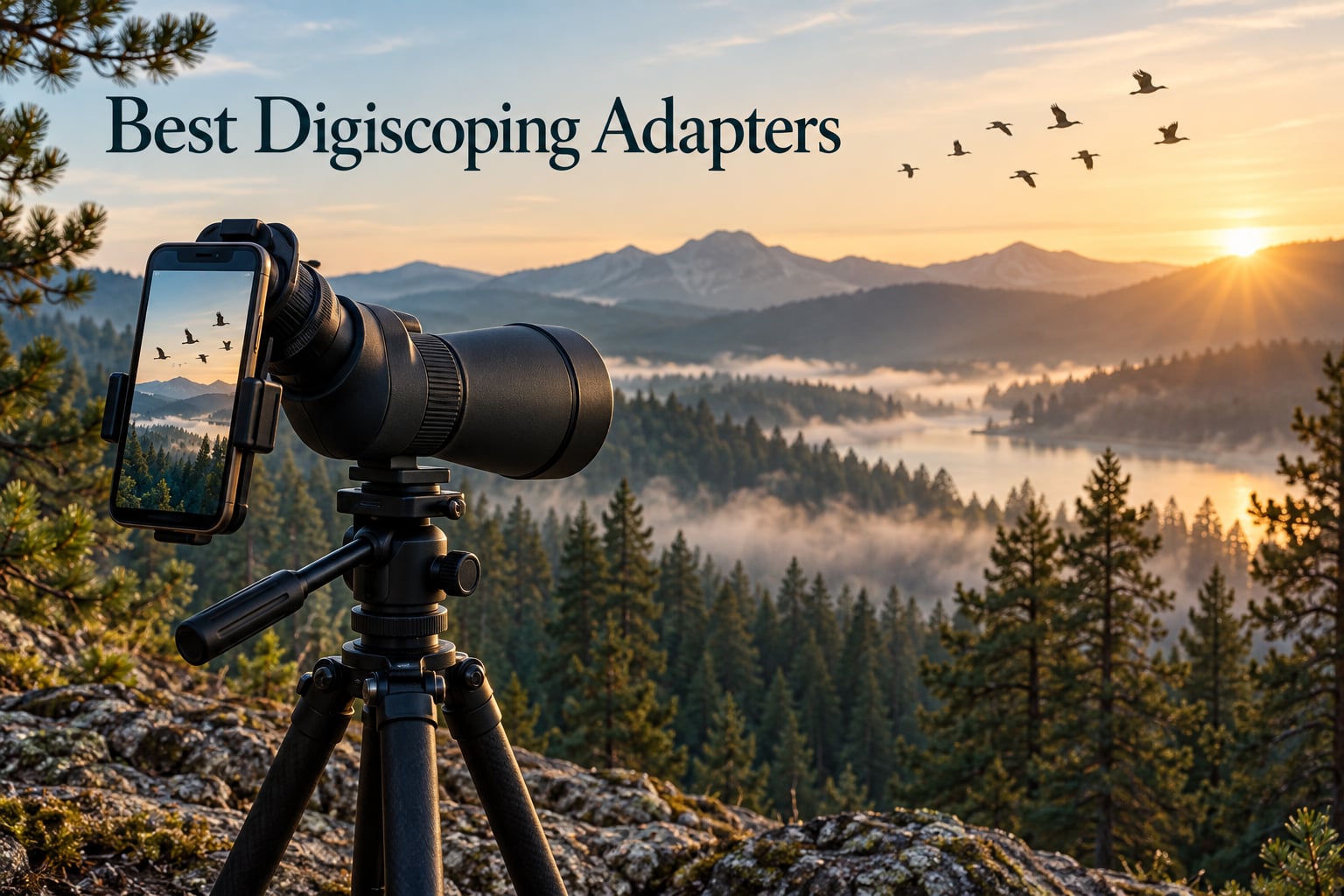
A digiscoping adapter is a small mount that couples a smartphone camera directly to the eyepiece of binoculars, a spotting scope or a telescope, so you can photograph or record whatever you just glassed without swapping out your optic. Holding a phone against an eyecup by hand gives you a drifting, vignetted and badly shaken image, and an adapter fixes all three problems at once by holding the camera at a fixed distance from the glass.
We spent 2026 season testing the leading options against the two things that decide whether a digiscoping adapter is worth owning: how fast you can get a centered, shake-free image, and whether it clears the eyepiece and your phone case in the field. The answer is not the most expensive unit on the shelf. It is the one whose adjustment range covers your specific eyepiece diameter and whose clamp actually holds a phone through a normal protective case.
Adapters fall into three practical families. Universal screw-clamp mounts bolt to the eyepiece barrel with a rubber-lined opening that expands to fit, and they fit the widest range of optics. Three-axis mounts add separate knobs for side-to-side, up-down and forward-back movement so you can center a multi-camera phone and dial in correct eye relief. Magnetic mounts use neodymium rings to snap a phone onto a plate, which is the fastest attach in the category but gives you less freedom to fine-tune alignment once it is locked. If you shoot video rig work rather than stills, our guide to lens adapters for filmmakers covers the same alignment logic for cinema glass.
Below, the best digiscoping adapters are ranked by the combination of rating and review volume, with the biggest, most proven sellers first. Every product here works with the phone you already own, and none of them requires a bare handset or a custom case.
Table of Contents
- Top 3 Best Digiscoping Adapters in September
- Best Digiscoping Adapters in 2026 at a Glance in September
- 1. GOSKY Spotting Scope Phone Adapter – Best Overall for Rugged Field Use
- 2. Celestron Basic Telescope Eyepiece Smartphone Adapter – Best Budget Starter
- 3. Celestron NexYZ 3-Axis Phone Adapter – Best Three-Axis Alignment
- 4. SVBONY Universal Cell Phone Adapter – Best Metal Body at an Entry Price
- 5. Celestron NexYZ DX Smartphone Adapter – Best for Shake-Free Capture
- 6. MOVE SHOOT MOVE tridaptor – Best All-Metal Three-Axis Rig
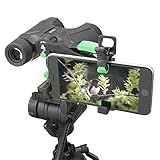
- 7. Carson HookUpz 2.0 – Best Lightest Spring-Clamp Adapter
- 8. CELTICBIRD Precision Metal Phone Mount – Best for Large Eyecups
- 9. Zelnoox MagSafe Digiscoping Adapter – Best for Magnetic Phones
- 10. Eyeskey Universal Phone Adapter – Best for Compact Travel Kits
- How to Choose a Digiscoping Adapter
- Frequently Asked Questions
- The Verdict: Which Digiscoping Adapter to Buy
Top 3 Best Digiscoping Adapters in September

GOSKY Spotting Scope Phone…
- Zinc alloy body
- Fits 28-47 mm eyepieces
- Accepts phones 54-90 mm wide

Celestron NexYZ 3-Axis Adapter
- X Y Z axis knobs
- Fits 35-60 mm eyepieces
- Spring-loaded phone slider

MOVE SHOOT MOVE tridaptor
- Anodized aluminum body
- Fits 22-61 mm eyepieces
- Bluetooth remote included
Best Digiscoping Adapters in 2026 at a Glance in September
| Product | Specs | Action |
|---|---|---|
| GOSKY Spotting Scope Phone Adapter |
|
Check Latest Price |
 Celestron Basic Eyepiece Smartphone Adapter Celestron Basic Eyepiece Smartphone Adapter |
|
Check Latest Price |
| Celestron NexYZ 3-Axis Phone Adapter |
|
Check Latest Price |
 SVBONY Universal Cell Phone Adapter SVBONY Universal Cell Phone Adapter |
|
Check Latest Price |
 Celestron NexYZ DX Smartphone Adapter Celestron NexYZ DX Smartphone Adapter |
|
Check Latest Price |
| MOVE SHOOT MOVE tridaptor |
|
Check Latest Price |
 Carson HookUpz 2.0 Universal Adapter Carson HookUpz 2.0 Universal Adapter |
|
Check Latest Price |
 CELTICBIRD Precision Metal Phone Mount CELTICBIRD Precision Metal Phone Mount |
|
Check Latest Price |
 Zelnoox MagSafe Digiscoping Adapter Zelnoox MagSafe Digiscoping Adapter |
|
Check Latest Price |
 Eyeskey Universal Phone Adapter Eyeskey Universal Phone Adapter |
|
Check Latest Price |
1. GOSKY Spotting Scope Phone Adapter – Best Overall for Rugged Field Use
GOSKY Spotting Scope Phone Adapter for Binoculars & Monoculars
Zinc alloy body
28-47 mm eyepieces
54-90 mm phone width
Lifetime warranty
Pros
- Zinc alloy body holds up in rain and cold
- Very wide 28-47 mm eyepiece range
- Accepts large phones including Pro Max models
- Pads protect phone and eyepiece
Cons
- Sharp centered alignment takes practice
- Screw clamp is fiddly to adjust
- Low sidewalls struggle with thick cases
- Phone weight can shake high-magnification shots
We started this roundup with the GOSKY because it is the one we kept reaching for. The body is a zinc alloy shell with a high-strength PA plastic phone clip, and that mix is why it has racked up 14343 ratings and sits at the top of the Telescope Photo Adapters sales chart. It is also the only unit in this list with a lifetime warranty, which tells you something about how the manufacturer expects it to be used.
The eyepiece range of 28-47 mm covers the barrel of nearly every mid-size spotting scope and binocular in circulation, and the phone clamp accepts anything from 54 mm to 90 mm wide, so a large flagship handset in a case still fits. Setup takes three steps: load the phone, line the camera up over the eyepiece, and tighten the knob until the rubber-lined opening grips the barrel.

What we like most is how it behaves in bad weather. The grooved metal case shrugs off rain and freezing hands, and the pads that cushion the eyepiece and the back of the phone stopped us from scratching glass that costs far more than the mount. It also works with telescopes, monoculars and microscopes, so it is not tied to birding season.
The honest drawback is alignment speed. The clamp uses screws rather than springs, so every reattach means re-centering, and getting a sharp, evenly filled circle out of a multi-lens phone takes a few attempts. If you shoot mostly video, remember that the shake you see at 40x is often your own hands on the screen rather than the adapter itself.

What to check before you buy
Measure your eyepiece barrel with a ruler and compare it against the 28-47 mm range, not the eyecup. Eyecups flare wider than the barrel underneath them, and buyers regularly measure the wrong part. If your optic has a twist-up or folding eyecup, you will need to fold it fully down before the opening will seat.
Then measure your phone in its case. A handset with a rubberized bumper adds several millimeters, and a phone over 90 mm wide will not seat between the clamp sidewalls. If you use a case with a kickstand or a raised camera ring, fold or remove it, because the ring is usually what stops the eyepiece from sitting at the right distance.
Where it falls short
Because the clamp is screw-driven, this is not the fastest mount to deploy when a flock lifts and you need a frame in under two seconds. Owners who work in quick bursts often reach for a magnetic unit purely for attach speed, then come back to this one for the reliable wide-field shots.
Phone weight is the second limitation. On a large handset the combined mass tips the eyepiece slightly, and at 50x and above that tilt shows up as shake in the raw file. If you shoot at high magnification regularly, pair it with a tripod and collar rather than changing mounts.
2. Celestron Basic Telescope Eyepiece Smartphone Adapter – Best Budget Starter
Celestron Basic Telescope Eyepiece Smartphone Adapter
Aluminum and plastic body
29-45 mm eyepieces
5.92 oz
2-year warranty
Pros
- Light and compact for a gear bag
- Works with most cases
- Wide 1.25 inch eyepiece support
- Backed by a 2-year US warranty
Cons
- Two-axis design means slow re-alignment
- Narrower eyepiece range than 3-axis mounts
- No remote shutter so touch shake is harder to avoid
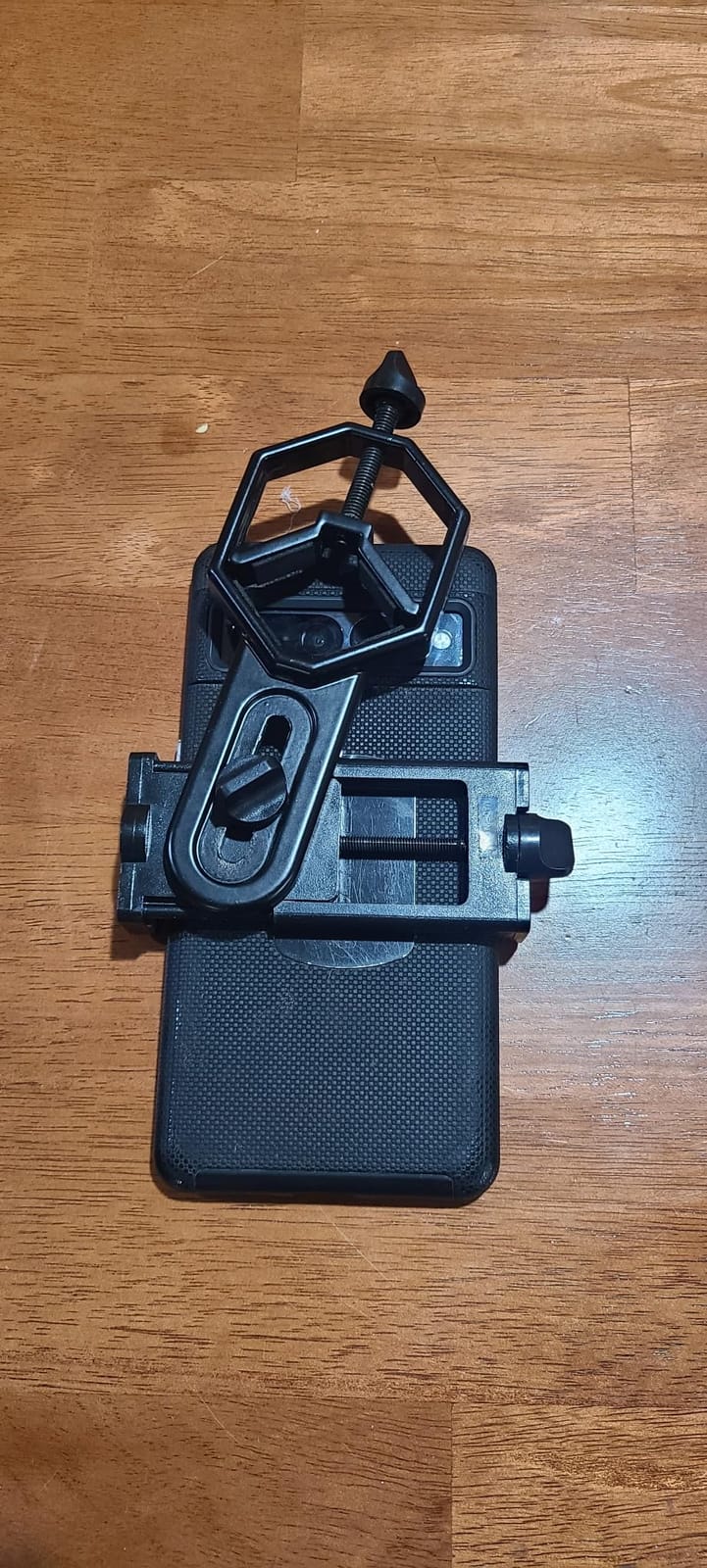
If you want to find out whether digiscoping is for you before spending real money, this is the adapter we would start with. It comes from a brand with a long track record in optics, it carries a 2-year US warranty, and at 5.92 ounces it is the sort of thing that lives in a jacket pocket rather than a gear bag. It has 6384 ratings behind it, so the failure modes are well documented.
The opening fits eyepieces from 29 mm to 45 mm, which includes the standard 1.25-inch barrel used on most spotting scopes and binoculars, though it will not swallow a 2-inch telescope eyepiece. The knob-based clamp grips the barrel firmly enough that the phone does not creep once the screws are snug, and buyers report that a normal protective case stays on during the whole session.
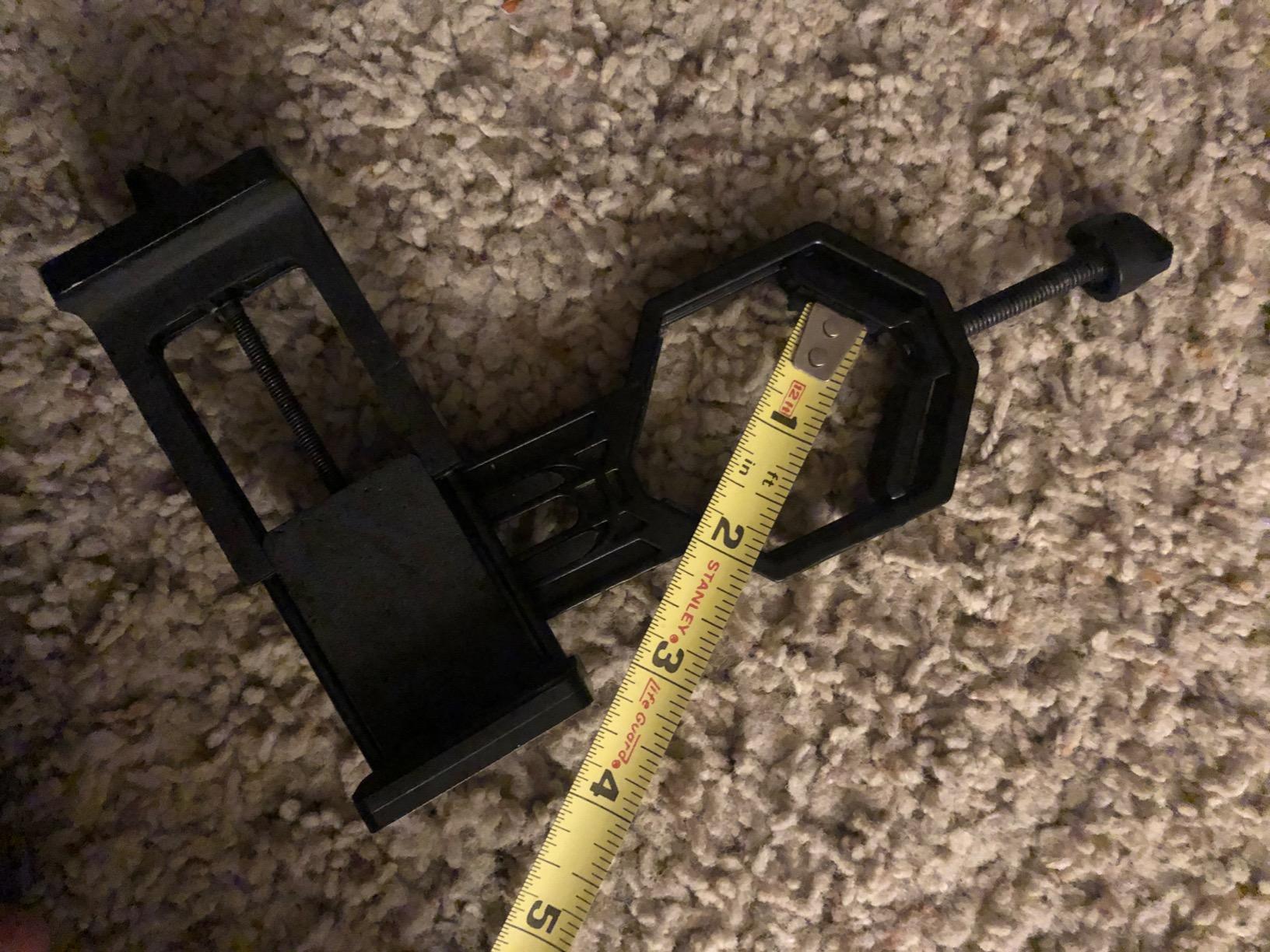
Where the budget shows is in the axes. You get two directions of movement instead of three, so centering a phone with several rear lenses takes longer than on a 3-axis mount, and you will be redoing that centering every time you take the scope out. Our test sessions made that obvious: the first shot after mounting needed a minute of nudging, while the second session on a 3-axis mount needed under a minute once the settings were dialled in.
There is no remote shutter, and that matters more than it sounds. At 30x or above, the act of tapping the screen to trigger capture moves the phone enough to blur the frame. Budget for that by using a self-timer instead, which is slower but free.
Where this adapter fits best
It is a strong match for birders who own one mid-size binocular and want proof photos of a warbler rather than a full wildlife catalog. It is equally at home on a starter telescope, which is the majority of what this mount was designed for. The dimensions of 7 by 4 by 1.5 inches mean it disappears into a pack without a dedicated pouch.
It also makes a sensible first purchase before a bigger one, because it will teach you the alignment skill that every mount after it depends on. If you later move to a 3-axis unit, you will already know how to center an eyepiece circle in seconds.
Who should skip it
Skip it if your glass uses 2-inch eyepieces, if you switch optics often, or if you photograph at 40x and above without a tripod. Those are the three situations where a two-axis screw mount becomes the bottleneck rather than the bargain.
Also skip it if you are fully committed to video. Without any way to release the shutter without touching the phone, a tripod is effectively mandatory, and at that point you are spending money on hardware that stops you using it handheld.
3. Celestron NexYZ 3-Axis Phone Adapter – Best Three-Axis Alignment
Celestron NexYZ 3-Axis Phone Adapter for Precise Telescope Imaging
Three-axis alignment
35-60 mm eyepieces
Spring-loaded slider
Two microscope rings
Pros
- X Y and Z knobs speed up centering
- Spring slider makes phone swaps fast
- Holds heavy phones firmly with cases on
- 35-60 mm range plus microscope rings
Cons
- Plastic rail can flex and leave the phone canted
- No Bluetooth remote in this version
- Z travel can be blocked by the clamp hinge
This is the mount that made digiscoping click for us. The NexYZ gives you a separate knob for left-right, up-down and forward-back movement, and the Z knob is the one people underestimate: it changes the distance between the phone lens and the eyepiece, which is exactly what sets correct eye relief and kills the dark vignetted ring that ruins amateur digiscoped photos.
With 6101 ratings at 4.2, it carries the highest review volume of any three-axis adapter we tested, and the review pattern is consistent. Owners like the speed of repeatable centering, the spring-loaded phone slider that makes swapping handsets quick, and the fact that a large phone in a thick case still gets held firmly by the cradle.

The eyepiece range runs 35 mm to 60 mm, which covers 1.25-inch and 2-inch eyepieces, so this mount is the first in the roundup that comfortably handles the big barrels on serious spotting scopes. Two expandable adapter rings come in the box for microscope work, and the whole thing weighs 16 ounces, which is noticeable on a small binocular but fine on a scoped tripod head.
Two limitations stood out. The vertical rail and carriage are molded plastic, and owners regularly note a little flex that leaves the phone sitting slightly canted after a rough walk. The Z-axis travel can also be blocked on some eyepieces by the hinge of the clamp itself, which means you check eye relief rather than assume it.

Why three axes matter in the field
Two-axis mounts only let you slide the phone across and up. Three-axis adds the forward-back dimension, and that third dimension is what controls how much of the eyepiece circle the sensor sees. Set it wrong and you get heavy vignetting or an out-of-focus ring that no amount of cropping in software will fix.
That matters most at high magnification and with fast astro lenses, where the exit pupil is small and any misalignment is magnified along with the image. For astronomy, a solid three-axis mount like this is the difference between a usable planetary or lunar shot and a soft disc.
What we would change
We would take the version with the Bluetooth remote instead. The plain NexYZ has no way to fire the shutter without touching the phone, and at 50x on a spotting scope, that touch moves the image. If you shoot stills at long magnification, budget the extra spend on the DX model in section five.
The plastic flex is worth knowing about rather than worrying about. On a tripod with a slow pan it never showed up in our frames. Handheld at walking pace, a heavier phone can shift a fraction of a degree, and a metal 3-axis body resists it better.
4. SVBONY Universal Cell Phone Adapter – Best Metal Body at an Entry Price
SVBONY Universal Cell Phone Adapter, Telescope Phone Mount Diameter 25-48mm
Aluminum alloy shell
25-48 mm eyepieces
52-100 mm phone width
1-year warranty
Pros
- Aluminum alloy shell outlasts plastic rivals
- Very low entry cost
- Steel-bolt clamp so settings hold
- EVA pads cushion the phone
Cons
- Rubber grip pads can slip off
- Clamp sits low against raised eyecups
- No markings to repeat a known setup
- Large cased phones barely fit
The SVBONY is the value pick for a simple reason: the shell is aluminum alloy rather than the plastic used by most adapters at this level. That single material decision is why it feels more solid in the hand than anything else near its price, and it has 1182 ratings holding a 4.0 average to back that up.
The steel-bolt locking mechanism is the other quiet strength. Where most budget mounts rely on spring tension that slowly relaxes as the phone heats up, bolts hold their setting indefinitely, so the alignment you dialled in on the tailgate is still there when you come back from a two-hour walk. High density EVA pads sit between the clamp and the phone, which matters on a handset with a glass back.
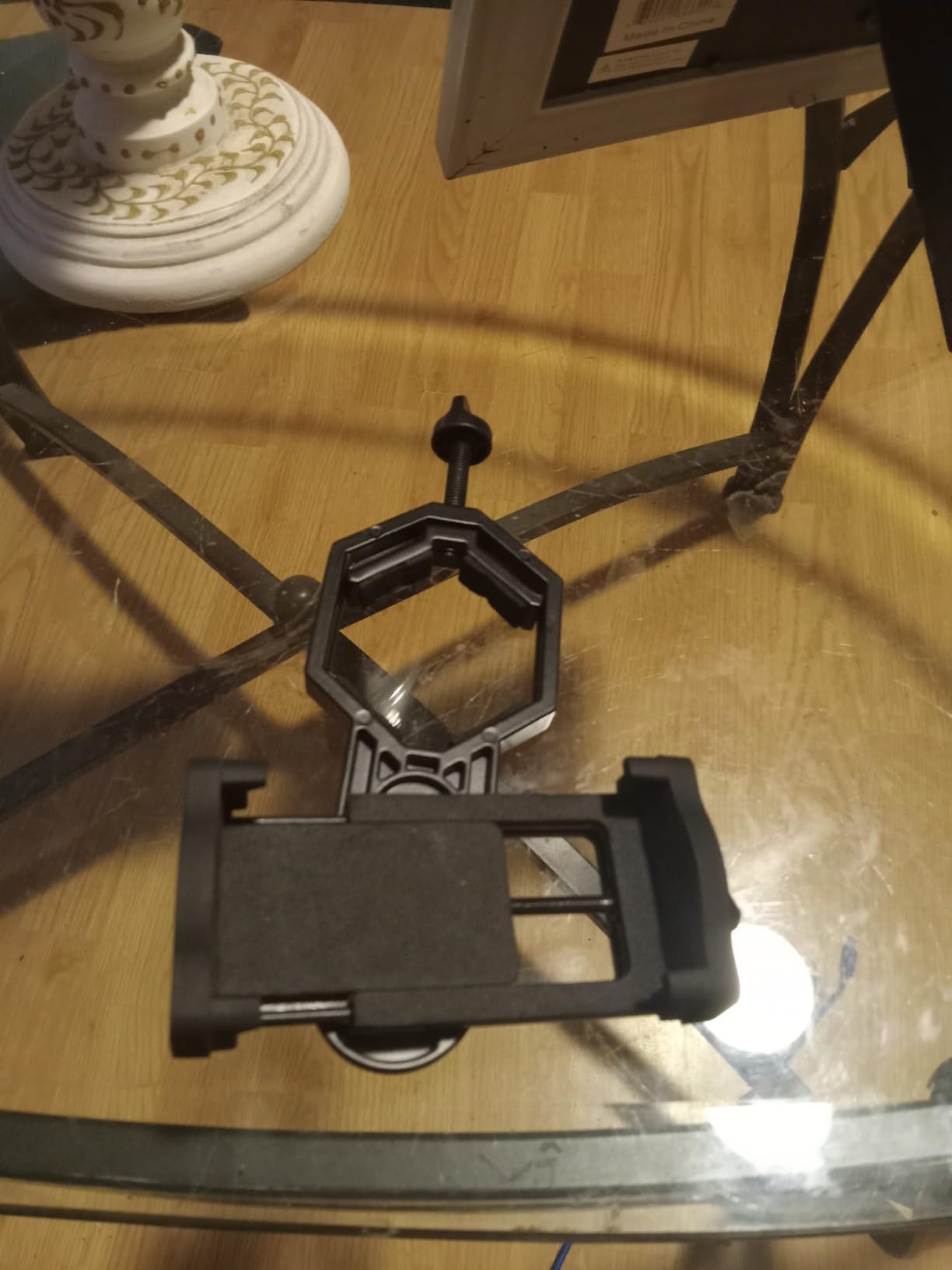
Compatibility is broad. It fits eyepieces from 25 mm to 48 mm, including the 1.25-inch telescope barrel, and accepts phones from 52 mm to 100 mm wide, which is wider than most mounts here. It is advertised for microscopes, telescopes, binoculars, monoculars, spotting scopes and even night vision, and in practice the barrel opening is accommodating.
The drawbacks are practical rather than fundamental. The rubber grip pads are slipped on rather than glued, so they can detach in a bag. The clamp sits low, which makes it awkward to align against optics with a raised or foldable eyecup. And with no index markings or quick-lock, you are re-finding your alignment by eye every session.
Who this suits
This is the adapter to buy if you have one optic, you keep it mounted on a tripod, and you want a mount that stays where you put it. The bolt lock is worth more in that setup than any amount of extra alignment range, because the entire session stays consistent instead of starting with a re-centering ritual.
It is also a strong first metal upgrade for someone who started with a plastic adapter and found it flexing. The jump in perceived quality is immediate, and the 112 g weight is barely noticeable on a scope with a tripod collar.
Where it will disappoint
Do not buy it if you plan to move it between a binocular and a spotting scope regularly. Without reference marks, every swap is a fresh alignment, and on this mount the alignment is fiddly. Buyers who photograph across several eyepieces tend to regret that more than the missing remote shutter.
Large phones in thick cases are the other weak spot. The clamp width stretches to 100 mm, but the side grip is shallow, so a cased flagship can sit near the edge of what fits. Check your phone width in the case before committing.
5. Celestron NexYZ DX Smartphone Adapter – Best for Shake-Free Capture
Celestron NexYZ DX Smartphone Adapter for Telescope with Bluetooth Remote
Three-axis alignment
Bluetooth shutter
35-60 mm eyepieces
283 g
Pros
- Bluetooth release removes touch shake
- Coaxial knobs make alignment repeatable
- Holds large phones with thick cases
- Covers 1.25 inch and 2 inch eyepieces
Cons
- Plastic gear plate and carriage feel loose
- Crush clamp is slow to load
- Z travel can be blocked by the hinge
- Remote battery door screw is tiny
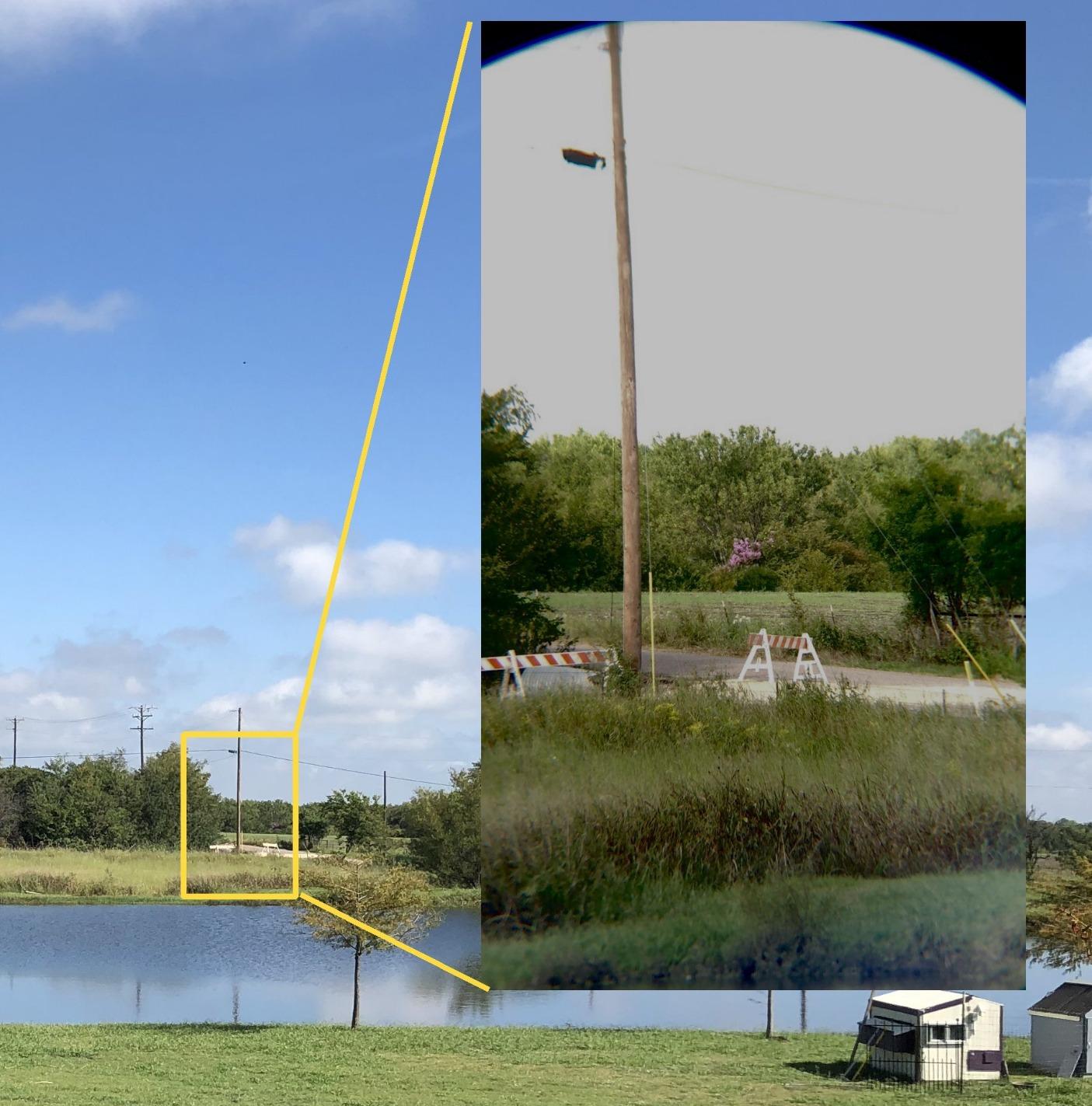
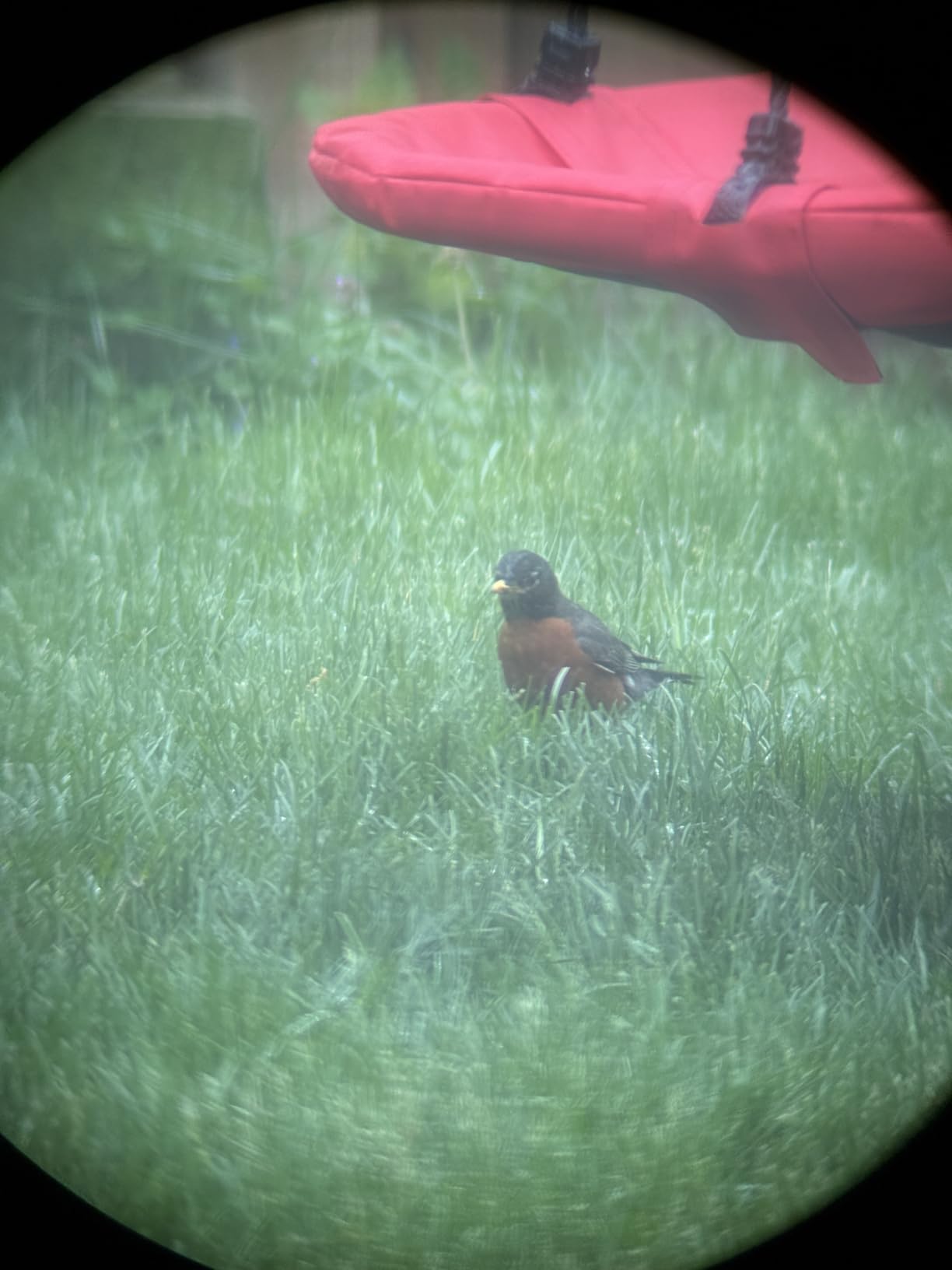
The one accessory that changes image quality more than any other is a remote shutter, and the NexYZ DX has one built in. The Bluetooth release lets you capture without touching the phone, which removes the single largest source of blur in handheld digiscoping. At 40x, a tap on the screen moves the image enough to soften a bird that was perfectly focused a second earlier.
Beyond the remote, it is the same proven three-axis design as the previous entry, with coaxial X-Y knobs and a Z-axis for eye relief across a 35-60 mm eyepiece range. Owners consistently report that it holds large phones securely even with thick protective cases on, and the spring-loaded slider makes swapping handsets quick when the family phone comes out too.
Two microscope ring adapters and a quick setup guide come in the box. It is noticeably heavier than the plastic model at 283 g, which is fine on a tripod and noticeable if you balance a pair of binoculars with it, so we would keep this one on glass that has a tripod collar or a stable rest.
The criticisms are honest but small. The vertical gear plate and sliding carriage are plastic and can develop a loose feeling with heavy use. The crush clamp is slow to load into the cradle, and the Z-axis can be blocked by the clamp hinge on certain eyepieces. The remote arrives with a coin cell already fitted behind a very small screw, so keep a coin handy the first time you open it.
Why the remote changes the result
Handshake is the limiting factor in digiscoping, not resolution. Magnification scales every wobble in your arms, and a tripod still leaves you with two hands to support a scope and a phone. A remote removes the last hand from the equation, which is why owners of this model report noticeably sharper frames at the same magnification.
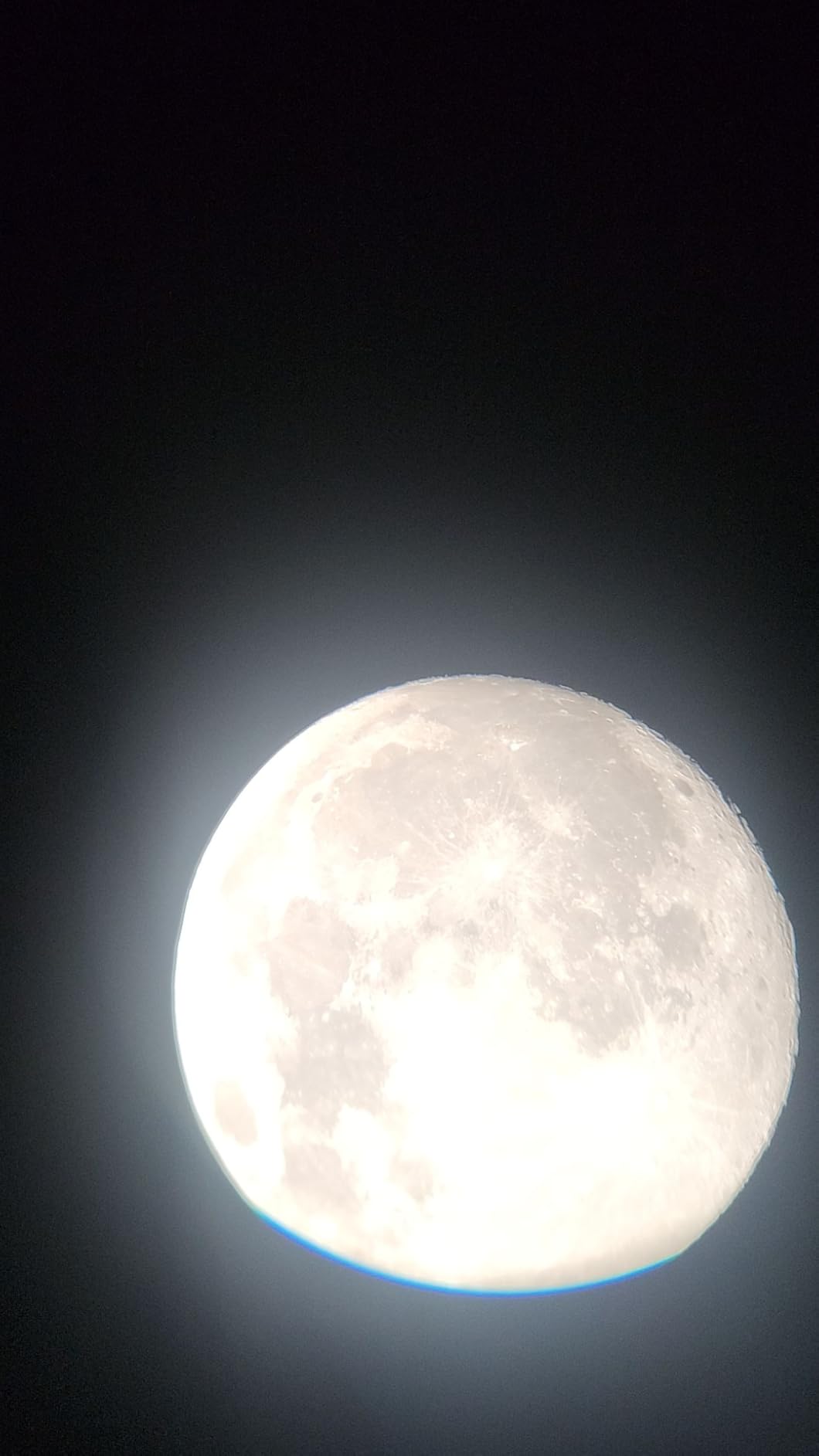
It also unlocks long exposures. With a remote and a self-timer you can stack a few frames for noise reduction on a night sky, something you cannot do while touching the screen. For astro work through a spotting scope or short refractor, that is the feature that makes the mount worth owning.
Where the extra spend goes
You are paying for the remote, the wider construction and the extra accessories. If you only shoot stills on a tripod and never mind touching the screen, the standard three-axis model gives you identical alignment and costs less. If you shoot handheld, at magnification, or at night, the remote is the part you will notice in every frame.
The plastic gear plate is the one place where the construction is not as refined as the mechanism. Treat it as a tripod mount and it will stay tight for seasons. Hang it off a handheld binocular in rough terrain and expect to check the cradle tension a few times a year.
6. MOVE SHOOT MOVE tridaptor – Best All-Metal Three-Axis Rig
tridaptor – Universal Phone Scope Digiscoping Adapter|High-Precision XYZ Metal Telescope Mount 3-Axis Smartphone Holder for Spotting Scope Monocular Binos|Fits All Cell Phone Camera/Max 2.4″ Eyepiece
Anodized aluminum
22-61 mm eyepieces
Bluetooth remote
37.5 degree field of view
Pros
- Rigid all-metal build resists flex
- Three-axis plus Z reduces vignetting
- Widest eyepiece range in the roundup
- Remote included
- Top-rated in its category
Cons
- Highest price in this roundup
- Linear screw cradle loads slowly
- No bottom stop on the phone cradle
- Single-sided eyepiece clamp screw
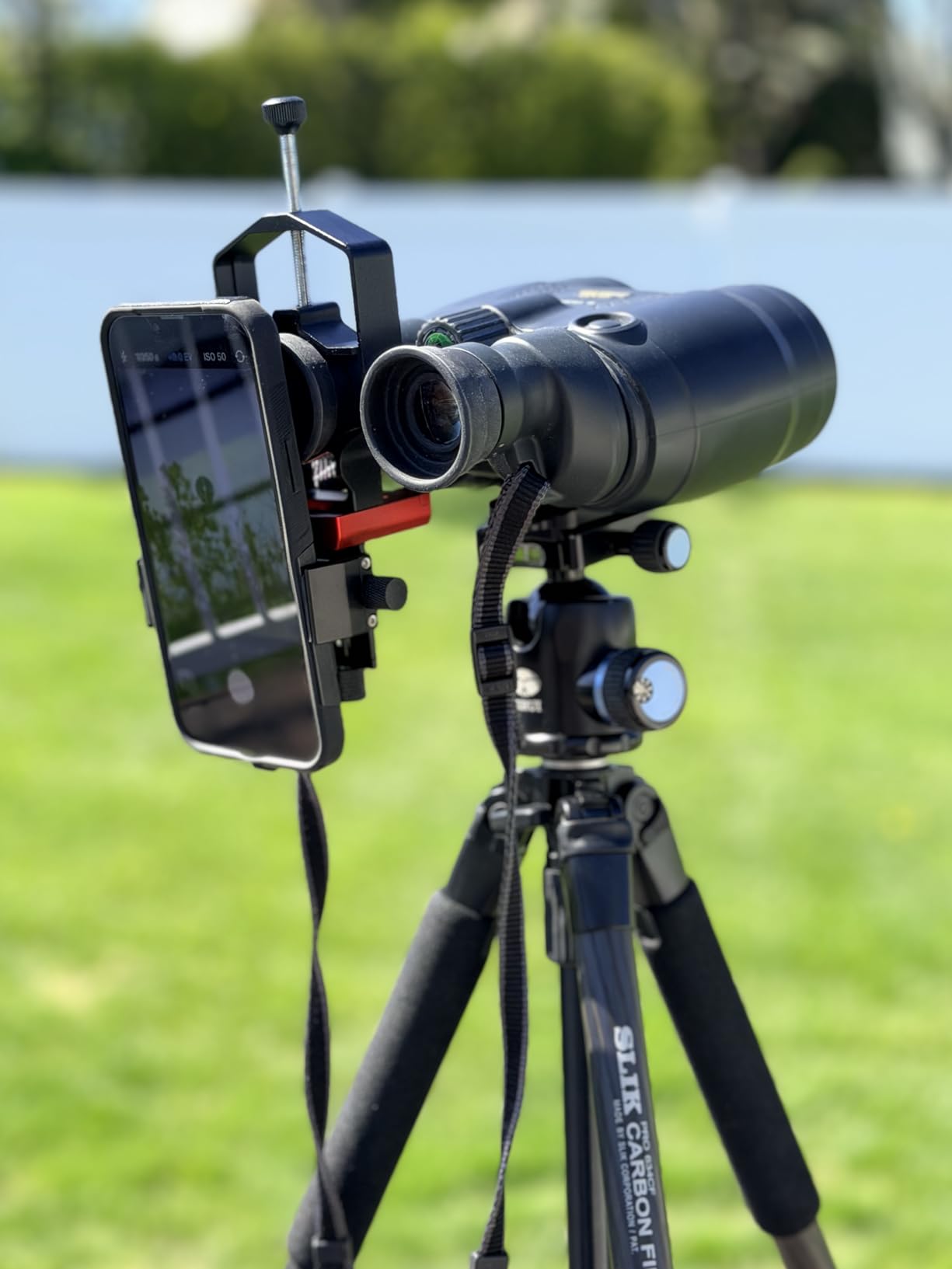
The tridaptor is the one we reached for when the question was pure rigidity. Everything structural is anodized aluminum, and at 4.4 across 570 ratings it carries the highest average rating in this roundup while sitting at the top of the Telescope Photo Adapters sales ranking. Owners describe it as the sturdiest and most precise three-axis mount they have used, and our own frames showed very little shift after a long walk on rough ground.
Three-axis adjustment handles left-right, up-down and forward-back movement, and the Z eye relief control is what keeps the corners of your frame from going dark. The eyepiece range of 22-61 mm outer diameter is the widest we tested, spanning small binocular barrels through 2-inch telescope eyepieces, and the listing names compatibility with Vortex, Swarovski, Celestron, Nikon, Zeiss, Kowa and Leupold glass.
The Bluetooth remote is included, which puts it alongside the DX model as the other strong choice for shake-free capture. The stated field of view of 37.5 degrees and a 233 g weight put it in the middle of this group: substantial enough to stay rigid, light enough to remain portable.
Reservations are mostly about cost and convenience. Cheaper aluminum three-axis mounts perform similarly, so you are paying for the tightest tolerances in the group. The linear screw cradle is slower to load than a spring cradle, the phone cradle has no bottom stop to speed re-centering, and the eyepiece clamp screw is single-sided, which can feel a little wobbly while you tighten it.
When rigidity actually pays off
Flex matters most when the phone is heavy and the eyepiece is far from your body. A large handset sitting on a plastic rail will bow slightly under load, and that bow tilts the sensor enough to introduce blur at long focal lengths. An all-metal frame resists that, which is why this mount holds alignment through a whole session without being touched.
It is also the safest choice for people who switch between glasses constantly. Because the frame does not flex, the setting you find on the spotting scope in the car park still works on the binocular in the field, so you are not re-aligning between every use.
Where the premium does not pay off
If you only shoot wide-field images at 10x to 20x on a light pair of binoculars, a plastic two-axis mount will produce a comparable frame. The difference in rigidity is hard to see at low magnification, and this is the most expensive adapter we reviewed.
Single-eyepiece shooters with a tiny tripod setup can get the same alignment discipline for less. The case for spending more is precision work, long sessions, or a setup that moves between multiple heavy optics.
7. Carson HookUpz 2.0 – Best Lightest Spring-Clamp Adapter
Carson HookUpz 2.0 Universal Smartphone Optics Digiscoping Adapter for Binoculars, Spotting Scopes, Telescopes, Microscopes, Monoculars and More (IS-200)
Plastic body
25-58 mm eyepieces
4.8 oz
Dual-spring clamp
Pros
- Spring clamp pops the phone on in seconds
- Under 5 ounces so it barely loads the eyepiece
- Accepts larger eyepieces than most screw mounts
- Fine horizontal pitch adjustment
Cons
- Hard to align with center-camera phones
- Vertical tensioner only catches the phone edge
- Light leaks into the frame
- Not a true 3-axis mount
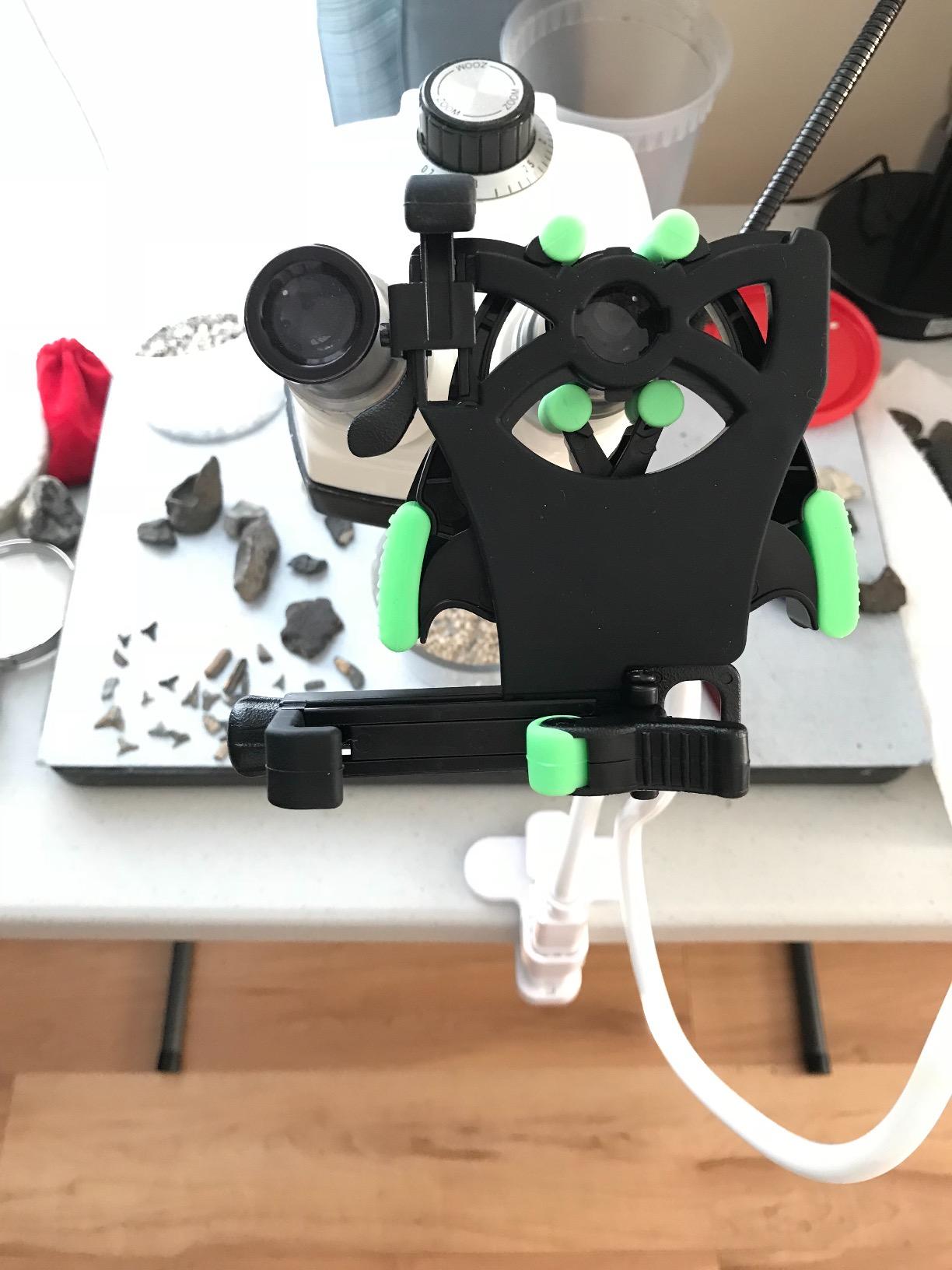
The HookUpz is the lightest adapter we tested, at 4.8 ounces, and its patented self-centering dual-spring clamp is genuinely the fastest pop-on mechanism in the group when the phone is a standard single-lens model. If you carry a small pair of binoculars and want to grab a frame the instant a warbler moves, the speed argument is real.
The eyepiece range of 25-58 mm is unusually wide for a spring design and accepts larger eyecups that many screw clamps cannot seat on. A cam-lock on the optic side tightens the barrel grip, and a variable pitch screw gives you fine horizontal correction. A protective case is included, which is a nice touch for something that lives in a pack.
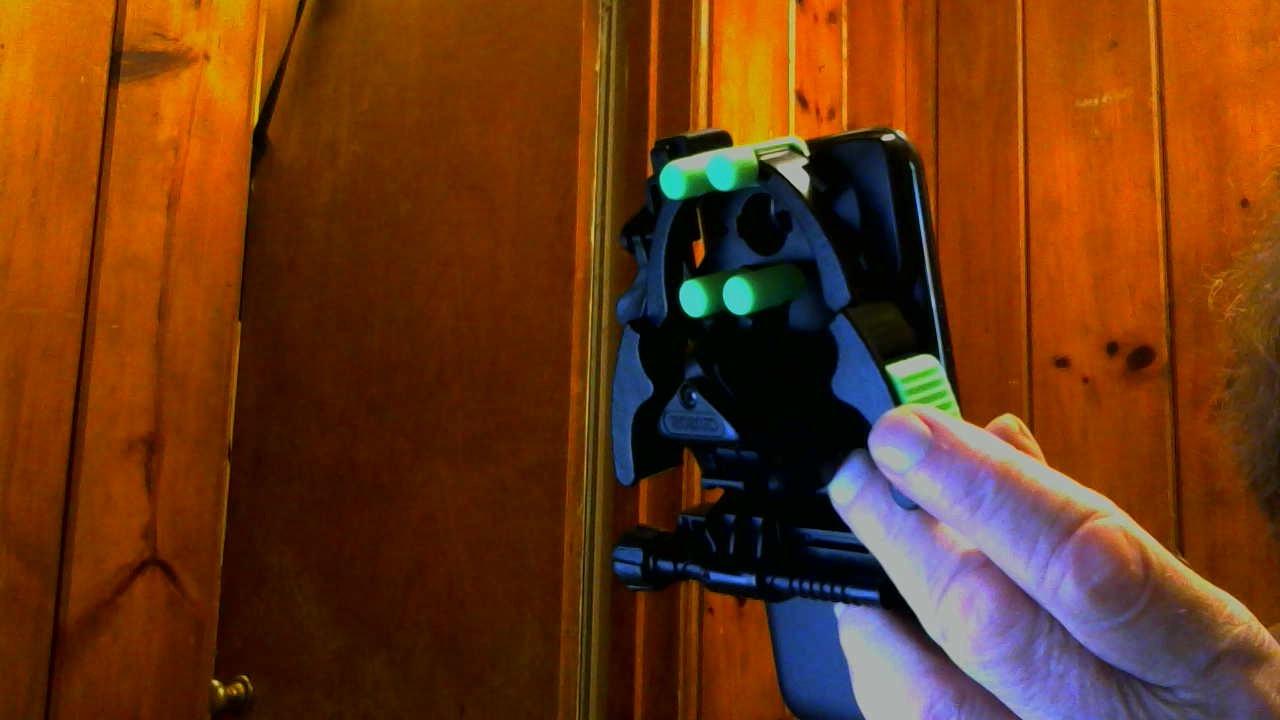
The rating tells the story at 3.6 from 434 reviews, the lowest average here, and the complaints are consistent rather than random. Modern phones with several rear lenses place the active camera off-center, and this mount struggles to center them. The vertical tensioner catches the edge of the phone rather than the body, so a heavy handset can shift out of alignment during a session.
Owners also report light leaking in from behind the phone on bright conditions, which shows up as a washed-out background rather than a black one. And because it is not a true three-axis mount, you re-align between sessions rather than once and keeping it.
Where its weight advantage matters
On very compact binoculars and monoculars, adapter weight is a real factor. Adding almost five ounces to a pair of 8×32 glasses changes how they balance around your nose, and over a long birding walk that discomfort shows up before any image problem does. This mount simply does not add that burden.
It is also the one to pack when weight is the deciding factor, such as on a backcountry trip where every ounce counts and the plan is one quick confirmation photo rather than a session of digiscoping.
Why we would not build a kit around it
Modern phone cameras are the problem. A mount designed around a single centered lens fights the layout on current multi-lens handsets, and the shift under load means you check alignment constantly. That is a poor trade for a device whose whole job is point-and-shoot speed.
Light leakage is the second issue, and it is not subtle. If you photograph anything against a bright sky, you will spend editing time on a halo the hardware created. Buy this one only if your phone has a centered camera and you shoot mostly at low magnification.
8. CELTICBIRD Precision Metal Phone Mount – Best for Large Eyecups
CELTICBIRD – Upgrade Smartphone Scope Adapter Spotting Scope Phone Adapter – Precision Metal Telescope Phone Mount for Spotting Scopes, Binoculars, Monocular, Telescope, Microscope
Aluminum body
34-62 mm eyepieces
54-90 mm phone width
92 degree field of view
Pros
- Aluminum body sturdier than plastic rivals
- Adjustable lens distance cleans up framing
- 34-62 mm range accepts 2 inch eyepieces
- Settings hold between sessions
Cons
- Screws meant to stop phone shift are weak
- Bulky to attach and remove
- Some examples arrive with a bent arm
- Poor grip on foldable eyecups and offset cameras
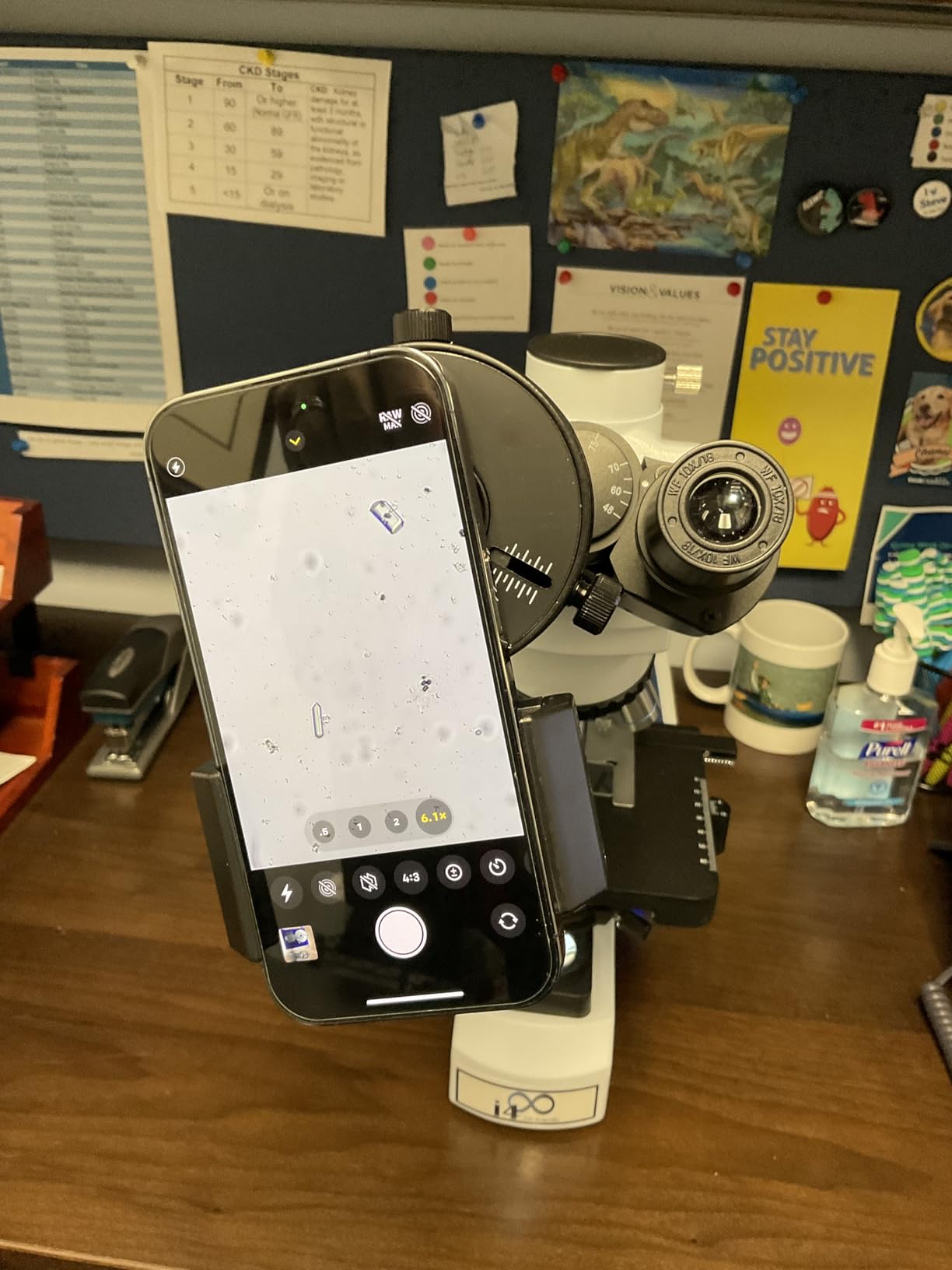
CELTICBIRD solves a specific problem: getting a phone to sit correctly on a big spotting scope with a fat, raised eyecup. The aluminum body and the adjustable eyepiece-to-lens distance let you frame the eyepiece circle cleanly rather than shooting a soft, dark-edged disc. Once you dial the distance in, owners report that the settings hold between sessions.
The 34-62 mm eyepiece range is the second widest of the screw-clamp options here, and it accepts 2-inch eyepieces. The phone side takes anything from 54 mm to 90 mm wide across iPhone, Samsung, Huawei, LG and Sony handsets, so most people never need to remove a case. It ranks in the top ten of its category with 227 ratings at 3.8.
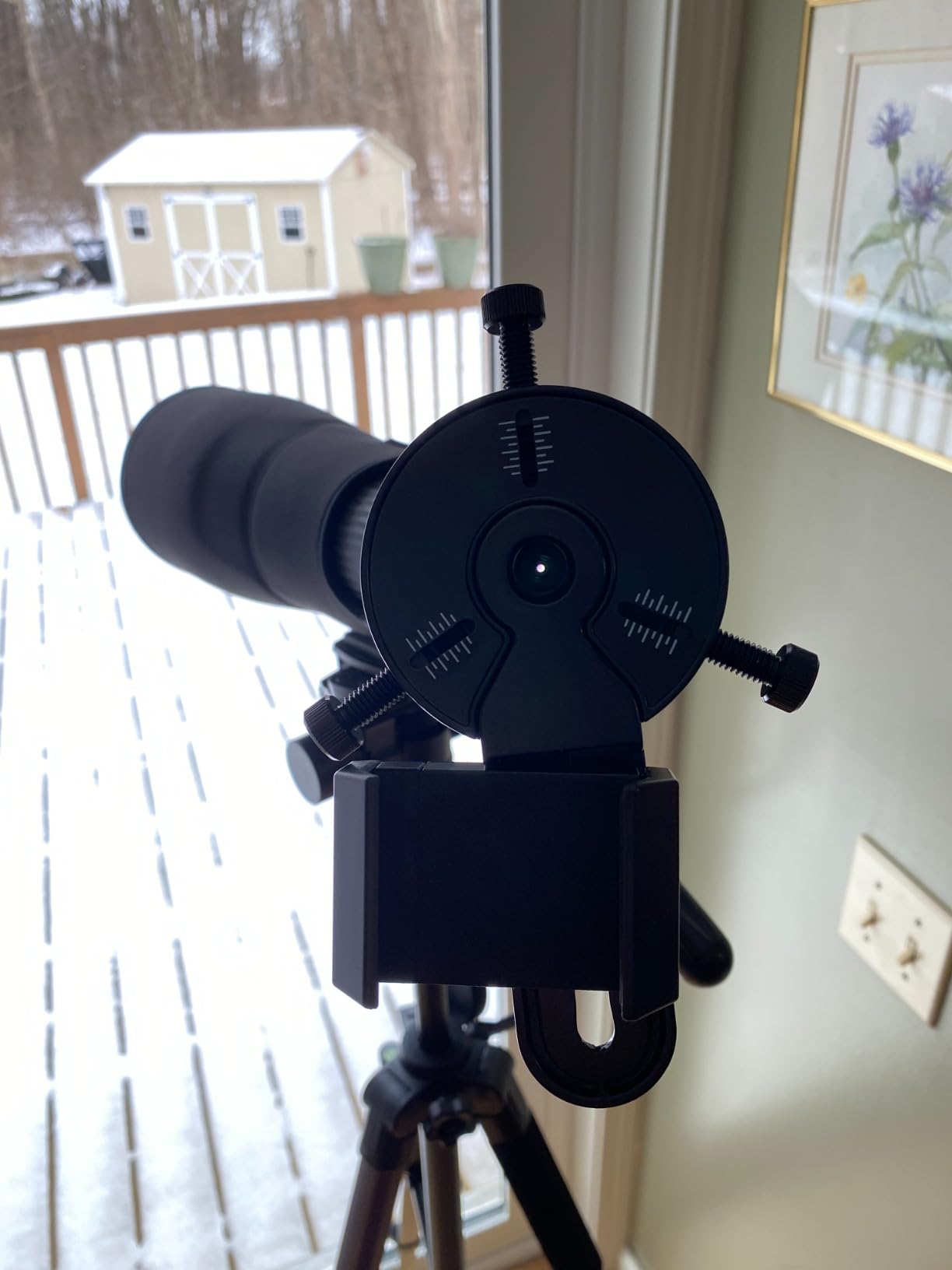
The 3.8 average comes down to build consistency rather than concept. The screws intended to stop the phone shifting do very little, so a heavy handset can creep during a long session. The unit is also bulky and fiddly to attach or remove, which is frustrating when the whole appeal was quick framing.
There are two fitment complaints worth knowing. Some examples arrive with a slightly bent arm, which tilts the phone off-axis and makes perfect alignment impossible. And the mount struggles to grip binoculars with foldable eyecups and large offset camera modules, which is a real limitation for anyone pairing a phone with high-end glass.
What the wide range really buys you
An eyepiece range of 34-62 mm is one of the few specs that directly answers the biggest question buyers have, which is whether the thing fits. A narrow mount that stops at 45 mm simply cannot seat on a 2-inch barrel, and you find that out after delivery. A wide mount like this one keeps the door open for the heavier glass you may buy later.
The adjustable lens distance is the second useful feature. It is what lets you move the camera back far enough to see the whole eyepiece circle instead of a cropped center, and that single adjustment removes most of the vignetting people blame on their phone.
When to pass
Pass on this one if your binoculars have a foldable eyecup or your phone has a large offset camera module. Both are named in the reviews as fitment failures, and no amount of adjustment resolves a geometry problem. The wide eyelip range on paper does not guarantee a grip on a tapered barrel.
Quality control is the other question. Inspect the arm for straightness the moment it arrives, before you spend an afternoon aligning it. A bent arm cannot be dialled out, and a replacement is easier to arrange early than after a trip is booked.
9. Zelnoox MagSafe Digiscoping Adapter – Best for Magnetic Phones
for Magsafe Digiscoping Adapter,Fits Telescope or Spotting Scope 2.5″ Eyepiece Max,Magnetic Attachment for iPhone 12/13/14/15/16/17 Pro Max Magnetic Case
20 N52 magnets
28-64 mm eyepieces
Anodized 6061-T6 aluminum
4.3 oz
Pros
- Magnetic attach is quick and stable
- Two-direction plus Z adjustment
- Precision machined anodized aluminum
- 28-64 mm fit with ring for older phones
Cons
- No positional adjustment while attached
- Blocks MagSafe charging
- Metal ring needs 24 hours to bond
- Built around iPhone and magnetic cases
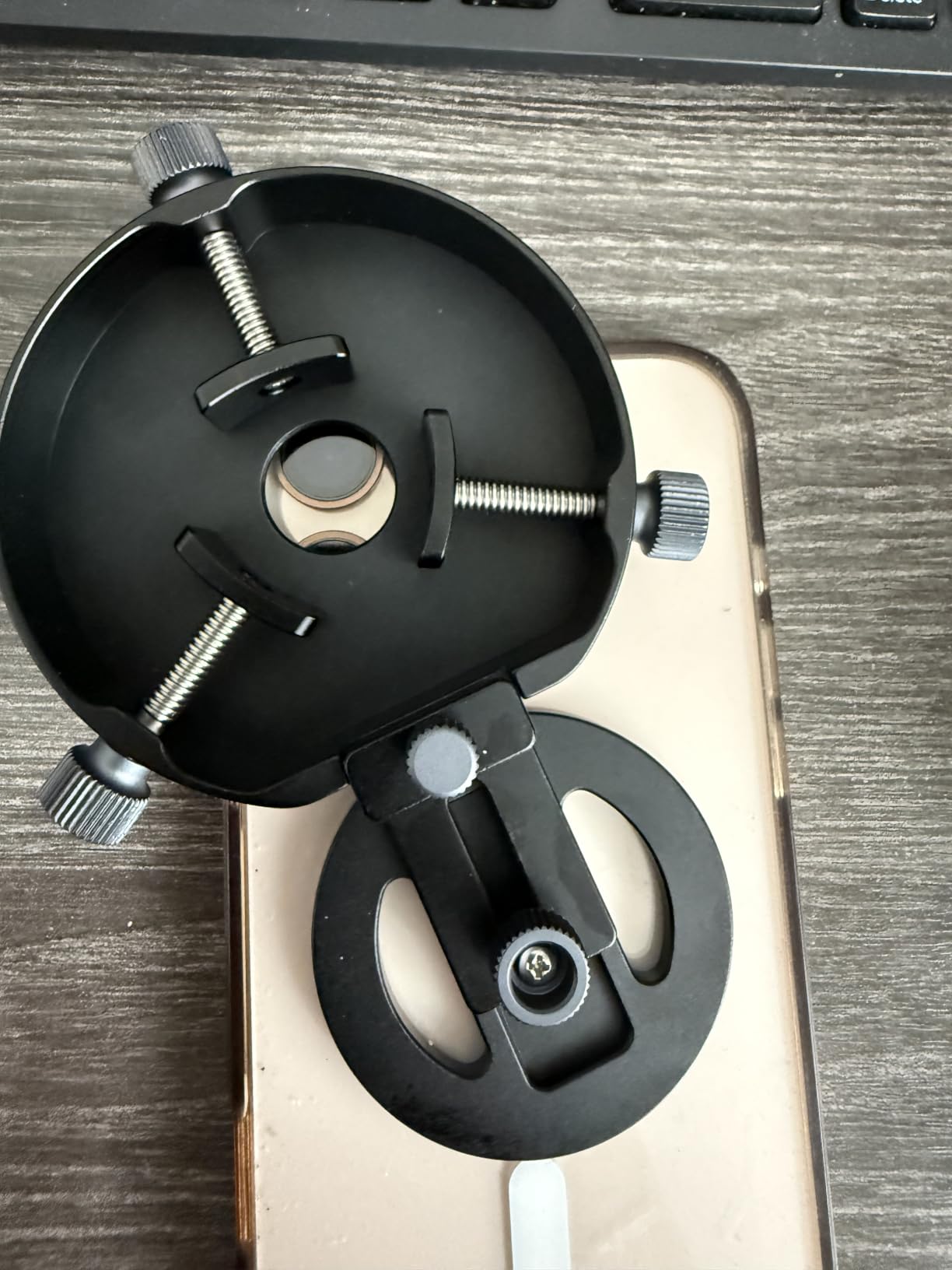
This is the newest mechanism in the roundup and the fastest one to deploy. Instead of a screw cradle, 20 N52 neodymium rings hold the phone against the adapter, so a shot goes from pack to frame in a couple of seconds without a single knob turn. Owners like the machined 6061-T6 aluminum and the anodized finish, which resists snagging on vegetation.
Adjustment happens before you attach. There are controls for up-down, forward-backward and Z movement to set eye relief while the phone is off, then the magnets lock the final position every single time. The eyepiece range of 28-64 mm outer diameter is among the widest here, and a metal ring is included so iPhone 11 and earlier models, plus many Android phones, can get a magnetic surface too.

At 3.7 from 151 ratings, the complaints are structural rather than sloppy. Once the phone is magnetically attached you cannot reposition it, so the alignment has to be right the first time. It also does not support MagSafe charging while mounted, and the included metal ring needs a full 24 hours to bond before it will hold.
It is also built around iPhone and magnetic-case thinking. Android users can join with the ring, but the design assumes a single centered rear camera and a flat magnetic back, so offset camera modules are unlikely to center well.
When magnetic beats a screw clamp
Magnetic attachment wins in exactly one scenario: unplanned, rapid shooting. A flight of geese crosses a clearing, you have seconds, and a knob-and-cradle mount is too slow. The Zelnoox goes from bag to image before the birds leave the frame, and because the connection is repeatable you stop re-aligning entirely after the first setup.
It also handles a bare phone well, which matters for people who digiscope without a case in cold weather and then put the phone away. A screw clamp is more tolerant of a bare glass back; a magnetic mount is more tolerant of a bare phone in the pocket.
Where magnetism gets in the way
Two limits are worth planning around. Positional adjustment while attached is impossible, so you need a tripod or a solid rest to fine-tune, and the fixed geometry is unforgiving of offset camera modules. And you cannot charge the phone while it is mounted, which matters for a full day of shooting on a long battery.
If you shoot deliberately rather than reactively, a screw or three-axis clamp gives you more control for similar effort. Pick this one for speed and for the machined aluminum feel, not for precision work at 60x.
10. Eyeskey Universal Phone Adapter – Best for Compact Travel Kits
Eyeskey Universal Phone Adapter – Capture Stunning Moments with Your Smartphone Through Binoculars, Monoculars, Scopes, Telescopes, and Microscopes – Fits Most Smartphones
Metal housing
22.5-48 mm eyepieces
52-100 mm phone width
Four-step setup
Pros
- Metal housing sturdier than plastic rivals
- Wide 22.5-48 mm and 52-100 mm ranges
- Simple four-step setup
- Lightweight and packable
Cons
- Alignment needs repeated adjustment
- Will not fit 2 inch eyepieces
- Plastic clamp feels less rigid than the body
- No remote shutter
The Eyeskey closes out the roundup as the simple one. It is a fully metal housing with a high-strength ABS plastic clamp, a 22.5-48 mm eyepiece range and a phone range of 52-100 mm wide, which is one of the widest phone openings we tested. Setup takes four steps and needs no tools, and at 151 ratings with a 3.7 average the user reports are consistent.
The small eyepiece minimum of 22.5 mm is the detail most buyers never look at. It means the mount will seat on compact 8×32 binocular barrels and monoculars that narrower mounts slide past, which is exactly the glass you would carry on a trip where every gram counts. Buyers also note the housing feels considerably more substantial than plastic adapters in the same bracket.
Alignment is where it costs you. Owners report that centering the camera against the eyepiece takes repeated adjustment rather than one careful pass, and there is no remote shutter, so you are back to timers and tripods to avoid touch shake. The plastic clamp also feels less rigid than the metal body suggests, which is a common pattern in budget mounts.
What works well about it
It is light, compact and simple, with no springs to relax and no batteries to fail. For a travel kit, a pack that carries one small binocular, that reliability is worth a lot. Nothing needs conditioning, and there is no pairing step to forget before a dawn start.
The wide phone width is the quiet advantage. At 100 mm maximum it accepts nearly any handset, including large models in cases, and the eyepiece minimum covers glass that other clamps cannot reach at all.
Where it stops
It tops out at 48 mm, so it will not fit 2-inch telescope eyepieces, and the absence of three-axis movement means re-centering every time. If your use case involves a large telescope, moving between optics, or handheld shots at high magnification, spend up and choose one of the three-axis mounts instead.
Think of this one as the portable confirmation shot rather than the main event. That is a genuinely useful role, and it fills a gap the heavier precision mounts leave in a small bag.
How to Choose a Digiscoping Adapter
Start with your eyepiece diameter, because every other decision depends on it. Measure the barrel, not the eyecup, and measure it with a ruler rather than trusting a spec sheet. Eyecups flare wider than the metal underneath, so measuring the cup is the single most common reason an adapter that should fit does not.
Next, measure your phone in the case you actually use. Most mounts here accept 52 mm to 90 mm of phone width, but a cased large handset sits at the top of that range and a deep bumper adds more. If a case has a kickstand, a ring or a raised camera surround, plan to fold or remove it, because the surround is usually what prevents the eyepiece from reaching the correct distance.
Then choose by how you shoot. If you react to wildlife with quick bursts, a magnetic mount is the fastest path from pack to image. If you sit, compose and wait, a three-axis mount gives you finer control over eye relief and vignetting. If you swap between a binocular and a spotting scope, pick a mount with enough range to cover both eyepiece sizes, and expect to re-align unless the frame is rigid enough to hold its setting.
Vibration deserves its own paragraph because it causes more ruined shots than bad adapters. At 20x a slow, deliberate handheld shot is realistic. At 40x and above, use a tripod with a fluid head, balance the scope over its tripod collar rather than its barrel, and release the shutter with a remote or a self-timer. If you work with cameras and rigs rather than phones, our guide to dummy batteries and AC adapters covers the same idea for powering external hardware on location.
One clarification on a common piece of jargon. Adapter threads such as T-thread, A-thread and T2 belong to camera bodies and step-up rings, not to the phone clamps reviewed here. When you see a thread specification, you are looking at a system for mounting a mirrorless or DSLR camera, which trades phone convenience for larger sensors and better low-light performance. If your interest is rigging a camera through a telescope rather than a phone through a spotting scope, the cine lens adapter guide for mixed-mount kits covers the thread standards in full.
Finally, consider total ownership rather than purchase alone. Any adapter in this roundup works with the phone and the case you already own, which means no replacement cost when you upgrade handsets. That is the biggest hidden saving in the category, and it is why magnetic plate systems and universal clamps tend to age better for regular users than purpose-built single-optic mounts.
A quick compatibility check before you order: confirm your optic model and its eyepiece diameter, confirm the phone width in its case, confirm the mount has a Z-axis or equivalent eye relief control if you shoot above 30x, and confirm it works through a case rather than requiring a bare phone. Get those four right and the fitment risk largely disappears.
For anyone building a broader accessory kit, the cables and adapters guide for film audio setups is a useful companion reference for the power and data side of field work.
Frequently Asked Questions
What is a digiscoping adapter?
It is a small mount that couples a smartphone camera to the eyepiece of binoculars, a spotting scope or a telescope, holding the lens at a fixed distance from the glass so the image is centered, stable and repeatable instead of drifting and shaking.
Is digiscoping worth it?
For identifying a distant bird, recording wildlife behaviour or photographing the moon through a spotting scope, yes. You get a usable long lens from hardware you already own. You do not get the light gathering of a dedicated telephoto lens, so low-light and high-ISO results stay phone-like.
Do I need a tripod for digiscoping?
Below roughly 20x, a steady handheld shot is realistic. Above 40x, a tripod with a fluid head makes a large difference because magnification scales every wobble in your arms. Balance the scope on its tripod collar, and use a remote shutter or self-timer at any magnification.
What is the best phone adapter for using with binoculars?
For binoculars, look for a wide eyepiece range that covers small 8×32 barrels and a spring or magnetic mechanism for fast framing. A three-axis mount gives better control of eye relief, while a light spring-clamp model suits compact glass. Avoid mounts that cannot grip foldable eyecups.
Will a digiscoping adapter work with my phone case?
Most models in this roundup are designed to clamp through a normal protective case. Check two things: the phone width in the case against the mount’s stated range, and whether a kickstand or raised camera surround blocks the eyepiece from reaching the correct distance.
Do I need three-axis adjustment?
Only if you shoot above 30x, use a phone with multiple rear cameras, or care about a clean, unvignetted frame. The third axis controls eye relief, which is what removes the dark ring around the image. For low-magnification wide-field work, a two-axis screw clamp is enough.
The Verdict: Which Digiscoping Adapter to Buy
The GOSKY Spotting Scope Phone Adapter is our best digiscoping adapter for 2026 because it combines the widest eyepiece range most people need with a zinc alloy body that survives real field use, and it backs that with 14343 ratings and a lifetime warranty. If your priority is alignment speed and clean framing at long magnification, the Celestron NexYZ 3-Axis covers the widest range of eyepieces, and the DX version adds the remote shutter that stops touch shake.
Pick a magnetic mount only if you shoot reactively, choose an all-metal three-axis rig if you switch between heavy optics often, and start with a two-axis clamp only if you are testing whether digiscoping belongs in your kit at all. Whichever you choose, measure the eyepiece barrel and your phone in its case before you order, and the fitment problems that frustrate most new digiscopers simply do not happen.