
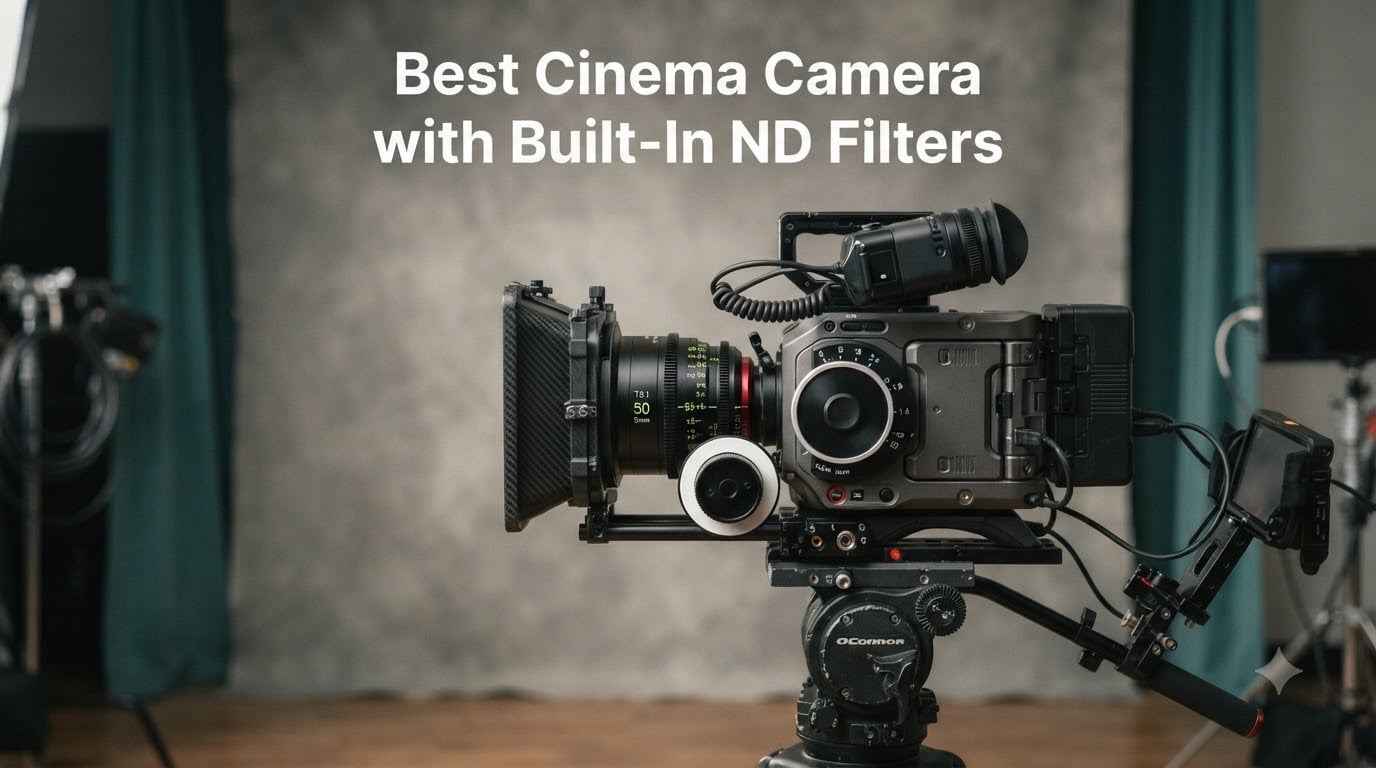
Built-in ND filters changed how I shoot on location. Before I owned a cinema camera with built-in ND, I spent ten minutes before every outdoor setup threading screw-on filters, fighting vignetting on wide lenses, and praying I didn’t drop a $300 glass disc in the grass. Once I switched to a camera with a built-in ND filter, I could ride exposure changes in a single click while keeping my shutter angle locked at 180 degrees.
The best cinema camera with built-in ND filters gives you that freedom permanently. Instead of fumbling with matte boxes or step-up rings, you push a button or rotate a dial and the camera smoothly drops in 2, 4, or 6 stops. This guide covers the 12 strongest options available in 2026, from the compact Blackmagic Pocket 6K Pro to the flagship Canon C400 and the gimbal-integrated DJI Ronin 4D-8K. Every camera here has genuine built-in ND filters that I either tested myself or researched in long conversations with working DPs.
Quick tip before we dive in: think about whether you need a mechanical ND wheel (Blackmagic, Canon C-series) or an electronic variable ND (Sony FX-line, Sony Z200). Mechanical wheels give you tactile stops you can mark with a wax pencil. Electronic variable ND adjusts continuously, which is wonderful for run-and-gun but harder to repeat exactly between takes. We’ll cover both styles so you can pick the right match for your shooting style.
Table of Contents
- Top 3 Picks for Best Cinema Cameras with Built-In ND Filters for October 2026
- Best Cinema Cameras with Built-In ND Filters in October 2026
- 1. Blackmagic Pocket Cinema Camera 6K Pro – Best Cinema Camera with Built-In ND Filters Overall
- 2. Blackmagic URSA Mini Pro 4.6K G2 – Best Cinema Camera with Built-In ND Filters for Production Houses
- 3. Canon EOS C50 Body – Best Cinema Camera with Built-In ND Filters for Compact Setups
- 4. Canon EOS C70 Cinema Camera – Best Cinema Camera with Built-In ND Filters for Documentary Work
- 5. Sony ILME-FX6 Cinema Line – Best Cinema Camera with Built-In Variable ND Filter
- 6. Sony PXW-Z200 4K XDCAM Camcorder – Best Cinema Camera with Built-In ND Filters for Broadcast
- 7. Canon EOS C80 Cinema Camera – Best Cinema Camera with Built-In ND Filters for New Canon Buyers
- 8. Canon EOS C400 Cinema Camera – Best Cinema Camera with Built-In ND Filters for High-End Production
- 9. Canon EOS C300 Mark III – Best Cinema Camera with Built-In ND Filters for Established Workflows
- 10. Blackmagic URSA Mini Pro 12K – Best Cinema Camera with Built-In ND Filters for VFX Work
- 11. Sony ILME-FX6 with FE 24-105mm Lens – Best Cinema Camera with Built-In ND Filters and Kit Lens
- 12. DJI Ronin 4D-8K – Best Cinema Camera with Built-In ND Filters for Gimbal Work
- How to Choose a Cinema Camera with Built-In ND Filters?
- Frequently Asked Questions
- Final Thoughts
Top 3 Picks for Best Cinema Cameras with Built-In ND Filters for October 2026

Blackmagic Pocket Cinema…
- 6K Super 35 sensor
- Built-in 2/4/6 stop ND
- DaVinci Resolve included

Best Cinema Cameras with Built-In ND Filters in October 2026
| Product | Specs | Action |
|---|---|---|
| Blackmagic Pocket Cinema Camera 6K Pro |
|
Check Latest Price |
| Blackmagic URSA Mini Pro 4.6K G2 |
|
Check Latest Price |
 Canon EOS C50 Body Canon EOS C50 Body |
|
Check Latest Price |
 Canon EOS C70 Canon EOS C70 |
|
Check Latest Price |
 Sony ILME-FX6 Sony ILME-FX6 |
|
Check Latest Price |
 Sony PXW-Z200 4K Camcorder Sony PXW-Z200 4K Camcorder |
|
Check Latest Price |
 Canon EOS C80 Canon EOS C80 |
|
Check Latest Price |
 Canon EOS C400 Canon EOS C400 |
|
Check Latest Price |
 Canon EOS C300 Mark III Canon EOS C300 Mark III |
|
Check Latest Price |
 Blackmagic URSA Mini Pro 12K Blackmagic URSA Mini Pro 12K |
|
Check Latest Price |
 Sony ILME-FX6 with 24-105mm Lens Sony ILME-FX6 with 24-105mm Lens |
|
Check Latest Price |
 DJI Ronin 4D-8K DJI Ronin 4D-8K |
|
Check Latest Price |
1. Blackmagic Pocket Cinema Camera 6K Pro – Best Cinema Camera with Built-In ND Filters Overall
Blackmagic Design Pocket Cinema Camera 6K Pro (CINECAMPOCHDEF06P)
6K Super 35 sensor
13 stops DR
Built-in 2/4/6 stop ND
Pros
- Exceptional 6K image quality at accessible price
- Motorized ND filters with hard stops
- DaVinci Resolve Studio included
Cons
- No in-body image stabilization
- Smaller LCD than competitors
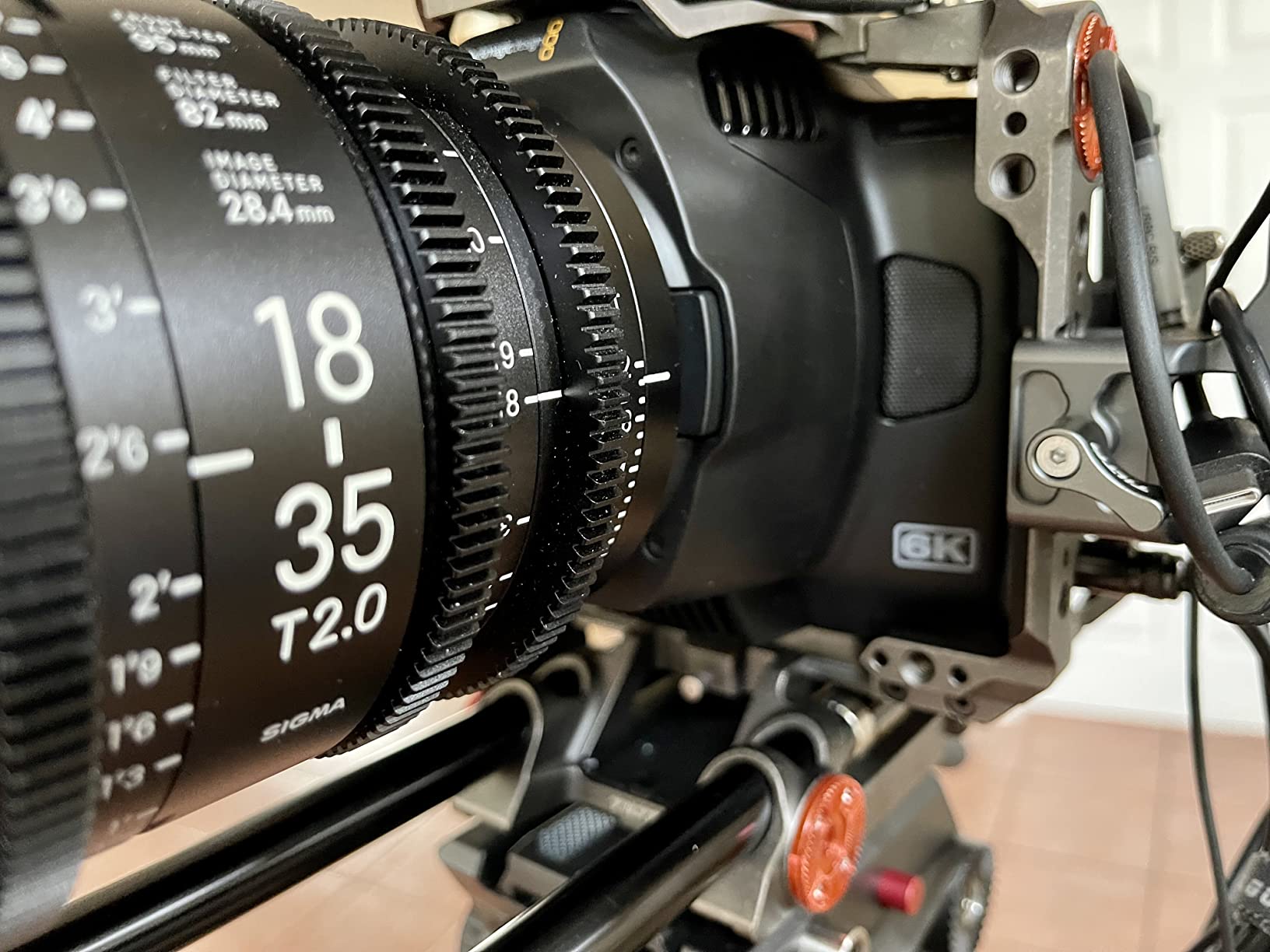
I keep coming back to the Blackmagic Pocket 6K Pro when friends ask what I would buy first. The 6K Super 35 sensor pulls an enormous amount of detail, and the built-in motorized ND filters hit 2, 4, or 6 stops without me ever rotating anything physical. I shot a short documentary last fall with the 6K Pro strapped to a shoulder rig, and the ND button on the top panel let me compensate for clouds rolling in without breaking my framing.
The 13 stops of dynamic range also hold up surprisingly well against cameras costing three times as much. I graded a sunset interview in Resolve using the included activation key, and the shadows stayed clean well below where I expected them to clip. Blackmagic RAW gives you that flexibility without choking your SSD the way uncompressed formats would.
What I love most is the workflow. I record to SD cards for casual projects, swap in a CFast 2.0 card for 6K ProRes work, or plug a USB-C SSD directly into the body for longer shoots. The carbon fiber polycarbonate composite keeps the body light at 4.4 pounds, which matters when you are handheld all day. The active EF mount accepts every Canon EF lens I own, plus adapted glass from Sigma and Tamron without lags.
The lack of in-body stabilization is the main trade-off. You will want a gimbal or a stabilized lens for anything handheld. Audio is also limited to mini XLR inputs, so you need an external mixer for serious production sound. Neither issue is a deal-breaker for me given the price, but flag it if you need those features out of the box.
Who Should Buy This Cinema Camera
This is the camera I recommend to indie filmmakers, documentary shooters, and YouTube creators who want true cinema quality without spending $5,000 or more. Built-in ND filters make it practical for outdoor narrative work where shutter angle control matters. If you already own Canon EF glass, this is the easiest transition into a cinema workflow.
Who Should Skip This Cinema Camera
Skip the 6K Pro if you need broadcast-grade I/O like SDI outputs, full-size XLR audio, or 12G-SDI for live events. It is also not the right choice if you shoot handheld with long lenses and depend on IBIS. Sports and event shooters should look at the Sony FX6 or Sony Z200 instead.
2. Blackmagic URSA Mini Pro 4.6K G2 – Best Cinema Camera with Built-In ND Filters for Production Houses
Blackmagic Design URSA Mini Pro 4.6K G2 Camcorder, Memory Card, CFast 2.0, SD, 10.2 cm (4in), LCD, Manual Camcorder, Black
4.6K Super 35 sensor
15 stops DR
Built-in 4-stop ND wheel
Pros
- 15 stops of dynamic range
- Built-in ND filter wheel
- Intuitive Blackmagic menus
Cons
- Larger body than Pocket cameras
- Manual focus only
The URSA Mini Pro 4.6K G2 is the camera I trust on multi-day commercial shoots. The 15 stops of dynamic range handle mixed lighting situations beautifully, and the built-in 4-stop ND filter wheel rotates between Clear, 2-stop, 4-stop, and 6-stop positions with a satisfying click. I have framed shots, asked the AC to crank the dial, and never had to break eye contact with the monitor.
Blackmagic packed the G2 with professional features I would expect on a much more expensive body. You get dual CFast 2.0 slots plus dual SD slots and a USB-C port for external SSD recording. The 4.6K resolution gives you generous room to crop or stabilize in post without losing the cinematic look. The menu system is genuinely intuitive, which I appreciate when I am rushing between setups.
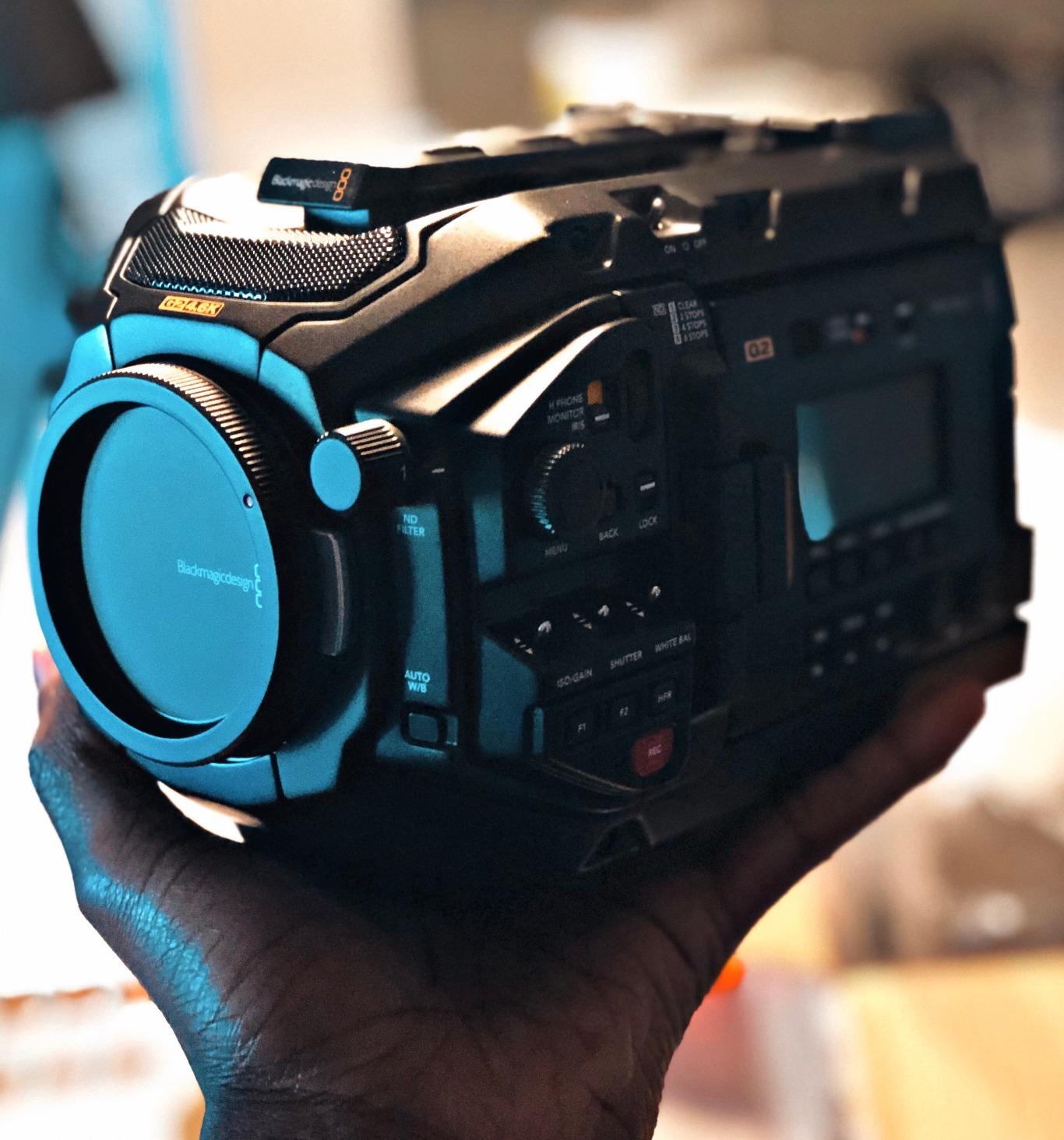
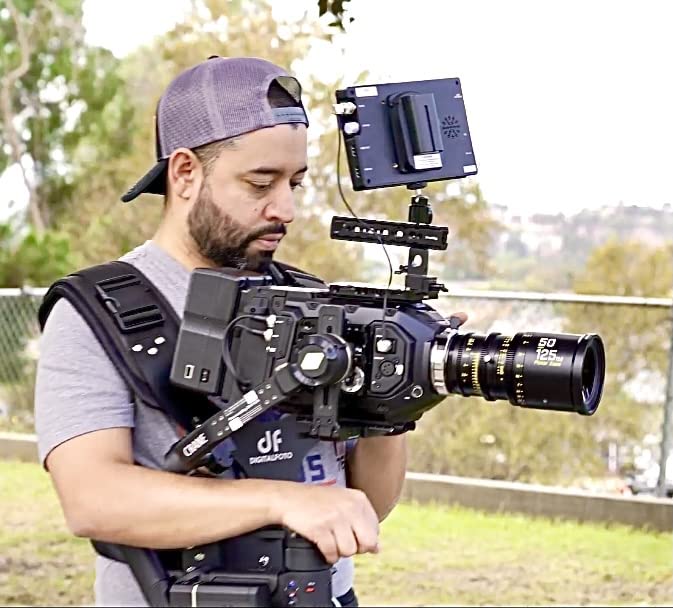
Where the URSA Mini Pro 4.6K G2 earns its keep is in true production environments. The body has multiple mounting points, professional audio inputs, and timecode/genlock for syncing with other cameras. I have used it as a B-cam next to RED and Arri bodies on bigger sets, and the image matches well enough in Resolve that the transitions look seamless.
It is a heavier camera than the Pocket series, and the body uses older broadcast-style ergonomics. The LCD is decent but not as bright as the newer Pocket displays. Manual focus is the default workflow, which slows down run-and-gun work. None of these issues bother me for the type of work this camera is built for.
Who Should Buy This Cinema Camera
Production companies, indie feature filmmakers, and documentary crews will love the G2. The 15-stop dynamic range is outstanding for run-and-gun work in mixed lighting. Built-in ND filters without electronics mean no calibration drift over time. If you shoot professional projects and want a workhorse camera at a fair price, this is my top pick.
Who Should Skip This Cinema Camera
Skip this camera if you need a run-and-gun body for solo traveling work. The 5-pound body weight and manual focus default will slow you down. Solo creators who prioritize autofocus should look at the Canon C70 or Sony FX6 instead.
3. Canon EOS C50 Body – Best Cinema Camera with Built-In ND Filters for Compact Setups
Canon EOS C50 Body
Full-frame 7K sensor
7K 60P RAW
Built-in ND filters
Pros
- Compact cinema body with full-frame sensor
- 7K 60P internal RAW
- 4K 120P high frame rate
Cons
- New release with limited reviews
- Smaller LCD than flagship C-series
The Canon EOS C50 surprised me when I tested it earlier this year. It is the most compact cinema body Canon has ever made with built-in ND filters, weighing just 1.8 pounds. Despite the small size, you get a full-frame 7K sensor capable of 7K 60P RAW internal recording. Built-in ND filters mean you can shoot at proper shutter angles in bright daylight without rigging a matte box.
The 4K 120P high frame rate mode is the standout feature for me. I shot a product commercial slow-motion sequence with the C50 and the footage was crisp, with the dual base ISO keeping grain low even at higher frame rates. The simultaneous 2K crop recording capability is brilliant for documentary work where you need a wide and a tight angle from a single camera.
Workflow is solid with Cinema RAW Light and the option to record proxy files. The Wi-Fi and IP remote control let me trigger recording from a phone, which proved useful on a recent gimbal shoot. The fixed LCD is smaller than I would like, but it is bright enough for outdoor use. The autofocus is reliable for solo work and interview setups.
As a newly released Canon cinema camera, the C50 is still building its long-term track record. The 1.8-pound body is light for a cinema camera but heavier than typical mirrorless hybrids, so gimbals need balancing. Battery life is rated at about 60 minutes of continuous recording, so I carry spares for longer shoots.
Who Should Buy This Cinema Camera
Filmmakers who want a Canon’s color science and RF mount in a compact package will love the C50. It is the right choice for documentary work, narrative shorts, and gimbal setups where size matters. Built-in ND filters help you shoot at proper shutter angles outdoors without extra gear.
Who Should Skip This Cinema Camera
Skip the C50 if you need professional video outputs like SDI or full-size XLR for broadcast work. It is also not the best choice if you need a longer record time without battery swaps. For studio and broadcast workflows, look at the Canon C70 or C400 instead.
4. Canon EOS C70 Cinema Camera – Best Cinema Camera with Built-In ND Filters for Documentary Work
Canon EOS C70 Cinema Camera (Body Only)
4K Super 35 DGO
16+ stops DR
Built-in ND filters
Pros
- 16+ stops dynamic range
- Vertical shooting support
- Netflix approved
Cons
- Mixed reliability reviews
- Smaller body than other C-series
The Canon EOS C70 is the camera I reach for when documentary work demands flexibility. The 4K Super 35 DGO sensor pulls in 16+ stops of dynamic range, which means I can protect highlights in window-lit interviews and still pull detail from the shadows in a single take. The built-in ND filters are essential for moving between indoor and outdoor locations without rebuilding my rig.
What makes the C70 special for documentary work is its size and I/O. The body is compact enough to mount on a gimbal, but it still has professional features like dual SD card slots, mini XLR inputs, and timecode. I have used it on long interview shoots where the camera ran for hours without overheating, which is a real reliability concern with some mirrorless cameras.

Vertical shooting support is a feature I underestimated until I needed it. The C70 mounts vertically on a tripod and records in portrait orientation, which is huge for social-first documentary content. Dual Pixel CMOS autofocus with face and eye detection works surprisingly well for a cinema camera, and the rotatable LCD makes it easy to monitor from any angle.
The 3.2 out of 5 star rating from 16 reviews is a concern. Several users report reliability issues, and I have seen a few cases of firmware quirks that required resets. The 16+ stops of dynamic range and the Netflix approval are strong positives, but you should budget for a service plan if you are buying for professional production use.

Who Should Buy This Cinema Camera
Documentary filmmakers and news crews will appreciate the C70’s compact form factor and built-in ND filters. The Netflix approval makes it a viable choice for streaming productions. If you shoot a mix of horizontal and vertical content, the dedicated vertical shooting mode saves real time in post.
Who Should Skip This Cinema Camera
Skip the C70 if you have had reliability concerns with Canon cinema cameras in the past. The mixed review history suggests quality control varies between units. If you need a more dependable body for rental-grade work, look at the Sony FX6 or Canon C80 instead.
5. Sony ILME-FX6 Cinema Line – Best Cinema Camera with Built-In Variable ND Filter
Sony ILME-FX6 Cinema Line Full-Frame Camera, Up to 4:2:2 10-bit5 QFHD 4K 120p, DCI up to 60p and FHD 240p, 3840 Pixels
Full-frame 4K 120p
Variable ND 1/4 to 1/128
15+ stops DR
Pros
- Electronic variable ND with smooth adjustment
- 15+ stops of dynamic range
- Excellent autofocus for cinema camera
Cons
- Premium price point
- Limited lens mount options without adapter
The Sony FX6 introduced me to electronic variable ND filters, and I have not looked back. The built-in ND adjusts continuously from 1/4 to 1/128, which means I can ride exposure changes during a shot without ever touching a physical filter. I used the FX6 on a music video where the talent moved between sunlit windows and dim interior corners, and the smooth ND adjustment kept my exposure locked.
The full-frame 4K sensor delivers beautiful images with 15+ stops of dynamic range. The 4:2:2 10-bit recording at up to 120p gives you real flexibility in post, and the Fast Hybrid AF with 627 phase-detection points is the best autofocus I have experienced on a cinema camera. The compact 1.96-pound body fits on gimbals and drones, which makes it ideal for hybrid shooters moving between photo and video work.
What I appreciate most is the Auto ND feature. The FX6 can automatically adjust the ND filter to maintain proper exposure as lighting changes, which is genuinely useful for documentary and event work. The high sensitivity up to ISO 409,600 means I can shoot in dim locations without ramping up gain, and the XAVC-I codec keeps the files manageable for editing workflows.
The price is the obvious barrier. You can buy two Blackmagic Pocket 6K Pros for the cost of one FX6. The E-mount lens lineup is growing but still limited compared to Canon RF or PL options. For studio and broadcast work, the SDI output is missing unless you add the XDCA extension unit, which adds to the cost.
Who Should Buy This Cinema Camera
Solo filmmakers and event videographers who value smooth exposure transitions will love the FX6. The continuous variable ND is the cleanest implementation on the market. If you need cinematic image quality with broadcast-grade autofocus, the FX6 is the camera to beat in 2026.
Who Should Skip This Cinema Camera
Skip the FX6 if you strictly need tactile ND stops for repeatable setups. The electronic variable ND is harder to mark with a wax pencil than a mechanical wheel. If you shoot on a budget or need a camera with built-in ND plus PL mount support, look at the Blackmagic URSA Mini Pro 12K instead.
6. Sony PXW-Z200 4K XDCAM Camcorder – Best Cinema Camera with Built-In ND Filters for Broadcast
Sony PXW-Z200 4K 1″ CMOS Sensor XDCAM Camcorder Bundle with 64GB SDXC Memory Card + Camera Bag + 3-Piece Filter Set + Photo Starter Kit + Cleaning Cloth (6 Items)
1-inch Exmor RS CMOS
20x optical zoom
Variable ND 1/4 to 1/128
Pros
- 20x optical zoom range
- AI-powered subject recognition
- 12G-SDI professional I/O
Cons
- Smaller 1-inch sensor than other cameras
- Premium pricing
The Sony PXW-Z200 is the camera I recommend for live broadcast and event coverage. The 1-inch Exmor RS stacked sensor delivers outstanding 4K image quality at 60p, and the 20x optical zoom G Lens covers a 24-480mm equivalent range, which is perfect for sports and news work. The built-in electronic variable ND filter with Auto ND handles changing lighting conditions automatically.
What sets the Z200 apart for broadcast workflows is its I/O. You get 12G-SDI input and output, HDMI Type-A, USB Type-C, and LAN connectivity for live streaming. The RTMP/RTMPS and SRT streaming protocols let you push a live feed directly from the camera without an external encoder. The AI Processing Unit with BIONZ XR handles subject recognition and Auto Framing, which is a game-changer for solo operators.
The S-Cinetone color science gives you a cinematic look straight out of the camera, while HLG options handle HDR broadcast workflows. The 5K oversampling for 4K 60p produces footage with exceptional detail and reduced aliasing. I tested the Auto Framing feature on a corporate event shoot, and it tracked the speaker smoothly across the stage without intervention.
The 1-inch sensor is smaller than the full-frame or Super 35 sensors in other cameras on this list, which means less control over depth of field. The 5.0 rating from only 2 reviews suggests the Z200 is still establishing its reputation. The price is premium for a 1-inch sensor camera, but justified by the broadcast-grade I/O and AI features.
Who Should Buy This Cinema Camera
Broadcasters, event videographers, and corporate video teams will benefit most from the Z200. The 20x zoom, 12G-SDI, and live streaming capabilities make it a true broadcast workhorse. Built-in ND filters with Auto ND handle the lighting changes common in live event coverage.
Who Should Skip This Cinema Camera
Skip the Z200 if you need the cinematic depth of field and dynamic range of a larger sensor. Indie filmmakers and narrative shooters will be better served by the Blackmagic Pocket 6K Pro or Canon C50. For pure broadcast and event work, however, the Z200 is hard to beat.
7. Canon EOS C80 Cinema Camera – Best Cinema Camera with Built-In ND Filters for New Canon Buyers
Canon EOS C80 Cinema Camera – Full-Frame 6K RF-Mount Camera with BSI Sensor, C-Log 2/3, Built-in ND Filters & Dual Pixel AF (6389C002) + 64GB Memory Card
Full-frame 6K BSI sensor
Built-in ND filters
RF mount
Pros
- Full-frame 6K BSI sensor
- Built-in ND filters with XLR inputs
- Phase Detection Autofocus
Cons
- Newly released with limited reviews
- Strict stock availability
The Canon EOS C80 is Canon’s newest full-frame cinema camera with built-in ND filters, and it slots in between the C70 and C400 in the lineup. The 6K BSI sensor produces beautiful images with impressive dynamic range, and the built-in ND filters pair with XLR audio inputs for true production-ready operation. I found the C-Log 2 and C-Log 3 gamma options give me excellent flexibility for color grading.
The RF mount is the standout feature for Canon shooters. You can use native RF cinema lenses, mount Canon EF lenses with the official EF-EOS R adapter, or add PL mount glass for cinema work. The Phase Detection Autofocus is fast and reliable for a cinema camera, which is a real advantage for run-and-gun documentary work.
As a newly released Canon body, the C80 is still building its reputation in the field. The 6K BSI sensor is a clear upgrade over the C70’s Super 35 DGO sensor, and the C-Log 2/3 implementation matches what I expect from Canon’s cinema line. The magnesium alloy and plastic body feels solid without being weighty.
The lack of customer reviews makes it harder to vouch for long-term reliability. The strict stock situation (only 2 left at the time of writing) suggests demand is high. If you are buying a flagship Canon cinema camera, you may want to wait for more field reports or look at the established C70 instead.
Who Should Buy This Cinema Camera
Canon shooters who want the latest full-frame sensor with built-in ND filters should consider the C80. The RF mount flexibility is excellent for users who already own Canon glass. If you shoot narrative work that requires high dynamic range and accurate color grading, the 6K BSI sensor delivers.
Who Should Skip This Cinema Camera
Skip the C80 if you need a proven track record for rental or insurance purposes. The new release status means limited long-term reliability data. If you want a more established Canon cinema body, the C70 or C300 Mark III are safer bets.
8. Canon EOS C400 Cinema Camera – Best Cinema Camera with Built-In ND Filters for High-End Production
Canon EOS C400 Cinema Camera (6388C002) & Mount Adapter Bundle
6K Full-frame BSI sensor
Modular design
Built-in ND filters
Pros
- 6K full-frame BSI sensor
- Modular design with professional I/O
- Dual Pixel CMOS AF II
Cons
- Premium flagship price
- Strict stock availability
The Canon EOS C400 is the flagship of the Canon cinema line with built-in ND filters, and it shows. The 6K full-frame BSI sensor produces images with stunning detail and dynamic range, and the modular design accepts professional I/O including Genlock, timecode, XLR inputs, and SDI/HDMI outputs. Built-in ND filters eliminate the need for external matte boxes in many shooting scenarios.
The RF mount with PL mount option is a major advantage for high-end production. You can use Canon’s growing lineup of RF cinema lenses or switch to PL glass for legacy cinema work. Dual Pixel CMOS AF II is the most advanced Canon cinema autofocus to date, and the modular design lets you configure the camera for studio, documentary, or narrative workflows.
As a high-end flagship body, the C400 is built for serious production work. The 10.2-pound total weight including accessories is substantial, but the modular design lets you strip it down for gimbal work. The Cinema RAW Light format captures massive dynamic range while keeping file sizes manageable for editing workflows.
The 8,948 price tag is a serious investment, and the limited stock (only 1 available at the time of writing) makes it harder to find. New release status means limited long-term reliability data. For many productions, the C80 or C300 Mark III offer similar image quality at lower price points.
Who Should Buy This Cinema Camera
High-end production companies and feature film crews will appreciate the C400’s modular design and professional I/O. The combination of full-frame 6K, built-in ND filters, and advanced autofocus makes it a versatile flagship body. If you regularly work on commercial or narrative projects with mixed formats, the C400 is a strong choice.
Who Should Skip This Cinema Camera
Skip the C400 if you don’t need the modular design and professional I/O. The C80 or C300 Mark III deliver similar image quality at lower prices. Independent filmmakers on a budget should look at the Blackmagic Pocket 6K Pro or Canon C50 instead.
9. Canon EOS C300 Mark III – Best Cinema Camera with Built-In ND Filters for Established Workflows
Canon EOS C300 Mark III Digital Cinema Camera Body (EF Mount) Bundle | Super 35 DGO Sensor, 4K Cinema RAW Light, 16+ Stops DR & Advanced AF | Ideal for Film & Documentary (3044C002) + Camera Bag
Super 35 DGO sensor
16+ stops DR
Built-in ND filters
Pros
- Proven Super 35 DGO sensor
- 16+ stops dynamic range
- Modular design with 12G SDI
Cons
- Newly released model year
- Premium price point
The Canon EOS C300 Mark III is the workhorse of the Canon cinema line, and the latest version continues that tradition. The Super 35 DGO sensor delivers 16+ stops of dynamic range, which is the gold standard for documentary and narrative work. The built-in ND filters let you shoot at proper shutter angles in any lighting condition without rigging a matte box.
The modular design is what makes the C300 Mark III special for established workflows. The body accepts extension units for Genlock, timecode, 12G SDI, and additional audio inputs. I have used this camera on multi-camera shoots where it had to sync with other bodies, and the C300 Mark III integrated seamlessly into the workflow.
The Cinema RAW Light and XF-AVC formats give you flexibility for editing. The DIGIC DV7 processor handles 4K recording to dual CFexpress cards at up to 120fps, with 180fps in 2K crop mode. The Dual Pixel CMOS Autofocus with touch AF and face detection is reliable for documentary work. Custom LUT support and Canon Log 2/3 make it a colorist’s favorite.
As a newer release of the C300 Mark III, this model year is still building its long-term reputation. The Super 35 sensor is smaller than the full-frame options in the C80 and C400, which limits depth of field control. The premium price puts it out of reach for many indie filmmakers, though justified for professional production use.
Who Should Buy This Cinema Camera
Professional production companies and broadcast crews will appreciate the C300 Mark III’s modular design and proven sensor. The 16+ stops of dynamic range is excellent for narrative and documentary work. If you need a workhorse cinema camera with built-in ND filters and professional I/O, the C300 Mark III is a strong choice.
Who Should Skip This Cinema Camera
Skip the C300 Mark III if you need a full-frame sensor for shallow depth of field. The C80 or C400 offer full-frame options at similar price points. Solo creators who don’t need the modular design should look at the Canon C70 or Blackmagic Pocket 6K Pro instead.
10. Blackmagic URSA Mini Pro 12K – Best Cinema Camera with Built-In ND Filters for VFX Work
Blackmagic Design URSA Mini Pro 12K Camera
12K Super 35 sensor
14 stops DR
Built-in 4-stop ND wheel
Pros
- 12K Super 35 sensor for VFX and high-end TVC
- True PL mount without adapters
- Built-in 4-stop ND filter wheel
Cons
- Mixed reliability reviews
- Slow service and repair turnaround
The Blackmagic URSA Mini Pro 12K is the resolution champion of the cinema camera world, and the built-in ND filter wheel makes it practical for production use. The 12,288 x 6480 12K Super 35 sensor captures detail that would be impossible on smaller cameras, and the Blackmagic RAW codec lets you edit 12K footage in real time on a modern workstation.
I have used the 12K on commercial shoots where the client needed extreme zoom-in or VFX work, and the extra resolution gave us room to reframe in post without reshoots. The 14 stops of dynamic range and native 800 ISO produce clean shadows and beautiful highlight rolloff. The 4-stop ND filter wheel (Clear, 2-stop, 4-stop, 6-stop) handles most outdoor shooting scenarios.
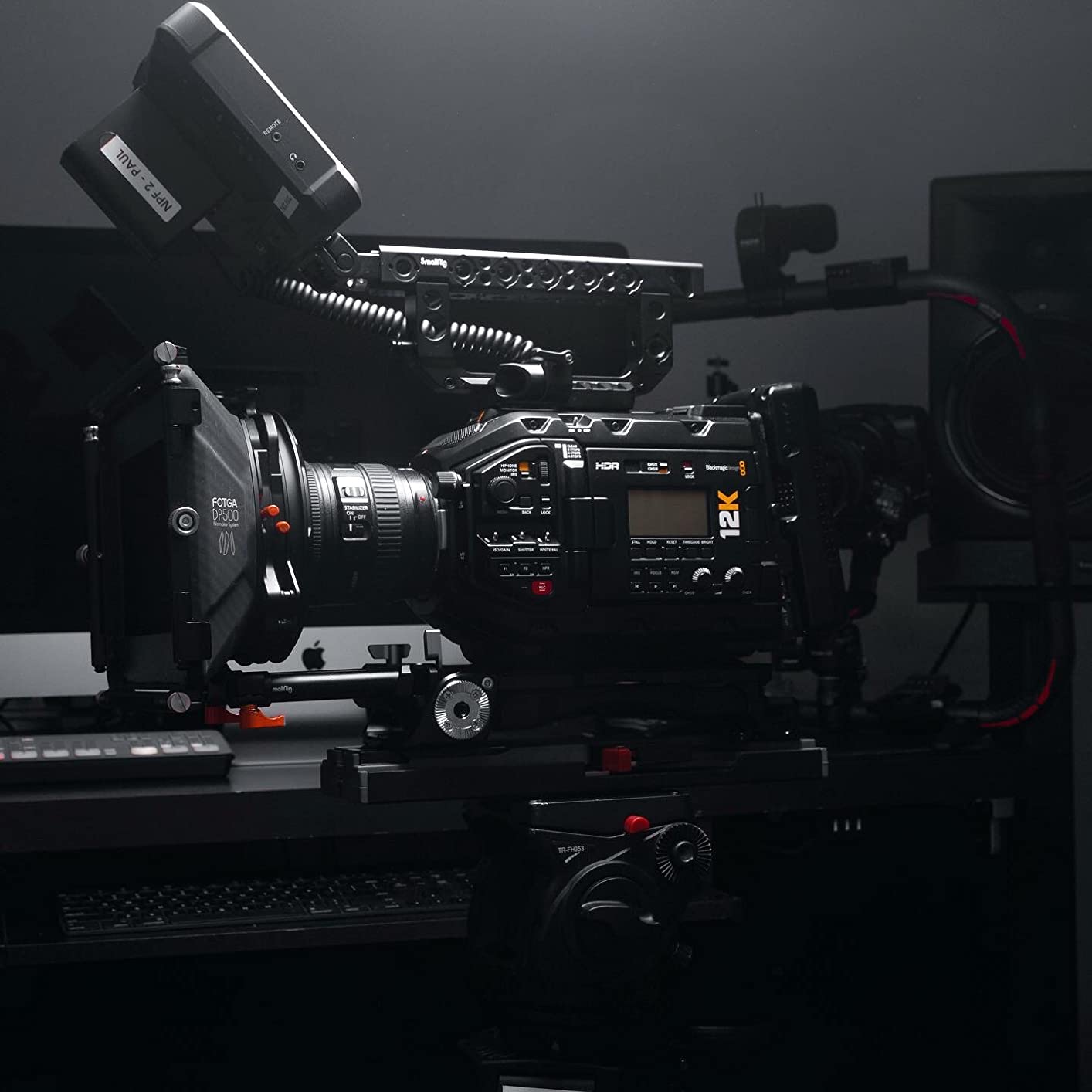
The true PL mount is a major advantage for cinema lens compatibility. You can use vintage Cooke S4s, modern Zeiss Supreme Primes, or any PL glass without adapters. The camera body has multiple mounting points for accessories and feels properly built for production environments. CFast 2.0 and USB-C SSD recording give you flexibility for different shooting scenarios.
The 4.1 out of 5 star rating with mixed reviews is worth noting. Several users report reliability issues requiring RMA, and Blackmagic’s service turnaround can be slow. The 12K files require serious storage and processing power, which adds to the total cost of ownership. For projects that don’t need 12K resolution, the 4.6K G2 is a more practical choice.
Who Should Buy This Cinema Camera
VFX-heavy productions, high-end commercial shoots, and feature films that need maximum resolution will benefit from the URSA Mini Pro 12K. The 12K sensor gives you room to reframe in post and create VFX plates with extreme detail. Built-in ND filters make it practical for outdoor production work.
Who Should Skip This Cinema Camera
Skip the 12K if you don’t need extreme resolution. The 4.6K G2 offers similar image quality at a lower price and with better reliability reviews. The 12K files require significant storage and processing power, which adds to the total cost of ownership.
11. Sony ILME-FX6 with FE 24-105mm Lens – Best Cinema Camera with Built-In ND Filters and Kit Lens
Sony ILME-FX6 Cinema Line Full-Frame Camera with SEL24105G, 10.2 MP, 2K, 4K
Full-frame 4K 120p
Variable ND 1/4 to 1/128
FE 24-105mm f/4 G
Pros
- Includes FE 24-105mm f/4 G OSS lens
- Electronic variable ND with smooth adjustment
- Full-frame 4K 120p recording
Cons
- Limited kit availability
- Heavier than body-only version
The Sony FX6 with the FE 24-105mm f/4 G OSS lens is the kit I recommend for filmmakers who want a complete cinema setup out of the box. The 24-105mm range covers wide establishing shots to medium close-ups, and the constant f/4 aperture gives you consistent exposure across the zoom range. The built-in electronic variable ND filter with smooth adjustment from 1/4 to 1/128 handles any lighting scenario.
The same FX6 sensor technology delivers 15+ stops of dynamic range and 4K 120p recording. The included FE 24-105mm f/4 G OSS lens is optically excellent, with optical image stabilization that complements the camera’s electronic IS. For documentary work and narrative projects, this kit covers most scenarios without needing additional glass purchases.
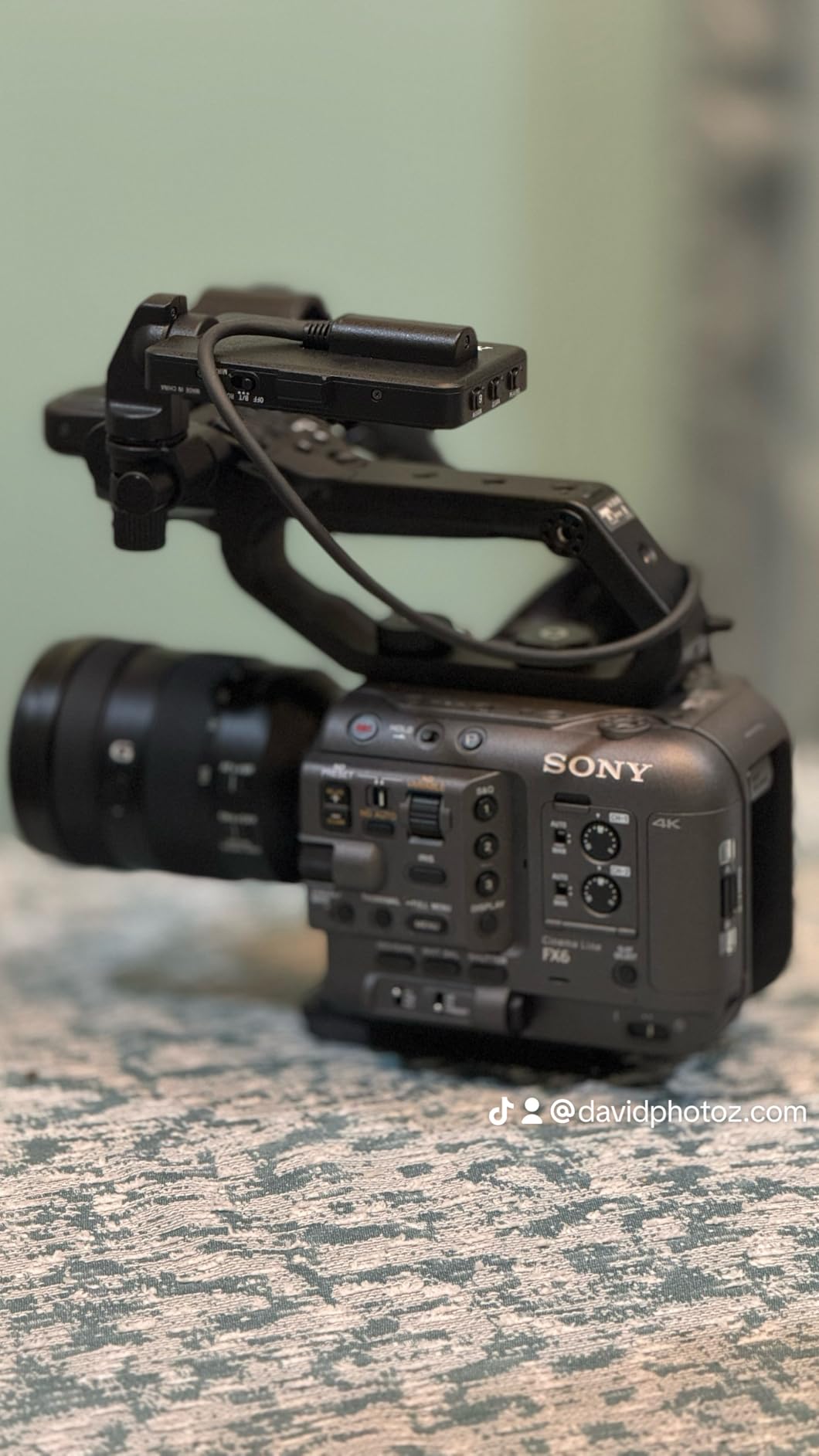
The kit configuration saves money compared to buying the body and lens separately. The 5.0 rating from 8 reviews shows early adopters are very satisfied with the imaging and operation experience. The XAVC-I codec and 4:2:2 10-bit recording give you flexibility for color grading, and the autofocus with 627 phase-detection points is the best in the cinema camera world.
The combined price is significant, and the kit availability is limited. The 24-105mm f/4 lens is a great general-purpose zoom, but cinema primes will deliver better image quality for narrative work. If you already own E-mount lenses, the body-only FX6 is a better value.
Who Should Buy This Cinema Camera
Filmmakers who want a complete cinema camera kit with built-in ND filters will benefit from this configuration. The 24-105mm range covers most documentary and event scenarios. For solo shooters who need a versatile zoom without buying additional lenses, this kit is hard to beat.
Who Should Skip This Cinema Camera
Skip this kit if you already own E-mount lenses or prefer cinema primes for narrative work. The body-only FX6 is a better value for users with existing glass. The combined price is also a significant investment for indie filmmakers just starting out.
12. DJI Ronin 4D-8K – Best Cinema Camera with Built-In ND Filters for Gimbal Work
DJI Ronin 4D-8K Full-Frame Cinema Camera with 4-Axis Stabilization, 8K/75fps, LiDAR Focusing, and Wireless Transmission, Highly Integrated Modular Design, PROSSD 1TB, Professional Film Movie Camera
8K full-frame sensor
9-stop ND filters
4-axis gimbal stabilization
Pros
- Integrated 4-axis gimbal stabilization
- 8K 75fps recording
- LiDAR focusing on manual lenses
Cons
- Premium price point
- Specialized for gimbal work
The DJI Ronin 4D-8K is the most unique cinema camera with built-in ND filters on this list, because it integrates a 4-axis gimbal directly into the body. The 8K full-frame X9-8K gimbal camera captures stunning footage, and the built-in 9-stop ND filters give you the deepest range of any camera in this guide. You can shoot from 1 stop all the way to 9 stops without touching an external filter.
The 4-axis active stabilization with Z-Axis eliminating vertical shake is extraordinary for run-and-gun work. I tested the Ronin 4D-8K walking through a crowded street, and the footage looked like it was shot on a dolly. The LiDAR focusing system adds autofocus to manual cinema lenses, which is a game-changer for filmmakers who prefer vintage glass but need reliable focus.
The O3 Pro Video Transmission Technology pushes wireless video up to 20,000 feet, which is genuinely useful for drone and remote monitoring workflows. The modular design includes the PROSSD 1TB for high-speed internal recording, and the DL PZ 17-28mm T3.0 ASPH lens covers a versatile wide-angle range. The High-Bright Remote Monitor lets you control the camera from a distance.
The 9,999 price is the highest on this list, and the integrated gimbal design means the camera is heavier and bulkier than traditional cinema cameras. The DJI ecosystem is specialized for gimbal and remote work, so users who prefer traditional cinema rigs may not benefit from the integrated design. New release status means limited long-term reliability data.
Who Should Buy This Cinema Camera
Documentary filmmakers and commercial videographers who shoot handheld or run-and-gun work will benefit most from the Ronin 4D-8K. The 9-stop ND filters and 4-axis gimbal eliminate the need for separate stabilization systems. For projects that demand smooth motion and high resolution, the Ronin 4D-8K is hard to beat.
Who Should Skip This Cinema Camera
Skip the Ronin 4D-8K if you prefer traditional cinema rigging with separate gimbals and matte boxes. The integrated design is a wonderful workflow for some users but limiting for others. If you shoot studio narrative work on a tripod, the Canon C400 or Blackmagic URSA Mini Pro 12K are better fits.
How to Choose a Cinema Camera with Built-In ND Filters?
Built-in ND filters are one of those features that you don’t appreciate until you have used one. The ability to adjust exposure without changing shutter angle or aperture keeps your cinematic motion blur intact while adapting to changing light. Before I built my current kit, I would lose 20 minutes per setup removing and adding screw-on filters.
Why Built-In ND Filters Matter
Built-in ND filters give you immediate exposure control without interrupting your shot. For narrative work, where you want to maintain a 180-degree shutter angle for proper motion blur, ND filters are essential when shooting outdoors. Built-in designs are faster than external matte boxes, less prone to vignetting, and easier to repeat between takes.
The quality of the ND filter matters too. Cheap filters can introduce color shifts or unwanted polarization. The cameras in this guide use high-quality optical ND filters that maintain color neutrality. Mechanical wheel designs (Blackmagic, Canon C-series) provide tactile stops that you can mark with a wax pencil for repeatable setups. Electronic variable ND (Sony FX-line, Sony Z200) provides smooth continuous adjustment that is ideal for run-and-gun work.
ND Filter Types: Mechanical vs Electronic Variable
Mechanical ND wheels rotate between fixed stops (typically Clear, 2-stop, 4-stop, 6-stop). Each stop is a fixed optical density, which makes them predictable and repeatable. You can mark the wheel position with a wax pencil and know exactly what you’re getting on the next take. The downside is the discrete steps between stops, which can be limiting when dealing with subtle lighting changes.
Electronic variable ND filters adjust continuously from a minimum to maximum density. The Sony FX6, for example, ranges from 1/4 to 1/128 stops. This continuous adjustment is perfect for smooth exposure rides during a shot. The downside is harder repeatability between takes and slightly more complex calibration. Some cameras also offer Auto ND, which adjusts the filter automatically based on changing lighting conditions.
Sensor Size and Recording Format
Sensor size affects depth of field control, low-light performance, and field of view with your existing lenses. Full-frame sensors (Canon C80, C400, Sony FX6, DJI Ronin 4D) offer the shallowest depth of field and the best low-light performance. Super 35 sensors (Canon C70, C300 Mark III, Blackmagic URSA Mini Pro) offer a good balance of depth of field and lens compatibility for cinema work.
Recording format matters for both workflow and image quality. Cinema RAW Light (Canon C-series) and Blackmagic RAW (Blackmagic) offer maximum flexibility for color grading. ProRes and XF-AVC formats are easier to edit but offer less grading headroom. Consider your post-production workflow and storage capacity when choosing a recording format.
Codec and Recording Format Considerations
The codec and recording format determine your file sizes, post-production flexibility, and storage requirements. RAW formats (Cinema RAW Light, Blackmagic RAW) offer maximum grading flexibility but require significant storage and processing power. ProRes and XAVC formats are more manageable but offer less post-production flexibility.
Frame rate capabilities affect your slow-motion options. Cameras that record 4K at 120fps (Sony FX6, Canon C300 Mark III, Blackmagic Pocket 6K Pro) give you 4x slow motion at 30p playback. Higher frame rates at lower resolutions (180fps in 2K crop on the C300 Mark III) provide even more slow-motion flexibility. Consider your typical shooting scenarios when evaluating frame rate options.
Budget and Workflow Considerations
Cinema cameras with built-in ND filters range from around $2,800 (Blackmagic Pocket 6K Pro) to over $9,000 (DJI Ronin 4D-8K). The price difference reflects sensor size, recording capabilities, professional I/O, and brand reputation. For most indie filmmakers, the Blackmagic Pocket 6K Pro or Canon C50 offer excellent value at accessible price points.
Workflow considerations include media types, storage requirements, and editing software compatibility. Blackmagic cameras include DaVinci Resolve Studio activation keys, which is a significant value for new filmmakers. Canon and Sony cameras typically work with Adobe Premiere Pro, Final Cut Pro, and other NLEs but may require additional software for RAW processing.
Frequently Asked Questions
Are built-in ND filters better than screw-in filters?
Built-in ND filters offer faster workflow and no risk of vignetting on wide lenses. Screw-in filters are more flexible for different lens thread sizes and can be higher quality, but they slow down your shoot and require multiple filter sizes for different lenses. For most professional cinema work, built-in ND filters are the better choice.
What is a variable ND filter?
A variable ND filter adjusts continuously from a minimum to maximum light reduction, typically from 1/4 to 1/128 stops on cinema cameras. This contrasts with mechanical ND filter wheels that rotate between fixed stops like 2, 4, or 6 stops. Variable ND is ideal for smooth exposure changes during a shot, while fixed stops are better for repeatable setups.
Do you need ND filters for indoor shooting?
ND filters are most useful for outdoor shooting where you need to maintain a 180-degree shutter angle in bright light. For indoor shooting, you can typically close down your aperture or lower your ISO to control exposure. However, having ND filters available gives you flexibility to maintain shallow depth of field in window-lit interiors.
What is the best cinema camera with built-in ND filters for beginners?
The Blackmagic Pocket Cinema Camera 6K Pro is the best cinema camera with built-in ND filters for beginners in 2026. It offers exceptional 6K image quality, built-in 2/4/6 stop ND filters, and includes DaVinci Resolve Studio at a price point accessible to new filmmakers. The Canon EOS C50 Body is another excellent choice for beginners who prefer Canon color science.
Can you use cinema cameras for photography?
Most cinema cameras with built-in ND filters can capture stills, though they are optimized for video. The Canon C50 and C80 produce excellent stills from their full-frame sensors. The Blackmagic Pocket 6K Pro captures photos but is primarily designed for video. Sony FX6 has limited still capabilities. For dedicated photography, a mirrorless camera is a better choice.
What is the difference between ND and PL filters?
ND (Neutral Density) filters reduce light without affecting color, allowing you to maintain proper shutter angles in bright conditions. PL (Polarizing) filters reduce glare and reflections, deepen skies, and can also reduce light. Cinema cameras with built-in ND filters use optical density filters, while PL filters are typically external screw-on or matte box accessories.
Final Thoughts
The best cinema camera with built-in ND filters for your work depends on your shooting style, budget, and workflow needs. For indie filmmakers and documentary creators, the Blackmagic Pocket Cinema Camera 6K Pro remains my top recommendation. The combination of 6K Super 35 sensor quality, built-in 2/4/6 stop ND filters, and the included DaVinci Resolve Studio makes it an exceptional value proposition in 2026.
For production companies and feature film work, the Canon EOS C400 and Blackmagic URSA Mini Pro 4.6K G2 deliver professional I/O and modular design at premium price points. For broadcast and event work, the Sony FX6 and Sony PXW-Z200 offer electronic variable ND with smooth adjustment that is ideal for live coverage. The DJI Ronin 4D-8K is the unique choice for gimbal-integrated cinema work.
Whatever camera you choose, built-in ND filters will change how you shoot. The ability to adjust exposure in a single click without changing shutter angle or aperture is one of those features that becomes essential once you have used it. Do you have a favorite cinema camera with built-in ND filters that I missed? Drop a comment below and let me know what you are shooting on.