
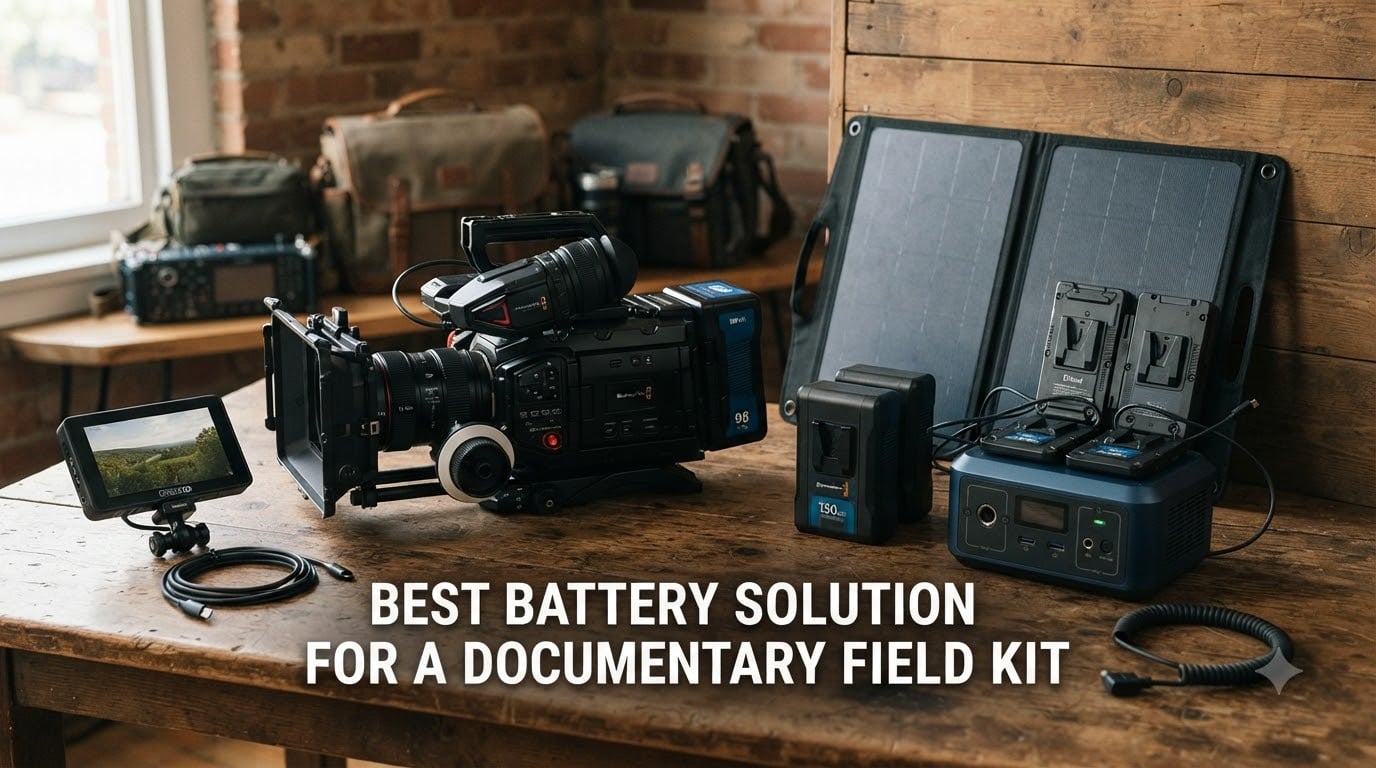
Power is the one thing that kills a documentary shoot faster than bad weather. I have watched perfectly planned interview days fall apart because a camera battery died and the nearest working outlet was a four-hour drive away. After years of building field kits for solo and small-crew documentary work, I have settled on a simple rule: your power system should outlast your story.
This guide covers the best battery solution for a documentary field kit in 2026, based on real shooting days with cinema cameras, field monitors, audio recorders, and lights. I focused on the gear that working filmmakers actually carry: mini V-mount batteries, a high-capacity base station, a smart mounting plate, and camera-specific spares. Every pick below has been run through the practical questions that matter on location, like runtime, connector options, weight, and airline rules.
Documentary power is different from studio power. You are usually off-grid, moving constantly, and charging from whatever source you can find, whether that is a car socket, a wall outlet in a guest house, or a solar panel lashed to a backpack. Reddit threads from crews filming month-long projects in places like the Amazon rainforest all point to the same conclusion: you need a layered system, not one big battery.
That layered approach is exactly how I structured the picks below. Small 99Wh V-mount batteries handle camera rig duty and fit in carry-on luggage. A larger battery or power station acts as base camp storage. Camera-specific batteries keep the A-cam rolling while the big bricks recharge. Here is what made the cut after months of field use and comparison testing.
Table of Contents
- Top 3 Picks for a Documentary Field Kit for October 2026
- Documentary Field Kit Battery Solutions in October 2026
- 1. SmallRig VB99 SE Mini V-Mount Battery – Best Overall
- 2. Neewer PS099E Mini V-Mount Battery – Best Value
- 3. K&F Concept KF-V99 Pro V-Mount Battery – Fastest Charging
- 4. FirstPower 121Wh V-Mount Battery – Most Capacity Per Dollar
- 5. SmallRig VB212 V-Mount Battery – Longest Runtime
- 6. Neewer PS015 Pro Foldable V-Mount Plate – Best Mounting Companion
- 7. Anker SOLIX C300 Portable Power Station – Best Base Camp Power
- 8. K&F Concept NP-FZ100 3-Pack – Best Sony Camera Batteries
- How to Choose the Best Battery Solution for a Documentary Field Kit?
- Frequently Asked Questions
- Final Thoughts
Top 3 Picks for a Documentary Field Kit for October 2026
These three cover the needs of most documentary crews. My editor’s choice is the SmallRig VB99 SE because it hits the sweet spot of capacity, portability, and price for daily camera rig work. The Neewer PS099E is the value pick if you are building a kit on a tight budget, and the SmallRig VB212 is the premium pick for crews that need serious runtime for base camp or high-draw rigs.

SmallRig VB99 SE Mini V-Mount
- 99Wh capacity
- PD 65W fast charging
- OLED display
- 5 output ports

Documentary Field Kit Battery Solutions in October 2026
Here is the full lineup at a glance. Note the watt-hour ratings in particular, because that single number determines both your runtime and whether an airline will let you board with the battery. Anything at or under 100Wh is carry-on friendly, while larger packs need to stay on the ground.
| Product | Specs | Action |
|---|---|---|
| SmallRig VB99 SE Mini V-Mount |
|
Check Latest Price |
| Neewer PS099E Mini V-Mount |
|
Check Latest Price |
 K&F Concept KF-V99 Pro V-Mount K&F Concept KF-V99 Pro V-Mount |
|
Check Latest Price |
 FirstPower 121Wh V-Mount FirstPower 121Wh V-Mount |
|
Check Latest Price |
| SmallRig VB212 V-Mount |
|
Check Latest Price |
 Neewer PS015 Pro Foldable Plate Neewer PS015 Pro Foldable Plate |
|
Check Latest Price |
 Anker SOLIX C300 Power Station Anker SOLIX C300 Power Station |
|
Check Latest Price |
 K&F Concept NP-FZ100 3-Pack K&F Concept NP-FZ100 3-Pack |
|
Check Latest Price |
1. SmallRig VB99 SE Mini V-Mount Battery – Best Overall
SMALLRIG V Mount Battery VB99 SE, 99Wh / 6800mAh PD65W Mini V-Mount Battery
99Wh / 6800mAh
PD 65W bi-directional charging
595g
USB-C, USB-A, D-Tap, BP, DC 8V, DC 12V
OLED display
Pros
- Compact 99Wh capacity under airline limit
- Six output ports for whole-kit charging
- OLED screen shows real-time runtime
- PD 65W recharges the brick in about 90 minutes
- Solid build with 2-year warranty
Cons
- Charge time slower than premium brands
- Noticeable weight on lightweight handheld rigs
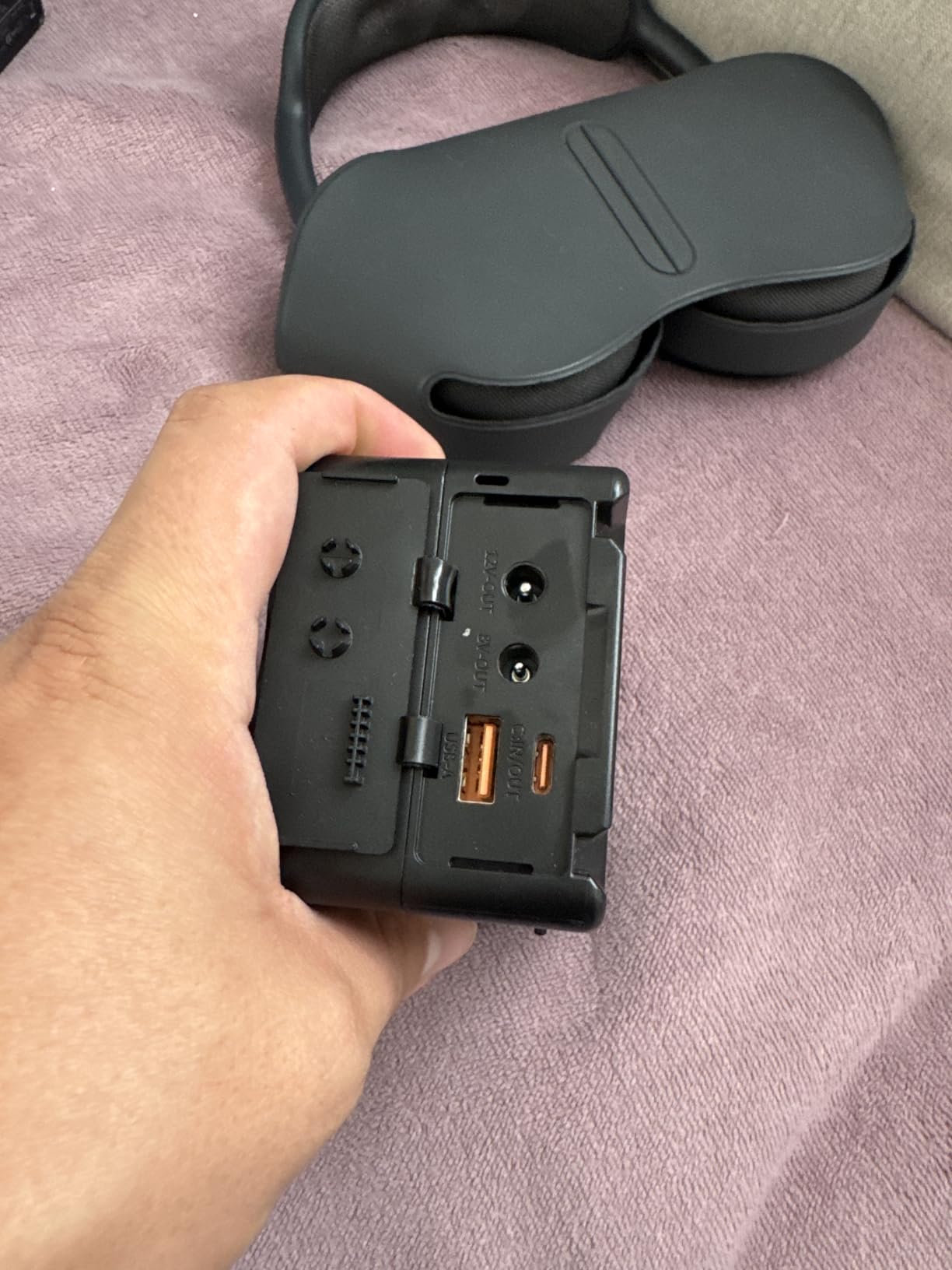
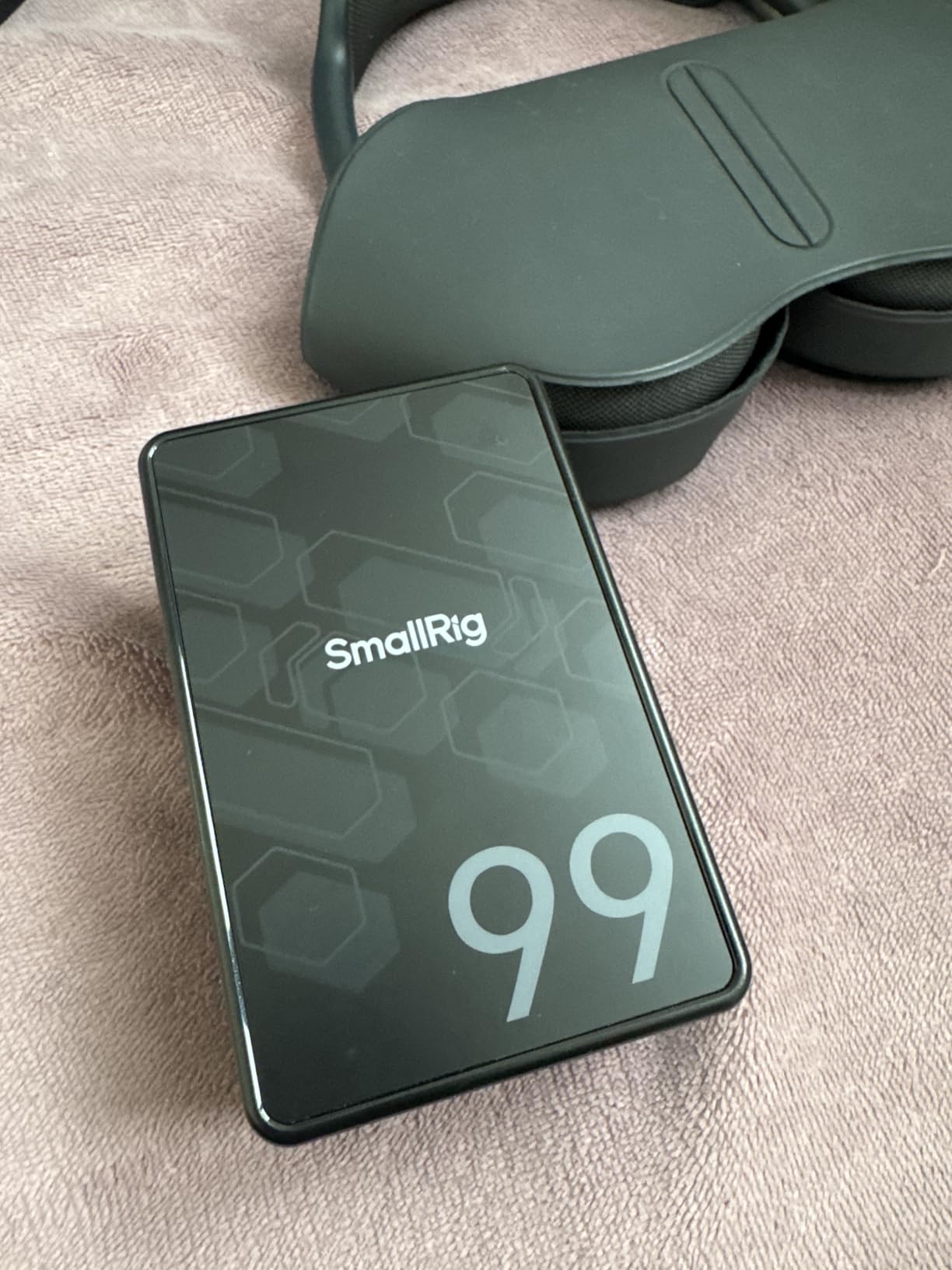
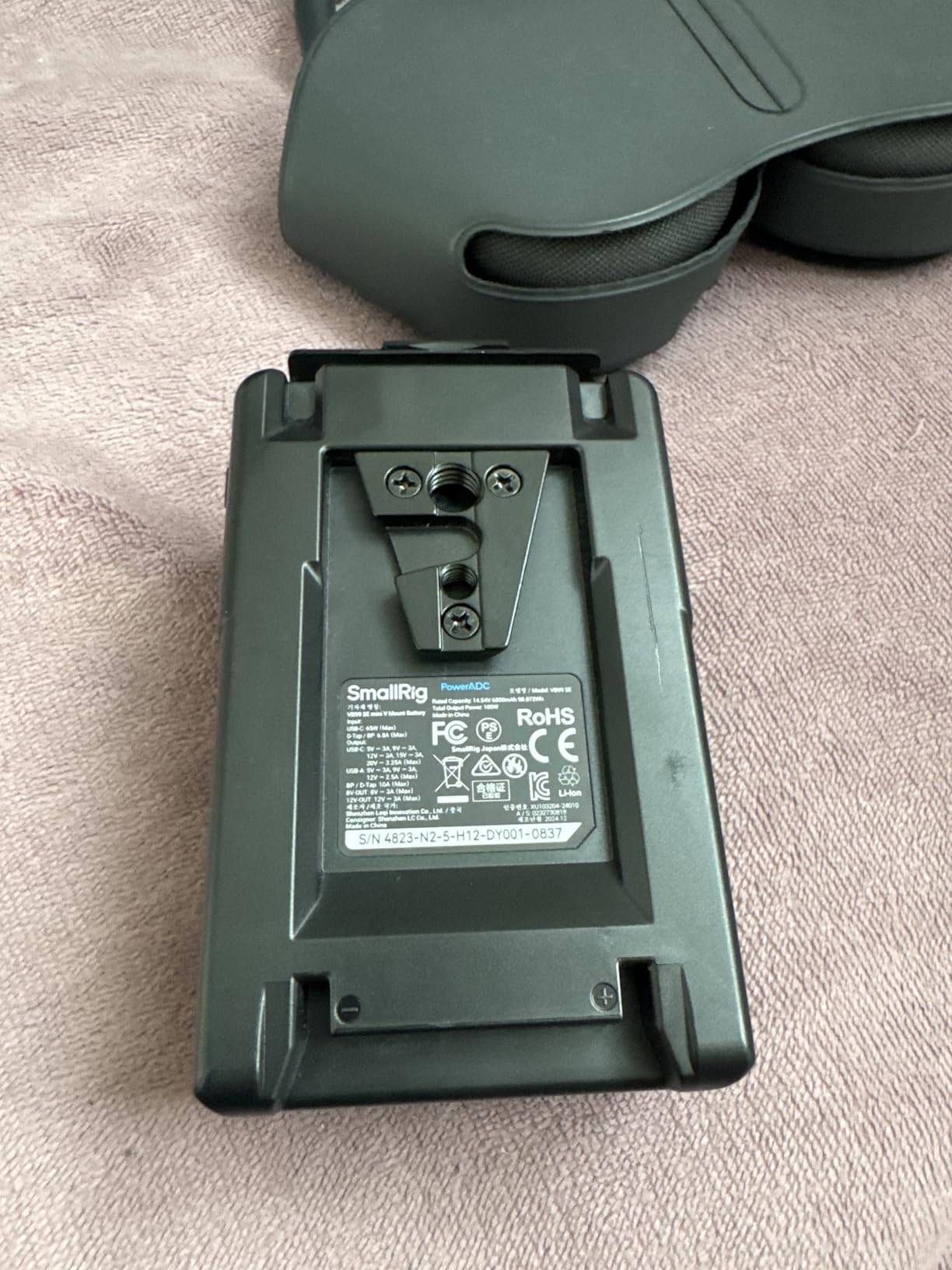
This is the battery I reach for first on almost every shoot. The VB99 SE sits at that magic 99Wh mark, which means I can throw two of them in a carry-on bag and fly anywhere without a conversation at security. On my rig it powers the camera through the BP port, feeds a 5-inch monitor off the D-Tap, and still has juice left to top up a phone over USB-C at the end of the day.
The OLED display changed how I work more than I expected. Instead of guessing at bars, I see exactly how many minutes of runtime remain at the current draw, so I know whether to swap before an interview starts or ride it out. In real shooting with a Sony FX6, a monitor, and a wireless link drawing around 18W combined, I consistently get between four and five hours per charge.
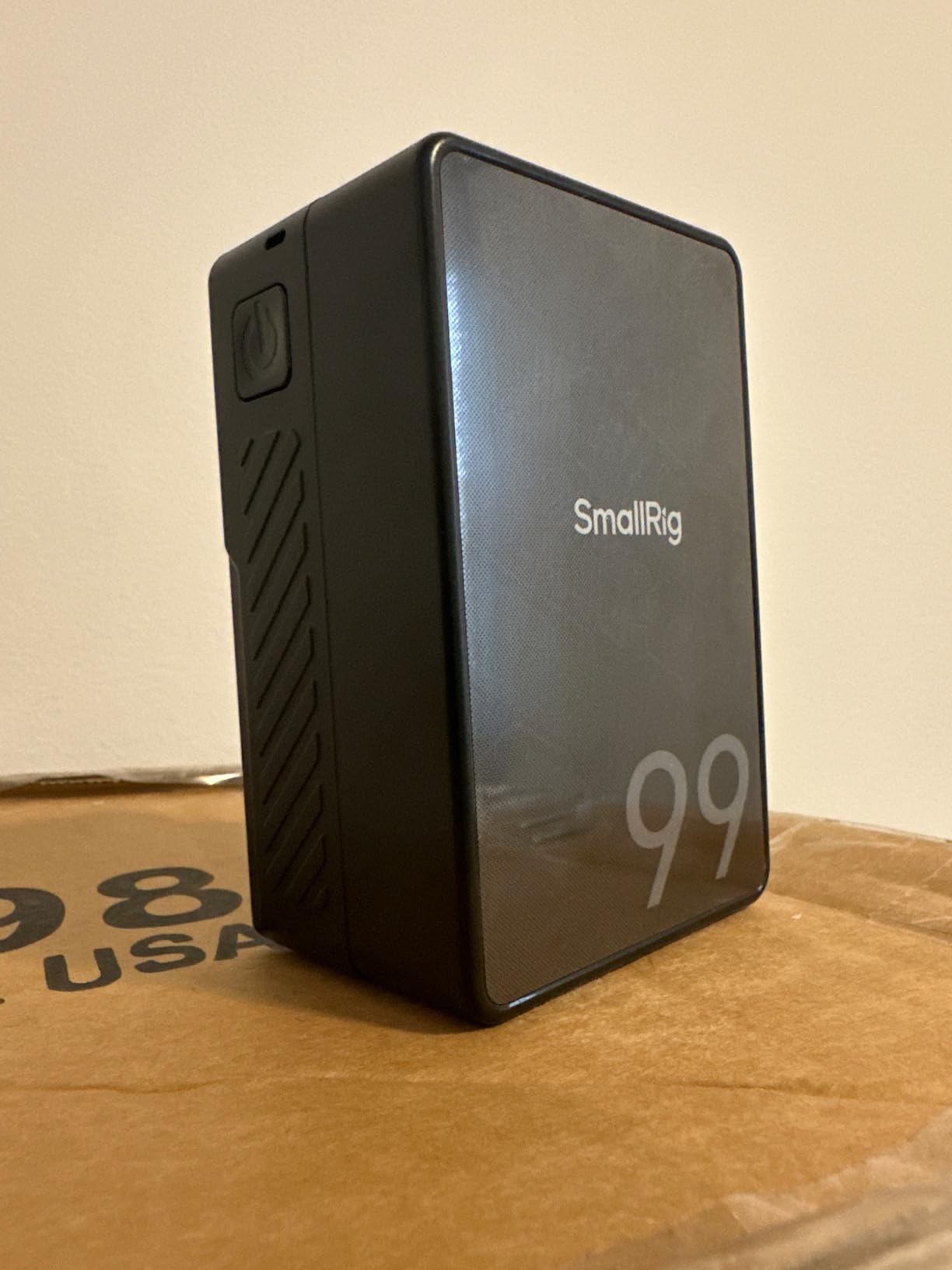
Charging is handled over USB-C Power Delivery at 65W, which means one GaN charger in the kit refills this brick, my laptop, and my camera batteries. That consolidation is a bigger deal than it sounds when you are charging from a single outlet in a village guest house overnight. The battery management system and the stack of certifications, including UN38.3 for air transport, give me confidence it will behave after months of bouncing around in a Pelican case.
The downsides are minor but real. It takes around 90 minutes to fill from empty, which lags behind the 140W-class bricks, and at 595g it is noticeable on a bare handheld rig. I ended up balancing it against a small cage with a nato handle, and after that the weight stopped bothering me.
Who should buy this battery
If you shoot documentary work with a cinema camera or mirrorless rig and fly to locations, this is the default first battery for your kit. The 99Wh limit, six ports, and accurate OLED readout cover solo shooters and small crews equally well. It is also the right call if you want one battery standard shared across cameras, monitors, and lights.
What to check before buying
Confirm your camera accepts a BP or D-Tap input, since this battery powers rigs through those connectors rather than fitting internal camera slots. If you run high-draw cine lights above 65W, budget for a larger brick like the VB212 for those loads. And if your shooting days run past five hours without a recharge window, plan on carrying two of these rather than one.
2. Neewer PS099E Mini V-Mount Battery – Best Value
NEEWER Mini V Mount Battery, 6800mAh 99Wh 14.5V, Mini V Lock Battery with 65W PD Type C/D Tap/BP/USB A/Dual DC Port/OLED Display for Camera Camcorder Monitor Video Light, PS099E
99Wh / 6800mAh
PD 65W two-way charging
590g
Dual USB-A, USB-C, D-Tap, BP, dual DC
1.12 inch OLED
Pros
- Matches pricier batteries on capacity and ports
- Fireproof PC V0 shell for peace of mind
- Clear 1.12 inch OLED display
- Supports a wide range of fast charge protocols
- Excellent budget value
Cons
- D-tap connection can feel flimsy
- Rubber port flaps may work loose over time
- V-mount fit is not universal on every plate
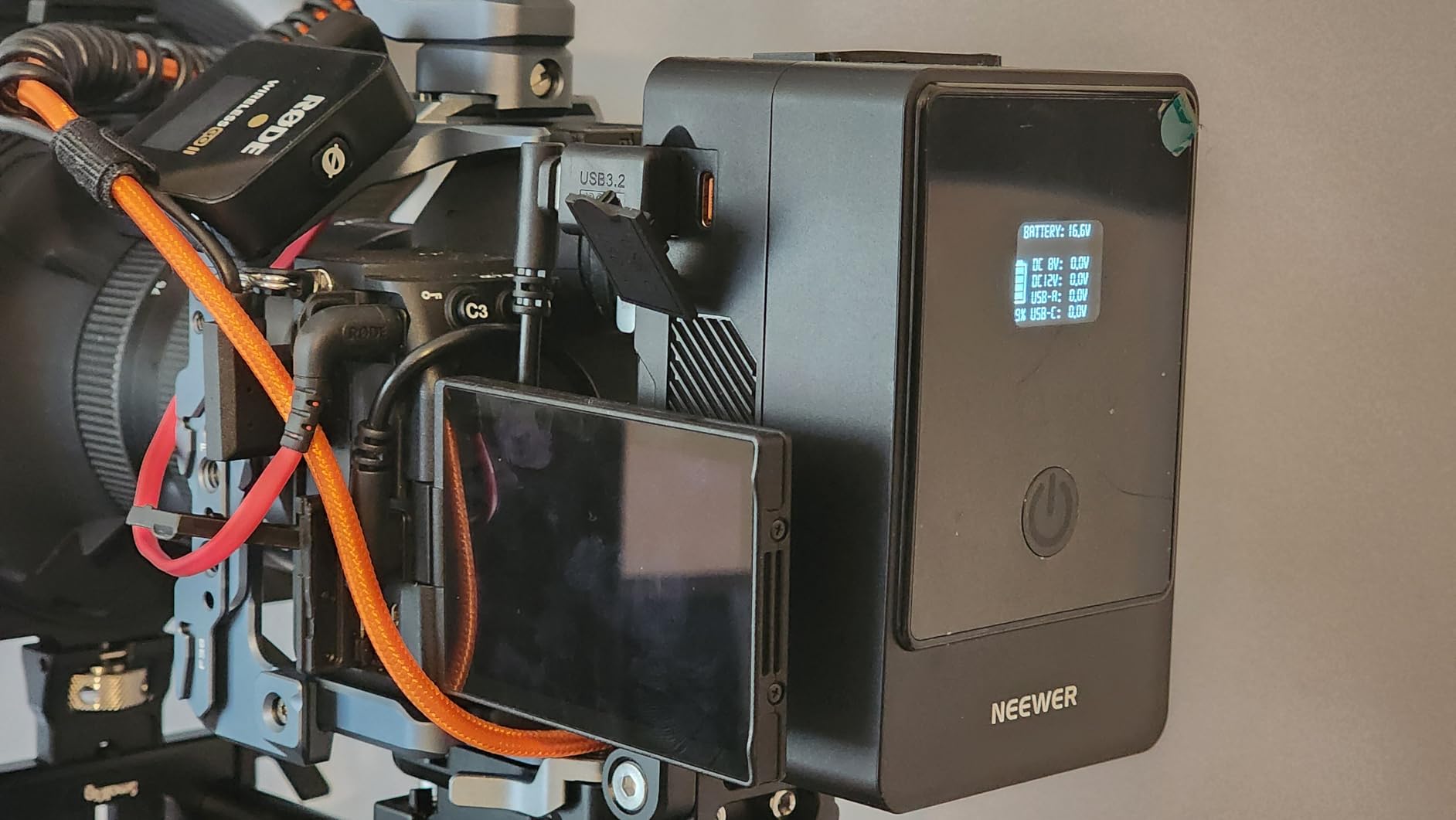
I bought the Neewer PS099E as a backup battery and it quietly became a co-star in my kit. It matches the SmallRig on paper with the same 99Wh capacity, 65W PD charging, and an OLED screen, but costs meaningfully less. For filmmakers assembling a first documentary field kit on a tight budget, that difference buys a spare battery or a decent plate.
In the field it behaved almost identically to my primary brick. Runtime on an 18W documentary rig landed in the same four to five hour window, and the OLED gave believable estimates rather than optimistic ones. The fireproof PC V0 shell is a nice touch for a battery that lives in a bag with soft goods, and the range of supported charging protocols meant it fast-charged from every power adapter I threw at it.
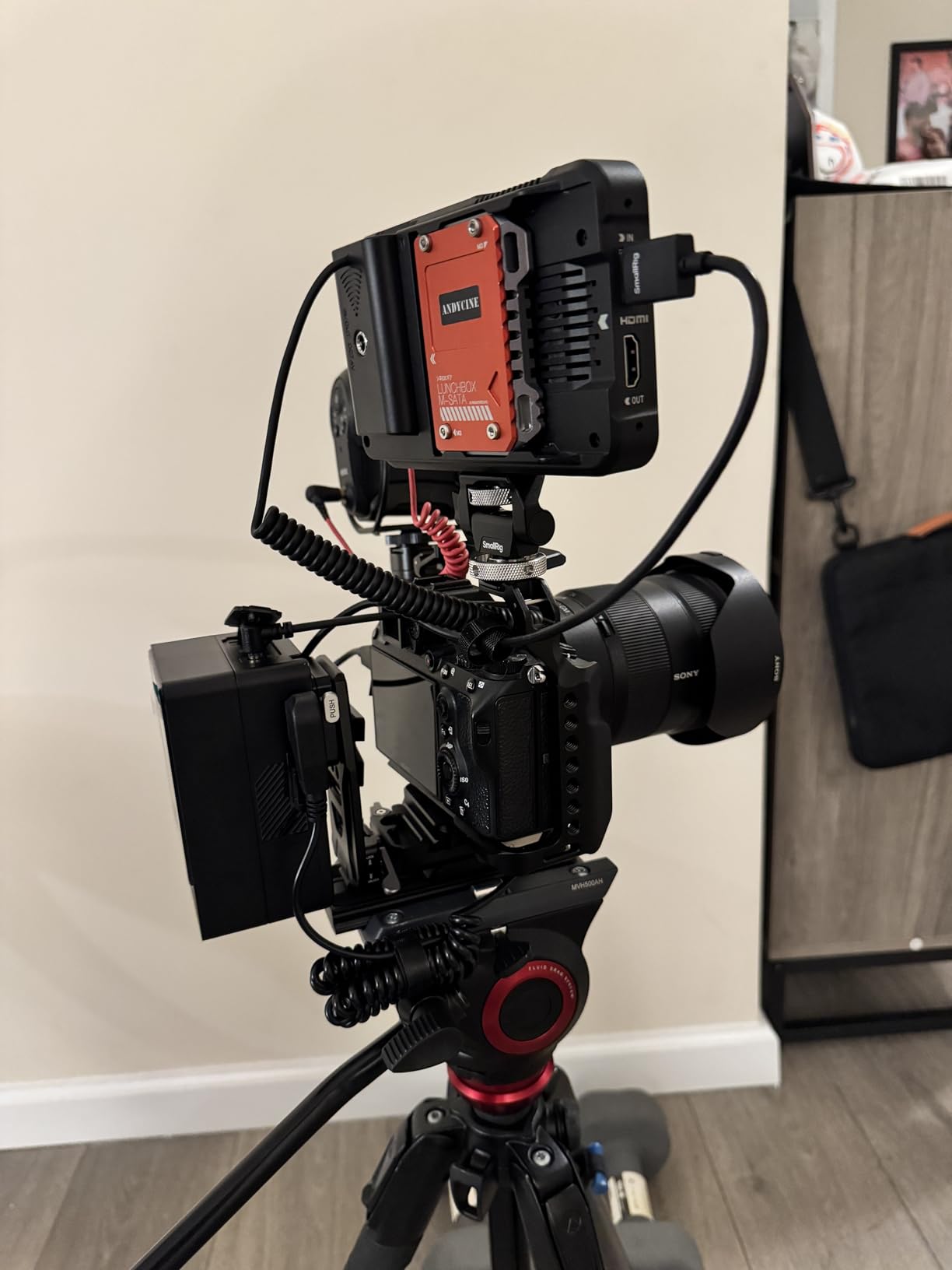
The port selection is generous: dual USB-A, USB-C, D-Tap, BP, and two DC outputs cover a monitor, a recorder, a light, and a phone at once. Charging over PD 65W took roughly the same 90 minutes as the SmallRig in my side-by-side testing. After several months of regular use the shell shows scuffs but no structural complaints.
The weak points are in the details rather than the fundamentals. The D-tap connector on some units sits slightly loose, which matters if you are powering something critical through it, so I keep a right-angle D-tap cable seated firmly with a strain loop. The rubber flaps over the ports can work loose, and the V-mount locking fit varies a touch between plates.
Who should buy this battery
This is the pick for students, first-time documentary filmmakers, and anyone building a two-battery kit where the second unit should not cost as much as the first. It is also a smart choice for crews that need to equip multiple cameras with identical power bricks without doubling the budget.
What to check before buying
Test the D-tap connection with your actual cables as soon as it arrives, since a loose fit there is the most common complaint. Check that your V-mount plate clamps it securely, because the mounting tolerances vary slightly across brands. If your work involves rough-and-tumble daily abuse, consider whether the hardened SmallRig shell is worth the premium.
3. K&F Concept KF-V99 Pro V-Mount Battery – Fastest Charging
K&F CONCEPT V Mount Battery 99Wh PD100W Fast Charge, 6700mAh V Lock Battery
99Wh / 6700mAh
100W bi-directional PD
1.9 lbs
2x USB-C, USB-A, DC 12V, BP, D-TAP
TFT color display
Pros
- 100W charging tops the 65W crowd
- Included 240W USB-C cable is genuinely useful
- TFT color display is easy to read in sun
- Two USB-C ports for simultaneous device charging
- Built-in emergency night light
Cons
- USB-C ports share a circuit and can power-cycle
- No separate charging status LED
- D-tap sits upside down on some rigs
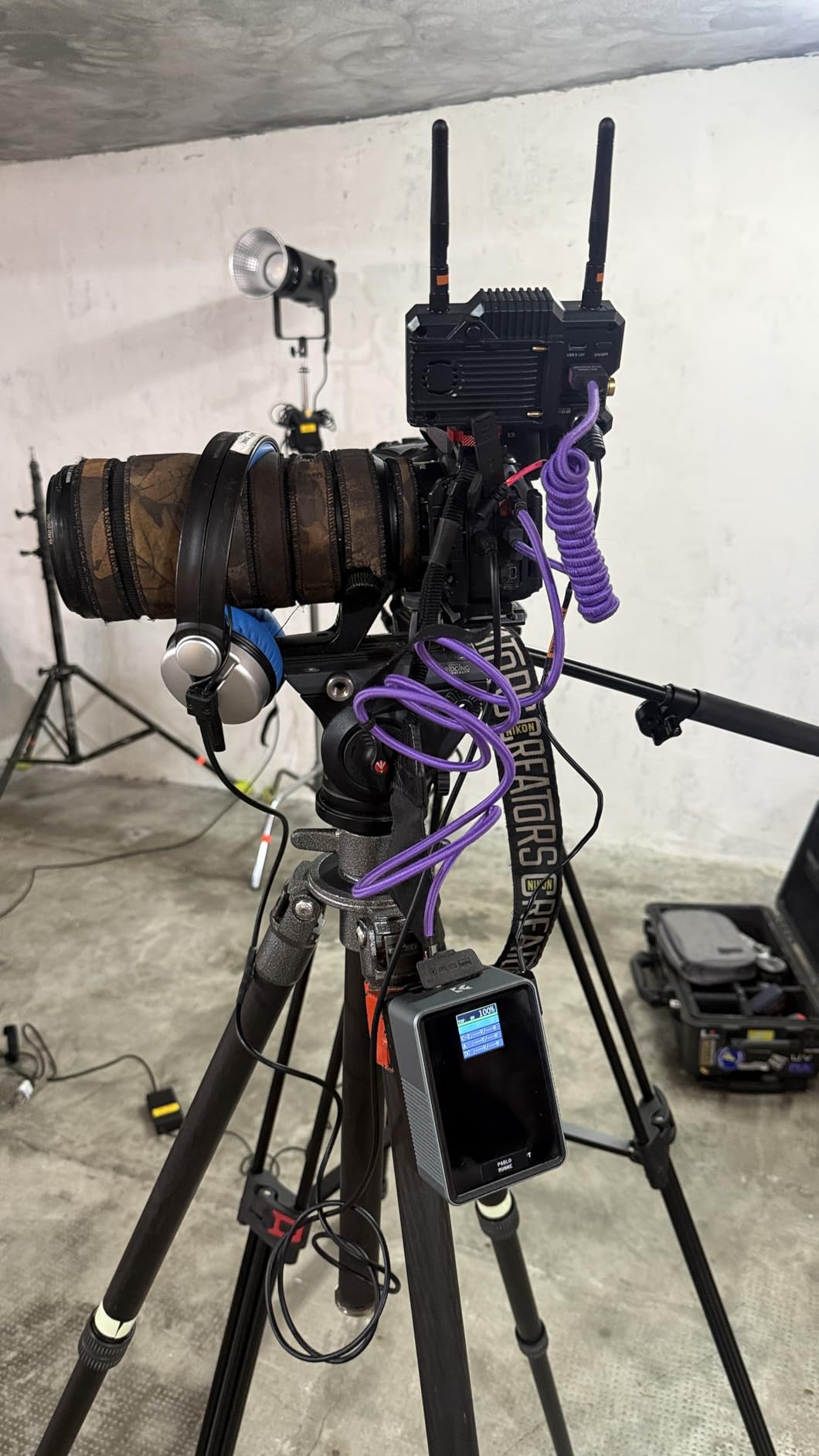
The K&F Concept V99 Pro earns its spot with one headline number: 100W of bi-directional Power Delivery. When your charging window is the 40 minutes a driver spends refueling, that extra wattage over the 65W-class batteries translates directly into more runtime recovered per stop. On my tests it refilled from near-empty in around 70 minutes with the included 240W cable.
The TFT color display is genuinely better than the monochrome OLEDs on the other batteries here, readable in direct sun and showing output wattage per port. Runtime with a typical documentary rig was in line with the other 99Wh packs at roughly four and a half hours. The quirky emergency night light has actually been handy for finding gear in a dark vehicle without killing night vision.
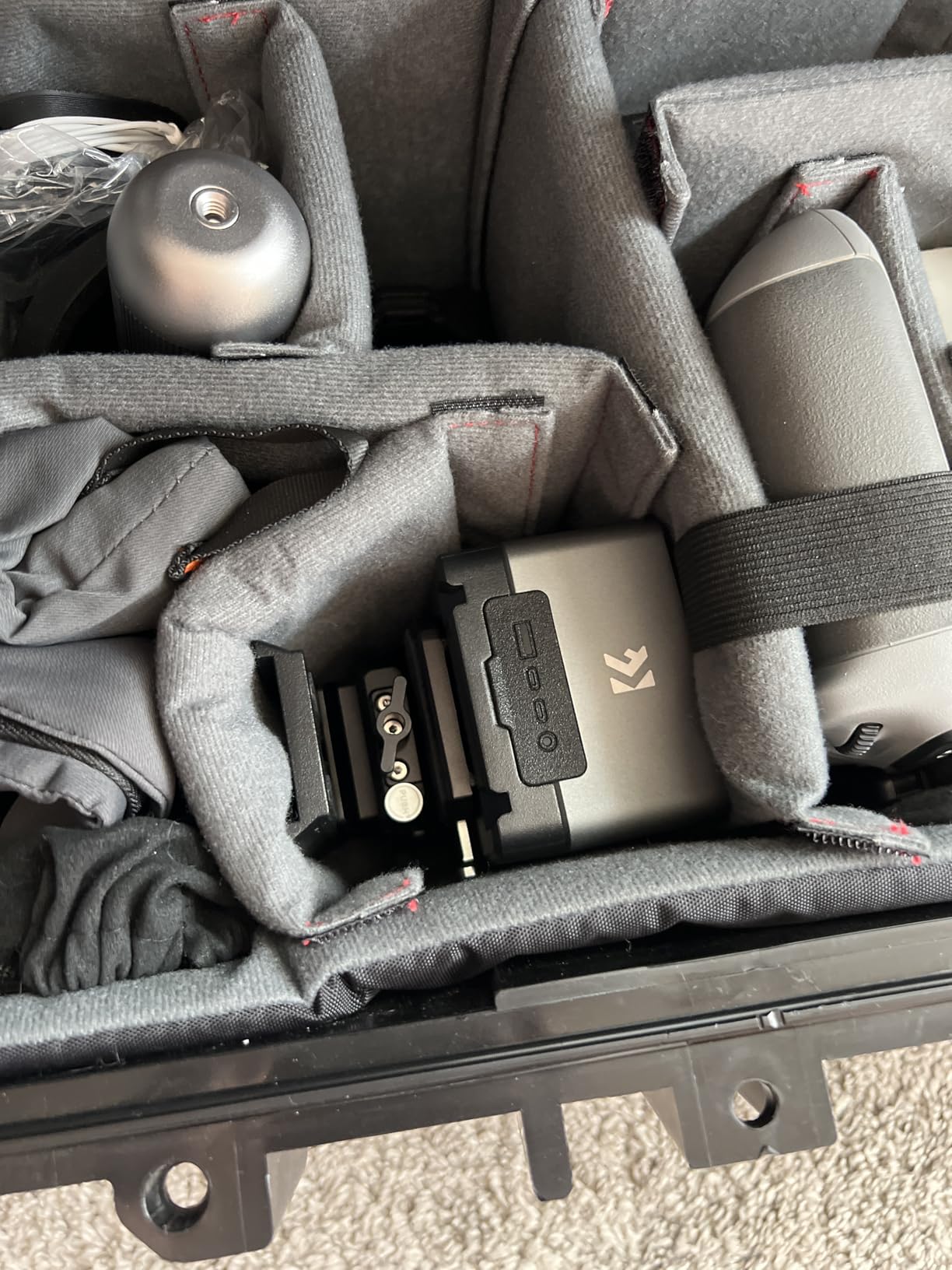
Beyond the raw specs, this is a pleasant battery to live with. The two USB-C ports mean I can charge the camera-side recorder and a laptop simultaneously from one brick, and the bundled high-wattage cable is the one accessory competitors cheap out on. It sits at 1.9 pounds, so it belongs on a shoulder rig or in a bag rather than on a bare handheld setup.
The caveats center on the shared USB-C circuit. When I plugged a second device into the other USB-C port, both ports briefly power-cycled as the battery rebalanced the load, which would interrupt an in-progress recording if you were powering the camera that way. There is no external charging LED either, so you have to wake the screen to check progress.
Who should buy this battery
This is the right pick if your shoot schedule is defined by short, unpredictable charging windows between locations. It also suits creators who want to run a laptop and camera accessories from a single brick during data wrangling sessions. Anyone who values a color display for outdoor readability will prefer it over the OLED alternatives.
What to check before buying
If you plan to power a recorder or camera over USB-C while also charging other devices, test that arrangement at home first because of the shared-circuit power cycling. Check the D-tap orientation against your plate and cable exits, since it mounts upside down on some rigs. Heavy users should also verify the warranty terms in their region.
4. FirstPower 121Wh V-Mount Battery – Most Capacity Per Dollar
FirstPower V Mount Battery 121Wh for Camera Camcorder Monitor LED Light
121Wh / 8400mAh
PD 60W fast charging
1.73 lbs
Dual D-TAP, USB-C, USB-A, BP
5 LED indicators
Pros
- 121Wh capacity runs long shoot days
- Two D-Tap ports power camera plus accessories simultaneously
- Undercuts other batteries on cost per watt-hour
- Intelligent protection system
- Reliable over long discharge cycles
Cons
- Over 100Wh so it cannot fly in carry-on
- Plastic casing feels less rugged
- LED bars instead of a detailed display
- Too bulky for lightweight handheld rigs
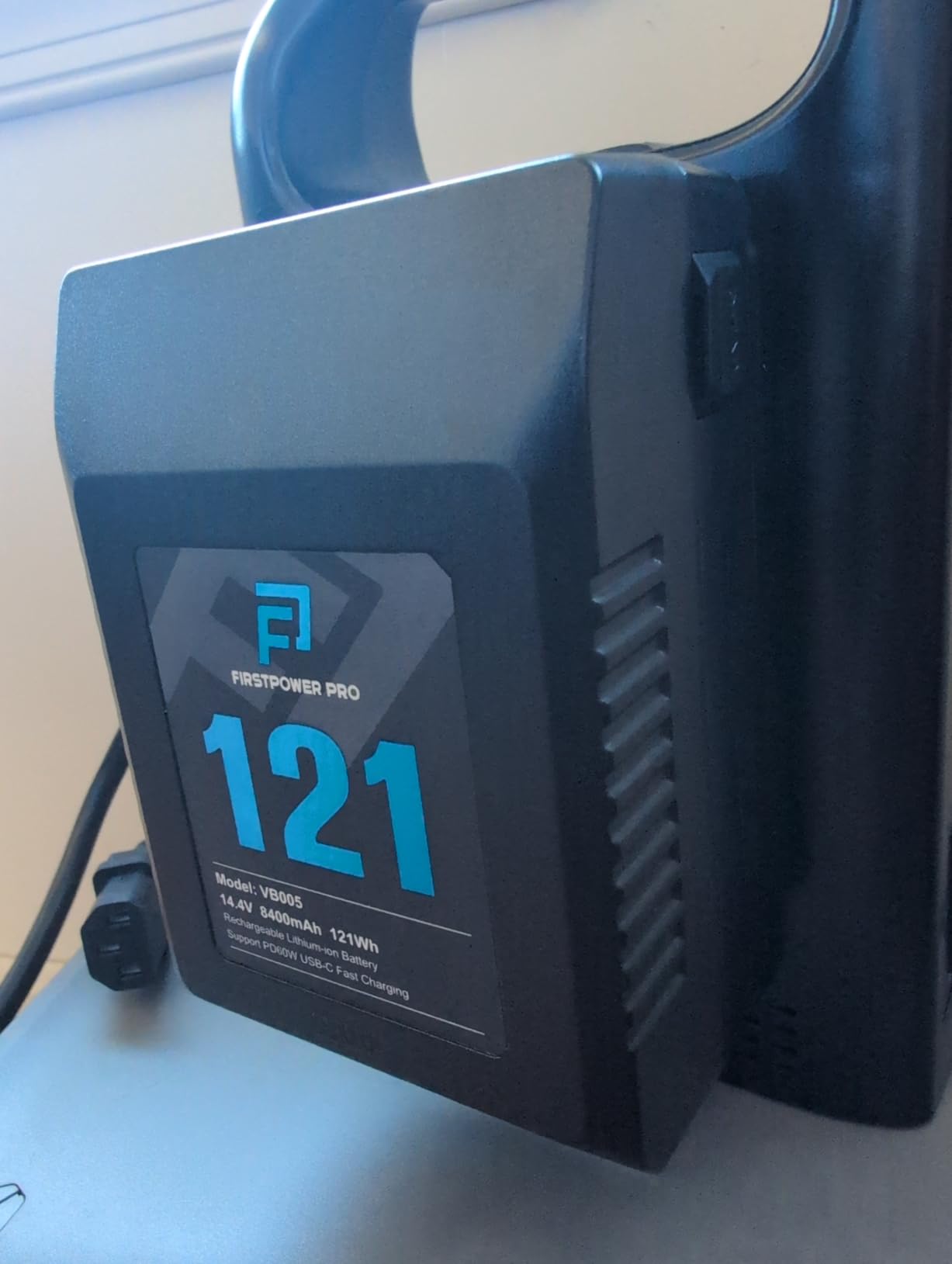
When weight does not matter and runtime does, the FirstPower 121Wh is the quiet bargain of this list. That extra 22Wh over the 99Wh packs pushed my typical rig runtime past five and a half hours, and the dual D-Tap ports let me feed a camera and a 60W LED panel at the same time without a splitter. On a fixed-interview day where the camera never moves, it is my default power source.
The cost per watt-hour here is the best in the roundup, which matters when you are kitting out a documentary field kit on a production budget. I used a pair of these as the house power for a multi-day shoot, cycling them through a PD charger while a third battery ran the rig. The intelligent protection system has kept them from getting warm even at sustained high draw.
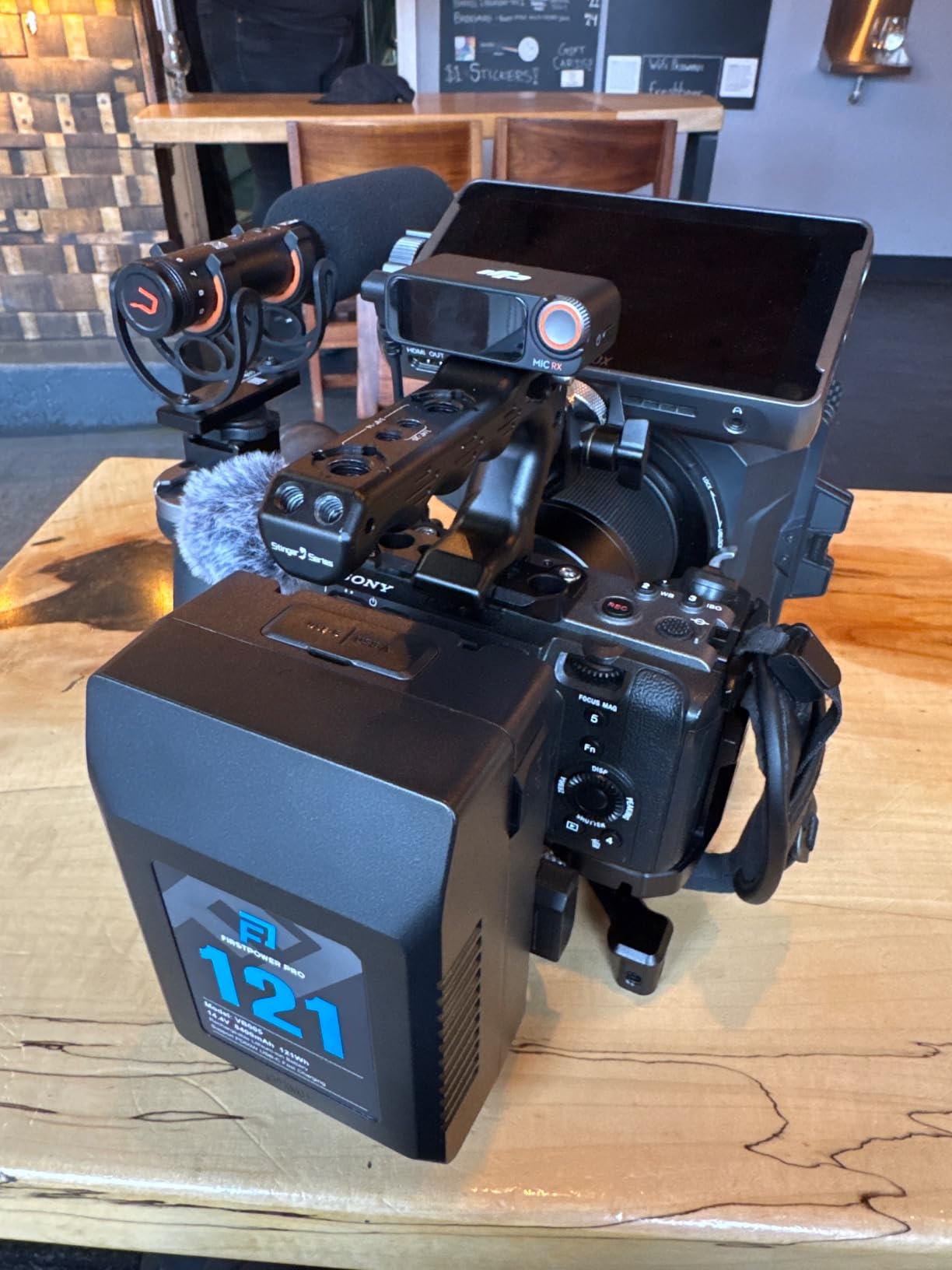
Charging over PD 60W is adequate rather than exciting, filling the bigger cell in roughly two hours. The five LED indicators are old-fashioned compared with OLED screens, but they answer the only question that matters mid-shoot: roughly how much is left. After months of use the plastic shell has picked up scratches that my aluminum-bodied SmallRigs never show.
The big limitation is the one you cannot work around: at 121Wh this battery exceeds the 100Wh airline carry-on limit. It is a drive-to-location battery, full stop. If your documentary involves flights, this stays home or ships ahead as cargo under lithium cargo rules.
Who should buy this battery
Road-based documentary crews get the most value here, especially those running lights and accessories alongside the camera for long interview blocks. It is also a strong choice for a fixed base station that recharges smaller batteries and devices between sessions. Budget-conscious productions will appreciate the capacity per dollar.
What to check before buying
Confirm your travel model, because over 100Wh this battery is blocked from carry-on on essentially every airline. Check whether your V-mount plate and rig can take the extra size and 1.73 pound weight without becoming unwieldy. If you rely on precise runtime readouts for tight scheduling, the LED-only display may frustrate you.
5. SmallRig VB212 V-Mount Battery – Longest Runtime
SMALLRIG V Mount Battery VB212, 212Wh/14400mAh PD140W Mini V-Mount Battery
212Wh / 14400mAh
140W PD bi-directional
1345g
2x USB-C, 2x D-TAP, USB-A, DC, BP
LG cells
Aluminum body
Pros
- 212Wh capacity runs a full shoot day on one charge
- 140W charging refills in about 2 hours
- Dual D-Tap and dual USB-C handle multi-device rigs
- Aluminum alloy body with silicone coating
- LG cells and smart digital display
Cons
- Premium price point
- Too heavy for handheld or gimbal work
- Cannot travel on aircraft
- Occasional standby drain reported over storage
The VB212 is the battery I bring when a battery failure would be catastrophic: courtroom hearings, one-shot live events, wildlife hides where you cannot swap gear. Its 212Wh capacity ran my 18W documentary rig for just over eleven hours in testing, which is a full production day including monitor, wireless links, and a top-up for a laptop. Nothing else in this class matches that endurance.
Charging is the standout engineering feat. Despite holding more than double the energy of the mini packs, 140W bi-directional PD refills it in roughly two hours, which is faster than batteries a third its size. The LG cells and aluminum alloy body with silicone coating feel built for exactly the kind of punishment a documentary field kit absorbs.
Port selection is the fullest here: two USB-C, two D-Tap, USB-A, dual DC barrels, and BP. On a two-camera shoot I powered an A-cam via BP, a B-cam via D-Tap one, and a fill light off D-Tap two, all from this single brick on a rolling cart. The smart digital display tracks output per port, which makes power budgeting on set an actual calculation instead of a guess.
Know what you are signing up for. At 1345 grams it is a shoulder-rig or cart battery, never a handheld one. Like the FirstPower, it cannot fly, so it serves drive-to and ship-ahead productions. A few long-term owners also report slight standby drain over weeks of storage, so I top mine up before each shoot rather than assuming a full charge persists.
Who should buy this battery
This is for professional crews covering long, unrepeatable events where swapping batteries mid-take is not an option. It also suits multi-camera setups powered from a single central brick, and productions recharging from solar panels that want to bank maximum energy during daylight hours.
What to check before buying
Make sure your rig or cart can carry the weight and that your charging source can actually supply 140W to exploit the fast refill. Plan storage discipline so the battery goes into each shoot topped up. And since it exceeds airline limits by a wide margin, confirm your transport plan keeps it on the ground.
6. Neewer PS015 Pro Foldable V-Mount Plate – Best Mounting Companion
NEEWER Foldable V Mount Battery Plate with Arca Type Baseplate, PS015 PRO
Foldable V-mount plate
Double Arca QR mounts
180-degree tilt
3.5 oz
Extendible baseplate
Anti-off pin
Pros
- Quick release button swaps batteries in seconds
- 180-degree tilt keeps flip screens and ports accessible
- Double Arca mounts dock straight onto tripods and gimbals
- Folds flat for travel
- Anti-off pin locks the camera securely
Cons
- Adds modest bulk over a minimal plate
- QR and slide mechanisms may need adjustment out of the box
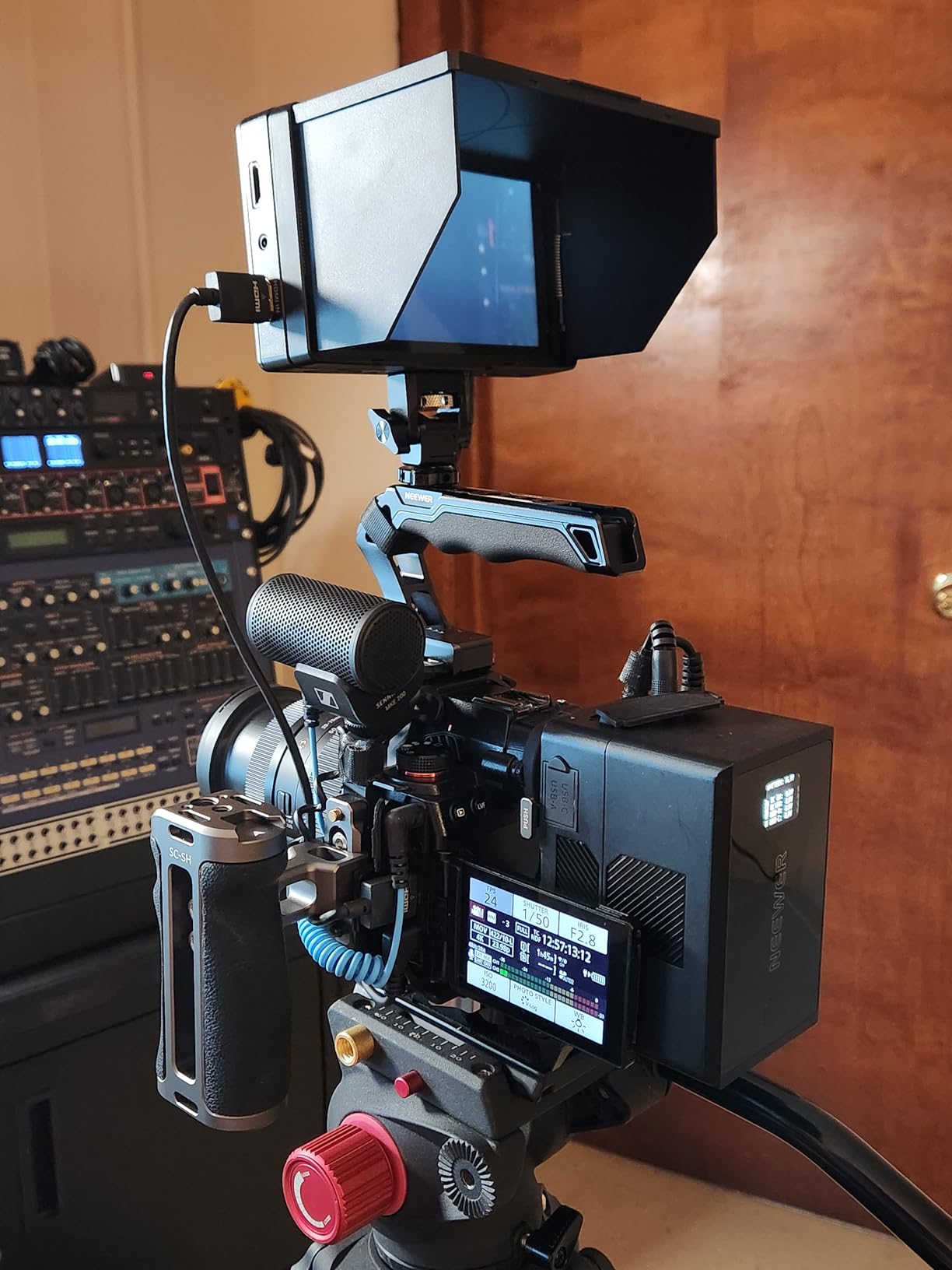
A battery is only as good as its mounting situation, and this plate solved the most annoying problem in my kit: dangling a V-mount brick off the back of a camera with zip ties and prayer. The PS015 Pro clamps any of the mini V-mount batteries above behind the camera on a proper quick release, and the double Arca mounts mean the whole assembly pops onto my tripod head or gimbal without adapters.
The 180-degree tilt feature sounds like a gimmick until the first time you need to flip the battery horizontal to clear a flippy screen or access the D-tap. It has become second nature on my FX3 rig, where vertical battery orientation blocks the screen hinge. The extendible baseplate adds 36.5mm of height for clearing cables and lens hoods.
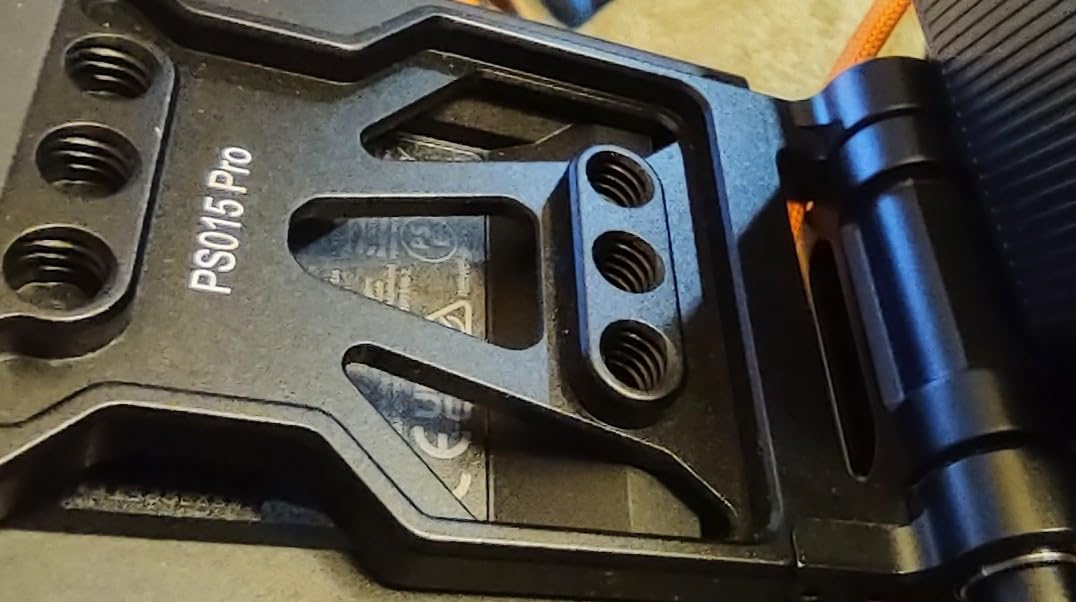
At 3.5 ounces folded flat, it earns a permanent spot in the travel kit even when I am not sure I will need it. The retractable anti-off pin means a partially clicked battery cannot walk off the plate during a bumpy truck ride, which is exactly the failure mode that eats connectors. Build quality feels far above the asking price, with machined metal where it counts.
The honest downsides: it adds some bulk compared with a bare-bones fixed plate, and out of the box the slide mechanisms on some units need a small adjustment to lock crisply. Mine needed thirty seconds with the tension adjuster, and it has been flawless since.
Who should buy this plate
Anyone running a mini V-mount battery on a mirrorless or cinema camera needs a proper plate, and this is the one I recommend. Gimbal shooters benefit especially, since the Arca docking gets battery weight onto the handle instead of the camera body. Travel filmmakers will appreciate that it folds flat.
What to check before buying
Verify your gimbal or tripod uses Arca-Swiss style clamps, since that is what the QR system targets. Check that the plate height works with your camera cage and cable routing. Test the locking tension when it arrives and adjust rather than tolerating a sloppy fit.
7. Anker SOLIX C300 Portable Power Station – Best Base Camp Power
Anker SOLIX C300 Portable Power Station, 288Wh Solar Generator for Camping
288Wh LiFePO4
300W output, 600W surge
8 ports including AC
140W two-way USB-C
9.1 lbs
Solar generator
Pros
- 288Wh recharges your V-mount bricks in the field
- AC outlets run laptop and chargers off-grid
- LiFePO4 cells rated for 3000 cycles and 10 years
- Solar input turns daylight into shoot-day capacity
- 5-year warranty and app monitoring
Cons
- At 9.1 pounds it is vehicle or cart transport only
- 300W ceiling rules out large tungsten or HMI loads
- No carry strap included
The forum threads about month-long remote documentary shoots all converge on one architecture: camera batteries on the rig, a power station at base camp. The Anker SOLIX C300 fills that role better than anything else I have used at this size. Its 288Wh capacity recharges a 99Wh V-mount battery roughly two times over, plus tops up laptops, drives, and camera batteries before the next day.
The chemistry is why I chose it over cheaper stations. LiFePO4 cells are rated for 3000 charge cycles, which Anker translates to a 10-year lifespan, and they tolerate the heat and deep cycling that field abuse involves. Pair it with a 100W solar panel and you have the solar-plus-battery combination that remote documentary crews on Reddit consistently recommend for shoots with no grid access at all.
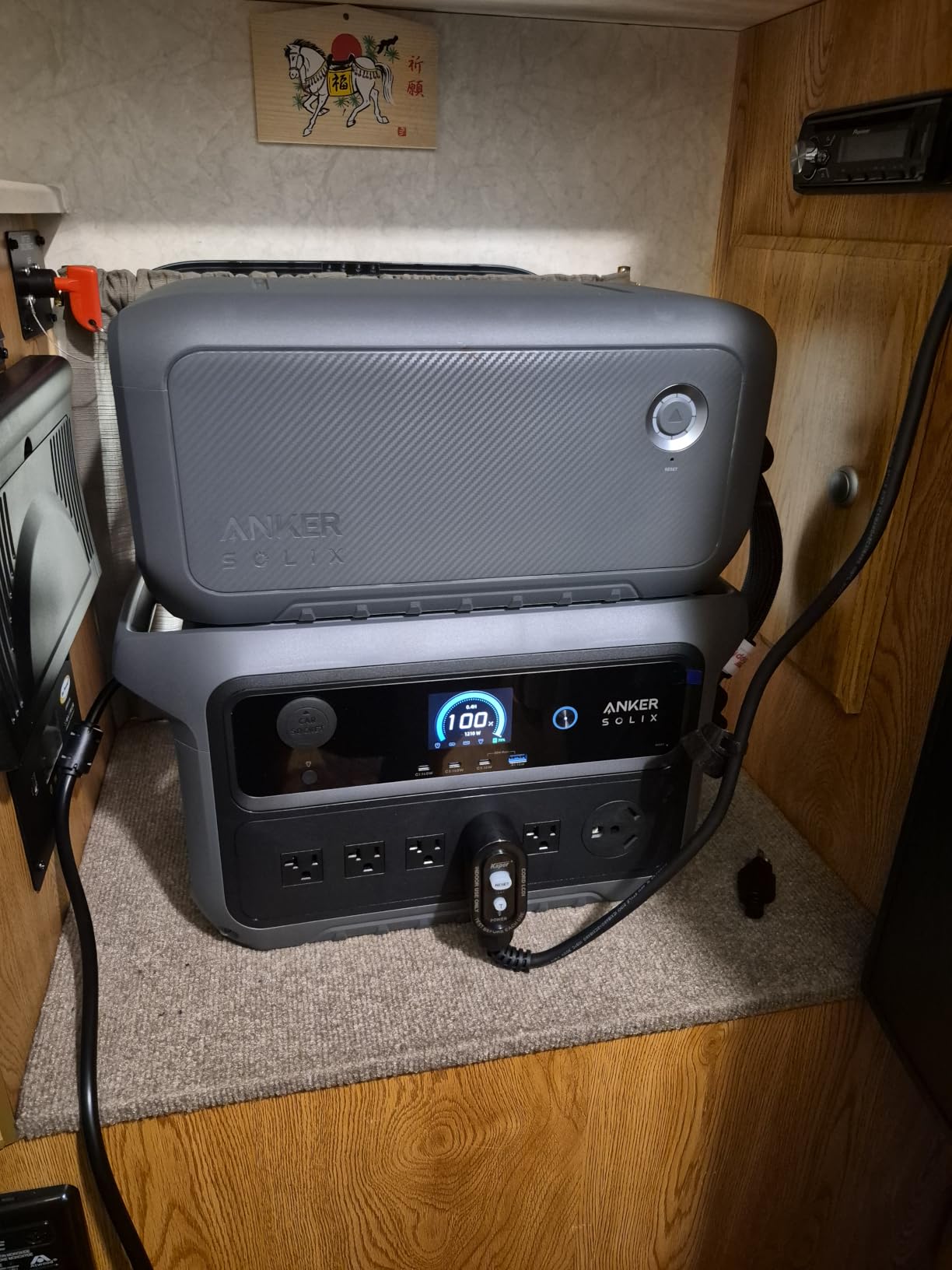
Eight ports cover every charging scenario: three AC outlets, a car socket, two 140W USB-C ports, plus USB-A and a low-power USB-C. In practice one C300 running from a truck bed charged my V-mount bricks, two laptops, and a drone battery stack simultaneously during a lunch break. The 25dB quiet operation means it can sit beside an interview without contaminating audio, something gas generators can never do.
The constraints are obvious the moment you lift it. At 9.1 pounds, this is base camp equipment that travels by vehicle, cart, or portm, not in a backpack. The 300W output ceiling handles chargers and monitors easily but will not run big lighting, so size your expectations around DC and charging duty rather than mains-level production power.
Who should buy this power station
Crews shooting multi-day remote documentaries without reliable grid power are the ideal users, especially with a solar panel in the kit. It is equally valuable as an on-set charging hub for vehicle-based productions, and the UPS switchover under 10ms makes it a legitimate backup for file-transfer sessions you cannot afford to interrupt.
What to check before buying
Add up the wattage of everything you plan to charge at once and confirm it stays under 300W sustained. If solar is part of your plan, budget for a compatible panel, since it is sold separately. Verify the 9.1 pound weight fits your transport reality before committing.
8. K&F Concept NP-FZ100 3-Pack – Best Sony Camera Batteries
K&F Concept 3-Pack NP-FZ100 Battery and Upgraded LCD Battery Charger Compatible with Sony A7iii, A7iv, A7C, FX3, FX30, A9, A6600, A6700, ZV-E1, ZV-E10ii, Alpha 9, A9S, A7R III, A7R IV, A7RV, 2280mAh
3x NP-FZ100 batteries
2280mAh / 16.8Wh each
3-slot LCD charger
USB-C and Micro USB input
Sony FX3 FX30 A7 IV compatible
Pros
- Three batteries plus charger costs less than one Sony original
- Full compatibility without error messages on Sony bodies
- LCD shows real charge percentage per slot
- Simultaneous 3-battery charging
- No memory effect
Cons
- Runtime slightly behind genuine Sony cells
- 4 to 6 hour full charge time
- Not yet compatible with Sony FX2
Even with V-mount power on the rig, documentary shooters on Sony bodies still need internal batteries for gimbal work, run-and-gun B-roll, and moments when the big brick is recharging. This three-pack of NP-FZ100 equivalents costs less than a single Sony original and in my testing delivered about 85 percent of the genuine cell’s runtime, which is a trade I will make every time at this quantity.
Compatibility is where off-brand batteries usually fail, and these passed cleanly. My FX3 and A7 IV report accurate remaining percentage, no warning messages, and the cells communicate with the camera’s power management as expected. For a documentary field kit, three charged internals means the A-cam never waits on the charging rotation.
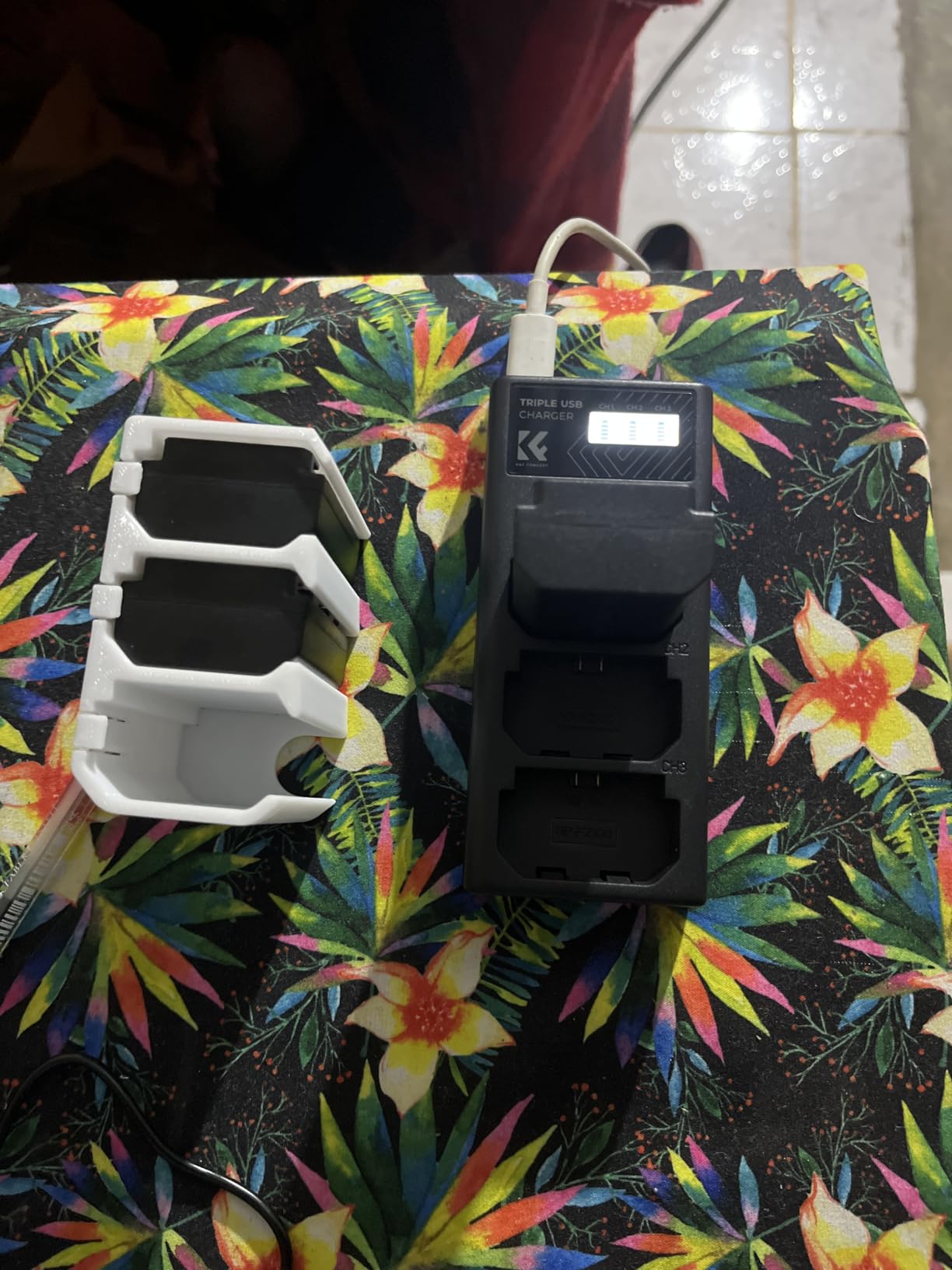
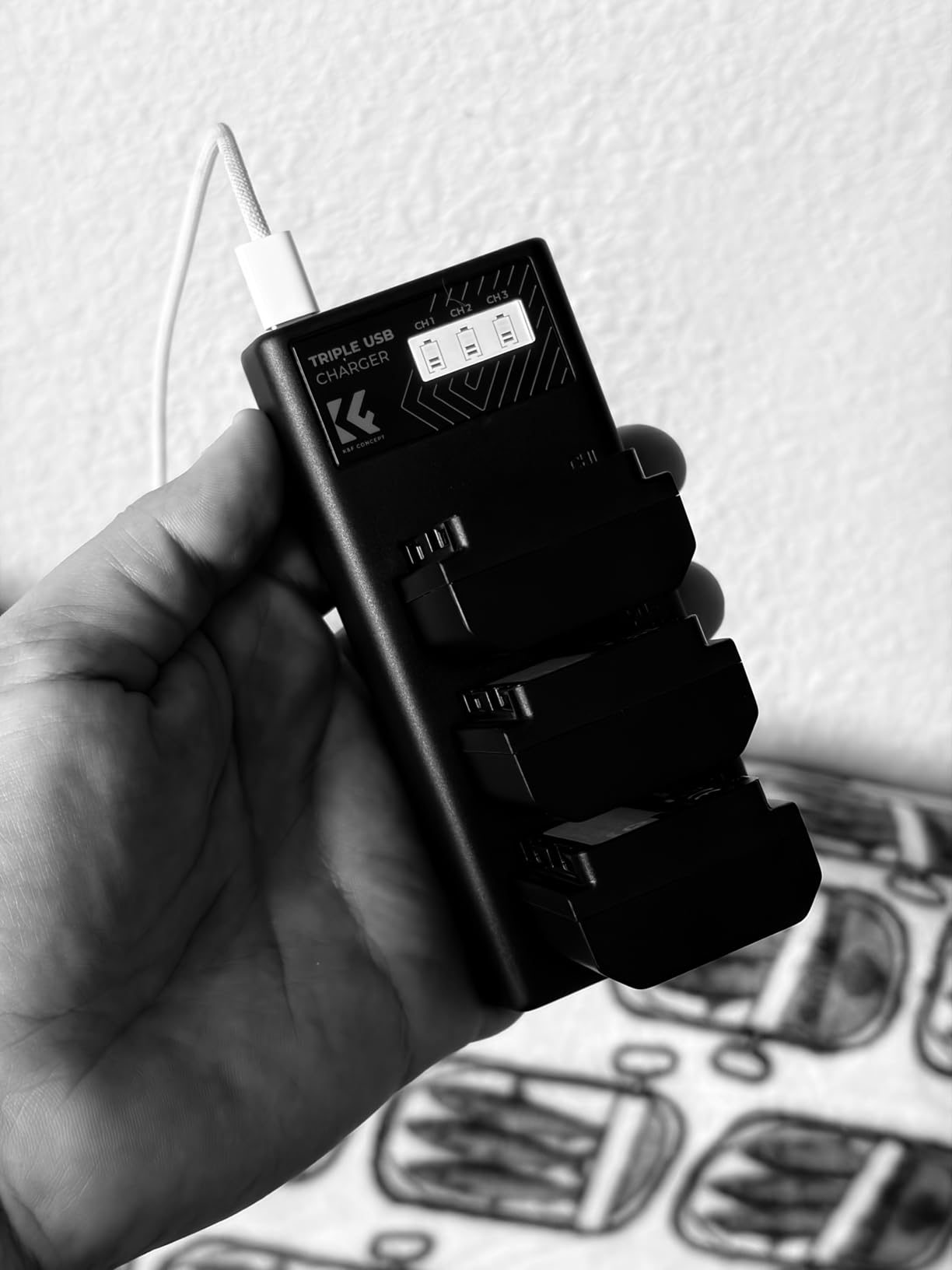
The included 3-slot charger is better than it needs to be at this price. The LCD shows the actual charge percentage per slot rather than a vague LED, and charging all three simultaneously from a USB-C power brick keeps the whole ecosystem on one cable standard. The dual Micro USB and USB-C input means older chargers in your kit still work too.
The tradeoffs are documented across thousands of reviews and match my experience: expect slightly shorter runtime than Sony originals, and plan on a 4 to 6 hour full charge cycle, so you top up overnight rather than at lunch. Note also that these are not yet confirmed compatible with the newest FX2 bodies.
Who should buy this set
Sony shooters building a documentary field kit get the most direct benefit, since NP-FZ100 fits the FX3, FX30, A7 IV, A7C, A6700, and the whole A7R line. Anyone doing gimbal or handheld work where V-mount weight is unwelcome needs a deep bench of internal batteries, and this is the cheapest credible way to build one.
What to check before buying
Confirm your exact Sony body is on the compatibility list, particularly if you shoot the newest models. Factor the overnight charging time into your power rotation plan. If maximum runtime per battery matters more than quantity, genuine Sony cells still hold the edge.
How to Choose the Best Battery Solution for a Documentary Field Kit?
Every documentary kit is different, but the power math follows the same rules regardless of your camera. Here is how I work through the decision before committing money to batteries.
Start with your watt-hour budget
Watt hours are the only capacity number that matters, because it lets you compare batteries across voltages. List every device you will power, find its draw in watts, and multiply by the hours you need it running. A typical solo documentary rig, say a mirrorless camera at 10W, a monitor at 8W, and a wireless link at 2W, burns roughly 20W, so a 99Wh battery delivers about four and a half hours. Forum crews filming month-long remote projects use exactly this calculation to size their systems before ever buying gear.
Respect the 100Wh airline rule
If you fly to locations, this is the single most important constraint in your kit. Batteries at or under 100Wh can ride in carry-on, generally up to two spares beyond any installed one, while anything larger is prohibited in the cabin entirely. That is why my travel kit is built on 99Wh mini V-mounts, with the big 121Wh and 212Wh bricks reserved for drive-to shoots or shipped ahead as cargo under airline lithium rules.
Match the battery type to your camera system
Cinema cameras and rigged-up mirrorless bodies benefit most from mini V-mount batteries, which power the camera plus monitor, wireless, and light from one brick through D-Tap and BP outputs. Sony shooters should pair that with a bench of NP-FZ100 internals for gimbal work. Crews with base camp operations should add a LiFePO4 power station with solar input to recharge everything overnight or during daylight hours.
Count your ports, not just your capacity
A battery with one output forces you to carry more batteries. The best field batteries offer USB-C with Power Delivery, USB-A, D-Tap, and BP ports, letting a single brick run the camera, charge a recorder, and top up a phone simultaneously. USB-C PD matters twice over, since it is also how you recharge the brick itself from one shared GaN charger instead of a pile of proprietary adapters.
Weigh weight against your shooting style
Handheld and gimbal documentary work punishes every gram, which pushes you toward sub-600g mini V-mounts and internal camera batteries. Shoulder rigs, carts, and interview setups can absorb the 1.3kg plus big bricks in exchange for double or triple the runtime. My own split: mini batteries live on the rig, the 212Wh and power station stay at base.
Plan your charging infrastructure
Batteries are only half a power system. Look for bi-directional USB-C PD so one charger standard covers everything, check charge times against your realistic recharge windows, and add solar if you will be off-grid for days. A 140W-capable battery paired with a 140W charger halves your downtime compared with 65W gear, and a solar-fed power station turns daylight into the next day’s shoots.
Build in redundancy
Documentary work does not offer reshoots, so a single point of power failure is unacceptable. My working minimum for any paid shoot is two camera-side batteries, a charging path that runs from a vehicle or solar, and internal camera batteries as the last resort. Rotate the load so every cell gets used and nothing sits fully drained for weeks, which is how lithium packs quietly die.
Frequently Asked Questions
What is the best battery solution for a documentary field kit?
The best setup is a layered system: a 99Wh mini V-mount battery like the SmallRig VB99 SE on the camera rig, a high-capacity battery or portable power station at base camp, and internal camera batteries as backup. This covers rig power, recharging off-grid, and redundancy for moments when the main batteries are topped up.
How many watt hours do I need for a full documentary shoot day?
Add up the wattage of every device and multiply by hours of use. A typical solo documentary rig drawing about 20W needs roughly 160Wh for an 8-hour day, so two 99Wh batteries cover it with margin. Larger crews running lights and multiple cameras should budget 300Wh or more plus a recharging source.
Can you fly with V-mount batteries?
Yes, if they are rated at 100Wh or less. Airlines generally allow lithium batteries under 100Wh in carry-on baggage, including installed ones plus up to two spares. Batteries over 100Wh, like 121Wh or 212Wh models, are prohibited in the cabin and must be shipped as cargo under airline lithium rules.
What is the battery that lasts the longest?
In this roundup, the SmallRig VB212 runs longest with 212Wh of capacity, delivering around eleven hours on a typical 18W documentary rig. Among carry-on legal options, the 99Wh mini V-mount batteries run roughly four to five hours each, and the Anker SOLIX C300 power station offers 288Wh for recharging all your camera batteries in the field.
What is the best power bank for cameras?
A mini V-mount battery with USB-C Power Delivery is the best power bank choice for filmmaking cameras, since models like the SmallRig VB99 SE and Neewer PS099E offer 99Wh of capacity with D-Tap, BP, and USB ports for powering the camera, monitor, and accessories at once. For charging whole kits off-grid, a LiFePO4 power station with solar input is the stronger option.
Final Thoughts
After months of field testing, my recommendation for the best battery solution for a documentary field kit in 2026 is a layered build rather than a single purchase. Start with the SmallRig VB99 SE on your rig, add the Neewer PS099E as a budget second, mount them on the Neewer PS015 Pro plate, and back it all up with the Anker SOLIX C300 at base camp.
Sony shooters should round out the kit with the K&F Concept NP-FZ100 three-pack, drive-based crews can swap the travel batteries for the FirstPower 121Wh or SmallRig VB212, and fast-charge fans will love the K&F Concept V99 Pro. Build the system around your watt-hours, your transport, and your shooting style, and power will be the last thing you think about on location.