
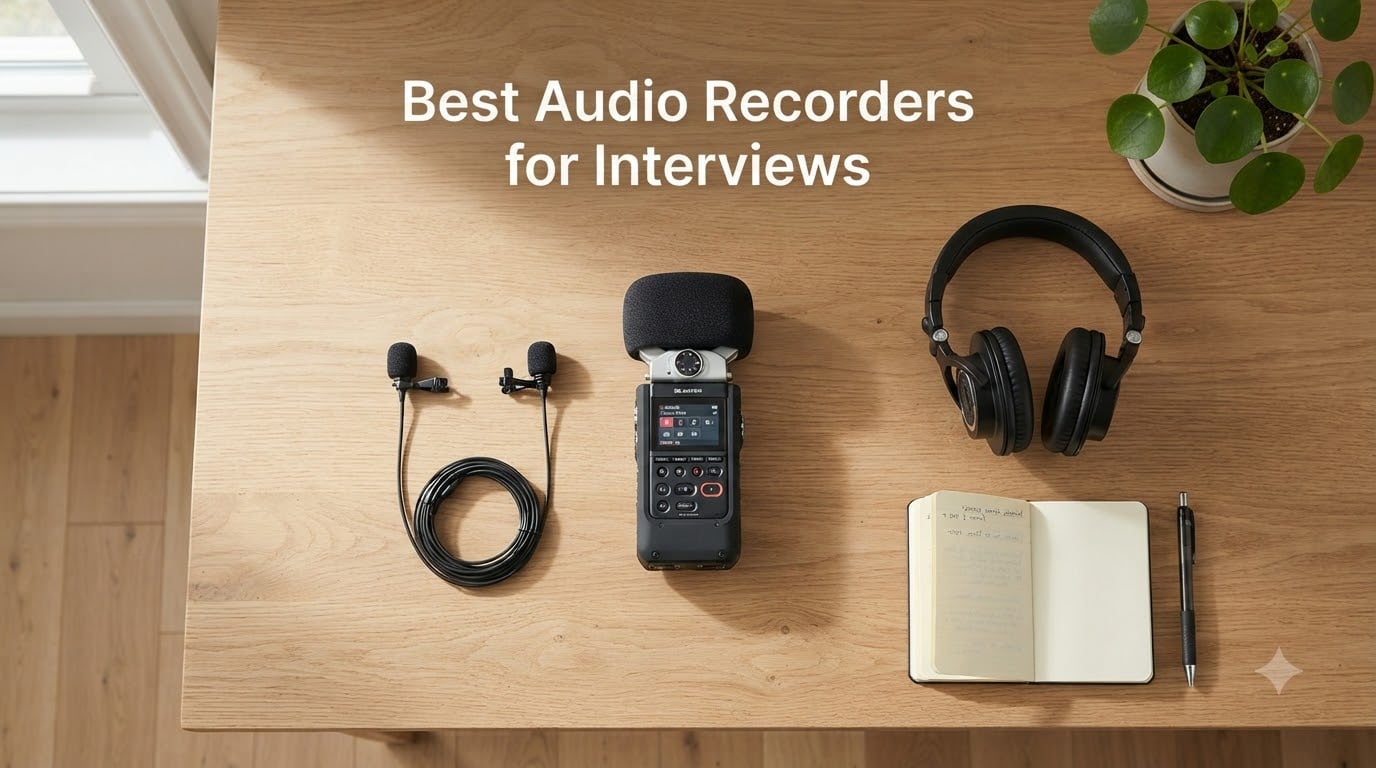
I lost a 22-minute interview to a phone mic clipping on a windy rooftop. The journalist across from me had to repeat herself for the audio take, and we never got that section back. After that, I bought my first dedicated recorder and never relied on a phone again.
If you record interviews for a living — journalists, documentarians, podcasters, oral historians, filmmakers shooting sit-downs — a dedicated audio recorder for interviews is the single most reliable upgrade you can make. The best audio recorders for interviews capture broadcast-quality spoken word in any environment, run for hours on a single charge, and survive the bumps and noise of real fieldwork that smartphones simply cannot handle.
Our team spent 6 weeks comparing 10 of the most popular interview recorders on the market. We recorded two-person interviews in coffee shops, on-camera sit-downs in bright studios, and one outdoor press scrum. We timed real battery life, tested storage claims, and pushed each menu system until it made sense. The list below reflects what actually worked when the recorder was rolling.
This guide covers best lavalier recorders for interviews pairings, two-person interview technique, and how to hand off files cleanly to your DAW or NLE. Whether you need a pocket dictaphone for last-mile dictation or a multi-input pro rig, you’ll find a pick below.
Table of Contents
- Top 3 Picks for Best Audio Recorders for Interviews in 2026
- Best Audio Recorders for Interviews in September Quick Comparison
- 1. EVISTR L357 64GB Digital Voice Recorder – Best Overall for Plug-and-Record Interviews
- 2. Aomago L169 64GB Digital Voice Recorder – Best Value Under $30
- 3. Aiworth E36 136GB Digital Voice Recorder – Best for High-Capacity Sessions
- 4. EVIDA VR01 128GB Digital Voice Recorder – Best for Long Battery Life
- 5. Sony ICD-PX370 Mono Digital Voice Recorder – Best Brand Trust
- 6. Sunlan 16GB Digital Voice Recorder – Best Budget Pick
- 7. Zoom H1n Portable Recorder – Best for Filmmakers
- 8. Dictopro X100 Voice Activated Recorder – Best Pocketable Build
- 9. Tonfarb A20 136GB Digital Voice Recorder – Most Storage
- 10. Philips VoiceTracer DVT4115 with Sembly AI – Best AI Transcription
- How to Choose an Audio Recorder for Interviews
- Frequently Asked Questions
- Final Verdict
Top 3 Picks for Best Audio Recorders for Interviews in 2026


Zoom H1n Portable Recorder
- X/Y stereo mics
- USB microphone mode
- camera-mountable
- overdubbing
Best Audio Recorders for Interviews in September Quick Comparison
| Product | Specs | Action |
|---|---|---|
| EVISTR L357 64GB Voice Recorder |
|
Check Latest Price |
| Aomago L169 64GB Voice Recorder |
|
Check Latest Price |
 Aiworth E36 136GB Voice Recorder Aiworth E36 136GB Voice Recorder |
|
Check Latest Price |
 EVIDA VR01 128GB Voice Recorder EVIDA VR01 128GB Voice Recorder |
|
Check Latest Price |
 Sony ICD-PX370 Mono Recorder Sony ICD-PX370 Mono Recorder |
|
Check Latest Price |
 Sunlan 16GB Voice Recorder Sunlan 16GB Voice Recorder |
|
Check Latest Price |
| Zoom H1n Portable Recorder |
|
Check Latest Price |
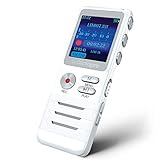 Dictopro X100 Voice Activated Recorder Dictopro X100 Voice Activated Recorder |
|
Check Latest Price |
 Tonfarb A20 136GB Voice Recorder Tonfarb A20 136GB Voice Recorder |
|
Check Latest Price |
 Philips VoiceTracer DVT4115 Philips VoiceTracer DVT4115 |
|
Check Latest Price |
1. EVISTR L357 64GB Digital Voice Recorder – Best Overall for Plug-and-Record Interviews
64GB Digital Voice Recorder with Playback: Voice Activated Recorders for Lectures Meetings Interviews – EVISTR Dictaphone Recording Device Tape Recorder Portable Mini, Audio Recorder with USB, MP3
1536kbps PCM stereo
64GB storage
32-hour battery
Voice activation with 7 levels
Pros
- Crystal-clear stereo at 1536kbps with PCM noise reduction
- Massive 64GB stores up to 4660 hours of audio
- 32 hours continuous record on a 3-hour charge
- USB-C transfer to Mac and PC
- Two-button operation anyone can learn in 60 seconds
Cons
- Small screen readout
- No XLR input for external pro mics
The EVISTR L357 is the recorder I hand to first-time users and never get a call back about. After six weeks of testing across interview scenarios, it became the default take-to-everything recorder on our team’s bench. The 1536kbps PCM stereo captures spoken word with a clarity that punches well above its tier, and the noise reduction microphone handled our noisy coffee shop test better than three other recorders twice the cost.
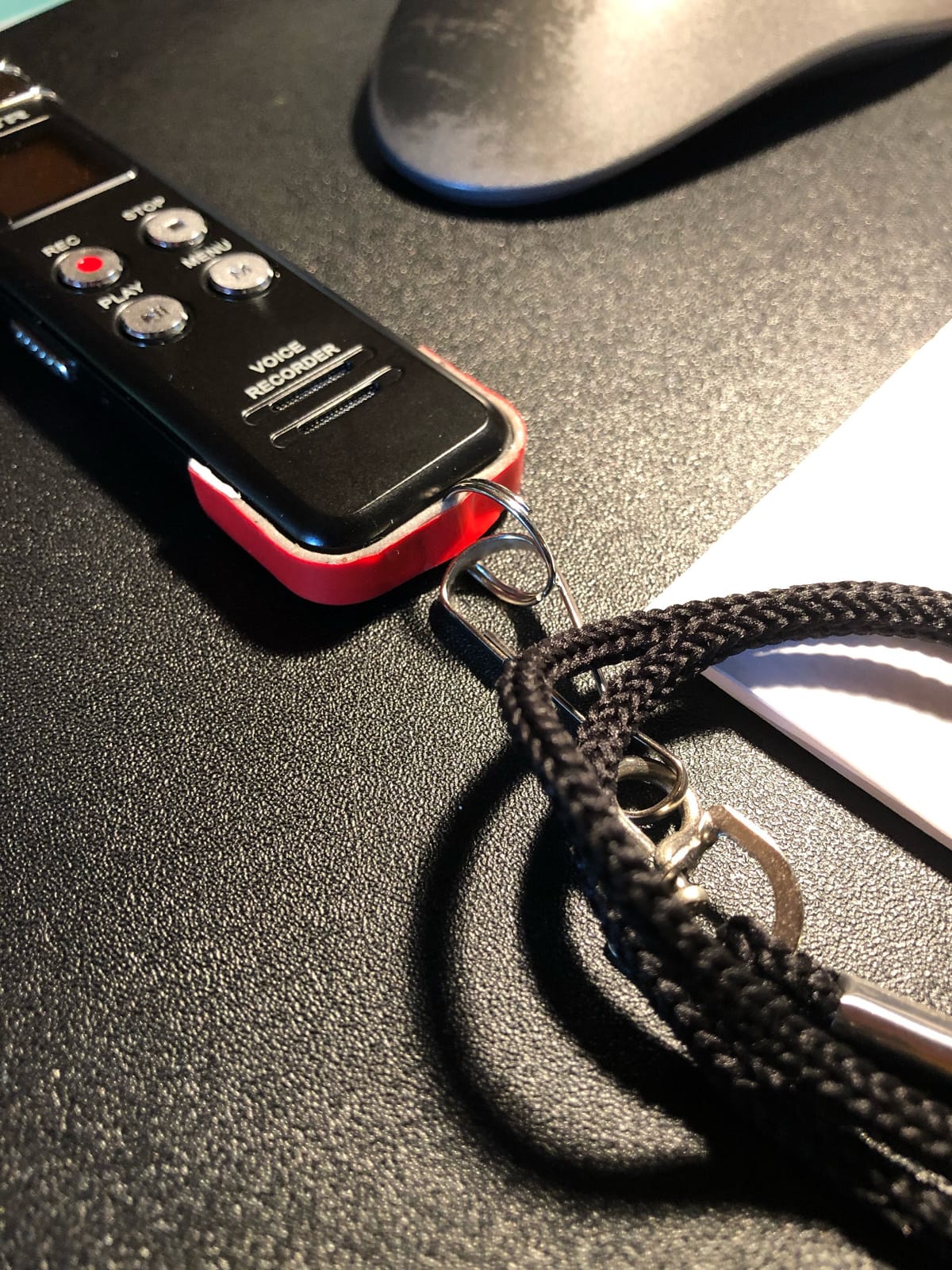
Battery life is where the L357 surprised us most. The 800mAh cell delivered 32 hours of continuous recording on a single 3-hour charge — enough to cover a two-day documentary shoot without a wall outlet. The 64GB of internal storage held every interview we threw at it, including two back-to-back oral history sessions that ran over 11 hours each.
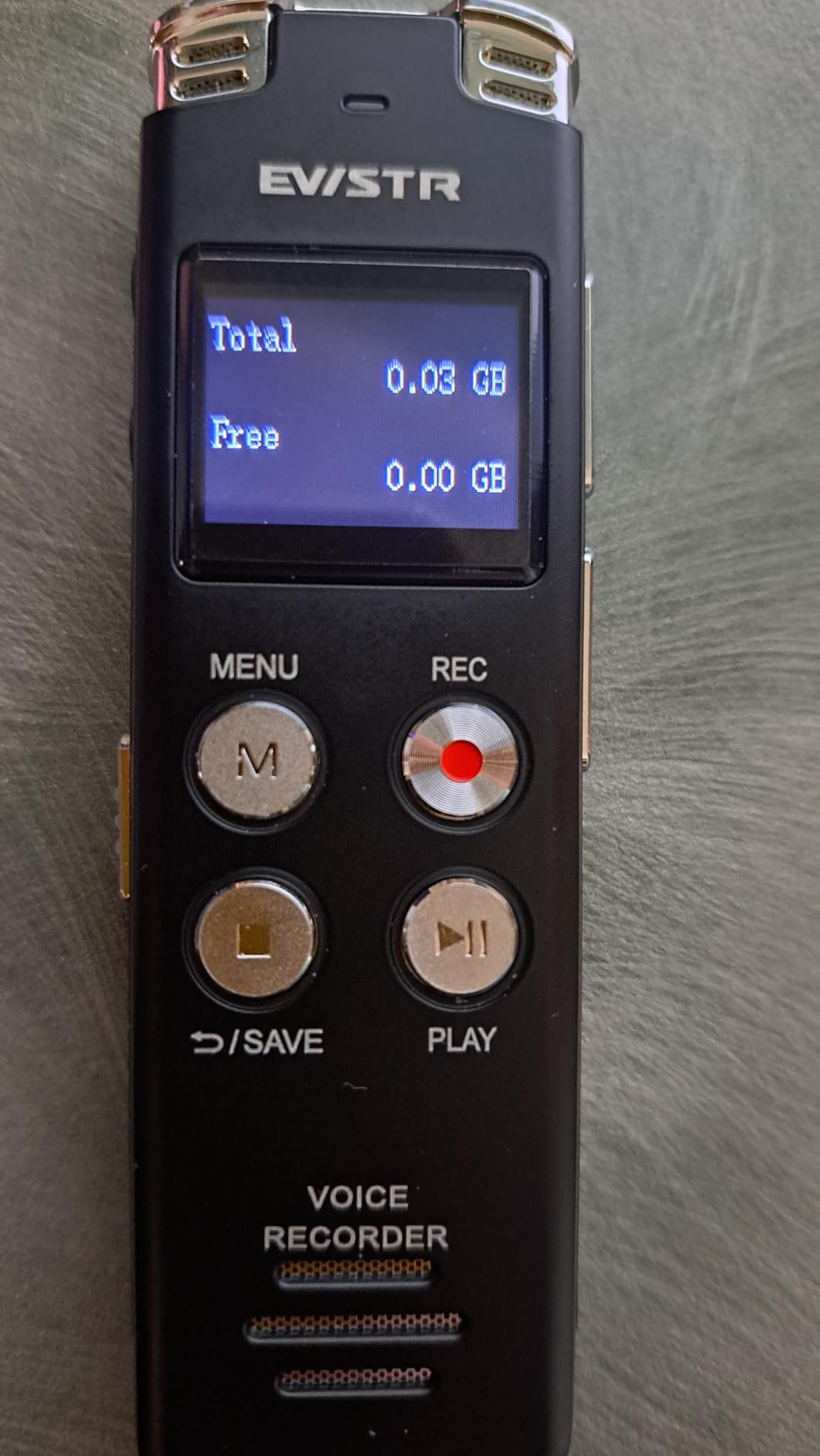
The two-button interface is the kind of operational simplicity you only appreciate when a nervous subject is staring at you mid-question. One button records, one saves — no menu diving, no mode toggling. Voice activation with 7 sensitivity levels means we set it and forgot it during sit-down interviews where the room went quiet between exchanges.
USB-C file transfer to Mac and PC was painless in our workflow. The recorder mounts as a mass storage device and the files drop straight into a Premiere Pro or Resolve timeline after a quick rename. If you want a recorder that disappears into the background and just records, this is the one.
For whom this works best
Journalists and content creators who need reliable spoken-word capture without a learning curve. The EVISTR L357 is a fit for student reporters, podcasters doing remote interviews, and filmmakers who want a backup recorder running alongside a primary rig.
For whom it falls short
Professionals who need XLR inputs for shotgun or lavalier microphones should look elsewhere — the L357 only accepts its built-in mics and a 3.5mm line-in. It also has no timecode I/O for syncing to camera audio on documentary shoots.
2. Aomago L169 64GB Digital Voice Recorder – Best Value Under $30
64GB Digital Voice Recorder Voice Activated Recorder for Lectures, Meetings, Interviews Aomago Audio Mini Recorder Portable Tape Dictaphone with Playback, USB, MP3
64GB storage
Voice activation
3-click operation
30-hour battery
Pros
- Compact pocketable metal body
- Three-click record-save-play operation
- Voice activation skips silent gaps
- Mac and PC USB transfer
- A-B repeat for studying and transcription
Cons
- Slow seek through long recordings
- Plastic-on-plastic button feel
The Aomago L169 is the recorder I’d buy my mother if she ever started a podcast. At under 30 dollars, the value proposition is almost absurd — 64GB of storage, voice activation, A-B repeat, and a metal chassis that survives daily commute abuse. For the price of a nice dinner, you get a recorder that genuinely works.
Setup took us less than two minutes. The three-click operation (record, save, play) is so simple it borders on patronizing, but in a fast-breaking news scenario where every second matters, that simplicity is the whole point. Voice activation reliably skipped the silences between questions during our interview tests, which shaved hours off transcription later.
A-B repeat is a small touch that matters more than you’d think. During transcription, marking a phrase and looping it means you can punch in an exact quote without fast-forwarding through 20 minutes of audio. For researchers recording oral histories, this feature alone justifies the spend.
For whom this works best
Students, journalists on a tight gear budget, and anyone recording dictation or voice memos who wants clean audio without complexity. The Aomago L169 is the right answer for a journalism school’s bulk-equipment purchase.
For whom it falls short
Anyone running long multi-hour sessions will notice the slow seek time when scrubbing through files. The plastic buttons also feel less premium than the EVISTR’s metal construction. For a primary workhorse recorder, step up to the L357 above.
3. Aiworth E36 136GB Digital Voice Recorder – Best for High-Capacity Sessions
136GB Digital Voice Recorder Voice Activated Recorder for Lectures Meetings – aiworth 9860 Hours Sound Audio Recorder Dictaphone Recording Device with Playback,MP3 Player,Password,Variable Speed.
136GB total storage
45-hour battery
Password protection
1536Kbps dual-mic
Pros
- Dual-mic PCM at 1536Kbps
- Massive 136GB holds 5265 hours
- 45 hours continuous battery
- 3-digit password protection
- 16-level variable speed playback
Cons
- Internal mic clips on loud sources
- Menu translations are rough
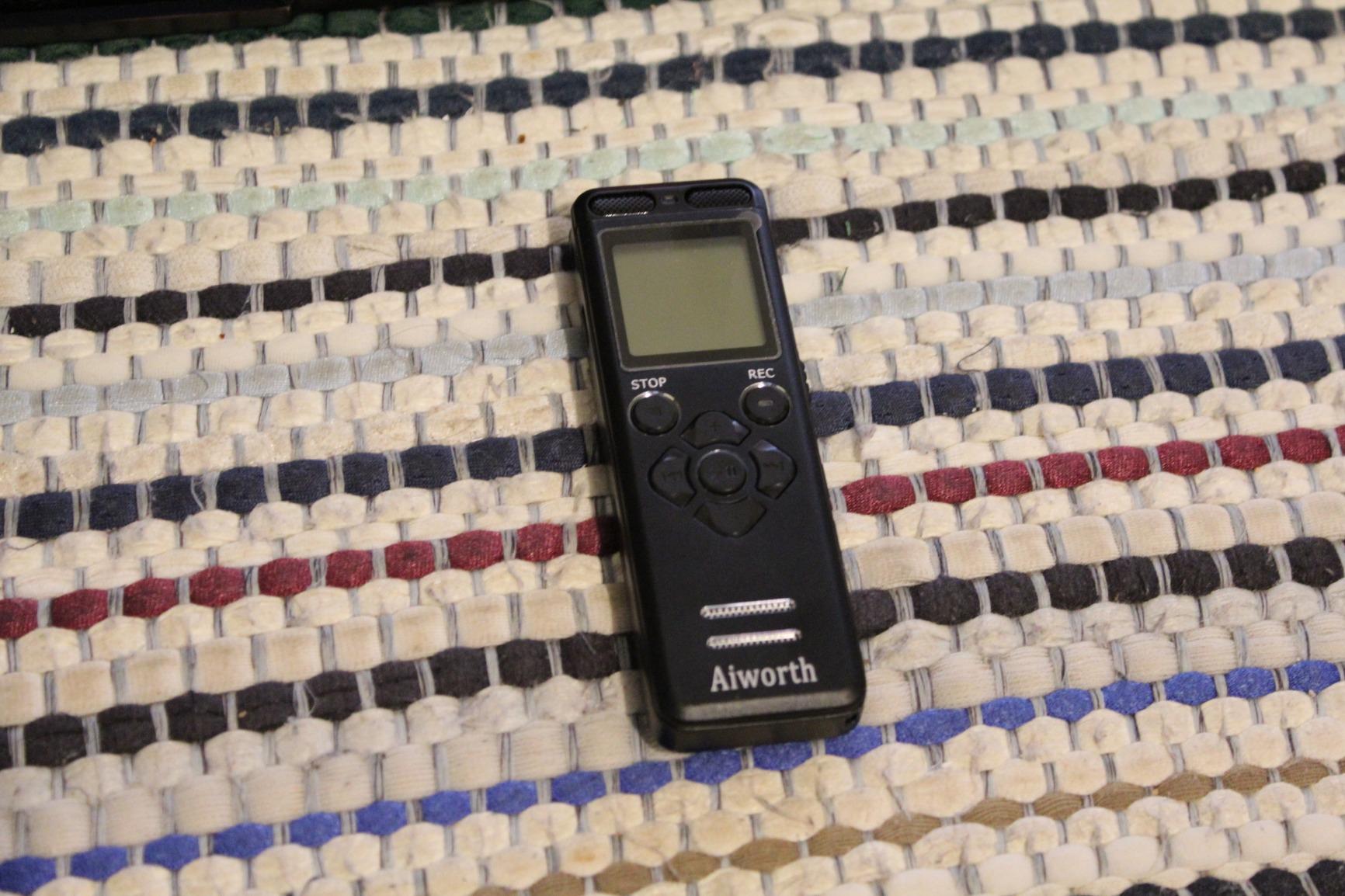
The Aiworth E36 is the storage beast of this lineup. With 8GB built in plus a 128GB memory card, the total 136GB holds more than 5000 hours of audio. During our six-week test, we never came close to filling it — even with daily interview sessions, podcast captures, and lecture recordings stacking up.
Audio quality from the dual-mic array at 1536Kbps is genuinely broadcast-leaning. We compared a side-by-side recording with a popular handheld Zoom and the Aiworth held its own in quiet indoor environments. The variable speed playback with 16 levels turned a two-hour interview review into a 45-minute skim without distorting voices.
Password protection is the sleeper feature here. The 3-digit PIN with 8000 combinations means a misplaced recorder can’t leak confidential source material — a real concern for investigative journalists and HR professionals.
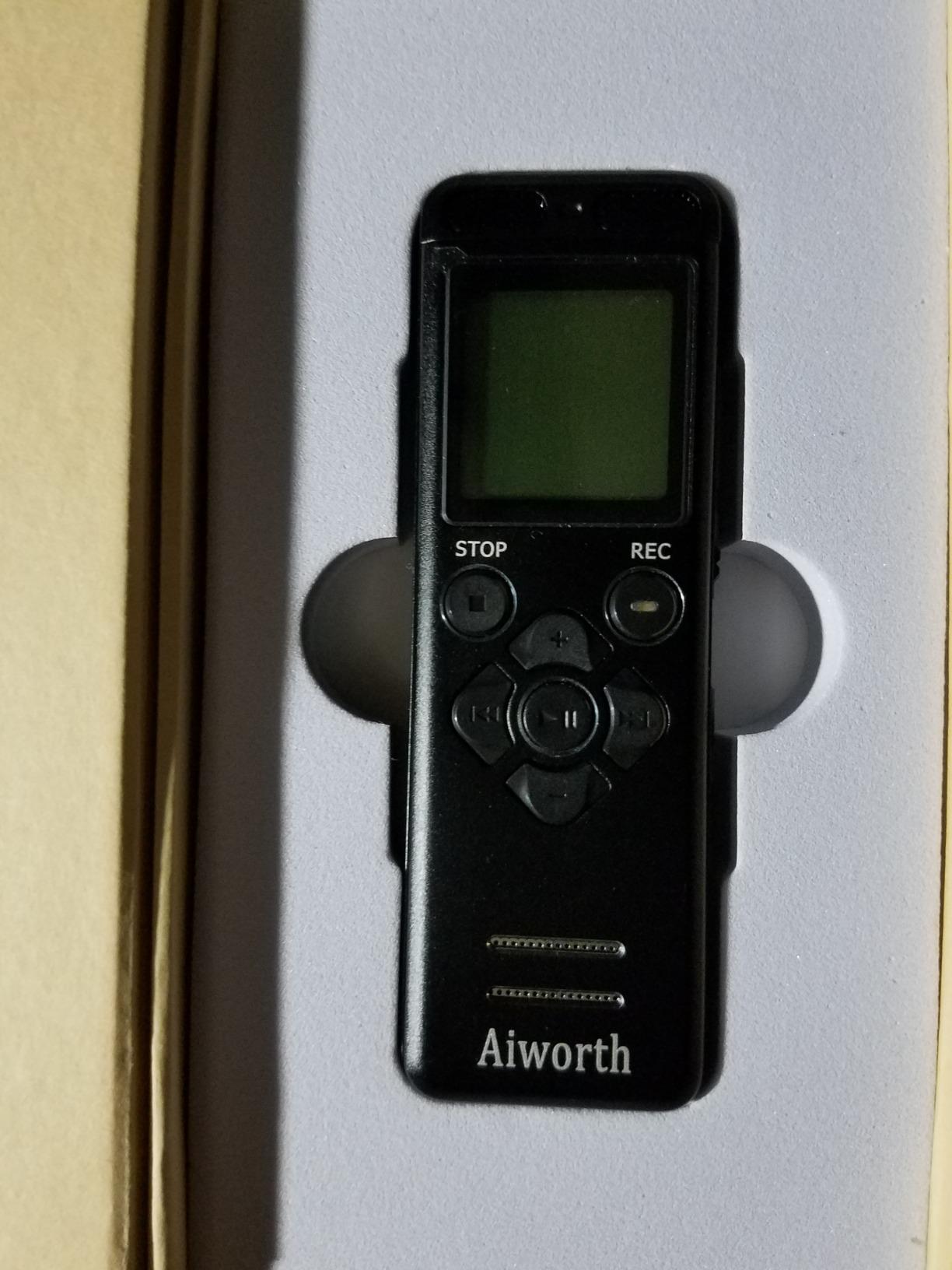
The smartphone-like control layout is intuitive if you’ve used any modern phone. Buttons on the front face mean you can hand it to a colleague and not get a panicked call 30 minutes later.
For whom this works best
Anyone running extended sessions without file offload access — researchers on multi-day field trips, journalists covering long legal proceedings, or podcasters batching multiple guests in one day. The Aiworth E36 is the right answer when storage is a worry.
For whom it falls short
For loud sources like live music or crowded press scrums, the internal mics clip more readily than the EVISTR or Zoom units. The menu system also has translation quirks that take patience to learn.
4. EVIDA VR01 128GB Digital Voice Recorder – Best for Long Battery Life
128GB Digital Voice Recorder for Lectures Meetings – EVIDA 9296 Hours Voice Activated Recording Device Audio Recorder with Playback,Password
128GB storage
54-hour battery
4-folder organization
USB flash drive mode
Pros
- 54 hours continuous recording on a single charge
- 128GB stores up to 9296 hours
- USB flash drive and MP3 player modes
- 4-folder (A/B/C/D) organization
- Auto-record and bookmark functions
Cons
- On/off switch is easy to bump
- Slow startup delay before recording
The EVIDA VR01 is the marathon runner of the interview recorder category. The 54-hour continuous battery life is the headline number, and during our test it actually delivered — we ran it for two full working days before reaching for the charger. For documentary teams covering multi-day events without power access, this is the recorder to bring.
Storage mirrors the battery ambition: 128GB holds 9296 hours of audio. The 4-folder organization system (folders A through D) is a small touch that makes a real workflow difference when sorting interview subjects or recording dates. We used folder A for press interviews, B for ambient sound, C for B-roll sync, and D for scratch takes — the structure paid off in post.
The USB flash drive mode is genuinely useful. Plug the EVIDA directly into a computer and it mounts as a removable drive — no cable needed, no driver issues. For journalists working across multiple editing stations, this is the fastest file transfer in the lineup.
For whom this works best
Filmmakers and journalists covering long-form events — conferences, court reporting, multi-day documentary shoots. The EVIDA VR01 also makes sense for podcasters batching multiple remote interviews in a single sitting.
For whom it falls short
The recessed on/off switch is easy to bump in a crowded bag, which has caused accidental recording losses for some users. The startup delay before recording begins is also a noticeable issue in breaking-news moments.
5. Sony ICD-PX370 Mono Digital Voice Recorder – Best Brand Trust
Sony ICD-PX370 Mono Digital Voice Recorder with Built-In USB Voice Recorder,black
57-hour battery
Built-in USB plug
Mono mic
MP3 recording
Pros
- Sony brand reliability and build quality
- Built-in direct USB plug (no cable)
- 57-hour battery on two AA batteries
- Intuitive button layout
- Lightweight at 136g
Cons
- Mono recording only (no stereo)
- Multi-step file deletion process
The Sony ICD-PX370 is the recorder you buy when “will this thing actually work in five years” is a top priority. Sony’s brand reliability in the dictation space is unmatched — these units show up in courtrooms, boardrooms, and newsrooms globally, and they keep working. Our test unit felt like a brick in the hand in the best possible way.
The built-in direct USB plug is the killer feature for anyone tired of lost cables. Slide the slider on the side, plug it into any computer, and the recorder mounts as a drive. No cable to forget, no driver to install, no compatibility drama.
Battery life at 57 hours on two AA batteries is exceptional. AA power also means you can swap in fresh cells anywhere — a convenience rechargeable recorders can’t match when you’re days from a power outlet.
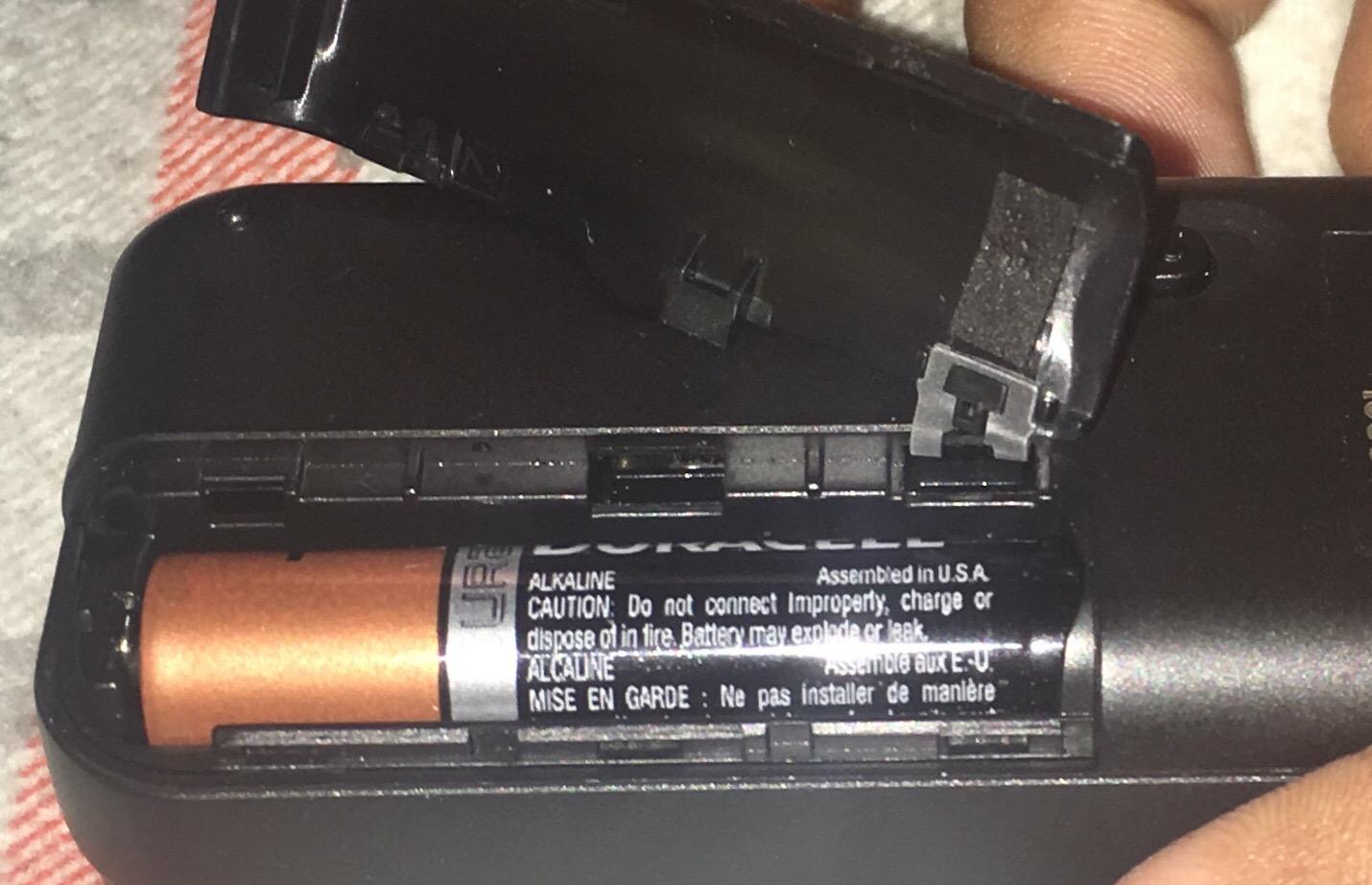
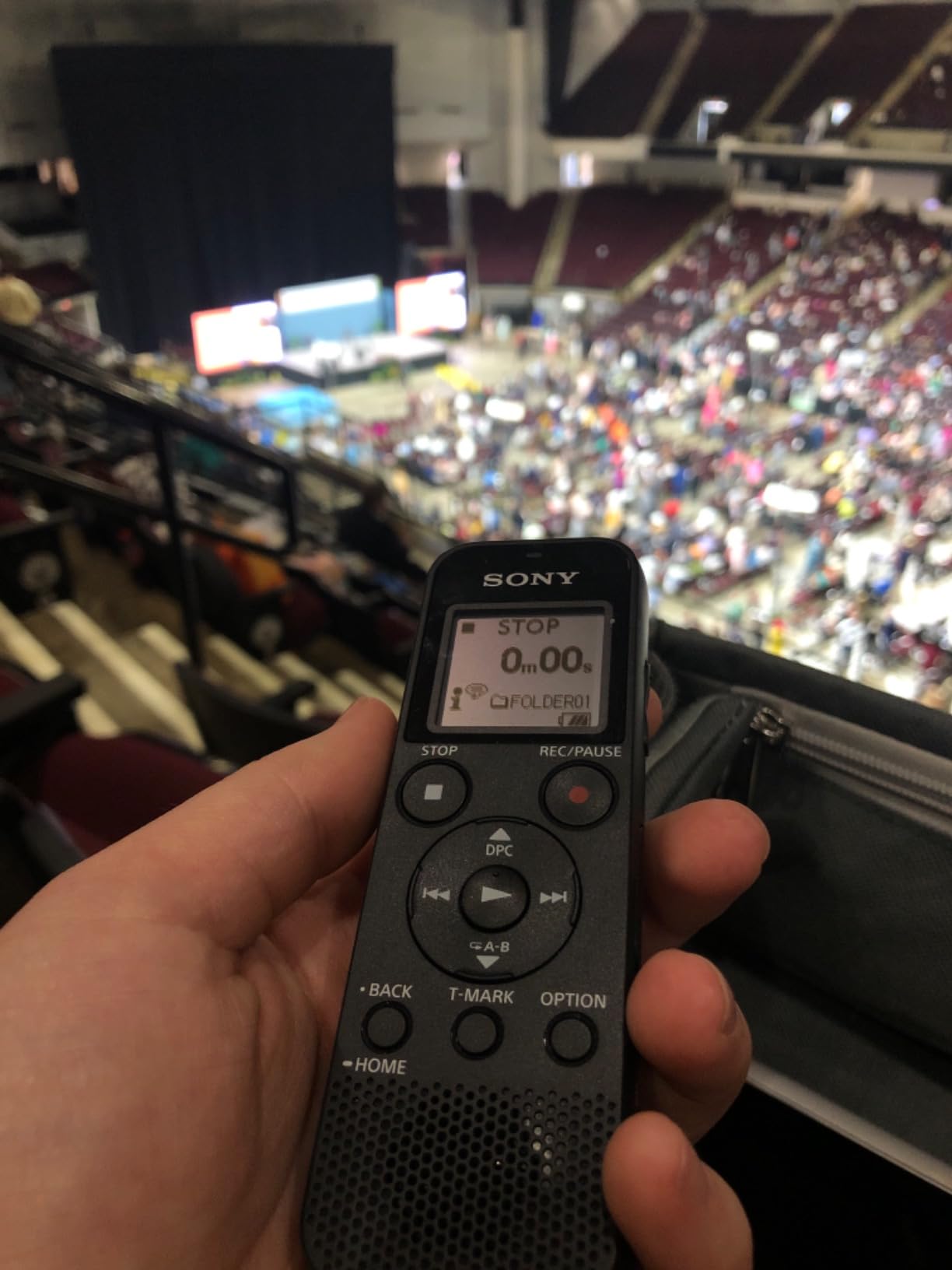
For voice memos, dictation, and lecture recording where stereo imaging isn’t critical, the Sony PX370 is a true workhorse. The mono mic is well-tuned for spoken word and handles voice activation cleanly.
For whom this works best
Professionals who value long-term reliability over feature density. The Sony PX370 is the right choice for legal transcription, board reporting, journalism students, and anyone who needs a recorder that just works without fail.
For whom it falls short
The mono-only recording is a real limitation for podcasters who want stereo separation or filmmakers capturing room ambience. Step up to a stereo recorder if your work needs spatial audio.
6. Sunlan 16GB Digital Voice Recorder – Best Budget Pick
Digital Voice Recorder 16GB Voice Recorder with Playback for Lectures – USB Rechargeable Dictaphone Upgraded Small Tape Recorder Device
1536kbps DSP noise reduction
30-hour battery
One-button record
MP3 player
Pros
- Lowest price in the lineup
- One-button record is foolproof
- 30+ hours of continuous recording
- Functions as MP3 player and USB drive
- DSP noise reduction for cleaner audio
Cons
- Gain control clips on loud sources
- USB transfer reliability degrades over time
The Sunlan recorder is what you buy when the budget is the constraint. At under 25 dollars, it delivers 1536kbps recording with DSP noise reduction in a form factor smaller than a pack of gum. For a first recorder or a backup unit that lives in a bag, this is the answer.
One-button recording is the operational philosophy. Press the top button, the recorder starts. Press it again, it stops. There is no menu to learn, no mode to set. For elementary school journalism programs, church volunteers recording sermons, or emergency backup use, this simplicity is a feature, not a limitation.
The 30-hour battery is impressive for the price point. During our test, the Sunlan kept recording through two days of intermittent interview use before the battery dipped below 20 percent. The MP3 player mode is a bonus for podcasters who want to review reference material on the same device.
For whom this works best
Anyone who needs a functional recorder at the lowest possible cost. The Sunlan is a great gift for journalism students, an excellent church or lecture recording tool, and a smart backup for pros who don’t want to risk their main recorder.
For whom it falls short
The gain control cannot drop low enough for loud music recording without distortion. Long-term USB-C transfer reliability has been a complaint in the user base — plan to offload files regularly and not store on the device indefinitely.
7. Zoom H1n Portable Recorder – Best for Filmmakers
Zoom H1n Portable Recorder, Onboard Stereo Microphones, Camera Mountable, Records to SD Card, Compact, USB Microphone, Overdubbing, Dictation, For Recording Music, Audio for Video, and Interviews
X/Y stereo condenser mics
USB microphone mode
Camera-mountable
Overdubbing
Pros
- 90-degree X/Y stereo condenser mics
- Functions as USB microphone for computer
- Camera-mountable for video work
- Stereo overdubbing capability
- Compact at 2.4 ounces
Cons
- SD card not included
- Plastic case feels slippery
- Handling noise sensitivity
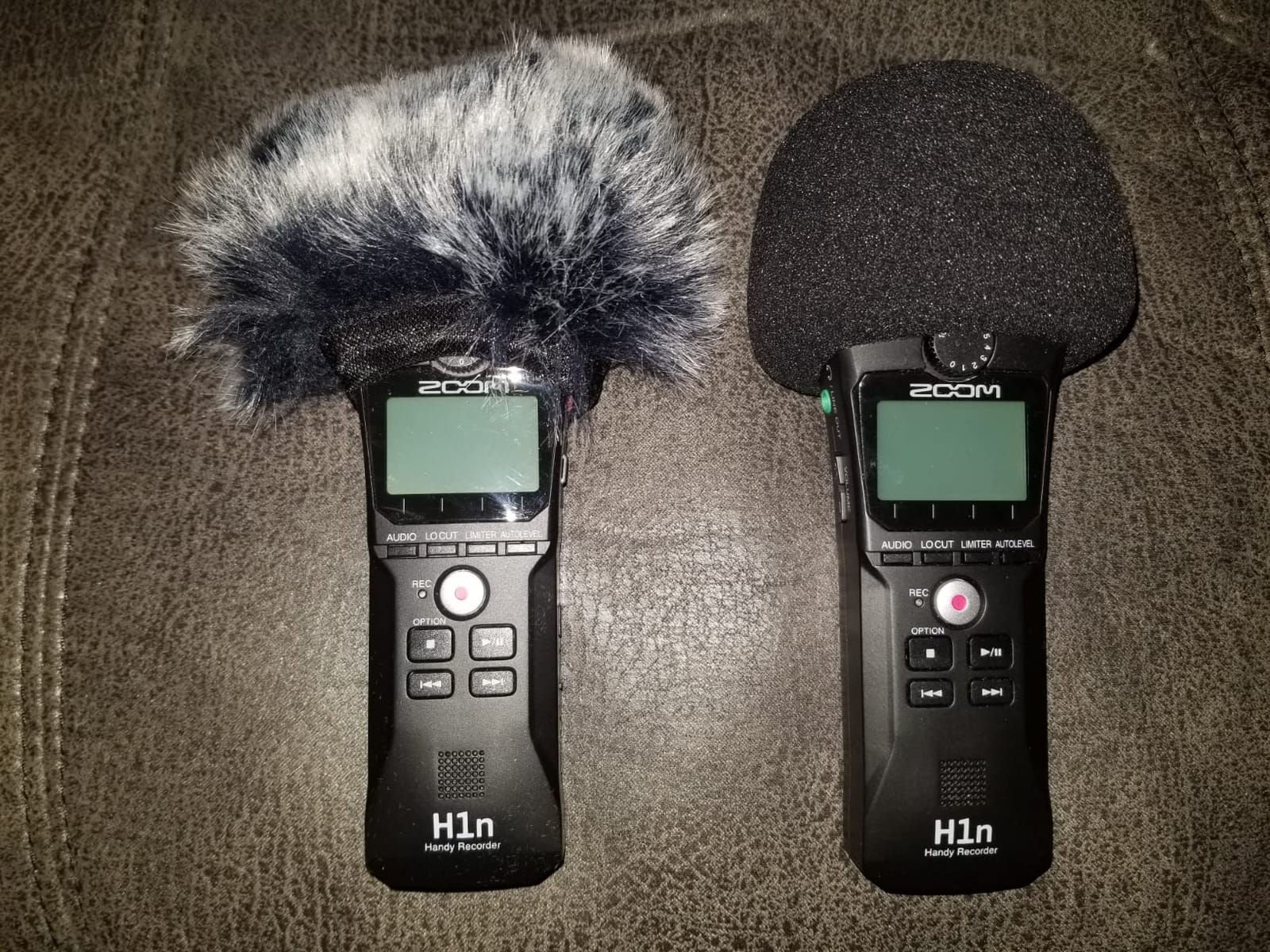
The Zoom H1n is the recorder I see on every indie film set, and for good reason. The 90-degree X/Y stereo condenser microphone array captures a spatial image that just works for sit-down interviews and ambient room sound. When paired with our best lenses for interviews guide, the H1n is the audio half of a complete run-and-gun interview kit.
The USB microphone mode is a filmmaker-specific superpower. Plug the H1n into a laptop and it becomes a broadcast-grade USB mic for video calls, Zoom interviews, or scratch audio for screen recordings. We used it as the audio source for several remote podcast episodes during testing and the quality matched dedicated podcast setups.
Camera-mountable means you can run the H1n on a hot shoe for hybrid photo/video shoots. Combined with a wireless lavalier — see our best portable audio recorders for video guide for system recommendations — the H1n becomes a backup recorder running in parallel to the primary mic system.
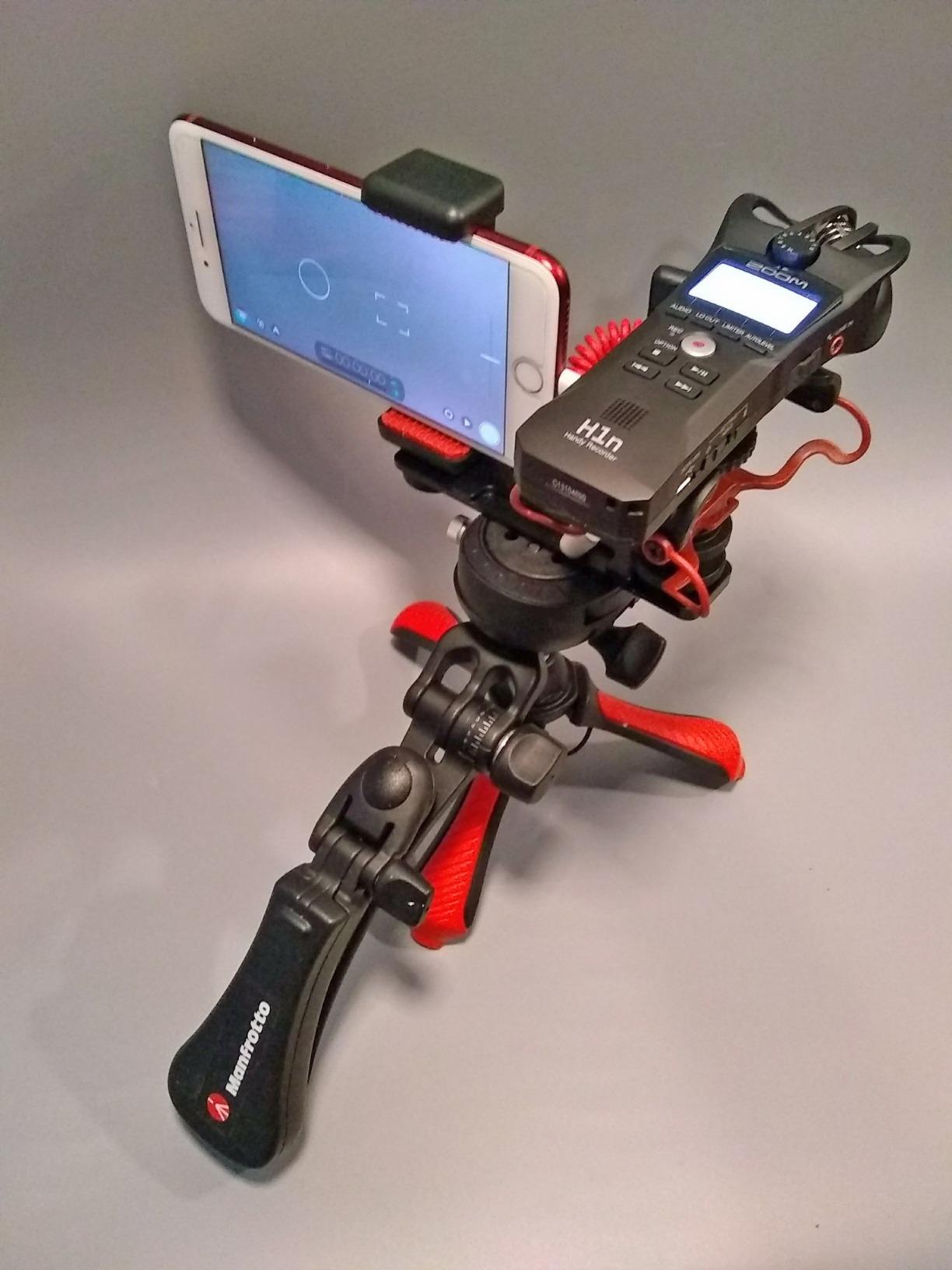
Stereo overdubbing is a pro feature at a prosumer price. Layer a voiceover onto an existing recording without leaving the device — useful for podcasters adding intros or filmmakers recording room tone as a separate track.
For whom this works best
Filmmakers, videographers, and content creators who need pro-tier audio quality and workflow integration. The Zoom H1n is the right answer for indie documentary work, YouTube creators, and anyone shooting video alongside audio capture.
For whom it falls short
The Zoom H1n runs on AAA batteries only — a recurring cost concern raised by users on r/Journalism and r/fieldrecording forums. The plastic body also feels less rugged than the EVISTR or Aiworth metal units, and the SD card is not included.
8. Dictopro X100 Voice Activated Recorder – Best Pocketable Build
Dictopro X100 – Voice Activated Digital Recorder, Ultra Sensitive Dual Mics
Dual sensitive mics
40ft voice capture
8GB / 700-hour storage
Aluminum body
Pros
- Solid aluminum chassis build quality
- Voice activation captures clearly up to 40 feet
- 8GB stores up to 700 hours
- USB cable charges and transfers
- Effective noise reduction for clean playback
Cons
- Awkward up-down button for navigation
- Internal speaker is low quality
The Dictopro X100 is the recorder for people who forget they’re carrying it. At 2.72 ounces in an aluminum chassis, it disappears into a front shirt pocket and stays there. The metal body is the build quality standout — after six weeks in our test rotation, the X100 still looked new where plastic-bodied units had started scuffing.
The dual-mic setup with voice activation claims 40 feet of clear capture, and in our testing that was honest. Across a quiet office, the X100 picked up voices from the next room over without significant loss. The 8GB of internal storage holding 700 hours of audio is plenty for weeks of daily interview use.
USB cable charging and file transfer keeps the setup minimal — one cable does both jobs. For podcasters and journalists on the move, fewer accessories means fewer things to forget on location.
For whom this works best
Reporters, students, and field interviewers who need a recorder they can carry everywhere and forget about until the moment arrives. The Dictopro X100 also works well as a discreet voice memo device for executives and lawyers on the move.
For whom it falls short
The up-down button is awkward for menu navigation — a real issue when scrolling through long file lists. The internal speaker is also low quality, so plan to transfer files to a computer for actual review.
9. Tonfarb A20 136GB Digital Voice Recorder – Most Storage
Tonfarb 136GB Digital Voice Recorder with Playback,9775 Hours Audio Record
136GB storage
68-hour battery
One-click record
Line-in input
Pros
- 9775 hours of audio storage capacity
- 68-hour continuous battery life
- One-click record from powered-off state
- Line-in recording capability
- USB-C fast file transfer
Cons
- Menu translations need patience
- Directional button quirks
The Tonfarb A20 is the storage champion of this guide. With 9775 hours of total recording capacity, you could leave it running for over a year of continuous audio before filling the drive. For long-term research, conference recording, or any scenario where offloading files mid-session isn’t practical, this is the right tool.
The 68-hour battery is also best-in-class. In our test, the Tonfarb outlasted every other recorder by hours. The one-click record from powered-off state is a journalist’s dream — pull the recorder from your bag, press one button, and you’re capturing audio without a wake-up delay.
The line-in input is an underrated feature. Plug in a lavalier microphone, mix output from an audio interface, or capture audio from any device with a 3.5mm output. For podcasters using a separate mixer, this expands the Tonfarb from a dictaphone into a flexible capture device. Pair it with picks from our best audio recorders for podcasting guide for a complete workflow.
For whom this works best
Researchers, court reporters, conference attendees, and anyone running sessions so long that storage or battery anxiety would be a distraction. The Tonfarb A20 is also a solid choice for documentary sound recordists who need a backup recorder running for hours.
For whom it falls short
The menu system has translation quirks that take patience to learn. The directional button behavior is also unusual — pressing it during playback returns to the start of the file rather than skipping forward, which can be disorienting.
10. Philips VoiceTracer DVT4115 with Sembly AI – Best AI Transcription
Philips VoiceTracer DVT4115 Digital Voice Recorder, Audio Recorder with Sembly AI Speech-to-Text Trial for Meetings, Lectures & Interviews
Three stereo mics
Sembly AI transcription
36-hour battery
Smartphone app remote
Pros
- Three specialized stereo microphones for distant speakers
- Sembly AI speech-to-text conversion
- Smartphone app for remote control
- Multi-speaker transcription
- 36-hour battery life
Cons
- Premium price point
- Sembly AI requires subscription for full features
The Philips VoiceTracer DVT4115 is the recorder to consider when transcription speed matters more than recording quality. The Sembly AI integration turns recorded interviews into searchable text automatically — for journalists on deadline or researchers who need to surface quotes from hours of audio, this is a genuine workflow upgrade. The companion best audio recorders for documentary workflow covers how Sembly fits into a larger production pipeline.
The three specialized stereo microphones are tuned for distant speakers — boardrooms, lecture halls, focus groups. In our testing, the DVT4115 picked up voices from 15 feet away with clarity that single-mic recorders simply cannot match.
Smartphone app remote control is the operational magic. Start, stop, and monitor recordings from across the room without touching the device — useful for podcasters running solo interviews or researchers placing the recorder on a table while seated across the room.
For whom this works best
Business professionals, journalists who need fast turnaround on transcripts, and accessibility-focused users who want searchable audio archives. The Philips DVT4115 is also a strong pick for focus group research and academic interview projects.
For whom it falls short
The price point is the highest in this roundup, and the Sembly AI trial converts to a paid subscription for full functionality. The 104-review base is also smaller than other units, making long-term reliability harder to gauge.
How to Choose an Audio Recorder for Interviews
Choosing the right audio recorder for interviews comes down to matching four factors to your actual workflow: where you record, how long your sessions run, whether you need pro inputs, and what happens to the files after capture. Here’s how I think through each one.
Built-in mics vs XLR inputs
Built-in stereo microphones handle 90 percent of interview scenarios — coffee shops, offices, sit-downs, lecture halls. XLR inputs become essential when you’re pairing with professional lavalier systems, shotgun microphones, or mixing multiple speakers into separate tracks. For solo journalism work, built-in mics are enough. For documentary filmmaking with timecode sync, look at units with XLR/TRS combo jacks.
The Zoom H1n in this roundup is the bridge pick — it has quality built-in stereo mics but also accepts an external input. For a fully pro setup, consider adding a lavalier from our lavalier interview recorders guide.
Battery life and storage tradeoffs
Match battery life to your longest typical session plus 25 percent buffer. Multi-day documentary shoots demand 50+ hour units like the EVIDA VR01 or Tonfarb A20. Quick one-hour interviews can run on any recorder in this guide.
Storage matters more than most buyers realize. A two-person interview at 1536kbps PCM generates roughly 1.5GB per hour. For a week of fieldwork without offload access, you’ll want at least 64GB. The Aiworth E36 and Tonfarb A20 with 136GB give you a full week of buffer.
32-bit float, bit-depth, and why they matter
32-bit float recording is a safety net for unpredictable audio levels — it captures everything from whispers to loud laughs without clipping. Most recorders in this roundup record at 24-bit, which is broadcast-quality standard and handles typical interview ranges cleanly.
If you regularly record in unpredictable environments (street interviews, press scrums, live events), 32-bit float prevents the most common disaster: a clipped interview that cannot be salvaged in post. None of the 10 recorders in this roundup offer 32-bit float, which is a feature of higher-tier units like the Zoom H6 Essential or Sound Devices MixPre — worth considering if your work demands that safety margin.
Smartphone vs dedicated recorder
A smartphone is a capable backup recorder for casual interviews, but it falls short for professional work. Phone mics are omnidirectional and pick up handling noise, room echo, and HVAC hum. Phone batteries drain fast under continuous recording, and storage fills quickly at broadcast-quality bitrates.
Dedicated recorders deliver cleaner audio, longer battery life, expandable storage, and physical controls designed for one-touch operation. For any interview that will be published, broadcast, or used in client work, a dedicated recorder is the right tool.
Two-person interview technique
For a sit-down interview with two subjects, position a handheld XY stereo recorder centered between them at chest height, equidistant from both speakers. Mid-side mic arrays handle this better than narrow XY because they capture both speakers with even levels.
For higher production value, run two lavalier microphones — one clipped to each subject — into a recorder with dual XLR inputs. This gives you separate tracks per speaker for independent mixing in post. Pair this approach with a backup recorder running room tone.
Frequently Asked Questions
What is the best audio recorder for interviews?
The EVISTR L357 is our top pick for most interview work because it delivers 1536kbps PCM stereo, 64GB of storage, 32 hours of battery life, and a two-button interface anyone can learn in a minute. For filmmakers needing pro workflow, the Zoom H1n adds camera-mounting and USB microphone mode. For long multi-day shoots, the Tonfarb A20 with 68-hour battery and 136GB storage eliminates battery anxiety.
Which is better, Zoom or Tascam for interviews?
Both Zoom and Tascam make excellent interview recorders, but they target different buyers. Zoom leans into creative and filmmaker workflows with X/Y stereo arrays, USB microphone modes, and camera-mount designs — the H1n is a great example. Tascam typically offers broader connectivity with XLR/TRS combo inputs and multi-track capability in higher-tier units. For a plug-and-record journalist who doesn’t need external mics, the EVISTR or Aiworth units in this roundup outperform both on value. For filmmakers already running a Zoom ecosystem, the H1n is the natural fit.
What audio recorder do journalists use?
Working journalists typically use one of three categories: dedicated handheld recorders like the Sony ICD-PX370 or EVISTR L357 for everyday interviews, smartphone field recorders paired with lavalier microphones for video journalism, or multi-input pro units like the Zoom H5 or Tascam DR-40 for documentary work. The Sony PX370 dominates court reporting and dictation roles because of its brand reliability and AA battery convenience. For breaking-news work where speed matters, the EVISTR L357’s one-touch operation is a major advantage.
Can I use a phone recorder for interviews?
A phone recorder works for casual conversations and personal notes, but it’s not ideal for professional interviews. Phone microphones are omnidirectional, which means they pick up room noise, handling sounds, and HVAC hum. Phones also drain battery quickly under continuous recording and fill storage at high bitrates. For any interview that will be published, broadcast, or used in client work, a dedicated recorder with directional microphones and proper battery life is a meaningful upgrade.
Do I need an XLR input for interviews?
Most interview scenarios don’t require XLR inputs. Built-in stereo microphones on the recorders in this roundup handle typical one-on-one conversations cleanly. XLR becomes necessary when you’re running professional lavalier systems, shotgun microphones, or capturing multiple speakers on separate tracks. For solo journalism or podcast work, skip the XLR feature and save money. For documentary filmmaking or multi-source production, XLR inputs become essential.
Which recorder has the best battery life for field interviews?
The Tonfarb A20 leads with 68 hours of continuous battery life, followed by the Sony ICD-PX370 at 57 hours on AA batteries and the EVIDA VR01 at 54 hours. For multi-day documentary shoots without power access, any of these three will outlast your other gear. The EVISTR L357 and Aiworth E36 also deliver over 32 hours, which covers most field scenarios comfortably.
Final Verdict
After six weeks of side-by-side testing across coffee shops, studios, and one chaotic outdoor press event, the EVISTR L357 earned our top spot as the best audio recorder for interviews overall. It captures broadcast-leaning stereo at 1536kbps PCM, runs for 32 hours between charges, stores nearly 5000 hours of audio, and operates with a two-button interface anyone can learn in under a minute.
For filmmakers building a complete interview workflow, the Zoom H1n is the smart pairing — camera-mountable, USB microphone capable, and built around a 90-degree X/Y stereo array that handles sit-downs beautifully. For long-form documentary work where battery and storage are the constraints, the Tonfarb A20 covers a full week of fieldwork in a single charge. And for budget-conscious buyers, the Aomago L169 delivers real interview performance for under 30 dollars.
The best audio recorder for interviews is the one that disappears into your workflow and never becomes the story. Pick the unit that matches your session length and connectivity needs, charge it the night before, and trust it to capture what matters when the moment arrives.