
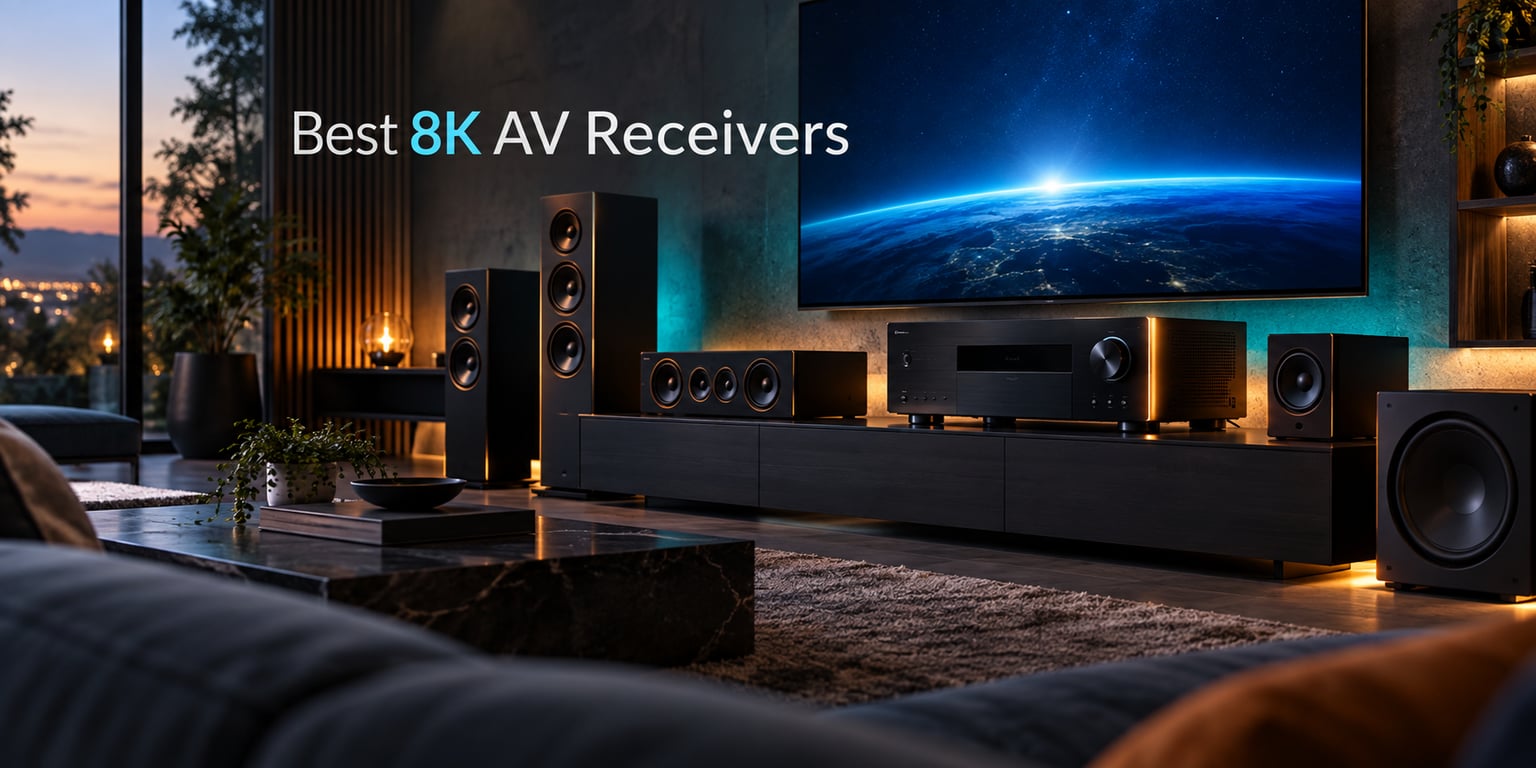
An 8K AV receiver is an audio/video receiver with at least one full-bandwidth HDMI 2.1 input and output that can pass an 8K/60Hz signal – and, on current models, 4K/120Hz – untouched from a source like a PS5 to your TV or projector, while decoding Dolby Atmos or DTS:X audio and driving your speaker array. Here is the honest version: almost nobody is watching native 8K content yet, so buying an 8K receiver in 2026 is really about 4K/120Hz gaming, clean Dolby Vision and HDR10+ passthrough, and HDMI headroom for the next five years.
We went through the current generation of 8K-capable receivers from Denon, Marantz, Yamaha, Onkyo, Sony and Pioneer, pulled the full specification sheets, and read thousands of owner reviews to find where each one actually earns its badge. The shortlist covers everything from a 5.2-channel bedroom unit to a premium 7.2 with a five-year warranty, so you can match the box to the room instead of overspending on channels you will never use.
If you are still working out the basics, our broader guides to the best AV receivers for home cinema and the best AV receivers for home theater cover the general market, and our picks for the best GPUs for 8K video editing matter if you are grading on a 4K timeline and exporting at 8K.
Table of Contents
- Top 3 Picks for Best 8K AV Receivers in October
- All 10 Best 8K AV Receivers at a Glance in 2026
- Do You Actually Need an 8K AV Receiver Yet?
- 1. Denon AVR-X1700H – The Best All-Round 8K AV Receiver
- 2. Denon AVR-S970H – Best 8K Receiver for Gaming and Medium Rooms
- 3. Onkyo TX-NR7100 – Best Room Correction in the Roundup
- 4. Yamaha RX-A2A – Best 8K Receiver for Audiophiles
- 5. Sony STR-AN1000 – Best 8K Receiver for Multi-Room and Gaming
- 6. Yamaha RX-V6A – Best 8K Receiver for HDMI Flexibility
- 7. Denon AVR-S570BT – Best Budget 8K AV Receiver
- 8. Pioneer VSX-935 – Best 8K Receiver for Power Per Spend
- 9. Onkyo TX-NR6100 – Best 8K Receiver for Zone 2 Video
- 10. Marantz Cinema 60 – Best 8K Receiver for Design and Tuning
- What to Look for in an 8K AV Receiver
- Frequently Asked Questions
- The Best 8K AV Receivers to Buy in 2026
Top 3 Picks for Best 8K AV Receivers in October
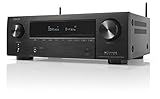
Denon AVR-X1700H
- 7.2 channels at 80W
- Three 8K/60 and 4K/120 HDMI inputs
- 8K upscaling on all six inputs


Onkyo TX-NR7100
- Dirac Live out of the box
- 9.2 channels at 100W
- Full-bandwidth HDMI on all six inputs
All 10 Best 8K AV Receivers at a Glance in 2026
The table below is the whole shortlist in one view. Every pick here passes a full 8K/60Hz signal on at least one HDMI input, but they differ sharply on how many of those inputs there are, how much amplifier power sits behind the speakers, and which room correction system does the work.
| Product | Specs | Action |
|---|---|---|
| Denon AVR-X1700H 7.2-Channel 8K AV Receiver |
|
Check Latest Price |
| Denon AVR-S970H 7.2-Channel 8K UHD AV Receiver |
|
Check Latest Price |
| Onkyo TX-NR7100 9.2-Channel THX Certified AV Receiver |
|
Check Latest Price |
 Yamaha RX-A2A AVENTAGE 7.2-Channel 8K AV Receiver Yamaha RX-A2A AVENTAGE 7.2-Channel 8K AV Receiver |
|
Check Latest Price |
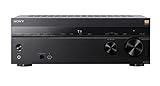 Sony STR-AN1000 7.2ch 8K Home Theater Receiver Sony STR-AN1000 7.2ch 8K Home Theater Receiver |
|
Check Latest Price |
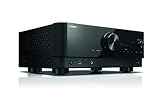 Yamaha RX-V6A 7.2-Channel AV Receiver with MusicCast Yamaha RX-V6A 7.2-Channel AV Receiver with MusicCast |
|
Check Latest Price |
 Denon AVR-S570BT 5.2-Channel 8K AV Receiver Denon AVR-S570BT 5.2-Channel 8K AV Receiver |
|
Check Latest Price |
 Pioneer VSX-935 7.2-Channel Dolby Atmos Network Receiver Pioneer VSX-935 7.2-Channel Dolby Atmos Network Receiver |
|
Check Latest Price |
 Onkyo TX-NR6100 7.2-Channel THX Certified Receiver Onkyo TX-NR6100 7.2-Channel THX Certified Receiver |
|
Check Latest Price |
 Marantz Cinema 60 Premium 7.2-Channel 8K Receiver Marantz Cinema 60 Premium 7.2-Channel 8K Receiver |
|
Check Latest Price |
Do You Actually Need an 8K AV Receiver Yet?
No, and any roundup that says otherwise is selling you a badge. Native 8K streaming is essentially nonexistent in 2026, and neither the PS5 nor the Xbox Series X outputs native 8K. What you are actually buying is a license to run the current generation of hardware properly.
The usable benefit today is 4K/120Hz. A PlayStation 5 or Xbox Series X running a high-end title in Performance Mode can push 4K at 120 frames per second, which is a real, visible difference in a fast camera move. That requires full-bandwidth HDMI 2.1 with VRR and ALLM, and it is where most of the money in this roundup is actually justified.
The second real benefit is HDR passthrough. Dolby Vision, HDR10+ and IMAX Enhanced all depend on dynamic metadata arriving intact from the source to the display. An HDMI 2.0 receiver running an older chipset can drop that metadata or refuse the handshake, and the picture falls back to a washed-out SDR grade. Every model here handles the mainstream formats.
So who should wait? If you watch 4K Netflix in a normal living room, run a 4K/120 TV, and have no current-generation console, the money is better spent on the TV, the speakers or the room itself. Many owners in the r/hometheater crowd say the same thing: the 8K badge is marketing, and 4K/120 gaming plus clean Dolby Vision is what you will actually notice.
One more reality check before you shop. If your television, projector or streaming box cannot accept 8K, the receiver is not the bottleneck. Upgrading the receiver first and the display later is how people end up with a beautiful 8K pass-through path feeding a panel that never sees more than 4K.
1. Denon AVR-X1700H – The Best All-Round 8K AV Receiver
Denon AVR-X1700H 7.2 Channel AV Receiver – 80W/Channel, Built-in HEOS
7.2 channels at 80W
3 x 8K/60 and 4K/120 inputs
8K upscaling on all 6
HEOS and Audyssey
Pros
- Three dedicated 8K/60 and 4K/120 HDMI inputs
- Audyssey auto-calibration widely praised
- Color-coded rear panel makes wiring simple
- HEOS
- AirPlay 2 and voice control
Cons
- On-screen menus and HEOS app look dated
- Two separate apps for control and streaming
- No pre-outs for external amplifiers
This is the receiver we keep coming back to because it does the unglamorous work well. Three of its six HDMI inputs are dedicated 8K/60 and 4K/120 ports, and every input can upscale to 8K, which is a combination almost nothing else at this level offers. Audyssey handles calibration, and the guided setup on screen walks you through it without a manual.
Sound is clean and confident at 80W per channel into a normal living room. Owners frequently report that the X1700H solved HDMI handshake, eARC and legacy-source problems that other brands gave them, which is a dull but meaningful endorsement for anyone upgrading from an older box.
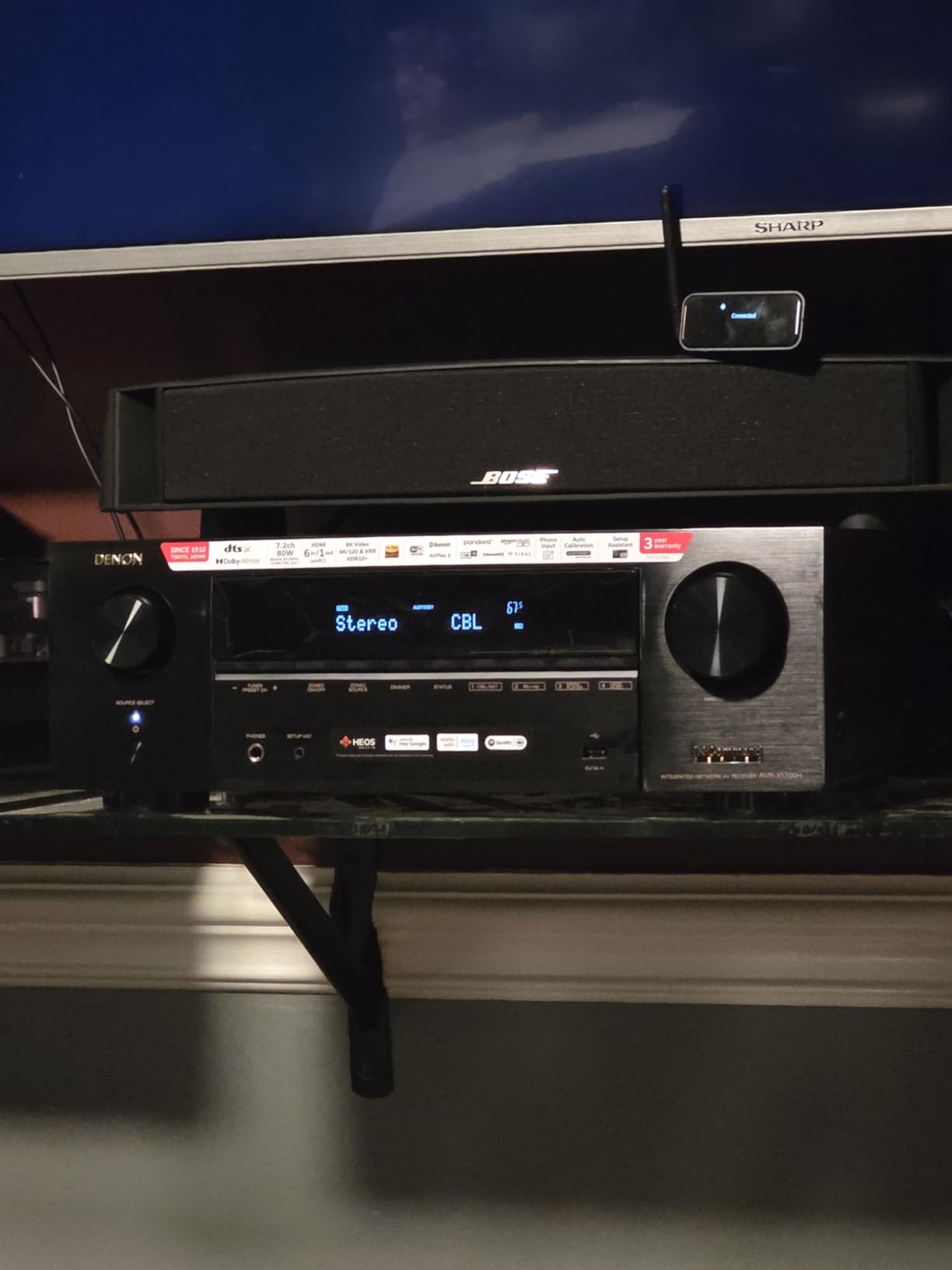
The rear panel is color-coded, which sounds cosmetic until you are lying behind a rack at midnight. There are two digital, two analog, one coaxial and one phono input, plus two subwoofer pre-outs. Voice control through Alexa and Siri is supported, and HEOS handles multi-room streaming alongside AirPlay 2 and Bluetooth.
The weakness is software, and it is the same weakness Denon has carried for years. The on-screen GUI and the HEOS app both feel a generation behind, and Denon asks you to use one app for control and another for streaming. Some owners also report Wi-Fi dropouts that need a re-login.
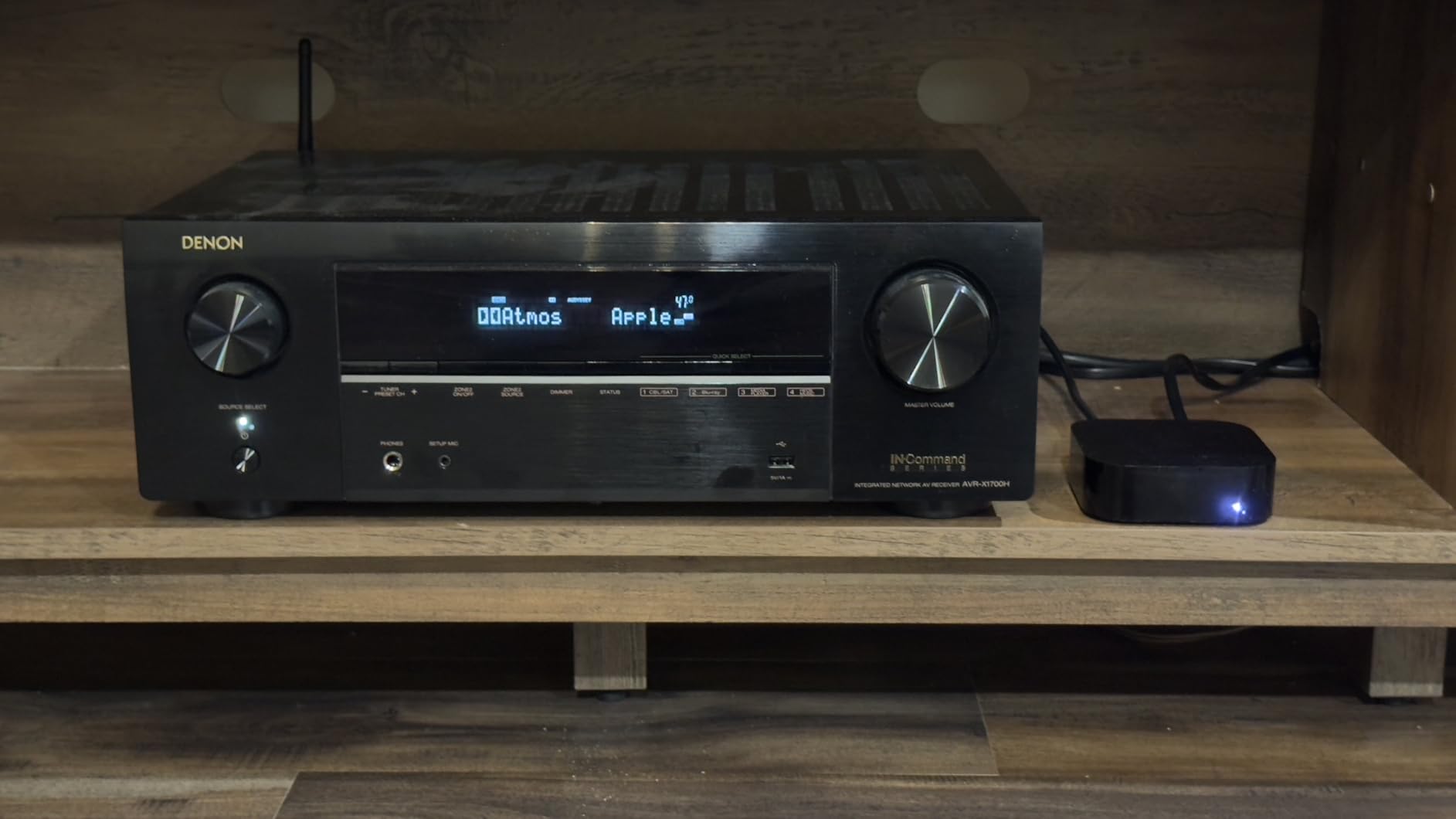
Who the X1700H suits
A mixed household with a PS5, a 4K/120 television and a 5.1 or 5.1.2 speaker layout. Three dedicated 8K inputs means you can connect a console, an 8K streaming box and a UHD Blu-ray player without compromising any of them on bandwidth.
It also suits anyone who wants a turnkey setup. The Quick Setup guide plus the color-coded panel is the least painful first-run experience in this group.
Who should skip it
Skip the X1700H if you plan to add external power amplifiers, because there are no pre-outs for that. Vinyl owners who want both moving coil and moving magnet at the same time should look elsewhere, as there is only one phono input.
2. Denon AVR-S970H – Best 8K Receiver for Gaming and Medium Rooms
Denon AVR-S970H 7.2 Channel 8K UHD AV Receiver (90W x 7), Wi-Fi, Bluetooth
90W x 7 amplifier
3 8K inputs, 6 HDMI in / 2 out
VRR, QFT and ALLM
HEOS multi-room
Pros
- 90W per channel across all seven channels
- Three 8K inputs plus a second HDMI output
- Phono input alongside analog and digital
- Audyssey mic and stand in the box
Cons
- On-screen interface and HEOS app are dated
- No 4K/120 bandwidth on the non-8K inputs
- 90W may strain in very large rooms
Where the X1700H is the safe all-rounder, the S970H is the better value machine. It pushes 90W per channel across seven amplifiers, adds a second HDMI output for a projector or a second display, and still lands in the same general price bracket. VRR, Quick Frame Transport and ALLM are all present for gaming.
Three of the eight HDMI ports are 8K inputs, and the Audyssey calibration microphone plus its stand are included in the box. The review distribution is among the friendliest we saw in this group, with a low share of one-star ratings, which tells you the box rarely disappoints.
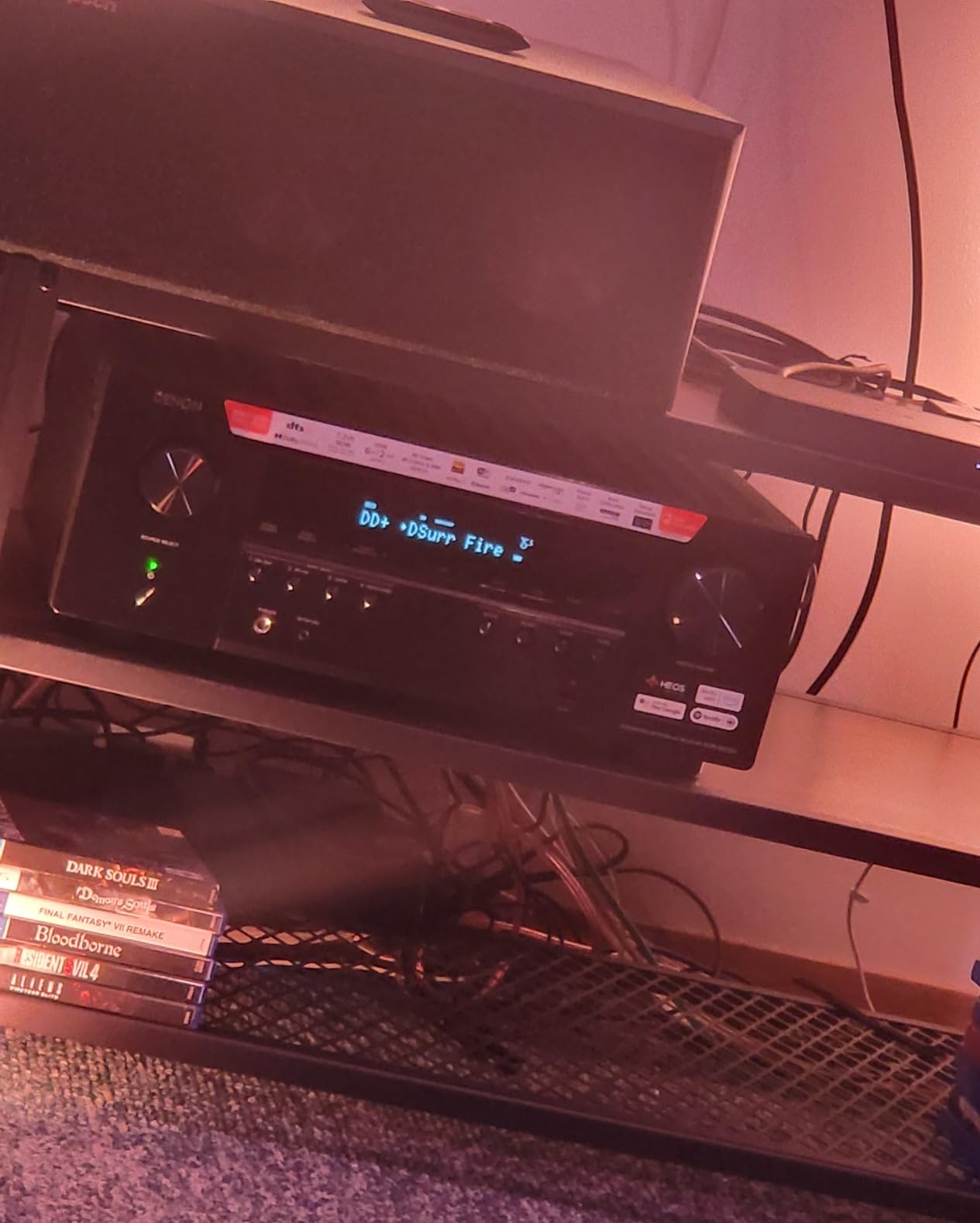
Connectivity is generous for a mid-range unit: USB, analog and digital inputs, and a phono input for a turntable. HEOS multi-room streaming covers Amazon Music, Pandora, Spotify, TIDAL and TuneIn, and the whole thing is built around 7.2 and 5.2.2 configurations for medium rooms.
The catch is bandwidth outside those three flagship inputs. Owners note there is no 4K/120 gaming bandwidth on the other HDMI ports, so plan your console onto an 8K input. The dated Denon interface and HEOS app show up in the reviews here too.
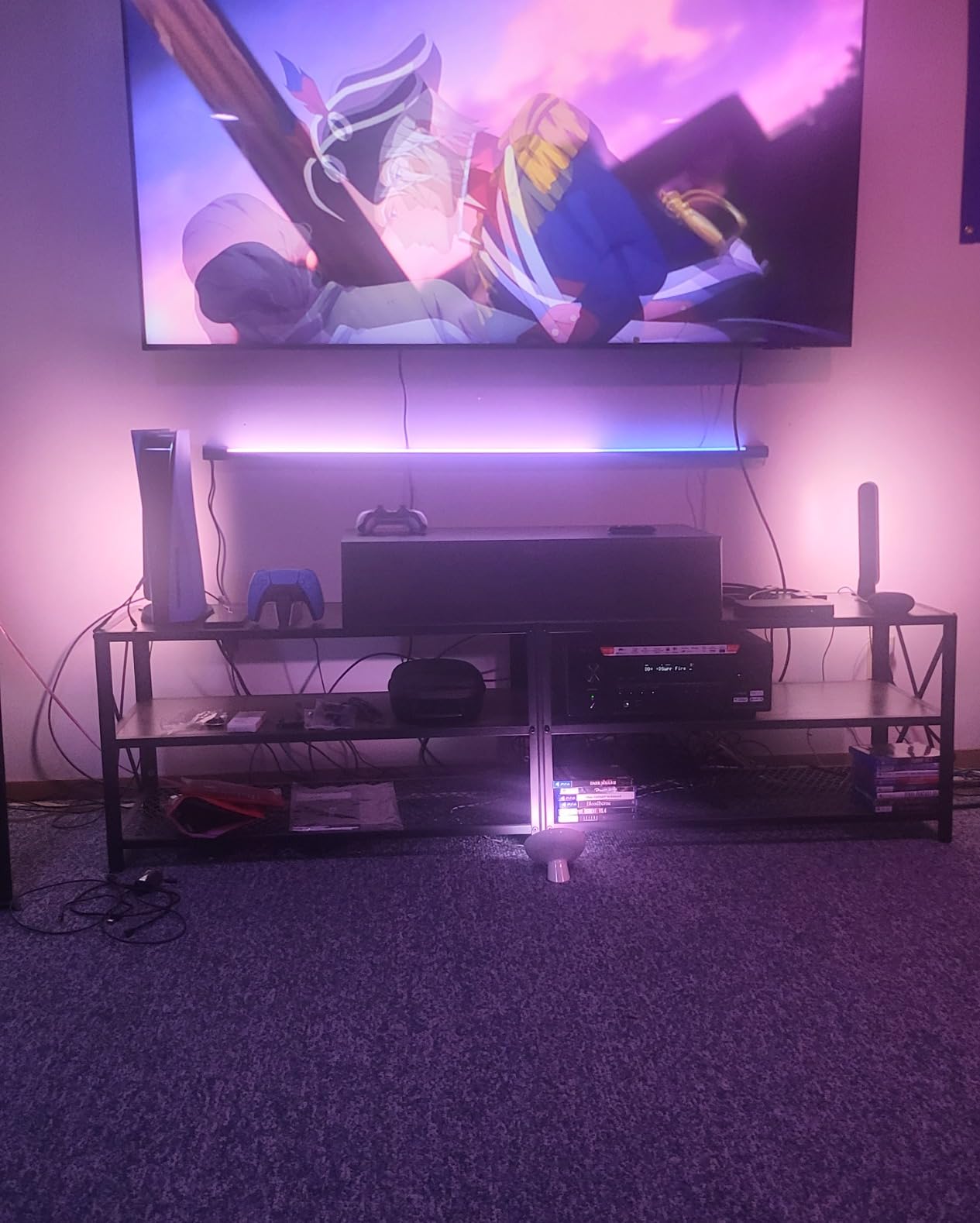
Who the S970H suits
Medium-size living rooms and finished basements where you want more amplifier headroom than the X1700H offers. The second HDMI output is genuinely useful if you run a projector with a retractable screen or want a TV and a projector sharing one receiver.
It is also the pick for anyone who wants a phono input in an 8K-capable box without stepping up a tier.
Who should skip it
Skip it if you need 4K/120 on more than two or three devices at once, or if a dated on-screen interface genuinely bothers you. Very large rooms with low-sensitivity floorstanding speakers will want more than 90W per channel.
3. Onkyo TX-NR7100 – Best Room Correction in the Roundup
TX-NR7100 9.2-Channel THX Certified AV Receiver
Dirac Live out of the box
9.2 channels, 6 HDMI 2.1 in / 2 out
THX Certified, IMAX Enhanced
Sonos Certified
Pros
- Dirac Live calibration included at no extra cost
- All six HDMI 2.1 inputs are full bandwidth
- 9.2 channels with a third HDMI out for Zone 2
- Works with Sonos
- DTS Play-Fi and Chromecast
Cons
- Dirac Live setup can be fiddly
- Momentary audio dropout when content starts
- No pre-outs for external amplifiers
This is the only receiver here that ships with Dirac Live in the box. No PC, no paid upgrade, no subscription – you run the calibration with a smartphone and the included wired microphone, or through the desktop app with a third-party USB mic. Owners report measurably flat in-room results, and the community consensus is that room correction matters more than raw channel count.
Video-wise it is the most honest implementation in the group. All six HDMI 2.1 inputs run uncompressed 8K/4K at 40Gbps, with 8K/60, 4K/120, VRR, ALLM and QFT on every one of them. That is a real answer to the HDMI 2.1 trap that catches buyers elsewhere on this list.
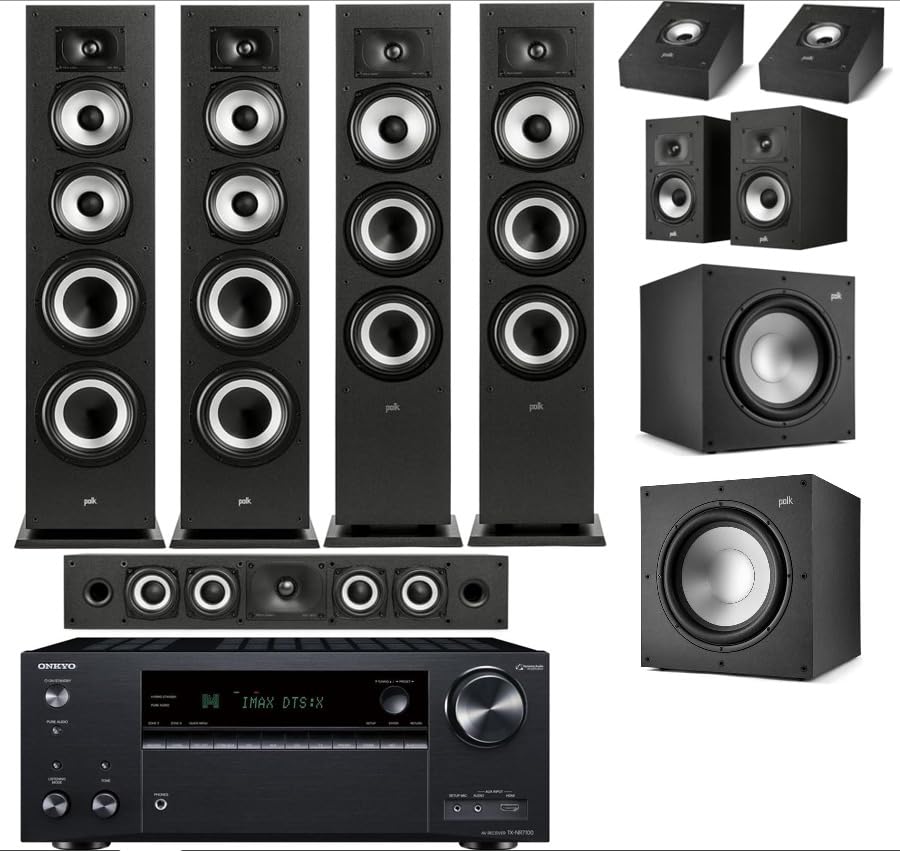
Audio is 9.2 channels at 100W per channel, THX Certified, with Dolby Atmos, DTS:X, IMAX Enhanced and a Dolby Atmos Height Virtualizer. There are three HDMI output options including discrete Zone 2 switching at 8K60, plus bi-directional Bluetooth with 24-bit aptX HD for wireless headphones.
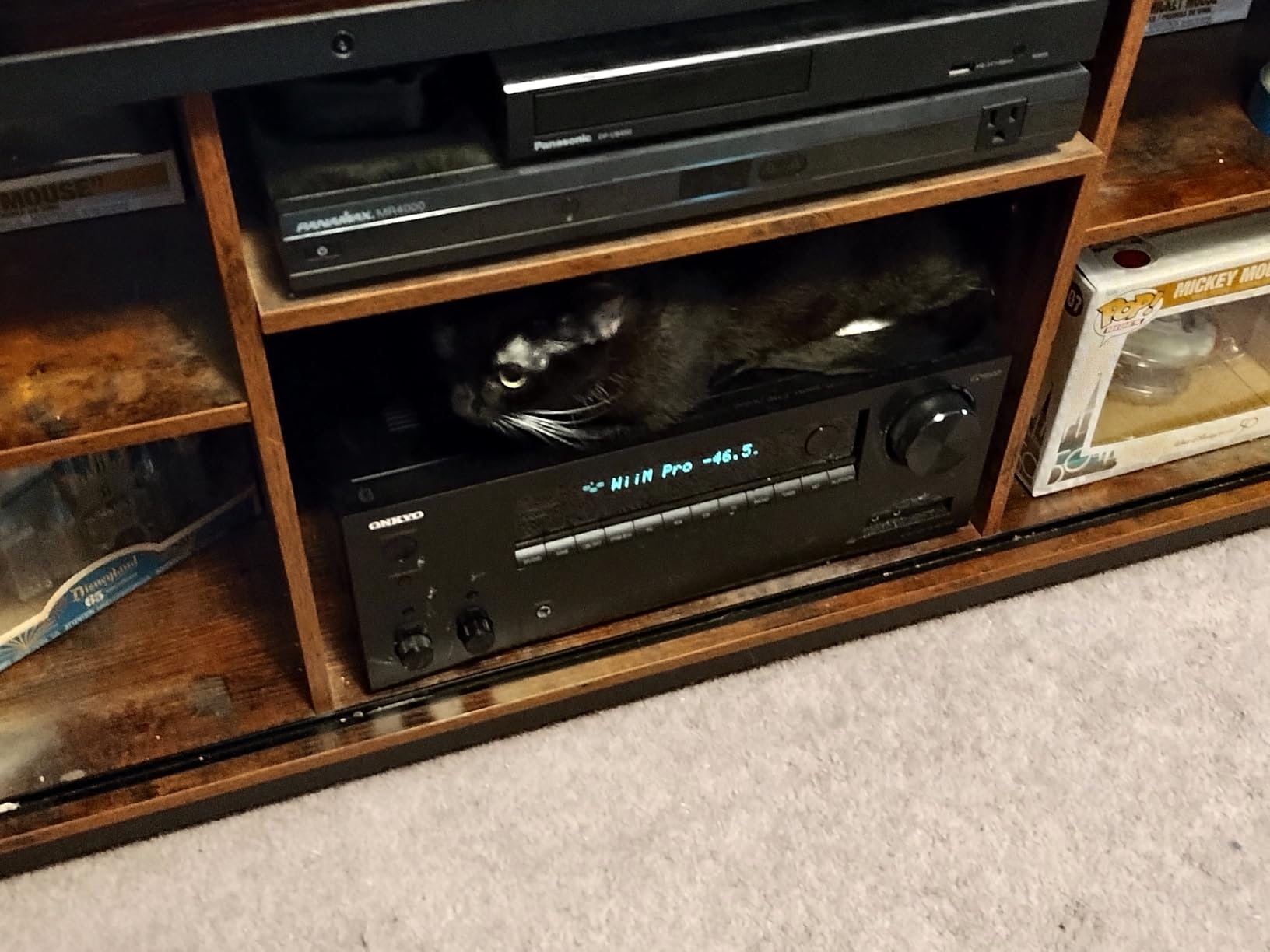
Streaming covers DTS Play-Fi, AirPlay 2 and Chromecast built-in, and the unit is Sonos Certified, which matters if you already own Sonos Port hardware. Several owners report it drives demanding Klipsch reference towers without strain, with inaudible distortion at low levels.
Who the TX-NR7100 suits
Buyers who care about the corrected sound in the room more than the spec sheet. In a treated or awkward space, Dirac Live is the most capable correction system you can get out of the box at any price in this roundup.
It also suits anyone with a mixed 4K/120 setup. Six full-bandwidth inputs is the most generous count here, and the 9.2 processing gives you real Atmos handling even before adding a third sub.
Who should skip it
Skip it if you are not prepared to spend time on calibration. Dirac Live is measurably better once tuned, but setup is fiddly and some users never get it right. There are also no pre-outs, and owners report a momentary audio dropout each time new content starts.
4. Yamaha RX-A2A – Best 8K Receiver for Audiophiles
Yamaha RX-A2A AVENTAGE 7.2-Channel AV Receiver – 8K and 4K/120 HDMI, eARC, Dolby Atmos, DTS:X, Wi-Fi, Bluetooth, MusicCast
AVENTAGE build quality
3 x 8K60B and 4K120AB inputs
YPAO R.S.C. with Surround:AI
Roon Tested
Pros
- Premium AVENTAGE construction and refined sound
- Three 8K60B and 4K120AB inputs with eARC
- Phono plus analog
- optical and coaxial inputs
- Roon Tested and Works with Sonos
Cons
- 100W per channel is modest for large rooms
- Only 7.2 channels
- no 9.2 or 11.2 processing
- Single HDMI output limits Zone 2 video
The RX-A2A is the entry point into Yamaha’s AVENTAGE line, and it shows in the cabinet as much as in the sound. The weight and finish feel a tier above the mainstream models, and the review distribution is the second most favourable in this group. It is Roon Tested, which matters if you have committed to that ecosystem.
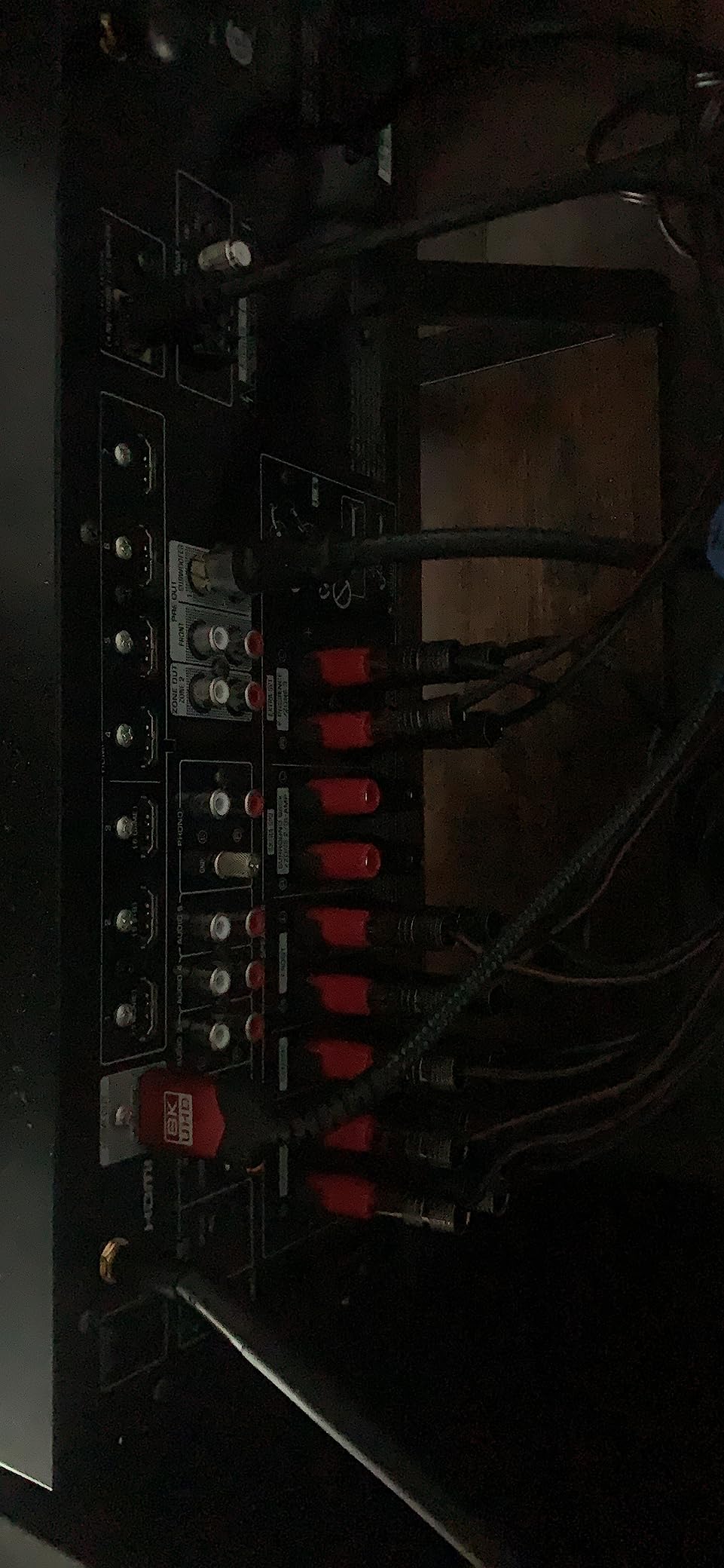
Video covers 7-in/1-out HDMI with HDCP 2.3 and eARC. Every input handles 4K60, and three inputs handle 8K60B and 4K120AB alongside Dolby Vision, HDR10+, HLG and BT.2020. ALLM and VRR are supported for next-generation consoles.
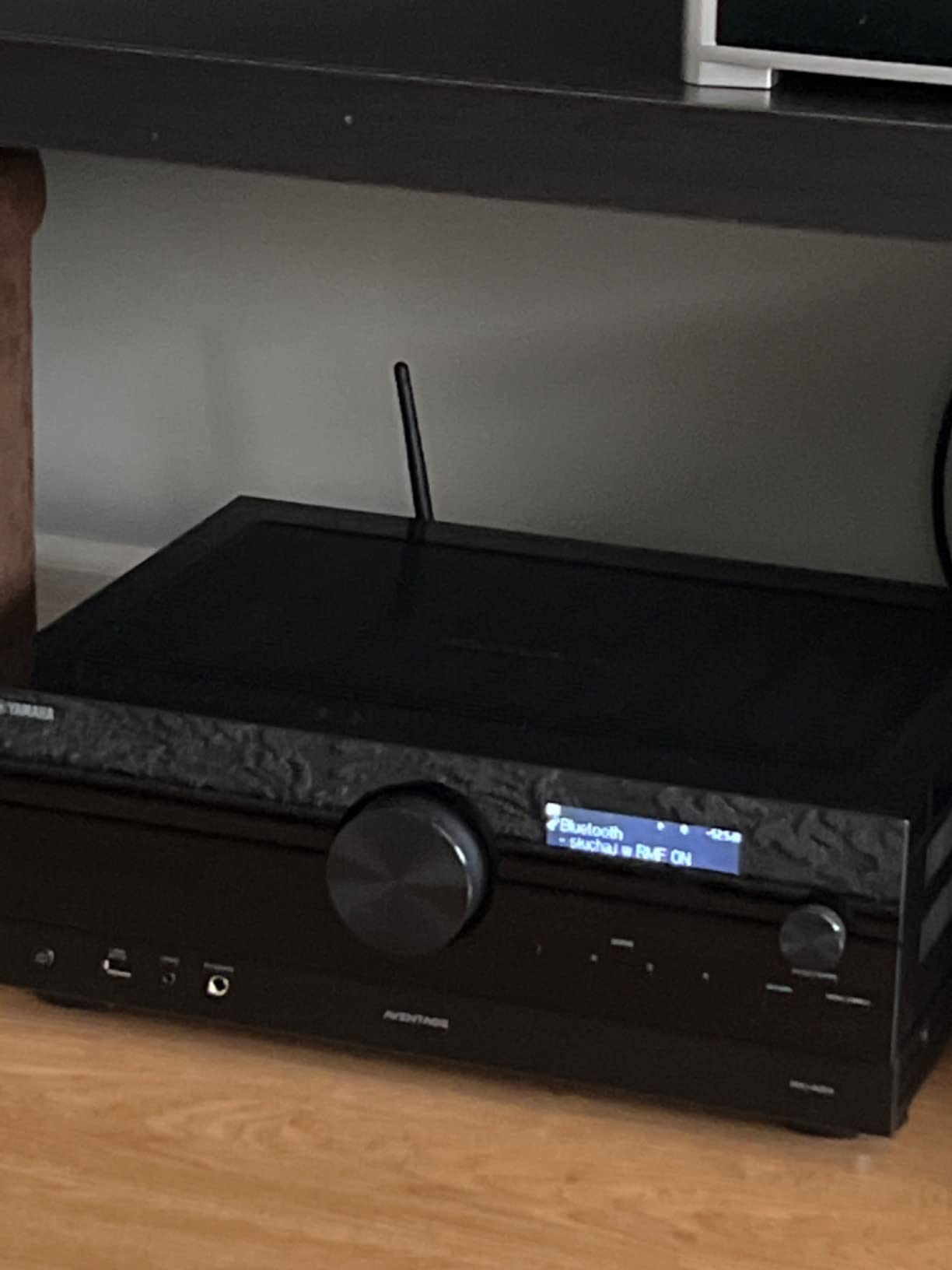
Calibration is YPAO R.S.C. with multipoint measurement, paired with Surround:AI, which optimises the sound and effects in real time based on what it hears. There is a phono input alongside analog, optical and coaxial, and the streaming roster includes Qobuz, Amazon Music HD, TIDAL and Deezer.
For multi-room use it joins a Sonos system through a Sonos Port sold separately, and Zone 2 handles analog audio distribution. Alexa and Siri voice control are both supported.
Who the RX-A2A suits
Listeners who put weight on build quality, hi-fi features and correction. A phono input, Roon Tested certification and AVENTAGE construction make this the most grown-up choice for a room where music is half the reason for the system.
It also fits medium rooms well, which is exactly where 100W per channel is comfortable.
Who should skip it
Skip it for a large dedicated theater with low-sensitivity speakers, where 100W per channel will feel modest. It also caps out at 7.2 channels, so there is no 9.2 or 11.2 processing, and Zones 2 and 3 are audio only with a single HDMI output.
5. Sony STR-AN1000 – Best 8K Receiver for Multi-Room and Gaming
Sony STR-AN1000 7.2ch Home Theater 8K A/V Bluetooth Receiver
165W into 6 ohms
6 HDMI in / 2 out with HDMI 2.1
Digital Cinema Auto Calibration IX
Zone 2 and Zone 3
Pros
- 360 Spatial Sound Mapping praised by owners
- 165W per channel with a fast graphical setup
- Zone 2 and Zone 3 multi-zone distribution
- Works with Sonos plus Chromecast and AirPlay
Cons
- No phono input for turntables
- Dolby Vision passthrough issues with some Apple TV 4K devices
- Very slow startup and a tiny front display
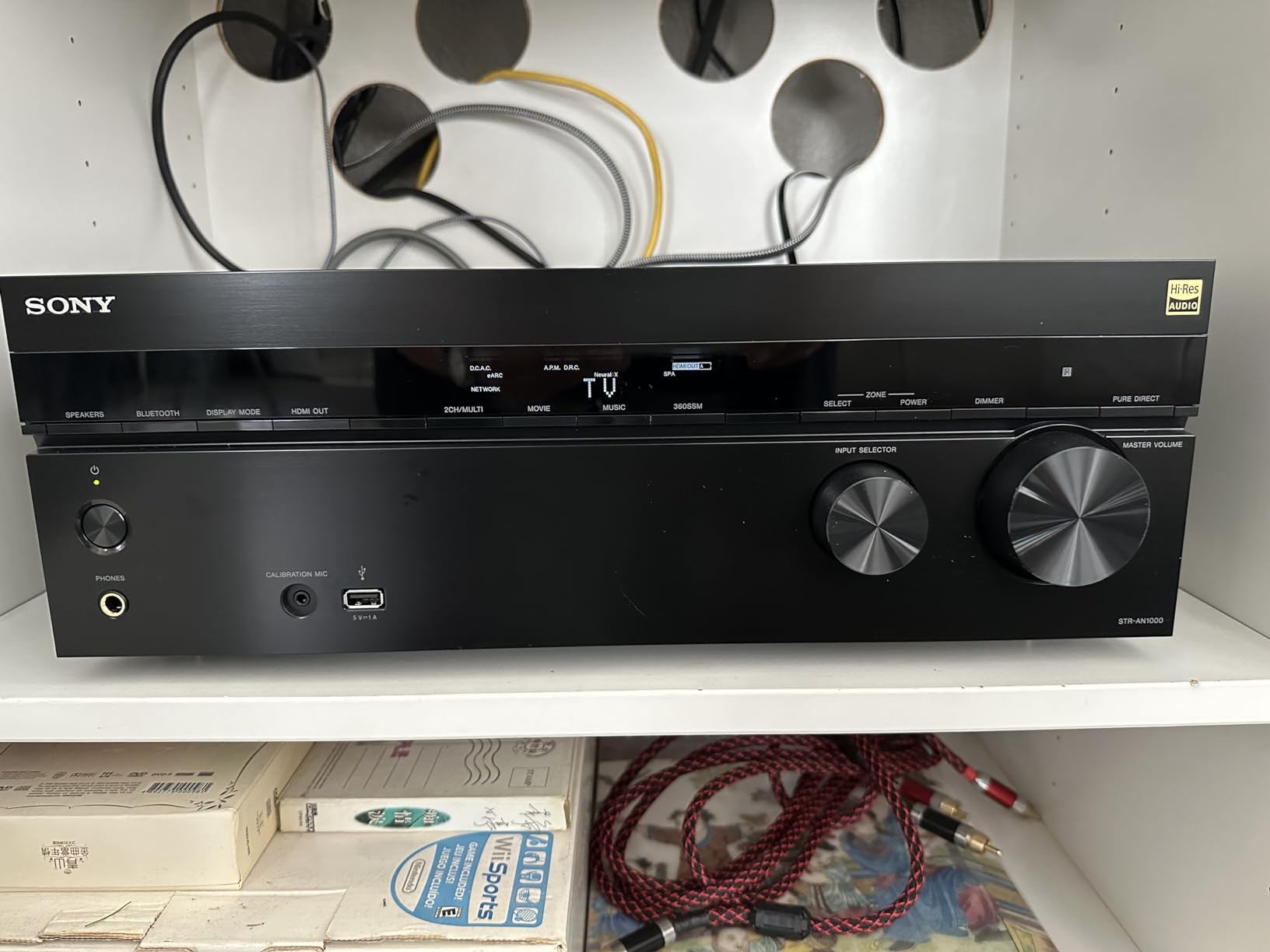
Sony puts 165W per channel into a 7.2 chassis here, and the headline feature is 360 Spatial Sound Mapping, which owners repeatedly single out as the moment the sound opened up. Calibration runs through Digital Cinema Auto Calibration IX, and the graphical setup interface is quick and legible.
The HDMI section is 6-in/2-out with HDMI 2.1 and 8K plus 4K/120 passthrough. Dolby Vision, HDR10, Hybrid Log Gamma and IMAX Enhanced are all supported, and the second output gives you flexibility most 7.2 models at this level do not offer.
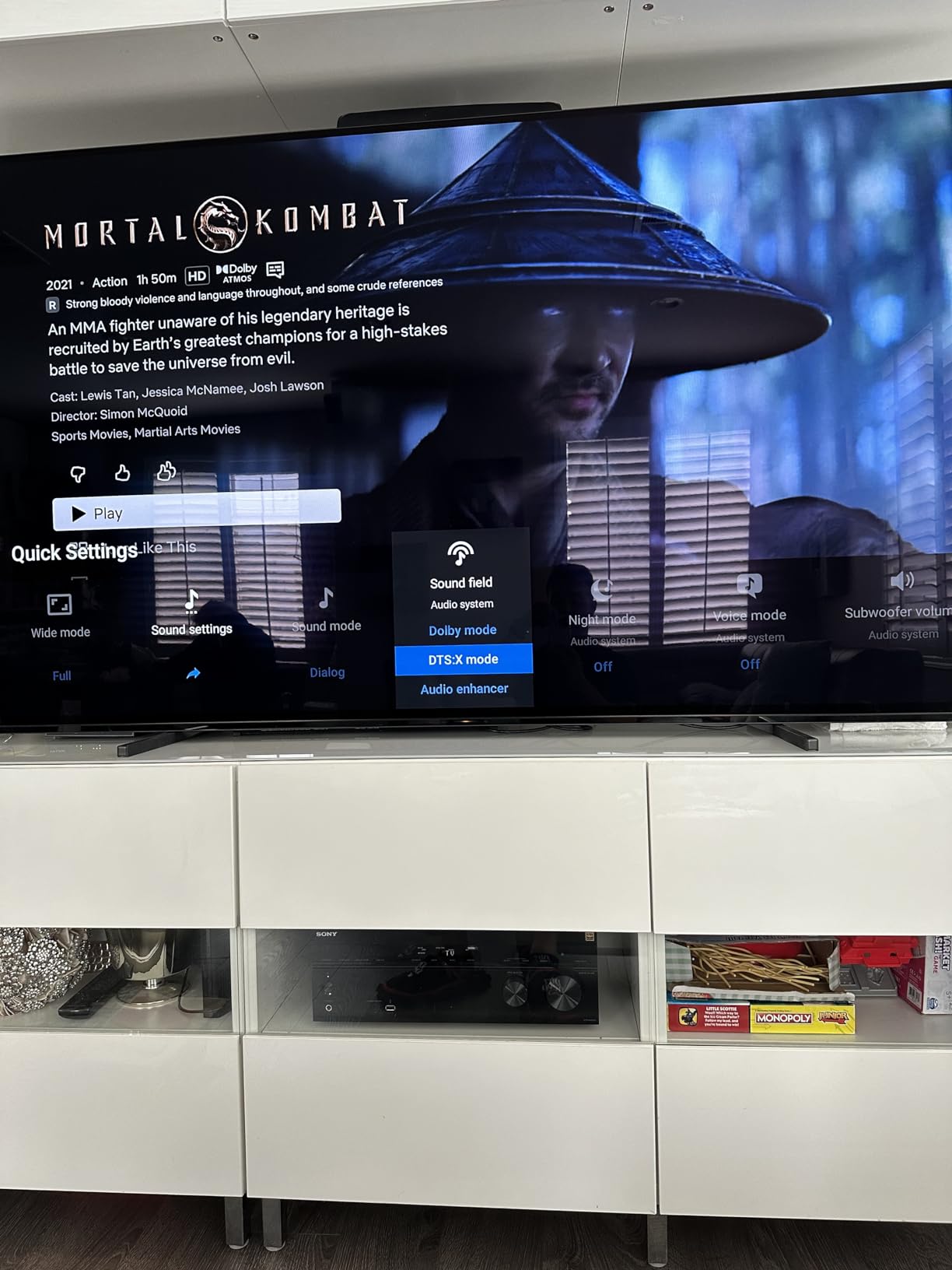
Multi-room is the real strength. Zone 2 and Zone 3 both carry audio and video, and the streaming side covers Bluetooth, Wi-Fi, Chromecast built-in, Spotify Connect and Apple AirPlay, plus Works With Sonos integration and Google Assistant.
Reviewers generally consider it strong value against Denon, Marantz and Pioneer Elite at comparable spend, and the 8% share of one-star ratings is among the most favourable we saw in this group.
Who the STR-AN1000 suits
Households that want video in more than one room. Three-zone distribution with two HDMI outputs is unusual at this level, and it makes the receiver a genuine whole-home hub rather than a single-room box.
Gamers benefit too, with 8K and 4K/120 across the HDMI board and a healthy power reserve for demanding speakers.
Who should skip it
Skip it if you have a turntable, as there is no phono input. Owners also report Dolby Vision passthrough problems with some Apple TV 4K source devices, and the practical annoyances add up: very slow startup, occasional input-recognition or HDCP dropouts, a tiny front-panel display, and a small remote with short range.
6. Yamaha RX-V6A – Best 8K Receiver for HDMI Flexibility
YAMAHA RX-V6A 7.2-Channel AV Receiver with MusicCast
100W per channel
3 x 8K60B and 4 x 4K120AB HDMI 2.1
7 in / 1 out with eARC
YPAO R.S.C. multipoint
Pros
- Seven HDMI inputs including three 8K/60 and four 4K/120 ports
- Unusually generous HDMI count for the class
- YPAO R.S.C. multipoint calibration
- Wide music service support including Qobuz
Cons
- Fewer pre-outs and processing than rivals at similar spend
- 100W per channel is limiting in large rooms
- Firmware and app ecosystem less refined than newer rivals
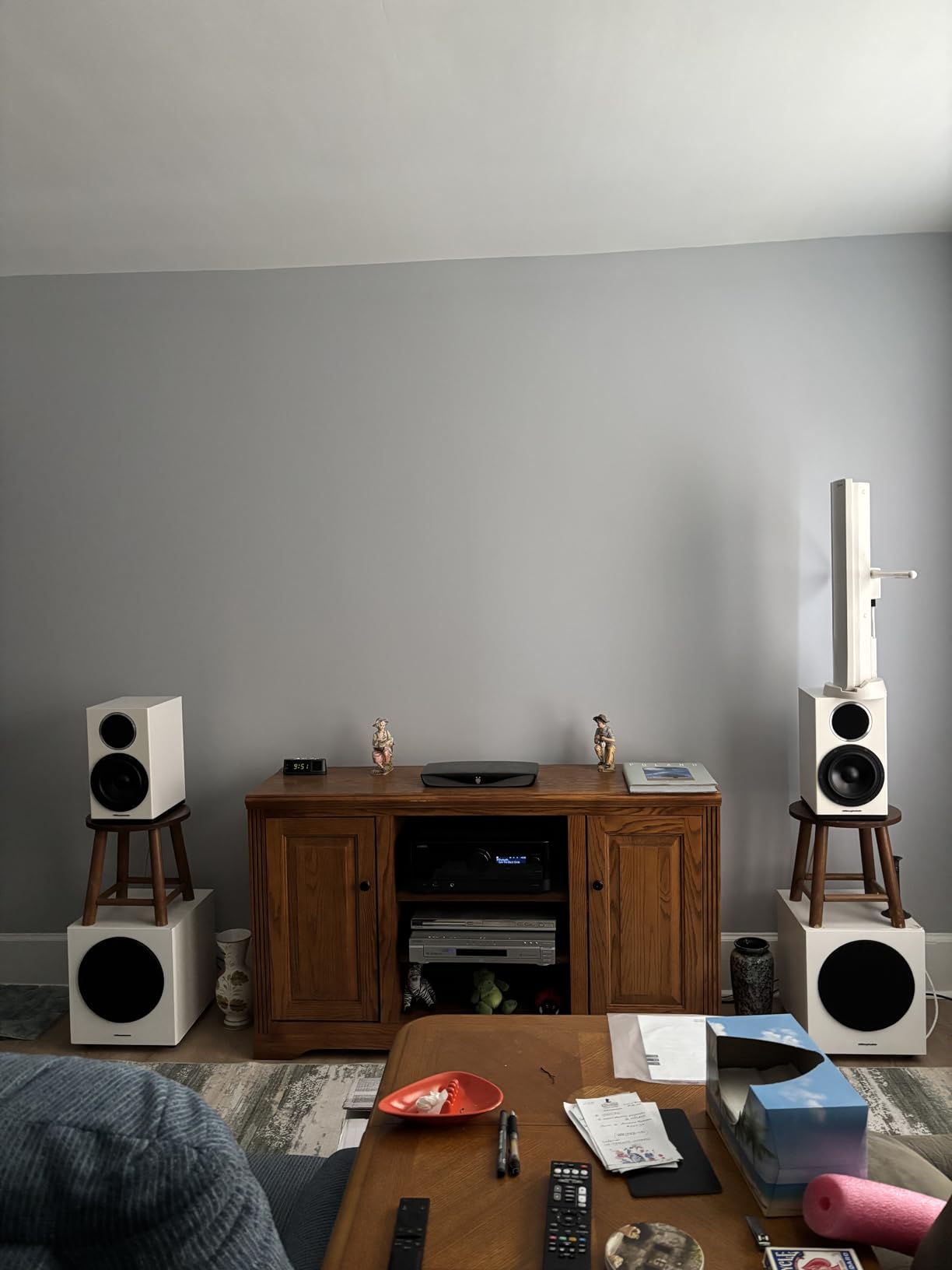
Look at the HDMI count alone and the RX-V6A is hard to argue with. Seven inputs, of which three are 8K60B and four are 4K120AB, all behind HDCP 2.3 with eARC on the single output. For a household with several consoles, a UHD Blu-ray player and an 8K streamer, that is more ports than anything else in this roundup.
At 100W per channel in 7.2 with Dolby Atmos, Dolby Atmos Height Virtualization and DTS:X, it is a dependable mainstream receiver rather than a flagship. The three-year manufacturer warranty is the longest we see from the mainstream brands here.
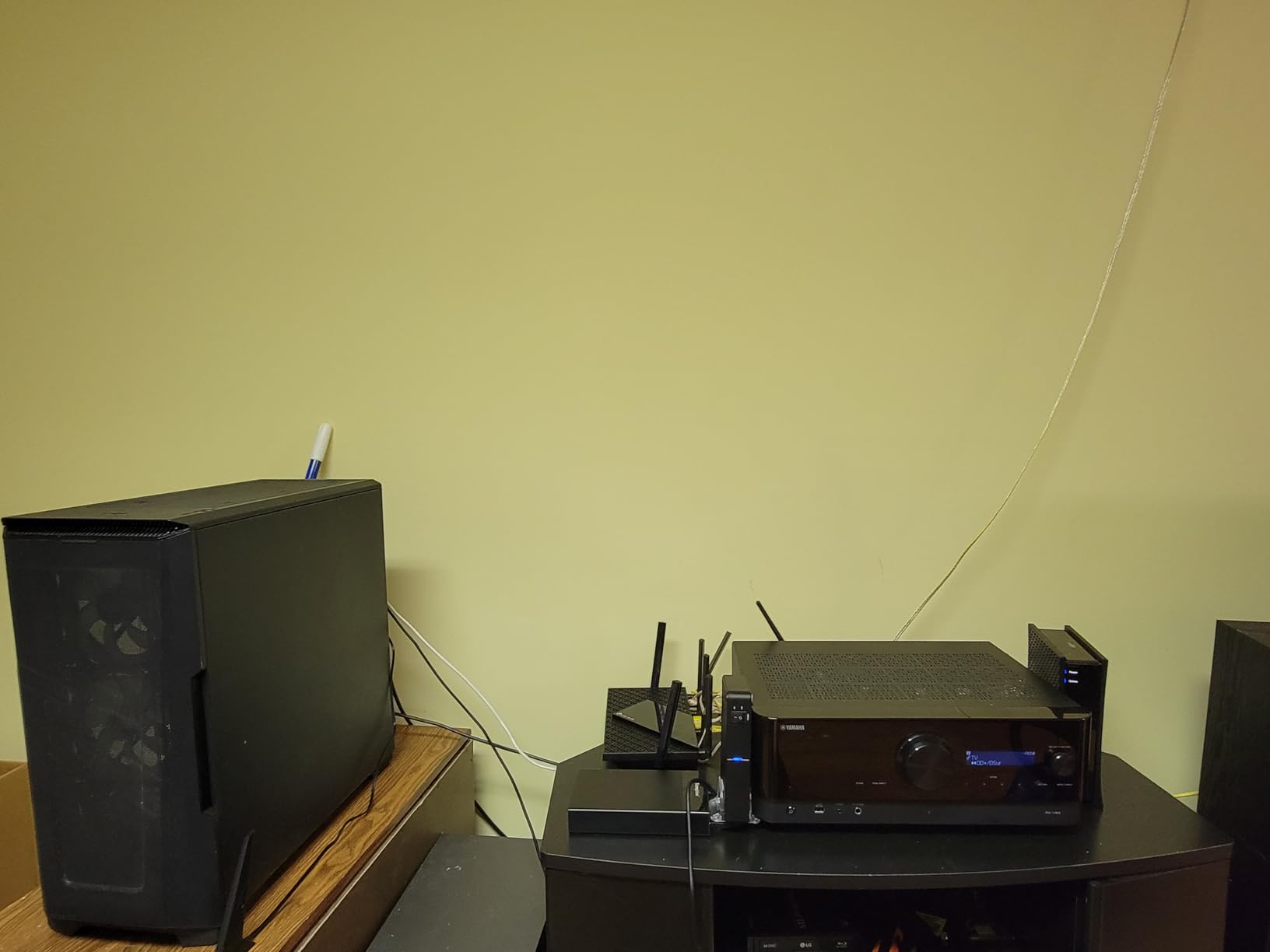
YPAO R.S.C. with multipoint measurement handles calibration, and the MusicCast ecosystem covers AirPlay 2, Spotify Connect, voice control, Pandora, Napster, SiriusXM, TIDAL, Deezer, Qobuz and Amazon Music HD. Dolby Vision, Hybrid Log Gamma and BT.2020 are supported for picture.
What you give up is headroom in both directions. The processing and pre-out count are thinner than Denon or Onkyo rivals at similar spend, and the firmware and app ecosystem is less refined than newer models.
Who the RX-V6A suits
Anyone who runs out of HDMI ports on mid-range units. Seven inputs with dedicated 8K and 4K/120 capability removes the usual compromise of choosing which device gets full bandwidth.
Yamaha owners also tend to value the music side, and the streaming service list here is the deepest in the roundup.
Who should skip it
Skip it for a large room with demanding speakers, because 100W per channel is the ceiling here. Buyers who plan to add external amplification or want 9.2 processing should look at the Onkyo or the higher Denon models instead.
7. Denon AVR-S570BT – Best Budget 8K AV Receiver
Denon AVR-S570BT 5.2 Channel AV Receiver – 8K Ultra HD Audio & Video
70W x 5 amplifier
4 x HDMI 2.1 8K inputs, eARC to 40 Gbps
Bluetooth streaming
On-screen HD Setup Assistant
Pros
- Four HDMI 2.1 8K inputs with eARC at an entry price
- Intuitive on-screen setup assistant with speaker balancing
- Automatic room calibration allows manual tweaking
- Runs cooler than comparable units at high volume
Cons
- No Wi-Fi or Ethernet
- so streaming is Bluetooth only
- 5.2 channels with no Dolby Atmos or height virtualization
- Inputs cannot be renamed and no phono input
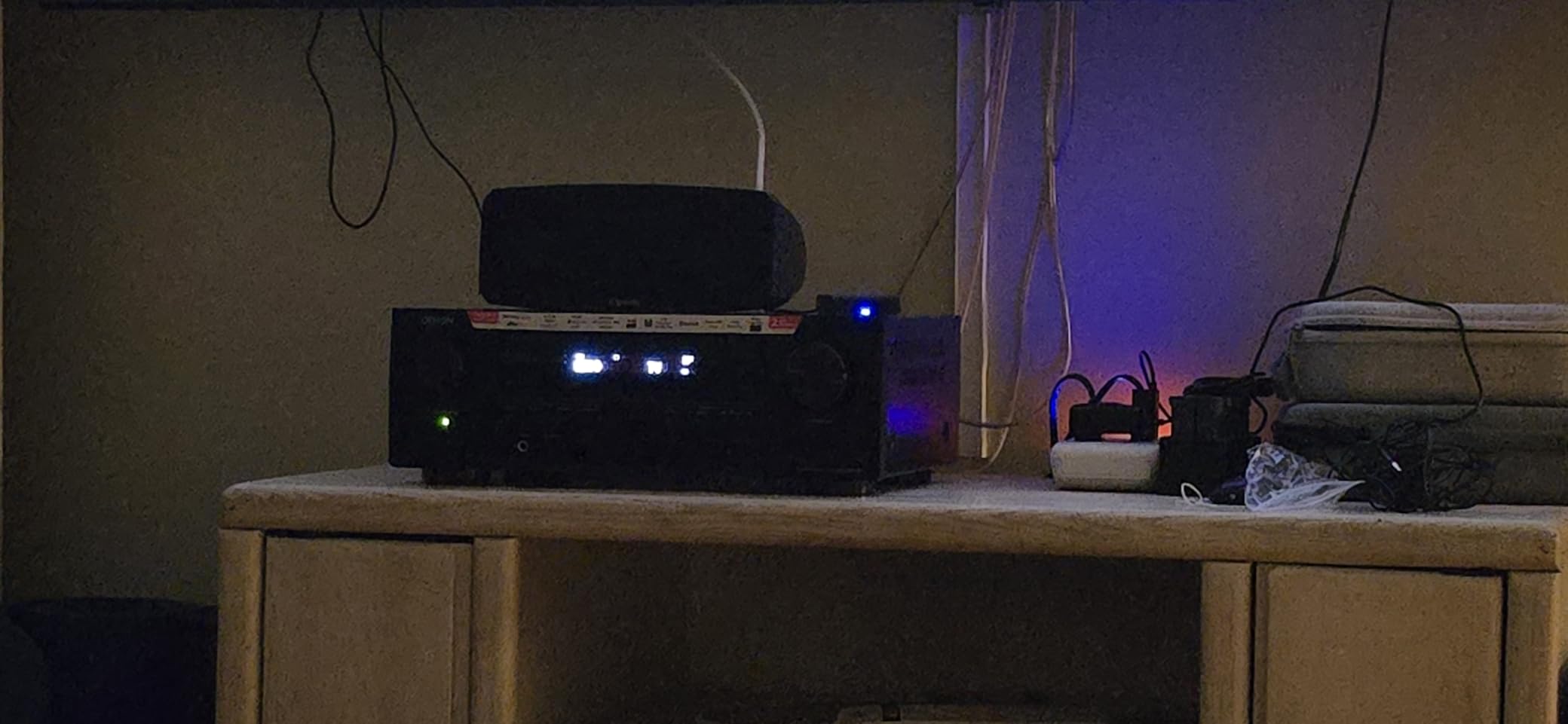
This is the cheapest way to get four genuine HDMI 2.1 8K inputs with eARC, and at 70W across five channels it is the most sensible thing to put in a bedroom, a den or a first apartment system. With over a thousand ratings on file, it is also the most thoroughly owner-tested receiver in the roundup.
Picture handling is solid: HDR, HLG, Dolby Vision, HDR10+, Dynamic HDR, VRR and Quick Frame Transport, with DTS-HD Master Audio and Dolby TrueHD decoding. The 2-year warranty is standard for the brand.
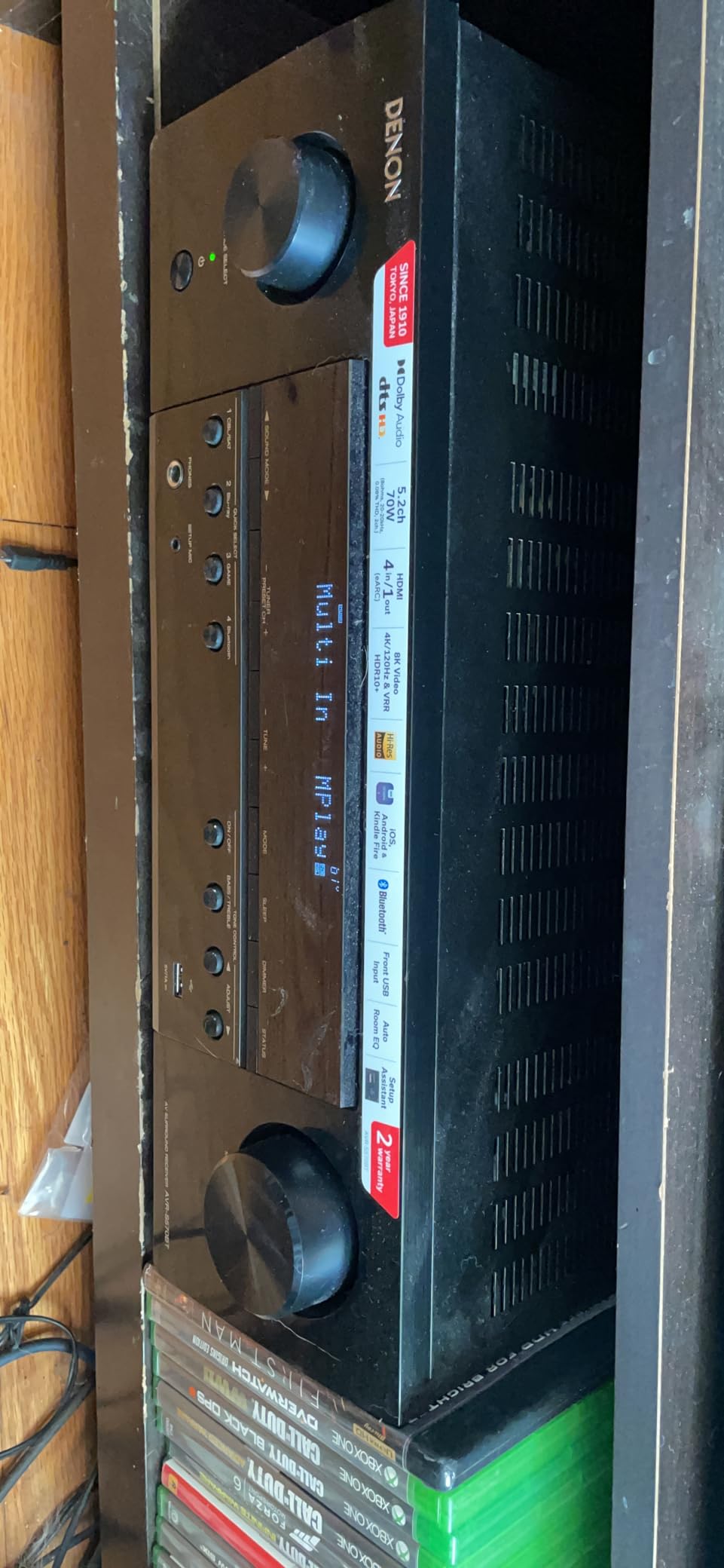
The HD Setup Assistant is the reason this box keeps its rating. It walks you through connections and speaker balancing on screen, and the automatic room calibration is accurate enough that most owners leave it alone but still find room for manual tweaking. It also runs cooler than comparable receivers at higher volumes, which matters in a closed cabinet.
Bluetooth streaming pairs quickly with phones, and the Denon Remote App covers basic control on iOS and Android.
Who the S570BT suits
First-time home theater builders and anyone adding a secondary room. Four 8K inputs is more than most entry receivers offer, and the guided setup removes the intimidation factor for a first install.
It is also a very common recommendation in budget communities as a secondary room receiver alongside a main system.
Who should skip it
Skip it if you want Atmos, because 5.2 channels means no height virtualization at all. There is no Wi-Fi or Ethernet, so streaming is limited to Bluetooth, inputs cannot be renamed, there is no phono input, and volume control over HDMI-CEC is slow enough to jump in loud bursts.
8. Pioneer VSX-935 – Best 8K Receiver for Power Per Spend
Pioneer VSX-935 7.2 Channel Surround Sound Network Receiver Dolby Atmos (2021)
7.2 channels, 80W rated output
HDMI 2.1 with 8K support
Dolby Atmos height virtualization
Dual-zone speaker output
Pros
- Crisp
- room-filling output with all channels active in music mode
- Phase-correcting calibration a real step up from older receivers
- HDMI 2.1 with 8K at an entry price
- RF remote and dual-zone speaker output
Cons
- Firmware updates are USB-only and often fail
- On-screen interface looks like a 1990s design
- One-year warranty is the shortest here
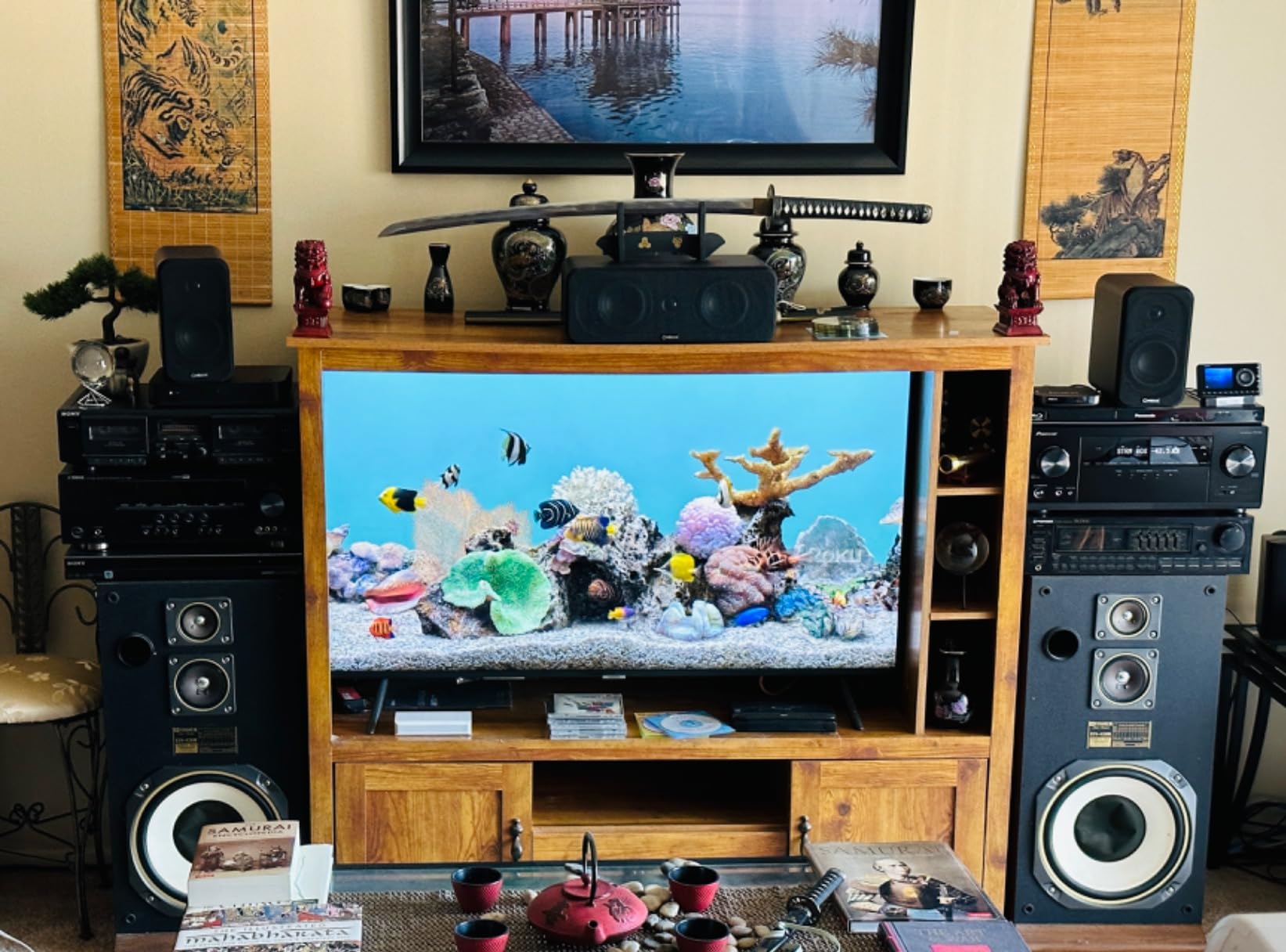
Pioneer put a 7.2 receiver with HDMI 2.1 8K support into an entry price bracket, and owners consistently report the sound is crisp, loud and clear, easily replacing lower-tier machines. Notably, all speaker channels stay active in music mode, which some competitors disable.
It also handles network audio players including DSD128 content, offers dual-zone speaker output for another room, and includes an RF remote plus Roku remote integration for power and volume control. Eight HDMI ports in total give the room plenty of hookups.
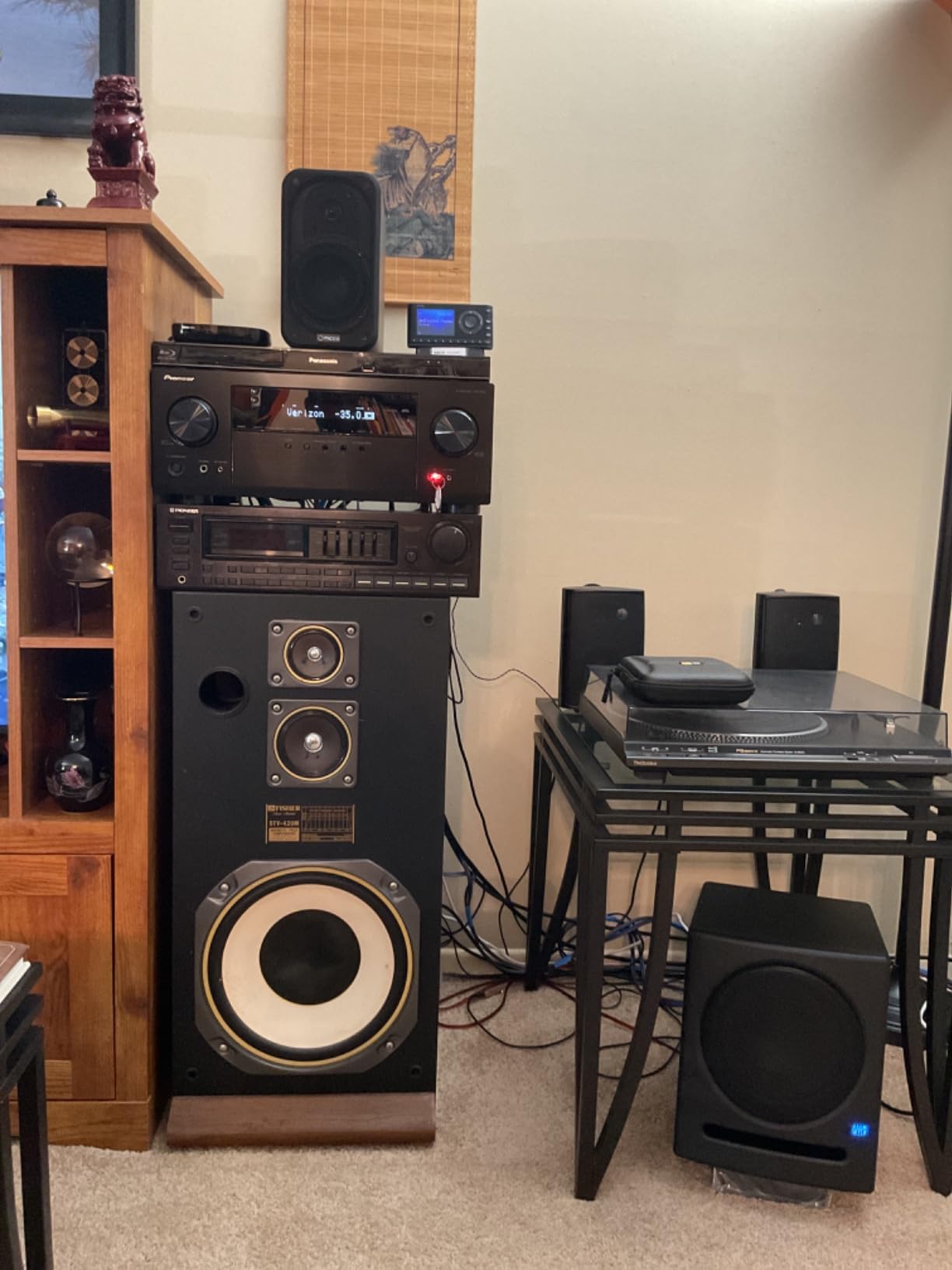
Dolby Atmos with Height Virtualization creates a surround and height effect from a traditional 5.1 or 7.1 layout without adding physical height speakers. The phase-correcting room calibration is described by owners as noticeably better than on older receivers, though some still need manual adjustment afterwards.
Streaming covers Wi-Fi, Bluetooth and TuneIn, and the Bluetooth headphone support is a genuine extra for late-night listening, even if the routing takes effort.
Who the VSX-935 suits
Buyers who want a loud, capable 7.2 system with 8K headroom without moving up a tier. The phase-correcting calibration and full-active music mode make it a genuinely musical entry receiver rather than a compromise.
It suits a bedroom or living room system where a second zone of speakers is more useful than a second HDMI output.
Who should skip it
Skip it if you dislike tinkering. Firmware updates are USB-only and owners report repeated failures, the on-screen interface is dated, and the two-way Bluetooth headphone feature is difficult to set up and unreliable. The one-year warranty is also the shortest in this roundup, and a few buyers received units with dead displays or no audio output.
9. Onkyo TX-NR6100 – Best 8K Receiver for Zone 2 Video
Onkyo TX-NR6100 7.2 Channel THX Certified Network AV Receiver – Black
100W per channel, THX Certified Select
8K HDMI 2.1 at 40Gbps on 3 inputs
Discrete Zone 2 audio and video
8 HDMI ports
Pros
- Plenty of power that fills large rooms cleanly
- THX Select certification with 5.2.2 Atmos and DTS:X
- Eight HDMI ports plus discrete Zone 2 audio and video
- Built-in fan helps manage heat
Cons
- No composite video input for legacy consoles
- Non-programmable remote control
- Wi-Fi connectivity reported as inconsistent
This is the power pick. Multiple owners note it fills a large room with clean, undistorted output, and several describe it as louder and more capable than costlier Denon alternatives. At 100W per channel with THX Certified Select Dynamic Audio Amplification, it drives demanding speakers without obvious strain.
Decoding covers 5.2.2-channel Dolby Atmos and DTS:X, and HDMI 2.1 handles 8K at 40Gbps on three inputs, so your console and 8K streamer are covered. There are eight HDMI ports in total, which is generous for the class.
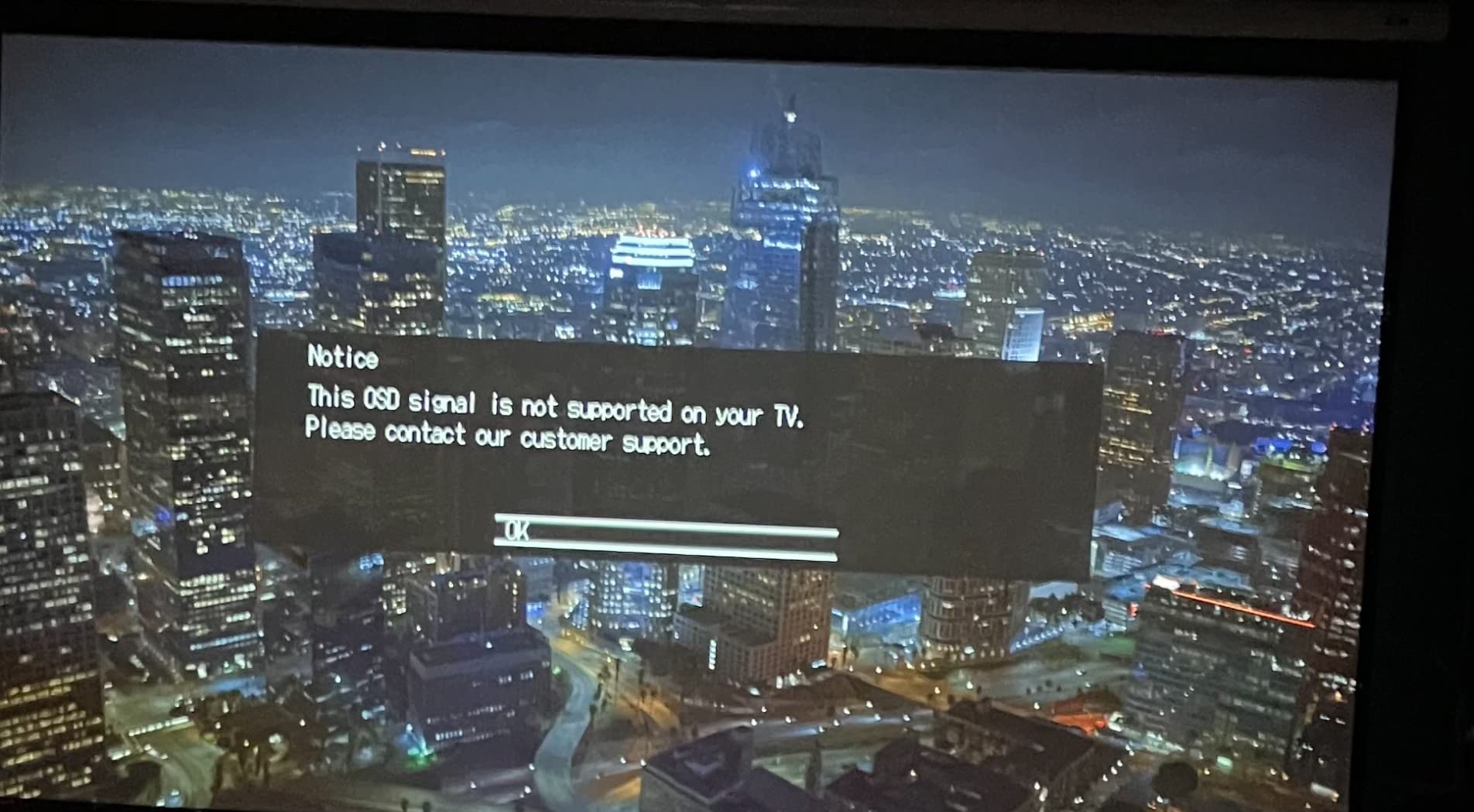
The genuinely distinguishing feature is discrete Zone 2 audio and video, not just audio distribution. If you want a second room with its own screen fed from the same receiver, this is one of the few options at this level that can do it.
Streaming covers Amazon Music, Deezer, Pandora, Spotify, TIDAL and TuneIn over Wi-Fi and Bluetooth, and a built-in cooling fan helps keep heat build-up in check in a closed cabinet.
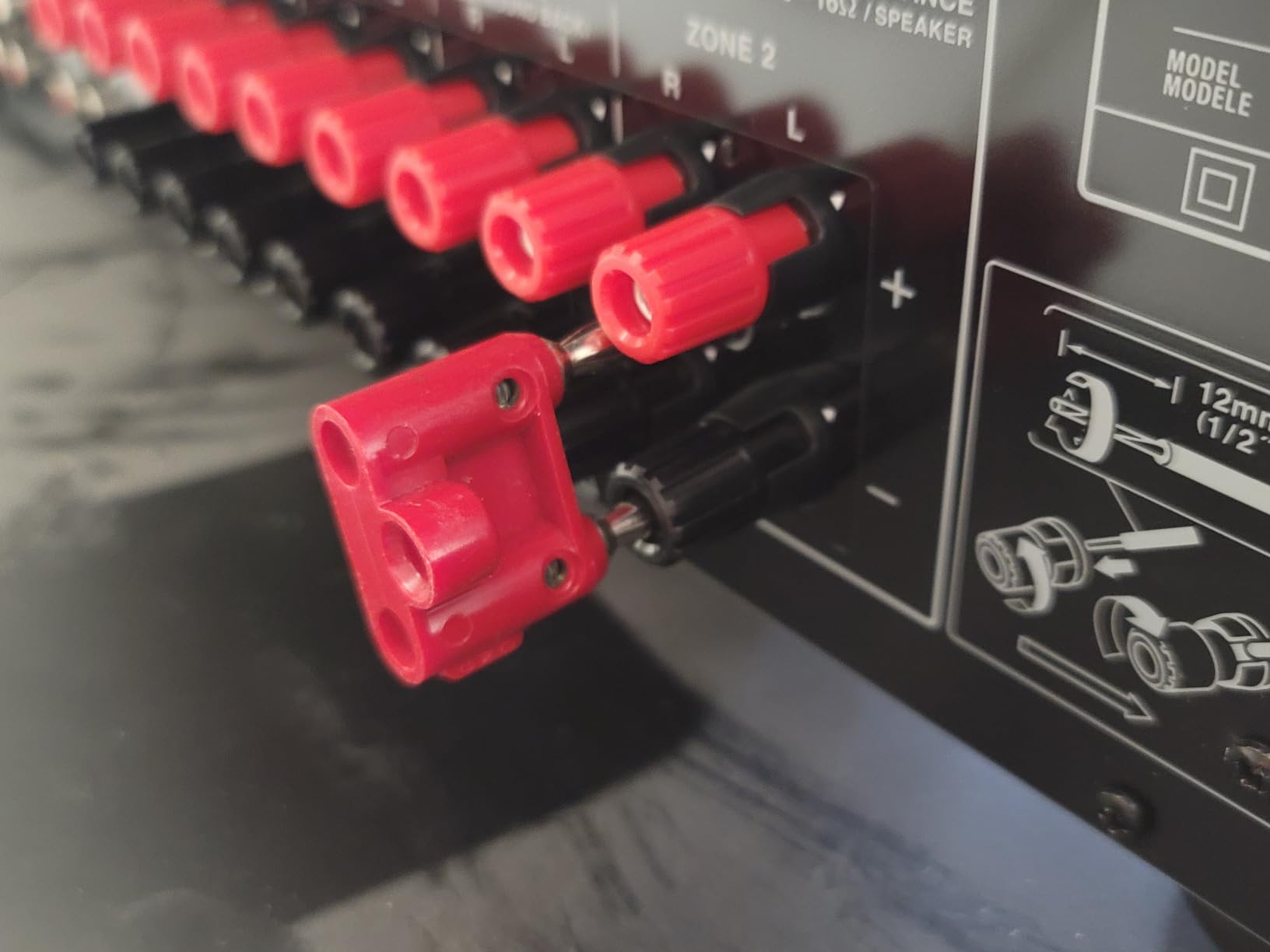
Who the TX-NR6100 suits
Large rooms with inefficient or low-sensitivity speakers where headroom matters more than processing subtlety. Buyers also like having many HDMI ports available rather than negotiating for them.
It suits anyone with a real second-room video requirement, which is rarer than manufacturers admit.
Who should skip it
Skip it if you still own legacy consoles, because there is no composite video input, so a Wii cannot be connected. The remote is not programmable, the FM tuner has no HDMI digital reception, and some owners report inconsistent Wi-Fi and the occasional HDMI handshake or menu display problem.
10. Marantz Cinema 60 – Best 8K Receiver for Design and Tuning
Marantz Cinema 60 Premium 7.2 Channel AV Receiver Powered by HEOS™ with Dolby Atmos, 100 W, 8K, and 6 HDMI Inputs
Sound Master tuned in Japan
7.2 channels at 100W per channel
Six HDMI inputs, three 8K-compatible
Audyssey MultEQ XT calibration
Pros
- Hand-tuned at Marantz's Shirakawa facility in Japan
- Premium symmetrical chassis and materials
- Aud MultEQ XT calibration tailors the sound to the room
- Five-year manufacturer warranty
Cons
- 100W per channel is modest at this price tier
- Only three of six HDMI inputs are 8K capable
- Small owner base at 74 ratings limits long-term evidence
Marantz tuned this one by hand at the Shirakawa facility in Japan, and owners consistently describe the result as the brand’s characteristic warm, musical presentation. If your priority is two-channel music quality as much as films, that is the argument for this box over a more clinical competitor.
The chassis is symmetrical, elegantly proportioned and built with premium materials, which is a real consideration if the receiver is going to be visible on a console. Dolby Atmos and DTS:X decoding covers 7.2 channels at 100W per channel, and Audyssey MultEQ XT handles the room calibration.
Connectivity is six HDMI inputs, three of which are 8K-compatible, alongside analog, digital and phono connections. HEOS streaming covers Spotify, TIDAL and Amazon Music HD, and the box includes the Audyssey microphone and stand, remotes, antennas and wire labels.
The five-year manufacturer warranty is the longest in this roundup by a wide margin, which matters a great deal for anyone buying a flagship-tier receiver.
Who the Cinema 60 suits
Music-first listeners who want the Marantz house sound and build quality, and who do not mind a smaller channel count. The phono input and five-year warranty add real long-term value for a box this size.
It also suits anyone whose receiver sits in a living space rather than a rack, where the design matters.
Who should skip it
Skip it for a dedicated theater. Seven channels with no 9.2 or 11.2 processing, 100W per channel, and only three 8K inputs is a narrow brief for the money. And with 74 ratings on file, there is far less long-term owner evidence behind it than the other picks.
What to Look for in an 8K AV Receiver
HDMI 2.1 bandwidth and the input traps
This is where most returns happen. An HDMI 2.1 port can be capped at 40Gbps rather than the full 48Gbps, and many receivers ship with only one or two full-bandwidth inputs, quietly limiting the rest to 4K/60. Always count the dedicated ports, not the total. The Denon AVR-X1700H gives you three, the Onkyo TX-NR7100 gives you six full-bandwidth ports, and the Denon AVR-S570BT gives you four 8K inputs at 40Gbps.
For a PS5 or Xbox Series X, plan on one dedicated port per console, plus one for an 8K-capable streamer or UHD Blu-ray player if you have one. Two is the bare minimum, three is comfortable, and anything above four is usually wasted unless you are running a projector with a separate 4K Blu-ray deck.
Room correction compared: Audyssey, YPAO, Dirac Live and MCAS
Room correction is the top buying factor in community advice, and it matters more than channel count. The Onkyo TX-NR7100 ships with Dirac Live out of the box, which gives it the most capable system here without a PC. Denon uses Audyssey across the range, and reviewers regularly single out its auto-calibration as better than competing systems. Yamaha uses YPAO R.S.C. with multipoint measurement, and the RX-A2A adds Surround:AI real-time optimisation on top. Pioneer uses phase-correcting calibration that owners report as a step up from its older models.
Whichever you pick, budget an hour. The speakers that ship with a receiver are rarely matched to the room, and an hour of measurement routinely beats any difference between these processors.
Amplifier power and channel count
Rough guide: 70 to 80W per channel handles a small apartment or a typical living room at moderate levels, 90 to 100W suits a medium or large room, and above that you are compensating for inefficient floorstanding speakers. Onkyo rates the TX-NR6100 at 210W and the TX-NR7100 at 220W in its marketing, but both list 100W per channel as the rated figure, which is the number to compare against rivals.
On channels, 7.2 covers the vast majority of homes. 9.2 gives you genuine Dolby Atmos object handling rather than a virtual approximation, and 11.2 is a dedicated-theater consideration only. Do not buy channels you cannot wire.
Refurbished and open-box buying
Refurbished 8K receivers are a genuinely good value play, and the recommendation that comes up constantly in forums is a refurbished Denon AVR-S960H or AVR-S760H, or an older Yamaha RX-V4A or RX-V6A, over a new entry model. The one hard condition is warranty: buyers are advised to stick to refurbished units with a full manufacturer warranty, because HDMI boards and handshake faults are exactly the problems a refurb should have fixed and a private seller will not.
Also check the firmware age. For several brands the update path is USB-only, and a unit that has not been updated since it left the factory may have known HDMI handshake bugs baked in.
Frequently Asked Questions
Do I actually need an 8K AV receiver right now?
Only if you own a PS5 or Xbox Series X and want 4K/120Hz VRR gaming, or if you run a projector or TV that handles Dolby Vision and HDR10+ with full dynamic metadata. Native 8K content is still not a factor in 2026. If you only stream 4K with no current-generation console, a 4K/120-capable receiver is the smarter spend.
Who makes the most reliable AV receivers?
Review distributions across this roundup give Denon and Marantz the most consistent results, with Denon’s AVR-X1700H and AVR-S970H among the friendliest rating splits. Yamaha is dependable but frequently criticised for app and firmware polish. Onkyo is well regarded for power and Dirac Live but draws consistent complaints about its app, remote hardware and heat management. Pioneer carries the shortest warranty in the group at one year.
What is the best AV receiver for audiophiles?
For music-first systems the Marantz Cinema 60 stands out, with hand-tuning at Marantz’s Shirakawa facility in Japan, a phono input and a five-year warranty. The Yamaha RX-A2A is the alternative pick, thanks to AVENTAGE build quality, YPAO R.S.C. multipoint calibration and Roon Tested certification. Both favour stereo and two-channel quality over channel count.
Is Marantz higher quality than Denon?
Not universally. Marantz generally wins on tonal preference, cabinet build and phono support, while Denon wins on amplifier power, HDMI port counts and value for money. Denon’s AVR-X1700H and AVR-S970H both rate highly with far larger review counts than the Marantz Cinema 60, so the evidence base for Denon is much deeper. Choose on room, speakers and budget rather than brand.
Should I buy a refurbished AV receiver?
It can be the better buy, particularly for a Denon or Yamaha model that is out of the current lineup. The condition to check is warranty: buyers are advised to stick with refurbished units that carry a full manufacturer warranty, since HDMI board and handshake faults are the main reasons units come back. Confirm that firmware is current, because several brands still update only over USB.
The Best 8K AV Receivers to Buy in 2026
The Denon AVR-X1700H is our pick for the best 8K AV receivers overall. It pairs three dedicated 8K/60 and 4K/120 inputs with 8K upscaling on all six ports, Audyssey calibration that owners rate above competing systems, and the largest body of owner feedback on this list. The Denon AVR-S970H is the better value if you want more power and a second HDMI output, and the Onkyo TX-NR7100 wins outright on room correction with Dirac Live included.
At the bottom, the Denon AVR-S570BT is the cheapest route to four genuine 8K inputs, and the Pioneer VSX-935 delivers surprising power for the money. At the top, the Marantz Cinema 60 wins on tuning and build but asks for a lot of that spend. Whatever you choose, count the full-bandwidth HDMI ports first, run the room correction properly, and check the warranty length before anything else.