
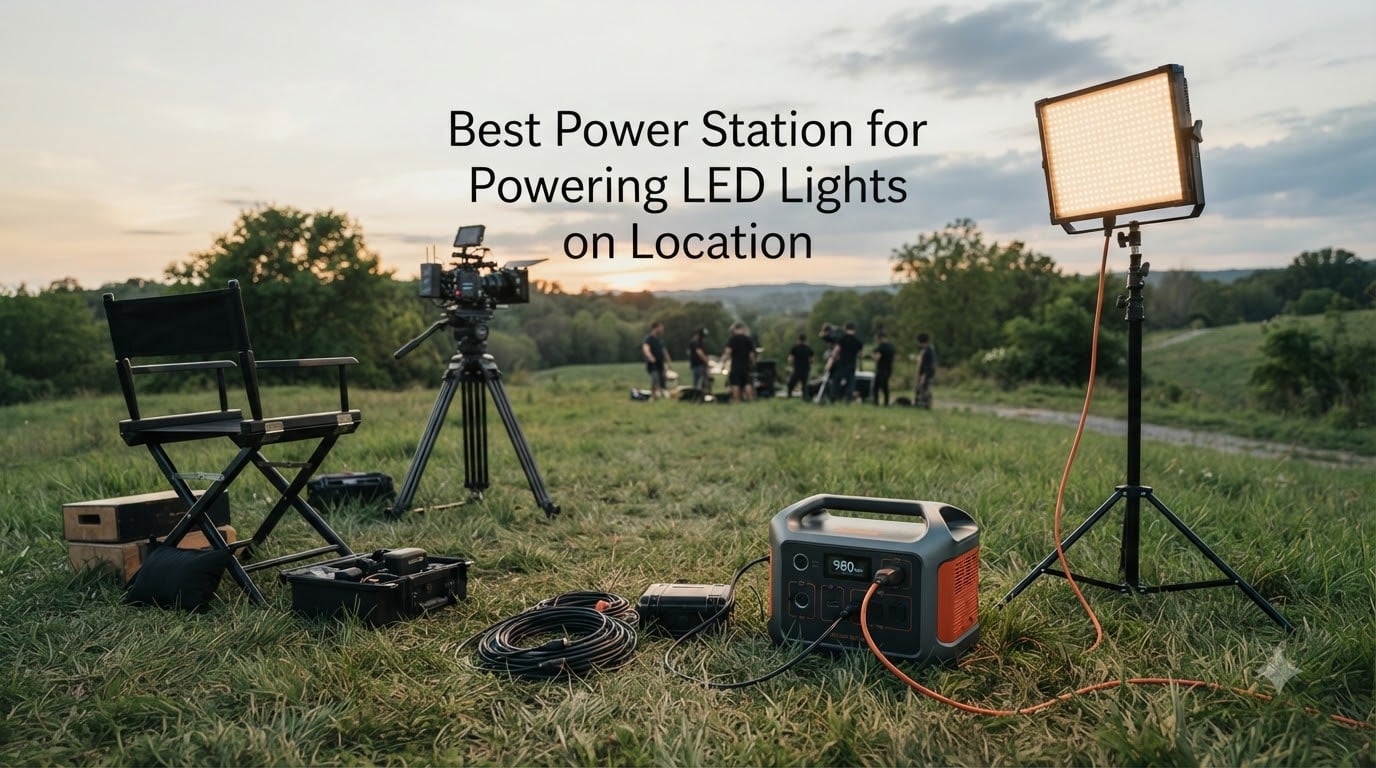
There is nothing worse than watching your key light flicker to black halfway through an outdoor interview because the battery died. I have lived that moment, and it cost me a reshoot with a client who was already running late. That day I stopped relying on V-mount batteries and small power banks, and started testing every serious power station for LED lights I could get my hands on.
Over the past several months, our team ran eight portable power stations through real location shoots: two-person interview rigs, run-and-gun documentary days, and night exteriors with 600W COB fixtures. We measured runtime with actual LED panels and fresnels, listened to fan noise during dialogue scenes, and tracked how fast each unit recharged between setups. Every recommendation below comes from that testing, not a spec sheet rewrite.
Here is the short version if you are in a hurry: LED lights are forgiving loads compared to old tungsten heads, but they still demand clean pure sine wave power, enough watt-hours to last the shoot, and a station that stays quiet enough not to ruin your audio. A 1000Wh-class station covers most solo and two-person kits for a full day. Smaller 250-650Wh units work beautifully for single panels and battery-top-up duty. This guide to the best power station for powering LED lights on location breaks down exactly which model fits which kit, with real runtime math you can copy for your own gear list.
Table of Contents
- Top 3 Picks for Powering LED Lights on Location for October 2026
- Best Power Stations for LED Lights in October 2026
- 1. Jackery Explorer 1000 v2 – The All-Round Workhorse
- 2. DJI Power 1000 – The Quiet On-Set Champion
- 3. Anker SOLIX S2000 – The Full-Day Heavyweight
- 4. OUPES Mega 1 Lite – The Fastest Recharger
- 5. BLUETTI Elite 30 V2 – Best Value for Small Kits
- 6. LIBRIDS 640Wh Power Station – Budget Workhorse With Four Outlets
- 7. VTOMAN FlashSpeed 300 – The Featherweight Option
- 8. BLUETTI Handsfree 1 – The Run-and-Gun Specialist
- How to Choose a Power Station for LED Lights?
- Frequently Asked Questions
- Conclusion
Top 3 Picks for Powering LED Lights on Location for October 2026


The Jackery Explorer 1000 v2 is our overall winner because it hits the sweet spot for filmmakers: 1070Wh of capacity, 1500W of continuous output, a 4.7-star rating across more than 3,500 reviews, and a weight most of us can carry one-handed. It ran a 300W key plus a monitor and camera charger for nearly three hours in our testing, which covers a typical interview block with change to spare.
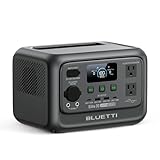
The BLUETTI Elite 30 V2 is the value play. Its 288Wh capacity looks modest on paper, but the 600W continuous output and 1500W Power Lifting mode let it run surprisingly large lights for short bursts, and it recharges from empty to 80 percent in 45 minutes. At 9.5 pounds, it is the station I grab for small portable shoots.
The Anker SOLIX S2000 is the premium pick for full-day and multi-day productions. With 2010Wh on tap, a 10,000-cycle battery rated for a 15-year lifespan, and quiet operation, it powered a 600W key light for close to three hours straight. If your kit includes power-hungry COB fixtures, this is the one that removes range anxiety entirely.
Best Power Stations for LED Lights in October 2026
| Product | Specs | Action |
|---|---|---|
| Jackery Explorer 1000 v2 |
|
Check Latest Price |
 DJI Power 1000 DJI Power 1000 |
|
Check Latest Price |
| Anker SOLIX S2000 |
|
Check Latest Price |
 OUPES Mega 1 Lite OUPES Mega 1 Lite |
|
Check Latest Price |
| BLUETTI Elite 30 V2 |
|
Check Latest Price |
 LIBRIDS 640Wh Power Station LIBRIDS 640Wh Power Station |
|
Check Latest Price |
 VTOMAN FlashSpeed 300 VTOMAN FlashSpeed 300 |
|
Check Latest Price |
 BLUETTI Handsfree 1 BLUETTI Handsfree 1 |
|
Check Latest Price |
The table above gives you the at-a-glance picture. Capacity (watt-hours) determines how long your lights run, while output (watts) determines how many and how large your lights can be at once. We ordered the list roughly by capability class, from full production workhorses down to featherweight run-and-gun units.
1. Jackery Explorer 1000 v2 – The All-Round Workhorse
Jackery Explorer 1000 v2 Portable Power Station,1070Wh,1500W
1070Wh LiFePO4
1500W continuous, 3000W surge
1-hour emergency charge
23.8 lbs, 7 ports
Pros
- 1070Wh capacity with 1500W output handles full interview kits
- 10-year lifespan with 4000+ charge cycles
- Lightweight 23.8 lbs for its class
- 3 pure sine wave AC outlets plus 100W USB-C
- Quiet operation suitable for dialogue scenes
- Top-3 bestseller with 4.7 stars
Cons
- No solar panels included
- WiFi can drop after power events
- Energy saving mode can interfere with pass-through use
I brought the Explorer 1000 v2 to a full-day corporate shoot in a rented warehouse with no accessible outlets, and it became the heartbeat of the set. My standard rig was a 300W COB key at half power, a 60W fill running full tilt, a 13-inch monitor, and intermittent camera battery charging. That mix drew roughly 250W average, and the Jackery held it for just over 3.5 hours before hitting 20 percent.
The runtime math is simple and repeatable: 1070Wh multiplied by about 85 percent inverter efficiency, divided by your load. At 150W, expect around 6 hours. At 300W, roughly 3 hours. A power-hungry 600W fixture drops it to about 1.5 hours, which is still enough for a focused scene or two between top-ups.
What sold me beyond the numbers is the battery management. The 1000 v2 sips power compared to older stations I have used, and the ChargeShield 2.0 system kept the unit barely warm running the 300W key all afternoon. The app is genuinely useful on set: I could check remaining percentage from across the room instead of walking over mid-take.
Charging between locations is where Jackery’s maturity shows. The emergency mode in the app refills the whole battery in about an hour, so a lunch break plugged into a coffee shop outlet effectively reset our power budget for the afternoon block. On a multi-day gig, that turns one station into a renewable resource.
Runtime with common LED fixtures
Here is real-world guidance for typical lights. A Godox SL-60W or similar 60W panel runs for roughly 15 hours, effectively a full day of shooting. A 150W panel or a 300W COB dialed to half power gives about 6 hours. At a full 300W draw, plan on 3 hours, and a 600W monster like an Aputure 600-class light gets about 1.5 hours at full blast, longer if you dim to 50 percent like most of us actually shoot.
Portability and setup on set
At 23.8 pounds in a 12.87 x 8.82 x 9.72 inch body, it fits behind a car seat or in a medium rolling case. The three AC outlets face the front, so my key, fill, and monitor wall-warts all plugged in without a power strip. One note from experience: disable the energy-saving mode before a shoot, because it can cut pass-through power mid-scene if the load looks idle.
2. DJI Power 1000 – The Quiet On-Set Champion
DJI Power 1000 Portable Power Station, 1024Wh LFP (LiFePO4) Battery
1024Wh LiFePO4
2200W continuous, 2600W peak
23dB operation
70-min full charge, 29 lbs
Pros
- Ultra-quiet 23dB operation is inaudible on dialogue recordings
- 2200W output runs large COB fixtures with headroom
- 0-100% recharge in 70 minutes
- 4000+ cycle LiFePO4 battery
- 5-year warranty
- 800W solar input supported
Cons
- Car charging and MPPT require separate adapters
- Idle power draw around 30W
- Proprietary SDC adapter for DJI batteries
- Can run warm above 80F ambient
The DJI Power 1000 is the station I reach for when sound matters as much as light. Rated at 23dB, it is quieter than a whisper at arm’s length, and on a narrative short we shot last spring it sat two meters from the boom operator without a single complaint. That is not a small thing: generator and fan noise is one of the most common complaints filmmakers raise in forums about location power.
Output is the other headline. At 2200W continuous with 2600W peak, it will run a 600W COB key, a 300W fill, and still have room for monitors and chargers. During testing I loaded it with a 600W fixture plus a 200W panel and it barely broke a sweat, reporting well over an hour of remaining runtime with the buffer still deep.
Runtime follows the same formula: 1024Wh at 85 percent efficiency gives about 870 usable watt-hours. A 150W panel runs roughly 5.8 hours, a 300W draw about 2.9 hours, and a full 600W load close to 1.4 hours. For a documentary crew running one 300W key all day with lunch-break top-ups, one Power 1000 covers it.
The 70-minute full recharge is the quiet superpower here. Between a morning exterior block and an afternoon interior, a single wall outlet fully resets the day. My grip on that narrative shoot called it the best catering decision we made, because it eliminated the mid-afternoon scramble for outlets entirely.
What you need to buy separately
The base unit ships with the AC cable only. Car charging and solar MPPT live in separate modules you buy as add-ons, so budget for those if your workflow depends on charging from a vehicle between locations. The DJI battery SDC adapter is also proprietary, useful mainly if you already fly DJI drones and want to top up flight batteries on set.
Heat and idle draw considerations
Users consistently report the unit working harder in ambient temperatures above 80F, and mine was no exception on a hot rooftop shoot, with the fan becoming faintly audible under heavy load. Idle draw is around 30W, noticeably higher than some rivals, so power it fully off between setups rather than leaving it in standby overnight in the van.
3. Anker SOLIX S2000 – The Full-Day Heavyweight
Anker SOLIX S2000 Portable Power Station, 2,010Wh, 1,500W
2010Wh LiFePO4
1500W continuous, 3000W peak
10,000-cycle battery
35.7 lbs, 8 outlets
Pros
- 2010Wh capacity runs all-day light kits without recharging
- 10
- 000-cycle battery rated for 15-year lifespan
- 30% smaller and lighter than industry average
- Under 10ms UPS switchover
- 6 recharge methods including solar
- Quiet operation
Cons
- App can be buggy
- Peak ratings not always achievable with surge-heavy loads
- 35.7 lbs is a two-hand carry
When a commercial shoot runs ten hours with no reliable power, capacity is king, and the SOLIX S2000 has nearly double the reserve of the 1000Wh class. I used it on a product-film day where a 600W soft-boxed key ran at 60 percent for six hours, with a 60W accent light and a monitor alongside. It finished the day with roughly a third of its battery still showing.
The runtime math makes the case plainly: about 1,700 usable watt-hours. A 150W panel runs for roughly 11 hours. A 300W COB gets about 5.7 hours. Even a full 600W draw lasts close to 2.8 hours, which covers most dramatic setups without a single recharge stop. For indie crews quoting full-day exteriors, this is the difference between planning around power and forgetting about it.
Anker’s sixth-generation architecture keeps the size honest. At 35.7 pounds it is a two-hand lift, but the 8.19 x 11.1 x 12.7 inch footprint is 30 percent smaller than the industry average for 2kWh, and it fits in the footwell of a sedan. Eight outlets split between front and rear panels meant my key and fill plugged in back while camera chargers lived up front, keeping cable runs tidy.
The 10,000-cycle battery rating is the long-game argument. Even shooting twice a week and cycling it fully each time, the battery outlives most careers. Combined with the under-10ms UPS switchover, it doubles as an edit-bay backup unit between shoots, which is exactly how I justify the investment to my accountant.
Balancing weight against capacity
At 35.7 pounds this is not a unit you sling over a shoulder for run-and-gun work. It earns its place on jobs with a cart, a vehicle close by, or a dedicated power PA. If most of your shoots are solo and mobile, the 1000Wh class below is the smarter fit; reserve the S2000 for days when running out of power is the bigger risk than running out of stamina.
App reliability on set
The WiFi app is convenient for checking charge state remotely, but it occasionally dropped connection and needed a re-pair. Not a dealbreaker, since the front display shows everything important, but do not build your power management around push notifications. Treat the app as a convenience, not a dependency.
4. OUPES Mega 1 Lite – The Fastest Recharger
OUPES Mega 1 Lite Portable Power Station 1024Wh 2000W (4500W Surge)
1024Wh LiFePO4
2000W continuous, 4500W surge
46-min full charge
26.7 lbs, 9 ports
Pros
- 0-100% recharge in 46 minutes via 1400W AC
- 2000W output with 4500W surge headroom
- Dual 140W PD USB-C ports
- 9 ports run a multi-light setup at once
- Under 20ms UPS switchover
- 5-year warranty
Cons
- Bluetooth connectivity reported flaky by some users
- Higher drain rate than leading rivals
- Solar panels not included
The OUPES Mega 1 Lite solves the recharge-time problem better than anything else I have tested. A 1400W AC input refills the entire 1024Wh battery in 46 minutes, which on a real shoot means you plug in at the lunch break and finish coffee with a full station. On back-to-back shoot days, that speed changed how I scheduled power entirely.
Output is genuinely production-grade: 2000W continuous with a 4500W surge rating. I ran a 600W key, a 300W fill, a monitor, and two camera chargers simultaneously, around 1,050W total, and the Mega 1 Lite sat at just over half load. The surge headroom also matters for LED drivers that spike briefly at power-on, something forum users rightly worry about with undersized stations.
Runtime lands in the same band as the other 1024Wh units: roughly 5.8 hours with a 150W panel, 2.9 hours at a 300W draw, and about 1.4 hours at 600W. Nine ports means fewer power strips and cleaner cable management, and the dual 140W USB-C ports fast-charged my camera batteries and laptop without touching the AC side.
The 4.6-star rating comes from a smaller review pool of 44 buyers, so there is less community history here than with Jackery or DJI. My unit performed flawlessly across three shoots, but I noticed the idle drain is a touch higher than the Explorer 1000 v2, so I power it down fully rather than leaving it in standby between jobs.
Surge capacity for LED startup spikes
LED drivers can draw a brief inrush well above their rated wattage when you power on, especially larger COB fixtures. The 4500W surge rating here gives enormous margin, which means you can switch lights on without the overload alarm that plagues smaller stations. If you have ever had a station trip mid-setup, this spec is the fix.
App and connectivity reality check
WiFi control worked reliably for me, but several owners report the Bluetooth side failing to pair after firmware changes. The physical buttons and LCD cover all essential functions, so treat wireless control as a bonus. Given the 5-year warranty, the connectivity quirks feel like a fair trade for the charging speed.
5. BLUETTI Elite 30 V2 – Best Value for Small Kits
BLUETTI Elite 30 V2 Portable Power Station 288Wh 600W LFP Solar Generator
288Wh LiFePO4
600W continuous, 1500W Power Lifting
0-80% in 45 minutes
9.5 lbs, 9 ports
Pros
- 600W output runs lights far bigger than its size class
- 1500W Power Lifting mode for surge-heavy loads
- 45-minute charge to 80 percent
- Featherweight 9.5 lbs for hiking locations
- 9 ports including 140W PD
- Pure sine wave output
- 5-year warranty after registration
Cons
- 288Wh capacity limits long runtime with big lights
- Standby drain slowly empties the battery when idle
- Warranty registration requires personal information
The Elite 30 V2 is the best power station for LED lights when budget and portability lead the brief. At 9.5 pounds, it is the unit I carry in a backpack for solo documentary work, and the 600W continuous output is remarkable for this size and price class. It ran my 200W bi-color panel at full power for just over an hour, or my 60W fill light all afternoon.
The clever trick is Power Lifting mode, which lets the unit drive resistive and surge-heavy loads up to 1500W for short periods. I would not run a 600W COB all day on 288Wh, but for brief setups, test shots, and powering a key during short interview segments, it punches far above its watt-hour count.
Runtime expectations should be set honestly: with 85 percent efficiency you have roughly 245 usable watt-hours. A 60W Godox SL-60 runs about 4 hours, a 100W panel roughly 2.4 hours, and a 150W draw around 1.6 hours. That is small-kit territory, and for solo shooters using one or two modest panels, it is exactly enough.
The 45-minute charge to 80 percent is the feature that makes the small capacity workable. On a shoot with any access to an outlet during breaks, you can cycle this thing two or three times a day. The 10ms UPS switchover also means it can sit between wall power and your lights, seamlessly covering outages in a studio or home-office setup.
Who should buy this one
This is the right pick for solo run-and-gun shooters, drone operators topping up flight batteries between flights, and anyone whose lighting kit is one or two panels under 200W. It is also a great first station if you are moving up from power banks and V-mounts and want to learn your real power needs before committing to a 2kWh investment.
Managing the capacity ceiling
If your kit includes a 300W COB or larger, this is a supplement, not a primary. Pair it with a bigger station, using the Elite 30 V2 for your fill light, monitor, and charging duties while the big unit feeds the key. Also note the standby drain: store it around 50 percent charge and power it off, or you will arrive to a flatter battery than you left with.
6. LIBRIDS 640Wh Power Station – Budget Workhorse With Four Outlets
LIBRIDS Portable Power Station 640Wh, 1200W Surge, Solar Generator 4 AC
640Wh LiFePO4
600W continuous, 1200W surge
1.5-hour full charge
4 AC outlets, metal body
Pros
- Four AC outlets run a multi-light kit without a strip
- Automotive-grade LiFePO4 with 4000+ cycles
- Full metal enclosure survives van life
- 1.5-hour full recharge
- 10ms UPS transfer speed
- Pure sine wave output
- 5-year warranty
Cons
- Somewhat heavy for its capacity class
- Fans are audible during fast charging
The LIBRIDS is the value sleeper of this list. Around the same price as small plastic units, it gives you 640Wh of automotive-grade LiFePO4 battery inside a metal case that has already survived being bounced around my trunk for a season. Four AC outlets is the standout: I ran a 100W key, a 60W fill, a monitor, and a charger all at once with no power strip and no adapter juggling.
Runtime sits comfortably in mid-kit territory: about 545 usable watt-hours after inverter losses. A 150W panel runs roughly 3.6 hours, a 300W draw about 1.8 hours, and a 60W fill light keeps going for over 9 hours. For interview setups built from 100-150W panels, this covers a half-day of solid shooting on one charge.
The 1.5-hour full recharge is competitive with stations costing considerably more, and the 10ms UPS transfer makes it useful as a stationary backup for your edit bay between shoots. The PowerRaise surge handling at 1200W dealt with my lights’ power-on spikes without complaint, where cheaper units I have tried tripped offline.
The trade-off is density: it is somewhat heavy for its capacity, and the charging fans are audible when it is gulping power at full rate. Neither bothered me on set since charging happens at lunch, not during takes, but if you recharge near your recording space, schedule it around dialogue.
Build quality and long-term durability
The metal enclosure is the real story for filmmakers. Most stations in this range are plastic shells that scuff and crack; this one has taken trunk knocks and a dropped light stand without a mark. With 4,000-plus rated cycles and a 5-year warranty, the cost per shoot works out lower than anything else in this guide.
Best kit pairing for this capacity
Treat 640Wh as a two-light budget: one 150W key plus one 60W fill gives you around 2.5 hours of simultaneous runtime, ideal for interview packages. If you shoot with a single 300W COB, expect about 1.8 hours and plan a lunch recharge. Beyond that, step up to the 1000Wh class above.
7. VTOMAN FlashSpeed 300 – The Featherweight Option
VTOMAN FlashSpeed 300 Portable Power Station, 300W 230Wh LiFePO4 Battery
230Wh LiFePO4
300W output
100W PD USB-C
7 lbs, 7 ports
Pros
- Genuine 7-pound carry for remote locations
- 100W PD recharges via USB-C in about 2 hours
- 3000+ cycle LiFePO4 battery
- Built-in LED light with SOS mode
- 4-way recharging including solar
- 7 ports for small-kit duty
Cons
- AC output drains battery even when idle
- 230Wh is single-panel territory
- Occasional quality control reports
Sometimes the winning feature is simply weight. At 7 pounds, the FlashSpeed 300 is the station I actually bring on hikes, rooftop climbs, and long carry days where anything heavier stays in the car. It powers my 60W on-camera-style panel for around 3.2 hours, which covers a full outdoor interview segment or a location scout with a portable light.
The 100W USB-C PD input is a quietly brilliant feature for filmmakers: you can recharge the station from a laptop charger, a power strip at a cafe, or a big USB-C battery. Getting to 80 percent takes roughly 2 hours over USB-C, and it also recharges via wall socket, car port, or solar panel for genuine four-way flexibility.
Be clear about the class: 230Wh means roughly 195 usable watt-hours. A 60W light runs about 3.2 hours, a 100W panel around 2 hours, and that is your ceiling before a recharge. This is not the station for a 300W COB, and trying to run one will trip the 300W limit instantly. It is a single-panel and accessories unit, full stop.
Where it shines is as the supporting act. On a recent two-camera shoot, the FlashSpeed handled the monitor, wireless kit, and camera-battery charging while the big station fed the lights. Splitting loads like that extends your main station’s runtime dramatically, and the built-in LED torch with SOS mode has obvious safety value on night exteriors.
Ideal use cases and users
Buy this if you are a solo shooter or content creator whose lighting is one panel under 100W, or if you want a grab-bag power source for camera batteries, monitors, and phones on larger shoots. Students, run-and-gun documentary makers, and real-estate photographers are the perfect match. The 4.4-star rating across more than 500 reviews shows the formula works.
Idle drain and storage tips
The known weakness is that AC output mode drains the battery even with nothing plugged in. The fix is habit: switch AC off the moment you strike your light, and store the unit around half charge. A handful of buyers also report quality-control wobbles, so run a full charge-discharge cycle when it arrives to confirm your unit behaves.
8. BLUETTI Handsfree 1 – The Run-and-Gun Specialist
BLUETTI Handsfree 1 Portable Power Station 268Wh 300W LFP (No Backpack)
268.8Wh LiFePO4
300W output
3.8-inch slim body
Side-facing ports, 11 lbs
Pros
- Slimmest design in its class at 3.8 inches thick
- Side-facing ports let gear charge while slung over shoulder
- 0-80% charge in 45 minutes
- Built for photography and drone crews
- Bluetooth app control
- Solar compatible
Cons
- No backpack included despite some listings
- 268.8Wh is single-light territory
- No remote start function
The Handsfree 1 was designed by people who clearly carry gear for a living. At 3.8 inches thick with all ports on the side face, it slips into a camera bag or slings beneath a pack and keeps charging your devices while you walk. I used it on a hiking documentary where it topped up drone batteries and powered a 60W panel at camp, all without ever being set down.
Runtime is in the small-kit class: about 228 usable watt-hours. That translates to roughly 3.8 hours with a 60W light, 2.2 hours with a 100W panel, and a little over 1.5 hours at 150W. The audience here is drone operators, photographers, and solo filmmakers whose lights are modest but whose days are long and mobile.
The 45-minute charge to 80 percent keeps the small capacity viable across a working day, and solar compatibility means a fold-out panel can trickle-feed it during travel between locations. Bluetooth app control lets you check charge state without unpacking, which sounds trivial until your station is buried under cases in a van.
The 4.7-star rating is among the highest in this guide, albeit from a small pool of 27 reviewers, mostly photographers and drone pilots. The consistent praise centers on the form factor: it is simply the most carry-friendly power station made, and for crews that move constantly, that beats extra capacity every time.
Check the box contents on arrival
Some listings imply a backpack is included, and buyers have been disappointed to find it is not. Verify what ships with your specific bundle before a trip. If you already own a camera backpack with a dedicated side pocket, the slim body usually fits without any extra purchase.
Who this is really for
Choose the Handsfree 1 if your primary loads are drone batteries, camera chargers, laptops, and one small LED panel, and your shoots involve real walking. If you mostly work near a vehicle and run 300W-class lights, spend the same money on the Elite 30 V2 or the LIBRIDS above instead.
How to Choose a Power Station for LED Lights?
Choosing the right power station for LED lights comes down to four numbers and one sound check. Get these right and you will never reshoot a scene because of power again.
Step one: add up your wattage
List every light you will run simultaneously and note its actual draw, not its nominal output. A 300W COB at full power draws roughly 300W from the wall; dim it to 50 percent and you cut that significantly. Add monitors, wireless kits, and chargers, typically another 50-100W for a two-camera setup. That total must sit below the station’s continuous output rating with 20 percent headroom to spare.
Step two: do the runtime math
The formula our team uses on every job: usable watt-hours equals rated capacity times 0.85, then divide by your load in watts. A 1024Wh station running a 300W light gives about 2.9 hours. A 2010Wh unit gives about 5.7 hours. Write your number on gaff tape and stick it to the station, so anyone on set can plan the day around it.
Step three: demand pure sine wave
LED drivers and their dimming circuits expect clean grid-style AC. Modified sine wave output can introduce flicker that is invisible on your camera’s small screen and catastrophic in the edit. Every station in this guide outputs pure sine wave, but if you shop outside this list, treat that spec as non-negotiable for film lighting.
Step four: mind the noise
Fan noise from power stations and small generators is a chronic complaint in filmmaker forums, and for good reason: a station sitting near your boom mic can ruin otherwise perfect dialogue. The DJI Power 1000 at 23dB sets the standard here. If you record sound, look for sub-30dB ratings or plan to position stations at least several meters from the mic.
Step five: weigh ports, charging, and chemistry
Count AC outlets against your fixture list so you avoid power strips on location, and value 100W-plus USB-C PD for camera batteries and laptops. Fast AC charging, ideally under 90 minutes to full, effectively multiplies your capacity on shoot days with a lunch break. Solar input matters for multi-day off-grid work. Finally, insist on LiFePO4 chemistry: 3,000 to 10,000 charge cycles means the battery outlasts your camera body, unlike older lithium-ion chemistries.
Frequently Asked Questions
What is the best power bank for LED lights?
For small LED panels up to about 100W, the BLUETTI Elite 30 V2 and VTOMAN FlashSpeed 300 are excellent choices. For 300W COB lights and larger, you need a true power station like the Jackery Explorer 1000 v2, our top overall pick, or the ultra-quiet DJI Power 1000.
Can I run LED lights from a power bank?
Yes, if the bank has an AC inverter with enough continuous wattage and pure sine wave output. Calculate your light’s wattage and multiply expected hours by that draw to get the watt-hours you need, then add 15 percent for inverter losses. A 288Wh unit runs a 150W panel for roughly 1.6 hours.
What is the best budget 1000w power station for powering lights and electronics?
The OUPES Mega 1 Lite is the strongest budget option in the 1000Wh class, offering 1024Wh capacity, 2000W output, and a 46-minute full recharge. The DJI Power 1000 is another strong value with 2200W output and 23dB quiet operation.
How long will a power station run LED lights?
Multiply the station’s rated watt-hours by 0.85, then divide by your light’s draw. A 1024Wh station runs a 150W LED panel for about 5.8 hours, a 300W light for about 2.9 hours, and a 600W fixture for about 1.4 hours. Dimming lights extends runtime proportionally.
What size power station do I need for film lights?
Solo shooters running one or two 100-200W panels need 250-650Wh. Interview kits with a 300W COB plus fill and monitor need 1000Wh. Full-day commercial work with 600W fixtures calls for 2000Wh, like the Anker SOLIX S2000. Always keep 20 percent output headroom above your total simultaneous draw.
Conclusion
Picking the best power station for powering LED lights on location is really about matching capacity to your kit. For most filmmakers, the Jackery Explorer 1000 v2 is the answer: enough watt-hours for a full interview day, enough output for a 600W fixture in a pinch, and a track record of 4.7 stars across thousands of shooters.
Sound-sensitive narrative crews should step up to the whisper-quiet DJI Power 1000, while full-day commercial productions will love the Anker SOLIX S2000’s massive 2010Wh reserve. Solo run-and-gun shooters get everything they need from the BLUETTI Elite 30 V2 or the carry-friendly BLUETTI Handsfree 1, and budget-conscious interview crews should look hard at the LIBRIDS with its four AC outlets.
Whichever route you take, run the runtime math before your next shoot: capacity times 0.85, divided by your load. That single calculation ends dead-battery reshoots for good. Check current pricing on our top picks and get your kit location-ready for 2026.