
Three of the top search results for the best telescopes for astrophotography are forum threads, and none of the editorial pages ranks a single optical tube assembly. So we spent weeks putting eight of them through the same questions: how flat is the field, how long can you expose before stars trail, and what else do you have to own before a single usable frame comes out. Our overall pick is the ZWO Seestar S30 Pro, a 30mm apochromatic smart scope that goes from tripod to stacked deep-sky image without a laptop.
That answer only holds for one group of people, though. If you already track well and want razor-sharp faint galaxies, a triplet refractor or a fast Newtonian will beat any all-in-one box every time. What follows covers both ends, plus the awkward middle where most beginners actually start.
Here is the short version of how this hobby works. A telescope on a tracking mount becomes a very long telephoto lens pointed at a fixed spot in the sky, the mount counteracts the Earth’s rotation so stars stay fixed on the sensor, and the camera gathers light for minutes at a time. Stack a few hundred of those frames and detail appears that no single exposure can show. Optical quality decides whether stars are pinpoint discs or purple smears, the focal ratio decides how long each frame has to be, and the mount decides whether any of it is sharp at all.
That last point is the one that trips people up. A mediocre mount ruins images from an excellent telescope, while a good mount rescues almost any scope, which is why several picks below are optical tube assemblies you pair with your own tracking head. The 10 best cameras for astrophotography roundup covers the sensor side of the equation if you already own a telescope.
We worked through the full list of eight below in 2026, comparing published specifications, owner reports and the recurring complaints in each review set. Every pick includes an honest drawback paragraph, because none of these instruments is flawless and the ones that look it are usually hiding a cost elsewhere.
Table of Contents
- Top 3 Best Telescopes for Astrophotography in September
- All 8 Telescopes at a Glance in 2026
- 1. ZWO Seestar S30 Pro: Best All-in-One Telescope Overall
- 2. DWARFLAB Dwarf 3: Best Value Grab-and-Go Smart Telescope
- 3. SVBONY SV503 80mm ED: Best Budget Wide-Field Refractor
- 4. Sky-Watcher Quattro 250P: Best Reflector for Faint Deep-Sky Targets
- 5. Celestron AstroMaster 130EQ: Budget Pick Entry Scope for New Imagers
- 6. Celestron Origin: Best Fully Automated Astroimaging Observatory
- 7. DWARFLAB Dwarf Mini: Best Ultra-Portable Telescope for Travel
- 8. SVBONY SV550 80mm: Best True Apochromatic Refractor
- What to Consider Before You Buy a Telescope for Astrophotography
- Frequently Asked Questions
- What type of telescope is best for looking at stars?
- What is a good telescope to see Saturn’s rings?
- What is the best telescope for viewing planets and stars?
- Which telescope is best to see planets and galaxies?
- What is the best smart telescope for astrophotography?
- What is the best refractor telescope for the money?
- Can you see galaxies with a refractor telescope?
- Do I need a mount to do astrophotography?
- Conclusion: Which Telescope for Astrophotography Should You Buy?
Top 3 Best Telescopes for Astrophotography in September
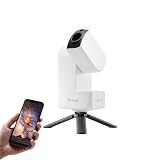
ZWO Seestar S30 Pro
- Apochromatic optics
- Built-in light pollution filters
- One-tap deep-sky stacking
All 8 Telescopes at a Glance in 2026
The table below lists every telescope in this roundup with the specifications that actually change the images you get. Two of the eight are complete imaging systems that include optics, a mount, a camera and processing. Six are optical tube assemblies or traditional telescopes that need a separate tracking head, a camera and guiding to reach their potential.
| Product | Specs | Action |
|---|---|---|
| ZWO Seestar S30 Pro Smart Telescope |
|
Check Latest Price |
 DWARFLAB Dwarf 3 Smart Telescope DWARFLAB Dwarf 3 Smart Telescope |
|
Check Latest Price |
 DWARFLAB Dwarf Mini Smart Telescope DWARFLAB Dwarf Mini Smart Telescope |
|
Check Latest Price |
 SVBONY SV503 80mm ED Refractor SVBONY SV503 80mm ED Refractor |
|
Check Latest Price |
 Sky-Watcher Quattro 250P 10-inch Reflector Sky-Watcher Quattro 250P 10-inch Reflector |
|
Check Latest Price |
 Celestron AstroMaster 130EQ Telescope Celestron AstroMaster 130EQ Telescope |
|
Check Latest Price |
 Celestron Origin Home Observatory Celestron Origin Home Observatory |
|
Check Latest Price |
 SVBONY SV550 80mm Triplet APO SVBONY SV550 80mm Triplet APO |
|
Check Latest Price |
1. ZWO Seestar S30 Pro: Best All-in-One Telescope Overall
ZWO Seestar S30 Pro Smart Telescope, App-Controlled Astrophotography
30mm aperture
160mm focal length
4.6 degree field
3.6 lb
Auto and manual focus
Pros
- Self-aligns and images within minutes of setup
- Apochromatic optics with built-in light pollution filters
- Dual-camera 4K wide-field and deep-sky capture
- Compact 3.6 lb body with anti-dew protection
Cons
- Documentation explains what it does rather than how to use it
- App account registration can fail for some owners
- Deep-sky imaging needs the tripod left completely undisturbed
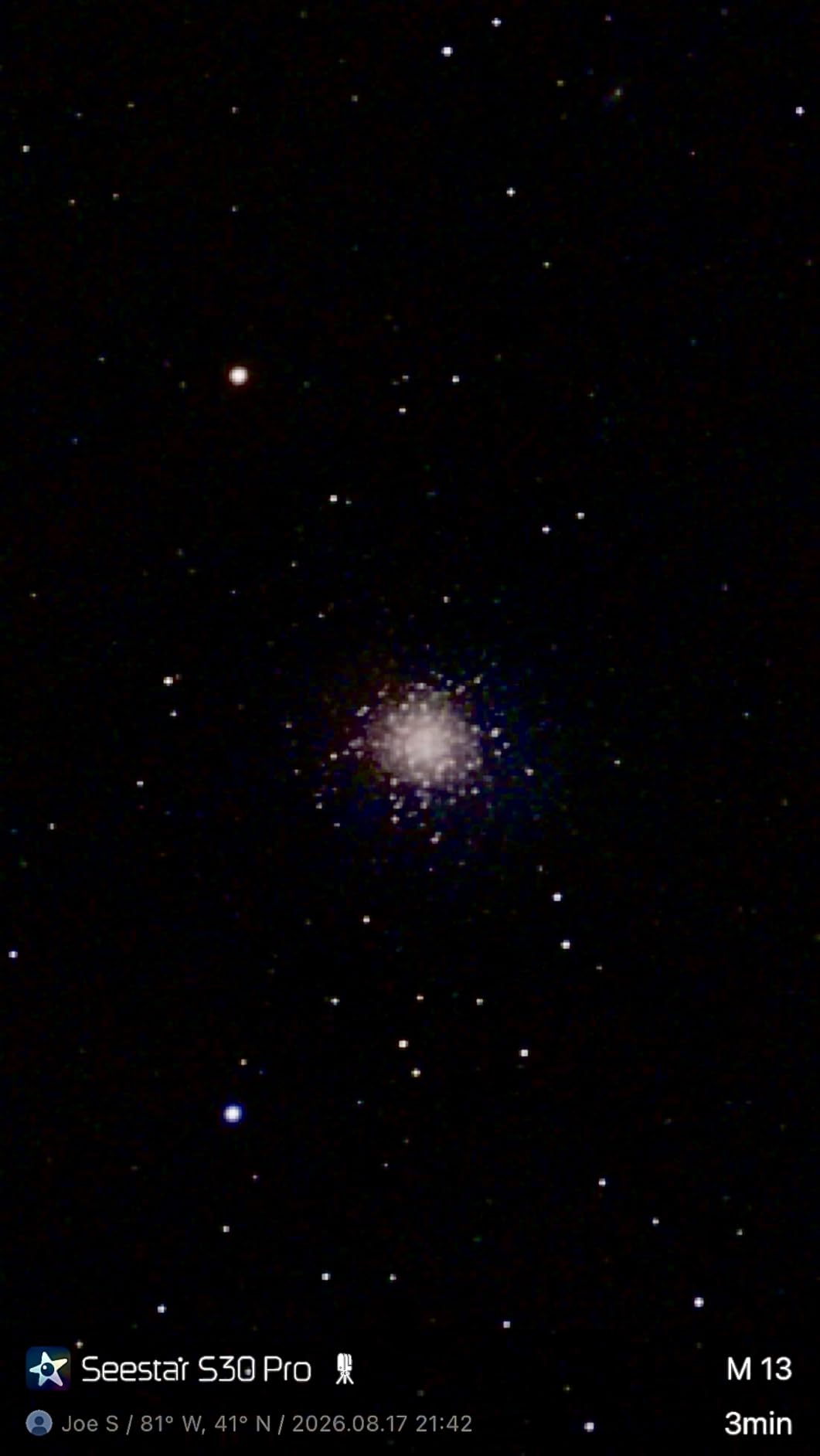
The S30 Pro is the instrument I hand to anyone who says they want to photograph space and does not own a camera. It powers on, finds itself, focuses, tracks and stacks, and the finished frame arrives in the app on the phone. Several experienced imagers report capturing a target image in under ten minutes from a city parking lot on their first night out, which is not something the traditional kit on this list can promise.
Optically it behaves like a small apo rather than a toy. The 30mm objective produces a 4.6 degree field at 160mm, wide enough for the Milky Way arm, a decent chunk of Orion, or the North America and Rosette complexes, and the built-in light pollution filter does real work under suburban skies. The dual-camera setup handles both wide night scenes and tracked deep-sky frames without a swap in the middle of a session.
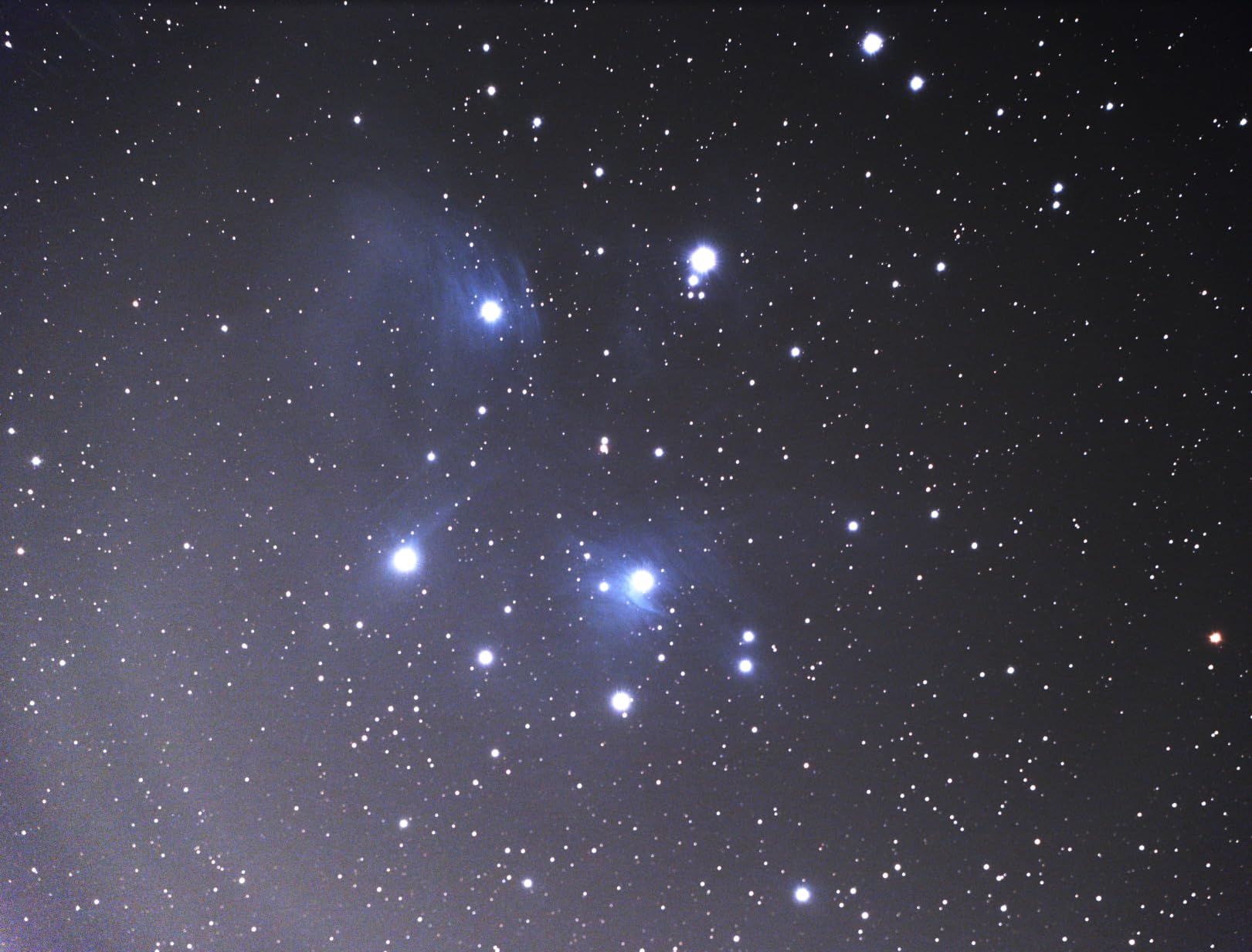
What surprised me was how little post-processing it needs. On-board noise reduction and sky separation handle most of the cleanup, so the learning curve is about choosing targets and setting exposure length rather than learning a stacking suite. Battery power, a 3.6 lb weight and anti-dew protection mean it can sit outside through a full night without a mains outlet or a dew heater.
The honest weakness is the documentation. Owners repeatedly report that the manual describes what the scope does rather than how to do it, so expect to learn the workflow from the app itself and from community threads. A few users also hit a loop in the companion app account registration with no obvious fix, which is a genuinely frustrating first-night experience even when the hardware works well.
Who the Seestar S30 Pro suits
It suits families, renters without a driveway or garden, and anyone who wants deep-sky results without a laptop, a cable and a software stack. The 4.6 degree field covers most of the beginner target list, and the one-tap modes cover Milky Way, star trails, planets and galaxies, so the same instrument grows with you for a while.
It also suits anyone moving to a darker site. At 3.6 lb it fits in a car boot with a battery pack, which is exactly the scenario a heavy German equatorial rig handles badly.
Who the Seestar S30 Pro does not suit
It does not suit an imager who wants to choose a mono camera, dial in gain and build a two-channel SHO palette from H-alpha and OIII data. There is no path to that kind of control here, and the fixed internal sensor is not interchangeable.
Nor does it suit anyone planning to image from a deck in strong wind, because deep-sky frames need the scope to stay completely undisturbed on the tripod while a single pixel shift smears the field. Treat that as a constraint rather than a flaw, but plan your location around it.
2. DWARFLAB Dwarf 3: Best Value Grab-and-Go Smart Telescope
DWARFLAB Dwarf 3 Smart Telescope, App-Controlled Astrophotography Camera
35mm objective
3 lb weight
Dual telephoto and wide lenses
4K tracking
Cloud processing
Pros
- Genuine equatorial mode handles 60 to 120 second subs
- Included dual-band filter cuts light pollution
- Cloud processing handles stacking and dark frames
- Dual lenses also work as a daylight camera
Cons
- WiFi connection drops often enough to join it early
- No external antenna limits range from the phone
- Telephoto lens lacks detail on small deep-sky objects
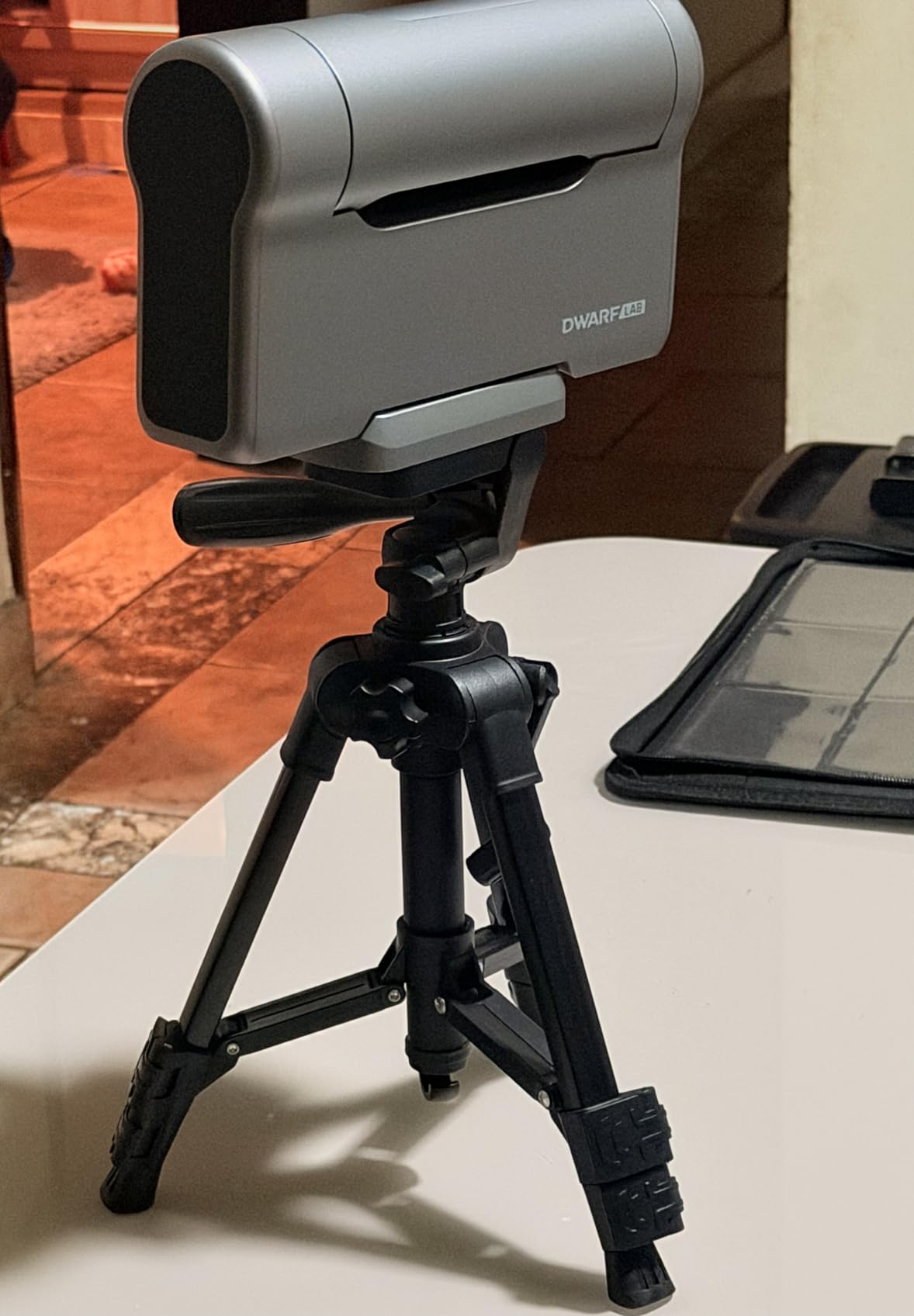
The Dwarf 3 is the one I would pack for a trip. At 3 lb it disappears into a standard backpack, and it is the only instrument in this roundup that doubles as a capable daytime wildlife and scenery camera through its telephoto and wide-angle lenses. Owners routinely image Markarian’s Chain, the North America, the Eagle and Pacman nebulae and the Andromeda galaxy straight from Bortle 5 to 9 backyards.
The real reason it earns the value slot is the equatorial mode. Genuine tracking at 60 to 120 seconds per sub is the difference between a smear and a clean frame, and that is a capability most scopes at this weight do not have. The included dual-band filter pulls emission nebulae forward under suburban skies, and the cloud pipeline does stacking, dark frames and denoising so no laptop is required at the field.
Reported use runs from about two minutes from power-on to a first stacked frame, and one owner documents a three-hour run under an 80 percent moon. Those are the numbers that matter for a beginner deciding whether astrophotography is a hobby they want, because the answer is visible in the app before the first night ends.
The recurring complaint is the WiFi handshake. Enough owners report the connection dropping or failing on start that the standard advice is to join the network well before a session, and the lack of an external antenna limits how far you can walk from the phone in a yard. One long-term owner also reports an untested firmware update that rearranged the app layout and degraded function, which accounts for most of the one-star reviews.
Who the Dwarf 3 suits
It suits the traveller and the dark-site regular, since the whole instrument including the included carrying bag weighs about as much as a laptop. The dual lens set means one device covers a wide Milky Way panorama and a tracked emission nebula without extra hardware.
It also suits anyone who wants a step up from a phone camera but not the commitment of a mount, a separate camera and a laptop full of stacking software.
Who the Dwarf 3 does not suit
It does not suit someone chasing small targets. The telephoto lens does not hold enough resolution for compact galaxies and planetary nebulae, so large emission nebulae and wide star fields are where this instrument pays off. Galaxies that fill a large field are also a stretch on the internal sensor.
Nor is it the right pick for a permanent backyard installation, because the tripod and app-driven workflow assume a session rather than an observatory. For a fixed setup, an optical tube assembly on a real equatorial head gives you far more headroom per dollar.
3. SVBONY SV503 80mm ED: Best Budget Wide-Field Refractor
SVBONY SV503 Upgraded ED Refractor Telescope, 80mm F7 with Field Flattener
80mm aperture
560mm focal length
1.9 degree field
5.5 lb
Includes 0.8x flattener
Pros
- Bundled 0.8x flattener turns a slow f/7 into a fast system
- S-FPL51 ED glass keeps stars clean
- Only 5.5 lb for an 80mm refractor
- 2 inch dual-speed focuser with 1:10 micro-adjustment
Cons
- Optical tube assembly only with no mount or camera included
- 2 inch focuser adds balance weight on lighter mounts
- Manual focus only out of the box
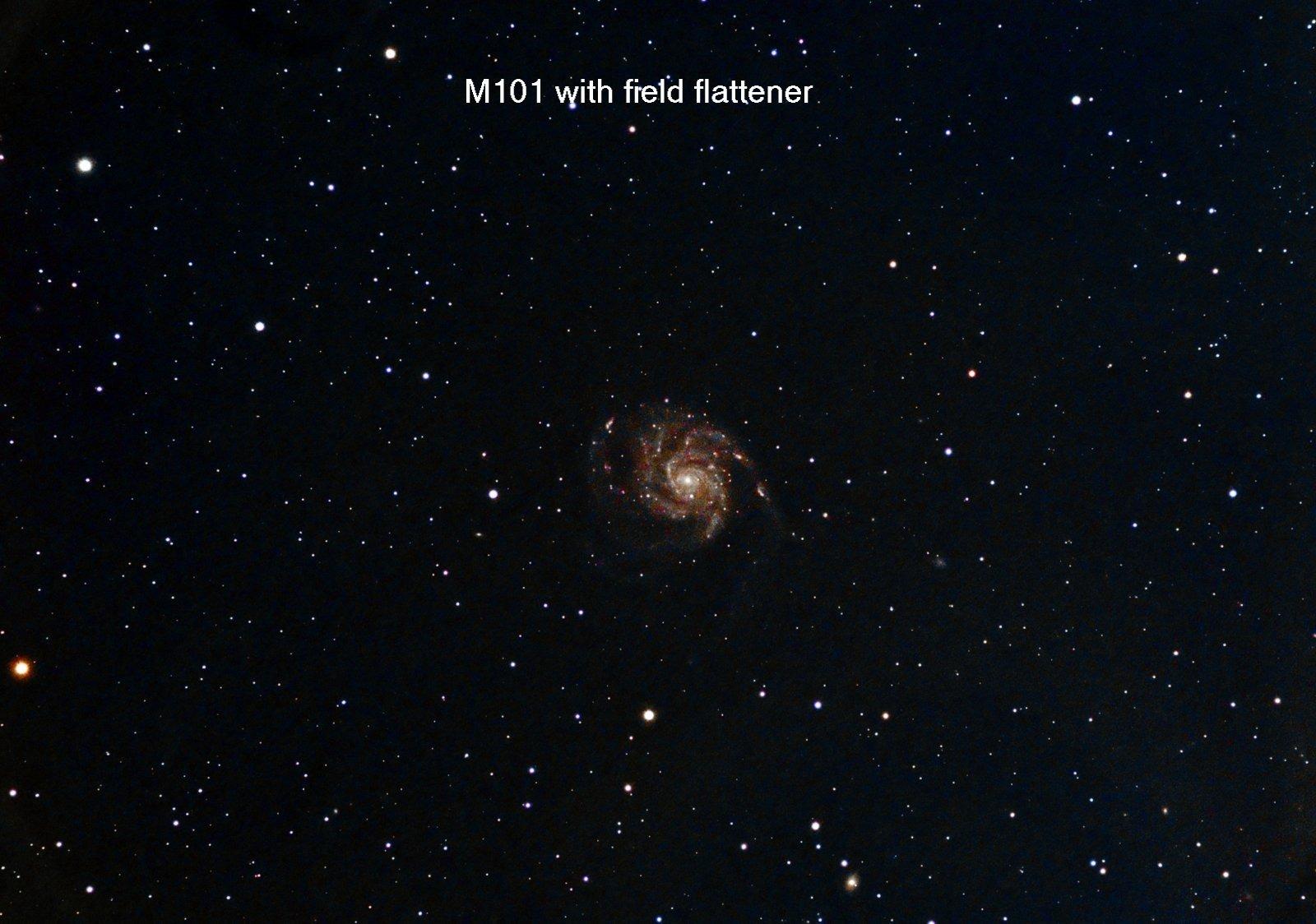
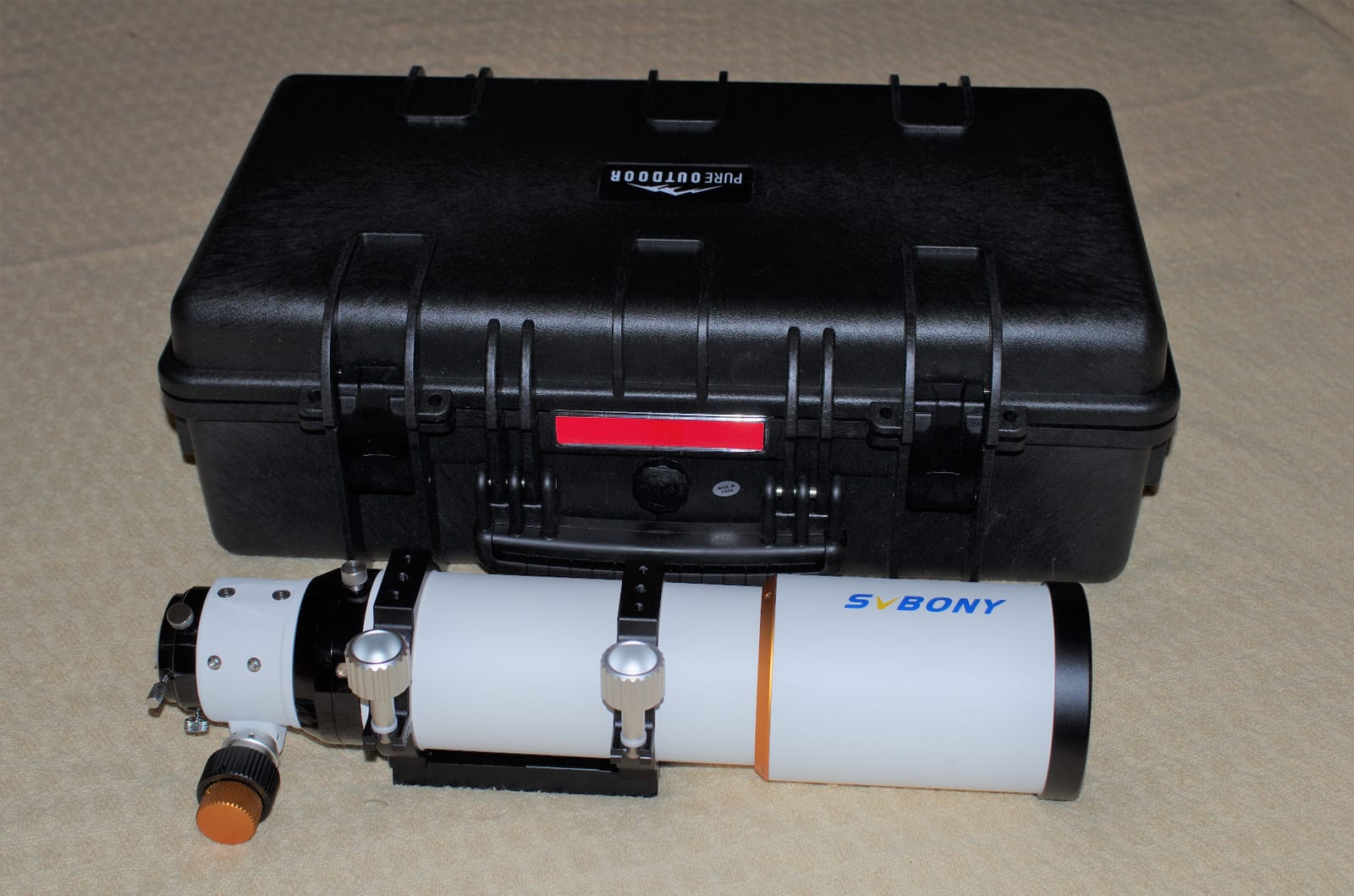
The SV503 is the most highly rated optics in this group, and the reason is the SV193 0.8x reducer and field flattener that ships in the box. Take a 560mm f/7 design and reduce it to about 448mm at f/5.6, and you get both a wider field and roughly half the exposure time per sub. That single accessory is usually the first real upgrade a mid-level imager buys, and here it is included.
Optically it is an ED doublet rather than a true triplet, so you are not getting perfect colour correction. In practice the S-FPL51 glass holds stars tight and the flattener removes the corner star distortion that plagues fast refractors, and most imagers report clean round stars across a full-frame sensor once spacing is dialled in.
At 5.5 lb it is light on almost any tracking head, which means the mount budget goes further. Pair it with a portable star tracker and you have a genuinely grab-and-go wide-field system; pair it with a German equatorial and you have a rig that will grow with you for years. The 1.9 degree native field is modest, so plan mosaics for the Veil, the Heart and Soul complex and anything else that overruns the frame.
The catch is the invoice at the end. This is an optical tube assembly, so a mount, a camera, guiding and filters are all still to come, and that is where most of the money in a real rig goes. The 2 inch focuser also draws noticeably, which makes balance on the lightest trackers tight, and manual focus means no electronic autofocus out of the box unless you add a focuser motor later.
Who the SV503 suits
It suits the imager who already owns a camera and a tracking head and wants better optics without a redesign. The included flattener alone would justify the upgrade, and the weight keeps it viable on the mid-size portable mounts that most imagers already own.
It also suits someone learning wide-field nebula imaging, because a fast corrected f/5.6 system is the easiest place to get good results with short subs and a light-pollution filter.
Who the SV503 does not suit
It does not suit an absolute beginner buying a first imaging system, because nothing here works without a mount and a camera. Nor does it suit planetary imaging, since 560mm at 80mm aperture is a wide-field instrument and not a planetary one.
Anyone who needs truly colour-free stars across the entire field should look at a triplet instead, because a doublet ED design still shows some fringing at the edges that stacking will not fully remove.
4. Sky-Watcher Quattro 250P: Best Reflector for Faint Deep-Sky Targets
Sky-Watcher Quattro 250P Imaging Newtonian – Large Aperture 10-inch Reflector Optical Tube for Astrophotography
10 inch aperture
1000mm focal length
f/4 focal ratio
33.2 lb
Includes rings and dovetail
Pros
- Fast f/4 optics cut exposure time versus slow Newtonians
- Oversized secondary illuminates APS-C and full-frame sensors
- Knife-edge baffles help under suburban skies
- Rings
- dovetail and finder included
Cons
- Supplied focuser base intrudes into the optical path
- Thin spider vanes and collimation bolts are hard to align
- Laser collimator and dew heater are effectively required
Aperture is the cheapest light you can buy in this hobby, and the Quattro 250P delivers ten inches of it at f/4. That combination is why it is here: the fast focal ratio means shorter subs than a typical 8-inch f/5 Newtonian, and the short focal length keeps the field wide enough for large emission nebulae and galaxies without a reducer.
The oversized secondary is a genuinely thoughtful detail. It delivers enough illumination for full-frame sensors without vignetting, and the multiple knife-edge baffles help hold contrast on light-polluted skies. Tube rings, a Vixen-style dovetail and an 8×50 finderscope are all included in the box, which removes three small line items that are otherwise easy to forget.
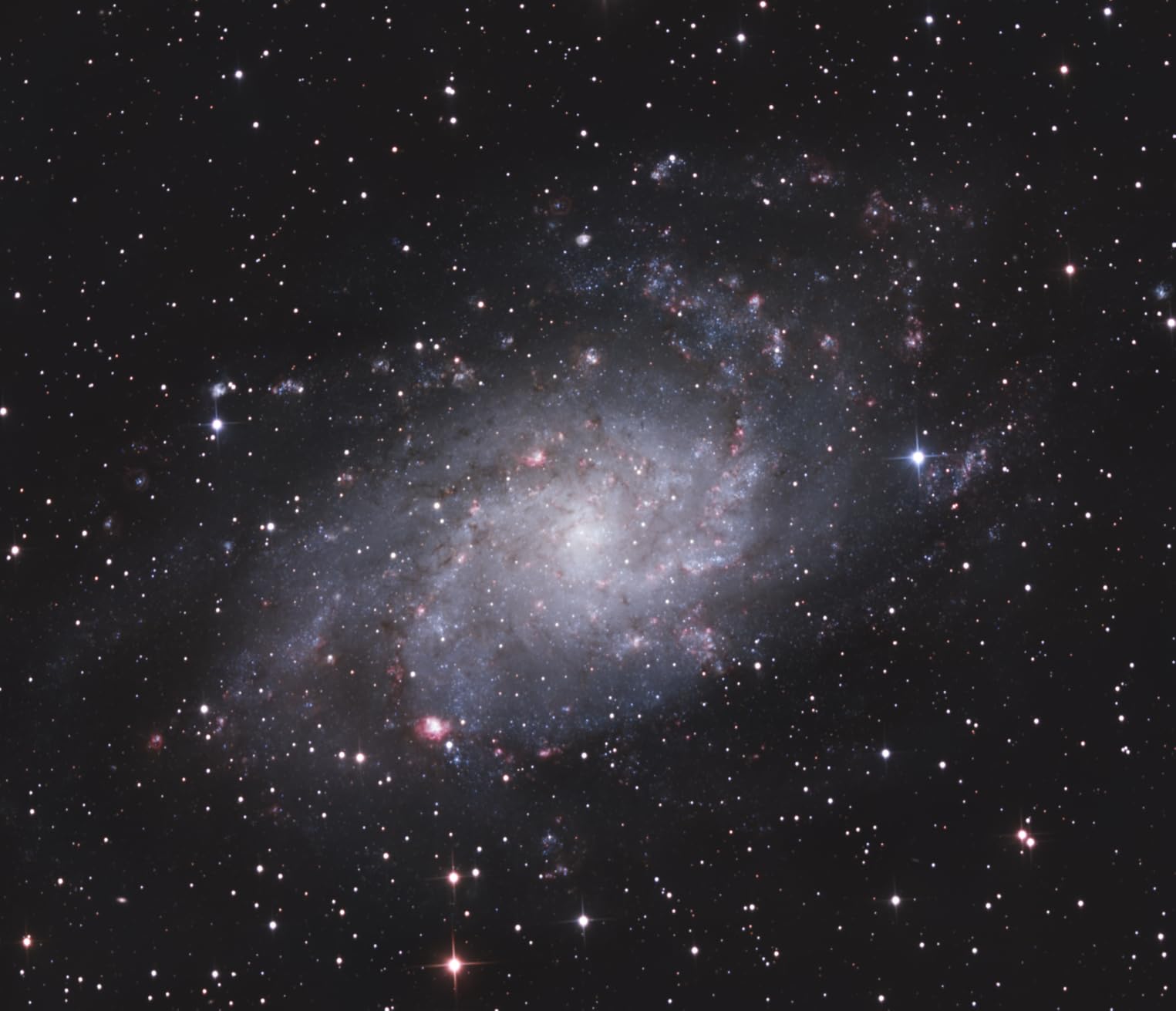
Once collimated, reviewers report sharp star fields and controllable diffraction spikes, and they image targets like M33 at sub-arcsecond guiding. For visual work, an f/4 imaging Newtonian is not the most relaxed design at the eyepiece, but a focal reducer converts it to something more usable for a mixed observing and imaging setup.
Nothing here is free. The supplied focuser has a white base that intrudes into the optical path, so many owners replace it or mask the obstruction. The thin, unbeveled spider vanes and collimation bolts make alignment fiddly rather than pleasant, and a laser collimator plus a dew heater are effectively mandatory before imaging. At 33 lb the tube also needs a mount with real payload capacity, and lifting it onto one is a two-person job in a small room.
Who the Quattro 250P suits
It suits the imager chasing faint, extended targets where every photon counts and the target is big enough to suit a 1000mm field. Galaxies, the Veil, the Helix and wide emission complexes all sit comfortably in reach, and the fast ratio keeps sub times manageable on a mid-size equatorial head.
It also suits someone who wants to do visual observing with the same instrument, since 10 inches of aperture shows a great deal through an eyepiece with a reducer fitted.
Who the Quattro 250P does not suit
It does not suit anyone without a substantial mount, a working collimation routine and a willingness to buy accessories before the first frame. Budget for a laser collimator, a dew heater, an upgraded focuser and a guiding solution, because the telescope alone is not an imaging system.
It also does not suit travel imaging or small-aperture planetary work, and its size makes it the least portable instrument in this roundup by a wide margin.
5. Celestron AstroMaster 130EQ: Budget Pick Entry Scope for New Imagers
Celestron AstroMaster 130EQ Telescope for Deep-Sky Beginners
130mm aperture
650mm focal length
0.67 degree field
17 lb
German equatorial mount
Pros
- Largest review base in this roundup with thousands of owners
- German equatorial mount with slow-motion knobs
- Tool-free assembly reaches the backyard in minutes
- Eyepieces
- finder and software included
Cons
- Visual scope first
- imaging needs mods to reach focus
- Red-dot StarPointer is hard to calibrate
- Slow-motion controls and tripod are not refined
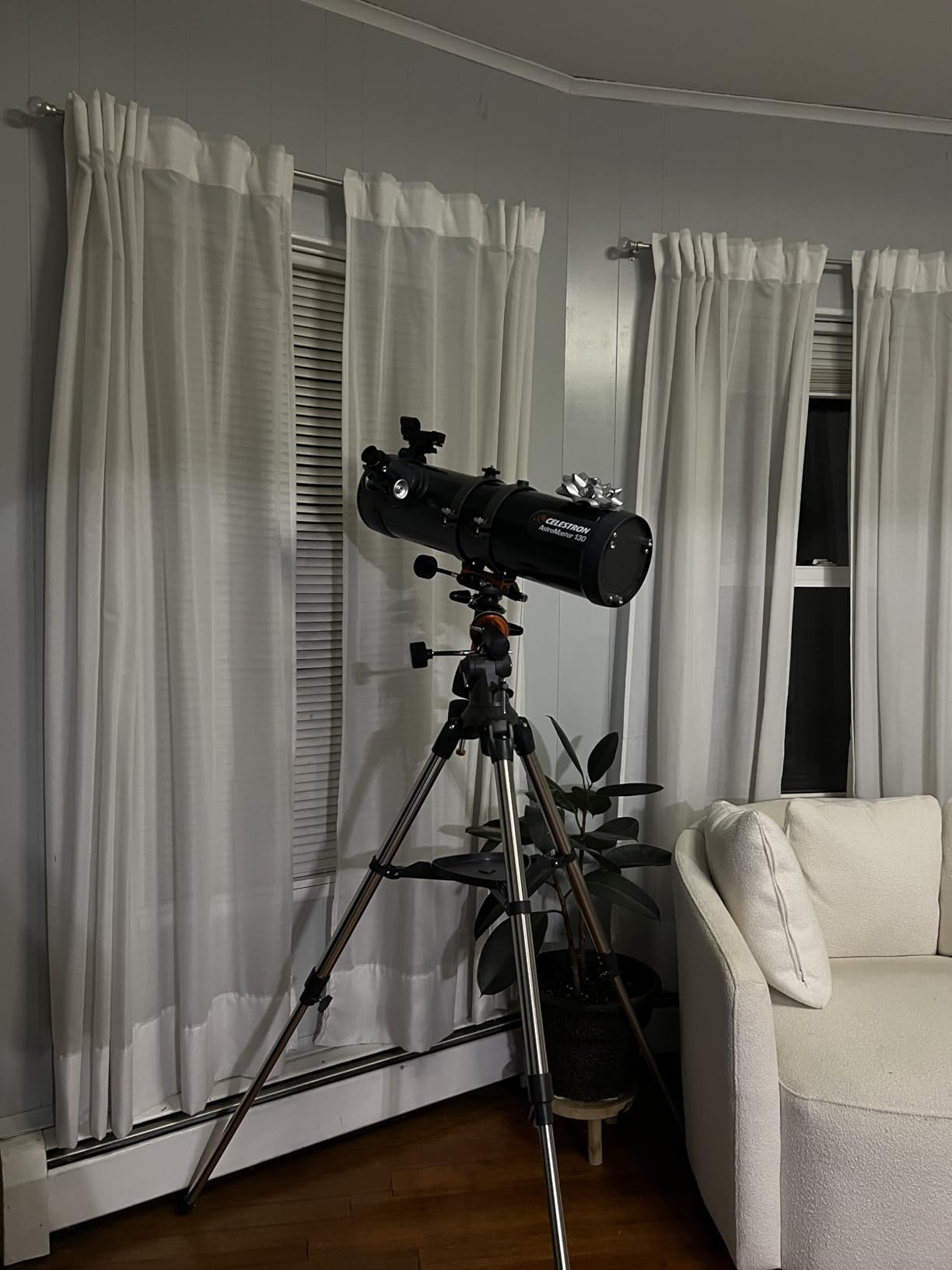
With 3439 reviews behind it, the AstroMaster 130EQ is the most thoroughly documented beginner telescope on the market, and the most polarised. Owners consistently describe it as the scope that got them hooked, and the most useful reviews on it are detailed guides to collimation and polar alignment that you can follow step by step.
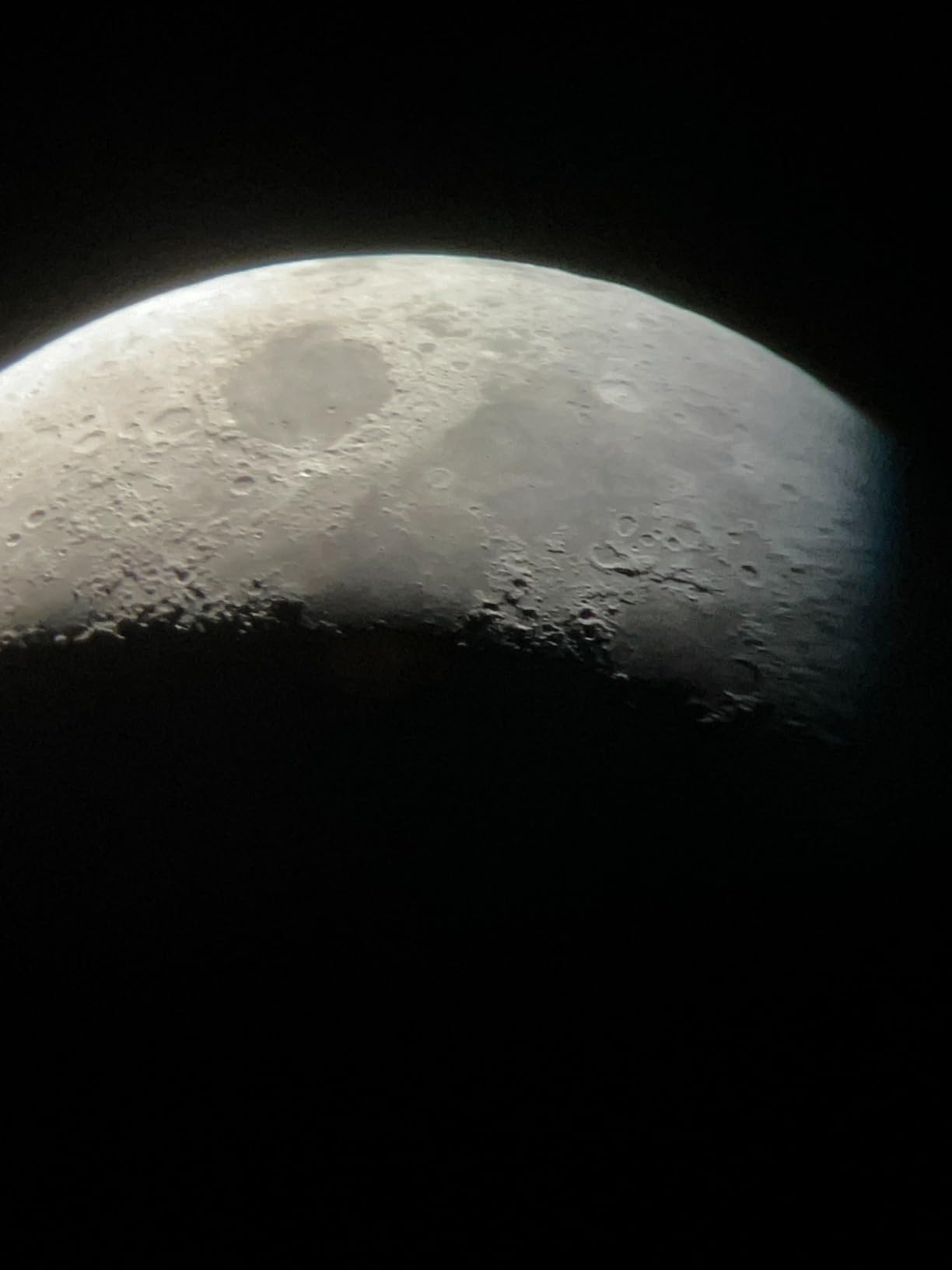
The value argument is the German equatorial mount. A proper equatorial head with right-ascension and declination slow-motion controls is the single thing most beginners skip, and here it comes assembled with the tripod, a 20mm eyepiece with an erect image corrector, a 10mm eyepiece and a red-dot finder. The 130mm aluminum and SiO2 coated mirror gives sharp, bright views of the Moon, Jupiter and Saturn.
For imaging, treat it as a starting point rather than a finished system. The supplied 20mm eyepiece is weak enough that most owners add a Barlow and an 8-24mm zoom, and several report sub-second exposures as the realistic ceiling, with modifications needed to reach focus for imaging. Used visually it is a genuinely good first equatorial telescope, which is exactly why so many people bought one.
The rough parts are mechanical. The declination slow-motion adjustment is coarse, the latitude adjustment screw design is awkward, and the red-dot StarPointer is difficult to calibrate precisely. The light steel tripod and roughly 17 lb total weight make it hard to carry and prone to shaking when fully extended, so consider a firmer tripod and a vibration damping pad early on.
Who the AstroMaster 130EQ suits
It suits someone who wants a complete, assembled starting point with a real equatorial mount and no shopping list, and who is content to learn on a visual telescope first. The included finder, eyepieces and software get you observing the same night the box is opened.
It also suits a beginner who wants a mount they can grow into, since a 130mm tube on a German equatorial head is a configuration that tolerates upgrades over time.
Who the AstroMaster 130EQ does not suit
It does not suit an imager who wants a turnkey deep-sky system on night one. The exposure ceiling, the mods for imaging focus and the coarse slow-motion controls all add friction exactly where a first-time imager is most likely to give up.
Nor is it a good travel instrument, because a 17 lb steel tripod that shakes when extended is the opposite of what a dark-site trip needs. If imaging is the main goal rather than a hobby alongside observing, put the budget into a tracker and a camera instead.
6. Celestron Origin: Best Fully Automated Astroimaging Observatory
Celestron – Origin Intelligent Home Observatory – All-in-one Astroimaging and Stargazing Smart Telescope – 6-inch RASA Telescope – Fully-Automated GoTo Mount – User-Friendly – iOS/Android Compatible
6 inch RASA aperture
f/2.2 focal ratio
1.02 degree field
42 lb
Auto and manual focus
Pros
- f/2.2 aperture delivers bright images with less exposure time
- AI stacks and processes frames in real time
- StarSense self-aligns and focuses in about two minutes
- Fully automated GoTo mount handles all pointing
Cons
- 42 lb body is a fixed installation
- 1.02 degree field forces mosaics for large targets
- f/2.2 needs a precisely matched camera to avoid vignetting
The Origin is the only instrument here with six inches of aperture and no assembly project. The patented RASA design at f/2.2 puts a fast, sharp image on the sensor in a fraction of the exposure time a slower scope needs, and the built-in AI stacks and processes every frame as it arrives, so finished galaxies and nebulae appear without user intervention.
StarSense scans the sky, focuses and self-aligns, and owners report being operational within about two minutes of assembly. The app is a simple planetarium-style interface on iOS and Android, which removes the learning curve that stops most people at the acquisition stage. The GoTo mount handles all pointing and tracking, so there is nothing to align by hand in the dark.
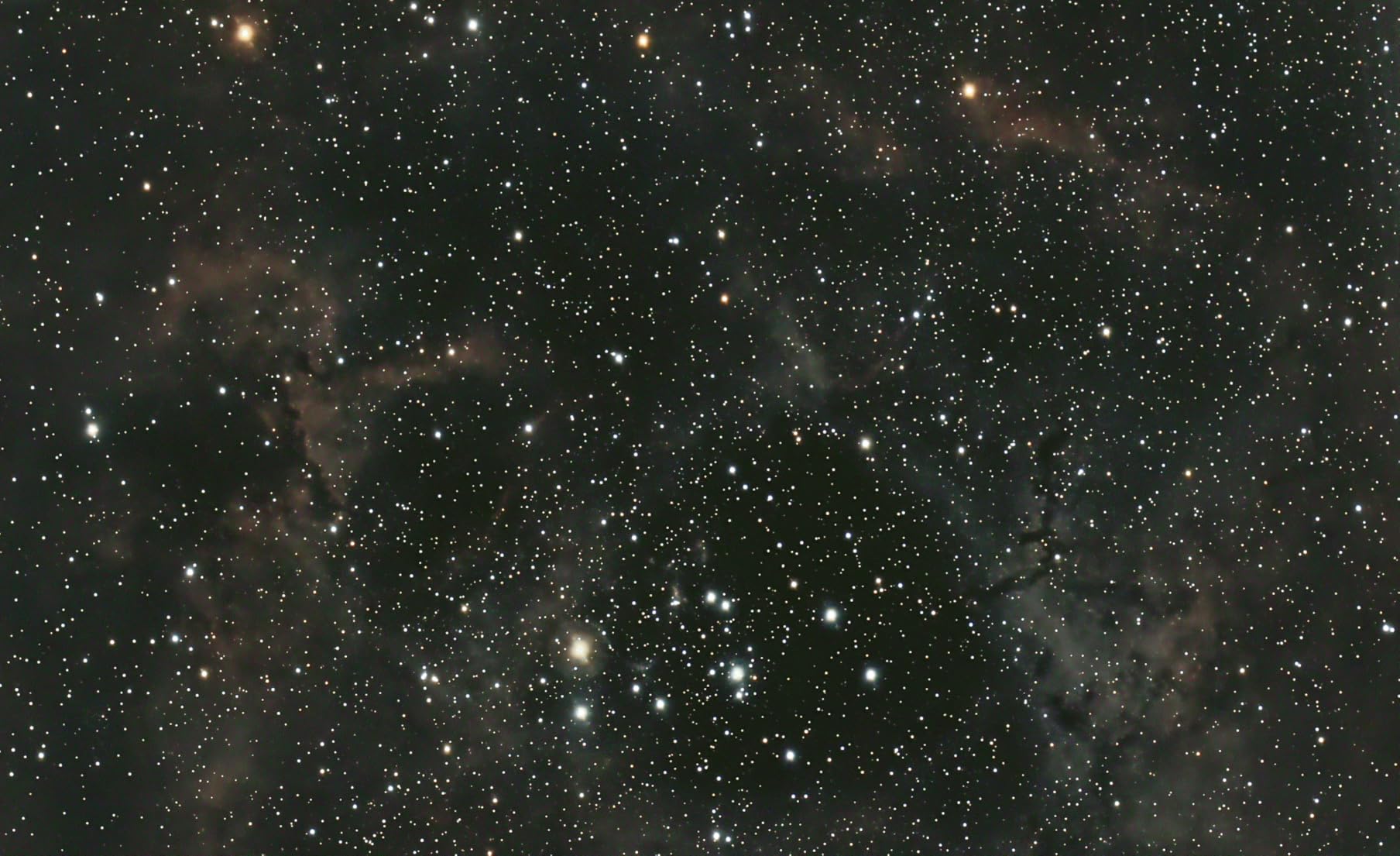
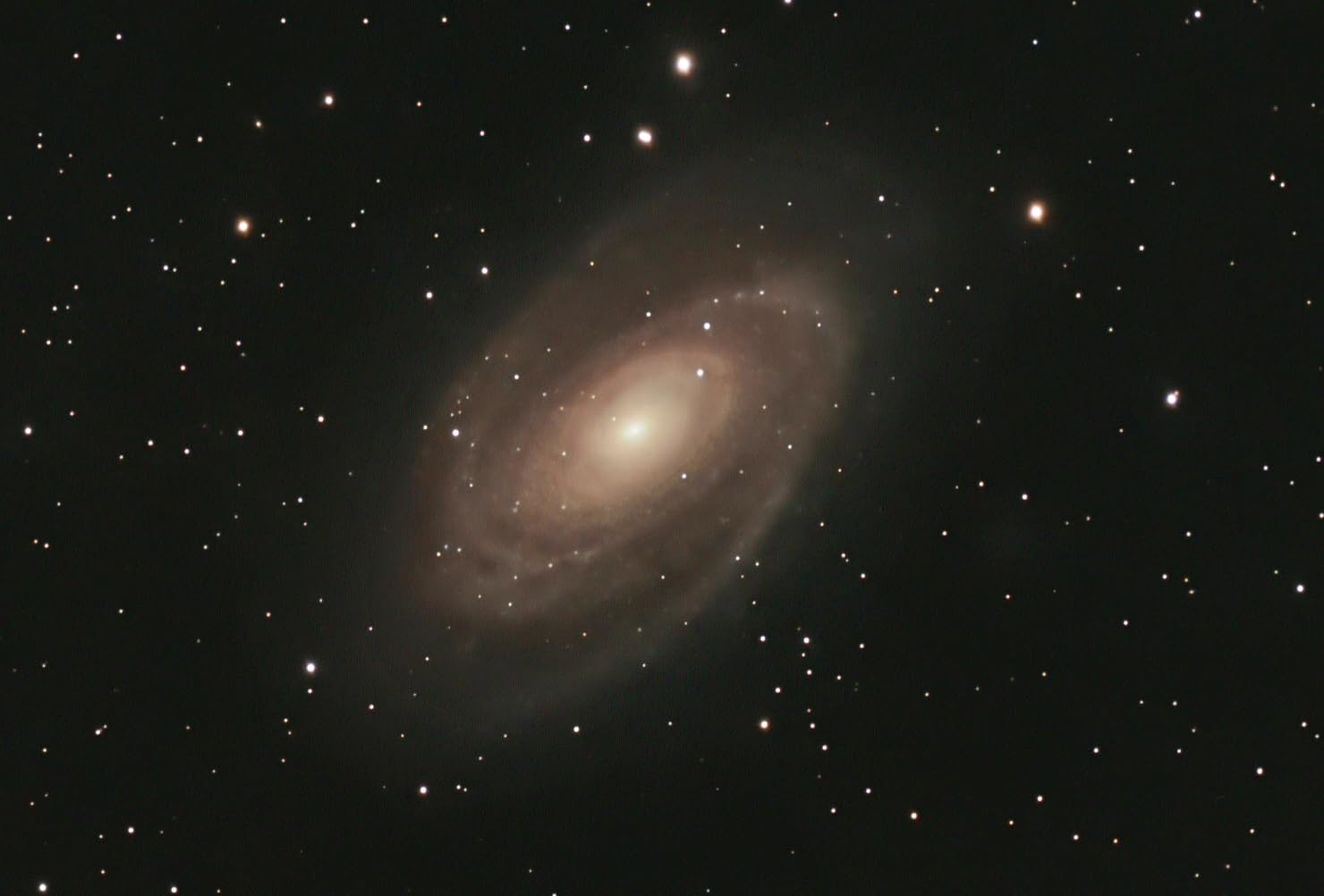
With a 1.02 degree field, the design is tuned for moderate targets. M31, M42, the Veil and most galaxies fit comfortably, while the North America, the Heart and Soul complex and the Rosette need mosaics. At f/2.2 the camera must match the optical train closely, otherwise the corners vignette, and a 1-inch sensor with any manual corrector adjustment needs care.
At 42 lb this is a fixed installation, not a grab-and-go instrument, and the narrow field plus the corrector setup are the two costs of the very fast design. The rating distribution is unusually clean, with 83 percent five-star and nothing in the two-to-four-star range, but it rests on only 30 reviews, so the long-term reliability picture is still forming.
Who the Celestron Origin suits
It suits anyone with a garden, patio or driveway who wants high-quality unattended imaging and does not want to learn sequencing, plate solving and stacking software. Six inches of aperture at f/2.2 is a serious amount of light on a sensor, and the automation is the point rather than a gimmick.
It also suits an imager upgrading from a small smart scope who has run out of aperture and wants galaxies rather than only emission nebulae.
Who the Celestron Origin does not suit
It does not suit renters, travel imaging or anyone without a permanent outdoor spot, because 42 lb and a fixed installation make relocation impractical. Nor does it suit an imager who wants to attach their own camera or change optical trains.
Anyone shooting very large nebulae will want mosaic planning software in advance, since the 1.02 degree field means a multi-panel capture for the biggest targets and that takes longer than a single wide-field scope would.
7. DWARFLAB Dwarf Mini: Best Ultra-Portable Telescope for Travel
DWARFLAB Dwarf Mini Smart Telescope – 1.85lb Portable Astronomy Telescope
30mm aperture
150mm focal length
2.45 degree field
1.85 lb
90 second EQ mode
Pros
- 1.85 lb body fits a backpack or a large pocket
- Equatorial mode reaches 90 second subs with a light pollution filter
- Plate solving and stacking run automatically
- Mega-stack accumulates subs across sessions
Cons
- Sensor resolution is small for large prints and compact targets
- Weak for planetary imaging
- WiFi pairing can be finicky at first
- Some units show internal dust
The Dwarf Mini answers a question most roundups skip: what is the smallest thing that still produces a real image. At 1.85 lb it fits in a backpack or a large coat pocket, and the app gets a first shot in roughly three minutes from a built-in sky atlas. It is the instrument I would take to a mountain, a campsite or a friend’s balcony abroad.
Equatorial mode supports single-frame exposures up to 90 seconds with built-in light pollution filters, and the consensus setting among owners is around 60 seconds at gain 60. Automatic dark frames, internal stacking and the plate-solving GoTo remove the field chores that normally dominate a first session, and Mega-stack lets you accumulate sub frames on the same target across several nights.
Reviewers repeatedly describe it as the best value in the smart telescope class, particularly for people who previously bought large gear and underestimated the learning curve. Cloud Stellar Studio processing cleans up subs with little third-party work, and the Sony IMX662 low-noise sensor is quiet enough to make short exposures viable.
The limits are resolution-led. Small deep-sky objects look tiny and the output will not fill a large print, planetary imaging produces round discs with no surface detail, and initial WiFi pairing can be unreliable until the app is set to connect through home WiFi. A minority of owners also report dust particles inside the lens that cannot be cleaned without opening the body.
Who the Dwarf Mini suits
It suits travellers, campers and anyone who wants deep-sky imaging away from a permanent setup. The 2.45 degree field covers the Milky Way band, large emission nebulae and broad galaxy clusters, and 90-second equatorial subs are long enough to separate the target from the sky background under moderate light pollution.
It also suits a complete beginner who wants to see results before deciding whether to spend on a real rig, since the app does the stacking and dark frames for you.
Who the Dwarf Mini does not suit
It does not suit planetary imagers, because the aperture and focal length combination produces blobs rather than surface detail. Nor does it suit anyone planning large prints or chasing compact galaxies, targets, since the sensor resolution is the limiting factor rather than the mount.
If you want a permanent backyard instrument, the tripod-based app workflow is the wrong shape. Consider a scope you can leave set up under a cover instead.
8. SVBONY SV550 80mm: Best True Apochromatic Refractor
SVBONY SV550 AP0 Telescope, 80mm ED F6 Triplet Apochromatic Refractor OTA
80mm aperture
480mm focal length
5.6 degree field
Air-spaced triplet
2.5 inch focuser
Pros
- Triplet apochromatic design virtually removes chromatic aberration
- Pinpoint stars with no fringing across the full field
- 2.5 inch 10:1 focuser reduces vignetting on full-frame
- Internal baffles suppress stray light
Cons
- Focus hold is light and the tube shifts after a bump
- Internal dust between elements has been reported
- Dovetail rail can foul the focuser when pushed forward
The SV550 is the only true triplet in this roundup, and that single word changes image quality. One S-FPL51 ED element flanked by two correction elements brings three wavelengths to a common focus, which is why owners report pinpoint stars with no detectable fringing across the full field, confirmed in mono imaging. If chromatic aberration bothers you more than aperture, this is the answer.
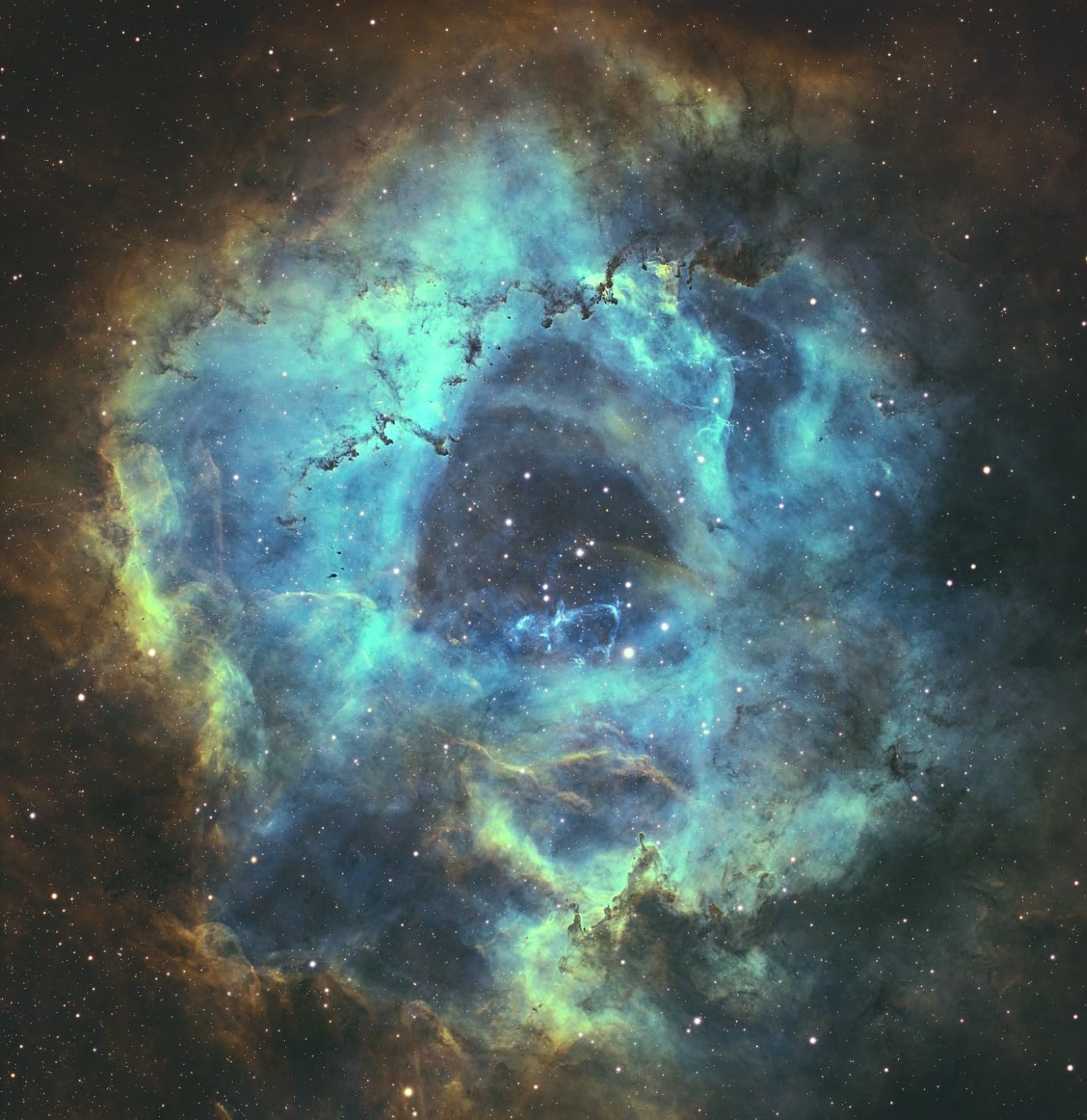
The 5.6 degree native field at 480mm is the widest of any traditional telescope here, which makes it the natural companion for large emission nebulae such as the North America, the Heart and Soul complex and the Rosette. The 2.5 inch magnesium alloy 10:1 dual-speed focuser keeps vignetting off full-frame sensors, and internal baffles in the focuser and lens barrel control stray light on longer exposures.
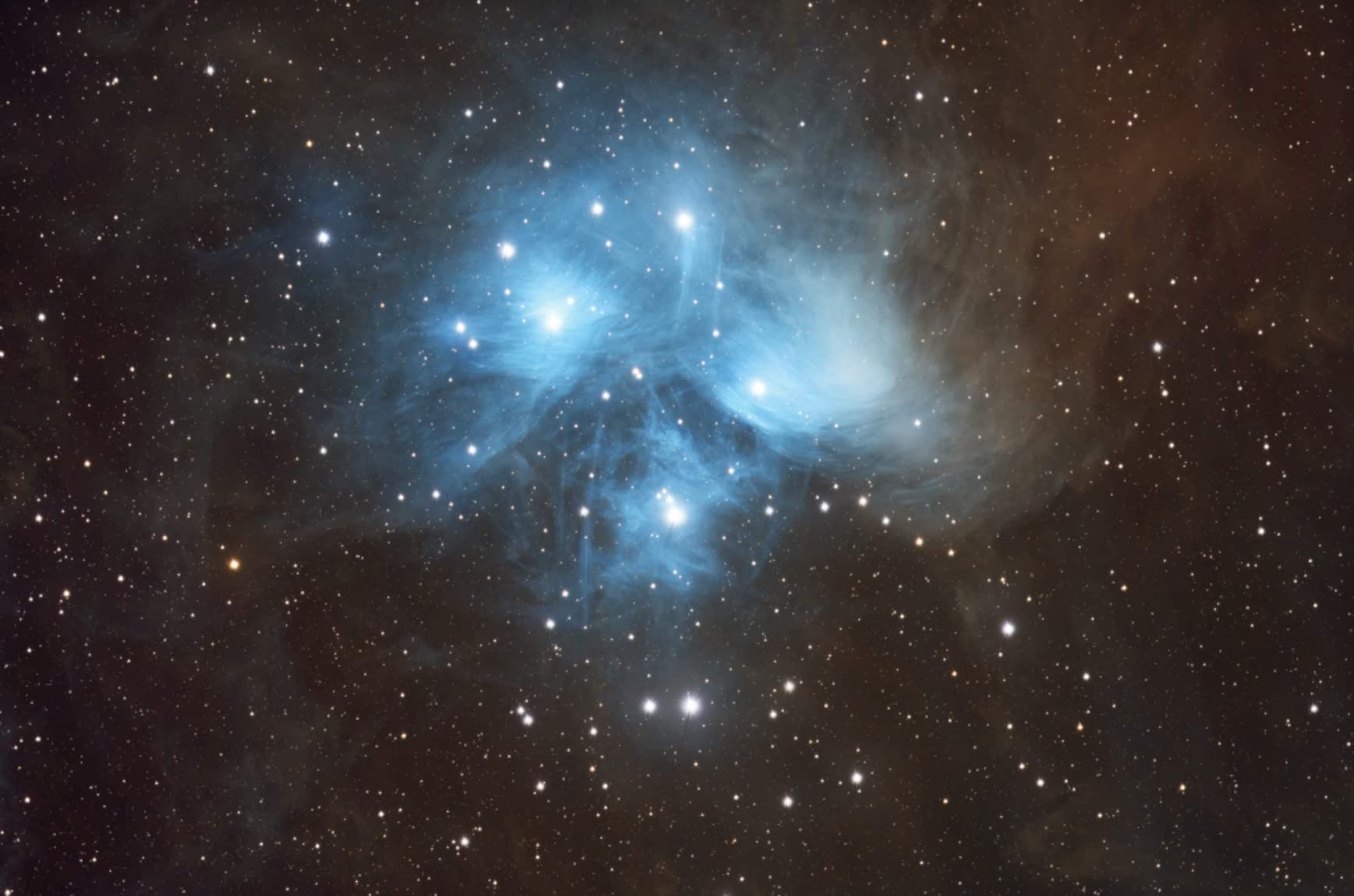
Reviewers who doubted the specification on paper compared it favourably to William Optics and describe sharp, colour-free images at 480mm once a flattener is added and the backspacing is dialled in. The 87mm back focus distance suits cameras with removable lenses, and at 14 inches long the tube fits a gym bag for portable imaging.
The recurring complaints are mechanical rather than optical. Focus hold is light, so the tube shifts on a mount or after a bump, and the low-profile dovetail rail can foul the focuser when the tube is pushed forward for balance. Internal dust between lens elements has been reported and needs disassembly to clean, and focuser travel is tight with some ring hardware, which limits electronic autofocus setups. It is also a tube assembly, so the rest of the rig is still to come.
Who the SV550 suits
It suits an imager with a colour-sensitive eye who wants clean stars without the fringing of a doublet, and who is comfortable dialling in backspacing with a spacing tool. Wide emission nebulae and star clusters are its natural targets thanks to the 480mm focal length and broad field.
It also suits a photographer moving from a DSLR on a telephoto lens who wants to stay in the same wide-field framing with a scope instead.
Who the SV550 does not suit
It does not suit a first-time buyer, because nothing works without a mount, a camera and backspacing work, and a 39-review owner base is thinner than the smart telescopes for verifying long-term behaviour. Nor does it suit planetary imaging, since 480mm is nowhere near a planetary focal length.
Anyone who bumps equipment in the dark should know the focus hold is the weak point, and if you need autofocus you may need different ring hardware to free up the focuser travel.
What to Consider Before You Buy a Telescope for Astrophotography
Optical design: refractor, reflector or all-in-one
Refractors are the most forgiving: no collimation, sealed optics, sharp across the field and low maintenance. Reflectors give you far more aperture per unit of money and a fast focal ratio, at the cost of periodic collimation and a diffraction-spike pattern. All-in-one smart telescopes collapse the whole chain into one device, which is the fastest route to an image and the least flexible route to a specific one.
For a first serious rig, the common wisdom from imaging communities is to spend more on the mount than on the telescope, because tracking error smears every frame regardless of how good the glass is.
Aperture, focal length and field of view
Aperture is the diameter of the main lens or mirror and it governs light-gathering power. Focal length combined with sensor size sets the field of view. To frame a target, divide the sensor dimension in millimeters by the focal length in millimeters, then multiply by 206 to get the angle across the sensor in arcseconds. A full-frame camera on a 480mm refractor covers about 14.6 degrees diagonally, while the same camera on a 1000mm Newtonian covers about 7 degrees.
This is the calculation that stops people buying the wrong scope. If the target you want is the Veil, anything under about 400mm is uncomfortable without mosaics. If it is the Andromeda galaxy, a longer scope keeps it well framed. A free field-of-view simulator will tell you this in ten seconds rather than ten evenings of trial and error.
Focal ratio decides your exposure length
Focal ratio is aperture divided by focal length, and it sets how long each sub frame needs to be. The Sky-Watcher Quattro 250P at f/4 collects sky background roughly four times faster than an f/8 design, so it needs shorter frames for the same signal. Fast systems also show sky glow and gradients more readily, which is why wide-field imagers lean on dual-band and light pollution filters.
Slower ratios are kinder to light-polluted skies and easier to guide, which is why the SVBONY refractors sit around f/6 to f/7 until a reducer is fitted.
Chromatic aberration and flat field
Chromatic aberration is the color fringing around stars caused by a lens bending different colors differently, and it is the signature flaw of budget achromatic and doublet ED refractors. A true triplet is the fix, and stacking reduces fringing but never removes it entirely. Fast designs also need a field flattener to keep corner stars round, which is why the SV503 and SV550 both pair well with one.
Image circle is the other term you will meet. It is the diameter of the sharp image the optics can produce, and it must be at least as large as your sensor or the corners soften. The oversized secondary on the Quattro 250P and the 2.5 inch focuser on the SV550 both exist for this reason.
Mount pairing and the 50 percent payload rule
Keep the total weight of your optical tube assembly, camera, guiding equipment and cables at or below 50 percent of the mount’s stated payload capacity. That margin covers imbalance, wind and periodic error, and a mount loaded to its limit will produce guiding errors no amount of post-processing can fix.
Imagers regularly pair small refractors with portable harmonic drive and strain-wave mounts in the iOptron, Sky-Watcher Star Adventurer GTi and ZWO AM3 classes. A light tracker plus a camera body is enough for the three smart telescopes here, since they include their own mount.
Camera pairing
A DSLR or mirrorless body is a viable entry point and reuses gear you already own, but an uncooled sensor is noisy at long exposure and needs dark frames you must generate yourself. A one-shot colour CMOS camera is simpler, produces colour in a single channel and stacks quickly, and most modern planetary and deep-sky cameras of this type are cooled. A monochrome camera with narrowband filters is the route to the highest signal-to-noise on emission nebulae, at the cost of a much longer learning curve.
Our best cameras for astrophotography roundup breaks down the sensor types in more detail if you are still choosing. Cooling is the feature most worth paying for, because it removes thermal noise instead of merely hiding it in processing.
Filters and what a light-polluted backyard allows
A light pollution filter suppresses the sodium and mercury lines of street lighting and lets emission nebulae through. A dual-band filter passes only the narrow hydrogen and oxygen bands and is the standard tool for suburban and urban imaging, which is why one is built into the DWARFLAB Dwarf 3 and selectable in the Dwarf Mini app. Narrowband filters go further and are the tool for emission nebulae specifically, while they do nothing for galaxies or star clusters.
A light-polluted backyard still produces good data on bright targets, especially with a dual-band filter, but faint galaxies need a dark site or longer integration. The Bortle scale measures sky brightness from 1 for a pristine dark site to 9 for a city centre, and knowing your local class tells you which targets are realistic before you spend three nights on one.
Frequently Asked Questions
What type of telescope is best for looking at stars?
A refractor gives the sharpest, lowest-maintenance views and is the easiest to point at targets, so it is the best all-round answer for stars. A reflector gives you far more light per unit cost, and an all-in-one smart telescope is the fastest to set up if you want guided pointing without learning to do it manually.
What is a good telescope to see Saturn’s rings?
Any scope with 70mm or more of aperture and a magnification around 80x will show the rings clearly, so a small apochromatic refractor such as the SVBONY SV503 80mm works well. Steady seeing matters more than aperture for planetary detail, so avoid imaging in wind or on a shaky tripod.
What is the best telescope for viewing planets and stars?
A Dobsonian or Newtonian reflector gives the best light for the money on planets, while a short-focus refractor gives the best view of star fields and clusters. For imaging both, a mid-size reflector on a German equatorial mount gives you the most flexibility, since one instrument can do both visual and deep-sky work.
Which telescope is best to see planets and galaxies?
Planets need long focal length and high magnification, while galaxies need wide field and aperture, so no single telescope is ideal for both. A reflector with a focal reducer covers galaxies well and a longer refractor covers planets, which is why many imagers keep two instruments rather than compromise on one.
What is the best smart telescope for astrophotography?
The ZWO Seestar S30 Pro is the strongest all-round smart telescope in 2026, with apochromatic optics, built-in light pollution filters and one-tap stacking across a 4.6 degree field. The DWARFLAB Dwarf 3 is the better travel option at 3 lb, and the Celestron Origin is the choice if you have a permanent spot and want 6 inches of aperture.
What is the best refractor telescope for the money?
The SVBONY SV503 80mm ED is the strongest value refractor because it ships with a 0.8x field flattener that turns a slow f/7 design into a fast wide-field imaging system. If you need colour-free stars across the entire field, step up to a true triplet such as the SVBONY SV550 80mm.
Can you see galaxies with a refractor telescope?
Yes. Galaxies are faint and extended, so you want a wide field and steady tracking rather than magnification, which is exactly what a short-focus refractor provides. Expect the brighter members such as Andromeda and the Triangulum to show well first, and use a light pollution filter to improve contrast from the backyard.
Do I need a mount to do astrophotography?
You need something that tracks the Earth’s rotation, and the three smart telescopes in this roundup include that mount. If you buy a traditional optical tube assembly, you also need a tracking head, and the rule of thumb is to keep your total rig weight at or below 50 percent of the mount payload capacity.
Conclusion: Which Telescope for Astrophotography Should You Buy?
The best telescopes for astrophotography in 2026 fall into two groups, and the honest answer depends on which group you are in. If you want images this month with no camera, no mount and no software, buy the ZWO Seestar S30 Pro. If you already track well and want the sharpest stars you can get, the SVBONY SV550 80mm triplet or the SVBONY SV503 80mm ED with its included flattener is where the results separate from the crowd.
For a permanent backyard system with real light, the Sky-Watcher Quattro 250P gives you 10 inches of aperture at f/4, and the Celestron Origin automates all of it. Just remember that the telescope is the cheapest part of a complete imaging rig, and budget the mount, camera, guiding and filters before you commit to any optical tube assembly here.