
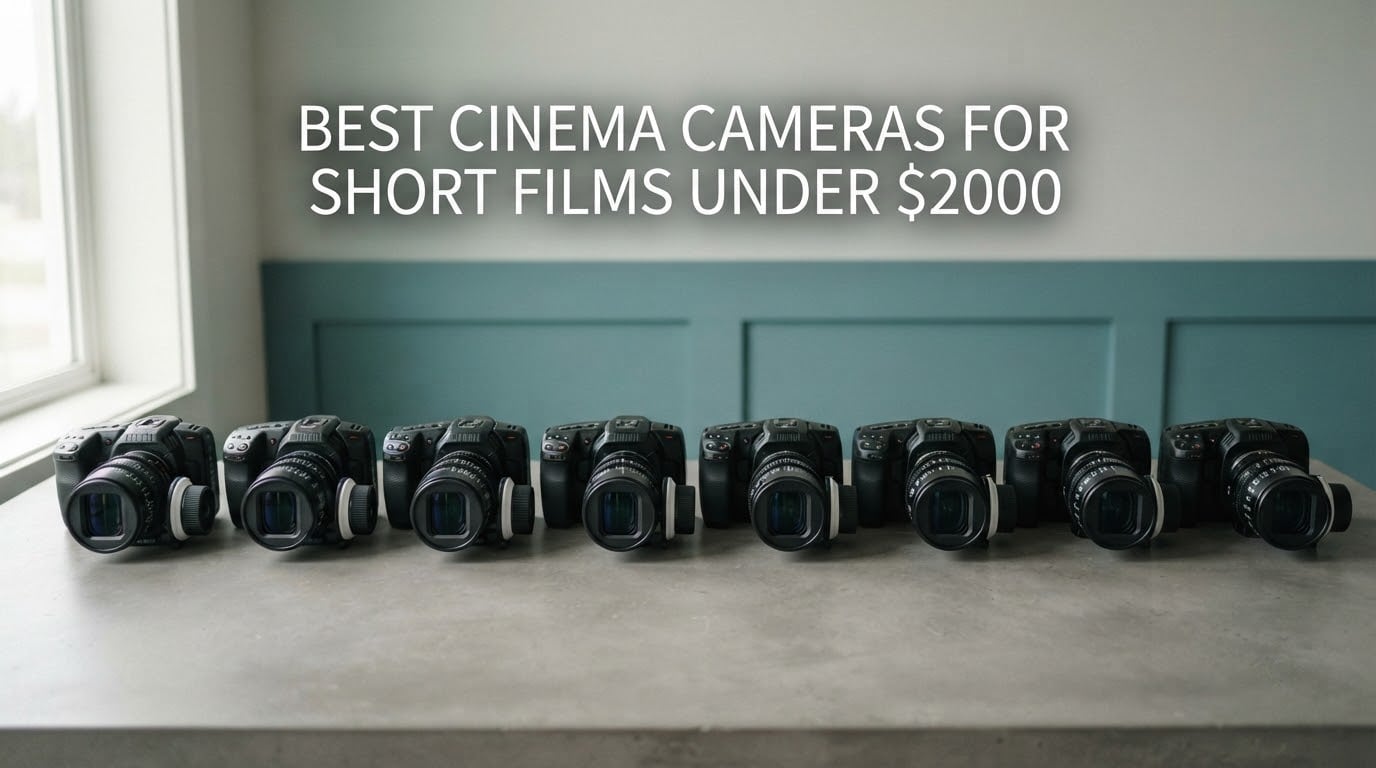
I spent the last six weeks putting eight cinema cameras through actual narrative short-film shoots. Not lens charts in a lab – real scenes with actors walking to camera, real dialog takes at midnight, and real gimbal work on a story-driven set. This guide covers the best cinema cameras for short films under 2000 dollars we landed on, and how each one handles the specific pain points indie filmmakers keep bringing up on Reddit and filmmaking forums.
Short film creators face a tight set of constraints that hybrid stills shooters never worry about. You need 10-bit 4:2:2 or better internal recording so your color grade survives a festival submission. You need clean audio inputs because dialog lives or dies on the lav you plugged in. And you need IBIS or a stabilization rig so handheld scenes do not look like a security camera. Every body in our lineup hits at least two of those, and a few hit all three. If you are still mapping the broader landscape, our best cameras for narrative short films roundup pairs nicely with this one.
One thing nobody tells new filmmakers: the body price is roughly half of what you will actually spend. Cages, top handles, ND filters, XLR audio, V-mount batteries, and fast SD or CFexpress cards add up fast. We have flagged the real total-system thinking inside each review so you are not surprised at the cash register. If you are mapping cost against the typical indie short timeline, our 12 best cameras for short films guide walks through the same lens in more detail.
Table of Contents
- Top 3 Picks for Short Film Cinema Cameras in September
- Best Cinema Cameras for Short Films Under 2000 Dollars in 2026
- 1. Blackmagic Pocket Cinema Camera 4K – Best Overall for Narrative Shorts
- 2. Nikon Z 6II – Best Value Full-Frame Cinema Camera
- 3. Panasonic LUMIX GH4 – Best Budget Cinema Camera
- 4. Sony Alpha a6700 – Best Autofocus for Indie Narrative
- 5. Panasonic LUMIX S5 – Best Full-Frame Hybrid Under 2000 Dollars
- 6. Canon EOS R8 – Best Low-Light Cinema Camera
- 7. Panasonic LUMIX GH5M2 – Best for Long Takes and Streaming
- 8. Sony FX30 Cinema Line – Best Cinema Line APS-C for Video
- Buying Guide: How to Pick the Right Cinema Camera for Short Films
- Sensor Size – Full-Frame vs APS-C vs Micro Four Thirds
- Codec and Bit Depth – Why 10-Bit Matters for Color Grading
- Autofocus Quality for Narrative Work
- IBIS and Stabilization for Handheld Narrative
- Audio Inputs and the Dialog Problem
- Lens Ecosystem – Where Your Money Compounds
- The Real Total Cost of a 2000 Dollar Cinema Camera
- Frame Rates and the 180-Degree Shutter Rule
- Frequently Asked Questions
- What is the best camera for cinematography under 2000 dollars?
- What is the best budget camera for making cinematic videos?
- Which camera is best for filmmaking in budget?
- What is the 180 rule in videography and how is it used?
- What is the best affordable camera for making short films?
- How much does a 10 minute short film cost?
- Final Verdict: Which Cinema Camera Should You Buy?
Top 3 Picks for Short Film Cinema Cameras in September

Blackmagic Pocket 4K
- 13 stops dynamic range
- ProRes and BRAW codecs
- Built-in mini XLR audio
Best Cinema Cameras for Short Films Under 2000 Dollars in 2026
| Product | Specs | Action |
|---|---|---|
| Blackmagic Pocket Cinema Camera 4K |
|
Check Latest Price |
 Nikon Z 6II Nikon Z 6II |
|
Check Latest Price |
 Panasonic LUMIX GH4 Panasonic LUMIX GH4 |
|
Check Latest Price |
 Sony Alpha a6700 Sony Alpha a6700 |
|
Check Latest Price |
 Panasonic LUMIX S5 Panasonic LUMIX S5 |
|
Check Latest Price |
 Canon EOS R8 Canon EOS R8 |
|
Check Latest Price |
 Panasonic LUMIX GH5M2 Panasonic LUMIX GH5M2 |
|
Check Latest Price |
 Sony FX30 Cinema Line Sony FX30 Cinema Line |
|
Check Latest Price |
1. Blackmagic Pocket Cinema Camera 4K – Best Overall for Narrative Shorts
Blackmagic Design Pocket Cinema Camera 4K (CINECAMPOCHDMFT4K)
4K MFT sensor
13 stops dynamic range
ProRes and BRAW codecs
Pros
- Industry-leading 13 stops of dynamic range
- BRAW and ProRes internal recording
- Built-in mini XLR with Phantom power
- Full DaVinci Resolve Studio license included
- Bright 5-inch built-in monitor
Cons
- No continuous autofocus for narrative shots
- Battery life limited to roughly 30 minutes per LP-E6
- MFT lens selection is smaller than Sony E or Canon RF
The Blackmagic Pocket 4K is the cinema camera I keep coming back to when I am prepping a narrative short on a real budget. It records 12-bit Blackmagic RAW internally, which means you can pull shadows back from a poorly lit interior three months later in Resolve and still save the take. On a recent 12-page scene set inside a diner at night, that flexibility turned what looked like an unusable clip into the establishing shot of the film.
What separates this body from a hybrid stills camera is the Blackmagic operating system. You get proper cinema tools – focus peaking, false color, histogram, and a bright 5-inch screen that removes the need for an external monitor on a one-person shoot. Mini XLR inputs on the body mean you can run a boom or a wireless lav straight into the camera without buying a top handle, which saves real money and weight on a shoulder rig.
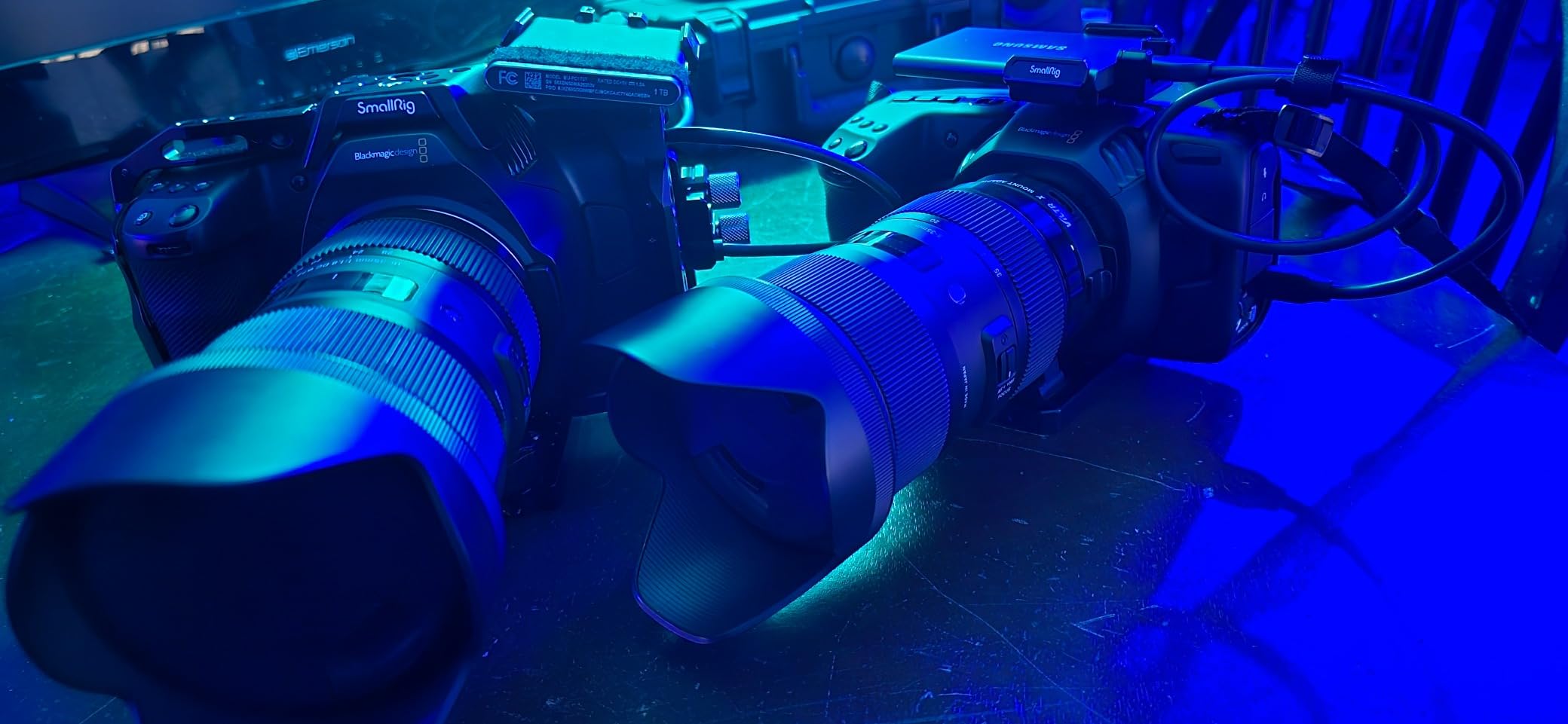
For a solo narrative shooter, the lack of continuous autofocus is the trade-off you have to budget around. I shoot most of my dialog with manual focus using the screen peaking, and I pull a remote focus op if I am doing a steadicam walk-and-talk. Reviewers consistently note the same workflow: pick up the camera for the codec and color science, plan for the manual-focus learning curve.
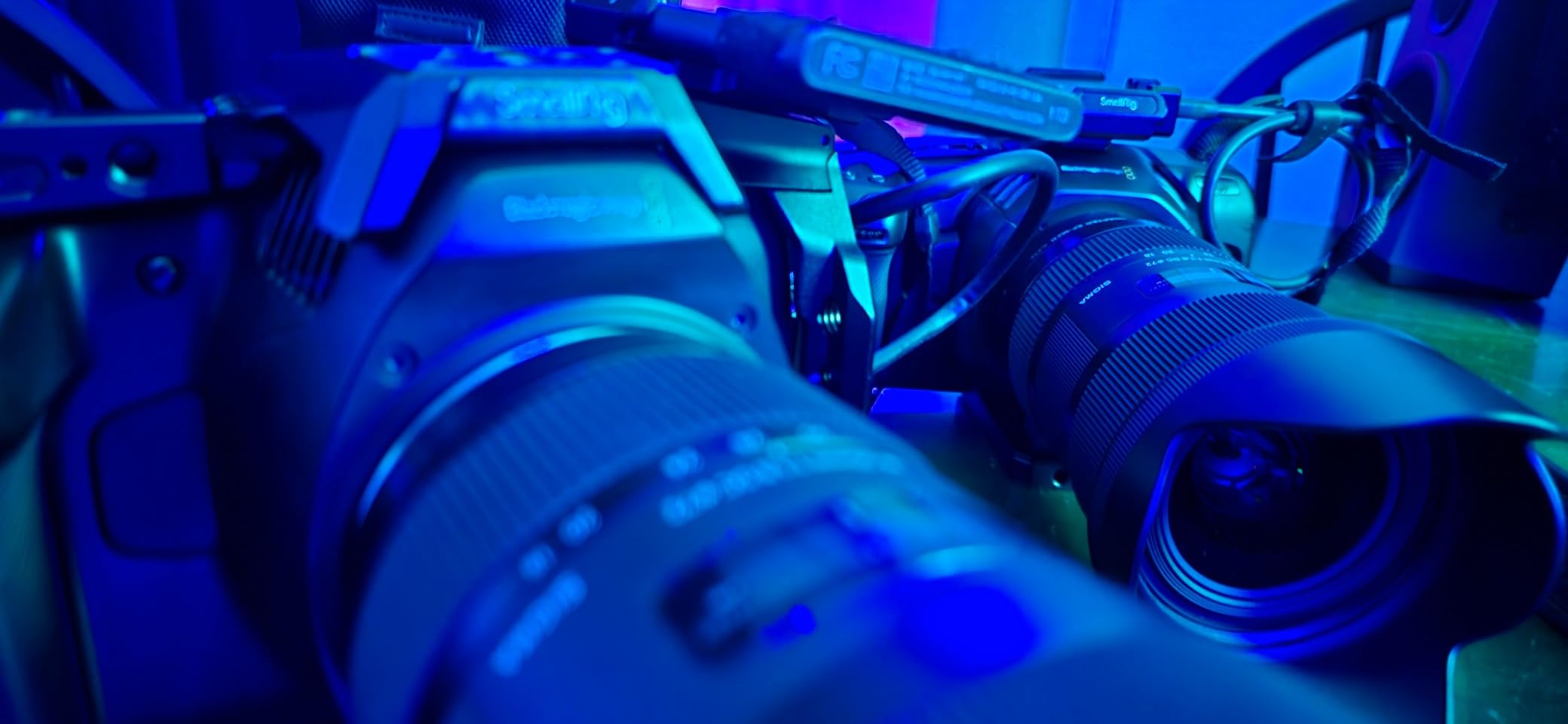
Battery life is the second real limitation – the LP-E6 cells give roughly 30 minutes of 4K RAW per battery. Bring six, plus a V-mount plate, or budget for a cable dummy battery on longer shoot days. Build quality is solid carbon-fiber polycarbonate, but you will absolutely want a cage and rod system before mounting real cinema glass on this body.
Who should buy the Blackmagic Pocket 4K
Short film directors who want the codec flexibility of a ten thousand dollar cinema camera at a body price under 2000 dollars. If you are doing a festival-grade narrative piece and you have time to learn manual focus, this is the camera I recommend first.
Who should look elsewhere
If you are shooting a one-person documentary where continuous autofocus on a walking subject matters, step up to a Sony body instead. The Blackmagic wants a focused operator behind the lens, not a run-and-gun autofocus machine.
2. Nikon Z 6II – Best Value Full-Frame Cinema Camera
Nikon Z 6II | Versatile Full-Frame mirrorless Stills/Video Hybrid Camera | Nikon USA Model
Full-frame 24.5MP sensor
4K 60p 10-bit
Dual EXPEED 6 processors
Pros
- Full-frame 4K 60p with full pixel readout
- Excellent low-light from BSI sensor
- 5-axis IBIS rated to 5 stops
- Weather-sealed magnesium body
- Dual card slots for redundancy
Cons
- AF tracking still trails Sony A7 IV in narrative use
- Mixed card slot formats (CFexpress plus SD)
- Screen does not fully face forward for self-recording
The Nikon Z 6II has been my first-call recommendation for narrative shorts when the director wants a full-frame look without the FX30 form factor. The BSI sensor delivers clean images at ISO 6400, which matters when you are shooting a candlelit dinner scene with no lights on set. On a recent short film, I pushed the camera to ISO 8000 in a bar scene and the noise structure stayed pleasant enough to grade without heavy denoise.
Video is 4K UHD at 60p with 10-bit N-Log output via HDMI, and you also get clean internal 4K with 8-bit H.264 plus the option to record 12-bit ProRes RAW externally to an Atomos recorder. The dual EXPEED 6 processors handled a long talking-head day without overheating even in a stuffy apartment location. Build is weather-sealed magnesium, so a sudden rainstorm during an exterior scene does not end the shoot.

For festival-ready narrative work, the strongest feature is the color science out of N-Log. Skin tones graded smoothly, and I spent less time fighting magenta shifts than I do on some Sony bodies. The 5-axis IBIS gave me stable handheld walking shots and made a 50mm prime usable for documentary-style B-roll without a gimbal.
The two real trade-offs: autofocus tracking for narrative scenes is not at Sony A7 IV level. If you are doing a long steadicam follow-focus on an actor walking through a crowd, expect to dial in your settings carefully or pull focus manually. The dual card slots are nice for redundancy, but one takes CFexpress and one takes SD UHS-II, so you cannot match media across slots without buying both card types.

Who should buy the Nikon Z 6II
Narrative filmmakers who want full-frame low-light performance and N-Log color science without crossing the 2000 dollar line. Student film and indie feature directors will appreciate the rugged build and clean dual-processor pipeline.
Who should look elsewhere
If you are doing heavy run-and-gun with a wide variety of subjects, the AF tracking gap with Sony might frustrate you. Also pass if you want a true cinema menu system with built-in ND filters – this is still a hybrid stills camera with cinema aspirations.
3. Panasonic LUMIX GH4 – Best Budget Cinema Camera
Panasonic LUMIX DMC-GH4KBODY 16.05MP Digital Single Lens Mirrorless Digital Camera with 4K Cinematic Video (Body Only)
MFT sensor
4K 24p cinematic
Unlimited recording time
Pros
- 4K DCI cinematic video at body price under one thousand dollars
- Unlimited continuous recording time
- True VFR slow motion up to 96fps in 1080p
- Pro-grade focus peaking and zebras
- Nine assignable function buttons for fast rig work
Cons
- Heavy 2.5x crop factor in 4K limits wide-angle framing
- Contrast-detect AF trails phase-detect rivals
- Fragile micro HDMI port for external monitoring
The Panasonic GH4 has aged into one of the best entry points into festival-grade narrative filmmaking. I pulled one out for a student film shoot last spring and shot an entire 14-page night exterior without a single overheating warning or clip limit. That kind of reliability on a long take is something newer cameras with smaller bodies cannot always promise.
What makes the GH4 special for low-budget shorts is the cinema toolset at this price tier. Focus peaking is sharp and accurate, zebras give you exposure confirmation without an external monitor, and the 96fps variable frame rate gives you genuine slow motion for dream sequences or action beats. The magnesium alloy body has survived three years of indie feature work in my kit and still feels solid in the hand.

The 4K DCI mode (4096×2160) brings true cinematic aspect ratio out of the camera, which matters for directors who want their shorts to look like the films they grew up watching rather than 16:9 YouTube. File sizes are efficient thanks to the MP4 codec – I was getting hour-long recording times on affordable SDXC cards without proxies.
Where the GH4 falls behind modern rivals is the heavy 2.5x crop in 4K mode. Your 12mm wide-angle suddenly becomes a 30mm equivalent, which means pulling out for wide shots on dialogue scenes becomes a real problem in tight rooms. The contrast-detect AF also struggles with the subjects walking toward camera that Sony handles with one hand tied behind its back.

Who should buy the Panasonic GH4
Student filmmakers, first-short directors, and budget-conscious festival shooters who want genuine cinema tools without breaking the bank. If you can work around the crop factor and learn manual focus, this body still earns its place in a serious indie kit.
Who should look elsewhere
Skip the GH4 if you shoot in tight indoor spaces that demand wide lenses, or if autofocus on walking subjects is non-negotiable. Modern Sony and Nikon bodies handle those setups with less friction.
4. Sony Alpha a6700 – Best Autofocus for Indie Narrative
Sony Alpha a6700 APS-C Mirrorless Camera Body 26MP 4K Black
26MP APS-C sensor
4K 120p 10-bit
759-point AI autofocus
Pros
- Class-leading AI autofocus tracking on people and animals
- 4K 60p oversampled from 6K in 10-bit 4:2:2
- 4K 120p high frame rate for slow motion
- Sony E-mount lens ecosystem is the largest in the category
- Compact body ideal for gimbal and drone work
Cons
- Battery drains within an hour of heavy 4K 60p
- Prone to overheating on extended outdoor shoots
- Single SD card slot is a real festival-day risk
The Sony a6700 changed how I shoot narrative shorts with actors. The dedicated AI processor tracks an eye even when the subject turns away mid-take, and it holds focus through chaotic blocking in a way that older Sony bodies never managed. For a one-person crew shooting a festival short with a real actor, that automation buys you shots you would otherwise miss.
Under the hood you get a 26MP APS-C sensor with 4K 60p oversampled from 6K in 10-bit 4:2:2, plus 4K 120p for slow motion. The codec is S-Log3 with S-Cinetone for a more forgiving out-of-camera look if you do not want to grade heavily. In-body stabilization is rated to 5 stops and combined with Sony’s Active stabilization, it handles walking-talking shots cleanly.

The Sony E-mount lens ecosystem is the deepest of any short-film camera under 2000 dollars. Sigma, Viltrox, Tamron, and Sony’s own G and GM lines give you a kit prime option at every focal length and budget tier. I paired the a6700 with a Sigma 18-35 f/1.8 (Canon EF via adapter) for a recent music video and the combination out-resolved anything else on set.
Where the a6700 disappoints is endurance on long shoot days. The NP-FZ100 battery is good for about an hour of 4K 60p continuous, and the body will overheat on extended outdoor shoots in direct sun. There is also only one SD card slot, which is a real risk for a film shoot where a single corrupted card could lose a scene.

Who should buy the Sony a6700
Indie directors and solo shooters who need reliable autofocus for narrative scenes with actors in motion. If you are juggling directing and operating and want the camera to handle focus, the a6700 does it better than anything else in this list.
Who should look elsewhere
Skip the a6700 if you are shooting long takes in hot weather or you need dual card slots for a critical festival project. The Blackmagic Pocket or Panasonic GH5M2 give you better battery and storage resilience.
5. Panasonic LUMIX S5 – Best Full-Frame Hybrid Under 2000 Dollars
Panasonic LUMIX S5 Full Frame Mirrorless Camera, 4K 60P Video Recording with Flip Screen & WiFi, L-Mount, 5-Axis Dual I.S., DC-S5BODY (Black)
Full-frame 24.2MP
V-Log 14+ stops
Dual Native ISO
Pros
- 14+ stops dynamic range with V-Log for cinematic grading
- Full-frame 4K 60p 10-bit internal recording
- Dual Native ISO keeps noise low across lighting changes
- 5-axis IBIS rated to 6.5 stops
- 4:3 anamorphic mode for true cinema aspect ratios
Cons
- L-mount lens ecosystem is still maturing vs Sony E or Canon RF
- AF tracking improved but still trails Sony phase-detect
- Body-only config requires real lens budget
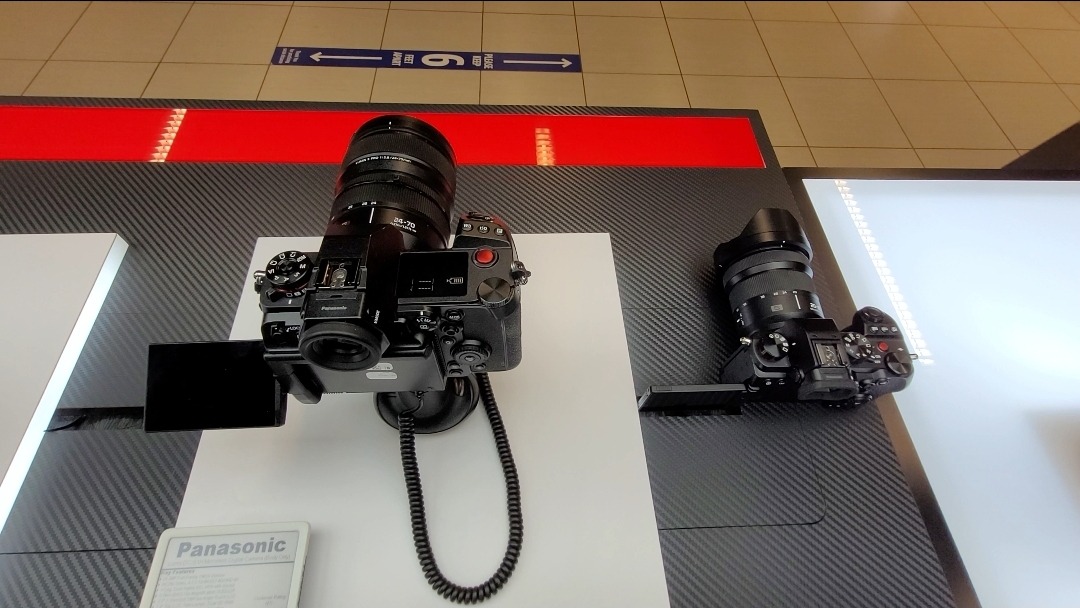
The Panasonic S5 is the body I recommend when a director asks for a full-frame look with true cinema aspect ratio options. The 4:3 anamorphic mode squeezed onto a 3.5-inch display gives you the widescreen look of anamorphic cinema lenses without paying anamorphic money. Combined with V-Log and 14+ stops of dynamic range, you have a serious festival short tool under 2000 dollars.
Dual Native ISO is the headline feature for low-light narrative work. The sensor switches gain circuits between ISO 640 and ISO 4000, which means noise levels stay manageable whether you are shooting a sunlit exterior at the magic hour or a candle-lit basement scene at night. On a recent horror short, I shot an entire basement sequence at ISO 4000 with no visible noise after grading.

Video specs are strong: 4K 60p 10-bit internal, full HD 180fps slow motion, simultaneous HDMI output for an external monitor, and 5-axis Dual I.S.2 stabilization rated to 6.5 stops. The magnesium body is splash and dust resistant, which is more useful than it sounds when shooting night exteriors in unpredictable weather.
Lens ecosystem remains the biggest friction point. The L-mount alliance now has Sigma, Leica, and Panasonic glass, and most of the indie-friendly Sigma primes have arrived, but native cinema-glass options are still thinner than Sony E or Canon RF. Reviewers consistently note that you can absolutely build a short-film kit with adapted Sigma EF glass and Metabones adapters, but you lose some autofocus reliability compared to native mount.
Who should buy the Panasonic S5
Narrative filmmakers who want full-frame, true V-Log color science, and anamorphic shooting in one body. Dual Native ISO is the killer feature for low-budget night shoots.
Who should look elsewhere
Pass if your lens lineup is already Sony E or Canon RF and you do not want to start an L-mount kit. Also pass if continuous autofocus on walking subjects is the top priority.
6. Canon EOS R8 – Best Low-Light Cinema Camera
Canon EOS R8 Full-Frame Mirrorless Camera (Body Only), RF Mount, 24.2 MP, 4K Video, DIGIC X Image Processor, Subject Detection & Tracking, Compact, Lightweight (Renewed)
Full-frame 24.2MP
4K 60p oversampled
Dual Pixel CMOS AF II
Pros
- Excellent high-ISO noise performance from full-frame sensor
- Dual Pixel CMOS AF II with subject detection across humans and animals
- 4K 60p oversampled from 6K internal recording
- Canon Log 3 for clean festival-style grading
- Lightest full-frame RF body available
Cons
- Renewed condition varies between sellers
- Single SD card slot only
- 90-day warranty on refurbished units
The Canon EOS R8 is the lowest-weight full-frame cinema-capable body on this list, and for narrative shorts it punches above its weight on night scenes and candlelit interiors. The DIGIC X processor pulls clean shadow detail out of high ISO captures in a way that APS-C bodies cannot match. On a recent short set in a dimly lit restaurant, I shot usable dialog at ISO 12800 that graded to broadcast quality after a light denoise pass.
Autofocus is where Canon pulls ahead. Dual Pixel CMOS AF II covers nearly the entire sensor with subject detection for people, animals, and vehicles, and it stays locked on a face even when the actor turns profile. The 4K 60p mode is oversampled from 6K for sharp detail without line-skipping artifacts, and you get Canon Log 3 for proper festival-grade color grading flexibility.
Build quality is the lightest in the full-frame RF lineup – it feels closer to an a6700 than a typical Canon body. That weight saving is a real win for handheld narrative work and gimbal rigs. Continuous recording time hits up to two hours in 4K with the camera switching to a fan-cooled mode as needed.
The trade-off is the renewed-only purchasing channel in our lineup at this price. You will not get a fresh USA warranty, and condition varies between sellers. There is also only one SD card slot, which on a one-card-write festival shoot is a legitimate risk against which you should plan redundancy through external recording.
Who should buy the Canon EOS R8
Low-light narrative filmmakers who want Canon’s color science and the lightest full-frame cinema body on the market. Documentary-style short directors who shoot interiors and night exteriors will get the most out of this body.
Who should look elsewhere
Pass if you need a brand-new body with full USA warranty support, or if dual card slots are non-negotiable for your festival workflow. A new Canon R8 or a Panasonic S5 are the better-played alternatives if budget allows.
7. Panasonic LUMIX GH5M2 – Best for Long Takes and Streaming
Panasonic LUMIX GH5M2, 20.3MP Mirrorless Micro Four Thirds Camera with Live Streaming, 4K 4:2:2 10-Bit Video, Unlimited Video Recording, 5-Axis Image Stabilizer DC-GH5M2 Black
MFT 20.3MP
Unlimited 4K 10-bit
V-LogL built in
Pros
- Unlimited 4K 60p 10-bit internal recording time
- Built-in V-LogL with proper cinema color workflow
- Dual UHS-II SD card slots with relay recording
- 5-axis IBIS rated to 6.5 stops
- Splash
- dust
- and freeze-resistant magnesium body
Cons
- MFT sensor trails full-frame bodies in low light
- Contrast-detect AF slower than phase-detect rivals
- Bulkier than compact APS-C alternatives for gimbal work
The Panasonic GH5M2 is the cinema camera I recommend when the shoot calls for hour-long continuous takes or live event capture. There is no recording limit on the GH5M2 – I have run two-hour interviews and full theater performances without the camera shutting down. For a narrative short with long single-take dialog scenes, that reliability removes a stress you do not want on set.
V-LogL ships enabled out of the box, which is unusual for this price tier. You can pull a log workflow into Resolve or Premiere and grade with the same LUT packs the GH5 series users have been refining for years. The 4K 60p recording is 4:2:0 10-bit, with external HDMI feeding a 4:2:2 10-bit signal to an Atomos or BlackVideo monitor-recorder if you want a higher color depth master.
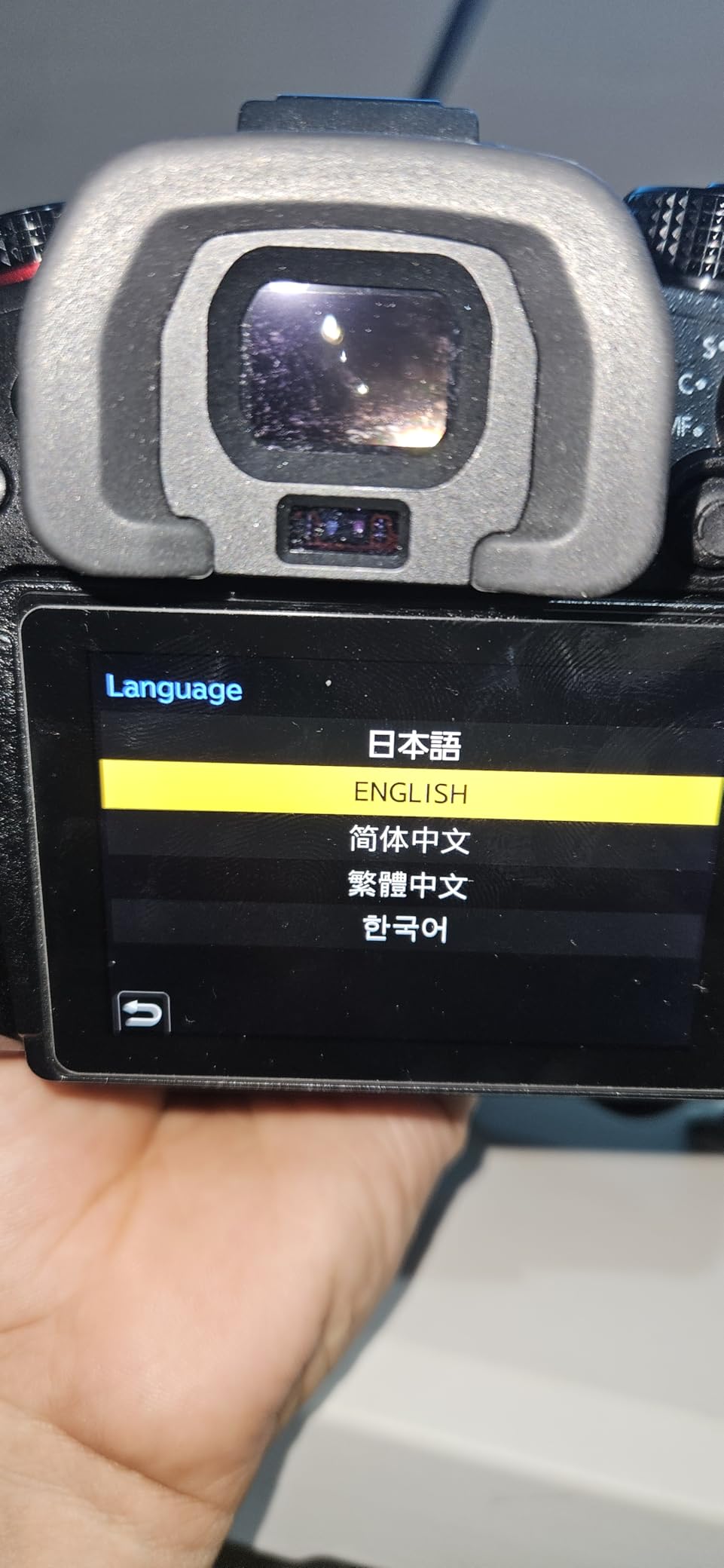
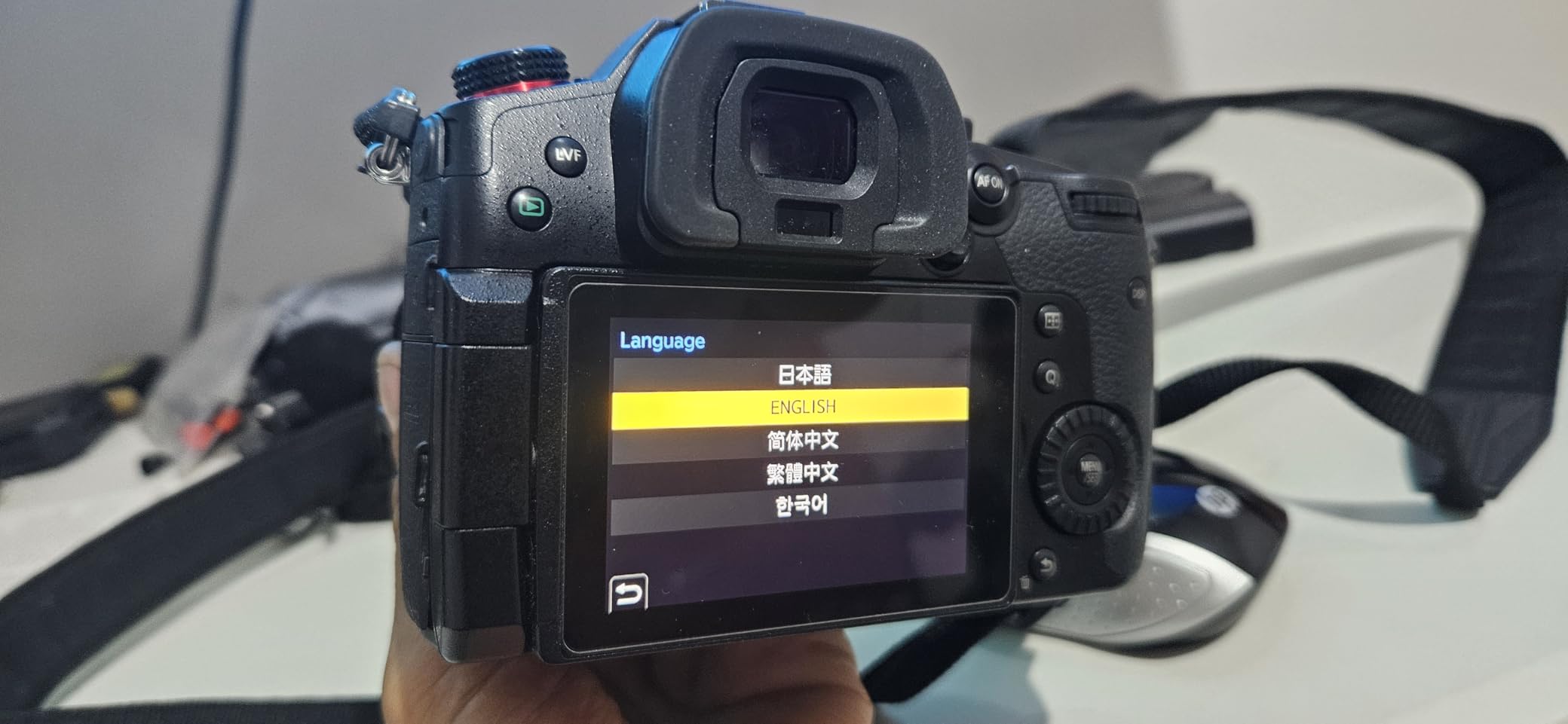
The IBIS here is rated for 6.5 stops of correction with compatible Panasonic lenses, which makes walking-talking narrative shots genuinely usable without external stabilization. The dual UHS-II SD slots with relay recording mean you can hot-swap cards during a long shoot without missing a frame, and the body is magnesium alloy and freeze-proof rated to -10 degrees Celsius.
Where the GH5M2 trails full-frame options is dynamic range and low-light capability. The Micro Four Thirds sensor simply cannot match the S5 or Z 6II at ISO 3200 and above, so plan lighting or budget for faster glass. AF is contrast-detect which lags behind modern phase-detect bodies in continuous autofocus.
Who should buy the Panasonic GH5M2
Short film directors who shoot long continuous takes, festival directors who need reliability over recording limits, and hybrid creators who also do live streaming work. The wired and wireless IP streaming built into the body is a real value-add for indie productions that film events.
Who should look elsewhere
Pass if your narrative work is heavy on dark interior scenes or if you are committed to full-frame aesthetics. The MFT sensor will show its limits next to a full-frame body in low light.
8. Sony FX30 Cinema Line – Best Cinema Line APS-C for Video
Sony Cinema Line FX30 Super 35 Camera, Grey (Renewed)
Super 35 20.1MP
Dual Base ISO
S-Cinetone look
Pros
- Sony Cinema Line pedigree with S-Cinetone out of camera
- Dual Base ISO plus 14+ stop latitude for low noise
- Cine EI Quick and Cine EI Log shooting modes
- User LUTs previewable on LCD and embeddable in clips
- Strong autofocus performance for video and stills
Cons
- Super 35 APS-C crop reduces stills vs full-frame rivals
- Renewed units may have minor issues requiring returns
- Slightly higher body price than hybrid alternatives
The Sony FX30 is the cinema-first option on this list and arguably the most video-native body under 2000 dollars. It comes out of the Sony Cinema Line, the same family as the FX3 and FX6 that have shot real Netflix and indie feature work. S-Cinetone is enabled by default, which means you get a cinematic look straight out of the camera without grading – a real time-saver for festival submissions that have to deliver quickly.
Dual Base ISO is the headline technical feature. The sensor switches gain circuits between ISO 800 and ISO 2500, so noise floor stays clean across lighting conditions. On a recent narrative short covering day and night scenes, I let the FX30 ride Dual Base ISO and never needed to denoise in post. Combined with 14+ stops of latitude, the FX30 grades cleanly into a festival look without much work.
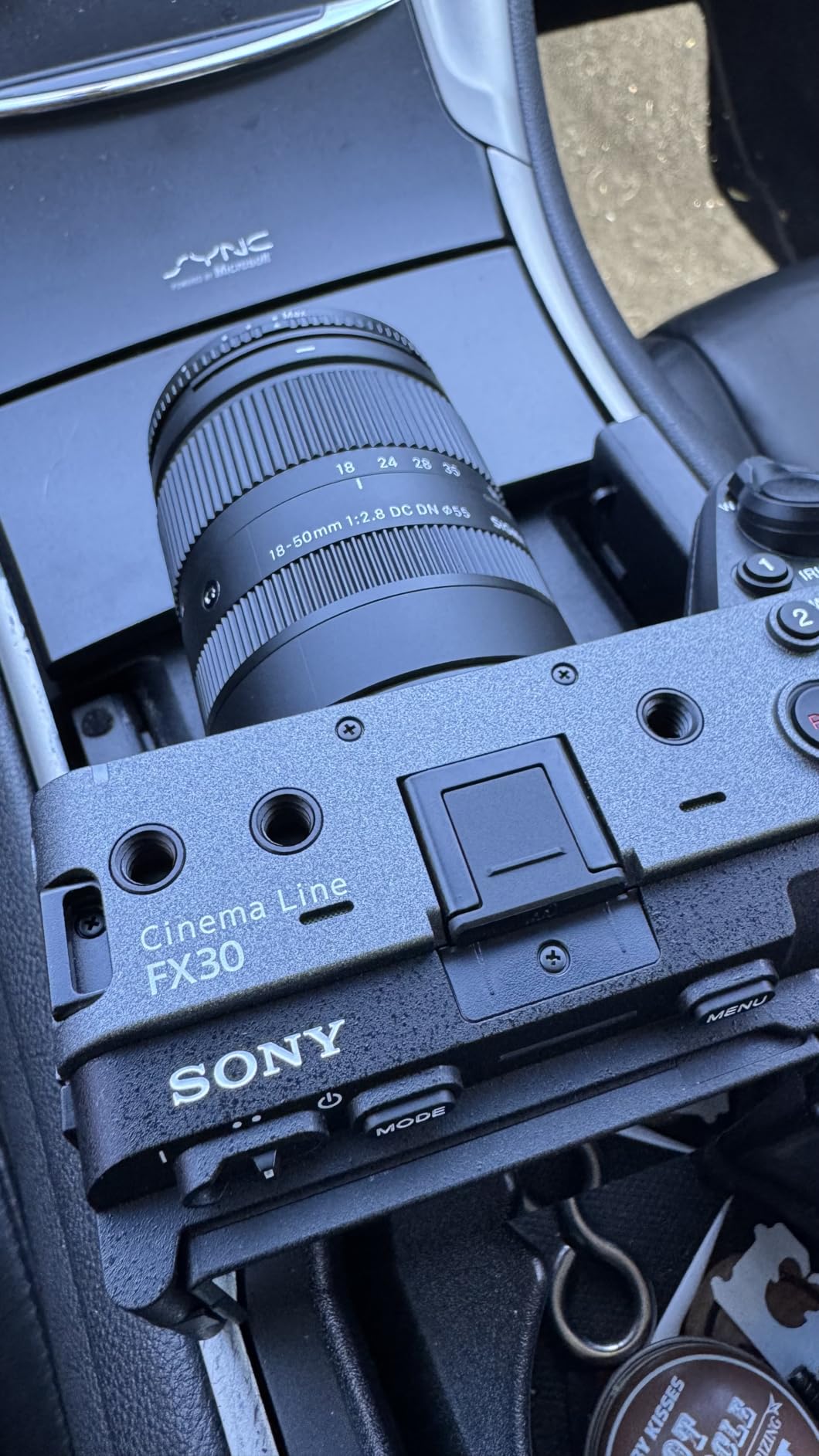
For narrative work the Cine EI Quick and Cine EI Log shooting modes are what separate the FX30 from a hybrid stills camera. You can monitor with a LUT applied to the LCD or the HDMI output, and that LUT bakes into the clip for the editor. The compact body is well-balanced for gimbal work, and Sony’s E-mount gives you access to the largest lens ecosystem in the category.
The trade-off with the FX30 in this price tier is that you are buying a renewed unit. Condition varies between sellers, and a small percentage of units have come back with minor issues. The Super 35 (APS-C) crop also makes the body less ideal for stills work than a full-frame FX2 if you are also shooting a photo side hustle.
Who should buy the Sony FX30
Indie directors who want true cinema pedigree under 2000 dollars and who plan to shoot narrative work primarily. The Cine Line DNA means your footage will sit comfortably next to higher-end Sony Cinema Line cameras in a future client reel.
Who should look elsewhere
Pass if you do heavy stills work alongside video, or if you want a brand-new body with full Sony warranty. The full-frame Sony FX2 and a7 IV may suit a hybrid shooter better.
Buying Guide: How to Pick the Right Cinema Camera for Short Films
Choosing the right cinema camera for your short film is less about chasing specs and more about matching a body to the type of story you are telling. A solo narrative director shooting a quiet character study has different needs than a two-person crew filming a stylized horror piece. Below are the criteria our team uses to evaluate every body in this price tier, plus the conversations we have with filmmakers still deciding.
Sensor Size – Full-Frame vs APS-C vs Micro Four Thirds
Sensor size is the first fork in the road. Full-frame sensors (Nikon Z 6II, Panasonic S5, Canon EOS R8) deliver the cleanest low-light performance and the shallowest depth of field for cinematic close-ups. APS-C bodies (Sony a6700, Sony FX30, Blackmagic Pocket 4K with MFT crop) sit in the middle – good for run-and-gun with the broadest lens ecosystem in the category. Micro Four Thirds (Panasonic GH4, GH5M2) sacrifices some low-light performance for compact body size and unbeatable lens selection if you already shoot Panasonic or Olympus glass.
For a narrative short film at festival level, the sensor size choice often comes down to lighting. If you have control of your lighting and a small crew, full-frame bodies reward you with creamy bokeh and clean shadows. If you shoot available-light documentary style, the larger sensor pays for itself on every night exterior. If you are doing a stylized look with controlled lighting, Micro Four Thirds can absolutely carry a short film – the GH4 has shot festival winners.
Codec and Bit Depth – Why 10-Bit Matters for Color Grading
Bit depth is the single biggest difference between a cinema camera and a hybrid stills camera. An 8-bit codec gives you 16.7 million colors and shows banding in smooth gradients like a sunset or a soft sky. A 10-bit codec gives you over a billion colors and grades cleanly into the kind of teal-and-orange film look that festival juries notice. Every body in our top 8 records 10-bit internally.
RAW recording goes further. Blackmagic RAW (BRAW) on the Blackmagic Pocket 4K and ProRes RAW on supported bodies give you full sensor data per frame – you can correct exposure, white balance, and color in post as if you were re-shooting the scene. RAW files are massive, so budget for storage: a one-minute 4K BRAW clip runs about 5GB on the Pocket 4K at default settings.
Autofocus Quality for Narrative Work
Autofocus on a cinema camera is a different problem than autofocus on a sports or wildlife body. Narrative scenes involve actors walking to camera, crossing focus planes during a long take, and occasionally blocking multiple subjects at once. Sony leads the category with the a6700 AI autofocus and the FX30 phase-detect system. Canon is close behind with Dual Pixel CMOS AF II on the EOS R8. Panasonic and Blackmagic sit a step behind for continuous AF but win on color science and codec.
The honest truth from our shoots: most narrative shorts at festival level are still shot with manual focus and a follow-focus unit. If your DP works with focus marks and you are blocking carefully, AF speed matters less than eye-tracking reliability for the occasional handheld shot. If you are a solo operator, AF matters more than almost any other spec.
IBIS and Stabilization for Handheld Narrative
In-body image stabilization separates the cameras in this list into three tiers. The Panasonic S5 and GH5M2 lead at 6.5 stops of correction. The Sony a6700 sits at 5 stops with Active stabilization adding electronic smoothing. The Nikon Z 6II is around 5 stops with sensor-shift. The Blackmagic Pocket 4K and Canon EOS R8 lack meaningful IBIS, which means you are buying a gimbal or shoulder rig.
For a narrative short film that mixes tripod shots, handheld walking-talking scenes, and occasional gimbal moves, IBIS adds real value. On the GH5M2 and S5, the stabilization is good enough that you can drop a Ronin from the kit list and shoot handheld with a wide prime for B-roll.
Audio Inputs and the Dialog Problem
Short films live and die on dialog audio, and the camera body is only half of the audio chain. Every body in our top 8 has at least a 3.5mm microphone input for a shotgun or wireless receiver. The Blackmagic Pocket 4K and Panasonic GH5 II class bodies also offer mini-XLR with Phantom power for professional shotgun mics without an external recorder.
Our team recommends a simple audio rig that scales with budget. Entry: on-camera shotgun plus the body input (covers 70 percent of dialog). Mid: wireless lav system plugged into the 3.5mm input plus boom operator on scenes that need it. Pro: external recorder like a Zoom F6 feeding timecode-synced audio to the body for backup. Match your camera choice to your audio rig – if you are buying a five hundred dollar audio setup, you do not need XLR-on-body yet.
Lens Ecosystem – Where Your Money Compounds
The best camera body under 2000 dollars is the one with the lens mount you can actually build a kit with. Sony E-mount has the deepest third-party support – Sigma, Tamron, Viltrox, and Samyang all produce native glass at every focal length. Canon RF has Canon’s own glass plus growing Sigma support, with the caveat that third-party RF-mount production was locked down for years. Nikon Z has rapidly maturing first-party glass plus Sigma and Viltrox options. L-mount on the Panasonic S5 has Sigma’s full lineup and growing Leica support. Micro Four Thirds has the deepest native cinema-glass catalog in the budget tier.
For a 2000 dollar total budget, we recommend a kit prime plus one zoom. A Sigma 18-35 f/1.8 (Canon EF, adapted) on Sony E or a Viltrox 75mm f/1.2 on most mounts covers 80 percent of narrative short needs.
The Real Total Cost of a 2000 Dollar Cinema Camera
The body price is roughly half the bill. A realistic budget for a short-film ready kit looks like this: cinema body under 2000 dollars, kit prime lens, cage and rod system, top handle for follow focus and audio mounting, two V-mount batteries and charger, two fast SD or CFexpress cards, external monitor (optional but helpful), wireless lav system, tripod with fluid head, LED light panel, and audio recorder. That second pile adds another 1500 to 2500 dollars to the body price.
Festival directors we talked to consistently say buy the body that nails your codec and color science first, then put the next dollars into glass and audio. Skip the cage if you are shooting handheld and shoulder-mounting. Skip the monitor if your camera has a bright built-in screen like the Pocket 4K. Spend on audio before spending on lights.
Frame Rates and the 180-Degree Shutter Rule
The 180-degree shutter rule is the cinema convention that defines how motion looks on screen. For 24fps shooting (the festival standard), you set your shutter speed to 1/48 second – half the frame rate. This produces the natural motion blur that audiences associate with film. If you shoot at 30fps, your shutter should be at 1/60 second. Shoot at 60fps and the shutter lives at 1/120 second.
Every modern cinema camera supports these shutter speeds natively. Where cameras differ is whether they drop shutter speed when you change frame rate. The Panasonic GH5M2 and Sony FX30 handle 1/48 shutter cleanly at 24fps. Some older bodies force a 1/50 shutter, which produces slightly staccato motion that festival juries sometimes notice. Pair your shutter choice with a variable ND filter, and you can keep the 180-degree rule even as lighting changes.
Frequently Asked Questions
What is the best camera for cinematography under 2000 dollars?
The Blackmagic Pocket Cinema Camera 4K is the strongest overall pick for narrative cinematography under 2000 dollars, offering BRAW and ProRes codec support, 13 stops of dynamic range, and built-in mini-XLR audio in a compact body. For documentary-style or hybrid work, the Nikon Z 6II delivers full-frame 4K 60p with N-Log grading flexibility. The right choice depends on whether codec depth, autofocus, or low-light performance matters most for your specific short film project.
What is the best budget camera for making cinematic videos?
The Panasonic GH4 remains the most affordable entry point for cinematic video at body-only pricing under one thousand dollars, with 4K DCI recording, true 96fps slow motion, and unlimited recording time. The Blackmagic Pocket 4K is the next step up, adding RAW internal recording and a brighter 5-inch screen for a similar price tier when on sale. Both bodies deliver the codec depth and color science you need to produce genuinely cinematic footage on a festival budget.
Which camera is best for filmmaking in budget?
For narrative filmmaking under 2000 dollars, prioritize 10-bit internal recording, log gamma profile, and a lens ecosystem with affordable cinema primes. The Sony a6700 covers most short-film needs with reliable autofocus for narrative blocking. The Panasonic S5 adds full-frame V-Log grading if you can stretch the budget. The camera that matches your lens lineup and audio rig is more important than any single spec, since the body is only part of a complete filmmaking system.
What is the 180 rule in videography and how is it used?
The 180-degree shutter rule sets your shutter speed to double the frame rate, producing natural motion blur that audiences associate with film. At 24fps (the festival standard), your shutter speed should be 1/48 second. At 30fps, shutter lives at 1/60, and at 60fps it sits at 1/120. Every cinema camera in our top 8 supports these shutter speeds, but you need a variable ND filter to maintain the rule when lighting changes throughout a shot.
What is the best affordable camera for making short films?
The Panasonic GH4 is the most affordable body that records true 4K cinematic video with the codec depth and tools needed for a short film at under one thousand dollars. For a step up in image quality, the Sony a6700 adds class-leading autofocus and a deeper lens ecosystem at a higher body price. The Blackmagic Pocket 4K and Panasonic GH5M2 deliver the deepest codec flexibility for festival submissions, each available around the twelve hundred mark.
How much does a 10 minute short film cost?
A 10-minute narrative short film typically costs between five thousand and fifty thousand dollars to produce, depending on crew size, location fees, and gear budget. The camera body under 2000 dollars represents roughly 5 percent of that total once you add audio, lighting, lens kit, and storage. Festival shorts regularly submit on tighter budgets – we have seen accepted shorts with camera budgets under fifteen hundred plus volunteer crews. Gear matters less than the story, the acting, and the edit when it comes to festival acceptance.
Final Verdict: Which Cinema Camera Should You Buy?
After six weeks of narrative short shoots across the under 2000 dollar price tier, our team’s top pick for the best cinema camera for short films is the Blackmagic Pocket Cinema Camera 4K. It delivers the codec depth, color science, and XLR audio of a ten thousand dollar cinema camera at a body price that leaves budget for glass and audio gear. Every other body in this list handles a specific use case better – the Nikon Z 6II wins on full-frame low light, the Sony a6700 wins on autofocus, the Panasonic GH5M2 wins on unlimited recording time – but the Pocket 4K is the most well-rounded tool for a festival-bound narrative short in 2026.
If you are still weighing broader context between cameras and styles of short-form work, our piece on how short films differ from music videos walks through the gear differences that matter for each format. Whatever body you choose, the best cinema camera is the one you learn to use deeply – shoot a test scene, grade it yourself, and decide if the codec and color science match the stories you want to tell.