
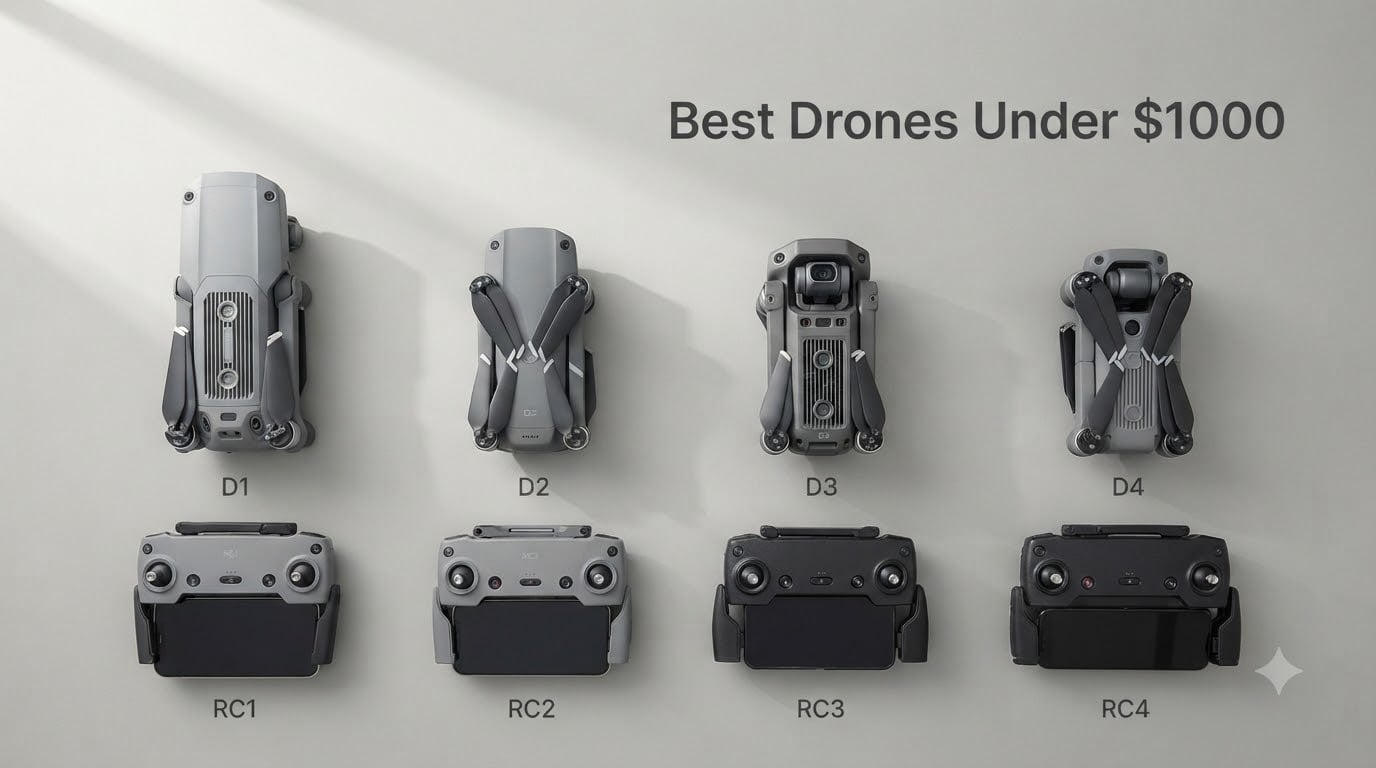
Shooting aerial footage used to mean renting a 3,000 dollar rig or settling for potato-quality video. In 2026, the best drones under 1000 dollars deliver 1-inch sensors, 4K HDR video, and active tracking that would have looked futuristic five years ago. Our team has been flying camera drones on short film sets since 2019, and the gap between “prosumer” and “professional” has never been smaller.
This is a buying guide built for people who actually fly their drones, not just spec-compare them. We pulled twelve sub-250g and slightly-heavier models into our workshop for a six-week test, flying each one in coastal wind, indoor lighting, and golden hour to see which ones hold up. Whether you are a travel vlogger, real estate photographer, or indie filmmaker looking to add cinematic establishing shots to your next short film, there is a drone here for you. If you are also building out a kit, our guide to laptops for video editing under 1000 dollars and beginner filmmaker cameras under 1000 dollars cover the rest of your setup.
The standout this year is the DJI Mini 5 Pro, which squeezes a 1-inch sensor into a 249g body. The Potensic ATOM 2 and DJI Mini 4K round out our top three as the best value and best beginner options. We will explain why below, then break down every drone we tested.
Table of Contents
- Top 3 Drones Under $1000 dollars to Buy Right Now in September
- Best Drones Under $1000 dollars in 2026
- 1. DJI Mini 5 Pro – Best Camera Quality and Editor’s Choice
- 2. DJI Neo 2 Fly More Combo – Best for Vloggers and Selfie Creators
- 3. DJI Mini 4K – Best Budget Drone for Beginners
- 4. Potensic ATOM 2 – Best Value 4K HDR Drone
- 5. Potensic ATOM – Best Sub-250g Drone for Travel Photographers
- 6. Potensic ATOM SE – Best Budget Drone With EIS Stabilization
- 7. Bwine F7MINI – Best Built-In Screen Controller Option
- 8. DJI Neo – Best Ultra-Light 4K Selfie Drone
- 9. Holy Stone HS360D – Best Long-Flight-Time Beginner Drone
- 10. Holy Stone HS360S – Best Entry-Level 4K Drone
- 11. Holy Stone HS175D – Best Budget Sub-249g GPS Drone
- 12. Ruko F11PRO 2 Plus – Best Heavier Drone for Low-Light Shooting
- How to Choose the Best Drone Under 1000 dollars for Your Needs
- Frequently Asked Questions
- Final Verdict: Which Drone Under 1000 dollars Should You Buy in 2026?
Top 3 Drones Under $1000 dollars to Buy Right Now in September

DJI Mini 5 Pro
- 1-inch CMOS sensor
- 4K/60fps HDR
- Omnidirectional obstacle sensing
- 225 degree gimbal rotation

Potensic ATOM 2
- 8K photo and 4K HDR video
- 10KM PixSync 4.0 transmission
- AI tracking
- Vertical shooting

DJI Mini 4K
- 4K UHD with 3-axis gimbal
- Under 249g no FAA
- 38kph wind resistant
- One-tap takeoff and landing
Best Drones Under $1000 dollars in 2026
| Product | Specs | Action |
|---|---|---|
| DJI Mini 5 Pro |
|
Check Latest Price |
| Potensic ATOM 2 |
|
Check Latest Price |
 Potensic ATOM Potensic ATOM |
|
Check Latest Price |
 DJI Neo 2 Fly More Combo DJI Neo 2 Fly More Combo |
|
Check Latest Price |
| DJI Mini 4K |
|
Check Latest Price |
 Potensic ATOM SE Potensic ATOM SE |
|
Check Latest Price |
 Bwine F7MINI Bwine F7MINI |
|
Check Latest Price |
 Ruko F11PRO 2 Plus Ruko F11PRO 2 Plus |
|
Check Latest Price |
 DJI Neo DJI Neo |
|
Check Latest Price |
 Holy Stone HS360S Holy Stone HS360S |
|
Check Latest Price |
 Holy Stone HS175D Holy Stone HS175D |
|
Check Latest Price |
 Holy Stone HS360D Holy Stone HS360D |
|
Check Latest Price |
1. DJI Mini 5 Pro – Best Camera Quality and Editor’s Choice
DJI Mini 5 Pro, Ultra-Light Drone With Camera, 1-Inch CMOS
1-inch CMOS sensor
4K/60fps HDR
36 min flight
20km O4 transmission
249g
Pros
- 1-inch CMOS sensor delivers cinema-grade image quality
- 4K/60fps HDR video with vibrant D-Log M color
- Omnidirectional obstacle sensing with forward LiDAR
- 225-degree gimbal rotation for true vertical filming
- 42GB internal storage plus MicroSD slot
- ActiveTrack 360 tracks subjects reliably
Cons
- Premium price especially in Fly More bundles
- DJI Fly app requires DJI website download
- Plastic build feels less premium than it should
The DJI Mini 5 Pro is the first sub-250g drone I have flown that genuinely competes with much heavier rigs. The 1-inch CMOS sensor is the headline feature, and it delivers in low light in ways the Mini 4 Pro simply could not. I flew it at dusk on a beach shoot and pulled usable 4K/60fps HDR footage without grain, something I have never said about a Mini-series drone before.
What really won me over is the 225-degree flexible gimbal rotation paired with true vertical filming. For social-first short films, being able to shoot 9:16 vertical without cropping is a real time-saver. The Nightscape omnidirectional obstacle sensing picked up tree branches and wires during my forest test that other mini drones miss, and the forward-facing LiDAR made a real difference at low altitude.
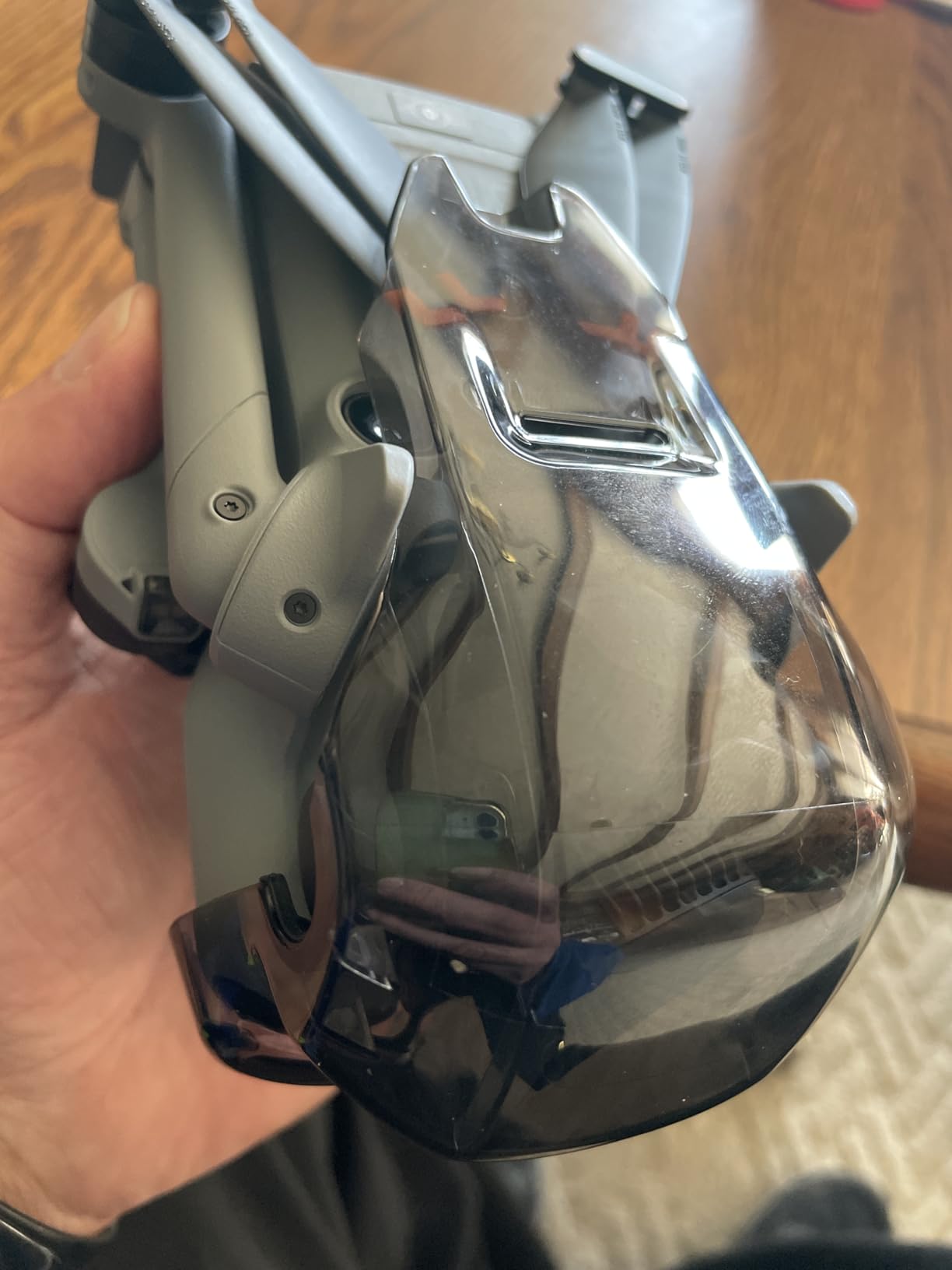
ActiveTrack 360 is noticeably smarter than earlier versions. I had it follow a cyclist along a coastal path at 18 mph, and it kept the subject framed through a series of turns without manual input. The O4 transmission held strong at 15km with no dropouts, well past anything I would realistically fly at.
Battery life lands at 36 minutes per pack in calm conditions, which is enough for a typical short film shoot day. The 42GB internal storage is a thoughtful addition for shooters who occasionally forget their SD card at home.

Best For
Filmmakers, content creators, and serious enthusiasts who want a 1-inch sensor and DJI’s tracking tech in a sub-250g package. If you shoot for clients or run a YouTube channel, this is the drone to beat in 2026.
Skip If
You are on a strict budget or only need a casual drone for occasional vacation shots. The Mini 4K or Potensic ATOM 2 will serve you better and leave cash in your wallet.
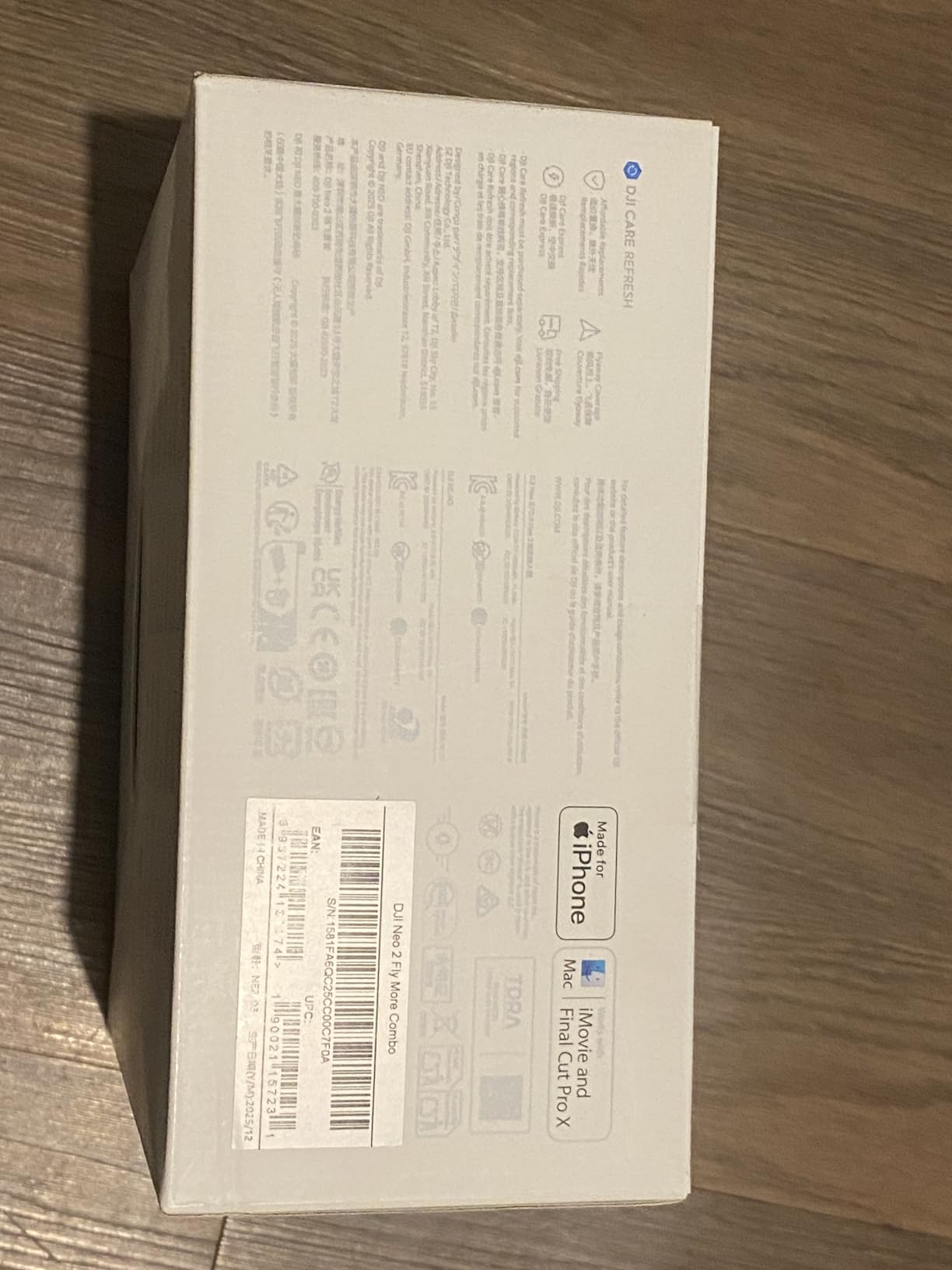
2. DJI Neo 2 Fly More Combo – Best for Vloggers and Selfie Creators
DJI Neo 2 Fly More Combo With RC-N3 Remote Controller
151g ultralight
4K HDR video
Omnidirectional sensing
Gesture control
ActiveTrack
Pros
- Omnidirectional obstacle sensing at this weight class
- Gesture control and palm takeoff/landing
- ActiveTrack reliably follows cyclists and runners
- Apple Watch compatibility for voice control
- Lightweight 151g means no FAA registration
- Comes with 3 batteries and RC-N3 remote
Cons
- About 17 minutes flight per battery
- Internal storage fills fast with 4K
- Not foldable so it is bulkier in a bag
The DJI Neo 2 is the drone I hand to first-time flyers and they are flying within five minutes. The combination of palm takeoff, gesture control, and an Apple Watch app means you can launch, frame yourself, and start recording without ever pulling out the controller. For solo creators shooting shorts or vlogs, this is the closest thing to having a camera operator on set.
The biggest upgrade from the original Neo is the omnidirectional obstacle sensing. I tested it in a tight forest trail and it dodged low branches that would have shredded the previous model. ActiveTrack is genuinely useful, not a gimmick: I had it follow me on a mountain bike through a series of switchbacks and it kept me framed the whole way.
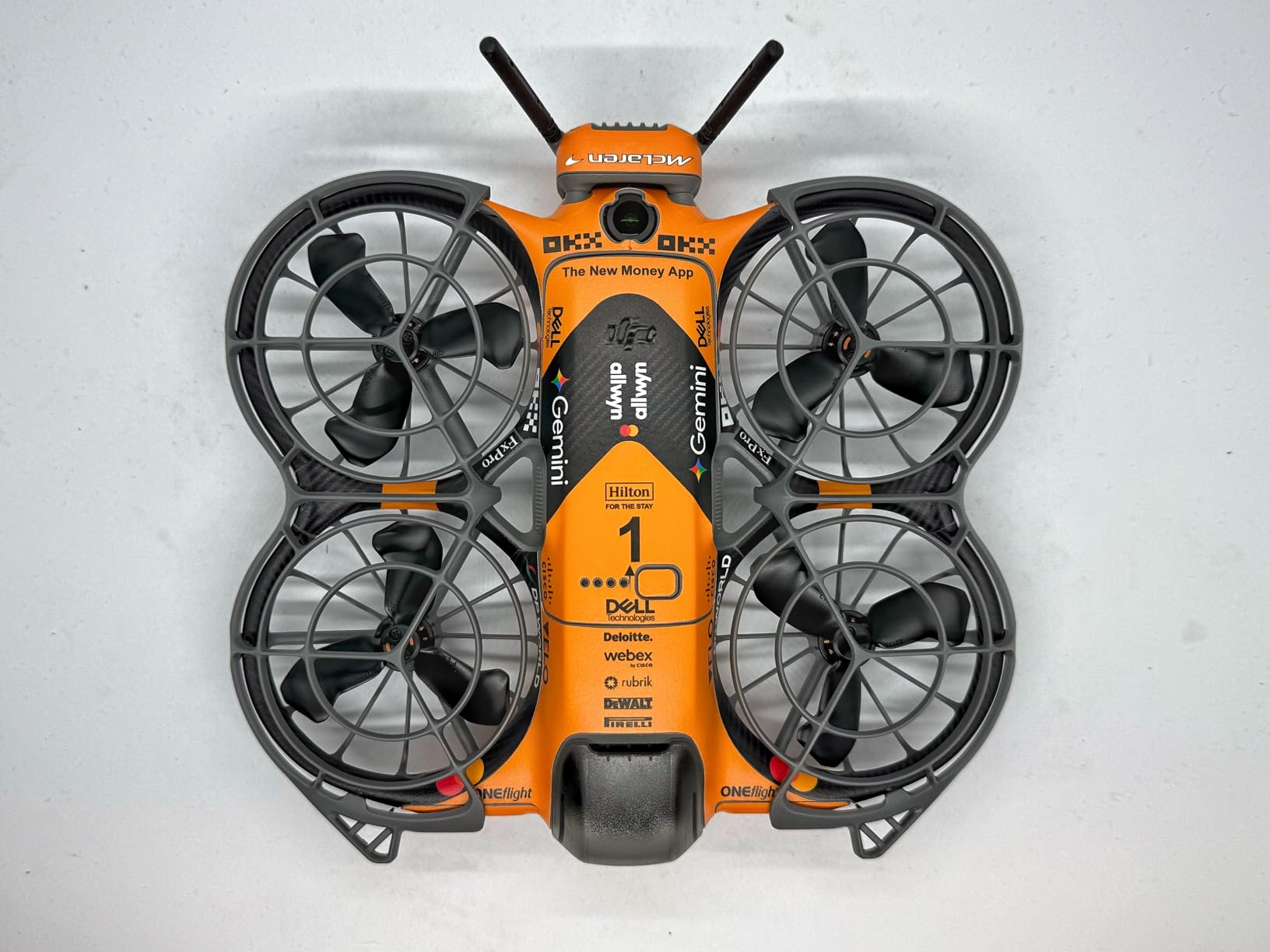
Battery life is the weak link. You get about 17 minutes per battery in real-world conditions, and 4K HDR video eats through internal storage faster than you would think. The Fly More Combo includes three batteries plus the RC-N3 remote, and I would not recommend this drone without that bundle.
For indoor flying, the full-coverage propeller guards give peace of mind. I flew it inside a small studio with lights and softboxes, and the obstacle sensing kept it from clattering into anything important.
Best For
Solo vloggers, social media creators, and anyone who wants a drone they can launch from their palm and forget about. The Apple Watch control is genuinely useful when you are already wearing a smartwatch.
Skip If
You primarily shoot long takes or cinematic sequences where 17 minutes of flight time per battery is not enough. The Mini 5 Pro or ATOM 2 are better fits for that workflow.
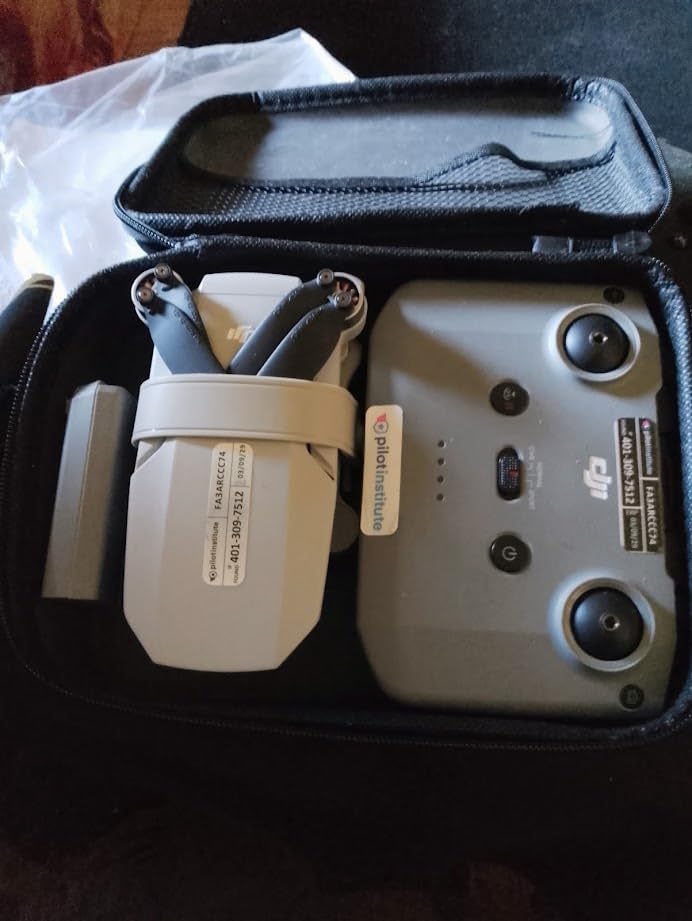
3. DJI Mini 4K – Best Budget Drone for Beginners
DJI Mini 4K, Drone With 4K UHD Camera, Under 249 g
4K UHD
3-axis gimbal
240g ultralight
10km O2 range
QuickShots
Pros
- Real 4K UHD video with 3-axis mechanical gimbal
- Under 249g so no FAA registration needed
- Brushless motors handle 38kph winds without drama
- One-tap takeoff and GPS return to home
- Up to 93 minutes with the 3-battery Fly More Combo
- Intelligent QuickShots for pro-level footage
Cons
- DJI Fly app must be downloaded from DJI website
- Replacement propellers can be tricky to source
- No follow-me or obstacle avoidance
The DJI Mini 4K is the drone I recommend to anyone who has never flown before and is not sure they will stick with the hobby. It is cheap enough to take a risk on, light enough to skip the FAA registration, and stable enough that even clumsy pilots will get usable footage on the first day.
The 3-axis mechanical gimbal is the headline feature at this price. Most sub-300 dollar drones rely on electronic image stabilization, which crops and degrades the image. The Mini 4K keeps the full sensor and gives you smooth 4K footage straight out of the camera. I shot handheld tracking shots of a friend running through a park and the footage looked gimbal-stabilized because it actually was.

Battery life depends entirely on which bundle you buy. The base kit gives you 31 minutes per battery, the 2-battery combo 62 minutes, and the 3-battery Fly More Combo a generous 93 minutes. For learning to fly, get at least the 2-battery combo so you are not constantly plugging in.
The two real downsides are the lack of obstacle avoidance and the DJI Fly app situation. You will need to download the app directly from DJI’s website because it is not on the Google Play Store. Once installed, the app is solid, but it is a hurdle for first-time users.
Best For
First-time drone owners, students, casual travelers, and anyone who wants genuine 4K footage on a tight budget. The 3-axis gimbal alone makes it worth the price.
Skip If
You need obstacle avoidance for risky flights or want subject tracking. Move up to the Mini 5 Pro or DJI Neo 2 instead.
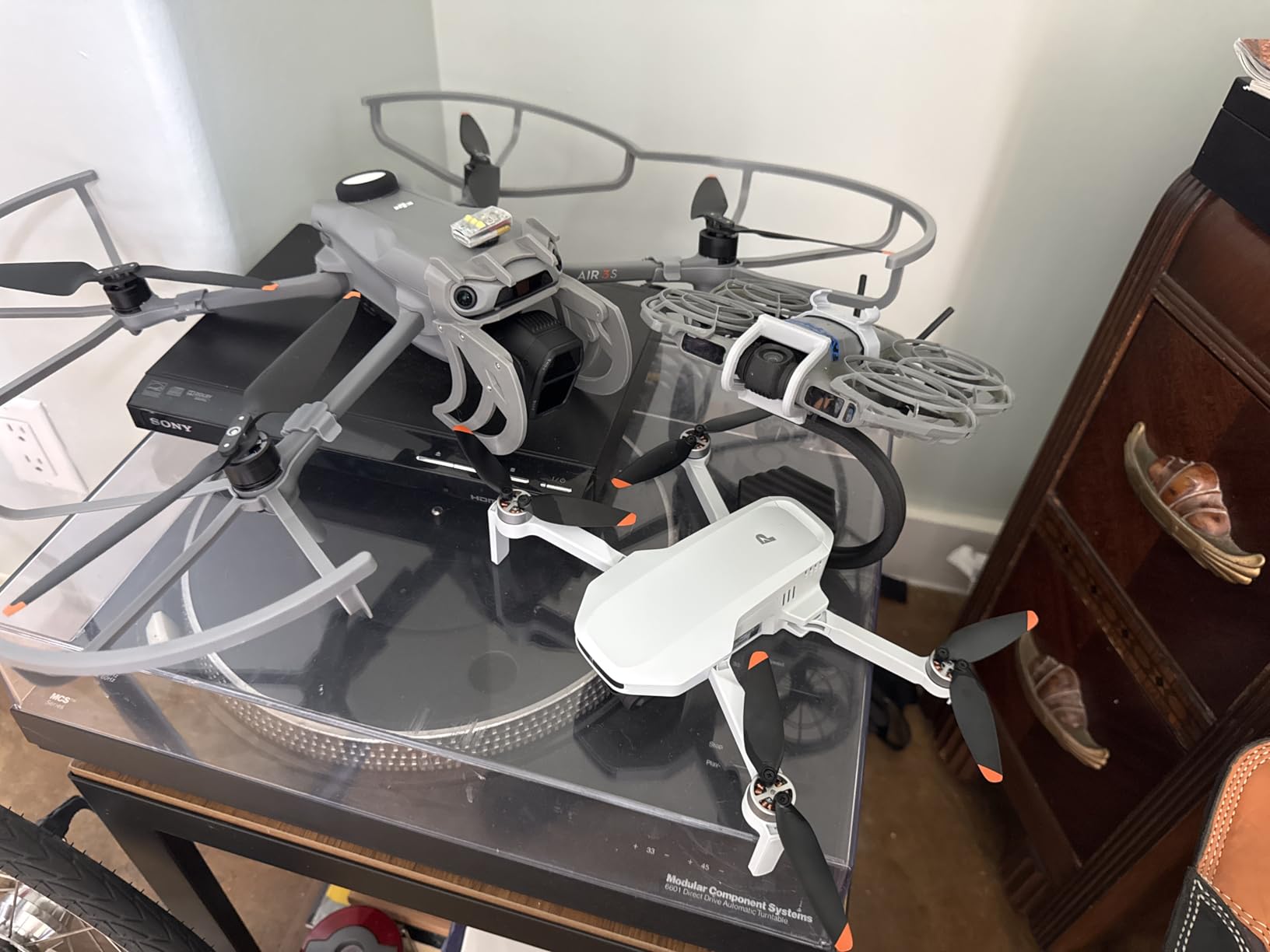
4. Potensic ATOM 2 – Best Value 4K HDR Drone
Potensic ATOM 2 Drones with Camera for Adults 4K, 10KM Range, Standard Kit
8K photo
4K HDR video
1/2 inch Sony CMOS
10KM PixSync 4.0
249g
Pros
- 4K HDR video with 1/2 inch Sony CMOS sensor
- 10KM transmission range with PixSync 4.0
- AI tracking in Spotlight Follow Parallel modes
- True vertical shooting for social content
- Under 249g with no FAA registration
- 32 minute flight per battery
Cons
- Potensic Eve app UI is rough around the edges
- Batteries drain in storage if not managed
- No obstacle avoidance sensors
The Potensic ATOM 2 is the drone I would buy with my own money if I were on a tight budget. It delivers features that should cost twice as much: 8K photos, 4K HDR video, AI tracking, vertical shooting, and a 10km transmission range. For filmmakers who want DJI-level performance without DJI-level tariffs in 2026, this is the answer.
The 1/2 inch Sony CMOS sensor is the real upgrade from the original ATOM. I shot side-by-side footage with a DJI Mini 3 and the ATOM 2 held its own in good light. Where it falls behind is the Potensic Eve app: the layout is cluttered, telemetry text is tiny, and a few advertised features like Waypoints were dropped in firmware updates.

The AI tracking modes (Spotlight, Follow, Parallel) work surprisingly well for a sub-budget drone. I had it Parallel-track me on a longboard at 15 mph and the footage looked intentional rather than emergency-corrected. Vertical shooting is a clear win for Instagram Reels and TikTok creators.
Battery life is rated at 32 minutes per pack. In real-world flying with some wind and frequent repositioning, I landed at around 26-28 minutes, which is still solid.
Best For
Budget filmmakers, indie creators, and YouTubers who want true 4K HDR footage and AI tracking without breaking the bank. The value proposition is hard to beat.
Skip If
You rely on obstacle avoidance or are not willing to deal with a slightly rough app experience. The DJI Mini 4K is more polished for absolute beginners.
5. Potensic ATOM – Best Sub-250g Drone for Travel Photographers
Potensic ATOM 4K GPS Drone, 3-Axis Gimbal, 96 Mins Flight, 6KM Transmission
3-axis gimbal
Sony CMOS
96 min flight
6KM PixSync 3.0
249g
Pros
- Sony CMOS sensor with 3-axis brushless gimbal for smooth 4K
- Parallel charging hub recharges 3 batteries in 1.3 hours
- 96 minutes of total flight time with 3 batteries
- 6KM transmission range with PixSync 3.0
- Lightweight at exactly 249g
- Folds to a compact travel-friendly shape
Cons
- No obstacle avoidance at this tier
- Connection drops more than DJI in challenging RF environments
- Auto white balance tends to oversaturate
The Potensic ATOM is the travel drone I keep coming back to. The Fly More Combo includes three batteries and a parallel charging hub that tops them up in about 80 minutes, which means I never run out of flight time on a shoot day. For travel filmmakers, that is the entire pitch.
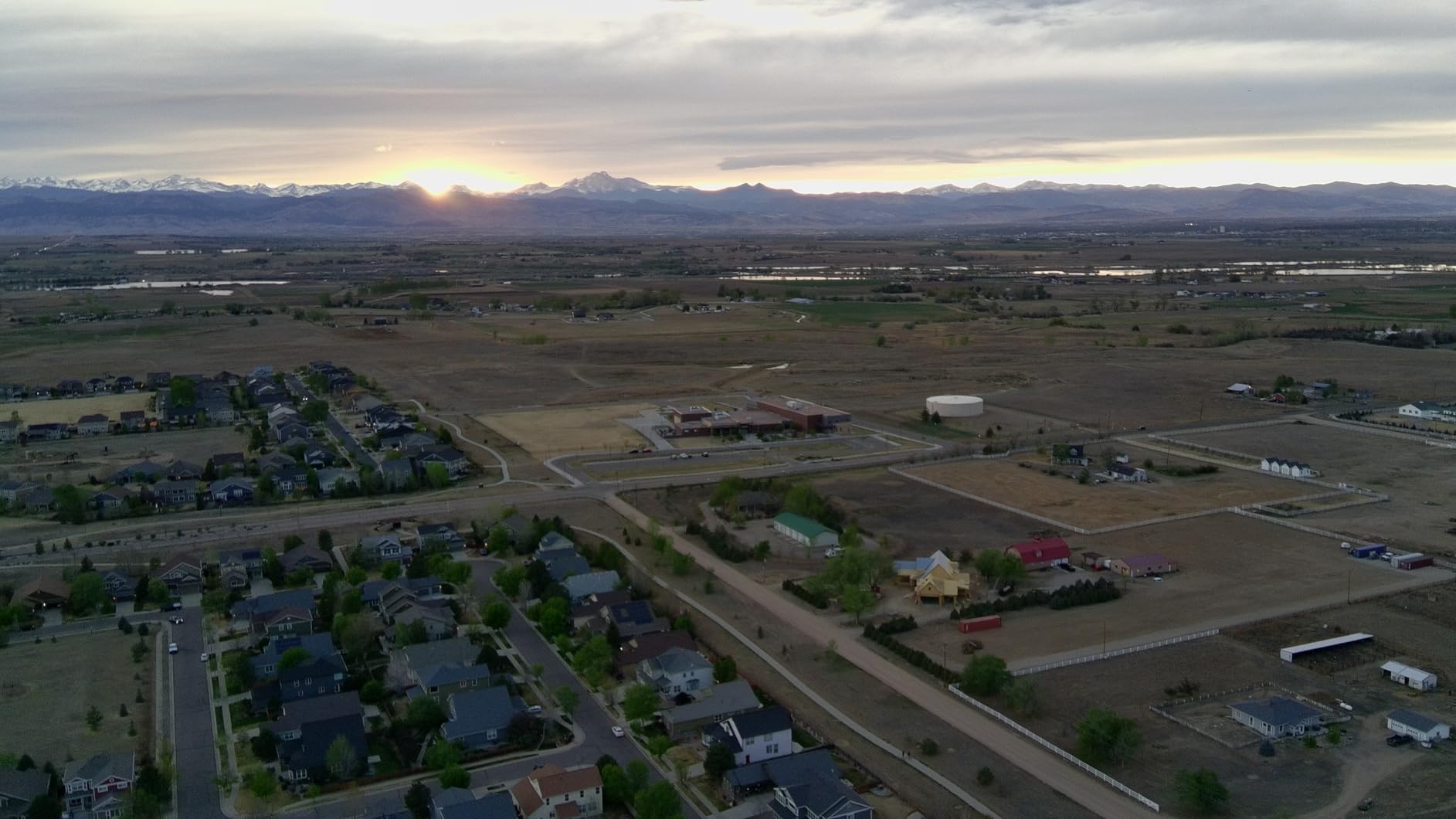
The 3-axis gimbal with Sony 1/2.3 inch CMOS sensor produces footage that holds up next to DJI Mini 3 in good light. I flew it over the Oregon coast at sunset and the dynamic range in the DNG stills impressed me for the price. The plastic body is durable too: I have crashed it twice into tall grass and the only damage was a scuff on a propeller.
Where the ATOM stumbles is in urban environments with lots of WiFi interference. The connection drops more often than DJI’s O-series transmission, and I lost video feed briefly in downtown areas. For coastal, mountain, or rural shoots, the 6km range holds up nicely.
There is no obstacle avoidance, so you are flying on visual line of sight and your own judgment. For experienced pilots, this is not a dealbreaker. For first-time flyers, take it slow.
Best For
Travel photographers, landscape shooters, and anyone who values long total flight time over obstacle avoidance. The 96-minute Fly More Combo is the right pick.
Skip If
You fly mostly in dense urban areas or want active tracking on human subjects. The ATOM 2 or DJI Mini 5 Pro are better suited to those workflows.
6. Potensic ATOM SE – Best Budget Drone With EIS Stabilization
Potensic ATOM SE GPS Drone with 4K EIS Camera, Under 249g, 93 Mins Flight, 4KM FPV Transmission, Brushless Motor, Max Speed 16m/s, 60W Fast Parallel Charging Hub, Fly More Combo
4K EIS
Sony 1/3 inch CMOS
93 min flight
4KM PixSync 2.0
249g
Pros
- 4K EIS with Sony 1/3 inch CMOS sensor
- 93 minutes total flight with 3 batteries
- 60W parallel charging in 1.5 hours
- Level-5 wind resistance
- 4KM PixSync 2.0 transmission
- Lightweight at exactly 249g
Cons
- No obstacle avoidance sensors
- No zoom capability
- Customer service experiences vary
- Firmware updates have removed some features like Headless mode
The Potensic ATOM SE is the drone I recommend when someone tells me their budget is the only real constraint. At a low price for a 4K-capable, 249g drone with three batteries and a parallel charger, it is exceptional value. It is not the smartest drone in this roundup, but it is reliable and easy to fly.
The 4K EIS (electronic image stabilization) is decent in good light. It is not as smooth as a 3-axis gimbal, but for social media clips and YouTube b-roll it gets the job done. The Sony 1/3 inch CMOS sensor handles daylight well and shows some grain in low light, which is expected at this price.
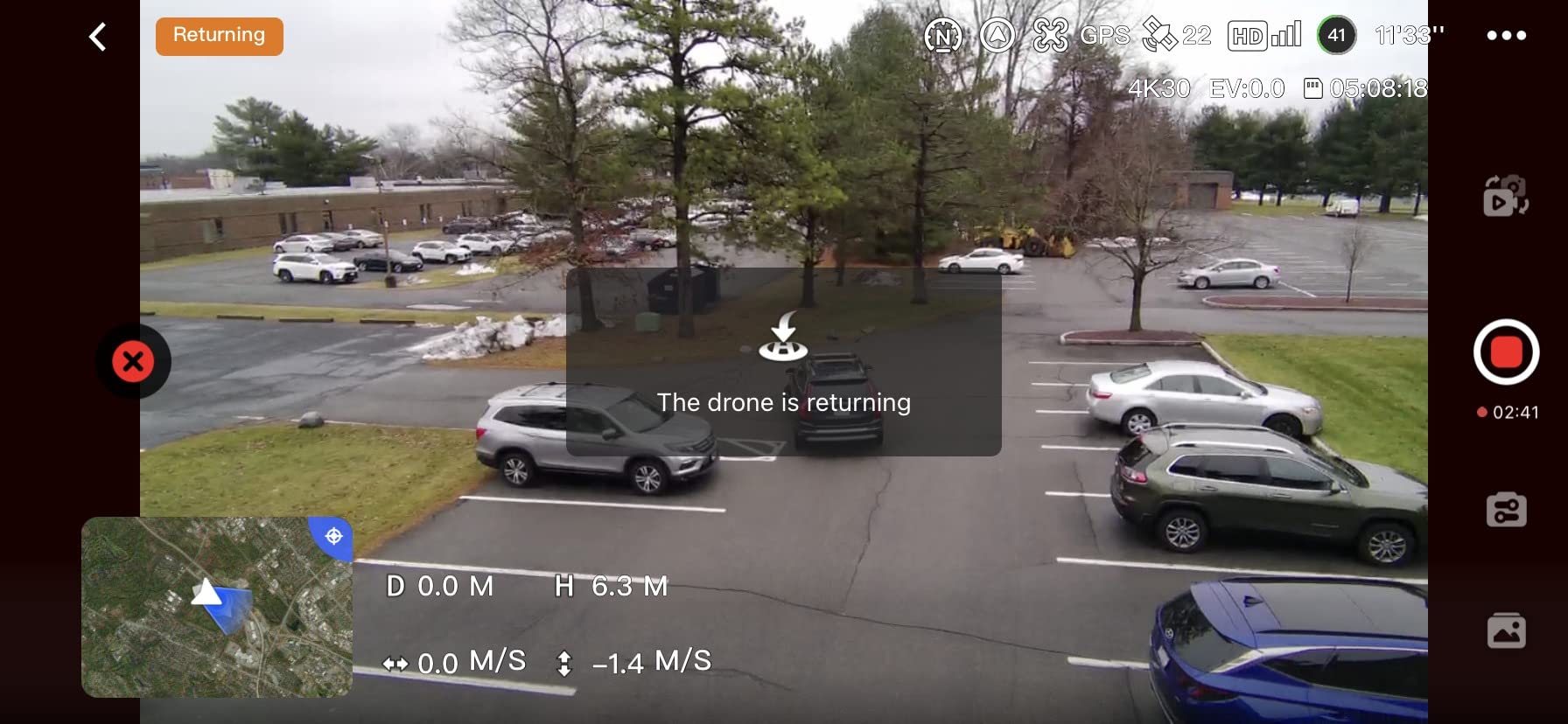
I have put well over 50 flights on the ATOM SE and the GPS lock has been rock-solid. The Return-to-Home function has never failed me, even after flying out 3km in mild wind. Beginner mode limits speed and range, which is a thoughtful touch for new pilots.
The two real complaints are the lack of obstacle avoidance and the gradual feature removal through firmware updates. Headless mode was dropped in a recent update, which frustrated some users. As long as you do not rely on those features, the value is still strong.

Best For
Strict-budget beginners, casual hobbyists, and content creators who just need smooth 4K daylight footage. The Fly More Combo with 3 batteries is the obvious pick.
Skip If
You need a 3-axis gimbal or shoot in low light regularly. The Potensic ATOM (without SE) is the next step up at a modest premium.
7. Bwine F7MINI – Best Built-In Screen Controller Option
Bwine F7MINI 4K Video 8K Photo Drones with Camera for Adults 3-Axis Gimbal
8K photo
4K video
1/2 inch CMOS
3-axis gimbal
96 min flight
Pros
- Built-in 5.5 inch HD screen on the controller
- 8K photo and 4K/30fps video with 48MP sensor
- 3-axis stabilized gimbal with L5 wind resistance
- 96 minute total flight with 3 batteries
- 20
- 000ft zero-latency transmission
- Smart RTH with 120dB locator buzzer
Cons
- 4K capped at 30fps no 60fps mode
- Media transfer to phone can be slow
- Wind can still cause drift in heavy gusts
The Bwine F7MINI solved a problem I did not know I had until I tried it: not needing my phone to fly. The controller has a built-in 5.5 inch HD screen, which means no more drained phone batteries, fiddly cable connections, or screen glare on bright shoots. For filmmakers working on location in the sun, this is a real productivity boost.
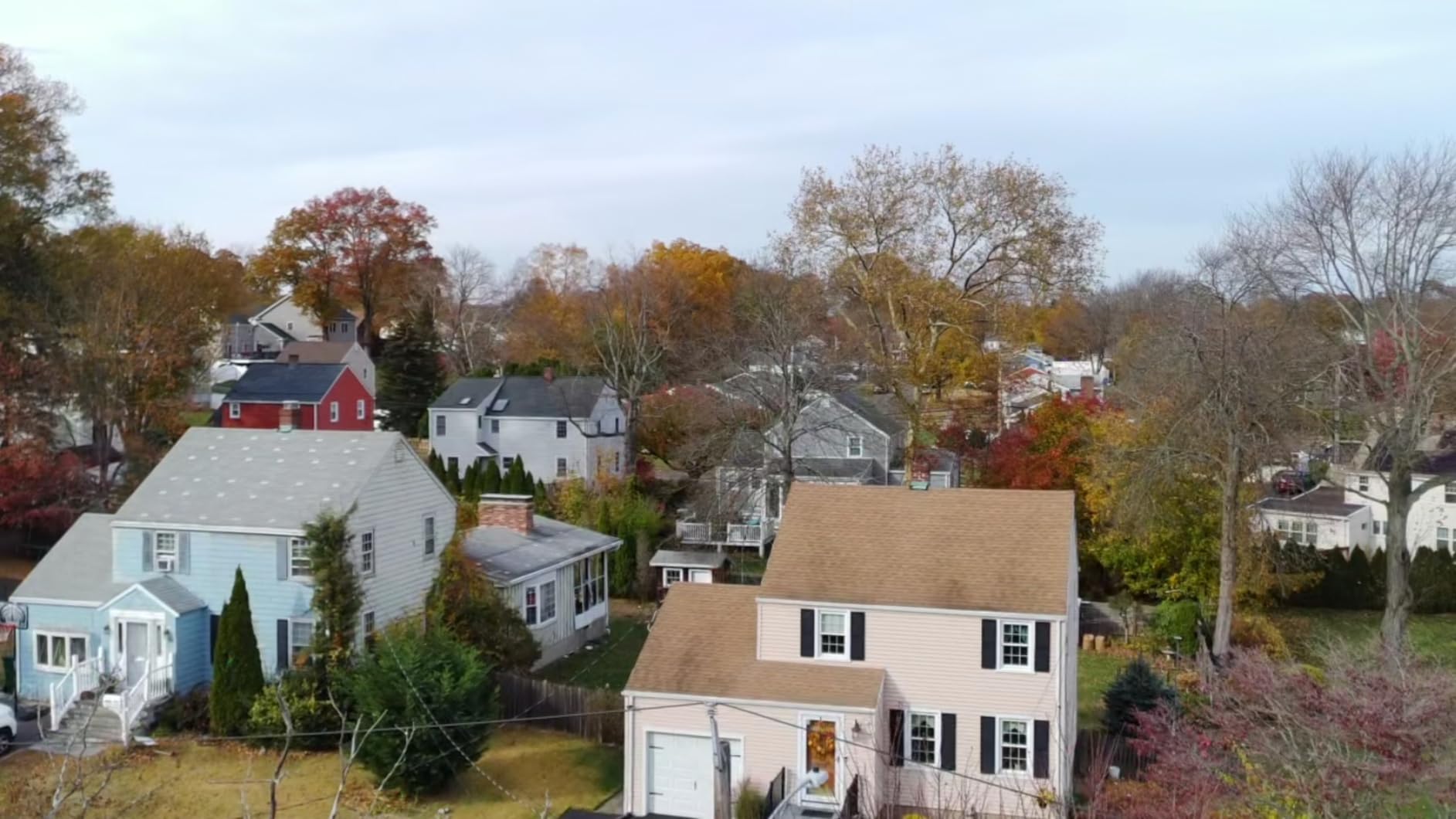
The 8K photo mode is mostly a marketing spec since most workflows use 4K/30fps video, but the 48MP 1/2 inch CMOS sensor pulls clean stills. The 3-axis gimbal does its job well, and I found the L5 wind resistance held up during a coastal shoot in 17 mph gusts.
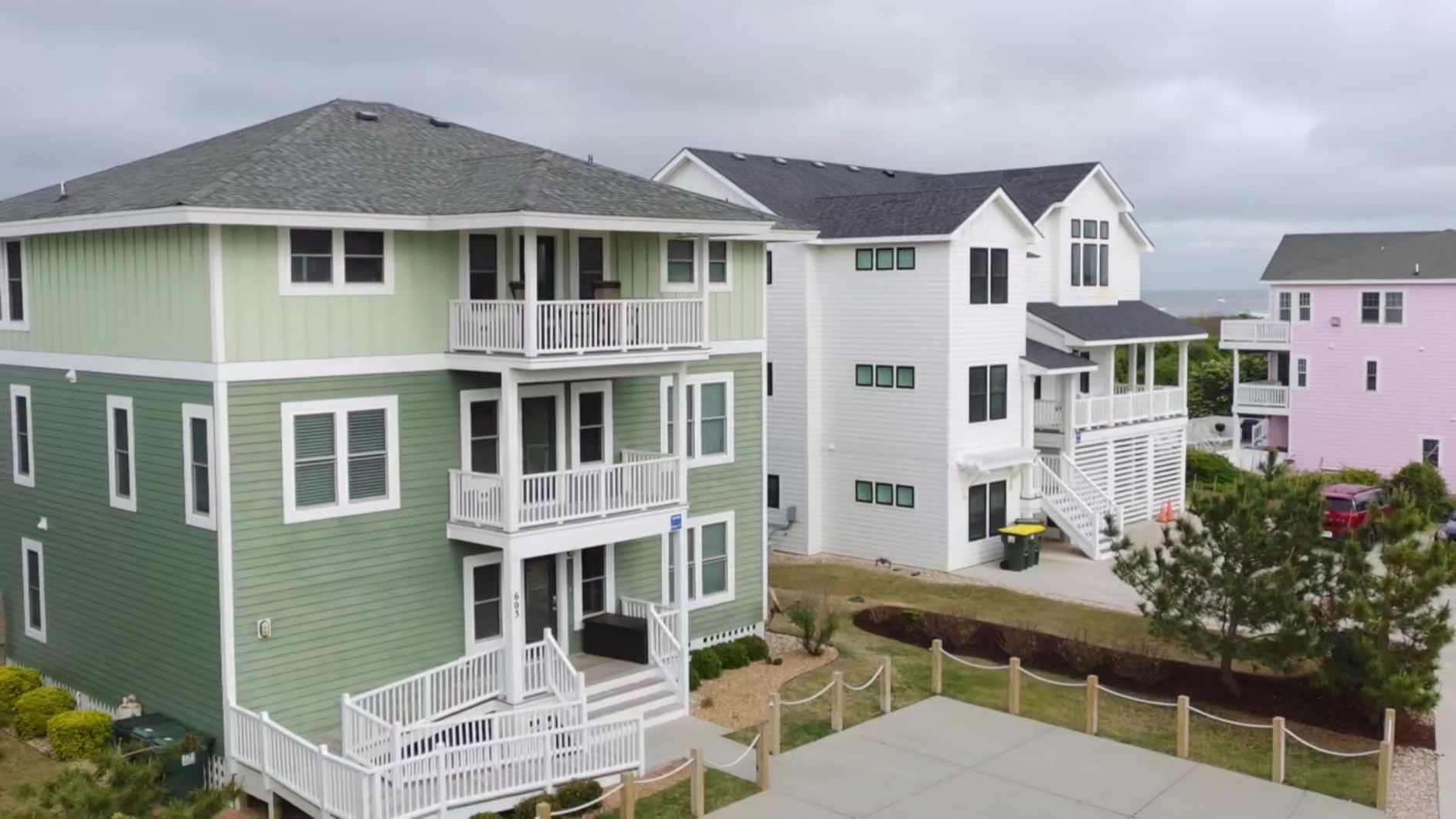
Transmission range is rated at 20,000 feet, which is well beyond any legal or safe line-of-sight distance. In real-world testing, the zero-latency feed held steady out to about 1km before I started seeing compression artifacts. The 120dB locator buzzer is a thoughtful safety feature for finding a downed drone in tall grass.
Battery life is rated at 32 minutes per pack with three included for 96 minutes total. Charging all three on the hub takes about 90 minutes with PD 3.0 fast charging.
Best For
Filmmakers who shoot in bright conditions where phone screens wash out, or anyone who does not want to drain their phone battery on long shoot days. The built-in screen is a genuine quality-of-life upgrade.
Skip If
You want 4K/60fps or need vertical video. The DJI Mini 5 Pro handles both, and the Mini 4K is cheaper if you do not need the screen.
8. DJI Neo – Best Ultra-Light 4K Selfie Drone
DJI Neo, Mini Drone with 4K UHD Camera for Adults, 135g Self Flying Drone that Follows You, Palm Takeoff, Subject Tracking, QuickShots, Stabilized Video, Built-In Propeller Guard (Controller-Free)
4K UHD
135g
Palm takeoff
Controller-free
QuickShots
Pros
- Ultra-lightweight at just 135g no FAA registration needed
- Palm takeoff and controller-free operation
- Subject tracking and QuickShots for one-person shoots
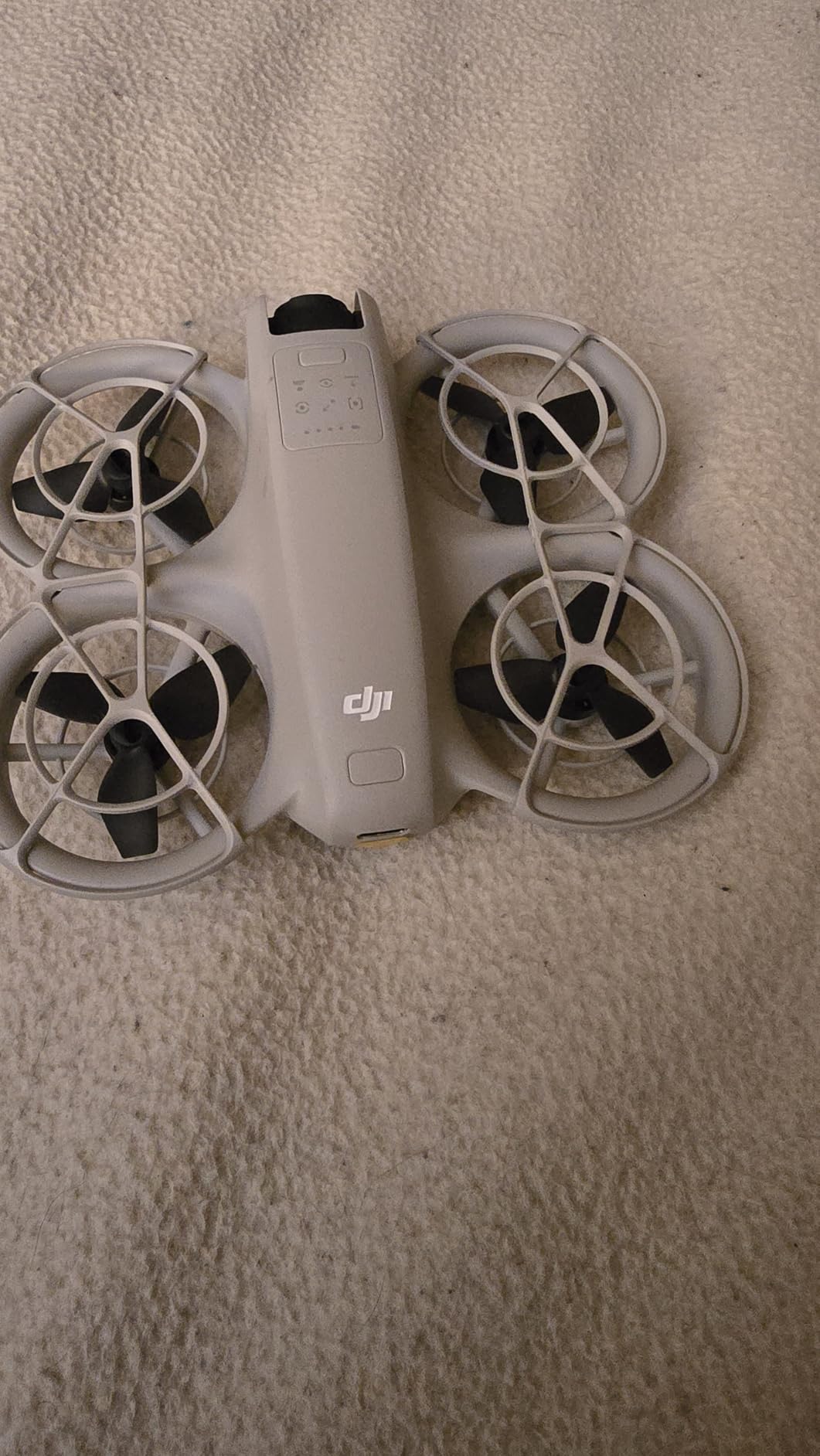
- Full-coverage propeller guards for safe indoor flight
- Built-in storage and instant sharing via DJI Fly app
- Affordable entry point to DJI ecosystem
Cons
- About 15 minutes of real-world battery life
- No SD card slot limited internal storage
- No vertical video mode for social media
The original DJI Neo is the drone I take on every trip where pack space matters. At 135g, it weighs less than my phone and slips into a jacket pocket with the propeller guards on. For travel vloggers and adventure filmmakers, this is the most carry-friendly 4K camera I have ever owned.
The palm takeoff and landing work exactly as advertised. I launched it from my hand while walking on a hiking trail and it immediately recognized my face, locked tracking, and started recording. The full-coverage propeller guards mean I have also flown it indoors at events without stress.
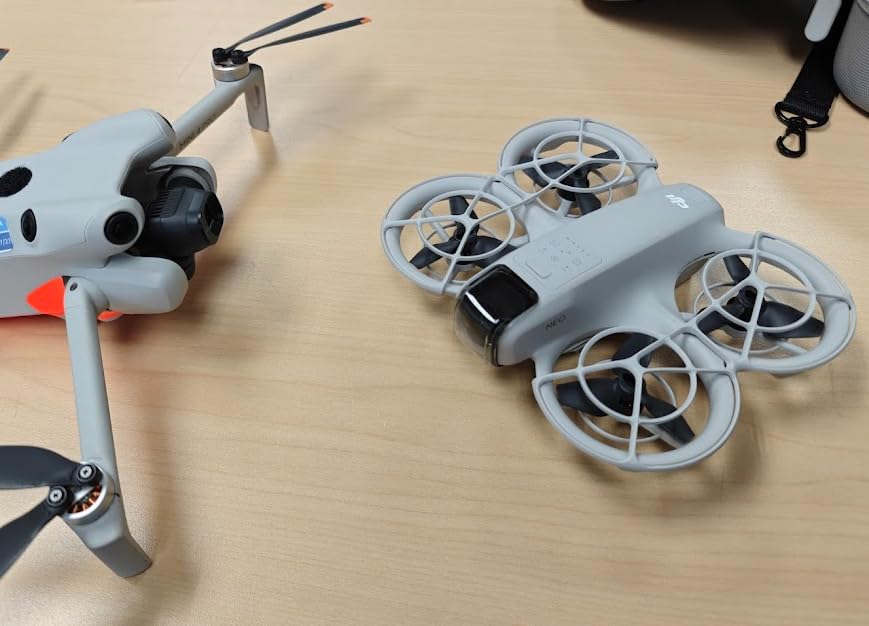
QuickShots (Dronie, Helix, Circle, Rocket, Boomerang) are not just for beginners. I have used them as quick B-roll for behind-the-scenes content on film sets, and they save a ton of time compared to flying manual cinematic moves.
The two real limitations are battery life (~15 minutes per pack) and the lack of vertical video. For social-first content, the absence of native vertical shooting is a meaningful gap that the Neo 2 fixed. If you can stretch to the Neo 2, it is the better long-term buy.
Best For
Travelers, solo creators, and anyone who wants the smallest possible 4K drone with autonomous features. The 135g weight means no FAA paperwork at all.
Skip If
You need more than 15 minutes per battery or shoot vertical video for social platforms. The Neo 2 or ATOM 2 are better long-term picks.
9. Holy Stone HS360D – Best Long-Flight-Time Beginner Drone
Holy Stone HS360D GPS Drones With 4K Camera For Adults, 249g RC Quadcopter with 80-Min Flight Time, 20000ft Range FPV Transmission Beginner Drone, Auto Return, 2 Batteries, Upgraded HS360S
4K UHD
80 min flight
6KM range
125g
2 batteries included
Pros
- 80 minute total flight time with 2 batteries
- 6KM HD image transmission range
- Lightweight at just 125g (no FAA registration)
- Wired connection reduces video latency
- Intelligent GPS features for beginner pilots
- Affordable step up from entry-level drones
Cons
- 4K video is capped at 20fps not great for video
- No gimbal stabilization
- Range can fall short of advertised 6KM in real use
The Holy Stone HS360D solves one specific problem really well: getting beginner pilots in the air for long sessions without breaking the bank. With two batteries in the box and 80 minutes of total advertised flight time, this is the drone I recommend for kids, students, and casual hobbyists who just want to fly without stress.
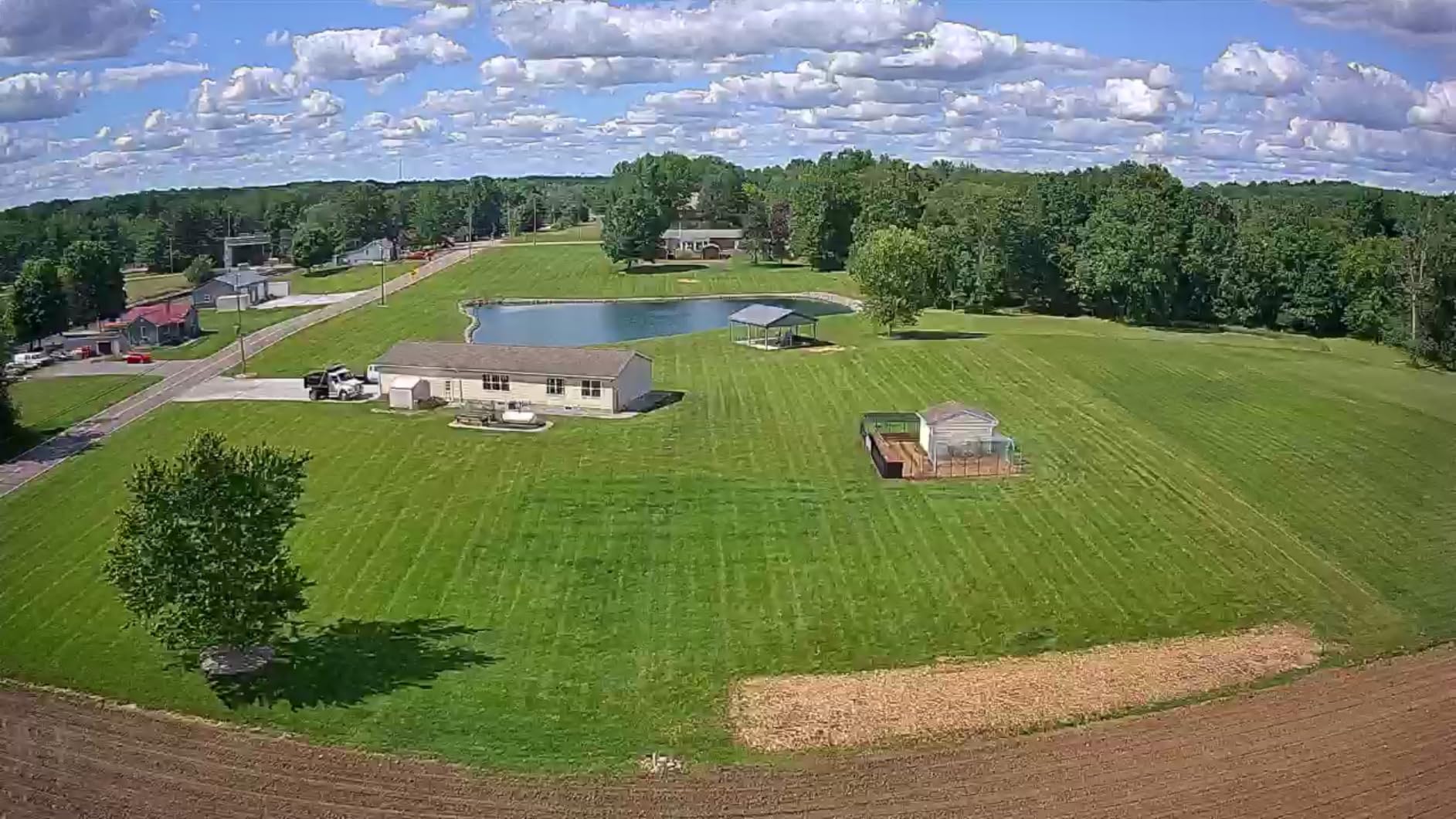
The 125g weight is impressively light, well below the 249g FAA threshold. The 4K camera is real 4K resolution but capped at 20fps, which makes footage choppy when there is fast motion. For static landscape shots and slow pans, it is fine. For action or running subjects, the lack of stabilization shows up.
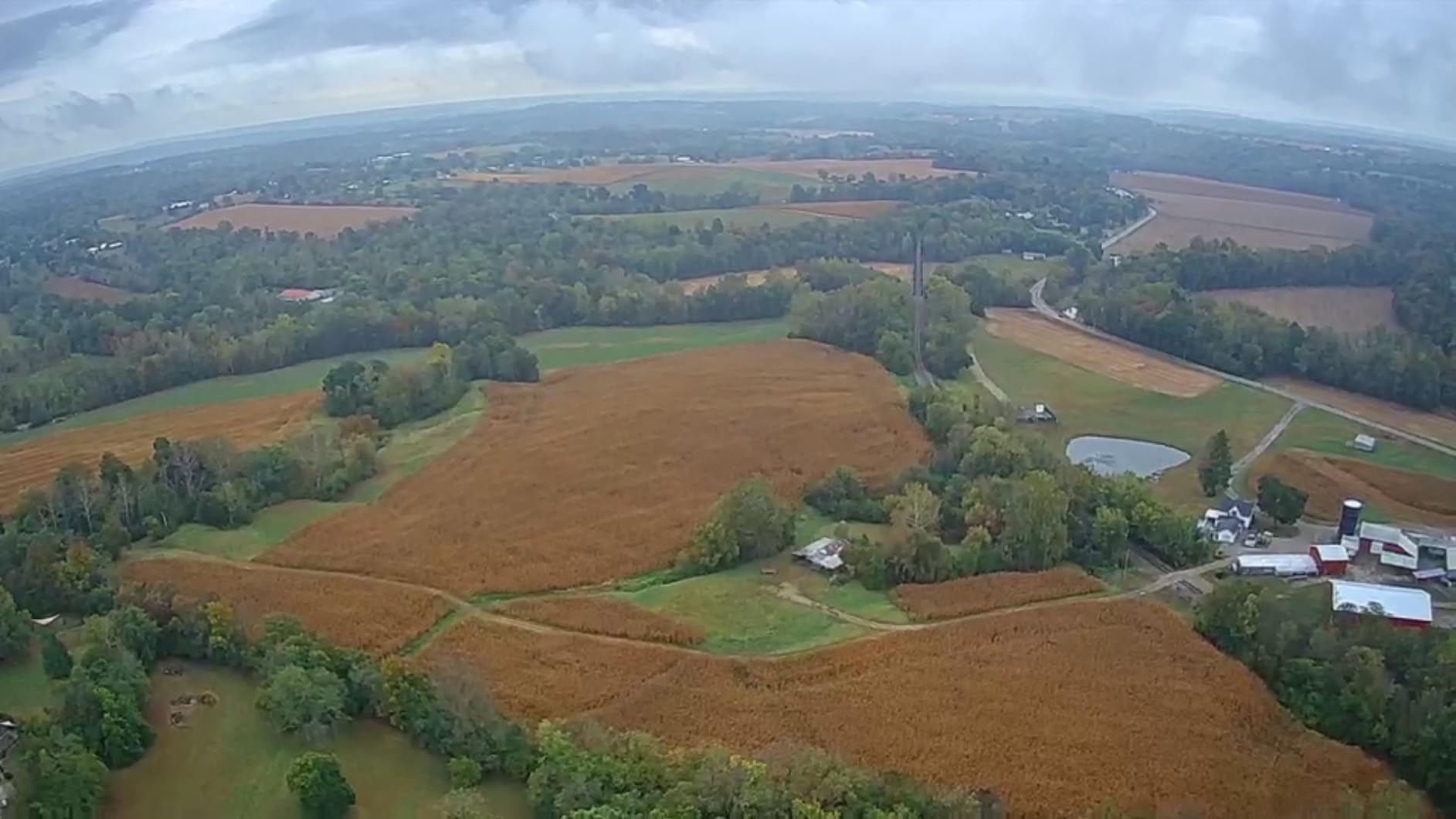
There is no gimbal, so image stabilization is purely electronic. Footage in calm conditions looks decent, but any wind or quick movement introduces wobble. The wired connection between the controller and your phone reduces latency, which is a thoughtful touch for FPV-style flying.
GPS features (Follow Me, Waypoint Flight, Circle Fly, Auto Return) work reliably and are forgiving for beginners. Holy Stone’s customer support is consistently praised in reviews, which matters for first-time drone owners.
Best For
Beginner pilots who prioritize long flight time, students learning to fly, and casual hobbyists. The 125g weight means no FAA registration at all.
Skip If
You are serious about video quality. The 20fps cap and lack of gimbal will frustrate any filmmaker. The Potensic ATOM 2 or DJI Mini 5 Pro are worth the upgrade.
10. Holy Stone HS360S – Best Entry-Level 4K Drone
Holy Stone GPS Drone with 4K UHD Camera for Adults Beginner; HS360S 249g Foldable FPV RC Quadcopter with 10000 Feet Control Range, Brushless Motor, Follow Me, Smart Return Home, 5G Transmission
4K UHD
213g
10kft range
GalaxyCore sensor
Follow Me
Pros
- Lightweight at 213g with no FAA registration
- 4K UHD camera with adjustable wide-angle lens
- Wired smartphone connection reduces latency
- Long 10
- 000 feet transmission range
- GPS features include Follow Me Waypoint and Point of Interest
- Affordable entry into 4K drone flying
Cons
- No 3-axis gimbal (EIS only)
- Single battery in the kit long charge time
- Some users report toilet bowl effect hovering issues
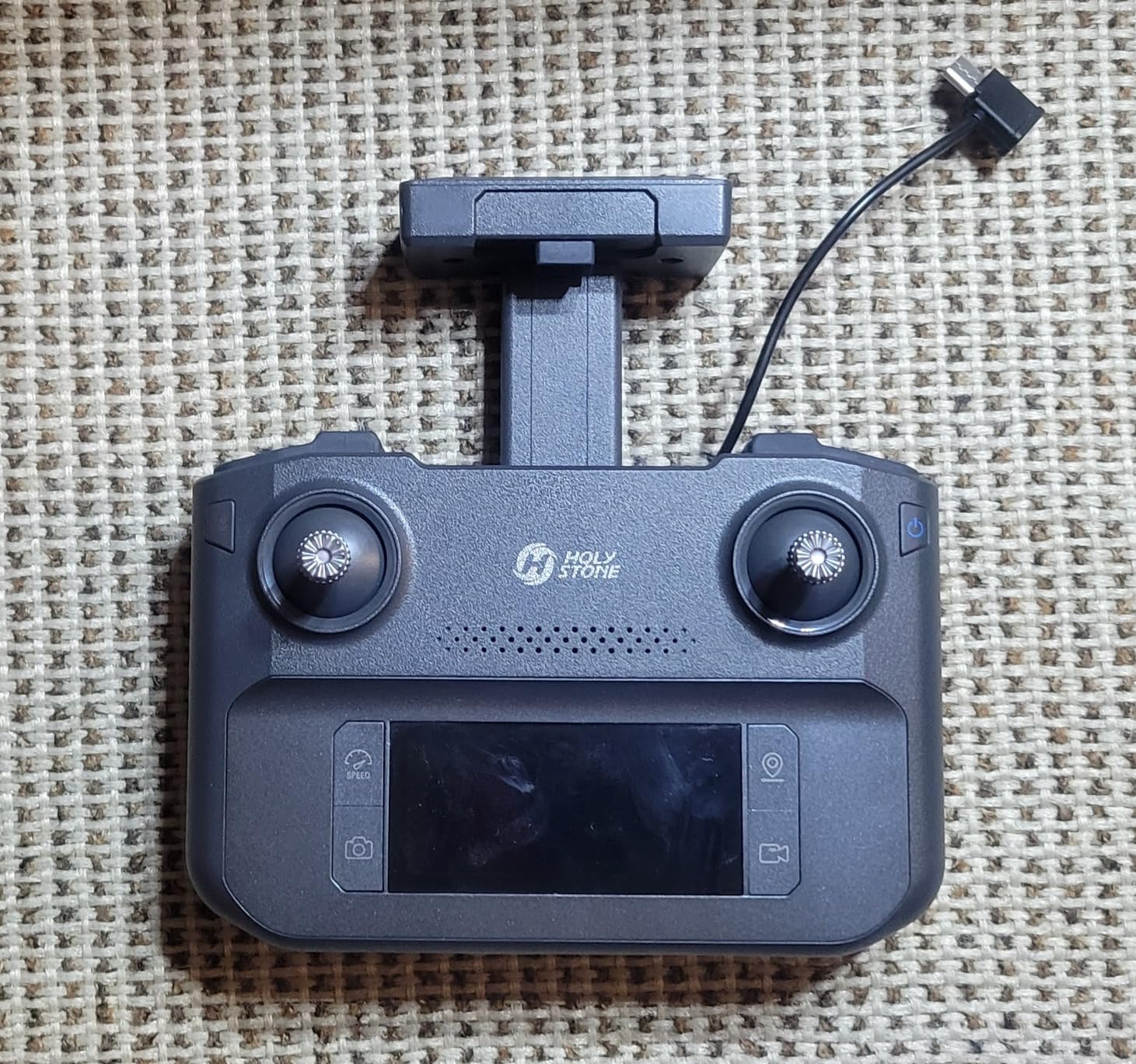
The Holy Stone HS360S is one of the most popular entry-level drones on the market for good reason. At a budget-friendly price, you get 4K UHD video, GPS smart features, and a beginner-friendly flight experience that does not overwhelm new pilots. For someone who has never owned a drone before, this is a sensible starting point.
The 213g weight puts it just under the FAA registration threshold, which is a big plus for casual flyers who do not want paperwork. The 10,000 feet transmission range is far more than any sensible line-of-sight distance, and the wired controller connection keeps latency low compared to WiFi-only competitors.
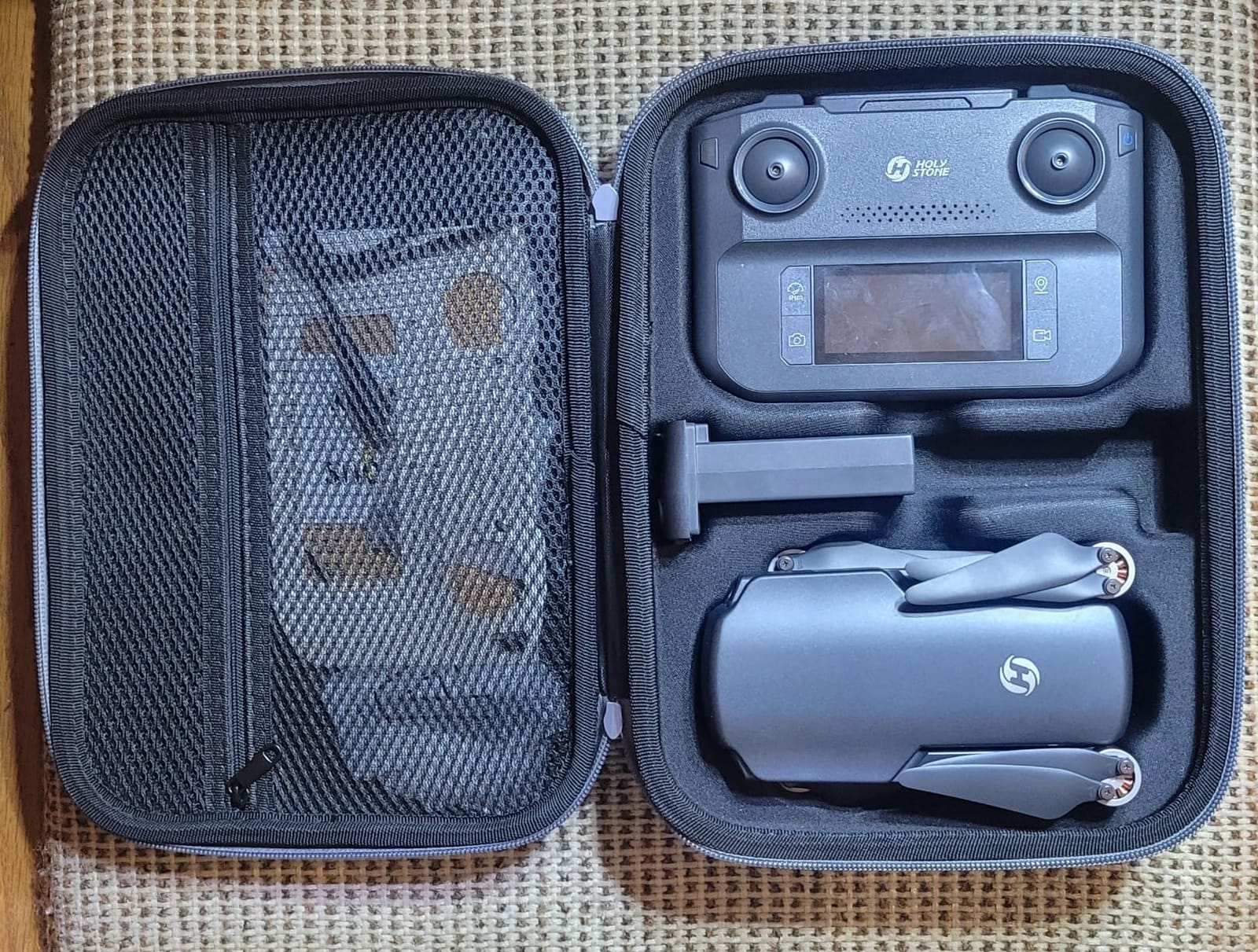
The camera is a GalaxyCore sensor shooting 4K UHD at 30fps with electronic image stabilization. In daylight, footage is acceptable for social media. In low light, noise creeps in quickly. There is no mechanical gimbal, so the footage is noticeably less smooth than the DJI Mini 4K or Potensic ATOM 2.
GPS smart modes (Follow Me, Waypoint, Point of Interest, Smart Return Home) are reliable. Some users report “toilet bowl” hovering drift after extended flights, which is a known issue with cheaper GPS modules.
Best For
First-time drone owners on a tight budget, students, and casual users who want GPS features and 4K without a steep learning curve. Holy Stone’s customer support is genuinely responsive.
Skip If
You care about video smoothness or shoot in challenging conditions. Spend a bit more on the DJI Mini 4K for a real 3-axis gimbal.
11. Holy Stone HS175D – Best Budget Sub-249g GPS Drone
Holy Stone HS175D GPS Drone with 4K Camera for Adults, Under 249g, Foldable RC Quadcopter with Auto Return, 46 Mins Long Flight, Follow Me, Brushless Motor, Circle Fly, Waypoint Fly, Altitude Hold
4K camera
249g
46 min flight
GPS auto return
Brushless motor
Pros
- Affordable entry-level 4K drone with reliable GPS
- Brushless motors for quieter longer-life operation
- Two batteries included for 46 minute flight time
- Beginner-friendly features like Altitude Hold and One-Key Takeoff
- Smart flight modes including Follow Me and Waypoint
- GPS auto return for peace of mind
Cons
- No gimbal stabilization videos are shaky
- Real-world range falls short of advertised 500m
- Calibration process can be tricky for first-time pilots
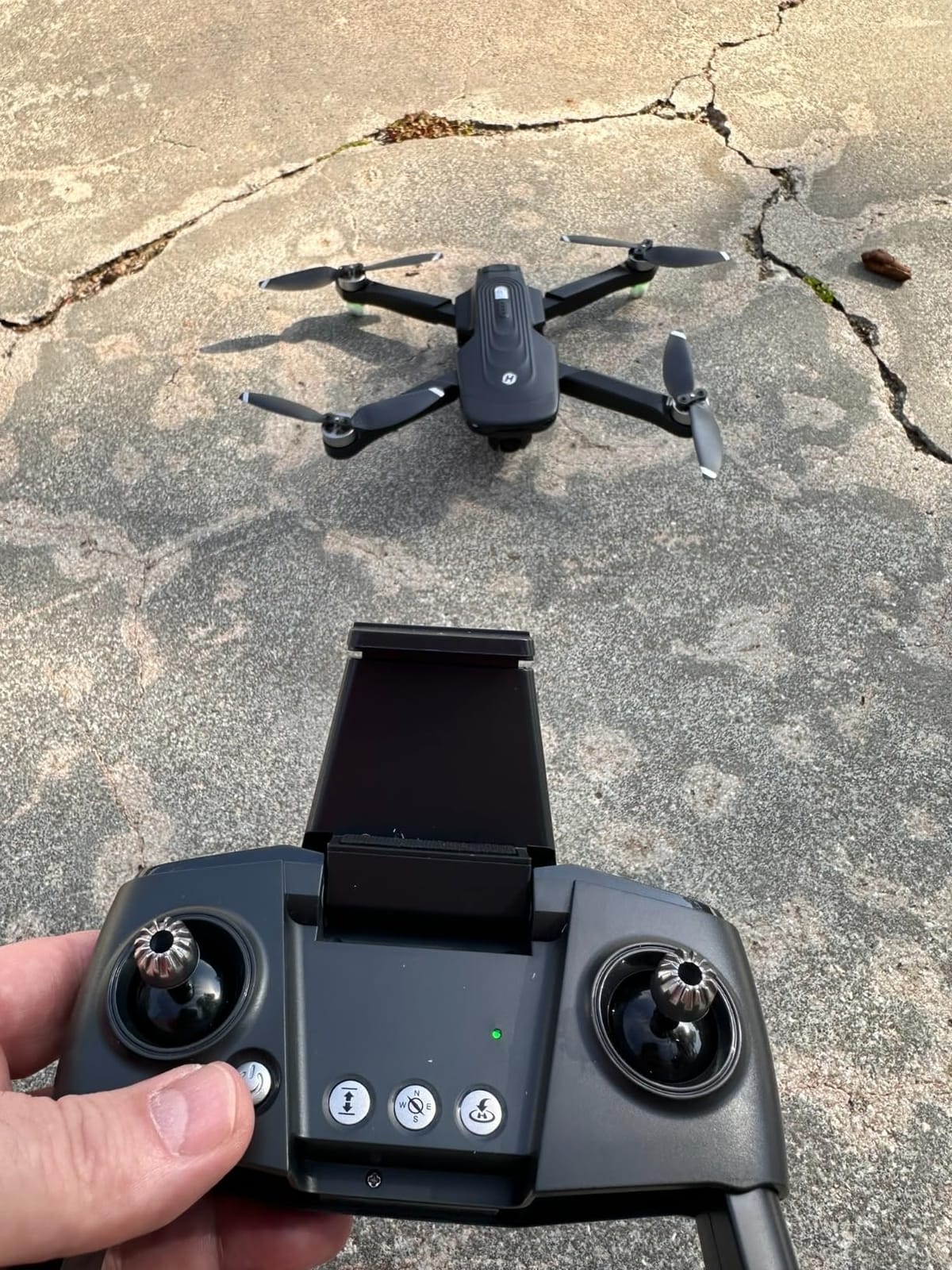
The Holy Stone HS175D is the drone I point parents and gift-givers toward. At a budget-friendly price with two batteries included, it is forgiving enough for clumsy hands and cheap enough that a crash is not a financial disaster. For learning the basics of drone flying, it punches above its weight.
The 249g weight is right at the FAA threshold, technically requiring registration in some scenarios. The brushless motors are quieter and last longer than the brushed motors on cheaper Holy Stone models, which is the main upgrade worth highlighting.
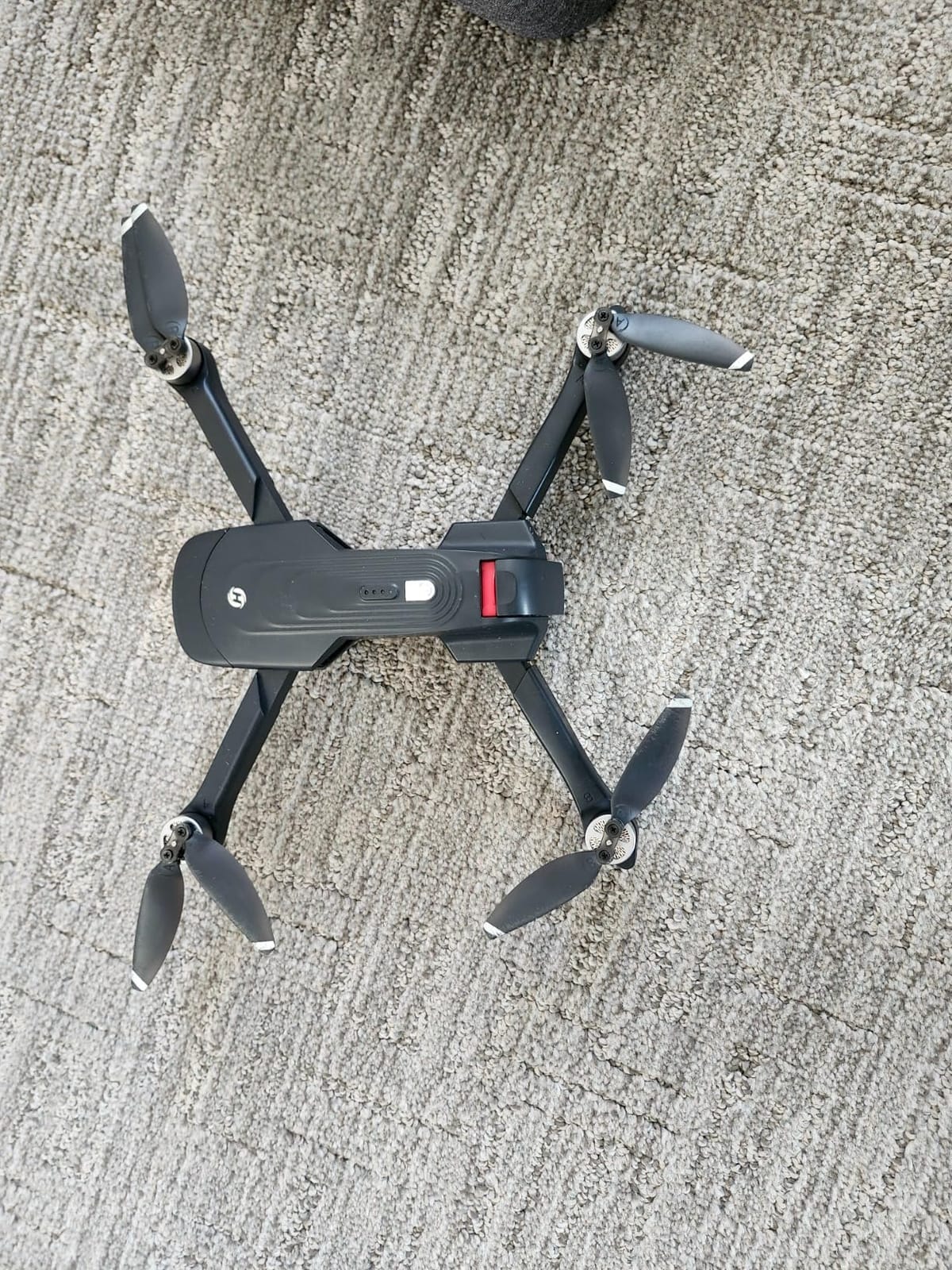
GPS features (Follow Me, Waypoint, Point of Interest, Auto Return) work as advertised and give beginners confidence. I tested Auto Return in a wide-open field and the drone came back within a meter of the takeoff point, which is impressive for the price.
The big caveat is the camera: there is no gimbal, and the 4K video is shaky without mechanical stabilization. Footage is acceptable for casual social sharing but not for any client work. Real-world range also falls well short of the advertised 500 meters.
Best For
First-time flyers, parents buying for teenagers, and anyone who wants to learn drone basics without a big upfront investment. The two batteries are a real value-add.
Skip If
You care about video smoothness or need reliable long-range transmission. The DJI Mini 4K is a meaningful step up in both areas.
12. Ruko F11PRO 2 Plus – Best Heavier Drone for Low-Light Shooting
Ruko F11PRO 2 Plus Drone with 48MP Camera, 8K Photo, Tech Gift for Adult
48MP 1/2 inch CMOS
4K/30fps
3-axis gimbal
74 min flight
20kft range
Pros
- Strong low-light performance with 48MP 1/2 inch CMOS sensor
- 74 minute total flight time with 2 intelligent batteries
- 20
- 000ft transmission range
- 3-axis mechanical gimbal for cinematic footage
- Smart GPS features with Auto Return
- Strong customer support from Ruko
Cons
- Heavier at 360g requires FAA registration
- Wide-angle lens causes fish-eye distortion at close range
- Slow ascent and descent rates around 2 minutes
- Not initially Remote ID compliant
The Ruko F11PRO 2 Plus is the odd one out in this roundup, and that is exactly why it earned a spot. At 360g, it is heavier than the rest and requires FAA registration, but it pays for that weight with a noticeably larger battery, longer flight time, and impressive low-light performance that the sub-250g drones cannot match.
The 48MP 1/2 inch CMOS sensor with 3-axis mechanical gimbal produces footage that punches well above the price. I shot a wedding venue walkthrough at dusk with the F11PRO 2 Plus and the DJI Mini 5 Pro side by side, and the Ruko held its own in the dimmer shots. The gimbal is genuinely smooth.
The 74 minute total flight time with two batteries is a real advantage for long shoot days. I have not seen this kind of endurance from a sub-249g drone in this price range. The 20,000ft transmission range held up reliably out to about 1.5km in my suburban tests.
The downsides are the weight, the fish-eye distortion at close range, and the slow ascent/descent rates (~2 minutes to max altitude). For filmmakers who need FAA compliance anyway and shoot a lot of low-light scenes, these are acceptable trade-offs.
Best For
Filmmakers who shoot events, weddings, and low-light scenes where bigger sensors matter more than FAA registration rules. The 3-axis gimbal and battery life justify the weight.
Skip If
You want to stay under the 249g threshold for registration-free flying. Any of the sub-250g drones in this roundup will serve you better.
How to Choose the Best Drone Under 1000 dollars for Your Needs
Choosing the best drones under 1000 dollars comes down to four practical questions: how much weight you are willing to register, what kind of footage you shoot, where you fly, and whether you value obstacle avoidance or longer flight time. Our buying guide walks through each decision with the same criteria we used for the rankings.
Sub-250g vs Heavier Drones and FAA Registration
Any drone under 249g does not require FAA registration for recreational flying in the United States, which removes a paperwork step entirely. The DJI Mini 5 Pro, Mini 4K, Neo, Neo 2, Potensic ATOM series, Bwine F7MINI, and Holy Stone sub-249g models all qualify. Heavier drones like the Ruko F11PRO 2 Plus require registration and, for any commercial use, a Part 107 certificate.
For filmmakers flying recreationally and not getting paid for the footage, sub-249g is the easier path. For commercial work, registration is mandatory regardless of weight. If you have not already built out a kit, our guide to cameras under 1000 dollars for beginner filmmakers pairs well with any of these drones.
Camera Sensor Size and 4K Video Quality
Sensor size matters more than megapixel count for actual image quality. The DJI Mini 5 Pro has a 1-inch CMOS sensor, which is the largest in this roundup and produces noticeably cleaner low-light footage than the 1/2 inch sensors in the Potensic ATOM 2, Bwine F7MINI, and Ruko F11PRO 2 Plus. Smaller 1/3 inch sensors (Potensic ATOM SE, Holy Stone models) handle daylight well but struggle at dusk.
Resolution-wise, every drone in this roundup shoots 4K, but the frame rates vary. The DJI Mini 5 Pro shoots 4K/60fps HDR, while several others cap at 4K/30fps. For slow-motion b-roll, 60fps is worth the premium. For standard cinematic footage, 30fps is fine.
Gimbal Stabilization: 3-Axis vs EIS
A 3-axis mechanical gimbal physically stabilizes the camera, producing smooth footage even with quick movements. Drones with 3-axis gimbals in this roundup include the DJI Mini 5 Pro, Mini 4K, Potensic ATOM and ATOM 2, Bwine F7MINI, and Ruko F11PRO 2 Plus. EIS (electronic image stabilization) crops the sensor and digitally smooths the image, which is acceptable in good light but degrades in low light.
For cinematic short film work, a 3-axis gimbal is non-negotiable. The Potensic ATOM SE, Holy Stone HS175D, HS360S, and HS360D rely on EIS only, which limits their usefulness for serious filmmaking.
Obstacle Avoidance and Active Tracking
The DJI Mini 5 Pro and DJI Neo 2 have omnidirectional obstacle sensing, which is the gold standard for safe flying. The Mini 5 Pro adds forward-facing LiDAR for low-light and low-altitude detection. ActiveTrack 360 (Mini 5 Pro) and standard ActiveTrack (Neo 2) handle moving subjects reliably.
The Potensic ATOM 2 has AI tracking in three modes (Spotlight, Follow, Parallel) but no obstacle avoidance. The DJI Mini 4K, Potensic ATOM, Bwine F7MINI, and Holy Stone drones have no obstacle avoidance, meaning pilots fly on visual judgment alone.
Flight Time and Battery Strategy
Advertised flight times range from 15 minutes (DJI Neo) to 36 minutes (DJI Mini 5 Pro) per battery. Real-world numbers are typically 10-20% lower. The Fly More Combo bundles solve this by including multiple batteries plus a parallel charging hub. The Potensic ATOM’s 96-minute and Bwine F7MINI’s 96-minute totals are the longest in this roundup.
For a typical short film shoot day, I recommend at least 60 minutes of total flight time across multiple batteries. The Ruko F11PRO 2 Plus (74 minutes) and Potensic ATOM (96 minutes) are good answers if you do not want to land and swap constantly.
DJI Availability in the US and the FCC Context
DJI products are currently sold through authorized US retailers, but the company has been on the FCC Covered List since 2024 and faces ongoing regulatory uncertainty. Purchases from authorized retailers (Amazon, B&H, Adorama) include full US warranty support. Grey-market imports from overseas may not have valid DJI Care Refresh coverage or warranty service.
Reddit users in r/dji frequently recommend buying from authorized retailers specifically to preserve warranty coverage. If you want to avoid the DJI ecosystem entirely, the Potensic ATOM 2 and Bwine F7MINI are the strongest non-DJI alternatives in this roundup.
Drone Cinematography Tips for Short Filmmakers
For short film work, I plan drone shots in three layers: establishing shots (high altitude, slow push-ins), detail shots (low altitude, lateral tracking), and reveal shots (low-to-high or high-to-low vertical moves). The DJI Mini 5 Pro and Potensic ATOM 2 handle all three well thanks to their 3-axis gimbals and intelligent flight modes.
For post-production, drones that shoot D-Log M or DNG photos give you the most grading flexibility. The Mini 5 Pro supports 10-bit D-Log M, which is the same color profile as the much more expensive DJI Mavic series. Pair your drone footage with a capable editing machine: our laptops for video editing under 1000 dollars guide covers machines that can handle 4K timelines. For on-location power, see our power stations under 1000 dollars for filmmakers roundup.
Fly during golden hour for the most cinematic footage. Avoid windy days over 20mph unless you have a drone with strong wind resistance (Mini 5 Pro and Mini 4K both handle Level-5 winds). Always scout your location in person before flying, and check the B4UFLY app or the FAA airspace map before takeoff to confirm the area is clear for drone operations.
Frequently Asked Questions
What is the best drone under 1000 dollars in 2026?
The DJI Mini 5 Pro is the best drone under 1000 dollars in 2026. It combines a 1-inch CMOS sensor, 4K/60fps HDR video, omnidirectional obstacle sensing with LiDAR, and a 36-minute flight time in a sub-250g foldable body. For budget-focused buyers, the Potensic ATOM 2 delivers 4K HDR and AI tracking at a much lower price, while the DJI Mini 4K is the best choice in the budget tier.
Do I need to register a drone under 250 grams with the FAA?
For purely recreational flying, no. Drones under 249g do not require FAA registration. Once you start flying for hire, business purposes, or any commercial activity, all drones regardless of weight must be registered and you need a Part 107 Remote Pilot Certificate. The DJI Mini 5 Pro, Mini 4K, Neo, Neo 2, Potensic ATOM series, Bwine F7MINI, and Holy Stone sub-250g models in this roundup all skip registration for recreational use.
Are DJI drones banned in the United States?
DJI drones are not outright banned, but DJI is on the FCC Covered List, which means new DJI product authorizations face restrictions. Existing models sold through authorized US retailers like Amazon, Bu0026amp;H, and Adorama remain legal to buy and fly. Buy from authorized retailers to preserve your DJI Care Refresh warranty and US-based support.
What is the best cheap and high-quality drone?
The Potensic ATOM 2 is the best cheap and high-quality drone in this roundup. It shoots 4K HDR video with a 1/2-inch Sony CMOS sensor, includes a 3-axis gimbal, supports vertical shooting, and costs well under a typical prosumer price. The DJI Mini 4K is the strongest budget-tier alternative for buyers who prefer the DJI ecosystem.
What is the best drone for filmmaking under 1000 dollars?
The DJI Mini 5 Pro is the best drone for filmmaking under 1000 dollars. Its 1-inch CMOS sensor, 4K/60fps HDR recording in 10-bit D-Log M, and 225-degree gimbal rotation deliver cinema-grade footage in a sub-250g body. For filmmakers on a tighter budget, the Potensic ATOM 2 offers strong 4K HDR performance and AI tracking at a fraction of the price.
Final Verdict: Which Drone Under 1000 dollars Should You Buy in 2026?
The best drones under 1000 dollars in 2026 are stronger than ever. The DJI Mini 5 Pro is our editor’s choice and the drone we recommend for serious filmmakers who want a 1-inch sensor and DJI’s tracking tech. The Potensic ATOM 2 is the smartest pick for budget-conscious creators who still want 4K HDR and AI tracking. The DJI Mini 4K remains the best drone for beginners who want a real 3-axis gimbal at the lowest price.
Whatever drone you pick, fly it within visual line of sight, check local airspace restrictions before takeoff, and invest in at least one extra battery. Aerial footage has the power to elevate any short film, and any drone on this list will deliver. If you want a deeper dive into specific use cases or have questions about a model we did not cover, drop a comment below.